
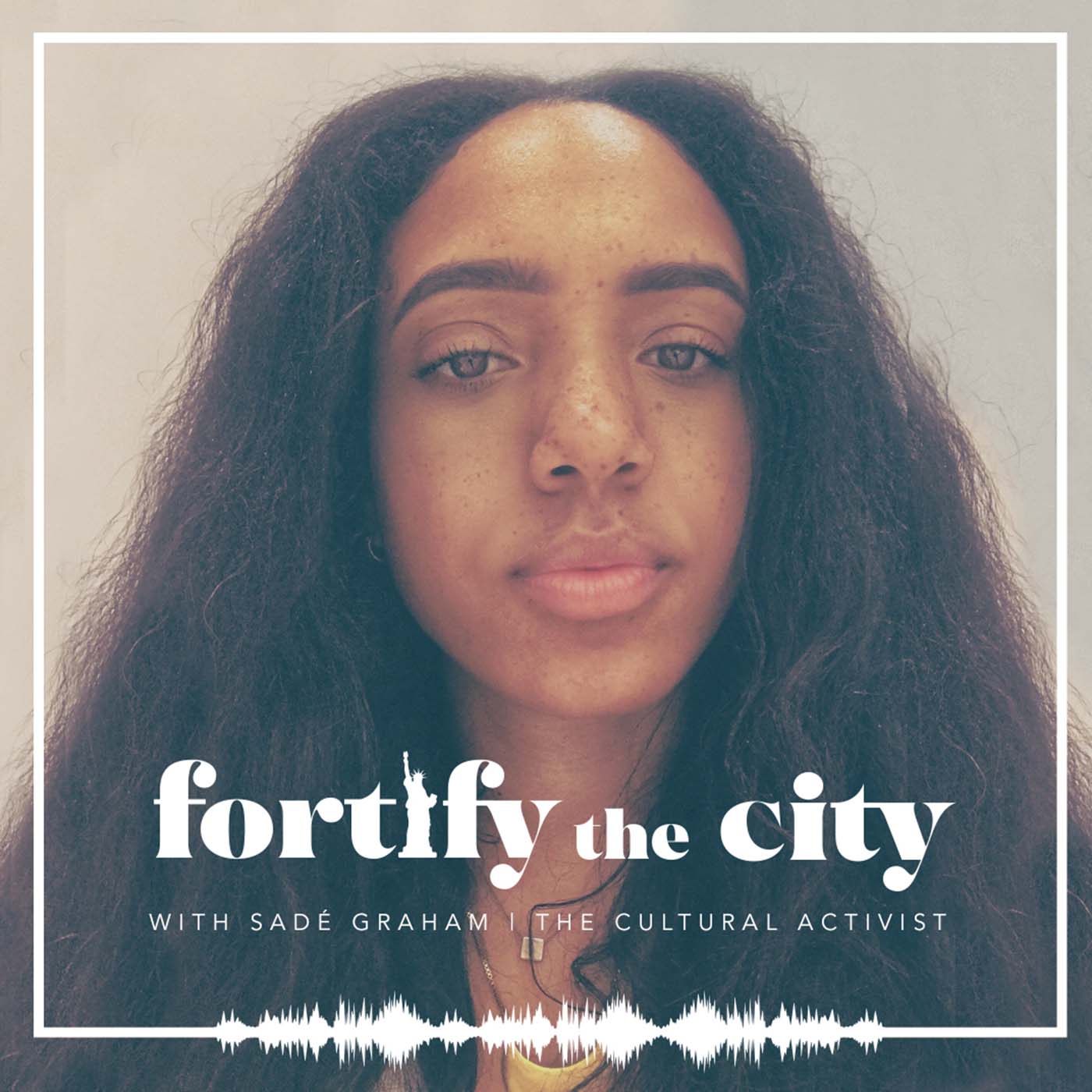
PODCAST · religion
Fortify the City with Sade Graham.
by Sade Graham
Fortify the City with Sade Graham is a faith-driven podcast focused on bridging the gap between Christianity and the world—one hot topic, fallacy, and ideology at a time.Hosted by Sade Graham, this podcast dives into real conversations around faith, culture, and the challenges believers face in today’s society. Through biblical insight and honest discussion, each episode confronts modern thinking and calls listeners to stand firm in truth.If you’re seeking a Christian podcast that challenges your perspective, strengthens your faith, and equips you to live boldly, this is for you.
-
37
Stocking Up: Stock Talk with Stock Consultant London McFadden
Welcome to Episode One of Stocking Up on Fortify the City—a quarterly series focused on preparing for the unknown in an ever-changing world. Because the reality is—uncertainty is not coming, it’s already here. And the question is: are you prepared? In this episode, Sadé Graham | The Cultural Activist sits down with stock expert, consultant, and friend, London McFadden, to break down the fundamentals of building financial awareness and positioning yourself for growth. Together, they cover: The basics of buying and selling stocks Key concepts every beginner should understand A real-time case study And a special insider perspective on what to pay attention to in today’s market This conversation is about more than just money—it’s about mindset, preparation, and stewardship. Because “stocking up” isn’t just about finances. It’s about fortifying every area of your life: Your household Your health Your income Your future If you’re not already thinking ahead, now is the time to start. Take a listen. Subscribe now to Fortify the City as we continue to strengthen and enlighten consciousness in Christ, grounded in truth. New episodes drop weekly. Available on all major podcast streaming platforms—and now on YouTube. EPISODE HIGHLIGHTS Introduction to the Stocking Up series Basics of investing in the stock market Beginner-friendly breakdown of buying and selling stocks Real-world case study Insights from a stock consultant The importance of financial preparedness GUEST London McFadden Stock Expert & Consultant Instagram: https://www.instagram.com/londonm34/ LISTEN & CONNECT Check out Fortify the City on all major podcast streaming platforms: Apple Podcasts Spotify iHeartRadio Google Play Stitcher YouTube And more. Let’s stay connected: Instagram: @FortifytheCity Instagram: @iAmSadeGraham CREDITS Artwork design & logo by Dana Givens Instagram: https://www.instagram.com/danagivens/ Original music produced by SweatBeatz ABOUT THE PODCAST Fortify the City is a weekly empowerment podcast assessing intricate ideologies, fallacies, and pop culture topics through a bold Christian lens. Hosted by Sadé Graham | The Cultural Activist, the mission is to bridge the gap between Christianity and the world—one hot topic at a time.
-
36
Fake Friends, User Types Are Only In It for the Hype
In any relationship, one of the clearest indicators of its strength is consistency—showing up, supporting one another, and truly listening. Because real relationships require effort. But not everyone is built for that. In this episode of Fortify the City, Sadé Graham | The Cultural Activist breaks down the difference between genuine connections and surface-level relationships. Because many people will walk alongside you—until it no longer benefits them. And when the hype fades, so do they. This conversation highlights the reality of “user” relationships, fake friendships, and the importance of discernment when it comes to who you allow into your space. Because not everyone around you is for you. Some are there for what you have, what you represent, or what they can gain. And once that’s gone—they’re gone too. The question is: Can your relationships withstand more than just convenience? Take a listen. Subscribe now to Fortify the City as we continue to strengthen and enlighten consciousness in Christ, grounded in truth. New episodes drop weekly. Available on all major podcast streaming platforms—and now on YouTube. EPISODE HIGHLIGHTS What defines a strong relationship The difference between real and fake friendships Recognizing “user” behavior Why some relationships don’t last The role of loyalty and consistency Discernment in who you keep around you LISTEN & CONNECT Check out Fortify the City on all major podcast streaming platforms: Apple Podcasts Spotify iHeartRadio Google Play Stitcher YouTube And more. Let’s stay connected: Instagram: @FortifytheCity Instagram: @iAmSadeGraham CREDITS Artwork design & logo by Dana Givens Instagram: https://www.instagram.com/danagivens/ Original music produced by SweatBeatz ABOUT THE PODCAST Fortify the City is a weekly empowerment podcast assessing intricate ideologies, fallacies, and pop culture topics through a bold Christian lens. Hosted by Sadé Graham | The Cultural Activist, the mission is to bridge the gap between Christianity and the world—one hot topic at a time.
-
35
It's Not Art (Fashion or Style), It's Representation
Some call it art. Some call it fashion. But for those who are grounded in the Word and led by the Spirit of God, there is a deeper level of awareness that cannot be ignored. In this episode of Fortify the City, Sadé Graham | The Cultural Activist challenges listeners to take a closer look at the symbols, imagery, and expressions we engage with—often without question. Because not everything is as neutral as it seems. What we wear, what we promote, and what we align ourselves with can all carry meaning, whether intentional or not. And as believers, that raises an important question: What are you representing? This episode dives into the idea of spiritual alignment and allegiance—what it looks like to truly stand for Christ in both belief and expression. Because just like any group, movement, or identity that demands loyalty, there is always an outward reflection of what you stand for. So what does it say when Christians go harder for things that stand in opposition to their faith than they do for the Kingdom? This conversation is meant to bring awareness, not condemnation—but awareness requires honesty. And sometimes, that means re-evaluating what we’ve normalized. Take a listen. Subscribe now to Fortify the City as we continue to strengthen and enlighten consciousness in Christ, grounded in truth. New episodes drop weekly. Available on all major podcast streaming platforms—and now on YouTube. EPISODE HIGHLIGHTS The meaning behind symbols and cultural expression Art, fashion, and spiritual alignment What it means to represent Christ in everyday life Recognizing hidden or overlooked influences Allegiance and identity as a believer Re-evaluating what has been normalized SCRIPTURE REFERENCE Ecclesiastes 3:15 Philippians 3:21 Revelation 20:14 2 Corinthians 5:20 LISTEN & CONNECT Check out Fortify the City on all major podcast streaming platforms: Apple Podcasts Spotify iHeartRadio Google Play Stitcher YouTube And more. Let’s stay connected: Instagram: @FortifytheCity Instagram: @iAmSadeGraham CREDITS Artwork design & logo by Dana Givens Instagram: https://www.instagram.com/danagivens/ Original music produced by SweatBeatz ABOUT THE PODCAST Fortify the City is a weekly empowerment podcast assessing intricate ideologies, fallacies, and pop culture topics through a bold Christian lens. Hosted by Sadé Graham | The Cultural Activist, the mission is to bridge the gap between Christianity and the world—one hot topic at a time.
-
34
All or Nothing: Ex AKA Dajanay DTonyo Talks Burning Membership Card - Part II
We’re back with Part Two of this powerful conversation with Dajanay DTonyo from Kingdom Conversations. In this continuation, Dajanay goes deeper into the pivotal moment that led her to officially walk away from her former affiliation with a Black Greek-letter organization. This wasn’t a casual decision—it was a spiritual one. She shares the series of confirmations that led her there, including: Repeated signs and dreams An unexpected and defining exchange And ultimately, the question that solidified everything Because at some point, truth demands a response. And once you know, you cannot unknow. This episode challenges a common misconception—that it is possible to be fully committed to Christ while still holding onto lifestyles, environments, or affiliations that contradict that calling. The reality is, walking with Christ requires alignment. And alignment requires decision. It ultimately comes down to this: If today were your last day—are you confident in where you stand? This is not about fear—it’s about truth, awareness, and accountability. Take a listen. Subscribe now to Fortify the City as we continue to strengthen and enlighten consciousness in Christ, grounded in truth. New episodes drop weekly. Available on all major podcast streaming platforms—and now on YouTube. EPISODE HIGHLIGHTS The turning point that led to walking away Recognizing spiritual signs and confirmations The role of conviction in major life decisions Letting go of identity tied to past affiliations What true alignment with Christ requires The question that brings clarity: where do you stand? SCRIPTURE REFERENCE Hosea 4:6 Matthew 7:22–23 Proverbs 4:7 LISTEN & CONNECT Check out Fortify the City on all major podcast streaming platforms: Apple Podcasts Spotify iHeartRadio Google Play Stitcher YouTube And more. Let’s stay connected: Instagram: @FortifytheCity Instagram: @iAmSadeGraham CREDITS Artwork design & logo by Dana Givens Instagram: https://www.instagram.com/danagivens/ Original music produced by SweatBeatz ABOUT THE PODCAST Fortify the City is a weekly empowerment podcast assessing intricate ideologies, fallacies, and pop culture topics through a bold Christian lens. Hosted by Sadé Graham | The Cultural Activist, the mission is to bridge the gap between Christianity and the world—one hot topic at a time.
-
33
All or Nothing: Ex AKA Dajanay DTonyo Talks Denouncing Membership to Black Greek Organization - Part I
Following Christ is not a halfway commitment—it is all or nothing. There is no middle ground, no split allegiance, and no room for compromise when it comes to truly walking with God. As Scripture says in Matthew 6:24, “No one can serve two masters… You cannot serve both God and mammon.” In this episode of Fortify the City, Sadé Graham | The Cultural Activist explores what it really means to be fully committed to Christ—challenging the idea that you can balance faith with anything that stands in opposition to it. Featuring the testimony of fellow content creator Dajanay DTonyo, this conversation dives into her personal journey of being “ten toes down” for Jesus, and the life-altering decision she made to walk away from her former membership in a Black Greek-letter organization. In Part One, we unpack: The culture and hype surrounding the pledging process The rituals and expectations tied to crossing into the organization The realities behind the experience, including manipulation and pressure The internal conflict that followed, and the realization of misalignment with her faith This episode sets the foundation for a deeper conversation about identity, conviction, and what it truly costs to follow Christ without compromise. Because at some point, a decision has to be made. Take a listen. Subscribe now to Fortify the City as we continue to strengthen and enlighten consciousness in Christ, grounded in truth. New episodes drop weekly. Available on all major podcast streaming platforms—and now on YouTube. EPISODE HIGHLIGHTS What “all or nothing” faith really means Breaking down Matthew 6:24 in today’s context Testimony of walking away from former affiliations The reality behind pledging culture and expectations Recognizing spiritual misalignment Choosing conviction over comfort SCRIPTURE REFERENCE Matthew 6:24 LISTEN & CONNECT Check out Fortify the City on all major podcast streaming platforms: Apple Podcasts Spotify iHeartRadio Google Play Stitcher YouTube And more. Let’s stay connected: Instagram: @FortifytheCity Instagram: @iAmSadeGraham CREDITS Artwork design & logo by Dana Givens Instagram: https://www.instagram.com/danagivens/ Original music produced by SweatBeatz ABOUT THE PODCAST Fortify the City is a weekly empowerment podcast assessing intricate ideologies, fallacies, and pop culture topics through a bold Christian lens. Hosted by Sadé Graham | The Cultural Activist, the mission is to bridge the gap between Christianity and the world—one hot topic at a time.
-
32
You Have Been Deceived! Heaven Will Cost You Much More Than Just Believing in Jesus
Do not be deceived—walking with Christ requires more than surface-level belief. One of the most common misconceptions in Christianity is the idea that simply believing in Jesus is the only requirement for entering the Kingdom of Heaven. While salvation is rooted in grace, mercy, and the finished work of Christ, Scripture also makes it clear that transformation is part of the journey of faith. In this episode of Fortify the City, Sadé Graham | The Cultural Activist explores the tension between belief and transformation, and what it truly means to live a life aligned with God’s will. Because faith is not only about confession—it is also about transformation. Romans 12:2 calls believers to be transformed by the renewing of the mind, which points to an ongoing process of growth, alignment, and spiritual maturity. And throughout Scripture, we are repeatedly reminded that obedience, love, and alignment with God’s will are central to the life of a believer. This episode challenges listeners to reflect on what it really means to follow Christ beyond words, beyond belief, and into daily living. Not perfection—but transformation. Not performance—but alignment. Take a listen. Subscribe now to Fortify the City as we continue to strengthen and enlighten consciousness in Christ, grounded in truth. New episodes drop weekly. Available on all major podcast streaming platforms—and now on YouTube. EPISODE HIGHLIGHTS Misconceptions about salvation and belief The difference between faith and transformation What Scripture says about obedience and renewal The role of grace, mercy, and repentance Why spiritual growth is an ongoing process Living a life aligned with God’s will SCRIPTURE REFERENCE John 5:24–29 Romans 12:2 Matthew 7:21 1 Peter 4:8 LISTEN & CONNECT Check out Fortify the City on all major podcast streaming platforms: Apple Podcasts Spotify iHeartRadio Google Play Stitcher YouTube And more. Let’s stay connected: Instagram: @FortifytheCity Instagram: @iAmSadeGraham CREDITS Artwork design & logo by Dana Givens Instagram: https://www.instagram.com/danagivens/ Original music produced by SweatBeatz ABOUT THE PODCAST Fortify the City is a weekly empowerment podcast assessing intricate ideologies, fallacies, and pop culture topics through a bold Christian lens. Hosted by Sadé Graham | The Cultural Activist, the mission is to bridge the gap between Christianity and the world—one hot topic at a time.
-
31
Let's Stay Fortified | A Quick Word From Your Host, Sade Graham
Hi Friends, This is just a quick message of appreciation to say thank you. Thank you for tuning in week after week, supporting the podcast, and engaging with the content. It truly means a lot. We don’t take your time or attention for granted, and we’re grateful to have you on this journey with us. We’ll be back next week with more thought-provoking conversations, real discussions, cultural breakdowns, and everything in between. So stay tuned—and stay locked in with the movement. And as always, feel free to engage however you choose—subscribe, comment, like, or just listen quietly. Either way, we appreciate you being here. Let us know how you feel. Subscribe now to Fortify the City as we continue to strengthen and enlighten consciousness in Christ, grounded in truth. New episodes drop weekly. Available on all major podcast streaming platforms—and now on YouTube. LISTEN & CONNECT Check out Fortify the City on all major podcast streaming platforms: Apple Podcasts Spotify iHeartRadio Google Play Stitcher YouTube And more. Let’s stay connected: Instagram: @FortifytheCity Instagram: @iAmSadeGraham CREDITS Artwork design & logo by Dana Givens Instagram: https://www.instagram.com/danagivens/ Original music produced by SweatBeatz ABOUT THE PODCAST Fortify the City is a weekly empowerment podcast assessing intricate ideologies, fallacies, and pop culture topics through a bold Christian lens. Hosted by Sadé Graham | The Cultural Activist, the mission is to bridge the gap between Christianity and the world—one hot topic at a time.
-
30
Cancel Culture is Coming For Rapper Da Baby, Anti-Vaxxer's, N Anyone with an Opinion. Totalitarianism is on the Rise.
It’s no secret that culture today feels increasingly polarized. Many believe we are moving toward a more controlled global system where freedom of thought, expression, and disagreement is becoming more restricted—and where stepping outside of accepted narratives can lead to social exclusion or “cancellation.” In this episode of Fortify the City, Sadé Graham | The Cultural Activist explores the concept of “cancel culture,” public accountability, and the tension between freedom and conformity in modern society. From entertainment figures to everyday individuals, we are seeing how quickly voices can be elevated one moment and dismissed the next when they do not align with dominant cultural expectations. This raises deeper questions about power, influence, and the boundaries of modern discourse. Because while accountability is necessary, so is discernment. And while culture evolves, the question remains: At what point does correction become control? This conversation also contrasts cultural systems with biblical principles—particularly the idea that God Himself allows choice, even when that choice leads to consequences. Freedom, in Scripture, is never forced—it is given. And with that freedom comes responsibility. This episode invites listeners to think critically about culture, conviction, forgiveness, and truth in a time where public opinion often moves faster than understanding. Take a listen. Subscribe now to Fortify the City as we continue to strengthen and enlighten consciousness in Christ, grounded in truth. New episodes drop weekly. Available on all major podcast streaming platforms—and now on YouTube. EPISODE HIGHLIGHTS The rise and impact of cancel culture Freedom of expression vs cultural conformity Public accountability in entertainment and society How quickly narratives shift in modern media Biblical perspective on freedom and choice Responsibility, forgiveness, and discernment SCRIPTURE REFERENCE Genesis 2:16–17 Colossians 3:13 Luke 17:4 Psalm 32:5 Romans 5:7 Proverbs 11:14 Proverbs 27:23–24 Luke 12:48 Ephesians 4:13–14 LISTEN & CONNECT Check out Fortify the City on all major podcast streaming platforms: Apple Podcasts Spotify iHeartRadio Google Play Stitcher YouTube And more. Let’s stay connected: Instagram: @FortifytheCity Instagram: @iAmSadeGraham CREDITS Artwork design & logo by Dana Givens Instagram: https://www.instagram.com/danagivens/ Original music produced by SweatBeatz ABOUT THE PODCAST Fortify the City is a weekly empowerment podcast assessing intricate ideologies, fallacies, and pop culture topics through a bold Christian lens. Hosted by Sadé Graham | The Cultural Activist, the mission is to bridge the gap between Christianity and the world—one hot topic at a time.
-
29
Is Jesus Black or White? That is the Question.
The conversation surrounding racial tension and division is not new. It has existed for generations, even dating back to biblical times. In Scripture, we see moments where differences between groups—such as Jews and Gentiles—were acknowledged, discussed, and navigated within the unfolding of God’s plan. However, these distinctions were never centered around modern racial constructs of “Black and White” as we understand them today. In this episode of Fortify the City, Sadé Graham | The Cultural Activist explores how modern racial discourse intersects with faith, identity, and misunderstanding—particularly within conversations about Christianity. There are many who struggle with embracing the faith because of perceived racial interpretations or historical tensions tied to imagery, representation, and identity. But the deeper question remains: Is the gospel defined by race—or does it transcend it? Because if Christ came to reconcile humanity to God and to one another, then division—of any kind—was never meant to be the final narrative. This episode invites listeners to engage in a deeper conversation about unity, misunderstanding, and the enduring truth of Scripture in a divided world. Let’s talk about it. Subscribe now to Fortify the City as we continue to strengthen and enlighten consciousness in Christ, grounded in truth. New episodes drop weekly. Available on all major podcast streaming platforms—and now on YouTube. EPISODE HIGHLIGHTS Racial tension through a biblical lens Jews and Gentiles in Scripture vs modern racial framing Misconceptions around Christianity and race Why some reject faith based on identity debates The gospel’s message of unity over division What Scripture says about love and reconciliation SCRIPTURE REFERENCE Daniel 7:9 Revelation 1:14–15 Ephesians 3:6 John 7:41 Acts 21:25 Ecclesiastes 1:9 John 13:34 LISTEN & CONNECT Check out Fortify the City on all major podcast streaming platforms: Apple Podcasts Spotify iHeartRadio Google Play Stitcher YouTube And more. Let’s stay connected: Instagram: @FortifytheCity Instagram: @iAmSadeGraham CREDITS Artwork design & logo by Dana Givens Instagram: https://www.instagram.com/danagivens/ Original music produced by SweatBeatz ABOUT THE PODCAST Fortify the City is a weekly empowerment podcast assessing intricate ideologies, fallacies, and pop culture topics through a bold Christian lens. Hosted by Sadé Graham | The Cultural Activist, the mission is to bridge the gap between Christianity and the world—one hot topic at a time.
-
28
Who is the Oppressor? Let's Talk About It (Response to YouTube Commentator)
When many people—especially within the Black community—hear the words oppression or oppressors, the immediate association is often external. Most commonly, it is tied to race. But oppression is not always as singular or as external as it is often portrayed. In this episode of Fortify the City, Sadé Graham | The Cultural Activist challenges the narrow framing of oppression and invites listeners to examine its broader, more personal expressions. Because while racial oppression is real and rooted in history, it is not the only form oppression can take. Oppression can also exist in closer spaces. It can show up within families, friendships, communities, and environments where trust once existed. It can appear as: Hindering someone’s progress because of disagreement Undermining another’s growth or success Silencing voices that carry different perspectives Engaging in harmful patterns within one’s own community And when left unexamined, these patterns can become normalized. This episode does not minimize systemic or historical realities. Instead, it expands the conversation—challenging listeners to recognize that oppression is not always external, and not always obvious. Sometimes, it is closest to home. And awareness is the first step toward breaking cycles that keep communities divided, stagnant, or wounded. Take a listen. Subscribe now to Fortify the City as we continue to strengthen and enlighten consciousness in Christ, grounded in truth. New episodes drop weekly. Available on all major podcast streaming platforms—and now on YouTube. EPISODE HIGHLIGHTS Expanding the definition of oppression beyond race alone Recognizing internal and relational forms of oppression How harmful patterns can exist within communities The impact of silencing and division from within Breaking cycles of internal conflict and misunderstanding A call to awareness, accountability, and healing SCRIPTURE REFERENCE Job 15:20 Jeremiah 22:3 Malachi 3:5 LISTEN & CONNECT Check out Fortify the City on all major podcast streaming platforms: Apple Podcasts Spotify iHeartRadio Google Play Stitcher YouTube And more. Let’s stay connected: Instagram: @FortifytheCity Instagram: @iAmSadeGraham CREDITS Artwork design & logo by Dana Givens Instagram: https://www.instagram.com/danagivens/ Original music produced by SweatBeatz ABOUT THE PODCAST Fortify the City is a weekly empowerment podcast assessing intricate ideologies, fallacies, and pop culture topics through a bold Christian lens. Hosted by Sadé Graham | The Cultural Activist, the mission is to bridge the gap between Christianity and the world—one hot topic at a time.
-
27
Tila Tequila Said What About Black Women and Our Hair?... Part II
There is always more to uncover when it comes to the Word of God—regardless of who is presenting it. And often, the greatest loss is not disagreement, but dismissal. Because when we refuse to engage with Scripture deeply, we can miss the revelation hidden beneath the surface. The Word of God is meant to illuminate. It is meant to bring clarity, correction, and conviction—like a light turning on in the mind and spirit. And when that illumination does not happen, it may signal that something deeper is being missed. In this episode of Fortify the City, Sadé Graham | The Cultural Activist continues the conversation sparked by interpretations of Isaiah 3:16–17 and the public commentary surrounding Black women and hair. Rather than reacting from offense alone, this episode challenges listeners to go deeper—to examine Scripture in context and understand what is actually being communicated. Because surface-level reading often leads to surface-level conclusions. And Scripture was never meant to be surface-level. This conversation is not about defending opinions—it is about pursuing understanding, discernment, and truth. So instead of reacting quickly, we slow down, reflect, and dig into the text itself. Take a listen. Subscribe now to Fortify the City as we continue to strengthen and enlighten consciousness in Christ, grounded in truth. New episodes drop weekly. Available on all major podcast streaming platforms—and now on YouTube. EPISODE HIGHLIGHTS The importance of deeply engaging Scripture Why interpretation requires context and discernment Moving beyond emotional reaction to understanding Exploring Isaiah 3 in a broader biblical framework The danger of surface-level readings of the Word How revelation is often found beneath initial perception SCRIPTURE REFERENCE Job 1:11–12 Job 2:3–6 Mark 1:27 Numbers 14:18 LISTEN & CONNECT Check out Fortify the City on all major podcast streaming platforms: Apple Podcasts Spotify iHeartRadio Google Play Stitcher YouTube And more. Let’s stay connected: Instagram: @FortifytheCity Instagram: @iAmSadeGraham CREDITS Artwork design & logo by Dana Givens Instagram: https://www.instagram.com/danagivens/ Original music produced by SweatBeatz ABOUT THE PODCAST Fortify the City is a weekly empowerment podcast assessing intricate ideologies, fallacies, and pop culture topics through a bold Christian lens. Hosted by Sadé Graham | The Cultural Activist, the mission is to bridge the gap between Christianity and the world—one hot topic at a time.
-
26
Tila Tequila Does Not Mince Words When Tying Black Women to Isaiah 3:16-17... Part I
Social media pioneer Tila Tequila—whatever she may be going by these days—is remembered for many things, but being a Christian has not typically been one of them. However, in recent commentary, she has begun referring to herself as a professing Christian and “Bride of Christ,” while also making public statements regarding Black women, particularly in relation to hair and identity. In this episode of Fortify the City, Sadé Graham | The Cultural Activist offers a Part I response and reflection on the intersection of faith, identity, and public influence. Because when spiritual language enters public discourse, especially from those with a platform, it raises important questions about responsibility, representation, and alignment with Scripture. This conversation is not just about one individual—it is about a broader cultural pattern where faith, identity, and commentary often collide in ways that require discernment. What does it mean to speak on behalf of faith while also speaking on behalf of culture? And how should believers respond when Scripture is used—or implied—in public critique? This episode begins unpacking those questions. Take a listen. Subscribe now to Fortify the City as we continue to strengthen and enlighten consciousness in Christ, grounded in truth. New episodes drop weekly. Available on all major podcast streaming platforms—and now on YouTube. EPISODE HIGHLIGHTS Faith claims in modern social media culture Public commentary on Black women and identity The responsibility of speaking as a professing Christian The intersection of culture, influence, and Scripture Discernment in consuming online narratives Part I foundational breakdown of the topic SCRIPTURE REFERENCE Isaiah 3:16–17 LISTEN & CONNECT Check out Fortify the City on all major podcast streaming platforms: Apple Podcasts Spotify iHeartRadio Google Play Stitcher YouTube And more. Let’s stay connected: Instagram: @FortifytheCity Instagram: @iAmSadeGraham CREDITS Artwork design & logo by Dana Givens Instagram: https://www.instagram.com/danagivens/ Original music produced by SweatBeatz ABOUT THE PODCAST Fortify the City is a weekly empowerment podcast assessing intricate ideologies, fallacies, and pop culture topics through a bold Christian lens. Hosted by Sadé Graham | The Cultural Activist, the mission is to bridge the gap between Christianity and the world—one hot topic at a time.
-
25
The Wealth of the Rich is its Fortified City (Poverty is the Ruin of the Poor)
Living in poverty doesn’t always mean being financially destitute or living in lack of basic material needs. There are many forms of poverty. And at its core, poverty is not just about money—it is about lack. The lack of peace. The lack of wisdom. The lack of identity. The lack of direction. The lack of any good thing. In this episode of Fortify the City, Sadé Graham | The Cultural Activist explores the deeper meaning of poverty beyond finances and challenges how we often limit the definition to economics alone. Because someone can have abundance in the natural and still be empty internally. And at the same time, someone with very little materially can be rich in ways money can never measure. This is where the paradox becomes powerful: The richest person in the world can still be the poorest if what they lack internally outweighs what they possess externally. And that shift in perspective changes everything. Because true wealth is not just what you hold—it is what holds you together. This episode challenges listeners to reflect on what kind of poverty they may be unknowingly tolerating and what kind of richness they are actually pursuing. Take a listen. Subscribe now to Fortify the City as we continue to strengthen and enlighten consciousness in Christ, grounded in truth. New episodes drop weekly. Available on all major podcast streaming platforms—and now on YouTube. EPISODE HIGHLIGHTS Redefining what poverty really means The difference between financial lack and internal lack Why material wealth does not equal fulfillment The idea that the richest can still be the poorest Spiritual perspective on true richness What it means to lack “any good thing” SCRIPTURE REFERENCE Proverbs 10:15 Ephesians 6:17 LISTEN & CONNECT Check out Fortify the City on all major podcast streaming platforms: Apple Podcasts Spotify iHeartRadio Google Play Stitcher YouTube And more. Let’s stay connected: Instagram: @FortifytheCity Instagram: @iAmSadeGraham CREDITS Artwork design & logo by Dana Givens Instagram: https://www.instagram.com/danagivens/ Original music produced by SweatBeatz ABOUT THE PODCAST Fortify the City is a weekly empowerment podcast assessing intricate ideologies, fallacies, and pop culture topics through a bold Christian lens. Hosted by Sadé Graham | The Cultural Activist, the mission is to bridge the gap between Christianity and the world—one hot topic at a time.
-
24
Don't Start Trippin', Stay Humble!
Have you ever tripped over your own feet? It’s not always as physical as it sounds. Sometimes the real stumbling happens internally—when pride and arrogance begin to take hold. In this episode of Fortify the City, Sadé Graham | The Cultural Activist reflects on how success, confidence, and personal elevation can quietly shift into something dangerous when unchecked. Because it’s not failure that often causes people to stumble—it’s elevation without humility. One of the easiest ways to fall is when success starts speaking louder than wisdom. That moment when you start “feeling yourself” can be the exact moment you begin to lose balance. And when that happens, the best thing you can do is pause. Re-examine. Realign. Before you continue forward. Because pride doesn’t always announce itself loudly. Sometimes it shows up subtly—in posture, in mindset, in attitude, and in how we begin to view ourselves compared to others. But Scripture consistently reminds us that true stability does not come from self-exaltation—it comes from humility and dependence on God. This episode is a reminder to stay grounded, stay aware, and stay humble. Because the higher you go, the more intentional your foundation has to be. Take a listen. Subscribe now to Fortify the City as we continue to strengthen and enlighten consciousness in Christ, grounded in truth. New episodes drop weekly. Available on all major podcast streaming platforms—and now on YouTube. EPISODE HIGHLIGHTS The hidden danger of pride in success Why success can sometimes lead to spiritual stumbling Recognizing when ego begins to take over The importance of pausing and self-reflection Staying grounded through humility Biblical perspective on strength and dependence on God SCRIPTURE REFERENCE Psalm 37:23–24 Zechariah 4:6 Psalm 39:11 LISTEN & CONNECT Check out Fortify the City on all major podcast streaming platforms: Apple Podcasts Spotify iHeartRadio Google Play Stitcher YouTube And more. Let’s stay connected: Instagram: @FortifytheCity Instagram: @iAmSadeGraham CREDITS Artwork design & logo by Dana Givens Instagram: https://www.instagram.com/danagivens/ Original music produced by SweatBeatz ABOUT THE PODCAST Fortify the City is a weekly empowerment podcast assessing intricate ideologies, fallacies, and pop culture topics through a bold Christian lens. Hosted by Sadé Graham | The Cultural Activist, the mission is to bridge the gap between Christianity and the world—one hot topic at a time.
-
23
Migos Call Out the Generation for 'Divide & Conquer' Tactics on the Breakfast Club
Hip Hop trio Migos recently appeared on The Breakfast Club while promoting their newest album Culture III, and during the conversation, they made commentary reflecting on today’s generation and the ongoing influence of “divide and conquer” tactics within the industry. In this episode of Fortify the City, Sadé Graham | The Cultural Activist unpacks the deeper meaning behind those conversations and what they reveal about culture, influence, and the systems that shape public perception. Because what may sound like entertainment on the surface often reflects something deeper happening beneath it. The idea of “divide and conquer” is not new. It is a strategy that thrives when unity is weakened, when perspective is fragmented, and when influence is used to separate rather than strengthen. And in today’s culture—especially within music, media, and entertainment—those patterns are still visible. This episode challenges listeners to think critically about what they consume, what they agree with, and how easily division can be normalized when it is packaged as entertainment or commentary. But Scripture calls believers to something different. It calls for discernment over distraction. Unity over division. And sharpening one another instead of tearing each other apart. Because not everything presented to us is meant to build us. Some things are designed to divide us. And awareness is the first step toward breaking that cycle. Take a listen. Subscribe now to Fortify the City as we continue to strengthen and enlighten consciousness in Christ, grounded in truth. New episodes drop weekly. Available on all major podcast streaming platforms—and now on YouTube. EPISODE HIGHLIGHTS Migos on The Breakfast Club and cultural commentary The “divide and conquer” mindset in modern entertainment How media influences perception and unity Discernment in what we consume Biblical perspective on division and unity The power of sharpening versus separating SCRIPTURE REFERENCE Romans 16:17 1 Thessalonians 4:8–9 Proverbs 27:17 LISTEN & CONNECT Check out Fortify the City on all major podcast streaming platforms: Apple Podcasts Spotify iHeartRadio Google Play Stitcher YouTube And more. Let’s stay connected: Instagram: @FortifytheCity Instagram: @iAmSadeGraham CREDITS Artwork design & logo by Dana Givens Instagram: https://www.instagram.com/danagivens/ Original music produced by SweatBeatz ABOUT THE PODCAST Fortify the City is a weekly empowerment podcast assessing intricate ideologies, fallacies, and pop culture topics through a bold Christian lens. Hosted by Sadé Graham | The Cultural Activist, the mission is to bridge the gap between Christianity and the world—one hot topic at a time. TAGS #migos #breakfastclub #culture3 #divideandconquer
-
22
I Had to Repent! I Was Doing This Thing All Wrong
This week required a level of honesty. Not with anyone else—but with myself. In this episode of Fortify the City, Sadé Graham | The Cultural Activist opens up about a realization many believers quietly wrestle with: Not spending enough time with God. Walking in Christ is not easy. And if we’re being real, how many of us can truly say we’re doing this right? It starts with time. Because no matter how strong your aspirations are—no matter how high you see yourself in the Kingdom—there is a deeper question that has to be asked: Are you actually putting in the time with God to support it? It’s easy to desire more from Him. More clarity. More direction. More elevation. But are we giving Him more of us? Too often, prayer becomes one-sided. We come to God with our questions, our concerns, our needs—and then we leave before there’s even space for a response. We speak. We ask. And then we’re gone. But that’s not how real relationships work. Not with people—and definitely not with God. Have you ever considered that God might want to speak to you too? That He may have direction, correction, or even just presence to offer—but we don’t sit long enough to receive it? Instead, we move quickly—back into our routines, our plans, our desires—without ever slowing down enough to hear His voice. This episode is a moment of reflection. A check-in. Because it’s possible to say you believe, to pray, to even produce things tied to faith—and still lack a real relationship with God. And that’s a dangerous place to be. It raises hard questions: Are you seeking God… or just what He can do for you? Are you building relationship… or just maintaining routine? Are you aligned… or just active? This conversation is not about condemnation—it’s about awareness. And for those willing to be honest, it’s an opportunity to realign. To repent. To reset. To return to what actually matters. Because relationship with God is not built on occasional moments—it’s built on consistent time. Take a listen. Subscribe now to Fortify the City as we continue to strengthen and enlighten consciousness in Christ, grounded in truth. New episodes drop weekly. Available on all major podcast streaming platforms—and now on YouTube. EPISODE HIGHLIGHTS The reality of not spending enough time with God Why prayer often becomes one-sided The difference between routine and relationship Wanting more from God vs giving more to God Learning to sit, listen, and receive Realignment through honesty and repentance SCRIPTURE REFERENCE (Theme: Prayer, relationship with God, seeking Him sincerely) LISTEN & CONNECT Check out Fortify the City on all major podcast streaming platforms: Apple Podcasts Spotify iHeartRadio Google Play Stitcher YouTube And more. Let’s stay connected: Instagram: @FortifytheCity Instagram: @iAmSadeGraham CREDITS Artwork design & logo by Dana Givens Instagram: https://www.instagram.com/danagivens/ Original music produced by SweatBeatz ABOUT THE PODCAST Fortify the City is a weekly empowerment podcast assessing intricate ideologies, fallacies, and pop culture topics through a bold Christian lens. Hosted by Sadé Graham | The Cultural Activist, the mission is to bridge the gap between Christianity and the world—one hot topic at a time.
-
21
Sometimes Your Worst Enemy is You! Be Careful
It’s easy to point the finger. To blame someone else for your decisions. To call out the opposition. To highlight the adversary, the antagonist, the ones working against you. Frick and Frack. The traitors. The enemy. It’s all their fault… right? Not quite. In this episode of Fortify the City, Sadé Graham | The Cultural Activist shifts the focus inward—because the greatest threat isn’t always external. Sometimes, it’s internal. Traits like pride, arrogance, dishonesty, and unchecked behavior often do more damage than any outside force ever could. And while it’s convenient to assign blame elsewhere, the truth is much simpler—and much harder to accept: You are responsible for your choices. Every decision. Every action. Every response. The line between right and wrong isn’t blurred because of others—it’s defined by what you choose to do, regardless of what’s happening around you. And when we ignore that responsibility, we risk becoming the very thing we’re trying to fight against. Scripture makes it clear that God does not align with wickedness, deceit, or pride. These are not just behaviors—they are patterns that, if left unchecked, can shape who we become. But awareness changes things. Because once you recognize it, you have the power to address it. To correct it. To walk differently. This episode is a call to accountability. A reminder that while external forces exist, your internal alignment matters just as much—if not more. Don’t become your own worst enemy. Take a listen. Subscribe now to Fortify the City as we continue to strengthen and enlighten consciousness in Christ, grounded in truth. New episodes drop weekly. Available on all major podcast streaming platforms—and now on YouTube. EPISODE HIGHLIGHTS Why blaming others is the easy route Internal traits that cause the most damage Pride, arrogance, and dishonesty in everyday life Personal responsibility in decision-making The difference between external opposition and internal weakness Choosing alignment over excuses SCRIPTURE REFERENCE Psalm 5:4–6 Proverbs 8:13 Ephesians 6:11 LISTEN & CONNECT Check out Fortify the City on all major podcast streaming platforms: Apple Podcasts Spotify iHeartRadio Google Play Stitcher YouTube And more. Let’s stay connected: Instagram: @FortifytheCity Instagram: @iAmSadeGraham CREDITS Artwork design & logo by Dana Givens Instagram: https://www.instagram.com/danagivens/ Original music produced by SweatBeatz ABOUT THE PODCAST Fortify the City is a weekly empowerment podcast assessing intricate ideologies, fallacies, and pop culture topics through a bold Christian lens. Hosted by Sadé Graham | The Cultural Activist, the mission is to bridge the gap between Christianity and the world—one hot topic at a time.
-
20
Dear Christians! Do Not Subscribe to Demon Time
Dear Christians. Children of God. This is a direct call to awareness. There’s a growing trend in culture where phrases like “demon time” are used casually—almost playfully. But what seems like harmless language carries deeper implications. In this episode of Fortify the City, Sadé Graham | The Cultural Activist challenges believers to stop normalizing and identifying with language that does not align with who they are in Christ. Because words matter. And what you speak—especially about yourself—has power. Referring to yourself as being on “demon time,” or even labeling yourself or others as “monsters,” may feel like cultural expression. But in reality, it opens the door to something deeper: misalignment, confusion, and misplaced identity. Scripture reminds us that life and death are in the power of the tongue. So the question becomes: Why speak death over yourself… when you’ve been called to life? Too often, we overlook how certain behaviors, mindsets, and patterns take root. But sometimes, it starts with something as simple as what we choose to say—and what we casually agree with. And the truth is, many are unknowingly giving reverence to things that stand in opposition to God, all under the disguise of trends, humor, or culture. But here’s the good news: If you’re hearing this, you have the opportunity to correct it. To renounce it. To take it back. To realign. Because being a Child of God is not just about belief—it’s about alignment in word, thought, and identity. This episode is a reminder to be intentional with your words, mindful of what you attach yourself to, and grounded in who God has called you to be. Take a listen. Subscribe now to Fortify the City as we continue to strengthen and enlighten consciousness in Christ, grounded in truth. New episodes drop weekly. Available on all major podcast streaming platforms—and now on YouTube.EPISODE HIGHLIGHTS Why “demon time” is more than just a trend The power of words and self-identification How language shapes behavior and mindset Misalignment through casual cultural expressions Renouncing what does not align with God Walking in identity as Children of God SCRIPTURE REFERENCE Psalm 74:18 Proverbs 18:21 Hosea 4:6 LISTEN & CONNECT Check out Fortify the City on all major podcast streaming platforms: Apple Podcasts Spotify iHeartRadio Google Play Stitcher YouTube And more. Let’s stay connected: Instagram: @FortifytheCity Instagram: @iAmSadeGraham CREDITS Artwork design & logo by Dana Givens Instagram: https://www.instagram.com/danagivens/ Original music produced by SweatBeatz ABOUT THE PODCAST Fortify the City is a weekly empowerment podcast assessing intricate ideologies, fallacies, and pop culture topics through a bold Christian lens. Hosted by Sadé Graham | The Cultural Activist, the mission is to bridge the gap between Christianity and the world—one hot topic at a time.
-
19
God is Bigger Than the Universe
Happy Sunday. This is a quick but necessary public service announcement. There’s a growing trend in culture where people refer to God—the Most High—as “the universe.” On the surface, it may seem harmless, even interchangeable. But when you take a closer look, it reveals a deeper misunderstanding. Because God is not a concept. God is not energy. And God is not the universe. He is sovereign. He is intentional. And He is personal. In this episode of Fortify the City, Sadé Graham | The Cultural Activist addresses why language matters when it comes to how we reference God—and how casually replacing His name can shift how we understand His authority, identity, and presence. Think about it this way: how would you feel if someone continuously refused to call you by your name, choosing instead to label you as something else? At some point, it stops feeling harmless—and starts feeling disrespectful. The same applies here. This conversation challenges listeners to reconsider the words they use, the meanings behind them, and the subtle ways culture reshapes truth. Take a listen. Subscribe now to Fortify the City as we continue to strengthen and enlighten consciousness in Christ, grounded in truth. New episodes drop weekly. Available on all major podcast streaming platforms—and now on YouTube. LISTEN & CONNECT Check out Fortify the City on all major podcast streaming platforms: Apple Podcasts Spotify iHeartRadio Google Play Stitcher YouTube And more. Let’s stay connected: Instagram: @FortifytheCity Instagram: @iAmSadeGraham CREDITS Artwork design & logo by Dana Givens Instagram: https://www.instagram.com/danagivens/ Original music produced by SweatBeatz ABOUT THE PODCAST Fortify the City is a weekly empowerment podcast assessing intricate ideologies, fallacies, and pop culture topics through a bold Christian lens. Hosted by Sadé Graham | The Cultural Activist, the mission is to bridge the gap between Christianity and the world—one hot topic at a time.
-
18
The Biggest Misconception That Most Christians Believe to be True
This is a public service announcement. There is a misconception that many Christians carry—one that is often overlooked, rarely challenged, and dangerously accepted. And it has real consequences. In this episode of Fortify the City, we address one of the biggest misunderstandings within the Christian walk—something that can quietly shape belief, influence behavior, and ultimately determine direction. This is not about surface-level faith. This is not about appearance. This is about truth. Because not everything labeled as “Christian” is aligned with what God actually requires. And if we’re not careful, we can become comfortable in something that was never meant to save us. This conversation is direct, necessary, and rooted in accountability. If you’ve ever assumed you were on the right path without truly examining it—this episode is for you. Subscribe now and stay connected with Fortify the City as we continue to strengthen and enlighten consciousness in Christ, grounded in truth. New episodes drop weekly. Available on all major podcast streaming platforms—and now on YouTube. EPISODE HIGHLIGHTS A major misconception many Christians carry Why belief alone is not always alignment The difference between appearance and truth Examining your foundation in faith Accountability within the Christian walk Why this conversation matters now SCRIPTURE REFERENCE (Theme: truth, accountability, and alignment in faith) LISTEN & CONNECT Check out Fortify the City on all major podcast streaming platforms: Apple Podcasts Spotify iHeartRadio Google Play Stitcher YouTube And more. Let’s stay connected: Instagram: @FortifytheCity Instagram: @iAmSadeGraham CREDITS Artwork design & logo by Dana Givens Instagram: https://www.instagram.com/danagivens/ Original music produced by SweatBeatz ABOUT THE PODCAST Fortify the City is a weekly empowerment podcast assessing intricate ideologies, fallacies, and pop culture topics through a bold Christian lens. Hosted by Sade Graham | The Cultural Activist, the mission is to bridge the gap between Christianity and the world—one hot topic at a time.
-
17
Season III Trailer
Fortify the City is back. After some time away, the message hasn’t changed—but the urgency has. There is no more time to stall. The conversations ahead are not just timely—they’re necessary. There is a shift happening, and it’s one that requires clarity, truth, and alignment. Sade Graham | The Cultural Activist returns with Season 3, continuing the mission of strengthening and enlightening consciousness in Christ—grounded in truth and applied to real life. This season dives into the conversations that many avoid but need to be had: Jesus. The Bible. Society. Entertainment. Thought patterns. Cultural influence. And how all of it connects back to how we live, think, and move daily. Fortify the City has always been about bridging the gap between Christianity and the world—not by blending in, but by bringing truth into spaces where confusion exists. This is not surface-level conversation. This is about understanding what you believe, why you believe it, and how that belief shows up in your everyday life. If you’ve been looking for real dialogue—unfiltered, grounded, and rooted in Christ—Season 3 is here. New episodes drop weekly. You can listen on all major podcast streaming platforms and now watch on YouTube as well. EPISODE HIGHLIGHTS Fortify the City returns for Season 3 A renewed focus on truth, culture, and Christ Conversations around Jesus, the Bible, and modern society Understanding thought patterns and influence Bridging Christianity and culture through real dialogue What to expect from this season SCRIPTURE REFERENCE (Season trailer – overarching themes of truth, alignment, and purpose) LISTEN & CONNECT Check out Fortify the City on all major podcast streaming platforms. Now available on YouTube. Let’s stay connected. CREDITS Artwork design & logo by Dana Givens Instagram: https://www.instagram.com/danagivens/ Original music produced by SweatBeatz ABOUT THE PODCAST Fortify the City is a weekly empowerment podcast assessing intricate ideologies, fallacies, and pop culture topics through a bold Christian lens. Hosted by Sade Graham | The Cultural Activist, the mission is to bridge the gap between Christianity and the world—one hot topic at a time.
-
16
You're Not Black If You Don't Vote Democrat?
The 2020 Democratic candidate, Joe Biden, made a widely discussed comment during an interview with radio host Charlamagne Tha God, stating, “You’re not Black if you don’t vote for me.” A statement like that raises deeper questions than just politics. What kind of mindset leads someone to believe they can define identity for an entire group of people? What kind of history, influence, or understanding shapes that level of confidence? And even more importantly—how does someone else attempt to define what it means to be Black… when many are still searching for that understanding themselves? This conversation goes beyond one comment. It touches on identity, influence, and the long-standing relationship between Black Americans and political systems that have historically shaped, studied, and at times, controlled the narrative. Scripture reminds us that identity is not determined by systems, culture, or political affiliation—but by God. 1 Peter 2:9 says: “But you are a chosen race, a royal priesthood, a holy nation, a people for his own possession, that you may proclaim the excellencies of him who called you out of darkness into his marvelous light.” For generations, Black people have been studied, measured, analyzed, and defined by external forces. But there comes a point where the responsibility shifts—where understanding must go deeper than what has been presented or inherited. It is time to ask better questions. It is time to seek deeper truth. In this episode, we take a closer look at the historical foundations behind political alignment in America, exploring the roles of Southern Democrats and Northern Republicans, and how past behaviors may still influence present-day realities. Take a listen. Episode Highlights Breaking down the impact of Joe Biden’s controversial statement Who defines identity—and where does that authority come from? The historical relationship between Black Americans and political parties Southern Democrats vs. Northern Republicans: what history reveals How past systems may still influence present thinking Why identity must be rooted beyond politics and culture Scripture Reference 1 Peter 2:9 Themes Discussed Racialized Social Constraint Civil Rights Act of 1866 Fourteenth Amendment Fifteenth Amendment Roosevelt Coalition Credits Artwork design & logo by Dana Givens Social: https://www.instagram.com/danagivens/ Original music produced by SweatBeatz Social: https://www.instagram.com/ricspice/ https://www.instagram.com/diasekou/
-
15
If He Had Just Stopped Resisting
There comes a point where truth demands resistance. And not everyone is willing to accept that. The Pharisees made the decision to sentence Jesus to death not simply because of who He was—but because of what He refused to do. He refused to be silent. He refused to conform. He refused to submit to systems that distorted the truth of God. Jesus challenged authority—not recklessly, but righteously. He exposed hypocrisy. He confronted unjust practices. He spoke against laws that were rooted in bias, self-interest, and control rather than truth. And that made Him dangerous. Because when truth is spoken clearly, it reveals everything that tries to hide behind power. Much like today—where access to information, technology, and awareness continues to expose what was once hidden—Jesus did the same in His time. He pointed out every inconsistency. Every lie. Every misuse of authority. And the response? Silence Him. Eliminate Him. Make an example out of Him. Because if He had just listened… If He had just stayed quiet… If He had just gone along with what was accepted… Maybe He wouldn’t have had to endure the cross. At least, that’s how it’s often framed. So the question becomes: Was it His fault? Or was it the cost of standing in truth? This episode explores what it really means to resist—when resistance is rooted in righteousness. Because not all resistance is rebellion. Sometimes, it is obedience. Sometimes, it is necessary. And sometimes, it comes with a cost most people are not willing to pay. Episode Highlights Why Jesus was seen as a threat by religious authorities The difference between righteous resistance and rebellion How truth exposes systems built on control and hypocrisy The cost of refusing to conform to unjust standards Parallels between biblical times and modern-day systems The danger of silence in the face of truth What it means to stand firm when pressure demands compromise Scripture References John 10:10 Colossians 4:1 Jeremiah 34:15–17 Exodus 21:25–27 Hosea 4:6 Connect Follow Sade Graham: Instagram & Twitter: @iAmSadeGraham Facebook: Sade Graham Credits Artwork design & logo by Dana Givens Instagram: www.instagram.com/danagivens/ Original music produced by SweatBeatz Instagram: www.instagram.com/ricespice/ Instagram: www.instagram.com/diasekou/ Sources Holy Bible https://www.huffpost.com/entry/conscious-relationships_b_5226425 https://www.ligonier.org/blog/why-did-pharisees-hate-jesus-so-much/
-
14
Divided States of America
“Train up a child in the way he should go; even when he is old he will not depart from it.” — Proverbs 22:6 We all carry a responsibility when it comes to the next generation. We want our children to be safe. To be successful. To live long, fulfilling lives. To grow into people who reflect something meaningful—something good. But the real question is: Are we actually training them in the way they should go? Not just as parents—but as a people. As citizens. As neighbors. As our brother’s and sister’s keepers. Because no one raises a child hoping they grow into hate, division, or destruction. And yet… somewhere along the way, those things creep in. So when does it start? And more importantly—when do we stop it? At what point do we begin to undo the things we’ve been taught that were never right to begin with? The mindsets. The divisions. The inherited ways of thinking that quietly shape how we see each other. Because consequences don’t just happen randomly. They are the result of something. And in America, one of the deepest roots of our issues has always been division. We separate quickly—by race, by background, by status, by perspective—while still claiming that all are created equal. And the truth is—we are. But not in the ways we often focus on. It’s what’s within that matters. Yet human nature leans toward division. Picking sides. Choosing teams. Competing instead of connecting. And once ego, jealousy, and pride enter the picture, unity begins to break down. From there, separation follows. And when greed and selfish ambition take over, we drift even further from who God called us to be. This isn’t new. Even Jesus Christ was seen as a threat—not because He brought harm, but because He challenged systems, spoke truth boldly, and refused to conform to man-made structures that distorted God’s intent. And history shows us something else: Division weakens. Unity strengthens. When the United States first sought independence from Great Britain in 1776, unity was necessary to overcome a greater force. Even in a deeply flawed system, there was an understanding that strength came from coming together. And that truth still applies today. The challenges ahead cannot be overcome divided. They require unity. Real unity. Not temporary moments—but lasting alignment. Not surface-level agreement—but deeper transformation. And that kind of unity requires change. It requires us to let go of old patterns, old mindsets, and old sins. To check ourselves. Because what we are seeing now—moments of people coming together across lines that once divided them—this is closer to what God intended. Peace. Oneness. Reconciliation. Ephesians 2:14–16 “For He Himself is our peace… who has made the two groups one and has destroyed the barrier, the dividing wall of hostility…” That was always the goal. To remove division. To restore unity. To bring people back together. Fellow citizens were never meant to stand against one another. The Word is clear. Episode Highlights The responsibility of raising and influencing the next generation How division is taught, learned, and passed down over time The root of societal issues tied to internal and cultural separation The role of ego, pride, and greed in breaking unity Historical context of unity during the founding of America The importance of unlearning harmful mindsets God’s design for unity, peace, and reconciliation Scripture References Proverbs 22:6 E...
-
13
Mountains Are Calling
What we are witnessing in the acts of looting and rioting in the name of George Floyd reflects something deeper than just anger—it reflects a breaking point. It’s like being pushed, provoked, and instigated repeatedly, only to finally react—and then be mocked for that very reaction. That kind of frustration can make it feel like there is nothing left to do but lash out. And many are feeling that. There are whispers, doubts, and even fears that change may never come—that this cycle will continue indefinitely. But I have declared that we will see victory over racism and injustice. And that victory will not come through destruction. It will come through discipline. Through prayer. Through love. Through maintaining peace in the face of chaos. Because while anger is real, what we do with that anger matters. Right now, what we are seeing is a dangerous setup. A trap. One that redirects our pain away from the true issue and turns it inward—against ourselves, against our communities, and ultimately against the very justice we seek. History has shown us this pattern before. And if we’re not careful, we will repeat it again. Because when we allow our anger to explode into destruction, we unintentionally reinforce the very narratives that have been used against us. And then the question becomes: If our actions are unjust… how do we expect justice? We started with seeds of peace—peaceful protests rooted in purpose. But now, those seeds are being overtaken by weeds of chaos and misdirection. Even Martin Luther King Jr., often quoted in moments like this, must be understood correctly. “Rioting is the language of the unheard.” Yes—but that does not make it right. It explains the reaction. It does not justify the behavior. Because destruction does not solve the problem—it only deepens it. So we have to ask ourselves honestly: Are we still fighting for George… or are we losing sight of the mission? Ephesians 4:26–27 “Be angry, yet do not sin. Do not let the sun go down on your anger, and give no opportunity to the devil.” What we are seeing now is the opposite. Anger that has gone unchecked. Anger that has taken over. Anger that is no longer controlled—but controlling. And when that happens, it leads to decisions that hurt us more than they help. We’ve seen images that don’t reflect justice—but chaos. Actions that don’t build—but destroy. And in the process, the focus shifts away from accountability and toward distraction. Yes, what happened was wrong. We saw it. We know it. But now, we must also look at ourselves. Because once we step into actions that are unlawful and destructive, we lose the moral ground we started with. Looting does not bring justice. Rioting does not create change. It creates consequences. And those consequences often fall back on our own communities. Businesses close. Neighborhoods suffer. And the very people we’re trying to uplift are impacted the most. Meanwhile, the systems we’re fighting against remain intact. So again—the question must be asked: What are we really accomplishing? This is a call to pause. To think. To reflect before reacting. Because not every response moves us forward. Some responses set us back. We cannot afford that. Not now. Not when the stakes are this high. The mountains are calling. And it’s time to rise above the noise, the chaos, and the distractions—and move with clarity, purpose, and truth. Episode Highlights The emotional breaking point behind rioting and looting Anger vs discipline—wha...
-
12
Problems with Generalizing (Welcome to the Other Side)
Former First Lady Eleanor Roosevelt once reflected in “The Minorities Question” (1946): “Love thy neighbor as thyself…” is often forgotten when people begin to generalize about entire groups of others. That reflection still holds weight today. For a long time, it’s been easy to recognize the harm done to Black people through stereotypes, generalizations, and historical injustice. But this episode takes a step further—challenging not only what has been done to us, but also how these same patterns can show up through us. Because the truth is: No group wants to be reduced to a stereotype. Just as Black people reject being labeled as violent, unintelligent, or dangerous—white people are not all the same either. Not all are responsible for racism, slavery, or prejudice, even though history has undeniably shaped the realities we live in today. So why do we continue to generalize? Why do we place entire groups into categories that strip away individuality? And more importantly—how do we break that cycle? This conversation invites a deeper level of awareness. Because while racism has uniquely impacted Black communities in profound and lasting ways, stereotyping itself is not exclusive to one group. It affects people across cultures, religions, and backgrounds—whether Asian, Middle Eastern, or otherwise. And yet, the damage it causes is consistent. John 7:24 “Do not judge by appearances, but judge with right judgment.” Stereotyping goes beyond observation—it assigns certainty where there should only be understanding. It creates rigid categories. It ignores individuality. And even when proven wrong, it often refuses to change. That’s because stereotypes are rarely built on truth—they’re built on assumption. And over time, those assumptions become harmful filters that shape how we see others—and even ourselves. The Danger of Living in Boxes No one wants to be placed in a box. Not Black people. Not white people. Not anyone. And yet, society continues to reinforce these boxes—through media, culture, and even personal experience. Sometimes it’s done outwardly. Other times, it’s internalized. And when that happens, the damage goes deeper. Because it doesn’t just affect how we see others—it affects how we see ourselves. It creates limitations. It reinforces division. And it keeps people bound—mentally, emotionally, and spiritually. Breaking the Cycle If we’re honest, this isn’t just about what others are doing. It’s about what we are willing to acknowledge. Are we contributing to the problem? Are we ignoring it when it’s convenient? Are we willing to call it out—even within our own circles? Because real change starts with truth. It starts with accountability. And yes—it requires participation from everyone. Even those who may feel removed from the origin of the issue still have a role to play in addressing it today. A Call to Overcome Romans 12:21 “Do not be overcome by evil, but overcome evil with good.” This is the standard. Not avoidance. Not denial. But intentional action rooted in truth and righteousness. Because while the past has shaped where we are, it does not have to define where we go. A Moment of Reflection This conversation is especially important in light of real events that continue to impact our world. We acknowledge the life of George Floyd, whose death on May 25, 2020, became a global moment of grief, awareness, and unrest. Moments like these remind us that these issues are not abstract—they are real, ongoing, and deeply...
-
11
United We Stand (Divided We Fall)
“The wealth of the rich is their fortified city, but poverty is the ruin of the poor.” — Proverbs 10:15 Black people—are we truly better off than we were? While progress has been made in visible ways, there are deeper issues that still remain beneath the surface. The election of Barack Obama was a historic moment, but it did not automatically transform the mindset, struggles, or internal challenges within the Black community. There are battles we continue to face—not just externally, but internally. Implicit bias. Internalized racism. Division within our own communities. At times, it seems that we fight each other more than we fight the systems we claim to be against. And that raises a difficult but necessary question: Could it be that some of the same sentiments we accuse others of holding toward us… are also present within us? Racism is often discussed as something done to us—but what about the ways it operates through us? Mark 3:25 “If a house is divided against itself, that house cannot stand.” Division weakens everything. And when a community is divided internally, it becomes nearly impossible to build collectively, to progress, or to demand change with clarity and strength. So how can we ask for respect, justice, or even reparations—while remaining fractured within? This is not just a social issue—it is a spiritual one. Ephesians 6:12 “For our struggle is not against flesh and blood, but against… the spiritual forces of evil…” The real battle is deeper than what we see on the surface. And yet, many of us continue to fight the wrong battles—misdirecting our energy toward each other instead of addressing the root. Even culturally, this truth has been echoed. In her song “Doo-Wop (That Thing)”, Lauryn Hill asks a powerful question: “How you gon’ win when you ain’t right within?” That question still applies today. Because unity is strength. And without it, progress is limited. Understanding Poverty Beyond Money Poverty is often viewed strictly as a financial condition—but it goes far deeper than that. Poverty can exist in mindset. In values. In discipline. In character. It can be generational. It can be situational. And if left unaddressed, it can be deeply destructive. Hosea 4:6 “My people are destroyed for lack of knowledge.” A lack of understanding doesn’t just limit growth—it can ruin it. And when knowledge is absent, cycles repeat. Division Within the Church and Community These patterns don’t just exist in society—they show up within our own communities and even within the church. When we tear each other down, mock one another, or fail to stand together, we weaken the very foundation we claim to build upon. The church should never become a place of division or ridicule. Because what happens internally impacts what happens externally. Small habits—disrespect, lack of support, silent competition—may seem insignificant, but over time, they grow into larger issues that affect unity and morale. And when unity breaks down, progress becomes harder to sustain. What It Really Means to Be “Woke” Being “woke” is often defined by awareness of social, political, and economic injustice. But true awareness goes deeper. It requires recognizing the spiritual and psychological influences at work as well. Not just what is happening around us— but what is happening within us. Because if we only address external issues without confronting internal ones, nothing truly changes. The Call to Do Better This episode is not about co...
-
10
This Is Outrage! (Cries For Ahmaud)
With the death of Ahmaud Arbery making national headlines, a familiar wave of outrage has resurfaced across America—particularly within the Black community. It feels like history repeating itself. The emotions are real. The frustration is understandable. And the questions are many. Will justice truly be served? Will Gregory and Travis McMichael face the full weight of the law? And as arrests are made, how far will accountability actually go? But beyond the headlines and the immediate reactions, there is a deeper conversation that needs to be had. Have we taken the time to understand all the facts? In moments like these, emotions can move faster than truth. Outrage can spread quicker than understanding. And while past cases like Trayvon Martin, Eric Garner, Michael Brown, and Sandra Bland have shaped how many view situations like this, not every case unfolds the same way. So the question becomes: Are we responding with clarity—or reacting from a place of accumulated pain? Was this a citizens arrest gone wrong… or something more intentional? As more details continue to surface, some may challenge what we initially believed. And when that happens, we are faced with a choice: Do we stay committed to truth… or remain anchored in assumption? Hosea 4:6 “My people are destroyed for lack of knowledge…” This episode challenges listeners to slow down, to seek understanding, and to examine not just what is being said—but what may be missing. Because knowledge matters. And without it, even justified emotion can become misplaced. At the same time, this moment also invites reflection inward. In conversations about racism and injustice, we often focus outward—but are we also willing to examine ourselves? Is it possible for bias, assumption, or prejudice to exist on both sides? And how do we navigate that honestly? With a presidential election approaching and a global pandemic already shaping the world, moments like this do not exist in isolation. They influence perception, narrative, and even political direction. Which raises another question: How much of what we are seeing is truth… and how much is being shaped for us? James 1:19 “Let every person be quick to hear, slow to speak, slow to anger.” Proverbs 18:2 “A fool takes no pleasure in understanding, but only in expressing his opinion.” In times of tension, what we say and how we respond matters. Because words spoken in anger often require retraction later. And outrage, while powerful, does not always lead to wisdom—it can lead to decisions we later regret. This episode is not about dismissing emotion. It’s about aligning it with understanding. Episode Highlights The national response to Ahmaud Arbery’s death The role of emotion vs truth in moments of crisis Examining facts vs reacting to headlines Comparing past cases without assuming identical outcomes The importance of knowledge, discernment, and patience Internal reflection on bias, perception, and accountability Media narratives, public opinion, and political timing Scripture References Hosea 4:6 James 1:19 Proverbs 18:2 Connect Follow Sade Graham: Instagram & Twitter: @iAmSadeGraham Credits Artwork design & logo by Dana Givens Instagram: www.instagram.com/danagivens/ Original music produced by SweatBeatz Instagram: www.instagram.com/ricespi...
-
9
Letting Go of the Dizzle
Changing my Instagram name from @SadeDizzle to @iAmSadeGraham was more than just a social media update—it marked a deeper shift in identity, perspective, and purpose. What seemed like a simple change on the surface reflected something much greater happening internally. My outlook on life, the way I approached content, and how I carried myself all began to evolve. It was during that transition that I started to recognize a new role I was stepping into. Letting go of who you were to become who you are called to be is not easy. It requires honesty. It requires courage. And most importantly—it requires action. Because when that calling becomes clear, hesitation can become a barrier. 2 Timothy 1:7 “For God has not given us a spirit of fear and timidity, but of power, love, and self-control.” Growth and elevation will always come with tension. Sometimes that tension shows up in the form of relationships that no longer align. Sometimes it shows up in habits, environments, or even opportunities that once felt right—but no longer fit who you are becoming. And in those moments, you are faced with a decision: Hold on to what is familiar… or step into what is necessary. Because elevation often requires separation. There are seasons where you may have to walk away from people, practices, or even positions you once loved—simply because they no longer align with where you are being called to go. And that’s not always comfortable. In fact, most times, it isn’t. Growth will require you to step into spaces that feel unfamiliar—to carry yourself in ways you haven’t before, and to embrace responsibilities that stretch you beyond your previous version of yourself. Sometimes, that next level requires you to “dress differently”—not just outwardly, but in mindset, discipline, and identity. Even leaders in the public eye understand this transition. Take Barack Obama—before stepping into the presidency, there were aspects of his personal life that had to be refined, adjusted, and aligned with the weight of the role he was stepping into. Because with greater responsibility comes greater expectation. And with calling comes accountability. Over time, if you stay committed to that growth, something else begins to shift. Your perspective matures. Your decisions sharpen. And even the people you once viewed one way may begin to appear differently—not as reckless, but as reminders of where growth is possible. Because ultimately, this journey is not just about leaving things behind. It’s about becoming. We are all called. And there comes a season in life when we have to put certain things away—not because they were always wrong, but because they are no longer aligned with who we are becoming. Episode Highlights The meaning behind changing identity—from @SadeDizzle to @iAmSadeGraham How personal transformation impacts mindset, content, and lifestyle The challenge of letting go of your past self Why calling requires immediate action—not hesitation The role of fear, courage, and discipline in growth Outgrowing environments, relationships, and habits What it means to step into a new level of responsibility and identity Scripture References 2 Timothy 1:7 Connect Artwork design & logo by Dana Givens Instagram: www.instagram.com/danagivens/ Original music produced by SweatBeatz Instagram: www.instagram.com/ricespice/ Instagram: www.instagram.com/d... Chapters (00:00:00) - Sade Graham: Letting Go of the Dizzle(00:06:31) - Be Bold and Don't Be Scared!(00:11:21) - Boskoe100 on Hip Hop Entertainment(00:15:50) - Let Go of the Glitz(00:20:38) - Letting Go Of Who You Were(00:21:59) - Fortify the City: Hello, Thanks!
-
8
Season II Trailer
Without further ado—Fortify the City is back with Season II. What was meant to be a short break turned into a longer pause, but now, Sade Graham—the Cultural Activist—returns with clarity, conviction, and a lot to say. Season II marks a continuation of the mission to strengthen and enlighten consciousness in Christ, while directly engaging with the realities shaping culture today. This season will not shy away from difficult conversations. From global events to historical tensions, from media narratives to spiritual truth—everything is on the table. Topics this season include, but are not limited to: The global impact and narrative surrounding COVID-19 The effects of quarantine and isolation on mental and spiritual health Historical misuse of the Bible, including its role in the justification of slavery The ongoing debate around the separation of church and state Questions surrounding initiatives like ID2020 Media-driven narratives and false equivalencies shaping public perception Cultural moments like Kanye West openly professing Christianity while rising in influence Conversations around wealth, poverty, and what it means to “secure the bag” from a Kingdom perspective This season is about confronting what is seen, questioning what is accepted, and aligning everything back to truth. Fortify the City is not just a podcast—it’s a call to think, to discern, and to stand firm in Christ. Connect Follow Sade Graham: Instagram & Twitter: @iamSadegraham Facebook: Sade Graham Credits Artwork design & logo by Dana Givens Instagram: www.instagram.com/danagivens/ Original music produced by SweatBeatz Instagram: www.instagram.com/ricespice/ Instagram: www.instagram.com/diasekou/ Chapters (00:00:00) - Sade
-
7
The Righteous Outlaw
Have you ever seen the image of two fish—one confined to a fishbowl, and the other swimming freely in open water? It’s often used as a metaphor: the fish in the bowl represents religion—restricted, confined, controlled—while the fish in open water represents spirituality—free, expressive, and limitless. This idea has become a powerful narrative in today’s culture. More and more people are distancing themselves from religion, viewing it as a system of rigid rules and outdated laws that suppress individuality and freedom. Instead, many are choosing what they call a “spiritual” life—one that rejects structure altogether in favor of personal expression. But is that really what Jesus came to establish? When we study the life of Jesus Christ, we see someone who challenged the religious systems of His time—not to destroy them entirely, but to correct them. He confronted the misuse of religion where it had become restrictive, burdensome, and disconnected from God’s original intent. In many ways, Jesus stood apart from the religious norms of His day—but not to promote disorder. He came to restore truth. Galatians 5:1 “It is for freedom that Christ has set us free. Stand firm, then, and do not let yourselves be burdened again by a yoke of slavery.” This freedom was never meant to remove structure—it was meant to remove bondage. Jesus did not come to eliminate what God established. He came to realign it, to bring clarity, and to establish what we now understand as Christianity—a faith rooted not in empty rules, but in truth, relationship, and transformation. So the question becomes: Is Christianity a cage… or is it actually the freedom we’ve been looking for? Take a listen to this week’s discussion as we challenge the idea that faith in Christ is restrictive—and uncover what true freedom really looks like. In Jesus, we are not confined to the fishbowl. We are set free. Episode Highlights The cultural metaphor of the fishbowl vs open water—and what it really represents Why many people are walking away from religion in favor of “spirituality” The misconception that Christianity restricts freedom and self-expression How Jesus challenged religious systems without abolishing God’s truth The difference between bondage to religion vs freedom in Christ What true freedom actually looks like according to Scripture Why Christianity is not a cage—but a realignment to God’s original intent Scripture References Galatians 5:1 Matthew 5:17 (supporting scripture) Credits Artwork design & logo by Dana Givens Website: https://www.danagivens.com/ Original music produced by SweatBeatz Website: http://www.sweatbeatz.com/ Chapters (00:00:00) - How to Fortify the City(00:00:15) - Like Clockwork(00:01:26) - Jesus: The Outlaw(00:06:46) - Sade
-
6
Throwing Subs (Subliminals)
“Throwing subs”—or subliminal messages—is often seen in culture as indirect shots, hidden meanings, or subtle callouts between people. But what if what we call “subs” is sometimes actually conviction? In everyday relationships, misunderstandings often arise when a comment—whether intentional or not—strikes a nerve. Instead of pausing to understand the message behind it, many people respond with offense, distancing themselves from the person rather than addressing what was revealed within them. This same dynamic can appear in spiritual spaces. In church, the message of the gospel is not always comfortable. At times, it feels deeply personal, as though it was directed specifically at us. But Scripture teaches that this is not coincidence—it is conviction through the Holy Spirit. “For our gospel came not unto you in word only, but also in power, and in the Holy Ghost…” — 1 Thessalonians 1:5 The Word of God does not merely inform—it transforms. Conviction is meant to lead us toward correction, growth, and ultimately salvation. “But, beloved, we are persuaded better things of you, and things that accompany salvation.” — Hebrews 6:7–9 When we reject conviction, we risk rejecting the very process meant to lead us into life and maturity in Christ. This episode explores why spiritual conviction should not be deflected—but received. Episode Highlights The difference between offense and conviction How indirect communication mirrors spiritual correction Why the gospel often feels personal The role of the Holy Spirit in conviction Why rejecting correction can hinder spiritual growth Credits Artwork design & logo by Dana Givens Social: https://www.instagram.com/danagivens/ Original music produced by SweatBeatz Social: https://www.instagram.com/ricespice/ https://www.instagram.com/diasekou/ Chapters (00:00:00) - Sade Graham: Throw Subliminals In My Face(00:01:07) - Pastor Confession Is Not Subliminal(00:08:04) - Hebrews 6:9
-
5
Jesus Is Not A Third Party
Many people today straddle the fence between cultural religion and true biblical Christianity, acknowledging belief in a higher power while rejecting Jesus Christ as Lord and Savior. In modern discourse, Jesus is often reduced to a distant figure, a moral teacher, or even a “third party” in the conversation about faith and spirituality. But this perspective raises a critical theological issue—because Scripture does not present Jesus as an accessory to belief, but as the center of it. This episode was sparked by a social media interaction where Jesus was referred to as a “third party,” highlighting a growing trend of redefining Him based on personal reasoning or cultural comfort rather than biblical truth. From the beginning, Scripture teaches that God created all things, and when sin entered the world through humanity’s disobedience, the need for redemption was not optional—it was necessary. Rather than being distant from salvation, Jesus is the fulfillment of it. “In the beginning was the Word, and the Word was with God, and the Word was God.” — John 1:1 “And the Word was made flesh, and dwelt among us…” — John 1:14 Jesus is not separate from God’s plan—He is the revelation of it. A Savior was not sent as an observer, but as the solution. Take a listen. Episode Highlights Why Jesus is often misrepresented in modern belief systems The danger of reducing Christ to a “third party” in faith Biblical clarity on the identity of Jesus The necessity of Christ in God’s redemptive plan What Scripture actually says about the Word made flesh Credits Artwork design & logo by Dana Givens Social: https://www.instagram.com/danagivens/ Original music produced by SweatBeatz Social: https://www.instagram.com/ricespice/ https://www.instagram.com/diasekou/ Chapters (00:00:00) - Fortify the City(00:00:32) - Comments on My post about Religion(00:01:29) - My Response to People Who Question God's Religion(00:04:12) - God Sent Jesus to Save Us From Our Sins
-
4
Stop Trying to Make Mars Happen
Science is often used as a framework to explain the world around us, and in many cases, to challenge or question spiritual beliefs and the mysteries of God’s creation. While knowledge itself is valuable, problems arise when it becomes the only lens through which truth is defined. The word science comes from the Latin scientia, meaning knowledge—gained through observation, experimentation, and study. In modern culture, it is often treated as the highest authority for explaining reality. But what happens when human understanding becomes the final authority over truth? This episode explores the tension between scientific exploration and biblical worldview, particularly in relation to space, creation, and humanity’s desire to reach beyond what God has revealed. From the space race of the 1950s between the United States and the Soviet Union, to modern efforts toward Mars colonization led by figures such as Elon Musk, humanity continues to push the boundaries of exploration. Yet even with advanced technology, the universe still holds mystery. Scripture reminds us that creation itself reflects God’s design and authority over all things. “God made two great lights…” — Genesis 1:16 “The glory of the heavenly is one…” — 1 Corinthians 15:40–41 “Have dominion over the earth…” — Genesis 1:28 This episode challenges listeners to consider the difference between human ambition and divine authority—and what it means to acknowledge God over all creation, seen and unseen. Take heed. Episode Highlights The difference between scientific knowledge and ultimate truth How science is often positioned as the final authority in culture The tension between human exploration and God’s sovereignty over creation A biblical perspective on space, the heavens, and creation Understanding ambition without losing reverence for God’s design Scripture References Genesis 1:16 — God created the sun, moon, and stars Genesis 1:28 — Humanity given dominion over the earth 1 Corinthians 15:40–41 — Distinction between heavenly and earthly glory Credits Artwork design & logo by Dana Givens Social: https://www.instagram.com/danagivens/ Original music produced by SweatBeatz Social: https://www.instagram.com/ricespice/ https://www.instagram.com/diasekou/ Chapters (00:00:00) - Sade Graham(00:00:20) - Science Is Dangerous For Christians(00:04:58) - Stop Trying to Make Mars Happen
-
3
General Admission
How many can relate to the difference between being on the VIP list at an event versus waiting in the General Admission line? In this episode, we explore that contrast as a way to examine a common misconception about eternity and salvation. While many imagine Heaven as one large gathering where everyone receives the same experience, Scripture reveals a more sobering truth—our lives, choices, and faithfulness matter. The Bible speaks clearly about reward, responsibility, and accountability before God. “Do not store up for yourselves treasures on earth…” — Matthew 6:19 “For the Son of Man will come… and reward each person according to what they have done.” — Matthew 16:27 This episode breaks down what it means to live a life that is not just focused on “getting in,” but on how we live once we belong to Christ. Because the real question isn’t just about entrance—it’s about stewardship. Take heed. Episode Highlights Cultural misunderstanding of Heaven and salvation Biblical teaching on rewards and accountability The difference between entry and stewardship in faith What Scripture actually says about treasures in Heaven Credits Artwork design & logo by Dana Givens Social: https://www.instagram.com/danagivens/ Original music produced by SweatBeatz Social: https://www.instagram.com/ricespice/ https://www.instagram.com/diasekou/ Chapters (00:00:00) - Sade(00:00:28) - General Admission In Heaven
-
2
Acknowledge Your God
There are many who neglect to honor their God in fear of what others might think or how it might affect the way they are perceived. But Scripture is clear—fear has no place where love is mature and complete. “There is no fear in love. But perfect love drives out fear…” — 1 John 4:18 This episode challenges the tension between faith and fear, and what it means to publicly acknowledge God without compromise. Think about it in human terms. A spouse or significant other who avoids acknowledging their love in public raises questions about the authenticity and strength of that relationship. Love is not meant to be hidden or selectively expressed. In the same way, our relationship with Christ calls for consistency—not convenience. Acknowledgment of Him is not meant to be conditional based on environment or audience. “If we deny Him, He also will deny us.” — 2 Timothy 2:12 In today’s culture, many are bold in expressing identity, opinions, and affiliations—but hesitant when it comes to openly standing for their faith. This episode confronts that reality and calls believers back to a place of bold, unashamed acknowledgment of Christ. Take heed. Episode Highlights Fear often replaces boldness when faith is tested publicly Love for God should not be conditional or hidden True discipleship requires open acknowledgment of Christ Cultural pressure often conflicts with spiritual conviction Scripture References 1 John 4:18 — Perfect love drives out fear 2 Timothy 2:12 — Denying Christ has spiritual consequence Credits Artwork design & logo by Dana Givens Social: https://www.instagram.com/danagivens/ Original music produced by SweatBeatz https://www.instagram.com/ricespice/ https://www.instagram.com/diasekou/ Chapters (00:00:00) - Sade Graham on Fortifying the Poor(00:00:29) - If Your Spouse Is Afraid to Celebrate You in Public(00:04:37) - Sade the Cultural Activist on Fortify the City
-
1
Season 1 Trailer: Culture Meets Scripture
Join us every Wednesday on Fortify the City as we explore the intersection of culture, ideology, and truth through the lens of Scripture. In a world filled with shifting beliefs, trending narratives, and competing worldviews, this podcast takes a bold look at today’s most pressing cultural ideologies, fallacies, and hot topics—and measures them against the unchanging truth of the Holy Bible. Each episode is designed to challenge assumptions, provoke thought, and strengthen conviction as we navigate culture with a biblical foundation. Welcome to Fortify the City. Connect with the Host Follow Cultural Activist Sade Graham on Instagram: https://www.instagram.com/iamsadegraham/ Chapters (00:00:00) - Fortify The City(00:01:00) - Happy Birthday, Christians!
No matches for "" in this podcast's transcripts.
No topics indexed yet for this podcast.
Loading reviews...
ABOUT THIS SHOW
Fortify the City with Sade Graham is a faith-driven podcast focused on bridging the gap between Christianity and the world—one hot topic, fallacy, and ideology at a time.Hosted by Sade Graham, this podcast dives into real conversations around faith, culture, and the challenges believers face in today’s society. Through biblical insight and honest discussion, each episode confronts modern thinking and calls listeners to stand firm in truth.If you’re seeking a Christian podcast that challenges your perspective, strengthens your faith, and equips you to live boldly, this is for you.
HOSTED BY
Sade Graham
CATEGORIES
Loading similar podcasts...
URL copied to clipboard!