
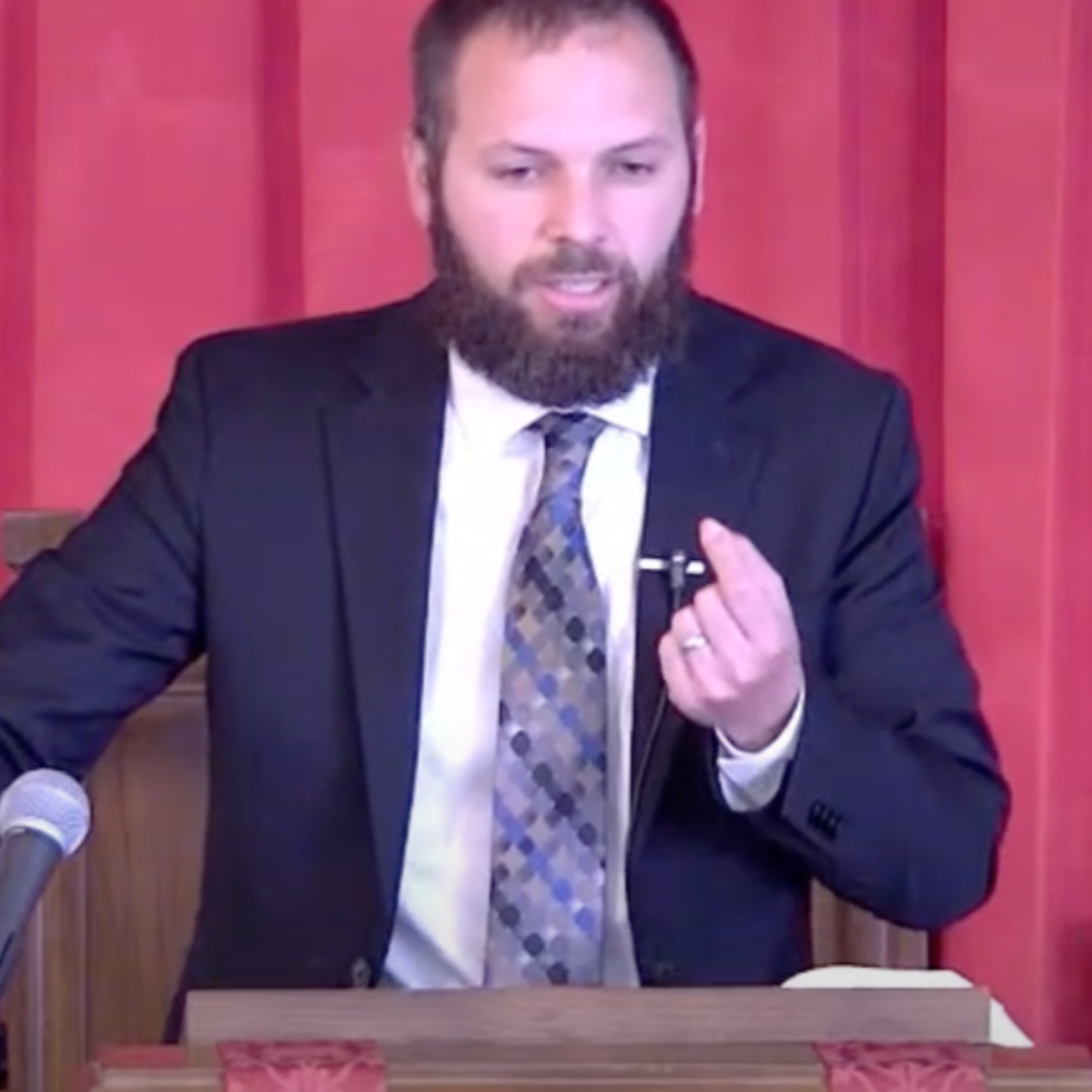
PODCAST · religion
Love of Truth
by Michael Grasso
Love of Truth is dedicated to biblical theology, careful exegesis, and thoughtful engagement with the most pressing theological, cultural, and ecclesiastical questions of our time.This podcast is rooted in historic, confessional Christianity and seeks to:Exposit Scripture with seriousness and depthDefend the coherence and unity of the Bible, especially the Old Testament’s witness to ChristAddress doctrinal error, cultural confusion, and rival truth claims with charity and precisionEquip Christians to love God with both heart and mind
-
20
Is Isaiah 53 About Jesus? Responding to Rabbi Tovia Singer
Does Isaiah 53 describe Israel—or does it describe the Messiah who suffers for Israel? In this video, I respond directly to claims made by Tovia Singer, focusing especially on a key concession that ultimately undermines his own interpretation.Singer openly acknowledges that the Messiah is the servant in Isaiah 52:13–15. That admission is crucial. He argues that the nations (“the goiim”) were mistaken in thinking the Messiah would be lowly, since he is in fact exalted. But this is not what the text actually says. Isaiah deliberately juxtaposes exaltation and humiliation. The astonishment of the nations is not that the Messiah is lowly instead of exalted, but that the one who is high and lifted up would willingly become lowly and suffer.This matters because Singer’s own admission—that the servant in Isaiah 52:13 is the Messiah—creates a continuity problem for his reading of Isaiah 53. The passage does not signal a change in the identity of the servant. In fact, Isaiah 52:13–15 and 53:1–12 describe the servant in strikingly parallel terms: righteous, exalted, rejected, afflicted, and ultimately vindicated. If the servant in the first section is the Messiah, then the servant in the second must be as well.Singer’s attempt to identify the servant in Isaiah 53 as corporate Israel therefore collapses under the weight of the text itself. It requires not only an unmarked shift in speakers at Isaiah 53:1, but also an unmarked shift in the identity of the servant—despite the literary and theological continuity of the passage.The broader context of Isaiah confirms this reading. While Israel is sometimes called God’s servant, the book repeatedly distinguishes between sinful Israel and a righteous servant who saves Israel. In Isaiah 42, the servant who opens blind eyes is explicitly contrasted with Israel, who is described as blind. In Isaiah 49, the servant is called “Israel” and yet is raised up to restore Israel and bring salvation to the nations. This is corporate solidarity: a single representative bears the name of the people and accomplishes their redemption.Isaiah 53 stands at the climax of this pattern. The servant is righteous, suffers vicariously, bears the sins of his people, dies an atoning death, and yet has his days prolonged—language that unmistakably points to death followed by resurrection and continuing intercession.This is not later Christian invention. It is Isaiah’s own message. And it is fulfilled in Jesus Christ, the righteous servant who suffered for sinners and now lives to intercede for them.#Isaiah53 #SufferingServant #Messiah #ChristInTheOldTestament #BiblicalTheology #Apologetics #HebrewBible #JesusChrist
-
19
Is Deuteronomy 18 about Christ? Responding to Rabbi Tovia Singer
Does Deuteronomy 18 really exclude Jesus as the Prophet like Moses? In this video, I respond to arguments made by Tovia Singer, who maintains that Joshua is the complete fulfillment of Moses’ prophecy and that no future messianic expectation remains.I begin with an important concession: Joshua is indeed a genuine fulfillment of Deuteronomy 18. Singer is right to highlight the strong textual connections between Joshua and Moses, and the Hebrew Bible itself explicitly presents Joshua as “like Moses” in significant ways. Where the argument breaks down, however, is in treating Joshua as the final fulfillment even from the perspective of the Hebrew Bible itself.The same text that affirms Joshua’s likeness to Moses also explicitly denies that he is the ultimate Prophet like Moses. Deuteronomy 34:10–12—written after Joshua’s death—declares that no prophet had yet arisen like Moses, one who knew the LORD face to face, performed unparalleled signs and wonders, and accomplished a definitive salvation. These criteria go far beyond leadership succession or Spirit-anointing, and by them Joshua clearly falls short.The Hebrew Bible itself confirms this by presenting later figures who also take up the “Moses pattern.” Elijah’s ministry intentionally mirrors Moses: wilderness provision, confrontation with false gods, theophany at Sinai, miraculous signs, and even the parting of waters. His successor Elisha intensifies this pattern further, performing greater signs and proclaiming a ministry marked not only by judgment but by grace and restoration. Yet even these prophet-like-Moses figures fail to bring lasting redemption—the kingdoms still fall, exile still comes, and Israel still waits.That expectation comes into sharp focus at the close of the Hebrew canon. Malachi promises a future Elijah who will come before the day of the LORD. If Elijah himself is a new Moses, then his future role as forerunner points forward to the final and ultimate Prophet like Moses—the Messiah.That Messiah is Jesus Christ. He alone knows God face to face, performs signs and wonders surpassing those of Moses and Elisha, accomplishes a true and final exodus from sin and death, and brings his people into the everlasting Promised Land of rest and peace—something neither Moses nor Joshua could ultimately do.Deuteronomy 18 does not undermine the Christian claim about Jesus. Read in its full biblical context, it demands him.#Deuteronomy18 #ProphetLikeMoses #JesusChrist #Messiah #BiblicalTheology #ChristInTheOldTestament #Apologetics #HebrewBible
-
18
Is Isaiah 53 about Israel?... Or the Messiah? Response to Dan McClellan
Does Isaiah 53 describe corporate Israel—or does it prophesy a suffering, atoning Messiah? In this video, I respond directly to claims made by Dan McClellan, particularly the assertion that the Christian reading of Isaiah 53 arose only after Jesus’ death and resurrection.I begin by identifying a central problem with this approach: it relies almost entirely on speculation. We are told that the disciples probably expected political deliverance, probably did not anticipate a dying and rising Messiah, and probably reinterpreted Isaiah 53 only once their hopes were dashed. Yet no evidence is offered for this reconstruction, nor is there any engagement with the strong messianic expectations already present in the Hebrew Bible prior to AD 40.From there, I turn to the main interpretive claim—that Isaiah 53 must refer to corporate Israel. While it is true that Isaiah 40–55 frequently speaks of Israel as God’s servant, it is demonstrably false that every reference to the servant in this section refers to the nation. In Isaiah 42, the servant who opens blind eyes is explicitly contrasted with Israel, who is described as blind. The singular servant saves the corporate servant.The same pattern appears in Isaiah 49, where the servant is called “Israel” and yet is raised up to restore Israel and bring salvation to the nations. This is corporate solidarity: a single representative bears the name of the people and accomplishes their redemption. The servant is distinguished from the nation precisely because he stands for them.Isaiah 53 continues this same trajectory. The servant is righteous, suffers vicariously, and brings justification to others—descriptions that do not fit the nation but do fit an individual savior. This reading coheres not only with Isaiah’s immediate context but with the broader biblical pattern of a suffering Messiah: from Genesis 3:15, to Joseph, to Moses, to David, to the persecuted prophets of Israel.Isaiah 53 does not invent a new idea. It brings this long-developing pattern to its theological climax by teaching that the Messiah’s suffering is substitutionary and atoning—fulfilled definitively in the death of Jesus Christ.#Isaiah53 #SufferingServant #Messiah #BiblicalTheology #ChristInTheOldTestament #Apologetics #HebrewBible #JesusChrist
-
17
Does Isaiah 9:6 say that the Messiah is God?
Does Isaiah 9:6 really call the Messiah “Mighty God,” or is that reading imposed by later theology? In this video, I respond to claims popularized by Dan McClellan that rely heavily on Ancient Near Eastern royal parallels to reinterpret the text.I begin by questioning the assumption that ANE conventions—especially Egyptian models of kingship—are the controlling key for interpreting the prophecy. Why should Israel, and Isaiah in particular, be bound to those categories? And even if such parallels are granted, they actually strengthen rather than weaken the claim: ANE kings were often deified, which aligns naturally with a divine Messiah.From there, I offer a constructive reading grounded in Isaiah’s own literary and theological context. The title “Mighty God” appears again in Isaiah 10, where it unquestionably refers to Yahweh himself. The surrounding context is judgment and restoration, and the promised king’s reign is explicitly said to last forever—language that builds directly on the Davidic Covenant’s promise of an eternal throne.Isaiah’s prophetic naming is not merely symbolic or aspirational. Throughout Scripture, when God names someone—Abraham, Israel, Immanuel—those names reveal something essential about God’s redemptive work. Isaiah 9:6 functions the same way: it communicates the very nature of the coming King.Finally, I trace the inner-canonical connections between Isaiah 7:14, 8:8, 9:6–7, and 11:1–16. Together, they present a coherent portrait of the Messiah as the divine Son of David whose just reign inaugurates a new creation and brings everlasting peace.The conclusion is clear: the best reading of Isaiah 9:6 is not that the Messiah merely represents God, but that he truly is God—and precisely because of this, his reign will never end.#Isaiah96 #MightyGod #Messiah #ChristInTheOldTestament #BiblicalTheology #DavidicCovenant #Apologetics #OldTestament #JesusIsGod
-
16
Does 2 Thessalonians 2:15 Refute Sola Scriptura?
Does Paul’s command to “hold fast to the traditions” in 2 Thessalonians 2:15 prove that binding Christian doctrine can exist outside of Scripture?In this video, I examine the appeal to apostolic oral tradition and the assumption that the Church today possesses authoritative teachings handed down orally from the apostles. I argue that this assumption collapses once we ask a simple but unavoidable question: how would we know that a specific doctrine not found in Scripture actually goes back to the apostles?Christians do not deny that the apostles taught orally or that their teaching was authoritative. The issue is access. We no longer hear the apostles speak. What we do have is the inspired, written record of their teaching—the New Testament. Scripture is therefore not a rejection of apostolic authority, but the only surviving form of it.When doctrines such as image veneration, purgatory, indulgences, prayers to saints, or papal infallibility are defended on the basis of alleged oral tradition—despite contradicting the apostles’ written teaching—they become historically unverifiable and immune to correction. At that point, authority no longer rests on apostolic teaching, but on ecclesiastical assertion.Some respond by claiming that God guarantees the truth of the Church, appealing to texts like 1 Timothy 3:15. But the New Testament repeatedly warns that false teachers will arise within the Church itself, claiming authority while teaching what contradicts the apostles. If appeals to unverifiable oral tradition are allowed to override Scripture, there is no way to identify or correct such false teaching.In this video, I argue that Scripture alone provides the necessary and God-given standard by which apostolic teaching is preserved, tested, and safeguarded. Sola Scriptura is not a denial of tradition—it is the only protection against false tradition.#SolaScriptura #ApostolicTradition #2Thessalonians215 #BibleAuthority #ChurchAuthority #Catholicism #EasternOrthodoxy #ChristianApologetics #ReformedTheology
-
15
Did the Church Create the Bible?
How do we know which books belong in the Bible?Did the early Church create the canon—or did it simply recognize what was already Scripture?In this video, I address the common claim that Christians cannot know which books belong in the Bible without the authority of the Church. I argue instead that Scripture itself gives us the boundaries, categories, and criteria for the canon—and that the Church’s role was never to grant authority, but to receive it.I begin with the Old Testament, where Jesus refers to Scripture as “Moses, the Prophets, and the Psalms”—the well-known threefold division of the Hebrew Bible. Even the book of Sirach presupposes this fixed corpus while excluding itself from it. The New Testament era did not inherit an undefined Old Testament.I then turn to the New Testament. While Scripture does not provide a formal table of contents, it clearly teaches that apostolic writings are the Word of God and must be received as such. Paul speaks of his own preaching and letters as the Word of God, Peter explicitly refers to Paul’s letters as “Scripture,” and the Church is said to be built on the foundation of the apostles and prophets—not the other way around.Finally, I show that this is exactly how the earliest Christians understood the canon. In 1 Clement, Old Testament Scripture, the words of Christ, Paul’s letters, and even Hebrews are all treated as equally authoritative—without appeal to a council or later ecclesiastical decree.If the Church determines the canon rather than recognizing it, then Scripture is no longer inherently the Word of God. But if Scripture is God’s Word by nature, then the Church stands under it—not above it. That is the biblical and historical picture of the canon.#BibleCanon #SolaScriptura #AuthorityOfScripture #EarlyChurch #ChurchHistory #NewTestament #OldTestament #ChristianApologetics #ReformedTheology
-
14
Is Sola Scriptura Unbiblical?
Does the Bible actually teach sola Scriptura, or is this a later Protestant invention?In this video, I examine Jesus’ confrontation with the Pharisees in Matthew 15 and Mark 7, where the issue is not whether tradition exists, but whether tradition may function as a parallel authority that overrides the Word of God. When the Pharisees challenge Jesus for not keeping the “tradition of the elders,” Jesus responds by exposing a deeper problem: traditions that nullify God’s commandments while being taught as binding doctrine.Jesus’ rebuke is not against custom as such, but against elevating human tradition to doctrinal authority in a way that undermines Scripture. This raises an unavoidable question for today: is this not the same authority structure claimed in modern Roman Catholic and Eastern Orthodox appeals to apostolic oral tradition?In this video, I show:Why the Pharisaic claim to Mosaic oral tradition is structurally identical to modern claims of apostolic oral traditionWhy there is no demonstrable way to show that specific post-apostolic dogmas actually go back to Moses or the apostlesHow traditions functioning as parallel authorities inevitably undermine Scripture in practiceWhy Jesus’ words in Matthew 15 directly challenge the authority model used today in Roman Catholicism and Eastern OrthodoxyAs a concrete example, I examine the veneration of images—its absence from Scripture, its condemnation in the early church, and its later dogmatic enforcement—showing how tradition can directly contradict the clear teaching of God’s Word.Far from denying history or the apostles’ teaching, sola Scriptura arises from Scripture itself as the necessary safeguard against false tradition. As Isaiah declares: “To the teaching and to the testimony!” (Isaiah 8:19–20).#SolaScriptura #BibleAuthority #Matthew15 #Mark7 #ChristianApologetics #Catholicism #EasternOrthodoxy #TraditionVsScripture #ReformedTheology
-
13
Does Exodus 21 Deny Fetal Personhood?
Does the Bible grant full personhood to the unborn? Some modern scholars argue that it does not—and that even key legal texts in the Old Testament fail to protect unborn life. In this video, I examine that claim by engaging directly with Exodus 21:22–25, one of the most frequently cited passages in the debate.Responding to arguments made by Dan McClellan, I walk through the text carefully and show that the common critical reading depends on grammatical and contextual mistakes. The passage does not describe a miscarriage followed by harm to the mother. Rather, it contrasts two outcomes related to the child: premature birth without harm, and injury or death to the child—each with corresponding penalties.I explain why the grammar of the Hebrew text requires this reading, why the Septuagint (LXX) confirms it, and why appeals to Ancient Near Eastern law codes fail to override the Bible’s own self-understanding as divinely revealed and morally distinct. Special attention is given to the first appearance of lex talionis (“eye for eye, tooth for tooth”) in Scripture—and why its initial use is so theologically significant.When read correctly, Exodus 21:22–25 teaches that unborn children possess full legal and moral personhood under God’s law. The implications are unavoidable: the taking of unborn life is a violation of the sixth commandment. The final question, then, is not merely exegetical but moral and spiritual—how will we respond to what Scripture clearly teaches?#Exodus2122 #BiblicalEthics #ProLife #AbortionDebate #OldTestamentLaw #BiblicalTheology #LexTalionis #UnbornLife #ChristianApologetics
-
12
Does Transubstantiation Imply Cannibalism?
The charge of cannibalism has accompanied the Christian church from its earliest days, largely because of its practice of the Lord’s Supper. From the beginning, Christians have rejected this accusation—but the way they rejected it is historically and theologically significant.In this video, I examine a modern Roman Catholic attempt to answer the charge of cannibalism by appealing to the glorified body of Christ in the Eucharist. I argue that this response not only fails to solve the problem, but actually undermines the bodily resurrection of Christ. If Christ truly rose bodily, then eating His glorified body would still involve consuming human flesh—and that is precisely the definition of cannibalism.The problem, I argue, is not Christianity, but the doctrine of transubstantiation itself.To test this claim, I turn to the early church. The fathers were repeatedly accused of cannibalism by pagan critics, giving us a crucial historical test case. If the early church believed in transubstantiation, we would expect them to defend themselves by insisting that they really did consume Christ’s physical body and blood. Instead, we find the opposite.This video examines clear testimony from early Christian writers such as Athenagoras, Augustine, Tertullian, and Clement of Alexandria, all of whom explicitly deny that Christians consume Christ’s physical flesh and blood and instead interpret the language sacramentally and spiritually. Their responses show that the modern transubstantiation framework—and the attempt to avoid cannibalism by appealing to a glorified body—was unknown to the early church.Finally, I explain why transubstantiation creates additional theological problems, including conflicts with Christology, idolatry in worship, and the biblical teaching that salvation comes through faith in Christ—not through the physical consumption of consecrated elements.If you are interested in the history of the Lord’s Supper, early Christian theology, or the doctrinal foundations of Protestant and Roman Catholic disagreements, this video aims to clarify the issue carefully, historically, and biblically.#Transubstantiation #LordsSupper #Eucharist #EarlyChurch #ChurchHistory #ReformedTheology #RomanCatholicism #SolaScriptura #Patristics #ChristianApologetics
-
11
Was the Trinity Common Knowledge in the OT?
Many Christians assume that the doctrine of the Trinity is either absent from the Old Testament or present only in vague, implicit form. Even defenders of Trinitarian theology often hesitate to argue that the Old Testament itself clearly taught a plurality of persons within the one God.In this video, I argue that this hesitation is unnecessary—and historically inaccurate.Building on earlier discussions of the Angel of the LORD, I approach the question from a different angle: Was the distinction of persons within the Godhead actually common knowledge among the people of God in the Old Testament?By examining the account of Manoah and his wife in Judges 13, we see not only that the Angel of the LORD is clearly distinguished from God and yet identified as God, but that Manoah’s reasoning assumes this reality as already known. Manoah does not invent a new theological category. Rather, when the Angel of the LORD receives sacrifice and ascends in the flame of the altar, Manoah immediately concludes, “We have seen God.”This recognition only makes sense if it was already understood that the Angel of the LORD could receive worship as God while remaining distinct from God.To show that this was not an isolated or late development, we also consider Hagar’s encounter with the Angel of the LORD in Genesis 16, where the same logic appears—again without controversy, explanation, or correction.The argument, then, is not merely that the Trinity can be derived from the Old Testament, but that a plurality of persons within the one God was part of the shared theological framework of God’s people long before the New Testament era.Far from being a later invention, Trinitarian theology reflects what God had already revealed about himself from the earliest periods of redemptive history.#Trinity #OldTestamentTheology #AngelOfTheLord #BiblicalTheology #ChristianDoctrine #Messiah #Judges13 #Genesis16 #ReformedTheology #ChristInTheOT
-
10
Is Wisdom in Proverbs 8 the Son of God?
Many Christians today are hesitant to argue that the doctrine of the Trinity is clearly taught in the Old Testament. Even when it is defended, it is often presented as merely implicit or embryonic. In this video, I argue that the book of Proverbs presents a fully Trinitarian theology, and that it does so at the most structurally significant points in the book.In Proverbs 1, 8, and 9, Wisdom is not portrayed as a mere poetic personification of an attribute of God. Rather, Wisdom is presented as a divine person who existed before creation, was begotten of the LORD from all eternity, and who pours out the Spirit on those who heed her voice. These are acts and relations that belong uniquely to God.Proverbs 8 describes Wisdom as present before time itself, “brought forth” before the foundations of the world—language that points to eternal generation. Proverbs 1 presents Wisdom as the one who pours out the Spirit and makes her words known, revealing a clear Word–Spirit relationship that parallels later New Testament teaching. When this is read in light of the structure of Proverbs 1–9 as the theological foundation of the entire book, it becomes clear that true wisdom is grounded in knowing and obeying Wisdom herself.Far from being a marginal or speculative idea, this Trinitarian framework is foundational to Solomon’s theology of wisdom. And the New Testament confirms this reading: Christ is explicitly identified as Wisdom incarnate, the one in whom all the treasures of wisdom and knowledge are found (Colossians 2:3), and the one who speaks of Wisdom as his own identity (Luke 7:35).In this video, we explore how Proverbs teaches:The eternal begetting of the SonThe Son’s role in pouring out the SpiritThe Trinitarian foundation of biblical wisdomHow all of Proverbs ultimately points to ChristThis is not reading the Trinity into Proverbs—it is recognizing what Proverbs itself is proclaiming.#Trinity #Proverbs #Wisdom #ChristInTheOldTestament #BiblicalTheology #OldTestamentTheology #TrinitarianTheology #JesusChrist #SonOfGod #HolySpirit #ReformedTheology #ChristCentered #ScriptureInterpretsScripture #BibleTeaching
-
9
The Messiah in the Book of Ruth
What is the theological message of the book of Ruth? Is it merely a story about God’s kindness to a Moabite woman, or does it play a larger role in redemptive history?In this video, I argue that Ruth is a thoroughly messianic book. Far from being an isolated moral tale, Ruth advances the biblical storyline toward the coming of Christ. Its climax—the genealogy at the end of the book—signals that the entire narrative is oriented toward the line of promise, moving from Judah to David and ultimately to the Messiah.We will examine why the genealogy in Ruth deliberately uses the classic “generations” formula from Genesis, how this connects Ruth to the original promise of the seed of the woman in Genesis 3:15, and why tracing the line through Perez (son of Judah) is theologically decisive. This shows that the author of Ruth understood and intentionally developed the messianic promise given to Judah in Genesis 49.From there, we will consider Boaz as a typological figure, showing how his role parallels Joseph’s: both act as redeemers during famine, both bring blessing to foreigners, and both prefigure the way the Messiah will bless the nations. Yet Boaz advances the pattern further—blessing comes not only through provision, but through redemption and marriage, pointing forward to Christ redeeming His bride.In the end, Ruth proclaims the forward march of redemptive history. It declares that salvation will come through the line of Judah, through David, and ultimately through Jesus Christ—the true Redeemer, the greater Boaz, and the fulfillment of God’s ancient promises.#Ruth #Messiah #ChristInTheOldTestament #BiblicalTheology #RedemptiveHistory #Boaz #SonOfDavid #SeedOfTheWoman #Typology #MessianicProphecy #OldTestamentTheology #JesusChrist #BibleTeaching #ReformedTheology
-
8
The Messiah in the Book of Judges
The book of Judges is often remembered as one of the darkest periods in Israel’s history—marked by moral collapse, repeated apostasy, and failed leadership. Because of this, many assume it is an unlikely place to find a robust doctrine of Christ or a meaningful anticipation of the Messiah.This video argues the opposite.By examining the structure, theology, and narrative logic of Judges, we see that the book is deliberately designed to point beyond itself—to the need for a true and everlasting King. Judges exposes the insufficiency of temporary deliverers and shows that Israel’s problem cannot be solved by cyclical reform, moral effort, or short-lived leadership.At the heart of this argument is the role of the Angel of the LORD, who frames the conquest narrative and reveals that Israel’s victories and failures depend entirely on God’s presence with them. When the Angel of the LORD fights for Israel, they cannot lose; when He withdraws, they cannot win. This reveals that redemption, conquest, and salvation are not human achievements, but divine acts—ultimately fulfilled in Christ.The judges themselves function as types of the coming King. They restrain ungodliness while they live, but their deaths expose the need for a ruler who will reign forever. The repeated refrain at the end of the book—“In those days there was no king in Israel”—is not merely historical commentary; it is a theological diagnosis and a messianic anticipation.Judges also emphasizes that these deliverers are empowered by the Spirit of God, pointing forward to a King who will rule in righteousness by the Spirit without measure. When read carefully, Judges presents a deeply Trinitarian vision of salvation: a King sent by God, empowered by the Spirit, who alone can bring lasting deliverance and true rest.This video shows how Judges, far from being a theological dead end, proclaims the necessity of the Messiah—and why its story finds its true resolution in Jesus Christ, the eternal King who succeeds where every judge failed.#Judges #Messiah #ChristInTheOldTestament #BiblicalTheology #AngelOfTheLORD #Typology #OldTestamentTheology #ChristCentered #ReformedTheology #JesusChrist #TrinitarianTheology #BibleTeaching #ScriptureInterpretsScripture #RedemptiveHistory
-
7
Christ's Miracles: Historical Fact or Fiction?
The miracles of Jesus are often misunderstood. Some dismiss them outright as impossible, assuming that miracles simply do not happen. Others treat miracles as common and ongoing, failing to see what makes Christ’s works utterly unique. Both errors obscure the true significance of what the Gospels record.In this video, we examine the miracles of Christ as they are presented in Scripture—public, undeniable, and without parallel in human history. Jesus did what no one else has ever done: He walked on water, opened the eyes of the blind, made the lame leap, and raised the dead. These works were not hidden or private experiences. They were performed openly, witnessed by multitudes, and known throughout entire regions.Far from being denied by Christ’s enemies, these miracles were acknowledged even by those who opposed Him. The Pharisees did not dispute that Jesus performed mighty works; they attempted instead to explain them away. Later Jewish and pagan sources likewise conceded the reality of Jesus’ miracles while rejecting their divine meaning. This widespread and early testimony sets Christ apart from every other religious figure in history.The purpose of these miracles is not merely to astonish. They are God’s own testimony that Jesus is the promised Messiah. As Jesus Himself said, “Even though you do not believe me, believe the works, that you may know and understand that the Father is in me and I am in the Father” (John 10:38).This video offers a historical and biblical defense of the reality of Christ’s miracles and explains why they demand a response. To reject them is not simply to reject a historical claim, but to reject the testimony God has given concerning His Son.
-
6
Out of Egypt I Called My Son: Matthew's Use of Hosea 11:1 (Part 2)
In Matthew 2:15, we read that Jesus’ coming out of Egypt fulfills Hosea 11:1 — “Out of Egypt I called my Son.” Critics like Rabbi Tovia Singer claim Matthew took this verse out of context. In a previous video, we looked at Hosea itself and showed that Matthew’s use of it was faithful to Hosea’s message. But the truth goes even deeper.In this video, we turn to the Pentateuch to see that the idea of the Messiah being brought out of Egypt was already taught long before Hosea — specifically in Numbers 24:8, part of Balaam’s third oracle: “God brings him out of Egypt and is for him like the horns of the wild ox.”Here we find that the Messiah’s life is patterned after that of His people. Just as Israel was brought out of Egypt in the first exodus, the Messiah — as the true Israel and head of His people — would also be brought out of Egypt in the climactic act of redemption.In this video we’ll explore:How Balaam’s third oracle in Numbers 24 points forward to the MessiahThe connection between Numbers 23–24 and Genesis 49’s prophecy of the Lion of JudahThe biblical concept of corporate personality — how the Messiah embodies His people’s storyWhy Moses’ life foreshadows the Messiah’s mission as the Prophet like MosesHow this shows that Matthew’s citation of Hosea 11:1 fits perfectly with the theology of the PentateuchThe message of the Torah is clear: the Messiah would recapitulate the history of His people, leading a greater exodus and fulfilling what Moses and the prophets foreshadowed.📖 Texts: Numbers 23–24; Exodus 3; Deuteronomy 18; Hosea 11; Matthew 2:15🎯 Theme: The Messiah embodies Israel’s history, fulfilling the first exodus in the final redemption.✝️ Key truth: Jesus is the true Israel and greater Moses, the One whom God brought out of Egypt to redeem His people once and for all.#MessianicProphecy #Numbers24 #Balaam #Hosea11 #Matthew2 #Typology #Moses #ProphetLikeMoses #OldTestament #BiblicalTheology #JesusIsMessiah #ChristInTheOT #ReformedTheology
-
5
Out of Egypt I called My Son: Matthew's Use of Hosea 11:1 (Part 1)
Did Matthew take Hosea 11:1 out of context when he said, “Out of Egypt I called my son”? Rabbi Tovia Singer argues that Matthew misused the Hebrew Bible — but a closer look shows that Matthew understood Hosea far better than his critics realize.Hosea does speak of the first exodus under Moses, but he also teaches that this historical event points forward to a greater exodus — one led by the Messiah, the true Son of God. The “old exodus” becomes the pattern for a future salvation when God will bring His people out of spiritual Egypt once again, through the Son of David who leads them home.In this video, we’ll explore:How Hosea uses Egypt and Assyria as archetypes for the enemies of God’s peopleWhy the prophets often portray exile and salvation in “exodus” languageHow Hosea 3:4–5 links the new exodus with the coming of David’s greater SonWhy Matthew 2:15’s use of Hosea 11:1 is a theologically faithful reading of Hosea’s messageHow this demonstrates that Jesus is the promised Messiah who fulfills Israel’s storyFar from twisting the Old Testament, Matthew reveals the deep unity of Scripture — that the Son called out of Egypt in Hosea’s prophecy is the Son of God who redeems His people in the final, climactic exodus.📖 Text: Hosea 11:1; Matthew 2:15🎯 Theme: The first exodus points to the greater salvation accomplished by Christ.✝️ Key truth: Jesus is the true Son of God who fulfills Hosea’s hope for a new exodus and final redemption.#MessianicProphecy #Hosea #Matthew #Typology #BiblicalTheology #OldTestament #RabbiToviaSinger #JesusIsMessiah #ReformedTheology #SecondExodus #ChristInTheOT
-
4
Sola Scriptura in the Early Church
Did the early church believe in Sola Scriptura, or was Scripture always subordinate to church tradition as Roman Catholic and Eastern Orthodox apologists often claim?In this episode, I examine the historical evidence from the first three centuries of the Christian church to address the claim that Sola Scriptura was a 16th-century Protestant innovation. While it is frequently asserted that the early fathers held a Roman Catholic or Eastern Orthodox view of tradition, the historical record tells a very different story.Building on previous videos on justification by faith and the Lord’s Supper, this discussion focuses specifically on authority and revelation. I show that the early church consistently treated Holy Scripture as the sole, supreme, and final source of divine revelation, while “tradition” was understood as nothing more than the faithful transmission and correct interpretation of Scripture itself—not an independent stream of revelation.Drawing heavily from Keith Mathison’s The Shape of Sola Scriptura, along with admissions from respected Eastern Orthodox and patristic scholars, we examine key figures such as Irenaeus, Tertullian, Clement of Alexandria, and Hippolytus, all of whom explicitly affirm the unique authority of Scripture. We then trace how a genuinely different conception of tradition begins to emerge only in the late fourth century, with its full development occurring much later in the Middle Ages.The conclusion is clear: the Roman Catholic and Eastern Orthodox model of Scripture plus autonomous oral tradition is historically unknown in the early church. The Reformers did not invent Sola Scriptura—they recovered it.
-
3
Is the Trinity in the Bible? Response to Rabbi Tovia Singer (Part 3)
Rabbi Tovia Singer has recently claimed that the doctrine of the Trinity was a later invention—that neither the New Testament writers nor even the early church fathers believed that Jesus is God. But is that true?In this video, we examine what the earliest Christian writers actually said about the deity of Christ long before the Council of Nicea. We look at direct quotations from the Apostolic Fathers and Apologists—Ignatius, Irenaeus, Justin Martyr, Clement of Alexandria, and Hippolytus—and show that the Trinity was not a fourth-century innovation, but the consistent faith of the church from the beginning.From Ignatius calling Jesus “God in man,” to Irenaeus saying that “Christ Himself, together with the Father, is the God of the living,” to Hippolytus’ explicit confession of the Father, Son, and Holy Spirit, the evidence is overwhelming: the early church believed exactly what the New Testament teaches—Jesus Christ is fully God and fully man.
-
2
Is the Trinity in the Bible? Response to Rabbi Tovia Singer (Part 2)
In a recent episode, I responded to Rabbi Tovia Singer’s claim that the New Testament authors never taught that Jesus is God. We saw that the NT overwhelmingly proclaims His deity. But the truth goes even deeper: the Old Testament itself—the very Scriptures Rabbi Singer claims to defend—also teaches the deity of the Messiah and the foundation of the Trinity.In this episode, we walk through several Old Testament passages that show this clearly. The author of Hebrews didn’t invent these ideas; he quoted them from the Tanakh. From Psalm 45 (“Your throne, O God, is forever and ever”) to Psalm 110, Isaiah 9:6, Micah 5:2, and Daniel 7:13–14, the prophets consistently reveal a divine Messiah—one who is God and yet distinct from God.We also look at the appearances of the Angel of the LORD throughout the Old Testament—who is repeatedly identified as God Himself, receives worship, forgives sin, and bears the divine name. Far from being a late invention, the Trinity is already revealed in the Law, the Prophets, and the Writings.
-
1
Is the Trinity in the Bible? Response to Rabbi Tovia Singer (Part 1)
Rabbi Tovia Singer recently claimed that the New Testament writers did not believe Jesus is God, arguing that the Trinity was a late, 4th-century invention. But this claim directly contradicts the plain teaching of Scripture itself.In this video, we examine the biblical evidence that Jesus is fully God—not only in the Gospel of John but throughout the entire New Testament, including the Synoptic Gospels, Paul’s epistles, Hebrews, and 1 John. From the paralytic’s forgiveness (Mark 2), to Christ’s claim to judge the world (Matthew 7), to Thomas’s confession “My Lord and my God” (John 20:28), and Paul’s declaration that Christ is “God over all, blessed forever” (Romans 9:5)—the testimony is overwhelming.We also respond to Singer’s methodological errors, showing that the New Testament’s distinction between the Father and the Son does not deny Christ’s deity but instead establishes the very foundation of Trinitarian doctrine. The early church did not invent the deity of Christ; it recognized what Scripture already taught.
We're indexing this podcast's transcripts for the first time — this can take a minute or two. We'll show results as soon as they're ready.
No matches for "" in this podcast's transcripts.
No topics indexed yet for this podcast.
Loading reviews...
ABOUT THIS SHOW
Love of Truth is dedicated to biblical theology, careful exegesis, and thoughtful engagement with the most pressing theological, cultural, and ecclesiastical questions of our time.This podcast is rooted in historic, confessional Christianity and seeks to:Exposit Scripture with seriousness and depthDefend the coherence and unity of the Bible, especially the Old Testament’s witness to ChristAddress doctrinal error, cultural confusion, and rival truth claims with charity and precisionEquip Christians to love God with both heart and mind
HOSTED BY
Michael Grasso
CATEGORIES
Loading similar podcasts...
Frequently Asked Questions
How many episodes does Love of Truth have?
Love of Truth currently has 20 episodes available on PodParley. New episodes are automatically indexed when they're published to the podcast feed.
What is Love of Truth about?
Love of Truth is dedicated to biblical theology, careful exegesis, and thoughtful engagement with the most pressing theological, cultural, and ecclesiastical questions of our time.This podcast is rooted in historic, confessional Christianity and seeks to:Exposit Scripture with seriousness and...
How often does Love of Truth release new episodes?
Love of Truth has 20 episodes. Check the episode list to see recent publication dates and frequency.
Where can I listen to Love of Truth?
You can listen to Love of Truth on PodParley by clicking any episode. We provide an embedded audio player for direct listening, and you can also subscribe via your preferred podcast app using the RSS feed.
Who hosts Love of Truth?
Love of Truth is created and hosted by Michael Grasso.
URL copied to clipboard!