
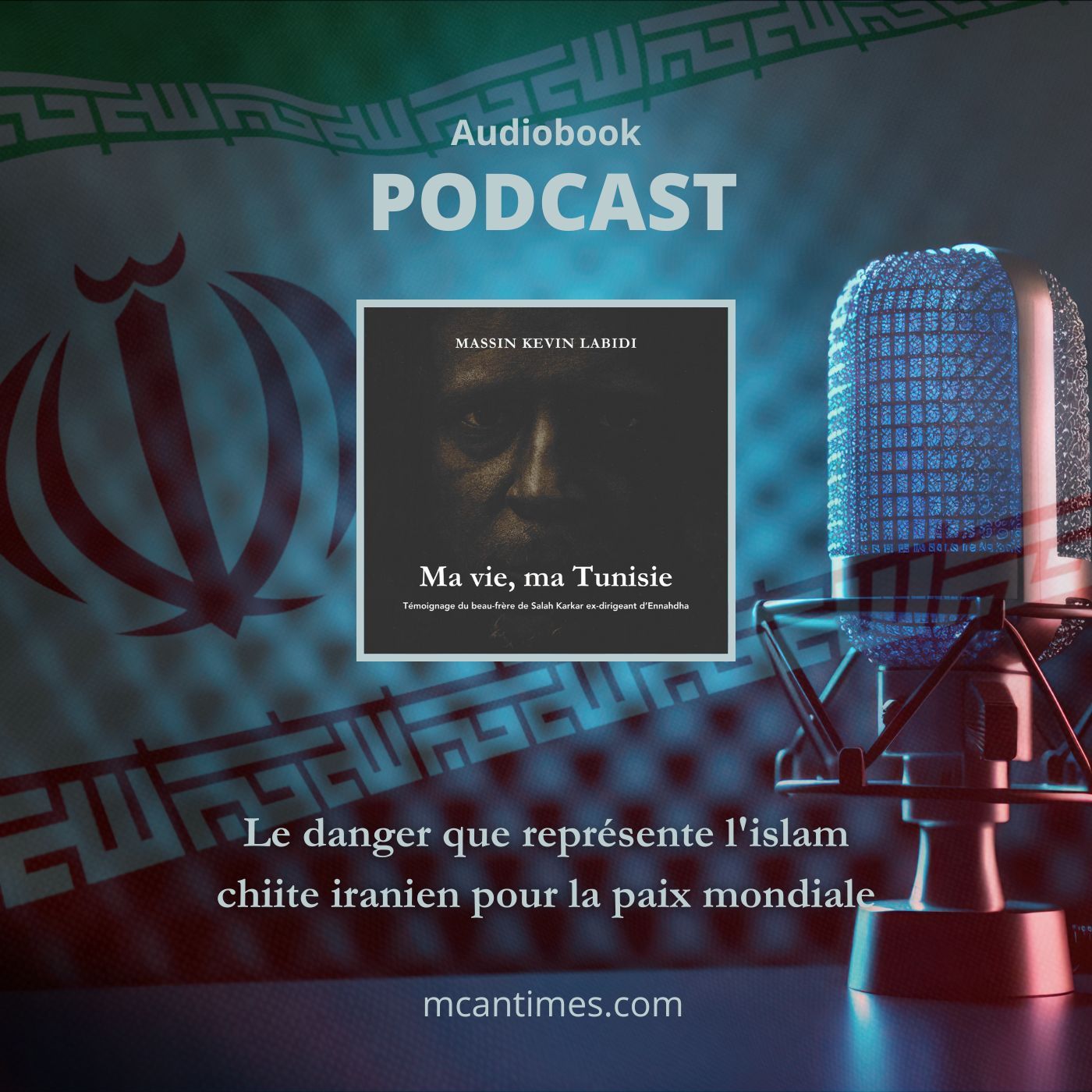
PODCAST · arts
Ma vie, ma Tunisie
by Massin Kevin Labidi
Ma vie, ma Tunisie : Témoignage du beau-frère de Salah Karkar, ex-dirigeant d’Ennahdha.Le danger mondial de l'islam politique.Les émotions et les espoirs d’une expérience personnelle aussi extraordinaire et bouleversante que celle que vous vous apprêtez à découvrir dans les pages qui suivent. «Ma vie, ma Tunisie : Témoignage du beau-frère de Salah Karkar, ex-dirigeant d’Ennahdha et ancien adepte du chiisme» est un récit poignant et profondément troublant qui nous plonge au cœur d’une réalité bien trop méconnue.Ce livre relate ma vie au sein d’une mouvance islamiste mahdiste en Iran entre 1983 et 1990. À une époque où le monde était en proie à de nombreux conflits et bouleversements, cette expérience personnelle a pris une dimension incroyablement intense et dévastatrice.La montée en puissance des ayatollahs en Iran à partir de 1979 a vu naître une machine de guerre sacrée préparant le retour du Sauveur, selon les préceptes chiites
-
252
الدرس 26 - المربع - الأيقونة 5 في اللوغوس
Become a supporter of this podcast: https://www.spreaker.com/podcast/ma-vie-ma-tunisie--6090182/support.
-
251
الدرس 25 - المثلث - الأيقونة 4 في اللوغوس
Become a supporter of this podcast: https://www.spreaker.com/podcast/ma-vie-ma-tunisie--6090182/support.
-
250
الدرس 24 - الخط الأيقونة 3 في اللوغوس
Become a supporter of this podcast: https://www.spreaker.com/podcast/ma-vie-ma-tunisie--6090182/support.
-
249
الدرس 23 - النقطة - الأيقونة 2 في اللوغوس
Become a supporter of this podcast: https://www.spreaker.com/podcast/ma-vie-ma-tunisie--6090182/support.
-
248
الدرس 22 - الدائرة - الأيقونة 1 في اللوغوس
Become a supporter of this podcast: https://www.spreaker.com/podcast/ma-vie-ma-tunisie--6090182/support.
-
247
الدرس 21 - مقدمة الأيقونات في الغنوصية
Become a supporter of this podcast: https://www.spreaker.com/podcast/ma-vie-ma-tunisie--6090182/support.
-
246
الدرس 20 - مفهوم اللوغوس اليوم
Become a supporter of this podcast: https://www.spreaker.com/podcast/ma-vie-ma-tunisie--6090182/support.
-
245
الدرس 19 - اللوغوس في المعتقدات - النفس
Become a supporter of this podcast: https://www.spreaker.com/podcast/ma-vie-ma-tunisie--6090182/support.
-
244
الدرس 18 - اللوغوس في المعتقدات - الروح
Become a supporter of this podcast: https://www.spreaker.com/podcast/ma-vie-ma-tunisie--6090182/support.
-
243
الدرس 17 - اللوغوس في المعتقدات - العقل
Become a supporter of this podcast: https://www.spreaker.com/podcast/ma-vie-ma-tunisie--6090182/support.
-
242
الدرس 16 - اللوغوس في المعتقدات - العدمية
Become a supporter of this podcast: https://www.spreaker.com/podcast/ma-vie-ma-tunisie--6090182/support.
-
241
الدرس 15 - اللوغوس في المعتقدات - العبثية
Become a supporter of this podcast: https://www.spreaker.com/podcast/ma-vie-ma-tunisie--6090182/support.
-
240
الدرس 14 - مقدمة اللوغوس في الغنوصية
Become a supporter of this podcast: https://www.spreaker.com/podcast/ma-vie-ma-tunisie--6090182/support.
-
239
الدرس 13 - العدم او الفراغ والبداء في الغنوصية
Become a supporter of this podcast: https://www.spreaker.com/podcast/ma-vie-ma-tunisie--6090182/support.
-
238
الدرس 12 - الدهر او الزمان والبداء في الغنوصية
Become a supporter of this podcast: https://www.spreaker.com/podcast/ma-vie-ma-tunisie--6090182/support.
-
237
الدرس 11 - مقدمة البداء في الغنوصية
Become a supporter of this podcast: https://www.spreaker.com/podcast/ma-vie-ma-tunisie--6090182/support.
-
236
الدرس 10 - المطلوب من متلقي المعرفة
الحلقة تتناول موضوع الفجوات العقلية والروحية وأهمية التفكير والتعلم. الحديث يركز على أهمية الوعي والتطور الشخصي، وكيف يمكن للإنسان أن يجد طريقه من خلال البحث والتعلم. الحوار يتضمن نصائح للمستمعين بالاستماع لحسهم الداخلي والسعي للتعلم والتطور. الحديث يشير إلى أن الروسية تساعد على فهم الذات والهدف في الحياة، وتعزز الوعي والسعادة. الحوار يشدد على أهمية البحث عن الإجابات للأسئلة الوجودية الأساسية، وكيف يمكن للروسية أن تساعد في هذا البحث. الحديث يشجع على التفكير والتعلم المستمر، ويعتبر الوعي والتطور الشخصي أموراً حيوية لتحقيق السعادة والراحة الحقيقية في الحياة.Become a supporter of this podcast: https://www.spreaker.com/podcast/ma-vie-ma-tunisie--6090182/support.
-
235
الدرس 09 - الأسلوب الذي اتبعه في الغنوصية
تحدث المتحدث في البودكاست عن أهمية كلمة "محدد" ودورها في نقل المعرفة والإرشاد. وأكد على أن كل شخص مسؤول عن نفسه وعن تطوير معرفته. وتحدث عن مدرسته الإبراهيمية ودوره في تقديم فكر جديد وحركات جديدة. وأشار إلى أن الإنسان يجب أن يسعى للمعرفة ويتبع ما يتوافق معها من أجل التطور والتقدم. وأوضح أن الغنوصية تساعد على فهم الغموض وتعطي إجابات موافقة للعصر والتطور العلمي. وختم بتأكيد أن الروسية الباطنية تسعى لتطوير البشرية وتقدمها نحو الأمان. يعتبر هذا البودكاست مهمًا لفهم دور الإرشاد والمعرفة في تحقيق التطور والتقدم الشخصي.Become a supporter of this podcast: https://www.spreaker.com/podcast/ma-vie-ma-tunisie--6090182/support.
-
234
الدرس 08 - أساليب التَّعليم في الغنوصيَّة
تناول البودكاست موضوع النظام العالمي الحالي وتأثيره على الروسيين، حيث تحدث المتحدثون عن تبعية الروسيين لهذا النظام وعدم تمردهم عليه، مشيرين إلى أهمية تجاوز هذه المرحلة وتغيير النهج الحالي. تمت مناقشة أسباب تبعية الروسيين للنظام العالمي، مثل الخوف أو المصلحة الشخصية، ودعوة للتمرد والتغيير الجذري. كما تطرق الحديث إلى الهرمية والطبقية في المجتمع الروسي وضرورة التخلص منها. وختم البودكاست بدعوة للوضوح وعدم الالتفاف في التعبير عن الذات، مشيرين إلى أن الروسية يجب أن تكون واضحة وصادقة دون الحاجة للمظاهر الخارجية. يعتبر البودكاست مهماً لفهم تأثير النظام العالمي على الفرد وضرورة التمرد عليه لتحقيق التغيير.Become a supporter of this podcast: https://www.spreaker.com/podcast/ma-vie-ma-tunisie--6090182/support.
-
233
الدرس 07 - سيرتي الذاتية
المتحدثون في البودكاست هم مازن كريم لعمل وهو مسيحي من تونس. تمت مناقشة تجربته في الدين والروحانية وأهمية الحياة والتعلم من التجارب. وقد حدثت هذه المناقشة في عمره البالغ 56 عامًا. يعتبر مازن أن الحياة تحتاج إلى التجديد والتحسين المستمر وأن الحياة هي امتحان يومي لمعرفة الذات. يشدد على أهمية الاستمرار في التعلم وعدم الاقتصار على الروتين. يعتقد أن المستقبل يبنى على الحاضر وأن العيش في الماضي يعرقل التقدم. يشجع الاستماع والتعلم من الآخرين والتطور المستمر. يعتبر أن الحياة هي فرصة للتحسن والتطور المستمر.Become a supporter of this podcast: https://www.spreaker.com/podcast/ma-vie-ma-tunisie--6090182/support.
-
232
الدّرس 06 - هل أنا مُعلّم؟
الحلقة تناولت موضوع الإنسان كمعلم وتم تحليل مفهوم المعلم والتعلم في العالم الطبيعي والإنساني. تمت مناقشة أهمية الوعي والتعلم المستمر لتطوير الذات والمعرفة. الحوار تم بين المتحدثين حول الحاجة إلى التجديد والتحليل المستمر للأفكار والمعارضات لتحقيق التطور والنمو الشخصي. تم التأكيد على أهمية التعبير عن الأحاسيس الداخلية والتعلم من بعضنا البعض لتحقيق التطور الشخصي. الحوار يسلط الضوء على أهمية الاستمرار في التعلم والتطور لتحقيق النمو الشخصي والثقافي. تم التأكيد على أن كل يوم يجب أن يكون فرصة للتعلم والتطور والتحسين الذاتي.Become a supporter of this podcast: https://www.spreaker.com/podcast/ma-vie-ma-tunisie--6090182/support.
-
231
الدرس 05 - التلميذ في الغنوصية
Become a supporter of this podcast: https://www.spreaker.com/podcast/ma-vie-ma-tunisie--6090182/support.
-
230
الدرس 04 - المعلمون الجدد في الغنوصية
Become a supporter of this podcast: https://www.spreaker.com/podcast/ma-vie-ma-tunisie--6090182/support.
-
229
الدرس 03 - المعلمون القدامى في الغنوصية
الحلقة تناولت موضوع المعلمين في الغنوصية، حيث تحدث المتحدث عن المعلمين القدامى وأهميتهم. تمت مناقشة تاريخ المعلمين القدامى وكيف تطورت أساليب التعليم على مر العصور. تم التأكيد على أن الأسلوب القديم قد فقد أهميته أمام الأساليب الحديثة التي انتشرت في العالم. كما تم التطرق إلى صعوبة وتحديات تعلم الطلاب على الأسلوب القديم، وكيف أنه لا يتناسب مع العصر الحديث وتطور التكنولوجيا. يعتبر فهم تاريخ المعلمين القدامى أمرًا مهمًا لفهم تطور التعليم والتعلم على مر العصور، وكيف يمكن تحسين أساليب التعليم لتناسب العصر الحالي واحتياجات الطلاب.Become a supporter of this podcast: https://www.spreaker.com/podcast/ma-vie-ma-tunisie--6090182/support.
-
228
الدرس 02 - هل نحن في حاجة الى معلم؟
الحلقة تتحدث عن أهمية التعلم والتعليم، وكيف يمكن للمعلم أن يساعد الطلاب على فهم الحقائق والتحرر من القيود العقلية. يتم استعراض مفهوم الغنوصية وكيف يمكن للإنسان أن يكون أسيرًا لأفكاره وقناعاته. يشدد المتحدث على أهمية الوعي بالذات والسعي للتعلم والتطور الشخصي. يتحدث أيضًا عن دور المعلم في توجيه الطلاب وتقديم الإرشاد اللازم لهم. يعتبر المعلم شخصًا مهمًا في توجيه الناس نحو الحقيقة والتطور. الحوار يسلط الضوء على أهمية البحث عن المعرفة والتعلم المستمر لتحقيق التطور الشخصي والروحي. يجب على الإنسان أن يكون متواضعًا ومتعلمًا ليتمكن من التقدم والنمو في حياته.Become a supporter of this podcast: https://www.spreaker.com/podcast/ma-vie-ma-tunisie--6090182/support.
-
227
الدرس 01 - مقدمة الإنسان والعرفان
تمت مناقشة الغنوصية في البودكاست بواسطة المتحدث الذي استعرض مفهوم المعرفة الداخلية والخارجية، وتأثير العوامل الخارجية على فهم الذات.تم التطرق إلى أهمية الوعي والتفكير الذاتي في تطبيق مبادئ الغنوصية في الحياة اليومية. تم التأكيد على أن الغنوصية تعتبر مسؤولية شخصية للتفكير بشكل مستقل والسعي للتحرر من القيود الخارجية.يعتبر البودكاست محاولة للإجابة عن العديد من الأسئلة المتعلقة بالغنوصية وتوضيح مفهومها وأهدافها. يعتبر الفهم الذاتي والتفكير النقدي جزءًا أساسيًا من الغنوصية، ويساعد في تحقيق السلام الداخلي والتحرر الفردي..تم التأكيد على أن الغنوصية تساعد الفرد على فهم نفسه والعالم من حوله، وتمكنه من التحكم في مصيره وتحقيق السلام الداخلي.Become a supporter of this podcast: https://www.spreaker.com/podcast/ma-vie-ma-tunisie--6090182/support.
-
226
76 - Author biography - Copyright info
The podcast transcript features Massin Kevin Labidi discussing his life and experiences in Tunisia, including his involvement in political Islam and subsequent journey towards developing his own philosophical beliefs. The book, "My Life, My Tunisia," written by Labidi, delves into his personal transformation and is available in French and Arabic. Labidi's biography highlights his upbringing in Tunisia, education in France, and travels to Iran and Syria for theological studies. The importance of this podcast lies in shedding light on Labidi's personal evolution from embracing political Islam to forming his own philosophical beliefs, emphasizing individual autonomy. The book's publication history and availability in multiple formats underscore the significance of sharing Labidi's story with a wider audience.Become a supporter of this podcast: https://www.spreaker.com/podcast/my-life-my-tunisia--6095925/support.
-
225
75 - Saving North Africa
The podcast transcript features Massin Kevin Labidi discussing the importance of working towards change in North Africa to ensure peace and stability in the region. Labidi, along with a group of young people, founded the Movement for Change in North Africa (MCAN) in May 2015, aiming to address the challenges faced by the region. The movement focuses on promoting the North African identity, defending human rights, and advocating for political and economic empowerment. Labidi emphasizes the need for unity and collaboration to combat oppression and obscurantism in North Africa. The MCAN was officially authorized in December 2015 and aims to create a platform for debate and knowledge dissemination to counter reactionary ideologies. The movement seeks to build a better future for North African generations by promoting progress and human values. The podcast highlights the urgency of addressing the cultural and ideological decline in North Africa to pave the way for a more prosperous and peaceful future.Become a supporter of this podcast: https://www.spreaker.com/podcast/my-life-my-tunisia--6095925/support.
-
224
74 - The path of freedom
The podcast featured Massin Kevin Labidi discussing his journey of leaving Islam and advocating for freedom of thought. He highlighted how Islam thrives on censorship and oppression, using double-speak to achieve its goals. Labidi emphasized the need for clear laws to punish those who restrict freedom of thought in the name of any ideology. He argued that freedom of expression is a right and censorship only leads to intolerance and violence. Labidi called for global recognition of human diversity and the right of all identities to exist. He stressed the importance of women in the fight against orthodox Islam and violence, urging them to organize and fight for education, peace, and dignity. The podcast serves as a testimony to prevent fanaticism and promote freedom and human independence.Become a supporter of this podcast: https://www.spreaker.com/podcast/my-life-my-tunisia--6095925/support.
-
223
73 - Reconnecting with Amazigh identity
The podcast featured Massin Kevin Labidi discussing the importance of the Amazigh identity in North Africa, emphasizing the need to move away from the Arab-Muslim identity imposed on the region. Labidi highlighted how the Arab-Muslim identity has led to an identity crisis among North African people, impacting their ability to progress and contribute to society. He argued that true identity is rooted in the land and culture of the region, rather than religion or race. Labidi called for a reconnection with the Amazigh past to reclaim freedom and individual identity, separate from the Arab-Muslim narrative imposed by external forces. The discussion focused on the need for North Africans to embrace their diverse heritage and reject the myth of a singular Arab-Muslim identity, advocating for a more inclusive and authentic representation of the region's history and culture.Become a supporter of this podcast: https://www.spreaker.com/podcast/my-life-my-tunisia--6095925/support.
-
222
72 - From house arrest in Tunis to exile
The podcast transcript features Massin Kevin Labidi discussing his petition against censorship in Tunisia in February 2006, which led to his home being visited by police and being warned to stop criticizing Islam. Labidi faced further restrictions and threats from Islamists, prompting him to consider leaving Tunisia. Despite participating in protests for freedom and secularism, the resurgence of Islamists in Tunisia made him feel increasingly unsafe. Labidi eventually decided to leave Tunisia in January 2012 for France via the Netherlands, as he saw his country becoming Islamized under Ennahdha's rule. The transcript highlights the challenges faced by individuals advocating for freedom of expression and secularism in the face of rising Islamist influence in Tunisia, leading to Labidi's decision to leave the country.Become a supporter of this podcast: https://www.spreaker.com/podcast/my-life-my-tunisia--6095925/support.
-
221
71 - The certainty
The podcast transcript features a speaker discussing their decision to leave group activities and work independently, taking responsibility for their own statements. The speaker emphasizes the importance of being the master of oneself and shaping one's own future based on personal convictions and integrity. This shift towards independence allowed the speaker to regain confidence and assert their uniqueness as an autonomous individual. The discussion highlights the importance of adapting to change in order to evolve and fulfill one's potential. The conversation took place as the speaker reflected on their journey towards self-reliance and personal growth. This podcast is important as it explores the significance of taking control of one's destiny, embracing change, and pursuing fulfillment through independence and self-responsibility.Become a supporter of this podcast: https://www.spreaker.com/podcast/my-life-my-tunisia--6095925/support.
-
220
70 - The scam and the disappointment
The podcast transcript involves a speaker discussing how their manuscript was manipulated by the Tunisian government for political purposes in 2005. The speaker had initially believed the government was taking them seriously, but later realized their work was being used to improve Tunisia's image internationally. The speaker faced obstacles and censorship for criticizing Islam and advocating for freedom of expression. They highlighted the limitations of the political opposition in Tunisia and criticized European media for supporting Islamist opponents. The speaker emphasized the need for each country to define freedom based on its own context and called for a consensus on the meaning of freedom. They argued that European-style freedom is limited and urged for a more nuanced understanding of freedom. The speaker faced backlash for supporting the freedom to criticize Islam and was eventually banned from Tunisian forums. The discussion underscores the importance of contextualizing freedom within each country's social, political, and economic realities.Become a supporter of this podcast: https://www.spreaker.com/podcast/my-life-my-tunisia--6095925/support.
-
219
69 - State censorship of Atheism under Ben Ali
The podcast transcript features a speaker discussing their efforts to counter Islamist extremism in Tunisia between 1998 and 2001. The speaker worked with friends to raise awareness and prevent young people from falling into extremism. They believed that change in the Middle East must come from free-thinking individuals within the Muslim community. The speaker transformed their house into an association headquarters, organizing meetings and cultural events. However, they faced censorship and harassment from the Tunisian government, leading to a decline in activity. The speaker's sister published a book about their experiences, which was manipulated by the Tunisian government to discredit the speaker's brother-in-law, who had ties to terrorist groups. The French government took the information seriously but lacked concrete evidence to take action. The speaker faced threats and censorship, ultimately leading them to consider leaving the country. The discussion highlights the challenges of fighting extremism and censorship in Tunisia and the manipulation of information by governments for political purposes.Become a supporter of this podcast: https://www.spreaker.com/podcast/my-life-my-tunisia--6095925/support.
-
218
68 - From abandoning the idea of God to Atheism
The podcast transcript features a speaker who discusses his journey from abandoning Islam to becoming an atheist. The speaker reflects on the deception of religion and the need to combat extremism within the Muslim community. The importance of promoting peace, humanism, and dialogue among different beliefs is emphasized. The speaker rejects the idea of a divine entity and advocates for individual freedom of belief. The concept of humanism and the importance of respecting others' beliefs while thinking for oneself are highlighted. The speaker emphasizes the need to break free from religious control and focus on humanity and self-improvement. The discussion touches on the role of faith, intuition, and feelings in shaping one's beliefs, ultimately advocating for a balance between spirituality and rationality without the need for a belief in God. The speaker encourages mutual respect and understanding among individuals of different beliefs.Become a supporter of this podcast: https://www.spreaker.com/podcast/my-life-my-tunisia--6095925/support.
-
217
67 - Return to the realities of the modern world
The podcast transcript features a discussion between the speaker and his sister about the rise of political Islam in Europe, which began in 1997 with the release of his book. The conversation delves into the impact of Islamism on freedom and democracy, the backlash against criticism of Islam, and the concept of Islamophobia. The speakers highlight the role of moderate Muslims, organizations, and the media in inadvertently supporting Islamism. They emphasize the need for Muslims to separate personal beliefs from orthodox Islam, reject outdated laws, and resist the influence of Islamist ideologies. The speakers also address the role of Gulf state financing in promoting Wahhabi Islam and the challenges faced by free thinkers in Arab Muslim countries. Overall, the discussion underscores the urgent need to combat Islamization and protect humanistic values from the destructive influence of political Islam.Become a supporter of this podcast: https://www.spreaker.com/podcast/my-life-my-tunisia--6095925/support.
-
216
66 - Return to origins and spiritual quest
The podcast transcript involves a speaker who traveled to Spain in August 1990 and then to Tunisia via Morocco and Algeria. The speaker faced surveillance by the Tunisian Intelligence Services due to his past in Syria and decided to escape political Islam by journeying through Berber countries. He faced challenges in Morocco, confided in a friend who betrayed him to the police, leading to his arrest and interrogation. The speaker was accused of being an enemy of Islam and faced torture and mistreatment by the Moroccan police. Eventually, he was sent back to Tunisia in January 1997. The importance of this story lies in highlighting the complexities and dangers faced by individuals with a past linked to Islamist movements, the betrayal by supposed friends, and the harsh realities of political persecution and mistreatment in foreign countries.Become a supporter of this podcast: https://www.spreaker.com/podcast/my-life-my-tunisia--6095925/support.
-
215
65 - In Syria in the clutches of El Rissali
The podcast transcript involves a speaker who recounts his experiences in Damascus, facing persecution from a terrorist network. The speaker, along with his wife and child, faced death threats, isolation, and harassment from the network, leading them to seek refuge in the French embassy. The speaker eventually collaborates with French intelligence services to provide information on the terrorist sect's plans to incite chaos and violence in various countries. The network's strategy includes destabilizing Arab Islamic countries, supporting far-right parties, circulating drugs, and inciting terrorism. The speaker's collaboration with authorities sheds light on the ongoing threat posed by the terrorist sect and the importance of addressing them as criminals rather than religious figures. The speaker's actions highlight the courage and determination needed to combat terrorism and protect communities from harm. The podcast emphasizes the need for vigilance and cooperation in addressing extremist threats to global security.Become a supporter of this podcast: https://www.spreaker.com/podcast/my-life-my-tunisia--6095925/support.
-
214
64 - The marriage as a reintegration attempt
The podcast transcript discusses the speaker's experience as an Islamist in Tunisia in 1987. The speaker, who remains unnamed, talks about his arrest, imprisonment, and subsequent release. He faces challenges reintegrating into society, including finding a job and dealing with rumors about his past involvement in Islamism. Despite efforts to move on, he struggles with feelings of rejection and desperation. Eventually, feeling lost and seeking a sense of purpose, he considers rejoining the Islamist movement. The speaker reflects on the complexities of leaving a violent ideology and the temptation to return to it. The importance of the transcript lies in shedding light on the challenges faced by former extremists in reintegrating into society and the internal struggles they may encounter in their journey towards redemption.Become a supporter of this podcast: https://www.spreaker.com/podcast/my-life-my-tunisia--6095925/support.
-
213
63 - Imprisonment
The podcast transcript features Massin Kevin Labidi discussing the tense political climate in Tunis in March 1987, with rising tensions between the government and Islamist forces. Labidi reflects on his internal struggle of whether to collaborate with authorities or join the popular revolt to save his country. He describes the arrest of prominent figures like Rachid Ghannouchi and the complex web of rivalries and espionage at play. Labidi eventually gets arrested, tortured, and thrown into a cell, where he decides to reveal information but refuses to become a mole. The experience leads him to reject dependence on any authority and appreciate certain aspects of President Bourguiba's political work. The discussion sheds light on the dangerous political landscape in Tunisia at the time and the personal turmoil faced by individuals caught in the midst of conflicting ideologies and power struggles.Become a supporter of this podcast: https://www.spreaker.com/podcast/my-life-my-tunisia--6095925/support.
-
212
62 - The uncertainty
The podcast transcript features Massin Kevin Labidi discussing his journey through doubt and uncertainty between 1987 and 2001, starting with his arrest during Bourguiba's rule. He describes his existential crisis, inner struggle, and eventual rejection of orthodox Islam and Islamism. After his release under Ben Ali's rule, he traveled to Syria in search of answers, eventually turning to mystical Islam and Sufism. His doubts about the foundations of Islam and meditations in Morocco led him to atheism. The importance of this discussion lies in highlighting the personal and philosophical journey of an individual grappling with doubt, belief, and ultimately, a shift towards atheism. This narrative sheds light on the complexities of faith, personal growth, and the search for truth in the face of uncertainty.Become a supporter of this podcast: https://www.spreaker.com/podcast/my-life-my-tunisia--6095925/support.
-
211
61 - The betrayal of el Ghannouchi and the coup
The podcast transcript discusses the events surrounding the coup in Tunisia in 1987, involving various key figures such as Zine El Abidine Ben Ali, Habib Bamar, and Radel Ganci. The plot to overthrow President Bourguiba, led by Ben Ali, involved manipulating alliances with different factions, including the Islamists and moderate branches of the MTI. Ben Ali's rise to power was supported by foreign countries and internal collaborators, leading to the elimination of his rivals and solidifying his control over Tunisia. The transcript also touches on the role of Radel Ganci in betraying his own associates and the subsequent power struggles within the Islamist movement. The events described shed light on the complex political landscape in Tunisia during that period and provide insights into the dynamics that shaped the country's future. The narrative highlights the manipulation, betrayals, and power plays that ultimately led to Ben Ali's authoritarian rule and the subsequent opposition movements that emerged in the following years.Become a supporter of this podcast: https://www.spreaker.com/podcast/my-life-my-tunisia--6095925/support.
-
210
60 - Salah Karkar, the MTI, and El Rissali
The podcast transcript discusses the conflict within the Tunisian Islamic movement, focusing on Salah Karkar's opposition to Rached el Ghannouchi's leadership of the MTI. The speakers involved are Massin Kevin Labidi, who narrates the events, and Salah Karkar, a key figure in the movement. The discussion covers the ideological differences between Karkar and Ghannouchi, the infiltration of state institutions by the MTI, and the secret agreements with El Rissali, a Shiite organization. The importance lies in understanding the internal dynamics of the Islamic movement in Tunisia, the influence of external actors like Gulf countries, and the strategies employed by different factions to achieve their goals. The podcast sheds light on the complex relationships and power struggles within the Islamist movement, highlighting the impact on Tunisian society and politics.Become a supporter of this podcast: https://www.spreaker.com/podcast/my-life-my-tunisia--6095925/support.
-
209
59 - The learning of fear
The podcast transcript involves a conversation between Massin Kevin Labidi and Salah Karkar, discussing Karkar's double game within MTI and his secret group with hidden motives. It also touches on Labidi's suspicions towards El Tlili, Karkar's right-hand man, and the network's plans to supply weapons. Labidi secretly manipulates the network for his own purposes, aiming to lead a peaceful religious revolution. The importance lies in the power struggles, betrayals, and manipulations within the Islamist groups, highlighting the complexities and dangers of such movements. The conversation reveals the intricate web of deceit and intrigue that characterizes the political landscape during the revolution, emphasizing the need for caution and strategic thinking in navigating these treacherous waters. The transcript provides insight into the internal dynamics of Islamist groups and the personal struggles of individuals caught in the midst of power games and conflicting loyalties.Become a supporter of this podcast: https://www.spreaker.com/podcast/my-life-my-tunisia--6095925/support.
-
208
58 - Return to the West and break with the network
The podcast transcript discusses the speaker's journey back to Europe in November 1986 with Ali Akbar and El Moisi, who needed medical treatment for his daughter. The speaker, feeling trapped by obligations, was asked to interpret for an injured network member with fake military papers. As the speaker's passport expiration approached, he felt manipulated and decided to break away from the network's control. Despite pressure to go to Syria or Tunisia, the speaker insisted on returning to Paris, refusing to participate in further operations. He eventually fabricated a story to the Tunisian consulate to get a new passport and return home. The importance lies in the speaker's realization of being used by the network and his decision to prioritize his own well-being over their demands, highlighting the manipulation and lack of regard for individuals within extremist organizations.Become a supporter of this podcast: https://www.spreaker.com/podcast/my-life-my-tunisia--6095925/support.
-
207
57 - Return to El Qaem school
The podcast transcript features Massin Kevin Labidi discussing his experiences at El Qaem School in June 1986. Labidi was tasked with training Tunisian students in Shiite doctrine, leading to conflicts within the group due to differing beliefs and allegiances. The arrival of an eleventh student further divided the group into factions, ultimately leading to the failure of Labidi's mission. Labidi's relationship with the network deteriorated, leading to his replacement and assignment to a menial task. Despite his reservations, Labidi prepared for a final mission in Belgium under a new identity. The transcript highlights the challenges of navigating religious and political tensions within extremist groups and the personal struggle to break free from sectarian influences. The importance lies in shedding light on the internal dynamics and conflicts within extremist networks, as well as the personal journey of disillusionment and self-discovery within such environments.Become a supporter of this podcast: https://www.spreaker.com/podcast/my-life-my-tunisia--6095925/support.
-
206
56 - Tour for the preparation of the coup in Tunisia
The podcast transcript features Massin Kevin Labidi discussing his involvement in a coup preparation in Tunisia in May 1986. Labidi was tasked with training Tunisian elements in Tehran and introducing Abou Ouajih to local Islamists. He strategically got expelled from a Libyan school to maintain cover and attended secret Baath Party meetings in Paris as a double agent. Labidi and Abou Ouajih traveled across Tunisia, meeting with religious revolutionaries and preparing for future demonstrations against the government. They returned to Paris with reports and planned a meeting in Syria as per agreements made in Brussels. The importance of this discussion lies in shedding light on the intricate planning and execution of a coup, showcasing Labidi's role as an organizer, recruiter, emissary, and double agent in the operation.Become a supporter of this podcast: https://www.spreaker.com/podcast/my-life-my-tunisia--6095925/support.
-
205
55 - Agent recruiter mission in Paris
The podcast transcript involves a conversation between two speakers, discussing a mission in Paris involving recruiting and training Islamist candidates for a planned attack in Tunisia against the government of Bourguiba. The speakers discuss the importance of selecting committed individuals for the mission and ensuring their loyalty to the cause. The mission involves sending recruits to Iran for training and then to Tunisia for the attack. The conversation also touches on the need for financial support for the operation and the role of the network in establishing a new regime in Tunisia. The speakers emphasize the importance of secrecy and deception in carrying out the mission. The conversation highlights the complexities and risks involved in recruiting and training individuals for a terrorist operation. The mission is significant as it sheds light on the strategies and tactics used by extremist groups to carry out attacks and overthrow governments.Become a supporter of this podcast: https://www.spreaker.com/podcast/my-life-my-tunisia--6095925/support.
-
204
54 - Salah Karkar’s approach in Tunis
The podcast transcript discusses a mission in Tunis in early April 1985 involving Sala Carer and Karim. Karim is sent to Tunisia to establish contact with his brother-in-law and deliver documents to the Tunisian leader for the revolution against the government. Karim returns to his homeland, reconnects with his family, and tries to convince his sister, Samira, of the benefits of the revolution in Iran. He meets with Sala Carer, who introduces him to Islamist leader Mohammad Fawzi. However, Karim is excluded from the meeting, leading to a request for urgent financial support from Tehran for the revolution in Tunisia. Karim promises to send 10 individuals for training in Iran in exchange for the needed resources. The importance lies in the intricate web of relationships, political maneuvering, and the challenges faced in carrying out a revolutionary mission in a foreign land.Become a supporter of this podcast: https://www.spreaker.com/podcast/my-life-my-tunisia--6095925/support.
-
203
53 - A counteroffensive from within
The podcast featured a discussion on countering Islamist extremism, emphasizing the need for action in various domains such as military, political, social, economic, and cultural. The speakers highlighted the importance of differentiating between terrorists and Islamists, as well as Muslims and Islamists, to effectively combat extremism. They proposed measures like creating secular media outlets, banning religious symbols in certain spaces, and promoting freedom of conscience. The speakers also stressed the significance of international cooperation and education to address the root causes of Islamist fundamentalism. The discussion underscored the urgency of taking a comprehensive approach to tackle the threat posed by Islamist extremism and emphasized the role of free-thinking individuals and organizations in this endeavor. The podcast provided a detailed action plan to combat the spread of Islamist ideology and called for a united effort on a global scale to eradicate this destructive force.Become a supporter of this podcast: https://www.spreaker.com/podcast/my-life-my-tunisia--6095925/support.
We're indexing this podcast's transcripts for the first time — this can take a minute or two. We'll show results as soon as they're ready.
No matches for "" in this podcast's transcripts.
No topics indexed yet for this podcast.
Loading reviews...
ABOUT THIS SHOW
Ma vie, ma Tunisie : Témoignage du beau-frère de Salah Karkar, ex-dirigeant d’Ennahdha.Le danger mondial de l'islam politique.Les émotions et les espoirs d’une expérience personnelle aussi extraordinaire et bouleversante que celle que vous vous apprêtez à découvrir dans les pages qui suivent. «Ma vie, ma Tunisie : Témoignage du beau-frère de Salah Karkar, ex-dirigeant d’Ennahdha et ancien adepte du chiisme» est un récit poignant et profondément troublant qui nous plonge au cœur d’une réalité bien trop méconnue.Ce livre relate ma vie au sein d’une mouvance islamiste mahdiste en Iran entre 1983 et 1990. À une époque où le monde était en proie à de nombreux conflits et bouleversements, cette expérience personnelle a pris une dimension incroyablement intense et dévastatrice.La montée en puissance des ayatollahs en Iran à partir de 1979 a vu naître une machine de guerre sacrée préparant le retour du Sauveur, selon les préceptes chiites
HOSTED BY
Massin Kevin Labidi
Loading similar podcasts...
Frequently Asked Questions
How many episodes does Ma vie, ma Tunisie have?
Ma vie, ma Tunisie currently has 50 episodes available on PodParley. New episodes are automatically indexed when they're published to the podcast feed.
What is Ma vie, ma Tunisie about?
Ma vie, ma Tunisie : Témoignage du beau-frère de Salah Karkar, ex-dirigeant d’Ennahdha.Le danger mondial de l'islam politique.Les émotions et les espoirs d’une expérience personnelle aussi extraordinaire et bouleversante que celle que vous vous apprêtez à découvrir dans les pages qui suivent. «Ma...
How often does Ma vie, ma Tunisie release new episodes?
Ma vie, ma Tunisie has 50 episodes. Check the episode list to see recent publication dates and frequency.
Where can I listen to Ma vie, ma Tunisie?
You can listen to Ma vie, ma Tunisie on PodParley by clicking any episode. We provide an embedded audio player for direct listening, and you can also subscribe via your preferred podcast app using the RSS feed.
Who hosts Ma vie, ma Tunisie?
Ma vie, ma Tunisie is created and hosted by Massin Kevin Labidi.
URL copied to clipboard!