
PODCAST · religion
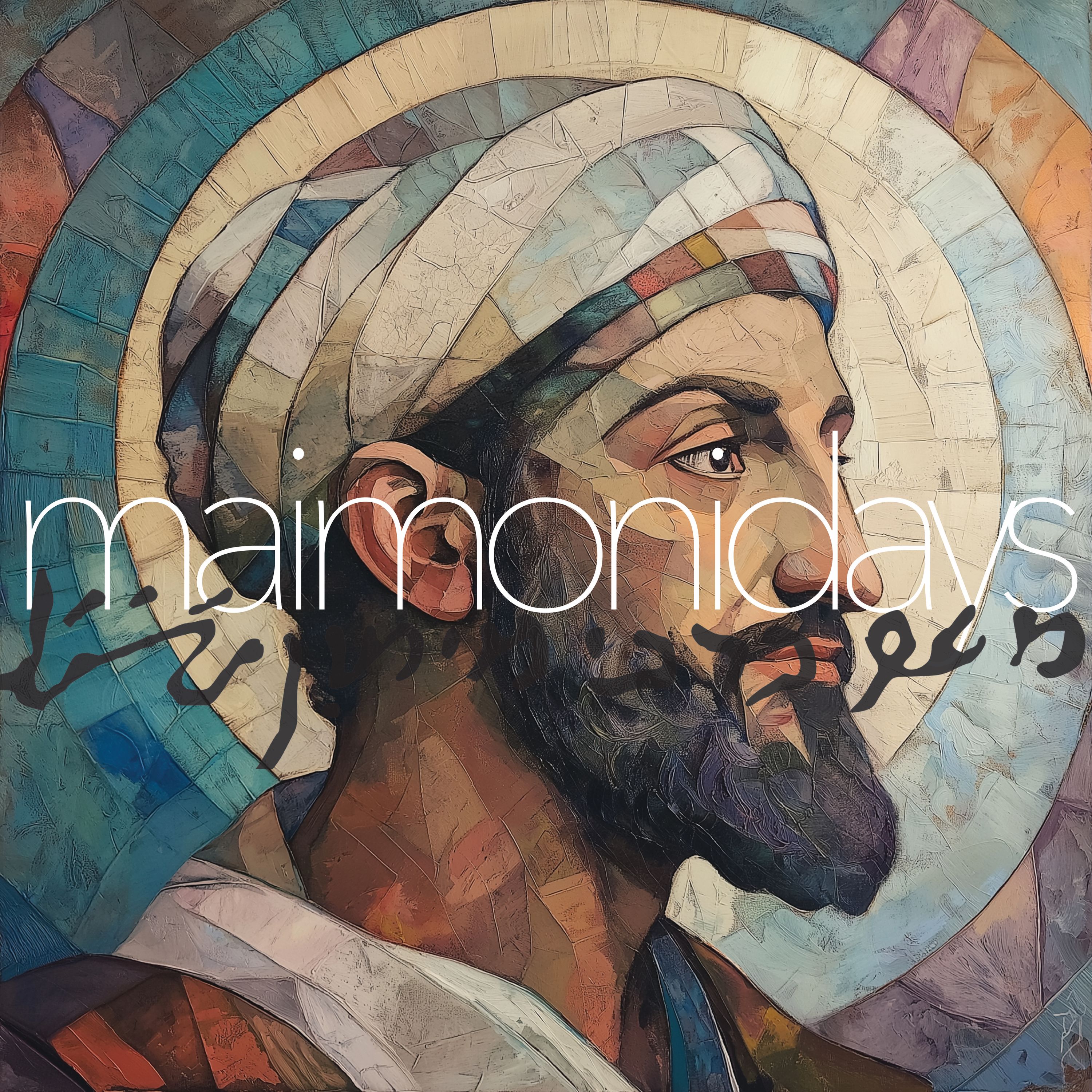
Maimonidays
by Adam Zagoria-Moffet, St Albans Masorti Synagogue
Maimonides's Mishnéh Torah, one Monday at a time.
-
47
Avodah Zarah 6:3-6:8
We discuss the laws of Molech (and the offering of children thereto) and the issues around prostration, particularly upon stone
-
46
Avodah Zarah 5:7-6:2
We continue the discussion of the Mesit (proselytiser) and begin to look at the issues of Ov and Yidoni in Chapter 6 (Sorcery)
-
45
Avodah Zarah 5:2-5:6
We continue the discussion of proselytism with the Mésit (missionary) and the consequences for the Musat (the one converted by a proselytiser)
-
44
Avodah Zarah 4:9-5:1
Concluding the laws of the Ir haNidahat (the condemned city) and beginning to look at the law of missionaries and proselytism (haMésit)
-
43
Avodah Zarah 4:1-4:8
We begin our exploration of Chapter 4 and the laws of Ir haNidachat (the Condemned City), a fascinating test case in rabbinic jurisprudence
-
42
Avodah Zarah 3:3-3:11
Concluding Chapter 3, we investigate the laws of representational art and its relation to idolatry
-
41
Avodah Zarah 2:7-3:2
Blasphemy!
-
40
Avodah Zarah 2:2-2:6
Introducing the core concepts behind a halakhic idea of idolatry
-
39
Avodah Zarah 1:3-2:1
We continue the history of idolatry and begin to introduce the key concepts and ideal behind the laws of Avodah Zarah
-
38
Talmud Torah 7:11 - Avodah Zarah 1:2
We conclude the laws of Torah Study and begin Rambam's aetiology of idolatry in the laws of Avodah Zarah
-
37
Talmud Torah 7:1-10
Continuing the exploration of the laws of Nidui (Ostracism) and Herem (Excommunication)
-
36
Talmud Torah 6:9-14
Concluding Chapter 6 of Hilkhot Talmud Torah, we look at the behaviour expected of rabbis and leaders, and what tools one has to publicly shame someone who is misbehaving (Nidui and Herem)
-
35
Talmud Torah 6:1-8
We continue our exploration of the codes of honour, this time regarding Sages in general (rabbinim students of the wise, and others)
-
34
Talmud Torah 5:7-13
Continuing our study of Chapter 5, the reverence and respect due to teachers by students – and what students are owed from their teachers
-
33
Talmud Torah 5:1-6
Starting Chapter 5, we explore how and when one is due respect to their teacher
-
32
Talmud Torah 4:5-9
In the conclusion of Chapter 4, we look more at what makes for a good student, a good question, and the best classroom environment
-
31
Talmud Torah 3:13-4:4
Finishing Chapter 3 and moving into Chapter 4, Rambam investigates what makes for an ideal student and a good teacher.
-
30
Talmud Torah 3:4-3:12
In the continuation of Chapter 3, we look at the ideal image of a Torah scholar, particularly how it relates to work and making a living. Rambam's detailed takedown anyone who would claim wisdom but eschew work is a refreshing and needed reminder in today's Jewish world.
-
29
Talmud Torah 2:1-3:3
Rambam continues exploring the principles of education
-
28
Talmud Torah 1
We start on the laws of Torah study with general principles about learning – who can and should learn, when and how often, and to what extent does the obligation to education apply to ourselves as well as our children.
-
27
Dé'ot 7
We conclude Hilkhot Dé'ot with more on the laws of speech as well as guidance around grudges and vengeance (both bad!)
-
26
Dé'ot 6:10-7.4
We conclude Chapter 6 with a look at the significance of the socially vulnerable in our ethics and then turn to Chapter 7, the final bit of Dé'ot, which focusses extensively on the laws of speech.
-
25
Dé'ot 6
We review (almost all of) Chapter 6 of Hilkhot Dé'ot – a chapter discussing the importance of good friends, and friends who are good enough to tell you off when you're not so good!
-
24
Dé'ot 5:9-13
In the conclusion to Chapter 5 of Dé'ot, we cover the personal, sartorial and financial behaviour of talmidé hakhamim.
-
23
Dé'ot 5:1-8
In the first half of Chapter 5 we review the behaviours expected of a Sage – in eating, drinking, bathing, sexual intimacy, and even in toilet habits..
-
22
Dé'ot 4:11-22
In the second half of Chapter 4 of Hilkhot Dé'ot, we dive into Rambam's medicinal recommendations for eating, drinking, bathing, and having a healthy sex life.
-
21
Dé'ot 4:1-10
The start of Chapter 4, all about food and medicine
-
20
Dé'ot 3
In the third chapter of Dé'ot, Rambam walks us through some of the concepts critical to good behaviour, exploring asceticism and hedonism, the balanced life, and what it means to have kavvanah
-
19
Dé'ot 2
We continue our exploration of morality, with Rambam suggesting a model of medicalisation and defining further the categories of Hakham, Hasid and Tsaddik.
-
18
Dé'ot 1
As we turn to Hilkhot Dé'ot, we see the groundwork for Rambam's concept of morality and moral behaviour
-
17
Yesodé haTorah - 10
A final look at prophets, true and false
-
16
Yesodé haTorah - 9
We look at how to identify a false prophet and how the chain of authority and assent relates to the text and law of the Torah
-
15
Yesodé haTorah - 7:7-8:3
What prophets should we believe? What is the nature of belief itself in Judaism?
-
14
Yesodé haTorah 7:1-6
We look at Ch 7 - beginning the discussion of Nevu'ah (Prophecy)
-
13
Yesodé haTorah 6
In Chapter 6 we read all about divine names and divine objects – how we are to determine what is sacred and what is not, and then how we are meant to treat the sacred, particularly the sacred divine names.
-
12
Yesodé haTorah 5:6-11
Concluding Chapter 5, we explore the situations in which one may transgress Halakhah for therapeutic and medical purposes
-
11
Yesodé haTorah 5:1-5
We dive into Chapter 5 and into a discussion of Kiddush haShem and Hillul haShem. What is the concept of martyrdom in Judaism? When is one obligated to allow themselves to be killed instead of violating a command.
-
10
Yesodé haTorah 4:10-13
We conclude Chapter 4 and with it, the introductory chapters covering the esoteric topics of Ma'aseh Merkavah (Theology) and Ma'aseh Merkavah (Science)
-
9
Yesodé haTorah 4:6-9
We continue Chapter 4 of Yesodé haTorah with an exploration of the human 'soul', the question of what separates humans from other animals, and the basis for the belief that something of us survives death
-
8
Yesodé haTorah 4:1-5
We begin to look at Chapter 4 of Yesodé haTorah, focussed on the ancient chemical system of Four Elements
-
7
Yesodé haTorah 3
We read Chapter 3 of Yesodé haTorah – in which Rambam explains his conception of the cosmos, his views on astronomy and astrology and more!
-
6
Yesodé haTorah 2:9-12
In the conclusion of Chapter 2 of Yesodé haTorah – we consider the nature of God, life, consciousness and knowledge – and then receive a warning as to the esoteric danger of such radical ideas.
-
5
Yesodé haTorah 2:1-8
In our third session we dive into Chapter 2 of Yesodé haTorah – an exploration of what it means to love and fear God, a taxonomy of angelic beings and the introduction of the dichotomy of form and matter.
-
4
Yesodé haTorah 1:8-12
We continue Chapter 1 of Yesodé haTorah, discussing anthropomorphism and divine attributes, as well as a fascinating exploration of Exodus 33-34
-
3
Yesodé haTorah 1:1-7
In our first session we cover some background on the Rambam, the Mishné Torah, and dig into the first chapter of Yesodé haTorah (the Fundamentals of the Torah)
We're indexing this podcast's transcripts for the first time — this can take a minute or two. We'll show results as soon as they're ready.
No matches for "" in this podcast's transcripts.
No topics indexed yet for this podcast.
Loading reviews...
ABOUT THIS SHOW
Maimonides's Mishnéh Torah, one Monday at a time.
HOSTED BY
Adam Zagoria-Moffet, St Albans Masorti Synagogue
CATEGORIES
Loading similar podcasts...
URL copied to clipboard!