
PODCAST
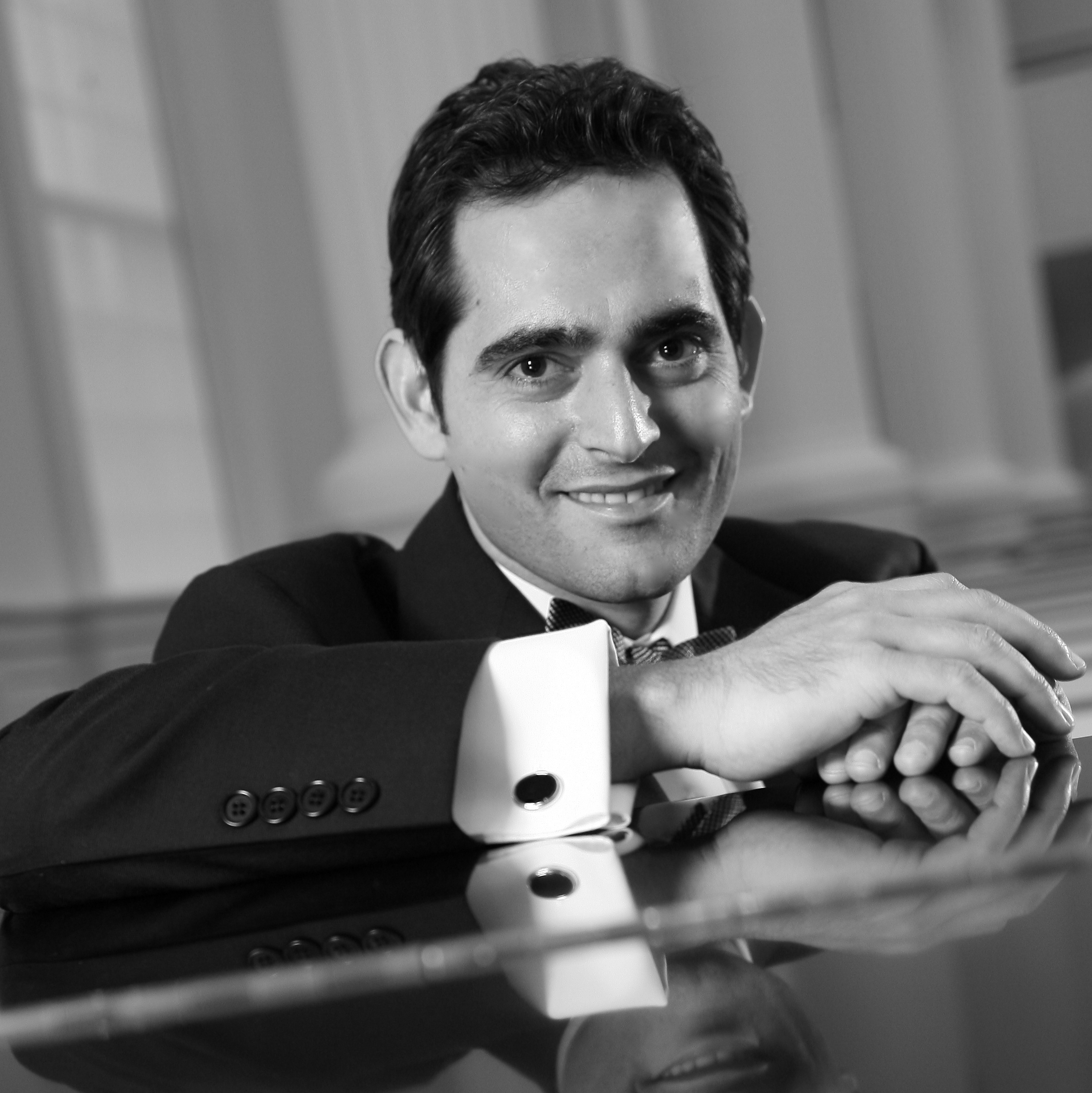
MALEK JANDALI | مـالـك جـنـدلـي
by MALEK JANDALI | مـالـك جـنـدلـي
www.MalekJandali.com | www.PianosForPeace.orgHailed by Fanfare Magazine as “a major new addition to the 21st century’s symphonic literature,” Malek Jandali’s symphonic works have been described by Gramophone as “deeply enigmatic with voices and in tongues emerging from the composer’s Syrian heritage that generously repay more reflective listening” with “heart-rending melodies, lush orchestration, clever transitions and creative textures.” American Record Guide.His large-scale orchestral works integrate Arabic maqams (modes) with persuasive craft and a marked seriousness of purpose that echo UNESCO’s call to preserve and protect the rich cultural heritage of his homeland Syria at a time when it is being eradicated. “Jandali captures the struggle, trauma and triumph of our displaced brothers and sisters, through the voice of a child. It is a beautiful and important message.” Marin AlsopRecent commissions and premieres include a Viola Concerto for Roberto Diaz, a String Quartet for the
-
11
The National: Malek Jandali's vision for Arabic symphonic music and the sound of legacy
Composer and pianist Malek Jandali (http://MalekJandali.com) founder of Pianos for Peace (http://PianosForPeace.org) interview with The National discussing his vision for Arabic symphonic music and the sound of legacy. This conversation explores art as activism and the future of Arab orchestral music. A classically trained pianist with performances spanning Vienna, Sydney, Chicago and London, Syrian-American composer Malek Jandali has dedicated his career to preserving and elevating Arabic symphonic music on the global stage. Jandali speaks about the inspiration behind his non-profit Pianos for Peace, a movement that transforms pianos into public artworks before they are donated to schools, hospitals and refugee centers. Jandali also reflects on art’s duty, which he says goes beyond entertainment, as well as its power to unite, heal and archive culture for generations to come. Jandali shares how he integrates Arab melodies into the classical canon, and composes with a view towards a legacy he hopes will last “for a hundred years after my death”.
-
10
Woman
Composer and pianist Malek Jandali presents “Woman”, a new composition for piano and orchestra, recorded in Moscow with the Russian Philharmonic Orchestra. Released on March 8, 2025 honoring International Women’s Day in collaboration with Qatar Museums and the Years of Culture. Jandali’s “Woman” is part of his broader artistic mission to use the soft power of music to challenge stereotypes and reshape Western perceptions of Arab and Islamic culture. Through this lyrical, four-minute symphonic piece, Jandali celebrates the dignity, strength, and tenderness of women, drawing on the rich values of Arab-Islamic heritage that honor and uplift women — principles sometimes overlooked in global narratives. This composition integrates Arabic Maqams (modes) in a symphonic structure with a flowing orchestration like a river with gentle yet powerful waves, “Woman” carries a universal message of appreciation, respect, and solidarity, positioning Arab culture as an essential partner in global civilization.
-
9
A Candle
"A Candle" for orchestra and chorus by composer Malek Jandali (http://MalekJandali.com), founder of Pianos for Peace (http://PianosForPeace.org) based on a poem by Rumi. "A candle as it diminishes explains: Gathering more and more is not the way Burn, become light, heat and help. Melt." ~ Rumi
-
8
Malek Jandali NPR Weekend Edition Interview with Scott Simon
Composer and pianist Malek Jandali (http://MalekJandali.com). founder of Pianos for Peace (http://PianosForPeace.org) NPR Weekend Edition interview with Scott Simon discussing Syria, its rich heritage, resilience and challenges for peace.
-
7
Malek Jandali BBC World Service Interview
The BBC World Service interview with composer Malek Jandali (www.MalekJandali.com), founder of Pianos for Peace (www.PianosForPeace.org)
-
6
Malek Jandali - New York Public Radio Interview
Syrian American composer, pianist and humanitarian activist Malek Jandali (http://MalekJandali.com) talks about his international mission to preserve and protect Syria’s rich embattled heritage and to build peace through music and education. In this spirit, he founded an annual competition for young pianists at Carnegie Hall and his Pianos for Peace (http://PianosForPeace.org) foundation to make the arts accessible to all. The Carnegie Corporation named him a Great Immigrant in 2015. The interview includes Jandali’s “Variations for Piano and Orchestra” based an an ancient Syrian melody from Aleppo. (Broadcasted on WPKN radio on April 12, 2017 and produced by Tony Ernst.)
-
5
Malek Jandali | Symphony No. 3 | Hiraeth | Andante Maestros | Movement IV
Commissioned by and recorded live with the Zagreb Philharmonic Orchestra | Pavle Dešpalj, conductor at the World Premiere on April 22, 2016 at Lisinski Hall in Zagreb, Croatia. Symphony No. 3 Hiraeth (MalekJandali.com) coming from the Cymraeg (Welsh) language, Hiraeth has no direct English translation. It combines the ideas of ‘longing’ and ‘yearning’ with a strong sense of rootedness, place and belonging. A deep, wistful, nostalgic sense of longing for home; a home that is no longer or perhaps never was. A yearning and wistful grief for people and places of your past. Hiraeth Symphony follows the four movement structure of the sonata-symphonic cycle with a slow introduction to the Allegro, which separates and becomes a movement in and of itself. The end result is a five-movement symphony similar to Scriabin’s treatment of the symphony, but with shifted accents. The first and the last movements of Hiraeth Symphony are meant to be the "I" kind of story, very personal and deep. The middle movements are more open and outward, with elements of the theater in music. Therefore, the first movement has more weight and importance in the circle than the following Allegro, which is faster and shorter than it would be traditionally. Today, Aleppo, the oldest inhabited city in the world, is resisting the most tragic destruction of a culture and history that are so significant, not only to the Syrian people, but to all of humanity. Starting with the invention of the alphabet, music notation and scientific breakthroughs that impacted and changed the course of mankind. Even while I was dropping my notes on paper to write this work, bombs and rockets were being dropped on the city and people of Aleppo. Each movement highlights different maqams (modes) that derive their names from different stops and regions along the Silk Road. By integrating ancient and traditional melodies with the Western symphony structure, I am attempting to preserve the rich musical heritage of Syria, especially that of Aleppo, at a time when humanity is witnessing the eradication of the cradle of civilization. The first movement is written in complex form, with the elements of variations on the Soprano ostinato, rondo, and three part forms. But all elements are mixed and unbalanced, for example the episode with the violin solo could also be a middle part of the three part form, however it is too short and the following reprise of the theme is not long enough in comparison to the substantial music which came before. This is meant to be a requiem for Syrian civilization, so the symphony starts with the ending in retrograde and all that follows is recollections, dreams of how it will be, pictures of what has been. The second movement is furious and destructive in a theatrical style that is very typical of Mahler and Shostakovich. It is composed in the Sonata form, but is quite compact, even maybe compressed. The very climax of the development is, so to speak, "soundization" (like visualization, but with sound rather than sight), a translation of powerful and emotional images into sounds. The third movement plays the role of Scherzo. Well, in fact it is a Scherzo with unexpected twists, distortions and sudden changes of mood. It is composed in the Rondo form and initially was a separate substantive piece, which goes well with the entire structure of the symphony. The fourth movement is a slow movement, a sort of Adagio. Usually, an Adagio is meant to be the lyrical climax of a symphony. Here it is not. The desired effect is that of an action scene portrayed in a fresco painting, static and "frozen" in time. The fifth movement is in fact the lyrical climax of the piece. It is written in the collage form, with maximum effort to avoid repeating themes after their introduction. Each theme is a memory of this moment, and in the end, the requiem theme reappears, as if it has always been there.
-
4
Malek Jandali | Symphony No. 3 | Hiraeth | Con Moto | Movement III
Commissioned by and recorded live with the Zagreb Philharmonic Orchestra | Pavle Dešpalj, conductor at the World Premiere on April 22, 2016 at Lisinski Hall in Zagreb, Croatia. Symphony No. 3 Hiraeth (MalekJandali.com) coming from the Cymraeg (Welsh) language, Hiraeth has no direct English translation. It combines the ideas of ‘longing’ and ‘yearning’ with a strong sense of rootedness, place and belonging. A deep, wistful, nostalgic sense of longing for home; a home that is no longer or perhaps never was. A yearning and wistful grief for people and places of your past. Hiraeth Symphony follows the four movement structure of the sonata-symphonic cycle with a slow introduction to the Allegro, which separates and becomes a movement in and of itself. The end result is a five-movement symphony similar to Scriabin’s treatment of the symphony, but with shifted accents. The first and the last movements of Hiraeth Symphony are meant to be the "I" kind of story, very personal and deep. The middle movements are more open and outward, with elements of the theater in music. Therefore, the first movement has more weight and importance in the circle than the following Allegro, which is faster and shorter than it would be traditionally. Today, Aleppo, the oldest inhabited city in the world, is resisting the most tragic destruction of a culture and history that are so significant, not only to the Syrian people, but to all of humanity. Starting with the invention of the alphabet, music notation and scientific breakthroughs that impacted and changed the course of mankind. Even while I was dropping my notes on paper to write this work, bombs and rockets were being dropped on the city and people of Aleppo. Each movement highlights different maqams (modes) that derive their names from different stops and regions along the Silk Road. By integrating ancient and traditional melodies with the Western symphony structure, I am attempting to preserve the rich musical heritage of Syria, especially that of Aleppo, at a time when humanity is witnessing the eradication of the cradle of civilization. The first movement is written in complex form, with the elements of variations on the Soprano ostinato, rondo, and three part forms. But all elements are mixed and unbalanced, for example the episode with the violin solo could also be a middle part of the three part form, however it is too short and the following reprise of the theme is not long enough in comparison to the substantial music which came before. This is meant to be a requiem for Syrian civilization, so the symphony starts with the ending in retrograde and all that follows is recollections, dreams of how it will be, pictures of what has been. The second movement is furious and destructive in a theatrical style that is very typical of Mahler and Shostakovich. It is composed in the Sonata form, but is quite compact, even maybe compressed. The very climax of the development is, so to speak, "soundization" (like visualization, but with sound rather than sight), a translation of powerful and emotional images into sounds. The third movement plays the role of Scherzo. Well, in fact it is a Scherzo with unexpected twists, distortions and sudden changes of mood. It is composed in the Rondo form and initially was a separate substantive piece, which goes well with the entire structure of the symphony. The fourth movement is a slow movement, a sort of Adagio. Usually, an Adagio is meant to be the lyrical climax of a symphony. Here it is not. The desired effect is that of an action scene portrayed in a fresco painting, static and "frozen" in time. The fifth movement is in fact the lyrical climax of the piece. It is written in the collage form, with maximum effort to avoid repeating themes after their introduction. Each theme is a memory of this moment, and in the end, the requiem theme reappears, as if it has always been there.
-
3
Malek Jandali | Symphony No. 3 | Hiraeth | Allegro Moderato | Movement V
Commissioned by and recorded live with the Zagreb Philharmonic Orchestra | Pavle Dešpalj, conductor at the World Premiere on April 22, 2016 at Lisinski Hall in Zagreb, Croatia. Symphony No. 3 Hiraeth (MalekJandali.com) coming from the Cymraeg (Welsh) language, Hiraeth has no direct English translation. It combines the ideas of ‘longing’ and ‘yearning’ with a strong sense of rootedness, place and belonging. A deep, wistful, nostalgic sense of longing for home; a home that is no longer or perhaps never was. A yearning and wistful grief for people and places of your past. Hiraeth Symphony follows the four movement structure of the sonata-symphonic cycle with a slow introduction to the Allegro, which separates and becomes a movement in and of itself. The end result is a five-movement symphony similar to Scriabin’s treatment of the symphony, but with shifted accents. The first and the last movements of Hiraeth Symphony are meant to be the "I" kind of story, very personal and deep. The middle movements are more open and outward, with elements of the theater in music. Therefore, the first movement has more weight and importance in the circle than the following Allegro, which is faster and shorter than it would be traditionally. Today, Aleppo, the oldest inhabited city in the world, is resisting the most tragic destruction of a culture and history that are so significant, not only to the Syrian people, but to all of humanity. Starting with the invention of the alphabet, music notation and scientific breakthroughs that impacted and changed the course of mankind. Even while I was dropping my notes on paper to write this work, bombs and rockets were being dropped on the city and people of Aleppo. Each movement highlights different maqams (modes) that derive their names from different stops and regions along the Silk Road. By integrating ancient and traditional melodies with the Western symphony structure, I am attempting to preserve the rich musical heritage of Syria, especially that of Aleppo, at a time when humanity is witnessing the eradication of the cradle of civilization. The first movement is written in complex form, with the elements of variations on the Soprano ostinato, rondo, and three part forms. But all elements are mixed and unbalanced, for example the episode with the violin solo could also be a middle part of the three part form, however it is too short and the following reprise of the theme is not long enough in comparison to the substantial music which came before. This is meant to be a requiem for Syrian civilization, so the symphony starts with the ending in retrograde and all that follows is recollections, dreams of how it will be, pictures of what has been. The second movement is furious and destructive in a theatrical style that is very typical of Mahler and Shostakovich. It is composed in the Sonata form, but is quite compact, even maybe compressed. The very climax of the development is, so to speak, "soundization" (like visualization, but with sound rather than sight), a translation of powerful and emotional images into sounds. The third movement plays the role of Scherzo. Well, in fact it is a Scherzo with unexpected twists, distortions and sudden changes of mood. It is composed in the Rondo form and initially was a separate substantive piece, which goes well with the entire structure of the symphony. The fourth movement is a slow movement, a sort of Adagio. Usually, an Adagio is meant to be the lyrical climax of a symphony. Here it is not. The desired effect is that of an action scene portrayed in a fresco painting, static and "frozen" in time. The fifth movement is in fact the lyrical climax of the piece. It is written in the collage form, with maximum effort to avoid repeating themes after their introduction. Each theme is a memory of this moment, and in the end, the requiem theme reappears, as if it has always been there.
-
2
Malek Jandali | Symphony No. 3 | Hiraeth | Allegro vivace | Movement II
Commissioned by and recorded live with the Zagreb Philharmonic Orchestra | Pavle Dešpalj, conductor at the World Premiere on April 22, 2016 at Lisinski Hall in Zagreb, Croatia. Symphony No. 3 Hiraeth (MalekJandali.com) coming from the Cymraeg (Welsh) language, Hiraeth has no direct English translation. It combines the ideas of ‘longing’ and ‘yearning’ with a strong sense of rootedness, place and belonging. A deep, wistful, nostalgic sense of longing for home; a home that is no longer or perhaps never was. A yearning and wistful grief for people and places of your past. Hiraeth Symphony follows the four movement structure of the sonata-symphonic cycle with a slow introduction to the Allegro, which separates and becomes a movement in and of itself. The end result is a five-movement symphony similar to Scriabin’s treatment of the symphony, but with shifted accents. The first and the last movements of Hiraeth Symphony are meant to be the "I" kind of story, very personal and deep. The middle movements are more open and outward, with elements of the theater in music. Therefore, the first movement has more weight and importance in the circle than the following Allegro, which is faster and shorter than it would be traditionally. Today, Aleppo, the oldest inhabited city in the world, is resisting the most tragic destruction of a culture and history that are so significant, not only to the Syrian people, but to all of humanity. Starting with the invention of the alphabet, music notation and scientific breakthroughs that impacted and changed the course of mankind. Even while I was dropping my notes on paper to write this work, bombs and rockets were being dropped on the city and people of Aleppo. Each movement highlights different maqams (modes) that derive their names from different stops and regions along the Silk Road. By integrating ancient and traditional melodies with the Western symphony structure, I am attempting to preserve the rich musical heritage of Syria, especially that of Aleppo, at a time when humanity is witnessing the eradication of the cradle of civilization. The first movement is written in complex form, with the elements of variations on the Soprano ostinato, rondo, and three part forms. But all elements are mixed and unbalanced, for example the episode with the violin solo could also be a middle part of the three part form, however it is too short and the following reprise of the theme is not long enough in comparison to the substantial music which came before. This is meant to be a requiem for Syrian civilization, so the symphony starts with the ending in retrograde and all that follows is recollections, dreams of how it will be, pictures of what has been. The second movement is furious and destructive in a theatrical style that is very typical of Mahler and Shostakovich. It is composed in the Sonata form, but is quite compact, even maybe compressed. The very climax of the development is, so to speak, "soundization" (like visualization, but with sound rather than sight), a translation of powerful and emotional images into sounds. The third movement plays the role of Scherzo. Well, in fact it is a Scherzo with unexpected twists, distortions and sudden changes of mood. It is composed in the Rondo form and initially was a separate substantive piece, which goes well with the entire structure of the symphony. The fourth movement is a slow movement, a sort of Adagio. Usually, an Adagio is meant to be the lyrical climax of a symphony. Here it is not. The desired effect is that of an action scene portrayed in a fresco painting, static and "frozen" in time. The fifth movement is in fact the lyrical climax of the piece. It is written in the collage form, with maximum effort to avoid repeating themes after their introduction. Each theme is a memory of this moment, and in the end, the requiem theme reappears, as if it has always been there.
-
1
Malek Jandali | Symphony No. 3 | Hiraeth | Andante | Movement I
Commissioned by and recorded live with the Zagreb Philharmonic Orchestra | Pavle Dešpalj, conductor at the World Premiere on April 22, 2016 at Lisinski Hall in Zagreb, Croatia. Symphony No. 3 Hiraeth (http://MalekJandali.com) coming from the Cymraeg (Welsh) language, Hiraeth has no direct English translation. It combines the ideas of ‘longing’ and ‘yearning’ with a strong sense of rootedness, place and belonging. A deep, wistful, nostalgic sense of longing for home; a home that is no longer or perhaps never was. A yearning and wistful grief for people and places of your past. Hiraeth Symphony follows the four movement structure of the sonata-symphonic cycle with a slow introduction to the Allegro, which separates and becomes a movement in and of itself. The end result is a five-movement symphony similar to Scriabin’s treatment of the symphony, but with shifted accents. The first and the last movements of Hiraeth Symphony are meant to be the "I" kind of story, very personal and deep. The middle movements are more open and outward, with elements of the theater in music. Therefore, the first movement has more weight and importance in the circle than the following Allegro, which is faster and shorter than it would be traditionally. Today, Aleppo, the oldest inhabited city in the world, is resisting the most tragic destruction of a culture and history that are so significant, not only to the Syrian people, but to all of humanity. Starting with the invention of the alphabet, music notation and scientific breakthroughs that impacted and changed the course of mankind. Even while I was dropping my notes on paper to write this work, bombs and rockets were being dropped on the city and people of Aleppo. Each movement highlights different maqams (modes) that derive their names from different stops and regions along the Silk Road. By integrating ancient and traditional melodies with the Western symphony structure, I am attempting to preserve the rich musical heritage of Syria, especially that of Aleppo, at a time when humanity is witnessing the eradication of the cradle of civilization. The first movement is written in complex form, with the elements of variations on the Soprano ostinato, rondo, and three part forms. But all elements are mixed and unbalanced, for example the episode with the violin solo could also be a middle part of the three part form, however it is too short and the following reprise of the theme is not long enough in comparison to the substantial music which came before. This is meant to be a requiem for Syrian civilization, so the symphony starts with the ending in retrograde and all that follows is recollections, dreams of how it will be, pictures of what has been. The second movement is furious and destructive in a theatrical style that is very typical of Mahler and Shostakovich. It is composed in the Sonata form, but is quite compact, even maybe compressed. The very climax of the development is, so to speak, "soundization" (like visualization, but with sound rather than sight), a translation of powerful and emotional images into sounds. The third movement plays the role of Scherzo. Well, in fact it is a Scherzo with unexpected twists, distortions and sudden changes of mood. It is composed in the Rondo form and initially was a separate substantive piece, which goes well with the entire structure of the symphony. The fourth movement is a slow movement, a sort of Adagio. Usually, an Adagio is meant to be the lyrical climax of a symphony. Here it is not. The desired effect is that of an action scene portrayed in a fresco painting, static and "frozen" in time. The fifth movement is in fact the lyrical climax of the piece. It is written in the collage form, with maximum effort to avoid repeating themes after their introduction. Each theme is a memory of this moment, and in the end, the requiem theme reappears, as if it has always been there.
-
0
The Moonlight - طلعَ البدرُ
The symphony of stars glows in The Moonlight of hope. The Moonlight is an original symphonic work for piano and orchestra by composer and pianist http://MalekJandali.com based on one of the oldest songs in Islamic culture, Tala Al Badru Alayna, dating back more than 1400 years. Recorded in Moscow with the Russian Philharmonic Orchestra. Click http://youtu.be/UlJ-ssFUavs to watch The Moonlight.
-
-1
Malek Jandali | Symphony No. 1 | Syrian Symphony | Allegro | Movement IV
Symphony No. 1 in F Major 'Syrian Symphony' Allegro (Movement IV) by composer and pianist Malek Jandali (http://MalekJandali.com) founder of Pianos for Peace (http://PianosForPeace.org) Many people wonder whether this movement is optimistic or pessimistic. The long tunnel of darkness ends with a brief glimpse of hope in the middle section of the brass. The central section is melancholic and nostalgic. The emptiness that follows is orchestrated in a way that gives the solo cello an attempt to console. The structure of this Rondo-Finale movement is A-B-A1-C-A2-B1 plus an insert A3-C1 coda that effectively ends the symphony. The entire movement is built upon a dance melody in 10/8 colored with chromatic harmony and interesting rhythmic patterns. It is as if Jandali is saying if we stick together we will survive. If we all sing, we can’t be beaten. The victory will be ours and the triumph of that is the maestoso climax of the symphony on the theme of the first movement. What had been cold, unrelenting and inhuman is now invested with every ounce of human joy. It is the emotional climax of the work saying: the power of people is stronger than people in power. Syrian Symphony was released on January 31, 2015 at Carnegie Hall in New York City.
-
-2
Malek Jandali | Symphony No. 1 | Syrian Symphony | Andante | Movement III
Symphony No. 1 in F Major 'Syrian Symphony' Andante (Movement III) by composer and pianist Malek Jandali (http://MalekJandali.com) founder of Pianos for Peace (http://PianosForPeace.org) The slow movement is marked as an Andante and begins solemnly, rising to a passionate climax. The ambiguous start seems to describe a mother searching for her missing child. The accompanying footsteps are hesitating, but the purposeful melody is determined. The gloomy motif initially presented by clarinets has been viewed by commentators as representing Fate, and it more or less colors the entire movement. The child is miraculously found and the horns and trumpets announce a bright welcome full of expectation.
-
-3
Malek Jandali | Symphony No. 1 | Syrian Symphony | Moderato | Movement II
Symphony No. 1 in F Major 'Syrian Symphony' Moderato (Movement II) by composer and pianist Malek Jandali (http://MalekJandali.com) founder of Pianos for Peace (http://PianosForPeace.org) The second movement, Moderato, plays the role of the Scherzo with an interesting 5/4 dance-like theme. The middle section is a very light, mysterious march and the texture is generally soloistic and contrapuntal. Often the accompanimental lines pass from one instrument to another, as a kind of super-melody, which results in striking timbral effects. There are numerous rhythmic and structural devices to frame the textural settings, type and instrumentation. With its musical charm and wit, this is symphonic music of the highest quality. Just when you think it has to end, another surge envelops you. The main theme is repeated with distorted variations of the melody depicting the realities suffered by people under tyranny.
-
-4
Malek Jandali | Symphony No. 1 | Syrian Symphony | Allegro non troppo ma molto energico | Movement I
Symphony No. 1 in F Major 'Syrian Symphony' Allegro non troppo ma motto energico (Movement I) by composer and pianist Malek Jandali http://MalekJandali.com founder of http://PianosForPeace.org Composed in the United States and recorded with the Russian Philharmonic Orchestra in Moscow under the baron of Sergey Kondsrahev, this work aims to preserve and present the rich heritage and cultural identity of Syria at one of the most pivotal moments in the nation’s history. In March 2011, Syrian children ignited the flame of a historic peaceful revolution for freedom, human rights and justice. As the bombs were falling on his homeland and forced millions of families, including his own into exile, the composer defiantly began writing his symphony. Jandali’s work on his symphony was not continuous, but was interrupted by the production of an astounding series of other weighty compositions: a Violin Concerto, the Piano Theme and Variations, a symphony for chamber orchestra, Syrian anthem, and a series of trio works for piano, cello and the traditional Arabic instrument, the Oud. Events of the ongoing Syrian revolution imbued Jandali with a sense of urgency and moral obligation to give the voiceless a voice. The slow movement was completed in only one week, shortly after the chemical weapons attack on Al-Ghouta in Damascus on August 21, 2013. The symphony continues for four epic movements. After the initial energetic first and second movements, comes an ambiguous and melancholic slow movement. More secure is the forth movement, a dance in 9/8, though that is swept away by a caustic finale, eking its way towards a dazzlingly victorious coda. Jandali’s F-Major Symphony has a cyclic aspect, unity being provided by the appearance of the main theme in both the first and last movements. This new symphonic mastery was clearly not brought about only by a reaction to contemporary events, but also by sustained contact with the well-springs of polyphonic elegant music. The first movement immediately sets up the Syrian scene that will remain ever present throughout the symphony. The strength, freedom and individuality of the strings, representing the Syrian people, pitted against the brutal, machine-like rhythms of the brass and timpani – their oppressors. A bassoon solo marks the end of the movement and invites us into a dreamlike atmosphere of total serenity, peace and calm. It is a wistful and nostalgic world, soon to be shattered by tyranny. The main part of the first movement is a driving Allegro in sonata form, with a Syrian sounding principal theme and a yearning lyric melody that is quintessentially Jandali. The unique and innovative quality of this work is particularly in evidence in the first movement, which consists of two main themes inspired by Syrian street songs. The principal motivic complex, compressed into five notes (F-E-Db-E-C), needed to be expanded in time and space. As a starting point for a symphonic composition it is entirely novel, and it is the cause not only of the concentration, the lapidariness of the movement, but also of its character of being unremittingly related to a goal, to a patriotic cause.
We're indexing this podcast's transcripts for the first time — this can take a minute or two. We'll show results as soon as they're ready.
No matches for "" in this podcast's transcripts.
No topics indexed yet for this podcast.
Loading reviews...
ABOUT THIS SHOW
www.MalekJandali.com | www.PianosForPeace.orgHailed by Fanfare Magazine as “a major new addition to the 21st century’s symphonic literature,” Malek Jandali’s symphonic works have been described by Gramophone as “deeply enigmatic with voices and in tongues emerging from the composer’s Syrian heritage that generously repay more reflective listening” with “heart-rending melodies, lush orchestration, clever transitions and creative textures.” American Record Guide.His large-scale orchestral works integrate Arabic maqams (modes) with persuasive craft and a marked seriousness of purpose that echo UNESCO’s call to preserve and protect the rich cultural heritage of his homeland Syria at a time when it is being eradicated. “Jandali captures the struggle, trauma and triumph of our displaced brothers and sisters, through the voice of a child. It is a beautiful and important message.” Marin AlsopRecent commissions and premieres include a Viola Concerto for Roberto Diaz, a String Quartet for the
HOSTED BY
MALEK JANDALI | مـالـك جـنـدلـي
Loading similar podcasts...
URL copied to clipboard!