
PODCAST · news
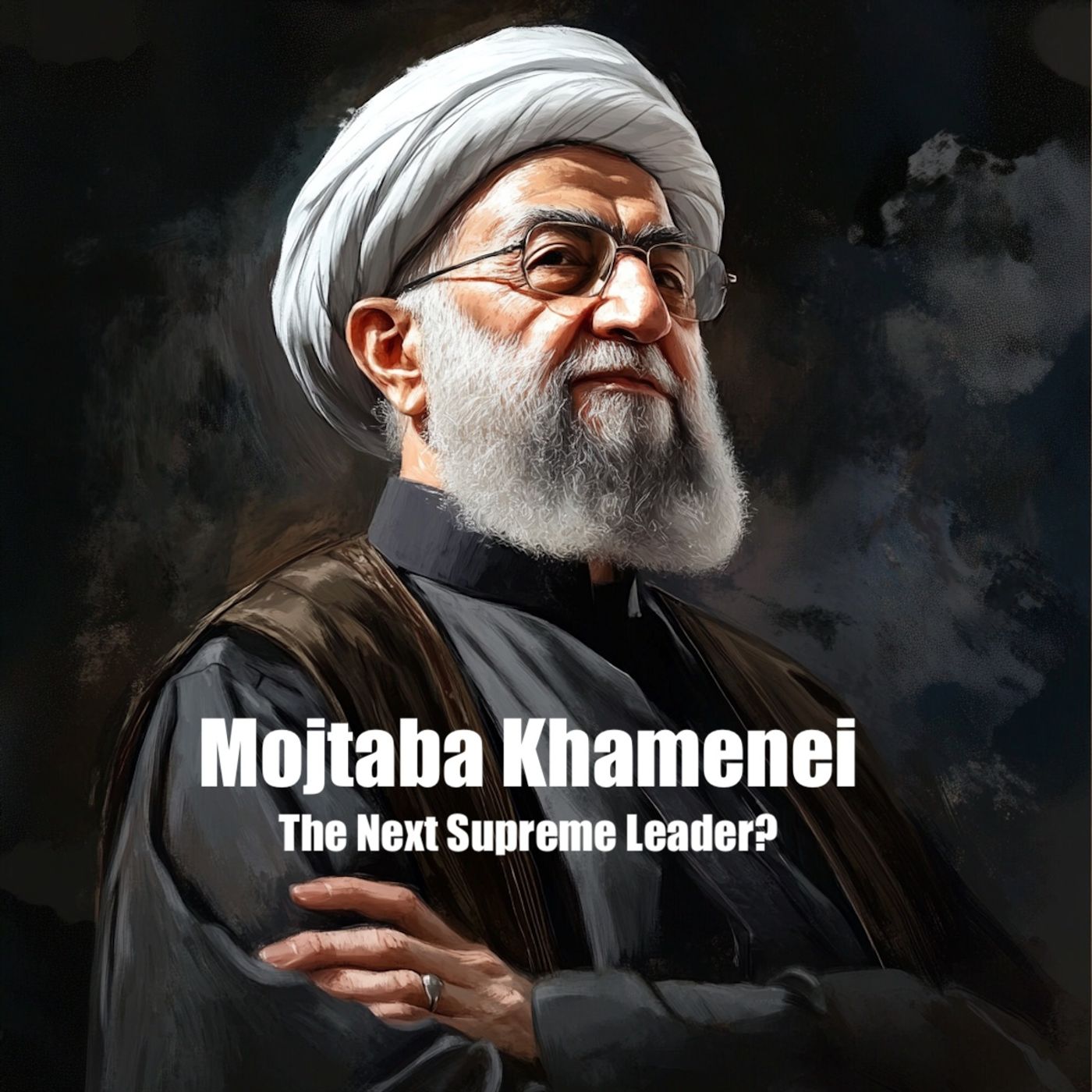
Mojtaba Khamenei. The Next Supreme Leader - Audio Biography
by Inception Point Ai
Mojtaba Khamenei, born on September 8, 1969, in Mashhad, Iran, is the second son of Ayatollah Ali Khamenei, the Supreme Leader of Iran, and Khadijeh Mirdamadi. Raised in a clerical family with deep roots in Twelver Shi'a Islam, Mojtaba’s upbringing was steeped in religious education and political awareness. Growing up in Mashhad, a city central to Shi’a scholarship and home to the Imam Reza Shrine, he pursued advanced Islamic studies with a focus on Fiqh (Islamic jurisprudence), following the clerical tradition of his father. Mojtaba has maintained a low public profile, but his influence within Iran's political and security apparatus is widely acknowledged. He first gained attention during the 2005 Iranian presidential election, where he was linked to the campaign of Mahmoud Ahmadinejad. Allegations emerged that Mojtaba had played a key role in Ahmadinejad’s election victory, leveraging his connections to conservative factions and mobilizing state resources. His involvement became more
-
1
Mojtaba Khamenei. The Next Supreme Leader? Audio - Biography
Mojtaba Khamenei, born on September 8, 1969, in Mashhad, Iran, is the second son of Ayatollah Ali Khamenei, the Supreme Leader of Iran, and Khadijeh Mirdamadi. Raised in a clerical family with deep roots in Twelver Shi'a Islam, Mojtaba’s upbringing was steeped in religious education and political awareness. Growing up in Mashhad, a city central to Shi’a scholarship and home to the Imam Reza Shrine, he pursued advanced Islamic studies with a focus on Fiqh (Islamic jurisprudence), following the clerical tradition of his father. Mojtaba has maintained a low public profile, but his influence within Iran's political and security apparatus is widely acknowledged. He first gained attention during the 2005 Iranian presidential election, where he was linked to the campaign of Mahmoud Ahmadinejad. Allegations emerged that Mojtaba had played a key role in Ahmadinejad’s election victory, leveraging his connections to conservative factions and mobilizing state resources. His involvement became more controversial during the 2009 presidential election, which resulted in mass protests known as the Green Movement. Opposition leaders accused Mojtaba of orchestrating the suppression of dissent through his influence over the Basij militia and other security forces. This period solidified his reputation as a behind-the-scenes power broker. Mojtaba’s connections extend deeply into Iran’s military and intelligence sectors, particularly the Islamic Revolutionary Guard Corps (IRGC). The IRGC, a pivotal force in Iran’s domestic and foreign policy, has aligned itself with the conservative vision of Ayatollah Ali Khamenei. Mojtaba’s ties to the IRGC and its affiliated organizations have bolstered his standing as a key figure in national security decision-making, though his role is unofficial and largely unacknowledged in state media. Speculation about Mojtaba’s potential succession to his father as Supreme Leader has been a recurring theme in Iranian politics. This prospect gained traction due to his growing influence and proximity to key power centers. However, Mojtaba’s limited public visibility and his lack of formal senior clerical credentials pose challenges to his candidacy. Critics argue that his succession would require significant manipulation of the process by the Assembly of Experts, the body responsible for electing the Supreme Leader. Nevertheless, his father’s authority over the Assembly could facilitate Mojtaba’s rise. In May 2024, the unexpected death of Iranian President Ebrahim Raisi in a helicopter crash further intensified speculation about Mojtaba’s role in succession discussions. Raisi had been widely considered a leading contender for Supreme Leader, and his death left a vacuum in the leadership narrative. Following this event, reports began circulating about secretive moves to position Mojtaba as his father’s preferred successor. In September 2024, an unverified account emerged about a clandestine meeting involving 60 members of the Assembly of Experts, where Mojtaba was allegedly chosen as the next Supreme Leader. Although these reports have been denied by official sources, they have fueled debates about Iran’s political future. In November 2024, rumors surfaced about Ayatollah Ali Khamenei’s health, with some claims suggesting he had been poisoned. These unconfirmed reports have intensified discussions about the Supreme Leader's succession. Mojtaba’s potential ascension is now a focal point for analysts assessing Iran’s political stability and future direction. His perceived closeness to hardline factions and his control over influential state institutions make him a likely candidate, though his rise is not without opposition. Mojtaba has faced criticism for his alleged role in consolidating power and wealth. Opposition figures and reformists have accused him of amassing significant financial resources through control of religious endowments and state-linked economic ventures. His growing power has fueled resentment among reformists and moderates, who view his potential leadership as a continuation of Iran’s hardline policies. Internationally, Mojtaba’s reputation is controversial. His involvement in suppressing domestic dissent and his ties to Iran’s military establishment have drawn criticism from Western governments and human rights organizations. If he were to succeed his father, it is widely believed that Iran’s confrontational stance toward the West would persist, potentially escalating tensions in the region. Mojtaba Khamenei’s role within Iran’s political system remains enigmatic but increasingly influential. His emergence as a potential successor to his father marks a critical moment in the Islamic Republic’s history. As Ayatollah Khamenei’s health continues to be a subject of speculation, Mojtaba’s position becomes ever more significant. Whether he ascends to the position of Supreme Leader or continues to exert influence from behind the scenes, his impact on Iran’s future trajectory is likely to be profound. His rise underscores the complexities of power, succession, and ideology in the Islamic Republic’s theocratic and authoritarian system. This has been a Quiet Please production. Head over to Quiet Please dot A I to “Hear What Matters”This content was created in partnership and with the help of Artificial Intelligence AIThis episode includes AI-generated content.
We're indexing this podcast's transcripts for the first time — this can take a minute or two. We'll show results as soon as they're ready.
No matches for "" in this podcast's transcripts.
No topics indexed yet for this podcast.
Loading reviews...
ABOUT THIS SHOW
Mojtaba Khamenei, born on September 8, 1969, in Mashhad, Iran, is the second son of Ayatollah Ali Khamenei, the Supreme Leader of Iran, and Khadijeh Mirdamadi. Raised in a clerical family with deep roots in Twelver Shi'a Islam, Mojtaba’s upbringing was steeped in religious education and political awareness. Growing up in Mashhad, a city central to Shi’a scholarship and home to the Imam Reza Shrine, he pursued advanced Islamic studies with a focus on Fiqh (Islamic jurisprudence), following the clerical tradition of his father. Mojtaba has maintained a low public profile, but his influence within Iran's political and security apparatus is widely acknowledged. He first gained attention during the 2005 Iranian presidential election, where he was linked to the campaign of Mahmoud Ahmadinejad. Allegations emerged that Mojtaba had played a key role in Ahmadinejad’s election victory, leveraging his connections to conservative factions and mobilizing state resources. His involvement became more
HOSTED BY
Inception Point Ai
CATEGORIES
Loading similar podcasts...
Frequently Asked Questions
How many episodes does Mojtaba Khamenei. The Next Supreme Leader - Audio Biography have?
Mojtaba Khamenei. The Next Supreme Leader - Audio Biography currently has 1 episodes available on PodParley. New episodes are automatically indexed when they're published to the podcast feed.
What is Mojtaba Khamenei. The Next Supreme Leader - Audio Biography about?
Mojtaba Khamenei, born on September 8, 1969, in Mashhad, Iran, is the second son of Ayatollah Ali Khamenei, the Supreme Leader of Iran, and Khadijeh Mirdamadi. Raised in a clerical family with deep roots in Twelver Shi'a Islam, Mojtaba’s upbringing was steeped in religious education and political...
How often does Mojtaba Khamenei. The Next Supreme Leader - Audio Biography release new episodes?
Mojtaba Khamenei. The Next Supreme Leader - Audio Biography has 1 episodes. Check the episode list to see recent publication dates and frequency.
Where can I listen to Mojtaba Khamenei. The Next Supreme Leader - Audio Biography?
You can listen to Mojtaba Khamenei. The Next Supreme Leader - Audio Biography on PodParley by clicking any episode. We provide an embedded audio player for direct listening, and you can also subscribe via your preferred podcast app using the RSS feed.
Who hosts Mojtaba Khamenei. The Next Supreme Leader - Audio Biography?
Mojtaba Khamenei. The Next Supreme Leader - Audio Biography is created and hosted by Inception Point Ai.
URL copied to clipboard!