
PODCAST · arts
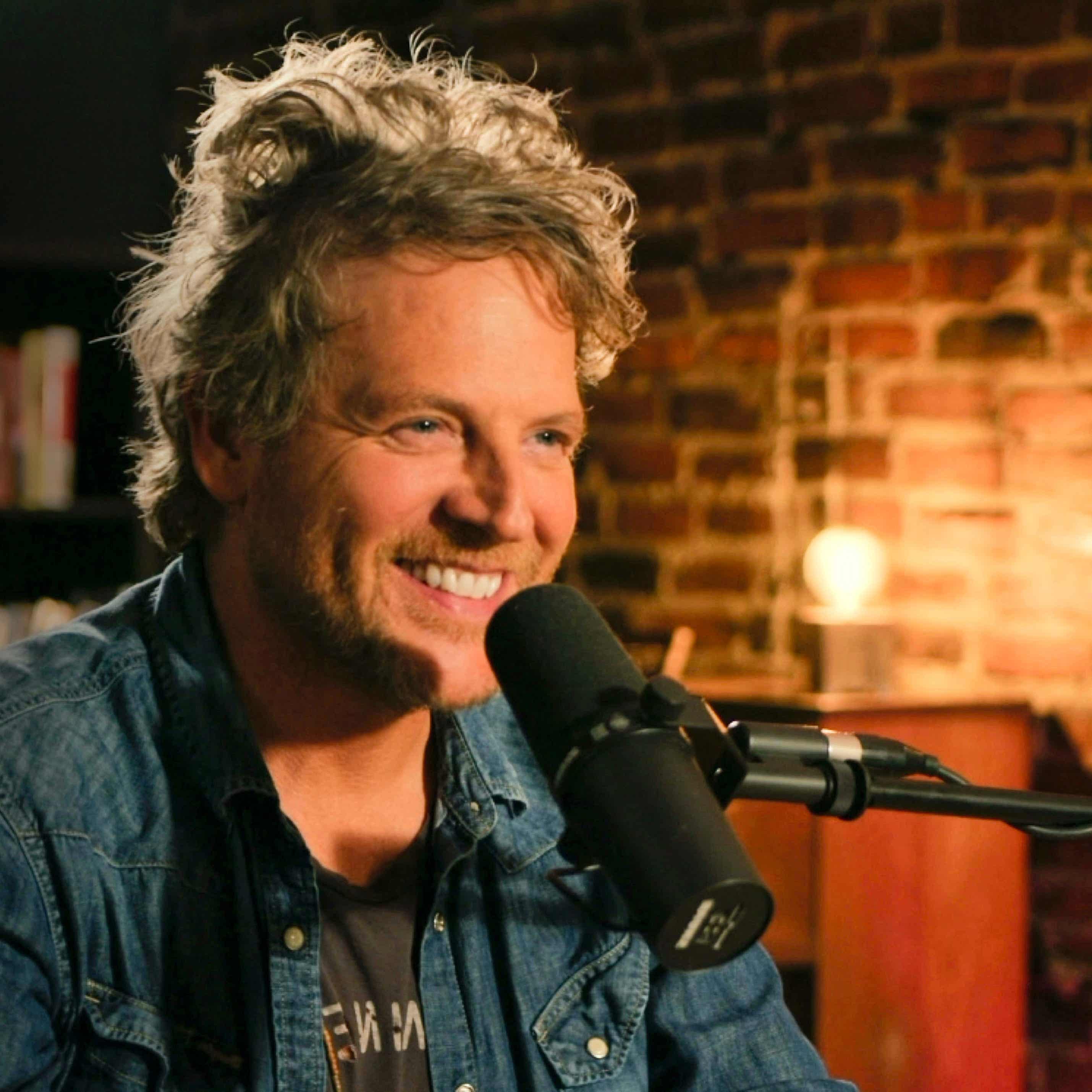
Morse Code Podcast with Korby Lenker
by Deep talks and sharp performances with the best musicians and writers working today.
Deep talks, sharp performances and empowering revelations from musicians and writers, from East Nashville and beyond. Unpretentiously hosted by Korby Lenker. korby.substack.com
-
102
Jordan Ritter Conn: American Men | MCP #327
Korby talks with journalist and author Jordan Ritter Conn about his new book American Men, interviewing 50+ men about masculinity, the four men whose stories made the book (Ryan, Gideon, Joseph, Nate), the process of getting men to be vulnerable, the permission structure concept, his first day at UC Berkeley journalism school, the cancer scare he hoped would get him out, the notepad as superpower, the Scotland trip with his dad, the impact of the book on his own friendships, Tom Wolfe, narrative journalism, the literary market and male readers, video games as time thief, Bowling Alone, male loneliness, the hardball league, and getting together in a room. Get full access to Morse Code with Korby Lenker at korby.substack.com/subscribe
-
101
Molly Tuttle: Friend and a Friend | MCP #326
Tonight's the thing. 100 episodes of the Morse Code Podcast, celebrated at The 5 Spot in East Nashville. 6 p.m. Guests from the show - Bre Kennedy, Andi Marie Tillman, Tyler Merritt, Leah Blevins, Tim Easton, Ryan Rado, Jessica Willis Fisher, Paul McDonald, Packy Lundholm, Randa Newman, Joy Todd, and me - playing songs, an author interview, a film screening, live painting, more. Come join us. Tickets here.Molly Tuttle was the first person I ever co-wrote with in Nashville. She’d just moved to town. I had a title. She had a guitar riff. We wrote “Friend and a Friend.” It made her debut album. Best-of nominations followed. A decade later she’s a 3x Grammy winner with a right hand that launched a thousand YouTube tutorials.We talked about growing up in Palo Alto with a bluegrass-teaching dad who found the music through Hank Williams on a farm in Illinois, the kids-on-bluegrass festivals where she first met Sierra Hull and Sarah Jarosz and realized there were other kids in America who could already play, what it was like the first time she went to the Grammys (deer in headlights) and the second time (she handed Joni Mitchell a trophy and went through a goth phase inspired by Måneskin’s pyrotechnics), and the part that doesn’t go away no matter how famous you get — the work of keeping a band together, coordinating schedules, writing for the next release. Even at her level, its a sacrifice.Then she played ”Friend and a Friend”. Solo in the room. Fantastic.🎥 Watch the full conversation on YouTube🎸 Watch Molly perform “Friend and a Friend”AFTER THE CONVERSATION After the Conversation is my Substack essay series where I keep thinking after the microphones are off. This week: the song we wrote on a swinging gate, cargo pants and homemade bread in the Bellingham woods, and an announcement about what’s next for the Morse Code Podcast. Get full access to Morse Code with Korby Lenker at korby.substack.com/subscribe
-
100
Tabitha Meeks: Patiently Waiting for My Day | MCP #325
Tabitha Meeks moved to Nashville from West Palm Beach with a folk band and a voice she’d been told five or six times wasn’t strong enough. The band didn’t last. One of her first Nashville experiences was getting fired as a backup singer 30 minutes into rehearsal. The guy who fired her said she’d have plenty of time for opportunities like this — she was, what, 21, 22? She was 28.That could have been the end of the story. Instead, Tabitha got a gig at a bar called Sambuca during COVID, where nobody was around and she was forced to be the lead singer for the first time. That’s where she found her voice. She released 30 or 40 songs over the next few years — different tempos, different moods, different sides of herself — and watched to see what people responded to. The retro pop thing hit. Nancy Sinatra meets Nora Jones, she calls it. Happy energy, piano solos, not taking life too seriously.We talked about the Pitch Meeting show she co-founded with her now-husband (and Morse Code Alum) Eric Fortlaza, building a social media following by posting nothing but live performance videos, the sync placements that are starting to pay off (including a Hulu show she can’t name yet), living in a shitty house so she could follow her dreams, the two voices in every artist’s head, and why couples therapy is non-negotiable. Then she played ”Waiting For My Day” on piano — a song about patiently trusting that your day is coming.She actually played two songs in the studio. I picked Waiting For My Day to be the standalone because it showed a more tender version of the Tabitha I know. But this girl has serious chops as a pianist! For eveidence here is a link to the moment in the main conversation where she plays her (much flashier) set piece “Life of the Party” Watch it.🎥 Watch the full conversation on YouTube🎸 Watch Tabitha perform “Waiting For My Day” Get full access to Morse Code with Korby Lenker at korby.substack.com/subscribe
-
99
Chris Capozzoli: The Human Escape Fire | MCP #324
Korby talks with Chris Capozzoli — musician, meme-maker, and the man behind Phony Rice Unit — about his Instagram bluegrass memes, the spirit animal dogs carousel, the Harris Teeter years, Vanderbilt, a history degree he can't use, jazz piano and Randy Newman, getting fired from ASCAP, the escape fire metaphor from Norman Maclean's Young Men and Fire, Hillsborough Village as a lost Greenwich Village, the Largo years, Anglo-Saxon history, the Rest Is History podcast, Terry Gross and Dick Cavett, 9/11 and growing up in New Jersey, the impermanence of existence at 14, fatherhood, staying awake to life, and the universe as your friend if you let it be. Chris performs "Hard Work" (exclusive) and "Blue Ridge Hills Far Away" live. Get full access to Morse Code with Korby Lenker at korby.substack.com/subscribe
-
98
Tim Easton: Nameless and Joy-Making | MCP #323
Korby talks with singer-songwriter Tim Easton about his new album fIREHORSE, his sister Susan Easton's painting that inspired the record, the Chinese zodiac Year of the Fire Horse, busking in Europe, getting a record deal with New West, a publishing deal with Madonna's Maverick Music, recording with members of Wilco, tours with Lucinda Williams and John Hiatt, the hand-painted vinyl that got him dropped, opening for Townes Van Zandt in his last year, the promoter who asked "is this the way you want to live your life?", sobriety, fatherhood, the romance of the Kerouac fantasy, making records with Laney Wilson's band, Nashville's music business ecosystem, the Largo years in LA, managing envy, the troubadour lifestyle vs. building a home base, Liz Longley's merch table hustle, the folk spot in Nebraska, and thinking in albums. Tim performs "River" live. Get full access to Morse Code with Korby Lenker at korby.substack.com/subscribe
-
97
Hayes Carll: I Only Started Moving When I Got Still | MCP #322
Korby talks with Texas singer-songwriter Hayes Carll about his 10th record We're Only Human, writing intentionally for an album as a piece for the first time, the two-phase creative process of free creation and editing, catching lightning bolts vs. honing craft, the monkey mind, journaling, The Artist's Way morning pages, growing up a latchkey kid in The Woodlands, the Kenny Rogers greatest hits tape, hearing Dylan at the Unitarian Church at 15, Crystal Beach dive bars, Bob's Sports Bar, the Old Quarter Acoustic Cafe, Townes Van Zandt, the fear of being defined by a funny song, Todd Snider and Ray Wiley Hubbard's advice, humor and vulnerability in songwriting, midlife reassessment, scaling down ambitions, sobriety and stillness, Milan Kundera, Captain James Cook, social media anxiety, the handprint man story, and co-writing with MC Taylor. Hayes performs "I Think I'll Stay Here a While" live. Get full access to Morse Code with Korby Lenker at korby.substack.com/subscribe
-
96
The Brook and the Bluff: Back to Being a Band | MCP #321
The Brook and the Bluff members Joseph Settine and Alec Bolton came over to talk about Werewolf, their new record - and a conscious departure from the studio experimentation of their last few releases. After years of working with producer Micah Tawlks - chasing sounds, layering tracks, driving a mobile studio into the mountains of north Georgia - they went back to the room. Five guys plugged in, reacting to each other live. Joseph calls it getting back to that 15-year-old teaching himself guitar in his bedroom. Alec calls it the thing that made it worth playing in the first place.The conversation also covers how drummer John Canada saved the band by showing up with his Type A brain and a question nobody else had thought to ask, why Birmingham is a sneaky music town, the tension between experimentation and identity, and Alec’s observation that the live show might be the last place where a group of people are fully present with each other. Then the full band played ”Can’t Figure It Out” and baby Zuzu got so amped she did the Arsenio arm from across the room.🎥 Watch the full conversation on YouTube🎸 Watch the Brook and the Bluff perform “Can’t Figure It OutAFTER THE CONVERSATIONAfter the Conversation is my paid essay series where I keep thinking after the microphones are off. This week it's a short story loosely based on real life, that ends with a thought I think most musicians have had at least once: someday I will be glad I did this. I'll take a shower tomorrow. Get full access to Morse Code with Korby Lenker at korby.substack.com/subscribe
-
95
Donovan Woods: A Mouth Like a Fist | MCP #320
Korby talks with Canadian singer-songwriter Donovan Woods about his new album Squander Your Gifts, the deliberate restraint in his songwriting, growing up around reticent men, the reluctant narrator, words-first writing process, Paul Simon and Bob Dylan, leaving small-town Ontario to be an actor in Toronto, the Canadian grant system, why he won't learn production or improve at guitar, the specialist vs. generalist path, James McMurtry, recovery and uniting your two halves, divorce, co-parenting, conflict as the source of language, poetry, and Seamus Heaney. Donovan performs "I Talk About You" live on acoustic guitar. Get full access to Morse Code with Korby Lenker at korby.substack.com/subscribe
-
94
The Infamous Stringdusters: Coming Home | MCP #319
Korby talks with Travis Book and Andy Hall of The Infamous Stringdusters about their 20-year history, the new 20-song album, the shift from searching to coming home in their sound, being elder statesmen of progressive bluegrass, IBMA and the bluegrass support system, the democratic process of running a five-person band, self-promotion, the business side of music, the Black Keys documentary, basic decency on a tour bus, cover songs and context, Travis on fatherhood and sacrifice, honoring a calling versus chasing a dream, and the Telluride Troubadour contest. The full 5 peice band performs "Working Man Blues" live. Get full access to Morse Code with Korby Lenker at korby.substack.com/subscribe
-
93
Caroline Jones: The Outsider's Way In | MCP #318
Korby Lenker talks with singer-songwriter and Zac Brown Band member Caroline Jones about her new album Good Omen, growing up in Connecticut and discovering country music at the Bluebird, the tension between privilege and credibility, the craft of collaboration, Nashville session players, finding her co-writing tribe, the pursuit of instrumental mastery, flat-picking, Zac Brown as a "people collector," releasing her first major label record, navigating motherhood and touring, and the moral courage behind "No Tellin'." Caroline performs "No Tellin'" live on acoustic guitar. Get full access to Morse Code with Korby Lenker at korby.substack.com/subscribe
-
92
Bre Kennedy: What If You're Already Wonderful? | MCP #317
Korby talks with singer-songwriter Bre Kennedy about her new album The Alchemist, nearly quitting music, caregiving for her grandmother, reconnecting with her estranged mother, the song she wrote with Lori McKenna that started it all, Brandi Carlile's influence, letting go of metrics, and what it means to choose light when the industry won't choose it for you. Bre performs "Before I Have a Daughter" live on acoustic guitar. Get full access to Morse Code with Korby Lenker at korby.substack.com/subscribe
-
91
Craig Shelburne: 100 Years of the Opry | MCP #316
Craig Shelburne is a Nashville-based music journalist, author, and festival producer. He grew up in rural Nebraska, moved to Nashville in 1994, and spent 13 years at CMT where he launched the influential roots music blog CMT Edge. He's written for Rolling Stone, the Bluegrass Situation, MusicRow, the Country Music Hall of Fame and Museum, and many other outlets. Craig currently serves as festival producer for AmericanaFest, programming the nighttime showcases for the Americana Music Association. His first book, 100 Years of Grand Ole Opry: A Celebration of the Artists, the Fans, and the Home of Country Music, was published in April 2025. His next book, Killin' Time: My Life and Music—a memoir co-written with Clint Black—arrives May 19, 2026.In This Episode:Writing 100 years of Opry history in 18 months with historian Brenda ColladayThe decision to tell the real story—setbacks, bad calls, and allDiscovering the complete audio of James Brown's 1979 Opry performanceGrowing up on TNN in Nebraska and moving to Nashville at 1913 years at CMT and the launch of CMT EdgeThe art of the seven-minute interview: asking questions artists actually want to answerProgramming AmericanaFest: 1,500 submissions, 200 slots, and the philosophy of fitWriting Clint Black's memoir on the tour busWhy no two Opry shows have ever been the sameLinks100 Years of Grand Ole OpryAmericana Music AssociationThe Bluegrass Situation Get full access to Morse Code with Korby Lenker at korby.substack.com/subscribe
-
90
Will Hoge: What Happens After You “Make It” | MCP #315 MCP #315
For anyone who’s spent time around Nashville music over the last few decades, rocker Will Hoge is a familiar and trusted presence. He’s one of those artists whose name carries weight not because of hype, but because of longevity—someone who’s written great songs, toured relentlessly, survived multiple versions of the industry, and earned deep respect from musicians and listeners alike. Even if you don’t know his catalog intimately, you’ve likely felt his influence somewhere along the way. This conversation is less about where he’s been than about what it takes to stay awake inside a long creative life.One of the questions hovering beneath our conversation is what actually changes once the thing you’ve been working toward finally happens. Not success in the abstract, but the lived version of it: recognition, momentum, a song that lands. Will has been inside music long enough to know that “making it” doesn’t resolve anything. If anything, it complicates the story. In his case, it forced a reckoning with which parts of the work still felt alive—and which had begun to feel merely functional.We talked about how easily momentum can replace intention. How a career can keep expanding even as your connection to it kind of thins out. Will was candid about the period when larger audiences and bigger opportunities didn’t bring deeper satisfaction, and how unsettling it was to realize that the things he’d chased for years were no longer aligned with who he was becoming. What emerged instead was a slower, more deliberate approach, one that values attention over scale and clarity over repetition.This newsletter is how I fund the Morse Code Podcast and build the larger Morse Code project. If this writing or these conversations matter to you, becoming a paid subscriber is the most direct way to support the work.That recalibration was sharpened by a near fatal mo-ped accident that stopped everything cold. For a long stretch, music wasn’t just uncertain—it was impossible. Recovery meant relearning his body, his breath, and eventually his voice. Said Will: “I used to be able to sing my way out of a B-minus song.” After the accident, that wasn’t true anymore. The margin was gone. What remained was the work itself—the writing, the choices, the discipline of not letting power substitute for clarity. Limitation, in that sense, became a teacher.This episode isn’t about hits or industry mechanics. It’s about longevity—what it takes to keep showing up without turning yourself into a product, and how staying honest often means letting go of versions of success that no longer fit. You can watch the full conversation here: and Will’s in-studio performance of “Another Planet” here.After the ConversationIf this episode resonated, I wrote a longer personal continuation in this week’s After the Conversation. It’s less about career arcs and more about the bigger story—why I keep having these conversations, what I’m actually searching for now, and how wisdom tends to reveal itself slowly. There’s also a bonfire analogy I’m not sure works.Read After the Conversation here. Get full access to Morse Code with Korby Lenker at korby.substack.com/subscribe
-
89
Packy Lundholm: Unpacking My Favorite Record of 2025 | MCP #314
Packy Lundholm joins Korby Lenker for a deep musical conversation about taste, restraint, and how meaningful records actually get made.Korby first took notice of Packy after seeing him open for Phil Cook at The Blue Room in Nashville—an immediately clarifying moment that revealed both his musical depth and quiet authority on the instrument.The conversation then turns to What It Takes, Korby’s favorite record of 2025 by Mae Erlewine, produced by Theo Katzman. Packy breaks down how the album was made and why it feels different from so many modern studio recordings—less polished, more human, and deeply musical.From there, the episode opens into a wide‑ranging discussion about tone, self‑editing, collaboration, and why the best musical decisions are often the ones nobody notices. If you care about making work that’s honest rather than impressive, this episode will resonate.🎸 Live Performance: Packy performs “65 Deluxe,” recorded live on the podcast in Nick Drake’s CGCFCE tuning.🎧 Watch the full episode on YouTube or listen wherever you get podcasts.📝 Paid subscribers can also read After the Conversation, a personal reflection from Korby on what this episode stirred in his own creative life. Get full access to Morse Code with Korby Lenker at korby.substack.com/subscribe
-
88
Jerry Pentecost: The Long Game | MCP #312
In this week’s episode of The Morse Code Podcast, host Korby Lenker sits down with drummer, bandleader, and musical connector Jerry Pentecost. Known for his years with Old Crow Medicine Show and as well as touring with Bob Dylan, Jerry shares the unexpected path that led him from cover gigs on Printer’s Alley to the biggest stages in American music.This conversation explores the tension between loyalty and growth, how Jerry found his voice as a musical director, and what it means to be a Black artist working inside the Americana scene. It’s also about doing the work — showing up, staying humble, and trusting the long arc of a creative life.👉 Subscribe for bonus segments and reflections from Korby at morsecodepodcast.com Get full access to Morse Code with Korby Lenker at korby.substack.com/subscribe
-
87
Ron Pope on Longevity, Embarrassment, and Doing the Work Anyway | MCP #312
In this episode of The Morse Code Podcast, Korby Lenker sits down with Ron Pope for a wide-ranging conversation about longevity, independence, and what it actually takes to build a sustainable creative life.Ron reflects on his early success releasing music online, the lessons learned from major-label detours, and how he and his wife Blair ultimately rebuilt their career on their own terms. The conversation explores the less glamorous but essential parts of being an artist: discipline, embarrassment, learning the business, and staying in the work long after the spotlight shifts.They also talk about writing through grief, how parenthood has reshaped Ron’s relationship to touring and ambition, and why showing up consistently matters more than chasing moments. Toward the end of the episode, Ron performs a live acoustic version of “The Life in Your Years,” accompanied by Korby on baritone ukulele.Topics include:Building a long-term career outside the traditional music industryThe role of embarrassment, discipline, and resilience in creative workWriting honestly through grief and lossBalancing art, family, and sustainabilityA live performance of “The Life in Your Years” Get full access to Morse Code with Korby Lenker at korby.substack.com/subscribe
-
86
Craig Havighurst - Listening Is a Creative Act | MCP #311
Why does music move us — and why do we so often stop listening?On this episode of The Morse Code Podcast, Korby sits down with journalist, musician, and Musicality for Modern Humans author Craig Havighurst to talk about the art of deep listening: how attention, empathy, and vulnerability shape not just how we hear music, but how we live.They explore the decline of music education, the rise of algorithmic culture, and why America’s musical legacy is both unmatched and under-heard. Craig shares stories from decades in the field and offers a compelling case for why listening — really listening — still matters.Genres discussed: jazz, classical, bluegrass, jam bands, pop.Themes: creative attention, cultural shifts, musical literacy.Joy Fatigue and the Return of MysteryBasic to my intention — with this podcast, with the Morse Code project generally, and even in my actual writing and music — is my desire to encourage and inspire people to make art a part of their own lives. Sometimes that takes the form of me breaking down a piano arrangement for a Gillian Welch song, or just sharing a meaningful family moment with as much detail as I can. The underlying intention is pretty simple. I want people to feel more alive. I want to bring some kind of encouraging spirit to a world that can be cold and mean and worst of all, boring.It was obvious talking to Craig that he shares a version of that desire. Early on in Musicality for Modern Humans he makes a claim that it’s musicians that listen most intently to music. For Craig the guys you see at the club, nodding along with fixed stares and arms crossed— those guys are the gold standard. Craig wants you to listen with that same intensity, background knowledge, technical finesse — and he has some practical ideas on how to increase your sensitivity to music’s deeper pleasures.So yay I’m a musician who listens with some of the active ingredients Craig wants to put in everyone’s gigbag. But coming off this taping, I realized something serious: I have a lot to learn.First, a caveat: I probably do listen with more active attention than, say, your average Swifty. I mean, ever since I was exposed to the circle of fifths (and its more practical cousin, the Nashville number system), I can’t hear a song without automatically clocking its chord progression. For most of the songs you and I listen to, that’s not very hard. Still, I suppose that puts me more in the green room than the mezzanine.But I’m here to tell you: I don’t listen to nearly as much music as I should.Why is that?A couple reasons come to mind, one obvious, one ridiculous and maybe damning.First: I’m overwhelmed by the options. Maybe you handle this better but me? I’m drowning in choice. When you have access to everything, how do you pick anything? I’m seriously asking. For my part, I try to listen to my friends’ songs when they come, out or an album of a familiar band whose last album I liked. Mostly I go to shows and discover music live. It doesn’t hurt that I live within walking distance to two of my favorite clubs, The Basement East and the Five Spot.But honestly, and maybe this is a Gen X thing, clicking on a screen to hear digital music is just cold and sad. It doesn’t help that I had a terrible experience with in the early 2000s. Punchline: after spending thousands of dollars on iTunes purchases to replace the CDs of some of my favorite bands, my hard drive failed one day and I lost everything. I don’t think The Cloud existed back then, though I wouldn’t be surprised if it did and I was just oblivious. Either way it hurt my feelings. I’m probably still recovering from it 20 years later, good god.And for someone who grew up with physical albums — that beautiful artwork and the credits and all the ancillary bits that came with the actual music — that was part of the lore. If you’re over forty you know what I’m talking about. A track name on an iPod? Please. And even now with a one inch cover “image” someone made on their phone — I can’t see it as anything but a impoverishment of an earlier romance.But the other reason I don’t listen to enough music is, for me, it requires a lot. A lot of active attention. I’m not one of those people who can read or write or think while any kind of music plays in the background. I don’t go to coffee shops to study. My ideal workplace is a tomb. No seriously, you should see where I’m sitting right now.Whenever I listen to music, it’s almost always intentional. And if I’m being honest, after doing this for 25 years, it’s usually work. Especially when I listen to something for the first time. I’m embarrassed to write this. I hardly like anything (music, books, movies yeah I’m a real charmer), so listening to music usually means trying to pick out what’s good from everything dull and average, from all the almosts that collectively make it just another song.I think part of the reason why I have a few other pursuits — writing and filmmaking, in addition to music — is to mitigate the negative effects of what I’ll call joy fatigue.There’s probably a better way to put this, but for me, joy fatigue is where the repetition of an activity diminishes its original magic.Twenty five years ago, when I was really trying to be a good flatpicking guitar player, I experienced my first onslaught of joy fatigue. The first time it happened I thought it was a fluke. The second was startling. And then it kept happening. I would hear some amazing lick — Tony Rice or Norman Blake or David Grier — and know that I absolutely had to learn it. Had to get it in my hands. A few hours later, or a day, or a week, I would have it. That amazing incendiary lick. Except — a little of the magic disappeared. Knowing how to play the thing removed some of its essential mystery. Does that make sense? Is there something wrong with me? Do you have any examples of joy fatigue?I brought this up with Craig — the first problem of not knowing what to listen to. The second one I kept to myself.He shared a few strategies, one of which was to visit tastemakers and see what their recommendations were. He pointed to Ted Goia, who happens to be the number one substack in the category of music. Don’t get me wrong. I have really enjoyed a lot of Ted’s writing and his insights. But when he posts the top 100 songs of 2025, I’m like, “How is that even helpful at all? One hundred is ninety too many.” Also how does this guy have time to listen to so much music that he can come up with a hundred examples? If you listen to the podcast, you’ll hear Craig relay that Ted listened to more than 600 albums, or something. I don’t know what the exact number is, but it’s way more than any other person on planet Earth, I can almost guarantee it.So, for we mere mortals, I guess we’re stuck with however we’ve been doing it. I have no comfort to offer.But what I want to say is, I felt challenged by the conversation with Craig, and more importantly I felt a glimmer of hope during the taping. A moment that came and went and left me thinking that maybe, just maybe, I can listen to a song without straining to figure out what’s right and wrong with it.We were talking about something Craig shared in the book’s introduction, a formative moment in his childhood when for the first time music came utterly alive. It’s a great piece of writing, and while we were talking, I asked if we could listen to the song he described, a piece by the German composer Richard Strauss called Der Rosenkavalier, Opus 59.Jared cued it up and cranked the volume. There was a long beat, and suddenly I was sitting quietly across the table from another human being just, enjoying the music. Here’s that moment.I wasn’t charting the chords. I wasn’t listening for weak lyrics. I was listening. With 100% attention and an open heart.Guys, it was sublime. I could hear the swooping cellos below and the laughing violins above and I could hear the way the double basses moved like big lumbering animals. The tempo hastened and then changed its mind. I could hear the individual lines of music and how they played with each other. I don’t know how to describe it — the music moved like water sloshing in a bathtub. And I was listening, all the way.It’s been a long time since something like that happened, at least with music. To just give yourself to a thing without thinking or judging or learning even. To give yourself all the way to a piece of music and let it do the steering.Probably the highest achievement any piece of art can give its audience the experience of being absolutely present. So much of the time, the podcast tends — like any conversation - to circle around the thing rather than embody it. This little moment Craig and I shared was something else. It was the actual thing.Hoping for more of these moments. Thanks for sharing this one. Get full access to Morse Code with Korby Lenker at korby.substack.com/subscribe
-
85
How to See a Person: Stacie Huckeba on Todd Snider, Art, and Staying True | MCP #310
I think one of the reasons I started this podcast was to talk to people like Stacie Huckeba.If you’ve been around the East Nashville creative scene for any length of time, you’ve seen her work — photos of Dolly Parton, Todd Snider, Elizabeth Cook, Jason Isbell, and countless others. What you may not know is that Stacie came into this line of work late, without a road map, and made a career out of instinct, trust, and relentless follow-through. And maybe the bigger surprise? Her photographs were just the start. She’s a storyteller, full stop — and in this episode, she shares some absolute gems.Help me keep bringing these inspiring conversations to life by becoming a paid subscriber to the Morse Code Podcast! We talked about the psychology of Todd — how he saw the world, how he needed to be seen, and how that understanding shaped their friendship. There’s a story about a backyard full of geese that’s as funny as it is heartbreaking, and there’s a moment toward the end — when she describes him waving at no one in particular — that might be the most tender thing I’ve heard anyone say about him.If you can, watch this one on YouTube. Stacie brought a collection of never-before-seen photos from her archive, and the conversation hits different when you can see the moments she captured. That said, the stories are the real point — and if you’re just listening, you’re still in for something special. Toward the end, we shift gears and talk about what it’s like to build a creative life from scratch — without a pedigree or a plan. If you’ve ever felt like it was too late to start, or like you didn’t quite have the right credentials, Stacie’s story might change your mind. It definitely made me feel braver.~ Korby Get full access to Morse Code with Korby Lenker at korby.substack.com/subscribe
-
84
Allen Thompson: The Wisdom of Winding Roads
Allen Thompson joins Korby Lenker on The Morse Code Podcast for a conversation about the winding road of making music on your own terms. The two talk about Allen’s early years in East Nashville, the late great Todd Snider’s lasting influence, and what it takes to stay true to yourself as an artist—even when it doesn’t pay. The episode closes with a soulful live performance of “Foolish and Blue,” recorded in-studio with trumpeter Ben Klassen. Get full access to Morse Code with Korby Lenker at korby.substack.com/subscribe
-
83
Aaron Lee Tasjan on Risk, Reinvention, and Making Space for Joy | MCP #308
On this week’s episode of The Morse Code Podcast, host Korby Lenker sits down with genre-bending songwriter Aaron Lee Tasjan for a wide-ranging conversation about art, identity, and staying weird in a world that wants to put you in a box.They talk about the challenges of navigating the music industry without losing your creative center, the unexpected gift of not fitting in, and how authenticity — even when it’s messy — can be a source of power. Aaron opens up about his journey from sideman to solo artist, how he’s learned to protect his inner world, and what it means to build a career on your own terms.Stick around to the end for a stripped-down performance of Aaron’s song “E.N.S.A.A.T.” — a reminder that the real stuff is often what we try hardest to hide. Get full access to Morse Code with Korby Lenker at korby.substack.com/subscribe
-
82
Jessica Willis Fisher: The Courage to Begin Again | MCP #307
I didn’t know much about Jessica Willis Fisher before she came over to the studio. I knew she was part of the family band The Willis Clan, and I knew something bad had happened — but I didn’t know the shape of it. Or what she’d done with the pieces.Turns out, she’s one of the most quietly courageous people I’ve ever sat across from.In this episode of The Morse Code Podcast, Jessica and I talk about the long road from silence to self-expression — how writing became a lifeline, and how songwriting helped her reclaim her identity on her own terms. We talk about trauma, yes, but more importantly, we talk about what comes after: the craft, the healing, the stubborn hope of making something meaningful out of the mess.It’s a conversation about boundaries and bravery — about telling the truth even when it’s costly. I think anyone who’s ever started over (creatively, emotionally, spiritually) will find something to hold onto here.Stick around till the end of the episode for a live in-studio performance of her song “Seeds.” It’s spare and luminous and all the more powerful for what it doesn’t say. You can also watch the performance as a standalone video if you want to send it to someone who needs it.~KorbyMORSE CODE (our award-winning 30 minute pilot) is now live! thanks for 8k views in 3 days, and many glowing comments, and a few hateful ones! This is the project that launched all the stuff I’ve been doing for the last several years. Get full access to Morse Code with Korby Lenker at korby.substack.com/subscribe
-
81
Ryan Montbleau: The Gig is the Goal MCP #306
One thing I’ve noticed about lifers — artists who stay in the game past the shiny early years — is that they tend to carry this quiet steadiness. Northeat based singer-songwriter and band leader Ryan Montbleau is one of those people. He’s been making music professionally for over two decades, without a label, without a gimmick, and without (as he puts it) a real “backup plan.” Just the work, the gig, the voice.We taped this conversation in the back studio at Ranch Vovo, and to be honest it felt less like an interview and more like a hang between two people who’ve made a lot of questionable decisions in service of something that still feels worth it. We talked about what it means to be an artist when your twenties are far behind you, when you’re still chasing something real but with less ego and more gratitude. Ryan talked about teaching at his old high school by day and playing bar gigs at night — how even though the money was trash and the schedule was brutal, something was happening. He was getting better.Spotify and streaming has been overwhelmingly positive for me and my career and my life — game-changing level of like I don’t have to tour my face off forever. Part of it is I own my records. Part of it is I’ve built up a grassroots following of listeners over 25 years of doing it. And also, yeah, some luck — I got on some playlists. But Spotify was pretty good at giving people what they want to hear.— Ryan MontbleauThere’s a line in the episode where he says, “The gig is the goal.” That stuck with me. Not the press, not the playlist, not the viral moment. The gig. The thing itself. That’s the part I always come back to — the reason we make this podcast, and the reason I think you listen: to stay connected to the part of you that creates, that supports, that believes in art as an ordinary act of faith.Stick around till the end of the episode, because Ryan plays a gorgeous acoustic version of his song “Bright Side.” It’s tender and grounded and exactly the kind of reminder I needed this week. You can also watch the performance as a standalone video if you want to share it with someone who needs it.P.S. we’re finally making MORSE CODE — the short film that started all of this — available to the public! Join us for the official premiere this Sunday at 4pm central. Click the embed below 👇 and watch the 1 minute trailer. and while you’re there click the the bell and you’ll get a reminder when it drops. I’ll be in the chat. You can of course, watch it whenever you want after Sunday, I just won’t be there. Still so proud of this film we all made and — now that I’m a dad in real life — the story feels more relevant than ever. See you Sunday.~ Korby Get full access to Morse Code with Korby Lenker at korby.substack.com/subscribe
-
80
Liam St. John: Sing Like It’s the Last Thing You’ll Ever Do | MCP #305
There’s a kind of artist who gets better the more they get broken open. Who wears the hard stuff — the heartbreak, the hangups, the spiritual confusion — like a second layer of skin. Liam St. John is one of those artists.You may have come across him recently via his viral single Dipped in Bleach, or maybe from his powerhouse audition on The Voice a few years back. But if you’re just tuning in now, you’re catching Liam right as things are starting to click. His sound has always been somewhere between blues and gospel and folk — but in the last year, it feels like he’s finally tapped the root system. There’s clarity now. Depth. In one of the most candid conversations we’ve ever had on the pod, Liam and I talk about the long road to that kind of creative honesty — how he clawed his way through church trauma and a brutal divorce, how he almost walked away from music entirely, and how it wasn’t until he let go of “trying” that things actually started to move. It’s a story about surrender, but also about staying in the game long enough to make something real. And for anyone who’s in that weird in-between space — unsure of the path, but unwilling to settle — I think this one will resonate.Near the end of the episode, Liam plays a stripped-down version of his song “Stick to Your Guns” — and I promise, it’s worth sticking around for. No frills, no edits — just a man, a voice, and a crazy story behind it.~KorbyBig announcement coming Sunday. 👤🎵 Watch Liam’s live performance of “Stick to Your Guns” 👇 Get full access to Morse Code with Korby Lenker at korby.substack.com/subscribe
-
79
Judy Blank: Make Your Own Break | MCP #304
There’s something I love about artists who don’t wait for permission. The ones who carry a crowbar so they can pry the tiny crack into a opening big enough to strut though. Judy Blank is one of those crowbar carryin types.Her latest ablum, “Big Mood” came out on tastemaker label Rounder Records this September. She grew up in the Netherlands, obsessed with American music — gospel, folk, Laurel Canyon, Springsteen. Instead of treating that dream like a fantasy, she followed it. First a trip to the States. Then a show. Then another. One small door opened, she walked through, and another one opened after that. Eventually, she found herself signed to Rounder Records and living in Nashville — not because someone chose her, but because she kept showing up.This week on The Morse Code Podcast, Judy and I talk about the slow-building path to a creative life. No big break, no silver bullet — just persistence, a willingness to reinvent, and a deep love for the craft itself. We talk about self-doubt, staying honest in a culture obsessed with branding, and what happens when you follow the thread of your own taste, even if it takes years.It’s a conversation about saying yes — not to a label or a gatekeeper — but to yourself.At the end of the episode, Judy performs a stripped-down version of her haunting, beautiful song Fading Star — which you can also watch as a stand-alone video. The song is a gut-punch, and I think you’ll be glad you stuck around to hear it.__Next week’s guest is one of my favorite episodes we’ve ever taped, Liam St John. Do not miss it. And if you didn’t catch our last episode with walking controversy Sloe Jack, find a short clip below. In personal musical news I’ve been spending my free time working on piano version of Gillian Welch’s “Hashtag”. There are a couple great non-diatonic chords in there that sound perfect on guitar but getting them to not land janky in a piano setting, is tricky. Results forthcoming.~k Get full access to Morse Code with Korby Lenker at korby.substack.com/subscribe
-
78
Sloe Jack: This Sh*t Talking Young Aussie Just Broke 500K Followers on Instagram | MCP #303
This conversation, like Sloe Jack himself, is going to offend some of you. In a little over 6 months the 23 year-old Australian-born, Nashville-based artist has amassed a huge following on Social Media, mostly for his outspoken takes on all the hot button social issues. Under the rubric of, as he describes it, “Common Sense”, Jack has thrown himself against the liberal monolith that is the contemporary music business with the fury, hilarity, and dare I say charm, of a first rate provocateur. Before you listen to this podcast, go to his instagram and poke around for a second. One of two things will happen: you’ll either dismiss him as a foul-mouthed phobe and unfollow me for platforming him, or maybe you’ll see what I think he actually is — a modern avatar of what used to be called Rocknroll spirit, spokesperson and hero to a generation of kids who grew up in a decade where being white and male was irredeemably problematic. We taped this interview in mid-August, when his follower count had just crossed over 300K on instagram. Seven weeks later he’s well over half a million. I point this out to indicate the impact his message is having on culture — especially young men. He’s worth your attention — at the very least — because he has theirs.Okay, If I might put a little of myself out here… another reason I reached out to Jack is because I saw him doing something courageous. Speaking out against what he thinks is wrong or stupid, and accepting the knocks that come. As someone with some conservative sympathies (a better way to put it is I’m a little —as opposed to waaaay — left of center) I’ve at times felt like a coward for not speaking up against the more egregious examples of a left that has increasingly seemed to have lost its mind. For instance, I don’t think biological males should be allowed to compete with biological females (or change in their bathrooms). But until this moment, I’ve never said so publicly. Why? Because for the whole of my career, my desire to reap the benefits of the pop culture’s shinier largesse — to be on Tiny Desk, play Bonnaroo, get a glowing review from some mainstream tastemaker — preempted any moral compunction I might have to speak out against what I felt to be an obvious wrong. Not only is this cowardice, but worse, it allowed a community of which I am part (the creative community if that’s not clear) to careen even farther out of step with a general public striving to maintain some kind of hold on normalcy. The current state of the democratic party is the probably result of similar inactions by thousands of people like me — moderate people who kept their heads down out of fear of being called a name rather than tap their friends and colleagues back a step before everyone talked themselves insane.If you got something from this episode of the Morse Code Podcast and want to help us with the associated (considerable) costs, become a free or paid subscriber. Thank you!I mean, what do you think is gonna happen when you tell a generation of young men that they, by virtue of being alive, are the problem? According to the Washington Post, employment rates for working age men are at an all-time low. This recent Gallup Poll shows that young American men are uniquely lonely compared with their counterparts in other rich countries. This one minute clip from a news program I tune into, Breaking Points, explains what everybody already knows — we are way past the narrative where men need to get out of the way so that women can flourish. Along comes Sloe Jack. He starts stirring shit up, saying what a lot of young people think but are afraid to say. I saw this kid and to be honest I felt like he had a lot of guts. I got where he was coming from, and I wanted to know him a little better. This conversation is the result. I have always been something of a contrarian. So this is me behaving contrarily. However you feel about the episode, I hope we can agree: an institution, industry, or political party that operates with the kind of rigid ideological conformity that marks this particular cultural moment, is, without at least some internally-generated opposition, doomed. As the late great Jack Clement once said “What we need around here are some high class dreams.” And you don’t get high class dreams without a little controversy now and then. ~Korby🎙️ Check out Sloe Jack’s live performance of “Fools Gold” live on the podcast Get full access to Morse Code with Korby Lenker at korby.substack.com/subscribe
-
77
Paul McDonald: Burn It Down, Build It Better | MCP #302
This week on The Morse Code Podcast, I sat down with Nashville artist Paul McDonald — someone I’ve known in the periphery for years, but never really talked with until now. We cover a lot of ground in this one, but the big arc is this: what happens after everything falls apart… and how you find your way back.Paul had it all — record deals, red carpets, the kind of fast success most musicians only hope for. But after his marriage ended and the spotlight faded, he found himself broke, aimless, and bummed out on the whole machine. The hustle stopped making sense. So he did something not a lot of people have the guts to do: he burned it down and started over.We talk about that unraveling and the slow rebuild that followed — how sobriety, stillness, and solo songwriting helped him reconnect to music as something sacred again. It feels like he’s not chasing anymore. He’s just… doing the work. There’s a lot here for anyone trying to walk the line between ambition and authenticity — especially those of us who’ve been at it a while. Paul’s story is a reminder that sometimes the best thing that can happen is to lose the script you were trying to follow.The Morse Code with Korby Lenker is a reader-supported deal. If you get something out of my writing, music or episodes of the Morse Code Podcast, consider becoming a paid subscriber.Also in this episode: Paul performs “Rosemarie” live in the studio, accompanied by Mike Miz on guitar and Joel Parks on keys. Don’t miss it. Any of it.🎧 Listen to or the watch full episode on the official curated Spotify’s Morse Code Podcast Playlist (And give us a follow!) Get full access to Morse Code with Korby Lenker at korby.substack.com/subscribe
-
76
Lera Lynn: The Art of Letting Go (And Starting Over Again) | MCP #301
If you’ve followed Lera’s career over the last decade — through True Detective (she both cowrote the Season 2 theme song with T Bone Burnette and Roseanne Cash, and acted in the show), through motherhood, through a handful of sonic evolutions — you know she’s not afraid to change. But in this latest season of her life, she didn’t just evolve; she let go. Gave her old self a funeral, as she puts it. And in doing that, she found a deeper connection to music — one that didn’t have to justify itself with relevance or approval. It just had to be real.The Morse Code with Korby Lenker is a listener-supported publication. If you are encouraged or inspired by my writing, my songs or these episodes of the Morse Code Podecast, consider becoming a paid subscriber.We got into the weeds on her new album Comic Book Cowboy (see below) — why it almost didn’t happen, and why she had to make it anyway. Produced with creative and life partner Todd Lombardo, it’s a record that asks hard questions about ego and self-worth, and it does it without flinching.We also touched on the things that scare artists right now: AI impersonation, shrinking royalties, an increasingly passive culture around art. Lera brings a clarity to these challenges that I found empowering — not because she had easy answers, but because she’s learned to live with the tension. To stay curious, and to keep making the thing.If you’re navigating your own version of reinvention — creatively, professionally, personally — I think this episode will speak to you. Sometimes letting go is the bravest part of beginning again.🎧 Listen to the full episode here on Apple Podcasts or Spotify📀 Lera’s new album Comic Book Cowboy is out now 👇 Get full access to Morse Code with Korby Lenker at korby.substack.com/subscribe
-
75
What Happens When Everything Changes Overnight? Jake Etheridge | MCP #229
Nashville artist Jake Etheridge shares how “Happy Ever After You,” written with wife Mackenzie Porter, went viral overnight—leading to a record deal, praise from John Mayer & Brandi Carlile, and a whole new chapter for Thelma and James. Plus, live music & Nashville stories. Get full access to Morse Code with Korby Lenker at korby.substack.com/subscribe
-
74
The best singer I've ever heard, live or otherwise | MCP #228
Korby talks with Clark Beckham about the highs and lows of American Idol, faith and expression, and what it means to stay the course as an artist. Get full access to Morse Code with Korby Lenker at korby.substack.com/subscribe
-
73
The Artist You Grow Into: Anna Vogelzang on Being a 'Lifer' | MCP #227
There’s a moment in this week’s episode where folksinger and creative lifer Anna Vogelzang says, “I needed someone to look at me and say: you’re still doing this.” I’ve been thinking about that. Because it’s not always easy to tell, is it? Whether we’re still in it. Whether it still matters. Whether we still matter.Anna’s someone I’ve admired for years — not just because she writes these beautiful, poignant songs, but because she’s a true creative lifer. She’s kept showing up through multiple records, two kids, three cities, and a shifting music industry that’s made persistence its own kind of poetry. In this episode, we talk about the transition from ambition to authenticity, how her creative process evolved after becoming a mother, and what it really means to build a sustainable life in the arts.There’s a lot of honesty here. About burnout. About the identity crisis that comes when the thing you’ve wrapped your whole life around starts to feel… different. And about the ways we come back to ourselves, not in spite of change, but because of it. Anna also shares what it was like to write 144 songs for her new album Afterglow — and how the very act of writing became a lifeline when she wasn’t sure she could still call herself a musician.As always, this show is for anyone trying to make art a part of their everyday lives — or for anyone who believes in the power of supporting those who do. If you're in a season where the dream feels far away, or you're wondering if it's worth continuing, I think you'll find something in Anna’s story that keeps you tethered.P.S. — Be sure to check out the gorgeous live performance of “Small Dreams,” recorded in-studio with Packy Lundholm. It’s the kind of song that meets you where you are, especially if where you are is somewhere in-between.Check it out and then listen to Anna’s brand new record “Afterglow”. It drops tomorrow, everywhere. Get full access to Morse Code with Korby Lenker at korby.substack.com/subscribe
-
72
Life After Del McCoury: Jason Carter’s Next Chapter MCP #226
“I lived the dream I had at nineteen. Now I’m trying to see what else is out there.”—Jason CarterFor 33 years, Jason Carter was the fiddler for the Del McCoury Band—a role as iconic in bluegrass circles as it gets. He joined at nineteen, fresh out of Eastern Kentucky, and spent the next three decades on the road, backing one of the most revered voices in American roots music. If you’ve seen Del live any time since the early ’90s, you’ve seen Jason—bow flying, head tilted, every note right where it needed to be.Now, for the first time in his adult life, he’s stepping away from the comfort of that legacy and striking out on his own. It’s not a reinvention so much as a slow reveal: Jason’s still playing the music he loves, just a little more on his own terms. In this conversation, we talk about how it all started, what he learned from years riding shotgun on the McCoury bus, and what finally tipped the scales toward change.I first saw Jason at the Columbia Gorge Bluegrass Festival when I was still new to the whole scene. I remember watching him and thinking, This guy is the sound inside the sound. He wasn’t just playing fiddle—he was holding the whole thing together, quietly, from the side of the stage.And now here he is, not just stepping into the spotlight musically, but in life too. Earlier this year, Jason married his partner and fellow musician Bronwyn Keith-Hynes in the circle of the Grand Ole Opry stage—at sunrise, no less. It’s the kind of detail that feels like the end of a movie. But for Jason, it’s really just the start.Not only was this a fantastic conversation, but we also got a little taste of Jason steppin out to sing one of his own. I hope you enjoy this episode as much as I did! Get full access to Morse Code with Korby Lenker at korby.substack.com/subscribe
-
71
Erin Rae on Grief, Creativity & Letting Go of the Dreamland | MCP #225
Erin Rae is a Nashville singer-songwriter whose music blends introspective folk, vintage pop, and Americana into a sound both timeless and, I’d say, quietly radical. Raised in Jackson, Tennessee by musician parents, Erin was immersed as a kid in the language of song and storytelling. We talk about her early years in Nashville (she moved in her early 20s): late nights at the Cafe Coco RIP, and finding a community for her unique approach to songs and songwriting. She began developing her distinctive voice—soft, clear, emotionally precise.The Morse Code with Korby Lenker is a reader-supported publication. To receive new posts and support my music, writing, and episodes of the MCP, consider becoming a free or paid subscriber.Her 2015 debut Soon Enough, released under the name Erin Rae and the Meanwhiles, introduced a minimalist approach to country-folk songwriting that drew early comparisons to Emmylou Harris and Gillian Welch. But it was 2018’s Putting on Airs that truly announced Rae’s arrival as a songwriter of depth and nuance. The album explored mental health, identity, and self-acceptance with disarming honesty—particularly on tracks like “Bad Mind,” where she addressed internalized homophobia and the complexities of personal evolution. The record earned critical acclaim from NPR, Rolling Stone, and Paste, and expanded her audience across the U.S. and Europe.Erin’s 2022 album Lighten Up, produced by Jonathan Wilson (Father John Misty, Angel Olsen, Dawes), marked a stylistic turn for the evolving songwriter. Drawing on 1970s psych-folk and Laurel Canyon pop, the album softened the edges of her earlier work without sacrificing its emotional clarity. Themes of grief, femininity, and letting go ran through the songs, while collaborators like Kevin Morby and Meg Duffy (Hand Habits) added subtle, dreamlike textures. Critics praised it as her most expansive and confident work to date, and Rae soon found herself playing major festivals like Newport Folk and Pickathon.Throughout her career, Rae has also become a beloved harmony vocalist and collaborator, contributing to records by Tyler Childers, Courtney Marie Andrews, Brent Cobb, and Gregory Alan Isakov. Her distinctive vocal presence—warm and understated—has made her a quiet fixture of the Americana and indie-folk world.It’s a lot of limelight for such a sensitive person. She’s open about her struggles with anxiety and perfectionism (we spent a lot of talking discussing both of these things in our conversation), often using her platform to advocate for mental health and self-compassion. Her Instagram reads more like a personal journal than a promotional tool: full of candid reflections on the creative process.I’ve been a fan for more than ten years. I remember hearing Erin sing for the first time at my buddy’s house over on Pennock Street in East Nashville’s Cleveland Park neighborhood. It was one of those pass-the-guitar around nights, and when it was Erin’s turn I was struck down and slapped in that way that only happens once in a while in a town where talent’s as common as water in the tap. A flowing voice, hers, not trying too hard, exactly the right amount of pressure coming through. Also, she could play guitar really well for how good the songs were. I spent the next ten years doing my own version of the folk music fantasy — mine was driving around the country in a series of under-performing cars — so it was from a distance I watched Erin’s rise through the hallowed ranks of popular folkdom. But she’s famously kind, and open, and, in addition to being a respected singular voice, has too been a consistently sought-after collaborator. She even played the love interest in the latest Red Clay Strays music video!A few months ago, Erin’s mom passed away. For the first time publicly, she opened up about that experience, their special relationship, and what she learned from her mother, in living and in moving on. It will make you think about the people in your own life who you love and who have made an impact on you.Lastly, Erin treated us to a live performance of one of the favorites from her last release, a tune she penned with former MCP guest Andrew Combs called “Lighten Up & Try”.An amazing conversation with an amazing and refreshingly understated voice. Enjoy. Get full access to Morse Code with Korby Lenker at korby.substack.com/subscribe
-
70
Bronwyn Keith-Hynes on Fiddle Mastery, the Opry, and Finding Her Voice | Morse Code Podcast #224
Great conversation with bluegrass fiddler Bronwyn Keith-Hynes on her exploding career — from attending this year’s Grammys under the auspices of Molly Tuttle (in whose band Golden Highway she plays fiddle), to making her debut on the Grand Ole Opry last month, to a year chock full of tour dates and festivals playing under her own name.We talked about the pros and cons of playing in someone else’s band versus rallying under your own flag, and the challenge of striking any kind of reasonable work-life balance when you in hot pursuit of a lifelong dream. I think my favorite part of this conversation was Bronwyn’s articulate description of the way she learned how to improvise, a skill that came fairly late for a picker of such proficiency. "I made a list of all the things I was bad at and slowly worked at raising each of them.”We discussed the difference between West Coast bluegrass versus the same kind of music coming out of Appalachia or the South (this is my distinction, not any kind official pronouncement, but I think there’s something to it and I did try to put some words to it).In a new thing for the podcast, I queued up a highlight reel of bluegrass favorites in the throes of their own spirited playing: Vassar Clements, Stuart Duncan, Michael Cleveland, and Alison Krauss, while Bronwyn dished out her takes. Super fun.Finally, she played a live one here in the Ranch Vovo studio — the Peter Rowan classic “Angel Island”, with her husband (and 6x IBMA Fiddle Player of the Year) Jason Carter, accompanying on guitar and harmonies).It’s not everyday I get the opportunity to speak with a young player whose recent considerable successes feel like the prelude to a much larger career. Bronwyn plays the hell out of her instrument, even while she’s looking toward finding new ways of expressing herself. First playing, then singing, now songwriting.The heart of this podcast has to do with a kind of transparent vulnerability — people, even very talented people, are all on a dynamic journey, part growth, part risk, part dream. Hope you like this one as much as I did.00:00 Intro - Vassar Clements Reaction 00:45 Hi Bronwyn just debuted on the Grand Ole Opry 03:34 If you're not getting nervous then you're not really living 04:09 The latest record 05:20 Bronwyn's BG Story begins in Irish Fiddling 06:28 Fiddle Contest culture vs jamming culture 09:29 When did Bronwyn get curious about improvised music? 12:23 "I would make a list of everything I was bad at and try to raise the level" 14:31 Do you have go-to solos you'll play in pressure situations? 15:52 Whats the trade-off between being in a band vs a solo act? 19:23 THe perils of self-identifying a a BG fiddler 20:47 Bronwyn sets up Angel Island 25:29 Korby’theory abt the difference between West Coast BG and Appalachian BG 28:46 Where does Bronwyn think her music falls in terms of traditional BG? 33:21 Reaction to Vassar Clements 35:20 Reactsion to Stuart Duncan 37:19 Korby tells a story about seeing Edgar Meyer at the Kinkos in Green Hills 38:01 Reaction to Michael Cleveland 40:37 Reaction to Alison Krauss 41:49 Bronwyn discusses her relationship to social media 44:40 Do you have a decent sense of a work-life balance? Get full access to Morse Code with Korby Lenker at korby.substack.com/subscribe
-
69
Leah Blevins on Finding Her Voice, Signing with Dan Auerbach, and Learning to Let Go | MCP #223
In this intimate episode of The Morse Code Podcast, host Korby Lenker sits down with rising Americana star Leah Blevins for a vulnerable, wise, and deeply human conversation about music, identity, and the winding path of the creative life. Leah opens up about her roots in Eastern Kentucky, her gospel-singing family, and the twin bond that shaped her early years. She shares the pressures and rewards of her recent publishing deal with Major Bob, how she's learned to balance discipline with inspiration, and what it really means to write songs from a place of emotional honesty without burning out. The two also talk about personal growth, relationships, and the surprising clarity that comes from moments of doubt—including Leah’s brief foray into culinary school and what it taught her about staying true to her calling. The episode crescendos with a live performance of her new single “Hundred Different Sides”, and the news of her record deal with Dan Auerbach’s Easy Eye Sound. If you’ve ever struggled with the tension between vulnerability and self-preservation, this one will hit home. Get full access to Morse Code with Korby Lenker at korby.substack.com/subscribe
-
68
Will Kimbrough on John Prine, Jimmy Buffett, and the Real Life of a Working Musician | MCP #222
In this revealing episode of The MCP, I sit down with Grammy-nominated songwriter, guitarist, and Americana mainstay Will Kimbrough for a wide-ranging conversation on the hard truths and quiet joys of a life in music.From his early days as a 12 year old electric guitar player to getting signed to EMI, and then John Prine’s Oh Boy Records, to his work with Jimmy Buffett, Shemekia Copeland, and Todd Snider, Will offers a masterclass in musical longevity, humility, and hustle.A few of the stories and names he mentions reminded me of what I sometimes foolishly take for granted — namely my geographical proximity to musical greatness. For instance celebrated producer Jay Joyce has a studio not 50 hundred feet away from where I now sit, and in the other direction, three houses opposite, is Eric McConnell’s studio, the legendary location where was recorded my favorite album of all time, Todd Snider’s East Nashville Skyline.Incidentally, in the picture at top I am sitting across the table from that album’s producer. I was so excited I had to share the story of discovering that album in a CD listening station at Waterloo records in Austin in the closing moments of an otherwise very dismal experience, which was me playing SXSW in 2004. That album is why I moved to East Nashville, and why I live there still. Crazy but true.Back to Will. Kimbrough opens up about navigating the highs and lows of the industry—learning to trust a team, the freedom of doing things DIY, and how obligation can become an artist’s best creative ally. His career parallels a number of iconic Nashville personalities and institutions, like Mike Grimes (with whom Kimbrough formed the beloved trio the Bis-quits and signed to Prine’s Oh Boy Records).Finally we get into his life-changing work with veterans through Songwriting with Soldiers and post-traumatic growth programs, and share a few stories about sobriety (his, mostly) and how he’s managed to steer clear of some of the darker potholes that might have otherwise claimed a career now well into in its fourth decade.And yes—there’s a live performance Kimbrough’s song “For the Life of Me,” with me in there on guitar.00:00:00 "Desired Obligation" 00:01:08 Congrats on the Grammy Nom, Will 00:03:06 What caught your ear early on? 00:04:12 Seeing Bruce Springsteen on your 12th birthday 00:05:19 Riffing with Doyle at Grimey's about the power of earlier radio 00:06:18 The first thing Will did with an electric guitar 00:09:04 Constant Throughput makes you less precious 00:10:19 Riffing on Jay Joyce 00:11:51 Getting signed - "the shackles were on" 00:17:22 The collateral positives of getting signed 00:20:18 how to negotiate the tension between personal freedom and teamwork 00:23:11 Meeting Jimmy Buffett through Todd Snider 00:24:32 Trying to get dropped and forming the Bis-quits 00:26:49 Energy optimism and drive in finding a manager or launching a record 00:27:20 Why is it you make your best work when you're in a bad way? 00:28:48 Will's collective songwriting 00:31:31 Writing records with Todd Snider East Nashville Skyline and the Devil You Know 00:32:33 Korby's "East Nashville Skyline" story 00:35:54 The story about Todd Snider's fallout with Jimmy Buffett 00:38:00 Getting addicted to the school of Todd and Rodney Crowell and that crew 00:38:56 A version of the dream as expressed by Korby 00:39:55 Working with Shemekia Copeland 00:40:44 Warrior PATHH program 00:41:39 Wills Bob Dylan movie story 00:44:42 Setting up "For the Life of Me" live in studio 00:53:06 Will Kimbrough performs "For the Life of Me" 00:57:07 "Addicted to gratitude" 00:59:53 A story about John Prine's "Hello in there" 01:02:50 Are you melancholy or even-keeled? 01:05:41 How have you stayed open to the constant change? 01:07:30 Some notes on sobriety 01:12:27 That plato quote about everyone is fighting a hard battle 01:15:17 Talking about reading and writing 01:17:15 How a story about a song connects people 01:18:00 A story about writing with Jimmy Buffett Get full access to Morse Code with Korby Lenker at korby.substack.com/subscribe
-
67
Celia Gregory on the Future of Radio, Music Curation & Building Community | Morse Code Podcast #221
What does human-curated radio mean in an era dominated by algorithms? In this episode of The Morse Code Podcast, I sit down with Celia Gregory from Nashville’s WNXP to talk about the power of radio, music discovery, and how real people—not algorithms—shape the sound of a city.Celia shares her journey from college radio DJ to morning host at WNXP, the role of local radio in fostering music communities, and why she believes in giving underrepresented artists a voice. Get full access to Morse Code with Korby Lenker at korby.substack.com/subscribe
-
66
What the Tornado Left Behind: Jordie Lane on Songwriting, Mental Health & Why Getting a Rescue Dog was His Smartest Move | MCP #220
Jordie Lane on Artistry, Resilience & Reinventing the Indie Music Scene. In this episode of The Morse Code Podcast, host Korby Lenker sits down with the Australian-born Nashville-residing singer-songwriter and multi-instrumentalist Jordie Lane. Together they explore the raw realities of making a life in independent music, the necessity of artistic reinvention, and the relentless pursuit of creative authenticity. Jordie shares candid insights on navigating the ever-evolving industry, the emotional and financial struggles of being a full-time musician, and how personal reinvention is key to staying inspired. From songwriting secrets to tour life stories plucked from his dozen plus years as a road-dogging tourbadour, this conversation is a must-watch for musicians, songwriters, and anyone who believes in the power of storytelling through music.00:00:00 Intro00:04:53 The contrast between outward appearances and inward reality00:06:04 The concept behind "Tropical Depression"00:08:14 The pandemic's impact on Jordie's mental health00:10:10 How not being able to travel can increase anxiety00:11:25 Jordie's decision to make his struggles with anxiety a part of his "official" album rollout00:12:58 Korby's take on the podcast space as a reflection of culture's demaan for authenticity00:14:43 Jumping on the authenticity train is also possibly inauthentic00:16:01 Timeline of the album's creation and release00:19:05 How did you finance your record Jordie?00:20:32 Getting in and out of your own way as an artist00:23:43 Korby's recollection of filming Jordie's video for "The Changing Weather"00:23:59 The fundemental tension between confidence and its opposite00:25:04 Getting pooped on as a new dad00:26:17 Korby use of music as a means of trying to be loved00:27:42 The imprtance of being in a good headspace to making art00:30:12 Korby quotes Leonard Berstein's newborn baby quote00:31:12 Dostoyevsky's claim that in order to make art you have to be both sensitive and in pain00:33:11 Jordie's perspective on working in film and tv00:36:04 The fraught romance of touring00:38:01 The importance of low overhead to creative freedom00:39:18 Jordie loves the improvised element of on stage banter00:40:43 Jordie's advice to Korby about banter with a full band00:42:55 A sudden glimpse into Korby's organizational efforts00:44:03 The necessary discipline of a self-employed artist00:48:20 Why Jordie got a shelter dog00:51:13 The "42 Steps" of making the podcast00:52:37 Jordie sets up "Empty Room"00:53:42 Jordie and Korby perform "Empty Room"00:58:03 A compliment and an inquiry00:59:51 Jordie's current process for writing songs01:01:35 Co-writing and trepidation01:02:15 How Maya Angelou and John Prine write01:02:56 More detail on Jordie's "waiting" approach to songwriting01:05:11 What seperates those who create from those who don't01:06:06 How Meet Me at the End of the World was written01:07:53 The process of writing is more important than the end result01:09:20 Suddenly Jordie and Korby are going to try to write one Get full access to Morse Code with Korby Lenker at korby.substack.com/subscribe
-
65
Shervin Lainez on Ambition vs. Expectation and The Hard Truth About Creative Success | MCP #219
The first time I saw a portrait by Shervin Lainez, I felt like I was hearing the artist’s music through a photograph. There’s an intimacy in the image, a quiet buzz that goes deeper than just the artist’s face—it captures an essence. His work has graced the pages of Rolling Stone, The New York Times, and countless album covers, shaping the way we see some of the most defining voices in modern music. If you've ever admired a striking image of Adele, Billie Eilish, St. Vincent, Tame Impala, or Orville Peck, chances are you’ve seen Shervin’s work.But what makes his photography so compelling isn’t just the technical execution—it’s his philosophy. Shervin doesn’t take pictures; he builds connections. He listens to an artist’s music, immerses himself in their world, and lets that inform the way he shoots. His style is adaptable—what he calls chameleon-like—but always true to the artist in front of his lens. As he describes in this conversation, his long years in the game have taught him that the real magic of photography isn’t about the perfect lighting setup or the ideal location. It’s about trust, energy, and presence. If he walks into a shoot anxious or distracted, the artist will mirror that. If he brings ease, they’ll meet him there.I met Shervin back in 2013 or so. I had a show at the Rockwood in NYC and some artist I respect had their photos done by this cool guy in the city. I wasn’t sure I could get him, but we figured out a place and in an hour I had a cache of photos I used for literal years. I mean, in addition to giving me something I could use and be proud of, he gave this awkward introvert a truly great experience. We talk about that experience and my perceptions of it. And, true story: after we taped this episode he shot a new round of photos for me, one of which is the main image I’m using across all my socials. A nice full circle moment.In this conversation, Shervin opens up about his relentless pursuit of his craft—the years he spent shooting for free, honing his skills by trial and error, refusing formal education, and pushing forward despite uncertainty. He breaks down the difference between ambition and expectation, explaining how wanting to grow as an artist is healthy, but expecting instant success can be toxic. His journey is a testament to the idea that success isn’t about demanding the next big opportunity—it’s about doing great work until the right people take notice.We also talk about mentorship, creative obsession, and the art of saying yes before you feel ready. Shervin shares why he never assisted another photographer, his feeling on “Can I pick your brain?” emails, and why his only real advice to young creatives is "just do it—over and over again". If you’ve ever struggled with self-doubt, comparison, or the pressure to succeed on someone else’s timeline, this episode is for you.If you get something out of The Morse Code Podcast, please follow us on Apple Pods or Spotify or write a 5 star review or follow us on instagram or Tiktok or all of these things. See you next week! Get full access to Morse Code with Korby Lenker at korby.substack.com/subscribe
-
64
Eric Fortaleza's Pitch Meeting is the Most Dangerous Music in Nashville | MCP #219
Let’s just begin by saying there is nothing in Nashville like Pitch Meeting, Eric Fortaleza’s weekly musical highwire act. Billed as “Nashville’s Best Writer’s Open Mic” the weekly show, which resumes this Tuesday February 25th features a powerhouse band of Nashville heavies (often of 10 or more players) whose job it is to back the any songwriter who’s name is drawn from dozens of hopeful singer-songwriters. The catch - no one has heard the song, not the audience, and more importantly, not the band.“No chord charts, no pre-song run through,” says Pitch Meeting founder Eric Fortaleza. “We just go for it.”I’ve been to a few Pitch Meetings, and I count them among the most exciting musical experiences I’ve ever seen. Not only does the song somehow congeal around the band, but an arrangement seems to spring out of the ground like witched water — horn parts, a guitar solo, a bridge breakdown. I feel like you don’t believe me. It’s totally crazy.It all happens because of Eric Fortaleza, who has something of a gambler’s taste for musical thrills and guts to spare. To me, he represents a new crop of Nashville musician, something different from the guys you see down on broadway, hoping to move their way up the ranks of touring musicians to become what is the gold standard of the Nashville Cat — the A-List studio musician. That’s a laudable goal, to be sure, but in its application there’s a sense of reticence, a holding something in reserve, because “you never know who’s gonna be in the room.” People trying to get discovered may fire their flashiest tricks, but tricks are different from taking chances. Eric is ALL about taking chances. He came to Nashville from Sydney, Australia a couple months before the Pandemic. But he was born in the Phillipines. We talk alot about how being the child of immigrants had something to do with his inveterate hustle. We talk about alot of stuff in this episode. His unlikely but somehow inevitable move to Nashville after ten years on the Australian scene. Why he founded Pitch Meeting, what he likes about it, what’s next. At some point in the conversation, the studio door opened to the afternoon glare and in stepped Eric’s bandmate Owen Fader, who looks like and sings like a baby faced angel. They played a song together, which shifted the direction of the podcast moving forward. What do you think I mean?The Morse Code with Korby Lenker is a reader-supported publication. Support my music, writing and the Morse Code Podcast by becoming a free or paid subscriber.People like Eric are why I am doing this. He’s one of the more inspiring people I’ve met — like past guests Barry Dean and Steve Poltz — I’ve had on the podcast. Music isn’t some strategy for success or fame. It’s about lifting people up and inspiring them to want more from life. At least, that’s what it is for me, and it’s how I felt when the session was over and the Eric and Owen and gone off to do something else. Go see Pitch Meeting. Subscribe to us on Spotify. Become a paid subscriber if stuff like this means something to you. We’re doing it because life is short and we’ve a solemn obligation to live as big as we can! Alright get back out there and make something awesome. Get full access to Morse Code with Korby Lenker at korby.substack.com/subscribe
-
63
Randa Takes Over. A Morse Code Podcast Valentine's Special | MCP #217
What happens when the interviewer becomes the guest? This episode of The Morse Code Podcast is a special one—Randa Newman, Korby's wife and creative partner, takes over the host seat to interview Korby in an intimate, revealing conversation about creativity, perseverance, and what it means to balance art with real life. Get full access to Morse Code with Korby Lenker at korby.substack.com/subscribe
-
62
"I Had to Renew My Contract With Myself." Abby Jane | MCP #216
Abby Jane is a singer and songwriter based in Nashville. Her debut EP “I Don’t Want to Pretend” has been the talk of the town, at least in the circles I trade in, since it dropped in October 2024. Everybody loves her fresh take on the craft of confessional songwriting, and the remarkable instrument through which she delivers those songs.Abby Jane and I are sharing a show next Saturday Feb 15 at the Five Spot in East Nashville. Grab your tickets. Get full access to Morse Code with Korby Lenker at korby.substack.com/subscribe
-
61
Bob Dylan is the Original Troll. Carl Anderson | MCP #215
Carl Anderson is a singer-songwriter from Virginia. His song swirls around like that plastic bag in the scene from American Beauty. A surprising unassuming clandestine charm that catches you unawares and then settles at your feet until the wind kicks up again. I have been a fan of his ever since we played a show together at the Bluebird in Nashville maybe like seven years ago. The way he sings is like no one else. You have to hear it for yourself (in this episode, you will).I’m so excited he’s part of this show we’re doing in a few weeks, at the Five Spot in East Nashville. Saturday February 15th. Carl is sharing some music, as is next week’s guest, Abby Jane. Then I’ll play a set with my new band, and then we’re going to screen a world-premiere of the music video for my new song Meet Me at the End of the World, directed by MCP alum Mila Vilaplana. Throughout, Ryan Rado, who was on the pod a few weeks ago, is doing some live immersive painting. It’s gonna be a great night and I’m very excited. If you live in Nashville here is a link for tickets.I’ve started making a new effort here on the podcast, which is to insert chapters into the YouTube video. For you it makes it easier to see the contours and compartments of the conversation (see below). For me it requires I listen back through the entire talk, which makes me reflect on what we discussed and whether it was worth it. So I know what I’m saying when I say this was a truly insightful and dare I say FUN conversation with a person for whom art’s calling occupies a central position. Carl is serious about songmaking and unserious about its purpose. That is to say he holds the sacred cows lightly in his hand and only pets them when they ask. I am reminded that so much of the value in any conversation lay in its style, and not just its substance.We play a song together, his original, Separate Ways. Listen to the way he sings.Carl talks about what got him started on the creative path, his love for dancing, the pleasure of watching bad acting, Bob Dylan as the original troll, his in-and-out habit of fitness and its relationship to creativity, the strange and healthy beauty of having a job outside the industry.I share a little as well. What happened when I moved to Nashville twenty years ago. Why I burst into tears last week on my couch watching Fred Again’s Tiny Desk Concert. How being yourself gives everyone else permission to be themselves too.Carl Anderson is a real one of one. I hope this conversation makes you want to finish the song you’re working on. The Morse Code with Korby Lenker is a reader-supported publication. To receive new posts and support my music, writing and the Morse Code Podcast, consider becoming a free or paid subscriber.00:00:00 Introduction/ In praise of Rock Club Owners00:04:27 In praise of Carl00:06:00 Carl reflects on his approach to songwriting00:07:27 Korby asks a weird question00:08:22 A story about roommates and song analysis00:09:27 How Carl got started songwriting00:11:19 When you realize that music is something you can do too00:12:01 Carl likes dancing00:13:14 Songwriting is a serious pursuit00:14:37 If you have musical talent you need to explore that00:16:13 Beethoven can't write a song like John Prine00:18:10 The new Bob Dylan movie and influence00:21:27 "Last time I talked to you you were pretty sober"00:24:21 Carl's take on health, fitness, and creativity00:29:54 Why did you move to Nashville Carl?00:35:23 Carl and Korby perform Separate Ways00:39:32 The stigma of employment when you're young00:43:02 Korby talks about his wake up call when he moved to Nashville 20 years ago00:46:04 Korby describes why he's doing this podcast00:46:36 Trying to not look too closely at what motivates you00:49:05 Do you want your kids to be artists?00:51:32 Fallow periods in the Life of an Artist00:52:40 The wonderful Dick Cavett show00:55:06 Watching cringe acting fascinates Carl00:55:46 Bob Dylan was the original troll00:58:10 "I'm not learning anything valuable here"00:58:40 Korby talks about the collaborative nature of film01:00:38 How Fred Again has inspired Korby in his novel01:04:52 "I used to want to be famous, I still do" but connection now too01:06:54 Korby and Carl reflect on meeting at the Bluebird01:07:50 A new season of collaboration starting with Feb 15 show!01:09:32 I am a very earnest person01:11:33 We had to stop because Carl must drive to Virginia Get full access to Morse Code with Korby Lenker at korby.substack.com/subscribe
-
60
MAIR Gets Personal: The Private Life of a Virtuosic She-Wizard | MCP #214
MAIR is a musical force of nature. Whether she’s playing mandolin, electric guitar, acoustic guitar, bass, nylon string banjo, her sit-up-and-pay-attention virtuosity has made her an in-demand collaborator the industry over.She’s been touring since she was thirteen, which makes her an industry veteran even though she’s barely in her mid-twenties. If you’re into bluegrass, you might have caught her — playing as Mary Meyer — with her brothers in the Meyer Band, or on her Lick of the Day series, maybe you saw her on stage with Sister Sadie, or at Stagecoach or SXSW, or with Anna Graves opening for Stevie Nicks or Maren Morris.Her new project MAIR, showcases her effortless singing, soft touch and flair for a tone poem kind of songwriting not unlike Elliot Smith. See it for yourself — or hear it rather — when she plays her original song “You in the Morning” live.But first before we go deep on relationships, including her recent divorce and the rebirth that came out of that (I share a good bit on that topic as well), her upbringing as a homeschooled kid in Missouri, what’s going on inside her mind when she’s improvising, and the bold vision she has for her own ideal career in music.I’ve been following Mair since probably 2022. I’ve dug the way she makes music and how she balances her dual identities — as a player for whom any band or song benefits — with an absolute need to expressive herself her own way. This is a magic person. Enjoy the episode! Get full access to Morse Code with Korby Lenker at korby.substack.com/subscribe
-
59
Viral Sensation Tyler Merritt Talks Race, Humor, and his Inspiring New Book. MCP #213
Quick note before the show - after taking almost 4 years off to produce the Morse Code TV Pilot, I’m about to release some new music. So so excited about this. The first single is called Meet Me at the End of the World. Its about reaching for love at all costs. I texted our guest Tyler Merritt the track after our interview last week and, to quote the man: “The whole song is super melodic. Great lyrical imagery. Super solid song bro”. So, early reviews are promising! The single launch party and Korby full band show (!) is Saturday Feb 15 at the Five Spot in East Nashville at 6pm. My friends Abby Jane and Carl Anderson are joining me on the bill, and podcast alum Ryan Rado will be live painting. We’ll also be premiering the ridiculously ambitious music video we made for this new song of mine, directed by another MC podcast alum Mila Vilaplana. Ballroom dancing, a couple dozen costumed extras, a three-story tall LED lightwall made to look like a sunset in heaven, and a huge Viet Nam War protest set piece are some of the elements. We’re filming next week and I’ll be sharing behind the scenes clips and pics on my IG if you want to follow along. We’re announcing the show Tuesday but here is the early ticket link for my substackies. We are gonna sell out — don’t sleep on this :)And now back to our featured presentation~ Happy Publication Week to Tyler Merritt!!Tyler Merritt is an actor, musician, comedian, and activist behind The Tyler Merritt Project. Best known for his viral video “Before You Call the Cops” (seen now by more than 100 million people) and his bestselling debut I Take My Coffee Black, Jan 14th, 2025 just saw the publication of his second book, This Changes Everything: A Surprisingly Funny Story About Race, Cancer, Faith, and Other Things We Don’t Talk About. No less a pop culture icon than Jimmy Kimmel wrote the foreword for Coffee, but his new book (which as of two days ago is available everywhere) features a who’s who of admirers, reviewers and blurbers, including Trisha Yearwood, Joy Reid, Kristin Chenoweth, Heather Locklear, and about twenty more famous folks…Tyler is also a seasoned actor whose credits include Netflix's Outer Banks, the Disney series Falcon and the Winter Soldier, and A24’s upcoming feature film The Inspection. So, I don’t know how many threats that is, but it’s a lot.Awhile back, I read I Take My Coffee Black, pretty much in one sitting. I loved it. Full of humor — both self-deprecating and barbed — pathos, and hilarious anecdotes, like the time he busted out an improvised rap to avoid being forced into a gang — there are no shortage of surprising revelations, praise in equal parts for rap icons and musical theater, and warm-hearted descriptions of big personalities (his force-of-nature mom comes to mind). The man’s personal voice is so buoyant it basically floats on the page.Accordingly, this conversation was as wild a ride as the writing. Things got off to a rocky start (!) when Tyler reminded me he was still mad I didn’t book him for a role in Morse Code. But we hugged it out and jumped into a fast, substantive discussion, based in part on a few shared perspectives. For one, we are both children of the West. He’s from Nevada and I’m from Idaho. Having living here in the south for almost twenty years, I still retain much of the present-leaning-forward spirit of the west, and in reading Coffee, I felt Tyler had a similar perspective. The western half of America doesn’t care where you’re from. In that way it can be shallow and fatuous, but the south’s preoccupation with its past can be a real head-scratcher to someone not from here. There was so much in this conversation — about Counting Crows, the Nashville music scene, George Floyd, Tyler’s mom, the segregation that still exists in Nashville, how in some ways its more pronounced than in other southern cities.If you’re still reading this it’s probably because you know what a lovable, and loveably complicated person is Tyler Merritt. I hope you love this conversation and I hope it makes you buy his new book.PS I’m including a special exchange not included in the public pod as an exclusive for my Patreons. Up now.Last Week Redux. 10 minutes with Adam RossListen to Author and Editor in Chief of the Sewanee Review Adam Ross talk about the experience of writing a novel, and the sympathetic characters of Playworld, in an excerpt from the conversation we shared last week.Adam’s second novel Playworld is a mere week old, and continues its reign of praise and adulation on the literary circuit. Seems like everyone loves it, (including me). As the Morse Code Podcast YouTube Channel nears 500 subscribers, we’re going to include a 10 min highlight from each episode, going forward. We’re working hard to build a community around creators and their important, life-giving, world-saving work.You can thank us, encourage us, join us, by subscribing to to the MCP channel. Thank you and stay passionate. ~Korby Get full access to Morse Code with Korby Lenker at korby.substack.com/subscribe
-
58
Adam Ross and PLAYWORLD - the Novel Everyone is Talking About
Published just two days ago, Adam Ross’ second novel, Playworld — some dozen-plus years in the making — is one of the best books I’ve read in the last five years. I’m not alone! Sources no less venerable than The New York Times, the LA Times, the Boston Globe, the Wall Street Journal, are all lining up to sing its praises. “Dazzling and endearing,” writes Vogue. The Washington Post croons: “The book is quote so good, it will give readers hope for the year ahead.” Everyone is in love with this novel.Here’s how it opens:“In the fall of 1980, when I was fourteen, a friend of my parents named Naomi Shah fell in love with me. She was thirty-six, a mother of two, and married to a wealthy man. Like so many things that happened to me that year, it didn’t seem strange at the time.”Set in New York, Ross’s bildungsroman (a pointy-headed word for “coming of age story”) follows a year in the unusual life of Griffin Hurt — a child actor, prep school 8th grader, aspiring wrestler and potential love interest of one Naomi Shah.What sets it apart from similarly ambitious romps, like Cloud Cuckoo Land, or A Gentleman in Moscow? The sentences are better dancers, for one. And the world building is so delightfully specific. Picture a line of fourteen-year-old boys, silently lining up for a wrestling meet’s official weigh-in, some “hairy as fathers.” A minor character’s teeth are said to be “fantastic, separate unto him, like furniture in his mouth.”The Morse Code is a reader-supported publication. To support my writing, original music and this podcast, consider becoming a free or paid subscriber. Thank you.But great language and an evocative setting — it’s not enough that a book entertain, or even wow. What sets Playworld apart is this: the pages are suffused with love, the great and complicated and imperfect love between people who themselves are, in spite of their shortcomings, vanities, or outright crimes, worthy of it.In this freewheeling conversation Adam and I discuss his approach to writing the novel, which I frame in the architect vs gardener approach. We talk about parenting in the 1980s versus now, and how Adam was careful not to allow Playworld to become the nostalgic celebration of yesteryear it might have otherwise been. We discussed one of the the themes: the tension many of us feel between filial loyalty and personal desire. And finally I asked him to read an excerpt from the book’s middle, one that gets at the complicated relationship between two of the story’s principle characters — Griffin and his dad — and also what makes Griffin’s particular feelings of deficit so painfully relatable.Somewhere in there, I, fumbling around for a question that might get under some of the dazzling technique, the funny flawed characters, the dramatic surprises, finally asked him what personal quest — if any — he was on in writing Playworld.“I wanted to write something beautiful,” he said.I hope you enjoy this one — the book, and this conversation — as much as I did. ~korby Get full access to Morse Code with Korby Lenker at korby.substack.com/subscribe
-
57
Ryan Rado: Being Willing to Fail and Somehow Not Failing | Morse Code Podcast #211
Happy New Beginning! One quick important creative announcement: I have new music coming! Meet Me at the End of the World was written by me, live on a series I do called the East Nashville Songwriting Workshop, where I write a song live on the internet, start to finish. Usually it’s a co-write, but this particular time the scheduled guest didn’t show up so I was left by myself. Not ideal but the show must go on so I thrashed around in front of God and everybody and after 3 hours I’d made a song. The bigger surprise was that the song rang true and I really loved it and have wanted to share it ever since. It’s a love song filled with wild emotion and exploding asteroids and an oblique reference to Melville (Moby Dick) and Steinbeck (The Pearl), shot through with bottomless thirst I equate with the feeling of being in love. The track was produced by Morse Code Podcast alum Anthony DaCosta and we’re shooting a very ambitious music video for it directed by another podcast alum, Mila Vilaplana. Powerhouse Randa Newman is producing it while somehow nursing Baby Zuzu to the delightfully chunky condition we find her in today (Zuzu not Randa).Meet Me at the End of the World drops February 14 and I’m playing a full-band release show Feb 15 at the 5 Spot in East Nashville. More info in the coming weeks. It’s been a while since I put some new music out. Cue feelings of excitement, and nervousness. Which is an appropriate segue to introduce this very special guest:Ryan Rado is a painter, musician, ontological coach, and host of the Make it Perfect Podcast.Don’t worry about it. I also had to look up what an ontological coach was. And to be honest, I didn’t do that until after taping our conversation, because I was moved by this conversation and wanted to know more about Ryan and his life and work. The way he was in the room, how he shared so freely, not only his creative philosophy but his battle — that might not be the right word — maybe relationship is better — with Tourette’s syndrome, made me want to dig into what he’s doing and why. Just how damn vulnerable he was and yet, firm. Is that the word? Enigmatic things are hard to put words to.I met Ryan at a screening of the Morse Code Pilot this summer. It was brief, but let me see if I can convey a little of the piquant nature of that exchange: see, I opened the evening by playing a few songs in the theater, just, totally acoustic no mics or PA. Which is my favorite way to perform or witness live music (there just aren’t many situations where it can work).I played a couple of of my songs — one of them, Northern Lights, got an audible sigh from somewhere on the left side of the room, a couple rows back. Hearing that gratified me like a baby on the boob. All I ever wanted to do was make somebody sigh okay?Not only did I take the compliment, but I noted that a grown ass man was publicly responding — audibly — to another grown ass man sharing his heart. Unusual. Also indicative of an integrated being.The Morse Code is a reader-supported publication and podcast. To receive new posts and support my songs, stories, podcast epiosdes and video essays, consider becoming a free or paid subscriber.I filed that nanosecond feeling away, and retrieved it the moment I opened an email from Ryan asking if I’d be interested in swapping guest tapings. I checked out his art and CV and it was clear this guy was exactly the kind of person I’m looking for in a guest — a person whose commitment to self-expression extends well beyond the act itself. As I read some interviews Ryan had given and learned more about how he came to paint, it was obvious to me that the lines between active expression and active living are, in Ryan’s court, blurred.What I’m trying to say is that this is one of the most interesting and moving conversations I’ve had on the podcast to date. Ryan’s transparency — with his past trauma, present joys, and his infectious desire to be fully himself — in what I might call a gladiatorial humility — was both challenging and moving. We looked at works of his art together, while he described not only what he was trying to achieve in them, but how they made him feel while looking at them in that moment. He talked about the Tourettes, even in realtime describing how hard was trying to resist the desire to lick the microphone while we talked. He got emotional talking about his young son’s ability to punch right to the center of his art with the tossed-off remark flung with the precision of a 4th century Ketana.If you think I’m trying to get you to listen to this episode, you’re right. Ryan is a special person. The goal of the Morse Code Podcast is to infected you with inspiration and bravery by presenting people who are inspiring and brave. It’s a simple goal and I hope it’s working.Listen to the episode and then look up Ontological Coach. That’s the order I did it in.Happy New Year. Big changes coming for all of us.Korby Get full access to Morse Code with Korby Lenker at korby.substack.com/subscribe
-
56
a holiday message from Korby
The end of the year is a good time to take a step back and think about what you're doing and why. Among my various (well, three) enterprises, I've been doing the Morse Code Podcast for more than a year - more than 60 full length episodes and 200+ videos. Proud of Jared and Randa and me and what we’ve achieved! I'm still figuring out the SEO and a bunch of other technical stuff I don't understand (like how to get substack to push the updated episode thumbnails to apple podcasts 🤬). But as to the intention? I'm 100% in. The podcast is evolving. I started doing it for one reason and now, that reason has changed. Next week we’re about to shift into high gear with a new slate of um pretty ambitious projects — music, film, writing — but in this moment of quiet early morning end-of-year darkness, I wanted to take stock in what I’m doing and why. In typically earnest Korby fashion, I hope my message brings some cheer, encouragement and vision.As always, thank you for being here with me. And if the Morse Code Podcast resonates with you, consider joining as a paid subscriber. Something else that would be helpful? Giving us a five star review on Apple Podcasts and/or Spotify, or even writing a short review (on Apple) saying why you like what we’re doing. That goes a long way, not only to helping build the pod, but it makes me and Jared and Randa feel nice.If you’re a patreon subscriber, I’m posting this video over there, but with a little more of the transparency, vulnerability that particular community fosters. There’s a particular question I’m asking over the patrons…I wish you guys all the meaning and music your heart can handle. Happy New Year.~Korby Get full access to Morse Code with Korby Lenker at korby.substack.com/subscribe
-
55
Josh Plasse: Son of a Navy Seal Injects Discipline Into the Hollywood Game — with Fantastic Results | Morse Code Podcast #210
Josh Plasse is an actor, producer and published author. The son of a Navy Seal, he’s appeared in more than 50 episodes of network television, including iCarly, Grey’s Anatomy and The Baxters. His first novel, Dust, drops February 4, 2025 on Resolve Editions. In 2022, Josh co-wrote, produced, and acted in the feature film Ride, starring C. Thomas Howell, Annabeth Gish and Forrie J. Smith. Originally conceived as a television pilot, the script sold to a production house, who bobbled the project when the pandemic hit. Josh and his team then re-imagined it as a feature, raised the $2 million budget and set to work.The story of Ride’s ride — its inception, production and promotional effort — is worth the listen alone. It’s a lesson not only in imagination and fortitude, but the critical role strategic planning plays in translating an original story into a commercial success. Sometimes you need to exercise as much creativity on the promotional side of your project as you do the art itself. Get full access to Morse Code with Korby Lenker at korby.substack.com/subscribe
-
54
Langhorne Slim: Finding the We in ‘We the People’ | Morse Code Podcast #209
Langhorne Slim is a singer-songwriter based in East Nashville. His new single “We the People (F*** the Man)” is a jubilant reminder to cast a wary eye on our supposed political overlords and instead focus on those things that make a society a place worth living in: loving our neighbors, looking each other in the eye, being *actually* alive on planet earth in this our once and mysterious life. Get full access to Morse Code with Korby Lenker at korby.substack.com/subscribe
-
53
Ozark’s Quinnlan Ashe on Growing as an Actor by Working Behind the Camera | Morse Code Podcast #208
Quinnlan Ashe is an actor, producer and podcaster based in Nashville, Tennessee. Among her credits are Ozark, I Want You Back, Chicago Fire, Brockmire *and* she played Lia in our own award-winning pilot, Morse Code, for which this podcast is named. Quinn's latest project is called Re-Wined. It's a podcast she hosts with friends and industry colleagues Katie Garrett and Annie Moore, where they revisit the films of their youths and see how they hold up. I love the show. It’s funny and topical and has the chemistry and confidence of confidants. Addition to being one of the on-mic talents, Quinn also engineers and produces each episode. Get full access to Morse Code with Korby Lenker at korby.substack.com/subscribe
We're indexing this podcast's transcripts for the first time — this can take a minute or two. We'll show results as soon as they're ready.
No matches for "" in this podcast's transcripts.
No topics indexed yet for this podcast.
Loading reviews...
ABOUT THIS SHOW
Deep talks, sharp performances and empowering revelations from musicians and writers, from East Nashville and beyond. Unpretentiously hosted by Korby Lenker. korby.substack.com
HOSTED BY
Deep talks and sharp performances with the best musicians and writers working today.
CATEGORIES
Loading similar podcasts...
Frequently Asked Questions
How many episodes does Morse Code Podcast with Korby Lenker have?
Morse Code Podcast with Korby Lenker currently has 50 episodes available on PodParley. New episodes are automatically indexed when they're published to the podcast feed.
What is Morse Code Podcast with Korby Lenker about?
Deep talks, sharp performances and empowering revelations from musicians and writers, from East Nashville and beyond. Unpretentiously hosted by Korby Lenker. korby.substack.com
How often does Morse Code Podcast with Korby Lenker release new episodes?
Morse Code Podcast with Korby Lenker has 50 episodes. Check the episode list to see recent publication dates and frequency.
Where can I listen to Morse Code Podcast with Korby Lenker?
You can listen to Morse Code Podcast with Korby Lenker on PodParley by clicking any episode. We provide an embedded audio player for direct listening, and you can also subscribe via your preferred podcast app using the RSS feed.
Who hosts Morse Code Podcast with Korby Lenker?
Morse Code Podcast with Korby Lenker is created and hosted by Deep talks and sharp performances with the best musicians and writers working today..
URL copied to clipboard!