
PODCAST · society
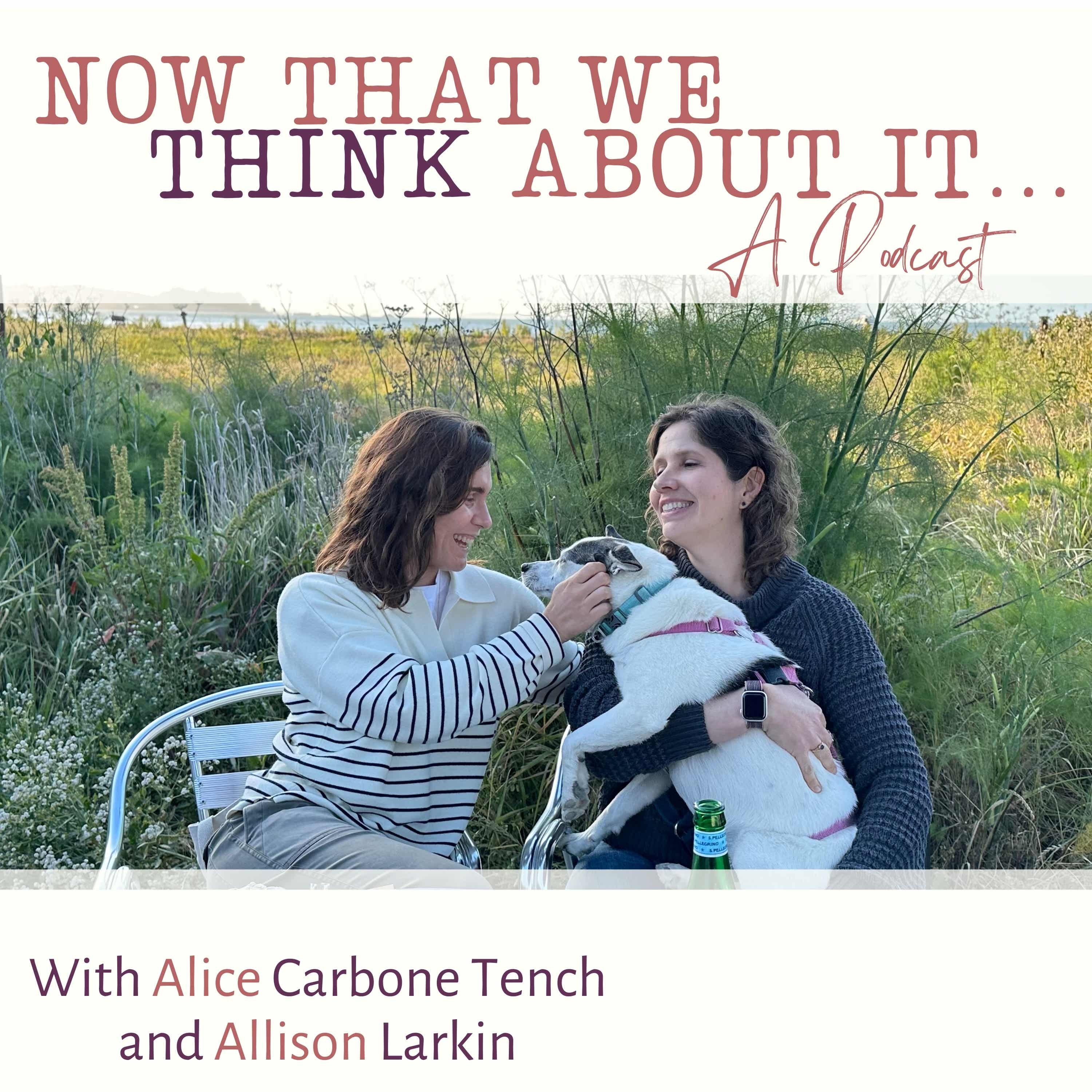
Now That We Think About It Podcast
by Now That We Think About It
A podcast about the shared human experience nowthatwethinkaboutit.substack.com
-
56
Episode 52 - Now That We Think About Home of the American Circus
This episode is sponsored by Cassandra Dunn Editing Services. Cassandra has over 20 years of professional copy editing experience and an MFA in creative writing. She’s a traditionally published author, and she’s been specializing in developmental edits and book doctor services for 13 years. Her clients’ books have won awards and received starred Kirkus reviews. She works in all genres and she’s here to help you make your project the best that it can be. So if you have something you’ve been working on, or even if you have something that’s just starting and you want to know if you’re on the right track, you can send Cassandra an email and start the conversation about how to take your writing to the next level. What a lovely thing it is to have a friend who will remind you to celebrate your good moments! I was dealing with a pretty big loss last week, but Alice made sure we took some time to talk about Home of the American Circus for this episode, in light of the paperback edition coming out on Tuesday, May 5th. It was a joy and an honor to get to dive into a deep and thoughtful conversation about this book with my dear friend Alice. We talk about some of the inspiration for the book, the evolution of friendships and what it feels like to revisit relationships with childhood friends, the unreliable narratives around what we consider to be historical fact, and how fiction has the power to make us feel less alone. One of the best parts of doing this podcast is hearing from you! We love to know what you think about the topics we discuss on this podcast. If anything in this episode or the book resonates with you, please email us at [email protected] to send a written or a voice message, and we may discuss it in a future episode! We hope you enjoy this conversation!xoAllison & AliceThanks for reading! This podcast is public so please share with a friend!Thanks again to Cassandra Dunn Editing Services for sponsoring this episode. If you have a book coming out, a Substack essay or a newsletter, an album, a creative project, or a small business you’d like to promote and are interested in sponsoring an episode of Now That We Think About It, please email us at [email protected] for more information.Books mentioned in this episode*Home of the American CircusThe People We KeepThe Art of AdaptingHomecomingDicey’s SongThe Ordinary Princess Support the show by using our affiliate links!Force of Nature, Planet Friendly, Toxic-free Cleaning*Our Bookshop Store*Follow us Alice Carbone Tench & Allison LarkinIf you love this podcast, please leave us a review on Apple Podcasts*affiliate links This is a public episode. If you would like to discuss this with other subscribers or get access to bonus episodes, visit nowthatwethinkaboutit.substack.com
-
55
Episode 51 - Now That We Think About Intuition
This episode is sponsored by Audiobrary, Julia Whelan’s audiobook platform, which is home to a beautifully curated collection of audiobooks (and our podcast)! You can buy or rent audiobooks on Audiobrary.com to listen on the Audiobrary app. Every Audiobrary production was written by humans, performed by humans, and edited by humans, and the best part is that everyone involved is paid fairly for their work. So not only do you get great stories, well told, and brilliantly performed, but you can feel good about supporting Audiobrary. This week Alice and I showed up dressed in nearly identical denim shirts to talk about intuition. We’d had intuition on a running list of topics we keep, but when we celebrated our one year podcast anniversary on Instagram Live, Susan suggested Intuition as a topic as well, so we bumped it to the top of the list. Every time I edit an episode, I think, “Well, this one has to be my favorite,” and Episode 51 is no exception. It’s a strangely moving thing to take inventory of the ways we have been taught to ignore our inner voice, and the process of coming back to listening to her. Both Alice and I have a sense that our younger selves were more easily in touch with that deep sense of knowing that we call intuition. These days, I think of my intuition as my younger self, a slightly feral outdoorsy girl, as I was in the photo below. I imagine that intuition-based sense of knowing as that that kid whispering her needs and opinions in my ear. Alice said she’d also seen a photo of herself recently where she felt like she could see that inner sense of self shining clearly. And I got a little choked up when she sent it over to include in this post: Young Alice, so beautifully present in herself. Do you hold a specific image of your inner voice or intuition? We’d love to see the photos of you that capture your connection to self. And we’d love to know if there are times when you have a clear sense of intuition, but choose to go against it anyway. Are there times when you’ve made choices purely on intuition when there was no other information to back you up? After this conversation, I feel newly committed to following my inner voice when I’m conflicted. I want to spend more time tapping into that deep knowing whenever I can. We’d love to know your takeaways from this episode. Please leave us a comment or send an email or voice message to [email protected]. It’s always a joy to hear what you think about what we think about our topics. We hope you enjoy this episode!xoAllie & Alice Thanks again to Audiobrary.com for sponsoring this episode. If you have a book coming out, a Substack essay or a newsletter, an album or a creative project, or a small business you’d like to promote, and you are interested in sponsoring an episode of Now That We Think About It, please email us at [email protected] for more information.Support the show by using our affiliate links!Force of Nature, Planet Friendly, Toxic-free Cleaning*Our Bookshop Store*Follow us Alice Carbone Tench & Allison LarkinIf you love this podcast, please leave us a review on Apple Podcasts This is a public episode. If you would like to discuss this with other subscribers or get access to bonus episodes, visit nowthatwethinkaboutit.substack.com
-
54
Now That We Think About The Impact of Technology on Kids and Adults, with teachers Kristine and Jenny
This episode is sponsored by Renee Swindle, author of Francine’s Spectacular Crash and Burn, a beautiful book about a woman named Francine Stevenson, who gets more than she bargained for when she rescues a ten year old foster child named Davie from a pack of bullies attempting to steal his iPad. As Davie continues to show up on her doorstep, their unconventional friendship grows, and Francine learns that Davie’s foster mother is her high school crush, Jeanette. Francine’s Spectacular Crash and Burn by Renee Swindle is a novel about finding yourself and finding your true chosen family. Look for this novel wherever books are sold, or even better, ask your local bookstore to order a copy for you.In this episode, number 50!!! Allison and I welcome Catherine’s Kindergarten teachers, and hosts of the beautiful podcast Big Little Lessons, Kristine Annunziata and Jenny Goodenough about the influence of screens on children’s development, parental modeling, and mindful use of technology. We explore how technology shapes our brain, social connections, and daily routines, offering practical and valuable insights for parents, educators, and caregivers. We talked about the changing landscape of screen technology from the 90s to today, about what children miss out on when immersed in screens, and the importance of boredom and real-world engagement. Kristine and Jenny also share stories of their early teaching experiences, and how the integration of technology has evolved. Whether you’re a parent, teacher, or adult navigating the digital world, the insights shared here aim to foster healthier relationships with technology and nurture the natural curiosity and creativity inherent in childhood.Resources & Links:* Francine’s Spectacular Crash and Burn by Renée Swindle — Explore a novel about found family and self-discovery amidst life’s chaos.* Big Little Lessons Podcast — A heartfelt conversation on early childhood, education, and technology.* Arthur Brooks: The Meaning of Your Life, Finding Purpose in an Age of Emptiness — Insight into boredom, purpose, and mental health.* The Default Mode Network Explained — Understand how boredom fuels creativity and well-being.Thanks again to Renee Swindle, Author of Francine’s Spectacular Crash and Burn for sponsoring this episode. If you have a book coming out, a Substack essay or a newsletter, an album or a creative project you’d like to promote, and you are interested in sponsoring an episode of Now That We Think About It, please email us at [email protected] for more information.Support the show by using our affiliate links!Force of Nature, Planet Friendly, Toxic-free Cleaning*Our Bookshop Store*Follow us Alice Carbone Tench & Allison LarkinIf you love this podcast, please leave us a review on Apple Podcasts This is a public episode. If you would like to discuss this with other subscribers or get access to bonus episodes, visit nowthatwethinkaboutit.substack.com
-
53
Episode 49: Now That We Think About Hobbies & Play
Happy Monday, friends! In today’s episode, Allison and I talked about how, in today’s fast-paced world, many of us struggle to find time for hobbies that are purely for enjoyment. Why is it that we often define ourselves by our roles and responsibilities rather than our passions? So going back to our childhood passions, we talked about the importance of rediscovering fun and hobbies without the pressure of productivity. “Who are we beyond our titles?” Join us for an honest conversation about the pressures to work hard, the shame around leisure, and the importance of doing things just for fun.Support the show by using our affiliate links!Force of Nature, Planet Friendly, Toxic-free Cleaning*Our Bookshop Store*Follow us Alice Carbone Tench & Allison LarkinIf you love this podcast, please leave us a review on Apple Podcasts*affiliate links This is a public episode. If you would like to discuss this with other subscribers or get access to bonus episodes, visit nowthatwethinkaboutit.substack.com
-
52
Episode 48 - Now That We Think About What's Ours To Tell (with Rainbow Rowell)
It’s an odd feeling to be described by someone else — to overhear someone talking about you when they don’t realize you’re in earshot, to be introduced at an event, or cc’d on an email connecting you to a friend’s friend when it goes beyond the basics of This is Allison, she writes books, and has two dogs. We think of ourselves a certain way, but that’s not necessarily how everyone else sees us. Sometimes, things we don’t like about ourselves are things the people who love us find most endearing. Sometimes when we’re being described, we realize how misunderstood we are. It can be beautiful, affirming, awkward, or heartbreaking to catch a glimpse of yourself through someone else’s eyes—especially when it’s made public. And if someone else’s idea of you permeates your social realm, how do you reclaim the parts of yourself that you never intended to share? That’s the question at the heart of Cherry Baby, the new book from Rainbow Rowell, and the inspiration for this week’s episode of Now That We Think About It.In the novel (which we absolutely loved!), Cherry’s husband Tom, has been writing and illustrating a comic strip since before he even met Cherry. And after their real-life relationship began, he added her to the strip as his main character’s love interest, Baby. No one was reading his comic strip at the start, and then suddenly, everyone was. Years later, Tom is off in Hollywood working on the film version of his comic. Baby (who is clearly a caricature of Cherry) is a meme. She’s everywhere. Cherry gets recognized as a character from a cartoon. The book brilliantly explores what it means to move through the world when someone else’s impression of who you are precedes you.So, as writers, Rainbow, Alice, and I are all keenly interested in the question of what parts of our lives are fair to write about when other people intersect with our stories. But we realized that in the age of social media, everyone has to wrestle with this question. Is it okay to share a photo of a group of friends without asking every single person in the photo if they approve? Is it okay to film a stranger at the grocery store? Is it fair to tell an embarrassing story that isn’t just about you?And as technology changes, the rules change too, right? (Right?) Are we always changing our manners at the appropriate pace?Rainbow talks about the ways social media has warped what was once reasonable:“I think the internet changes and breaks all of our established rules. Everything that was sort of reasonable before the internet is not reasonable now…And I think…that especially people our age…we got these rules for civilized life and a lot of them just don’t work anymore.”I have adored and admired Rainbow since way, way back when we were debut novelists trying to figure out how to navigate publishing. She’s staggeringly brilliant and kind, and she taught me so much about writing and the importance of preserving the authenticity of our work. I loved the chance to have this conversation with Rainbow and Alice so much. I know you will also love Episode 48 - Now That We Think About What’s Ours To Tell. It’s about consent, empathy, and the messy way our lives intersect with art, how easy it is to give away pieces of yourself without realizing it, and how even when we try to protect ourselves, other people can include pieces our lives in their stories. We talk about the lines we draw between ourselves and the world, our private lives and public personas, and how sometimes hiding under the cover of fiction is the safest way to be completely vulnerable and honest.Let us know what you think about this episode and what your rules are for sharing stories, photos, or videos that involve the people you love (or maybe don’t even like). Has someone ever shared images or impressions of you that made you uncomfortable? Have you shared too much about someone else? Email us at [email protected], and we may share your story in a future episode (make sure to let us know if you would like to remain anonymous).XOAllison & AliceThanks for reading! This post is public so feel free to share it.LinksRainbow RowellFollow Rainbow on InstagramCherry Baby pre-order bag charm giveawayBooks mentioned in this episode:*Cherry Baby by Rainbow Rowell Slow Dance by Rainbow Rowell Attachments by Rainbow RowellEleanor and Park by Rainbow RowellShe Hulk by Rainbow RowellMust Love Dogs by Claire CookThe Joy Luck Club by Amy TanThe People We Keep by Allison LarkinHome of the American Circus by Allison LarkinSupport the show by using our affiliate links!Force of Nature, Planet Friendly, Toxic-free Cleaning*Our Bookshop Store*Follow us Alice Carbone Tench & Allison LarkinIf you love this podcast, please leave us a review on Apple Podcasts*affiliate links This is a public episode. If you would like to discuss this with other subscribers or get access to bonus episodes, visit nowthatwethinkaboutit.substack.com
-
51
Episode 47: Now That We Think About Villains (with Happy Anderson)
This week we are joined by Allison’s Ithaca College friend, acclaimed actor Happy Anderson (Mindhunter, The Bikeriders, Maggie Moore(s)) for a timely and deeply vulnerable discussion about blame, empathy, and facing the uncomfortable truth that we may all be the villain in someone else’s story.Since Happy is known for portraying epic, complex bad guys—including serial killer Jerry Brudos on two different TV shows—he brings a rare level of psychological insight to the conversation, which expands beyond performance, to examine our human urge to look for villains we can assign blame to when we don’t want to accept personal responsibility. You’ll also learn where Happy’s name came from, find out what Alice thinks she and Happy have in common, and hear about Allison’s truly weird trick for combatting social anxiety at college parties. We hope you’ll tune in to listen to this episode and then email us at [email protected] to let us know what you think about villains. Have you ever been the villain of someone else’s story? Has someone been the villain of yours when they may not have intended harm? Do you find yourself looking for a villain to justify your own behavior? We love to hear from you and we’re planning another email episode soon, so please send along your thoughts and feelings! (If you’d like to remain anonymous, make sure to let us know so we don’t use your name on the air!)Thank you so much for listening and for all of your support sharing our episodes and leaving reviews of our show! xoAlice & Allison P.S. - As a head’s up if you have little ears in the car with you, there’s a few four letter words in this episode.Thanks for listening! This podcast is public so feel free to share it.LinksHappy Anderson Follow Happy on InstagramGo see Happy in Brigadoon at the Pasadena Playhouse (May 13th-June 14th)Keep an eye out for Lear Rex in movie theaters soon!Books mentioned in this episode:Equus by Peter Shaffer*The Girl Who Baptized Herself by Meggan Watterson*Home of the American Circus by Allison Larkin*Support the show by using our affiliate links!Force of Nature, Planet Friendly, Toxic-free Cleaning*Our Bookshop Store*Follow us Alice Carbone Tench & Allison LarkinIf you love this podcast, please leave us a review on Apple Podcasts*affiliate link This is a public episode. If you would like to discuss this with other subscribers or get access to bonus episodes, visit nowthatwethinkaboutit.substack.com
-
50
Episode 46: Now That We Think About Belonging with Tessa Ferrer
Our conversation kicks off with our dear friend, actress Tessa Ferrer, who shares her transformative experiences in Nelson County, Virginia, where she feels a profound sense of belonging while tending to her land. This contrasts sharply with her life in Los Angeles, where she and Alice live, and where they can often feel like outsiders in our respective artistic communities.Tessa asks whether social status affects our sense of belonging, a question that allowed us to truly look into our personal experience for an honest answer.Allison reflects on her childhood in a small town, where she often felt like an observer rather than a participant. She highlights how attending the Northern Westchester Center for the Arts helped her connect with other “misfit kids,” providing a sanctuary of belonging during her formative years. This perspective resonates with many listeners who may have experienced similar feelings of isolation in their youth.We also touch on the idea that belonging is not about fitting in everywhere but rather finding your unique community. Tessa shares her experiences in spaces like 12-step programs, where judgment can exist, yet she still finds a sense of belonging. This raises an important question: can we belong in spaces where criticism is present?Support the show by using our affiliate links!Force of Nature, Planet Friendly, Toxic-free Cleaning*Our Bookshop Store*Follow us Alice Carbone Tench & Allison Larkin If you love this podcast, please leave us a review and tell your friends about it and listen here: Apple Podcasts This is a public episode. If you would like to discuss this with other subscribers or get access to bonus episodes, visit nowthatwethinkaboutit.substack.com
-
49
Episode 45 - Now That We Think About Spring
Hello friends! Allison here! I loved recording this episode with Alice. We both stumbled on the topic idea at almost the same time, and in the course of this episode confess that we both have some feelings about Spring that don’t necessarily match our expectations—which makes us wonder how you all feel about Spring. Do you love and embrace this season of springing ahead? Or does it feel like a bit much all at once? Do you have sensory overload memories of Spring? Do you have joyful ones? (Email us at [email protected] to let us know). We also talk about the soul-nourishing act of starting seedlings, favorite Spring foods, and the awkward Easter outfits of childhood. I think we both walked away from this conversation with an eye toward enjoying the parts of Spring we truly love, and we hope you will too. What are you looking forward to in this march (pardon the pun) toward longer days? We love getting messages from you about your thoughts. And we really appreciate your reviews and help spreading the word about our show!Thanks so much for listening! We hope you enjoy this episode!xo Allison & AliceSupport the show by using our affiliate links!Force of Nature, Planet Friendly, Toxic-free Cleaning*Our Bookshop Store* This is a public episode. If you would like to discuss this with other subscribers or get access to bonus episodes, visit nowthatwethinkaboutit.substack.com
-
48
Episode 44: Now That We Think About Friendship with Catherine Tench
In this candid and fun conversation, Allison and Alice explore the multifaceted nature of friendship through the eyes of an eight-year-old guest, Alice’s daughter, Catherine. They discuss the essential qualities of a good friend, the evolution of friendships as one grows older, and the importance of kindness, trust, and honesty in relationships. The conversation also touches on the challenges of childhood, the role of support systems, and the impact of cultural differences in communication. Ultimately, the discussion highlights the excitement and complexities of growing up and forming meaningful connections.LinksFollow Alice Carbone Tench and Allison LarkinSupport the show by using our affiliate links!Force of Nature, Planet Friendly, Toxic-free Cleaning*Our Bookshop Store* This is a public episode. If you would like to discuss this with other subscribers or get access to bonus episodes, visit nowthatwethinkaboutit.substack.com
-
47
Episode 43: Now That We Think About Lunch
In this fun conversation, Alice, Emily, and Allison explore the often-overlooked topic of what people eat for lunch when they are alone. They share personal anecdotes about their lunch habits, dietary restrictions, and the pressures of social media that create unrealistic expectations around meals. The discussion highlights the importance of self-care in meal preparation, the joy of simple meals, and practical tips for elevating everyday lunches. The conversation wraps up with reflections on the significance of lunch rituals and the need for a little sweetness in life.LinksFollow Alice Carbone Tench and Allison LarkinSupport the show by using our affiliate links!Force of Nature, Planet Friendly, Toxic-free Cleaning*Our Bookshop Store* This is a public episode. If you would like to discuss this with other subscribers or get access to bonus episodes, visit nowthatwethinkaboutit.substack.com
-
46
Episode 42 - Now That We Think About Nuance
Hi Friends! Allison here! We recorded this episode in November, and then kept pushing it aside to publish more timely episodes, but I think it's one of my favorite conversations. I'm so glad Alice came up with the idea of discussing nuance, the ways we turn to all-or-nothing thinking, and the vulnerability of holding incongruent truths. Please join me (Allison Larkin) and Alice Carbone-Tench for this discussion about nuance, and then let us know if nuance is something you struggle with, delight in, or haven't even thought about very much. Are there times in your life when embracing nuance might have saved you some heartache? Are their times when black-and-white thinking saved your sanity? Leave us a comment or send us an email at [email protected]. We'd love to hear from you and may include your message in a future show! We hope you enjoy this episode!xo Allison & Alice This is a public episode. If you would like to discuss this with other subscribers or get access to bonus episodes, visit nowthatwethinkaboutit.substack.com
-
45
Episode 41: Now That We Think About Come See Me in The Good Light
Today, we are so happy to talk about the profound beauty and resilient spirit of poet laureate Andrea Gibson (and their wife megan falley ) captured in the documentary Come See Me in the Good Light, recently Oscar-nominated. Through personal stories of love, loss, community, and art, this episode reflects on how facing mortality can deepen our appreciation for life’s fleeting moments, and allow us to live and love outside of the pre-conceived boxes of society and surrounding ourselves with all that we call love. Follow Alice Carbone Tench and Allison LarkinSupport the show by using our affiliate links!Force of Nature, Planet Friendly, Toxic-free Cleaning*Our Bookshop Store* where you can find the following books by Andrea Gibson:Take Me with YouYou Better Be LightingLord of the Butterflies And many more.Listen to new episodes every Monday on Audiobrary, Substack, Apple Podcasts or Spotify!*affiliate link This is a public episode. If you would like to discuss this with other subscribers or get access to bonus episodes, visit nowthatwethinkaboutit.substack.com
-
44
Episode 40 - Now That We Think About Romance (with Julia Whelan)
Alice and Allison are thrilled to have friend of the pod, author, narrator, and founder of Audiobrary, Julia Whelan, back to talk about romance! They discuss the difference between romance in real life, romance in novels, and romance in the movies. Julia gives listeners a breathtakingly brilliant rundown of the historical context of romance novels, and explains how current events shape love stories. They discuss the craft of writing romance novels, and the way e-books and audiobooks have changed the way readers consume romance. Plus, Julia shares some romance recommendations for readers new to the genre.Let us know what you think about romance! Do you read romance novels? Tell us about your relationship with romance novels, and let us know your favorite romance titles or sub-genres. Or, if you’ve held the the perception of romance novels as “trash,” where do you think that belief came from? Why do you think joy and pleasure might be considered less valuable than darker themes? Email us at [email protected] to share your thoughts!Wishing you a Happy Valentine’s Day!xo Alice & Allie This is a public episode. If you would like to discuss this with other subscribers or get access to bonus episodes, visit nowthatwethinkaboutit.substack.com
-
43
Episode 39: Now That We Think About The Lilith Fair w/Katie Clark Gray
In this episode, Alice, Allison, and Katie Clark Gray dive into the transformative history of the Lilith Fair (Lilith Fair: Building a Mystery now available on Hulu), exploring how women have built supportive systems, challenged societal norms, and reshaped cultural narratives from the 90s to today. They share personal stories, discuss the evolution of feminism, and envision a future of greater solidarity and empowerment for women.Katharine Clark Gray is a writer for film, stage, web, and podcasts.xo Alice & AllieLinksFollow Alice Carbone Tench and Allison LarkinFollow Katie Clark Grey here: @katiecgray on Bluesky, @graykatiec on Instagram, and on the webs at Uncompromised CreativeResources & Links* Building a Mystery - Hulu Documentary* Sophie Gilbert’s Girl on Girl* Indigo Girls - Closer to Fine* Lilith Fair Official Website* Tori Amos - Ithaca College Concert 1997* Sofia Isella - Social Media Profile* Kim Gordon - Sonic Youth* PJ Harvey Official* Brandi Carlile - Official SiteSupport the show by using our affiliate links!Force of Nature, Planet Friendly, Toxic-free CleaningOur Bookshop Store This is a public episode. If you would like to discuss this with other subscribers or get access to bonus episodes, visit nowthatwethinkaboutit.substack.com
-
42
Episode 38 - Books
Hey there, book lovers! Allison here! In this episode, Alice and I are diving into our favorite topic—books! We chat about the joy of reading during the day (because who doesn't love a good book on a rainy Sunday?), and how audiobooks have become our multitasking best friends. We also reminisce about those comforting childhood series that bring back all the nostalgia.We ponder the role of poetry in writing prose and how it adds an added element to storytelling. Whether it's the art of crafting a screenplay or getting lost in a literary series, there's something truly special about the way words can transport us to new worlds.Join us as we balance the heavy and the light, and celebrate the power of storytelling. We'd love to hear what you're reading, so drop us a line and share your latest book adventures! Do you have a topic you’d like us to discuss in a future episode? Send us an email or voice note at [email protected] Alice & Allie This is a public episode. If you would like to discuss this with other subscribers or get access to bonus episodes, visit nowthatwethinkaboutit.substack.com
-
41
Episode 37: Now That We Think About Asking for Help
Alice and Allison engage in a heartfelt conversation about the challenges and nuances of asking for help, especially in the context of Alice's recent hip surgery. They explore the emotional complexities of receiving help, the societal pressures to appear self-sufficient, and the deepening of personal relationships through vulnerability. The discussion also touches on the broader implications of community support and the importance of authenticity in seeking assistance. This is a public episode. If you would like to discuss this with other subscribers or get access to bonus episodes, visit nowthatwethinkaboutit.substack.com
-
40
Episode 36 - Now That We Think About Rituals
Hi everyone, Allison here! In this episode, Alice and I dive into the fascinating world of rituals and habits. We chat about how these practices shape our lives, offering a sense of grounding and community. From my personal experiences with ADHD to Alice’s insights on cultural traditions, we explore how rituals can be both anchors and bridges in our chaotic world.Do you have thoughts about rituals you’d like to share with us? Send us an email or voice note at [email protected] Alice & AllieLinksFollow Alice Carbone Tench and Allison LarkinSupport the show by using our affiliate links!Force of Nature, Planet Friendly, Toxic-free CleaningOur Bookshop Store This is a public episode. If you would like to discuss this with other subscribers or get access to bonus episodes, visit nowthatwethinkaboutit.substack.com
-
39
Episode 35 - Now That We Think About The 90s
Join us—Alice Carbone Tench and Allison Larkin—as we dive into a chat about the 90s—a decade that shaped us in so many ways. We explore the authenticity of that era, the cultural shifts, and how technology has changed our lives. We talk about ways to reconnect with those meaningful experiences of our cherished past while embracing the present.Do you have thoughts about the 90s you’d like to share with us? Send us an email at [email protected] Alice & AllieLinks* Alice’s 2014 Essay on the 90s * Counting Crows Documentary, Have You Seen Me Lately* Jane Pratt on SubstackSupport the show by using our affiliate links!Force of Nature, Planet Friendly, Toxic-free CleaningOur Bookshop StoreListen to new episodes every Monday on Substack, Audiobrary and Apple Podcasts! This is a public episode. If you would like to discuss this with other subscribers or get access to bonus episodes, visit nowthatwethinkaboutit.substack.com
-
38
Episode 34: Now That We Think About Rejection
In this episode, Allison and Alice discuss the theme of rejection, exploring its impact on personal growth and creativity. They discuss the fear of failure, the societal pressures to succeed, and how rejection can be a stepping stone to self-discovery. The conversation touches on personal anecdotes, the importance of resilience, and the idea of seeking rejection as a means to broaden one's horizons.xo Alice & AllieThe conversation was inspired by this article on Psychology Today: Why Rejection Is a Worthy GoalSupport the show by using our affiliate links!Force of Nature, Planet Friendly, Toxic-free CleaningOur Bookshop StoreFollow Allison Larkin and Alice Carbone TenchListen to new episodes every Monday on Audiobrary, Substack or Apple Podcasts! This is a public episode. If you would like to discuss this with other subscribers or get access to bonus episodes, visit nowthatwethinkaboutit.substack.com
-
37
Episode 33 - Now That We Think About Color
Hello, friends! In our latest chat, we dive into the evolution of color in fashion, home decor, and aesthetics. We talk about how society's trends have leaned towards monochromatic palettes and share our personal experiences with color. We also touch on the role of social media and the importance of expressing individuality through style. Plus, we have a little critique on the Pantone Color of the Year. This episode is all about embracing color and making personal choices in a world that often feels a bit too bland.What’s your personal color of the year? We’d love to know! Email us at [email protected] & Allie This is a public episode. If you would like to discuss this with other subscribers or get access to bonus episodes, visit nowthatwethinkaboutit.substack.com
-
36
Episode 32: Now That We Think About The Great British Bakeoff
Hey there! Today, Allison and I are talking about the delightful world of the Great British Bake Off. This show isn’t just about baking; it’s about the warmth, charm, and genuine connections it fosters, in the much needed safety of a lovely, colorful kitchen. We’ll chat about how it’s not your typical competitive reality show and why its cultural richness keeps us coming back for more. Enjoy the episode and let us know what is your favorite British bake, what you love about the show, and if there is a particular baker that you have a sweet spot for.Support the show by using our affiliate links!Force of Nature, Planet Friendly, Toxic-free CleaningOur Bookshop StoreListen to new episodes every Monday on Audiobrary, Substack or Apple Podcasts!*affiliate linkFollow Allison Larkin and Alice Carbone Tench This is a public episode. If you would like to discuss this with other subscribers or get access to bonus episodes, visit nowthatwethinkaboutit.substack.com
-
35
Episode 31: Now That We Think About Holidays with Matthew Norman
Hi Friends! Allison here! I’m so excited for you to listen to this conversation! Alice and I had the pleasure of sitting down with the delightful Matthew Norman to chat about his latest book, “Grace and Henry’s Holiday Movie Marathon.” In this heartwarming episode, we reminisce about our 15-year friendship, our shared love for holiday movies, and the unexpected joys and challenges of this festive season. Whether you’re a holiday enthusiast or a self-proclaimed Grinch like me, this conversation is sure to warm your heart and bring a smile to your face. Tune in for laughter, nostalgia, and a sprinkle of holiday magic.And please let us know how you feel about the holidays! Email us at [email protected] Alice & Allison LinksFollow Matthew Norman:* Website * Instagram * Threads Buy Grace and Henry’s Holiday Movie Marathon* Buy Charm City Rocks* Follow Alice Carbone Tench and Allison LarkinMovies mentioned in this episode:Christmas VacationA Christmas StoryMiracle on 34th StreetMeet Me in St. LouisElfFerris Bueller’s Day OffWeekend at Bernie’sNotting HillLove ActuallyThe Family StoneWhite ChristmasSongs and Albums mentioned in this episode: The Beach Boys Christmas AlbumBob Dylan - Christmas in the Heart Bing Crosby Merry Christmas A Jolly Christmas from Frank Sinatra The Dean Martin Christmas AlbumDominick the Italian Christmas Donkey - Lou MonteI Want a Hippopotamus for Christmas - Gayla Peevey Support the show by using our affiliate links!Force of Nature, Planet Friendly, Toxic-free CleaningOur Bookshop StoreListen to new episodes every Monday on Audiobrary, Substack or Apple Podcasts!*affiliate link This is a public episode. If you would like to discuss this with other subscribers or get access to bonus episodes, visit nowthatwethinkaboutit.substack.com
-
34
Episode 30: Now That We Think About Artivism with Nikkolas Smith
In this engaging conversation, artist Nikkolas Smith discusses with Allison and Alice the intersection of art and activism, coining the term ‘artivism’ to describe their approach. They explore how personal experiences, societal issues, and historical narratives shape their work, emphasizing the importance of empathy and dialogue in art. The discussion also touches on educational justice, food deserts, and the power of storytelling in fiction to address social issues. Throughout, they reflect on the challenges and triumphs of using art as a tool for change and the ongoing journey of finding one’s voice as an artist.Listen to new episodes every Monday on Audiobrary, Substack, or Apple Podcasts!Follow Alice Carbone Tench and Allison LarkinLINKSThe History of We by Nikkolas SmithA Change is Gonna Come by Nikkolas SmithSupport the show by using our affiliate links!Force of Nature, Planet Friendly, Toxic-free CleaningOur Bookshop Store This is a public episode. If you would like to discuss this with other subscribers or get access to bonus episodes, visit nowthatwethinkaboutit.substack.com
-
33
Episode 29: Now That We Think About Compassion and Community - with Dr. Vonnetta L. West
In this episode, Alice Carbone Tench and Allison Larkin have the great honor of talking with “cultural consultant, leadership strategist, nonviolence trainer, and good neighbor,” Dr. Vonnetta L. West. Several years ago, Allison took a Be Love Nonviolence 365 training course from Dr. West through The King Center and found it truly life-changing. Be Love is an approach to life and conflict that recognizes injustice and leads with kindness. Dr. West, Alice, and Allison discuss ways to use love, compassion, and curiosity to preserve and promote community; including how to apply them to the social media landscape or a family meal.“Dr. King said “Justice at its best is love correcting everything that stands against love.” And I just wish and I pray that we have more people doing justice work. People who are committed to being vessels of love and correcting everything that stands against love. What are those things? People not having healthcare—that stands against love. Some children being in school in dilapidated buildings that have rodents and don’t have heat—that stands against love. And we can simplify that so easily and say ‘Okay I want to work to correct something that stands against love.’ Each person can do that in their families and their schools and we can do it collectively through our legislation and through our different programs and advocacy work.” ~Dr. Vonnetta L. WestLinksLetter from Birmingham Jail, by Dr. Martin Luther King, Jr. Please follow Dr. Vonnetta L. West on her website, through her shop, on Instagram, on YouTube, and through her work with The King Center. The King Center seminar Dr. West mentions in the podcast was recorded and can be viewed here.Take the Be Love Pledge.Listen to new episodes every Monday on Audiobrary, Substack, or Apple Podcasts!Follow Alice Carbone Tench and Allison LarkinSupport the show by using our affiliate links!Force of Nature, Planet Friendly, Toxic-free CleaningOur Bookshop StoreTranscriptAlice Carbone Tench (00:02)Hi, Allison. Nice to see you.Allison Larkin (00:04)HiDr. West, we have Dr. Vonnetta West with us and I am so thrilled to be having this conversation. How are you?Dr. Vonnetta L. West (00:12)I’m doing well. Thank you so much for having me. How are you?Allison Larkin (00:16)We’re good. It’s, We’re both in California. I’m in Northern California and Alice is in Southern California and it’s raining here. And, ⁓ we are famously babies about the rain. California and rain. Yes, very much so. And, my dogs have, one dog doesn’t mind the rain and the other one is, is very offended. He’s very upset. ⁓Dr. Vonnetta L. West (00:23)Ugh.You happy to be inside?Alice Carbone Tench (00:39)HahahaDr. Vonnetta L. West (00:39)Well, I’m in Metro Atlanta, so it’s 72 degrees today. The sun is shining. You should come over.Allison Larkin (00:45)My goodness. That is perfection.Alice Carbone Tench (00:46)Perfection.Allison Larkin (00:49)Yes, we should have done this at your house.Dr. Vonnetta L. West (00:53)It would have been great.Allison Larkin (00:54)Yes, so I am so excited to have you here, Vonnetta ⁓ I took a class—for our listeners—I took a class through the King Center during the shutdown, I believe, because it was an online class. It was a Be Love training session. And I think it gave me something that I was really searching for in terms of I think, you know, back then there was a lot of snark on the internet, there was a lot of political things happening and it seemed like the way to be on social media was to have like a quip or a joke or a somewhat nasty thing to say about the person you were against. And I was feeling like I wanted to speak out about the things that were upsetting me and I didn’t know how to do that because in my heart being nasty or making a joke or trying to take somebody down wasn’t in me. And I felt like I don’t know how to be the person I need to be. And then I took this Be Love class, which is all about leading with love and figuring out who you wanna be and how to show up that way. And the idea that love is a strength, it’s not passive, it’s active. And I feel like it changed my confidence. It made me feel like I can go into a situation and know who I wanna be and how to show up. And that was really life changing and I highly recommend that anybody, whoever has the opportunity to take a class with you or to take a class with the King Center, because I also know you do consulting through Go West Consulting. And I feel like this is such an important tool to have. And I am also really a little sheepish about this, but over the weekend I posted something about—Dr. Vonnetta L. West (02:23)Yes.Allison Larkin (02:37)I’m fine. But I posted something about going for a mammogram and my face got bruised in the process of having a maneuver around the machine and I was very upset by that. And it got 10,000 likes or something like that on threads, which meant that I had all these people who don’t know me commenting and a lot of women were taking the attitude of, suck it up.Dr. Vonnetta L. West (02:52)Wow, wow.Allison Larkin (03:03)Like you’re complaining about a bruise, suck it up. And I was just saying, I wish they’d designed a machine that was built for women. And for a long time, I was able to not respond or say like, well, that’s lovely for you, but it hurt me. And I’m not saying I’m not grateful for the imaging and the testing and everything I needed, but I’m upset that I got hurt. And I think that we should have better than that. And then it just kept going and it kept going. And somebody said something super nasty like, well, you got bruised, get over it. And I said, ⁓ you must be fun at parties. ⁓ then she came back to me and said, I’m great at parties, how’s that bruise? And I thought, ⁓ this isn’t who I wanna be. And it reminded me of your.Dr. Vonnetta L. West (03:36)Yeah.Allison Larkin (03:53)Teachings and it reminded me that I need a reset on that. That like it’s one thing to be quippy and it’s one thing to have a comeback but I know in one of your online sermons that I listened to you were talking about how hatefulness violates self and I know that you have this motto of nonviolence being a way of being that influences our doing and I was just so aware of the fact—you know it’s not it’s not a world-ending thing I’ll get over it.Dr. Vonnetta L. West (04:14)Mm hmm.Allison Larkin (04:20)I’ll get over the hate I was feeling and I’ll also get over the way that I behaved. But it was such a huge reset. And I was so happy that we were going to talk today after that because I thought, ⁓ I fell down on the job a little. I got to pick myself up here. Like, I have standards that I learned that I need to hold up. And I think that going into Thanksgiving and talking about community.Dr. Vonnetta L. West (04:29)YesAllison Larkin (04:43)And going in where we all have all these huge emotions right now about so many different things and our communities are in conflict with each other. I was just really excited to get to talk with you about all of this.Dr. Vonnetta L. West (04:55)Thank you.First of all, I want to say I’m glad that your mammogram showed that you just have a cyst. I read that post and I was hoping we have an opportunity to talk about it today because I think People are going through different things, you know, it could be that maybe you know five years ago You might have responded differently to a bruise but given all the tensions and the stress of the worldA bruise now would be a major thing. I have a mammogram coming up and I am unexcited. And I just think that we have a right to that, whatever our response is, however we feel about being mashed and pushed and poked and prodded and all of those things. just, think acknowledgement is so powerful. And one of the things that I’m learning more about is to go into people’s social media spaces and say, I acknowledge your pain.Allison Larkin (05:30)Yeah.Yes.Dr. Vonnetta L. West (05:48)And however, why ever you feel that way, I want to say I’m sorry you experienced that and kind of not compare and measure how I would respond, I think, to how you responded. I think it’s so important. But people are in pain, even those people that were responding and posting comments. mean, this is a, for lack of a better phrasing, sick, traumatized society. And we really have to...Alice Carbone Tench (05:59)Mm-hmm.Allison Larkin (06:01)Yes.Yes.Alice Carbone Tench (06:15)Yeah.Dr. Vonnetta L. West (06:17)navigate well to cultivate joy and to cultivate acknowledgement and a way to be aware of what other people are feeling and going through.Allison Larkin (06:26)Yes, I realized when I stepped away from it that what I wish I had said to that woman instead was, I’m sorry that you haven’t been acknowledged in your pain. I’m sorry that you’ve been told to suck it up and I’m sorry that, re-examining the times you’ve been told to suck it up when you really wanted some comfort is a painful thing. Like, I really wish I’d come back with that instead because I actually know that that’s the root cause of it is that when somebody else is saying, suck it up, That’s what they’ve been told. That’s where they haven’t been acknowledged and they haven’t gotten comfort. And... Yes!Dr. Vonnetta L. West (07:01)They said it’s the language of trauma actually that so many things today were told to suck it up, but it is traumatizing already to find a lump or something in your breast and to go for an exam and then to get your face bruised in the process when you’re already feeling tense and stressful about it. But in addition to that, mean, sometimes I just look at people’s comments and think, I may think what happened to you? Why don’t you know that that’s rude? And then I also realized too, people aren’t their real selves on social media. A lot of it is fraudulent. Like people trying to be as cruel on social media as they wish they could be in real life. Like it’s kind of blasé. Yeah. I think that there’s that barrier that almost enables you, if you want to, to, you know, say things that you will never say in real life. I really want to ask how, because my, work on myself that I’m doing recently is in finding genuine, compassion for people that I know think different than I do. I’m finding it really hard these days to see that, ⁓ we all go through something, no matter what we believe, what we voted for.It’s been a, it’s been a process, you know, realizing that anger and internal violence does not really do me any service and the situation any service. so I wanted to ask you what has been your process? Cause I mean, I’m sure that there are waves, right? And of one step forward and one step back, how did you start and what do you do when in these times when it’s so easy to just cancel people out and not care about what happened to them.Dr. Vonnetta L. West (09:01)Sure. Yeah, I used to be the worst social media person. I mean I’ll tell you like seven/eight years ago the things I’m able to do now. I wouldn’t be able to do then. but I made a decision that I wanted to engage differently in social media spaces in particular and so I started to practice different things in order to do that. I started to practice stepping away when somebody makes a comment that I find abusive or hurtful or ignorant, or I just really, disagree. I started to practice asking myself questions in the moment, like reminding myself that people were raised in different environments, they learn differently.Like I started to think more about, you know, photos of lynchings. I don’t know if you’ve ever. seen them from lynchings where there are people smiling and laughing as they stand around lynched black bodies They’re drinking beer having a good time. I started to imagine where the children and grandchildren of those people in those photos are and if they were raised in a atmosphere or home where that was okay? What is their behavior on social media today? If there’s a descendants of those folks who didn’t unlearn that hate and that bigotry and that racism. Even on a smaller scale, know, people were just taught to communicate differently. and then there’s also the difference between disagreement and more egregious things like, you know, prejudice and things that really hurt people. So people will say we need to agree to disagree. I’m like, no, some things, but on other things, no.Alice Carbone Tench (10:32)Mm-hmm.Dr. Vonnetta L. West (10:43)Like if you tell me, you know, my gay uncle shouldn’t be invited to Thanksgiving. I’m not going to agree to disagree on that. We’re going to have tension, which is okay. Tension is not, Dr. King said in his letter from Birmingham jail, it’s not a bad thing. We’ve just been taught that tension is a bad thing. But if either party is practicing something that’s inhumane or unjust, we need to talk about that. So I’ve learned to step away. And if I want to, and if I believe I should,Alice Carbone Tench (10:52)Hmm.Allison Larkin (10:53)Yes.Dr. Vonnetta L. West (11:12)come back and communicate in a way that’s more mature. When in the past, I’d probably be like, you know, that’s just dumb. Why would you say something like that? But it’s practice. The thing about the language of nonviolence, a lot of times people say nonviolent practitioners, and that’s true. It really is practicing and coming back over and over and over again and saying. How can I give my most loving yet truthful response? So I think social media and even in real life, even in my relationships with people, as I really know, I’ve learned to step away and then come back and say, how do I want to communicate? But it’s hard, you know, because there are so many things happening to people and people that we love and things happening to us that it takes a lot.It can be draining to just practice being kind. Because the things that we’re facing as human beings, we were never meant to treat each other this way or to face these things. We have to stop acting like it’s normal. We’re supposed to be tired and confused. When I meet people and they say, they’re doing okay, I’m like, where do you live? Do you live on this planet? Like here?Allison Larkin (12:29)Yeah.Alice Carbone Tench (12:29)Have you noticed an increase of people that are after what you do? Have you noticed people wanting more more non-Dr. Vonnetta L. West (12:38)Some of it, you know, people want the ability to be hopeful, which I can help people with that. But then some of the other things that I offer people don’t want, like truth and things we need to change ourselves. It’s one thing to say I’m going to work on the world. It’s another thing to say I have some stuff that’s just messed up in me, which is the hard work of asking how do I contribute to the things that I’m seeing every day?How am I part of it? How can I take away the hate and add love? How can I drive out some of the injustices that I’m seeing? When you start talking about self-change, a lot of people don’t want that. They just want to know how to change systems and how to change politicians and switch out people. How to get rid of this president and put another one in. But when you say, okay, how do you treat your neighbors every day that approximate to you?That’s a different work.Alice Carbone Tench (13:39)Also, because that is at the very base, at the very beginning of how then we get to the tip of the iceberg, which is, you in this case, just because you mentioned the president, it starts from really, it starts from as cliche as it sounds, our families, right? And then you have your neighbors and then you have your bigger community. And when that is not taken care of, when, right?Dr. Vonnetta L. West (13:46)Yes.Mm-hmm.Alice Carbone Tench (13:59)So, the reason why I ask you, because I think I’m in search of hope to know whether we’re getting to the point where people are interested in seeing a change for real and not a change in the high places. I mean, that’s, again, that’s a secondary thing, I believe.And have you noticed young people wanting, cause I want to be hopeful about the future and about new generations. So I don’t know if you’re going to give me hope or not, but I’m just curious to see who are the, who do you see are the people that are after a change?Dr. Vonnetta L. West (14:19)Young people are very engaged. Now here’s the thing, the majority of us, I believe, want change and we want the world to be better. We just have varying definitions of what better is. And therein lies the problem, like my better doesn’t appear to be the same better for other people. So I’m wanting better and I mean,Allison Larkin (14:45)Yeah.Dr. Vonnetta L. West (14:56)I want everybody to have food, to eat, a house to live in. I want people to not be separated from their families, children not to be bombed, things like that. I want people to have shelter and I want us to treat each other with kindness and compassion. Somebody else’s better may be they want folks who look like them to be in charge. And they want this world where there’s so much conformity to what they believe is right.And some of that used to be true for me, that I, you know, 20 years ago wanted those same things. I was raised in that tradition in terms of my religious background where I wanted conformity and that’s what good looked like. And then things shifted in me and changed. And now, my goodness, if I can just get, children not to be in famine and people not to be sufferingAlice Carbone Tench (15:40)Mm-hmm.Dr. Vonnetta L. West (15:52)because they came to this country hopeful, looking for asylum and now they’re apart from their spouses. My idea of what better would be has changed. And so I think if we could just agree on like three basic things starting out as society that we agree as to what we want the world to look like and start to work towards those things, that would be at this point one, would be pretty good. Beyond party, know?Alice Carbone Tench (16:22)Mm-hmm.Allison Larkin (16:22)Yes.Dr. Vonnetta L. West (16:22)Because I think most people want their families to be okay and themselves to be okay. Unfortunately, there’s a large amount of people that that’s all they care about. Them, their families and folks that look like them and think like them. When if we could get to the place where the majority of people want people who don’t even look like them or think like them or believe like them to be well, to be holistically well, then I think that would be progress.Alice Carbone Tench (16:36)Mm-hmm.Mm-hmm.Dr. Vonnetta L. West (16:50)So it’s the view of what better is plus how to get there that I believe that’s challenging us.Alice Carbone Tench (16:56)And also this idea that if you are well, then it means that I am not, right? That idea that if I want all these people to be well, then there’s going to be less for me,Dr. Vonnetta L. West (17:01)RightAlice Carbone Tench (17:08)Right? We’re in this frame of mind where...equal for everyone means, there’s not going to be enough for me, which it’s very scarcity thinking, right?Dr. Vonnetta L. West (17:14)RightIt’s a scary thought for people. Like recently, the father of a well-known billionaire said that if white people become the minority in this country, then this country’s in trouble. And then that caused people to start to ask on social media platforms, well, now what’s wrong with being minorities? Are you admitting that people who are in the minority face greater challenges and bigotry and prejudice, like what’s your problem with being a minority? Is that acknowledgement? I think that’s a valuable discussion because if you find yourself not wanting to be in a certain position, then perhaps you should ask what’s happening to people in that position.Alice Carbone Tench (17:46)Hmm.Allison Larkin (17:59)Very much so. I think that’s actually a very good talking point. I think something a lot of times that our listeners are looking for, because we know that a lot of them are in this conflict with people they love and searching for things. I think it’s a very good talking point to say, if you think there’s something wrong with being a minority, how are you treating people in that position? I think that’s a great tool, honestly. Because I think a lot of times we actually need like a toolkit to go into conversations that are difficult,One of the things I think a lot of people are having pain with right now is I love this person who is my uncle or my neighbor or my pastor or whoever it is. I love this person, but some of their views are against basic human rights. And I don’t know how to have that conversation. And I don’t know how to reconcile this feeling of love that I have with this hatred that’s coming from them. And I think that is where having toolkits is really helpful because IDr. Vonnetta L. West (19:02)Mm-hmm.Allison Larkin (19:04)have actually, especially since taking your workshop, I have actually waded into some very difficult conversations with people who had opinions about certain things. I had the ability in the moment, which I don’t always do, but I had the ability in the moment to say, hey, could you look at it from this side instead? Could you look at what things could be instead of what they are? Could you look at, ⁓ you know, one of the conversations I had was about police violence. And ⁓ I kept saying, you know, okay, defund the police makes you uncomfortable. Can you look at a situation where police have social workers to come in?Dr. Vonnetta L. West (19:39)HmmAllison Larkin (19:44)instead of putting a policeman in a situation where he’s dealing with someone who’s dealing with a mental illness situation, and then you’re ending up in a situation of violence, could you see a world where we had social workers who could come in and help manage that situation and maybe that would be healthier? And so I had this person who, would often tease me about being a bleeding heart liberal all the time, say, yeah, that’s actually a better idea for everybody. But I had to have the confidence in myself, which I gained from Be Love training to say,Dr. Vonnetta L. West (20:18)Mm.Allison Larkin (20:20)I know what my morals are. I know where my heart lies. I feel confident in that. And I’m gonna wade in kindly. You don’t always have the energy for it. But when you do, I think you actually do have the ability to change someone’s mind if their heart has some goodness in it.Dr. Vonnetta L. West (20:36)Energy is such a key word.Allison Larkin (20:37)Energy is the key word. I think I’ve also had to learn to let myself off the hook when I don’t have the energy. And something a therapist said to me years ago is that if somebody can’t stop themselves from hurting you, like if you’re in a situation where somebody cannot stop themselves emotionally or physically from hurting you, that it’s also a kindness to get out of their swinging range. And I think that that’s important to remember in all of this too is that, you know, we wantDr. Vonnetta L. West (20:45)Mm-hmm.Allison Larkin (21:05)connection to our community, but if our community is going to hurt us, maybe taking a step back and preserving our energy is also important.Dr. Vonnetta L. West (21:10)Yes.Alice Carbone Tench (21:15)Can you tell me more about this class? Because now I want to take a class. I need to take a class.Allison Larkin (21:19)You wouldDr. Vonnetta L. West (21:20)WeAllison Larkin (21:20)love that, Alice.Dr. Vonnetta L. West (21:20)actually are offering up a facet of that class it’s not the exact same one that Allie took Alice but it’s this Thursday at 1130 it’s a free lunch and learn 1130 Eastern Time.Alice Carbone Tench (21:33)So, okay, what do you do in these classes? because I love the idea of a toolkit.Dr. Vonnetta L. West (21:39)Well, we don’t have a toolkit, but I wasjust thinking about that. I was thinking I should create one that kind of gives people some tools for responding to some of these different situations. But the Be Love class it was developed based on a movement that the King Center started called Be Love. And the idea around Be Love is to get people to take a pledge to Be Love, but to also learn what that means and to learn how to do that using Dr. King’s philosophy of nonviolence.Alice Carbone Tench (21:57)Mm-hmm.Dr. Vonnetta L. West (22:08)And so we had these classes that introduced people to Be Love and help redefine love because often when people hear the word love, they don’t think good things or progressive things. They normally think stagnant or weak or especially men and more masculine facing men. They then get with it. They were just like, love, what about power?And so we found all these barriers to even just talking about love. So we had to come back and say, this is what we mean when we say love. We mean something that’s persuasive. We mean something that’s influential. We mean something that doesn’t acquiesce to injustice. Love just doesn’t stand by and let wrong happen. So there’s different ways that we define love before moving into talking about how to apply it.Alice Carbone Tench (22:35)Mm-hmm.Dr. Vonnetta L. West (23:00)and what to do with it. And I think it’s helpful to people because we say things like, you know, love your neighbor. Well, what does that mean? it’s my understanding, it’s my belief that love means not only I want to help meet critical needs, but I also want to find out why you have those needs and why I have those needs and start to work on some of those issues that cause these critical needs.I said to a group of nonprofit leaders several years ago that we should be trying to work ourselves out of jobs. I never got invited back and that’s fine. But I actually was like, hey, if you run an organization that helps homeless people, it be great if in 10 to 15 years your organization didn’t exist anymore? I was like, isn’t that love to say I work to feed homeless people, but maybe 20 years from now we would have addressed this in such a way.Alice Carbone Tench (23:44)Hmm hmm hmm.Allison Larkin (23:44)Yeah.Dr. Vonnetta L. West (23:55)that there aren’t any more homeless people. But was radical thinking to folks. But I was just given this kind of twofold, way of love that I think most people, we want to be charitable, but not necessarily deal with systemic change.Alice Carbone Tench (24:10)Mm-mm.Wow. I honestly, it’s, it’s really fascinating to even just consider how many systems are in place so that we keep them in place, even if we don’t want to, right? So let’s help up to a pointDr. Vonnetta L. West (24:13)But that’s love too.There’s big money in it there, grants.Alice Carbone Tench (24:35)So tell me, how do you have hope? because yeah, there is big money in there, How do you find that hope that something can really change, that a system can really be broken and where do we find this strengthDr. Vonnetta L. West (24:50)you know, in the work that I do, I have to be aware of a lot of the things happening in the world. can’t work on thinking about how to dismantle an injustice unless you know what’s really happening and you’re well informed. So I have my moments where I feel sometimes hopeless or dark, and then I have to find my way.Alice Carbone Tench (24:55)Mm-hmm.Dr. Vonnetta L. West (25:13)out of those things through my own processing, my playlist, my affirmations, my commitment to different things, time with my family, my learning, my growing, starting to write. I’m starting to write more. I’m working on a book. I’m working on different things that help me express the things I’m feeling. Because at the rate that we’re going as human beings, if we’re not careful, as Dr. King said, if we don’t find a way to deal with each other non-violently, we’ll usher in, he just simply said non-violence or non-existence, but we’re going to have to discover a way to better engage each other. I find hope in moments like this, like this conversation will help me tremendously just because I’m talking through something. Seeing people who care about the work and who care about humanity, mean, there’s this...Alice Carbone Tench (25:46)Hmph.Dr. Vonnetta L. West (26:06)little lady that’s a children’s show facilitator and educator, Ms. Rachel, who has given me all kinds of hope right now. I’m like, wow, Ms. Rachel said, you know, I’m in here for these children and it doesn’t matter if you try to cancel my show or whatever, I’m still speaking out. And she doesn’t just do that for one group of children, regardless of what people believe, she’s speaking out for children.in countries throughout the world. someone like that, that’s inspiring to me. And there’s so many people working for change. And I think that causes me to be hopeful. But the other thing I try to do is whenever I’m looking at an issue too much, I try to go look at something good that’s happening. And there’s a lot of good things happening in the world too. A lot of good things, a lot of positive people, so many people who...care about society. Art gives me hope. Music gives me hope. Sometimes a movie makes me hopeful. Just makes me really cry and feel like, it may be okay. It’s amazing to me that art has the ability to do that. Reading gives me hope. Toni Morrison always makes me hopeful. Always. A good book can do that.Alice Carbone Tench (27:18)Yeah.Allison Larkin (27:22)Yes, absolutely.Yeah, very much so. Also, I wanted to talk about in terms of doing good in the world, I wanted to talk about our neighbor’s house. You have an organization in Liberia it made me think of it when you were talking about wouldn’t it be great if we didn’t need a homeless organization in 20 years? Because I feel like you are building a community and building an organization to help peopleso that they can help themselves in really beautiful ways. Did you want to tell us a little bit about our neighbor’s house?Dr. Vonnetta L. West (27:59)Well, I believe it was 2012, I left the church that I was attending. I was a leader at church, a leader-leader, like what we would call a pulpit elder. I ran the ministers and training program, the Bible Institute, all these different things. And I just remember sitting in this large church, we had over 20,000 members.It was a mega church and I looked out and I just said, God, there must be more than this. I mean, I think I’m missing something. And after that, I just started to get all of this insight into some of the things I should be a part of. And it wasn’t that anymore. And so I launched this ministry called Our Neighbor’s House. I was very prayerful about the name. And when I heard that name divinely, I was like, wow, because I’d been kind of dealing with these two great commandments of love God, love your neighbor. And it’s derived from that. And so our mantra that I came up with is The globe is our neighborhood, you are my neighbor. And so eventually we started to gather and we still have gathered. It’s very non-traditional. We go still from house to house and go do service projects. We go to nursing homes and we go put together food packages for people who are homebound because they’re suffering from HIV and AIDS. And we just have found our space. But I lived in Liberia before that for two years. And so one of the things that I knew was a need there was education, but not education the way they typically seen it in this area, Liberia, West Africa. Still a lot of their educational buildings are substandard. And so I just wanted to build something in terms of an educational facility that for them is top of the line and has computer classes and sewing classes and barbering classes and leadership classes and a junior academy and senior academy. And so our neighbors house educational center is that space. It has over 26 rooms and auditorium and we’ve almost finished the first floor.We’re casting rooms for the first floor. We’ll build the second floor over the next few years. But it’s a space, I believe, for the people in Marshall, Liberia, will be a community center and a place where they can get things that they wouldn’t normally get. I have some friends who are in broadcast and mass com who will do some virtual classes for youth there on how to create podcasts and how to have radio shows. And you’re welcome if you’d like to do a class.for students there on any topic, but I’m just really excited about what it’s turned into. Dr. Bernice A. King raised money for a 60th birthday. And so we’ll have space dedicated to nonviolent leadership and teaching youth there, how to use the teachings of Dr. King. My friend, a dear friend always tells me, she’s like, Vonnetta you talk about that like that. She said, you’re building a school in another country.Alice Carbone Tench (30:39)Wow.Allison Larkin (31:02)Yeah, you are. It is absolutely incredible. Yeah.Dr. Vonnetta L. West (31:04)You should talk about it more often. I said, okay.Alice Carbone Tench (31:08)You should.Yeah, not enough people know about this. Do you go there often?Dr. Vonnetta L. West (31:11)Yeah.I once went to Liberia at least twice a year. I don’t go there as often as I used to. I had a great grace for it when I lived there and now I’m like, I need to go more often. I plan to go in April, but also as my parents have gotten older, I just really, feel a need to be closer to home and to be near them.Alice Carbone Tench (31:34)Mm-hmm.Dr. Vonnetta L. West (31:37)Just the only two parents I have. And I’m always grateful that they’re both, my dad will be 80 in December, my mom will be 77 in February, to still have them is such a treasured thing. And they’re great parents. They’re still driving and getting around, but I still feel like I should be near. Yeah.Alice Carbone Tench (32:01)Well, isn’t it also, you know, we’re talking about love and knowing where your love is needed at a certain time, right? It has to be flexible and feel like, okay, right now, not tomorrow, not next year, right now, where am I needed most? Because sometimes it can be in a big project and sometimes it may be way less prestigious environment.Dr. Vonnetta L. West (32:09)Mm-hmm.Alice Carbone Tench (32:28)is like your home with your own family or your spouse, right? ⁓Dr. Vonnetta L. West (32:31)Absolutely. And there’s a very trustworthy team there that’s ensuring that everything happens. I’m grateful for that. Two of the young men who were a part of the computer classes that we offer when I lived there now help build a school. One is the accountant and the other leads the construction project. So they’ve really stepped in to ensure that the process is smooth.Alice Carbone Tench (32:54)Did you get into this I mean, I read that it was, were fairly young when, you opened up to this nonviolence and love. Was that something that was born out of — what I used to do before then didn’t work, so I need to find a new way. Or was it your parents? did you get to that point of wanting to do something different, in a different way, so young?Dr. Vonnetta L. West (33:24)I was introduced to Dr. King when I was in the 11th grade. I had great teachers and I always say that, include that. really did. I don’t know. God smiled on me, I think. I had wonderful teachers. One of them was one of the sisters of the Commodores, a sister of one of the Commodores, Vivian LaPread She was my public speaking teacher.Commodore are a from Tuskegee. grew up in Tuskegee, Alabama. And she assigned me Dr. King’s letter from Birmingham jail to read and do a speech on as a 17 year old. She didn’t know it would totally change and shift my life. I guess maybe my teachers did know though, because it seems like there were intentional things that they did with me. At my journalism teacher, J.C. Johnson, when I told her I wanted to major in computer science, she said, no girl.you’re going to write, you’re going to speak, you’re majoring in English or communications or journalism. Like just told me, you have to go to school and major in something that’s based on what you love to do. No one had ever said that to me before. So that kind of steered me in the direction that I went in with my education. But Ms. LaPread assigned that letter and I just started to study it. And eventually I found myselfAllison Larkin (34:18)WowDr. Vonnetta L. West (34:45)at church with ⁓ Dr. Bernice A. King. And she found out that I did some work around her father’s teachings. And by that time I was doing training. I was an AmeriCorps member and I joined AmeriCorps out of college and joined the staff of an organization here in Metro Atlanta that had an AmeriCorps group. And I did trainings for AmeriCorps members on Dr. King’s teachings. But that started when I was in high school. And so when I met Dr. King, she was like, we need to talk about some curriculum and some speeches. And I started to write some speeches for her. The speech that she gave at the 50th anniversary of the March on Washington, I helped her write that speech. When I look back on it, I’m just like, I don’t know what’s happened. It’s just over life. think I did grow up with a sense of community, know, community was different.Alice Carbone Tench (35:14)Wow.Wow.Dr. Vonnetta L. West (35:41)Because it wasn’t like community service projects. It was just who you were. remember my grandparents and if the neighbor needed some sugar, they would give us some sugar. I didn’t have these large service projects. I just had people that were good neighbors that I saw every day, hardworking people. But my parents are servant leaders too. My mom was a geriatric nurse when I was growing up. And nothing says love more than...Alice Carbone Tench (35:47)Mm-hmm.Dr. Vonnetta L. West (36:10)a woman you see changing a grown person’s diaper. I’m gonna tell you. And she did it in a loving way. My mother changed the diapers of elderly people, veterans who called her the N-word. And she would go in and lovingly still care for them, you know, at the VA, at a nursing home. So very loving. My dad was an alcohol and drug abuse counselor. So I just had these examples.Allison Larkin (36:13)Yeah, wow, that’s amazing.Dr. Vonnetta L. West (36:36)My dad was that from experience. He was an alcoholic up until ⁓ my third grade year. And so he took his own triumph and turned it into this work to help other people. So you never know. think those things had to resonate in me somehow.Alice Carbone Tench (36:56)Thank you.I didn’t expect to be moved so much.Allison Larkin (37:02)Yeah, it is very moving to speak with you and I think, especially with everything that’s happening right now, just the reminder of goodness and love in the world. just, I mean, it is so moving to see the way that you put love into action and how that came from a legacy, like this story that you’re telling about your teacher saying, no, this is who you are. You have to do something you’re passionate about. That’s an act of love. And your mother’s work with elderlyDr. Vonnetta L. West (37:05)Yeah.Allison Larkin (37:30)patients is such ⁓ an astounding act of love and one of the things I’m really struck by, I mean your mother is remarkable for having the ability to act out of love in those situations where she was being treated badly.It’s such an illustration of the fact that love comes from you and it’s not dependent on what’s coming at you. That obviously you have to take care of yourself, but that you can be love in the world without saying, well, they did that to me, or this happened to me, or this didn’t happen to me, you make a conscious decision to show up with love and then that’s how you navigate the world.Which is incredibly moving. It’s actually very simple in a way. It can be incredibly complicated, but it’s also very simple to say this is who I’m gonna be, this is how I’m gonna show up when I’m my best self.Alice Carbone Tench (38:24)I think it can be very freeing also. This is absolutely not on the same level, but ⁓ I’m in the recovery world too, and it’s been one of the biggest blessings of my life. And the other day I was just talking to someone she was telling me how she really admires how I make an effort to keep the friendships, I have this... I’ve always been this kid.And I told her, yes, but you know what? I don’t know. what would happen if I didn’t put all this effort? Would they? So do they really love me? And she said, well, that’s none of your business. As in your job is to be who you are. Do you enjoy doing that? Do you enjoy being, you know, love? Do you enjoy doing that? If so.That is it, right? And it’s hard because there’s a part of me that says, well, yes, but they would not do this for me. They would not, you know, and that’s kind of an old, young voice of like, what about other people showing me love or, you know, respect, whatever is that. But there’s also a lot of freedom because then you go in the worldDr. Vonnetta L. West (39:24)Mm-hmm.Alice Carbone Tench (39:39)aware that you can be hurt or disappointed or be a victim of injustice but there is freedom in saying, I’m living my truth. I know that I’m doing what I think it’s right. And it helps surrender to whatever is the response is out of your control and you will deal with it. Right.doesn’t mean that it won’t hurt, doesn’t mean that it won’t be disappointing. It’s a balance. mean, it’s hard. It’s hard for me. I’m working on it. It’s very thin line between freedom and then I don’t even know if it’s ego or the idea of an unmet need that we have. like, well, I love you, but what about you loving me back? know, I respect you, right?Dr. Vonnetta L. West (40:00)Sure.Mm-hmm.The way of expectations, I think it’s just expecting reciprocity rest of proximity and not getting it, But I had a friend tell me it could almost be a cruel expectation, given the things I’ve learned and the things that I do and how I process things, to expect somebody to respond to me the way that I would respond to them. I’ve kind of had to say,Alice Carbone Tench (40:43)Hmm.Dr. Vonnetta L. West (40:45)Vonnetta that’s who you are. It’s not that they’re unloving or that they’re unkind. It’s just some things that I would do for people, other people wouldn’t do. And I think a lot of it is based on capacity. People might not have capacity. And sometimes I have friends who have the capacity to do things that I don’t have the capacity to do. And it’s just kind of that meeting and conversation that say, yeah, I don’t have…or in that moment, like, I just don’t have it. ⁓Alice Carbone Tench (40:55)Right.Right.Dr. Vonnetta L. West (41:15)Sometimes for relationships, I don’t have a lot because I’ve done so much over here. I’ve been in five Eradicating Racism Centers a week and I don’t, have anything left to just be a normal friend. I think you find your relationships that whatever they are, that’s understood.That’s that’s so wonderful to me when people get to know you and you get to know people and it’s like we know Vonnetta we know where you are. We know what you’re doing. We know you love us and I can say to them I know you love me. I don’t need that from you to know that you love me. I know you dealing with this and they say I know you’re you’re in this right now. Go focus on that. They just create that space. But also I’m disappointed sometimes.Allison Larkin (41:56)Yeah.Alice Carbone Tench (41:59)Right.Dr. Vonnetta L. West (42:02)Dr. King said there can be no deep disappointment where there’s no deep love. I just watch the news and be deeply disappointed. Oh my goodness. People will tell you not to expect that much from human beings anymore. I’m like — how terrible is that to go through life not expecting human beings to be human? I still have great expectations for human beings.*It shocks me some of the things I see, I’m like unbelievable this video of the nurse sitting there while the woman was in labor and just Her enduring all of that pain I said to myself “What is wrong with that lady?” not the lady in labor, but I’m trying to figure out what could happen to you as a human being kind of sociopathic to me—a lack of empathyAllison Larkin (42:19)Yes, my gosh.Yeah.Dr. Vonnetta L. West (42:34)and care for somebody else’s pain. And I was like, is she medicated and didn’t take her medication today? does she have something she’s struggling through? Could she just be, A person who’s really been captured by some type of evil? But that was disappointing. I found it unbelievable. And what other people were saying, I’m not even shocked anymore, like, I amAllison Larkin (42:56)I always want to be shocked the way that I never want to expect that from humans. don’t know if you saw the video, Alice. I don’t know if our listeners did. It’s heartbreaking. There was a black woman who went into the emergency room in active labor. She gave birth like 12 minutes after this happened. She was screaming in pain and she was being checked in to the hospital by a nurse, I believe is what was happening.Alice Carbone Tench (43:02)No.Allison Larkin (43:19)I’m not sure and the nurse was just at her computer heartless and cold and this woman is in absolute agony like basically giving birth in a wheelchair in the hospital and she’s not helping her or getting her help or even reacting there was no reaction whatsoever and it was a white woman sitting at the computer and I think she was a nurse I think she’s been terminated but yeahDr. Vonnetta L. West (43:32)RightShe wasShe’s an RN, a registered nurse, yeah.Allison Larkin (43:44)It was so viscerally upsetting. Like you want to reach into that video and at least hold that woman’s hand and like get help for her. it was ⁓ something. It was absolutely heartbreaking. It’s a heartbreaking video.Dr. Vonnetta L. West (43:53)Get her an epidural or something. It was like, what is happening here?Allison Larkin (44:00)And it’s been interesting to see people’s reactions because they run the gamut of rage, which is appropriate. I mean—how could you not—to profound disappointment to, well, that’s just the way things are. think unfortunately that can be the way things are. I think it’s horrible for that woman’s most heartbreaking private moment to be put out into the world. But it’s horrible that anybodyDr. Vonnetta L. West (44:23)Yeah.Allison Larkin (44:24)needs to see that firsthand to understand the way that especially black women who are pregnant are being treated and that we have such a high rate of mortality and injury in black pregnant women during pregnancy. It’s horrible that anyone had to see that that you can’t just hear that and say, okay, let’s fix it. You have to see that. But I do hope that it brings some change when people actually see what that statistic means. ⁓Dr. Vonnetta L. West (44:31)Yeah.Alice Carbone Tench (44:40)Yeah.Allison Larkin (44:50)in humanity, but it is one of the most heartbreaking things I’ve ever seen. So yeah, it’s so disappointing.Dr. Vonnetta L. West (44:56)It’s that and I even wonder, I think it’s good that it reminded us of what happens with black women in the healthcare system, but for that woman who didn’t, I even wonder if she would treat anybody well. Like I wonder what’s wrong with her. Now what’s happening with her? Is it racial or is it just a a kind of lack of care?Alice Carbone Tench (45:12)Mm-hmm.Allison Larkin (45:13)Yeah. Yeah.Dr. Vonnetta L. West (45:23)for other people that could be amplified with black people or with that black woman, but just overall, what has happened to people? The more we say we’re living far below our capacity as human beings, but we have the ability to shift and to change — we need to verbalize that and post it a lot more often, that this is not who we have to be. Sometimes we say this is not who we are. I’m no, that’s not true.Alice Carbone Tench (45:44)Hmm.Dr. Vonnetta L. West (45:48)This is this is been who this nation is for a long time when people say this is anti-American no, no, it’s not. I don’t know what part of America you live in or what ideas you have about America, but for a lot of us it’s just consistent. It shouldn’t be so, how do we change? We just have to be honest. So I hope for that woman that whatever’s happening with her can be fixed She has a moment of consciousness Otherwise, whether she ever hurts anybody else again, her own soul is in jeopardy.Allison Larkin (46:17)Yeah.Yes.Alice Carbone Tench (46:24)I remember going to this meditation retreat last year. It was a retreat on how to live with compassion, how to respond to violence with compassion. And the reason why I’m bringing this up, because one of the exercises to do was to imagine when something like this happens, it’s not condoning it, but in thinking that some people really do not have the capacity, whether because of a like chemical unbalance in their brain or because that’s who they are. and by doing that it helps us be a different person in the world without holding on to that person who has no capacity. And it helps not hate. I’m not there, by the way. I’m just repeating something that somebody taught me. If I can see that that person is not capable, it helps me not to hate that person. I can hate. It poisons me, right? The whole thing of being resentful at someone is basically that you’re eating the poison, expecting the other person to die, right? But you are the one who is poisoning. and it gives you that energy to then be the change, because if your energy is in hating that person...you just become bitter and don’t have the same inspiration and energy to try and be someone different or to...share a message that is not of, look at how horrible this person is that, you know, with the hate, but like, look at what’s happening. How can we not have this happen? Now it’s not easy because my first default is to hate my, and not because I’m an evil person, my default is when I see evil, when I see injustice is to cast out that person.Dr. Vonnetta L. West (48:11)Yeah.Alice Carbone Tench (48:11)There was a time when even like, want someone that is evil to be publicly shamed and taken down. Like I had this fantasy and guess what? It doesn’t work, right?It does not change that person. ⁓ You know, I was always told, always allow people to save face. Putting down someone doesn’t get you to the results, right?And it’s work. It’s hard. That’s the hard work, I think. Right. And it’s not condoning. It’s not hating. It’s focusing on then what can we do?Dr. Vonnetta L. West (48:46)Right.Alice Carbone Tench (48:50)that’s the hard work, right?Dr. Vonnetta L. West (48:53)It is. Because people shun that work because they think it means you’re saying that injustice should go forward. But I don’t think we can get rid of injustice with more injustice. I don’t think we can get rid of hate with more hate. I don’t think we can get rid of darkness with more darknessAlice Carbone Tench (49:04)Mm-hmm.Dr. Vonnetta L. West (49:10)And it’s not saying I’m okay with injustice or I’m okay with hate. I’m absolutely not. I work every day to get rid of it. I am finding though that some of the people who are always trying to drive out hate with more hate towards people, It takes a lot of energy to hate people. You don’t even have energy to go do work. If you really are spending the time hating people, your soul is so injured.Alice Carbone Tench (49:12)Now.It does.Dr. Vonnetta L. West (49:36)that it’s hard to do work to advance humanity. If you’ve put energy and you’ve invested a lot of time and thoughts and words into insulting and dehumanizing other people, even the people who are doing the evil or doing the wrong, that’s just a misuse of energy versus saying, how do we dismantle these systems? Like, what are we gonna do? And that’s why when I encounter peopleAlice Carbone Tench (49:55)Mm-hmm.Dr. Vonnetta L. West (50:03)who I know voted against the wellbeing of my family and my community. I don’t wanna spend time hating them. I may wanna ask, did you know this was going to happen? it’d be easy to say, it’s just racism, it’s just white supremacy, it’s just this, but it’s also, are you aware that this type of harm is happening to people that because USAid was,Alice Carbone Tench (50:23)Mm-hmm.Dr. Vonnetta L. West (50:27)ended that millions of children are dying in other nations sometimes people are aware sometimes they’re not and everybody has an opportunity for consciousness. think sometimes our job is just to present those opportunities to people and if they want to take advantage of them they can we just keep presenting them and at the same time we keep doing the work of justice whichAlice Carbone Tench (50:35)Tenthans are not.Dr. Vonnetta L. West (50:52)Dr. King said justice at its best is love correcting everything that stands against love. And I just wish and I pray that we have more people doing justice work. People who are committed to being vessels of love and correcting everything that stands against love. What are those things? People not having healthcare—that stands against love. Some children being in school in dilapidated buildings that have rodents and don’t have heat—that stands against love and we can simplify that so easily and say okay I want to work to correct something that stands against love. Each person can do that in their families and their schools and we can do it collectively through our legislation and through our different programs and advocacy work.Allison Larkin (51:37)I think that’s so beautiful. And I think it’s so clarifying. ⁓ In terms of like, when you’re talking about it, does somebody even have the capacity? Or what is their capacity? That if we’re not getting wrapped up in hate, we can say, Hey, this person’s not safe to be around these other people, we need to stop the damage that they’re causing. Instead of saying, I hate this person, I want them to be shamed. I want them to feel pain, because they’re causing pain. You can just say, let’s stop the damage and goAlice Carbone Tench (51:40)Mm-hmm. Yes.Allison Larkin (52:05)from there. And it’s the same with I think going into people being heartbroken by the opinions of some people in your community, what you were saying that’s so valuable is educating, Saying, “Are you aware of this harm that’s happening?” I think that may be one of the best ways to have a productive conversation with a person with a good heart who has maybe voted against the interests of humanity is to say, what do we agree on? Do you agree that children shouldn’t be in schools with rodents and no heat? Do you agree that people shouldn’t be hungry? And then that’s a starting place.Alice Carbone Tench (52:41)It is.Dr. Vonnetta L. West (52:42)Right. Right.Allison Larkin (52:42)And that’s ⁓ a tool for having a conversation and not leading with hate and, but also not selling yourself out for, know, one of the things I think you talked about was like, not reconciling without getting on the right path. Not just putting on a face of like, okay, we’ll just agree to disagree. It’s great, you know, but saying.Dr. Vonnetta L. West (53:02)Sure.Yeah.Allison Larkin (53:04)I don’t know how to have a conversation with you if you can’t agree that children should be fed and have access to medical care and that people should be able to love who they love. I’m really struggling with that. I don’t know how to have that conversation. If we can agree on the basic points of humanity, then we can have more of a conversation about how that happens.Dr. Vonnetta L. West (53:23)And that’s fine. People call that division. That’s actually being principled. We need more principled people, people who are principled for humane things. That is, I am perfectly okay if somebody who looks at me and says, I don’t agree with your values. I don’t agree with how you engage with other human beings. I don’t want to spend time with you. Okay.Allison Larkin (53:29)Yes.Alice Carbone Tench (53:29)Mm-hmm.Mm-hmm. Mm-hmm. Yeah.Dr. Vonnetta L. West (53:50)I have people who I meet who, they are not people that I would choose to continue having conversations with. That’s fine. ⁓ I’m not into bigotry. Generally, we spend time with people who align with our values. And if you’re looking at me saying, I’m okay with transgender children being mistreated. I’m okay with,Alice Carbone Tench (53:58)Right.Allison Larkin (54:03)Yeah.Dr. Vonnetta L. West (54:13)Black transgender women being murdered by their boyfriends. if you’re behavior denotes those things to me, we won’t be friends. It’s okay I’m gonna love you, but love doesn’t equal friendship, you know, but that we don’t have those mature conversations like that, you knowAllison Larkin (54:27)Yeah.Alice Carbone Tench (54:28)Ooh, I love that. I love that. I love that.You know, you can love someone doesn’t mean that we have to, you know, be friends, a relationship. this, ⁓ I love that. Cause it can apply to so many circumstances of our daily life, right? I can like you, I can be nice to you, but we don’t have to be in each other lives, right? At an intimate level.Dr. Vonnetta L. West (54:40)Hmm? It doesn’t.It does. It does.If somebody looked at that video of George Floyd, as many people did, that police officer pressed his knee into his neck and killed him. If somebody looks at that and they say to me, George Floyd deserved what happened to him, we’re not going to be friends. It’s fine. It is fine. If someone says to me, you know, I don’t care about what’s happening to children in Palestine, we’re not—we’re not gonna make it. If someone says to me, Jewish people deserve what they got on October 7th—we’re not gonna make it either. There’s just certain things that are, and I don’t have, I try not to, segregation of morals where I’m okay with one group of people being destroyed. You know, I think if we just practice these simple things, the just saying every day, I choose to care about all people.Alice Carbone Tench (55:25)ThankMm-hmm.Dr. Vonnetta L. West (55:52)that it just cultivates something in us when our affirmations are humane. We may not believe that saying things like that works, but it gets in you. One of the things I would say often over the last five years was I will not be a bigot. It helped me. Because whenever I would encounter something, I would remind myself, ⁓ that seems a little bigoted. Where did I get that from? That sounds like a bias. Where did that come from? Where did I learn that? And it would help me.Allison Larkin (56:09)Yeah.Dr. Vonnetta L. West (56:20)get rid of it. I know some people would say they don’t have biases, but I think if you’re human, you got something.Alice Carbone Tench (56:25)You know what, you know when you have a resentment as an alcoholic, they tell you to do two things for two weeks. If I have a resentment against, whoever, you pray for them for two weeks and you wish them all the love and the health. You wish them all that you want and envy from them for two weeks.And every day I pray for so-and-so may they have huge success in their field, may they be loved, even if you don’t believe in those things, I can tell you that I’ve done it with so many people, not really meaning a single thing, but I did it because you know what? I’m 13 years sober and I have just done what they told me to do and it has always worked. So.They tell you pray for two weeks. And I, I’ve never been a affirmation kind of gal, but it works. I have resentments that were old, that were childhood old, and they went away. Not always in two weeks, but I kept doing it even if I didn’t mean the word. And so that, that is what, know, what you said today, I choose to love all people.Dr. Vonnetta L. West (57:21)It matters.Alice Carbone Tench (57:37)I think that it has power in then the way you end up going in the world because you are making yourself ready, making yourself open for that change of, today my goal is to go out and love all the people in the world. Will you do it? Maybe not. But it does work. There’s something about saying these things to yourself or wishing them well for the people that you resent that somehow has power.Dr. Vonnetta L. West (58:03)It cultivates something in you. Your words, they do have power. Even if you don’t reach it, the attention to detail, maybe it’s coming back too to define what love means to you. Because if I say I choose to love all people, that doesn’t mean I choose to trust all people or I choose to believe all people. Love is something distinctly different where I don’t wish people harm. So it even could mean I need to understand what love means.Alice Carbone Tench (58:06)It does.Mm-hmm.Right.Dr. Vonnetta L. West (58:31)How do I define it? What does it mean to me? Otherwise it could be unhealthy. And people say phrases like tough love. I don’t know what that is. Love either is or isn’t. I don’t know why it has to be tough. Sometimes I think phrases like that give people allowances to hurt folks and call it love. And that’s scary. I love you so much. That’s why I hurt you. No, thank you. You keep that love. I don’t want it.Allison Larkin (58:53)Yeah.Yeah. So incredible.Alice Carbone Tench (58:58)my God, this was so amazing. I’m so happy we got to talk to you. Really, my heart is filled with joy and hope.Dr. Vonnetta L. West (59:04)thank you. Great to talk to you both.Allison Larkin (59:05)It’s such a joy. And I really, mine too.You are such a source of wisdom and help and navigation and love in the world. And it’s just a joy to know you and to follow you and to learn from you. I highly recommend that any of our listeners take any class you can possibly take with Dr. West because it is life changing inDr. Vonnetta L. West (59:27)Thank you.Allison Larkin (59:34)the most simple and profound ways to learn from Dr. West. So thank you so much for being here. Yes. Yeah.Alice Carbone Tench (59:40)Thank you so much. So nice to meet you.Dr. Vonnetta L. West (59:40)Thank you. Thank you both. Nice to meet you, Alice. All the best to you both. I’m grateful for this experience and ⁓ thank you for sharing about your recovery journey, Alice. It’s always great to hear in my family. We know it’s possible. My dad has been sober for 43 years now. So, yes. So, we’ve seen that it works. So.Alice Carbone Tench (59:59)Bye.Allison Larkin (59:59)Wow. That is beautiful.Alice Carbone Tench (1:00:05)It does.Thank you so much again.Allison Larkin (1:00:09)Thank you so much. Love you all.Dr. Vonnetta L. West (1:00:09)Thank you. Thank you.*Cut from audio for sound issues This is a public episode. If you would like to discuss this with other subscribers or get access to bonus episodes, visit nowthatwethinkaboutit.substack.com
-
32
Episode 28: Now That We Think About The World According to an Almost-8-Year-Old
In this conversation, Allison and Alice answers questions from Alice’s almost 8-year-old daughter, Catherine. The discussion highlights the beauty of a child’s inquisitive nature and the importance of addressing their questions thoughtfully. From puberty to kids, from how to clean a coffee machine to what it means to be a grown up, this is a candid episode to remember we all go through life of both hardship and miracles at at every stage of it, and that we don’t have to ever do it alone. Follow Alice Carbone Tench and Allison Larkin Thanks for listening, please share our podcast with your friends, and rate it on Apple Podcast. Your feedback helps a lot.Support the show by using our affiliate links!Force of Nature, Planet Friendly, Toxic-free CleaningOur Bookshop StoreListen to new episodes every Monday on Audiobrary, Substack, or Apple Podcasts! This is a public episode. If you would like to discuss this with other subscribers or get access to bonus episodes, visit nowthatwethinkaboutit.substack.com
-
31
Now That We Think About The Proust Questionnaire (Part 2)
In this episode, Alice Carbone Tench and Allison Larkin finish the Proust Questionnaire! They discuss what they value in friendship, historical figures they admire, favorite books and the impact of literature on their lives.We hope you enjoy this conversation!Now it’s your turn. Let us know what you think! Do you want to share your thoughts on self-image? What are your answers to the Proust Questionnaire? Or let us know your thoughts and memories related to the 90s for an upcoming episode. Send us an email at [email protected], on Substack, or on Instagram. You can also leave us a comment, or a voice note.Enjoy,A&A This is a public episode. If you would like to discuss this with other subscribers or get access to bonus episodes, visit nowthatwethinkaboutit.substack.com
-
30
Episode 26: Now That We Think About Artistic Identity
In this engaging conversation, Fred Armisen, Allison Larkin, and Alice Carbone Tench explore the themes of creativity, collaboration, and the multifaceted nature of artistic identity. They discuss the importance of embracing freedom in creative expression, the influence of cultural backgrounds on art, and the evolving nature of accents and dialects. As they celebrate Fred Armisen’s recently released album, 100 Sound Effects, that also features Alice Carbone Tench, the trio reflects on the role of social media in the creative process, the significance of humility, and the joy of making art with loved ones. They also touch on the necessity of following creative urges and the impact of influential artists like Yoko Ono on modern creativity.In the podcast, the following are mentioned: Fred’s 100 Sound Effects Album The Little HoursAffiliate Links:Reencle Electric Composter: https://reencle.co/discount/Allie(Use discount code Allie for $50 off your Reencle purchase through October)Our Bookshop Store: https://bookshop.org/shop/nowthatwethinkaboutitThanks for listening! If you like our podcast, please share this with your friends and followers!If you like this podcast, please leave a review on Apple Podcasts and share it with your friends and on your socials. It really helps! This is a public episode. If you would like to discuss this with other subscribers or get access to bonus episodes, visit nowthatwethinkaboutit.substack.com
-
29
Episode 25: Now That We Think About 25 Episodes!
In this celebratory episode, Alice and Allison read listener emails and reflect on their journey through the first 25 episodes of Now That We Think About It. They discuss their first few guests and share personal stories about what they’ve learned from each other and listeners in relation to the significance of rest, the balance between order and chaos, and the joy of spending time in nature.We hope you enjoy this conversation!Now it’s your turn. Let us know what you think! Do you want to share your thoughts on self-image? What are your answers to the Proust Questionnaire? Or let us know your thoughts and memories related to the 90s for an upcoming episode. Send us an email at [email protected], on Substack, or on Instagram. You can also leave us a comment, or a voice note. We can’t wait to hear from you, and include your stories in the next email episode to celebrate Now That We Think About It 25th episode!Enjoy,A&AAffiliate Links:Reencle Electric Composter: https://reencle.co/discount/Allie(Use discount code Allie for $50 off your Reencle purchase through October)Our Bookshop Store: https://bookshop.org/shop/nowthatwethinkaboutitListen to new episodes every Monday on Audiobrary! This is a public episode. If you would like to discuss this with other subscribers or get access to bonus episodes, visit nowthatwethinkaboutit.substack.com
-
28
Episode 24: Now That We Think About Self-Image
Trigger warning: This episode talks about Eating Disorders and body dysmorphia. In this conversation, Allison and Alice explore themes of self-image, generational trauma, womanhood, and the struggles of aging and body image. They reflect on the complexities of embracing aging and change, and the societal pressures that shape self-perception. The discussion highlights the shared human experience of insecurity and the importance of self-acceptance, while also emphasizing the need for humor and compassion in navigating these challenges.Affiliate Links:Reencle Electric Composter: https://reencle.co/discount/Allie(Use discount code Allie for $50 off your Reencle purchase through October)Our Bookshop Store:https://bookshop.org/shop/nowthatwethinkaboutitListen to new episodes every Monday on Audiobrary!If you like our podcast, please leave a review. It really helps us! Thank you for listening and for your support. This is a public episode. If you would like to discuss this with other subscribers or get access to bonus episodes, visit nowthatwethinkaboutit.substack.com
-
27
Episode 23 - Now That We Think About the Proust Questionnaire (Part 1)
*As a warning, there’s a quick mention of Santa Claus, the Tooth Fairy, and the Easter Bunny that is not intended for little ears. It’s really short, but we wanted to let you know.In this episode, Alice and Allison explore the Proust Questionnaire, asking each other questions from the famous list of questions favored by Marcel Proust. They discuss themes of authenticity, fear, communication, happiness, and connection, and reflect on personal growth, resilience, and adaptability, sharing insights from their journeys in sobriety and creativity. We hope you enjoy this conversation!Now it’s your turn: What are your answers to the Proust Questionnaire? Or share your experience of asking these questions to someone you care about. Send us an email at [email protected], on Substack, or on Instagram. You can also leave us a comment, or a voice note. We can’t wait to hear from you, and include your stories in the next email episode to celebrate Now That We Think About It 25th episode!Enjoy,A&AAffiliate Links:Reencle Electric Composter: https://reencle.co/discount/Allie(Use discount code Allie for $50 off your Reencle purchase through October)Our Bookshop Store: https://bookshop.org/shop/nowthatwethinkaboutitListen to new episodes every Monday on Audiobrary!Show Links:Julie Buxbaum The Proust Questionnaire Chop Wood, Carry Water by Jess Craven Willing, Little Feat cover by Tom Petty & the Heartbreakers - This is a public episode. If you would like to discuss this with other subscribers or get access to bonus episodes, visit nowthatwethinkaboutit.substack.com
-
26
Episode 22: Now That We Think About Podcasts
In this engaging conversation, Alice and Allison welcome actress Tessa Ferrer to explore the world of podcasts, sharing their personal favorites and the impact these audio stories have on their lives. They discuss the importance of storytelling, the role of female voices in the podcasting space, and how podcasts can foster community and personal growth. The conversation highlights the diverse genres available and the unique formats that make podcasts a compelling medium for both entertainment and education. In this engaging conversation, the hosts explore the multifaceted world of podcasts, discussing everything from the unique flavors of cardamom-infused coffee to the profound impact of re-listening to favorite episodes. They delve into the importance of finding meaningful content that resonates personally, the balance between entertainment and education, and the role of podcasts in fostering compassion and understanding in a divided world. The discussion highlights the accessibility of knowledge through podcasts and the evolving nature of this medium, emphasizing its power to connect people through shared experiences and curiosity.This episode is sponsored by Reencle Electric Composter(Use discount code Allie for $50 off your Reencle Purchase — Valid for one month only)If you are looking for a book and want to support our podcast, please use this affiliate link to purchase any book: Our Bookshop StoreThe podcasts that Alice, Allison & Tessa mentions are, in order of mention:Struggle Care: ADHD for Smart Ass Women: Script Notes: WTF with Marc Maron: Heavyweight: The Rumble Strip: Busy Philipps is Doing Her Best: Tara Brach: The Flightless Bird: Armchair Expert: This American Life: Radio Lab: The C Word: Savage Lovecast: Sam Jones: Coffee with Alice: https://alicecarbone.com/projects/coffee-with-alice/Wiser Than Me: Mike Birbiglia’s Working it Out: You Made It Weird: Table Manners: Good Hang: Dish: Memory Palace: 99% Invisible: Reclaiming with Monica Lewinski: Learning Lots: Harder to Breath: All There Is: QAA: Citations needed: The Intercept: You Are a Lot: More Than You See: Home of the Brave: Now it’s your turn: what are your favorite podcasts? Send us an email at [email protected] , or one here on Substack, or on Instagram. You can also leave us a comment, or a voice note. We can’t wait to hear from you, and include your stories in the next email episode to celebrate Now That We Think About It 25th episode!Enjoy,A&A This is a public episode. If you would like to discuss this with other subscribers or get access to bonus episodes, visit nowthatwethinkaboutit.substack.com
-
25
Episode 21 - Now That We Think About Tarot
In this episode, Alice Carbone Tench and Allison Larkin explore the use of tarot decks as a means of introspection. Pulling cards for each other leads to sharing personal anecdotes and a thoughtful discussion around the importance of awe in our daily lives, navigating the choices and chances we face, and the ways we can learn to listen to our intuition. The conversation touches on the challenges of creative work, the significance of finding a sense of belonging, and the power of making choices that align with our true selves.We hope you enjoy this conversation! Thanks for reading! Subscribe for free to receive new posts and support our work.Links:Alice’s Tarot Deck:Elemental Power Tarot by Melinda Lee Holm* Melinda Lee Holm’s websiteAllison’s Tarot Deck:Everyday Witch Tarot by Deborah Blake, Illustrated by Elisabeth Alba* Deborah Blake’s website Elisabeth Alba’s websiteAlso mentioned:Tiny Beautiful Things by Cheryl Strayed* Our Bookshop Store:* https://bookshop.org/shop/nowthatwethinkaboutitTo be part of future episodes email Allison and Alice at [email protected] (or send a voice note, or comment or DM on Substack or Instagram) with stories of how you tap into your intuition, things you bought that did or didn’t change your life, your favorite comfort rituals, what do you do to respect the environment (stories, anecdotes, suggestions on recycling, buying pre-loved, etc.), your relationship with nature, recommendations of recent films and TV shows you’ve enjoyed, and with stories of hope that helped you get through a hard time in your life.Listen to new episodes every Monday on Audiobrary, Substack, Apple Podcasts, or Spotify! *Affiliate Link This is a public episode. If you would like to discuss this with other subscribers or get access to bonus episodes, visit nowthatwethinkaboutit.substack.com
-
24
Episode 20: Now That We Think About Autumn
To welcome Autumn, this conversation explores the emotional and sensory experiences associated with the changing of seasons, particularly the transition into fall. Allison and Alice reflect on their childhood memories, culinary traditions, and the impact of climate change on seasonal experiences. They discuss the importance of rituals, music, and the beauty found in everyday moments, emphasizing the significance of being present and connected to nature. The dialogue highlights the bittersweet nature of change and the joy that can be found in life's transitions.Mentions:What the Living Do, by Marie HoweHollywood Forever CemeteryTo be part of future episodes email Allison and Alice at [email protected] (or send a voice note, or comment or DM on Substack or Instagram) with stories about libraries (Did your library have a summer reading program? What is your favorite library memory? How do you use the library now? Do you have a tribute to a favorite librarian? Are you a librarian?), your favorite comfort rituals, what do you do to respect the environment (stories, anecdotes, suggestions on recycling, buying pre-loved, etc.), your relationship with nature, recommendations of recent films and TV shows you’ve enjoyed, and stories about the change of season, fall rituals and childhood memories. Listen to new episodes every Monday on MyAudiobrary Apple Podcast, & Spotify! This is a public episode. If you would like to discuss this with other subscribers or get access to bonus episodes, visit nowthatwethinkaboutit.substack.com
-
23
Episode 19: Now That We Think About Consumerism
In this episode, Alice and Allie explore the psychology of consumerism, discussing how advertising influences our desires and the emotional journey of purchasing. They share personal stories about items that promised to change their lives but didn't, and those that truly made a difference. The conversation touches on societal pressures, the allure of sales, and the internal conflicts of wants versus needs. This is a public episode. If you would like to discuss this with other subscribers or get access to bonus episodes, visit nowthatwethinkaboutit.substack.com
-
22
Episode 18: Now That We Think About Friendship with special guest Renee Swindle
In this engaging conversation, Allison and Alice invite author (and friend) Renee Swindle. Together, they explore the multifaceted nature of friendship, particularly through the lens of literature and through Renee new novel, Francine’s Spectacular Crash & Burn. They discuss the profound impact of personal connections, the complexities of female friendships, and the role of self-discovery in nurturing these relationships. The dialogue highlights how literature reflects the dynamics of friendship, as well as the importance of authentic connections in personal growth and creative expression.Mentions:Francine Spectacular Crash and BurnEating Again (The Recipes that Healed Me)The People We KeepHome of the American CircusTara Brach’s podcastYou can follow Renee Swindle on Instagram or through her websiteTo be part of future episodes email Allison and Alice at [email protected] (or send a voice note, or comment or DM on Substack or Instagram) with stories about libraries (Did your library have a summer reading program? What is your favorite library memory? How do you use the library now? Do you have a tribute to a favorite librarian? Are you a librarian?), your favorite comfort rituals, what do you do to respect the environment (stories, anecdotes, suggestions on recycling, buying pre-loved, etc.), your relationship with nature, recommendations of recent films and TV shows you’ve enjoyed, and with stories of hope that helped you get through a hard time in your life.Listen to new episodes every Monday on MyAudiobrary Apple Podcast, & Spotify! This is a public episode. If you would like to discuss this with other subscribers or get access to bonus episodes, visit nowthatwethinkaboutit.substack.com
-
21
Episode 17: Now That We Think About Acceptance
In this conversation, Allison and Alice explore the themes of sobriety, acceptance, and personal growth. They discuss the transformative power of acceptance in navigating life's challenges, the impact of social media on self-worth, and the importance of perspective in personal development. Through their shared experiences, they emphasize the journey of self-discovery and the freedom that comes from letting go of control and embracing the unknown.Allison mentions the sunk-cost fallacy:* Sunk-cost fallacy: https://en.wikipedia.org/wiki/Sunk_costTo be part of future episodes email Allison and Alice at [email protected] (or send a voice note, or comment or DM on Substack or Instagram) with stories about libraries (Did your library have a summer reading program? What is your favorite library memory? How do you use the library now? Do you have a tribute to a favorite librarian? Are you a librarian?), your favorite comfort rituals, what do you do to respect the environment (stories, anecdotes, suggestions on recycling, buying pre-loved, etc.), your relationship with nature, recommendations of recent films and TV shows you’ve enjoyed, and with stories of hope that helped you get through a hard time in your life.Listen to new episodes every Monday on Audiobrary! This is a public episode. If you would like to discuss this with other subscribers or get access to bonus episodes, visit nowthatwethinkaboutit.substack.com
-
20
Episode 16: Now That We Think About Self-Care
In this conversation, Allison and Alice explore the multifaceted concept of self-care, discussing personal experiences, societal influences, and the importance of self-acceptance. They delve into the challenges of navigating relationships, cultural expectations, and the impact of chronic illness on their self-care practices. The dialogue emphasizes the need for authenticity, the joy found in everyday tasks, and the balance between self-care and reality. Ultimately, they highlight the significance of being true to oneself and accommodating personal needs as essential components of self-care.We hope you enjoy this conversation!Tell us what YOU think about the topics we discuss!To be part of future episodes email Allison and Alice at [email protected] (or send a voice note, or comment or DM on Substack or Instagram) with stories about libraries (Did your library have a summer reading program? What is your favorite library memory? How do you use the library now? Do you have a tribute to a favorite librarian? Are you a librarian?), your favorite comfort rituals, what do you do to respect the environment (stories, anecdotes, suggestions on recycling, buying pre-loved, etc.), your relationship with nature, recommendations of recent films and TV shows you’ve enjoyed, and with stories of hope that helped you get through a hard time in your life.Listen to new episodes every Monday on Audiobrary, Substack, Apple Podcasts & Spotify! This is a public episode. If you would like to discuss this with other subscribers or get access to bonus episodes, visit nowthatwethinkaboutit.substack.com
-
19
Episode 15: Now That We Think About TV & Movies
In this episode, hosts Alice and Allison dive into the comforting world of TV shows and movies that bring joy and connection. From nostalgic classics like "The Princess Bride" to modern gems like "The White Lotus," they explore how storytelling on screen offers a refuge from the chaos of the world. Join them as they share personal favorites, discuss the evolution of TV storytelling, and invite listeners to reflect on their own cherished shows. Tune in for a delightful conversation that celebrates the art of television and its power to connect us all.We hope you enjoy this conversation!Mentioned in this episode:Book:Francine's Spectacular Crash and Burn by Renee Swindle* Movies:E.T.The Neverending StoryThe Princess BrideDoc HollywoodThe Ghost and Mrs. MuirAmerican FictionTV Shows:The Four SeasonsSirensMaidBreaking BadHouseGilmore GirlsThe SopranosBig LoveWeedsDexterPrison BreakAnd Just Like ThatGlowTrue BloodTeenage Bounty HuntersGinny and GeorgiaThe Santa Clarita DietMurder, She WroteSpencer for HirePerry MasonKevin Can F**k HimselfSchitt's CreekBrooklyn Nine-NineNew GirlThe Twilight ZoneSuccessionWhite LotusThe Perfect CoupleYour Friends and NeighborsLootPlatonicThe Good PlaceThe ResidenceSomebody Feed PhilLong Way RoundLong Way DownLong Way UpLong Way HomeTo be part of future episodes email Allison and Alice at [email protected] (or send a voice note, or comment or DM on Substack or Instagram) with stories about libraries (Did your library have a summer reading program? What is your favorite library memory? How do you use the library now? Do you have a tribute to a favorite librarian? Are you a librarian?), your favorite comfort rituals, what do you do to respect the environment (stories, anecdotes, suggestions on recycling, buying pre-loved, etc.), your relationship with nature, recommendations of recent films and TV shows you’ve enjoyed, and with stories of hope that helped you get through a hard time in your life.Listen to new episodes every Monday on Audiobrary!*Affiliate Link This is a public episode. If you would like to discuss this with other subscribers or get access to bonus episodes, visit nowthatwethinkaboutit.substack.com
-
18
Episode 14: Now That We Think About Nature
In this conversation, Alice and Allison explore the profound impact of nature on mental health, childhood development, and overall well-being. They discuss personal experiences with outdoor activities, the importance of modeling outdoor behavior for children, and practical tips for incorporating nature into daily life. The conversation emphasizes the need for accessible green spaces and the role of community in fostering a connection with nature. They also address the challenges posed by technology and societal norms that may hinder outdoor engagement, ultimately encouraging listeners to prioritize time spent in nature for their mental and physical health.Sources:* https://childmind.org/article/why-kids-need-to-spend-time-in-nature/* https://e360.yale.edu/features/ecopsychology-how-immersion-in-nature-benefits-your-health* https://pmc.ncbi.nlm.nih.gov/articles/PMC8125471/Tell us what YOU think about the topics we discuss!To be part of future episodes email Allison and Alice at [email protected] (or send a voice note, or comment or DM on Substack or Instagram) with stories about libraries (Did your library have a summer reading program? What is your favorite library memory? How do you use the library now? Do you have a tribute to a favorite librarian? Are you a librarian?), your favorite comfort rituals, what do you do to respect the environment (stories, anecdotes, suggestions on recycling, buying pre-loved, etc.), your relationship with nature, recommendations of recent films and TV shows you’ve enjoyed, and with stories of hope that helped you get through a hard time in your life.Listen to new episodes every Monday on Audiobrary, Substack, Apple Podcasts & Spotify!This is a public episode. If you would like to discuss this with other subscribers or get access to bonus episodes, visit nowthatwethinkaboutit.substack.com This is a public episode. If you would like to discuss this with other subscribers or get access to bonus episodes, visit nowthatwethinkaboutit.substack.com
-
17
Episode 13 - Now That We Think About Neighbors
This week, Alice and Allison explore the intricate dynamics of neighborly relationships. From unexpected friendships to community resilience in the face of adversity, they share personal stories and listener emails that highlight the importance of caring, curiosity, and open-mindedness in building strong neighborhood bonds.Thank you so much to everyone who emailed us to tell us your stories about relationships you’ve had with neighbors, from subpar to sublime. We hope you enjoy this conversation! LinkThe Big Orange Splot by Daniel Manus Pinkwater is available on the Now That We Think About It Bookshop Storefront - https://bookshop.org/lists/books-mentioned-on-now-that-we-think-about-itTell us what YOU think about the topics we discuss! To be part of future episodes email Allison and Alice at [email protected] (or send a voice note, or comment or DM on Substack or Instagram) with stories about libraries (Did your library have a summer reading program? What is your favorite library memory? How do you use the library now? Do you have a tribute to a favorite librarian? Are you a librarian?), your favorite comfort rituals, what do you do to respect the environment (stories, anecdotes, suggestions on recycling, buying pre-loved, etc.), your relationship with nature, recommendations of recent films and TV shows you’ve enjoyed, and with stories of hope that helped you get through a hard time in your life.Listen to new episodes every Monday on Audiobrary, Substack, Apple Podcasts & Spotify! This is a public episode. If you would like to discuss this with other subscribers or get access to bonus episodes, visit nowthatwethinkaboutit.substack.com
-
16
Episode 12 - Now That We Think About the Environment
This week, Alice and Allison explore various aspects of environmental sustainability, focusing on practical steps individuals can take to reduce their ecological footprint. They discuss the importance of composting, the challenges of plastic use and recycling, the joy of preloved items, and the financial benefits of sustainable choices. The conversation emphasizes the power of individual actions and the need for awareness in making environmentally friendly decisions.We hope you enjoy this conversation!Links:Wiser Than Me with Julia Louis- Dreyfus (interview with Sylvia Earle) Doctors and Scientists against Woodsmoke Pollution BBC Article - Should we give up flying for the sake of of the climate? LumiCup Aluminum Cups ThreadUp* (Get 45% off and free shipping on your first order) Now That We Think About It Bookshop Storefront* To be part of future episodes email Allison and Alice at [email protected] (or send a voice note, or comment/DM on Substack or Instagram) with stories about libraries (Did your library have a summer reading program? What is your favorite library memory? How do you use the library now? Do you have a tribute to a favorite librarian? Are you a librarian?), your favorite comfort rituals, changes you’ve made to respect the environment (stories, anecdotes, suggestions on recycling, buying pre-loved, etc.), your relationship with nature, recommendations of recent films and TV shows you’ve enjoyed, and with stories of hope that helped you get through a hard time in your life.Listen to new episodes every Monday on Audiobrary!*Affiliate Link This is a public episode. If you would like to discuss this with other subscribers or get access to bonus episodes, visit nowthatwethinkaboutit.substack.com
-
15
Episode 11: Now That We Think About Fiction and Memoir
This week, Alice Carbone Tench and Allison Larkin compare the experience of reading memoir to the intense engagement of fiction as they explore the importance of reading, the healing power of storytelling, and the magic of the American library system. They discuss the impact of life changes on their reading habits and the need to rediscover the joy of reading as an adult.We hope you enjoy this conversation!Links:Why Did the Novel-Reading Man Disappear? By Joseph BernsteinAuthors & Books Mentioned:Joan DideonTig Notaro - I’m Just A PersonDon DiLillo - White NoiseKelly Bishop - The Third Gilmore GirlSamantha Harvey - OrbitalPaul Murray - The Bee StingMia McKenzie - These HeathensRenee Swindle - Francine’s Spectacular Crash & BurnMike Campbell - HeartbreakerGriffin Dunne - The Friday Afternoon ClubCharlaine Harris - Sookie Stackhouse Series (True Blood)You can find all of these titles on our new Bookshop storefront.To be part of future episodes email Allison and Alice at [email protected] (or leave a voice note, comment, or a DM here or on Instagram) with stories about libraries (Did your library have a summer reading program? What is your favorite library memory? How do you use the library now? Do you have a tribute to a favorite librarian? Are you a librarian?) your favorite food memory, miracles you have witnessed in your life (those small things in life that guide us), what do you do to respect the environment (stories, anecdotes, suggestions on recycling, buying pre-loved, etc.), and with stories of hope that helped you get through a hard time in your life.Listen to new episodes every Monday on Audiobrary! This is a public episode. If you would like to discuss this with other subscribers or get access to bonus episodes, visit nowthatwethinkaboutit.substack.com
-
14
Episode 10: Now That We Think About The Meaning of Life
This week, Alice and Allison are joined by Alice’s husband, Benmont Tench to discuss the meaning of life. Using the song Pledge from Ben’s gorgeous new album, The Melancholy Season, as a jumping off point, the three explore themes such as the power of music, the artistry of humor, and the importance of authenticity in creative work.Links:Benmont Tench Tour DatesFollow Benmont Tench on InstagramListen to Pledge from Ben’s new album, The Melancholy Season:To be part of future episodes email Allison and Alice at [email protected] (or leave a voice note, a comment, or a DM here or Instagram) with stories about your neighbors (do you have a good relationship with them? Do you miss and remember a neighbor from your past? What drives you crazy about your neighbors?), your favorite food memory, miracles you have witnessed in your life (those small things in life that guide us), what you do to respect the environment (stories, anecdotes, suggestions on recycling, buying pre-loved, etc.), and with stories of hope that helped you get through a hard time in your life.Listen to new episodes every Monday on Audiobrary! This is a public episode. If you would like to discuss this with other subscribers or get access to bonus episodes, visit nowthatwethinkaboutit.substack.com
-
13
Episode 9: Now That We Think About Fear
In this conversation, and in the wake of growing tensions between the U.S. and Iran as well as the ICE raids in California, Allison and Alice explore the theme of fear, particularly in the context of global events and personal experiences. They discuss the importance of community, connection, and the tools available to manage anxiety and fear. The dialogue emphasizes the need for vulnerability, acceptance, and the power of shared experiences in overcoming fear. They also touch on parenting and the responsibility of raising resilient children in a world filled with uncertainties.To be part of future episodes email Allison and Alice at [email protected] (or leave a voice note, a comment, a DM here or Instagram) with stories about your neighbors (do you have a good relationship with them? Do you miss and remember a neighbor from your past? What drives you crazy about your neighbors?), your favorite food memory, miracles you have witnessed in your life (those small things in life that guide us), what do you do to respect the environment (stories, anecdotes, suggestions on recycling, buying pre-loved, etc.), and with stories of hope that helped you get through a hard time in your life.Listen to new episodes every Monday wherever podcasts are found! This is a public episode. If you would like to discuss this with other subscribers or get access to bonus episodes, visit nowthatwethinkaboutit.substack.com
-
12
Episode 8: Now That We Think About Personal Style
In this episode, Alice and Allison delve into the concept of personal style, exploring how it evolves over time and reflects individual identity. They discuss the influence of music and culture on fashion choices, the balance between comfort and style, and the impact of aging on personal expression. Through listener emails, they highlight diverse perspectives on style and the importance of confidence in fashion. The conversation culminates in reflections on reclaiming past styles and the connection between clothing and self-identity.Mentions: Jennine Jacob, Style CoachTo be part of future episodes email Allison and Alice at [email protected] (or leave a voice note, a comment, a DM here or Instagram) with stories about your neighbors (do you have a good relationship with them? Do you miss and remember a neighbor from your past? What drives you crazy about your neighbors?), your favorite food memory, miracles you have witnessed in your life (those small things in life that guide us), what do you do to respect the environment (stories, anecdotes, suggestions on recycling, buying pre-loved, etc.), and with stories of hope that helped you get through a hard time in your life.Listen to new episodes every Monday wherever podcasts are found! This is a public episode. If you would like to discuss this with other subscribers or get access to bonus episodes, visit nowthatwethinkaboutit.substack.com
-
11
Sneak Peek into Monday's New Episode
Waiting for a new episode on Monday!Listen, subscribe, tell your friends. Love,Allison & Alice This is a public episode. If you would like to discuss this with other subscribers or get access to bonus episodes, visit nowthatwethinkaboutit.substack.com
-
10
Episode 7: Now That We Think About Food
In this episode, Alice Carbone Tench and Allison Larkin explore the profound relationship between food, healing, politics, and personal stories. They discuss how food can be a source of nourishment and joy, while also navigating the challenges of dietary restrictions and body image issues. The dialogue emphasizes the importance of self-acceptance and the impact of family and culture on our food experiences. Through personal anecdotes and insights, they highlight the journey of finding balance in food choices and the healing power of sharing stories around food.Mentions:Alice’s book: Eating Again - The Recipes that Healed Me - (Heliotrope Books, 2022)Food Access LA: https://foodaccessla.orgMast Cell Activation Syndrome: https://my.clevelandclinic.org/health/diseases/mast-cell-activation-syndromeTo be part of future episodes email Allison and Alice at [email protected] (or leave a voice note, a comment, a DM here or Instagram) with your favorite food memory, miracles you have witnessed in your life (those small things in life that guide us), what do you do to respect the environment (stories, anecdotes, suggestions on recycling, buying pre-loved, etc.), your fashion influences, and with stories of hope that helped you get through a hard time in your life. This is a public episode. If you would like to discuss this with other subscribers or get access to bonus episodes, visit nowthatwethinkaboutit.substack.com
-
9
Episode Six: Now That We Think About Miracles (with Nikki DeLoach)
In this episode, Alice Carbone Tench and Allison Larkin are joined by actress/writer/activist, Nikki DeLoach, to discuss Nikki’s word of the year: Miracles. Far from toxic positivity, with an acknowledgment of the hardships of life, this conversation focuses on the importance of recognizing small moments of joy and connection, the significance of humility, the power of intention, and the importance of creating supportive communities for personal and creative growth.Mentions:Nikki DeLoach on Instagram - https://www.instagram.com/nikdeloachChildren’s Hospital Los Angeles - https://www.chla.org/blog/patients/defying-oddsMind What Matters - https://www.wearemindwhatmatters.org 8 Early Signs You’re On the Right Path — Even If You Haven’t Achieved Anything Yet - https://parentfromheart.com/nat-8-early-signs-youre-on-the-right-path-even-if-you-havent-achieved-anything-yet/To be part of future episodes email Allison and Alice at [email protected] (or leave us a voice note, a comment, a DM here or Instagram) with your favorite food memory, miracles you have witnessed in your life (those small things in life that guide us), what do you do to respect the environment (stories, anecdotes, suggestions on recycling, buying pre-loved, etc.), your fashion influences, and with stories of hope that helped you get through a hard time in your life. This is a public episode. If you would like to discuss this with other subscribers or get access to bonus episodes, visit nowthatwethinkaboutit.substack.com
-
8
Episode 5: Now That We Think About Your Stories
In this episode, Allison and Alice engage with their audience by discussing personal stories related to grief, exploring the complexities of loss and the different ways it can manifest. They emphasize the importance of community and connection, reflecting on how childhood experiences shape our understanding of grief. The conversation also touches on the challenges of navigating conversations about grief and the significance of finding joy amidst cultural divisions. They also explore the role of art in fostering unity and connection amidst societal divisions and discuss the transformative power of love in communication, the importance of transcending labels through shared human experiences, and the potential of art as a medium for connection. Ultimately, this episode emphasizes the significance of community, both online and offline, in times of crisis, and the necessity of finding joy in everyday life as a means of resilience and motivation.To be part of future episodes email Allison and Alice at [email protected] (or leave us a voice note, a comment, a DM here or Instagram) with your favorite food memory, miracles you have witnessed in your life (those small things in life that guide us), what do you do to respect the environment (stories, anecdotes, suggestions on recycling, buying pre-loved, etc.), and with stories of hope that helped you get through a hard time in your life. We are planning more episodes like this one, that takes you right into the dialogue, so that we may learn from each other, laugh about each other, and discover something new, or remember something old, and comforting. Thank you to all those who have emailed us already, and who have taken part in this conversation on the human experience. For now, enjoy this beautiful episode centered around YOU!Love,Allison & Alice This is a public episode. If you would like to discuss this with other subscribers or get access to bonus episodes, visit nowthatwethinkaboutit.substack.com
-
7
Episode 4: The Feeling of Home
To celebrate the release of Allison Larkin’s new novel, Home of the American Circus (out everywhere books are sold on May 6th), Alice and Allison welcome narrator, author, actress, Julia Whelan to the conversation. Julia is the wonderful narrator of Allison Larkin’s The People We Keep, Home of the American Circus, Stay, and Why Can’t I Be You, as well as the founder of Audiobrary, and author of My Oxford Year, Thank You For Listening, and Casanova LLC.Together, they discuss the feeling of home, why they have left their native homes, and how they found home and community in Northern California, Los Angeles, and the California desert. Listen here, on Apple Podcasts, or on Audiobrary!Please, review our podcast and email us at [email protected] with your stories of leaving your native home, staying in your hometown, or finding community elsewhere. We are planning a full episode entirely dedicated to your stories, so message us and share with us your thoughts. We look forward to including you in our conversation. This is a public episode. If you would like to discuss this with other subscribers or get access to bonus episodes, visit nowthatwethinkaboutit.substack.com
We're indexing this podcast's transcripts for the first time — this can take a minute or two. We'll show results as soon as they're ready.
No matches for "" in this podcast's transcripts.
No topics indexed yet for this podcast.
Loading reviews...
Loading similar podcasts...
Frequently Asked Questions
How many episodes does Now That We Think About It Podcast have?
Now That We Think About It Podcast currently has 50 episodes available on PodParley. New episodes are automatically indexed when they're published to the podcast feed.
What is Now That We Think About It Podcast about?
A podcast about the shared human experience nowthatwethinkaboutit.substack.com
How often does Now That We Think About It Podcast release new episodes?
Now That We Think About It Podcast has 50 episodes. Check the episode list to see recent publication dates and frequency.
Where can I listen to Now That We Think About It Podcast?
You can listen to Now That We Think About It Podcast on PodParley by clicking any episode. We provide an embedded audio player for direct listening, and you can also subscribe via your preferred podcast app using the RSS feed.
Who hosts Now That We Think About It Podcast?
Now That We Think About It Podcast is created and hosted by Now That We Think About It.
URL copied to clipboard!