
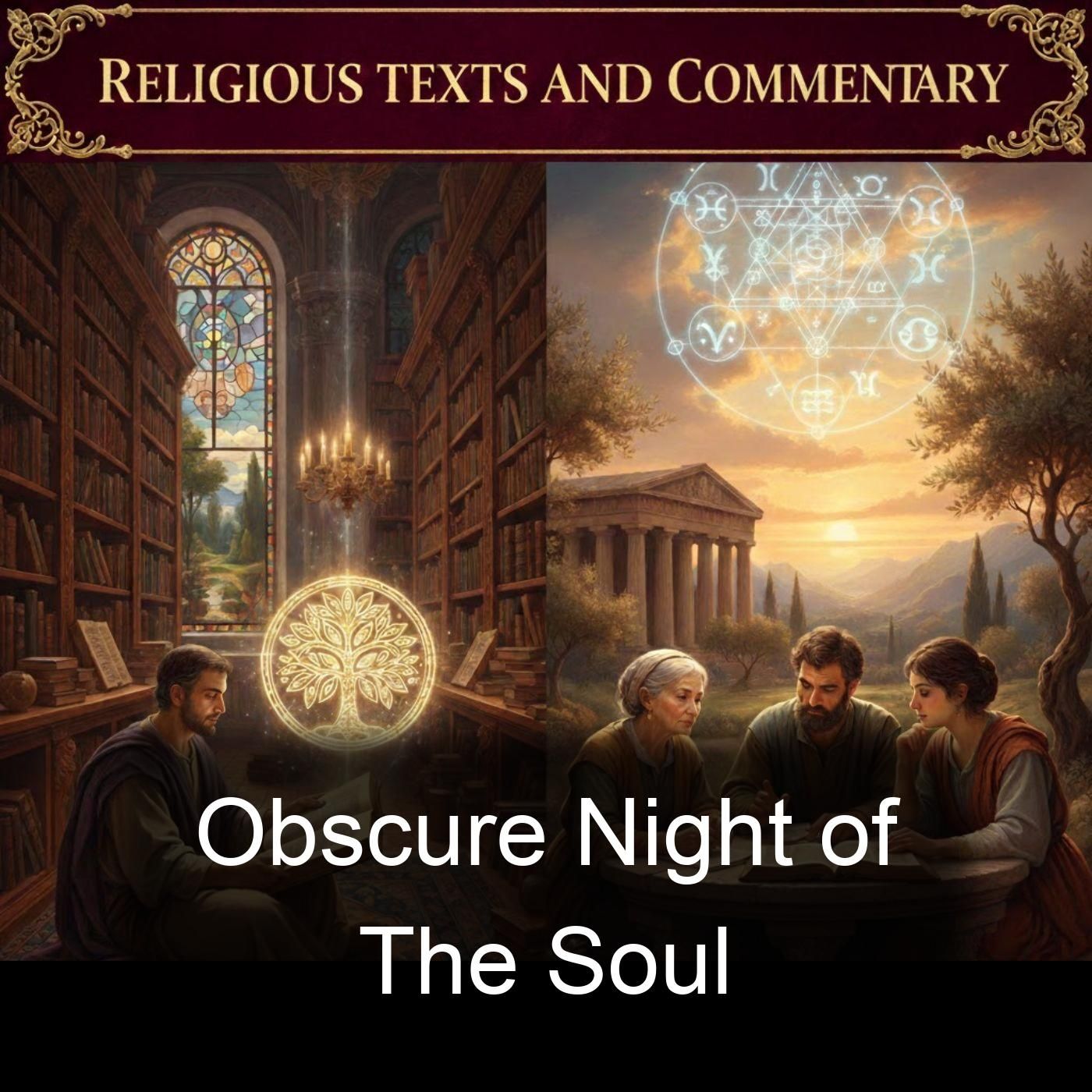
PODCAST · religion
Obscure Night of The Soul
by Saint John of the Cross
The Obscure Night of the Soul, more commonly known today as The Dark Night of the Soul, encapsulates the profound teachings of St. John of the Cross, who transformed Christian contemplation in the 16th century. This timeless text continues to inspire seekers on their spiritual journeys. St. Johns approach, known as the Via Negativa, is a unique form of theological reflection that emphasizes understanding the Divine by exploring what cannot be said about Gods perfect goodness. As explained in Wikipedia, negative theology seeks to clarify religious experiences and language about the Divine through discernment, focusing on what God is not (apophasis) rather than attempting to define what God is. This apophatic tradition is often intertwined with mysticism, which emphasizes a personal, unmediated encounter with divine reality, transcending the confines of traditional organized religion and the conditioned behaviors of our outer selves. - Summary by Ed Humpal and Wikipedia
-
40
040 - Conclusion
The Obscure Night of the Soul, more commonly known today as The Dark Night of the Soul, encapsulates the profound teachings of St. John of the Cross, who transformed Christian contemplation in the 16th century. This timeless text continues to inspire seekers on their spiritual journeys. St. Johns approach, known as the Via Negativa, is a unique form of theological reflection that emphasizes understanding the Divine by exploring what cannot be said about Gods perfect goodness. As explained in Wikipedia, negative theology seeks to clarify religious experiences and language about the Divine through discernment, focusing on what God is not (apophasis) rather than attempting to define what God is. This apophatic tradition is often intertwined with mysticism, which emphasizes a personal, unmediated encounter with divine reality, transcending the confines of traditional organized religion and the conditioned behaviors of our outer selves. - Summary by Ed Humpal and Wikipedia
-
39
039 - Book II Chapter 24 The Last Line of the Second Stanza Explained
The Obscure Night of the Soul, more commonly known today as The Dark Night of the Soul, encapsulates the profound teachings of St. John of the Cross, who transformed Christian contemplation in the 16th century. This timeless text continues to inspire seekers on their spiritual journeys. St. Johns approach, known as the Via Negativa, is a unique form of theological reflection that emphasizes understanding the Divine by exploring what cannot be said about Gods perfect goodness. As explained in Wikipedia, negative theology seeks to clarify religious experiences and language about the Divine through discernment, focusing on what God is not (apophasis) rather than attempting to define what God is. This apophatic tradition is often intertwined with mysticism, which emphasizes a personal, unmediated encounter with divine reality, transcending the confines of traditional organized religion and the conditioned behaviors of our outer selves. - Summary by Ed Humpal and Wikipedia
-
38
038 - Book II Chapter 23 The Wonderful Hiding Place of the Soul
The Obscure Night of the Soul, more commonly known today as The Dark Night of the Soul, encapsulates the profound teachings of St. John of the Cross, who transformed Christian contemplation in the 16th century. This timeless text continues to inspire seekers on their spiritual journeys. St. Johns approach, known as the Via Negativa, is a unique form of theological reflection that emphasizes understanding the Divine by exploring what cannot be said about Gods perfect goodness. As explained in Wikipedia, negative theology seeks to clarify religious experiences and language about the Divine through discernment, focusing on what God is not (apophasis) rather than attempting to define what God is. This apophatic tradition is often intertwined with mysticism, which emphasizes a personal, unmediated encounter with divine reality, transcending the confines of traditional organized religion and the conditioned behaviors of our outer selves. - Summary by Ed Humpal and Wikipedia
-
37
037 - Book II Chapter 22 Happiness of the Soul
The Obscure Night of the Soul, more commonly known today as The Dark Night of the Soul, encapsulates the profound teachings of St. John of the Cross, who transformed Christian contemplation in the 16th century. This timeless text continues to inspire seekers on their spiritual journeys. St. Johns approach, known as the Via Negativa, is a unique form of theological reflection that emphasizes understanding the Divine by exploring what cannot be said about Gods perfect goodness. As explained in Wikipedia, negative theology seeks to clarify religious experiences and language about the Divine through discernment, focusing on what God is not (apophasis) rather than attempting to define what God is. This apophatic tradition is often intertwined with mysticism, which emphasizes a personal, unmediated encounter with divine reality, transcending the confines of traditional organized religion and the conditioned behaviors of our outer selves. - Summary by Ed Humpal and Wikipedia
-
36
036 - Book II Chapter 21 The Meaning of 'Disguised'
The Obscure Night of the Soul, more commonly known today as The Dark Night of the Soul, encapsulates the profound teachings of St. John of the Cross, who transformed Christian contemplation in the 16th century. This timeless text continues to inspire seekers on their spiritual journeys. St. Johns approach, known as the Via Negativa, is a unique form of theological reflection that emphasizes understanding the Divine by exploring what cannot be said about Gods perfect goodness. As explained in Wikipedia, negative theology seeks to clarify religious experiences and language about the Divine through discernment, focusing on what God is not (apophasis) rather than attempting to define what God is. This apophatic tradition is often intertwined with mysticism, which emphasizes a personal, unmediated encounter with divine reality, transcending the confines of traditional organized religion and the conditioned behaviors of our outer selves. - Summary by Ed Humpal and Wikipedia
-
35
035 - Book II Chapter 20 The Other Five Degrees
The Obscure Night of the Soul, more commonly known today as The Dark Night of the Soul, encapsulates the profound teachings of St. John of the Cross, who transformed Christian contemplation in the 16th century. This timeless text continues to inspire seekers on their spiritual journeys. St. Johns approach, known as the Via Negativa, is a unique form of theological reflection that emphasizes understanding the Divine by exploring what cannot be said about Gods perfect goodness. As explained in Wikipedia, negative theology seeks to clarify religious experiences and language about the Divine through discernment, focusing on what God is not (apophasis) rather than attempting to define what God is. This apophatic tradition is often intertwined with mysticism, which emphasizes a personal, unmediated encounter with divine reality, transcending the confines of traditional organized religion and the conditioned behaviors of our outer selves. - Summary by Ed Humpal and Wikipedia
-
34
034 - Book II Chapter 19 The First Five Degrees of the Mystic Ladder
The Obscure Night of the Soul, more commonly known today as The Dark Night of the Soul, encapsulates the profound teachings of St. John of the Cross, who transformed Christian contemplation in the 16th century. This timeless text continues to inspire seekers on their spiritual journeys. St. Johns approach, known as the Via Negativa, is a unique form of theological reflection that emphasizes understanding the Divine by exploring what cannot be said about Gods perfect goodness. As explained in Wikipedia, negative theology seeks to clarify religious experiences and language about the Divine through discernment, focusing on what God is not (apophasis) rather than attempting to define what God is. This apophatic tradition is often intertwined with mysticism, which emphasizes a personal, unmediated encounter with divine reality, transcending the confines of traditional organized religion and the conditioned behaviors of our outer selves. - Summary by Ed Humpal and Wikipedia
-
33
033 - Book II Chapter 18 This Secret Wisdom is also a Ladder
The Obscure Night of the Soul, more commonly known today as The Dark Night of the Soul, encapsulates the profound teachings of St. John of the Cross, who transformed Christian contemplation in the 16th century. This timeless text continues to inspire seekers on their spiritual journeys. St. Johns approach, known as the Via Negativa, is a unique form of theological reflection that emphasizes understanding the Divine by exploring what cannot be said about Gods perfect goodness. As explained in Wikipedia, negative theology seeks to clarify religious experiences and language about the Divine through discernment, focusing on what God is not (apophasis) rather than attempting to define what God is. This apophatic tradition is often intertwined with mysticism, which emphasizes a personal, unmediated encounter with divine reality, transcending the confines of traditional organized religion and the conditioned behaviors of our outer selves. - Summary by Ed Humpal and Wikipedia
-
32
032 - Book II Chapter 17 Obscure Contemplation is Secret
The Obscure Night of the Soul, more commonly known today as The Dark Night of the Soul, encapsulates the profound teachings of St. John of the Cross, who transformed Christian contemplation in the 16th century. This timeless text continues to inspire seekers on their spiritual journeys. St. Johns approach, known as the Via Negativa, is a unique form of theological reflection that emphasizes understanding the Divine by exploring what cannot be said about Gods perfect goodness. As explained in Wikipedia, negative theology seeks to clarify religious experiences and language about the Divine through discernment, focusing on what God is not (apophasis) rather than attempting to define what God is. This apophatic tradition is often intertwined with mysticism, which emphasizes a personal, unmediated encounter with divine reality, transcending the confines of traditional organized religion and the conditioned behaviors of our outer selves. - Summary by Ed Humpal and Wikipedia
-
31
031 - Book II Chapter 16 How the Soul Travels Securely in Darkness
The Obscure Night of the Soul, more commonly known today as The Dark Night of the Soul, encapsulates the profound teachings of St. John of the Cross, who transformed Christian contemplation in the 16th century. This timeless text continues to inspire seekers on their spiritual journeys. St. Johns approach, known as the Via Negativa, is a unique form of theological reflection that emphasizes understanding the Divine by exploring what cannot be said about Gods perfect goodness. As explained in Wikipedia, negative theology seeks to clarify religious experiences and language about the Divine through discernment, focusing on what God is not (apophasis) rather than attempting to define what God is. This apophatic tradition is often intertwined with mysticism, which emphasizes a personal, unmediated encounter with divine reality, transcending the confines of traditional organized religion and the conditioned behaviors of our outer selves. - Summary by Ed Humpal and Wikipedia
-
30
030 - Book II Chapter 15 Explanation of the Second Stanza
The Obscure Night of the Soul, more commonly known today as The Dark Night of the Soul, encapsulates the profound teachings of St. John of the Cross, who transformed Christian contemplation in the 16th century. This timeless text continues to inspire seekers on their spiritual journeys. St. Johns approach, known as the Via Negativa, is a unique form of theological reflection that emphasizes understanding the Divine by exploring what cannot be said about Gods perfect goodness. As explained in Wikipedia, negative theology seeks to clarify religious experiences and language about the Divine through discernment, focusing on what God is not (apophasis) rather than attempting to define what God is. This apophatic tradition is often intertwined with mysticism, which emphasizes a personal, unmediated encounter with divine reality, transcending the confines of traditional organized religion and the conditioned behaviors of our outer selves. - Summary by Ed Humpal and Wikipedia
-
29
029 - Book II Chapter 14 The Last Lines of the First Stanza Spiritually Explained
The Obscure Night of the Soul, more commonly known today as The Dark Night of the Soul, encapsulates the profound teachings of St. John of the Cross, who transformed Christian contemplation in the 16th century. This timeless text continues to inspire seekers on their spiritual journeys. St. Johns approach, known as the Via Negativa, is a unique form of theological reflection that emphasizes understanding the Divine by exploring what cannot be said about Gods perfect goodness. As explained in Wikipedia, negative theology seeks to clarify religious experiences and language about the Divine through discernment, focusing on what God is not (apophasis) rather than attempting to define what God is. This apophatic tradition is often intertwined with mysticism, which emphasizes a personal, unmediated encounter with divine reality, transcending the confines of traditional organized religion and the conditioned behaviors of our outer selves. - Summary by Ed Humpal and Wikipedia
-
28
028 - Book II Chapter 13 Other Sweet Effects of the Dark Night
The Obscure Night of the Soul, more commonly known today as The Dark Night of the Soul, encapsulates the profound teachings of St. John of the Cross, who transformed Christian contemplation in the 16th century. This timeless text continues to inspire seekers on their spiritual journeys. St. Johns approach, known as the Via Negativa, is a unique form of theological reflection that emphasizes understanding the Divine by exploring what cannot be said about Gods perfect goodness. As explained in Wikipedia, negative theology seeks to clarify religious experiences and language about the Divine through discernment, focusing on what God is not (apophasis) rather than attempting to define what God is. This apophatic tradition is often intertwined with mysticism, which emphasizes a personal, unmediated encounter with divine reality, transcending the confines of traditional organized religion and the conditioned behaviors of our outer selves. - Summary by Ed Humpal and Wikipedia
-
27
027 - Book II Chapter 12 How this Night is like Purgatory How Divine Wisdom Illuminates Men
The Obscure Night of the Soul, more commonly known today as The Dark Night of the Soul, encapsulates the profound teachings of St. John of the Cross, who transformed Christian contemplation in the 16th century. This timeless text continues to inspire seekers on their spiritual journeys. St. Johns approach, known as the Via Negativa, is a unique form of theological reflection that emphasizes understanding the Divine by exploring what cannot be said about Gods perfect goodness. As explained in Wikipedia, negative theology seeks to clarify religious experiences and language about the Divine through discernment, focusing on what God is not (apophasis) rather than attempting to define what God is. This apophatic tradition is often intertwined with mysticism, which emphasizes a personal, unmediated encounter with divine reality, transcending the confines of traditional organized religion and the conditioned behaviors of our outer selves. - Summary by Ed Humpal and Wikipedia
-
26
026 - Book II Chapter 11 Passion of Divine Love the Fruit of these Afflictions
The Obscure Night of the Soul, more commonly known today as The Dark Night of the Soul, encapsulates the profound teachings of St. John of the Cross, who transformed Christian contemplation in the 16th century. This timeless text continues to inspire seekers on their spiritual journeys. St. Johns approach, known as the Via Negativa, is a unique form of theological reflection that emphasizes understanding the Divine by exploring what cannot be said about Gods perfect goodness. As explained in Wikipedia, negative theology seeks to clarify religious experiences and language about the Divine through discernment, focusing on what God is not (apophasis) rather than attempting to define what God is. This apophatic tradition is often intertwined with mysticism, which emphasizes a personal, unmediated encounter with divine reality, transcending the confines of traditional organized religion and the conditioned behaviors of our outer selves. - Summary by Ed Humpal and Wikipedia
-
25
025 - Book II Chapter 10 Explanation of this Purgation by a Comparison
The Obscure Night of the Soul, more commonly known today as The Dark Night of the Soul, encapsulates the profound teachings of St. John of the Cross, who transformed Christian contemplation in the 16th century. This timeless text continues to inspire seekers on their spiritual journeys. St. Johns approach, known as the Via Negativa, is a unique form of theological reflection that emphasizes understanding the Divine by exploring what cannot be said about Gods perfect goodness. As explained in Wikipedia, negative theology seeks to clarify religious experiences and language about the Divine through discernment, focusing on what God is not (apophasis) rather than attempting to define what God is. This apophatic tradition is often intertwined with mysticism, which emphasizes a personal, unmediated encounter with divine reality, transcending the confines of traditional organized religion and the conditioned behaviors of our outer selves. - Summary by Ed Humpal and Wikipedia
-
24
024 - Book II Chapter 9 How this Night Enlightens the Mind While It Brings Darkness Over It
The Obscure Night of the Soul, more commonly known today as The Dark Night of the Soul, encapsulates the profound teachings of St. John of the Cross, who transformed Christian contemplation in the 16th century. This timeless text continues to inspire seekers on their spiritual journeys. St. Johns approach, known as the Via Negativa, is a unique form of theological reflection that emphasizes understanding the Divine by exploring what cannot be said about Gods perfect goodness. As explained in Wikipedia, negative theology seeks to clarify religious experiences and language about the Divine through discernment, focusing on what God is not (apophasis) rather than attempting to define what God is. This apophatic tradition is often intertwined with mysticism, which emphasizes a personal, unmediated encounter with divine reality, transcending the confines of traditional organized religion and the conditioned behaviors of our outer selves. - Summary by Ed Humpal and Wikipedia
-
23
023 - Book II Chapter 8 Trials of the Soul
The Obscure Night of the Soul, more commonly known today as The Dark Night of the Soul, encapsulates the profound teachings of St. John of the Cross, who transformed Christian contemplation in the 16th century. This timeless text continues to inspire seekers on their spiritual journeys. St. Johns approach, known as the Via Negativa, is a unique form of theological reflection that emphasizes understanding the Divine by exploring what cannot be said about Gods perfect goodness. As explained in Wikipedia, negative theology seeks to clarify religious experiences and language about the Divine through discernment, focusing on what God is not (apophasis) rather than attempting to define what God is. This apophatic tradition is often intertwined with mysticism, which emphasizes a personal, unmediated encounter with divine reality, transcending the confines of traditional organized religion and the conditioned behaviors of our outer selves. - Summary by Ed Humpal and Wikipedia
-
22
022 - Book II Chapter 7 Trials of the Will
The Obscure Night of the Soul, more commonly known today as The Dark Night of the Soul, encapsulates the profound teachings of St. John of the Cross, who transformed Christian contemplation in the 16th century. This timeless text continues to inspire seekers on their spiritual journeys. St. Johns approach, known as the Via Negativa, is a unique form of theological reflection that emphasizes understanding the Divine by exploring what cannot be said about Gods perfect goodness. As explained in Wikipedia, negative theology seeks to clarify religious experiences and language about the Divine through discernment, focusing on what God is not (apophasis) rather than attempting to define what God is. This apophatic tradition is often intertwined with mysticism, which emphasizes a personal, unmediated encounter with divine reality, transcending the confines of traditional organized religion and the conditioned behaviors of our outer selves. - Summary by Ed Humpal and Wikipedia
-
21
021 - Book II Chapter 6 Other Sufferings in this Night
The Obscure Night of the Soul, more commonly known today as The Dark Night of the Soul, encapsulates the profound teachings of St. John of the Cross, who transformed Christian contemplation in the 16th century. This timeless text continues to inspire seekers on their spiritual journeys. St. Johns approach, known as the Via Negativa, is a unique form of theological reflection that emphasizes understanding the Divine by exploring what cannot be said about Gods perfect goodness. As explained in Wikipedia, negative theology seeks to clarify religious experiences and language about the Divine through discernment, focusing on what God is not (apophasis) rather than attempting to define what God is. This apophatic tradition is often intertwined with mysticism, which emphasizes a personal, unmediated encounter with divine reality, transcending the confines of traditional organized religion and the conditioned behaviors of our outer selves. - Summary by Ed Humpal and Wikipedia
-
20
020 - Book II Chapter 5 Obscure Contemplation is Pain and Torment for the Soul
The Obscure Night of the Soul, more commonly known today as The Dark Night of the Soul, encapsulates the profound teachings of St. John of the Cross, who transformed Christian contemplation in the 16th century. This timeless text continues to inspire seekers on their spiritual journeys. St. Johns approach, known as the Via Negativa, is a unique form of theological reflection that emphasizes understanding the Divine by exploring what cannot be said about Gods perfect goodness. As explained in Wikipedia, negative theology seeks to clarify religious experiences and language about the Divine through discernment, focusing on what God is not (apophasis) rather than attempting to define what God is. This apophatic tradition is often intertwined with mysticism, which emphasizes a personal, unmediated encounter with divine reality, transcending the confines of traditional organized religion and the conditioned behaviors of our outer selves. - Summary by Ed Humpal and Wikipedia
-
19
019 - Book II Chapter 4 The Second Stanza Spiritually Explained
The Obscure Night of the Soul, more commonly known today as The Dark Night of the Soul, encapsulates the profound teachings of St. John of the Cross, who transformed Christian contemplation in the 16th century. This timeless text continues to inspire seekers on their spiritual journeys. St. Johns approach, known as the Via Negativa, is a unique form of theological reflection that emphasizes understanding the Divine by exploring what cannot be said about Gods perfect goodness. As explained in Wikipedia, negative theology seeks to clarify religious experiences and language about the Divine through discernment, focusing on what God is not (apophasis) rather than attempting to define what God is. This apophatic tradition is often intertwined with mysticism, which emphasizes a personal, unmediated encounter with divine reality, transcending the confines of traditional organized religion and the conditioned behaviors of our outer selves. - Summary by Ed Humpal and Wikipedia
-
18
018 - Book II Chapter 3 Introduction
The Obscure Night of the Soul, more commonly known today as The Dark Night of the Soul, encapsulates the profound teachings of St. John of the Cross, who transformed Christian contemplation in the 16th century. This timeless text continues to inspire seekers on their spiritual journeys. St. Johns approach, known as the Via Negativa, is a unique form of theological reflection that emphasizes understanding the Divine by exploring what cannot be said about Gods perfect goodness. As explained in Wikipedia, negative theology seeks to clarify religious experiences and language about the Divine through discernment, focusing on what God is not (apophasis) rather than attempting to define what God is. This apophatic tradition is often intertwined with mysticism, which emphasizes a personal, unmediated encounter with divine reality, transcending the confines of traditional organized religion and the conditioned behaviors of our outer selves. - Summary by Ed Humpal and Wikipedia
-
17
017 - Book II Chapter 2 Imperfections of Proficients
The Obscure Night of the Soul, more commonly known today as The Dark Night of the Soul, encapsulates the profound teachings of St. John of the Cross, who transformed Christian contemplation in the 16th century. This timeless text continues to inspire seekers on their spiritual journeys. St. Johns approach, known as the Via Negativa, is a unique form of theological reflection that emphasizes understanding the Divine by exploring what cannot be said about Gods perfect goodness. As explained in Wikipedia, negative theology seeks to clarify religious experiences and language about the Divine through discernment, focusing on what God is not (apophasis) rather than attempting to define what God is. This apophatic tradition is often intertwined with mysticism, which emphasizes a personal, unmediated encounter with divine reality, transcending the confines of traditional organized religion and the conditioned behaviors of our outer selves. - Summary by Ed Humpal and Wikipedia
-
16
016 - Book II Chapter 1 The Second Night That of the Spirit
The Obscure Night of the Soul, more commonly known today as The Dark Night of the Soul, encapsulates the profound teachings of St. John of the Cross, who transformed Christian contemplation in the 16th century. This timeless text continues to inspire seekers on their spiritual journeys. St. Johns approach, known as the Via Negativa, is a unique form of theological reflection that emphasizes understanding the Divine by exploring what cannot be said about Gods perfect goodness. As explained in Wikipedia, negative theology seeks to clarify religious experiences and language about the Divine through discernment, focusing on what God is not (apophasis) rather than attempting to define what God is. This apophatic tradition is often intertwined with mysticism, which emphasizes a personal, unmediated encounter with divine reality, transcending the confines of traditional organized religion and the conditioned behaviors of our outer selves. - Summary by Ed Humpal and Wikipedia
-
15
015 - Book I Chapter 14 Explanation of the Last Line of the First Stanza
The Obscure Night of the Soul, more commonly known today as The Dark Night of the Soul, encapsulates the profound teachings of St. John of the Cross, who transformed Christian contemplation in the 16th century. This timeless text continues to inspire seekers on their spiritual journeys. St. Johns approach, known as the Via Negativa, is a unique form of theological reflection that emphasizes understanding the Divine by exploring what cannot be said about Gods perfect goodness. As explained in Wikipedia, negative theology seeks to clarify religious experiences and language about the Divine through discernment, focusing on what God is not (apophasis) rather than attempting to define what God is. This apophatic tradition is often intertwined with mysticism, which emphasizes a personal, unmediated encounter with divine reality, transcending the confines of traditional organized religion and the conditioned behaviors of our outer selves. - Summary by Ed Humpal and Wikipedia
-
14
014 - Book I Chapter 13 Other Benefits of the Night of Sense
The Obscure Night of the Soul, more commonly known today as The Dark Night of the Soul, encapsulates the profound teachings of St. John of the Cross, who transformed Christian contemplation in the 16th century. This timeless text continues to inspire seekers on their spiritual journeys. St. Johns approach, known as the Via Negativa, is a unique form of theological reflection that emphasizes understanding the Divine by exploring what cannot be said about Gods perfect goodness. As explained in Wikipedia, negative theology seeks to clarify religious experiences and language about the Divine through discernment, focusing on what God is not (apophasis) rather than attempting to define what God is. This apophatic tradition is often intertwined with mysticism, which emphasizes a personal, unmediated encounter with divine reality, transcending the confines of traditional organized religion and the conditioned behaviors of our outer selves. - Summary by Ed Humpal and Wikipedia
-
13
013 - Book I Chapter 12 Benefits of the Night of Sense
The Obscure Night of the Soul, more commonly known today as The Dark Night of the Soul, encapsulates the profound teachings of St. John of the Cross, who transformed Christian contemplation in the 16th century. This timeless text continues to inspire seekers on their spiritual journeys. St. Johns approach, known as the Via Negativa, is a unique form of theological reflection that emphasizes understanding the Divine by exploring what cannot be said about Gods perfect goodness. As explained in Wikipedia, negative theology seeks to clarify religious experiences and language about the Divine through discernment, focusing on what God is not (apophasis) rather than attempting to define what God is. This apophatic tradition is often intertwined with mysticism, which emphasizes a personal, unmediated encounter with divine reality, transcending the confines of traditional organized religion and the conditioned behaviors of our outer selves. - Summary by Ed Humpal and Wikipedia
-
12
012 - Book I Chapter 11 Explanation of the Second Line of the Stanza
The Obscure Night of the Soul, more commonly known today as The Dark Night of the Soul, encapsulates the profound teachings of St. John of the Cross, who transformed Christian contemplation in the 16th century. This timeless text continues to inspire seekers on their spiritual journeys. St. Johns approach, known as the Via Negativa, is a unique form of theological reflection that emphasizes understanding the Divine by exploring what cannot be said about Gods perfect goodness. As explained in Wikipedia, negative theology seeks to clarify religious experiences and language about the Divine through discernment, focusing on what God is not (apophasis) rather than attempting to define what God is. This apophatic tradition is often intertwined with mysticism, which emphasizes a personal, unmediated encounter with divine reality, transcending the confines of traditional organized religion and the conditioned behaviors of our outer selves. - Summary by Ed Humpal and Wikipedia
-
11
011 - Book I Chapter 10 Conduct upon Entering this Night
The Obscure Night of the Soul, more commonly known today as The Dark Night of the Soul, encapsulates the profound teachings of St. John of the Cross, who transformed Christian contemplation in the 16th century. This timeless text continues to inspire seekers on their spiritual journeys. St. Johns approach, known as the Via Negativa, is a unique form of theological reflection that emphasizes understanding the Divine by exploring what cannot be said about Gods perfect goodness. As explained in Wikipedia, negative theology seeks to clarify religious experiences and language about the Divine through discernment, focusing on what God is not (apophasis) rather than attempting to define what God is. This apophatic tradition is often intertwined with mysticism, which emphasizes a personal, unmediated encounter with divine reality, transcending the confines of traditional organized religion and the conditioned behaviors of our outer selves. - Summary by Ed Humpal and Wikipedia
-
10
010 - Book I Chapter 9 Signs that One is Walking in this Night
The Obscure Night of the Soul, more commonly known today as The Dark Night of the Soul, encapsulates the profound teachings of St. John of the Cross, who transformed Christian contemplation in the 16th century. This timeless text continues to inspire seekers on their spiritual journeys. St. Johns approach, known as the Via Negativa, is a unique form of theological reflection that emphasizes understanding the Divine by exploring what cannot be said about Gods perfect goodness. As explained in Wikipedia, negative theology seeks to clarify religious experiences and language about the Divine through discernment, focusing on what God is not (apophasis) rather than attempting to define what God is. This apophatic tradition is often intertwined with mysticism, which emphasizes a personal, unmediated encounter with divine reality, transcending the confines of traditional organized religion and the conditioned behaviors of our outer selves. - Summary by Ed Humpal and Wikipedia
-
9
009 - Book I Chapter 8 Explanation of The Obscure Night
The Obscure Night of the Soul, more commonly known today as The Dark Night of the Soul, encapsulates the profound teachings of St. John of the Cross, who transformed Christian contemplation in the 16th century. This timeless text continues to inspire seekers on their spiritual journeys. St. Johns approach, known as the Via Negativa, is a unique form of theological reflection that emphasizes understanding the Divine by exploring what cannot be said about Gods perfect goodness. As explained in Wikipedia, negative theology seeks to clarify religious experiences and language about the Divine through discernment, focusing on what God is not (apophasis) rather than attempting to define what God is. This apophatic tradition is often intertwined with mysticism, which emphasizes a personal, unmediated encounter with divine reality, transcending the confines of traditional organized religion and the conditioned behaviors of our outer selves. - Summary by Ed Humpal and Wikipedia
-
8
008 - Book 1 Chapter 7 Imperfections of Envy and Spiritual Sloth
The Obscure Night of the Soul, more commonly known today as The Dark Night of the Soul, encapsulates the profound teachings of St. John of the Cross, who transformed Christian contemplation in the 16th century. This timeless text continues to inspire seekers on their spiritual journeys. St. Johns approach, known as the Via Negativa, is a unique form of theological reflection that emphasizes understanding the Divine by exploring what cannot be said about Gods perfect goodness. As explained in Wikipedia, negative theology seeks to clarify religious experiences and language about the Divine through discernment, focusing on what God is not (apophasis) rather than attempting to define what God is. This apophatic tradition is often intertwined with mysticism, which emphasizes a personal, unmediated encounter with divine reality, transcending the confines of traditional organized religion and the conditioned behaviors of our outer selves. - Summary by Ed Humpal and Wikipedia
-
7
007 - Book I Chapter 6 Imperfections of Spiritual Gluttony
The Obscure Night of the Soul, more commonly known today as The Dark Night of the Soul, encapsulates the profound teachings of St. John of the Cross, who transformed Christian contemplation in the 16th century. This timeless text continues to inspire seekers on their spiritual journeys. St. Johns approach, known as the Via Negativa, is a unique form of theological reflection that emphasizes understanding the Divine by exploring what cannot be said about Gods perfect goodness. As explained in Wikipedia, negative theology seeks to clarify religious experiences and language about the Divine through discernment, focusing on what God is not (apophasis) rather than attempting to define what God is. This apophatic tradition is often intertwined with mysticism, which emphasizes a personal, unmediated encounter with divine reality, transcending the confines of traditional organized religion and the conditioned behaviors of our outer selves. - Summary by Ed Humpal and Wikipedia
-
6
006 - Book I Chapter 5 Imperfections of Anger
The Obscure Night of the Soul, more commonly known today as The Dark Night of the Soul, encapsulates the profound teachings of St. John of the Cross, who transformed Christian contemplation in the 16th century. This timeless text continues to inspire seekers on their spiritual journeys. St. Johns approach, known as the Via Negativa, is a unique form of theological reflection that emphasizes understanding the Divine by exploring what cannot be said about Gods perfect goodness. As explained in Wikipedia, negative theology seeks to clarify religious experiences and language about the Divine through discernment, focusing on what God is not (apophasis) rather than attempting to define what God is. This apophatic tradition is often intertwined with mysticism, which emphasizes a personal, unmediated encounter with divine reality, transcending the confines of traditional organized religion and the conditioned behaviors of our outer selves. - Summary by Ed Humpal and Wikipedia
-
5
005 - Book I Chapter 4 Imperfection of Luxury
The Obscure Night of the Soul, more commonly known today as The Dark Night of the Soul, encapsulates the profound teachings of St. John of the Cross, who transformed Christian contemplation in the 16th century. This timeless text continues to inspire seekers on their spiritual journeys. St. Johns approach, known as the Via Negativa, is a unique form of theological reflection that emphasizes understanding the Divine by exploring what cannot be said about Gods perfect goodness. As explained in Wikipedia, negative theology seeks to clarify religious experiences and language about the Divine through discernment, focusing on what God is not (apophasis) rather than attempting to define what God is. This apophatic tradition is often intertwined with mysticism, which emphasizes a personal, unmediated encounter with divine reality, transcending the confines of traditional organized religion and the conditioned behaviors of our outer selves. - Summary by Ed Humpal and Wikipedia
-
4
004 - Book I Chapter 3 Imperfections of Avarice
The Obscure Night of the Soul, more commonly known today as The Dark Night of the Soul, encapsulates the profound teachings of St. John of the Cross, who transformed Christian contemplation in the 16th century. This timeless text continues to inspire seekers on their spiritual journeys. St. Johns approach, known as the Via Negativa, is a unique form of theological reflection that emphasizes understanding the Divine by exploring what cannot be said about Gods perfect goodness. As explained in Wikipedia, negative theology seeks to clarify religious experiences and language about the Divine through discernment, focusing on what God is not (apophasis) rather than attempting to define what God is. This apophatic tradition is often intertwined with mysticism, which emphasizes a personal, unmediated encounter with divine reality, transcending the confines of traditional organized religion and the conditioned behaviors of our outer selves. - Summary by Ed Humpal and Wikipedia
-
3
003 - Book I Chapter 2 Imperfections of Pride
The Obscure Night of the Soul, more commonly known today as The Dark Night of the Soul, encapsulates the profound teachings of St. John of the Cross, who transformed Christian contemplation in the 16th century. This timeless text continues to inspire seekers on their spiritual journeys. St. Johns approach, known as the Via Negativa, is a unique form of theological reflection that emphasizes understanding the Divine by exploring what cannot be said about Gods perfect goodness. As explained in Wikipedia, negative theology seeks to clarify religious experiences and language about the Divine through discernment, focusing on what God is not (apophasis) rather than attempting to define what God is. This apophatic tradition is often intertwined with mysticism, which emphasizes a personal, unmediated encounter with divine reality, transcending the confines of traditional organized religion and the conditioned behaviors of our outer selves. - Summary by Ed Humpal and Wikipedia
-
2
002 - Book I Chapter 1 Imperfections of Beginners
The Obscure Night of the Soul, more commonly known today as The Dark Night of the Soul, encapsulates the profound teachings of St. John of the Cross, who transformed Christian contemplation in the 16th century. This timeless text continues to inspire seekers on their spiritual journeys. St. Johns approach, known as the Via Negativa, is a unique form of theological reflection that emphasizes understanding the Divine by exploring what cannot be said about Gods perfect goodness. As explained in Wikipedia, negative theology seeks to clarify religious experiences and language about the Divine through discernment, focusing on what God is not (apophasis) rather than attempting to define what God is. This apophatic tradition is often intertwined with mysticism, which emphasizes a personal, unmediated encounter with divine reality, transcending the confines of traditional organized religion and the conditioned behaviors of our outer selves. - Summary by Ed Humpal and Wikipedia
-
1
001 - Argument and Stanzas
The Obscure Night of the Soul, more commonly known today as The Dark Night of the Soul, encapsulates the profound teachings of St. John of the Cross, who transformed Christian contemplation in the 16th century. This timeless text continues to inspire seekers on their spiritual journeys. St. Johns approach, known as the Via Negativa, is a unique form of theological reflection that emphasizes understanding the Divine by exploring what cannot be said about Gods perfect goodness. As explained in Wikipedia, negative theology seeks to clarify religious experiences and language about the Divine through discernment, focusing on what God is not (apophasis) rather than attempting to define what God is. This apophatic tradition is often intertwined with mysticism, which emphasizes a personal, unmediated encounter with divine reality, transcending the confines of traditional organized religion and the conditioned behaviors of our outer selves. - Summary by Ed Humpal and Wikipedia
We're indexing this podcast's transcripts for the first time — this can take a minute or two. We'll show results as soon as they're ready.
No matches for "" in this podcast's transcripts.
No topics indexed yet for this podcast.
Loading reviews...
ABOUT THIS SHOW
The Obscure Night of the Soul, more commonly known today as The Dark Night of the Soul, encapsulates the profound teachings of St. John of the Cross, who transformed Christian contemplation in the 16th century. This timeless text continues to inspire seekers on their spiritual journeys. St. Johns approach, known as the Via Negativa, is a unique form of theological reflection that emphasizes understanding the Divine by exploring what cannot be said about Gods perfect goodness. As explained in Wikipedia, negative theology seeks to clarify religious experiences and language about the Divine through discernment, focusing on what God is not (apophasis) rather than attempting to define what God is. This apophatic tradition is often intertwined with mysticism, which emphasizes a personal, unmediated encounter with divine reality, transcending the confines of traditional organized religion and the conditioned behaviors of our outer selves. - Summary by Ed Humpal and Wikipedia
HOSTED BY
Saint John of the Cross
CATEGORIES
Loading similar podcasts...
Frequently Asked Questions
How many episodes does Obscure Night of The Soul have?
Obscure Night of The Soul currently has 40 episodes available on PodParley. New episodes are automatically indexed when they're published to the podcast feed.
What is Obscure Night of The Soul about?
The Obscure Night of the Soul, more commonly known today as The Dark Night of the Soul, encapsulates the profound teachings of St. John of the Cross, who transformed Christian contemplation in the 16th century. This timeless text continues to inspire seekers on their spiritual journeys. St. Johns...
How often does Obscure Night of The Soul release new episodes?
Obscure Night of The Soul has 40 episodes. Check the episode list to see recent publication dates and frequency.
Where can I listen to Obscure Night of The Soul?
You can listen to Obscure Night of The Soul on PodParley by clicking any episode. We provide an embedded audio player for direct listening, and you can also subscribe via your preferred podcast app using the RSS feed.
Who hosts Obscure Night of The Soul?
Obscure Night of The Soul is created and hosted by Saint John of the Cross.
URL copied to clipboard!