
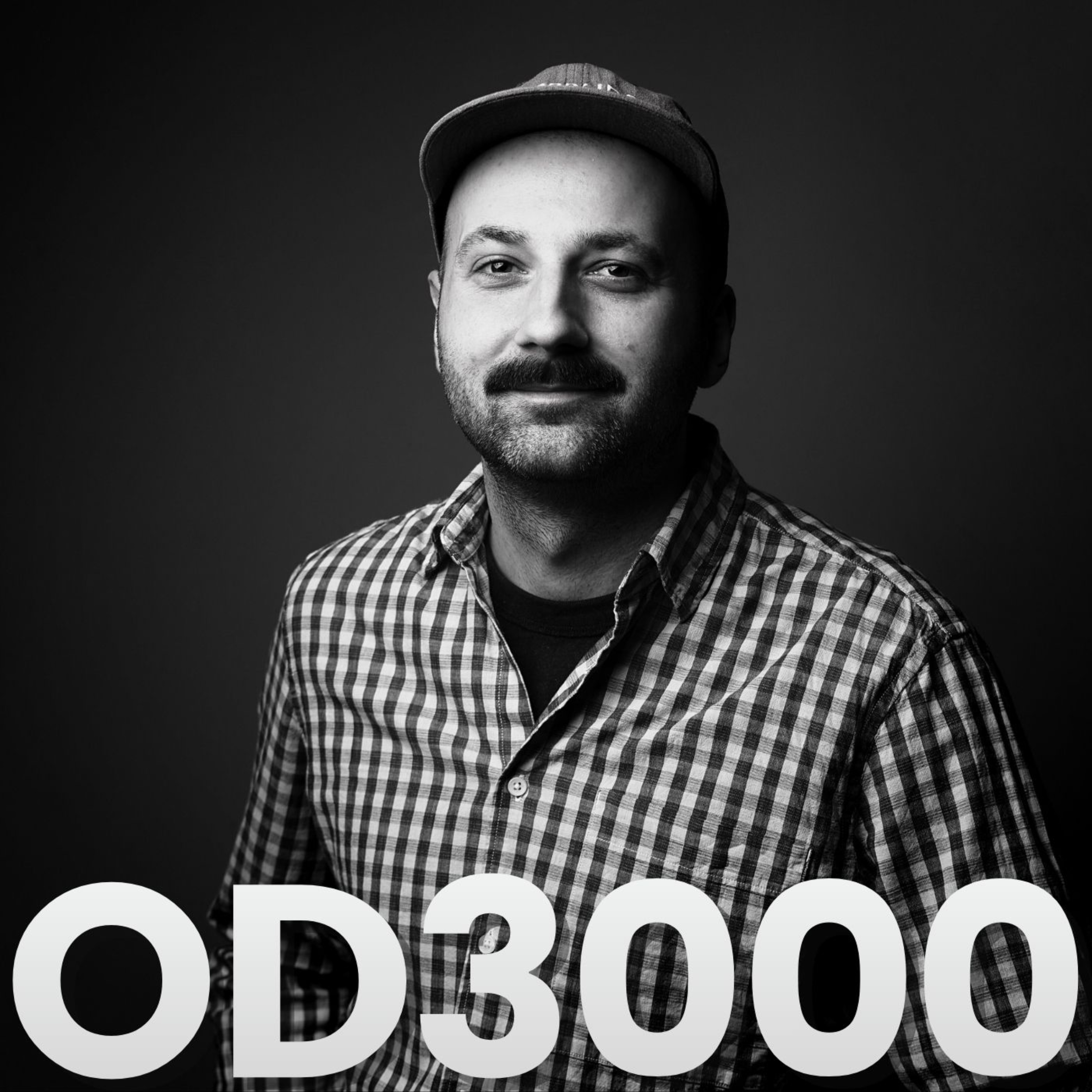
PODCAST · news
OD3000 - A podcast about the organizations of today and tomorrow
by Robin Julian Taylor
Who do organizations work for? What might they look like tomorrow?I'm Robin, author of a non-fiction book about our organizations and an organizational developer with 15 years of experience. In this podcast, I examine organizations as complex social structures in which power is exercised, conflicts are played out and change is possible. No management jargon, just critical analysis.My thesis: organizations are changeable – how we shape them determines our future.Write to me: [email protected] info: www.robin-taylor.de
-
5
OD3000 - Episode 4 - What Connects All Organizations
I'm Robin, and in Episode 4 of OD3000, we get fundamental. What does a shooting club have in common with a DAX corporation? This question sounds provocative – but the answer is astonishing. More than their public image suggests. We disassemble organizations into their building blocks and discover: The same mechanisms run through everything, from craft businesses to universities.Goal orientation – sounds simple, but it's political. Who decides what the organization wants? Goals are filters that reduce complexity. But they emerge from power processes.Division of labor – it solves the complexity problem. The baker bakes, the saleswoman sells. Specialization makes you better. But it also creates dependency. If the baker is out, there are no rolls. The development department builds great products nobody can sell. Division of labor is both problem and solution.Hierarchy – the necessary evil. It enables decisions, otherwise you're stuck in gridlock. But it's also an instrument of power. Those at the top earn more, have more influence. The question isn't whether hierarchies are good or bad. The question is: How much do we really need?Coordination, stability, boundaries – each building block solves a specific problem. And each creates new ones. This isn't dysfunction, this is how organizations work. They are always both: problem solvers and problem generators.Stefan Kühl calls this contingency management. Organizations concentrate their perspective on a few important aspects and fade out everything else. From infinitely many possible actions, they select those that serve the purpose.The dialectical twist: Goals constrain. Division of labor generates dependency. Hierarchy produces inequality. Stability leads to rigidity. But because organizations are human creations, they can be understood, analyzed, and changed.Featured persons: Stefan Kühl Contact me: [email protected] info: www.robin-taylor.de
-
4
OD3000 - Episode 3 - From Sports Clubs to State Apparatuses
I'm Robin, and in Episode 3 of OD3000, things get diverse. What does a sports club have in common with a state apparatus? More than you think. We begin our journey with something familiar – the local sports club. A few people kicking a ball together, having a beer afterwards. Sounds simple, right? But even here, you're juggling sports, economics, law, and politics. Statutes must be followed, membership fees must flow, hall times must be negotiated.Then it gets hands-on: A carpentry shop with a master craftswoman, journeymen, and apprentices. A bakery in its third generation. Small, manageable? Not at all. Here the full organizational complexity already emerges. The master craftswoman is a craftsperson in the morning, a manager at noon, an entrepreneur in the afternoon. Tradition meets innovation. Generations collide.Schools intensify the game. Teachers are supposed to provide individual support AND pass standardized tests. Pedagogical aspirations meet documentation requirements. Too few staff, oversized classes, dilapidated buildings. Contradictory demands with scarce resources.And then the state apparatus – not a monolithic block, but an ecosystem of loosely coupled organizations. Municipalities, states, federal government, EU. Each level with its own offices, ministries, agencies. All must somehow cooperate, nobody has the big picture. That's the price of loose coupling.The insight: From sports clubs to state apparatuses – all share fundamental challenges. All must juggle between different logics, balance stability and change, manage scarce resources. And none exist in isolation. There are no organizational islands. What happens to one system affects others.Featured persons: - Contact me: [email protected] info: www.robin-taylor.de
-
3
OD3000 - Episode 2 - The Splits!
I'm Robin, and in episode 2 of OE3000, things get complicated.Imagine you have to run north AND south at the same time. Impossible? Welcome to everyday life in organizations. They have to constantly fulfill conflicting requirements. A sports club needs sporting success AND to stay in the black. An NGO wants to have a political impact AND remain legally compliant. That's the balancing act.We dive into Niklas Luhmann's theory of functional differentiation. His observation: our society has divided itself into different areas – economics, politics, law, science. Each develops its own logic. A doctor asks, “Will the patient get well?” An economist asks, “Is it profitable?” A lawyer asks, “Is it legal?” Same situation, completely different worlds.The problem: Organizations often have to exist in several of these worlds at the same time. A nightclub juggles cultural credibility and economic survival. Every evening, the same question arises: This underground act brings scene cred – but will it fill the club? A university balances scientific excellence and third-party funding acquisition. Good research is not enough; it also has to pay off.And who is doing the balancing act? Individuals. The professor who argues scientifically in the morning and calculates budgets in the afternoon. The teacher torn between individual support and documentation requirements. I see this every day in my consulting practice. This feeling of being torn apart is not a personal weakness—it is a systemic reality.The dark side: Organizations sometimes destroy their own foundations. Discounters push down milk prices until farmers give up.The insight: This balancing act cannot be resolved. But we can deal with it more consciously.People mentioned: Niklas LuhmannWrite to me: [email protected] info: www.robin-taylor.de
-
2
OD3000 - Episode 1 - Building blocks of our organizations
I'm Robin, and this is episode 1 of OD3000.First, a thought experiment: What if all organizations disappeared overnight? We would realize that we live in a thoroughly organized world. But what are organizations anyway? How do they work? And why do they sometimes behave so irrationally?Here are the building blocks: Stefan Kühl, one of the most important organizational sociologists in the German-speaking world, makes three fundamental distinctions: formality (what is officially valid), informality (how things really work), and facade (what is shown to the outside world). In almost all organizations, these three are far apart – and often that is exactly what makes them functional. The official rules are one thing, but actual practice is something else entirely.I would like to introduce another perspective with Niklas Luhmann. According to him, organizations do not consist of people, but of decisions. Each decision leads to the next. In this way, organizations develop a momentum of their own that no one wanted. Well-intentioned ideas give rise to bureaucratic world destroyers. And what about history? Our current prevailing forms of organization have only emerged in the last few centuries. For thousands of years, people organized themselves in completely different ways. Nothing about our current forms is natural.The insight: If we understand the basic building blocks, we can also design organizations differently.People mentioned: Stefan Kühl, Niklas LuhmannWrite to me: [email protected] info: www.robin-taylor.de
-
1
OD3000 - Episode 0 - Behind the facade
I'm Robin, and this is Episode 0 of OE3000 – an introduction to a podcast about organizations from a critical perspective. The title says it all: I'll show you what's behind the facade of organizations. But also what my podcast is about.I have been working as an organizational developer for 15 years – in corporations, NGOs, administrations, and educational institutions. I have seen how organizations can empower people. But also how they burn people out, frustrate them, and keep them down. Organizations are not neutral tools. They are places where power is exercised, resources are distributed, and conflicts are played out.The German-speaking media landscape is dominated by a business perspective – organizations as machines that need to be optimized. Critical analysis? Rather rare.This is exactly where OD3000 comes in. I examine organizations using the tools of sociology. Accessible, concrete, practical.The project is called OD3000 because I am convinced that the way we organize ourselves determines our future. Climate crisis, social inequality, democratic erosion – these are all organizational crises as well.The good news is that organizations can be changed; we can develop them :)Book mentioned: Robin Taylor: Hinter der Schauseite - Wie unsere Organisationen wirklich funktionieren und welches Potenzial in ihnen steckt, oekom Verlag 2026Write to me: [email protected] info: www.robin-taylor.de
We're indexing this podcast's transcripts for the first time — this can take a minute or two. We'll show results as soon as they're ready.
No matches for "" in this podcast's transcripts.
No topics indexed yet for this podcast.
Loading reviews...
ABOUT THIS SHOW
Who do organizations work for? What might they look like tomorrow?I'm Robin, author of a non-fiction book about our organizations and an organizational developer with 15 years of experience. In this podcast, I examine organizations as complex social structures in which power is exercised, conflicts are played out and change is possible. No management jargon, just critical analysis.My thesis: organizations are changeable – how we shape them determines our future.Write to me: [email protected] info: www.robin-taylor.de
HOSTED BY
Robin Julian Taylor
Loading similar podcasts...
Frequently Asked Questions
How many episodes does OD3000 - A podcast about the organizations of today and tomorrow have?
OD3000 - A podcast about the organizations of today and tomorrow currently has 5 episodes available on PodParley. New episodes are automatically indexed when they're published to the podcast feed.
What is OD3000 - A podcast about the organizations of today and tomorrow about?
Who do organizations work for? What might they look like tomorrow?I'm Robin, author of a non-fiction book about our organizations and an organizational developer with 15 years of experience. In this podcast, I examine organizations as complex social structures in which power is exercised, conflicts...
How often does OD3000 - A podcast about the organizations of today and tomorrow release new episodes?
OD3000 - A podcast about the organizations of today and tomorrow has 5 episodes. Check the episode list to see recent publication dates and frequency.
Where can I listen to OD3000 - A podcast about the organizations of today and tomorrow?
You can listen to OD3000 - A podcast about the organizations of today and tomorrow on PodParley by clicking any episode. We provide an embedded audio player for direct listening, and you can also subscribe via your preferred podcast app using the RSS feed.
Who hosts OD3000 - A podcast about the organizations of today and tomorrow?
OD3000 - A podcast about the organizations of today and tomorrow is created and hosted by Robin Julian Taylor.
URL copied to clipboard!