
PODCAST · education
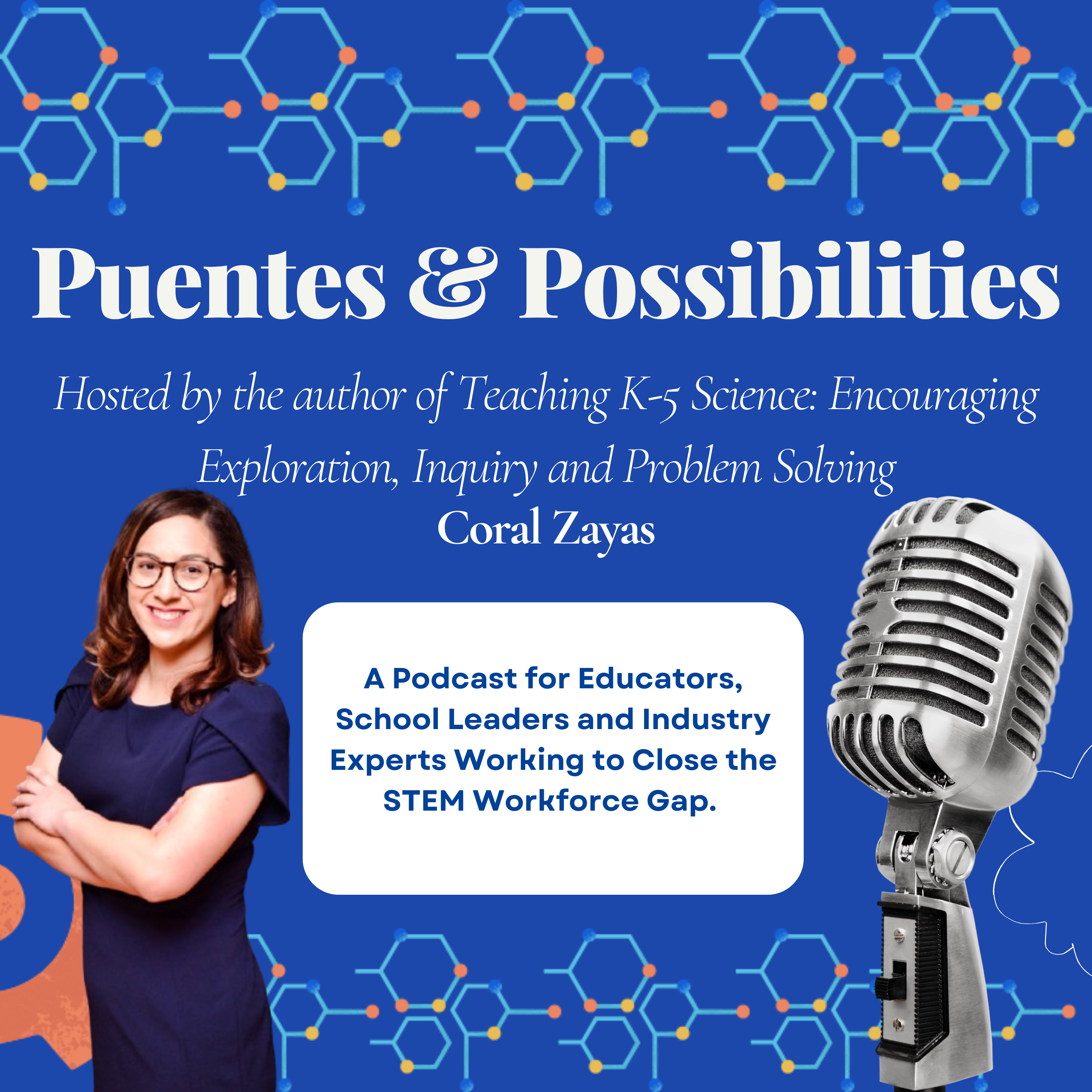
Puentes & Possibilities
by Coral Zayas
Join a community exploring the evolving landscape of STEM education through diverse global perspectives with an emphasis on real-world learning opportunities. Learn from educators, innovators and changemakers across industries, as we discover practical tools and actionable ways to drive meaningful change in education together.
-
10
Episode 8 Part 2: Connecting Student Learning to Real World Problem Solving
Podcast Host:Coral Zayas- Author of Teaching K-5 ScienceWebsite:Instagram:LinkedIn:Guest NameBrianna Amingwa- Founder of Deeply Rooted Outdoor Education (MD)Stay Connected and Free Resources:DROE Instagram:Website - www.droe.orgEmail - [email protected] to download some of the resources shared: Free Outdoor Investigation Toolkit!Content TypeInterviewPrimary GoalEducationalSummaryIn this episode, Coral Zayas interviews environmental educator Bri Amingwa to explore outdoor learning, its benefits, and practical strategies for educators to incorporate nature into science education. Discover how outdoor activities boost student engagement, behavior, and problem-solving skills, especially in urban settings. keywordsoutdoor education, science teaching, environmental education, place-based learning, student engagement, outdoor activities, teacher resources, inquiry-based learning, nature in the classroom, STEM education key topicsOutdoor education benefits for studentsStrategies for teachers to implement outdoor learningImpact of nature on student behavior and engagement Chapters00:00 Introduction to Puentes and Possibilities01:11 Exploring Chapter Eight: Real World Problem Solving01:56 Meet Ranger Brie: A Journey into Outdoor Education03:10 The Importance of Environmental Education07:09 Supporting Educators in Outdoor Learning10:27 Behavioral Benefits of Outdoor Learning10:56 Problem Solving in Outdoor Settings13:28 Building Comfort and Confidence Outdoors16:22 Advice for Incorporating Outdoor Learning resourcesiNaturalist App - https://inaturalist.org/Seek by iNaturalist - https://inaturalist.org/seek
-
9
Episode 8: Connecting Student Learning to Real World Problem Solving
Podcast SpeakersHost- Coral ZayasAuthor of Teaching K-5 ScienceConnect with Coral on LinkedIn and InstagramGuest NameYaritza VillalbaWebsite: McKenzie's Adventures | Discover. Innovate. Empower. Join Us!LinkedIn: Yaritza Villalba | LinkedInSTEM for Change Instagram: STEM FOR CHANGE (@stem_for_change)content typeInterviewprimary goalEducationalsummaryIn this episode, Coral Zayas interviews Yaritza Villalba about her journey into global education, the integration of project-based learning with real-world issues, and how educators can connect local and global experiences to enhance student engagement. They explore strategies for culturally responsive teaching, leveraging technology, and fostering international collaborations to prepare students for a sustainable future. keywordsGlobal Education, Project-Based Learning, UN Sustainable Development Goals, EdTech, Culturally Responsive Teaching, STEM, International Collaboration, Student Engagement, Sustainable Development, Education Innovation key topicsYaritza Villalba's personal journey and global education advocacyUsing UN Sustainable Development Goals to frame student projectsStrategies for culturally responsive and inclusive teachingLeveraging EdTech like Flipgrid to connect classrooms worldwidePractical tips for integrating global issues into local curricula sound bites"Education was my key to success.""Know your students' interests and experiences.""Move from standardized to exploratory grading."Chapters00:00 Introduction to the Podcast and Book01:08 Connecting Learning to Real-World Problem Solving02:02 Guest Introduction: Yaritza Villalba02:45 Yaritza's Journey into Global Education06:31 Balancing Roles in Education10:36 Global Education and Local Connections16:52 Misconceptions in Project-Based LearningresourcesMcKenzie's Adventures Website - https://www.mckenziesadventures.com/ UN Sustainable Development Goals - globalgoals.org
-
8
Episode 7: From Science to STEAM and Beyond
From Science to STEAM and BeyondExplore how educators can shift from siloed subjects to an interdisciplinary approach, infusing STEM, STEAM, and AI responsibly. Featuring Dr. Fonz, a leader in educational technology and AI ethics, this episode offers strategies for meaningful tech integration, fostering collaboration, and preparing students for a connected future.Podcast Speakers:Coral Zayas: Host and Author of Teaching K-5 ScienceConnect with Coral:LinkedInWebsiteInstagramDr. Alfonso Mendoza: Founder and Host of My EdTech PodcastConnect With Dr. Mendoza:LinkedInTwitterAll Social Media: @myedtechlife WebsiteKey Topics:Evolution of STEM and STEAM definitions and their teaching implications.Technology as a co-creator in classrooms.Practical STEM integration for science teachers.Natural cross-disciplinary connections.Teachers as interdisciplinary learning engineers.Ethical, privacy, and safety considerations in AI and edtech.Tools like Kami for inclusive, personalized learning.Developing AI and digital literacy.Timestamps:00:00 - Introduction: Importance of interdisciplinary teaching00:56 - STEM, STEAM, STREAM definitions01:54 - Shifting teacher mindsets03:08 - Guest: Dr. Fonz's expertise in EdTech and AI ethics06:20 - Dr. Fonz’s journey in education08:21 - Incorporating technology in elementary science10:18 - Technology enhancing soft skills12:42 - Real-world connections with digital tools16:48 - Strategies for natural cross-disciplinary learning19:54 - Connecting learning across subjects23:30 - Teachers fostering a collaborative mindset25:25 - Safety and ethics in AI education26:25 - Developing responsible AI policies29:20 - AI’s impact on student data and privacy34:32 - AI literacy and data privacy37:37 - Ongoing training and community engagement40:45 - Kami supporting diverse learners47:12 - Importance of linguistic and cultural support49:36 - Educators transforming STEM and edtech integrationAdditional Notes:True STEM and AI integration requires a mindset shift, careful planning, and ethical reflection. Design interconnected learning experiences, build teacher capacity, and prioritize student safety and agency.
-
7
Episode 6: Shifting Lands to Starry Skies: Earth and Space Science
This episode highlights that effective science teaching goes beyond textbooks—it's about community engagement, resourcefulness, and inspiring students to see themselves as future scientists and global changemakers. Connect with Podcast Host- Coral Zayas:WebsiteLinkedInInstagramConnect with Guest Speaker- Taniece Thompson-Smith:LinkedInLinktreeInstagramHer Blog: Teaching Ever AfterResources & Links:Teaching K-5 Science by Coral Zayas Skype a ScientistMain insights:Taniece's journey from a student inspired by her aunt to a nationally recognized educatorThe power of hands-on experiments, like glacier modeling with ice and sand, to teach complex landform conceptsUsing multimedia, videos, and real-world samples (fossil fuels, sedimentary rocks) to connect science to everyday lifeThe importance of integrating community partnerships, such as local geologists and meteorologists, to enhance student understandingStrategies to make abstract concepts like weather and climate tangible through media and expert involvementThe role of reflection, collaborative learning, and fostering citizen science literacy within elementary science classroomsOvercoming challenges in teaching science with transparency, community collaboration, and resourcefulnessEncouraging student belief in their potential through exposure to diverse careers, including military and space sectors
-
6
Episode 5: From the Kitchen to the Amusement Park- Investigating Physical Science
Get To Know The Podcast Speakers:Coral Zayas is the Author of Teaching K-5 Science - Encouraging Exploration, Inquiry and Problem Solving and host of the Puentes & Possibilities podcast. She has spent almost 20 years in education, from K-12, higher education, and in the education nonprofit and policy space. You can find out more about Coral and her new book at her website: www.coralzayas.com/teachingk5science Special Guest: Lori Cavallo- Lori has spent over two decades evolving alongside her students in New Jersey. Over the years, she found my rhythm across the elementary grades particularly 3-5th grade. She has an undergraduate degree in Recreation Administration and a Master’s in Educational Leadership. Today, she channels her experience into her role as a teacher fellow at The College of New Jersey in a program dedicated to Sustainable Innovative STEM. This position allows her to merge my years of practical classroom knowledge with forward-thinking strategies for the future of environmental topics in science.Podcast PreviewThe podcast episode features an introduction to the podcast, a sneak peek into chapter five of Coral's new book Teaching K-5 Science - Encouraging Exploration, Inquiry and Problem Solving and an interview with special guest Lori Cavallo, an educator in New Jersey. The conversation covers topics such as teaching physical science to young learners, making science tangible for elementary students, successful lessons in physical science, creating safe opportunities for experimentation, and addressing physical science misconceptions. The episode emphasizes the importance of community among educators and the value of hands-on learning for students.TakeawaysConnecting with community to extend both teacher and student learning out of the classroom Hands-on learning in physical scienceChapters00:00 Introduction to the Podcast05:37 Making Science Tangible for Elementary Students12:06 Addressing Physical Science Misconceptions
-
5
Episode 4: Bettles, Butterflies and Bears, oh my! Making Life Science Come Alive
Podcast Participants:Host: Coral Zayaswww.coralzayas.comwww.linkedin.com/in/coralzayaswww.instagram.com/thrive_with_coralwww.youtube.com/@coralzayasPodcast Guest: Rodney Crousehttps://www.linkedin.com/in/rodney-crouse-70394324/ResourcesTeaching K-5 Science by Coral Zayas: www.coralzayas.com/teachingk5scienceJohn Muir Laws Nature Journaling Resources - https://johnmuirlaws.com/nature-journaling/Sustainable Human YouTube Channel - https://www.youtube.com/user/SustainableHumanContent TypeInterviewPrimary goalEducationalSummaryThis episode explores life science in elementary education, featuring expert insights on engaging students with real-world phenomena, misconceptions, and outdoor learning strategies. Discover practical tips to foster curiosity and deepen understanding in young learners.Keywordslife science, elementary education, STEM, STEAM, science activities, student misconceptions, outdoor learning, student curiosity, teaching strategiesKey topicsLife science standards in K-5Engaging students with real-world phenomenaAddressing misconceptions in scienceOutdoor and nature-based learning strategiesKey frameworksNGSS standards for life scienceSee, Think, Wonder thinking routineAction itemsIncorporate outdoor nature journaling into lessonsUse free or recycled materials for science investigationsCreate small ecosystems in the classroom for observationTitlesUnlocking Life Science: 5 Strategies to Spark Curiosity in Elementary StudentsFrom Strawberries to Ecosystems: Engaging Life Science Lessons for KidsSound Bites"Everything is connected in our world""We are all connected, regardless of wings or legs""Nature journaling is where you need to start"Chapters00:00 Introduction to the Podcast and Guest00:53 Overview of Episode and Chapter Focus01:45 Deep Dive into Life Science Standards03:10 Guest Introduction: Rodney's Background03:36 Personal Journey and Passion for Relationships in Teaching06:59 A Favorite Life Science Investigation: DNA from Strawberries09:24 Addressing Misconceptions in Life Science15:47 Bringing Authentic Phenomena into the Classroom19:23 Outdoor Learning and Nature Journaling21:00 Closing Remarks and Bonus Content
-
4
Episode 3 Part 2: All Means All - Strategies to Engage Students in Science
Connect With Our Two Speakers:Coral Zayas: Puentes & Possibilities Podcast Host and Author of Teaching K-5 Science: Encouraging Exploration, Inquiry and Problem Solvingwww.coralzayas.com/teachingk5sciencePodcast Guest: Emily Kircher-Morris, LPCPodcast Host- The Neurodiversity PodcastAuthor of 4 Book Including: Teaching Twice Exceptional Learners in Today's Classrooms and Neurodiversity-Affirming Schools: Transforming Practices So All Students Feel Accepted & SupportedFind Her Resources at Neurodiversity Universityhttps://neurodiversity.university and Neurodiversity-Affirming Schools https://neurodiversityaffirmingschools.comkeywordsSTEM education, neurodiversity, inclusive teaching, multilingual learners, twice exceptional, Universal Design for Learning, professional development, education podcast, teaching strategies, student supportsummaryIn this episode of Puentes and Possibilities, Coral Zayas discusses the importance of inclusive education with Emily Kircher-Morris, focusing on strategies to support neurodivergent and multilingual learners. They explore the concept of 'twice exceptional' students and the need for neurodiverse affirming spaces in schools. Emily shares her journey in education and counseling, emphasizing the significance of community support and collaboration between educators and families to create effective learning environments for all students.takeawaysThe podcast aims to close the STEM workforce gap.Chapter three focuses on strategies for all learners.15% of students qualify for special education services.Emily's background includes personal experiences with ADHD.Neurodivergent learners often go unrecognized in schools.Small changes in teaching can benefit all students.Collaboration between families and schools is essential.Twice exceptional students require unique support.Community resources are vital for educators and families.TitlesEmpowering All Learners in STEM EducationNavigating Neurodiversity in the Classroomsound bites"All means all in education.""Small changes can make a big difference.""We need to advocate for all students."Chapters00:00 Introduction to the Podcast and Book01:30 Supporting All Learners in Science03:44 Emily's Background and Journey08:40 Creating Neurodiverse Affirming Spaces11:55 School-Family Partnerships16:01 Identifying Twice Exceptional Students21:30 Community Support and Resources
-
3
Episode 3 Part 1:All Means All- Strategies to Support Multilingual Learners Students in Science
Connect With Your Podcast Host:Coral Zayas: www.coralzayas.comGet To Know Her New Book: Teaching K-5 Science- Encouraging Exploration, Inquiry and Problem SolvingConnect With Our Guest: Leslie CorreakeywordsSTEM education, multilingual learners, neurodiversity, Universal Design for Learning, early childhood education, literacy in science, teaching strategies, classroom management, teacher advice, science educationsummaryIn this episode of Puentes and Possibilities, host Coral Zayas discusses strategies for supporting multilingual and neurodiverse learners in science education with guest Leslie Correa, a veteran bilingual educator. They explore the importance of viewing language as an asset, fostering curiosity in young learners, integrating literacy with science, and providing practical advice for teachers feeling overwhelmed by diverse classroom needs. The conversation emphasizes the significance of emotional control, creative teaching methods, and the value of building relationships with students to enhance their learning experience.takeawaysThe podcast focuses on closing the STEM workforce gap.Chapter three discusses strategies for supporting multilingual and neurodiverse learners.Over 5 million students in the U.S. are multilingual learners.Universal Design for Learning (UDL) supports inclusive teaching practices.Teachers should view language as an asset, not a barrier.Multimodal instruction helps make content accessible for all learners.Curiosity and hands-on experiences are vital in early science education.Oral language development is crucial in early childhood literacy.Teachers should invest time in understanding their students' needs.Emotional control is essential for effective classroom management.TitlesEmpowering Multilingual Learners in ScienceFostering Curiosity in Young Scientistssound bites"All means all in education.""Language is an asset, not a barrier.""Use what you have in the classroom."Chapters00:00 Introduction to the Podcast and Book01:52 Supporting All Learners in Science04:13 Guest Introduction: Leslie's Expertise05:00 Strategies for Multilingual Learners09:12 Fostering a Love for Science in Young Learners12:04 Integrating Literacy and Science14:40 Advice for Overwhelmed Teachers
-
2
Episode 2: From Novice to Confident: Setting Up Your Science Classroom for Success
Connect With Puentes & Possibilities Podcast HostCoral Zayas: www.coralzayas.com | www.linktr.ee/coralzayas Pre-Order Coral's Book: Teaching K-5 Science: Encouraging Exploration, Inquiry and Problem Solving: https://www.coralzayas.com/teachingk5sciencePodcast Guest: Connect With Nuri Jeter: IG: www.instragram.com/nuri_jeterkeywordsSTEM education, science classroom, teacher wellbeing, classroom management, education strategies, teacher burnout, instructional practices, science teaching, student engagement, professional developmentsummaryIn this episode of Puentes and Possibilities, host Coral Zayas discusses the importance of setting up science classrooms for success with guest Nuri Jeter. They explore effective classroom management strategies, the significance of routines, and the balance between structure and flexibility in teaching. takeawaysThe power of community and professional learning networks is essential for educators.Setting up support systems is crucial for student success in science classrooms.Incorporating hands-on learning experiences enhances student engagement.Establishing group roles in labs fosters accountability among students.Effective material management requires thorough preparation and organization.A strong structure in the classroom allows for necessary flexibility during lessons.Entry procedures are vital for maintaining classroom control and focus.Educators must prioritize their own wellbeing to effectively support students.It's important to give oneself grace during challenging times in education.Finding what works for individual educators is key to sustainability in teaching.TitlesBuilding Successful Science ClassroomsTransforming Education Through Communitysound bites"It's okay to put yourself first sometimes.""Give yourself grace during tough times.""It's not a one size fits all approach."Chapters00:00 Episode 2 Intro03:23 Episode 2: Q & A with Nuri Jeter
-
1
Welcome to The Wonder Filed World of Teaching Elementary Science
KeywordsSTEM education, K-5 science, teaching strategies, educational equity, multilingual learners, neurodiversity, professional development, inquiry-based learning, professional learning communities, Coral ZayasSummaryIn this episode of Puentes and Possibilities, Coral Zayas introduces her new book, Teaching K-5 Science, and shares her educational journey. She emphasizes the importance of STEM education and the need for equitable teaching practices to support diverse learners. The episode also provides a sneak peek into the book's introduction and Chapter 1, highlighting the interactive features designed to engage educators.TakeawaysCoral Zayas is the author of Teaching K-5 Science.The podcast aims to close the STEM workforce gap.STEM careers are the fastest growing and highest paying.Only 31% of eighth graders meet proficiency in science.The book aims to support teachers in changing statistics.Focus on multilingual and neurodivergent students is essential.Interactive features in the book enhance learning.The book follows a choose your own adventure format.Coral's journey includes diverse teaching experiences.Community and professional learning networks are vital for growth.TitlesBridging the STEM Gap in EducationCoral Zayas: A Journey Through Education sound bites"Join me for sneak peeks into each chapter.""The goal of this book is to help teachers.""A choose your own adventure approach."Chapters00:00 Introduction to Puentes and Possibilities01:18 Coral's Educational Journey03:51 Overview of Teaching K-5 Science06:06 Chapter 1 Insights and Teaching StrategiesPre-Order Teaching K-5 Science: https://www.coralzayas.com/teachingk5science
We're indexing this podcast's transcripts for the first time — this can take a minute or two. We'll show results as soon as they're ready.
No matches for "" in this podcast's transcripts.
No topics indexed yet for this podcast.
Loading reviews...
ABOUT THIS SHOW
Join a community exploring the evolving landscape of STEM education through diverse global perspectives with an emphasis on real-world learning opportunities. Learn from educators, innovators and changemakers across industries, as we discover practical tools and actionable ways to drive meaningful change in education together.
HOSTED BY
Coral Zayas
Loading similar podcasts...
URL copied to clipboard!