
PODCAST · government
Security Clearance Insecurity
by Federal News Network | Hubbard Radio
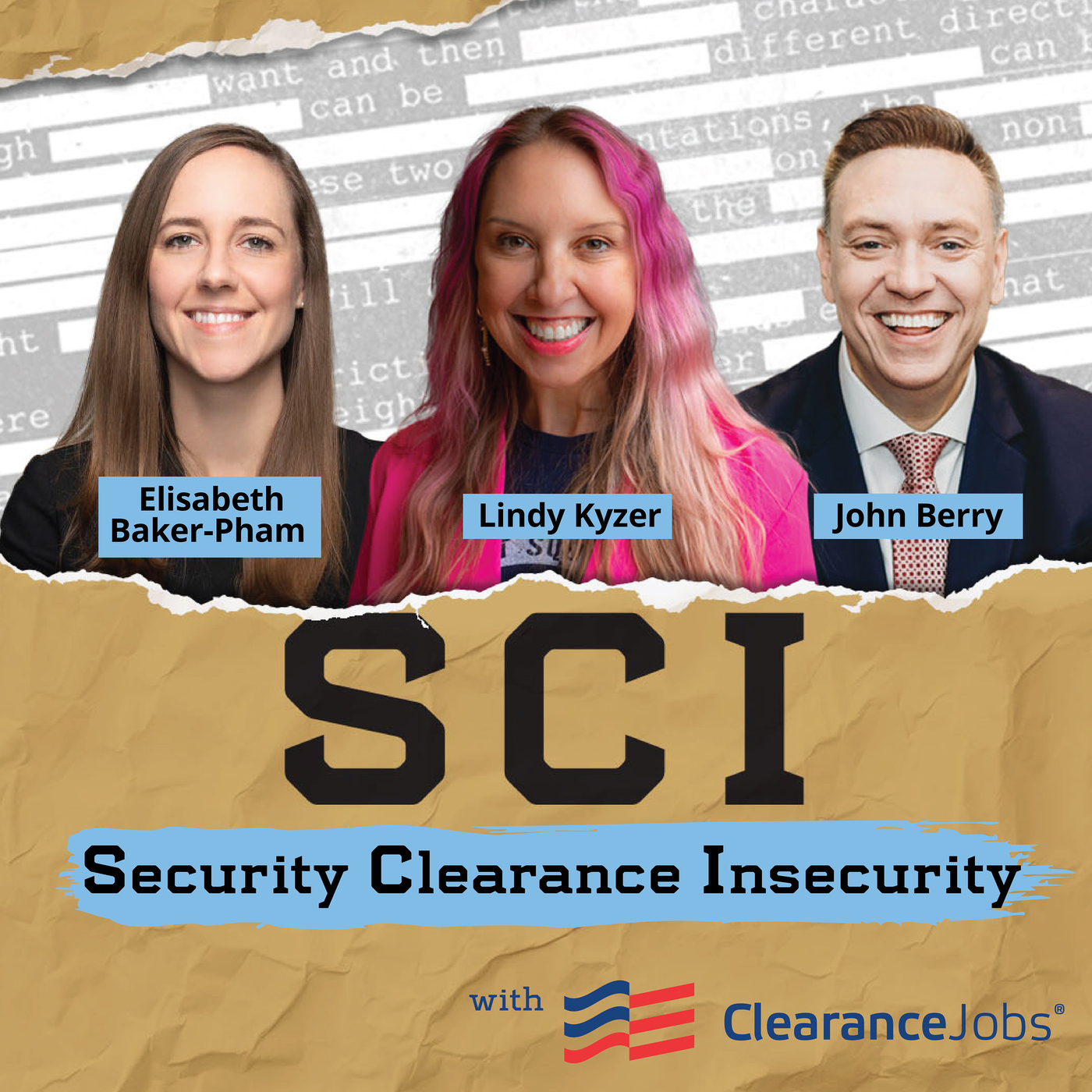
Millions of jobs require a U.S. government security clearance. Getting or keeping one is an anxiety-inducing process shrouded in mystery, and sometimes, urban legend. From drug use and bankruptcy to cryptocurrencies and motorcycle gangs, we unpack all of your top (or most unexpected) security clearance questions. We also talk with some of the leading experts and government officials charged with overseeing the security clearance process and establishing security policies. Security Clearance Insecurity demystifies security clearances, delivers expert insight, and answers the questions you’d never ask at work. Hosted by ClearanceJobs.com's Lindy Kyzer and Sean Bigley, security clearance legal correspondent and regular ClearanceJobs contributor.
-
114
Storytelling, Service, and Trust: Capturing the Human Side of National Security
In this episode of Security Clearance Insecurity, host Lindy Kyzer sits down with Jacob Centeno, founder of Poor Bear Stories, to explore the power of storytelling within the national security community. From his personal journey as a Gold Star family member to building a mission-driven media company, Centeno shares how authenticity, vulnerability, and lived experience shape the stories he tells.The conversation dives into the unique connection between storytelling and service—how shared experiences can break down barriers, build trust, and reveal the human side of intelligence and special operations communities. Centeno also reflects on the evolving landscape of content creation, the tension between AI-generated media and handcrafted storytelling, and why depth and meaning still matter in a world flooded with content.Plus, the episode touches on the emotional impact of creative work, the importance of community at events like ClearanceJobs Connect, and how purpose-driven storytelling can extend the life and impact of mission-focused moments.Whether you're in national security, media, or simply passionate about meaningful storytelling, this episode offers insight into how stories connect us—and why they matter more than ever.See Privacy Policy at https://art19.com/privacy and California Privacy Notice at https://art19.com/privacy#do-not-sell-my-info.
-
113
GEOINT 2026: Tradecraft, AI, and the Future of Intelligence
What makes the GEOINT Symposium 2026 a must-attend event for national security professionals? In this episode of Security Clearance Insecurity, host Lindy Kyzer sits down with Jim McCool to break it down.From his experience at organizations like the National Geospatial-Intelligence Agency, Central Intelligence Agency, and the U.S. Air Force, McCool shares why GEOINT remains at the center of modern intelligence—and how it’s evolving fast.They dive into the role of tradecraft in an AI-driven world, the growing importance of data and critical thinking skills, and how professionals at every stage can get the most out of the symposium. Whether you're navigating the clearance process, exploring career opportunities, or trying to understand how emerging tech is reshaping intelligence work, this conversation offers practical insights and forward-looking perspective.Plus: tips for first-time attendees, what skills are in demand, and why networking at GEOINT can shape your career long after the event ends.See Privacy Policy at https://art19.com/privacy and California Privacy Notice at https://art19.com/privacy#do-not-sell-my-info.
-
112
Certainty in Uncertain Times: CIA Leadership Lessons That Actually Work
What makes a great boss—and why do so many get it wrong?In this episode of Security Clearance Insecurity, Lindy Kyzer sits down with former CIA Chief of HR Mike Mears to unpack the real driver behind employee engagement, retention, and performance: certainty at the local level.Drawing on decades of experience inside the intelligence community—and insights from his book Certainty—Mears explains why employees don’t leave missions, they leave managers. He breaks down how the brain responds to uncertainty, why psychological safety is critical in high-stakes environments, and how small leadership habits can dramatically improve team performance.From fixing broken clearance processes to building trust in ambiguous environments, this conversation offers practical tools for leaders across government and industry.Plus: what cleared professionals should know about insider risk, disengagement, and why “soft skills” may be the most critical national security asset.If you lead people—or want to—this is a must-listen.Purchase Certainty: www.certaintyleadershipbook.comSee Privacy Policy at https://art19.com/privacy and California Privacy Notice at https://art19.com/privacy#do-not-sell-my-info.
-
111
When the Mission Ends: Rebuilding Identity After Service
What happens when the uniform comes off—or your federal service ends—and the identity that once defined you suddenly shifts?In this episode, host Lindy Kyzer sits down with Lisa Parmeter, Executive Director of Merging Vets & Players (MVP), to explore the often-overlooked challenges of transition for veterans, active duty service members, and former professional athletes.From the loss of identity and purpose to the need for intensity, structure, and community, this conversation dives into what it really takes to rebuild after high-performance careers. Parmeter shares how MVP helps individuals rediscover meaning through peer support, whole-health approaches, and mission-driven community.The discussion also tackles mental health stigma, the importance of vulnerability in leadership, and the real risks of isolation—along with practical ways to navigate change, build resilience, and find your next chapter.Plus, in the second segment, security clearance attorney John Berry joins Lindy to break down one of the most common clearance pitfalls: misuse of IT systems. From downloading unauthorized software to AI-related risks and repeat violations, they unpack what can jeopardize your clearance—and how to avoid it.Whether you’re transitioning careers, supporting someone who is, or navigating the evolving clearance landscape, this episode offers critical insights you won’t want to miss.See Privacy Policy at https://art19.com/privacy and California Privacy Notice at https://art19.com/privacy#do-not-sell-my-info.
-
110
Innovation, AI, and the Future of the Security Industry
The security industry is evolving far beyond its traditional image of guards, guns, and gates. Today, it sits at the intersection of artificial intelligence, cybersecurity, federal policy, and critical infrastructure protection.In this episode of Security Clearance Insecurity, Lindy Kyzer speaks with Don Erickson, CEO of the Security Industry Association (SIA), about how emerging technologies are transforming the physical security landscape. From AI-enabled surveillance systems to cybersecurity integration and supply chain protections, the industry is playing a growing role in national security.They also discuss how SIA works with federal policymakers to promote responsible innovation, the challenges of navigating evolving AI regulations, and why workforce development is critical as the industry competes for talent.Plus, the conversation explores career pathways into the security industry—including opportunities for veterans, transitioning federal employees, and professionals with skills in engineering, cybersecurity, project management, and analytics.In the second segment, security clearance attorney Elisabeth Baker-Pham joins Lindy to discuss a growing trend: people turning to AI tools for legal guidance on clearance issues—and why relying on AI instead of a qualified attorney can create serious risks.Topics discussed:The growing role of AI in physical securityEthical frameworks for surveillance technologiesWorkforce development and new security career pathsChallenges of AI policy and regulatory patchworksWhy AI is not your security clearance lawyerIf you work in national security, technology, or the broader security ecosystem, this episode offers insight into where the industry—and its workforce—is heading next.See Privacy Policy at https://art19.com/privacy and California Privacy Notice at https://art19.com/privacy#do-not-sell-my-info.
-
109
Diving Into Federal Career Pivots & Side Hustles
Career disruption and side hustles are increasingly common — but how do they impact your security clearance?In this episode of Security Clearance Insecurity, Lindy Kyzer of ClearanceJobs sits down with federal career coach and FedUpward host Love Rutledge to discuss navigating unexpected federal career pivots, translating government experience for the private sector, and the emotional impact of leaving civil service.They also share transition resources for federal employees, including:Volcker Alliance — https://www.volckeralliance.orgPartnership for Public Service — https://ourpublicservice.orgFormerGov — https://www.formergov.com FedUpward Podcast — https://www.fedupwardcoaching.com/podcastLater, security clearance attorney John Berry joins the show to break down how job hopping, gig work, outside employment, tax issues, and timecard fraud can raise clearance concerns — and what to do to stay compliant.See Privacy Policy at https://art19.com/privacy and California Privacy Notice at https://art19.com/privacy#do-not-sell-my-info.
-
108
Who’s Accountable When AI Shapes National Security Decisions?
The federal government can no longer treat artificial intelligence as optional—but what does true AI readiness actually look like?On this episode of Security Clearance Insecurity, host Lindy Kyzer sits down with Jennifer Ewbank, former Deputy Director of the CIA for Digital Innovation, to unpack how AI is reshaping national security missions, workforce expectations, and accountability across government.Rather than focusing on tools or pilot programs, Ewbank makes the case for a mission-first approach to AI—one that prioritizes readiness, governance, and human judgment. The conversation explores why digital literacy must become foundational for the entire federal workforce, how AI and cybersecurity skills are increasingly intertwined, and why uniquely human skills like critical thinking, ethics, and adaptability matter more than ever.They also dive into the realities holding agencies back—from messy data environments and compliance-driven culture to slow hiring pipelines and outdated talent systems—and why the greatest risk to government may be standing still while technology accelerates.Whether you’re a clearance holder, hiring leader, policymaker, or technologist, this episode offers a clear-eyed look at what it will take to responsibly scale AI across federal missions—without losing accountability, transparency, or trust.See Privacy Policy at https://art19.com/privacy and California Privacy Notice at https://art19.com/privacy#do-not-sell-my-info.
-
107
A New Era of Security Clearance Insecurity: New Legal Voices, Real-World Guidance for 2026
The Security Clearance Insecurity podcast welcomes new legal contributors Elisabeth Baker-Pham of Kalijarvi, Chuzi, Newman & Fitch, P.C. and John Berry of Berry & Berry, PLLC to the mic. In this episode, the panel breaks down how security clearance decisions intersect with employment law, why agencies handle cases differently, and what cleared professionals should know before filling out an SF-86, responding to investigators, or facing a statement of reasons. A must-listen for anyone navigating the cleared workforce this year.See Privacy Policy at https://art19.com/privacy and California Privacy Notice at https://art19.com/privacy#do-not-sell-my-info.
-
106
Why Workplace Flexibility Matters for the National Security Workforce
What does flexibility really mean for the national security workforce—and why does it matter now?In this episode, ClearanceJobs’ Lindy Kyzer is joined by workforce strategist and former federal executive Mika Cross for a timely conversation on the future of federal and cleared work. Drawing from congressional testimony, workforce data, and decades of public service experience, they unpack how telework, hybrid models, and strategic flexibility directly impact mission readiness, talent retention, and national security outcomes.The discussion explores:Why flexibility is a national security imperative, not a workplace perkThe real costs of losing high-performing cleared professionalsMilitary spouse employment and its impact on readinessWhat the President’s Management Agenda signals for the federal workforceHow national security agencies can lead on agility, trust, and innovationThis episode offers critical insight for cleared professionals, federal leaders, recruiters, and policymakers navigating the evolving realities of government work.See Privacy Policy at https://art19.com/privacy and California Privacy Notice at https://art19.com/privacy#do-not-sell-my-info.
-
105
Shutdown Stress: How Financial Fallout Can Threaten Your Security Clearance
On this episode of Security Clearance Insecurity, Lindy Kyzer sits down with Elisabeth Baker Pham, attorney and federal employment expert, to unpack how government shutdowns trigger far more than political drama, they create real financial strain that can jeopardize a cleared worker’s livelihood and their security clearance.Elisabeth breaks down the most immediate financial impacts she sees when federal employees and contractors suddenly lose income, from missed paychecks to debt that spirals faster than many expect. She explains how those shutdown-driven money problems often resurface later in a clearance file - late mortgage payments, credit card delinquencies, even tax complications - and how adjudicators typically view financial issues that clearly started during a lapse in appropriations.For clearance holders staring down bills they can’t pay, Elisabeth offers practical, actionable steps: how to talk to creditors, what to document for future mitigation, and how to communicate with your agency during the shutdown itself. And with shutdown threats becoming a regular occurrence, she outlines the long-term financial and legal strategies every cleared professional should put in place now so the next disruption doesn’t put their bank account or their clearance at risk.Whether you’re a federal employee, a contractor, or a security-clearance professional supporting a cleared workforce, this episode delivers the guidance you need to navigate financial uncertainty without compromising your national-security career.See Privacy Policy at https://art19.com/privacy and California Privacy Notice at https://art19.com/privacy#do-not-sell-my-info.
-
104
Modernizing Personnel Vetting and Mapping the Future with Trusted Workforce 2.0
In this episode of the ClearanceJobs Podcast, host Lindy Kyzer sits down with Leslie Reid, Vice President of Defense Programs at iWorks and former senior leader at the Defense Counterintelligence and Security Agency (DCSA), for a deep-dive conversation into the reality and the future of Trusted Workforce 2.0.With more than two decades of leadership experience across the national security and defense community, Leslie has been at the center of some of the most significant vetting reforms of the past decade. From driving modernization at DCSA to championing agile, scalable solutions that support mission requirements, Leslie brings unmatched insight into how the personnel-vetting enterprise is transforming and what’s coming next.Together, Lindy and Leslie unpack the big questions shaping TW 2.0 today:How are agencies implementing modernization at scale?What challenges remain around reciprocity, system adoption, clearance mobility, and workforce readiness?How are new tools including automation, AI, and continuous vetting technologies changing expectations for applicants, employers, and security professionals?And what does the future look like as the government prepares for the next era of risk-based, data-driven vetting?Whether you’re an FSO, recruiter, HR leader, cleared professional, or simply someone trying to make sense of the alphabet soup of vetting reforms, this is a conversation that pulls back the curtain on what Trusted Workforce 2.0 really means—and how it will reshape national security hiring for years to come.Tune in for an expert-driven, mission-focused discussion on security clearance modernization.See Privacy Policy at https://art19.com/privacy and California Privacy Notice at https://art19.com/privacy#do-not-sell-my-info.
-
103
What the Government Shutdown Could Mean for Your Security Clearance
How does a government shutdown really impact security clearance holders and applicants? In this timely episode, Lindy Kyzer sits down with security clearance and employment law expert John Berry to break down the real-world consequences beyond the headlines.From delayed investigations and paused adjudications to furlough fears and continuous vetting confusion, we explore how shutdowns can ripple through every stage of the clearance process. Can your clearance be at risk if you’re not being paid? What if you’re an applicant waiting on paperwork or a contractor stuck in limbo?John brings his legal insight and decades of experience representing federal employees and contractors, while Lindy adds perspective from the cleared workforce and industry trends.We cover:How shutdowns disrupt clearance processing and timelinesWhat applicants should do if their investigation stallsFinancial stress, furloughs, and reporting requirementsPractical advice to protect your career during government uncertaintyWhether you’re active duty, a contractor, federal employee, or just clearance-curious, this episode gives you the clarity and action steps you need to stay prepared no matter what happens in Washington.See Privacy Policy at https://art19.com/privacy and California Privacy Notice at https://art19.com/privacy#do-not-sell-my-info.
-
102
Federal Hiring Myths, Trends, and What’s Next with Armand Curet
Federal hiring is never simple. And right now, it’s changing faster than ever. From new incentives for law enforcement and the growing demand for IT talent, to changes like the two-page USAJobs resume rule, the landscape can feel overwhelming.On this episode of Security Clearance Insecurity on Federal News Network, ClearanceJobs’ Lindy Kyzer sits down with federal jobs coach Armand Curet to break it all down. They’ll unpack the latest on hiring freezes, agency-specific trends, and the myths that stop great candidates from landing government roles.Whether you’re a veteran, a career-changer, or just curious about what it takes to work for the federal government, this conversation will help you cut through the noise and get clarity on your next steps.And if you’re looking for even more insight into federal careers, don’t miss FedWork, the new resource from ClearanceJobs designed to help you navigate federal hiring, applications, and career growth.See Privacy Policy at https://art19.com/privacy and California Privacy Notice at https://art19.com/privacy#do-not-sell-my-info.
-
101
Inside Scoop on ClearanceJobs Connect
On this episode of Security Clearance Insecurity join Vice President of Marketing at ClearanceJobs Eric Pecinovsky as we take you inside ClearanceJobs Connect. This event brings together recruiters, government leaders, and industry experts to talk about the most pressing issues facing the cleared community, from hiring trends and workforce challenges to innovation and leadership in national security.This is the fifth year of Connect, and in this episode we’ll share highlights from the conversations, key takeaways from the sessions, and some behind-the-scenes perspective on what makes this event such a unique gathering point for the cleared community.So whether you were with us in the room or you’re catching up after the fact, settle in—we’re bringing you the best of ClearanceJobs Connect.See Privacy Policy at https://art19.com/privacy and California Privacy Notice at https://art19.com/privacy#do-not-sell-my-info.
-
100
Trust Me: Talking Trusted Sources and Internet Liars in the Clearance Process
Jill Hamilton Content Director, ClearanceJobs, joins Lindy Kyzer to discuss a brand new book that discusses the history and the current realities of the Clearance process. In Trust Me: A Guide to Secrets, Lindy Kyzer tackles the wonky security clearance process in one readable resource for applicants and professionals alike.A recent Reddit post from a young applicant illustrates the stakes. The individual admitted to years of marijuana use but confessed they had already told their recruiter “no drug usage.” Unsure of how to move forward, they turned online for advice—and found the internet urging them to lie. Kyzer’s book and her broader message address exactly why that’s the wrong path.Trust vs. Fear of DisqualificationFor many applicants, the biggest fear is that one mistake will end their career before it begins. That fear leads to a troubling temptation: lying on the forms or to an investigator. Kyzer stresses that this fear is misplaced. The clearance process is built to account for human imperfection through something called the 'whole person' concept. What matters most is whether an individual demonstrates honesty and growth, not whether they lived without flaws.Internet Advice vs. Official GuidanceThe Reddit post is a case study in the dangers of relying on unofficial advice. Seventy-five percent of commenters told the applicant to lie—directly contradicting what security professionals and adjudicators would say. Kyzer points out that this disconnect is one reason she wrote Trust Me. By elevating authoritative voices and demystifying clearance rules, the book seeks to drown out the misinformation that thrives online.Marijuana and Modern PolicyMarijuana remains one of the most confusing issues in the clearance world. State laws have shifted, but federal rules still apply. The applicant in this case had been marijuana-free since October, raising the question: is that enough? Kyzer emphasizes that adjudicators look for patterns, recency, and demonstrated change. While past use is not automatically disqualifying, dishonesty about that use almost always is.Building Long-Term Trust in the Clearance SystemThe broader takeaway is clear: applicants don’t fully trust the system to be fair, and yet the system itself rests entirely on trustworthiness. Kyzer argues that closing that gap will require more than rulebooks; it will take proactive communication from recruiters, transparency from investigators, and cultural reinforcement from agencies. When honesty feels like the safer choice, both individuals and the national security community benefit.Weigh in: Looking for a place to share your own federal stories or career advice? Visit us at FedWork, a brand new Internet forum designed for federal employees and those interested in federal work. See Privacy Policy at https://art19.com/privacy and California Privacy Notice at https://art19.com/privacy#do-not-sell-my-info.
-
99
Reform, Risk, and Results: Rethinking Federal Acquisition
Lindy Kyzer and defense innovation leader Noam Oz—former Director for Innovation Operations at NavalX—join the show today for a candid discussion on how to cut through bureaucracy and deliver solutions at the speed of relevance.From outdated procedures to entrenched cultural norms, federal acquisition has long faced challenges in moving innovation from idea to implementation. They’ll explore how rapid prototyping, operator engagement, and smart risk management can transform acquisition outcomes, and why cultivating enduring industry-government partnerships is key to sustaining innovation. See Privacy Policy at https://art19.com/privacy and California Privacy Notice at https://art19.com/privacy#do-not-sell-my-info.
-
98
How to Support High Achieving Teams Despite Government Uncertainty
On this episode of Security Clearance Insecurity, we sit down with Steven Gaffney, CEO of the Steven Gaffney Company, renowned leadership expert, and author of Unconditional Power. Known for helping Fortune 500 companies, U.S. government agencies, and military organizations build Consistently High Achieving Teams (CHAT®), Steven shares powerful insights on unlocking team potential, fostering candid communication, and overcoming leadership challenges in today’s workforce.From breaking down the biggest misconceptions leaders have about high performance, to offering actionable tips for encouraging honesty and accountability, Steven reveals the mindset shifts that transform struggling teams into thriving ones. He also reflects on the unique challenges of leading in the government and national security space, and what leaders must do to maintain performance despite ongoing workforce pressures.If you’re a leader—or aspire to be one—this episode offers practical strategies and inspiration for building teams that consistently deliver, no matter the environment.See Privacy Policy at https://art19.com/privacy and California Privacy Notice at https://art19.com/privacy#do-not-sell-my-info.
-
97
Innovation in the Federal Government - with Sabra Horne
In this episode, we sit down with Sabra Horne, a passionate advocate for innovation and intrapreneurship within the federal government. Drawing from her extensive experience working across both government and industry, Sabra unpacks the complex barriers that hold back innovation inside federal agencies, especially when it comes to empowering the people who make change happen.Sabra reminds us that true transformation isn’t just about new tech. It’s about people. She shares candid insights on why the human side of innovation is so often overlooked, and what shifts must occur in leadership, culture, and workforce development to make real, sustainable change possible. For federal employees who dream of driving change from within, Sabra offers practical advice on how to be an effective intrapreneur in bureaucratic environments that can sometimes feel resistant to fresh ideas.We also explore success stories where government agencies have gotten innovation right, highlighting what happens when leadership and workforce are fully aligned behind a mission. Finally, Sabra shares her vision for reimagining how government hires and grows talent to support innovation, and what steps agencies can take starting tomorrow to build a more agile, empowered, and forward-thinking workforce.See Privacy Policy at https://art19.com/privacy and California Privacy Notice at https://art19.com/privacy#do-not-sell-my-info.
-
96
How Tech is Transforming Security Clearance Compliance
Join us for an insider’s look at how Tru-Vetting is reshaping the personnel security landscape. In this episode, we explore the driving force behind Tru-Vetting’s founding, its alignment with Trusted Workforce 2.0, and how its technology eases the burden on overworked FSOs while keeping compliance front and center. Hear firsthand how modern tools can enhance insider threat detection, continuous vetting, and risk management — and learn from early adopters about real-world success stories proving that better vetting makes for a stronger, more resilient workforce.See Privacy Policy at https://art19.com/privacy and California Privacy Notice at https://art19.com/privacy#do-not-sell-my-info.
-
95
Bringing Together the Security Professionals Who Safeguard the Nation
The annual NCMS Seminar brings together security professionals from across the nation. In this episode of the ClearanceJobs Podcast, we take you behind the scenes of the NCMS Annual Seminar—the premier event for industrial security professionals. Joining us are special guests Stevie Dahl and Sarah Turner, members of the NCMS National Board of Directors, who share their insights from this year’s event, including the most asked-about sessions, trends shaping the security profession, and why NCMS continues to be the must-attend seminar for cleared industry leaders.From insider threat programs to classified contract compliance, the NCMS Seminar offers practical training and powerful networking for professionals across the national security ecosystem. Whether you're a long-time NCMS member or a first-time attendee, you’ll get a front-row seat to the people, policy, and partnerships shaping the future of security.Tune in to hear Stevie and Sarah discuss:What to expect from this year’s keynote speakers and breakout sessionsHow NCMS is evolving to support professionals across career levelsWhat’s new for NCMS members in 2025Why community and collaboration remain critical to mission successThis episode is your pass to the conversations happening at the cutting edge of security.See Privacy Policy at https://art19.com/privacy and California Privacy Notice at https://art19.com/privacy#do-not-sell-my-info.
-
94
How Effective is Trusted Workforce GAO Studies Program
What’s really happening with Trusted Workforce 2.0? In this episode of Security Clearance Insecurity, we sit down with Alyssa Czyz, Director at the U.S. Government Accountability Office (GAO), to discuss GAO’s recently released report on the federal government’s personnel vetting reform initiative, Trusted Workforce 2.0.Czyz breaks down the GAO study, its key findings, and what they reveal about the current state of implementation across the federal personnel security enterprise. From the promise of Continuous Vetting to the persistent delays with NBIS, she provides an expert look at where progress is real—and where it's still pending.We explore: What’s working—and what’s stalling—in the implementation of Trusted Workforce reforms. Why some core initiatives, like the Personnel Vetting Management Standards, remain unimplemented. How GAO assessed confidence in NBIS as the central IT system supporting background investigations. Whether Continuous Vetting can overcome its overshadowed status to become the cornerstone of a modern vetting model. Whether you're a policy wonk, FSO, or national security hiring lead, this conversation offers rare clarity into one of the government’s most ambitious—but still evolving—reform efforts.🎧 Tune in to learn where Trusted Workforce is heading—and what it’ll take to get there.See Privacy Policy at https://art19.com/privacy and California Privacy Notice at https://art19.com/privacy#do-not-sell-my-info.
-
93
Iron Butterfly Continues to Tell Untold Stories of Women in the IC
Iron Butterfly Podcast continues to tell the untold stories of women serving in the Intelligence Community. Cadie Hopkins and Megan Jaffer join the show to discuss their latest endeavor - a full length documentary highlighting never before told stories of women serving in the IC. Iron Butterfly continues to champion belief, authenticity, and love, and the importance of platforms for women to share their stories and experiences. See Privacy Policy at https://art19.com/privacy and California Privacy Notice at https://art19.com/privacy#do-not-sell-my-info.
-
92
Building a Resilient Cyber Workforce with the Cyber Guild
Debbie Sallis of The Cyber Guild, a nonprofit on a mission to build a resilient, inclusive cybersecurity workforce joins the show to discuss how the Guild is tackling retention, community-building, and allyship through programs. Plus, hear how the upcoming May 29th Cyber Connect event in Arlington, VA is helping transitioning federal and military professionals build trusted connections, sharpen their skills, and protect their clearances in today’s volatile market. Discover why curated relationship-building—not just networking—is key to the future of cybersecurity careers. For more info and to register, visit www.thecyberguild.org. In the second half of the show, Lindy Kyzer and Sean Bigley of ClearanceJobs discuss the finer points of what it means to leave a job under 'unfavorable circumstances' - and why the question commonly trips up clearance applicants.See Privacy Policy at https://art19.com/privacy and California Privacy Notice at https://art19.com/privacy#do-not-sell-my-info.
-
91
Career Transition Tips for Intelligence Community Professionals
A number of intelligence community professionals now find themselves looking for their next opportunity. Unfortunately, the transition out of the IC and into the private sector doesn't come with a guidebook. That's why Alison Bouwmeester wrote the book Mission: Career Transition. After spending 28 years with the Central Intelligence Agency, she took on the new task of helping others to find their next opportunity after government service. She outlines dos and don'ts, including why it's important to get as much resume detail cleared before you start looking as possible, why contracting can offer a softer landing, and how to activate your networks to land opportunities. See Privacy Policy at https://art19.com/privacy and California Privacy Notice at https://art19.com/privacy#do-not-sell-my-info.
-
90
Tips for Navigating the Personnel Vetting Questionnaire
n this episode, we're joined by Elisabeth Baker-Pham, partner at KCNF, for an in-depth conversation on a big change coming to the federal security clearance process. Elisabeth breaks down the new Personnel Vetting Questionnaire, or PVQ — a major update aimed at simplifying and streamlining the clearance application journey.What does the PVQ mean for applicants? Why are forms like the SF-85, SF-85P, and SF-86 getting consolidated? And what revisions are being made to key questions? Elisabeth walks us through what you need to know.See Privacy Policy at https://art19.com/privacy and California Privacy Notice at https://art19.com/privacy#do-not-sell-my-info.
-
89
Finding Your Haymitch Abernathy in the Federal Hunger Games: Tips for Coping with Constant Changes
Every day there seems to be new guidance going out to the federal workforce, sometimes with mandates that conflict with local agency communication. How can federal workers stay on top of the policy deluge? Kevin Shehan, owner and founder of Shehan Legal and a former civil servant joins the show to discuss recent hot topics, from the 'five things' email to the firing of employees on probationary periods. And he ends the show with a bright spot - all of the changes today may end up enabling more federal workers to enter service in the long run, as the government shifts from a lifelong service model to technical and project sprints. Federal workers are also invited to join ClearanceJobs' free federal forum Fedwork.net to trade advice, stories, and news articles. See Privacy Policy at https://art19.com/privacy and California Privacy Notice at https://art19.com/privacy#do-not-sell-my-info.
-
88
Tips for Federal Workers Dealing with Reductions and Restructuring
In the midst of massive restructuring across the federal government, federal workers may be wondering how to cope with the massive changes. Jill Hamilton, senior editor of ClearanceJobs joins the program to talk about the influx of news and changes. For federal workers in the national security space it's important to follow specific agency guidance and not get caught up in negative headlines. For federal workers looking for another spot for water cooler talk, commentary, and job opportunities, ClearanceJobs recently launched FedWork.net. The federal forum had been in the works since Federal Soup shuddered its pages. The hope is it can be another resource, in addition to the many out there, to help federal workers. See Privacy Policy at https://art19.com/privacy and California Privacy Notice at https://art19.com/privacy#do-not-sell-my-info.
-
87
Bringing Better Technology Into Government and How Your Job Search is Like Online Dating
Virtualization and big data aren't new - but the government's use of these technologies in different ways largely is. Jared Shepard, President and CEO of Hypori comes on the show to discuss how the U.S. government and industry are both working together to make their security posture stronger - and more accessible. He also discusses his nonprofit Warriors Ethos. In the second half of the show Sean Bigley and Lindy Kyzer of ClearanceJobs discuss the modern job search process - and the pros and cons of the controversial trend of comparing your job search to online dating. See Privacy Policy at https://art19.com/privacy and California Privacy Notice at https://art19.com/privacy#do-not-sell-my-info.
-
86
Former CIA Operative Talks About Getting 'Off the X' and Out of Your Comfort Zone
Author and former CIA operative Michele Rigby Assad joins the show to discuss her book 'Get Off the X'. It's Assad's second book, and shares stories from the CIA that can help you face your hurdles, find your purpose and live authentically. In the second half of the show, Sean Bigley and Lindy Kyzer of ClearanceJobs discuss how legal run-ins could affect your clearance eligibility. See Privacy Policy at https://art19.com/privacy and California Privacy Notice at https://art19.com/privacy#do-not-sell-my-info.
-
85
New National Security Data and Policy Institute Helps the IC Engage Outside Experts on Data
The Office of the Director of National Intelligence recently announced the new National Security Data and Policy Institute, a first of its kind partnership enabled by the support of congress and now housed at the University of Virginia. Charles Luftig, Deputy Director of National Intelligence for Policy and Capabilities joins us on the show to discuss the new initiative and how it exemplifies the current focus areas of the IC. The institute allows new opportunities for experts across industry, government, and the non-profit sector to bring emerging ideas around data and security into the IC.See Privacy Policy at https://art19.com/privacy and California Privacy Notice at https://art19.com/privacy#do-not-sell-my-info.
-
84
Security Clearance Reform 20 Years in the Making
Happy 20th anniversary of the Intelligence Reform and Terrorism Prevention Act (IRTPA) to all who celebrate! Despite being signed into law 20 years ago, many of the key provisions related to the security clearance process are still issues today, including:Slow security clearance processing timesLack of reciprocityNeed for better technology/security clearance systems of recordTrust across IC agencies and government departments when it comes to investigation quality/transfer of trustTrusted Workforce 2.0 aims to assist in many of these categories - but as policy becomes practice, will agencies step up to make sure progress happens? Jill Hamilton and Lindy Kyzer of ClearanceJobs discuss key reform efforts that have been a work in progress for the past 20 years- and where they are today.In the second half of the show, Sean Bigley and Lindy Kyzer discuss how to avoid making yourself a target for adversaries. See Privacy Policy at https://art19.com/privacy and California Privacy Notice at https://art19.com/privacy#do-not-sell-my-info.
-
83
Job Transitions for Political Appointees
A change in presidential administrations doesn't just mean new policies and priorities in government - it also means new political appointees coming in and others moving out. Grant Haver, a former political appointee in the Department of Homeland Security, knows first-hand the experience of transitioning out of federal government, and the sprint of service political appointees take on. He created a resume bank for presidential employees who served with Team 46. He joins the show to talk about what it's like to serve as a political appointee, why they bring unique skills that can be advantageous across the private sector, and why employers should look to former political appointees for job openings.Like federal employees or service members transitioning, political appointees face specific rules about what jobs they can pursue. Political appointees should heed any advice provided in out-briefings, but take full advantage of career resources like ClearanceJobs.com to help them connect with employers and find government and contract opportunities that match their skillsets.In the second half of the show Lindy Kyzer and Sean Bigley discuss employee monitoring - and why anyone using a work-issued device should expect that their activity and browsing history can be tracked (holiday shoppers have less to be concerned about than those who choose to do activities that are a little more...naughty this holiday season).See Privacy Policy at https://art19.com/privacy and California Privacy Notice at https://art19.com/privacy#do-not-sell-my-info.
-
82
How the Trump Administration Could Affect Clearance Policy
The Trump Administration is announcing cabinet and senior staff appointments, and setting the tone for a new Administration. But what impact, if any, could the new president have on security clearance policy and personnel vetting reform efforts. Sean Bigley and Lindy Kyzer of ClearanceJobs discuss the role of the White House on clearance policy and process, and why personnel vetting is largely a bipartisan issue that crosses administrations. What could change, however, are some procedural processes are adjudication, and with a new focus on government efficiency and reform, perhaps further movement in efforts that would help increase mobility, reciprocity and transparency. See Privacy Policy at https://art19.com/privacy and California Privacy Notice at https://art19.com/privacy#do-not-sell-my-info.
-
81
Personnel Vetting 2.0: National Security and the Future of Vetting with the Honorable Sue Gordon
The Honorable Susan M. Gordon, former Principal Deputy Director of National Intelligence in a special episode highlighting a recent live conversation on Personnel Vetting 2.0. Joined by President of CANDA Solutions and security expert Andrew Razumovsky and hosted by ClearanceJobs’ Lindy Kyzer, the session dives into updated approaches to personnel vetting and security processes in a fast-paced world. The full discussion includes conversations around the government's attachments to legacy systems and the continued need for SCIF reform and broader accessibility to national security careers across the country. See Privacy Policy at https://art19.com/privacy and California Privacy Notice at https://art19.com/privacy#do-not-sell-my-info.
-
80
Data-Driven Talent Management with COL Kris Saling
Building better teams is a key goal across every organization. But all too many fail to put better data and insights into that team building process. A new book by COL Kris Saling, Data-Driven Talent Management, helps give people managers better tools to add to their team building toolkit, including considering what data is already available, how it can be ethically gathered, and then how it can be applied to optimizing how organizations are staffed and grown. She joins the podcast to talk about her new people, and why people management is such a passion. In the second half of the show, Lindy Kyzer and Sean Bigley discuss insider trading and how it could trip up clearance holders and applicants. See Privacy Policy at https://art19.com/privacy and California Privacy Notice at https://art19.com/privacy#do-not-sell-my-info.
-
79
Improving the Federal Hiring Process and Candidate Experience
The federal hiring process is an ongoing topic of conversation. Over the past several years the executive branch has taken several steps to help spotlight the need to transform the federal hiring process. As the nation's largest employer, the federal government processes more than 22 million applications and hires approximately 350,000 workers. Loren DeJonge Schulman, Associate Director, Performance and Personnel Management, OMB and Stephanie O'Neill, Performance Manager, OMB, joined the show to discuss OMB's efforts, what a recently released memo on improving the federal hiring process means, and how the agency is helping to make skills-based hiring and other reforms happen. See Privacy Policy at https://art19.com/privacy and California Privacy Notice at https://art19.com/privacy#do-not-sell-my-info.
-
78
The Policies and Processes to Build the Future of the National Security Workforce
We're looking ahead to the future of the national security workforce and the policies and processes necessary to grow the workforce of the future. In this special episode, join us for an interview with Kimberly King, Career Service Manager for Analysis, Office of Human Resources, Directorate for Mission Services, DIA and the Hon. John Sherman, Dean, The Bush School of Government and Public Service, Texas A&M. This conversation was held in conjunction with the Intelligence and National Security Foundation as a part of their Future of the IC Workforce series. See Privacy Policy at https://art19.com/privacy and California Privacy Notice at https://art19.com/privacy#do-not-sell-my-info.
-
77
How to Get Fired as a Fed, and Foreign Travel Considerations
It's an easy to toss about myth that if you work for the federal government, your career is virtually indestructible. And while it's true that federal service offers some protections and provisions at-will employment doesn't, it's false to say that you can't be fired. Whether its losing your job or simply a reprimand, ClearanceJobs senior editor Jill Hamilton joins the show to discuss some of the more common ways federal employees can create employment issues. In the second half of the show, Lindy Kyzer and Sean Bigley discuss travel issues for security clearance holders and applicants. Whether it's taking a job in a hot zone country or planning a trip to Canada and needing to self-report that to your security officer, foreign trips, visits, and employment can all have clearance implications. See Privacy Policy at https://art19.com/privacy and California Privacy Notice at https://art19.com/privacy#do-not-sell-my-info.
-
76
When Security Clearances are Weapons: When Clearances are Used to Address Employment Issues
Security clearance due process issues and the twisty intersection of employment decisions and security clearance eligibility isn't a new topic. A new book shines the spotlight on one individual's issues with the clearance process, and potential issues with how security offices address employment issues. Mark Moyar, author and former political appointee, currently serving as the as the William P. Harris Chair of Military History at Hillsdale College. His latest book is called Masters of Corruption: How the Federal Bureaucracy Sabotaged the Trump Presidency. It talks about his time serving as a political appointee, along with how he believes the security clearance process was used to retaliate against his role and efforts to combat waste, fraud and abuse.In the second half of the show, Sean Bigley and Lindy Kyzer discuss some of the crazier clearance cases that have been uncovered through the Defense Office of Hearings and Appeals. See Privacy Policy at https://art19.com/privacy and California Privacy Notice at https://art19.com/privacy#do-not-sell-my-info.
-
75
National Security Hiring Needs an Overhaul
The federal hiring process can be discouraging for all parties. Applicants often struggle with the black hole and long delays. Hiring managers have to deal with a host of regulatory and policy requirements that affect the hiring process. Katherine Kuzminski, Deputy Director of Studies and Program Director, Military, Veterans & Society at the Center for a New American Security (CNAS), joins the show to discuss the civilian job search process and a 2023 report, The Future of National Security for Civilians. In the second half of the show Lindy Kyzer and Sean Bigley discuss the differences in security clearances, and why the intelligence community security clearance process is such a beautiful and unique snowflake. See Privacy Policy at https://art19.com/privacy and California Privacy Notice at https://art19.com/privacy#do-not-sell-my-info.
-
74
Polygraph Problems for Clearance Holders and Tips for Your Clearance Interview
If the thought of a polygraph gives you sweaty palms you're not alone. The polygraph is known to be bunk science, but that hasn't stopped it as being a part of the Intelligence Community's employment process. The reason isn't the science - it's because the test is successful in getting individuals to reveal previously undisclosed information. Lindy Kyzer and Jill Hamilton with ClearanceJobs discuss recent news articles about the security clearance polygraph process. In the second half of the program, Sean Bigley and Lindy discuss what the security clearance process is really designed for, and why your investigator is there to check boxes, and not make a value judgment on you. See Privacy Policy at https://art19.com/privacy and California Privacy Notice at https://art19.com/privacy#do-not-sell-my-info.
-
73
Pathways and Partnerships to Better Hiring in the Federal Government
Recruiting and talent management in the federal government space remains a hot topic. Fortunately, a number of organizations are working alongside the federal government to enhance and improve the onboarding process and overall workplace culture. Michelle Amante, vice president, federal workforce solutions at Partnership for Public Service joins the podcast to share more about the many things her organization does. The partnership for public service offers key solutions in federal talent management, leadership development and workforce strategy. In the second half of the program, Sean Bigley and Lindy Kyzer with ClearanceJobs discuss the Clearance Casanova - and why you should be wary of romantic overtures if you have a security clearance - and should also avoid using your clearance as pillow talk. See Privacy Policy at https://art19.com/privacy and California Privacy Notice at https://art19.com/privacy#do-not-sell-my-info.
-
72
NIST Offers Guidance on Protecting Controlled Unclassified Information
Controlled Unclassified Information (CUI) implementation and oversight is barreling toward government agencies and contractors alike. CUI aims to help companies better protect the numerous information that may be sensitive, but not classified. Victoria Pillitteri, manager of the security engineering and risk management group at the National Institute of Standards and Technology (NIST) joins the show to discuss CUI and new implementation guidance offered by NIST.In the second half of the program, Lindy Kyzer with ClearanceJobs and Sean Bigley, legal correspondent, discuss foreign influence and how it plays out in the security clearance process. See Privacy Policy at https://art19.com/privacy and California Privacy Notice at https://art19.com/privacy#do-not-sell-my-info.
-
71
Career Pathways in the IC - From Intelligence Community to Facility Security
The national security workforce needs to onboard the next generation of security talent, but career pathways in the national security space aren't always linear, and you don't always find a clear path in a college career guide. Janet Nalls, director and chief of staff at Netcentrics joins the podcast to discuss national security and how she transitioned from an intelligence career supporting intelligence at agencies like ODNI and the White House, to her current role as chief of staff and Facility Security Officer with a government contractor. She talked about critical skills for an FSO, how to create a cohesive security program, and why disparate adjudicative decisions make the clearance process more complicated than it needs to be - and more!See Privacy Policy at https://art19.com/privacy and California Privacy Notice at https://art19.com/privacy#do-not-sell-my-info.
-
70
Celebrating a Cyber Warrior at this Year's William Oliver Baker Dinner
This weekend the intelligence community is celebrating one of its highlight events of the year, the Intelligence and National Security Alliance’s William Oliver Baker Dinner. The event is a great engagement between current and former intelligence and national security community, and each year INSA recognizes the remarkable contributions of some of our nations incredible leaders. This year’s William Oliver Baker award is being awarded to retired Gen. Paul Nakasone. Nakasone recently retired as head of U.S cyber command and the National Security Agency, after decades of service in the U.S. Army. Gen. Nakasone joins the program to talk about the recognition and the path he sees forward in cyber.In the second half of the show, ClearanceJobs' Lindy Kyzer and Sean Bigley discuss the complicated topic of how litigation and lawsuits can come into play in the security clearance process. See Privacy Policy at https://art19.com/privacy and California Privacy Notice at https://art19.com/privacy#do-not-sell-my-info.
-
69
As Security Threats Grow, So Does Need for New Security Talent
Security threats are growing, and there is high demand for security professionals to work across the spectrum of security functions, from physical and personnel security to cybersecurity. Professional associations are a critical part of attracting and training the next generation of talent. NCMS is a non-profit professional security society, and they're gearing up for their annual seminar taking place in Nashville June 10-13. ClearanceJobs sat down with Stevie Dahl, NCMS board member and co-chair of the seminar planning committee. She discussed what to expect from this year's seminar, including keynote speakers Tracy Walder and John F. Edwards, and David Cattler and Matthew Redding with the Defense Counterintelligence and Security Agency. From keynotes to networking and professional development, the NCMS Seminar has a lot to offer the security profession.In the second half of the show, Lindy Kyzer and Sean Bigley of ClearanceJobs discuss the growing issue of marijuana use for security clearance applicants. As the government heads towards a possible change in how marijuana is scheduled, security clearance holders should be wary of jumping straight into drug use before ensuring they are on the right side of the law. Growing denials and revocations demonstrate that for the government, it's still 'just say no' until law has caught up with societal norms. See Privacy Policy at https://art19.com/privacy and California Privacy Notice at https://art19.com/privacy#do-not-sell-my-info.
-
68
The Secret History of Women at the CIA - A Conversation with Liza Mundy
Women have played a central role in the intelligence community since it's foundation, but for a long time those stories were untold, and hidden by more than just a shadow of secrecy and security policy. In her recent book, The Sisterhood: The Secret History of Women at the CIA, Liza Mundy follows the stories of several women who joined the CIA at critical inflection points, and the roles they played in building the agency. From first female chief of station Eloise Page to Lisa Harper, who was one of the first women to make it into the CIA's Director of Operations, Liza joins the program to talk about how she wove these stories together and this remarkable history of women in the Agency. In the second half of the program Sean Bigley and Lindy Kyzer of ClearanceJobs discuss how water cooler talk can play into the security clearance process. With self-reporting guidelines indicating the need to report issues not just for yourself but observed in others, it's important to take issues seriously. But it's also important to understand what should actually be reported. See Privacy Policy at https://art19.com/privacy and California Privacy Notice at https://art19.com/privacy#do-not-sell-my-info.
-
67
The Real Story Behind Hedy Lamarr's National Security Contributions
Your favorite national security pop culture talk is back with Eric Pecinovsky, vice president of marketing at ClearanceJobs and resident documentary expert. He discusses the 2017 documentary Bombshell: The Hedy Lamarr Story, now streaming on Netflix. While best known as a Hollywood starlet, she should be most remembered for her significant technical and scientific achievements. Lamarr coinvented a radio guidance system called frequency hopping, considered the forerunner to Bluetooth technology. In the second half of the show ClearanceJobs legal correspondent Sean Bigley and Lindy Kyzer discuss the issue of doxxing for security clearance holders. With more private information being posted online, what should security clearance holders and applicants be aware of?See Privacy Policy at https://art19.com/privacy and California Privacy Notice at https://art19.com/privacy#do-not-sell-my-info.
-
66
National Security Compensation Increasing
National security compensation is increasing, according to the results of the 2024 Security Clearance Compensation Report. ClearanceJobs senior editor Jill Hamilton joins the show to discuss the survey and the current trends in cleared compensation. Download the report here. In the second half of the show, ClearanceJobs' Lindy Kyzer and Sean Bigley discuss the finer points of what can happen when you get caught with a discrepancy between your resume and the SF-86. Don't miss hearing how a professional shill and an attorney view the issue of resume inflation. See Privacy Policy at https://art19.com/privacy and California Privacy Notice at https://art19.com/privacy#do-not-sell-my-info.
-
65
Not Your Mama's Supply Chain - Understanding Modern Supply-Chain Security
Supply chain security is a term that is often discussed but rarely understood. Many definitions of supply chain are still centered on a logistics and physical infrastructure focused definition. Theresa Campobasso, Senior Vice President of Strategic Accounts, Exiger Government Solutions, joins Security Clearance Insecurity to talk about the 21st century supply chain. She shares more about how successful supply chain security integrates the physical and cyber, the supply chain security career track, and emerging threats and opportunities in supply chain security. See Privacy Policy at https://art19.com/privacy and California Privacy Notice at https://art19.com/privacy#do-not-sell-my-info.
We're indexing this podcast's transcripts for the first time — this can take a minute or two. We'll show results as soon as they're ready.
No matches for "" in this podcast's transcripts.
No topics indexed yet for this podcast.
Loading reviews...
ABOUT THIS SHOW
Millions of jobs require a U.S. government security clearance. Getting or keeping one is an anxiety-inducing process shrouded in mystery, and sometimes, urban legend. From drug use and bankruptcy to cryptocurrencies and motorcycle gangs, we unpack all of your top (or most unexpected) security clearance questions. We also talk with some of the leading experts and government officials charged with overseeing the security clearance process and establishing security policies. Security Clearance Insecurity demystifies security clearances, delivers expert insight, and answers the questions you’d never ask at work. Hosted by ClearanceJobs.com's Lindy Kyzer and Sean Bigley, security clearance legal correspondent and regular ClearanceJobs contributor.
HOSTED BY
Federal News Network | Hubbard Radio
CATEGORIES
Loading similar podcasts...
URL copied to clipboard!