
PODCAST · religion
Sunday Homilies
by St. Catherine Church
A collection of homilies from services at St. Catherine Greek Orthodox Church.
-
29
Holy Fathers of the First Ecumenical Council
For over 300 years, the Christian Church was persecuted by the Roman State. With the conversion of the Emperor Constantine the Great, the persecution ended and Christianity became a tolerated religion of the Empire. About this same time, a priest named Arius, serving in Alexandria, began to teach and preach that Jesus Christ was not equal to God the Father because He was begotten from Him. Arius considered Jesus Christ a work and creation of God that had a beginning and was neither of the same essence as the Father or co-eternal with Him. Arius insisted that there was a time when the second Person of the Trinity did not exist. This was a new teaching and not in line with the teaching of the Apostles. Despite efforts to correct Arius, he did not cease his heretical teachings. In fact, even in the face of Church discipline, Arius began to spread his heresy to others through letters and other writings.The Emperor Constantine therefore summoned a Council of the whole Church. Three hundred and eighteen holy bishops, priests, deacons, and monks came to Nicaea in 325 to an Ecumenical (worldwide) Council to examine Arius's teaching in light of the Church's Holy Tradition. Among those attending this First Ecumenical Council were St. Alexander of Alexandria, St. Athanasios the Great, St. Eustathios of Antioch, St. Macarios of Jerusalem, St. Hosios of Cordova, St. Paphnutios the Confessor, St. Nicholas the Wonderworker and St. Spyridon of Trimithus. Many of those attending bore the scars and signs of persecution on their bodies and had to travel great distances, under both harsh and dangerous conditions. The Holy Fathers met for two and one-half months. They deposed Arius and those in agreement with him and condemned his teaching. They also confessed that Jesus, the Word and Son of God, is of the same essence and honor as God the Father and co-eternal with Him. They authored the Creed, the Symbol of Faith, as far as the words “And I believe in the Holy Spirit…” The remainder of the Creed was finished at the Second Ecumenical Council in 380. Also, at this First Council, the Fathers decided on the formula to determine the annual date of Pascha and issued twenty holy Canons to further guide the Church. One such canon, Canon 20, prohibited kneeling on Sundays, because Sunday is the day of the Resurrection.We celebrate this Council and these Holy Fathers on this Sunday after our Lord's Ascension in order to remember that the Lord Jesus Christ Who ascended from earth to heaven and is enthroned at the right hand of the Father is indeed fully human and fully God. This theological fact serves to remind us that our promised homeland, citizenship and ultimate destination is also in the Kingdom of heaven with Jesus through our own bodily resurrection.
-
28
The Blind Man
Today we read about our Lord's encounter with a man who was born without eyes. Due to his blindness, he was forced to beg near the Temple in Jerusalem. Many people knew him and his physical condition, for they would pass by him on a regular basis. When Jesus and His disciples came near to the blind man, the disciples asked Jesus if this man's blindness and birth defect was due to sin. Jesus said that in this man's case, it was not due to his sin or his parent's sin but allowed to manifest the glory of God. As we shall see, the glory of God was indeed manifest both in this man's life and in many others through the miracle of this healing.Jesus chose to heal this man in a remarkable and dramatic way to reveal that He was God and to show that He chooses to use His creation as an agent of His divine grace to create that which did not exist before. In this case, Jesus, the Son of God, spits on the ground, making a moist clay from the dust. He applies this clay to the empty eye sockets and commands the blind man to wash in the pool of Siloam, engaging the man's free will and faith. As soon as the man obeys, the clay upon his empty eye sockets is transformed into fully functioning eyes that before did not exist, granting the man perfect vision.Finally, our good and loving God orchestrates this miracle in such a way that it includes as many witnesses as possible: the parents, the disciples, neighbors, onlookers, the Pharisees and others in the Temple. Even this healed blind man is given the opportunity to publicly offer his own testimony to verify the truth of the miracle and become the teacher to a segment of Jewish religious leaders and supposed “teachers.” The end result is manifold: The blind man, now healed, becomes a disciple; many witnesses, including the parents, now have ample evidence to become believers; and Jesus's reputation as a healer and the possible Messiah in contrast to the ineptitude of the Pharisees becomes more widely known.
-
27
The Samaritan Woman
Today is the fourth Sunday after Pascha. This Sunday of the Samaritan Woman marks a transition in focus from the Resurrection toward Pentecost. The living water Jesus promises to the woman at the well invites us to turn our attention to the action of the Holy Spirit inside a disciple of Christ. Even the dialogue between Jesus and this woman indicates the action of the Holy Spirit upon the heart and mind of this interesting woman.It is vital to remember that Jesus goes out of His way, breaking normal procedure for Jews, to go intentionally into Samaria rather than around to meet this specific woman. When He asks her for a drink, she shows her surprise through her response: “How is it that you, a Jew, ask a drink of me, a woman of Samaria?” Jesus immediately raises the level of engagement from the mundane to one of spiritual truths. This Samaritan Woman tries to stay focused on the practical, but Jesus raises the stakes of their conversation to the level of ultimate salvation and the very real obstacles she has in her personal life that He could not know about unless He were God. She does not quite reach this conclusion but settles for thinking He might be a prophet. Jesus again responds in such a way as to raise her thoughts above the prophets to the Messiah they promised. By the end of their brief encounter at the well, this woman forgot all about collecting water for her family and left the well believing she had just met the very Messiah Himself. Her conviction is so strong and her repentance so great that her own family and many of her fellow villagers also become disciples of the Lord Jesus.This encounter from Scripture is amazing, but what happens in her life after this event is also inspiring. After convincing her entire family, they were all baptized. This woman received the name Photini, which means “illumined one,” for she went from living in the dark to entering the light through her meeting the Light of the World. St. Photini and her entire family traveled all over the Roman Empire sharing their testimony and preaching the reality of the cross and resurrection to all who would listen. Their success at converting thousands reached the ears of the emperor. He had them arrested, tortured and eventually martyred for their faith. When the emperor heard how St. Photini became a Christian at a well, he cruelly threw her into a deep and dry well wherein she gloriously passed from this life into eternal life in her Lord's Kingdom.
-
26
The Healing of the Paralytic
The Healing of the ParalyticOn this Third Sunday after Pascha, we witness the dramatic healing of a man paralyzed for thirty-eight years. Apparently, this particular paralytic was all alone, for year after year, he lay by these pools of Bethesda hoping someone would help him into the water after the stirring. Jesus intentionally comes to this paralytic, knowing his exact circumstances. The Holy Fathers of the Church placed this gospel reading on this Sunday of Pascha to show the connection between our Lord's power over life and death with His power over every sickness and infirmity of the human body. Imagine the atrophied and withered state of this paralytic's body after thirty-eight years of paralysis! With just a word, Jesus straightened and strengthened the man's body and made him whole. The disciples of Christ and everyone else present witnessed this man's miraculous physical transformation with their own eyes.It is necessary to point out two other interesting aspects of this healing. First, Jesus asks the paralytic before the healing an interesting question: “Do you want to be healed?” We might think this question unnecessary and obvious, but by asking this question, Jesus seeks to engage this man's free will and his faith. Jesus is not simply interested in this paralytic's physical health. He is supremely interested in his spiritual health and his eternal well-being. It is out of Jesus ultimate concern and love for this man that we point out the second interesting aspect of this amazing encounter. Jesus says to the man after he has been healed and then questioned by the Jewish religious leaders, “See, you are well! Sin no more, that nothing worse befall you.” Here Jesus makes the connection in some cases between sin and physical consequences to that sin. We do not know what the paralytic may have done to suffer his paralysis, but it does make sense that sinful or bad decisions on our part can lead to physical or temporal consequences and suffering. Both the miraculous healing and our Lord's warning afterwards show His great love, unfathomable mercy, and His desire for a continued relationship with this healed paralytic, that he may become a devoted disciple and utilize his second chance of health to continue a life of faithfulness and repentance.
-
25
The Myrrh-Bearing Women
Faith and CourageWhen the time had come for Christ to be taken down from the cross, Joseph of Arimathea, a highly respected Jewish leader, approached Pilate to ask for Jesus's body. Although other followers of Christ hid in fear, Joseph did not do likewise. His high position in Jerusalem didn't deter him from seeking out the body of Christ, the one they had crucified. Instead, his faith gave him great courage to approach Pilate. Joseph's example of faith shows how God gives courage to those who seek to do good. With the help of others he began the process of preparing Christ's body for burial, laying Him in a grave and sealing it with a stone. However, they were unable to complete the usual Jewish burial customs before the Sabbath.For this reason, on the first day of the week, the myrrh-bearers faithfully went to the life-giving tomb to finish preparing Jesus body. These faithful women were not paralyzed by fear of the Jews, like the Apostles, nor did the knowledge of the obvious obstacle, that is the stone blocking the tomb, deter them. If the myrrh-bearers did not possess such bold faith they would have never attempted to finish the burial rights. Loving the Lord, they were filled with courage. As a reward for their faith the myrrh-bearing women were the first to receive the joyful news from an angel of resurrection. What more glorious blessing could they have received? The example of the myrrhbearing women demonstrates how the merciful Lord rewards our every good intention. Showing how God blesses many times over those who place even a small bit of faith in Him.The Church draws special attention to these faithful people, Joseph of Arimathea and especially the myrrh-bearing women, on the second Sunday following Pascha each year. In both cases they bear witness to how people receive more courage when they act with faith and love towards God. By disregarding the social pressure and danger these true followers of Christ present us with a lasting archetype of Christian discipleship. God does not let the smallest decision of faith go unnoticed; He repays every good intent as He did with the myrrh-bearing women.
-
24
Homily From Saint John Chrysostom
Holy Pascha—The Feast of All FeastsThe foundation of our Christian Faith is the empty tomb of Christ. As St. Paul said, “If Christ has not been raised, then our preaching is in vain and your faith is in vain. If Christ has not been raised, your faith is futile, and you are still in your sins” (1 Cor. 15:15, 17). The Christian assurance is that death has been vanquished through Christ's death on the Cross and that the way to heaven has been opened by our Lord Jesus. Although all human beings must experience death, this “first death” does not have the last word. Through Christ's resurrection, death has lost its sting, its permanence; it has been transfigured into sleep. When Jesus rose from the dead early Sunday morning over two thousand years ago, He ended the undefeated reign of death. Since that glorious day, Jesus bestows everlasting life on all those who believe in Him and become His disciples through holy baptism. This is what the Apostle Paul meant when he said: “We were buried therefore with Him by baptism into death, so that as Christ was raised from the dead, we too might walk in newness of life. For if we have been united with Him in a death like His, we shall certainly be united with Him in a resurrection like His” (Rom. 6:4-5).This is why we call the feast of Jesus's resurrection Pascha. Jesus fulfills the Old Testament feast of Passover by becoming THE Lamb of God to end all other “Passover” sacrifices. Death after Christ's resurrection is the ultimate pass-over to eternal life. Christ's historical resurrection becomes the centerpiece of our entire Church Year. Every Divine Liturgy is a mini-Pascha. All other feasts in the life of the Church receive their essential meaning from our Lord's resurrection. We spend over fifty days every year preparing for the Feast of Pascha, and then we stay in this Feast of Paschal glory for forty days, reminding one another of this Christian fact: Christ is risen! Truly He is risen! “O death where is your victory? O death, where is your sting? Death is swallowed up in victory!” (1 Cor. 15:55, 54)
-
23
Palm Sunday
Our Orthodox Church offers us three distinct but interwoven periods to prepare us for our greatest and most significant feast day: Holy Pascha. The first period is the 40-day season of Great Lent. The second period is this transition weekend of the Saturday of Lazarus and Palm Sunday. The final period is Holy Week, which culminates with Great and Holy Pascha.Jesus's entry into Jerusalem reveals a contrast in perspectives. On the one hand, most Jewish citizens of Jerusalem looked upon Jesus as a hopeful deliverer. They greeted Him with palms and garments of clothing, shouting “Hosanna! Blessed is he who comes in the name of the Lord, even the King of Israel!” They wanted Jesus to free them from the oppression of Roman tyranny. From this narrow and temporal perspective, they would be greatly disappointed. In less than a week's time, their hopeful king would be crucified by the Roman government.On the other hand, Jesus, as the King of all kings and the Lord of all lords, saw this last visit to Jerusalem as the beginning of the end of all tyranny and oppression. His battle was never against flesh and blood— against the Romans or even the Jewish religious leaders—but “against the principalities, against the powers, against the spiritual hosts of wickedness in the heavenly places” (Eph. 6:12). Jesus, the Son of God and the Son of Man, Who emptied Himself in humility and condescension in becoming a man, enters the Holy City of Jerusalem to suffer to end all suffering, to embrace sorrow to end all sorrow, to endure pain that all pain may eventually cease, to accept rejection that Heaven may accept the Faithful, to obey to overcome disobedience and sin, to love that it may triumph over hatred, and to die that death may be vanquished. The New Adam comes to Jerusalem to willingly ascend the Cross in order to transform it from the worst form of capital punishment into the ultimate trophy and symbol of perfect love and victory.Yes, Jesus accepts the expressions of misunderstood hope and desperation as He rides on the foal of a donkey, because He knows that in a week's time the ultimate enemies of the Jews and all mankind—sin, death and the devil—will be utterly defeated. We too cry out “Hosanna! Blessed is he who comes in the name of the Lord, even the King of Israel!” but we do so with much greater understanding. We live in the age of the Church! We live Christ's victory! We are in this world, but not of this world, already citizens of the Kingdom. “Christ is risen, and the devil is overthrown. Christ is risen, and life reigns. Christ is risen, and not one dead remains in the grave.” (St. John Chrysostom's Paschal Homily) Even today, we already know that all our true enemies have been crushed under our Lord's feet!
-
22
Saturday of Lazarus
Lazarus Saturday
-
21
Annunciation of the Theotokos
Celebrated on March 25th
-
20
Saint Mary of Egypt
St. Mary lived in the sixth century. She was born in Alexandria, Egypt of Christian parents. She herself was baptized as a child, but left both her home and her Christian faith. For seventeen years, Mary lived a deeply sinful life of harlotry and wickedness. While the Church recognizes this part of her life, she is recognized far more for her deep repentance and for the forgiveness and mercy God bestowed on her through her heartfelt return to Him.Mary came to herself while visiting the city of Jerusalem. She was prevented three times from entering the church of the Holy Sepulcher. When she realized her unworthiness, the gravity of her sinful life pierced her heart. She turned to the Panaghia for help, and she understood that repentance was her road back to God. After a contrite prayer and plea for forgiveness, Mary was granted to enter into the holy church and reverence the precious and life-giving Cross of our Lord. Afterward, she made her way to a monastery on the edge of the wilderness of the Jordan, confessed her sins, received Holy Communion, and set out in solitude to live out her repentance in the wilderness beyond the Jordan.With only the clothes on her back and three loaves of bread, Mary went into the deepest parts of the desert. There she lived an extreme ascetic life of deep prayer, long vigils, and intense fasting. For the first seventeen years of her solitary life, she had to do fierce spiritual battle with the demons of her past, which constantly tempted her to return to her formal wayward life. Night and day she cried out unceasingly to the Lord for help. Her warfare was unseen, spiritual, and fought between her mind and her heart, fleeing impassioned thoughts and memories. What we see in this unseen warfare of St. Mary is also what we are expected to wage in our own lives. Providentially, after forty-seven years of asceticism, prayer, and repentance, she finally met Elder Zossima and told him her life story. By this time, she had reached the heights of holiness and possessed the grace-filled gifts of clairvoyance, unceasing prayer, uninterrupted peace, and an “angelic” state of existence. She received Holy Communion one last time from the hands of Elder Zossima and then fell asleep into the loving embrace of our All-merciful Lord.Our Church places her memory on April 1st, the day of her repose, and also on the Fifth Sunday of Lent (today). She is held up for us all as a case study and example of the power of repentance, constant watchfulness, and victory over distorted and impassioned thoughts. She also demonstrates the desire of our loving Lord to forgive, restore, and bestow powerful spiritual gifts of grace upon all who deeply and truly repent. May St. Mary inspire us all to deepen our repentance, and may she intercede for us all to our Merciful Lord.
-
19
Saint John Climacus
Saint John Climacus is honored by our holy Church as a great ascetic and author of the renowned spiritual book called The Ladder of Divine Ascent. He went to Sinai and became a monk before he was twenty. For nineteen years, John progressed under obedience to his spiritual father until his elder's death. He then became a solitary hermit, where he spent forty years laboring in prayer, fasting and repentance. Reports of his holiness spread far and wide, and visitors from all walks of life came to him for guidance. He was chosen as abbot of Sinai when he was seventy-five and governed the holy monastery for four years.Knowing of the wisdom and spiritual gifts of Saint John, the abbot of Raithu asked him to compose a guide to the monastic life. Deeming himself unworthy of this task, only out of obedience did he fulfill the request. Inspired by Jacob's ladder in the Old Testament (Gen. 28:12), he called his work The Ladder, for the book is “a fixed ladder leading from earthly things to the Holy of Holies.” The thirty steps of spiritual perfection correspond to the Lord's age. The Fourth Step on obedience is both enlightening and timely, since many today think that obedience is giving up one's will and losing one's freedom. Christian obedience, however, is the proper exercise of our freedom, freely offered to God and to our neighbor. This type of obedience is an act of love. Within this fourth chapter, readers should pay special attention to the story of Saint Acacius, who through obedience was sanctified and even taught his abusive elder from the grave.This book became a classic spiritual work all over the Orthodox world read by monastics throughout Great Lent. For this reason, the Church dedicated the Fourth Sunday of Lent to the memory of Saint John and his God-inspired book. We, too, should read this enlightened work of this great Father of our Church, but we should humbly keep in mind that it was intended for monastics. Therefore, we should carefully glean from it only the spiritual principles meant for all Christians that express the core teachings of Christ.
-
18
The Holy Cross
The Holy CrossWe have arrived at the mid-point of Great Lent. We are feeling the fatigue of our spiritual efforts. The Church realizes that by this time in the Fast, we need more grace, inspiration, and encouragement. The image the Church puts before us is the ascent up a steep hill. This hill is so steep that the upward trail is full of switchbacks. During the first half of our climb, we cannot see the top. Each of us has our heads down as we find a rhythm and simply put one foot in front of the other. Halfway up the hill, when we are wondering if we can get enough air in our lungs and have the stamina to make it to the top, we round a corner and come to a flat stretch that straightens out. Only from this vantage point do we get a glimpse of the summit. In clear view at the top is the glorious Cross, an emblem of victory, encouragement and strength standing erect and beckoning us upward. We take advantage of this flat terrain to rest for a moment, remembering that the Cross represents real power, since it is a symbol of perfect humility, obedience, self-sacrifice, selflessness and love. These are all virtues that the Evil One and his demons reject and therefore cannot comprehend or approach. For us faithful Christians, embracing these virtues open us up to the abundant and life-giving and divine grace of God—exactly what we need to finish the Lenten ascent set before us. Our Church places the Holy Cross before us to remind us of Christ's victory on the Cross: a victory of love over death. We elevate the Cross and remember to take up our own crosses, expressing our own humility, love and obedience to God. It is through our own love for God and our willingness to obey the Church's divinely-inspired teaching on prayer, fasting, and almsgiving as a means toward greater communion with Him that we find the inspiration and the strength for the second half of Great Lent.
-
17
A Second Triumph of Orthodoxy
A Second Triumph of OrthodoxyToday we commemorate the teachings of St. Gregory Palamas as a second triumph of Orthodoxy. Like the defense of icons this past Sunday, today's remembrance of the teaching of St. Gregory is another celebration of God becoming man and uniting Himself to our humanity. This union of the divine and human natures in the one Person, Jesus Christ, means that we can become “partakers of God's divine nature” (2 Pet. 1:4). Through our cooperation with God and our participation in the full life of the Church—prayer, repentance, worship and the sacraments—we can come into personal communion and union with God, temples of the living God and saints.St. Gregory lived during the 14th century. He was a fervent practitioner of the Jesus Prayer and became known all over Mt. Athos as both a holy monk and a wise theologian. He was asked to defend the Orthodox Faith against theological attacks from a Calabrian philosopher named Barlaam. Barlaam believed that human beings could only know about God through study, but they could not know God directly through true Christian experience. St. Gregory disagreed with this premise. St. Gregory contended that the human person—soul, mind, and body—could be transfigured by divine grace and know God experientially and directly. St. Gregory pointed to the Transfiguration of Christ on Mt. Tabor, teaching that the light of the Transfiguration was the uncreated and fully divine Energies of God. He explained that the Apostles could not have experienced their Lord's divinity without being transfigured and deified themselves. This same experience, argued St. Gregory, had been shared by him personally, as well as by many others within the Orthodox Church through the centuries. St. Gregory further explained the difference between God's Essence, which is unknowable and transcendent, and His Energies, which although uncreated and fully divine, are both knowable and communicated to us. In 1347, Gregory was elected Archbishop of Thessalonica and served the Church as a hierarch until his death in 1359. The life and teachings of St. Gregory Palamas were so widely accepted by the whole Church that he was canonized a Saint only 9 years after his repose.
-
16
The Sunday of Orthodoxy
The Sunday of Orthodoxy“And the Word became flesh and dwelt among us, full of grace and truth; we have beheld His glory, glory as of the only Son from the Father” (Jn. 1:14) The Sunday of Orthodoxy is celebrated annually on the first Sunday of Great Lent, because icons were restored back into the Church on that day in 843. In that year, the iconoclastic controversy, which had raged on and off since 726, was finally laid to rest. This is considered a “Triumph of Orthodoxy,” because icons are an expression of the truth of the incarnation. Before the incarnation, no one had ever seen God. Afterwards, when people beheld Jesus Christ, they were looking at God. They could touch Him, hear Him, and be in His physical presence. St. Paul teaches that Jesus “is the image of the invisible God” (Col. 1:15). The word for image in Greek is eikona, or icon. Godcould now be depicted in image form, because He could be seen in the flesh. With the coming of Christ, the created world could be used in holy ways toward humankind’s salvation. Material things like water, wine, bread, oil, wood, metal, and paint could be imbued with God’s grace. Human beingscould become holy relics, because they surrendered so deeply to the Holy Spirit that He sanctified their bodies as temples of the living God. St. John of Damascus, an 8th century Saint and defender of icons, wrote:In former times, God, who is without form or body, could never be depicted. But now when God is seen in the flesh conversing with men, I make an image of the God whom I see. I do not worship matter; I worship the Creator of matter who became matter for my sake and deigned to inhabit matter, who worked out my salvation through matter. I will not cease from honoring that matter which works for my salvation. I venerate it, though not as God.This distinction between worship and veneration has always safeguarded the Orthodox Church from idol worship. Only God is worshipped, but holy items like icons, the Gospel Book, the cross, the altar table, and the right hand of a priest or bishop can be venerated (shown honor). Today, we humblyproclaim the triumph of the truth of the incarnation, the triumph of apostolic truth over falsehood. God has become a human being that all human beings might become like God by grace. To God be the glory forever. Amen!
-
15
The Sunday of Forgiveness
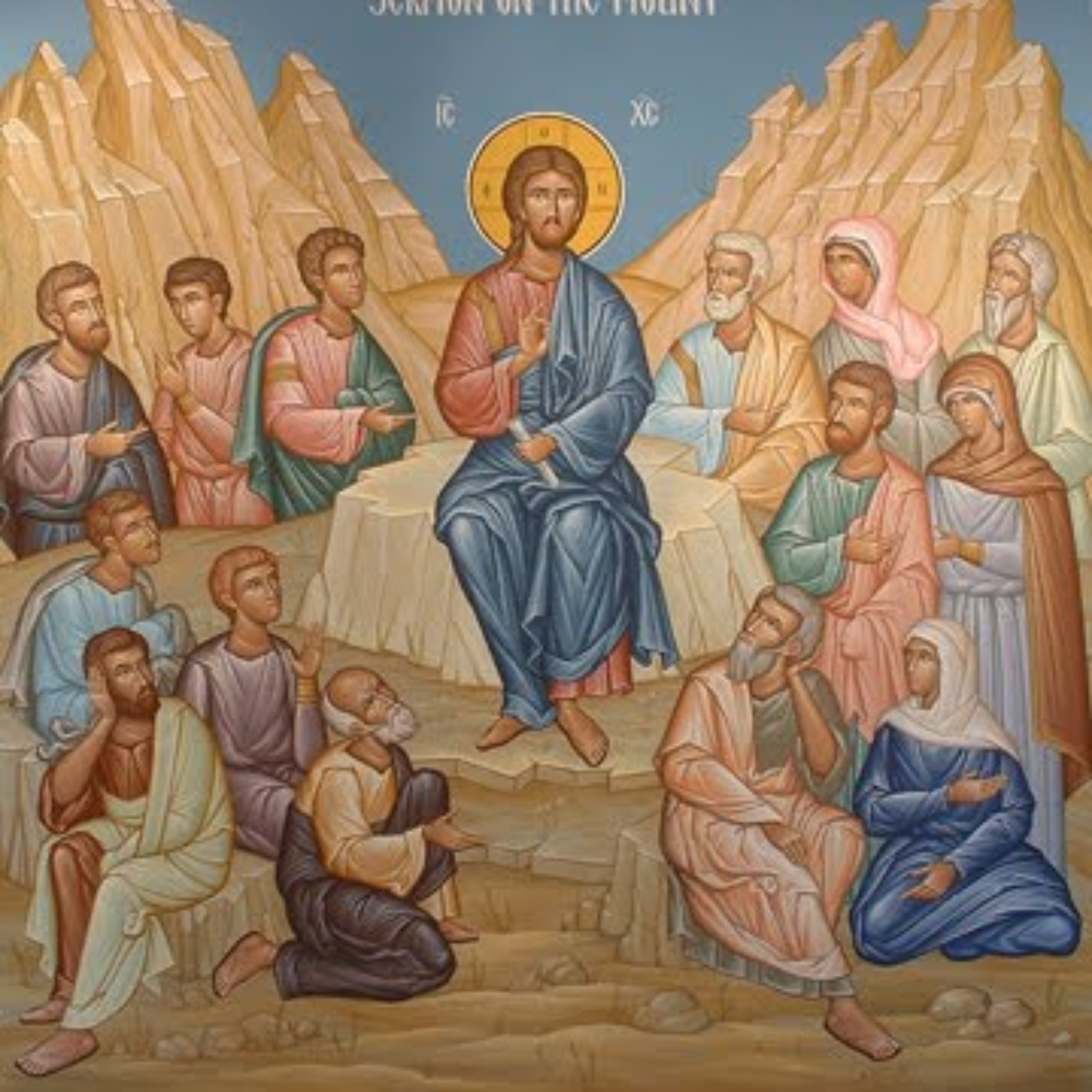
The Sunday of ForgivenessToday is the last day before Great Lent begins. The holy fathers have chosen to emphasize forgiveness as the central theme for this day. The Gospel passage comes from the Sermon on the Mount. In this passage, Jesus says, “If you forgive men their trespasses, your heavenly Father also will forgive you; but if you do not forgive men their trespasses, neither will your Father forgive your trespasses.” This statement holds within it three vital truths. First, Jesus does not command with forcefulness His followers to forgiveothers. Instead, He invites us to forgive out of our own free will. We get to choose whether we hold onto hurts, offenses and wrongs or let them go. We get to choose whether weshow mercy toward others and desire their good and their salvation. God gives us the power to fill our minds and hearts with anger, rancor, judgment, ill-will and hatred; allstates that act like caustic and dehumanizing poison within us. In contrast, God allows us to fast from these poisons, keeping our minds and hearts open as receptacles of love andthe grace of God. The second truth is that, while we fast during Lent from various foods, the most important fast is from the remembrance of wrongs, judgment, and the holding of grudges. The unwillingness to forgive cuts us off from other human beings, from God, and even from our true selves. Finally, the third and most important truth is that our own refusal to forgive others closes us off to the forgiveness of God. When we refuse to let go and forgive another, our hearts become closed off to God. He wants to forgive us, but the state of our hardened heart prevents Him. This is what Jesus meant when He said, “Neither will your Father forgive your trespasses.” May we utilize this day before Great Lent to intentionally seek the forgiveness of everyone around us, and may we intentionally forgive even those who are far off who may have wronged us, whether they are still alive or havefallen asleep.
-
14
The Last Judgement
Sunday of the Last Judgment The Gospel Reading for today’s Liturgy tells us about the event of the Last Judgment. This is not a parable, but a description of the events of the last day. Our Lord separates the righteous from the unrighteous. He calls those who have loved Him and believed in Him “sheep,” because sheep hear the voice of their shepherd and follow him. The unrighteous, He calls “goats,” because goats are not as docile and tend to do their own thing. We see an icon of this event on the ceiling of our beautiful church, towards the back of the nave. This icon serves as a helpful reminder of our own personal accountability before God for the decisions and choices we have made regarding Him and our neighbors during our lifetime. To both the righteous and the unrighteous, Jesus uses the same criterion for judgment: Did we recognize in our neighbors the image of God and treat everyone during our life as if they were God Himself? The chief criterion for judgment will be our love for our fellow human beings. In short, did our hearts and minds become increasingly more like our Lord’s as we progressed in our lives? It’s interesting that both the righteous and the unrighteous were surprised by our Lord’s judgement. The righteous were surprised because throughout their lives, they were selfless and therefore did not keep track of their own good deeds but were sensitive and aware of the needs of others. In contrast, the unrighteous were completely unaware of the needs of those around them because their focus was selfishly on themselves. They were spiritually blind and did not truly know themselves. In this passage, Jesus clearly tells us how intimately He identifies with every human being. Their sufferings are His sufferings; their pain is His pain; and their needs are His needs. Is this also true for us? Our salvation is dependent upon identifying in self-sacrificial love with the human sufferings of those all around us. We cannot say that we love God AND be indifferent to our fellow human beings.
-
13
The Prodigal Son
SUNDAY OF THE PRODIGAL SONToday’s Gospel is the Parable of the Prodigal Son. This story beautifully describes the entireprocess of sin, repentance and forgiveness.Sin & Its ResultsThe younger son, representing us all, considers his father (God) dead and asks for his inheritance. This is essentially the root cause of all sin—considering ourselves over God for whatever reason. He then leaves his father, his family (the Church), his homeland (Christian heritage), and departsto a foreign land. This “foreign land” represents a distorted human existence. In this foreign land, the son becomes “lost,” meaning he squanders his God-given gifts, his purity, his understanding, his spiritual health and his connection to his spiritual family. Apart from God and godly illumination, the younger son becomes spiritually blind and subjects himself to the false and distorted guidance of the devil and his demons. This is described in the parable as “attachment to a foreigner.” The result of these sinful decisions is that the youngerson becomes almost spiritually unrecognizable. He is poor, alone, naked, filthy, disfigured, starving, miserable, homeless, and wallowing in the mud, refuse and everything unclean.Repentance Part One: Coming to Oneself & RemembranceIn this fallen condition, the younger son comes to himself, meaning his true self rather than his distorted self. The first step in this process is remembrance. He remembers his former Christian life: his father, his family, his homeland, and his former blessed state. The second step is to see his current sinfulness, his unworthy state, and his extreme loss. The third step is a desire to get “out of the mud,” separate himself from the “foreigner” and return to his father. The fourth step is to admit to himself his mistakes: “I have sinned; I am no longer worthy to be called Your son; treat me as one of Your hired servants.” The fifth step is to act, to actually move his feet and start walking toward his father and his homeland. Repentance Part Two: Confession & ReconciliationThe moment the younger son sets out on the road home, we see that the father has been patiently and lovingly waiting this entire time. The father does not wait for the son to come to him with an “I told you so” attitude. Instead, he rushes to greet his son. Importantly, the loving father, always respecting his son’s free will, allows the lost son to exercise his freedom and to make his confession, articulating aloud words that correspond to his active return. Once the son has confessed, the father takes over. In acts of reconciliation, restoration andforgiveness, the father re-clothes his son in his own clean and restored baptismal garment (the robe), restores this repentant servant to sonship (the ring), grants His son grace-filled power to live again a righteous life with Him and all the Saints (shoes on his feet), and grants his son full communion in his household and throws a celebratory party with the Eucharist as the entree (the fatted calf).
-
12
The Publican and the Pharisee
The Sunday of the Publican and the PhariseeToday, marks the beginning of a very special liturgical season called the Triodion. The Triodion is a book of worship Services we use beginning today, extending through Great Lent, and ending with Holy Week. Some of the most beautiful and meaningful themes, hymns and readings are in these sublime Services of the Triodion. For example, today and the next three Sundays present to us a segment of our liturgical calendar known as the Pre-Lenten Sundays. The Holy Fathers of our Orthodox Church chose four specific Gospel readings to convey very special themes they thought essential to prepare us for our Lenten Journey.Today, in the parable of the Publican and the Pharisee, we see the pride and judgment of the Pharisee starkly contrasted with the humility and repentance of the Publican (tax collector). The Church wants us to imitate the tax collector in his humility and his deep desire to turn away from sin and return to God. The religious leader (the Pharisee) enters the Temple, but leaves unchanged, still clinging to his sins and sinful mindset. On the other hand, the sinner (the tax collector) enters full of sins, but leaves a changed man, forgiven of his sins and reconciled to God.Why? Because of two main reasons: First, he honestly examined himself and saw his sins; secondly, he humbled himself and confessed them to God, seeking Divine mercy and forgiveness through sincere repentance. The Publican shows us the Christian way. We also have the opportunity to self-examine, see our sins, and take advantage of the holy sacrament of Confession. This upcoming season of Great Lent is the perfect time to come to Confession and imitate the Publican (tax collector). We, like he, will leave the Christian Temple mercifully forgiven and reconciled to our Lord Jesus Christ, filled with a peace that surpasses all comprehension.
-
11
Christian Stewardship - An Expression of Love
Sunday January 25, 2026Today, we read about Zacchaeus, the chief tax collector, who abandoned everything in his former life to follow Jesus. As a chief tax collector, he was extremely rich, for Jewish tax collectors under Roman authority not only collected the required Roman taxes, but they charged their fellow countrymen even more than Rome demanded. As a boss of other tax collectors, Zacchaeus took an additional percentage of profits from those under him. Throughout Zacchaeus's career, he was guilty of stealing from and oppressing his fellow Jews. Maybe from a guilty conscience, but certainly through the promptings of the Holy Spirit, something deep inside Zacchaeus's heart awoke when he heard that Jesus was passing through his town of Jericho.Despite the large crowd that surrounded Jesus and despite Zacchaeus's small stature, he had to see Jesus, to look upon this Man's face. This desire was so strong that left his tables and his other collectors and ran ahead of the crowd. It must have been something to see this expensively dressed man of authority and power running through the streets of Jericho without a care of how he looked. To double down on this, robes and all, Zacchaeus threw all caution and vainglory aside and climbed up a sycamore tree to peer over the crowds of onlookers and see the face of Christ. Of course, Jesus, the All-knowing God, foresaw this very event and intentionally came to Jericho specifically to encounter Zacchaeus, saying, “Make haste and come down, for I must stay at your house today.” Without any further information or catechism, Zacchaeus knew by the grace of God that he had met the One promised by the Old Testament prophets. He had been given the opportunity to host the Messiah in his home.Instant conversion! When Zacchaeus looked upon the Face of God, he did not see judgment or condemnation; he saw unconditional love. He knew that he had reached a decisive crossroad of repentance that prompted him to say: “Behold, Lord, the half of my goods I give to the poor; and if I have defrauded any one of anything, I restore it fourfold.” Zacchaeus literally gave away all he had and became a disciple of Christ. All the riches of the world, all the power and authority of Rome became pale and insignificant when compared to the love, peace and forgiveness he now found in his heart. From this day forward, Zacchaeus used all his talents and time to serve the Lord. After the Lord's resurrection and Pentecost, Zacchaeus became the first bishop of Caesarea. The love and forgiveness he received from Jesus translated into the most beautiful expression of Christian Stewardship—the offering of his time, talents, and treasures in thanksgiving to God.
-
10
Thanksgiving to God
Sunday January 18, 2026The Transformative Power of Thanksgiving to GodEvery time people think of God and offer Him thanks, they are praying. They are recognizing in part that God is the Giver of all good things (Js. 1:17). Furthermore, they are acknowledging that God has personally benefitted them. This very act of thanking God brings people into a closer personal relationship with Him. Gratitude also changes the person offering it. For the moment, it pushes aside all negativity and grumbling. Thanksgiving fills the human heart with joy and peace. It brings people back to their true selves, to a healthy state, and helps them see more clearly. Thanksgiving is both transformative and life-giving, for it moves people away from distorted self-consciousness, gets them “out of themselves,” and places their focus on their Creator and on their correct relationship with God's creation.We can see this transformation play out in today's Gospel reading of the Ten Lepers. All ten are sick with leprosy—ostracized, disfigured, suffering, and doomed to a painful end. All ten cry out in desperation to Jesus, hoping to be physically and miraculously healed. Every leper receives his wish and is healed of their leprosy, but only one of the ten returns to Jesus in gratitude. Note St. Luke's description: He praised God with a loud voice, and he fell on his face at Jesus's feet, giving Him thanks. The most important result of this more intimate interaction between Jesus and the grateful leper comes next. Jesus says to him, “Rise and go your way, your faith has made you well.”What happens next can be easy to miss. Jesus commands the healed leper to rise to his feet and then forgives him of his sins! This is what is meant by “your faith has made you well.” All ten of the men had been physically healed, but only this one man, through his relationship with Jesus, was spiritually healed. How many of us in our own lives cry out to God in desperation for physical and temporal comforts! “God, make this sickness go away!” “God, give me this or that, or help me with this or that immediate want or desire!” Too often, our lives are oriented toward this side of life and this fallen world. We can sadly make God our temporal “errand boy” and forget about eternity. We can become so focused on our bodies, our comforts and pleasures that we forget about our souls and the ultimate spiritual disease of sin. If we were given even a momentary glimpse of the agony of hell, it would immediately wake us up to the ultimate truth that God and His power to forgive sins is the PEARL OF GREAT PRICE! Nothing else can compare to it.
-
9
Christianity Means Continual Conversion
Sunday January 11, 2026In the past few days in our Church's liturgical calendar, Orthodox Christians worldwide have celebrated the life and role of St. John the Forerunner and Baptist and the baptism and beginning of Christ's ministry. At the beginning of each of these central figures' ministries, they both began with the exact same message: “Repent, for the Kingdom of Heaven is at hand.” Interestingly, the Greek verb metanoeite for “repent” that both John and Jesus used was in the continuous present tense. If we literally translated this verb into English, we would say “keep repenting and never stop.” The Christian life is characterized by continual repentance. This word, repent, means to change one's mind in the sense of turning away from sins and passions and turning back to God. Both St. John and our Lord Jesus centered their teaching on this act of continual conversion.As Christians, we are commanded to never stop learning, never stop growing, never stop repenting, and to never stop striving toward Godlikeness and a deeper relationship with our loving Lord. Many in our Greek Orthodox churches come from families who have been Orthodox for centuries if not millennia. These often refer to themselves as “cradle Orthodox.” This is not an incorrect term, especially relative to those who have only recently become Orthodox without having been raised in this specific Faith Tradition. These, we often refer to as “converts.” Demographically, these different terms can be helpful, but too often, these terms can lead some Orthodox Christians to wrongly believe that the Christian Faith can be inherited rather than intentionally chosen. This false belief runs contrary to the preaching of both St. John and Jesus.All human beings must decide for themselves whether they will become disciples of Christ. Each person has been given the freedom to believe, to exercise their faith in Jesus Christ, to repent, to convert, and to continually renew their commitment. For so-called “converts,” they are intentionally making the decision to join the Orthodox Church. For so-called “cradle Orthodox,” they still have the choice whether they will adopt the Faith of their parents and grandparents. Orthodox Christians from both camps are free at any time to stop repenting and to stop growing. Undoubtedly, our churches contain people who have sadly stopped growing, learning, and repenting. The decision rests with each one of us: Will we deny ourselves, take up our Cross and follow Jesus, or will we put ourselves in neutral and try and find a comfortable place somewhere on the Cross?
-
8
The Feast of Theophany
Sunday January 4, 2026Theophany means the appearance or manifestation of God. Our Church uses another word, Epiphany, for this same feast. Epiphany simply means appearance or manifestation. This Feast commemorates Jesus's baptism in the Jordan by St. John the Baptist. During this event, the Three Persons of the Holy Trinity reveal themselves to the world. As Jesus is emerging from underneath the waters of baptism, the Holy Spirit descends from the heavens and alights on Jesus in the likeness of a dove. The voice of the Father is heard, saying, “This is My beloved Son, with Whom I am well pleased.” Of course, Jesus is revealed as the Son of God by the voice of the Father and the indication of the Holy Spirit. Jesus did not need baptism, for He neither sinned and therefore did not require any cleansing nor did He need rebirth or illumination. Our Lord explains that He came to St. John to be baptized in order to “fulfill all righteousness” and provide for us the example of our own need for baptism. On the Feast of Theophany, in addition to the Divine Liturgy, we also celebrate the Great Blessing of the Waters. The essence of this Service is to make a present reality what Christ accomplished some 2000 years ago. When Jesus, the Creator and God of the universe, entered the waters of the Jordan, He sanctified and blessed the river by His divine presence. The Jordan River was and is the source of life for that entire region. Sanctifying and blessing these waters with His divine and life-giving presence symbolizes the re-creation and renewal for the region and the entire cosmos that Christ's incarnation and presence in the world accomplished. This is why we make that blessing and sanctification a present reality in our lives today by asking the same Holy Spirit to bless and sanctify the water we offer in church. With the blessed Holy Water, we then are blessed. With this same Holy Water, we ask Fr. Theodore to come and bless our homes, our cars, and our businesses. We understand that Christ continues by His presence in our lives and in our world to renew us, renew all creation, and give to us the illumined ability to see our everyday life and the created world with a paradisiacal vision and perspective.
-
7
The Sunday after the Nativity of Christ
Sunday December 28, 2025Today we remember three members of Christ's family: St. Joseph, the Betrothed of the Theotokos, King David the Prophet, and St. James the Brother of God. St. Joseph is remembered today for his role in the life of both the Virgin Mary and of Jesus Christ. He was from the tribe of Judah and a descendant of King David. He lived in Nazareth and was a carpenter by trade. Joseph was a widower and had children from his first marriage: James, Justus, Jude, Simon, Esther, Martha, and Salome, who was the mother of the holy Apostles James and John. He was a righteous elder, who was chosen by God's will to be betrothed to the holy Virgin Mary as a care-taker, provider and protector. He fell asleep in the Lord before the beginning of Jesus' public ministry. St. Joseph provides the Church with a wonderful example of the saintly layman, not being a clergy or monastic.We also remember the Prophet David the King. He also was from the tribe of Judah and was born in Bethlehem around 1085 B.C. As a shepherd, he prefigures Jesus Christ the Good Shepherd. He was anointed to become the second king of Israel after Saul. He became a “man after God's own heart” after his repentance from murder and adultery. King David proves that repentance far outweighs sin in the life of a human being. A great man of prayer, David was filled with the Holy Spirit and wrote the Book of Psalms, which has become the foundational prayer book of the Church. The Psalter not only expresses every state and emotion of the soul before God; it is also filled with prophecies of the coming of Christ.Finally, we remember St. James, the Brother of God. He was one of the sons of St. Joseph the Betrothed, before Joseph was betrothed to the Virgin Mary. James had a special relationship with Jesus, travelling with Him into Egypt and later offering Jesus half of his own inheritance. For these reasons and others, he was given the title “Brother of God.” James later became the first bishop of Jerusalem, presided over the very first Apostolic Council in Jerusalem (Acts 15), wrote the Catholic Epistle bearing his name, and died a martyr at the hands of some impious Jews.
-
6
The Nativity of Christ
December 25, 2025
-
5
The Genealogy of Christ
Sunday December 21, 2025On this day, we read the Genealogy of Christ from the Gospel of Matthew. The Church wants to bring to our mind all the righteous who lived before Christ and connect them with our Lord's birth. While we may have heard Christ's genealogy read many times before, it is important to remember that each name is important and has its own story, history, and significance. Usually, Jewish genealogies only include men's names, but St. Matthew chose to intentionally include several women's names: Tamar, Rahab, Ruth, and Bathsheba. Each one of these women is either a Gentile (non-Jew) or a person with a unique background. They are included in Christ's own family tree in order to show that He is not ashamed to identify with great sinners—even those who have committed serious sins like incest, adultery, and murder—and people from every nation and race.Jesus's family tree reminds us that He did not come to judge the world, but to save it. As we listen to all the names in Jesus's family background and remember their stories and histories, let's remember that we have our own personal family genealogies. There are both positive and negative influences, whether through genetics or our family environment, that can have a profound effect on us if we are ignorant of these influences or allow them to master us. We should neither be ashamed of our family history nor let it unhealthily affect us or those who come after us. In every generation, God is with us, and we are free to make our own choices. Jesus entered into both the human race and a specific family with a unique history and changed it for the better by His life and His choices. We have a similar opportunity, with His help, to take the good from our own ancestors and to determine the future trajectory of our personal families by making godly choices that bring us closer to Him and positively influence the successive generations that come after us. With this understanding, let us celebrate our Lord's incarnation, as a real human being with a family and a history. Jesus is not ashamed of any of us. His birth proves that He embraces us, loves us, forgives us, and considers us His own children and vital members of His life and family.
-
4
Eve of the Nativity of Christ
December 24, 2025
-
3
Christ the Bridegroom
Sunday December 14, 2025
-
2
Remember the Sabbath Day, to keep it holy
Sunday December 7, 2025“Remember the Sabbath day, to keep it holy”—Gen. 20:8In today's Gospel Reading, Jesus heals a woman on the sabbath. The sabbath day in the Old Testament was Saturday; it was considered the seventh day of the week. God commanded the Israelites to work only six days each week and to keep the seventh day holy and set aside for God and rest. Once the crucifixion, death, burial and resurrection happened in the life of Jesus, the Son of God, Christians changed the sabbath day to Sunday, the Day of the Lord. Christians now understand the sabbath—still a commandment of God—to be remembered and obeyed on Sundays. Sunday is now the day that we are commanded to set aside for worship in Orthros and Divine Liturgy and a day of rest with our family. It is interesting to note that older people—when interviewed at the end of their lives—hardly ever wished for more worktime; instead, they regretted that they had not spent enough time enjoying their family and friends when they had the strength and energy. God knows us far better than we know ourselves. After all, He designed us and created us. He knows that we need a day of rest each week. He knows we need at least one day each week to intentionally dedicate time to worship God and remember our love and need for Him. The sabbath day is similar to our daily morning prayer routine. We can try and remember God throughout the day and take Him with us through all our activities, but remembrance of God is way easier and possible when we carve out some regular time to exclusively spend with Him at the start of each day. This commandment to keep the sabbath holy—like all the commandments—is not foreign to our true DNA or meant to be oppressive. God's commandments help us express our true humanity, help us to become truly human. It is no accident that the Evil One urges us to exhaust ourselves six days each week, so we become tempted to selfishly keep Sundays for ourselves rather than for God. What is lost in this scenario is that when we put God first, then and only then are we truly benefitting ourselves. As we go forward in our lives, let's all rededicate ourselves to setting every Sunday aside for the Lord and worship at His Divine Liturgy as the best way of serving ourselves and our family.
-
1
Being Rich Toward God
Sunday November 23, 2025Living in this world, it can be easy to focus on the tangible things right in front of us rather than on eternal things in God's kingdom. For this reason, every year, the Church presents us with this parable to remind us of the more ultimate and eternal truths. The first lesson about ultimate truths is that God's material blessings toward us are never simply about us alone. In the Orthodox Wedding Service, the first long prayer states, “Fill their house with bountiful food and with every good thing that they may have to give to them in need.” The rich man in today's parable only thought of himself, not how he could use God's blessing of a bumper crop to help others less fortunate. The second lesson is that the more we have, the more we will worry. Look at all the trouble and effort the man expended to keep his crop safe and sound. How much easier and peaceful it would have been for him to keep his old barns and give away his excess. The third lesson can be taken from his confusion between his bodily needs and his spiritual needs. Notice how he said, “Soul, you have ample goods laid up for many years; take your ease, eat, drink, be merry.” The soul cannot eat crops harvested from the earth. The food for the soul is prayer, fasting and almsgiving. This rich man was a slave to material comforts and pleasures, while his soul was actually starving. The fourth lesson is that life is fragile, and time is a finite gift. We are deceived if we think we can count on tomorrow or know the day and hour of our death. We should consider each moment of life a precious gift and an investment in eternity. Furthermore, we should live each day as if it might be our last. The fifth and final lesson is that generosity toward others is generosity toward God Himself. This is why our Lord called the rich man a fool, saying to him, “So is he who lays up treasure for himself, and is not rich toward God.” This is also why the Lord Jesus will say on Judgment Day, “Truly I say to you, as you did it to one of the least of these My brethren, you did it to Me” (Mt. 25:40).
-
0
Come and See
Sunday November 30, 2025In today's Gospel, we read about how St. John the Baptist's initial disciples begin their transition from following John to following Jesus. Before Jesus ever decisively asked them to become “fishers of men” on the shores of the Sea of Galilee, it was St. John the Baptist who pointed them in Jesus' direction. Interestingly, Andrew, whose memory we celebrate today, was the first to begin taking interest in Jesus as the possible Messiah. This is why Andrew is known in the Church as the “first-called” apostle. Andrew was curious about Jesus but did not have enough evidence to fully commit. Jesus, knowing this, prompted Andrew to take a closer look with the famous invitation: “Come and see!” Andrew accepted this invitation and stayed with Jesus the whole day. Based on this up-close and first-hand experience of Jesus, Andrew was convinced that he had found the Messiah. He then went and told his brother Peter and personally brought Peter to Jesus. Most often, this is exactly how Christianity is spread from person to person, by word of mouth. To further illustrate this point, the next day in today's Gospel, Philip tells Nathanael about Jesus. When Nathanael pushes back with his own questions, Philip offers him Jesus' own line: “Come and see!” Word-of-mouth evangelism works once again. Nathanael comes to Jesus based on Philip's testimony, but he comes to his own conclusion of faith once he meets Jesus. The conversion of the first disciples of Christ through word-of-mouth sharing, starting with John the Baptist and continuing with Andrew and Philip beautifully illustrates the recent Epistle reading from Sunday, November 16th, which says, “How beautiful are the feet of those who preach [share] the good news!”While it is true that many people are flocking to Orthodox Christian churches, including St. Catherine, most of these inquirers are coming because of what they are hearing and seeing through the internet, YouTube, and podcasts, not from the word-of-mouth testimony from us. This means that many of our own family, friends and acquaintances may not be Orthodox, or if they are, may not be as committed as they could be. Our own word-of-mouth testimony, along with the genuine witness of our lives, could go a long way to bringing them closer to Christ and His Church. Remember, the more committed we are in our own faith, the more intimate relationship we have with Jesus Christ, the more naturally and organically will be our desire to share this “best thing” with those closest to us and the more powerful will be our testimony.
We're indexing this podcast's transcripts for the first time — this can take a minute or two. We'll show results as soon as they're ready.
No matches for "" in this podcast's transcripts.
No topics indexed yet for this podcast.
Loading reviews...
ABOUT THIS SHOW
A collection of homilies from services at St. Catherine Greek Orthodox Church.
HOSTED BY
St. Catherine Church
CATEGORIES
Loading similar podcasts...
Frequently Asked Questions
How many episodes does Sunday Homilies have?
Sunday Homilies currently has 30 episodes available on PodParley. New episodes are automatically indexed when they're published to the podcast feed.
What is Sunday Homilies about?
A collection of homilies from services at St. Catherine Greek Orthodox Church.
How often does Sunday Homilies release new episodes?
Sunday Homilies has 30 episodes. Check the episode list to see recent publication dates and frequency.
Where can I listen to Sunday Homilies?
You can listen to Sunday Homilies on PodParley by clicking any episode. We provide an embedded audio player for direct listening, and you can also subscribe via your preferred podcast app using the RSS feed.
Who hosts Sunday Homilies?
Sunday Homilies is created and hosted by St. Catherine Church.
URL copied to clipboard!