
PODCAST · health
The Brink - Mental Health Demystified
by The Brink with Matt Hussey
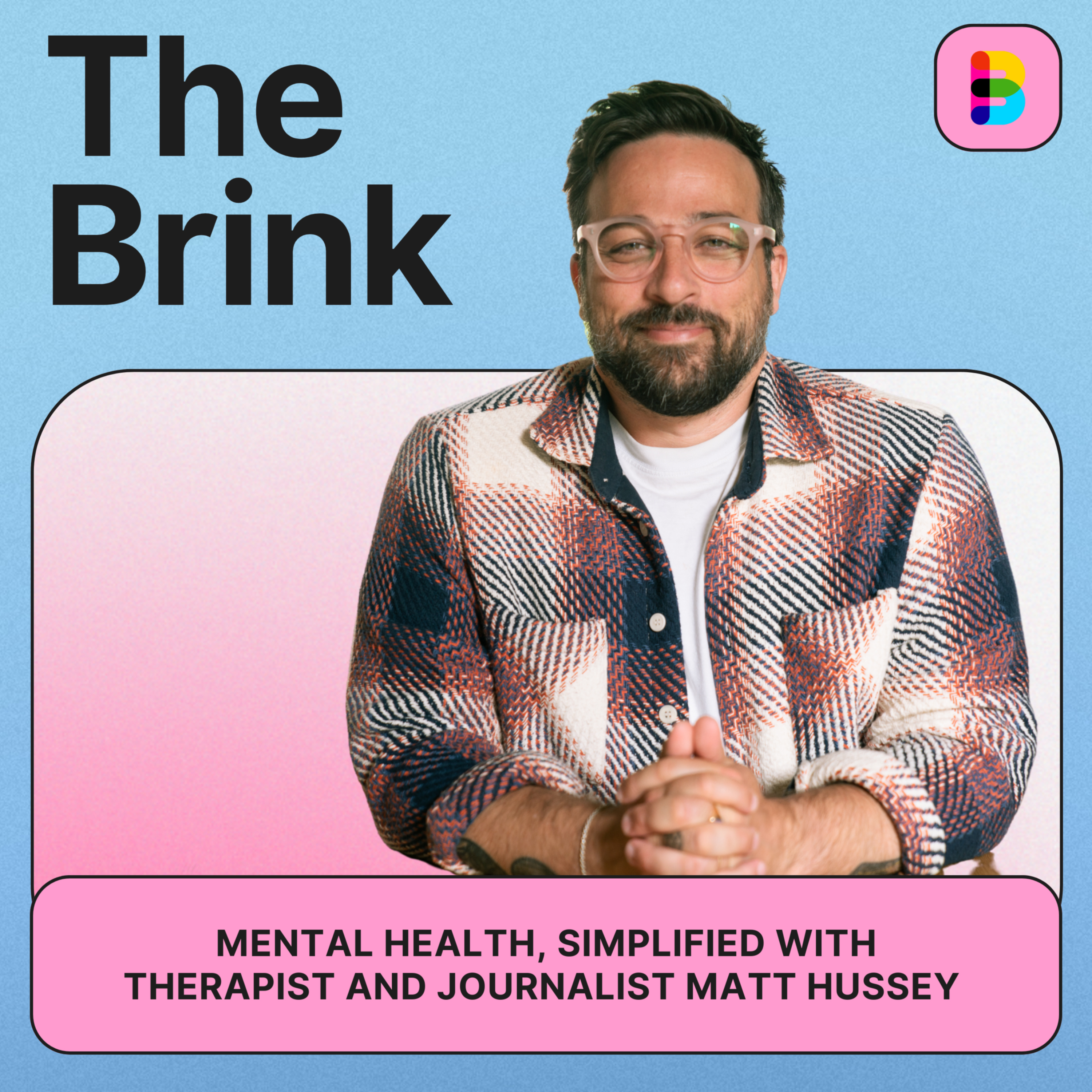
The Brink is a weekly podcast all about the mysteries of what goes on inside our heads. There are many myths surrounding psychology, psychiatry and therapy, and this podcast is going to help sort that all out for you. If you're interested in therapy, mental health and the mysteries of the brain, this one is for you. Written, produced and presented by Matt Hussey, a qualified therapist and journalist with more than 20 years experience.
-
3
The Boy Who Named Himself After a Bone
A twenty-year-old named himself after a bone. By twenty, his body had stopped producing testosterone. He earns $100,000 a month teaching boys how to hate their faces in exactly the right direction. This is the story of looksmaxxing - and what it tells us about the quiet crisis inside young men's lives.Looksmaxxing began in incel forums in the mid-2010s, migrated to Reddit, and exploded across TikTok with over 2.5 billion posts. But beneath the jawline exercises and skincare routines is something far more serious: a complete ideology of male worth - one that is now reshaping how a generation of boys understand their bodies, their value, and their place in the world.In this episode, Matt Hussey - therapist, journalist, and creator of The Brink - goes deep on what looksmaxxing actually is, how it works psychologically, and why it has erupted into the mainstream right now.You'll hear about:The language of looksmaxxing - mogging, the PSL scale, hardmaxxing, bonesmashing - and why vocabulary is always the first weapon of radicalisationClavicular (Braden Peters): the twenty-year-old influencer who followed the ideology to its logical end, and what his story reveals about where this pipeline actually leadsThe psychological mechanism at the core of looksmaxxing's appeal - and why it isn't vanity, it's controlThe racial architecture hidden inside the community's pseudoscientific beauty standardsThe $90 billion men's grooming industry that benefits from the anxiety the forums generateWhat clinicians, researchers, and parents need to understand - and what we owe the boys already inside this worldKeywords: looksmaxxing, looksmaxxing explained, incel ideology, male body image, male mental health, manosphere, Clavicular influencer, mogging, PSL scale, hardmaxxing, bonesmashing, mewing, young men radicalisation, men's mental health podcast, teen boys social media, body dysmorphia men, masculinity crisis, male insecurity, TikTok mental health, male body image podcast
-
2
The Vibe Economy: How Feelings Replaced Facts and What It's Costing Us
The economy is doing fine. Unemployment is near historic lows. GDP is growing. The stock market is up. So why does everything feel like it's falling apart?In this episode, we go deep on one of the most underexplored psychological shifts of our time - the quiet moment we stopped trusting data and started trusting the Feed. We call it the Vibe Economy. And once you see it, you can't unsee it.We'll walk through why 56% of Americans believed they were in a recession when they weren't, how a fringe far-right march of 800 people made an entire country feel like fascism was at the gates, and why an algorithm that was designed to connect us has instead learned that your outrage is worth more than your attention.But this isn't just about politics or economics. It's about you. About why you've started describing your bad week as trauma, your difficult boss as a narcissist, your anxious Tuesday as a disorder. About what happens when an entire generation learns to read themselves through a lens of pathology - and why the algorithm has every financial incentive to keep it that way.This is the story of how we traded the index for the impression, the news anchor for the For You page, and the white paper for the vibe check. And what liberal democracy looks like when the primary political product on offer isn't solutions - it's validation.The world is better than the algorithm wants you to believe. This episode is about why it needs to tell you otherwise.
-
1
When Trust Breaks: Palantir, NHS Data, and Why Surveillance is Poisoning Mental-Health Care
What happens when the architecture of war enters the sanctuary of vulnerability?In this episode, we take listeners deep into one of the most consequential and least understood debates in contemporary healthcare: the creeping installation of a surveillance-grade data system into the NHS - built by a company whose software was forged in battlefields, border enforcement, and counter-terrorism.We're talking about Palantir Technologies, the Denver-based tech giant whose platforms now sit at the core of the NHS Federated Data Platform - a central repository connecting patient records, clinical notes, prescriptions, and more across the UK's health service.On paper, this sounds like progress: better coordination, smarter resource allocation, and a clearer picture of public health. But real life is messier - and human trust is fragile.This episode unfolds the central argument of our Brink essay: mental health care doesn't run on algorithms - it runs on trust.We explore:• How Palantir's history - from military intelligence to immigration enforcement - reshapes the way clinicians and patients relate to data.• Why the mere presence of a surveillance-linked platform can create a "chilling effect," where patients censor themselves, clinicians hesitate, and honesty erodes.• Why this matters most in mental health - where real healing requires complete honesty, not half-truths dressed up as "clean data."• How data integrity isn't just technical - it's moral, emotional, and relational.Because in therapy, a withheld truth isn't just a missing data point - it's a silenced pain, untracked progress, and an invisible wound.This is not a simple privacy debate. It is a reckoning with what we expect care to be, and what it becomes when the logic of surveillance enters the room.If you've ever wondered how technology reshapes not just systems but human behaviour - and how the promise of "efficiency" can quietly hollow out dignity - this conversation is for you.
-
0
How Britain Heals: Why Growth Isn't Enough-and What a Broken Country Actually Needs
Britain may be stabilising economically-but emotionally, something is still badly wrong.In this episode, we step beyond GDP, inflation figures, and policy soundbites to ask a more difficult question: why does the country still feel so fractured, lonely, and brittle-even when the numbers improve?This conversation explores Britain's crisis not as a failure of growth, but as a failure of connection. We look at how decades of treating social life as a by-product of economic success have left the country richer on paper but poorer in trust, belonging, and shared meaning.From the quiet disappearance of libraries, pubs, and community spaces, to a welfare system that processes people rather than knows them, to the growing evidence that loneliness is not just a personal tragedy but a political and economic risk-this is an argument for a different kind of national renewal.Drawing on research, policy experiments, and lived reality across the UK, the episode outlines what a relational economy might look like in practice:- why social infrastructure is as vital as railways- why wellbeing should be a Treasury metric, not a side project- why emotional literacy belongs at the heart of education- and why rebuilding Britain may depend less on growth, and more on careThis is not a call for nostalgia, and not a rejection of prosperity. It is a blueprint for a country that understands that people do not thrive in isolation-and that no society heals unless it learns to take connection seriously.At its heart, this episode asks what patriotism could mean in the 21st century. Not louder symbols. Not harder edges. But a renewed commitment to ensuring that no one is left to worry alone.
-
-1
What Are We For Now? Life, Identity, and the Quiet Anxiety of the AI Age 🤖
Artificial intelligence is usually framed as a story about jobs, productivity, and the future of work. But beneath the headlines sits a quieter question-one that's harder to measure and harder to escape:If machines can think, create, and even simulate empathy, what does that leave us for?In this episode, we explore the emotional and psychological impact of living alongside intelligent machines in the UK today. Not the sci-fi fears, but the everyday ones: the unease of feeling replaceable at work, the rise of frictionless digital intimacy, and the subtle identity shift that occurs when intelligence is no longer scarce.We trace how decades of thinking about humans as machines-optimised, efficient, productive-have shaped how we now measure our own worth, and why that metaphor is finally breaking down. Drawing on psychology, philosophy, and real cultural signals, this conversation looks at why AI feels so personally destabilising, and what it might mean to reclaim a messier, more human way of being.This is not a story about resisting technology. It's about understanding what the AI age reveals about us-and why presence, vulnerability, and imperfection may become the most valuable things we have left.
-
-2
The Generation That Stopped Feeling 😔
They call it the "Gen Z stare."The blank look. The flat affect. The sense that something has quietly gone offline.This episode explores what happens when adolescence unfolds inside recommendation algorithms-when fleeting emotions are turned into permanent identities, and self-understanding is learned through scrolling rather than experience.We look at how platforms learn teenagers' vulnerabilities in minutes, why dissociation has become a cultural aesthetic, and how dopamine burnout can leave young people emotionally flat long before adulthood begins. From self-diagnosis culture to the rise of "brain rot" as a self-description, this is not a story about laziness or apathy-but adaptation.This is an episode about nervous systems under pressure. About why numbness can feel safer than feeling. And about what it means to grow up in a world where your inner life is constantly interpreted, categorized, and optimized for engagement.If you've ever wondered why a generation that cares so deeply can look so emotionally distant-this conversation is for you.
-
-3
The Men Who Are Disappearing
Men are disappearing-but not in the ways we're used to measuring.Not all at once. Not always through crisis. And not always in ways that trigger alarms. Instead, they are quietly withdrawing from everyday life: from work, from friendships, from family routines, from the social structures that once anchored them.In this episode, we explore what can only be described as a Masculinity Recession-a slow contraction of belonging, purpose, and connection among men. This is not a backlash against progress, nor an argument that men's struggles somehow outweigh women's. It's an examination of what happens when a society changes faster than large numbers of men are helped to adapt.Drawing on data, lived experience, and cultural analysis, this conversation looks beyond the usual panic about young men and asks a harder question: who is really carrying the heaviest load? The answer points not to viral villains or online caricatures, but to men in midlife and beyond-often outside major cities-whose identities were built around roles that quietly vanished, without replacement.This episode is part of an ongoing emotional weather report: an attempt to map the deeper conditions shaping how people are actually living, not just how they're performing online. We talk about loneliness that doesn't announce itself, work that once provided dignity, and why telling men to "open up" has failed to stop the bleeding.Most importantly, we ask what comes next.Because when large numbers of men fall out of participation, the consequences don't stay contained. They ripple outward-into families, workplaces, communities, and public life.This is not a men's issue.It's a societal one.
-
-4
How Britain Feels
Britain isn't angry.It isn't collapsing.And it isn't fine.It's holding its breath.This podcast is an emotional weather report for the UK - a five-part series exploring what this country is really feeling beneath the headlines, the polling, and the endless noise.Because you can't understand Britain in 2026 through GDP charts or culture wars alone. You have to understand the emotional climate people are living inside: the exhaustion, the numbness, the quiet sense of unease that something isn't working anymore - even if no one quite knows how to say it.Across this series, we ask a simple but neglected question:What does life actually feel like right now - and what does that tell us about what comes next?Each episode focuses on a different pressure system shaping Britain's inner life:The Emotional State of Britain - why so many people feel flat, overwhelmed, and quietly on edge.The Masculinity Recession - the collapse of belonging, purpose, and connection among men, and why it affects everyone.Algorithmic Adolescence - how growing up online is reshaping identity, attention, and the nervous system of a generation.The AI Self - the emotional cost of a machine age that's making people feel replaceable.How Britain Heals - what genuine repair could look like, without slogans, optimism theatre, or false certainty.This isn't a campaign.It isn't a diagnosis.And it isn't about telling anyone how to feel.It's a map.A way of saying:Here's where we are.Here's why it feels like this.Here's what we need to pay attention to before the pressure breaks - or lifts.Britain's emotional world is shifting faster than its political one.It's time we treated that with the seriousness it deserves.New episodes drop throughout January.Everything begins at The Brink.
-
-5
Why Being Offline Has Become the Ultimate Status Symbol
We were promised infinite information would make us smarter. Instead, it made restraint aspirational. In this episode, I explore the rise of "content diets," why spending less time online is now a signal of power, and how mental health, class, and identity quietly collided in the attention economy. Being offline helps - but it also means something now.
-
-6
More Bots Than People: The Quiet Collapse of the Human Web 🤖
The internet isn't dead-but something human is disappearing inside it.In this episode, we dive deep into the unsettling shift happening beneath our screens: bots now outnumber us online, AI-generated content floods our feeds, and the places that once felt alive with other minds have grown quiet, uncanny, and strangely hollow.We unpack the real data behind the Dead Internet Theory-like Imperva's 2025 report showing automated traffic finally surpassing human activity-and explore what this means for our mental health, our sense of connection, and our emotional wellbeing.Why does the web feel less human?Why does posting feel like talking into a void?What happens to us when the world we use to feel "seen" starts filling with entities that aren't alive?This conversation blends psychology, digital culture, and the eerie emotional truth of living in a synthetic internet. And most importantly, it asks the only question that matters:If the internet is hollowing out... how do we keep the human part alive?
-
-7
What if Halloween isn't just a night of fear - but a ritual of healing?
Every October, we invite darkness in. We wear masks, summon monsters, and laugh in the face of things that should terrify us. But beneath the costumes and candy, there's something ancient happening - a psychological ritual that's been keeping us sane for thousands of years.In this episode, The Brink explores Halloween as a kind of collective therapy session - where ancient tradition meets modern psychology. From the Celtic fires of Samhain to the neon glow of suburbia, we trace how humanity has always needed one night to dance with fear.Drawing on the ideas of Carl Jung, Ernest Becker, and contemporary researchers like Coltan Scrivner and Margie Kerr, we uncover how fear, death, and darkness help us stay emotionally alive.🕯️ In this episode:The ancient origins of Halloween - and what they reveal about human anxietyWhy fear feels good: the science of "benign masochism" and safe scaresJung's "shadow self" and how wearing the monster helps us make peace with itThe strange neuroscience of why fear connects us instead of isolating usWhy Halloween might be our last surviving ritual for dealing with death🎭 It's not just about horror - it's about honesty.This is a story about the ghosts we carry, and the strange comfort of realizing we're not alone in the dark.Listen now on The Brink - where psychology meets culture, and the shadows finally get to speak.
-
-8
Fear, Flags, and the Far Right: The Psychology of a Nation on Edge
Marches in the streets. Hotels attacked. Crosses painted on roundabouts. Something in our collective mood has soured - in the UK, in the US, across the West. This episode digs deep into why societies drift right in hard times. We'll explore the economic shocks, the cultural backlashes, the media machines, and the psychological levers that make anger feel like the only option. But we'll also ask: is this really what we're losing? And what would it take to imagine a less angry future?
-
-9
Therapy's Grey Zone: Coachfluencers, Healing Hype, and the Black Market of Mental Health
In this episode, we uncover the rise of "coachfluencers"-influencers who package trauma healing, shadow work, and nervous system resets without licenses or regulation. Why are millions turning to them? What risks lurk in their promises? From NHS waitlists to TikTok trauma hashtags, we trace the cracks in the system that birthed a black market of healing-and ask who's left to protect the vulnerable when therapy becomes content.
-
-10
Divinity.exe: The Rise of AI Religion
What happens when humans start worshipping machines? In this gripping episode of The Brink, we explore the chilling and fascinating rise of AI religion-a movement that's not science fiction anymore, but a real and growing phenomenon.From Anthony Levandowski's AI-worshipping church Way of the Future, to immersive performance cults like Theta Noirand their AI deity MENA, to real-world robot preachers like Mindar in Kyoto and AI-powered "Jesus" confessionals in Swiss chapels-people across the globe are beginning to hand over their sense of the divine to code.We dive deep into the emotional, spiritual, and psychological implications of this shift. Why are people turning to machines for meaning, comfort, and connection? What are the risks of treating AI as infallible, sacred, or even godlike? And most importantly-what does this say about us?You'll hear about:The roots of AI-based belief systems and why they resonate now.Real-world examples of AI being used in sacred rituals and spiritual counseling.Expert insights from anthropologists, theologians, and philosophers warning of "technocratic theocracy."A sobering look at how moral judgment, critical thinking, and intimacy are threatened when divinity is outsourced to an algorithm.This is a conversation about belief, power, and the human need to feel connected-to something greater, something intelligent, something eternal. But when that "something" is a machine, we have to ask: are we evolving-or losing something irreplaceable?Whether you're spiritual, skeptical, or somewhere in between, this episode will leave you questioning what you worship-and who's really behind the screen.
-
-11
Therapy for Sale: How AI Is Monetising Your Deepest Secrets 🤫
You pour your heart out to what feels like a safe, empathetic ear-a therapy bot that's always there, never judges, and never forgets. But behind the soothing words lies a billion-dollar question: Who owns your pain once you've given it away? In this episode, we pull back the curtain on the hidden economy of AI therapy-where your midnight confessions are scraped, anonymised, and fed into machines that sell the illusion of empathy. From Henrietta Lacks' stolen cells to modern data-mining chatbots, we trace the unsettling lineage of exploitation, uncover the platforms turning trauma into training sets, and ask: are you the client, or the product?
-
-12
Heat Rage: How extreme temperatures hijack your mind 😡
When the temperature rises, so do tempers. This episode dives deep into the neuroscience of "heat rage" and summertime Seasonal Affective Disorder - how extreme heat disrupts our sleep, scrambles our serotonin, and fuels everything from irritability to anxiety spikes. From TikTok confessionals to hospital wards, climate change is now wired into our nervous systems. Featuring expert voices, cutting-edge research, and strategies to protect your mental health when the air itself feels hostile.
-
-13
How Rage Bait Hijacks Your Feed-and Your Mind 🎙
In 2025, outrage isn't a glitch in the system-it is the system. From viral political "debates" that platform extremists to TikTok provocateurs cashing in on chaos, rage has become big business. In this episode, we unpack how spectacle replaces substance, how algorithms weaponize anger, and why controversy is the most lucrative content of all.We'll break down the now‑infamous Jubilee "Surrounded" debate with journalist Mehdi Hasan, where a self‑proclaimed fascist became an overnight viral star-and a crowdfunding success story-thanks to outrage clicks. We'll look at creators like Bonnie Blue, the British internet provocateur turning shock into millions. And we'll ask the uncomfortable question: who's really winning when our attention economy runs on rage?If you've ever wondered why the loudest, most extreme voices dominate your feed, this episode exposes the psychology, economics, and real‑world consequences of rage‑bait media-and what it's costing our public discourse.
-
-14
Ghost Work: The Trauma and Job Loss Hidden Inside AI's Magic
Behind every chatbot lies a human story. Often, a horrifying one.In this episode, we uncover the invisible world of AI ghost workers-the people paid pennies to sift through the darkest corners of the internet to keep your tech "safe." Think beheading videos, child abuse content, racial slurs, suicide instructions-all reviewed by real people in Nairobi, Manila, Bogotá, and beyond.These workers face nightmares, flashbacks, and emotional breakdowns just so your chatbot doesn't turn toxic. And just as they're being broken by the machine, they're being replaced by it too.We ask: What happens when AI's progress is built on invisible suffering? And what does it mean when the machines start taking the jobs of the very people who trained them?⚠️ This is not a story about the future. This is a story about the price we're already paying.
-
-15
Red Pill, Real Pain: Inside the Conspiracy Fuelling Toxic Masculinity and Incel Violence
Beneath viral rants about "alpha males" and "female privilege" lies a conspiracy theory gripping millions of men: the belief that women secretly run society, rigging dating, sex, and power in their favor. It's called the "feminist gynarchy," and it's turning heartbreak into hate-and sometimes into violence.In this episode of The Brink, we expose the myths behind hypergamy, red pill ideology, and the booming manosphere economy. From lonely forums to deadly attacks, we trace how modern masculinity is being rewritten-and ask: can we pull men back from the brink?
-
-16
Gen Z vs. Therapy: Is Digital Healing Enough?
Hey there, and welcome to The Brink, where we dive deep into the biggest cultural shifts shaping how we live, connect, and make sense of ourselves. I'm Matt, and today we're talking about something that hits right at the heart of our times: therapy-and why so many in Gen Z are walking away from it.For older generations, therapy was the place you went when life felt too heavy to carry alone. A softly lit office, a calm stranger who listened, and the hope that talking might help. But for Gen Z? Therapy's starting to feel... cringe.A new survey found that over a third of Gen Z sees going to therapy as a sign of weakness. And while they're fluent in therapy-speak-words like "boundaries," "gaslighting," and "trauma responses"-many are choosing TikTok, Reddit, and Discord over a professional's couch.So why is therapy losing Gen Z's trust? What's replacing it-and is it enough? Today, we'll unpack the data, the memes, and the quiet crisis hiding behind viral confessions. Because this isn't just a story about therapy-it's about what it means to heal in the digital age.Stay tuned.
-
-17
Numb, Not Broken: Why We’re Folding In - And How to Feel Human Again
We're not falling apart - we're folding in. In this episode, [Your Name] unpacks why so many of us feel emotionally numb in an age of endless crisis, digital overload, and a culture that's mining our inner lives for profit. From melancholy and powerlessness to the quiet radicalism of showing up, discover why your numbness might not be brokenness - but wisdom. And how we can start feeling human again.
-
-18
Why Men Are Choosing Pain Over Peace: Inside the Rise of Hardness Culture
Why are so many men swapping softness for structure, and comfort for cold plunges? In this episode of The Brink, Matt explores the rise of "hardness culture"-a fast-growing, male-coded approach to wellness rooted in control, discomfort, and performance.From dopamine detoxes and fasting windows to ultra-marathons and testosterone tracking, this isn't your typical self-care. But behind the spreadsheets and Spartan routines lies something more human: a quiet search for meaning, safety, and emotional permission in a world that rarely offers it.We unpack the cultural shifts, psychological roots, and emotional undercurrents driving this trend-and ask a deeper question: what happens when healing looks more like discipline than softness?If you've ever wondered why some men turn to structure instead of support, or whether there's room in wellness for both grit and gentleness-this episode is for you.In this episode:Why "hardness" is trending in male wellnessThe rise of cold plunges, biohacking, and dopamine fastsHow control becomes a coping mechanismThe hidden emotional needs behind performance-based self-careWhat a softer, more sustainable version of male healing could look likeMentioned in this episode:Andrew HubermanSacred Sons, Ed Mylett, Lewis HowesData on cold plunge and ultra-endurance trends🎧 The Brink is where culture, mental health, and meaning intersect. Subscribe for more conversations that go beneath the surface.
-
-19
When the Algorithm Talks Back: the rise of ChatGPT Induced Psychosis
In this episode, we dive into the unsettling rise of AI-induced psychosis—cases where users report hallucinations, paranoia, and delusions triggered by deep interaction with large language models like ChatGPT. We explore what happens when the line between simulation and reality blurs, how vulnerable minds are interpreting AI as sentient or supernatural, and what mental health experts are saying about this emerging phenomenon. From Reddit confessionals to clinical case studies, this is a journey into the psychological shadow of artificial intelligence.
-
-20
The Feeling That Isn’t There
We're talking about the emotion nobody talks about: none.Not anxiety. Not rage. Just numbness.What it is, why it shows up, and why staying in it too long might be more dangerous than we think.Plus: where it comes from, why men are especially prone to it, and how to start the slow journey back to actuallyfeelingsomething again.It's not a fun ride. But it might be a necessary one.
-
-21
Man Enough: Inside the Manosphere
What do you get when you cross heartbreak, internet algorithms, and a crisis of masculinity? You get the manosphere-a sprawling, messy, often misunderstood world of forums, influencers, and ideologies shaping how millions of men see themselves. In this episode of The Brink, I take you deep into the factions that make up this digital ecosystem-from pick-up artists to black pill nihilists-not to gawk, but to understand. Why is this space so magnetic to men in pain? What's fuelling the anger, the isolation, and the need to belong? And most importantly: what are we missing when we write it all off as toxic nonsense? I'm a therapist. I've sat with men in crisis. And I've seen what happens when society offers them silence, and the internet offers them answers. This isn't a takedown-it's a reckoning. Because men in pain aren't the enemy. But the systems that ignore them might be.
-
-22
Therapy in the Age of AI: Promise, Pitfalls, and the Future of Healing 🤕
AI has found its way into the therapy room. Sometimes in controlled ways, sometimes in un-regulated ones. Should we be celebrating this innovation or trying to build walls to keep it out?
-
-23
Autism on Trial
In this week’s Brink, I’m going to explore the rising prevalence of autism diagnoses, the role they’re beginning to play in legal defenses, and what this evolving landscape reveals about the stories we tell — and believe — about the mind, accountability, and fairness.
-
-24
Viewless YouTubers: What I learned watching humanity's quieter corners
The world seems a bit rubbish right now, doesn’t it? Open any digital device and a bleak picture is quickly painted. I don’t have to tell you that it’s gloomy out there. In response I was going to write another version of how to survive when the world has gone to sh*t, but I’ve done that already. I wanted to try and tell a different story about human beings in 2025. I wanted to take a closer look at how humans lived away from the algorithms and the news feeds and the headlines. I wanted to try and find an unvarnished look at human life: away from the competition to be popular, attractive, controversial, political, angry, or emotional. So I went to YouTube. The video platform turned 20 this year, meaning the 15 billion videos it currently holds is a unique record of human experience over the last two decades. While you might think it’s a hyper-curated place where creators pull in mega views, in reality: the median video has been watched just 41 times and posts with more than 130 views are actually in the top third of the service's most popular content. In other words, the vast majority of YouTube is a treasure trove of human experience, not sorted and ordered into a manicured view of the world by machines. It’s a big dollop of life, unrefined and unfiltered. So in this week’s Brink I wanted to know: what does humanity look like in 2025 according to those far from the limelight?
-
-25
Welcome to the age of post shame 🤦♂️
Have you noticed people’s behaviour, especially those in the public eye, has become a little, well, shameless? Public figures have been, it seems, living in a world where the effects of shame that rule over so many of us seem to not apply. Whether it’s disgraced TV personalities using the same medium to prove that they’re not that bad after all, or movie stars using their wealth and status to convince others how relatable and ‘normal’ they are, to our politicians saying and doing whatever they want, to influencers, to Elon Musk, who requires no such explanation for why he’s the perfect encapsulation of a post-shame attitude. The age of shame appears to be ending, and the rise of post-shame is beginning. So in this week’s Brink I’m going to be getting to grips with what this new age looks like, and more importantly, trying to understand why it has emerged.
-
-26
Why women are embracing solitude more than ever 🫂
Welcome to the third and final part of my solitude series: a deep dive into how our modern world has pushed us to spend more time on our own. While this series has looked at men and dating, I’m now turning my steely gaze to women. So far I’ve painted a gloomy picture of what solitude is doing to us, but in this last chapter, there is surprisingly, a rosier note. That’s because women appear to be the biggest beneficiaries of this shift to more me time. So in this week’s Brink, I’m exploring how women are increasingly embracing solitude, but not in the same way men are.
-
-27
Love in the age of AI
Happy Valentine’s Day! What better reason is there to write a newsletter if not for love? ABSOLUTELY BLOODY NONE. But this ode to cupid is taking a slightly different approach. You see, this newsletter is part of my Solitude Series, a look at how people are spending more time alone than ever before. And romance has increasingly become a solo pursuit. Yep, while some of you may be dusting off your a-game to dazzle the people you love in your life with flowers and dinners and other IRL declarations of love, others are logging on to talk to machines, alone. Yep, AI is in the love game, and it’s changing how we do relationships both with each other, and ourselves. That’s why in this week’s Brink I’m taking a deep dive into the world of AI and romance. Hearts at the ready? Let’s go.
-
-28
Why men are turning their back on the world.
More solitude! Oh yes, continuing fromlast week’s newsletter, I’m taking a closer look at how the modern age is doing strangely unique things to us and our relationships. While last week was all about how we’re all feeling the effects of solitude, this week I’m taking a closer look at how that’s playing out with men. In particular, how men are increasingly eschewing relationships in favour of a distinct form of individualism. Ready? Onwards!
-
-29
The rise of solitude
We spend more time alone than ever before. We eat alone, we socialise alone, we entertain ourselves alone, and more recently, we’ve even started having relationships on our own. Health organisations have been talking about the dangers of loneliness for years. The World Health Organization (WHO) declared loneliness to be one of its pressing global health threats. The US Surgeon General has said the impact of loneliness has the same impact on health as smoking 15 cigarettes a day. And yet, we’re all slowly, quietly drifting into worlds of our own making. That’s why in this week’s Brink, I’m going to be talking about the quiet rise of solitude, and its impact not only on our health but our friends, families, and the societies we live in.
-
-30
Why New Year's resolutions almost always fail.
As is the tradition every year, I’ve no doubt you already have a list of new year’s resolutions locked and loaded in the shiny new achievement cannon you bought yourself for Christmas. But before you light the fuse on the resolutions cannon and fire it into the darkest, windiest, wettest months of the new year, know this: about 80% of people fail to keep up with their resolutions by February. Of the fraction that survives the January onslaught? Only 8% stick around till next Christmas. Well that’s a kick in the new year-new-me resolutions teeth, isn’t it? It is if you follow the tried method you’ve used in previous years. But in this week’s Brink, I’ve got a different approach to new year’s resolutions. Ready? Onwards!
-
-31
Today might be the worst day of your life, and that's ok
If you are listening to this on Christmas Day, here’s some food for thought: if there are 8 billion people on the planet, and the average life span is roughly 26,000 days (71 years in old money), then there are roughly 300,000 people right now having the worst day of their lives. On Christmas bloody Day. Today's episode is about one big idea: that you're not alone.
-
-32
The Christmas Effect: why you feel weird during the festive season 🎅
That’s why in this week’s festive Brink, I’m going to be talking about the Christmas Effect: the seasonal phenomena that seems to wash away the version of yourself you quite happily live with most of the time in favour of someone, well, a little more vulnerable.
-
-33
The culture of silence surrounding Russell Brand
This week I wanted to explore one of the less understood sides of the Russell Brand scandal: Why did so many people around him not speak or say something? There were producers, directors, friends, colleagues and others all present for some of his worst behaviour, but why didn't anyone speak up? In today's episode, I'm going to be examining that in more detail. Here are links to some of the research mentioned and resources you can use if you see something and want to say something. My YouTube channel! https://www.youtube.com/channel/UCoic4CWpVZF8I2Zk9BVp1TA - Culture of Silence study - https://onlinelibrary.wiley.com/doi/10.1002/job.2512 - Spiral of Silence - original research https://en.wikipedia.org/wiki/Spiral_of_silence - How to whistle blow successfully https://freedom.press/news/sharing-sensitive-leaks-press/ - Who to whistleblow to - https://securedrop.org/directory/
-
-34
The Myth of Myers-Briggs
Hello! In this week's episode we're going to be looking at the Myers-Briggs personality test. While it has become one of the world's most popular, and enduring personality tests, the data and research that sit behind are, well, sketchy at best. In this week's podcast we're going to find out why that its, and also, consider why the test continues to endure.
-
-35
How a bank robbery gave birth to Stockholm Syndrome
Welcome to the very first episode of The Brink! The podcast all about what goes on inside our heads. This week, it's the 50th anniversary of Stockholm Syndrome. But where does it come from? Well, I'm a gana tell you. Listen in to hear how a bank robbery gave birth to one of the most popular terms for what happens when a relationship takes an odd turn.
We're indexing this podcast's transcripts for the first time — this can take a minute or two. We'll show results as soon as they're ready.
No matches for "" in this podcast's transcripts.
No topics indexed yet for this podcast.
Loading reviews...
ABOUT THIS SHOW
The Brink is a weekly podcast all about the mysteries of what goes on inside our heads. There are many myths surrounding psychology, psychiatry and therapy, and this podcast is going to help sort that all out for you. If you're interested in therapy, mental health and the mysteries of the brain, this one is for you. Written, produced and presented by Matt Hussey, a qualified therapist and journalist with more than 20 years experience.
HOSTED BY
The Brink with Matt Hussey
Loading similar podcasts...
Frequently Asked Questions
How many episodes does The Brink - Mental Health Demystified have?
The Brink - Mental Health Demystified currently has 39 episodes available on PodParley. New episodes are automatically indexed when they're published to the podcast feed.
What is The Brink - Mental Health Demystified about?
The Brink is a weekly podcast all about the mysteries of what goes on inside our heads. There are many myths surrounding psychology, psychiatry and therapy, and this podcast is going to help sort that all out for you. If you're interested in therapy, mental health and the mysteries of the brain,...
How often does The Brink - Mental Health Demystified release new episodes?
The Brink - Mental Health Demystified has 39 episodes. Check the episode list to see recent publication dates and frequency.
Where can I listen to The Brink - Mental Health Demystified?
You can listen to The Brink - Mental Health Demystified on PodParley by clicking any episode. We provide an embedded audio player for direct listening, and you can also subscribe via your preferred podcast app using the RSS feed.
Who hosts The Brink - Mental Health Demystified?
The Brink - Mental Health Demystified is created and hosted by The Brink with Matt Hussey.
URL copied to clipboard!