
PODCAST · health
The Christian Clinician
by Tanya Paynter
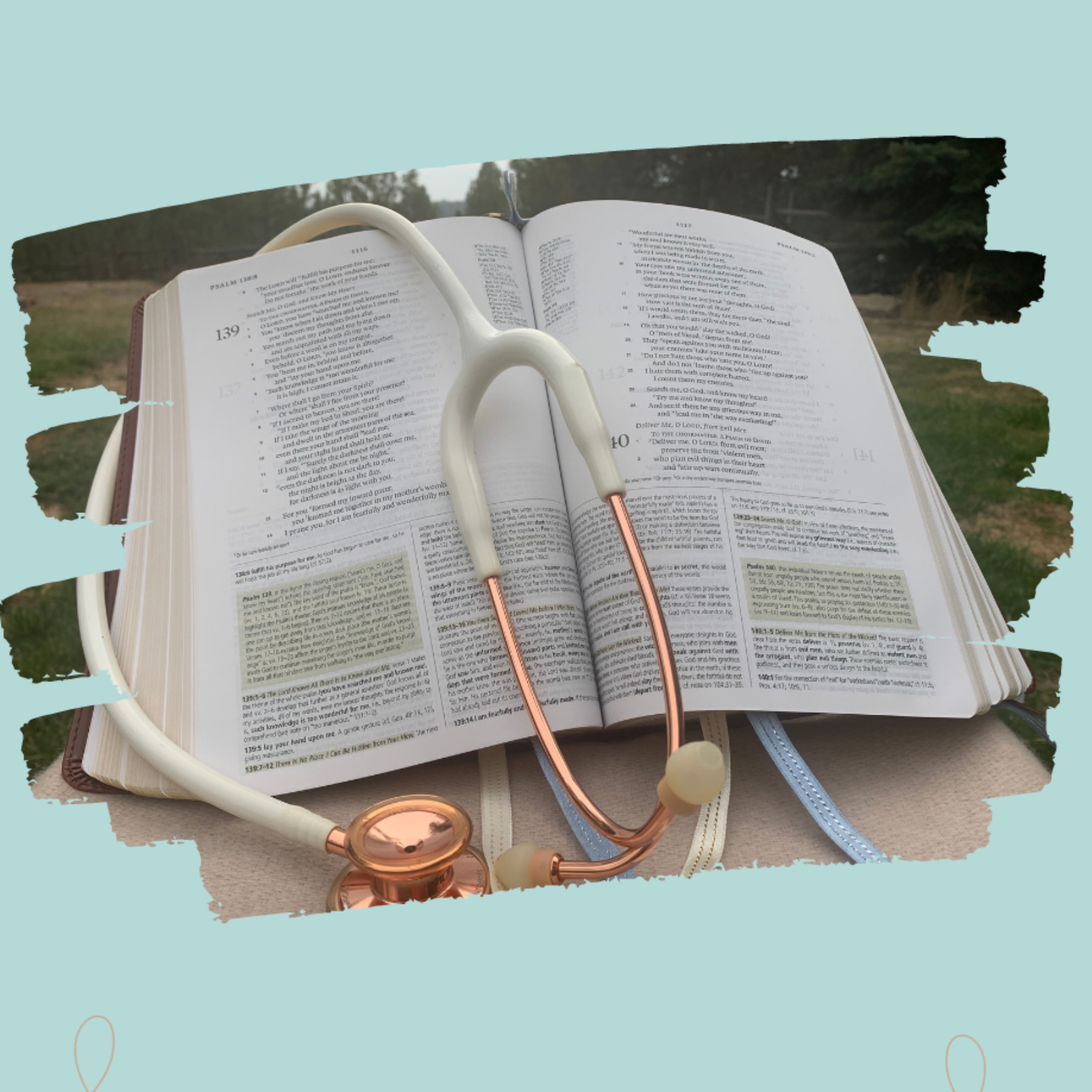
Faith and science.God and the natural world.Religion and medicine. We often see these as opposites. But recent studies show that discussing God with their doctor makes people feel more seen, and provide better health outcomes than when spirituality is not a part of the health journey.We at the Christian Clinician truly believe that ignoring the spiritual health of a person will not only negatively affect the therapeutic doctor/patient relationship but also stunts a patient’s ability to fully heal. We are made up of three parts – our physical health (always addressed at a doctor visit), our emotional health (sometimes addressed), and our spiritual health (never addressed unless directly brought up by the patient).The Christian Clinician aims at bringing all three aspects of a person’s health – the physical, the emotional, and the spiritual – to the forefront as part of the whole person. As clinicians, we need to study and follow the science for best patient outcomes. And
-
1
When You Need Spiritual First Aid: Praying Scripture for Anxiety, Peace, and Protection (with Stephanie Esposito) S3E15
In hard seasons, many Christians don’t stop believing in God—but they do start doubting whether His Word applies to their real life. When fear is loud, when your child is sick, when you’re exhausted, it’s easy to feel like prayer becomes a desperate scramble for the right words.In this episode of The Christian Clinician, Dr. Tanya Paynter interviews Stephanie Esposito, author of The Covering: Spiritual First Aid for Families. Stephanie shares the story that led to the book: a season of desperation when her son was very sick and she had to decide whether the God she grew up knowing about still heals and still keeps His promises today.Together, they talk about what keeps many Christians stuck in prayer—emotions, intentions, disappointment, and the labels we place on God when life does not go the way we expected. Stephanie also explains a key distinction she teaches in the book: the difference between God’s promises and covenant responsibilities, and why confusion here can create unnecessary discouragement in prayer.Much of The Covering is designed to be a practical tool: scripture organized by topic so families can pray God’s Word in moments of fear, anxiety, and need. The conversation also touches on renewing the mind, gratitude and forgiveness as core practices, and why we can use tools like counseling, medication, and supplements without becoming dependent on them or making them a substitute for God.This episode is especially for you if you’ve ever felt stuck in prayer, needed “spiritual first aid” in a crisis, or want a simple way to pray scripture with confidence.In this episode, you’ll explore• What “spiritual first aid” looks like in real life and why Stephanie wrote The Covering• Why emotions, intentions, and disappointment can quietly reshape how we see God• The difference between a promise and a covenant, and why that matters for prayer• How scripture-based declarations can help in anxiety, fear, and desperate moments• Renewing the mind through repeated truth, gratitude, and forgiveness• Using counseling, medication, and supplements wisely without making them an idolEpisode Timestamps 00:00 Why this book was born from desperation01:12 Meet Stephanie Esposito and what The Covering is03:23 Scripture declarations organized by topic (a practical tool)04:40 Promise vs covenant: what’s the difference?09:56 Renewing the mind: gratitude, forgiveness, and repeated truth12:06 Philippians 4 and choosing focus when the world feels heavy16:32 Redemption vs restoration and “walking in the fullness”23:45 Tools vs idols: supplements, counseling, medication, and dependence28:18 Where to find Stephanie and the book (Amazon, Audible, more)Resources Mentioned• The Covering: Spiritual First Aid for Families (Stephanie Esposito)• Scriptures referenced: Philippians 4; Hebrews 6:18; Titus 1:2; John 10:10; Jeremiah (new covenant)• Prior episodes referenced: Gratitude cycle and Forgiveness cycle (for physiology + implementation)About the GuestStephanie Esposito is a former TV news reporter for Fox 29’s Good Day Philadelphia, whose work aired nationally on Fox News. She is now a voiceover artist and the author of The Covering: Spiritual First Aid for Families, created to help families pray God’s Word with confidence and walk boldly in God’s promises.Connect with Stephanie Esposito• Website: stephanieesposito.com• Social media: Stephanie Esposito• Book availability: Amazon, Barnes & Noble online, Walmart onlineThe Covering: Spiritual First Aid for Familieshttps://www.amazon.com/Covering-Spiritual-First-Aid-Families/dp/B0F81XR8XP • Audiobook: AudibleAbout the HostDr. Tanya Paynter is the host of The Christian Clinician, a podcast exploring the intersection of Christian faith, physiology, and whole-person health. As a licensed naturopathic physician, she helps Christians understand how spiritual practices like prayer, gratitude, and forgiveness shape stress physiology, emotional resilience, and long-term health.Where to Find Dr. Tanya PaynterLearn more at www.psalmmedical.comVisit the podcast webpage at https://www.psalmmedical.com/cc-podcastFollow The Christian Clinician on Social MediaYouTube: https://www.youtube.com/@thechristianclinicianFacebook: https://www.facebook.com/TheChristianClinicianInstagram: https://www.instagram.com/christianclinician/
-
0
The Reconstruction Project: Answering Objections and Rebuilding Faith (with Drs. Shepardson and Dr. Travis) S3E14
Many apologetics resources focus on making a positive case for Christianity—but real conversations often start with an accusation.Christians are hypocrites. Christianity is anti-LGBTQ. The Bible supports slavery. The church is abusive. God is cruel.In this episode of The Christian Clinician, Dr. Tanya Paynter interviews Dr. Andrew “Ike” Shepardson and Dr. Melissa Cain Travis about their book The Reconstruction Project: Recovering Truth and Rebuilding Faith. They explain why they wrote this book as a work of negative apologetics—not to win arguments, but to remove roadblocks that keep people from even considering Christianity as true and good.Together, they discuss how apologetics has shifted over the last decade: objections are often less about whether Christianity is true and more about whether it is morally good. They also talk candidly about the places the church has failed, why honesty matters when addressing historical and moral objections, and why every apologetic conversation should ultimately point back to Jesus and the gospel.This episode is especially for Christians who want to engage hard questions with clarity, humility, and confidence—and for anyone who feels stuck between honest objections and the desire to rebuild faith on solid ground.In this episode, you’ll explore• Why apologetics conversations often begin with an accusation rather than a question• What “negative apologetics” is and why it matters for deconstruction conversations• Why many objections today focus on whether Christianity is good, not just true• How naturalism undermines meaning, free will, and rationality• How the problem of evil connects to objective moral claims and a moral lawgiver• How Jesus dignifies women (Mary, the Samaritan woman, resurrection witnesses)• Why honesty about church failures is essential to credible apologetics• How to use the book chapter-by-chapter as a practical reference toolEpisode Timestamps 01:08 Introducing Dr. Andrew Ike Shepardson and Dr. Melissa Cain Travis + the book02:34 Why they wrote The Reconstruction Project (negative apologetics)09:42 Is Christianity good?11:45 Diving into the book 14:29 The hardest chapters to write (abuse, abortion, crusades)22:29 Naturalism and meaning: why “create your own meaning” falls short31:10 The problem of evil, free will, and moral objectivity42:16 Christianity and women: how Jesus dignifies women47:59 Companion resources and how to use this book practically51:18 Where to find the authors and their workResources Mentioned• The Reconstruction Project: Recovering Truth and Rebuilding Faith — Dr. Andrew Ike Shepardson & Dr. Melissa Cain Travishttps://www.amazon.com/Reconstruction-Project-Recovering-Truth-Rebuilding/dp/1430088389Examples of positive apologetics books• Reasonable Faith William Lane Craighttps://www.amazon.com/Reasonable-Faith-Christian-Truth-Apologetics/dp/1433501155• On Guard — William Lane Craig https://www.amazon.com/Guard-Defending-Faith-Reason-Precision/dp/1434764885• Christian Apologetics — Douglas Groothuis https://www.amazon.com/Christian-Apologetics-Comprehensive-Biblical-Faith/dp/0830839356• Knowledge of God in the World and the Word — Andrew Ike Shpardson & Douglas Groothuis https://www.amazon.com/Knowledge-God-World-Word-Introduction/dp/0310113075About the GuestsDr. Andrew “Ike” Shepardson is Chief of Christian Integration and Discovery at Valor Christian High School and leads the Master’s program in Christian Apologetics at Colorado Christian University. Dr. Melissa Cain Travis serves as Assistant Professor of Apologetics at Houston Christian University. She is a Fellow at the Discovery Institute Center for Science and Culture and writes for Shadowlands Dispatch, a Substack magazine dedicated to cultural apologetics.Connect with the Authors• Dr. Andrew “Ike” Shepardson: ikeshepherdson.com• Dr. Melissa Cain Travis: melissacanetravis.com • Substack: Music of the Spheres (Melissa Cain Travis) • Shadowlands Dispatch (Substack publication) • Discovery Institute Center for Science and Culture (Melissa Cain Travis, Fellow)About the HostDr. Tanya Paynter is the host of The Christian Clinician, a podcast exploring the intersection of Christian faith, physiology, and whole-person health. As a licensed naturopathic physician, she helps Christians understand how spiritual practices and theological beliefs shape stress physiology, emotional resilience, and long-term health.Where to Find Dr. Tanya PaynterLearn more at www.psalmmedical.comVisit the podcast webpage at https://www.psalmmedical.com/cc-podcastFollow The Christian Clinician on Social MediaYouTube: https://www.youtube.com/@thechristianclinicianFacebook: https://www.facebook.com/TheChristianClinicianInstagram: https://www.instagram.com/christianclinician/
-
-1
Biblical Practices and the Nervous System: Mid-Season Recap
Welcome to a mid-season recap of The Christian Clinician.In this mid-season recap of The Christian Clinician, Dr. Tanya Paynter steps back to look at the bigger picture of Season 3 and why this season has been centered on biblical practices and physiology—how prayer, gratitude, and forgiveness shape the nervous system, retrain the brain, and help deactivate chronic fight-or-flight responses.So far this season, we’ve covered three practices: prayer, gratitude, and forgiveness. In each series, the goal has been twofold: to deepen our relationship with God and to understand how these practices shape physiology over time—helping retrain the brain, reduce stress reactivity, and create steadier emotional regulation.This episode is also a mid-season reset. If you’re new to the podcast, this is the best place to start. If you’ve been listening for a while, it’s a chance to revisit these practices with fresh perspective and remember why this season matters.Dr. Paynter also previews what’s coming next: two author interviews and an opportunity to catch up on episodes you may have missed while the season continues forward.In this episode, you’ll explore• The big picture purpose of Season 3 and why it focuses on physiology• The three practices covered so far: prayer, gratitude, and forgiveness• Why spiritual practices impact stress physiology, brain patterns, and fight-or-flight• How deepening relationship with God supports emotional regulation over time• What’s coming next in the season (author interviews and continued practice focus)Episode Timestamps (Mid-season recap episodes under ~20 minutes → 5–7 timestamps; here are 7)00:00 Welcome and what The Christian Clinician is about00:29 Why this mid-season recap matters01:11 Prayer, gratitude, forgiveness: what we’ve covered so far02:05 Why biblical practices shape physiology and the nervous system05:10 The goal: deeper relationship with God and reduced fight-or-flight08:40 Catch up suggestions for new and returning listeners11:05 What’s coming next: author interviews and the next stretch of the seasonResources Mentioned• Season 3 resources and downloads: https://www.psalmmedical.com/ccseason3-signup• Podcast webpage (episode list): https://www.psalmmedical.com/cc-podcastAbout the HostDr. Tanya Paynter is the host of The Christian Clinician, a podcast exploring the intersection of Christian faith, physiology, and whole-person health. As a licensed naturopathic physician, she helps Christians understand how spiritual practices like prayer, gratitude, and forgiveness shape stress physiology, emotional resilience, and long-term health.Where to Find Dr. Tanya PaynterLearn more at www.psalmmedical.comVisit the podcast webpage at https://www.psalmmedical.com/cc-podcastFollow The Christian Clinician on Social MediaYouTube: https://www.youtube.com/@thechristianclinicianFacebook: https://www.facebook.com/TheChristianClinicianInstagram: https://www.instagram.com/christianclinician/
-
-2
God in the Desert: How Painful Seasons Heal Us Spiritually and Emotionally with Dr. Noel Forlini Burt (Book Review) S3E12
Many Christians know what “wilderness” feels like, even if we never use that word. Seasons where God feels absent and where we find ourselves near the end of our strength.In this episode of The Christian Clinician, Dr. Tanya Paynter sits down with Dr. Noel Forlini Burt to discuss her upcoming book, God in the Desert: How God Uses Painful Seasons to Heal Us Spiritually and Emotionally. Together, they explore the biblical wilderness as more than a place of hardship—it is also a place of formation, confession, surrender, and encounter with God.This conversation addresses the parts of Scripture that can feel confusing or even jarring in painful seasons: a God who leads Israel into the wilderness, a God who is both self-revealing and self-concealing, a God whose holiness confronts our desire for control. Dr. Forlini Burt also speaks to spiritual formation through the Old Testament and why wilderness experiences often bring complexity and “gray” into faith that we wish were simple.As we leave our study on forgiveness, we explore how the desert may feel like desolation, but it can also be the place where God is making us whole.This episode is especially for you if you are in a painful season, wrestling with God’s character, struggling with feeling far from Him, or trying to understand what God might be forming in you through the wilderness.In this episode, you’ll explore• Why the wilderness is just a negative place, but often a place of encounter with God• “In the struggle is the formation”: why hardship often becomes the means of growth• How wilderness experiences confront our control and expose the “false self”• Why the Old Testament helps us read painful seasons with more clarity and honesty• Why surrender can be frightening—and also freeing• How Scripture portrays God’s holiness and mystery in hard seasonsEpisode Timestamps 00:00 A jarring picture of God in the wilderness01:28 Introducing God in the Desert (release date + focus)01:58 Why Dr. Burt wrote this book07:42 The Hagar chapter and reading Scripture with adult honesty12:46 Wilderness as encounter and formation, not only hardship23:12 Discernment: testing mystics and everything against Scripture30:01 Letting go of control and surrender in the desert35:11 Where to find Dr. Noel Forlini Burt and her workResources Mentioned• God in the Desert: How God Uses Painful Seasons to Heal Us Spiritually and Emotionally — Dr. Noel Forlini Burt (releases April 14, 2026)• Hope in the Wilderness: Spiritual Reflections for When God Feels Far Away — Dr. Noel Forlini Burt• Encounters in the Dark: Identity Formation in the Jacob Story — Dr. Noel Forlini Burt• Hearing God — Dallas Willard (referenced in conversation)• Themes referenced: Exodus 13; Deuteronomy 8; wilderness formationAbout the GuestDr. Noel Forlini Burt teaches on biblical studies and spiritual formation. She is the author of Hope in the Wilderness: Spiritual Reflections for When God Feels Far Away and Encounters in the Dark: Identity Formation in the Jacob Story. She is also certified as a spiritual director through Truett Seminary and the Upper Room Academy for Spiritual Formation.Connect with Dr. Noel Forlini Burt• Instagram: @noelforliniburt• Facebook: Noel Forlini Burt• Book and author pages: https://www.amazon.com/God-Desert-Spiritual-Wilderness-Testament/dp/1514010305About the HostDr. Tanya Paynter is the host of The Christian Clinician, a podcast exploring the intersection of Christian faith, physiology, and whole-person health. As a licensed naturopathic physician, she helps Christians understand how spiritual practices and spiritual priorities shape stress physiology, emotional resilience, and long-term health.Where to Find Dr. Tanya PaynterLearn more at www.psalmmedical.comVisit the podcast webpage at https://www.psalmmedical.com/cc-podcastFollow The Christian Clinician on Social MediaYouTube: https://www.youtube.com/@thechristianclinicianFacebook: https://www.facebook.com/TheChristianClinicianInstagram: https://www.instagram.com/christianclinician/
-
-3
Forgiveness Is a Process: Practical Steps to Let Go and Heal (S3E11)
Forgiveness is not about pretending an offense didn’t matter or even about reconciliation. Instead, it is a releasing of anger and the need for vengeance. This will be a repeated practice, something we often have to choose again and again as memories resurface and emotions return.In this episode of The Christian Clinician, Dr. Tanya Paynter shares practical ways to begin practicing forgiveness, combining Scripture, stress physiology, and evidence-based forgiveness research. She explains why the brain stores emotional meaning alongside painful events, why offenses replay, and how repeated forgiveness can retrain the nervous system so the memory no longer triggers a threat response.This episode also addresses church hurt and spiritual betrayal, the identity layer that can keep people stuck (“I was the one who was wronged”), and the important distinction between forgiveness and becoming a doormat. Boundaries and justice matter but bitterness and vengeance do us no favors. Not only do they separate us from relationship with God and with others but they can keep the body locked in a chronic stress cycle.If you’ve wanted to forgive but don’t know how, or you feel stuck in anger that keeps resurfacing, this episode gives you a clear starting path.In this episode, you’ll explore• What forgiveness is (and what it is not)• Why forgiveness is a repeated practice—not a one-and-done event (Matthew 18)• How emotional memories are stored and why offenses replay (consolidation and reconsolidation)• Why unresolved offenses keep the nervous system stuck in a threat loop• Church hurt and spiritual betrayal: why it can feel so hard to separate the wound from God• The identity trap: when “being wronged” becomes part of who you areYou’ll also be guided through• A structured forgiveness model (REACH) as a starting framework• A Christian practice of forgiveness• Repeating forgiveness in real time when memories resurface• Moving toward peace and reduced reactivity over timeEpisode Timestamps00:00 Why forgiveness can feel impossible01:58 What forgiveness is not02:41 Forgiveness as a repeated practice (Matthew 18)03:27 Romans 12: forgiveness as worship and renewal of the mind05:25 Why offenses replay: emotional consolidation and reconsolidation07:45 Church hurt and spiritual betrayal11:19 When offense becomes identity (and why therapy may be needed)14:20 REACH model (Worthington) + Christian practice steps18:01 Practical steps: name it, pray, release, repeat24:21 Physiologic changes over time: reduced threat response25:24 Forgiveness and the cross (Ephesians 4)Resources Mentioned• REACH Forgiveness Model — Dr. Everett Worthingtonhttps://www.evworthington-forgiveness.com/reach-forgiveness-of-others• Matthew 18:21–22• Romans 12• Mark 11:25• Ephesians 4:31–32• Season 3 resources: https://www.psalmmedical.com/ccseason3-signupAbout the HostDr. Tanya Paynter is the host of The Christian Clinician, a podcast exploring the intersection of Christian faith, physiology, and whole-person health. As a licensed naturopathic physician, she helps Christians understand how spiritual practices like forgiveness, gratitude, and prayer shape stress physiology, emotional resilience, and long-term health.Where to Find Dr. Tanya PaynterLearn more at www.psalmmedical.comVisit the podcast webpage at https://www.psalmmedical.com/cc-podcastFollow The Christian Clinician on Social MediaYouTube: https://www.youtube.com/@thechristianclinicianFacebook: https://www.facebook.com/TheChristianClinicianInstagram: https://www.instagram.com/christianclinician/
-
-4
Forgiveness and Healing: From Multiple Medications to None (with Kathy Afzali) S3E10
Can forgiveness really change your health? What if it meant going from multiple medications to none?In this episode of The Christian Clinician, Dr. Tanya Paynter sits down with Kathy Afzali to share her forgiveness testimony. Kathy describes years of unresolved pain, chronic stress, and a season of physical sickness that left her barely functioning. She knew unforgiveness was part of what was making her sick, but she didn’t know how to forgive—and she didn’t want to.Then something happened that made the assignment unavoidable. Kathy made a list of more than fifty people she believed she needed to forgive. Within a week, she was asked to teach a forgiveness class to men in a recovery program. That moment began a long process. It didn’t happen overnight. It took about three years for Kathy to say she had fully forgiven everyone on her list.Over time, her health changed in measurable ways. She eventually came off three medications, including one prescribed for insomnia, and describes a steadier mental and physical wellbeing that she did not have before.This conversation also makes an important distinction: forgiveness is not being a doormat. It does not remove boundaries, eliminate consequences, or prevent the pursuit of appropriate justice. But it does change what bitterness, vengeance, and ongoing anger continue to do inside your body and in your relationship with God.If you want to forgive but don’t know how—or you’re tired of carrying anger that keeps resurfacing—this episode gives a clear, honest picture of what forgiveness can look like in real life.In this episode, you’ll explore:• How unforgiveness and chronic stress can show up physically, including sleep disruption and medication dependence• What it looked like to make a real forgiveness list and begin working through it• Why forgiveness often takes time and must be practiced repeatedly• How teaching forgiveness became part of Kathy’s healing processYou’ll also be guided through:• How unforgiveness and chronic stress can show up physically (including sleep and medication dependence)• Reasons why forgiveness is commanded by Jesus outside of moral command• The difference between forgiveness and being a doormat: boundaries, justice, and checking your motives• Why many Christians want to forgive but don’t know how—and what helped Kathy beginTimestamps00:00 Introducing Kathy Afzali02:25 Unforgiveness leading to unresolved pain, stress, and chronic illness07:07 Kathy's "list of enemies" 08:12 God's sense of humor 09:27 The class, the men’s stories, and the turning point11:13 Forgiveness as a three-year process and coming off medications20:20 Forgiveness in your walk with God30:46 Forgiveness is not being a doormat: boundaries, justice, and motives35:16 Where to find Kathy Resources Mentioned Book Mentioned by Kathy - Total Forgiveness by R.T. Kendall You Can Handle the Truth episode with Dr. Tanya Paynter - https://www.youtube.com/watch?v=NITtT6Lh6ZMAbout the GuestKathy Afzali is a former Broadway performer and former Maryland state legislator who served until her retirement from politics in 2018. She now focuses on ministry through her podcast, You Can Handle the Truth, and currently serves on the board of directors of the Frederick Rescue Mission in Maryland. She is married, has two daughters, and is hoping to become a grandmother soon.Connect with Kathi Afzali:You Can Handle the Truth — https://www.youtube.com/@YCHT_Podcast Frederick Rescue Mission — https://therescuemission.org/ About the HostDr. Tanya Paynter is a naturopathic physician, migraine specialist, and Christian apologist. Through The Christian Clinician, she helps Christians understand how their relationship with God shapes stress physiology, emotional health, and whole-body healing—integrating clinical insight with biblical truth.She is the founder of the Christian Women’s Health Fellowship, where she helps women move from chronic stress and exhaustion toward greater stability, clarity, and energy through faith-informed care.A small, daily moment that makes her smile: the way her pre-teen son rolls over and gives her a hug when she wakes him up for school each morning.Where to Find Dr. Tanya PaynterWebsite: https://www.psalmmedical.comPodcast: https://www.psalmmedical.com/cc-podcastFollow The Christian Clinician on Social MediaYouTube: https://www.youtube.com/@thechristianclinicianFacebook: https://www.facebook.com/thechristianclinicianInstagram: https://www.instagram.com/christianclinician
-
-5
How Unforgiveness Affects Your Body (S3E9)
Forgiveness is one of the hardest commands Jesus gives.Many of us believe we’ve forgiven someone… until their name comes up, the memory resurfaces, and suddenly the anger, tension, or anxiety returns as if the event just happened yesterday.Why does that happen?In this episode of The Christian Clinician, Dr. Tanya Paynter explores what unforgiveness actually does to the body. Drawing on neuroscience, stress physiology, and Scripture, she explains how unresolved anger can keep the nervous system trapped in a threat response—raising cortisol, increasing inflammation, disrupting sleep, and gradually contributing to long-term health problems.But forgiveness isn’t just about emotional peace. Jesus commands forgiveness not only because it is morally right, but because it is profoundly protective for our bodies.You’ll also hear Dr. Paynter share a personal story about wrestling through forgiveness after a painful injustice in her own family—and why trusting God with justice was the turning point.This episode begins a new series on forgiveness that will include both powerful testimonies of healing and practical steps for learning how to forgive when it feels impossible.In This Episode, You’ll Explore• Why unforgiveness keeps the nervous system stuck in a stress response • How rumination and emotional memories repeatedly trigger the fight-or-flight system • The role of the amygdala, cortisol, and memory reconsolidation in replaying past offenses • Why anger can feel empowering—but ultimately harms long-term health • The biblical call to release vengeance and trust God with justice • Why forgiveness is both a spiritual command and a physiological healing practiceScriptures Referenced Matthew 18:21–22 Romans 12 Hebrews 10:30 Proverbs 20:22 Mark 11:25 Colossians 3:13 Matthew 11:28Resources MentionedEpisode: Prayer and Physical Healing with Dr. Ingrid FaroUpcoming Episodes in the Forgiveness Series • Kathy Afzali – testimony of physical healing through forgiveness • Practical steps to begin the process of forgivenessTimestamps 00:00 – Why unforgiveness keeps coming back years later 01:14 – Why Jesus commands forgiveness 02:19 – A personal story of injustice and anger 03:39 – Letting God handle justice and vengeance 06:10 – The spiritual cost of refusing to forgive 08:25 – How the brain stores emotional memories 12:54 – Why rumination keeps the stress loop alive 15:35 – The health consequences of chronic anger 18:10 – Forgiveness as nervous system retraining 20:00 – The healing power of releasing control to GodAbout the HostDr. Tanya Paynter is the host of The Christian Clinician, a podcast exploring how Christian faith and human physiology intersect. As a licensed naturopathic physician, she is especially interested in how spiritual practices such as forgiveness, gratitude, and prayer influence stress regulation, emotional resilience, and long-term health. Through thoughtful teaching and clinical insight, she helps listeners understand how the body reflects the design of its Creator.Where to Find Dr. Tanya PaynterOfficial Websitewww.psalmmedical.comPodcast Pagehttps://www.psalmmedical.com/cc-podcastFollow The Christian Clinician on Social MediaYouTubehttps://www.youtube.com/@thechristianclinicianFacebookhttps://www.facebook.com/TheChristianClinicianInstagramhttps://www.instagram.com/christianclinician/
-
-6
Unfolding Redemption: The Heart of the Gospel in the Old Testament [BOOK REVIEW] S3E8
Episode DescriptionMany Christians love the New Testament but struggle with the Old Testament.In this book review episode of The Christian Clinician, Dr. Tanya Paynter sits down with Old Testament scholar Dr. Ian Vaillancourt to discuss his new book, Unfolding Redemption: The Heart of the Gospel in the Story of the Old Testament History.For many Christians, the Old Testament can feel distant, confusing, or even disconnected from the God revealed in the New Testament. Tanya shares that for years, she struggled to see the same God in both Testaments — until reading this book.Together, they explore how the Old Testament is not spiritual “spinach” to endure, but the unfolding story of redemption that prepares the way for Christ. From Genesis to Chronicles, the conversation traces themes of covenant, blessing and curse, exile and restoration, kingship, grace, and the promise of a better King.This episode will deepen your understanding of:How the entire Old Testament points to JesusWhy the “vengeful God” caricature misses the covenant contextHow the structure of the Hebrew Bible strengthens the redemptive storylineWhy bodily resurrection and the new earth matter for Christian hopeHow the Gospel reframes judgment, discipline, and graceIf you’ve ever struggled to love the Old Testament, this conversation may change how you read your Bible.You’ll Explore:Why Jesus says the Old Testament testifies about HimHow Genesis 3:15 introduces the first promise of redemptionWhat the Pentateuch reveals about covenant, blessing, and restorationWhy Israel’s repeated cycles of sin and repentance point to our need for a better KingHow the Hebrew ordering of the Old Testament highlights hopeWhy resurrection bodies and a renewed earth reshape our view of eternityHow God celebrates even small steps of faith in His peopleResources Mentioned• Unfolding Redemption: The Heart of the Gospel in the Story of the Old Testament History — https://www.amazon.com/Unfolding-Redemption-Gospel-Testament-History/dp/1514011549• The Dawning of Redemption • Scripture referenced in the conversation: Genesis 3:15; Romans 5:12–21; Psalms 110 and 118 Episode Timestamps00:00 – Why the Old Testament used to feel like “spinach”01:33 – Why Christians should care about the Old Testament05:06 – Preaching the whole Bible, not just the New Testament08:18 – Creation, fall, redemption, consummation11:55 – Covenant, genealogy, and the promise of redemption15:35 – Blessings, curses, and restoration19:57 – The Hebrew order of the Old Testament24:12 – Why Chronicles ends with hope27:44 – Resurrection bodies and the new earth36:13 – Kingship, covenant headship, and Jesus as the better King39:40 – Grace, growth, and how God sees His peopleAbout the GuestDr. Ian Vaillancourt is Professor of Old Testament and Hebrew at Heritage Theological Seminary in Cambridge, Ontario. He is the author of Treasuring the Psalms, The Dawning of Redemption, The Multifaceted Savior of Psalms 110 and 118 (winner of the 2020 R.B.Y. Scott Award) and Unfolding Redemption: The Heart of the Gospel in the Story of the Old Testament History.Connect with Dr. Vaillancourt:Book: Unfolding Redemption https://www.amazon.com/Unfolding-Redemption-Gospel-Testament-History/dp/1514011549Book: The Dawning of Redemptionhttps://www.amazon.com/Dawning-Redemption-Story-Pentateuch-Gospel/dp/1433581221Book: Treasuring the Psalmshttps://www.amazon.com/Treasuring-Psalms-Songs-Shape-Church/dp/1514005107/ref=sr_1_1?crid=1DYTKB7YXKFKV&dib=eyJ2IjoiMSJ9.qmmK9as2ANmFKqXMJ8gA_GoQNKdB9GsE_6FuAWAoX6qk3ATybCERwr2wh65lR9SMRvywa16HWGuvV20Xz4XTrOYRg0VrOJAYXATQLElxvABmWki4olA31CwP3tIXRswcHoRL246mrrmLmErwJ6073w.rk1Vhpl1qczQNa_cswkUc9PUwazH35UkPPQg0tCJX_U&dib_tag=se&keywords=treasuring+the+psalms&qid=1771911158&s=books&sprefix=treasuring+the+psal%2Cstripbooks%2C255&sr=1-1Book: The Multifaceted Savior of Psalms 110 and 118https://www.amazon.com/Multifaceted-Saviour-Psalms-110-118/dp/1910928631/ref=books_amazonstores_desktop_mfs_aufs_ap_sc_dsk_3?_encoding=UTF8&pd_rd_w=Nphr5&content-id=amzn1.sym.6d92b4c0-97d6-4063-b66e-20890dfbd616&pf_rd_p=6d92b4c0-97d6-4063-b66e-20890dfbd616&pf_rd_r=144-6551991-0871700&pd_rd_wg=kOWJf&pd_rd_r=63931cec-c5f5-44df-8000-50fa49d1a56e About the HostDr. Tanya Paynter is the host of The Christian Clinician, a podcast exploring the intersection of Christian faith, physiology, and whole-person health. As a licensed naturopathic physician, she is especially interested in how theological clarity shapes emotional stability and embodied hope. Through conversations with scholars and clinicians alike, Tanya helps listeners see how Scripture speaks not only to the soul, but to the whole person.The first time the Old Testament truly “clicked” for her was while reading Unfolding Redemption — after years of struggling to see the same God in both Testaments.Where to Find Dr. Tanya PaynterLearn more about Dr. Paynter’s clinical work and writing atwww.psalmmedical.comVisit the podcast webpage athttps://www.psalmmedical.com/cc-podcastFollow The Christian Clinician on Social MediaYouTube: https://www.youtube.com/@thechristianclinicianFacebook: https://www.facebook.com/TheChristianClinicianInstagram: https://www.instagram.com/christianclinician/
-
-7
How to Calm Anxiety through Biblical Gratitude (Even When Circumstances Don’t Change) S3E7
Gratitude can calm anxiety — but it needs to be rooted in trust, not used as a means to control.In this episode of The Christian Clinician, Dr. Tanya Paynter explores how to practice gratitude in a way that actually reshapes your nervous system and deepens your relationship with God. This is not manifestation thinking or pretending life is easy. And it’s not using thankfulness as a tool to avoid suffering.Instead, you’ll learn how biblical gratitude builds long-term resilience, renews your mind, and creates real physiological shifts — even when your circumstances don’t change.If you’ve ever struggled to feel thankful during hard seasons…If you’ve wondered whether gratitude is just spiritual bypassing…If you want practical ways to calm anxiety without denying suffering…This episode will give you both theological clarity and simple, grounded steps to begin.You’ll explore:• The difference between biblical gratitude and “manifestation” thinking• Why transactional gratitude undermines trust in God• How gratitude affects your brain and nervous system• Simple ways to begin practicing gratitude when you don’t feel thankful• How gratitude builds long-term resilience instead of short-term emotional reliefThis episode is part of Season 3’s focus on how spiritual practices shape our stress physiology — and why placing Christ at the center is foundational to lasting health.Resources MentionedFree one-page Gratitude Practice Guide: https://www.psalmmedical.com/ccseason3-signup Season 2 episode on pain and suffering ("Why Does God Allow Pain and Suffering?"): https://podcasts.apple.com/us/podcast/the-christian-clinician/id1712917317?i=1000728211693Timestamps00:00 Gratitude, Anxiety, and Why This Isn’t Manifestation01:58 Biblical Gratitude vs. New Age “Law of Attraction” Thinking04:09 Giving Thanks in Suffering (1 Thessalonians 5:18)08:30 Why Transactional Gratitude Destroys Trust07:22 How to Begin Practicing Biblical Gratitude, Even in Hard Circumstances10:34 Gratitude Journaling and Tracking Answered Prayers13:19 The “Gratitude Sandwich” Prayer Method18:23 Why Gratitude Is Not a Way to Avoid SufferingAbout the HostDr. Tanya Paynter is a licensed naturopathic physician and Christian apologist, and the host of The Christian Clinician. She helps Christian women struggling with anxiety, fatigue, and overwhelm understand how spiritual priorities shape stress physiology — and why placing Christ at the center is foundational to lasting health.She is deeply grateful for the podcast ministry God has entrusted to her — a space to explore how spiritual priorities shape anxiety, hormones, and whole-body health — helping women see how their relationship with Him directly impacts emotional and physical well-being.Where to Find Dr. Tanya PaynterWebsite: www.psalmmedical.comPodcast page: https://www.psalmmedical.com/cc-podcastFollow The Christian Clinician on Social MediaYouTube: https://www.youtube.com/@thechristianclinicianFacebook: https://www.facebook.com/thechristianclinicianInstagram: https://www.instagram.com/thechristianclinicianIf this episode encouraged you, consider sharing it with a friend who feels overwhelmed or anxious. Gratitude grows stronger when we practice it together.
-
-8
From Perimenopause to Purpose: How Gratitude and Forgiveness Can Shape Healing (with Lindsay Spivey)
Perimenopause can feel like a loss of identity—physically, emotionally, and spiritually. But what if this season isn't about losing who you are but about who you are becoming? Inviting Christ into this transition can bring an unlooked for level of peace and healing.In this episode of The Christian Clinician, Dr. Tanya Paynter speaks with nutritionist and health coach Lindsay Spivey about her journey through chronic illness, perimenopause, depression, and anxiety, and how her conversion to Christianity eased her healing and gave her life a greater meaning and purpose. Together, they explore how suffering, forgiveness, humility, and gratitude can reshape not only our spiritual lives, but our nervous systems and emotional resilience.Lindsay shares how decades of chronic health struggles led her through secular healing practices, only to discover that true peace and restoration came through Christ. This conversation addresses anxiety, trauma, hormonal transition, purpose, and the role of community in healing. It also highlights how gratitude and forgiveness reduce stress reactivity and help women move from depletion toward renewed clarity and strength.This episode is especially for women navigating perimenopause, identity shifts, emotional exhaustion, or questions about purpose in seasons of suffering.In this episode, you’ll explore:Symptoms of perimenopause such as anxiety, identity loss, and emotional overwhelmWhy forgiveness can be a missing piece in long-term healingWhy suffering does not eliminate purposeHow gratitude anchors women during hormonal transitionYou’ll also hear about:Navigating chronic illness and autoimmune conditionsLindsay's story of converting to Christianity after years in "secular spirituality"Reframing menopause as identity transition, not identity lossBuilding resilience through faith-centered practicesEpisode Timestamps00:00 – Weakness, community, and interdependence02:16 – Chronic illness, autoimmune disease, and nervous system healing05:01 – From secular spirituality to Christian conversion10:47 – Forgiveness, trauma, and true healing15:03 – Suffering, justice, and trusting God18:12 – Gratitude, joy, and rediscovering purpose23:55 – Humility, strengths, weaknesses, and community28:59 – Resources for women in perimenopauseResources MentionedMenopause with Lindsay: menopausewithlindsay.comPodcast: Reclaim the PauseFree physical, mental, and spiritual resource at link belowSeason 3 resources available at:https://www.psalmmedical.com/ccseason3-signupAbout the HostDr. Tanya Paynter is the host of The Christian Clinician, a podcast exploring the intersection of Christian faith, physiology, and whole-person health. As a licensed naturopathic physician, she focuses on how spiritual practices such as gratitude, forgiveness, and trust shape emotional regulation, stress response, and long-term healing. Through thoughtful conversations and clinical insight, Tanya helps listeners move toward a more integrated and grounded faith.Where to Find Dr. Tanya PaynterLearn more at www.psalmmedical.comVisit the podcast webpage at https://www.psalmmedical.com/cc-podcastFollow The Christian Clinician on Social MediaYouTube: https://www.youtube.com/@thechristianclinicianFacebook: https://www.facebook.com/TheChristianClinicianInstagram: https://www.instagram.com/christianclinician/
-
-9
Lord, Thank You for Another Day: The Power of Gratitude for Anxiety and Emotional Health S3E5
Gratitude is often treated as a mindset or an attitude we’re supposed to have as Christians. But in Scripture, gratitude is more than positive thinking—it’s a biblical practice that shapes how we relate to God, ourselves, and the world around us.In this episode of The Christian Clinician, Dr. Tanya Paynter begins a new focus on gratitude by exploring what the Bible actually teaches about thankfulness and why it matters for emotional and physical health. Drawing from Scripture, current research, and clinical insight, she explains how gratitude functions as a relational practice—one that helps regulate the nervous system, reduce emotional reactivity, and restore perspective during periods of stress, anxiety, and overwhelm.This episode also addresses common resistance to gratitude, including guilt-driven gratitude and forced positivity. Rather than dismissing pain, biblical gratitude creates space to acknowledge hardship honestly while still recognizing God’s presence and provision.If gratitude feels difficult, artificial, or emotionally out of reach, take a listen and discover how Scripture and science together can help you practice gratitude rooted in God’s character rather than reactive to changing circumstances.In this episode, you’ll explore:What Scripture actually means by gratitude and thanksgivingWhy gratitude is a relational practice, not a way to change your circumstancesHow gratitude shapes trust in God over timeWhy gratitude is not the same as denying hardshipHow gratitude reduces stress reactivity and decreases anxietyYou’ll also be guided through:Letting go of guilt-based or forced gratitudeNoticing gratitude as a bodily experience, not just a thoughtPracticing gratitude without denying pain or lossBeginning a gratitude practice that feels honest and sustainableResources MentionedBiblical passages on thanksgiving and trust1 Thess 5:18Is 26:3Psalm 46:1, 62:6, 112:7Jer 29:11Eph 2:10, 4:23Phil 4:8Research on gratitude and emotional regulationÁlvaro Tala. "[Thanks for everything: a review on gratitude from neurobiology to clinic].." Revista medica de Chile, 147 6 (2019): 755-761 . https://doi.org/10.4067/s0034-98872019000600755.Kini, Prathik, Joel Wong, Sydney McInnis, Nicole Gabana, and Joshua W. Brown. “The Effects of Gratitude Expression on Neural Activity.” NeuroImage 128 (March 2016): 1–10. https://doi.org/10.1016/j.neuroimage.2015.12.040.Fox, Glenn R., Jonas Kaplan, Hanna Damasio, and Antonio Damasio. “Neural Correlates of Gratitude.” Frontiers in Psychology 6 (September 2015). https://doi.org/10.3389/fpsyg.2015.01491.Euston, David R., Aaron J. Gruber, and Bruce L. McNaughton. “The Role of Medial Prefrontal Cortex in Memory and Decision Making.” Neuron 76, no. 6 (2012): 1057–70. https://doi.org/10.1016/j.neuron.2012.12.002.Hazlett, Laura I., Mona Moieni, Michael R. Irwin, et al. “Exploring Neural Mechanisms of the Health Benefits of Gratitude in Women: A Randomized Controlled Trial.” Brain, Behavior, and Immunity 95 (July 2021): 444–53. https://doi.org/10.1016/j.bbi.2021.04.019.Mills, P. J., Redwine, L., Wilson, K., Pung, M. A., Chinh, K., Greenberg, B. H., Lunde, O., Maisel, A., Raisinghani, A., Wood, A., & Chopra, D. (2015). The role of gratitude in spiritual well-being in asymptomatic heart failure patients. Spirituality in Clinical Practice, 2(1), 5–17. https://doi.org/10.1037/scp0000050Season 3 resources and downloads available at: https://www.psalmmedical.com/ccseason3-signupNothing in this episode is intended to take the place of concurrent medical care, including medications and alternative therapies as appropriate. However, biblical practices provide an additive quality to any treatment plan for anxiety, stress response, sympathetic over-activation, or other conditions such as hormone imbalance or emotional health considerations.Episode Timestamps00:00 – Why gratitude is often misunderstood02:41 – Gratitude as a biblical practice, not positive thinking05:36 – Why forced gratitude creates resistance08:14 – Gratitude, suffering, and emotional honesty11:02 – How gratitude affects the body and nervous system14:58 – Beginning a grounded gratitude practice18:42 – Invitation into the gratitude cycleAbout the HostDr. Tanya Paynter is the host of The Christian Clinician, a podcast exploring the intersection of Christian faith, physiology, and whole-person health. As a licensed naturopathic physician, she is especially interested in how biblical practices shape emotional regulation, stress response, and spiritual formation. Through careful teaching, clinical insight, and honest reflection, Tanya helps listeners move away from performance-based spirituality and toward practices rooted in trust and relationship.Where to Find Dr. Tanya PaynterLearn more at www.psalmmedical.comVisit the podcast webpage at https://www.psalmmedical.com/cc-podcastFollow The Christian Clinician on Social MediaYouTube: https://www.youtube.com/@thechristianclinicianFacebook: https://www.facebook.com/TheChristianClinicianInstagram: https://www.instagram.com/christianclinician/
-
-10
Redeeming Eden: How Women in the Bible Advance the Story of Salvation [BOOK REVIEW] S3E4
Before we turn our attention to the biblical practice of gratitude, we pause to widen the lens through which we consider faith, Scripture, and the story God is telling.In this episode of The Christian Clinician, Dr. Tanya Paynter is joined by Old Testament scholar Dr. Ingrid Faro to discuss her newest book Redeeming Eden: How Women in Scripture Advance the Story of Salvation. This conversation widens the lens through which we consider faith and health by looking carefully at how Scripture tells its story—and whose voices are often overlooked.Drawing from Hebrew language and narrative theology, Dr. Faro explains how women in the Bible are not peripheral figures, but central participants in God’s redemptive work. From Eve and Sarah to Rahab, Ruth, Tamar, and Bathsheba, these stories reveal patterns of faithfulness, courage, suffering, and restoration that shape the larger story of salvation.Together, Dr. Paynter and Dr. Faro also address difficult themes in Scripture, including trauma, abuse of power, repentance, and healing. Rather than flattening these passages or avoiding their weight, this episode models a careful, compassionate approach to reading the Bible that takes both the text and lived experience seriously.This episode is especially for you if you’ve wrestled with how women are portrayed in the Bible, felt unsettled by difficult Old Testament passages, or desire a deeper reading of Old Testament Scripture.In this episode, you’ll explore:• Why women in Scripture are central—not incidental—to redemption history• How Hebrew language reveals patterns often missed in English translations• Why community matters for faithful biblical interpretation• How trauma, repentance, and restoration are handled honestly in Scripture• What it means to bear God’s image—together, as men and womenResources Mentioned• Redeeming Eden: How Women in Scripture Advance the Story of Salvation by Dr. Ingrid Faro• Related biblical themes: image of God, covenant, redemption, trauma and restoration• Season 3 resources and downloads available at: https://www.psalmmedical.com/ccseason3-signupFind Dr. Ingrid Faro• Website: https://www.ingridfaro.com/• Instagram: https://www.instagram.com/ingrid.s.faro/• Facebook: https://www.facebook.com/ingrid.s.faro• Redeeming Eden: https://www.amazon.com/Redeeming-Eden-Advance-Salvation-Streaming/dp/0310169305Episode Timestamps00:00 – Redeeming Eden and how women shape the story of salvation03:12 – Why women are central to the story of redemption06:45 – Trauma, power, and difficult Old Testament passages10:18 – Patterns of repentance, faithfulness, and restoration14:02 – How Redeeming Eden reframes familiar biblical stories17:36 – Why this matters for how we read Scripture todayAbout the HostDr. Tanya Paynter is the host of The Christian Clinician, a podcast exploring the intersection of Christian faith, physiology, and whole-person health. As a licensed naturopathic physician, she is especially interested in how spiritual practices and theological beliefs shape emotional and physical well-being. Through careful teaching, clinical insight, and thoughtful conversations, Tanya helps listeners approach faith with honesty, depth, and intellectual integrity.Where to Find Dr. Tanya PaynterLearn more at www.psalmmedical.comVisit the podcast webpage at https://www.psalmmedical.com/cc-podcastFollow The Christian Clinician on Social MediaYouTube: https://www.youtube.com/@thechristianclinicianFacebook: https://www.facebook.com/TheChristianClinicianInstagram: https://www.instagram.com/christianclinician/
-
-11
When Prayer Feels Like a Chore: Learning to Pray Relationally
Episode DescriptionPrayer can become dry and effortful, something we do because we’re supposed to rather than something we want to. This is especially true during seasons of frustration, stress, or spiritual fatigue. In this episode of The Christian Clinician, Dr. Tanya Paynter explores how to reframe prayer as a lived, relational interaction with God rather than a spiritual obligation.Building on the earlier teaching and testimony episodes in the prayer cycle, Dr. Paynter walks through practical ways to engage prayer more fully. Drawing from Scripture, personal experience, and clinical insight, she explains that different types of prayer affect us in different ways and why God invites us to bring our full range of emotions into His presence.This episode focuses on releasing “prim and proper” prayer, making space for lament, anger, stillness, and listening, learning to recognize prayer as a two-way relationship. Listeners are encouraged to cultivate a prayer life that is emotionally honest and rooted in trust, even when words fail.This episode is especially for you if prayer feels dry, uninspired, or emotionally distant, but you still long for a deeper, more honest relationship with God.In this episode, you’ll explore:· Why prayer can become dry or emotionally flat over time· How different forms of biblical prayer shape our relationship with God· Why God invites emotional honesty—including anger, frustration, and lament· How prayer can be both expressive and receptive, not just one-sided· Why prayer is a relational experience rather than just something Christians are “supposed” to do You’ll also be guided through:· How to begin praying honestly when you don’t have the right words· Ways to practice stillness and listening without forcing outcomes· How to release the expectation of “prim and proper” prayer language · Ways to experiment with different types of prayer to enrich your prayer life· Making prayer a place of relationship instead of effortResources Mentioned· Biblical categories of prayer (lament, supplication, thanksgiving, listening prayer)· Greek and Hebrew words for prayer, including palal and proseuchomai· Book referenced observationally: When God Talks Back by T.M. Luhrmann· Downloadable prayer resources available here: https://www.psalmmedical.com/ccseason3-signupBiblical Words for Prayer Hebrew (Old Testament)Palal – to pray, intercede, engage relationally with GodShaphakh – to pour out (lament, grief, emotional release)Za‘aq – to cry out in distress or desperationQara – to call upon the name of the LordTefillah – prayer as an intentional act or postureTeḥinnah – a plea or supplication for mercySha’al – to ask or requestGreek (New Testament)Proseuchomai – to pray; to turn toward God in relationshipDeomai – to beg or plead earnestlyAiteō – to ask with expectationHiketeuō – to entreat or appeal deeplyEntynchano – to intercedeEucharisteō – to give thanksEpisode Timestamps00:00 – Honest frustration and emotional prayer01:45 – Why prayer often feels one-sided03:07 – Reframing prayer as relationship, not obligation05:44 – Emotional honesty and “anger prayers”10:42 – Learning to listen for God’s voice15:25 – Practicing prayer beyond checklists19:53 – Closing reflection and invitationAbout the HostDr. Tanya Paynter is the host of The Christian Clinician, a podcast exploring the intersection of Christian faith, physiology, and whole-person health. As a licensed naturopathic physician, she is especially interested in how spiritual practices—like prayer—shape not only our faith, but our emotional and physical well-being. Through thoughtful teaching, clinical insight, and honest reflection, Tanya helps listeners move away from performance-driven spirituality and toward a more relational, embodied life with God.Where to Find Dr. Tanya PaynterLearn more about Dr. Paynter’s clinical work and writing at www.psalmmedical.comVisit the podcast webpage at https://www.psalmmedical.com/cc-podcast Follow The Christian Clinician on Social MediaYouTube: https://www.youtube.com/@thechristianclinicianFacebook: https://www.facebook.com/TheChristianClinicianInstagram: https://www.instagram.com/christianclinician/
-
-12
Prayer and Physical Healing: A Christian Testimony (with Dr. Ingrid Faro)
Episode SummaryWhat happens when prayer doesn’t just change how you feel—but changes what’s happening inside your body?In this episode of The Christian Clinician, Dr. Tanya Paynter sits down with Old Testament scholar and author Dr. Ingrid Faro to hear her powerful testimony of physical healing during a season of deep trauma, exhaustion, and unresolved anger toward God. After years of caregiving, chronic stress, and deteriorating health, Dr. Faro describes a moment of honest surrender in prayer that led to an immediate and tangible physiological change.Together, they explore how prayer functions not simply as a request for answers, but as an act of relationship—one that reshapes the nervous system, reframes suffering, and invites healing even when circumstances remain unchanged. This conversation offers hope for anyone who has prayed for years without seeing the outcome they expected, reminding listeners that the true transformation often begins in how we approach God, not in the answers we receive.Today’s Action StepsPractice thankfulness by intentionally looking for even the smallest things you can be grateful for each dayCommunicate honestly with God, sharing disappointments as well as joysAsk God to show you His perspective on your circumstances rather than relying solely on your ownBegin developing a regular prayer habit, starting with simple moments (morning, night, shower, transitions)View prayer as an ongoing dialogue with God throughout the day, not just a scheduled activityResources Mentioned in Today’s EpisodePhilippians 4:8–9 (ESV)Dr. Faro's books (see below)Where to Find Today’s GuestDr. Ingrid Faro — Professor of Old Testament at Northern SeminaryBook: Demystifying Evil by Dr. Ingrid FaroTells her testimony in depth and explores the topic of evil and why good people sufferhttps://www.amazon.com/Demystifying-Evil-Biblical-Personal-Exploration/dp/1514004933 Book: Redeeming Eden by Dr. Ingrid Faro — available now for purchasehttps://www.amazon.com/Redeeming-Eden-Advance-Salvation-Streaming-ebook/dp/B0F1FFRPPS?ref_=ast_author_mpbTimestamps00:00 — Dr. Faro's moment of physical healing01:30 — Introduction to Dr. Ingrid Faro and her work02:00 — Years of trauma, caregiving, and declining health05:45 — Anger toward God and spiritual exhaustion06:45 — “Your anger is killing you” — the turning point07:30 — Encounter with Jesus and immediate healing09:20 — Gratitude, contentment, and the “keys to happiness”12:00 — Shalom, wholeness, and healing others13:45 — Prayer as ongoing communication with God16:30 — Developing daily prayer habits20:05 — When prayers aren’t answered the way we expectAbout the HostDr. Tanya Paynter is a licensed naturopathic physician and the host of The Christian Clinician, a podcast dedicated to exploring the connection between faith, physiology, and whole-person health. Through biblical teaching, clinical insight, and honest conversations, the show helps listeners understand how their relationship with God impacts their physical and emotional well-being.She is also the founder of the Christian Women’s Health Fellowship, a faith-centered community supporting women who are navigating chronic symptoms, stress, and spiritual questions alongside their health journey. When she’s not recording or researching, Dr. Paynter is a self-proclaimed research nerd who loves deep conversations and helping people connect the dots between faith and the body.Follow The Christian Clinician on Social MediaYouTube: https://www.youtube.com/@thechristianclinicianFacebook: https://www.facebook.com/TheChristianClinicianInstagram: https://www.instagram.com/christianclinician/
-
-13
Does Prayer Work? Biblical Prayer, Health, and the Nervous System
Does prayer work? Many Christians pray faithfully and still wonder why prayer feels silent, unanswered, or ineffective. In this episode of The Christian Clinician, Dr. Tanya Paynter examines Christian prayer, health, stress, and the nervous system through a biblical and clinical lens.Drawing from Scripture, evidence-based medicine, and current research on prayer and health, Dr. Paynter explains how different forms of biblical prayer affect the body’s stress response, regulate the nervous system, and support emotional and physical resilience. She also speaks candidly about her own struggle with unanswered prayer and the moment she realized prayer was never meant to function as a spiritual transaction or wish list.This episode addresses:Does prayer actually work?How Christian prayer affects stress and anxietyThe relationship between prayer and the nervous systemWhy some prayers feel unansweredWhat scientific studies on prayer can—and cannot—measureHow biblical prayer reduces chronic stress and supports healthWhy prayer is relational, not performativeIf you’ve ever felt discouraged, confused, or doubtful about prayer, this conversation offers a grounded, compassionate, and biblically faithful reframe without guilt, hype, or spiritual pressure.Today's Action StepsSet aside 10-15 minutes daily for intentional, uninterrupted prayer to foster connection with God and experience health benefits.Expand prayer beyond requests by including adoration, thanksgiving, lament, contrition, consecration, faith, and intercession.Reflect on the motivation behind your prayers and incorporate gratitude and praise, not just petitions.Practice being still and present during prayer—find a quiet space or time (like in the shower) to talk to God.Revisit prayers that feel “unanswered” and persist in faith, trusting God’s timing and solutions.Download Episode Worksheet - Designed for Prayer: 7 Day Prayer DevotionalResources MentionedScripture (ESV):Philippians 4:6–7;Psalm 145:18;Isaiah 26:3;Romans 12:2;Numbers 6:24–26Newman, David B., John B. Nezlek, and Todd M. Thrash. “The Dynamics of Prayer in Daily Life and Implications for Well-Being.” Journal of Personality and Social Psychology 124, no. 6 (2023): 1299–313. https://doi.org/10.1037/pspp0000454.Ironson, Gail, and Salman Shaheen Ahmad. “Frequency of Private Prayer Predicts Survival Over 6 Years in a Nationwide U.S. Sample of Individuals with a Chronic Illness.” Journal of Religion and Health 63, no. 4 (2024): 2910–23. https://doi.org/10.1007/s10943-023-01870-z.Upenieks, Laura. “Unpacking the Relationship Between Prayer and Anxiety: A Consideration of Prayer Types and Expectations in the United States.” Journal of Religion and Health 62, no. 3 (2023): 1810–31. https://doi.org/10.1007/s10943-022-01708-0.Anderson, James W., and Paige A. Nunnelley. “Private Prayer Associations with Depression, Anxiety and Other Health Conditions: An Analytical Review of Clinical Studies.” Postgraduate Medicine 128, no. 7 (2016): 635–41. https://doi.org/10.1080/00325481.2016.1209962.Designed for Prayer seven-day devotional (link above)Types of prayer discussed from biblical perspective (adoration, thanksgiving, lament, petition/supplication, contrition, consecration, faith/deliverance)Key Topics & Timestamps00:00 – Does prayer work? A personal struggle with prayer01:07 – Faith and evidence-based medicine02:10 – Why prayer isn’t a wish list03:27 – Biblical types of prayer05:19 – What research can measure about prayer08:32 – Prayer, stress, and the nervous system11:12 – Prayer, longevity, and chronic illness12:14 – Physiological effects of prayer13:14 – Philippians 4:6–7 and God’s design for peace15:44 – Why 10–15 minutes of daily prayer matters18:43 – Revisiting prayers you stopped praying21:11 – Invitation to the seven-day prayer devotionalAbout The Christian ClinicianThe Christian Clinician explores the intersection of Christian faith, health, neuroscience, and evidence-based medicine. Hosted by Dr. Tanya Paynter, the podcast equips Christian women to think clearly about their faith, engage prayer honestly, and pursue health without guilt or spiritual pressure.Subscribe for more conversations on:Christian prayer and healthPrayer and anxietyFaith and neuroscienceBiblical approaches to stressChristian women’s health and faithConnect with Dr. Tanya PaynterYouTube: https://www.youtube.com/@thechristianclinicianInstagram: https://www.instagram.com/christianclinicianFacebook: https://www.facebook.com/TheChristianClinicianHashtags#DoesPrayerWork #ChristianPrayer #PrayerAndHealth #PrayerAndStress #PrayerAndAnxiety #BiblicalPrayer #FaithAndHealth #ChristianWomen #ChristianClinician
-
-14
The Physical Benefits of Biblical Practices - Season 3 Introduction
Season Three of The Christian Clinician is for the Christian woman who is exhausted—physically, emotionally, and spiritually—and wants to bring God into the healing process in a real and meaningful way.If you’ve tried prescriptions, supplements, diets, protocols, lifestyle changes, or stress-management plans and still feel like something is missing, this season explores the healing that happens when faith and health are no longer treated as separate categories.Each episode in Season Three focuses on one biblical practice—such as prayer, Sabbath, worship, forgiveness, gratitude, or fellowship. We begin by examining what Scripture actually teaches about that practice. Then, we look at the research behind it, exploring how God designed the body to respond when these practices are lived out in relationship with Him and not simply as religious performance.You’ll learn how biblical practices affect the nervous system, stress response, sleep, anxiety, hormones, and emotional health—and why healing truly begins when relationship replaces obligation.This season also features conversations with biblical scholars, clinicians, and Christian apologists to help clarify Scripture, address common misunderstandings about faith, and support a faith-centered approach to health that is both theologically grounded and clinically informed.Season Three is not about doing more or fixing yourself.It’s an invitation to draw closer to God and discover how your body was designed to function when faith becomes part of the healing journey.
-
-15
You Say Jesus Didn't Really Rise? Addressing Common Skeptic Challenges to the Resurrection S2E15
In this episode of The Christian Clinician, host Dr. Tanya Paynter, a wellness expert who integrates faith and evidence-based medicine, tackles the most common objections to the resurrection of Jesus. Drawing on her personal journey through doubt, extensive historical and theological research, and her academic background, she breaks down skeptical arguments and shares logical, evidence-based responses. The discussion covers theories such as mass hallucination, metaphorical resurrection, legend development, the wrong tomb, the swoon theory, and the stolen body theory, offering listeners reasoned rebuttals and practical advice for addressing these issues. Dr. Tanya Paynter empowers listeners with confidence in the historical reliability of the resurrection, emphasizing its foundational impact on faith and everyday life. The episode concludes with a reflection on how understanding the resurrection can reshape priorities and spiritual commitment.Today's Action StepsReflect on the evidence for the resurrection and consider which objections you struggle with most.Make time to research and understand historical and theological sources to strengthen your faith.Journal or meditate on how the resurrection affects your personal priorities and relationship with God.Engage in conversations about these objections with others to practice articulating logical, evidence-based responses.Evaluate your daily routine for ways to prioritize spiritual connection and growth.Resources Mentioned in Today's EpisodeStrobel, Lee. The Case for Christ. Grand Rapids, MI: Zondervan, 1998. Edwards, William D., Wesley J. Gabel, and Floyd E. Hosmer. “On the Physical Death of Jesus Christ.” JAMA 255, no. 11 (March 21, 1986): 1455–63. Groothuis, Douglas. Christian Apologetics: A Comprehensive Case for Biblical Faith. 2nd ed. Downer’s Grove, IL: IVP Academic, 2022. Habermas, Gary R. The Historical Jesus: Ancient Evidence for the Life of Christ. 11th ed. Joplin, MO: College Press Publishing Company, 1996. Habermas, Gary R. The Risen Jesus and Future Hope. Lanham, MD: Rowman and Littlefield Publishers, Inc., 2003. Habermas, Gary R., and Michael R. Licona. The Case for the Resurrection of Jesus. Grand Rapids, MI: Kregel Publications, 2004. Strauss, Mark L. Four Portraits, One Jesus: A Survey of Jesus and the Gospels. 2nd ed. Grand Rapids, MI: Zondervan Academic, 2007. Time Stamps00:00:00 – Introduction and importance of the resurrection00:00:54 – Overview of common objections addressed in this episode00:03:08 – Personal story of doubt and search for logical evidence00:03:36 – Mass hallucination objection debunked00:05:50 – Individual hallucination and large group appearances explained00:06:12 – Metaphorical resurrection theory rebuttal00:07:17 – Addressing the legend and myth development theory00:09:24 – Variations in the Gospel accounts and authenticity of eyewitness testimony00:15:25 – Wrong tomb theory and its rebuttal00:16:09 – The swoon theory and medical evidence against it00:24:44 – The stolen body theory and why it’s unlikely00:29:00 – Role of women witnesses and implications for historical accuracy00:30:21 – Impact of resurrection on daily life and faith00:33:00 – Prioritizing spiritual growth and relationship with God00:37:36 – Focusing on the deeper meaning of the resurrectionDr. Tanya Paynter is a passionate wellness expert, podcast host, and Christian scholar dedicated to linking faith and evidence-based practices for holistic health. Through her podcast The Christian Clinician, she guides listeners in exploring the intersection of wellness and spirituality, helping them revitalize their health and renew their faith with confidence and research-driven insight.Follow The Christian Clinician on Social Media:YouTube: https://www.youtube.com/@thechristianclinicianFacebook: https://www.facebook.com/TheChristianClinicianInstagram: https://www.instagram.com/christianclinician/
-
-16
Evidence for the Resurrection Even Skeptics Accept (Part 2) S2E14
Episode SummaryIn this episode of The Christian Clinician, host Dr. Tanya Paynter continues her deep dive into the evidence for the resurrection of Jesus Christ, focusing on the final three of Gary Habermas’ “minimal facts” argument. Dr. Tanya Paynter, a passionate advocate for integrating faith and evidence-based medicine, reviews the historical and logical support for the conversion of Paul and James, as well as the evidence for the empty tomb. Drawing from her own struggles reconciling science and faith, she emphasizes how these well-supported facts offer a reasoned foundation for Christian belief, even in challenging moments of doubt. The episode equips listeners with key arguments for defending their faith and highlights the transformative power of the resurrection.Today's Action StepsStudy and internalize the "minimal facts" argument, focusing on the five historical claims supporting the resurrection.Reflect on personal faith, leveraging historical evidence to strengthen confidence during moments of doubt.Practice articulating the logical case for the resurrection with friends or in discussions, using Paul and James’s conversions as examples.Explore the resources mentioned for a deeper understanding of Christian apologetics related to the resurrection.Resources Mentioned in Today's EpisodeStrobel, Lee. The Case for Christ. Grand Rapids, MI: Zondervan, 1998. “CHURCH FATHERS: Contra Celsum, Book II (Origen).” Accessed November 17, 2024. https://www.newadvent.org/fathers/041.... Edwards, William D., Wesley J. Gabel, and Floyd E. Hosmer. “On the Physical Death of Jesus Christ.” JAMA 255, no. 11 (March 21, 1986): 1455–63. https://doi.org/10.1001/jama.1986.033.... Eusebius. “CHURCH FATHERS: Church History, Book II (Eusebius).” Accessed November 22, 2024. https://www.newadvent.org/fathers/250.... Groothuis, Douglas. Christian Apologetics: A Comprehensive Case for Biblical Faith. 2nd ed. Downer’s Grove, IL: IVP Academic, 2022. Habermas, Gary R. The Historical Jesus: Ancient Evidence for the Life of Christ. 11th ed. Joplin, MO: College Press Publishing Company, 1996. Habermas, Gary R. The Risen Jesus and Future Hope. Lanham, MD: Rowman and Littlefield Publishers, Inc., 2003. Habermas, Gary R., and Michael R. Licona. The Case for the Resurrection of Jesus. Grand Rapids, MI: Kregel Publications, 2004. Strauss, Mark L. Four Portraits, One Jesus: A Survey of Jesus and the Gospels. 2nd ed. Grand Rapids, MI: Zondervan Academic, 2007. Tacitus. “The Internet Classics Archive | The Annals by Tacitus.” Accessed November 21, 2024. https://classics.mit.edu/Tacitus/anna....Time Stamps00:00 – Introduction and summary of the importance of the resurrection in Christian belief01:13 – Recap of the “minimal facts” argument and criteria for historical acceptance03:09 – Encouragement on facing doubt and value of historical faith evidence04:49 – Introduction to Paul’s conversion and its significance06:31 – Recap of Paul’s encounter on the road to Damascus09:47 – Paul’s enduring guilt and transformation as evidence11:52 – Conversion of James, Jesus’s brother, from skeptic to church leader14:59 – Analysis of the empty tomb as the fifth minimal fact16:17 – The significance of women as first witnesses18:00 – Enemy attestation and alternative explanations for the empty tomb21:23 – Marking of Jesus’s tomb and historical deviations22:17 – All five minimal facts summarized; resurrection as the most logical conclusionHost BioDr. Tanya Paynter is the host of The Christian Clinician, where she combines her expertise in evidence-based medicine with her Christian faith to provide listeners with balanced, thoughtful discussions on faith and health. Her passion lies in helping others bridge the gap between science and faith, empowering them with logic and historical evidence to strengthen belief and well-being.Follow The Christian Clinician on Social Media:YouTube: https://www.youtube.com/@thechristianclinicianFacebook: https://www.facebook.com/TheChristianClinicianInstagram: https://www.instagram.com/christianclinician/
-
-17
Did Jesus Really Rise from the Dead? Investigating the Evidence for the Resurrection
In this episode of The Christian Clinician, host Dr. Tanya Paynter launches a three-part apologetic series on the evidence for the resurrection of Jesus, focusing on the "minimal facts argument." As a practitioner who combines faith with evidence-based medicine, Dr. Tanya Paynter discusses how understanding historical evidence for the resurrection can strengthen both faith and well-being. She walks through the first two of five widely accepted minimal historical facts: Jesus’ death by crucifixion and the disciples’ genuine belief in his resurrection. The episode also highlights the value of early oral creeds, extra-biblical accounts, and even medical insights. Dr. Tanya Paynter encourages listeners to engage deeply with the evidence and to let their discoveries inform both mind and spirit.Today's Action StepsInvestigate the minimal facts argument for yourself and assess the level of historical confidence you require when evaluating evidence.Research the dating and significance of the oral creed in 1 Corinthians 15, as referenced in the episode.Reflect on what would motivate you to risk everything for a belief, using the disciples’ transformation as a model.Seek out additional resources on the historical evidence for the resurrection to deepen your own understanding.Recognize the connection between a secure faith and physical health, and allow truth to bring you greater peace.Resources Mentioned in Today's EpisodeStrobel, Lee. The Case for Christ. Grand Rapids, MI: Zondervan, 1998.“CHURCH FATHERS: Contra Celsum, Book II (Origen).” Accessed November 17, 2024. https://www.newadvent.org/fathers/04162.htm.Edwards, William D., Wesley J. Gabel, and Floyd E. Hosmer. “On the Physical Death of Jesus Christ.” JAMA 255, no. 11 (March 21, 1986): 1455–63. https://doi.org/10.1001/jama.1986.03370110077025.Eusebius. “CHURCH FATHERS: Church History, Book II (Eusebius).” Accessed November 22, 2024. https://www.newadvent.org/fathers/250102.htm.Groothuis, Douglas. Christian Apologetics: A Comprehensive Case for Biblical Faith. 2nd ed. Downer’s Grove, IL: IVP Academic, 2022.Habermas, Gary R. The Historical Jesus: Ancient Evidence for the Life of Christ. 11th ed. Joplin, MO: College Press Publishing Company, 1996.Habermas, Gary R. The Risen Jesus and Future Hope. Lanham, MD: Rowman and Littlefield Publishers, Inc., 2003.Habermas, Gary R., and Michael R. Licona. The Case for the Resurrection of Jesus. Grand Rapids, MI: Kregel Publications, 2004.Smithsonian’s Department of Anthropology. Letter. “The Bible as History.” Letter, n.d. https://csnradio.com/wp-content/uploads/2019/12/SmithsonianLetter-o.pdf.Strauss, Mark L. Four Portraits, One Jesus: A Survey of Jesus and the Gospels. 2nd ed. Grand Rapids, MI: Zondervan Academic, 2007.Tacitus. “The Internet Classics Archive | The Annals by Tacitus.” Accessed November 21, 2024. https://classics.mit.edu/Tacitus/annals.11.xv.html.Timestamps02:02 – What counts as historical proof and standards for evaluating ancient events05:24 – An introduction to the minimal facts argument and its five core claims06:28 – Fact #1: The historical documentation of Jesus’ crucifixion08:30 – Synoptic Gospel accounts and extra-biblical corroboration09:46 – Non-Christian sources and archaeological evidence supporting crucifixion11:23 – Medical evidence reviewed by modern physicians12:15 – Debunking the “swoon theory” and affirming Jesus’ actual death13:24 – Fact #2: Evidence for disciples’ genuine belief in Christ’s resurrection13:58 – The disciples’ post-crucifixion transformation and willingness to die for their belief15:28 – Multiple sources confirming unwavering apostolic faith and message16:11 – Consistency of the gospel and non-Christian affirmations16:50 – The unexpected shift in Jewish tradition and rapid adoption of new beliefs17:25 – The dating and importance of the early oral creed in 1 Cor 1523:18 – Reflection: Would you risk everything for your beliefs?24:29 – Romans 10:9 and the personal invitation to faith25:03 – Recap and encouragement to deepen knowledge; invitation to next episode25:57 – Where to find more resources, final encouragement, and closing remarksAbout the HostDr. Tanya Paynter is the host of The Christian Clinician podcast, where she merges faith-based perspectives with evidence-based medicine to help listeners renew both body and spirit. Known for her deep dives into historical and biblical scholarship, she invites experts and thinkers to educate, challenge, and inspire those seeking to join faith with practical health and wellness.Follow The Christian Clinician on Social Media:YouTube: https://www.youtube.com/@thechristianclinicianFacebook: https://www.facebook.com/TheChristianClinicianInstagram: https://www.instagram.com/christianclinician/
-
-18
Faith Over Fear: Surrender, Success, and Mental Health S2E12
In this episode of The Christian Clinician, host Dr. Tanya Paynter sits down with Camille McDaniel, a licensed professional counselor from Georgia and founder of Healing Psychotherapy Practices of Georgia. With over 15 years of experience, Camille McDaniel specializes in helping individuals navigate mental health challenges, work-related stress, trauma, and faith-based reconciliation. The conversation explores the distinction between being a Christian counselor versus a counselor who happens to be Christian, and the importance of integrating faith into therapeutic work. Camille McDaniel shares her journey from childhood aspirations to her current calling, highlights common themes of fear and control among her clients, and emphasizes choosing faith over fear when addressing life’s anxieties and uncertainties. The episode is rich with advice on surrendering control, waiting on God’s timing, and redefining success by God’s standards.Today's Action StepsIdentify an accountability partner to support you as you practice surrendering your worries and plans to God.Begin each day with a simple prayer asking God to help you fully surrender your mind, body, and heart.When you “fall” or find yourself struggling to let go, practice self-compassion and avoid harsh self-judgment.Keep Bible verses about overcoming fear and relying on God’s strength visible as daily reminders of His promises.Regularly check in with your accountability partner and reflect on God’s faithfulness in both big and small decisions.Resources Mentioned in Today's EpisodeHealing Psychotherapy Practices of Georgia: www.healingpsychotherapyga.comEpisode Timestamps02:08 – Camille McDaniel shares her childhood interest in psychology and path to counseling04:52 – Specializations and client challenges, including anxiety, trauma, and spiritual struggles07:10 – Discussion: Christian counselor vs. Christian who counsels09:53 – Integrating faith into the counseling process13:37 – Handling differences in beliefs and nonjudgmental counseling environments18:05 – Common themes: anxiety, fear, and loss of control in today’s culture20:26 – Surrendering goals and waiting on God’s guidance23:21 – Rethinking success from a Christian perspective29:23 – Physical, mental, and spiritual costs of self-reliance36:00 – Practical steps for surrender: accountability, prayer, scripture, and compassion41:02 – Small acts of obedience and God’s care in daily decisions44:52 – Where to find Camille McDaniel for counseling45:31 – Final advice: focus on God’s definition of success and faith over fearAbout the HostDr. Tanya Paynter is the host of The Christian Clinician, where she brings together faith and evidence-based medicine to revitalize your health and renew your faith. With a passion for combining wellness expertise and Christian scholarship, she helps listeners understand how their relationship with God can shape all aspects of their wellbeing.Follow The Christian Clinician on Social Media:YouTube: https://www.youtube.com/@thechristianclinicianFacebook: https://www.facebook.com/TheChristianClinicianInstagram: https://www.instagram.com/christianclinician/
-
-19
Can Attending Church Improve Your Health? The Science & Scripture Behind Fellowship S2E11
In this episode of The Christian Clinician, host Dr. Tanya Paynter shares a personal story about seeking guidance from God and finding clarity through community at church. Dr. Paynter explores the vital role church and fellowship play not only in spiritual health but also in our biological and neurological well-being. She combines insights from scripture, neurochemistry, and research to illustrate why isolation is detrimental and how gathering with others is essential to our overall healing. Listeners are encouraged to examine their relationship with church attendance, explore roadblocks, and take practical steps toward deeper engagement with both faith and community.Today's Action Steps:Prioritize regular church attendance to nurture your faith and support your healing journey.Pursue hospitality by sharing meals or coffee with fellow believers to deepen relationships.Consider joining a small group or Bible study if traditional church feels overwhelming.Reflect on resistance you may have toward church, writing down your thoughts and praying for clarity.Pay attention to how God may answer prayers through community and interactions with others.Check out the Christian Women's Health Fellowship: www.psalmmedical.comResources Mentioned in Today’s Episode:Book: Douglas Groothuis, Christian Apologetics: A Comprehensive Case for Biblical Faith, 2nd ed. (Downer’s Grove, IL: IVP Academic, 2022).Study: Julianne Holt‐Lunstad, “Social Connection as a Critical Factor for Mental and Physical Health: Evidence, Trends, Challenges, and Future Implications,” World Psychiatry 23, no. 3 (October 2024): 312–332, accessed June 7, 2025, https://www.ncbi.nlm.nih.gov/pmc/articles/PMC11403199/.Early church writings: “Justin_martyr: First Apology - Christian Classics Ethereal Library,” accessed November 13, 2024, https://ccel.org/ccel/justin_martyr/first_apology/anf01.viii.ii.xiii.html.Bible verses: Ephesians 4:16, Romans 12:4-5, Hebrews 10:24-25, Proverbs 27:17, Matthew 18:20, Acts 2:42-46, 1 Corinthians 12:27, 1 Corinthians 3:16, 2 Corinthians 6:16, Ephesians 2:20-22, Titus 1:9, James 3:1, Hebrews 13:17, Genesis 2:18, Colossians 3:16Timestamps:00:00 – Dr. Paynter's car accident and seeking God's guidance00:35 – Realizing answers often come through community01:32 – How church attendance impacts both spiritual and physical health03:03 – The importance of fellowship after personal experience05:32 – Scriptural foundation for gathering as the body of Christ09:00 – The neurological and developmental impact of isolation12:29 – Depression, physical symptoms, and the chemistry of isolation13:07 – Biblical calls for fellowship and the early church model15:57 – The meaning of church (ecclesia) and practical application today19:39 – The necessity of sound teaching in fellowship settings20:54 – Spiritual gifts and the need to work together22:00 – Neurochemistry of shared meals and social bonding24:25 – Scientific research on social connection and health25:12 – Reflecting on and overcoming barriers to church attendance28:13 – Practical steps to increasing community and spotting God's answers30:42 – The relational nature of God and spiritual growth in communityAbout the Host:Dr. Tanya Paynter is a licensed naturopathic physician and the host of The Christian Clinician. She is passionate about integrating faith with evidence-based medicine to help individuals revitalize their health and renew their faith. Through her podcast, she empowers listeners to discover the profound impact of spiritual community on well-being.Follow The Christian Clinician on Social Media:YouTube: https://www.youtube.com/@thechristianclinicianFacebook: https://www.facebook.com/TheChristianClinicianInstagram: https://www.instagram.com/christianclinician/
-
-20
Can Attending Church Improve Your Health? Surprising Medical & Biblical Reasons for This Command S2E11
In this episode of The Christian Clinician, host Dr. Tanya Paynter shares a personal story about seeking guidance from God and finding clarity through community at church. Dr. Paynter explores the vital role church and fellowship play not only in spiritual health but also in our biological and neurological well-being. She combines insights from scripture, neurochemistry, and research to illustrate why isolation is detrimental and how gathering with others is essential to our overall healing. Listeners are encouraged to examine their relationship with church attendance, explore roadblocks, and take practical steps toward deeper engagement with both faith and community.Today's Action Steps:Prioritize regular church attendance to nurture your faith and support your healing journey.Pursue hospitality by sharing meals or coffee with fellow believers to deepen relationships.Consider joining a small group or Bible study if traditional church feels overwhelming.Reflect on resistance you may have toward church, writing down your thoughts and praying for clarity.Pay attention to how God may answer prayers through community and interactions with others.Resources Mentioned in Today’s Episode:Book: Douglas Groothuis, Christian Apologetics: A Comprehensive Case for Biblical Faith, 2nd ed. (Downer’s Grove, IL: IVP Academic, 2022).Study: Julianne Holt‐Lunstad, “Social Connection as a Critical Factor for Mental and Physical Health: Evidence, Trends, Challenges, and Future Implications,” World Psychiatry 23, no. 3 (October 2024): 312–332, accessed June 7, 2025, https://www.ncbi.nlm.nih.gov/pmc/articles/PMC11403199/.Early church writings: “Justin_martyr: First Apology - Christian Classics Ethereal Library,” accessed November 13, 2024, https://ccel.org/ccel/justin_martyr/first_apology/anf01.viii.ii.xiii.html.Bible verses: Ephesians 4:16, Romans 12:4-5, Hebrews 10:24-25, Proverbs 27:17, Matthew 18:20, Acts 2:42-46, 1 Corinthians 12:27, 1 Corinthians 3:16, 2 Corinthians 6:16, Ephesians 2:20-22, Titus 1:9, James 3:1, Hebrews 13:17, Genesis 2:18, Colossians 3:16Timestamps:00:00 – Dr. Paynter's car accident and seeking God's guidance00:35 – Realizing answers often come through community01:32 – How church attendance impacts both spiritual and physical health03:03 – The importance of fellowship after personal experience05:32 – Scriptural foundation for gathering as the body of Christ09:00 – The neurological and developmental impact of isolation12:29 – Depression, physical symptoms, and the chemistry of isolation13:07 – Biblical calls for fellowship and the early church model15:57 – The meaning of church (ecclesia) and practical application today19:39 – The necessity of sound teaching in fellowship settings20:54 – Spiritual gifts and the need to work together22:00 – Neurochemistry of shared meals and social bonding24:25 – Scientific research on social connection and health25:12 – Reflecting on and overcoming barriers to church attendance28:13 – Practical steps to increasing community and spotting God's answers30:42 – The relational nature of God and spiritual growth in community31:49 – Final encouragements and episode wrap-upAbout the Host:Dr. Tanya Paynter is a board-certified naturopathic physician and the host of The Christian Clinician. She is passionate about integrating faith with evidence-based medicine to help individuals revitalize their health and renew their faith. Through her podcast, she empowers listeners to discover the profound impact of spiritual community on well-being.Follow The Christian Clinician on Social Media:YouTube: https://www.youtube.com/@thechristianclinicianFacebook: https://www.facebook.com/TheChristianClinicianInstagram: https://www.instagram.com/christianclinician/
-
-21
Did Jesus Really Claim to Be God? A Bible Professor's Evidence for Divine Authority S2E10
In this episode of The Christian Clinician, Dr. Tanya Paynter welcomes The Apologetics Guy, Dr. Mikel Del Rosario, a professor of Bible and Theology at the Moody Bible Institute in Chicago and author of "Did Jesus Really Say He Was God?" Dr. Del Rosario, with over 31 journal articles published and extensive experience hosting apologetics podcasts, discusses the historical evidence for Jesus’ divinity claims and the importance of engaging skeptics using both faith and historical methodology. Together, they unpack the “blasphemy accusation scenes” in the Gospel of Mark and examine how historical reliability and cultural context can deepen our understanding of scripture. Dr. Del Rosario shares insights on defending Jesus’ divine authority and practical ways to bridge faith and evidence-based reasoning when discussing apologetics. The conversation is filled with both scholarly knowledge and real-world applications for Christians navigating questions of faith and history.Today's Action StepsFamiliarize yourself with the criteria historians use to assess the reliability of Gospel accounts, such as multiple attestation and dissimilarity.Approach conversations with skeptics by referencing the Bible as a historical document, not just as scripture.Study the cultural and situational context behind biblical passages to gain a more accurate interpretation.Resources Mentioned in Today's EpisodeBook: Did Jesus Really Say He Was God? by Dr. Mikel Del RosarioThe Apologetics Guy Show (podcast, YouTube & Christianity Today Network)Where to find Dr. Mikel Del RosarioWebsite with free sample chapter: https://apologeticsguy.comPurchase the book on Amazon (or other major book retailers):https://www.amazon.com/Did-Jesus-Really-Say-Was/dp/1514011018/Time Stamps00:05 – Explanation of the “blasphemy accusation scenes” in Mark’s Gospel.00:07 – Meaning of the title “Son of Man” and its historical context.00:08 – Defining “divine authority” and Jesus’ unique claims.00:10 – How historians assess the reliability of gospel documents as historical texts.00:14 – Why the Bible faces a higher standard of scrutiny than other ancient texts.00:17 – Importance of cultural and situational context for interpreting scripture.00:20 – Application of historical rules of evidence to Jesus’ miracles and claims.00:26 – Comparison to other religious figures in history and analysis of alleged parallels.00:31 – Detailed response to common critics and their arguments.00:35 – The Pharisees’ reaction as evidence of Jesus’ divine claim.00:41 – Dr. Del Rosario’s final advice: evaluate Jesus’ claims and apply his lordship to all of life.About the HostDr. Tanya Paynter is the creator and host of The Christian Clinician, where she brings together faith and evidence-based medicine to help listeners revitalize their health and renew their faith journeys. With her experience in both healthcare and apologetics, Dr. Paynter is passionate about equipping Christians to navigate complex spiritual and wellness questions with confidence.Follow The Christian Clinician on Social Media:YouTube: https://www.youtube.com/@thechristianclinicianFacebook: https://www.facebook.com/TheChristianClinicianInstagram: https://www.instagram.com/christianclinician/
-
-22
Jesus - Did He Exist? Evidence for the Historical Jesus S2E9
Episode SummaryIn this episode of The Christian Clinician, host Dr. Tanya Paynter dives into the historical evidence for the existence of Jesus as a real person, exploring both biblical and extra-biblical sources. She reviews eyewitness accounts, writings of early Christian authors, non-Christian historians, and the fulfillment of Old Testament prophecies to build a robust case for the historical Jesus. Through accessible explanations and references, Dr. Paynter provides listeners with a foundation to explore their faith, even amidst doubts and questions about factual evidence.Access the Episode Presentation and Referenceshttps://www.psalmmedical.com/CCdownload-season2Resources Mentioned in Today's Episode(For a full list, please see the episode presentation and references handout here: https://www.psalmmedical.com/CCdownload-season2)Blomberg, Craig L. and Stewart, Robert B. The Historical Reliability of the New Testament: Countering the Challenges to Evangelical Christian Beliefs. Nashville, TN: B&H Academic, 2016.Ehrman, Bart D. Did Jesus Exist? The Historical Argument for Jesus of Nazareth. San Francisco, CA: HarperOne, 2012.Strauss, Mark L. Four Portraits, One Jesus: A Survey of Jesus and the Gospels, 2nd ed. Grand Rapids, MI: Zondervan, 2020.Taylor, Doug E. Jesus Before Constantine: The Church, Her Beliefs, and Her Apologetics. Eugene, OR: Wipf & Stock, 2020.Kaiser, Walter C. Jr. The Messiah in the Old Testament. Grand Rapids, MI: Zondervan Publishing, 1995.McDowell, Josh. Evidence That Demands a Verdict. San Bernardino, CA: Campus Crusade for Christ, 1972.Stoner, Peter W. and Newman, Robert C. Science Speaks: Scientific Proof of the Accuracy of Prophecy and the Bible. Chicago, IL: Moody Press Chicago, 1958.Willmington, Harold. “The Old Testament Prophecies Fulfilled by Jesus Christ.” The Second Person File, 2018, accessed May16, 2024, https://digitalcommons.liberty.edu/second_person/162.Timestamps0:00–1:00 | Comparing historical evidence for Jesus versus Alexander the Great1:01–2:00 | Introduction to the historical Jesus mini-series and episode overview2:01–6:05 | Biblical evidence for Jesus’ existence, focusing on Paul’s letters and eyewitness accounts6:06–10:43 | Paul’s testimony, early Christian experiences, and the social changes sparked by Jesus’ teachings10:44–15:04 | Evidence from early Christian authors and extra-biblical sources15:05–18:36 | Input from non-Christian historians like Josephus, Tacitus, and Pliny the Younger18:37–24:39 | Old Testament prophecies fulfilled by Jesus and the statistical improbability of coincidence24:40–29:37 | Timeline for early documentation and summary of the overwhelming historical record29:38–End | Preview of next week’s guest and episode; Dr. Paynter’s encouragement and closing adviceAbout the HostDr. Tanya Paynter is a clinician who uniquely integrates faith with evidence-based medicine. Through The Christian Clinician podcast, she explores the intersection of health, wellness, and Christian faith, tackling difficult questions about belief, Scripture, and health from both a scientific and spiritual lens. Her thoughtful and informative interviews help listeners revitalize both their physical health and their spiritual journey.Follow The Christian Clinician on Social Media:YouTube: https://www.youtube.com/@thechristianclinicianFacebook: https://www.facebook.com/TheChristianClinicianInstagram: https://www.instagram.com/christianclinician/
-
-23
Fellowship: How Community Impacts Your Health and Faith
In this episode of The Christian Clinician, Dr. Tanya Paynter explores the surprising health benefits of fellowship from both a biblical and scientific perspective. Dr. Paynter, who brings years of experience in naturopathic medicine and group health coaching, explores why robust social connections can provide powerful health breakthroughs that may not be achieved with supplements or medications alone. She references both scripture and compelling research studies, demonstrating how true community with others plays a vital role in physical and spiritual well-being. From actionable prayer strategies to practical steps for building meaningful relationships, this episode will surprise you at the power of fellowship.Today's Action Steps:Pray for God to soften your heart towards building new friendships and to bring the right people into your life.Set aside short, manageable time commitments each week to invite a neighbor or friend for tea or a chat.Intentionally reach out to others in your church or community who may seem isolated and help draw them in.Consider forming or joining a small group, support circle, or starting a walking group before Bible study.Consider becoming a part of the Christian Women's Health Fellowship.Resources Mentioned in Today’s Episode:“U.S. Dietary Supplements Market Size | Industry Report, 2033,” accessed October 8, 2025, https://www.grandviewresearch.com/industry-analysis/us-dietary-supplements-market-report.Julianne Holt-Lunstad, Timothy B. Smith, and J. Bradley Layton, “Social Relationships and Mortality Risk: A Meta-Analytic Review,” PLOS Medicine 7, no. 7 (July 27, 2010): e1000316, accessed October 8, 2025, https://journals.plos.org/plosmedicine/article?id=10.1371/journal.pmed.1000316.Office of the Surgeon General, “Social Connection,” US Department of Health and Human Services, last modified February 19, 2025, https://www.hhs.gov/surgeongeneral/reports-and-publications/connection/index.html.Julianne Holt-Lunstad et al., “Loneliness and Social Isolation as Risk Factors for Mortality: A Meta-Analytic Review,” Perspectives on Psychological Science: A Journal of the Association for Psychological Science 10, no. 2 (March 2015): 227–237.Shanshan Li et al., “Association of Religious Service Attendance With Mortality Among Women,” JAMA Internal Medicine 176, no. 6 (June 1, 2016): 777, accessed October 8, 2025, http://archinte.jamanetwork.com/article.aspx?doi=10.1001/jamainternmed.2016.1615.S. Cohen et al., “Social Ties and Susceptibility to the Common Cold,” JAMA 277, no. 24 (June 25, 1997): 1940–1944.Fredrik Backman, A Man Called Ove, trans. Henning Koch (London: Sceptre, 2014).Ecclesiastes 4:12, Galatians 6:2, Hebrews 10:24-25, Acts 2:42-47, Matthew 18:20, Ephesians 2:19 (Scripture references)Where to connect with the Christian Women's Health Fellowship:Email: [email protected]: www.psalmedical.comTimestamps:01:18 – Bible and science: Gathering together is essential for both physical and spiritual health.04:35 – Dr. Paynter shares her personal journey from isolation to valuing fellowship.06:18 – Research on complex social connections.09:56 – Key statistics: Social isolation’s impact on heart disease, dementia, and wellbeing.12:28 – Practical steps for introverts and those resistant to socializing.13:50 – The importance of prayer in building a desire for community.15:21 – Small, simple steps to expand your social network and prioritize relationships.20:34 – Book highlight: “A Man Called Ove” as an illustration of the power of community.22:55 – Encouragement to consider how your presence in others’ lives can impact them.24:42 – Helping those who struggle with small talk or social engagement become integrated.25:22 – Biblical purpose of fellowship: unity, endurance, healing, and obedience.27:57 – Launch of the Christian Women's Health Fellowship for naturopathic, faith-based health support.31:14 – Details and invitation to join the new fellowship community.Dr. Tanya Paynter is a licensed naturopathic physician, experienced health coach, and passionate educator who weaves together faith, medicine, and practical lifestyle advice for Christian women. Through her podcast, The Christian Clinician, she empowers listeners to pursue whole-person wellness grounded in biblical truth and evidence-based care.Follow The Christian Clinician on Social Media:YouTube: https://www.youtube.com/@thechristianclinicianFacebook: https://www.facebook.com/TheChristianClinicianInstagram: https://www.instagram.com/christianclinician/
-
-24
Breaking Free from Self-Guilt: How Embracing Christ Transforms Your Health S2E7
In this episode of The Christian Clinician, Dr. Tanya Paynter welcomes Dr. Kelly Pearson, a chiropractic physician with over 40 years of experience and author of "Eight Minutes to Ageless." Dr. Pearson shares her powerful journey from a Catholic upbringing, through decades of New Age exploration, and ultimately back to an active Christian faith during the COVID-19 pandemic. She discusses how her renewed relationship with Christ has transformed both her personal life and clinical practice, emphasizing holistic health, posture, and spiritual well-being. The episode touches on forgiveness, self-worth in Christ, and practical ways to age well—physically, spiritually, and emotionally.Today's Action StepsGet comfortable with being uncomfortable: Step out of daily routines and expose yourself to new experiences (like cold exposure) to boost resilience.Lead with your heart: Practice standing and moving with an upright, heart-forward posture for improved confidence and connection.Prioritize daily movement: Practice 12 cardinal ranges of motion each day to retain mobility and prevent the signs of aging.Embrace quiet time: Spend a few minutes daily in stillness and spiritual reading to foster personal development and openness to God.Address unforgiveness: Recognize the impact of forgiveness (including self-forgiveness) and invite spiritual conversation into your healing journey.Resources Mentioned in Today's EpisodeBook: "Eight Minutes to Ageless" by Dr. Kelly PearsonWhere to find Dr. Kelly Pearsonhttps://www.8minutestoageless.com/ (Book support site and videos)https://www.pearsonweary.com/ (Practice resources, videos, and health information)Timestamps00:00 – Introduction to Dr. Kelly Pearson and her faith journey02:00 – Growing up Catholic, exploring New Age, and returning to Christianity06:00 – The impact of COVID-19 on spiritual life and rediscovering faith08:00 – Dr. Pearson’s philosophy on aging, movement, and simplifying wellness12:40 – How faith has transformed Dr. Pearson’s clinical practice and patient care16:45 – Integrating spiritual conversations with patients and the role of forgiveness24:10 – Practical mental exercises for self-forgiveness and viewing oneself through God's eyes26:20 – Daily habits: embracing discomfort, posture, and spiritual reading33:01 – The importance of stillness and listening for God’s guidance38:39 – Final thoughts: never too late to make healthy choices; encouragement to listenersAbout Dr. Tanya Paynter:Dr. Tanya Paynter is the host of The Christian Clinician, where she combines faith and evidence-based medicine to help listeners revitalize their health and renew their faith. Passionate about integrating Christian values with holistic health, she brings real, informative conversations to help listeners understand their God-given purpose and the impact of spiritual well-being on physical health.Follow The Christian Clinician on Social Media:YouTube: https://www.youtube.com/@thechristianclinicianFacebook: https://www.facebook.com/TheChristianClinicianInstagram: https://www.instagram.com/christianclinician/
-
-25
Why Does God Allow Pain and Suffering?
If you’ve ever wondered where God is during life’s darkest moments, know that countless others have asked the same question. In this episode of The Christian Clinician, Dr. Tanya Paynter tackles one of the hardest questions Christians ask: Why does God allow so much pain? Through the raw story of a family who lost both of their children, Dr. Paynter explores how suffering doesn’t mean God has abandoned you, and how deep pain can lead to deeper faith. She walks through the emotional and theological struggle of loss, and shows how a shift in perspective and priorities can radically reshape how we think about pain, purpose, and God’s presence in the midst of suffering. This episode equips offers biblical truths, compassionate insight, and actionable steps to help you move forward, challenging you to consider that God’s view of your life, and what truly matters, may be far different from your own. By the end of this episode, you’ll understand why God allows suffering, how He meets us in it, and what steps you can take today to begin healing with Him at the center.Timestamps00:00:01 – Introducing the theme: pain, suffering, and why God allows tragedy00:01:16 – The story of a devout Christian family's grief and loss00:02:44 – Understanding God's nature and scripture's response to evil00:03:20 – The purpose of suffering and God’s eternal perspective00:06:14 – Defining good, evil, and the human perspective on suffering00:07:08 – Insights from C.S. Lewis on pain, control, and God’s providence00:12:04 – The free will defense and philosopher Alvin Plantinga’s reasoning00:13:39 – Addressing the logical problem of evil: is God all good, all powerful?00:14:36 – God’s perspective on suffering, spiritual growth, and comfort00:16:01 – The limits of human understanding vs. God’s eternal view00:18:35 – Personal reflection: addressing anger or blame towards God00:20:17 – Three practical steps to heal your relationship with God00:22:51 – Jesus’s suffering and role as redeemer of pain00:24:05 – Letting questions lead you closer to Jesus, not away00:24:44 – Final reflections: suffering as a path to deeper faith and healingAction StepsToday's Action Steps:· Start with scripture: Choose a verse to focus on and let it speak for you when words fail.· Pray in surrender: Instead of asking for answers to "why," pray for acceptance, peace, and trust in God's goodness.· Listen to your body: Notice physical symptoms of emotional or spiritual distress and journal to process unresolved feelings with God.· Allow yourself to bring anger, sorrow, and questions to God, knowing He can handle your emotions and doubts.Link to the Episode Worksheet - Wrestling With God Reflection Journalhttps://www.psalmmedical.com/CCdownload-season2Citations and ResourcesLewis, C.S. The Problem of Pain. 1st ed. New York, NY: Touchstone, 1996.Plantinga, Alvin. “The Free Will Defense” in The Problem of Evil : Selected Readings. Notre Dame, Ind: University of Notre Dame Press, 1992.Guinness, Os. God in the Dark. Wheaton, IL: Crossway Books, 1996.Bible VersesPsalm 5:4"For you are not a God who delights in wickedness; evil may not dwell with you."Psalm 34:18"The Lord is near to the brokenhearted and saves the crushed in spirit."Isaiah 43:2"When you pass through the waters, I will be with you; and through the rivers, they shall not overwhelm you; when you walk through fire you shall not be burned, and the flame shall not consume you."2 Peter 3:9"The Lord is not slow to fulfill his promise as some count slowness, but is patient toward you, not wishing that any should perish, but that all should reach repentance."1 Timothy 2:2–4"That we may lead a peaceful and quiet life, godly and dignified in every way. This is good, and it is pleasing in the sight of God our Savior, who desires all people to be saved and to come to the knowledge of the truth."Colossians 3:2"Set your minds on things that are above, not on things that are on earth."Philippians 3:20"But our citizenship is in heaven, and from it we await a Savior, the Lord Jesus Christ."2 Timothy 3:12"Indeed, all who desire to live a godly life in Christ Jesus will be persecuted."Isaiah 55:8–9"For my thoughts are not your thoughts, neither are your ways my ways, declares the Lord. For as the heavens are higher than the earth, so are my ways higher than your ways and my thoughts than your thoughts."Matthew 5:10"Blessed are those who are persecuted for righteousness' sake, for theirs is the kingdom of heaven."2 Corinthians 4:17–18"For this light momentary affliction is preparing for us an eternal weight of glory beyond all comparison, as we look not to the things that are seen but to the things that are unseen."Psalm 119:71"It is good for me that I was afflicted, that I might learn your statutes."Deuteronomy 31:6"Be strong and courageous. Do not fear or be in dread of them, for it is the Lord your God who goes with you. He will not leave you or forsake you."Romans 8:38–39"For I am sure that neither death nor life, nor angels nor rulers, nor things present nor things to come, nor powers, nor height nor depth, nor anything else in all creation, will be able to separate us from the love of God in Christ Jesus our Lord."Revelation 21:4"He will wipe away every tear from their eyes, and death shall be no more, neither shall there be mourning, nor crying, nor pain anymore, for the former things have passed away."Deuteronomy 29:29"The secret things belong to the Lord our God, but the things that are revealed belong to us and to our children forever, that we may do all the words of this law."Revelation 10:4"And when the seven thunders had sounded, I was about to write, but I heard a voice from heaven saying, 'Seal up what the seven thunders have said, and do not write it down.'"2 Corinthians 12:4"And he heard things that cannot be told, which man may not utter."Daniel 12:9"He said, 'Go your way, Daniel, for the words are shut up and sealed until the time of the end.'"Bio and LinksDr. Tanya Paynter is a dedicated physician and Christian thought leader who founded The Christian Clinician podcast to unite faith and science. Her goal is to help listeners revitalize their health while renewing and deepening their relationship with God. Each episode features candid, thoughtful discussions on topics at the intersection of spiritual growth, health, and Christian living.Follow The Christian Clinician on Social Media:YouTube: https://www.youtube.com/@thechristianclinicianFacebook: https://www.facebook.com/TheChristianClinicianInstagram: https://www.instagram.com/christianclinician/
-
-26
How to Deal with Anxiety: The Christian's Guide to Anxiety Treatment
In this episode of The Christian Clinician, host Dr. Tanya Paynter welcomes Dr. Kaylee Alton, a licensed naturopathic doctor with over 12 years of experience in chronic conditions, including complex digestive, immune, and hormone health challenges. Dr. Alton is also the founder of the Confident Hormone Club and an educator within church communities throughout North America on the intersection of holistic health and spiritual growth. Together, they explore anxiety from both a faith-based and evidence-based perspective, discussing the importance of addressing not only physical symptoms but also spiritual well-being. Dr. Kaylee shares her personal and professional journey, including overcoming church hurt, and provides practical strategies to incorporate faith into managing anxiety.Today's Action Steps:• Start by understanding and tracking your physical symptoms; learn how diet, sleep, and lifestyle impact your anxiety.• Build your faith through daily practices like prayer, worship, and studying scripture, making these regular disciplines.• Intentionally declare and meditate on Bible verses related to peace and anxiety to help rewire your thought patterns.• Seek out clinical lab work to identify any underlying nutrient deficiencies or hormonal imbalances contributing to anxiety.• Practice community and fellowship with other believers to support spiritual and emotional resilience.Resources Mentioned in Today's Episode:Dr. Kaylee’s List of ScripturesExodus 14:14"The Lord will fight for you, and you have only to be silent."Psalm 23:1"The Lord is my shepherd; I shall not want."Psalm 29:11"May the Lord give strength to his people! May the Lord bless his people with peace!"Psalm 37:23–24"The steps of a man are established by the Lord, when he delights in his way; though he fall, he shall not be cast headlong, for the Lord upholds his hand."Isaiah 54:17"No weapon that is fashioned against you shall succeed, and you shall refute every tongue that rises against you in judgment. This is the heritage of the servants of the Lord and their vindication from me, declares the Lord."John 14:27"Peace I leave with you; my peace I give to you. Not as the world gives do I give to you. Let not your hearts be troubled, neither let them be afraid."Philippians 4:19"And my God will supply every need of yours according to his riches in glory in Christ Jesus."Isaiah 41:13"For I, the Lord your God, hold your right hand; it is I who say to you, ‘Fear not, I am the one who helps you.’"Where to find Dr. Kaylee Alton:• Website: theconfidenthormoneclub.com• TikTok: @DrKayleeAltonEpisode Timestamps: 00:00 – Introduction to church shifts and spiritual trauma 04:48 – The impact of church hurt and the process of faith deconstruction 06:26 – The importance of daily physical health choices 07:36 – Balancing spiritual and physical causes of anxiety 09:03 – Applying scripture: Casting anxieties on God 14:34 – The role of community and ongoing prayer 16:12 – Science-backed benefits of worship and gratitude practices 20:22 – Taking every thought captive and practical Bible verse usage 25:19 – Physical care enhancing spiritual capacity 29:29 – Understanding and tracking your body’s symptoms 30:29 – Building faith and adding discipline to spiritual practices 33:20 – Importance of lab work and investigative steps About the Host: Dr. Tanya Paynter is a naturopathic doctor and passionate advocate for integrating Christian faith with evidence-based medicine to help listeners renew their health and strengthen their spiritual lives. She specializes in holistic approaches to chronic health issues and enjoys fostering honest, informative conversations with medical experts and faith leaders.Follow The Christian Clinician on Social Media:YouTube: https://www.youtube.com/@thechristianclinicianFacebook: https://www.facebook.com/TheChristianClinicianInstagram: https://www.instagram.com/christianclinician/
-
-27
You Don't Need a Guided Meditation for Anxiety: How to Stop Overthinking and Anxiety Symptoms S2E4
In this episode of The Christian Clinician, host Dr. Tanya Paynter, dives deep into the roots of anxiety, especially as it affects Christian women. Dr. Paynter examines the biochemical, hormonal, and spiritual dimensions of anxiety, debunking the myth that it’s solely a mental issue or a lack of faith. Drawing on both clinical knowledge and personal experience, she discusses how chronic stress, hormone imbalances, neurotransmitter dysfunction, and lifestyle choices can fuel anxiety—and why prayer should be a part of a comprehensive treatment plan. You'll explore practical, science-based approaches to identify and address the underlying causes of anxiety while maintaining a strong connection to faith.Today's Action StepsDifferentiate between healthy alertness and chronic dysfunctional anxiety by tracking symptoms and noting patterns.Assess lifestyle contributors: limit high sugar, processed foods, caffeine, and alcohol, and note any gut or blood sugar issues.Try the heart rate variability test to gauge if you're living in chronic fight or flight mode.Consider hormonal and thyroid imbalances by tracking symptoms across your menstrual cycle and consulting your doctor about simple blood tests.Identify and eliminate food sensitivities and dietary triggers by keeping a symptom and food journal.Download the free guide "Ten Tools to Calm Anxiety Biblically" here: https://www.psalmmedical.com/CCsignup-season2Citations and ResourcesResources Mentioned in Today's EpisodeNational Institute of Health (NIH) clinical guidelines for anxiety“Anxiety Disorders - National Institute of Mental Health (NIMH),” accessed August 14, 2025, https://www.nimh.nih.gov/health/topics/anxiety-disorders.Anxiety Disorder Statistics“Anxiety Disorders - Facts & Statistics,” Anxiety and Depression Association of America, accessed August 14, 2025, https://adaa.org/understanding-anxiety/facts-statisticsQais AbuHasan, Vamsi Reddy, and Waquar Siddiqui, “Neuroanatomy, Amygdala,” in StatPearls (Treasure Island (FL): StatPearls Publishing, 2025), accessed September 10, 2025, http://www.ncbi.nlm.nih.gov/books/NBK537102/.“HPA Axis: The Stress Response System,” Cleveland Clinic, accessed September 10, 2025, https://my.clevelandclinic.org/health/body/hypothalamic-pituitary-adrenal-hpa-axis.“Understanding the Stress Response,” Harvard Health, last modified June 15, 2011, accessed September 10, 2025, https://www.health.harvard.edu/staying-healthy/understanding-the-stress-response.Raluca Ioana Teleanu et al., “Neurotransmitters—Key Factors in Neurological and Neurodegenerative Disorders of the Central Nervous System,” International Journal of Molecular Sciences 23, no. 11 (May 25, 2022): 5954, accessed September 10, 2025, https://www.ncbi.nlm.nih.gov/pmc/articles/PMC9180936/.Rachel A. Gilfarb and Benedetta Leuner, “GABA System Modifications During Periods of Hormonal Flux Across the Female Lifespan,” Frontiers in Behavioral Neuroscience 16 (June 16, 2022): 802530, accessed September 10, 2025, https://www.ncbi.nlm.nih.gov/pmc/articles/PMC9245048/.“What Does Cortisol Do?,” Cleveland Clinic, accessed September 10, 2025, https://my.clevelandclinic.org/health/articles/22187-cortisol.Mitsuru Kikuchi et al., “Relationship between Anxiety and Thyroid Function in Patients with Panic Disorder,” Progress in Neuro-Psychopharmacology & Biological Psychiatry 29, no. 1 (January 2005): 77–81.Time Stamps00:00 - Dr. Paynter introduces the multi-layered nature of anxiety: mental, biochemical, hormonal, and spiritual.00:43 - The lack of long-term studies on anxiety medication and dependency risks.01:13 - Dr. Paynter shares her personal struggle and dispels the "just pray more" myth.03:44 - Defining anxiety disorders and how chronic anxiety shows up in daily life.05:23 - The difference between healthy stress responses and dysfunctional anxiety in modern society.06:33 - Exploring brain anatomy, neurochemistry, and the role of the amygdala and hypothalamus.08:55 - Neurotransmitter imbalances: GABA, serotonin, dopamine, and norepinephrine explained.10:22 - Hormonal cycles and their impact on anxiety, especially estrogen and progesterone.12:32 - Chronic stress, cortisol, and how never-ending demands affect anxiety levels.14:57 - Easy self-tests for nervous system stress and tips to support the parasympathetic response.17:30 - The link between thyroid health (hypo/hyper) and anxiety, with recent study highlights.18:23 - Biochemical triggers: blood sugar, gut health, histamine intolerance, and deficiencies.19:08 - Diet’s role in anxiety: sugar, fried foods, caffeine, alcohol, and food sensitivities as triggers.23:04 - Dr. Paynter’s personal breakthrough in anxiety relief by eliminating alcohol.23:29 - Final advice: start tracking your unique triggers and empower yourself through practical steps.About the Host: Dr. Tanya Paynter is a passionate naturopathic physician with a masters in Christian Apologetics, dedicated to integrating faith and evidence-based practices to transform women’s health. With a deep understanding of both medical science and spiritual well-being, Dr. Paynter's insightful guidance inspires listeners to seek holistic healing and a renewed sense of purpose.Follow The Christian Clinician on Social Media:YouTube: https://www.youtube.com/@thechristianclinicianFacebook: https://www.facebook.com/TheChristianClinicianInstagram: https://www.instagram.com/christianclinician/
-
-28
Can Doubt Can Improve Our Faith? Debunking Myths About Christian Doubt S2E3
In this episode, Dr. Tanya Paynter continues her deeply personal and insightful conversation on how doubt impacts both our faith and our health. Building on last week’s story of her own spiritual struggles, she dives into the four distinct types of doubt—factual, experiential, emotional, and volitional—and explains why identifying them is essential for true healing. Dr. Paynter shares practical tools, biblical examples, and honest reflection exercises to help Christian women work through their doubts. She also debunks three common myths many believers hold:1) That most Christians don’t experience doubt,2) That doubt is sinful or shameful,3) That facts alone should remove doubt.This episode offers encouragement and practical guidance for any Christian mom seeking holistic health with God at the center.Timestamps00:00 – Introduction to Doubt03:21 - Examples of types of doubts06:59 - How doubt can strengthen faith when addressed13:18 - How clarifying beliefs can improve your relationship with God14:58 - Biblical examples of doubt and God’s responses15:37 - Reflection prompts to help identify your own doubts21:27 - Practical tips for naming and addressing your doubts23:33 - Encouragement that God welcomes your questions and doubtsAction Steps1) Identify the type of doubt you are experiencing: use the Doubt Diagnostic Tool to help you (link below)2) Pray and journal about your doubts; ask God for guidance and clarity3) Choose a physical practice—such as walking, stretching, or breath prayer—to help manage stress as you work through uncertainty.4) Seek support from trusted friends, counselors, or within your community, especially for doubts connected to trauma or emotional pain.Download the free Doubt Diagnostic Tool to help you identify the kind of doubt you may be experiencing: https://forms.gle/rbxADTHo8aQdeGxi7Citations and ResourcesBook ResourcesGroothuis, Douglas, and Andrew Shepardson. The Knowledge of God in the World and the Word. Grand Rapids, MI: Zondervan Academic, 2022.Guinness, Os. God in the Dark. Wheaton, IL: Crossway Books, 1996.Habermas, Gary R. The Thomas Factor: Using Your Doubts to Draw Closer to God. Nashville, TN: Broadman & Holman Publishers, 1999.Lewis, C.S. Mere Christianity. 1st ed. New York, NY: Touchstone, 1996.Re Manning, Russell, ed. 30-Second Religion: The 50 Most Thought-Provoking Religious Beliefs, Each Explained in Half a Minute. New York: Metro Books, 2011.Studies and SurveysBockrath, Margaret F., Kenneth I. Pargament, Serena Wong, Valencia A. Harriott, Julie M. Pomerleau, Steffany J. Homolka, Zyad B. Chaudhary, and Julie J. Exline. “Religious and Spiritual Struggles and Their Links to Psychological Adjustment: A Meta-Analysis of Longitudinal Studies.” Psychology of Religion and Spirituality 14, no. 3 (2022): 283–299.Pargament, Kenneth, and Julie J. Exline. “Religious and Spiritual Struggles.” Americal Psychological Association. Last modified November 1, 2020. Accessed March 30, 2025. https://www.apa.org/topics/belief-systems-religion/spiritual-struggles.Thagard, Paul. “What is Doubt and When Is It Reasonable?” Canadian Journal of Philosophy, Supplementary Volume 30. https://www.proquest.com/docview/2715794917“Two-Thirds of Christians Face Doubt.” Barna Group. Last modified July 25, 2017. Accessed April 21, 2025. https://www.barna.com/research/two-thirds-christians-face-doubt/.Bible VersesMatthew 27:46Matthew 11:11Hebrews 12:1–2Bio and LinksDr. Tanya Paynter is a naturopathic physician and passionate advocate for the intersection of faith and evidence-based medicine. After a personal journey through spiritual doubt, she pursued a master’s degree in Christian apologetics and now leads conversations to help others revitalize health and renew faith. Dr. Paynter’s unique approach integrates deep theological inquiry with practical clinical wellness, aiming to empower listeners with knowledge, compassion, and truth.Follow The Christian Clinician on Social Media:YouTube: https://www.youtube.com/@TheChristianClinicianFacebook: https://www.facebook.com/TheChristianClinicianInstagram: https://www.instagram.com/christianclinician/Email: [email protected] Transcript:https://docs.google.com/document/d/1zR5aT91L2LGFw6eT_r0By7jafho1TPSV/edit?usp=sharing&ouid=111320294319945008592&rtpof=true&sd=true
-
-29
Is Doubt a Sin? How Do Spiritual Doubts Affect Your Health? S2E2
If you’ve ever wondered, “Is this all real?” or feared that your doubts disqualify your faith, you’re not alone—and you’re not a bad Christian. In this deeply personal episode of The Christian Clinician, Dr. Tanya Paynter shares her raw journey through spiritual doubt, exploring what happened when her mind questioned everything she once believed. From emotional exhaustion to physical symptoms, she reveals how hidden doubt can impact your body—and how God invites us to wrestle, not run away. Whether you’ve wrestled with intellectual questions, emotional wounds, or spiritual burnout, this episode gives you biblical truth, clinical research, and practical tools to move from fear into faith. By the end of this episode, you’ll understand the 4 types of doubt, how to identify what you’re really wrestling with, and why questioning God can actually be the start of healing—not the end of your faith.Timestamps00:00 – My story of doubt: “It’s all made up”2:05 – The importance of facing doubts and their effects on faith and health4:05 – Common church and academic responses to questions, and their limitations8:43 – Discovering the field of Christian apologetics11:44 – Defining belief, doubt, faith, and certainty16:42 – Certainty versus doubt and popular misconceptions18:12 – Why doubt is a valuable step in faith development20:52 – Tools for building faith: prayer, fellowship, study, and evidence22:15 – Stories of doubters in Scripture, including Mark 9:24 and Jesus on the cross26:06 – How unresolved spiritual doubt can manifest in physical health issues28:38 – Next week’s episode preview: addressing and resolving doubtsAction Steps• Allow yourself to honestly acknowledge and explore your spiritual doubts without fear or shame.• Seek out reliable resources, such as apologetics books and trusted mentors, to help answer your questions.• Engage in transparent conversations with other believers about doubts to break the isolation.• Understand that doubt is not the opposite of faith, but rather the opposite of certainty, and can be a healthy part of spiritual growth if it’s not ignored but confronted.• Reflect on how unresolved spiritual unrest might be affecting your physical health and prioritize emotional and spiritual self-care.Download the free Doubt Diagnostic Tool to help you identify the kind of doubt you may be experiencing: https://forms.gle/rbxADTHo8aQdeGxi7 Citations and ResourcesBook ResourcesGroothuis, Douglas, and Andrew Shepardson. The Knowledge of God in the World and the Word. Grand Rapids, MI: Zondervan Academic, 2022.Guinness, Os. God in the Dark. Wheaton, IL: Crossway Books, 1996.Habermas, Gary R. The Thomas Factor: Using Your Doubts to Draw Closer to God. Nashville, TN: Broadman & Holman Publishers, 1999.Lewis, C.S. Mere Christianity. 1st ed. New York, NY: Touchstone, 1996.Re Manning, Russell, ed. 30-Second Religion: The 50 Most Thought-Provoking Religious Beliefs, Each Explained in Half a Minute. New York: Metro Books, 2011.Studies and SurveysBockrath, Margaret F., Kenneth I. Pargament, Serena Wong, Valencia A. Harriott, Julie M. Pomerleau, Steffany J. Homolka, Zyad B. Chaudhary, and Julie J. Exline. “Religious and Spiritual Struggles and Their Links to Psychological Adjustment: A Meta-Analysis of Longitudinal Studies.” Psychology of Religion and Spirituality 14, no. 3 (2022): 283–299.Pargament, Kenneth, and Julie J. Exline. “Religious and Spiritual Struggles.” Americal Psychological Association. Last modified November 1, 2020. Accessed March 30, 2025. https://www.apa.org/topics/belief-systems-religion/spiritual-struggles.Thagard, Paul. “What is Doubt and When Is It Reasonable?” Canadian Journal of Philosophy, Supplementary Volume 30. https://www.proquest.com/docview/2715794917“Two-Thirds of Christians Face Doubt.” Barna Group. Last modified July 25, 2017. Accessed April 21, 2025. https://www.barna.com/research/two-thirds-christians-face-doubt/.Bible Verses1 Peter 3:15Romans 12:3Hebrews 11:1–3Jeremiah 29:13Isaiah 1:18Mark 9:24Matthew 27:46John 20:27–29Bio and LinksDr. Tanya Paynter is a naturopathic physician and passionate advocate for the intersection of faith and evidence-based medicine. After a personal journey through spiritual doubt, she pursued a master’s degree in Christian apologetics and now leads conversations to help others revitalize health and renew faith. Dr. Paynter’s unique approach integrates deep theological inquiry with practical clinical wellness, aiming to empower listeners with knowledge, compassion, and truth.Follow The Christian Clinician on Social Media:YouTube: https://www.youtube.com/@TheChristianClinicianFacebook: https://www.facebook.com/TheChristianClinicianInstagram: https://www.instagram.com/christianclinician/Email: [email protected] Transcript:https://docs.google.com/document/d/1g4dOp8X8tplm5c87JPYX40mvwRKuxmZ7/edit?usp=sharing&ouid=111320294319945008592&rtpof=true&sd=true
-
-30
Is Your Spiritual Life Affecting Your Body? The Overlooked Link Between Faith and Your Health S2E1
In this powerful episode of The Christian Clinician, Dr. Tanya Paynter, a former police officer turned naturopathic doctor, shares her deeply personal story of trauma, PTSD, and spiritual healing. After surviving a deadly officer-involved shooting, she battled severe anxiety, insomnia, and even physical health struggles like hormone imbalance and miscarriage. But healing didn’t come from medicine alone—it came through Scripture, prayer, and a return to faith.This episode is a must-listen for Christian moms navigating anxiety, chronic stress, or spiritual disconnection. You’ll learn why spiritual health is essential to emotional and physical well-being, how doubt can manifest as disease, and practical steps to begin aligning your health journey with God’s design.By the end of this episode, you’ll understand how your spiritual life might be the missing piece in your healing journey—and know what to do next.Timestamps01:30 – Dr. Tanya’s personal story: PTSD, miscarriage, and hormone imbalance04:23 – Reaching for the Bible and the start of spiritual healing 05:31 – The science behind spiritual health and physical symptoms08:10 – Broken heart syndrome as evidence for the soul-body link 11:56 – The importance of confronting doubts for health and faith 14:53 – Reflective questions for personal spiritual assessment 19:38 – How spiritual doubts or unresolved issues can drive physical symptoms 20:50 – Practical application: Track your symptoms, reflect spiritually 23:32 – Gospel message: Jesus as our healer and comforter 24:28 – Recap and Invitation Action StepsToday's Action Steps· Track both your physical symptoms and spiritual challenges daily to identify potential connections between the two.· Set aside intentional, quality time for prayer or connection with God, especially when facing emotional or physical struggles.· Reflect on your current coping mechanisms and consider whether you are turning to faith or other sources for comfort.· Journal about your doubts, questions, or struggles related to faith, and seek answers rather than suppressing them.· Review key scriptures to reinforce the link between your spiritual well-being and overall health.Link to the Symptom and Faith Tracking Worksheethttps://www.psalmmedical.com/CCsignup-season2Citations and ResourcesResources Mentioned in Today's EpisodeBaetz, Marilyn, and Rudy Bowen. “Chronic Pain and Fatigue: Associations with Religion and Spirituality.” Pain Research & Management : The Journal of the Canadian Pain Society 13, no. 5 (2008): 383–388. Accessed April 27, 2025. https://www.ncbi.nlm.nih.gov/pmc/articles/PMC2799261/.Francesco Pelliccia et al., “Pathophysiology of Takotsubo Syndrome,” Circulation 135, no. 24 (June 13, 2017): 2426–2441, accessed May 15, 2025, https://www.ahajournals.org/doi/10.1161/CIRCULATIONAHA.116.027121. Koenig, Harold G. (Harold George). Handbook of Religion and Health. Oxford ; New York : Oxford University Press, 2012.Koenig, H. G., L. K. George, J. C. Hays, D. B. Larson, H. J. Cohen, and D. G. Blazer. “The Relationship between Religious Activities and Blood Pressure in Older Adults.” International Journal of Psychiatry in Medicine 28, no. 2 (1998): 189–213.Schnell, Tatjana, Dietmar Fuchs, and René Hefti. “Worldview Under Stress: Preliminary Findings on Cardiovascular and Cortisol Stress Responses Predicted by Secularity, Religiosity, Spirituality, and Existential Search.” Journal of Religion and Health 59, no. 6 (2020): 2969–2989. Accessed April 6, 2025. http://link.springer.com/10.1007/s10943-020-01008-5.Bible VersesGenesis 1:27“So God created man in his own image, in the image of God he created him; male and female he created them.”Genesis 2:7“Then the Lord God formed the man of dust from the ground and breathed into his nostrils the breath of life, and the man became a living creature.”1 Corinthians 15:44“It is sown a natural body; it is raised a spiritual body. If there is a natural body, there is also a spiritual body.”Job 19:25–26“For I know that my Redeemer lives, and at the last he will stand upon the earth.And after my skin has been thus destroyed, yet in my flesh I shall see God.”Ecclesiastes 12:7“And the dust returns to the earth as it was, and the spirit returns to God who gave it.”Philippians 3:20–21“But our citizenship is in heaven, and from it we await a Savior, the Lord Jesus Christ,who will transform our lowly body to be like his glorious body, by the power that enables him even to subject all things to himself.”Hebrews 4:15–16“For we do not have a high priest who is unable to sympathize with our weaknesses, but one who in every respect has been tempted as we are, yet without sin.Let us then with confidence draw near to the throne of grace, that we may receive mercy and find grace to help in time of need.”Matthew 11:28–30“Come to me, all who labor and are heavy laden, and I will give you rest.Take my yoke upon you, and learn from me, for I am gentle and lowly in heart, and you will find rest for your souls.For my yoke is easy, and my burden is light.”Jeremiah 29:13 (spoken in transcript as 23:13)“You will seek me and find me, when you seek me with all your heart.”Bio and LinksDr. Tanya Paynter is a naturopathic doctor with a deep-rooted passion for holistic health and Christian faith. Holding degrees from the University of Washington, Bastyr University, and Colorado Christian University, Dr. Paynter brings a unique perspective that bridges evidence-based medicine with spiritual wellness. Her personal journey through trauma and healing informs her compassionate, faith-centered approach, supporting others seeking transformative health.Follow The Christian Clinician on Social Media:YouTube: https://www.youtube.com/@thechristianclinicianFacebook: https://www.facebook.com/TheChristianClinicianInstagram: https://www.instagram.com/christianclinician/
-
-31
Evolution and Creation: Are Science and Faith Enemies? S1E11
In this thought provoking episide, Dr. Tanya Paynter explores the often-perceived conflict between science and faith, offering Christian moms and women of faith a new perspective on integrating both into their lives. In this episode, Dr. Paynter dives into historical misconceptions, such as the trials of Galileo and Scopes, and how these events were misunderstood as conflicts between science and the Church. Rather than being opposing forces, she explains how science and faith together reveal a more complete picture of God’s creation—where science answers the “how” and faith answers the “why.” You'll be encouraged to see science as a path to understanding God’s handiwork, rather than something that detracts from faith. With engaging stories of renowned scientists like Galileo, Newton, and Francis Collins who saw science as a bridge to their Creator, Dr. Paynter emphasizes that Christian values were actually foundational to the growth of scientific inquiry. She encourages listeners to investigate their own faith questions deeply, drawing closer to God as they find answers. Join us in this episode to discover how your love for Christ and curiosity for His creation can coexist beautifully and support your Christian journey. Today's Action Steps: Investigate historical events critically to understand the real story behind popular myths. Seek out the historical context behind popular science vs. religion stories. Explore both scientific and religious perspectives to form a well-rounded worldview. Question popular versions of history and seek evidence-based information. Engage with current thinkers and consider the coexistence of evolution and biblical creation. Utilize both the "book of nature" and the Bible to understand God's creation more deeply. Resources Mentioned in Today's Episode: "Can Science Explain Everything?" by John Lennox "History of the Conflict between Religion and Science" by John William Draper "A History of the Conflict between Science and Religion" by Andrew Dixon White Francis Collins' work Lee Strobel’s investigations William Lane Craig's arguments C.S. Lewis' writings "The Kalam Cosmological Argument" by Al Ghazali Time Stamps: [00:00:00] Overview of science vs faith debate and conflict theory introduction. [00:00:33] Science provides empirical evidence and religion provides meaning. [00:01:23] Professor John Lennox’s analogy on boiling water and perspectives. [00:02:15] Historical background: John William Draper and Andrew Dixon White. [00:04:06] Misconceptions about Galileo’s trial clarified. [00:06:52] Galileo’s political and legal challenges, not scientific suppression. [00:08:43] Misconception: Conflict between Christianity and science. [00:10:02] Importance of Christianity in advancing modern science. [00:12:15] Evidence for faith in God and arguments like the Kalam cosmological argument. [00:14:49] Clarification on the Scopes trial and its implications. [00:16:05] Coexistence of evolution and biblical creation advocated by modern thinkers. [00:17:08] Encouragement to seek answers to sciency questions and grow closer to God. Host Bio: Dr. Tanya Paynter is the host of The Christian Clinician is a passionate advocate of integrating faith with empirical study. She aims to bridge the gap between science and religion through informed discussions and encourages her audience to deepen their understanding of both realms. About the Host Dr. Tanya Paynter, the host of The Christian Clinician, is a passionate advocate of integrating faith with empirical study. She aims to bridge the gap between science and religion through informed discussions and encourages her audience to deepen their understanding of God using both lines of thinking. Follow The Christian Clinician on Social Media: YouTube: https://www.youtube.com/@thechristianclinicianFacebook: https://www.facebook.com/TheChristianClinicianInstagram: https://www.instagram.com/christianclinician/
-
-32
Faith, Fasting, and Functional Medicine: A Conversation with Dr. Tabatha Barber S1:E10
In this episode of The Christian Clinician, Dr. Tanya Paynter talks with Dr. Tabatha Barber, a triple board-certified obstetrician, gynecologist, and functional medicine practitioner. Dr. Tabatha shares her journey from being a high school dropout and teenage mom to a thriving physician, crediting her faith for guiding her through both her personal and professional life. Listeners will learn how her approach integrates spiritual health with physical and mental well-being. Dr. Tabatha discusses the importance of reconnecting with God to find holistic health, and how fasting, gratitude, and biblical journaling can transform both mindset and body. With insights from her bestselling book, Fast to Faith: A 40-Day Awakening, she explains how practices like fasting and mindful prayer align the mind, body, and spirit. She also explores the biochemical impact of thoughts and the power of belief in healing, emphasizing the value of faith in achieving true health. Today's Action Steps: Practice journaling to connect with God and seek guidance. Embrace gratitude to shift from a stressed to a restorative state. Future gaze with God to envision and align your desired future with daily actions. Incorporate fasting and prayer to foster spiritual growth and personal transformation. Find a healthcare provider who aligns with your beliefs and values for holistic care. Link to the Episode Worksheet: Click here Resources Mentioned in Today's Episode: Book: "Fast to Faith: A 40 Day Awakening" by Dr. Tabatha Barber Podcast: "The Gutsy Gynecologist Show" Where to find Dr. Tabatha Barber: Book and more information: fasttofaith.com Functional practitioner services: drtabatha.com Time Stamps: 00:00 Introduction to Dr. Tabatha Barber and her credentials. 03:15 Dr. Barber shares her early life challenges and their impact. 08:23 The traumatic delivery experience and its transformative effect. 11:50 Journey back to education and medical career driven by faith. 18:40 Overcoming burnout and the importance of self-care and boundaries. 25:30 Connecting physical health, mindset, and spirituality. 33:18 The power of the mind in health and reprogramming the brain. 38:45 Thoughts, feelings, and the body's chemical responses. 42:30 Benefits of journaling and seeking divine guidance. 47:10 Incorporating faith in medical practice and personal health. 53:02 Dr. Barber’s transition from conventional to functional medicine. 01:00:00 Valuing holistic health approaches and patient-provider alignment. 01:05:15 Final advice: Trust God's plan and maintain faith during difficult times. About the Host: Dr. Tanya Paynter is the dedicated host of The Christian Clinician podcast. She shares her insights into integrating faith and health, providing a platform for discussions that inspire and educate. With a passion for holistic wellness, she engages with guests to explore spiritual, mental, and physical well-being. Follow The Christian Clinician on Social Media: YouTube @thechristianclinicianFacebook @thechristianclinicianInstagram @christianclinician
-
-33
Cognitive Dissonance in Faith: How Unconscious Beliefs Affect Your Spiritual and Physical Health S1E9
In this episode of The Christian Clinician, Dr. Tanya Paynter explores the deep connection between our unconscious beliefs about God and their impact on both emotional and physical health. Cognitive dissonance—a disconnect between what we consciously believe and what we unconsciously feel—can lead to spiritual confusion, heightened anxiety, and physical ailments such as chronic pain and increased inflammation. Dr. Paynter draws from both scientific research and biblical wisdom, such as Paul’s struggle in Romans 7:15, to highlight how unaddressed spiritual doubts can manifest in real-world symptoms. By examining her personal journey of reconciling her faith with her health, she offers a pathway for Christian women to explore their beliefs, work through doubts, and ultimately, find peace and healing through a deeper understanding of God. Today's Action Steps Reflect on your religious beliefs and explore the evidence surrounding them. Allow yourself to openly acknowledge and discuss doubts without fear or guilt. Integrate prayer and seeking God's guidance as part of addressing health issues. Aim to align unconscious beliefs with your conscious behaviors to achieve spiritual harmony. Resources Mentioned in Today's Episode John A. Bargh and Ezequiel Morsella, “The Unconscious Mind,” Perspectives on psychological science : a journal of the Association for Psychological Science 3, no. 1 (January 2008): 73, accessed October 24, 2024, https://pmc.ncbi.nlm.nih.gov/articles/PMC2440575/. Tatjana Schnell, Dietmar Fuchs, and René Hefti, “Worldview Under Stress: Preliminary Findings on Cardiovascular and Cortisol Stress Responses Predicted by Secularity, Religiosity, Spirituality, and Existential Search,” Journal of Religion and Health 59, no. 6 (March 27, 2020): 2969, accessed October 24, 2024, https://pmc.ncbi.nlm.nih.gov/articles/PMC7677289/. Time Stamps 0:00 — Introduction to cognitive dissonance and its relevance to faith and health. 5:12 — Dr. Tanya Paynter poses questions about the Bible's divine origin and infallibility. 10:25 — Importance of exploring and openly discussing doubts about religious beliefs. 15:40 — Personal journey of reconciling faith and overcoming cognitive dissonance. 20:50 — Impact of cortisol and stress on physical and emotional health. 25:30 — Critique of the healthcare system's lack of spiritual consideration. 30:15 — Emphasizing the need for a solid foundation in faith for emotional stability. 35:47 — Final advice from Dr. Tanya Paynter on integrating faith with health practices. Host Bio Dr. Tanya Paynter is the host of "The Christian Clinician" podcast where she explores the intersection between faith and evidence-based medicine. She offers unique insights into how religious beliefs impact overall health and well-being. Dr. Paynter encourages open discussions about doubts and struggles in faith and invites listeners to engage with her on these important topics. Follow The Christian Clinician on Social Media:YouTube: https://www.youtube.com/@thechristianclinicianFacebook: https://www.facebook.com/TheChristianClinicianInstagram: https://www.instagram.com/christianclinician/ Related Links: Read our blog post on Cognitive Dissonance in Faith: How Unconscious Beliefs Affect Your Spiritual and Physical Health for more insights on the link between spiritual and emotional wellbeing.
-
-34
Christian Counseling and Mental Health: A Faith-Based Therapy for Anxiety and Depression with Cameisha Brewer S1E8
Episode Summary In this episode of The Christian Clinician, Dr. Tanya Paynter speaks with Cameisha Brewer, a licensed professional counselor and experienced therapist, about the intersection of mental health and faith. Cameisha brings over a decade of expertise in the mental health field, with a focus on helping high-achieving, professional women navigate anxiety and stress. She discusses her journey from working at an inpatient psychiatric facility to running her own private practice, adapting to telehealth, and the specific challenges her clients face. The conversation emphasizes the importance of addressing mental health within the Christian community without guilt or stigma. Today's Action Steps Prioritize self-care to manage screen fatigue and stress, especially if working in virtual settings. Establish a daily reset routine to recharge your body and mind after intensive screen time. Upgrade your work environment, such as using a standing desk, to promote physical well-being. Acknowledge and address mental health challenges even if you are highly successful in other areas. Resources Mentioned in Today's Episode The CEO Clinician: available for purchase at https://www.cbrewerconsulting.com/ceoclinicianbook Where to find Cameisha Brewer Facebook - https://www.facebook.com/cbrewerconsulting Instagram - https://www.instagram.com/cameishabrewer/ LinkedIn - https://www.linkedin.com/in/cameisha-brewer-ed-s-lpc-ncc-0828287a/ Youtube - https://www.youtube.com/channel/UCPHJqF3THfiVqOLrSi8UWyA Website - https://www.cbrewerconsulting.com Episode Time Stamps 00:00:01 - Discussion on guilt associated with anxiety and depression. 00:00:29 - Introduction to The Christian Clinician podcast. 00:00:51 - Dr. Tanya Paynter welcomes Cameisha Brewer and gives her credentials. 00:01:42 - Cameisha Brewer shares her background and journey. 00:02:51 - Current state of Cameisha's life and career in mental health. 00:03:10 - Cameisha discusses her private practice and transition to telehealth. 00:04:22 - Challenges of high-achieving women with high-functioning anxiety. 00:04:25 - Adaptation and differences in practicing telehealth. Host Bio Dr. Tanya Paynter is the host of The Christian Clinician, a podcast dedicated to integrating faith with evidence-based medicine to improve health and renew faith. She engages with wellness experts and Christian scholars to provide insightful and informative conversations. Follow The Christian Clinician on Social Media:YouTube: https://www.youtube.com/@thechristianclinicianFacebook: https://www.facebook.com/TheChristianClinicianInstagram: https://www.instagram.com/christianclinician/
-
-35
The Power of Gratitude: Kristin Fitch's Journey from Head Injury to Healing S1E6
Summary of the Episode In this episode, Dr. Tanya Paynter welcomes Kristin Fitch, a Christian encourager, speaker, author, and podcaster, who shares her journey of overcoming a severe head injury. Kristin discusses her health challenges, the significance of a positive mindset, and the intertwining of faith and health. Her credentials include hosting the podcasts "Faith Fueled Women" and "Building a Life You Love," as well as running a faith-based lifestyle and educational company. Today's Action Steps Practice "microgratitude" by appreciating small daily moments as part of maintaining a positive mindset. Stay connected with friends and loved ones through texting and phone calls, even when unable to visit physically. Incorporate purposeful activities like gardening, art, music, and baking to promote mental and physical well-being. Engage in grounding practices such as walking barefoot on natural surfaces to connect with earth's electrons. Be persistent and take an active role in advocating for your own health, seeking out holistic and faith-integrated healthcare options. Link to the Episode Worksheet Resources Mentioned in Today's Episode Podcasts: "Faith Fueled Women," "Building a Life You Love" Books, scriptures, and impactful quotes referenced for journaling and reflection Where to Find Kristin Fitch Kristin Fitch hosts "Faith Fueled Women" and "Building a Life You Love" podcasts. https://kristinfitch.com https://kristinfitch.com/devotional/ - Joyful Living Devotional Episode Time Stamps [00:00] Introduction of guest, Kristin Fitch, and her background [03:15] Initial experience with head injury and gradual symptom development [08:40] Focusing on gratitude and positive thinking during recovery [13:22] The importance of social connections for overcoming chronic illness [18:50] Utilizing faith practices in everyday life for emotional resilience [24:10] Benefits of purposeful activities like gardening on mental health [29:05] Emphasizing the value of being a health advocate [34:20] Guest’s final advice on integrating faith and well-being Host Bio Dr. Tanya Paynter is the host of "The Christian Clinician," a podcast that integrates faith and evidence-based medicine to support listeners' health and spiritual journeys. She engages with wellness experts and Christian scholars to provide insightful and encouraging content for revitalizing health and faith. Follow The Christian Clinician on Social Media:YouTube: https://www.youtube.com/@thechristianclinicianFacebook: https://www.facebook.com/TheChristianClinicianInstagram: https://www.instagram.com/christianclinician/
-
-36
Chronic Illness, Mitochondria, and God S1E5
Episode Summary In this episode, Dr. Tanya Paynter dives into the fascinating world of mitochondria, the powerhouse of the cell, and its crucial role in energy production and overall health. Dr. Paynter explores how mitochondrial dysfunction can contribute to a range of chronic illnesses like anxiety, depression, migraines, and chronic fatigue syndrome. She integrates this scientific discussion with a biblical perspective, addressing the concept of generational curses and how our faith can play a vital role in maintaining our health. Dr. Paynter also touches on how lifestyle and medication choices can impact mitochondrial function and offers insights into incorporating faith into healthcare. Today's Action Steps Consider supplements like CoQ10, L-carnitine, and fish oil to support mitochondrial function. Evaluate the use of medications and consult with a healthcare provider about potential long-term effects. Prioritize spiritual health through regular Bible study and prayer for an integrated approach to wellness. Implement lifestyle changes like improving diet and exercise to enhance overall health. Practice grounding by spending time outdoors, walking barefoot on natural surfaces. Link to Episode Worksheet https://gamma.app/docs/The-Christian-Clinician--9btwxmvu4aj7gc1?mode=doc Resources Mentioned in Today's Episode Galatians 5:19-21 (Bible, New Testament) Exodus 20:5 (Bible, Old Testament) Strong's Concordance (Biblical reference tool) Studies Referenced Kramer P, Bressan P. Our (Mother's) Mitochondria and Our Mind. Perspect Psychol Sci. 2018 Jan;13(1):88-100. doi: 10.1177/1745691617718356. Epub 2017 Sep 22. PMID: 28937858; PMCID: PMC5761714. Sharma N, Pasala MS, Prakash A. Mitochondrial DNA: Epigenetics and environment. Environ Mol Mutagen. 2019 Oct;60(8):668-682. doi: 10.1002/em.22319. Epub 2019 Aug 6. PMID: 31335990; PMCID: PMC6941438. Time Stamps 00:00:08 - Introduction to the episode and mitochondria. 00:01:06 - Exploring mitochondria's role and connection to chronic illnesses. 00:03:03 - The importance of mitochondrial DNA and neurotransmitter breakdown. 00:05:41 - Identifying red flags for mitochondrial dysfunction in chronic illness. 00:07:28 - Impact of medications on mitochondrial function. 00:09:01 - Biblical perspective: Galatians 5:20 and the concept of pharmakea. 00:15:43 - Integrating faith and health; balancing medication use. 00:18:10 - Personal testimony on faith, health, and the impact of a stronger relationship with God. 00:21:22 - Encouragement to prioritize spiritual health for overall well-being. 00:22:52 - Practical tips for supporting mitochondrial function. About the Host Dr. Tanya Paynter is the host of "The Christian Clinician," where she expertly blends faith with evidence-based medicine to offer a holistic approach to health. She is passionate about helping individuals revitalize their health and deepen their relationship with God. Follow The Christian Clinician on Social Media: YouTube: The Christian ClinicianFacebook: The Christian ClinicianInstagram: Christian Clinician
-
-37
Embracing the Mind of Christ: Spiritual Healing Through Jesus' Teachings with James Early S1E4
Episode Summary In this episode of The Christian Clinician, Dr. Tanya Paynter is joined by James Early, an expert in Bible study workshops and host of the 'Bible Speaks To You' podcast. James shares insights from his experience in spiritual healing, emphasizing the importance of adopting Jesus' mindset for personal and collective healing. He discusses the biblical foundation for spiritual healing, highlights common misconceptions about Christian Science, and offers practical tips for integrating faith into daily life. Throughout the conversation, both Tanya and James emphasize the transformative power of loving like Jesus and the role of the Holy Spirit in guiding this practice. Today's Action Steps Embrace the Mindset of Christ : Focus on adopting Jesus' mindset by studying his teachings and contemplating his actions. Love Fearlessly : Actively practice loving everyone, including enemies, and recognize the Holy Spirit's role in enabling this love. Align with God's Will : Surrender personal preconceptions to align more closely with God's will for true spiritual healing. Reflect Daily : Engage in regular reflection to shift towards a mindset aligned with spiritual truths and healing. See the Good in Others : Recognize and act upon the inherent goodness in others to facilitate mutual healing. Link to the Episode Worksheet Episode Worksheet Resources Mentioned in Today's Episode Science and Health with Key to the Scriptures by Mary Baker Eddy Bible Teachings and Verses: 1 Corinthians 2:16, Philippians 4, Ephesians 4:22-24 Where to find James Early Website: thebiblespeakstoyou.com Special Page for Listeners: thebiblespeakstoyou.com/tcc Time Stamps [00:00] Introduction and guest credentials [04:15] James' perspective on spiritual healing and prayer [12:30] Defining Christian Science and common misconceptions [17:45] Practical steps to embrace the mindset of Jesus [24:20] Discussing the importance of seeing good in others [32:10] Personal anecdote about spiritual healing and family experiences [41:00] Addressing theological debate vs. living Jesus' teachings [50:00] The interplay of faith, spirituality, and physical well-being [59:55] Final advice: Embrace the mindset of Christ and love fearlessly About the Host Dr. Tanya Paynter is a naturopathic doctor with a passion for integrating faith into the healing process. She runs an online program coaching women suffering from chronic migraines and is actively seeking ways to align her professional life with her Christian faith. Dr. Paynter values the importance of seeing the good in people and emphasizes the integration of spirituality in promoting overall health and well-being. Follow The Christian Clinician on Social Media:YouTube: https://www.youtube.com/@thechristianclinicianFacebook: https://www.facebook.com/TheChristianClinicianInstagram: https://www.instagram.com/christianclinician/
-
-38
Doubting God (pssst... we all do it!) S1E3
Episode Summary: In this solo episode of The Christian Clinician, host Dr. Tanya Paynter delves into a deeply personal journey of doubt and faith. Dr. Paynter shares her story of almost losing her faith in 2023, her struggles with skepticism about Christianity, and how she ultimately found solid ground again. With a background in applied apologetics, Dr. Paynter explores the intersection between faith and evidence-based medicine to provide a richer understanding of religion. She discusses the importance of addressing doubts and how it can help strengthen one's faith and relationship with God. Today's Action Steps: Dive into apologetics to understand the evidence supporting Christianity. Don't be afraid to address your doubts and seek answers. Engage in regular Bible study and prayer to strengthen your faith. Reach out to supportive communities or individuals who can discuss your doubts with gentleness and respect. Resources Mentioned in Today's Episode: "The Case for Christ" by Lee Strobel "The Case for Faith" by Lee Strobel "The Case for Miracles" by Lee Strobel "The Case for Heaven" by Lee Strobel "I Don't Have Enough Faith to Be an Atheist" by Norman Geisler "Cold-Case Christianity" by J. Warner Wallace Time Stamps: 00:00: Introduction and Tanya Paynter's personal faith crisis. 00:31: The beginning of doubts and the nature of questioning faith. 01:10: Overview of The Christian Clinician and its mission. 02:12: Introduction to applied apologetics and its significance. 02:38: Background: Raised Christian and long-term relationship with God. 03:34: Triggering event: Skeptical reading and its impact. 04:11: Processing doubts and the immediate need for prayer. 05:22: Exploration of non-biblical evidence and the role of apologetics. 06:10: Evidence for Jesus' life, death, and resurrection. 07:06: Personal journey through doubt and solidifying faith. 09:45: Various doubts about biblical stories and miracles. 10:22: Addressing common arguments against Christianity. 11:27: Bible's alignment with history and science. 14:12: Encouragement for those struggling with doubts. 15:25: Recommendations for starting with apologetics resources. 16:56: Scriptural references that helped during the crisis. 18:26: Open discussion on personal doubts and struggles. 20:23: Final thoughts: Importance of seeking proof and engaging with faith. About the Host: Dr. Tanya Paynter is the host of The Christian Clinician, where she merges faith with evidence-based medicine to help revitalize health and strengthen faith. With a strong background in applied apologetics, Dr. Paynter is committed to providing informative discussions that explore the relationship between faith and science. She is passionate about addressing doubts and fostering a deeper understanding of Christianity. Follow The Christian Clinician on Social Media:YouTube: https://www.youtube.com/@thechristianclinicianFacebook: https://www.facebook.com/TheChristianClinicianInstagram: https://www.instagram.com/christianclinician/
-
-39
Does Faith Belong In Medicine? S1E2
"Draw near to God, and he will draw near to you." James 4:8 In the debut episode of the Christian Clinician Podcast, we'll explore the idea of faith in medicine. We'll look at what the field of neurotheology proves about the benefits of religious and spiritual practices on health outcomes and dive into some of the research around this. The episode covers various studies showcasing how faith can improve chronic pain, cardiovascular health, and overall mortality rates. We'll also explore some conflicting studies for a well-rounded understanding of the topic. ### Today's Action Steps - Incorporate regular religious or spiritual practices to improve mental, emotional, and physical health. - Engage in frequent prayer and religious participation for better health outcomes. - Explore and understand your personal beliefs and their impact on stress and your health. ### Resources Mentioned in Today's Episode - **Study:** Chronic Pain and Fatigue, Associations with Religion and Spirituality (2008) Baetz M, Bowen R. Chronic pain and fatigue: Associations with religion and spirituality. Pain Res Manag. 2008 Sep-Oct;13(5):383-8. doi: 10.1155/2008/263751. PMID: 18958309; PMCID: PMC2799261. - **Study:** Religion and Survival Among European Older Adults (2023) Christopoulos K. Religion and survival among European older adults. Eur J Ageing. 2023 Oct 30;20(1):42. doi: 10.1007/s10433-023-00789-4. PMID: 37902873; PMCID: PMC10616027. - **Study:** Religious Attendance and Cause of Death Over 31 Years (2002) Oman D, Kurata JH, Strawbridge WJ, Cohen RD. Religious attendance and cause of death over 31 years. Int J Psychiatry Med. 2002;32(1):69-89. doi: 10.2190/RJY7-CRR1-HCW5-XVEG. PMID: 12075917. - **Study:** Relationship Between Religion and Cardiovascular Outcomes in the Women's Health Initiative Observational Study (2010) Schnall E, Wassertheil-Smoller S, Swencionis C, Zemon V, Tinker L, O'Sullivan MJ, Van Horn L, Goodwin M. The relationship between religion and cardiovascular outcomes and all-cause mortality in the Women's Health Initiative Observational Study. Psychol Health. 2010 Feb;25(2):249-63. doi: 10.1080/08870440802311322. PMID: 20391218. - **Study:** Association of Religious Service Attendance with Mortality Among Women (2016) Li S, Stampfer MJ, Williams DR, VanderWeele TJ. Association of Religious Service Attendance With Mortality Among Women. JAMA Intern Med. 2016 Jun 1;176(6):777-85. doi: 10.1001/jamainternmed.2016.1615. PMID: 27183175; PMCID: PMC5503841. ### Time Stamps - [00:00:44] Importance of faith in health and wellness - [00:01:31] Overview of neurotheology - [00:02:28] Research on faith and health outcomes - [00:03:44] Study: Chronic Pain and Fatigue (2008) - [00:05:06] Study: Religion and Survival Among European Older Adults (2023) - [00:06:13] Study: Religious Attendance and Cause of Death (2002) - [00:06:57] Study: Women's Health Initiative Observational Study (2010) - [00:08:42] Addressing conflicting studies on faith and health - [00:09:49] Impact of strict religious environments on health - [00:10:49] Exploring the impact of religious beliefs on stress and health - [00:11:49] Health benefits across different religions - [00:12:53] Final thoughts on exploring health, faith, and science ### Host Bio Dr. Tanya Paynter graduated from the University of Washington with a Bachelor's Degree in Cellular and Molecular Biology before attending medical school at Bastyr University. She graduated in 2012 with her Naturopathic Medical Degree and entered into private practice until 2021. Now she runs an online program to help women struggling with chronic migraine who are finding that conventional treatment approaches are just not working and are looking to find a way to heal their body, not just control their symptoms. Most recently, she has been exploring the connection between health and faith, diving into the field of neurotheology – how our religious and spiritual practices can change our brain function and chemistry and the impact it has on our health in general. She has recently developed a program for Christian women with chronic anxiety and overwhelm to discover how to heal themselves by strengthening their relationship with Christ. **Follow The Christian Clinician on Social Media:** - YouTube: [https://www.youtube.com/@christianclinician](https://www.youtube.com/@christianclinician) - Facebook: [https://www.facebook.com/TheChristianClinician](https://www.facebook.com/TheChristianClinician) - Instagram: [https://www.instagram.com/christianclinician](https://www.instagram.com/christianclinician) ---
-
-40
We're indexing this podcast's transcripts for the first time — this can take a minute or two. We'll show results as soon as they're ready.
No matches for "" in this podcast's transcripts.
No topics indexed yet for this podcast.
Loading reviews...
ABOUT THIS SHOW
Faith and science.God and the natural world.Religion and medicine. We often see these as opposites. But recent studies show that discussing God with their doctor makes people feel more seen, and provide better health outcomes than when spirituality is not a part of the health journey.We at the Christian Clinician truly believe that ignoring the spiritual health of a person will not only negatively affect the therapeutic doctor/patient relationship but also stunts a patient’s ability to fully heal. We are made up of three parts – our physical health (always addressed at a doctor visit), our emotional health (sometimes addressed), and our spiritual health (never addressed unless directly brought up by the patient).The Christian Clinician aims at bringing all three aspects of a person’s health – the physical, the emotional, and the spiritual – to the forefront as part of the whole person. As clinicians, we need to study and follow the science for best patient outcomes. And
HOSTED BY
Tanya Paynter
CATEGORIES
Loading similar podcasts...
Frequently Asked Questions
How many episodes does The Christian Clinician have?
The Christian Clinician currently has 42 episodes available on PodParley. New episodes are automatically indexed when they're published to the podcast feed.
What is The Christian Clinician about?
Faith and science.God and the natural world.Religion and medicine. We often see these as opposites. But recent studies show that discussing God with their doctor makes people feel more seen, and provide better health outcomes than when spirituality is not a part of the health journey.We at the...
How often does The Christian Clinician release new episodes?
The Christian Clinician has 42 episodes. Check the episode list to see recent publication dates and frequency.
Where can I listen to The Christian Clinician?
You can listen to The Christian Clinician on PodParley by clicking any episode. We provide an embedded audio player for direct listening, and you can also subscribe via your preferred podcast app using the RSS feed.
Who hosts The Christian Clinician?
The Christian Clinician is created and hosted by Tanya Paynter.
URL copied to clipboard!