
PODCAST · health
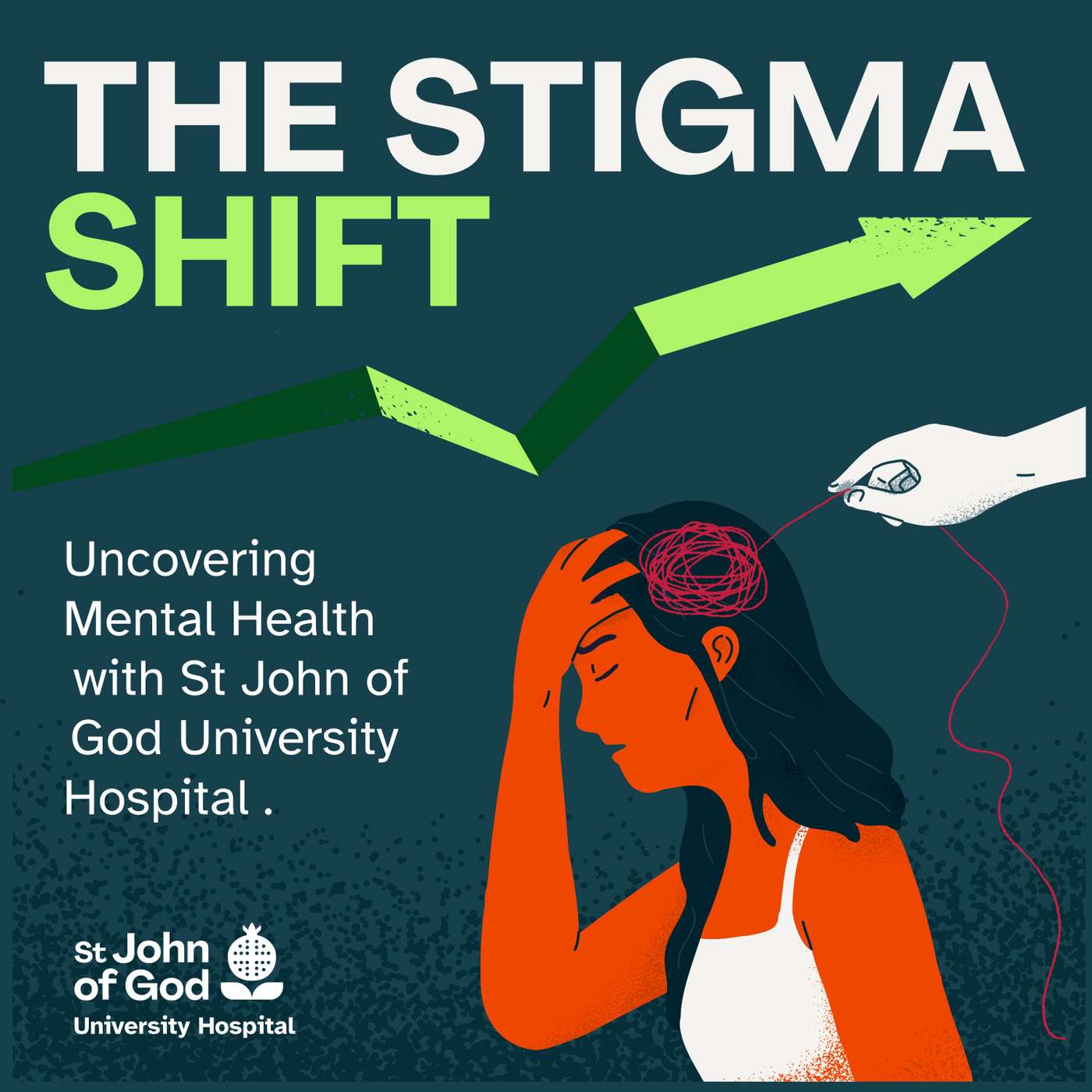
The Stigma Shift | Uncovering Mental Health with St John of God University Hospital
by St John of God University Hospital Dublin
A thoughtful, accessible podcast from St John of God University Hospital in Dublin that aims to demystify mental healthcare and reduce stigma through expert conversations and relatable content. With each episode you get practical insights in a friendly, non-clinical tone.Whether you're personally experiencing challenges, supporting a loved one, or simply interested in improving your wellbeing, our podcast offers fresh perspectives on topics including stress management, digital wellbeing, anxiety, imposter syndrome, and more.appl
-
14
The Body Remembers: Movement, Recovery and Mental Health
Mental health recovery requires more than just talking through your thoughts. Many individuals experience burnout or trauma that remains trapped physically, creating a disconnect between the mind and the body. Relying solely on cognitive therapy often fails to address the underlying physiological state of the nervous system.We explore how movement and embodied practices support recovery. You will learn how to shift from overactivation to rest through simple, consistent physical routines that build trust within your own system.We are joined by Mark Molumby, a personal trainer, yoga instructor, and psychotherapist at St John of God University Hospital. Mark shares his unique, clinically-tested approach to integrating somatic practice within inpatient mental health care.THINGS WE SPOKE ABOUTPersonal journey from computer applications to clinical psychotherapyWhy distress manifests physically as stress or traumaExplaining relaxation anxiety and chronic nervous system vigilanceHow inpatient yoga offers gentle, choice-based recoveryPractical wall angels exercise for better posture and regulationGUEST DETAILSMark Molumby is a personal trainer, yoga instructor, and psychotherapist working at St John of God University Hospital. He integrates physical practice with clinical mental health recovery. He specialises in nervous system regulation and inpatient group facilitation.MORE INFORMATIONTo find out more about the work of the St John of God University Hospital visit stjohnofgodhospital.ieQUOTESIf you don't keep switched on and guarded, then everything is going to fall apart. - Mark MolumbyTop-down is the one that most people are familiar with, which is that we talk about our problems. - Mark MolumbyThe body starts to recognise the difference between mental stress and real felt stress. - Mark MolumbyKEYWORDS #SomaticHealingForAnxiety#NervousSystemRegulation#InpatientYogaRecovery#BodyMindConnection
-
13
Mindfulness, Mental Health, and the Power of Paying Attention
Constant distraction, unrelenting deadlines, and the persistent hum of burnout make life feel like a never-ending race. Many of us navigate our days on autopilot, missing the richness of the present moment and struggling to quiet a busy mind. True relief is not found in escape, but in tuning into the reality of the here and now through clinical and compassionate mindfulness.We explore how mindfulness works beyond the apps to provide evidence-based support for stress, anxiety, and emotional resilience. We discuss how to use presence as a tool to manage emotions and build meaningful insights.Joining us is Dr. Ikbal Habib, a Senior Clinical Psychologist at St. John of God University Hospital. With extensive training in cognitive behavioural and dialectical behaviour therapy, Dr. Habib helps us understand how presence and attention are foundational tools for thriving in modern life.THINGS WE SPOKE ABOUTDefining role of clinical psychologistWhy mindfulness is often misunderstoodMindfulness origins and clinical definitionDistinguishing mindfulness from relaxation techniquesIntegrating mindfulness into everyday lifeGUEST DETAILSIkbal Habib is a Senior Clinical Psychologist at St. John of God University Hospital. She is a licensed clinical psychologist in Ireland, Lebanon, and the UAE. She specialises in Cognitive and Behavioural Therapy and Dialectical Behaviour Therapy. Her work focuses on equipping patients with evidence-based tools to build resilience and meaningful life paths.MORE INFORMATIONTo find out more about the work of the St John of God University Hospital visit stjohnofgodhospital.ieQUOTESMindfulness is less about doing it right and more about showing up with awareness, with compassion, and with non-judgment. - Ikbal Habib.Mindfulness is not about achieving a certain state, but it's about being with whatever is happening in the moment without needing it to be different. - Ikbal Habib.Mindfulness is not to change who you are, but to help you connect better with what's already there. - Ikbal HabibKEYWORDS #MindfulLiving #MentalHealthMatters #ClinicalPsychology #StressManagement #EvidenceBasedCare
-
12
The Space Between Us: Communication, Care and Connection
Navigating modern relationships feels like constantly running on empty. Everyday pressures, stress, and misunderstandings quietly shape the dynamic between us, often leading to communication breakdown and conflict.Systemic Family Therapist Scott Hill uncovers how to shift from individual blame to understanding relational patterns. He reveals the hidden emotional needs beneath arguments and how to reconnect when exhaustion turns a supportive role into strain. This episode provides actionable insights to strengthen communication and find the courage to be vulnerable in your closest relationships.Scott Hill is a practising Social Worker with two decades of experience in mental health. As a Systemic Couple and Family Therapist at St John of God University Hospital, he specialises in helping families and couples strengthen communication and improve relationships.THINGS WE SPOKE ABOUTCreating new, generative conversationsLooking at relational patterns, not individualsVulnerability underlies all relationship conflictHow stress changes brain communicationCourage is needed to be vulnerableGUEST DETAILSScott Hill is a Systemic Family Therapist currently working at St John of God University Hospital. He has 19 years of experience as a practising Social Worker in mental health, focusing on the addiction team and adolescent mental health service. He qualified as a Systemic Family Therapist five years ago and passionately believes that healthy relationships can help people manage whatever life presents.MORE INFORMATIONTo find out more about the work of the St John of God University Hospital visit stjohnofgodhospital.ieQUOTESI always know I'm doing an okay job when a family member, a couple, might say, I never knew that, I never heard that before, you never said that to me, I didn't realise. - Scott HillMy job in the therapy space, to sum it all up, is to create a kind of an experience, a different type of conversation, really, that brings a bit of difference and a bit of hope and a bit of life. - Scott HillMy client, my patient is the relationship, or my client is the family." - Scott HillKEYWORDS #FamilyTherapy #HealthyRelationships #ActiveListening #MentalSupport #RelationalPatterns
-
11
Empowered Nurses, Future Care: Supporting the Next Generation of Mental Health Nurses
To mark International Nurses Day, this episode of The Stigma Shift focuses on the people learning, growing and preparing to shape the future of mental health care.Shona Giles, Clinical Placement Coordinator at St John of God University Hospital, joins the podcast to discuss her role in supporting mental health nursing students during their clinical placements. She reflects on the importance of a positive learning environment, the value of mentorship, and how clinical experience helps students build confidence, compassion and professional identity.This year’s International Nurses Day theme, Our Nurses. Our Future. Empowered Nurses Save Lives., offers a timely opportunity to recognise not only the vital contribution of nurses today, but also the importance of investing in the nurses of tomorrow.Through this conversation with Elaine, Shona explores what it means to support students in a specialist mental health setting, the role of education in high-quality patient care, and why empowered nurses are essential to the future of healthcare.THINGS WE SPOKE ABOUTStudent placements are deeply immersiveTherapeutic relationships are built on communicationManage shift work and feedback pressuresWeekly reflective practice builds self-awarenessThe immense commitment of nurse trainingGUEST DETAILSShona Giles is a Clinical Placement Coordinator and registered mental health nurse at St John of God University Hospital. She is a core member of the Nurse Practice Development unit. Her key skills include overseeing student clinical placements, ensuring quality learning environments, and supporting students from the academic to the clinical settingMORE INFORMATIONTo find out more about the work of the St John of God University Hospital visit stjohnofgodhospital.ieQUOTESStudents are straight in. They're getting involved in anything that's happening on the wards, and they're very much supervised, of course, you know, from stage one onwards. - Shona GilesThe student nurse will be involved in that documentation of the patient's presentation and really like building on their own communication skills and their therapeutic relationships… - Shona GilesIf you can just be the person that listens. You're actually That's huge. That's really powerful. - Shona GilesKEYWORDS #MentalHealth #NursingStudent #ClinicalPlacement #ReflectivePractice #NurseTraining
-
10
The Missing Piece in Workplace Mental Health: Why Awareness Falls Short
The rise in workplace mental health awareness has not translated into meaningful, day-to-day change for employees. Policies and awareness days are common, but a significant gap persists between organisational intention and lived reality. This failure to act often leaves staff reliant on reactive support when issues reach a crisis point.This episode unpacks the disconnect between language and behaviour, exploring what is missing from current approaches. The solution is moving beyond campaigns to prevention, focusing on continuous support, shared understanding, and practical frameworks. We focus on the 'Working Mind' programme, an evidence-based approach brought to Ireland to enable earlier recognition of mental health shifts.Host Elaine McDonald is joined by Jacqui Mulligan, Project Coordinator with Mental Health First Aid Ireland. Jacqui has spent over six years developing mental health literacy programmes. She has led large-scale training rollouts for organisations, including the Irish Defence Forces.THINGS WE SPOKE ABOUTAwareness has not shifted staff behaviourPolicies look great but trust breaks downThe Working Mind builds shared languageUnderstanding the mental health continuumLeaders must prioritise a healthy workforceGUEST DETAILSJacqui Mulligan is a Project Coordinator with Mental Health First Aid Ireland. She has over six years experience in mental health literacy and programme development. Jacqui led efforts to localise and introduce the evidence-based 'Working Mind' programme to Ireland. Her expertise includes supporting large-scale training rollouts for organisations like An Garda Síochána.MORE INFORMATIONTo find out more about the work of the St John of God University Hospital visit stjohnofgodhospital.ieQUOTESWe've normalised talking about mental health, but what we haven't normalised is then responding to it. - Jacqui MulliganPrevention requires culture, not campaigns. - Jacqui MulliganI always believe that if my intention is to care, I can't get it wrong, because that is genuine. - Jacqui MulliganKEYWORDS #MentalHealth #WorkplaceWellness #PsychologicalSafety #MentalContinuum #BehaviourChange
-
9
Beneath the Surface : Addiction and Recovery in High-Performing Lives
What does addiction look like when it hides behind success? In this episode, Professor O’Gara joins Elaine to unpack the often-overlooked reality of addiction among high-achieving individuals. From burnout and insomnia to the rise of process addictions like online gaming, gambling, and phone overuse, the conversation explores how performance-driven environments can mask — and even fuel — addictive behaviours. Professor O’Gara shares insights from over two decades on the frontline of addiction treatment, highlighting the stigma that delays help-seeking, the role of workplace culture in either supporting or failing employees, and the compassionate, non-confrontational approach his team takes to treatment. At its core, this discussion is a reminder that recovery is possible — and that addiction can affect anyone, regardless of success or status.THINGS WE SPOKE ABOUTAddiction expands beyond drugs and alcohol.High achievers vulnerable to burnout, poor coping.Personality traits link success and addiction risk.Workplace culture affects employees' addiction recovery.Compassionate treatment offers hope for recovery.GUEST DETAILSProfessor Colin O'Gara is a recognised Consultant Psychiatrist with 23 years of clinical experience, specialising in addiction medicine. He serves as the Head of Addiction Services at St John of God University Hospital and Clinical Professor of Psychiatry at University College Dublin (UCD). For over 18 years, Professor O'Gara has led the development of holistic, non-confrontational detoxification and rehabilitation services at St John of God University Hospital. The hospital's addiction services treat a wide range of substance addictions, including alcohol, stimulants, opioids, sedatives, cannabis, and digital addictions such as gambling disorder and internet gaming disorder. Dedicated to research, Professor O'Gara leads a group at UCD's School of Medicine investigating areas such as gambling, over-the-counter pill addiction, and alcohol rehabilitation. He actively works to destigmatise addiction through public engagement and media interactions. https://www.linkedin.com/in/prof-colin-o-gara-13834859MORE INFORMATIONTo find out more about the work of the St John of God University Hospital visit stjohnofgodhospital.ieQUOTESAddiction doesn’t discriminate by status or success — its roots are often in exhaustion and burnout. — Professor Colin O’GaraHigh achievers tend to push themselves to extremes, driven by conscientiousness, self-criticism, and guilt, which can fuel addictive behaviours. — Professor Colin O’GaraSome workplaces genuinely support mental health and vulnerability, while others only pay lip service — and that difference can make or break recovery. — Professor Colin O’GaraAddictions are diagnosable brain disorders, with clear biological markers, just like physical illnesses — yet society still struggles to accept this. — Professor Colin O’GaraRecovery is possible, and I’ve seen people not only get well but go on to become ambassadors for others starting their journey. — Professor Colin O’GaraKEYWORDS#AddictionRecovery #MentalHealth #Burnout #WorkplaceWellbeing #HighAchievers #AddictionAwareness #Stigma #CompassionateCare #ProcessAddictions #RecoveryIsPossible
-
8
Eating Disorders: Connection and Community
This internal and external isolation often causes people to disconnect from the relationships, social activities, and inner self that truly sustain them.Recovery is supported by community, connection, and innovative clinical care. This episode explores how clinical services and community organisations work together to support people and families who are transitioning out of the eating disorder's black-and-white control.Host Elaine McDonald is joined by two experts marking three decades of crucial service in Ireland's eating disorder landscape. Jane O’Riordan is an Occupational Therapist at the Eating Disorders Programme at St John of God University Hospital. Harriet Parsons is the CEO of Bodywhys, Ireland’s National Eating Disorder Association.THINGS WE SPOKE ABOUTOccupational therapy supports life functioning.Eating disorders develop as coping mechanisms.Loneliness and isolation compound struggle.Groups provide hope and universality.Continuity of connection supports transition.GUEST DETAILSJane O'Riordan is an Occupational Therapist on the Eating Disorders Programme at St John of God University Hospital. With nearly two decades of experience across adult and adolescent mental health, she specialises in activity-led approaches, including meal preparation and therapeutic practices. Her expertise focuses on the mind-body connection in recovery and the intersection of neurodiversity and eating disorders.Harriet Parsons is the CEO of Bodywhys, Ireland's National Eating Disorder Association. A fully accredited psychotherapist who has been with the organisation for almost 20 years, she led the development of crucial support services, including family programmes. She also played a key role in delivering the community support component of the HSE's National Clinical Programme for Eating DisordersMORE INFORMATIONTo find out more about the work of the St John of God University Hospital visit stjohnofgodhospital.ieQUOTESHaving an eating disorder is really exhausting and really time consuming, so it's very difficult to be present or have energy for doing things or people's self esteem and body image are affected. - Jane O'RiordanEating disorders develop as a way of coping with difficult experiences or a difficult kind of internal world. So we want to try and support people to develop other skills and outlets for that. - Jane O'RiordanThe eating disorder is a way of coping, and because it's a way of coping, they're very counter intuitive illnesses. - Harriet ParsonsIt takes great courage to kind of reach out and make that first connection with somebody who's focused on how this person might be able to live their life without the eating disorder. - Harriet ParsonsKEYWORDS: #EatingDisorders #MentalHealthRecovery #GroupSupport #StigmaShift #Bodywhys
-
7
Anxiety Unpacked: What's Really Going On Beneath the Surface
In this episode, we’re joined by Carol Keegan, Clinical Nurse Specialist at St John of God University Hospital, to explore the realities of living with anxiety. Carol breaks down the difference between everyday stress and clinical anxiety, challenges common misconceptions, and explains why anxiety isn’t always the enemy—it can sometimes be protective and even useful.From practical coping tools like breathing techniques and self-care habits, to the role of social supports, therapy, and medication, Carol offers clear, compassionate insights that make anxiety feel less overwhelming and more manageable. Whether you’re supporting a loved one or navigating anxiety yourself, this conversation is full of reassurance, hope, and strategies you can put into practice.THINGS WE SPOKE ABOUTWhy anxiety isn’t always the enemy — and how it can sometimes help usThe difference between everyday stress and clinical anxietyCommon physical and emotional symptoms of anxietyPractical coping tools: breathing exercises, grounding techniques, and self-care basicsHow to support a loved one and challenge the myth that you can “snap out of it”GUEST DETAILSCarol Keegan is a Clinical Nurse Specialist at St John of God University Hospital. She works on the psychosis team as part of a multidisciplinary effort. Carol is also a registered nurse prescriber. Her experience involves providing assessment, education, and emotional support to patients and their families. She focuses on helping patients understand their anxiety and develop coping strategies. MORE INFORMATIONTo find out more about the work of the St John of God University Hospital visit stjohnofgodhospital.ieQUOTESAnxiety is one of our primary emotions, a basic function designed to protect us. – Carol KeeganEveryday stress is temporary and manageable, but clinical anxiety lingers, intensifies, and interferes with daily life. – Carol KeeganBreathing techniques are the most effective way to manage anxiety in the moment because they reset the body’s stress response. – Carol KeeganSelf-care may sound basic, but sleep, nutrition, exercise, and connection are crucial to building resilience against anxiety. – Carol KeeganAnxiety isn’t something you can just snap out of — if people could, they absolutely would. – Carol KeeganKEYWORDS#AnxietyAwareness #MentalHealthMatters #CopingStrategies #SelfCare #Resilience #Wellbeing #Mindfulness #CBT #StigmaFree #Podcast
-
6
Understanding Grief: The Role of Compassion in Healing
Grief and loss are profound and complex human experiences that often leave us feeling isolated and uncertain of how to cope. We struggle to talk about these deeply personal emotions, and the pressure to "be okay" can compound the pain, leading to self-criticism and shame. This difficulty is worsened by a culture of productivity that systemically discourages taking the time needed for a natural healing process.This episode offers clarity and care by exploring what grief truly is—beyond just bereavement—and how it affects our mental health. We delve into the power of Compassion-Focused Therapy (CFT) to reframe our emotional struggles and the vital role of self-validation in moving forward while honouring what has been lost. You will learn practical strategies to cultivate compassion for yourself and others as a powerful guide through times of emotional difficulty.Elaine McDonald is joined by Dr Sonia Pillai, a Senior Psychologist at St John of God University Hospital and an aspiring somatic coach. Dr Pillai has a special interest in trauma, ADHD, OCD, and anxiety. Her practice is grounded in humanistic and neuro-affirming philosophies, integrating various therapeutic approaches to support people through complex emotional experiences.THINGS WE SPOKE ABOUTGrief is broad, universal processSocietal barriers hinder natural grievingCFT's three emotional systems model Grief is an ongoing, non-linear process.Validate your emotional responses to loss.GUEST DETAILSDr Sonia Pillai is Senior Counselling Psychologist at St John of God University Hospital. She works alongside a multidisciplinary team supporting new inpatients and runs DBT and CFT groups. Dr Pillai practices from a foundation of humanistic and neuro-affirming philosophies. She integrates models like Emotion-Focused Therapy and Acceptance and Commitment Therapy. Dr Pillai has a special interest in trauma, ADHD, OCD, and anxiety.MORE INFORMATIONTo find out more about the work of the St John of God University Hospital visit stjohnofgodhospital.ieQUOTESThe grief process... can take years, right? And I think helping people to validate their very natural responses to loss can be really powerful in the therapy space. - Dr Sonia PillaiAs long as there is a loss of something that's meaningful to someone, and it's, you know, maybe indicated that one cannot return to the way one's life was before this loss, then I think it's natural for a grief process to happen then. - Dr Sonia PillaiYou know, the grief will always be there. The waves are always going to be part of your life. Life, but it's about maybe allowing them to feel less intense through the process of minding yourself. - Dr Sonia PillaiKEYWORDS#GriefAndLoss #SelfCompassion #MentalHealthSupport #CFTSkills #EmotionalWellbeing
-
5
Neuroplasticity: How the Brain Adapts, Recovers, and Grows
The human brain possesses extraordinary ability to adapt and change throughout life, a quality called neuroplasticity that many mistakenly believe only occurs during childhood.Dr Clodagh Cremen, senior clinical psychologist on psychiatry of later life team at St John of God University Hospital, explains how neural pathways function like motorways with traffic rerouting when connections close, why neurons that fire together wire together, how Tilda research shows 206,800 adults over 70 volunteer annually demonstrating active community contribution, and why starting with one small consistent change like 20 minute brisk walks matters more than perfectionistic overnight transformations.With special interest in neuropsychology, disability, trauma and resilience, Dr Cremen shares practical strategies for supporting brain health including hearing aid maintenance, challenging ageist assumptions about capability, and understanding that sleep architecture changes naturally with age requiring different amounts than teenage yearsTHINGS WE SPOKE ABOUTBrain plastic changes adapts forms new connections environmentOne small consistent change not perfectionistic overnight transformationOver seventies volunteer provide care contribute Irish society fabricHearing aids cognitive functioning maintenance never too lateMindfulness skill takes practice not silver bullet stressGUEST DETAILS Dr Clodagh Cremen is senior clinical psychologist on psychiatry of later life team at St John of God University Hospital, working with adults over 65 experiencing mood struggles, anxiety, adjustment challenges or grief whilst providing assessment through listening and formal cognitive testing alongside intervention teaching coping skills. With special interest in neuropsychology, disability, trauma and resilience, she worked extensively in neuro rehabilitation settings with acquired brain injury survivors and their families from historical background including interest in people born 1940s through different generations within over 65 category. Her approach focuses on empowering people to flourish, thrive and build fulfilling lives by supporting return to meaningful activities that matter to individuals rather than prescribed goals, bringing holistic psychological perspective to multidisciplinary team whilst showing compassion for brains doing their best under difficult circumstances.MORE INFORMATIONTo find out more about the work of the St John of God University Hospital visit stjohnofgodhospital.ieQUOTESThe brain is plastic, so it does change over time. It adapts. New connections get formed and that's often based on what's happening in our environment around us, and equally physiologically, what's happening internally inside our bodies as well. - Dr Clodagh CremenThe way that the brain is structured is that there's different parts within the brain, we call them lobes. These lobes have different jobs and communicate with one another through what we call neural pathways. These form networks. It's a bit like having big cities that are connected to one another via motorways. Something might happen in life, and one of these motorways close. The traffic diverts, so maybe it starts using the country roads more. The messages might get delivered at a different pace. But over time, what can happen as this new road gets used is that it can become more developed. The traffic can reroute so the messages can still get through. - Dr Clodagh CremenIt's never too late. Our brains have evolved over billions of years to consistently adapt and change, and we always have the capacity to learn, and that's one of the things that makes life so interesting. Changing can seem daunting. It can feel overwhelming. Start with the simple stuff, stuff that you have control over, that feels easy and manageable for you. You're good enough, good enough person as you are, and that can be true, and it can also be true that there's stuff that you want to change. To go easy on yourself. Life is hard. It's not too late. Notice and celebrate the small stuff that maybe you have changed. - Dr Clodagh CremenKEYWORDS#Neuroplasticity #BrainHealth #AgeingWell #MentalWellbeing #CognitiveResilience
-
4
Modern Disconnect: Restoring Mental Health Through Nature
Spending time in nature feels instinctively restorative, but what does the science actually say about why green spaces improve our mental health? In this episode of The Stigma Shift, Senior Social Worker Shirley Gleeson explores the growing field of planetary health and nature-based interventions in mental health care. From the stress-reducing power of 20-minute nature walks to therapeutic horticulture programs transforming patient recovery, Shirley shares evidence-based practices, practical activities anyone can try today, and why our connection to the natural world matters more than ever for psychological well-being.THINGS WE SPOKE ABOUTHow spending just 120 minutes per week in nature improves psychological well-being.The three main scientific theories explaining nature's mental health benefits.Why equality of access to quality green spaces matters.Practical nature-based interventions used in healthcare settingsThe simple activities anyone can start todayGUEST DETAILSShirley Gleeson is a Senior Social Worker with the Addictions Team in St John of God University Hospital. She has 25 years’ experience in social work and has spent the past decade working in both child and adolescent and adult mental health. She has Masters in both social work and health promotion and has spoken at international conferences on the area of mental health and the natural environment. She has trained in various nature-based therapies in the U.S, South Africa and the U.K. Prior to her current post Shirley worked on several European projects in this area. She is passionate about both social and environmental justiceMORE INFORMATIONTo find out more about the work of the St John of God University Hospital visit stjohnofgodhospital.ieQUOTESThe further we're away from nature, the more mental health difficulties we might experience. We are part of nature, but in the modern day world, sometimes we're separated from it, and that causes us a lot of stress. - Shirley GleesonResearch found that people that spend 120 minutes a week in nature were significantly more likely to report good health and better psychological well-being. - Shirley GleesonNatural settings promote what they call soft fascination, which meant that the brain had time to relax. Things like listening to bird song or flowing water or the movement in nature really helped relax and promoted the soft fascination. - Shirley GleesonKEYWORDS#naturetherapy #planetaryhealth #mentalwellbeing #ecotherapy #greenspaces
-
3
Breaking the Stress Cycle: Tools You Can Start Using Today
Feeling overwhelmed, burned out, or constantly running on empty? You’re not alone. In today’s fast-paced world, stress has become a daily companion for many of us—quietly impacting our sleep, energy levels, mood, and even physical health. Today, we’re diving into the real effects of stress on the body and mind, and exploring practical, evidence-based strategies to manage it. From understanding how hormones like cortisol play a role, to recognizing early signs of burnout, we’ll unpack the science and psychology of stress. We’ll also talk about the importance of self-care, social connection, and new approaches like social prescribing that go beyond traditional medical treatment.Joining us is seasoned specialist in stress management, lifestyle health, and social prescribing who is our Health Promotion Nurse Specialist at St John of God University Hospital, Denise McGinley.THINGS WE SPOKE ABOUTRecognising the early signs of stress on your body and mindHow cortisol impacts sleep, appetite, digestion and focus.The difference between healthy stress and harmful burnout Mindfulness, lifestyle tweaks, and everyday self-care routines to manage stress Social prescribing as a non-medical intervention to support emotional wellbeing GUEST DETAILSDenise Mc Ginley is the Health Promotion Nurse Specialist at St John of God University Hospital.https://ie.linkedin.com/in/denise-mc-ginley-5714b131bMORE INFORMATIONTo find out more about the work of the St John of God University Hospital visit stjohnofgodhospital.ie QUOTESIt's important to look at the mind-body connection. There is something going on in your brain that causes you to feel stressed, and that, in turn, has a physical effect on your body. - Denise McGinleyWhen we feel stressed, we have this excess amount of cortisol running around our bodies. That can have an impact on our sleep, how we eat and poor concentration. - Denise McGinleyIt's really important to know yourself and know your own body and mind. - Denise McGinleyFrom a health promotion perspective, prevention is the big thing. - Denise McGinley KEYWORDS#stress #burnout #mentalhealth #physicalhealth #cortisol #mindfulness #sleep #socialprescribing, #wellbeing
-
2
Digital Overload: Finding Calm in a Hyperconnected World
Constant notifications, endless scrolling, and the pressure to stay connected have become a silent source of stress for many of us. Our hyper-digital world promises connection but can more often leave us feeling isolated, distracted, and emotionally depleted. Today we unpack the complex relationship between social media and mental wellbeing, and the true impact of our online lives. We explore the psychological effects of digital engagement and dopamine-driven doom scrolling, along with strategies for setting healthier boundaries, recognising signs of digital overload, and introducing mindful practices that support balance and calm. Our expert guest has a wealth of experience in both inpatient and outpatient mental health care and is passionate about how we can live more consciously in a connected world. It's a pleasure to have Senior Clinical Psychologist at St. John of God University Hospital, Dr Amy Watchorn. THINGS WE SPOKE ABOUTUnderstanding digital addiction symptoms like anxiety and disconnectionHow social media taps into the brain’s dopamine-driven reward systemSocial comparison that can distort self-image and contribute to unrealistic expectationsPractical advice on mindful awareness and setting boundariesBridging generational tech gaps between parents and young people GUEST DETAILSDr Amy Watchorn is a Senior Clinical Psychologist working in St John of God University Hospital and an Adjunct Assistant Professor in the UCD School of Psychology. She holds a Graduate Degree in Psychology from Trinity College Dublin, a Master’s Degree in Clinical Neuroscience from University College London and a Doctorate in Clinical Psychology from University of Limerick. She has a background working with various groups including people struggling with personality disorders, dual diagnosis, depression and anxiety. She currently works as part of an inpatient addictions team and has a strong interest in this area, including involvement in research regarding the impact of addiction on people’s mental health.https://ie.linkedin.com/in/dr-amy-watchorn-754091a7 MORE INFORMATIONTo find out more about the work of the St John of God University Hospital visit stjohnofgodhospital.ie QUOTESIf they can't just spend an hour away from their phone, then maybe they need to think about whether or not this is becoming problematic. - - Dr Amy Watchorn You’ve got to remember that online, everyone is living their best lives. - Dr Amy Watchorn We weren't born to communicate this way. Our brains are not a good fit for the amount of information that's being thrown at us. - Dr Amy Watchorn You're not getting that holistic experience of tone, body language, all those nuances that are actually much more important for communication. - Dr Amy Watchorn KEYWORDS#Socialmedia #mentalhealth #addiction #dopamine #anxiety #mindfulness #technology
-
1
Trailer
A thoughtful, accessible podcast from St John of God University Hospital in Dublin that aims to demystify mental healthcare and reduce stigma through expert conversations and relatable content. With each episode you get practical insights in a friendly, non-clinical tone.Whether you're personally experiencing challenges, supporting a loved one, or simply interested in improving your wellbeing, our podcast offers fresh perspectives on topics including stress management, digital wellbeing, anxiety, imposter syndrome, and more.Stigma Shift launches on Apple, Spotify and YouTube soon. Follow now so you don't miss the first episode.
We're indexing this podcast's transcripts for the first time — this can take a minute or two. We'll show results as soon as they're ready.
No matches for "" in this podcast's transcripts.
No topics indexed yet for this podcast.
Loading reviews...
ABOUT THIS SHOW
A thoughtful, accessible podcast from St John of God University Hospital in Dublin that aims to demystify mental healthcare and reduce stigma through expert conversations and relatable content. With each episode you get practical insights in a friendly, non-clinical tone.Whether you're personally experiencing challenges, supporting a loved one, or simply interested in improving your wellbeing, our podcast offers fresh perspectives on topics including stress management, digital wellbeing, anxiety, imposter syndrome, and more.appl
HOSTED BY
St John of God University Hospital Dublin
CATEGORIES
Loading similar podcasts...
Frequently Asked Questions
How many episodes does The Stigma Shift | Uncovering Mental Health with St John of God University Hospital have?
The Stigma Shift | Uncovering Mental Health with St John of God University Hospital currently has 14 episodes available on PodParley. New episodes are automatically indexed when they're published to the podcast feed.
What is The Stigma Shift | Uncovering Mental Health with St John of God University Hospital about?
A thoughtful, accessible podcast from St John of God University Hospital in Dublin that aims to demystify mental healthcare and reduce stigma through expert conversations and relatable content. With each episode you get practical insights in a friendly, non-clinical tone.Whether you're personally...
How often does The Stigma Shift | Uncovering Mental Health with St John of God University Hospital release new episodes?
The Stigma Shift | Uncovering Mental Health with St John of God University Hospital has 14 episodes. Check the episode list to see recent publication dates and frequency.
Where can I listen to The Stigma Shift | Uncovering Mental Health with St John of God University Hospital?
You can listen to The Stigma Shift | Uncovering Mental Health with St John of God University Hospital on PodParley by clicking any episode. We provide an embedded audio player for direct listening, and you can also subscribe via your preferred podcast app using the RSS feed.
Who hosts The Stigma Shift | Uncovering Mental Health with St John of God University Hospital?
The Stigma Shift | Uncovering Mental Health with St John of God University Hospital is created and hosted by St John of God University Hospital Dublin.
URL copied to clipboard!