
PODCAST · history
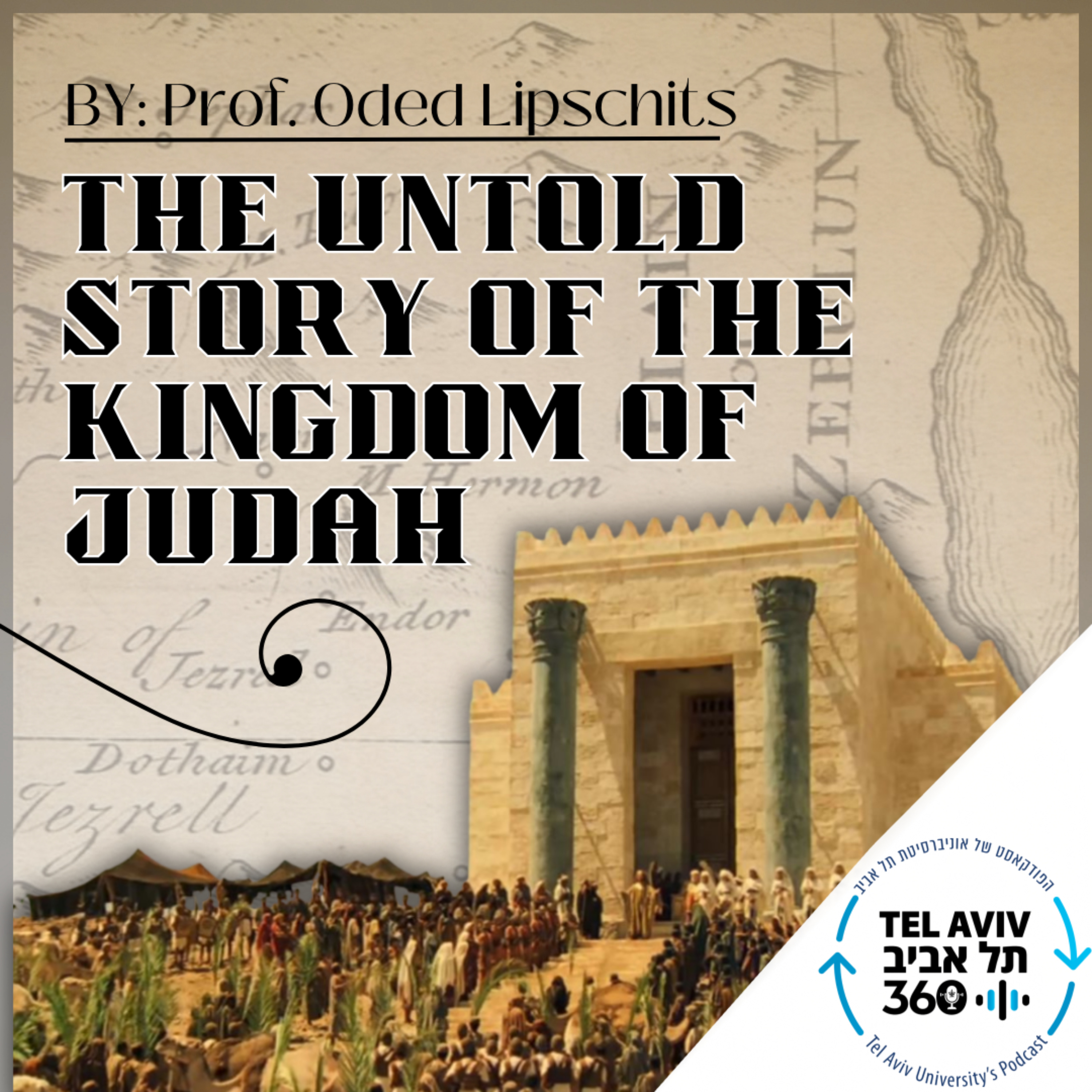
The Untold Story of the Kingdom of Judah | Tel Aviv 360
by Tel Aviv University
The biblical story of the history of the Kingdom of Judah, as told in the books of Joshua, Judges, Samuel and Kings, describes the point of view of the Jerusalem elite: what it knew, what it wanted to tell and what served its political, religious and economic interests.In this podcast Prof. Oded Lipschits will try to find out what the authors of biblical history didn't tell. Archaeological and historical studies, as well as a critical reading of the biblical text, allow us to not only understand the stories we have been told, but also to uncover the untold stories surrounding them, which co
-
34
(E8) The Untold Story of Jeremiah the Prophet
Jeremiah was not one of the popular figures in Jerusalem on the eve of the Temple’s destruction. The ideology he held was contrary to that of many of the ministers and public leaders who championed the rebellion in Babylon and believed in the divine protection over the city, the temple and the dynasty of the House of David who were chosen by God and were given the eternal promise. This was also the ideology of the biblical historiographers, against whom the prophet stood on the eve of the destruction of Jerusalem. The prophet’s attitudes and his hostile attitude towards the priests, the royal house and the Jerusalem elite, and the hostile attitude of many in Jerusalem towards the prophet, are all connected to the definition of his origin in the opening verse of the book “The words of Jeremiah, the son of Hilkiah, of the priests who were in Anathoth in the land of Benjamin,” and to the questions of why this is mentioned in the opening of the book, and why is this information regarding his being a priest who comes from a family in Anathoth in the land of Benjamin described as part of Jeremiah’s presentation? It seems that the untold story about the fate of the Shiloh and Nob priests, and their connection to the family of priests in Anathoth, even if it is historically reliable, whether it is a historiographical work from beginning to end, or a compilation of details based on fragments of information from various sources, can give depth and a better understanding of Jeremiah’s views on the eve of the destruction of Jerusalem, his ideology and his actions during this period. Against this background, it can also be assumed that it was the association with the family of the priests who were expelled from Jerusalem that placed Jeremiah in such an oppositional position to the House of David, who was responsible for their deportation to Anathoth, despite the family patriarch’s unreserved loyalty to David, and for the physical elimination of his family, the priests of the temple in Nob. In the description of the chronicles of the Kingdom of Judah, the things are not explicitly stated, and Jeremiah himself is not mentioned in the historical description.__________________Tel Aviv 360, Israel's largest and most diverse podcast about research and innovation• Tel Aviv 360 official website ◄ https://360tau.com• Tel Aviv 360 in Instagram ◄ https://360tau.com/Instagram• Tel Aviv 360 in Facebook ◄ https://360tau.com/Facebook• Tel Aviv 360 in WhatsApp (Silent group) ◄ https://360tau.com/WhatsApp• Tel Aviv 360 in Spotify ◄ https://360tau.com/Spotify
-
33
(E7) The Untold Story of King Josiah
From the biblical historiographer’s point of view, Josiah was the greatest of the kings who reigned in Judah. The reform carried out in his time in the spirit of Deuteronomy, during which the cult in Judah was purified and concentrated in Jerusalem, is the measure by which, looking back, all the other kings in Judah were judged. The days of his reign can be dated to the years 640-609 BCE. However, despite Josiah’s importance and centrality to the biblical historiographer and historiography, nothing is known about him except for one event that took place over a short period of time during the 18th year of his reign. This event can be dated to the year 622 BCE, and from the analysis of the extensive history of the Ancient Near East, it can be assumed that in this period, the Assyrian withdrawal from all strongholds beyond the Euphrates was completed, and there was a political vacuum for several years prior to the Egyptians’ entry into the region as a “successor kingdom”. This was the period of time in which Josiah could carry out a cultic reform, which also had great national and ideological implications. Despite his greatness and importance, nothing is said about Josiah except for the cultic reform which took place in the 18th year of his reign. In my opinion, this point in time was determined to be the end of the historical composition written in the days of the First Temple, and the completion of the story of Josiah was also written by historiographers who completed the description from the days of Josiah until the exile in Babylon, and therefore neither added nor detailed anything about the 13 years of Josiah’s reign until he was killed in Megiddo by Pharaoh Necho of Egypt. An even more interesting question surrounds the untold story of the first 18 years of Josiah’s reign. Why did the author, who wrote the description during the days of Josiah and who knew many details about the king and what was happening in Jerusalem and Judah during this time period, and so did their target audience, not describe even a single detail, or tell of even a single event from the king’s life until the cultic reform? In this chapter I try to show that this was a deliberate omission, since at this time Josiah was an Assyrian vassal, and the biblical historiographer could not have described him as such. Since both the historiographer and their target audience knew the reality, ignoring this period conveys the message to the readership and emphasizes what was being told against what remained in the dark.__________________Tel Aviv 360, Israel's largest and most diverse podcast about research and innovation• Tel Aviv 360 official website ◄ https://360tau.com• Tel Aviv 360 in Instagram ◄ https://360tau.com/Instagram• Tel Aviv 360 in Facebook ◄ https://360tau.com/Facebook• Tel Aviv 360 in WhatsApp (Silent group) ◄ https://360tau.com/WhatsApp• Tel Aviv 360 in Spotify ◄ https://360tau.com/Spotify
-
32
(E6) The Untold Story of King Manasseh
This chapter deals with the most untold story about one of the kings of Judah. King Manasseh reigned longer than any of the other kings of Judah, he was the son of Hezekiah and the grandfather of Josiah, and during his long reign Judah recovered from the severe blow inflicted on it by Sennacherib’s campaign. Judah was integrated into the Assyrian Empire which was at the height of its power and strength, and the archaeological evidence from this time testifies to the prosperity that the region experienced during this period. The economy and the administration continued to develop, and Manasseh is also remembered in Assyrian documents as a king who maintained his loyalty to Assyria and fulfilled his duties as a vassal. And yet, nothing was written in the Book of Kings about Manasseh, except for a very broad description of the cultic sins that existed in his day. This is the most extreme example of the untold story about a king who completely disappeared from the biblical historiography and all his deeds were forgotten, and this in a period very close to the days of his reign, when many details about the king and the kingdom of Judah in his time were known to the authors and their readership even without the need for any written sources. Still, the story about the days of Manasseh is not told, and Manasseh became a king in the biblical historiography, and all that is told about him are the cultic sins he committed and which took place in his time. In this chapter of the podcast we will clarify why the biblical historiographer singled out Manasseh as playing the one definite role of the one who caused the sins that Josiah corrected, and in doing so he created a one-dimensional figure that matched his assessment of the king who was enslaved to Assyria all his life and also committed serious cultic sins. In this respect, the untold story of Manasseh is the most extreme example of an omission left purposefully out by the biblical historiographers, who acted according to their cultic ideology and according to the literary interests of the story they wrote.__________________Tel Aviv 360, Israel's largest and most diverse podcast about research and innovation• Tel Aviv 360 official website ◄ https://360tau.com• Tel Aviv 360 in Instagram ◄ https://360tau.com/Instagram• Tel Aviv 360 in Facebook ◄ https://360tau.com/Facebook• Tel Aviv 360 in WhatsApp (Silent group) ◄ https://360tau.com/WhatsApp• Tel Aviv 360 in Spotify ◄ https://360tau.com/Spotify
-
31
(E5) The Untold Story of Sennacherib’s Campaign and the Fate of Jerusalem
Sennacherib’s campaign against the Kingdom of Judah, held in 701 BCE, was the most dramatic and significant event in the history of the Kingdom of Judah until the Babylonian destruction that came 115 years later. It left in its wake clear and well-dated layers of destruction, and resulted in severe damage to Judah, the exile of many residents, the destruction of the economy, and the lowlands’ separation from the kingdom. But it seems that beyond all the immediate effects that Sennacherib’s campaign had on Judah, another, long-term, largely unpredictable and destructive long-term effect was on the ideological, theological and historiographical side. Despite the terrible destruction of many cities, the exiles and the heavy economic damage, the main memory of the campaign among the Jerusalem elite one, two and three generations later, was the memory of the miraculous salvation of Jerusalem, which stood before the Assyrian army and was not conquered. It was the seed that was sown in the ground, from which grew the idea of God’s eternal promise to his chosen city, to the temple and to the dynasty of kings in Jerusalem. This is also the reason for the untold story of Sennacherib’s campaign. The authors of the biblical historiography as well as their readers, the members of the Jerusalem elite, were well acquainted with history and knew what the terrible results of the campaign were. But the memory of all this faded in contrast to the memory of the miraculous rescue of Jerusalem and the ideas that grew among the Jerusalem elite about God’s eternal promise to the city, the temple and the dynasty. In the days of Josiah, when Assyria withdrew from the area and it seemed that Judah was about to return to the glory days of the “united monarchy,” Sennacherib’s campaign marked the proof of the existence of the idea of God’s eternal promise, and was a clear symbol of this promise.__________________Tel Aviv 360, Israel's largest and most diverse podcast about research and innovation• Tel Aviv 360 official website ◄ https://360tau.com• Tel Aviv 360 in Instagram ◄ https://360tau.com/Instagram• Tel Aviv 360 in Facebook ◄ https://360tau.com/Facebook• Tel Aviv 360 in WhatsApp (Silent group) ◄ https://360tau.com/WhatsApp• Tel Aviv 360 in Spotify ◄ https://360tau.com/Spotify
-
30
(E4) The Untold Story of the “Temple of Solomon” at Tel Moza
The Untold Story of the Kingdom of JudahOded LipschitsPart E. The Untold Story about the Kingdom of Judah in the Days of the Biblical HistoriographersThe accidental and exciting discovery of a temple that existed and operated throughout the days of the First Temple, at a distance of only seven kilometers from Jerusalem, allows a unique and one-time glimpse, at least for now, of the way in which temples operated and developed in the first millennium BCE, right at the same time as the Temple, which according to the biblical description existed, operated and developed in the exact same period of time, in the capital of the Kingdom of Judah. Tracking the processes of change and development in the Moẓa Temple over the hundreds of years of its activity allows a possible archaeological point of comparison to the development processes of the temple in Jerusalem, about which there is information only from the biblical descriptions. Moreover, the archaeological research of the Moẓa Temple also allows us to explore what the relationship was between the two communities that lived around the two temples: the community that lived in the Moẓa Valley and for whom the Temple in Moẓa was its central place of cult, and the nearby community that lived in Jerusalem and its immediate surroundings, and for which the Temple of Solomon, built at the top of the Temple Mount, was its central place of cult.__________________Tel Aviv 360, Israel's largest and most diverse podcast about research and innovation• Tel Aviv 360 official website ◄ https://360tau.com• Tel Aviv 360 in Instagram ◄ https://360tau.com/Instagram• Tel Aviv 360 in Facebook ◄ https://360tau.com/Facebook• Tel Aviv 360 in WhatsApp (Silent group) ◄ https://360tau.com/WhatsApp• Tel Aviv 360 in Spotify ◄ https://360tau.com/Spotify
-
29
(E3) The Untold Story about the Magnificent Structures Near Jerusalem
The Untold Story of the Kingdom of JudahOded LipschitsPart E. The Untold Story about the Kingdom of Judah in the Days of the Biblical HistoriographersIn the century in which Judah was under Assyrian rule (from 732 to slightly after 630 BCE) it is possible to notice a considerable increase in the importance of the areas surrounding Jerusalem to the north, west and south, which became more central to the administration and economy of the kingdom. On the ridge south of Jerusalem between Armon Hanatziv and Ramat Raḥel, economic, administrative and political processes took place that did not coincide with what was happening within the city itself, and perhaps even, in many respects, were disconnected from what was happening in the capital of the kingdom. It can be assumed that the processes in these areas around Jerusalem enabled the continuation of life in the capital of the kingdom under the rule of the Assyrian Empire: the continuation of the rule of the House of David, the existence of the temple and cult in it, and the continuation of the Jerusalem elite. There is no evidence in the biblical descriptions of this development in an area so close to Jerusalem, a few minutes' walk to the south, west, and north, which possess the view that Jerusalem continued to be the undisputed center of the nation’s life, the seat of the kings from the House of David and the location of the Temple. The historiography is entirely focused on this point of view on Jerusalem and from within Jerusalem, with no mention of the tremendous developments that took place in the entire immediate area around the city, of the magnificent buildings that were seen from Jerusalem and had a view of the city themselves. This is an omission that cannot be understood except as an omission that acts as the message itself. Anyone who has lived in Jerusalem or visited it, has seen the magnificent building on Ramat Raḥel towering over the entire area around Jerusalem, the magnificent gardens that surrounded it and the magnificent architecture that characterized it. The evidence found at the site of a magnificent feast indicates that the Judean elite were invited to the place and witnessed this splendor up close. The magnificent structure recently discovered in Mordot Arnona and the villa in Armon Hanatziv were also known, and the deletion of all of this from the biblical historiography shows how biased it was and was intended to serve the ideology of the royal house and the priesthood in Jerusalem, without anything else being able to endanger it. The omission, then, is the message. The untold story is the story.__________________Tel Aviv 360, Israel's largest and most diverse podcast about research and innovation• Tel Aviv 360 official website ◄ https://360tau.com• Tel Aviv 360 in Instagram ◄ https://360tau.com/Instagram• Tel Aviv 360 in Facebook ◄ https://360tau.com/Facebook• Tel Aviv 360 in WhatsApp (Silent group) ◄ https://360tau.com/WhatsApp• Tel Aviv 360 in Spotify ◄ https://360tau.com/Spotify
-
28
(E2) The Untold Story of Judah’s Enslavement to Assyria
The Untold Story of the Kingdom of JudahOded LipschitsPart E. The Untold Story about the Kingdom of Judah in the Days of the Biblical King Ahaz came to power at the time when the Syro-Ephraimite alliance was formed, and it can be assumed that Rezin, King of Damascus, and Pekah, King of Israel, attacked Judah immediately upon his ascension to the throne, in order to take advantage of the fact that his position was not yet established, and in the hope that they would be able to force him to join the war or replace him with another king. Ahaz turned out to be a wise, level-headed and determined king, and as one who maintained the traditional policy of the kings of Judah, who always advocated submission to the big and powerful kingdoms out of an assessment that Judah was too weak and too small to stand against these powerful forces, and would not be able to survive a strong military blow. With the support of the prophet Isaiah, while standing against circles that supported joining the anti-Assyrian alliance and wanted to replace Ahaz with another king, Ahaz was smart to be wary of Assyria’s power, estimated that Assyria would defeat the Syro-Ephraimite alliance and realized that preventing Judah from rebelling against Assyria was the only possibility to maintain its independence and integrity. Indeed, in the face of the severe Assyrian damage to the Kingdom of Israel and the destruction of Damascus (732 BCE), Judah came out unscathed. The Deuteronomistic historiographers condemned Ahaz’s enslavement to Tiglath-Pileser, since from the perspective from which the his description was written in the days of Josiah, when Assyria withdrew from the region and its hundred-year reign was now only a memory, the kings who let their people be enslaved to foreign kingdoms were slandered, and the kings who rebelled were praised. This memory of Ahaz, which was also embedded in places and objects in the temple that were associated with his name, underestimated the value of a brave and wise king, who reigned during one of the stormy periods that passed over the kingdom of Judah, during Assyria’s takeover of the entire area, managed to survive the attack by the Syro-Ephraimite alliance and protected the borders of his kingdom against the Assyrians. The archaeological finds in the Jerusalem's area also indicate a great change in the administration and economy that took place in the days of Ahaz, and this was also completely ignored by the authors of the historiographical__________________Tel Aviv 360, Israel's largest and most diverse podcast about research and innovation• Tel Aviv 360 official website ◄ https://360tau.com• Tel Aviv 360 in Instagram ◄ https://360tau.com/Instagram• Tel Aviv 360 in Facebook ◄ https://360tau.com/Facebook• Tel Aviv 360 in WhatsApp (Silent group) ◄ https://360tau.com/WhatsApp• Tel Aviv 360 in Spotify ◄ https://360tau.com/Spotify
-
27
(E1) The Untold Story of the Hundred Years of Assyrian Rule in Judah
The Untold Story of the Kingdom of JudahOded LipschitsPart E. The Untold Story about the Kingdom of Judah in the Days of the Biblical HistoriographersThis chapter deals with the untold story of the history of the kingdom of Judah in the days of the authors of the Biblical history, with the aim of examining why they ignored the strict Assyrian rule in Judah from the time of the enslavement to Assyria in the days of King Ahaz (732 BCE) until the Assyrian withdrawal from the area in the days of Josiah, about a century later. The meaning of the long years of enslavement to Assyria was also reshaped after the retreat and collapse of the empire, apparently during the few years of independence of the days of Josiah and at the time when the biblical descriptions were written. In this way, Judah was presented as an independent kingdom, freed from the yoke of Assyria after Sennacherib’s campaign, and returned and enslaved to Egypt after the death of Josiah. All this, in order to express the author’s desire to describe Josiah as a king who was not subject to foreign rulers, and in a way that does not at all reflect the reality of the long period of time during the days of Manasseh, which were the “golden age” of the years of Judah’s restoration during the long period of the “Assyrian peace”(Pax Assyriaca) during most of the seventh century BCE.__________________Tel Aviv 360, Israel's largest and most diverse podcast about research and innovation• Tel Aviv 360 official website ◄ https://360tau.com• Tel Aviv 360 in Instagram ◄ https://360tau.com/Instagram• Tel Aviv 360 in Facebook ◄ https://360tau.com/Facebook• Tel Aviv 360 in WhatsApp (Silent group) ◄ https://360tau.com/WhatsApp• Tel Aviv 360 in Spotify ◄ https://360tau.com/Spotify
-
26
(D11) The Untold Story of the Last Days of the Kingdom of Israel
The Untold Story of the Kingdom of JudahOded LipschitsPart D: Part Four: The Untold Story of the History of the Kingdom of IsraelThe account of the history of the Kingdom of Israel in the last generation of its existence, starting from the short reign of Zechariah, the son of Jeroboam II (746 BCE) until the destruction of the Kingdom (722 BCE), is a short, dry and focused account, which tells mainly of the murders of the kings and the frequent changes of power in the kingdom. This is a biased literary description, the purpose of which is to present the rapid deterioration of the Kingdom of Israel towards the destruction as a chain of murders and dynasty changes right up to the destruction. The historiographer consciously chooses not to use the motif of the prophecy and its fulfillment in the description of this period, and it can be assumed that the rapid changes of dynasties and the destruction of the kingdom overshadowed all of this. It seems that during the last generation in the history of the Kingdom of Israel, the Deuteronomistic historiographers had only a few sources, which included only the lists of kings with the chronological information contained within them, without additional sources, such as prophetic stories, and with very little information that could be linked to the history of the Kingdom of Israel from the parallel histories of the kings of Judah. Even about the great Assyrian campaigns conducted against the kings of Israel, about which modern historians have information from the Assyrian inscriptions, the ancient historiographers had only little information, likely only what was recorded in the lists of kings. Therefore, the description of the kings of Israel during this period was so reduced and remained technical and focused on the acts of murder and the changing of dynasties, until the description of the destruction and exile, which received a broad theological explanation. According to this explanation, the destruction came due to the sins of Jeroboam and the continuous sin of all the kings of Israel, until God’s final decision to destroy the kingdom. In this way, a historical circle is closed that begins with the division of the monarchy in the days of Jeroboam, closes with the detailed description of the days of Jeroboam II and ends with the rapid deterioration into destruction, exile and the final disappearance of the Kingdom of Israel from the stage of history.__________________Tel Aviv 360, Israel's largest and most diverse podcast about research and innovation• Tel Aviv 360 official website ◄ https://360tau.com• Tel Aviv 360 in Instagram ◄ https://360tau.com/Instagram• Tel Aviv 360 in Facebook ◄ https://360tau.com/Facebook• Tel Aviv 360 in WhatsApp (Silent group) ◄ https://360tau.com/WhatsApp• Tel Aviv 360 in Spotify ◄ https://360tau.com/Spotify
-
25
(D10) The Untold Story of the Kingdom of Israel under Jeroboam II
The Untold Story of the Kingdom of JudahOded LipschitsPart D: Part Four: The Untold Story of the History of the Kingdom of IsraelJeroboam II was one of the greatest kings who reigned in Israel, and during his time the kingdom reached, for the last time in its history, the peak of its expansion and wealth, and this just a single generation before its rapid collapse, destruction and exile. During the long reign of Jeroboam (786-746 BCE) the international system changed in a surprising and unexpected way, which allowed the Kingdom of Israel an unprecedented scope of action. The great weakness of Aram-Damascus, together with the Assyrian disappearance from the area for many years, allowed the Kingdom of Israel to spread northward, and even conquer Damascus itself. Israel reached the peak of its power towards the middle of the reign of Jeroboam II, after the Assyrian campaign to Damascus, and although there is no information about this, it can be assumed that the strengthening of the kingdom of Israel was even supported by the Assyrians and suited their interests. Even from the material culture, it is evident that the reign of Jeroboam II was a period of flourishing, construction and prosperity all over the kingdom. Although he reigned for a longer period of time than all the other kings of Israel, despite the wide-scale conquests and despite the prosperity that occurred in his time, the biblical descriptions of Jeroboam II are very short, sparse in details, and mainly include explanations by the Biblical historiographers to themselves and their target audience in Jerusalem, how Jeroboam achieved such great success even though he was defined as a sinful king. In this chapter of the podcast I suggest that the Biblical historiographer also had a source of information about Jeroboam II that included prophetic stories, and in this case it was the book of Amos, which contains all the details that were told about the days of Jeroboam in the Book of Kings and many others, that were not told by the Deuteronomistic historiographer.__________________Tel Aviv 360, Israel's largest and most diverse podcast about research and innovation• Tel Aviv 360 official website ◄ https://360tau.com• Tel Aviv 360 in Instagram ◄ https://360tau.com/Instagram• Tel Aviv 360 in Facebook ◄ https://360tau.com/Facebook• Tel Aviv 360 in WhatsApp (Silent group) ◄ https://360tau.com/WhatsApp• Tel Aviv 360 in Spotify ◄ https://360tau.com/Spotify
-
24
(D9) The Story about Joash that Was Told, but Not in the Right Place
Joash the king of Israel was marked in the eyes of the Judean scribes, because he was the only one of the kings of Israel who captured the king of Judah on the battlefield, who conquered a city in Judah and destroyed parts of the wall of Jerusalem. Despite the information the historiographer had about Joash’s successes, as someone who was close to the prophet Elisha, as someone in whose days Israel was freed from the yoke of Aram Damascus, and most importantly – as someone who won a complete victory in the war against Judah, they refused to give him the credit and insert these stories into the frame formulae about the days of his reign. They got the idea for this from the decision to insert the set of Elisha stories in the days of Ahaziah, son of Ahab, in accordance with the ancient prophetic source that they inserted within the historiographical description, and which linked Elijah and Elisha to each other as two prophets who acted in sequence one after the other. In a similar way, the historian placed the story of Elisha’s death after Joash’s final formula, even though it was a central part of the story, and also placed the story of Joash’s victory within the story of the defeated Judean king Amaziah and not within the story of the victorious Israeli king. As a testimony to Amaziah’s small victory, the historiographer added another small jab in Joash’s direction and described how Amaziah continued to live another 15 years after Joash, a true fact according to the data in the opening formulae, but a well-directed stab from a literary and conceptual point of view. This story is a wonderful testimony to a case where the question is not what was told or omitted, but why what was told was not placed where it was so natural and right to place it. How could the historiographers express their opinion about an important and central historical figure, about whose achievements and successes they knew well, but decided to try and make these successes disappear from the main story about this king, and convey a clear message, while clarifying their position and opinion about King Joash, by detaching the stories from his time and placing them outside of the frame verses about his days, while demonstrably leaving the description of the years of Joash’s reign as a short, empty, casual description, almost devoid of details.__________________Tel Aviv 360, Israel's largest and most diverse podcast about research and innovation• Tel Aviv 360 official website ◄ https://360tau.com• Tel Aviv 360 in Instagram ◄ https://360tau.com/Instagram• Tel Aviv 360 in Facebook ◄ https://360tau.com/Facebook• Tel Aviv 360 in WhatsApp (Silent group) ◄ https://360tau.com/WhatsApp• Tel Aviv 360 in Spotify ◄ https://360tau.com/Spotify
-
23
(D8) The Untold Story of the Historical Reality in Elisha’s Stories
The description of the major low point in Israel’s history during the reigns of Jehu and his son Joahaz was interwoven with the set of stories about the prophet Elisha, and few of the long chapters taken from the prophetic stories refer to the geopolitical reality that existed in Israel during this period of time. It seems that apart from the basic information that the biblical historiographers had in the kings lists, they drew all the other information from the prophetic stories, and despite the important information that was in these stories, and the historiographers’ understanding of this information, they preferred to place Elisha’s stories before the days of Jehu and Joahaz, and this out of ideological and literary considerations and from a desire to keep these stories close to the written source from which the information was drawn. Placing the story where the biblical historiographers decided to place it created a large and unbridgeable gap between the historical reality and the description of things as they are in the Book of Kings, evidence that from the historiographers’ point of view, historical reliability, the accuracy of the details and the correct placement of the facts was not the most important consideration.__________________Tel Aviv 360, Israel's largest and most diverse podcast about research and innovation• Tel Aviv 360 official website ◄ https://360tau.com• Tel Aviv 360 in Instagram ◄ https://360tau.com/Instagram• Tel Aviv 360 in Facebook ◄ https://360tau.com/Facebook• Tel Aviv 360 in WhatsApp (Silent group) ◄ https://360tau.com/WhatsApp• Tel Aviv 360 in Spotify ◄ https://360tau.com/Spotify
-
22
(D7) What was Told and What was Left Untold about Jehu’s Rebellion
The dramatic events of the year 842 BCE had tremendous consequences for Damascus, Israel and Judah, as they were also the beginning of a new and different era: in Damascus, Hazael had ascended to the throne in a rebellion against Hadadezer, in Israel Jehu ascended to the throne, and destroyed the Omride Dynasty in a violent rebellion, which also included the elimination of many members of the Jerusalemite royal family. The sharp change in Judah was completed by Athaliah, who ascended to the throne in Jerusalem with a massive and nearly complete elimination of the House of David. These events are one of the best examples of an untold story because the information the narrators had was so problematic, limited and inaccurate, that even though the biblical historiographers tried as hard as they could to describe a well-founded and reliable picture, their description is very far from the reality that we can reconstruct based on reliable primary sources such as the Assyrian inscriptions and the Tel Dan stele. Although these sources are not free of problems either, we are able to reconstruct with their help an alternative picture to the one shown in biblical historiography, and return from this image to the examination of the biblical descriptions with questions and doubts that were previously impossible.__________________Tel Aviv 360, Israel's largest and most diverse podcast about research and innovation• Tel Aviv 360 official website ◄ https://360tau.com• Tel Aviv 360 in Instagram ◄ https://360tau.com/Instagram• Tel Aviv 360 in Facebook ◄ https://360tau.com/Facebook• Tel Aviv 360 in WhatsApp (Silent group) ◄ https://360tau.com/WhatsApp• Tel Aviv 360 in Spotify ◄ https://360tau.com/Spotify
-
21
(D6) The Untold Story about the Greatness of the Kingdom of Omri and Ahab
At the beginning of the ninth century BCE, the Kingdom of Israel first appeared on the stage of history. Even without the biblical description of the days of the Omride kings, we could reconstruct the history of this dynasty and its greatness and power, since the archaeological findings and inscriptions found from that time period indicate a sharp change that took place in the kingdom’s urban culture, administration, economy and society; and from all of these, it is possible to reconstruct the existence of a mature, large, strong kingdom which holds a central status among the kingdoms of the entire region. From the biblical descriptions it is possible to learn how little information the historiographer had about the days of the Omride dynasty, and how much they tried to integrate all the sources they had in the place that they thought was correct, and to tell what they knew about this early period of time in the history of the Kingdom of Israel. In the places for which they had historical anchors in the form of information about the events that took place in the days of the kings of Judah, who reigned at the same time as the kings of Israel, they could insert the information they had, mainly from the list of kings in Israel, and add around it additional details that came to them, mainly from prophetic sources. However, when they did not have these historical anchors from the information about the history of the Kingdom of Judah, the historiographer seems to be in a complete historical fog about the history of the northern kingdom, and even inserted pieces of information they had in places that the modern historical analysis, which is also based on Assyrian sources and archaeological information, indicates are wrong.__________________Tel Aviv 360, Israel's largest and most diverse podcast about research and innovation• Tel Aviv 360 official website ◄ https://360tau.com• Tel Aviv 360 in Instagram ◄ https://360tau.com/Instagram• Tel Aviv 360 in Facebook ◄ https://360tau.com/Facebook• Tel Aviv 360 in WhatsApp (Silent group) ◄ https://360tau.com/WhatsApp• Tel Aviv 360 in Spotify ◄ https://360tau.com/Spotify
-
20
(D5) Lists of Kings and Memories of Murders, Rebellions and Dynasties
In this chapter of the podcast, I examine the stories about the first kings of Israel and the royal houses that rose and fell in Israel before the establishment of the Omride Dynasty in the early ninth century BCE: the house of Jeroboam, the house of Baasha and King Zimri, who reigned over Israel for only a few days until he was murdered by Omri, who founded a dynasty that succeeded for the first time in stabilizing the situation and reigned in Israel for several decades. I try to show that the biblical historiographer had only limited information about these four kings, who reigned between Jeroboam and Omri: Nadab, the son of Jeroboam, Baasha, the son of Ahijah, Elah, the son of Baasha, and Zimri the commander of half the chariotry – which stemmed from the lists of kings that were available to them, and they incorporated this information mainly in the opening and closing formulas. The additional information that was incorporated into the description concerned the murders of the kings, the rebellions and the changes of dynasties. These issues were central to each of the kingdoms in the Ancient Near East, and they were remembered, counted and recorded. It is also possible that their main details were added to the kings lists, along with the years of each king’s reign. The historiographer integrated the information they had into their general historical framework, and therefore the description of all the first kings of Israel is very short, and hardly includes any additional details beyond the opening and closing formulae, in addition to the information about the murders, rebellions and changes of dynasties. If there were a few additional details, such as about wars between Israel and Judah, they stemmed from the information the historiographer had about the ancient kings of Judah, who reigned at the same time as the first kings of Israel. In addition to all these, a later editor added to this brief historical description prophecies that herald the end of the dynasties. These prophecies were planted in such a way that God’s control over history is demonstrated and illustrated through the literary medium of the prophecy and its fulfillment. In order to achieve the goal of this literary device, the prophecies of prophets, mostly unknown prophets, were added to an early stage of the story, and to emphasize their fulfillment, a note was added to the description, always next to the description of the prophecy’s fulfillment, and which connects the destruction of the dynasty to the prophecy “according to the word of YHWH”.__________________Tel Aviv 360, Israel's largest and most diverse podcast about research and innovation• Tel Aviv 360 official website ◄ https://360tau.com• Tel Aviv 360 in Instagram ◄ https://360tau.com/Instagram• Tel Aviv 360 in Facebook ◄ https://360tau.com/Facebook• Tel Aviv 360 in WhatsApp (Silent group) ◄ https://360tau.com/WhatsApp• Tel Aviv 360 in Spotify ◄ https://360tau.com/Spotify
-
19
(D4) The story that was Told of the Kings of Israel and Judah
The editorial framework of the Book of Kings is based on synchronisms – the matching of time periods between the reigns of the kings of Israel and the reigns of the kings of Judah. Synchronizing the history of the kings is done using opening formulae and closing formulae for each king. Through this synchronicity and the use of the opening and closing formulae, the descriptions of the history of the kings of Israel and Judah are interwoven, a result of the Deuteronomistic editing work, through which the editors shaped the history according to their worldview. In this chapter of the podcast, we will try to find out: what did the Deuteronomistic author-editors know about the historical reality they described in their text? What were their origins? The assumption presented in this chapter is that the skeleton of the Book of Kings is based on lists of the kings of Israel and lists of the kings of Judah, which included most of the information presented in the opening and closing verses. The repeated references in the closing formulae that exist on almost all the kings imply that it contained additional information: the Book of Chronicles of the Kings of Israel and the Book of Chronicles of the Kings of Judah. However, this quotation formula is used as a literary mechanism, through which the Deuteronomistic historiographer claims that they are basing their writings on archival lists, and that the very little information they tell about most of the kings and most of history is intended to support their ideological line and strengthen it, but it is not all the information that exists about the histories of the kings. Another important and central source that was used by the Deuteronomistic historiographers is the prophetic stories, which focus on a description of the life of the prophet, their companions, and their work on social and religious levels. The stories of the prophets have a legendary character, they were probably written by groups of admirers and those who wanted to preserve the memory of the legendary prophet and they include stories of local (and not national) miracles. These stories came into the hands of the Deuteronomist, and they learned through them about the ancient history, especially that of the Kingdom of Israel, and incorporated them into their composition as their own language. It seems that, apart from the stories of the prophets, they had almost no other sources about the earlier periods of the Kingdom of Israel, therefore – the main part of the book of 1 Kings describes the history of the kingdom of Israel, but the description is limited to the matter of the stories of the prophets as shaped through the social-cultic concepts of the Deuteronomist.__________________Tel Aviv 360, Israel's largest and most diverse podcast about research and innovation• Tel Aviv 360 official website ◄ https://360tau.com• Tel Aviv 360 in Instagram ◄ https://360tau.com/Instagram• Tel Aviv 360 in Facebook ◄ https://360tau.com/Facebook• Tel Aviv 360 in WhatsApp (Silent group) ◄ https://360tau.com/WhatsApp• Tel Aviv 360 in Spotify ◄ https://360tau.com/Spotify
-
18
(D3) The Untold Story about Why Saul went to War against Nahash the Ammonite
In this chapter of the podcast, I argue that the main reason why the people sought to appoint Saul as king was omitted from the Biblical description in the book of Samuel, and the short text that was omitted was preserved in a scroll discovered in a cave in Qumran, near the Dead Sea. In order to substantiate this claim, I give a brief introduction to the composition and content of the Book of Samuel, to the processes of its composition and editing, and then I focus on the case of Saul’s anointing in 1 Samuel 8-12 and on the verses that were omitted from the Biblical text. This is a very different testimony to the other untold stories about the history of the kingdom of Israel, since in this chapter we do not deal only with what the biblical historiographer knew and told or left out, but rather with the further incarnations of the biblical text, the circumstances of its copying over hundreds of years, and the omissions and changes that occurred in this text, including intentional and unintentional disruptions, which affected the way we read and understand the description to this day.__________________Tel Aviv 360, Israel's largest and most diverse podcast about research and innovation• Tel Aviv 360 official website ◄ https://360tau.com• Tel Aviv 360 in Instagram ◄ https://360tau.com/Instagram• Tel Aviv 360 in Facebook ◄ https://360tau.com/Facebook• Tel Aviv 360 in WhatsApp (Silent group) ◄ https://360tau.com/WhatsApp• Tel Aviv 360 in Spotify ◄ https://360tau.com/Spotify
-
17
(D2) The Untold Story about Deborah, Barak, and Jael’s Victory
Chapter 4 in the Book of Judges describes the miraculous victory of Deborah, Barak and Yael over Jabin, the king of Canaan, and Sisera, the commander of his army at Harosheth Haggoyim (חֲרֹ֥שֶׁת־הַגּוֹיִֽם; Harosheth of the Nations). This story is special not only in its content and because of the female characters who play a lead role in it, but also because it is followed, in Chapter 5, by the Song of Deborah, which is based on the events of that battle itself. Here, I argue that the story in Chapter 4 was written based on an interpretation of the poetry in Chapter 5. If this is indeed true regarding the story of the war near the Kishon Stream, it reveals how the original story was formed; and that is of particular importance because this story was later incorporated into the Book of the Saviors and thereby reached the Deuteronomistic editors, who “Judahized” it and integrated it into the broader framework of the Book of Judges.__________________Tel Aviv 360, Israel's largest and most diverse podcast about research and innovation• Tel Aviv 360 official website ◄ https://360tau.com• Tel Aviv 360 in Instagram ◄ https://360tau.com/Instagram• Tel Aviv 360 in Facebook ◄ https://360tau.com/Facebook• Tel Aviv 360 in WhatsApp (Silent group) ◄ https://360tau.com/WhatsApp• Tel Aviv 360 in Spotify ◄ https://360tau.com/Spotify
-
16
(D1) The Untold Story of How the Book of Saviors Became the Book of Judges
This chapter examines the process of “Judaization” applied to the Israeli book of the Saviors and its transformation into a Deuteronomistic Judean text, which could be integrated into the general historiographical system. This, as a background for examining the original information contained in this book and the question of what the Jerusalemite historiographers knew about the early history of the Kingdom of Israel, about the geography of the northern kingdom and its inhabitants, what of all this they incorporated into their composition, and what they left out of their stories, mainly because they did not know. The main claim in this chapter is that all the information that reached the Jerusalemite historiographers within the ancient Israeli source of the Book of Saviors was transferred into the new book they created based on it – the Book of Judges. But this information was wrapped in many layers that would “Judahize” this book, adapt it to the perceptions and beliefs of the authors, and use it to convey the messages they wanted to convey to their generation. That is – it is not entirely the untold story, as it is the story that was told – but in a completely different way…__________________Tel Aviv 360, Israel's largest and most diverse podcast about research and innovation• Tel Aviv 360 official website ◄ https://360tau.com• Tel Aviv 360 in Instagram ◄ https://360tau.com/Instagram• Tel Aviv 360 in Facebook ◄ https://360tau.com/Facebook• Tel Aviv 360 in WhatsApp (Silent group) ◄ https://360tau.com/WhatsApp• Tel Aviv 360 in Spotify ◄ https://360tau.com/Spotify
-
15
(C4) The Untold Story of the Shephelah in Sennacherib’s campaign
Towards the end of the eighth century BCE, Judah was at the peak of its development as a mature and developed kingdom. It was based on a fairly dense hierarchy of settlements, which was spread throughout all parts of the kingdom, and included farms, villages, secondary settlements and central towns. The lowlands were the most populated and fertile region of the kingdom, and Lachish served as the secondary capital. Standing at the top of the pyramid was unquestionably Jerusalem, the largest and most important governmental center in the kingdom, the seat of the king and his home, the priests of the central temple and a large part of the elite class. This was the end of a long development process that took place in the 9th and 8th centuries BCE. Judah enjoyed long years of peace, culminating in the second half of Ahaz’s reign (734-715 BCE) and the first decade of Hezekiah’s reign (715-686 BCE). But Hezekiah’s rebellion against Sennacherib and the Assyrian military campaign against the kingdoms of the region and Judah among them, caused the biggest demographic and settlement crisis in the history of the kingdom. In addition to Lachish, all the cities of the lowlands were destroyed, and the important and rich region of the kingdom, which experienced flourishing and development in the 9th and 8th centuries BCE, was densely populated and became the economic and administrative center of the Kingdom of Judah, had been destroyed, abandoned for many years and never recovered.The Assyrian sources on Sennacherib’s campaign emphasize the fate of the lowlands, and in contrast, the biblical account focuses on Jerusalem, and this despite the fact that the authors knew about the fate of the lowlands and that it was a major target of the Assyrian army. This is another testimony to the untold story about the areas in the Kingdom of Judah that were out of sight and out of mind for the inhabitants of Jerusalem, and to how much biblical historiography focuses on Jerusalem, the Temple and the House of David. Even when there was information about the fate of the other territories of the kingdom, about the lowlands’ centrality in Sennacherib’s campaign and the heavy destruction it suffered, the emphasis in the historical descriptions is on the fate of Jerusalem and the story focuses on the Deuteronomistic ideas that prevailed in Jerusalem at the time of its writing, and for the very specific target audience that stood in front of the authors’ eyes.__________________Tel Aviv 360, Israel's largest and most diverse podcast about research and innovation• Tel Aviv 360 official website ◄ https://360tau.com• Tel Aviv 360 in Instagram ◄ https://360tau.com/Instagram• Tel Aviv 360 in Facebook ◄ https://360tau.com/Facebook• Tel Aviv 360 in WhatsApp (Silent group) ◄ https://360tau.com/WhatsApp• Tel Aviv 360 in Spotify ◄ https://360tau.com/Spotify
-
14
(C3) The Untold Story of Moreshet-Gath
Azekah’s power and wealth, the strong fortifications from the Middle Bronze Age, the extent of the city’s borders in the Late Bronze Age and the wealth of finds that were discovered, the strategic location and the control of the main roads connecting the hill country in the east and the coastal area in the west, together with the rich agricultural potential of the Elah Valley, all of these allowed Azekah to become a central and important settlement, which was also one of the main geopolitical forces in the area between Beth Shemesh in the north and Lachish in the south, as long as Gath was not at its peak, controlling the entire area around it and not allowing Azekah to grow and develop. In light of this, an important question arises: what was the name of this city in the second millennium BCE?In this chapter I will argue that the original and ancient name of Tel Azekah was a Moreshet, it is the same Muḫraštu mentioned in the el-Amarna letters, or Moresheth-Gath, the city of the prophet Micah (the Moreshtite). The name “Azekah” was given to the place by the kings of Judah, after they took control of the area of the Elah Valley during the eighth century BCE. It was a second, new name of Judean origin for an existing city that already had a different name, in an area that had never been connected to the hill country before, and was never part of the Kingdom of Judah. During this period, Gath had already disappeared from the world, it existed in the common memory and its place in history was undeniable, but as part of the new ownership of the area by the kings of Judah, the place was given a new name, which removed Gath from its previous hold on the area. This new name also expressed the status and the importance of the place from Judah’s point of view as part of the king’s estate, which, after Judean rule over the area was established, had to take advantage of it as much as possible for the benefit of the kingdom.__________________Tel Aviv 360, Israel's largest and most diverse podcast about research and innovation• Tel Aviv 360 official website ◄ https://360tau.com• Tel Aviv 360 in Instagram ◄ https://360tau.com/Instagram• Tel Aviv 360 in Facebook ◄ https://360tau.com/Facebook• Tel Aviv 360 in WhatsApp (Silent group) ◄ https://360tau.com/WhatsApp• Tel Aviv 360 in Spotify ◄ https://360tau.com/Spotify
-
13
(C2) The Untold Story of the Elah Valley Clan
Part C: The Untold Stories of the Lowlands and its HistoryIn this chapter I argue that the “Elah Valley Clan” lived and existed on its land for 1100 years, starting from the beginning of the Middle Bronze Age I, around 1800 BCE, until the destruction by Sennacherib, King of Assyria in 701 BCE. For most of this long period, this tribe was active in the geopolitical space of the local lowlands cities, between Gath, Ekron, Beth Shemesh and Lachish, and was not connected to the geopolitical system that developed in the hill country. The city established at Tel Azekah was the center of the tribe, and for long periods in the second millennium BCE it was a strong, rich and fortified urban center. The kings of Judah established their rule over the Elah Valley clan and the urban center of the area, in a gradual process that began after the destruction of Gath by Hazael, King of Aram-Damascus in the last third of the 9th century BCE and probably ended no earlier than the early 8th century BCE. Sennacherib’s campaign brought an end to the Elah Valley clan and the city of Azekah. A large part of the population that survived the campaign was deported, and it is assumed that others escaped, some of which found refuge in the Jerusalem area. Only after the Assyrian withdrawal from the area west of the Euphrates in the 630's BCE, during the days of Josiah, could Judah return to control the lowlands in general and the Elah valley in particular. The place became an important center in the kingdom’s olive oil industry, and Azekah was restored and built as an administrative center and a military fortress on the border of Judah, when, for the first time, a population originating from the Kingdom of Judah was living there. Among them, perhaps, the grandchildren of those who escaped from Azekah to Jerusalem during Sennacherib’s campaign.__________________Tel Aviv 360, Israel's largest and most diverse podcast about research and innovation• Tel Aviv 360 official website ◄ https://360tau.com• Tel Aviv 360 in Instagram ◄ https://360tau.com/Instagram• Tel Aviv 360 in Facebook ◄ https://360tau.com/Facebook• Tel Aviv 360 in WhatsApp (Silent group) ◄ https://360tau.com/WhatsApp• Tel Aviv 360 in Spotify ◄ https://360tau.com/Spotify
-
12
(C1) The Untold Story of the Lowlands and the Tribe of Judah
Part C: The Untold Stories of the Lowlands and its HistoryAt the end of the 7th century BCE, after the Assyrian withdrawal from the area west of the Euphrates, Judah established its renewed hold on the lowlands, which became an integral part of the kingdom’s territories, and an important component of its economy. In the light of this reality, the history of the lowlands was described since the days of the conquest of the land, as an area that is part of the territory of the Kingdom of Judah and its population is part of the tribe of Judah. Was this also the case in ancient times? Were those who lived in the lowlands at the end of the second millennium BCE and throughout the days of the First Temple Period an inseparable part of the tribe of Judah? Were Jerusalem and the Temple always the center of the inhabitants of the lowlands? In this chapter of the podcast we will see to what extent this reference to the lowlands is ahistorical, and is part of the ‘untold story,’ because, from a historical and archaeological point of view, the lowlands were never a part of the hill country, and always maintained a degree of independence between the mountain tribes and the cities of the coast and the low plain. Throughout the second millennium and also in the first millennium BCE, until Sennacherib’s military campaign, local tribes lived in the lowlands, with each of them living in the geographical space that belonged to them. The history of these tribes was complex and so were their relations and connections with the mountain tribes. Historically, the connections between Beth Shemesh and Lachish with Judah and Jerusalem preceded the control of the kings of Judah over the central lowlands, with Azekah and the Elah Valley at their center, which occurred only at a later stage, after the destruction of Gath by King Hazael of Aram-Damascus.__________________Tel Aviv 360, Israel's largest and most diverse podcast about research and innovation• Tel Aviv 360 official website ◄ https://360tau.com• Tel Aviv 360 in Instagram ◄ https://360tau.com/Instagram• Tel Aviv 360 in Facebook ◄ https://360tau.com/Facebook• Tel Aviv 360 in WhatsApp (Silent group) ◄ https://360tau.com/WhatsApp• Tel Aviv 360 in Spotify ◄ https://360tau.com/Spotify
-
11
(B5) The Untold Story of Temple's Renovation and the Altar Replacement
Part B: The Untold Stories of Ancient JerusalemOver the centuries of Judah’s existence, the temple in Jerusalem gradually became the focus of the people’s life. However, it is doubtful whether the Jerusalem historiographers had reliable written sources of information about the past of the temple and its history. It was easy for them to describe its construction, since the temple built by Solomon continued to exist for hundreds of years without being destroyed. Its rather modest dimensions had not changed. Its plan, size and direction of construction had remained the same as they were when they were built. The temple’s position at the top of the hill above the city was well-known to all, the temple vessels remained as they were, and apparently even if vessels were added and changed, the biblical historiography attributed all of them to Solomon, and this was also the case when it was destroyed and some of the vessels were taken to Babylon. What did the historiographers know about changes and developments in the temple? Was there a chronicle that documented and described these changes? It can be assumed that the small and modest temple, which stood in the center of Jerusalem, was so familiar and close to those who lived in the city and to those who visited it and made a pilgrimage to it, that this intimate acquaintance did not require the complex chronicles that characterized the large temples in the imperial capitals. The memory of changes and developments that took place in the temple was rooted in the temple objects themselves, in the buildings that were in the temple and in its surroundings, and in various places within the temple, where the memory was linked to what had been and what had changed. The two most prominent examples of this are in the description of the method that was put into practice during the days of King Jehoash of Judah to make renovations in the temple, and in the replacement of Solomon’s altar in the days of King Ahaz. The information about this was preserved as a memory linked to the objects themselves that were found in the temple: the collection chest for the silver and the altar that stood at the heart of the temple. These pieces of information were written down and integrated by the Deuteronomistic authors into the broad descriptions of the history of Judah, and thus they became part of the biblical historiography.__________________Tel Aviv 360, Israel's largest and most diverse podcast about research and innovation• Tel Aviv 360 official website ◄ https://360tau.com• Tel Aviv 360 in Instagram ◄ https://360tau.com/Instagram• Tel Aviv 360 in Facebook ◄ https://360tau.com/Facebook• Tel Aviv 360 in WhatsApp (Silent group) ◄ https://360tau.com/WhatsApp• Tel Aviv 360 in Spotify ◄ https://360tau.com/Spotify
-
10
(B4) The Untold Story of Shishak’s Campaign and Jerusalem’s Role in It
Part B: The Untold Stories of Ancient JerusalemThe military campaign conducted by Shishak in the Land of Israel is the earliest historical event described in the Hebrew Bible (1 Kings 14: 25-28; 2 Chronicles 12: 2-12), and which is also explicitly mentioned in an extra-biblical source: the list of the places conquered during the campaign was engraved on one of the walls at the entrance to the Temple of Amun-Re in Karnak.The story in the Book of Kings is short and concise, and the information about the Egyptian campaign includes only its date and the name of the Egyptian king. The only unusual detail in this story, which occupies an extensive space of two and a half verses out of the four verses that describe the military campaign, includes the special and detailed description of the shields (probably signs carried before the kings of Judah): the golden shields made by Solomon and taken by Shishak, and the bronze shields that Rehoboam made in their place. In light of this, I will argue in this chapter of the podcast that the bronze shields themselves should be seen as the bearers of the memory of Shishak’s campaign. The shields themselves contained the information about the replacement shields made by Rehoboam after Shishak took the gold shields made by Solomon, oral information that was passed down through the centuries from father to son. It was the source of the memory, which was understood by the later historiographers as a punishment from God on Judah for their sins, and thus it was also incorporated into the comprehensive description of the history of Judah. This is also the reason why the historiographers did not know at all that the campaign’s main destination was the Kingdom of Israel and not the Kingdom of Judah, and there was no additional detail or any information about the course of this campaign, its purpose and its results. This is another example of objects, buildings and places that carried ancient memories and were the source of information about the ancient periods in the history of Jerusalem, about which the Deuteronomistic authors had no other source of information.__________________Tel Aviv 360, Israel's largest and most diverse podcast about research and innovation• Tel Aviv 360 official website ◄ https://360tau.com• Tel Aviv 360 in Instagram ◄ https://360tau.com/Instagram• Tel Aviv 360 in Facebook ◄ https://360tau.com/Facebook• Tel Aviv 360 in WhatsApp (Silent group) ◄ https://360tau.com/WhatsApp• Tel Aviv 360 in Spotify ◄ https://360tau.com/Spotify
-
9
(B3) The Untold Story of David’s Conquest of Jerusalem
Part B: The Untold Stories of Ancient JerusalemThe only memory that exists of the founding event in the history of the Kingdom of Judah, when King David conquered Jerusalem, made it his capital and founded the dynasty and the kingdom, was of the involvement of the “blind and the lame,” and that anyone who struck them had to be purified. In this chapter, I argue that the source of the story’s memory was a tunnel that had water in it, in which a splashing, flowing or dripping sound was heard, and where, according to the memory, David’s warriors were purified after the war. It was the mysterious “צינור” (="water tunnel"?)at the center of the story. This was the seed of the memory preserved in Jerusalem throughout the centuries, when those who lived in Jerusalem or visited it, and regardless of whether the tunnel continued to be used for this purpose in the future, preserved this memory. The story was written down in a later period, as the core of the story of the conquest of Jerusalem, but also as part of a broad and comprehensive historical story about the ancient days of David.Apart from that, there is very little additional information about Jerusalem in the days of David, and it also appears to be information that derives from buildings, places and objects that were in Jerusalem, and were known to anyone who lived in the city or visited it.__________________Tel Aviv 360, Israel's largest and most diverse podcast about research and innovation• Tel Aviv 360 official website ◄ https://360tau.com• Tel Aviv 360 in Instagram ◄ https://360tau.com/Instagram• Tel Aviv 360 in Facebook ◄ https://360tau.com/Facebook• Tel Aviv 360 in WhatsApp (Silent group) ◄ https://360tau.com/WhatsApp• Tel Aviv 360 in Spotify ◄ https://360tau.com/Spotify
-
8
(B2) The Untold Story of the History of Jerusalem Before its Conquest under David
Part B: The Untold Stories of Ancient JerusalemMemory-bearing objects, places and buildings are permanent elements in changing demographic, political and religious landscapes, whose memory is rooted in their very existence, and the interpretation, understanding and use of memory changes according to the needs and desires of each generation. The existence of memory-bearing objects, buildings and places for hundreds of years in Jerusalem preserved the memories associated with them and was the source for the stories that developed around them from ancient times. However, the meaning of these stories, their interpretation and their use changed all the time, and it is also possible that different stories and different interpretations existed among different social and religious groups at the same time, around the same places, buildings and objects. At a certain point, when these stories were written down, whether by the Deuteronomistic historians or by the Jerusalem scribes who preceded them, they preserved one particular version that revolved around the place, the object or the building that carried the ancient memory. This version was used for a literary, religious, political, or historiographical purpose, which is why the story was written down, and it is important to remember that the very act of writing down the story – which until that time had been preserved orally in various circles, who interpreted the memory preserved in an object, place or structure – also changed the story that is based on that memory, sometimes drastically. It is possible that in an earlier or later period this version was completely different, therefore the time in which the story was written, the people who wrote it, the historiographic sequence in which it was placed, the purpose for which it was written and the audience for which it was intended is also of great importance. The memories about the history of Jerusalem before its conquest in the days of David are a good example of the discussion about the sources which the historiographers had when they described periods that preceded them by hundreds of years.__________________Tel Aviv 360, Israel's largest and most diverse podcast about research and innovation• Tel Aviv 360 official website ◄ https://360tau.com• Tel Aviv 360 in Instagram ◄ https://360tau.com/Instagram• Tel Aviv 360 in Facebook ◄ https://360tau.com/Facebook• Tel Aviv 360 in WhatsApp (Silent group) ◄ https://360tau.com/WhatsApp• Tel Aviv 360 in Spotify ◄ https://360tau.com/Spotify
-
7
(B1) What was Left Untold about Ancient Jerusalem
Part B: The Untold Stories of Ancient JerusalemMany details about Jerusalem were left untold by the authors of ancient history simply because they were clear and obvious to both the authors and the readers of these accounts. Some of these details are also known to us, but some are no longer. The biblical story was written by Jerusalemscribes who lived in Jerusalem and their descriptions were written for those who lived in the city, visited it and knew it well. There was no need to explain much or go into detail when these descriptions mentioned well-known and familiar places, buildings, gates, or sections of the wall, certainly there was no need to explain and go into detail when the temple or the king’s palace were mentioned. Important components of the landscape that surrounded Jerusalem were also familiar and well-known and there was no need to elaborate on their place or characteristics. These things were well known to the writers and readers of these accounts. It was also impossible to change or be inaccurate in all of these, since any change, exaggeration or inaccuracy would immediately be noticeable to the eyes of the readers, who knew exactly that the Gihon spring was downhill from the city, and that the pilgrims were coming from the temple. They knew very well that the Kidronbrook is the border of the city to the east and where the tombs of the House of David are.__________________Tel Aviv 360, Israel's largest and most diverse podcast about research and innovation• Tel Aviv 360 official website ◄ https://360tau.com• Tel Aviv 360 in Instagram ◄ https://360tau.com/Instagram• Tel Aviv 360 in Facebook ◄ https://360tau.com/Facebook• Tel Aviv 360 in WhatsApp (Silent group) ◄ https://360tau.com/WhatsApp• Tel Aviv 360 in Spotify ◄ https://360tau.com/Spotify
-
6
(A6) The Untold Story of the Conquest of the Land
Part A: Introductory chaptersThe book of Joshua continues the book of Deuteronomy, and is connected to it historically, conceptually and narratively and also by its Deuteronomistic ideology. Despite this connection, and despite the clear continuity between the two books, Joshua is the first of the “Former Prophets” books in the Hebrew Bible. This is the introduction for the historiographic description of the history of Israel in Canaan, in which the story of the conquest of the land and its settlement is described. This understanding of the Book of Joshua’s historiographical place, alongside the emphasis on the importance of the Law of the Torah and the presentation of loyalty to it as a condition for the entire conquest, raises the question: did the school that stands behind the composition of the Book of Joshua even intend to describe a historical reality?Therefore, this chapter of the podcast will demonstrate that the story of the conquest of the land was an ideological story designed to convey the message of the Deuteronomists. It did not seek to convince its contemporaries that this description reflects a historical reality. They knew the reality very well and understood that this story was intended to emphasize the demand that the chosen people separate themselves from their neighbors – the ancient peoples of Canaan. The shaping of the character of Joshua in the spirit of King Josiah and in the light of his character, and the detailed stories of areas that had only recently become a part of the Kingdom of Judah, emphasized the extent to which the stories of the conquest carry a topical ideological message for their contemporaries, and are a part of the messages that were integrated into the cult reform of that time.__________________Tel Aviv 360, Israel's largest and most diverse podcast about research and innovation• Tel Aviv 360 official website ◄ https://360tau.com• Tel Aviv 360 in Instagram ◄ https://360tau.com/Instagram• Tel Aviv 360 in Facebook ◄ https://360tau.com/Facebook• Tel Aviv 360 in WhatsApp (Silent group) ◄ https://360tau.com/WhatsApp• Tel Aviv 360 in Spotify ◄ https://360tau.com/Spotify
-
5
(A5) "Israel" in the Hebrew Bible and the "History of Israel"
Part A: Introductory chaptersThere are large gaps between the “Israel” described in the Hebrew Bible, the “Israel” that can be reconstructed by following the archaeological evidence, and the “Israel” that appears in written sources other than Biblical historiography. Comparing the “Israel” described in the Hebrew Bible (the figure of Jacob/Israel, his sons who are “The Children of Israel,” from which the “Tribes of Israel” were formed, which were the basis of the “Kingdom of Israel” which was divided into two separate kingdoms – Israel and Judah), to ‘historical Israel’ is a good starting point for demonstrating the limitations of the biblical description as a historical source, for understanding the goals of the biblical description and the ways in which it was shaped, for finding the main problems with this description, and for learning about the research methods of this description – about what is in it and what is not.__________________Tel Aviv 360, Israel's largest and most diverse podcast about research and innovation• Tel Aviv 360 official website ◄ https://360tau.com• Tel Aviv 360 in Instagram ◄ https://360tau.com/Instagram• Tel Aviv 360 in Facebook ◄ https://360tau.com/Facebook• Tel Aviv 360 in WhatsApp (Silent group) ◄ https://360tau.com/WhatsApp• Tel Aviv 360 in Spotify ◄ https://360tau.com/Spotify
-
4
(A4) When was the Biblical Historiography Written? Which Ideas Guided its Writing?
Part A: Introductory chaptersThe biblical historiography began to be written in the days of Josiah, several decades before the destruction of the First Temple, in order to explain to the readers in Jerusalem of that time period how they should understand the past and learn from it about the reality of their day, and the way they should behave in the future. The destruction of Jerusalem and the temple, the exile of the Judean elite to Babylon and the disappearance of the House of David, and later on, during the Persian period, the return of some of this elite to Judah and the reestablishment of Jerusalem as the one and only cult center, necessitated a sharp change in the understanding of history and the reality in which that elite existed, and an adaptation of the historical description to that reality.The events of the past themselves are not as important as the historical memory, and the way in which the past is shaped in hindsight during each generation. It was not possible to change what was known to the general public, and what has changed is the interpretation of these events and the causes and factors that led to them, as well as their results and their link to other events, which could also be interpreted as a punishment or a reward.__________________Tel Aviv 360, Israel's largest and most diverse podcast about research and innovation• Tel Aviv 360 official website ◄ https://360tau.com• Tel Aviv 360 in Instagram ◄ https://360tau.com/Instagram• Tel Aviv 360 in Facebook ◄ https://360tau.com/Facebook• Tel Aviv 360 in WhatsApp (Silent group) ◄ https://360tau.com/WhatsApp• Tel Aviv 360 in Spotify ◄ https://360tau.com/Spotify
-
3
(A3) The Time and Purpose of the Book of Deuteronomy and the Deuteronomistic Ideology
Part A: Introductory chaptersThe connection between the book of Deuteronomy and the cult reform of the days of Josiah is the most important chronological and historical anchor point within biblical research, and is also the ‘heart of the consensus’ among most scholars. This connection explains the ideology of the authors of the biblical historiography as well as the time when the historical accounts were composed. The historiography, which begins with the story of the conquest of the land and ends in the days of Josiah was also written during this time in light of the laws, language and ideology of the book of Deuteronomy.__________________Tel Aviv 360, Israel's largest and most diverse podcast about research and innovation• Tel Aviv 360 official website ◄ https://360tau.com• Tel Aviv 360 in Instagram ◄ https://360tau.com/Instagram• Tel Aviv 360 in Facebook ◄ https://360tau.com/Facebook• Tel Aviv 360 in WhatsApp (Silent group) ◄ https://360tau.com/WhatsApp• Tel Aviv 360 in Spotify ◄ https://360tau.com/Spotify
-
2
(A2) History, Historiography, and the Biblical Text
Part A: Introductory chaptersThe historians who composed the ancient historiographical work, which is found today in the ancient core of the books of Joshua, Judges, Samuel and Kings, reflected their worldview in it. They aimed not to tell the history of Judah (or of Israel and Judah), but to explain the historical progression, the overall situation, and the reasons why Judah and Jerusalem were where they were at that period of time. This is a historiographical text designed to explain history, not historical literature designed to plainly record what happened. That is how it should be read and understood.__________________Tel Aviv 360, Israel's largest and most diverse podcast about research and innovation• Tel Aviv 360 official website ◄ https://360tau.com• Tel Aviv 360 in Instagram ◄ https://360tau.com/Instagram• Tel Aviv 360 in Facebook ◄ https://360tau.com/Facebook• Tel Aviv 360 in WhatsApp (Silent group) ◄ https://360tau.com/WhatsApp• Tel Aviv 360 in Spotify ◄ https://360tau.com/Spotify
-
1
(A1) Introductory chapters, Introduction
Part A: Introductory chaptersThe biblical story of the history of the Kingdom of Judah, as told in the books of Joshua, Judges, Samuel and Kings, describes the point of view of the Jerusalem elite: what it knew, what it wanted to tell and what served its political, religious and economic interests. In this podcast I we will try to find out what the authors of biblical history didn't tell.First, they could not include information that they themselves didn’t know, especially regarding events from the distant past. On the other hand, they also left out things that happened out of sight and out of mind – far from Jerusalem and the borders of Judah. And here we get to the more interesting part: the biblical authors also left out and didn't tell about events that they, and also the people for whom they wrote the historical descriptions, knew of, and maybe even knew very well, but preferred not to include in their story. They didn’t want to include whatever didn’t fit their ideological narrative, their political and religious goals, the centrality of Jerusalem to their story, and their uncompromising emphasis on the belief in the eternal nature of the House of David, Jerusalem and the Temple of Solomon.Archaeological and historical studies, as well as a critical reading of the biblical text, allow us to not only understand the stories we have been told, but also to uncover the untold stories surrounding them, which contain additional layers of the messages that the text conveyed to its contemporaries, who knew the ancient reality and understood both what they had been told about it and what the texts ignored. This is what will be done in the different chapters of this podcast, and it's going to be a fascinating journey.__________________Tel Aviv 360, Israel's largest and most diverse podcast about research and innovation• Tel Aviv 360 official website ◄ https://360tau.com• Tel Aviv 360 in Instagram ◄ https://360tau.com/Instagram• Tel Aviv 360 in Facebook ◄ https://360tau.com/Facebook• Tel Aviv 360 in WhatsApp (Silent group) ◄ https://360tau.com/WhatsApp• Tel Aviv 360 in Spotify ◄ https://360tau.com/Spotify
We're indexing this podcast's transcripts for the first time — this can take a minute or two. We'll show results as soon as they're ready.
No matches for "" in this podcast's transcripts.
No topics indexed yet for this podcast.
Loading reviews...
ABOUT THIS SHOW
The biblical story of the history of the Kingdom of Judah, as told in the books of Joshua, Judges, Samuel and Kings, describes the point of view of the Jerusalem elite: what it knew, what it wanted to tell and what served its political, religious and economic interests.In this podcast Prof. Oded Lipschits will try to find out what the authors of biblical history didn't tell. Archaeological and historical studies, as well as a critical reading of the biblical text, allow us to not only understand the stories we have been told, but also to uncover the untold stories surrounding them, which co
HOSTED BY
Tel Aviv University
CATEGORIES
Loading similar podcasts...
Frequently Asked Questions
How many episodes does The Untold Story of the Kingdom of Judah | Tel Aviv 360 have?
The Untold Story of the Kingdom of Judah | Tel Aviv 360 currently has 34 episodes available on PodParley. New episodes are automatically indexed when they're published to the podcast feed.
What is The Untold Story of the Kingdom of Judah | Tel Aviv 360 about?
The biblical story of the history of the Kingdom of Judah, as told in the books of Joshua, Judges, Samuel and Kings, describes the point of view of the Jerusalem elite: what it knew, what it wanted to tell and what served its political, religious and economic interests.In this podcast Prof. Oded...
How often does The Untold Story of the Kingdom of Judah | Tel Aviv 360 release new episodes?
The Untold Story of the Kingdom of Judah | Tel Aviv 360 has 34 episodes. Check the episode list to see recent publication dates and frequency.
Where can I listen to The Untold Story of the Kingdom of Judah | Tel Aviv 360?
You can listen to The Untold Story of the Kingdom of Judah | Tel Aviv 360 on PodParley by clicking any episode. We provide an embedded audio player for direct listening, and you can also subscribe via your preferred podcast app using the RSS feed.
Who hosts The Untold Story of the Kingdom of Judah | Tel Aviv 360?
The Untold Story of the Kingdom of Judah | Tel Aviv 360 is created and hosted by Tel Aviv University.
URL copied to clipboard!