
PODCAST · religion
Theology Channel
by Robbert Veen
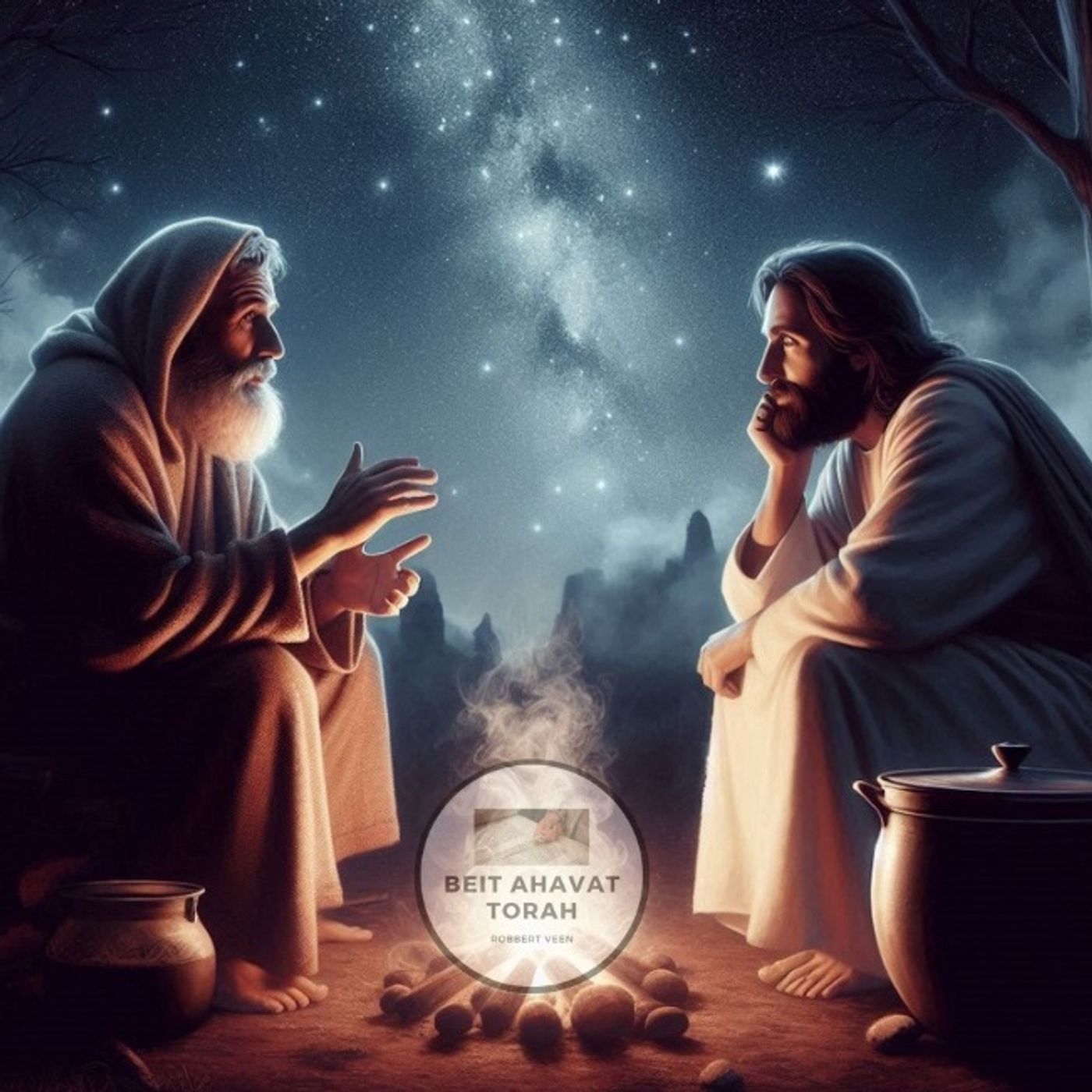
Comparative theology: Judaism and Christianity in conversation.
-
5
Circumcision of the Heart: Deuteronomy through Jeremia to Paul
This episode traces the powerful biblical idea of the “circumcision of the heart” from Deuteronomy to Jeremiah to Paul.We explore how Deuteronomy 30 introduces a divine inner transformation that goes deeper than ritual, how Jeremiah re‑frames this promise during the crisis of exile as the Torah written on the heart, and how Jewish tradition consistently reads this as a deepening—not a replacement—of covenantal obedience.We then follow Paul’s bold reinterpretation, in which the inner work of the Spirit becomes detached from the Torah and redefined through Christ.Along the way, we draw on major Jewish thinkers—Jacob Neusner, Abraham Joshua Heschel, and Daniel Boyarin—who each highlight why Paul’s move represents not continuity but a dramatic reorientation of Israel’s story. The result is a rich, provocative journey through Scripture, tradition, and theological transformation.
-
4
Levinas on Christianity
Emmanuel Levinas saw Christianity through a mix of respect, gratitude, and sharp critique. Influenced by Franz Rosenzweig, he believed Judaism and Christianity follow two separate but meaningful paths: Judaism as “eternal life,” Christianity as a historical mission.The Holocaust deeply shaped his view, revealing the moral failure of Christian Europe while also highlighting the courage of individual Christians who saved Jewish lives, including his own family.Levinas contrasted Jewish emphasis on ethical action with what he saw as Christianity’s focus on faith, mystery, and salvation. For him, God appears not in a divine-human figure but in the face of the vulnerable other.He rejected doctrines like the Incarnation and original sin, insisting that responsibility for others is the true source of holiness.He also criticized the political split between “Caesar” and “God,” arguing that it leaves politics without ethical grounding.And he firmly opposed reading Judaism as merely a precursor to Christianity, insisting on its independent spiritual value.In the end, Levinas didn’t seek harmony between the two religions but a shared ethical horizon: the call to responsibility for the other person.
-
3
The dying grain changes the world
Sermon in the Mennonite Church in Schagen, March 31st 2026.
-
2
The Experience of Horeb in Deuteronomy 4:10
The encounter between the Jewish and the Christian reading of Deuteronomy 4:10 opens a surprisingly fertile space. In the Jewish exegesis, as seen in Hirsch and the Ha‑emek Ha‑Davar, the revelation at Horeb stands at the center as an event that teaches the people to live in a posture of yir’ah, a disciplined reverence of the heart cultivated through listening, remembering, and transmitting. The emphasis falls on the immediacy of God’s spoken word, on the collective experience of holiness, and on the pedagogical task of planting this reverence anew in every generation. The Christian tradition recognizes in the same text an archetype of revelation that unfolds not through visible forms but through the heard word that addresses the heart and forms the community. Where Jewish exegesis highlights the inner art of living before God’s presence, Christian theology sees in this verse the structure of a revelation that continues in preaching, communal life, and the transmission of faith. In this way a resonance emerges between the two traditions: the revelation at Horeb becomes both a source of Jewish spiritual life and a foreshadowing of the Christian conviction that God makes Himself known through the word that is heard, preserved, and handed on.
-
1
Jesus and the Pharisees
This episode explores the difference between Jesus and the Pharisees from a Jewish perspective, especially as described by scholar Jacob Neusner. The Pharisees understood the Torah as a daily path of sanctification. Their practices—ritual handwashing, food purity, sabbath boundaries, tithing, and household purity—were meant to shape Israel into a holy people in every moment of life. The Mishnah preserves this vision in detail.Jesus, however, taught with a sense of eschatological urgency: the Kingdom of God was near. Because of that, he shifted the focus from ritual practice to inner transformation. He challenged purity laws, sabbath restrictions, and the binding nature of vows, placing moral intention above halachic structure. For the Pharisees, this was not a deepening of the Torah but a move outside the halachic conversation altogether.Even compared with the schools of Hillel and Shammai—who disagreed on many points but shared a commitment to the Torah—Jesus stands apart. He does not refine halacha; he reframes it in light of the coming Kingdom.According to Neusner, the deepest difference lies in the role of Israel. The Pharisees see Israel as a concrete people with a historical calling to keep the Torah. Jesus speaks of a new community shaped by inner renewal. For that reason, Judaism can respect Jesus as a teacher, but cannot follow him as a guide for covenantal life.
We're indexing this podcast's transcripts for the first time — this can take a minute or two. We'll show results as soon as they're ready.
No matches for "" in this podcast's transcripts.
No topics indexed yet for this podcast.
Loading reviews...
ABOUT THIS SHOW
Comparative theology: Judaism and Christianity in conversation.
HOSTED BY
Robbert Veen
CATEGORIES
Loading similar podcasts...
Frequently Asked Questions
How many episodes does Theology Channel have?
Theology Channel currently has 5 episodes available on PodParley. New episodes are automatically indexed when they're published to the podcast feed.
What is Theology Channel about?
Comparative theology: Judaism and Christianity in conversation.
How often does Theology Channel release new episodes?
Theology Channel has 5 episodes. Check the episode list to see recent publication dates and frequency.
Where can I listen to Theology Channel?
You can listen to Theology Channel on PodParley by clicking any episode. We provide an embedded audio player for direct listening, and you can also subscribe via your preferred podcast app using the RSS feed.
Who hosts Theology Channel?
Theology Channel is created and hosted by Robbert Veen.
URL copied to clipboard!