
PODCAST · tv
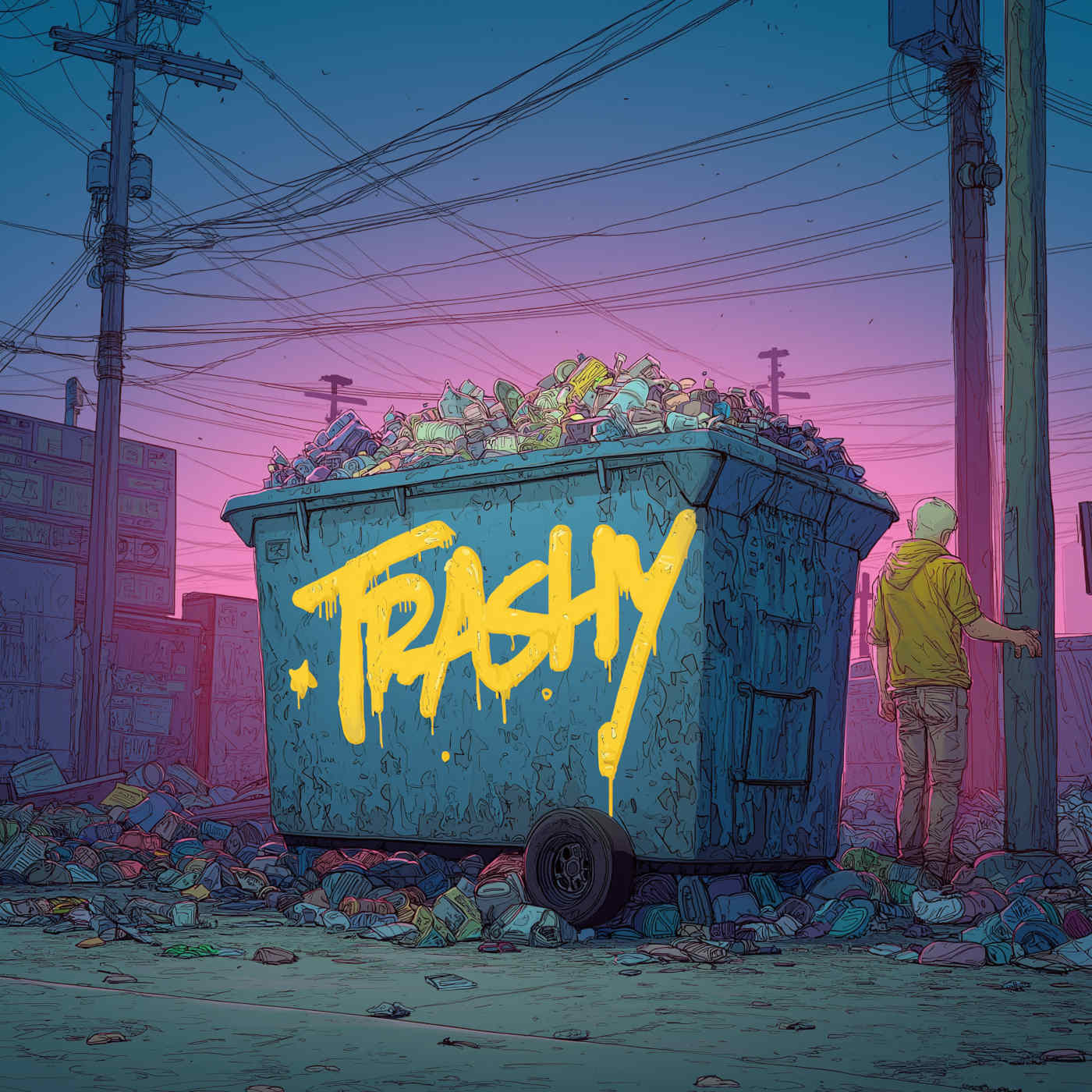
Trashy
by Chris Garcia
Trashy is a podcast about the culture that worked because it wasn’t supposed to matter. The shows, scandals, stunts, and spectacles people watched obsessively and then pretended not to care about. Not misunderstood art. Not guilty pleasures. Just things built to grab attention, burn hot, and leave a mess behind. Each episode digs into the moments when embarrassment became entertainment, outrage became currency, and humiliation turned into a business model. If it was disposable, undeniable, and impossible to look away from, it belongs here.
-
13
50 Shades of Gray
Episode Title: The "Inner Goddess" Phenomenon: 15 Years of 50 Shades Episode Number: [Insert Number] Release Date: March 17, 2026 Episode Summary In 2012, a silver tie on a book cover changed the publishing world forever. Originally written as Master of the Universe—a Twilight fan fiction posted on a BlackBerry—E.L. James’s trilogy became a global juggernaut, outselling Harry Potter and bringing erotica into the suburban mainstream. In this episode, we’re peeling back the "Grey" layers. We dive into the controversial "Mommy Porn" label, the friction between BDSM reality and Christian Grey’s "Red Room," and the Hollywood "Cold War" that happened behind the scenes of the billion-dollar film franchise. Whether you loved the books or read them just to see what the fuss was about, we’re exploring how this "cultural glitch" paved the way for the modern #BookTok era. What We Cover in This Episode: The Fan-Fic to Riches Pipeline: How "filing off the serial numbers" from Edward and Bella created a new publishing blueprint. The "Grey Effect": Why hardware stores were suddenly selling out of rope and duct tape in the summer of 2012. The Consent Conversation: A deep dive into the BDSM community’s pushback and the blurred lines between passion and control. The Hollywood Feud: Why director Sam Taylor-Johnson described filming the first movie as "walking through a swamp." The Legacy: How 50 Shades normalized "spice" and created the modern romance boom on social media. Key Timestamps: [00:00] Cold Open: The Subway Reading Revolution [05:00] Snowqueens Icedragon: The Secret Origin Story [15:00] Marketing Genius: Why the "Silver Tie" worked [28:00] The Red Room vs. Reality: BDSM Experts weigh in [42:00] Casting Chaos & On-Set Drama [55:00] Final Verdict: Literary Disaster or Cultural Masterpiece? Mentioned in This Episode: Master of the Universe (Original Fan Fiction) Stripped (Sam Taylor-Johnson’s directorial debut) The "Inner Goddess" (Infamous prose analysis) Join the Conversation: Did you have a 50 Shades book club back in the day? Or are you just now discovering the "spice" on TikTok? Tag us on social media @[YourPodcastHandle] and let us know your thoughts! Tip Enjoyed the episode? Leave us a 5-star review on Apple Podcasts! It helps other "inner goddesses" find the show. This podcast is powered by Pinecast.
-
12
Married...with CHildren
Trashy – Show Notes Married with Children: The First Proudly Trashy Sitcom Before reality TV made humiliation a business model, before dysfunctional families became mainstream entertainment, there was one show that proudly declared itself trash. Married with Children ran from 1987 to 1997 and became one of the most influential sitcoms ever broadcast on television. It launched the network that would become Fox Broadcasting Company, made stars of Ed O’Neill, Katey Sagal, Christina Applegate, and David Faustino, and pushed the boundaries of what could be shown and joked about on network television. Instead of lovable family warmth, the Bundys gave audiences something far more honest: resentment, laziness, cheap beer, insults, and a strangely genuine sense of loyalty. Basic Series Information Married with Children premiered on April 5, 1987 on the newly launched Fox network and ran for 11 seasons and 259 episodes. The show follows the Bundy family living in Chicago: Al Bundy, a bitter shoe salesman who peaked in high school Peggy Bundy, his glamorous and lazy wife Kelly Bundy, their dim but charming daughter Bud Bundy, their scheming and perpetually unlucky son The family spends most of their time insulting each other, avoiding work, and failing spectacularly at self-improvement. Despite the cynicism, the show developed a cult following and eventually became Fox’s first major hit. More information:https://www.imdb.com/title/tt0092400/ Series overview:https://en.wikipedia.org/wiki/Married..._with_Children Fox network history:https://www.britannica.com/topic/Fox-Broadcasting-Company The Bundy Family Al Bundy Played by Ed O’Neill, Al Bundy became one of the most iconic sitcom characters of all time. Al is a former high school football star who now sells women’s shoes and hates his life. His proudest achievement is scoring four touchdowns in one game at Polk High. He spends most evenings sitting on the couch with his hand down his pants, watching television and complaining about customers. Ed O’Neill later became famous for another sitcom role in Modern Family. Biography:https://www.imdb.com/name/nm0642368/ Career overview:https://en.wikipedia.org/wiki/Ed_O%27Neill Peggy Bundy Peggy is played by Katey Sagal, whose towering red hair and tight outfits became one of television’s most recognizable looks. Peggy does not cook, does not clean, and rarely leaves the couch. She spends Al’s paycheck on clothes and beauty products. Despite this, Peggy and Al share a strange loyalty and affection that often emerges underneath the insults. Katey Sagal later starred in Sons of Anarchy and Futurama. Biography:https://www.imdb.com/name/nm0005401/ Career details:https://en.wikipedia.org/wiki/Katey_Sagal Kelly Bundy Kelly Bundy, played by Christina Applegate, was originally written as a stereotypical “dumb blonde,” but the character evolved into one of the show’s most charismatic figures. Kelly is boy-crazy, fashion-obsessed, and hilariously oblivious, but she also becomes a surprisingly savvy hustler later in the series. Christina Applegate went on to major success in film and television, including Dead to Me. Biography:https://www.imdb.com/name/nm0000775/ Career overview:https://en.wikipedia.org/wiki/Christina_Applegate Bud Bundy Bud Bundy, played by David Faustino, is the self-styled intellectual of the family. Bud is obsessed with getting dates but almost never succeeds. He frequently adopts ridiculous alter egos such as “Grandmaster B.” Actor biography:https://www.imdb.com/name/nm0269022/ Career details:https://en.wikipedia.org/wiki/David_Faustino The Neighbors A huge part of the show’s humor came from the Bundys’ rivalry with their neighbors. The first major neighbor was Steve Rhoades, played by David Garrison, and his wife Marcy. Steve eventually left the show, replaced by Jefferson D’Arcy, played by Ted McGinley. Marcy herself became one of television’s most memorable antagonists to Al Bundy. Character overview:https://en.wikipedia.org/wiki/List_of_Married..._with_Children_characters The Shoe Store Many of the show’s funniest scenes occur at Al’s workplace, the fictional Gary’s Shoes and Accessories. There, Al insults customers while suffering endless humiliation from his manager and coworkers. The shoe store setting allowed the show to deliver some of its most infamous jokes about consumer culture, marriage, and suburban life. Set information:https://marriedwithchildren.fandom.com/wiki/Gary%27s_Shoes_and_Accessories The Controversy In 1989 the show became the center of a national controversy when Michigan activist Terry Rakolta launched a campaign to boycott the program. She objected to sexual jokes and what she considered indecent content. Ironically, the boycott made the show far more popular. Story coverage:https://www.latimes.com/archives/la-xpm-1989-02-09-ca-2590-story.html Historical summary:https://en.wikipedia.org/wiki/Married..._with_Children#Controversy The NO MA’AM Movement One of the show’s recurring jokes was Al’s membership in NO MA’AM (National Organization of Men Against Amazonian Masterhood). This fictional group of disgruntled men met in Al’s living room to complain about women and modern society. Despite the absurd premise, the episodes remain some of the show’s most beloved. NO MA’AM details:https://marriedwithchildren.fandom.com/wiki/NO_MA%27AM Cultural Impact Married with Children helped define the irreverent tone of the Fox network and influenced many later sitcoms. Without it, shows like: The Simpsons Family Guy It’s Always Sunny in Philadelphia might not have found a place on television. The show proved audiences were ready for characters who were selfish, rude, and openly flawed. Impact overview:https://www.vulture.com/2017/04/married-with-children-oral-history.html Cultural analysis:https://www.rollingstone.com/tv-movies/tv-movie-features/married-with-children-history-1201354/ Where to Watch The series is widely available on streaming services and digital platforms. Streaming information:https://www.justwatch.com/us/tv-show/married-with-children Official Fox page:https://www.fox.com/married-with-children/ DVD releases:https://www.amazon.com/Married-with-Children-Complete-Series/dp/B07YF4Q3R5 Recommended Episodes Some of the most famous episodes include: “Pilot” (1987) “Her Cups Runneth Over” “You Better Shop Around” “A Dump of My Own” “The Egg and I” Episode guide:https://www.tvguide.com/tvshows/married-with-children/episodes/1000226334/ Further Reading Oral history of the show:https://www.vulture.com/article/married-with-children-oral-history.html Chicago Tribune retrospective:https://www.chicagotribune.com/entertainment/tv/ct-ent-married-with-children-anniversary-20170405-story.html Television Academy archive:https://www.emmys.com/shows/married-children This podcast is powered by Pinecast.
-
11
Von Dutch
pisode Show Notes Von Dutch – Truckers, Tattoos, and the Monetization of Bad DecisionsTagline: If you hate yourself for loving it, it’s probably Trashy. Below are research links, background sources, and cultural references mentioned in the episode. All URLs are written out in full. 🔥 The Real Von Dutch (Kenny Howard) Von Dutch (Kenny Howard) – Wikipediahttps://en.wikipedia.org/wiki/Von_Dutch Kustom Kulture & Von Dutch overview – Hot Rod Magazine (archival references)https://www.hotrod.com/articles/the-legend-of-von-dutch/ Flying Eyeball design background – Kustomrama Archivehttps://www.kustomrama.com/wiki/Von_Dutch Los Angeles Times obituary (1992 archive reference)https://www.latimes.com/archives/la-xpm-1992-09-20-mn-1119-story.html 🧢 The Brand Relaunch & Christian Audigier Christian Audigier – Wikipediahttps://en.wikipedia.org/wiki/Christian_Audigier Von Dutch brand history – Business of Fashion profile (overview)https://www.businessoffashion.com/articles/news-analysis/the-true-story-of-von-dutch/ Von Dutch ownership disputes and lawsuits – Los Angeles Times coveragehttps://www.latimes.com/business/la-fi-vondutch19apr19-story.html Ed Hardy brand expansion (post–Von Dutch era)https://en.wikipedia.org/wiki/Ed_Hardy 📸 Celebrity Culture & The Paparazzi Era Paris Hilton – Wikipediahttps://en.wikipedia.org/wiki/Paris_Hilton Nicole Richie – Wikipediahttps://en.wikipedia.org/wiki/Nicole_Richie The Simple Life (2003–2007)https://en.wikipedia.org/wiki/The_Simple_Life Britney Spears – Wikipediahttps://en.wikipedia.org/wiki/Britney_Spears Justin Timberlake – Wikipediahttps://en.wikipedia.org/wiki/Justin_Timberlake Ashton Kutcher – Wikipediahttps://en.wikipedia.org/wiki/Ashton_Kutcher Rise of paparazzi culture in early 2000s – Vanity Fair retrospectivehttps://www.vanityfair.com/style/2018/07/2000s-paparazzi-culture 💎 Y2K Fashion Context Juicy Couture – Wikipediahttps://en.wikipedia.org/wiki/Juicy_Couture Ed Hardy – Wikipediahttps://en.wikipedia.org/wiki/Ed_Hardy Y2K fashion overview – Vogue retrospectivehttps://www.vogue.com/article/y2k-fashion-trend-explained The trucker hat trend – GQ retrospectivehttps://www.gq.com/story/trucker-hat-history ⚖️ Brand Controversy & Documentary The Curse of Von Dutch: A Brand to Die For (Hulu documentary)https://www.hulu.com/series/the-curse-of-von-dutch-a-brand-to-die-for-8c1f7d8a-2e1e-4e0f-b7a5-9bdbb4f6b6a0 Hulu press release (docuseries details)https://press.hulu.com/shows/the-curse-of-von-dutch-a-brand-to-die-for/ 🛍️ Revival & Y2K Nostalgia Modern Von Dutch websitehttps://vondutch.com/ Depop resale trends – Y2K fashion resale coverage (Business Insider)https://www.businessinsider.com/gen-z-y2k-fashion-resale-trends-depop-2021-5 Y2K nostalgia analysis – The Guardianhttps://www.theguardian.com/fashion/2021/mar/22/y2k-fashion-is-back-why 🎧 Episode Takeaways Von Dutch represents: The commercialization of outlaw aesthetics The birth of paparazzi-driven brand dominance The peak of logo culture before quiet luxury The commodification of rebellion It was not just a hat.It was a moment. This podcast is powered by Pinecast.
-
10
Girls Gone Wild
GIRLS GONE WILD — SHOW NOTES Episode Summary In the late 1990s and early 2000s, Girls Gone Wild turned drunken spring break chaos into one of the most lucrative late-night media empires in America. Created by entrepreneur Joe Francis, the franchise used infomercials to sell DVDs of college-aged women flashing or engaging in explicit behavior, marketed as “real girls” rather than performers. At its peak, the brand generated tens of millions of dollars annually and became a cultural shorthand for reckless youth culture. This episode examines how the business worked, why it exploded, the legal scandals involving underage participants and coercion claims, and how the internet ultimately made the model obsolete. KEY FIGURES Joe Francis — Founder and CEO of Mantra EntertainmentBorn April 1, 1973, Atlanta, Georgia Biography:https://www.britannica.com/biography/Joe-Francis CORE HISTORY & BACKGROUND Girls Gone Wild — Wikipedia overviewhttps://en.wikipedia.org/wiki/Girls_Gone_Wild_(franchise) Mantra Entertainment (parent company)https://en.wikipedia.org/wiki/Mantra_Entertainment Joe Francis — Wikipediahttps://en.wikipedia.org/wiki/Joe_Francis BUSINESS MODEL & CULTURAL IMPACT CNN — “Inside the Girls Gone Wild empire”https://www.cnn.com/2004/SHOWBIZ/TV/03/03/girls.gone.wild/ ABC News — Rise of the franchisehttps://abcnews.go.com/Entertainment/story?id=102825\&page=1 Forbes — Profile of Joe Francishttps://www.forbes.com/profile/joe-francis/ LEGAL CONTROVERSIES & CRIMINAL CASES Panama City Beach investigations (underage filming allegations)New York Times coverage:https://www.nytimes.com/2003/03/30/us/police-in-florida-investigate-videos-of-teen-sex.html Federal charges and plea agreement (2006)U.S. Department of Justice release:https://www.justice.gov/archive/usao/cac/pr2006/138.html Joe Francis tax evasion case (2011)Associated Press via NBC News:https://www.nbcnews.com/id/wbna43578447 Conviction related to assault and false imprisonment (2013)Los Angeles Times:https://www.latimes.com/local/lanow/la-me-ln-joe-francis-conviction-20130507-story.html DECLINE OF THE BRAND Bankruptcy filing of Mantra Entertainment (2013)Wall Street Journal:https://www.wsj.com/articles/SB10001424127887324374004578479961580301070 Impact of internet pornography and streaming on the businessBusiness Insider analysis:https://www.businessinsider.com/girls-gone-wild-joe-francis-2013-5 ADDITIONAL CONTEXT Spring Break culture and media coveragePBS Frontline — “Merchants of Cool” (youth marketing culture):https://www.pbs.org/wgbh/pages/frontline/shows/cool/ Documentary appearances and interviews with FrancisCNBC American Greed episode (overview page):https://www.cnbc.com/american-greed/ CONTENT NOTE This episode discusses exploitation, sexual coercion allegations, criminal cases, and media ethics. This podcast is powered by Pinecast.
-
9
Howard Stern
Howard Stern: Shock, Shame, and the Business of Attention Before podcasts, before influencers, before outrage became a business model, there was Howard Stern. This episode of Trashy looks at how Stern turned humiliation, sex, cruelty, and radical overexposure into one of the most profitable media empires of the late 20th century — and why his legacy feels increasingly uncomfortable in hindsight. We talk about: Shock jock radio as spectacle, exploitation, and theater The 1990s cultural appetite for humiliation as entertainment Stern’s treatment of women, sex workers, and on-air staff Where satire ends and harm begins The “evolved Stern” narrative and why it rings hollow for many listeners How modern podcast culture borrows his tactics while pretending it didn’t Howard Stern didn’t just chase attention — he systematized it. The question isn’t whether he knew what he was doing. It’s whether knowing matters. If you hate yourself for loving it, it’s probably Trashy. Links & References Howard Stern official sitehttps://www.howardstern.com Howard Stern on SiriusXMhttps://www.siriusxm.com/channels/howard-stern Wikipedia overview of Howard Sternhttps://en.wikipedia.org/wiki/Howard_Stern FCC fines related to The Howard Stern Showhttps://www.fcc.gov/media/radio/fines-notices-apparent-liability Rolling Stone on Howard Stern’s legacy and influencehttps://www.rollingstone.com/culture/culture-features/howard-stern-legacy-1234612045/ The New York Times on Stern’s cultural impact and reinventionhttps://www.nytimes.com/2019/05/13/arts/howard-stern-book-interview.html This podcast is powered by Pinecast.
-
8
Rocky Horror Picture Show
TRASHY — The Rocky Horror Picture Show If you hate yourself for loving it, it’s probably Trashy. This episode dives into The Rocky Horror Picture Show, not as a movie, but as a phenomenon that refused to die. Released in 1975 to poor reviews and confused audiences, Rocky Horror was never meant to last. It wasn’t a hit. It wasn’t prestigious. It wasn’t even particularly successful on its first run. What it became instead was something stranger and far more enduring. A midnight ritual. We trace how a campy, chaotic musical about aliens, corsets, and sexual panic transformed into one of the longest-running theatrical releases in history. From its origins as a small London stage production to its resurrection in grimy American theaters, Rocky Horror survived because audiences refused to sit quietly. This episode looks at how participation replaced spectatorship. How callbacks formed. How costumes became mandatory. How people found permission to experiment with gender, desire, performance, and identity long before mainstream culture was ready for it. We talk about the 1970s and 1980s midnight movie circuit. The art-house theaters. The lines around the block. The rice. The toilet paper. The fishnets. The joy of being weird in public, together. We also examine why Rocky Horror mattered especially to queer communities, outsiders, theater kids, punks, goths, and anyone who didn’t fit cleanly into the world they were handed. It wasn’t about the plot. It was about the room. And we don’t ignore the mess. The dated jokes. The arguments around representation. The way nostalgia can clash with modern discomfort. Why some people still defend it fiercely, and why others walked away. Because Trashy doesn’t pretend its subjects are perfect. It asks why we loved them anyway. In this episode: How Rocky Horror failed before it succeeded The rise of the midnight movie Audience participation as performance art Why the crowd mattered more than the film Costumes, callbacks, and chaos Queer space before it was safe to name it Why people kept coming back for decades What still works What doesn’t And why the experience endures even when the movie doesn’t Recommended Reading and Viewing https://www.rockyhorror.com https://www.bfi.org.uk/features/rocky-horror-picture-show-history https://www.theguardian.com/film/2015/sep/25/rocky-horror-picture-show-40-years https://www.nytimes.com/2015/09/27/movies/rocky-horror-picture-show.html https://www.vulture.com/2015/10/rocky-horror-picture-show-legacy.html This podcast is powered by Pinecast.
-
7
Episode 6 - Leisure Suit Larry
Leisure Suit Larry: When Horny Point-and-Click Ruled the 80s In this episode of Trashy, we dig into Leisure Suit Larry, the shockingly successful, deeply uncomfortable, and historically important adult comedy game series that somehow became a cornerstone of mainstream PC gaming. Created by Al Lowe and released by Sierra On-Line in 1987, Leisure Suit Larry in the Land of the Lounge Lizards dropped players into the polyester-soaked world of Larry Laffer, a balding, socially maladjusted man in search of sex, love, and validation, usually failing at all three. At a time when video games were still associated with children and arcades, Leisure Suit Larry arrived as a full-on rebuttal: bawdy humor, sexual innuendo, profanity, sex workers, and jokes that now feel wildly outdated. Sierra tried to soften the blow with an “age-verification” trivia quiz, but the game’s reputation spread fast, making it both notorious and irresistible. Against all odds, it sold extremely well. The series ran through the late 80s and 90s, evolving alongside PC technology, shifting from text parser to point-and-click, from EGA to VGA, and from sleazy parody to self-aware farce. Some entries sharpened the satire, others leaned into juvenile humor, and at least one nearly killed the franchise outright. Along the way, Larry became a strange cultural artifact: part sex comedy, part commentary on masculinity, part relic of an era when “edgy” meant punching every possible boundary. In this episode, we talk censorship, corporate risk, gamer panic, moral outrage, declining comedy standards, and why Leisure Suit Larry still matters as a marker of how “trashy” media keeps forcing itself into the mainstream, whether anyone is comfortable with it or not. If you hate yourself for loving it, it’s probably Trashy. Links & Further Reading https://en.wikipedia.org/wiki/Leisure_Suit_Larry https://www.mobygames.com/game-group/leisure-suit-larry-series https://archive.org/details/LeisureSuitLarry1DOS https://www.sierragamers.com https://www.al-lowe.com This podcast is powered by Pinecast.
-
6
Episode 5 - Harlequin Romances
Episode Description This episode of Trashy takes a deep, unsentimental look at Harlequin romance novels, the most industrialized, rule-bound, and commercially successful form of popular fiction of the last seventy-five years. What began in postwar Canada as a modest paperback reprint operation became a global publishing machine that trained readers to expect very specific emotional rhythms, moral frameworks, and romantic outcomes, delivered on a strict monthly schedule. We trace the history of Harlequin Enterprises, founded in Winnipeg in 1949, and its pivotal 1957 distribution deal with Britain’s Mills & Boon. That partnership locked Harlequin into a highly controlled romance format built around short novels, consistent word counts, conservative sexual politics, and a belief that readers wanted familiarity more than surprise. By the 1970s and 1980s, Harlequin was selling well over 100 million books a year worldwide, largely through supermarkets, drugstores, and subscription programs. The episode explains how Harlequin’s category romance system worked in practice. Editors enforced detailed guidelines governing plot, tone, character behavior, and even acceptable professions for heroes and heroines. Lines such as Harlequin Presents and Harlequin Romance functioned almost like television genres, training readers to know exactly what kind of story they were buying before opening the cover. Doctors, tycoons, ranchers, and emotionally unavailable men were not accidents but structural requirements. We also look at the writers who thrived inside this system and those who used it as a stepping stone. Figures like Barbara Cartland, Penny Jordan, Debbie Macomber, and Nora Roberts built massive readerships by mastering the form, while the rise of longer, more explicit romances in the 1970s began to strain Harlequin’s carefully policed boundaries. The episode closes by examining Harlequin’s reputation as a “guilty pleasure,” the gendered contempt directed at its readers, and why these books mattered culturally even when critics refused to take them seriously. Topics Covered The founding of Harlequin in 1949 The Mills & Boon partnership and British influence Category romance and enforced narrative formulas Harlequin Presents vs. Harlequin Romance Author guidelines, word counts, and editorial control Supermarket distribution and subscription readers Feminist critiques and reader loyalty Harlequin’s move into ebooks and digital platforms Key Books & Turning Points The Flame and the Flower by Kathleen Woodiwiss , and the shift toward longer, more sexually explicit romance The late-1970s softening of Harlequin’s “no sex” rules The rise of branded romance lines as consumer signals Links & Further Reading Harlequin official sitehttps://www.harlequin.com Harlequin corporate historyhttps://www.harlequin.com/about-us Mills & Boon historyhttps://www.millsandboon.co.uk/about-us/our-history/ Smithsonian Magazine – history of Harlequin romancehttps://www.smithsonianmag.com/arts-culture/the-history-of-the-harlequin-romance-180975015/ New York Times – Harlequin and the romance businesshttps://www.nytimes.com/2019/06/15/books/romance-novels-harlequin.html The Atlantic – in defense of romance novelshttps://www.theatlantic.com/entertainment/archive/2014/12/in-defense-of-romance-novels/383212/ Nora Roberts official sitehttps://noraroberts.com Debbie Macomber official sitehttps://www.debbiemacomber.com Why This Is Trashy Identical covers. Mandatory happy endings. Emotional satisfaction engineered at scale. Harlequin romance didn’t just sell love stories. It sold predictability, comfort, and fantasy by the millions, and that makes it pure Trashy. This podcast is powered by Pinecast.
-
5
Episode 4 - XPW
Episode Description This episode of Trashy dives into XPW, one of the most infamous, short-lived, and aggressively controversial professional wrestling promotions of the early 2000s. Founded in 1999 in Southern California, Xtreme Pro Wrestling set out to be the most violent, explicit, and transgressive alternative to mainstream wrestling, pushing hardcore aesthetics far past what even ECW had normalized. Blood, sexual shock value, real injuries, and deliberately offensive storylines were not accidents. They were the point. XPW was created and financed by Rob Black, owner of the adult company Extreme Associates, and the promotion reflected that origin openly. Shows regularly featured graphic weapons use, sexualized angles, and unfiltered crowd hostility, often staged in Southern California venues like the Grand Olympic Auditorium and the Los Angeles Sports Arena. The company leaned heavily into the post-ECW vacuum after ECW’s bankruptcy in early 2001, marketing itself as the true heir to extreme wrestling just as the national wrestling boom began to collapse. The episode examines XPW’s most notorious stars, including New Jack, Supreme, Sabu, and Vampiro, and how the promotion blurred the line between worked violence and genuine danger. We also break down XPW’s infamously unsafe working conditions, lack of medical oversight, and the culture that encouraged performers to escalate risk in front of increasingly desensitized audiences. Finally, we cover the collapse. In 2002, Rob Black and Extreme Associates became the target of a high-profile federal obscenity prosecution that effectively destroyed XPW’s financial backing. The promotion shut down soon after, leaving behind a legacy of injured wrestlers, banned footage, and a reputation as one of the most reckless experiments in wrestling history. XPW would later be revived in the 2020s in a far tamer form, trading notoriety for nostalgia. Topics Covered The founding of Xtreme Pro Wrestling in Los Angeles Rob Black, adult film money, and wrestling as shock spectacle Life after ECW and the extreme wrestling vacuum of 2001 Notorious XPW matches, weapons, and bloodshed Performer injuries and lack of safety standards The federal obscenity case against Extreme Associates XPW’s shutdown and later revival Key Names & Figures Rob Black New Jack Supreme Sabu Vampiro Links & Further Reading XPW official site (revival era)https://xpwrestling.com XPW profile at Cagematchhttps://www.cagematch.net/?id=8\&nr=11 Wrestling Observer on XPW history and collapsehttps://www.f4wonline.com Dark Side of the Ring episode guide (XPW context)https://www.vicetv.com/en_us/show/dark-side-of-the-ring Federal obscenity case background on Extreme Associateshttps://www.justice.gov/archive/criminal/ceos/cases/extreme-associates.html Los Angeles Times on extreme wrestling in Californiahttps://www.latimes.com/archives New Jack career overviewhttps://www.cagematch.net/?id=2\&nr=99 Why This Is Trashy Real blood. Real injuries. Porn money. No safety net. XPW wasn’t just wrestling gone wrong. It was a promotion built to see how far “too far” could go before the whole thing collapsed. That’s not just trashy. That’s legendary. This podcast is powered by Pinecast.
-
4
Episode Three - Jersey Shore
Recap Premiering on MTV in December 2009, Jersey Shore followed eight young adults living together in Seaside Heights, New Jersey, and quickly became one of the most culturally dominant reality TV shows of the 2010s. Marketed as an unscripted look at nightlife and summer jobs on the Jersey Shore, the series instead evolved into a tightly edited spectacle centered on club culture, relationship conflict, and hyper-performative identity. Concepts like GTL (Gym, Tan, Laundry), fist pumping, and blowout fights became defining elements, while cast members Snooki, The Situation, Pauly D, JWoww, Vinny, Ronnie, Sammi Sweetheart, and Angelina Pivarnick turned into reality TV celebrities almost overnight. The show regularly drew millions of viewers per episode and became MTV’s highest-rated series at the time, helping shift the network fully away from music programming and toward personality-driven reality television. Jersey Shore’s influence extended beyond ratings, shaping tabloid culture, meme language, nightclub aesthetics, and the economics of influencer branding years before Instagram dominated celebrity culture. The series also generated controversy for its depiction of so-called guido culture and its impact on Seaside Heights, drawing criticism from Italian-American organizations while simultaneously boosting tourism and media attention to the area. After ending its original run in 2012, the franchise returned with Jersey Shore Family Vacation, repositioning the cast as legacy reality figures navigating adulthood, marriage, addiction recovery, and long-term fame. More than a decade later, Jersey Shore remains a key reference point in discussions of reality TV excess, celebrity manufacturing, and early 2010s pop culture. Links MTV official Jersey Shore pagehttps://www.mtv.com/shows/jersey-shore Wikipedia: Jersey Shorehttps://en.wikipedia.org/wiki/Jersey_Shore Variety coverage and ratings history https://variety.com/t/jersey-shore/ Seaside Heights background and media impact https://www.nj.gov/dca/divisions/dlgs/programs/seaside_heights.html MTV press archive on Jersey Shore https://www.mtvpress.com/series/jersey-shore This podcast is powered by Pinecast.
-
3
-
2
S1E1 - Episode 1 - The Jerry Springer Show
Episode Summary For nearly three decades, The Jerry Springer Show turned private humiliation into public entertainment. Premiering in 1991 and exploding in popularity by the mid-1990s, Springer didn’t invent trash TV, but it perfected the formula: surprise confessions, ambush confrontations, chanting audiences, and conflict that never resolved. This episode looks at how the show industrialized embarrassment, why it worked so well in the 1990s, and how its legacy runs straight through reality television, influencer meltdowns, and the modern outrage economy. We also examine the darker side of the format, including the 2000 murder of guest Nancy Campbell-Panitz, the parody boom that followed, and how Springer became so culturally iconic it was eventually turned into an opera. Key Topics Covered • The launch of The Jerry Springer Show in 1991 and its shift to tabloid TV• Jerry Springer’s political past and public scandals• The show’s production style and escalation formula• The 2000 murder of Nancy Campbell-Panitz• Night Stand with Dick Dietrick as parody proof of cultural saturation• Jerry Springer: The Opera and the leap from trash TV to cultural myth• How Springer trained audiences for modern humiliation-based media Sources and Further Reading General history of the showhttps://en.wikipedia.org/wiki/The_Jerry_Springer_Showhttps://www.britannica.com/topic/The-Jerry-Springer-Show Jerry Springer biographyhttps://en.wikipedia.org/wiki/Jerry_Springer https://www.nytimes.com/2023/04/27/arts/television/jerry-springer-dead.html Nancy Campbell-Panitz case https://www.latimes.com/archives/la-xpm-2000-jul-26-mn-59579-story.html https://www.cnn.com/2002/LAW/05/14/talk.show.murder/index.html https://www.nytimes.com/2002/03/30/us/man-convicted-in-killing-of-woman-who-appeared-on-jerry-springer.html “I Married a Horse” episode coverage https://www.snopes.com/fact-check/i-married-a-horse/ https://www.chicagotribune.com/1998/05/20/jerry-springers-horse-show Night Stand with Dick Dietrickhttps://en.wikipedia.org/wiki/Night_Stand https://www.avclub.com/night-stand-was-the-perfect-parody-of-trash-tv-1798234025 Jerry Springer: The Opera[https://en.wikipedia.org/wiki/Jerry_Springer:_The_Opera ]( This podcast is powered by Pinecast.
We're indexing this podcast's transcripts for the first time — this can take a minute or two. We'll show results as soon as they're ready.
No matches for "" in this podcast's transcripts.
No topics indexed yet for this podcast.
Loading reviews...
ABOUT THIS SHOW
Trashy is a podcast about the culture that worked because it wasn’t supposed to matter. The shows, scandals, stunts, and spectacles people watched obsessively and then pretended not to care about. Not misunderstood art. Not guilty pleasures. Just things built to grab attention, burn hot, and leave a mess behind. Each episode digs into the moments when embarrassment became entertainment, outrage became currency, and humiliation turned into a business model. If it was disposable, undeniable, and impossible to look away from, it belongs here.
HOSTED BY
Chris Garcia
Loading similar podcasts...
Frequently Asked Questions
How many episodes does Trashy have?
Trashy currently has 12 episodes available on PodParley. New episodes are automatically indexed when they're published to the podcast feed.
What is Trashy about?
Trashy is a podcast about the culture that worked because it wasn’t supposed to matter. The shows, scandals, stunts, and spectacles people watched obsessively and then pretended not to care about. Not misunderstood art. Not guilty pleasures. Just things built to grab attention, burn hot, and leave...
How often does Trashy release new episodes?
Trashy has 12 episodes. Check the episode list to see recent publication dates and frequency.
Where can I listen to Trashy?
You can listen to Trashy on PodParley by clicking any episode. We provide an embedded audio player for direct listening, and you can also subscribe via your preferred podcast app using the RSS feed.
Who hosts Trashy?
Trashy is created and hosted by Chris Garcia.
URL copied to clipboard!