
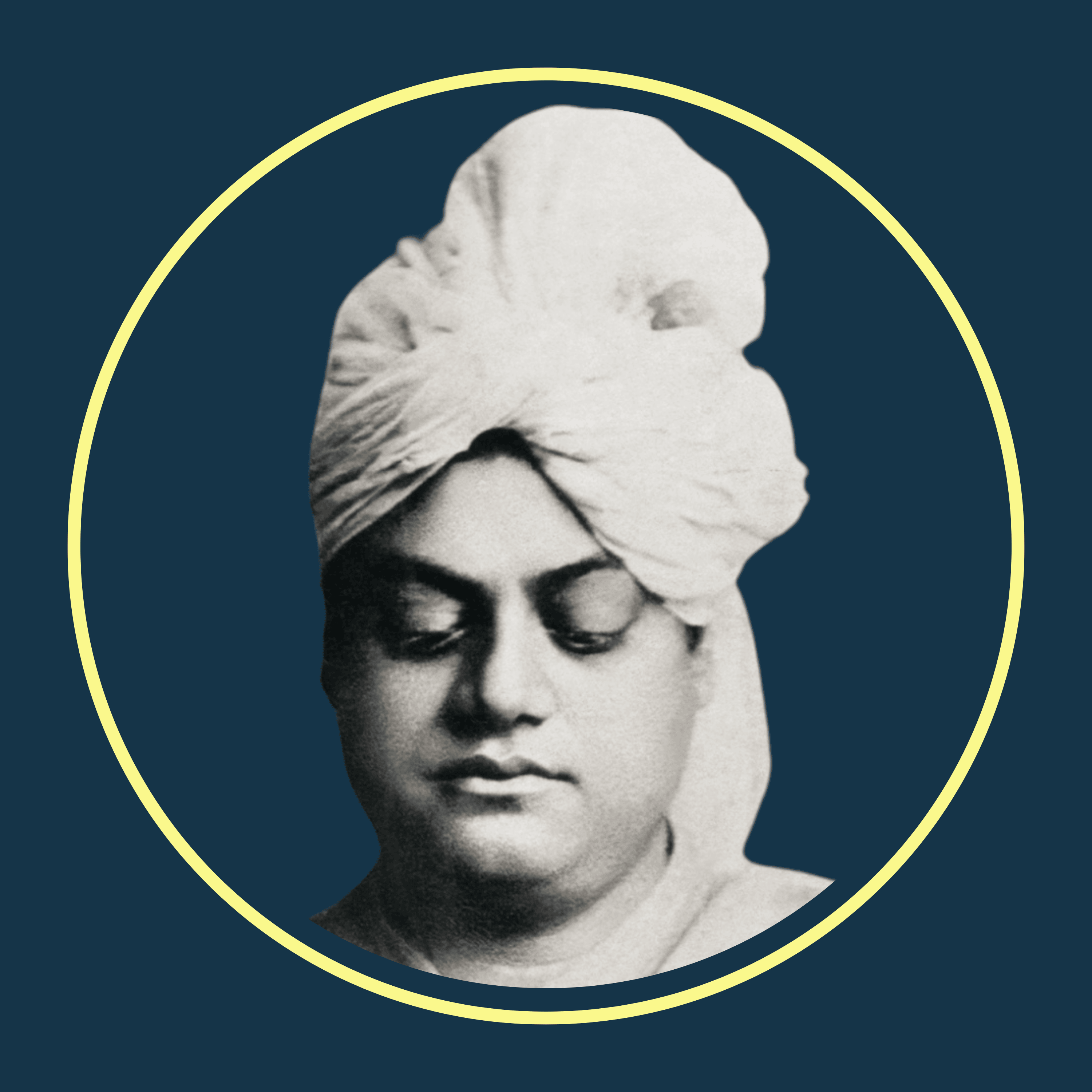
PODCAST · religion
Vedanta Society of Western Washington
by Vedanta Society of Western Washington
The Vedanta Society of Western Washington presents illuminating talks on Vedanta, the timeless philosophy that teaches the divinity of the soul, the unity of existence, and the harmony of all spiritual paths. This podcast brings together lectures from our resident swamis of the Ramakrishna Order alongside guest speakers dedicated to exploring spiritual Truth.These talks draw from classical Hindu scriptures as well as universal spiritual principles shared across religious traditions. You’ll hear reflections on the nature of the mind, the art of meditation, the search for meaning, navigating suffering, cultivating love and wisdom, and discovering inner freedom.The tone of the series is contemplative, thoughtful, and practical. Rather than offering quick fixes or slogans, these lectures guide listeners toward inner transformation through discernment, devotion, selfless service, and meditation. For seekers who value depth, clarity, and authenticity, this podcast offers a steady voice gro
-
267
The Karmically Challenged — Swami Manishananda
Recorded at the Vedanta Society of Western Washington on April 24, 2016.In this lecture, Swami Manishananda explores the Hindu doctrine of karma and its role in shaping human experience, suffering, growth, and spiritual evolution. Using humor, stories, and examples from daily life, he explains karma as the universal law of cause and effect governing thoughts, actions, habits, character, and destiny. The talk examines why individuals experience different circumstances in life and how Vedanta understands these differences not as arbitrary rewards or punishments, but as part of a larger moral and spiritual order unfolding across many lives. Swami Manishananda also discusses the relationship between karma, free will, and personal responsibility, emphasizing that while people inherit consequences from past actions, they also possess the ability to shape their future through present effort, self-discipline, and spiritual practice.Drawing from Vedanta, the Bhagavad Gita, and teachings from Sri Ramakrishna and Holy Mother Sri Sarada Devi, the lecture presents several approaches for dealing with life’s difficulties, including devotion to God, selfless work, discrimination between the permanent and impermanent, and the cultivation of inner detachment. Swami Manishananda explains that spiritual life gradually transforms one’s relationship to both pleasure and suffering, allowing the mind to remain steadier amid changing circumstances. Through reflections on patience, grace, meditation, and self-awareness, the talk presents karma not as fatalism, but as an opportunity for spiritual growth and deeper understanding.
-
266
Controlling the Turbulent Mind — Swami Bhaskarananda
Recorded at the Vedanta Society of Western Washington on April 17, 2016.In this lecture, Swami Bhaskarananda discusses the restless nature of the human mind and the spiritual disciplines traditionally used in Vedanta and Yoga to bring it under control. Using vivid analogies from Indian spiritual literature, he describes the turbulent mind as naturally unstable, driven by desire, distraction, and emotional agitation. The talk explores the influence of the three gunas — sattva, rajas, and tamas — on mental states and human behavior, explaining how calmness, restlessness, lethargy, ambition, confusion, and compassion arise through their changing dominance within the mind. Drawing from the Bhagavad Gita and the teachings of Patanjali, Swami Bhaskarananda emphasizes that steady practice and detachment from excessive sense enjoyment are essential for developing inner peace and concentration.The lecture also introduces the classical eightfold discipline of yoga, including ethical living, self-restraint, meditation, concentration, and spiritual contemplation. Swami Bhaskarananda explains how these practices gradually purify the mind and prepare it for deeper states of awareness and absorption. Throughout the talk, he presents meditation not as a quick technique for relaxation, but as a disciplined process requiring patience, moral clarity, and long-term practice. The overall emphasis is on cultivating mental steadiness, self-control, and spiritual awareness amid the distractions and pressures of ordinary life.
-
265
Mind: The Great Mystery — Swami Bhaskarananda
Recorded at the Vedanta Society of Western Washington on April 10, 2016.In this first talk on the nature of mind, Swami Bhaskarananda explores the mind as one of the great mysteries of human existence. Drawing from both Eastern and Western philosophy, he examines differing ideas about consciousness, thought, and the relationship between mind and matter. The lecture includes reflections on Greek philosophy, modern psychology, and Vedantic teachings, while also discussing thought transference, the influence of music on mental states, and the distinction between the mind, intellect, and ego. Throughout the talk, Swami Bhaskarananda emphasizes that the mind is not identical with the brain alone, but is understood in Hindu philosophy as a subtle form of matter shaped by deeper spiritual principles.The lecture also introduces foundational ideas from the Sankhya system of Hindu philosophy, including prakriti, purusha, and the three gunas — sattva, rajas, and tamas — which together influence human behavior, perception, and mental states. Swami Bhaskarananda explains how these principles are used in Vedanta to understand restlessness, calmness, activity, lethargy, and spiritual growth. The talk serves as an introduction to a broader exploration of consciousness and human nature, presenting the mind not merely as a psychological mechanism, but as part of a larger spiritual reality.
-
264
Rama: The Epitome of Hindu Idealism — Swami Bhaskarananda
Recorded at the Vedanta Society of Western Washington on April 3, 2016.In this lecture, Swami Bhaskarananda examines the life of Sri Rama as the embodiment of Hindu ethical and spiritual ideals. Drawing primarily from the Ramayana, he discusses Rama as an ideal son, husband, brother, friend, ruler, and warrior whose life continues to shape the moral imagination of Hindu culture. The talk explores the role of divine incarnations in Hindu thought and explains how figures such as Rama are understood not merely as mythic heroes, but as living examples of truthfulness, self-control, compassion, courage, and steadfast commitment to dharma. Swami Bhaskarananda also reflects on the historical and symbolic dimensions of sacred literature, emphasizing the enduring spiritual teachings conveyed through the epic tradition.Throughout the lecture, special attention is given to Rama’s responses to suffering, duty, conflict, and personal sacrifice. Stories involving Sita Devi, Lakshmana, Bharata, Hanuman, and Ravana are used to illustrate the complexity of moral life and the challenges of balancing personal love with social and spiritual responsibilities. Rather than presenting Rama as distant or unattainable, Swami Bhaskarananda portrays him as an inspiring example of idealism lived under difficult circumstances, showing how spiritual values can guide human life through adversity, loss, and moral uncertainty.
-
263
Hindu Interpretation of Easter — Swami Bhaskarananda
Recorded at the Vedanta Society of Western Washington on March 27, 2016.In this Easter lecture, Swami Bhaskarananda presents a Vedantic interpretation of the life, crucifixion, and resurrection of Jesus Christ. Speaking from the perspective of Hindu philosophy, he explains the concept of divine incarnation and describes how great spiritual teachers appear in different ages to awaken humanity to its inherent divinity. Drawing parallels between Christian and Hindu traditions, he discusses Jesus as a divine incarnation recognized within the broader spiritual framework of Vedanta, emphasizing humility, compassion, forgiveness, and the universal nature of spiritual truth.The talk also examines the resurrection through the lens of yogic philosophy and the Hindu understanding of samadhi, particularly the highest states of spiritual absorption described in the yoga tradition. Swami Bhaskarananda compares scriptural accounts from the Gospels with teachings from Hindu saints and mystics, suggesting that the resurrection can be understood as a return from the deepest state of God-consciousness rather than as an ordinary physical event. Throughout the lecture, he emphasizes the transformative power of holy lives, the importance of spiritual growth, and the shared spiritual aspirations found across religious traditions.
-
262
Sri Ramakrishna’s Harmonious Dance — Swami Manishananda
Recorded at the Vedanta Society of Western Washington on March 20, 2016.In this talk, Swami Manishananda reflects on Sri Ramakrishna as a “prophet of harmony” whose life demonstrated the underlying unity of the world’s religions and spiritual paths. Drawing on teachings from the Bhagavad Gita, the Gospel of Sri Ramakrishna, and the broader Vedantic tradition, he explains how Sri Ramakrishna recognized the legitimacy of many approaches to God while emphasizing direct spiritual experience over dogma or sectarianism. The lecture presents Sri Ramakrishna as both deeply human and profoundly divine, combining simplicity, love, and spiritual insight in a way that continues to speak to modern seekers living in an increasingly interconnected world.Swami Manishananda also explores Sri Ramakrishna’s ability to guide different individuals according to their temperament, spiritual readiness, and responsibilities in life. Through stories involving householders, future monks, and women devotees, he illustrates how Sri Ramakrishna balanced devotion, discrimination, renunciation, humility, and compassion without reducing spiritual life to a single formula. The talk concludes with reflections on religious harmony, spiritual evolution, and Swami Vivekananda’s vision of a world beyond fanaticism and division, where all sincere seekers move toward the same ultimate truth.
-
261
Sri Ramakrishna: A Spiritual Enigma — Swami Bhaskarananda
Recorded at the Vedanta Society of Western Washington on March 13, 2016.In this lecture, Swami Bhaskarananda reflects on the life and spiritual character of Sri Ramakrishna, describing him as a “spiritual enigma” whose inner realization could not easily be understood through outward appearance alone. He explains that genuine saints are marked by humility, selflessness, purity, and an awareness of the divinity present in all beings. Drawing from incidents recorded in The Gospel of Sri Ramakrishna, the talk explores how Sri Ramakrishna adapted his teachings to the spiritual needs and capacities of different people, using devotion, reason, simplicity, or silence according to what would best awaken spiritual awareness in those around him.Swami Bhaskarananda also discusses Sri Ramakrishna’s unusual spiritual states, his reluctance to display extraordinary powers, and his ability to inspire transformation through personal contact. Stories from the lives of Sri Ramakrishna, Holy Mother Sri Sarada Devi, and Swami Vivekananda are used to illustrate themes of compassion, divine awareness, and the many paths through which spiritual truth may be approached. Throughout the lecture, emphasis is placed on the Vedantic teaching that the goal of spiritual life is the realization of the divinity already present within every human being.
-
260
Who Is Shiva? — Swami Bhaskarananda
Recorded at the Vedanta Society of Western Washington on March 6, 2016.In this talk, Swami Bhaskarananda explores the meaning and significance of Shiva within the broader development of Hindu religious thought. Beginning with early human ideas about unseen powers and deities, he traces the evolution from belief in many gods to the Vedantic understanding of one divine reality appearing in many forms. Shiva is presented as the destroyer aspect of God within the Hindu trinity of creator, preserver, and dissolver, while remaining inseparable from the one underlying divinity described in the Upanishads as existence, consciousness, and bliss.Drawing from the Vedas, Upanishads, and Puranas, Swami Bhaskarananda explains how the Vedic deity Rudra gradually became known as Shiva in later Hindu tradition. He discusses the symbolic meaning behind Shiva’s imagery, including the third eye, blue throat, matted hair, and multiple arms, emphasizing that these are visual expressions of spiritual truths rather than literal descriptions. The lecture also includes stories from Hindu mythology, reflections on symbolism in religion, and an explanation of how mythological narratives convey philosophical ideas in an accessible and memorable form.
-
259
Tantra: What It Is — Swami Bhaskarananda
Recorded at the Vedanta Society of Western Washington on February 28, 2016.In this lecture, Swami Bhaskarananda explains the meaning, history, and philosophical foundations of Tantra within the broader context of Hinduism and Vedanta. He describes Tantra not as a separate religion, but as an integral stream of spiritual discipline and practice that developed alongside the Vedic tradition. The talk examines the meaning of the word “Tantra,” the different schools and classifications of Tantric practice, and the role of symbolism, ritual, mantra, meditation, and spiritual discipline in Tantric teachings. Swami Bhaskarananda also discusses the Tantric understanding of God as both Shiva and Shakti, emphasizing that the Divine Mother and the ultimate reality are understood as inseparable aspects of the same divine truth.The lecture further explores traditional Tantric concepts such as spiritual energy, the chakras, mantra practice, and the gradual awakening of higher spiritual awareness. Swami Bhaskarananda addresses common misunderstandings surrounding Tantra and explains how certain symbolic teachings have often been misinterpreted when separated from their deeper spiritual meaning. Drawing from historical examples, scriptural references, and stories from Hindu and Buddhist traditions, he presents Tantra as a disciplined spiritual path intended to help seekers purify the mind, transcend fear and attachment, and ultimately realize the divine reality underlying all existence.
-
258
The Challenge of Spiritual Life — Swami Manishananda
Recorded at the Vedanta Society of Western Washington on February 21, 2016.In this lecture, Swami Manishananda examines the challenges of spiritual life from the standpoint of Vedanta and describes spiritual practice as the gradual purification of the mind leading toward realization of one’s infinite nature. He explains that spiritual growth is not the acquisition of something external, but the uncovering of the divinity already present within every individual. Drawing from Vedantic philosophy, Christian mysticism, and practical examples from daily life, the talk emphasizes that spiritual life requires patience, perseverance, self-examination, and long-term effort. Swami Manishananda discusses how impressions from past experiences shape the mind and how sincere spiritual practice gradually transforms selfishness, attachment, and ignorance into clarity and inner freedom.The lecture also explores several traditional Vedantic analogies used to explain the relationship between the individual mind and the divine reality, including the reflection analogy, the apparent limitation analogy, and the analogy of the house with conscious and subconscious levels of mind. Through these teachings, Swami Manishananda illustrates how spiritual practice refines the mind and expands awareness beyond narrow ego-centered thinking. Throughout the talk, he presents spiritual life as an ongoing process of inner transformation in which struggles, setbacks, and challenges themselves become part of the soul’s gradual evolution toward freedom and awareness of the divine.
-
257
How to Overcome Fear — Swami Bhaskarananda
Recorded at the Vedanta Society of Western Washington on February 14, 2016.In this lecture, Swami Bhaskarananda explores the nature of fear and the Vedantic understanding of how fear can be overcome through spiritual knowledge and practice. Drawing from the Upanishads, stories from the Bible, and teachings of Swami Vivekananda, he explains that fear arises from attachment, ignorance, and identification with the body and mind. The talk examines how human beings share certain instinctive fears with animals, yet also possess the unique capacity to realize their inherent divinity and transcend fear altogether. Through examples and philosophical reflection, Swami Bhaskarananda discusses the Vedantic teaching that fear disappears when one realizes the underlying unity of existence.The lecture also presents the different spiritual paths described in Vedanta—devotion, rational inquiry, meditation, and selfless action—as practical means for overcoming fear and manifesting the divine nature already present within every person. Swami Bhaskarananda emphasizes that attachment and selfishness create anxiety and insecurity, while unselfishness, faith, and spiritual awareness lead toward inner freedom and fearlessness. Throughout the talk, he presents fearlessness not as mere courage or emotional control, but as the natural result of spiritual realization and awareness of one’s true nature beyond the limitations of body and mind.
-
256
Swami Vivekananda’s Message to the Modern Age — Swami Bhaskarananda
Recorded at the Vedanta Society of Western Washington on February 7, 2016.In this lecture, Swami Bhaskarananda examines the enduring relevance of Swami Vivekananda and his message for the modern world. He describes Vivekananda as a spiritual teacher whose teachings addressed the challenges created by modern science, material progress, social inequality, and religious conflict. The talk explores Vivekananda’s emphasis on reason, direct spiritual experience, strength of character, and faith in the divinity inherent in every human being. Swami Bhaskarananda explains how Vivekananda presented religion not as mere belief or dogma, but as the realization and manifestation of the divine nature already present within all people.The lecture also discusses Vivekananda’s teachings on religious harmony, self-confidence, ethics, and service to humanity. Swami Bhaskarananda highlights Vivekananda’s insistence that spirituality must be practical and transformative in daily life, not confined to ritual or abstract theology. Drawing from Vedantic philosophy, he explains that genuine morality arises from recognizing the unity underlying all existence and seeing others as expressions of the same divine reality. Throughout the talk, Vivekananda is presented as a universal teacher whose ideas continue to offer guidance in an age shaped by scientific advancement, social change, and growing global interdependence.
-
255
Swami Vivekananda and the Parliament of Religions — Swami Bhaskarananda
Recorded at the Vedanta Society of Western Washington on January 24, 2016.In this lecture, Swami Bhaskarananda recounts the life of Swami Vivekananda and his historic participation in the 1893 Parliament of Religions in Chicago. The talk traces Vivekananda’s early spiritual search, his meeting with Sri Ramakrishna, and the profound influence Ramakrishna had on shaping his mission. Swami Bhaskarananda describes Vivekananda’s years as a wandering monk in India, the circumstances that brought him to America, and the challenges he faced before being accepted as a delegate to the Parliament. He also reflects on the significance of Vivekananda’s famous addresses, especially his message of religious harmony, tolerance, and universal acceptance.The lecture places Vivekananda’s appearance at the Parliament within the broader spiritual and historical context of East and West meeting at a pivotal moment in history. Swami Bhaskarananda explains how Vivekananda presented Vedantic teachings as a universal spiritual vision while responding firmly to religious exclusivism and sectarianism. He also discusses Vivekananda’s continuing influence on modern spirituality, interfaith understanding, and the spread of Vedanta in the West. Throughout the talk, Swami Bhaskarananda portrays Vivekananda as an instrument of Sri Ramakrishna’s spiritual mission and as a teacher whose message remains deeply relevant in the modern world.
-
254
The Art of Spiritual Unfoldment — Swami Manishananda
Recorded at the Vedanta Society of Western Washington on January 17, 2016.In this lecture, Swami Manishananda reflects on spiritual life as an art of unfolding the divine nature already present within every person. Drawing on Vedantic teachings, he explains that spiritual growth is not the creation of something new, but the gradual uncovering of one’s inherent divinity through self-effort, discipline, and experience. Using stories, humor, and examples from both Eastern and Western thinkers, he discusses the importance of perseverance, faith supported by reason, intellectual clarity, and cheerfulness in spiritual practice. He also emphasizes that struggles, setbacks, and failures are natural parts of spiritual development and can become sources of growth when approached with patience and sincerity.The talk explores the Vedantic ideas of karma and reincarnation as frameworks for understanding human growth and spiritual evolution over many lifetimes. Swami Manishananda explains that the mind itself is the primary instrument for spiritual unfoldment, and that attitudes toward oneself and others play a central role in shaping spiritual progress. He encourages seekers to cultivate realism, courage, and purity of mind while avoiding excessive fascination with mystical experiences. Throughout the lecture, he presents spiritual life as a gradual process of refining character and uncovering the peace, strength, and divinity that already lie within.
-
253
Spiritual Enlightenment Through Work — Swami Bhaskarananda
Recorded at the Vedanta Society of Western Washington on January 10, 2016.In this lecture, Swami Bhaskarananda explores the Vedantic understanding of spiritual enlightenment through work, or Karma Yoga. Drawing from the Bhagavad Gita and other traditional teachings, he explains that all forms of activity—physical, mental, intellectual, and devotional—can become means of spiritual growth when performed without selfish attachment. He discusses the different spiritual temperaments recognized in Vedanta and emphasizes that action is unavoidable in human life, making Karma Yoga especially relevant for most people. The talk examines the nature of thought, intention, and the effects of action, showing how even mental habits shape character and spiritual development.The lecture also presents central Vedantic ideas concerning the divinity inherent in all beings and the relationship between the individual and the ultimate reality. Through stories, analogies, and reflections on daily life, Swami Bhaskarananda explains how ordinary duties can be transformed into spiritual practice by offering all actions to God and cultivating unselfishness. He stresses that spiritual life does not require withdrawal from worldly responsibilities, but rather a change in attitude that gradually leads to awareness of one’s true nature beyond ego and limitation.
-
252
The Uniqueness of Sri Sarada Devi — Swami Bhaskarananda
Recorded at the Vedanta Society of Western Washington on January 3, 2016.In this talk, Swami Bhaskarananda reflects on the unique spiritual stature of Sri Sarada Devi, presenting her as a rare combination of divinity and humanity. He describes her as a “super saint,” whose life exemplified supreme knowledge, purity, humility, and unselfishness, despite having no formal education. Through examples and stories, he illustrates her extraordinary wisdom and her ability to guide others with clarity and compassion, emphasizing that true spiritual greatness expresses itself through simplicity, universality, and quiet strength rather than outward display.The lecture places particular emphasis on her all-embracing motherhood, which Swami Bhaskarananda presents as her defining characteristic. Sri Sarada Devi saw all beings—regardless of background, conduct, or belief—as her children, embodying unconditional acceptance and love. Through accounts of her interactions with devotees and others, as well as instances interpreted as manifestations of her spiritual power, he shows how her presence inspired transformation, devotion, and inner strength. The overall message highlights her enduring relevance as a spiritual ideal, whose universal love and compassion continue to offer guidance and reassurance to seekers.
We're indexing this podcast's transcripts for the first time — this can take a minute or two. We'll show results as soon as they're ready.
No matches for "" in this podcast's transcripts.
No topics indexed yet for this podcast.
Loading reviews...
ABOUT THIS SHOW
The Vedanta Society of Western Washington presents illuminating talks on Vedanta, the timeless philosophy that teaches the divinity of the soul, the unity of existence, and the harmony of all spiritual paths. This podcast brings together lectures from our resident swamis of the Ramakrishna Order alongside guest speakers dedicated to exploring spiritual Truth.These talks draw from classical Hindu scriptures as well as universal spiritual principles shared across religious traditions. You’ll hear reflections on the nature of the mind, the art of meditation, the search for meaning, navigating suffering, cultivating love and wisdom, and discovering inner freedom.The tone of the series is contemplative, thoughtful, and practical. Rather than offering quick fixes or slogans, these lectures guide listeners toward inner transformation through discernment, devotion, selfless service, and meditation. For seekers who value depth, clarity, and authenticity, this podcast offers a steady voice gro
HOSTED BY
Vedanta Society of Western Washington
CATEGORIES
Loading similar podcasts...
Frequently Asked Questions
How many episodes does Vedanta Society of Western Washington have?
Vedanta Society of Western Washington currently has 16 episodes available on PodParley. New episodes are automatically indexed when they're published to the podcast feed.
What is Vedanta Society of Western Washington about?
The Vedanta Society of Western Washington presents illuminating talks on Vedanta, the timeless philosophy that teaches the divinity of the soul, the unity of existence, and the harmony of all spiritual paths. This podcast brings together lectures from our resident swamis of the Ramakrishna Order...
How often does Vedanta Society of Western Washington release new episodes?
Vedanta Society of Western Washington has 16 episodes. Check the episode list to see recent publication dates and frequency.
Where can I listen to Vedanta Society of Western Washington?
You can listen to Vedanta Society of Western Washington on PodParley by clicking any episode. We provide an embedded audio player for direct listening, and you can also subscribe via your preferred podcast app using the RSS feed.
Who hosts Vedanta Society of Western Washington?
Vedanta Society of Western Washington is created and hosted by Vedanta Society of Western Washington.
URL copied to clipboard!