
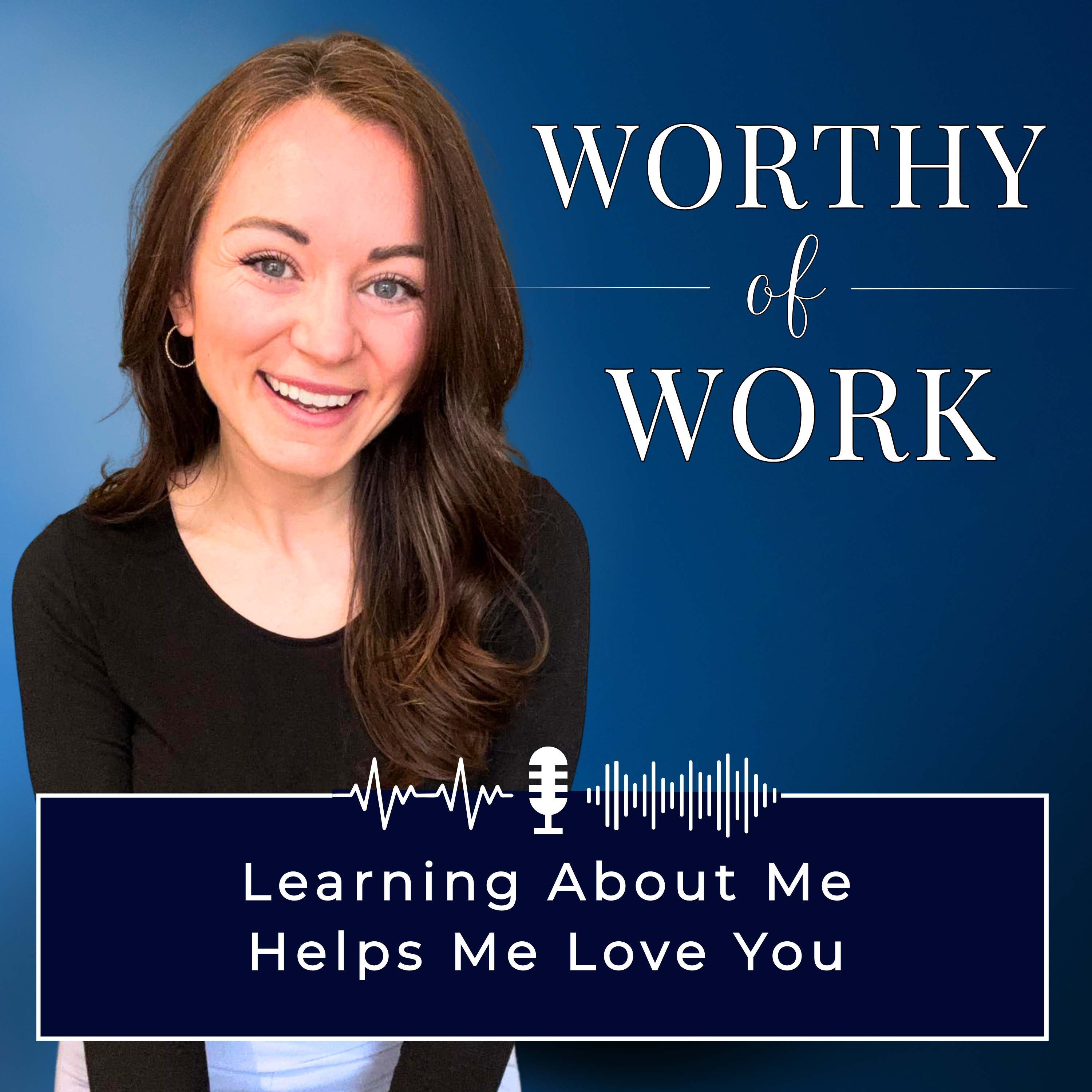
PODCAST · education
Worthy of Work: Learning About Me Helps Me Love You.
by Stephanie Rivard
Welcome to Worthy of Work. If you've ever questioned your relationship patterns, struggled with character defects, or wondered what 'normal' looks like, this podcast is for you. Join Stephanie as we unpack recovery principles, debunk relationship myths, and explore skills no one taught us—so you can break unhealthy cycles and build relationships you once doubted existed. Stephanie shares her journey from codependent divorcee to at peace and happily married, offering clarity on what once confused her and the tools she wished she had learned sooner.
-
30
3 Boundaries to Survive a Divorce: Straight from my old journal!
Are you spiralling out in a chaotic divorce? Are the toxic cycles causing stress, anxiety and a fear that your new future will continue to be dysfunctional?In this short but powerful episode, Stephanie opens an old journal and shares the three boundaries that protected her sanity during a high-conflict divorce. Instead of reliving old arguments or getting pulled into emotional chaos, these boundaries gave her clarity, calm, and confidence when everything felt unstable.You won’t just hear what the boundaries were — you’ll learn how to put them into practice. Stephanie explains why these boundaries mattered, how they protected her emotionally, and the exact phrases she used (and still uses today) to communicate and reinforce them. These phrases are simple, direct, and easy to apply whether you're navigating divorce, co-parenting, or any difficult relationship dynamic.If you’ve ever found yourself in conversations that spin off-track, escalate quickly, or pull you back into old pain, this episode offers practical tools rooted in real experience — pulled straight from the pages of a journal kept during one of the hardest seasons of Stephanie’s life.Whether you're in the middle of a separation, interacting with an ex who makes calm communication hard, or learning how to set boundaries for the first time, you’ll walk away with clarity and language you can use immediately.
-
29
Why Toxic People Keep Hurting You and How to Stop It
If you’ve ever lived with someone unpredictable, manipulative, addicted, draining or chaotic — you already know the cycle. They do something destructive, you react, they flip the blame, and somehow you end up apologizing for the thing they caused.This episode is the pivot point.This is the moment where we stop hoping the bull will magically behave like a poodle — and start guarding the door of our own life.Inside this episode, you’ll learn:the difference between self responsibility and self blamehow compassion can get twisted into permissionwhy trying to control their chaos keeps you exhaustedhow to stop hoping they will change (and start changing your choices)two boundary scripts you can use immediatelyIf you’ve been living in a mental loop of:“Why does this keep happening?”“Why am I here again?”“Why won’t they just stop?”…this episode will give you the clarity you’ve been missing.This is for the woman who:is unlearning codependencygrew up normalizing dysfunctionhas been the fixer, the smoother, the peacemakerhas tried compassion, patience and love… and still got chaoswants peace in her own life, not permission slips for someone else’s behaviorYour life changes when you stop waiting for them to “get it” — and start controlling the one thing that is always in your hands: your access point.You have the key to the door.You choose what — and who — you allow into your space.This is not about shutting people out of cruelty.This is about protecting your heart from destruction.This is about refusing to let chaos live rent-free in your home, in your mind, in your peace.When you stop trying to manage the bull… and simply guard the door… everything changes.If this episode helped you, will you share it?There are thousands of women in cycles of chaos who think they’re the crazy one.Let’s get these tools into the hands of the ones who need clarity — just like we once did.www.TheClarityAdvantage.com
-
28
You Left… So Why Does Your Heart Hurt?
Leaving a toxic or dysfunctional relationship is supposed to feel like freedom… right?So why do you still feel grief, sadness, or doubt after walking away?In this episode of Worthy of Work, Stephanie Rivard breaks down the confusing emotional aftermath of ending an unhealthy relationship — and why your pain doesn’t mean you made the wrong choice.You might expect to feel only relief and peace, but what you’re experiencing is grief: the emotional detox that comes from letting go of the dream you had, the identity you built, and the patterns your nervous system grew comfortable with — even if those patterns were unhealthy.✨ In this episode, you’ll learn:Why grief after leaving is normal — and what it’s really aboutHow to tell the difference between detox and doubtThree practical steps to help you move through the pain and stay grounded in your decision1️⃣ Name the grief — “I miss the dream. I miss feeling chosen.”2️⃣ Stay rooted in the facts — “What do I know for sure?”3️⃣ Reconnect safely — Surround yourself with healthy people and spaces that support your healingStephanie also shares her own story of leaving her marriage — driving a 27-foot U-Haul through downtown, crying tears of both peace and panic — and what she’s learned about the emotional complexity of choosing yourself after years of codependency and chaos.If you’ve ever thought, “If this was the right decision, why do I still hurt?” — this episode is for you.💬 You’ll walk away understanding:That grief is not proof of error — it’s proof of growth.That your body and mind are adjusting to a new normal.That healing hurts, but the pain is progress.🎧 Worthy of Work is the podcast where we unpack the relationship skills no one taught us — hosted by Stephanie Rivard, relationship clarity coach and founder of The Clarity Advantage.👉 If this episode helped you, please like, subscribe, and share it with someone who’s in the messy middle of leaving. They may not have said it out loud, but they need to know this too.#toxicrelationships #healingjourney #grief #codependencyrecovery #worthyofwork #selfhealing #relationships #boundaries #emotionalhealth #selfawareness
-
27
Do I Stay or Do I Leave The Marriage?
I’m not here to tell you what to do. But I will walk you through the exact questions that brought me out of confusion and into courage — questions like:Am I safe here? Physically, emotionally, mentally, spiritually?Am I seeing real behavioral change, not just promises?What kind of example am I setting for my children about love, respect, and marriage?Have I left no stone unturned in seeking healing, counseling, and accountability?And… what would I do if I wasn’t afraid?If you’re a Christian woman who feels trapped between faith and reality, between your covenant and your calling to live in peace, this episode will speak straight to your heart.You’ll hear:💔 What it’s like to live in the loop of dysfunction and denial🙏 The spiritual wrestling that comes with wanting to honor God while protecting your own soul🕊️ The moment of peace and release that changed everything💡 Why leaving an abusive or dysfunctional marriage can sometimes be an act of health and courage, not failure❤️🔥 How to separate your identity and worth from the success or failure of your relationshipThis episode is for the woman who has tried everything. For the one who has prayed, counselled, forgiven, and hoped — and still finds herself asking, “Is this what God intended marriage to be?”You are not a failure. You are not alone.And the clarity you’re looking for may already be waiting inside you — under the fear, shame, and self-doubt.It takes courage to face the truth. But when you do, peace follows.🎧 Listen now to “Do I Stay or Do I Go?”A faith-filled conversation about healing, identity, and discerning truth in hard marriages.📖 Scripture reminds us: “God is not a God of confusion, but of peace.” (1 Corinthians 14:33)May this episode be a step toward that peace.www.TheClarityAdvantage.com
-
26
Let Them Theory vs. Boundaries: Get this wrong and you will end up a doormat.
The Let Them Theory has gone viral, but it’s often misunderstood. On the surface, it sounds like you’re supposed to let people do whatever they want — cancel plans, show up late, disrespect your boundaries, and just accept it. No wonder so many people worry it means becoming a doormat.But here’s the truth: the Let Them Theory isn’t about passivity or weakness. It’s about clarity. It’s about letting people show you who they are, and then deciding how you will respond. And that’s where boundaries come in.In this episode of Worthy of Work, host Stephanie Rivard explains how the Let Them Theory fully supports the concept of boundaries, not undermines them. She breaks down:✅ Why boundaries are not about controlling others. They’re about managing yourself✅ How the Let Them Theory frees you from trying to fix, change, or rescue people✅ Real-life examples of what “let them” looks like in action (and how to respond) Ex. Your husband won't cook? Now what?✅ The difference between Let Them without boundaries (passivity), boundaries without Let Them (control), and combining the two (health)✅ How this mindset helps you protect your peace, your values, and your relationshipsIf you’ve ever felt like people walk all over you… if you’ve ever wondered whether “letting them” means you just have to put up with bad behavior… this episode will clear the confusion and show you a healthier, freer way to live.✨ Key Takeaway:Let Them Theory isn’t about letting people mistreat you. It’s about letting people reveal themselves and then setting clear boundaries around what you will and will not allow in your life. Together, Let Them + Boundaries create freedom, clarity, and healthier relationships.🔔 Subscribe to Worthy of Work for weekly episodes where we unpack the relationship skills no one taught us — boundaries, recovery principles, and practical tools to break unhealthy cycles.📩 Share this episode with a friend who needs to hear that “letting them” is not the same as being a doormat.#LetThemTheory #Boundaries #HealthyRelationships #WorthyOfWorkPodcastBOUNDARY MASTERCLASS: Go towww.TheClarityAdvantage.com
-
25
Is It Unchristian to Stop Hoping He’ll Change?
Pathological Hope vs. Biblical HopeWhat do you do when the hope you’re clinging to feels more like a weight than a gift? In this episode of Worthy of Work, Stephanie Rivard explores the delicate balance between hope that is rooted in God’s promises and “pathological hope” — the kind that keeps us stuck, waiting endlessly for someone else to change.Drawing from her own story of wrestling in a broken marriage, Stephanie shares how misplaced hope led her to confuse endurance with faith, loyalty to fantasy with loyalty to God. She unpacks the difference between biblical hope (anchored in God’s character and truth) and fantasy hope (anchored in someone’s potential or empty promises).Key insights include:How Scripture teaches us to hope in God, not in the unreliable behavior of others.Why waiting passively for someone to change is not faith, but avoidance.The danger of treating a person’s potential like an idol, instead of trusting in God’s reality.Why boundaries, stewardship, and wise action are acts of faith, not evidence of weak belief.How letting go of pathological hope can actually free us to experience real, sustaining hope in God.Stephanie reflects on recovery principles like “hitting bottom,” showing how misplaced hope can delay necessary change both in ourselves and in those we love. She highlights that God calls us to live in truth, to steward our lives well, and to trust Him with the outcomes — not to soften every blow for others or deny reality in the name of endurance.For anyone sitting in a painful relationship, wondering if letting go of hope means letting go of God, this episode offers clarity and relief: letting go of false hope isn’t giving up on God — it’s agreeing with Him about reality.By the end, you’ll be encouraged to re-anchor your hope, not in a fantasy future version of someone else, but in the unchanging character of God. Because true hope doesn’t weigh us down — it frees us to live in wisdom, peace, and trust.www.TheClarityAdvantage.com#HealthyRelationships #FaithAndHope #ChristianLiving #WorthyOfWork #Boundaries #CodependencyRecovery #FaithOverFantasy #BiblicalHope #LettingGo #RecoveryJourney #MarriageClarity #ChristianPodcast#ToxicMarraige #LivingWithAddition
-
24
6 Simple Shifts For Healthier Communication
Healthy relationships depend on healthy communication—and that starts with radical ownership. In this episode, Stephanie Rivard shares six simple but powerful communication skills that can transform how you connect with others. From dropping absolutes and judgment to separating emotions from thoughts, Stephanie explains how small shifts in language and tone can lead to more clarity, authenticity, and connection.If you’ve ever been told “you’re too sensitive,” wondered why your conversations go in circles, or caught yourself hiding requests behind sarcasm or jokes, this episode will give you the tools to break those patterns. These six skills aren’t about controlling others—they’re about taking responsibility for your part of the conversation so you can build healthier, more genuine relationships.What You’ll Learn in This Episode:Why “always” and “never” sabotage conversationsHow sarcasm and disguised requests erode trustThe difference between thoughts and true emotions (and why it matters)How to replace “you/we/us” statements with clear “I” statementsWhy judgment creates defensiveness and what to do insteadThe hidden power of tone in every conversationHealthy communication doesn’t happen by accident—it’s a skill you can practice. By owning your words, tone, and responses, you’ll create space for connection and growth in every relationship.✨ For new listeners: Worthy of Work is the podcast where we unpack the relationship skills no one taught us. Subscribe to learn how to break unhealthy cycles and practice healthier ways of connecting.Check out my website for more resources: www.TheClarityAdvantage.com
-
23
What “Marriage Takes Work” Means to Us Now: From Divorce to Joyful Love
What does “marriage is hard—it takes work” really mean? In this heartfelt conversation, Stephanie welcomes her very first guest—her husband Roland—to unpack one of the most common (and misunderstood) relationship clichés. Both having experienced painful first marriages and divorce, they share how that phrase once kept them trapped in dysfunction, tolerating behaviors that were actually incompatible with a healthy relationship.Together, they explore:The difference between toxic “hard” (gaslighting, constant conflict, abuse, emotional immaturity) vs. healthy hard (self-awareness, growth, and honest conversations).Why endurance is not the same as doing the right work, and how misplaced effort fuels dysfunction.What healthy work looks like: emotional regulation, empathy, validation, accountability, setting boundaries, and owning your part without trying to “fix” someone else.Examples from their own marriage of safe conflict, grace, and how they keep their relationship “clean” so there’s space for joy, playfulness, and deep love.If you’ve ever wondered:“Is my marriage supposed to feel this way?”“Are these struggles normal or red flags?”“What does healthy conflict even look like?”…this candid episode offers clarity, hope, and practical insight. Stephanie and Roland talk about the work that does lead to healing, connection, and a “flipping awesome” marriage—versus the work that will leave you exhausted and unsafe.Whether you’re single, dating, divorced, or currently married, you’ll walk away with a better understanding of what “hard” is worth leaning into—and what “hard” means it’s time to set boundaries or leave. Marriage should be safe, loving, and full of growth, not constant chaos. There’s a better way forward.#HealthyRelationships #MarriageAdvice #DivorceRecovery #RelationshipTips #CodependencyRecovery #MarriageIsHard #HealthyConflict #Boundaries #SelfAwareness #LoveAndGrowth#WorthyofWorkPodcast #StephanieRivard
-
22
Blooper: Behind The Scenes Clip of Our First Podcast Attempt
The full episode will be released tonight. I thought I'd share this little clip that made me laugh. I hope you enjoy a behind-the-scenes clip of my husband and me prepping for our first podcast. #WorthyofWorkPodcast#StephanieRivard#HerHandsomeHusband
-
21
Why Love Keeps Going Wrong (and How to Change It)
Do you keep attracting partners with "potential”? Maybe they’re struggling, broken, or in need of rescuing—and you feel like it’s your job to help, fix, or carry them. It might feel noble, but what if that very instinct is what’s keeping you from the healthy, balanced relationship you actually want?In this episode of Worthy of Work, Stephanie Rivard dives deep into the Savior Complex—a common but destructive pattern that convinces us we can earn love by rescuing someone else. We’ll explore:What the Savior Complex is and how it shows up in dating and relationshipsThe root causes—low self-worth, insecurity, and identity strugglesWhy being someone’s “hero” doesn’t lead to a healthy partnershipThe difference between saving someone and supporting someoneRed flags that you’re picking projects instead of partnersPractical steps to break free from this cycle and start attracting emotionally healthy peopleWhat real partnership looks like: two grounded people climbing life’s mountain together, encouraging but not carrying each otherYou’ll also learn why relationships are more like multiplication than addition—and why “half a person + half a person” doesn’t equal a whole. If you’ve wondered why your relationships keep ending in disappointment, or if you’ve questioned whether healthy love even exists, this episode will give you clarity, hope, and tools to change your patterns.You deserve a relationship built on mutual respect, emotional health, and equality—not one where you’re the rescuer and your partner is the project. This conversation will help you spot unhealthy dynamics, rebuild your sense of worth, and shift your focus toward partners who are capable of building a strong, lasting relationship with you.✨ Worthy of Work exists because you are worthy of doing the work that leads to healing, growth, and love that lasts.www.TheClarityAdvantage.com
-
20
Marriage is Hard, Not Harmful: The Difference Explained
This phrase was a trap: “Marriage is hard and it takes work.”You’ve heard the phrase a hundred times — maybe you’ve even said it yourself. But what if the “hard” you’re living through isn’t the kind of hard a healthy marriage should have? What if well-meaning friends are unintentionally endorsing dysfunction or even abuse because this phrase is left vague and unexplained?In this episode of Worthy of Work, I unpack what this phrase should mean, what it shouldn’t mean, and why understanding the difference can save you years of pain, confusion, and self-doubt.Here’s what we’ll cover:What “hard” is not: verbal, physical, emotional, financial, or sexual abuse; addiction; repeated toxic cycles without change; all the emotional labor falling on one person.What “hard” can mean in healthy relationships: navigating stress from illness, job loss, parenting, finances, miscommunication, personality differences, and the growth that comes from honest conversations and mutual accountability.What “work” is not: tolerating abuse and calling it sacrifice, having the same argument on repeat, avoiding hard conversations, shrinking yourself to “keep the peace,” or covering for harmful behavior.What “work” is: both partners learning communication skills, taking personal responsibility, going to therapy, apologizing and making real changes, and challenging each other to grow.We also talk about:Why protecting the image of your marriage isn’t the same as protecting its integrityWhy mutual effort — not one-sided sacrifice — is the foundation of lasting changeHow clear boundaries can sometimes create the very space needed for restorationA new way to say the phrase: “Marriage is hard at times, but not harmful — and it takes mutual, ongoing work to grow together.”If you’ve been secretly wondering if what happens in your home is “normal,” this conversation is for you. You are not crazy. You are not alone. And you are not failing your marriage by seeking clarity — you’re honoring it.💬 Key takeaway: Healthy marriages may have struggles, but they are free of harm. The “work” it takes is mutual growth, not enduring mistreatment.📌 Helpful for you if you’re navigating:Confusion about whether your marriage is “normal”Over-responsibility or codependency in relationshipsThe difference between healthy compromise and harmful self-erasureRecovery from dysfunctional relationship patterns🎧 Listen in and let’s bring clarity, health, and stability into your home.#HealthyRelationships #MarriageHelp #RelationshipAdvice #Boundaries #CodependencyRecovery #RelationshipGrowth #ToxicMarriage #MarriageTips #RelationshipPodcast #SelfWorth #MutualRespect #RelationshipBoundaries #HealthyCommunication #MarriageSupport #RelationshipHealing #WorthyOfWorkPodcast #StephanieRivard #MarriageTruth #BreakTheCycle
-
19
How to know if it is Empathy, Enmeshment or Codependency
Have you ever felt responsible for fixing someone else's emotions just so you could feel okay? Maybe you’ve called it empathy—but what if it’s something else?In this episode, we unpack the differences between empathy, enmeshment, and codependency—three behaviors that often look similar on the surface but come from very different places inside of us.Using a puppet show analogy, Stephanie explains:Codependency is like being a puppet on a string—you start to dance when someone else flails because your well-being is tied to theirs.Enmeshment is the sock puppet—your identity and emotions are fused to theirs, and it’s hard to tell where you end and they begin.Empathy is sitting in the audience—fully present, deeply caring, but still separate.These patterns often stem from early life dynamics where we learned to survive by attuning to others instead of developing a strong sense of self. But just because these habits were learned doesn't mean we're stuck with them. Stephanie offers practices to help you:Name your own emotions and separate them from others’.Practice detachment (not indifference) to stay grounded and present without losing yourself.Stay emotionally “seated” instead of leaping onstage to fix or rescue.If you've ever wondered why peace feels impossible when someone around you is struggling—or if your caring feels compulsive instead of compassionate—this episode offers clarity and hope.You’re not broken. These behaviors are survival strategies, not permanent identities. And the better news? You can unlearn them.Reflection prompts included:Am I feeling for someone instead of with them?Am I doing things for others that they should be doing for themselves, and calling it love?What’s one small step I can take toward healthy empathy today?Listen in. Let’s learn the better way.
-
18
People Pleasing or Kindness? Here’s How to Tell the Difference
Are you saying yes when you really want to say no? In this episode of Worthy of Work, we unpack one of the most common character defects: people pleasing. It's often mistaken for kindness but it's actually fear, control, and dishonesty in disguise.Stephanie breaks down how people pleasing develops (especially for those raised in disrupted homes), how it shows up in adult relationships, and why it's so damaging—even when it looks like generosity. She offers a clear contrast between people pleasing vs kindness, and practical ways to start showing up more honestly in your relationships.If you’ve ever felt guilty for setting a boundary, unsure whether you were being mean or just real, this episode is for you. You’ll learn how to spot when fear is running the show, how to respond with truth and love, and how healthy connection can’t grow when we’re wearing a mask.Key Takeaways:People pleasing is dishonest, compulsive, and rooted in fear, not love.Kindness is not the same as self-abandonment.Healthy relationships don’t require pretending, silence, or performance.How to speak up with courage, clarity, and care.Sample phrases you can use to say no with love.What becomes possible when you stop people pleasing.Recovery Principle Highlighted: Honesty and self-responsibility. Spotting a character defect.Transformation Focus: From pretending to being real.Best For: Women in recovery, former people pleasers, helpers and fixers, anyone learning to build healthy s✨ "You are allowed to be honest. You are allowed to say no. You are allowed to disappoint someone without being wrong."If this resonates, pause and ask:Where am I saying yes when I mean no?Where could I show up more honestly?What would change if I told the truth with love?🔔 Subscribe for more episodes on how to break unhealthy patterns and build connection with clarity, courage, and care.🎧 Share this episode with a friend who’s ready to stop performing and start showing up.#worthyofwork #peoplepleasing #boundaries #healthyrelationships #selfabandonment #authenticity #recoveryprinciples #personalgrowth #emotionalhealth #knowyourtruth #codependency #healingjourney #kindnessnotpeoplepleasing #saynotosayyes
-
17
Worth, Truth, and a Moldy Sandwich: Trusting Yourself Again
If someone handed you a moldy sandwich and insisted it was fine, would you eat it?Sounds ridiculous, right? But we do this all the time in relationships. We take in dismissive comments, gaslighting, and rejection as if they define our worth or rewrite what we know to be true.In today’s episode, we’re talking about discernment — the vital (and often forgotten) relationship skill of trusting your gut over someone else’s version of reality.Because if your worth or truth is placed in someone else’s hands, you’ll forever be chasing peace you can’t hold onto. You’ll be stuck second-guessing, defending, people-pleasing, and shrinking yourself to stay accepted.Let’s change that.In this episode, we’ll explore:A few examples of misplaced worth and the danger of believing what others say more than what your gut saysThe “moldy sandwich test” — a hilariously helpful way to assess what others are offering youHow to stop needing others to agree with you in order to feel at peaceWhether you’ve been gaslit, passed over, or made to feel small — you are not crazy, and you are not alone. This episode will help you come back to yourself and rebuild your inner compass.Worthy of Work is the podcast where we unpack the relationship skills no one taught us. Hosted by Stephanie Rivard, each episode offers clear, compassionate guidance to help you heal unhealthy patterns and build a stronger relationship with yourself and others.🔗 If this helped you, please like, subscribe, or share it with someone who needs to hear it. That moldy sandwich might be going around.#worthyofworkpodcast #selfworth #trustyourgut #gaslightingrecovery #discernment #healthyrelationships #boundaries #emotionalhealth #peoplepleasing #innerhealing
-
16
Top 7 Things to Do After a Divorce or Separation
Going through a divorce or separation? You’re not alone — and you’re not broken. In this episode, I walk you through the 7 smartest things to do after a divorce so you can protect your peace, avoid painful patterns, and rebuild a healthier, stronger life.Whether your relationship ended peacefully or was long and toxic, these steps will help you process what happened and prepare for what’s next — without rushing into rebound relationships, revenge, or regret.This episode is for those who:✔️ Feel confused or overwhelmed after divorce✔️ Want to heal and grow (not repeat the same patterns)✔️ Might be recovering from codependency or toxic relationships✔️ Crave clarity, peace, and emotional maturity✔️ Want to build healthier relationships in the futureYou’re not broken. But you may need better tools for the kind of relationship you really want to have.🎓 Want help learning boundaries that actually work?Watch the free masterclass: Boundaries That WorkSubscribe to Worthy of Work for weekly relationship recovery tools:✅ Character defect breakdowns✅ Emotional intelligence skills✅ Red and yellow flags explained✅ Clear, compassionate truth (the kind I wish I had when I was stuck)🎧 Listen on Spotify, Apple Podcasts, or your favorite platform🔔 Don’t forget to like, follow, and share if this helped you!#DivorceRecovery #HealingAfterDivorce #HealthyRelationships #CodependencyRecovery #EmotionalMaturity #RebuildingAfterDivorce #BoundariesThatWork #WorthyOfWorkPodcast #StephanieRivard #ToxicMarriage #GriefAndGrowth #PostDivorceHealing
-
15
#1 Skill for Healthy Conflict
The key to healthy conflict isn’t staying calm or keeping your cool — it’s taking responsibility for your part.In this episode of Worthy of Work, Stephanie Rivard explores the transformative power of self-ownership in conflict. When we drop the defensiveness, stop justifying, and take accountability for our own actions, tone, or inactions — we change the dynamic. Conflict becomes an opportunity for repair, not just reaction.This isn’t about self-blame or shame — and it’s definitely not manipulation. Stephanie breaks down what true accountability looks like (and what it doesn’t), and how it strengthens relationships over time.Whether you’re navigating recurring arguments, working on communication skills, or just want to grow into a more grounded and mature version of yourself, this conversation offers powerful clarity and real-life examples to practice.🎧 Topics covered:The difference between owning your part vs. blaming yourselfWhy “I was just being honest” isn’t ownershipHow mature self-responsibility invites connectionWhy repair is more important than perfection✨ Healthy relationships are built on ownership and repair — not control or perfection. You can grow this skill, no matter where you’re starting from.Check out my free masterclass to grow in healthy relationship skills - www.theclarityadvantage.com#HealthyConflict #ConflictResolution #SelfOwnership #EmotionalMaturity #CommunicationSkills #Accountability #HealthyRelationships #PersonalResponsibility #WorthyOfWork #StephanieRivard
-
14
EP. 13 Martyrdom vs. Victimhood: Two Traps That Steal Your Power
Are you exhausted from doing it all… yet resentful no one notices? Or maybe you feel stuck, helpless, and like life keeps happening to you. Today’s episode of Worthy of Work unpacks two sneaky character defects — martyrdom and victimhood — and the subtle ways they keep us from healthy connection and honest self-responsibility.We’ll walk through how to spot each pattern, understand what’s really driving it, and what to do instead — because neither over-giving nor powerlessness is an act of love.The difference between martyrdom and victimhood (and why they can look confusingly similar)The root beliefs that fuel them — from low self-worth to control and avoidanceHow both patterns block intimacy, clarity, and peaceHealthy replacements: boundaries, communication, and taking responsibility without shameIf you’re realizing that saying “I’ve got it” (when you don’t) or waiting for others to rescue you hasn’t worked — this episode offers clarity, language, and small starting steps. You’ll learn:How to stop silently hoping others will read your mind or meet your needsWhy chronic complaining or helplessness keeps you powerless — even if it’s justifiedThe first steps toward being a person who asks clearly, acts wisely, and stops suffering in silenceJoin my free workshop:👉 Boundaries That Work!Stop doing it all, stuffing resentments, and hoping for change. Learn the difference between a boundary and a rule — because here’s the truth: Nothing changes if nothing changes.We’ll walk through real-life tools for setting boundaries that are clear, kind, and effective.💬 Did this episode strike a nerve? Let me know in the comments, share it with a friend, and don’t forget to subscribe so you never miss an episode. Healing starts with clarity — and you're exactly where you need to be.#HealthyRelationships #MartyrComplex #VictimMentality #CodependencyRecovery #EmotionalResponsibility #BoundariesThatWork #PeoplePleasing #12StepRecovery #SelfAwareness #PodcastForWomen #WorthyOfWorkPodcast #ChristianRecovery #SelfResponsibility #EmotionalIntelligence #AlAnonTools✨ In This Episode:🚪 Feeling Stuck in One of These Patterns? You’re Not Alone.💥 Want more support?
-
13
Martyrdom vs Victimhood: Sneak Peak
Two character defects that block healthy connection and avoid self-responsibility.Listen to Season 1, Episode 13 for the full episode.#codependency #recovery #selfawareness #worthyofworkpodcast
-
12
Acceptance isn't Tolerance: Why that changed everything.
Click Here to join the next free Masterclass: Boundaries That WorkEpisode Description:Have you ever felt like “acceptance” meant staying silent, tolerating dysfunction, or giving up your right to want something different? You’re not alone. In this episode of Worthy of Work, host Stephanie Rivard unpacks one of the most misunderstood ideas in recovery and relationships: the difference between acceptance and tolerance — and how confusing the two can keep us stuck, sick, and silent.Pulling from her own journey through toxic dynamics, recovery, and spiritual growth, Stephanie shares how this single word caused years of internal conflict… until she redefined it. You'll hear how she once believed “acceptance is the answer to all my problems” meant “tolerate bad behavior” — and why that belief was not only misleading but emotionally harmful.Instead, Stephanie reclaims the concept of acceptance as facing reality — believing what’s true, not deciding yet what to do about it. Tolerance, she explains, is only one of many responses to reality… and not always the healthiest one.Why acceptance doesn’t mean you have to like or endure what’s happeningThe key difference between acceptance and tolerance (and why it matters)How misusing the word “acceptance” can keep you trapped in enabling, denial, and powerlessnessWhat it really means to live in reality — and how that opens the door to new choicesWhether you’re navigating a relationship that leaves you doubting yourself, working through recovery, or simply trying to understand how to set healthier boundaries, this episode is for you.Let’s clarify what acceptance actually is — so you can stop tolerating what’s intolerable and start moving toward clarity, choice, and healing.🌀 Recovery-informed. Spiritually grounded. Straightforward and freeing.This episode is for you if:You’ve struggled to know when to stay, when to go, or when to speak upYou feel trapped by the idea that a “good” person just puts up with thingsYou’ve ever misused spiritual language to justify dysfunctionYou want a clearer framework for dealing with hard realities and unhealthy peopleMentioned Concepts:✔️ Acceptance as reality-checking✔️ Tolerance as optional✔️ Serenity Prayer✔️ Enabling vs. Empowerment✔️ Recovery mindset shift💬 Let Stephanie know if this resonated by leaving a comment or review — or share this episode with someone who needs clarity on what they’re really “accepting.”🎧 Want more on boundaries, character defects, and the tools of recovery? Subscribe and check out other episodes of Worthy of Work.#WorthyOfWork #RecoveryPodcast #EmotionalHealth #AcceptanceNotTolerance #BoundariesPodcast #CodependencyRecovery #ToxicRelationships #12StepRecovery #ClarityMatters #SerenityPrayerExplained #HealingJourney #StephanieRivard #HealthyRelationships #SelfResponsibility #AcceptanceVsTolerance
-
11
Worry Is Not an Act of Love
In this episode of Worthy of Work, I unpack the misunderstood role of worry in relationships—and in our inner lives. For years, I believed worrying was either an act of love or a responsible way to solve problems. But worry didn’t bring solutions; it drained my energy, diminished my presence, and left me less capable of engaging with the people or situations I cared about most.Together, we explore:Why worry is a character defect, not a virtueThe emotional logic that used to justify worry as loveHow chronic worrying undermines preparedness and peaceWhat to do instead—like prayer, surrender, and productive, grounded actionIf you've ever believed that worrying about someone shows how much you care, this episode will offer a compassionate challenge and a better way forward.New here? You’re in the right place if you’ve ever wondered, “Is this normal?” or “What are they doing that I’m not?” I’m so glad you’re here.Share this with a friend who’s stuck in mental loops of stress and calling it love. There’s a healthier way.Hashtags:#WorthyOfWork #WorryIsNotLove #HealthyRelationships #RecoveryPrinciples #CodependencyRecovery #EmotionalMaturity #CharacterDefectsCheck out my online Masterclass: Boundaries That Workwww.TheClarityAdvantage.com
-
10
How To Validate Someone's Emotions
A critical tool to de-escalate an argument, increase vulnerability, and build connectionThis one's for you if:You want to respond better when your partner is upsetYou’ve been accused of being dismissive or defensiveYou crave a deeper, safer emotional connectionYou’re learning to unlearn codependent or conflict-avoidant behaviorsYou're building emotional intelligence and recovery-informed relationship skillsIn today’s episode of Worthy of Work, we’re diving into one of the most powerful and underused tools in healthy relationships: emotional validation.We’ll cover:Why validation matters more than explanationWhat emotional validation is (and what it definitely isn’t)The emotional fallout when feelings are dismissed or debatedA 3-step framework you can use in any emotionally charged momentReal-life examples and simple scripts to start using right awayValidation isn’t about giving in or taking blame. It’s about showing someone their emotions make sense in light of their experience — even when you see things differently. It’s the foundation of emotional safety, and it’s a skill you can start practicing today.💬 Key takeaway: You don’t have to agree with someone’s emotions to validate them. You just have to stop, listen, and say, “That makes sense.”If this episode resonates, share it with someone who could use this skill. Relationship tools are worth spreading — and you are worthy of the work to build better relationships. 🎧 Worthy of Work is where we unpack the relationship skills no one taught us — and start practicing the ones we never thought we were allowed to have.
-
9
Red Flags in a Marriage: Answering the question - Am I being too sensitive?
Are the dynamics in your marriage healthy—or are there red flags you're missing?In this episode of Worthy of Work, Stephanie Rivard lists 9 marriage Red Flags, such as:Coercion or guilt in the bedroomFinancial secrecy and manipulationInappropriate friendshipsNeglect of family needs due to skewed prioritiesHurtful "jokes" and emotional dismissalWhether you're confused about what’s normal, worried about feeling “too sensitive,” or wondering if your concerns are valid, this episode will help you get clarity. Stephanie draws from her own journey and recovery principles to provide honest, compassionate insight into what makes a marriage healthy—and what doesn’t.📩 Got a question or episode idea? Reach out and you just might inspire a future topic. Find me at www.TheClarityAdvantage.com or on Facebook at The Clarity Advantage#WorthyOfWork#TheClarityAdvantage#RedFlagsInMarriage#HealthyRelationships#MarriageHelp#RelationshipAwareness#EmotionalHealth#BoundariesMatter#CodependencyRecovery#RelationshipRedFlags#ToxicMarriage#ClarityIsKindness#EmotionalAbuseAwareness
-
8
Victimhood... Or is it Volunteering
In this episode, I unpack the character defect of victimhood — the mindset that sees life’s inconveniences and disappointments as personal attacks or signs that I’m stuck. I share how I used to frame myself as a powerless bystander in my own life, and how that illusion kept me from seeing the choices I did have.If you’ve ever said “I had to stay late” or “I have to do everything myself,” this one’s for you. I break down how those phrases became clues that I was volunteering for situations I claimed to resent. I wasn’t being forced — I was opting in, without realizing it.You’ll learn how to spot victim language in your own life, why it’s so sneaky, and what the opposite of victimhood really looks like. (Hint: it has everything to do with choice.)This episode is for anyone stuck in martyr mode, feeling overburdened, or wondering why life seems to be “happening to them.” It’s especially for those in recovery or working on breaking cycles of codependency.And if you’ve ever wondered why things feel heavy even when they shouldn’t — this episode might give you the clarity you’ve been missing.#WorthyOfWorkPodcast#RelationshipRecovery#HealthyRelationships#EmotionalAwareness#BoundariesMatter#CodependencyRecovery#UnlearningToxicPatterns#RecoveryPrinciples#PersonalGrowthJourney#HealingIsWork
-
7
Mind Reading: The Character Defect and Illusion that Healthy Relationships Avoid
Ever find yourself sure you know what someone is thinking — or frustrated they don’t magically know what you need? That’s mind reading. And while it feels like a survival skill, it’s actually a relationship-sabotaging illusion and a character defect. In this episode of Worthy of Work, Stephanie Rivard breaks down the two dysfunctional ways we engage in mind reading:Believing we can read others’ mindsExpecting others to read oursStephanie shares personal stories, relatable examples (including a classic Friends reference), and the practical replacements for this sneaky character defect: clarity, communication, and letting go. You'll learn how to stop building stories in your head and start building healthier connections instead.If you've ever:Assumed someone’s silence meant they were mad at youSlammed cupboards hoping someone would notice you needed helpFelt drained from constant guesswork in your relationships…this episode is for you.No more charades. No more fortune telling. Just healthy, honest communication.✨ No mind reading required.—If this resonated, subscribe and share it with someone who could use a little more clarity (and a lot less guessing).#MindReading #CommunicationSkills #CodependencyRecovery #HealthyRelationships #ClarityIsKind #WorthyOfWork #RecoveryTools #NoMoreGuessing #EmotionalAwareness #StopMindReading #Boundaries #CharacterDefects #AlAnon #RelationshipGrowth
-
6
Ignoring a Resentment isn't Virtuous -- It is Reckless.
Feeling resentful? You're not alone — and you're not broken.In this episode of Worthy of Work, host Stephanie Rivard explores resentment not as a character flaw, but as a powerful emotional signal. Resentment is often our soul’s quiet protest — a sign that something isn’t working, that we’re overextended, unacknowledged, or staying silent when something inside us is screaming for change.We’ve been told that continuing to serve, give, forgive, and absorb without limits is what love looks like. But here's the truth: Resentment isn't noble. It's reckless. And it can silently destroy the very relationships you’re trying to protect.✨ In this episode, you’ll learn:What resentment actually is — and why it’s normalHow resentment shows up (think sarcasm, scorekeeping, simmering anger, avoidance)Why resentment builds when we say "yes" but wish we’d said "no"How to identify unspoken expectations and hidden emotional contractsA 4-step process to move from bitterness to better boundaries:Pause and acknowledge the resentmentExplore the source (Where’s this coming from?)Own your part (Have you stayed silent or over-functioned?)Act with clarity — whether through a boundary, a hard conversation, or a renegotiation👀 You’ll also hear a relatable example of a mother who resents being the default cook and caregiver — and how she can either stew in silence or speak up with care.This episode is for you if you’ve ever thought:“I’m the only one carrying the emotional weight here.”“Why am I the one who always gives in?”“If I speak up, I’ll be seen as selfish, ungrateful, or dramatic.”📢 Let’s debunk that. Resentment doesn’t mean you’re selfish. It means you’re due for a reset. It’s your inner wisdom nudging you toward honesty, boundaries, and healthier patterns — in work, family, love, and friendship.💬 Ready to stop patching problems with silence? Start listening.Then ask yourself: What conversation am I avoiding? What boundary needs to be set?💬 If this episode helped you, share it on your Socials so we can encourage others who are silently carrying too much.⭐ Subscribe, rate, and leave a review — it helps these episodes rise in search filters. Thank you for your help.
-
5
Am I Crazy? How to spot and respond to Gas Lighting.
Are You Always Second-Guessing Yourself? Doubting reality?It Might Be GaslightingHave you ever left a conversation feeling disoriented, doubting what just happened, or even questioning your own memory? Do phrases like “You’re too sensitive,” “That never happened,” or “Can’t you take a joke?” leave you spinning? You might be experiencing gaslighting—a form of emotional manipulation designed to make you question your reality.In this episode of Worthy of Work, Stephanie Rivard breaks down the dynamics of gaslighting: where the term comes from, what it sounds like in everyday relationships, and how it erodes our confidence and self-trust over time. If you've felt confused, crazy, or stuck in a relationship that leaves you walking on eggshells, you're not alone—and you’re not imagining things.Stephanie shares the red flags to watch for, why this behavior is more than just a disagreement, and what emotionally healthy responses might look like. You’ll learn how to identify subtle gaslighting phrases and begin to rebuild your internal clarity and boundaries.This conversation isn’t about labeling others—it’s about validating your experience and reclaiming your sanity.💡 If you’re ready to start setting boundaries with confidence, explore Stephanie’s live online courses at www.theclarityadvantage.com. Whether you're navigating love, work, or coparenting, these practical, live workshops can help you stop over-functioning and start living with more peace and power.
-
4
Case Building: The Character Defect that Justifies Bad Behavior
“Let me explain why I acted like a lunatic.”That’s the spirit behind case building — the sneaky habit of overexplaining the context of someone else’s behavior in hopes of making your own behavior look justified, reasonable, or at least understandable. The problem? It’s a trap.In this episode of Worthy of Work, Stephanie Rivard breaks down the character defect of case building — a subtle but damaging pattern that keeps us from owning our behavior and growing in emotional maturity. With warmth, clarity, and a touch of humor, she exposes how this pattern:Uses storytelling to avoid self-responsibilityConfuses emotional justification with emotional intelligenceKeeps us stuck in a cycle of defensiveness, blame, and relational standoffsReflects an old, childlike belief that “someone else started it, so I get a pass”Undermines true connection by shadowing our behavior with someone else’s flawsInstead of building a case to justify your reactions, this episode invites you to consider:🧠 What if you just described what you did — no extra context, no backstory, no justification?😬 What would it feel like to sit with the discomfort of your own choices... and learn from them?🙌 What happens when we own our behavior, no matter what the other person did first?This is an empowering listen for anyone working through recovery, healing from codependency, or unlearning toxic communication habits. Whether you're in a tough relationship, navigating emotional landmines, or just trying to stop spiraling every time you're misunderstood — this one's for you.🎧 Listen now to learn why the healthiest relationships are built on clarity, not cases.
-
3
Emotional Games: Are you playing the Junior Version?
Emotional Games: Are You Playing the Junior Version?Ever found yourself slamming a door, huffing and puffing, hoping someone just gets it? That used to be me—stuck in what I now call the junior version of emotional awareness. In this episode of Worthy of Work, I unpack the messy, reactive emotional habits I had to outgrow—and the adult upgrade that changed everything.We’ll cover:🔹 What emotional charades looks like in real life🔹 Why emotional awareness is a learned skill, not a personality trait🔹 How naming your emotion (instead of acting it out) leads to real connection🔹 The simple but not-easy shift that’s helped me communicate without chaosIf emotional maturity is something you thought you had but life keeps proving otherwise, this one’s for you.🎯 Keywords: emotional intelligence, emotional maturity, relationship recovery, communication skills, boundaries, codependency, self-awareness💙 Subscribe for weekly episodes—and if you're tired of tiptoeing around emotions, check out my online boundary course. You deserve better tools.Boundaries for Divorce and Coparenting:https://stephanie-rivard.kit.com/9ad6d48c26Boundaries: The Tool You Are Missing:Boundaries Are Not Rules. Let Me Show You Why That Matters.
-
2
Self-Care is Not Selfish. It is...
Self-Care Is Not Selfish: It’s Self-ResponsibilityIf one more person calls self-care selfish, I might lose it. In this episode, I unpack why that phrase gets under my skin—and how I had to completely rewire my understanding of what self-care actually is.We’ll cover:🔹 Why true self-care is about self-responsibility🔹 How neglecting our needs silently sabotages our relationships🔹 What it looks like to meet your own emotional, physical, and spiritual needs🔹 Why waiting for others to give you permission doesn’t workThis isn’t about spa days (though those are nice). It’s about learning how to take ownership of your well-being without guilt or apology.🎯 Keywords: self-care, emotional intelligence, relationship recovery, codependency, boundaries, burnout, self-worth, courage to change the things we can💙 Subscribe for weekly episodes, and if this helped you reframe your view of self-care, leave a review—I’d love to hear your thoughts.
-
1
Are Healthy Relationships Real? An intro to the podcast
Ever felt like you're trying to build a healthy relationship with broken tools? Me too. In this episode of Worthy of Work, I share the hard-earned lessons from my journey—through codependency, divorce, and deep healing—to the other side of self-worth and emotional maturity.We’ll talk about:🔹 Why I thought happy relationships were just a myth🔹 How not knowing boundaries or communication skills kept me stuck🔹 What finally shifted when I started learning real tools🔹 The math of relationships (yep—why half plus half doesn’t equal whole)If you’ve ever wondered Is this normal?, or thought maybe it’s me, this episode is for you.🎯 Keywords: emotional intelligence, relationship recovery, communication skills, boundaries, codependency, self-worth, enmeshment, self awareness💙 Subscribe for weekly episodes, and leave a review if this one helped you feel a little less alone.
We're indexing this podcast's transcripts for the first time — this can take a minute or two. We'll show results as soon as they're ready.
No matches for "" in this podcast's transcripts.
No topics indexed yet for this podcast.
Loading reviews...
ABOUT THIS SHOW
Welcome to Worthy of Work. If you've ever questioned your relationship patterns, struggled with character defects, or wondered what 'normal' looks like, this podcast is for you. Join Stephanie as we unpack recovery principles, debunk relationship myths, and explore skills no one taught us—so you can break unhealthy cycles and build relationships you once doubted existed. Stephanie shares her journey from codependent divorcee to at peace and happily married, offering clarity on what once confused her and the tools she wished she had learned sooner.
HOSTED BY
Stephanie Rivard
CATEGORIES
Loading similar podcasts...
Frequently Asked Questions
How many episodes does Worthy of Work: Learning About Me Helps Me Love You. have?
Worthy of Work: Learning About Me Helps Me Love You. currently has 30 episodes available on PodParley. New episodes are automatically indexed when they're published to the podcast feed.
What is Worthy of Work: Learning About Me Helps Me Love You. about?
Welcome to Worthy of Work. If you've ever questioned your relationship patterns, struggled with character defects, or wondered what 'normal' looks like, this podcast is for you. Join Stephanie as we unpack recovery principles, debunk relationship myths, and explore skills no one taught us—so you...
How often does Worthy of Work: Learning About Me Helps Me Love You. release new episodes?
Worthy of Work: Learning About Me Helps Me Love You. has 30 episodes. Check the episode list to see recent publication dates and frequency.
Where can I listen to Worthy of Work: Learning About Me Helps Me Love You.?
You can listen to Worthy of Work: Learning About Me Helps Me Love You. on PodParley by clicking any episode. We provide an embedded audio player for direct listening, and you can also subscribe via your preferred podcast app using the RSS feed.
Who hosts Worthy of Work: Learning About Me Helps Me Love You.?
Worthy of Work: Learning About Me Helps Me Love You. is created and hosted by Stephanie Rivard.
URL copied to clipboard!