
PODCAST · religion
Divinity Divulged
by Faculty of Divinity, University of Cambridge
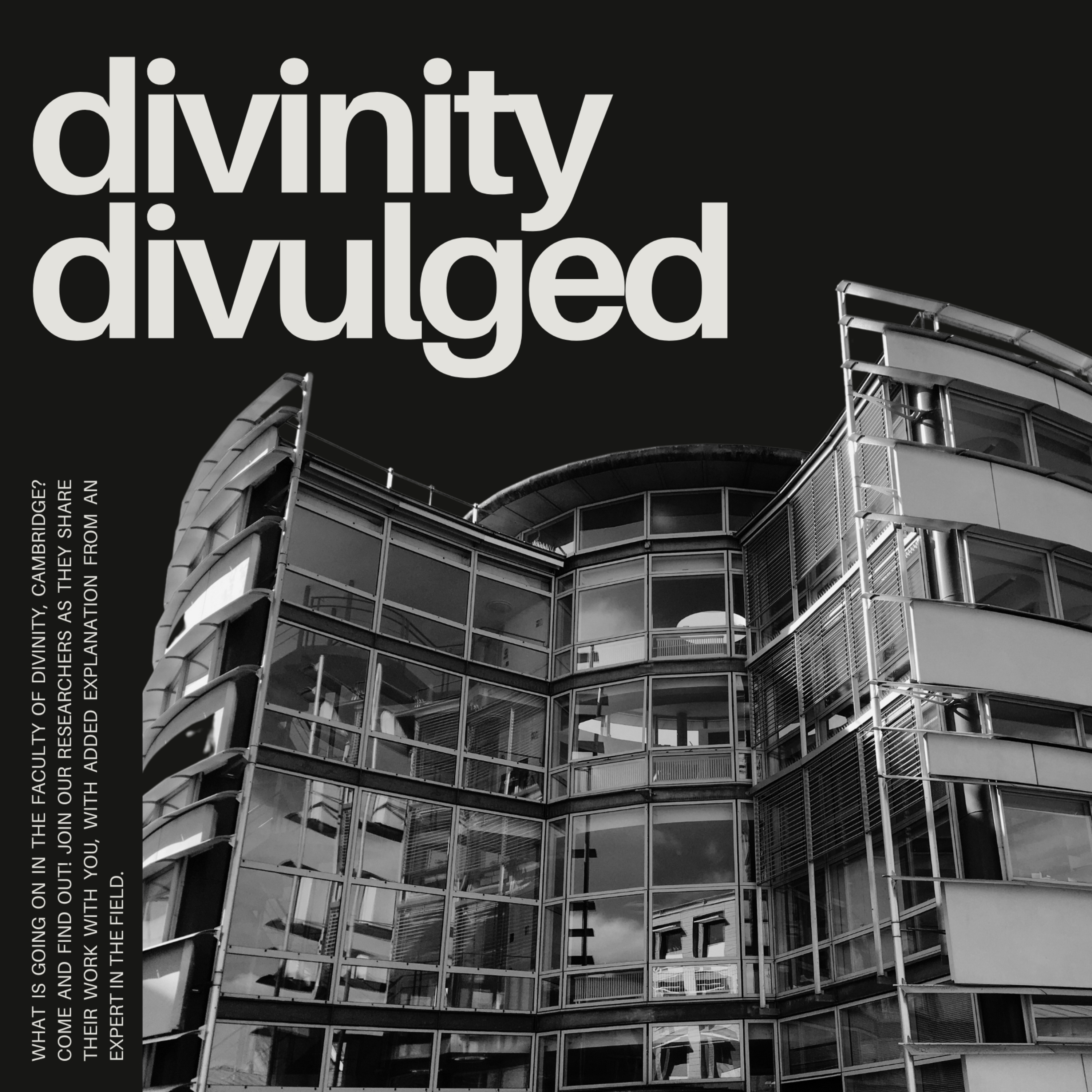
Welcome to the Divinity Divulged podcast! The first podcast series from the Faculty of Divinity at the University of Cambridge. In each episode we’ll be taking a look at one of the fascinating research projects happening within the Faculty through conversations with the researcher and an expert guest working in their field. Our episodes are aimed at all of those studying and or exploring religion and theology across all levels, and we hope you enjoy!
-
7
11 | Dr Emily Qureshi-Hurst - God, Science and 'Many Worlds'
Emily Welcome to the Divinity Divulged podcast! The first podcastseries from the Faculty of Divinity at the University of Cambridge. In each episode we’ll be taking a look at one of the fascinating research projects happening within the Faculty through conversations with the researcher and anexpert guest working in their field. With dialogue aimed at all of those studying or exploring religious studies across all levels, you can find details on how this episode relates to A Level and Scottish Highers Specifications as well as a glossary below. For this episode we are joined by Dr Emily Quereshi-Hurst, Teaching Associate in Theology and Natural Science in the Faculty of Divinity in Cambridge and a research associate at Fitzwilliam College also in Cambridge. Alongsideher is Dr Frederick Simmons, Research Associate in the Faculty of Divinity, the Leverhulme Centre for Life in theUniverse, and Emmanuel College in Cambridge. Here Emily talks us through her work at the intersection between Christian theology, philosophy, and modernscience. What might it mean for our understanding of God to think about a multi worlds or a multi universe reality? Emily’s most recent paper on 'many worlds' can be found here - https://apcz.umk.pl/SetF/article/view/57168 Glossary AstrobiologyThe scientific study of life in the universe, including its origin, evolution, distribution, and potential existence beyond Earth.Copenhagen InterpretationThe traditional interpretation of quantum mechanics stating that physical systems do not have definite properties until they are measured.DeterminismThe philosophical view that all events, including human actions, are completely determined by previously existing causes.EverettianRelating to Hugh Everett’s interpretation of quantum mechanics, also known as the Many-Worlds Interpretation.FallennessA theological concept describing the human condition after the “Fall” of humanity through Adam and Eve marked by moral imperfection, alienation from God, or brokenness.Many WorldsA quantum interpretation proposing that all possible outcomes of quantum measurements actually occur in branching universes.MetaphysicsA branch of philosophy studying the fundamental nature of reality, including existence, objects, their properties, and causation.Moral EvilEvil or suffering resulting from the intentional actions or decisions of moral agents (e.g., cruelty, murder).Natural EvilSuffering caused by natural processes (e.g., earthquakes, diseases) rather than human actions.NoeticRelating to the mind or intellect; often refers to spiritual or intuitive forms of knowledge.OntologicalRelating to ontology—the study of being, existence, and what kinds of things fundamentally exist.Prima FacieA Latin term meaning “at first glance”; refers to something that is accepted as true unless later disproven.Schrödinger EquationThe fundamental equation of quantum mechanics describing how the quantum state of a physical system changes over time.SoteriologyThe branch of theology concerned with salvation.Subatomic ParticlesParticles smaller than atoms, such as electrons, protons, neutrons, quarks, and neutrinos.TheodicyA theological or philosophical attempt to justify God’s goodness despite the existence of evil.A Level Specifications – AQA Philosophy of Religion Arguments for the existence of God 2b Christianity GodChristianity and Science Dialogues The dialogue between Christianity and philosophy Pearson Edexcel Philosophy of Religion 1 Philosophical issues and questions 4B Christianity 1. Religious beliefs, values and teachings OCR 2.c Philosophy of religion 2. The existence of God Scottish Highers Specifications SQA Christianity Beliefs Religious and philosophical questionsOrigins
-
6
10 | Dr Ankur Barua - Cognition, Intuition, Space and Time Travel
Welcome to the Divinity Divulged podcast! The first podcastseries from the Faculty of Divinity at the University of Cambridge. In each episode we’ll be taking a look at one of the fascinating research projects happening within the Faculty through conversations with the researcher and an expert guest working in their field. With dialogue aimed at all of thosestudying or exploring religious studies across all levels, you can find details on how this episode relates to A Level and Scottish Highers Specifications as well as a glossary below. For this very special episode we went live! Recorded as part of the Cambridge Festival Ideas in 2025 we welcomed Dr Ankur Barua, University Senior Lecturer in the Faculty of Divinity here at Cambridge. Offering us their expertise and their reflections was Dr Alexandra Ilieva, Teaching Associate in Buddhist Studies also in the Faculty of Divinity. Ankur divulged his connections to considerations around timeand space, cognition and intuition, translations, and, most significantly, time travel films. Glossary Atomic theory – Scientific explanation which suggests thatall matter is from small particles called atoms. Dharma- Sanskrit word generally referring to a path of righteousness or duty in Hinduism and Buddhism. Diachronic – Consideration of the way something,particularly language, has developed over time. Ethnography – Social scientific descriptions of peoples andcultures through their customs habits and mutual differences through observation. Existential – The consideration of and ideas relating to existence. Hermeneutical intent – Attempting to understand a text byseeking to understand the authors meanings and motivations. Language game – Philosophical concept developed by Ludwig Wittgenstein which refers to simple examples of language and the ideas and actions within them. Meta philosophy – The philosophical study of the nature,methods, aims and boundaries of philosophy itself. Metaphysical – Aspects of philosophy that consider thenature of reality and existence beyond the physical world and human perception Nihilistic – The belief that life is meaningless and arejection of religious and moral principle accordingly Orientalism – Representations of Asian cultures and peoplesin an stereotyped and essentialised way stemming from and furthering colonialist attitudes Syllogistic – A type of log where conclusions are reached byapplying deductive reasoning to two general premises Synchronic – State of operating or developing according tothe same time scale as something else Tawheed – The Islamic concept of the oneness of God A Level Specifications – AQA Philosophy of Religion Religious languageSelf, death and the afterlife 2a Buddhism Ultimate realityBuddhism and science 2c Hinduism Ultimate realityHinduism and science Dialogues The dialogue between Hinduism and philosophy Pearson Edexcel Philosophy of Religion 1 Philosophical issues and questions 4 Religious language 4A Buddhism 1 Religious Beliefs values and teachings 4C Hinduism 1 Religious Beliefs values and teachings OCR 2.c Philosophy of religion 1 Philosophical language and thought4 Theological and Philosophical Developments5 Religious Language: Negative, Analogical or Symbolic 2.c Developments in Buddhist thoughtFoundationsInsight 2.c Developments in Hindu thought FoundationsInsight Scottish Highers Specifications SQA BuddhismBeliefs HinduismBeliefs
-
5
9 | Dr Thomas Graff - Dante and a 'Theology of Incarceration'
Welcome to the Divinity Divulged podcast! The first podcastseries from the Faculty of Divinity at the University of Cambridge. In each episode we’ll be taking a look at one of the fascinating research projects happening within the Faculty through conversations with the researcher and an expert guest working in their field. With dialogue aimed at all of thosestudying or exploring religious studies across all levels, you can find details on how this episode relates to A Level and Scottish Highers Specifications as well as a glossary below. For this episode Dr Thomas Graff joins the podcast, Bye-Fellowand Director of Studies in Theology, Religion, and Philosophy of Religion at St Edmund’s College in Cambridge. Offering us their expertise is Professor Robin Kirkpatrick, Professor Emeritus of Italian and English Literature at the University of Cambridge. Thomas talks us through his work studying Italian poet andwriter Dante, developing as he does a ‘theology of incarceration’ in and beyond him. We think about redemption, reconciliation, exile, power discourses and mass incarceration. Glossary Dante – Italian poet and writer of the 13thand 14th century, perhaps most famous for his Divine Comedy. Ghibellines – Political and military factionsupporting the Holy Roman Emperor against the Pope in the Italian city states of central and northern Italy in the Middle Ages. Guelfs - Political and military faction supportingthe Pope against the Holy Roman Emperor in the Italian city states of central and northern Italy in the Middle Ages. MLK – Martin Luther King Jr, American civil rightsactivist and Baptist minister. Panopticon – Circular prison design conceived byUtilitarian philosopher Jeremy Bentham to offer theoretical constant observation of prisoners in order to create a feeling of constant observation and self-regulation of behaviour as a result. Punitive justice/Retributive justice – A system ofjustice focused on punishment in order to deter future crime. Purgatory – A stage of the afterlife where sinners areoffered the chance to recompense for sin in order to progress to heaven. Restorative justice – A process that brings thoseresponsible for and those harmed by crime together in dialogue to attempt to find a shared path forward. A Level Specifications – AQA Philosophy of Religion Evil and suffering Ethics and Religion The application of natural moral law, situation ethics andvirtue ethics to: capital punishmentBentham and Kant 2b Christianity Dialogue between Christianity and ethics Pearson Edexcel Philosophy of Religion 3 Problems of evil and suffering 6 Influences of developments in religious belief 4B Christianity: 1 Religious Beliefs values and teachings OCR 2.c Philosophy of religion 3 The problem of evil 2.c Developments in religious thought Christian moral principles Scottish Highers Specifications SQA ChristianityBeliefs Nature of human beings: free will; sin; stewards Judgement; Heaven and Hell Practices Christian action; the Christian community
-
4
8 | Prof Joseph Webster - Apocalypse & Eschatology amongst Jehovah's Witness Communities in Northern Ireland
Welcome to the Divinity Divulged podcast! The first podcastseries from the Faculty of Divinity at the University of Cambridge. In each episode we’ll be taking a look at one of the fascinating research projects happening within the Faculty through conversations with the researcher and an expert guest working in their field. With dialogue aimed at all of thosestudying or exploring religious studies across all levels, you can find details on how this episode relates to A Level and Scottish Highers Specifications as well as a glossary below. For this episode we are joined by Prof Joseph Webster, Professor of the Anthropology of Religion in the in the Faculty of Divinity here in Cambridge, to talk through Joe’s ethnographic fieldwork amongst Jehovah’s Witness communities in Northern Ireland and beyond. Joining us alongside him is Loïc Bawidaman, PhD candidate in the Department of Religious Studies at theUniversity of Zurich. Here Joe talks about how his time cleaning windows andstanding on literature carts has formed his understanding of the moral hermeneutical, and eschatological commitments of JW’s. Glossary Eschatology – Theological understandings of the endof this present world and what might lay beyond it. Ethnography - An anthropological research methodoften involving immersive fieldwork that seeks to understand human culturesfrom the perspective of research participants. Evangelism – The spreading of the gospel through interpersonalengagement. Jehovah – A form of the Hebrew name for God thatappears in the Bible. Ontological – Debates concerned with the nature ofbeing. A Level Specifications – AQA 2B Christianity: Sources of wisdom and authorityExpressions of religious identitySelf, death and afterlifeChristianity, migration and religious pluralism Pearson EdexcelPhilosophy of Religion 6 Influences of developments in religious belief 6.1 Views about life after death across a range of religioustraditions OCR 2c Developments in Christian thought Death and the Afterlife Scottish Highers Specifications SQA ChristianityBeliefs Judgement; Heaven and Hell Practices Christian action; the Christian communityTheme Tune - Terminate the Funk by Dub Terminator. Used under Creative Commons License.
-
3
7 | Rob Trenckmann - Knowledge and Illumination within St Augustine
Welcome to the Divinity Divulged podcast! The first podcast series from the Faculty of Divinity at the University of Cambridge. In each episode we’ll be taking a look at one of the fascinating research projects happening within the Faculty through conversations with the researcher and an expert guest working in their field. With dialogue aimed at all of those studying or exploring religious studies across all levels, you can find details on how this episode relates to A Level and Scottish Highers Specifications as well as a glossary below. For this episode we are joined by Rob Trenckmann, PhD student in the Faculty of Divinity here in Cambridge, as we explore Rob’s research into knowledge and ‘illumination’ in the writings of St Augustine, thinking about what this means for the soul and forms of theological education. Providing their expertise is Professor Simeon Zahl, Professor of Christian Theology also in the Faculty of Divinity. This time round, Rob takes us through Jesus’ use of parables, distinctions between the mind, the body and the soul, and what Rob describes as ‘educational romanticism’. We dearly hope you enjoy! Researcher: Rob Trenckmann Expert Guest: Professor Simeon Zahl Host: Dr Joseph Powell Glossary – Anthropology – In Christianity, the study of how humans relate to God Apologetic – A defence of a faith of a particular aspect of a faith Biblical heart – How the Bible explains the heart as the centre for physical as well as emotional, moral and spiritual faculties Disequilibration – Being off balance, in Christianity referring to the moment before a realisation or awakening of consciousness Dualism – A philosophical concept which sees the mind and body as separate and distinct from each other Ethnography - An anthropological research method often involving immersive fieldwork that seeks to understand human cultures from the perspective of research participants. Falleness – In Christianity, referring to the ‘fall’ of humanity through the sins of Adam and Eve and a subsequent rupturing in the relationship between humanity and God Fideist/Fideism – The view that faith is more important than intellect or reasoning in assessing religious truths Hamartyology – A branch of Christian study that relates to sin Neoplatonist/Neoplatonism – A school of philosophy with Greek origins which has within it ideas including monism, the notion that all reality can be traced back to a single principal or thing Pelagianism – A Christian idea which suggests the Fall did not flaw human nature and that humans can achieve human perfection through the will of God Sanctification – The act of making something holy A Level Specifications – AQA 2B Christianity: Sources of wisdom and authority God Self, death and afterlife Good conduct and key moral principals Expressions of religious identity Christianity and science The dialogue between Christianity and philosophy The dialogue between Christianity and ethics Pearson Edexcel 3 Problems of evil and suffering Problem of evil and suffering Theodicies and solutions to the problem of suffering 6 Influences of developments in religious belief Points for discussion about life after death OCR Philosophy of religion Ancient philosophical influences The nature of the soul, mind and body Arguments about the existence or non-existence of God The challenge for religious belief of the problem of evil Ideas about the nature of God Developments in religious thought Sources of religious wisdom and authority Practices which shape and express religious identity, and how these vary within a tradition Scottish Highers Specifications SQA Christianity Beliefs Beliefs about God Nature of human beings: free will; sin; stewards Beliefs about Jesus Judgement; Heaven and Hell
-
2
6 | Susie Triffit - British Evangelism and Worship after Covid-19
Welcome to the Divinity Divulged podcast! The first podcast series from the Faculty of Divinity at the University of Cambridge. In each episode we’ll be taking a look at one of the fascinating research projects happening within the Faculty through conversations with the researcher and an expert guest working in their field. With dialogue aimed at all of those studying or exploring religious studies across all levels, you can find details on how this episode relates to A Level and Scottish Highers Specifications as well as a glossary below. For this episode we are joined by Susie Triffit, PhD student in the Faculty of Divinity here in Cambridge, to talk through Susie’s ethnographic fieldwork within a Christian church group in Bradford as she looks to explore the impact of the Covid-19 pandemic on British Evangelical evangelism and worship. Offering us their expertise this time around is Professor Joseph Webster, Professor of the Anthropology of Religion also in the Faculty of Divinity. Here, Susie talks us through violence and class barriers, battles between good and evil, and, naturally, Bible stories recreated through wrestling. We dearly hope you enjoy! Researcher: Susie Triffit Expert Guest: Professor Joseph Webster Host: Dr Joseph Powell Glossary – Anthropology/Theology Dialogue – An emerging area of scholarship which seeks to connect the methodologies, forms of knowledge and analysis between anthropology and theology with each other. Autoethnography – A ethnographic method in which the researcher connects their own experiences to their research topic/subject. Ethnography – An anthropological research method often involving immersive fieldwork that seeks to understand human cultures from the perspective of research participants. Theodicy – An argument which attempts to explain the presence of evil in a world created/governed by an all loving God. A Level Specifications – AQA 2B Christianity: Sources of wisdom and authority Expressions of religious identity The dialogue between Christianity and philosophy Christianity, migration and religious pluralism Pearson Edexcel 2 The nature and influence of religious experience The nature of religious experience 3 Problems of evil and suffering Theodicies and solutions to the problem of suffering OCR Philosophy of religion The challenge for religious belief of the problem of evil Developments in religious thought Sources of religious wisdom and authority Practices which shape and express religious identity, and how these vary within a tradition Ley themes related to the relationship between religion and society Scottish Highers Specifications SQA Christianity Beliefs Beliefs about God Nature of human beings: free will; sin; stewards Beliefs about Jesus Judgement; Heaven and Hell Practices Living according to the Gospels Christian action; the Christian community
-
1
5 | Dr Suf Amichay - Middle Ages Scientific Inquiry and the Abrahamic Faiths
Welcome to the Divinity Divulged podcast! The first podcast series from the Faculty of Divinity at the University of Cambridge. In each episode we’ll be taking a look at one of the fascinating research projects happening within the Faculty through conversations with the researcher and an expert guest working in their field. Our discussions are aimed at all of those studying or exploring religious studies across all levels, and you can find details on how this episode relates to A Level and Scottish Highers Specifications as well as a glossary below. This time round we are joined by Dr Suf Amichay, Junior Research Fellow at Trinity Hall Cambridge, as she takes us through her postdoctoral work which examines systems of natural philosophy and metaphysics in the Middle Ages, particularly the interaction between the Abrahamic faiths and the development of scientific inquiry in this period. Alongside us is Dr Pui Him Ip, Director of Tutorial Programmes at the Faraday Institute for Science and Religion. Suf runs us through Plato and Aristotle, definitions of science, light in the so called ‘dark ages’, and the ‘creativity’ of Islamic scholarly endeavour. We dearly hope you enjoy! Researcher: Dr Suf Amichay Expert Guest: Dr Pui Him Ip Host: Dr Joseph Powell Glossary Atomistic – A philosophical concept which suggests the universe is made up from indivisible components called atoms. Cambridge Platnonists – A group of 17th century Cambridge scholars influenced by the writings of Plato including figures such as Henry More and Ralph Cudworth. Metaphysics – A branch of philosophy concerned with the structures of reality and concepts like space, time and knowing. Modality – A mode or form in which something is expressed A Level Specifications – AQA 2B Christianity Christianity and Science The dialogue between Christianity and philosophy 2D Islam Islam and Science The dialogue between Islam and philosophy Pearson Edexcel Philosophy of Religion Influences of developments in religious belief Paper 4, Option 4B: Christianity Social and historical developments Paper 4, Option 4D: Islam Social and historical developments OCR Content of Philosophy of religion Ancient philosophical influences Content of Developments in Christian thought Knowledge of God’s Existence Content of Developments in Islamic thought Science and Philosophy Scottish Highers SQA Morality, environment and global issues
-
0
4 | Liam Carlton-Jones - Eschatology and Political Theology in Luke-Acts
Welcome to the Divinity Divulged podcast! The first podcast series from the Faculty of Divinity at the University of Cambridge. In each episode we’ll be taking a look at one of the fascinating research projects happening within the Faculty through conversations with the researcher and an expert guest working in their field. Our discussions are aimed at all of those studying or exploring religious studies across all levels, and you can find details on how this episode relates to A Level and Scottish Highers Specifications as well as a glossary below. For this episode we are joined by Liam Carlton-Jones, PhD student in the Faculty of Divinity here at Cambridge, as we talk through Liam’s research which examines the relationship between eschatology and political theology in the New Testament books of Luke-Acts. Offering us their expertise is Dr Kylie Crabbe, Associate Professor of Biblical and Early Christian Studies in the Institute for Religion and Critical Inquiry at the Australian Catholic University. This time round, Liam guides us through Jewish end time themes, the question of Luke as a challenger to authority, conversation partners and imperial gossip. We dearly hope you enjoy! Researcher: Liam Carlton-Jones Expert Guest: Dr Kylie Crabbe Host: Dr Joseph Powell Glossary – Apologetic – A defence of a faith of a particular aspect of a faith Eschatology – In religions, the consideration and study of ‘last things’ I.E death, afterlife, apocalypse, judgement. A Level Specifications – AQA 2B Christianity: Sources of wisdom and authority God Self, death and afterlife Good conduct and key moral principals Expressions of religious identity Christianity and science The dialogue between Christianity and philosophy The dialogue between Christianity and ethics Pearson Edexcel 3 Problems of evil and suffering Problem of evil and suffering Theodicies and solutions to the problem of suffering 6 Influences of developments in religious belief Points for discussion about life after death OCR Philosophy of religion Ancient philosophical influences The nature of the soul, mind and body Arguments about the existence or non-existence of God The challenge for religious belief of the problem of evil Ideas about the nature of God Developments in religious thought Sources of religious wisdom and authority Practices which shape and express religious identity, and how these vary within a tradition Scottish Highers Specifications SQA Christianity Beliefs Beliefs about God Nature of human beings: free will; sin; stewards Beliefs about Jesus Judgement; Heaven and Hell
-
-1
3 | Michael Habashi - Pope Shenouda III & Coptic Ecumenical Dialogue
Welcome to the Divinity Divulged podcast! The first podcast series from the Faculty of Divinity at the University of Cambridge. In each episode we’ll be taking a look at one of the fascinating research projects happening within the Faculty through conversations with the researcher and an expert guest working in their field. Our discussions are aimed at all of those studying or exploring religious studies across all levels, and you can find details on how this episode relates to A Level and Scottish Highers Specifications as well as a glossary below. In this episode we are joined by Michael Habashi, PhD student here in the Faculty of Divinity at Cambridge, to talk through Michael’s PhD work which centres dialogues between the Coptic Orthodox Church and those around it, the Eastern Orthodox, Catholic and Anglican Churches with a particular focus on the immense legacy of Pope Shenouda III. Alongside us for this one is Dr Ralph Lee, Research Associate at the Institute for Orthodox Christian Studies in Cambridge. Here, Michael divulges to us notions of global communions, ‘Oriental’ orthodoxy, church schisms and the influence of Alexandra and St Mark. We dearly hope you enjoy! Researcher: Michael Habashi Expert Guest: Dr Ralph Lee Host: Dr Joseph Powell Glossary Apollinarianism – A theory about the nature of Chris which suggests he had a human body and a human soul but no human rational mind, this instead being replaced by the Divine Logos or ‘word. Arab Invasion/Conquests – A series of military conquests led by Arab leaders which stretched from the Arabian peninsula across northern Egypt and North Africa to modern day Spain in the west and to central Asia in the East. Arianism – A theory about the nature of Christ which suggests that Christ did not always exist but was created by God the Father before time commenced and is therefore not co-existent with God the Father. Christological – The branch of Christian theology that engages with the nature of Jesus Christ and his attributes. Church Missionary Society – A British Anglican organisation originally formed in 1799 which in the 19th century dispatched missionary groups globally, primarily to areas with a British colonial presence including Egypt and North Africa. Now today known as the Church Mission Society. Filioque– Latin phrase literally meaning ‘and from the Son’. The Filioque represents disagreement between Eastern and Western churches, with Western thought often suggesting that the spirit comes from the Father and the Son whereas Eastern thought often sees both the Son and the Holy Spirit as coming from the Father. Hellenised – To make or to have been made Greek, often culturally, spirituality or linguistically. Living in Faith and Love Documents – Statements from the Church of England surrounding sexuality, gender identity, relationships and marriage. Nestorianism – A theory about the nature of Christ which suggests Christ had two wholly distinct natures, one fully human and one fully divine which were united in the one person of Jesus. Nestorianism also rejects the label of ‘God-bearer’ as applied to Mary believing that it obscures the human nature of Christ. Papal Bull – An official public decree from the Pope Primacy of Peter – The notion that the Apostle Peter was preeminent and distinguished amongst the group of 12 Apostles. A Level Specifications – AQA 2B Christianity Sources of wisdom and authority God The dialogue between Christianity and philosophy Pearson Edexcel Paper 4, Option 4B: Christianity Religious beliefs, values and teachings Sources of wisdom and authority OCR Content of Developments in Christian thought The person of Jesus Christ Scottish Highers SQA Christianity Beliefs
-
-2
2 | Dr Hina Khalid - Theological and Philosophical Worldviews of Muhammad Iqbal and Rabindranath Tagore
Welcome to the Divinity Divulged podcast! The first podcast series from the Faculty of Divinity at the University of Cambridge. In each episode we’ll be taking a look at one of the fascinating research projects happening within the Faculty through conversations with the researcher and an expert guest working in their field. Our discussions are aimed at all of those studying or exploring religious studies across all levels, and you can find details on how this episode relates to A Level and Scottish Highers Specifications below. In this episode we joined by Hina Khalid, at the time of recording PhD student here in the Faculty of Divinity at Cambridge, to explore Hina’s PhD research which engages with the theological and philosophical worldviews of two titanic poets of the Indian subcontinent, Rabindranath Taghore and Muhammad Iqbal. Joining us for this one is Dr Ankur Barua, University Senior Lecturer in Hindu Studies also in the Faculty of Divinity. As we are taken through the theoretical and lyrical contributions of both thinkers, Hina guides us through cosmologies, accounts of human personhood, political and spiritual crossovers and ‘serious play’. We dearly hope you enjoy! Researcher: Dr Hina Khalid Expert Guest: Dr Ankur Barua Host: Dr Joseph Powell A Level Specifications – AQA 2C Hinduism Ultimate reality The dialogue between Hinduism and philosophy 2D Islam The dialogue between Islam and philosophy Pearson Edexcel Philosophy of Religion Paper 4, Option 4C: Hinduism Social and historical developments including challenges and responses Religion and society Paper 4, Option 4D: Islam Social and historical developments including challenges and responses Religion and society OCR Content of Developments in Islamic thought Science and Philosophy Islam and the State Content of Developments in Hindu thought Samsara and Karma Hinduism and India Scottish Highers Specifications SQA Hinduism Beliefs Islam Beliefs Religious and philosophical questions Origins
-
-3
1 | Prof Esra Özyürek - Holocaust Memory, Islam and 'Guilt' in Modern Germany
Welcome to the Divinity Divulged podcast! The first podcast series from the Faculty of Divinity at the University of Cambridge. In each episode we’ll be taking a look at one of the many fascinating research projects happening within the Faculty through conversations with the researcher and an expert guest working in their field. Our discussions are aimed at all of those studying or exploring religious studies across all levels, and you can find details on how this episode relates to A Level and Scottish Highers Specifications below. In this episode we are joined by Professor Esra Özyürek, Sultan Qaboos Professor of Abrahamic Faiths and Shared Values here in the Faculty of Divinity at Cambridge, to discuss Esra’s recent book ‘Subcontractors of Guilt: Holocaust Memory and Muslim Belonging in Postwar Germany’. Alongside us is Dr Daniel Weiss, Polonsky-Coexist Senior Lecturer in Jewish Studies, also in the Faculty of Divinity. Examining holocaust memory, state/religion interactions and social integration in contemporary Germany, Esra describes to us rejections of social norms, the notion of ‘right/wrong emotions’, perceptions of responsibility and guilt and ‘civil religious pilgrimages’. We dearly hope you enjoy! Researcher: Professor Esra Özyürek Expert Guest: Dr Daniel Weiss Host: Dr Joseph Powell __________________________________________ A Level Specifications – AQA 2B Christianity: Christianity, migration and religious pluralism 2D Islam: Islam and the challenge of secularisation Islam, migration and religious pluralism 2E Judaism: Judaism and the challenge of secularisation Judaism, migration and religious pluralism Pearson Edexcel Religion and Ethics 1 Significant concepts in issues or debates in religion and ethics Equality Paper 4, Option 4D: Islam 6 Religion and society Paper 4, Option 4E: Judaism 6 Religion and society Holocaust OCR Content of Developments in Christian thought The Challenge of Secularism Content of Developments in Islamic thought Tolerance Islam and the State Content of Developments in Jewish thought Post-Holocaust theology Scottish Highers Specifications SQA Morality, environment and global issues Social Issues
We're indexing this podcast's transcripts for the first time — this can take a minute or two. We'll show results as soon as they're ready.
No matches for "" in this podcast's transcripts.
No topics indexed yet for this podcast.
Loading reviews...
ABOUT THIS SHOW
Welcome to the Divinity Divulged podcast! The first podcast series from the Faculty of Divinity at the University of Cambridge. In each episode we’ll be taking a look at one of the fascinating research projects happening within the Faculty through conversations with the researcher and an expert guest working in their field. Our episodes are aimed at all of those studying and or exploring religion and theology across all levels, and we hope you enjoy!
HOSTED BY
Faculty of Divinity, University of Cambridge
CATEGORIES
Loading similar podcasts...
URL copied to clipboard!