
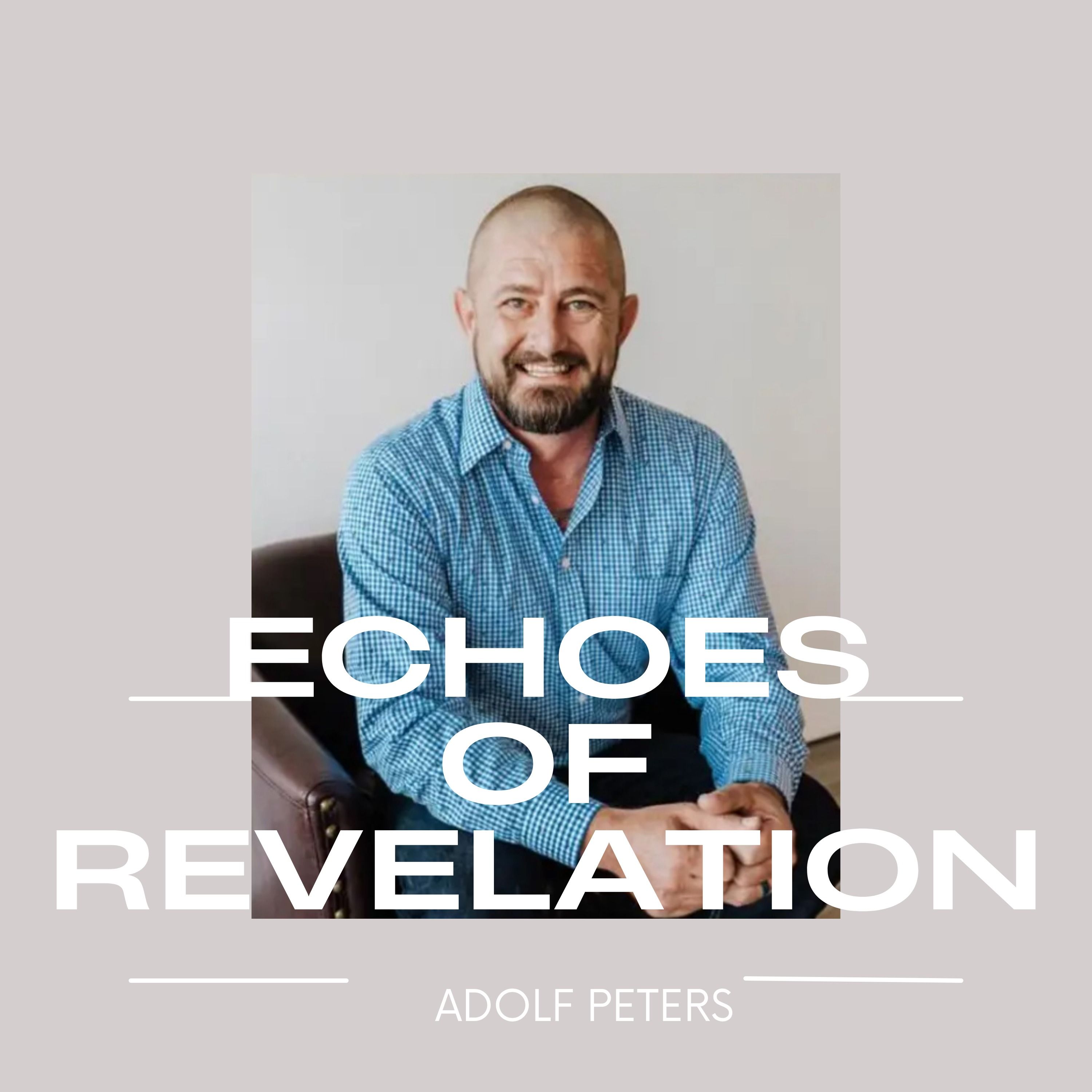
PODCAST · religion
Echoes Of Revelation
by Adolf Peters
This isn’t just a podcast—it’s a journey through the text. We explore scripture through a Jewish literary lens, asking bold questions and embracing the tension. A Christian podcast for those who refuse to settle for surface-level faith.
-
15
The Two Names of God Part Seven
his episode delves into the theological significance of God's names in the Torah, especially Yahweh and Elohim. It highlights how the Torah invites readers to notice these names and reflect on their meanings. While God is understood as a singular, unified Being in monotheism, human perception often splits this unity—seeing God as either just or compassionate. The Torah typically uses one name at a time: Elohim conveys power and judgment, while Yahweh expresses mercy and relational closeness. The rarity of both names appearing together underscores the tension in how humans conceptualize divine unity. LINKSEchoes of Revelation | Lubbock TX | Facebook
-
14
Why Leviticus Matters More Than You Think
Leviticus sits in one of the strangest and most complex corners of Scripture a place that, despite its difficulty, carries something sacred, intentional, and God‑breathed. Instead of a storyline, it offers a meticulously structured set of 613 commands that shape Israel’s life in God’s presence. This sudden shift can feel jarring. After the sweeping narratives of Genesis and Exodus the patriarchs, the descent into Egypt, the drama of slavery and liberation, the fire and thunder of Sinai Leviticus arrives like a full stop. The movement halts. The story goes quiet. In its place stand laws: ritual, purity, sacrificial, priestly. Many readers disengage here, waiting for the narrative to resume in Numbers. But the difficulty of Leviticus may actually be an invitation. By stepping back and looking at the two narratives that frame it the cloud of God settling over the Tabernacle at the end of Exodus and the cloud lifting to lead Israel forward in Numbers a new story emerges. Leviticus becomes the sacred space between those movements, the moment where God pauses the journey to teach His people how to live close to Him. Seen this way, Leviticus is not a break in the story but the heart of it: a call to slow down, listen differently, and discover how closeness with God is cultivated. LINKSEchoes of Revelation | Lubbock TX | Facebook
-
13
The Two Names of God Part Six
This episode delves into the theological significance of God's names in the Torah, especially Yahweh and Elohim. It highlights how the Torah invites readers to notice these names and reflect on their meanings. While God is understood as a singular, unified Being in monotheism, human perception often splits this unity—seeing God as either just or compassionate. The Torah typically uses one name at a time: Elohim conveys power and judgment, while Yahweh expresses mercy and relational closeness. The rarity of both names appearing together underscores the tension in how humans conceptualize divine unity. LINKSEchoes of Revelation | Lubbock TX | Facebook
-
12
Wilderness Echoes: The Cry of Hagar and the Fear of Sarah
One of the traits we most associate with Abraham and Sarah is their radical generosity. Their tent is open on all sides, their hospitality legendary. They run to greet strangers in the desert heat. Kindness is their signature. And yet… when you look closely at their stories, you run into moments that feel jarringly out of character. The episode with Hagar and Ishmael is the most striking example. How could Abraham and Sarah of all people send a woman and her child into the wilderness? How does that square with the compassion we’ve come to expect from them? LINKSEchoes of Revelation | Lubbock TX | Facebook
-
11
The Two Names of God Part Five
This episode delves into the theological significance of God's names in the Torah, especially Yahweh and Elohim. It highlights how the Torah invites readers to notice these names and reflect on their meanings. While God is understood as a singular, unified Being in monotheism, human perception often splits this unity—seeing God as either just or compassionate. The Torah typically uses one name at a time: Elohim conveys power and judgment, while Yahweh expresses mercy and relational closeness. The rarity of both names appearing together underscores the tension in how humans conceptualize divine unity. LINKSEchoes of Revelation | Lubbock TX | Facebook
-
10
Strange Laws, Old Wounds: When Exodus Starts Speaking Joseph’s Language.
After the sweeping drama of the Exodus and the thunder at Sinai, the book of Exodus seems to slam on the brakes. Suddenly we’re knee‑deep in case law—oxen goring, pits uncovered, property disputes, personal injuries. It can feel jarring, almost deflating, to move from cosmic revelation to what looks like the ancient equivalent of municipal code.But what if these laws aren’t just legal fine print? What if they’re whispering something deeper—echoes of a story we think we already know? What if, tucked inside these seemingly dry regulations, the Torah is quietly pointing us back to one of its most beloved narratives, inviting us to see it with new eyes? LINKSEchoes of Revelation | Lubbock TX | Facebook
-
9
The Two Names of God Part Four
This episode delves into the theological significance of God's names in the Torah, especially Yahweh and Elohim. It highlights how the Torah invites readers to notice these names and reflect on their meanings. While God is understood as a singular, unified Being in monotheism, human perception often splits this unity—seeing God as either just or compassionate. The Torah typically uses one name at a time: Elohim conveys power and judgment, while Yahweh expresses mercy and relational closeness. The rarity of both names appearing together underscores the tension in how humans conceptualize divine unity. LINKSEchoes of Revelation | Lubbock TX | Facebook
-
8
Creation Echoes in the Waters of Noah
In this episode, we step back and place the Creation story alongside the story of Noah—and suddenly a pattern comes into focus. The world that emerges after the flood looks uncannily like the world that emerged in the very beginning. The Torah’s description of the earth drying out, life restarting, and order returning feels like a deliberate replay of Creation itself. So why would the Torah tell the story this way? What is it trying to show us about the flood—not simply as judgment, but as an act of re‑creation? These mirrored scenes invite us to rethink the entire narrative and reconsider what God was doing when He chose to wash the world clean.But before we can understand the flood as a new beginning, we have to understand what went so wrong in the first place. And the Torah gives us a surprising clue in something deceptively simple: Noah’s name. When he is born, his father Lamech speaks a prophecy that feels both hopeful and strangely uneasy, hinting at a world already buckling under a deep, unseen fracture. His words open a window into what was broken—and what God longed to restore. LINKSEchoes of Revelation | Lubbock TX | Facebook
-
7
The Two Names of God Part Three
This episode delves into the theological significance of God's names in the Torah, especially Yahweh and Elohim. It highlights how the Torah invites readers to notice these names and reflect on their meanings. While God is understood as a singular, unified Being in monotheism, human perception often splits this unity—seeing God as either just or compassionate. The Torah typically uses one name at a time: Elohim conveys power and judgment, while Yahweh expresses mercy and relational closeness. The rarity of both names appearing together underscores the tension in how humans conceptualize divine unity. LINKSEchoes of Revelation | Lubbock TX | Facebook
-
6
Resting In God's Rhythm
God’s rest is not about fatigue but fulfillment. In Genesis, God stops not because He needs recovery, but because creation is complete and ready for relationship. This seventh‑day rest is a positive presence delight, communion, and divine dwelling not the absence of activity. Humanity’s first full day is this rest, signaling that we are meant to begin from God’s rhythm of wholeness rather than earn it through work. Rest is the crown of creation because it reveals the world as God’s temple and invites us into fellowship before productivity. LINKSEchoes of Revelation | Lubbock TX | Facebook
-
5
The Two Names of God Part Two
This episode delves into the theological significance of God's names in the Torah, especially Yahweh and Elohim. It highlights how the Torah invites readers to notice these names and reflect on their meanings. While God is understood as a singular, unified Being in monotheism, human perception often splits this unity—seeing God as either just or compassionate. The Torah typically uses one name at a time: Elohim conveys power and judgment, while Yahweh expresses mercy and relational closeness. The rarity of both names appearing together underscores the tension in how humans conceptualize divine unity. LINKSEchoes of Revelation | Lubbock TX | Facebook
-
4
The Two Arks
This episode explores the sacred architecture of the Mishkan—the Tabernacle—as more than a blueprint, but a map for divine encounter. At its center lies the Ark of the Covenant, described as wood overlaid inside and outside with pure gold. Remarkably, the Torah uses this “inside and outside” detail only once more: in the description of Noah’s ark, a vessel of wood sealed inside and outside with pitch. Placed side by side, they appear as mirror images—one luminous, one shadowed—yet both designed to protect what is sacred within. Whether coincidence or divine intention, the parallel reveals a hidden pattern: heaven’s covenant and creation alike must be preserved through chaos. https://www.facebook.com/people/Echoes-of-Revelation/61582409057033/# LINKSEchoes of Revelation | Lubbock TX | Facebook
-
3
The Two Names Of God Part 1
his episode delves into the theological significance of God's names in the Torah, especially Yahweh and Elohim. It highlights how the Torah invites readers to notice these names and reflect on their meanings. While God is understood as a singular, unified Being in monotheism, human perception often splits this unity—seeing God as either just or compassionate. The Torah typically uses one name at a time: Elohim conveys power and judgment, while Yahweh expresses mercy and relational closeness. The rarity of both names appearing together underscores the tension in how humans conceptualize divine unity. LINKSEchoes of Revelation | Lubbock TX | Facebook
-
2
Introductory Lesson
This being our very first episode, I want to take a moment to share what this podcast is all about and what inspired me to begin this journey. LINKSEchoes of Revelation | Lubbock TX | Facebook
No matches for "" in this podcast's transcripts.
No topics indexed yet for this podcast.
Loading reviews...
ABOUT THIS SHOW
This isn’t just a podcast—it’s a journey through the text. We explore scripture through a Jewish literary lens, asking bold questions and embracing the tension. A Christian podcast for those who refuse to settle for surface-level faith.
HOSTED BY
Adolf Peters
CATEGORIES
Loading similar podcasts...
URL copied to clipboard!