
PODCAST · health
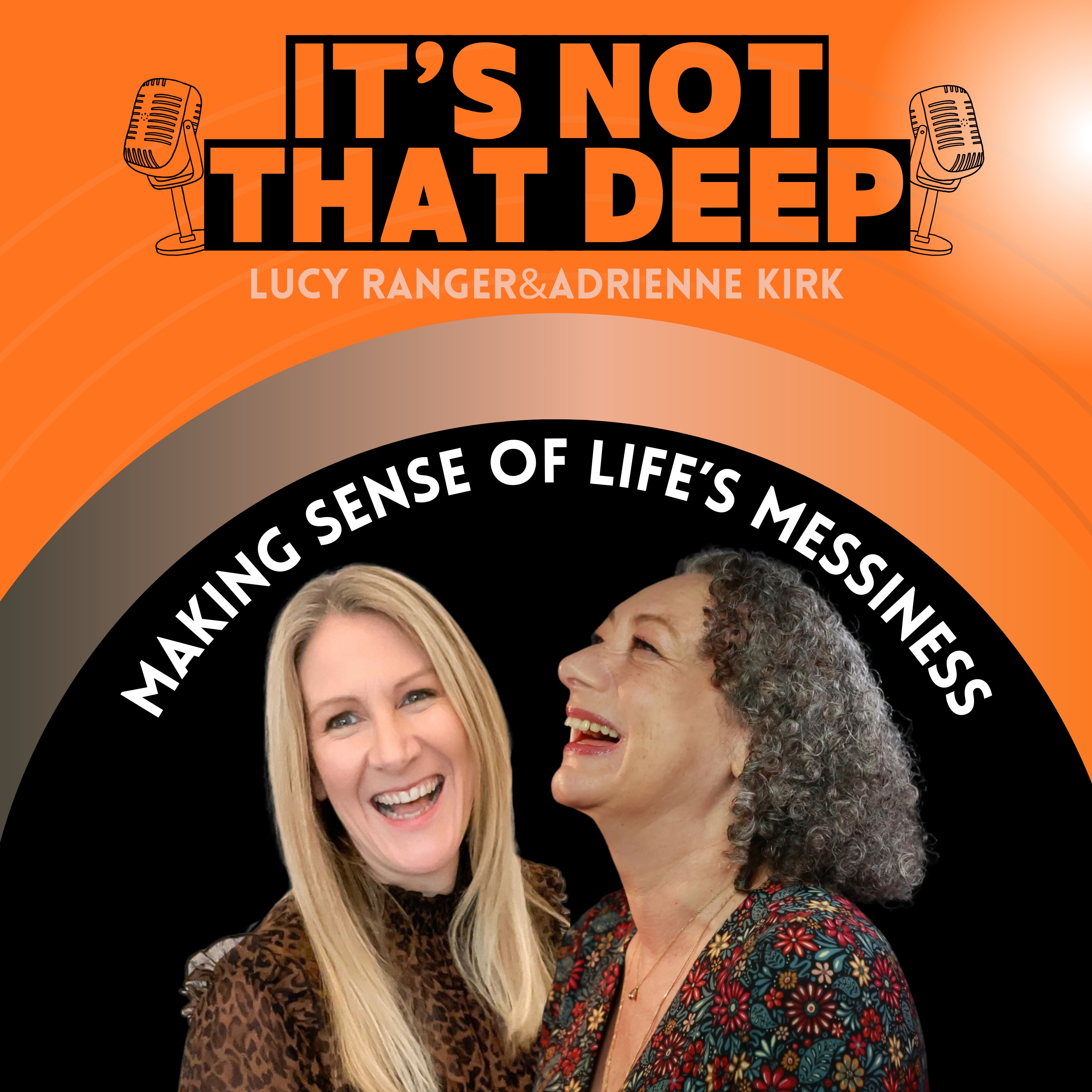
It's Not That Deep
by Adrienne Kirk and Lucy Ranger
In each episode Adrienne Kirk, a Psychotherapist and Lucy Ranger (was Woods), a Mindfulness Specialist bring some lightness to often difficult subjects, helping to navigate through the messiness of life's challenges. With a real emphasis on how to move towards flourishing, It's Not That Deep, looks at what it really is to be human, and offers some tools and strategies that help to support our wellbeing.Find us at: www.adriennekirk.uk or www.presenceofmind.life Hosted on Acast. See acast.com/privacy for more information.
-
102
Why don't all therapeutic approaches suit everyone?
In this episode, we welcomed a guest, Sassy Smith, who is the founder of Aphantasia Academy and author of Unseen Minds - A Therapist's Guide to Multisensory Aphantasia and Invisible Cognitive Differences The episode delves into the fascinating world of cognitive differences, exploring how unique mental experiences like aphantasia, endophasia and SDAM shape our perception of reality. By understanding these variations, therapists can tailor their approaches to better meet the needs of their clients, and clients are able to articulate their experiences more easily.Lucy (who has aphantasia) and Sassy share personal insights, Adrienne adds a therapeutic perspective and all three of us discuss professional strategies that highlight the importance of recognising and validating individual cognitive profiles. This episode is a must-listen for anyone interested in enhancing therapeutic practices and fostering a deeper understanding of the human mind, and also anyone currently undergoing therapy.Sassy has generously offered a gift to listeners with codes that give discounts off her brilliant resources.FOUNDATIONS50 gives listeners a £50 discount for the Aphantasia Foundations course and NOTTHATDEEP gives a £100 discount for the Aphantasia Therapist training. Unseen Minds: A Therapist's Guide to Multisensory Aphantasia and Invisible Cognitive Differences -https://www.amazon.com/Unseen-Minds-Therapists-Multisensory-Differences/dp/1036970612Aphantasia Academy - https://www.aphantasiaacademy.com Sassy Smith on Facebook - https://www.facebook.com/SassySmithSassy Smith on Instagram - https://www.instagram.com/aphantasia_academy/ Free CBT Masterclass on Aphantasia - https://www.aphantasiacoach.com/CBTMasterclassAdrienne and Lucy can be contacted through their websites:www.presenceofmind.life (Lucy)www.adriennekirk.uk (Adrienne)Find us at: www.adriennekirk.uk or www.presenceofmind.life Hosted on Acast. See acast.com/privacy for more information.
-
101
Why do we want things to be pleasant?
In this, our 100th episode, we explore the very human tendency to desire pleasant experiences and the impact this wanting has on our well-being. It’s natural, of course, to delight in the pleasant, it only becomes a problem when we start to crave for things to be more pleasant and thereby end up increasing our own suffering. We discuss the impact of trying to push away unpleasant feelings, and even diminishing our pleasant times by being sad that they will end! To offset this we delve into mindfulness, emotional regulation, and how acceptance of impermanence can lead to greater peace.TakeawaysWanting things to be pleasant can increase suffering when they are notMindfulness helps in noticing subtle mood shifts and choosing responsesThoughts significantly influence feelings and can be challengedAcceptance of impermanence allows for greater peace and enjoyment of the presentSmall, neutral moments can be sources of steady happinessAdrienne and Lucy can be contacted through their websites:www.presenceofmind.life (Lucy)www.adriennekirk.uk (Adrienne)Find us at: www.adriennekirk.uk or www.presenceofmind.life Hosted on Acast. See acast.com/privacy for more information.
-
100
Why do we hold on to a bad mood?
In this episode we explore why we hold onto bad moods. We discuss the psychological mechanisms behind it, and practical strategies to let go. We explore the role of thoughts, perceptions of injustice, and the importance of awareness and calming techniques.TakeawaysHolding onto a bad mood often stems from perceived injustice or unfairness.Our stress response system complicates quick emotional release.Pattern recognition and confirmatory bias reinforce bad moods.Awareness and mindfulness are key to recognizing and releasing bad moods.Adrienne and Lucy can be contacted through their websites:www.presenceofmind.life (Lucy)www.adriennekirk.uk (Adrienne)Find us at: www.adriennekirk.uk or www.presenceofmind.life Hosted on Acast. See acast.com/privacy for more information.
-
99
Why are we obsessed with looking young?
In this episode, we explore the societal obsession with youth and beauty, and challenge the cultural narratives that equate ageing with loss and irrelevance. We discuss how perceptions of ageing influence women’s self-image, societal expectations, and the impacts of social media and media portrayal on how we view ourselves and others.We explore the possibility of appreciating the experiences that come with age rather than dismissing them because they come wrapped in an older body.Key Topics:The societal pressure on women of a certain age to look young and the cultural obsession with reversing ageingHow ageing and appearance are perceived as signs of experience and wisdom versus signs of declineThe influence of social media and advertising in shaping beauty standards and age-related insecuritiesThe gendered differences in societal expectations around ageing, especially in relationships and partner selectionThe rise of preventative Botox amongst young people to delay wrinklesThe societal narrative that values youth over experience, wisdom, and inner characterThe impact of materialism and external possessions on perceived self-worth and attractivenessThe concept of growing old gracefully versus the desire to maintain a youthful exteriorThe psychological effects of societal standards on self-esteem, self-worth, and ageingThe importance of redefining beauty and ageing to honour experience and wisdom over superficial standardsAdrienne and Lucy can be contacted through their websites:www.presenceofmind.life (Lucy)www.adriennekirk.uk (Adrienne)Find us at: www.adriennekirk.uk or www.presenceofmind.life Hosted on Acast. See acast.com/privacy for more information.
-
98
Why do we believe the stories over the evidence?
In this episode, we explore the reasons behind why individuals often believe negative stories about themselves rather than the evidence of their accomplishments. We discuss the impact of societal constructs on self-perception, the dangers of comparison, and the importance of accepting both strengths and weaknesses. The chat emphasises the role of vulnerability in self-acceptance and the need to challenge negative self-talk. Ultimately, we want to encourage listeners to find joy in imperfection and embrace new experiences without fear of failure. We can only grow if we allow the possibility of failing and the learning that comes from that.TakeawaysWe often believe negative stories about ourselves over evidence.Societal standards are arbitrary and can distort self-perception.Comparison to others can undermine our self-worth.Accepting our strengths is as important as acknowledging our weaknesses.Vulnerability is key to self-acceptance and growth.Negative self-talk can sabotage our enjoyment of life.We should challenge the stories we tell ourselves.Evidence-based thinking can help us assess our abilities more accurately.Finding joy in imperfection is essential for personal growth.Embracing new experiences can lead to unexpected joy.Adrienne and Lucy can be contacted through their websites:www.presenceofmind.life (Lucy)www.adriennekirk.uk (Adrienne)Find us at: www.adriennekirk.uk or www.presenceofmind.life Hosted on Acast. See acast.com/privacy for more information.
-
97
Why are we so focused on the end result?
In this episode, we explore how much enjoyment we miss if we are only focused on the end product. It is so important to focus on the process rather than the end result in various aspects of life as there is so much pleasure to be got from the journey! We discuss how mindfulness and engagement in activities can enhance enjoyment and fulfilment, emphasising the need to be present and savour each moment.Our conversation also touches on the significance of experiential learning and the joy found in mundane experiences, ultimately advocating for a shift in perspective towards appreciating the journey of life.TakeawaysWe often rush through life, focusing on the end result.Enjoying the process can lead to greater fulfilment.Mindfulness enhances our engagement in activities.Striving for perfection can detract from enjoyment.Being present allows us to savour experiences.Life's joy can be found in mundane moments.Experiential learning is more valuable than outcomes.Grief reflects the love we had for someone.We should not define ourselves by our achievements.Life happens in the present, not in future expectations.Adrienne and Lucy can be contacted through their websites:www.presenceofmind.life (Lucy)www.adriennekirk.uk (Adrienne)Find us at: www.adriennekirk.uk or www.presenceofmind.life Hosted on Acast. See acast.com/privacy for more information.
-
96
Why don't we say what we mean?
In this episode, we delve into the complexities of communication, particularly focusing on why people often fail to express their true thoughts and feelings. We explore various reasons for this behaviour, such as the fear of upsetting others or the desire to be liked. Our conversation highlights the tension between honesty and kindness, emphasizing that while it’s important to be truthful, it’s equally crucial to consider the feelings of others. We discuss the challenges of navigating these conversations, especially in personal relationships, and the importance of finding a balance between being clear and being considerate.We also touch on the concept of 'mind reading' in relationships, where individuals expect their partners or friends to understand their feelings without explicit communication. we stress the significance of clarity in communication and the need for practice in having difficult conversations. As usual, we conclude with practical advice on how to approach these discussions, including the importance of timing and the potential benefits of being honest while remaining kind.TakeawaysWe often avoid saying what we mean due to fear of upsetting others.Finding a balance between honesty and kindness is crucial.Mind reading in relationships can lead to misunderstandings.Clear communication can prevent unnecessary conflict.Practicing assertiveness in small matters can build confidence for bigger conversations.Adrienne and Lucy can be contacted through their websites:www.presenceofmind.life (Lucy)www.adriennekirk.uk (Adrienne)Find us at: www.adriennekirk.uk or www.presenceofmind.life Hosted on Acast. See acast.com/privacy for more information.
-
95
Why do we see things as black or white?
In this episode, we explore the tendency we all have to perceive situations in black and white terms, often overlooking the nuanced middle ground. This is a natural process, our brains are hard-wired to keep us safe and a part of that is to categorise things as safe or unsafe. We discuss how this thinking can lead to unrealistic expectations, particularly in relationships and personal experiences, and how we can work to pull ourselves back to the messy middle. Our conversation emphasises the importance of emotional regulation, effective communication, and the need to lower expectations to find balance, ease and happiness in life.TakeawaysWe have a tendency to see things in extremes.Our brains categorise experiences to keep us safe.Judgment stems from a need for survival.Catastrophising can ruin otherwise good days.Expectations can lead to disappointment during holidays.Communication is key in relationships.Self-care is not selfish; it's necessary.Emotional regulation helps in avoiding black and white thinking.Finding the middle ground is essential for happiness.Lowering expectations can lead to greater satisfaction.Adrienne and Lucy can be contacted through their websites:www.presenceofmind.life (Lucy)www.adriennekirk.uk (Adrienne)Find us at: www.adriennekirk.uk or www.presenceofmind.life Hosted on Acast. See acast.com/privacy for more information.
-
94
Why don't we feel like a grown up?
In this episode, we explore the complexities of feeling grown up, whether we feel different than we did when we were younger, the impact of our inner child, and the cultural perceptions of ageing, particularly for women. We discuss the challenges of defining ourselves beyond societal labels, the responsibilities of adulthood, and the generational differences in perceptions of growing up. We also emphasise the importance of embracing eccentricities and finding joy in ageing while navigating the messinesses of grown-up life.TakeawaysMany people feel they haven't changed much since their twenties.The inner child often feels neglected in adulthood.Cultural expectations can pressure women regarding ageing.Ageing is often associated with loss of freedom and increased responsibility.Generational differences affect perceptions of adulthood.Maintaining friendships across generations can help to blur age boundaries.Embracing eccentricities can lead to a more fulfilling life.Defining oneself beyond societal roles is challenging but necessary.The fear of ageing often stems from societal pressures.Finding joy in ageing requires a shift in perspective.Adrienne and Lucy can be contacted through their websites:www.presenceofmind.life (Lucy)www.adriennekirk.uk (Adrienne)Find us at: www.adriennekirk.uk or www.presenceofmind.life Hosted on Acast. See acast.com/privacy for more information.
-
93
Why do we think we know best?
In this conversation, we explore the theme of why we often believe our way of thinking is superior to others'. We discuss everyday examples of perceived efficiency, the comfort of familiarity, and the challenges of accepting different perspectives.We are always changing, evolving our beliefs, thoughts and the way in which we do things and engage with the world and other people. And can we allow that we therefore might change our minds completely on something, and can that be okay.This conversation emphasises the importance of flexibility in our beliefs and the value of learning from others, especially younger generations. We also touch on the role of science in shaping our opinions and the necessity of being open to new information.Takeaways:We often believe our way is the best way.Everyday examples highlight our perceptions of efficiency.Understanding different perspectives can enhance relationships.Familiarity provides comfort but can hinder growth.Change can be uncomfortable but is necessary for learning.Flexibility in beliefs allows for personal growth.Younger generations can teach us valuable lessons.Science evolves, and so should our beliefs.Being open and curious fosters better communication.Navigating relationships requires understanding and acceptance.Adrienne and Lucy can be contacted through their websites:www.presenceofmind.life (Lucy)www.adriennekirk.uk (Adrienne)Find us at: www.adriennekirk.uk or www.presenceofmind.life Hosted on Acast. See acast.com/privacy for more information.
-
92
Why do we find it easier to help others rather than ourselves?
In this episode we explored why it seems so much easier to find a solution to other peoples problems that it is our own. We discuss the importance of self-compassion and mindfulness and getting a bigger picture perspective, particularly in challenging situations. We reflected on the tendency we have to hold ourselves to a much higher standard than we do for others, that we are less likely to show ourselves understanding and compassion.We emphasised the need to reflect on the advice we would give to others, particularly those we love, and apply it to ourselves. We talked about giving ourselves a moment of stillness and presence rather than seeking immediate solutions. Trust that self-support and solutions will emerge from a soothed system, rather than the hard time we give ourselves when we are in fight or flight mode!TakeawaysCan we think about what advice would we give to others we care about?Can we apply that advice to ourselves.In difficult times, we often need compassion, not solutions.Taking a moment to breathe can be beneficial.Mindfulness helps us to just be in the moment.It's important to reflect on our feelings.We often bombard ourselves with solutions when we need support.Self-compassion is crucial during tough times.Being present can help alleviate stress.We should treat ourselves with the same kindness we offer others.Adrienne and Lucy can be contacted through their websites:www.presenceofmind.life (Lucy)www.adriennekirk.uk (Adrienne)Find us at: www.adriennekirk.uk or www.presenceofmind.life Hosted on Acast. See acast.com/privacy for more information.
-
91
Why do we view some emotions as negative?
In this episode we explore why we view some emotions as negative. It is natural to categorise our feelings as good or bad; wrong or right. The negative ones we experience feel unpleasant and so we have a tendency to push them away.We consider the importance of facing these emotions and starting to see them as unpleasant rather than bad or negative. All our feelings are data or information about our current state, so it can be helpful to develop a curiosity about them and what they are telling us about ourselves. We emphasise the need to manage difficult emotions rather than suppressing them, highlighting the impact of avoidance on mental health.Takeaways:When faced with unpleasant emotions, we often seek distractions.Substance abuse and busyness can be unhealthy coping mechanisms.Avoiding difficult emotions can lead to negative consequences.It's important to face and manage our emotions directly.Suppressing feelings can result in them resurfacing later.Healthy emotional management is crucial for mental well-being.Understanding our emotional responses can lead to better coping strategies.Emotional tolerance is a skill that can be developed.Facing emotions can lead to personal growth and resilience.Support systems can aid in managing difficult feelings.Adrienne and Lucy can be contacted through their websites:www.presenceofmind.life (Lucy)www.adriennekirk.uk (Adrienne)Find us at: www.adriennekirk.uk or www.presenceofmind.life Hosted on Acast. See acast.com/privacy for more information.
-
90
Why do we replay the past?
In this episode, we explore the reasons behind why individuals replay past events and the patterns of behaviour that emerge from these experiences. We discuss the impact of fixed identities, sedimented beliefs, the weight of regret and shame, and the importance of self-compassion in navigating these feelings. The conversation emphasises the need for understanding our decision-making processes and the illusion of right choices, while also highlighting the significance of seeking help and support when feeling overwhelmed. We hope that this discussion provides insights into breaking the cycle of overthinking and fostering personal growth.TakeawaysWe often replay the past due to ingrained patterns of behaviour.Fixed identities can limit our perception of choices.Shame and regret can lead to self-torture in our thoughts.Decisions made in the past were based on available evidence at the time.Self-compassion is crucial for personal growth and healing.Thoughts are not facts; they can be observed and challenged.Seeking help is not a weakness but a necessary step for recovery.We take our existing patterns with us into new situations.It's important to learn from the past without harsh judgment.Acceptance of where we are now is the first step to change.Adrienne and Lucy can be contacted through their websites:www.presenceofmind.life (Lucy)www.adriennekirk.uk (Adrienne)Find us at: www.adriennekirk.uk or www.presenceofmind.life Hosted on Acast. See acast.com/privacy for more information.
-
89
Why don't we invest in friendships as much as we could?
In this episode, we explore the importance of investing in friendships, the challenges of nurturing them as life changes, and the vital role of communication and vulnerability in maintaining connections. It can be easy to let connections slide as life gets busy, however we often regret the loss of friendships when this happens.We emphasise the need for balance between self-care and social engagement, highlighting how meaningful relationships contribute to our overall well-being and sense of purpose. If we don’t value ourselves we can feel that others won’t mind, or even notice, if we don’t see them. And this can mean that relationships slide away without us necessarily meaning to let them do so.It takes work to keep up with friendships especially as we get older, however the benefits are so valuable for us. Sometimes self-care means pushing ourselves to do something that feels effortful but will be meaningful for us.TakeawaysFriendships often take a backseat as life gets busier.Long-term friendships require ongoing nurturing to thrive.Life changes can impact the time and energy we invest in friendships.Communication is key to maintaining connections, especially during tough times.Self-worth can affect how we engage in friendships.Balancing self-care with social connections is crucial.Creating meaning in life often comes from our relationships with others.Community support is essential for mental well-being.Modern connections may differ but are still valuable.Acts of kindness can create a virtuous cycle of connection.Adrienne and Lucy can be contacted through their websites:www.presenceofmind.life (Lucy)www.adriennekirk.uk (Adrienne)Find us at: www.adriennekirk.uk or www.presenceofmind.life Hosted on Acast. See acast.com/privacy for more information.
-
88
Why do we feel guilty for stopping?
In this episode, we explore the guilt we feel when taking breaks, and the cultural obsession with busyness. We discuss how modern technology and societal expectations have blurred the lines between work and personal time, leading to a constant state of doing. We discuss the importance of recognising the need for rest, nourishing activities, and the impact of these on mental health and productivity. We also touch on the privilege of being able to choose when to stop and the necessity of finding balance in life. We note how, even if we are unable to take long breaks it is necessary to stop, even briefly, to breathe and notice this moment.Takeaways:We often feel guilty for taking breaks, which can lead to burnout.Cultural norms have created a badge of honour around busyness.Rest is essential for mental health and productivity.We need to learn how to be present and enjoy non-doing activities.The pressure to be constantly productive is exacerbated by technology.Recognising the need for rest can improve overall effectiveness.It's important to challenge the stories we tell ourselves about work and rest.Taking time for ourselves is not a luxury, but a necessity.Mindfulness can help us reconnect with the present moment.Life is happening now, not in the future when we are less busy.Adrienne and Lucy can be contacted through their websites:www.presenceofmind.life (Lucy)www.adriennekirk.uk (Adrienne)Find us at: www.adriennekirk.uk or www.presenceofmind.life Hosted on Acast. See acast.com/privacy for more information.
-
87
Why don't we ever feel ready?
In this episode, we delve into what it really means to feel ‘ready’. We talk about our own experiences of not being ready to act, and what was holding us back. We explore how things like perfectionism, nerves and putting things off can hold us back, and why waiting for the ‘perfect moment’ often just keeps us stuck. Along the way, we touch on relationships, decision-making, and why it helps to explore, and get comfortable with, a bit of uncertainty. Readiness isn’t something you wait for - it’s something you do, with courage and self-awarenesstakeawaysWe can prevent ourselves from doing things because we don't feel ready.Perfectionism can create barriers to taking action.Anxiety can amplify feelings of unpreparedness.The need for everything to be perfect can hinder progress.Procrastination is often linked to fear of failure.There is no such thing as perfect conditions for starting something new.Waiting for the right time can lead to missed opportunities.Tolerating discomfort is essential for growth and action.Clarity in our intentions can help us move forward.Taking action is more important than waiting to feel ready.Adrienne and Lucy can be contacted through their websites:www.presenceofmind.life (Lucy)www.adriennekirk.uk (Adrienne)Find us at: www.adriennekirk.uk or www.presenceofmind.life Hosted on Acast. See acast.com/privacy for more information.
-
86
Why do we feel the need to fix ourselves?
In this episode we discuss that there are two types of ‘fixing’. There’s the wanting to fix ourselves because we believe we are ‘broken’ or ‘damaged’ and the wanting to change the way in which we meet a particular situation in order to manage ourselves in a more helpful manner.If we can move away from the idea that we need to be fixed, and turn more to the idea that other ways of engaging with our world might be more supportive – that a behaviour or attitude might benefit from being fixed – then we just might find more peace in our life.Adrienne and Lucy can be contacted through their websites:www.presenceofmind.life (Lucy)www.adriennekirk.uk (Adrienne)Find us at: www.adriennekirk.uk or www.presenceofmind.life Hosted on Acast. See acast.com/privacy for more information.
-
85
Why do we feel responsible for other people's feelings?
In this episode we discuss feeling responsible for other people's feelings. Often that means that we can find it hard to stick to our boundaries because we don’t want to upset other people. This can then lead us to feeling that our needs don’t count and we can become frustrated, sad or even angry.Of course we don’t like to upset others, however we are all responsible for how we respond to situations. It is possible to take accountability for our own actions, but not how others respond to those actions. And this is important though difficult to remember this when we are faced with the distress of others.Generally it’s not an either/or choice, it is possible to take care of our own feelings and the feelings of others.Adrienne and Lucy can be contacted through their websites:www.presenceofmind.life (Lucy)www.adriennekirk.uk (Adrienne)Find us at: www.adriennekirk.uk or www.presenceofmind.life Hosted on Acast. See acast.com/privacy for more information.
-
84
Why do we feel the need for labels?
In this episode we discuss the pros and cons of having labels. They can help us to understand ourselves, and to find people who are like us. They can also separate us from others, lead us to judge and be judged for our opinions.This episode became something we weren’t expecting! We ended up debating the consequences of aligning ourselves too closely to our opinions, the labels we use to describe ourselves and the dangers of not allowing ourselves to have a genuine curiosity about the reasons we, and others identify with the labels they pick for themselves.Adrienne and Lucy can be contacted through their websites:www.presenceofmind.life (Lucy)www.adriennekirk.uk (Adrienne)Find us at: www.adriennekirk.uk or www.presenceofmind.life Hosted on Acast. See acast.com/privacy for more information.
-
83
Why do we avoid conflict?
In this episode we explore some of the reasons we might avoid conflict; for example, childhood experiences or relationship issues. We also explore the feelings that might come when thinking about disagreeing with someone, a fear of not being liked, a lack of safety, anxiety, a fear of feeling under attack for our opinions.We also share our personal experiences; one of us was conflict-avoidant and one moved towards conflict when a sense of injustice was present. We have moved closer together in the ways we manage differences of opinion and conflict and we reflect on those.We suggest ways of moving towards being able to hear and state differences of opinion with others without it feeling catastrophic.Adrienne and Lucy can be contacted through their websites:www.presenceofmind.life (Lucy)www.adriennekirk.uk (Adrienne)Find us at: www.adriennekirk.uk or www.presenceofmind.life Hosted on Acast. See acast.com/privacy for more information.
-
82
Why do we get FOMO?
This episode was all about the fear of missing out. We explored the very human desire to be a part of everything, do everything and be fully involved with everything! We discussed how we can explore our feelings about being not part of something, to make sense of them in the current context, and to be aware of any old patterns that might be impacting on our experience of this current FOMO. We leaned on our familiar questions – is how I’m interpreting this true? And is it about me? We explore how we might let go of the stories we are telling ourself and meet the situation in a way that supports us, rather than makes us feel bad.Adrienne and Lucy can be contacted through their websites:www.presenceofmind.life (Lucy)www.adriennekirk.uk (Adrienne)Find us at: www.adriennekirk.uk or www.presenceofmind.life Hosted on Acast. See acast.com/privacy for more information.
-
81
Why do we want to be in control?
Feeling in control is a way of feeling safe, and lowering our anxiety. In this episode we discuss how actually very little is within our control, and how to be OK with that! We talked widely about how, in the end, often the only thing we have any control over is ourselves and how we respond to situations. And how liberating it can be to be able to say ‘oh well, stuff happens’ when things don’t turn out as we might have liked!Adrienne and Lucy can be contacted through their websites:www.presenceofmind.life (Lucy)www.adriennekirk.uk (Adrienne)Find us at: www.adriennekirk.uk or www.presenceofmind.life Hosted on Acast. See acast.com/privacy for more information.
-
80
Why do we find it hard to make decisions?
In this episode, we discuss why we can find it hard to make a decision, whether that’s a small decision (which outfit to wear maybe!) or a much larger one (whether to change jobs, or leave a relationship perhaps).We can become stuck trying to work out which is the right option to choose, when often it’s not that one is right and one is wrong, but that both have advantages and disadvantages.We discuss how to put the fear to one side and really hear which option feels right for us in that moment, which one our gut would choose. As ever, we share our personal experiences hoping that others can relate!Adrienne and Lucy can be contacted through their websites:www.presenceofmind.life (Lucy)www.adriennekirk.uk (Adrienne)Find us at: www.adriennekirk.uk or www.presenceofmind.life Hosted on Acast. See acast.com/privacy for more information.
-
79
Why do we need to be kind to ourselves?
In this episode we discuss how we are often really good at being kind to others, but don’t seem to think that we deserve to receive kindness from ourselves. However, MRI studies have shown that the areas in the brain that are activated when we are bullied also fire when we are unpleasant to ourselves. This triggers a stress response and all the consequences that brings! It can feel like an either/or choice – either we are kind to others or to ourself. However it is possible to do both, to include ourselves in the beam of kindness we are showing to the world.We discuss how we can be kinder to ourselves, and suggest that a way to start can be to ask ourselves, what would I say to a close friend if they felt like I do? And then try to be that friend to ourself.Adrienne and Lucy can be contacted through their websites:www.presenceofmind.life (Lucy)www.adriennekirk.uk (Adrienne)Find us at: www.adriennekirk.uk or www.presenceofmind.life Hosted on Acast. See acast.com/privacy for more information.
-
78
Why do we leave things to the last minute?
In this episode we explore some of the reasons we might leave things to the last minute; procrastinating, having too many things to do, and feeling overwhelmed. We discussed some strategies to make life more ease-full, ways in which we can take back some control and feel more in control. Counter-intuitively these do include slowing down! And also prioritising self-care; as we often say, it’s not the things, it’s the way in which we meet the things. That is where we have some control!Adrienne and Lucy can be contacted through their websites:www.presenceofmind.life (Lucy)www.adriennekirk.uk (Adrienne)Find us at: www.adriennekirk.uk or www.presenceofmind.life Hosted on Acast. See acast.com/privacy for more information.
-
77
Why do we find it hard to stay motivated?
In this episode we discuss what gets in the way of being motivated. Our inner critic can mean that we let our perfectionism get in the way of starting, or finishing something! We could be overwhelmed or burnt out rather than unmotivated. And sometimes the task might simply be something we don’t want to do. We discuss strategies to deal with uncovering exactly what is getting in our way, so that we can work out how to manage the current situation with self-compassion. Both of us like to utilise the idea of what how my future-self feel – even future-me in a couple of hours’ time. She will probably be delighted that I stayed on-task!Please find the link to Lucy's free mini course here: https://mindfulness.presenceofmind.life/pl/2148451850 Adrienne and Lucy can be contacted through their websites:www.presenceofmind.life (Lucy)www.adriennekirk.uk (Adrienne)Find us at: www.adriennekirk.uk or www.presenceofmind.life Hosted on Acast. See acast.com/privacy for more information.
-
76
Why do we think healing has a deadline?
In this episode we explore why we feel we should put a time limit on feeling better, whether that’s after a bereavement, an illness, or the benefit we think we should experience from a holiday.We discuss the impact of striving to be ‘fixed’ or ‘better’, rather than living with how things are right here, right now. We explore the idea that acceptance of how things really are can lead to us making the changes that we really need, not a knee-jerk reaction to the discomfort of the present. Adrienne and Lucy can be contacted through their websites:www.presenceofmind.life (Lucy)www.adriennekirk.uk (Adrienne)Find us at: www.adriennekirk.uk or www.presenceofmind.life Hosted on Acast. See acast.com/privacy for more information.
-
75
Why are we always in a rush?
In this episode, we discuss our personal experiences of rushing, how that feels in our bodies (not pleasant!) and the consequences of always being in a rush – being clumsy, dropping things, forgetting what we are doing, all that stuff! It’s not all or nothing, sometimes ‘drive mode’ is very much where we need to be, rather than in ‘rest and digest' or 'soothing' mode. So really noticing when each system is activated, when they are helpful, and when we could mindfully and carefully do one thing at a time is really helpful.We explore the benefits of noticing how rushing feels in our bodies, and how that can give us some control over the choices that we are making.Adrienne and Lucy can be contacted through their websites:www.presenceofmind.life (Lucy)www.adriennekirk.uk (Adrienne)Find us at: www.adriennekirk.uk or www.presenceofmind.life Hosted on Acast. See acast.com/privacy for more information.
-
74
Why do we look to social media for validation?
In this episode we explore looking for validation on social media. Social media is not either ‘good’ or ‘bad’, – it really depends on how we use it.It can be hard to find people who are like us in our social circle sometimes; particularly if we have a neurodivergence, or a rather niche hobby. That’s where social media can be super helpful – it’s a great way to connect with people who share similar experiences or interests. But, like anything, there are some downsides too. It's important to be mindful of how much we share about our personal lives and emotions, especially in public spaces, for our own safety and peace of mind.If we feel isolated it is easy to reach out to an on-line community, which may well say something about our in-real-life connections. Building those deeper, in-person relationships can take a lot more time and effort, but they’re super important, too.Adrienne and Lucy can be contacted via their websiteswww.presenceofmind.life (Lucy)www.adriennekirk.uk (Adrienne)Find us at: www.adriennekirk.uk or www.presenceofmind.life Hosted on Acast. See acast.com/privacy for more information.
-
73
Why do we fear the worst?
As humans, we’ve got this amazing ability to imagine the future and reflect on the past, but honestly, it doesn’t always work in our favour! We can easily spiral into thinking about all the worst-case scenarios, and before we know it, our bodies are reacting as if those things are actually happening right now.A lot of the time, these "what-if" scenarios are shaped by past experiences, or even things we’ve seen in movies, read in books, or heard from other people. As usual, we share our own experiences of fearing the worst, and also times when difficult things have happened!In this episode, we dive into some strategies to help calm our nervous system, so we can think more clearly and see things as they really are, instead of getting stuck in a worst-case scenario spiral.Adrienne and Lucy can be contacted via their websiteswww.presenceofmind.life (Lucy)www.adriennekirk.uk (Adrienne)Find us at: www.adriennekirk.uk or www.presenceofmind.life Hosted on Acast. See acast.com/privacy for more information.
-
72
Why don't we like endings?
In this episode we discuss why we don't like endings and yet life’s full of endings. Whether it’s moving to a new place, switching jobs, or something much heavier like the end of a relationship or losing someone close to us. And yet, it feels like we’re not always great at dealing with them. We tend to push those feelings aside or beat ourselves up for feeling upset when it seems like everyone else is handling things better.But what if we let ourselves truly feel what we're feeling? What if we gave ourselves the time and space to accept those emotions instead of trying to push them away? Until we do that, it’s tough to process what we’re losing and figure out where we’re headed. It’s totally okay to grieve an ending, no matter how big or small the change might be.Adrienne and Lucy can be contacted via their websiteswww.presenceofmind.life (Lucy)www.adriennekirk.uk (Adrienne)Find us at: www.adriennekirk.uk or www.presenceofmind.life Hosted on Acast. See acast.com/privacy for more information.
-
71
Why do we sweat the small stuff?
We've both discovered how therapy and mindfulness have been incredibly helpful for managing stress and anxiety. In fact, they've been so impactful that they became the foundation of the work we do today! In the past, we were experts at turning small setbacks into big worries, a habit many of us can relate to! It's easy to get overwhelmed by the little things sometimes.In this episode we discuss the neurological underpinnings of this most natural of processes, and talk about ways of bringing calm and steadiness to ourselves. Along the way, we use lots of metaphors, as we both find them super helpful for understanding these concepts. We also talk about the importance of showing ourselves the same kindness we would offer to others.Lucy and Adrienne can be contacted through their websites:www.presenceofmind.life (Lucy)www.adriennekirk.uk (Adrienne)Find us at: www.adriennekirk.uk or www.presenceofmind.life Hosted on Acast. See acast.com/privacy for more information.
-
70
Why do we have such high expectations of ourselves?
This was a really interesting discussion about why we set ourselves unrealistic expectations. We explored the impact of social media, advertising, and cultural beliefs about what we need to do or be to be accepted. This can feed a belief that we are not good enough without being ‘perfect’ and of course we can’t live up to the expectations of being perfect.We discussed how we might instead treat ourselves with kindness and perhaps base our expectations of ourselves on our core values rather than externally-imposed beliefs about what we should look like or achieve.Lucy and Adrienne can be contacted through their websites:www.presenceofmind.life (Lucy)www.adriennekirk.uk (Adrienne)Find us at: www.adriennekirk.uk or www.presenceofmind.life Hosted on Acast. See acast.com/privacy for more information.
-
69
Why do we need to rescue others?
In this episode we agreed that we both share the desire to save others from distress or upset. It’s a very human quality but can lead to feelings of overwhelm, or of being taken for granted. It also means that, rather than teaching someone how to solve things for themselves, we inadvertently create an inability to manage their own situation in the other person.Within relationships rescuing may be seen as an expression of a fear that the other person will leave us if we don’t provide help and support. And parents want to protect their children from any hurt or upset, so try and smooth their path through life. However, making mistakes is one of the most effective ways we have of learning.We discussed how boundaries can be really helpful – teaching others how to treat us and teaching us how to respect ourselves.Lucy and Adrienne can be contacted through their websites:www.presenceofmind.life (Lucy)www.adriennekirk.uk (Adrienne)Find us at: www.adriennekirk.uk or www.presenceofmind.life Hosted on Acast. See acast.com/privacy for more information.
-
68
Why don't we practise what we preach?
This episode is a very personal one. We discuss why, at times, we aren’t able to support ourselves in the ways we would suggest for our clients. We explore what happens when our emotional resources are low, and the ‘inner critic’ is loud in our head, which tries to get us to think we aren't worth the effort. If we can take a step back, zoom out, and put a metaphorical arm around our shoulders, treat ourselves as we would treat a friend then we can start to use the techniques that make up our parachutes. Perhaps the most important tool in our box being the act of self-compassion. We are only human after all.Lucy and Adrienne can be contacted through their websites:www.presenceofmind.life (Lucy)www.adriennekirk.uk (Adrienne)Find us at: www.adriennekirk.uk or www.presenceofmind.life Hosted on Acast. See acast.com/privacy for more information.
-
67
Why do we find it hard to forgive ourselves?
In this episode we discuss how difficult it can be to let go of something we regret like and forgive ourselves for it. We often set ourselves standards that are impossible to live up to; and that we have a tendency to dwell on mistakes, which leads to a sense of guilt and shame.It is also hard and extremely uncomfortable to process our mistakes; to make sense of them and find the learning. So we lean into self-blame and criticism instead which might stem from the brain trying to find a solution. The more helpful way, though, is to find the learning, to see mistakes as a chance for change and growth. And to do that, we need to be able to look at the situation and in a kindly way explore what happened and why. How would we respond if a friend had made a mistake, most likely not in the way we generally treat ourselves!Lucy and Adrienne can be contacted through their websites:www.presenceofmind.life (Lucy)www.adriennekirk.uk (Adrienne)Find us at: www.adriennekirk.uk or www.presenceofmind.life Hosted on Acast. See acast.com/privacy for more information.
-
66
Why do we get anxious?
It’s a surprise (to us at least!) that we haven’t covered this topic before now. Anxiety has come up in lots of our podcasts, but this is the first time it’s been the main subject of one.In this episode we discuss the evolutionary need for anxiety, and how we experience it now, in our modern (challenging!) world. We talk about top-down and bottom-up ways of managing it and how we can learn to recognise the signs in our body that we are getting anxious. We explore strategies that can support us when we do start to get anxious so that we are not ruled by it.Lucy and Adrienne can be contacted through their websites:www.presenceofmind.life (Lucy)www.adriennekirk.uk (Adrienne)Find us at: www.adriennekirk.uk or www.presenceofmind.life Hosted on Acast. See acast.com/privacy for more information.
-
65
Why don't we feel "normal"?
In this episode we explore the sense we may have about not fitting in, not being like everyone else. We do, though, tend to judge ourselves on how we feel, and others on how they seem to be behaving, and those two things are not the same.We touch on people getting a diagnosis of a neurodivergence, and how that can help to explain why we don’t feel ‘normal’. No-one can be completely average, therefore we all ‘deviate’ from some perceived "ideal". And can we be OK with that? After all, the variations between us are natural and all part of being human.Lucy and Adrienne can be contacted through their websites:www.presenceofmind.life (Lucy)www.adriennekirk.uk (Adrienne)Find us at: www.adriennekirk.uk or www.presenceofmind.life Hosted on Acast. See acast.com/privacy for more information.
-
64
Why don't we like losing?
This is another wide-ranging discussion, where this time we touch on some of the neuroscience behind why it feels to bad to lose; as well as exploring a range of situations that we might see as ‘losing’.We talk about playing games or sports (Jimmy Conners, the tennis ace once said that he hated losing more than he loved winning!) as well as the losing we experience if the team we support loses, or even if the political party we support doesn’t win in an election.We explore the sense of defining ourselves by our wins or loses, or those we support. And we discuss the possibility of unhooking ourselves from association, to experience success and loss as simply part of living, not something that says anything very important about us.Lucy and Adrienne can be contacted through their websites:www.presenceofmind.life (Lucy)www.adriennekirk.uk (Adrienne)Find us at: www.adriennekirk.uk or www.presenceofmind.life Hosted on Acast. See acast.com/privacy for more information.
-
63
Why do I need approval?
In this wide-ranging conversation, we explored where our need for approval might come from and discovered that it has a different start-point for each of us. And that will most likely be true for those listening too. The point is that it leaves us unsure of our own opinions, and creates a desire to check out what others think.Sometimes that’s helpful of course, when seeking advice, someone else might have knowledge that would be useful for us when making a decision. The issue comes when we can’t make a decision for ourselves without being swayed by the views of those around us.We discuss how we might trust our gut more; rely on our own values, beliefs, and needs and trust that our choice is the right one. Sometimes there is not a single right answer, just what’s right, right now, for me.Lucy and Adrienne can be contacted through their websites:www.presenceofmind.life (Lucy)www.adriennekirk.uk (Adrienne)Find us at: www.adriennekirk.uk or www.presenceofmind.life Hosted on Acast. See acast.com/privacy for more information.
-
62
Why don't I know who I really am?
In this episode we discuss whether there is really a fixed ‘me’, a single authentic self. We are all slightly different in different situations, so what does that mean? We explore the idea that all the versions of us are actually simply different parts of us coming to the fore, being most prominent or in charge; what Adrienne describes as which part of her is driving the bus!One of the few certainties in life is that there is constant change, and we talked about this meaning that, even though we grow, change, and develop throughout our lives, we can still simply be ourself in that moment.Lucy and Adrienne can be contacted through their websites:www.presenceofmind.life (Lucy)www.adriennekirk.uk (Adrienne)Find us at: www.adriennekirk.uk or www.presenceofmind.life Hosted on Acast. See acast.com/privacy for more information.
-
61
Why do we stress over small things?
In this episode we discuss why it is that sometimes we get stressed over things that feel quite small, and we talk about what else might be going on – how much capacity we have for one more irritation. We discuss strategies to reframe the situations over which we have no control and how we might grow our bucket of coping so that things do not overwhelm us. The practice is to see small moments of irritation (being stuck in a queue, noise over which we have no control, etc) as opportunities for practice! The ‘small wins’ can help us to build resilience and be able to access our coping techniques with the bigger things in our lives. Find us at: www.adriennekirk.uk or www.presenceofmind.life Hosted on Acast. See acast.com/privacy for more information.
-
60
Why do we find it hard to keep focused?
In this episode, we touch on the evolutionary benefits of having our attention pulled away to new things, and how that does not always work to our advantage in the modern world! With so much noise and distraction in day to day life we need strategies to stay focused which benefit us and ultimately those we interact with.We have a wide-ranging conversation about our personal experiences, and those of our clients. We discuss strategies on how to stay focused, and how to manage the discomfort that a scattered mind and lack of focus creates.Find us at: www.adriennekirk.uk or www.presenceofmind.life Hosted on Acast. See acast.com/privacy for more information.
-
59
Why do we confuse assertiveness with aggression?
In this episode, we explore that assertiveness isn't necessarily a natural human state and we discuss this topic from our personal perspectives. In the past, Adrienne experienced expressing a contrary view with someone as conflict. She was unable to see a difference between asking clearly for her needs to be taken into account, and being aggressive. Lucy, on the other hand, has experienced others mistaking her enthusiasm for aggression. We had a really interesting conversation about these differing experiences, and about how remaining calm and mindful has helped us both express our opinions in a way that others can hear.You can find us at:email: [email protected] or website: adriennekirk.ukemail: [email protected] or website: presenceofmind.lifeFind us at: www.adriennekirk.uk or www.presenceofmind.life Hosted on Acast. See acast.com/privacy for more information.
-
58
Why don't we like surprises?
In this episode we discuss our own responses to surprises and explore what’s behind our dislike of them. We wonder if there’s an aspect of control in our reactions, where we have a little more control, we are more open to surprises, and when we don’t have any control, we find surprises more difficult. We also explore how disappointing surprises can be if we had an idea in mind for how it was "supposed to be"!We muse on the impact of wishful thinking when we know something about the surprise, and the consequence of the adrenaline hit when we don’t! As ever, there is some evolutionary impact and we also discuss being open to viewing a surprise with ‘beginner’s mind’, and a sense of openness and curiosity. Thus changing our relationship with it.Find us at: www.adriennekirk.uk or www.presenceofmind.life Hosted on Acast. See acast.com/privacy for more information.
-
57
Why do we need to connect with nature?
We have a guest with us to discuss this topic – Becky Loto. Affectionally known as “Bossy Becky”, Becky loves bringing out the brilliance in entrepreneurs and business leaders, by inspiring them to have the confidence to change & creating a calm where before there was stress and overwhelm. Becky is a Certified Executive Business Consultant & Strategist, ILM Level 5 Certified Business Coach & Mentor, Property Investor, Networking Host, mum to a teenage daughter, wife to an Argentinian BBQ king and an Ocean Lover. Becky talks about Blue Therapy and Adrienne offers Green Therapy to her clients, Lucy and Becky share a love of water, and we all like a good walk – this was a lovely meeting of minds about the benefits of being in nature!Becky can be found here:http://linkedin.com/in/rebecca-loto-4a381883https://www.instagram.com/beckylotostrategisthttps://www.facebook.com/becky.lotohttps://www.tidesbusiness.com/about2Find us at: www.adriennekirk.uk or www.presenceofmind.life Hosted on Acast. See acast.com/privacy for more information.
-
56
Why do we get so overwhelmed?
In this episode, we discuss why it is that sometimes we get overwhelmed, and sometimes we don’t! We explore these differences, and realise that it depends on what else is going on in our lives. We draw on our own experiences, talk about how we might recognise when we are beginning to feel overwhelmed, and we give some tips on self-care to help to avoid overwhelm and look after ourselves. Find us at: www.adriennekirk.uk or www.presenceofmind.life Hosted on Acast. See acast.com/privacy for more information.
-
55
Why do we fear failure?
We were delighted to welcome Henri Ghijben as a guest for this episode. Henri talks about the concept of ‘failing forward’ and we explored the idea that failure is only negative if we don’t learn from it. Henri realised this when he faced losing his home, business and possibly even his family, and this has had a major impact on how he runs his business, and his life. This was an inspiring conversation for us, and we hope that it will also inspire others to embrace the benefits of failing!Find us at: www.adriennekirk.uk or www.presenceofmind.life Hosted on Acast. See acast.com/privacy for more information.
-
54
Why don't we feel good enough?
In this episode we discuss what we mean by ‘good enough’ (which is not just barely adequate!) and how we can be OK with doing the best we can with our available resources. This is a topic that comes up a great deal for both of us in our work, and for ourselves. We share our own experiences of when we have felt not good enough and how we work at being able to zoom out and see the bigger picture. And how we work at showing ourselves some compassion.Find us at: www.adriennekirk.uk or www.presenceofmind.life Hosted on Acast. See acast.com/privacy for more information.
-
53
Why don't we connect our mental health with hormonal health?
In this episode we have the lovely Amy Viola as our guest as we discuss the impact our hormones can have on our life, and the lives of those around us. Amy is a clinical hypnotherapist, mindset coach and PMD empowerment mentor helping high achievers slow down, find balance and align with their true purpose, desires and needs. She also has a special interest in premenstrual disorders such as PMDD and PME and she helps women all over the world empower themselves to take more control over the relationship they have with their symptoms and cycle rather than their symptoms taking control of them.Amy can be found here:website: www.amyviola.co.ukInstagram: @amyviola.hypnocoach & @pmdbalancemovementFind us at: www.adriennekirk.uk or www.presenceofmind.life Hosted on Acast. See acast.com/privacy for more information.
We're indexing this podcast's transcripts for the first time — this can take a minute or two. We'll show results as soon as they're ready.
No matches for "" in this podcast's transcripts.
No topics indexed yet for this podcast.
Loading reviews...
ABOUT THIS SHOW
In each episode Adrienne Kirk, a Psychotherapist and Lucy Ranger (was Woods), a Mindfulness Specialist bring some lightness to often difficult subjects, helping to navigate through the messiness of life's challenges. With a real emphasis on how to move towards flourishing, It's Not That Deep, looks at what it really is to be human, and offers some tools and strategies that help to support our wellbeing.Find us at: www.adriennekirk.uk or www.presenceofmind.life Hosted on Acast. See acast.com/privacy for more information.
HOSTED BY
Adrienne Kirk and Lucy Ranger
Loading similar podcasts...
URL copied to clipboard!