
PODCAST · religion
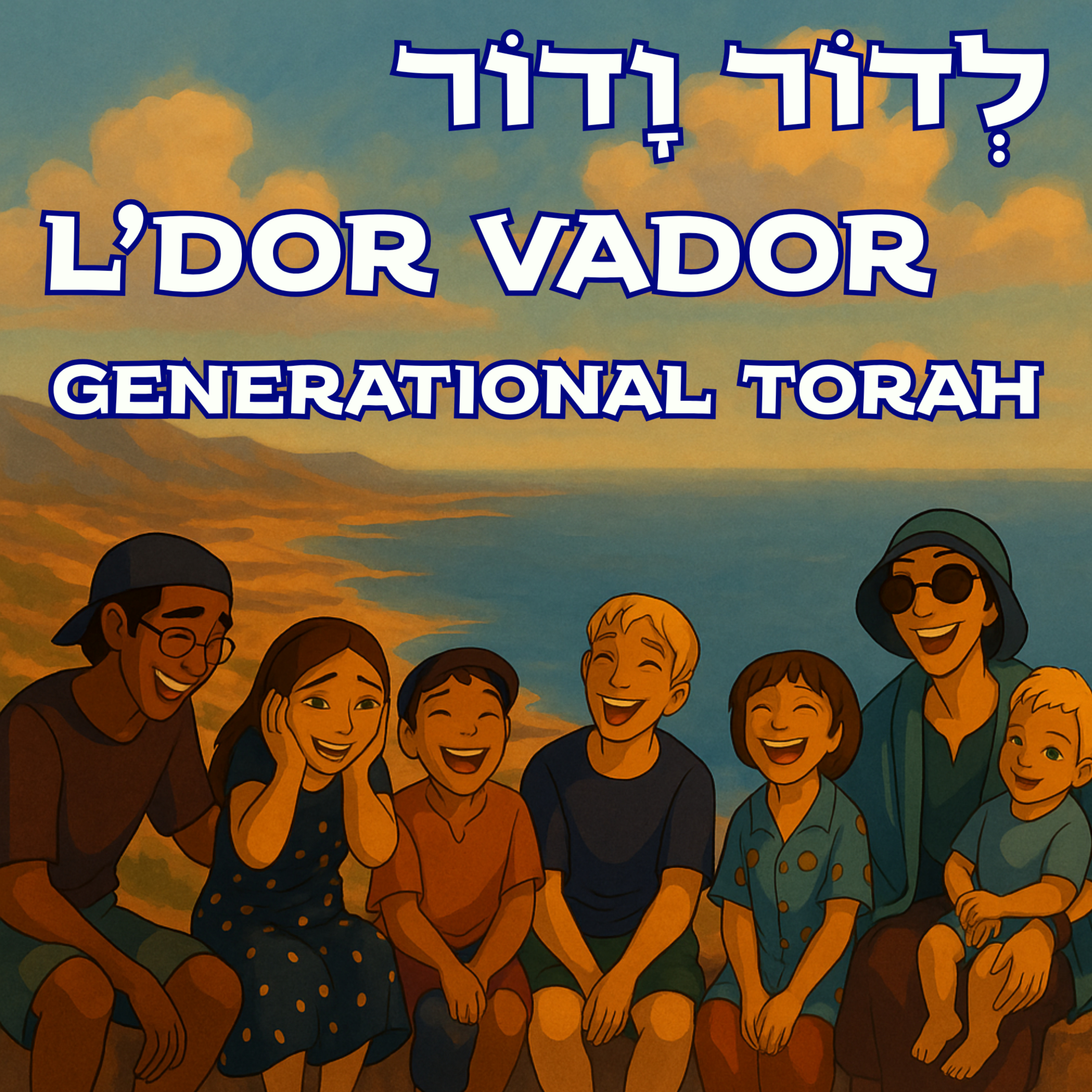
L'Dor Vador: Generational Torah
by Or Yochai Taylor and Michal Kohane
A mother and son explore the weekly Torah portion from our two worlds: she’s an Israeli rabbanit, he’s a American vet student. Together, we unpack the parsha like we're across the Shabbat table.New episodes weekly.Parsha blog available at https://miko284.com/ to ask questions and leave comments.
-
47
Emor 5786
Torah ReadingLeviticus 21:1-24:23HaftarahEzekiel 44:15-31For more visit miko284.com
-
46
Achrei Mot-Kedoshim 5786
Torah ReadingLeviticus 16:1-20:27HaftarahAmos 9:7-15For more visit miko284.com
-
45
Tazria-Metzorah 5786
Torah ReadingLeviticus 12:1-15:33; Numbers 28:9-15HaftarahIsaiah 66:1-24 | Shabbat Rosh Chodesh
-
44
Shmini 5786
Shmini 5786https://miko284.com/
-
43
Pesach 5786
Pesach 5786miko284.com
-
42
Tzav 5786
Tzav 5786
-
41
Vayikra 5786
miko284.comTorah ReadingLeviticus 1:1-5:26HaftarahIsaiah 43:21-44:23
-
40
Vayakhel-Pekudei 5786
Torah ReadingExodus 35:1-40:38, 12:1-20HaftarahEzekiel 45:16-46:18 | Shabbat HaChodesh
-
39
Ki Tisa 5786
Torah ReadingExodus 30:11-34:35; Numbers 19:1-22HaftarahEzekiel 36:16-38 | Shabbat Parah
-
38
Tetzaveh 5786
Torah ReadingExodus 27:20-30:10; Deuteronomy 25:17-19HaftarahI Samuel 15:2-34 | Shabbat Zachormiko284.com
-
37
Terumah 5786
Torah ReadingExodus 25:1-27:19HaftarahI Kings 5:26-6:13miko284.com
-
36
Mishpatim 5786
As we move into Parshat Mishpatim together, we feel the shift from revelation to responsibility, from awe to the hard work of building a just society. After Sinai’s sweeping "statements", we are placed face to face with detailed laws that govern everyday life, work, injury, conflict, and care for the vulnerable, reminding us that covenant is lived out in the ordinary and the uncomfortable. We wrestle with laws that challenge us, especially those around servitude and injury, and ask whether the Torah is presenting absolute ideals or guiding a broken world toward something better. Again and again, we notice that the burden of law falls on those with power, limiting exploitation, insisting on proportionality, and pushing us away from vengeance toward justice. Mishpatim invites us to hold complexity without retreating from it, to recognize that law and compassion must coexist, and to accept that holiness is not only found at the mountain, but in how we treat one another when life is messy, imperfect, and real.
-
35
Yitro 5786
As we arrive at Parshat Yitro together, we are struck by the quiet boldness of the moment that leads into revelation. Before the thunder and the commandments, the Torah pauses for a conversation with an outsider, a seeker, Moshe's father-in-law who watches closely and speaks honestly. Yitro reminds us that wisdom does not belong to one people or one voice, and that leadership requires humility as much as vision. Moses, poised between worlds and shaped by many cultures, listens and learns, allowing human judgment, shared responsibility, and communal buy in to take root before divine law is given. It feels deeply intentional that Torah cannot be received in isolation, but only within a system that values people, process, and perspective.As the Ten Statements follow, we feel the tension between awe and closeness, between coercion and choice, playing out in our own lives as well. God introduces Himself not as creator of the universe but as the One who took us out of Egypt, grounding faith in lived experience rather than abstraction. We are reminded that law without relationship is hollow, and relationship without responsibility is fragile. Reading Yitro this way, we are invited to honor wisdom wherever it appears, to stay open to voices beyond our own circles, and to remember that covenant is renewed not only at the mountain but every time we choose to listen, to judge fairly, and to take part in shaping a living tradition together.For more reading, here is this year's blog post about the parsha:https://miko284.com/2026/02/05/like-a-bird-tzipor-a-for-parashat-yitro/
-
34
Beshalach 5786
In Parshat Beshalach we find ourselves struck by how leaving Egypt is not a clean moment of freedom but a complicated crossing into responsibility. Pharaoh sends us out, yet God guides us, and we live for a time in that uneasy space of having had two masters. Like the rabbinic image of the half slave and half free person, we cannot remain divided. The sea, the desert, and the manna all press the same question on us and on those who stood there before us: how do we move from the known, even when it was painful, into an unknown that demands trust, action, and growth. Their fear, their complaints, and their hesitation feel familiar.The crossing of the sea makes this especially vivid. We are told that God will fight for us, yet we are also pushed to step forward, even before we know how the story will resolve. Tradition imagines someone walking into the water before it splits, teaching us that faith is often enacted before it is rewarded. When the people finally sing at the sea, it is not in triumph, but is relief, gratitude, and survival finding a voice. We hear an invitation to be patient with ourselves and with one another as we complain, hesitate, and try again. Like them, we are learning how to trust, how to plan, and how to carry our past with us without letting it keep us from moving forward.For further reading, here is this year's blog post about the parsha:https://miko284.com/2026/01/29/and-he-showed-him-a-tree-bshalach/
-
33
Bo 5786
In Parshat Bo we experience the Exodus as a transformation of values, memory, and identity rather than only a dramatic escape. We explore why this portion could have opened the Torah, how the final plagues differ from the earlier ones as a clash of worldviews rather than simple punishment, and how creation, freedom, and responsibility are woven together through symbols like light, matzah, and the calendar itself. The conversation reflects on memory over history, the role of children’s questions, the mixed multitude who leave Egypt, and the painful necessity of breaking from cultures that once sustained us, leaving us with the enduring challenge of what it truly means to become a free people.For more reading, here is this year's blog post about the parsha:https://miko284.com/2026/01/21/this-month-is-to-you-and-us-parashat-bo/
-
32
Va'era 5786
In Parshat Va'era we sit together with the text and its hardest questions. We wrestle with why redemption unfolds so slowly, why the suffering must continue through ten plagues when freedom could come instantly, and what it means that liberation is as much about transforming belief as it is about leaving Egypt. The plagues emerge not only as punishment, but as a challenge to empire, ideology, and false power, a dismantling of both Egyptian gods and totalitarian systems that grow dangerously out of balance. We explore God’s shifting names, the promises made to the ancestors, and how identity is spoken differently to Pharaoh than to the Israelites themselves, religious language on one side and national destiny on the other. Along the way, we reflect on slavery’s psychological grip, how oppression can be sustained through small comforts, and why freedom often requires time, patience, and participation. This episode draws connections between Exodus and later history, from Pesach rituals to modern revolutions, asking why this story continues to shape moral imagination across generations. The story forces us to ask why our national memory begins with slavery rather than success. Maybe the power of the Exodus lies precisely in starting from the bottom, so that freedom, dignity, and faith become central values rather than privileges.As Va'era unfolds, we are left not with tidy answers, but with a deeper sense that redemption is complex, layered, and still very much a shared human struggle.For more reading, here is this year's blog post about the parsha:https://miko284.com/2026/01/15/vaera-and-in-my-name-i-was-not-known/
-
31
Shemot 5786
As we begin Shemot, we step with the Torah from family stories into the birth of a people. Together, we notice how names slowly disappear as slavery takes hold, and how identity shifts from who we are to what we are forced to be. We linger over Moses’ early life, set adrift in a life-saving ark, growing up between worlds, and learning when to act and when to see. We trace the echoes of Genesis as creation gives way to national becoming.From Miriam’s courage to Moses’ hesitation at the burning bush, this episode invites us to ask how leaders are formed, how miracles are recognized, and how God’s promise to be with us unfolds in uncertainty. As Exodus begins, we find ourselves at the threshold of liberation, still unsure of the path ahead, but no longer unnamed.For more reading, here is this year's blog post about the parsha: https://miko284.com/2026/01/08/and-these-are-the-names-the-opening-of-the-book-of-exodus/
-
30
Vayechi 5786
As we close the book of Genesis with Parshat Vayechi, we sit with Jacob and Joseph at the end of their lives, listening to blessings that are as complicated as the people receiving them. Together, we explore exile and home, sibling rivalry and reconciliation, Rachel’s lingering presence, and what it means to carry Jewish identity in a foreign land. This episode reflects on how families—and how we—learn to live with contradiction, forgive old wounds, and move forward together as Genesis gives way to Exodus.For more reading:https://miko284.com/2026/01/01/vayechi-closing-the-book-of-genesis/
-
29
Vayigash 5786
Vayigash opens mid-plea: Judah steps forward and time stops. In a room thick with power and memory, he argues for Benjamin, hints at a truth no one dares to name, and forces a reckoning. Joseph breaks the charade—“Ani Yosef”—and suddenly every prior scene rewrites itself. Can a family choose reconciliation over retribution, providence over grievance, future over scorekeeping? As Jacob prepares to leave the Land and descend to Egypt, we track distances—near and far, embrace and clinch, Goshen’s safe remove—and ask what it takes to live together after betrayal, and what seeds of the next crisis are planted in this resolution.We explore:• “Vayigash—he drew near”: closeness as courage, strategy, and the start of repair• Hints in Judah’s speech: speaking to a stranger while aiming at a brother• “Ani Yosef”: two words that reorder guilt, agency, and God’s plan• Justice vs. reconciliation: Rabbi Sacks’ frame and the cost of each path• Freedom and fate: did the brothers choose, or were they cast for a role?• Jacob’s descent: Israel by night, Yaakov by name—how dual identity travels into exile• Benjamin’s silence: yesh pe—having a mouth yet choosing action over speech• Joseph’s system: brilliance and blind spots, priests beyond reach, and the seeds of Exodus• Why Judah must teach Joseph: building teams that include dissent to avoid conception trapsParshat Vayigash 5786 | Torah: Genesis 44:18–47:27 | Haftarah: Ezekiel 37:15–28 | https://miko284.com/2025/12/25/parashat-vayigash-guests-for-hanukkah/
-
28
Miketz 5786
Miketz moves Joseph from the dungeon to the palace by way of dream interpretation. Joseph, forgotten by the cupbearer who “did not think of him and forgot him,” waits two more years until Pharaoh’s double dream pulls him up. This time Joseph names the Source: “God will answer,” then reads the seven fat years and seven lean years and proposes a plan. We wrestle with the brilliance and the danger of that plan, the grammar of vayehi as a signal of darkness, and how a Hebrew prince of exile names his sons—Menashe and Ephraim—in a way that can mean forgetting, indebtedness, and fruitfulness in a hard land. At the close, Joseph stages a moral stress test for his brothers through Benjamin, and the story stops on a cliff: recognition will wait. Read on Hanukkah, Miketz asks how light and policy, providence and prudence, meet in the dark.We explore:• “God can interpret; tell me”: why Joseph’s God-talk disappears in prison, then returns before Pharaoh• Vayehi and exile: the Hebrew tense flip and why dreams emerge in darkness• Seven and seven: wise preparation or dangerous centralization, and what comes of empowering a regime in crisis• “Ganov gunavti me’eretz ha’ivrim”: “land of the Hebrews” as an older memory of place, not just a family• Menashe and Ephraim: forgetting vs obligation, and raising Jewish children at the heart of empire• Why Joseph does not summon Jacob: self-conception, succession, and the double-path of diaspora and homeland• The test of Benjamin: recreating the past to measure teshuva in the present• Hanukkah resonance: policy in famine, light in winter, Joseph as the holiday’s unexpected guestParshat Miketz 5786Torah: Genesis 41:1–44:17 | Haftarah: Zechariah 2:14–4:7 (Hanukkah)https://miko284.com
-
27
Vayeshev 5786
Vayeshev opens with “Jacob settled” in the land then the story pivots to Joseph—seventeen, dreaming, reporting, and marked by a ketonet passim. Is he “ben zekunim” because Jacob is old, or because Joseph is the heir to Jacob/Israel’s wisdom and prophetic sight? Dreams of sheaves and of sun, moon, and stars ignite fraternal fury; hatred blinds while Joseph keeps seeing. Sent with a “hineni” to seek his brothers’ shalom, he instead meets an ish, a pit, and a passing caravan. In the seam chapter of Judah and Tamar, obligation, courage, and recognition (“tzadkah mimeni”) reset a lineage. Beneath it all runs Genesis’ central test: can siblings learn to live a shared covenant without erasing difference—shepherds rooted at home and a dreamer who will shape empires.We explore:• “Vayeshev Yaakov” and why settling triggers unrest: Rashi’s midrash on comfort and unfinished work• Jacob vs Israel in the verse: private father and public mission in one person• Ben zekunim and ketonet passim: favoritism, or formation of a successor in wisdom• Dreams as windows: why the field of sheaves and the night sky point beyond Canaan• Seeing vs hating: how resentment narrows perception and drives the plot• The “ish” at Shechem, the pit, and the sale: providence or consequence• Judah and Tamar: levirate duty, social repair, and “tzadkah mimeni” as a moral turning point• Two models of covenant life: brothers in the land and Joseph in the world—and why the family needs bothParshat Vayeshev 5786Torah: Genesis 37:1–40:23 | Haftarah: Amos 2:6–3:8https://miko284.com
-
26
Vayishlach 5786
Vayishlach picks up where Vayetze left off: Jacob turns homeward and sends messengers to Esau, splitting his camp, arranging gifts, and praying. Night brings a wrestling—man, angel, or inner shadow—after which he limps away blessed and renamed Israel. “Katonti mikol hachasadim u’mikol ha’emet… ata hayiti lishnei machanot”: humility before kindness and truth, and the burden of becoming “two camps.” The reunion with Esau lands between embrace and careful distance; in Shechem, Dinah’s story forces hard questions about power, consent, justice, and vengeance. The road threads Bethel’s altar, Rachel’s death and Benjamin’s birth, and Isaac’s burial—losses and landmarks that root a family in a land.We explore:• Vayishlach as Vayetze’s counterpoint: diaspora skills brought back home• “Katonti” & “I have become two camps”: holding chesed and din without collapse• The night struggle: dream, angel, or shadow self—and why the blessing comes with a limp and a new name• Threefold preparation for danger: gift, defense, prayer (and why Jacob uses all three)• The gift by numbers: 200 she-goats/20 he-goats, 200 ewes/20 rams, 30 nursing camels, 40 cows/10 bulls, 20 she-donkeys/10 males—real stockmanship and planned continuity• Esau and Jacob: bows, tears, parting paths—appeasement, detente, or peace?• Dinah in Shechem: reading Rashi and Malbim side-by-side; outrage, honor, and the brothers’ raid• Returning to Bethel; Rachel’s grave on the road; Isaac’s burial—altars and grief that anchor the covenantParshat Vayishlach 5786Torah: Genesis 32:4–36:43 | Haftarah: Obadiah 1:1–21https://miko284.com
-
25
Vayetzei 5786
Vayetzei 5786
-
24
Toldot 5786
Toldot shifts our focus from Abraham and Sarah to Isaac and Rivkah. “These are the generations of Isaac… Abraham begot Isaac...” Does the Torah repeat itself? How do we emphasize the continuity and different characters as we move from founder to formation; chesed and din. Isaac is unique in many ways. He stays rooted in the Land, sows and reaps me’ah she’arim, reopens wells, and grows “until very great.” Rivkah shows aspects of both Abraham’s generosity and Sarah’s prophetic clarity. What do we make of the interaction with Avimelech and Isaac “playing/laughing” with Rivkah? “The voice is Jacob’s voice and the hands are Esau’s hands...” what do each brother bring to our idea of the covenant? We explore:• Why “These are the generations of Isaac… Abraham begot Isaac” matters, and what it signals about identity, lineage, and mission• Isaac as farmer and “man of the Land”: sowing in the land and reaping “me’ah she’arim” (a hundredfold), and the triple “gadal” verse of growth• Avimelech, “playing/laughing” with Rivkah (metzachek), and what the rhyming nature of this deception means• Chesed and din as complementary pillars: why we need Abraham, Isaac, and Jacob rather than one perfect hero• Blindness and other ways of seeing: how Isaac’s “inner sight” complicates the blessings scene• Esau and Jacob: parental love, effort vs achievement, and the hard truth of “the voice is Jacob’s voice, the hands are Esau’s hands” as an ideal of integration rather than a mistake• “Bless me too, Father”: holding empathy for Esau’s cry while acknowledging why covenant passes through Jacob• Rebecca as mother of both, stewarding futures: sending Jacob to marry well so the blessing does not unravelParshat Toldot 5786Torah: Genesis 25:19–28:9 | Haftarah: Malachi 1:1–2:7https://miko284.com
-
23
Chayei Sara 5786
Chayei Sarah opens with a paradox: “the life of Sarah” begins with her death as well as with Abraham’s first purchase in the Land, the Cave of Machpelah. A grave, not a field or a spring, becomes the anchor: unconditional, uncontestable, a covenant signed in silver before Ephron and the Hittites. From grief to grounding, we trace Abraham’s insistence on rightful acquisition, “ger v’toshav” (resident-alien) identity, and the way burial binds a people to place. Then the story turns forward: Rebecca’s swift generosity at the well, her consent to go, and Isaac’s quiet strength—rooted, receptive, and, for the first time in Torah, loving his wife. Along the way we ask what “tests” really are, whether Sarah was the conduit for God’s speech to Abraham, and why honoring the dead remains a living obligation.We explore:• “The life of Sarah” and a death that anchors: why a grave is the first deed to the Land• Paying full price: Ephron, public contracts, and keeping holy places above reproach• “Ger v’toshav”: belonging and estrangement held together in one identity• Burial then and now: why kavod ha-met still shapes Jewish ethics in crisis• Was Sarah the conduit? Noting that God’s direct speech to Abraham ceases after her death• Rebecca at the well: radical hospitality, real consent, and going from—not just to• Isaac’s quiet strength: rootedness over heroics, and the Torah’s first “he loved her”• Tests or life itself? Akedah, “nisayon,” and doing the hard thing without spectacle• Ishmael and Isaac together: shared mourning as a fragile model of future repairParshat Chayei Sarah 5786Torah: Genesis 23:1–25:18 | Haftarah: I Kings 1:1–31https://miko284.com
-
22
Vayera 5786
Three visitors appear in the heat of the day, and Abraham runs to meet them—chesed in motion. Sarah laughs (and is told she did), a first tremor of Yitzhak’s name. From there the parsha descends to Sodom: Abraham argues for the few among the many; Lot hosts, hesitates, flees; a city is ash and a family is scarred. Hagar and Ishmael are sent out and seen. And on Moriah, father and son walk “together”—a test that demands willingness yet forbids the deed. Vayera holds radical welcome beside radical limits, asking what it takes to build a just home without becoming Sodom, and how to give everything to God without sacrificing what God will not take.We explore:• Tent vs. city gate: Abraham’s rushing hospitality against Sodom’s violence toward the stranger• “She laughed / you did laugh”: shades of laughter—doubt, joy, timing—and why Yitzhak is named for it• Arguing with Heaven: Abraham’s negotiation (50…10) and how many righteous make a place redeemable• Lot’s household: hospitality under pressure, the pillar of salt, and the tangled aftermath (Moav & Ammon)• Hagar and Ishmael: exile, seeing, and God’s care for a parallel covenant• Akedat Yitzhak: “the two went together,” intent vs. act, and the Torah’s rejection of child sacrifice• Sarah’s prophetic antenna: a close read of who hears what—and when—across the parshaParshat Vayera 5786Torah: Genesis 18:1–22:24 | Haftarah: 2 Kings 4:1–37https://miko284.com
-
21
Lech Lecha 5786
Lech Lecha summons Abram to “go to yourself”-to leave land, lineage, and the familiar for a future written in promise. Between famine’s detour to Egypt, Lot’s separation, battlefield rescue, and a midnight covenant under the stars, the parsha reframes faith as movement: altars mark waypoints, not endpoints. By week’s end, circumcision inscribes belonging on the body itself, and names - Avram to Avraham, Sarai to Sarah - expand to fit a mission larger than comfort.We unpack:• “Go to yourself”: leaving as self-discovery - how loss of certainty opens room for vocation• Blessing vs. empire: why being a “great nation” means channeling influence for others, not hoarding it• Altars & detours: famine, failure, and course-correction as part of faithful travel, not signs to turn back• Covenant under the stars: counting the uncountable and trusting the promise through darkness• Brit milah & new names: identity carved into practice- how commitments reshape who we becomeParshat Lech Lecha 5786Torah: Genesis 12:1-17:27 Haftarah: Isaiah 40:27-41:16https://miko284.com
-
20
Noach 5786
Last week in Bereshit we watched humanity’s first stumbles. This week, Noach faces a world saturated with corruption and violence, and survives by walking with God while the waters reset creation. The episode probes what it means to be “righteous in his generations,” the ethic of building an ark (teva) as both refuge and responsibility, and how Babel’s drive for sameness crushes the individual. From ravens and doves to windows and inner light.We unpack:• “Righteous in his generations”: relative virtue vs. absolute models—and why survival itself can be a moral calling• Ark as pedagogy: is our light a window from outside or a gem glowing from within? raising kids to carry both sources• Raven and dove strategies: engage the world with curiosity, retreat with your people when it’s not yet habitable• Babel’s warning: efficiency without dignity-how uniform language and purpose can erase the person• Toward Avraham: from mere preservation to covenantal presence-walking a middle path of influence without assimilationParshat Noach 5786Torah: Genesis 6:9 - 11:32 Haftarah: Isaiah 54:1 - 55:5 https://miko284.com
-
19
Bereshit 5786
Bereshit 5786
-
18
Vzot Habracha 5786
The Torah closes not with laws but with love: Moses, “the man of God,” gathers every stratum of Israel and blesses the tribes - different strengths, one people. From Levi’s teaching fire to Benjamin’s refuge “between the shoulders,” from Joseph’s overflowing bounty to Zebulun/Issachar’s commerce and learning partnership, the parsha sketches a map of communal interdependence. Moses then ascends Nebo, sees the land he will not enter, and dies. Yet, the story refuses to end: “There was no prophet like Moses…,” and we roll the scroll back to Bereishit. On Simchat Torah, endings become launchpads, and blessing becomes our bridge.We unpack:• All tribes blessing: Distinct callings, shared covenant—what unity looks like without uniformity• Levi’s charge: Teaching Torah with fire and fairness; why spiritual leadership needs grit• Benjamin/Joseph’s gifts: Sanctuary and sustenance—belonging as protection, bounty as responsibility• “Everlasting arms”: Trusting the God who rides the heavens and steadies us underneath• Moses’ last view: Grief, gratitude, and how to hand work forward without holding it backParshat V’Zot HaBerachah 5786Torah: Deuteronomy 33:1–34:12 | Haftarah: Joshua 1:1–18[https://miko284.com](https://miko284.com)
-
17
Ha'azinu 5786
The Song that Teaches, the Rock that Holds“Give ear, heavens… let the earth hear.” Ha’azinu turns Torah into music - parallel lines, “brick over brick,” a poem meant to be memorized, sung, and lived. Moses teaches like rain and dew: gentle, steady, life-giving. We sit with the parable of the Eagle who stirs its nest, the Name as Tzur (Rock), and the command to “remember days of old”-how a people survive by telling, retelling, and arguing the story at our own tables. From Berlin’s stones of memory to family debates that keep faith lively, we explore how this song warns against complacency and invites generational courage.We unpack:• Shirah as pedagogy: Why Torah becomes a song—form, columns, and the memory science of music• Rain, dew, and voice: Teaching that lands softly yet sinks deep; what our kids actually absorb• “The Rock” vs. the moving target: Trust, failure, and what doesn’t shift when everything else does• Eagle care: Stirring the nest without dropping the fledglings-parenting, leadership, community• Remembering forward: “Ask your elders…” rituals of memory (and snarky questions) as covenant glue• Prosperity’s warning: Cycles of strength and softness and how to keep gratitude from going stale Parshat Ha’azinu 5786Torah: Deuteronomy 32:1-52 | Haftarah: 2 Samuel 22:1-51 https://miko284.com
-
16
Vayeilech 5785
Episode 14Vayeilech: Handing On, Hiding Face, Holding SongMoses is 120 and still in motion. Vayeilech is a study in endings that make beginnings: leadership passes, Torah is written and handed to the Levites, and a “song” is commanded as Israel’s enduring witness. The parsha names the hard truth—failure will come, and God will at times “hide the face”—yet insists on a path of return. As Shabbat Shuvah hovers between Rosh Hashanah and Yom Kippur, we talk about aging with purpose, leaving well, and why a covenant survives by becoming music on our lips.We unpack:• The art of departure: Moses models finishing strong and making space for the next generation• “Write this song”: Why Ha’azinu’s poetry becomes the nation’s memory device and moral alarm• Hester Panim: Divine hiddenness, the Esther echo, and faith when the light is veiled• Covenant realism: Foreknowledge of backsliding without cynicism, because teshuva is always near• From scroll to sound: Oral tradition, shared tunes, and how community carries Torah forwardParshat - Vayeilech 5785Torah: Deuteronomy 31:1 - 30 Haftarah: Shabbat Shuvah https://miko284.com
-
15
Nitzavim 5785
Episode 13 – Nitzavim: Nearness, Return, and Choosing LifeWe’re all standing—leaders and laborers, woodchoppers and water-drawers—bound into one covenant. Nitzavim pivots from history to decision: the mitzvah is not distant, “not in the heavens,” but on our lips and in our hearts. Out of exile comes return (teshuva not just as repentance, but as a homecoming and an answer), and with it a promise of heart-circumcision, restoration, and a clear charge: “I have set before you life and death… choose life.” As Elul peaks, we explore agency, accountability, and why the Torah insists that transformation is always within reach.We unpack:• “Atem Nitzavim kulchem”: Covenant as radical inclusion—every stratum stands responsible, together• Lo bashamayim hi: Not in heaven, not across the sea—Torah’s nearness and the authority to act now• Teshuva as return: From dispersion to renewal; the soul’s way back to its source and to each other• Heart-work and wholeness: “God will circumcise your heart”—beyond behavior to inner alignment• Choose life: Turning awe into action as we step toward the Days of Awe| Parshat Nitzavim 5785Torah: Deuteronomy 29:9–30:20 | Haftarah: Isaiah 61:10–63:9 |https://miko284.com
-
14
Ki Tavo 5785
Episode 12 - Ki Tavo: Covenant and ConsequencesLast week in Ki Teitzei we parsed the Torah’s legal rigor. This week, Ki Tavo confronts us with its covenantal reckoning: blessings for faithfulness, curses for transgression. With over 70 commandments, the parsha spans the ritual of first fruits, the solemn vows, and the poetic litany of divine consequences. We explore how Moses’ final speech transforms Israel from a people of liberation into a nation of eternal accountability.We unpack:• Conditional blessings: Prosperity’s price and the shadow of divine retribution• Commandments against complacency: Why the land’s bounty demands perpetual gratitude• Covenant renewal: The ritual of blessings/curses as a binding generational contract• The ethics of memory: How Deuteronomy frames repentance as the path to restoration• Complacency’s commandments: Bridging ancient lessons and modern spiritual pitfalls| Parshat Ki Tavo 5785Torah: Deuteronomy 26:1–29:1 | Haftarah: Isaiah 60:22–61:11 |https://miko284.com
-
13
Ki Teitzei 5785
Episode 11 - Ki Teitzei: A Nation of LawsLast week in Shoftim we sketched the Torah’s civic blueprint. This week, Ki Teitzei pours content into that system with 74 mitzvot spanning war and peace, home and street, family and community. We start with the Torah’s ethics of war and move through everyday responsibilities that build a just society.We explore:• Laws of war continued: exemptions, restraint, and why “a person is like a tree of the field” shapes conduct even in siege• Communal responsibility when a life is lost on the margins• Loved vs. “hated” wife and the rights of the firstborn—echoes of Leah/Rachel and Reuven/Joseph• The rebellious son: the rare Sanhedrin’s and the necessity of the Oral Torah• Returning lost property; building a roof railing, safety and dignity as halacha• Shatnez (wool/linen): symbolic boundaries, with priestly garments as a holy exception• Yibbum and chalitzah: continuity after loss and how these laws play out in modern Israel| Parshat Ki Teitzei 5785Torah: Deuteronomy 21:10–25:19 | Haftarah: Isaiah 54:1–10 |https://miko284.com/2025/09/04/ki-tetze-what-happens-when-we-go-out/
-
12
Shoftim 5785
Episode 10 – Shoftim: Checks & Balances; Prophets & Sorcerers |This week in Parshat Shoftim, we hear the call to appoint judges and officials in all your gates. From here the Torah builds a framework for justice and governance: judges to interpret the law, officials to carry it out, kings bound by limits, priests serving in the Temple, and prophets guiding the people. We explore how these roles balance one another and what it means to pursue justice, mishpat tzedek, as the foundation of a society.We explore:• The Torah’s blueprint for a judicial and executive system at the city gates• The king’s limits and the principle that even rulers are bound by law• The place of prophets — and how to distinguish prophecy from forbidden sorcery• Why Torah insists that justice is not just lofty but practical, rooted in daily governance| Parshat Shoftim 5785Torah: Deuteronomy 16:18–21:9 | Haftarah: Isaiah 51:12–52:12 |https://miko284.com/Special thanks to Toli Kohane-Carter for editing and to Abigail Seman for music.
-
11
Re'eh 5785
Episode 9 – Re’eh: Seeing Is Not Necessarily Believing |This week’s portion, Re’eh, begins with a choice: blessing or curse, set before the people as they prepare to stand between Mount Gerizim and Mount Ebal. We ask what it means to “see” and why Judaism often calls us instead to hear and listen.We explore:• The difference between seeing everything at once and hearing slowly over time — and why both matter in Torah• Standing between Mount Gerizim and Mount Ebal: two peaks so close together, yet representing blessing and curse• The subtlety of moral landscapes, where context makes the same act a mitzvah or a transgression• What to do with the holy sites of the Canaanites and how to think about monuments, shrines, and lost causes today• Why Jerusalem is not named directly in the Torah, but only described as “the place God will choose”• Don’t add and don’t subtract: how the Torah is like a piano, the same instrument that do so many things in different hands• Prophets, miracles, and Sinai — why belief can’t rest only on wonders• Kashrut and the place of food in Judaism: is what we put into our mouths as important as what comes out of them?| Parshat Re’eh 5785Torah: Deuteronomy 11:26–16:17 | Haftarah: Isaiah 54:11–55:5 |https://miko284.com/
-
10
Eikev 5785
Episode 8 – Eikev: Heels, Little Things, and Big, Big Things |This week on L’Dor V’Dor, we explore Parshat Eikev, named for the “heel.” We ask: what does it mean to be a heel in the Torah? And what are the easy mitzvot we trample underfoot, as Rashi suggests?Where last week’s parsha spoke of our love for God, this week focuses on God’s love for us and for the Land of Israel. Eikev challenges us to see the big significance in small acts: the “light” commandments, humility, gratitude, and memory.We discuss:• The mitzvot we overlook — and why they matter• What it means to remember the whole journey, not just the destination• The order of blessing and satisfaction in our meals and throughout in our lives• Humility, haughtiness, and the Midrash on why the Torah was given at Sinai• The centrality of the Land of Israel in Jewish spiritual life• Is mitzvah observance in the diaspora just “practice” for the Land?• If God promises reward and punishment, how do we understand Jewish suffering?• Can we do cheshbon nefesh or are these things beyond our understanding?• Why are God's promises so physical and this-worldly — and what does that say about our agency in the covenant?| Parshat Eikev 5785Torah: Deuteronomy 7:12–11:25 | Haftarah: Isaiah 49:14–51:3 |https://miko284.com/
-
9
Vaetchanan 5785
Episode 7 – Vaetchanan: Hear Oh Israel, Hashem is One |This week, we open Parshat Vaetchanan with Moshe who is asking, pleading, even begging, to enter the Land of Israel. Through midrash and commentary, we explore Moshe's humility as he is denied his final wish.There’s too much in this parsha to cover in one episode, but we touch on the Shema and the repetition of the Ten Commandments — two foundational texts of Jewish tradition — and use them as a lens for larger questions:• What does it mean to love God with all your heart, soul, and might?• Why is the Shema framed as something spoken to Israel — as if from the outside?• Are Jews a religion, an ethnicity, a nation, or something else?• If God is One, how do we make sense of the bad in the world?• What does it mean to be a people who listen rather than a people who see?• Why is “coveting” forbidden while slavery is permitted in the 10 Commandments (or statements)?• How do we handle commandments that govern not action, but internal thought?• Why didn’t anyone interrupt or correct Moshe’s retelling of the commandments ?| Parshat Vaetchanan 5785Torah: Deuteronomy 3:23–7:11 | Haftarah: Isaiah 40:1–26 |https://miko284.com/2025/08/07/the-sun-moon-and-starts-vaetchanan/Special Thank you to Abigail Seman for her rendition of Lecha Dodi.
-
8
Devarim 5785
Episode 6 – Devarim: Moshe’s Farewell Speech |This week, we open the last book of the Chumash with Parshat Devarim. Moshe has fully overcome his early speech difficulties to deliver a month-long farewell address, the Mishne Torah, to the people of Israel on the edge of the Promised Land, which they will enter without him. His words are both rebuke and encouragement, memory and warning, and they are recorded not just as Moshe's parting words at the "bus stop" but as God’s word itself. Along the way, we reflect on other farewells — from George Washington’s to the parting scenes of the movie Hair — and on our own personal experience saying goodbye at moments we cannot cross with them. |We explore:• Why is the last book of the Torah is entirely Moshe’s speech, and how each of the Five Books of Moshe is tied to the theme of speech?• The place, time, and context of the speech: why does it matter that Moshe begins with a careful rebuke, recalling where things went wrong like the Golden Calf?• Moshe’s retelling of the story of the spies: what changes from the first telling and why does he make the spies his first issue in explaining why he cannot enter the Land?• The Torah’s special connection to the Land of Israel: are we building snow sleds for the sand dunes of diaspora?• How long does it really take to travel through the Sinai and what does that say about the people’s journey and mistakes?• What is difference between the leader who brings the people to the Land and the leader who leads them within it?| Parshat Devarim 5785Torah: Deuteronomy 1:1–3:22 | Haftarah: Isaiah 1:1–27 |https://miko284.com/2025/07/31/20-years-later-white-blue-orange-still/
-
7
Matot-Masei 5785
Episode 5 – Matot-Masei: A Foot in Each World and the Point of No Return |This week, we reflect on the double portion Matot-Masei, and the ending of the Book of Numbers. From censuses to conquests, we explore the challenge of closing one chapter while standing on the edge of the next. What does it mean to count—as an individual, and as part of a people? What happens when ancient texts challenge modern moral frameworks? And how do we live in the tension between exile and promise? |We explore:• Why the Jewish lunar-solar calendar sometimes gives us double parshiot and how time in Torah reflects cycles and spirals, not just linear progress. • The laws of vows and the power of speech: is it a uniquely human trait and how does speech shape the world?• The war against Midian: how do we read difficult passages of divine-commanded violence through a modern ethical lens?• Moshe’s heartbreak: leading to the threshold, having to separate from his in-laws, and does he end up buried in the land or at least with his people?• The tribes of Reuven and Gad asking to settle east of the Jordan with their flocks and children or rather their children and flocks?• The bridging role of Menashe and Joseph holding ground in both the Promised Land and the diaspora.• The journeys of Masei - anxiety of being halfway and how does the math work out?| Parshat Matot-Masei 5785Torah: Numbers 30:2–36:13 | Haftarah: Jeremiah 2:4–28, 3:4 |https://miko284.com/
-
6
Pinchas 578
Episode 4 – Pinchas: Don't Try This at Home |This week on L’Dor V’Dor, we pick up where last week’s parsha left off: the daughters of Moab and Midian seducing the Israelites, a plague, and a violent intercession. In the heat of this crisis, Pinchas (grandson of Aaron) kills Zimri and Cozbi mid-act, and is rewarded by God with a brit shalom, a pact of peace. But what does it mean to call a violent zealot “righteous”? |We explore:• What was the Israelite sin in the worship of Baal Peor—and why did it provoke such a severe response?• Who were Zimri and Cozbi, and why did Pinchas kill them in such a manner?• How do we understand Pinchas's act as both extra-legal and divinely sanctioned but not rabbinically?• How is Pinchas spiritually linked to both Aaron and Eliyahu the prophet, and what does it mean to act “without personal agenda”?• Why is counting the people such a central act in this parsha and what does it say about community, order, and care?• What connects Pinchas, Joshua, and the daughters of Zelophehad through the models of complimentary Jewish leadership exemplified by Joseph and Moses?| Parshat Pinchas 5785Torah: Numbers 25:10–30:1 | Haftarah: I Kings 18:46–19:21 |https://miko284.com/2025/07/17/off-road-with-the-daughters-of-zelophehad-the-torah-portion-of-pinchas/
-
5
Balak 5785
Episode 3 – Balak: Blessings or Curses for a People That Dwells Apart |This week, we unpack Parshat Balak, and the story of attempted curses turned into unexpected blessings. Why does the Moabite king hire Bilam, a foreign prophet with unclear loyalties, to curse Israel with words? And why does the Torah choose him to utter some of its most poetic visions of the Jewish people? |We explore:• Why does Balak fight the Israelites with speech instead of substance?• What does it mean that the Torah’s greatest blessings come from outside the "tribe"?• What is the torah and contemporary meaning of a “rising lion/ess”?• Why does Balak, of all people, get a parsha named after him?• How does Bilam compare to Moshe and Avraham—and what makes a prophet legitimate?• What does it mean to be a “people that dwells apart”?| Parshat Balak 5785 Torah: Numbers 22:2–25:9 | Haftarah: Micah 5:6–6:8 |https://miko284.com/2025/07/10/balak-the-1st-operation-rising-lion/
-
4
Chukat 5785
Episode 2 – Chukat: The Red Heifer, Losing Leaders, and What We Cannot Explain | This week, we wrestle with Parshat Chukat, a portion packed with paradox: the mystery of the Red Heifer, the deaths of Miriam and Aaron, and Moses hitting the rock and losing the chance to enter the Promised Land. | We explore:• What does it mean to keep a mitzvah that is outside human reason?• What do animal sacrifices, processes, and rituals say about our relationship to death, purity, and responsibility?• Why does the loss of a leader (Miriam, Aaron) provoke such different responses from the people?• What does Moses’ punishment teach us about leadership, anger, and consequences?| Parshat Chukat 5785 Torah: Numbers 19:1–22:1 | Haftarah: Judges 11:1–33 |https://miko284.com/2025/07/03/and-you-will-love-in-the-storm-the-torah-portion-of-chukat/
-
3
Korach 5785
Episode 1 – Korach: Revolt, Chosenness, and the Blooming AlmondThis week, we begin our Torah journey with Parshat Korach—a story of rebellion, holiness, chosenness and leadership that still echoes today.We explore:Who was Korach, and why did he challenge Moses and Aaron?Is the holiness of Am Israel collective or individual?What does a society's religious focus tell us about their cultural character?The deeper meaning behind the earth swallowing dissent, and the miracle of Aaron’s almond-blossoming staff.Torah as history or metaphor: what does this story teach us about conflict, and chosenness?Plus: how the Haftarah from Samuel echoes and critiques Korach’s challenge.Korach 5785 Torah: Numbers 16:1-18:32 Haftarah: I Samuel 11:14-12:22 https://miko284.com/2025/06/26/it-blossomed-sprouted-buds-and-borne-almonds-the-torah-portion-of-korach/
No matches for "" in this podcast's transcripts.
No topics indexed yet for this podcast.
Loading reviews...
ABOUT THIS SHOW
A mother and son explore the weekly Torah portion from our two worlds: she’s an Israeli rabbanit, he’s a American vet student. Together, we unpack the parsha like we're across the Shabbat table.New episodes weekly.Parsha blog available at https://miko284.com/ to ask questions and leave comments.
HOSTED BY
Or Yochai Taylor and Michal Kohane
CATEGORIES
Loading similar podcasts...
URL copied to clipboard!