
PODCAST · music
Making a Scene Presents
by Richard LHommedieu
Making a Scene is the #1 Resource for the Indie Artist and the Fans that Love them! http://www.makingascene.org
-
600
The Myth of “Exposure” in the Modern Music Industry
Making a Scene Presents - The Myth of “Exposure” in the Modern Music Industry The Most Expensive Free Thing in Music There is a word that has haunted musicians for decades. It shows up in emails from promoters, club owners, playlist curators, content creators, brands, festivals, podcasters, bloggers, and random people with ring lights who say things like, “This could be great exposure for you.” That word is exposure. Exposure is the unpaid intern of the music industry. It is always excited to be there, never has gas money, and somehow keeps promising it knows people. http://www.makingascene.org
-
599
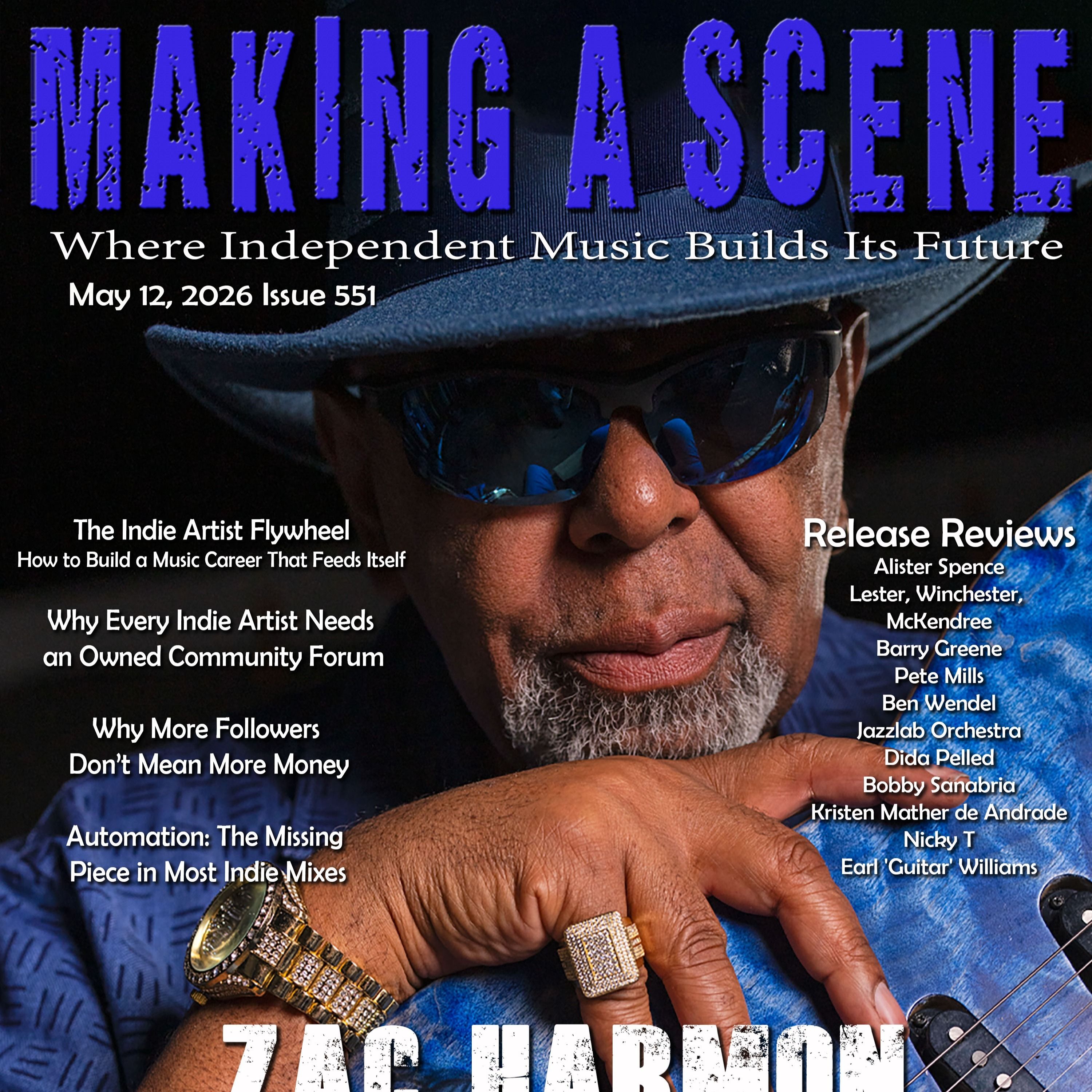
Interview with Zac Harmon
Making a Scene Presents an Interview with Zac Harmon Zac Harmon is an award-winning guitarist, singer, and songwriter from Jackson, Mississippi, whose sound carries the deep lineage of the blues while pushing it forward with soul, funk, gospel, reggae, and modern blues-rock energy. Critics have praised his “masterful” musicianship and his mix of Bobby “Blue” Bland sophistication with Freddie King–style bite, placing him in the company of blues greats. http://www.makingascene.org
-
598
Stop Sending Your Fans Back to YouTube
Making a Scene Presents - Stop Sending Your Fans Back to YouTube: How Indie Artists Can Embed Token-Gated Video Inside Their Own Website Your Website Is Not a Poster. It Is the Artist’s World. For years, indie artist websites were treated like digital flyers. You had a homepage, a bio, some tour dates, a few press photos, a store link, and maybe a YouTube video dropped into the middle of the page. That was fine when the website’s only job was to prove you existed. But that is not enough anymore. Today, an indie artist’s website should be built like a self-contained ecosystem. It should not be a dead end. It should be the place where fans listen, watch, join, buy, collect, comment, support, and come back. The artist’s website should feel less like a brochure and more like the artist’s own private venue, merch table, fan club, video room, record store, email hub, and community space all living under one roof. http://www.makingascene.org
-
597
Gerry Casey's Interview with Ben Reel
Making a Scene Presents Gerry Casey's Interview with Ben Reel Ben Reel has always made albums that carry an undercurrent—something deeper than the surface of the songs. His twelfth studio release, Spirit’s Not Broken, continues that tradition with a record that speaks directly to the moment we’re living in. In a world shaped by conflict, climate anxiety, and constant noise, it’s easy to feel powerless. This album pushes back against that feeling with a simple, timeless message: love, empathy, and human connection still matter—and they still have power. http://www.makingascene.org
-
596
Automation: The Missing Piece in Most Indie Mixes
Making a Scene Presents - Automation: The Missing Piece in Most Indie Mixes Why the Mix Does Not Come Alive Until It Starts Moving A lot of indie mixes do not fail because the artist used the wrong microphone, the wrong preamp, the wrong compressor, or the wrong $29 plugin they bought during a midnight sale while questioning every life choice that led them into home recording. Most indie mixes fail for a simpler reason. They sit still. http://www.makingascene.org
-
595
Interview with GB Leighton
Making a Scene Presents an Interview with GB Leighton GB Leighton is the kind of artist the music industry talks about but rarely knows how to manufacture: a relentless road warrior, a natural frontman, and a songwriter who can make a room full of strangers feel like a community by the second chorus. http://www.makingascene.org
-
594
Why Every Indie Artist Needs an Owned Community Forum
independent musicians must shift their focus from accumulating social media followers to cultivating a direct ownership economy. The author contends that high visibility on digital platforms is often a vanity metric that fails to translate into financial stability because artists do not own their fan data. To achieve true sustainability, creators should treat social media as a preliminary funnel designed to move audiences toward owned channels like email lists, SMS, and personal websites. By prioritizing direct-to-fan relationships over algorithmic reach, artists can transform passive listeners into a reliable customer base. Ultimately, the source advocates for a structural business shift where participation and participation-tracking tools, such as fan passports, replace the pursuit of viral fame. http://www.makingascene.org
-
593
Why Every Indie Artist Needs an Owned Community Forum
a strategic manual for independent musicians to reclaim control over their audience relationships by moving away from platform-dependent social media. It argues that artists should build owned community forums using tools like WordPress, BuddyPress, and bbPress to escape restrictive algorithms and data silos. By establishing a central "digital house," creators can integrate direct-to-fan commerce, email newsletters, and membership tiers into a unified ecosystem. The guide provides practical steps for setting up these social layers, emphasizing the importance of data ownership and authentic fan engagement. Ultimately, it frames self-hosted infrastructure as the key to moving beyond viral trends and building a sustainable, middle-class music career. http://www.makingascene.org
-
592
The Indie Artist Flywheel: How to Build a Music Career That Feeds Itself
Most independent musicians are stuck in a cycle that feels like it never ends. They release a song, promote it, play a show, post on social media, sell a few shirts, send a few emails, and then start all over again from zero. Every release feels like a brand-new mountain to climb. Every show feels like a separate event. Every post feels like it disappears in a few hours. That is not because indie artists are lazy. It is because most artists are working without a system. A real music business should not be a pile of disconnected tasks. It should be a machine where every action makes the next action easier. Every show should grow the fanbase. Every fan interaction should create useful data. Every data point should help the artist make better decisions. Every better decision should lead to more direct revenue. Every dollar earned should help build the next show, the next release, the next merch drop, the next membership offer, and the next fan relationship. That is the flywheel principle. http://www.makingascene.org
-
591
Gerry Casey's Interview with Ronan Gallagher
Making a Scene Brings you Gerry Casey's Interview with Ronan Gallagher Ronan Gallagher is proof that it’s never too late to find your real voice. A true late starter, he didn’t learn to play guitar or sing until his mid-fifties. That was just over five years ago—and instead of easing into it, Ronan hit the ground running, making up for lost time with the drive of someone who knows exactly what he wants to say. http://www.makingascene.org
-
590
Interview with Turn Turn Turn
Making a Scene Presents an Interview with Turn Turn Turn Turn Turn Turn is a Minnesota-based trio built around one irresistible idea: great songs sound even better when you can sing them in close harmony. Bonded by a shared love of 1960s and 1970s country, folk, and pop, the band began by exploring classic material together—and quickly grew into a fully original Americana project with its own bright, hook-filled identity. http://www.makingascene.org
-
589
Eleven Years of Making a Scene: Still Independent, Still Publishing, Still Building the Future
Eleven Years of Making a Scene: Still Independent, Still Publishing, Still Building the Future A Milestone Worth Making Noise About On May 1, 2026, Making a Scene celebrates eleven years of continuous publication, and in the fast-moving world of independent music media, that is no small thing. Websites come and go. Blogs burn bright and disappear. Social platforms change the rules. Algorithms bury good work under noise. But Making a Scene has kept showing up, posting new content virtually every day and building one of the most active independent music archives on the web. For eleven years, Making a Scene has stood with the independent music community. Not just the stars. Not just the artists with major backing. Not just the names already sitting on top of the industry machine. Making a Scene has focused on the working artists, the touring musicians, the songwriters, the bands, the producers, the engineers, the reviewers, the interviewers, the fans, and the people who keep real music alive long after the hype machine moves on to something else. http://www.makingascene.org
-
588
The Live Show Is Not Just a Night Out. It Is the Front Door to Your Whole Music Business
Making a Scene Presents - The Live Show Is Not Just a Night Out. It Is the Front Door to Your Whole Music Business. For too long, indie artists have been taught to think of the live show as a single transaction. A fan buys a ticket. The artist plays the set. Maybe somebody buys a shirt. Everybody goes home. The venue sweeps the floor, the bartender counts the drawer, the band loads out, and the whole night disappears into the fog of tired backs, ringing ears, and gas station coffee. That is the old way. The new way is different. The live show is not just a night out. It is not just a gig. It is not just a chance to play loud, sell a few shirts, and hope somebody remembers your name next week. The live show is the most powerful conversion point an independent artist has. It is the one place where attention, emotion, money, identity, and community all show up in the same room at the same time. That is rare. That is valuable. That is not something you hand over to Spotify, Instagram, TikTok, Ticketmaster, or some rented platform that lets you borrow your own audience in exchange for feeding its machine. A live show is where a casual listener becomes a real fan. It is where a name on a poster becomes a face, a voice, a laugh, a handshake, a story, a memory. It is where your music stops being content and becomes an experience. And if you build the right system around that experience, the show does not end when the last cymbal fades. It keeps working. It keeps earning. It keeps bringing people into your world. That is the real game. http://www.makingascene.org
-
587
The Hidden Economics of Being an Indie Artist in 2026: A Survival Guide to Lower Costs, Increase Revenue, and Own Your Fans
Making a Scene Presents - The Hidden Economics of Being an Indie Artist in 2026: A Survival Guide to Lower Costs, Increase Revenue, and Own Your Fans For years, independent artists were sold a dream. The pitch was simple and powerful. You no longer needed a label. You no longer needed permission. You could record at home, upload your music worldwide, build an audience online, and create a real career on your own terms. Compared to the old days of expensive studio time, manufacturing costs, and gatekeepers controlling radio and retail, it sounded like freedom had finally arrived. And in many ways, it did. But what a lot of artists discovered after stepping into that freedom was something nobody talked about enough. Freedom came with overhead. The modern independent musician did not just inherit opportunity. They inherited the entire business. http://www.makingascene.org
-
586
Delay vs Reverb: When to Use Each (and Why Most People Overuse Reverb)
Making a Scene Presents - Delay vs Reverb: When to Use Each (and Why Most People Overuse Reverb) There is a sound you have heard a thousand times, even if you never knew what caused it. A singer enters on the first line of a chorus and suddenly feels larger than life. A snare drum explodes through the speakers and seems to live in its own perfect room. A guitar line trails into the horizon after the phrase ends, creating emotion long after the note is gone. Space is one of the secret weapons of recorded music, and two tools have shaped that space more than any others: delay and reverb. http://www.makingascene.org
-
585
Interview with Flutes and Low
Making a Scene Presents an Interview with Flutes and Low Flutes & Low is the folk duo of Ben Pichler and Cambria Haen, two musicians who first met and began playing together in Duluth, Minnesota. From the start, their chemistry leaned toward atmosphere—songs built on close harmony, patient storytelling, and melodies that stay with you long after they end. Deeply shaped by the Midwest’s wide-open landscapes, cold seasons, and shoreline quiet, their music feels both intimate and expansive: pastoral, emotional, and grounded in place. http://www.makingascene.org
-
584
Interview with Santiago Periotti of Santiago and the Soulmovers
Making a Scene Presents Gerry Casey's Interview with Santiago Periotti of Santiago and the Soulmovers Santiago Periotti is an Argentine singer, songwriter, and guitarist whose playing brings blues grit, rock drive, and a warm, soulful edge—now focused in the London music scene. Known for his passion on stage and a sound that blends energy with feel, Santiago has built his career the old-school way: writing, touring, and earning audiences one room at a time. http://www.makingascene.org
-
583
Interview with Tim Wagoner of The Fabulous Trutones
Making a Scene Presents an Interview with Tim Wagoner of The Fabulous Trutones Comin’ Back Live finds The Fabulous TruTones doing what great live bands do best: locking into a groove and then refusing to stay in one lane. The album moves effortlessly from classic blues in the spirit of the Three Kings, to the sun-baked shimmer of mid-’70s Southern California roots-rock, to the rocking edge of old-school country—and back again. It’s blues at the center, but it’s also proof that blues can be a launchpad, not a box. http://www.makingascene.org
-
582
Canada Just Put Money Behind the People Who Build the Stage
Making a Scene Presents - Canada Just Put Money Behind the People Who Build the Stage FACTOR’s new live music investment is more than a press release. It is a reminder that if you want a real music middle class, you do not just fund songs. You fund the ecosystem that gets those songs in front of people. There is a big difference between saying you support music and actually building a system that helps music survive. Canada just gave us a very clear example of that difference. On April 21, 2026, FACTOR announced a $2 million investment in the live music sector through two new initiatives, the Promoter Program and the Festival Program. According to FACTOR, the goal is to strengthen what it called cultural sovereignty by sharing risk with Canadian-owned promoters and festivals that have a real track record of presenting Canadian artists and keeping diverse Canadian voices at the center of the live experience. FACTOR says the guidelines for both programs will go live on April 30, 2026, and applications are due by 5:00 p.m. ET on June 11, 2026. http://www.makingascene.org
-
581
Reverb and Depth: How to Place Sounds in a 3D Space
Making a Scene Presents - Reverb and Depth: How to Place Sounds in a 3D Space Flat Mixes Do Not Sound Cheap Because the Song Is Bad A lot of indie artists think their mixes sound small because they do not have enough expensive gear, enough fancy plugins, or enough studio prestige. That is the lie the old gatekeeper system sold for years. The truth is rougher and more useful. Most flat mixes sound flat because everything is standing in the same spot. The vocal is too close. The snare is too close. The guitars are too close. The keys are too close. Nothing feels near because nothing feels far. Nothing has air around it because nothing has a believable world around it. That is where reverb stops being a decorative effect and starts becoming one of the most powerful tools in a modern mix. Mix depth is the front-to-back dimension that helps make a mix feel lifelike and three-dimensional, and it points out that this sense of dimension is one of the clearest differences between amateur and professional sounding mixes. http://www.makingascene.org
-
580
The American Music Fairness Act Could Finally Make Radio Pay
Making a Scene Presents - The American Music Fairness Act Could Finally Make Radio Pay — But Indie Artists May End Up Paying a Different Price Terrestrial radio is no longer the artist-breaking machine it once was. That is exactly why this bill matters, and exactly why indie artists should be watching it closely. The Tower That Once Ruled the Music Business Is Not What It Used to Be For decades, radio was the closest thing the music business had to a national ignition switch. One spin in the right market could move records, change tour offers, wake up labels, and turn a local act into a real conversation. That old story still has power because it used to be true. But in 2026, terrestrial radio is no longer the center of gravity for discovery the way it once was. Edison Research reported that in Q4 2025, radio still held 61% of all ad-supported audio listening time in the U.S., which means it remains a huge medium. But that same broad strength now lives beside a very different discovery landscape, one shaped by streaming, social media, YouTube, and recommendation engines instead of one dominant gatekeeper. http://www.makingascene.org
-
579
Interview with Stacy Mitchhart
Making a Scene Presents an Interview with Stacy Mitchhart Stacy Mitchhart’s musical journey began in Cincinnati, Ohio, in a house where jazz guitar masters like Wes Montgomery and Johnny Smith were always spinning on the stereo. With that kind of soundtrack in the air, it was only natural that he gravitated toward the guitar. But it wasn’t just the notes that grabbed him early—it was the performance. As a kid, he saw Little Richard on television and couldn’t look away. Little Richard’s style, confidence, and larger-than-life showmanship opened Stacy’s eyes to a powerful idea: music isn’t only something you play—it’s something you deliver. That lesson became a lifelong part of Mitchhart’s identity, and today he’s known for a brand of showmanship that keeps audiences coming back night after night. http://www.makingascene.org
-
578
Ticketmaster LiveNation Court Decision -When the Gatekeeper Finally Got Dragged Into Court
Making a Scene Presents - Ticketmaster LiveNation Court Decision -When the Gatekeeper Finally Got Dragged Into Court In May 2024, the U.S. Department of Justice walked into federal court and said out loud what fans, working artists, indie promoters, and venue operators had been saying for years: the live music business was not just frustrating, it was structurally broken. The government sued Live Nation and its ticketing arm Ticketmaster, alongside 30 state and district attorneys general, and asked for structural relief. That was not some polite regulatory slap. It was the government saying the company’s grip on live music had become so deep that fans were paying more, artists were getting fewer real opportunities, smaller promoters were getting squeezed, and venues were being pushed into fewer real choices. The DOJ said the goal was to restore competition, lower prices, and “open venue doors for working musicians and other performance artists.” http://www.makingascene.org
-
577
Gerry Casey's Interview with Keith Forde of Linkwells
Making a Scene Presents Gerry Casey's Interview with Keith Forde of Linkwells Linkwells are a four-piece indie-rock band from the scenic town of Malvern, quickly gaining attention for a sound that puts melody and classic songwriting front and center. Their music combines the anthemic lift of Britpop with a sharper modern indie edge, creating songs that feel built for singalongs without losing their bite. It’s a style that has earned comparisons to The Stone Roses, Oasis, The Verve, and Stereophonics—big hooks, driving guitars, and choruses that land with real purpose. http://www.makingascene.org
-
576
Interview with The Gated Community
Making a Scene Presents an Interview with The Gated Community The Gated Community is a Minneapolis-based country and bluegrass band with a mission and a pulse. Formed in 2006 by South Asian-American Yale graduate, political activist, and University of Minnesota music theory professor Sumanth Gopinath, the band has been described as “Americana to fight fascism” (Adobe & Teardrops)—a line that captures both their sound and their purpose. They blend folk, bluegrass, and country traditions with a raw rock edge, pairing tight harmonies and roots instrumentation with lyrics that confront the world as it is, not as we wish it were. http://www.makingascene.org
-
575
Making Recorded Music a Product Again
Making a Scene Presents - Making Recorded Music a Product Again There was a time when recorded music was the thing. The record was not the flyer. It was not the teaser. It was not the loss leader for a T-shirt, a tour, or a playlist slot. It was the product. Fans saved up for it, hunted for it, lined up for it, argued about it, and lived with it. The album sat on a shelf, in a car, in a stereo, in a stack by the bed. It had weight. It had ritual. It had value. Now a lot of indie artists are stuck in a bad joke. They make the most expensive thing in their business, then hand it over to platforms built to train listeners that music should feel endless, cheap, and disposable. The song becomes background utility. The album becomes content. The recording becomes marketing for the real business, which lately means touring, merch, and trying not to drown. And yet the bigger joke is this: the public still pays for music when music feels like a real object, a real event, or a real piece of access. In the U.S., streaming made up 82% of recorded music revenue in 2025, but vinyl still passed the $1 billion mark. Globally, streaming drove most recorded music income in 2025, yet physical formats also grew, pushed by strong vinyl demand. That does not say fans refuse to buy music. It says fans will not pay much for the plainest possible version of it anymore. http://www.makingascene.org
-
574
Touring Used to Sell Records. Now Records Exist to Sell Touring. What Happens Next?
Making a Scene Presents - Touring Used to Sell Records. Now Records Exist to Sell Touring. What Happens Next? The old deal is dead For a long time, the bargain in music was pretty clear. You made records so people would care. Then you hit the road and turned that attention into ticket sales, merch money, and a bigger audience. Before streaming ate the center out of recorded music, albums were not just art. They were products with real cash value. Touring was promotion, and the record was the thing being promoted. Now that whole machine has flipped. In 2025, U.S. recorded music revenue hit a record $11.5 billion, with streaming making up 82% of the market, while global recorded music revenue reached $31.7 billion. On paper, that sounds like a healthy business. But those big numbers do not mean the average artist is healthy. They mostly mean the pipes are full. The question is who controls the pipes, who gets the margin, and who is left paying for the van, the hotel, the crew, the ads, and the gas. http://www.makingascene.org
-
573
Parallel Compression: Making Your Mix Punch Without Killing Dynamics
Making a Scene Presents - Parallel Compression: Making Your Mix Punch Without Killing Dynamics The Trick That Sounds Expensive Even When Your Studio Isn’t There is a moment almost every home-recording artist runs into. You finish a mix. It sounds clean. It sounds balanced. Nothing is obviously broken. But when you play it next to a record that hits you in the chest, yours feels polite. The kick does not leap out. The vocal does not stay in your face. The song has emotion, but not enough muscle. So you reach for compression, push harder, and suddenly the life drains out of the track. The groove gets smaller. The singer sounds pinned to the wall. The whole thing is louder, but somehow less alive. Parallel compression is the move that solves that problem. It is one of those real studio tricks that sounds fancy, but it is built on a simple idea: keep your natural performance, then blend in a second, heavily compressed version underneath it. Done right, you get punch, thickness, density, and excitement without flattening the human feel out of the song. For indie artists, that matters because a mix that feels finished earns trust faster, holds attention longer, and gives your direct releases, live recordings, sync submissions, fan-club exclusives, and premium downloads a better shot at turning into actual money instead of just more content floating in the feed. http://www.makingascene.org
-
572
Interview with Katy Vernon
Making a Scene Presents an Interview with Katy Vernon Katy was born and raised in London, UK, but over the past dozen-plus years she’s become one of Minnesota’s busiest and most recognizable musicians. Blending melodic pop-folk songwriting with the twang and drive of an Americana band, Katy delivers songs that are hooky, heartfelt, and built to connect—whether she’s playing an intimate room or a big outdoor stage. http://www.makingascene.org
-
571
Content That Adapts: Using AI to Personalize Posts for Different Types of Fans
Making a Scene Presents - Content That Adapts: Using AI to Personalize Posts for Different Types of Fans There is a quiet little lie baked into modern music marketing, and most artists have been trained to accept it. The lie is this: one post is supposed to do everything. It is supposed to hype the hardcore fans, introduce the new people, move tickets in one city, sell merch everywhere else, wake up dead email subscribers, impress the algorithm, and somehow still sound human. Then when it does not work, the artist gets blamed. Maybe the hook was weak. Maybe the image was wrong. Maybe the timing was bad. Maybe you just need to post more. No. The real problem is simpler than that. You are trying to talk to different people as if they are the same person. http://www.makingascene.org
-
570
Gerry Casey's Interview with Mike Guldin
Making a Scene Presents Gerry Casey's Interview with Mike Guldin Mike Guldin first picked up a guitar at age 15, and he’s spent the last 45+ years turning that spark into a road-tested blues career built in roadhouses, clubs, festivals, and theaters. A guitarist and vocalist with a deep respect for tradition and a serious love of groove, Guldin’s sound blends Chicago blues grit, Southern rock fire, and Memphis/Stax soul into a style his band proudly calls “Good Ole Butt-Shakin’ Music.” http://www.makingascene.org
-
569
interview with Kevin Blackwell of Sassparilla
Sassparilla is a Portland, Oregon–based “punk-Americana” / roots-rock band that plays like a bar fight with a backbeat—in the best possible way. Led by singer-songwriter Kevin “Gus” Blackwell, the band blends the stomp of old American traditions with the bite and speed of punk, creating a sound that feels like hill country blues and old-time string-band music dragged into a loud, modern room and turned loose. http://www.makingascene.org
-
568
The Suno-Warner Deal: When Big Music Stops Fighting AI and Starts Designing It
Making a Scene Presents - The Suno-Warner Deal: When Big Music Stops Fighting AI and Starts Designing It Something important just happened in the music business, and indie artists need to pay attention. Warner Music Group and Suno announced a partnership built around licensed AI music. Under the deal, the companies will work on next-generation licensed models, Warner artists can opt in to AI experiences using their names, images, likenesses, voices, and compositions, and Suno will make major product changes in 2026, including phasing out its current models, requiring paid accounts for downloads, limiting downloads on paid tiers, and keeping unlimited downloads inside Suno Studio. As part of the same broader agreement, Suno also acquired Songkick from Warner. That sounds like a product story. It sounds like a legal story. It sounds like one more AI headline in a year full of AI headlines. But for independent artists, it is really a power story. The Suno-Warner deal is one of the clearest signs yet that major music companies are moving from trying to fight generative AI from the outside to trying to shape it from the inside. Warner itself said the partnership is meant to forge a “blueprint for a next-generation licensed AI music platform.” Reuters also reported that Warner settled its infringement case with Suno so the company could move toward licensed models. http://www.makingascene.org
-
567
The Artist-Owned Ecosystem: Replacing the Label, Distributor, and Platform
Making a Scene Presents - The Artist-Owned Ecosystem: Replacing the Label, Distributor, and Platform The night the old deal stopped making sense It usually happens after the show. Not onstage. Not in the comments. Not when the playlist adds hit. It happens when the room is half empty, the drummer is packing hardware, somebody is folding shirts at the merch table, and the artist is looking at a phone full of “engagement” that does not pay tomorrow’s hotel bill. That is the moment the old music business starts to look less like a dream and more like a machine built to turn artist momentum into platform traffic, label leverage, and somebody else’s data. For years, the industry sold one big fantasy. Get signed. Get distributed. Get promoted. Get placed in front of the audience. Then the money will come. But the modern version of that deal has a nasty twist. Even when artists do get attention, they often do not get ownership. The fan relationship lives on someone else’s platform. The audience data sits in someone else’s dashboard. The checkout happens inside someone else’s system. The artist becomes the fuel, while the infrastructure belongs to everybody else. That is not a career. That is a dependency. And dependency is not the same thing as growth. http://www.makingascene.org
-
566
Interview with Alexis P Suter
Making a Scene Presents an Interview with Alexis P Suter Alexis P. Suter is a three-time Blues Music Award nominee—recognized in major categories including the Koko Taylor Award and Best Soul Blues Female Artist—and one of the most commanding voices in modern blues and soul. Raised in Brooklyn in a musically gifted family, Alexis grew up with the belief that music is not just entertainment—it’s an emotional and spiritual experience. That idea still sits at the center of everything she does on stage. http://www.makingascene.org
-
565
AI-Driven Fan Journeys: Mapping Every Step From First Listen to Lifetime Fan
Making a Scene Presents - AI-Driven Fan Journeys: Mapping Every Step From First Listen to Lifetime Fan There is a quiet tragedy happening in the modern music business, and most independent artists have been taught to call it normal. A stranger hears a song in a playlist. They like it. They tap through to a profile. Maybe they watch a clip. Maybe they save the track. Maybe they even tell a friend. Then the trail goes cold. The artist never learns who that person was, never learns what caught their ear, never learns what city they live in, never learns whether they wanted a vinyl copy, a ticket, a livestream pass, a membership, a behind-the-scenes demo, or just a reason to come back tomorrow. The fan showed up. The system shrugged. The moment passed. That is the real leak in the independent music economy. It is not just low streaming payouts, though those are part of the problem. It is not just social media reach, though that is rented land and always has been. The bigger problem is that most artists still do not control the road between attention and income. They get discovery, but they do not own the journey. They get a listen, but they do not build a relationship. They get noise, but they do not get memory. AI changes that if you use it the right way. http://www.makingascene.org
-
564
Gerry Casey's Interview with Aleksandra Josic of Here and Everywhere
Making a Scene Presents Gerry Casey's Interview with Aleksandra Josic of Here and Everywhere Fronted by Aleksandra Josic, a vocalist audiences regularly describe as “one of the most powerful and emotional live voices in the world today,” the band has earned a reputation for performances that feel raw, immersive, and unforgettable. There’s a rare kind of honesty in what they do—no posturing, no manufactured drama—just a fearless voice, a band that knows how to build tension and release, and songs that hit like they were written to be felt in a room full of people. http://www.makingascene.org
-
563
Compression in Context: Why Soloing Tracks Is Killing Your Mix
Compression in Context: Why Soloing Tracks Is Killing Your Mix There is a little button in every DAW that has wrecked more home studio mixes than bad microphones, cheap headphones, and internet “preset culture” combined. It is the Solo button. That sounds dramatic, but not by much. Every indie artist knows the move. You are deep in a mix. The vocal feels uneven. The bass feels wild. The snare is jumping out in ugly ways. So you solo the track, pull up a compressor, and start shaping. Suddenly the part sounds bigger, tighter, smoother, richer, louder, more “professional.” You un-solo it, hit play on the full mix, and somehow the whole song feels smaller. The vocal no longer connects. The bass lost its groove. The drums feel choked. The track you “fixed” in solo is now fighting the record instead of serving it. That is the trap. http://www.makingascene.org
-
562
A Buyer’s Guide to Recording Interfaces
Making a Scene Presents - A Buyer’s Guide to Recording Interfaces The Box That Decides Whether Your Studio Feels Fast or Feels Broken There is a certain kind of gear mistake that musicians make all the time. They obsess over microphones, plugins, monitors, and shiny rack toys, then they treat the recording interface like a boring utility purchase. That is backward. Your interface is the center of the studio. It is the box that decides how your microphone gets into the computer, how your speakers get fed, how your headphones behave, how low your latency feels, how your outboard gear connects, and how easy it will be to grow from a simple home setup into a serious project studio. Pick the right one and the whole room feels smooth. Pick the wrong one and everything becomes friction. http://www.makingascene.org
-
561
Interview with the Avery Set
Making a Scene Presents an Interview with the Avery Set The Avery Set began in the early 2000s in Frankenmuth, Michigan, growing out of a close friendship between Chris (lead singer) and Jake (drummer). What started as two friends making noise quickly turned into a real band with a shared sense of purpose—writing songs, chasing shows, and building a sound that felt honest and lived-in. In 2006, the band released their debut record, Wishful Thinking, capturing the early energy of a group finding its voice. A year later, in 2007, The Avery Set relocated to Nashville, a move that pushed the band into new rooms, new influences, and a wider circle of musicians. With an expanded lineup, they released Returning to Steam in 2009, a record that marked a clear step forward in confidence and craft. http://www.makingascene.org
-
560
Subtractive EQ vs Additive EQ: The Secret to Clean Mixes
Making a Scene Presents - Subtractive EQ vs Additive EQ: The Secret to Clean Mixes There is a reason so many home studio mixes sound busy, cloudy, and weirdly tired even when every track is “exciting” on its own. It is not always the mic. It is not always the room. It is not always that you need some expensive boutique plugin blessed by a guy on YouTube wearing a beanie in July. A lot of the time, the problem is simpler and a little more humbling. We boost before we listen. We decorate before we clean. We keep reaching for more when the track is begging for less. That is where subtractive EQ comes in, and it is why this one move can make a mix feel more expensive, more open, and more professional without adding a single new sound. Fender Studio Pro is built on the Studio One platform, and Fender’s current Studio Pro pages describe its Standard EQ as a parametric EQ with dynamic EQ and visual feedback, while the platform also includes broader mix tools like multiband dynamics and a modernized workflow in version 8. That makes it a very good place to learn restraint instead of hype. http://www.makingascene.org
-
559
Interview with Christina Crofts
Making a Scene Presents an Interview with Christina Crofts Christina Crofts is a singer, songwriter, guitarist, and slide guitarist—and a true veteran of Australia’s blues and rock scene. Known for her uncompromising bottleneck tone and a “big sound” that far exceeds her small frame, Crofts has spent years building a reputation as one of the country’s most commanding live performers and distinctive slide players. Born in the coastal town of Coffs Harbour, Christina grew up in a multicultural household with a Norwegian immigrant father and an Australian mother. Her family later moved to Brisbane, where her passion for guitar took hold in her early teens and quickly became central to who she was. As her playing developed, she headed to Sydney, where she met guitarist Steve Crofts. What began as guitar lessons eventually became a lifelong musical partnership, and the two later married. http://www.makingascene.org
-
558
Creating a Touring Syndicate for Increased Leverage
Making a Scene Presents - Creating a Touring Syndicate for Increased Leverage For years, indie artists have been told the same tired story about touring in America. Build your streaming numbers. Pray for algorithm luck. Hope a promoter notices. Spend money on ads. Guess which city might work. Book the run. Drive the miles. Cross your fingers. Lose money in three towns, break even in two, and call the whole thing “building.” That story has made a lot of middlemen comfortable. It has not made a lot of artists stable. The next version of touring is going to look different. It is going to be less like gambling and more like infrastructure. Less like each band wandering alone through the dark and more like a network of artists carrying a flashlight together. And the artists who get there first are going to stop acting like their fan data is just a mailing list and start treating it like a shared economic engine. That is where the idea of a touring syndicate comes in. http://www.makingascene.org
-
557
Predictive Touring: Using AI to Decide Where You Should Play Before You Book the Show
Making a Scene Presents - Predictive Touring: Using AI to Decide Where You Should Play Before You Book the Show There used to be a standard indie-touring ritual. You stared at a map, circled cities you had heard were “good markets,” texted a few friends, checked which clubs had an open Thursday, and called it strategy. Then came the long drive, the half-full room, the weak merch table, the gas bill, the post-show talk where everyone said, “It was still good exposure,” which is music-business language for “the math did not work.” That old way is not brave. It is lazy. Or, more accurately, it is what artists were forced to do when the people with the good data kept it for themselves. Now the wall is cracking. An indie artist can look at streaming geography, social engagement, ticket-click behavior, search interest, audience segments, and most important of all, owned fan data, before they ever email a promoter. AI can take that messy pile and help turn it into a map. Not a fantasy. Not a guarantee. A map. A risk map. A money map. A “where are my real people actually concentrated?” map. http://www.makingascene.org
-
556
Stop Sending Fans Back Into the Machine
Making a Scene Presents - Stop Sending Fans Back Into the Machine There is a bad habit all over independent music right now. An artist works hard to get attention on Instagram, TikTok, YouTube, Facebook, Threads, or X. A new fan finally bites. They click. And what do they find? Another stack of links, another rented profile, another platform asking them to wander off and forget why they came in the first place. That is not a funnel. That is a leak. Pew’s latest U.S. social media data still shows huge reach on YouTube and Facebook, with Instagram and TikTok especially strong with younger adults, which is exactly why these platforms matter for discovery. But reach is not ownership, and attention is not the same thing as a relationship. http://www.makingascene.org
-
555
Gerry Casey's Interview with Jamie Williams and The Roots Collective
Making a Scene Presents Gerry Casey's Interview with Jamie Williams and The Roots Collective Jamie Williams & the Roots Collective are a roots-driven live band built for one thing: a great night out. Fronted by singer-songwriter Jamie Williams on vocals and rhythm guitar, the band also features Dave Milligan on lead guitar, Jake “The Dude” Milligan on bass, and James Bacon on drums. Together, they walk what they describe as an imaginary tightrope between Tom Petty and The Rolling Stones—hooky songs, swaggering grooves, and a rootsy bite that lands somewhere between country blues, rock, and Americana. http://www.makingascene.org
-
554
Interview with the Badrock Blues Band
Making a Scene Presents an Interview with the Badrock Blues Band Shadows, the debut album from The Badrock Blues Band, is a record built on perseverance—three decades of hard-earned chemistry, a sudden global shutdown, and the heartbreaking loss of a bandmate who helped define their sound. Formed in 1992 by Gerald “Mercy” Schuldenzucker (guitar, vocals), Siegfried Horvath (bass, vocals), and Franz Kollmann (guitar), Badrock spent more than 30 years shaping their own take on the meeting point between blues and rock. Over countless shows across Europe, they steadily refined a style that pulls from nearly every corner of the blues spectrum while staying connected to the roots of rock ’n’ roll. Their reputation grew the old-school way—through relentless live performance, loyal audiences, and a sound that kept getting sharper with time. http://www.makingascene.org
-
553
Your AI Twin: Building a Digital Version of Yourself That Markets While You Sleep
Making a Scene Presents - Your AI Twin: Building a Digital Version of Yourself That Markets While You Sleep There used to be a simple rule in the music business. If you wanted more reach, you needed more people. A label. A manager. A publicist. A radio plugger. A street team. A content person. A marketing assistant. Maybe even somebody whose whole job was just following up on emails you forgot to answer. That old system did not disappear because it got fair. It disappeared because it got too expensive, too centralized, and too slow for the average independent artist. The jobs are still there. The work still has to get done. The difference is that now the artist is usually the one doing all of it. That is where the idea of an AI twin gets interesting. Not because you need a robot version of yourself making fake handshakes and fake friendships. Not because fans want a plastic imitation of your soul. And definitely not because art should sound like software. The real reason is much simpler than that. A working indie artist needs scale. You need to answer more messages, write more posts, send better emails, follow up with more promoters, and keep your voice steady across a dozen channels, even when you are in a van, loading out at 1 a.m., or half asleep after a six-hour drive. http://www.makingascene.org
-
552
The Real Reason Streaming Pays So Little, And Why It Was Designed That Way
Making a Scene Presents - The Real Reason Streaming Pays So Little, And Why It Was Designed That Way Streaming did not become unfair by accident. The dominant payout model was built to make giant catalogs easy to license, cheap to sell, and sticky for listeners. That helped platforms grow and helped major rights holders protect old power in a new format. It did not build a healthy middle class for working artists. The next fight is not just about a better royalty formula. It is about ownership, fan data, and turning streaming back into what it should be for independents: discovery, not destiny. The music business loves a clean rescue story. Piracy nearly burned the whole thing down. Streaming rode in like a hero. Subscriptions brought the money back. Everybody got saved. End of movie. Except that is not how it feels from the van, the home studio, the merch table, or the monthly distro report. For a lot of independent artists, streaming feels like standing in the middle of a giant city, singing into a megaphone, and getting tipped in pocket lint. The audience is massive. The access is global. The numbers look big on the screen. But the money that reaches the artist often feels weirdly small, almost insultingly small. And because the platforms are wrapped in the language of “access,” “discovery,” and “democratization,” artists are often pushed to think the problem is them. Maybe they just need more streams. Maybe they need better playlisting. Maybe they need to crack the algorithm. Maybe they need to go viral. That is the trap. http://www.makingascene.org
-
551
The Music Industry’s War on Ownership
Making a Scene Presents - The Music Industry’s War on Ownership Platforms want access. Artists need ownership. There is a war on ownership in the music business, and most of it is happening in plain sight. It is not being fought with lawsuits or angry speeches. It is being fought with product design. It is being fought with dashboards, autoplay, pre-save buttons, short-form feeds, and a thousand tiny choices that train artists to believe reach is enough. The message is always the same. Be everywhere. Post more. Feed the machine. Stay visible. Hope the platform keeps showing you to people. That sounds like opportunity. A lot of the time, it is really dependency. http://www.makingascene.org
No matches for "" in this podcast's transcripts.
Loading reviews...
ABOUT THIS SHOW
Making a Scene is the #1 Resource for the Indie Artist and the Fans that Love them! http://www.makingascene.org
HOSTED BY
Richard LHommedieu
CATEGORIES
Loading similar podcasts...
URL copied to clipboard!