
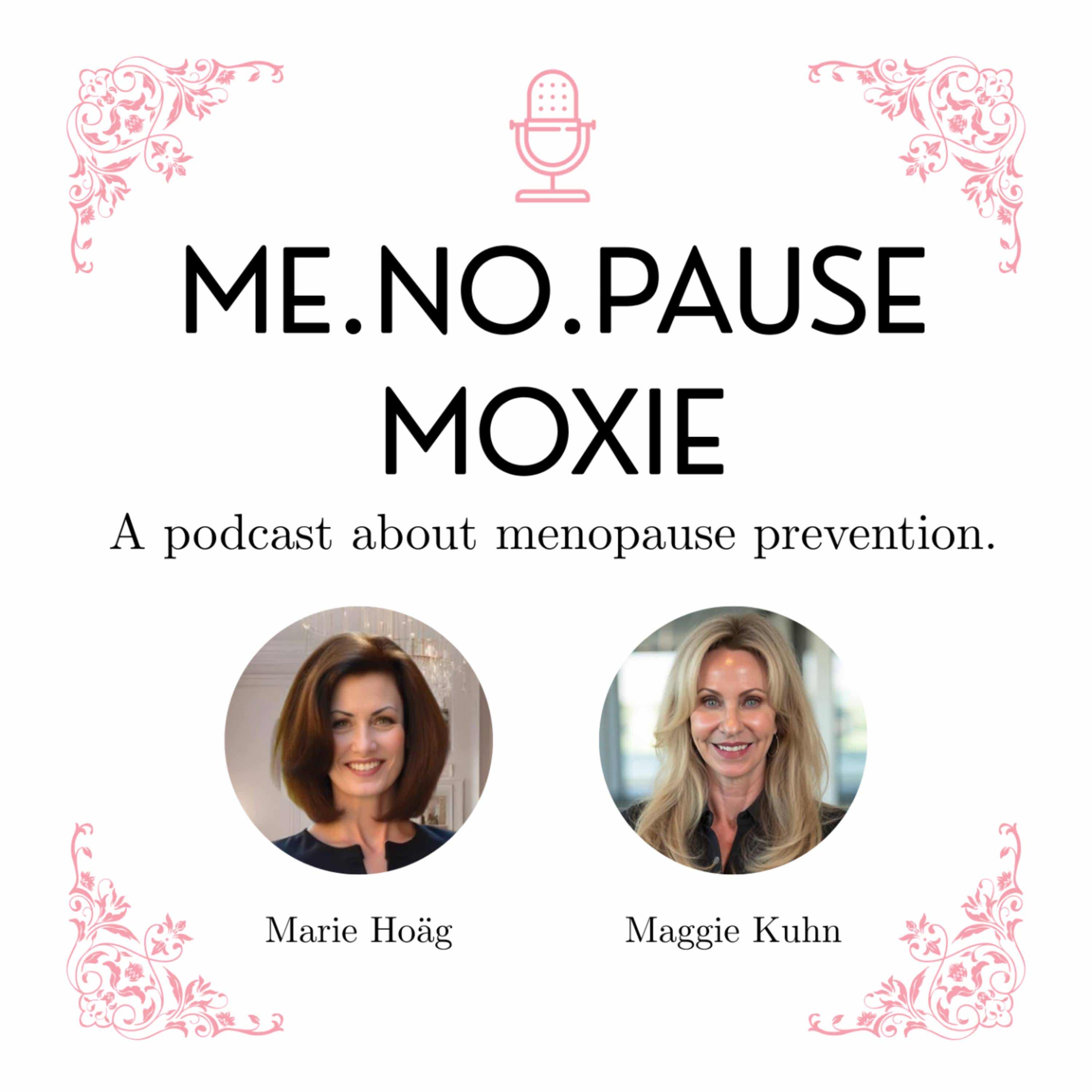
PODCAST · health
MeNoPause Moxie Podcast
by Marie Hoäg, MBA
Marie Hoäg, MBA | Perimenopause, menopause, and female hormone clinical coach, educator, and consultant | Author of Menopause Prevention | Founder of Me.No.Pause Moxie and Panacea Sciences: The Art & Science of Female Hormone Medicine. menopausemoxie.substack.com
-
0
Menopause Is a Predictable Hormone Deficiency: 10 Clinical Takeaways Women Deserve to Know
“Menopause is not something to manage… It’s a predictable hormone deficiency state that can be corrected.”That’s the core clinical lens behind this episode.In this conversation, I lay out the framework that changes everything: stop treating menopause like a random collection of symptoms and start treating it like predictable deficiency physiology—especially estrogen deficiency—because that’s where results come from.This episode is intentionally structured as a Top 10 integration: the clinical truths I want every woman to know before she accepts suffering as “normal.”What we cover* The clinical definition of menopause that reframes symptoms and outcomes* Why vague menopause language keeps women confused (and what’s more accurate)* Why low-dose HRT symptom-by-symptom approaches fail to restore function* What “successful hormone balancing” should look like in real life (without guessing)A few lines worth remembering* “Menopause is a hormone deficiency state… that predictably impairs brain and whole body function.”* “Hormones don’t shift. They decline.”* “Mainstream medicine treats it as a cluster of symptoms… instead of one unified physiologic decline.”To see if advanced hormone balancing is a good fit for you, book a complimentary discovery session by going to advancedhormonebalancing.com.Disclaimer: The views expressed on the MeNoPause Moxie Podcast are based on over two decades of clinical observation, research, education, training, and personal experience by Clinical Hormone Coach, Marie Hoäg. It is presented for educational, informational, and entertainment purposes, and is not intended as medical, nutritional, or hormone replacement therapy (HRT) advice. Viewers and listeners are strongly encouraged to consult with a professionally trained HRT professional before making any hormone-balancing decisions. This is a public episode. If you would like to discuss this with other subscribers or get access to bonus episodes, visit menopausemoxie.substack.com
-
-1
Episode 20: Menopause Is Not Permanent: Angela’s Story of Full Hormone Restoration
Most “menopause weight loss” advice is diet culture repackaged.Angela did what most women do: she tried harder. She ate better. She pushed through. And she still gained weight, lost energy, got depressed, lost mental sharpness, and started feeling like her body was betraying her.In this episode, Angela (a current Panacea Sciences patient) explains what changed when we approached weight loss the Panacea way:* Prepare the body first (not crash dieting)* Use advanced HRT to restore estrogen signaling* Pair that with the Hormone Sweet Spot Program, so fat loss becomes possible again* Follow the structured Panacea Process with monitoring and coaching (not guesswork)Angela lost 40 pounds in one year—but the more important story is what returned before the weight came off.If you’re stuck searching “menopause weight loss” and nothing works, this episode will challenge your assumptions—and give you a new clinical lens on menopause and weight loss.Listen now (and share it with one woman who needs it).To see if advanced hormone balancing is a good fit for you, book a complimentary discovery session at advancedhormonebalancing.com. This is a public episode. If you would like to discuss this with other subscribers or get access to bonus episodes, visit menopausemoxie.substack.com
-
-2
Episode 19: Low Libido Is a Clinical Indicator: When Estrogen Deficiency Turns Intimacy Into Aversion
If the thought of sex makes you recoil… if touch feels invasive… and you’re scared about what it means for your marriage and your family—listen closely.Libido loss is often a clinical indicator of estrogen deficiency.Not a character flaw. Not a “relationship problem.” Not something you can fix with lingerie, lubricants, or a date night.When estrogen drops low enough, brain chemistry and nervous system regulation can destabilize. Connection erodes. Desire disappears. And for many women, intimacy flips into aversion.This Episode Is For:* Women who feel numb, shut down, or repulsed by touch* Women who “want to want to”… and women who are sure they “never want sex again”* Women on HRT who are still symptomatic and suspect they’re underdosed* Women who want a clinical explanation—not bedroom hacksWhat We Cover:* What women actually say in the clinic when libido disappears* The “partner repulsion” pattern and why it happens* How low estrogen disrupts reward, mood buffering, and threat sensitivity* How conventional medicine typically handles this—and why women are still suffering on HRT* What improves first when estrogen is truly restoredIf you’ve been told this is “normal aging,” but you know something is clinically off—this episode will give you a different framework to evaluate what’s actually happening.To see if advanced hormone balancing is a good fit for you, book a complimentary discovery session by going to advancedhormonebalancing.com.Disclaimer: The views expressed on the MeNoPause Moxie Podcast are based on over two decades of clinical observation, research, education, training, and personal experience by Clinical Hormone Coach, Marie Hoäg, MBA. It is presented for educational, informational, and entertainment purposes, and is not intended as medical, nutritional, or hormone replacement therapy (HRT) advice. Viewers and listeners are strongly encouraged to consult with a trained HRT professional before making hormone-balancing decisions. This is a public episode. If you would like to discuss this with other subscribers or get access to bonus episodes, visit menopausemoxie.substack.com
-
-3
Episode 18: Menopause in the Workplace: You Can't Accommodate Hormone Deficiency
Menopause isn’t an employer failure. It’s a medical and cultural failure that got handed down to HR.Employers are being asked to accommodate the downstream effects of hormone deficiency—sleep loss, cognitive drag, anxiety, low energy, mood volatility—while women remain under-treated. And the truth is simple: you cannot accommodate estrogen deficiency with fans, flexibility, temperature controls, policy changes, or “menopause conversations.”If a woman’s brain is running on empty, she will still feel awful—at work and at home—until someone restores her estrogen to full capacity.In this episode, Clinical Hormone Coach, Marie Hoäg and Maggie Kuhn break down why “menopause at work” has become a movement, why it misses the root cause, and what actually changes when estrogen is restored to the brim.Listen if you’re tired of coping—and ready to restore.This Episode Is For:* Professional women who can’t sleep, can’t think, or can’t tolerate stress the way they used to* Women on HRT who are still symptomatic and being told they’re “fine”* Employers/HR leaders who feel stuck trying to manage symptoms they can’t actually fix* Self-employed women whose business depends on cognitive performance and resilience* Any woman with PMS, migraines, mood issues, insomnia, or brain fog who suspects hormone deficiencyTo see if advanced hormone balancing is a good fit for you, book a complimentary discovery session by going to advancedhormonebalancing.com.Show NotesThe mainstream “menopause at work” approach—and why it misses the point* What employers are being told to do: educate, train managers, add policies, flexibility, accommodations, special meetings* The hidden assumption: women will be impaired, so the workplace must adapt to impairment* Why this becomes disruptive: symptoms drive lost time, reduced productivity, morale issues, team friction* Marie’s stance: humane support is not the problem—substituting accommodations for treatment isWhat’s really happening to women at work* Cognitive changes: word-finding problems, memory slips, slower processing, reduced creativity* Focus/attention issues that get mislabeled (often estrogen deficiency effects)* Emotional volatility and lowered stress tolerance: disproportionate reactions, irritability, “rage,” inapproachability* The employer is left managing physiology without the tools to do it“Menopause is the headline, not the beginning.”* This does not start at menopause; many women have years of menstrual cycle problems and perimenopause stages first* Severe PMS, migraines, missed work, mood symptoms: often signs of hormone deficiency that were normalized* Result: menopause becomes a workplace crisis because the system failed to address estrogen deficiency early enoughTwo myths and two truths about menopause and work (from the episode)Myth: “If I’m on HRT, I can’t be estrogen deficient.”Myth: “This is just aging—push through.”Truth: Symptoms are clinical indicators and clues to hormone levels.Truth: You can’t accommodate an empty hormone tank with anything other than estrogen.What “adequate hormone restoration” means in Marie’s clinical model* Adequacy is a clinical destination—not a vague label* Marie’s Hormone Sweet Spot™ model uses three converging targets:* estradiol target range* FSH suppression* clinical indicator scoreEmployer role (without turning the workplace into a clinic)* Marie supports humane accommodations but calls them mis-targeted when they replace treatment* Avoid forced menopause discussions and disclosure pressure* The highest leverage employer move: access to competent hormone careAction Lists (as covered in the episode)* Employed women: don’t wait; check labs; track indicators; find competent prescribers; understand full restoration is a process.* Self-employed women: hormone adequacy is business infrastructure; protect sleep; monitor performance indicators; choose clinicians who can define targets.* Employers: consider partnering with Panacea Sciences Advanced Hormone Balancing Clinic to provide access to advanced HRT protocols. This is a public episode. If you would like to discuss this with other subscribers or get access to bonus episodes, visit menopausemoxie.substack.com
-
-4
Episode 17: Menopause and Divorce: Why Women Want Out—and What Changes When Estrogen Is Restored
Menopause and divorce often collide for a reason most women have never been told: estrogen decline changes the female brain, emotional regulation, libido, and capacity for connection. When estrogen is deficient, women can feel unlike themselves—reactive, numb, anxious, disconnected, and repulsed by touch or sex. And in that state, many women start questioning their marriages.In the clinic, we see a consistent pattern: when estrogen is fully restored, women either leave with clarity and strength, or their marriages heal and flourish. The outcome varies—but what changes is the woman’s biology, and with it, her emotional capacity, self-trust, and decision-making.This episode is a direct clinical conversation about what estrogen governs—and why hormone deficiency is often the missing variable in midlife marriage breakdown.This Episode Is For:This episode is for women who:* Are questioning their marriage during perimenopause or menopause* Feel emotionally flat, irritable, disconnected, or a shell of the woman they once were* Have lost desire for touch or sex and feel confused, ashamed, or alarmed by it* Are anxious their husband will leave—and quietly understand why he might* Are on HRT but still don’t feel good, connected, or mentally stable* Have been labeled depressed or anxious and feel numb, not better* Want clarity before deciding whether to stay or leaveIf you’re in midlife, questioning your marriage, and wondering whether something inside you changed first—this episode was recorded for you.In This Episode, We Cover:* Why menopause is best understood as a treatable estrogen deficiency state* How estrogen deficiency can change mood, behavior, tolerance, bonding, and emotional connection* Why women are often misdiagnosed with mental illness when the real driver is hormone deficiency* How psychotropic medications can further suppress libido and emotional connection—deepening marital disconnection* The libido reality: why estrogen deficiency can make women feel repulsed by the thought of sex* Why women may stay in unhealthy relationships while estrogen-deficient: diminished self-esteem, self-reliance, and emotional autonomy* What changes when estrogen is restored: joy, ease, emotional stability, desire for touch, and clarity* A direct message to men: what’s happening to your wife, how to support her, and why men should also examine their testosterone decline* The “two-hormone collapse”: estrogen decline in women + testosterone decline in men—and what happens to intimacy and partnership when both are deficientCore Clinical TakeawayEstrogen doesn’t “cause divorce.” Estrogen deficiency does.When estrogen is fully restored, women make different decisions—because they are functioning as themselves again.Listen + Next StepIf you’re questioning your marriage and suspect your hormones are influencing your emotions, libido, and decisions, do not make life-altering choices until estrogen is fully restored.To see if advanced hormone balancing is a good fit for you, book a complimentary discovery session below. This is a public episode. If you would like to discuss this with other subscribers or get access to bonus episodes, visit menopausemoxie.substack.com
-
-5
Episode 16: Ask Moxie: Why Women Feel Lost In Perimenopause and Menopause
Many women reach a point where they stop asking “Is this normal?”And start wondering “Why doesn’t any of this explain what I’m experiencing?”They’ve done the research.They’ve talked to their doctor.They may even be on hormone therapy.And yet—they still don’t feel like themselves.This Ask Moxie episode is for the moment when reassurance stops working and clarity becomes necessary.Why This Conversation MattersWomen don’t feel lost because they aren’t paying attention to their health.They feel lost because the explanations they’ve been given don’t match what their bodies are doing.In this episode, Marie answers real questions women have been sending in—questions that surface when perimenopause and menopause stop feeling like abstract concepts and start affecting daily life, identity, and confidence.This is not a fluffy insulating conversation about coping, managing symptoms, or “getting through it.”It’s a conversation about:* Why women feel dismissed even when they know something has changed* Why being told your labs are “normal” doesn’t bring relief* Why hormone therapy often leaves women with more questions than answers* And why estrogen deficiency reframes perimenopause and menopause entirelyIf you’ve ever felt like you were missing a piece of the puzzle—or that the story you’ve been told doesn’t quite fit—this episode is for you.Press play when you’re ready for explanations that finally make sense. This is a public episode. If you would like to discuss this with other subscribers or get access to bonus episodes, visit menopausemoxie.substack.com
-
-6
Episode 15: Depression Is an Estrogen Deficiency: Why Women Are Being Misdiagnosed
Women with enough estrogen do not have depression.Not sometimes. Not usually.Clinically—they don’t have it.In this first episode of the Clinical Indicator Series, I explain why depression is not a lifelong mental illness for most women—but a biological signal of estrogen deficiency that has been misunderstood, misdiagnosed, and mistreated for decades.This episode challenges everything women have been told about depression, SSRIs, and “managing symptoms”—and reframes depression as a correctable clinical indicator, not a personal or psychiatric failing.This episode launches a new monthly series on the MeNoPause Moxie Podcast called the Clinical Indicator Series.Each month, I examine one common symptom women are told is “normal” and expose what it is actually indicating clinically.We begin with depression—because it is:* Widespread* Profoundly misunderstood* Routinely treated without addressing root causeIn this episode, we discuss:* Why depression so often appears during PMS, perimenopause, and menopause* What gets missed when depression is framed as psychological instead of physiological* Why antidepressants frequently fail women* How estrogen governs neurotransmitters, resilience, motivation, and emotional regulation* What women experience when estrogen is fully restoredThis is not theory.This is based on decades of clinical observation.Take the Next StepIf you are experiencing depression, anxiety, insomnia, emotional flatness, or a loss of resilience — your body may be signaling estrogen deficiency.To assess where your symptoms fall clinically, you can take the same Clinical Indicator Assessment used in practice by trained hormone professionals.And if you are a clinician treating women with depression who want real resolution — not symptom suppression — advanced hormone education is essential. This is a public episode. If you would like to discuss this with other subscribers or get access to bonus episodes, visit menopausemoxie.substack.com
-
-7
Episode 14: A4M Las Vegas: What I Saw, What’s Changing, and What Still Misses the Mark
What happens when you attend the world’s largest anti-aging medicine conference after more than two decades in advanced female hormone medicine? You don’t just hear what’s being taught—you hear what’s still being avoided.In this episode of the MeNoPause Moxie Podcast, Clinical Hormone Coach Marie Hoäg takes you inside the A4M (American Academy of Anti-Aging Medicine) conference in Las Vegas. Together with co-host Maggie Kuhn, Marie breaks down what stood out, what surprised her, and why longevity medicine continues to fall short when it comes to estrogen, female hormone restoration, and real healthspan for women.This is not a highlight reel. It’s a clinical, insider analysis of where anti-aging medicine is evolving—and where it remains stuck in low-dose, symptom-management thinking.In this episode, we cover:* What A4M is and why it remains the entry point for physicians entering anti-aging and functional medicine* How female hormone balancing became categorized under “anti-aging” medicine* The shift in leadership, tone, and energy at A4M over the past two decades* Why menopause is still framed as something to manage instead of a hormone deficiency to correct* Key lectures that stood out, including:* Dr. Erika Schwartz on menopause equity and women’s health* Dr. Molly Maloof on love, relationships, and cellular health* Calley Means (HHS) on nutrition, healthcare economics, and systemic reform* The disconnect between longevity medicine and advanced female hormone restoration* Why peptides, supplements, diagnostics, and treatments are often used to compensate for underdosed estrogen* The business model behind symptom management—and why it persists* What women must understand to protect themselves in today’s confusing hormone landscapeThis episode delivers a blunt truth: longevity medicine without estrogen restoration isn’t longevity—it’s symptom management, and women pay the price.Thanks for reading Me.No.Pause Moxie! Subscribe for free to receive new posts and support my work. This is a public episode. If you would like to discuss this with other subscribers or get access to bonus episodes, visit menopausemoxie.substack.com
-
-8
Episode 13: The Five Clinical Categories: The Science Behind Why Women Respond Differently to HRT
Why do some women feel incredible on hormone therapy while others struggle — even on the same HRT protocol?In this episode of the Me.No.Pause Moxie Podcast, Clinical Hormone Coach Marie Hoäg, MBA, explains the answer through the lens of Patient Clinical Categories — a framework developed from over two decades of clinical observation and thousands of female hormone patients.Marie and co-host Maggie Kuhn break down why women do not start hormone therapy from the same place, how gut health, toxin exposure, diet history, mindset, and overall health dramatically influence results, and why getting hormones balanced to the Hormone Sweet Spot™ is a process, not a prescription.Listeners will learn:* Why the same HRT system can produce different outcomes* How the Five Clinical Categories were developed and what they mean* What women in each category typically experience during hormone balancing* Why compliance, clinical hormone coaching, and gut health are critical to success* How understanding your category removes confusion, fear, and self-blameThis episode brings clarity to a question women have been asking for years:“Why isn’t this working for me the way it works for someone else?”If you’ve ever felt discouraged, confused, or blamed yourself for not responding “fast enough” to hormone therapy, this conversation will fundamentally change how you understand your body — and your path to the Hormone Sweet Spot™.To learn your Clinical Category, start with the free Hormone Balance Test at HormoneBalanceTest.com. This is a public episode. If you would like to discuss this with other subscribers or get access to bonus episodes, visit menopausemoxie.substack.com
-
-9
Episode 12: FDA Black Box Warning Removal — Progress or Performance?
The FDA removed the black box warning from estrogen—an announcement packaged as a major win for women’s health. But behind the headlines lies a different story. In this episode, Marie Hoäg breaks down what the FDA actually changed, what they left untouched, and why women must look deeper than the surface-level celebration.Marie and Maggie examine the coordinated media tour by FDA Commissioner Dr. Marty Makary, the inaccuracies and contradictions in his messaging, and why the science has not changed—only the narrative has. This symbolic shift opens the door for more low-dose prescribing, more confusion, and another generation of women being underdosed, misled, and medically underserved.Marie explains the real differences between low-dose HRT and therapeutic-dose restoration, what women can expect from each generation of hormone therapy, and how the system continues to profit from the symptoms of estrogen deficiency. This is a critical episode for every woman who refuses to settle for the status quo and wants clarity on what true hormone restoration really looks like.What You’ll Learn* Why the FDA removed the visual black box, but kept the warning* The industry motives behind the timing of this announcement* The contradictions in Dr. Makary’s messaging* Why low-dose HRT protocols cannot restore physiology* How four generations of HRT differ in their clinical outcomes* Why “talk to your doctor” is dangerous advice when doctors aren’t trained* How women can identify real hormone restoration vs. symptom management* What women should do now if they want true hormone replacementListener Questions We Address* “If estrogen doesn’t cause cancer, why did the FDA keep the warning at all?”* “Why are doctors still pushing low-dose protocols?”* “What’s the real difference between an FDA-approved patch and therapeutic-dose HRT?”* “Should women still trust menopause guidelines if the data is incomplete?”* “What should women look for in a doctor who knows how to dose estrogen correctly?”If today’s episode made you question whether you need HRT—or whether your current therapy is truly serving you—trust that instinct. Your brain, your body, your family, and your long-term mental and physical health depend on you getting this right.To discover hormonal balance as you are supposed to experience it, book a complimentary discovery session at: advancedhormonebalancing.comDisclaimerThe views expressed on the MeNoPause Moxie Podcast are based on over two decades of clinical observation, research, education, training, and personal experience by Marie Hoäg, MBA. It is presented for educational, informational, and entertainment purposes, and is not intended as medical, nutritional, or hormone replacement therapy (HRT) advice. Viewers and listeners are strongly encouraged to consult with a trained HRT professional before making any hormone-balancing decisions. This is a public episode. If you would like to discuss this with other subscribers or get access to bonus episodes, visit menopausemoxie.substack.com
-
-10
Episode 11: The FDA Finally Woke Up About Estrogen — But Women Are Still Left Deficient
After twenty years of fear-based medicine, the FDA has finally woken up about estrogen (sort of) — admitting that the black box warning never should have existed.It’s validation, yes. But it’s also frustrating. Because while the FDA finally corrected the label, they didn’t correct the hormone restoration system. Women are still being prescribed low-dose, symptom-management therapies that leave them hormonally deficient, mentally foggy, and physically depleted. Basically, estrogen-starved.I’ve been teaching for years that estrogen was never the problem — the problem was targeted misinformation, fear, and a deliberate standard of care designed to keep women in need of more estrogen.In this episode, my producer and co-host, Maggie Kuhn, and I break down what the FDA got right, what they ignored, and why this moment — while historic — still falls short of real progress for women’s health.If you want to understand the difference between managing menopause and full hormone restoration, this is the episode to listen to.What You’ll Learn:* Why the FDA finally reversed the 2003 black box warning* The truth about the Women’s Health Initiative study and decades of misinformation* How estrogen protects the brain, heart, bones, and lifespan* Why women are still not receiving full hormone restoration* What needs to change in medical education and practice for women to get real resultsResources & Next Steps:Take the free Hormone Balance Test → https://www.hormonebalancetest.comBook a Discovery Session → https://www.advancedhormonebalancing.comListen to more episodes → https://www.menopausemoxie.com/podcastAbout Marie Hoäg, MBAMarie Hoäg is a Clinical Hormone Coach and founder of Panacea Sciences and MeNoPause Moxie. For over two decades, she has worked with physicians trained in advanced hormone replacement therapy to help thousands of women restore their physiology to optimal function — referred to as the Hormone Sweet Spot™.DisclaimerThe views expressed on the Me.No.Pause Moxie Podcast are based on over twenty years of clinical observation, research, education, training, and personal experience by Clinical Hormone Coach Marie Hoäg, MBA. This content is for educational, informational, and entertainment purposes only and is not intended as medical or hormone therapy advice. Always consult a trained HRT professional before making any hormone-balancing decisions. This is a public episode. If you would like to discuss this with other subscribers or get access to bonus episodes, visit menopausemoxie.substack.com
-
-11
Episode 10: Understanding Clinical Indicators — How to Know if Your Hormones Are Balanced
Clinical indicators are your body’s operating language—and the most practical way to verify whether your hormones are balanced and your HRT is truly working.In this episode of the MeNoPause Moxie Podcast, Marie explains how real-time symptoms (positive and negative) pair with blood labs to determine hormonal balance and map a woman’s progress toward the Hormone Sweet Spot™.You’ll hear how the Clinical Indicator Assessment (the Hormone Balance Test) was built from years of patient pattern-tracking, why estrogen’s effects show up in real time, how gut health and the estrobolome influence clinical responses, and why sustained balance requires precise titration over defined phases—not guesswork.Hormonal balance is not a crapshoot or something stumbled upon; there is a technique and a process for full hormone restoration and sustainable hormonal balance.What You’ll Learn:* The four “clue” types: physical, mental, emotional, behavioral* Positive vs. negative clinical indicators—and why early negatives (e.g., breast tenderness, transient bloating) can signal appropriate adaptation* How to read indicators alongside labs to confirm progress toward optimal ranges* Why estrogen’s real-time action makes test timing and phase-specific draws essential* The estrobolome’s role and why dysbiosis can blunt HRT benefits* The phased path to balance: foundation → fine-tuning → maintenanceListener Questions We Address:* “I started on a low-dose patch with nightly progesterone and my sleep and sweats got worse—is that normal?”* “I’m five years postmenopause with multiple autoimmune diagnoses—how do I know if HRT would help me?”Resources & Next Steps:* Take the Hormone Balance Test (Clinical Indicator Assessment): hormonebalancetest.com* To see if advanced hormone balancing is a good fit for you, book a complimentary discovery session by going to advancedhormonebalancing.com.Disclaimer:The views expressed on the MeNoPause Moxie Podcast are based on over two decades of clinical observation, research, education, training, and personal experience by Marie Hoag, MBA. It is presented for educational, informational, and entertainment purposes, and is not intended as medical, nutritional, or hormone replacement therapy (HRT) advice. Viewers and listeners are strongly encouraged to consult with a trained HRT professional before making any hormone-balancing decisions. This is a public episode. If you would like to discuss this with other subscribers or get access to bonus episodes, visit menopausemoxie.substack.com
-
-12
Episode 9: Ask Moxie: The No-BS Menopause Q&A
Real Hormone Questions, Clinical Truth, and the True Cost of Estrogen DeficiencyWomen are being prescribed hormone therapy—and still getting sicker. In this Ask Moxie episode, Clinical Hormone Coach Marie Hoäg answers real hormone questions from women who are confused, frustrated, and often harmed by fear-based, low-dose hormone care. This episode exposes why withholding estrogen isn’t cautious medicine—it’s the root cause of widespread mental and physical decline in women.In this Ask Moxie episode, Marie Hoäg cuts through the confusion surrounding hormone therapy and answers complex, real-world questions submitted by women who have been failed by conventional menopause care.What becomes unmistakably clear is this:Estrogen deficiency is being normalized, institutionalized, and mismanaged—and women are paying the price.This episode addresses why so many women feel worse after starting hormone therapy, why depression and anxiety are being misdiagnosed, and why modern menopause care too often relies on symptom suppression instead of physiological restoration.Questions and Topics Covered* Why leading with testosterone is often a clinical error* Why women cannot naturally raise testosterone the way men can* What actually causes spotting and irregular bleeding on HRT* Why switching estrogen delivery systems can feel destabilizing* How low estrogen drives depression, anxiety, joint pain, autoimmune flares, hair loss, tinnitus, and cognitive decline* Why stopping and starting hormones worsens mental health* The danger of menopause-certified care that prioritizes birth control, low estrogen, and pharmaceutical management* Why “trying different things” is not a hormone strategy—it’s guesswork medicineA Critical Clinical ReframePerimenopause and menopause are not disease states with symptoms.They are labels applied to estrogen deficiency.When estrogen is adequately restored:* These “conditions” disappear* Symptoms resolve* Brain and body function normalizeThe problem is not women’s bodies.The problem is how estrogen is being withheld, minimized, and underdosed.Why This Episode MattersWomen are being told:* Their labs are normal* That all they need is a low-dose patch* Their symptoms are psychological* Their only option is lifelong symptom managementMeanwhile, estrogen—the hormone that protects the female brain, immune system, and metabolism—is kept deliberately deficient.As Marie states plainly in this episode:Withholding estrogen despite decades of clinical data is not neutral. It is actively pathological.Key Takeaways* Estrogen is foundational to female health—not optional* Fear-based dosing guarantees failure* Consistency matters more than constant changes* True hormone balancing restores function, not decline* Women need therapeutic doses of estrogen—not low-dose patch therapiesNext StepsIf you’ve tried hormone therapy and still don’t feel like yourself…If you’ve been told to lower your dose, wait it out, or add another medication…If your instincts tell you something fundamental is being ignored…Find your Hormone Sweet Spot™.To see if advanced hormone balancing is a good fit for you, book a complimentary discovery session at: https://advancedhormonebalancing.com This is a public episode. If you would like to discuss this with other subscribers or get access to bonus episodes, visit menopausemoxie.substack.com
-
-13
Episode 8: Reversing Menopause: The Science of Restoring a Woman’s Full Function
In this groundbreaking episode, Marie Hoäg, Clinical Hormone Coach, challenges one of the deepest myths in women’s health: that menopause is inevitable and irreversible.Marie reveals how advanced, therapeutic-dose HRT—designed for full physiologic restoration—can actually reverse menopause for many women and keep them there for life.Drawing from two decades of clinical experience, Marie walks listeners through the five steps and three phases of reaching the Hormone Sweet Spot™, a clinical destination where a woman feels—and tests—as though she’s in her reproductive prime.This isn’t low-dose HRT “management.” It’s FULL hormone restoration.It’s the difference between living like the walking dead and feeling fully alive again.💡 What You’ll Learn* The truth about menopause: It’s a disease caused by estrogen and progesterone deficiency that can be reversed by addressing the root cause of the deficiency.* The difference between prevention and reversal: When to start HRT, and what makes each possible.* Why conventional HRT fails: How low-dose, symptom-management protocols keep women in menopause, feeling like hell, and riddled with mental illness.* The 5 steps to the Hormone Sweet Spot™: a roadmap to sustainable hormone balance.* The 3 phases of hormone restoration: From receptor building to full optimization and lifelong maintenance.* How estrogen transforms mental and physical health: Reversing depression, anxiety, fibromyalgia, joint pain, and cognitive decline.* Why coaching is critical: Avoiding “futzing” with hormones and learning to read your body’s indicators correctly.💬 Key Takeaways* Menopause does not have symptoms. Menopause is a symptom of hormone deficiency.* Low-dose HRT is symptom management; advanced HRT is full restoration.* The body can “wake up” from menopause when given enough estrogen and progesterone in the right amounts and in the right way.* Mental illness, fatigue, and apathy often disappear or are significantly reduced once hormones are fully restored.* The Hormone Sweet Spot™ is both a science and an art—measurable in labs, but felt deeply in a woman’s life.🩸 Real-World Success StoriesMarie shares the inspiring stories of:* Tracy (age 52): Went from near job loss and daily tears to regaining her cycle, career, and confidence within months.* Shelly (age 72): After decades on low-dose hormones, she restored her brain, body, and libido—and says she’ll “never give up these hormones over my dead body.”Both women achieved full mental, physical, and emotional restoration—proof that age is not the defining factor, but estrogen deficiency is.🧠 Marie’s Message“No woman with plenty of estrogen experiences menopause—no matter how old she is.”“Women deserve more than symptom management. They deserve full restoration and to feel alive again.”📍 What You Can DoIf you’re ready to find out whether reversing menopause is possible for you,book a complimentary discovery session at advancedhormonebalancing.com.You’ll explore whether you’re a candidate for full hormone restoration and learn how to reach your own Hormone Sweet Spot™.🔗 Connect* Visit menopausemoxie.com/podcast to submit your questions for future episodes.* Subscribe, share, and follow the MeNoPause Moxie Podcast for new episodes that challenge the status quo in female hormone medicine.Everybody benefits when your hormones are balanced™.Disclaimer:The views expressed on the MeNoPause Moxie Podcast are presented for educational, informational, and entertainment purposes, and are not intended as medical, nutritional, or hormone replacement advice. Viewers and listeners are strongly encouraged to consult with a qualified professional before making any decisions based on the content presented. This is a public episode. If you would like to discuss this with other subscribers or get access to bonus episodes, visit menopausemoxie.substack.com
-
-14
Episode 7: The Truth About Menopause and How You Can Prevent It
In this provocative and empowering episode of MeNoPause Moxie, Marie and Maggie challenge one of the most deeply ingrained beliefs in women’s health — that menopause is inevitable. Marie reveals how her decades of clinical hormone coaching experience and personal hormone transformation led her to the groundbreaking discovery that menopause is not a life stage we must endure, but a hormone-deficiency condition we can prevent and reverse through advanced, therapeutic-dosed hormone restoration.Together, they explore why women have been conditioned to expect decline, who profits from keeping women hormonally deficient, and how understanding the truth about menopause can radically change a woman’s mental, physical, and emotional well-being — and even reshape society as a whole.🔍 You’ll Learn:* Why menopause isn’t inevitable — and how it’s actually a treatable state of hypoestrogenism (estrogen deficiency).* The origins of the menopause myth: how decades of misinformation and profit-driven medicine have kept women suffering.* The menopause business model: who benefits from keeping women underdosed — and why it’s time to break the cycle.* The difference between symptom management and full hormone restoration — and what “therapeutic dosing” really means.* How to prevent menopause by restoring and maintaining a healthy menstrual cycle through advanced HRT systems.* The mental and physical transformation that happens when women reach their Hormone Sweet Spot™.* Why low-dose HRT, celebrity hormone doctors, and supplement-driven clinics keep women trapped in deficiency and despair.* What “menopause prevention” actually looks like in practice: the protocols, timing, and team approach needed for success.💡 Key Takeaways* Menopause is not a “stage of life” — it’s an extreme state of hormone deficiency that can be prevented, reversed, and managed through therapeutic restoration.* The symptoms women call “menopause” — brain fog, joint pain, mood swings, depression, insomnia — are actually side effects of estrogen deficiency.* The medical and pharmaceutical industries profit from keeping women underdosed and dependent on psychotropic drugs and supplements.* Therapeutic-dose HRT fills a woman’s hormone tank completely — restoring her vitality, mental clarity, and emotional stability.* Preventing menopause isn’t about staying young forever — it’s about protecting your mental and physical health so that your body, brain, and spirit stay strong and happy as you are alive.* Estrogen is not the enemy — it’s the most powerful anti-inflammatory, neuroprotective, and mood-stabilizing hormone a woman has if she has enough of it.💬 Q&A HighlightsMarie answers real audience questions, including:* “I’m two years postmenopause and in pain — could this be my hormones?”* “Can I raise my hormones naturally with supplements?”* “I feel worse on my patch and progesterone — what gives?”Her clinical insights shed light on why low-dose therapies often make women feel worse, how estrogen impacts every system of the body, and what to do when you’re ready to stop guessing and start restoring.🌎 Why This Conversation MattersWhen women are hormonally balanced, everyone benefits — families, workplaces, and society as a whole. Marie’s mission is to challenge the broken menopause narrative and teach women that they have more control over how they age than they’ve ever been told. As she says:“When women feel good every day for no real good reason — the world changes.”🔗 Resources Mentioned* Learn more about therapeutic-dose hormone therapy and the Hormone Sweet Spot™ Program at https://www.panaceasciences.com/hormone-sweet-spot-program* Read Dr. Robert Wilson’s classic perspective on estrogen therapy: “The Obsolete Menopause”* Listen to Episode 6: The Four Generations of HRT — Why Your Therapy Stopped WorkingIf you’re curious whether you’re a good candidate for menopause prevention or full hormone restoration, book a complimentary consultation at advancedhormonebalancing.com.And remember to subscribe, rate, and share this episode — because everybody benefits when women’s hormones are balanced.The views expressed on the MeNoPause Moxie Podcast are presented for educational, informational, and entertainment purposes, and are not intended as medical, nutritional, or hormone replacement advice. Viewers and listeners are strongly encouraged to consult with a qualified professional before making any decisions based on the content presented. This is a public episode. If you would like to discuss this with other subscribers or get access to bonus episodes, visit menopausemoxie.substack.com
-
-15
Episode 6: The Four Generations of HRT and Their Clinical Track Records
If your HRT worked for a while and then stopped, you’re not alone.For decades, women have been handed low-dose, short-term hormone therapies that were never designed for full restoration — only to manage symptoms just enough to keep them quiet for a while. And when women speak up that their HRT is no longer working, they are prescribed drugs and sold supplements to manage the side effects of hormone deficiencies they still experience.In this week’s episode of the MeNoPause Moxie Podcast, I reveal what most women (and even many doctors) don’t realize: there are distinct generations of HRT systems, each built with different intentions and results. Understanding the differences can change how you age, how you feel, how you behave — and your susceptibility to mental illness.You’ll Learn* Why so many women are unknowingly kept in a state of estrogen starvation—even while on HRT.* How to tell when your current therapy has reached its limit.* What separates symptom management from true hormone restoration.* Why “low dose” isn’t the same as “safe”—and how it may actually accelerate hormonal decline.· What true hormone restoration looks like — and why it feels completely different.· How therapeutic adaptive dosing brings women into their Hormone Sweet Spot™.Why This Matters for WomenWomen in their 40s, 50s, and beyond are running companies, managing family, leading teams, and building legacies — often while battling brain fog, fatigue, and mood swings caused by chronic hormone deficiency.You deserve more than temporary relief. You deserve a system that restores your full capacity to think, lead, create, and thrive.The more you know how HRT works and what you need, the more control you will have over how your brain and body function and age. This is a public episode. If you would like to discuss this with other subscribers or get access to bonus episodes, visit menopausemoxie.substack.com
-
-16
Episode 5: The Menopause Movement: Who's Profiting and Who's Paying the Price
Over the past few years, “menopause” has gone from a hushed topic to a cultural movement. Celebrities are talking openly about hot flashes on prime-time television. Beauty and wellness brands have launched menopause product lines. Influencer physicians are building large audiences around midlife women’s health. And online “hormone clinics” promise convenient, subscription-based care.At first glance, this visibility looks like progress. But behind the glossy campaigns lies a troubling reality: much of the menopause movement is being steered by commercial interests that profit from symptom management, not resolution. Women are being underdosed on hormones, kept in a chronic state of deficiency, and then sold an endless stream of drugs and products to manage symptoms that could be eliminated if their hormones were fully restored.This week’s topic is about the current menopause movement, where women and doctors are jumping on the sisterhood of suffering bandwagon. Menopause is a multi-billion-dollar-a-year industry. An industry profiting from the suffering of women. It has turned into a real racket at women’s mental, physical, emotional, and financial expense.In this episode of the MeNoPause Moxie Podcast, Clinical Hormone Coach Marie Hoäg and co-host Maggie Kuhn take a critical look at the booming menopause industry. From low-dose hormone replacement therapy (HRT) to endless supplement sales, women are told they’re being “empowered” while still left in a state of hormone deficiency.Marie explains why menopause is not an inevitable life stage but a side effect of declining estrogen and progesterone—and why low-dose treatments often keep women symptomatic. Discover how therapeutic-dose HRT can restore hormones to healthy, pre-perimenopause levels, protect your brain and body, and even prevent menopause altogether.If you’re navigating perimenopause, menopause, or postmenopause, this episode will give you the clarity and direction you need.What You’ll Learn in This Episode* The truth behind the menopause “empowerment” campaigns* Why low-dose HRT keeps women symptomatic and miserable* Who really profits from women’s ongoing hormone deficiency* The hidden costs women pay with their health, careers, and relationships* How therapeutic-dose hormone restoration changes the game* Practical steps to recognize if you’re underdosed or misdosedResources & Links* Free consultation: advancedhormonebalancing.com* Submit a question or topic: menopausemoxie.com/podcast* Subscribe for future episodes: Episode 6 — The Four Generations of HRT👉 If this episode resonated with you, please like, share, and subscribe.Together, we can shift the conversation from menopause “symptoms management” to menopause prevention. This is a public episode. If you would like to discuss this with other subscribers or get access to bonus episodes, visit menopausemoxie.substack.com
-
-17
Episode 4: Perimenopause Prevention: How to Stop and Reverse The Transition
Perimenopause is not inevitable.It is an estrogen-deficiency condition — not a life stage women must endure.In this episode of the MeNoPause Moxie Podcast, Clinical Hormone Coach Marie Hoäg, MBA explains why perimenopause begins earlier than women are told, how declining estrogen drives mental and physical deterioration, and what actually prevents the decline before it accelerates into menopause.Why Estrogen Deficiency — Not Aging — Drives the DeclinePerimenopause has been framed as an unavoidable phase of female aging. In this episode of the MeNoPause Moxie Podcast, Clinical Hormone Coach Marie Hoäg, MBA, challenges that narrative head-on.Drawing from decades of clinical experience and personal hormone restoration, Marie explains why perimenopause is not a life stage women must endure — but a hypoestrogenic condition that can be identified early, prevented, and reversed when treated correctly.This episode reframes what women have been taught about aging, hormones, and menopause — and introduces a radically different way to understand female hormonal health.In This Episode, You’ll Learn:* Why perimenopause and menopause are not biologically inevitable* How estrogen deficiency (hypoestrogenism) drives cycle disruption, mental health decline, and physical deterioration* Why the menstrual cycle is one of the most powerful indicators of female brain and body health* The three clinical stages of perimenopause — and why they often begin much earlier than women are told* What rising FSH really signals about estrogen needs in the female brain* Why low-dose hormone therapy fails to restore female physiology* How therapeutic-dose, rhythmic hormone restoration can maintain reproductive-prime signaling* Why healthspan — not just lifespan — must be the goal of modern menopause medicineKey Takeaway:Perimenopause is not a destiny.It is a correctable estrogen-deficiency state.When estrogen and progesterone are fully restored and properly cycled, the brain receives signals of reproductive health — allowing women to preserve mental clarity, emotional stability, energy, and overall vitality for decades longer than they’ve been led to believe.Who This Episode Is For:* Women in their 30s, 40s, and 50s experiencing cycle changes, mood shifts, anxiety, or unexplained decline* Women already on hormone therapy who still don’t feel right* High-performing women who want healthspan to match lifespan* Anyone questioning the “inevitable decline” narrative of menopauseReady to Learn More?If you’re on hormone therapy and still feel off, your hormones are not balanced.Low-dose protocols do not restore female physiology.➡️ Book a complimentary discovery session at: advancedhormonebalancing.com👉 Submit Questions & Topic Requests: https://www.menopausemoxie.com/podcast🎧 Listen now: https://www.menopausemoxie.com/podcasts/menopause-moxie-podcast/episodes/2149091305 This is a public episode. If you would like to discuss this with other subscribers or get access to bonus episodes, visit menopausemoxie.substack.com
-
-18
Episode 3: Perimenopause Unplugged: Understanding the Transition
In this episode, we dig deep into one of the most confusing—and most misunderstood—topics in women’s health: perimenopause.September is Perimenopause Awareness Month, which makes this the perfect time to shift the paradigm and reframe what women have been told for decades.Conventional medicine defines perimenopause as the 10 years leading up to menopause, a “transitional phase” marked by fluctuating hormones and inevitable suffering. But after decades in the field of female hormone medicine, I’ve come to see it differently: perimenopause is not inevitable, and the so-called “symptoms of perimenopause” are really symptoms of estrogen deficiency.What You’ll Learn in This Episode:* The conventional vs. advanced definition of perimenopause—and why the old model fails women.* Why perimenopause is not one single event but a three-stage process (early, middle, and late), each tied to declining estrogen and rising FSH levels.* The real first signs of perimenopause: not irregular cycles, but mental health struggles like anxiety, depression, and brain fog.* Why so many women in their 30s are already in perimenopause (or even earlier) without realizing it.* How social media has shaped the narrative into a “sisterhood of misery”—and why we must change that mindset.* The dangerous impact of the WHI study, which scared both patients and doctors away from estrogen for two decades.* Why conventional and functional medicine often fail women with low-dose HRT protocols, supplements, and band-aid approaches.* The hopeful truth: full hormone restoration can prevent and reverse perimenopause.Resources & Next Steps* Ready to learn if advanced hormone therapy could be right for you? Book a complimentary discovery session at advancedhormonebalancing.com.* Have a question or topic you’d like us to cover? Visit menopausemoxie.com/podcast to share your ideas—you may hear your question on a future episode! This is a public episode. If you would like to discuss this with other subscribers or get access to bonus episodes, visit menopausemoxie.substack.com
-
-19
Episode 2: From Patient to Clinical Hormone Coach: My Career in Female Hormone Medicine
In this episode of the MeNoPause Moxie Podcast, host Marie Hoäg and producer/co-host Maggie Kuhn dive into Marie’s transformation from hormone patient to clinical hormone coach—and her two-decade career shaping the future of female hormone medicine.Marie shares how her early struggles with hormonal imbalance led her to a pioneering physician who introduced her to hormone replacement therapy (HRT). What started as her own patient journey soon evolved into hands-on clinical work—consulting, designing programs, tracking outcomes, and building a body of research on why HRT works, when it fails, and what women truly need for sustainable restoration.Together, Marie and Maggie uncover:* The evolution of HRT systems — from low-dose HRT symptom management to advanced HRT protocols designed for full restoration and true hormonal balance.* Why clinical hormone coaching is essential — how women need guidance and clinical hand-holding through the transitional ups and downs of balancing hormones, especially with sophisticated restorative protocols.* The origins of the Hormone Sweet Spot™ — how Marie discovered there is a true destination of optimal hormone balance where women feel their absolute best.* The impact of early pioneers — from Suzanne Somers bringing hormones into mainstream conversation to the Wiley Protocol introducing rhythmic dosing.* Why advanced hormone therapy is the future — and how Panacea Sciences is leading the way with protocols that restore both brain and body health.Marie also reflects on her own life-changing results: moving from depression and anxiety into a state of genuine happiness for the first time in her life. Her personal transformation laid the foundation for her passion—clinically coaching women on advanced HRT protocols that allow them to choose whether they experience perimenopause or menopause.If you’ve ever wondered what it takes to move beyond hormone deficiency symptoms management into full restoration and true hormonal balance, this episode offers both the history and the hope of what’s possible.Resources & Links Mentioned:* Discover hormonal balance as you are supposed to experience it: AdvancedHormoneBalancing.com* Read Marie’s blog post on Estrogen and Cancer: MenopauseMoxie.com/blog* Share your thoughts or suggest a topic: MenopauseMoxie.com/podcast This is a public episode. If you would like to discuss this with other subscribers or get access to bonus episodes, visit menopausemoxie.substack.com
-
-20
Episode 1: Walking the Walk: My Personal Victory Over Mental Illness and Hormonal Imbalance
In this inaugural episode of the Menopause Moxie Podcast, host Marie Hoäg, Clinical Hormone Coach, is joined by her producer and co-host Maggie Kuhn to challenge the myths and misinformation surrounding perimenopause and menopause. Marie shares her deeply personal journey through hormonal imbalance, misdiagnosis, and decades of unnecessary psychotropic medications — and how discovering therapeutic-dose estrogen changed her life.This candid conversation introduces listeners to Marie’s mission: to uncover the truth about estrogen, expose the failures of conventional “low-dose” hormone therapies, and open up dialogue about advanced HRT protocols that fully restore hormones rather than manage symptoms.Listeners will walk away with a new perspective on perimenopause, menopause, and female hormone balancing — one that is hopeful, evidence-driven, and uncompromising.What You’ll Learn in This Episode* Why estrogen is the hormone of life and no woman feels good without enough of it.* How Marie’s personal experience with migraines, mood swings, PMS/PMDD, and endometriosis led to decades of misdiagnosis and harmful treatments.* The shocking moment when a doctor recommended shock therapy as her “next step” — and why she refused.* How one physician reframed her depression as estrogen deficiency, not a Prozac deficiency.* The birth of Panacea Sciences: a telehealth clinic and physician/coach training platform dedicated to advanced therapeutic-dose hormone protocols.* The dangers of low-dose, symptom-management HRT programs that dominate the marketplace.* Why Marie believes menopause is not inevitable and what women can do to prevent or reverse it.* The urgent need for more research on estrogen and advanced protocols — and why women deserve better than “we don’t know enough.”About the HostMarie Hoäg, Clinical Hormone Coach, is a leading advocate for female hormone restoration. With over 20 years of clinical experience, she has worked with thousands of women to achieve their Hormone Sweet Spot™. As founder of MeNoPause Moxie and Panacea Sciences, Marie is redefining female hormone medicine with therapeutic-dose rhythmic protocols that restore vitality, brain function, and quality of life.Co-host Maggie Kuhn brings her own perimenopause journey and candid perspective, helping to amplify the message and connect with women everywhere.Resources & Links* Learn more about Panacea Sciences Advanced Hormone Balancing Clinic* Follow Marie on LinkedIn* Subscribe to the Menopause Moxie Newsletter for ongoing insightsIf this episode resonated with you, share it with a woman you love.Subscribe to the Menopause Moxie Podcast on your favorite platform and join us in challenging the status quo on menopause. This is a public episode. If you would like to discuss this with other subscribers or get access to bonus episodes, visit menopausemoxie.substack.com
No matches for "" in this podcast's transcripts.
No topics indexed yet for this podcast.
Loading reviews...
ABOUT THIS SHOW
Marie Hoäg, MBA | Perimenopause, menopause, and female hormone clinical coach, educator, and consultant | Author of Menopause Prevention | Founder of Me.No.Pause Moxie and Panacea Sciences: The Art & Science of Female Hormone Medicine. menopausemoxie.substack.com
HOSTED BY
Marie Hoäg, MBA
CATEGORIES
Loading similar podcasts...
URL copied to clipboard!