
PODCAST · religion
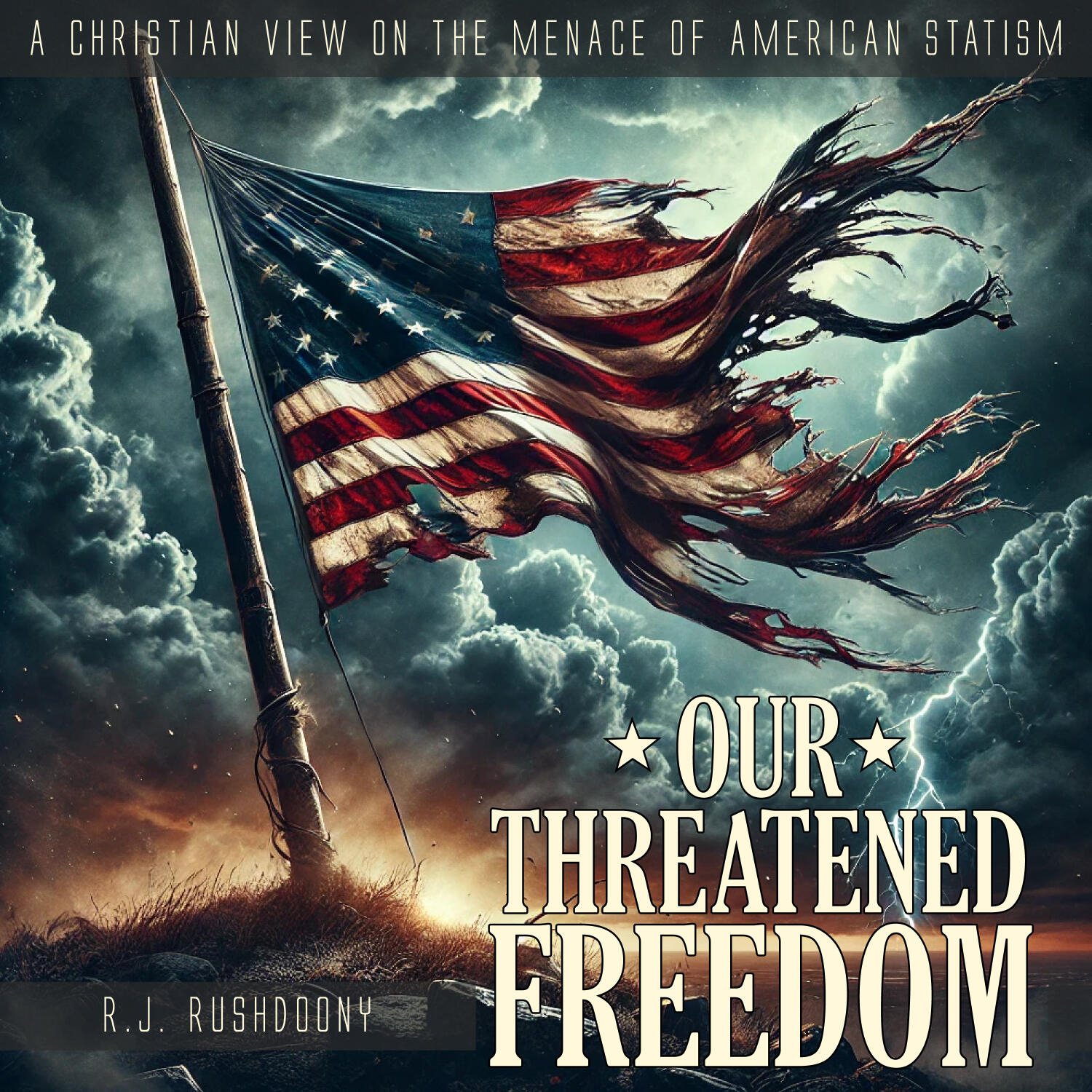
Our Threatened Freedom
by R.J. Rushdoony
A Christian View on the Menace of American Statism with R.J. Rushdoony
-
78
Who Gets the Benefits These Days?
This passage examines how well-intentioned social and labor programs can be exploited, often favoring the wrong parties. The “Burglar Cops of Hollywood” case illustrates law enforcement officers who committed theft while on duty yet received overtime pay during interrogation and even claims for disability due to the stress of being caught. Similarly, in a sex-discrimination lawsuit, the plaintiff received far less than her lawyers, highlighting systemic inequities in benefit distribution. The author argues that abuses in social programs, wage laws, and benefits diminish public trust and threaten the longevity of these initiatives. The solution, he suggests, is active civic involvement to eliminate abuses: if you value a program, work to ensure it serves its intended purpose rather than rewarding exploitation. #SocialPrograms #AbuseOfBenefits #PublicTrust #CivicResponsibility #LawEnforcementAccountability
-
77
Are Technicalities Destroying Justice?
This passage critiques the modern legal system’s focus on technicalities over substantive justice. Minor procedural errors, once considered irrelevant, now frequently overturn convictions, regardless of overwhelming evidence of guilt. Charles Peters cites cases in New York where a convicted burglar and a guilty dentist were freed due to procedural quirks, despite strong evidence against them. The author argues that such overemphasis on legal technicalities undermines moral accountability and erodes public confidence in justice. Courts increasingly prioritize the “game of law” over right and wrong, and without a return to a justice system grounded in moral and ethical principles, both freedom and justice are at risk of collapse. #LegalTechnicalities #JusticeSystem #MoralAccountability #RuleOfLaw #FreedomAndJustice
-
76
Can Crime Stopping Be Dangerous?
This passage warns against the dangers of predictive crime prevention. Richard Conniff’s article in Science Digest highlights research aimed at identifying potential future criminals before they commit any crime, with proposals even suggesting preemptive jailing or execution. Critics, including ACLU lawyer David Landau, point out both constitutional and scientific flaws future criminality cannot be reliably predicted. The author adds a religious and moral objection: justice is only valid when applied to actual acts, not hypothetical ones, and people can change over time, as exemplified by reformed youth who later became productive citizens. Predictive measures risk punishing the innocent, potentially targeting those critical of authority, making such “crime-stopping” both dangerous and unjust. #PredictiveJustice #CivilLiberties #BiblicalJustice #CrimePrevention #MoralResponsibility #SocialScienceLimitations
-
75
Is Federal Aid Destroying America?
This passage describes a common problem with federally funded local projects: well-meaning federal grants can incentivize unnecessary construction, often at the expense of local residents. The anecdote of the hill-country homeowner illustrates how a simple bridge-widening need was expanded into a full road-widening project, costing land, money, and public resources unnecessarily. The author argues that the real issue is not the federal government itself, but a moral and systemic failure at all levels local officials eager to seize funds and citizens willing to go along with wasteful projects. The result is twofold: financial strain on taxpayers and the erosion of the moral foundations necessary for freedom. Federal aid, in this view, amplifies preexisting corruption rather than creating it. #FederalGrants #WastefulSpending #LocalGovernmentCorruption #MoralResponsibility #PublicWorks #FinancialAndMoralDecay
-
74
Do We Have a New Kind of Prejudice?
This passage critiques the U.S. Court of Appeals for the Second Circuit granting the Communist Party special privileges in campaign reporting, exempting it from the disclosure rules required of Republicans and Democrats. The author questions the rationale, arguing that donors to the Communist Party rarely face persecution, while donors to mainstream causes like United Way sometimes do. He frames this as an example of “reverse discrimination,” where the law favors certain groups over justice. The broader concern is that justice requires impartiality “no respecting of persons” yet legal favoritism toward specific groups undermines true justice. The passage concludes with an example of jury bias favoring a wealthy company, illustrating how prejudice, rather than fairness, can dictate outcomes. #ReverseDiscrimination #JusticeAndBias #Impartiality #LegalFavoritism #JudicialCritique #FairnessInLaw
-
73
Are We Regulating Ourselves into Tyranny?
This passage warns that excessive regulation even over seemingly minor matters like lawn maintenance can erode personal freedom and lead society toward tyranny. Using the example of a proposed 16-page building code in University Park, Texas, the author highlights how fines for weeds, cracks, or unsound chimneys, combined with inspectors’ authority to enter homes at will, could pave the way for ever-expanding governmental control. The critique emphasizes that overregulation shifts citizens’ focus from their own responsibilities to policing each other, creating a culture of compliance rather than liberty. While regulations may produce orderly neighborhoods, the author argues that the cost to freedom is far too high, warning that small, innocuous rules can become a slippery slope toward a dictator-like state. #Overregulation #FreedomVsOrder #SlipperySlope #TyrannyByRules #CivilLiberty #PersonalResponsibility #GovernmentOverreach
-
72
Are We Using Language to Confuse Ourselves?
Are We Using Language To Confuse Ourselves? https://cr101radio.com/podcast/are-we-using-language-to-confuse-ourselves-2 In “Are We Using Language to Confuse Ourselves?” Rushdoony warns that statist categories—especially the IRS distinction between “profit” and “nonprofit”—have subtly reshaped Christian and cultural thinking, causing people to mistake tax classifications for reality itself. He argues that these terms obscure what truly matters: productivity versus nonproductivity, noting that families, churches, schools, and libraries—though labeled “nonprofit”—are among the most productive forces in civilization, while civil government, also nonprofit, is often minimally productive at best. By adopting bureaucratic language, society elevates administration over creation, form over substance, and pragmatism over theology, allowing the tax state rather than God’s law to frame how we think. The remedy, Rushdoony insists, is a return to Biblical categories and disciplined thinking that rightly divides truth before God, not the state. #LanguageMatters #BiblicalCategories #AgainstStatism #ProductivityVsProfit #ChristianWorldview #GodsLaw #TruthAndMeaning #CulturalClarity
-
71
Do You Want a Vegetarian World?
This piece critiques the modern animal rights movement and its push toward vegetarianism as a social imperative. While acknowledging the right of vegetarians and animal rights advocates to promote their beliefs, the author warns against coercive tactics that could impose dietary choices on the broader public. Representative Ronald Mottl’s proposed bill to study animal rights is cited as an example of how advocacy could evolve into regulation. The piece notes that appeals to morality like claims that a nonviolent diet ensures world peace are dubious, pointing out India’s history despite widespread vegetarianism. The argument concludes that freedom must include responsibility; when used foolishly or coercively, it undermines itself. #AnimalRights #Vegetarianism #FreedomAndResponsibility #SocialControl #DietaryChoice #IndividualLiberty #NonViolentWorld #Coercion #Regulation #EthicsVsFreedom
-
70
Are We Robbing Widows?
This piece highlights the harsh realities widows face under federal and state property and tax laws. A Missouri widow, unable to operate her late husband’s farm machinery during harvest because it was tied up in his estate, was forced to hire help at additional expense. Laws and regulations, including estate and inheritance taxes, often treat widows as secondary to bureaucratic process, ignoring the years of joint labor they contributed. Even careful legal planning can fail, as tax laws are frequently revised. The author argues that these policies amount to a form of robbing widows, and questions why senior citizen organizations aren’t doing more to advocate for their protection. He calls for legislators to show genuine consideration for widows and orphans, emphasizing that death should be a time of mourning, not bureaucratic exploitation. #ProtectWidows #EstateTaxInjustice #DeathTaxes #PropertyRights #TaxBurden #LegalRedTape #AdvocateForSurvivors #WidowProtection #InheritanceJustice #FairLegislation
-
69
When is R-pe Not R-pe?
A shocking case in New York exposed the failure of justice when a young bank teller was held at knifepoint, her face covered, and raped, yet the judge asked only whether she had seen penetration. When she said no, the criminal was acquitted of first-degree rape and violent robbery, convicted instead of lighter charges of nonviolent robbery and sexual abuse, highlighting a dangerous precedent that vision could determine the severity of a crime. The prosecutor rightly noted that if this were the standard, crimes against blind victims could never be prosecuted, yet the judge ignored this, speculating about hypothetical alternatives like a dildo or hands. This case exemplifies how courts can prioritize the supposed “rights” of criminals over the protection of victims, while civil remedies often fail due to cost or unenforceability. When justice and the law diverge, societal freedom and trust in the legal system are seriously jeopardized. #JusticeDelayed #VictimRights #LegalFail #RapeAwareness #JudicialAccountability #CrimeAndPunishment #LawVsJustice #FreedomAtRisk #ProtectTheInnocent #CourtFailures
-
68
Does Crime Pay?
In California, a con man who stole $9 million through a Ponzi scheme served only three years of a nine-year sentence, essentially paying a year for every $3 million stolen, while his victims lost everything their savings and homes. His incarceration at Boron was described as a “country club” with tennis courts, swimming pools, and dorm-style housing, showing that prisons often fail as a deterrent. Biblical justice, by contrast, emphasizes restitution, requiring the criminal to compensate victims and, if unable, to serve until the debt is paid, with capital punishment for capital crimes. Modern courts rarely enforce this principle; some criminals even stash their gains abroad and enjoy lavish lives after minimal incarceration. When crime pays, morality is undermined, victims suffer, and society as a whole bears the cost, highlighting the urgent need to realign justice with both law and ethical responsibility. #CrimePays #BiblicalJustice #Restitution #VictimRights #CriminalAccountability #SocietyAtRisk #MoralDecay #JusticeSystem #PrisonReform #EthicsInLaw
-
67
Are We Becoming a Postage Stamp Republic?
The U.S. is showing signs of becoming a “postage stamp republic,” a term I first learned as a boy from my stamp collection. Historically, “postage stamp republics” were weak, unstable nations, issuing new stamps frequently to raise money and signaling constant inflation through fluctuating postal rates. Today, the U.S. mirrors that pattern: new stamps appear constantly, often sold more to collectors than used, generating profit for the postal service, while postal rates jumped three times in 1981 alone from 15¢ to 18¢ to 20¢. Beyond stamps, these signs hint at broader issues political instability, inflation, and the gradual erosion of freedom. It’s a wake-up call that something more fundamental than postal rates needs fixing. #PostageStampRepublic #Inflation #PostalRates #EconomicStability #PoliticalInstability #Freedom #USPolitics #FiscalAwareness #GovernmentOversight #HistoryLessons
-
66
Are We Running Low on Ideas to Spend our Money?
Sometimes it seems Washington’s planners compete to find the most absurd ways to spend our money. Take Baltimore’s “Block” of strip joints and adult shops: $338,000 is being spent to make the area more accessible with tree plantings and wheelchair cuts apparently ensuring the physically disabled can comfortably visit porno shops! While satire aside, one wonders if resources couldn’t go toward more practical projects like park benches for the homeless or a museum celebrating disappearing Americana like farm mules or outhouses. Bureaucratic priorities often feel out of touch with common sense, and while humor helps us tolerate the madness, the underlying question remains: are we running out of meaningful ways to invest public funds? #GovernmentSpending #Bureaucracy #WastefulSpending #PublicFunds #WashingtonDC #FiscalResponsibility #Satire #CommunityDevelopment #HUD #Priorities
-
65
Do You Like Taxation?
A Christian View on the Menace of American StatismTaxation touches every aspect of our lives, from income and property to gasoline, entertainment, and even our estates, and yet the burden often feels arbitrary and excessive. While some taxes may be necessary, the scope of modern levies from birth to death reveals a system where the citizen is constantly treated as a revenue source rather than a free individual. The Sixteenth Amendment grants the federal government nearly unlimited authority to tax, and Congress exercises that authority with the consent of voters, making citizens partially responsible for their own over-taxation. As taxation grows alongside government spending, both personal and collective financial discipline become essential; without restraint, we jeopardize our freedom, prosperity, and even the stability of the nation. #Taxation #OverTaxed #IRS #GovernmentSpending #FiscalResponsibility #Liberty #IncomeTax #FinancialFreedom #CitizenResponsibility #EconomicAccountability
-
64
Are We Over-Licensed and Over-Ticketed?
Over-licensing and over-ticketing have become a modern assault on American initiative and freedom. A young entrepreneur with a camera and a pony, providing a wholesome service, faces fines and potential jail simply because he cannot secure 82 separate municipal licenses—licenses that serve the cities’ revenue more than the public good. Meanwhile, real criminals often receive lighter consequences than law-abiding citizens, highlighting a system that targets compliance rather than justice. Excessive licensing and petty ticketing erode trust in civil agencies, limit independence, and punish enterprise, turning ordinary citizens into revenue sources while stifling opportunity. True freedom and initiative are being curtailed under the guise of regulation. #OverLicensed #OverTicketed #CivilLiberty #Entrepreneurship #FreedomUnderThreat #Bureaucracy #AmericanEnterprise #OverRegulation #TaxShakedown #LibertyMatters"
-
63
How Much of You does the Federal Government Own?
A striking reality in the U.S. is the vast land and wealth controlled by the federal government: Alaska 90%, Nevada 87%, Utah 65%, and so on, supposedly in trust for the people, yet private groups often manage these lands more effectively. Beyond land, civil governments claim 40–60% of our income through taxes, effectively owning a significant portion of our labor—modern slavery in all but name. While the 19th-century abolition ended private slavery, public ownership persists, making citizens “half free, half enslaved.” True emancipation requires action from the people, not Washington or the state. Until then, paychecks remind us that the modern state has grown from servant to master. Change begins within, as Paul declares, “[W]here the Spirit of the Lord is, there is liberty” (2 Cor. 3:17). #GovernmentControl #Taxation #ModernSlavery #FederalLand #Freedom #CivilLiberty #Emancipation #LibertyInChrist #BigBrother #TakeAction"
-
62
Is Law Enforcement Always Good?
Not all law enforcement agencies serve the public good. The Law Enforcement Assistance Administration, created in 1968 and defunded in 1982, spent nearly $8 billion on projects with little practical impact, like wristwatches to monitor officers’ vitals or studies on why convicts escape or people leave high-crime neighborhoods. Such programs highlight bureaucratic inefficiency and the ease with which taxpayer money can be wasted under noble-sounding titles. While some agencies claim to promote safety and justice, the reality is often self-serving: creating jobs, rewarding grants, and justifying budgets, rather than effectively reducing crime or serving communities. The closure of this agency was a rare win for taxpayers, and many more wasteful bureaus likely remain. #LawEnforcement #GovernmentWaste #Bureaucracy #TaxpayerMoney #Inefficiency #PublicFunds #Accountability #WashingtonSpending #BureaucraticRedTape #AgencyClosure"
-
61
Who Is Congress Working For?
Congress is supposed to serve the people, but in 1982 it voted itself enormous tax benefits and perks—including deductions for housing, food, servants, and utilities—while ordinary Americans faced rising unemployment and stagnant wages. These special privileges allowed members to shield tens of thousands of dollars from taxation, essentially giving themselves a hidden pay raise while discussing higher taxes for the public. Such actions undermine the constitutional principle of representation and weaken civil government, creating a situation where citizens must be protected from their own legislators. True representation requires Congress to be subject to the same laws as the people it serves, not to self-serving exemptions. #Congress #Representation #TaxFairness #GovernmentAccountability #NoSpecialPrivileges #PublicVsPoliticians #CivilGovernment #FairTaxes #WeThePeople #AccountableLeadership"
-
60
Will Wishing or Legislating Make It So?
In this episode, R.J. Rushdoony critiques the modern obsession with wishful thinking and state control. From workshops that promise wealth through “positive wishing” to bloated licensing agencies that regulate everything but common sense, Rushdoony asks: Can foolishness be outlawed—or must freedom include the right to fail? Tune in to hear why real growth requires liberty, not legislation, and why state supervision is no substitute for character and responsibility.
-
59
Are Criminals Afraid of the Law?
A Christian View on the Menace of American Statism
-
58
Is Education For or Against Barbarism?
A Christian View on the Menace of American Statism
-
57
Does the Supreme Court Know Best?
This article questions whether the U.S. Supreme Court truly serves justice, using its unanimous ruling against the Old Order Amish—forcing them to pay Social Security taxes despite religious objections—as a focal point. The author compares the Court’s logic to that of the Soviet Union, arguing that if Social Security were truly a “common good,” people wouldn’t need to be coerced into it. Highlighting the Amish as law-abiding, self-reliant citizens, the piece condemns the government’s persecution of moral individuals while showing leniency toward criminals. It warns that such judicial overreach reflects a dangerous shift toward statism, where courts prioritize control over conscience.
-
56
Is Freedom Dangerous?
A Christian View on the Menace of American Statism
-
55
How Much are Federal Regulations Costing Us?
A Christian View on the Menace of American Statism
-
54
Will Our Courts Defend Orphans?
A Christian View on the Menace of American Statism
-
53
What is a Monopoly?
A Christian View on the Menace of American Statism
-
52
How Big are the Big Corporations?
A Christian View on the Menace of American Statism
-
51
How Sensitive are You to Vampires?
A Christian View on the Menace of American Statism
-
50
Have You Thanked Your Banker Lately?
A Christian View on the Menace of American Statism
-
49
Is Language a Political Tool?
A Christian View on the Menace of American Statism
-
48
When is it Illegal to Sing in Church?
A Christian View on the Menace of American Statism
-
47
Is Charity Illegal?
A Christian View on the Menace of American Statism
-
46
Is Being Human a Disaster?
A Christian View on the Menace of American Statism
-
45
Can We Legislate our Way to Freedom?
When killers are set free under the excuse of "PMT"—premenstrual tension—what becomes of justice? In this episode, R.J. Rushdoony exposes the dangerous shift from responsibility to rationalization. With biblical conviction, he shows how excusing evil undermines law, morality, and freedom itself. True justice requires accountability—not excuses.
-
44
Is There a Good Excuse for Murder?
A Christian View on the Menace of American Statism
-
43
Is Discrimination Always Bad?
A Christian View on the Menace of American Statism
-
42
How Seriously Should We Take Our Politicians?
A Christian View on the Menace of American Statism
-
41
Do We Have Equal Justice?
A Christian View on the Menace of American Statism
-
40
Must Civil Government Have a Double Standard?
A Christian View on the Menace of American Statism
-
39
Do Our Ex-Presidents Cost Too Much?
A Christian View on the Menace of American Statism
-
38
Is Our Bureaucracy Becoming a Bad Joke?
A Christian View on the Menace of American Statism
-
37
Does the United States Have an Incurable Disease?
A Christian View on the Menace of American Statism
-
36
Do Our Politicians Lose Their Memory on Election Day?
A Christian View on the Menace of American Statism
-
35
Is Mental Illness a Myth?
A Christian View on the Menace of American Statism
-
34
Are Fake Menaces Being Promoted?
A Christian View on the Menace of American Statism
-
33
How Does the US Supreme Court Make Those Decisions?
A Christian View on the Menace of American Statism
-
32
Do Politicians Lose Their Memory on Election Day?
In this episode, we unpack Ronald Reagan’s 1970 quip about soaring postal rates versus falling phone costs—and FDR’s warning about power centralization—to show how candidates’ pre-election critiques of bureaucracy too often vanish once they’re in office. We’ll explore how this gap between promises made and promises kept erodes trust in government and poses a real threat to our democratic future.
-
31
Who is Most Helped by Federal Spending?
A Christian View on the Menace of American Statism
-
30
Are Public School Hazardous to Our Childrens Health?
A Christian View on the Menace of American Statism
-
29
Who is Censoring Us?
A Christian View on the Menace of American Statism
We're indexing this podcast's transcripts for the first time — this can take a minute or two. We'll show results as soon as they're ready.
No matches for "" in this podcast's transcripts.
No topics indexed yet for this podcast.
Loading reviews...
ABOUT THIS SHOW
A Christian View on the Menace of American Statism with R.J. Rushdoony
HOSTED BY
R.J. Rushdoony
CATEGORIES
Loading similar podcasts...
URL copied to clipboard!