
PODCAST · health
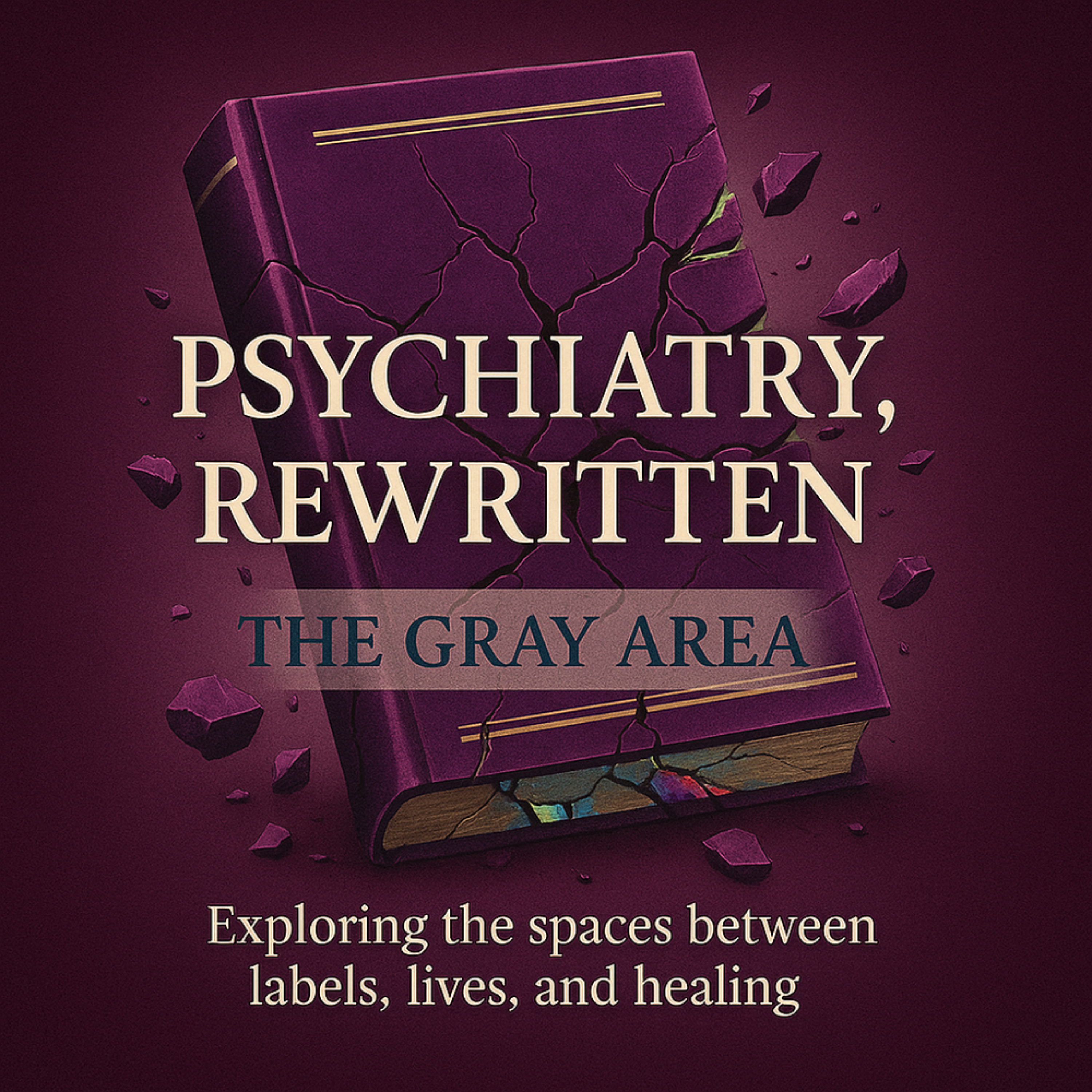
Psychiatry, Rewritten - The Gray Area
by laine
Exploring the spaces between labels, lives, and healing.Hosted by Laine — a psychiatric nurse practitioner with lived experience — Psychiatry, Rewritten challenges the way we talk about mental health. With honest stories and real conversations, it explores the gray areas between symptoms and identity, diagnosis and humanity. Because healing isn’t linear, and the truth isn’t always clinical.This is where the rewrite begins.
-
0
Your Gut Has a Mind of its Own
In this episode, we dive into the fascinating connection between the brain and the gut — sometimes called the second brain. The gut houses about 500 million neurons and communicates constantly with the central nervous system through the vagus nerve. In fact, around 80% of vagus nerve fibers run upward, meaning your gut is sending more messages to your brain than the other way around.We explore how this “gut–brain axis” shapes mental health conditions like anxiety, depression, and trauma responses, and why disorders like IBS, Crohn’s disease, and ulcerative colitis often flare with stress. For decades, people were told symptoms were “just in their head,” but research shows the gut and brain are locked in a feedback loop that can fuel both physical and emotional distress.The big takeaway? If we only focus on the brain, we miss half the conversation. The gut has a mind of its own — and understanding that changes how we see both psychiatry and whole-body health.References & Resources 1. Oka, P., Parr, H., Barberio, B., Black, C. J., Savarino, E. V., & Ford, A. C. (2020). Global prevalence of irritable bowel syndrome according to Rome III or IV criteria: a systematic review and meta-analysis. Gastroenterology, 158(5), 1262–1278. 2. Carabotti, M., Scirocco, A., Maselli, M. A., & Severi, C. (2015). The gut-brain axis: interactions between enteric microbiota, central and enteric nervous systems. Annals of Gastroenterology, 28(2), 203–209. 3. Cryan, J. F., O’Riordan, K. J., Cowan, C. S. M., et al. (2019). The microbiota–gut–brain axis. Physiological Reviews, 99(4), 1877–2013. 4. Mayer, E. A., Tillisch, K., & Gupta, A. (2015). Gut/brain axis and the microbiota. Journal of Clinical Investigation, 125(3), 926–938. 5. Breit, S., Kupferberg, A., Rogler, G., & Hasler, G. (2018). Vagus nerve as modulator of the brain–gut axis in psychiatric and inflammatory disorders. Frontiers in Psychiatry, 9, 44.
-
-1
Borderline: The Diagnosis Trauma Built
In this episode, we strip back the stigma of Borderline Personality Disorder and look at it through the lens of trauma. Instead of a “disordered personality,” what if borderline is better understood as the long shadow of chronic relational wounds—neglect, betrayal, abandonment, or ongoing invalidation?We’ll explore how many so-called “borderline symptoms”—fear of abandonment, emotional intensity, self-harm, rapid shifts—are the survival patterns of people who endured trauma without safety or repair. Seen this way, borderline isn’t manipulation or brokenness; it’s a set of strategies that once kept someone alive.This reframing matters, because when psychiatry pathologizes survival, healing gets blocked. When we recognize borderline as chronic trauma, the path forward opens—toward compassion, targeted treatment, and the possibility of rewriting the story from damage to resilience.References & Resources 1. Bozzatello, P., Morese, R., & Bellino, S. (2021). The Role of Trauma in Early Onset Borderline Personality Disorder: A Biopsychosocial Perspective. Frontiers in Psychiatry. 2. Ford, J. D. (2014). Complex PTSD, affect dysregulation, and borderline personality disorder. Borderline Personality Disorder and Emotion Dysregulation. 3. Pagura, J., Stein, M. B., Bolton, J. M., Cox, B. J., Grant, B., & Sareen, J. (2010). Comorbidity of Borderline Personality Disorder and Posttraumatic Stress Disorder in the U.S. population. Journal of Psychiatric Research. 4. Lavvaf, M., Bagheri-Nesami, M., et al. (2025). Childhood trauma and Axis I disorders in borderline personality disorder. Middle East Current Psychiatry. 5. Kolthof, K. A., et al. (2022). Effects of intensive trauma-focused treatment of individuals with PTSD on borderline personality disorder symptom severity. European Journal of Psychotraumatology. Link 6. Riou, M., et al. (2024). Borderline personality disorder and post-traumatic stress: comparison of adolescent patients with and without PTSD. BMC Psychiatry. 7. Smits, M. L., et al. (2022). Trauma and Outcomes of Mentalization-Based Therapy for Patients With Borderline Personality Disorder. American Journal of Psychotherapy. 8. Bozzatello, P., et al. (2020). Trauma and psychopathology associated with early onset borderline personality disorder. Journal of Psychiatric Research. 9. Tate, A. E., et al. (2022). Associations with psychiatric disorders, somatic illnesses, trauma and adverse behaviors in borderline personality disorder: A Swedish cohort study. Molecular Psychiatry. 10. Zanarini, M. C., et al. (2017). Ten-year course of borderline personality disorder: The CLPS study. BMC Psychiatry.
-
-2
Dementia in a Bottle
Benzodiazepines and gabapentin are handed out like candy — for anxiety, for sleep, for nerve pain, for “whatever works.” But the quiet cost often doesn’t make it into the conversation: memory loss, cognitive decline, and even dementia risk.In this episode, we dig into the science and the stories behind the meds that calm today but may erase tomorrow. We’ll talk about how these drugs affect the hippocampus, why dependency is so hard to break, and what current research says about long-term brain health.This isn’t about scare tactics — it’s about informed consent. Because your brain deserves more than a prescription that steals it piece by piece.
-
-3
Before the Wound: Why Prevention Matters
Episode Title: Before the Wound: Why Prevention MattersSeries: The Mirror, the Match, and the Megaphone – Part IIDescription: We cannot keep showing up after the damage is done. (Although we even need to get better at that.)In this second installment of the series, we shift our focus from aftermath to prevention — and it starts early. We talk about why teaching kids proper anatomy, boundaries, and consent isn’t inappropriate — it’s necessary. We dismantle the fear and shame that still surrounds these conversations, and we ask the hard questions:Why are we still more comfortable cleaning up trauma than preventing it?This episode explores how systems fail children long before they ever end up in courtrooms, therapy offices, or psych wards — and how silence keeps the cycle going.It’s not just about education.It’s about protection.And it’s time we stop being scared to say so.
-
-4
The Match, the Mirror, and the Megaphone Pt. 1
Episode Title: The Mirror, the Match, and the Megaphone (Part I)*Series Launch: Psychiatry, Rewritten – The Reckoning SeriesDescription:Welcome to the beginning of something deeper.In this first installment of The Mirror, the Match, and the Megaphone series, we lay the foundation for a raw, unapologetic conversation about the systems that shape our minds — and the stories we’ve been told about them. This episode introduces the central metaphors that will guide the series: • The Mirror — what we’re forced to look at (and what we’ve avoided seeing), • The Match — what needs to burn, • The Megaphone — what must be said, loudly and without permission.We explore the personal and collective reckonings that drive this work, the fire beneath reform, and why staying silent is no longer an option. If you’ve ever questioned the way things are done in mental health — this is where we start peeling it back.This episode is not a conclusion. It’s a call.Let’s begin.
-
-5
No One Asked Him
I want my audience to know that I recorded this in one take with no editing whatsoever, and I uploaded it straight from my voice memos.
-
-6
Grief is the Price of Love (Vinny’s Episode)
This episode is very close to my heart. I hope it helps even one person find the strength the take the breath to make the choice to stay alive another day. Because I’m always glad when I make it through another round of grief. Because then I’ve grown stronger! Thanks for being here ☮️
-
-7
The Salt That Saved Lives: Rethinking Lithium
Lithium has a reputation — and most of it’s wrong. In this episode, we unpack the truth about one of the most effective, misunderstood, and underprescribed medications in psychiatry. From its powerful anti-suicidal properties to its long-term neuroprotective benefits, lithium isn’t just “that old-school drug” — it’s a life-saving treatment that too many clinicians avoid out of habit or fear.We’ll dive into: • Why lithium works (and how it actually builds brain resilience) • The stigma around side effects and lab work — and why it’s often overblown • New research on microdosing, dementia protection, and withdrawal support • Why comparing lithium to chemotherapy might just make sense • Real talk: why avoiding lithium due to inconvenience could be costing livesWith myth-busting, research, and raw clinical insight, we’re giving lithium the respect it deserves — and showing why it might be the most underrated tool in your psychiatric toolbox.
-
-8
Hope on a Drip: The Truth About IV Ketamine
What if the relief you’ve been chasing wasn’t months away — but minutes? In this episode, we dive deep into the world of IV ketamine: a treatment once reserved for anesthesiologists and now rapidly gaining traction in the psychiatric world.We’ll break down how ketamine works (yep, we’re talking about neuroplasticity), why it’s different from traditional antidepressants, and what makes it a potential game-changer for people with treatment-resistant depression, PTSD, and suicidality.You’ll hear stories from real people who’ve found hope where nothing else worked — and we’ll challenge the stigma that still surrounds this powerful tool. We’re not talking about magic. We’re talking about medicine — and how fast-acting relief shouldn’t be controversial.MythBusters, research breakdowns, and a hard look at how the psychiatric field is catching up — or not. If you’ve ever wondered if ketamine could help someone you love… this one’s for you.
-
-9
He Wasn’t Combative — He Was Confused
Dementia isn’t just about forgetting names or losing track of time. It’s about identity, safety, dignity — and the heartbreaking way our systems often fail to protect all three.In this episode, we go deeper than the surface signs. We talk about: • What dementia really looks like in day-to-day life • Why labile mood, paranoia, and even aggression have real neurological roots • How overuse of antipsychotics can worsen outcomes • And why many patients with dementia are misdiagnosed, misunderstood, or mistreated — especially in inpatient psych settingsWe also discuss: • The importance of non-pharmacological interventions like redirection, music, and even baby dolls • How early symptoms get brushed off — or blamed on “just aging” • And what clinicians, caregivers, and loved ones need to understand to avoid doing harmThis episode challenges assumptions, validates caregiver exhaustion, and offers real strategies — not just for managing dementia, but for seeing the person still inside.Because they are still there.
-
-10
First Stop, Rock Bottom: The ER and Mental Health Emergencies
What happens when the emergency room becomes the last stop for psychiatric care?In this raw and revealing episode, we shine a light on the overcrowded, overlooked world of psychiatric patients in the ER — a place designed for heart attacks and trauma codes, not holding people in mental health crisis for days… or weeks.We talk about: • Why the ER has become a dumping ground for psychiatric patients • The dangerous cycle of early hospitalization in children • How large healthcare corporations profit off rural hospitals while neglecting community mental health needs • The reality of restraints, understaffing, and misdiagnosis in emergency psych care • And why it’s not the ER’s fault — but it’s still a crisisYou’ll also hear a story that puts it all into perspective: a man who needed help, not holding. Rent was due. Time was running out. But all he got was a hallway bed, a security guard, and silence.This episode is for the people still waiting. For the ones who got labeled before they got heard. And for the clinicians and listeners ready to change the system — starting with where it breaks first.
-
-11
It Hurts, But No One Can Find It
What happens when your body is screaming, but the tests all come back normal?In this episode, we explore somatization — the process where psychological distress shows up in the body through real, physical symptoms. We break down how and why this happens, the science behind it, and the painful reality of being dismissed, misdiagnosed, or gaslit by the medical system.You’ll hear a first-person story about chronic GI pain, missed school, and truancy threats — all rooted in anxiety that no one caught. We also talk about how identifying emotional states can actually reduce physical symptoms, and what clinicians need to do differently when patients say, “I just don’t feel right.”We tackle: • The difference between somatization and conversion disorder • How trauma, stress, and emotion can hijack the nervous system • Why “all in your head” isn’t just offensive — it’s clinically lazy • How to actually help people in pain when labs are clean but suffering is realThis is one of those episodes that could change how you see your body — and the way the medical world sees you.
-
-12
More Than a Label: Understanding Personality Disorders
Personality disorders are some of the most misunderstood—and most stigmatized—diagnoses in all of psychiatry. In this episode, we break down the myths, misconceptions, and messy truths about what it actually means to live with a personality disorder. From Cluster A to Cluster C, we explore how these patterns develop, how they show up in relationships and everyday life, and—most importantly—how they can be treated.We’re not here to pathologize people. We’re here to humanize the diagnosis.Because behind every “difficult” presentation is usually a deeper story—of survival, protection, or pain.Plus:– Why BPD gets so much attention (and stigma)– How to tell the difference between narcissism and Narcissistic Personality Disorder– What treatment actually looks like (yes, there are options)– A myth-busting tour of the most common stereotypes– And why some clinicians avoid these diagnoses altogetherThis episode is for anyone who’s ever felt judged for their emotional reactions, labeled as “manipulative,” or written off as untreatable. It’s also for the clinicians who want to do better.Because people with personality disorders aren’t beyond help—they’re often the ones who need understanding the most.
-
-13
Not Just “Crazy”: Understanding Schizophrenia Beyond the Myths
Schizophrenia. It’s one of the most feared, misunderstood, and stigmatized diagnoses in all of psychiatry — and most people have no idea what it actually is.In this episode, we go deeper than the textbooks. Laine is joined by co-host Jami — a family nurse practitioner working in detox — to explore what schizophrenia really looks like, how often it’s misdiagnosed, and why so many people are walking around with the wrong label entirely.We talk about everything from hallucinations and delusions to flat affect, anosognosia (when someone doesn’t believe they’re sick), and the impact of trauma and substance use. We also bust common myths, explain the “schizo spectrum,” and spotlight how our system often fails those most in need of care.Whether you’re a clinician, a loved one, or someone who’s been told they have schizophrenia — this episode is for you. It’s raw, real, and rooted in clinical compassion.
-
-14
Why Can’t I Just Be Happy?
🎙️ Psychiatry, Rewritten — Mental health, demystified.This podcast channel exists to challenge the stereotypes, rewrite the narrative around psychiatric diagnoses, and talk about the things no one else will say out loud. Hosted by a psychiatric nurse practitioner who believes in truth-telling, nuance, and humanity, this series blends real-life stories with clinical insight, stigma-busting education, and a deep respect for what people have survived.We cover everything from ADHD and trauma to schizophrenia, PMDD, personality disorders, and misunderstood symptoms — with honesty, depth, and compassion.Whether you’re a clinician, a patient, or someone just trying to make sense of their own mind…You belong here.Expect:• Bold, unfiltered episodes on controversial topics• Lived experience narratives and clinical reflections• Myth-busting, stigma-smashing conversations• Advocacy for misdiagnosed and overlooked people• Tools that actually help — not just labelsBecause mental health isn’t one-size-fits-all.And healing doesn’t have to follow the rules.
-
-15
This Doesn’t Feel Like a Break - It Feels Like a Message
Hallucinations are one of the most misunderstood experiences in all of psychiatry. People assume they’re always terrifying, violent, or a sign of being “too far gone.” But the truth is more complex — and more human.In this episode, we talk about what it actually means to hear voices or see things that others don’t. We unpack the science of psychosis, the emotional toll of being dismissed or misdiagnosed, and the deep loneliness that comes with being misunderstood.You’ll hear real stories, lived experiences, and a message that might just shift the way you think about hallucinations — forever.Because behind every voice is a person. Behind every symptom is a story.
-
-16
“More Than a Mood: Understanding Bipolar Disorder”
We throw the word “bipolar” around like it means being dramatic or moody — but that’s not what bipolar disorder is. Not even close.In this episode, we break down the real definition of bipolar disorder — and why it’s so often misunderstood, misused, and misdiagnosed. We explore the differences between hypomania and mania, why depression often shows up first, and how mislabeling people can lead to years of suffering.You’ll hear real stories, raw reflections, and a vignette straight from the chaos of a manic episode. We’ll also talk about brilliance, creativity, and the incredible minds that have lived with bipolar disorder — because the same brain that spirals can also soar.💡 Whether you’re navigating your own diagnosis or just want to understand it better, this episode is for you.
-
-17
Mini Episode 1: Better Questions, Better Care
What if the problem isn’t that people aren’t answering — but that we’re not asking the right questions?In this short episode, we explore how the quality of our questions can completely change the outcome of a clinical interaction. From rushed intake forms to robotic checkboxes, too many assessments miss the mark — not because the patient is resistant, but because the questions aren’t designed to see them. We dig into the power of thoughtful, layered, and trauma-informed questioning that builds trust, invites honesty, and actually helps uncover what’s going on beneath the surface.Whether you’re a clinician, student, or just someone who wants to understand people better — this episode is a reminder that the way we ask matters.Includes real examples, emotional insight, and a sneak peek at the upcoming companion episode on how those answers apply to diagnosis and treatment.References: (Rhoades et al., JAMA, 2001)(Graber et al., Archives of Internal Medicine, 2005)(Lie et al., Patient Education and Counseling, 2004)(Beckman & Frankel, Annals of Internal Medicine, 1984; Raja et al., J Eval Clin Pract, 2015)#mental #health
-
-18
The Repair Process: After the Apology (Part 2)
What happens after the blow-up? And is sorry ever enough?In this follow-up to our deep dive on anger, we turn our focus to what comes after the rupture — the aftermath, the impact, and the often-overlooked work of repair. This episode unpacks the difference between apology and accountability, explores what true emotional safety looks like in a relationship, and sheds light on how anger can become a survival response… but also a cycle that destroys trust if left unchecked.We hear from both sides of the story — the person who lashes out, and the one who gets hurt. We talk about what it means to truly change, how to rebuild trust when it’s been broken, and why some wounds can’t be patched with words alone.Whether you’ve been the one trying to change or the one waiting for change, this episode is for you.#mental #health #mind #psychiatry #relationships #medication #mindfulness #anger #rage #stigma
-
-19
Anger Isn’t the Enemy - It’s the Alarm: Understanding the Real Roots of Anger (Part 1)
Anger isn’t always about being mad — and it’s almost never just a personality flaw. Sometimes, it’s grief. Sometimes, it’s shame. And sometimes, it’s the only way a nervous system knows how to say, “I don’t feel safe.”In this episode, we go beneath the surface of anger to explore what’s really happening when someone lashes out, shuts down, or spirals over something small. Whether it’s rooted in trauma, sensory overload, or years of unmet emotional needs, anger is often a response to overwhelm — not cruelty. We’ll talk about what gets missed when someone is labeled as “explosive” or “toxic,” and how we can start listening differently.Because the question isn’t just “Why are you so angry?”It’s “What is this anger trying to protect?”
-
-20
“The Click”: When ADHD Isn’t the Whole Story”
Random Resources: https://www.pesi.com/blogs/https://chadd.org/for-adults/overview/https://www.hcp.med.harvard.edu/ncs/asrs.phphttps://www.understood.org/Evidence-Based Journals (ADHD + Trauma related): https://pmc.ncbi.nlm.nih.gov/articles/PMC10587572/https://pmc.ncbi.nlm.nih.gov/articles/PMC5973996/https://pmc.ncbi.nlm.nih.gov/articles/PMC11594572/https://pubmed.ncbi.nlm.nih.gov/39953536/https://pubmed.ncbi.nlm.nih.gov/39607449/https://pubmed.ncbi.nlm.nih.gov/38375810/Resources Szymanski, M. A., Sapanski, L., & Conway, F. (2011).Trauma and ADHD—Association or diagnostic confusion? A clinical perspective. Journal of Infant, Child, and Adolescent Psychotherapy, 10(1), 51–59. Carrion, V. G., Weems, C. F., & Reiss, A. L. (2007).Stress, memory, and the hippocampus in children: A tale of vulnerability and adaptation. Journal of Child Psychology and Psychiatry, 48(1), 87–96. van der Kolk, B. A. (2014).The Body Keeps the Score: Brain, Mind, and Body in the Healing of Trauma. Penguin Books. Ford, J. D., Racusin, R., Ellis, C. G., et al. (2000).Child maltreatment, other trauma exposure, and posttraumatic symptomatology among children with oppositional defiant and attention deficit hyperactivity disorders. Child Maltreatment, 5(3), 205–217. Guendelman, S., Owens, E. B., Galán, C., & Hinshaw, S. P. (2016).Childhood adversity and adolescent internalizing symptoms among girls with ADHD. Journal of Abnormal Child Psychology, 44, 491–506.
-
-21
It Wasn’t About Getting High
What if methamphetamine wasn’t about getting high — but about finally being able to think?In this raw and revealing episode of Psychiatry, Rewritten — The Gray Area, we explore what happens when someone with undiagnosed ADHD turns to street stimulants out of desperation.Through powerful storytelling, neuroscience, and lived expertise, we reframe addiction as a response to unmet needs — not a failure of character.🎧 Topics covered:Why some people feel calmer on meth than off itThe neurobiology behind ADHD and stimulant regulationThe science of self-medication and misdiagnosisHow shame harms — and what healing actually looks likeBecause sometimes, the drug wasn’t the escape.It was the only thing that made life feel manageable.Q: Have you or someone you love ever used something to self-regulate before knowing what was really going on?Tell us what helped you feel seen — or what you wish someone had understood.Resources Khantzian, E. J. (1997). The self-medication hypothesis of substance use disorders: A reconsideration and recent applications. Harvard Review of Psychiatry, 4(5), 231–244. Wilens, T. E., et al. (2008). Misuse and diversion of stimulants prescribed for ADHD: A systematic review of the literature. Journal of the American Academy of Child & Adolescent Psychiatry, 47(1), 21–31. Young, J. T., et al. (2011). ADHD and substance use: Clinical implications of a population-based study of young adults. Journal of Substance Abuse Treatment, 41(2), 159–167. Schoffstall, C. L., & Clark, C. R. (2007). Self-medication practices among individuals with ADHD symptoms. Substance Use & Misuse, 42(4), 703–721.#mentalhealth #ADHD #methamphetamines #Adderall #misdiagnosis #psychiatry #mooddisorder #personalitydisorders
-
-22
Borderline Isn’t a Sentence: Reclaiming the Diagnosis
What happens when the label that was supposed to help… only made things worse?In this debut episode of Psychiatry, Rewritten — The Gray Area, Laine shares a raw, reflective story about being diagnosed with Borderline Personality Disorder — and the damage that followed. From stigma to misinterpretation, we explore how certain diagnoses become weaponized, what they miss, and what healing really looks like when we rewrite the narrative.If you’ve ever been called too much, too emotional, or too hard to help — this episode is for you. #borderline #personality #disorder #medications #mental #health #therapy #psychiatry #misdiagnosis #suicide #evidence-based
No matches for "" in this podcast's transcripts.
No topics indexed yet for this podcast.
Loading reviews...
ABOUT THIS SHOW
Exploring the spaces between labels, lives, and healing.Hosted by Laine — a psychiatric nurse practitioner with lived experience — Psychiatry, Rewritten challenges the way we talk about mental health. With honest stories and real conversations, it explores the gray areas between symptoms and identity, diagnosis and humanity. Because healing isn’t linear, and the truth isn’t always clinical.This is where the rewrite begins.
HOSTED BY
laine
Loading similar podcasts...
URL copied to clipboard!