
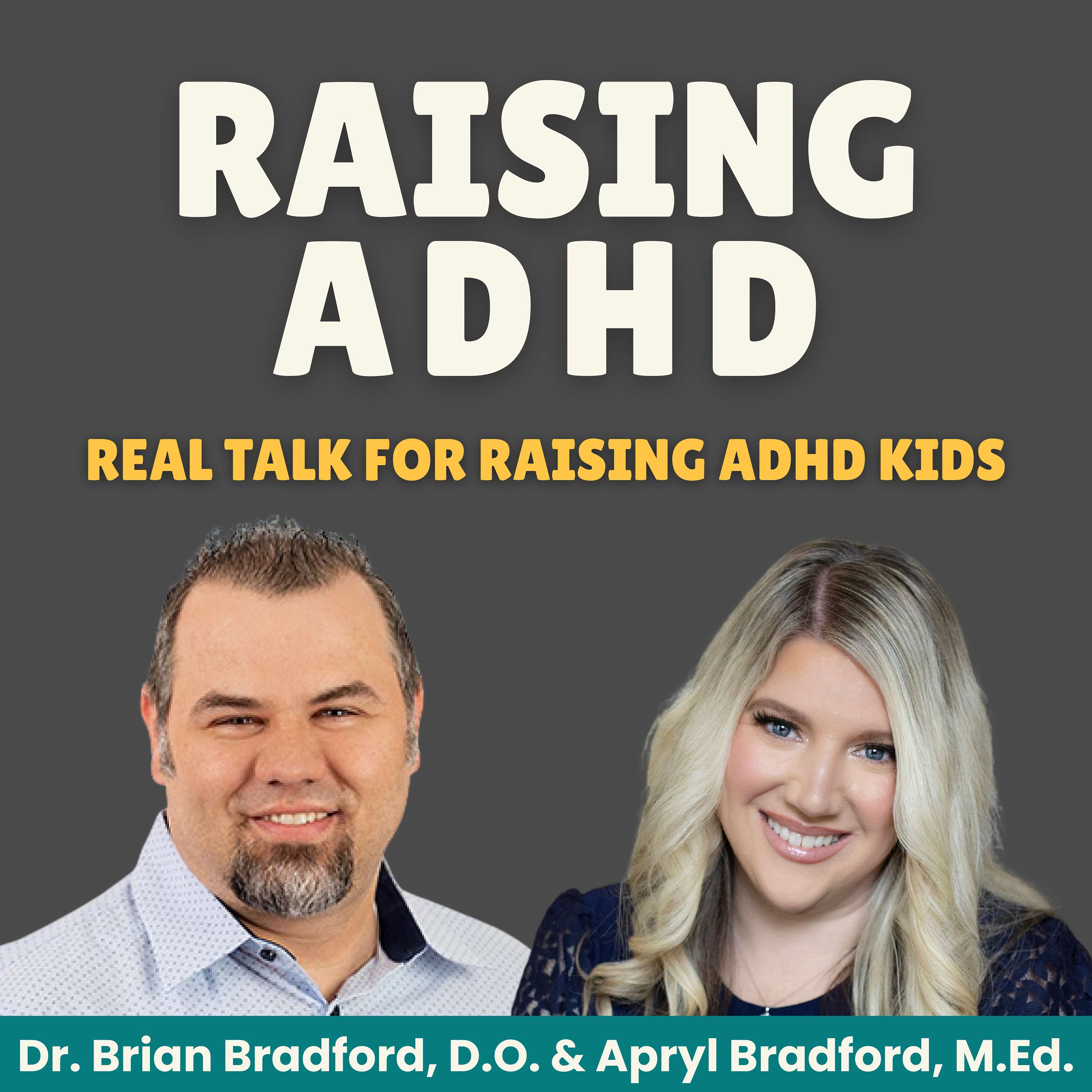
PODCAST · health
Raising ADHD: Real Talk For Parents & Educators
by Dr. Brian Bradford & Apryl Bradford
Raising a child with ADHD can feel overwhelming—meltdowns, school struggles, medication decisions, and the constant fear you’re doing it wrong. Raising ADHD is the podcast for parents and teachers who want clarity, strategies, and real-life support.Hosted by Apryl Bradford, M.Ed. (former teacher and ADHD mom) and Dr. Brian Bradford, D.O. (Child & Adolescent Psychiatrist), this show cuts through the myths and misinformation about Attention-Deficit/Hyperactivity Disorder. Together, Apryl and Dr. Bradford bring both lived experience and clinical expertise to help you:Understand what ADHD really is (and isn’t)Navigate school challenges and partner with teachersMake sense of medication options without the jargonSupport your child’s strengths while tackling everyday strugglesFeel less alone and more empowered on this journeyEach week, you’ll hear practical tips, the latest insight
-
34
ADHD Executive Function in Real Life: Why Checklists Fail and the Scaffolding System That Actually Works
Send us Fan MailADHD executive function is why your checklist isn't working. Learn how to become your child's GPS and scaffold the skills that actually get things done at home.________________________________________________________________________You made the checklist. You laminated it. You hung it on the fridge. Your child used it for two days. Now you're frustrated because they won't even look at it, and you're wondering if anything will ever work.Here's the problem: the checklist was never the issue. Your child's ADHD executive function was. And nobody taught you how to scaffold a tool into a skill.ADHD executive function is the brain's GPS. It's what gets your child from "time to get ready" to actually being ready. Your child has the car, the engine, and the ability to drive. What's missing is the navigation. And handing someone a map when their GPS is broken doesn't fix anything. It just gives them one more thing to forget.In this episode, Apryl shows you exactly what ADHD executive function looks like in real life (including a hilarious melatonin-and-ant-trap story), walks through her actual morning routine step by step, and teaches you the scaffolding system that builds your child's internal GPS over time.You'll learn:What ADHD executive function actually is and why it's the real reason things aren't getting doneThe GPS analogy: Why your child knows WHERE they want to go but can't navigate HOWWhy checklists add one more task to a brain already struggling with working memoryHow to become your child's GPS until their ADHD executive function catches upA real-life ADHD morning routine from start to finish (including the 40-minute breakfast that actually helps)The 3 layers of scaffolding: From full support to independenceHow to scaffold a checklist IF you want to use one (so it actually works)Why consistency builds ADHD executive function faster than any toolWhat to do when ADHD executive function skills slip backAfter this episode, you'll stop blaming the checklist and start building the scaffolding that makes ADHD executive function actually grow.RESOURCES MENTIONEDBehavior Breakthrough Workshop Week – raisingadhd.org/breakthroughBlog post: How to Create a Morning Routine That Works for Your ADHD Child - https://raisingadhd.org/morning-routineFree ADHD Executive Function Quiz – raisingadhd.org/quiz
-
33
How to Talk to Kids About Having ADHD: A Mom's Guide to Making It Normal
Send us Fan MailNot sure how to talk to your child about ADHD? Get age-specific scripts, do's and don'ts, and the mom perspective on making the conversation feel natural, not heavy._____________________________________________________________Have you been putting off the ADHD conversation with your child? Maybe you're not sure what to say. Maybe you're afraid you'll say the wrong thing. Maybe you're worried it'll feel too heavy or make them feel like something is wrong with them.This episode is going to take that weight off your shoulders.Apryl shares her real-life mom perspective on how she talks to her daughter about ADHD, from tiny everyday car conversations to the bigger moments. She breaks it down by age group with actual scripts you can use, and shares the do's and don'ts that keep the conversation empowering instead of intimidating.You'll learn:How to use everyday moments to talk about ADHD naturally (not as a sit-down "talk")The race car brain and Model T brakes analogy that kids actually understandAge-specific scripts for preschool/early elementary (4-8), tweens (9-12), and teens (13+)How to frame ADHD as different, not brokenWhy books like My Brain is a Race Car and ADHD Rapped Up are so helpfulHow to build self-advocacy so your child can communicate what they needThe do's and don'ts of language and tone (what to say and what to never say)How talking openly about ADHD reduced meltdowns in Apryl's homeWhy your teen should be in the driver's seat of their own treatment planAfter this episode, you'll stop dreading the conversation and start having it. And your child will be better for it.KEY TAKEAWAYSThe core philosophy: Be open. Make it normal. Use everyday moments. The more you talk about ADHD, the more regular it becomes. And the more your child understands their brain, the more they can advocate for themselves.Age-by-age approach:Ages 4-8 (Preschool/Early Elementary): Keep it simple. Use the race car brain with Model T brakes analogy. Normalize "crashes." Frame differences as just different, not bad. Introduce the idea of tools that help the brain (glasses analogy). Use books. Reassure them it's not their fault, they're not alone, and you love them no matter what.Ages 9-12 (Tweens): Add brain science (prefrontal cortex, executive function as the air traffic control system). Talk about strengths: creativity, hyperfocus, humor, risk-taking. Introduce self-advocacy. Let them have a voice in treatment decisions. Use books like ADHD Rapped Up by Mr. G. Pull up YouTube videos of the brain. Show them successful people with ADHD.Ages 13+ (Teens): Full transparency. Use the term "executive function skills" because it carries into adulthood. Discuss co-occurring issues (anxiety, depression). Put them in the driver's seat of their treatment plan. Co-create strategies together. Address stigma directly. Show them how successful adults manage ADHD.Do's and Don'ts:Do: Start early. Pick a calm moment. Keep it positive and realistic. Use their own language. Revisit often in small, casual ways.Don't: Say "you ARE ADHD" (say "you HAVE ADHD"). Make it shameful or secret. Focus only on deficits. Use ADHD as a blanket excuse for everything. Present it as a life sentence.Phrases to keep handy: "Your brain works differently, and different isn't bad. It just means we need different tools." / "ADHD explains why some things are hard. It doesn't define you." / "Lots of kids and adults have ADHD. You're not alone." / "Our job as your parents is to help you figure out how your brain works best."Ready to Build a Calmer Home? Start Here:🧩 Take the
-
32
ADHD Meltdowns vs Tantrums: Why They Happen and a 5-Step System to Reduce Them
Send us Fan MailADHD meltdowns aren't tantrums. Learn why they happen, the ABCs of behavior tracking, and a 5-step system to reduce meltdowns by building invisible skills._________________________________________________________You say "turn off the iPad" and your child loses it. Total, utter meltdown. Or you're at the store, you say no, and everything explodes. Or plans change on vacation and suddenly you're in the middle of a public scene that makes you want to disappear.If this sounds like your life, take a deep breath. Because these meltdowns aren't random. They're not your child being spoiled. And they're not a reflection of your parenting. They're a nervous system that has hit absolute capacity. And once you understand the pattern, you can actually do something about it.In this episode, Apryl breaks down the brain science behind ADHD meltdowns, teaches you the ABCs of behavior tracking, and gives you a 5-step system to become the detective who solves the case instead of the fireman constantly putting out fires.You'll learn:The critical difference between a meltdown and a tantrum (and why it matters)The volcano analogy: what's really building under the surface before the eruptionThe ABCs of behavior: Antecedent, Behavior, Consequence, and how to track themThe 4 most common meltdown triggers for ADHD kidsWhich executive function skills are behind screen time, homework, and transition meltdownsA 5-step detective system to identify patterns, build skills, and reduce meltdowns over timeWhy punishment stops behavior in the moment but never fixes it long termHow to create a plan WITH your child when everyone is calmWalk away from this episode knowing that meltdowns aren't mysterious. They have patterns, triggers, and missing skills.Ready to Build a Calmer Home? Start Here:🧰 Grab the Free Meltdown Toolkit — This printable toolkit has everything you need to start tracking and reducing your child's meltdowns. Inside you'll get ABC behavior tracking sheets, a trigger pattern tracker (time of day, transition type, demand level, sensory environment), a meltdown-to-skill matching chart that shows you which executive function skills are behind each type of meltdown, and space to build your child's personalized plan. Grab it free at raisingadhd.org/meltdown🧩 Take the Free Executive Function Quiz — Compare your skills with your child's and find out where the gaps are creating friction in your home. 👉 https://raisingadhd.org/quiz📲 Come Say Hi on Instagram — Real talk, ADHD strategies, and the stuff nobody else is saying out loud. 💛 @raisingadhd_orgSUBSCRIBE & REVIEW If this episode helped you see your child differently, we'd love it if you'd subscribe and leave a review on Apple Podcasts. Every review helps another overwhelmed parent find the support they've been searching for. 💛
-
31
Why is Parenting an ADHD child so hard? The Parenting Pivot Nobody Tells You About (And Why ADHD Kids Need It Most)
Send us Fan MailThere's something that happens in parenting around elementary school age, and no one talks about it. Learn the parenting pivot that change how you parent today...and reduce meltdowns and defiance. _______________________________________________________You've tried the chore charts. You've labeled the bins. You've explained what a clean room looks like a hundred times. The result? Meltdowns, avoidance, the same fight on repeat.Here's what no one tells you: there's a pivot that happens in parenting, one that neurotypical families coast right through without noticing. For ADHD families, it hits like a wall.In this episode, Apryl breaks down the invisible parent pivot: the shift from coaching the visible skills (walking, talking, colors) to building the invisible skills (executive function) that run 30% behind in kids with ADHD. The meltdowns aren't defiance. The avoidance isn't laziness. They're skill gaps. Once you see it that way, everything changes.You'll learn:What the "invisible parent pivot" is and why ADHD families get blindsided by itWhy reward charts burn out fast (and what to pair them with instead)The "brain and the brawn" strategy for scaffolding without doing it for themHow to identify which executive function skills are underneath any visible taskWhat body doubling looks like at home and how to use it to build skillsA real example of how Apryl adapted her daughter's reading routine when it stopped workingWhy starting where your kid can succeed is the secret to reducing meltdownsAfter listening, you'll see the frustrating moments differently. Your child isn't refusing. They're missing a skill you can now help them build.Ready to Build a Calmer Home? Start Here:🧩 Take the Free Executive Function Quiz — Compare your skills with your child's and find out where the gaps are creating friction in your home. 👉 https://raisingadhd.org/quiz📲 Come Say Hi on Instagram — Real talk, ADHD strategies, and the stuff nobody else is saying out loud. 💛 @raisingadhd_orgSUBSCRIBE & REVIEW If this episode helped you see your child differently, we'd love it if you'd subscribe and leave a review on Apple Podcasts. Every review helps another overwhelmed parent find the support they've been searching for. 💛
-
30
How to Manage ADHD Hyperactivity Without Fighting It
Send us Fan MailADHD hyperactivity isn't a behavior problem to suppress. Learn 5 neuroscience-backed strategies to channel your child's movement, including the PINCH framework.______________________________________________Your child can sit completely still for an hour playing a video game. They cannot sit for five minutes doing math. And you're wondering... is this a choice?It's not. Their nervous system is running on empty and their body is trying to tell you.In this episode, Apryl breaks down why the old model of "suppress the hyperactivity with consequences and stillness" doesn't work and what neuroscience says to do instead. You'll learn the PINCH framework from Dr. William Dodson that explains WHY your child can focus on some things and not others, plus five practical strategies you can start using today to channel the movement instead of fighting it.You'll learn:Why hyperactivity is a nervous system signal, not a behavior problemThe PINCH framework: 5 neurological triggers that activate the ADHD brainHow heavy work and proprioceptive input calm hyperactivity from the inside outWhy trying to suppress movement actually makes attention WORSEPolyvagal theory: What's really happening when your child is "stuck" in overdriveThe science of productive fidgeting (and which fidgets actually help)Novelty engineering: How to use dopamine architecture to reduce hyperactivityPractical strategies for the car, homework, mornings, and the classroomAfter this episode, you'll stop saying "sit still" and start asking "what does their body need right now?"Ready to Build a Calmer Home? Start Here:🎓 Want the full system? Raising ADHD Foundations is the step-by-step course that took our home from chaos to calm. Research-backed strategies, coaching with Apryl, and a system you can actually stick with. 👉 https://raisingadhd.org/foundations🧩 Take the Free Executive Function Quiz — Compare your skills with your child's and find out where the gaps are creating friction in your home. 👉 https://raisingadhd.org/quiz📲 Come Say Hi on Instagram — Real talk, ADHD strategies, and the stuff nobody else is saying out loud. 💛 @raisingadhd_orgSUBSCRIBE & REVIEW If this episode helped you see your child differently, we'd love it if you'd subscribe and leave a review on Apple Podcasts. Every review helps another overwhelmed parent find the support they've been searching for. 💛
-
29
How to Discipline Kids with ADHD: What the Research Says Actually Works
Send us Fan MailTraditional discipline fails ADHD kids. Learn what research from Harvard, Yale, and the AAP says actually works, plus the strategies that changed our home.________________________________________________________________If you've ever taken away the iPad, watched your kid escalate, so you took it away for the rest of the week, watched them escalate MORE, and thought... nothing works with this child. This episode is going to change everything.Here's what nobody told you: traditional discipline strategies were designed for neurotypical brains. Your ADHD child's brain is wired differently. They experience punishment more intensely but become desensitized to it faster. They can't connect delayed consequences to behavior. And every time you escalate, their thinking brain goes offline.Apryl breaks down what the research from Harvard, Yale, the American Academy of Pediatrics, and the CDC actually says works for disciplining kids with ADHD. Spoiler: it starts with YOU, not your child.You'll learn:Why traditional discipline plans fail for ADHD kids (the neuroscience)The punishment escalation cycle and how to break itWhy behavioral parent training is the #1 recommended first-line treatmentThe stat from Boston Children's Hospital that will change how you parent: positive attention alone addresses 80% of behavioral challengesHow to set up a token economy that actually works (and doesn't backfire)The 5:1 praise-to-correction ratio from the Mayo ClinicWhy you should never re-discipline your child at home for something that happened at schoolWhat the research says about harmful discipline practices (and what to avoid)After this episode, you'll stop trying to punish your way to better behavior and start building a system that actually works.RESOURCES MENTIONEDDr. Russell Barkley – ADHD and executive function researchAmerican Academy of Pediatrics – Behavioral therapy recommendationsNational Institute of Mental Health – ADHD treatment guidelinesBoston Children's Hospital – Structure as the "magic ingredient" for ADHD behavior managementMayo Clinic – 5:1 praise-to-correction ratioCDC – Positive vs. punitive disciplinary strategies for ADHDOhio State University – Study on reducing harsh discipline practicesHarvard, Yale – Behavioral parent training researchPeg Dawson – Executive function skills researchREADY TO BUILD A CALMER HOME? START HERE:🎓 Want the full system? Raising ADHD Foundations is the step-by-step course that took our home from chaos to calm. Research-backed strategies, coaching with Apryl, and a system you can actually stick with. 👉 https://raisingadhd.org/foundations🧩 Take the Free Executive Function Quiz — Compare your skills with your child's and find out where the gaps are creating friction in your home. 👉 https://raisingadhd.org/quiz📲 Come Say Hi on Instagram — Real talk, ADHD strategies, and the stuff nobody else is saying out loud. 💛 @raisingadhd_orgSUBSCRIBE & REVIEW If this episode helped you see your child differently, we'd love it if you'd subscribe and leave a review on Apple Podcasts. Every review helps another overwhelmed parent find the support they've been searching for. 💛
-
28
Executive Function Skills and ADHD: Why Your Child Can't "Just Do It" (And How to Help)
Send us Fan MailADHD kids are 30-40% behind peers in executive function skills. Learn what that means, which skills matter most, and how to build them at home._______________________________________________________________You've said "stop bugging your brother" 47 times. It's not even 7 a.m. and you're already yelling. Your child KNOWS how to put on their shoes. So why does it feel like nothing is happening?Here's the thing: the skill that's missing isn't shoe-tying. It's the invisible skills underneath. Task initiation, impulse control, working memory. These are called executive function skills, and kids with ADHD are 30 to 40% behind their peers in developing them. That means your 10-year-old is operating with the executive function of a 7-year-old. Your 16-year-old? More like an 11-year-old.In this episode, Apryl breaks down the 11 core executive function skills, explains what's happening in your child's brain, and gives you real ways to start building these skills at home (including one that's as simple as a weekly family game night).You'll learn:Why Dr. Russell Barkley says ADHD is actually an executive dysfunction disorderThe 11 executive function skills and which 3 matter most for ADHD kidsWhy your child "not listening" is a brain problem, not a behavior problemHow to build scaffolding at home so the environment does the heavy liftingWhat to do when YOUR executive function strengths clash with your child's weaknessesSimple ways to build executive function skills through board games and everyday momentsA free quiz to compare your skills with your child's and find the gaps causing tensionAfter this episode, you'll stop seeing "won't" and start seeing "can't yet." RESOURCES MENTIONEDFree Executive Function Quiz – raisingadhd.org/quizFree Workshop: The 3-Step System for ADHD Mornings – raisingadhd.org/trainingHarvard Center on the Developing Child – Building the Brain's "Air Traffic Control" System: How Early Experiences Shape the Development of Executive Function
-
27
Why Is My ADHD Child on So Many Medications? How to Prevent the Drug Cascade with Dr. Kate Trapani
Send us Fan MailYour ADHD child is on multiple meds and you're not sure why. Two psychiatrists explain how to prevent the drug cascade and advocate at every appointment._________________________________________________You took your child to the doctor for ADHD. One medication turned into two, then three—and now you're staring at a pill organizer wondering how did we get here?You're not a bad parent for feeling uneasy about that. A recent Wall Street Journal article confirmed what many families quietly fear: kids who start ADHD medication young often end up on multiple psychiatric drugs within a few years. But here's the reframe—this isn't a reason to avoid medication. It's a reason to become a better advocate.In this episode, Apryl sits down with two psychiatrists—Dr. Brian Bradford and guest Dr. Kate Trapani, a child psychiatry resident—to break down exactly why the drug cascade happens and what you can do to prevent it.You'll learn:Why ADHD medication often becomes the "gateway" to additional prescriptions—and when that's actually appropriate vs. a red flagThe one question to ask before any new medication is startedHow to respectfully request a second opinion (and why good doctors actually welcome it)What psychiatrists do when a child arrives on a long medication listThe critical difference between treating symptoms and treating the root causeSpecific questions to ask at your child's very first medication appointmentWhy your pediatrician may be one of your most powerful alliesAfter this episode, you'll walk into your child's next appointment knowing exactly what to say—and feeling confident enough to say it.RESOURCES MENTIONEDWall Street Journal article, "Millions of Kids are on ADHD Pills. For Many, It's the Start of a Drug Cascade."
-
26
Why Your ADHD Child Lies (And What to Do Instead of Punishing It)
Send us Fan MailWhen ADHD kids lie, it's not a character flaw, it's a coping strategy. Learn what the research says and what actually helps instead of shame spirals.______________________________________________________If you've ever looked at your child and thought, "Why are you lying to me right now?"—this episode will change how you see that moment.Here's something most parents don't hear: when ADHD kids lie, it's not a moral failing. It's not manipulation. It's a brain that moved too fast, a shame response that's louder than their skills, and a coping strategy that made sense in the moment. And if we treat it like a character flaw, we actually make the problem worse.In this episode, Apryl and Dr. Brian Bradford break down what the research actually says about lying and ADHD—from the neuroscience of impulsivity to the role of shame—and give you real language and strategies to use the next time it happens.You'll learn:Why impulsivity is the strongest predictor of lying in ADHD kidsHow "magical thinking" plays a role (and why it lasts longer for ADHD brains)The one question you should stop asking your child immediatelyExact phrases to use when you catch a lie—without escalating shameHow to tell the difference between a homework lie and a risky lieWhy punishing honesty backfires every timeThe research that shows lying decreases as ADHD kids matureWalk away from this episode knowing it's not about raising an honest kid through fear—it's about making honesty feel safer than lying.RESOURCES MENTIONEDFree Workshop: You Love Your Child, But You Don't Love Who You're Becoming – Live workshop on breaking the yelling cycle and creating a calmer home
-
25
ADHD School Behavior Problems: Why Nothing's Changing and the Framework That Will
Send us Fan MailYour child's behavior card comes home negative every day. It's not a character issue—it's a design issue. Learn the REACT framework that actually works.____________________________________________________It's 3:07 pm. The dismissal bell rings. And somewhere across town, your phone lights up with the same behavior report you got yesterday. Had difficulty staying in seat. Called out repeatedly. Before you even open it, your stomach drops—because nothing is changing.Here's what no one is telling you: if the same behavior is being corrected every single day with no improvement, that's not a kid problem. That's a systems problem. And the research on what actually works for ADHD kids in the classroom? It's not thin. Teachers just haven't been trained on it.In this solo episode, Apryl breaks down the REACT framework—a simple, research-backed system that organizes everything we already know works for ADHD behavior at school. Then she walks you through exactly how to apply it to two of the most disruptive classroom behaviors.In this episode, you'll learn:Why daily behavior report cards fail when used the way most schools use themThe core reframe: ADHD is a performance regulation disorder, not a rule-knowledge problemHow to apply the REACT framework to shouting out and bothering classmatesThe "parking lot notepad" strategy that reduces blurting without suppressing your childWhy constant frowny faces mean the task is too hard—not that your child isn't tryingSpecific questions you can bring to your child's teacher (without it feeling like an attack)How to scaffold behavior in baby steps that actually build real skills over timeYou'll walk away with a framework you can share with your child's teacher this week and finally replace that broken loop with something that works.RESOURCES MENTIONEDFree Workshop: You Love Your Child, But You Don't Love Who You're Becoming – Live workshop on breaking the yelling cycle and creating a calmer homeREACT Framework Download – RaisingADHD.org/school
-
24
ADHD Without Medication: What Actually Works (According to the Highest-Quality Research)
Send us Fan MailOverwhelmed by conflicting ADHD advice? Discover what actually works (and doesn't) for managing ADHD without medication, backed by top-tier research.______________________________________If you've ever found yourself Googling "ADHD help without medication" at midnight, wondering if anything actually works, or if you're just failing your kid, this episode is for you.Here's the truth most people won't tell you: the research is clear about what helps and what's just wishful thinking. But that clarity? It's actually freeing.Today, Apryl and Dr. Brian break down what the highest-quality research, from the Lancet, NIMH, Cochrane, and the American Academy of Pediatrics, actually says about non-medication strategies. No TikTok trends. No miracle supplements. Just honest, evidence-based guidance you can actually use.In this episode, you'll learn:The single most effective non-medication intervention (and why it focuses on YOU, not your child)How 20 minutes of exercise creates a 60-minute window of improved focusThe surprising research on sleep interventions and lasting symptom reductionWhich supplements have real evidence (and which are wasting your money)A 3-tier action plan you can start this weekWhy the "multimodal approach" outperforms any single strategyFree tools to track progress like a scientistWalk away with a research-backed plan, and permission to stop chasing every new "cure" that pops up on your feed.RESOURCES MENTIONEDFree Workshop: You Love Your Child, But You Don't Love Who You're Becoming – Live workshop on breaking the yelling cycle and creating a calmer homeRelated Episode: Should I Get My Child Tested for ADHD? – Includes medication discussion and what to ask your doctorFree Tracking Tools (from AACAP):Vanderbilt ADHD Follow-Up Scale – PARENT FormVanderbilt ADHD Follow-Up Scale – TEACHER FormResearch Sources Referenced:The Lancet (systematic review on non-pharmacological treatments)National Institute of Mental Health (NIMH)Cochrane ReviewsAmerican Academy of Pediatrics (AAP)CDC guidelinesMTA Study (multimodal treatment)
-
23
ADHD Morning Routine Chaos? How to Find Your Battle Zone and Fix It Without Changing Your Child
Send us Fan MailADHD mornings don't have to be chaos. Learn how to identify your household's biggest battle zone and make one environmental shift that changes everything._______________________________________Someone's crying. You're already running late. The shoes are right there but somehow invisible—and suddenly you're not just tired, you're angry. Before you've even had your coffee, you're yelling. Sound familiar?Here's the thing: the problem isn't your child. It's not that they're not trying hard enough, and it's not that you're failing as a parent. The problem is that we keep asking kids with developing executive function to do things their brains aren't ready for—especially before medication kicks in.In this episode, Apryl breaks down exactly how she transformed their chaotic ADHD mornings into something actually... calm. No 5 AM wake-up overhauls. No Pinterest-perfect systems. Just one strategic shift that changed everything.What you'll learn:How to identify your household's biggest "battle zone" (and why you only fix ONE at a time)The reframe that changes everything: scaffolding isn't creating dependenceApryl's exact morning setup that eliminated the "go upstairs" problemWhy removing decisions beats adding reminders every timeThe Alexa alarm system that took nagging completely off her plateYou'll walk away knowing exactly where to start—and finally believing calm mornings are possible for your family too.RESOURCES MENTIONEDFree Workshop: "When You Love Your Child But Don't Like Who You're Becoming" Register at: raisingadhd.org/workshop
-
22
ADHD School Behavior Problems: 3 Moves Parents and Teachers Both Need to Know
Send us Fan MailYour phone buzzes: another behavior report. Learn why punishment fails ADHD kids and get scripts to build a real school-home team.____________________________________It's 2:47 PM. Your phone buzzes. You already know what it is before you look. Behavior update. Today was difficult. Please discuss consequences at home. Your stomach drops—because this isn't information. It's a verdict.Here's what no one tells you: There are three people drowning in that moment. Your child, who's overwhelmed and has no words for it. The teacher, who's exhausted and out of tools. And you, already hanging on by a thread, now expected to be the enforcer.This episode is for that moment. Not the Pinterest version of ADHD support—the real one. Apryl breaks down why traditional classroom discipline fails ADHD brains and what actually works, backed by research and her decade of classroom experience.You'll learn:Why taking away recess is one of the worst things you can do for an ADHD kidThe one phrase that changes everything: "Praise the positive opposite"3 research-aligned moves teachers can use in the moment of meltdownA word-for-word email script to send your child's teacher (without sounding like you're blaming)How to ask for a two-goal plan that both school and home can actually sustainThe simple template that replaces behavior crime reports with trust-building communicationWhy ADHD kids change through in-the-moment support—not 8 PM lecturesAfter listening, you'll finally have language for what you've been feeling and a concrete plan to share with your child's school.The Email Script for ParentsAsk for:Please don't remove recess for behavior—movement helps them regulateCan we pick two school goals only? (Example: raise hand during math, start work within 2 minutes)Can we add one positive note daily, even one sentence?Close with: "I'm not asking for perfection, just a plan we can both sustain."The Template for TeachersReplace behavior crime reports with:One win: He came back after a reset / helped a classmate / tried againToday's trigger: Transition from math to libraryWhat helped: Movement break / smaller task / private cueRESOURCES MENTIONEDFree Mini Course: Calm the Chaos: The ADHD Parent Reset — raisingadhd.org/calm
-
21
Why Your ADHD Child Thinks "I'm the Problem" (And How Repair Changes Their Identity)
Send us Fan MailADHD kids hear "I'm the problem" on repeat. Learn why repairing after yelling rewrites that story—and what to do when your child won't engage.________________________________________There's a sentence ADHD kids learn really early. They don't usually say it out loud, but they're living it internally: I'm the problem.Not "that was hard." Not "that didn't go well." But something is wrong with me.Here's what the research says: it's not the conflict that damages your relationship—it's the unrepaired conflict. And for kids with ADHD, who've already received thousands more corrections than their peers by elementary school, those unrepaired moments stack into an identity.In part two of our repair series, we're going deeper into why repair matters so much for the ADHD brain—especially when rejection sensitivity makes yelling feel like proof they're unlovable.In this episode, you'll learn:The critical difference between shame and guilt (and why it matters for ADHD)Why your child refuses to accept your apology (it's protection, not defiance)How to repair when your kid shuts down or says "I don't care"The nonverbal repairs that count just as much as wordsLanguage shifts that protect your child's identitySigns that your repair actually workedWalk away knowing that every repair—even the ones your child doesn't respond to—becomes data they'll use to trust you again.KEY TAKEAWAYSThe Shame vs. Guilt DistinctionWhy Kids Refuse Repair (3 Reasons)How to Repair When They Won't EngageNonverbal Repairs That CountThe Identity-Protecting Language ShiftWhy This Matters for ADHDBy late elementary school, kids with ADHD have received thousands more negative corrections than their peers. These aren't neutral—they stack into an identity of "I am the problem." Consistent repair doesn't erase consequences; it changes the story from "I am bad" to "that was hard."RESOURCES MENTIONEDFree Mini Course: Calm the Chaos: The ADHD Parent Reset Related Episode: Part 1 – Stop Sitting in Mom Guilt: How to Repair with Your ADHD Child After You Lose ItRelated Episode: Why Small Things Trigger Big Meltdowns: How Rejection Sensitivity Dysphoria Hijacks ADHD BrainsRelated Episode: When ADHD Anger Turns Destructive: Why Punishment Makes It Worse (And What Actually Works)
-
20
Stop Sitting in Mom Guilt: How to Repair with Your ADHD Child After You Lose It
Send us Fan MailYelled at your ADHD child and feel awful? Learn the 5-step repair system that protects your child's self-esteem and actually strengthens your relationship._______________________The explosion is over. The house is quiet. Your kid has disappeared into their room, and you're standing there with a pit in your stomach, replaying the look on their face and asking yourself the question no parenting book prepared you for: Am I ruining my kid?Here's what you were never taught: the yelling isn't what damages the relationship. It's what happens—or doesn't happen—afterward.In this episode, Apryl and Dr. Brian Bradford break down the neuroscience behind why your child can't "learn their lesson" during a blowup (spoiler: their thinking brain is literally offline), and walk you through the exact 5-step repair process that protects your child from developing a shame-based identity.Because ADHD kids already hear thousands more corrections than their peers by elementary school. They don't need perfection from you. They need repair.You'll learn:Why secure attachment is built through rupture AND repair—not by never messing upThe brain science behind why consequences don't work when your child is dysregulatedThe 5-part repair system you can use tonight (with exact scripts)How to apologize without giving in on your boundariesThe "do-over" technique for catching yourself before it escalatesWhy this one shift can change your child's internal story from "I'm bad" to "I'm learning"If you've been carrying guilt about losing your temper, this episode will feel like someone finally handed you the missing manual.RESOURCES MENTIONEDFree course: "3-Second Calm Reset" at raisingadhd.org/calmPrevious episode: When ADHD Anger Turns Destructive: Why Punishment Makes It Worse (And What Actually Works)ADHD Alien comic
-
19
When ADHD Anger Turns Destructive: Why Punishment Makes It Worse (And What Actually Works)
Send us Fan MailDestructive anger in ADHD kids is one of the most misunderstood, shame-loaded experiences parents face. The advice most families are given — harsher consequences, bigger punishments, “making it stop” — often makes these episodes happen more often, not less.In this episode, Apryl and Dr. Brian walk through what’s actually happening in the ADHD brain during these moments — and the system that helps families stop the cycle without becoming permissive or powerless.Thoughts parents have that this episode answers“If I don’t punish this hard, am I raising a future adult who can’t control themselves?”“Why does my kid destroy things over something so small?”“Nothing works — consequences, lectures, taking things away.”“Am I being too soft… or am I missing something?”You’re not weak for asking those questions. You’re responding to a nervous system problem with tools that were never designed for ADHD brains.What This Episode Walks You Through1. Why logic disappears during ADHD anger explosionsWhat’s happening in the amygdala vs. the prefrontal cortexWhy reasoning, lecturing, and threats cannot work in the momentThe difference between knowing better and being able to do better2. The system that reduces destructive behavior over timeHow to interrupt explosions before they happenWhy antecedents matter more than consequencesThe “positive opposite” strategy that teaches replacement behaviors3. Consequences that teach — without escalating the fireWhy harsh punishment increases aggression and dysregulationWhat accountability looks like for ADHD kidsHow small, boring, predictable consequences actually stick4. How this changes for teenagersWhy dignity, privacy, and agency matter more as kids get olderHow to collaborate instead of controlWhat repair sounds like after the storm — without shaming5. What teachers can do to prevent public blowupsSimple classroom strategies that protect regulation and self-esteemHow to intervene quietly before the explosionWhy predictability lowers threat for ADHD studentsWhy this approach works when others failMost parenting advice treats explosive anger as a behavior problem.This episode treats it as a nervous system overload — and responds with strategies that work with ADHD brains instead of against them.This isn’t permissive parenting. It isn’t “being soft.” It’s strategic, research-aligned, and focused on building skills your child will carry into adulthood.Want to go deeper?Share this episode with a partner, teacher, or caregiver who needs the full pictureSubscribe so you don’t miss the next episode on repairing after blowupsLeave a review — it helps other ADHD families find support that actually helpsYou’re not failing.You’re learning a different way to lead — because you have a different kid.
-
18
[Part 5 of 5] The ADHD Holiday Survival System: The 3-Phase Plan That Stops Meltdowns, Sensory Overload & Dopamine Crashes
Send us Fan MailThis is the holiday episode every ADHD parent needs. After five weeks of dismantling holiday myths, decoding meltdowns, and rebuilding your confidence piece-by-piece…we’re finally here.In this episode of Raising ADHD, Apryl (former teacher + ADHD mom) and Dr. Brian Bradford (child & adolescent psychiatrist) reveal the complete, step-by-step ADHD Holiday Survival System — the exact 3-phase plan that helps your child stay regulated, reduces sensory overload, prevents RSD spirals, and finally lets your family enjoy the holidays again.If you’ve ever thought:“Why do the holidays always end in tears?”“Why does my ADHD child fall apart at family gatherings?”“Why is the week after Christmas the hardest week of the year?”“Why does my kid get overstimulated so fast — and how do I help?”…this episode is your roadmap back to calm, connection, and actual joy.🎄 What You’ll Learn (and Why It Works for ADHD Brains)PHASE 1 — The Setup (Outsourcing Executive Function Before the Holidays Even Start)✔ The Visual Preview Strategy that solves ADHD time blindness ✔ The No-Surprises Gift Rule that prevents meltdowns and RSD ✔ The Body-Doubling Wrapping Method that eliminates last-minute stress ✔ Why neurodivergent families need predictability, not “magic” ✔ How ADHD adults benefit from these same tools tooPHASE 2 — The Event (Regulating Sensory + Social Load in Real Time)✔ How to create a Sensory Safe Zone before you even walk in the door ✔ What belongs in your ADHD Regulation Kit ✔ The Two-Car Rule that stops the “I’m trapped here” panic spiral ✔ Social Scripts to avoid overexplaining, awkwardness, or unsolicited advice ✔ The Dopamine Menu that stabilizes mood + behavior without restricting joyThese strategies don’t just help your child stay regulated — they help YOU stay regulated, which makes the whole day smoother.PHASE 3 — The Landing (Preventing the Dopamine Crash After the Holidays)✔ Why the post-holiday crash is biological, not behavioral ✔ The Buffer Day Rule that protects your family’s nervous system ✔ Why every ADHD family needs a Bridge Event 2–3 weeks after Christmas ✔ How to rebuild joy through connection, not perfection ✔ “Good Enough Traditions” that reduce overwhelm and increase bondingThis phase alone will change your January.🌟 Why This Episode MattersThe holidays were built for neurotypical brains — not ADHD ones. If you’ve ever felt like you were failing…you weren’t.The system was failing you.But with the right structure, sensory strategies, and dopamine-aware planning, your holidays can go from barely surviving to:peaceful morningsfewer meltdownsmore connectionactual joy…for both you and your ADHD kiddo.🔗 FREE Holiday Survival PDF (Your Step-By-Step Plan)Grab the full holiday system as a printable PDF: 👉 raisingadhd.org/holiday🎙️ Have a Question You Want Us to Answer on the Show?Submit it here and we may feature it in an upcoming episode: 👉 raisingadhd.org/question❤️ If This Episode Helped You…The best gift you can give us this season is:leaving a reviewtapping subscribesharing this with another parent or teacher who needs itYour support helps more families find the ADHD clarity they’ve been searching for.
-
17
[Part 4 of 5] The Small Holiday Tweaks That Create Big ADHD Wins (Parents Can’t Believe the Difference)
Send us Fan MailThere’s a moment every ADHD parent remembers.Not the big, Instagram-perfect one — the small, quiet one.It’s the moment you realize:“Wait… this actually worked.”The morning didn’t explode.The meltdown didn’t happen.Your kid didn’t spiral at the holiday party.For a few seconds, your home felt calm — and you almost didn’t believe it.This episode of Raising ADHD is about that moment. The wins. The proof that small changes create big transformations, especially during the holidays.Welcome to Episode 4 of our Holiday Series — the episode where everything finally clicks.✨ What This Episode Covers (and Why It Matters)After learning the ADHD Holiday Paradox (Ep 1), the 10-Minute Reset (Ep 2), and the myths sabotaging your season (Ep 3)…today we show you how the wins start showing up — in mornings, sensory overwhelm, boundaries, and emotional regulation.These are the changes you’ll begin to see when your child’s brain finally gets:✔ structure✔ sensory safety✔ predictable rhythms✔ boundaries that protect everyoneLet’s break down the four biggest wins ADHD families experience during the holidays.🎁 WIN #1 — Morning Peace (The Everyday Anchor That Changes Everything)Mornings are the pressure cooker of ADHD households — fast, frantic, and full of cortisol spikes.But one small daily anchor (“the first thing we always do”) can completely change the tone of the day.You’ll learn:How predictable anchors wake up the “CEO of the brain”Why fewer surprises = fewer tears, fewer shoe-hunting disastersHow small pockets of calm compound into full-day emotional stabilityThis win is tiny but powerful — and it shows up almost immediately.🎄 WIN #2 — Sensory Safety (Not Eliminating Noise, But Containing It)Holiday events are sensory landmines: noise, scents, lights, unpredictable social chaos.But simple sensory supports — noise-canceling headphones, sunglasses, a 5-minute car break — create an instant shift.Here’s what parents start seeing:Fewer meltdownsFewer shutdownsLonger participation at gatheringsLess “walking on eggshells”A calmer, more stable nervous systemResearch shows these micro-interventions directly reduce dysregulation in ADHD kids. Your child feels the difference right away.🌟 WIN #3 — Boundaries (The Quiet Hero of ADHD Holiday Success)This is the win that sneaks up on families — and transforms everything.You’ll learn why boundaries like:Leaving the event 30 minutes earlyProtecting bedtimeSaying no to one overwhelming traditionLetting go of the Pinterest-perfect holiday…create immediate relief, reduce resentment, and protect emotional energy for everyone.When families set even one boundary, the holidays shift from:Barely surviving → Actually enjoyableAnd teachers feel this too — because regulated kids return to school calmer, steadier, and less overwhelmed.💛 WIN #4 — Emotional Regulation Returns (The Surprise Win Parents Never Expect)When structure comes back, sensory overload reduces, and boundaries protect the home…You start to see:fewer emotional crashesfaster recoveriesmore flexibilitymore composurefewer explosive responsesThis is the win that brings parents to tears — because when the noise settles and the chaos stops…✨ you finally enjoy your child again.This is the heart of the entire holiday series.🎧 NEXT WEEK: The Full ADHD Holiday Survival PlanEpi
-
16
[Part 3 of 5] 3 ADHD Holiday Myths Ruining Your Family's Christmas (Psychiatrist Reveals the Truth)
Send us Fan MailIf your holidays feel louder, harder, and more meltdown-heavy than everyone else’s, there’s a reason — and it’s not your parenting.It’s the three myths you were taught to believe about ADHD and the holidays.In this episode, we’re pulling back the curtain on the well-intentioned advice that’s been making December nearly impossible for ADHD kids (and the adults raising them). These myths feel comforting, logical, even wholesome — but the neuroscience tells a very different story.And once you hear the truth?Your entire holiday season will make sense in a way it never has before.🎧 In this episode, we reveal:1️⃣ The sugar myth that’s fooled parents for decadesYou’ll learn why research shows sugar is not causing the chaos — and what is driving your child’s post-party explosions (hint: it’s something far more surprising and much easier to fix).2️⃣ The “holiday break reset” myth that quietly destroys regulationWe explain why unstructured days don’t recharge ADHD kids — they destabilize them.This is the reason your child is more explosive after break, not refreshed.3️⃣ The medication myth that hurts families every DecemberWe walk through the outdated advice that still circulates among parents, teachers, and even some clinicians — and the neuroscience that proves why skipping ADHD meds during the holidays makes everything harder.These aren’t opinions.These aren’t parenting hacks.These are clinical patterns Brian sees every year, research-backed truths, and the brain science that finally helps everything click.WHY YOU NEED THIS EPISODEIf you’ve ever looked at your child during the holidays and thought:“Why is this so much harder for us than it is for other families?”“What am I missing?”“Why does everyone promise the break will help — but it just makes things worse?”This episode gives you the answers no one else is saying out loud.You’ll walk away with a completely new understanding of your child’s brain, why December overwhelms them so intensely, and what you can put in place today to make the holidays calmer — for both of you.THREE LIFE-CHANGING TRUTHS YOU’LL TAKE AWAYYour child isn’t melting down because of sugar. It’s excitement + sensory overload + adrenaline — not cupcakes.Your child doesn’t thrive in wide-open free time. Their brain needs scaffolding, even during holidays, to stay regulated.Your child doesn’t need a “break” from medication. ADHD doesn’t turn off when school closes — and neither does the need for emotional support.These three shifts alone can transform the entire season.Mentioned in this episode:Research on sugar + hyperactivityInsights from the International ADHD ConferenceApryl’s favorite coloring tablecloths for calm holiday mornings → http://creativecrayonsworkshop.com/color with code COLOR💛 If this episode hits home…Please make sure you:Follow the showLeave a review — this truly helps ADHD families find trustworthy supportShare this episode with a parent, teacher, or therapist who needs the truth (not myths)
-
15
[Part 2 of 5] Stop the Holiday Meltdowns: The 10-Minute Holiday Reset Every ADHD Family Needs (But No One Told You About)
Send us Fan MailIf “holiday magic” currently looks more like meltdowns over socks, cold coffee, and pure morning chaos, you’re not doing anything wrong, you’re living inside the ADHD Holiday Paradox.In today’s episode, we're revealing the fastest way to bring calm back into your home, a simple, science-backed 10-Minute Holiday Reset that lowers emotional reactivity, rebuilds structure, and gives your family the breathing room you desperately need right now.And teachers, you’re part of this too. Stick around for the quick classroom-calming notes near the end.🎧 IN THIS EPISODE, YOU’LL LEARN:🔥 Why ADHD brains unravel faster during the holidays Their sensory systems take in everything, all at once.🔥 The “anchor activity” that instantly calms an ADHD household And why it works from home, hotels, grandma’s house… anywhere.🔥 How 10 minutes can reset the entire day The prefrontal-cortex science behind why this simple rhythm works.🔥 What sensory + emotional shielding looks like in real life Including why meltdowns aren’t defiance — they’re survival.🔥 Why it’s okay to say no to “perfect holiday traditions” And how boundary scripts protect everyone’s energy.🔥 A quick teacher tip to survive the pre-break chaos (Because the whole classroom feels ADHD-ish right now.)✨ COMING NEXT WEEKWe’re busting the 3 biggest ADHD holiday myths that keep families stuck in guilt, chaos, and emotional noise.Hit FOLLOW now so the episode lands straight in your app.📩 HAVE A QUESTION FOR US?We’d love to hear from you! DM us on Instagram at @raisingadhd_org — your question might be featured in a future episode. Or you might even join us as a guest.And if this episode gave you even one “oh my gosh, that’s us” moment… the best Christmas gift you can give us is a quick rating + review.🎨 HOLIDAY TIP: WANT A CALMER TABLE THIS YEAR?Before we dive in, Apryl shares one of her favorite holiday sanity-savers:👉 Creative Crayons Workshop coloring tableclothsKids stay busy. You get a few quiet minutes. Everyone wins.You can grab 20% off your order here:https://creativecrayonsworkshop.com/colorUse code: COLORThey even personalize them for birthdays and holiday themes — truly a magical reset tool.
-
14
[Part 1 of 5] When the Holidays Break Your Brain: The ADHD Paradox No One Talks About
Send us Fan MailYou know how the holidays are supposed to be magical — cozy mornings, matching jammies, and family smiles?Yeah… for ADHD families, it usually looks more like meltdowns, forgotten gifts, and someone crying in the bathroom.In this episode,we unpack why that happens and (spoiler) it’s not because you’re doing anything wrong. The ADHD brain loses its external structure during the holidays, and that missing routine sends everything into chaos.We break down the science behind: 🎄 Why “time off” can actually feel like too much freedom for ADHD brains 🧠 What’s really happening in your child’s prefrontal cortex during those meltdowns 💔 How rejection sensitivity makes simple corrections feel like personal attacks 💡 The real reason your organized, capable self suddenly forgets to buy milk ❤️ And why none of this means you’re failing.This episode is here to help you exhale, to understand what’s happening behind the chaos, and start rebuilding the calm.👉 Listen now to finally understand the ADHD Holiday Paradox, and get ready for next week’s episode, where we're sharing the 10-Minute Holiday Reset Routine to bring peace back to your home.
-
13
Why Small Things Trigger Big Meltdowns: How Rejection Sensitivity Dysphoria Hijacks ADHD Kids
Send us Fan MailYou say “It’s time to turn off the iPad.” They feel like their world just ended.If you’ve watched your child melt down over something you thought was minor—tears, anger, “You never let me”—you’re not imagining it. For many kids with ADHD, this kind of reaction comes from something called Rejection Sensitivity Dysphoria (RSD).In today’s episode of Raising ADHD, Apryl Bradford (former teacher + ADHD mom) and Dr. Brian Bradford (child & adolescent psychiatrist) dive deep into why even a small “no” or quick correction can feel like a major rejection to an ADHD brain — and how you, as a parent or teacher, can stop being stunned and step into being a guide.🔍 What you’ll learnWhat RSD really is — and how it’s linked to ADHD. The brain science behind it: how the amygdala triggers a threat response and the anterior cingulate cortex struggles to soothe the pain. What it looks like in everyday life:Bursting into tears because you told them to stop screen timePulling out of activities after one small mistakeReacting with anger when a friend doesn’t wave backShutting down when corrected in classWhy it’s not just “a bad reaction” or “acting out” — it’s a survival response.The 3-step support plan you can start tonightWhat teachers and schools can doBonus: When this might need extra help (therapy options, emotional regulation tools).You’re not failing as a parent or teacher — you’re responding to a wired-in brain pattern. And the more you understand it, the better you’ll help your child face rejection, bounce back, and grow stronger.📌 Resources & LinksThe Whole-Brain Child by Drs. Siegel & Bryson — a wonderful read about brain integration and emotion.Join the free Holiplay Summit next week!Follow us on Instagram 👉 @raisingadhd_org💡 Who this episode is forA parent who’s just done watching another meltdown and thinking, “Why is this so big?”A teacher who keeps seeing a child shut down over what looks like a small correction.An ADHD kid (or adult) who’s ever felt like they “over-react” and wondered if something deeper is going on.
-
12
Latest ADHD Research 2025: Executive Function Training, Sleep Secrets, and Why Therapy Dogs Actually Work
Send us Fan MailWhat if the key to helping your ADHD child wasn't just medication—but a combination of unexpected interventions backed by cutting-edge research? In this episode, Dr. Brian Bradford returns from the American Academy of Child and Adolescent Psychiatry (AACAP) national conference in Chicago with game-changing research findings that every parent and teacher needs to hear.From why twice-weekly therapy sessions outperform weekly appointments to the surprising connection between tonsillectomies and ADHD symptom improvement, this episode breaks down the latest scientific discoveries in a way that's actually useful for your daily life.What You'll LearnRevolutionary Executive Function Training (3:55)The Sleep-ADHD Connection You're Missing (9:59)504 Plans: What's Actually Working (12:14)Teachers Need Support Too (18:24)Surprising Animal Therapy Research (26:08)When ADHD Runs in Families (22:37)Key Takeaways✓ Start executive function training early (3rd-5th grade is optimal) for lifelong organizational skills✓ Prioritize sleep assessment before assuming all symptoms are ADHD-related—sleep apnea could be creating "super ADHD"✓ Advocate confidently for 504 plans—they're legally required, and knowing what works helps you push for effective accommodations✓ Build partnerships with teachers who love your child but lack training and resources✓ Consider animal-assisted therapy as a complementary intervention with growing research support✓ Remember: ADHD is highly hereditary—understanding your own executive function challenges helps you support your child betterResources MentionedHoliplay Summit (free): holiplaysummit.comApryl's session: "From Road Trips to Red Eyes" - ADHD travel hacks for the holidaysDr. Gallagher's Organizational Skills Training Program (for 3rd-5th graders)CHAD ADHD Conference (Kansas City, upcoming)American Academy of Child and Adolescent Psychiatry Orange Journal (October 2025) for full research papersCHAD Magazine - recent article on early intervention benefitsResearch HighlightedRush University: Executive function training efficacy studyUniversity of Missouri School of Medicine: 504 plan accommodation surveySkagit Regional Health, Washington: Tonsillectomy and ADHD outcomesCambridge University, UK: Teacher relationship study with 155 participantsHarvard Medical School: Familial ADHD risk markersTel Aviv University & McGill University: Daytime sleepiness and executive functionRowan Virtua School of Medicine: Animal-assisted therapy meta-analysisSpecial AnnouncementJoin Apryl Bradford at the FREE Hiloplay Summit next week for her session on ADHD-friendly travel strategies just in time for the holidays. Get your free ticket at holiplaysummit.com.Connect With Raising ADHDhttps://www.instagram.com/raisingadhd_org/Note: This episode references research presented at the 2025 AACAP conference. For complete study details, consult the American Academy of Child and Adolescent Psychiatry's Orange Journal, October 2025 edition.Episode CreditsHosts: Apryl Bradford (Former Teacher & ADHD Mom) and Dr. Brian Bradford (Child & Adolescent Psychiatrist)Episode Length: 32:44Release Date: 10/29/25
-
11
ADHD and Friendships: Why Your Child Struggles to Fit In and How to Help Them Find Their Tribe
Send us Fan MailYou’re standing at the edge of the playground.Your child’s backpack hangs a little crooked, their eyes full of hope.They wave, the group pauses, and then turns away.Your child pretends not to notice. Your heart shatters.If you’ve ever witnessed that moment, this episode will hit home.In today’s episode, we unpack one of the hardest realities ADHD families face: why friendship can be so tough for neurodivergent kids and what parents and teachers can actually do to help.💔 You’ll Learn:Why kids with ADHD are 2–3 times more likely to be rejected by peers — and how fast it happensThe neuroscience behind social misfires: impulse control, working memory, timing, and social cue processingThe link between chronic rejection, anxiety, and oppositional behavior — and how to break the cycleHow to use “social coaching” and guided play to teach connection skills in real timeWhen to seek out social skills training programs like UCLA’s PEERS® and why they workSimple ways to help your child find their people — clubs, hobbies, shared interests that become social scaffoldingHow teachers can change a child’s trajectory with one well-timed comment or pairing choice💡 Key TakeawaysADHD kids want friends just as much as anyone else — they just process social information differently.Repeated rejection hurts more deeply for neurodivergent kids and can create a self-protective loop.Consistent coaching and immediate praise build connection and confidence.True social success isn’t about fitting in — it’s about belonging.🧩 Resources MentionedPEERS® Social Skills Program (UCLA) – research-backed training for kids & teensParent-Child Interaction Therapy (PCIT) – framework for real-time coaching without shameCooperative Board Games & Lego Projects – tools for guided play dates❤️ If You Take One Thing Away:Social success for ADHD kids isn’t about fitting in — it’s about finding their tribe. Belonging heals the brain, restores confidence, and rewires hope.If this episode spoke to you: 💬 Share it with another ADHD parent or teacher who needs to hear it. ⭐ Leave a quick review so more families find the show. 🎧 Subscribe so you don't miss an episode.
-
10
The ADHD Bedtime Battle: Why Your Child Won’t Sleep (and How to Finally Fix It)
Send us Fan MailTired of endless bedtime battles? Discover the hidden link between ADHD and sleep, why melatonin timing matters, and the routines that can transform your nights.It’s late. The lights are low. You’ve read the stories, fetched the water, tucked the blankets — and your ADHD kid is still wide awake. You can already see tomorrow morning’s chaos coming: tears, meltdowns, and a grumpy dash out the door.You’re not doing anything wrong — and you’re definitely not alone.In this episode of Raising ADHD, we're unpacking what’s really behind ADHD sleep struggles — and how small shifts can change everything.Here’s what you’ll learn:🧠 The real reason ADHD brains resist sleep (hint: it’s a biological delay, not bad behavior)⏰ How to reset your child’s circadian rhythm with one powerful tweak to your evening routine😴 Simple, science-backed strategies that actually help ADHD kids fall asleep and stay asleep💬 Why your child’s “hyper” bedtime behavior might just be exhaustion in disguise🏫 What teachers notice (and often misunderstand) about sleep-deprived ADHD kids🛏️ When to talk to your doctor about melatonin, medication timing, or a possible sleep studyApryl also shares real-life bedtime routines that have worked in her home — from dimming lights early to using guided imagery and consistent wind-down patterns.If your nights feel endless and your mornings chaotic, this conversation will give you clarity, calm, and a plan that works for your family.🔑 Key TakeawaysUp to 70% of ADHD kids struggle with sleep — it’s not just your house.ADHD brains produce melatonin later than neurotypical kids.Routines and environmental cues (light, sound, temperature) are powerful tools.“Super ADHD” = tired ADHD + low executive function.Small, consistent steps lead to better sleep and better days.🧩 Resources MentionedGuided imagery channels: The Honest Guys on YouTubeCBT-I (Cognitive Behavioral Therapy for Insomnia)Moshi sleep app for kidsCalm app sleep storiesADHD-friendly bedtime routines✨ If this episode hit home:Hit Follow so you don’t miss next week’s episodeLeave a quick ⭐⭐⭐⭐⭐ review to help other ADHD parents find supportShare this with another parent who’s whispering, “Why won’t my kid sleep?” tonight
-
9
How to Help Your ADHD Child Actually Get Their Homework Done Without the Nightly Battles: Strategies for K–12 Success
Send us Fan MailIf homework time feels like World War III at your house, deep breaths, you’re not alone.Kids with ADHD aren’t being defiant when they melt down over math or “forget” that essay again. Homework demands planning, focus, organization, and time management — the exact executive functions their brains find hardest.In this episode of Raising ADHD, we're sharing science-backed, age-by-age strategies to help your ADHD child finally get homework done without the nightly chaos.Here’s what you’ll learn 👇What’s really happening in your child’s brain during homework time (and why yelling doesn’t work)The simple scaffolds that make focusing easier for ADHD kidsElementary: creating predictable routines that reduce resistanceMiddle school: the HOPS system that builds independenceHigh school: how to help teens manage long-term projects without taking overThe one rule that matters most — connection over completionYou’ll walk away knowing exactly how to set up your child for homework success — from K to 12 — and reclaim peaceful evenings at home.👉 Listen now to learn the practical systems that make ADHD homework time calm, structured, and successful.
-
8
How to Talk to Your Child About ADHD: What to Say When They Ask ‘What’s Wrong With Me?
Send us Fan Mail“Mom, what’s wrong with me?”If your ADHD child has ever asked you this heartbreaking question at bedtime, you know the weight of that moment. The way you respond will shape how your child thinks about themselves for years to come. That’s why this conversation matters so much.In this episode, we're walking you through exactly how to talk to your child about ADHD in a way that builds confidence, reduces shame, and helps them understand their brain.In this episode, you’ll learn:✅ How to answer “What’s wrong with me?” so your child knows they’re not broken, just wired differently.🧠 What to say when your child asks “What is ADHD?” (age-appropriate answers for little kids vs. teens).🚦 Kid-friendly metaphors (like the “race car brain” with brakes that need tuning) that make ADHD easy to understand.🙋 How to handle “Why am I always in trouble?” and help your child separate behavior from identity.💊 Talking about ADHD medication with kids — how to explain it as “glasses for the brain” instead of a punishment.👨👩👧 Making ADHD conversations open, not secretive — why including siblings and family reduces stigma.📚 Book recommendations for starting the conversation.Resources + Next Steps:📖 Books mentioned:My Brain is a Race Car by Nessie LearningAll Dogs Have ADHD by Kathy HoopmannA Kid’s Book About ADHD by Ellie Booth🎧 Go back to Episode 1: What ADHD Really Is for a deeper foundation.📲 Follow us on Instagram @raisingADHD_org for more parent-tested strategies.🎧 Listen now and get the words you need for one of the most important conversations you’ll ever have with your ADHD child.
-
7
Caffeine and ADHD: Does It Really Help Kids Focus?
Send us Fan MailSome parents swear that giving their ADHD child a soda or latte before school helps with focus. But is caffeine actually a natural alternative to ADHD medication or just a myth that can backfire?In this episode of Raising ADHD, we're breaking down the science, the risks, and the truth about caffeine and ADHD so you can stop guessing and start making informed choices.In this episode, you’ll learn:Why caffeine comes up in ADHD discussionsWhat’s happening in the brainWhat the research actually saysThe risks of caffeine in kids with ADHDWhy soda at 3 pm is different for kids than adults When (if ever) caffeine makes senseResources + Next Steps:Document what you observe if you try caffeine with your child (mood, focus, sleep, appetite).Always talk to your child’s doctor before mixing caffeine with ADHD medications.Revisit Episode 4: Should I Medicate My Child for ADHD? for a deeper dive on stimulant vs. non-stimulant medications.Follow us on Instagram @raisingADHD_org for more parent-tested tips and resources.🎧 Listen now to learn why caffeine isn’t the magic fix for ADHD and what actually works.
-
6
After-School Meltdowns and ADHD: A 3-Step Plan Parents Can Start Tonight
Send us Fan MailDecoding the dreaded after-school meltdown doesn’t have to feel impossible. In this episode of Raising ADHD, we're explaining why after-school restraint collapse happens, what’s going on in the ADHD brain (executive function fatigue, sensory overload), how stimulant medication rebound can play a role, and a 3-step after-school routine you can start tonight.In this episode, you’ll learnWhy ADHD kids melt down after schoolWhat’s happening in the brainStimulant wear-off and reboundThe 3-Step After-School Plan (use tonight)Parent scripts that reduce conflictHomework without battlesCo-regulation for calmer eveningsResources MentionedGrab the 3-Step After-School Meltdown Plan checklist: raisingadhd.org/meltdownDisclaimerThis podcast is educational only. Always discuss medical or medication questions with your child’s provider.Subscribe to Raising ADHD for weekly, practical tools that work. If this helped, share it with another parent who needs a calmer 4 pm.
-
5
Should I Medicate My Child for ADHD?: 6 Insights to Help Parents Choose with Confidence
Send us Fan MailDeciding whether to start ADHD medication can feel overwhelming. Parents often wonder: Will ADHD meds change who my child is? What are the side effects? Do stimulants cause addiction? If you’ve ever asked yourself these questions, this episode of Raising ADHD will help you find clear, research-backed answers.In this episode, we're breaking down the truth about ADHD medication, including stimulants, non-stimulants, side effects, and how to partner with your child’s doctor without the guilt.In this episode, you’ll learn:✅ ADHD medication types explained: Stimulants (Ritalin, Concerta, Adderall, Vyvanse) vs. non-stimulants (Strattera, Qelbree, guanfacine, clonidine).🧪 How ADHD medications work: Why stimulants act within 30–60 minutes and wear off daily, while non-stimulants may take weeks to show results.🧠 Common ADHD medication myths debunked:“ADHD meds turn kids into zombies.”“It takes weeks before stimulants work.”“ADHD meds cause addiction or future substance abuse.”🍎 Real ADHD medication side effects (and how to manage them): appetite suppression, afternoon rebound, irritability, and sleep challenges.🛑 When to talk to your provider: Why emotional blunting, rebound irritability, or increased anxiety mean you may need a dose adjustment or different formulation.🧭 How to decide on ADHD medication without spiraling: Practical steps to book an “info-only” doctor visit, track before/after changes at school, and reframe guilt as love in action.Why this matters:ADHD is a medical condition, not a willpower problem. When treated effectively, kids with ADHD are safer, more focused, and more confident. Research shows ADHD treatment can reduce accident risk, improve school performance, and support long-term success, without increasing the risk of substance abuse.Resources + Next Steps:📋 Create a simple ADHD medication tracker for teachers and parents.🥞 Support appetite with a high-protein breakfast, calorie-dense snacks, and an after-school mini-meal.😴 Build ADHD-friendly sleep routines: consistent bedtime, dim lights, and screen-free wind-down.💬 Questions to ask your doctor:Which ADHD medication would you recommend first, and why?What side effects should I watch for?How can I tell if the dose is too high or too low?How do we handle rebound afternoons?If we stop, can we just stop or do we need to taper?Follow us on Instagram @raisingadhd_orgSubscribe & Review:If you loved this episode, please take a moment to subscribe and leave a review on Apple Podcasts! Your support helps us reach more families who need these insights.
-
4
Back-to-School Behavior Battles: 5 ADHD Hacks Teachers + Parents Can Use Right Away
Send us Fan MailIt’s back-to-school season, which for many parents and teachers means the emails are rolling in about fidgeting, blurting, not finishing work, and rough afternoons. If you’re already bracing for a long year, breathe. In this episode of Raising ADHD, we share simple, proven strategies you can use tomorrow morning to make school days smoother at home and in the classroom.In this episode, you’ll learn:✅ Start the day right: Use predictable routines and a simple, visual morning checklist (backpack, shoes, breakfast). Create a “launch pad” so everything’s in one spot.🗣 Give clear, short instructions: One step at a time, minimal words. “Brush teeth.” “Open your book.” Clarity beats lectures, every time.🔁 Build in movement breaks: Trampoline jumps at home, quick errands to another classroom, stand-and-share, or timed brain breaks to reset focus.🌟 Catch them being good: Notice and name wins, “Thanks for getting started right away.” Positives replenish motivation and buffer constant redirection.🏫 Create a home–school connection: Swap the smiley/frowny charts for “Two Glows and a Grow” (two positives + one focus area). You’re a team, not opponents.Why this matters:ADHD behavior isn’t about willpower, it’s about executive function. When you reduce novelty, add structure, and make steps smaller and clearer, kids can succeed. These strategies improve attention, behavior, and confidence,and they help every child in the classroom, not just ADHD kids.Resources + Next Steps:Post a visual morning checklist near your launch pad.Try a timer anchor (e.g., “one Bluey episode” for breakfast) and set firm screen boundaries on school mornings.Add micro-movement breaks: 10 jumps, hallway errand, or a 60-second stand-and-stretch.Ask your teacher (or use at home) for a Two Glows + a Grow feedback routine.Subscribe to Raising ADHD so you don’t miss next week’s episode on medication: to medicate or not?
-
3
Should I Get My Child Tested for ADHD? What Parents + Teachers Need to Know
Send us Fan Mail“Is this just a phase…or something more?” It’s one of the most common (and most stressful) questions parents ask when they start noticing ADHD-like behaviors. Should you wait it out, or is it time to take action?In this episode of Raising ADHD, we’re breaking down exactly when to consider an ADHD evaluation, who can actually diagnose, what the process looks like, and how parents and teachers can work together to get kids the support they need sooner rather than later.As a former teacher and ADHD mom (Apryl) and a child & adolescent psychiatrist who also lives with ADHD (Dr. Brian), we’re here to demystify the diagnosis process and give you the clarity you’ve been looking for.In this episode, you’ll learn:📝 The key signs it’s time to consider an ADHD evaluation (hint: persistence + multiple settings)👩⚕️ Who can (and can’t) diagnose ADHD: pediatrician, psychiatrist, psychologist, nurse practitioner, and the teacher’s role📄 What the testing process looks like (including Vanderbilt and Conners forms)⏳ Why early diagnosis matters and how delaying can make school struggles worse😶 How “masking” hides symptoms in the classroom and what to watch for at home📚 Why a diagnosis isn’t a label to fear—it’s the doorway to accommodations, support, and thrivingWhy this matters:An ADHD diagnosis doesn’t put your child in a box, it opens doors. From 504 plans and IEPs in the classroom to better self-esteem and family harmony, understanding what’s going on brings relief, not stigma. And the sooner you know, the sooner you can put the right supports in place.Resources + Next Steps:Subscribe to Raising ADHD so you don’t miss next week’s episode on Back-to-School Behavior Tips every parent needs.
-
2
The Truth About ADHD: Why the Name Gets It Wrong and What You Need to Know
Send us Fan MailWhen most people hear ADHD, they picture a wiggly kid who can’t sit still, blurts out answers, or zones out in class. But here’s the thing: that’s just the tip of the iceberg.In our very first episode of Raising ADHD, we’re pulling back the curtain on what ADHD really is, and what it isn’t. Spoiler: it’s not just about attention or hyperactivity. ADHD is actually an executive function disorder that impacts emotional regulation, time management, working memory, sleep, and so much more.As a former teacher and ADHD mom (Apryl) and a child & adolescent psychiatrist who also lives with ADHD (Brian), we’re here to bust through the misconceptions, share what’s really going on under the surface, and give you tools you can use right away at home and in the classroom.In this episode, you’ll learn:🎯 Why the name ADHD is misleading, and what it should really be called🧊 The ADHD “iceberg”: what’s visible vs. the hidden challenges most people miss💥 How emotional dysregulation, low frustration tolerance, and rejection sensitivity dysphoria show up in everyday life⏰ Why time blindness and working memory struggles impact everything from homework to home routines🛑 The heartbreaking link between ADHD, self-esteem, school struggles, and long-term outcomes (like dropout rates and anxiety)👩🏫 Why teachers often feel underprepared—and what parents and educators need to know about supporting ADHD kids in the classroomWhy this matters:ADHD is one of the most misunderstood childhood diagnoses—yet it affects nearly 1 in 9 kids. Left untreated or misinterpreted, it doesn’t just make school harder; it impacts friendships, family dynamics, and even long-term mental health. But with the right understanding and support, ADHD kids can thrive.Resources + Next Steps:Subscribe to Raising ADHD so you don’t miss next week’s episode on the ADHD diagnosis process: what it looks like, what to expect, and how to talk to your doctor.Share this episode with another parent or teacher who needs to hear the real truth about ADHD.
-
1
Raising ADHD Starts Here: Clarity, Support & Real Solutions
Send us Fan MailWhat’s it really like raising a child with ADHD? In this trailer, you’ll meet your hosts Apryl Bradford, M.Ed. and Dr. Brian Bradford, D.O., and discover why they created Raising ADHD—a podcast for parents and teachers who want support, clarity, and real ADHD strategies. From school struggles to behavior challenges to medication myths, you’ll get real talk and practical ADHD parenting tips designed to help you and your child thrive. Subscribe now so you don’t miss the very first episode!
No matches for "" in this podcast's transcripts.
No topics indexed yet for this podcast.
Loading reviews...
ABOUT THIS SHOW
Raising a child with ADHD can feel overwhelming—meltdowns, school struggles, medication decisions, and the constant fear you’re doing it wrong. Raising ADHD is the podcast for parents and teachers who want clarity, strategies, and real-life support.Hosted by Apryl Bradford, M.Ed. (former teacher and ADHD mom) and Dr. Brian Bradford, D.O. (Child & Adolescent Psychiatrist), this show cuts through the myths and misinformation about Attention-Deficit/Hyperactivity Disorder. Together, Apryl and Dr. Bradford bring both lived experience and clinical expertise to help you:Understand what ADHD really is (and isn’t)Navigate school challenges and partner with teachersMake sense of medication options without the jargonSupport your child’s strengths while tackling everyday strugglesFeel less alone and more empowered on this journeyEach week, you’ll hear practical tips, the latest insight
HOSTED BY
Dr. Brian Bradford & Apryl Bradford
Loading similar podcasts...
URL copied to clipboard!