
PODCAST · religion
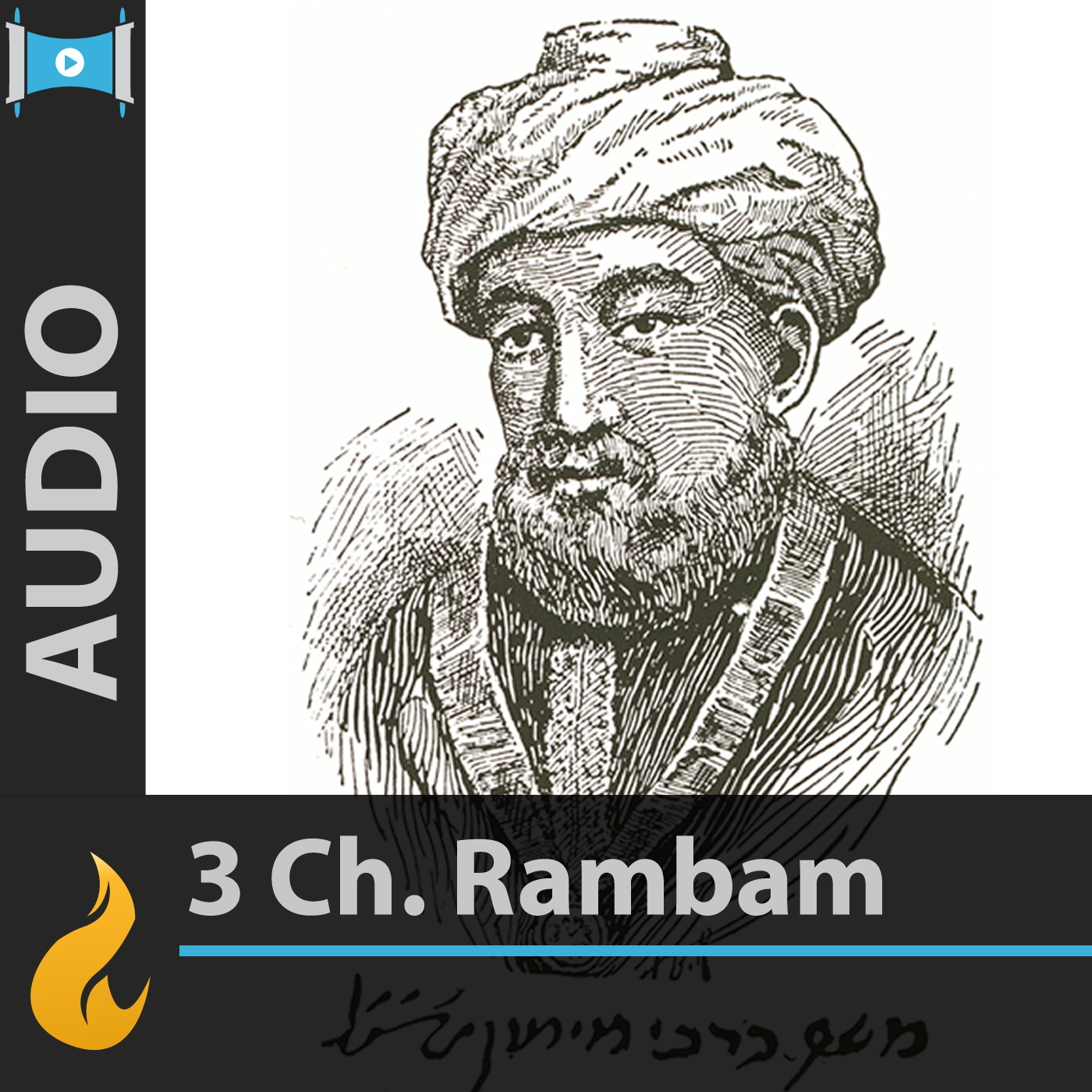
Rambam - 3 Chapters a Day
by Chabad.org: SIE Rambam
The Mishneh Torah was the Rambam's (Rabbi Moses ben Maimon) magnum opus, a work spanning hundreds of chapters and describing all of the laws mentioned in the Torah. To this day it is the only work that details all of Jewish observance, including those laws which are only applicable when the Holy Temple is in place. Participating in one of the annual study cycles of these laws (3 chapters/day, 1 chapter/day, or Sefer Hamitzvot) is a way we can play a small but essential part in rebuilding the final Temple.
-
63
5th Perek: Laws of Shechitah
The Mishneh Torah was the Rambam's (Rabbi Moses ben Maimon) magnum opus, a work spanning hundreds of chapters and describing all of the laws mentioned in the Torah. To this day it is the only work that details all of Jewish observance, including those laws which are only applicable when the Holy Temple is in place. Participating in one of the annual study cycles of these laws (3 chapters/day, 1 chapter/day, or Sefer Hamitzvot) is a way we can play a small but essential part in rebuilding the final Temple.
-
62
4th Perek: Laws of Shechitah
The Mishneh Torah was the Rambam's (Rabbi Moses ben Maimon) magnum opus, a work spanning hundreds of chapters and describing all of the laws mentioned in the Torah. To this day it is the only work that details all of Jewish observance, including those laws which are only applicable when the Holy Temple is in place. Participating in one of the annual study cycles of these laws (3 chapters/day, 1 chapter/day, or Sefer Hamitzvot) is a way we can play a small but essential part in rebuilding the final Temple.
-
61
3rd Perek: Laws of Shechitah
The Mishneh Torah was the Rambam's (Rabbi Moses ben Maimon) magnum opus, a work spanning hundreds of chapters and describing all of the laws mentioned in the Torah. To this day it is the only work that details all of Jewish observance, including those laws which are only applicable when the Holy Temple is in place. Participating in one of the annual study cycles of these laws (3 chapters/day, 1 chapter/day, or Sefer Hamitzvot) is a way we can play a small but essential part in rebuilding the final Temple.
-
60
2nd Perek: Laws of Shechitah
The Mishneh Torah was the Rambam's (Rabbi Moses ben Maimon) magnum opus, a work spanning hundreds of chapters and describing all of the laws mentioned in the Torah. To this day it is the only work that details all of Jewish observance, including those laws which are only applicable when the Holy Temple is in place. Participating in one of the annual study cycles of these laws (3 chapters/day, 1 chapter/day, or Sefer Hamitzvot) is a way we can play a small but essential part in rebuilding the final Temple.
-
59
1st Perek: Laws of Shechitah
The Mishneh Torah was the Rambam's (Rabbi Moses ben Maimon) magnum opus, a work spanning hundreds of chapters and describing all of the laws mentioned in the Torah. To this day it is the only work that details all of Jewish observance, including those laws which are only applicable when the Holy Temple is in place. Participating in one of the annual study cycles of these laws (3 chapters/day, 1 chapter/day, or Sefer Hamitzvot) is a way we can play a small but essential part in rebuilding the final Temple.
-
58
17th Perek: Laws of forbidden foods
The Mishneh Torah was the Rambam's (Rabbi Moses ben Maimon) magnum opus, a work spanning hundreds of chapters and describing all of the laws mentioned in the Torah. To this day it is the only work that details all of Jewish observance, including those laws which are only applicable when the Holy Temple is in place. Participating in one of the annual study cycles of these laws (3 chapters/day, 1 chapter/day, or Sefer Hamitzvot) is a way we can play a small but essential part in rebuilding the final Temple.
-
57
16th Perek: Laws of forbidden foods
The Mishneh Torah was the Rambam's (Rabbi Moses ben Maimon) magnum opus, a work spanning hundreds of chapters and describing all of the laws mentioned in the Torah. To this day it is the only work that details all of Jewish observance, including those laws which are only applicable when the Holy Temple is in place. Participating in one of the annual study cycles of these laws (3 chapters/day, 1 chapter/day, or Sefer Hamitzvot) is a way we can play a small but essential part in rebuilding the final Temple.
-
56
15th Perek: Laws of forbidden foods
The Mishneh Torah was the Rambam's (Rabbi Moses ben Maimon) magnum opus, a work spanning hundreds of chapters and describing all of the laws mentioned in the Torah. To this day it is the only work that details all of Jewish observance, including those laws which are only applicable when the Holy Temple is in place. Participating in one of the annual study cycles of these laws (3 chapters/day, 1 chapter/day, or Sefer Hamitzvot) is a way we can play a small but essential part in rebuilding the final Temple.
-
55
14th Perek: Laws of forbidden foods
The Mishneh Torah was the Rambam's (Rabbi Moses ben Maimon) magnum opus, a work spanning hundreds of chapters and describing all of the laws mentioned in the Torah. To this day it is the only work that details all of Jewish observance, including those laws which are only applicable when the Holy Temple is in place. Participating in one of the annual study cycles of these laws (3 chapters/day, 1 chapter/day, or Sefer Hamitzvot) is a way we can play a small but essential part in rebuilding the final Temple.
-
54
13th Perek: Laws of forbidden foods
The Mishneh Torah was the Rambam's (Rabbi Moses ben Maimon) magnum opus, a work spanning hundreds of chapters and describing all of the laws mentioned in the Torah. To this day it is the only work that details all of Jewish observance, including those laws which are only applicable when the Holy Temple is in place. Participating in one of the annual study cycles of these laws (3 chapters/day, 1 chapter/day, or Sefer Hamitzvot) is a way we can play a small but essential part in rebuilding the final Temple.
-
53
12th Perek: Laws of forbidden foods
The Mishneh Torah was the Rambam's (Rabbi Moses ben Maimon) magnum opus, a work spanning hundreds of chapters and describing all of the laws mentioned in the Torah. To this day it is the only work that details all of Jewish observance, including those laws which are only applicable when the Holy Temple is in place. Participating in one of the annual study cycles of these laws (3 chapters/day, 1 chapter/day, or Sefer Hamitzvot) is a way we can play a small but essential part in rebuilding the final Temple.
-
52
11th Perek: Laws of forbidden foods
The Mishneh Torah was the Rambam's (Rabbi Moses ben Maimon) magnum opus, a work spanning hundreds of chapters and describing all of the laws mentioned in the Torah. To this day it is the only work that details all of Jewish observance, including those laws which are only applicable when the Holy Temple is in place. Participating in one of the annual study cycles of these laws (3 chapters/day, 1 chapter/day, or Sefer Hamitzvot) is a way we can play a small but essential part in rebuilding the final Temple.
-
51
10th Perek: Laws of forbidden foods
The Mishneh Torah was the Rambam's (Rabbi Moses ben Maimon) magnum opus, a work spanning hundreds of chapters and describing all of the laws mentioned in the Torah. To this day it is the only work that details all of Jewish observance, including those laws which are only applicable when the Holy Temple is in place. Participating in one of the annual study cycles of these laws (3 chapters/day, 1 chapter/day, or Sefer Hamitzvot) is a way we can play a small but essential part in rebuilding the final Temple.
-
50
9th Perek: Laws of forbidden foods
The Mishneh Torah was the Rambam's (Rabbi Moses ben Maimon) magnum opus, a work spanning hundreds of chapters and describing all of the laws mentioned in the Torah. To this day it is the only work that details all of Jewish observance, including those laws which are only applicable when the Holy Temple is in place. Participating in one of the annual study cycles of these laws (3 chapters/day, 1 chapter/day, or Sefer Hamitzvot) is a way we can play a small but essential part in rebuilding the final Temple.
-
49
8th Perek: Laws of forbidden foods
The Mishneh Torah was the Rambam's (Rabbi Moses ben Maimon) magnum opus, a work spanning hundreds of chapters and describing all of the laws mentioned in the Torah. To this day it is the only work that details all of Jewish observance, including those laws which are only applicable when the Holy Temple is in place. Participating in one of the annual study cycles of these laws (3 chapters/day, 1 chapter/day, or Sefer Hamitzvot) is a way we can play a small but essential part in rebuilding the final Temple.
-
48
7th Perek: Laws of forbidden foods
The Mishneh Torah was the Rambam's (Rabbi Moses ben Maimon) magnum opus, a work spanning hundreds of chapters and describing all of the laws mentioned in the Torah. To this day it is the only work that details all of Jewish observance, including those laws which are only applicable when the Holy Temple is in place. Participating in one of the annual study cycles of these laws (3 chapters/day, 1 chapter/day, or Sefer Hamitzvot) is a way we can play a small but essential part in rebuilding the final Temple.
-
47
6th Perek: Laws of forbidden foods
The Mishneh Torah was the Rambam's (Rabbi Moses ben Maimon) magnum opus, a work spanning hundreds of chapters and describing all of the laws mentioned in the Torah. To this day it is the only work that details all of Jewish observance, including those laws which are only applicable when the Holy Temple is in place. Participating in one of the annual study cycles of these laws (3 chapters/day, 1 chapter/day, or Sefer Hamitzvot) is a way we can play a small but essential part in rebuilding the final Temple.
-
46
5th Perek: Laws of forbidden foods
The Mishneh Torah was the Rambam's (Rabbi Moses ben Maimon) magnum opus, a work spanning hundreds of chapters and describing all of the laws mentioned in the Torah. To this day it is the only work that details all of Jewish observance, including those laws which are only applicable when the Holy Temple is in place. Participating in one of the annual study cycles of these laws (3 chapters/day, 1 chapter/day, or Sefer Hamitzvot) is a way we can play a small but essential part in rebuilding the final Temple.
-
45
4th Perek: Laws of forbidden foods
The Mishneh Torah was the Rambam's (Rabbi Moses ben Maimon) magnum opus, a work spanning hundreds of chapters and describing all of the laws mentioned in the Torah. To this day it is the only work that details all of Jewish observance, including those laws which are only applicable when the Holy Temple is in place. Participating in one of the annual study cycles of these laws (3 chapters/day, 1 chapter/day, or Sefer Hamitzvot) is a way we can play a small but essential part in rebuilding the final Temple.
-
44
3rd Perek: Laws of forbidden foods
The Mishneh Torah was the Rambam's (Rabbi Moses ben Maimon) magnum opus, a work spanning hundreds of chapters and describing all of the laws mentioned in the Torah. To this day it is the only work that details all of Jewish observance, including those laws which are only applicable when the Holy Temple is in place. Participating in one of the annual study cycles of these laws (3 chapters/day, 1 chapter/day, or Sefer Hamitzvot) is a way we can play a small but essential part in rebuilding the final Temple.
-
43
2nd Perek: Laws of forbidden foods
The Mishneh Torah was the Rambam's (Rabbi Moses ben Maimon) magnum opus, a work spanning hundreds of chapters and describing all of the laws mentioned in the Torah. To this day it is the only work that details all of Jewish observance, including those laws which are only applicable when the Holy Temple is in place. Participating in one of the annual study cycles of these laws (3 chapters/day, 1 chapter/day, or Sefer Hamitzvot) is a way we can play a small but essential part in rebuilding the final Temple.
-
42
1st Perek: Laws of forbidden foods
The Mishneh Torah was the Rambam's (Rabbi Moses ben Maimon) magnum opus, a work spanning hundreds of chapters and describing all of the laws mentioned in the Torah. To this day it is the only work that details all of Jewish observance, including those laws which are only applicable when the Holy Temple is in place. Participating in one of the annual study cycles of these laws (3 chapters/day, 1 chapter/day, or Sefer Hamitzvot) is a way we can play a small but essential part in rebuilding the final Temple.
-
41
22nd Perek: Laws of forbidden relations
The Mishneh Torah was the Rambam's (Rabbi Moses ben Maimon) magnum opus, a work spanning hundreds of chapters and describing all of the laws mentioned in the Torah. To this day it is the only work that details all of Jewish observance, including those laws which are only applicable when the Holy Temple is in place. Participating in one of the annual study cycles of these laws (3 chapters/day, 1 chapter/day, or Sefer Hamitzvot) is a way we can play a small but essential part in rebuilding the final Temple.
-
40
21st Perek: Laws of forbidden relations
The Mishneh Torah was the Rambam's (Rabbi Moses ben Maimon) magnum opus, a work spanning hundreds of chapters and describing all of the laws mentioned in the Torah. To this day it is the only work that details all of Jewish observance, including those laws which are only applicable when the Holy Temple is in place. Participating in one of the annual study cycles of these laws (3 chapters/day, 1 chapter/day, or Sefer Hamitzvot) is a way we can play a small but essential part in rebuilding the final Temple.
-
39
20th Perek: Laws of forbidden relations
The Mishneh Torah was the Rambam's (Rabbi Moses ben Maimon) magnum opus, a work spanning hundreds of chapters and describing all of the laws mentioned in the Torah. To this day it is the only work that details all of Jewish observance, including those laws which are only applicable when the Holy Temple is in place. Participating in one of the annual study cycles of these laws (3 chapters/day, 1 chapter/day, or Sefer Hamitzvot) is a way we can play a small but essential part in rebuilding the final Temple.
-
38
19th Perek: Laws of forbidden relations
The Mishneh Torah was the Rambam's (Rabbi Moses ben Maimon) magnum opus, a work spanning hundreds of chapters and describing all of the laws mentioned in the Torah. To this day it is the only work that details all of Jewish observance, including those laws which are only applicable when the Holy Temple is in place. Participating in one of the annual study cycles of these laws (3 chapters/day, 1 chapter/day, or Sefer Hamitzvot) is a way we can play a small but essential part in rebuilding the final Temple.
-
37
18th Perek: Laws of forbidden relations
The Mishneh Torah was the Rambam's (Rabbi Moses ben Maimon) magnum opus, a work spanning hundreds of chapters and describing all of the laws mentioned in the Torah. To this day it is the only work that details all of Jewish observance, including those laws which are only applicable when the Holy Temple is in place. Participating in one of the annual study cycles of these laws (3 chapters/day, 1 chapter/day, or Sefer Hamitzvot) is a way we can play a small but essential part in rebuilding the final Temple.
-
36
17th Perek: Laws of forbidden relations
The Mishneh Torah was the Rambam's (Rabbi Moses ben Maimon) magnum opus, a work spanning hundreds of chapters and describing all of the laws mentioned in the Torah. To this day it is the only work that details all of Jewish observance, including those laws which are only applicable when the Holy Temple is in place. Participating in one of the annual study cycles of these laws (3 chapters/day, 1 chapter/day, or Sefer Hamitzvot) is a way we can play a small but essential part in rebuilding the final Temple.
-
35
16th Perek: Laws of forbidden relations
The Mishneh Torah was the Rambam's (Rabbi Moses ben Maimon) magnum opus, a work spanning hundreds of chapters and describing all of the laws mentioned in the Torah. To this day it is the only work that details all of Jewish observance, including those laws which are only applicable when the Holy Temple is in place. Participating in one of the annual study cycles of these laws (3 chapters/day, 1 chapter/day, or Sefer Hamitzvot) is a way we can play a small but essential part in rebuilding the final Temple.
-
34
15th Perek: Laws of forbidden relations
The Mishneh Torah was the Rambam's (Rabbi Moses ben Maimon) magnum opus, a work spanning hundreds of chapters and describing all of the laws mentioned in the Torah. To this day it is the only work that details all of Jewish observance, including those laws which are only applicable when the Holy Temple is in place. Participating in one of the annual study cycles of these laws (3 chapters/day, 1 chapter/day, or Sefer Hamitzvot) is a way we can play a small but essential part in rebuilding the final Temple.
-
33
14th Perek: Laws of forbidden relations
The Mishneh Torah was the Rambam's (Rabbi Moses ben Maimon) magnum opus, a work spanning hundreds of chapters and describing all of the laws mentioned in the Torah. To this day it is the only work that details all of Jewish observance, including those laws which are only applicable when the Holy Temple is in place. Participating in one of the annual study cycles of these laws (3 chapters/day, 1 chapter/day, or Sefer Hamitzvot) is a way we can play a small but essential part in rebuilding the final Temple.
-
32
13th Perek: Laws of forbidden relations
The Mishneh Torah was the Rambam's (Rabbi Moses ben Maimon) magnum opus, a work spanning hundreds of chapters and describing all of the laws mentioned in the Torah. To this day it is the only work that details all of Jewish observance, including those laws which are only applicable when the Holy Temple is in place. Participating in one of the annual study cycles of these laws (3 chapters/day, 1 chapter/day, or Sefer Hamitzvot) is a way we can play a small but essential part in rebuilding the final Temple.
-
31
12th Perek: Laws of forbidden relations
The Mishneh Torah was the Rambam's (Rabbi Moses ben Maimon) magnum opus, a work spanning hundreds of chapters and describing all of the laws mentioned in the Torah. To this day it is the only work that details all of Jewish observance, including those laws which are only applicable when the Holy Temple is in place. Participating in one of the annual study cycles of these laws (3 chapters/day, 1 chapter/day, or Sefer Hamitzvot) is a way we can play a small but essential part in rebuilding the final Temple.
-
30
11th Perek: Laws of forbidden relations
The Mishneh Torah was the Rambam's (Rabbi Moses ben Maimon) magnum opus, a work spanning hundreds of chapters and describing all of the laws mentioned in the Torah. To this day it is the only work that details all of Jewish observance, including those laws which are only applicable when the Holy Temple is in place. Participating in one of the annual study cycles of these laws (3 chapters/day, 1 chapter/day, or Sefer Hamitzvot) is a way we can play a small but essential part in rebuilding the final Temple.
-
29
10th Perek: Laws of forbidden relations
The Mishneh Torah was the Rambam's (Rabbi Moses ben Maimon) magnum opus, a work spanning hundreds of chapters and describing all of the laws mentioned in the Torah. To this day it is the only work that details all of Jewish observance, including those laws which are only applicable when the Holy Temple is in place. Participating in one of the annual study cycles of these laws (3 chapters/day, 1 chapter/day, or Sefer Hamitzvot) is a way we can play a small but essential part in rebuilding the final Temple.
-
28
9th Perek: Laws of forbidden relations
The Mishneh Torah was the Rambam's (Rabbi Moses ben Maimon) magnum opus, a work spanning hundreds of chapters and describing all of the laws mentioned in the Torah. To this day it is the only work that details all of Jewish observance, including those laws which are only applicable when the Holy Temple is in place. Participating in one of the annual study cycles of these laws (3 chapters/day, 1 chapter/day, or Sefer Hamitzvot) is a way we can play a small but essential part in rebuilding the final Temple.
-
27
8th Perek: Laws of forbidden relations
The Mishneh Torah was the Rambam's (Rabbi Moses ben Maimon) magnum opus, a work spanning hundreds of chapters and describing all of the laws mentioned in the Torah. To this day it is the only work that details all of Jewish observance, including those laws which are only applicable when the Holy Temple is in place. Participating in one of the annual study cycles of these laws (3 chapters/day, 1 chapter/day, or Sefer Hamitzvot) is a way we can play a small but essential part in rebuilding the final Temple.
-
26
7th Perek: Laws of forbidden relations
The Mishneh Torah was the Rambam's (Rabbi Moses ben Maimon) magnum opus, a work spanning hundreds of chapters and describing all of the laws mentioned in the Torah. To this day it is the only work that details all of Jewish observance, including those laws which are only applicable when the Holy Temple is in place. Participating in one of the annual study cycles of these laws (3 chapters/day, 1 chapter/day, or Sefer Hamitzvot) is a way we can play a small but essential part in rebuilding the final Temple.
-
25
6th Perek: Laws of forbidden relations
The Mishneh Torah was the Rambam's (Rabbi Moses ben Maimon) magnum opus, a work spanning hundreds of chapters and describing all of the laws mentioned in the Torah. To this day it is the only work that details all of Jewish observance, including those laws which are only applicable when the Holy Temple is in place. Participating in one of the annual study cycles of these laws (3 chapters/day, 1 chapter/day, or Sefer Hamitzvot) is a way we can play a small but essential part in rebuilding the final Temple.
-
24
5th Perek: Laws of forbidden relations
The Mishneh Torah was the Rambam's (Rabbi Moses ben Maimon) magnum opus, a work spanning hundreds of chapters and describing all of the laws mentioned in the Torah. To this day it is the only work that details all of Jewish observance, including those laws which are only applicable when the Holy Temple is in place. Participating in one of the annual study cycles of these laws (3 chapters/day, 1 chapter/day, or Sefer Hamitzvot) is a way we can play a small but essential part in rebuilding the final Temple.
-
23
4th Perek: Laws of forbidden relations
The Mishneh Torah was the Rambam's (Rabbi Moses ben Maimon) magnum opus, a work spanning hundreds of chapters and describing all of the laws mentioned in the Torah. To this day it is the only work that details all of Jewish observance, including those laws which are only applicable when the Holy Temple is in place. Participating in one of the annual study cycles of these laws (3 chapters/day, 1 chapter/day, or Sefer Hamitzvot) is a way we can play a small but essential part in rebuilding the final Temple.
-
22
3rd Perek: Laws of forbidden relations
The Mishneh Torah was the Rambam's (Rabbi Moses ben Maimon) magnum opus, a work spanning hundreds of chapters and describing all of the laws mentioned in the Torah. To this day it is the only work that details all of Jewish observance, including those laws which are only applicable when the Holy Temple is in place. Participating in one of the annual study cycles of these laws (3 chapters/day, 1 chapter/day, or Sefer Hamitzvot) is a way we can play a small but essential part in rebuilding the final Temple.
-
21
2nd Perek: Laws of forbidden relations
The Mishneh Torah was the Rambam's (Rabbi Moses ben Maimon) magnum opus, a work spanning hundreds of chapters and describing all of the laws mentioned in the Torah. To this day it is the only work that details all of Jewish observance, including those laws which are only applicable when the Holy Temple is in place. Participating in one of the annual study cycles of these laws (3 chapters/day, 1 chapter/day, or Sefer Hamitzvot) is a way we can play a small but essential part in rebuilding the final Temple.
-
20
1st Perek: Laws of forbidden relations
The Mishneh Torah was the Rambam's (Rabbi Moses ben Maimon) magnum opus, a work spanning hundreds of chapters and describing all of the laws mentioned in the Torah. To this day it is the only work that details all of Jewish observance, including those laws which are only applicable when the Holy Temple is in place. Participating in one of the annual study cycles of these laws (3 chapters/day, 1 chapter/day, or Sefer Hamitzvot) is a way we can play a small but essential part in rebuilding the final Temple.
-
19
4th Perek: Laws of Sotah
The Mishneh Torah was the Rambam's (Rabbi Moses ben Maimon) magnum opus, a work spanning hundreds of chapters and describing all of the laws mentioned in the Torah. To this day it is the only work that details all of Jewish observance, including those laws which are only applicable when the Holy Temple is in place. Participating in one of the annual study cycles of these laws (3 chapters/day, 1 chapter/day, or Sefer Hamitzvot) is a way we can play a small but essential part in rebuilding the final Temple.
-
18
3rd Perek: Laws of Sotah
The Mishneh Torah was the Rambam's (Rabbi Moses ben Maimon) magnum opus, a work spanning hundreds of chapters and describing all of the laws mentioned in the Torah. To this day it is the only work that details all of Jewish observance, including those laws which are only applicable when the Holy Temple is in place. Participating in one of the annual study cycles of these laws (3 chapters/day, 1 chapter/day, or Sefer Hamitzvot) is a way we can play a small but essential part in rebuilding the final Temple.
-
17
2nd Perek: Laws of Sotah
The Mishneh Torah was the Rambam's (Rabbi Moses ben Maimon) magnum opus, a work spanning hundreds of chapters and describing all of the laws mentioned in the Torah. To this day it is the only work that details all of Jewish observance, including those laws which are only applicable when the Holy Temple is in place. Participating in one of the annual study cycles of these laws (3 chapters/day, 1 chapter/day, or Sefer Hamitzvot) is a way we can play a small but essential part in rebuilding the final Temple.
-
16
1st Perek: Laws of Sotah
The Mishneh Torah was the Rambam's (Rabbi Moses ben Maimon) magnum opus, a work spanning hundreds of chapters and describing all of the laws mentioned in the Torah. To this day it is the only work that details all of Jewish observance, including those laws which are only applicable when the Holy Temple is in place. Participating in one of the annual study cycles of these laws (3 chapters/day, 1 chapter/day, or Sefer Hamitzvot) is a way we can play a small but essential part in rebuilding the final Temple.
-
15
3rd Perek: Laws of Naaroh, Besulah
The Mishneh Torah was the Rambam's (Rabbi Moses ben Maimon) magnum opus, a work spanning hundreds of chapters and describing all of the laws mentioned in the Torah. To this day it is the only work that details all of Jewish observance, including those laws which are only applicable when the Holy Temple is in place. Participating in one of the annual study cycles of these laws (3 chapters/day, 1 chapter/day, or Sefer Hamitzvot) is a way we can play a small but essential part in rebuilding the final Temple.
-
14
2nd Perek: Laws of Naaroh, Besulah
The Mishneh Torah was the Rambam's (Rabbi Moses ben Maimon) magnum opus, a work spanning hundreds of chapters and describing all of the laws mentioned in the Torah. To this day it is the only work that details all of Jewish observance, including those laws which are only applicable when the Holy Temple is in place. Participating in one of the annual study cycles of these laws (3 chapters/day, 1 chapter/day, or Sefer Hamitzvot) is a way we can play a small but essential part in rebuilding the final Temple.
No matches for "" in this podcast's transcripts.
No topics indexed yet for this podcast.
Loading reviews...
ABOUT THIS SHOW
The Mishneh Torah was the Rambam's (Rabbi Moses ben Maimon) magnum opus, a work spanning hundreds of chapters and describing all of the laws mentioned in the Torah. To this day it is the only work that details all of Jewish observance, including those laws which are only applicable when the Holy Temple is in place. Participating in one of the annual study cycles of these laws (3 chapters/day, 1 chapter/day, or Sefer Hamitzvot) is a way we can play a small but essential part in rebuilding the final Temple.
HOSTED BY
Chabad.org: SIE Rambam
CATEGORIES
Loading similar podcasts...
URL copied to clipboard!