
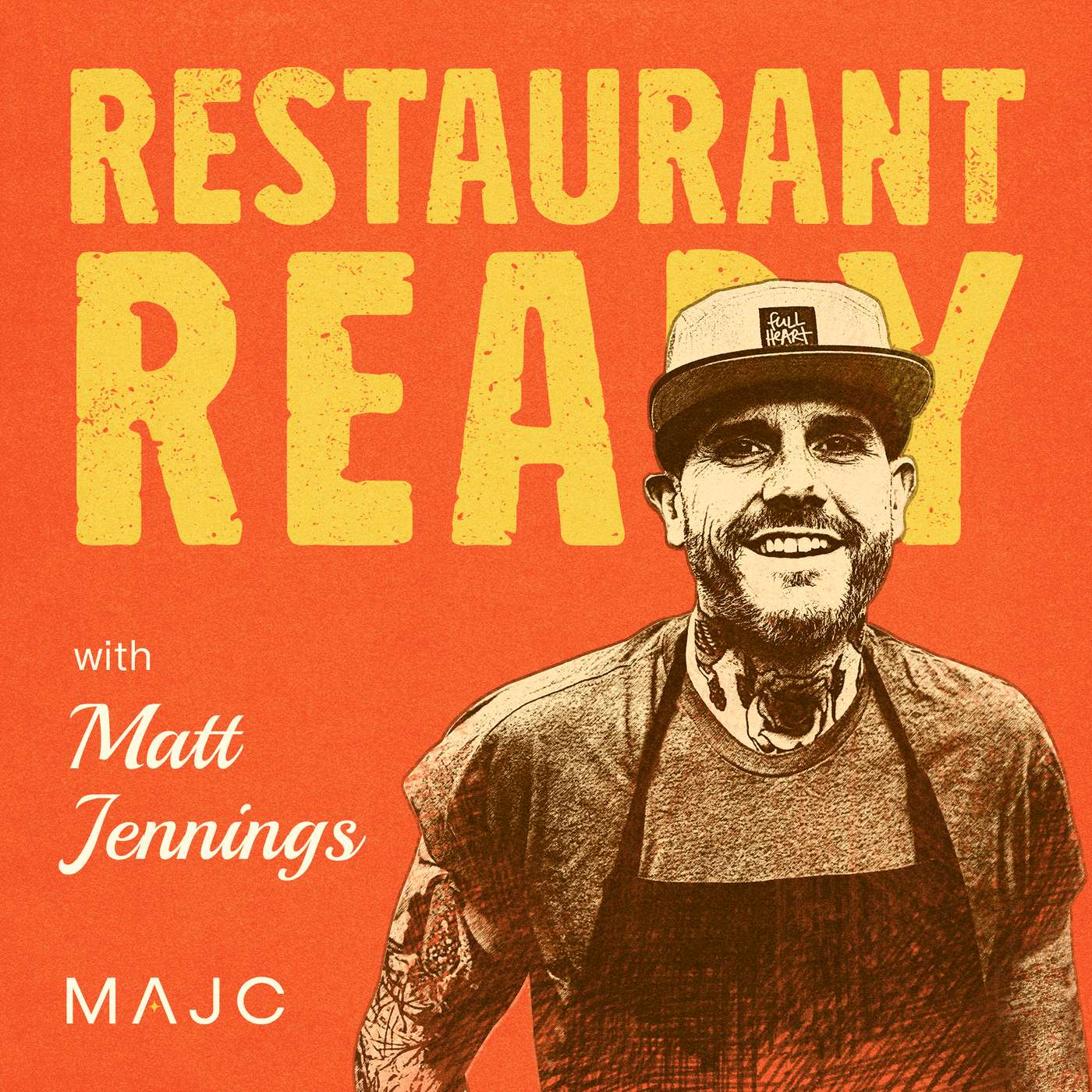
PODCAST · business
Restaurant Ready
by Matt Jennings
RESTAURANT READY: THE BLUEPRINT FOR SUCCESS IN THE HOSPITALITY INDUSTRYRestaurant Ready is your backstage pass to the inner workings of the hospitality industry’s brightest stars. This podcast promises authentic discussions with the most influential chefs, restaurateurs, and food media experts. Award-winning chef, restaurateur, and cookbook author Matt Jennings, along with the MAJC team, helm this weekly podcast.In each episode, industry veterans sit down for candid conversations revealing the honest stories behind their achievements, exploring the strategies, philosophies, and lessons learned along the way that shaped their path to success. Learn from the guests’ unique formula for creating consistent positive results in their business and personal lives.Restaurant Ready delivers unparalleled value for restaurant owners, chefs, and managers looking to elevate their careers and businesses.Listen in for a unique, no-holds-barred exploration of what it takes to thrive in the compet
-
62
Sarah King on Why Great Restaurants Are Built by Great Managers
Sarah King is the Chief People Officer at Darden Restaurants and an advisory board member at MAJC✨. Over the course of a decades-long career across restaurants, hotels, and resorts, she has focused on one central question: how do you build leaders who can create cultures where people actually want to stay? In this episode, Sarah breaks down why bad managers drive turnover more than bad companies, how compassion and accountability can coexist, and what operators can do right now to build stronger teams, reduce burnout, and create workplaces where excellence is sustainable.TakeawaysPeople do not leave bad companies as often as they leave bad managersLeadership quality shapes culture before numbers reveal the damageConnection, authenticity, and compassion are core leadership skillsCommand and control leadership no longer worksExcellence and empathy are not in conflictClear expectations and regular feedback build stronger teamsDiscretionary effort comes from feeling valued and supportedFavoritism destroys trust faster than most operators realizeHigh performers leave when mediocrity is toleratedCulture is a set of repeated behaviors, not a sloganStrong schedules should reflect team strengths and real life needsBurnout costs more than hiring the extra support you needKindness is not weakness, it is a leadership toolTechnology should remove friction so leaders can focus on peopleTraining is one of the clearest ways to reduce early turnoverThe future belongs to operators who act like talent architectsWant to connect directly with industry thought leaders like today’s guest?MAJC✨ has built a community of hospitality professionals, where insights and tools help drive sustainable, profitable businesses. To get early access to the MAJC✨ community, sign up at www.MAJC.ai.
-
61
-
60
James Avery on Why Restaurants Can’t Run on Yesterday’s Wisdom
James Avery is a chef, restaurateur, consultant, and founder of Nicely Done Hospitality Group and The Modern Brigade. After more than two decades in high-performance kitchens, opening and operating his own restaurants, and working alongside major names like David Burke, Michael Mina, and Gordon Ramsay, James now helps operators build businesses that are leaner, clearer, and more sustainable.In this episode, he shares why too many restaurants are still trying to run on outdated models, how discipline and systems create consistency, and why the future of the industry depends on better business thinking, healthier leadership, and teams that actually communicate.TakeawaysToo many restaurants are still trying to operate with outdated modelsYou cannot be everything to everyone and still stay sharpConsistency comes from systems, not just talentCleanliness and organization reveal the true state of an operationManagers need to understand their real job, not just survive serviceUrgency is not the same thing as emergencyDiscipline matters more than raw skill over the long termRestaurants need fewer hours, tighter menus, and better labor designChefs must understand contribution margin, not just food costFinancial literacy should be part of chef developmentOwners need to share information instead of hoarding itStrong teams come from communication and clarityOperators should stop glorifying burnout as commitmentFitness supports longevity, energy, and leadership presenceThe best operators build systems that let others make decisionsYesterday’s wisdom is not enough for today’s restaurant realityWant to connect directly with industry thought leaders like today’s guest?MAJC✨ has built a community of hospitality professionals, where insights and tools help drive sustainable, profitable businesses. To get early access to the MAJC✨ community, sign up at www.MAJC.ai.
-
59
Alon Shaya on When Culture Becomes the Team’s Responsibility
Alon Shaya is a James Beard Award-winning chef and restaurateur based in New Orleans, where he and his wife Emily lead Pomegranate Hospitality. After realizing that awards, acclaim, and full dining rooms could not compensate for a workplace that did not align with his values, Alon set out to build something different.In this episode, he shares how Pomegranate Hospitality was intentionally designed around mutual respect, psychological safety, and empowerment, why culture must be protected long before expansion begins, and how leadership means creating an environment where people feel both fulfilled and accountable. TakeawaysCore values must come before design, seats, and scaleA safe work environment requires systems, not just good intentionsCulture is not a box you check, it is daily workThe wrong manager can destabilize an entire restaurantTurnover can be the cost of protecting your valuesTeams become stronger when they are empowered to defend the cultureRespect must extend to how guests are managed, not just staffGrowth only works when bench strength already existsEmpowerment has to be built before expansion startsNot every team member wants growth, and that is okayPartnerships should support your life, not consume itA profitable opportunity is not always the right opportunityLeadership requires boundaries, clarity, and coachingFairness matters more than forcing equalityPsychological safety is often broken by small behaviors before big onesThe scenic route can build the strongest companyFood can be a tool for memory, healing, and historical connectionWant to connect directly with industry thought leaders like today’s guest?MAJC✨ has built a community of hospitality professionals, where insights and tools help drive sustainable, profitable businesses. To get early access to the MAJC✨ community, sign up at www.MAJC.ai.
-
58
John McDonald on Why Busy Restaurants Still Barely Make Money
John McDonald is the founder and CEO of Mercer Street Hospitality and one of downtown New York’s most seasoned restaurant operators. Over three decades, he has helped shape the city’s dining culture through concepts spanning nightlife, fine dining, neighborhood restaurants, and digital media. In this episode, he reflects on what it really takes to build longevity in hospitality, why consistency matters more than constant reinvention, and how shrinking margins have made restaurant success look far easier from the outside than it feels from the inside. TakeawaysConsistency is harder than creativity and more valuable in the long runA great server or bartender can be the reason a guest returnsThe best work is not always the most commercially successfulNot every expansion opportunity is worth takingScaling too fast can poison the businesses that already workCorporate infrastructure becomes its own business once you growRestaurants today face much smaller margins than they did a generation agoA restaurant that looks busy may still only be breaking evenOperators need strong HR systems before problems ariseCustomers want better treatment of workers but often resist the prices that support itGreat restaurants improve constantly without feeling different to the guestMomentum can hide mistakes, but only for a whileLongevity depends on staying relevant without losing your identityPassion may get you into the business, but discipline keeps you thereWant to connect directly with industry thought leaders like today’s guest?MAJC✨ has built a community of hospitality professionals, where insights and tools help drive sustainable, profitable businesses. To get early access to the MAJC✨ community, sign up at www.MAJC.ai.
-
57
Maneet Chauhan on Why Ego Is the Enemy of Great Leadership
Maneet Chauhan is an award-winning chef, restaurateur, author, television personality, and founding partner of Morph Hospitality Group in Nashville and Orlando. A longtime judge on Food Network’s Chopped and a two-time Tournament of Champions winner, Chauhan balances national visibility with the daily responsibility of running restaurants that sustain real households. In this episode, she shares why every restaurant must stand on its own financially, how stepping back can strengthen leadership, and why the greatest skill an operator can develop is humanity. TakeawaysIf you will not wash dishes when needed, do not expect others to eitherScaling requires trusting your team to execute your visionDo not drain a profitable business to prop up a struggling oneApproach restaurants as businesses, not only passion projects aloneDo your homework and know your numbers before openingSurround yourself with people who understand financeStep away before stress turns into damageNothing in a restaurant is life or deathGrace under pressure builds stronger cultureProtect your humanity as fiercely as your brandService excellence outlasts food trendsBuild systems that can be repeated and improve those that cannotUse technology to enhance efficiencyWant to connect directly with industry thought leaders like today’s guest?MAJC✨ has built a community of hospitality professionals, where insights and tools help drive sustainable, profitable businesses. To get early access to the MAJC✨ community, sign up at www.MAJC.ai.
-
56
Matt Jozwiak on Why Restaurants Are an Economic Engine for Communities
Matt Jozwiak is the founder of Rethink Food, a chef-led nonprofit building a more sustainable and equitable food system by paying restaurants to cook for their communities. After training in some of the world’s most demanding kitchens, Jozwiak stepped away from the line to solve a problem he saw up close: community centers struggling to feed people while restaurants were underutilized and under-respected. In this episode, he breaks down why restaurants should be funded partners in food security, not unpaid stopgaps, and why the industry’s greatest asset is the intelligence and grit of its people. TakeawaysRestaurants are infrastructure, not just places to eatCharity without compensation can close the very businesses trying to helpPaying restaurants for community meals strengthens local economiesRetention in restaurants is a business strategy, not a luxuryTurnover is more expensive than incremental wage growthRestaurants operate with skill sets most corporate leaders underestimateSimplification beats complexity in both kitchens and officesGhost kitchens often ignore administrative and training realitiesPolicy should empower small operators, not just large distributorsTax credits can create systemic change beyond emergency grantsRestaurants are often exploited as community hubs without protectionFocus on building a strong business before trying to help outsideRestaurant experience is one of the best educations in leadershipWant to connect directly with industry thought leaders like today’s guest?MAJC✨ has built a community of hospitality professionals, where insights and tools help drive sustainable, profitable businesses. To get early access to the MAJC✨ community, sign up at www.MAJC.ai.
-
55
Stephen Sawitz on Why Consistency Is Harder Than Innovation
Stephen Sawitz is the fourth-generation leader and CEO of Joe’s Stone Crab, the iconic Miami Beach restaurant founded in 1913. Raised in the kitchen from the age of eight, he has spent a lifetime inside one of the most operationally demanding restaurants in America. In this episode, Sawitz shares how generational loyalty is built through relentless consistency, why culture must begin in the heart and extend into accountability, and how long-term thinking, sober leadership, and disciplined hiring practices protect a legacy that spans more than a century. TakeawaysConsistency is simple in theory and brutally hard in practiceGenerational customers are earned through generational employeesMother Nature forces operators to adapt without lowering standardsCulture must combine accountability with graceA sober kitchen strengthens clarity and leadershipHuman resources and labor counsel are preventative tools, not reactive onesInternal promotion builds deeper loyalty than external hiring aloneInterviewing requires structure, patience, and diverse evaluatorsFeed and respect candidates during the hiring processStandards should be clear before day oneRestaurants cannot be run remotelyBlackout periods and expectations must be communicated upfrontHospitality markets boom when geography, policy, and culture alignLong-term thinking outperforms short-term gainsDoing the right thing matters more than simply doing things rightThe slow nickel is better than the fast dimeWant to connect directly with industry thought leaders like today’s guest?MAJC✨ has built a community of hospitality professionals, where insights and tools help drive sustainable, profitable businesses. To get early access to the MAJC✨ community, sign up at www.MAJC.ai.
-
54
Demetri Tsolakis on Why Hospitality Starts With Your Team
Demetri Tsolakis is a Boston-based restaurateur behind a growing portfolio of Greek concepts including Krasi, Kaia, Bar Vlaha, and Greco. Raised in his family’s Greek American restaurant, he briefly left the industry for investment banking before returning to build a hospitality group rooted in culture, mentorship, and care. In this episode, Tsolakis shares why hospitality must begin with how you treat your own team, how he earned a rare five-star review by making fine dining feel approachable, and why embracing AI in the back of house may be the key to protecting the human touch on the floor. TakeawaysHospitality must begin with how you treat your teamA conversation can reveal more about someone than their resumePromote from within to turn jobs into careersLoyalty deserves long-term reward and partnershipFine dining should feel approachable, not intimidatingLuxury is a feeling, not a price pointGuests remember how they were treated more than what they ateBranding extends to plateware, uniforms, and even soapAvoid chasing trends and build concepts that lastUse AI to eliminate back-office friction so your team can focus on guestsScalability requires systems before expansionResearch the community before entering a new marketCore values must be clear before you growWant to connect directly with industry thought leaders like today’s guest?MAJC✨ has built a community of hospitality professionals, where insights and tools help drive sustainable, profitable businesses. To get early access to the MAJC✨ community, sign up at www.MAJC.ai.
-
53
Aaron Bludorn on Protecting Margin Without Compromising Hospitality
Aaron Bludorn is a Houston-based chef and restaurateur behind Bludorn, Navy Blue, Bar Bludorn, and Perseid at Hotel Saint Augustine. After training under chefs Douglas Keane and Daniel Boulud and leading Café Boulud in Manhattan, Bludorn relocated to Texas in 2020 and has since built a multi-concept group grounded in discipline, transparency, and team development. In this episode, he breaks down how to protect margin without compromising hospitality, why menu engineering should drive design decisions from the start, and why sustainable leadership begins with letting go of ego and building systems that support long-term growth.TakeawaysYou cannot raise prices at the same pace costs are risingEfficiency must improve before guests feel the pinchCut tedious labor, not flavor or hospitalityStart every new restaurant with the food and work backwardDesign decisions should support sales, not inflate egoMenu engineering protects both margin and identityUse ingredients across dishes to maximize labor efficiency and product usageBuy everyday items in bulk to protect cash flowConsolidate vendors to strengthen purchasing powerTransparency around labor and food cost creates stronger managersReal-time reporting prevents end-of-month surprisesPay slightly above the industry standard to retain strong teamsPush leaders to take two days off in a rowRetention improves when managers treat the restaurant like ownersScaling too quickly at the corporate level can strain the groupDelegation requires trust, clarity, and letting goWant to connect directly with industry thought leaders like today’s guest?MAJC✨ has built a community of hospitality professionals, where insights and tools help drive sustainable, profitable businesses. To get early access to the MAJC✨ community, sign up at www.MAJC.ai.
-
52
Paul Donahue on What It Takes to Keep a 100-Year-Old Restaurant Alive
Paul Donahue is the co-owner of two Atlanta institutions: The Colonnade, an iconic Southern restaurant approaching its 100th anniversary in 2027, and Lingering Shade Social Club, a modern neighborhood bar built around community, design, and creativity. With a background in interior architecture and real estate, Donahue entered hospitality later in life, bringing with him a deep belief in teamwork, accountability, and long-term stewardship. In this episode, he shares how to protect tradition without freezing it in time, why cross-training builds stronger teams, and how loyalty is earned through care, consistency, and presence. He breaks down how to lead a legacy restaurant into its next chapter and explains how to operate two completely different concepts without losing cultural clarity or operational discipline.TakeawaysConsistency works when everyone follows the same systemEncourage creativity, but standardize it once it proves effectiveCross-training builds empathy and operational awarenessHiring for personality often beats hiring for experienceTeach the why behind every processLet people stumble safely so they learn with confidenceLong-term staff create institutional memory and stabilityCulture is built through daily leadershipTake care of employees outside of work and loyalty deepensTradition should evolve carefully, not dramaticallyDesign determines whether a restaurant becomes a true gathering placeCommunity connection should feel authentic to the ownerInnovation needs operational guardrailsRestaurants succeed when they feel like homeWant to connect directly with industry thought leaders like today’s guest?MAJC✨ has built a community of hospitality professionals, where insights and tools help drive sustainable, profitable businesses. To get early access to the MAJC✨ Community, sign up at www.MAJC.ai.
-
51
Evan Hennessey on Replacing Fear-Based Kitchens
Evan Hennessey is the chef and owner of Stages at One Washington and The Living Room in Dover, New Hampshire, and the founder of Finding Thyme, a culinary travel venture that blends food, place, and community. Since opening Stages in 2012, he has focused on ingredient-driven, regionally rooted dining, collaborating closely with farms and producers across New England. In this episode, he shares why listening to guests and staff matters more than protecting a rigid concept, how mentorship can replace fear-based kitchens, and what it takes to design restaurants that allow owners to step back without losing the soul of the work.TakeawaysRestaurants should be designed to evolveListening to guests is a core operational toolSmall, manageable formats create long-term sustainabilityCommunity trust is earned through consistency and transparencyCooks should amplify farmers and foragersLeadership works best when it removes fear from the kitchenMentorship develops stronger leaders than intimidationCross-training builds resilience and shared ownershipMultiple concepts can coexist when systems are intentionalReducing waste starts with whole-animal thinking and menu designFinancial clarity protects creative freedomStepping back requires teaching others how to leadPersonal values should shape the businesses you buildLongevity depends on designing work that supports life outside the restaurantWant to connect directly with industry thought leaders like today’s guest?MAJC✨ has built a community of hospitality professionals, where insights and tools help drive sustainable, profitable businesses. To get early access to the MAJC✨ community, sign up at www.MAJC.ai.
-
50
Rasika Venkatesa on Building a Restaurant One Pop-Up at a Time
Rasika Venkatesa is the chef and founder of Mythily, a New York–based pop-up and residency concept that serves as her modern love letter to South Indian cuisine. Trained in some of the most demanding kitchens in the U.S. and shaped by the food of her grandmother’s home in Chennai, Venkatesa is navigating a different path to restaurant ownership. In this episode, she shares why patience matters more than speed, how pop-ups can function as real-world R&D for young chefs, and what it actually takes to build a restaurant concept from scratch without losing yourself in the process.TakeawaysEvery pop-up is a test, not just a performanceRestaurants are built through repetitionCultural cuisine works best when it’s personal but universally welcomingFine dining technique should serve flavor and storyPop-ups help chefs validate concepts before committing to brick and mortarPatience is a required skillSystems and structure create freedom during chaosConsistency matters more than noveltyPop-up success doesn’t equal sustainability behind the scenesAsking for help is essential when resources are limitedSocial media is work, but ignoring it is not an optionSmall restaurants can be healthier than large onesSustainability must include staff pay, pricing, and owner well-beingThe next generation must rethink traditional restaurant modelsWant to connect directly with industry thought leaders like today’s guest?MAJC✨ has built a community of hospitality professionals, where insights and tools help drive sustainable, profitable businesses. To get early access to the MAJC✨ community, sign up at www.MAJC.ai.
-
49
Nick Schorsch on Why Most Restaurant Failures Are Predictable
Nick Schorsch is the co-founder and CEO of Heritage Restaurant Group, known for taking a disciplined, systems-first approach to growth, leadership, and long-term sustainability. Rather than chasing trends or rapid expansion, Schorsch has focused on building durable operating models that protect people, margins, and culture at the same time. In this episode, he breaks down why most restaurant failures are predictable, how clear roles and expectations reduce burnout, and what it really takes to scale without losing control of quality, accountability, or trust.TakeawaysMost restaurant problems are structural, not personalClear roles prevent resentment and burnoutGrowth without systems multiplies chaosStrong culture depends on operational clarityDiscipline creates freedom for both leaders and teamsHiring mistakes compound faster than financial onesConsistency beats intensity over the long termLeadership requires saying no more often than yesHealthy margins protect people, not just ownersExpansion should follow proof, not ambitionTransparency reduces politics and internal frictionRestaurants last when expectations are explicitProcess creates stability in high pressure environmentsSustainable success is built deliberately, not quicklyWant to connect directly with industry thought leaders like today’s guest?MAJC✨ has built a community of hospitality professionals, where insights and tools help drive sustainable, profitable businesses. To get early access to the MAJC✨ community, sign up at www.MAJC.ai.
-
48
Krista Cole on Designing Restaurants That Care for People
Krista Cole is the sole owner of Sur Lie in Portland, Maine, which she built from the ground up in 2014, and Gather in Yarmouth, which she acquired in 2022. A two-time James Beard Award semifinalist, Cole brings a perspective on restaurant ownership shaped by her background in healthcare, where systems, empathy, and accountability are non-negotiable.In this episode, she shares how nursing informs her leadership style, why sustainable culture requires intentional workflows, and how equity, transparency, and community engagement show up in daily restaurant operations.TakeawaysHire for attitude and values, then teach the skillsStrong systems protect people from burnoutWork life balance requires structureLeadership means meeting people where they areConsistency matters more than sweeping changeCulture improves when owners stay close to the workTransparency builds trust during difficult decisionsGrowth should create opportunity for the team, not just the ownerCommunity context must shape how each restaurant operatesSustainability includes financial, emotional, and human healthEquity starts with listening and shared decision makingChange works best when applied steadily over timeRestaurants thrive when people feel seen and supportedEveryone brings something valuable to the tableWant to connect directly with industry thought leaders like today’s guest?MAJC has built a community of hospitality professionals, where insights and tools help drive sustainable, profitable businesses. To get early access to the MAJC community, sign up at www.MAJC.ai.
-
47
Heather Morrison & Austin Carson on Building Culture That Holds
Heather Morrison and Austin Carson are the co-owners of Restaurant Olivia in Denver, a fine-dining restaurant known as much for how it treats people as for what’s on the plate. With decades of combined experience, they’ve built a business rooted in hospitality, sustainability, and long-term thinking, one where culture is protected as deliberately as margins.In this episode, they break down how values-driven hiring, honest leadership, and systems-based sustainability show up in real day-to-day operations, and why none of it works unless the business remains financially viable.TakeawaysBuild culture by protecting the whole team, not individual exceptionsHire for values alignment first and train the restSustainability must work financially or it won’t lastHospitality applies to staff as much as guestsSystems remove ego and make consistency possibleLetting go of misalignment is part of leadershipCare is not soft when it’s paired with accountabilityTransparency and honesty create trust at scaleMentorship starts with understanding how people want to be seenReduce waste by designing systems, not relying on willpowerInnovation often comes from constraints, not abundanceQuality and warmth matter more than any marketing strategyLeadership requires vulnerability, not perfectionLong-term success depends on clarity of purposeWant to connect directly with industry thought leaders like today’s guest?MAJC has built a community of hospitality professionals, where insights and tools help drive sustainable, profitable businesses. To get early access to the MAJC community, sign up at www.MAJC.ai.
-
46
Henry Rich on Why Quality Always Beats Marketing
Henry Rich is the managing partner of the Oberon Group, a hospitality group based in Brooklyn and the Catskills that includes Rucola, June, Anaïs, and Rhodora, a carbon-neutral zero-waste natural wine bar, among other projects. In this episode, he breaks down why most “green” work happens behind the scenes, how to build team buy-in when sustainability adds friction, and what it really takes to run a mission-driven business without burning out or going broke. He also shares why their most successful differentiators were not the sustainability claims at all, but what happened once the team was empowered to lead.TakeawaysIf the food and experience aren’t great, marketing won’t save youMost sustainability work isn’t “legible” to guests, so don’t rely on it as the hookStart with the biggest lever: composting and separating organics from landfillZero-waste adds steps to an already hard job, so buy-in is the real workDon’t impose a mission top-down; recruit people who opt inRemoving layers of hierarchy can reduce resentment and increase ownershipYou can pay people more by widening roles and running lean per coverLow waste choices can force menu constraints, so balance ideals with viabilityPush vendors to change small things (packaging, tape), and they will often adaptFocus spend on getting the room, service, pricing, and execution rightA clear mission can invite other missions in: pop-ups, mutual aid, and community supportWant to connect directly with industry thought leaders like today’s guest?MAJC built a community of hospitality professionals, where insights and tools help drive sustainable, profitable businesses. To get early access to the MAJC community, sign up at www.MAJC.ai.
-
45
Mateo Kehler on Building Systems That Protect Values
Mateo Kehler is the co-founder and head cheesemaker of Jasper Hill Farm in Vermont, a pioneering social enterprise dedicated to rural economic development through world-class artisan cheese. Built alongside his brother Andy, Jasper Hill has become a model for how independent food businesses can remain value-driven, profitable, and deeply rooted in place. In this episode, Kehler shares how cheese became a vehicle for community regeneration, why independence matters more than scale, and how systems, collaboration, and outrageously delicious products can reshape broken commodity markets.TakeawaysHigh-value food can reclaim wealth from extractive commodity marketsIndependence allows businesses to stay values-driven, not purely economicMeaningful work requires connection to place and peopleGrow laterally through collaboration instead of scaling verticallyPremium pricing must reflect the true cost of productionQuality is non-negotiable, values only work if the product is exceptionalPartnerships can unlock capital without sacrificing controlSystems remove ego from craft and create consistencyData enables better decision-making across production and financeSeparate personal identity from product decisions to lead more objectivelyPaying farmers a living wage stabilizes entire communitiesTransparency builds trust across complex organizationsAsking for help strengthens leadershipLong-term sustainability requires profitability and disciplineInnovation and tradition must evolve togetherWant to connect directly with industry thought leaders like today’s guest?MAJC has built a community of hospitality professionals, where insights and tools help drive sustainable, profitable businesses. To get early access to the MAJC community, sign up at www.MAJC.ai.
-
44
Tina and David Schuttenberg on Building a Cult Restaurant Brand
Tina and David Schuttenberg are the husband-and-wife owners behind Kwei Fei and Beautiful South in Charleston, part of Always Awkward Hospitality. After a series of failed restaurant jobs and relocations, they built a punk-rock Sichuan pop-up with a devoted following, which eventually became two distinct brick-and-mortar restaurants. In this episode, they talk about turning misfires into momentum, running lean without outside investment, dividing roles as partners, building culture intentionally, and staying true to their convictions.TakeawaysFailure can be the foundation for your strongest conceptPop-ups work best when treated like real businesses, not side projectsStaying in your lane protects both brand and marriageRun lean and frugal when outside investment isn’t an optionGrowth should be intentional, not rushedStrong brand conviction builds loyal, self-selecting guestsCulture must be rebuilt when you move neighborhoods or conceptsHiring for fit matters more than hiring for experienceTraining starts with systems before philosophyRestaurants don’t need to be for everyone to succeedCommunity engagement works best when it’s structured and meaningfulAccessibility, inclusivity, and respect must be intentionalMarketing and design are revenue tools, not decorationSurvival mode eventually has to give way to sustainabilityCollaboration can be a healthier growth path than expansionWant to connect directly with industry thought leaders like today’s guests?MAJC has built a community of hospitality professionals, where insights and tools help drive sustainable, profitable businesses. To get early access to the MAJC community, sign up at www.MAJC.ai.
-
43
Colin Lynch on Leading with Trust and Purpose
Colin Lynch is a New England–born chef and co-owner of Bar Mezzana, Shore Leave, No Relation, Black Lamb, and the newly opened Fido. A graduate of the Culinary Institute of America and former executive chef of the acclaimed No. 9 Park, Lynch has spent two decades shaping Boston’s restaurant landscape through mentorship, trust-based leadership, and a deep commitment to team culture. In this episode, Lynch joins Matt Jennings and Carolyn Grillo to talk about building restaurants around fit, loyalty, curiosity, and shared ownership, and why success in hospitality comes from people, not perfection.TakeawaysHire for personality and cultural fit. Skills can be taughtBuild loyalty through trust, opportunity, and long-term relationshipsFocus on mentorship: lift others because one day they’ll lift youDon’t try to be everything to everyone, guide guests instead of chasing trendsAuthentic hospitality starts with clarity, not saying yes to every requestBalance creativity with consistency and cost realitySocial media matters for staying top of mind, even if you’re not great at itHealthy competition pushes a city’s restaurant community forwardLeadership and management are different skills, know which one you’re practicingGive people room to grow into ownership and responsibilityUnderstand the financial realities: buildouts, leases, and long-term sustainabilityTeach teams financial literacy, it elevates their careers and stabilizes the businessKeep the business small if it means staying full, profitable, and healthyWork hard, be kind, core values matter more than credentialsWant to connect directly with industry thought leaders like today’s guest?MAJC✨ has built a community of hospitality professionals, where insights and tools help drive sustainable, profitable businesses. To get early access to the MAJC✨ Community, sign up at www.MAJC.ai.
-
42
Missy Robbins on the Leadership Behind Lasting Restaurants
Missy Robbins is the James Beard Award–winning chef behind Lilia and Misi, two of Brooklyn’s most admired restaurants, as well as the co-founder of Misi Pasta and Grovehouse Hospitality. Over her three-decade career, she has cooked in landmark kitchens, reimagined her relationship with Italian cuisine, rebuilt her life after burnout, and developed some of New York’s most intentional teams. In this episode, Robbins joins Matt Jennings and Carolyn Grillo to talk about leadership, mentorship, identity, personal evolution, and the discipline of trusting your instincts.TakeawaysPromote from within to strengthen culture and maintain continuityTrust your instincts when making major decisionsBuild spaces around authenticity rather than external validationTravel broadly to expand perspective and creativityGive responsibility early so teams have room to growHire for attitude and curiosity over résumé prestigeCreate businesses that reflect your values, not industry expectationsBe honest about burnout and give yourself space to resetLet people evolve into leadersInvest in coaching to develop communication, empathy, and partnershipMaintain high standards while learning when to let goLead by example, especially for women looking for representationWant to connect directly with industry thought leaders like today’s guest?MAJC✨ has built a community of hospitality professionals, where insights and tools help drive sustainable, profitable businesses. To get free access to the MAJC✨ Community, sign up at www.MAJC.ai.
-
41
Belle English on Building Culinary Teams That Thrive on Curiosity and Chemistry
Belle English is the Culinary Director at Williams-Sonoma, leading the brand’s Test Kitchen and overseeing recipe development, product innovation, and culinary content. A Boston native who grew up in her family’s restaurants, English opened her own bakery at 17 and went on to work with America’s Test Kitchen before joining Williams-Sonoma. In this episode, English shares lessons on creativity, leadership, and authenticity, plus a rare look behind the scenes of one of America’s most iconic culinary brands.TakeawaysBuild confidence by mastering the rules before breaking themStay authentic, and success will follow genuine passionCreativity thrives when process meets playHire for curiosity and work ethic, not just credentialsChemistry in the kitchen matters as much as skillNostalgia and innovation can coexist in brand storytellingLeadership means empowering others to teach and createGreat teams balance aspiration with attainabilityMeasure success through fulfillment, not metricsLegacy brands stay relevant by evolving with purposeWant to connect directly with industry thought leaders like today’s guest?MAJC has built a community of hospitality professionals, where insights and tools help drive sustainable, profitable businesses. To get early access to the MAJC community, sign up at www.MAJC.ai.
-
40
Breana Killeen on Backing Small Farms Without Burning Restaurants' Budgets
Breana Killeen is a food writer, recipe developer, culinary nutritionist, and farmer based in Vermont. With over 16 years of experience in food media, she’s written and edited more than 2,500 recipes for brands like EatingWell, AllRecipes, and HelloFresh while also running Killeen Crossroads Farm, a small regenerative farm she co-owns with her husband. In this conversation, Killeen joins chef Matt Jennings and Carolyn Grillo to talk about building a closed-loop farm system, bridging the gap between chefs and small farmers, and finding the balance between sustainability, food media, and family life.TakeawaysA closed-loop system lets animals, crops, and compost sustain one anotherStrong farm-to-chef relationships rely on trust and communicationEducate diners about the true cost of food and the value of quality ingredientsResourcefulness starts with using every part of the ingredientSmall local commitments create lasting impactTastings build curiosity and connection within the teamBridge food media and farming to show seasonality and sustainabilityCultural respect begins with intention and techniqueUse menus and language as tools for education, not just marketingAuthenticity and curiosity keep the work meaningfulWant to connect directly with industry thought leaders like today’s guest?MAJC has built a community of hospitality professionals, where insights and tools help drive sustainable, profitable businesses. To get early access to the MAJC community, sign up at www.MAJC.ai.
-
39
Michel Nischan on Using Sourcing and Storytelling to Build Strong Customer Bonds
Chef Michel Nischan is a four-time James Beard Award–winning chef, author, and food equity advocate whose work has transformed how America thinks about sustainable food systems. Over a four-decade career, he’s cooked in acclaimed restaurants, co-founded the James Beard Foundation’s Chef Boot Camps for Policy and Change, and launched Wholesome Wave, a nonprofit creating access to healthy food for underserved communities. In this episode, Nischan joins chef Matt Jennings and Carolyn Grillo to discuss the broken links in our food system, how chefs can drive change through storytelling and collaboration, and why authenticity and purpose remain the most powerful ingredients in leadership.TakeawaysUnderstand why the U.S. food system has stalled and where innovation must happenAdvocate through optimism, not fear, and invite people to the tableLead change locally before scaling it nationallyBuild empathy by helping every team member experience every roleCollaboration among chefs amplifies both purpose and profitStart your story with “why,” letting your menu reflect your missionShow diners how their choices support farmers, artisans, and communitiesTechnology and demand can make regenerative systems scalableAuthenticity and generosity are the best marketingPurpose-driven leadership outlasts trendsWant to connect directly with industry thought leaders like today’s guest?MAJC has built a community of hospitality professionals, where insights and tools help drive sustainable, profitable businesses. To get early access to the MAJC community, sign up at www.MAJC.ai.
-
38
Juan Perez on Why Chasing Viral Trends Won't Keep a Restaurant Relevant
Juan Perez has built a global reputation for his mastery of Neapolitan pizza.Originally from Colombia, Perez rose from a teenage line cook to executive chef of Posto in Boston, where his work has earned recognition on the prestigious 50 Top Pizza list and a place among the world’s top 100 pizza chefs. In this episode, Perez shares his journey, why mentorship and systems are central to his leadership, and how he’s using both social media and nonprofit work to shape the next generation of pizza makers.TakeawaysQuality and consistency are the best promotionSimple, written systems protect standardsLong, controlled fermentation drives flavor and repeatabilityMentorship means teaching the process and being availableOwnership mindset matters, even when you are not the ownerSocial media works when it’s authentic, consistent, and skill-forwardLocal creators can move the needle more than viral global viewsEducation and community expand opportunityWant to connect directly with industry thought leaders like today’s guest?MAJC has built a community of hospitality professionals, where insights and tools help drive sustainable, profitable businesses. To get early access to the MAJC community, sign up at www.MAJC.ai.
-
37
Hugh Acheson on Keeping the Fire for Food Alive Without Letting the Pressure Win
Chef Hugh Acheson’s career is rooted in restaurants, but his impact is measured in people.The James Beard Award–winning chef, author, and community advocate joins us to reflect on his evolution from fine dining restaurateur to private chef, mentor, and nonprofit founder. In this episode, Acheson opens up about walking away from traditional restaurant ownership, why profitability is harder than ever, and how simplicity, mentorship, and staying true to your values can drive lasting success.TakeawaysLeadership today means mentorship, not micromanagementPrivate cheffing can offer creative freedom with less burnoutProfitability is increasingly difficult in traditional restaurant modelsScaling too quickly can dilute culture and consistencyCommunity work should be authentic, not performativeSimpler food doesn’t mean less skill, just more restraintMentorship is one of the most lasting forms of legacyIndependent restaurants need new tools and new math to surviveWant to connect directly with industry thought leaders like today’s guest?MAJC has built a community of hospitality professionals, where insights and tools help drive sustainable, profitable businesses. To get early access to the MAJC community, sign up at www.MAJC.ai.
-
36
Brian Baxter on What No One Told Him About Starting a Restaurant
Chef Brian Baxter didn’t want to run someone else’s kitchen. He wanted to build his own.Now the executive chef and partner at The Catbird Seat in Nashville, Baxter is leading one of the country’s most innovative tasting menus. In this episode, he shares how he creates layered, intentional experiences; why collaboration drives everything at his restaurant; and how he’s developing the next generation of leaders through thoughtful mentorship and systems.TakeawaysCollaboration is the foundation of creative kitchen cultureGreat tasting menus are built on storytelling, not just techniqueTransparency in decision-making empowers staff at every levelGrowth comes from curiosity and consistencyMentorship means sharing the process, not just the outcomeLeaders must check in constantly to build team stabilityBeing a chef today requires emotional intelligence and adaptabilityWant to connect directly with industry thought leaders like today’s guest?MAJC has built a community of hospitality professionals, where insights and tools help drive sustainable, profitable businesses. To get early access to the MAJC community, sign up at www.MAJC.ai.
-
35
Kevin Boehm on Scaling Big: Key Lessons from Opening 40+ Restaurants
Kevin Boehm has spent his career building iconic restaurants. But after co-founding Boka Restaurant Group and opening over 40 establishments, the James Beard Award–winning restaurateur found himself battling burnout, loss, and collapse at the height of the pandemic. Boehm shares how therapy, systems, and human-centered leadership helped him come back stronger, with a new lens on wellness, hiring, and scaling sustainably.In this episode, Boehm opens up about the personal struggles behind his professional pivot, what it takes to turn a good restaurant into a great one, and how he has systematized success across dozens of venues without losing soul.Takeaways:Build culture through holistic onboarding and role rotationsEmbrace hypercritical feedback to grow from good to greatUse SOPs to scale without losing touchAdapt operations post-crisis with evolving playbooksTrain leadership to think financially and act like ownersTechnology should empower, not replace, hospitalitySustainable growth requires slowing down to align the teamPersonal transformation strengthens professional leadershipWant to connect directly with industry thought leaders like today’s guest?MAJC has built a community of hospitality professionals, where insights and tools help drive sustainable, profitable businesses. To get early access to the MAJC community, sign up at www.MAJC.ai.
-
34
Eli Sussman on Juggling Parody and Professionalism
Chef Eli Sussman isn’t just the chef and partner of Brooklyn’s Gertrude’s, he’s also the internet’s sarcastic observer of restaurant culture through his viral account, The Sussmans. In this episode, he opens up about balancing family life with kitchen life, how satire creates community, and what happens when you bring authenticity (and humor) to the leadership table.If you’ve ever laughed at one of his memes, you’ll want to hear the mindset behind them and the very real vision Sussman has for a healthier, more honest restaurant industry.TakeawaysBuild staff trust by working shoulder to shoulder in the kitchenCreate clear expectations: show up on time, work clean, respect your teamAdvocate for professionalism from both owners and employeesLet humor be a bridge between generations in the kitchenUse social media to spotlight industry issues, not just aestheticsTreat leadership like mentorship, not dictatorshipBalance family and restaurants through structure, not spontaneitySee memes as community glue that spark memory and connectionEmbrace technology to grow as a chef and ownerBe open about mistakes because they shape better hires and cultureWant to connect directly with industry thought leaders like today’s guest?MAJC has built a community of hospitality professionals, where insights and tools help drive sustainable, profitable businesses. To get early access to the MAJC community, sign up at www.MAJC.ai.
-
33
Yia Vang on Building a Restaurant That Tells His Story
Chef Yia Vang didn’t just open a restaurant, he built a cultural restoration project.The James Beard–nominated chef and founder of Union Hmong Kitchen joins us to share how food became his medium for storytelling, identity, and healing. Born in a Thai refugee camp and raised in Wisconsin, Vang now leads one of the most compelling restaurants in America, not just for its dishes but for its purpose. In this conversation, he opens up about hiring with intention, designing rituals for team connection, and redefining tradition in a modern context.TakeawaysRestaurants can serve as restoration projects, not just businessesHiring should be about people who reflect your values, not their resumeSystems should protect storytelling, not erase itLeadership is about lifting others into their own spotlightMenus can be acts of protest, healing, and cultural expressionAuthenticity is a lived experience, not a marketing strategyCultural education is part of service, not separate from itYour kitchen culture reflects what you protect with your systemsTo honor tradition, you sometimes have to evolve itWant to connect directly with industry thought leaders like today’s guest?MAJC has built a community of hospitality professionals, where insights and tools help drive sustainable, profitable businesses. To get early access to the MAJC community, sign up at www.MAJC.ai.
-
32
Gavin Kaysen on Balancing Leadership and Wellness
Chef Gavin Kaysen has built one of the most respected restaurant groups in the country by putting trust at the center of everything. The two-time James Beard Award winner opens up about leadership, mentorship, and the systems that support his growing team across Spoon and Stable, Demi, Bellecour Bakery, and more.From daily writing rituals to open-door mentorship to teaching financial literacy, Kaysen shares the mindset behind scaling culture without losing soul. He talks about hiring philosophies, the role of emotional intelligence, and even what it’s like to meet with governors to advocate for wage reform. His insights are generous, grounded, and immediately useful for operators at any level.TakeawaysConsistency starts with daily rituals like writing and reflectionTeaching financial fluency empowers team members to growLeaders should invite questions and build trust over timeCulture is practiced through small, daily actionsTaking care of your team leads to stronger financial outcomesHiring well means looking beyond skill to emotional intelligenceLeadership requires knowing when to say yes and when not toTechnology should solve real problems, not add complexityOpen communication during staff exits builds long-term respectInvesting in mentorship is investing in the future of the industryWant to connect directly with industry thought leaders like today’s guest?MAJC has built a community of hospitality professionals, where insights and tools help drive sustainable, profitable businesses. To get early access to the MAJC community, sign up at www.MAJC.ai.
-
31
Sean Sherman on Reclaiming Indigenous Foods and Their Cultural Legacy
What would it take to rebuild our food system from the ground up, one rooted in community, sustainability, and ancestral knowledge?That is the work chef Sean Sherman has dedicated his career to.A member of the Oglala Lakota tribe and founder of the nonprofit NATIFS (North American Traditional Indigenous Food Systems), Sherman is on a mission to make Indigenous cuisine visible, viable, and vital to America’s culinary future. In this conversation, Sherman explains what “decolonizing your diet” really means, and why this work goes far beyond the plate.We talk about food as a tool for sovereignty, the economic power of restaurants, and how every chef can be more intentional in how they source, educate, and serve. If you care about food, equity, or the land beneath your feet, this episode is essential listening.TakeawaysUse restaurants as job engines and cultural toolsRethink where your food dollars go, and whom they empowerSource Indigenous ingredients to expand flavor and equityNormalize healthful food as delicious and dignifiedCenter community in sustainability, not just product labelsUnderstand colonization’s role in modern food systemsSupport local producers before leaning on certificationBreak away from default Sysco-style supply chainsBuild spaces that teach, heal, and feedRecognize how restaurant choices can reclaim narrativesWant to connect directly with industry thought leaders like today’s guest? MAJC has built a community of hospitality professionals, where insights and tools help drive sustainable, profitable businesses. To get early access to the MAJC community, sign up at www.MAJC.ai.
-
30
James Galbraith on Engineering a Restaurant That Can Handle 900 Covers a Night
Chef James Galbraith is building restaurants that scale and a culture that lasts.The Michigan-based chef and restaurateur behind Houndstooth, Animal, and Post Boy walks us through his journey from dish pit to design-led hospitality. In this episode, Galbraith shares what it takes to open three distinct concepts in a small town, the systems that support rapid growth, and how he recruits and retains top-tier talent. From navigating city regulations to embracing kitchen screens, he’s rewriting what local success looks like and making it intentional every step of the way.TakeawaysOpening restaurants in seasonal towns requires intentional design and operationsScaling from 100 to 1,000 covers demands clear systems and technology adoptionFounding teams matter: shared values and aligned vision are essentialSmall towns can attract national talent when the mission and benefits are strongBuilding a brand means integrating merch, design, and community connectionRecruiting nationally requires flexibility and upfront investmentLeaders must adapt to shifting staff expectations, prioritizing well-being over just payMarketing goes beyond social media, encompassing merch, messaging, and emotional connectionMunicipal rules vary, so understanding city politics is part of the jobWant to connect directly with industry thought leaders like today’s guest?MAJC has built a community of hospitality professionals, where insights and tools help drive sustainable, profitable businesses. To get early access to the MAJC community, sign up at www.MAJC.ai.
-
29
Sarah Grueneberg on Making a Big Impact in Independent Restaurants
How do you grow a business without losing your soul or your standards? Chef Sarah Grueneberg has answers.From Top Chef finalist to James Beard Award-winning chef and owner of Monteverde in Chicago, Grueneberg opens up about mentorship, retention, ownership, and accountability. In this episode, she shares her approach to training, internal leadership development, and the hard-earned wisdom that comes from nearly a decade of running a successful restaurant. With a second concept on the way, Sarah is redefining what growth looks like on her own terms.TakeawaysInvesting in team culture is just as important as investing in design or equipmentUpholding standards consistently helps prevent resentment and slippageBuilding a “new independent restaurant structure” requires rethinking HR and trainingOwning your real estate provides flexibility, equity, and long-term protectionMentorship includes letting go and empowering future leadersGrowth can be an act of retention when done intentionallyFair, consistent PTO policies help avoid animosity among staffPositivity and accountability need be managed in real-time, not left for “tomorrow”Celebrity status can support a business, but values dictate its directionPartnering with the right nonprofit (like Southern Smoke) creates real industry impactWant to connect directly with industry thought leaders like today’s guest?MAJC has built a community of hospitality professionals, where insights and tools help drive sustainable, profitable businesses. To get early access to the MAJC community, sign up at www.MAJC.ai.
-
28
Graham Elliot on Building a High-Performing Team Without Losing His Mind
From fine dining to Lollapalooza and MasterChef, Graham Elliot’s journey is anything but ordinary.In this vibrant episode, Chef Graham Elliot shares how a punk rock spirit, deep empathy, and a love for teaching have shaped his path across restaurants, television, and fatherhood. He reflects on the value of authenticity, building restaurant teams like bands, using media to connect more personally, and how a life-saving health decision transformed not only his body, but also his career. This episode is full of energy, heart, and hard-won wisdom.Takeaways- Make the kitchen a stage for creativity, individuality, and reinvention- Lead teams by recognizing unique talents, not enforcing hierarchy- Remember that TV fame is fleeting; purpose and authenticity endure- Treat health journeys as personal and sometimes public, but always powerful- Approach food and music as forms of collaboration, storytelling, and disruption- Use teaching and mentoring as acts of service that outlast any review or award- Build a career in hospitality by embracing change, not resisting it- Use social media to humanize chefs and break down barriers to access- Approach kids and kitchens with patience, honesty, and humor- Welcome the evolving definition of “chef” as a positive changeWant to connect directly with industry thought leaders like today’s guest?MAJC has built a community of hospitality professionals, where insights and tools help drive sustainable, profitable businesses. To get early access to the MAJC community, sign up at www.MAJC.ai.
-
27
Andrew Zimmern on The One Soft Skill That Is Key to Thriving in Hospitality
From addiction to advocacy: Chef Andrew Zimmern’s story is a masterclass in purpose-led leadership.The James Beard and Emmy Award-winning chef, TV personality, and entrepreneur reflects on the power of service, storytelling, and saying “yes.” In this deeply personal episode, Chef Andrew opens up about recovery, responsibility, and what it means to use your platform for lasting impact. From Bizarre Foods to shaping global food policy, he shows that hospitality is bigger than business. It’s a tool for building a better world.TakeawaysService is the foundation of long-term sobriety and purposeSaying “yes” can unlock powerful opportunities for impactAdvocacy work can begin with personal healing and grow into policy changeIndependent restaurants are vital to the economy, and they’re under threatLeaders must prioritize clear communication, thoughtful marketing, and regular self-reflectionAsking for help is essential for growthRestaurant culture teaches teamwork that extends far beyond the kitchenA consistent morning routine sets the tone for mental clarity and effective leadershipPurpose-driven entrepreneurship means aligning work with valuesWant to connect directly with industry thought leaders like today’s guest?MAJC has built a community of hospitality professionals, where insights and tools help drive sustainable, profitable businesses. To get early access to the MAJC community, sign up at www.MAJC.ai.
-
26
Kenny Gilbert on Training a Team That Always Delivers
Chef Kenny Gilbert has built a career that spans fine dining, franchising, product development, and operations—always with a focus on systems that scale.From Ritz-Carlton kitchens to his own spice line, franchises, and a VP role at Grove Bay Hospitality Group, Chef Kenny shares how decades of experience, mentorship, and relentless process design have shaped both his culinary and business approach. He opens up about franchise development, working across multiple concepts, leading airport operations, and why systems, not ego, are the key to sustainable restaurant growth.TakeawaysBuild systems that empower teams and create scalable operations.Revenue diversity through products, franchises, and consulting supports long-term stability.Equipment, layout, and menu design must work in harmony to drive efficiency.Leadership requires removing ego and investing in team development.Airport operations require unique operational models, speed, and precision.Co-packers and supply chain partners enable product scalability.PR can help launch brands, but consistent social media drives long-term sales.Daily operational audits ensure food safety, consistency, and profitability.Want to connect directly with industry thought leaders like today’s guest?MAJC has built a community of hospitality professionals, where insights and tools help drive sustainable, profitable businesses. To get early access to the MAJC community, sign up at www.MAJC.ai.
-
25
Joe Sasto on Why Fake Content Gets Restaurants Nowhere
Chef Joe Sasto is rewriting the chef playbook by blending pasta, business, content, and creativity into a fully modern culinary career.From Michelin-starred kitchens to Top Chef, from viral pasta content to launching his own snack brand, Tantos, Sasto shares how he’s built a career that bridges both old-school technique and new-school entrepreneurship. In this episode, he opens up about content creation, brand building, his upcoming cookbook, and the critical mindset shifts required to thrive outside of traditional restaurants.TakeawaysAuthenticity drives sustainable personal brands in today’s culinary world.Social media creates visibility, but it only works long term if it feels meaningful to you.Scaling products requires mastering the supply chain far beyond recipe development.Timing, adaptability, and being early to trends create opportunities.Cookbook writing demands both personal storytelling and technical clarity.Saying yes to casting opens doors in food television.Leadership today blends creative freedom with accountability and constant learning.Staying present and celebrating milestones is crucial for long-term fulfillment.Want to connect directly with industry thought leaders like today’s guest?MAJC has built a community of hospitality professionals, where insights and tools help drive sustainable, profitable businesses. To get early access to the MAJC community, sign up at www.MAJC.ai.
-
24
Joe Flamm on Little Hacks for Building a Stronger Team
Top Chef winner and Chicago chef Joe Flamm opens up about building restaurant culture, balancing family, and leading his team through thoughtful, intentional growth.From his Croatian-Italian roots at Rose Mary to his new projects across Chicago, Flamm shares the leadership systems, daily rituals, and hiring philosophy that keep his kitchens running smoothly while maintaining high standards. He discusses how Top Chef impacted his career, why social media has its limits, and how culture and accountability drive long-term success for both staff and guests.TakeawaysLeadership growth requires a balance between accountability and empathy.Cross-training teams and collective hiring build stronger team culture.Top Chef brought visibility, but lasting success comes down to great hospitality.Scaling businesses depends entirely on team readiness and mentorship.Systems allow for creative focus by removing daily stress points.Reviews, guest feedback, and financials are part of a chef’s daily leadership rhythm.Personal priorities, like family, shape decision-making as businesses evolve.Social media is a tool, but not the goal; substance always wins over vanity metrics.Want to connect directly with industry thought leaders like today’s guest?MAJC has built a community of hospitality professionals, where insights and tools help drive sustainable, profitable businesses. To get early access to the MAJC community, sign up at www.MAJC.ai.
-
23
Gerard Craft on Four Killer Strategies for Growing a Restaurant Empire
James Beard Award-winning chef Gerard Craft breaks down how he built and runs a multi-concept hospitality group while putting people at the center.From opening his first restaurant at 25 to leading 12+ distinct concepts under Niche Food Group, Craft offers hard-earned lessons on scaling sustainably. He talks candidly about managing growth, strengthening upper management, cross-training staff, and why empathy is still one of hospitality’s most undervalued leadership tools. This episode is a grounded, operator-focused playbook for building a resilient business.TakeawaysFinancial systems must evolve from monthly to daily insights as you grow.Cross-training isn’t just efficient—it builds loyalty, adaptability, and stronger culture.Diverse restaurant models help protect businesses in shifting economies.Communication tools and reporting systems keep teams aligned across locations.Empathy is essential for leadership at every level of the organization.Technology supports smarter decisions, but human connection drives the business.Growth phases require intentional “pause and tighten” periods to recalibrate.Leadership pipelines require different skills at different stages.Want to connect directly with industry thought leaders like today’s guest?MAJC has built a community of hospitality professionals, where insights and tools help drive sustainable, profitable businesses. To get early access to the MAJC community, sign up at www.MAJC.ai.
-
22
Damaris Phillips on Squeezing More Value from Every Piece of Content
Celebrity chef Damaris Phillips shares how she’s built a thriving food media career that lasts while staying deeply connected to her culinary roots.From winning Food Network Star to launching a cookbook, a picnic club, and a production company, Phillips opens up about evolving her career on her own terms. She gets candid about building confidence on social media, creating authentic content, and the reality of entrepreneurship in hospitality today. With humor, honesty, and practical wisdom, Phillips offers a blueprint for how chefs and creatives can build meaningful, sustainable businesses while staying true to who they are.TakeawaysBuilding a food career often means redefining what “success” looks like.Consistency and clear intention matter more than flash when growing online.Social media requires thoughtful content repurposing.Community-focused business models can drive both profit and purpose.Teaching and production work can coexist with creative cooking careers.Content creation is now a key part of hospitality, not just a nice-to-have.Business partnerships rooted in aligned values lead to long-term success.Boundaries and focus are essential for building a sustainable business.Want to connect directly with industry thought leaders like today’s guest?MAJC has built a community of hospitality professionals, where insights and tools help drive sustainable, profitable businesses. To get early access to the MAJC community, sign up at www.MAJC.ai.
-
21
Chris Shepherd on Balancing Mission and Margin
Chef Chris Shepherd isn’t just feeding people—he’s feeding an entire industry’s future.The James Beard Award-winning chef behind Underbelly and founder of Southern Smoke shares his powerful journey: from building restaurants to building one of hospitality’s most impactful foundations. Chef Chris reflects on closing restaurants, leadership evolution, financial lessons, and why advocacy for hospitality workers is more urgent than ever. This conversation is both deeply personal and broadly relevant for anyone leading in today’s hospitality world.TakeawaysHospitality starts internally—with your team, not just guests.Every challenge is a learning experience, not a failure.Community impact often begins with small, highly personal decisions.Disaster relief efforts revealed deep gaps in how hospitality workers are supported.Mental health care must be prioritized across the industry.Legal, financial, and operational education is critical for long-term sustainability.Leadership means knowing when to say “no” to distractions.You can’t scale generosity without structure and systems.Want to connect directly with industry thought leaders like today’s guest? MAJC has built a community of hospitality professionals, where insights and tools help drive sustainable, profitable businesses. To get early access to the MAJC community, sign up at www.MAJC.ai.
-
20
André Natera on Why New Cooks Fail Before They Even Start
André Natera is helping the next generation of cooks cut through the noise—and he’s not afraid to challenge the industry’s old playbook.After decades of running some of Austin’s best kitchens, André now mentors chefs through his platform Chefs PSA, offering real talk on leadership, career development, and what it actually takes to succeed in today’s culinary world. In this candid conversation, André shares his views on when cooks should find their voice, why mentorship matters, and how health, burnout, and culture have reshaped his own leadership approach.Takeaways- Kitchens today demand both technical skill and emotional intelligence.- Navigating personalities is one of the most critical leadership skills for chefs.- True creative identity develops over time—not overnight.- Knife skills and braising remain two of the most foundational techniques.- Starting strong requires observing and adapting to kitchen culture.- Burnout solutions aren’t one-size-fits-all; joy in the job matters.- Mentorship and passing on knowledge fuel long-term impact.- Health and longevity require conscious choices early in your career.- Social media has changed how young cooks can access opportunity.Want to connect directly with industry thought leaders like today’s guest?MAJC has built a community of hospitality professionals, where insights and tools help drive sustainable, profitable businesses. To get early access to the MAJC community, sign up at www.MAJC.ai.
-
19
Adam Sobel on The Hard Truths About Growing a Restaurant Group
After 14 years with Mina Group and dozens of openings, Chef Adam Sobel has launched his own powerhouse: Aether Group. And he’s bringing everything he’s learned to the table.In this candid conversation, Adam reflects on scaling across continents, building systems that support people, and the mindset it takes to grow without burning out. From consulting for celebrities to designing soundtracks for dining rooms, Adam explains how Aether Group is about magic—and how magic only happens when vision meets discipline. He shares lessons in leadership, development, and the future of hospitality business.TakeawaysSystems are essential for growth.Hospitality isn’t just a value, but rather the standard everything else is built on.Empowering teams starts with sharing ownership, not just tasks.Sound, design, and vibe are as important as the menu.Training the next generation takes structure, trust, and time.Relationships—across guests, teams, and partners—are everything.Personal growth and professional excellence go hand in hand.There are no shortcuts—the 10,000 hours rule still applies.Want to connect directly with industry thought leaders like today’s guest?MAJC has built a community of hospitality professionals, where insights and tools help drive sustainable, profitable businesses. To get early access to the MAJC community, sign up at www.MAJC.ai.
-
18
Katherine Miller on Smashing the Old Rules Holding Kitchens Back
Katherine Miller believes chefs have the power to shape public policy—and she’s spent her career helping them do exactly that.In this episode, the author of At the Table: The Chef’s Guide to Advocacy shares how she went from political strategist to hospitality changemaker. Miller unpacks why chefs make natural advocates, what most people get wrong about food systems, and how even small changes—like reducing waste or ditching tipping—can drive large-scale impact. Whether you’re a chef-owner, food advocate, or curious guest, this conversation reveals how food and politics are deeply intertwined.TakeawaysChefs are powerful cultural translators and community influencers.Advocacy requires purpose and consistency.Food systems are shaped by complex local, state, and federal policy layers.The current restaurant business model is outdated and chefs know it.Retrofitting for justice is harder than building from scratch, but it’s necessary.Consumer loyalty is shifting toward values-driven operations.Chefs can drive change without starting a nonprofit—collaboration is key.Baby steps and peer learning are more effective than solo reinvention.Want to connect directly with industry thought leaders like today’s guest?MAJC has built a community of hospitality professionals, where insights and tools help drive sustainable, profitable businesses. To get early access to the MAJC community, sign up at www.MAJC.ai.
-
17
Gabriel Rucker on Why Bigger Isn't Always Better
Gabriel Rucker on Leadership, Loyalty, and Keeping It SmallGabriel Rucker didn’t plan to build an empire—he just wanted to cook great food and build a place where people belonged. In this episode of Restaurant Ready, the two-time James Beard Award–winning chef and co-owner of Le Pigeon and Canard in Portland shares what it means to lead with intention, humility, and heart.From opening a restaurant at 25 to staying hands-on 18 years later, Rucker gets real about sobriety, mentorship, the weight of growth, and why a vinaigrette can change someone’s whole trajectory. He also unpacks how hiring for personality, setting consistent expectations, and staying connected with your team are key to retention in an industry where burnout is common.Whether you’re opening your first spot or leading a full group, this episode is packed with gritty wisdom and leadership gold.TakeawaysLeadership is knowing when to be a boss, coworker, or friend—and communicating that clearly.Hiring for attitude and energy often matters more than technical skill.Clear expectations and consistent communication build trust and reduce turnover.Staying small can mean staying strong—especially when your brand is deeply personal.Sobriety changed Rucker’s life—and reshaped the culture of his restaurants.Creating moments of ownership (like developing a vinaigrette) can grow the next generation of leaders.Team meetings matter more than the agenda—it’s about connection and consistency.Growth isn't always the goal. Sometimes, keeping it small is the strategy.Want to connect directly with industry leaders like today’s guest?MAJC has built a community of hospitality professionals, where insights and tools help drive sustainable, profitable businesses. To get early access to the MAJC community, sign up at www.majc.ai.
-
16
Meghan Blair on How Owners Aren't Paying Close Enough Attention to Their Numbers
Meghan Blair wants to change how we think about hospitality operations—from the books to the brain.In this episode, Meghan Blair brings deep expertise in finance, neurodiversity, and hospitality systems to show how better decisions can drive both sustainability and inclusivity. From understanding contribution margin to designing for different ways of thinking, she explains how restaurant owners can thrive by seeing people—and their numbers—more clearly. Whether you’re a chef-owner, GM, or consultant, this is one of those episodes you’ll want to take notes on.TakeawaysWeekly financial visibility—not just month-end—is crucial for decision-making.Contribution margin is key to menu engineering, not just food cost.Labor is a hidden cost that needs to be layered into menu planning.Open-book management can build trust and buy-in during economic shifts.Technology tools must reduce cognitive load, not increase it.Neurodiverse talent is an untapped asset in hospitality—and accommodations benefit everyone.Tip reform will impact independent operators most, not corporate chains.Systems that honor whole people lead to more productive, loyal teams.Want to connect directly with industry thought leaders like today’s guest?MAJC has built a community of hospitality professionals, where insights and tools help drive sustainable, profitable businesses. To get early access to the MAJC community, sign up at www.MAJC.ai.
-
15
Will Gilson on Restaurants’ Symbiotic Relationship With Communities in Times of Crisis
When a fire destroyed one of his most meaningful spaces, chef and restaurateur Will Gilson had two choices: mourn or move. He chose both.In this deeply personal episode, Will Gilson opens up about the fire that devastated his family’s Herb Lyceum just days before peak wedding season—and how his team rallied to keep going. He talks about grief, resilience, and the hard lessons of scaling a multi-concept restaurant group. From community partnerships and guest recovery to burnout, compensation, and legacy, Will Gilson shares what it means to rebuild with purpose—again and again.TakeawaysRestaurants are never just restaurants—they hold memories, identity, and community.Leadership during a crisis means staying human, but staying in motion.Strong teams reflect shared values, not just operational skills.Scaling hospitality requires trust, tech systems, and letting go of control.Community and guest trust are built—and rebuilt—through communication.Tragedy can become an opportunity when resilience is systematized.Menu changes, compensation models, and growth all require constant reevaluation.Technology can empower teams when implemented with intention.Want to connect directly with industry thought leaders like today’s guest?MAJC has built a community of hospitality professionals, where insights and tools help drive sustainable, profitable businesses. To get early access to the MAJC community, sign up at www.MAJC.ai.
-
14
Michael Fojtasek on Why Restaurant Owners Need to Pay Attention to How They Lead
Chef Michael Fojtasek is building more than restaurants—he’s rewriting the playbook on what growth, leadership, and well-being can look like in hospitality.From running a beloved fine-dining spot like Olamaie to launching biscuit shops, Fojtasek reflects on the evolution of his leadership style and the systems that help his team thrive. In this episode, he opens up about shifting away from fear-based kitchens, experimenting with guest charges to fund health benefits, and how his own wellness journey has made him a better partner, parent, and operator. With vulnerability and clarity, he offers a thoughtful lens on what it means to lead in hospitality today.TakeawaysLeading with empathy requires unlearning outdated industry norms.Systemic change starts with the small decisions you make every day.Investing in team wellness results in better retention and performance.Communication and follow-through are essential for multi-unit operations.Growth is only sustainable if leadership evolves alongside it.Being progressive sometimes means listening and adjusting.Ownership without ego allows creativity and operational support to thrive.Self-care and business leadership are deeply intertwined.Want to connect directly with industry thought leaders like today’s guest?MAJC has built a community of hospitality professionals, where insights and tools help drive sustainable, profitable businesses. To get early access to the MAJC community, sign up at www.MAJC.ai.
-
13
Ben Shewry on Dumping Toxic Culture Forever
Ben Shewry, chef-owner of Melbourne’s acclaimed Attica, shares the personal journey and leadership philosophy behind one of Australia’s most thoughtful restaurants.In this heartfelt conversation, Ben opens up about the power of empathy, accountability, and sustainability—not just in sourcing, but in how we treat people. He discusses breaking the cycle of toxic kitchen culture, the importance of mental health, and how small daily actions shape high-performing teams. From lessons in ownership to the wisdom behind his new book Uses for Obsession, this episode is packed with honest reflections and practical advice for anyone looking to lead with intention.TakeawaysEmpathy is the foundation of high-performance leadership.Building a healthy workplace culture is about daily effort, not grand gestures.Mistakes should be brought forward, not hidden in fear.Mental health and positivity are choices that require conscious practice.Small systems like weekly staff speeches can transform team connection.Sustainable practices should extend beyond sourcing to include team well-being.Chefs and owners have the power to shape community impact and cultural storytelling.Self-reflection, ownership of mistakes, and ongoing learning drive better leadership.Chapters00:00 Introduction and Guest Overview02:14 Why Decency and Fairness Shouldn’t Be Exceptional04:43 Writing, Creativity, and the Process Behind Uses for Obsession07:12 Breaking the Cycle of Harmful Kitchen Culture11:06 Transitioning from Chef to Owner: Challenges and Lessons Learned15:20 Leadership Qualities That Truly Matter19:02 Four-Day Workweek and Holistic Sustainability at Attica22:18 Weekly Staff Speeches: Building Empathy Across Teams26:23 Supporting Mental Health: Ben’s Personal Story and Approach33:44 Learning from Indigenous Culture and Community Engagement40:06 Why Storytelling and Responsibility Matter in FoodWant to connect directly with industry thought leaders like today’s guest?MAJC has built a community of hospitality professionals, where insights and tools help drive sustainable, profitable businesses. To get early access to the MAJC community, sign up at www.MAJC.ai.
We're indexing this podcast's transcripts for the first time — this can take a minute or two. We'll show results as soon as they're ready.
No matches for "" in this podcast's transcripts.
No topics indexed yet for this podcast.
Loading reviews...
ABOUT THIS SHOW
RESTAURANT READY: THE BLUEPRINT FOR SUCCESS IN THE HOSPITALITY INDUSTRYRestaurant Ready is your backstage pass to the inner workings of the hospitality industry’s brightest stars. This podcast promises authentic discussions with the most influential chefs, restaurateurs, and food media experts. Award-winning chef, restaurateur, and cookbook author Matt Jennings, along with the MAJC team, helm this weekly podcast.In each episode, industry veterans sit down for candid conversations revealing the honest stories behind their achievements, exploring the strategies, philosophies, and lessons learned along the way that shaped their path to success. Learn from the guests’ unique formula for creating consistent positive results in their business and personal lives.Restaurant Ready delivers unparalleled value for restaurant owners, chefs, and managers looking to elevate their careers and businesses.Listen in for a unique, no-holds-barred exploration of what it takes to thrive in the compet
HOSTED BY
Matt Jennings
CATEGORIES
Loading similar podcasts...
URL copied to clipboard!