
PODCAST · society
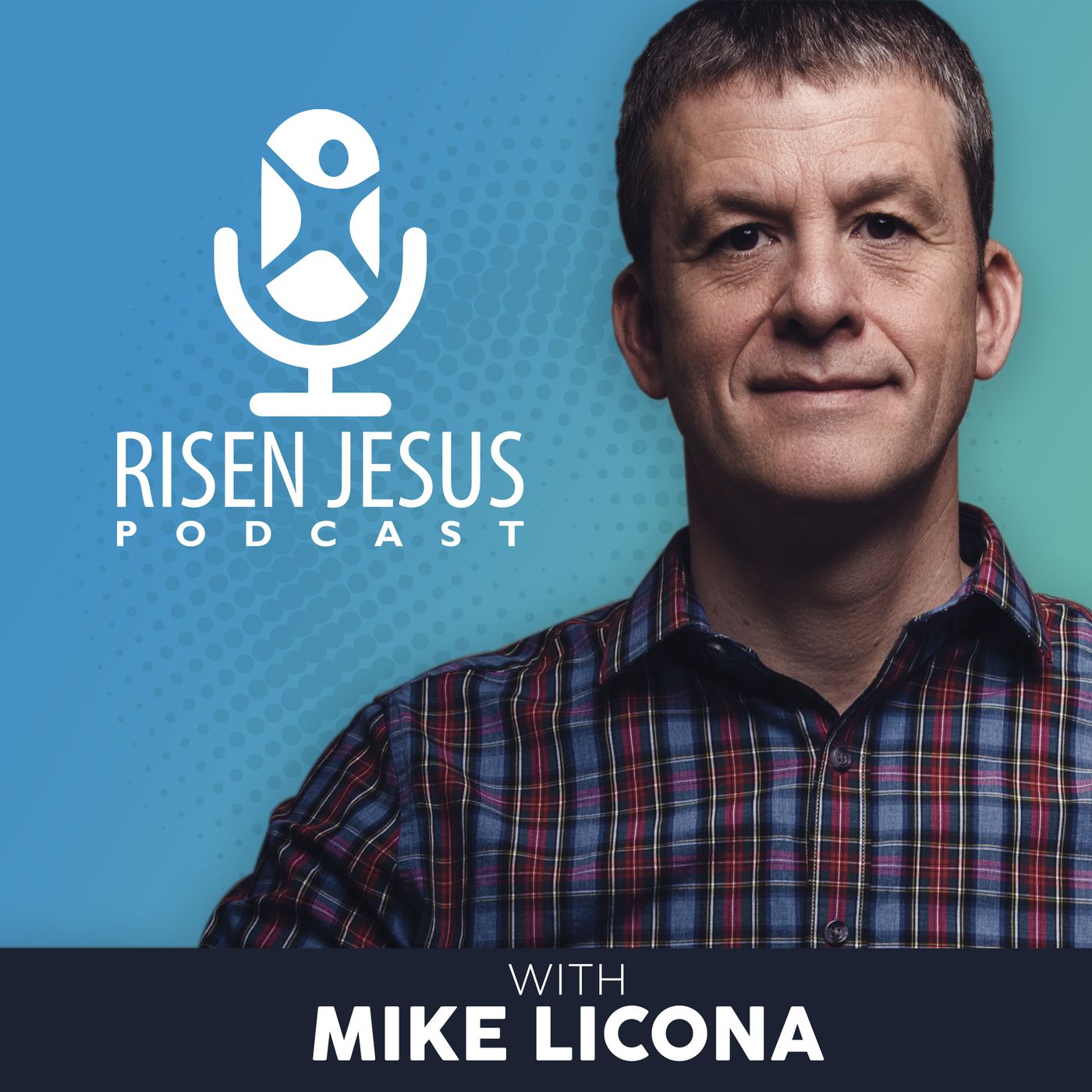
Risen Jesus
by Mike Licona
The Risen Jesus podcast with Dr. Mike Licona equips people to have a deeper understanding of the Gospel, history, and New Testament studies.
-
108
Licona and Pagels on the Gospel of Thomas
This episode examines the Gospel of Thomas, discovered in full in 1945, through an interview with Dr. Michael Licona and Dr. Elaine Pagels. Pagels, dating this work to the 80s or 90s AD, sees this text as a companion piece to be read alongside the three synoptics, which reveal secret teachings of Jesus shared only with his disciples, as referenced in Mark 4. She calls it a “missing link” in the formation of the gospel tradition. Licona disagrees, arguing that the Gospel of Thomas, which he dates to the early 2nd century AD, was excluded by the early church as an authoritative writing. It does not reflect Jesus’ teachings as revealed in the canonical gospels, discusses the resurrection through a pagan lens, and in some places contradicts Matthew, Mark, and Luke.
-
107
Who Wrote the Gospels? Michael Licona vs. Bart Ehrman - Part 2
Did Matthew, Mark, Luke, and John write the gospels that bear their names? The texts themselves do not name them as the authors and were published and circulated anonymously. In fact, the earliest record of names being associated with the gospel books comes from Irenaeus in 185 AD, over 100 years after Jesus lived. Dr. Bart Ehrman contends that we do not know who wrote these texts and that the names attributed to them must certainly be false, given that the uneducated, Aramaic-speaking, rural disciples would not have the rigorous education required to produce such Greek literary works. Michael Licona disagrees, taking on Ehrman’s contentions and providing a positive case for the traditional authorship of the gospels in this episode of the Risen Jesus Podcast.
-
106
Who Wrote the Gospels? Michael Licona vs. Bart Ehrman - Part 1
Did Matthew, Mark, Luke, and John write the gospels that bear their names? The texts themselves do not name them as the authors and were published and circulated anonymously. In fact, the earliest record of names being associated with the gospel books comes from Irenaeus in 185 AD, over 100 years after Jesus lived. Dr. Bart Ehrman contends that we do not know who wrote these texts and that the names attributed to them must certainly be false, given that the uneducated, Aramaic-speaking, rural disciples would not have the rigorous education required to produce such Greek literary works. Michael Licona disagrees, taking on Ehrman’s contentions and providing a positive case for the traditional authorship of the gospels in this episode of the Risen Jesus Podcast.
-
105
The Resurrection Standoff: Licona vs. Ehrman on the Unbelievable Podcast
This episode is taken from the Unbelievable podcast with Justin Brierly in 2011 when Dr. Bart Ehrman and Dr. Michael Licona address the question: Is there good biblical evidence for the resurrection? Dr. Licona’s answer is yes, and he begins the defense of this conclusion by referring to three minimal facts that he says virtually all scholars agree upon: 1) that Jesus died by crucifixion, 2) that after this, his followers had experiences, both individually and in groups, that they believed were appearances of the risen Christ, and 3) that Paul, while he was an enemy of the church, had a similar experience which radically changed his life leading him to become one of the foremost proponents of Christianity. Dr. Ehrman immediately takes issue with this, contending that one is irrelevant and that 2 and 3 make the same point. Ehrman questions whether most scholars agree that there were group experiences, whether oral tradition is reliable, and whether the gospels are reliable due to their differences, especially in the resurrection accounts. Furthermore, he denies that historiographic research methods can be applied to miracles. Licona responds to these issues, and the episode wraps up with the two in a standoff over Ehrman’s statement that the resurrection is not a matter of history but faith.
-
104
Do Christians Need to Believe that Jesus was Raised Bodily from the Dead? Licona vs. Patterson
In this episode, Dr. Stephen Patterson, New Testament professor at Eden Theological Seminary, argues against the bodily resurrection of Jesus, contending that the earliest Christian witness doesn’t presume anything happened to Jesus’ body after his death but that by God’s power, Jesus’ spirit lived on in his followers. In keeping with the conceptualization of resurrection in ancient Judaism, the point of the resurrection narrative was to proclaim the vindication of God’s righteous servant against his enemies, not to declare a physical reality. In his writings, Patterson claims that Paul had a spiritual resurrection of Jesus in mind and that Mark mentioned an empty tomb but never a physically resurrected Christ. Instead, the later gospel writers added this into their texts, fleshing out the story in line with their worldview, which at that time believed a physical body could rise into the sky, where God lived, to be with him. Dr. Patterson concluded his argument by stating that the ancient statements on Jesus’ bodily resurrection do not comfortably fit our current worldview. However, that is alright because all that Christians must believe in are Jesus’ teachings. Dr. Licona, who began the session with a positive argument for the bodily resurrection based on historical facts and methods, counters Patterson’s claims, citing translation issues and specifics from Paul’s text that refute his opponent’s assertions.
-
103
After the Crucifixion, was Jesus Resurrected or Rescued? Licona vs. Ally
This episode is a 2016 debate held at the University of Tennessee – Chattanooga between Dr. Michael Licona and Dr. Shabir Ally, president of the Islamic Information and Dawah Centre International in Toronto, Canada. Dr. Licona presents a case for Jesus’ death by crucifixion and his resurrection, contending that there exists substantial evidence for this but that Islam offers none to the contrary. Dr. Ally argues that Jesus was taken off the cross before he died, placed in the tomb, and then assumed into heaven before he died. Ally bases this on his belief that the gospel’s resurrection narratives show evolution and legendary development, such that the later the gospel was written, the stronger its claims that Jesus died became. He also asserts that the Q source document used by Matthew and Luke and the pre-Markan source used by Mark show that some in the early Christian community believed that Jesus was taken straight into heaven, alive, from the tomb, much as Enoch was.
-
102
The Historical Perspective vs. The Theological Perspective on the Resurrection: Are Both Valid?
This episode is a discussion between Dr. Mike Licona and then PhD candidate Laura Robinson on the Capturing Christianity podcast. While both scholars are Christians who claim belief in the resurrection of Jesus, they differ in what they believe can historically be shown about it. Robinson questions the wisdom and validity of applying the historical perspective to this topic as she contends that our evidence is not as strong as Christians claim. Rather than focusing on what happened, this scholar promotes a theological account of the resurrection, interpreting the resurrection narratives after the fact. Licona disagrees, stating that their discussion comes down to the differing approaches of historians and theologians.
-
101
Faith Journeys: Similar Road, Different Conclusions - A Licona Ehrman Discussion
On the Risen Jesus podcast today, Dr. Michael Licona and Dr. Bart Ehrman join Justin Brierly on his Unbelievable podcast to discuss their faith journeys. Both men experienced crises of faith when their scholarly studies led them to question the inerrancy of the Bible. Though not the cause for his abandonment of the Christian faith, Ehrman says this was the first step in a domino effect that ended in his disbelief in Christ and the Christian God. Licona, on the other hand, has retained in Christ, the Christian God, and the inerrancy of the Bible. How did they reach these different conclusions?
-
100
Since Most People Are Wrong When They Make Supernatural Claims, Why Didn't God Do Better?
Dr. Matthew McCormick, a philosophy professor at California State University, Sacramento, doesn’t believe that there is satisfactory historical evidence to support the idea that Jesus rose from the dead. This is because humans have a high error rate when making claims about the supernatural. Therefore, those who reported Jesus’ post-death appearances were likely wrong. Furthermore, if an all-powerful God wanted people to believe this claim, why didn’t he provide more substantial evidence for us? Why didn’t he do better? In a 2016 debate at Sacramento State University, Dr. Michael Licona faces these contentions from McCormick, arguing that evidence strongly supports theism over atheism and that the existing historical data suggests that Jesus did rise from the death. Which case do you think is better?
-
99
The Historical Reliability of the Gospels: Licona vs. Ehrman - Part 2
In this episode, frequent debate opponents Dr. Michael Licona and Dr. Bart Ehrman face off on the historical reliability of the gospels. Held in 2018 at Kennesaw State University, Dr. Licona begins by defining historical reliability as related to the gospels, stating that the gospels, ancient biographies, got things right when focusing on the larger biographical narrative of Jesus. The specifics of the various stories may differ between books, but that is due to the literary conventions of the genre at that time. Licona then lists six criteria for historical reliability, including:the author’s intent to be accurate,a good choice of sources,a good use of sources,the author and sources being capable of accurate reporting,numerous details being verifiablea small percentage of more information being known to be false.Dr. Ehrman’s contention is summed up in his claim that he doesn’t think the gospels are accurate in many of the things they state regarding Jesus. He then focuses on examples that he concludes are contradictions and mistakes in the gospels' birth, ministry, and death and resurrection narratives.
-
98
The Historical Reliability of the Gospels: Licona vs. Ehrman - Part 1
In this episode, frequent debate opponents Dr. Michael Licona and Dr. Bart Ehrman face off on the historical reliability of the gospels. Held in 2018 at Kennesaw State University, Dr. Licona begins by defining historical reliability as related to the gospels, stating that the gospels, ancient biographies, got things right when focusing on the larger biographical narrative of Jesus. The specifics of the various stories may differ between books, but that is due to the literary conventions of the genre at that time. Licona then lists six criteria for historical reliability, including:the author’s intent to be accurate,a good choice of sources,a good use of sources,the author and sources being capable of accurate reporting,numerous details being verifiablea small percentage of more information being known to be false.Dr. Ehrman’s contention is summed up in his claim that he doesn’t think the gospels are accurate in many of the things they state regarding Jesus. He then focuses on examples that he concludes are contradictions and mistakes in the gospels' birth, ministry, and death and resurrection narratives.
-
97
Mike Takes on World Ranked Debator on the Topic of Jesus' Resurrection from the Dead
Dr. Shane Pucket was ranked the 32nd best debater in the world in 2012. That year, he faced off against Dr. Michael Licona at Monroe Baptist Church in Louisianna on whether Jesus rose from the dead. Licona argued the affirmative case using the historical method to examine facts derived from the writings of Paul, especially 1 Corinthians 15:3-8. Dr. Pucket’s negative case centered on the gospels, the unreliability of oral tradition, upon which the gospels are based, and the existence of other Jesus-like figures in the world with similar life details such as virgin birth and rising from the dead. In the back and forth after the scholars presented their original cases, Dr. Licona pointed out the red-herring nature of Pucket’s use of the gospels and took his claims regarding oral tradition and other Jesus-like figures head-on. As the debate continued, it appeared that underlying Pucket’s objections to the historicity of the resurrection were philosophical commitments that miracles cannot happen and that theology is the realm of the supernatural and, therefore, cannot be studied by disciplines like history, mathematics, and science which deal with the physical world.
-
96
Fighting on Different Hills: Licona and Ally on the Resurrection of Jesus - Part 2
In 2004, Islamic scholar Dr. Shabir Ally and Dr. Mike Licona met at Regent University to debate the physical resurrection of Jesus. Both cases, a lively Q&A between the scholars and an audience Q&A make up this week’s episode. Dr. Licona presents a positive case for Jesus’ resurrection based on three nearly universally agreed-upon facts about Jesus’ death and resurrection taken from the earliest historical sources. Dr. Ally presents the negative, citing Muslim beliefs about God’s forgiveness and the testimony of the Quran on Jesus’ crucifixion, as well as varying gospel testimony, which he believes changed over time to support the idea that Jesus died on the cross and was later bodily raised. Ally claims that, like Mel Gibson, the producer of the movie The Last Temptation of Christ, the gospel writers looked at what they thought the Old Testament writings said would happen to Jesus and then wrote what they thought should have occurred based upon this. Licona, conceding gospel difficulties for the sake of the discussion only, returns to his earlier evidence, which Ally fails to address. Dr. Licona remarks that they are fighting on two different hills and tensions rise over the presentation of source evidence.
-
95
Fighting on Different Hills: Licona and Ally on the Resurrection of Jesus - Part 1
In 2004, Islamic scholar Dr. Shabir Ally and Dr. Mike Licona met at Regent University to debate the physical resurrection of Jesus. Both cases, a lively Q&A between the scholars and an audience Q&A make up this week’s episode. Dr. Licona presents a positive case for Jesus’ resurrection based on three nearly universally agreed-upon facts about Jesus’ death and resurrection taken from the earliest historical sources. Dr. Ally presents the negative, citing Muslim beliefs about God’s forgiveness and the testimony of the Quran on Jesus’ crucifixion, as well as varying gospel testimony, which he believes changed over time to support the idea that Jesus died on the cross and was later bodily raised. Ally claims that, like Mel Gibson, the producer of the movie The Last Temptation of Christ, the gospel writers looked at what they thought the Old Testament writings said would happen to Jesus and then wrote what they thought should have occurred based upon this. Licona, conceding gospel difficulties for the sake of the discussion only, returns to his earlier evidence, which Ally fails to address. Dr. Licona remarks that they are fighting on two different hills and tensions rise over the presentation of source evidence.
-
94
Did Man Create God? Licona vs Yothment
This episode is a 2006 debate between Dr. Michael Licona and Steve Yothment, the president of the Atlanta Freethought Society, on whether man created God. Yothment takes the positive side. He proposes that ancient gods like Thor are myths and that every religion claims their gods to be the real ones and the others false. This then clearly means some of these gods, if not all, have been invented by humans. He also focuses on Christianity, disputing the Bible as the infallible word of God. Citing scientific evidence that appears to contradict Genesis' report of the age of man and the fact that humans suffer despite Scripture's numerous claims that God protects and provides for his people, Yothment concludes that the Bible is the word of man and that God it conveys is a creation of its writers. Dr. Licona argues the opposite based on the contention that there is good evidence for the existence of God, both scientific and historical and that his opponent's arguments are invalid and easily refuted.
-
93
What Do Statistical Mechanics Have to Say About Jesus' Bodily Resurrection? Licona vs. Cavin - Part 2
The following episode is a debate from 2012 at Antioch Church in Temecula, California, between Dr. Licona and philosophy professor Dr. R. Greg Cavin on whether Jesus rose from the dead. Licona presents a historical case for the bodily resurrection of Jesus based on a set of almost universally agreed-upon facts and the methodology by which historians determine which explanation for an event is the most likely. Dr. Cavin finds Licona's arguments weak and contends that the Resurrection hypothesis fails to provide the explanatory scope, explanatory power, avoidance of ad hoc, and plausibility necessary to be the best hypothesis for the events reported to have occurred surrounding Jesus' death. Dr. Licona's response is to refute all these points directly. The back and forth continues as Cavin calls Dr. Licona's hypothesis "indefinite" and states that it fails to explain what the risen Jesus is, atoms or something else, and how he could be seen, touched, and heard as the gospels report. He later invokes statistical mechanics and the Postulate of Equal A Priori Probabilities to further his argument.
-
92
What Do Statistical Mechanics Have to Say About Jesus' Bodily Resurrection? Licona vs. Cavin - Part 1
The following episode is a debate from 2012 at Antioch Church in Temecula, California, between Dr. Licona and philosophy professor Dr. R. Greg Cavin on whether Jesus rose from the dead. Licona presents a historical case for the bodily resurrection of Jesus based on a set of almost universally agreed-upon facts and the methodology by which historians determine which explanation for an event is the most likely. Dr. Cavin finds Licona's arguments weak and contends that the Resurrection hypothesis fails to provide the explanatory scope, explanatory power, avoidance of ad hoc, and plausibility necessary to be the best hypothesis for the events reported to have occurred surrounding Jesus' death. Dr. Licona's response is to refute all these points directly. The back and forth continues as Cavin calls Dr. Licona's hypothesis "indefinite" and states that it fails to explain what the risen Jesus is, atoms or something else, and how he could be seen, touched, and heard as the gospels report. He later invokes statistical mechanics and the Postulate of Equal A Priori Probabilities to further his argument.
-
91
An Ex-Christian Disputes Jesus' Physical Resurrection: Licona vs. Barker - Part 2
In this episode , we have Dr. Mike Licona's first-ever debate. In 2003, Licona sparred with Dan Barker at the University of Wisonsin-Madison. Once a Christian evangelist and missionary, Barker declares that extraordinary claims require extraordinary evidence and then asserts that there is not even ordinary evidence for the bodily resurrection. The former believer claims there was no eyewitness testimony to the resurrection or any 1st-century corroboration. Furthermore, Peter's testimony can't be trusted because he was a liar, and the gospels were written anonymously and, therefore, cannot be verified. Instead, Barker states that the disciples believed the resurrection was spiritual, and the belief that it was physical resulted from a pattern of legendary growth in the New Testament writings. Licona refutes these claims and provides his positive case for the historicity of the bodily resurrection based on a minimal facts argument drawn from the work of resurrection expert Dr. Gary Habermas.
-
90
An Ex-Christian Disputes Jesus' Physical Resurrection: Licona vs. Barker - Part 1
In this episode, we have Dr. Mike Licona's first-ever debate. In 2003, Licona sparred with Dan Barker at the University of Wisonsin-Madison. Once a Christian evangelist and missionary, Barker declares that extraordinary claims require extraordinary evidence and then asserts that there is not even ordinary evidence for the bodily resurrection. The former believer claims there was no eyewitness testimony to the resurrection or any 1st-century corroboration. Furthermore, Peter's testimony can't be trusted because he was a liar, and the gospels were written anonymously and, therefore, cannot be verified. Instead, Barker states that the disciples believed the resurrection was spiritual, and the belief that it was physical resulted from a pattern of legendary growth in the New Testament writings. Licona refutes these claims and provides his positive case for the historicity of the bodily resurrection based on a minimal facts argument drawn from the work of resurrection expert Dr. Gary Habermas.
-
89
The Resurrection: A Matter of History or Faith? Licona and Pagels on the Ron Isana Show
In this episode, we have a 2005 appearance of Dr. Mike Licona on the Ron Isana Show, where he defends the historicity of the bodily resurrection of Jesus against Princeton professor Dr. Elaine Pagels' contention that not all early Christians believed Jesus was physically raised from the dead. Stating that spiritual experiences can be real, Pagels asserts that the gospels contain different versions of Jesus' appearances. It wasn't until the late 2nd century AD that the idea of a physical resurrection became the dominant understanding. A self-proclaimed Christian, Pagels agrees that all Christians believed that the resurrection was important, but they had different ideas about what was meant by resurrection. Along witht he dialogue between the two scholars, the show host and viewers weight in with their thoughts.
-
88
Bodily Resurrection vs Consensual Realities: A Licona Craffert Debate
In today’s episode, Dr. Mike Licona debates Dr. Pieter Craffert at the University of Johannesburg. While Dr. Licona provides a positive case for the bodily resurrection of Jesus based on facts and historical method, Dr. Craffert proposes that the reports of the risen Jesus recorded in the New Testament are best explained as experiences of altered states of consciousness by those who claimed to see, touch, speak, and eat with the Messiah. Craffert calls this a case of consensual reality, meaning that these experiences were “real” for those involved, but a physical Jesus did not exist in them. Instead, cultural acceptance of such visions and the previous knowledge, emotions, and beliefs about the resurrection of those reporting these experiences led to their conclusion that they were real. The episode wraps with Dr. Licona challenging Craffert’s theory.
-
87
Licona vs. Fales: A Debate in 4 Parts – Part Four: Licona Responds and Q&A
Today is the final episode in our four-part series covering the 2014 debate between Dr. Michael Licona and Dr. Evan Fales. In this hour-long episode, Licona spends 15 minutes responding to Fales's presentation from part three, addressing the claims that miracles are metaphysically impossible and arguing that Hume’s criteria for miracle testimony are too strict. Following this segment, the two professors spend 45 minutes answering audience questions.
-
86
Licona vs. Fales: A Debate in 4 Parts – Part Three: The Meaning of Miracle Stories
In this episode, we hear from Dr. Evan Fales as he presents his case against the historicity of Jesus’ resurrection and responds to Dr. Licona’s writings. This is the third segment of the four-part debate between the two scholars at the University of St. Thomas in 2014. Dr. Fales does not take the miracle stories of Jesus as historical events; instead, he contends they are figurative and can be understood using the anthropology of religion. Fales claims these stories were written to provide solutions to the existential crises confronting the world of the Roman Empire and gives examples through his interpretations of the stories of Barabbas’ release and Jesus' three days in the grave.
-
85
Licona vs. Fales: A Debate in 4 Parts – Part Two: Did Jesus Rise from the Dead?
The following episode is part two of the debate between atheist philosopher Dr. Evan Fales and Dr. Mike Licona in 2014 at the University of St. Thoman in St. Paul, Minnesota. In the first 30 minutes, Dr. Licona provides his positive case for the resurrection and then evaluates it alongside Dr. Fales’ hypothesis that Jesus did not rise from the dead but instead, the stories of the life, death, and resurrection of Jesus recorded in the gospels are myths designed by the authors to provide both the Romans and Jews with solutions to their political problems. He finishes the session with a 30-minute audience Q&A.
-
84
Licona vs. Fales: A Debate in 4 Parts – Part One: Can Historians Investigate Miracle Claims?
In this episode, we join a 2014 debate between Dr. Mike Licona and atheist philosopher Dr. Evan Fales on whether Jesus rose from the dead. In this first segment of the four-part debate, Dr. Licona answers the question, “Can historians investigate miracle claims?” He gives a resounding “yes” as he defines miracles, discusses how to identify them, provides examples, and addresses objections to miracles. After delivering an approximately 30-minute presentation, Dr. Licona finishes this session by taking audience questions.
-
83
Licona and Martin Talk about the Physical Resurrection of Jesus
In today’s episode, we have a Religion Soup dialogue from Acadia Divinity College between Dr. Mike Licona and Dr. Dale Martin on whether Jesus physically rose from the dead. Dr. Licona presents a positive historical case for physical resurrection based on the following five historical facts:Paul was an eyewitness to the risen Jesus.Paul knew the apostles personally.Paul checked with Peter and other apostles to verify that he was preaching their gospel.Both individuals and groups reported experiences that they believed were encounters with the risen Jesus.These encounters were of a physical Jesus.Dr. Martin argues against this, asserting that the resurrection cannot be historically established. He cites the vast differences among the recorded appearance accounts and that the tomb of Jesus did not become a place of veneration for the early Christians. Martin contends the resurrection involved a “pneumatic” body and cites scripture frequently recounting people not recognizing Jesus when he appeared to them as support for this view.
-
82
Licona and Martin: A Dialogue on Jesus' Claim of Divinity
In this episode, Dr. Mike Licona and Dr. Dale Martin discuss their differing views of Jesus’ claim of divinity. Licona proposes that “it is more probable than not that Jesus claimed to be God in some sense.” He bases this on the fact that the earliest Christians, those most plausibly connected to the apostles, held this view and that the best explanation is that Jesus said so himself. Licona cites passages equating Jesus with God and Jesus using “Son of Man, divine and co-equal with God, as his preferred way to refer to himself. Dr. Martin concedes that Jesus may have claimed divinity in some sense but not as orthodox Christians conceive. Instead, references to him as the “Son of Man” are claims to messiahship in a human or angelic sense, subordinate to God the Father. Martin claims that the orthodox Christian belief in Jesus’ divinity arose after his death in the second and third centuries, for if this had been taught by Jesus directly, the New Testament would not contain such a messy assortment of ideas about if, in what sense, and when Jesus became divine.
-
81
Can Historians Prove that Jesus Rose from the Dead? Licona vs. Ehrman
In this episode, Dr. Mike Licona and Dr. Bart Ehrman face off for the second time on whether historians can prove the resurrection. Dr. Ehrman says no. Given that 1.) historians work to establish what most probably happened in the past and that 2.) miracles are, by definition, the least probable occurrence of an event, historical proof is impossible since the least probable occurrence of an event cannot also be, at the same time, the most probable. Dr. Licona disagrees, answers Ehrman, and makes his case for the historicity of Jesus’ resurrection.
-
80
Licona vs. Shapiro: Is Belief in the Resurrection Justified?
In this episode, Dr. Mike Licona and Dr. Lawrence Shapiro debate the justifiability of believing Jesus was raised from the dead. Dr. Shapiro appeals to Bayes' Theorem and the unverifiability of the alternative hypotheses for the post-death appearances to argue against justifiability. Dr. Licona retorts that Bayes’ Theorem, which states that the less likely something is to happen, the stronger the evidence for it must be to convince us of its truth, is primarily inapplicable in historical studies since it requires that the probabilities for an event’s prior occurrence to be known. He also disputes Shapiro’s claims that the alternative hypotheses are as adequate as the resurrection hypothesis.
-
79
The Plausibility of Jesus' Rising from the Dead Licona vs. Shapiro
In this episode of the Risen Jesus podcast, we join Dr. Licona at Ohio State University for his 2017 resurrection debate with philosopher Dr. Lawrence Shapiro. Dr. Licona argues that believing that Jesus rose from the dead is justifiable and that Dr. Shapiro’s arguments to the contrary fail as they present a flawed view of the gospels, do not consider evidence from New Testament scholarship, and neglect the most substantial proof available, Paul’s writings. Dr. Shapiro disagrees that the details of the New Testament are essential to this question, asserting that the postulation that Jesus came back to life is no better an explanation for the reports of his post-death appearances than any other hypothesis. Furthermore, he states that even if we grant these appearances occurred, the various theories are not independently verifiable, so we have no justification for believing one over the others.
-
78
Mythos or Logos: How Should the Narratives about Jesus' Resurreciton Be Understood? Licona/Craig vs Spangenberg/Wolmarans
Dr. Mike Licona and Dr. Willian Lane Craig contend that the texts about Jesus’ resurrection were written to teach a physical, historical resurrection because when understood in their first-century Jewish Palestinian context, there is no other way the writers would have conceived of them. Dr. Spangenberg and Dr. Wolmarans disagree, arguing that they are later developed stories and myths taken as fact. This episode of the Risen Jesus podcast features a 2010 debate between the four scholars on this important topic.
-
77
Jesus' Fate: Resurrection or Rescue? Michael Licona vs Ali Ataie
Muslim professor Dr. Ali Ataie, a scholar of biblical hermeneutics, asserts that before the formation of the biblical canon, Christians did not believe that Jesus was killed. He argues that this claim was not, as held by some, originally a Muslim idea found in the Quran. In this episode, he debates Dr. Michael Licona, who refutes Ataie’s claim while contending that four solid historical facts provide sufficient evidence for Jesus’ death by crucifixion and later resurrection.
-
76
Did Jesus Rise from the Dead? Dr. Michael Licona and Dr. Abel Pienaar Debate
Is it reasonable to believe that Jesus rose from the dead? Dr. Michael Licona claims that if Jesus didn’t, he is a false prophet, and no rational person should follow him. In this episode, Licona argues a case for the resurrection using the historical method and based on five facts gleaned from Paul’s writings. Former Christian minister, now agnostic philosopher and writer Dr. Abel Pienaar disagrees, citing biblical discrepancies, a pre-scientific worldview, the lack of hard evidence, and parallel stories of ancient gods and heroes coming back to life, as indicating that the resurrection of Jesus is a myth. Listen to the two scholars debate this critical topic in this episode of the Risen Jesus Podcast.
-
75
The Resurrection - Argument from Personal Incredulity or Methodological Naturalism - Licona vs. Dillahunty - Part 2
In this episode, Dr. Licona provides a positive case for the resurrection of Jesus at the 2017 [UN]Apologetic Conference in Austin, Texas. He bases his argument on contentions that 1) empirical data strongly suggests that reality has a supernatural dimension and 2) that historical data strongly suggests that Jesus rose from the dead. Mr. Dillahunty, an atheist activist and former Christian, disagrees, positing that there is not sufficient evidence for this conclusion. Instead, those who believe in Jesus’ bodily resurrection are committing the fallacious argument from personal incredulity. This means they take on this belief because they can’t find a better explanation for the historical evidence. Licona responds that Dillahunty is steeped in methodological naturalism, and the debate continues.
-
74
The Resurrection - Argument from Personal Incredulity or Methodological Naturalism - Licona vs. Dillahunty - Part 1
In this episode, Dr. Licona provides a positive case for the resurrection of Jesus at the 2017 [UN]Apologetic Conference in Austin, Texas. He bases his argument on contentions that 1) empirical data strongly suggests that reality has a supernatural dimension and 2) that historical data strongly suggests that Jesus rose from the dead. Mr. Dillahunty, an atheist activist and former Christian, disagrees, positing that there is not sufficient evidence for this conclusion. Instead, those who believe in Jesus’ bodily resurrection are committing the fallacious argument from personal incredulity. This means they take on this belief because they can’t find a better explanation for the historical evidence. Licona responds that Dillahunty is steeped in methodological naturalism, and the debate continues.
-
73
Jesus' Bodily Resurrection - A Legendary Development Based on Hallucinations - Licona vs. Carrier - Part 2
In this episode, a 2004 debate between Mike Licona and Richard Carrier, Licona presents a case for the resurrection of Jesus based on three facts that are strongly evidenced and acknowledged by the majority of scholars: 1) Jesus’ death by crucifixion, 2) the empty tomb, and 3) the experiences of Jesus’ disciples and his enemy Saul that they believed were appearances of the risen Jesus. Carrier contends that the earliest Christians only held that Jesus’ soul was exalted and that the idea of a bodily resurrection, and the gospel testimony in favor of this, came later through Paul. Who makes the stronger case?
-
72
Jesus' Bodily Resurrection - A Legendary Development Based on Hallucinations - Licona vs. Carrier - Part 1
In this episode, a 2004 debate between Mike Licona and Richard Carrier, Licona presents a case for the resurrection of Jesus based on three facts that are strongly evidenced and acknowledged by the majority of scholars: 1) Jesus’ death by crucifixion, 2) the empty tomb, and 3) the experiences of Jesus’ disciples and his enemy Saul that they believed were appearances of the risen Jesus. Carrier contends that the earliest Christians only held that Jesus’ soul was exalted and that the idea of a bodily resurrection, and the gospel testimony in favor of this, came later through Paul. Who makes the stronger case?
-
71
Interrogating Jesus - Veritas Forum Lecture at Texas A&M
In this lecture at Texas A&M University, Dr. Licona discusses whether we can rationally believe in the resurrection of Jesus. He then engages with a panel of prominent students who ask tough questions about the resurrection.
-
70
Can Psychology Explain Away the Resurrection? A Licona Carrier Debate - Part 2
According to Dr. Richard Carrier, Christianity arose among individuals who, due to their schizotypal personalities, believed that their hallucinations of a risen Jesus were reality. In his view, this naturalistic explanation accounts well for the resurrection claims and is like the reported mass hallucinations in cults led by charismatic leaders. In a 2010 debate at Washburn University, Dr. Michael Licona challenged these assertions and presented a case for the historicity of Jesus’ resurrection.
-
69
Can Psychology Explain Away the Resurrection? A Licona Carrier Debate - Part 1
According to Dr. Richard Carrier, Christianity arose among individuals who, due to their schizotypal personalities, believed that their hallucinations of a risen Jesus were reality. In his view, this naturalistic explanation accounts well for the resurrection claims and is like the reported mass hallucinations in cults led by charismatic leaders. In a 2010 debate at Washburn University, Dr. Michael Licona challenged these assertions and presented a case for the historicity of Jesus’ resurrection.
-
68
Are Christian Claims Verifiable? Does It Matter?
In this episode of the Risen Jesus podcast, we join Dr. Michael Licona and Dr. Courtney Friesen as they discuss the verifiability of Christian claims are verifiable and if it even matters. Dr. Licona argues the affirmative case on both points, sharing several universally agreed-upon facts about Jesus held by Christian and non-Christian historians, and presents the case for the historicity of his resurrection. Dr. Licona concludes that the verifiability of the resurrection determines the truth of the faith, which in turn shows that we have value and that our lives have meaning. Dr. Friesen contends that the claims most central to Christianity fall outside the realm of verification and that the true power of Jesus’ resurrection is that, whether factual or not, it teaches the power of self-sacrificial acts to counteract the world's evils.
-
67
Can Historians Prove the Resurrection of Jesus?
Where do miracles fit into historians’ examinations of the past? How do we define miracles? Is a miracle an event for which natural explanations are inadequate, or is it the least probable explanation of an occurrence? Most historians accept that Jesus was put to death by crucifixion. Does this support the claim that Jesus rose from the dead? Are Paul and the disciples’ reports that the risen Jesus appeared to them unique, or have others described similar experiences? Dr. Mike Licona and Dr. Bart Ehrman square off on these issues in their first-ever debate, held in 2008 at Midwestern Theological Seminary, where they argue whether the resurrection of Jesus can be proven as a historical fact or can only be taken as a theological conclusion.
-
66
Jesus’ Death By Crucifixion - Fact or Fiction: Michael Licona vs. Yusuf Ismail
If Jesus did not die by crucifixion, there was no atonement for sin, and Christianity is a false religion. If he did, Islam is the erroneous faith. In this episode, Dr. Michael Licona debates Muslim apologist Yusuf Ismail at the University in Potchefstroom, South Africa. Dr. Licona tackles Ismail’s claims of an absence of eyewitness accounts of Jesus’ death in the gospels, Jesus’ time on the cross being too short to have killed him, evidence of individuals surviving modern-day crucifixions in the Philippines, and documented occurrences of live people being mistaken for dead. He also provides six reasons why Jesus’ death by crucifixion can be taken as a historical fact.
-
65
Gospel Contradictions? w/ Mike Licona
Mike Licona is one of the world’s most recognized experts on the resurrection. Join us live to hear his toughts abou the gospels, inerrancy, historical evidences, and the validity of the gospels. We are so excited to host this conversation and be sure to join us during the call in section and hop into the conversation!
-
64
A Fresh Look at Inerrancy: Part two
What are compositional devices? How do they affect our view of inerrancy? What does the Bible say about inspiration and inerrancy? In this episode, Dr. Mike Licona discusses his contention that the common evangelical definition of inerrancy, as outlined in the Chicago Statement on Biblical Inerrancy, may be based on an incorrect concept of inspiration which in turn renders it incorrect.
-
63
A Fresh Look at the Doctrine of Inerrancy
What are compositional devices? How do they affect our view of inerrancy? What does the Bible say about inspiration and inerrancy? In this episode, Dr. Mike Licona discusses his contention that the common evangelical definition of inerrancy, as outlined in the Chicago Statement on Biblical Inerrancy, may be based on an incorrect concept of inspiration which in turn renders it incorrect.
-
62
What Can Be Learned From Contemporary, Non-Scriptural Greco-Roman writings?
In this episode, Dr. Mike Licona walks the listener through some of the discoveries revealed in his new book Jesus, Contradicted. By examining Greco-Roman writings contemporary with the gospels, Dr. Licona has identified common writing techniques of the times that shed light on what we read apparently conflicting gospel accounts. He also discusses what authors meant by the term “God-breathed,” his understanding of biblical inerrancy, and argues that our view of Scripture must be consistent with what we actually observe in its text.
-
61
Ancient Greco-Roman Story-Telling and the Gospels
Do apparent contradictions in the gospels mean we can’t trust them as reliable sources of information about the person and life of Christ? Dr. Mike Licona tackles this important question by examining ancient Greco-Roman biography, the genre to which the gospels belong, and the conventions used by authors of the time when writing them. He explains that what modern readers might be tempted to call errors are actually the result of legitimate compositional devices, methods of story-telling, common to that era that were accepted as truthful and trustworthy.
-
60
Lydia McGrew Answered! Conclusion
In this episode, the final part in an 8 part series, Dr. Licona reviews and summarizes the problems with Lydia McGrew’s methodological interpretation of the Gospels. Then he argues that compositional devices is compatible with the biblical doctrine of inspiration. Finally, he pastorally guides us to consider whether it’s our view of history that needs reconsideration. These audio clips are taken from Dr. Licona’s YouTube channel, originally published in 2020.
-
59
Lydia McGrew Answered! On Gospel Differences
In this episode, part 7 in an 8 part series, Dr. Licona reviews several events in the Gospels to demonstrate how compositional devices are more plausible explanations than the explanations embraced by Lydia Mcgrew: forced harmonizations, or worse, that errors had occurred. These audio clips are taken from Dr. Licona’s YouTube channel, originally published in 2020.
We're indexing this podcast's transcripts for the first time — this can take a minute or two. We'll show results as soon as they're ready.
No matches for "" in this podcast's transcripts.
No topics indexed yet for this podcast.
Loading reviews...
ABOUT THIS SHOW
The Risen Jesus podcast with Dr. Mike Licona equips people to have a deeper understanding of the Gospel, history, and New Testament studies.
HOSTED BY
Mike Licona
CATEGORIES
Loading similar podcasts...
URL copied to clipboard!