
PODCAST · health
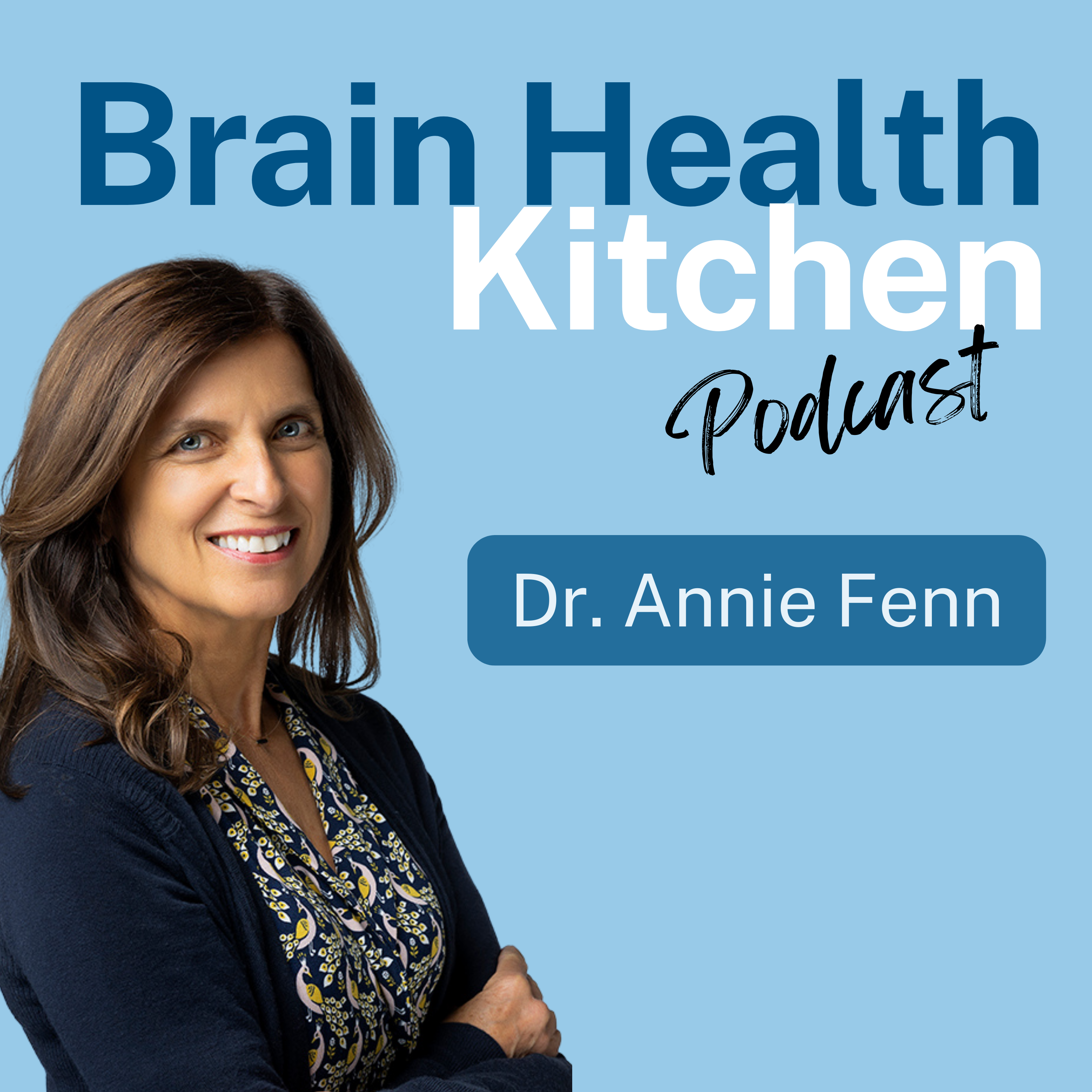
The Brain Health Kitchen Podcast
by Dr. Annie Fenn
The Brain Health Kitchen Podcast brings together science, storytelling, and practical wisdom on how to protect and nourish your brain at any age. Hosted by physician and author Annie Fenn, MD, each episode dives into the habits that support lifelong cognition—food, movement, sleep, mindfulness, social connection, and more. Through conversations with researchers, clinicians, neuroscientists, and thought leaders, you’ll learn what the latest evidence actually means for your daily life. Whether you’re looking to lower your dementia risk, stay sharp as you age, or simply understand your brain better, this podcast offers the tools and inspiration to build a truly brain-healthy life.
-
11
6 Foods that Accelerate Brain Aging
In this episode, Dr. Annie Fenn and Jenny Shilling shift the focus from what to add to a brain-healthy diet to what to limit. While most guidance emphasizes abundance—vegetables, beans, whole grains—this conversation tackles the question Annie hears most often: what should we actually be eating less of?Drawing on research from the Rush University MIND diet and newer data, Annie walks through the major food patterns associated with increased dementia risk and poor brain aging over time. She explains how modern food environments—especially ultra-processed foods and so-called “health halo” products—can make it difficult to recognize what’s truly supportive for brain health.They also discuss how everyday habits influence metabolic health, blood sugar, and long-term cognitive function. Throughout the episode, Annie offers practical ways to begin shifting patterns—without aiming for perfection or overhauling everything at once.This episode provides a clear, realistic framework for understanding how what we limit can meaningfully shape brain health over time.Chapters00:00 Why “what to avoid” matters for brain health02:00 Recap of brain-healthy eating patterns05:00 What the MIND diet tells us about risk07:00 The “health halo” problem09:00 Alcohol and brain health10:30 Everyday eating habits that add up14:00 Blood sugar, spikes, and the brain20:00 Where the science is evolving31:00 Metabolic health and cognitive decline36:00 The biggest drivers of poor brain agingLinks & ResourcesMIND Diet Study (Rush University):https://www.ncbi.nlm.nih.gov/pmc/articles/PMC4581900/Brain Health Kitchen Substack:https://brainhealthkitchen.substack.comBetter Brain:https://betterbrain.com/annieNeuroReserve:https://neuroreserve.comCode: BHKPodcast
-
10
The Caregiver Crisis: Why Taking Care of Yourself Matters with Emma Heming Willis
In this special episode, Dr. Annie Fenn sits down with Emma Heming Willis to talk about the reality of caregiving—what it demands, what it takes out of you, and why no one should have to do it alone.Emma shares her experience navigating her husband’s diagnosis of frontotemporal dementia (FTD), the lack of support she encountered early on, and why she wrote her book, The Unexpected Journey. Together, they explore how caregiving impacts brain health, why caregivers are at higher risk for illness, and what it actually looks like to care for yourself while caring for someone else.This conversation is for anyone caring for a loved one—and for anyone who wants to better support the caregivers in their life.Chapters00:00 Introduction to Emma Heming Willis03:13 The shock of diagnosis and lack of caregiver support05:28 What frontotemporal dementia (FTD) is10:04 Early signs and why FTD is often misdiagnosed13:23 The hidden health risks of caregiving16:29 Finding resources and building a support system19:21 Caring for yourself as a caregiver25:32 How to ask for help—and accept it29:43 Setting boundaries and handling unsolicited advice33:48 Reframing grief and finding moments of hopeLinks MentionedEmma Heming Willis https://www.emmahemingwillis.com/The Unexpected Journey https://www.penguinrandomhouse.com/books/743409/the-unexpected-journey-by-emma-heming-willis/Association for Frontotemporal Degeneration (AFTD) https://www.theaftd.org/Teepa Snow (caregiving expert) https://teepasnow.com/Roon (caregiver support app) https://www.thereisroon.com/Make Time Wellness https://maketimewellness.com/Brain Health Kitchen Substack https://brainhealthkitchen.substack.com/
-
9
Menopause and the Brain: What the Research Really Says with Dr. Lauren Streicher
In this episode of the Brain Health Kitchen podcast, Dr. Annie Fenn is joined by Dr. Lauren Streicher, a clinical professor of obstetrics and gynecology at Northwestern University Feinberg School of Medicine and a leading expert in menopause medicine. Together, they explore what happens to the brain during perimenopause and menopause, including brain fog, hot flashes, sleep disruption, and the role of hormone therapy.They discuss why brain fog during perimenopause is usually not a sign of dementia, what the research does and does not show about estrogen and Alzheimer’s prevention, why hot flashes deserve real medical attention, and how to think about testosterone with more caution and less hype.Chapters00:00 Introduction to Dr. Lauren Streicher07:21 Menopause and the brain12:22 Brain fog, sleep, and hot flashes19:45 Hormone therapy and timing25:55 Starting hormone therapy after 6034:45 Testosterone, libido, and side effects45:03 Can hormone therapy prevent Alzheimer’s?Links MentionedBrain Health Kitchen on Substackhttps://brainhealthkitchen.substack.comDr. Lauren Streicher’s Substack, Menopause Insiderhttps://drstreicher.substack.comDr. Lauren Streicher’s websitehttps://drstreicher.comCome Again: Sexuality and Orgasmhttps://drstreicher.com/comeagainThe Menopause Societyhttps://menopause.orgSWAN Study (Study of Women Across the Nation): https://www.swanstudy.orgNeuroReservehttps://neuroreserve.comBetter Brainhttps://betterbrain.com/annieDr. Lauren Streicher on Instagramhttps://www.instagram.com/drstreich
-
8
The Second Brain: What Your Gut Is Trying to Tell You with Dr. Trisha Pasricha
What does your gut have to do with mood, anxiety, and long-term brain health? In this episode, Dr. Annie Fenn talks with Dr. Trisha Pasricha, a neurogastroenterologist and gut-brain researcher, about what the gut-brain connection really is, what science supports, and what your symptoms may be trying to tell you.They cover why stress can trigger gut symptoms so quickly, how the gut’s own nervous system affects the brain, why travel constipation is so common, how the microbiome influences inflammation, and what emerging research suggests about Parkinson’s disease, Alzheimer’s disease, and colorectal cancer risk.Chapters00:00 Introduction to the gut-brain connection02:07 Trisha’s background in neurogastroenterology05:34 What counts as “normal” bowel habits08:56 Periods, hormones, and gut symptoms13:44 Travel constipation and gut circadian rhythm20:01 How stress affects the gut26:09 The gut as a second brain37:00 Parkinson’s, Alzheimer’s, and the gut44:20 The microbiome, fermented foods, and inflammation55:57 Colorectal cancer risk in younger adultsLinksHost: Brain Health Kitchen / Annie Fennhttps://brainhealthkitchen.substack.com/Guest: Dr. Trisha Pasrichahttps://research.bidmc.org/gut-brain/people/team-member-1BIDMC Institute of Gut-Brain Researchhttps://research.bidmc.org/gut-brain/Book: You’ve Been Pooping All Wronghttps://www.penguinrandomhouse.com/books/776380/youve-been-pooping-all-wrong-by-trisha-pasricha-md-mph/ (PenguinRandomhouse.com)
-
7
Ask Annie: Your Brain Supplement Questions, Answered (Free Preview)
Everyone wants a supplement for brain health—but most don’t do what they promise.In this free preview of our first Ask Annie episode, Dr. Annie Fenn breaks down which supplements are actually backed by science, which ones are overhyped, and how to build a smarter, more personalized routine. The goal is not to take more. It’s to take the right things, in the right dose, for the right reason. If you'd like to listen to the full episode, come join our community as a paid subscriber at brainhealthkitchen.substack.com.Chapters00:00 The problem with brain supplement hype02:15 Food first—and why supplements come second04:30 How to build a smarter supplement routine06:00 The key labs to check before you start09:30 Vitamin D: simple, but easy to get wrong12:00 Omega-3s: the most important (and most messed up) supplement14:00 B vitamins: the hidden deficiency that affects your brain19:00 Magnesium: what actually works for sleep and the brain30:30 Creatine: why everyone is suddenly talking about it38:00 Flavonoids: the brain nutrients you should eat, not pill41:30 What’s promising (but not proven yet)49:30 Multivitamins: insurance policy or unnecessary?51:50 NAD, peptides, and the longevity hype machine56:00 When to take supplements (and what to take with food)59:30 What Annie actually takes—and keeps simpleLinks & ResourcesBrain Health Kitchen Substackhttps://brainhealthkitchen.substack.comAnnie’s 2026 Brain Supplement Guide: need to link theseAnnie’s Food PyramidSponsorsNeuroReserveMaker of Relevate and Revanta, brain-focused formulations designed to support cognitive health. neuroreserve.comBetter BrainA personalized brain health program with advanced lab testing, coaching, and tailored recommendations. betterbrain.com
-
6
How to Build a Brain That Lasts: The Science of Cognitive Resilience with Dr. Tommy Wood
In this episode of Brain Health Kitchen, Dr. Annie Fenn talks with neuroscientist Dr. Tommy Wood about what it really takes to build a healthier brain across the lifespan. They discuss Tommy’s new book, The Stimulated Mind, the concept of cognitive “headroom,” why exercise may be the most powerful tool we have for brain health, how muscle mass and metabolic health shape cognitive aging, and why small, consistent habits matter more than extreme wellness trends. They also get into nutrition, protein, memory, overstimulation, and Tommy’s rapid-fire rankings of popular brain health trends. Dr. Tommy Wood is an associate professor of pediatrics and neuroscience at the University of Washington, co-creator of Better Brain Fitness on Substack, and author of The Stimulated Mind.Host: Dr. Annie FennCo-host: Jenny ShillingGuest: Dr. Tommy WoodChapters00:00 Introduction to Dr. Tommy Wood04:06 Why dementia prevention became the focus of his work06:47 The idea of cognitive “headroom”11:35 Alzheimer’s, amyloid, and the bigger picture15:17 Exercise, muscle, and the brain19:33 Protein, muscle mass, and aging well25:03 Exercise snacks and breaking up sedentary time41:47 Tommy’s 3S model: stimulus, supply, support48:32 Memory, attention, and overstimulation54:44 Tommy rates popular brain health wellness trendsLinks MentionedDr. Tommy Woodhttps://www.drtommywood.com/The Stimulated Mindhttps://www.penguinrandomhouse.com/books/751292/the-stimulated-mind-by-dr-tommy-wood/Better Brain Fitness Substackhttps://hdrmdocs.substack.com/Brain Health Kitchen Substackhttps://brainhealthkitchen.substack.com/Better Brainhttps://www.betterbrain.com/NeuroReservehttps://neuroreserve.com/Sponsor LinksBetter Brain with Annie’s linkhttps://www.betterbrain.com/annieNeuroReservehttps://neuroreserve.com/Code: BHKPodcast
-
5
Episode 2: Preventing Parkinson's with Dr. Ray Dorsey
In this episode of the Brain Health Kitchen Podcast, Dr. Annie Fenn sits down with neurologist and public health advocate Dr. Ray Dorsey to explore the growing global burden of Parkinson’s disease—and what we can do to prevent it.Drawing on decades of research, Dr. Dorsey explains how Parkinson’s is increasingly understood as a largely preventable disease driven by environmental exposures, including pesticides, industrial chemicals, air pollution, and contaminated water. The conversation explores how the disease may begin outside the brain and what individuals, communities, and policymakers can do to reduce risk.Dr. Dorsey also shares practical steps from his new book The Parkinson’s Plan, offering actionable strategies to protect brain health across the lifespan.Why Parkinson’s disease is rising dramatically worldwideThe environmental and man-made causes of Parkinson’sEarly warning signs and the gut–brain connectionHow pesticides, air pollution, food, and water exposures increase riskThe Parkinson’s 25: practical lifestyle steps to reduce riskThe role of exercise in prevention and slowing disease progressionWhy early childhood exposures matter for lifelong brain healthPolicy and public health solutions to reduce toxic exposuresResources & LinksBooksThe Parkinson’s Plan: A New Path to Prevention and Treatmenthttps://pdplan.org/ (The Parkinson's Plan)Brain Health KitchenBrain Health Kitchen websitehttps://brainhealthkitchen.comBrain Health Kitchen Substackhttps://brainhealthkitchen.substack.comSponsorsNeuroreserve https://neuroreserve.com/BetterBrain https://www.betterbrain.com/Connect with Dr. Ray DorseyInstagramLinkedInhttps://www.linkedin.com/in/ray-dorsey-md-mba/Twitter / Xhttps://twitter.com/RayDorseyMDConnect with Dr. Annie FennWebsitehttps://brainhealthkitchen.substack.comLinkedInhttps://www.linkedin.com/in/anniefennmd/Instagramhttps://www.instagram.com/brainhealthkitchen/
-
4
Episode 1: 10 Foods that Protect the Brain
Top 10 Neuroprotective Foods for Brain HealthDiscover the science-backed top foods that can support and protect your brain over decades. Join Dr. Annie Fenn and producer Jenny Shilling as they explore dietary strategies to enhance cognitive longevity and prevent neurodegenerative diseases.In this episode:What does "neuroprotective" really mean?Berries support cognitive function through anthocyaninsThe role of inflammationThe significance of leafy greensDiversity of vegetables and plant foods for microbiome healthHow fish and seafood provide crucial omega-3 fatty acidsThe benefits of healthy fats, particularly extra virgin olive oilBeans, legumes, nuts, and seedsImpact of coffee, teaPractical tips to start or improve your brain-healthy eating habitsResources & Links:Book: The Brain Health Kitchen: Preventing Alzheimer’s Through Food by Annie Fenn, MD; Artisan Books 2023. Brain Health Kitchen Website and NewsletterBrain Health Kitchen PyramidConsumption of Olive Oil and Risk of Total and Cause-Specific Mortality Among U.S. AdultsOmega-3 Fatty AcidsEating Fish May Protect the Brain From Air PollutionHow to Grow MicrogreensBrain Health Kitchen Extra Virgin Olive OilThe American Gut ProjectIs Your Coffee Habit Good For Your Brain?Coffee Brewing Dos and Don’tsGut Microbiota & DiversityConnect with Dr. Annie Fenn:WebsiteInstagramLinkedIn
-
3
Introduction to the Brain Health Kitchen Podcast
Annie Fenn introduces her new podcast, The Brain Health Kitchen, which focuses on brain-healthy diet and practical tools for brain health.TakeawaysBrain-healthy dietPractical tools for brain healthChapters00:00 Introduction to Brain Health Kitchen Podcast
No matches for "" in this podcast's transcripts.
No topics indexed yet for this podcast.
Loading reviews...
ABOUT THIS SHOW
The Brain Health Kitchen Podcast brings together science, storytelling, and practical wisdom on how to protect and nourish your brain at any age. Hosted by physician and author Annie Fenn, MD, each episode dives into the habits that support lifelong cognition—food, movement, sleep, mindfulness, social connection, and more. Through conversations with researchers, clinicians, neuroscientists, and thought leaders, you’ll learn what the latest evidence actually means for your daily life. Whether you’re looking to lower your dementia risk, stay sharp as you age, or simply understand your brain better, this podcast offers the tools and inspiration to build a truly brain-healthy life.
HOSTED BY
Dr. Annie Fenn
Loading similar podcasts...
URL copied to clipboard!