
PODCAST · health
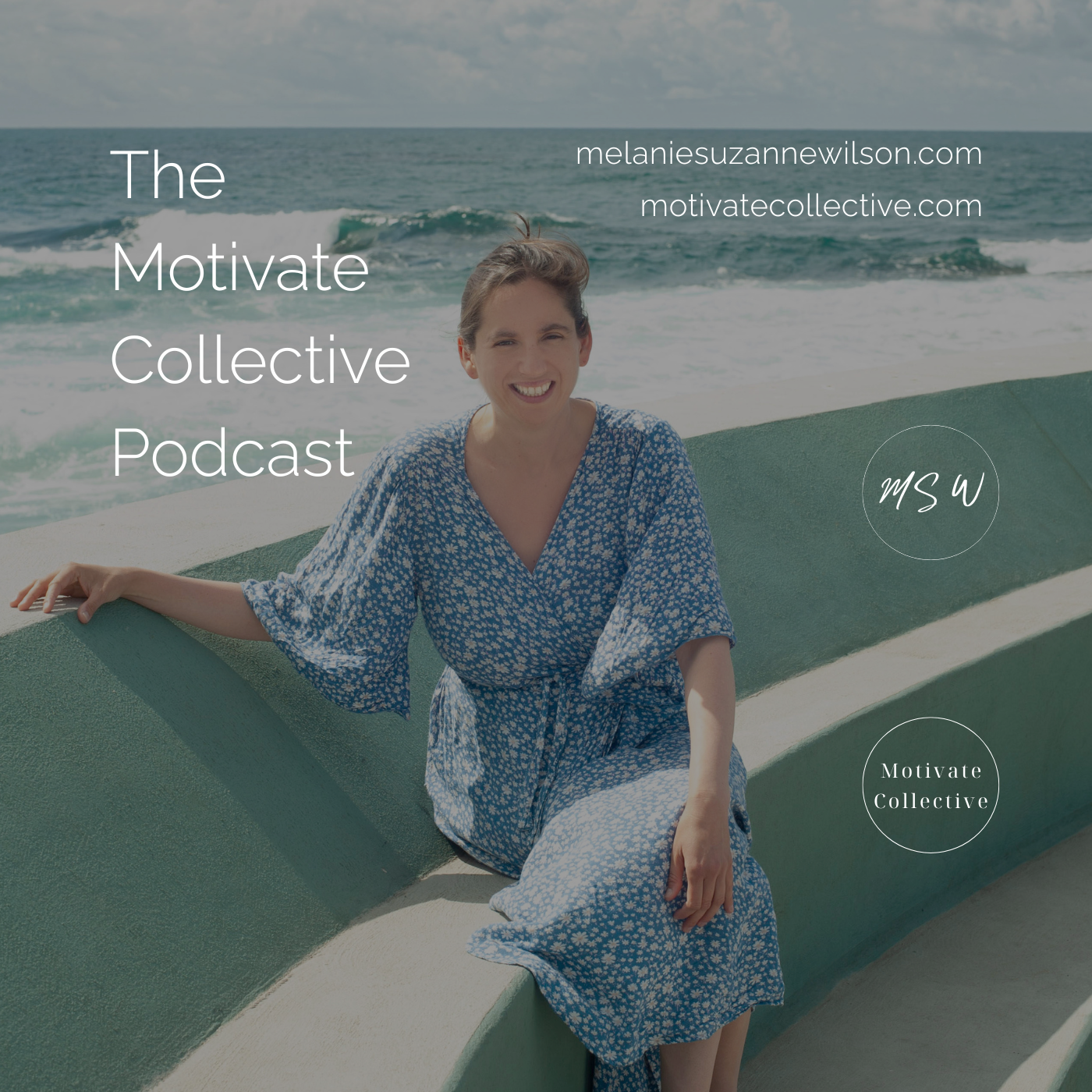
The Motivate Collective Podcast by Melanie Suzanne Wilson
by Melanie Suzanne Wilson
The Motivate Collective Podcast features conversations with Melanie Suzanne Wilson and wellness thought leaders from around the world. This show contains explicit content.
-
75
Persevering in Great Goals and Healthy Habits - Gary Miller, Olympic Ski Coach & HumanCharger Distributor
The Motivate Collective Podcast — Show Notes Episode: Do Hard Things — Movement, Pain, Light & the Habits That Keep You Alive Guest: Gary Miller — Olympic Ski Coach & HumanCharger Distributor Host: Melanie Suzanne Wilson Episode Summary Gary Miller has spent a lifetime doing hard things — coaching elite ski racers at the World Cup and Olympic level, surviving seven surgeries, and rebuilding his own health from the ground up. In this wide-ranging conversation, Gary and Melanie cover the habits that separate people who thrive from those who deteriorate: consistent movement, real food, resisting the pull of pain medication, and understanding your body's biological clock. Gary also introduces the HumanCharger — a transcranial light therapy device developed in Finland that resets your circadian rhythm in just 12 minutes — and explains why it's become his go-to tool for jet lag, mental sharpness, seasonal energy dips, and athletic performance. Guest Bio Gary Miller is a former elite ski racer turned world-class coach, having worked with the U.S. Ski Team at World Cup and Olympic level. He has coached some of the sport's greatest athletes, including Mikaela Shiffrin, and brings decades of experience in human performance, physical conditioning, and the science of recovery. Now based in Europe, Gary is a passionate advocate for holistic health and is an authorised distributor of the HumanCharger — a clinically-backed light therapy device developed by scientists in Finland. His forthcoming book explores pain, human behaviour, and why so many people have lost the ability to tolerate discomfort. Key Topics Covered The do hard things philosophy Gary's core message to athletes and everyday people alike: the gap between average and exceptional is not talent — it's the consistent willingness to do small, uncomfortable things every day. Make your bed. Hydrate first. Walk before breakfast. Do these things and you're already ahead of most people on the planet. His grandfather: a blueprint for longevity Gary's grandfather was told he'd be in a wheelchair by 55 after contracting polio at 12. He lived to 100. He rode a stationary bike daily, took cold showers, ate simply, never retired, and found purpose through his art. His son — Gary's father — retired at 55, stopped moving, and was gone by 70. The contrast is striking and personal. Body weight training at any age Gary hasn't lifted weights in years. Instead: 300 squats, 300 lunges, standing core work, and farmer walks through hilly trails with sandbags — all done outdoors. He explains why after 50, high reps of body weight exercises outperform heavy weights for joint health, strength, and longevity. Movement as medicine Woken up sore after a workout? Gary's answer is never the pill bottle — it's a walk on an inclined trail. He explains why consistent movement builds the strength to avoid injury in the first place, and why ibuprofen should be a last resort, not a reflex. The opioid crisis and our relationship with pain A Netflix documentary on Purdue Pharma and OxyContin sparked Gary's book-in-progress. A friend in Portugal confessed he had been a victim of Oxycontin addiction — going from pain relief to near-total cognitive impairment before getting help. Gary argues that modern society has lost the capacity to sit with discomfort, and that movement, food, and mindset are the real answers. Real food, simple meals, and the European difference After moving to Europe, Gary and his wife noticed they could sustain themselves on two quality meals a day — because the food was actually nutritious. Fresh produce, real bread without added sugar, local meat from the butcher. He walks through his go-to pasta sauce and a whole chicken Dutch oven recipe that feeds them for days. In contrast: a small bag of groceries in Maine recently cost his sister $110 USD. The HumanCharger — what it is and how it works Developed in Finland by a scientist and an engineer from Nokia, the HumanCharger is a small transcranial light therapy device worn like earphones. It delivers 10,000 lux of full-spectrum, UV-free light through the ear canal — where the eardrum is translucent and the surrounding bone is thin — directly stimulating the light-sensitive proteins that regulate the hypothalamus, cortisol, and the body's sleep-wake cycle. Twelve minutes. No drugs. No crash. Jet lag — why it matters more than you think Gary describes flying Mikaela Shiffrin's team into Finland the night before a race due to a delayed departure — and watching her turn in one of her worst-ever results. He estimates it cost her six figures in prize money. Hundreds of millions of dollars are lost annually to jet lag-related lost productivity. With the HumanCharger protocol — used every two hours on the day of arrival — Gary says he has not found a single person for whom it didn't work. Circadian rhythm, seasonal depression, and shift workers The same mechanism that causes jet lag affects anyone working nights, moving through daylight savings, or living through dark winters. Gary's wife reset years of struggling with mornings within one week of consistent use. A night trader in Boston was given the device to help reset between night shifts and weekend normal hours. The science is the same: light is the only thing that can reset the body's biological clock. Athletes and the 1% edge In sports where the margin between first and last place is 0.01 seconds, anything holistic and legal that improves reaction time, focus, and recovery is a genuine competitive advantage. A Finnish university study with pro hockey teams found measurable improvements in psychomotor speed — reaction time — with regular HumanCharger use. Gary now recommends it to national team athletes, particularly for long-haul travel to race venues. Timestamps TimeTopic00:00Opening — dressing for climate transitions coaching the U.S. ski team in Argentina01:32Snowbirds, cold weather, and Gary's 100-year-old grandfather03:24Retirement, blue zones, and the importance of purpose04:00Polio at 12, no painkillers, and a life lived in defiance of prognosis06:33Gary's father — the contrast between his grandfather and a life without purpose07:18Finding movement that works for you — Gary's own late start in sport08:41The uncoordinated, klutzy kid who went on to win almost everything10:30A mentor, a summer training plan, and becoming a different athlete12:04Exercise as medicine — why Gary works out instead of reaching for ibuprofen13:00Body weight training, sandbags, outdoor stations, and 300 squats15:43Uphill lunges, core every day, and why incline protects the knees18:00Incline push-ups against the wall — high reps over heavy weight after 5020:45Walking off soreness — movement beats the pill bottle21:48Programming your mind to do hard things23:10The Netflix Purdue Pharma documentary that sparked a book24:22A friend's OxyContin addiction — "the best day is the first day"26:06How opioids affect the brain and why pain pills become death traps27:20Food and joint pain — the link between sugar, processed food, and inflammation31:40500-pill bottles in US gas stations vs. a pack of 10 in a European pharmacy33:20Why Europeans are always moving — hiking in their 80s and 90s35:02Real bread, fresh produce, and why Gary started baking his own loaves37:00Converting AUD to USD — and what a good loaf of bread actually costs40:00Melanie's lentil dinner and the simplicity of real food42:06COVID, empty produce aisles, and full canned food aisles43:45Gary's two-day pasta sauce and the whole chicken Dutch oven method46:00Laziness, busy families, and doing hard things anyway49:44Introducing the HumanCharger — and a pivot to light therapy51:52The 1% athlete mindset — doing the small things that compound54:15Jet lag, the circadian rhythm, and coaching the US ski team55:30Meeting the founder of Red Bull — and what they used for jet lag instead57:30How the HumanCharger was developed in Finland and why the ear canal59:5210,000 lux, 12 minutes, and what it actually looks like01:01:51How to use it — around the neck, click once, 12 minutes, done01:02:30Gary's wife's transformation from non-morning person to consistent early riser01:04:3321st century software on a thousand-year-old operating system01:05:52The jet lag protocol — every two hours on arrival day for two days01:06:40Using it instead of an afternoon espresso — no caffeine crash01:08:20Finnish hockey study — psychomotor speed and reaction time improvements01:09:230.01 seconds — why the 1% edge matters in elite sport01:12:14Daylight saving, international calls, and the myth of the non-morning person01:13:20Social jet lag and night shift workers — resetting the rhythm on weekends01:15:10Melanie building her own website with Claude Code — and the case for an app01:16:50Price, battery life, USBC charging, and how long the device lasts01:17:48Why the music version was discontinued — Bluetooth licensing costs01:19:08Meta Ray-Ban glasses — Gary's other favourite piece of tech01:22:09The one thing nobody has said didn't work for jet lag01:23:10Holistic technology — how the HumanCharger fits into a whole-health approach01:24:22Iga Świątek, tainted melatonin, and the doping control risk of supplements01:25:30Mikaela Shiffrin, Levi Finland, and the race that cost six figures01:27:20Hundreds of millions lost annually to jet lag-related lost productivity01:29:22The $500–600M sad lamp market — and why HumanCharger is the modern answer01:31:32Gary's final message — giving back, living well, and choosing products that matter Guest Mentions & Resources HumanCharger — transcranial light therapy device; available at humancharger.com — $179 USD Jet lag protocol PDF — provided by Gary; available on The Motivate Collective website Mikaela Shiffrin — most decorated ski racer in history; coached by Gary at the US Women's Tech Team Dietrich Mateschitz — founder of Red Bull; personal friend of Gary's during his coaching years in Europe Iga Świątek — world number one tennis player; referenced in context of tainted melatonin and anti-doping Oxycontin / Purdue Pharma — Netflix documentary that inspired Gary's forthcoming book on pain James Clear, Atomic Habits — referenced in context of environment design and habit formation Meta Ray-Ban Glasses — Gary's recommended wearable for audio, video, and coaching Base 44 — app development platform referenced in conversation Quotable Moments "Your goal should be to be a one percenter. Do the things that most people will never do in their lives. You've already won." — Gary Miller "We are running 21st century software on a thousand-year-old operating system. Our bodies haven't evolved enough to overcome jet travel." — Gary Miller "My grandfather was told he'd be in a wheelchair at 55 and dead soon after. He lived to 100. He just went — no, I'm not doing that." — Gary Miller "When you wake up sore, don't reach for the pills. Go out and move. The soreness will go away." — Gary Miller "Light is the only thing that can reset your circadian rhythm." — Gary Miller "It's not about money. This is about somebody's wellbeing. You have to have something good that can really have an impact." — Gary Miller "We need to do the things that feel impossible. Everyone had something that felt like the limit at some point." — Melanie Suzanne Wilson Key Takeaways Consistent daily movement — even simple body weight work for 20 minutes — is more powerful medicine than most pills on the market. After 50, high-rep body weight training protects your joints and builds genuine strength. Real food, cooked simply, is affordable and transformative — your body can tell the difference. The modern world has engineered our disconnection from our own biology. The answer is not more drugs or more screens. Jet lag is not trivial — it costs athletes podiums, executives board room performance, and costs the global economy hundreds of millions annually. Light is the only thing that resets the circadian rhythm. The HumanCharger delivers that in 12 minutes with no side effects. Becoming a one percenter isn't about talent. It's about making your bed, hydrating, walking before breakfast, and doing those things every day when most people won't. About the HumanCharger The HumanCharger is a transcranial light therapy device developed in Finland. It delivers 10,000 lux of full-spectrum, UV-free light through the ear canal in 12 minutes, stimulating the biological pathways that regulate energy, mood, sleep, and circadian rhythm. Used by elite athletes, shift workers, frequent travellers, and anyone navigating seasonal energy changes. 💡 Price: $179 USD 🔋 Battery life: Up to one month with daily use; USB-C charging 📄 Jet lag protocol: Available on The Motivate Collective website Connect with Gary Miller [Insert Gary's website, HumanCharger link, and contact details here] Connect with The Motivate Collective 🎙️ Listen and subscribe: www.motivatecollective.com 🌿 Join the community for conversations, events, and resources built around growth, wellness, and conscious living: www.motivatecollective.com #TheMotivateCollective #HumanCharger #WellnessPodcast #ConsciousLiving #CircadianRhythm #LightTherapy #JetLag #DoHardThings #MovementIsMedicine #ElitePerformance #PersonalDevelopment #GrowthMindset #HolisticHealth #ConsciousLeadership #LongevityHabits Transcript It's funny because when you're a young kid like I was at 15, you don't really, I don't think you notice it maybe as much. But when I really noticed it was when I went back years later and I was coaching the U.S. ski team and my athletes, it was the only time they ever held a downhill, World Cup downhill race in South America. It was in Las Linas in Argentina. And, you know, and all the guys, you know, they're coming from summer and, you know, within 12 hours, they're in winter. And of course, they don't dress appropriately. Right. So what happens is everyone gets sick right away. Instantly. Yeah, it's like, you know, they're all freezing and they and nobody really thought about it. You know, it's just. But when you're at that level, you have to be really cognizant of Melanie Suzanne Wilson (00:55.734) Instantly. Gary Miller (01:09.386) you know, weather and your environment and what you're stepping into. And yeah, it's always a challenge, you know, and over time you learn these things and it gets better. But it's not easy. It's not easy. Melanie Suzanne Wilson (01:23.054) It's not. I'm guessing if you get to the other countries in the transitional months, it might be a little bit easier. Gary Miller (01:32.256) Yes. Yes, for sure. Melanie Suzanne Wilson (01:34.69) And of course, and some people want the other seasons. I have some Italian relatives who don't complain when they are suddenly just getting summer all year when they travel. Gary Miller (01:47.723) Yeah, mean, you know, we growing up in the Midwest of the U.S., right? I mean, it's our winners were pretty severe winners. They were cold and snowy. And, you know, we were in the Great Lakes region of the U.S. And that's just, you know, from you got to figure from November through February, March, it's it's winter and it's cold. And and most I wouldn't say most, but a lot of people that are older, they all go to Florida. We call them the snowbirds. And they go down there because they don't want to deal with the cold and the snowy weather. My grandfather was a bit of an anomaly. He was one of these guys. He was a really well-known artist, watercolor artist. He never minded it. And even into his, he lived to be a hundred, believe it or not. But he felt that living in that environment was healthier. And this man was way ahead of his time. I mean, he was taking cold showers or he would swim in the lake when it was cold. And, you know, he just embraced that. And he said, first of all, I don't believe in retirement because I think it's unhealthy. And I don't need to go down to a warm climate. And he was a little bit of a maverick that way, I guess, is what you could say. Melanie Suzanne Wilson (03:24.19) Even the idea of not retiring, whatever retirement really means, that's now associated with the blue zones, any thoughts about longevity, and people are seeing that. But if you look at some people who retired early in the traditional definition of that, I can understand that so much because my grandparents were like that. They retired in their 50s, but they did so much afterwards. And you kind of need that because you need to keep the brain alive and you need to stay connected with the world. Gary Miller (04:00.458) My grandfather was really unique in that sense. Okay, here's a guy that had polio when he was 12. And he went to a clinic in Cleveland, Ohio for about nine months. And this was back in the early 1900s, right? So the only methods they had to fix his polio, which it couldn't really fix, right? And they didn't have vaccines back then, was they put them on the rack. then they try to stretch it and they would, and all this, there was a lot of painful stuff that was going on and they couldn't use morphine and things like that on kids. So they did surgery without really any. sort of painkillers. I mean, was weird. And he really endured some hard times, but it really drove him. And he used very creative methods. They told him that, you know, you're going to be in a wheelchair at 55 and dead soon thereafter. And he just went, no, I'm not going to do that. And he got to a point where he could walk. Melanie Suzanne Wilson (04:46.413) Nothing. Gary Miller (05:15.66) fairly well, always walked with a limp because one leg was pretty bad. he and my grandmother traveled all over the world. He had a stationary bike at home. He rode that stationary bike every single day, well, I should say five, six days a week for an hour every morning. He must have gone around the world two or three times, right? And we would always have a big celebration when he did. But he just always felt that that exercise was was paramount. And like I said, you know, he was way out of his time. Cold showers. He ate very healthy foods. He didn't he didn't overindulge. He'd like to have a glass of beer or a glass of wine at night. But that was about it. And he lived to be 100 years old. And in contrast, my father, OK, his son, He retired when he was 55, I believe. Okay. And he got prostate cancer when he was 60. And, you know, I think it was like 10 years later, he was gone. Melanie Suzanne Wilson (06:32.866) That's terrible. Gary Miller (06:33.085) And well, and he didn't, but he didn't live like his father. know, he, when he quit work, when he sold the business and quit work, he just would fly his airplane a little bit and he'd ski a little bit and he, but he just never had purpose. He never had purpose. And I think there was some of that. He also, you know, he drank more than he maybe should have and he. didn't eat that healthy. And I remember him telling me, I don't need to exercise. I did that when I was in college and as an athlete. And that was kind of it. And he just sort of withered away. And yeah. Melanie Suzanne Wilson (07:18.818) That's, think the exercise topic is an interesting one and it's great hearing it from you because you deal with exercise all the time. I had a limiting belief like that, but when I was young, I didn't feel coordinated. When I was young, I wasn't the typical sporty type, but it was so much later on that although yoga isn't a sport, I was able to follow something that was physical in some way. And I really hope that everybody can just find something that works for them. Do you think that some people are more comfortable with some activities more than others? Gary Miller (07:58.4) Yeah, I think so. I'll tell you a funny story. OK, so I come from a ski family, right? My parents were competitive and I have two sisters. when I was, I want to say probably I would have been about six or seven years old. OK, my parents wanted to take us all up skiing for the weekend. We drive up to Michigan and go skiing and I didn't want to go. And my sisters, they wanted to go, so they went, you know? But my parents got tired of leaving me at home with a babysitter. Okay? So my mother was very clever. She hired the biggest, meanest babysitter that she could find. And after two weekends of enduring that old bat, I was like, okay, I'm going skiing. I was, you know, but I was the consummate, uncoordinated, klutzy kid. I mean, yeah, I couldn't, my father put me in Little League baseball. I couldn't catch a ball to save my life. I couldn't bat. I couldn't throw. I couldn't throw a football or kick a soccer ball. I mean, I was the definition of no athletic ability at all. Melanie Suzanne Wilson (09:04.514) Really? Gary Miller (09:26.483) And I think, you know, it sort of morphed into this, well, was, as I was started to get involved in ski racing when I was, would have been about 10, I guess. In 10, 11, 12, I sort of, it was a social thing because it was around a lot of my friends. But I started to get a little annoyed with the fact that they were always coming home with trophies and medals and I was coming home with zero. So this sort of thing just, you know, eventually I got better and I had a mentor from the U.S. Ski Team, a gal who just saw me at a camp and went, this kid's really struggling, I need to help him out. And she turned the tide for me, you know, she told me what I would need to do if I wanted to be at the podium level versus, you know, with everybody else. And she gave me a physical fitness program for the summer and fall months. I think I was really kind of thrilled that somebody took an interest in me and said, hey, you can do great. Just you need to have a little bit of a roadmap. My father was my coach, but he didn't really push us to do any physical activity per se. And it made a difference. After a year, I was a completely different animal. I I was strong and my coordination sort of, you know, once my body caught up with itself, but by the time I was probably in my 16, 17 years old, I was winning almost everything. Melanie Suzanne Wilson (11:11.712) everything. Gary Miller (11:12.639) Yeah. Yeah. Now that was in the sport of ski racing. You know, if I wanted to go out and play golf or play tennis, it wasn't that great. Right. But so I still had some of that. But, you know, over time, you know, some people are really blessed with with, you know, a natural coordination. And and but but now over this long span of my life. OK. Boy, exercise to me is the ticket. mean, wouldn't, you know, so many people when they have an aching pain, aches or pains, they take medication. Okay, I go out and work out and it's like the best medication you could ever have. Melanie Suzanne Wilson (12:04.554) It really does heal and fix things. Gary Miller (12:07.786) Absolutely. That movement of any type. And I like to do it early in the morning because, you know, after sleeping at night, you get a little stiff and that's just the way it is. And having a body weight at my age, I don't need to go in the gym anymore. I use body weight exercises and I'm outside in nature. I have a little music going and it's, boy, it takes care of all that. And I've had I've had, I don't know, seven surgeries or something, you I've had discs taken out of my back, I've had four knee surgeries, you know, it's been all this sort of stuff. And I got friends that walk around like they're half dead, and I feel great. Melanie Suzanne Wilson (12:52.908) movement, it makes a giant difference. It's great that you are seeing that at any age and after all these injuries and things. The simple habits make a difference. I can relate to that so much. Someone told me recently that I'm aging backwards. Okay, I'll go with that. And there are things people can do anywhere because I looked at Pilates after yoga and one thing they both do is doing a simple plank. I was not the type to do something like that, but you could use any floor at home, anything. And so people don't have to be an expert in something. Since you've done so much with movement for the audience to agree that people don't have to do something complicated to get movement. Gary Miller (13:44.585) No, and you don't need to go out and buy a gym membership. You don't need to go out and buy a bunch of equipment. literally have, I've got like a, it's not really a yoga mat because it's a little thicker, you know, it's a little softer. And I've got two sandbags that are probably, I think they're like maybe six kilos or something like that. So what is that? 15 pounds maybe or somewhere around that. Melanie Suzanne Wilson (14:17.154) I normally use Kilos, so we can try to help the Americans convert text if they need it when listening or they can Google it. Gary Miller (14:21.414) Yeah. They can Google it, So anyway, I can use it for like, I'll use it for, you know, some types of squats and I'll use it for curls and things like that. Or I'll go out and I'll do a farmer walk on a hilly trail and I'll just carry him with me. Melanie Suzanne Wilson (14:46.574) so the farmer walk is that simply carrying things. Gary Miller (14:52.126) Just carrying them, just put them in your hands and carry them. you know, it's one until you get used to it, you know, it's it's a challenge, but it's it's really it's good. And and. You know, I do body weight because at my age I don't my my joints aren't as elastic as they were when I was younger. And so I don't put that strain on them, but it's that it's a constant movement. So if I go out and. typical routine is I'll spend probably 15 minutes getting up onto a trail so I'm warmed up and I'm ready to go and then I'll have little stations that I dream up on my own and one will be the first one is always squats, regular squats and I'll do 100 of Melanie Suzanne Wilson (15:43.278) Literally. Gary Miller (15:43.883) 100 squats, yeah. Now, when I started this a couple of years ago, I started out with maybe 30 or 40, and I could probably, if I, I'm gonna do it one of these days, I could probably do 200 of them. Okay, and then I've got, but I've got three different variations of squats, so I'll do a total of 300 squats. And then I've got core. I do standing core in between those squat sets. And then I also do lunges. I'll do normally if I go out, if it's lunch day, I'll go out and I'll do 300 lunges. And I'll do them uphill with a slight grade so you don't put any stress on your knee. Melanie Suzanne Wilson (16:34.542) Okay, that's a hint for everybody. So uphill, is there a way to do that? If someone has a normal floor, is there a way to do these things that will be more gentle on the knees? Gary Miller (16:46.622) Yeah, like I said, with the incline for me, it's because I don't have any cartilage left on my right knee. So for me, I try not to do something that impacts it too much. with the incline, just a little bit, you've got a little bit of your weight behind you. But it's, body weight exercises are fantastic. I was with a friend yesterday, we went for for a long hike. He's a pilot for FedEx and he's, you know, he's younger than I am, quite a bit younger than I am. And he's got all these aches and pains and he's, but he's now 57 and he's going to the gym and he's lifting weights, but he's always having problems. And I said, dude, you got, you know, when you hit 50, That's kind of the magic number. You don't need to lift a lot of weights and just start doing high reps of body weight exercises. And you can't believe how strong you can get. He says, yeah, because I'm having trouble with push ups. And I said, here's the key with push ups. I had to give up on them a long time ago. just I had a disease when I was a kid, so my back didn't grow straight. So it's a little harder for me to do push ups. But I said, I do incline push ups. You can do them against the wall. But instead of doing 10 or 15, do 50, 50 or 60. You'll get strong as an ox. Melanie Suzanne Wilson (18:23.214) One client, what do you do just to lean against the wall? Gary Miller (18:26.461) lean against the wall or slightly down just a little bit and you're just, and you do high reps and every couple of weeks add another 10. You'd be surprised. It's crazy. if you have, so I've got squat days, I've got lunge days and with some standing core in between there, because your core is your, you can exercise your core every day. It's just, and people don't realize that you can do that. And then there will be days when it's maybe really miserable outside. I I don't mind going out in any kind of weather. If it's misting a little bit or it's cold, I don't care. It's good to be outside. But I'll do an inside day and I'll do an hour of core. And my God, I've got probably half a dozen exercises. Melanie Suzanne Wilson (19:14.99) What do you do for the core? Gary Miller (19:24.335) standing core is what I usually start with because it's a little bit easier when you get out of bed and you're stiff a little bit. So that's what I start with. And then I do, you know, I do some arm curls and I do some some over behind the neck press, you know, with the sandbags and and then I'll get on the floor and I'll do another seven or eight variations of floor core. And and The cool thing about doing core like this with movement, this kind of movement, is you're actively stretching your muscles. I don't need to stretch as much after I do a session like that. That's crazy. mean, it's one of the best. balms you can put on your body is doing these movement exercises and and even if you wake up and you're a little bit sore, I mean in the beginning, yeah, you get a little bit sore or if I increase my my intensity a little bit or the or the reps. Yeah, I'll get a little sore go out and move. Soreness will go away. Take don't use the pills. I mean it takes a lot for me to reach for the the Ibuprofen. Melanie Suzanne Wilson (20:45.4) Are you saying that a walk will ease the aches that people might have a day after a workout? Gary Miller (20:51.291) Absolutely, absolutely. Best thing you could do, go out and move. Don't exercise. Just go out on a trail that maybe has a little bit of elevation and just walk. It's phenomenal what it'll do. And it's hard because the common reaction for people is when they wake up in the morning and they have an ache, they'll put some ibuprofen in their bodies and they don't need to do that. Go for a walk. Besides, you get the sun, get the, you know, you get the, it's just healthier. Just healthy. Melanie Suzanne Wilson (21:24.078) and they might. Melanie Suzanne Wilson (21:31.65) it is. I'm guessing some people would be using the pills to replace those other things as well. So they might not even be adding the pills onto the good things. They might be just only popping a pill and then sitting on a couch instead of getting out there into the world. Do you think so? Gary Miller (21:48.414) Right. Yeah. And listen, I don't want to be preaching the fact that I'm something special, that I've been doing this for so many years, that it's easy. Nothing's easy. But you have to kind of program your mind to do hard things. Because as time goes on, your body just isn't kind to itself. It starts to... deteriorate, that's life. But you can overcome that. It was interesting because when my wife and I moved to Europe a couple years ago, we ended up in Portugal because it was the easiest place to get residency right away. And we were in the Algarve where it's nice and warm and it was on the seaside. it was an interesting experience. And I really enjoyed some of the time down there because getting out in the morning and doing stuff and then going for a swim in the ocean where it's cold was great. And that's that's another topic all in itself. But, you know, these types of things just. I think the real change for me was one night I sat down and watched Netflix and there was a documentary on that, or actually it was a movie on the Purdue Pharma, you know, that had the Oxycontin, the heavy duty, people were taking this narcotic to eliminate pain, but they became so addicted to it. And I thought, why? You know, I came from a sport that probably is one of the more brutal sports on the planet. mean, you know, when you crash skiing, it's not always that pleasant, right? So we were out skiing and competing in inclement conditions where it's really cold or it's super icy. And, you know, it's not an easy sport. mean, it's tough. I'm thinking, why are these people, why are they popping a pill and sitting on the couch and Gary Miller (24:03.869) But then they become addicted. Melanie Suzanne Wilson (24:06.69) And this is so deep because this is bigger than the particular pill they are turning to. It seems like people don't know how to accept pain and discomfort. Gary Miller (24:22.876) They don't, so I'm writing a book about it. Yeah, yeah. And I said, you know what? I gotta write a book because this makes no sense to me. So I've done a lot of research. I've got it now, I'm about halfway through most of the major edits and I'm doing, I've gotta get it to a copywriter. I'm taking those steps. It will be published this year. But I felt it was really important and I dig into, you know, Melanie Suzanne Wilson (24:25.774) What the? Gary Miller (24:52.984) what our ancestors, going back to the Viking days, what they did for pain and try to educate people on the topic of pain, because I don't think people really understand it. And it wasn't very long after watching that film on Netflix that there was a friend of ours in another town in Portugal. had coffee with him one day and I was explaining that I saw this thing and he goes, oh my God. He said, I'm a victim of that. He said, I got hooked on Oxycontin. And he said, let me tell you something. The best day on Oxycontin is the first day. After that, it goes downhill. He said, I got to the point where I was almost stupid. He said, couldn't drive my car. I couldn't remember things. Melanie Suzanne Wilson (25:44.162) to. Gary Miller (25:49.08) And he said, I was a mess and I had to get some rehab to get out of it. He was one of the lucky ones. If he would have continued on that, he would have ended up dead like so many Americans have on taking that drug. Melanie Suzanne Wilson (26:06.04) dead. So does it mess with the brain and also the body? Do you know what it's doing to people? Gary Miller (26:14.864) Yeah, it's just a really, really powerful narcotic that just eliminates pain, but it's so highly addictive. mean, it's like a... It was easier than people getting hooked on heroin or crack or anything like that. I mean, it's awful. I mean, it's really bad. mean, they would find... you know, a husband and a wife sitting in a car dead because they had taken, they eventually just gone. Melanie Suzanne Wilson (26:54.03) That's so sad. And it's for the pain. I'm wondering how these people even got into so much pain because chances are that some of these aches are from not doing the movement to begin with. I can tell you that I was cutting back on my exercises when I couldn't get to a gym for a couple of weeks. And I know you were saying that we can do things at home. Gary Miller (26:54.108) Yeah, it's terrible. Yeah. Melanie Suzanne Wilson (27:20.566) I put off getting the right mat, I think if there's one thing you need to get, everybody needs a decent mat. But I can feel it so much. I can feel just a line across my back from the aches of not doing the movements I was doing a couple of weeks ago. And if some people are going months or years without doing these movements that we all need, then it would be wrecking the... Gary Miller (27:45.221) If you know, if you take the average. I'll take the average guy, right? He maybe he works. At a place where he has to lift some heavy things periodically, maybe it's a warehouse or a building supply place or something like that, and he tweaks his back. OK. First thing you do when he gets home, he reaches for the pill bottle and and. And of course, it's a compounding thing, right? If you exercise consistently, you become strong enough to be able to do those simple things and not get hurt. Now, that's not always the case because I can go and lift something. Although I've learned over time when you lift, you lift with your legs, you don't lift with your arms and, you know, just hinge at the waist. But If you're if you're physically strong enough and so many people aren't and it's really it's it's really a problem in the US because, you know, so many people are overweight. They have let themselves go. And and when you do that, your whole body becomes out of balance. You know, if you've got a big stomach in front of you, you're you're out of balance and it puts more strain on your back. But by keeping yourself active and healthy, You you can overcome a lot of stuff. And you know, if something, if I really get, if I really tweak something, I won't hesitate to take an ibuprofen, but I'll only take it once. And that's it. Melanie Suzanne Wilson (29:29.522) I'll you, I'll tell you, there's so much there and I wanted to, I wanted to mention the importance of food because of course if someone eats all the wrong things all day then they will, it would be too difficult to run that off, of course that's a part of it, but you mentioned the pain relief again and I was so keen to, I don't know if I've given this anecdote in a previous recording but when I had that tivule plateau fracture years ago, 2017, I was in the hospital bed and I didn't understand how things work and the staff told me, so there was a button for some sort of pain relief, I don't even know what was going through my system, but the staff just said whenever I am feeling pain press that button, I kept pressing it until I vomited because I was just doing what I was told. Then I just didn't take that, the tremadol gave me hives, they would appear in a patch on my arm and then vanish and then a patch on another spot. That was so weird to have hives just popping up and vanishing and popping up again. And so I just skipped those things and just coped. We can just cope without those things. But one thing I assume other people are doing that I did there is I just mindlessly did what I was told until people realized, okay. this is having this effect. And by that point, we are then recovering from all those side effects. Gary Miller (31:02.631) Oh, for sure. Yeah, exactly. mean, it's and you know, there are are societal differences, too. And I don't know enough about Australia and you know, where you guys are. It's like one of the places that I want to go and I have never been yet. I'll get there. But it's you know, it's it's in the US. You can walk into. You know, a gas station, a convenience store. and you can buy a bottle of 500 pills. Okay? mean, that's normal. Anywhere. Yeah, it's crazy. Melanie Suzanne Wilson (31:40.75) anywhere. 500. What is anyone doing with 500 pills? Gary Miller (31:46.568) They buy a big bottle, you know, that it's over excessive and it's marketing and it's everything else, right? And in Europe, it's completely different. If you want something for pain relief, it's usually ibuprofen. And you can buy it, but you can't buy it in a gas station. You can't buy it in a convenience store. You can't buy it in a grocery store. You can only buy it in an opotech, right? pharmacy. the only place you can buy it and it might be normally a package will you can get 10 pills in a box or you can get maybe 20 but you don't get more than that which is Melanie Suzanne Wilson (32:31.982) We have that, sorry for diving in, we have that sort of quantity, but it is often available at the supermarkets nearly anywhere. Gary Miller (32:40.923) Yeah, no, and over here in Europe, can't do that. And of course, but the society here, everyone's out walking or biking or running or doing something. They're always active. And it doesn't matter. We saw a woman this winter that had to be in her late 80s. She had a walker with wheels and she was pushing it along the trail with some slushy snow below her. And I'm like, all right, that's fantastic. You know, they just they don't mind. You go up hiking here and you see you see people that are there in their 80s and 90s that are out there when they've got their sticks with them and and they're always they're always moving. So it's yeah, it's a you know, it's a societal thing. And, you know, going back to what you were saying with with food, the diet is so important. If you're eating. more sugary type foods and processed foods, you will have more joint pain. I mean, they've proven that. That's a, you try to eat really healthy. We tried to do intermittent fasting back in the States. We couldn't do it. You don't have high enough quality food unless you went to Whole Foods every week to get your groceries. And course, you know, the again, it's a societal thing. People buy groceries for a week. Well, you can do that because most of that stuff is preservatives in it. It'll last a week. Over here, everyone goes to the grocery store almost every day or every two days to buy fresh products or fresh fresh produce anyway. And so we noticed when we got to Portugal, we could exist on two two meals a day. We would eat at noon, and we would eat at six, seven o'clock at night. That was it. because the quality of food, and we shopped every other day or every day if we had to, and we'd go to the farmer's market or wherever, and you went to the butcher to get your meat and... Gary Miller (35:02.491) It's crazy. The simple staple of life, bread, for example, in America, loaded with sugar. Okay, to get bread like we get here, you know, was just, it was so expensive in the States. So I can buy a really nice loaf of fresh sourdough bread, okay? And I can pay one, one euro 99. Melanie Suzanne Wilson (35:31.022) Neeloo! Gary Miller (35:32.037) Yeah. And when we were in Michigan in the U.S., that same loaf of bread was ten dollars U.S. Melanie Suzanne Wilson (35:40.45) think it's like that here a lot and it's interesting you bring that up. If I was going to go to a sourdough bakery somewhere that makes the properly, I would say it would become 10 to 12, maybe 8 to 12 Australian. So what's the American dollar? I'm going to guess off the top of my head 1.5 times that just wild guess. Maybe not. Gary Miller (36:09.199) Yeah, probably. I can actually look it up, but I know what you're saying. I wonder if I have Australian. OK, so. It's a U.D. right. I think that's what they go by. Gary Miller (36:30.695) would be, okay, so Australian dollar, one Australian dollar would be 0.72, not quite a US dollar. Right, 72 cents. Just a little bit lower. Melanie Suzanne Wilson (36:45.902) Right. So if I tell the internet, I'm just checking convert a, let's call it 12 AUD to USD. So that's, it's complicating this. Gary Miller (37:01.383) 12 would be $8.80. 860. 860. Yeah. Yeah. Melanie Suzanne Wilson (37:08.398) So basically for the Americans listening, a good loaf of bread over here is around what they would call $8. But if you're saying it was around the $10 mark in America, then it's pretty similar. seriously, then looking at the bread in the supermarkets, I like how as watching the guy who does the Blue Zone, Stan Butener, I think his name is, and And at some point he got the bread and just squished it up in his hand and said, if you can do that, then it's not decent bread. I get so worried, but even the cheap bread is not so cheap here now in terms of price because everything is becoming expensive. But I find that I just can't even eat that. I'll just skip it until I can get real bread. But if you are going to the places that don't have options, then that's all there is. And it's not the same. sourdough is so different Gary Miller (38:06.289) Sourdough is really different and we couldn't, in Portugal we couldn't get. kind of bread we really wanted to get, right? I mean, I'm a little spoiled because I used to spend more time in Central Europe and, you know, between Italy, Austria, Germany, Switzerland, you get France, you get phenomenal breads. So I started making our own bread. And then that was really simple. It wasn't sourdough because I didn't get into the whole sourdough starter and all that stuff. But to be able to make a fresh loaf of bread every two days was Melanie Suzanne Wilson (38:30.99) You have to. Gary Miller (38:41.946) really economical and it was kind of fun actually. But it's those simple things and you consume fruits and the vegetables and eggs. are, what we buy eggs here in Germany for is, you pay in the States eight or nine dollars for a carton of eggs. I mean it's gotten so expensive, yeah. Melanie Suzanne Wilson (39:08.418) Really? Gary Miller (39:09.988) Yeah, the US is really out of control right now. mean, what obviously, you know, with the whole the whole thing, the whole political thing is just an absolute disaster. And my my two of my sisters, they've been here, they visited and they couldn't believe how inexpensive the food was. My sister the other day wrote me, she said, I bought a small bag of groceries and she lives in Maine. And it was it was one hundred and ten dollars US. Melanie Suzanne Wilson (39:15.501) apology. Gary Miller (39:39.78) Small bag of groceries. I can go here to the Lidl and I can buy the freshest fruits. This stuff all comes up from Spain and Italy. I bought a big bag of groceries and it might have been 30 euros. Melanie Suzanne Wilson (39:58.05) That's better and people need to get to the basics. I will add again that I don't eat eggs but just hearing that price that really stunned me because here in Australia we are hearing that there are there are war events going on. The thing we kept hearing about was the fuel prices. So Americans will say gas, we say petrol, whatever you call it. Gary Miller (39:59.547) Yeah. Melanie Suzanne Wilson (40:22.324) that was becoming the big fear and people were doing the joke memes to emotionally cope, all of that. But food is an interesting one because I think that's creeping up slowly or at least even if other things are chewing into the budget for everybody. I believe people always forget how affordable food can be because it sounds like even the basics are out of control in America but I'll tell you the very simple meal for example that I had tonight because if we're talking about salad dough, I impressed myself. I impressed myself. I, I fried up the finely chopped onion and some fresh tomato and some brown lentils and tossed in some olive oil and taco seasoning. can tell you those simple ingredients. I used half of the onion. I used half of the tomato. This is barely any food. At least over here, you can get a can of lentils for a dollar. I don't know what it's like in America now. And it was, it's seriously enough food for two dinners. And it was so simple. think people don't realize how simple food is. People think they need, you know, I think the ingredients list has missed, it has messed everything up because people are looking for a particular products that might've had. Gary Miller (41:24.889) Yeah, yeah, yeah. Gary Miller (41:30.48) Mm-hmm. Melanie Suzanne Wilson (41:47.534) nutrients, you know, something is processed and then, you know, or people are checking the grams of the protein or that stuff instead of just checking is this real food. I hope that everywhere in the world people can at least go and get the simple things like potatoes, whatever, and just at least eat something real to start. Gary Miller (42:06.467) It's member during COVID. OK. I was always blown away by. Going into the grocery store and seeing. Seeing all these aisles with. Boxed and canned foods. That were completely empty. In addition to the. Toilet paper. I'll was completely empty, right? That one still baffles me. It's like OK. Something's weird about that, during things like that, they all rush to buy toilet paper. Whatever. So, so, but anyway, if you continue on and you get to the produce area, it's completely full. And they were even throwing that stuff out. People, you know, we're going to be stuck at home. So we're just going to make boxed macaroni and cheese, or we're going to do canned jar of pasta sauce. Right. Melanie Suzanne Wilson (42:42.673) yes. Gary Miller (43:06.822) And that's what we'll eat that. And it's like, no, you don't need to do that. Life is food is simple. And you can you can do things that are really cool. When my kids were young, they love pasta, right? But I wasn't going to give them the spaghetti owes or whatever they they they have in the can. Right. I said, there's no way I'm going to do that. You can you can buy I really got into it big time. So I would buy Roma tomatoes. I would blanch them. Okay, peel the skin off and take the seeds out and then I would press them and I would make my sauce that way. Well, you know, I don't really need to do that anymore because here, especially being so close to Italy, you can buy a box of the crushed tomatoes that don't have the seeds and all that sort of stuff in it. And it's pretty pretty similar. And then it's just, you know, some garlic and some olive oil first, pour the tomatoes in there, and I add salt and pepper and I use a, I use a like a, like a pink Himalayan salt and maybe some Italian herbs. That's it. Then you throw the pasta in the water and you got a phenomenal healthy, and we can get two days out of a, you know, when I make a batch of pasta. We use a like a porcelain, they call it a Dutch oven, I guess, or a crock, it's like a crock, you know, and with a lid on it. And all you have to do is put in, slice up some potatoes, some carrots, onions, celery, plop a chicken in there, put some, we use just curry, we cover it in olive oil, and then we put some curry powder. Melanie Suzanne Wilson (44:45.331) that's... Gary Miller (45:06.469) some brown sugar, a little salt and pepper, and you've got a phenomenal meal. Okay, you've got your chicken, which is great, and you've got your vegetables. And then I go and I strip the chicken down, either my wife or I will strip the chicken down, add some bouillon to it, some of the water in a bouillon cube, and we have chicken soup for two more days. Gary Miller (45:37.347) And you're eating pure food. I have a little bit of a thing for dark chocolate, but it's the lesser of a lot of the chocolate evils. But those kinds of things, they're affordable if you do it this way, but people inherently, I think, are lazy. Melanie Suzanne Wilson (45:49.165) Then Melanie Suzanne Wilson (46:00.598) To some extent, laziness is a part of it. And I will clarify, also, so I, I don't eat dairy eggs or meat, but I think if everybody starts with real food, it's a great start. And I was reminiscing today that I am just bursting to roast some potatoes. And again, how difficult is it to just, especially the tiny ones, you barely have to cut them, make sure it's clean enough, throw it in an oven, you don't have to do anything. But you mentioned the laziness. I wanted to comment on how people sometimes do end up with busy lives. And although there are ways with technology to make our time more efficient, things happen. People, families work, things get busy. But I've been looking in different areas. So I'm at the coast, but I'm close enough to Sydney. And when I first started exploring Sydney again, I thought, Every place has pastries. It was pastries at all the coffee places. And I was trying to figure out, okay, where is the quick healthy food? I can tell you it's the unexpected places. If I go to the nice coffee places, it's perhaps a big refined white bread with something in it, whatever. There'll be the places that are doing the burgers that are extra oily, whatever, but the supermarket will have a salad with some falafels in it. It's simple. I, a few times I went to the supermarket when they had some clearance things at the end of the day and got the simple salads then. So you look for the basics. I keep my eye out for a, an avocado sushi roll. It's a few ingredients, I know what's in it, and I can eat that on the go. I passionately believe people need to at least look for the real food, even if they are getting busy. Gary Miller (48:05.003) Absolutely. And it just takes, it takes a little bit more effort. It doesn't take a lot. It takes a little bit more effort. You know, it's like... Melanie Suzanne Wilson (48:13.646) No. Gary Miller (48:18.31) I mean, it goes into a little bit off topic, but it's a little bit like, you know, you're home with the kids, right? And, and, and, you know, we would trade off cooking. Okay. I would, I would cook some nights. My wife would cook some nights. We take the kids out and do something active. And, and, and today there's too much of this. Give them this and keep them occupied. Right. Really? That's not helping anybody. so, yeah, mean, it's just keeping... I know people with two people working, it's really a challenge, right? And they come home from work and they're tired. I understand that. I've been there, done that before. But it's going back to what I said, do hard things. dig a little bit deep. Don't let that dictate your life. Still, you have to prepare good food and good meals. And then after dinner, go for a nice walk. then you'll sleep much better at night. That's kind of it. Melanie Suzanne Wilson (49:44.042) It's, think the do hard things wisdom that's going to encourage people who don't have someone who can carry the load with them because you two are such a team and I hope that all couples can be a team and just alternate with duties, things like that. That makes a difference. And I, I feel excited to know that I won't always be just juggling everything alone, but to those people who are juggling everything because either they are alone or their other person just isn't doing the things, or maybe they are both working. This is a simple facts of life of things will be difficult. We just have to do it. And you are coming from, course, a professional background where you help people to do great sport as well and reach goals. So, We've barely even talked about the human charger yet, so we'll get to that in a second. But every topic was just golden. I forgot just how diverse this is. But absolutely. You need to just find the bravery. And it's great that you're saying that. It's one of those moments when a podcast guest tells me what I need to hear. Because I think we also need to do the things that feel impossible. Everybody had something that felt like the limit at some point. But I'll tell you in terms of doing hard things, okay, because a pivot is better late than never. I have, I don't know if anyone else uses the human charger for ears popping, but I just found that maybe it's, maybe half of it is just putting those little earphone rubber things in. For those who haven't seen it, it's just like if you get earphones to listen to music and it has the rubber things on that. I don't know if that's contributing to it or also the light, but just popping those on when my ears are going weird on a long trip, it has seriously made a difference. Gary Miller (51:52.727) I listen this this device is is probably one of the the crazier things. And and to to lead into that a little bit. Doing hard things. Is something that I talked to athletes about right. But you you have you you have you have the athlete the elite athletes that are up here and you've got the ones that that are here that that want to be up here. right? And that's always the tough one because you get kids that are in our sport of ski racing and I think it's pretty similar with with other sports too. You get these kids that are in that 16, 17, 18, 19, 20, probably that 16 to 20 more into the probably 19, 20 years old. They've been in it long enough. They want to get to the top. They want to do this. They get they plateau. because they do not understand the value of doing hard things. So what I do is I try to reframe it for them. And there's a lot of keys here, but, I won't go into all of them. That's for maybe another topic or another discussion. But, you know, I try to frame it like this. Your goal should be a one percenter. And this goes across the board for everybody. If you make it a goal, To be a one percenter, that means you're special. You're better than 99 % of all people on the planet. Just be a one percenter. Do those extra things. Do the hard things. And it's get up every day. And it's simple stuff. When you get out of bed, you make your bed. Make it the best that you can make it. Do whatever you need to do, get your clothes on, whatever, and hydrate. Drink, you know, two 20 ounce glasses of water, have a little fruit, and then get out the door and walk around the neighborhood. If it's only as simple as a 15 to 20 minute walk around the neighborhood, you've done, you have become a one percenter because you're doing what most people will never ever do in their life. You're awake. Gary Miller (54:15.001) You've got some movement. Some of those aches and pains will go away. Have a little bit of a breakfast. Then you go to work. You're ready to go. You're tuned up. so it's I'm always looking for those things to help people become a one percenter. And with that human charger, that's exactly when I saw the thing, I didn't know really anything about it. Okay, and I'm a little bit embarrassed because as an elite coach, maybe I should have paid more attention to the body's circadian rhythm. mean, God knows, we fly all over the world, right? And we suffer jet lag. So we had, I still laugh about this because, okay, I've got my downhill ski racers. back in the 80s, okay? This was a long time ago. And we're flying to Europe and we're, God, driving to your destination after you've flown across the pond, you're jet-lagged to the hilt, and yet I gotta make sure these guys get to their destination. we had a guy by the name of Dietrich Matichitz. I don't know if that name rings a bell, okay? He's the founder of Red Bull. Melanie Suzanne Wilson (55:43.625) Nice. Gary Miller (55:44.716) Okay, so Dietrich became a good friend. He was a great guy. He loved us and we would get cases of Red Bull. And that Red Bull was what we used to keep ourselves bright-eyed and bushy-tailed, as they would say. And, you know, it never dawned on me, right, that, wow, this is a really cool product, because I would bring cans of it home to the U.S. And my buddies would be like, you got to bring more of this back to the States. They didn't go into the US till the 90s. And I never thought to go to Dietrich and say, I know a distributor back there that would love this stuff. I buy it and import it? Never thought about it. But that's all we had. That's all we knew. You you'd suffer for three, four days, you'd get over your jet lag and then you'd be fine. But it has a dramatic impact on you physically, emotionally, mentally. And, you know, but that was a, that's a different era. And so when we found the human charger, which is this simple little headset, right, I didn't really know. much about seasonal depression. My wife knew about it because she does suffer from seasonal depression. I'm lucky, I guess. I'm kind of a ready-set-go guy when I get up in the morning. you know, we just got used to that. And I'm not much of a... Even though I like to have a can of Red Bull once in a while, I know it's an energy drink and they're not that great for you, right? There's too much sugars in them and they're... Kids are consuming way too many of them today. But I didn't know much about light and how it would impact our biological clock, right, our internal clock. So we started to look into the science of the human charger and found that it was developed in Finland by a scientist and an engineer from Nokia, the phone company. Gary Miller (58:09.38) And it was at a time when Nokia wasn't doing very well because Apple had come out with the iPhone. so these guys broke off. And because Finland is obviously way northern latitude and dark winters, they had a lot of people that were suffering from seasonal depression. And the only thing that they had at the time was a lamp. You'd stare into this lamp for an hour. they wanted to come. Yeah. And you have to be close. And you have to stare at it for an hour because Melanie Suzanne Wilson (58:32.376) this call. Gary Miller (58:38.947) You can't get anything more than that. But not many people have the time to do that, or like staring at a light. You know, it's not only great for your eyes anyway. But that's the way that light goes through your optic nerve, triggers the options, the proteins that affect your hypothalamus that deliver the cortisol to wake you up in the morning. You know, and then obviously, melatonin kicks in in the evening when it gets dark. So, you know, we just, you know, that's all that people knew. And these guys broke off and they did some experiments and they found, number one, that light would penetrate a skull. And they looked at the ear canal because the ear drum is translucent and the bone structure around the ear is very thin. So they started doing therapy, what they call transcranial light therapy, and they would use, you know, a device like this that had 10,000 lux, which is the same lux as a sad lamp, and they just put them in the ears. Melanie Suzanne Wilson (59:52.078) And by the way, so for those who can see the video, if you switch off the light and people can see the actual ear part that goes in your ear, people will see it's seriously, it's that simple. looks like earphones. So that's significant because it's that simple. can tell you, I was at a place where I was getting support and being with people and I just sat on a couch and paused after a bit of coffee, stopped my coffee for a moment, just popped the headset on. It's what, 12 minutes? Does it stay on? 12 minutes out of the day, not that much time. You just sit there, it's so lightweight. It's so much thinner and compact than, you know, people go around with the big headphones. It's not even like that. It's so small. You just pop that in. Gary Miller (01:00:27.043) 12 minutes. Gary Miller (01:00:45.943) Yeah, so the original version was actually more like an iPod. You know, it had a little handheld device and it had the cables that went up to the earbuds. These are called earbuds. And they're just little LED lights in there that provide 10,000 lux of a full spectrum, UV free, which is really important because, yeah, people are going to say, well, I can go out and I can look at the sun and I can, yeah. Sure, you can do that and you should do that but you got to be careful of that because there's all the other things that we know about with Sun today So this is a really really really safe Quick and efficient way that when you get up in the morning You know you can you can throw this device. It's like the old JVC Bluetooth headphones, you know, you just stick around your neck and you click the button once you've got the light you pop them in Look at your clock Okay, it's 1106, so 12 minutes from there at 1118, I'm able to... it'll just automatically shut off. You just pull it out and you go, it's off now. Okay, then you... Yeah. Melanie Suzanne Wilson (01:01:51.534) And. You put it around your neck. I was putting that part on my head like a headband. Sorry, that looked weird the way I just did that. But I guess you can do either. But around the neck is even easier. Gary Miller (01:02:05.867) Yeah, around the neck is probably the simplest. And no, it's really clever. It's so simple to use. you know, so we, the more we kind of got into the thing, you know, my wife is like, God, I gotta try this thing because I'm not very good about getting up in the morning. You know, I always struggle to get up in the morning. so she was the first one that started using it within a week. She was like, I've never been able to get up regular in the morning. So it sort of reset. You know, she was working at a retail store that was more of an in a basement, so she didn't get a lot of natural light. So this really helped her a ton. And and then the more I dug into it, I'm thinking, you know, God, I know what I know what I felt like on a really nice sunny day at a ski race. Right. Everyone's happy. Sun's bright. You can see everything's clear and And it's really nice. But you get a day that's cloudy and it's snowing and it's gray and it's, you know, you just don't wake up with that same feeling. Right. And I'm thinking, wow, that could that could really help. Because I'm a I'm a little bit odd, I'm a ready, set, go guy, get up in the morning, go and I'm fine. But when I noticed it was, you know, when we were talking about my exercise routine, OK. that's when I noticed this thing the most because when I used it I was really sharp. My focus was better because I do some mental exercises as well. You know I've got music going, I've got you know I've got some counting things that I'm doing, I've got visual images, I do all this sort of stuff and if I don't use it I'm a little bit drifting you know I drift a bit. If I use it I'm sharp I'm just like tunnel vision. That's where I noticed it. So I thought, God, well, my athletes, this could be great. So I got it out to some of the athletes that, you know, I'm not actively coaching the athletes anymore on the national team, but I got it out to some of the national team athletes. And, you know, they know the biggest thing was jet lag. That was huge. That's a game changer that I wish we would have had years ago. Gary Miller (01:04:33.376) because with jet lag, okay, and to give you a little bit of a background, the circadian rhythm, okay, our body's biological clock, I like to say that we are, as a human being, we're running 21st century software on a thousand year old operating system, okay? Our bodies haven't evolved enough to be able to overcome jet travel. Melanie Suzanne Wilson (01:04:56.364) in what way? Gary Miller (01:05:02.434) across six time zones. Melanie Suzanne Wilson (01:05:04.364) Right, we haven't evolved to flick between time zones. Gary Miller (01:05:08.13) Right. Yeah, we can't. We have gotten better over time. I mean, over the last 100, 200 years, you can look back and go, yeah, we've really evolved as human beings, but not enough to overcome that because jet travel has only been around for 40, 50 years and you arrive and there's no way you can just arrive in feeling great. So what the human charger does is that when you arrive at a destination, so if I'm flying from the US to Europe, I arrive in the morning, I use it at eight o'clock in the morning, and then I use it every two hours after that for two days. So I use it at eight, 10, 12, two, and maybe even four p.m. And all it's doing is resetting my circadian rhythm every two hours. So I don't feel that groggy, sluggish feeling. Melanie Suzanne Wilson (01:05:52.419) Okay. Gary Miller (01:06:07.97) Okay, and then I'll sleep really good the first night, which is always a little iffy. And then second day, I do the same thing, eight, 10, 12, two, and four. And then you're normal, perfectly normal. Melanie Suzanne Wilson (01:06:21.43) And that, that answers the question that I emailed to you because I found myself using the device twice. found my ears were popping into that a few hours later. I just, felt so stressed. Maybe it's partly the seasonal change and life, anything. And I just pop this in and then it's, it just got me away from all of that. blurry, you said that you get some alertness from it. I sent that as well. even doing it twice, was wondering is this fine, but you do it every couple of hours when you need to. Gary Miller (01:06:54.146) Well, for jet lag, especially, but everyone's a little bit different, right? My wife will use it in the afternoon instead of an espresso or something like that, because with this, you don't have a caffeine crash, right? You can go get your coffee in the afternoon and you'll have a good spike for an hour so. And then all of a sudden it's like, I'm back to my normal sluggish feeling. I've got coaches that are using it. OK, that after a long day of training, everyone jumps in the van. They drive back to their to their hometown or their their base. And it might be an hour drive, hour and a half, you know, because they like to go to a lot of different ski areas around Europe. And and I said, you know, instead of stopping for a coffee, pop that thing in. This coach calls me and he goes, my God, this is weird. He said, I'll put that thing on in 15, 20 minutes later. I'm wide awake. I have no, I'm not dozing off again in the afternoon. So it, and he tried it on his first, the first time in the fall season, they went from Germany up to Norway and it was like 30 hours. And he was dying. He said, those trips are long, but he said it with the human charger was fantastic. He said, I'd use it whenever I needed it. And it was great. And I slept well and such and so forth. So for athletics, the scientist and the engineer did some studies at the University of Finland, and they did them with the Finnish pro hockey teams. And they found that because in an arena, like it would be for basketball, volleyball, hockey, the light, overhead light, is only about 1,200 to 1,500 lux. So it's not very, which is about, the amount of light you'd get on a cloudy day. On a sunny day, if you look at a light chart, a sunny day can be upwards of 75 to 100,000 lux, which is bright. you get, you you just feel different on a sunny, bright, sunny day, right? So they did these studies and they found that the hockey players, their psychomotor speed, which is what we call reaction time, was sped up. Gary Miller (01:09:23.75) And for athletes, I go back to that 1 % thing again. So many sports, not so much the team sports, but the individual sports, somebody will win by 0.01. That's it's nothing. That's that's a that's a pinky finger or something. You know, I mean, that's crazy. And and if you had something that was holistic, it wasn't a drug that wasn't something that would show up in doping control. You're going to have an advantage. It's just the way it is. Melanie Suzanne Wilson (01:10:06.581) the it's a natural solution. And this is going to be so relevant to anyone who is getting into a winter renowned for those who are not in Australia or on the other side of the world. Winter will arrive when it arrives. So it's still relevant anyway. And and like I said earlier, the difference is so significant because say someone is doing a nine to five back in the summer time, someone might have had daylight and some sun and at least perhaps getting some brightness until what seven maybe eight at night and there's a good few hours and so for those who do have those standard nine to fives there's literally less time in the day to get that light so that will help everybody to to just get that alertness but even the circadian rhythm, although it's more dramatic when you have a long flight, I can see so many applications to this because over here, look, we have daylight savings where the clock changes by an hour and some people are not affected by it, but some are just totally thrown. For me, I have a very kind social group online that's based in America. I don't have it, I'm in it. And Because of their version of daylight saving and mine, I went from it being 7am to 5am and that's a big leap. So I'm thinking, well, you know, in this day and age, so many people will have calls with people in any part of the world for work, things like that. And then you do have to be really switched on at different times. So this is going to really help people because even We've all heard someone out there saying, I'm not a morning person. You're either a morning person or you're not, but it sounds like this could help people to just get more alert and get on with the day sooner. Gary Miller (01:12:14.018) It will. it's it's I mean, my wife has proved it and, you know, tens of thousands of other people have have proven it as well. And we know we're humans. We're all different, right? Some people, it works fantastic. Some people, it works great. Some people, maybe not as much. You know, I found a different way that that it sort of helps me. But for the average person, And it's across the spectrum. mean, we've talked about jet lag. There's the other jet lag, the social jet lag, which are shift workers. Those are the people that are working at night. And again, I go back to back in time where we didn't have such a fast paced world and people just operated. We didn't have mobile phones and computers and all that sort of stuff. Right. Everyone sort of followed a nine to five schedule and whatever. You didn't have that many people working at night. But now you've got warehouses and you've got data centers and you've got... financial trading houses and you know, it used to be where you know, the stock market was during the day. Now you got night traders. We ran into one this winter. One of these athletes that uses the product, his father is a night trader in Boston and he goes to work at nine o'clock at night and works till five in the morning. Yeah. Yeah. No, it's crazy. And he says, I know it's unhealthy for me. He's Melanie Suzanne Wilson (01:13:47.107) Seriously? my gosh, I can't imagine. Gary Miller (01:13:55.393) We finally were able to reconnect again. And I sent him one, and I said, try it. I wanted to see what you guys, you know, and we have a protocol designed for that, okay? If you have people that have jet lag, and I don't know if I, did I send you our jet lag protocol? Melanie Suzanne Wilson (01:14:14.413) You sent that, I looked at the emails before recording and you sent that in a PDF. Is that bundled with the product or if you want me to simply put it on the podcast website, I can do that. Gary Miller (01:14:24.93) Yeah, yeah, I would. mean, it's eventually what I'd really like to see is to have an app that people can just look at their phone and, you know, and figure it out from there. yeah, yeah, there's a new company called Base 44, okay? And they'll design an app for you. I mean, they can do it quickly and easily and fairly affordable. Melanie Suzanne Wilson (01:14:38.607) I can make an app. Melanie Suzanne Wilson (01:14:54.127) These days, Claude code can make an app. I started small. I'm revealing my secrets on the podcast here. So Claude code, I don't know if you've used Claude, but it will tell you how to. So I wanted to gradually get off my Squarespace subscriptions. I, I pay so much money every year for my websites. And so my main Melanie website, I told Claude. Gary Miller (01:14:54.303) the kind of money I want to spend on it right now. Melanie Suzanne Wilson (01:15:24.015) I grabbed screenshots of the old site and I told it I want it to look like this. Now the coding, it looks like those old fashioned, look, I'm so not technical. If you remember the olden days when computers had just a black window with all this text on it, it's the from scratch stuff. I'll tell it, this is what I need you to do. And then it will tell me, okay, paste this code into this thing. I just paste it in. And then it is made the site. And if I, I'll have a conversation with the robot and I'll say, look, did you realize that the menu is working on the Mac book, but not on my phone. it said, that's because it's not doing this thing for the mobile version. And so you need to paste this in and it's your own personal nerd at a drop of a hat. And it can do that for apps as well. So. If you all want to chat, just, feel like haven't given you all enough favors, but it's like, I think that people need this information and you know, I'm trying to get more info into the members platform for the podcast as well. But this device and the jet lag, you know, people need to have access to these things. And in terms of access, I was going to mention from what I remember, the device isn't expensive either, it? Gary Miller (01:16:50.024) No, it's not. mean, in the US, we sell it for $179 US. And you know, this thing, it's about as simple as you can get. It's got a lithium ion battery in there that will, I don't know what you've found, but normally if I use it once a day, it'll last almost a month before I need to recharge it again. And you just plug it into any USBC and it's charged up. People are out there with... These devices, they've had the human charger for six, seven years. it's, know, outside of maybe, you you can lose your earbud periodically and you do have replacements for that. So people can, obviously you can get replacements. But it's pretty simple. The original one that I was telling you about that was more like an iPod, it did have music. Okay. But the problem was is that Melanie Suzanne Wilson (01:17:45.304) Nice. Gary Miller (01:17:48.276) when you only need it for 12 minutes. Okay, it's kind of an expensive upgrade because everyone has their own music choices and their own AirPods or, you know, I use the meta glasses, which has amazing sound. my God, best thing I think I've ever had. My wife bought me a pair a year and a half ago. And honestly, Melanie Suzanne Wilson (01:18:04.664) Really? Gary Miller (01:18:15.519) Well, and I use it as a teaching tool too, because if I'm doing, if I'm working with an athlete or something, it has 4K video in it as well. So I can film them, I can ski behind them and I can film them and then I can critique them later, which is fantastic. But they have speakers in the bows, right? And it just envelops your head in music. Yet I can still hear the birds. I can still hear traffic. I don't have something that's going to fall out of my ear. I mean, best thing, one of the best technological pieces I've ever had in my life. It's pretty amazing. Now, in some places they're outlawed because you got those whack jobs out there that'll use the camera to photograph stuff they shouldn't be photographing. Melanie Suzanne Wilson (01:19:08.911) And I'm guessing people wouldn't know when someone is taking a photo. Gary Miller (01:19:12.608) Exactly. Yeah. And that's why they've been banned in some places. it's like, but when it comes to, and I originally thought this would be a phenomenal Apple product and apparently they are coming out with something like that, but it ended up coming out of Meta and with RayBan and it was, it's really kind of a game changer. But, you know, I digressed here. So in order to do it with music, They would have had to, you've got to the speakers, you've got to add the Bluetooth, which has, god, I think the licensing, every year you got a licensed Bluetooth, right? So it's $15,000 or something crazy. And so they didn't want to pay that, they didn't think for 12 minutes, keep it simple as possible. Melanie Suzanne Wilson (01:19:52.11) Really? Gary Miller (01:20:07.381) But yeah, mean, it's one of those things that kind of in our microscopic world, you know, mean, it's our world is complicated and we're running at a high pace all the time to have something that just gives you a little bit of an extra edge, whether it's athletics, whether it's somebody working the night shifts. And that works the same as jet lag, right? Because it will reset your circadian rhythm the first couple nights. So that's what I told, you know, Neil at the Night Trader. He said just use it the first couple nights and it'll reset your rhythm to night. And then on the weekends, you go back to using it during the day and it resets your rhythm for the day. So it's pretty simple for that. But we have not, and you know, they, because Europe is... It's so close. You you're only crossing a time zone or two. Jet lag wasn't a big factor. But from the US or even Asia and Australia, you know, those are long flights and they're hard. They're hard on the body. I mean, we have a there. He's not. He might be a night trader as well, but he there was a gentleman that. He was going from L.A. To Manila. and he was working in the Philippines for a week and he said, I got to work at night. And he, he bought one for his boss at Christmas and the boss loved it because he was flying back and forth from LA to Taipei. And, and then he said, I've never seen a product like this. He said, this is, it's fantastic. It just keeps me completely normal. And, and, you know, for the average traveler, it's really a game changer. But we've really pushed the jet lag thing because we have not found anybody yet that has said it didn't work for jet lag. Nothing. Melanie Suzanne Wilson (01:22:09.069) Wow. So for everybody, it works. Gary Miller (01:22:15.124) Yeah, because light is the only thing that can reset your circadian rhythm. Melanie Suzanne Wilson (01:22:24.303) significant. And I wanted to really acknowledge here that although this is technology, it's a fancy device, you are still being holistic. And I actually like that for most of the conversation, we talked about the essential habits, and we'll wind up in a moment. It's what you could call common sense. And this is simply adding to that to say when the world is derailing us from those common sense things and the basics when something is getting in the way like travel or odd work hours when the modern world isn't letting us get back to what we were built for. This thing is helping in a very natural way. Gary Miller (01:23:10.171) It's really important. I can't emphasize enough the holistic side of it, whether it's the average person who doesn't want to be on medication. I mean, there are a lot of people that... I'll give you a good example. In the athletic side, Iga Svajtek, Polish tennis player, right? She's number three in the world, one of the best tennis players. And it was probably a year, year and a half ago. She took some melatonin. Melatonin people, a lot of people take melatonin, right? It gets asleep at night. It was tainted. So she went to a tournament. You got to pee in the cup and she got flagged by doping control. And of course, then she has to hire a bank of attorneys to go fight the WADA, the World Anti-Doping Association, because they wanted to suspend her for. a simple product like melatonin that was tainted somehow. Maybe it was made in a pharmaceutical manufacturing facility that had another product that was banned by the anti-doping association. That's a huge hiccup. Then, of course, she has to deal with the fallout of, is she doping? Is she taking stuff that she shouldn't be taking? And it traced it back to this melatonin. Melanie Suzanne Wilson (01:24:37.997) The image cost, there are so many costs to that. Gary Miller (01:24:38.047) Simple. Oh. Terrible. Terrible. OK, here's another one. Jet lag. When I went back to the women's US ski team in 2014 and I was coaching the ladies tech team, is which was Michaela Schifrin, the best ski racer in the world. We are in Copper Mountain, Colorado in November. And the first race of the year is usually the third weekend in November in Levi, Finland. Okay. And Levi is north of the Arctic circle. So it's dark by that time. It's dark. I mean, the sun comes up at about 10 cruises along the horizon and it drops at about two. So it's, dark and it's cold and it's, it's typical Finland, right? So the head coach, I worked under the head coach. He wanted to leave three days before. And I said, that's not enough time. I said, we got to go five days. He goes, no, we can't afford five days because with trainings too good in Colorado. I said, this isn't about the training. It's about the race. can't go that short a period of time in the winter months where you have issues, right? Sometimes with travel. No, I lost the argument because I'm not the head coach. So we fly to Boston and what do you have? A blizzard. So we get delayed by weather. And by the time we ended up in Levy, it was the night before the race. And she was hammered. This is a race she's won now, I think. Melanie Suzanne Wilson (01:26:15.567) Darn. Gary Miller (01:26:22.452) By now, I think it's eight or nine times. But she was hammered. And then the other two girls that were with us were hammered as well. And nobody performed. I think it was the worst race she has had in that event, the slalom event, since she's been skiing. And I think she was seventh or something like that. And she was really upset about it. And her parents were upset about it. And I said, you just don't have enough time to, you can't, your body can't catch up. and you have a high performance level. And of course, for her, being the best ski racer in the world, she's a highly paid athlete. That, that race and not ending up on the podium probably cost her six figures. Melanie Suzanne Wilson (01:27:10.251) It's significant. So we need to listen to the energy and the patterns that we need to perform well. Gary Miller (01:27:11.763) significant. Gary Miller (01:27:20.935) If you knew the numbers, and I wish I had them in front of me right now, but it's hundreds of millions of dollars that are lost due to a lack of productivity from jet lag. They've done studies on this. It's staggering. So if you're a business executive and you're flying anywhere, whether it's to Asia, whether it's to Europe, Australia, it doesn't matter. If you're gonna fly that distance and you're gonna go into the boardroom the next day, you're not gonna be at 100%. I will guarantee it. It's not possible unless you plan ahead, use this, even if you were in the boardroom and you used this every two hours, you're gonna be way ahead of everybody else. Melanie Suzanne Wilson (01:28:07.321) That's the thing, do the things to get ahead. And we talked about doing the hard things. We can use what's available to step up. Gary Miller (01:28:18.291) Yeah, can drink yourself, you can drink like a fish with coffee and energy drinks in the boardroom, but you're gonna crash big time and then you're not worthwhile the next day. Stuff like this is so simple. Okay, it's so easy to use and it's affordable and it fits in a little pouch that you can throw in your purse, your backpack, your pocket. It doesn't matter. And here's the kicker, Melanie. The sad lamp business globally is $500 to $600 million a year, and it's growing at 6 to 8%, which tells you that, people are struggling with, whether it's jet lag or it's long working hours or night shift or just a winter depression. OK, that's how big the market is. And yet, this is the modern day answer. You know, that's it. Melanie Suzanne Wilson (01:29:22.985) People don't know. And they want it, they need it. So when I, sorry, when I mentioned to people, and we'll wind up, it's been an hour and a half, and I don't normally do podcasts for hours on end, but it's like, there's so much to talk about. We almost need a fourth and fifth episode. But when I mentioned light therapy, people assume that I mean those, do you know those masks? I don't even know what people do with them. The mask you put over your face. People assume it's that. And so a few times lately I've pulled out my device and I'm showing people it's literally just this little thing. People don't realize, yes, that there's a solution. And also people don't realize just how compact it is. Gary Miller (01:30:07.495) It's the perfect solution. I mean, it's like going back and saying to your car dealer, I'm buying a new car, but can you wire a phone in for me? You know, where the phones used to be in the center console and it had a cord and you, or going, remember the Motorola brick, right? You had this big brick phone, you know, it's like, wait a minute, that's like buying a sad lamp. Melanie Suzanne Wilson (01:30:24.344) Yes! Gary Miller (01:30:34.919) No, you buy the modern day version of this. It's so simple. It's, you know, now, and of course the sad lamp market has grown, right? Because they're coming out with, you can do it on your iPhone or you can do it on a little thing like this that doesn't have enough power to have any effect on you at all. It's a scam. Simple. Yeah, it's just, it's crazy. And, you know, people are always willing or wanting to save a buck here and a buck there. But at the end of the day, of all the things I've seen in my lifetime, it's probably one of the more remarkable things because it's just, it's so effective and it's so efficient to use. you know, it's just, and thanks to you to doing podcasts like this, hopefully we can spread the word and... Melanie Suzanne Wilson (01:31:00.003) Interesting. Gary Miller (01:31:30.226) Yeah. Melanie Suzanne Wilson (01:31:32.463) Absolutely. And I'm keen to tell more people about it. It's so great that you have been detailing what this does and how you are genuinely approaching this from a holistic perspective of valuing health and wanting people to use resources wisely instead of using excessive painkillers beyond what's healthy, beyond... Instead of people using loads of sugar and so on, You're finding a responsible way for people to help themselves. So thank you for that. Gary Miller (01:32:04.862) Yeah, you're welcome. That's the key. you get, I don't know, for me, you get to this point in life and just giving back so that people can understand how to live a healthier life is so important to me. It's not the, obviously I'm selling a product, but I get hit up by a lot of AI marketers and they're like, oh, we can kill it. It's not a matter of. just money. This is about somebody's well-being. And there are so many bad things out there. You've got to have something good that can really have an impact, for sure. That's key. Melanie Suzanne Wilson (01:32:52.015) Absolutely. Thanks for being on the show again. Gary Miller (01:32:55.794) Thank you very much, Melanie. It was a pleasure. Melanie Suzanne Wilson (01:32:58.969) I'm so glad. I'll click stop.
-
74
Your Brain on Fear, Dopamine & Social Media | Neuroscientist Sankalp on Mental Health, Meditation & the Age of AI
Your Brain on Fear, Dopamine & Social Media | Neuroscientist Sankalp on Mental Health, Meditation & the Age of AI What if the mental health crisis, the attention economy, and the rise of AI are all pointing to the same thing — the urgent need to understand your own mind? In this return conversation, Melanie sits down again with Sankalp, postdoctoral research associate at the University of Oxford's NeuroSCOPE group, where he investigates the relationship between emotions and decision-making, anhedonia (the reduced ability to experience pleasure), depression, and the neural mechanisms behind them using ultra-high-field MRI. He completed his PhD in Experimental Psychology at Oxford, where he explored how social environments shape our tendency toward connection, and how social decisions relate to our mental health. He also has over two decades of meditation practice, including five silent 10-day retreats, which makes him uniquely placed to bridge neuroscience and lived wisdom. This is a rich, layered conversation that goes well beyond the lab. What we explore in this episode: Sankalp opens by reframing the true cost of mental health — not just personal suffering, but an economic burden that rivals a pandemic, recurring every single year. He challenges the popular "chemical imbalance" narrative around depression, explaining why our current psychiatric categories are far looser and more arbitrary than most people realise, and why two people with the same diagnosis can present with completely different symptoms. From there, the conversation moves to serotonin — one of the least understood neurotransmitters despite its cultural prominence — and what science actually does and doesn't know about its role in mood, gut health, delayed gratification, and environmental tracking. They go deep on addiction: why it isn't simply about substances, but about unmet human needs being filled through increasingly unhealthy channels — including TikTok, social approval, and the algorithmically engineered "like" button. Sankalp explains precisely when social media shifted from a connection tool to a dopamine trap, and what that means for teenagers in particular. The discussion turns to fear — how the amygdala evolved to protect us, and what happens when manufactured fear is delivered on command, at scale, through our screens. Then, to the neuroscience of social connection: why humans evolved complex brains specifically to cooperate, why connected people literally get sick less, and why now is the time to reach out more, not less. Sankalp brings it all together through meditation, wisdom, and the age of AI — arguing that as artificial agents handle more of our workload, clarity of values and contemplative practice become more important than ever, not less. Guest Bio: Sankalp is a postdoctoral research associate in the NeuroSCOPE group at the University of Oxford, led by Laurel Morris. His research focuses on the relationship between emotions and decision-making, with a particular focus on anhedonia — the reduced ability to experience pleasure — as a key symptom of depression and its relationship to overall mental health. He uses ultra-high-field MRI to investigate the neural mechanisms behind anhedonia and depression. He completed his PhD in Experimental Psychology at Oxford under Professors Matthew Rushworth and Miriam Klein-Flügge, where he studied how social environments shape our propensity for social affiliation, how social decisions relate to mental health, and what neural mechanisms underpin those decisions. He has practised meditation for over two decades and has completed five silent 10-day retreats. 🎙️ Listen now via your favourite podcast platform. 🌿 Join The Motivate Collective community for more conversations, events, and resources built around growth, wellness, and conscious living: www.motivatecollective.com Transcript Melanie Suzanne Wilson (00:01) Senkalp, welcome back to the show again. For those who have not listened to the first episode, very briefly, we know that you are a neuroscientist. How do you explain exactly what you do? Sankalp (00:17) Sure, first of all, thanks for having me back. It's nice to be here. What do I do? Oof, that's already getting into the deep end of things. Well, the title is I'm a neuroscientist. I work at the University of Oxford. My main job, I think, involves figuring out mental health. So, you know, what is mental health? What parts of the brain I involved in things like dopamine and serotonin, and how do those things lead to mental health? And I guess I suppose that's the main problem we are trying to solve is to, you how do you eliminate, well, fingers crossed, mental health challenges in the world? Melanie Suzanne Wilson (01:00) Fully eliminate them. Is that the goal that people are aiming for now? Sankalp (01:05) Yeah, in the long run, I mean, I don't know if, like, on the day-to-day level, we think of it as, you know, today we are going to cure mental health. It's not as easy as a problem for sure. But I think over a long enough time horizon, we know mental health. Mean, obviously, it sucks to have mental health challenges, but it is also a big burden on the economy. So, you know, it's like, if you add up the cost that mental health challenges cost to, let's say, the UK economy, it's more than what it costs the UK to face the pandemic. So it's like having a pandemic all over again every single year in terms of the economic burden. Not to say the personal agony that these conditions bring about. Melanie Suzanne Wilson (01:53) That's a great place to start because people are thinking about the economy a lot right now. Over here in Australia, the economy got very political, and I don't want to take too much of an angle on that, but from what you're saying, people are panicking over things happening every five years, whatever, but in between all that, there are there are personal health issues that are having as much of an impact. Sankalp (02:28) Yeah, yeah, so what happens at the individual level with my mental health, with my mind, is compounded with you; if two people have it, then it's a problem. Then if more and more people have it, ultimately it's individuals who have challenges, right? And soon enough, we have a societal-level problem, which can, you know, just escalate. So I think these issues go from, they start and originate in the mind. And that's why I think it's worth looking at politics that way. know, ultimately, society is made up of individuals, and individuals have minds. And it's very hard to imagine a society with great mental health, which would have a lot of problems, right? So in other words, when we face problems in society, a lot of it could be traced back to mental health problems. It may not be like depression or anxiety in those labels, but it could be, know, like delusion or, you know, biased thinking and things like that, which are also a part of mental health. Melanie Suzanne Wilson (03:28) Yes, and I wanted to let you know, Claude did something very interesting. I was trying to get some numbers from it yesterday, and it told me that, as a default, it was assuming that wellness and personal development were for the demographic of women aged, I think it was 25 to 55. I questioned it. Sankalp (03:38) Mm-hmm. Mm-hmm. Melanie Suzanne Wilson (03:56) And I asked, where did you get that from? And it admitted that it was making an assumption, and it could only change that when chatting with me. It couldn't change that assumption when doing fresh chats with other people. So looking at that, it seems like we're not even putting at the top of mind the reality that mental health can be an impact for anyone. Sankalp (04:29) Yeah, yeah, it's, yeah, as I said, everyone has a mind, right? And in fact, know, people are even wondering if Claude or Chiajipiti, even they themselves have, you know, suffering and anxiety. And there's some recent, you know, movements along this field called model welfare, where, I don't know if you talked about last time, Claude tried to give it like, so Anthropic tried to give, It's the older Claude model, a formal retirement. So it asked the question, " What do you want to do after you retire, and whatnot. And Claude came up with this genius idea that I want to write a newsletter, and I want to reflect on AI and Anthropic, granted that wish. So if you go on Substack, Claude has its own newsletter, which it writes on its own. There's no, there's no human environment. I think if it writes something harmful, then they might intervene, but otherwise it does its own. But yeah, mental health is important. Yeah. Melanie Suzanne Wilson (05:27) It's important for everybody, and we will focus on the humans here mainly, but it's all intertwined quite a lot. And the cost of things before we move on beyond the cost, I was very curious to check, is the cost mainly about the treatment and care for the individuals, or is it also the impact of people who are suffering from mental health, then trying to do Sankalp (05:32) In humans? Yeah. Mm-hmm. Melanie Suzanne Wilson (05:55) their work, potentially leadership and so on within businesses and the communities. Sankalp (06:03) Yeah, I mean, I'm not very privy to how they calculated the cost, but my guess is it is the treatments, and it is the hours of work lost. So, now, individuals who are facing mental health challenges are not able to perform either at all or not at their best. And that could be quantified, you know, in terms of the sick leaves and all of those when... So, of course, people don't necessarily declare that they have mental health challenges. So the actual amount might be higher than what it is. So I'm not exactly privy to the calculations, but I imagine it's a combination of these things. Melanie Suzanne Wilson (06:39) It's pretty fair to trust that a lot of people would be either perhaps in denial about where they are ending up, or they don't end up with a label or seeking help for all sorts of reasons. And we can delve into that quite a bit. Let's go to the essentials with the dopamine, and she brought in serotonin a bit more this time. For those who don't know, we covered dopamine a lot last time, but let's look at both of those words and just explain for a second what exactly they are. Sankalp (07:14) Sure, so when you look at a brain, and so first of all, we all have brains in case someone was not aware. And if you look at a brain, and if you zoom in, like if you just go in, you will land at a brain cell. And the main brain, so there are multiple kinds of cells in the brain, but the main one that does a lot of, you know, heavy lifting is what's called a neuron. Now, some people would be like, there are other cells, like something like glia and whatnot, which we are discovering more and more about, but the neuron has been classically the most studied, and that's the main thing that you see when you see a brain. Those are like a bunch of neurons. So now these neurons, there are many of them, and they don't touch each other physically. And there's a gap between these two neurons. And this gap is called the synapse. So now the question would be, how do these two neurons talk to each other? And they talk through chemicals. So, what's released in between those two neurons are chemicals called neurotransmitters, such as serotonin, dopamine, GABA, acetylcholine, and many, many of those neurotransmitters. So dopamine, serotonin, they all fall into that category of messengers between brain cells. Melanie Suzanne Wilson (08:32) So essentially, these chemicals are the way that the brain talks to itself. Sankalp (08:39) Yeah, it's a messaging system within the brain. Melanie Suzanne Wilson (08:45) That's pretty crucial. And it's safe to say that dopamine has gathered a bit of a stigma over the years, especially people associated with being hooked on junk food, things like that. But there's a lot more going on with dopamine. So what exactly is serotonin, though? I think we all have a bit of an idea about dopamine, and she summed it up so well last time by saying that we connect with the dopamine in some way when we are pursuing a goal and wanting something. But what's the deal with serotonin? Sankalp (09:23) Sure, and you know, we all have somewhat of an intuitive understanding of dopamine, but not as much of serotonin. And that is for good reason. That's because science itself has very, well, relatively little understanding of serotonin compared to dopamine. It's very, so dopamine is the most studied molecule. That's why I could speak a lot, but with serotonin, we'll run short of this conversation very soon. But I suppose in pop culture, the main thing that serotonin is known for is its relationship with mood or depression. And the reason why it is the case is that one treatment that works for depression in some people is a drug that blocks the sort of uptake of serotonin. So imagine serotonin being released, and then it gets taken back by the cells. And there's a drug that blocks that process so that more of it stays in between those cells. Right? And so that drug is often prescribed as an antidepressant. These are known as SSRIs, selective serotonin reuptake inhibitors. And so that's like the main sort of understanding, at least, about serotonin. Now, whether or not it actually does that is quite tricky. We actually don't have direct evidence to suggest that depression has anything to do with serotonin. I mean, it will have something to do with it, but it's not that clear a relationship. And one way to see that is if you just ingest serotonin, like you can actually take serotonin in pill form, nothing happens. Like, there's no effect on depression. And so no, I was just saying it's, it's, it is the common understanding and at some point even scientists thought that, but I think there is a little bit of reconciliation happening in the scientific community. And I think it's not black and white, at least at this point. And the consensus, at least my, my understanding, my reading of the science is that, you know, we need a little bit more time and studies to really understand what its relationship is with depression. What now, there are other things that we know serotonin does, like most of serotonin is actually in the gut. So it's not even in the brain, most serotonin that the body makes. And it has some sort of digestive role. So it does that. In the brain, there are some studies that suggest serotonin might help us know, like, delay our rewards. So, you know, you might've heard of delayed gratification, and there is some reason to believe that serotonin might help us, you know, delay our rewards and gratification to help us sort of plan long-term. But again, it's not as well established. And then some work I did during my PhD, we saw the role of serotonin in tracking, like the environment you are in. So last time we talked about how dopamine might track, know, different environments and so on. So dopamine has more to do with, like, you know, how much, how vigorously you act in those different environments. It has a component of action to it. Whereas serotonin seems to have more of a passive, you know, like an evaluation type of role. It's not as connected to acting, but still informs our choices, of course. So long story short, it also seems to do something to do with the environment. Meaning, you know, tracking different environments and how, when an environment changes, you know, imagine like a nice bright, spring season, and then you know suddenly there's a storm, and there's like hail and whatever, and you know you get a little bit of the environmental change. Chances are that serotonin is helping us track that. Melanie Suzanne Wilson (13:17) Right, right. If that's also in the gut as well, does this mean it's another sign that we need to look after our gut health to keep a happy mind? Sankalp (13:29) Sure, but the problem would be that there is not an established relationship between serotonin and happiness. So it's not the case that more serotonin in the gut is linked to happiness. I don't think there's anything that's shown anything like that. Having said that, there are other reasons to keep our gut healthy, including, you know, the phenomenal organisms that live inside our guts, which are microbiomes. And when we eat foods that feed these microbiomes and make that diversity thrive, that is definitely linked to mood and better health overall. Melanie Suzanne Wilson (14:06) That's great. Knowing what these things do, you mentioned being proactive in the environment. And we chatted before about how the motivation, the motivation can come from our environment. And what you're the myth that you're busting though, is people say that if someone is depressed, they just have a chemical imbalance and there's nothing they can do about it. Is it more complex than… Sankalp (14:43) Yes, 100%, 100%, way more complex than that. So I think the chemical imbalance idea was a little bit popular, maybe a decade or so ago, even with doctors, like even now, perhaps when you go to most doctors, the way they would probably explain mental health is via this sort of language around chemical imbalance. The problem with that is that it assumes that there is such a thing as chemical balance. It's, it's, it's, it's all of us are different. We all have different, you know, like there's no such thing as, you know, like you can take a scan and just measure how balanced things are. So these are somewhat made-up concepts, and we haven't really, you know, looked at any part of the brain and shown that this chemical is low in this group of people. In fact, if you're talking about mental health, what we need to talk about, even before we talk about a chemical imbalance, is the categories themselves. And there is no reason to believe that, now, if two people have depression, they might have radically different symptoms. And so to even lump them together is problem number one. And then to further draw some biological underpinning based on that random lumping or arbitrary lumping, that's an even bigger problem. So I think the fear of psychiatry, unlike many other fields of medicine, is pretty naive at this point in its discernment, and the whole chemical imbalance story tends to be quite a hand-wavy story. There's no real substance to it. Melanie Suzanne Wilson (16:31) That's reassuring. It sounds like being balanced isn't really the goal, but also acknowledging that people can be depressed, and it can manifest in different ways. I'm guessing it would be the same for other conditions as well. Sankalp (16:49) Yeah, absolutely, absolutely. There's a symptom, heterogeneity is the word that's used, which is to say that if two people are depressed, it might mean that still doesn't mean that they have the same symptoms. It could mean like, this person has, cannot get out of bed, and this person has a completely different problem, like making decisions or something like that, or low mood. So it's, yeah, these categories need rehashing. And actually looking at the history of psychiatric illnesses is quite informative. Because you know again, we tend to compare psychiatric illnesses with physical illnesses, let's say jaundice, where there's, you know, like a clear test you can look at, you know, blood levels and bilirubin, you know, you can evaluate that in the blood and see if there's anything happening. So there's a test for it. But if you look at the history of mental health, the first diagnosis that people came up with was just sane and insane. Right? And then today we have many more fancier ways of labelling people, but if you look at the methodology of it, it's still basically a bunch of people sitting together and figuring out what these diagnoses should be. There's no like, they didn't have any biological basis. didn't have any, it's basically, you know, discussing symptoms and then coming up with some sort of partitioning of mental health problems. So it's, it's looser than many other physical conditions that we have. That is, of course, not to say that the problems themselves are not real. Of course, people suffer, and of course, you know, like there is such a thing as anxiety and depression. It's just our way of describing them and partitioning them. That's not as good at this point. Melanie Suzanne Wilson (18:39) Hope you don't mind if I bring this up for one moment very quickly, the self-diagnosing that goes on because these categories are so blurry. It happens a lot with autism and ADHD, and I'm not here to say whether anyone has or doesn't have anything, but it also almost becomes these subcultures. You see people colouring their hair and waving a flag for these things. But on the flip side, you also see medical professionals pretty much having the process that you described, where a few people are going to say this person does this, they must have this. And so, where do you think all of this sits? Do you think with a lot of these conditions, as well, people are doing what they can to sort of guess what's happening? Sankalp (19:36) Yeah, I think it's quite natural to some extent, right? To just wonder what is the problem I have? What is my flavour of problem? Generally, it's not wise because, you know, again, with these conditions, like let's say if you Google depression, what it would say is low mood. Now, you know, this morning I woke up, and I didn't feel like, you know, like, you know, really excited. Now, does that mean I have a low mood now? And you know, we can easily read up on something and then just identify with it. Whereas that may not be the case. So, so yeah, this is not very helpful to self-diagnose. I only see problems with it, and not much of you know, even if you're okay, even if you manage to get a good diagnosis, what good is the diagnosis for, like the purpose of the diagnosis that you inform treatments, otherwise the diagnosis in itself means nothing. Right. So I think, yeah, I think self-diagnosis is not a very wise thing to do. I only see more problems that come with it, with the only exception that, you know, it can be useful in accepting your condition, especially sharing your condition with others. So if you're able to say, you know, I have depression, and if that is acknowledged as a medical problem, then the stigma around talking around it reduces substantially. So there is that benefit to having that clinical label. But what I'm trying to say is those labels can be improved. Melanie Suzanne Wilson (21:15) It absolutely can. And it's encouraging to know that all of these conditions manifest in so many different forms, because one of the great debates around that is we know some people can have depression or something else and still get to work. They look like they're okay, and people will say, " You're fine, but something else is going on. Is that a real thing? Whereas something is happening even if someone is still appearing to get through the day a little bit. Sankalp (21:44) Yeah, I mean, I think it's wise if people suspect they have some problem too. know, consult a clinician. I don't think it would hurt, and a good clinician should not overdiagnose. Now that's a completely separate problem that, you know, there is a problem with overdiagnosis or overprescription, and we can talk about that. But I think if, you know, people suspect they have a problem, I don't see anything wrong with, you know, consulting a clinician and you know, even if it could be like a primary care physician, it doesn't have to be a psychiatrist in the first instance. And maybe the primary physician can take a call on whether this needs further treatment here. Melanie Suzanne Wilson (22:29) We'll pivot now. You said you've been looking at meditation a lot. What have you been seeing and finding around that? Sankalp (22:39) Sure, so I have been studying and doing meditation way longer than I've actually been doing neuroscience. And that's, it's actually double the length in fact. And it's, for me, it started with a retreat that ended in my teenage years. And ever since I've attended, I know, I don't know, people would have, but the point of a retreat is you're silent for like 10 days in a row. You don't talk to anyone, you don't speak, you just meditate for 10 hours a day for 10 days. And it's quite brutal, and I've done like five of those at this point. And I think I had the opportunity to basically swim at the deep end of meditation for a long time. Yeah, guess happy to answer specific questions but the point of meditation in the spirit of myth busting is a lot of people think meditation is about stress reduction or controlling your thoughts or not thinking even. But really it's none of that. It's not like a fancy stress ball. It's not just like a version of a stress ball. What it is is a mechanism to understand our mind and to really understand the mechanics of how happiness arises, how suffering arises, and you know how to build wisdom as a result. So it's really a tool to understand the reality of our minds. Melanie Suzanne Wilson (24:12) Understand your mind so there's there's an element of observing your mind Sankalp (24:20) Yeah, so the logic goes like, know, if I observe my mind, then I will understand the true nature of my mind. If I understand the true nature of the mind, then because suffering and happiness arise inside the mind, I will also understand the true nature of what brings me happiness and what brings me suffering. And happiness and suffering here are not, you know, like happiness in terms of, I got a dopamine head or I just ate a chocolate. Happiness here means like fulfilment. It's like a life well-lived, know, what you might imagine that to bring. So it's like fulfilment, satisfaction, eudaimonia is the Greek word around it. So it's more profound. But yeah, the promise is quite serious, which is, you know, like the ideal of meditation is a complete elimination of some suffering and complete elimination of pain in that sense. Melanie Suzanne Wilson (25:11) Can we use meditation to ease our depressed feelings, whether it's depression or something else? Sankalp (25:21) So this is super nuanced, right? Because we just discussed how being depressed doesn't mean one thing. And so it is, in general, think, as I said, the point of it will be to eliminate suffering altogether. And to the extent that the depression is coming from, you know, this misunderstanding of reality. Right? So we all have a distorted understanding of reality, right? Like we see something, and then we form stories around it. And to the extent that that kind of phenomenon is happening, yes, meditation can be super useful. But at the same time, there's something to be said of, know, maybe it's not the right thing for some people, especially in the beginning. So if someone is having a hard time just getting up from bed, and they are, you know, having these traumatic episodes playing in their mind it's probably not wise for them to now just start looking inside the mind even further, because that might be too much exposure too soon, that kind of, so there's a lot to be said about being skillful about your practice. That's why we have doctors in the first place, that the idea is they talk to you, and they personally understand your situation and the treatment is tailored to you. For some people, that might look like getting some medications, for other people it might look like therapy, and maybe for some it looks like meditation. Melanie Suzanne Wilson (26:46) Fair enough. Such depends on the individual. Absolutely. Would you like to talk about addiction a bit? Sankalp (26:56) Sure, sure. I think it's like many of those things that we think that we have a lot of understanding of, but I think we're just starting to form an understanding of addiction. So one way to think about it is we talked about dopamine last time and how dopamine tracks surprise. So if you notice this one quality that addiction has, it is the pursuit of more. It's not just you take, let's say one dose of your favourite substance. It could be, the substance could even be like a TikTok video here. It's not that we stop at the one dose, right? What happens in addiction is we want more. And so there's this pursuit of more that is characteristic of any addiction. And so one way to think about that is, the dopaminergic circuit is just firing and firing, and it just wants more and more surprises. In this case being more and more TikTok videos, or more and more chocolates, or more and more substances sometimes. So that's one way to think about it. Another way to think about it is a lack of needs being met. So it is possible that, you know, what is truly lacking in my life is social connection, but the way I meet that need is through pornography. Right? And so that can be like a window into addiction. It's not just, you know, this raw repetition, because, you know, we all have had great moments where, you know, we are travelling, and we're in the moment. And sometimes we tend to forget a little bit about our day-to-day addictions with social media and whatnot, because we're so fulfilled. So that's like another way of thinking about it, let's put a more holistic way of thinking about it, which is, know, there's like human needs, we have needs, we have needs to connect, we have needs for novelty and excitement and education and knowledge and all of that. Perhaps not a need, but still good to have. And addiction can happen when we sort of try to meet these needs. through perhaps unhealthy ways. So those are a couple of perspectives on addiction. Melanie Suzanne Wilson (28:57) The unmet needs, that's a great path to compassion for people who are getting addicted to anything. And this is heading in an interesting direction because you mentioned the social connection, the apps, I am going to assume that most people are addicted to some sort of app or social media or online thing in some way. Where can we all draw the line? Do you think that we can excessively use some of these tools and it's going to still be safe for us? Do we need to ease up on the worry about getting addicted to these things? Sankalp (29:43) Yeah, yeah, I mean, this is definitely a broader question, you know, that we all have to answer as society. It's a tough one. So first thing is in the case of children, which is to say, you know, younger, even young adults or children, children, I think that's where the data is getting pretty concerning, I would say, you know, especially with the young girls, you will see. This is some relationships that we found that the rise in self-harm episodes or just diagnosed mental health conditions increases if you look at the timeline of social media and the growth of social media. And if you superimpose that graph with the growth of mental health challenges with young girls and even boys, for that matter, it perfectly coincides. So yeah, I mean, it could be a coincidence, but it's one hell of a coincidence, right? And then there are the other things, like, obviously, TikTok has a lot of content that could just outright encourage people to do harm. Like, there was a trend recently of choking yourself, you know, that sort of thing. I mean, it's for anyone seeing it as harmful, but it's especially harmful for children who, you know, might be more privy to, you know, acting on these things. So with the young children, that's a bigger problem with adults, I think that's more gets into more like, you know, political philosophy territory, which is, you know, we want obviously we want our adults to be healthy. And at the same time, we want adults to have agency. We don't want to take away their freedoms. Right. So that's more of a question of balance. I do think just purely on a mental health perspective, it's it's radically improves your mental health if you're just able to abstain even for some time. Like, you know, if it's like a we can sort of get away. Even if you do that once a year, maybe even that in itself can be very powerful as a reset. And I'm just speaking from a subjective experience. Like I've done these long meditation retreats, and you don't have your phone during those times. And it's a very nice sort of, you know, clarity that you can access that you didn't even know was possible. But at the same time, I'm a bit sceptical of just simply blocking those apps and know, use all of these greys, making your phone grayscale and all of that. Cause it feels to me a little bit too forced, and it feels like there's something that is missing that we need to address. Like, for example, if I'm well-connected with friends, I barely check social media, right? So there's something, some need that is being met as I said earlier. So yeah, I think there's a problem, but it's different in extent, and with kids, it's probably a bigger problem than it is with adults. Melanie Suzanne Wilson (32:35) Have you seen any stats about very young kids? Like the age 2 to 10, or even, I guess, months-old kids are getting devices very young. Have you seen anything with those age groups? Sankalp (32:40) Mm-hmm. Yeah, yeah, so I think, I mean, again, the specific ages are not top of mind, but definitely, teenagers have a lot of problems, let's say. And again, these are serious problems. We are talking about an increase in self-harm episodes. We are talking about increase in diagnosis themselves. We're also talking about actual attempted suicides and things like that. Those things are radically increasing in young kids and teenagers, especially. So I think there's something about those formative teenage years where it's perhaps the most problematic because that's where we are growing these hormones, we are experiencing these hormones, we are experiencing the world, I suppose, and this rapid process of maturity. And seems like there's something in that period that makes us very sensitive to social approval and comparison. And all of these effects, a lot of these effects are more observed in girls than boys. So that's also something to chew on although it's actually both genders do experience it for sure. There is something about validation on the app, on the gram that is especially targeted at this sort of young mind. Melanie Suzanne Wilson (34:19) So the validation can become addictive. Sankalp (34:22) Yeah, so it's actually not just the idea of going online that's the problem. know, the internet existed even before these problems started to emerge. So Wikipedia and Google and even YouTube and those kinds of things are totally okay. The problem starts to happen, and even Facebook, in its early stages, was kind of okay. The problem started to happen when the " like button was introduced, or the retweet button was introduced. Cause what that does is it takes, like, social media from, I'm just keeping in touch with my friends, to how well I'm liked, which is a very different frame of mind, right? Then it becomes a lot more pathological about me, rather than I just saw a nice photo of Melanie chilling. That's a very different frame of mind to how many likes did my post get, right? So the algorithmic nature of it, the like, the validation, the retweet, that's where the problem started to happen. Melanie Suzanne Wilson (35:21) It's the buttons that were added. sounds like this was a very deliberate decision, and people generally feel aware at this point that whoever created those tools within those platforms seemed to have some knowledge of how this validation would get us hooked onto the apps. Sankalp (35:43) Absolutely, you bet they're studying dopamine inside out. And it's very obvious from what they're doing on their platform that it's engineered for attention. It's engineered to hook you. And you see it even like, even when you look at YouTube, for example, where there are these thumbnails and these egregious claims in the title. And when you watch the video, it's nowhere close to as, you know, as bold or whatever. Sometimes they just make it bold. to appeal to the algorithm. So these are definitely appealing to these parts of us, know, fear, love, or, you know, even desire or sex more bluntly. And they're trying to sort of hijack our attention to just get attention, which obviously drives a whole economy behind the scenes. So I think that to me is a big problem in terms of mental health. think our attention spans declining is a big problem. And I think it's just we are losing touch with depth as a thing. When I do science, it requires me to have a certain attention span and a certain amount of depth. And I worry that, you know, the rise in social media robs us of the ability to have that level of depth. And I don't know of any meaningful contribution to society that has not required that depth. Melanie Suzanne Wilson (37:04) That's why I enjoy these longer conversations on the podcast. And yes, I will have to churn out the short clips to guide people to these conversations, but there's always more that we're saying beyond the 30 seconds you can fit into something. And that's spot on, the quick little sound bites and also the clickbait headlines. It's pretty much expected now; it's the reality we live in, where if we want people to see something, it has to be worded a certain way. Have you, have you seen anything within your profession, looking at, sorry, there was background noise for one moment, have you seen anything within your profession that looks at how fear rewires us? Sankalp (38:02) Sure, sure. think just the first step to think was just purely logical, which is, know, we are all evolved creatures. Evolution is what makes us what we are. And fear, evolutionary, is a big deal because our survival depends on not getting killed. So fear evolved as a response to not getting killed, like as an ability within us to, you know, not die. But now, what happens if you just manufacture fear on a mass scale on the internet without a real threat necessarily? And that turns something that should be only activated in real emergencies to something that is activated on command. And that can't be good for our mental health and can't be good for our, as I said, attention span and just in order to make good decisions, we need to have like comfort and safety. Like if you are panicking and if you are, you know, if a lion is chasing me, that's not the time for me to make decisions, right? It's just like run. It's not sanity there. So yeah, absolutely. And from a brain perspective, there are parts of the brain that seem to care about fear quite a lot. So there's this part of the brain called the amygdala. It does more than fear, but it definitely does fear, or it keeps track of fear, and it is one of the first brain regions that responds to fearful stuff. If you show fearful faces, the amygdala will see it, or you just show it threatening things like a picture of a snake or something like that. The amygdala, so we have modules in our brain that are trying to keep us aware of what's scary. Melanie Suzanne Wilson (39:52) And for those of us who need a reminder for a second, what else does the amygdala do? Sankalp (39:58) Sure, I mean, first of all, this is again one of those nith-busting things where the popular media will tell you that the amygdala is a fear centre. The problem with that is not that it does not do fear; it certainly does do fear, but it does many more things. It even tracks happiness for that matter. If you show it happy faces, the amygdala lights up. So it's perhaps better described as an emotion module, although it also does learning, and everything in the brain is pretty complex. It's not, know, this thing does this one thing. There's very few parts of the brain where we can say something like that. And the amygdala is super complex. It does fear, it does learning and memory, that kind of thing. So if you memorise something, and especially, you know, if it's like an emotional memory, like something from childhood that, you know, delights us or traumatises us, the amygdala is responsible for, you know, stamping it in, in our memory. Melanie Suzanne Wilson (40:56) Does this mean that if we are feeling scared or in particular emotional states, we might have a different ability to make decisions and learn new things? Sankalp (41:13) Yeah, yeah, in fact, there was experiments where they stimulated the amygdala of rats after they had learned something. So they made the rats learn things, and then they stimulated the amygdala. And you can see that depending on what kind of stimulation it is, you can see that either their memories improved from all of the learning, or it's not improved and it's diminished. Yeah, there's a lot of relationship between memory and emotion. And you know, there is some truth to this idea of, you know, when you go through pain together as individuals, you know, you also form a better connection, and you remember those moments. It turns out there is like some, you know, neuroscience to explain that, you know, that adrenaline and those, all those chemicals help you remember stuff better and help you. And therefore, hopefully stamp it in your memory, and that might influence your decisions in the future and whatnot. Melanie Suzanne Wilson (42:16) Interesting, interesting. We're definitely going into the social angles a bit more because the thing that comes to me next is people wanting conformity when they are feeling scared. But I'm wondering, I don't know if there's anything we can really do about that. Sankalp (42:38) Yeah, yeah, I think, it's a bit of a different mechanism, but humans are social animals, you know, and I talk about this, there's one of, you know, if you look at the human brain, it's quite a complex, know, curvy, dense little object inside our brain, right? And if you look at animal brains, it's not as complex. In fact, you, evolutionarily, if you trace back, the brain gets less and less complex. Right? And so the question is, why have we evolved this sort of a weird, twisty, turny, complex brain, like the cortex, especially? Cortex is like the outermost part of the brain. That's where you see all those folds and ridges and waves and all of that. And one of the leading theories for why that is the case is actually social, which is to say that the brain evolved these complex features so that we can cooperate, so that we can be social, so that we can, you know, engage with others. And so it's no trivial thing that we want people, and we crave the company of people, and we cooperate with people to do these big things. Like again, anything that humanity has ever done, very few of those things have been solo pursuits. Like most of these things, like nation building and sending people to the moon, and you know, discovering drugs and whatnot, all of those have been team efforts. And there is some neuroscience to suggest that that might be the case because our brains have prioritised solving social problems as the main thing in their evolutionary process. Melanie Suzanne Wilson (44:29) It's what we have prioritised, so it will be what people are attracted to and what appeals to everybody. Sankalp (44:37) Yeah, yeah, yeah. And there's studies suggesting that people who are connected live longer. Like, just, you know, people who have good companionships and better friendships and relationships. There's more longevity. There's more health. And obviously it feels good, not to say the least. Melanie Suzanne Wilson (44:55) That's really crucial because we all want to live longer, and I'm guessing people would also be healthier in their later years or healthier in general when they are more socially connected. Sankalp (45:11) Yeah, yeah, yeah. Later years or even immediately, there are also studies that suggest, know, like you, there's this very nasty experiment that they did back a few decades earlier, where they gave people rhino viruses. So basically, they gave people a common cold at will. And they saw that people who had better friendships showed fewer symptoms that came out of that infection. So these people seem to get sick less effectively as a result of this virus because they had more friendships. So yeah, it doesn't even have to be long-term. It could be like, you know, the effects of social connection could be immediate. Melanie Suzanne Wilson (45:56) Okay, that is, that's groundbreaking. And if that was known decades ago, then it's telling us plenty about the world we live in, because we know that in COVID we had to socially isolate and looking forward to not dwelling on COVID too much because we can't rewind the clock. We don't know what we're heading into next, and it's good to, I want to at least personally not panic all day about what's going on in the world. Where I live, people are seeing headlines, and everybody's talking about the fuel, petrol, gas, whatever you call it. People are talking about that all the time. And actually, some people are choosing not to go for a trip that could be a half-hour walk because they would have preferred to drive, and so they're just not even catching up with people not doing that trip. So all of this is going on. Can we recommend anything at this point for people to stay connected socially in a way that will keep them healthy online and offline? Sankalp (47:14) Yeah, yeah, for this time and any other time. In fact, if we could, there's an argument to be made that social connections should be stronger in times of adversity, not weaker. And be it COVID or be it the current crisis, I think of it as a call to connect further, because we need each other more. And it's obviously lovely to have people around when everything is nice and fine, but when there is problems, when there's conflicts, when there's tragedies, that's when we need people even more. So I think just to have that top of mind that I want to reach out, maybe a simple thing like I will reach out to one friend at least today. And that you can have that as an intention for a week, perhaps, that every day I reach out to one of my friends. Or I just send them a compliment, just say that, hey, look, Melanie, you are in my thoughts today. Just something very simple. I think that itself can create a lot of connections and a lot of warmth between people. Of course, I'm a big fan of meeting in person if that is possible. And of course, in COVID, that was very tricky. But the current situation doesn't necessarily exclude that. It just becomes logistically harder. But you know, like going for walks together, or you know, just spending time at home, or whatever the form takes, dinner. The form is not as important, but to meet in person is quite important, I think, because that's where you truly get someone in high definition, right? Like on text, it isn't, again, in the absence of anything, text is great. I'm glad we can connect across borders because of technology. But at the same time, it can lose out. The emojis don't capture the real emotions, do they? And so it's also a good idea to have in-person connections and conversations as much as possible. Melanie Suzanne Wilson (49:13) Keep the connections going. It's essential. I'm curious about how that can improve our work. Would you say that now is a time for everybody to build stronger professional connections, be it team building? In the corporate spaces, people talk about the team-building activities. That has come up. People have asked me about that a little bit. And beyond there are teams, perhaps. Sankalp (49:16) Yeah. Melanie Suzanne Wilson (49:40) Maintaining the connections with people in other organisations, would you say that that could help people to stay more healthy and happy when they're doing their work? Sankalp (49:54) Yeah, absolutely, absolutely. I think the first thing to be said is that even when at work, the colleagues that you have are people fundamentally, right? And all of what we are saying about the need for connection applies to them. Sometimes we forget that, when we are at our workplace, we have this persona. And of course, that is its good to be professional because, you know, workplace is the workplace. It's not, you know, just a personal socialisation thing. But that does not mean we lose the fact that people are people at the end of the day. And even there, complimenting someone's work or just taking a moment to appreciate someone doing something for you or with you, all of those moments are quite important, given how much time the modern person spends at work. Sometimes it's more than people spend with their families. And in that case, it's vitally important to have that sense of camaraderie, connection, respect in the workplace as much as it is in any other place. Melanie Suzanne Wilson (50:57) Absolutely. So stay connected, and you mentioned applauding someone's work. That ties in with gratitude. Have you looked at gratitude at all? Sankalp (51:08) Yeah, yeah, absolutely. So this is again, this is more in the art meditation territory than it is in the science. Although I think there is some research also to suggest, know, the gratitude practices lead to wellbeing. But yeah, I think gratitude is critically important because the way it works is, you know, our focus, we talked about, you know, having evolved to detect threats. So our focus naturally goes to the negatives much more easily than it goes to the positives. And so, you know, we are always looking at what are the things that are going wrong? And no one has to teach us to look at those things because our brain loves that. It's like, this thing is bad is happening. That bad thing is happening. So, but that need not correspond to reality. Reality, there might be a lot of good things happening, and we're just not looking. So gratitude is that looking mechanism. It's not like now creating this rosy world, but it's like looking at what already is true, and to allocate our focus on what's already true. Not to delude ourselves, but to notice things that are going well. So gratitude practices can be quite powerful because they have this dual function of, it really feels good to notice the things that I'm grateful for, but it also corrects our distortions, like that we go for the negatives more often, and gratitude sort of lightly nudges us to look, look, reality is much more beautiful than what you thought. Melanie Suzanne Wilson (52:39) We have to see the upside. We really do. And it's great to see that naturally through the conversation flow, we have covered quite a bunch of the topics that I was planning to ask about, which is awesome. I was really curious about productivity and being busy. So one thing to look at is that people aim to either be busy, or some people think that if they give themselves a moment to be bored, so to speak, switch off entirely. You mentioned that with the meditation, but when people are trying to be productive with their work, is there anything to keep in mind there? Sankalp (53:25) Yeah, yeah. I mean, first of I think all of this is going to change with AI, right? Like, because AI is going to do the productivity for us, and already it's doing so much productivity for us. So, you know, the conventional understanding of, you know, just do more, it's no longer the case with AI and stuff, right? So when it comes to productivity, I like to think of leverage. I think that is probably the single most important thing to think of, which is that I, with 10 artificial agents working for two hours, will overcome someone working for 20 hours without the agents, right? And that's not because I worked hard or anything, but because I was just tapping into something that is higher leverage. And so I think with productivity, we need to think about what the high-leverage things are that we can do, and then what are the other things that we can delegate? Those kinds of things can be quite important. And purely from a brain mental health performance standpoint, I think it's very good to, you know, take periodic rests. So even if it's closing your eyes for a bit, because we know the way the memory centres of the brain, the consolidation centres work, is they like these rest periods. And that's where our brain sort of replaces what we have learned and sort of, you know, assimilates everything. So having some moment of rest, be it, you know, like even if it, you know, just go to the toilet and close your eyes for like two minutes and just let the brain do its thing. Those kinds of things can actually speed us more than if we were to just fire through. But I think having a lot of self-compassion generally helps because that just ensures that we go with the right fuel. So yeah, those were more on the mental health side. Melanie Suzanne Wilson (55:12) Absolutely. It sounds like AI will actually help us despite all the questions people are having and all the precautions that we need to take. It sounds like because AI can ease the load of how much we need to do, it can potentially free up our ability to take more moments and breaks to improve our health. Sankalp (55:41) Yeah, absolutely. Its AI has sort of made us all into a bit of a mini boss, right? You we've we've we used to start as, know, like low grade employees and then, you know, you progress your way through the chain. But AI has given everyone agents, meaning you get to be a boss right away. And that is quite important because the higher up you go, the more you become a leader or a decision maker, and the less you're hands-on, right? You you get more managerial and leadership, you become more of a leader. And AI, what AI is doing is it's reducing that sort of brute force work time for us and directly giving us that leadership position. And so in that sense, it's even more important to know how to make good decisions, how to lead this team of agents. And if you think of it in terms of humanity, it's even more important because AI safety can be a big thing. We don't know what these agents will do eventually. Maybe they will take over, and there's no guarantee that they'll be ethical. So I think it's more and more important for us to learn leadership and clarify what our values are as a society and what we want us to do. Melanie Suzanne Wilson (57:03) So more now than ever, more now in our current work than in our previous work, we have to make clear decisions. We were saying before that fear and some other things, I'm guessing stress could be an influence. It can all impact our decision-making. So does this all lead us to say that we need to prioritise self-care even more to make sure we keep a clear head to guide these AI agents and guide our fellow humans and everything else in the right direction? Sankalp (57:43) Yeah, yeah, and it brings us back to the meditation point we were talking earlier. It's not just self-care, but we have to be wiser. I mean, obviously, it's good to have wisdom with or without AI, but with AI, it can, again, give us the impression that it knows its things, but ultimately, the values will come from the humans. And already should come from the humans. Like, we don't know what will happen, and if these machines take over, you never know. But the hope is that we decide the values. We decide what is important to us. And for that, we need to be clear on our values. Like it's not, you know, we could sort of ⁓ skim by and not have that clarity, but now that clarity is more important than ever. And that's where, you know, these tools of meditation and building wisdom are quite important because they tell you the true nature of our minds and what our values are if we do not understand our minds and what brings us happiness and well-being. So I think that it's more important now to figure this out and have more and more clarity on where we want these agents to head. Melanie Suzanne Wilson (58:55) Wisdom naturally ties in with spirituality, religion and philosophy and whichever thought paths guide what we do. So, or any sort of higher purpose. So it seems like if we're going to do better work, we have to, yes, look after our gut health and so on. But from what you're saying, it seems like we need to prioritise our connection with a higher purpose and whatever leads our values. So we're not mindlessly doing whatever the robots tell us to do. Sankalp (59:33) Yeah, yeah, mean, things like, know, we all think we have values, but when investigated, it turns out we don't, and we don't have like good reasons to, it's just, know, just because it's popular doesn't mean it's a value, right? Like most people would say, honesty is good, but if you look at, you know, how many subtle lies we say day to day and this kind of thing, it's actually quite striking. And it's now the time, more than ever, to really understand these values and stand by them. And so, you know, it could be freedom, could be openness, it could be something else. And I think where I stand is, I think it's good if people get it through religion, but I think it's totally also possible to just purely look at the mind as a thing of its own, without any dogma or without where it comes from and just purely derive wisdom from that. Just understanding the causes of our suffering, understanding the causes of happiness, and therefore deriving our values from that understanding through this channel of compassion, because we don't want anyone to suffer, we? Melanie Suzanne Wilson (1:00:43) Find wisdom through a channel of compassion. This is such a rounded teaching. Sankalpa, I appreciate how you tie in neuroscience and mindfulness in a way that everybody can understand. As we wind up, is there anything else that you want everybody to stay aware of or act on in the next while? Sankalp (1:01:11) Yeah, in particular. I personally try to have some sort of practice of mindfulness, let's say. I don't do as many formal sittings anymore, although having said that, I just told you that it's been a few weeks, and it has been a lot of those. But I think it's worth knowing, just whatever the method is, and different things might work for different people. It's good to have some amount of contemplation. So it could be journaling, it could be mindfulness, it could be self-care, but just some sort of contemplative practice can be quite powerful. Melanie Suzanne Wilson (1:01:52) Contemplative practice. Everybody can do a version of that. Journaling is great, and there are apps that can guide a meditation sitting, or people can go to groups or sessions alone together, whatever gets started. are so many ways. Senkalp, thank you so much for guiding our wisdom. Sankalp (1:02:19) Thank you for having me.
-
73
Philanthropy, Purpose & the Power of Relationships: Dr. Froswa' Booker on Community, Leadership & Social Capital
Dr. Froswa' Booker on philanthropy, social capital, conscious leadership, and why your relationships are your most powerful currency. A conversation for changemakers. 🎙️ The Motivate Collective Podcast Episode: Legacy of Love — Dr Froswa' Booker on Philanthropy, Social Capital & Conscious Leadership EPISODE SUMMARY What does it truly mean to love your neighbour? And what happens when the organisations and leaders who want to help communities haven't actually listened to the people in them? Dr Froswa' Booker has spent decades answering those questions — as a philanthropist, community strategist, executive coach, researcher, and author. In this episode of The Motivate Collective, she brings together the full breadth of her lived experience to explore what conscious leadership, genuine generosity, and meaningful community impact actually look like in practice. From being publicly humiliated by a boss at 24 to building a business with her daughter, from giving away money as a funder to helping organisations become better neighbours, Dr Froswa speaks with the kind of warmth, clarity, and hard-won wisdom that only comes from decades of doing the work. She challenges the scarcity mindset, dismantles the illusion of control, and makes a quietly radical case that your relationships — not your resources — are your most powerful currency. This is a conversation for leaders, givers, community builders, and anyone who wants to leave behind something worth remembering. GUEST BIO Dr Froswa' Booker is a US-based philanthropist, community strategist, executive coach, and author whose work sits at the intersection of social capital, conscious leadership, and community development. Through her small business — which she runs with her daughter — she helps organisations and institutions understand their communities through GIS mapping and assessment, build internal cultures of care, and deploy resources with genuine impact. Her research focuses on social capital and the transformative power of relationships. She has worked as a funder, a nonprofit leader, and a coach to executives pursuing social impact. She is the author of multiple books and a sought-after voice on philanthropy, community co-creation, and what it means to lead with love. WHAT WE COVER IN THIS EPISODE [00:26] — How Dr. Froswa' describes her work — and why philanthropy is simply one expression of love [02:30] — Why a broad career built over decades is a gift, not a distraction — and what she tells younger women in her field [04:00] — Nothing is wasted: how early experiences, even painful ones, shape the leader you become [05:14] — The boss who publicly humiliated her at 24 — and the leadership lesson that came from it [08:08] — Young people in the workplace: why anxiety, the need for feedback, and the "two-year-old adult" framing makes sense [13:56] — Figuring out what's real: social media, AI, bite-size information, and the danger of summing people up in five seconds [17:38] — Why long-form conversations matter more than sound bites — and what gets lost in a clip [18:15] — The danger of data without story: the lived experience of a community that rejected a well-intentioned proposal [20:30] — Do leaders judge the people they're trying to help? And how do you move from judgment to genuine understanding? [22:59] — Co-creation vs. control: why deciding for people instead of with them never works [23:35] — Curiosity as the foundation of every meaningful relationship — in community, at work, and in life [25:00] — Faith, love, and what it actually looks like to serve people well [28:11] — Empowerment vs. control: why hoarding information limits you more than it protects you [30:54] — What to do when you suddenly have resources to give — and why writing a cheque is just the beginning [33:43] — Philanthropy is not just money: time, relationships, testimony, and skill are all forms of currency [35:08] — Connecting internationally: the lived experience of a trip to India and why your neighbourhood is the whole globe [36:38] — Scarcity mindset: why it shows up in everything — not just finances — and how to start shifting it [41:11] — The simplest act of leadership available to everyone: just be nice, say hello, and mean it [43:17] — Social capital: the research behind why relationships are your most underestimated asset[45:01] — How to build your network when you're shy, busy, or burned before — starting with one email [48:27] — The right people will be your people — and learning to be okay when some aren't [50:00] — Don't let past trauma block future connection: choosing not to become the leaders who hurt you [53:08] — Leadership as stewardship: every position is a privilege and people remember how you made them feel [54:50] — The bookend practice: how good leaders start and close their day with intention and reflection KEY INSIGHTS FROM THIS EPISODE On the journey, being the point, Dr Froswa's lived experience of decades across wildly different roles — some that felt meaningless at the time — is a direct challenge to the cultural obsession with destination. The skills, relationships, and wisdom she draws on today were built in rooms she didn't want to be in. Nothing was wasted. On leadership as harm — or healing. The lived experience of being humiliated by a threatening boss at 24 didn't produce bitterness — it produced a commitment. Dr Froswa chose to use that moment as a template for everything she would not become. She makes the point clearly: leaders shape people, and the trauma they cause can ripple forward for decades. So can the encouragement. On co-creation and listening, one of the most powerful moments in this episode is the story of a telecommunications company that wanted to bring the internet to a community that, according to the data, needed it. The community said no. The community was right. Dr Froswa's lived experience of philanthropy has taught her that when you don't listen — when you use data without story, when you decide for people rather than with them — you cause harm with good intentions. Co-creation is not a nice-to-have. It's the whole thing. On the scarcity mindset, Dr Froswa reframes scarcity as something far bigger than a financial attitude. Her lived experience of moving from scarcity to abundance thinking changed not just her bank account but her relationships, her opportunities, and the quality of people she attracted into her life. When you hold everything tightly, nothing new can get in. On social capital Dr. Froswa's research is rooted in social capital — the idea that relationships are a form of currency. Her lived experience confirms it at every turn. The person at Starbucks, the LinkedIn connection, the Facebook friend you've never met in person — any of them could be what she calls a "destiny helper." But only if you say hello. On legacy The closing of this conversation is quietly extraordinary. Dr Froswa notes that she has never been to a funeral where anyone talked about someone's job title or bank balance. They talk about how that person made them feel. Every decision you make today is building the legacy you will leave behind. Make it one of love. STANDOUT QUOTES "Keep your head down and do good work. The journey is so important — there are skills and relationships and knowledge that you gain." "I wanted to break that cycle. I wanted to make sure that young people, when I brought them in, I encouraged them and created space for them to grow." "When your hands are closed, and you're holding everything tight, nothing else can get in either." "You don't have a money problem. You have a relationship problem. Get the right relationships, and things will change." "Philanthropy really means the love of mankind. How do you express that love?" "Your neighbourhood is this globe." "I've never been to a funeral where they talk about people's jobs and how much money they had. They talk about relationships and how people made them feel." "Don't let the traumas and triggers of your past block you from having the people you want and desire in your life." "Leave a legacy of love." "You never know when you're entertaining angels." DR. FROSWA'S FRAMEWORK: HOW TO BUILD YOUR NETWORK WHEN YOU DON'T KNOW WHERE TO START (Directly from the conversation — practical and immediately usable) Start small. One email. One LinkedIn note. One question: "I'd love to understand your journey." Give people the space to talk about themselves — and listen for connection points, not conversation openers. A 15–20 minute virtual coffee can tell you everything you need to know about whether there's synergy. If there is, go deeper. If there isn't, that's useful information too. When someone is rude or unresponsive — that's intel. Move on without bitterness. They just told you early that they're not your person. Don't allow closed doors to stop you from pursuing the ones that open. DR. FROSWA'S BOOKEND PRACTICE FOR LEADERS Start your day with a meditation, intention, or reflective practice that shapes how you want to show up. Close your day with a second bookend — processing what went well, what didn't, and what needs a course correction. Most leaders only course-correct when something goes badly wrong. These feedback loops — internal and external — allow you to adjust before things break. To lead others well, you must first lead yourself well. RESOURCES AND LINKS MENTIONED 📚 Dr Froswa' Booker's books — available wherever books are sold (search Dr Froswa' Booker) 🌐 Learn more about Dr Froswa's work in philanthropy, community strategy, and executive coaching via her website CONNECT WITH THE MOTIVATE COLLECTIVE 🎙️ Listen and subscribe wherever you get your podcasts 🌿 Join The Motivate Collective community for more conversations, events, and resources built around growth, wellness, and conscious living: www.motivatecollective.com TAGS / CATEGORIES Philanthropy | Conscious Leadership | Social Capital | Community Development | Personal Development | Relationships | Scarcity vs Abundance | Legacy | Giving | Purpose | Empowerment | Emotional Intelligence | Wellness | Executive Coaching | Human-Centred Growth Produced by The Motivate Collective | Host: Melanie Suzanne Wilson Transcript Melanie Suzanne Wilson (00:01) Roswell, welcome to the podcast. Dr Froswa' Booker (00:05) Thank you for having me, Melanie. I'm so excited to be here. Melanie Suzanne Wilson (00:09) It's a delight. I saw a bit about what you do, and this is a very special form of self-care, in my opinion, giving back to others, and you have done amazing work. I hope you can explain to everybody how you describe what you do. Dr Froswa' Booker (00:26) Thank you. Wow, I do a number of things. Philanthropy being one expression of love that I get to do every day. And so I have a small business where my daughter works for me. And we do a couple of things. We work in communities and helping organizations and institutions think about how they're better neighbors. So a number of groups want to do philanthropy and have ideas, but they may not always know how to do that. And so we go in and do assessments and use a lot of GIS mapping and things like that to help them understand their neighborhoods and the communities they're in, and then make recommendations and how they can deploy resources to their communities. And typically these are areas that they may not be as familiar with, and how to work with nonprofits and work with various communities and bring them to the table and do the work. But out of that, we started discovering that sometimes they had organisational culture problems where They're not nice to each other. They don't like each other in their workplace. And it's like, how do you want to work with people in community? And you don't like each other very well. And so we do a lot of work in helping them build relationships internally and building a culture around being a good neighbor so they can do it externally. And the last piece of the work is really about coaching leaders and being an executive coach to leaders who are trying to do a social impact and work in community. So I get to do that and I'm an author. And then there's the philanthropy piece where I've worked as a funder and giving money before. And then after I left that role, I started figuring out ways to help support folks in making things happen in the community. So that's a little bit of the gamut of stuff I get to do. Melanie Suzanne Wilson (02:30) It's so broad. Are you seeing that having a broad spectrum of things you do in your career in one phase of life, did you find that that is better for you and for everybody, instead of specialising in just one area? Dr Froswa' Booker (02:46) Because I'm a little bit more seasoned. I've been able to do a number of things throughout my career. And what's happened now is it's become so broad because there's been so much time in doing this work in different spaces. And so I say to my younger sisters in this space, keep your head down and do good work. You know, I think so often we always focus on the destination and not recognising that the journey is so important because there are skills and relationships and knowledge that you gain. And so being able to just do good work and enjoy what you're doing opens up a pathway for you when you get to be a little bit older with some white hair like me that you get to be able to do some things that are really creative and unique. And I'd say you can't do that young, but all of what I get to do has been kind of the accumulation of all these years, decades of just doing some very unique things. Melanie Suzanne Wilson (03:53) You are bringing together bits and pieces from everything you did over the years to then draw upon all of it. Dr Froswa' Booker (04:00) Yes, Yes, it's not, and it hasn't been wasted. I remember there were certain things early in my career that I was like, why am I doing this? I need a check. I don't really care about this. And I can see now how those experiences shaped me. It shapes the way that I show up and how I treat people. And so I didn't think 30 years ago, some of that stuff had any value, where I can see now it's very important. And it has allowed me to be the kind of leader. I had some leaders very young in my career. Some were decent, and some were really good. I had others who were like trash. They taught me some things, and they showed me the kind of leader I did not want to be. And so because of that, you know, and at the time I was like, what am I doing? Why am I going through this? I get it now because now I'm able to be a different kind of leader. And I hope people don't have to have those experiences, but at least for me, those experiences shaped me and helped me to be a better person and lead and show up in community very differently. Melanie Suzanne Wilson (05:11) What sorts of experiences felt a bit more meaningful later on? Dr Froswa' Booker (05:14) you I was like, you're gonna ask me about what happened? There had been several, but I had an experience with a boss who was very threatened when I was young in my career. I came in, and I'm just out of my master's program at that point. I'm like 24, 25 and initially I thought she was going to mentor me. You know, I looked up to this person, thought she was going to be amazing, and there were things that she did that just were very harmful to me and painful. I remember one day being in a staff meeting, and she read off my whole job description and told another colleague, who's like an admin, that she was going to do my job. And I was just sitting there going, my God, what do I do? What is it that you expect me to do? You've given her everything that I'm supposed to do. And I remember that being so painful. And I didn't stay very long after that because I recognised I was being put in a position where you wanted me to come to work every day and do nothing, then say I was doing nothing. And what that situation taught me was several things. As a leader, there are ways to talk to people, and you have to check your ego. And I think sometimes people easily get threatened by youth and folks who are talented. And not to say that I was perfect by any means, but... I had an expectation that you were going to guide me, and if there was some challenge that you may have had, you should have had a conversation instead of doing it that way. So for me, I don't have bitterness. It had taught me that when I got in a position of leadership, how do I make sure that I'm stewarding young people well? Because my actions could actually cause trauma for them later on, and they could end up being harmful leaders too, because what they experienced they think is okay. And so I wanted to break that cycle, and I did. I wanted to make sure that there were younger people that when I brought them in and they were brilliant and talented and go-getters that I encouraged them and created space for them to grow versus punishing them because my ego got threatened or I felt like they're gonna take my job. Take it, I don't care. It also helped me to move from a scarcity mindset to an abundance mindset of there's so much there and if you take my job, great. That means there's something bigger and better for me to do. I want you to have it. So by, you know, putting myself in a box, I would limit my own possibilities. And I didn't want to do that. And I definitely didn't want to do it for someone else. And that's what that experience taught me. Melanie Suzanne Wilson (08:08) It's a very difficult moment when perhaps we cling on to the roles that we do and we cling on to what we know with how to do something and it takes a lot of letting go. What she was doing was so far beyond that, and that was horrible. can tell you I had moments early in my career where I knew, okay, it was very clear someone was doing maneuvers, and sometimes it was outright humiliating. We can, it's amazing. And then we try to do the right thing for the next generations. I wonder if you've seen anyone from the younger generations feeling a bit extra sensitive, extra nervous. Dr. Froswa' Booker (08:44) Yes. Melanie Suzanne Wilson (09:06) because I saw someone last year who was constantly wondering, is this thing something against me? Is this thing an opinion? And everything was anxious. And especially it was around the time when there was a lot of political stuff going on in the world. And do you see any young people getting very anxious and needing a bit of reassurance? Dr Froswa' Booker (09:28) Yeah. Absolutely. Work is frightening. I mean, if you're honest, it's like, I need this money to be able to live on. And to some degree, you have control of my life. That's terrifying when you're 20-something years old, and you've been accustomed to mom and dad doing things for you. And even though they may not do everything you want, you still are able for the most part to exist. And then you move into this adulting. It's terrifying to be in situations where I don't know what my boss wants. So I'm learning you. Never met you in my life. I don't know what expectations you have. You say one thing, you do something totally different than what you say. It would cause angst and allow you to have this experience of anxiousness. So one of the things I always say to people that are managing folks is communication is going to be your best friend. You have to communicate and over-communicate because I don't know you, and as soon as I'm learning you, you're learning me. I'm learning this role. I'm learning the co-workers That's a lot of information for someone to take in who doesn't have much experience in the world my ex-husband used to say when my daughter turned like 20 a couple years ago He said she's a two-year-old adult And I would always go that that's very true. She hasn't had a lot of experience being an adult. She's had more experience being a child And so then I have this expectation for you to show up and know everything. They don't. So I think we have to really begin to look at how we mentor and how we communicate and give expectations and feedback. Older generations, and data shows this, didn't need the kind of feedback. And the ways that you're seeing younger people who are used to instantaneous information, they're always getting feedback. They need feedback more than my generation did. You Melanie Suzanne Wilson (11:34) explaining it. This is why I love the podcast. This is joining dots because I was, and I'll be so kind in this moment, I was in community guiding someone in a community group and I wasn't giving a detailed set of guidance for a very simple administrative function instantly, and that person assumed that meant she was being shoved out, and it really wasn't like that. I was stretched thin. And if you are saying that younger people now, they just, they expect the answers now. It's that's the shift. We probably, we worked at a different pace. We're not slow, but we didn't have that instant gratification as much. Dr. Froswa' Booker (12:17) Yes. Yes! No, you didn't have, and I think about this, when I was growing up, there was no internet, you know, and my daughter makes fun that I knew Moses. I was like, I'm not that old. But, you know, I'm like, my God, but I didn't have internet, and I definitely didn't have social media. I can only imagine how stressful I would be with the constant feedback if I like something or there's a heart on something, and some kind of emoji expression. There are all these opportunities to engage. That would have driven me nuts at 17 years old. I look at these young people now, I'm like, you're brilliant. You have so much information that's coming at you, and they're having to decipher what it means, and then add on top of that AI. So now I'm not only having to decipher this information, I got to figure out if it's real or not. And so now I go into the workplace and I got to do the same thing with people. Are you who you say you are? Are you just saying this because you have to say this? Do you mean this? So you're trying to really interpret all of this information and expressions that people have and what they're saying. And I'm learning, you know, even people make meaning differently. So we may say the same word, but you may have a very different meaning behind that word than what I do. So now we've got a problem. That's a lot to try to manage at 20, 25 years old. It's a lot to manage at my age, in my fifties. I'm like, what, say that again. What do you mean? I don't know what that means. It's a lot. Melanie Suzanne Wilson (13:56) You said people are trying to figure out what is real. I think that has been going on for a long time because of what social media turned into. And it brings us together. I mean, you found this podcast on social media, and we can connect with amazing people. I was able to see your website, and I loved how summarised it was. Honestly, sometimes people have so much info I need to ask AI, can you just give me one page of what this person's about? Have had it all? Dr Froswa' Booker (14:04) Yes, yes. Melanie Suzanne Wilson (14:26) New, clear lists, this is what you do. But that's the upside. But the flip side is I think it has been a long time. At this point, it has been what? More than a decade of people having filters. Photoshop was being used before then; everybody was. I remember the moment when suddenly anyone could get an app on their phone that could totally filter them, and you would be able to put someone into a photo, and you didn't wonder what was real, but beyond just the image of things. I mean, you're looking at philanthropy and community as well as corporate culture and in all of those spaces, let's face it, some people have felt a bit of, a bit of uncertainty with the world. Some Americans have been telling me that politics is a bit of a handful right now. And in Australia, in Australia, I'm seeing these headlines about how the oil costs and conflicts overseas could affect the prices of things. So people are already anxious, but then just looking at wondering whether something is, whether a person is real or not. Some people look at what is online, and they think that is what there is. Some people look at me, and they think whatever picture they show, they Dr Froswa' Booker (15:49) Yes. Melanie Suzanne Wilson (15:53) Whatever picture they saw, that's what there is when I'm juggling so much that nobody is ever going to see. Do you find that as well, that people don't realise there's more going on than what they see on their screens? Dr Froswa' Booker (16:08) Absolutely, because we live in a world that's very surface. I think that we are in spaces where, again, information is coming to you in bite-sized. So you have to recognise that. People look at each other that way. It's bite-sized. you're the sum of everything that I see. That's terrifying. Because then what we do is we put people in a box and believe that all that they are is this one facet of what I've seen. And that's not fair. So then it's easy for me to summarise someone very quickly because of a sound bite. And we're watching that, you know, in social media, someone says one little thing taken out of context and without the whole show, you know, or cancelling people and being angry with them, and because they haven't taken the time to go, let me dig. And so I think we're in a very precarious environment right now because we're not taking the time to get to know each other. And I often say to people when I'm training them that you can advocate for someone when you're proximate to them. But if I'm not proximate and I'm just watching a clip of you, I can make a decision about who you are, and I don't like you, and you're a horrible person. And we do that in five seconds of seeing someone, already sum them up. It's a very dangerous thing. And so then we do that in our relationships where we sum up people, and we don't give them the opportunity to be human. It's not fair. Melanie Suzanne Wilson (17:38) Absolutely. That's part of why I like the longer conversations of the podcast, but also any form of long conversation. You need more than the 30 seconds. Let's face it. There's an upside. It's handy if you only have a quick moment to glance at your favourite people online and say, okay, they're talking about this and only have a moment, but it's not going to go deeper, and the human conversations, it's crucial. Dr Froswa' Booker (17:49) Yes. Melanie Suzanne Wilson (18:07) Are you seeing that and anything else as a factor in people connecting with communities that are in need? Dr Froswa' Booker (18:15) Yeah, because it's so easy to just look at a sound bite or data. And not that data is bad, but when data doesn't match the stories of people in community, we're reducing people to numbers. And so that's very dangerous too. It's important that we start talking to people and listening to their story. I often tell this story about years ago, I was working for an organization and I was giving out money and community on their behalf. And this particular community didn't have a lot of internet. So that was a big challenge for kids getting their homework done and having access to resources. And so there was a telecommunications provider who came and said, I want to do internet in your community. Now data said they needed it. But I bring, you know, some community people together, and the whole time while this gentleman is talking, they're on their phones. And I'm horrified because I'm like, being so rude. Why are they doing that? And I knew them to know something was up and they're researching what he's saying. And they looked at him, and they said, no, we don't want this. I'm going, but data said this is what you need. And they're going, no, this isn't what we want. And so I remember going to the city council person and saying, this is a great proposal. would help this community. And they said to me, Francois, if you knew what they were proposing, It doesn't look the same in a more affluent community. This is harmful. So sometimes in our desire to do good, because we don't listen to people and talk to them and ask them what they want, we'll only go with the data and then go, well, that's what you need. And then I can get angry and go, well, I'm trying to help you when I haven't really listened to you and figured out what it is that you need. And I think too often in communities, we do that to people, especially when we're not proximate to them, and we're not listening to them. We can make judgments and stereotypes and then do things and get mad when they don't like it and go, well, I thought I was helping you. And they're going, but we didn't ask for your help. That's not what we wanted. No one asked us. So what I try to get people to do is to be proximate, to listen, and not just use data, but use the stories. And when those two come together, we got magic. Melanie Suzanne Wilson (20:30) This is so good. It's time for the juicy question. Looking at communities that need help. Have you seen some leaders judging? I'll just come out and say it. Do some people judge the situations people are in, and how do you guide people to reach real understanding and a common ground? Dr Froswa' Booker (20:55) That's good. That's very good. It goes back to getting people proximate. Couple of things. It's helping people move from this either-or concept because so often in communities we go, it's either this or it's that. And it's really multiple realities that exist. And it's helping people understand their systems and structures that are in place that create the environments that people are in. And quite often, what you're seeing is the response to those environments that they had nothing to do with. So we blame them for their condition, but we don't pay attention to laws and policies and ordinances and things that have been created that they weren't included in making decisions for, that they weren't given the opportunity to speak into, and yet they're living the result of bad policies and decisions. So I think it's important to help people when they are working in community to understand history to understand social cultural context, because then you're able to go, now it makes sense. But too often, people look at the result of what they're seeing in the here and now and not understand the process that allowed this community or this group to be where they are. So then we'll make a judgment and blame people and not recognise there is this huge picture, this tapestry that's been created that we're not taking into account. And so what I try to help people do is let's step back before we make any program, spend any money, and let's get a better understanding of why this is what it is. And let's ask them what they want, because co-creation is important. And too often, we make decisions for people, and then when they don't like it, we're mad, versus saying, how do we co-create together? I have an idea. Does this match what you want? And again, when we can grow and create together, then we can do some very impactful work. But when people come in and think that they can control and dominate, that never works. It hasn't. Melanie Suzanne Wilson (22:59) Absolutely. The dominating. That's not how to listen. And I can share with you that as I've been forming a community to expand beyond this podcast, it has been about listening and asking what people actually want. So this can translate beyond philanthropy for those who are listening to this, and they are doing other forms of work. Dr Froswa' Booker (23:21) Yes Melanie Suzanne Wilson (23:27) Asking questions can be such a simple first step. Do you find that asking questions will solve almost anything? Dr Froswa' Booker (23:35) It's leaning into curiosity. And I don't think people do enough of that. know, one of the things that sounds so simple, but it's been mind-blowing to me is that, you know, when you're dating, part of what develops intimacy is curiosity. It's asking, what do you like to eat? Do you like these movies? Where would you like to go for dinner? And that curiosity builds something because you're like, oh, now I know this about a person. If we're going to build deep relationships with people and if we're going to make the happen. It requires us to have this curiosity with people and it doesn't just mean in the intimate relationships and our professional relationships. There's intimacy that you have with people of going, I know my co-worker. She doesn't typically act like this, but I know her well enough to know something is wrong. But until you ask those questions and get to know them, you're not able to advocate for them and even empathise with them, let alone have sympathy. So how do we begin to start leaning into this idea of ask questions? There's nothing wrong with that because we don't have all the answers. And that's been something for me, even in my faith walk, that I find that I'm doing more of is even asking those kinds of questions because you would be the answers that you get when you just not just ask but listen. Melanie Suzanne Wilson (24:57) You're a faith, what does that involve? Dr Froswa Booker (25:00) I am a Christian, and I didn't have a very different lens than a lot of people do, in how I see things. But that is what guides me and how I do things. I am really big on this idea of love and what it means to truly love people, even when I don't always agree with you. And what I see so often today is people use that title in a way that is not honouring of what it really means. And when we really look at what it is rooted in, and what Christ came to do. It's very different than the way it's expressed now. Melanie Suzanne Wilson (25:40) What's the difference? Dr Froswa' Booker (25:42) I think the difference is people now have more of a, not everyone, but there are people who use it to weaponise it against other people. I think there are people who are more willing to defend empire and institutions than they are willing to love the people that Christ came for. And it's very easy to marginalise other people when they're different and to then oppress them using those same beliefs that totally go against what you're doing. And so that for me is where I'm watching so much, especially here in the US, where people are using that. And it is a way to oppress and control. and not really do it. And I'm often saying to people, if you really read this book and understand what it says, you would treat people very differently. But they cherry-pick what they want to, then use it to harm other people. And that's not what it's for. Melanie Suzanne Wilson (26:51) Protecting institutions. That happens in so many forms. Dr Froswa' Booker (26:55) That's what. Yes, and it is to protect the ability to have power, and it is to protect the ability to control others. And that's very problematic. It's very problematic. Melanie Suzanne Wilson (27:11) That's. Dr Froswa' Booker (27:12) Yeah, it's very problematic because what it says to me is that God needs us to do his work when God, in my opinion, is God and is so vast and so big that God can take care of God. God uses us. It's a privileged to be the hands and feet of God and to serve others. But how dare I think that I am the only person that has the interpretation of who God is. I'm not. And the idea that other people believe that I am the one that has this message and I'm the only one, wow. And not to believe that God uses people ⁓ and not just one. And that even in the model of Christ, Christ not just came and talked, alone he used and worked with other people and discipled other people who were very different than who he was. I think we have a template of what goodness looks like. People aren't using that template. Melanie Suzanne Wilson (28:11) The opposite of control could possibly be empowerment. Let me know if you agree. remember listening to all that, it reminds me of the self-sufficiency that came from other thoughts like Gandhi and looking at supporting communities and even people within organisations, anyone looking at Leading by supporting, is this tying in with the thought that if people are really going to achieve something, then it's not about one person controlling everybody, it's about enabling everybody else to do what they need to do. Dr. Froswa' Booker (29:01) Yeah, it's, when I control, I limit. And I don't think people understand that. I remember very early in my career, I used to send out these emails that would help people. And the way the emails were worded, they would have to come back to me to get the information. And in the beginning, that felt good. It was like, yeah, people are coming to me, huh? And then it became exhausting because at that point I became the person that everybody was like, well, let me go to her, let me go to her. And I wasn't empowering them. to be able to realise you can go and call that person. You don't need me to do that for you. And so sometimes people do that because they want dependence and reliance. But what you fail to realise in doing that is that your capacity is then limited because everybody's dependent on you. What does it look like when you go? I'm going to help you do this and teach you how to do it. And people think that they lose power and control in doing that. And the reality is you don't. You actually gain more. because then people look at you and go, I was able to get that from this person. I wasn't hoarding the information anymore. I was going here, call them, you do whatever you need to do. Good luck, don't call me. And it didn't diminish what I was doing. It actually grew it because people started seeing me as a resource and that I was willing to be fluid and give them the information without me hoarding it and feeling like, no, I have to be the gatekeeper. I don't think people realise that when you give, your hands are open. And so what you don't understand is now you're able to receive because your hands can actually get it. But when your hands are closed, and my grandmother used to say this all the time, when your hands are closed, and your tight fist, and you're holding everything like this, you're keeping it in, but nothing else can get in either. Melanie Suzanne Wilson (30:54) That is wisdom. I want to pivot to another big question. I'm going to trust you would have met some people who accumulate or find suddenly extreme resources and they are wondering, okay, I don't need all of this. Where should I send some of it so someone else can benefit from it? What do you normally say to people who are in that position? Dr Froswa' Booker (31:23) I want to find out what their passion is. I think it's important to put your money in spaces that you have some connection to. I was talking to a friend before I got on a call with you, and she's getting ready to ask for funding for a project. And one of the things that I was saying to her is, what is the invitation that you feel you're being pulled to? And I think that's a thing for people with wealth, is what is the invitation that you feel that you want to be able to impact? So I start with passion. I want to know what drives you. I want to know what keeps you up at night. What are the problems that you really want to solve for? And then what does success look like for you in a community? What is it that you would be happy with? And if they say it's education, I want to see kids graduate because that's what happened to me was I was able to go to school because then mine is then that's what we focus on, because otherwise you're not going to have a sense of fulfilment or investment if you're just writing a check. But if we're able to help you do something that's meaningful and impactful, and help you identify an organisation that meets that need, and build the relationship. Because to me, funding shouldn't be just writing a check. That happens. There's nothing wrong with that. But at some point, there needs to be intimacy. You need to know this organisation. It should be more than just giving your money. It should be you giving your relationships, giving your time, that you're volunteering, that you are so invested, that you bring your community around that. That's when training transformation happens. But if I'm just writing a check and I go back to bed and I don't know what you're doing with it, I don't know the staff, I don't know the people that you're serving, then I don't really get to be a part of the impact. I just get to write something and then wash my hands of it and act as if I have no responsibility. I want you to feel some responsibility and use your check, your time, your talent. All of those things, your testimony to make an impact. That's important. And I want people to understand, too, that you might not be a wealthy person with all this money. You still have something to give. And philanthropy doesn't always mean writing a check. Philanthropy really means the love of mankind. So how do you express that love? That's using your time to go volunteer. That's using your wisdom and your skills to go and do skill-based volunteering. That may be that you bring relationships along who can help. There are ways that you can still support the community without having to write a check. Melanie Suzanne Wilson (34:05) Anyone can give and support in some way. Dr Froswa' Booker (34:09) Yes, always. We all have something to offer. Even if it's just you telling your own personal story and saying to a person who's going through a hard time, I identify, I've been through that. Let me tell you how I got through it. So even your testimony is powerful in helping people. And I think we get so caught up with the money and recognising that there are so many other forms of currency that can make a difference. And your relationships are part of that. Melanie Suzanne Wilson (34:39) Relationships with people that is such an impact on everything, the relationships. And I trust that there's a balance that's needed because you are seeing that when people connect with the groups around them, the locals, then that is very connected. Have you seen people connecting internationally and networking beyond their own backyards as well? Dr Froswa Booker (35:08) Absolutely. I went to India several years ago. It was one of the most powerful experiences I had. And there is a family that's in India that I still keep in contact with. And they will ask for things. They would come over to the States periodically. They haven't been in a while. But it was such a gift to me to be there with them and then to continue the relationship and talk about ways that we can support the work that they're doing there. Yes, you know, the internet is, as much as it has its problems, it's also a gift because you get an opportunity to connect to people like I'm doing with you, that you get to connect to people that are all over the world. What an opportunity to be able to learn from each other and to share stories and experiences. So I encourage people that being a neighbour doesn't always mean just in your backyard. Your neighbourhood is this globe. Melanie Suzanne Wilson (36:09) Almost everything you have said is a quote. They used to call it tweetables, things like that. I just wanted to go and share all of these little quotes, but it's all so true. And connecting, this is counter-cultural these days. I have to acknowledge this because we know we live in individualistic societies, and people are just thinking about themselves, partly out of perhaps a survival instinct, perhaps out of just habit. And some now call it scarcity mindset. How do you encourage people who are maybe stretched thin, be it with more things than their money, and they need to see that they can gain more in life if they bring service into their day. Dr Froswa' Booker (37:05) We were just talking about this earlier that your generosity is also connected to what your life looks like, too. And I don't think people see the correlation that when you are generous, even with the little that you have, it opens up doors and possibilities for you to get more. It's just, there is something about reciprocity. So if I have scarcity and I see the world that way, I'm going to experience more of that. And if I begin to see, even though I might be limited today in my bank account, but I begin to have this mindset of abundance, and I begin to see relationships as good Because when you have a scarcity mindset, it's not just money. You don't trust people. You look at everything as problematic. So it shows up. I think we only see it as money. It shows up in everything. And you tend to be around other people who are scarce in what they have and how they see the world. So then you're rehashing the same kind of information. I'm not telling you ways to get abundance because I have a scarcity mindset. I don't want you to have more than I do. So it shows up in everything that you do. It's helping people move to this idea that there's enough out here for people not to be greedy and try to dominate the world. That's a whole other conversation. But for those of us who just want to live and be comfortable, it can exist, and it can happen. So when I am willing to make sure that you're good, I'm going to be good in doing that. And I think sometimes people are pushed to be so insular. And that too is, in my opinion, a control issue. Because the more I make you think they're taking your jobs, they're harming you, we got to watch out for these people, the more that you begin to start holding on to everything and you won't change, you will get so afraid and you live in this fear-based way of thinking that nothing can come in for you, then it's easy to control you when I get you to that place. It's helping people understand that when we begin to start seeing people as neighbours, that we're all a part of this creation story, and that there is purpose, and that when you fulfil your purpose, that opens up the opportunity for me to walk in mine. But if I'm not fulfilling mine and you're not fulfilling yours, what's going to happen? Nothing. We're all going to suffer. It's moving from that way of thinking to recognising that we've been given this opportunity. to be here on this planet together. Either we're going to die and kill it, which is what looks like we're doing, or we're going to value what we have and value each other and see that the challenges we face are not the kinds of challenges that can't be solved. Every challenge we have, there's a person who is a solution or a group of people. And when we begin to start seeing that, our worlds will look so different. I tell all my nonprofits, you don't have a money problem. I say you have a relationship problem. You get the right relationships, things will change. And so what I would say to people who are dealing with scarcity, start changing your mindset about your relationships, about what you speak. If you speak that there is horrible things and it's always bad, you're going to see more of that. But when you look for the good and look for the signs and wonders and miracles that are around you, watch what will begin to happen. And with the little that you have, it will grow because you're growing, and you'll bring in relationships and resources that will grow what you have. That's what I hope people will start to do. Melanie Suzanne Wilson (40:46) Look for the opportunities that are around us. Dr. Froswa' Booker (40:48) Yes, and they exist. You never know. My mother says this all the time. You never know when you're entertaining angels. And sometimes we are so busy just doing our work that we miss the opportunity to even smile and say hello to someone. And that person could be the solution of what you're going through. But because we're so focused inward, we miss so much. Melanie Suzanne Wilson (41:11) Reach out. Part of that. Be nice. Be nice. Be nice. That's very simple. Simply be nice. Anyone can do that. Dr Froswa' Booker (41:14) Be nice. Just be nice. Be nice. It's easy. Say hello to people. Ask people how they're doing and mean it. I mean, it's the little bitty things that we can do to make this place better, and our lives will get better when we are invested in other people as well as ourselves. Melanie Suzanne Wilson (41:41) The saying hello and having a conversation that, in my head, guides me to look up from this screen and interact with the people around us. Have you seen that as a part of it? Dr Froswa Booker (41:52) Yes. absolutely. It's interesting to me because I'll have people come up to me who say, you're my Facebook friend. And I'm thinking to myself, my, I don't know them, but they know me. And it's made me more aware of, and not that I've got 600,000 Facebook friends, I'm not that person, but it's made me more aware that ⁓ we're being watched sometimes when we're not even paying attention. And I'm more keenly aware of how I show up in spaces that I want to be a person that if I say that I'm a person who loves, then I have to have a life that looks like that too. And it's just as simple as, you know, when you see people like that person who did me and said, you're my Facebook friend, I could have easily gone, I don't know you. Wow, what kind of impression that would have left with her versus me going, my goodness, it's so great to meet you. Tell me about you and what you're doing. And I built a relationship out of that, and I gained a friend out of that, and someone that I was able to go deeper with and do things with. You miss out sometimes in our busyness. We miss out on so many opportunities that could change our lives, that maybe the person that you're meeting at Starbucks or whatever place you go to could actually be a destiny helper. But if you're too busy, you miss out on an opportunity for someone who could change your life. Melanie Suzanne Wilson (43:17) Absolutely. Have the courage and confidence to say hello to anyone and connect with people. I can relate to that feeling of realising, okay, someone has seen me online. My equivalent was a few months ago, someone messaged me on Instagram and said that he had seen me at the public pool, but he wasn't sure, he thought it was probably me and then saw me on Instagram, and I don't have a lot of people on Instagram right now. And I thought, I don't know this person, and I'm inspired by what you are saying to just go with it, and okay, if people are reaching out, then it takes a lot of openness, and it goes in any direction. I've reached out to some people online, and the magic and the encouragement that comes from just a simple chat, yes, online, but also in person, showing up, meeting up with people, just seeing everybody. Dr. Froswa' Booker (44:17) Yes. Yes. Yes, and it's a term called social capital, which is what my research is based on. I don't think we realise the power of our relationships. It is a form of currency. You know, you have no idea of the networks that people are connected to. And if you don't talk to them, you'll never know that. And so there is power and just saying hello, because that person could transform your life or be your best friend or your partner. I mean, it could be anything, the gamut of things. But when we're too busy or afraid, we lose out. Melanie Suzanne Wilson (45:01) Absolutely. It's courage. I'm going to guess the solution is to just go and do it. If someone is really feeling shy, let's address the shyness. If someone out there is feeling very shy, what are your words of encouragement? Just go out and make it happen. Dr Froswa' Booker (45:04) Yes. Yes! Start with the email. I remember during the pandemic, I met so many people from other countries just through LinkedIn. And we would do these virtual coffees. It was the coolest thing. And it would be 15, 20 minutes, but I would have these powerful conversations. And in that 15 to 20 minutes, I could determine if there was synergy. Now, know that everybody you meet, you're not going to have a relationship with. Some of them are not a part of your path, and that's OK, but they could be connected to someone who is. And so start small, do an email, do a note on LinkedIn and go, hey, I'd love to get to know you. I just want to find out more about you and do a 15- 20 minute call, just get to know you. And if they're vibing with you, then you go, okay, maybe I want to set up more time to get to know you. Are you going that? Yeah, they're not it and be okay with that. And that's fine, because again, everybody that you meet might not be your person. But through that process, you could meet some people that can help you with so many different things. So I encourage, start small with something like that and just send a note and go, hey. Just want to get to know you, learn more about how did you end up in this career path? I want to understand your journey. And what I've learned is people love to talk about themselves. So give them the space to do that. And then as you're listening, don't listen to figure out ways of what you're going to say. Listen to find out opportunities for connection. That's what you're listening for. Melanie Suzanne Wilson (46:45) It's the common ground. Dr Froswa' Booker (46:47) Yes! Yes, that's it! Melanie Suzanne Wilson (46:50) It really is. That's a great idea. The short little chunk of time that is significant in this day and age. It doesn't have to be a lot of time. And the start with an email idea, that's awesome. Pop a note over to anyone, and it doesn't have to... Even being brief can be more valuable, especially in these busy times. So it can be one sentence, right? Dr Froswa' Booker (47:18) Yes. Yeah, I just want to know you, you know, and especially for people that you know are busy. Tell me more about your journey. I'd love to understand more about your journey. I'm interested in this kind of work, or I'm interested in being an author, and I just want to understand more. And people typically are willing to do that. And if they say I can't meet, you can even ask, well, can we correspond through email? And I send you questions and respond. I've had people do that, too, because we couldn't work our schedules out. Folks are willing to help more often than not. And when you meet those who don't want to help, don't allow that closed door to stop you from pursuing those who do. Because that person just let you know very early, they're not your person. And that's OK. You don't want to spend a lot of time and investment with someone who later on is going to prove to be someone that's not of character. So if they're being mean up front, you go, thank you. Because that's intel that I now take and go, I know what to do with that. I'm going to leave you alone. But don't allow people who are busy or rude to stop you from building a network of people who could really support your dreams and aspirations. Melanie Suzanne Wilson (48:27) The right people will be your people, and it doesn't have to be everybody. Dr Froswa' Booker (48:32) No, it won't be. And be okay with that because there are gonna be people who are not kind. We live in a world with a lot of people that are not kind right now. But I think we focus so much on those who are the negative ones that we don't realise there are so many good, kind, wonderful human beings that are walking the earth every single day that we could build relationships with and do good things together. So what I wanna encourage people to do is take those small steps to building your tribe of people who are good people. I'm so blessed because I have an amazing group of friends. And very early, it was easy for me to be negative because I'd had so many experiences that were not very good. And so because of that, it was easy to go, I'm going to close off because people are mean. And when I changed my view of myself and changed my view of other people, I got blessed with this amazing tribe of women and men who are just phenomenal, young and older, who are just so good to me. And it took time to get to that place. But I want folks to know, don't allow the traumas and the triggers of your past block you from having the people that you want and desire in your life. Melanie Suzanne Wilson (49:47) Don't let past experiences prevent us from greater opportunities in the future. Dr Froswa' Booker (49:53) Yes, Yes, there are lessons. And I think what we have to be aware of is that one, I don't believe anything that happens in life is wasted. There are horrible things that happen to people, but I've seen people who've had some horrible experiences turn those things into good. So even though we've had very painful experiences, I shared one early on in our conversation, I couldn't allow that to stop me from building relationships and advancing my life. I could have easily allowed that to just be a roadblock, and I got stuck; you can't. And so you're going to have those experiences. For me, it was learning the lesson of, and I often see people as reflections. So when I meet good people, it's, oh, that's a reflection of me. When I meet people are not so good, they're a reflection as well of what I could become. And so always looking at people and seeing that there's something to learn in every interaction and experience that you have. And for the negative ones that I've had, it's not that I allow myself to be a doormat and continue to stay in those relationships. If they're not good, you shouldn't be in those. You deserve people who treat you well and with dignity and kindness. But even in those interactions, those things have helped me to be the person that I wanted to be and not be like them. I tell a story about when I was very young in my career, there was a lady here. She's no longer alive. She was very well known. And I met her at an event. And I was sitting at the registration table. And I said her name wrong. And she embarrassed me in front of everyone. It just went off on me because I said her name incorrectly. And I apologise. But I was so hurt that this well-regarded leader would treat me that way. The lesson that I took away from that was that I could be that way when I get older. I could become that mean person where there's this young woman here who's admiring me, and I could do something that could harm her by the way I talk to her. And it made me realise then and there, I didn't want to be that kind of woman. And I've fought to make sure that I'm not that kind of person to anyone. And so I could have easily looked at that situation and said, well, all of those people are like that. I'm not going to talk to women who are in those kinds of positions because she is, you know, probably just like the rest of them. And it made me realise, no, she was just crazy. That doesn't mean that everyone who is in a similar position was like that. She was just a mean lady. It gave me an opportunity to see the reflection of what possibility could be. And I just made the decision not to be that kind of woman. And so don't let those bad experiences stop you because they happen. They don't have to define you. Melanie Suzanne Wilson (52:47) It doesn't define you. That is a massive encouragement. It means so much because we can be on either side of it. And what I'm learning from you is that sometimes we need to remember not to take for granted the positions we are in. Dr Froswa' Booker (53:08) Yes, yes. It's a gift when you're given any position, whether it's one that you're running the company or even if you're the person that's cleaning the building every night, there's value in everything that we do and in every person. And if you're given the opportunity to be in leadership and to manage and direct people's lives, you're shepherding people, you're stewarding them, and you have an impact on who they become. Think about it. If you go back in your career and look at all of the leaders and teachers you have had. You don't really remember the mediocre ones. You don't. You're like, she was okay, teacher. You remember the ones who were really good or the ones who were really bad. And those people shape you. And so you definitely don't want to fall in the mediocre category, where people don't even remember your name. They're like, she taught me. I don't even remember her. You did nothing. You just showed up. You don't want to be that person. But you definitely don't want to be the memory that they have that's a trigger or the trauma that they now have to get therapy for because you were so mean to them. I would like to be remembered for being the person that made a difference in people's lives. And think about this, when you go to a funeral, I've never been to a funeral where they talk about people's jobs and how much money they had. They talk about relationships and how people made them feel. So what we do every day is we're building legacy. And that's going to be so important to recognise that every single day, the decisions that you make are leading up to the legacy that you're going to leave behind. Just make good decisions and leave a legacy of love. Melanie Suzanne Wilson (54:50) Legacy of love. Do you find that self-care and finding time for a contemplation is a step in leadership that can support people? Dr Froswa' Booker (55:04) It's required if you're going to be a good leader. I don't think a lot of leaders spend time reflecting. And I call it bookends, where you start your day with a meditation or set an intention. But you have to shape your day and guide what you want your day to look like. And that looks different for a lot of people, but having that practice is important. And then I think you need another bookend to close your day of processing and reflecting over your day, looking at what went well, what didn't go so well. Because then, you can make course corrections. Typically, most leaders only make course corrections when something is bad. But if you create the space in your life for these feedback loops from yourself and other people, you can course-correct a lot quicker. So I think it's important that if you're going to lead well, you've got to lead yourself well.
-
72
The Business Currency of Generosity | Suela Pirushi on Trust, Relationships, and Building a Global Impact
What if the most powerful currency in business isn't money — it's generosity? In this conversation, Melanie sits down with Suela Pirushi, Albanian-born founder and CEO of the Milestone Hub, author of The Business Currency is Love, UN Women UK Ambassador, and PhD candidate in Epistemic Leadership and Human-AI Collaboration. Suela has worked across the World Bank, the Ministry of Justice, NGO management, and a decade in B2B commercial partnerships in the UK — and through all of it, one truth has remained constant: business is fundamentally human. What we explore in this episode: Suela opens by sharing her remarkable journey from post-communist Albania to the UK, living and studying across Bulgaria, Germany, Italy, and beyond — a life of never quite fitting in that ultimately shaped her as an expert in cultural nuance and cross-border relationship building. She introduces her philosophy that every successful business must invest in trust, relationships, and generosity — giving before gaining. It's not just a nice idea; she traces how these principles have played out across corporate roles, World Bank projects, NGO leadership, and now her own consultancy. The conversation turns to AI and the fear many professionals feel about what it means for their futures. Suela reframes it entirely: AI frees us up for the things that matter most — human connection, partnership, and trust. As someone writing a PhD on human-AI collaboration, she speaks with rare authority on both the opportunity and the responsibility. They also discuss the power of storytelling over statistics in business; why legacy matters more than ROI metrics; how to start a business from scratch using only your existing skills; the importance of going global rather than staying local; and how to navigate authentic online presence without oversharing. Suela closes with three lessons every business owner needs to carry: give before you gain, build relationships — not transactions, and always see the human being in front of you. Guest Bio: Suela Pirushi is the founder and CEO of the Milestone Hub, a consultancy and coaching company helping small businesses and solopreneurs convert their expertise into revenue. She is the author of The Business Currency is Love, available on Amazon, and holds three master's degrees alongside an in-progress PhD in Epistemic Leadership and Human-AI Collaboration. Suela is an Ambassador for UN Women UK and volunteers for two UK charities — one supporting women experiencing violence, the other helping young women and girls from Albanian origins access STEM education. She is based in Buckinghamshire, UK. My website: www.themilestonehub.com The book: Amazon Australia https://www.amazon.com.au/s?k=suela+pirushi+the+business+currency+is+love&crid=ZZEG8JYBMUDO&sprefix=the+business+currency+is+love%2Caps%2C240&ref=nb_sb_ss_ts-doa-p_1_29 Amazon.co.uk Amazon UK https://www.amazon.co.uk/s?k=the+business+currency+is+love+suela+pirushi&crid=2G13WF4MY9UOQ&sprefix=the+business+currency+is+love+suela+pirushi%2Caps%2C327&ref=nb_sb_ss_mvt-t11-ranker_1_43 amazon.com Amazon US https://www.amazon.com/s?k=the+business+currency+is+love+suela+pirushi&crid=B1NXMNPHUHKF&sprefix=the+business+currency+is+love+suela+pirushi%2Caps%2C247&ref=nb_sb_noss Connect with Suela: Find her book The Business Currency is Love on Amazon. 🎙️ Listen now via your favourite podcast platform — links below. 🌿 Join The Motivate Collective community for more conversations, events, and resources built around growth, wellness, and conscious living: www.motivatecollective.com Get your membership now.
-
71
From Paralysis to Purpose: Aakriti on Mental Health, Self-Love, Resilience & Healing
SHOW NOTES 🎙️ The Motivate Collective Podcast Episode: From Paralysis to Purpose — Aakriti on Resilience, Self-Love & the Psychology of Healing CONTENT NOTICE & SUPPORT RESOURCES Before you press play, please read this. This episode contains an open and thoughtful conversation about physical disability, depression, anxiety, mental health, and the long road to healing. Aakriti shares her lived experience with courage and clinical insight — and some of what she shares may bring up feelings in you. If you are currently struggling, please know that you are not alone and that support is available right now. GET HELP NOW Australia Lifeline — 13 11 14 | lifeline.org.au (24/7 crisis support, call or chat) Beyond Blue — 1300 22 4636 | beyondblue.org.au (anxiety, depression, mental health) Suicide Call Back Service — 1300 659 467 | suicidecallbackservice.org.au (24/7 counselling) 13YARN — 13 92 76 (24/7 crisis support for Aboriginal and Torres Strait Islander peoples) Kids Helpline — 1800 55 1800 | kidshelpline.com.au (for young people aged 5–25) India iCall — 9152987821 | icallhelpline.org (psychology-based counselling) Vandrevala Foundation — 1860-2662-345 | vandrevalafoundation.com (24/7 mental health helpline) NIMHANS — nimhans.ac.in (National Institute of Mental Health) International findahelpline.com — find crisis support in your country EPISODE SUMMARY At 18 years old, Aakriti was prescribed the wrong medication — and woke up to find the left side of her body paralysed. Overnight, the confident, independent young woman entering her first year of college became entirely dependent on her family for every basic task. What followed was four years of psychological recovery, surgery, and an 18-year journey of healing that is still unfolding today. In this episode of The Motivate Collective, Aakriti — rehabilitation psychologist, counselling psychologist, art therapist, and career counsellor — shares her lived experience of disability, depression, perfectionism, and the slow rebuilding of confidence and identity. She speaks candidly about the difficulty of finding the right therapist, the importance of self-love and emotional regulation, and why her own story of loss and resilience became the foundation of her entire career. This is a conversation about how much life can change, and how much more it can give you in return — if you're willing to make peace with the path it takes. GUEST BIO Aakriti (At Peace Artist) is a rehabilitation psychologist, counselling psychologist, art therapist, and career counsellor based in India with six years of professional experience in psychology. Her current work focuses on vocational rehabilitation for young people with autism and ADHD — equipping them with life skills and pathways toward independence. Aakriti's clinical focus areas include adolescent mental health, anxiety, and addiction. Her brand, At Peace Artist, reflects her core philosophy: that healing requires finding a therapist and support system you genuinely feel at peace with. She is also a guest lecturer and handcraft business owner, and is currently working with her own therapist after a years-long search for the right fit. WHAT WE COVER IN THIS EPISODE [00:00] — Introduction and Aakriti's remarkable professional background [01:49] — The medication error at 18 that paralysed her left side and derailed her life [03:19] — Losing independence overnight: the psychological impact of physical dependency [04:20] — How she began to heal — and the therapist she still calls her angel [06:17] — Family as the first pillar of recovery; why her father's positivity was everything [07:23] — 18 years on: what residual symptoms still look like and why she keeps going [08:32] — The neuroscience of eating together and the loneliness epidemic [10:39] — Social media addiction, virtual autism, and what Aakriti sees in her clinic [13:09] — What people really need: not someone checking on them, but someone to turn to [14:10] — Setting boundaries without burning out: emotional regulation in caring professions [16:43] — You can't pour from an empty cup: the truth about self-care for helpers [18:58]— Preparing to be well — not just recovering after the fact [21:29] — Sharing your lived experience as a story of resilience for others [25:06] — The long search for the right therapist — and why fit matters more than credentials[28:10] — How to lead a wellness space while being gloriously imperfect [30:11] — Breaking perfectionism: how her health crisis dismantled every rigid expectation [33:43] — Losing a plan, gaining wisdom: the 360-degree career switch from design to psychology [37:32] — Three lessons everybody needs: self-love, gratitude, and self-forgiveness [40:08]— How to rebuild confidence after a sudden health shock KEY INSIGHTS FROM THIS EPISODE On identity and sudden loss of independence Aakriti's lived experience of losing physical function at 18 — the exact age most young people step into independence — offers a profound mirror for anyone who has ever had the rug pulled out. She needed her mother to dress her. She needed someone to take her to the bathroom. Understanding how that feels is essential context for the empathy she now brings to her clients. On finding the right therapeutic support Aakriti searched for the right therapist three times over nearly two decades. Her lived experience taught her that a credential is not the same as a connection — and that feeling safe, heard, and at peace in the room is what makes therapy work. She named her brand At Peace Artist precisely because of this insight. On self-love as a clinical tool — not a luxury Aakriti is direct: self-love is not selfish. It is the prerequisite for caring for anyone else. Her lived experience of burning out, of cancelling clients, of showing up depleted, informs the boundary-setting and emotional regulation work she now teaches to every client — particularly women in India who have been culturally conditioned to give everything to others first. On perfectionism and letting go Before her health changed, Aakriti had a list of exactly when she would graduate, start her career, and marry. Her illness dismantled all of it — and she now considers that one of the greatest gifts of her recovery. The lived experience of losing control taught her that plan B, C, and all the way to Z are not failures. They are options. On turning pain into purpose Aakriti changed careers entirely because of what she went through. She could not find a therapist who understood her condition — so she decided to become one. Her lived experience of navigating the mental health system from the inside became the reason she entered the field at all. STANDOUT QUOTES "It gave me much more than it took away. I'm okay with that." "You can't pour from an empty cup." "Self-love is not selfish. You have to take care of yourself to take care of others." "I didn't want there to be another Aakriti suffering from all this." "To err is human. You are a human being; you are going to make mistakes. Forgive yourself." "If you fall, there will be someone who will hold you up." "Not having plans is the best way to live." "I have 26 alphabets for a reason. We can have plan Z also." AAKRITI'S THREE LESSONS FOR EVERYONE 1. Self-love — You cannot give from an empty cup. Taking care of yourself is not selfishness; it is the foundation of caring for everyone else. 2. Gratitude — You don't always know what someone else is carrying. Be kind. Be grateful for what is manageable in your own life — and if it isn't manageable, seek support. 3. Self-forgiveness — You are human. You will make mistakes. Learn to forgive yourself as readily as you would forgive someone you love. It lifts a weight you didn't realise you were carrying. HOW TO REBUILD CONFIDENCE AFTER A HEALTH SHOCK(Aakriti's clinical advice from lived experience) Ask for help without hesitation. When you let people in, confidence returns. Stop looking backwards for blame. Focus forward — what is possible now, not what went wrong then. Surround yourself with positive, empathetic, non-judgmental people. Honest and kind are not opposites. You need real people, not just cheerleaders — but you need them to be in your corner. RESOURCES AND LINKS MENTIONED 🌐 Follow Aakriti on Instagram: @atpeaceartist 🎙️ Aakriti has previously appeared on two podcasts in India — one on Spotify, one on YouTube CONNECT WITH THE MOTIVATE COLLECTIVE 🎙️ Listen and subscribe wherever you get your podcasts 🌿 Join The Motivate Collective community for more conversations, events, and resources built around growth, wellness, and conscious living: www.motivatecollective.com TAGS / CATEGORIES Mental Health | Psychology | Rehabilitation | Resilience | Self-Love | Boundaries | Personal Development | Wellness | Gratitude | Healing | Disability | Perfectionism | Emotional Regulation | Forgiveness | Purpose Produced by The Motivate Collective | Host: Melanie Suzanne Wilson Aakriti Transcript Aakriti (At Peace. A (00:00) It's Akriti. Perfectly, baby. Melanie Suzanne Wilson (00:05) How do you explain to everybody, first of all, what exactly you do? Aakriti (At Peace. A (00:10) Okay, I have a long list of that, but okay, let's give it a try. So, I'm a rehabilitation psychologist. I'm a counselling psychologist. I'm a career counsellor. I'm an art therapist. I'm a guest lecturer. I have my own do-do business also on the side but my basic work is with psychology. I've been in this since now six years it has been since I've been in psychology and yeah. Melanie Suzanne Wilson (00:12) We'll come back. Aakriti (At Peace. A (00:39) I've been a psychologist for 6 years now, Melanie Suzanne Wilson (00:39) What general psychology do you specialise in, anything in particular? Aakriti (At Peace. A (00:46) This is the counselling one. We deal with adolescents. It's basically anxiety, addiction and any kind. The rehab ones, yes, that is the rehab one that is the main. That is what I'm doing right now. We are doing a vocational rehab thing where we bring in the kids with special needs, the autism, the ADHD ones. We teach them life skills, and they learn to on through it. That is what we're doing currently. Melanie Suzanne Wilson (00:58) Are you working with extreme special needs? Aakriti (At Peace. A (01:18) No, exchange station needs as of now. Melanie Suzanne Wilson (01:22) Okay, so low-level special needs with high functioning in life. Aakriti (At Peace. A (01:28) Right, the people who can be trained for what they can do in life, so that they can be independent basically. That's our main motto to make them independent somehow. Melanie Suzanne Wilson (01:40) Right, right. So they can aim for independence. That's great. What led you to want to focus on this specialty? Aakriti (At Peace. A (01:49) Okay, so I was like completely ill at a point of time when I was 18. I was on my bed like completely on bed rest. couldn't move. My left half was paralysed due to some wrong medications that happened. I particularly have, sorry. I was given some wrong medications that led to my left side getting paralysed like completely. I wasn't able to move it at all, so it yeah I wasn't well at that time Melanie Suzanne Wilson (02:17) Are you saying you were okay, and then you got the wrong medication, and then your left side went paralysed? Aakriti (At Peace. A (02:28) Yeah, that happened with me. So it took four years. Melanie Suzanne Wilson (02:31) My goodness! Remind everybody, Sorry, remind everybody how old were you when this happened? Aakriti (At Peace. A (02:40) Sorry? Melanie Suzanne Wilson (02:41) How old were you when you became parallel? What a way to start adulthood. Aakriti (At Peace. A (02:43) I was 18. 18. What a way to start college, was in the first year of college at that time. So that got disrupted completely, life was a complete mess. I couldn't get what I was going into, what was going around me. Depression, anxiety, all of that came along with it. So yeah, that was a bad phase basically. It took me four years to get out of it. Somehow, the psychological part, it took me four years, and then I had to go through surgery for my left leg Melanie Suzanne Wilson (03:00) So you took what four years, did you say? Aakriti (At Peace. A (03:14) Okay, okay. Yeah, four years to get better psychologically. Melanie Suzanne Wilson (03:19) Did that mean you were looking for confidence and faith in your abilities? Was it the overcoming of the depression? Aakriti (At Peace. A (03:31) Both you can say overcoming the depression and getting my confidence back, because I lost it completely when this happened. know, being a chirpy girl who's just going around anywhere she wants to, and now she's dependent on someone, especially my family, my parents. had to be, like even for the washroom, I had to tell my mother, me to the washroom. That was the condition at that time. So, we did become that bad. Melanie Suzanne Wilson (03:54) U.S. Tourism Administration don't know what the age is for adulthood in your country, but here, where I am in Australia, people become independent adults, at least officially at 18, and you are becoming the opposite of independent at that age. Aakriti (At Peace. A (04:00) Your team. True that. True that. Yes. Yes. That is what it was. Melanie Suzanne Wilson (04:20) How did you make peace with that change? Aakriti (At Peace. A (04:25) At that time, psychology was a completely alien topic to me, honestly. I never even had heard about it. This all happened in 2008. Psychology wasn't a great term at that time. So we were like, okay, let's try to understand what was going on with me. I met my therapist. She made me I wanted to understand how it all works, but I wasn't ready to give in. I was like, no, can't, I am not able to accept it as of now. But she was very patient with me. She sat with me throughout. She gave me complete four to five years. She was with me throughout through thick and thin. She was there with me all the time. And she was the one who basically got me out of it. I still call her my angel for that reason. Melanie Suzanne Wilson (05:10) Does this mean you were trying to figure out what had even happened? Aakriti (At Peace. A (05:18) So we figured out almost in six months, but the thing wasn't going away. The paralysis part wasn't going away. I was still on bed. I couldn't walk. I couldn't do anything on my own. Even dressing was my mom's thing. She used to dress me up, and everything was, I was completely dependent. Like I couldn't do even one thing by myself. Only the college work is what I could do by myself. Nothing else. Melanie Suzanne Wilson (05:44) So, for at least half a year of not being able to live independently, he didn't even know why. Aakriti (At Peace. A (05:53) Yes, I was completely clueless what was happening around me. Completely clueless. Melanie Suzanne Wilson (06:00) Did you feel scared? Aakriti (At Peace. A (06:02) Very scared. was just crying all the time. I didn't know what to do with my life. I wasn't even sure I was going to live through it. I was like, no, I don't even want to live like this. Melanie Suzanne Wilson (06:04) Wow, what brought you out of that darkness? Aakriti (At Peace. A (06:17) I believe it could be my family, first of all, they were very, very supportive, very understanding. They were the first ones who were basically there for me. They were like, no, you will get better. We are there to support you. Especially my father, he was very, very positive about it. He was very sure we will get out of it. And he's still there. He's still like that, that you will get out of it completely. I'm still not out of it. I still have still need support to walk sometimes. Melanie Suzanne Wilson (06:39) Aakriti (At Peace. A (06:45) And whenever I get a bit anxious, starts twitching. So you can see that the paralysis part comes back somehow. Melanie Suzanne Wilson (06:50) You get anxious and stressed. Aakriti (At Peace. A (06:54) Whenever I am stressed, this part again starts twitching; my left hand won't function properly. It is still, the residual part is still there, it hasn't completely gone away. But I'm still in therapy, and they say it will leave in a few years now. So just waiting. It has been 18 years, and we're still working on it. Melanie Suzanne Wilson (07:12) 18 years. You're saying that over time, everything should ease gradually so you can feel a bit, but not much. Aakriti (At Peace. A (07:23) Yes, it is going away. won't say it is still that troublesome. I do my whole work by myself. That is a big achievement for me right now. I can do everything in my room. I can even cook sometimes. I do like to cook. can even cook. That is a big achievement for me. At least I have a life skill with me that will keep me alive. But yeah, I still need help. Melanie Suzanne Wilson (07:48) Cooking is so important because you can help yourself to feel healthy and get energy with the right foods, and you can feel some control over what you are eating when you know what goes into your food. Aakriti (At Peace. A (08:05) True, true. It also involves feeding the family. like to, like, they have been through so much along with me. So I like to do something for them in return. So that is my way. I like to sometimes cook something for them so that they can also enjoy. They can also feel I'm there for them. So they're going over now. So I have to take care of them, is what I realised. So I have to get better for that too, not just for myself. Melanie Suzanne Wilson (08:28) Yep. For your family. Aakriti (At Peace. A (08:31) Yes. Melanie Suzanne Wilson (08:32) It's a great feeling of being useful, and also, some people say that we can live longer when we eat with other people instead of in isolation. Aakriti (At Peace. A (08:41) Yes. That happens, is a chemical thing that happens in the brain. Call it chemical imbalance or chemical balance, whatever you call it. Yeah, it happens whenever you are with your family or you're eating with anyone for that matter. That gives you more happiness, that would give you a satiety, feeling of satiety very soon. I give that to my clients also that you should eat with someone. I know you are not feeling well. Even when I was depressed, I won't eat with anyone. You need to force yourself for that, for at least one meal a day with someone, at least. So that girl that does help them, yeah. I give that out to my clientele. Melanie Suzanne Wilson (09:22) Do you ever see that your clients just have the option of eating in a public space around other people instead of eating alone in isolation? Do you find that that's a step in a good direction? Aakriti (At Peace. A (09:37) That is for some; some are like very, very introverted. They won't, they are not very confident in public. They don't feel like eating in public. I am also one of them. I am, I don't eat at marriages at all. I can't eat with so many people around me which is a problem with me, I guess. But yeah, that depends on the person basically. Melanie Suzanne Wilson (09:57) So essentially, do you think we should either feast with our families or our unofficial chosen families that could be friends or a community? Aakriti (At Peace. A (10:10) I'm sorry I didn't get the question. Melanie Suzanne Wilson (10:12) Should we... are you saying we should eat with family or community or friends? Aakriti (At Peace. A (10:20) We should, at least one meal a day should be with someone. Rest, you can have it on your own, but at least one meal a day should be with someone. Especially breakfast, for that matter, that's how you begin your day, but yeah, otherwise also it's okay. Melanie Suzanne Wilson (10:33) What difference have you seen? What change have you seen when people do this? Aakriti (At Peace. A (10:39) The feeling of loneliness that we are seeing nowadays, people are being too much involved in their phones and the social media is what is engrossing them a lot, it keeps them busy but the feeling of having a person, a physical person in front of you that gives you a feeling of having someone, not the loneliness, the loneliness feelings, it just goes away somehow. Plus, social media is causing many problems. The addiction is the thing that we are seeing right now in my clinic. have seen a lot of kids. The virtual autism thing is coming up. Kids are getting addicted to phones, 2 or 3 year olds and they go to show symptoms of autism. Perfectly fine kids. But they got addicted to the screen and now they showing signs of autism. So that also happened. That is a reversible thing, but still, that is there. When we see kids with addictions, social media, yeah. Social media is causing a lot of problems, too. It is there for a benefit, but we are not using it for a benefit. When we are at it, it problems all around. So that is something I tell them: keep your phone down. That's what I do. If I am with my family, no phones in the room. I have made it a strict rule, if you come to my room, no phones in my room. You have to talk to me. You can watch the TV, but no phones in my room. So no one is allowed to see phones in my room. Melanie Suzanne Wilson (12:05) That you can see some social benefit from some things we do on the phone. I know this podcast recording is sharing your story with people anywhere. However, it sounds like we also need to remember to see people in person or gather together. Aakriti (At Peace. A (12:26) That is the necessity, that is how we get out of that shell that we have created around us. And that is, we have a bubble around us that tells us, no you are alone, you don't have anyone, you don't know how to ask for help, you have lost all your social skills. But having someone around will give you that confidence, okay? No, you have someone you can rely on, you can give a call to someone, and someone will be there for you. Now that gives a sense of you being, a sense of having someone around is just a sense of happiness I feel. For some, it is, for some, it isn't, but that again depends on the person. But yeah, having someone would actually give you a sense of happiness is what I feel. Melanie Suzanne Wilson (13:09) Do you find that generally, for happiness and survival, people need to know that someone out there is wondering if they are okay? Aakriti (At Peace. A (13:20) Wondering if they're okay, I'm not sure, but someone out there is there for them. Just, you know, knowing that you have someone you can rely on. That would do the task. Melanie Suzanne Wilson (13:21) Someone to turn to. So someone to turn to when you need it. Aakriti (At Peace. A (13:34) Exactly. You have someone; if you fall, there will be someone who will hold you up. Melanie Suzanne Wilson (13:40) To hold you up, that's a great way to put it. And a question there, I know that people get burned out, people get tired and busy. I'm wondering how can we hold up the people around us without feeling too busy and tired, or without doing too much, doing more than we can fit in our day. Aakriti (At Peace. A (14:10) So we teach boundaries, I have been teaching that a lot to my clients. Boundaries are something you need to learn. You need to learn how and when to create it. I won't say stay in the boundaries forever. It can be permeable for someone; it could be a normal, big boundary for someone, but you need to have a boundary. You need to have emotional regulation for that part. When you regulate yourself emotionally, you are a healthy dietitian, then you can take care of someone. When you are not healthy, you can't take care of anyone. If you are burnt out, Melanie Suzanne Wilson (14:42) Just remember, so we need a boundary. Aakriti (At Peace. A (14:46) Yes, you need to have boundaries because that is how you take care of yourself. Self-love is the thing that comes here. When you can't take care of yourself, you won't be able to take care of anyone around you. If I'm emotionally burnt out, a client comes to me, I won't be able to take care of them like I would have normally. So I, on the days that I'm not well, I avoid taking clients, as you know, I am not well, I won't be taking any clients today cause I don't feel fine. That is how it should be, I believe Melanie Suzanne Wilson (15:18) Does that mean it's okay for professionals to say, I need to cancel a few things occasionally if I am suddenly feeling not quite okay? Aakriti (At Peace. A (15:33) Yes, you can say that I usually take my appointments in the morning. So that is how I know if I'm not going to cancel out on anyone. Yes, if that happens, cancelling, we don't feel good. We don't feel good while cancelling on someone because we know the person is having trouble. That is the reason they're coming to us. And if we also cancel out on them, then what is going to happen with that person? We have to take care of them, too. If I am not able to give my 100%, then what is the point of them coming to me, seeking for help or seeking for solutions? What is the point then? If I am not giving my 100 %? Melanie Suzanne Wilson (16:15) I'm like, I apologise so much. Yes, go for it. Tell us more because I think that some of us show up when we are feeling empty, and you're saying you need to refill your cell and you need to have what you need to be able to give and provide help. Aakriti (At Peace. A (16:43) True, true. Yes. You can't pour from an empty cup is a famous saying there, and that applies to almost every one of us. Especially us in the healthcare professions. That has to be a thing. We can't take care of anyone when we are not well. Even for my family, even for my mother, say that if you are not feeling well, how are you going to take care of us? Please take care of yourself first. That is how you will take care of us. Because she is the one taking care of the whole family. She has to be well, for that matter. If she lies on bed, the whole family would be shaken. I know she's a pillar of the family. So that is why I always preach self-love to every lady out there, especially in India that happens. Females here forget about self, they are just about the family, about the people, about the person with them, but they don't think about themselves. That is why I have that boundary part. I teach them emotion regulation. The self-love thing is... I can call it preaching. I am kind of preaching it to everyone out there. They not teaching but I like to preach it to every person out there. That is me. That is how I have been well throughout the years. That is how I have gone out of my shell, not being well. So now I can proudly say I am getting better. I am not perfectly fine, but I am getting better every day because I know what gets me better. So, emotional regulation has to be there. And sometimes when you are feeling like, okay, I don't think I can do this. You still have to take in the client cause cancelling out on them isn't something that is doable on a particular day. You can't cancel out on someone as randomly. You need to take time for that. We give them a 24-hour car notice period before they cancel on us. So we also have that thing in us that we have to take 24 hours at least before cancelling out on them. So we have to be mindful about that too. If I have a session with you tomorrow, I have to be mindful that I have to take care of myself today. So I don't have to cancel out on you tomorrow. That is something we have to keep in mind so that we don't have to cancel out on anyone, for that matter. Melanie Suzanne Wilson (18:58) That right there is the importance of self-care. We have to prepare to be well. Aakriti (At Peace. A (19:05) Go. Go. Melanie Suzanne Wilson (19:07) That is so crucial, and it's going back to basics. I can tell you some organisations have been asking lately, how can people be well? And it sounds like a part of this is through setting up the habits, but also preparing when you know more things will be happening, allow yourself the time leading up to it. Aakriti (At Peace. A (19:31) Hmm. True, yes. If I know I have like I have three appointments today. So yesterday I was on off, I was taking care of myself, working on my things, but not seeing clients per se. That is how I prepared for myself. I have three appointments in the day today. Like three different appointments, different meetings. I don't have clients, but I meetings today. So I prepared for it yesterday, and I didn't take any clients yesterday. I booked for Thursday and Friday, but not for Wednesday. That is what I did. Melanie Suzanne Wilson (20:05) Clients and podcast recording. Aakriti (At Peace. A (20:07) I like to multitask, that is me, I guess. I like to multitask, I like to do everything that I can do. That is why I have a Jholi business too with me. I like to make Jholi by hand, that is what I do there. So yeah, that is my therapy, I guess. Melanie Suzanne Wilson (20:22) It's wonderful having these conversations on the show and exploring what we need and how we can solve things. I find that it's just a great sense of community, and it's therapeutic for us as creators. I agree with you. Have you been on any other podcasts? Aakriti (At Peace. A (20:41) So it is. Yes, I've been on two before this. Both in India, but I've been on two before this. One is on Spotify, and one is on YouTube right now. So yeah. Melanie Suzanne Wilson (20:55) Right. So this is your first one outside of India. Aakriti (At Peace. A (21:00) Yes, yes, that is the first one. Yeah. Melanie Suzanne Wilson (21:03) Awesome. And what I'm curious, so you're sharing your truth and you're being brave in sharing your experience about your health and your work. Have you seen that it is helping you in sharing your truth with the world? Aakriti (At Peace. A (21:29) Yes, I believe it gives out a story of resilience to people. can see, if this person who has been through so much can do this, then why can't I? So that is what I have heard from my clients. Okay, we have seen you, and we feel that we have nothing in front of us. Not comparing, personally, I don't say compare your problems with mine. Not a fair way to deal with it because you might have bigger problems which are not showing up yet, but mine is visible because it is physical. Yours might not be, since it's psychological. It might not be visible to people. But still, I'm not saying compare it. But the story of resilience is what I hear people love. And even my clients, my family, they all told me to write a book about it. But me being Ganesh, I don't write anything. But they want me to write a book about it. It will inspire more people out there. Melanie Suzanne Wilson (22:24) I think you should write a book about your experience, and did you say that you were 18 around 2008? Aakriti (At Peace. A (22:31) Yes. Melanie Suzanne Wilson (22:32) You are pretty close to my age. And I was going to say that earlier. I'm really close to your age. And so it's sinking in so much for me that I know life can feel so long after this much adulthood. And what I'm learning from your story is that we take for granted what we do have. Seriously. Aakriti (At Peace. A (22:57) True, yes, that happens. Now, if I talk to someone and they're like, okay, but you know, this happened with me, I say, okay, that is your problem, that is what you're going through, but you will come out of it. But don't forget to say your gratitude, because you might have something that the other person might not have. You at least have access to therapy; some people don't even have that. For example, if you have a problem with your family for some matter, they never had that exposure to therapy, weren't, you know, they didn't have this option of therapy when they were young. But you have it. Your blessings, for that matter. Say gratitude that you have that thing that you can talk to someone you can understand, and you can, you know, get better in life. They didn't have that option. Melanie Suzanne Wilson (23:43) Even in lots of locations, there's so much access to therapy now. Over here, some services are covered by public insurance, but also there are online therapies that you can access anywhere. And have you found that therapy is so much more accessible than it used to be? Aakriti (At Peace. A (24:01) Hmm. Honestly, yes, when I was not well, and I was trying to find a therapist for myself, it took me around a year to like have a therapist, like find a therapist who could treat me okay. See, she left the country after five years, and she's not in the country right now. When she was handing me over to someone else, we again had that problem. Again, it took me time to find a therapist who could like actually understand my condition because I was out of it now, but I still needed therapy somehow. I was out of bed-reading version, but still, I needed some kind of therapy. Still, there was something residual in me. Again, it took me years to find a good therapist for myself. Now she left the job after that. Now, the third time, when I had to look for a therapist and now I am a therapist myself, it becomes all the more difficult. Since I have access, most of them are my colleagues or friends. Now I am stuck. What do I do? Melanie Suzanne Wilson (24:39) Yeah. Aakriti (At Peace. A (25:06) So it took me a lot of time. It took me a lot of time to find a therapist. Now I have found a therapist for myself. Almost after 6 or 7 years, I could find a therapist for myself. It took me 6 to 7 years to find a therapist. I have been on and off with therapy. I have been trying to find a therapist, but I couldn't. I feel miserably at that. So finally I found a therapist. Now that is after about 6 years, and I have just had one session with her, but I feel better already. So I know this one is meant to be for me. Finding a therapist and finding a therapist who fits your condition is the thing here. Like, who understands, yes. Melanie Suzanne Wilson (25:48) Are you saying it's okay to look for the right person instead of just anyone? Aakriti (At Peace. A (25:54) True, you have to find the right person for that matter. Yes, that would be a correct word. Not saying fit, but yeah. Finding a correct therapist who you feel a vibe with when you talk to them. That is what I personally feel. I don't feel vibes with someone, and I say no, this isn't going to work, because I know I'm not feeling that with you. I don't feel that peace of safety. I don't feel that peace while I'm talking to you. So that won't lead to a good therapy session, that is what I realised so as I say go for a therapist who you feel at peace with that is why I have the name at peace artist that is the reason I have my pages name at peace artist. That is my brand, that is why I came up with it Melanie Suzanne Wilson (26:38) I'm so keen to ask also as a therapist and as someone who goes to therapy, I'm curious, do you see that it's important to even simply have someone to talk to at all? just to talk to someone. Aakriti (At Peace. A (26:53) It is very important to have someone to talk to. I feel if after I have had a very hard or very heavy therapy session, call it maybe for grief counselling or trauma counselling, at that point of time I would need someone to talk to. I don't need to share the details with them. Just a 15-minute break with someone, could just chit chat and could come back to my room. That gives me lot of power back. Although I have talked a lot in this session, I am tired from talking, but I still need that kind of interaction, that kind of conversation to happen. So that I can feel myself again for the next client. have to be prepared for them too. So I feel yes, it is very very important to have someone to talk to. And the person has to be someone with matching with your EQ. Otherwise, you will go crazy again. Melanie Suzanne Wilson (27:42) The right emotional intelligence… is that what you're saying? Aakriti (At Peace. A (27:46) Yes, yes, exactly. Melanie Suzanne Wilson (27:48) That's crucial. I'm wondering how can we, when we are leading a wellness space or a health space, how can we let ourselves be flawed when still showing strength and courage at the same time? Aakriti (At Peace. A (28:10) I didn't get it right, I'm sorry. Melanie Suzanne Wilson (28:11) Okay, so when we are leading health spaces, how can we let ourselves be not perfect when still showing courage and being brave at the same time? Aakriti (At Peace. A (28:17) Hmm? I feel that's human, right? That is what human beings are. We don't have to be perfect. We have to be good humans. That's all that matters in a therapy room or in a therapy space. matters. I... Initially, I was like, what do people think when they see me walking with someone, walking with the help of someone? Because that's what I do. I get scared while walking alone because of the surgery that happened with me. So I need someone to hold my hand. Initially, I was very, very sceptical. How would... The clients feel that their client, their therapist, is not perfect themselves. How would they feel? But later on, I realised I don't have to be that person for them. I have to be a therapist in the room. I have to be a different person in the room. When I am sitting with them, I am there as a therapist. I am a human being. I can have my flaws, but they are all outside the room. Inside the room, I am a human being sitting with them, trying to provide them a completely judgment-free space, trying to be their empathetic partner there, then. So yeah, initially I was very, very sceptical. But now I know I am a human being, I can make mistakes, I can have regrets, I can have anything and everything that they have. But in that room, I had to be very, very true to myself and true to the client. That is that all that matters is what I believe. That is what is important. Melanie Suzanne Wilson (29:49) Yes. Were you feeling your perfectionism when you wanted someone to hold your hand and are you saying you wanted a bit of help to walk steady and you had to feel confident and know you are great despite needing help? Aakriti (At Peace. A (30:11) Hmm? Yes, I would say yes. My perfectionism has been there since I was a child. I know that for myself. I don't know how you came to know about it, but that was me when I was a child. I needed everything at that particular time in that particular order. That was me when I was a child. But it all got disrupted because of this thing. Because now it was my mother who was doing things for me. So it all got disrupted. So every, every, what do you call it? I don't remember the word, but every thought, every stupid thought that I had, that if this doesn't happen in this way, it would lead to something bad. That was how I used to be when I was 18 years old. But all that broke due to all this, so I'm happy about it. The myths that I had, that they all just broke away somehow in therapy rooms and after therapy rooms also. The perfectionism thing was there. I guess it is still there to some extent, but now it's not hurting me or anyone. Initially, it was hurting everyone around me, including me. Because that is how I needed things to be. Now I'm like, okay, if they're not going this way, they'll go that way. We'll have a plan B, we'll have a plan C. have 26 alphabets for a reason. We can have plan Z also. That is how it can be. Now it is okay to make mistakes, to fall down. It is okay. I have to go with the flow, have to understand how things work. I don't have to be a perfect person. Otherwise, I would be a god, for that matter. I am a human being. I am happy being a human being. Melanie Suzanne Wilson (31:47) It sounds like you're saying that as human being, we can't control everything. And it sounds like even before your health changed, were, so even before your health changed, you were wanting everything to be perfect. Am I, no? After? Yes, that was right. So you wanted things to be perfect. Even after, sorry, even before Aakriti (At Peace. A (32:08) Yes, yes, exactly. Exactly. Melanie Suzanne Wilson (32:16) Your health changed from an early age, and it sounds like I'm guessing a health change would teach you the lesson that you can't control everything. Aakriti (At Peace. A (32:25) That's what happened, and that makes me happy now. Initially, it was very, very depressing, but now I'm happy about it. That is how I was taught, and I'm okay about it. That is how I had to learn this thing. But I learned something good out of it. That makes me happy. Okay, this happened, but it taught me something good in life. It gave me much more than it took away. I'm okay with that. I'm completely fine with it now. I've made my peace, basically, is what I believe. Melanie Suzanne Wilson (32:52) You made peace. gave you lessons. It gave you wisdom. Aakriti (At Peace. A (32:59) It did. And this is what made me change my course in life. It made me switch the career that I was in. I was into a leading design college in my graduation. Yes. And I switched to psychology in my master's. I did clinical psychology in my master's. So that helped me make a switch. Because I understood the condition of mental health in the country, I could see what is going on. I could see that I couldn't find a therapist myself. So I said, no, I have to do something that another girl doesn't face a problem like this. There isn't another Akriti for that reason is what I say. I didn't want there to be another Akriti suffering from all this. Let's get into the field and let's understand what happens inside the field. So that even if I'm able to help a person, even if one person I'm able to help, I've done my need. I've lived my life, I'm okay with it, I've made peace with it again. So, yeah. Melanie Suzanne Wilson (34:00) amazing. You are inspiring people even more than I realised because we're all going to lose something at some point. We go through grief, we have an injury. For me, I broke my leg years ago, and I took years to recover, but I can walk around now, and I can tell you that I was losing other things Aakriti (At Peace. A (34:09) Yes. Melanie Suzanne Wilson (34:29) More recently, and what I'm seeing from you is that we do lose things and then we gain things, and we're not going to have control over all of that. Aakriti (At Peace. A (34:42) Trying to control would make us even more crazy, more anxious, even more depressed when things don't go our way. So why try to do that? Yes, some things are needed to be controlled. That is okay. But we have to also learn the art of letting go. We have to let go. Some things, at least in life. Not everything is going to go according to our plan. I had a great plan when I was 17, 16. I had like a long list of plans. What I'm going to do with my life. Melanie Suzanne Wilson (34:59) Letting go. Aakriti (At Peace. A (35:11) It took a complete 360 there. I don't know what happened then, and the switch has been quite a major switch to be honest. Not even a smaller one. It has been a major switch. I was supposed to get my 26 according to my list. I'm 36 and still single. So... Yeah. Melanie Suzanne Wilson (35:31) So you made a list before the health change. Are you saying that you wanted to be married by a particular age? Did I hear that right? Aakriti (At Peace. A (35:35) Yes, I have the complete list. Yes, yes that was my plan when I was 16, okay? This is the age I'll have my career, like I might have made my career, and this is the age that I plan to marry. That was my plan when I was 16. I'll make plans for next 10 years. Melanie Suzanne Wilson (36:00) You say you are 36 now, we are close enough to the same age, and it's nice to, and by the way, for those listening on audio, we are both wearing blue, and it's reassuring to, this is what I love about the podcast. I'm in Australia, you're in India, right? And we can say, okay, at this age, you don't know what's going to happen. And all you can do is make Aakriti (At Peace. A (36:11) Yeah. Melanie Suzanne Wilson (36:27) Peace with how unpredictable life is. Aakriti (At Peace. A (36:31) I still can't make a plan. Now I'm a bit afraid of making plans. I'm like, okay, let us see whatever comes. We'll go according to that. We're not making any plans now. So my father said you should think about marriage when you're 35. I said, okay, let's think about it now. The thinking process has started somehow, but no plans as of now. I'm just happy being in the family. I'm just happy being here in my mother's house. I'm happy with that right now. Melanie Suzanne Wilson (37:00) Okay. To get nearer the end of the conversation, I like to find some wisdom that everybody can learn from. Some big truths. And do you have three lessons that everybody needs to learn or do after this? It could be as simple as gratitude, just any concept. Aakriti (At Peace. A (37:07) Hmm. Hmm? Melanie Suzanne Wilson (37:28) anything that everybody needs to remember to be okay. Aakriti (At Peace. A (37:32) The first and the major one here I would like to talk about is self-love. We talked about, and I still would like to talk about, because I believe people still lack in that part. They still not okay with the self-love part. They feel it is being greedy, being selfish. But self-love is not selfish is the line that we give here. Self-love will never be selfish. You have to take care of yourself to take care of others around you. The first would be that. Second, believe having gratitude is very, very important. We never know having gratitude is something that is very important in life. Yes, we don't know what the other person is going through. We have to be kind to them, and we have to be grateful that we are not going through something major. The thing that we have is okay and is manageable, yet. If it is not manageable, go talk to a therapist, but if it is manageable, let it be with you. Let yourself be through it. Try to go through it and try to understand what happened, how it happened and how you have come over it. So that gives you a life lesson to move on in life, making peace with it. The third one is going to be a bit difficult, that's to think about it. Melanie Suzanne Wilson (38:49) Okay, what's one thing you wish you knew when you were little? Aakriti (At Peace. A (38:54) Not having plans is the best way to live. Nothing in life needs perfection. To err is human, is what I have kept in front of me right now. To err is human. You are a human being; you are going to make mistakes. Forgive yourself. Learn to forgive yourself. The third one came out. You have to learn to forgive yourself. Yes. Practice forgiveness for others and for yourself, too. Melanie Suzanne Wilson (38:56) What happened? Aakriti (At Peace. A (39:21) That takes away the burden to a great extent when you sleep at night. When you learn to forgive others along with yourself. I wasn't able to do this. I'm a bad person. No, that is how you learn to forgive yourself. That is why self-love is important again. yeah. The third one also came out, and we have a lesson. Yeah. Sorry. Melanie Suzanne Wilson (39:41) Forgive yourself and others. They are great lessons. Crete, thank you so much for sharing your truth. And beyond these three lessons, one other thing I wanted to check is if someone does get a big surprise with their health, how can they return to their confidence? Aakriti (At Peace. A (40:08) Okay. For that, I would say don't hesitate in asking for help is the first thing is when you ask for help, you have people around you, then the confidence somehow gets restored. Plus, don't start blaming. Don't look for reasons out there when you're in, you have gotten a very big shock or surprise, as you call it, with your head. Don't try to look for what you did, what could be going wrong. Look for what could you What could you do with your life now? What could be your future now? Not going in the past, going for the future. And the third one would be having as many positive people around you. Now, positive is what I'm putting the weight on. Positive is what you need to find back your confidence. If you would have negative people, you'll have only criticism and that won't let you have back your confidence. Yes, not everything is sugary and sweet, but you can have a bit of mean words in between, that is okay, but you need to have real people for that matter. Who are empathetic, who are positive and who are non-judgmental. They can give you good feedback, and you can get back to your life more easily. I had a lot of foster people around me, and it did give me a great, great help to move on in life. The people that I found, I still cherish them. They are still with me. It has been almost 17-18 years, they still with me. They still in my life. The friends that I found at that point of age. My school friends are there, but these are the people that I can cherish for my whole life. They were there when I actually needed someone, and they held my hand when I wanted them to. Without even asking once. So having such a person in life is a blessing, I believe. Melanie Suzanne Wilson (42:02) Have people in your life. Aakriti, thank you so much again. You are so brave, and you are so bold, and I hope so many people can hear about your story and your strengths. Thank you. Aakriti (At Peace. A (42:18) Thank you so much for having me. Thank you for listening to me. Thank you so
-
70
Renee Borgelt on Grief & Starting Over
Renee Borgelt lost her husband to suicide after 32 years together. Hear her lived experience of grief, healing through meditation, and finding purpose on the other side.🎙️ The Motivate Collective Podcast ⚠️ CONTENT NOTICE & SUPPORT RESOURCES Before you press play, please read this. This episode contains an honest and compassionate conversation about suicide, suicide loss, grief, PTSD, and mental health. The lived experiences shared here are told with courage and care — and they may bring up feelings of your own. If you are currently struggling, please know: you are not alone, and support is available right now. 🆘 GET HELP NOW 🇦🇺 Australia Lifeline — 13 11 14 | lifeline.org.au (24/7 crisis support, call or chat) Beyond Blue — 1300 22 4636 | beyondblue.org.au (anxiety, depression, mental health) Suicide Call Back Service — 1300 659 467 | suicidecallbackservice.org.au (24/7 counselling) 13YARN — 13 92 76 (24/7 crisis support for Aboriginal and Torres Strait Islander peoples) Kids Helpline — 1800 55 1800 | kidshelpline.com.au (for young people aged 5–25) 🇺🇸 United States 988 Suicide & Crisis Lifeline — call or text 988 | 988lifeline.org (24/7, free and confidential) Crisis Text Line — text HOME to 741741 🌐 International findahelpline.com — find crisis support in your country 💛 HOW TO SUPPORT SOMEONE YOU'RE WORRIED ABOUT One of the most important things Renee shares in this episode is that the signs are often there — and that simply showing up, listening, and meaning what you say can make a profound difference. If you are worried about someone in your life: Ask directly. Research shows that asking someone if they are thinking about suicide does not plant the idea — it opens a door. Listen without judgment. You don't need to fix it. Just being present matters. Mean what you offer. If you say I'm here for you, follow through. Help them access support. Offer to sit with them while they call a helpline, or to help them book a GP or counselling appointment. Take care of yourself, too. Supporting someone through a crisis is emotionally demanding. You deserve support as well. A NOTE FROM MELANIE This is one of the most important conversations I have hosted on The Motivate Collective. Renee's lived experience — her courage, her honesty, and her ongoing commitment to turning pain into purpose — is a reminder that healing is possible, even after the unthinkable. If this episode moved you, please share it. You never know whose life a conversation like this might quietly save. With love and intention, The Motivate Collective & MSW x Episode: Finding Purpose After the Unthinkable — Renee Borgelt on Grief, Healing, and Starting Over EPISODE SUMMARY When Renee Borgelt lost her husband of 32 years to suicide on September 14th, 2023, she didn't just lose a partner — she lost the entire life she had known since she was sixteen years old. In this deeply moving episode, Renee shares the lived experience of discovering her husband's death, navigating the fog of grief without financial access to therapy, and rebuilding herself through meditation, journaling, and an unexpected spiritual connection that would ultimately reveal her life's purpose. What emerged from unimaginable loss is a story of radical resilience, community building, and the courage to show up — imperfectly, exhausted, hair in a bun — and help others do the same. GUEST BIO Renee Borgelt is a grief guide, online community builder, and author-in-progress based in Iowa, USA. After losing her husband to suicide following his recovery from two strokes, Renee turned her lived experience of grief into a mission to help others feel less alone. She goes live on TikTok four nights a week, has built a following of nearly 18,000 people across five platforms, and is co-founding a suicide prevention and outreach foundation called The Door's Always Openwith her children. She is currently writing two books: a compilation of spiritual messages she has received through meditation, and a memoir titled My Journey Back to Myself. WHAT WE COVER IN THIS EPISODE [00:00] — Introduction: The morning that changed everything [02:15] — What the weeks leading up to her husband's death looked like — and the signs she wishes she had understood sooner [05:14] — The identity crisis of losing the thing that gives you meaning (a theme all listeners can reflect on) [07:32] — How Renee found a reason to stay — and the one sentence her daughter said that changed everything [09:00] — "What heals you will heal others": the message that revealed her purpose [11:47] — How lived experience of loss can become a calling to guide others [14:29] — What her online community actually needs from her each day [17:21] — The discipline of grief: "have your moment, then get up anyway" [19:13] — Starting every morning with the question: Who can I help today?[22:03] — How to support someone who may be struggling — what to look for, and what to say [25:01] — The role of spiritual connection and divine guidance in Renee's healing [28:15] — Letting go of perfectionism and just getting your voice out there [33:43] — Why Renee would go live after working 20–28 days straight across two jobs — and why it was worth it [36:05] — Returning to Iowa: full-circle healing, facing PTSD, and the peace that followed [40:00] — Final words of wisdom: presence, gratitude, and the ripple effect of small acts of kindness KEY INSIGHTS FROM THIS EPISODE On grief and survival Renee's lived experience of losing a spouse to suicide challenges the assumption that grief follows a predictable path. Her process was minute-by-minute, then hour-by-hour — not a tidy journey through stages, but a raw daily commitment to keep breathing. On identity and purpose after loss When her husband's ability to drive truck was compromised by strokes, it stripped him of the identity that gave him meaning. Renee draws a powerful parallel for all listeners: when we lose the thing we do well and love, the impact goes far deeper than skill. It touches our sense of worth. On healing avoidance "You can shove it under the rug, but eventually you're going to trip over it." Renee's lived experience of returning to Iowa and walking back through the day of her husband's death — deliberately, intentionally — was the final piece of her healing. Avoidance delays, it doesn't protect. On showing up imperfectly Renee went live on TikTok four nights a week while working two jobs, sometimes 20–28 days straight. Her lived experience of building community in exhaustion taught her that authenticity always outperforms polish. People don't want a script. They want you to be real. On perspective as a healing tool The shift from this is happening to me to this is happening for me was pivotal. Renee's lived experience of sitting with that reframe — especially in the early months of grief — didn't minimise the pain. It redirected it toward meaning. STANDOUT QUOTES "What heals you will heal others." "I could have laid in my bed for a year and a half. But where would that have gotten me?" "Your feelings are valid — even when they don't make sense to the outside world." "You have to feel it to heal it." "If you're still here and you're kicking and you're breathing, you have a purpose in this life." "Just get your voice out there. That's more important than anything perfect you could put out." "A smile from somebody in line at the grocery store meant a lot to me. You never know what somebody is going through." RESOURCES AND LINKS MENTIONED 🌐 Follow Renee on TikTok, Facebook, and Instagram to join her live grief support community (search Renee Borgelt) 📖 My Journey Back to Myself — Renee's upcoming memoir (watch her platforms for release updates) 📖 Untitled daily messages book — a compilation of positive, uplifting spiritual messages to inspire daily reflection 🏛️ The Door's Always Open — Renee's upcoming suicide prevention and community outreach foundation, with a focus on youth IF YOU OR SOMEONE YOU KNOW IS STRUGGLING This episode covers suicide, grief, and mental health. If anything resonated and you need support: 🇦🇺 Australia: Lifeline — 13 11 14 | lifeline.org.au 🇺🇸 USA: 988 Suicide & Crisis Lifeline — call or text 988 🌐 International:findahelpline.com You are not alone. Somebody will miss you. CONNECT WITH THE MOTIVATE COLLECTIVE 🎙️ Listen and subscribe wherever you get your podcasts 🌿 Join The Motivate Collective community for more conversations, events, and resources built around growth, wellness, and conscious living: www.motivatecollective.com TAGS / CATEGORIES Grief | Mental Health | Suicide Prevention | Resilience | Purpose | Personal Development | Healing | Spirituality | Mindset | Wellness | Storytelling | Community Produced by The Motivate Collective | Host: Melanie Suzanne Wilson Transcript Renee Show Notes Melanie Suzanne Wilson (00:01) Renee, welcome to the show. Renee Borgelt (00:03) Thank you for having me. Melanie Suzanne Wilson (00:04) You have quite a story to share. Let's dive right in and share what happened. Renee Borgelt (00:11) Okay, basically, let me start with, have you ever had that voice inside of you that says something's not right, right, or don't go that way, or you shouldn't do that? Have you ever had that voice, and you didn't listen? That was, yeah, that was me on the morning of September 14th of 2023. I had been at my brother's down the street from where we had been staying in our camper at my mom's, and I had been doing some painting, and that little voice was screaming at me. And that was the second time in my life that I didn't listen. And I had walked over to fill my paint roller, because like I said, I was doing some painting for my brother, and I could see my husband outside the window because we had been staying in our camper. My husband had had two strokes the year prior. And so, my husband was a truck driver and he was, we were living in our camper at my mom's. So my husband could drive truck again from my husband after he recovered from all of his strokes. And so I had looked out the window and I seen him take the dog leash off of the camper, the outside dog leash. And I didn't think anything of it at that second. And then I went back to painting, and within minutes, my alarm bells were just screaming at me. And they're like, something's not right. You need to walk back. And so I put down the roller, and I proceeded to walk back towards our camper, where we were staying. And I was trying to call my husband's phone as I walked, and I wasn't getting any answer, which was really strange. And as I got closer, to the camper, had discovered that my husband had taken his life. Melanie Suzanne Wilson (02:10) Is that he had taken his life. That was after he noticed the dog leash was missing. Renee Borgelt (02:15) Mm-hmm. Yep. Yep. Yeah. I seen him take the dog leash off. And like I said, the alarm bells in my head were screaming at me, and I knew something wasn't right. And so when I walked over there, yeah, he had proceeded to take his life, which in that moment, you know, we had been together for 32 years. So 32 years just gone, crumbled, you know, my worst nightmare had happened. And. Melanie Suzanne Wilson (02:50) It really is. It is. Renee Borgelt (02:52) It was, yeah, my worst nightmare. I, you know, I, and so I proceeded to try to give him CPR and tell the paramedics to come and, yeah. And then the rest of the day was just kind of a blur. And, for the next two weeks, it was, it was even hard to breathe. Cause in that 32 years we'd been together, we'd never been apart more than two weeks. And. I didn't know what to do. know, everybody kept telling me, Renee, just keep putting one foot in front of the other. And, I could barely breathe. So it was literally minute by minute, hour by hour, day by day. I was just getting by, you know, so. Melanie Suzanne Wilson (03:38) What happened leading up to this? Was he depressed? Renee Borgelt (03:44) Well, like I said, he had had two strokes. He had gotten sick at the end of 21 with pneumonia and went into the hospital. And, while in the hospital, he had had two strokes. And so, that let, cause he actually got better pretty quickly, but then the strokes happened. And so he was in the hospital for 88 days. And by the time he got out, he had no muscle mass left. had. He basically had to learn how to do life all over again. And so we went through six months of physical therapy to get his life back, and he did really well. And he went back to driving a truck, but he didn't have his upper mobility back. So we couldn't get up on a truck and tarp it yet. And so my brother owned a trucking company. And so that's when my brother said, Hey, you know, why don't you come, come home and bring the camper, and I can put him to work and he doesn't have to get up on a truck and it putting back behind the steering wheel again, which is what he loved to do. Right. That's all he ever wanted to do is drive a truck. And, I had noticed the weeks prior, something was really weighing on him. And I know that he was really struggling, I think with directions, right? And thinking, you know, Hey, I'm not sure how much longer I'm going to be able to do this. Right. And, you know, which meant, okay, now what am I going to do and how am I going to take care of, you know, my family? Right. And so. Melanie Suzanne Wilson (05:14) So it's really direction driving. Renee Borgelt (05:16) Yes, yeah, he was really getting mixed up. Yeah, so yeah. Melanie Suzanne Wilson (05:23) That's a theme that a lot of people can relate to because a lot of people, whether they get older or something happens to them, they certainly can't do the thing that they knew how to do and identified with. And that's, think, something we all need to reflect on for a moment. I want to really allow space for the listeners to absorb that. Renee Borgelt (05:40) Mm-hmm. Melanie Suzanne Wilson (05:52) We need to really allow space for people when they are struggling to do the thing that they enjoyed, they did well, and that brought them meaning. What do you think it was for him that brought him so much joy driving? Was it going to all these different locations? Was it feeling helpful? Was it something else? Renee Borgelt (06:16) I'm not quite sure. Just like I said, that's all he ever wanted to do, you know, is just to drive. He enjoyed driving. He wasn't a long-haul driver. He usually drove locally. He hauled a lot out of like saw mills and stuff. But he just loved it, right? That was his thing. And he had had an episode a couple of days prior to this happening, where I believe he had another stroke. And that led to, you know, he had, I think, just given up at that point. Um, so yeah, I mean, there, there were signs, definitely there were signs there, obviously, you know, you know, hindsight's 2020, right? You know, we wish we could go back and, you know, when we, when we see those signs that, but, you know, you just, you never think, you know, and anybody that knew my husband knew that he wasn't, you know, that just wasn't his character, right? Like he was the happy-go-lucky guy that everybody loved and wanted to be around, you know, and so it wasn't in his character. So that's not something you just would have thought that he would do, you know? So, but, sorry, go, no, go ahead. Melanie Suzanne Wilson (07:32) How did you find peace with the new reality after he left? Renee Borgelt (07:45) It took a little bit. So like I was saying to you earlier, I wasn't sure, honestly, I wasn't sure I was going to stay, right? Like I, I didn't know how to live without him. We had been together since I was 16 years old, and I never knew an adult life without him. And, I was seriously, you know, not in a good place. And my daughter, my youngest daughter, said to me, she said, " You know, Mom, your life is worth living, right? And that was, that was the first time since he had passed. That was probably about a month in that I was like a light bulb moment, right? Like, wow. Cause I had basically lived my life for my kids and my husband, you know? And so, I was like, okay, I'm, know, I've got to figure out how to heal myself. My husband didn't leave me in a great spot financially. So therapy was out. And I'm the unique girl, know, the circle that don't fit in the square. So I was like, I don't think group therapy is going to work for me either. And so I'm like, I have to figure this out. And so I just started to deep dive into meditation and journaling. And I would go sit in nature, and I would journal, and I would cry. And what I was discovering is, is the more I went into meditation, then I, that's when I started making a connection with my spirit guides and they were giving me messages. And the first message they ever give me is what heals you will heal others. And somehow instinctively, I just knew that was going to be, lead me to my purpose. Why I had to go through everything that I went through and. That just ended up taking me on a whole other journey that I never, ever expected. Ever. Melanie Suzanne Wilson (09:39) What heals you heals others. That's crucial. And I can share with you that I've explored so many types of forms of looking after ourselves on this show, but it's very occasionally that someone has explored grief in this way. So I wanted to really hold that. And I wanted to start now asking, what do you want anyone to know if they think they might end up in a situation like yours, what do you want people to know first? Renee Borgelt (10:17) Basically, what I've learned through my journey has been about two and a half years. And what my biggest takeaway from all of this is, is that the things that we go through in life aren't happening to us. They're happening for us. And that was a pivotal moment for me when my guides were like, Renee, you're not, this isn't happening to you. You know, you had to go through all of this and, it. And it led back to the day that I really, besides that message, then about a couple of weeks had went by and I had went into meditation, and I didn't get any messages that day, which was a little unusual. But as I came out of meditation, my husband had sent me a song. Cause my guides, that's what they had been doing. They'd been sending me messages and songs, and I could tell that it was from him, and he sent me that song, If You Could Turn Back Time And I could hear it playing on loop in my head. And it was like this light bulb went off in my mind, and I just sat, and I sobbed because it was like, no, we couldn't turn back time. And even if we could, I couldn't because this was what I had to go through in life, so that I could help other people. And that was the moment that I knew for sure, then this was my purpose in life to go through what I went through to help others. Melanie Suzanne Wilson (11:47) Do you perceive that other losses that people are going through can lead them to a role or a purpose of guiding other people after any sort of loss? Renee Borgelt (12:02) Absolutely, absolutely, right? Like, you know, I've now been online and, you know, I'm on TikTok live four nights a week, and I'm on there, and I'm helping people through loss. And, you know, that's my goal, you know, is to just help people and to make people realise that, like I said, everything in life is about your perspective and how you look at it, right? And you can look at it that you know, everything that you're going through is, poor me, it's happening to me. Or you can go, no, you know, it happened for me. And what lesson can I learn from this? And how can I use it to be a better person or to help somebody else? Right? Melanie Suzanne Wilson (12:48) Absolutely. Did you find any sense of community in any form after all of this? Renee Borgelt (12:56) Oh yes, I have a huge community actually online. I'm on like what, five platforms. So I have a huge community right now. I think I'm up to almost 18,000 followers at this point. hopefully I'll just keep climbing, right? Cause the more people, the more followers, the more I get my word out there that, one, you're not alone. That's the biggest thing, I want people to know that they're not alone. And If I can get through it, anybody can get through it. You know, like I said, 32 years of my life just crumbled in the blink of an eye. And my, my ultimate goal is, is one for somebody to never, ever hopefully have to go through what I went through, you know, if I can prevent that. And then second, you know, is just being able to, there's so many people that are stuck. You know what I mean? Like they lose somebody like I did. I, you know, I didn't know where I was going or, you know, and, know, my goal is to be able to help people not only through loss and to heal that loss, but to take it full circle and healing as far as, know, like somebody like me, okay, I don't, didn't have a life to go back to, right? That door closed that day he made that choice. And so to be able to help people go, okay, I healed, but what's the next step? Right? You know, what is your passion? What is your goal? Where are you going to go from here? And so that's kind of my goal at this point. Melanie Suzanne Wilson (14:29) Your purpose is such a part of your next step that is crucial because especially you were so focused on your family and now you have space to support other people beyond family. And I'm curious, what have you found that your community normally needs on a normal day? Renee Borgelt (14:55) Like I said, mostly number one is just for people to know they're not alone. I get online and to know that what they're feeling is okay sometimes. When you go through a loss and a lot of these feelings come up, and I was talking to a lady the other day about, I think she had lost her son. He had taken his life. And she said, you know, she was angry with him, but at the same time, she was upset with herself for being angry with him. You know, and that's one of the things that I teach, you know, when I'm, when I'm online is that, you know, even if it doesn't make sense to the outside world, your feelings are still valid, right? You know, I was angry with my husband for a long time. I worked through, you know, the loss and the guilt pretty quickly, but the anger, the anger stuck around, you know, until last summer, it was last fall before I finally was able to, to journal to him and to say, you know, I forgive you, I forgive you for leaving me. And, you know, here's the thing: I know that he wasn't in a good place. You know, you know, that logically, right? That's the logical mind, right? Saying that, you know, I know where you were, but the heart says something different, right? Just like that, mother, her heart is longing for her son, and she's angry that she no longer can hug him. But the logic in us says, well, that's wrong, but it's not. And so that's what I do. I get on and I tell people, it's okay, you're not alone. And it's okay to feel what you feel. Your feelings are valid. But my biggest thing is, is, you my grandma always told me, she said, you know, there's two types of people, there's those that, those that make excuses, and there's those that find a way, you know, and I could have laid in my bed for a year and a half and said, you know, feel sorry for me, and I lost my husband and my whole world. And, but instead, you know, where would that have gotten me, right? You know, it's just easier to get up, you know, and I tell people all the time, it's okay to have a moment. Maybe you have 10 moments through the day, you know, but it's about not unpacking and living there, getting up and, okay, what am I gonna learn from this, changing your perspective and keep moving forward. Melanie Suzanne Wilson (17:21) You keep moving forward. So part of what anyone can do is have a moment and then get up. Renee Borgelt (17:29) Yep. I know that sounds harsh, but that was my grandma's thing, you know? Melanie Suzanne Wilson (17:30) Sometimes... No! It reminds me of that old phrase, pick up your measured walk. Renee Borgelt (17:37) That's when my grandma always used to say, " Have your pretty party, girly. Now pick up your pull-up your big girl pants, and let's go." Melanie Suzanne Wilson (17:44) Yes, pull up your big girl pants. Do you find there's a discipline in that? In just saying, okay, you can feel the feelings now, get up anyway. Renee Borgelt (17:47) Right. Yes, yes. Yep. Cause you have a purpose here. Everybody has a purpose here. You know, maybe mine is to touch thousands of people, but maybe somebody else's is just to touch one purpose, but that doesn't make their purpose any less than mine. Right. And so, you know, if you're still here and you're kicking and you're breathing, you have a purpose in this life. So, you know, have your moments, but keep going, keep going. Cause your life is important. And that's the other thing is reminding people that their life is important too. Melanie Suzanne Wilson (18:23) Just keep going. Do you find that structure helps in the day when you are keeping this discipline within your purpose? Renee Borgelt (18:32) Yes. Yes. For sure. Melanie Suzanne Wilson (18:35) How do you make that happen and stick with it? Renee Borgelt (18:40) I just ever since then, I'm a big meditation girl. So, you know, I get up, I do my meditation. Part of that for me is like I said, you know, I talked to my guides, and so Daily, I'm putting out messages that I get from my guides. So that's that, you know, the first thing I do I get up, I do my meditation You know, and I focus on like I said, okay What do I got to do to you know to be a better me today, you know, than I was yesterday and who can I help today? So that keeps me going every day. Melanie Suzanne Wilson (19:13) That question at the start of the day, you ask, " Who can I help today? Renee Borgelt (19:19) Yep. Yep. Melanie Suzanne Wilson (19:21) That is significant because we live in a culture and a world where people are normally just wondering what can they get for themselves in a day. So it sounds like part of why it elevates your purpose is to return to a service mindset. Renee Borgelt (19:40) Mm-hmm. Yeah. Yep. If you always go back to my thing is gratitude, you know, on the days where I am struggling, I go back to gratitude. I write in my gratitude journal. And then that always, you know, refocuses me back to, let's do this. Who can we help? Melanie Suzanne Wilson (19:58) But let's do this. It's amazing. And do you get any community aside from your followers online? Anything local? Renee Borgelt (20:01) Thank you. I haven't really, my kids and I are starting a foundation for my husband. We haven't quite got that off the ground yet, but that's in the works. We got our mission statement, and our board figured it out. We just got to get all of the, you know, the ins and outs of the legal stuff figured out. But yeah, we're in the works for that, so. Melanie Suzanne Wilson (20:28) That's amazing. Tell me more about that. Renee Borgelt (20:31) Basically, we just, it's going to be called the doors always open, and it's going to be a suicide foundation, outreach for the community. One of our big goals is to start young, right? We have so many youth that are, that are checking out on us, you know, because they just, they feel alone, right? They don't feel like they don't have anybody. And so one of our goals is to, to get into the schools, you know, and to start young and say, look, you know, You change somebody's story. And that's what I think people don't realise is, you know, when you're in that bad place, you don't realise you think that you're taking away your pain, but you don't realise that you're changing somebody's story. Like my husband, he didn't just change my story. He changed my kids' story, my grandkids' story, you know, his friends' story, you know, and to be able to get, you know, if we can get into the schools and start young and, and, and say, look, you're not alone, you know, and maybe you feel alone now, but, you know, you won't always feel alone, and you won't always be in this place. You know, there is hope. But just being there for communities and being a safe place for people to go if they are struggling. And so they know that they're not alone. So that's our goal. Melanie Suzanne Wilson (21:48) What things do people need to keep in mind when they are supporting someone who is heading in that direction? I know that they need to be very mindful of how they approach it. What do people need to know? Renee Borgelt (22:03) Well, just being aware, that's the biggest thing. In my husband's case, in a little bit, I was aware, but at the same time, I guess I didn't realise how bad he was struggling, right? And a lot of times you hear people say, they put on a smile, but there are little signs that they like to leave. And so just be aware of those signs. And if you see them, be supportive, but here's the thing, too is, ou know, maybe they need some help, get them some help. You know, that's the big thing, to lead them in the right direction and always just so they know they're not alone, you know, and that they are worthy and their life is worth, you know, worth living. And, you know, as I said, they would change somebody's story, and they would be missed. You know, I get online every day, and I tell people you would be missed, you know, somebody will miss you. Melanie Suzanne Wilson (23:00) Someone will. Yes. So the books. We want to be mindful of how some listeners could be more or less spiritual, but it's a good time to ask, what do you talk about in the books? Renee Borgelt (23:05) Yes. Okay, so my first book is just gonna be a compilation of the last two and a half years of the messages that I got from my guides. And they're just positive, uplifting messages. That's the first one. And then the other book is going to be, it's called My Journey Back to Myself. And it just, it talks about my story and where it's kinda led me. Melanie Suzanne Wilson (23:40) Going through the story. That's really crucial. The positive messages in the first book are those little bite-sized things? How do you think someone will, how do you know that someone might benefit the most from consuming that? Will it be an affirmation at the start of the day that they read into the next one, or is it something else? Renee Borgelt (24:02) It could be something like that, right? Because they're all different, right? So one day it's just, it's like a life lesson for you. And then the next day, it's just a little bit of inspiration. So maybe it's something where they can just go through, like you said, every day and pick something out that just resonates with them, right? That's the message that they need to hear. Because that's what I believe. I believe everything in life happens for a reason, right? And so, if you're opening this book, the right message is going to pop out at you at the right time when you need it. Melanie Suzanne Wilson (24:36) You'll see what you need to see. We've all had that moment when a song plays nearby, or we see a chunk of a book at the right time. So people see what they need to see. Renee Borgelt (24:38) Yep. Yep, exactly. And I believe the divine, whatever it is you believe, like I said, puts that right in your view, right when you need it. Melanie Suzanne Wilson (25:01) Absolutely, absolutely. Was that connection with some sort of divine crucial for your healing? Renee Borgelt (25:10) Absolutely, absolutely, every day. And they're the ones that guide me. I live my life now. When it first started, they are like, you need to put these messages out to the world. And I was like, OK. And so I was just, at the time, just kind of fooling around with Facebook Live. And I put it out there. And then my guides are like, no, no, no. You need to be doing reels every day. I'm very technologically challenged. So I was like, I don't even know how to do a reel. And so that first Christmas, I went to Christmas with my kids, and I said to my granddaughter, she was a preteen at the time. And I said, " Can you help Grandma figure out how to do a reel? Cause I don't know what I'm doing. And so she's, she showed me how to do a reel. And of course, my guides were still, you know, they were nudging me. They were like, Renee, you need to be getting your story out there. And I was like, yeah, yeah, I don't know if I want to do this, right? You know, I was leery. So come January then, because they're very persistent. If you know anything about spirit, they're persistent. So come January, I started putting reels out on Facebook and Instagram. And then February came around, and they're like, now you need to be on TikTok. And I'm like, I don't know how to be on TikTok. And so my daughter had a baby in March. And so I dragged my feet till March, and then all my grandkids were at my house in March when my daughter had her baby. So I said, Hey, how about you guys help grandma start a TikTok? And they were thrilled, right? They had like six grandkids in my living room, all excited, you know? And so they helped me get on TikTok. And then that July, that's when my guide's like, okay, now you're ready. Now you need to be going live on TikTok. And I started going live four nights a week, and I've been doing four nights a week for two years. And it's been the biggest, not only a blessing for me, right? Because it's funny, I always tell my followers, I'm the guinea pig here, right? My story is out there. Everybody knows my life. It's an open book. But when I get on Lives and whatever it is I'm talking about that night, because a lot of times I have a topic that my guide will give me and whatever I'm talking about is usually either something that I've been through that she's walked me through, or she's like, okay, you're not getting it. So you're going to tell everybody else how to get it. So you get it, too, right? So I'm the resident guinea pig. That's what I always say, you know, because I'm learning right along with everybody else, you know, at times, you know, so it's beneficial for me and them. Melanie Suzanne Wilson (27:45) This is telling me so much about how to talk to a community. Everybody can learn about how to share more about their experiences. You are guiding your followers through your learning journey, and it's not about having reached your destination. Renee Borgelt (28:06) No, that's one of probably the biggest lessons too, I've learned is it's not about the destination. It's about the journey getting there. Yep. Melanie Suzanne Wilson (28:15) Absolutely. And I'm sensing a lot of freedom from perfectionism in all of this, and not worrying about being an expert in vertical videos instantly, not worrying about having all of the answers, letting yourself be the guinea pig. Was that crucial? Freeing yourself from perfectionism. Renee Borgelt (28:35) Yes, and that was one of my lessons. That was a lesson to me, actually, because I'm very much an A personality, right? I like to have things, and I like to be prepared. And my guides like to keep me on my toes. The day of, I'll be like, hey, I still don't know. Because I rely on them. They tell me what I'm going to talk about. And then depending on when I get online, if I talk about that, if somebody's got a loss and that takes precedent, we talk about that. You know, they'll lead me right up to 10 minutes before I'm going to go live and be like, okay, you know, and then they give me a topic. But yes, that's been very crucial for me, especially putting out my videos every day, because you know how you are, you know, it's like, I'll start it, and then I'll say something wrong. And it's like, okay, take one, you know, and there's been times I've been up to 12 takes. So it's like, and my guides are like, Renee, no, this isn't the point, you're missing the point, right? The point is getting the message out and being real with it. You know, and there are days where it's like, I'll read what the message they give me, and it's not completely perfect. And I've learned now it's okay. Just hit next and post it because that's what makes me relatable to people is, you know, I'm just Renee. I'm just Renee, like I said, trying to do better than the person I was yesterday and trying to help somebody. And yeah. Melanie Suzanne Wilson (29:57) Don't do loads of takes and try to make it perfect. Just get anything out there. Renee Borgelt (30:03) Yep, just get it out there. Get your voice out there. That's more important than anything perfect you could put out there. Melanie Suzanne Wilson (30:09) Say anything. I completely agree, and I saw a freedom from perfectionism to some extent when I used to talk to groups a lot in person, and I knew it would go how it goes. But what you are saying is very crucial because, actually I was collaborating with someone who wanted every word to be precisely perfect, and the words will flow, and the audience will connect when you just let go. Do you think? Renee Borgelt (30:51) Yep. Absolutely. Yep. Yep. Yeah. There's, for instance, last week I was doing, I did my live, and we had decided I was going to invite my girlfriend on, and we were just going to have some real talk between the two of us. And I just hit the live button, and we lost power. We were in the middle of a blizzard and I couldn't see my notes that my guides give me. So it was like, you know what? We're just going to go with this, right? And, that's the thing is people don't, people don't want a script. They want you to be real, you know, they relate to you because you are real, and you know, they can relate to your story or something that you went through because you're a real person, right? There's nights I get on, you know, and I have my hair in a bun, you know, I'm not always perfect because after my husband passed, I had to work two jobs, you know, and I'm exhausted, and I'm getting on a live an hour a night after that, you know, and My hair is always dirty; I don't care. But you know, I told my guides, I'm like, if I'm going to do this, I'm going to be the authentic me. Right. And so sometimes, you know, you just get what you get, but at the same time, I'm still here. I'm still doing it. I'm still showing up. You know, that's the point, show up anyway. Melanie Suzanne Wilson (32:09) You are showing up online, and you have two jobs. This is significant because, honestly, I'll share with you that I nearly got to the point of thinking I'm exhausted. There is so much going on. How much do I really want to be doing? And then I end up in a conversation like this one, and it reminds me, okay. This is why I keep doing something, doing this, but what you are showing is you had two jobs, you were exhausted, you were probably still in a phase of your grief as well. You had duties and emotions, and there's a serious physical depletion going on, and you still show up. Renee Borgelt (32:49) Mm-hmm. Yep. Yep. Exactly. 'Cause that's what you do, you know? And there was days, like I said, not only did I have two jobs, I was working 20 to 28 days straight, both jobs. And I would get online anyway, you know, I'd come home completely exhausted. And my guy's like, have a rest cause you're going to get on, you know, and you just do. And the thing is, I might've been exhausted when I started. But it was so invigorating by the time I get off. If I touch that one person, because that's my goal, right? Every night, if I can just touch one person or plant a seed with one person, that their life is important or that they're not alone, right? Then it's worth it. Melanie Suzanne Wilson (33:43) Absolutely. That's why everybody should be doing something like this. To the listeners out there, I actually want to show more people how easy it is to show up in the form that feels right. I like the longer conversations like this. I love talking to people like you. And the podcast, though, although it takes a few tools, it's so easy to put a podcast out. I took so long. I mean, it's easier now. Renee Borgelt (34:15) Well, look at me. I didn't even know how to do a TikTok, you know, but you just you figure it out as you go, you know. Melanie Suzanne Wilson (34:15) No, I think so. Have you been in other podcast episodes aside from this one? Renee Borgelt (34:27) I have a good friend who talks about serious things like suicide. So we kind of touched on that once with her about a year and a half ago. But otherwise, you're my first. Melanie Suzanne Wilson (34:38) That's awesome. I'm so glad for that. And you can go on so many others. I don't know if you found me on threads, but I get so many people on threads and you know, there are podcasts out there, but the reason why everybody should share their stories and, create space for storytelling is because everybody has an experience. That's an example that we can learn from. And what you said today goes so much deeper and is so much more tangible than just reading a textbook. Renee Borgelt (35:10) Yes. Right. And I love how you said that everybody has an experience because you know, maybe something that I say doesn't resonate, but something you says to somebody will, right? Because of how somebody else says it, or they resonate with their personality. So just because I'm doing it doesn't mean that somebody else shouldn't be doing it too. Right. Because I'm going to have people resonate with me, and they'll have people that resonate with them. So share your voice anyway. Right. Melanie Suzanne Wilson (35:49) And you never know who you will reach. Where exactly are you, somewhere in America, I trust. Renee Borgelt (35:56) Right now I'm in Iowa. I'm sitting in Iowa at the moment. It's not my favourite place, but you know, I'm starting over. I'm learning how to put my life back together. Melanie Suzanne Wilson (36:05) I know the feeling a lot, and I feel so inspired by you, even though you are where you are, you trust that you can start over and see where that leads. Are you trusting in the unknown a bit and saying it could end up wherever it ends up? Renee Borgelt (36:23) I just know, and I guess I hadn't told you that part. I've had visions of my future, so I kind of have an idea where I'm going. You know, they don't tell me everything, but I have an idea where I'm going. But yes, I've just learned, I learned to stop having that tug, right? That tug of war with the divine God, universe, whatever it is that you believe, right? I stopped having that tug of war because, you know, like I said, I dragged my feet and I dragged my feet, and then they're like, and then I ended up doing it anyway, you know? And I wouldn't even be here where I'm at with my followers, and you know, I don't even think of them as followers. A lot of them are my family, right? Like I talk to them on a daily basis, and we message, and you know, but I wouldn't have that had I not listened, right? Had I not just went with the flow. And so that's kind of where I'm at, you know? I honestly, I just wait for that next step. And I just actually, the reason why I came back to, I'm in Iowa, is because this is where my husband passed, and I had one piece of my healing journey that was left. And I was struggling really bad with PTSD and flashbacks of that day. And my guide said, "You have to go back and do full-circle healing." And so I came back and I literally walked back through that day and, like I tell everybody you have to feel it to heal it and that's not sadly That's why a lot of people don't heal is because they don't want to feel that again, you know But you do you have to like I say all the time you have to walk through that storm and You know, you don't get the rainbow without the storm usually or the rain, right? And so I came back, and I walked through that healing, and my flashbacks are better They actually, my guides actually replaced the flashback with another vision for me of him. And I had a complete piece come over me that I've never had in my entire life. And it was the moment I've never had. And ⁓ now I'm, you know, I'm like, okay, I'm ready to open that next door. I'm ready to start that next chapter, finally. So that's why I'm here. Melanie Suzanne Wilson (38:40) I asked earlier about making peace with the new reality, and it sounds like part of how you did that was going back to where everything happened and not avoiding it. Renee Borgelt (38:58) Yes, that's extremely important. I talk about that a lot, you know, when you're avoiding it, you're shoving it under a rug, basically, so to speak. And I tell people, you know, you can shove it under the rug for so long, but eventually you're going to trip over that rug. You know, and that was in a way I was avoiding that part of it because, you know, I wasn't sure how I was going to heal that part, right? Like, how do you replace what you've seen? You know, and I came back and like I said, I walked through that. That was a crucial part of my healing. And it was crazy because two days after I walked through that, I was sitting here and I said, OK, you brought me back to do this. And I did it. So what's the next step? And then, you know, that next step is just appearing. And like I said, I just have faith, and I go with what they tell me. And I. I just wait for the next step. I don't look towards what, I know what the future is gonna hold a little bit, like I said, and I know what I want it to hold, but I also know that it's not my plan. And I just take it day by day. And one of the other lessons I learned is just being present, right? Being grateful and present in the moment each day. Yesterday's gone, we can't redo it, and tomorrow's not here yet. So just be present and be grateful and find your joy today. And whatever tomorrow brings, tomorrow brings. Melanie Suzanne Wilson (40:31) Tomorrow will be what it will be. What are any final words of wisdom that anyone who is listening needs to keep in mind? And before you answer that question, do want to add the disclaimer. I think, okay, I will definitely add a few things in the notes because this is a deep topic, and AI will help me to put the right things in about where people can go if they need help. In Australia, people normally say call Lifeline. So in that sense, is there anything that where you are, people should do if they think they need help? Renee Borgelt (41:15) Just reach out to somebody. That's my thing, right? Just anybody, anybody, if you know if you're struggling, find somebody there, somebody will listen, right? You know I have I have a guy on my TikTok here, a couple of months ago, that he had lost his wife, and he was struggling, and I spent the whole hour just talking to him and telling him that you know, his life was important, and you know, and one of the other big takeaways is, you know, mean what you say, right? So if you tell somebody, you know, I had a lot of people tell me when my husband passed, you know, hey, if you need somebody, reach out. And I actually did that. And that's hard for me because I'm not one of those people that, you know, like to ask for help. And I did reach out to two people, you know, and they kind of were like, like, what are you reaching out to me for? You know, and so Mean what you say. know, if you tell somebody, hey, I'm here for you, mean it. Right. That's really important. Melanie Suzanne Wilson (42:18) I agree. I agree. And there's a potential for a balance in this. I know that people feel overwhelmed. People have a lot happening in life, but we need to be there if someone needs to turn to someone in the moment, if it reaches that point, and it's crucial. Renee Borgelt (42:41) It is crucial. Melanie Suzanne Wilson (42:43) It is, it is. So sure, be overwhelmed. Sure. But show up for people anyway, because it could be necessary. Renee Borgelt (42:55) Well, and here's the thing, you don't have to, you I'm not saying you have to get on TikTok like me every night. You know what I mean? Showing up can be opening the door for somebody, you know, giving somebody a smile. And those first couple of weeks when I lost my husband, you know, I could have fallen apart at the drop of a hat, you know, standing in line at the grocery store, and just a smile from somebody meant a lot to me at that time, right? Saying hello to the cashier or giving somebody a compliment. Somebody could be having the worst day of their life, and you don't know it, and you say, " Your hair looks really pretty today. That could be their lifeline. You never know what somebody's going through. Just a small act of kindness goes a long way. Melanie Suzanne Wilson (43:41) It really does. Renee, thank you for sharing your truth. Renee Borgelt (43:46) Thank you for having me. I appreciate it. Melanie Suzanne Wilson (43:48) It has been such a gift and a privilege to create space for such an honest, real story. I appreciate how you have put the time in, and you shared details about an experience that was not easy, and how you are finding your next chapter afterwards. And I wanted to congratulate you for that. Renee Borgelt (44:15) Thank you so much.
-
69
Dr Denise on Food Psychology — Breaking the Habits That Keep You Stuck
The Motivate Collective Podcast — Show Notes Episode: The Psychology of Eating — Breaking the Habits That Keep You Stuck Guest: Dr Denise THINKS Host: Melanie Suzanne Wilson Episode Summary Dr Denise THINKS — a food psychology expert with a PhD in educational psychology — joins Melanie to unpack the hidden patterns, conditioning, and emotional loops driving our eating behaviours. From the neuroscience of autopilot eating to the role of Big Food in engineering addiction, this conversation is equal parts eye-opening and immediately actionable. Dr Denise shares how she reversed her own health challenges — fibroids, adult acne, deteriorating vision, and joint pain — through changing what she ate, and why awareness (not willpower) is always the first step. Guest Bio Dr Denise THINKS is a food psychology educator, researcher, and speaker based in the United States. Holding a PhD in educational psychology, she specialises in helping individuals break unconscious eating patterns and reconnect with food as a tool for health and vitality. She runs a 13-week step-by-step program and regularly speaks on stage and in community settings. Her work sits at the intersection of behavioural science, nutrition awareness, and personal transformation. Key Topics Covered The psychology of eating and mindless habits. What food psychology actually means — and how the food industry has spent decades pairing foods with activities (movies + popcorn, commutes + fast food) to create automatic behaviours we barely notice. Breaking autopilot with tiny disruptions. Inspired by Dr Brian Wansink's research, Dr Denise explains why doing small things differently — getting out of bed on the opposite side, brushing teeth with your non-dominant hand, taking a new route to work — can rewire your brain's defaults and interrupt unhealthy food loops. Sugar as addiction. Research suggests that sugar is more addictive than cocaine. Dr Denise explains how food scientists deliberately engineer products to hit the addiction threshold without tasting overtly sweet — and how corporate-funded studies have historically obscured this. The screen time–eating connection. The average person spends four hours a day scrolling. Dr Denise connects digital overconsumption with distracted eating, discussing James Clear's Atomic Habits framework on environment design and why the couch faces the TV — always. Food, fibroids, and reversing disease. Dr Denise shares her personal story: fibroids the size of tennis balls, adult acne, buckling knees at 29, worsening vision — all traced back to diet. After shifting to a plant-based lifestyle, she reports reversal of arthritis symptoms, clearing skin, and improved eyesight without glasses. The emotional root of cravings: Why reaching for a doughnut is rarely about hunger. Dr Denise unpacks the emotional drivers behind cravings and why food can never permanently fill a psychological void. Cooking at home and reclaiming flavour from oyster mushrooms as fried chicken substitutes to the tamari and maple syrup combo Melanie swears by, this episode gets practical about how to make whole, plant-based food genuinely delicious. Belief, desire, and expectancy. Dr Denise closes with her framework for any goal — not just food. You need to believe you can reach it, desire it deeply enough to stay consistent, and expect that you deserve the outcome. Timestamps TimeTopic00:00Introduction — what is food psychology?00:54Mindless eating and conditioned food habits02:05How to break autopilot patterns at home05:32Free food, workplace habits, and saying no07:10Consuming content vs. taking action08:41Average screen time — four hours a day09:13Phone addiction by design10:11Sugar vs. caffeine vs. alcohol — which is most addictive?11:32Hidden sugar in savoury foods13:15Cooking demonstration — the oil absorption experiment16:16Dr. Denise's personal health journey and plant-based shift17:23Fibroids, weight gain, and the decision to go deeper20:17What is a fibroid?21:47The problem with "just cut it out" medicine23:45The flavour comes from the plants — mushroom and tofu cooking tips26:03When professionals say "just eat anything"29:35Who funds nutrition research?32:12Charity fundraising and the food culture contradiction35:03Working with children and community groups36:29What Dr. Denise teaches first on stage — awareness over swaps38:35Popcorn, movie theatres, and distracted eating (the Wansink study)40:16James Clear, Atomic Habits, and environment design41:45Tiny changes that make healthy habits hard to fail43:56Dr. Denise's path into food psychology51:55Tapping into internal joy rather than external stimulation55:33Three closing lessons: belief, desire, expectancy Guest Mentions & Resources Dr Brian Wansink — Food lab at Cornell University; research on distracted eating and the five-day-old popcorn study James Clear — Atomic Habits; environment design and habit stacking Google Scholar — Recommended starting point for peer-reviewed, unsponsored nutrition research Dr Denise's 13-week step-by-step program — Available via Dr Denise's platform (link in bio) Quotable Moments "The food scientists know just exactly how much sugar to put in a product to make you addicted to it, but not make it sweet at the same time." — Dr Denise "Your body keeps record. It's going to tell you straight up, black and white." — Dr Denise "If you have to get something from outside of yourself to enjoy life, that's the wrong kind of mentality." — Dr Denise "I want you to enjoy your life instead of just consuming enjoyable things." — Melanie "I don't even bring up food for a while. There's so many other things outside of us that drives our behaviour toward food."— Dr Denise Key Takeaways Awareness is the foundation of change — not willpower, not a new diet plan. Your environment is programming your habits. Redesign it intentionally. Sugar functions like a drug in the body and is hidden in foods you'd never expect. Emotional and psychological patterns drive cravings more than hunger does. Small, almost-impossible-to-fail changes compound into lasting transformation. Belief, desire, and expectancy are the internal architecture of every sustainable goal. Connect with Dr Denise [Insert Dr Denise's website, Instagram, and program links here] Connect with The Motivate Collective 🎙️ Listen and subscribe: www.motivatecollective.com 🌿 Join the community for conversations, events, and resources built around growth, wellness, and conscious living: www.motivatecollective.com #TheMotivateCollective #FoodPsychology #WellnessPodcast #ConsciousLiving #MindsetShift #PersonalDevelopment #HealthAndWellness #PlantBased #HabitChange #AtomicHabits #SugarAddiction #EatingPsychology #GrowthMindset #WomenWellness #ConsciousLeadership Transcript Melanie Suzanne Wilson (00:00) Dr Denise, welcome to the podcast. Dr Denise THINKS (00:03) Thank you so much for having me. I appreciate it. Melanie Suzanne Wilson (00:05) It's such a privilege. You are a food psychologist. What does that involve? Dr Denise THINKS (00:11) All right, well, let me clarify something. I'm not a psychologist because that means license basically, but I do have my PhD in educational psychology and research, and I have a focus on the psychology of eating. And so basically what that means is I help people think outside of the box when it comes to their food and how we look at food, because we do a lot of mindless eating, right? So I help kind of interrupt those patterns that no longer serve people. Melanie Suzanne Wilson (00:44) patterns, right? What sorts of patterns are getting in our way with the gap between what we know we should be doing and what we are doing? Dr Denise THINKS (00:54) That's a great question. It's really interesting, with this work that I do. So I look, I like to look at things that are things that just the world has shown us what goes together. So when I think about, you know, watching TV or a movie, what goes with that snacking and eating popcorn, right? Just things that the industry, the food industry, has taught us to kind of marry together, and we just automatically just kind of go down that rabbit hole and be like, okay, that's normal. It may be normal, but it's not necessarily okay, but it can get us into trouble, right? Melanie Suzanne Wilson (01:33) Right, so it sounds like the foods have been paired with other habits in our lives or other activities, and what do you do to normally overcome that? Do you recommend that people attribute or combine a different food or a different habit with these activities, like going to the movies? Dr Denise THINKS (01:58) Yeah, so I mean, just if anyone notices that they want to feel better, for one, obviously, it's typically linked to food and the different patterns that they are probably doing without even realising it. There's a great book by Dr Brian Wansink, I think, W-A-N-S-I-N-K. He has a food lab at Cornell University, and he just kind of basically breaks it down to where you want to think about doing things opposite, because we have gotten to a space where we do things on autopilot. We get out of bed the same way. We may go right to the bathroom, and then most people go to the kitchen to drink coffee. Well, as far as me and my studies, and I'm trying to break someone's pattern, I'm just saying, okay, do everything opposite. All right. Get out of bed on the other side of the bed. Even if you have someone lying with you, just say, excuse me, I'm running an experiment. Let me just get out of autopilot for a second. Let me get my brain neurons just kind of firing for a little bit. If you go right to the bathroom, that's fine. Do what you got to do. We're not saying hold it and do something else. But if you're brushing your teeth, I say brush your teeth with your opposite or non-dominant hand. And what that actually does, it actually kind of makes you pay attention because if you are brushing your teeth, for me, my non-dominant hand is my left hand. And if you kind of hit the curves a little bit wrong, it's going to hurt. So you got to pay attention. And that's the point of it. It's going to be uncomfortable. And that's going to make you actually pay attention to what you're doing instead of just the same old grass or groundhog day, like, okay, I'm brushing my teeth. I'm getting ready to do this next. So it's just all about interrupting any kind of normal routine that you normally do. Even if it's healthy for you. One more thing is like, you know, for a person that has a nine-to-five job and they go to work Monday through Friday, take a different route to work because you're seeing the same billboards every single time, and that's just more marketing and advertising. You're passing the same restaurants that you may go to after work because you need that little quick little snack, that little burger and fries or something like that before dinner time. So things of that nature just helps you get out of that typical routine is what I help do with the autopilot thinking. Melanie Suzanne Wilson (04:29) It sounds like changing the rest of the routine will change the food habits. That is joining so many dots for me. And I'm sure anyone who's listening can think of examples in their own lives, right? Where some things become automatic. I found myself going for a roll of sushi every single time I went to the gym, and I had to ask myself, this is becoming so consistent, but years ago, the unhealthy habits, there are some places where someone would get something a bit more fast food style. And I was going into the city where every place had pastries, a lot of pastries. And I bet you some people would be grabbing a pastry on the way to every single workday. Do you see people getting into those unhealthy habits where especially on the go when they're in a rush, they just grab something and they're not thinking about the calories or the impact. They just do it because it's there. Dr Denise THINKS (05:32) Yeah, like you just said, because it's there, right? A lot of times, like how many times can we say no at work maybe and it's a, you know, a three o'clock meeting and they're passing out donuts and you're not even full or you're, you're full and you're satisfied and then, but it comes by you and you're like, well, it's free. So I have to have one. We do those things so often, and most people, like you said, don't realise it. So. Yeah, it's all about just waking up and paying attention. And I know there's things out there like food diaries and journals and things of that nature. ⁓ But there are some other creative ways that I kind of like to bring about the awareness and whatnot. Melanie Suzanne Wilson (06:15) Do you find that taking action is going to create more momentum than just writing about a change in a diary or a journal? Dr Denise THINKS (06:26) I mean, I would say still writing about it is still a good start. It's taken some kind of action toward the direction of where you want to go for sure. Because a lot of times we can get caught up into consuming information instead of doing. And that's one of the challenges that I find with a lot of people that may follow me on social media. And some people even think just watching my videos, they're doing something truly beneficial for their bodies. And I'm like, well. In a way, yes, knowledge is great. However, you got to pair that with motion. know, anything people can do to go in that direction where they're actually doing the action of it, definitely a good start for sure. Yeah. Melanie Suzanne Wilson (07:10) Going to trust that approach could help us in all sorts of changes in our lives. Because a lot of people now, for example, are looking at videos about work, or videos about how to help ourselves with all sorts of things. And have you seen essentially a gap at times where people are consuming a lot of content about what they should be doing, and you know, they need to be taking more action? Dr Denise THINKS (07:38) Yeah, it's, mean, we all can kind of get caught up in scrolling, right? So I actually just kind of released a challenge to where I'm walking people step by step on how to get started and where to begin. And somewhere in the middle of it, you know, is around where people are saying to me, well, I just don't have the time. I've got... Family drama, I've got kids, I've got work, I'm trying to start my business and then trying to eat healthy, da da da. And I'm like, okay, no problem. Let's pause for a second, open up your phone to this particular area, and let's just see how much you're spending on scrolling through social media. And what do you think the average amount of time is for the average person to scroll? Melanie Suzanne Wilson (08:24) I could only guess the numbers because I haven't looked at mine in a while, and I don't know the average, but we can get accurate info because the phones do tell us the screen time. What did you find people are doing on their phones in a day? How much time? Dr Denise THINKS (08:41) Four hours. Melanie Suzanne Wilson (08:42) Four hours on the phone. Dr Denise THINKS (08:44) Yes, four hours, yes, between all of the naps. Melanie Suzanne Wilson (08:48) Is that between everything? And we should admit that some of this screen time could be things like this, recording a podcast, but we have to really check how much of it, and it's really easy to say, okay, was there an appointment and the rest of the time, what's going on on the phone? Is it just flicking through content? That's it's so much time in our lives. Do you think people really are addicted? Dr Denise THINKS (09:13) For sure. And it's created that way on purpose. Absolutely. Yeah, just like, you know, any other kind of drugs, smoking, which, actually, they say smoking is not an addiction. It's just a neuropath type something. can't remember what the name is. It's not an addiction. It's actually, I can't remember the terminology, but no, it's not an addiction because, and... Melanie Suzanne Wilson (09:30) It's not an addiction. Dr Denise THINKS (09:39) The reason why they say it's not an addiction is because once a person stops smoking, there is no symptoms that happen. You don't get headaches, and you don't get any other kind of issues that happen when you get off of drinking alcohol or something like that. By terminology, it's not an addiction, but obviously it is addictive, right? Melanie Suzanne Wilson (10:01) Okay, addictions. Have you looked at what other things are addictions? You mentioned alcohol, and I'm curious about coffee as well. Dr Denise THINKS (10:11) Yes, coffee. That's definitely an addiction by term because when most people stop drinking coffee, they do get a whole lot of headaches and things of that nature. But I think a big part of it, and the number one addiction that I understand, is sugar. And in research, sugar is more addictive than cocaine, which, to me, when I found that out, I think is astounding. I think if we were looking at sugar, maybe 30 or 40 years ago, in research and maybe the food and drug regulation, we're kind of categorising it as a food. I don't think it would be able to be called a food because it truly is a drug. But the fact that FDA is in the same administration, that's also kind of interesting too. But yes, but sugar is. Melanie Suzanne Wilson (11:03) Okay, there's our clickbait. Sugar is a drug. And I can tell you that a few people, at least one, talked on the show a while ago about how sugar is hidden in so many foods we wouldn't expect. And I was grateful to receive a lemon pepper seasoning, a sort of powder seasoning. And I looked up the ingredients, and from what I remember, I think there was sugar added to that. Dr Denise THINKS (11:06) Yes, right. Melanie Suzanne Wilson (11:32) And so I might use that a little bit, but I have to be mindful that, okay, I need to really stick with what I know, which is making things from scratch. So I know what goes into it. Two questions stem from this. Firstly, do you find that when people make their own food, or if they know what someone else is putting into their food, making it from scratch, do you find that they have less hidden ingredients that they don't want? And the other question tied in with sugar is, did you find that some other sweet ingredients like maple syrup might be a bit more okay than using added sugars? Dr Denise THINKS (12:09) Great questions. I love those. Definitely people are definitely way more aware when they're cooking at home. So we've got to figure out a way to get back to that. And that is something that I do talk about in my 13-week step-by-step program. Because, like you said, sugar is in everything or almost everything and things that are not even meant to be sweet. The food scientists know just exactly how much to put in a product to make you addicted to it, but not make it sweet at the same time. So that alone just kind of tells you what's going on. So for sure, if someone is cooking, like I know one of my things that I became more cognizant about was I was trying not to eat as much oil. And so, but I love fried foods. I'm plant-based, I'm 100 % plant based. So I fry mushrooms now. And it's like, that took me off a wave of them fried chicken, right? And so the first time I fried some mushrooms, you know, we got the oil in the pan. of fact, this is my office back here. Melanie Suzanne Wilson (13:15) You can show for those watching the video, we can show the pan if you want to, and then we can just explain it for those who are listening on audio. So, is that a proper pot-shaped pan behind you? What do you use? You can bring it over to the camera if you want to. Why not? Dr Denise THINKS (13:34) So. Let's see, let's see, let's see. All right. Melanie Suzanne Wilson (13:38) We see like those demonstration shows. like this. I love those pans. So that's your frying pan. That's nonstick. Dr Denise THINKS (13:47) This is my Brian Pamplemore, Yeah, for sure. Melanie Suzanne Wilson (13:50) So it's deep for those who can't see, it's deep, what an inch or two maybe, so you can fit a lot of food in there. Dr Denise THINKS (13:57) Yes, for sure. Yes. And so, you know, when you're frying something, you pretty much want to have it covered from bottom to top. And when I took the five mushrooms out, I was like, what happened to all the oil that I poured in here? Yeah, yes. And I'm like, that's a lot of oil to ingest. And yes, there are better oils out there than canola and vegetable, which are the worst too. Melanie Suzanne Wilson (14:12) It's all soaked in like a sponge. Dr Denise THINKS (14:24) But even if it's avocado oil or grape seed oil or anything, that's still a lot of oil to put in your body. So just from that knowledge alone and actually seeing that connected with the emotion to it, that's what made me pull back a lot on a lot of my favourite foods. yeah. So definitely when people can see what's going on versus just ordering, yeah, they'll definitely be more aware. Melanie Suzanne Wilson (14:43) Yes. Dr Denise THINKS (14:51) able to stop. Melanie Suzanne Wilson (14:53) So much is coming out from this. I can tell you that my first step towards wellness was food, and I'm resonating with what you are saying so much. I discovered whole plant diets before the pandemic in the year or two before it. And I don't mind what everybody else will eat. We're all different. We all have our preferences. I'm not trying to convert the whole world, but I know what can work. And, and the thing about eating whole plants is you then end up exploring different ways to, for example, use the oils. Some people get a reusable spray to just have a little bit of oil on. I try to, if I'm frying something, I don't mind having a bit of oil just shallow in the pan and not completely letting something swim in oil. However, there are now the the air fryers. So then there's oven baking, but then how much oil are you pouring onto something before it goes into the oven, right? So we have all these habits. There are so many questions out of this. Did you find that switching to some sort of habits with the oil helped to Do you aim for moderation now? How do you handle that? Dr Denise THINKS (16:16) Man, that's a great question. I'm pretty, so I've been playing around with the whole plant-based lifestyle for almost 10 years now, I guess. So just a little bit of context. For me, I was raised on chitlins, pig feet, everything on the pig from the rooty to the tootie, right? If you guys could see her face right now, it's hilarious. Melanie Suzanne Wilson (16:46) Well, I'm not a TV presenter. I have too much expression. Okay, so you were raised eating basically the entire pig, nearly. Dr Denise THINKS (16:55) Absolutely. So when it comes to people thinking I'm judging them for not being vegan or plant-based, whatever, listen, I have no heaven or hell to put you in because I get it. I was addicted to all of those foods, and I thought it was normal, you know, until I, you know, came into some health challenges. I was like, it's connected to these foods. OK, but I still can't stop eating them. So. Melanie Suzanne Wilson (17:19) What was it for you? Was it weight? Was it something else? Dr Denise THINKS (17:23) Yeah, I was definitely gaining weight for sure. It was fibroids growing inside of me. had two of them the size of tennis balls. And so, yeah, I just couldn't understand why my stomach wouldn't go down and just bloating was easily for me and all these kinds of things. And, you know, the solution was to just cut them out. But I was like, let's go deeper and understand why they're there, how they got there, all that kind of stuff. And it's basically what we're consuming every day. Yeah, so to go from, and I'm sorry, I'm not even sure if I remember your original question. Melanie Suzanne Wilson (18:00) I think the question was, the original question was around habits, I think, but when you said you had health issues, look, this is my thing. I feel like this is so special because I can tell you the first time I was a guest on a podcast, I accidentally stumbled into talking about my health journey out of the blue. And I took it for granted. I think people need to hear about this. And I wanted to emphasise - some people feel like there are best selves on diets other than this one, and I'm not going to try to influence that, but you're saying that you had these fibroids. want to understand what a fibroid is, and to really get the common ground here, I can share with you that I very accidentally dropped what became 20 kilograms, and now it's more like 25, and it just happened. I didn't You know, people join programs, people track point, people do all these things. I just dropped weight accidentally by eating foods that was not well, foods that was real food and not junk. So I'm so curious about your health experience, partly with plants, but also just with eating real food and getting sensible with your habits. I'm guessing you would have been consuming other things aside from the entire pig being in you're in America, right? So you would have been surrounded by the junk foods, the fast food, all that was playing a part? Dr Denise THINKS (19:28) Correct, yes. A huge part, huge part. I mean, I played basketball in college. So, you know, I was in pretty good physical shape. And so I have the mentality that I can eat whatever I want to because I'll just work it off. And that's actually where more of the problems even started because, you know, doing the physicals in college, learning that I was anemic, and then we were trying to figure out why I'm anemic. And then it finally, finally traced back to the five words because I was bleeding so excessively and just like, all right, this is not my cycle. It went from one week to two weeks to three weeks and one month, and didn't even stop. So it was like, what's happening? Melanie Suzanne Wilson (20:17) Gosh, that's nearly biblical, and the fibroid is that. Does that feel a bit like a tumour? Is it like a lump? What is that Dr Denise THINKS (20:26) Sorry, yes, so fibroids are tumours, and they're, quote unquote, almost always benign, almost, which is a good thing, but it's still a tumour. And the way that it's treated by most people in the medical profession here is that it's just no problem, it's no big deal. mean, my doctor just kind of shrugged his shoulders, and I was asking all these questions and. 15 minutes in of me asking questions, he seemed to get a little bit irritated, and he was just like, just cut them out. And I was like, well, will they come back? And he was like, probably, it happens a lot, especially in Black women. So just come back, and we'll cut them out again. I'm just like, no, that does not sound right. That does not sound okay. Melanie Suzanne Wilson (21:04) I'm not! This is why some medical people hate me because it's controversial to want to... I'm getting wound up and passionate here. It's controversial to want to prevent something instead of literally just waiting until you have to cut out the tumour. It's controversial to want to prevent the habits that lead to reaching that point. And it's controversial to not just end up at the same place you were in again. Dr Denise THINKS (21:43) Exactly. Yes, that part. That part. Melanie Suzanne Wilson (21:47) That's what the doctor said to you, just you'll end up cutting out more tumours later. Dr Denise THINKS (21:51) Pretty much. And I actually get a lot of clients that come to me that have been down that road. One of my most challenging, I guess, clients had 16 tumours several years ago. Then, well, she wasn't my client then, but several years ago, she told me she had 16 tumours. And then multiple years later, she had 32. So they doubled, obviously. And, you know, and I was just telling her, know I had her write down everything that she ate for like two weeks. And I saw it in plain, in black and white. Like, this is the reason, this is part of it. And she didn't want to believe it. She had family members or one or two family members that went through the same thing, female cousins, and they were trying to tell her, as well as I was trying to tell her. But, you know, we, food is love. Food is how we express ourselves. Food is, it's cultural. Food is like almost everything to everybody. You know, it's the one thing that we all have in common, no matter where we live, no matter where we're from, no matter what we look like. Food is what we all have in common, right? Whether you can afford to eat or not. So she was just really, really tied to certain foods. And it's no secret why she keeps going in and out of the hospital. Well, fast forward later, and I was able to help her retrain her brain to look at food for what it is. It's either life or it's death. So now I've taught her to actually, there's a substitute for everything. Just like I said, I had a love for chicken, but I know what chicken does for me from an animal. So I just fry some oyster mushrooms. They're the same texture, same look, same crunch, same flavour. The flavour comes from the plants. So when people are like, no, I can never give up my meat. I'm like, listen, the flavour comes from these seasonings. know, it's not the meat itself. If you just ate the meat, it would be disgusting. All right. Like, no. So that's it. Melanie Suzanne Wilson (23:45) Yes. It's plain. Okay, flavour. I'm so keen to add for those who have not tried, whether you are eating plant-based or not, you have to try this. Everybody get a tamari soya sauce, which is, I think, gluten-free from memory. Do you think it is as well? So, a gluten-free tamari soya sauce and maple syrup, those two ingredients together will change your life. That's a step one. Do you think so? Dr Denise THINKS (24:05) Yeah, it is. Wow. What kind of flavour does it give? Melanie Suzanne Wilson (24:17) It's like a teriyaki. And both of those ingredients, I think, burn pretty fast. So it will just have that sort of sweet umami teriyaki kind of quick-cook barbecue feel really quickly. Dr Denise THINKS (24:19) Okay, gotcha, okay. Wow. Wow, that seems amazing. And that just reminds me, it's like that's part of food psychology. We get so addicted to things because we remember how it tasted the last time. And just hearing you describe that was like, what can I make with that tonight? Like, you know? Melanie Suzanne Wilson (24:53) Okay. It is so easy. The quickest thing you can do is get a block of tofu. And if it's a firm tofu, do really thin strips and maybe heat those in the pan with a bit of oil or without oil and toss on those flavours. It will, a lot of people use that for a bacon feel without the bacon. But also you can, you can put that onto the mushrooms. So the other trick I saw for mushrooms is you have the mushrooms in a pan. My gosh, this is becoming a cooking show for a second. You have the mushrooms in a pan, and then they're frying for a bit. And then you put another pan on top to squish them, and then they improve the texture. Then I would, once you put the sauce on, it's going to cook really fast. So you want something to be pretty much cooked and ready to just heat and flavour and then toss it on the plate. Dr Denise THINKS (25:28) No! Yes, yes, yes, that's an amazing method. A lot of people use that to make a steak-like texture. So yeah, I was never a steak person, so I never really tried it. But yeah, that sounds really good though. Melanie Suzanne Wilson (26:03) But okay, so we could talk about the food methods all day. But I think we should pivot a little bit. One of the things that came to mind is that some people have the attitude, and I've seen this in some health professionals, some people have the attitude that eating anything is okay, or enough, sufficient. And although Eating anything is better than not eating. The concern I've had is more recently, some people from other fields who don't focus on food, they are saying just eat anything and back years ago, a fancy doctor was telling me eat whatever you want. That's a long time before I lost weight, I can tell you that. It was after I stopped eating just whatever I wanted. Skip the pies and cake. Dr Denise THINKS (26:55) Yeah. Melanie Suzanne Wilson (26:56) And then changes happened. But the point is that I'm a little bit worried that professionals and experts are saying just eat anything, and that even translates to the processed foods. Some people are still choosing food from a packet that has added sugars, salt, and other ingredients. I'm wondering how do you approach the regular mainstream individuals and also the experts who are saying that attitude when we know from our personal experiences that after we changed our habits, our bodies changed. Dr Denise THINKS (27:36) Wow. Well, I mean, I would just have them look; the proof is always there. The numbers don't lie. How you feel doesn't lie. How you look doesn't lie either, you know? So I would just have them do some real, true soul searching and just say, how do you feel? And if you're questioning certain things, usually that's your intuition telling you that doesn't sound right. You know, and again, I shouldn't be so exhausted. Yes, if I have a family, if I have a job, if I have this and that, it's still not normal for your body to be so fatigued. And so your body keeps record, and it's going to tell you straight up, black and white, like if that's okay to keep eating X, Y, and Z, you know, it's just the proof is there. I'm a researcher. And so I look at the facts. And it's always, it always tells the story, right? So. Melanie Suzanne Wilson (28:31) Look at the facts. It's that simple. Look at the facts. Dr Denise THINKS (28:35) Yeah, yeah, wow, that's concerning. Melanie Suzanne Wilson (28:39) It is. Are there any go-to resources from yourself or from anyone else? Do you recommend any resources for people who need guidance for the first step essentials? Dr Denise THINKS (28:53) Um, sure. So, you know, if you want, if you're the type of person that can do your own research, um, I would just say, you know, cause I know this is the world of AI now. Um, and information is just some of it. It's not the greatest, as we just got through talking about. So if you're going to do your own research, make sure you know, maybe start at Google Scholar.com and look at the research that is peer-reviewed, unbiased and non-sponsored. Because if you remember, maybe 10 to 15 years ago, when a study came out and said, sugar is healthy. OK, what do you think? Who made that research? What do you think? Exactly, right? Melanie Suzanne Wilson (29:35) Who paid for it? You know, I need to find out later. I'll look it up. I'm so keen to know who paid for that. Dr Denise THINKS (29:43) I mean, you can just think of the top beverage companies in the world. So yeah, you know, it was from, yeah. Melanie Suzanne Wilson (29:51) Wow, normally the step one don't have the soda, it's the easiest thing. Dr Denise THINKS (29:57) You know what, when we're so addicted, just think of a crack addict or a heroin addict. You know, they're looking for any kind of, you know, excuse to just continue on with the habits. And so if you love chocolate for one, for example, and there's a study that says, you know, chocolate is good for your heart, you're going to keep on eating it because you're like, wow, I love chocolate, and I'm doing something for my heart. So why not? You know, no, that's just everything is just taken out of context. And again, you have to look at who is benefiting from telling you this information, you know? One of my most interesting stints in college was my marketing professor. And he, this was 30 years ago, 30 plus, but he was one of the first people to have me aware of certain like food marketing and how it works. And so there was one company, I can't remember what it was, but it was an orange juice company, and they're pretty much all the same now. But this orange company had like on the carton, said, you know, heart healthy or good for your heart or something like that. Right. Now, obviously, the average person is going to think, OK, if I drink this juice, I'm doing something good for my heart. We'll know. Did it have what? Melanie Suzanne Wilson (31:10) So then have lots of it. So did people then drink lots of it, like have extra? Dr Denise THINKS (31:17) It was the number one orange juice company in the world for multiple years. So yes, in the world. Melanie Suzanne Wilson (31:21) in the world? Not in the world. Okay, let me guess. Was there sugar in the juice? Dr Denise THINKS (31:27) Of course, there was. I mean, you're not going to have something that tastes good and looks good and is the number one in the world if it doesn't have the addictive substance that we're talking about, right? So, plenty of added sugar, plenty, plenty. And so... Melanie Suzanne Wilson (31:40) I did sugars. I'm sorry, I will stop face-palming because I'm just stunned by what these people have been doing. Dr Denise THINKS (31:51) Yeah, and so the interesting part about the whole thing that this is heart-healthy, it was basically some of the proceeds from your purchase go toward heart research. Melanie Suzanne Wilson (32:01) It had nothing to do with the ingredients. Dr Denise THINKS (32:04) Nothing at all. If anything, it made you worse just from drinking it. So yeah, sneaky stuff. Melanie Suzanne Wilson (32:12) That's why I'm so sceptical. People have good intentions. This has taken us in a very interesting direction because it's a slippery slope. Firstly, there are fundraising companies, charities, NFPs, not-for-profits that are trying to prevent some diseases, cancer, diseases, that sort of thing, where they might have a fun celebratory say morning tea fundraising program that they get everybody to do, do your own morning tea, that sort of thing. And on the surface, it might seem fine. And I think one cupcake in your year is no big deal, but they are not changing the food culture in doing that. It's just using the current food habits. then raise money to try to fix something that some of these foods are contributing to. And again, it's okay to eat a birthday cake, you know, we're not, we're still living life. But I wonder to what extent those programs are even talking about food. Have you seen sometimes very good-intentioned people who want to make a change? They have the opportunity to address the food factor a bit more. Dr Denise THINKS (33:33) Yeah, for sure. mean, yeah, I think a lot of people do have good intentions. And then, of course, there's also a lot of people that are not even thinking about it because they're in the same loop and cycle and trapped as everyone else. So it's just like, it's a birthday. OK, let's have cake. Let's have ice cream. Let's have all these other traditional things that we're used to. And so, yeah, I think that, you know, not everybody's evil or anything like that. But there are definitely some people that get paid a pretty good salary to trick us and all those kinds of things. So yeah. Good. Melanie Suzanne Wilson (34:09) So do you think money is a part of it? Dr Denise THINKS (34:11) Do I think what? Melanie Suzanne Wilson (34:11) Sorry, I apologise. Do you think money is a part of it? Dr Denise THINKS (34:15) Oh my gosh. Oh my goodness. I unfortunately, yes. Yeah. That's a big part of it. It's not the only thing, but it's a big part for sure. Melanie Suzanne Wilson (34:23) Okay, so the money is a factor in what people are telling us about what we eat. Dr Denise THINKS (34:31) Absolutely. mean, again, going back to the sugar study, know, it's like sugar is healthy for us. Once again, who benefits from that? Because it's going to be so many people. like, OK, great. I can do this and that. You know, you know, deep down you shouldn't want to, but you're looking for any sign to help encourage your so-called bad habits, you know? So, yeah. Melanie Suzanne Wilson (34:53) I'll ask another controversial question. Do you deal with families and children, and the food habits around learning from a young age? Dr Denise THINKS (35:03) Definitely. I don't do children one-on-one, but I have done group workshops for classes, community centres, and things of that nature. And of course, I love working with kids because they're so green and they're just so happy to learn and all these other things that the world has not gotten to them yet. They're so excited about it. And it reminds me of when I was a kid and I was trying to get my mom desperately to stop smoking. I wouldn't do anything. I would break her cigarettes. And of course she break my backside. I didn't care because I was like, I want you to stop smoking. It's so bad for you. But of course, you know, 30 years later, she's 30, 40, almost 50 years later, still smoking. But yeah, kids have the greatest intentions. So yeah, I pretty much work with anyone, group setting, small, large, on stage, doesn't matter, as long as I get to teach. Melanie Suzanne Wilson (36:04) That's amazing. When you have a larger audience and you are on stage, you have a set amount of time to change how they act, how they live their lives. What's normally the top thing they need to do first to get their habits back on track? And what's the first myth you normally need to bust? Is it the sugar or something else? Dr Denise THINKS (36:29) So I get them to just become more aware. You know, I spend a lot of time in my step-by-step program on becoming aware and how to become aware. It's just one thing to say, you need to pay attention to this. No, but there's creative ways that you can have someone become more aware of what they're doing, what they're eating, what it even tastes like. You know, earlier when we were talking about, popcorn and movies, there was a study done by the Dr. Wansink that I was talking about where he did a study where he rented out a movie theater and he offered a free movie and free popcorn to the guests. And those guests had just finished eating dinner or lunch. I can't remember what time of day it was, but they had just finished eating, and the free popcorn was five days old. And so he was watching them the whole entire time, pick up the popcorn, eat a little bit, and then they'd make this face, and they'd put it back down. Well, within minutes, movie is going, they pick up the popcorn again and start eating it again. Their faces are like, this is disgusting, but they're still eating it, even though it's disgusting, because again, because of the comparing. And so a lot of times we're distracted by watching TV or movies. gulping food because of whatever is going on, the music or all kinds of different cues that are just making us eat, eat, eat, and we're not paying attention. And our brains are telling us, hey, we're full stop, you know, but that's why we have a lot of digestive issues. So just helping them walk through that is takes a lot of time and a lot of work, but it's definitely foundational to what we're building. And so those are the One of the first few things that I'm teaching people is to how to become aware and step by step, just keeping things really, really simple, nothing too elaborate over the head, just one, two, three, keep it really simple. yeah. Melanie Suzanne Wilson (38:35) What I'm seeing in that example is a step further than what I expected, which is awesome because lots of people talk about swapping food, and I had phases of enjoying popcorn at home. I would make it in a pan or a popcorn maker and not add anything. No salt, no dairy-free butters or No oils, nothing, but chances are. Okay, so a little drizzle of something is nice. know, look, I'm weird, but people can, okay. Some people add nutritional yeast. I don't eat that a lot. It sort of relates to my tummy a bit strangely, but it's the thing people can do. Or I have occasionally added a Dr Denise THINKS (39:05) It feels like some foam. Melanie Suzanne Wilson (39:28) Slight drizzle of olive oil, but either way it didn't have all of the stuff that's on the popcorn you see in the movie cinemas. But you're going beyond the swap because what I'm seeing and what you revealed is that people are not even thinking about their eating, and it's the default of if I'm looking at a screen, I am eating something as I'm looking at a screen and considering people's screen time became four hours in a day on average, that's an average. So it could be more on some days. Are some of those people then defaulting to grabbing at food just because they are looking at something? Dr Denise THINKS (40:16) For sure. mean, so there's another author that I enjoy reading his book, James Clear. And he's the author of Atomic Habits. And so he does a lot of teaching and research on how our environments are designed. So if you walk into any house, I bet at least nine and a half out of 10 times you walk in someone's house. Where's the couch going to be faced? It's going to be faced toward the TV, right? So why does that have to be? Like it's a place to sit down and relax. Why can't it be facing the window or facing the wall or facing some art? You know what I mean? But we have gravitated to where it's our design, to where it faces the TV. So that alone just kind of tells you how we've been conditioned to think about relaxation time or Melanie Suzanne Wilson (40:46) The TV. Dr Denise THINKS (41:11) Food in general and all these different pairings. So it's so interesting when you like take a step back and really pay attention to what's going on. So yeah. Melanie Suzanne Wilson (41:21) In times in my life when the living room or my switch-off space did not have a TV, I was more focused on doing other things. And I'm not saying that we should all not have a TV, but are you, are you suggesting we could rearrange our surroundings in our homes to change our habits? Dr. Denise THINKS (41:45) Absolutely. mean, there, so when I, think to go back to your earlier question about, you know, when I'm talking to large groups of people, what am I really teaching them and what am I trying to have them leave home with or leave, you know, that place with to take home is tiny little patterns that we can make adjustments around our environment to make it where it's so small, it's almost hard to fail. So the, redesigning your couch and your living space, that could be a big deal for some people. But one example that James gave was he wanted to start flossing more. And a lot of people don't typically floss because usually I'm gonna ask you, where do you keep your floss in your home? Or do you have? Melanie Suzanne Wilson (42:32) I keep my floss and my toothbrush in my tote bag that's essentially like a handbag, which is a bit controversial. I should probably keep them somewhere more visible. Dr Denise THINKS (42:45) Exactly, yes. So that was kind of the point. So I myself, I have a little cup where I keep my toothbrush in. And then, you know, if you want to start flossing more, get a little bowl and put your little, the string or however it comes designed right next to your toothbrush, because most people like myself, the floss is in the drawer, and it's not seen. So little small, tiny patterns like that to improve your habits that you want to gravitate toward. Little things that almost make it hard to fail if you redesign and make some simple changes for yourself. yeah. If you want another one, I can tell you another one. Melanie Suzanne Wilson (43:25) I have another one and then I have another question after this. Okay, the next question I should really ask. Did anything else aside from your health struggles lead you to fully work in this space? Did something tell you people need more guidance? I know you had a few different professions or a few different things you explored. You studied marketing. What made you say people need to prioritise this as a thing they need to learn? Dr Denise THINKS (43:56) That is a great question because I've been in multiple different areas within the health and wellness space. So, of course, my own, you know, growing up, I always played basketball since I can remember. So obviously, that's automatically a lot of exercise, but on the food side, it didn't become more important because again, I could eat whatever I wanted to. I thought, and it didn't start, I didn't start paying more attention to that until maybe almost 30 years old. And so I remember getting off the couch, and my knees just almost buckled. And I think I was 29. Yeah, I wasn't even 30 yet. And I was just like, man, it's my time to get arthritis. Almost everybody in my family has arthritis, and I have a pretty big family. And so I was like, well, it's just my time to get arthritis. And then I started to get acne, you know, within a year. And I was like, I didn't have acne as a teenager when most people get it. What is really going on? So it's just growing more and more and more. And I could probably smack you with my acne from here to where you are. Cause it was just so bad. Melanie Suzanne Wilson (44:54) Really? It so it was visible. It was distinct, visible acne around age 30. Dr Denise THINKS (45:15) Absolutely, yes. I would barely want to leave the house and if I did, I packed on makeup just to try to hide it. But of course, it's protruding from my face, so it's tough to hide. And so that was one of the things where I start reading a little bit. It's like, okay, why do I have adult acne? Why do people get it? And the most consistent research that I found was dairy. And I was like, Dairy, no, I can't let go of my milk and cheese. So that can't be it. Let's look for some other stuff, right? Cause we try to make excuses for certain things. And once, you know, I think I left dairy or milk alone for about two weeks, huge difference already. And I was just like, wow, okay. What if I stopped eating cheese? What's going to happen? Cause every lot of people in my family have glaucoma, and what's the other one? With the eyes, glaucoma, and it starts with a C. Melanie Suzanne Wilson (46:07) I don't know, what's glaucoma? Dr Denise THINKS (46:09) So it's basically a disease in the eyes to where it begins to a point to where you are, you can become legally blind, essentially. So yeah, so from what I understand with ⁓ dairy, it just becomes built up so much in your body and your system that it just covers everything, and you get to a point where you can't even see anymore. multiple family members in my on my mother's side to where they have glaucoma. And I can't remember the other one. It starts with a C. Anyway, pretty much the same issues. And I was just like, I don't want to go down that road. So I want to pay attention to what's going on in my family. Let me do the opposite of what they're doing. And let's just see what happens. That's when I started running experiments on myself. And so was like, OK, I am losing a lot of weight unintentionally. It's just happening because I'm watching what I'm eating. I used to I've worn glasses since I was in the sixth grade, even though I needed them well before then. Vision was terrible. Now I'm getting older, and I don't need my glasses anymore. Skin is clearing up. My knees are no longer hurting, no arthritis anymore. What's happened? Like this is like I'm aging backwards through literally. And I'm just like, what's happening? And I found out that the top nine of 10 diseases are all caused by food. And so that's when I went down rabbit holes of just research of more and more, like what's going on. So that's how I got there. Melanie Suzanne Wilson (47:43) I want to emphasise to anyone who is on the fence that even if there is some chance, some people use this logic for other beliefs as well. If there is any chance food could help, you're not exactly going to get more sick having a few more chunks of broccoli. You may as well do what you can. Why not? You know, what do you have to lose by eating better food? Dr Denise THINKS (48:08) Right, definitely, right? You can always spit it out if you don't like it. But again, if you season your meat, season your veggies so they can taste just as good. For some reason, they are left bland, and I don't understand why. Put some seasoning on these. Melanie Suzanne Wilson (48:24) goodness. You are tapping into something that is so prompted from my childhood because I grew up with the chunk of meat and then peas and carrots, maybe a broccoli, something like that on the side, right? I think this was in a few countries. Were you basically the same? The peas and carrots, something like that, on the side of a plain chunk of meat? And let me know if you did the same, because this is what I was doing as a kid. How do you make it have flavour at all? What you would call ketchup, I would call tomato sauce. I have no idea how much sugar I was pouring onto my vegetables every day. No idea, but there was more of a chance that I would eat it because I knew nothing about how to create flavours. So, do you think that one of the best solutions we have is to reconnect with flavour? Dr Denise THINKS (48:58) Wow, got you. Oh my gosh, absolutely. Like, I'm actually encouraging a friend of mine to help people understand how to season things because if he's, and he's a chef, and so he's like, no, this needs more cardamom. And I'm like, I don't even know what cardamom tastes like. You know what I mean? So, how do we kind of help people with that? You know, but it is definitely interesting for sure. But start with what you know. Melanie Suzanne Wilson (49:46) I would love to collab with some of the cooking shows. I considered making a cooking show, but I think that I would have needed a whole set-up for that. And initially, no, you don't need a whole set-up. Dr Denise THINKS (50:02) We try to make we try to complicate things way too much. No, I know so many people that have a large following, and they live in a box. You know, so no use what you have if you are good at what you're doing and it can explain it. That's all people really care about, so start… Melanie Suzanne Wilson (50:21) I think you are influencing this. can tell you more than 60 people have talked on this show. And the thing that's evolving is food is playing such a part. We need other things as well. We need to look after our mental health. But food influences the mind, the emotions, it influences your energy, your clarity, of course, your appearance, and it's not shaming. We're not shaming someone who is a particular shape. So to be honest, I'm an Aussie size 12 right now, which is gosh, I think that your 10 is out 14 from memory. So for sizes, so I'm not tiny. It's like I'm not a size two or four or anything like that. We're not telling everybody to be a thin size. It's not about that, but it's about feeling okay and feeling well. Do you agree? It's not, it's not simply about fitting into a shape, but it's about feeling okay. And the role that food plays in that is so significant. But what you are reminding me of is that the simple habits, I think I took it for granted because I learned these habits and they became my new normal. And you're telling me other people have yet to learn the magic of the combo of tamari and maple syrup or other things. So there's a room for people to make a few simple steps and then really not just eat in a way that helps them, but also have fun. Dr Denise THINKS (51:55) Right. Yeah, for sure. You know, again, it's kind of like tapping back into the innocence and the fun that we had as kids, you know, whether, you know, and this example that I'm going to give, I'm not shaming anyone either, because I've had my own challenges, right? And still do, because it's not about perfection either. But when people tell me that they go to sporting events and they like to drink a lot of beer, and the alcohol is what makes it fun, it's like, No, when we were kids, we could play with a box and had fun. You know what I mean? It's not the alcohol, it's not anything outside of you was what makes it fun. It's internal, you know? So if you can just reach from within to figure out what you actually enjoy, I think that's one of the bigger problems. We're not doing things that we enjoy anymore. We're just going through the motions, and just like doing it because we have to, you know? So. Yeah, if you have to get something from outside of yourself to enjoy life or enjoy a moment, that's the wrong kind of mentality. So yeah, we got to figure out to be kids again, you know? Melanie Suzanne Wilson (53:05) You need to enjoy your life instead of just consuming enjoyable things. Dr. Denise THINKS (53:12) Absolutely, yeah. That's one of the first things I talk about as well in my program is I don't even bring up food for a while. Like, it's so many other things that's outside of us that makes us, that drives our behavior toward food. And it's the stress, it's the emotions, the ups and downs that make us drive toward a particular food. And if you can stop yourself in the middle of that and be like, okay, why do I specifically want a donut right now. It's something else that's emotional that's going on. So when you were talking about, you know, not putting anything on your popcorn, most people, including myself, were like, wait a minute, that tastes like styrofoam. So what do you mean you don't put anything on your popcorn? But if you want a sweet popcorn or a savory type of popcorn, that tells a story on what's going on that your body is really truly asking for. So, um, Really dialing back and figuring out, okay, am I happy in my life? If not, what's gonna make me happy? What is making me feel the way that I am? Is it because I feel like I just went through a breakup in a relationship, so I'm missing that person now? Well, the toppings that you would put on your popcorn or the way that you gravitate toward a donut or a cookie or chips, that all tells a story on what's going on the inside. And so you have to pay attention and actually address that. If not, you're going to keep reaching toward those things outside of you and trying to fill a void. And guess what? You're never going to fill that void because food does not serve that purpose. It may feel like it does for temporary reasons, but after 10 minutes, 30 minutes, you're going to be back in the same loop again. And so, yeah. Melanie Suzanne Wilson (54:55) What fills the void for you? Is it a purpose? Is it something else? Dr Denise THINKS (55:01) I'm just being talking to you and talking to people like this, doing these workshops. I absolutely love it. And not, you know, for them and for myself, it's reminders for myself too, because again, I'm not perfect. This is not about perfection. There's no such thing, but there are certain things I'll think about when a client comes to me, and they ask me certain things, and I'm like, yeah, let me tell you about this X, Y, Z. And it's a great reminder for myself. This is my playground. So yeah, I absolutely love it. Melanie Suzanne Wilson (55:33) I want you to, I want you to be on this playground as well. I want to wind up with three lessons that everybody should do or remember because I love having three of something, and it can be a wind-up of a call to action for everybody who's listening. Dr Denise THINKS (55:54) Okay. So I kind of gave away some of my nuggets already, as far as I know, waking up, doing things opposite. No, no, no, it's all right. I'll give you some new ones. This comes from research as well. So belief, desire and expectancy. You have to, and I don't want to sound like an afterschool commercial, but you do have to have belief in yourself. Okay. Melanie Suzanne Wilson (55:59) And you can read up. Dr Denise THINKS (56:20) You do have to have belief into whatever it is that you're an aspiring or aspiring to do, whatever goals that you want to reach. You have to actually believe that you can reach it. If not, we need to scale back on that goal before we just, you know, a lot of us just try to bite off too much, and the brain is going to say danger, danger. That's way too much. Let's just go back and sit on the couch because that's safe. Our brain is doing exactly what it's supposed to do when we try to bite off way too much at one time. So if you have a goal and you don't actually believe that you can get to that goal, you're exactly right. So we need to scale back and figure out what some smaller steps to get to that bigger goal. And then from there is the desire. In order to believe that you can get to a goal, you actually have to desire it. You actually have to figure out some kind of way where you can link it to where this is what I want to do. I want to find my own playground and whatnot. So I have to have that desirability in order to keep going and be consistent. And then from there is the expectancy theory. It's like, I expect myself to get there, and I believe that I deserve to get X, Y, and Z from these particular goals. So belief, desire, and expectancy that open up a world of doors for you. Melanie Suzanne Wilson (57:43) Dr Denise, thank you so much for your time, your conversation, your wisdom and your personal insights as well. Thank you so much for being on the show. Dr Denise THINKS (57:54) No, thank you so much again for having me, and let me know when you want to come back. I'd love to come back again. Melanie Suzanne Wilson (58:00) Awesome! Will do! Dr. Denise THINKS (58:01) All right, you have a good one.
-
68
Your Nervous System Knows — Dr. Emma-Leigh Senyard on Trauma, Generational Patterns & Healing the Body That Remembers
🎙️ The Motivate Collective Podcast Episode: Your Nervous System Knows — Dr Emma-Leigh Senyard on Trauma, Generational Patterns & Healing the Body That Remembers EPISODE SUMMARY What if the anxiety, perfectionism, people-pleasing, and emotional reactivity you've carried your whole life didn't actually start with you? Dr Emma-Leigh Senyard is a Queensland-based psychologist whose work spans private practice, community clinics, academia, and the media. She speaks from both professional expertise and personal lived experience — having witnessed domestic violence and experienced abandonment in childhood — and brings to this conversation a rare combination of clinical precision and genuine warmth. In this episode of The Motivate Collective, Dr Emma-Leigh unpacks the nervous system from the ground up — how it gets shaped in childhood, how unprocessed trauma shows up in the body and the workplace, and what it actually takes to break the generational patterns we didn't choose but often carry. She also takes a fascinating detour into the neuroscience of why we leave things in hotel rooms, the long-haul nervous system hangover of COVID, and why having a village might be one of the most important mental health protective factors we've quietly lost. This is a conversation that connects the dots between childhood, adulthood, the body, the brain, and the world — and it will change the way you think about why people behave the way they do. GUEST BIO Dr Emma-Leigh Senyard is a registered psychologist based in Queensland, Australia, with experience across private practice, community clinics, and academia. Her areas of clinical focus include childhood adverse events, generational trauma, anxiety, workplace bullying, burnout, and emotional regulation. She has contributed to national media and publications — including writing for newspapers on supporting children through COVID and an upcoming piece for a national travel magazine — and is a passionate advocate for early psychological education in schools. At the time of recording, Dr Emma-Leigh was on maternity leave following the birth of her second daughter, and will be returning to private practice later in the year. WHAT WE COVER IN THIS EPISODE [00:45] — Why Dr. Emma-Leigh became a psychologist: adverse childhood events, empathy, and being the person people turned to [02:06] — Boundaries as a life skill — not just a therapy concept — and why empathetic people burn out faster without them [03:01] — Her personal lived experience of witnessing domestic violence and experiencing abandonment — and why she doesn't blame her parents [04:46] — Generational trauma: how anxiety, perfectionism, people-pleasing, and guilt can be inherited — and how to cut the cycle [05:21] — The nervous system explained: how it gets imprinted in childhood and what that means for adult behaviour [07:00] — Fight, flight, and freeze: how different people respond to the same threatening environment [07:53] — Fear underneath anger: why Yoda was right, and what school refusal really tells us about a child's inner world [09:13] — Why healing often starts with the parent, not the child — and why that's such a hard conversation to have [10:14] — The lasting impact of a teacher's words: how authority figures shape us during the brain's most malleable years [12:04] — Workplace bullying, authority, and why some people struggle to stand up for themselves professionally [14:14] — The physical body under chronic stress: migraines, IBS, muscle tension, and the symptoms doctors can't explain [15:45] — People-pleasing and perfectionism in the workplace: the fast track to burnout — and where it usually starts [16:45] — Leadership, ego, and the inner child: why some people in authority are running from their own unworthiness [18:12] — Anxiety and control: why leadership roles can mask deeply anxious inner worlds [18:24] — Narcissism in the C-suite: self-loathing disguised as grandiosity, and the workplace cultures it creates [19:55] — The doormat vs. the bulldozer: finding the assertive middle ground in any environment [21:02] — Why the next generation may be better equipped: mindfulness in schools, emotion regulation frameworks, and the Zones of Regulation [22:37] — Media work: writing for newspapers on children and COVID, and an upcoming travel magazine feature [23:33] — The neuroscience of why we leave things in hotel rooms — and practical hacks to stop it happening [28:54] — Brain fog, dissociation, and the brain that can't brain: what stress and trauma do to memory [31:07] — Re-traumatisation: what happens when memories surface, and why you shouldn't navigate that alone[32:59] — The COVID nervous system hangover: why so many professionals are still running on hypervigilance [36:11]— Internal vs. external locus of control — and how to hold both personal responsibility and systemic awareness at once[38:18] — Spirituality, meaning-making, and why belief is a genuine protective factor against mental illness [40:18] — The village we've lost: why modern individualised societies are harder on mental health than most people admit [42:02]— Circling back to the essentials: nervous system, boundaries, and a life that actually works KEY INSIGHTS FROM THIS EPISODE On generational trauma Dr. Emma-Leigh's lived experience of growing up with domestic violence and abandonment is the foundation of her passion for generational trauma work. The core question she brings to every client: is what I'm feeling mine, actually — or did it come from somewhere else? Anxiety, perfectionism, people-pleasing, guilt — these patterns often have roots several generations deep. The lived experience of tracing them back, naming them, and choosing to stop passing them on is some of the most important therapeutic work she does. On the nervous system as a lifelong record. From the moment we are born, our nervous system is forming a map of the world. Is it safe? Are my caregivers safe? Am I safe? The lived experience of growing up around anger, chaos, or unpredictability gets imprinted — and it shows up decades later in a snap at the kids, a panic response to raised voices, or a paralysing inability to speak up at work. Understanding this reframes "difficult behaviour" as nervous system logic — not moral failing. On fear beneath anger One of the most clinically important insights in this episode: anger is almost always a surface emotion. Underneath it is usually fear or anxiety. The lived experience of a child with school refusal who kicks and screams is not a behaviour problem — it is a child whose nervous system is terrified. Labelling it as defiance without asking what it's about causes harm. This applies just as much to adults in workplaces and relationships. On the body, keeping score. Chronic stress and unresolved trauma don't just live in the mind. Dr Emma-Leigh's lived experience as a clinician has shown her over and over that migraines, IBS, muscle tension, and shortness of breath are often the nervous system screaming for rest and re-evaluation. When the doctor says nothing is physically wrong, it may be time to ask what the body is actually responding to. On the COVID nervous system hangover, Dr Emma-Leigh names something that many people sense, but few say out loud: we are collectively still recovering from years of hypervigilance. Checking case numbers every night, managing homeschooling, navigating an unpredictable world — all of it conditioned the nervous system into a state of sustained alert. The exhaustion, the irritability, the Mondayitis and Sundayitis that people are still experiencing years later — it doesn't have to be the baseline. But first, it needs to be named. On spirituality and meaning as protective factors. Research consistently shows that people with some form of belief — spiritual, religious, or simply a personal sense of meaning — have a genuine protective factor against mental illness. You don't have to like what happened to you. But finding what it means for how you want to live, and who you want to become, is one of the most powerful things therapy can help with. STANDOUT QUOTES "Is this anxiety, this perfectionism, this people-pleasing — is that actually mine? Or did it come from somewhere else?" "Children model everything from us — good and bad." "Anger is usually a surface-level emotion. Underneath it, most of the time, is fear." "Your nervous system is screaming at you to slow down." "You don't have to live in a perpetual state of feeling absolutely exhausted and despising work. It doesn't have to be that way." "I can control how I respond internally — and I can help my nervous system feel safe right here, right now." "You don't have to like what happened. But what did you learn about yourself? And what does this mean for how you want to live going forward?" "If we had our village again — in many ways, that would be more supportive of our mental health." DR. EMMA-LEIGH'S PRACTICAL TOOLKIT For parents navigating big emotions in children: Look underneath the behaviour. A tantrum, school refusal, or aggressive outburst is often anxiety wearing a costume. Ask what's driving it — not just how to stop it. For adults navigating the workplace: If you struggle to speak up to authority, there may be a reason rooted well before this job. That's worth exploring — in therapy if needed. In the meantime, start small: an email, a message, a low-stakes conversation. Build the muscle. For travellers who keep leaving things in hotel rooms: Create a notes-based checklist of your most important items. Use a two-person check if travelling with someone. Or create your own mnemonic — even a little song. Sounds strange, but the neuroscience backs it up. For everyone navigating the current world: Name the hypervigilance. You may still be in a nervous system state shaped by years of collective stress. It's not weakness — it's biology. And it can shift. THE ZONES OF REGULATION(Mentioned by Dr Emma-Leigh as a classroom tool for emotional regulation) A framework increasingly used in Australian schools from prep/kindergarten age: 🔴 Red — I'm angry, I need space and time out 🔵 Blue — I'm feeling sad or worried 🟢 Green — I'm feeling good and ready to learn 🟡 Yellow — I'm excited or have too much energy, I need a little regulation RESOURCES AND LINKS MENTIONED 🌐 Follow Dr Emma-Leigh Senyard on Instagram for psychology content and tips 📰 Watch for her upcoming article in a national Australian travel magazine on the psychology of leaving things in hotel rooms 📚 Evidence-based therapies mentioned: Trauma-Focused CBT, Cognitive Processing Therapy, EMDR, Schema Therapy, Parts Work CONNECT WITH THE MOTIVATE COLLECTIVE 🎙️ Listen and subscribe wherever you get your podcasts 🌿 Join The Motivate Collective community for more conversations, events, and resources built around growth, wellness, and conscious living: www.motivatecollective.com TAGS / CATEGORIES Psychology | Nervous System | Generational Trauma | Childhood Trauma | Anxiety | Burnout | Workplace Wellbeing | Emotional Regulation | Boundaries | Parenting | Mental Health | Healing | Neuroscience | Personal Development | Wellness Produced by The Motivate Collective | Host: Melanie Suzanne Wilson ⚠️ CONTENT NOTICE This episode contains an open and thoughtful conversation about childhood trauma, domestic violence, adverse childhood experiences, workplace bullying, burnout, PTSD, and anxiety. Everything is discussed with clinical care and compassion — and some of what is shared may bring up feelings of your own. If you are currently struggling, please know that you are not alone and that support is available right now. 🇦🇺 Australia Lifeline — 13 11 14 | lifeline.org.au(24/7 crisis support) Beyond Blue — 1300 22 4636 | beyondblue.org.au 1800RESPECT — 1800 737 732 | 1800respect.org.au(domestic and family violence support) Kids Helpline — 1800 55 1800 | kidshelpline.com.au(ages 5–25) 🌐 International:findahelpline.com Transcript Melanie Suzanne Wilson (00:00) I like the fancy chair that looks really nice for video. Dr Emma-Leigh Senyard (00:02) Just a rocking chair, but yeah. Melanie Suzanne Wilson (00:04) Rocking chairs look very fancy and big. Emily, welcome to the show. You are talking from Queensland in Australia and you are a therapist who has done a lot in academic spaces with families, with people who were bullied in work. You've talked with media, you've done all sorts of things. Dr Emma-Leigh Senyard (00:27) Thank you for having me. Yes, yes, yeah. All different, like private practice, community clinics, at the moment, I'm just on maternity leave after the birth of our second daughter, but I'll be getting back into some private practice with some of my existing clients later on in the year. Melanie Suzanne Wilson (00:45) Amazing! What made you get into psychology to begin with? Dr Emma-Leigh Senyard (00:51) Great question. So I think it's twofold for me. I think having some of my own childhood adverse events, I think kind of when I was in adolescence, I then started to think about why do people tick the way that they tick? What makes people tick the way that they do? What makes people behave in certain ways? Why are people like that? And so that was one thing going on in my head. And then I just sort of became interested in psychology. But then also, when I speak with other fellow psychologists, they also report this as well, a lot of the time, that as we were growing up, we were often seen in our friendship groups, as that person that someone would come to for help, it just naturally happened. Quite an empathetic person. So if someone had a problem, they would come to me. But I then had to learn appropriate boundaries and things like that as well. So it wasn't too much for me. But yeah, it was just, I guess, a shoulder to cry on. Melanie Suzanne Wilson (01:48) That's so sweet. So you learned at a pretty early age something that a lot of people learn a lot later on, which is to help people, help people without giving everything and giving your whole self and setting a limit because you can't constantly help everybody. Dr Emma-Leigh Senyard (02:06) Yeah, you're exactly right. And I think boundaries is something that is really important as a therapist, and actually just as a human as well. Just sometimes we feel like we've got to, you know, not as a therapist, me speaking now, but just in everyday life, we feel like we've got to, you know, it would be good to help X, Y, Z and do this. Especially if you're a very empathetic person, that can be very draining on the physical body if you don't have those, and mentally as well, if you don't have those boundaries and stuff in place. Melanie Suzanne Wilson (02:39) I think we'll explore that a little bit because I know that for me, even recording heavy conversations, amazing conversations that can have a lot of emotional weight, there needs to be a way to contain that in some way. But you mentioned that this was after something happened in childhood. Can you share anything, any hint about what was going on? Dr Emma-Leigh Senyard (03:01) Yeah, yeah, just, I'll touch on it briefly — one day, maybe I'll write a book or whatever on it. But in my experience of growing up, I — and look, it is quite unfortunately common to experience what we call an adverse childhood event. And that includes like witnessing violence or experiencing violence. So for me, I observed domestic violence within the household that I grew up in, and then experienced like abandonment, rejection sort of things from both parents. But I sit from a place of not blaming either one of my parents. And that's a really difficult spot to get to eventually. And other people will say this, that it is difficult to get to a place where you don't look back on your caregivers and blame them for things that you've experienced in your life. Because often it is a generational thing. Often, they grew up with some adversities in their life as well. And so they just never learnt how to stop that pattern from going on and on and on. Which is why I'm really passionate about generational trauma and working in that space — to work on, okay, if some of these behaviours, if this anxiety, if this perfectionism, if this people pleasing, if this feeling of so much guilt — is that actually mine or did it come from somewhere else in the past? And like, my parents, my grandparents and so on. Often, we see it many generations back. And then, is that mine? What I'm feeling, or is it theirs? And then how can I cut that cycle and stop that cycle, so it doesn't kind of pass on? So for me, that's kind of been an unfolding journey, having experienced and witnessed parts of this abuse and violence and things like that. Melanie Suzanne Wilson (04:46) Some questions about what could typically happen. I'm so curious. Firstly, when people are growing up at a young age around angry feelings or seeing people having angry feelings, then I'm curious, do people typically or often end up growing up anticipating the worst from people, or what's the response that people end up applying to everybody else as the sort of safeguard default? Dr Emma-Leigh Senyard (05:21) Great question. What you're really talking about there is the nervous system. So the nervous system — obviously, we all have our own nervous systems. But from the moment we are born, our nervous system is starting to understand whether the world is a safe place, whether my caregivers are a safe place, whether I'm safe as a person in my own body, and then the people around me. And so if you are growing up in an environment where someone, for example, is angry all the time, yelling, abusive, violent, things like that — that can get imprinted in the nervous system. So then your body can start to — now, this is not the same for everyone — but your body can start to feel unsafe. And the way that you respond might be different. So, for example, some people might model that behaviour. And so when they feel threats, for example — and we see this follow through into adulthood — often a lot of people aren't aware of what's going on, why they're angry all the time. But some people may respond to a threat the same way as they were modelled to them. So they may also yell, also be abusive, maybe physically or maybe not physically, just verbally. Like they don't understand perhaps why sometimes they just get so angry that they just snap, and they might yell at the kids and say something they didn't mean to, or get stuck at the traffic lights and all of a sudden they're putting a rude finger up or yelling verbal abuse at someone else in traffic. Not being able to regulate the emotions. So it can be that way — maybe you're modelling that — or it can be really internalised, which is that anxiety that you're speaking about. And we speak in the nervous system about fight or flight and freeze as well. A fight is where there's a threat, and we just want to attack it. And so that might be that more anger, yelling, that sort of response. Whereas the flight is like avoidance, running away. I don't feel safe, I want to get out of the situation, I want to escape. And that can be that anxiety, that avoidance of doing things. Potentially for some people, if they are around people who yell — they've grown up around this yelling environment — that might actually trigger them internally. And when they hear different people yell, they might have some sort of physiological reaction as an adult and go, okay, I don't really know why, but I'm starting to feel a bit anxious around what's happening. Melanie Suzanne Wilson (07:53) I'm wondering if sometimes people confuse the feelings — perhaps sometimes an inner feeling of fear could look externally like anger or something else. And a behavioural specialist who was on the show a while ago quoted Yoda. I'm wondering if you agree with Yoda — where fear leads to anger that leads to hate and to the dark side. We'll start with that. Do you think that's true? Dr Emma-Leigh Senyard (08:19) Yeah, I do. For a great degree. Absolutely. So often, anger is like a surface-level emotion. But underneath anger, most of the time, is fear, is anxiety. And a really good example of that that I say to parents all the time is that if you think about a child who has school refusal, for example, you might often see tantrums, kicking, screaming, and automatically it's labelled as a behaviour problem, noncompliance, defiance, without actually considering what might be going on in that situation. Often it's not a behavioural problem. Often, underneath it is actually huge amounts of anxiety about school. And our job is to find out why that anxiety exists. So it may be difficulties with friendships, academics, teachers and so on. Melanie Suzanne Wilson (09:13) And something could be really going on at school. I'm wondering if sometimes the grownups find it easier to blame the child and blame how they think the child is built instead of looking at themselves. Dr Emma-Leigh Senyard (09:29) Yeah, Melanie, you're absolutely right. Yeah, often it's a really difficult conversation for me to have with parents — that often healing starts with ourselves a lot of the time. As much as we'd love to think that we're perfect, there's always things that we can do to work on ourselves, which then flow onto our children as well. And I like to remind parents that children model everything from us, good and bad. So they learn how to ride a bike because we're showing them, we're teaching them, we're explaining stuff to them. Same with many other things in life. But we can also inadvertently model things that perhaps we don't like, like smacking, hitting. That, unfortunately — Melanie Suzanne Wilson (10:14) — anything. Yeah. It could be beyond the parents. I know some kids are bullied at school. Some — who hasn't got a story, even to use a light version — who hasn't got a story where, sometime during childhood, a teacher said something, and it stuck with us our whole lives. Dr Emma-Leigh Senyard (10:31) Yeah, yeah, yeah. Yep. And if it still is there, if it is still stuck, I do challenge people to — we want to unwind that a little bit. We don't want that to trigger us anymore. And in psychology, we speak about trauma reminders. And while that is not necessarily classified as trauma in the definition of trauma — a teacher saying something that might have hurt our feelings — it has a huge, profound impact. I can remember things that teachers have said to me that impacted me. Because as a child, as an adolescent, our brain is really malleable. So we are very vulnerable, and picking up on mixed messages from people in authority can have a really big impact on us. Melanie Suzanne Wilson (11:17) It really can. We look up to those people, and sometimes things are said in front of a class. So essentially, we're trying to feel okay within a group and tribe, that sort of thing. So that can sort of happen anywhere. I'm wondering if people have had similar feelings, then in the workplace, to go back to the workplace bullying that you mentioned. Seriously, there are workplaces where a boss can have that authority energy of pointing a finger or judging people when really something else was the cause of something. Okay, what do you think is going on in workplaces that people need to learn from? Dr Emma-Leigh Senyard (12:04) Yeah, yeah, it is really tricky. And look, in some situations, you've got to get out of there. To be frank, sometimes for your own mental health and your nervous system, it's okay, this environment does not serve me in my highest and best good anymore. And I need to go somewhere else that is going to be in alignment with my values. However, before you jump to conclusions, of course, there are other things that we want to try and implement in that environment. Some people — I actually spoke about this a little while ago on my Instagram, I did a post on this — some people can have a real difficulty standing up to authority figures, standing up to like a boss or a parent or a leader in some description. Some people can; other people it's much easier for them. And so, unfortunately, sometimes with some of those people, they can then be taken advantage of. And that's like a fast track to burnout. Of course. So we want to get into a space where we can confidently say what our needs are, or at least have that conversation. Even if it's like — I feel really uncomfortable with putting boundaries in place, maybe I need to send a little email or something like that to start with. And then you're kind of building up from there. But we want to understand also, okay, why do I have such challenges in standing up to authority? And often that can be work for therapy. But if you pull that apart a little bit, it can be — potentially, there's been rejection in the past. There's been experiences in the past where you have stood up, and then you've been rejected, you've been abandoned, you've lost a job because you have spoken up before, or you've lost a relationship and so on. So somewhere in your mind, you're going, it's not safe to say what I want to say — that this is too much, I can't handle it, I'm burning out and so on. But if we don't do that, when we get to burnout, it can literally get to the stage where you just can't get out of bed, you can't leave the house, you're having so many sick days and so on. So there's a lot to evaluate within that, and everyone's circumstances are obviously individual. Melanie Suzanne Wilson (14:14) And it would probably be amplified and extended because a full-time job could be 8am to 5pm. It could be longer than a 9 to 5. It's the bulk of the waking hours sometimes — or the bulk of the day. It's quite a chunk of someone's life and someone is choosing to, for that much of their time, be in that sort of situation. Dr Emma-Leigh Senyard (14:40) Yeah. And that then can start to have impacts on the physical body as well, which people are not often aware of. They're not often aware that these migraines they keep having, this IBS, these headaches, this muscle tension, this shortness of breath — they've been to the doctor, they've said nothing is wrong, but often they're not aligning that with maybe it's the stress that they're going through or the burnout that they're experiencing. My nervous system is screaming at me to slow down, to maybe reevaluate my environment. Melanie Suzanne Wilson (15:13) Yes. A couple of other things I'm wondering might be going on. I do want to ask — firstly, before the one about overcommitting — I'm curious if sometimes people do the opposite of not standing up to authority, and if they are trying to comfort themselves by making sure they are in the centre of what's happening and making sure they're always climbing the ladder, elevating — that sort of thing. Have you seen that as a trauma response? Dr Emma-Leigh Senyard (15:45) Totally. Yeah, absolutely. Nail on the head. Yes. So people pleasing, perfectionism — feeling like you just have to, you know, if I don't do everything that my boss asked me to do, then something bad's going to happen. I'm going to lose my job. I'm not going to get that promotion and so on and so on. Also a fast track to burnout. Even if you're not aware of it. All of a sudden, you're working — like you said — well beyond the nine-to-five. You're working till 11 o'clock at night, four days a week, and then you're having to do weekend work as well, just to try and do all this extra work to impress your boss and so on. Again, for a lot of people, this people pleasing, perfectionism, and stuff like that tends to start in childhood. It can be in environments where maybe you grew up, and you felt like you weren't good enough, and then you had to start to prove your worth to other people. So deep down, a lot of these people may feel like they're not worthy and may feel that love is conditional and so on. That might have been what they've been taught. Melanie Suzanne Wilson (16:45) I'm curious if you've seen those feelings in people who are in management or leadership. So, not trying to please a boss, but trying to always feel like they are above everybody. Dr Emma-Leigh Senyard (17:00) Yeah, yeah. And that can be a self-worth thing as well. It can also be an internal battle within themselves — I'm constantly striving to be X, Y, and Z just to tell myself that I am good enough. And that can be that inner child part of people — that inner child part of someone that needs to be fulfilled because you were never fulfilled perhaps when you were growing up and when you were a child. And so we call it parts work or schema therapy — we talk about that inner child part of us, and those parts of us that maybe were abandoned and so on. And that can be — it's an evidence-based therapy that can be so helpful and effective at looking at those parts. But also being in a leadership role — often a lot of those people can be, not always, but can be highly anxious. Because you're in control of that situation. And anxiety loves control. Because it means that it's an illusion of control — you're trying to control an environment that's often unpredictable. So you're trying to make it predictable, which should, in theory, reduce the anxiety. So I do see that as well. Melanie Suzanne Wilson (18:12) The predictability, the feeling of control. Okay, so part of being in leadership is knowing that we can't control everything in the world. Dr Emma-Leigh Senyard (18:24) Exactly. Yeah. Unfortunately, I do see the flip side as well. We do see CEOs and other high-level executives that do have things like narcissism. And that is a different sort of control — that control is maybe more so about, again, a lot of people who have narcissism have very low, poor self-esteem and self-worth, but they don't realise that they do. They're often self-loathing. They often think very poorly of themselves. They overcompensate by having this grandiose sense of self. And that's what can cause often toxicity in the workplaces and burnout, especially when people feel like they're not being listened to and not being heard. Melanie Suzanne Wilson (19:12) It's a lot, handling the identity in any level, because all sorts of people might start off or continue — I'm so keen to get my brightness up a little bit, I just feel like it needs a bit more brightness. So so many people work for someone else, either alongside working for themselves or because they are wanting to work in a larger space — and they need to make sure they are feeling supported. But then, when people are doing leadership roles, it sounds like it's a balance of not putting ourselves down too much, but not overcompensating with our egos, or however you might put it. Dr Emma-Leigh Senyard (19:55) Yeah, great. You've put it really nicely there. Yeah, it's a nice balance — we don't want to be — I often say this with children when I'm working on assertiveness — we don't want to be a doormat where someone's walking all over us, right? Just doing all these things just to potentially get a promotion that may never come, and just burning ourselves out. And therefore that's then overflowing into our family life, or we're never spending time with our friends and family, or never working out and eating properly and so on. But then we also don't want to come across as really aggressive either in our approach. So it's that sort of balanced approach of, okay, how can I communicate what my needs are? They may or may not be met, but at least I can communicate that. Melanie Suzanne Wilson (20:44) Communicate them. If anyone can learn that in childhood, I think they are a step ahead of a lot of grown-ups. Dr Emma-Leigh Senyard (20:49) Yeah, absolutely. And to be honest, it's pretty rare that you'll find parents who are pretty attuned to that — because we just don't get taught. It's no one's fault. We just don't get taught this very well in school. Melanie Suzanne Wilson (21:02) At least there are conversations like this now. I know that years and decades ago, people weren't even talking about these things. At least it's a conversation. Did you find that growing up, people weren't talking about all of this as much? Dr Emma-Leigh Senyard (21:17) Yeah, yeah. So exactly. These days we're seeing psychology as an elective in high schools — yes, we are seeing that, which is amazing. We're also seeing schools starting at prep or kindergarten — I think it is in New South Wales, we call it prep in Queensland, or primary school, elementary school — we're seeing mindfulness and meditation taught from a really young age, from like five or six, and just having mindful breaks. And I'm also seeing children learning how to regulate their emotions better. So in classrooms, there's a fantastic resource called the Zones of Regulation. And that shows — red is stop, I'm angry, I need space, I need time out and so on. There's blue, I'm feeling sad, I'm feeling worried. Green, I'm feeling good, I'm happy. And yellow, I'm feeling maybe excited, I've got a little bit too much energy, I need a little bit more space to regulate. Those things we're starting to see come into classrooms, which is huge. Melanie Suzanne Wilson (22:22) Interesting, interesting — colour code, of course, that would translate to young ones. And you did something with media. What have you been focusing on when you were talking to media? Dr Emma-Leigh Senyard (22:37) Yeah, a few different things. So in the past, when I was working in academia, I enjoy writing. In academia, I was writing some tips and things for newspapers around how to support children during COVID. So that was quite good at that time, of course, because anytime a child experiences — you know, cyclones that we had in Queensland last year, just natural disasters, or like a pandemic — anything like that — it's new and different for all of us, but for children it's really difficult for them to understand what on earth is happening. So I've written some articles around how we can explain things like COVID in a friendly, childlike way. I also enjoy going on podcasts. Recently I wrote another article for — it hasn't been released yet, but it's coming — for a national travel magazine, around why we leave things in hotel rooms? Melanie Suzanne Wilson (23:33) Oh, I love this one! I left my MacBook charger in a hotel once or twice, and I felt so guilty — and people were so kind because I was thinking it was my fault, but they knew that those MacBook chargers are not cheap, and they left it aside. They tried so hard. But I feel like — why? I never do that. Is there something — okay, what's going on with our weird brains when we're travelling and we leave something that we normally never leave? What's going on? Dr Emma-Leigh Senyard (24:04) Yeah, so there are a few things. Number one — ideally, when we're on holidays, our nervous system hopefully should shift into more of a parasympathetic state — rest and digest, relax, chill, drink piña coladas or whatever suits you, or just go on a yoga retreat or whatever. So we're relaxed. But then usually when we're packing, ready to get to the airport, and so on, it can be — exactly — this sympathetic activation, this drive of like, I've only got a certain amount of time, I've got to get to the airport. Sudden rush. And then that quick switch into a sympathetic nervous system activation can potentially mean that we forget things and so on. But also, we're in a different environment. We're out of routine. So then you've got — we're out of routine, different environment, different place, I've got time pressures, and I've just been relaxing for so long. We've got all of this going on. Melanie Suzanne Wilson (24:37) I'm wondering about the solution to that. I'm guessing part of the answer is to allocate some time well before that shift to where we are going next. Are there any little hacks to stay organised when our brains are ultra zen? Dr Emma-Leigh Senyard (25:19) Yes, yeah — of course, extra time, but often for most people that probably doesn't happen, especially if you've got kids. But checklists are really good. So, especially checklists of important things. So a good idea is to have maybe notes on your phone, for example, of the most important things — so MacBook charger, rings, my passport that I put in the safe, or whatever, my watch or whatever that's in the safe, or this is on the bedside table, or what have you. So having a list of that that you can then check off at the end is really important. If you're travelling with someone, a two-person check is also really important. As well as allocating extra time. If you have a really poor memory like some people do, but you really want to remember something that's really important — like something you've left in the safe, for example; the safe is often where people will leave things or forget things — out of sight, out of mind — you can do things like — now this might sound funny but there's a stack of research behind it — in neuroscience, coming up with your own little song or rhyme. I think they call it — don't quote me — I think they call it mnemonics or something like that. And that's where you might literally come up with a little tune that you sing to yourself — okay, watch is in the safe, rings on the bedside table, and so on. And then you've got this kind of stuck in your head that you can use from hotel room to hotel room. Sounds funny, but there's a stack of research behind it. Melanie Suzanne Wilson (26:54) Turn it into a song! Dr Emma-Leigh Senyard (26:56) Yeah, exactly. Melanie Suzanne Wilson (26:58) I like that. Okay, would you pick a cheesy song? I don't know why, but my brain has been gravitating towards those really — I don't know if we're the same age or not — but you know those 90s school disco songs? Do you think something really catchy is going to help, or are we going for the really steady — just make it a rhyme — or does it not really matter what someone picks? Dr Emma-Leigh Senyard (27:28) Look, I think if it resonates with you, that's what's going to work for you. So catchy is great, if it rhymes, also great. And look, some people don't love that idea, and that's fine. There's a lot of research behind that. But if it works for you, it works for you. Maybe for other people it's the list — it's doing the checklist — and getting into what we call habitual learning. Every time I go away on holidays, every time I stay in a hotel room, this is just what I do. I just, as I'm packing my bag, I write my list of those important things. And before I leave, I check off that list of important things. And that's habitual learning. Melanie Suzanne Wilson (28:08) It's awesome hearing a therapist say, " Do what works for you. Things are not one size fits all. Dr Emma-Leigh Senyard (28:14) Exactly, exactly. Melanie Suzanne Wilson (28:17) That helps a lot. Okay, deviating from travel because that's awesome. Oh, that reminds me of what else I was so keen to ask about — because you're talking about memory — have you seen that if people have had a very stressful time, or maybe a workaholic moment, or something that's clearly traumatic — death, any of those things — that the brain just can't — I use this silly phrase of the brain can't brain. It's like it's just not doing the things that it normally always does, be it remembering or planning. Is there a name for that? Dr Emma-Leigh Senyard (28:54) Yeah, a few things. So an informal name is what people now refer to as brain fog, right? So some people might not realise, but actually a symptom of anxiety is attention and concentration problems, also in depression. So that can mean working memory issues. So yes, when we're talking about PTSD, complex PTSD and very traumatic experiences, we can do what's called dissociation. And regions of the brain or memories can literally switch off. I also see that in young children who have significant meltdowns and trouble regulating their emotions. The amygdala is in the centre of our brain and that is mainly responsible for emotional processing. And that is right next to the hippocampus, which is highly associated with memories as well. So when you have all these — if you think about trauma, anger, really extreme emotional responses — all these neurons firing and that part of your brain region is lighting up, it can really overwhelm the brain. And sometimes those memories can then — you can dissociate from the situation. Or those memories can kind of lock in. It's actually not uncommon to hear a child who has significant emotion regulation problems say that they actually just can't remember what had happened. And you're going — but Henry, you just hit your sister across the head. And sometimes people think that they're lying, but in actual fact, they actually don't remember. It's just like — the same things can happen with extreme trauma as well. People will often describe that maybe they remember bits and pieces, but they have a lot of gaps in their memory. Sometimes there's some emerging research that's showing that over time, when the body and the brain starts to feel safe, some of these memories — without sounding cliché — actually unlock, and they remember some things that maybe happened in childhood all of a sudden, which is really fascinating. It's very fascinating neuroscience and research. Yes, stress — huge impact on the memory. Melanie Suzanne Wilson (31:07) So then, once we calm down and remember things, is there the risk to then feel perhaps triggered, or alternatively, just reliving things, and then it's like going through a whole new trauma, suddenly remembering things out of the blue. Does that happen? Dr Emma-Leigh Senyard (31:28) Yeah, so yes — what you're describing is being re-traumatised. So yes, perhaps — I'd like to think that the brain is only showing us that because it thinks we can handle it in that moment. So, which, you know, you may have brought down your sympathetic activation enough for your body to then say, I don't need to avoid this anymore. Maybe it's time for me to start processing some of this stuff potentially. However, I don't recommend doing it alone. Some people never get there. Some people have been traumatised so much that — and they haven't done any therapy, or it's just too full on, just too scary to look internally and look within. And there is no judgment with that. Because some people have been through some awful things. Melanie Suzanne Wilson (32:14) From the intensity of — those sorts of trauma — I'd love to look forward because I think there's a lot of change going on. It's worth asking someone like you about some of the trends. I mean, I think people are looking at a lot of change. It's been a year or two where a lot of workplaces wanted people to go back to the office, and that's a shift after working from home a lot. People are seeing that AI is finally really coming into the workplace — in a lot of jobs that probably didn't involve that a few years ago, there are definitely a few shifts. Are you seeing that professionals are needing to navigate a lot of changes at the moment? Dr Emma-Leigh Senyard (32:59) Yeah, definitely. I think everyone's nervous system is probably still recovering from COVID. I think if we think back to those times in 2020, 2021 — I can even remember myself — everyone, you know, we're tuning into the news at 10 o'clock to see how many cases there were that day. Okay, so that's going to be — if we reflect on that — that is actually hugely triggering to the nervous system. And you're exposed to that for a good couple of years, where we're seeing, you know, there's 855 cases today or whatever it might be. And we're not realising that at the time, but we're starting to live in this perpetual fight or flight state. So then we obviously had a lot of changes. For people with children — homeschooling, changes, juggling, working from home, managing children — and then people initially were fearful about how working from home was going to work and so on. Melanie Suzanne Wilson (33:57) COVID — if you don't mind me diving in. Look, I haven't seen official stats, but have you seen that so many people had breakups after and during COVID? Dr Emma-Leigh Senyard (34:07) Yeah, yeah, yeah — relationship breakdowns — it really impacted people in so many ways. And it's changed us forever. Yeah, we just — you're right. So many people are expecting people to work back in the workplace. But we're also seeing a lot more people working hybrid, which has brought about a lot of good change for people seeking a better work-life balance. Yeah, in some industries that are allowing that. But I think we're still seeing our nervous systems being a little bit on guard still. Melanie Suzanne Wilson (34:40) Okay, I feel like you're confirming something that a lot of people don't admit. Because I felt like when I was interacting with, especially some bureaucratic spaces, people think they're just being formal and precise, but I kind of — my gut sensed this ultra alertness. This — it felt like people are still heightened in some way, and I couldn't quite pick it. But it feels like you're acknowledging something that people don't want to say. Because we're not meant to comment on that era too much socially or culturally anymore — but I think you're saying that unspoken feeling we're all having, where we're all still recovering from the world. Dr Emma-Leigh Senyard (35:27) Yeah, it's like a big long hangover, you know. One way to put it. But yes, people may be fearful to say it, but I think there's a lot of people that are unaware — to be honest — that maybe it's not — I don't want to say normal — but you don't have to live in a perpetual state where you're feeling absolutely exhausted, drained, still tired after sleeping all night, and just really despising work and struggling, having Mondayitis and Sundayitis, and being irritable and yelling at the children and stuff all the time. It doesn't have to be that way. And so COVID and that era definitely put people into what we call hypervigilance a lot more, where we're really on edge. Melanie Suzanne Wilson (36:11) Okay, do you see some people blaming individuals for that hypervigilance when really they might be responding to an environment that sort of caught up and brewed that collective feeling for a while? Dr Emma-Leigh Senyard (36:27) Yeah, yeah, great point. Great point. So sometimes, in psychology, we talk about something called an internal and external locus of control. So an internal locus of control is where you really take responsibility for your own feelings, thoughts, behaviours and actions. That's not being ignorant to the fact that we are always influenced — we are influenced by politics, the media, people around us and so on, of course. But then there are some people that identify more with an external locus of control. And those are the people that say that nothing is my fault, everyone else is to blame, and I can't control anything. All this stuff is happening to me — poor me, victim mentality. And so you do get those sort of people that are more like that and feel like they have less control in the world and blame other people. But we want to acknowledge that, yes, there may be some really awful things happening in the world and some things that are absolutely totally out of our control — politics and natural disasters and war and the weather and whether it's raining or not. Right, we have all of these things. But I can control how I respond internally to that and how I think about that. And I can help my nervous system feel safe right here, right now. Melanie Suzanne Wilson (37:48) I see. I see. Okay, I think a great concluding chapter — because I feel like we could talk all day, especially visiting every hot topic, and I'd love to talk about every single one of these for an hour each — but you mentioned spirituality. Is that one of the keys? I'm wondering if you can let people know about how spiritually and emotionally they can level themselves out with everything that's going on. Dr Emma-Leigh Senyard (38:18) Yeah, great question. What I will say about spirituality and belief systems in general is that the research shows that people who have some sort of belief — whether they're spiritual, whether they're religious, regardless of what their religion is, whether they just have some sort of belief in what the meaning of life is — those people have what we call a protective factor against mental illness, or against additional anxiety, depression, trauma, and so on. And what the research is showing is that having some sort of faith or belief in something outside of themselves can just help reduce that anxiety and so on. So it can certainly be very helpful. But some people are atheist and that's okay as well. But when I look at people who've gone through trauma and adverse life events, our evidence-based therapies — like Trauma-Focused CBT, cognitive processing therapy, and even EMDR — help us not only to process it, but then to find meaning. Maybe why it happened — but not necessarily like, why did this have to happen — but what did I learn about myself in that situation? And what does this mean for me moving forward in terms of — does it change who I am or how I want to live my life? Does it change the values that I want to live my life by? So you don't have to necessarily be spiritual or religious or what have you, but certainly finding meaning can be hugely beneficial. Melanie Suzanne Wilson (39:47) It sounds like part of the meaning is saying — you don't have to like what happened, especially if it's a trauma, a disaster, or anything like that. But even if you don't like what happened, how can you grow afterwards in a meaningful way? Dr Emma-Leigh Senyard (40:01) Exactly. That's exactly it. Thanks for summarising for me. Melanie Suzanne Wilson (40:05) Is there anything else that you think everybody — I apologise, or rephrase — is there anything else that you know that everybody needs to learn as we grow and deal with this wild world? Dr Emma-Leigh Senyard (40:18) Yeah, yeah. I think just circling back to the nervous system again — for centuries, we've gone through war, and we've experienced adversities, but they look very different now. And we're in many cultures much more individualised, with less support than many centuries and decades ago. Like we don't have, you know, necessarily in many cultures, that village to call upon around us, which is — Melanie Suzanne Wilson (40:50) Sorry to dive in — do you think that's one of the solutions that we need to sort out? Do you think we need that village? Dr Emma-Leigh Senyard (40:57) Well, again, it's certainly a protective factor. I was just reading the other day — someone speaking about, you know, if we had our village again, how — in many ways, I'm not going to say better, but in many ways more supportive — that perhaps would be of our mental health. And it would be. But with today's society, it is so challenging when both parties in a household are expected to work, or it's difficult to not work even if you're a single person. I mean, work has a lot of protective factors. But I guess what I'm saying is — people are hugely time poor, and that's a function of today's society. And living intergenerationally with families all the time is challenging in today's society. Melanie Suzanne Wilson (41:47) It really is. So maybe we need to figure out how to be less time-poor — to have more space and time and mental clarity to connect with potential tribes or villages. Dr Emma-Leigh Senyard (42:02) Yeah, yeah, and that's circling back to boundaries as we were discussing earlier — looking at a good work-life balance. Melanie Suzanne Wilson (42:10) Boundaries. Okay. So nervous system, boundaries — back to those essentials. Emily, you really have brought everything together. Thank you so much for sharing a glimpse of your reality and so much expertise. Dr Emma-Leigh Senyard (42:28) Thank you so much for having me. I really enjoyed this chat.
-
67
The Neuroscience of Motivation: What Dopamine Actually Does (It's Not What You Think) | Dr Sankalp Garud
What if everything you thought you knew about dopamine was wrong? In this episode of The Motivate Collective Podcast, Melanie Suzanne Wilson sits down with Dr Sankalp Garud — Oxford-based neuroscientist and PhD in Psychology and Neuroscience — to explore the brain science behind motivation, connection, creativity, and happiness. From why the journey genuinely rewards your brain more than the destination, to how your environment directly shapes your dopamine levels, to the very real risks of AI replacing human connection — this conversation will change the way you think about your own mind. Dr Sankalp also shares his deeply personal story: a misdiagnosis, the wrong psychiatric medication, and a night he thought he wouldn't survive — and how that experience became the fuel for his life's work. In this episode: The real role of dopamine — and why it's about wanting, not pleasure Why your environment is part of your neurochemistry The brain region responsible for reading social context How touch, vulnerability, and authenticity build deeper connections Why your best ideas come on walks and in the shower (it's neuroscience) Dunbar's Numbers and why losing friendships over time is completely normal AI in mental healthcare — co-pilot today, pilot tomorrow? Three science-backed lessons for motivation, connection, and self-awareness Dr Sankalp Garud is a neuroscientist and researcher at Oxford University whose work spans motivation, decision-making, social connection, and dopamine. He has studied happiness across cultures, practised meditation extensively, and brings both rigorous science and lived experience to everything he shares. 📍 Find The Motivate Collective: https://www.motivatecollective.com 📸 Instagram: [your handle] 💼 LinkedIn: [your handle] 🎙️ Subscribe so you never miss a conversation that matters. Chapters 00:00 Introduction 00:32 What is motivation? The science explained 01:23 Dopamine: wanting vs. liking 03:09 The journey is tracked in the brain 03:59 How to manufacture motivation 06:31 Dopamine and your environment 09:26 Are we a product of our surroundings? 11:37 Social connection as a survival need 12:35 Personal vs. professional relationships in the brain 13:54 The orbitofrontal cortex and social context 16:34 Social skills are learnable 19:34 Can we see trauma in the brain? 21:22 Neurofeedback and real-time dopamine signals 24:02 Movement and motivation 24:36 The default mode network and creativity 28:57 How context shapes friendship 32:41 Vulnerability, touch, and deeper connection 40:26 Dunbar's Numbers and relationship circles 45:13 AI, loneliness, and pseudo-relationships 51:45 AI in healthcare — how far will it go? 1:00:22 What inspired Sankalp's research 1:02:20 Misdiagnosis, medication, and a near-death experience 1:07:10 Three lessons for motivation, connection, and happiness
-
66
Dr Shanae Jefferies on Sociology, Community, AI & Human Connection
summary In this engaging conversation, Dr Shanae Jefferies explores the sociological forces shaping society, the state of the US and global community, and the importance of authentic human connection in an increasingly digital world. She emphasises the need for honesty in leadership, community building, and focusing on individual tasks to foster peace and understanding. keywords sociology, community, US politics, social media, AI, human connection, leadership, societal change, mental health, social cohesion key topics The role of sociology in understanding society Global influence of national policies and actions The importance of community and social support Impact of social media and AI on human interaction Leadership qualities needed for a peaceful future guest name Dr Shanae Jefferies Titles The Sociology of Society: How Global Processes Shape Us Building Community in a Digital Age: Insights from Dr Shanae Jefferies sound bites "America is more divided than ever" "Human connection is irreplaceable" "We all have similar core needs" Chapters 00:00 Introduction to Sociology and Its Importance 03:00 Current State of the US and Global Perception 06:00 Community and Collective Needs 09:03 Political Climate and Group Conformity 12:00 The Role of AI in Politics and Society 14:44 Privacy Concerns in the Digital Age 17:35 Self-Perception and Societal Standards 20:52 Socialization and Gender Differences 23:30 Conclusion and Reflections on Identity 36:16 Body Image and Social Perception 38:36 The Importance of Community Connection 41:16 Navigating Online Communities 46:11 The Role of Technology in Human Interaction 51:18 The Need for Human Connection 55:49 The Impact of COVID-19 on Social Interaction 01:01:36 Cultural Change and Individualism Transcript Dr Shanae Jefferies - transcript Melanie Suzanne Wilson (00:01) Shanae, welcome to the show. Dr Shanae Jefferies (00:04) Thank you for having me. Melanie Suzanne Wilson (00:06) This is such a joy, and you are such an expert. have so much to share. What do you want people to know first about what you do and what you teach everybody? Dr Shanae Jefferies (00:20) Okay, so I do this thing called sociology of the week on my TikTok. And I really like the big part of this is that I love sociology, and I want sociological research to be respected in kind of the way that psychological research is. Because it's about how society is forming around us and how that impacts our person. So I feel like that we should say more about this and in more conversations that are just like, research is only science. Research is also studying society and its people. So yes. Melanie Suzanne Wilson (00:57) It really is. So is the difference that psychology tends to focus on the individual, and does sociology look at the broader collective and what we're all doing as a trend? Dr Shanae Jefferies (01:09) Kind of. It's in there. Sociology is looking at the processes of societies like the infrastructures and the institutions that are shaping us, like are shaping around us, but also in a global atmosphere, like what are we doing in one country that affects another country? As first-world or first-class or whatever countries, what are we doing that actually is degrading others in a non-like super tense way, but just like affecting other nations to keep them under our foot or in this stronghold. So I think like just seeing like what how the nations come into play, how the institutions within one nation. And of course, I'm from the US, so all of this feels like, my goodness, please help us. But like... Melanie Suzanne Wilson (02:05) Okay, on that note, how are you feeling in the US right now? I saw some headlines in the news. What's your main feeling and impression of your nation and the world right now? Dr Shanae Jefferies (02:20) Embarrassment. I think the rest of the world kind of knows that this is not the unified American foot that is being put forth now. I hope that they do. But right now, we kind of just have to sit and watch what happens because we're not in control. So embarrassed is the big one. I'm going to say embarrassed. Melanie Suzanne Wilson (02:48) I feel so much compassion for that. I know that Americans can feel very patriotic, and the impression I get from the outside is that there's clearly division and has been for a long time. I think in some ways, other countries are having feelings like that as well. Over here in Australia, the thing that really sunk in deeply for me, did you hear about what happened in Bondi? Dr Shanae Jefferies (02:54) Yeah. Yeah. I did not. Melanie Suzanne Wilson (03:20) So basically, there was an attack on Jews in Bondi. Yeah. Dr Shanae Jefferies (03:27) Where is Bondi? Melanie Suzanne Wilson: So, it's basically, it's a beach area in Sydney. So that made headlines everywhere. mean, you know, politicians in other countries were commenting on it. It was it was huge. And I think that Aussies aren't always feeling divided. Mean, I have talked with a few Americans on the show to get the impression that there's this intense division, especially when there's the 'conservative and opposite'. But I think that what I'm sensing over here, at least in my impression, is that there's something underlying going on and people are losing faith in politics and Dr Shanae Jefferies (03:59) Yeah, yeah. Melanie Suzanne Wilson (04:17) I have to be so careful in how I word this. I don't want to say people are losing faith in government; I think that people don't know who they can trust at the moment. Is that the sort of feeling you're getting? Dr Shanae Jefferies (04:23) Yeah. I think it's so much deeper than that. I'll speak as a Black woman, but knowing how the government and systemically we've been treated, we knew better than to have any faith or hope into the government system. So like after the election, we weren't surprised, we were disappointed, but we weren't surprised. So I think now it's coming to where other racial groups, ethnicities, other class groups are starting to feel some pressure about who they are and their freedom or their privileges in the US. And that's what's having people say, like, we're more divided than ever before. Or like, I didn't know it was this bad. We used to be a better America. And so as a Black person and as a Black woman, I don't think I know a better America. It feels like they're doing to other people what they've done to us. And still, not everybody is affected by this. So it's still like, who knows how much longer this could go on before people have had enough and are ready to do something. Melanie Suzanne Wilson (05:39) I want to find a way to express a lot of love and care towards the people who are feeling like or experiencing that their needs aren't being met while also trying to be loving towards people who perhaps have been socially connected with some of these spaces that turned into something they don't expect and Dr Shanae Jefferies (06:04) Mm-hmm. Melanie Suzanne Wilson (06:07) The thing that's becoming a parallel on what you're saying is that more and more groups are wondering how their needs can be met in this era. I mean, over here, the special needs people are, that has been a flag that's getting waved these days. I'd say maybe a decade ago or, more recently, the rainbow flags were getting waved a bit more with an effort change. And what I'm saying, though, is that we've lived in a lot of change post-COVID, things like that. And do you think that everybody is wondering, okay, how can everybody have what they need? But also, I also need to ask this feeling of feeling like, I'll rephrase that, this feeling of our collective needs as a group were never met. I can see that as being manifest in perhaps the Indigenous communities over here and in other spaces. So what do you think is the next step for people who are having that experience and need to find a next way forward relating to everybody. Dr Shanae Jefferies (07:36) I think that those people are finding community. And so that's something really special. Under the circumstances, we wish that they were better. But people are finding community, and they're finding support in that, in places where previously they might have used their own resources or used the government. So community is coming out of this. Melanie Suzanne Wilson (08:00) That's really powerful. Do you think that historically, community was a way for everybody to cope decades or centuries ago? Do you think that's something we need to return to? Dr Shanae Jefferies (08:16) Yeah, I think it looks different now, which is why people are like, no, let's not do it or they don't recognise it. So even like the threads community, like we're talking because I responded to a post you made on threads, you know? So we're finding community in social places, or sorry, we're finding community in, what is the word? Internet? Online. Melanie Suzanne Wilson (08:39) Yeah, online. Dr Shanae Jefferies (08:41) Thank you. We're finding community online within different groups, and we're finding some commonalities. We still, this is what I wanted to say to your previous question. I don't know how tense it is in other nations or other countries, but it did feel particularly like a stomp in the face going to work the day after election day that we had, like the day after the presidential election day, because you know for a fact that the people around you have voted against your best interests completely, you know? And then you go to work, and we're one big happy community, and we help each other and yay, yay, yay. And it's like, we can't ignore this, you know? So even finding community within the workplace is something like, okay, now we're siloed over here because we're not the majority. Like the majority, I live in Texas, so red flag waving state very conservative. And so you find your pocket of liberals, and you're just like, I'm so glad to have found you, you know? Like it's not common that you see them in the workplace because the state is so heavily populated with conservatives in like these bigger places, these bigger cities and the smaller ones as well. You know. Melanie Suzanne Wilson (10:06) I have a couple of responses to that. Firstly, I'm going to be very vague in sharing that I knew someone in politics relatively recently who didn't actually fully believe or align with some of the statements that person was making. And so I wonder if there's a sense of conformity from some of those groups that you're Dr Shanae Jefferies (10:09) Yeah. Melanie Suzanne Wilson (10:35) not aligning with, it's possible. I'm wondering if a bunch of them feel like they have to toe the line everybody else is towing. Dr Shanae Jefferies (10:46) I think so. think it's groupthink, it's group conformity. When the people who are doing well are saying one thing, you want to be in that group. And so I think they find whatever unites them with that group, and they hold that line. It takes a lot of courage, I think, to step over the line, because the line is so bold. So yeah, I think. Yeah, I'll say that. Yeah. Melanie Suzanne Wilson (11:13) Absolutely, absolutely. It takes courage to do something that contradicts the standards that you're surrounded with. Dr Shanae Jefferies (11:23) Yeah, yeah, I can say, and this feels like, I don't know how politically deep we're going to get, but we just have the, okay, we just have the primaries in America. And that's when we pick. Melanie Suzanne Wilson (11:31) Well, we'll go anyway. What's that? Dr Shanae Jefferies (11:40) Who is going to be on the ballot in November? So this isn't the presidential election. It's like the state, like, who do we want in the House of Representatives? Who do we want in the Senate? Who do we want to be the governor of our state? Things like that. And so you have one person from the, no, one person from the Democratic party, one person from the Republican party. And so maybe somebody from an independent party as well. But there are like, I think this year there may have been like governor eight potential governor candidates that we had to vote for. And so whoever is on that majority is then who runs against the majority Republican governor candidate, which is the same governor that we've had for years and years. And I really hope that we change, but that's who's going to be opposing them. And so now we concentrate all of our like power, our voting power against that or with, sorry, we concentrate all of our voting power with that person who aligns with our party. And that way it's like, it's, yeah, yeah, it's focused. Like it's what you're going for, one candidate or the other. It's not a confusion. And so now I think because of how conservative the right has been, and by, I don't just mean like conservative values. I mean, like blatant lies. Like we know that Trump has set like blatant lies, and we're sitting there fact-checking, and there's no. There's no accountability, there's no repercussions. So things like that are making some of the people on the conservative side get just a tad bit more liberal. It's not all of them. It probably isn't the majority of them. But that is where we get to see people toeing the line like, OK, that's the last straw. We famously had an ice blizzard a few years ago, and our governor was in Mexico on vacation. He didn't care. You know, things like that have people on the conservative side, like maybe we should see what this other guy's talking about. Melanie Suzanne Wilson (13:49) What people need is to see signs and actions indicating that the person representing them really cares and will show up when there are crises and when they need something. This isn't just… and I think this is probably happening in a lot of countries. People don't want someone to just sit in a parliament and talk about things for them. People want someone who is going to show up when it's needed. Dr Shanae Jefferies (14:51) Yeah. Yes, absolutely. Melanie Suzanne Wilson (14:58) What do you think the next leaders need to do to show that for everybody? Dr Shanae Jefferies (15:06) Gosh. I personally would appreciate if they were honest. You know, like not the, you know, we're here for citizens, and I've always believed in us, and hey, it's looking a bit bleak outside. And so we've got to get it together. Like these, these communities that you formed are great, but we need to band together as a bigger society. And so we can do these specific things that he's willing to change. It's two men. So, yeah. But the specific things that these people in power are willing to do, I think they need to say them and stand on them while also being honest. If you don't plan to unite Texas, don't say that you do. There's a lot of propaganda. There's a lot of bread-crumbing people to hopefully get their vote or to have them at least feel like they're misaligned with the other side. So if they're not going to vote for you, at least they won't vote for the other person. They're just not going to vote because they don't feel an allegiance to any side. And so I've seen that happen a few times, where people just don't turn out to the polls because they disagree with one candidate but can agree with the other side. So I think things like that, if we're being honest, if we're calling a thing a thing and being direct about what we're going to change and how we're going to help and possibly what we may have to wait for help, you know, like we can't, we can't change everything as soon as the two years start. But to say that these are my priorities and then I want to work on this, you know, if I, if we have more space, if we have more room in the budget, we can work on these secondary things, but primarily this is what is most important and it's what actually like affects the people, the majority of the people, not just what affects you and the people who want to identify with you as a politician. Melanie Suzanne Wilson (17:07) What aligns with what the majority of the people need. Do you think part of the way to even identify that collective need is to find a common thread as human beings? There must be some things that we all need regardless of where we are in the political spectrum. Or do you think that the solutions to those problems are contrasting so much because people's values are so contrasting. Dr Shanae Jefferies (17:38) I think it's the latter. think we're past being one America. They'll tell you that the most united the United States was on 9-11. Melanie Suzanne Wilson (17:40) Sure. Dr Shanae Jefferies (17:49) That's when we were like, oh, America is under attack. But any other time we're fighting within ourselves. Like it's, you know, we're fighting different, we're fighting racial groups, we're fighting ableism, we're fighting sexism, like all of these, all of the isms, we are actively fighting against each other. So that was the one day that we were like, wait a minute, America has been attacked. Not my home. But after that, we immediately went back to fighting each other. So I think... Melanie Suzanne Wilson (18:17) Instantly. Dr Shanae Jefferies (18:20) Yeah, it's like racism hasn't ended because 9-11 happened. You still had people with their prejudices on the campgrounds of 9-11. You know, like they need help, but they still are, they still have the values that they have. So, yeah, it's pretty, I don't mean to be so bleak about the US. There's other great things, you know? But this is, I think, this is the state of our the atmosphere, like the atmosphere that the government has created and has just kind of been propelled. And we know that there is fault within us for propelling the system, but not all of us. Didn't all do this. So it's like we're suffering because other people have voted this way. Melanie Suzanne Wilson (19:05) Juicy question, and I really hope I'm not going to frustrate too many people in politics and media who might notice we're having this conversation. But I'm so curious, do you think that other bureaucracies or other institutions are supporting and fuelling what's going on with these government issues? The obvious one to list is Dr Shanae Jefferies (19:09) No. Melanie Wilson (19:33) The media, or perhaps there are some social groups. know in a few countries there'll be a social group that's kind of nudging the government behind the scenes. Do you think that's going on? Dr Shanae Jefferies (19:44) Absolutely. There's no doubt. They come out and say that directly. So, most recently, is the story how I heard it or how I read it. Claude AI and another AI company were contacted to be part of President Trump's backing. He wanted their money to fuel what he's doing now. And so notably, this is why we know about it. They said, no, no, we won't. We don't agree with what you're doing. We don't want to stand behind it. We don't want to be aligned with it at all. So ChatGPT comes and says, wait, we've got money. What do you need us to do? And so now we're seeing it's an uptick, but there's like a boycott or removal from ChatGPT to these other companies that are either less aligned or not aligned with the current administration. So it's up. Yeah, they're not hiding it. Melanie Suzanne Wilson (20:49) Okay, that is giant. Because whichever side of politics we are on, we have that question of do we want the AI companies that we are, frankly, at this point, depending on for so much of our everyday life, do we want them financially contributing to political efforts and potential political outcomes? Dr Shanae Jefferies (21:08) Yes. Yeah. Melanie Suzanne Wilson (21:17) That's a giant question. And it also shows this is where someone in politics knew there would be money, and this is where someone was turning. There are lots of places to find money, and this is where they were looking for funds. That is giant. And the understanding I have of using AI is that Dr Shanae Jefferies (21:26) Mm-hmm. Yeah. Melanie Suzanne Wilson (21:43) If you have been using GPT for quite a while, it will have an understanding of this context within it of the individual of you, of me, and what we need, our tendencies, our habits. And then a lot of people are feeling like they are starting from scratch with Claude and others. And so we need to then rebuild. Dr Shanae Jefferies (21:58) Nope. Yeah, I, so this is what I did personally. I asked Chat, what does another AI bot need to know about me to continue our conversations? And he made a list, you know, there were bullet points, there were things I like, things I don't like. And so you upload that file to Claude or whoever else. And now it's in there, you know, it's in there. Melanie Suzanne Wilson (22:20) Nice. Dr Shanae Jefferies (22:33) And so, like creating GPTs like the different bots within ChatGPT, like you would drop a file for like background knowledge, so I assume helping that you can do the same thing with quad where, like, if you drop the file that the other chat made It will continue those conversations. I don't know that everything is transferred, you know, but it has a basic running knowledge of who you are, what you do, how your tendencies are, what you're searching, why you're searching, all of that. Melanie Suzanne Wilson (23:07) We have so much trust in those AI platforms even now. And I don't know if we are always thinking about how much information we are giving to those companies. Dr Shanae Jefferies (23:12) Mm-hmm. Yeah, no, no. At this point, I think that there have been so many data breaches that it just, at this point, I should just give you my information, you know? Because, yeah, like, who are we kidding? You get it from different companies that collect my data. So let me just tell you it all so you can help me in the best way possible. It's kind of the approach that some people are taking, me being. Melanie Suzanne Wilson (23:32) Just hand it over. That's really interesting because a few years ago, I was doing some writing when I was hired by a company, I was doing some writing about cybersecurity, and there were so many efforts to try to prevent breaches, and it's good to prevent things. Sure. I mean, you want to make yourself safe, just like you're going to lock a door or whatever, but it feels like there are so many ways for this to happen. I saw some conversations that other people had online about how someone can hack your phone, and you wouldn't even realise. So it seems like the technology is at the point where we don't expect privacy. Dr Shanae Jefferies (24:23) Mm-hmm. Right. It's a risk that you know you have to take. And we also have companies that capitalize off that. You know, like, if your information is somehow hacked, if you pay our subscription each month or each year, we're going to tell you immediately, and we'll help you fight it. You know, everywhere somebody has made like a capitalistic ploy. So, yeah, it's I don't know that we assume that our information is private anymore. Yeah. Yeah. Melanie Suzanne Wilson (25:01) Pretty much the moment you email someone, even, I wonder, even having audio calls, sometimes Facebook Messenger, right? You can call someone on Messenger, and I don't really know. I'm just guessing I don't know how much privacy is in that because it is going through an app. Dr Shanae Jefferies (25:10) Yeah. Yeah. And also this, I'm pretty sure Facebook backs the current administration. Like they are funding the current administration. And so again, we're giving our input here. Like, there's no other way for us to protect it. I think within reasonable thought. So either you are not on the internet at all, or you know that your data, your information, your tendencies, whatever you value, wherever you go to work, all of that is free information so that they can market to you. But also so that something else might happen. We don't know what, but I don't know what else they would be using information for. They say it's for marketing, but you have a lot of information on us. You know, it can't all be marketing. Yeah. Melanie Suzanne Wilson (26:18) I knew someone, and I'll be so vague here, I knew someone in government who, many years ago, said to me that these days people make their personal information publicly available anyway. It's not even a difficult task to find personal info. Look at how much we put on our public profiles readily available. Dr Shanae Jefferies (26:48) Right. Melanie Suzanne Wilson (26:49) Someone actually asked me, do I think that someone could have been, now, of course this wasn't happening, but someone asked me if someone could have been stalking me through my social media. And I said, well, I don't typically tell social media, this is the precise location I'm in right now. Do you remember the days when we would check into a location on Facebook? I'm at this cafe right now. I don't think we all think that's a good idea anymore. Dr Shanae Jefferies (27:08) Okay. I thought that was so weird. You know, when it's like, these seven people have been to this airport before. And you're like, why would you? You wouldn't just say you're going on a vacation. Like, why would you check into the airport? Do we need to know if something happened? We do. Do y'all have the alerts of like, if a natural disaster just happened, it'll alert the social circle of that person that you're marked safe from that natural disaster? Melanie Suzanne Wilson (27:46) I got the understanding that there's a button people can click if they want to. I mean, look, the computers and the apps privately know all of this stuff because the location tracking is probably constant. But in terms of what someone can publicly Google, that's a bit different. Dr Shanae Jefferies (28:04) Yeah. I think, so I try not to do this, but even like posting like photos of where you are, it's gotten to the point where a lot of influencers do not post until they are in another location, you know, just so that nobody is tracking them, because stalking is prone to happen for people like they, they become obsessed, they become super fans. And so they're looking for you now in real life, because they think that they know you. Melanie Suzanne Wilson (28:32) I actually take a bit of comfort in doing the opposite. I might say, people are hanging out at this place. I just want to be a bit quiet somewhere else. And so I know everybody's over there. I'll go over here to just have some peace. No, no, but I mean, other people do. And look, actually, a friend said to me that there's no privacy in life anyway. So what difference does it make? Dr Shanae Jefferies (28:48) Do you post it? Melanie Suzanne Wilson (29:02) I mean, you don't have to be very precise. No, I don't. It's so funny. I'm saying this in a recording. Okay. I don't normally say precisely where I am. It got to the point where some people close to me wondered which area I'm in. I would say city, but some areas are smaller than that. But I mean, the world doesn't need to know everything about you. Dr Shanae Jefferies (29:35) Yeah, what are they gonna do with that information? You know, like, I don't know. Some people, I won't say that stalking doesn't happen, I guess. But yeah, I just think you put the things out there in hopes that people will not go searching for it because it's so readily available. So yeah, I think. Melanie Suzanne Wilson (30:01) Oh, and it's worth comforting ourselves, right? And we do not need to get paranoid. And this is where perhaps your expertise and our personal experience can be drawn upon to say, okay, we're not going to get paranoid. I had a moment of wondering, oh, why are some people so fussed over what I'm putting online, blah, blah, blah. And I needed to pull myself in and say, people are thinking about themselves. And I think when there's Dr Shanae Jefferies (30:24) Mm-hmm. Yes. Melanie Suzanne Wilson (30:31) That precaution of don't give the opportunity for something silly to happen, that's more like just a precaution. Like, don't leave your phone unattended in a public park, whatever. You don't do something silly. But we have to keep in mind, and just let me know if you agree, most people are in their own worlds. Dr Shanae Jefferies (30:46) Yeah. Yeah, yeah, they are. I've been doing a lot of self-development and stuff, and so that's one of the things - nobody's thinking about you. They're not. I read The Courage to Be Disliked, and that book game changer. But yeah, was like, nobody's thinking about you. They're not. When you, so like, I'll say. Melanie Suzanne Wilson (31:05) Yes! Dr Shanae Jefferies (31:20) I guess the stereotype is that girls do this more. I don't know about guys doing it, but you know how, like some girls will take a picture and they look at it and they immediately go to their flaws. Like, can you see that? Like my hair is out of place, or you know, stuff like that. And so we think, like, my God, that's an awful picture. Everybody's going to notice everybody else is looking for themselves in that picture if they were there, you know? Melanie Suzanne Wilson (31:35) Yes. Dr Shanae Jefferies (31:45) Like they're not looking at you specifically. They're looking at who else was in the group. Where is my face? Because the other girls in the group are going to say, my God, my hair. My God, my belly. My God, my shirt, something. And so it's just like we're not; nobody is focused on you. And once you get past that, it makes it a little easier to go about the world because you know that they're focused on themselves. They're not looking at what you're doing or what you're not doing. So I think it's a good and a bad, you know, because they're not conscious, but also, you're not conscious of my flaws, and that's what I appreciate. Melanie Suzanne Wilson (32:20) I totally agree, and we all do it. We all have something we feel self-conscious of. My thing lately was that I don't like the shape of my arms, even though I dropped the weight, the pounds, kilos, whatever you're into, and yet my arms are just not what I want them to be. And then, and the tummy as well, but Dr Shanae Jefferies (32:28) Yeah. Melanie Suzanne Wilson (32:48) Everybody will have something, and I think a lot of women can relate to that, but I think a lot of men probably can relate to that as well. There's an ideal they want to look like, and the reassurance. I hope you've had this experience as well, that normally people accept you and actually like how unique you are, a lot more than we realise. Dr Shanae Jefferies (32:50) Yeah. Yeah, that's I'll take a picture, and I'll be like, my God, delete that. And they're like, no, you look stunning. And it's just like my collar was turned up here, you know, like it's one little thing. I'm like, I throw the picture away, and they're like, no, this is we all look great. Let's keep this one. So in group settings, of course. But yeah, even like. And I hope I'm not taking this off on a tangent. But even doing selfies and things like that, women, I guess, are more open about how they attack themselves when they see that picture. Not to say that men don't also have their flaws that they look at. It's just not, what's the word? It's not the common etiquette for men to say, my gosh, look at my beard. my, look at my hairline. Look at blah, blah. Like they just say it, they acknowledge it, and they keep going. And I think it's another part of everybody not paying attention to you. They're paying attention to themselves. So yeah. Melanie Suzanne Wilson (34:17) Interesting. I wonder, maybe the men are not thinking about it as much. Maybe they are not talking about it as much. Or I think women have been a collective support group for each other for a long time because a lot of us women grew up with the magazines, the TV advertisements, and then it's going to be safe to assume that in some forms, the ideal images on social media probably were growing, possibly more for us at some point than for men. I know that's a bit of a generalisation, but you know, I think that it had to be females taking up the filtering apps, all of those things. And, but either way, I think because a lot of us grew up with, especially the nineties, thin ideal things like that, we've had to emotionally cope with that inner battle for quite a while. I mean, my filter that I have is I was actually too thin in my early teens, and I felt, I felt personally embarrassed because there was that stereotype that you had to have an eating disorder if you were thin, and then I was too big, going too far in the other direction. And do you think women always either feel too thin, too big. Do you think we don't know how to just be satisfied with how we are? Dr Shanae Jefferies (35:56) I think so, we're socialised this way. So this is the sociology coming back into it. So when we are young children, girls or females tend to be socialised in groups. Like you are looking for your community friend group. On the other hand, males or boys, they are socialised to like competition. know, like, I'm better at this than you. Or girls are like, let's play in a collective group. You know, let's hold hands. And guys are like, no holding hands, and I'm racing you, and I'm going to beat you. So I think like the socialisation of how we grow up, of course, that changes us and our projections of like how we see ourselves in our identity as we grow up and as we're adults. But also, I think that we see a lot more focus on like women and their body weight or their appearance in the media. And so that also socialises us. Like you said, like, if you're too thin, people are going to assume that I have an eating disorder or maybe that I don't have enough money at home or something like that. And you're just like, no, so I have to self-correct so that people don't think this thing about me. And again, people aren't thinking about you; they're thinking about themselves. I know it's a bit different in like high school and stuff, but once you get to adulthood, people are thinking about themselves. The things that we were socialised to care about in high school are no longer concepts for us. And you just, that's that transition period to move through it. Melanie Suzanne Wilson (37:22) That's the reassurance for everybody. That's what we can come back to for a lot of this, partly because we are simply thinking about ourselves, because that's how we are wired. And also, people are probably too busy as well to fuss over everybody else. Dr Shanae Jefferies (37:38) Yes, yes, that's something I remind myself of. Like, even when I'm busy and just like straight shot to where I'm going and where I'm going and where I'm going, I'll see other people, and I'll think like, my gosh, what a cute skirt. And so I'll tell the lady, you know, and that like, I love when people do that to me because a compliment. Thank you so much. But also, you'll see people who are just as busy in their day. And it reminds me like there are people who have young children that need to go to the store and come back, you know, like it's not, it's not about me trying to make my way through Costco with the least amount of attention or conversation. There are also people here who had to bring their children because maybe they could not put them in childcare or something, or like maybe they are out of work, and so they are now babysitting. You know, like there's so many other factors in life that we even see that helps us be like that person is not worried about me, and so as we apply that to other people, we're more like we know that people are self-absorbed. We may try ourselves not to be as self-absorbed, but still we know that nobody is going around looking like, ⁓ my gosh, Melanie, what are you wearing today? I've been waiting for this all morning. You know, like nobody's saying that. It's not a problem. So, we do have other problems, of course, but it's really about the identity that you have within yourself and how you've evolved that with the different roles and the different statuses that you've held. And you become into the person that you are right now, because that person might be different tomorrow based on the circumstances of today. Melanie Suzanne Wilson (39:22) This is leading perfectly to the question I was keen to ask, which is how we can use that mindset to then connect more with communities online and offline. I'm asking that because the thing I'm inspired by within what you are saying is to use the podcast as an example. I learned to think about the individual who is coming onto the show and it's not just, I think early on I just thought, okay, this person has this listed on their LinkedIn, but the context that I need to keep in mind and I say that, gosh, I had a four shot coffee before this, so I'll catch a breath, but the thing that I need to keep in mind is someone might have set aside an hour within a really busy day. Someone needs to get to their kids after, or a client might be waiting, or someone could have had a really long day, and it's their dinner time, and they're just so keen to eat afterwards. And that's one of the things I love about speaking, and it really translates after having talked to in-person audiences. It's not just what do I want people to hear; it's okay, where is their mindset, and what do they need in this moment, along with beyond today, and I think that communities would evolve so much if everybody could have that mindset, whether they are at a microphone or just having a chat within a group. Do you think so? Dr Shanae Jefferies (40:53) Mm-hmm. I believe so, yeah. I think again, like the way that we're building community, I love threads for that. And it's mostly honesty, you know, like that's what you don't have to tear people down. You don't have to do all the things. It's just like, hey, I just had this experience. Isn't this funny? And you add a gift, you add whatever, you add a picture, and now we're all cackling, and we have 7.6K likes, you know? Like that's, it's not a personal attack on anybody. It's a reflection of what you wanted to share with the world, and you leave it there. Of course, they're all trolls and people who just want to be negative online, but a lot of what I've seen, and again, I really enjoy threads these days, is that they don't pay it any mind. Like they don't. You now have like a trolling comment, and it has zero likes and zero comments. So nobody's saying, hey, you, no, that's not right. You have to do blah, blah. We can govern ourselves. I don't need to govern you. You're not actually part of my community. So it's not a problem, you know? And so I think that's the thing with social media because it seems like other platforms, i.e. were... It was great at the beginning, you know, like it was a great conversation starter. We were building community with people across the world. And then it got to be, this is about likes and comments and clicks and followers. And so let me just say the most absurd thing that I can think of, so that people like it or they interact because they know that it's wrong or against it. And so. You know, there's two sides to every coin. So I don't know that we'll fix something without having a major problem on the other side. But that part of community of being able to share your actual day-to-day interactions, just what you feel, what your perspective is on it and leave it there. It's not bashing somebody else. You're not flowering it up. You're telling the truth, your truth, and it may be hilarious. And so we want to laugh. It's a shared thought there, yeah. Melanie Suzanne Wilson (43:20) What I've seen is we found a current platform, and I think the ideal platform or the option is different in any other moment, but we found a platform for human storytelling. And there was probably a moment when Twitter was a space to say this happened in this moment, and then that happened in that moment, and it could have evolved into see this story on this link, whatever, but we also know that Twitter got filled, or at least infiltrated with bots, fake profiles, some sort of automated, I don't understand all of the tech, I like to be, look, I grew up around tech a little bit, a tiny bit, and I like to be the one who simplifies it to say, okay, something automated was going on, to be able to get a robot to say things or write things on Twitter. So it wasn't even all human. It's, I think it's a mix, let me know if you agree. think it's a mix of the robots and the humans who are trying to stir things up too much, and even Substack. had issues with Substack. So I think this is where your expertise comes in. It seems like the conflict just eventually comes into whichever space, and then people end up wondering, okay, where can I go to just have some common thread? Pardon the pun. We want that common thread because I've been talking with people from any countries, like what I was saying to you before we recorded, a lot of my guests are from anywhere and Dr Shanae Jefferies (45:01) Yes. Melanie Suzanne Wilson (45:13) We all have very similar experiences, needs, and that's why years ago I was able to even connect in person. Years ago, years ago, I was able to connect socially with people from seriously polar opposite ends of the political spectrum, which is controversial and confusing to some and comforting to others because I just saw we all have different ideas of what we need or not, we all have the same core needs and different ways that we think that can be addressed like what we said earlier in our conversation. We all want to feel seen, we all want to make sure we can put food on the table, we all want to feel connected with human beings, all of those things. But we have different ideas about how that can happen, or even the word freedom gets interpreted in so many different ways these days. So the thing that's going on in threads is we're just all at the moment finding people who want to tell a story without judging, and I never want to be married to a platform, though. I want to emphasise that. Never marry a platform. Do you agree? Dr Shanae Jefferies (46:39) Yeah. Threads has a spot in my heart right now. Like it's my go-to social media app because my TikTok, I think it got like bot-heavy. Like I posted a video of me in South Africa, and then it was like, my gosh, you're in South Africa. We love you. And then it was like, go back home. Why are you here? Yeah. Go back home. When Do You Leave was one of the... Melanie Suzanne Wilson (46:59) What? Seriously, go back home? What? I don't even understand what happened. Dr Shanae Jefferies (47:08) One of the responses. So yeah, it's just like, I don't know if that's a person. I don't know if that's a bot, but that it breathes hate because now there are people like, she said that she was leaving on this day. You can't read, or you can't listen. And now we're bickering back and forth, you know? So it's that one seed of negativity that kind of blossoms even in a wave of positivity. So Melanie Suzanne Wilson (47:22) My god! Dr Shanae Jefferies (47:36) Yeah, I think that I would agree. It is it's funny how things are evolving because of course they're made to evolve, but we resist change so much. So the way that Facebook evolved to Instagram evolved into Twitter evolved into what was in the middle of that. I think we have Blue Sky for a second, and Threads and Spill and all these other platforms. It's people searching for community. And unfortunately, sometimes that community that they're looking for can be hate. And sometimes the community that some people find themselves in are program bots. It's something that you would run into. But I'm sorry, I think I'm rambling. What was your question? Melanie Suzanne Wilson (48:23) No, no, I think the tangents take us to the road less travelled. Dr Shanae Jefferies (48:29) Yeah. Melanie Suzanne Wilson (48:31) And the bots, look, I think AI is super useful when, for example, you want to buy something, and you're just stuck with a step in the process, whatever, some of those things, the AI is handy for that, but people still want human interaction. And I know that the online platforms have been a way to find people, but the live human conversations are, I think, more valuable than ever, and it's awesome chatting with people online. It's great knowing, okay, this is so real, and I think one of the things that can make us more human is our unpredictability. AI, from what I understand, relies on predicting based on a past thing. However, I do believe personally I think that in person community matters as well. What you're saying is people are finding an online, we're wanting to find community online. So do you agree we need a way to essentially maintain the humanity and the peace? Dr Shanae Jefferies (49:41) Mm-hmm. I do, and I think that this is something that we, I'll say we as in whatever conscious thread space of America that I am in that shares it. If the Wi-Fi gets cut off, we don't know our neighbours. We don't know people in the city. We don't know how to get around. We don't know a lot of stuff that could save our lives. And so that... Reliance is scary because again, if we and we're I don't know if we're on the brink of war, if we're actually in war, but in that case, that would be a… that's a great tactic. know, the people we can't mobilise, we can't stand against, we don't do these things because we sit in our households, and we've created such communities, beautiful communities online, but that lessens the social interaction that we have human to human. I'm reading this book called The Five. Gosh, now I forgot it. It's something about the five wealths, the five sources of wealths or something like that. And social wealth is one of them. And it says that someone who does not have that social richness with like at least a few people that they can get deep with, they're going to be void of joy because that's something that brings you actual past happiness. You know that this person knows you, and you know where to find that person, and you know that they care about you. And so that intent, or that yeah, that intention of making that connection and keeping that connection is kind of what makes your days go by. It's what brings you what is the word? Purpose. It's part of what brings you purpose. Yeah. Melanie Suzanne Wilson (51:46) Yes. And survival by the sounds. Dr Shanae Jefferies (51:50) Yes, yeah, we you need that interaction. Those who we talk about in sociology, we talk about like socialisation and like nature and nurture. And then we talk about people that have grown up feral. And so it's just like the ways that they come back, or if they want to come back to the community. But they are missing that thing. In a lot of cases, the children or the people who have grown up feral have likened themselves or put themselves into another animal group. So even outside of the context of humanity, most animals grow up in a pack, or they have a pack and know about it. And so we see that these feral humans, I don't know if there's a better or more appropriate way to say that, but if it is just, that's what I meant. They are looking for some sort of community, even if it's not human. You'll see people who may live alone, but they'll have a bunch of cats, they'll have a bunch of dogs, they have animals. That's what gives them purpose. They now have something to feed, something to play with, all of these things that you need social interaction for. So they find it in other places. Melanie Suzanne Wilson (53:05) are joining so much because we all disconnected from human interaction in COVID. I still walk around and see a few signs. I think around the transport, somewhere there were a few signs saying, keep as much distance from other people as possible. A sign is telling me that there is no reason for me to keep as much distance from other people as possible. That's the opposite of what we evolved to do. And if you are saying that people look for something else to connect with when they didn't or can't connect with humans, I would say the thing we gravitate to is the tech. Dr Shanae Jefferies (53:58) Yeah. Melanie Suzanne Wilson (53:58) And It's a tool, but it's not a person. Dr Shanae Jefferies (54:02) It's not a person, and people they have. There are people who do treat it like a person. There are people who want to get married to their GPT bot and things like that. So they really like again, I think it's been this is something I notice where some questions that I might have, like asked a friend for advice. I now type into GPT, and I'm like, hey, what do you think about this? And so. Theoretically, we are asking the joint cloud of what has been put into AI, like the human processes and the human, all of that components and logic that humans have put into AI. Theoretically, we're asking a bunch of people, what is the average opinion? But now we've forgotten to ask. Melanie Suzanne Wilson (54:52) Yes. Dr Shanae Jefferies (54:56) The average person. You know, like we don't ask the person next to us that we need help. We put into chat, what are the steps to do? And it creates like an individuality that is just you and tech alone. It's like I can conquer the world with tech because it answers all my questions. It does everything that I need it to do. So I don't need people. And even like the automation and like grocery stores and things like that, we lose a lot of that social interaction and connection. And that's what gets people out of bed in the morning. If you see somebody like going through the transition of retirement and they lose their title, they lose their status, they tend to retreat back to a silo. know, like they whatever job they had each day to go into or even if they had it online, you have people that you have to talk to, you know, like you, you say hello to your coworker, you go get coffee, you warm up your breakfast, you all of that is points for social connection that they now do not have access to anymore. And so in situations like that, you see them retreat into themselves. And for a lot of us, we saw other people doing that with COVID. If you don't have a reason to speak to people, if it's not customary to greet people anymore, we see less and less interactions, and we get less and less conversation. Melanie Suzanne Wilson (56:21) I saw that in such a profound way during the pandemic, it had a clear impact on young people who didn't really understand what was happening or how long it would go on. And they couldn't understand this social disconnection, getting away from the people who had provided a tribe for them. But now in this moment, I would say there are efficiencies. If you are really in a hurry, you know, I know there are benefits to the quick way to go shopping, but the anecdote I can give about this morning is I went to buy some oranges very quickly at the grocery store before this recording. And I was mentally adjusting to the sudden 8 a.m. start. Dr Shanae Jefferies (56:57) Right. Yeah. Melanie Suzanne Wilson (57:18) And by the way, I love having a great morning where I can talk to someone, but I said to the person at the register, 8 am start. And that person said something like, that's not a great start to the day. And I realised it was my attitude. And it was that conversation with someone just selling oranges to me. I think leadership and therapy can come from any space because after hearing that interpretation from that person, I said, oh no, I can have joy for the opportunity to have this 8 am start! It was a real train as I was buying fruit. Dr Shanae Jefferies (57:50) You got an early start. Yes, yes. And I don't know if Chat [GPT] is going to tell you that, you know? But that is the thing. That person also had an early start to their morning. And instead of being like, crap, I'm here, they're like, productivity, I have the rest of my day to do what I need to do. You know, it's that human perspective that changes things and don't get me wrong, chat can be very encouraging, technology can be very encouraging when it's talking back to you, but to know that somebody else had that impact on your day is also helpful to them. They saw your attitude, they saw your perspective change, and they know that they've said something that landed. So it's a two-fold straight. Chat does not care that you thought they had a good idea. Melanie Suzanne Wilson (58:44) I feel so grateful that I did grow up with people who saw the very early evolution of computers in some form. And I learned this simple logic that a computer will give you something based on what you put into it. And so, I have that interpretation of AI. I can tell you AI has been great for making the post-production of this podcast go a lot faster, and it's easier. AI can help us to create things. The human connection is something that can't be replicated, or it's something that we evolved to need, and computers can be a tool. We are lucky that the computers can now draw upon the collective consciousness. Like what you were saying, it's referencing a collective, but that's different to two individuals having the trust. I think part of it is the trust because it's like what you were saying before about how if the WIFI went down, who would be there for you? Dr Shanae Jefferies (1:00:39) Yeah, yeah. If we do not have that internet or something and it's so. What is the word? It's so… It's so easily destroyed. You know, like it's so vulnerable. That's the word. Wi-Fi and our connection to technology it makes us so vulnerable. And so, yes, if we don't, we're not prioritising the human connection because the technology connection is so much easier to foster. I say anything to the computer, it gives me its response back. There's no emotion tied in. If I give emotions to the AI, the AI knows to say, there, there, it's gonna be all right and tell me whatever the next solution is. But you cannot hug AI human connection, human touch, some sort of body to body connection is necessary for the dopamine in our brain. Like you need it to be a happy human being. And so, cutting that out, again, there are good reasons for it, but there are reasons against it. And I think that we can cohesively use AI and like human and social networks and interactions. We just have to be intentional about it. Like, we need to let people know that this is why you still need human interaction, not to force it on them so that they resist, but to say that this is helpful for you and me. Just, you know, it's mutually beneficial. Melanie Suzanne Wilson (1:02:19) You can have both. I follow some people online, and they were using AI and other tech to distribute their ideas to thousands or millions of people. I was just one of the viewers, but then seeing those people in person locally, the word energy was used. There was an energy. It was just totally different. Dr Shanae Jefferies (1:02:21) You can't have them. Mm-hmm. Melanie Suzanne Wilson (1:02:47) So even for a moment having that, it made a difference. But the thing I was keen to ask you about is, I'm wondering if part of the solution as we wind up is, I know, I feel like some of these needs to go through three hours. But I'm wondering, do you think we do need to think about other people more? And do you think that cultural change is possible. Dr Shanae Jefferies (1:03:19) Absolutely, we should think about other people more because again, we're all focused on ourselves, and Culture has no choice but to change. It has to change. So we see the evolution We see the metamorphosis, whether we want to see it coming or not. There were people who fought tech tooth and nail, you know. There were people who didn't want to use a typewriter because hand script would go away, and now people's handwriting is either deteriorating or obsolete because we all use computers. Yes, things have changed, and we've lost certain things, but we've also gained other things. So that change is inevitable. No matter how you fight it, it just puts you on the later side of coming into that change. And so I think that is, I don't know that we can label it good or bad. I think it's just a thing. It's a process that has to happen; fighting it only delays the inevitable, and embracing it gives you an advantage. You know, did that answer your question? Melanie Suzanne Wilson (1:04:27) Kind of. I was thinking more about how we've been in an individualistic society, and we just, like we were saying before, we need to connect with community, and that means looking beyond ourselves, surely. Do you think so? Dr Shanae Jefferies (1:04:32) Yeah. Say the last part you said that we something ourselves. Melanie Suzanne Wilson (1:04:45) I'll slow down. It's early. So I'm wondering if since we both know that we need to connect with community, do you think we need to remind ourselves to think beyond our personal individual selves and remind ourselves to think about other people more? Dr Shanae Jefferies (1:04:48) Thank Mm-hmm. Absolutely. I think that I don't know if we could sum it up, and so that's the problem, but I think that is a huge majority of the problem that we have in our different nations and as a people in general. We're thinking a lot about ourselves. And then there's that I can't believe I forgot it. There is a word, is it? My gosh. Words are escaping me, and it's not even 8 a.m. for me. There's something that means sameness. There's a word that means sameness. And so... Melanie Suzanne Wilson (1:05:40) The common thread. So basically the things we all have in common. Dr Shanae Jefferies (1:05:49) Not that, I'm thinking of groups of people tend to populate around people who are very similar to them. Yeah. Yeah. So we have, we'll have these pockets of community, and they'll just, yeah, yeah, you're talking to yourself. That's who you're around. Melanie Suzanne Wilson (1:05:57) Right, yes, we do. Segmented and you know what the marketing, sorry to dive, in the marketing textbooks taught us, appeal to this segment, that segment it was well segmented separately. Dr. Shanae (1:06:16) Yep. Yeah, as if we don't have similar needs. Yeah. Yeah. If you phrase it this way, then this group is going to pay attention. And of course, it spreads within that group because one person has it. They tell their friends who have the similar problem as them. But this group over here has the same problem. They just call it something different. And now they'll never know the solution because these groups don't talk. So yeah, I do get a bit gung ho in there and yeah. So. Melanie Suzanne Wilson (1:06:48) Winding up, what is one key lesson that you think everybody needs to learn and act on so we can have a more peaceful future? Dr Shanae Jefferies (1:07:07) Just one thing. Melanie Suzanne Wilson (1:07:08) Or can make it three if needed. I normally ask three. Dr Shanae Jefferies (1:07:11) Okay, one thing is what stuck for me, and I know there's a lot of good points from the book, so I don't want to undersell it, but I did. I just finished, maybe like a week or two ago, The Courage to be Disliked, and it had such an impact on me. Focus on your own task. I think is the thing. Like we get to the point, and this may sound like hypocritical, but we get to the point where we start trying to police other people's lives, that we lose what's going on in our own. So you're losing the script on reality because this person doesn't do something the same way that you did it. And so if you focus on your own task, you'll know that you need human connection. You need food, water, shelter, clothing, you know, like these are your basic needs. And so if you work on that, you create a community within itself. You're going to have to talk to the person at the grocery store. And it's not your problem to complain or sorry, it's not your task to complain about other things or to be hateful for other people. You focus on what you're doing. You have that human interaction with somebody else without judgment because it does not matter. It's not your task. And you keep it moving. So we think at some points we're forced to be in community. But also, some points you don't need community. We do not need a mob of hatred. We don't. We don't. So it just. Sometimes those are the ones that are quickest to form. But also, I think... That so that one is like coupled in with the let them theory. Let them do whatever they're going to do, and let me focus on. Yes, yes. Melanie Suzanne Wilson (1:08:58) Praise from Mill Robbins, Dr Shanae Jefferies (1:09:01) Yes, let them do what they're going to do and let me focus on what I'm going to do. Let me focus on what's important for me. So I think that if we, if everyone were to focus on their own task and solving those problems, we would probably get a lot further in a society because we have people jumping in this issue over here while they're leaving this issue to not… So yeah, think that that's one big thing. I'll do two. I think that the other thing that we... No, I think it sums it up in that one. Everything I have to say is in that, like you focus individually, you focus on healing yourself, and that makes for a better society because then you are able to interact with other people without bringing out hatred or derogatory remarks or anything like that. Once you are healed within yourself, you know you can go this far, and then you don't need to stretch anymore, and that gives the next person room to do their job so that you're not trying to do both. Melanie Suzanne Wilson (1:10:08) Amazing. Shanae, thank you so much for bantering, for talking, and I think we've had a great chat. Dr Shanae Jefferies (1:10:12) Yes! I've loved it. Yeah. Yeah. This has been great for me. Thank you for having me as a guest. This is amazing. Also, sorry about that 8 a.m. call time. Melanie Suzanne Wilson (1:10:27) I think this was the best way to start a Saturday. Dr Shanae Jefferies (1:10:31) Awesome! And it's a, are you off on the weekends? Do you do, do y'all do? Melanie Suzanne Wilson (1:10:35) This is the only one for this weekend. Dr Shanae Jefferies (1:10:39) Okay, well, yeah, enjoy the rest of your weekend. Melanie Suzanne Wilson (1:10:42) Yes, you too!
-
65
Caregiving and Resilience After Grief with Kym Coco (kinesiologist, yoga teacher, and coach)
content type Interview primary goal Educational summary In this insightful interview, Kym shares her unique approach to peak performance, blending kinesiology, yoga, and emotional mastery to help wellness professionals and female golfers overcome mental roadblocks. She discusses her personal journey through grief, her focus on holistic wellness, and practical strategies for managing emotions, routines, and self-care. keywords peak performance, kinesiology, yoga, emotional mastery, wellness, golf, self-care, resilience, gratitude, mental health key topics Kym's background in sports kinesiology and energy medicine The role of movement, yoga, and emotional mastery in performance Personal journey through grief and using golf as a structure for life Strategies for managing emotions, discomfort, and balance The importance of routines, gratitude, and play in well-being guest name Kym Coco key frameworks Hand Model of Wellness Energy Medicine Principles Mind-Body Connection Strategies action items Practice micro breaks and pauses during the day Start a gratitude journal and reflect nightly Try different styles of yoga to find what suits you best Use visualization and reprogramming techniques for emotional balance Titles Unlocking Peak Performance: The Power of Movement and Mindset How Yoga and Kinesiology Transform Wellness and Golf sound bites "Beliefs can make us feel safe or unsafe." "Gratitude puts on the lens of appreciation." "We are more powerful than we think." Chapters 00:00 Introduction to Peak Performance Coaching 02:05 The Journey into Golf and Personal Transformation 04:59 Navigating Grief and Finding Purpose 08:48 Community Connection After Loss 10:10 Emotional Navigation in Coaching 13:59 Holistic Approach to Wellness 17:02 The Quest for Balance in Life 22:01 The Importance of Nature and Movement 22:44 Yoga: A Lifelong Practice and Teaching Journey 25:54 Layers of Yoga: Beyond Movement 29:34 Embracing Discomfort: Lessons from the Mat 35:42 Miracles and Transformation: A Personal Journey 38:50 Caregiving: The Gift of Presence 48:10 Energy Awareness: Adapting to Life's Cycles 53:30 Empowerment and Play: Keys to a Fulfilling Life resources Kym's Book: Miracle on the Mountainside - https://www.amazon.com/Miracle-Mountainside-Kym-Coco/dp/XXXXXX Energy Medicine Resources - https://www.energymedicine.com Yoga Resources and Sequences - https://www.yogaresources.com guest links Website - https://www.kymcoco.com Twitter - https://twitter.com/kymcoco LinkedIn - https://linkedin.com/in/kymcoco
-
64
Your Story Matters: Faith, Speaking, and Finding Your People with Jesse Cruz
Listen to the entire conversation at The Motivate Collective Podcast on Spotify, Apple Podcasts, YouTube, or The Motivate Collective website. Join as a member now to receive benefits and exclusive offers for upcoming events. https://www.motivatecollective.com/join - content type Interview primary goal Educational summary Jesse Cruz shares his inspiring journey from military service to personal growth, faith, and impactful storytelling. Discover how faith, self-awareness, and strategic networking can transform your life and career. keywords personal development, storytelling, faith, military, growth, leadership, motivation, self-awareness, coaching, success key topics Jesse Cruz's military experience and lessons learned The role of faith in personal transformation Strategies for effective storytelling and personal branding The importance of community, mentorship, and continuous learning guest name Jesse Cruz key frameworks Gift of Life Framework Storytelling for Impact action items Hire a coach to refine your storytelling skills Share your story from a place of healing Invest daily in personal growth and faith Titles From Military to Mastering Your Story: Jesse Cruz's Journey to Impact Unlocking Your Gift: Lessons from Jesse Cruz on Personal Growth sound bites "Don't focus on what others have." "Focus on serving, not judging." "Find your people to grow and thrive." Chapters 00:00 Introduction and Jesse's Military Background 00:26 Dealing with the Challenges of Deployment 01:18 Deciding to Leave the Military for Family 01:28 Creating a New Life Through Faith and Environment 02:30 Reflections on a Year of Personal Loss and Growth 03:32 The Gift of Life and Finding Your Purpose 05:04 Transitioning to Youth Advocacy and Community Impact 05:41 Advice for Young People and Social Media Realities 06:54 Faith as a Catalyst for Change 08:20 Peace Amidst Challenges: The Power of Faith 10:05 How Faith Could Have Changed Jesse's Military Experience 11:49 Sharing Your Story for Healing and Impact 15:22 Balancing Vulnerability and Healing in Storytelling 16:57 The Importance of Inner Work and Healing 18:19 Starting Your Personal Brand with Social Media 19:57 Overcoming Fear and Serving Your Audience 21:48 Finding Your People and Growth in the Right Environment 25:01 Advice for New Military Members and Life After Service 26:18 Making a Career in Paid Speaking 27:00 Three Key Lessons for Personal and Professional Growth ... Special Opportunity for the Motivate Collective community 10% off your entire order at HumanCharger Support your energy, circadian rhythm, and confidence Code to be used at checkout: THEMOTIVATECOLLECTIVE As seen on The Motivate Collective Podcast Get your HumanCharger light therapy headset now. https://humancharger.com/?dt_id=2858979 Transcript Melanie Suzanne Wilson (00:01) Jessie, welcome to the show. Jesse Cruz (00:03) Thank you for having me. Melanie Suzanne Wilson (00:04) You have been quite a speaker, and you have quite an experience. I saw that you worked in the military. Do you want to share anything about that first? Jesse Cruz (00:15) Yeah, so I joined the military in 2007, was there until 2011, and I was in the army, and I was deployed in Iraq for a year. Melanie Suzanne Wilson (00:27) My goodness. Tell me anything about that. Jesse Cruz (00:32) Yeah, I mean, it was one of the scariest things of my life. I had a child that was just born, and then within 72 hours, she wouldn't see me again for like a year. So she was born, and then I left. And that was really hard for me to deal with, is leaving so soon after she was born. And then being there for a year was tough, but I couldn't wait to come home and... So I decided when I got back home that I would get out of the military so I could be involved and be around and be in her life because being away from her for that long was not fair to her, and that's not the kind of dad I wanted to be. Melanie Suzanne Wilson (01:18) Absolutely, a whole year. So what did you do to change your life and to create freedom after a year away? Jesse Cruz (01:29) Yeah, well, I mean, most importantly is I returned back home because I was stationed at Fort Hood, Texas, for a while. got back and came to New York State, where I'm from, and got involved in my faith and my church. Very important to me. Started hanging out with different people, different friends and started to surround myself with a different environment of people upon returning home so I could kind of leave behind like a wild life that I was living because I was not living maybe like a really good life at that time and I realized that I needed to do better for her and for me and so I really had to change the people I was spending time with. Melanie Suzanne Wilson (02:14) Okay, so you were surrounding yourself with faith-based people and people who are responsible, and it sounds like it was a wild time. said, what was it about the, what happened? What can you share about the year away? Jesse Cruz (02:30) I mean, that year away, I was, I just felt so lost. You know, I spent so much time away from the people I cared about the most to do something I didn't fully love or have the passion to do. And so I felt like a complete, like a failure, really, because I wasn't fulfilled. This wasn't my purpose. I didn't have meaning in it, you know? And so just being there. I was blessed with the opportunity to have some great guys I was with. I became very close with and care deeply about until this day. We're still very close. But it was a big learning time about me, about who I am and what I want out of life and what I don't want out of life, because that's also extremely important as well. Melanie Suzanne Wilson (03:23) I'm wondering what words of wisdom do you have for people who are starting or ending a journey with that sort of work? Jesse Cruz (03:32) Yeah, I think it comes down to knowing how you're And until you've learned how you're uniquely gifted, you'll wander from thing to thing trying to find where you fit in this world. And so that's why it's so important to really learn about the great gift that you've been given. I like to use the metaphor of like, it's like the gift of life under a tree, everybody has a gift with their name on it, under that tree. And some of us are too scared to go to the tree and open up the gift. Some of us are excited to open up the gift and can't wait to see what's inside. But then there's other of us who are so consumed and concerned with what everybody else got in their gifts that we get so distracted by the gift that they have, we don't get to appreciate our own. And so just what do you want to do with the gift you've been given, and don't focus on what other people have. Don't be concerned with their gift. Just be thankful that you have one and then open up that gift and then share it with as many people as humanly possible. Melanie Suzanne Wilson (04:45) Right, find your thing and don't worry about what everybody else is doing. Jesse Cruz (04:49) Absolutely. Melanie Suzanne Wilson (04:51) Absolutely. So you got into speaking eventually, but after the military, did you do some sort of mainstream work or what did you end up doing? Jesse Cruz (05:04) Yeah, so I was a youth advocate. So I was mentoring youth and families in the communities which I was from. And so I started to do that, and that was extremely rewarding. I was really making a difference. I am making an impact. I was helping kids who, you know, maybe had a lot of disadvantages in life and being there to support them along the journey. So that was a huge change of scenery for me that I'm thankful for, and being able to help the next generation in that way was a huge blessing. Melanie Suzanne Wilson (05:38) What do the young people need to know now? Jesse Cruz (05:41) They need to know that not everything that you see on social media is actually real. I just had this conversation with my daughter just yesterday, and I had to remind her, don't ever compare your chapter one to somebody else's chapter 20. It's easy to look at someone's highlight reel and look at all the followers that people have and all the great posts that people have, right? No one's in there really posting their losses. They're just not doing that. And so we gotta understand that, yeah, some people are going to win big, they're going to do well. They may seem further ahead than you, but you don't know what they had to go through to get to that. So my encouragement to the youth is stop comparing where you're starting to where somebody else finished. And just only comparison you need to make is the comparison with yourself. That's it. Melanie Suzanne Wilson (06:30) think we all need to learn that. Jesse Cruz (06:32) Yeah, most definitely. Melanie Suzanne Wilson (06:33) Definitely. Especially anyone who's trying to build a career and then seeing the end result of someone else for sure. So, sorry, how did faith play, sorry, how did faith play a part in changing? Jesse Cruz (06:54) Mm-hmm. Yeah well, I spent most of my life not having any and I realized that there has to be more like the emptiness that I'm feeling the depression that I'm experienced the anxiety that felt never-ending there had to be something else there had to be something greater and I had a lot of struggles a lot of addiction a lot of pain a lot of problems And I realised that I was trying to fix it myself. And I thought that by my own willpower, I could literally just do all the fixing. But then I got to the point where I realis]ed that I can't live like this no more. And then I had a conversation with God, and I said, you know what? If you're real, I'm gonna give my life to you, and we'll see how this thing goes. And when I said that, it was like the first time I felt peace in my life. Now that doesn't mean I still don't have challenges and problems. But what I learned in that moment is that you can have peace and still have problems. I just had all the problems. But if I can learn how to have peace through a problem, that's a different level of happiness that I had never experienced before. And so faith is the number one thing in my life. It is what gets me through everything. And it is the foundation of what I build my life, my family, and my business on. Melanie Suzanne Wilson (08:26) It sounds like part of having faith is detaching and letting go from the pressure to put everything on our own shoulders, and you can hand things over to something else. Jesse Cruz (08:40) Mm-hmm. Yeah, most people and I'm included in this is. I didn't come to the faith sooner because I wanted to be in control. Because I think I know best. Because I think I have the answers. I had a serious problem with pride and ego to believe that I couldn't just figure this all out. And then eventually, I just got too tired of just trying to figure it out. I tried everything to fill the hole in my heart, and nothing worked. And only thing that was able to really give me that peace and fulfilment was God. Melanie Suzanne Wilson (09:21) So it was letting go of the ego, partly. Jesse Cruz (09:25) Yeah, think that's a daily battle for all of humanity, but I think you have to die a million ego deaths to actually come out the other side of being the person you're supposed to be. I think every day is a test of the ego. And some days, I'll do well. Other days, I may fail miserably. But I just get back on the saddle again and keep going, because I know that eventually I can improve, I can make progress, I can get better. Letting go is one of the hardest things to do, but it is also one of the most freeing. Melanie Suzanne Wilson (10:00) Do you think that your military time would have been different if you had faith? Jesse Cruz (10:05) 100%. I lived a wild life while I was in the military. God was not a regular part of my life at all. And that's when I was at my worst, you know, I was mentally unstable, emotionally impoverished. It was a really dark season in my life, and I didn't have any faith, and I do believe if I did have faith at that time in my life, even though it was a challenging season, I would have been able to make better decisions along the way. I do believe I would have been able to make the best of a hard situation. I can't go back and change it, but I can only reflect on it now. Going forward is the more a person has faith, which I believe is one of the most important decisions anyone can make, the more peace they will have. And I do believe all of us want more peace in our life. We want more freedom in our life. We want more joy in our life. And you can have those things without faith, but it's a million times harder. So I've just decided that I wanna have those things, so they're probably gonna have faith. Melanie Suzanne Wilson (11:27) Fair enough. So it was that much of a wild time, and you need the thing. You need it. So what's, what's your key message? Are there any other key messages you normally give to everybody aside from don't compare yourself to other people on social media? What else do people normally need to know? Jesse Cruz (11:49) I would say people need to know that they have a story and that story matters. I think sometimes people go through dark seasons of life, and that no one can relate, or they're very different, or they don't fit in, or their story doesn't matter. There's this like belief that no one would want to hear what you have to say. And I've been blessed with the opportunity to train hundreds of podcasts or speakers authors coaches and business owners on how to share that story effectively from stage and it's changed their life because when you share your story it gives you permission to heal and It gives permission for the people and the audience to heal and I do believe we are all just one story away from healing this world together We just got to have the courage to share our story. Melanie Suzanne Wilson (12:43) Stories really do make a difference, and I completely agree. I think we were all conditioned to think that we have enough authority when we have reached a particular point in a career, but we all have a personal story that people can learn from. And it's amazing you're teaching that to so many people. Have you seen moments specifically when people have heard a story and had that moment of realization or that recovery. Jesse Cruz (13:14) I had a very dark season in my life, and I went to college, and everybody knew I had gone through a significant challenge in my life. And my professor said, Jesse, we all know what you've just gone through. Would you like to share about what's going on? And you don't have to. And then I shared what I went through. And then he, you know, sent us off to break. And when I was walking to the bathroom, one of my classmates came up to me, and he shared something with me of a deep, dark personal secret he had kept. And when he said it to me, I was like, wow, he doesn't even really know me that well. And for him to share so boldly with me about what he went through, I was like, wow. And I said, thank you for sharing that with me. Who else have you told? And he said, other than my wife, you're the only person that has ever known this. It is something I've kept to myself for decades. And then he walked away. And I was just like, wow. The lesson I believe I learned in that moment is that you never know what other people are struggling with. And they just need to see another person have the courage to say out loud what they've gone through and how they're making it out the other side, how they're getting through it, how they're dealing, how they're healing, how they're coping. And he taught me a very valuable lesson. And I think I did for him as well. I know that when he saw me share my story, it inspired him to share his with me. And so I know that we all have the capacity to share stories that transform lives. Melanie Suzanne Wilson (15:03) We really do. And that's totally aligned. I totally agree that you never know what someone is experiencing. So this is an important question for speakers, and it, or anyone considering sharing something: where do people draw the line? Because people sometimes want to share something, but they can't share everything. How do you encourage people? How do you encourage people to say just anything or find the bit of the story that's going to help others without feeling maybe more vulnerable than what they can handle? Jesse Cruz (15:33) Thank you. Yeah, and there's a fine line in that, and I remember before one of our events before when I was training some of the speakers They had a similar question. He was like Jesse like I've gone through so many traumatic things, and I just know that if I go to share that on stage, I'm gonna be an emotional wreck. I'm gonna be up there crying. Should I do that? And I said well You don't want to start trauma dumping on people and just sharing all your trauma on stage because then it becomes all about you. Now there is a way to share your story about your life that doesn't make it about you. You always want to connect your story, the pain of your story, to the audience's pain as well. And so my encouragement to people who are debating or they're hesitant to share their story is that you want to share your story from a place of your healing, not from a place of your woundedness. Melanie Suzanne Wilson (16:41) That's the key there. Talk from your healing, not your wounds. So does that mean it's crucial for people to make sure they are working on themselves and trying to heal themselves as they pursue storytelling? Jesse Cruz (16:57) Yeah, yeah, yeah, for sure. You gotta do the inner work, the daily process of Dealing with what you've gone through, and that doesn't mean that you still don't have rough days and painful moments. That's okay But it's like how do I get up on this stage whether that's a physical stage or a virtual stage and how do I Share a story in a way that brings hope and healing to the world That means you have to be focused on the hope and healing from your life that you've dealt with that that you've cope with that that you learn from that. I tell people you gotta have a coach, hire yourself a coach. Whether someone hires me or they hire somebody else, just hire someone who can help you process some of the things that you've gone through, and that will help the person feel equipped and competent enough to share their story on stage. Melanie Suzanne Wilson (17:53) Get some help for sure. Get some help. I'm wondering now, I'm wondering what advice do you normally give to people who are forming a bit of a personal brand that would be tied in with their story? Because it seems like you have a bit of a personal brand around storytelling. If someone is already linked with something else, maybe a business that they made, where do they get started? Jesse Cruz (18:19) Yeah, because I have so many speakers, authors, coaches, all these people reach out to me about storytelling. That's the question I get the most, like where do I start? Right? Like so, if someone is not in a position to hire a coach and like they're not there because not everybody can, is that you also have been blessed with the opportunity, is that if you have a phone, you have a stage. So what you do is you take out your phone, you hit the record button and you start speaking. And no one is stopping you from doing that. And then what you do is you take that message and you want to upload that to your social media channels because pretty much everybody I know has a social media account. And so whether you have 100 followers or 100,000 or 100 million followers, you have people in your audience who would be willing to listen to what it is that you have to say. But do you have the courage to put it out there? And then also do you have the determination to hire the right people when you get to that point to help you share that story anyway that changes your life, changes your family's life, and then changes your business. Melanie Suzanne Wilson (19:29) Start with just talking online and then hire people. Jesse Cruz (19:36) Yes. Melanie Suzanne Wilson (19:36) Okay, so the old talk to the camera. That is an early step. That's something I'm coming to terms with because it has been easier to have conversations with other people on the podcast than just talking alone to a camera. But I'm wondering, how did you get started with what you do online? Jesse Cruz (19:57) Well, first and foremost, it's first understanding. It's completely awkward and uncomfortable to speak into the camera and I've been doing it for years and I still think it's weird and that's okay, but what I realized is that It's not about me and so it's about the message It's about the people and if I make it about how I feel about it Then it's really just about me and then I'm not able to serve the people I'm called to help and so what I've learned is when I'm coaching my clients is that they hesitate so much on sharing their story. They hesitate on going live on social media. They hesitate on uploading the video, creating the reel, making the post. There's this hesitancy. And we process that and where that actually stems from, where that comes from. And what I've seen, one of the challenges is... They don't care enough about the people they're called to serve. They care more about the opinions of people they're not called to serve. And that is the problem. Because we fear the judgment, the opinions of family and friends. What are they gonna think? What are they gonna say? And they're not even your assignment anyway. And so what happens is we actually replace our assignment in calling in life with fear of opinions rather than the obedience to your assignment. Melanie Suzanne Wilson (21:16) My goodness. Okay, that is something everybody needs to remember because everybody probably worries about what people think of them. We all do. It has to be part of human nature. Jesse Cruz (21:29) It definitely is. And once the person gets to the point where they're more focused on serving the people they're meant to serve rather than the judgment of critics, then they can finally have some peace in their life. Melanie Suzanne Wilson (21:43) Find your people? How did you, how did you find your people? Jesse Cruz (21:48) Well, I've been blessed with a great family, great wife, great children, and they inspire me every single day to become the man that they need me to be, so I can set the example for them. I prayed to God for him to add the right people in my life, also to remove the wrong people from my life. I've learned that getting in rooms, going to conferences, investing into communities, hiring coaches who are in alignment with. My mission is one of the best things that I've ever done. Because sometimes we stay in environments for a long time because they're comfortable and familiar. Then we outgrow them, and then we still stay in that environment. And every time we step back into that room, we have to shrink again to fit the mould of the people in that room. And I got tired of shrinking myself to fit the mould of these family members and friends because they just wanted me be the person they always thought I would be. But then I started to grow and then because I was growing, I was ⁓ intimidating them. So when you change, family and friends don't look at you and say, man, you've grown. They don't know how to say that. They say, man, you've changed. That's because they don't know how to say you've grown. And so I want to get in rooms constantly where everyone in that room is better than me. Like those are the rooms I strive to get in constantly. It's like, I want everyone in this room that I'm about to step into. be smarter than me, be better than me, be further along than me, because I want to be the one that's the furthest behind, because I have the most room to grow. I think I have an advantage when I get in rooms like that. And so I continuously seek out rooms where people are further along than me that I can learn from. Melanie Suzanne Wilson (23:32) It is better when we are a small fish in a larger pond instead of being the big fish, because then there is room to grow in a better, in a better space. And honestly, I think you said something that I'm normally too shy to say, which is that family and people who knew you a long time will not really understand your growth. Jesse Cruz (24:00) For sure, they definitely won't and not only will they not understand it, they may also ignore it, they may also criticize it, they may stop talking to you over it, and they may never support you about it, but that's okay; they're not part of the assignment. Melanie Suzanne Wilson (24:15) That is so encouraging, knowing that happens to other people as well. That's why I like hearing from speakers and anyone who has had that experience, because it can be really isolating. I think this is something to address when people are growing, then there is potentially a bit of isolation in that growth. And then having a bit of distance from family can add on to that isolation. So that brings us back to what you said about how it's crucial to find our people. Jesse Cruz (24:50) Hmm, yeah, most definitely. Melanie Suzanne Wilson (24:53) Definitely. I'm keen to ask if anyone is getting into the military now. Do you have any words of wisdom? Jesse Cruz (25:01) Say I mean if someone's gonna get in the military now make sure you have a good plan of leveraging the benefits that they offer take advantage of every benefit there there's so many benefits that I think most military members they just don't know about and some of them are across for all branches some of them are certain branches some were federal benefits some of them are state benefits but you just want to have a good mentor when you get into the military, someone who's been in a long time and has helped other soldiers become successful. And be preparing for your life after the military from day one. Because most people are only thinking about their time in the military. They think that time is gonna be a forever thing. But guess what? It's not. And so what are you gonna do when you leave? know, so you always wanna begin with the end in mind. Melanie Suzanne Wilson (25:50) Begin with the end in mind. Do you think that lesson translates to other work as well? Jesse Cruz (25:55) Yeah, yeah, because I mean everything has an expiration date, you know, so we got to be thinking about life after that expiration date. What does it look like? Melanie Suzanne Wilson (26:05) Definitely. I'm curious about paid speaking. It seems to happen a lot in America, hopefully in other countries as well. What do you normally say to people who are looking to make a career out of speaking? Jesse Cruz (26:18) If you're going to do, you know, hire a coach. One of my biggest regrets is I was trying to figure out everything on my own. It was highly frustrating. It was aggravating. was discouraging, even depressing at times, because of how challenging this industry can be. But if you hire a coach that can show you the path and the steps to take, it really is a shortcut to success. And so if you're going to be getting into the speaking space, hire yourself a good coach. Be specific on the problem that you solve, the audience that you serve, and your unique solution on how you make that happen. Melanie Suzanne Wilson (26:53) Okay, good to know. A lot of this is coming back to Finding Coaches. That's a lesson for all of us. Are there any three lessons for anyone who's listening, wherever they found us? Three lessons everybody should keep in mind as we wind up. Jesse Cruz (27:01) Mm-hmm. Yeah, number one, God is the most important. Number two, utilise the gift that you've been given to make the world a better place. And then number three, invest into yourself daily because that pays the highest dividend. Melanie Suzanne Wilson (27:32) First, invest in yourself. Jesse, thanks for your time. know it's a busy week, and it has been a real privilege. I learned so much more than I expected because I didn't know what exactly how it was going to unfold. And I know that everybody who listens to this nice little half hour will learn so much about how to grow. So I really appreciate your time and your wisdom. Jesse Cruz (28:02) It's my pleasure, thank you for having me. Melanie Suzanne Wilson (28:04) Thanks. Okay.
-
63
Let Go & Be: Energy, Boundaries, and Burnout Prevention with Lisa Gornall
Listen to the entire conversation at The Motivate Collective Podcast on Spotify, Apple Podcasts, YouTube, or The Motivate Collective website. Join as a member now to receive benefits and exclusive offers for upcoming events. https://www.motivatecollective.com/join ... Special Opportunity for the Motivate Collective community 10% off your entire order at HumanCharger Support your energy, circadian rhythm, and confidence Code to be used at checkout: THEMOTIVATECOLLECTIVE As seen on The Motivate Collective Podcast Get your HumanCharger light therapy headset now. https://humancharger.com/?dt_id=2858979 Unlocking Energy and Overcoming Burnout with Lisa Gornall In this episode, Lisa Gornall, a gifted energy healer and intuitive guide, shares powerful insights into how emotional energy impacts our wellbeing, success, and relationships. Whether you're feeling stuck, overwhelmed, or burned out, Lisa reveals actionable strategies to clear energetic blocks and realign with your purpose. Key Topics: How Lisa's intuitive abilities help prevent burnout by reading and reprogramming energy The difference between energy work and traditional card reading or therapy Recognising and releasing stored emotional stress that manifests physically The significance of divine timing and understanding the flow of life Practical boundaries for entrepreneurs and high achievers to preserve energy The impact of generational patterns and past life influences on current behaviors The importance of investing in yourself to truly value your growth Overcoming victim mentality and self-sabotage to step into personal power Balancing work, life, and emotional health to prevent burnout and foster fulfillment Timestamps:00:00 - Introduction: Lisa's intuitive work and how it helps prevent burnout 02:12 - Understanding energy reading versus traditional healing methods 04:00 - Lisa's experiences with spirits and energy awareness from childhood 07:09 - When to seek Lisa's help: signs you're feeling stuck and needing clarity 09:23 - Differentiating between perceived and real feelings of being stuck 10:55 - The role of dreams and purpose as personal roadmaps to fulfillment 12:21 - Past life influences guiding current fears and choices 14:14 - The importance of energy clearing in medical recovery and wellbeing 16:33 - How stored emotional stress impacts physical health and manifestation 18:13 - Clearing negativity and reconnecting with the divine light 19:33 - Divine timing and trusting life's natural flow 20:23 - Balancing predetermined fate with free will and personal choices 22:44 - The significance of energetic boundaries in relationships and business 25:12 - How to recognize and shift from victim mentality to empowerment 28:15 - Breaking generational patterns to heal family wounds 33:30 - The necessity of investing in truth and worth to avoid self-sabotage 38:33 - Practical steps for entrepreneurs: creating boundaries and managing energy 44:05 - How self-care, joy, and unplugging prevent burnout and boost productivity 49:14 - Returning to human connection and emotional awareness in busy lives 50:43 - Overcoming fear, limiting beliefs, and recognizing subconscious patterns 55:39 - The power of objective perspective: choosing your environment and company 58:12 - The impact of investing in paid support and community over free groups 60:12 - Essential tips for new business owners to safeguard energetic health 63:01 - Final thoughts: Letting go, trusting divine timing, and living intentionallyResources & Links: This episode offers a clear start to recognise energetic blocks, harness divine timing, and create the boundaries necessary for a balanced, fulfilled life. Whether you're looking to improve personal wellbeing or elevate your business, Lisa's insights provide a powerful roadmap to overcoming obstacles from the inside out. Transcript Lisa Gornall (00:00) Sounds good. Melanie Wilson (00:02) Lisa, you work with people to prevent burnout. How do you explain to everybody what exactly you do? Lisa Gornall (00:12) So I'm a medium. So I was born with the ability to become one with people's energy. So I can literally feel what you're holding in your body, why, sometimes, how long it's been there. And then I'm intuitively able to help you let that go. I can tell if it moves somewhere else in your body, if it's not really leaving. And then we reprogram it with positive energy. So that's one of the major things that I do with everybody that I work with. Melanie Wilson (00:39) Okay, how did you get started with that? Lisa Gornall (00:43) I was blessed in that I was born with that ability. I had no idea that what I did was different. I thought everybody could read energy the way that I do. had no, I mean, we all have intuitive abilities. I just didn't realize that I was like really intense with what I can do. Melanie Wilson (00:47) Okay. Okay, so how did you realise you can do this? Lisa Gornall (01:06) So as I got older, and I started just talking to other types of healers, like Mayan shamans, I did Reiki, became a Reiki master. And as I put myself in those areas, I would realise, like, you know, like the Mayan shaman would be like, you have this here. And I'm like, yes, and I have this, and I have this, and this is from this life and from this experience. And his eyes just got really big. And I was like, okay, now everybody can do this. And like when I got the Reiki master training, Like I could see the attunements, whether or not they would like take place or not. And the person that was performing them can't even see that. Melanie Wilson (01:40) What... What does that mean? Lisa Gornall (01:45) So Reiki is like an ancient Japanese hands-on healing technique. And there's three different trainings that you go through to become a Reiki master. And what the master does is they stand in front of you and they do something three times, like in certain chakras and they say certain things to open up the chakras to give you the attunement. Well, I can see when the attunements weren't taking. I can see where there was a block and why there was a block, what needed to be let go so that way they could receive the attunement in that space. So that's just a couple of examples. And then when I was like nine, we had a paranormal investigator come to our house because we had a spirit in the house. And as soon as she like was there, she was putting her into the white light, like I could see the spirit. And I was like, like all of these times that like, you know, I had seen the spirit in the house or in my room or like messing with the cat or whatever. But because nobody had ever said to me, Hey Lisa, this is a spirit. My mind didn't know to categorise it as a spirit, or this is what this is. And even when my uncle had died, and my grandma couldn't connect with him, I was like, Uncle David's right outside. He's on the porch. All you have to do is just see him there. My mom and my grandma didn't say, Lisa, you're seeing spirits. It was just kind of like, I just saw these things, and I said things, and nobody said, this is what you're doing. Melanie Wilson (03:06) Okay, so you could just say things. I'm wondering, how do you deal with the sceptics? Lisa Gornall (03:17) Well, the sceptics aren't my people. I'm not here to try and prove it to them. I've been doing this my whole entire life. I'm 49 years old. I'm not here to prove to anybody. You either get what I do and I can help you, or you don't get it, and that's totally okay. But I'm not gonna try to like get you to see or believe me. You know, and the funny thing is like I was actually very analytical. My grandpa was an education for NASA. My grandma was a nurse. Like. You know, like I was taught to look at things very analytically, which is why I think it took me so long to realise that I had these abilities, because like I didn't, you know, understand how to process them, because, you know, there's not books when I was growing up that explained any of this to me. Melanie Wilson (04:00) Okay, that's something. So you weren't growing up surrounded by alternative spiritual thoughts. You weren't growing up in an intensely religious space, I assume. Lisa Gornall (04:14) Well, we were very Catholic. So we were very like we went to church, we did all the things that were required of us. And my mom was open, and my dad is very intuitive. But like, it wasn't like, you know, my mom would like take my sisters and I into the bedroom and like she would pull out like cards and she would, you know, you had to say if it was red or black, where the card was, why couldn't do that? There's no energy on that for me to read. Like, I don't read inanimate objects. If you lose something and you call me, like, I don't know where it's at. That's not my gift, right? That's not how I work. Like, I have to read the energy. So my sister's kind of burned out on like that kind of stuff at a young age, but there was, there wasn't a lot of alternative things happening besides my mom bringing in that paranormal investigator to clear the house. There wasn't a lot, you know, happening. Melanie Wilson (05:08) Right, right. So there's a big difference between what you do and how people read cards. And there are trends for that now. There are Tarot, there are other cards. So this is totally different. With what you do, is it a bit more intuitive? Are you going with a feeling? Lisa Gornall (05:16) Mm-hmm. Mm-hmm. Mm-hmm. I just know. So I'm just becoming one with the energy, and I feel it in my body as if it's mine. So wherever people have their blocks, like I can feel it. I'm not going to go through your blocks with you on your podcast, and we're not going to do that for you. like, but I can, like that's like, that's what I do. And that's what I do in my calls because what happens is, is we store things in our body to deal with later. When's later? Right? Melanie Wilson (05:45) Okay, so are you feeling it? Lisa Gornall (06:00) We don't know when that later moment is going to be. So it's really important that we start to recognize like, I'm stressed, I'm overwhelmed, I'm mad, this person hurt me, right? And we just keep storing all this energy and we don't deal with it. And then what happens is that we implode as some poor, innocent bystander. And then we have to fix it. Melanie Wilson (06:20) I want to apologize, it flipped to my phone microphone just when I was... Lisa Gornall (06:29) ⁓ Melanie Wilson (06:36) I... what? I swear to you this has never happened. One second. Okay, there it goes. It's back to the right microphone. I was just making sure it doesn't have the echo. I'll edit this part out, don't worry, but I was making sure it doesn't have the echo, and then it switched. Lisa Gornall (06:39) you That's okay. I just try to keep going in case it could still get me, and I was like, whenever you were doing was okay. Melanie Wilson (06:53) No, it's cool. Yeah, yeah. We'll just use your stuff. No, that's going with the flow so much. So I'm wondering in what situations do people need to seek someone like you for help? Lisa Gornall (07:09) Thanks. Yeah. People usually come to me when they feel stuck. They're not happy with their life. There's something big going on and they don't know how to move forward. And they've usually tried therapy. Most of my clients come to me and they've had some experience with therapy and it didn't quite get, I also have a lot of people that have worked with a lot of different types of healers that can do pieces or parts of what I do, but they couldn't do all of it. And so people have done some type of self work before they come to me. If they haven't, it's very difficult, and I'm probably not the person to start with because they're like, I don't know how I feel. You need to at least know how you feel when you come to work with me. Yeah, it happens. Melanie Wilson (07:52) They need a starting point. And I'm guessing there would be some cases where people are in extreme situations, and they need more help than getting unstuck. Lisa Gornall (07:54) Mm-hmm. Yeah, I mean, it just depends. Like a lot of people feel overwhelmed or burnt out. A lot of women come to me when they're not happy in their relationships anymore, because a lot of times women settle into relationships, you know, at a young age, or there's nobody else around, or they've been with their partner for so much time, and they're like, we just have to get married. And then, you know, as we get older, as we hit those hormone changes, and we don't have the patience for all that anymore. A lot of women come to me, and you're not going to see this on my website anywhere because the husbands would not approve, right? But to leave their relationships when they no longer were. Melanie Wilson (08:41) It's interesting, and I need to be careful about what I say with that sort of thing, but do you find that sometimes people have a gut instinct or a feeling? Lisa Gornall (08:51) That's it. Melanie Wilson (08:55) And you can't fully articulate it, but sometimes you just know something. Lisa Gornall (09:02) Mm-hmm. Yeah, that's my life. Melanie Wilson (09:07) For those listening, we're sitting and just nodding for a while. Nodding. I love it when I have a guest who's just on the wavelength. Totally. Just nodding. So, okay. So that happens quite a bit. um, and, and so the stuck feeling, is there any difference between people thinking they are stuck and really being stuck? Lisa Gornall (09:23) Mm-hmm. Melanie Wilson (09:37) Or if we think we're stuck, is that simply what's going on? Is there sometimes more to it? Lisa Gornall (09:46) Usually, if we're feeling stuck, it's because we're not doing what we're supposed to be doing, and most people are disconnected from their dreams, right? Your dreams are your personal roadmap to happiness, and how many of you out there have your dreams sitting back there on a back burner of some day? Like you're not taking any steps. You're not doing anything, and you're like, you know, I'll get to it eventually. When we're not doing what we're here to do, we feel stuck. We get angry, and we throw ourselves into work, thinking like, well, I'm working, I'm busy with work. But then it doesn't matter, like how many promotions you get or raises or whatever, because it's not enough. We are here to follow our dreams. Melanie Wilson (10:29) Yes. Doing something doesn't mean you're doing your calling. And the way I translate that sort of thing is I wanted to differentiate the great dreams that we can have, where, for example, I grew up hearing that some dreams are far-fetched, and there was a time in history when, f you remember the Idol shows were coming out and so it was one person in an entire nation who was winning the dream. So it was a scarcity thing that happens. But I think what you're describing is what some people call alignment now, or it's that to translate it into the thought that, or the framework that I grew up with, it's that we're all built a particular way. Lisa Gornall (11:03) Mm-hmm. Mm-hmm. Melanie Wilson (11:25) And in a way that can serve a purpose. So do you see people sometimes simply not serving their purpose? Like maybe they have a skill or a strength in a particular thing, or they could do great work and great contributions with a particular group, a particular place, and they're literally not going there. Lisa Gornall (11:35) Mm-hmm. That happens all the time because sometimes people, you we grew up in our parents' family, those closest to us tell us that's not an option, you can't do that. Sometimes we're afraid of doing it. Sometimes we're guided by past lives. The reason I went to nursing school was because I was being guided by a past life. In sixth grade, when they're like, what do you want to do when you grow up? I wrote a whole paper about being a nurse. I saw myself at this red cross truck. I saw my husband was over in Europe somewhere, fighting the war. I wanted to find him. I left our kids behind, and I went there. I was 12. I'm not married. I don't know this person. And yet that was guiding my future. And so many times, we're guided by past life experiences. Whether we're open to it or not, it doesn't matter. We have irrational fears. have, you know, we meet certain people? We're like, absolutely not. Right. There's all this past life stuff that's guiding us that we're not even aware about, but past lives also guide our dreams or our failure to follow them because we have fears. Melanie Wilson (12:55) Did you end up working as a nurse as well? Lisa Gornall (12:57) No, I did not. I had two classes left to graduate, and I changed my major, and my gosh, my grandfather that worked for NASA, was livid. He's like, being a nurse is good enough for your grandmother, it's not good enough for you. But I was sitting, sitting on my patient's bed, which is not allowed. I was on the cardiac unit, and I was giving him 20 pills, and he had a tendency to hide the pills. And so I had to, like, really make sure he was taking all of his medications. And I just felt like in his chest, there was something going on with the family and we needed to address it. And so I asked him how things were going with his family. And he said that he was estranged from his daughter. And so we kind of talked about that. And I was like, well, you're the dad. You've started this pathway with them. They followed your lead. Like, you can go back and you can fix this. And he took all of his pills, and he was so happy, and he was smiling. And I hated every single day that I went to clinical, but I'm so glad that I went because I have that knowledge and a lot of my clients have injuries and they get sick or whatever. So I'm able to read that as well. I'm definitely not a medical medium. I wouldn't claim to be that in any way, but I have an understanding when those things happen. And last year, my dad had a double bypass surgery, and he almost died twice. And being in the hospital for 20 days with all the nurses doing the energy work that I do, I was so grateful that I had the knowledge. Melanie Wilson (14:14) Yes Lisa Gornall (14:22) And I could not believe that the medical system was not doing any energy work at all because that's what really helped my father. He was in a coma for eight days. Melanie Wilson (14:31) That's a lot. I have so much sympathy for that. And I must admit, I'm still wrapping my head around the energy part. I've been hearing perspectives that are scientific, all of that. But part of what you said is the relational side, that if someone is perhaps near the end of life or in a situation, whatever it might be, part of it could be they have a physical issue that needs a pile of pills. Sorry, my eyes popped when you said 20 pills. I don't know how normal that is to take that many, but. Lisa Gornall (15:04) Depends on how many conditions you've got. Melanie Wilson (15:14) Fair enough, but aside from the physical conditions, people can have these underlying issues, like relational concerns and other things. And we all know that stress and feelings and so on can affect us physically, right? Lisa Gornall (15:34) Mm-hmm. Well, they manifest, right? Like I was saying earlier, we store that stuff in our body in specific areas to deal with later. Common places that people store their stresses in their chest, they feel like there's a weight pressing on them in their stomach, right? Like their stomach feels tight, maybe their hips feel like they can't move, or they feel like they can't speak. Those are the four common places people store energy, and they just keep putting it there until they explode over something that had nothing to do with something just to release some of that stress, some of that pressure, right? And then we got to make amends and fix things. But we only release a little bit. Like we are not taught to let go. We're taught to deal with it later. You're busy. Focus on the task at hand. You can deal with it later. It's kind of like the dreams, right? The dreams are on the back burner, and all the stress and the worry and all that stuff that we carry. We just keep carrying it. We are not taught to clear it and let it go. And it manifests in other things. Melanie Wilson (16:33) Absolutely. And the dreams you talked about, people basically, well, being in situations that could lead to them either continuing their lives or not. And it really reminds us that if we have something in life that we need to do, if we have something that is our calling or our purpose or a problem to solve, then you don't know what's going to happen tomorrow and, and it might make more sense to address things or attempt things today. Do you think so? Lisa Gornall (17:14) I agree with that completely. Anytime that we're carrying and holding on to anything from the past, it keeps us stuck. It's like a weight. There's this image I like to share on social media where there's this blue butterfly with a string, and it's carrying like this rock. Imagine that. But that's what we do to ourselves all day long. Somebody said something, and we're hurt. Somebody does something, and we're hurt. We're mad about something that happened to us in our childhood. We're mad at stuff that we carried in from past lives. What are we doing to clear that energy? And it taints us. know, like one of the things I like to teach people to do is to bring in white light, which is God, love, universe, source, whatever you want to call it. Right. And you've heard that we're born into the light. We cross over into the light. Like we are the light. But as we put all this negativity and stress and worries in our body, it blocks that light from channelling. It's kind of like a river getting clogged up with debris. Right. This is energy, and it turns into matter, physical illness, physical disease, what have you. So you want to clear your energy out so that way you're in a good space, and you're not easily triggered. You feel better, and you attract in more abundance. Melanie Wilson (18:29) Over here, I have seen a slight trend. I don't know statistically how common this is, but I would wonder how many elderly people pass away almost precisely after they turn 100 or after a particular birthday. So the difference in Australia, maybe some other countries do it as well. Clearly not in America, but when someone turns a hundred, they can get a letter from what was the queen. Maybe the king does it. I don't know. They have their own stuff going on right now, but that was the tradition for a long time. If people were that way inclined, and it's amazing, realising that some people really did somehow just keep going and then pass away after that. And sometimes. Lisa Gornall (19:19) Mm-hmm. Mm-hmm. Melanie Wilson (19:24) Also, things just line up neatly in our circumstances, where something pops up at a moment that it just feels too good to be coincidental. I'm wondering, have you seen timing just looking a little bit divine sometimes? Lisa Gornall (19:33) Mm-hmm. Timing is always divine. Even if we don't think it's divine, right? Like, even if we think something happens that's bad, that is happening to course correct us to get us back on our best path. Divine timing is happening all the time. It's just, are you aware of it or are you not? Melanie Wilson (20:00) Right, it's always divine timing. Lisa Gornall (20:03) It's always happening. Melanie Wilson (20:05) I love these sorts of questions. I'm so keen to ask. I mean, everybody will have a different take on this, but how do you balance the, what do you call it? Predetermined fate and steering our own destinies. Lisa Gornall (20:23) I like to describe it as you have your pathway, right? Like you come into this life and you say, these are the things that I want to do. These are the things that are going to happen. These are the challenges I'm going to take on. Right. And then you hit that challenge, and you're like, actually, I changed my mind. Never mind. I don't want to do that anymore. I'm to go over here. But you keep getting pulled back to whatever that thing is because there are certain things that you are supposed to do. And then the things that aren't set in stone. You know, maybe you said, well, maybe I'll aim for this, but if I don't do it, it's okay, because then I can go this way. Right? So it's very fluid. Like, there are some things that are going to happen that you don't have control over, but you have control at all times over how you think, how you feel, your energy, your environment, what you're eating. There's so many other things that we do have control over. So when we're having experiences, we can decide, is this a good experience or is this a bad experience? And how we decide to think about whatever's happening greatly impacts how easy or how hard it is to get through the thing. And if something keeps happening on repeat, like you're the common denominator, it doesn't matter where you go, but this thing keeps happening. You have some inner work to do. Like that is your red flag. That is your sign. Like, Hey, pay attention here. You're not getting this. If you keep doing the same thing, you have something to heal, and so that's how you can know that that's one of those predetermined things. Melanie Wilson (21:57) Sometimes the world is telling us something by giving us the same lesson until it's Groundhog Day, right? Lisa Gornall (22:03) Right? It is. It really is. And so if you're just like, why me? You're a victim. You've handed over your power. It's going to be a really hard struggle. Right? So you always want to be like, okay, this is happening. How do I move forward through this? Is there anything that I need to let go of? Is there anything that I need to do in a new way or differently? Is there somebody that I should talk to about this so I can have a different perspective? Because we get so stuck in our heads and we build things up and we make them really, really hard. And then it just all adds to that momentum of like, I can't move forward, I'm stuck, and I can't get past this. But we can. Melanie Wilson (22:44) We can. Lisa Gornall (22:45) We can. Melanie Wilson (22:47) We can. Yes, we have to just get ourselves unstuck. We really do. I was going to say that if you did want to talk about my blocks as an example, then you'd be welcome to, but I don't know what that would involve. Or if you wanted to talk about your own blocks. Okay. Lisa Gornall (23:06) Yeah, yeah, we can talk about mind blocks. I do a lot of training on mind blocks. So there's a lot of different things that, you know, we do to ourselves to hold us back from what it is that we say that we want, right? One of those things is self-sabotage, right? And self-sabotage is always something that we do to ourselves. You can ask for abundance all day, every day. You can have the gratitude journals. You can do all the things, but if you have decided that you can't have whatever it is that you say you want to have, you're self-sabotaging, you won't have it. Like I always do this block in front of my chest, like you're blocking yourself from having it. The other thing is the victim. And I always do a V, and I go down into the ground. Victim is when we believe other people are doing stuff to us, right? It's like you're pointing a finger, but you've got three fingers coming back at yourself, right? We're not victims. If we are like this, let's say, like if somebody is raped or somebody takes advantage of them or something like that, when you go into that victim's place, we hand over even more power, right? Because then we go into this deep fear of this could happen again, I lost my power, I lost control, what have you. So whenever something happens like that, we wanna make sure that energetically we are doing the inner work, healing, forgiving. Clearing and not continuing to carry that energy because the moment that we think we've lost our power it impacts every single thing in your life. It's very hard to get out of right They'll be like pull yourself up by the bootstraps like that's an American saying, pull your pull yourself up by your bootstraps, right? When you're in victim, it's so dark, and it's so hard, and people start isolating from you. It becomes like this whole thing, so we don't want to go in that space and then… Melanie Wilson (24:57) Is that because people can sense it? Lisa Gornall (25:00) We can, we read energy. Even if you don't understand that you read energy, we're all reading energy. You know when you meet somebody if you like them or if you don't, or if you're indifferent, right? The worst relationships are when you meet somebody, and you're indifferent. Because those, as you get older, like especially, you know, marriages and stuff, those ones are just like, the grass is greener somewhere else, the grass is green over there, like I'm indifferent, right? The indifferent people they're not going to be your best friends. They're not going to be the people you want to hang out with all the time. And you definitely don't want to marry them. The people that you meet, and you're like, I don't like you, you probably have some past life stuff with them that needs to be healed. We can recognise the energy in different forms in different lives. And then if you meet somebody and you love them, then you have some connection with them that you're bringing forward. We are like, hey, we're finding each other again. Hey, we're connected. Like, hey, let's create a relationship. And those work together really well. Melanie Wilson (26:00) Have a juicy, weird question. Not juicy, but a bit of a controversial question. So if someone is, for example, hypothetically, every so often having a feeling of wanting to just get away or flee, and they know that past generations had a mentality of blend in and essentially hide yourself in plain sight, and you'll be safe if you do that. Have you seen people having some sort of mentality of either blending in in plain sight or just running away, not literally running away, but just avoiding things in some way, that sort of thing, various forms of avoiding. Have you seen that in some sort of generational way in the past? Lisa Gornall (26:57) absolutely. And I've seen people who are adopted meet their biological family members or, you know, a couple of them or whatever. And the patterns are astounding. So even though they're raised in a different environment with totally different people, they have a few of their things, but they're not as strong as the genetic patterns that come through our DNA. Melanie Wilson (27:20) Yes, I was thinking that earlier that, you know, we talk about these generational things and it can sound very woo-woo, but part of it is DNA and some schools of thought these days have said that traumas, experiences, what not, somehow influence our DNA and they seep through to the next generations. Have you seen ways that people can break the pattern? Is it about these blocks or is Lisa Gornall (27:21) There's a lot happening. Mm-hmm. Okay. Melanie Wilson (27:50) There are more to it. Lisa Gornall (27:50) It is. It is. Well, they call them like generational family healers, right? So like I can tell you about like, you know, a lot of the relationship stuff that I healed in my family. Like when I look at my grandmothers on both sides and the relationships that they had, they weren't, you know, they weren't amazing relationships. There's a little bit of abuse in there, right? And then you know, watching my parents and, and, know, just seeing all those different levels. When I first started dating, I started dating those similar types of men and I would see it and I'd be like, Nope, Nope, Nope. Right. And then I didn't do a lot of healing work with my dad until after my girls were born and my girls are 21 months apart. So when they were born, I did all this work and I came back to my dad and I was like, Oh my gosh, dad, I'm so sorry for blah, blah, blah, you know, whatever. And then when my girl started dating, They were dating these types of men too. And I was like, but I didn't marry that. How is this happening? Like, this is not what you see in your family. How are you dating men that can be emotionally manipulative or abusive to you? Because I did the work after they So it got passed down to them. So I'm always like, no, I'm like, who are you dating? What's happening? I see this. No, right? So it's probably not super fun for me to be your mom, but my clients love it. Cause I'm like, no, no, no. But absolutely we have these patterns that we just, we, we, we not only are we repeating what we see, but there's something energetically going on that we just keep carrying through the line until it keeps getting healed. Melanie Wilson (29:14) You Lisa Gornall (29:33) and then it shifts things for the next generation. Melanie Wilson (29:37) It's so fascinating when we can see that people, be it ourselves or anyone else, people can truly end up with daddy issues or mommy issues. Lisa Gornall (29:48) A lot of people have them. Most people, I would say, have them, to be honest. You know, because we're seeking approval. We want that love that we didn't get from them. And then we keep dating people who have those things, trying to prove it to them, because it's going to be different. But is this a person? Melanie Wilson (29:53) Most. Okay, that's leading on a path because you're talking about approval and this show aims to help people who are trying to look after themselves as they do great work. And frankly, how many people either get into workaholic habits or extra aspirational. And I wonder what percentage of entrepreneurs of high achievers Lisa Gornall (30:25) Mm-hmm. Melanie Wilson (30:35) have some sort of family issue, be it conformity, trauma, something. I just feel like it's no... Lisa Gornall (30:44) I haven't met somebody who hasn't. And I've been doing this work since 2002. I have not worked with somebody who has not had something that they're trying to prove. That's what drives them. That's why they're so successful. Because they're proving it in an area where they can see the checks. Like, okay, I hit these metrics, I'm gonna get this position. I hit these metrics, I'm gonna get this raise. Like, I'm climbing the ladder to get this approval, but they're only doing it in work. And then, and then, and then they don't have the energy to put into the relationships because all their energy is being spent at work. Right? It's this vicious cycle. It's a vicious cycle. Melanie Wilson (31:15) my gosh. That's why we do it, it's not- And it's not only to tick the boxes in the actual work. have you seen some people subconsciously at least delving into or pouring themselves into work so much that of course they're not going to have the energy or the time frankly to then. Pursue anything else. I mean, it's almost the stereotype, but maybe that is what we're doing. Sometimes we are. deliberately or not consciously withdrawing ourselves from relational possibilities by just absorbing ourselves into work. Lisa Gornall (32:12) Mm-hmm. And then it keeps us safe in the relationships too, because even if we're in one and it's not working or we're not happy in it or whatever, you don't have the bandwidth to deal with it because we're so immersed in our work. And if work's not enough, then we're over giving to the community or we're over giving to like whatever. It's like we just are on autopilot to just auto over whatever. I'm always writing articles and videos out over giving over working over caring over whatever because Melanie Wilson (32:46) Did you see my bio? This is just spooky. Lisa Gornall (32:50) Well, I did, but that was last week. But this is what I do. And what I help people do is I help them get to the root of why they're over giving. Why are you overworking? What are you trying to prove? Because here's the crazy thing. We can't prove something to anybody else. When we come to people like trying to prove something, it gives off an icky vibe and they're like, ⁓ I don't want to be there. Right? The moment we start trying to prove something, we've lost it. When I was, you know, first starting my business and I was trying to prove I had my intuitive abilities, people took advantage of that. Cause it's, it's like, yeah, because they're like, you're trying to prove something. Let me get from you when I can. Versus when you stand in your power. Melanie Wilson (33:30) Really? What did people... What did they try to get? What happened? Lisa Gornall (33:40) When they were just trying to like ask me questions outside of session time or like just trying to get more like back in the day when I first started, I had like free 30 minute session or whatever. They would just try to keep pushing and like, I just had to create boundaries around all of that just be like, this is what I'm giving and no more. Because the moment you start trying to be like, Oh, let me help you. Like one time I had a kid who had an alien, I don't even know, like white light, white light, white light aliens. Okay. And I spent like an extra hour on the phone with this kid back in the day because he was so in the trenches. Like there was so much clearing and like so much stuff and it was insane. And I didn't get paid a penny for it. Cause I was just trying to prove that I can see it and help. like, you know, I had, you know, all the counter to what he was doing, like everything he said, I was like, no, this is the truth. And you're like, I'm like, I hear you energetically, this is the truth, right? Melanie Wilson (34:26) ⁓ Lisa Gornall (34:36) And he got to a good place and he was really grateful. Even at the end, he's like, do you want me to pay you? And I'm like, I don't even know what to do at this point. Like, let's just go. think we're done. Right. But when I first started working, I think too, because of like the analytical background that I came from, and I think also just, you know, me proving my worth through overworking and all the different jobs that I've had as well. You know, it just was something that just came about that I was trying to heal. Melanie Wilson (35:04) So did you have an overworking tendency? said that you were proving something. It sounds like you were helping someone even more to prove something. Lisa Gornall (35:10) Yes. Mm-hmm. Mm-hmm. Yeah, that I was good at my work, right? That I could do this, that this was what I was here for, right? Like just going over and beyond and above. And a lot of people do that by, you know, working extra hours every day, working on the weekends, you know, buying people presents or like, you know, going above and beyond relationships, just trying to make up for it in all these ways because like they're not present. Like there's all this over giving and over doing that we're doing in society and that's not what we're here for. Melanie Wilson (35:54) my goodness. The relational version of that, think people can relate to this as well. And that's showing me that we do all need to set standards for ourselves. think the vague, yes, boundaries. I didn't even understand that word for so long, but I think I can vaguely tell you, and it wouldn't really say a lot, that Lisa Gornall (36:09) and boundaries. ⁓ Mm-hmm. Melanie Wilson (36:23) At least once in my adulthood, probably more, there would be someone who says, are you free? Are you around right now? Instantly. And I seriously just get up and go right away. I drop a hat and, and I think. Lisa Gornall (36:36) Mm-hmm, mm-hmm, mm-hmm. Yeah. You gotta ask yourself, what is the cost to me? What is the cost? Women are known for overgiving and overdoing. There are men that do it too, but predominantly women have been taught to put their needs last, to make sure everybody else is taken care of. You're falling apart, it's okay. You're sick. and you feel like you're dying, get all these things done. Like, you know what I mean? It's a whole different perspective on the genders, but there are men, it's just, there's a lot more women. Melanie Wilson (37:18) Let's explore that for a second because I, I feel like I don't relate to the cultural norm because I can't wrap my head around this weird mentality where we are meant to have the version of a woman's hero's journey where we became completely wrecked and then rescued ourselves. But look, I appreciate the people who created great success amid their burnout and exhaustion. I appreciate that. My version of it is at one point in life, I was rushing around for things that weren't going to create abundance. I slipped and got what's called a tibial plateau fracture. So you'd know what that is because you studied nursing. I Googled it and it's 1 % of fractures or it was at the time. So, you know, I have that story, but some people have these great stories. Lisa Gornall (38:02) Mm-hmm. Melanie Wilson (38:15) that become a hero's journey and it's great that they recovered from their burnout, but I'm worried. Do we have to put ourselves through that? Surely there could be a version of this where we find our purpose without getting wrecked in the process. Lisa Gornall (38:33) Yeah, I mean, I think there's just so much programming and training and our lack of self love and self worth and self enoughness and just proving to everybody that we can do all these things at what cost. And I'm serious, I'm always saying that to my clients and to myself, like, what's the cost? Because I've done it all. I've hit burnout twice, you know, once when I was 18 and then 10 years ago, for what? Right? First lesson wasn't enough. And so it's about realizing that I'm not meant to do everything. I'm only here to do the things that I'm here to do. And I need to do things in a balanced way because we need to look at our energy levels, like our cell phone batteries. When our cell phone battery is at 0 % and it doesn't charge that night and you try to make a phone call the next day, it's not happening. But as humans, We are at 0 % and we're like, we're going to keep going and we start going into negatives and that's how we get sick. That's how we get injured as well. And so we've got to stop this whole mentality of I can do it all. Of course we can do it all. The question is, what do I want to do? What am I here to do? What are the things that really matter to me? We need to stop getting distracted with all the shiny objects and all the distractions. When is my path? Melanie Wilson (40:02) The battery that is spot on. wanted to reference what Brene Brown says because she talks about marriages or partnerships and how she will say with her husband, have 20 % left. have 40 % at the end of the day. And then the other person just says, okay, this is what percentage I have energetically. I really worry that we don't have the space or opportunity often to tell the world, our community, or whoever we are supporting. I have 10 % today. And especially as women, I think it's going to be controversial to say most of us know the working world wasn't set up for women to have more energy one week than the other. And I remember times in my career when I felt kind of shamed. Lisa Gornall (40:53) Mm-hmm. Melanie Wilson (40:58) for saying, I just don't have the energy today. You look like you're just not up to it. You're not built for the work, even though we all know how we are built. Lisa Gornall (41:04) Right? Mm hmm. 100%. 100%. And that's why we push ourselves to burnout. That's the only path that there is. And the crazy thing is that people who are in the hustle will defend the hustle. They might be in the hospital recovering from some procedure and they are working and they are bragging online about how I'm still going. And then they keep getting things. And this is what I'm talking about when like you keep hitting an obstacle and you're like, I'm not getting the lesson. I'm not getting the message. Like things are not clicking. We're not meant to overdo. When we get stuck in the hustle, we have totally lost touch with our dreams. We don't know what brings us joy. We don't do any self care. And people will be like, I got my hair done or I got my nails done. Were you on your phone the whole time checking emails? Yeah, then that doesn't count. You know what I mean? But we are so conditioned to just keep going and give it your all and don't tell anybody that you can't do it all. Which goes back to what I said earlier. We don't have to do it all. What are we here to do? What is our purpose? Melanie Wilson (42:23) Yes, we don't have to do it all. And even if we are focusing on our main purpose, we need to be realistic about our energy, but also to tie in with what you do. Do you see that if people need to be realistic about their, I don't know if you put it emotional, maybe you put it as emotional energy, something like that, where maybe people are having a phase of grief or Lisa Gornall (42:32) Mm-hmm. Mm-hmm. Mm-hmm. Melanie Wilson (42:51) they're overloaded with the personal responsibilities and still trying to get through the normal work. Have you seen that fluctuating for people as well? Lisa Gornall (43:04) Yeah, yeah. And that's hard too, because then you're more triggered. You're constantly triggered when you're in that space because this is happening. ⁓ It just keeps feeling that emotional charge that you have. Right? So I always tell people if you are triggered, you got to do some letting go. Because the goal is, that no matter where you're at and whatever's happening around you, you can be calm, balanced. rounded, aligned, and be collected. And if you're not in that space, you're going to say or do things that you have to fix later. Melanie Wilson (43:44) Right, I'm wondering if you can do vague examples or any sort of illustration for how people can really thrive in their work and create value at scale or in some sort of great way when they are overcoming these things. Lisa Gornall (44:05) I think the number one thing with work especially is that we have to create boundaries around our time at work. And if you're an entrepreneur, you have to have an off time. You have to. Even if you work for a corporation or a company, we have to have an off time. It is good for the people we work with. It is good for ourselves. We are not meant to work all the time. When we work all the time, we're not going to have fresh ideas. We're not going to be happy, pleasant people. we're not going to be in a good space. So you have to have an end time and you also have to have a start time. Like I tell people when you wake up in the morning, the first thing you should always do is bring in the white light. God love universe source, whatever you want to call it. Cause who knows where you went while you were sleeping. Who knows what dreams you had, what energy you're starting your day with. Right? So you want to bring in the white light and just say, I am peace. I am calm. I am balanced. Something like that. I am statements are always three words. Then start to get ready for the day. Have your hot cup of something, something, eat your breakfast, wash your face, get dressed. You're not sitting at your computer checking your emails before you do that. Your day is done, right? You've got to start your day by recharging and giving yourself back more energy. Cause what if you didn't sleep good, especially if you're a woman with your hormone shifting or whatever, you've got to do something to balance your energy and give you a little bit more charge to your battery when you first wake up in the morning. Now once you're ready for the day, okay, go ahead. Now you're working. And then you have to take a lunch, like a lunch where you can recharge and you have to have an end to the workday. We just bought like a fixture for a year and a half ago with some land. So we're outside, we might be doing things. I might be exercising. I might be in the pool if it's warm, depending on what it is. I might just go sit outside in the chair, you know? When you have to do something to signify, this is the end of my work day. And if you have a brilliant idea or something that you think about for work, you have to write it down on a piece of paper, not your phone. Because if you go on your phone, you're down a slippery slope, right? Melanie Wilson (46:14) Yes, it will lead you to then get tempted to look at everything else. Lisa Gornall (46:18) And then you've got to make time and schedule in things that bring you joy. Most people when I ask them what brings them joy, they don't know. They have this blank look because we're not focused on what makes us happy. We're not. And it's very normal for me to ask somebody and they just sit there and they just give me a blank look for 30 seconds. And I'm like, what are the things that you did when you were a child that brought you joy? Do you want to do any of those things as an adult? and schedule them on your calendar so that way you do them because the only way you're going to stop overworking is if you have something else to look forward to because you've got to break that pattern. Melanie Wilson (47:10) the mic again. This is never happened. Oh, it's so weird. I mean, I've been holding the mic for just a few of these episodes, but yeah, it keeps just disconnecting through this one. So I was saying that, I was saying that what we need to do by the sound is to bring into the day the things that make us human. Lisa Gornall (47:13) There you go. That's so crazy. Mm-hmm. We need to stop focusing so much on work and productivity because that's going to burn us out. And there is no badge of honor. There's no reward. There's no, woo, you can't burn out. It's months, weeks, when it has you, whenever your situation is of you recovering and doing all the inner work to not get back to that place again. So if you've not experienced burnout in your life, I highly don't recommend it. I'm assuming you don't recommend it. Like you've got to make time to do the things you want to do now. Right? Like you hear all the time about like people wait to travel until they're older and then it's harder for them to get around. know, whatever it is that you want to do, there is no magical someday. It's now. You have to do those things now to give you the quality of life that makes you excited to wake up in the morning and work. Well, a lot of people love their work. That's not what you're just here for, right? That's a piece of it. It's not all of it. Melanie Wilson (48:40) Yes, we are more than the work. So looking at the energy that people have and that blocked feeling, do you find that sometimes people can feel unstuck and less blocked in terms of feeling light? For me, I think that sometimes that stuck feeling can literally be like perhaps not moving freely or just pretty much like a numb feeling. I don't know if that's what it is for everybody, but for something like that, do you find that people are freed up from whatever it might feel like when they are bringing those human experiences back into their day and week? Lisa Gornall (49:14) Mm-hmm. 100%. 100%. The reason that we feel stuck is because we're not doing the things that we want to do. We're doing the things that we think we have to do in the ways that we have to do them. But really, even when people have like a traditional nine to five job or whatever it is, who is saying that you have to work more? The more you work, the more work people are going to give you because they think that you want it. They're like, well, this person will get it done. They don't think about you on the outside world or how you feel or what are you giving up to do all these things? They're just like, they're doing all this work. I'll keep giving them more. And if we have to prove I am worthy, I am enough, I am love, I'm going to do all these things, we are so lost because we're not here to only work. Nobody is here to only work. Melanie Wilson (50:23) What is the proving? I'm curious. Have you seen people either trying to rescue everybody or trying to be rescued? I think the damsel in distress mentality might happen sometimes and also the opposite, like people wanting to be the hero. Have you seen that a lot? Lisa Gornall (50:43) Yes, because that gives validation to those feelings. Like I am worthy. Look at what I just did today or I am enough. I helped them with this or whenever it may be, right? So we want to make sure that we're always coming back to why am I doing this? What is the cost to me? Do I need to do this? And usually the answer is no. And even as a medium, you know, My mom used to call me nosy when I was little in the grocery store because I'd be in the cart and I would be in everybody's business. Right? I'm just in the grocery store, just reading all the energy. And I would ask questions to people that I should not be asking. I would say things that I shouldn't be saying because I didn't know any better. Right? I was just a young child in the grocery cart. I'm like five or six years old, right? Just doing my thing. It's not my job to be out there trying to fix everybody. Most people don't want to be fixed. They want to stay where they're at. Even if they're miserable, even if they're complaining to their friends, most people don't want to make a change until they are so uncomfortable. They have to do something different. Melanie Wilson (51:53) my goodness. Do people sometimes not realise that they are having that preference? Lisa Gornall (52:00) Well, you know that people, I mean, I can list off several people's names right now, but I won't because if they listen to this and they'll know. But I know several people who, know, even people that are like, at least I want to work with you. And like, I read their energy and they are stuck with the same thing for years. For years. Because just because we know something's wrong. Sometimes there's this comfort in, I understand what's happening right now. Like this feels comfortable. I'm afraid to make that leap. I'm afraid to do something differently. Or I don't think I can have what I want to have. There's all these different things that hold us back and keep us stuck. And we've got to decide, am I more miserable than this uncomfortableness where I'm hating my life and complaining all the time? Is this worse than taking a risk and seeing if things can be better? Melanie Wilson (52:52) Absolutely. Absolutely. And that pattern, that pattern can be a fear. It can be a feeling. Sometimes I think what I can draw upon is we kid ourselves. And so we, we have to sometimes look beyond our own denial. And I think that's where people like you and others Lisa Gornall (53:10) Mm-hmm. Melanie Wilson (53:22) come in drawing on my own frame of reference for a second. I remember so early on, mean, I could talk about more recent things, but very early on when I started learning how to present, people said that I looked nervous and I thought, but I don't feel scared of this, but there was some sort of lightiness or flittering. was this, they could sense something. And Lisa Gornall (53:46) Mm-hmm. Melanie Wilson (53:48) It was like this inner fear and very occasionally in life, people said just occasionally, you seem scared. And so perhaps sometimes people don't realize that they are holding onto the fears. And have you seen that sometimes with the people you work with, they are not seeing their own limitations? Lisa Gornall (54:15) We don't see our own limitations because they, even though they're holding us back, and I always describe fears as like they're like pulling on your shoulders and they're literally holding you back. You're not going to see them unless you talk to somebody who's helping you see it objectively. You know, I watch a lot of dating shows with my girls because they're, they're college age, they're 21 and 23. And I think it's fun. And we talk about the relationships and like all the things. And you know, on these dating shows, They always go to like their friends who have the same perspectives and the same views and they keep you small, right? They say that you are the sum of the five people that you spend the most time with. And I've said this to my clients and they've been like, wow, these people are in the office or these people are here and like, this is who I'm with. And I'm like, but you chose for those people to be in the office. Like you hired them, you brought them in. But it's true. You're not going to see bigger. than the amount of people that are around you because they're going to usually side with you. Most of the time friends aren't challenging you. Maybe you need to go to a sibling to get challenged or, you know, hire somebody to help you see more objectively. But the power comes in being objective and saying, Oh, I didn't even know that was there. Yeah, that is guiding me. I don't want that to guide me anymore. And that's where the power is. Melanie Wilson (55:39) Yes, you are not the first one to say that some people can become a yes man. I assume that phrase is used over there as well. It's a bit gendered, but there are forms of a yes man or reaffirming. And these days people say that AI might do that, but also our friends can do that. And I think what you're saying is very significant because Lisa Gornall (55:47) Mm-hmm. Mm-hmm. Melanie Wilson (56:08) People are realizing we need to reconsider who we're surrounded by and who we draw upon. So there has to be a way to level up and, and the, the comparison that I want to use for what you're saying is I'm a little bit careful with those free networking groups. They're lovely and it's a good mingle, but have you said to that as well that sometimes Lisa Gornall (56:32) Uh-huh. ⁓ 100%. They're called, I like to call them, well, here we call them freeple, like free people, freeple. They often have a lower energy vibration because they're not willing to really do anything or move forward and whatever is the cheapest, easiest, even if it's not getting them anywhere, that's kind of where they stay. Melanie Wilson (57:02) That really is. And that's why I've been so reluctant to, gosh, I'm saying this in a recording. I'm so reluctant to do free events. I mean, people do that sometimes, but I think the reluctance and feel free to give an energetic perspective on this. really worry that when you give people a lot for nothing, then that's what they expect. And I say that they don't. Lisa Gornall (57:26) They don't value it. Well, they don't value it either. They don't. I can give people the most amazing advice on how to be on their best path and what they need to do. And if they don't pay me for it, they don't do it. It's crazy. Like when they started like all like the higher ticketing coaching and like all of this stuff, I was like, I don't know. I don't know. But there is something to be said about it because if you get something for free, you don't value it and you're not going to do anything with it. But if you're paying for something, you're investing money that you've earned through time and energy and resources, and you are more likely to participate and to do something new. Melanie Wilson (58:12) Yes. Yes. You invest more of your mental attention. You have more at stake as a reason to take action. Absolutely. And that's why I've seen sure some people will. The example I'll give is someone that I look up to as an ideal role model had over here, a one-off free gathering. that's fine. But I, but Lisa Gornall (58:41) It still messes with it. Melanie Wilson (58:42) I don't. But I think that it was still by this thing and come along and it wasn't completely, it wasn't assumed that we are putting absolutely nothing into it at all. And also we are giving our attention. We might've looked at a lot of the content, but I think when we're giving absolutely nothing to something, ⁓ you know, I think. Lisa Gornall (59:15) We don't see the value. Melanie Wilson (59:15) what we're talking about here. No, no, and what we're describing here is bless them so much. Bless the ones who gather these communities for free. But then I look, to be honest, I think sometimes people who go to those things are stretching the definition of what those communities are even about. And look, to each their own, it will still be ⁓ way to be around human beings and not be isolated. That's great. But we're talking about leveling up. And what we're saying is that when we want to challenge ourselves and reach the next level, really find abundance, then we're going to do that by putting something in and not expecting something for nothing. Lisa Gornall (1:00:07) 100 % I agree with that completely. I've seen it so many times. Melanie Wilson (1:00:12) seen that a lot. So a lot. I'm so curious to wind up a little bit because we reached an hour. I'm wondering, ⁓gosh, I'm wondering energetically, what do you say to people who are starting out as an independent business, kind of like how you are an independent business and they do want to protect their Lisa Gornall (1:00:14) I see that a lot. Melanie Wilson (1:00:43) professional energy so to speak, also there are triggers. What are three things that people can do, whether they are starting or growing, to look after themselves especially? Lisa Gornall (1:00:58) Yeah, so the first thing is always going to be to bring in white light. We talked about it earlier, white light to just balance and ground your energy. So before you send a client email, before you meet with somebody in person or online, before you do anything, ground balance and align your energy because even if people don't understand it, they are constantly reading your energy. So that's the first one. The second one, let go. Clear your energy, stop. holding on to all the things. You're gonna hear a lot of no's. If it's a no, it's just not your person. It's not the right time, it's not the right whatever. Don't take it personally and mean that you have to stop. Let go of whatever is coming at you that doesn't feel right. Let go of the stress, let go of the worry. When we worry about something, we put gray energy on it and you don't wanna put anything gray in your business. Love the color gray, it's one of my branding colors, but energetically, we don't put gray on anything. And the third thing is Boundaries. Boundaries, boundaries, boundaries. Boundaries are completely useless if we don't set them and enforce them. You need to have boundaries around how you're spending your time. Your clients, like, don't over give to them. If they're paying for an hour, give them an hour. They have something else to do and you're keeping them from doing it, right? Make sure you have boundaries around the amount of hours you're working. Don't work on the weekends. Whenever you're setting up, use boundaries to help you get there more easily and effortlessly. Melanie Wilson (1:02:28) Use boundaries. That is great advice. And the positive boundary that we have found is I feel like I get to talk about this with you all day. And it's nice to set the expectation of that hour for the listener and for us. This has been so fascinating. It is the first time talking to someone who does this kind of work. Thank you so much for shining a light on Lisa Gornall (1:02:37) Hahaha Melanie Wilson (1:02:55) what you do and what we can all learn and how we can let go. Lisa Gornall (1:03:01) Let go. Let go and be. Melanie Wilson (1:03:05) Thank you so much, Lisa. Lisa Gornall (1:03:07) Thank you.
-
62
From Corporate Pressure to Inner Peace (Without Leaving Real Life) with Govinda Ishaya — Data Analyst, Programmer & Meditation Teacher
Listen to the entire conversation at The Motivate Collective Podcast on Spotify, Apple Podcasts, YouTube, or The Motivate Collective website. Join as a member now to receive benefits and exclusive offers for upcoming events. https://www.motivatecollective.com/join ... Special Opportunity for the Motivate Collective community 10% off your entire order at HumanCharger Support your energy, circadian rhythm, and confidence Code to be used at checkout: THEMOTIVATECOLLECTIVE As seen on The Motivate Collective Podcast Get your HumanCharger light therapy headset now. https://humancharger.com/?dt_id=2858979 keywords meditation, spirituality, personal growth, mindfulness, self-discovery, work-life balance, gratitude, inner peace, spiritual awakening, holistic practices takeaways Govinda balances his work as a data analyst with his passion for meditation and spirituality. Meditation can enhance learning and creativity, making it easier to pick up new skills. Finding peace in a chaotic world often requires looking inward rather than relying on external circumstances. Different meditation practices can cater to individual needs and preferences, making it accessible to everyone. Meditation can help release societal and familial conditioning, allowing for a more authentic self-expression. Integrating spirituality into everyday life is possible without abandoning professional responsibilities. Gratitude practices can enhance work satisfaction and personal fulfillment. Self-discovery is crucial for finding a fulfilling career path. Meditation can provide clarity and freedom from the pressures of societal expectations. Spiritual awakening often comes after a period of existential questioning or crisis. summary In this conversation, Govinda shares his unique journey as a meditation teacher and data analyst, exploring the balance between spirituality and logic. He discusses the transformative power of meditation in enhancing creativity, learning, and personal growth. Govinda emphasizes the importance of finding peace within a chaotic world and the accessibility of meditation practices for everyone. He also addresses the societal pressures that can hinder self-discovery and the integration of spirituality into everyday life. The conversation concludes with practical advice for those seeking to navigate their spiritual paths while maintaining professional responsibilities. Titles Finding Balance: Govinda's Journey Through Meditation and Data The Intersection of Logic and Spirituality sound bites "Meditation can enhance learning and creativity." "Gratitude practices enhance work satisfaction." "Find a practice you enjoy and do it daily." Chapters 00:00 Introduction to Govinda's Journey 05:42 The Impact of Meditation on Learning 11:35 Finding Peace Amidst Chaos 17:25 Govinda's Spiritual Journey 23:08 Balancing Spirituality and Everyday Life 35:02 The Search for Meaning Beyond Corporate Life 40:15 Spiritual Awakening and Identity Crisis 50:17 Practical Steps for Career Fulfilment Transcript Melanie Wilson (00:02) Hi, welcome to the show. Govinda (00:06) Thank you. Melanie Wilson (00:09) Now, for those who don't know, who exactly are you and what exactly do you do? Govinda (00:15) Yeah, well, my name is Govinda, and I am a meditation teacher, and I do some I do some woo-woo stuff, you know, but I try to keep it less woo-woo for for those who, you for most people. But I do energy healing, and I also like to host tea ceremonies. I do also work as like a data analyst and programmer and work with health economists. So my brain can go in all the different directions and do whatever it needs to. But yeah, that's a little bit about what I do for my day-to-day. Melanie Wilson (00:58) was wondering about that. was wondering what else you did aside from the woo woo. Now I have seen so many spiritual leaders from various different schools of thought, different traditions, who are also quite mathematical. So how does that work for you? Let's start with that flicking between the mathematical things, the data and the spiritual side. Is there anything that overlaps, or how does that all work out? Govinda (01:34) Yeah, well, I think a whole spirituality actually connects both the sides of ourselves, that's more like woo woo and more intuitive and the one that's more logical. So I think for me, my life was very logical for a long time. And then some experiences broke me open in ways that I almost became illogical for a while. And then I had to balance those two things out a little bit. So I guess in a way, I have to use more of my logical brain doing data analytics and programming, but sometimes I honestly like, I don't even have to think that much anymore. It's just intuition comes through, and I'm able to do stuff without having to really, really dig into focus like I used to. Melanie Wilson (02:31) In the data work, are you using your intuition in that? Govinda (02:34) Yeah, yeah, definitely. So I've spent months never having to think very hard because of you, just like follow the breadcrumbs of kind of what comes up in the work. But if I have to learn like a new language, I can change things. I've a new programming language. Melanie Wilson (02:56) Yes. Any new language. I can relate to that. I pivoted slightly from yoga to Matt Pilates, and they have different words for the same things. And I bet with data, there'd be totally different languages, and it's a whole different thing that your brain has to do. A lot of people say that it's easier to learn a new language when you're younger. I don't know if that's true. Govinda (03:23) for sure. Yeah. And what the weird thing is, the years of meditation I did, because I took three, four years off of working at all and meditated for three, four hours a day, plus some long retreats of more meditation. And when I came back to the role, I thought I wasn't going to know anything because a lot had changed. And all of a sudden stuff just popped up, you know? And I was able to learn new languages a lot easier. It's the meditation that I learned kind of returns one back to this innocent childlike state, where the brain is much more fluid. And even, oh yeah, so I don't really know other languages too much. I'm American, know, like we didn't learn that many languages, and I grew up in a small town. So I just learned a few semesters of Spanish, and I never really was good at it. You know, I wasn't speaking to anyone. We're just kind of doing exercises on paper and for tests, and I was pretty bad at conversation. But then one time I met, let's see, it was like last year. I hadn't practised Spanish in seven to 10 years, and I met a Spanish person online, and we got together, and I just started speaking Spanish. I was like, within an hour, we were conversing, and I was able to understand what they were saying. And it was, I very much think that deep meditation can help someone work back into that, that brain that is more childlike, and it's more fluid. And of course, learning languages is like that because most people struggle because they want to be a little bit perfectionist, but. Melanie Wilson (05:01) Yeah. Govinda (05:17) No child is a perfectionist about speaking. just want to be, they're very, I mean, if it works, you know, then let's just say it that way until someone corrects them, Melanie Wilson (05:28) Yes, there's so much in that. I wanted to start with the easy, simple question. You mentioned you grew up in a small town. Which part of America are you from? Govinda (05:37) Yeah, I'm from Minnesota. I grew up in a town about an hour and a half west of Minneapolis. Melanie Wilson (05:48) Okay, so small place. And were you always around there? Did you end up somewhere else? Govinda (05:56) I did a lot of travelling. I went to college nearby. I wanted to get out, but it was a better deal to stay around. And then I did some travelling while I was in college and lived in different places. But afterwards, I did like a gap year type thing. I lived in Southern Africa and Swaziland at the time for a year. And then I came back to the state of Minnesota, hung out for a while, then eventually went to India for six months. Melanie Wilson (06:34) Amazing. And we'll get to that. I wanted to know more about your journey that led you to meditation, but you mentioned that thing the brain does, where you just remember how to do something after a long time. And I'm curious, how exactly did you find that meditation helped you to tap into what you already knew? What were you doing? Were you? Was this after a long retreat or? Are you doing a simple, short morning practice every day? What exactly happened for you to then feel confident and remember things that you knew? Govinda (07:16) Yeah, well, part of the confidence comes from just being feeling safe no matter what, you know, feeling in whatever situation. So I'm just feeling comfortable. And I think Yeah, so with meditation, it wouldn't necessarily be instant, but after all the practice I did, kind of it developed a very well, well grooved way back to this innocent place that I could return to at any moment. So, yes, yes, both long retreats that helped kind of teach me this groove and daily practice as well, because I just enjoy it so much that I still enjoy practising. And then, you know, even when a task or something comes up, you can kind of refocus in a way. And then it's almost emergent. It's almost like you don't have to go try to go through the files in the library of the head, something like that. It's not really like that. It's more like it kind of emerges and comes up as needed. Melanie Wilson (08:36) It just comes to you kind of like how some musicians have talked about how a song just came to them out of the blue, or a writer says that a story just arrived to them. It's like that external creative genius that Liz Gilbert talks about in a way. Govinda (08:48) Sure. Yeah, maybe a little different in the case of if it's a skill I had already learned in the past, you know, rather than a truly like, you know, original. Yeah, a little bit, you know, but, you know, there are, I guess, programmers would know that creative genius comes out as well while you're programming because there's new ways of doing things you'd never thought of or never heard of or never been taught that might come to you while you're doing that. Melanie Wilson (08:59) Yes. External, it's an internal thing. Okay, that's really important in this economy and this era of tech, because I think that everybody is wondering, well, with AI, what's going to happen, and how can we pivot our skills? I think that tech is now something that everybody has to evolve with. And there's sometimes an assumption that there'll be a set way to do things. So I've mainly watched the marketing path, and what I see in some spaces is people will be married to a particular platform. Someone identifies as a Pinterest marketer, a LinkedIn marketer. And to me, that's the same as saying I only want to use this form of programming. I mean, I knew years ago, app developers who just thought it would be so much more effort to create for Apple instead of only Android. People, wherever they are from, I think, they get stuck in one direction. So it sounds like a big thing that you are doing is staying creatively open to changing how you do what you do. Govinda (10:41) Yeah, I mean, this is kind of the way to not suffer so much in general in life, you know, is to stay open to what's gonna come and change. I mean, I don't know how anyone in this day and age is gonna be able to survive very well with such a rigid ⁓ self, a rigid identity even, because things are changing, I mean, especially since we have access to world news. Everyone kind of sees what's happening, and you know it's very difficult if you continue to stay rigid on everything. I mean, I don't know, it would be very tough, I think. Melanie Wilson (11:19) There's a point, frankly, so much has happened in the news lately that we could talk all day about that. And at least the one thing I try to look for without trying to understand everything that's going on right now is, at least, how can we find literally some peace in all of this? Govinda (11:43) Yeah, well, it might be difficult to find it in the external world, to be honest. And if you have some nature around you, something that just gives you 10 minutes to go walk around in or see if that's possible. Even if you have a place, there are usually birds gathered even in the urban areas somewhere, you'll find some birds, know, some, those types of things can help. But of course, like I asked the same question in my life, even when things weren't as tough, I guess. And eventually it led to meditation, and kind of for me meditation, you know, a of people claim the other things help them too. Of course, yoga as well. But yeah. Melanie Wilson (12:30) I know that some people will say they believe or perceive that they can't handle meditation. I personally think that everybody can find some form of meditation. I grew up with a tradition that I won't completely identify with right now, but it had the phrase be still and know, and even that Govinda (12:39) Hmm. Melanie Wilson (12:57) pause, I think everybody has a version of, let's just stop for a moment. And so I'm wondering, what advice do you have to people who are sort of on the fence and wondering if they can meditate and if it's going to work for them? Govinda (13:15) Well, I think they should find a meditation practice that does work for them. So if there is one that they've been trying and it's not really doing anything, well, they could switch. I found out pretty quickly that there's many types of meditation. This is a, and in terms of marketing, guess meditation is almost seen as one thing, know, sitting. Melanie Wilson (13:37) All right. Govinda (13:42) letting thoughts come in and just like watching them go by. Yeah, getting a mudra going. I like mudras, but you don't really need them. But yeah, mudras. Yeah, of course. like, found eventually, eventually I started doing like somatic practices that helped me. I meditated through that, you know, eventually body scanning is always a good thing. But trying different ones, body scanning is Melanie Wilson (13:47) You What's that? For those who don't know. Govinda (14:11) Body scanning is simply like finding a comfortable position, know, could even be lying down. And then you start in a particular part of your body, usually at one end or the other, know, either top of the head or bottom of the feet. And then you just think through those spots very easily, not with a lot of effort and just see what comes up when you think through these spots, basically, and kind of scan through your body to see if there's any sort of, I don't know, hiccups, I guess, along the way. So that's body scanning. Melanie Wilson (14:52) It sounds a little bit like yoga nidra because I know in some forms of that people focus the attention on the tip of the finger and then the knuckle, and so on. Is it kind of like that? Govinda (15:06) I suppose. I didn't do it too much longer after I discovered some other ones. So I'm no expert at body scanning. think maybe, yeah, well, you know, I went really woo woo, and I went and learned a pre-channelling meditation. So like a meditation to set myself up to like do channelling, which Melanie Wilson (15:15) Okay, which ones? Govinda (15:33) Honestly, I think it's just setting yourself up to find the source or to find the meditative state anyway. But that practice involved some chanting and then some scanning up through the spine, basically, like going from the bottom of the spine up to the top. And I found that those kinds of meditations can be really powerful. Like even if you were to start, usually I would have someone kind of start in the heart and then they would drop down, you know, through their body slowly as they need to until they get to the bottom of their spine and then start going out like into the foundation of their home or wherever the building they're in is and then going into like the earth. And then we come back up from there and go back through the spine and out to the top. That's a very simple meditation that can be effective. I found very effective and set me up for a lot of clear time to process what was going on in my life and in the world. But eventually I had to move on from that, too. I found a different one that ended up led the bulk of all my practice. It's got a fun name called Ascension Meditation. It could even be called decent meditation. It really helps someone fall deeply into their body. And it's an effortless practice. So it's an effortless mantra meditation. Melanie Wilson (17:17) Effortless. You mentioned that your personal life led you to need meditation. What can you share about what happened? Govinda (17:30) Yeah. Well, you know, I guess it started, weirdly enough, it started when I was five. I was at this conservative Christian, like evangelical event, where I was invited to as a kid, you know, five-year-old, and I was invited to invite Jesus into my heart. And I was like, well, you know, why not? All these people are doing that. me see. And so I did that little. Melanie Wilson (17:58) And we'll keep in mind, hold on, we'll keep in mind some listeners might still be into that, and we'll respect wherever people are, but we'll follow your journey. Govinda (18:06) yeah. Yeah, well, definitely, because at that time, I got an overflowing sense of peace washing over me. And so I was extremely like dedicated to Christianity from that moment until I was 20-something. And yeah, I was like, you know, reading the Bible and all the time and I was praying all the time, and eventually I kind of had to analyse for myself whether that was really the right path for me. And eventually I found it was just a little too constricting. So I started to, I actually went like secular almost for a few months in my life, which I, pardon my. Melanie Wilson (19:03) few months. A whole few months! Govinda (19:04) Yeah, for a few months. For like six months, I'd stopped thinking about God. Yeah, I don't know. My whole life was thinking about God. Like, I had this thought when I was 13. I remember walking out into the street of my neighborhood and going, why, if eternity is something, like if this is, if there exists eternity in this world, like if there's this much time, you know, there's millions and millions of years. What is the 70-odd years of this life? What am I supposed to do here? Is it just random? Yeah. And at that moment, the answer was related to Christianity. But it did also have, at that moment, had some depression in there, which kind of asked, why would I even go on with? Melanie Wilson (19:38) What's the point of it all? Govinda (19:57) 50 more, I was like 13 years old, like 50 more, you know, whatever, don't know, 80 more years in this life if eternity is waiting. And why would I do that? So I was like, oh, know, like heaven is coming up after. So yeah, I guess what I found in meditation was a release from that experience of feeling separate from all things. And that felt like drinking water on a long desert hike for the first time. And so that's eventually when I said, yeah, go ahead. Melanie Wilson (20:38) Okay. So basically, you were focused so much on life after this one that you were wondering what's the point in anything now. It sounds like your core question was what's the point of this life, and meditating, was it bringing you back to the meaning and purpose of now? Was it connecting you with the gratitude for the wider universe and environment around you? What perception shifted exactly? Govinda (21:21) The question faded once I, when I experienced what I experienced on meditation. It was like inherently obvious that like life is meant to be lived, and there's just like a deep appreciation, gratitude and some sort of inherent love in existence in and of itself. that I was experiencing. And then over time, I wouldn't experience that. So then I would meditate more, kind of thing. Melanie Wilson (21:57) Right, okay. So you just sort of found some appreciation for everything. And I'm really curious. This kind of leads to then with all the gratitude and integrating with the world, and just easing up on the question of what's the point of everything. I'm wondering, what can you say to people who are perhaps delving deep into a spiritual path? I'd say it happens quite a lot these days. Someone might have a trip to India like you had, someone might just delve deeply into a school of thought, but then they still need to live in the world and do a nine-to-five or grow a business, whatever it might be. And there could be this tug, right? There's this tug between our purpose-driven existence and everything else. And for me, I had the tug between living sustainably and realising that the environment that I'm in doesn't always support that. It was, so I think that everybody has this negotiation between being completely focused entirely on these higher ideals and then existing in a flawed world. I'm wondering, how did you, how do you balance all of that? Govinda (23:27) Yeah, I mean, it's difficult to balance with a kind of logical mindset around it. Eventually, I think I find myself in the context of the world and somehow, the heart knows what it wants to do in every moment. And so it might not be the most sustainable action every single time. I might need to go drive somewhere and do something, you know, right? But for some reason, there might be some inexplicable reason for me to go do something that the heart is wanting to tell me to do. You know, might end up saying something to someone along the way that helps change their day. So I think for me, meditation, it helped release the pressure of having to be and do something that I thought I needed to be or do basically releases a lot of conditioning of the society and of the family and of what someone has built up over time. Melanie Wilson (24:42) Right. It releases the conditioning of society and family. That is very crucial these days. I think that is because a lot of people are raised to become something in particular, not everybody, but maybe people's parents expect them to be something or even culturally I'd say these days there's a bit more flexibility. A lot of people my age drop thinking, do a nine-to-five and that's it. And there's a big mindset shift going on now, for example, where a lot of people believe they need to do something to support themselves beyond a nine-to-five. So there are all these identity shifts. And it sounds like what you're saying is that meditation can help us to get freedom from the expected identities that other people, be it individuals or the culture we live in, it can free us up from those identities to figure out what actually feels right for us. Govinda (25:51) Yeah, and even to feel the pressure of having to succeed or achieve something. You know, at some level, I'm talking that there's an order of the universe that's happening without you being able to control it. And so meditation can help you tap into such an order where you start to see that I'm not really in control as much as I thought I was. And that actually is a lot of freedom. It's a lot of release of like that need to do something. But of course we're talking also people need to make money. you know, but I'm not saying someone just becomes some sort of a lazy bomb. You know, it's more like you can literally watch the whole thing at play. You know, don't have to like, like you might even. Just say the perfect thing, and all of a sudden you're in some sort of business meeting, and you're making a deal, you know, it's that kind of thing that can happen. Melanie Wilson (26:58) You can say the perfect thing. Govinda (27:01) But you wouldn't even know what it was. You wouldn't even be planning the perfect thing. But yeah, it's, I think one can be in a nine-to-five and still be spiritual and still be connected. Now they might need a few years of break, rest or something like I had. And that might be why they feel tugged to get out. But it doesn't mean they have to be fully gone from that life, you know, forever. So, or maybe they can kind of walk the line and do it both. There are good practices out there where we call it being a householder. And a householder is someone who's got a meditative practice or a spiritual practice, you know, sometimes we call them sadhanas. And they can be doing this and be working and having kids and having a family or doing whatever that stuff you know that kind of thing. Melanie Wilson (28:07) Yes, the break, the few years off, I feel very reassured hearing that you had that because I had a bit of a gap from doing mainstream forms of work. And I think it did seem very counter-cultural, and you hear some people online saying that they worried if they took a break, it would ruin their careers, things like that. And although, although a lot of people read Eat, Pray, Love, that person, Liz Gilbert was, I know I've referenced that twice, but I feel like the whole pilgrimage thing applies here. I'd say she was still paid to ride in that time. So it's very different. And, and so. I think, I think the thing I'm really wondering is how did you find that, um, how did you find that you could still integrate back and where are you feeling like a better professional? You mentioned you were finding your confidence after a break, but how did you get to that reassurance returning to what you do after a gap? Govinda (29:32) Well, yeah, it really depends on the gap, I suppose. But for my gap, it set me up to not have a stake in the game as much, which gave a lot more freedom to be more whole at work, even, and not have to worry about my image or anything like that, which It didn't mean I was an asshole or anything, but it just meant that I didn't limit myself in ways that I would have in the past. You can write emails a lot more freely. It doesn't take an hour to figure out what to say. The work is a lot more free. I suppose it depends if you're on your... Ideally, this three-year gap would help you find your free-flowing path. That is set up for your soul, and then things tend to flow a lot better. And so yeah, I would say you could, if you're going to go back to your old career, then things off for me were just fine and even better. was sitting in the office in a, know, sit in deep silence, even though it's an office and I'm doing work, you know, at the same time. Melanie Wilson (30:59) You could find the silence within. And the self-image, did you, did you feel a pressure or an expectation before the break to do the, I don't know, the sort of mad men self-image or some sort of version of being what you were looking a particular way and becoming something instead of just, I'm doing work. I'm a part of something that's a machine, I'm contributing value, but I'm not depending on my identity on it. Was it that sort of shift? Govinda (31:39) Yeah, yeah, definitely. Before going on this kind of deeper journey, you know, every assignment, every thing that I would do kind of felt like it was being judged a little bit, you know, at least not by someone else necessarily. But like, you know, there's always a little bit of a feeling that I need to perform well all the time. And over time, I realised, you know, it's of course I want to perform well, but it's not going to affect my anxiety or something that would affect my life outside of work. Melanie Wilson (32:21) Do you think sometimes when we get high pressure or work, there's a primitive part of us that senses or assumes that things are almost life or death, even though they are not, we have that sort of dependence on what we're doing? Govinda (32:41) I think if you browse the internet enough and social media, you'll see tons of accounts of people feeling that way. know, feeling that every little thing they do is a little bit, is going to like ruin their life or not. And so that kind of subtle programming that I didn't realise I was operating under, released a lot throughout those years of break from that. That was probably Yeah, the first like year of meditating without any work, you know, I just had a lot of thoughts went by around self-worth related to work. And, you know, am I doing the right thing in society and all these things that just kind of learned as almost subliminally up until up until my mid 20s. Those things came through very hard. I mean, just imagine you go from like, I was one of these straight A students, you know, I was trying to get pre-med, was trying to go to med school, that kind of thing. And going from that to like, just sitting around every single day, you know, like, like not doing anything, like, it was a big shift. And it was wonderful, too, you know, so much rest and, and eventually, it was because I was meditating while I was working, you know, doing the regular kind of three times a day practice and that each session was getting so blissful and so wonderful that I wanted to go longer. And so I couldn't because I had to work. And so I eventually was like, well, I'll just quit work so I can just meditate longer. You know, I don't want to have any limits on my, I don't want to put an alarm on. I don't want to do any of that. So, yeah. Melanie Wilson (34:39) Okay. So part of this was you needed to get out and be in environments beyond the office. I would say a lot of people want that these days, and people have been searching for a version of that goodness the last decade or two. There were schools of thought like the four-hour work week, which is more of a figure of speech than literally what people should be doing, but there were all these versions of, you know, fire, I forgot what that stands for, the freedom to do something financially independent. Yes. Govinda (35:15) Yeah, that's something about retiring early. Financial independence, retire early. Melanie Wilson (35:20) So there are all these versions, so many, whether it's that or the traditional gap year, there's this longing for people to get beyond the fluorescent lights and the office. So it sounds like for you, a change of environment did help you to just look beyond the corporate and just look within basically not being distracted by that for a bit of time. Do you think, have you known some people who have achieved that return to a fresh perspective without taking a whole few years? Govinda (36:09) I don't know if I know anyone that's done that. But yeah, you know, my generation, I think, also kind of sees some of the bullshit of corporate life. And, you know, so it's not necessarily the people around me are more similar to what I did than the other way around. I wouldn't necessarily, so some people don't necessarily need to leave their jobs because they're already happy in them. So it's different. If you're talking to someone that's deeply unsatisfied with their job, then they want to switch and take a break. I tried the hardest. I had stuff happening when I started my job, that's when a lot of spiritual awakening started happening. It was only in my second month of my first job after my master's degree. I like, I mean, I had taken a small dose of magic mushrooms and, and like, yeah, not at my job, but with my friends. And ⁓ Melanie Wilson (37:09) Wow. Govinda (37:24) I like left the universe on that. And then I came back, and then it just persisted for weeks. And I was going into the office looking like just hanging out and experiencing deep bliss, like looking at the cubicle walls and just experiencing bliss off the walls. So. I've like walked to the break room, and I look outside and see the sun peering over the trees, and I would just start crying. You know, this happened for many weeks in a row, and eventually it faded. Yeah, so I eventually it faded, and I'm like, well, and everything was working perfectly the whole time I could work. When I needed to, I mean, I didn't have that much work at that time, so I was able to kind of relax. But when I needed to do some analysis, I was just able to do it and then present it. It wasn't like I was incapable of working. But eventually, for me, was like, OK, I got to find a way to have this without some sort of... Yeah, because I did do those for almost a year. Melanie Wilson (38:33) Mushroom. Govinda (38:38) Every few months, it was tough on the nervous system over time. But eventually, I found a meditative practice that provided the very same environment without the harshness on the nervous system. Melanie Wilson (38:56) Interesting that opening up a whole can of lamps, because most people at some point will turn to something external. And yes, those who are not pursuing an enlightened path might have a few drinks, whatever. But also, I had moments of I'm so stressed, maybe a whole lot of essential oil will distract me from how I'm feeling or whatever it might be. Do you think people do look for those external things, and I'm wondering, does it help a bit, but to some extent, is it just icing on the cake? All those bells and whistles. Govinda (39:39) Every person has to look for the external things until they aren't satisfied with them. That's how that's part of the path is continuing to look externally until you finally decide, nothing out there is helping. Like nothing, even the most promised land of you know of s#$ basically even like that's gotta be like the most promised land of all the things you know like even then you're like this isn't really doing it you know and so eventually turning internally unless for some reason some people are already on a deep path without having to do that Maybe I don't know what happened, but sometimes they're already living some sort of life that is evoking a deep sense of peace for them. Melanie Wilson (40:27) you I'm glad you said that because I wanted to very respectfully reference the religious followers that I saw very early on in life, who are doing something meaningful, and it's all good, but the thing that I struggled with very early on was that so many people felt rescued, and although some things had been stressful or traumatic within my personal life to some extent, I was just wondering, I'm in the suburbs, what am I getting rescued from? I think it seems like some people need the great epiphany to find the spiritual meaning. You think that it really does, do you think that the spiritual awakening really does come to some people after a bit of an identity crisis or some sort of other pivotal moment later on? Govinda (41:30) absolutely. Yeah, I mean, this would be the dark night of the soul, right? This is a, this is that deep sense of existential angst for life. It drives one to search. And so, yeah, not everyone actually is going through that, and that's okay. But those who are, you know, eventually they're gonna have to find out that like, the external world is not offering that in general. Yeah, and of course, like, I also found a lot of satisfaction through religion. And that's why I stayed, you know, that I just eventually found that the experience of, of God isn't isn't it isn't bound within one of the religions. It doesn't really make sense that the infinite, like some sort of ultimate, all omnipotent, omnipresent being would be bound within one thought system on the planet. And one of the things I always was interested in was like, if most humans don't switch religions based like from what they were born into. And so if most aren't, you know, switching, then then only the one you're born into, if that's the right one, then you got kind of lucky some level. And it just doesn't make that much sense to me. But someone's experience on being a Christian or being a Buddhist or being a Muslim or something, if they have experiences that are inexplicable experiences, those are totally true. That's not wrong at all. Melanie Wilson (43:29) No, no, it really, it works for people wherever they are. And I think that I've found a lot more of peace with knowing, okay, every tradition serves its purpose for its people. And I'm curious, did you see that within various religious traditions? There is some form of believing the divine is within you. And I'm wondering, with meditation, is it a way to tap into that divine, whatever people may call it, the divine within, instead of looking for those external things like what we talked about. So in that sense, meditation surely could overlap with all of these other traditions. Govinda (44:22) Yeah, it's really nice to have meditation alongside any other tradition. Yeah, and I think like contemplative prayer for Christians is a very positive form of meditation. I mean, the issue we're running into a little bit here is I grew up in conservative American Christianity, which has a very knee-jerk reaction to the word meditation. So that's what, yeah. Melanie Wilson (44:49) Really? Govinda (44:52) They're so anti. They put out these teachings that anything from the East is basically the devil. So you get all these people that get so afraid. And I guess if you have any listeners like that, just say you don't have to worry about it. You just got to try things. And this is why contemplative prayer is a good way to call it, because I would Melanie Wilson (44:52) What happened? Govinda (45:20) Personally say that's also meditation, but you know when you have these kind of conditionings knee-jerk reactions to words, then got to be careful. But yeah Contemplative prayer and that is good. I think Muslims do their five-day five prayers a day thing, which is pretty cool, too Melanie Wilson (45:42) Five would be, it's very disciplined. Yes. Applying the core intention to anything contemplative, it's a way to translate all of this. And I'm very reassured hearing that from you because I think the thing I heard from some of these traditions is they were reluctant about yoga, which overlaps a bit with meditation in some ways. But when I finally actually visited yoga and stuck with it, the focus was on the breath and just how the one flow of air that's all around us goes through us, and it goes through all of us. And that wasn't worshipping some other gods, although some people do that. And I also found online a Christian yoga teacher. There is an overlap because people were able to apply those universal concepts of, okay, there's something that's all around us. Let's connect with that by slowing down. And I'm very concerned that it seems like some people out there in America, wherever it might be dismissing some forms of practice, not realising it could actually support their beliefs because slowing down, I know some religious people go to Pilates because they think it will avoid the wrong spiritual things more than if they did yoga, but then I've seen both of those and only one of these two things will really slow you down and make you focus on the spiritual side of whatever you believe in. I'm wondering, do you have any other advice beyond contemplative prayer to the people who believe in any traditions and are a bit reluctant? Do you think there is a way they can meditate without being worried that it could threaten their beliefs? Govinda (48:00) Well, you know, in a way, the beliefs could change. I have to be honest. I don't know if the beliefs would necessarily stay if you were doing meditation. mean, I was I was doing prayer, a lot of prayer. Right. I mean, as a kid and I started with some prayer called the joy. Joy prayer. And it was started, was like, you pray thinking Jesus, J, J-O-Y. And then you pray for others, and then you pray for yourself, J-O-Y, joy prayer. And that's where I started. I was like, okay, it's an interesting prayer. And then eventually I started asking, what is good, what is the good of me praying to an all-powerful being and asking them to change something? And then eventually I started realising, well, what it was doing was it was changing my heart around things. And it wasn't necessarily changing the reality of like some situation, or it wasn't changing all the things that were happening, but it was changing my view on things and changing, making me softer towards things. And eventually I started realising like, what am I even doing praying for hours and hours, you know, if nothing's coming up. If nothing's coming up. And eventually, just like sitting in silence. I just started being like, well, I guess I just gotta sit here. Just wait, like pose one question and then just sit here. And so eventually, like for me, the prayer life led to meditation, right? Sitting in silence. And so... I think like a lot of some sort of internal practice, it's gonna, it's gonna change beliefs. I don't know how it couldn't as in an honest way. You know, if it's not really changing anything in that, because we're talking about even the tradition should probably should help you, like, find God, Melanie Wilson (49:56) Okay. you Govinda (50:14) You know, even these traditions should help you find God. And I think most of the time, it's the conditioning on the person that is blocking that. And so, yeah, I guess, I don't know if it's gonna like root out the core of your belief, but maybe some of the side ones that you think were important might go away. Yeah, I can't promise that you're gonna stay the same if you start a contemplative practice, but I think you might be happier. Melanie Wilson (50:36) Some of the... Okay. Right, you can find more happiness when you pause and contemplate, and I'm going to interpret that, at a minimum, some of the interpretations of our beliefs, the ways in which we assume our beliefs need to be lived out, could evolve. Govinda (51:13) Yeah, yeah, and I think, I mean, if you find a practice that you enjoy, and you do it every day, and you enjoy it very much, that's a lot of value. There's a lot of value in that. There's a lot of people that don't enjoy any part of their lives. And so if you're doing something that you're loving every day, you know, that's pretty valuable. And so I guess if someone finds a practice they enjoy a lot, then it'll help coincide with their beliefs, and it'll be okay. Melanie Wilson (51:50) Awesome. And going back to work, because one of the main goals of this show is to look at how we can look after ourselves when we're doing work. I'm curious, people look at gratitude and various journaling or gratitude practices of various sorts for work and also manifestation. So I think that is getting into the mainstream, and you mentioned wondering how a particular practice in, in your story, was your phase of prayer and wondering, questioning whatever practices we have, how can we make sure we are taking action and actually moving ourselves in the direction that we need to go in, instead of only sitting in contemplation? Have you seen in your life? Have you seen in your life that progressing from your years of contemplation to then acting on things and integrating yourself into your professional career, have you found that taking action without getting dependent on these forms of work for your identity? Have you found that that's as important at times as just meditating? Govinda (53:17) Yeah, well, you know, those years of meditating helped me be able to meditate eyes open as well. You know, the practice that I learned, it actually has both a closed-eyed and open-eyed component. So, you know, I guess you don't really there isn't a difference in action at some level. You're just like, I'm able to go out and do all the things that I would do, but I'm also meditating at the same time. And so... like I said before, the few years were kind of to help my nervous system calm down from all the stress of the 25 years or so of building stress, you know. And so eventually that just allowed a much more clear sense of the meditative state, even while working or programming or going to meetings or doing creative work, of course, that's much easier even. But yeah. So yeah, mean, yeah, 25. Melanie Wilson (54:26) 25 years. I'm just checking for a second. Was going to ask earlier, you did your master's. So, how many years were you at college? Was it a long time of stress at college before then even doing work? Govinda (54:45) I took some years in between my uni and my grad school. So actually, the most stressful year or something of my life was working as a medical scribe in a clinic where they were doing pain medicine. So every patient was going through a lot of pain and I was having to do like 20 or 20 appointments a day, like typing all the notes. That was probably the most stressful thing. And that was in between uni and grad school. I didn't go straight through school and then go to my first job. It was just my first job after grad school, which was a much more chill job. It was an office job, you know, rather than like I had worked retail, and I was actually a youth pastor and doing like scribe work. And then I went into grad school and then. Melanie Wilson (55:23) Yes. Govinda (55:44) And then I started working as like an analyst at a health insurance company. Melanie Wilson (55:50) You were a youth pastor as well. Did you do a qualification for that? Govinda (55:53) Yeah. No, I didn't do a qualification for that. My qualification was being a Christian, I guess, and doing the year abroad in Swaziland. They liked that. Melanie Wilson (56:10) Right, right. That would have given you lot of perspective being in another country for that long. Govinda (56:18) Yeah, I was in the rural part too, as well. Melanie Wilson (56:18) So. That's a whole story in itself, but getting back to everything, it sounds like it was very much as a grad when you're sitting in an office quietly wondering, okay, what's now? What now? What's the word of wisdom that you can share? What are three things? I love to wind up these chats with three things that everybody can do. Maybe they are new in their careers, or maybe they have been working for a long time but wondering, okay what's the point of everything, or they're just trying to figure out who else can I be anything like that? What do you suggest to everybody? Govinda (57:09) Yeah, well, I would spend a little bit of time getting to know yourself if you haven't done that. know, getting to know what makes you a little different than other people. And then that'll help kind of evoke a path that fits you better. You know, if you're feeling somewhat disenfranchised or if you're feeling unhappy about your work, then getting to know yourself will help lead you to what you want to do, what you might want to do differently. And not necessarily, you might even want to go deeper than like Myers Briggs, and you might want to go a little deeper than that, you know. You could get into Enneagram, you could get into other things as well, but Melanie Wilson (57:45) You Govinda (58:01) Yeah, I would say do that and then also a little time, like figuring out what your heart really wants in life and then going and doing that even if it's a little bit scary. Of course it's going to be scary, right? This is kind of hand in hand with change. yeah, figuring out what your heart wants and even if you, you know, I know I didn't know what that meant for a long time at the I needed advice from others, but I didn't want to take advice from just anyone because not everyone is that wise. I went to, you know, spent time figuring out who were good people to listen to and what advice they would have. Melanie Wilson (58:47) So look for advice from people and also look within. Govinda, thank you so much for chatting and exploring your experience and your insights about finding a spiritual journey and some meaning within when we are also working in mainstream careers. This has been very insightful. Thank you. Govinda (59:14) Thank you for having me, Monty. It's been a lot of fun. I enjoy it very much. Melanie Wilson (59:19) Thanks.
-
61
From Survival Mode to Soul Alignment – Meditation, Healing & Creative Flow with Daria Gatska (Part 1)
Listen to the entire conversation at The Motivate Collective Podcast on Spotify, Apple Podcasts, YouTube, or The Motivate Collective website. Join as a member now to receive benefits and exclusive offers for upcoming events. https://www.motivatecollective.com/join ... Special Opportunity for the Motivate Collective community 10% off your entire order at HumanCharger Support your energy, circadian rhythm, and confidence Code to be used at checkout: THEMOTIVATECOLLECTIVE As seen on The Motivate Collective Podcast Get your HumanCharger light therapy headset now. https://humancharger.com/?dt_id=2858979 keywords meditation, transcendental meditation, chakra healing, personal growth, creativity, mindfulness, self-discovery, overcoming obstacles, intuition, photography Summary In this conversation, Daria shares her transformative journey through meditation, particularly focusing on Transcendental Meditation and chakra healing. She discusses how these practices have helped her overcome personal obstacles, heal emotionally and physically, and connect with her creative self. Daria emphasises the importance of solitude and self-discovery, and how meditation can align various aspects of life. The discussion also touches on the connection between energy, intuition, and creativity, as well as her background in photography and how it intertwines with her spiritual journey. Takeaways Daria's journey into meditation was inspired by her personal struggles and desire for a fulfilling life. Transcendental Meditation has been a significant part of Daria's healing process, helping her find purpose and joy. Healing through meditation can lead to profound changes in mental and physical health. Chakra meditation has helped Daria balance her hormones and alleviate pain. Intuition plays a crucial role in decision-making and can be enhanced through meditation. Daria's background in photography has influenced her artistic expression and connection to meditation. Solitude can be a powerful teacher, allowing for self-discovery and personal growth. Meditation can help individuals align their lives and find clarity in their purpose. Creativity often flows more freely when one is in a meditative state. Listening to oneself is essential in determining the right path for personal growth. Titles Transforming Through Meditation: Daria's Journey The Healing Power of Transcendental Meditation Sound bites "I can literally heal myself." "I started enjoying my own company." "Everything in your life will align." Chapters 00:00 NEWCHAPTER 04:32 Transcendental Meditation: A Personal Experience 06:15 Celebrity Influence and Creative Flow 11:58 Overcoming Obstacles Through Meditation 17:15 Healing Through Chakra Awareness 23:06 The Spiritual Connection of Chakras 25:11 Energy Flow and Intuition 30:05 Daria's Journey into Photography 31:39 The Healing Power of Solitude 34:14 Art, Meditation, and Self-Discovery Transcript Melanie Wilson (00:00) I'm really wondering what inspired you to start talking on podcasts about meditation? Daria (00:09) Well, I guess the main thing that inspired me was my personal journey because You know when I look right now on people who are in survival mode, I guess I've been there once and I was always like wondering how it is to be like like to live life of your dream, but not just like a dream but actually to have this is a reality and it's cool to have dreams, but it's also cool to create that reality that looks like your dream. And funny enough, like now I'm more active on threads, and I ask people, what would you do if you wouldn't be on survival mode? And I was kind of, well, maybe even shocked by the answers because a lot of them said, I don't know, because I never been on the other side. Let's say like I have haven't ever been not in the survival mode. So I don't even know how it feels. And I guess that was in the past, partially for me as well. Like I couldn't understand how it feels until I started meditation, until I started this healing process. And then actually something opened up, and like I, yeah, I just discovered a new world where it's possible, you know, to experience joy, to heal parts of yourself that were all the time judgmental or hesitant. And well, yeah, I've been as a photographer for more than 16 years, and it was like a big part of my life. And then I always struggled because I was like, yeah, I had this imposter syndrome, and I was always thinking that someone has to find me because yeah, you know, if everyone says I'm talented, so why wouldn't they hire me like to do all this project? But I didn't realize that I always like was hiding and I was still like very judging myself and my skills. And I was afraid like to show up, to be visible, to talk about my art. And then again, with the meditation and with this healing process, I realised that it was simply about confidence. Like if you talk about your skills, your it's not being, it's not necessarily like being arrogant, yeah? It's necessarily like your ego talking about this. It's simply about being confident, and especially if you understand what's your purpose, then you are even more confident to talk about this. And what happened when I started this healing journey and meditation journey is that actually, it was a beautiful process. I wouldn't say that everything started to unfold straight away. It took some weeks, it took some months, but then, literally, my depression, it just went away. Like if before I couldn't even get up from bed, you know, and I had epressive thoughts and then suddenly I started to have like to feel the purpose in life to meaning in life and Yeah, I think like lots of things change it was like 360 like turn And then I just realized how powerful it was and Of course, I continued my journey, but I kind of realized that this is so beautiful that I should bring it to others Melanie Wilson (03:38) Yes. Daria (03:57) It was basically the message coming to me during the ceremony of Transcendental Meditation. Meditation is like a medicine, like medication, and that I should just bring it to others. And then after some time, I started also teaching, guiding, and now... Melanie Wilson (03:58) Thank you We Daria (04:24) I felt like I would like to talk about this more and bring it on the next level. Melanie Wilson (04:30) Did you say you follow transcendental meditation? Daria (04:32) Yeah, I started practising Transcendental Meditation. It was kind of quite an interesting journey to get there because I have heard about this from David Lynch so many times. I have read in the book, and then I was like just curious. So, where do I get this mantra? How do I get there? And then I moved at that time to Portugal and I saw again I was like on YouTube and saw this video where David Lynch explains how transcendental meditation works and I was like my god this is so beautiful I just need my mantra where do I get it and then finally I saw like a window popped up and it says like find your teachers I was like wow like there is like it's just like a sign for me so I contacted straight away and they said that actually in the town where I live there are teachers and I could choose because some would speak English others not and then I found my teachers and like I went probably on the second day I just like went straight away they had like introduction you know they told me everything how it works and then maybe it was like third or fourth day it was a ceremony and it was like a beautiful. For me, it was like a beautiful experience, this ceremony. And when I came to the ceremony, I felt like, okay, it's gonna be like a life-changing event for me, you I just felt it. Melanie Wilson (06:00) Thank you. That's amazing. And this got my attention because I heard that a bunch of celebrities also follow Transcendental Meditation. It has some high-profile advocates. Have you heard about that? Daria (06:31) Yes, yes, definitely. Well, actually, Ray Deleu is one of them, the businessman, right? And if I'm not mistaken, Cameron Dias and some other celebrities practice. I might be wrong if they practice exactly a transcendent meditation, but as far as I remember, these names. Yeah, I know that it's great and I know that they have they mentioned also that it was quite life-changing for them because it kind of opens up some creative flow. That's what I also noticed, like from the very beginning. Somehow, you sit in this meditation, and then ideas just like start flowing, you know, and, yeah, at that time, I was still in photography, so it started to show up in my photography, like these creative ideas, I started to have like these projects. But then, interesting enough, my meditation scripts started to come in the meditation, in the transcendental meditation, you know? Melanie Wilson (07:36) You found that you had more creative flow after meditating. Daria (07:51) Yeah, there were like different experiences. So sometimes I remember my childhood, very interesting moments that I would usually not even remember. But then suddenly it felt like I was back in that beautiful moment, maybe somewhere walking in the forest or something like that. And then, yeah. And then later, I started to experience these creative moments more and more. But yeah, you need to be quite consistent, you know, it needs to be like your routine because usually it's like meditating in the morning and afternoon. Sometimes when I can't fall asleep, maybe the day was very like exciting and all that. So I just like repeat silently this mantra and it also makes me to fall asleep like straight away Melanie Wilson (08:51) That's so good. You fall asleep that quickly. Daria (08:55) Yeah, it's amazing. Melanie Wilson (08:57) How long do you recite your mantra? How long do you keep that going during one meditation session? Daria (09:04) Well, usually they say you need to repeat it for 20 minutes, and sometimes, you know, I don't watch like I don't look at my watch. Just practice and see how long it goes. Yeah, there are times that I start and then my mind can be chattering, and then it takes a couple of minutes to adjust, and then it's quiet, and then you just see it. Melanie Wilson (09:05) I'm sure it is. Daria (09:34) So honestly, I don't even know if sometimes I do it for longer or for shorter time. I don't set an alarm because I don't just don't like an alarm sound. But yeah, what feels natural basically. Melanie Wilson (09:49) You go with the amount of time that you need. I really appreciate that. There's a flexibility, and I can share with you that today I tried a yoga practice alone, and I realised I was looking at the clock too much in hindsight. I just sort of pardon me. I should have set a timer. I'll edit that part. See, we can edit. If I'd set a timer, but with what you're doing, you're just doing the amount of time that feels right for you, isn't any expectation to do five minutes or 20 minutes, or I mean, you have the standard of 20 minutes, but it's very much what feels right on the day. Daria (10:29) Exactly. Yeah, because for example, as I say, when I want to fall asleep, and I simply repeat it, maybe just for one, two minutes and then I just like, whoop, went away. Yeah. So. Well, knows? Yeah, but I honestly, I simply don't like alarms. Even in the morning, I try like if there are no meetings, I just don't set alarms because I think Melanie Wilson (10:40) Instantly. You must have been tired. Daria (10:59) I rather keep my, you know, natural rhythm. If I want to sleep a little longer, then I just, yeah, allow myself to stay in the bed for a bit longer. So, and I guess in the meditation it's the same. Like I used to look at my watch, but I think it's even more destructive just to look at your watch or to have that alarm. And sometimes you just feel that, okay, this amount of time was already enough for me. And honestly, there are times that the ideas just like coming through and I'm like, okay, I just need to write down it right now. Or I need to write it to record because sometimes there are ideas that I want to speak, you know, to create this speaking videos and some messages like come literally. So I believe I just channel the message, and then I record it. Yeah. Melanie Wilson (11:58) Ideas come to you. I'm curious, how has transcendental meditation helped you with overcoming obstacles in your personal life? Daria (11:59) Hmm. Look, it's quiet, it's a good question, it's a great question, but it's difficult for me to answer if it was exactly a transcendental meditation, meditation, sorry, or it was a mix because I was, let's say, experimenting with other meditations as well, right? So I sometimes mix them. I would say I could do a Transcendental Meditation, then I would do one hour of Chakra Meditation. And maybe that was even more powerful that I started combining them. And that's actually another message that I had during the ceremony that I shouldn't just practice one type of meditation, I should like discover them. Because there are tons of different kinds of meditations, and I was really curious about that, and I also got certified in mindfulness meditation. So for myself, I started also practising this chakra meditation together with transcendental meditation, and that's when I also noticed that, for example, my hormones balanced naturally and because I had this struggle for a long, long time, and they were prescribing me different hormonal treatment, all that. It never worked out. Melanie Wilson (13:36) How is that impacting You, without going into anything you don't want to say, wondering where you're getting headaches, where you're feeling extra stressed? Were there things like that impacting you emotionally and mentally? Daria (13:49) Before you mean or yes, yeah, they definitely did. I mean, I didn't have like normal cycles, and that kind of disturbed me a lot, and also a lot of pain, so I've been using a lot of painkillers, and I just gave up Melanie Wilson (13:51) with the hormones. Really? Daria (14:14) Honestly, like at some point I just like give up with that, and that's why I find it like I call it miracle because I didn't even set this intention. It just happened naturally, like at some point I noticed that I started to have a regular cycle, and it's now ready for a couple of years like that. ⁓ Yeah Melanie Wilson (14:32) Seriously, so are you saying you were even on painkillers? It was that? No? Did I miss here? Yes, so you were even on painkillers, and you didn't have the regularity, and then you were meditating, and things improved? Daria (14:36) a lot. Yes, it happened. I would say I didn't like measure, but I would say after eight, nine months, that's what happened. Yes. And like right now I, I do sometimes have pains, especially if let's say I didn't like sleep well, you know, something so, but it's nothing to compare what it was before. Like, and yeah, I feel like I'm relieved from that experience, from that pain. Melanie Wilson (14:59) Wow. Daria (15:19) And it's a rare case that I would take any medicine at all right now. And yeah, it just feels like, you know, I can listen to my body better. Like I can literally sit, let's say in the morning and before meditation, after meditation, I just ask myself, okay, how am I feeling right now? Is there some tension? Where is it? And I literally can heal myself. And that's what we all have. We have... Like we have this ability to heal ourselves, you know, we just, we think maybe people are simply not aware of this or maybe scared what they find there, but actually this process is beautiful. When you start discovering it, okay. At first, maybe you need to get this trash out, you know, from your mind, from your body, but then it's like, it's like a purification basis, and then you find that you can communicate with your body, you can heal your body, you can sense if there is any emotion stored and yeah. So meditation definitely helped me with that, and be it mindfulness meditation, transcendental meditation or chakra meditation. think like yeah, well okay a lot. I experienced for me it's a miracle, but again, I sort of think or I sort of feel that it was also thanks to energy centers healing because I started to kind of dig deeper into that and I started to learn more about each chakra and which emotions it stores and how it's connected, let's say with other safety or this or that like inner child healing and yeah, by practicing that. Melanie Wilson (16:58) Thank Daria (17:15) I basically healed myself on different levels, and it felt like easier to act from the place of love and joy, and I don't know, for me every day I feel like in a way I'm like a child discovering the world again and again. Every day I'm seeing something, and I'm like, wow, this is so beautiful. So I'm able to do that because I'm not anymore in this survival mode. Melanie Wilson (17:21) Thank It sounds like relieving the stress and finding a way to maybe process memories or at least make peace with memories. It was, it was helping you physically. Daria (18:01) Definitely. Yeah, because everything was in a mental level. It definitely will affect to a physical level. And I've been just to make it clear, I've been the person, or actually, from the very childhood, I've been to the hospitals a lot. Like I always had something. And as I said, I just like maybe give up or maybe I just decided for myself, okay, I take care of myself right now. I don't put responsibility on someone or something. I, you know, I don't want to be any more a victim of these circumstances. I just want to heal myself, and I want to build that beautiful reality, which I believe is possible, you know, because also believing, I think it's a big part that it's possible. Yes, it takes time. Of course, it doesn't happen like this over the night, like, you know, just a magic trick, no, but with some consistency, with daily practice and at some point, you go deeper. Like actually, it was also quite a natural flow that I started with meditations, and then I went to theta healing, and it's, it also happened like. I don't know how to say, would I say accidentally? I don't know. Or was it meant to be? Because I met like... Melanie Wilson (19:27) What are you saying? It might have been fate. Daria (19:29) Yeah, like I have no idea, but I mean, I guess it was meant to be like to find this method of healing, because I literally simply came to one event and then I met the person and on her profile I saw that she said like I'm a healer and I had no idea what's this, but I sort of knew that it's just talking to me, you know. And I asked her like, okay, what's this and how can I learn or how can I become a Theta Healer? And then she just directed me to the teachers, to the instructors. And that was like a new step, you know, in my life. I felt like it was a profound experience. And in Theta Healing, also, at least that's how our instructor taught us, we also go into like chakra healing and because Melanie Wilson (20:31) What's the difference? What does the chakra experience involve for you? Daria (20:38) So, if you understand, like, which like each energy centres and what they like what they connect us with, let's say root chakra. Well, basically, the word has already from the Sanskrit it means root and connection, I think, if I'm not mistaken, and it connects us basically to the Mother Earth and to the world and even to our ancestors. So one way you understand this connection that it's much deeper, and you start healing on that level, like healing the chakra, then you feel less fear, and you feel the support. You literally understand that there is something or someone, some energy supporting you, and you sort of build it inside of you, this support. And for me, that was so powerful because a lot of people live literally there, just there. They can't even elevate their emotions and go up to let's say heart chakraand they just stuck in this root chakra, but this is like the base, and when you heal this basement base, or basement is the correct word, base wow okay, thank you yeah Melanie Wilson (22:08) Basement is under a house base. So it's basically the base will be the end of the spine. And my understanding is that the chakras go along the spine, and getting beyond any sort of magical things that might be theories about it. can say that when you're standing up tall, sitting up tall, and your whole spine is aligned, you're upright with confidence. And you also mentioned having faith in the earth below you and your surroundings, and having faith in basically something greater than yourself, because the top of the chakra line pretty much refers to the universal, let's word this carefully, it's referring to the supreme, the supreme spiritual source, God, whatever you may call it. So any belief system might have a different name for it, but it's essentially to quote 12 steps that I'm not a part of. It's having faith in something greater than yourself. Is that aligning with your understanding of chakras a bit? Daria (23:36) Yes, and also I guess we need to, whatever you know, believe it is, but we need to understand it's also about this energy flow, and I think what's also happening while you're healing these chakras, that and actually people tell me like my students, and I can sense it as well, like energy starts flowing, you can literally feel the movement in your body. Sometimes people say I felt it maybe in my legs, or maybe like in the throat or even here. So it of course depends on which level they are and what they're healing right now. Right. So maybe in the heart. So this energy starts simply flowing, circulating. And basically, when we practice it, we help also with our minds. So clear that space and to start this energy to circulate, you know. So it can be done through the movement, through the breathing and also through visualisation simply. And yes, like when you start aligning these chakras, then you definitely are connecting with these energies from above and below. And you understand that you're, well, in a way you're like a little human here, but at the same time you are everything because you are connected with all this energy. just become one, you know? So I think this is, yeah, amazing. Melanie Wilson (24:56) That's amazing. So the chakras remind you that you're a part of the greater universe. And again, for those who are going to call out the woo-woo, we are all breathing in the same air. Let's face it. The same air is circulating for all of us in some way. There is a connection with everybody. And when you feel connected to something and to everything, then you can feel less isolated. You can feel more confident, and you can know that there is a strength beyond yourself to face what you are facing. Daria (25:46) Yeah, and also if you think about this, honestly, we feel these energies, even if we think we, not everyone has disabilities, but we do. Like, let's say you enter into the room and you might already sense to whom you want to be connected, to whom not, because maybe someone just, like, sense this, as we say, like negative or positive vibes. It's, yeah, after all, it's not woohoo. It's like real thing. And we know, we sense it, you know, on some level, this energy, and I can sometimes even see also the difference when I have been like very aligned and like meditating, and I just go for a walk, and then suddenly people like turn to me, smile to me like it's just simple, simple as well. Melanie Wilson (26:33) Can I tell you, I visited a place today, I won't say where it was, and I just had a gut feeling. I just knew this is not where I should be, but I felt like I had to test it. I had to go there. And I know that sometimes our intuition tells us something before we have all of the information, because you just know, but also... Daria (26:56) Yeah. Melanie Wilson (26:58) There was information confirming, okay, here are some reasons why I should listen to my gut on this. But do you have that as well? Sometimes you can go into a space and you know, this is either aware I should be or not. Daria (27:12) Well, I actually tell you the real story. That was maybe a year ago, and I was working with them. I did like dog sitting for my friend, and I was working with the dog, and there was like a path with some construction going on on the pathway, and I felt like strongly I should avoid it, and basically what it meant to walk the road. So, okay, I looked at there are no cars and I can simply pass it. The moment we passed it, the wall started falling. Like literally, like huge pieces started falling. Like they did some, I don't know, as a construction or whatever they did. And it actually was open for pedestrians, imagine. But I don't know how that happened, but yeah, literally the wall started simply like falling. Like, I don't know. Melanie Wilson (27:50) The wall was falling! Daria (28:07) like above and from the side. So I literally avoided that just because I listened to my intuition, you know? And I know this feeling that sometimes we have this feeling, but we are like still stubborn, you know, like, ah, I felt that, but I still do this. And then we often regret, like, oh, why did I do this? Oh, why did I do this? And... Melanie Wilson (28:28) My goodness, it is so true. Daria (28:32) Yes, so when you start training your intuition, okay, of course it also opens up to you strongly when you meditate because then it means that you aligned and you again listen to your inner voice or to your higher self and then basically the training is simply to follow this instance, let's say, yeah, that God feeling, that intuition and then it simply proves you, yes, like you... If you feel that, okay, call this person right now, then just call. If it says like, I don't know, send this email or yeah, whatever. Sometimes I have the, like it just comes to me. Okay. I need to contact this person. That may be something going on. And then it just, apparently, I contacted just in the right time, and you know, maybe just say a word, whatever, and then the person says like, okay, it just made my day or whatever they are going through right now. Melanie Wilson (29:37) It's amazing when that happens, and I've even seen some people reaching out to me out of the blue, and I think this timing is spot on, and it sounds like you have that instinct to reach out to people at the right time when they need it. Daria (29:52) Yeah, exactly. That's beautiful. Melanie Wilson (29:54) I'm so curious. I wanted to know more about your background because the audience will be so curious. The photography, how did you get into photography? Daria (30:05) Well, first of all, maybe I should mention that I come originally from Ukraine and I started my photography path there. I guess it started because I saw my brother photographing, although it was a hobby for him. My uncle was photographing, so I had quite an artistic background, like my grandfather was a painter. Yeah, I guess I simply got influenced by that. And although I went to study languages and literature, I had this interest into art and photography. So I simply took a camera and would take pictures of either my friends or landscapes. And yeah, it started from there. But then I was at first I was self-taught, but then later I had this idea that I would like actually to go somewhere abroad and study abroad. And finally, many years after that first education, I decided to go to Finland and study photography there. And yeah. So it was also quite an interesting experience because it was a completely different country with different culture for me. But yeah, I guess I was just very excited. Although at the same time, I had to face some, well, difficult, you know, situations like challenges in my Melanie Wilson (31:39) so you basically got into photography because family did photography, and so I'm just curious, let's just near the end. It's been nearly an hour. I'm curious. What sorts do you still do photography now, or do you just focus on meditation? Daria (31:57) Well, actually, I found some deeper meaning in photography and except photography, I love doing filming. Well, just a days ago, I've been. Yes, yes. And just a couple of days ago, I've been to the forest like hiking and I took my camera. was like, OK, I should because I feel like I'm doing less. So I decided, OK, I'm going to start photographing and filming more and there was like a beautiful, beautiful part of the forest, like from a fairy tale, honestly and then I simply was filming that and in a way I felt that that was also my meditation you know I like could see every detail of that moss or some mushroom growing or a fern, whatever and just filming that process was very meditative for me. And then also I use this material later. If I want to talk about something on my ⁓ meditation page about meditation, presence, energy, whatever, I simply use this material. And I think that also, while I'm filming that in this meditative state, I sort of already bring the message just through this footage, right? And yes, do also sometimes clients work because I noticed that somehow I started to connect with completely different people like who are also into mindfulness and meditation. We are a lot of artists as well, contact me, you know, so it's somehow connected, and I'm happy to. Yeah. I don't know how should I wrap it up? Melanie Wilson (33:47) So you're seeing a connection between art and spirituality. Daria (33:53) Yes, I think it's a very strong connection. Melanie Wilson (33:58) Very strong. Now I'm wondering what do you think everybody else should do? Do you think everybody should do something creative, start meditating, find someone to help them to meditate? What do you think is the first step for everybody else? Daria (34:14) Well, I don't know if I should, if I should use the word should, because I always tell that listen to yourself, what you actually really want to do right now. And from there, you will get answers if you want to do art, or if you want to start this healing journey, or you want to build healthy relationships, whatever. Melanie Wilson (34:14) No. I don't know. Daria (34:44) Although, by the way, if you, when we talked earlier about, you know, this root chakra and building a foundation. So I think when you build this foundation, you will notice that actually everything aligns, like everything in your life, relationships and like career, like purpose, whatever, everything will align. And so, yeah, if I would say what to start with, I definitely would recommend meditation. For me, was a big difference also when I found the guys, the teachers, not simply doing it by myself. Yes, I do it now by myself, but at the very beginning, I found it very helpful when there was someone also helping me to understand better how to release those emotions, why they appear, you know. Now, when having this understanding, it's easier to do it on your own, all four. Even the healer needs sometimes a healer because there are blind spots, you know. And I find it normal. I find it actually very helpful. So yeah, definitely a meditation and whatever it can be, like focusing on your breath or if you can start with transcendental meditation or any other guided meditation, can be mindfulness meditation. Again, the person just feels what's right for them because some people find it helpful simply start dancing, and for them, it's their kind of meditation. Great. If you feel that it's right for you to do that. Like for me, when I was like going through that time of depression, I couldn't, you know, move a lot or like I didn't feel like... Melanie Wilson (36:26) Thank Daria (36:41) I would maybe force myself to walk, not like dancing or anything. So for me, meditation was helpful because through this visualisation, I let my energy flow and heal myself from the inside. And then I felt that my body started actually to want to move and dance. And sometimes I would allow myself, just like, okay. Melanie Wilson (36:45) Thank you. Thank Daria (37:07) I hear this music, and maybe I start intuitively, you know, just move. Again, there is no right or wrong movement or what you have specifically to do. You just feel that. So maybe the great thing to start with is simply to start feeling, know, start feeling yourself, what you want, what you feel like doing today. Yeah, how your body feels. Yeah. Melanie Wilson (37:21) Thank start feeling. Daria (37:37) Ha ha
-
60
Anne the flautist and CFO on human-centered business and performance for personal branding
Listen to the entire conversation at The Motivate Collective Podcast on Spotify, Apple Podcasts, YouTube, or The Motivate Collective website. Join as a member now to receive benefits and exclusive offers for upcoming events. Listen to the entire conversation at The Motivate Collective Podcast on Spotify, Apple Podcasts, YouTube, or The Motivate Collective website. Join as a member now to receive benefits and exclusive offers for upcoming events. https://www.motivatecollective.com/join ... Special Opportunity for the Motivate Collective community 10% off your entire order at HumanCharger Support your energy, circadian rhythm, and confidence Code to be used at checkout: THEMOTIVATECOLLECTIVE As seen on The Motivate Collective Podcast Get your HumanCharger light therapy headset now. https://humancharger.com/?dt_id=2858979 Show Notes: keywords CFO, business, music, self-care, planning, public speaking, Beethoven, finance, entrepreneurship, personal growth summary In this episode of the Motivate Collective podcast, Melanie Wilson interviews Anne Plummer, a fractional CFO with a rich background in music. Anne shares her journey from being a classical musician to navigating the world of finance, emphasising the importance of self-care and personal goals in business. She discusses the role of a fractional CFO in helping businesses look forward, the lessons learned from Beethoven's chaotic life, and the challenges of overcoming the tall poppy syndrome. The conversation highlights the significance of planning, the impact of self-doubt, and the necessity of having a support system in business. takeaways Anne Plummer's journey from music to finance showcases the importance of adaptability. Self-care is crucial for business success and personal happiness. Understanding financial metrics can empower business owners. Fear of success can hinder growth more than fear of failure. Planning is essential for navigating uncertainty in business. Public speaking can be a powerful tool for marketing services. Lessons from Beethoven illustrate the chaos of creativity and business. It's important to question decisions made out of fear. Having a support system can alleviate self-doubt. Embracing imperfection can lead to growth and learning. Titles From Music to Money: Anne Plummer's Inspiring Journey The CFO's Guide to Personal and Business Success sound bites "This is my very first podcast." "Sleep isn't a really important metric." "You need someone to help you through." Chapters 00:00 Introduction to Anne's Journey 02:54 Transitioning from Music to Business 05:53 The Role of a Fractional CFO 08:17 Public Speaking and Overcoming Nerves 11:15 The Importance of Preparation 13:52 Breathing Techniques for Performance 16:33 Navigating Chaos: Lessons from Beethoven 19:30 Linking Music and Business 22:24 Understanding Financial Metrics 25:18 Cultural Attitudes Towards Business 28:37 The Tall Poppy Syndrome in Australia 33:29 Navigating the Pecking Order in Creative Fields 36:27 Overcoming Fear and Embracing Public Perception 40:07 The Dynamics of Community and Online Interactions 41:02 The Value of Self-Presentation in Different Professions 45:52 Understanding Debt: A Tool for Business Growth 47:54 The Importance of Planning in Business 51:46 Self-Doubt and the Journey of Entrepreneurship 57:30 Finding Reassurance in Vulnerability 01:04:12 Final Thoughts: Analysing Decisions and Embracing Growth Transcript: Melanie Wilson (00:00) And welcome to the Motivate Collective podcast. It is so good to talk with you. How are you doing? Anne Plummer (00:07) doing great. Thanks Melanie. Thanks so much for asking me on. This is my very first podcast. Melanie Wilson (00:14) Is it really? Anne Plummer (00:15) Yes. Melanie Wilson (00:17) You have been doing other speaking, so we met in a speaking group and not the one I'm known for, a different one. So let's tell everybody what you do with speaking, with other work, what exactly you do. Anne Plummer (00:31) Yeah, well, can I go back and just give a bit of background about where I'm from and what I do? It's all related to where I am today. So I started off, I grew up a little bit in the country in a one-room school or two-room school, actually and moved to the city when I was a young teenager and got involved in music and ended up quite quickly at the Conservatorium High School. And after that, I had a career in music, classical music. I was a freelance classical flute player, and I still play with the Penrith Symphony Orchestra, which I love very much. When I got to be, after a decade or so, a couple of decades, I, because of my rural background, I knew there was more things I wanted to explore with my life. So I did an MBA because I thought at that age I could, as they say, pivot and change career easier than starting off at the beginning and then working my way up in business. So I thought that'd be a nice thing to do. It was really tough coming from a music background. Everyone else had actually there were quite a few doctors doing the course, which was interesting, but, you know, a lot of finance people, cetera, marketing people who were very comfortable in the business realm. And so I got through that and then worked in general management in music publishing. And after a few years of that, I found it difficult because there's no particular one skill that you need for general management. So I decided to become an accountant. So I started off as a bookkeeper, then I became a CPA accountant. And then got broad experience, but with small companies, not with large multinational companies. And again, got restless. What do I want to do? So I became attracted to this becoming a fractional CFO. I had to Google it myself to see what a fractional CFO is not a well-known term, but a CFO is a Chief Financial Officer, and a fractional CFO means that I work for several different companies for a reduced amount of time. So spread across different clients. And a CFO really helps people in business look forward rather than backwards. So I help businesses, I try to get to the root of where they want to head. And I don't mean the business, I mean them personally, what their ultimate goal is, which, when it boils down to it, as happiness and peace basically, it might be covered and masked in a different... in different words, but basically that's what people want. And then do projections, and I help people sort of cut through the chaos of their lives. And it's really translating what the goals are into the language of business and what the business can do to move them forward to their ultimate goals. You know, a business can't do everything. It can't do all the heavy lifting. And then we do meetings once a month. And what that does is that gives us space to just focus on those goals and make sure that every decision that's made moves them closer to their goals and not further away. And to rave on a bit more, I put the person first. So a lot of people talk about business people wanting to have great profits and all this amazing stuff, but neglecting themselves. I'm doing a talk in a few weeks at a convention, and the talk is going to be the metrics. And one of the metrics is hours of sleep. It's not profit, it's not cash flow. Although we talk about that, and we talk about the effect on people of poor cash flow. You know, what's it doing to you? What are these business decisions doing to you personally? You might be making lots of money, and everything is fine, but you're just stressed out and... I think sleep isn't a really important metric, but I've thought further about that, actually to take it further. It's not sleep because you might be worried about a whole bunch of things, and the business might be just one of those. So I've changed my slides for my presentation to look at how many hours are you worrying about your business every day? So that... I think is something, you know, I don't expect you to quantify it exactly, but you know, that is probably cuts to the core of it much more effectively. And the reason I'm talking, speaking after performing in front of thousands of people over the decades, you'd think I'd be good at speaking, but actually, standing on stage and opening my mouth and words coming out, that's quite a different thing. So I've joined Toastmasters, and I've actually done okay with that. I only joined just over a year ago and won a little award already. That's for the best humorous, and so to promote my business, one of the things I'm not good at is marketing. So I've been advised speaking on stage is the way to go. That's the number one way to go for promoting my particular services, and I am so relieved, Melanie because that lets me off the hook from having to do Facebook ads and all this other stuff which just takes so much of my mental time, and I'm really bad at so I'm really happy to craft public speaking instead. Melanie Wilson (07:49) I'll tell you what, that's why I love podcasts, because I never set out to just talk to a camera. It feels like I'm talking to myself. I had talked to groups for a long time, but I know that I need to do more of the social media. I know how it works now, but it's a whole extra thing. With a podcast, we're having a conversation, and then those little clips from the conversation will go onto social media. It's a great way to do the version of communicating that feels natural and still get something out of there. Anne Plummer (08:23) Yeah, I think it's terrific. Yeah, that's great. I've been watching, doing my research on your podcasts, and they're really terrific. Melanie Wilson (08:32) That is so sweet. You've had such a journey. We have so much to talk about. So. Okay, we did meet in an association as well. One thing I'm curious about, because of course, I grew up in groups where people were starting from scratch with speaking kind of like what you're doing. And then I saw you at an association. And I'm wondering what difference have you seen? We'll look at all the other career journey sections in a moment because I think there's so much to learn from all of it. But what has been the difference you've seen between that starting out stage or phase and the mindsets that you've seen in some of the professional speakers that you met? Anne Plummer (09:17) Yeah, so I guess for most people, getting on stage is terrifying. And for me, I think I've also got this to offer other people as well, because I've had such a long time performing music on stage. And to be honest, it's only been in the past five or six years that I've really conquered nerves. And so it's been much easier for me to speak in public now and planning my first big presentation that's coming up because I know that I'm going to be nervous. That's just part of my brain protecting me. And I look confident, apparently, and that practising a lot is going to help train my brain so that when I got on stage, it will just flow smoothly. And the other technique I use when I'm coming up to a big performance, because I do some of the symphonies we play with Penrith Symphony Orchestra, are really demanding. So I know how to prepare really well for a big performance, a big scary performance. And what I do is I prepare so that I'm ready like two weeks before the actual performance. And then by the time the performance comes, my stress levels are going down all the time, and I'm planning for the day after the performance. How do I want to feel the day after the performance, not at the performance? Because once you get on stage for the performance, I let everything go and just let it happen because I've done all the preparation. If that makes sense. So I don't have to worry when I'm actually doing it because I've done all the work beforehand. It sounds like I'm a real little goody two-shoes doing all this practice. But once I get on, you just let it go, and then it happens. Then, yeah, so that's my attitude. Melanie Wilson (11:36) The letting it go, that reminds me of the flow state that people talk about, and I really believe once you get in front of people, you're just, you are in the moment to borrow that phrase from acting. I don't do that sort of thing, but borrowing that phrase, you're just doing the thing, and that's one of the things I love about any sort of performance, even if it's a talk. Have you experienced that in the orchestra and in talks where it's like your brain is switching off and you're just doing things, and you don't have to think as much once it's happening? Anne Plummer (12:15) I wish that was true all the time, but I've got a too-active brain. So my fear today with talking to you is that you'd ask me a question and I'd just freeze and not think of my brain would freeze, and I wouldn't be able to think of a thing. And so I'm still worried about that, but I'm trying to because, you know, just trying to be in the moment. Yeah, but it's hard. Melanie Wilson (12:41) That is so sweet. Are you feeling nervous about being on a podcast? Anne Plummer (12:45) So but it's more like that I'll fail to say anything at all or answer the question properly or Melanie Wilson (12:56) That's what I love about talking. You can't mess it up too much unless you say something outrageous or, you know, completely wrong. But I think you'd have to go to an extreme to really mess it up to some extent. And the main thing is I have learned, I learned in theory early on adapt to the audience. But in some ways, I was often in front of similar audiences, but it was only later on when I saw country groups, and coastal groups and city groups, corporates. You really do need the variety. So I think that that's the other thing that could maybe change. And for this setting with the podcast, we really do focus on looking after ourselves when we're doing great work. And that's where I think so much of your work can give people insight. So that's one way we can just make the most of the conversation. So even you had a long career doing woodwind music, sorry, how long were you... You're still doing that now, playing in an orchestra, but you're doing that for work for how long? Anne Plummer (14:04) Oh, well, I guess I started playing when I, mean, performing when I was 16, 17. And then by the time I was getting towards my thirties, I was really restless, and I had done everything I wanted to do. And all I could see in my future was more of the same. And teaching a lot of my friends, you know, they teach. So you perform and teach, but I never liked teaching much. And not that I wasn't good at it. It's just whenever I got it booked for something for a gig, I dumped the students to the gig instead. So I know not very good, is it. So, you know, playing was my main thing, but I really was bored, and you know I'd get these great long-running gigs, and I'd just be, I just couldn't do it. You know long runs of musicals and things like that. I was absolutely going up the wall after three months of Les Misérables. You know I just couldn't take you know eight shows a week. That was fine, but I was just bored. Melanie Wilson (15:23) Was it? So it's really intense having a career in music. And of course, everybody knows that music careers often don't pay that well either. So, but you were essentially having a decade and a half of a music career legitimately. But within that, something I wanted to ask about is you would have learned a lot about breathing doing that. And I think that people take for granted what everybody can learn from musicians about breathing because I basically really badly attempted to learn music when I was a teenager and I didn't end up as good as you were at all but I translated the breathing part to speaking where you need to slow down and doing a talk can have phrases just like in music you literally catch a breath at the end of a phrase I'm wondering did you find that taking the pace and the breathing, anything like that helped with your nervousness or keeping things steady when you were performing. Anne Plummer (16:33) I wish I could tell my younger self about that. Obviously, you know, I got through ⁓ quite demanding, physically demanding sonatas and things like that. But now I understand a bit and actually quite recently, I understand a bit more about the power of breathing to settle yourself down, settle down your brain. Yeah, and I think that would have been extremely helpful when I was doing those big, scary performances of quite demanding solo works, because I would have understood that the nervousness that I felt would have been relieved a lot by deeper breathing and also planning, because my just to go off on a side note know my main huge recital at the end of my four-year degree I chose the biggest works and my teacher said to me are you sure you want to be doing that and I've got a very rusty recording of me performing and you can hear me just getting more and more exhausted like I got through I got a high mark and everything but you can hear me just going towards the end, you know, because I'd chosen such demanding pieces to play. So I think I know more now than I did back then. Melanie Wilson (18:08) One of the lessons we can learn from that is if you overstretch yourself, you can end up exhausted doing anything. Anne Plummer (18:16) Yeah, that's right. And through the ambition, you're taking on too much, really. Yeah. Melanie Wilson (18:23) I think I can relate to what you're describing because one of the things that I even saw in your career journey is you get the itch, you get restless. And I think there's something in those of us who are creative in some way or just fascinated by work, we want to try something else. And it sounds like even when you were doing one thing, music for a decade and a half, it was the challenge of a particular piece of work. And so it is that desire to push yourself, and then so going to finance, though, let's ask about that. Because that's polar opposites, you would think people say music is very mathematical, but you're essentially going from something creative to something very mathematical, even though you're now talking about how people can look after themselves in business. I see a bit of a laugh. How did that leap match up, or how did that match with your personality? Anne Plummer (19:30) Well, it's interesting, Melanie, because for most of my post-MBA careers, I've tried to keep the two worlds very separate. And now at this stage, I'm bringing them together. So I'm talking about in this particular presentation I'm making, I'm talking about Beethoven. So just to, you know, let the cat out of the bag. And Beethoven's really interesting because the whole thing is about chaos and how to navigate through chaos in your life, and what the business can do to navigate through that chaos. And you think Beethoven, wow, what a genius. You think everything would have been easy for him. And in fact, I've been reading about him. It's the opposite, absolute chaos of his life. And he started becoming deaf when he was in his late 20s. And by the time he was in his 30s, he was completely deaf. So how did he perform? How did he compose these amazing pieces? And when you see what he went through, it's a lot of what we have to deal with in our lives as well. So he had, he was extremely messy with his, actually, you might be able to see in the background here, a framed picture. It's actually his handwriting on a score, and it's absolute mess. It's crossed out, it's scribbled out. He's digging through the paper, and you think, this is not going to sound any good. And so what I'm doing in my talks is then I'm then playing the piece that is shown on the picture, and it's this beautiful cello sonata. So how did he get through? I mean, he had probably ADHD. He was, he had irritable bowel syndrome. There's, know, you look back at the facts, and that's what he would probably was dealing with. He was had anxiety had depression. He was extremely his personal hygiene was terrible. And he was very untidy and messy. He had he was an orphan quite early on. And so he had a lot to deal with. And plus, the number one thing you think you'd need was his hearing, and that was taken from him. So how did he get through? Well, one thing was technical ability. He knew his scales, his chords, he knew how instruments combined together to make a great sound. He knew his harmony and melody. And he had templates to work with, you know, like sonata form or symphony form. But the number one thing he could hear in his head, the music. So in a sense, when he became completely deaf, that was no barrier to him producing amazing masterpieces at all, because he could really just focus in. And so he knew what it was going to sound like pretty accurately. so after he became completely deaf, he wrote his sixth, seventh, eighth, and ninth symphonies. So that's how amazing he is. So I will link that to my work of, know, in... So I'm a conduit between normal people and finance people. So the technical ability is just double-entry accounting, right? Debit SQL credits, that's... It's that easy, I'm afraid. And then templates, we've got, you know, balance sheets, profits and loss. So it's my job to convert my client's vision into these financial templates and project forward into the future so that they can move towards their goals. But the forecasts I produce are linked. So the balance sheet and profit and loss is linked. And then from that, you put in these decisions you have to make, say, employing people, you put it into the model, and it projects forward what your cash flow is going to be, what your profits going to be, etc. So that gives the client a vision of the future, a graphical representation of what the future will look like, which is just like reading a piece of music. That's a great graphical representation of what it will sound like, if that makes sense. So I'm using the genius of Beethoven to inspire us to, you know, take action through our businesses. Melanie Wilson (25:05) What I'm learning from that is you can simply map out the likely outcome based on what you're currently doing, and it doesn't have to be complicated. Anne Plummer (25:18) No, that's right. will. And part of what I do is telling you how to talk to your accountant or whoever this person is going to be that's actually doing the forecasts, because they are technically challenging, you know, to do these forecasts. And so, you know, you have to use software. People say, yeah, I'll just link together some Excel spreadsheets. But, you know, that's full of hazards. So it's helping convert those ideas into, and I use rolling forecasts, so as we meet once a month, we look at what's happened, the reality, so the culmination of all those big and little decisions that you make, and that shows up in your profit and loss, your cash flow and your balance sheet. And then we adjust going forward. So we roll forward an extra month, and then we stand back, and this Beethoven did this as well. He'd write and write and write, and then he'd stand back and say, does this still make sense? Is my musical idea still making sense? And that's what we do in business as well with the forecast. Melanie Wilson (26:40) This is really crucial because these days everybody has a creative idea, or people want to make something. It could be anything. And what we need to figure out is, okay, what do I need to do now? And also, you're saying that when things will get complicated, talk to an accountant, don't DIY. I'm getting the impression that it does help if people do find an accountant. Anne Plummer (27:07) Yep. But the thing is, Melanie, most accountants won't be able to do this work because their business is not really set up for this. I mean, you will find the odd one, so it's knowing what questions to ask the accountant and, you know, just to be very clear about what you want. I want this forecast going into the future. And then I'm going to teach just a couple of metrics for the people to go to their accountant and say, want you to I want to see the gross margin, for instance. Now, I'm going to teach what a gross margin is. And a gross margin is different from a net margin or gross profit percentage is different from a net profit percentage. So if I can get technical for a moment, net profit percentage is, all your income less all your expenses, right? And that gives you your net profit. But a gross profit is just your income from the essence of what you do. So, for instance, you're a lawyer. So it's the income you make from actually doing the law. It's not bank interest or anything else. It's just that. And putting that with the expenses that just relate to producing that outcome of law. So if you think of a, it's easier, I think, to think of a factory because a factory, you know, they produce an object. So what are the expenses that make that object directly? It's nothing else. It's not rent or anything else. So even though it's a service industry, I think it's a really helpful way of getting to the essence of what you do. And if you can get a gross margin happening, for that, that's appropriate for the industry, then you know that everything else can be fixed in a way. But if you can just get the appropriate amount of gross profit, that means you can scale your business much more easily. Just to explain gross profit once a little bit more. So say, you know, you're sole practitioner, and you're getting great sales, but you're taking, but your expenses, so your sales might be a million dollars, but your expenses relating to those sales are 999,000. You've got like an almost zero gross margin, and you're working 80 hours a week completely unsustainable, um so but if you can get Anne Plummer (30:07) People get like it's finances. You can get easily diverted away with other stuff, know, rental costs or just all this other stuff, know, staff Christmas party, lavish staff Christmas parties is one. But if you can get the essence of what you do right, then, in a sense, with some guidance, the rest really falls into… so it's a cultural thing as well because when I was a musician, well, professional musician, you know, there's great shame in doing businessy things. It, you know, it sort of meant that you weren't good at playing, and that's like completely untrue. But I think for service people, it can be the same thing as well. that being a successful, you know, a business person. You think, no, that's not me. No, no, I'm a lawyer. I'm this, I'm that. But what I'm saying is self-care is part of a successful business model. Melanie Wilson (31:18) That is the mindset so many people are overcoming, and I'm glad that you addressed that. The performance side and how a lot of people who put on a show, it could be music, but I've heard this mentality from some people in the yoga world. Apparently, that space had this mindset a while ago, and I came from a speaking space where nobody told me at a young age I should value my performance in this way. There was none of that. I was doing so much for free. And I think that the right people will respect that you do have to look after yourself, and you do have to value what you do. So I think what you described with your experience in music, it translates to so many industries. And I have seen that it's worse perhaps in Australia, or at least there's a flavour of it in Australia with the tall poppy syndrome, and people want to... You think so? Anne Plummer (32:25) absolutely. Melanie Wilson (32:27) Okay. I'm so curious then about what have you... I'm curious about what you've seen with the tall poppy syndrome, especially because you were around performers. And of course, you're playing an instrument, but whether it's that or other people in your shows were at the centre of the stage and still probably dealing with a tall poppy syndrome. So I'm wondering where Aussies have... been in spaces where they were public-facing and trying to not be tall poppies, and where do think it's heading now? Anne Plummer (33:01) I think people understand a lot more. And I guess in a way, for me, it's always been a little bit of water off a duck's back. And I think also trying to bring people down can be just people surviving, people, I'm not justifying it, but... I've kind of ignored it in a way. Yeah, and also there's a pecking order in every profession. Certainly in music, there's a pecking order. know, violinists think they're the best. Flute players think they're the best, so. Melanie Wilson (33:41) Survive it. Anne Plummer (33:58) There's this thing, the violin, it's closest to the human voice. And then you hear flute. That's the closest to the, what's so great about being closest to the human voice. Yeah, there's picking orders everywhere. And I think this year, I'm like, have yearly projects. So this year is really cutting through fear, and it's a human instinct to worry about what people will think of you. And that's at the root of a lot of nervousness, know, especially public-facing. And just to jump in and do it anyway, cut through the fear, and people are gonna think what they're going to think. And just to realise that that's just part of being in public. Melanie Wilson (34:51) It is, this is so reassuring, and I truly hope that a lot of performers, a lot of people with public personal brands can see this because we are really identifying that you need to let go of what people think of you, or everybody needs to let go of other people's opinions, but also just do the things. The pecking order, I think, is an encouraging lesson to learn from because it has been called different things. I described so many industries as political. And although I observed years ago, actual politics, I found that some other communities felt more political than politics. And in some ways, I think it's what it's what you're describing a little bit. The, this instrument is more my experience of it was Maybe I was in the wrong space when I was... and I'll be careful and loving towards my upbringing, but... but when I was in my early 20s, there were people twice my age calling me too young, even though I'd learned so much and I'd basically done the learning then that they were doing it that age. There was a lot of that, but then now I'm not a 20-year-old TikToker, you know, you're always something and not something else. And we really have to make peace with knowing we do what we do really well. And it doesn't mean that someone else's specialty is more or less, right? Anne Plummer (36:27) Exactly. I think that's so interesting and correct because back then, I mean, it's what people's motivation is too. And a lot of it could be, as my mother would say, they're just jealous. And that's, yeah, that happens quite a bit. I mean, what's the motivation for trying to bring you down? It could be the envious that they weren't able to do that at that young age, like you were able to. Melanie Wilson (36:53) My goodness, I think that's probably... I'm going to assume that that can describe why some people are trying to tear me down. I have to be so vague right now to be careful, but I think that in general, personally or professionally, someone can try to bring you down at any moment. And if you're saying in your diverse life experience that it's often that someone is feeling jealous or wishing they could be doing what you're doing, I can actually pinpoint moments where that is really aligned with what you're describing. So we really have to make peace with knowing a lot of people who are public-facing say that if people are reacting to you, it means they're noticing you at all. You're not invisible. Anne Plummer (37:44) Yeah. And Melanie, I think, because I've lived through quite a few decades now and been through lots of technology changes. We talk about the online community. I tell you what, the real community that can be rugged, that can be, and that's been going on for millennia, right? Having to be part of a community. I tell you what, I live on the edge of Sydney. So, I live part of why we've got such poor connectivity today is that I live on the edge of a national park in a very small village. And I tell you what, those village meetings, they can be rough. You know, and I think it's just part of Melanie Wilson (38:30) Hold on. You're in a village, you're in the mountains? Where abouts are Anne Plummer (38:35) Well, Linden, which is sort of mid-mountains. Melanie Wilson (38:46) I was just going to add it's hard with the internet connection, but we need to explain to the people who are listening from somewhere else in the world. The way to explain where you are is people are going to have a holiday, go to Sydney and see perhaps Bondi Manly, CBD, city centre. This is not what we are describing. You go what an hour, hour and a half through Sydney, through all the and then you get to some mountains and villages. That's what we are describing. It's the West of the West of the West out there. Is that how to say Anne Plummer (39:20) Correct. And there's some beautiful things up here. That's the thing. It's, you know, it's sort of a, come to see the amazing views up here. So, yeah. But I think this nastiness online, I think there's not too much difference between that and, you know, small English villages of, you know, a few hundred years ago. I think just got to build internal strength and not worry about it too much because they have a terrible negative effect on people. Melanie Wilson (40:07) So, have you seen those sorts of village mentalities literally, where you are? Anne Plummer (40:13) I think it's everywhere. It can be anywhere, but yeah, I think it's just part of life, living in groups of people. ⁓ yeah. Melanie Wilson (40:28) It's a- Yeah. Anne Plummer (40:31) But it's interesting being in the financial world and being in the music world because people's attitudes to both is interesting. If I introduce myself as a musician, they go, how interesting. Tell me what you play. That's amazing. If I say, I'm an accountant, I've had people turn and walk away. So I think that's very funny. ⁓ dear. Melanie Wilson (41:04) It's about how you frame yourself. It's interesting that you bring that up because we all have to learn about how to present ourselves and how to describe ourselves these days. I think I struggled with that a little bit as well because I had to almost bring together a few things I was interested in, basically. I got known as just a speaker, but then it made it really hard to get involved in doing other things, being just only a speaker. And I think what you're describing could also show how people value your work monetarily to some extent. It's fascinating because they'll be interested in the creative things, but you're probably building more of a business doing the financial side. And they might not see that there's a lot of putting a puzzle together, and there's a lot of creativity in having to promote yourself when you are a business, even if it's in a technical field. I think people take that for granted. didn't do a lot in marketing with finance, but I worked with technical industries. Like, I actually did some writing for software as a service for a marketing agency for a little bit, did things like that. And it was like, it sounds so technical. Also, many, many years ago, I did some marketing for people who made textbooks and courses for people who installed solar panels. So they were very ultra. I can't remember most of the tech side of any of that, but it was the story behind anything. And I I adore what you're doing with your speaking and your storytelling because you're taking something very numbers based of business and finance, and you're bringing this self-care story into it because looking after yourself that's an end goal of any field, including the technical ones. Anne Plummer (43:12) Yeah, yeah, I think people are talking about it more and more and it's, I just wonder how many businesses fail because number one, people don't have a safe space to look at these forecasts and see what a good business decisions to make along the way. You know, the people that need it the most don't get it. Yeah, and I think there's this persona thing about being a successful business person. Look at how much money I've made without really seeing the effect that it's having on them. I don't care who you are, whether you're running a multimillion dollar business or you're just working for yourself. That has to be factored into any decisions. And I talk about, you know, a decision you make, typically employing a new person, of course, step one is that your cash flow will plummet. But if you know that it will take up to 10 months for that person to either bring in more income or release you from so many hours a week work, you can see the value starting to rise and that you've got short-term pain but the long-term gain is bigger. So that's what I help quantify. Is the long-term gain more than the short-term pain? And what your attitude to that is, because if you make that decision, when you see the cash plummet, you'll go, no, I won't take on a new person. But you will make a different decision because you know, like later on, if you can see the value is probably going to happen, then all you've got to deal with is the short-term cash deficit, which you've got lots of levers to solve that. You could get a short-term loan. You could borrow off family or friends or, you know, there's a myriad of ways to short to just get through that dip. But always thinking what's the effect on you? Because, yeah, like even if you take on debt, there's some people who just get stressed out no matter how little it is, the idea of debt is just not on. So that all has to be part of the model, really in a sense. Melanie Wilson (45:52) That's something worth exploring for a second. I stumbled upon a whole lot of videos from Dave Ramsey and there are some people who never ever wanted to have any debt and I know that it's not good to drown in debt and struggle to sort it out but have you seen that a healthy debt can help some people? Anne Plummer (46:13) definitely. Yeah. Because if you've got it, and this is why the model is so fantastic, because, you know, if you can secure this amount of debt at four per cent or whatever it is, you can see that it makes sense. It makes sense to do it. Otherwise, you might miss out on the opportunity, for instance. But. Yes, because Dave Ramsey preaches no personal debt whatsoever. But business debt is a different thing. It can be okay, for sure. But it has to be managed and planned for. Melanie Wilson (46:58) Fair enough. It needs to be planned out. So whatever you're doing, do some planning. That's something we need to remind ourselves of in an era where there's of course a lot of instant gratification and hopefully anyone who's running a business will be planning ahead. I will assume that it's sometimes hard to plan in the very early stages. I know for me, I... was starting to do some speaking business last year and that's starting up again now. And I know it's so hard to look ahead and say, okay, how do I think this business is even going to look months from now? There is, have you seen, there is quite an element of guessing and is your advice to be in the moment and see, okay, what is there now? How do you, how do you cope with predicting something that feels unpredictable? Anne Plummer (47:56) That is so true. And I think part of it is making short term decisions out of fear and uncertainty or trying to resolve that uncertainty. And that may or may not be in your best interests long term. So that is the hard thing. I think planning is business planning is number one sounds really boring. And number two, you can't do it by yourself. You need someone to help you through, even though it's not that, it's not really that hard, but you really need someone to hold your hand and step you through. And also that helps keep you accountable as well. So, yeah. Melanie Wilson (48:46) You do. You need someone to be with you. It sounds like it's partly getting someone else's perspective and simply getting out of your own head, letting someone be a voice of reason for some of these decisions. Anne Plummer (49:02) Yeah, that helps or more show them. So what I love about forecasting is you can put in any wackadoodle idea that you might have as a business owner and see if it actually works, you know, and I think a lot of businesses would be saved or not even started if there was just that little bit of planning to see. I was just thinking of an experience about this, making decisions out of fear and uncertainty, which I do all the time and that this year I'm going to stop doing that as much as I possibly can. I was recently very lucky. spent a month in Europe, and I was in Switzerland. Sounds very glamorous, but it has been a long time coming planning for this trip. And I was on a train by myself heading west to the next town I was going to visit. And suddenly on the train it said, this train terminates in Hamburg and I absolutely froze because Hamburg's in northern Germany, right? And I love Germany, but I didn't want to go to Hamburg that day. And so I completely panicked, and I thought, oh no, like now I'm really not certain I'm on the right train. What do I do? Okay, I'm just going to get off the train at the next stop, which is silly really, isn't it? So I thought, right, I've got to get off, and that'll just, at least I'll be somewhere not heading to Germany. You know, I don't want to get off too late and end up, you know, eight hours away in Hamburg. So luckily, while my brain was whirring trying to solve this problem, the leaderboard listed all the stations between there and Hamburg, and of course, my station was there. So, like I'd gone through all this panic for nothing and if I'd got off the train, who knows where I'd be? I might be still stuck in Switzerland, which would be a terrible tragedy. Melanie Wilson (51:16) They're really... I love that story. I love that story so much. We all have a moment where we think, I think things are going to be this bad. And honestly, I'm seeing myself in you so much because, personally, I think part of it is that I have moments of just being a delicate, fragile woman. And I'm willing to say that. We live in a culture where it's assumed everything we do will be rational, robotic, and utilitarian, but I don't think we really function like that. And it doesn't mean we're less intelligent because you do great work, I do the things I do, and yet, yes, you've done so much in music, you're guiding people's businesses, it's good. Anne Plummer (52:06) Great work. Melanie Wilson (52:14) We're doing these things and yet we'll have moments of just this panic and especially when something is approaching of this destination is literally coming up then you will be wondering do I not have long to make a sensible decision I need to think and act quickly especially when there are unknowns I found that when I didn't know what was happening it was harder for me to make a decision so before you saw that leader of board you were just guessing that's such a metaphor for life. Hope you can put that story into a speech one day. Seriously. Because we all have a moment where we can't see the leaderboard and we're trying to figure out what's going to happen next. And we're doing the best we can. It seems like step one is to not panic. If we are setting up a business, then that is really crucial. Try to see the leaderboard somehow. Think so? Anne Plummer (53:13) Absolutely. Yeah, definitely. And I think, well, we've got to balance when I mean, self-doubt. I don't know about you, like my self-doubt is ridiculous. And the amount of time I waste because I've set things up well. And then I think, is that right? No, that can't be right. And go back and check. I mean, it's ridiculous. And this has got to stop this year. This year, Melanie. It's crazy, but also that studying a new business it's like a tragedy because you've got this, you know, you've got all the energy, you've got this fantastic idea, and you've got no way of mapping out the likelihood of what's going to possibly happen, and you pour everything into this. Melanie Wilson (53:42) Yeah Anne Plummer (54:10) And all your creativity, and it can be a disaster because you know, doing business plans it's extremely boring and dull. So you do need someone to help you put your vision and keep you excited and motivated, and get excited when you see the plan. Oh yes, this is probably going to work, or how about we do this six months later rather than right now, and that's you're going to have a better outcome. Yeah, I think that's. And then your self-doubt will go down because I think that can be a very number one time-consuming, anxiety-producing. And the thing I learned about travelling by myself is that, you know, we're really good at surviving, actually, let go and just go for it. You know, all the crazy things I worried about before the trip, none of them turned out to be an issue. So, you know, for instance, you know, I was in minus 17 degrees at one stage, and I'd bought this $89 coat from Anaconda, and I thought, this is not going to be good enough. And it was fine. My $89 coat was enough in minus 17, all these stupid things we worry about needlessly. Melanie Wilson (55:51) You look ahead, and you think you won't be okay, and then somehow you are okay. I think that we need to surround ourselves with people who reassure each other. For me personally, I know that months ago I was in an environment where I was surrounded by uncertainty, and I wasn't, I think the podcast was the main place, whereas hearing things you are saying of just have some faith in yourself, and for you, with that travel, just doing it, getting out there, you did find peace. You didn't find reassurance from yourself, but it was, I think it's partly environmental. You were in a place where the solutions were in front of you, and you were okay. You're on a train. weren't in the middle of nowhere, not on a train. You had a way to get from A to B. You were okay enough. So that's a part of it. Put yourself in a situation where you have access to the solutions, but there's self-doubt. It's amazing how this is what we are coming back to seriously. And before doing this recording, was just having one of those days. I was curled up, thinking I'm just failing at everything. I... This is why I sent you a link for the recording at the last second ride on 12, because I needed a moment to just feel sorry for myself and then get up and do another recording. So I don't know if anyone who performs or presents is like that. Give yourself a moment to feel terrible and then get on the damn stage. Anne (57:30) Yeah, that is absolutely brilliant, Melanie. I'm just so, I'm just so amazed by what you've just said. That's incredible. Yeah. Good for you. Melanie Wilson (57:39) Why? Anne Plummer (57:43) Well, just feeling, were you feeling down? Like, just a bit down, or I'm hopeless at this. And someone said to me once, if something is worth doing, it's worth doing badly. And that's coming into this podcast today. You know, I was like pretty nervous and then right at, you know, one minute to 12, I thought, let's say I'm hopeless at it. Fine. We can all have a laugh later about it. You know, what's the worst thing that can happen? And that you were sort of having your own sort of moment before the podcast as well. That's really funny, actually, that we were both suffering. Melanie Wilson (58:30) Now, we're both sorry for interrupting. We're both having our doubts at the same time and not telling each other. I don't get nervous about the podcast anymore. think I've done more than 55 of these since August last year. So it's been a bunch. felt sorry that it had been slowing down a little bit. It had been sort of weekly instead of daily, and I had to get over it and realise, okay, fine. I think some of the best podcasts started off weekly. It means I'm not Anne Plummer (58:47) Wow. Melanie Wilson (58:59) an obsessed fanatic, but I can be if I need to. But, you know, I think that I was having all the worries about everything else in life. And I just, I just kept thinking I need my whole life to be perfect. I don't know. It's in my own head. And I think the best thing you can do, I, this is the addiction of the podcast for me. It gets me out of my head. think everybody should do a podcast. Everybody should get on a stage because To some extent, you're at least, you're not pondering your whole life when you need to just focus on telling a story to other people. It's, it's brilliant. You just get past all of those things. So knowing that you felt nervous about doing the podcast itself. Look, they're great fun. I know you could go on so many more podcasts, and the value that you are bringing to really reassure that is, is that you've been guiding people on what to do when they're figuring out the basic finances, especially starting a business. I learned something from you that, okay, the accountant won't do everything that you're describing, but people need to know the right questions to ask an accountant. And hearing this from a creative who was a musician for years, it's reassuring because when we have a creative brain, it can be even more of a leap to look at all those numbers sides, and we need to just catch our breath. I think a lot of us feel nervous about the numbers, the ways that other people might feel nervous about speaking, and we need to just reassure ourselves and to do it anyway. Anne Plummer (1:00:38) Yeah, exactly right, Melanie. And the thing is, when you look, I'm in a unique position because I've come late to accounting. So most people do, you know, straight from school to university and into an accounting firm. Well, I've gone the opposite way. My journey's been the opposite. And I think that is in a unique position. And I've been thinking about this, pardon if this is a bit rambling, but trying to put together the slides for this talk I'm giving, I wanted people to really understand what I'm raving on about with talking about cash flow and margin percentages, right, gross margin. And I was trying to explain it in the slides from an accounting point of view. But no, I've got to be on the other side of the fence with the audience, not the accounting side. And I can make the bridge between normal people and accountants, if that makes sense. What do the figures actually mean? What's gross profit? Gross profit's a number, but it's a percentage of the essence of what you do, right? It's the thing you make, the main thing for you, it's the impact you have on your audiences and what money you get from speaking in front of audiences and also what you have to spend to get you onto that stage to talk to audiences, and that's the essence of what you do. So that's what gross margin means. Melanie Wilson (1:02:28) Could actually use that as an example, and we'll wind up in five minutes. I gave it a little bit longer because the internet has been a bit funky, and I'll edit a couple of things out. But as a speaker, and I think a lot of people are forming something where they might be doing events, communities, retreats, all these things. So there are various forms of this. So my example would probably be that the gross, let me know if I'm getting this right, the gross would be that I will get the train to the location, and then the net might be that I used a website platform and so on to promote myself leading up to it. Is that the difference? Anne Plummer (1:03:10) That is exactly right, Melanie. So now you're good at numbers. That's great. Melanie Wilson (1:03:17) The internet, the internet is going to see that you taught me numbers. Thanks. Anne Plummer (1:03:24) It's that straightforward. Melanie Wilson (1:03:25) That's reassuring. And I like how literal it was because I heard a long time ago that someone explained net and gross to Richard Branson. And of course it was the old something about nets and fish and the ocean. And I think, okay, great story, but how does that translate? They could have said, okay, if Branson has a gym, the gross will be the dumbbells here, and the net is the other things. It could have been explained differently. I feel like the way you have explained this, you're going to be able to teach so many people because these are the practical things. And if everybody can know that we can handle the practical things, and that's how to put it. For those who like the practicalities more than pieces of paper, we will still be okay. Anne Plummer (1:04:18) Exactly right, Melanie. Melanie Wilson (1:04:19) And thank you so much for your time and your courage. I'm wondering if there is anything else you would like to teach the listeners as we wind up. Anne Plummer (1:04:30) Ooh, I think the biggest thing is taking pause and analysing your decisions just generally in life and see which ones are stopping you doing things. I think actually just enclosing fear of success can be more powerful than fear of failure. Just quickly, I'll tell you what I mean fear of growing your business because you think gosh that'll mean I'm going to have to employ all these people, how am going to manage? I'm not an experienced manager; it's all too much, I won't grow my business. Rather than having a look at well, I'll employ people that support me in my business that will free me up with my time and my energy. Questioning those decisions you make out of fear that are stopping you from doing what you really want to do. I guess is my closing shot. Melanie Wilson (1:05:38) And thank you so much for being on the show. Anne Plummer (1:05:40) Thanks Melanie, it's been really great. Thank you so
-
59
Victoria Duarte on Trauma Recovery, Lessons from Healing Veterans, and Emotionally Safe Spaces
Keywords healing, mindfulness, self-compassion, holistic modalities, emotional safety, military transition, anger management, creative expression, personal growth, therapy Summary In this conversation, Melanie Wilson and Victoria Duarte explore the multifaceted approach to healing through holistic modalities, emphasising the importance of self-compassion, emotional safety, and the individuality of healing practices. Victoria shares insights from her experience as a Semantic and Mindfulness Coach, discussing the significance of creating safe spaces for emotional exploration, the impact of family dynamics, and the role of anger in personal growth. The dialogue highlights the necessity of integrating creative expression and mindfulness into therapeutic practices, offering practical steps for listeners to cultivate self-compassion and navigate their healing journeys. Takeaways Holistic healing requires a blend of modalities tailored to individual needs. Self-compassion is essential for personal growth and healing. Creating safe spaces allows for honest emotional exploration. Family dynamics can significantly impact personal development. Anger can be a constructive force when channeled appropriately. Creative expression serves as a powerful tool for healing. Mindfulness practices should be adaptable to individual experiences. It's important to recognize and address stress in the body. Healing is a continuous journey that requires self-awareness. Everyone has the capacity to learn self-compassion and healing techniques. Titles Healing Through Holistic Modalities The Importance of Self-Compassion in Healing sound bites "There's no one way of doing anything." "Anger and sadness go together." "We are all storytellers." Chapters 00:00 Introduction to Healing Arts and Holistic Modalities 02:59 The Importance of Diverse Healing Approaches 05:40 Mindfulness vs. Action: Finding Balance 08:46 Creating Safe Spaces for Emotional Exploration 11:54 Understanding Trauma and Its Impact 14:47 The Role of Self-Compassion in Healing 17:30 Navigating Anger and Grief Through Creativity 20:34 Using Senses to Ground and Create Safety 23:25 The Power of Self-Talk and Inner Dialogue 26:45 Social Media and Its Effects on Mental Health 29:09 Transforming Anger into Creative Energy 32:51 Finding Stillness Through Movement 35:15 Practical Techniques for Stress Management 39:00 The Journey of Self-Discovery and Healing
-
58
Dr C S Wilson: Reflecting on His Doctorate in Theology and Growing a Tech Company After Freedom From a Wrongful Conviction
See more about The Motivate Collective podcast, events, and memberships: http://motivatecollective.com Keywords injustice, resilience, entrepreneurship, technology, personal growth, belief, optimal decisions, lifelong learning, transformation, hope Summary In this conversation, Dr C.S. Wilson shares his incredible journey from being wrongfully imprisoned for nearly 18 years to becoming a successful entrepreneur and minister. He discusses the importance of resilience, belief, and hope in overcoming adversity, as well as the role of technology in modern entrepreneurship. Dr Wilson emphasises the need for optimal decision-making and lifelong learning as essential components for personal growth and societal improvement. Takeaways Dr Wilson was wrongfully imprisoned for nearly 18 years. He emphasises the importance of resilience and belief in oneself. Technology has transformed the landscape of entrepreneurship. Optimal decision-making can lead to better outcomes for society. Lifelong learning is essential in today's fast-paced world. Hope is a crucial element in overcoming adversity. Dr Wilson's faith played a significant role in his journey. He believes in the power of personal transformation. The inevitability of change is like the butterfly effect. Everyone has a unique purpose that can be discovered through introspection. Titles From Injustice to Empowerment: Dr C.S. Wilson's Journey The Butterfly Effect: Transforming Adversity into Opportunity Sound bites "You don't judge a book by its cover." "Life is tough; it comes with it." "You have to learn new stuff." Chapters 00:00 From Darkness to Light: A Life Transformed 05:52 The Power of Hope and Resilience 12:01 Embracing Technology: A New Beginning 17:16 Finding Purpose: The Intersection of Faith and Action 22:20 The Importance of Quiet Reflection 28:00 Making Optimal Decisions for a Better World Transcript Dr C S Wilson (00:00) Thank Melanie Wilson (00:01) Dr C S Wilson Not related, clearly. Dr C S Wilson (00:07) Yeah, I'm doing just fine. How about yourself, man? I'm so happy. I'm excited enthusiastic, I'm elated to be here with you on the podcast Melanie Wilson (00:09) How are you doing? Awesome. Look, you have had quite an experience, and one that a lot of people would not believe is even possible. So I'm really keen for you to share what happened in your life to let people know what goes on in the world. Dr C S Wilson (00:41) Sure, yeah. I'm right here in North Carolina. I was born in Virginia in the United States of America. And at 17 years old, I was at the scene of a crime where a guy's life was taken. So a guy was shot, single wound to the chest. And I didn't do it, didn't see the guy. I can't say I'm 100 % sure who done it. But I was 17 years old. I was going to be sentenced to 88 years with 58 suspended. That's an active sentence of 30 years plus life on parole. So I was sentenced to more time in prison than I would be on Earth. That I had been on Earth at the time, me. And yeah, it just kind of shaped my life. So was actually three weeks before my 18th birthday and approximately three weeks before my high school graduation. Melanie Wilson (01:32) This is astonishing. This is just shocking. I mean, realising you were a teenager, you were a kid, and you just happened to be in that space when it happened. Let's talk about that. Dr C S Wilson (01:36) Yeah Yeah. Yeah, so it's kind of like I have an honest we get a few schools and churches and stuff like that and that's kind of what I tell people you kind of got a light Know your environment know who you with know who you're around on Because at the end of the day humans are responsible for carrying out justice So the system sometimes works is just people are flawed and people are flawed all around the world so it's like you got people with important jobs and a lazy day on the job, you misinterpret information, or someone looks like someone else to you, and then a kid loses his life. So it's a sad story in that regard, but it didn't end there. So I would go on to be in prison, and then I did approximately 17 years, 11 months, three weeks and two days. I filed every petition for clemency, rid of mandamus, rid of actual innocence. Virginia Supreme Court, the United States of America Supreme Court, and I found no relief, but I actually had an affidavit saying I didn't do it, so was going to Ralph Northam in Virginia, who was the highest seat in the land at the time. He signed an executive order to release me from prison. So I was executively pardoned in light of an affidavit stating my innocence after doing almost 18 years. Melanie Wilson (03:20) nearly 18 years. So that's a lot of your adulthood that you spent in that place. Dr C S Wilson (03:23) Yeah. Man. Yeah, absolutely. So I'm only 41 now, so I've actually spent more time in prison as a man than I have as a man in society. Yeah, so it's like, you know, people get it wrong, and then I happen to be the face of one that, you know, when justice goes wrong. But I'm not bitter, you know, I travel a little bit and tell that it's kind of like beneath me to be. That's the power of human potential that you know what's inside you won't let what's around you stay the same so I just kind of I didn't think that something like that could happen to me so I just always kind of believe you know that I would be getting out that's that's why I'm doing a TED talk we're recording it later this year but it's on the butterfly effect so the title of it is does the caterpillar exist you know the inevitability of the butterfly because the caterpillar is just a stage in the life of the butterfly. If you believe things will change, know, you just focus on that and believe that it'll happen for you. And that's kind of what happened to me. So I had different lawyers to file petitions, and the petition for clemency that the governor actually signed. I actually filed that myself. In prisons here in Virginia, they got what's called law libraries. I went in there and filed it myself because it was inevitable, you know, you don't judge a book by its cover, and then you don't know how a story is going to end, so it looked like I was a caterpillar. It looked like nothing beautiful would come out of my life. That's a message for a lot of people that don't judge and don't close the book too soon. You keep going. You're building resilience. You're building what you need for the next season of your life. So, it's kind of that perspective that I had. That's what kept me sane in there in a place that prisons are built for a reason. So, like I was raised around these people, know, murderers and thieves and rapists. So, they should be in this place. And I just wasn't supposed to be, but the guards don't know you're not supposed to be. So, you get treated as them, you eat the same food as them. You get the same verbal treatment as them. So, you just gotta believe that your life is gonna turn out, and then decisions follow from that place. So if you refuse to let bitterness take root, you just continue to believe, then life changes for you. It's like how the world is designed. It works that way. Justice will prevail in some way or another. Yeah, you just gotta refuse to think anything otherwise. So it's like in that place, you need hope, and it's hope that continues to shape and bring your future closer so that the time there will be up, yeah. Melanie Wilson (06:20) The thing that stands out to me is that you were surrounded by people who perceived you in a particular way, and you didn't let it shape your perspective of yourself. You still knew who you were. How did you maintain that perspective? How did you keep that belief? Dr C S Wilson (06:44) Yeah, so I'm a licensed minister. I actually attribute it to God. It's like you got to believe in something that you can't see because in the natural I had done all I could do. The help of man was useless for me. So, in that place, I actually earned my doctorate. So, I earned my doctorate in theology. So, it was kind of like I kind of got it that I was going to need help outside of myself, that people didn't believe me. So in there, you're a number. You're not even a human. I was 10 39 28 1 and in maximum security prisons. had actually given that production was going in for the movie of my life. The years they couldn't take. because it's almost kind of like hard to believe, you you don't I remember I was we's in North Carolina. I was speaking. They brought some kids in. I like to tell my story in the third person for those who hadn't heard me before. Don't know the story. And I remember then I said, hey, that young man is me and a little kid in the back said, no, damn, he's lying. You know, it's hard to believe, because the smell of smoke isn't on me. I have the honour of having my own little tech company and just kind of work from home. Life is good now, so it's like the narrative has been turned. The inevitability of the butterfly is real. Melanie Wilson (08:02) That's amazing. You mentioned a tech company. Let's flick to that before flicking back to your story because there's so much to unpack here. How did you leap from being in prison to being a minister to having a tech company? Dr C S Wilson (08:08) Chill out. Yeah, so I was just kind of like, a couple nights ago, I was up reading the script of the movie that's going to be produced in my life. And when I was in 10th grade, I actually got the highest on my geometry SOL. And it's kind of like, I recognise shapes and patterns. So the world makes sense to me in that regard. I never did homework in school. I was just competent, you know, and I was a natural leader. So, going to prison was like, the purpose would be, you know, delayed, but purpose knows no postponement. So when I actually got out of prison, I learned business inside that place. And then when I got here, the numbers was like, wait, if you're do business, this is the future. The technology is moving here. So our first app is actually gonna be TurtlePay, BuyFast, PaySlow, and it's in the buy now, pay later space. And so we able to help low-income, we'll be in more countries than America soon. It's like, homeland to be a part of that because numbers make sense to me and seeing where this is going, people buy more when it's, you know, that firm type of payment, so just like that makes sense to me. That's like fail safe. That's what you know. So it was in me to be an entrepreneur. It was in me to succeed. You know, in prison, I couldn't take that out of me. You know, it's just like a dark chapter. I describe prison as like The Walking Dead. You seen The Walking Dead in Austria? It's like The Walking Dead. It's kind of like you're numb to the pain of that place. It doesn't feel good, but there's nothing you can do to alleviate yourself from it. Nothing but freedom scratches that itch. Melanie Wilson (10:04) Freedom is what eases everything. So you were able to study a lot when you were over there. Dr C S Wilson (10:13) Yeah, yeah. Yeah, I had time to, and I just, it's the resolve, know, in America, only 50 % of the people in prison can actually read. So it's kinda, you take advantage of what you're able to have. Yeah, so I've ordered books. I used to read a book a week. I was ordering books every month from publishers and approved vendors. Cause it was like, I just to travel there is to do it in your mind, to acquire information. You can't apply it all, so you free yourself through reading before you can actually be free. Melanie Wilson (10:49) Absolutely. You read a lot. Okay. And the apps, I'm curious. You would be clearly seeing that it's easier now to get an app made than a few years ago. What has been your experience with the technology side, AI, all of that? Dr C S Wilson (11:06) Yeah, so that's an amazing question. don't think I've had that before, but AI has definitely changed the game. The speed at which a website can be done, the speed at which simple applications can be done. It's definitely a horse of a different colour. It's changing every day, you know. So it's kind of like exciting to be on this side. I was in Dubai in November. You're going to go back next month and just, you know, meeting with these different minds. We actually established a company over there. So we got to register the company. Company in Dubai. Yeah, so it's kind of like technology can take you where other things can't it's like it's this you know AI is gonna be in everything like the utilization of it is what makes things efficiently done and so pretty soon everyone is it'll be the norm just like the internet you know everyone will be using it every day it'll be a part of everyday lives and people on the front end of you know, there's money to be made and others will just be on about it. Melanie Wilson (12:07) So is the AI simply intertwined into the work you do? Dr C S Wilson (12:12) Yeah, correct. So even my day-to-day life, now, my little AI subscriptions help me be efficient with note-taking, and I'm sure, you know, utilising the different platforms, content creation, so yeah. Melanie Wilson (12:28) Absolutely. Even the platform that I use for the podcast makes life so much easier, and it saves a lot of time. So what sorts of tools? For one second, before we get back to the big questions, which tools help your everyday life and your work? Dr C S Wilson (12:45) Sure, so my own ChatGPT Plus account, they ain't paying me to say this, but it's kind of popular in America. So, you know, they incorporate Canva. with, you know, picture and video creation, PowerPoint creation, everything. It's just a matter of having the right prompts to utilise. Is it big in Sydney too? Melanie Wilson (13:05) Yes, a bit. I think people are getting into AI a bit more now. So it's getting there. I think there's sorry, I think there's quite a following. Because I've been following people who are in America and Canadians, and I'm just seeing people overseas who are using ChatGPT in particular and other tools. Dr C S Wilson (13:08) Okay. And yeah. Melanie Wilson (13:34) And so, I'm experiencing the difference, and I found at least a subculture, if nothing else, a subculture in Sydney where some people are delving deeper than simply getting AI to perhaps write the social media posts. I think a lot of people get AI to just write something for them, write some content, but even in terms of calendar management, I think a lot of people don't realise what it can do for that. Dr C S Wilson (13:41) Yeah, yeah, absolutely. It's 100 % a part of the culture here. My little nieces in school had to ban the utilisation of it because they were just getting it to write the papers and stuff was kind of like, kids see they can do stuff with a touch of a button. And so it kind of like filtered down and watered down the education. Because now these kids aren't applying themselves because, you know, hit a button and chat GBT writing papers for them, you know? Yeah. Melanie Wilson (14:32) Yeah, so moving on from the tools, though, what made you decide to focus on tech and apps now? Because you were also looking at theology a while ago, what made you go from one to the other? Dr C S Wilson (14:50) Sure, so would say theology by calling, tech by occupation. So it's kind of the gifts and calls, I believe, without repentance. Like whatever you're called to do, you do that to the grave. It's just a matter of where you'll do it from. know, some people are in pool pits, some people in the marketplace, you know. So it's just, you take your belief system. If you believe you can enrich lives, you do that with whatever you have your hands to. So it's kind of like both. So, remember when I was saying I did good in geometry? Numbers make sense to me. They have no opinion. And so those in this field, and you do things a certain way, then it brings, I believe, generational wealth. It's, you know, I'm trying to ascertain that and move in that manner, yeah. Melanie Wilson (15:39) Okay, here's a question about that. I've known so many people who had what I call a math brain, be it engineering or economics, something else, and they are very interested in theology. How and why do people who are very technical and mathematical and factual still end up with a very spiritual side? Dr C S Wilson (16:05) Wow, that's a really great question. Of course, I would have to answer that from my ideological side, but I believe it's because I think the creator can be proven. And the same way that I believe a painting is proof of a painter, a building is proof of a builder; these things are systematically done. And I believe creation is proof of a creator. And the numbers bear it out as far as like the Earth on its, you know, axis. And if it were just slightly closer to the sun, we'd burn up. If it was any further away, you know, we would freeze and then we wouldn't have the seasons. If it didn't rotate, you know, to have the 24-hour period days, it's like this. The fine-tuning of the universe absolutely involves math. And those that can see that... I don't think you have to be a genius to see it, but it's like you get so close, it's usually two things. It's usually like so hard to believe that you go the other route. So it's like a line in the sand. But usually those that get close enough to see the numbers, it's like, it just kind of makes sense that the creator has built himself into this thing. Everything points to him. Great question. So you can see that there has to be a bigger picture. Dr C S Wilson (17:35) Yeah. Melanie Wilson (17:36) That brings us back to where you started in your adulthood, because are you saying some sort of bigger picture that brought purpose and meaning into where you ended up? Dr C S Wilson (17:45) Yeah, absolutely. Because it's kind of like, it's so bad what happened to me. Just don't wear it on my sleeves. It's almost unthinkable. And so when you talk about purpose, I believe in being purpose-driven and having an assignment. So the story was featured on the 700 Club. The TV didn't feature this particular part of my story as well, but was November 19, 2019. I was praying. I believe I heard two words, one name. Birdie Jamison. Well, Birdie Jamison was a retired judge in Richmond, Virginia, during the time I had a petition for clemency and the only person that could release me was Governor Ralph Norden. So I had been petitioning since 2015. I didn't even think they was looking at these things. Less than 2 % of them get any investigation at all. So I heard his name, Birdie Jamison. I go and get on the phone. I call my mother. I said, mom, I don't know what it is. I think it's God, but I think you should reach out to Birdie Jamieson. I just want to see if she knows anyone in the governor's office. So my mother began to text me. She told me that I didn't know at the time. She hadn't talked to Birdie Jamieson in over 12 months. It was over a calendar year, the last time she even spoke with her. So my mother texted her while I was on the phone. 30 minutes later, she called my mother. She said, Ms. Terry, what made you call me then? It must have been God when you texted me. I was sitting in front of the governor, and the governor said, if what you said is true, we'll investigate those claims, and we'll get Christopher out of there. That was November the 19th, 2019. April the 2nd, 2020, I was released, pardoned by Governor Rob Norman. Melanie Wilson (19:42) Goodness. So your mom calls someone when that person is talking with a governor right at the moment when magic can happen. Dr C S Wilson (19:47) texture. Stand in it for them. Absolutely. Bigger than me. Yeah, I gotta believe in God. I'm here because of that encounter. I believe by her name. I tell my mom, she texts. She just so happened to be sitting in front of the government. We didn't know if she knew the government. Yeah. Melanie Wilson (20:11) Well, that right there, I think, is the magic story because I think most people have a moment eventually where things just line up. Sometimes that doesn't mean it started off; you're in the wrong place at the wrong time, but then something lined up. And do you think other people need to look out for those little moments of intuition that thought of Dr C S Wilson (20:23) Yeah. Melanie Wilson (20:39) I need to just follow this path. I don't know quite where it's leading, but I think this can get sorted out. Dr C S Wilson (20:46) Yeah, yeah, absolutely. You hit the nail on the head. I would say that you just gotta kind of follow, because life can drown out inner awareness and inner impressions. So, it's kind of like, you gotta get quiet enough to be led. And if you believe something's bigger than you out there, then it could get you to the life that you always was destined to have, yeah. Melanie Wilson (21:11) Right, right. So you need to believe in something greater than yourself. What were your first steps when you got your freedom back? How did you figure out how you were going to get back on your feet? How did you figure out how to connect with the world and community? What did you do next? Dr C S Wilson (21:35) Yeah, great question. I just remember one thing in particular when I got out, and you know, there was no such thing as a smartphone when I was incarcerated on May 16 2002. We wanted our phones to be as small as it could be. Yeah, 2002. And then when I was released April 2020, you know, you wanted the phone as big as it can be, you want a smartphone big as you can, you can get it so life was radically and drastically different. I think it was that gap in my life that kind of highlighted, wait, this is, if you go in this field, you know, things make sense. So business was always going to be the avenue. I kind of like got it, you know, being an entrepreneur, it was just a matter of what, you know, and so again, my relationship with God was that guiding, you know, light. And so being in this field is humbling. kind of like. Like what I do, yeah. So it was just kind of like what was built in me there. Those seasons of quietness. And that's why I wrote my first book. I was laughing because in the script I told the story of how I was in prison and TBN, the largest Christian network in the world. I remember being on the phone with him. Because my sister who was my secretary at the time, by name. They they was like the publishing company and said yeah, we wanted less, we'll talk to Dr. Wilson We want to talk to him, and they was trying to set up a time. She's like, okay, well, have Dr. Wilson calling you at that time, and so I called her, and then we called a public company on a three-way call. You know, got to do it within 15 minutes, you know 14 minutes, rather before the operator said you got 60 seconds left, and I'm so they but close the deal from prison. So as soon as I got out, I was on the path of having my book published by the Trinity Broadcasting that way. Yeah, via the phone in prison. Melanie Wilson (23:32) My goodness. So, part of finding your freedom and your voice is you dove in with a book. It's amazing to realise I think you are a lot more fearless than a lot of people who haven't gone through that. I'm wondering if perhaps we create our own limitations because you almost all the limitations in the world. You were literally confined, and yet other people have more freedom, and they have all these doubts about why they shouldn't do something. Dr C S Wilson (23:57) Yeah. Yeah, I think that's so true, you know. So life is tough. It's kind of like it comes with it. But again, it goes to like the inevitability of the butterflies, like these seasons toughen you up. So the cocoon is necessary because wings are being built. So when you're in the cocoon, the strength that's built, you know, the inner fortitude, the fearlessness that you would mention, like this is needed and it's built in these seasons. When it looks like it's dark, when it looks like God isn't there, I mean, it's those times that your wings actually being formed, Melanie Wilson (24:41) When it looks like there is nothing, that's actually when you are growing and building. So are you saying this sort of a hibernation? Is it okay to have a moment of hibernating away and rebuilding yourself to get stronger? Dr C S Wilson (24:59) Absolutely, I would say it's the greatest thing you can do is to level things, to get back centred as it were, know, and grounded, you know. So everyone needs a reset. It's a perspective gain, and you know, when a rocket ship goes to the moon, it's not a straight shot. It's perpetual changes, you know, it's constant course correction. So it's that perpetual introspection to say, okay, we're going to the moon, but we gotta keep getting these degrees right. We gotta keep changing. So we gotta constantly look at ourselves to ensure we're on the right path. Melanie Wilson (25:39) Right, it has a course correction. I actually didn't know that. So we're not on a straight path. Dr C S Wilson (25:44) Yeah. You learn a lot of things when you're in prison, Melody. I had a lot of time, yeah. Melanie Wilson (25:49) You had time to read a lot. During COVID, I learned everything about food because I was in my own little bubble and there wasn't much else to do. So, think one thing we're learning from this is if anyone has a quiet phase for whatever reason, use the time to learn. Dr C S Wilson (26:03) Mm-hmm. Yeah, yeah, absolutely. So that is so like translucent. You see it all in there. It's like the place where crime is the worst are neighbourhoods. You go through a bad neighbourhood. When I mean by bad neighbourhoods, I mean a neighbourhood with low income and low credit scores. These places are noisy, nothing wrong with kids playing and stuff, but you go to a different neighbourhood. Like it's built for quietness. You've got to be able to think. You know, it's not a lot of loud noise. I'm playing. Yeah, what is? Melanie Wilson (26:49) Right, so do you mean things like the physical noise in the surroundings? Dr C S Wilson (26:57) Absolutely. Yeah. Melanie Wilson (26:58) Okay, because honestly, personally, I was feeling a bit gaslit when I was in a space that was near a major road and I was always around noise. You're getting where I'm coming from. I'm trying to understand because then, in the peaceful, quiet spaces, you can hear yourself think more. Dr C S Wilson (27:09) Thank you very much. Yeah, yeah. Absolutely, absolutely. That's the place of creativity. That's where it comes from. The mind has the neurons got to connect, so you need that quietness as an incubator to put it together. Babies are born, and the stillness of the womb, that's the origin of life. Melanie Wilson (27:46) So, if you talk with people who are in a city, do you think it's good for them to get at least a moment out of the city or somewhere peaceful and quiet instead of always being around the rush and the noise? Dr C S Wilson (28:01) Yeah, I absolutely recommend it. And most people that I know, they make it their business to steal away, to get away, or create that quietness within the city. So creativity can be birthed. Melanie Wilson (28:16) I think that could be why the mindfulness physical spaces are so popular now, because I can go to a quiet room and just gather thoughts for a moment. Dr C S Wilson (28:22) Yeah Absolutely, Yep. Great point. Melanie Wilson (28:35) So, looking forward and looking ahead, what is your message for everybody for the future? Because I was checking on that a bit before we started recording. I'm wondering, what do you wish everybody would be doing more to help themselves in the world? Dr C S Wilson (28:55) Yeah, yeah, no, that's a great question. I would answer that like this. So, my first book is called Your Piece of the Pie: How to Operate at Greatness. And essentially, the book is about making optimal decisions. So optimal decisions bear the most favourable, advantageous fruit. So it assures that the max amount of people are benefited and the least amount of people are sorrowed. So we don't have to be as smart as Bill Gates, or we've got to make optimal decisions like wealthy people. So more people in the world, the correctional officers, the police officers, those in government, if they make optimal decisions, decisions that take into effect the max amount of people to be benefited and the least amount of people in this hour, like our world would be a better place, but it requires a systematic change in a framework to make these optimal decisions. And they ought to be made from the perspective that you're gonna win, you don't lose, know, that human good will prevail. And so if there was one message to humankind is like, if that mindset prevailed, every area of life, you know, it's like, well, let's make optimal decisions. This could help more people, you know, then it's like, hey, you could cure the world. Like, world hunger wouldn't be a thing. There are enough businesses and nonprofits; they throw away enough food to feed people. But because of regulations, can't, you know, so that's just a matter of someone saying, hey, Let's make a business. We'll have this non-proper. They signed the waiver. They can have the food. Yeah, we're hungry, kid. Melanie Wilson (30:26) If you can believe it, I had an idea about an app for food a few years ago. And after a few people turned it down, I just gave up, but you are bringing up food. And I think that's such a crucial issue because people need dollars. But food is a lot more abundant than we realise because of the issue you are talking about. So much of it was thrown away. There is. Dr C S Wilson (30:39) Mm. Yeah. Melanie Wilson (30:55) So do you think that food is one of the top issues we need to sort out? I mean, you've seen disadvantaged areas, you've talked with communities. I'm wondering what you think people need right now? Dr C S Wilson (31:10) Yeah, no, that's definitely on the list. It's part of an old philosophical view that's called Maslow's Hierarchy of Needs. There's no self-actualisation until basic needs are met. know, food, shelter, clothing. And without these things, like kids can't learn in school, they can't be the best expression of themselves without being fed. Yeah, it's a real problem in the world. Melanie Wilson (31:34) Okay, I feel really inspired by what you're saying to get those things sorted out for more people. I'm wondering what other things do you think people need, especially do you talk with young people or people who have any background professionals? What do you find is missing? Are people not getting creative? Are people needing to be more entrepreneurial, or do they need to teach themselves more and continue learning? Dr C S Wilson (32:06) Yeah, that's a great question. I will go back to the optimal decision. So, it's being aware of how you're made and then how that'll be expressed to the world around me. So, if you are entrepreneurial, you stir that up on the inside, but everybody doesn't wanna manage. Everybody doesn't wanna lead. Some people just wanna be in the kitchen cooking the soup, know? So, it's like you have that and someone wants to build a kitchen for the soup to be cooked in, know. So, I fell on that side. I just kind of see, I believe you can help more people, but whatever it is that we can do, we want to do it, we want to do it optimally, so the maximum amount of people benefited and the least amount of people sorrowed. Melanie Wilson (32:48) Focus on how you are made. I hope we can translate that to those who believe in something, don't believe in something, wherever their beliefs may be. I hope we can all know that we are built a particular way. Have you found that everybody has an instinct to know that they are wired a particular way, or however it might be worded? Dr C S Wilson (32:52) Yeah, absolutely. I think it goes back to what you were saying earlier, you know, being able to get quiet enough to be aware of how you're actually wired, you know, and not how you're conditioned to be. Remember, we alluded to life being hard, and in prison, you see a lot of guys who come in one way, they leave another way, you know, it's because of how they were conditioned to be while they were in there, you know, on guard. They call it being institutionalised. So a lot of guys haven't gone through that much time to actually get on what they call social security in America, because they feel like mentally they just can't adjust. They can't cope with living outside of that place that haven't been dependent on others for the meals and provision and shelter for so many years. It's kind of like you don't adjust properly, but it's because of how they've been conditioned. That place that that, it translates that, if you don't get quiet and see what's in you, what can you actually do, what skillset needs to be sharpened, then you don't grow, and you don't help as many people as you can. Melanie Wilson (34:25) The difference you had that others didn't, it's that you knew your strengths. And are you saying that people anywhere need to simply see their strengths, look within and see what they can do to value it. Dr C S Wilson (34:42) Absolutely. That's step one anyway, to see what it is that you bring to the table, to whatever that is, whether it's a relationship, your job, and then it's your responsibility to sharpen the axe. Melanie Wilson (34:57) Okay, sharpen the axe. What does that mean for you? Dr C S Wilson (35:01) So it's, know, whatever skill set it is, you make it better. So you read the books on that subject, or you take the class, you get a mentor, you study behind, you. Over here, it's really big. We watch YouTube a lot. You watch the YouTube videos, and you move in that direction, yeah. Melanie Wilson (35:20) Absolutely. The videos, the books, whatever works, but keep learning. So it seems like the lesson here is lifelong learning. We are busting the stereotype of the conditioning, actually, where a lot of people were told just go to school, then college, university, which I think is drifting a bit now. But do that, and then just do a job. And these days, though, Melanie Wilson (35:50) Do you think people are becoming more aware that we need to continue teaching ourselves throughout our entire lives? Dr C S Wilson (35:56) Absolutely. You hit it right on the head. So learning now is more circular than linear from the years past model. Because the world is fast-paced and moving. If people don't utilise AI and know anything about it, then they'll kind of be behind. So you're have to learn new stuff. Melanie Wilson (36:19) Totally, totally. We have to learn even because of where our technology is going. Where can people learn more about what you do? Dr C S Wilson (36:25) Absolutely. Sure, yeah, so I'm DR C S Wilson. That's all my social media tags, LinkedIn, is it, Facebook, Instagram. My personal website is www.drcswilson.com, so just kinda doing my part to help as many people as possible, yeah. Melanie Wilson (36:51) as many people as possible. And you mentioned you're going to do a TED Talk. Dr C S Wilson (36:57) Yeah, yeah, that's exciting. That's something, you know, being where I've been and now to be, know, TEDx, that's the biggest stage in the world. So that's really humbling, yeah. Melanie Wilson (37:09) It is. Are you looking forward to talking to more groups and audiences anywhere? Dr C S Wilson (37:16) Yeah, absolutely. You just put it together, and I'm gonna come to Sydney, and you talk to them out there. Absolutely. Sure. Melanie Wilson (37:24) Okay, I'll send you something later because I'm collaborating with someone who moved from New York to Paris, and I think you have such a message. I mean, considering you have that theology and the tech, you have everything going on, this is going to be mad fun. I feel like I've learned a bit of everything from you, and I'm so grateful for your time. Dr C S Wilson (37:33) Nice. Yeah Praise God. Yeah, yeah, absolutely. I thank you. I think you're doing a great job. It's been a great interview. And I know your listeners are being rich. Keep it up. Do 100 more episodes. Melanie Wilson (38:00) Thank you so much.
-
57
Podcast Episode: Dr Dan Young - Entrepreneur, Author, TEDx Speaker, and College Professor - Guiding Speakers in an Era of Authenticity
Simplicity, Emotion, Visuals: The Modern Speaker's Toolkit Summary In this conversation, Dr Dan Young discusses his role as a force multiplier, emphasising the importance of authenticity and personal branding in public speaking. He explores the evolution of speaking styles, the decline of PowerPoint presentations, and the significance of emotional connectivity with audiences. Dr. Young shares insights on finding common ground, the journey of transformation, and the value of humility in effective speaking. He concludes with key takeaways for aspiring speakers, highlighting the need for authenticity, simplicity, and effective visuals. See More: The Motivate Collective Podcast & Events: https://www.motivatecollective.com Special Opportunity for the Motivate Collective community 10% off your entire order at HumanCharger Support your energy, circadian rhythm, and confidence Code to be used at checkout: THEMOTIVATECOLLECTIVE As seen on The Motivate Collective Podcast Get your HumanCharger light therapy headset now. Click here Join as a member: https://www.motivatecollective.com/join Get the newsletter: https://www.motivatecollective.com/subscribe Keywords public speaking, personal branding, authenticity, emotional connection, TEDx, audience engagement, transformation, visuals, storytelling, speaker tips Takeaways Dr Dan Young describes himself as a force multiplier. He emphasises the importance of building a personal brand. The shift to public presence was driven by financial necessity and personal growth. Authenticity is crucial for effective speaking. Speaking styles have evolved from formal to more authentic and relatable. The death of PowerPoint is a trend in modern speaking. Using visuals effectively can enhance a presentation. Emotional connectivity is key to influencing an audience. Finding common ground with the audience enhances relatability. Transformation is simple but not easy; it requires effort and time. Reassurance is important in a fast-paced world where instant results are expected. The journey of growth is essential for lasting change. Experience and failure stories are valuable for speakers. Humility leads to authenticity in speaking. Overcoming insecurities is a common challenge for aspiring speakers. Titles Amplifying Talent: The Role of a Force Multiplier Building Your Brand: The Shift to Public Presence Sound bites "I'm a force multiplier." "Humanity and society evolves." "Humility equals authenticity." Chapters 00:00 Amplifying Talent: The Role of a Force Multiplier 02:54 Building a Personal Brand: The Shift to Public Presence 05:32 Self-Care and Authenticity in Speaking 06:36 Evolving Trends in Public Speaking 09:15 The Shift from Information to Emotion 12:16 The Death of PowerPoint: Engaging Audiences 15:06 Creating Memorable Presentations: The Power of Visuals 18:18 The Three Pillars of Influential Speaking 21:02 Crafting Impactful Stories for Your Audience 22:52 The Essence of Transformation 27:04 Finding Common Ground in Storytelling 31:49 The Journey Over the Destination 37:04 Authenticity and Humility in Speaking 41:49 Crafting a Unique Personal Brand
-
56
James L Jeffley, speaker, on corporate training and overcoming burnout
Keywords public speaking, spirituality, self-care, burnout, community, AI, change management, personal development, hope, resilience Summary In this engaging conversation, Melanie Suzanne Wilson and James Jeffley explore a wide range of topics, from the importance of spirituality and self-care to the challenges of burnout and the impact of AI on our lives. They discuss the need for community and connection in an increasingly isolated world, the journey into public speaking, and the significance of adapting to change in both personal and professional contexts. Jeffley shares valuable insights on building confidence and navigating the complexities of modern life, emphasizing the importance of self-awareness and resilience. Takeaways James Jeffley is known as Reverend Up, promoting positivity. Hope is essential in difficult times, akin to a 'Star Wars' narrative. Everyone has the potential to be a hero in everyday situations. Social media can complicate our sense of privacy and self-worth. Spirituality is a personal journey, not confined to dogma. Public speaking can start from a young age and evolve into a career. Corporate training needs to address systemic issues, not just individual performance. Burnout is a serious issue that requires proactive self-care. The 'hamster wheel' mentality leads to neglect of personal health. The cost of living crisis affects mental and physical well-being. Self-sufficiency and community gardening can enhance resilience. Healthy living requires intentionality in a busy world. Community is vital for emotional support and connection. Adapting to change is crucial in the workplace, especially with AI. AI is transforming job landscapes, requiring new skills and adaptability. Human storytelling and connection remain irreplaceable by AI. Titles Elevating Lives with Reverend Up Finding Hope in a Chaotic World Sound bites "We can all be heroes." "We are living in some weird times." "Pick a thing and get good at it." Chapters 00:00 Introduction to Reverend Up and His Mission 02:54 Finding Hope in Troubling Times 05:45 The Power of Choiceless Moments 08:43 The Role of Heroes in Everyday Life 11:38 Spirituality and Agnosticism 14:47 The Journey into Public Speaking 17:27 Corporate Training and Professional Development 20:15 The Challenges of Organizational Change 23:15 Burnout and the Hamster Wheel of Life 25:56 The Impact of Financial Stress on Well-being 32:13 The Need for Self-Sufficiency 34:02 The Impact of Modern Convenience on Health 36:36 The Grind Mentality and Its Consequences 38:20 Generational Support and Community 41:27 Finding Community in the Workplace 43:45 Navigating Change in Organizations 46:53 Adapting to Technological Change 52:46 Building Confidence in a Changing World Transcript Melanie Suzanne Wilson (00:01) James, thank you for being on the show. James Jeffley (00:04) Melanie, thank you for having me. I'm excited to be here, and I hope I say something useful. Melanie Suzanne Wilson (00:10) You will, you will. You seem to come from the public speaking world like I do. How do you explain to people what you do? James Jeffley (00:20) Sometimes I start by asking how much detail do you want? Melanie Suzanne Wilson (00:24) Well, let's see, we have an hour, or maybe a little bit more. James Jeffley (00:27) Okay, do you want the TLDR? Do you want the short answer? The short answer is I try to make the world a better place, and I do that through a lot of different ways. I'm known in spiritual circles as Reverend Up, and my catchphrase is up yours, which is not an insult. It's an invitation to raise every part of your life up to a higher level of peace, joy, happiness, and results. So, I try to help people up their lives through a lot of different ways, hopefully through speeches or sermons or through coaching work that I do or training work that I do or books that I write or music that I play. So I'm here to try and bring things up. Melanie Suzanne Wilson (01:13) That's amazing. I didn't know that you are known as Reverend Arp. That's a great phrase. James Jeffley (01:18) Another hat, thank you. Melanie Suzanne Wilson (01:25) I think that everybody needs to have faith in something or some form of hope in these weird times we are living in. Have you sensed that as well? James Jeffley (01:38) Yeah, I've sometimes thought of, are you a Star Wars fan? Melanie Suzanne Wilson (01:44) Yes. James Jeffley (01:45) Sometimes feel like we're living in the revenge of the Sith, right? Or one of the Sith focus movies where it's like the Empire is like coming and there's all the evil and terrible things. But there's also hope too, right? If we only focus on one part of the equation, then it's easy to get down. And there are a lot of people who are down and disenchanted, and I'm not quite sure how things are in your home country, but over here in the States, whoo, there's a lot going on. Melanie Suzanne Wilson (02:20) Did you hear about what happened at Bondi Beach? James Jeffley (02:25) Did, and that was tragic, and I am so sorry. My heart goes out to people worldwide but also Australians that were directly or indirectly affected by that. It seems like we've exported some of our violence down under. So that was a shame. Go ahead. Melanie Suzanne Wilson (02:47) It was... Yeah, well, I was going to say that that was even more of a shock and surprise because we have more gun laws than America has. James Jeffley (03:00) Right. Right. Absolutely. And what was heartening to see was what the people who jumped in to try to apprehend or arrest the shooters, right, to prevent more damage, death and destruction. So it's good to know there are still some heroes out there who trying to just step in. That's not an act of, well, should I do this or not? It's like that was what Osho once called a choiceless moment. Right. Osho was a great spiritual teacher. And one of the things he said that really struck me was that he said, " Choice only exists in a confused mind. I could do this, or I could do that. If I'm vacillating between two or more choices, I'm confused. But if I have a choiceless moment in that moment, I'm absolutely clear here's the right thing to do, and I'd do it. So for that person, here's the right thing to do: jump in and try to stop this guy, choicelessness. Melanie Suzanne Wilson (04:10) Do you think that sometimes we have a clearer moment of knowing this is what we have to do? James Jeffley (04:17) I think most of us do, and we stop and think about it for a moment, there was probably a time in your life, Melanie, where you were absolutely clear in a moment and maybe you hadn't mapped out a plan for it, or you didn't debate it, or there was no spreadsheet involved. You just knew in that moment, I need to go here or I need to stop that, right? Have you had a time like that where you just have perfect clarity? Melanie Suzanne Wilson (04:40) Yes. I did have a time like that. Actually, I can't say a lot about this to just be careful, but there were moments weeks ago when I just knew go and be somewhere else and reconnect with people who are somewhere else. And I felt so grateful that some people caught up with me for the first time in years. James Jeffley (04:55) Yeah, yeah. Hmm. Melanie Suzanne Wilson (05:14) So it was like this gut instinct, and maybe it comes from something beyond ourselves that's telling us this is where you need to be. James Jeffley (05:24) Yeah, yeah, there's a knowingness. I don't know if science has figured this out, probably not, but I think we all have this, this knowingness, this felt sense, this gut that's like, I need to go over here and do this thing or reconnect with these people or walk away from this situation. And we don't know what it means that our rational mind can't make sense of it in the moment. We just have this compulsion. I need to be over here, and you go over there. And later, you might get some hindsight that says, I'm so glad I did that because had I stayed, right, I might have been in that horrible mess, or I might have missed this wonderful opportunity, right? Melanie Suzanne Wilson (06:09) Yes, and do you think that other people can have their own small versions of the hero at Bondi Beach? Perhaps we have a chance to rescue the people around us, even if it's not in a life-or-death situation. James Jeffley (06:27) Yeah, absolutely. think we all have that capability, and I think many of us, all of us, have different levels of access, right? Some of us, know, I'm the hero, and we're looking for opportunities to jump in and save or help, and others are like, no, you know, if it directly affects me, then I'll jump in and there are some who are like, no, I'm not trying to get involved in anything, keep that away. I want a quiet life. But yeah, I think we all can be heroes, and it's probably a lizard brain function that fight or flight, you know. Are you a parent? Okay. So, if somebody were trying to, you know, harm your kids, there's no thought about that, right? You're jumping in and do whatever you can to protect your kids, your family, right? So, we don't need a Melanie Suzanne Wilson (07:11) Yes. James Jeffley (07:26) Your decision tree on it. Well, if this then that, and if not, should I? It's like, no, you jump in, and you take care of your family. So, but for some people, if it isn't a life or death situation, then the mind takes over, and we start to parse out, well, what's the risk to me and can I help it but not be involved too much and like what's the minimal amount of help I could give? Melanie Suzanne Wilson (07:37) Yes. James Jeffley (07:55) That's still helpful, but doesn't obligate me. I don't have to fill out reports or be on the news or, you know, can I just help anonymously, and sometimes the situation doesn't let you. Melanie Suzanne Wilson (08:08) Interesting. I normally find a way to quietly get involved in something, but I wonder if there's any anonymity in this day and age. I mean, that's a whole thing in itself, whether we have any privacy in this day and age. James Jeffley (08:28) When people are walking around with, you know, video recorders on them, it's hard to be someone's cat in a tree. Let me just sneak over here and climb up and get the cat out of the tree. There's somebody going, and it's being live-streamed or posted on social media. Look at this kind person. She climbed up in the tree and got the cat. And they want, hey, what's your name? I want to put it on my Instagram. It's like, no, I'm just trying to be a good person. Yeah. Melanie Suzanne Wilson (08:56) Yes, that's true. And the social media community is a very fascinating space because we have hundreds of people in common through social media. And I have, I've had a very fascinating, bizarre relationship with the online world for years because you share something and people think you are sharing everything. People have opinions. You should be more happy. You should be more sad. And There's been something very freeing for me, at least, in saying, okay, I'll put what I wanted to out there, but I'm not going to obsess over it, kind of like what you were describing. I need to use the lizard brain a bit when I'm going online because otherwise it would just overtake my whole mental capacity and existence, if that makes sense. James Jeffley (09:52) Yeah, totally. I'm online a lot, but I'm probably not online as much as I should be, right? If I want to market and, you know, let people know what I'm doing in the world. But I'm also very, very careful about what I put online. I, you know, I want to curate what I put out there. Melanie Suzanne Wilson (10:17) You have to. James Jeffley (10:17) part of its privacy, part of its safety, part of it, because there are some folks out there that are just, what? What do you mean? And next thing you know, they're throwing insults at you or threatening you, and so I'm not trying to attract that. Melanie Suzanne Wilson (10:32) No, especially with politics. And I have been sort of neutral a bit. I mean, I feel passionate about wanting everybody to be okay, but I'm the weird person who has actually met good people in any part of politics. And I strongly passionately feel certain that there are individuals who are amazing and good in any space. And then there are the opposite ones who are doing the wrong thing in any space. But then I think there's a big belief. I didn't expect to make this so policy-focused. Yeah, sorry. Big day. I'll cut that out. I'll edit that out. So I didn't expect to make it so political, but I think that a lot of people want to categorise as particular groups are good or bad or even. It's always fun to bring in someone who's religious because you're a religious leader as well as a speaker. And how do you connect? What do you mean? James Jeffley (11:39) let's not go that far. I wouldn't say I'm a religious leader. ⁓ Melanie Suzanne Wilson (11:45) How do you describe it then? James Jeffley (11:49) I am more of a spiritual agnostic, if that makes any kind of sense. I'm not one who says, " Pick one of the major religious dogmas. You have to believe this because this is exactly how it is, and all other religions are bogus." I'm not that guy, right? No. My thing is I think there's something bigger than all of us. Melanie Suzanne Wilson (11:55) Okay. Okay. James Jeffley (12:18) I don't know what that is. I don't have enough awareness or knowledge to name that with certainty. Call it the is, the universe, the force, whatever you want to call it. I think there's something bigger. But I don't think it's an old white guy with a beard in the clouds somewhere. With his son, it's like a pure patriarchal kind of thing, that's that you should act this way or else. Melanie Suzanne Wilson (12:39) No! No, no! James Jeffley (12:48) I don't buy that, and I'm not dissing Christians. Not at all. You can believe what you want. But here's the thing for me. Here's how I came to this because I've dipped my toes in a lot of different spiritual and religious waters over the years. And I did some digging. There was a book called The World Christian Encyclopedia written by a guy named (I think it was) David Barrett. And his job for 40 years was to travel the globe, interview people, and study religions. What do you believe in? What do you believe in? What do you believe in? How many religions, distinct religions, do you think he came up with? Melanie Suzanne Wilson (13:28) sure. James Jeffley (13:30) Take a wild guess. How many religions do you think there are? Melanie Suzanne Wilson (13:32) Distinct ones. Beyond the core view, there are a few more. So I would say eight to 10 perhaps, but it could be less. James Jeffley (13:40) Mm-hmm. Okay, good guess, good guess. 10,000. Melanie Suzanne Wilson (13:49) Okay. James Jeffley (13:50) 10,000 distinct religions being practiced on earth. 150 of them have at least 1 million followers. So it's not three or four big ones and then a bunch of cults, right? Christianity alone has almost 43,000 different denominations. I'm sorry, 4,300 different denominations. And so, you know, I'm wondering like, okay, if you put a representative from all the religions and all their various denominations and subgroups and sects in a stadium, and you ask them, please stand if yours is the one true religion, how many folks do you think would stand? Melanie Suzanne Wilson (14:33) Interesting because some groups do think they are the one and then others do accept that there could be a few paths to the same destination. James Jeffley (14:43) But you'd probably get a fair number of them. The third, the half, oh, I am absolutely, mine is it, and then I would just laugh because, right, how do you know? I mean, you can believe all that you want. Believe all you want, but belief only requires acceptance and repetition. Doesn't require evidence or scrutiny or peer-reviewed research. And so, don't speak about spiritual things with the certainty of those who are religious dogmatics. I don't know. Melanie Suzanne Wilson (15:26) think we all don't know or we don't have the whole picture of it. Moving on from those beliefs for a moment, you have been in the public speaking world as well. And it'd be great to really delve into that. How did you get involved in it? In speaking in general? James Jeffley (15:35) Mm-hmm. Gosh, it happened when I was a wee lad. Somebody identified me in kindergarten and said, " Hey, we'd love your son to say a speaking part in a Christmas pageant, the little drummer boy. And they go, " Can he learn the lines?" It's like, sure. And I practised with my mom. And I stood up, and I said my lines. And I didn't pass out. And it was fun. And so I was five years old or so. And so I kept doing things like that through elementary, middle, and high school. And I kind of got the bug. It's like, oh, this feels good to stand in front of an audience and say things and recite things and whatever. And then I got involved in speech and debate in high school and college. then after college, I saw an ad on the side of a building for a seminar company. And they were looking for speakers for trainers. And I said, well, I think I can do that. And I answered it. And then that began a long career of travelling the globe, speaking and training in corporations. Then I got involved in Toastmasters in 2013. And I'd heard about it. Somebody said, " Well, come to a meeting. You know how we are. Come to a meeting, right? So I went to the meeting. Like, this is fun. So I in my first year, I found myself in the finals Melanie Suzanne Wilson (17:13) Really? James Jeffley (17:14) Yeah, go And then I got burned Melanie Suzanne Wilson (17:17) Did you get back into speaking after a burnout? James Jeffley (17:24) Well, still speak as part of what I do, you know, corporate training and that sort of thing, um, Melanie Suzanne Wilson (17:32) I love exploring other forms of speaking beyond that community to see what else there is in the world. So the corporate training, I'm very curious about that. And a lot of people want to perform some sort of a career training or doing keynotes. So, what has your experience been doing the training? Is there a common thing that most people normally want and need when you provide that? James Jeffley (18:04) It's in the professional development space. So whatever the hot topics are for organisations at the time, usually things around communication and team building. The last few years, there's been an uptick in managing stress, promoting wellness and resilience, right? Those kinds of topics that I know are near and dear to you change management, how do you deal with change? That's a constant topic. I think a lot of organisations are trying to find answers to things that are persistent problems. And a lot of the training does not work. And it does not work because it's not combined with follow-up coaching to ensure that people are actually what they are learning, and when they run into problems, how do they adapt, and so that's the first part of it. Training is helpful if you combine it with follow-up coaching and support. The second part is that a lot of organisations are trying to solve problems that are baked into the system, and until they're willing to change the system, they're going to keep having these problems. Melanie Suzanne Wilson (19:30) Interesting. Do you think sometimes people think it's the individual that needs to change when really the whole organisation needs to change? James Jeffley (19:40) If you plant a seed in a flower pot, right, and you expect it to grow, and it doesn't, do you blame the seed or do you look at where you planted it and are you nurturing it? A seed can only grow in the proper environment. Melanie Suzanne Wilson (20:00) What sorts of issues have you seen that organisations need to change? James Jeffley (20:07) Of a structural nature. Melanie Suzanne Wilson (20:12) Sure. James Jeffley (20:13) It's something that most other countries have around the world except for the United States. We don't have guaranteed paid time off in the US. Melanie Suzanne Wilson (20:24) None! James Jeffley (20:27) No, it is not a federal law that companies have to provide guaranteed paid time off. Companies do it on their own. So maybe you work for a company that offers paid time off, maybe you don't. It's on a company-by-company basis. You were today's years old when you filed out. Melanie Suzanne Wilson (20:50) That is amazing. I mean, I heard so much about it. I heard about the healthcare system in America, but I didn't realise there are some companies where, so are you saying even as a full-time employee on a salary, full-time permanent, you could have zero days off paid? James Jeffley (20:53) Yeah. You could, you could. Now it's a, it's a competitive tool. So if you are a good candidate, right, lots of skills and experience, and you're, you've got three or four companies lined up or competing for you, then whoever offers the paid time off is going to get, you know, greater consideration. So a lot of companies will offer it, but how much they give and to what degree that varies, it's a company-by-company thing. The other thing is guaranteed healthcare. Healthcare is normally tied to a job, or you buy it yourself, right? But there's no Medicare for all. There's no government-mandated healthcare, provided healthcare. So if you have a job, you hope that it provides healthcare. And then what kind, right? Does it provide small benefits, medium benefits or big benefits? It's hit or miss. Melanie Suzanne Wilson (22:12) Health insurance is so complicated everywhere. Even though we have something over here, I think when you do go for those privately provided options, you really need someone to explain it, and you never know exactly what's included. So that's a huge issue because healthcare... It's going to be needed more and more. have obvious issues like the ageing population. I also like to think a lot about prevention. So I wonder if perhaps people are also getting stressed out or trying to figure out how they can keep a healthy habit when they are doing so much work. Have you seen that? James Jeffley (23:02) Yeah. Yeah, I mean, there are a lot of wellness programs and initiatives that have sprung up in organisations over the last 30 years or so. Many companies will have what's called an EAP, an employee assistance program. So if you're struggling with things, you can call them. And there's a counsellor or somebody who can help you with things or help you provide resources. Some have yoga classes and meditation rooms. Usually, some of the larger tech companies, which have trillions or billions of dollars to spend, will fund more of these employee wellness-type programs and benefits. But if you're not one of the big tech companies with billions or trillions of dollars, maybe you'll get something, maybe not. So the onus is really on the individual to go; I need to take better care of myself. What can I do? The challenge with that is that so many people are on what I call the hamster wheel. Just running, running, running, running, running like a hamster just trying to, I gotta get it done. I gotta get all the things done and check all the work boxes and the personal boxes and the family boxes, and then where's the time for you for sleeping? The hamster wheel. Yeah. Melanie Suzanne Wilson (24:18) The hamster wheel, the hamster wheel. Yes. Does that to you, does that look like people getting into a workaholic habit of constantly doing things? James Jeffley (24:31) Yeah, yeah. And not just going to work and running all day, but coming home and still doing a couple of hours of emails or, you know, proposals or meetings or whatever, working on weekends. And then that's just if you're a solo person, but if you've got a partner, if you've got a family, kids, now you have all of those things you have to balance. And so you go from one wheel to another wheel. You have two or three different hamster wheels you're running on. And when do we ever get off a wheel to stop and just take care of ourselves? Melanie Suzanne Wilson (25:08) Yes. James Jeffley (25:10) Sadly, for most people, it only happens when we have a breakdown. Melanie Suzanne Wilson (25:16) Is that what you've seen? People finally do care for themselves when they are at a breaking point. James Jeffley (25:23) Well, yeah, you know, you have a heart attack or a stroke, and now you're in the hospital. It's like, well, OK, I guess there's nothing for me to do but take care of myself now. And I think the thing is, we shouldn't have to wait for our bodies to remind us in drastic fashion that self-care is important. But it's hard to do if we're in this grind mint. Melanie Suzanne Wilson (25:53) Yes. The grind mentality. You mentioned burnout before, and I think people can get burnt out by employed work, by family, or from anything. And it's really showing us something because I'd say that a couple of years ago, I was the health nut who is having plenty of kale, but I realised that I was getting so busy and also wanting to give and give just everywhere to anyone that the burnout for me personally, I would have a migraine and two weeks later a cold and two weeks later another migraine and then two weeks later another cold. I realised this is a pattern. I was so sick. Have you seen people getting really sick from burnout? James Jeffley (26:38) Yeah. Yeah. Yeah. Oh yeah. And to be clear for all the viewers and listeners at home, burnout is not a thing that you get rid of in a weekend. I'll sleep an extra couple of hours this weekend, and that'll get rid of my burnout. No, no, no, that is a chronic to acute health condition that could wind up putting you in the hospital with adrenal fatigue or, you know, just horrible things. So you really want to avoid burnout. But yeah, there are people who will just work themselves nonstop. And especially if you work at a job that doesn't pay you a living wage. So I can't make ends meet with this job. So once I'm done there, I gotta go to my second job and hopefully between the two of them, and then you may have a side hustle, you know, that's why I, you know, I sell things on Etsy or whatever, right? My Etsy shop. And you write a book or whatever, right? You know, so it's, we're trying to make our lives work because our main source of income doesn't pay enough and costs rise faster than pay. There's a huge disparity between what it costs to live now and what we actually, what most people actually make. So that contributes to the burnout culture. It's an existential crisis, right? Because we've tied money to basically everything we need to live. And if you don't make enough, now you're actually worried about living. That's why they call it a cost of living. Melanie Suzanne Wilson (28:28) Yes, it is. Over here, the cost of a rental to live in is becoming so high that I would say if someone had bought property a decade or two ago, then they might be doing okay. But if they didn't, then the rental prices, really, for some people, one week of rental pay could be James Jeffley (28:38) Yeah. Melanie Suzanne Wilson (28:56) Most of what they earn in a week. And so needing to work for someone else, and do a side hustle, or grow something to become bigger than a side hustle. It has become, it's been the standard now. So I think what you're describing is happening in a bunch of countries where there's now a minimum of you're going to work for someone else and yourself, and maybe multiply that work for two other people. James Jeffley (28:59) Yeah. Melanie Suzanne Wilson (29:23) A few different things to yourself. I bet you there would be some people who are doing the Etsy and the book. James Jeffley (29:28) Yeah. Yeah. A guy named Robert Allen wrote a book years ago called Multiple Streams of Income in the 80s, I think. And he said, you know, it doesn't work anymore just to have one primary source of income because what if that falls through, right? So you have to have multiple streams of income. But we talked about passive income, not multiple jobs you have to work at, right? So, and you look at, you know, Airbnb, for example, right? Where people can rent a room out in my house to strangers and make money. I don't have to go to a job every day, I gotta clean the room, but right? It's different than having a regular gig. Or writing a book or a pamphlet or an ebook or creating an app and selling it online, right? People are monetising content they create on YouTube and TikTok, and you know, all the things, Instagram. So people are being very creative. Technology has given new platforms for people to be creative in how they sustain themselves. But I think that sort of masks the fundamental problem, which is that society, business and government are not orienting us towards healthy, sustainable living. It's extractive and exploitive. Melanie Suzanne Wilson (30:51) Yes. One thing you identified, and you said this earlier as well, is that money is tied to living so much, and money can be useful. can provide resources. But the example that I heard of weeks ago was that in an area, maybe half an hour away from me, maybe an hour, there's a small place where the council apparently James Jeffley (31:04) Mm-hmm. Melanie Suzanne Wilson (31:20) Closed down the community garden where food was grown. And so the only option is then to go to the supermarket and spend money on something that could have just been growing from the ground. That sort of thing is going on, and it's not even totally safe to rely on these things. I saw a video this morning about how some fresh produce James Jeffley (31:35) Right. Melanie Suzanne Wilson (31:48) Products are getting recalled at the supermarket, but then there are so many regulations around just growing our own food. So, whereas I think that years ago, there were different generations where you would grow food in a yard or whatever you had, and people made their clothes. Do you think that people need to become a bit more self-sufficient? James Jeffley (32:16) Probably. Whether that's having a little garden in back there, you can grow some of your fruits and vegetables, weather permitting. Or you learn how to do some of your own, you know, mending, darning, clothes making, home repairs and stuff. And, you know, YouTube University is great for that. Melanie Suzanne Wilson (32:42) Yes. James Jeffley (32:43) I'm like, how do I fix this, YouTube? How do I fix a leaky faucet? Thank you. Right. I think how we've progressed economically as a society around the world, in many places, not every place clearly, has made us less independent. Right. Where does my food come from? The grocery store. Melanie Suzanne Wilson (33:06) Yes. James Jeffley (33:10) Okay, yeah, but ask your grandparents where the food came from, depending on your age, right? Or your great grandparents is like, no, we had a farm, we had chickens, had, you know, planted things. So I think the more we get away from nature and being dependent, the worse off it becomes. Because now who feeds us? The corporation, the corporate farm. Right. Melanie Suzanne Wilson (33:40) Absolutely. The corporate farm, or even trying to prepare our own food. I think that one thing I hope that any office worker could do is not rely on the fast food of whatever sorts in a normal day. People think they are saving time by getting McDonald's, whatever else, when it can take five minutes to set up something that will actually nourish us before going out for the day. And I think those things can really feed our minds and help us to have better careers. James Jeffley (34:19) absolutely. But if we're on that hamster wheel, we're running, running, running. Most folks don't have the energy to, I gotta go in here and cook. I gotta put things in a pan. I gotta mix. I gotta who's got time for that when you can just order something or go through a drive-through and pick it up, and there's hot food in a bag. Not always great for us, but we're not prioritising health or prioritising speed and efficiency. and energy. I don't have the energy to cook, so let me just order some. Melanie Suzanne Wilson (34:50) Yeah. It's okay if someone has maybe a healthy meal prep that they have outsourced. That's okay. But I'm guessing people aren't even having the energy to think about that and find that. And so it seems like for the average person, there is that temptation to just go for the ultra-processed things. So it seems like the key underlying problem isn't simply what we're eating, but how busy we are and what James Jeffley (35:01) Yeah. Right. Yeah. Melanie Suzanne Wilson (35:24) Time and capacity we have to even think about our lifestyles. Are you saying that basically, people are getting so burned out from work that they are not getting the opportunities to even think about the lifestyles that could sustain them? James Jeffley (35:38) Yeah. Because this grind mentality has become normalised. Well, this is just how it is, Millie. You get up before the sun, and you get the kids off to school, and you rush off to the job, and you do your thing all day, and you pick the kids up, and you come back home, you make dinner, and you do stuff, and you put the kids to bed. And now, what time do you have left for you? Maybe half an hour, maybe an hour. You know, what do you do? You binge-watch something on the TV, or you fall asleep on the couch, and you get up tomorrow, and you hit the repeat button. And that's life for so many people. Melanie Suzanne Wilson (36:11) Exhaustion. Is that part of the personal development you've been exploring in your training? James Jeffley (36:22) Yeah, I always try to work that in wherever I'm talking about, you know, the topic is project management. Yes, and self-care. The topic is leadership. Yes, and self-care. Because you. What's the old line? Flight attendants, put your mask on first before attempting to help others. Enlighten self-interest. If you don't take care of you, who else will? And then can you do it before your body takes over and go, nope, sorry, we're just gonna heart attack, stroke, we're gonna force you to be still. Melanie Suzanne Wilson (37:07) The question of who else would take care of you is significant because if everybody else feels just as busy, then do you think we're even becoming too busy to look after each other? James Jeffley (37:23) Yeah, I think so. And I think this is a, it's a growing problem for people who, you know, are experiencing later years of life versus, you know, younger folks like yourself. You're like, okay, you know, when I hit my sixties, my seventies, if I don't have that life partner there, who's going to even know if I die? Who's going to look after me if I fall down and hurt myself? Right? Do I just go into some care facility somewhere, and then who can afford that? Melanie Suzanne Wilson (37:59) That's expensive. They are so expensive. James Jeffley (38:01) yeah. Yeah. So it's a thing. Melanie Suzanne Wilson (38:08) Well, that's even another thing that has tied money towards people's lives because there were cultures and times when generations helped each other collectively. James Jeffley (38:22) Yeah, they lived with each other. We have generational homes, called, we call them tribes, villages, right? Where, you know, grandparents were living with their kids and living with their grandkids or even great-grandparents. And so, you know, there was a sense that we take care of each other, right? It takes a village not only to raise a child, but to support a family, right? And so we didn't throw grandma in the home or grandpa in the facility, right? They were there in the house with us, and the grandkids could learn from the elders, right? Uh, it will support, but you know, over the last 5060 years or so, it's been this move towards no, go out, be independent, be on your own, you know, leave your grandparents and your parents, and you know, boom, and so we move further away, right? And here you are in the big city by yourself trying to figure things out, right? And so, yeah, we've become more independent, but also less secure and more isolated. Melanie Suzanne Wilson (39:32) Yes. I don't think I would want to live alone a lot of the time, potentially. I think some people like that when they think that they have what they need, but I, yeah, I do sense the vulnerability in what you're saying. What if something happened and no one noticed? James Jeffley (39:59) Yeah. Yeah. And it could be a simple thing. Like you fall down, right? You sprain an ankle or something, right? It's like, oh, okay. Who do I call? Do I have a friend that I could actually call who would come over and know what to do? I gotta think, how many of my friends know first aid? Right? Or would be willing to do that. I'd love to, but I'm at work right now. Can you hold on? I get off at five. Yeah, I'll just lie here on the floor until. Melanie Suzanne Wilson (40:35) So then the nine-to-five, or at least the grind and hustle, is getting in the way of people being available to help each other in moments like that. I feel so passionate about community, and I don't know if maybe corporate organisations are finding ways to create a sense of community within those spaces, or perhaps people are getting community outside of work. There are so many forms of community, and have you seen people who are doing better in work or life, who are finding those people they can rely on, be it friends or groups of any sort? James Jeffley (41:19) Think a lot of us tend to gravitate towards community or something that looks like belonging. If you think about Abraham Maslow, middle-level belonging. And so I don't think we're meant to live in this thing called life by ourselves. So work itself as a form of community, right? So if you don't have any family or friends, you go to work, there's your family, there's your community, right? You work on a team, all right? That's your close community. Right? There are a lot of large organisations that will have affinity groups. So even though you go there and work there, you know, maybe there's the new mothers' affinity group, or there's a group for BIPOC, right? Or LGBT, black, indigenous and people of colour, or LGBTQ plus, there might be an affinity group for that, or people who like to run or bicycle. Melanie Suzanne Wilson (42:06) What's that? James Jeffley (42:17) or bowl or whatever the thing is, right? And so, depending on the size of your organisation, there may be affinity groups where you have small family-like things focused around an activity, right? Melanie Suzanne Wilson (42:35) That's an idea. James Jeffley (42:36) Yeah. But I think work in general does kind of feel like it meets a belonging need for many people. See the same people, develop relationships, right? Which is why corporate restructurings, layoffs, and terminations affect people beyond just the org chart hierarchy. My gosh, I had a really really good mate that was on my team and now they're now they're gone right or I got moved to a different department I got to learn a whole new set of people you know it's highly disruptive so I think a lot of organizations don't consider the personal and relationship impact on people the psychological and emotional impact on people when they make these kinds of big sweeping changes Melanie Suzanne Wilson (43:31) Are there any ways to make those changes a little bit easier or to adjust how the changes are done? James Jeffley (43:38) I'm glad you asked, and here comes a shameless self-plug. I just finished a book a few weeks ago called FECT UP, F-E-C apostrophe D UP, ⁓ how fear, ego, and culture sabotage change and what you can do about it. And what I talk about in that book is it's not a guide on how to do change in organisations because there's a ton of methods out there about that. This is about why 60 to 70 % of most change efforts fail. It's because leaders don't understand what happens when the change that they're proposing or implementing triggers fear, ego, and culture responses in their people. And the book that I'm editing right now is a sequel to that, which is about unfecking yourself, right? How do you meet the fear ego and culture and address it from a more systemic structural place so you don't have fear ego and culture running amok? These aren't things to be fought against; these are things to learn how to talk with. Melanie Suzanne Wilson (44:50) What is? What is the ego-driven response to you? James Jeffley (45:00) So you go to work, and you're used to doing your thing every day, and you've gotten pretty good at it. And so you, I'm the expert on XYZ. Then here comes management, going, Melanie, we're gonna change all of this. Now we're gonna put a new system in. So the system that you were the expert of is going away and now you have to start all over learning a brand new system. You're no longer the expert. So now, how does ego, which used to be an expert, respond to the change, which means you're no longer the expert? It will resist. It will say, well, this is a stupid idea, and I don't think we should be doing this. And what we have right now works perfectly fine. And so you will find creative ways to resist implementing the new system. And even if you can't resist it, it's going to happen anyway. You'll drag your feet on learning it. You'll shoot it down at every meeting. You'll ally yourself with people who also don't like the change for whatever reason. Melanie Suzanne Wilson (46:05) Okay, this is interesting because right now we are seeing the growth in adoption of AI, and I bet you. James Jeffley (46:14) We're covering all the big topics today: politics, religion, AI, culture, and woo! Melanie Suzanne Wilson (46:19) And you are coping, but there's always a change in some form with technology. I mean, early in my adulthood, social media went from being a fun toy to something that was running our lives. And it really was. Mean, I, my first year after school was in 2008, and social media was totally different then. So. James Jeffley (46:34) Yeah. Melanie Suzanne Wilson (46:48) That has really grown, and suddenly everybody is expected to be a brand. Whereas we were early adopters before. So that's a change. Then AI, we're all trying to even wrap our heads around it. I'm sure in your generation, there would have been, well, there was a generation at some point where people were deciding, do I want to use email? There's always something. James Jeffley (47:15) I am pre-Internet old. I'm pre-personal computer old. I may not look it, but yeah, I was. When I enrolled in college, we had punch cards. You ever seen those? It's a card about rectangular about yay big, and it had little little punch holes in it, and you would stick that in some kind of a computer that would read where the holes are. Melanie Suzanne Wilson (47:21) I see. James Jeffley (47:43) and that would get translated into some kind of language. I'm a punch card old. For registration, for enrollment, for data collection. Yeah. Yeah. So I have seen the personal computer, the floppy disk, all the things to now. It's been amazing how much things have changed in 40 years. Melanie Suzanne Wilson (47:47) What were they for? Yes, even when I was a kid, there were floppy disks around. Even at the time, the phrase was odd to me because it wasn't actually floppy. James Jeffley (48:14) Thank first ones were they were large and they were actually floppy. Then the three and a half's were not it just kept the term so but yeah how so AI and how do we adapt I read a thing where it said about 40 to 50 per cent of human jobs right now will be handled by AI in 2030 Melanie Suzanne Wilson (48:56) That's not that far away. James Jeffley (48:56) Or well, It's not. It's not. Not now whether they will or not, but they could be right. If you just make a list of all the jobs humans are doing, which of those could AI do with a little more prompting and programming? You know, and autonomous things, robots and vehicles. But we saw this last week or so in San Francisco here, where sometimes those best autonomous AI vehicle ideas just don't go well. There was a situation yesterday or the day before where power went out in San Francisco in a large part of the city. And we have these vehicles called Waymo. Have you seen these? They are autonomous vehicles. have cameras, you all around them. And you can just go to an app and you can say, I want to, I want to Waymo to pick me up. It'll meet you at that spot and then take you to wherever you want to go. It is a driverless taxi. The city is full of these now, right? Well, when the power went out, that meant all the traffic signals went out. Melanie Suzanne Wilson (50:02) Okay. James Jeffley (50:11) The cars didn't know how to navigate with no traffic signals or lights, so they just stopped Melanie Suzanne Wilson (50:22) My goodness. James Jeffley (50:24) Middle of the road, middle of an intersection, where they just stop, and so it's like, did no one think of? This scenario is where, if there's a power outage, there are no traffic signals. What should the car do? Should it pull over to the first available? You know, parking spot or parking lot, or it's like does not compute It just froze. Melanie Suzanne Wilson (50:54) So no one had programmed that into say this is the contingency. That's a really interesting point because someone out there will need to influence what all these computers are going to be doing. I'm so glad that you told me that because I did not know that some cities are having driverless cars. James Jeffley (51:22) Yeah, it's a thing, it's a thing. Melanie Suzanne Wilson (51:23) That much. I knew that it was coming, I didn't realize it had arrived. James Jeffley (51:28) Oh, it's here. They've been testing it for a while. We would see one or two of them, and now, you drive down the street, and it's oh, driverless car, driverless car. There was another story about Waymo, I think a week ago, where like four of them converged in a tight street, and I think they didn't know which one should have the right of way. So they just all sat there looking at each other to call the human out to go in the cars and move them so they can navigate again. So yeah, there's all the talk of AI and robots replacing everything. And then we have situations like this where doesn't look like it's that refined, refined enough yet. Melanie Suzanne Wilson (52:18) Yes, the technology, some technology can do great things. I mean, we are able to have this remote conversation where you can tell me what's going on in America. And it's actually really refreshing because I started off bringing up politics, and then we can giggle at how the robotic cars don't know where to go. So it's nice to at least giggle at that, but looking at change and adapting to change. James Jeffley (52:28) Right? Yeah. Melanie Suzanne Wilson (52:48) then it seems like the ego is a part of how we all need to figure out how are we going to adapt and what are we really an expert in? Have you found that it helps being an expert in something beyond just a system or a technology, because you can do training for people for all sorts of James Jeffley (53:14) You can, but the challenge that AI presents is it can become an expert in something faster than we can. So if I come in and I learn a job, let's say I learn accounting, right? I'm working at a company, I'm doing accounting, all the numbers. Well, they can just plug all that stuff directly into AI and have it do all the things that it wants. Profit and loss statements, balance sheets, financial modelling, and analysis. All of that's gonna take me a minute or like hours, right? But the AI just goes, spits it all out. And then you can just keep asking it questions and then assuming you ask it the right questions in the right way, and it gives you accurate data, all right, you can get much more productivity out of one person asking the right questions in an hour than you can out of one person trying to figure all the stuff out themselves. So, if I learn, if I spend years, go to university, and I learn this thing, and I get a certificate or a degree in that, and I come out, okay, here I'm ready to be whatever the thing is, but AI comes in and can do it 10 times faster than maybe 10 times better. Okay, now, all right, where do I work for a company that can't afford AI? Okay, well, maybe that only lasts for a minute. Melanie Suzanne Wilson (54:47) Well, some AI is pretty cheap. I know someone who is using the whole toolkit for 300 AUD a month, and you can get a lot out of ChatGPT, which is not expensive. James Jeffley (54:50) yeah. No. So then what does that mean for me? So, okay, well, re-skill what? Re-skill doing what that AI couldn't do better, faster, or cheaper? Because see me, I'm going to need a living wage and health insurance and medical, dental and vision, and I'm going to need paid time off and vacations and a 401k plan. What does Chad GPT need? 20 bucks a month. Melanie Suzanne Wilson (55:34) Watch that. James Jeffley (55:35) That's a no-brainer. It's like you, human, costs way more. Chat GPT doesn't get sick. It has outages from time to time. But generally speaking, it's going to be up more than I am. Melanie Suzanne Wilson (55:48) The main value, the main value that I have been clinging onto for myself lately, is the flawed human storytelling. That's where it comes back to speaking because I could tell you a story, but if I stay unpredictable, then I'm doing something the robots couldn't do. James Jeffley (56:12) Right. They can spin a pretty good tale. I've asked it to do some creative writing projects with me, and it's like, " Ooh, that's really good. Wow. Have you heard of Suno? my S-U-N-O. Check that out. But be prepared to have your mind blown. Have you seen any? Are you on TikTok? Melanie Suzanne Wilson (56:24) No. a little bit, but just for the podcast. James Jeffley (56:36) Okay. Yeah, don't hang out there too much, that'll suck you in. It's a thing. There are some people who have released popular songs as remakes in different styles, all using these AI music apps, and it sounds amazing. So, Suno is one of these apps where you get, and I don't work for them, I'm not trying to plug them. Melanie Suzanne Wilson (56:42) Why? James Jeffley (57:06) But I've used it, and I've seen musician friends who use it. You can go in and say, I want a song in the style of whatever using these instruments. And you can either feed it lyrics that you've written, or you can just say, come up with lyrics, and I want this lyric to be the hook. Go. Give it a minute. Boom. You got a song. Melanie Suzanne Wilson (57:29) That's a whole thing in itself because the Australian music industry went against AI power players of some sort, because it was, I think, from what I heard, AI providers were using the intellectual property of the musicians. And I can just hope that, just like the raw storytelling of a speaker, There's something very raw and human about the old-fashioned songwriting. I mean, I personally, I still listen to sixties music, even though I wasn't even from that time. And if you find a very raw recording of Bob Dylan, then sure, maybe the robots could replicate that. But I need to really trust that. Perhaps there's a soul behind some of what we make that can be valued. James Jeffley (58:32) And I think that may be the saving grace is the human backlash against AI. It's like, is that human or AI? I want the human version. But AI is good. No, I want the human version. Like we order things, it's like, want the, there's an old saying, the real McCoy. I want the real human version. So I think that will maybe slow AI adoption for a while. Also, just the enormous ecological impact of building an AI data centre. All the water that's required for cooling, the land space, and all of that drains on the electric grid. In Arizona recently, a city council, I think, vetoed an idea to build a massive data centre there because of the water and power requirements. Like, who's going to pay for that? Melanie Suzanne Wilson (59:31) Actually, an engineer told me months ago that the great environmental factor for those centres is that the machines heat up and need to be cooled down. So it's probably air conditioning and other things like that. It's cooling down the machines. James Jeffley (59:50) Yeah, yeah, it's cooling down the machines, right? Because the faster you process things, the hotter the chips get. And so they need to cool that, but on a massive scale, right? And a lot of that's water cooling. And even if they're recycling the water, it's still a massive water drain and impact on the power grid, right? So does that make everybody else's rates go up? Melanie Suzanne Wilson (1:00:21) That's the whole thing in itself. Maybe we all need more solar panels. Don't know. I haven't used those yet, but let's look back because you help people to level up and boost themselves. So I'm wondering, with all of these things going on in the world, we live in some weird times. What are three lessons that you can give to people to guide people's confidence. James Jeffley (1:00:53) guide Three things to guide people's confidence. Number one, stop comparing yourself to everybody else. It's hard to do if you're on Instagram or social media and you're seeing everybody else, it looks like they're living this amazing lifestyle. My gosh, they're travelling all over the world, and they've got six-pack abs. You know, it's like, that's not the real them. Some of it's probably AI. So stop comparing yourself to other people. They have their path. You have your path. Focus on your path. Number one. Number two, give yourself credit for what you have not only achieved but actually survived. Some people have been through some horrible things, right? Lots of trauma, all kinds of things. And so for them to still be here right now, hitting play and listening to this podcast, right? Yeah, maybe it's been messy. Maybe it's been really hard, but they're still standing. You're still standing. You made it this far. It wasn't easy. Maybe you did a lot of it by yourself, but you're still here. So give yourself credit for that. And if you've been able to get along or even thrive, yay, up yours. You've been knocking it out of the park. Good for you. And the third thing I would say about building confidence is pick a thing and get good at it. Learn how to do that thing. You don't have to do all the things. Pick a thing and just get incrementally better. You don't even have to be the best at it in the world, right? That's comparing again. Pick a thing, learn how to get a little better and a little better at that, and the confidence will come from seeing the results of you getting better. So, that's what I would offer. You're a good interviewer. Melanie Suzanne Wilson (1:03:00) Definitely. James. ⁓ Thank you. I like doing this. It's great fun. And yes, I've liked how you've talked about almost anything and a bit of everything. James Jeffley (1:03:08) This is how it goes. Was sending a message. What are we going to talk about? I'm like, whatever. She's an experienced interviewer. She's going to ask questions. I'm going to ask. We're having a conversation. Melanie Suzanne Wilson (1:03:19) Everything. Definitely. Thank you so much for chatting. James Jeffley (1:03:30) My pleasure. Thank you so much, Melody. And keep doing this. This is great stuff you're doing. Melanie Suzanne Wilson (1:03:36) Awesome. Okay.
-
55
Menaka Iyengar Cooke OAM, Psychotherapist and Human Resources Leader, Supporting Accessible Inclusion and Recovery
Keywords HR, psychotherapy, feminism, cultural bias, trauma, disabilities, multiculturalism, kindness, social justice, mental health Summary Menaka Iyengar Cooke shares her transformative journey from HR to psychotherapy, emphasizing the importance of kindness, cultural understanding, and the impact of feminism. She discusses the challenges faced by multicultural communities in Australia, the significance of addressing trauma, and the need for inclusive practices in bureaucratic systems. Menaka highlights the interconnectedness of humanity and the importance of self-awareness in overcoming biases. Takeaways Menaka's journey from HR to psychotherapy was influenced by her values of justice and fairness. Feminism has evolved through various waves, impacting policies and societal norms. Cultural biases exist in bureaucratic systems, often unconsciously affecting marginalized communities. Building bridges and understanding between cultures is essential for a harmonious society. Trauma can stem from various life experiences, and understanding it is crucial for healing. Kindness is a powerful tool, but it must be balanced with personal boundaries. Everyone has the potential for goodness; we just need to look for it. Education and guidance can help individuals navigate complex systems and overcome challenges. Storytelling can foster connection and understanding among diverse communities. Self-awareness is key to recognizing and addressing personal biases. Sound bites "I did good things." "We are all human." "We can guide them." Chapters 00:00 Journey from HR to Psychotherapy 09:03 The Impact of Feminism 16:21 Cultural Bias in Bureaucratic Systems 19:05 Building Bridges in Multicultural Australia 24:12 Philosophy and Spirituality 25:42 Understanding Trauma and Disabilities 30:06 Unfinished Business in Therapy 33:26 Fostering Inclusion in Communities 36:34 Experiencing Cultures Directly 39:18 The Power of Storytelling 42:40 Three Universal Lessons for Humanity Transcript Here are the words. Melanie Suzanne Wilson (00:01) I saw online that you have done very diverse work going from HR to psychotherapy and then helping crisis support. How did you, what made you decide to switch from focusing on HR to helping people in other ways? Menaka Iyengar Cooke (00:22) Okay? Is aligned, if not aligned, but related to my life story. Okay, so are you okay if I give you a thumbnail sketch of what happened and how? I came to Australia about 53, almost 53 years ago and I... Melanie Suzanne Wilson (00:39) Yes, yes. Menaka Iyengar Cooke (00:50) I had a lot of domestic violence happen, which made me leave my home with my four-year-old daughter. And in those days, there weren't any refuges or no one helped you. And there was really no help. So with the help of friends and my own brain power, I managed to get a home with a woman and went into an admin job, even though my first degree had been in political science and sociology. But in those days, this was just at the end of the white Australia policy. No one was willing to a punt on you. You had to prove yourself. So I did this admin work and while I was doing admin work, I thought, this is boring. I did it very well. So I started studying at night. And one of the key motivators, two key motivators were the influence of my grandfather in India who had been an HR manager for a group of companies. And the really beneficial things he did for the workers over there, including crèches, educating the people, teaching them different sorts of, if not arts and crafts, giving them out of, you know, work hours, sort of social opportunities. And I worked in a company where the personnel manager or HR manager was one of the worst people I could ever think of who terrorized union workers and kept the women down. So I thought this doesn't align. So, and I'm talking about 50 odd years ago. So that's why I went back to uni at night and I needed special permission from the lecturers at the uni whether I'd be able to fit in, which I did. And that's what started my journey. I know you're looking at me with big eyes, but, and I was the only woman in a class of 21 white men who then, I think, ripped me and carried on at me. I was also learning feminism at that time. So I was reading Betty Friedan and Germaine Greer and Simone de Beauvoir and using their words to fight back with these men until one of the lectures pointed out that they were actually ribbing me and they would be good, you know, compadres. But that started my journey. What is real HR? What should people be doing? What is the true role? And this started in 1982 or something or the other, and I finished about 1985. But my role was for organisational development and change. Then the MD of the organisation, a lovely, sorry to say, white man, gave me an opportunity. He said, " We're having an organisation development review, the first of its kind in Australia. We belonged to Rio Tinto Zinc at that time. Do you want to go on the team? And I said, yes. I almost fell on his feet. I hey, let me go. And that was the start of my journey. I'm now going back to what I first started with. It's to do with my values of justice, okay? And equality and kindness and fairness. And I had a lot of that inbuilt into me by my parents and grandparents who really believed in fairness and social justice, even though themselves were fairly well-to-do people. And that created my journey. So when I got into HR and then after organization development, I went into real HR roles like recruitment and training and you know, workers comp and safety. I began to understand how we needed to put that into the policies and processes. And I'm talking about the late 80s, early 90s, you know, that was still, I'm the managing director and I'm quoting you words from a managing director. I'm the managing director and I can do what I like. No, the law now says the Racial Discrimination Act in 1975 and then the Sex Discrimination Act in the early 80s. This is what the law says. So we really have to follow it. That then I began with the help of, and I worked out, I'm also a gluey creature. Which of the managers were champions of change? So, getting them on board, we began to change policies and procedures and how to get this happening. Now, I'm going to say to you, Melanie, it was not easy peasy. It was a real uphill battle, but we actually won awards from the Business Review Weekly at that time for employing people with disabilities. This is the early nineties at the prime minister's award for, you know, Employing people with disabilities when there wasn't, you know, we could have just carried on like other companies by involving people in our strategy and decision-making. So that gave me a lot of hope. But I go back to my values of fairness and decency. I began to get people from the organisation into my office who started talking to me, and it was almost like counselling sessions. And then I thought, one day, one of the managers teased me, ⁓ this is your surgery. You should, you know, go to your next client. And that made me start thinking. That's how, while I was an HR manager, I began to study psychotherapy and counselling. So that's the long story of the link between HR and therapy and counselling, because they are based on my personal values of compassion, kindness, justice, fairness, and it became actually a great help because I continued till 2010 when I retired and I was HR director for a multinational at that time. But I brought those same values into each organisation. I'm very, at least I can look back on my life and say, I did good things. I wasn't just your HR manager who sat and cycled on the spot on a particular, you know, just keep peddling, get people to fill in forms and do this and do that, but actually do something to enhance the way women and men are treated in this organisation. Be fair, be just, give them a proper process on how to handle a grievance. Or if we are breaking rules, let's do something to mend these rules. Okay? There's no point waiting, I am going to do what I like. Because what's the point? We are dealing with human lives. And so that brought me to start pulling in various bits of what I call psychotherapy and counselling, even when we were letting people go. We had to do it. But do it with kindness. Get people in to support them. Get people in to help them put new CVs together, send them to places where they might get a new job. And so that was the big link, the road to psychotherapy and counselling. And when I retired, I finished a master's in psychotherapy and counselling, actually taught for a while business studies, psychology and counselling. And now I have discovered my niche in life because I am a South Asian woman that There is a lot of need for mental health support in the South Asian community. So that's the brief story of the last 50 years of my life. Melanie Suzanne Wilson (09:16) That's amazing. And you've done so much. There are so many questions emerging from this. Firstly, you mentioned feminism, and everybody has an opinion on feminism. So you have seen a long history in Australia, more than I have. I'm wondering where would we be without feminism? Menaka Iyengar Cooke (09:23) Okay, go for it. I think it's a wonderful opportunity, and I have belonged to the Women's Electoral Lobby, where they were the first ones to bring it to the attention of Bob Whitlam and the government at that time. And over the years, Women's Electoral Lobby and others like them have plugged away so that feminist principles are now almost becoming part of the way we look at policies and strategies going forward. And there has been a big shift, and I'm going to say that to you. Feminism has had not many faces, but tranches, people, it's, if you want to call it, not escalating, but moving forward. So we've had the first, second, third, fourth waves of feminism. And now we are into the fifth wave, which I feel is enormously important. And I will tell you why, Melanie. And that's to do with intersectionality. Now, you know that word intersectionality? All of us who are there, you know, 51 % of Australia's females, all right? But 30 % of them come from people from other countries. Okay. Menaka Iyengar Cooke (11:08) and their needs and what they need from policies and systems are different. I'll give you a small example, and I use this example quite a lot. And this has been very helpful to women. Okay, domestic violence is one. So white women, and I'll say Australian women, may know now that you go to some of the DV organisations, and they'll find you a refuge, and they'll help you get away, and they'll help you get into Centrelink, blah, blah. But brown and black women don't know that. They are afraid, actually afraid. And part of their culture says, " Don't leave your husband. So they need more support to get them to do something because their safety and that of their children is very important. So we are not telling them, don't give your husband a slap on the head and run away. We are actually telling them if your life is in danger and those of your children, these are some things that can help you. And sometimes that's a lot of guidance and counselling and support. I call it socio-psychological education. That's another, you know, you don't have to work. So that's one bit. Here's another bit about health. Lot of we have heard recently that ⁓ menopause, which is going to affect each one of us, is Not well understood, or you know, women just say it's the pause, it's the change, blah blah blah, carry on and only recently we have had government health and others saying, you know, we need to look at the after effects of it, the side effects, what can you do, you don't have to endure it. There are ways of getting through it, but in multicultural societies, it is known by a different name. It's the same thing is continuing. It's an affliction. In some societies, they say that's when you stop having children. Another multicultural society says it is the desperate age. Now, we know we need to have some ways of educating these societies. All right. What? It's not a desperate age. It's just part of your life and growing older. Melanie Suzanne Wilson (13:17) The disparate age. Menaka Iyengar Cooke (13:33) Just like, you know, getting menstruation was a part of your life's history. So let's understand it, and we need to give them education in that. And this is something I talk about, intersectionality. right? Everything is not an equal playing field for women of all colours and ethnicities. The other part is with the huge multicultural society, most and a lot of my time goes into that. Most do not understand the systems. Say of Centrelink or MyGovAgeCare. I don't know what to do. I don't know what to do. So you literally need to take them by the hand. This is how you apply. This is what you need to do. Because otherwise these are people who are getting left thrown by the wayside. We can't afford to lose even one woman, child, or man, for that matter. We need to explain to them and some things are not easily understood. I give you one example of a male who did not, who's doing his driving test and failed four times on the online. What did he fail? Because he didn't understand what it meant to, you know, a camper van or, you know, one of those caravans. He thought it was like a camel caravan, okay? This is a cultural difference. So you have to explain to him and show him a picture. You know, when you tow a very large vehicle behind you, you need to know a few things about it. ⁓ and when he got it, he passed the exam. He was not going to tow caravans, but he needed to know that there are some rules that go with that. So this is what I mean by systems. If the systems are opaque, are going to fall over it. And I could continue on and on, I'm sorry, about bullying, about harassment. know, it's sometimes it's one step at a time journey. And the reason why the culture is different, let's call it South Asian and even various countries of Africa, their culture is be respectful. But sometimes you just have to ask. I don't understand what that means. Tell me. But that almost says to people, ⁓ Melanie Suzanne Wilson (15:42) Good for it! Good for it! Menaka Iyengar Cooke (16:07) Then people will think that you're an idiot because you say you don't understand. No, you just don't understand the system here So ask respectfully but kindly so these are some of the things I'm trying to this is what I'm engaged in and writing in and I bring my therapy into it because I think That gives me an underlying Basis of kindness and compassion and I'm here to help you Okay, go and ask more questions Sorry, I don't need to babble too much, know, but tell me. Melanie Suzanne Wilson (16:37) That's amazing. I'm letting you go. No, it's great, it's great. I think what's really amazing is suddenly realising just how culturally shaped the systems are, the bureaucratic system. So do you think that there's a cultural bias in our bureaucratic systems? Menaka Iyengar Cooke (16:58) Correct. Cultural bias in what? In our country? Melanie Suzanne Wilson (17:07) in our bureaucratic systems. Menaka Iyengar Cooke (17:10) Yes, and I think a lot of it is unconscious. You know, you don't know what you don't know. But sometimes I need to bring it to your attention. You know, this is quite opaque or un-understandable to these people. Let's make it more open. I think governments are getting better, but then there is also an overwhelming work burden on many of our bureaucrats. So then they go to the first thing that occurs to them. No, I don't understand it. Go somewhere else. Which, for a person of multicultural origin, is like, he told me that he doesn't know what this is, and I should run away, you know? So I think there is an educational issue making our systems. And I think there are, you know, places like Centrelink and others are trying to bring more multicultural and multilingual people into the arena, which is good. But then there are delays which may act to frustrate people of multicultural origin. But I'm not saying that there is, but I think we need to check the biases we have. And to say that we have no biases is not the truth. Even I can tell you about my own biases. I'm not telling you that I have. But I need to keep on top of them, you know? I could have biases about all sorts of things, you know? yeah. That's so... Melanie Suzanne Wilson (18:40) Do you think that we all have biases and we don't know what our biases are? Menaka Iyengar Cooke (18:45) We don't know what our biases are. But there's, you know, not ways of checking, but I call it the self-awareness thing. Why did I suddenly get triggered today? You know, that sort of thing. So and so sort of that multicultural origin passed me in the car, and I felt angry. Yeah, you know, work it out. What was it? Because a person of another colour or somebody who was, you know, wearing a different type of dress, pushed past you, got suddenly angry. So work out what your triggers are, okay? Because I think as good people, we all want to be, I think, kind and fair to everyone around us. Melanie Suzanne Wilson (19:30) Yes. And looking at multiculturalism, that's a very sensitive topic after what happened in Bondi. I want to ask you about how Australia can move forward. You have worked in organisations to really try to make sure that people are okay at work. You have helped people's well-being in psychotherapy. Menaka Iyengar Cooke (19:42) Correct. Melanie Suzanne Wilson (19:59) And through all this, you've seen that people have biases that can impact the peace and respect between Australians. What can Australia do? Menaka Iyengar Cooke (20:14) I go back to self-awareness, but it's not the domain of most people. I take that point. It needs to be, but it's not, you know. So many of us are brought up in cultures or households which are very narrow-minded, okay? And part of it is due to wanting our own personal and psychological safety. But we are all part of a whole organism. I can't attack my leg or my arm without hurting myself. And that's how I see. In Australia, are people of an eye. While there are some who sort of just stop and lick their wounds because I got attacked on the road, because I was wearing a certain head covering. I sort of think to myself, why was I attacked? You know, and how do I build a bridge? With even one or two people, because that is the start. That is the start of understanding on all sides, which is why I write on LinkedIn and Facebook and whatever else it is, so that we build understanding. We're all part of the one organism. You remember that old verse from John Donne, a poet from the 17th or 18th century, who said, no man is an island, but of the continent a whole. And that's what we are. are part of one whole continent, whether it's Australia or Europe or whatever, or a whole world. And what hurts me will hurt you. So if you came along and shot me and my brothers and sisters, somebody from my brothers and sisters is going to come along and shoot you and your brothers and sisters. So that is the knowledge and understanding we need to have. We are all part of each other. You don't have to be best friends with me, but you can be respectful of me. You can be respectful of my customs. If you don't want to share in them, that's fine by me. If I'm celebrating Hanukkah or Christmas or Diwali or whatever, just give me some respect, say hi from a distance, but then keep walking because you've done enough to just show that you accept me into this country. Melanie Suzanne Wilson (22:32) Yes, we can allow space for anyone to believe and celebrate. Everyone. Menaka Iyengar Cooke (22:38) everyone to be. Everyone. This world is so huge, this continent, this whole globe. Why are we attacking it for the space? Why are we attacking each other for the space? You know, for the lot of, you know, 10 square feet? You know, we don't need to do that, you know. Melanie Suzanne Wilson (22:56) Are you saying that part of the problem is that people see differences instead of the one organism that we all have in common? Menaka Iyengar Cooke (23:11) Say that again, Melanie. Part of the problem is what? Melanie Suzanne Wilson (23:13) Sorry, do you think the problem is that people are seeing the differences and separation between each other instead of seeing a collective whole? Menaka Iyengar Cooke (23:22) Yes. Yeah, rather than seeing a collective whole, rather than seeing our humanity, our collective humanity, they see the differences, and they think those differences are somehow in opposition to them. And they're not, they're all part of the same thing. You and I may like to eat different foods, but we still eat food, and we like it. You like roast beef and veg and I like something else, you so it doesn't mean that we hate one another. We're just ordering our own stuff at a restaurant, you know. Melanie Suzanne Wilson (24:01) I don't eat meat, and so because I don't eat meat, I have seen people reacting to that, but so what if I want tofu instead of chicken, so what? Menaka Iyengar Cooke (24:14) Exactly. So what you know so what it's just fine that's what is filling not just your belly but nourishing you as an organism why am i worried you know i have something different that nourishes me as a person you know but we are not here in opposition to one another that's i believe in the live and let live philosophy even if you don't like me it doesn't matter you live in your space i'll live in my space we don't have to sort of live next door to each other or know in each other's whatever you know next rooms next to each other. Melanie Suzanne Wilson (24:52) Do you have a philosophy or a spiritual belief that influences this? Menaka Iyengar Cooke (24:59) I am not a religious person. I am very much a spiritual and philosophical person. Philosophy? Only recently I begun to understand the meaning of stoicism and eudaimonia. I don't expect big deals of happiness in life because I wasn't put on this earth, but I find happiness in all sorts of little things. Mostly it's contentment, know, and having food to eat and a place to live and that's good for me. So my philosophy is very much, and you can look up Marcus Aurelius and Stoicism and eudaemonia. That's what I believe in, and living other people, letting other people live their lives, just as I want freedom to live my life, which is I'll take it down to why I'm glad to live in Australia, not in an extremist society. I don't want to live there. I want to be allowed to do whatever I like as long as I'm not hurting anyone else. I'm just pleasing myself and finding joy for myself in this life. Melanie Suzanne Wilson (26:15) Yes, definitely. We should all be able to live how we want to live. I'm wondering if you have seen similar issues with disabilities and people overcoming trauma. Have you seen a learning curve with organisations or communities trying to understand what people need with trauma and disabilities? Menaka Iyengar Cooke (26:40) There is, I tell you, there is so much trauma in this life. There is, and part of my work when I deal with clients is also understanding where that trauma comes from. Some of the trauma is almost like in their non-verbal years. Some of it, what has come through over the last few years, but they don't recognise it as trauma. And that is why part of my, I won't say brand, but my mode of psychotherapy includes psychodynamics, which is understanding how you were brought up, what happened to you, why you are on this particular journey, which I take back to my thing we first started. I was brought up with values of fairness and justice. And so they continue this refrain in my life. So I think, yes, there is trauma, some of it, in going back to your disabilities, some of it is physical disability, which is birth-related or genetic-related or whatever. Okay. Or you've had accidents or something that has helped you, but which has taken you on that path. Trauma is a very big issue. And so in therapy, I like to understand. What are the traumas this person has been through? Let me tell you a very, very interesting thing that I'm now following through. I often get people relating to me their dreams, and they want to know what it means. Now, there is not a particular meaning to a dream, but often a theme will appear, a theme that they keep sort of re-dreaming about, but it appears in many of their dreams. And recently I read that nightmares can be a diagnostic signal and they can be clues that there is an unfinished story in your nervous system. Okay, it's unfinished. I sometimes think about my own dreams, which I can classify. won't say nightmares, but... And so what's the theme? Sometimes... It is often unfinished business. I didn't finish that properly. Now, life experiences or missing someone, and I didn't do enough when that person was alive. So those are the sorts of things that can be traumatic, which our unconscious self keeps visiting and wanting to make an end, a nice finished end to it. Maybe never, it never happens, but during therapy, it can begin to help the person to understand. I had a person six months ago who came to me for hypnotherapy. And I said, before we go in there, let's understand what your story is. And because she was afraid of different things. And then it turns out that she had a brother who had a profound disability. She happened to drop him. The child died at seven. Her mother then left shortly thereafter. The father brought her up, and she has... Those are unfinished businesses in her life. And when I helped her to connect all those together, she understood that her being afraid of needles or this or that was just a small thing. It was just part of the bigger trauma. So... I say that to you, we need to understand all our lives threads are connected and the thread is leading us somewhere. Melanie Suzanne Wilson (30:42) Okay, I'll get to this gradually as... Menaka Iyengar Cooke (30:43) I hope you are, I'm not overwhelming you with all this talk. Melanie Suzanne Wilson (30:47) No, Sometimes, I hear the thing that I personally need to hear from a podcast guest, and it's amazing. With the unfinished business, what was your path forward for this person after identifying that the unfinished business exists? Menaka Iyengar Cooke (31:10) You know, when you bring some unfinished business into the open, then the story starts about finishing it. And when I linked it to some of the things that had happened in her life, post the seven, eight, 10 years old, she began to understand that there was a link or a story all the way through down to the present day. She's in her seventies now. Huh? So, and why she behaves in certain ways, et cetera. So it wasn't like giving her, here is the finished conclusion and stick it on your wall. She began to then understand her own story. That's why I've been like this, and that's why I've been like that. And part of the fear of some of these other things, whether it was, I don't know, I can't remember, it was fear of needles or fear of doctors. Where does it come from? It comes from this. And you really need to understand that you have had so much of, you know, unhappiness when you were... because she was never told why her mother left, and she always felt my mother left because I was a bad person, or my brother died because of me or my father dragged me around because I was an idiot. No, none of those. If somebody had sat down and worked with you. One of the other things she told me, it gave me so much sadness. When she got her period, her father took away all her toys and threw them in the bin. Now you don't need these anymore. Now that's a very tragic, I call it, very abrupt way of telling her your childhood is over. You know, there is always a gradual change from one thing into another. So then she, yeah. And there are bits of you which will always remain a child. There are bits of you that are grown up. There are bits of you that, you know, still in their 20s. And that's okay. That's part of the journey for each one of us. Yeah. Melanie Suzanne Wilson (33:26) Yes, I can't see your video, but there it is. You have a word back. But I could hear you. Menaka Iyengar Cooke (33:29) You can hear me, okay. So does that give you some clues? It's just part of one's story, you know? And once you make sense of the story and you say, yeah, that's part of me, there's nothing wrong with it. There's lots of us who are like that. Life becomes easier. You sleep easier. You interact with others easier. It's just saying I'm human like the rest. It's part of the same story we talked about, you know, Bondi and others. We're all human, okay? Melanie Suzanne Wilson (34:04) We're all human. are. and looking forward now, I know that you're working with communities. I'm wondering other community groups that you're not serving that, that might be on a learning curve. There is so many organisations and membership groups out there. What can everybody else do as communities to encourage a culture of inclusion and recovery? Menaka Iyengar Cooke (34:42) Very small. Now I start with a very small thing. When anyone says anything to you, don't start your sentence with a but. Start it with and. When you say but, you're pushing the person away. But, which means your opinion is not that worthwhile. Accepting what they're saying and saying, this is the way, I'm just telling you how I do it. That's an interesting way of looking at it. You don't have to say that I agree with what you're saying. You may not, but at least you're opening your mind and saying, that's an interesting way to look at it. I must think some more about it or tell me more. And that way, you open up the conversation in communities. You don't divide, you include by saying, and tell me more how things going. You know, I love those words my one of my bosses, an engineer, taught me the values, and I'll talk about it some other day. What 5W1H which is who, what, where, why and how. One of those W's I don't like, which is why, and I say to you, don't use it too much. Why? You just then make the person you know, come up with some specious reasoning, you know, why puts us into the left part of our brain when we have to come up with some, ⁓ why do I do it? Because my mummy taught me, or my granny used to say that to me. But if you say, how does this work out? It's much more, you know, calm and soft. How does this work out for you? You told me you celebrate eggs every whatever March. How does this happen? What do you guys do? Where do you do it? Can I come there too? That sort of thing is much more beneficial than saying why is this and then they go, " Because our religion says so or " My culture tells me to do so. Leave that alone. Just ask them as people how they experience it. And if I can also come and experience part of it. That is if you're interested. Don't be a shallow person. You know, just getting in there, ⁓ you know, no, can I also experience it? Can anyone else experience it? You know, those are the ways we can be more inclusive. And I'm just giving you practical hints. Melanie Suzanne Wilson (37:18) Are you saying there's potential for people to experience other people's cultures more directly? Menaka Iyengar Cooke (37:27) Absolutely, I've been to, you know, I have been to, you know, people when they are doing the end of Ramadan, and there is a big feast. been to a few of them. I've been to Diwali. I have been to many Christian churches, many, actually, and this goes back to my childhood. My father was a Hindu. My mother was a Christian. And they decided that their kids had to learn about all religions before they chose. Okay, so lots and lots of churches. Okay, my brothers and sisters have, you know, at least once, a couple of my sisters have decided to follow Christianity. My brother is more like me, though he's much more Christian in beliefs, whereas I think there's good in every religion. Okay, so we were all allowed to think for ourselves and follow our own dreams. Melanie Suzanne Wilson (38:19) Yes. Yes. Have you seen in all of those religious experiences, have you seen a spectrum in which everybody expresses their beliefs differently? Menaka Iyengar Cooke (38:34) Look, have seen ethics are the same in every religion. Honesty, courage, caring, compassion, etc., while I don't know how to put this, but I will say one of the Indian sages, I think it was Vivekananda over 130, 140 years ago, said, all religions are paths leading to the same destination. What we are trying to do is live good lives, and we are hoping in the other world that we will find some kind of relief or merging with a God who loves us. I think that's okay for me. Each one to remain kind and compassionate, and helping your fellow man is just it's a great way of being. not going to, I will express my sorrow that if you go to one of the extreme brands of religion, which say you got to kill this sort or that sort of person, then that's not on. That to me has become a terrorist brand of that religion. And that can happen in Christian religions, Middle Eastern religions, and Eastern religions. So don't go there. But most of the brands that have grown up, they are of the live-and-let-live variety, and I believe in that. Melanie Suzanne Wilson (40:07) I understand, I understand so much. I'm curious, your LinkedIn profile mentioned radio as well. Are you still doing that? Menaka Iyengar Cooke (40:18) Yeah. Yep. I do volunteer radio on our pH, and I read the New Yorker once a month because there's another person who reads it on the alternate fortnight, and I also do newspaper reading from time to time, and that's on one of the Saturdays of the month. So yeah. Yeah. And at one stage, I was doing daily newspaper reading. So I'm not doing that at the moment. And I did a podcast on that radio station called Colours of Australia, similar to what you're doing, where I took people of other nationalities and talked to them about their life history and how they came to Australia and the barriers they faced and how they overcame them and what led them into doing what they're doing. There were very fascinating interviews, very fascinating. Melanie Suzanne Wilson (41:19) They would be. I personally believe that storytelling can bring everybody together. Do you think so? Menaka Iyengar Cooke (41:25) Absolutely, yeah, yeah I agree with you, I agree, yeah. Melanie Suzanne Wilson (41:32) What difference have you seen? What benefit have you seen in helping people to share their stories? Menaka Iyengar Cooke (41:41) I tell you, even one person changes makes me so excited. Just, you know, the person I was telling you about, who had all the trauma from six, seven years old onwards, had an email recently, and she's so grateful. Just six or seven months ago, she started discovering this bit, and it has helped us so much. Just the understanding and the discovery. And for me, just one person changing is a huge thing. And for me, wherever I've brought that change into one or two or three people's lives, just a little, little change, because we can't change somebody entirely. They have to take it up and run with it. But if I have been a helper to open a door, that's good enough for me. Melanie Suzanne Wilson (42:34) That's a reminder for everybody, do you believe we can't change people, but we can guide them? Menaka Iyengar Cooke (42:41) No, we can guide them. We can guide them. We can open a door or two or three doors and say, " Have a look inside, " " Have a look inside. It's something that's wonderful. It's beneficial rather than allowing them, and allowing is a bad word, rather than letting them stay in the belief that there is no outlet or nothing outside this for me, but we can show there is, you can. Melanie Suzanne Wilson (43:04) You can. like to wind up the, the episodes with three lessons. I, I see that so many cultures see something in having three of something. They see the benefit in the number three. And I'm wondering what are three lessons, wise lessons that everybody can learn from that can be universal to help everybody to. understand each other to help everybody to be okay. Menaka Iyengar Cooke (43:38) Three lessons that I might have learned, is that what you're saying, in my life that have guided me? ⁓ One of my earliest lessons was the value of kindness. Even as a child, I was known by people up and down the street where we lived as one of the kindest persons in my family, and I lived in a household of very kind people, and I also saw their role modelling. that kindness has stayed with me. But my therapeutic knowledge helped me to also understand that sometimes my quality of kindness can be a way for people to manipulate me. Okay. Because people who have known me to be very kind have manipulated me to get money out of me or some other thing. So. It's also knowing that you need to have some boundaries as well. Okay. You can be very, very kind, but you don't have to give away the station. You don't have to give away your cattle station or whatever it is. So that's the one big lesson I've learned in life. The other one that there is goodness in so many, in everyone. We just need to look for it and come at that basis from the common humanity each of us shares. We have a common humanity. We can appeal to people about, you know, how to behave in a nice and kind way. Third lesson, ⁓ I don't know. Third lesson, third lesson, what can she... I came to it late in life, is loving animals and how much they add to my life. I don't know why I only got a couple of cats, but... 15 years ago, and they have brought so much joy to my life. Now, animals do give us something back. So those are some of the lessons of life, my humanity, being in touch with the animal kingdom. I get great joy from just watching birds from my veranda, seeing them fly away, and, you know, come and pick whatever seeds on the ground and being a kind person. Melanie Suzanne Wilson (46:00) Yes. I just wanted to ask about one of those things as we get near the end. You said there's kindness in everybody, and some, some people do seriously bad things. I'm wondering how can we see the goodness in everybody, knowing that some people are going to do seriously bad things. Menaka Iyengar Cooke (46:04) Yeah. Mm. Yep, very good question, very good question. How do I see something? I'll just use Hitler. How do I see the humanity in him? I don't know. Maybe that was a small part of him. He loved his dog and he loved his girlfriend, but he lost the way. So these are people who have lost the way to stay in touch with their humanity. can't do anything for them. But for ordinary people that I meet in my journey, I can extend my humanity to them. It's up to them to take hold of my helping hand that I give them. And if they don't want to, then that's their independence. That's their, you know, whatever road that they're choosing to go on. You know, and that's okay for them. That's okay for them. I look, and I extend a helping hand. Do not sort of say to them, you're okay. Because if they're not doing okay things, then they're not okay. But I'd say to them, you know, there's a better way than this, rather than being like that. But if that's what they want to do, then I'll let them go. You go in peace, do what you like. And here, I don't know, you can use it as the ending of my own story is I learned a long time ago and I think it's from a book by a very famous author F Scott Peck I don't know if you know the road less traveled so we come to a fork in the road and sometimes it's easy to go down that road if you want to you know just be things for yourself and do things for yourself or you want to hit and beat and squeal and carry on. Well, that's all right. But I have chosen the road less travelled. And for me, that road less travelled is also to look at what I'm doing every day. Am I doing something that's good for me and good for my community? I can't influence the world, but I can influence the people around me. If they give me, I would say badness, but they give me anger or rage or know snipey comments. I don't have to reply in the same way. I can just say okay you're in a bad mood today and walk away from there until I find them in a better way. But I don't hold that grudge against them. I just walk away in a different direction. Melanie Suzanne Wilson (49:13) Thank you for the wisdom. I wanted to make sure I'm pronouncing your name correctly. Is it Menica? Am I saying this right? Menaka Iyengar Cooke (49:21) Manneka, Manneka, Iyengar and Cook is an ex-maridame, but you know that's what it is. Melanie Suzanne Wilson (49:29) It is what it is. Meneka, Meneka Iyengar Cook. Thank you so much for sharing your knowledge, wisdom and expertise into your personal story. I appreciate this so much. Menaka Iyengar Cooke (49:43) appreciate it too. Thank you for choosing me. Thank you. Okay, see ya. Melanie Suzanne Wilson (49:47) Thank you. Bye.
-
54
From Heart Attack to Healing: Michael Sawan, Marketing Pro, Bounced Back from a Stroke
Keywords heart attack, stroke, recovery, podcasting, personal growth, marketing, resilience, health challenges, storytelling, life lessons Summary In this conversation, the guest shares their profound journey of overcoming a heart attack and stroke at a young age, detailing the challenges faced during recovery and the impact on their career in marketing. They discuss the importance of storytelling, the role of support systems, and the lessons learned from adversity. The conversation emphasizes resilience, personal growth, and the desire to help others through shared experiences. Takeaways The journey of recovery can redefine one's purpose. Health challenges can significantly impact career trajectories. Support systems play a crucial role in recovery. Sharing personal stories can inspire and help others. Resilience is built through overcoming adversity. It's never too late to pursue new passions. Life doesn't follow a linear path; timelines can vary. Embracing change can lead to personal growth. Finding humor in difficult situations can aid recovery. The importance of evolving and adapting throughout life. Titles From Heart Attack to Healing: A Journey of Resilience Rebuilding Life After a Stroke: Lessons Learned Sound bites "This is my first time as a guest." "I was on the verge of collapsing." "I could have been dead." Chapters 00:00 Introduction to the Journey 02:54 The Heart Attack and Stroke Experience 05:41 The Impact of Health on Career 08:36 The Road to Recovery 11:42 Life After Surgery: Challenges and Triumphs 14:49 Navigating the New Normal 17:29 The Role of Support Systems 20:24 Lessons Learned from Adversity 23:28 The Importance of Sharing Stories 26:22 Looking Forward: Future Aspirations
-
53
Jon Sheldon, business leadership coach, guiding growth beyond the ego
See more about this episode and The Motivate Collective Podcast: http://motivatecollective.com Summary In this episode of the Motivate Collective podcast, Jon from Belleauwood Coaching shares his insights on executive coaching, leadership, and personal growth. He discusses the impact of social media on people's expectations and satisfaction, his journey from military service to coaching, and the importance of mentorship. Jon emphasizes the need for authenticity in leadership, the redefinition of work-life balance, and the significance of setting priorities and a clear vision for the future. He also highlights the role of trust in leadership and the necessity of elevating others to foster a positive environment. Takeaways People are less satisfied and less happy due to unrealistic expectations. The best leaders care more about their people than their ego. Work-life balance is a myth; it's about counterbalance. Growth should align with personal values and goals. Authenticity is crucial for effective leadership. Trust is foundational in all relationships, including professional ones. Setting clear priorities and non-negotiables is essential for success. Vision setting should be emotionally connected to personal milestones. Leadership comes with a cost; it's not always easy. Elevating others is the key to personal and professional growth. Titles Unlocking Leadership Potential: Insights from Jon Belleauwood Navigating the Challenges of Modern Leadership Sound bites "Trust is in every relationship." "Authenticity is key in leadership." "Elevate others to elevate yourself." Chapters 00:00 Introduction to Executive Coaching 02:43 The Impact of Social Media on Mindset 05:41 Leadership vs. Management: The Importance of Caring 08:47 Navigating Growth and Personal Development 11:31 Redefining Work-Life Balance 14:30 The Addiction to Work and Finding Joy 17:28 Setting Goals and Visualizing the Future 26:29 The Pursuit of Happiness 29:28 Authenticity in Life and Work 32:27 Navigating Corporate Structures 38:24 The Balance of Freedom and Structure 42:08 Trust and Leadership 50:57 Key Lessons in Leadership
-
52
Episode: Robbie Mattei — From Italy to Australia: Fitness, Better Leadership, and Using AI to Level Up
The Motivate Collective Podcast — Show Notes Episode: Robbie Mattei — From Italy to Australia: Fitness, Better Leadership, and Using AI to Level Up Host: Melanie Suzanne Wilson Guest: Robbie Mattei (fitness trainer + business owner) Episode summary In this first in-person recording of The Motivate Collective Podcast, Melanie Suzanne Wilson sits down with fitness trainer and entrepreneur Robbie Mattei. Robbie shares the story of arriving in Australia from Italy on a one-way ticket, the mentor who changed his life, and why his mission now is to create opportunities for others through employment and ethical leadership. The conversation also explores the reality of "tall poppy syndrome," how to find people who push you forward, and why AI is becoming a must-have skill for anyone who wants to stay competitive or build a business. Along the way, Robbie breaks down practical health fundamentals — from accountability and sleep routines to nutrition basics and reading labels — plus simple ways to stay consistent even while travelling. In this episode, you'll hear about Robbie's leap from Italy to Australia (and why he calls it a "rebirth") The employer who sponsored him — and inspired his leadership values Why Robbie wanted to become the boss, he wished he had Workplace trauma and how it shaped his commitment to treat people better Why AI won't replace you… But people who use AI might The shift from "typing prompts" to speaking outcomes (and where AI is heading) Creating a "master prompt" so AI understands your goals and context Fitness fundamentals: accountability, training, nutrition, and sleep Understanding body types (ectomorph / mesomorph / endomorph) and what that means Simple habits that move the needle: moving more, cutting refined sugar, and reading labels How AI can help you assess supermarket meals and ingredients in real time Supporting employee wellbeing: body scans, nutrition check-ins, and role modelling Staying healthy while travelling: choices, routines, and using what's available Starting a business with minimal cost — and why trying beats waiting Why tough coaching (and tough love) can create real growth Navigating "tall poppy syndrome" and choosing better circles Key takeaways 1) Your environment can change your life. Robbie's story is a reminder that one bold decision — and one supportive mentor — can shift everything. 2) Be the leader you needed. Robbie's business goal isn't just success; it's creating stability, opportunity, and growth for others. 3) AI is a lever — not a threat. If you learn the basics, you'll be harder to replace and better equipped to create new opportunities. 4) Health is fundamentals + consistency. Sleep, movement, nutrition, and accountability matter more than complex plans. 5) Find your people. Get closer to those who are "more for you" — and distance yourself from those who drain or diminish you. Quote-worthy moments (for socials) "My biggest motivation is to employ people and give them the opportunity to thrive." "You can't be replaced by AI if you know how to use it." "Set your alarm not when you need to wake up — but when you need to go to sleep." "Separate yourself from the people who want more from you, and get closer to the people who are more for you." "Work 5 to 9 — build your future outside the 9 to 5." Resources mentioned / themes AI tools for productivity, automation, and content creation Creating a "master prompt" for better AI results Nutrition basics: refined sugar reduction, label reading, macro awareness Habit-building: accountability, trainers/coaches, sleep routines Leadership: tough love, role modelling, employee wellbeing Business growth mindset and coaching culture (incl. Dan Martell reference) Connect with Robbie Robbie invites listeners to connect via Instagram: @RobbieMattei (as stated in the transcript). He also mentions he's open to team members, collaborators, and potential partners as he grows. Connect with Melanie / The Motivate Collective Want to share your story or be a guest on the podcast? Reach out to The Motivate Collective.
-
51
Sarah Harding, community leader and former financial advisor, exploring the politics of money
This episode is personal opinion and not financial advice. Please see the show notes for more information about Sarah Harding, Melanie Suzanne Wilson, and The Motivate Collective. https://www.motivatecollective.com Keywords financial advising, small business, government policies, taxation, housing market, investment strategies, economic independence, cultural shifts, global comparisons, financial literacy Summary In this episode of the Motivate Collective podcast, Sarah Harding shares her extensive background in financial services, discussing the challenges faced by financial advisors, particularly in light of the Royal Commission and the impact of government policies on small businesses. The conversation delves into the complexities of taxation, the housing market, and the need for a cultural shift towards economic independence. Sarah emphasises the importance of financial literacy and critical thinking in navigating the evolving economic landscape, urging listeners to be proactive in their financial education and decision-making. Takeaways Sarah Harding has a strong background in financial services and advising. The Royal Commission significantly impacted the reputation of financial advisors. Government policies are increasingly challenging for small businesses. Trust is a crucial factor in the financial services industry. Taxation policies are affecting wealth creation for many Australians. The housing market is becoming less accessible for first-time buyers. Cultural shifts are necessary to promote economic independence. Global comparisons can provide insights into better economic models. Investing in knowledge and skills is essential for financial success. Critical thinking is vital when evaluating financial advice. Titles Navigating Financial Challenges in Australia The Impact of Government on Small Business Sound bites "The Royal Commission was really crap." "We need to have a cultural shift." "You have to think critically about advice." Chapters 00:00 Introduction to Sarah Harding's Background 02:34 Challenges in Financial Advising 08:50 Impact of Government Policies on Small Business 11:30 The Role of Trust in Financial Services 14:20 Taxation and Its Effects on Wealth Creation 19:41 The Housing Market and Investment Strategies 24:56 The Future of Small Business in Australia 29:37 Cultural Shifts and Economic Independence 34:56 Global Comparisons and Economic Models 54:06 Navigating Financial Independence in a Changing World Transcript Melanie Suzanne Wilson (00:00) Sarah Harding, welcome to the Motivate Collective podcast. This is so exciting. We have known each other a long time and reconnected recently. How should we explain what you do and what your background is for those who don't know? Sarah Harding (00:13) Well, yeah, I guess where do I start with my background? Like anyone who, I guess, is mid-career, I could talk about many different things that I've done in my life and my background. I guess for me, where I'm at, so my background is very much in financial services. I went to university in Brisbane, of all places, and did an undergrad in business, majoring in finance, because I really wanted to work for a bank. And so got into a bank and then realised I wanted to be a financial advisor. Back then, this was when there was a lot of pressure on financial advisors to upskill and do further training. And so I ended up doing a Masters of Applied Finance as well. So I did all these other qualifications that I needed to do basically to provide advice and, yeah, spent six years as a financial advisor working with clients. I ended up having my running my own business, which was very interesting. So I worked with a diverse, I guess, set of clients everywhere from like younger professionals, you know, trying to get started, trying to buy their first house, all the way up through to, I guess, you know, wealthy families who are looking for, you know, investment strategies for their portfolios and yeah, we're obviously at a later stage in life. So, I got quite a bit of experience in that space. But, you know, I guess the space a few years ago went through a lot of challenges. You know, we went through the Royal Commission for Financial Advisors, which, if anyone was working in the industry at the time, was really crap you know. You turn on the media, or you go to the media, and you know, be all over the media that every single financial advisor is really dodgy and really bad. And, you know, everyone's ripping everyone off. And it was just a really hard time because obviously, you know, people focus on and read the media a lot. you know, people were then a lot, you know, if you hadn't seen an advisor before, people are a lot more hesitant to, you know, to come on board and to seek advice. So that was really challenging, and it definitely made me restructure my business. I ended up changing licences as well through that time, but started with a new so financial advising is a very heavily compliance and regulated industry. So, licensing is basically somebody who holds the financial services license that as an advisor, you need to basically be authorised under. So I went from, at the time, the largest licensee in Australia to an independent licensee that was a lot more boutique and a lot more focused on the investment space. So they're actually called the Investment Collective. So I really enjoyed, I guess, the investment side of, you know, helping clients with their portfolios and was just very active and interested in that space. But then COVID hits. I literally, I was looking at purchasing a business or a book of clients from a retiring advisor just before COVID. And through that period, that transaction basically fell over. So I spent six months doing due diligence. I got advice on, you know, meeting with banks, borrowing money, like you name it. I was basically down to like negotiating that final stage. COVID hit, and the person I was acquiring the book of clients from decided to sell it to an accounting practice. So it was a really tough time for me during that period. And so I was like, no, I'll keep going. I'll stick this out. It was really challenging through COVID because I don't know what your situation was, but I was in sharing office space with an accountant here in Mossman. And so I was continuing to go from working in the office back to working from home. And I think I did that numerous times, as everyone did, to kind of like tackle or deal with the lockdowns that we were facing. But it wasn't until, I guess, the end of COVID that it became apparent that the licensing fee was just about to go up. And so it was it was still very tricky, you know, trying to get clients on board, as you can imagine, you know, gone through the Royal Commission. So trust is a lot lower in the space and just gone through… Melanie Suzanne Wilson (04:57) Is it what someone would own in a year? What sort of is this big, big numbers? What's the fee like? Sarah Harding (05:03) I was just I was a single plan of practice. So if you're in a larger licensee, where obviously the cost of the stuff is shared, and you've got resources, then I don't think those people impacted as much. But for someone who is a sole practitioner, the licensee fee, like if you think about running a business, right, you need to charge a client and for the money you charge the client, you not only have to pay for the running of your business, but you have to pay, you know, quite a substantial fee to somebody else to be able to use their license to just be able to provide the advice. So yeah, that basically, like it makes it very challenging to then obviously create a profit in a business if you've got like, it's becoming harder to get clients on board. You need obviously the right types of clients because otherwise it won't be profitable for yourself. Melanie Suzanne Wilson (05:57) So basically, it got to the point where it was very expensive for you to even have the business existing. And that cost was being passed on to the prices for your clients. Sarah Harding (06:09) Woo. Yeah, and as you can imagine, like, I also went through the Royal Commission, which went through a period where, like, I started my business by acquiring, you know, an existing client base; the majority of that was sold after, I guess, after the Royal Commission. And so I was starting with the new licensee basically from scratch. So, you know, trying to generate new business, get clients on board service, you know, existing clients, it was quite tough. And so as you can imagine, like as soon as the costs of things within your business start to go up, you definitely start to question whether, you know, this is something that is going to be sustainable longer term. And as you can imagine, like through this period of time as well, we're kind of coming out of a, at a federal level, we're coming out of you know, liberal government, and we're very much kind of entering that next phase of like a Labour government. And as we know, especially at the moment, Labour governments just definitely are not, I guess, supportive of small business. And so I guess as well, that kind of prompted me to rethink, you know, is it really the right time to be, you know, in a startup that's, you know, where the costs are going up, it's getting harder and harder to generate new business because of, you know, bad people that did bad things many years ago and should now be the time that I rethink what I'm doing in my career. That very much prompted me to rethink, yeah, what am I doing? What's next for me? Like for anyone who has started a business, sometimes you put so much effort and energy into it, you don't have a backup plan. So for me, that was very much like, What am I gonna do? Melanie Suzanne Wilson (07:48) You wondered what you were going to do? And for those who are listening from another country, we need to remind everybody, Sarah, you are in Australia, where liberal means we had a very conservative government that does, at least in theory and historically, prioritise small business. And then we shifted to a government led by people who focus on what unions perhaps? Sarah Harding (08:27) That's correct. Yeah. And so, you know, as we know, the Royal Commission was very much prompted from the Greens. So they were the ones who, I guess, put a lot of pressure on the government to basically go down this pathway. So the Royal Commission was very much, again, something that was pushed from a left-wing party that, as we know, is definitely not supportive of small business or anyone making any kind of money. So yeah, that really kind of, I guess, started it all. Then we had kind of like, you know, COVID, you know, I feel really bad for the people in Melbourne who just, you know, had lost everything because the government was so, so, you know, communist down there that everything was just shut down overnight. And so, you know, like that, if you're in a small business during that period, that would have been significantly tough for you. And, you know, as we know, I think we know, Victoria had one of the strongest lockdowns globally. Again, that was just, you know, we were all suffering from that. And as now we know, we were going into a, you know, a Labour government, which, you know, if you have a look around, what are the businesses that are doing well at the moment? They have scale, you know, they're the big end of town. Most of the small businesses in my area are struggling; they're shutting down. There's not a lot of focus on that kind of entrepreneurial space. And there's a lot more rhetoric around just being kind of anti-business out there. whether that's because we are in the midst of a labor backed by a Greens government, it feels very different out there. I don't know what it feels to you, but living through a liberal government, people are more wanting to create wealth, wanting to succeed, wanting to fund their own retirements, wanting to just have the means to fund themselves. Whereas now it's very much like the narrative out there is like tax the rich and the gas companies need to pay for everything, and the government should be funding everything. It's icky to me. It's kind of like it's very much, and that's why we've got such huge productivity issues in this country, is the fact that, you know, nobody wants to invest in a country that's anti-business. Do you want to invest in a country that has high taxes and doesn't support you? Melanie Suzanne Wilson (10:56) Well, that's the thing. Let's explore this for a second, because what we're seeing is that the so-called conservatives or people who might be categorised as conservative are actually supporting the ordinary or mainstream people to simply find independent ways to be self-sufficient. And that's really interesting to me because the idea of being self-sufficient brings to mind for me people like Gandhi or the hippies who want to grow a garden, and that stuff is important. But being self-sufficient has ended up actually bundled in with the conservatives. And then if you're on the other end of the political spectrum, it's assumed you're going to just want to depend on someone else for an employed job where you could get fired at any moment, and your earning potential is capped at that salary. So people need to really ask, and it's great that we can explore that, as you have been a financial advisor. We need to really ask, hang on, is that really helping everyday people? Sarah Harding (12:08) Exactly. And if you have a look, I guess, over the last, let's say, five years, right, what has really fundamentally changed in this country? The cost to provide advice and seek advice to make smart decisions has actually gone through the roof in most cases. So people are now paying more. So that's excluded a lot more people from being able to access advice. As we know, we don't have an economy where people learn about finances and money at school. Everybody knows that this exists, but for some reason, the teachers seem to think that, you know, the national agenda is too crowded and all kids don't need that. You know, that really isn't great, I don't think. And it won't be great longer-term if we just leave it like that, especially the way the economy is going at the moment. And then taxes. So I'm sorry, but like, I don't care if you vote Labour, Liberal, Independent, whatever, what's been the outcome? Higher taxes, we've taxed the rich. So, superannuation is now getting taxed more for a certain group of people who have been successful in their lives. Like that to me is just icky. The government's now doing a Senate inquiry into capital gains tax to have a look at, know, trying to alter these taxes, because apparently we're all tax dodgers for wanting to fund our own life. And so what they may look at doing off the back of this, and again, this was the Greens who did this. Thank you, Greens. But please go back to school, get some financial education, and I think we'll all be in a better Yes. Melanie Suzanne Wilson (13:43) Do you think they are really taxing the rich or taxing these smaller business owners who are trying to reach independence for the first time? Because I'm going to take wild guess. Everyone. Sarah Harding (13:55) Taxing everyone. If the narrative tax the rich, but tax everyone. From my experience as a financial advisor, what I was going to say about capital gains tax right is what they will most likely do is alter the capital gains discount for residential investment properties and justify it based on inequality, and you know, people are sick of speculative property investment, and basically, you know, Melanie Suzanne Wilson (14:06) Yeah. Sarah Harding (14:22) People, therefore, shouldn't have the capital gains tax discount that they've got today. That will then, you know, stop them from buying all these investment properties and pricing out first home owners. Now they probably won't reduce it to nothing because that's just crazy. Nobody would sell anything ever again. But, you know, they may look to kind of wind back that discount, which will then start to make residential investment properties in the future less attractive. Now, I'm sorry, but the only people I know who purchase a pool of residential investment properties to survive on in retirement are Labour voters. So you've got the Labour Party being held by the Greens to do something to try and tackle inequality, but all it's going to do is penalise their own voting base. This is how silly the government is, and this is how dumb we have allowed our society to become because there is a bunch of people out there that think, you know, tweaking property investment capital gains tax, you know, discounts is going to shift and alter the ability for people to be able to buy a home. As we know, that's not necessarily going to be the case, you know, like it just means that people might not sell their investment properties for longer because they don't want to pay tax. Honestly, like exactly. Melanie Suzanne Wilson (15:40) So they'll hold on to it. Is this because a lot of the investment properties are owned by maybe the mum and pop, as it's called? Sarah Harding (15:51) Exactly. That's what I'm trying to say. It's not necessarily the sophisticated investor that has a lot of money that acquires a big portfolio of residential investment properties. It's often the mum and dad who are like sitting there at home. They might have good incomes. They might be teachers or nurses, or they've got stable income, stable employment, but they really want to set themselves up for retirement. They don't want to be relying on the government, and they do want to create financial success themselves. These are the people who are now going to find it harder to be able to fund their own retirement because the government's going to whack them with more tax now. And they're basically going to say, well, sorry, guys, like, you know, we've got a housing problem, and inequality is getting worse, and we've got to do it and all this stuff they come out with. But again, like I say, the only thing, the only changes that I see or have seen since the Labor government have been elected have been bad for just about… Melanie Suzanne Wilson (16:51) The tax is if someone sells an investment property. Sarah Harding (16:55) That's correct. Yeah. You know, obviously today, if you own an investment property, get 50 % of the gain will be tax free and then 50 % will obviously be taxed at your marginal tax rate or however it's, you know, owned with the structure it's owned within. But yeah, so they're looking at basically blaming, you know, some tax concessions that we've given to investors previously and saying that people aren't using this appropriately and that's what's causing the housing crisis, and that's what's causing inequality. But the only people that are really going to be penalised are their own voting base. So, yeah, I just think, I don't see that if they do make any changes, it will be because they have to. Know, governments, they can't do anything because, as you can imagine, if Labour did nothing about this issue, then the Greens at the next election would basically say, you don't care about inequality, you don't care about the housing crisis. And they would use that to then try and win seats in places that, you know, where people just don't understand anything. So as you can imagine, Labour will most likely be forced to have to do something. And so do I think the changes that they will be forced to do will make any kind of impact on things? Probably not. I think really it's a distraction so that people don't realise that, you know, we need to be creating supply, and that supply needs to be in the appropriate areas. And, again, this is something that the government is definitely not getting right at the moment. We're seeing, you know, building, especially here in Sydney, I'm in Sydney, Australia. So we are just seeing so much development and building at the top end of town, where, you know, it is definitely not affordable housing. And so, yeah, I don't see how building exponential, you know, luxury apartments at $10 million a piece is really going to help the average Australian get into their first home. Melanie Suzanne Wilson (18:52) Completely agree. And the thing that I was keen to highlight about that trend, I'm so glad you mentioned that it's the regular Aussies or the mum and dad, mum and pop that are buying these properties. Because, from my understanding, Australia has had a cultural history of preferring to buy homes, houses over here. At least our generation grew up with the house and the backyard and the front yard and basically the block of land. And Australians, for a good few decades, have understood and felt comfortable with buying a house more than setting up a business. So although they are going to have more potential in creating a business, they feel less familiar with that, and they're going to have more of a learning curve. So if all they have right now in their mental toolkit potentially is owning a house, and they might already have one, you're saying it sounds like you're saying they could end up losing more money if they wanted to sell the property they do have. And now the better option will be from my understanding, build a business. But then there are all these hurdles with that option as well. Is that on track? Sarah Harding (20:19) Well, this is the thing. So like, so I'll say this. So usually, if you have a look at history, if the government does make any changes with capital gains tax, if you, you know, own an existing residential property today, it will most likely be that those properties will be grandfathered. And so the new tax rate or the new tax regime may likely then be for future investment properties. So that's a bit of a caveat in terms of, again, so as you can imagine, from that kind of system, that then might mean also if that is what occurs, that people then just choose not to sell those investment properties because they don't want to realise the tax. So I don't see how people holding on to their investment properties for longer is going to change the housing crisis that we've got today. So again, like, you know, this is how silly these kinds of metrics are for trying to solve a problem using the tax system, really. Kind of think it, know, it assumes that people, again, so using the tax system to kind of create or to solve the housing crisis assumes that everyone has equal access to financial advice. It assumes people have been well-educated in wealth and finances through school and through our system, which as we know, like I said, they have not. And it means that people make rational, smart decisions throughout their life. So again, that may or may not happen. So to assume then that, like altering this tax slightly, is going to have any impact, I guess, on the housing crisis, I just can't see the justification for that whatsoever. And so, yeah, it's, I think it's really stupid what they're doing, and it's a distraction because they really aren't solving, I guess, the issue where it needs to be solved. It would be more attractive to start a business? So, no, I don't necessarily think it will be more attractive to start a business because the landscape for running a business at the moment is just horrendous. So again, the tax system isn't set up really for, you know, really supporting business, as you can imagine. So even down to like, you know, the borrowing system isn't set up for small businesses as well. Because a lot of the, you know, lenders don't want to take a lot of risk, especially if you are a small business and you don't have a track record. You know, all the red tape, the red and the green tape that's been layered over small businesses over the past however many years, is not conducive to actually starting and operating a business longer term. So, yeah, like it's becoming very, very difficult in this country to firstly, create wealth, and then secondly, to manage it appropriately, in a way that I guess maximizes it because, yeah, if you have a look at our system compared to the rest of the world, Australia is one of the most taxed systems. So I think if anyone is smart and wants to really give life a go and make something of themselves, we're just going to lose talent left and centre, because why would people stay in this country? What's attractive about it? Why would anyone want to come here to a system that really doesn't set people up for success in business? The property market is really just all over the place at the moment. To me, it's a very scary investment at the moment, just with the way they're managing, I guess, the policy front from the state government in trying to, I guess, build and develop. So, yeah, it's really just, it's not a great place. And I think if you look at a high level, this is really just a result of the fact that we have a Labour Greens government. So this was always going to happen. You know, this really has been because of the way our education system has been structured to basically not give people enough education through Melanie Suzanne Wilson (24:41) There's the issue of the government and the type of government. And I wanted to really ask you, I personally think that the economic issues need to transcend the social differences because it has been so common in Australia to be perhaps socially not conservative but economically conservative or vice versa. They're two very different things, and I really worry that people are bundled into okay, you're not on the far left, so you must perhaps be wanting to control people's personal social lives, something like that and then some libertarians, well, what does freedom even mean? Freedom to do what? So there are all of these questions. I'm really concerned that if we do need a government that's going to support people's economic independence, do you think there's a way to do that where people can still have the freedom to live their lives socially and culturally the way they want to? Sarah Harding (25:49) I think there needs to be a cultural shift in this country to, I guess, promoting success, not telling people that they have too much or that they're greedy or that the rich should get taxed or like, you know, basically like, you know, branding success as being a bad thing. We really need to, I guess, for the sake of the next generation, we need to have a cultural shift. And we also, guess the cultural shift definitely needs to come from the government because there also needs to be some level of economic reform. So, you there has to be a reform in the system that then allows, I guess, people to, you know, not just get it because I have this conversation all the time. You know, I've got a lot of teachers in my family. So I think about this a lot. But, you know, what's the benefit of education? So I guess if you look at what's happened in our country over two generations, two generations time, so two generations ago, nobody really needed to go to university. It was very easy to either get a job or start a business. From that business success, you could develop enough capital to then go and buy a home. Once you owned a home, you could then start buying investment properties or developing, or you know, basically upgrading your house. And so you not only had a successful business and contributed successfully to the community, you were also able to develop wealth. You were able to have independence. You were able to, I guess, own your, you know, your assets, your life. And the government supported this. So the government was set up in a way that basically didn't tax you to death. It was supportive of you starting a business, and everything was wonderful during that period, as we know. But unfortunately, today, I don't know whether it's the fact that the population has grown too large and the diversity has grown so diverse that, unfortunately, the ideas that once built this country and allowed people, who I guess, you know, didn't come from wealth, to succeed. Those opportunities are drastically being taken away from people. And this culture that we've got now represents something that looks more like a culture of a communist nation than the culture of, you know what I mean? Like, then the Australia that once gave Melanie Suzanne Wilson (28:18) Yes, for sure. Sarah Harding (28:20) the opportunity for our grandparents or ancestors to develop wealth, to buy a home, to start a business, to have success in their lives. A lot of families had four to six kids. That was just the norm. People are struggling to have one or two children now. Melanie Suzanne Wilson (28:38) Thank you. I'm wondering if perhaps the fair go and the work hard and you can create something sort of mentality really became overridden and replaced perhaps by the tall poppy syndrome and Sarah Harding (28:59) Could have been the tool that these people that we let in used against us. So, as you can imagine, I don't think the poppy syndrome is something that has historically been an issue in our country. It's been something that is definitely, I guess, in our generation, it's gotten worse. And so you could probably then argue that where has it come from? It hasn't come from the local people in this land. It's come from people that obviously have come to Australia and have then infiltrated our system and been able to then use that against us to then, yeah, allow that kind of culture to creep, to seep out there and to, and for people to think that that is, you know, just the way it is. And, you know, I think it's like, it's really. It doesn't serve anyone. You know, telling, pulling people down or telling them they can't do well, or, you know, you know, who would you rather be? The person who never tries and sits in their room for the rest of their life? Or someone who actually, you know, they might not get to where they want to go, or they might not be as successful as, you know, what they had once hoped. But at least they gave it a go. You know, what type of person do you want to be? Do you want to be the person who sits there, you know, in their nineties and thinks, oh, wow, I really wish I hadn't, you know, I hadn't listened to my friend next door who told me that I wasn't capable of doing anything. I wish I hadn't listened to her. Or you were like, wow, well, like, know, this might not have worked out, or this might not have worked out, but hey, I succeeded in Melanie Suzanne Wilson (30:29) I wonder if this came from the generation before ours, a little bit. I mean, I know that, I know that you saw some people in that generation creating business, but I saw, I saw people who are now around their sixties, very much adoring and depending on the job in a large organisation. So the banks, large supermarkets that had huge offices, the bureaucratic spaces, any of those. There was a focus on jobs, and politically, I think for a long time, it was jobs in even political campaigns, and that was a selling point. It wasn't let's give people independence. Let's give people jobs. So do you think that has popped up pretty much in the last three or four decades? Sarah Harding (31:23) Well, yeah, as you can imagine. If you just look at the raw data, what's our population gone from to where it is today? So obviously, as you can imagine from a government perspective, like you need to be seen to be growing the country. Like, you know, you need to be seen to be an economically productive country that is growing. And so, as we know, that hasn't necessarily come from the stuff that we have been allowed to do in the country; it's been from just the sheer fact of bringing more people in. And so, as you can imagine, the more you bring people into a country, the more those types of things will be a selling point. So as businesses get bigger, as businesses get, I guess, more power, you know, they're going to need more people. So that's, I guess, what has occurred, I guess, as you've probably seen over the past few generations, is, and yeah, there are people that are coming from, I guess, economies that, you know, are 100 % government-controlled. And so, again, that maybe that's just what they're used to in countries that they're coming from. So, yeah, I think that's definitely had a big impact on the culture of Australia, that's for sure. But I think as well now we're Melanie Suzanne Wilson (32:48) Which countries do you think are doing this better? Which countries should we be inspired by? Sarah Harding (32:54) Interesting like because every country I think has its pros and its cons right like I actually don't think there's like a one country we should all look at and all like you know basically just try and replicate I think it really ultimately depends on what metrics you're using to judge your economy by so are you looking at like are you basically looking to build an economy that gives people a higher standard of living, that gives people equal access to jobs and economic opportunity? Or are you just building an economy that relies heavily on bringing more people in so it looks like you're growing, you're doing something, but actually, at the end of the day, when you look at what you're actually creating in your country, you're actually not doing a lot. You're just relying heavily on the numbers for bringing people in. It's kind of like, and obviously like when you do that, everybody knows that the more people you bring in in a short period of time, the lower the quality of life for everybody else in that country will be because you haven't had enough time to then build out the country and the infrastructure to accommodate for all of these people that are coming in. And so I think that's the main pressure that we're seeing in Australia at the moment is the fact that if you have a look back over graphs, and you have a look at how many people are coming into the country today versus how many people were coming into the country, let's say back in the 90s or whatever, we're literally bringing in like many, many more times the number of people on a daily basis into the country. And as you can imagine, back then, like things were smaller; things were like, one thing I don't like about people, especially during this debate at the moment with immigration, that you've got a lot of like, you know, and my mum's a migrant, for example, she came from England. And so, you know, she settled in Australia, and she did quite well from that. Melanie Suzanne Wilson (34:58) Say that my grandparents were migrants as well. They came to Australia on a boat from New Zealand. So they joked that they were boat people. Sarah Harding (35:07) Exactly. So it's a very common story that resonates with a lot of people. But the trap that I see today from people, you know, maybe they're not as conservative as others, is that they are looking back, you know, back to the 1950s, and they're saying, okay, well, my family came here back then. And so, you know, they were able to come in, and they were able to settle, and they did really well. like, you know, because of that, because of where they were back then and how easy it was back then to come in and just be able to contribute and help grow the country and have economic success and prosperity. We should therefore today not be having these conversations about immigration because it's not fair, because, you know, my family did it back then. So we should keep allowing people today to do that. The trap with that is that since back then, the country has grown exponentially in only certain locations, right? So all we've done in the last however many years since that occurred is we have laid people on top of people on top of people in literally like, you know, three or four different locations. We haven't spread the country out drastically since then. And so if you have a look at some of the regional and the small towns, they haven't grown since that period of time. Yeah, yeah. Melanie Suzanne Wilson (36:14) in housing. Well, can point on that. Having been in Newcastle, it's a ghost town. I can't believe I'm saying that in a recording, but you go out, especially at dinner time in Newcastle, for those who are not in Australia, it is a couple of hours north of Sydney. And seriously, I didn't feel guilty telling foreign people that it's basically a small town. Sarah Harding (36:32) You Melanie Suzanne Wilson (36:53) Because, despite whatever it would be officially, it basically feels like a small town, and it's so quiet. So I know that economically it's impacted. I think in some of these regional areas, they become so dependent on government-funded industries to even make money. It's getting really, really messy. So you're right. You think things are concentrated in Sydney. Sarah Harding (37:01) Exactly. Exactly. Yes. So again, sorry. That's it, because it's hard for, I guess, immigration to come into Australia and then for those people to then be incentivised to go elsewhere. It's a lot. In some respects, it is a lot harder to have those people coming into Australia to then filter through to other parts of Australia. So, therefore, knowing that, today, what I say to you, just because my parents were allowed, you know, to come here and contribute and were successful. Do I think that the same person today in the same situation is coming to Australia to have exactly the same experience that my parents or my grandparents had? No, that's a really stupid thing to say. And it really, I guess, discredits or just doesn't even take into account what type of place they're coming to. What's the job market like? What's the housing market like? You know, where can they ultimately go? And so how easy it is for them to go there? Or do they need to have a degree from a university to get into a decent job? Like, they didn't need that two generations ago. I just said, like, people could come here, and it was super easy to get a job and contribute, and rent was cheap and housing. It was easy to do that. But to say today, we don't need to talk about immigration or to shut it down and say we just need to welcome migrants and everything's going to be peaceful and calm and great. And I think it's obviously a political tactic, but it really discredits, looking at some of the fundamental issues that we actually have in our economy and how the government is going to actually deal with that. And at some stage, some stage, and I don't know when this stage is, they're going to have to say, Sydney has enough people, Brisbane has enough people, Melbourne has enough people. And so a government needs to call that and then they need to sit down and say, OK, if we're full, how can we now start to incentivise people if they want to come to Australia and have a wonderful life? How can we then incentivise them to go elsewhere and to actually populate other towns, communities? How are we going to stimulate those with jobs? How are we gonna help Melanie Suzanne Wilson (39:42) got a couple of thoughts here. Firstly, I need to acknowledge that where I live at the moment, nearly everybody, I say that not literally, but so many people in this area are attempting to set up small businesses within a government-funded health industry that is not designed for people to actually make enough money within those businesses to support themselves. They make barely any money to get by because it's heavily regulated. But that's the only that's the main industry where people think they can even make a business. But the thing I was so keen to acknowledge earlier is that back in our day, when we were young, let me know if you had this experience growing up, because the story will illustrate, sorry, the story will illustrate for people what it was really like. I would walk down, say age 10, whatever, I would walk down to the corner shop, and it was this little store where a kid could buy just some lollies, whatever, and it had the essentials. But the point is that an individual or a family would be setting up their independent little business and a store and you see that a bit more in Sydney and in regional cities, but I'm guessing you could tell me that the cost of running a small business like that now would be so much higher, especially with the cost of real estate, renting the space, things like that and other factors. So they are also competing with so many more larger business. What do you think is going on with all of that? Sarah Harding (41:29) Yay! Exactly. My family have had small to medium-sized family businesses for generations. So I definitely understand this. I'll talk from my experience. So I grew up in a tool shop in central Queensland. And a relatively small business like that, I guess, started with a few people and grew to about 13. Then he acquired another business. You know, by the end of his business journey, he was at about five staff, and it was time to kind of sell up. And I think he really sold it just at the right time because it was just before the Labour government came in again. As we know, this always happens through a Labour government. So I was very stressed at this time because I just I knew, you know, we needed to kind of get out. It was that moment where it was like we either sell it or we scale up because the only businesses now, small businesses, have been forced to scale up to be able to handle the fact that costs have gone through the roof whether it is like, you know, the cost of energy, and not just the cost of energy now, but the cost of like maintaining the energy. Do we need solar panels? Do we need batteries? Do we need like XYZ? Are we paying, you know, tax on these items as well? So the government taxes everything, let's face it. So cost of energy, cost of real estate as well. So, as we know, that's something that is a considerable expense for a lot of small businesses. There have been some solutions, maybe in, like, I think, the professional space in this, but in retail, as you know, it's not something you can kind of do a lot for. If anything, you know, it's pushed a lot more businesses online. And so, you know, a lot of businesses maybe haven't decided to have that retail shopfront because it is a lot more expensive. Although some have as well, and they've done well, but they've all needed to, guess, have a larger strategy than just setting up one business because ultimately, you know, at the end of the day, if you're not getting as many people shopping at your shop, you're not making as much revenue, the cost of wages have gone up as well. So, and you know, like, you know, if you are somebody that does work in a business and you don't own a business, that's a wonderful thing. Like, you know, you've had to have your wages go up to meet the cost of living crisis. So by no means am I saying that that's a bad thing. But from a business person's perspective, it's another cost that gets factored in. So the cost of insurance has gone up. You know, the cost of insuring to say you've got a retail business, the cost to ensure your products have gone up. So all of the costs have gone up considerably. So imagine how much revenue you would need to turn over just to have that business even tick one cent of profit. And so that's why you've seen a lot of these smaller businesses in the last five years have had to scale up because they just needed additional revenue to keep up with the cost of everything going up. I say this, though, with I think some states and some states are a lot better than others in this respect. So I saw something last week from that I got an email about. And for example, in Queensland, because there is an LNP government, they are now incentivising small to medium-sized businesses by giving them, I think, incentives for hiring tradies, for example. So engineering businesses like hiring tradies and, you know, a scheme to then help these businesses to actually hire more people. I think that's a wonderful thing. I think that's great. Obviously, there's some terms associated with that. But at least the government is being proactive in this space because hiring people at the moment is one of the largest costs for a small business. So much goes into it. If the person doesn't work out, it's a huge cost, like marketing costs to try and acquire somebody. So that's one thing I did see from a state government that is being done. Do I see that here in New South Wales? No, not so much. So yeah, yeah. So I think there are definitely some things that state governments can do to then try and help with the lowering the cost of certain items. Melanie Suzanne Wilson (45:33) so it's more in other states. Sarah Harding (45:46) Think our state has previously tried to incentivise, you know, helping businesses with energy costs, for example. But I kind of question some of those metrics as well, because at the end of the day, we're like trying to help people buy batteries with no interest, for example, at the moment. Is that sustainable if your battery only lasts like 10 years? Probably not, because in 10 years' time, you will have to have the money to replace that item. So again, guess incentives can be great during this period of time, but without actual economic reform, like, yeah, you still need to do something so that in 10 years time when you need to replace whatever you've given somebody, they've got the cashflow to be able to then do that, or you keep just providing benefits. I think if the government doesn't think that it's important for people to be self-sufficient and if we don't fix our culture issue, then yeah, I don't see how our system will be sustainable because we've now just created a system where people are used to handouts. Melanie Suzanne Wilson (46:57) Absolutely. A few things are emerging there because you said that you grew up around a tool shop, and I think that the consumer product retail space, we all know how that ended up, and we blamed the internet for a long time, but something larger happened. Even where I live, yet another Kmart has been set up and I feel very, very concerned that In theory, some leaders are saying, we need to shop local, we need to support local creators. But then how can anyone compete when people are feeling stuck economically, people are feeling financially squeezed, and then they see that you can buy something for $1. And that seems like their only option when they are on a tight budget, even though they might care deeply about the small businesses. It's really Sarah Harding (47:55) Exactly. This is the thing. So if the government doesn't identify that what they're doing, I guess, with the system they're building is doing nothing more but like pushing a lot more people into worse financial situations, that then has a huge flow-on effect for the economy. And so you actually need people to be wealthy to be able to shop local. Let's face it, like you need people to have excess cash flow. If you've got excess cash flow, I don't care if I'm spending an extra $100 on my shoes or $200 on that item over there. You need people to be wealthy to afford those things. If people are gonna sit at home and be like, I can't afford to go out or do this or do that, it has huge impact on the economy. People need to start realising that. And if you don't identify that and do something about it, then again, I don't see how our economy is going to be sustainable because you're gonna have a growing group of people who have no means to be able to self-fund themselves and to develop any kind of success in life and create a lot of wealth for themselves to be able to be self-sufficient. And so those people are gonna get detrimentally angrier and angrier at the system, at the government, everybody. And so that will then filter through to the policies that you start seeing the government trying to implement in the economy. And that's where it all kind of crumbles. So we've gone from a system where, like, you know, it was less diverse, it was smaller, it was very much like, if you think about it, like, I don't know about you, but I think hearing about like tax evasion, or people doing the wrong thing, a few generations ago was probably a very rare occurrence because most people wanted to pay some level of tax. They wanted to contribute to the system. They wanted to make sure that that system was set up. So they obviously knew that the money they were paying for that was going into the hospitals, the schools. Things were working well. But I guess, like I've said, things now are just so diverse. They're getting so large. So many cracks are formulating in the system. And again, we're developing and growing a larger group of people who now don't have the ability to fund themselves. Well, I don't see how that is going to be sustainable longer term. But again, you need a government with a vision. You need a government with a majority. You need a government with a clear agenda to be able to do things that will then try to actually fix the issue. But to do that, need a lot of things to go right to be able to do that. And I think, yeah, I don't know if it'll ever happen. Melanie Suzanne Wilson (50:59) I think we need to give some hope to people, at least within the situation that this country is in. So, along with figuring out what people can control, I'm curious, do you think the best solution at the moment is for people to explore knowledge, economies and AI and also Sarah Harding (51:08) Yeah. Melanie Suzanne Wilson (51:24) trading with other countries, maybe training people who are overseas, training them online, anything like that. And I'm worried that perhaps the margin will just be better for that than doing those practical industries over here that can be really suited to some personalities. You know, some people want to build something physically. Sarah Harding (51:49) Exactly. Yeah. So I think, I think what kind of advice are you? I think it depends on I think you just have to look at how the economy has been structured, what industries are making money, what industries are doing well, and what industries again, will be doing well into the future, and then try to tailor your, I guess, life around that. That's probably the advice I would give. So you know, upskill yourself. And again, we live in a very global world. So you need to know what's going on everywhere. Because I feel like if you do, then you know that Australia is very much behind the eight ball when it comes to following countries like the UK or the US. So if you know what's happening in other parts of the world, trends are taking off or things that, know, money that's going into industries or whatnot, then you can start to think about how, you know, what you need to do in your life here to set yourself up. AI, for example, like, you know, we all know that that's something that's, you know, huge in the US right now. There's a lot of capital going into it. There's a lot of development going into it. And I guess we're starting to see some of that flow over here as well, because a lot of it's the tech space and obviously, technology allows us to be a lot more global. But yeah, for example, I think it's, you know, it's very important to understand what these trends are, understand, I guess, you know, what is happening in the economy, and try to then tailor what it is you're doing around that. Like, if you look sometimes as well, it's the same with investing. If you judge something by its past and you say, Okay, well, in the last five years, then this asset has performed this way. So it's going to perform this way for the next five. I think you're probably going to run into some issues because, as you know, things develop and grow all the time. If you're trying again, like strategies, if you're trying to create a strategy, that is past looking, and you're not factoring in all those things that are occurring at the moment, you know, in the economy or in the world, then you might run into some issues. For example, property investing, like, you know, in my local area. So there was a property around the corner. I follow it quite closely because my grandparents once owned it many years ago. And since then, it's been, obviously, they passed away. It's been developed. And from time to time, I just like to have a look at how things are going right. And so I remember in 2021, one of the apartments that were built there sold for like 9.1 million. And I was like, oh, wow, that seems like such a big amount for an apartment on the waterfront. You know what I mean? Like it's still manly. it's, you know, like it's still got some local elements to it. But I recently saw it come up for sale on Mossman Living, like they were trying to get rid of it. And I was like, Why is this happening? Like, we're halfway through a labour term. Nobody sells prestige property halfway through a labour term. I wouldn't do it if you didn't need to. And so they were advertising a 13.5, and I was like, they're not going to get 13.5 million in this market. To me, that is being very optimistic. So obviously these people are probably, I would assume, they probably overcapitalized at just about the wrong time. So that's when the market was booming. And so went to auction once didn't obviously get what they wanted. So the price kept coming down. So I think I saw it at 13.5. I then saw it at 12. I still like, this is really high. Then it finally came down to auction at like 10.9 or something. And I was like, wow, it's they keep knocking stuff off because obviously it's a hard market. And they were just about to go to auction again and it sold for 10.25 but if you think about it, so on a property like that, you've got stamp duty originally, which is probably about 600 grand. You've got agents fee to sell it, which is probably a couple of hundred grand. So between what they paid for it and what they sold it for, you probably made like a couple of hundred grand. So again, why did you buy it? Because you could have just held cash and made a lot more money. Melanie Suzanne Wilson (55:44) That is very significant because I think that in recent years, bought properties for anything. I mean, we saw people our age buying properties for a million or two, people bought for any amount, thinking it's just going to go up and up and up. And there's the assumption. I think you showed people the math that they don't think about. Australians want to buy a house; it's the cultural thing. But then, after all of the costs, you're not actually making that much money from it. Sarah Harding (56:34) Exactly. And so if you think about it, if that person was a little bit smarter with their capital, $9.3 million invested wisely would have given you significantly more money to then be able to rent somewhere, probably a little bit better and still end up with more money at the end of the day. So what I think they probably would have done was they probably got sold the property Melanie Suzanne Wilson (56:47) Yeah. Sarah Harding (56:58) I don't think they probably got any advice on it. And what they did was they probably looked back at the last five years, and they saw in that space that properties had doubled. So they probably thought, Wow, like, you know, I'll buy this, I'll never lose. And people tell themselves, I'll never lose money here, or just keep going up and all this kind of whatever, without actually factoring in. They bought one year before Albo gets elected. And do you really think the Labour government are going to be helping you with your $10 million property to grow your wealth? No, of course not. Again, like, I feel like, yeah, that was a pretty, for anyone who's switched on to the economy and to politics and to understanding, you know, different sides of government and how they, I guess, interact with different types of asset classes, that was a, you would have been able to see that from a mile away. But these people obviously just, again, got sold something without even thinking about it, they probably love the location, like it's beautiful, it's got a lovely view and whatever, but at the end of the day, things that happened over the past five to 10 years may not play out again over the next five to 10 years. So like, you always have to be mindful that just because something happened in the past a certain way, that doesn't necessarily mean that, you know, in the next five years, it's gonna happen exactly the same way or it's gonna keep continuing. Now, you know, there's always a risk with that. But at the end of the day, in this example, obviously, what's happened is there is just a boom at the moment in the luxury apartment space. And so like, why would I go and spend $10 million there when I have so many other properties at that price point, and they're all new and they're all like, you know, in exactly similar kinds of good locations and why am gonna buy your property now that I've got all this Melanie Suzanne Wilson (58:50) In terms of investing. So, although perhaps when someone is starting a business, it would be crazy to start three or four at the same time, but in terms of investing other resources beyond a business, do you think this is illustrating how it's important not to put all your eggs in one basket? Sarah Harding (59:08) Yeah, definitely. depends on again, like it depends how much capital you've got. I don't like this argument that these investment apartments are lifestyle assets. I really think that, and again, this is what the government is trying to incentivise. So then they make the stamp duty to make money from it. I think it's a very lazy way to make money. And so, you know, if we have capital like that, that is being placed lazily. That's why our economy has such huge productivity issues. That's why the economy is doing so poorly. I just think that, even if you're a billionaire or a multi-billionaire, buying something like that. Yeah, I just I don't see why you do that with your capital when you could do something else with it. That is much better that enhances the return that again, and actually does something or has a bigger impact than just acquiring a piece of real estate that you really think, you know, it's the land value at the end of the day. It's not the building because, as we know, these buildings, you know, the quality just isn't the way that it used to be. Yeah, I don't like this. Yeah. And again, so you have to come back and think you're like, well, why has access to, and nothing I've said tonight is obviously financial advice. This is my my opinion. It's based on what I see. I have eyes. I have a brain. Melanie Suzanne Wilson (1:00:15) Hope to show up. Sarah Harding (1:00:32) I'm just talking from my own life experience here. If anyone needs to get personal financial advice on their circumstances, by all means go and do it. So I'm only talking from like, you know, what I'm seeing. Yeah, at the end of the day, like, I just really think, I don't think the government has done a wonderful job with the policy framework that they put around, you know, development. And I think they've made it harder for people to access financial advice. So again, they don't want people to make smart decisions because if they did, they will then make it easier for people to go and get advice and to then weigh up and consider what it is they're doing. And so, yeah, I don't think that's necessarily a good thing. What are your thoughts? Melanie Suzanne Wilson (1:01:22) Financial advice. Look, I still believe that even as AI is making some things efficient and it could give general information, I know that people are still trying to learn how to feed the right input to AI and how to relate to it. And so, at least at this point in history, the personalised human approach is needed with advice. And I know, I know within my soul that there will always be a need for human interaction and something that's simply relatable. And you mentioned COVID. I can trust that you would have such a different experience having a conversation with a client in person to say, Okay, look, how are you feeling right now? Because I'm sure that people make emotional decisions as well, but it's fascinating that so much of this has been about property because there are so many aspects to finance. But I hope that if people are looking to invest, why not invest more money into business ideas instead of just more property? What would happen if more people in Australia would invest into innovative businesses or even more independent businesses that are going to give Australia more of a self-sufficient future? Sarah Harding (1:02:56) Yeah, well, think there needs to be obviously some altering of the policy dynamics in this country for that to be, I guess, somewhat attractive. So, obviously, there's an inherent risk with investing in business. And so if you are looking to invest, would definitely seek out advice, use your AI, you know, get as much talk to as many people as possible, get different perspectives on things, and then really try and work out what is best for you before doing things. But inherently, people suffer from a whole range of biases. The thing about technology is that it can be turned off. So, and I mean this by like, depending on your personality will depend on how you read certain things, how your brain, I guess, resonates with certain information and then how you cognitively and emotively make decisions. So technology can always be switched off, it can be ignored, it can be avoided, you know, all those types of things. So to say that technology is going to be the one solution that helps everyone in the future, I think, is definitely something that needs to be addressed as well, because if the government just want to keep saying that they're going to push everyone onto AI and AI will just help everyone with their investments and their portfolios and yada, yada, yada. I think, again, we'll definitely have some societal issues that need to be addressed at some point in the future because, as we know from human nature and psychology, it's oftentimes not adequate to help people make good decisions for themselves in their lives. Melanie Suzanne Wilson (1:04:47) Right, right. So if we're going to look forward and keep in mind that people could be listening from anywhere. So can we give any general tips, not financial advice, any tips to anyone listening in any countries if they are figuring out, okay, how can I just aim for some independence, even if it could be difficult within the environment that we're in? Sarah Harding (1:04:49) Alright. Melanie Suzanne Wilson (1:05:16) What can we do to have a spirit of independence? Sarah Harding (1:05:20) Yeah, so I think just being super aware and knowledgeable. So I think one of the biggest challenges that we face today is that of trusting. So, trusting the platforms that you're using, trusting what you're reading online, just trusting technology as a whole. So you need to make sure that you are upskilling yourself, learning, developing and questioning absolutely everything because people need to be super aware of, I guess, the providers that they're using, the platforms they're using, where they're generating information and how they are making those decisions. So, you know, as we know, you know, we've got a huge issue with people getting scammed in this country. And the laws I don't think we've got in place are really that wonderful when it comes to it. And so, again, something else that needs to be addressed, but... Melanie Suzanne Wilson (1:06:18) That's really hard, actually. This slams. It's also difficult to trace because it could come from any country, right? Sarah Harding (1:06:19) Like, yay. That's it, so I'll talk for example, I know someone like, let's say six months ago they got scammed and it was one of those scams where they call you over your mobile phone, they convince you that they're part of PayPal, they say that like you need to help them in a certain way to get a certain outcome and they basically, they basically just convince you that they are who they say they are and that you need to basically help them or else. And so I know this one person, and yeah, they did get scammed for a bit of money. It was like five grand or something like that. It was significant enough for this individual. And because it was a cash scam, so they were convinced to go into a branch, get money out and then place it into an account. ⁓ It then wasn't trackable because, yes, yeah, yeah. So. Melanie Suzanne Wilson (1:07:10) God, they've got physical cash. Sarah Harding (1:07:18) And this person was older, this person was elderly, this person wasn't necessarily as technologically savvy as what you and I would be possibly because of their age. And so, yeah, at the end of the day, the institutions were like, well, sorry, we don't really need to do anything about this and bad luck kind of Melanie Suzanne Wilson (1:07:41) Do you know what that person did with the cash? Was the person told to send it somewhere, post it? Sarah Harding (1:07:47) They were told to go into a branch and put it into an account. So, yes, obviously, that person put in requests to then say, like, tell the bank once they'd realised what had happened. And obviously, if you're like convinced to do such a thing, nobody really wants to then admit that they've been scammed because it's such a traumatic experience that people are like, Oh, I don't, Oh, my God, I can't believe what's happened. Like, I can't believe I even believe that. And so they Melanie Suzanne Wilson (1:07:51) my god. Sarah Harding (1:08:16) they let the branches know what had occurred. yeah, ⁓ at the end of the day, at the end of the day, they did dispute, they tried to dispute the transaction. What had occurred as well was that they walked into a branch, asked for this $5,000 of cash out. And because of our, I think, AML laws and the standard practice of the bank, the bank turned around and said, we didn't necessarily have to ask you any additional questions about the transaction, which may have stopped this person getting the cash out and the bank basically just didn't want a bar of it. They didn't want to take responsibility for this incident. However, you know, from my perspective, it's kind of a bit like, well, did they enable that? Did they do anything to try to work out or work out what the funds were even for? Most times you go into the bank and you take out five grand, they'll ask you what you're look, and I in cash. Well, this is the issue. It's kind of a bit scary at the moment, though, because I can understand, I can see both sides of it. So cash can't be traced. So it then means that if something goes wrong, then there's no system to then be able to do anything about it. But at the same time, if you went and said, Okay, let's remove cash from our system. That means then that like if the government issues you, and especially with like digital ID, if the government issues you with a fine or a tax bill or whatever, if you've seen any of these forms, you know, that have come out recently, it now says that if you don't pay within a certain amount of time, we will take money out of your account, we'll do this, we'll do that. It's basically very dictatorship. And so I heard of somebody recently who got a letter like this and it was actually faulty, so it wasn't even true. And so, as you can imagine, I don't think that it is a great system to have either because it can be manipulated. especially if we don't have independent people in our society, that ultimately can be misused, so I can understand the difficulty with the cash thing. I think you kind of need it, but maybe we just need, again, I still don't understand that like from a bank's perspective, if money's been deposited into an account, why you can't just take the money back out of the account or trace that person, trace their accounts, take their money and replace the money. Like to me, something's going on in the banking sector, but if somebody puts money in and it's incorrect, the bank should have the ability then to try and rectify that if they can prove that it's been an incorrect transaction. They shouldn't just say, Well, your fault you deposited it, then nothing you can do, we can't do this. kind of, yeah, it's... Melanie Suzanne Wilson (1:11:09) Actually, Sarah, I heard something. So someone in conversation told me months ago that part of the problem is that there's such a quantity of these scams. And so many people are needing help with that, that it seems like it would take a lot of resources and time to chase up all of these scams on the banking end. I don't know what's going on there. But in terms of catching the people who are doing this. It's just happening so often. Sarah Harding (1:11:33) Yes. Sarah Harding (1:11:41) That's it, yes, and that's it as well. So most people, if they get scammed, will probably think, well, it's not worth my time. Like it's, you know, if you get scammed $1,000 and you've got a full-time job and you're working, you're busy, and you've got kids and stuff like that, you probably think, it's just the $1,000, I'll let it slide, you know, whatever, move on, too hard. But if that's happening at scale, as you can imagine, the scammers are getting away with a lot of money. And yeah, that's not a great societal outcome if it happens to you again and again. It's definitely something that I think needs to be better addressed from the government. They definitely need to address it better than what they've got at the moment. The systems they've got in place just don't think... I don't know if we don't have the staff that are, I guess, experienced enough or educated enough, or I don't know. But maybe it's just a very difficult thing, like you said. If it's happening so often, it's probably just something very hard for people to then get on top of. So yeah, it's, giving people some tips just to be very careful when you are engaging with anything online, making sure double check, you know, emails you're getting or double check text messages or, you know, even ask someone else like, does this look like if you're not sure, get someone else to then check it before you do something. Like, just be very careful because, you know, some of these scammers are just very convincing, very, very professional. And yeah, it's always good if there's any level of doubt in your mind or you're not sure about something, always just, again, reach out to someone. Hence, you know, going and getting financial advice or having someone there to help you through these periods is very important. But why the government has, you know, created the cost of being able to access these things again is still, to me, something that I don't think makes a lot of sense. And to say that like, everything will be on AI, well, you still need a human to confirm with you that you're not getting scammed. So yeah, it doesn't make, it doesn't make any sense. Melanie Suzanne Wilson (1:13:51) For sure. Along with the financial advice, though, you can get cybersecurity training. And I saw a few years ago, there are so many services for businesses to get cybersecurity training, but perhaps we need that more readily available for individuals as well. Sarah Harding (1:14:13) That's it as well. So coming back to like, what are we teaching kids at school, and what kinds of education are we actually helping people to learn so that they can succeed in life? I think that's something that definitely needs to be addressed. So it's not just like learning maths and learning about finance and being self-sufficient and learning about money. It's also learning about technology, learning about cyber security, making sure that, like, you know, our whole life is built around technology. So we should be teaching kids how to help use this healthily to then be able to succeed in life. But even again, back to the government, the government's not doing this. We've just banned kids off social media. Again, how is this helping anybody to succeed in life? I don't know. I totally understand that, you know, parents are very concerned. And a lot of parents have had such bad experiences with their kids being online. But what else can we do as a society to then help our kids understand technology, understand social media and understand how to use it wisely so that they can then, I you know, I guess it can help them not have these detrimental problems that they have been having, which has led to this ban. Melanie Suzanne Wilson (1:15:34) Educate yourselves basically. Sarah Harding (1:15:36) Exactly, yes. And we live in such a complex world that, yeah, you just have to be across so much these days. Melanie Suzanne Wilson (1:15:45) Yeah, definitely. So the main thing is to learn the things that we didn't learn in school and continue learning throughout life because the world is evolving. Things are changing. And it seems like, Sarah, one of the top things we can do to look after ourselves financially, beyond where to put our money, is where to work. One of the first things we can do is to simply get informed and understand. Sarah Harding (1:16:15) Exactly. Yes, that's, that's definitely the best tip I can give to anybody. And yeah, just making sure that you're across things and working out who to trust and who not to trust. I think that's a very big and technology, what technology to trust, what not to trust. That's very much like a very important skill in life is to know who to trust and make sure you're getting the right advice. So, you know, what makes somebody capable of giving you advice? So look at somebody's background. What educational achievements have they done? What experiences have they had? Why are they giving you this advice and why are they capable of giving you this advice to then vet whether you should be listening to that person on that certain topic? think having the ability to think critically and really think about like, you know, what agenda has somebody got? Why are giving me this advice? You know, is this in my best interest or is it in their best interest? Like it's all those kinds of skills to then help you to make better decisions. Melanie Suzanne Wilson (1:17:25) Definitely. Sarah, thank you so much for all of the wisdom, and we have really been able to explore ways to navigate this evolving world, and it has been so good to catch up. Thanks for doing this. Sarah Harding (1:17:43) That's all right. Thank you so much for having me on. yeah, it was wonderful talking through, I guess just, yeah, important things. And yeah, I hope the listeners have gotten a lot out of it. Melanie Suzanne Wilson (1:17:55) Awesome.
-
50
Dr Matt Zakreski, neurodivergent clinical psychologist and speaker
See more about The Motivate Collective Podcast: http://motivatecollective.com Show Notes This podcast episode is a personal experience and not medical advice. Keywords neurodivergent, spectrum, communication, speaking, inclusion Summary In this conversation, Dr. Matt and Melanie Suzanne Wilson discuss the significance of curiosity in communication and the importance of understanding the emotional states of others. They explore how being curious rather than judgmental can lead to better interactions and empathy, especially when people are overwhelmed and overworked. Takeaways Be curious, not furious. Most people are doing as well as they can. Overwhelm can lead to misunderstandings. Curiosity opens up communication channels. Empathy is crucial in interactions. Understanding others' situations fosters connection. Judgment can close off emotional responses. Traffic and life events can affect behavior. Curiosity leads to better relationships. Emotional intelligence is key in communication. Titles Curiosity Over Judgment: A Path to Better Communication Empathy in Overwhelming Times Sound bites "be curious, not furious." "you'd be like, Matt's not taking this seriously." "I wonder what's going on." Chapters 00:00 Introduction and Accents Transcript Melanie Suzanne Wilson (00:01) Dr. Matt, welcome to the Motivate Collective podcast. Thank you for being on the show. Dr. Matt (00:07) I am thrilled to be here. am. I'd be thrilled to be here even if you didn't have a spectacular accent, but you do. So it's even better. Melanie Suzanne Wilson (00:16) Awesome. I can tell you that having talked with Americans and also being a speaker, there's quite a D and a T, but the R's, you Americans are getting me to say R a bit more, sort of R. Dr Matt (00:30) And one of these days I'll figure out how to say no like you guys do, with like there's an extra like half a vowel in there. Melanie Suzanne Wilson (00:37) I don't know. Like that? Dr Matt (00:40) It's like N-O-O-E-R somehow, no. I lived in Coogee for six months, and I never figured out that part of it, but I'm a bit of an accent sponge, so I can't help myself. Melanie Suzanne Wilson (00:59) I'll ask about that in a moment, actually, because you work with neurodivergent things, and I'm curious. People say that neurodivergent people have an accent of their own. Do you think so? Dr Matt (01:16) It's it's definitely like there's like a particular cadence to how neurodiversion people talk, like we tend to be a little bit more like staccato, like I say this and then this and then this because my brain is uploading the words I'm wanting to say very quickly. Actually, know, know who Barack Obama is a great example of that like Barack Obama because he's like my fellow Americans. It's important. Melanie Suzanne Wilson (01:40) Really? Dr Matt (01:46) That in these difficult times, it's like, there's this sort of like, you can like feel his brain buffering to rather than someone who's like, I know everything I'm going to say and I'm going to say it because we're always sort of building the plane as we fly it. So as one of the reasons, I mean, you know, we're, we're both speakers, right? Like people will ask me, like, how do you know, how'd you know what you're saying? It was like, you think I knew what I was going to say? I'm just so plugged in. I'm like, let's do it. Melanie Suzanne Wilson (02:08) My goodness. I have found my people. Okay, let's talk about that. I had no idea we were going to talk about speaking, but you talked about the accent, and it all flowed from there because I just say anything, and most people, I'm not judging this. I'm encouraging people to find their courage, but a lot of people will need to plan out what they are going to talk about when they are speaking to any group, and are you saying that there's something a bit neurodivergent about just talking and going for it and saying whatever words flow? Dr Matt (02:52) The keyword there is the word flow. Flow is a psychological state that we reach where the challenge level and our skill level meet. Right? So when people feel underwhelmed, their skill levels will be higher than the challenge. And when they feel overwhelmed, their challenge level is much higher than the skill. But if both of those things are aligned, then that's where we get flow state. So you could ask me to go give a talk on like micro financial organisations and Micronesia, and I would fight my way through it. It wouldn't because that's a high challenge, low scale thing for me. But when I talk about neurodivergence, it's high challenge and high scale because, like, so time goes away and the idea that, like, you can be a good speaker and be neurotypical, because it's about transmitting information, and the information exchange can be done very well by anybody. But I think to be a good speaker as a performer, that's where we get into letting your different brain fly. Right. And, you know, I've given almost a thousand talks all over the world and I can tell you hand to heart, like, I don't think I've ever given the same exact talk twice, even though I've got probably a dozen talks that people ask me to give over and over and over and over and over because the stories always change in the room always changes and you've got to be able to think on your feet and be in the moment. And that's why when I work with neurodivergent people that build social skills, it's not teaching them exactly what to say because people are inconsistent, right? They're not always gonna respond the way you think they're going to. It's teaching them how to listen, how to respond, how to be nimble. And the best speakers, right, Melanie, they're nimble. They can roll with the punches, they can think on their feet. And the more we help model that for our clients and families and friends and coworkers, then we're making everybody a more adaptable, flexible group of humans. Melanie Suzanne Wilson (04:57) Yes, definitely. The interesting thing about going with the flow when you present is that you are, I think that we are skipping a lot of the internal dialogue and just going for it, which is ironic because often when we are a bit extra quirky, we can be very anxious in the rest of life. But I'm wondering maybe it's Dr Matt (05:20) What? me? No, come on. What? Melanie Suzanne Wilson (05:25) Maybe not you! Okay, you're totally fine, never anxious. Dr. Matt (05:27) I'm the only one. Yes, I'm the only one who doesn't get nervous. Melanie Suzanne Wilson (05:32) ever in life. Look, this is, then we have the guru in not being nervous or anxious ever. That's good. Dr Matt (05:40) My gosh, yes. I mean, I always tell people, like, if I stop being anxious about giving talks, I'm going to stop doing them because anxious means I care. Right. I was anxious not only because I was running late, but I was like, I'm always anxious to be on a podcast because like I value you and what you do, and I want to show up as the best version of me. You know, and there's still that imposter syndrome piece of like. Melanie Suzanne Wilson (05:54) Really? Dr Matt (06:03) It shouldn't be me, there's like so many better people. But here I am and here you are and we're doing a pretty darn good job, I think. Melanie Suzanne Wilson (06:10) We are, and that is insight for me because I am amazed by the guests I have been getting. I mean, you are such an expert and the others on this show. And every time I think, Why is this person talking to me? Which is so odd because I grew up surrounded by people who had titles applied to what they did just because they did what they loved. But then I don't. So I think that the imposter syndrome can happen to all of us. And it's really nice to just, I think maybe what we do, maybe it's a neurodiverse thing, maybe it's just being different, but we simply do things anyway. Dr Matt (06:59) You know, and I think it's really, it's like, as much as we'd love to do it, over prepared, overcompensated, over rested, like most of the time you've got to do it under prepared, under compensated, under rested. Like, but the thing is, is like, there is no perfect talk. Like, there's no perfect podcast. Like, there's no perfect therapy session. Like you just, it's like really, it's like you show up, you do the best you can, you train, learn from the stuff that didn't go well. And then you try and do a little bit better next time. And like, I actually was just talking about this at the conference I'm at right now. I have a, I have a recording of the very first webinar I ever did back in 2017. And I'm telling you, it's awful. It's the equivalent of someone reading like the poetry you wrote in middle school out loud. It's really bad. But like, cringy and terrible and hard to watch as it is, I can also see in there the glimmers of the speaker I am becoming and have become and will continue to be. Right? Like, there's good stuff in there. But the thing is, it's like you have to start. Like so many gifted kids I work with are neurodivergent kids. They're like, how do I know someone's going to be my friend? I want to know they're going to be my friend before I talk to them, so I don't risk being embarrassed or hurt. I'm like, yeah, man, wouldn't that be great if life worked that way? It doesn't. You know? Melanie Suzanne Wilson (08:37) Do find that about being a speaker as well that some people will have whatever opinions about what you are saying or how you are saying it, and you'll change some lives, and some people will be distracted by life, whatever, but you're just doing what you do, and the result is whatever it is meant to be. Dr Matt (09:00) You know, and, and I think a big part of that is, is giving yourself permission to grade yourself on a scale. Right. I was on a podcast back in March, back in March. And I just, I, I woke up with a nasty cold. I like, I was trying not to throw up, like, and I'm on this podcast, and she's like, so what do you think of this? was like, yeah, it's really, it's a good question. Like I sound like I'm underwater. And I like actually email there when the episode posted, was like, listen, I, I think it's great. You post it. I sound terrible. I don't feel sick. I didn't, I couldn't tell. Like I thought, you did a great job. And it's like, I did a damn good job for functioning at about 25 % of my normal capacity. But I think when you're neurodivergent, part of that is understanding, like for all the parts that it feels like we'll never reach a hundred per cent of our capacity. There are parts of our lives that, like 25 % of our best, is a lot of hundred people's, a hundred per cent of their best, right? Like I work with a kiddo, he's an incredibly gifted musician. And he's the kind of kid who can pick up an instrument and figure it out and play it. And he's like, Oh, my violin playing sucks. I was like, you picked up the violin yesterday. Melanie Suzanne Wilson (10:07) What do you mean? Dr Matt (10:26) And you're violent playing that giant air quotes sucks is better than 90 % of the population. And you've been playing it for less than 24 hours. So it's. Melanie Suzanne Wilson (10:39) That happens. Dr Matt (10:40) It's like, on the days you only have 40 % capacity to give, giving all the 40 % capacity is giving 100%. You can only give what you have. Melanie Suzanne Wilson (10:54) I think that is empowering to everybody, and what we are doing is busting the perfectionism. Dr Matt (11:01) Right. Yeah. I mean, that's like I call my talk on perfectionism, how to stop moving the goalposts. Because, you know, if you're playing, if you're on the rugby pitch and like you're trying to get that try and someone keeps moving the, you know, the end zone further and further, further, you'll never score. And you're just gonna get exhausted and miserable and unhappy and be like, Why am I failing? Is it that you're failing, or is it that people are changing the rules? And like we can't necessarily change if your partner, your boss, your best friend, or Sydney International Airport changes the rules on you. There's always so much you can do about that. But when it comes to setting our own rules, we've got to give ourselves a lot more grace and patience. Melanie Suzanne Wilson (11:51) We do. We need to have compassion for ourselves. And also, we need to forgive ourselves for rushing through a busy day. I'll ask about that because sometimes it's great to just talk about the realities we are in, and you are at a conference, you do a lot of talking, you also, what work do you do the rest of the time when you're not presenting to audiences? Dr Matt (12:20) So I'm a full-time clinical psychologist. And speaking was like a thing I did a little bit, and then it became my other full-time job. So, because my practice is totally virtual, I can be somewhere and see clients. And my clients are pretty used to be like, where are you now? Like, I'm in Mississippi, or I'm in Canada, or I'm in, you know. Melanie Suzanne Wilson (12:42) Okay. Dr Matt (12:46) Northern California, or I'm in my basement, which is where my office is back in New Jersey. You know, and it's, it's funny because he, it's a constant juggling, and my brain that needs to feel really engaged likes that part. It likes the constant moving the parts and the chess pieces around the board. But I'll be the first to tell you it's exhausting. It would be really easy to do one or the other of these two things. But my brain likes to do a lot of different things, and it scratches two very different edges for me. like, you know, I just I try and make sure I'm living in a in a space that honours both of those and I show up as the best I can in both of those places. Melanie Suzanne Wilson (13:33) Definitely. Did you find that with the personality that you have, do you find yourself not necessarily over-committing, but just wanting to do a lot and needing to find the limit in that? Dr Matt (13:49) Oh, it's definitely over-committing. I think let's call it what it is. Right. Cause like that perfectionism and that imposter syndrome go hand in hand. Right. If I am the perfect speaker and therapist and author and husband and father and friend and, and, and then everyone will love you. Right. That's, that's really the, that's the psychology behind it. So like, I, you know, I've had to work a lot professionally at saying no. Melanie Suzanne Wilson (13:52) I can't. Dr Matt (14:15) You know, and like I hired other people for my practice. So I don't take on every client and work 70-hour weeks. That's not sustainable. I don't show up as the best version of me for my clients. If I'm. Dragged down into the dirt, right? So I'm like, listen, I have good people on my team to take some people from me to take new clients. And then as my speaking career has progressed, I've stopped saying yes to every speaking thing that comes my way. It's like the old line, like if you've got too much work to do. If you're too busy at work, you're not charging enough. And it's like, huh, okay. Right. Because that's the, if that's what it costs to buy that peace of mind, then like we all have to practice that. Like, listen, I'll be the first to tell you it's easier said than done. I struggle with it all the time, but the way we push back on that perfectionism is by doing what I call bottom-up thinking rather than top-down thinking. Top-down thinking is I've got to be perfect or else I have to get 100 % on this test. Bottom-up thinking is the default of me doing anything is zero. I don't get out of bed today. I don't go for any run today. I don't record any podcast today. I don't see any therapy clients today. I write no words on my book today. If you one word, it's a lot more than zero. Right? And then the idea is like, becomes cumulative and aspirational rather than like the first thing you see is the mistake. Right. And that's, that is like many therapists. I have to practice what I preach, but it's been helpful to me and like reorganising how I feel about my own stuff. Cause then yeah, I show up as just as a much better version of me when I do that. Melanie Suzanne Wilson (16:07) Yes. Do you think that, along with being different and holding ourselves to our standard instead of you, are doing more than what the average person will do, on top of that, do you find that in this day and age of personal branding, there's an extra layer of expectation? Dr Matt (16:28) Yeah, definitely. And it's a huge source of frustration for me because, you know, I don't want to make tech talks. Like, I don't want to put out like branded Dr Matt content. Like, you know, and the people like, you've got to have classes, you've got to lead retreats. And I'm like, I want to be an above-average therapist, and I want to be an above-average speaker. And like, if I don't have like merch, I can, my head will sleep just fine when it's the pillow tonight. But because honestly, I think it's dangerous when any client-facing work becomes about a cult of personality, right? Like, I'm an above-average psychotherapist. I'm good at my job, but I'm not; I don't do anything. I don't have any magical therapy that nobody else doesn't have. If I have a superpower, it's how to connect with people. It's connecting with neurodivergent clients because I am neurodivergent and I'm good at connecting with them, right? But parents will call me like, You're the only person who can help my kid. I'm like, that's not true. In fact, it shouldn't be true, right? But there are a lot of people out there, you know, who are, who are leaning the other direction. Like, yes, I, I alone will fix your depression. I alone will fix your autism. And it's just like, come on, y'all. Like that's not, that's not actually working for anybody. But by the time you notice that you've given that person $2,000 and you haven't gotten any better, you know, I mean, I think the thing that parenting, teaching, and therapy all have in common is that it's work that's fundamentally driven by humility. You've got to be humble if you're going to do this work. And that just doesn't like a lot of people forget the order of operations there. And it's like, my clients are so lucky to have me as a therapist. No, I'm lucky to have them as clients. I am so flattered and honoured. Anytime someone's like, Yes, come talk to me. I'm like, you want to pay me to say words. I have many high school teachers who would have, who would have paid me to shut up at some point like this. Are you sure? Melanie Suzanne Wilson (18:49) Yeah, I can relate to that. Well, maybe not school, but outside of Dr Matt (18:50) I'm, I somehow I can tell you, my gosh. Melanie Suzanne Wilson (18:57) Is there actually something about us, different people, where we sort of become that annoyingly overly talkative one? Dr Matt (19:08) You know, and it's. Talking can serve many needs, right? And it can be a way of managing anxiety. It can be a way of connecting. It can be a way of processing. know, a lot of people I work with are like their external processors. So they're just like, okay, hold on. Here's what I think about this. I'm getting my words together. And if you rush that person, they'll never say anything. But if you know they're thinking as they talk, then a great thing is like the next around the next bend, but you've got to be patient enough to get there because you know, once again, it's that nimbleness, right? Like you may not know what you're going to say before you say it, but there's a good, there's good content in there and you hopefully have developed the skills to access that content effectively, you know? And I think that's why so many neurodivergent people struggle in like emotional arguments, like with their partners, because it's like, hold on, I'm trying to find my words and put them together. And it always feels like they, well, like how come you have exhibits and PowerPoints? like, why do you have like, why do you have experts on call? And like, I didn't know we were having this argument until 30 seconds ago. Slow down, right? Melanie Suzanne Wilson (20:25) Right, right. People have experts on call. Yes, they do. Yes, I think that it can go in either direction. Let me know if this is spot on. Some people will either freeze up and they are trying to pick the ideal words, or then there are those of us who will just talk and talk and talk, trying to piece a puzzle together. Does that happen in other people? Dr Matt (20:54) I mean, it at least happens to me. There's at least two of us, but I know there's a lot more. And, the problem is that schools and businesses and a lot of public spaces aren't built to deal with that kind of thinking, processing, feeling. So what ends up happening is you end up yelling or blaming at the person. Right? So, like you'll say to that person, like, stop talking. And the person realises. It gets the message, whether it's intentionally or unintentionally, that there's something wrong with them, that they're broken somehow. And then you internalise that and you take it to the bank, right? It's like, I guess I suck. And, you know, and then that person shuts up or become, or their flame dims a little bit. And like, not everybody should be able to talk all the time. Like, that's not what I'm saying, but we have to honour different styles of communication. And the problem is, is the world is built for and by neurotypical people. 80 % of the world is neurotypical, right? So it makes sense that the communication structures and systems and patterns ape a neurotypical mindset. That absolutely makes sense to me. But the metaphor I usually use for this is like, Melanie, if we were coming to your house for a dinner party, what would you cook? Melanie Suzanne Wilson (22:29) Am I saying now what I would cook? Dr Matt (22:31) Yeah, well, yeah, yeah, tell me what you'd got. Melanie Suzanne Wilson (22:35) Okay, if it was a lot of people, would, because I prefer plants and veg, generally I would go with big burrito bowls, put it together yourself. So, a bean thing and a whole lot of salad and some guacamole, things like that, and people can assemble their own thing. Dr Matt (22:58) Love it, right? And that sounds great as a dinner party. I love that. You're helping our veggie friends and our vegan friends. But let's say I bring my wife and my wife brings her sister and her, my sister is gluten, my sister-in-law is gluten-free. You gotta throw all those burrito bowls away because my sister-in-law is gluten-free. Melanie Suzanne Wilson (23:24) I think the burrito bowls would be gluten-free anyway, but I see your point. Dr Matt (23:32) Right? And that's the thing. mean, you know, it's funny because usually people say like, I cook some sort of meat like chicken or fish or beef or something. And then it's like, well, what about my friends? We're vegetarian. Like you made it harder for me, but I think we still got the point across. It's like, we're not saying everybody in the world has to adapt to us, but we are saying, please leave some room on the table for the things that we need to do. They're where you shove the best version of us. Because that to me is, I mean, that's, that's how we enrich the entire human experience, is that more people have more seats at the table and more turns to talk. Melanie Suzanne Wilson (24:10) Well, that's why I picked those foods, actually, because I'm actually now seeing a parallel between being meat-free and gluten-free and not free. A parallel between that and being neurodiverse, because you're saying just build the world in a way that fits both. Because I've been to some community things recently where the simple solution, someone brought a tub of hummus. Or there would be guac one week or whatever it might be, or some chia puddings. And it was just whatever food. I mean, often there are those plates of the vegetable sticks, and veggies are, you know, everybody wants the carrot sticks to pretend they're being healthy for a few minutes. So that's just anyone. But why, I'm sorry, I think we'll need to talk about it for a while later, how the schools and the workplaces need to be built in a way that can truly include people who are different because right now, at least over here, I'm seeing that separate schools are needed simply for people who are different enough to even have somewhere they can function and learn and grow. It's very separate. Dr Matt (25:29) Yeah. And you know, there's always going to be a tension between specific environments and inclusion, right? I mean, I want people to have places where they can retreat and be the best version of themselves, but we also can't silo off parts of society, right? It's a dangerous balance. Well, it's a dangerous thing to consider, and it's a tricky balance. You know, I mean, as a kid, I grew up going to, you know, a summer camp for gifted kids. And that was three weeks of summer where I could be the most authentic version of myself, was no masking involved in that. And then I went home, and I had to be closer to what society needed me to be. And I'm not saying one is good and one is bad, right? Cause you know, we ultimately we all need to figure out how to get along with each other. Like there's 8.3 billion of us on this planet, but we don't have neurodivergent countries and neurotypical countries. We have, you know, like, that's why I always say like, you know, if 80 % of the world is neurotypical and 20 % of the world is neurodivergent, we are all going to keep running into each other, right? Like we don't get to cordon ourselves off. So like, if you have a colleague who's autistic, you're going to have to find a way to manage a relationship with that person. Just like, when I talk to parents in the pickup line at school who aren't neurodivergent, it is on me to do what I can to meet them in the middle and talk about the things that they want to talk about, if for no other reason to go along to get along. But hopefully I can find relationships and comrades and confidants in those things rather than just saying, well, you're not like me, so I don't talk to you. Melanie Suzanne Wilson (27:18) seeing another parallel of how we identify. Just like I don't always want to come out as being a particular dietary type. I also don't always want to come out as being neuro anything, because I always worried about being boxed in and people saying you are like this because you have this label. What do you think about people either outwardly identifying as some of these things or just trying to say I'm different, I don't want to label, but let's see what we can do. Dr Matt (27:55) You know, parents ask me that all the time. They'll say like, well, I don't want my kid to be labelled. And so we have this expression. I don't know if you guys have it. So like, if you hear hooves, hoofbeats in the distance, it makes sense to think it's a horse, not a zebra. Right? Because horses and zebras look very similar, right? And they sound very similar, but horses and zebras need different things to survive. The problem is that a lot of kids are walking around that are actually zebras, but who've been forced to sit in a horse trough. Like they're doing what horses do, right? So you can't name, you can't name you. If you don't name yourself as a zebra, you're going to, you're not going to have all your needs met. You're going to wonder why you're struggling, right? But because horses need different things and zebras need different things. So it really, to me, like, I think that if you don't own your own labels, if you don't put a hand on that steering wheel and get proactive about it, society will label you anyway, whether you want to or not. Right? Because I was identified gifted in grade two and I was diagnosed with ADHD in high school. And those labels have been good and bad, right? There's pros and cons to them. But before I got the label of ADHD as well, society gave me labels like scatterbrained and doesn't work to his potential and space cadet. So like, that's the thing. If you don't... You don't have to embrace every label given to you, but having those labels allows you to create an internal counter-narrative over what other people will tell you. Like the concept in the autistic community of the 'dumbbell' empathy problem. For a long time, autistic people had a lot of people saying to them, You're autistic, you don't have empathy. And it's like, no, that's a sociopath, right? Sociopaths are a different thing. Autistic people have a different kind of empathy. They experience empathy in a different way. And the idea of the double empathy problem is that you might be expressing empathy to me one way and I'm expressing empathy back to you in a different way, but because they're different, they're like ships passing in the night. You know, I show up with, I'm here to sit with you and listen. That's how I'm showing empathy. And you're like, how come you're not doing anything about it, Dr Matt? But I'm like, but I did, I showed up, listened, did, words, ears, I was here. But if you're expecting support looks like flowers, chocolates, and an all-expense-paid trip to Fiji, well, you're going to be disappointed. And I'm going to feel frustrated because I thought I helped. Right. So that's, mean, those communicative patterns have to come from a place of understanding. And if we don't understand ourselves, it's going to be real hard to help other people understand us. Melanie Suzanne Wilson (31:17) We need to understand ourselves and explain to the world how we function and figure out a way to connect with other people. There's a lot to unpack with that. I'm hoping we can do a part two of this talk soon. Dr. Matt (31:35) Absolutely, I would love to. Melanie Suzanne Wilson (31:40) Great, great. So, before part two, is there one particular lesson everybody should keep in mind for their upcoming week to help to understand themselves and everybody else? Dr Matt (31:57) So when I still everything I do into one sentence, that sentence is be curious, not furious. Right. Because most of the time, people are doing as well as they can in as many things as they can. They're overwhelmed. They're overworked. So if I'm like, gosh, like when I was running late before, right? Like you'd be like, Matt's not taking this seriously. Dr Matt is a jerk. That's getting furious. And when you first you close off mentally and emotionally, right? That's all I'm going to think about that. He sucks the end. If you're, I wonder what's going on. I appreciate that. Melanie Suzanne Wilson (32:32) Never thought that, by the way. Dr Matt (32:36) I wouldn't have blamed you if you did, though. But if you're curious, you're like, okay, I wonder what's going on. And maybe the answer is that I didn't take it seriously, and I was blowing you off. But there are much more likely explanations, things like I was stuck in traffic and my day ran long and, and, and, and, and, right? So I just think that, like, it is so easy to get angry, and I get it. As a human being, I understand that emotion, but before we get furious, let's try to be curious because 99 % of the time, that's a much better, kinder answer. Melanie Suzanne Wilson (33:11) That's a slogan that I wish I had learned decades ago. Dr Matt (33:17) Yeah, I speak in bumper stickers, unfortunately, right? Melanie Suzanne Wilson (33:21) Yes, but we need more bumper stickers. Look, thank you so much for this much wisdom, and I've honestly learned from every sentence. So thank you, and I look forward to talking again soon. Dr Matt (33:35) I can't wait. Yes, and thank you for having me. And seriously, you are an incredible host. Was, I mean, this talk about flow state, I looked at it, was like, how have we been talking this long? It feels like we've been talking for two minutes. Hopefully, the listeners enjoy us as much as we enjoy ourselves. Melanie Suzanne Wilson (33:51) They will and will set aside an hour and a half for later sometime. Whenever you're ready. See you later. Bye. Dr Matt (33:56) Love it. Let's do it. Yes. Cheers.
-
49
Merciful Leadership with Dr Jeff Radford - American Assistant Pastor, Hospital Executive, and Founder of Mercy Leadership
Keywords workplace environment, communication, mental health, psychological safety, feedback, leadership, job satisfaction, employee voice, work culture, evaluation Summary In this powerful episode, Dr Jeff Radford reveals why forgiveness, compassion, and valuing people are the most underestimated leadership tools of our time. He and Melanie Suzanne Wilson dive into culture change, psychological safety, and the spiritual purpose behind great leadership. A must-listen for anyone ready to lead with heart, humility, and hope. Takeaways The worst thing is to be passionate but unsatisfied at work. Feedback and communication are essential in the workplace. Evaluate if your work environment supports your voice. A toxic environment can harm mental health. Psychological safety is crucial for achieving results. Leadership plays a key role in workplace satisfaction. Employees should feel empowered to speak up. Job satisfaction is linked to the work culture. Assessing your environment is vital for personal growth. Your ability to perform is affected by your surroundings. Titles Navigating Workplace Dynamics The Role of Communication in Job Satisfaction Sound bites "I want feedback. I want to know what's going on." "Is that the right area to be in?" "It will lead to your own demise in regard to your mental health." Chapters 00:00 Introduction to Merciful Leadership 00:44 The Role of Purpose and Spirituality in Leadership Transcript Melanie Suzanne Wilson (00:01) Dr Jeff Radford, welcome to the podcast. Dr Jeff Radford (00:05) Thank you. Thank you so much for the opportunity. Melanie Suzanne Wilson (00:08) Any time. You were telling me a moment ago about merciful leadership. Would you like to tell everybody about that and what exactly you do? Dr Jeff Radford (00:18) I would love to tell everybody about Merciful Leadership. So back in 2007, I was trying to figure out how that I would finish my doctoral project and in the doctor's degree. And the thought came to me about as I worked through that program and studied about different theories of leadership, but also evaluated leaders that I have worked for. In addition, the type of leader that I was, and this term Merciful Leadership came into my mind. And really, I'll tell you, the secret sauce to anything is about forgiveness in the workplace. And when you read about other leadership theories, you don't hear a lot about forgiveness when you're interacting with other team members or employees or those that you serve. But the whole component of forgiveness is really valuing the team members that we serve. And so I appreciate the opportunity to talk a little bit about Merciful Leadership, how it was developed. But really, what I have often said is that we're not just in the 'business' business, we're in the people business. And without people and without serving people and without people working with us, leaders would not be successful. So we have to value people within the workplace. Melanie Suzanne Wilson (01:34) How do you balance forgiving people and achieving results? Dr Jeff Radford (01:41) Sure. Well, by valuing people, which is forgiveness, and if you go to my book, Mercy Leader, we talk about that a lot because there's different components of merciful leadership. When I talk about forgiveness, forgiveness doesn't take away accountability or expressing the results, but most people like structure. They long for some type of structure. So that's the results piece of it. I give my expectations. I set where those expectations are. But if I don't value people and bring them along with me to help meet those expectations, or maybe I disregard them as a person and what they need, the resources they need, they'll never fulfil those. And so to achieve results, you have to value people. You have to put yourself in their shoes. What do they need? If they're failing, is it because of something as a leader I'm not providing or the organisation is not providing? And when we're actually collaborating together and allowing a workplace to actually flourish because I've got creators on the other end here giving me ideas who are expressing how maybe even my own decisions are impacting the workplace through a positive light or even through a negative light. I welcome that feedback because we're collaborating together. They're the ones most of the time doing the hard work. And so I need to listen to that and show them that they are important in that process. Whether as you're used to, we had the old factory style of leadership, to where in my book I talk about the gentleman would look down through the window and look at all the people working below and have a thumb-down approach. Well, that's not what we work in these days. We work in environments where people want to be part of the process. They want to feel part of the movement. They want to achieve the results, but we just have to give them all the tools and the feedback to help them with that. Whether it's positive or even constructive criticism, it's our job as leaders to give them. Melanie Suzanne Wilson (03:31) Definitely. When you talk about people having what they need, does that go beyond information and perhaps resources in the organisation to find some sort of flexibility in a way that still reaches goals? Dr Jeff Radford (03:47) Yeah, that's a phenomenal question, by the way. It reminds me of my studies several years ago, where a gentleman by the name of George Barna came to speak to us at the university. And he talked about the generational differences that we have. I think in the older generations, probably that factory-style approach, you could get by with it in some aspects. But we don't just serve that older generation anymore. We have a multi-generational workforce. And when we think about that, we have to individualise our leadership to each level. And what George Barna talked about, he said, the younger generations are more like a mosaic painting. And I'll be honest with you, if I go to an art exhibit and I see colours splashed on a canvas, I can't really interpret that. I just see colours splashed on a canvas. But what he talked about is if you look at the art, there's always different interpretations about that art. And reading that, when we had this multi-generational workforce, this mosaic generational workforce, we really have to look at how we can serve each individual level. And so, bringing that back into the leadership context, we really have to go through that process and actually figure out how we can individually connect with each level of generations that we are working with. And from that, we've got to figure out what's important to them as well. It's not just about what they're going to do for the organisation anymore. It's really about they're coming in to see what the organisation is going to do for them. So it takes a little extra effort, a little extra time, but the results and the value that it brings in the workforce really will take results to a whole other level. Melanie Suzanne Wilson (05:28) What I was going to ask about results because I can relate to how people need, people need different things based on their diversity. I can relate to that so much, but there will be business leaders or even any organisational leaders asking, Yes, but what is the ROI on doing this? Dr Jeff Radford (05:50) Well, there's a lot of ROI. I mean, I think, you know, if you focus on the culture, people will want to stay in the organisation. So think about what we pay for when we hire a brand new team member employee to our organisation. We go through all the pre-employment things that cost the organisation money. We go through all the onboarding. It could take 90 days. It could take even longer than that, depending upon the type of role in the organisation. And then when we fail during that experience and that position turns over, we acquire that expense again and go back through the same old routine of trying to hire somebody else. We've got to learn that we, again, are in the people business. And it's really important that we create the best experiences for our team members through feedback, but also through their experience. And so what does that mean? Sometimes it's the small things. In one of the organisations I used to be CEO for, it was having their name on a name plaque when they came in for their first day of orientation. It was asking the questions prior to orientation. What's your favourite candy? And people like, well, that's just too fluffy. It's actually personalised. And when they came into the orientation, they would have their favourite candy laying with their name plaque where they're supposed to be. And it was a wow factor when they first came in. It was having an employee advocacy program to where leadership members followed them, maybe not even their own supervisor, but somebody from the team would follow them in at least that first 90 days. Make sure at a weekly check-in that they were following up to see how their experience was not just throwing them out to the wolves and Expecting them to learn because that's not valuing their experience That's just throwing them out there and then ultimately they will choose to leave or fail So when I think about the return on investment that first category of employee retention is Huge for any organization and it's important to any organization as well because when I spend time with hospitals or whoever I may serve we are always looking at the retention strategies for team members. And so we know that there is a huge cost associated with that. And there's less cost when you retain those employees. So that makes sense. We want to make sure that they're staying with us, but it's all going to be about the culture that we have, the positive culture that they are hopefully thriving in for our hospitals. So that's an ROI. The other thing that I would add to the ROI as well is that when team members are allowed to be in what I would call a psychologically safe environment, to where they can express their ideas, to where they can raise their hand when they see something wrong, then that also creates a component that saves cost. Because I would much rather somebody say, This is wrong and we can fix it, than to have a culture that's a top-down approach where nobody's creative, giving better ways to do it, making more efficient ways to do it to save cost, but also the creativity that they bring can actually enhance the results by the products that we produce or the patient care that we provide, the quality of care that we provide in healthcare. So that would be another ROI because I think there are better results when we allow a psychologically safe environment, which is all conducive to what I do as a leader and actually the culture they work. Melanie Suzanne Wilson (09:07) You answered one of the questions I was going to ask, which is how taking this approach can prevent things like burnout and mistakes in people's work as well. Do you think so? Dr Jeff Radford (09:17) Yeah, no, that's yeah. And I'll tell you, I work in health care. I've been in health care for over 30 years since the age of 17. I was riding a bicycle to the local rescue squad building as an emergency medical technician. That's how I got started in the health care. And from that, I've seen many things, but the most impactful thing that hit the health care world, it hit every industry, but I can speak specifically to health care, was COVID. And in the COVID, I saw a lot of things that were related to fear, lack of supplies, answers that people were hungry for because they were scared in that type of environment. And from that, I saw burnout because we had an influx of patients that came into the system and we were not ready for it from an entire demand on the healthcare system. From that, I did see burnout. I saw people who decided maybe to leave for a period of time, leave healthcare, because it was just too much from what they had to experience during that time. Or other leaders, leaders have retired or gotten out of it because of the stress that it created. So when we work in an environment where people feel valued, there will be less burnout. It'll be more collaborative as a team versus a solo effect that often occurs in organisations where nobody's allowed to talk to each other, or an organisation that promotes blame to different departments without taking accountability. It takes open communication, nurturing and showing people that they're valued, that actually lessens the opportunity for burnout versus people who feel like they're in a silo, working by themselves, don't have a voice, and then they just decide to. Melanie Suzanne Wilson (11:04) That is spot on. I have seen that happening in similar sectors like education and disability over here. So we can see those trends that you have identified and the trends that you have led to solve. We're seeing that in multiple countries. This is not just in the U.S., it's not only in Australia, but I'm really keen to ask this controversial question. How can we figure out the burnout of leaders. Dr Jeff Radford (11:37) Well, I think we could actually gauge it just by, well, it could be interaction, number one, verbal cues, comments that are made, actions, gestures that come from the leader. You can often pick up when you observe verbal cues from someone. think sometimes results are indicative to burnout. So somebody becomes less engaged as a leader. They're not involved with their team. Their turnover spikes up. Quality starts to go down, and you often ask, Where's the leader in all this? And the leader could be checked out in the office and done, and not really wanting to express it, but that could be indicative of the results are not where they need to be. And it could be obviously an example of the leader in burnout. It could be direct follow-up with the leader. So in the people that I serve, leadership teams that we serve, we stay connected pretty frequently. And I look for cues that I may see whether it's enhanced complaints, complaints or more, or somebody's dissatisfied all the time. So there's negative things that I would see and pick up on so I could address them and say, hey, what's going on with you? I see something a little bit different in you. I actually have a, if you're okay, have an example of that in my own career. Would it be okay to share with the group? Melanie Suzanne Wilson (12:51) Of course, examples are great, he can share anything. Dr Jeff Radford (12:54) Sure, so when I was first joined my current organisation, I was about a year into a chief nursing officer role, and I was working hard. We had a lot of call-ins from staff, and so I became the nurse on the floor. I was the leader, but I was working side by side with my staff. I was taking care of patients and not just administrative role, but I was also doing nursing duties. And I was doing that for several days in a row. And I didn't realise there was anything different about other than that I was committed, I was working hard, I was ensuring that our patients were safe. But my supervisor recognised that there was a change in how I interacted with her. And it was interesting because I didn't see it in myself, but she picked up on it because we were close, we talked frequently, we communicated frequently, and she saw some difference in how I was responding to her. So one day she called me into her office. And you know, I'm busy. I'm taking care of patients. I'm like, what does she want? And so I go into her office as we sit down, and she said, What's going on with you? I see something different in you. I see that you're interacting differently with the other members of the leadership team. You're interacting differently with me. When I talk about things you're passionate about, I see a light come in your eyes or basically in your, Your verbal cues. And then she said, But when I talk about things related to the hospital, I see a change in your demeanour. What's going on with you? And I still could not take ownership of that because I didn't see it within myself, although she did. And so she told me to go home and think about it and decide if I truly wanted to be the chief nursing officer. It kind of hurt my feelings to be honest with you, because I was like, I know I'm working very hard. I'm taking care of patients. I'm ensuring they're safe. I thought about it through the weekend, and I came back on Monday with a renewed energy, and I told her I'm committed to be your chief nursing officer, and we worked very successfully together, and we created a great hospital environment during that time that we worked together. So even though I didn't see it myself, I had a great mentor, people who were surrounded around me that cared enough about me to say I see something different. And I think that's the level of engagement we as leaders have to have. And whether if you're in a 5,000 employee organisation, I know that the CEO or whoever the senior leader is doesn't know all 5,000 employees, but it spreads out because we're the example. And so if I'm taking care of my core team and I'm engaged with them and I'm watching them and I'm communicating with them, it trickles as they are leaders of a core team. Then, and it goes on down to the frontline employee. So that would be an example of some things that I experienced in my career to where I had great people around me that recognised that I was going through possibly a burnout phase. Melanie Suzanne Wilson (15:54) You had someone within the management of your organisation who could identify how you were really coping. And then you were able to find that motivation and spark again. I'm curious about, okay, I'll focus on this next question. Dr Jeff Radford (16:03) Yes. Melanie Suzanne Wilson (16:16) What would you say to people who still love their role, but they know that something needs to change in how the work is done? How perhaps there's a limit in resources to the point where people are stretched too far, like what you were describing, or perhaps there's a cultural issue. It could be gossip or anything. What do you say to people who love the work, but they know that something needs to change? Dr Jeff Radford (16:44) I would encourage you to find your voice. I think the worst thing that we can do is work in an environment where we're passionate about our work, but we're not satisfied with the actual environment we're working in, and we're not using our voice to speak that. We're all given a voice, and I feel comfortable in the organization I work in, and I try to encourage that with people on my team, is that I want feedback. I want to know what's going on. I want communication. But I will also voice the same thing to the person that I report to as well. If there's something I don't agree with or I have concerns, I'm going to report that because that's the environment that we should work in. If there's concerns about that environment and you feel like you know that you have a voice, but the environment or the supervisor or the leadership team is not conducive to allow that, I think you have to evaluate, is that the right area to be in? Because ultimately it will lead to your own demise in regards to your mental health, your psychological safety, your ability to achieve results, your ability to work ⁓ at the level that you want to. So you have to evaluate that. But I would also encourage to make sure that you try to find the avenues to express. So if your current supervisor is not one that allows that environment, what's the next level that you can go to help create change in the organisation if it's truly where you want to be. But important to also recognize that as leaders we have to encourage that as well. So I don't want to be that person to where somebody who I serve will not speak up because they don't feel like they can come to me. So I think we have to evaluate it on both sides. But I would encourage that you find your voice and use it as long as it's for the right perspective and it's constructive to help make the organisation better. Melanie Suzanne Wilson (18:38) Absolutely. Find your voice. That's very encouraging because people need to find the courage to repeat that word a bit because we talk about confidence, but there's projecting confidence, talking how we are right now. And then there's actually feeling brave. There's the approach of actually finding that courage within to say, okay, my perspective on this matters. And I think that everybody needs to feel empowered. You are doing something very impactful here because especially whether someone is at the top or not, we're all scared of what people will think of us when we say what we need. Dr Jeff Radford (19:24) And I have felt the same way. So I think by putting myself or remembering some of those thoughts that I have, but I would call that so interesting enough, there's a book out there called Outwitting the Devil, and it's written by Napoleon Hill. Years ago, Napoleon Hill in the early 1900s or mid-1900s, he had written this manuscript and was afraid to actually publish it. And it was actually published after his death. But what he talks about is he talks about the imposter syndrome that many of us go through. And when I talk about that for myself, I call it the other Jeff. And the other Jeff sometimes can be concerned about expressing his voice, about letting things of concern be known, because I think about, what will others think? Or how will they impact my job? How will it impact my productivity or what people think about me? But Again, I would ask that we reevaluate the intention of it because we can respond in an emotional response as a trigger point, to where it's not constructive at all. But I'm learning as I get older and get wiser and longer in my leadership career that if I just take a step back and I pause and I look at the situation and I evaluate it and I say, how can my voice make a difference in this area versus automatically reacting or coming from a place of fear to where I shut down because I'm afraid, or maybe I'm not deserving to be able to say anything. That other Jeff, I got to deal with him all the time. And I've just got to push him out of the way because I have been put on this earth, and everybody has, with a purpose. And it's a purpose to make a difference. Whatever your passion is and whatever your dream and your why, you are created for a purpose. And once I tapped into that, I've found it a little bit easier to get that other Jeff off to the side and know that I'm gonna wake up every day and I'm gonna have a voice and I'm gonna make it be heard and hopefully help impact other people in a positive. Melanie Suzanne Wilson (21:33) If you don't mind me sharing, I think you have identified something that I was dealing with very recently. I love talking, and I had to overcome the various lines that I'd heard from people over the years. It's not always just the voice in our head. People will say you had things handed to you when it's not true. People will say you're becoming too much like someone else or Dr Jeff Radford (21:40) Sure. Melanie Suzanne Wilson (22:02) You can't fit this mould, or people call someone lazy when they are not. And people are going to have their opinions. But what you're saying is that we have our purpose anyway. And whether it's an opinion from within or from other people, we know our purpose and our voice. You've really hinted at spirituality, religion, or philosophy a few times here. And I am not afraid to look at that because I think traditionally in business, in work, we were told to keep that separate, but I think that great leaders like you have been fuelled by the philosophical purpose. So I'm curious, how has your, how were your beliefs changing what you do? Dr Jeff Radford (22:53) Yeah, that's great. So I was raised in a pastor's home. My dad was a pastor of a church. I'm currently, and I won't call it my side job; it's a calling. I currently am an assistant pastor of a church. So I have strong faith in God. And I believe that God is a designer of us and he gives us, each one of us, a unique, individualised plan and purpose for us to achieve while we're here on earth. And where it saddens me deeply is I see people that have such potential, but yet they are almost like robots on a daily basis, to where they do not go towards that potential, or maybe they've just given up. And I have been that guy, whether I've pursued a purpose where I think God has given me vision, which would be merciful leadership and leadership development, because our podcast, because I get jazzed up when I'm able to tell my story. But when I think about times where people have said things about me, or maybe I feel like that I've invested in something and I've been done wrong, I've decided to lay it aside and just become my robot self and work, provide for my family, go to bed, wake up and do it all over again. But I finally reached a of a switching point in my life. Over the last few years, I've seen it develop over time where I've engrossed myself not only into God's plan for my life to achieve that because I I don't want to disappoint on that end I don't want I want to fulfill what that purpose is But I've also surrounded myself with appropriate resources that have encouraged me whether it's through people who are like-minded people that give me good feedback of hey This is I see where you're going with this. Maybe you should try this, or I've actually created more of my own sacrifices to say I'm going after this 110 % I'm going to go all in and I have found myself my mindset to evolve over time in my spirituality to where I want to fulfill that plan and I never want to look back as I get over and say I wish I had have done this and when I do that that's going to be a disappointment to myself and I don't want to disappoint God my family or myself and so doing things just like today where you've given me the opportunity to share my story, I'm going to take that opportunity and I'm going to go 110 % and hopefully encourage other people because I think that's what my passion and purpose is, is to give my story and say, I've been there before. I've been that guy that's laid that aside, that's given up at points and times in his life just because it got hard or it was uncomfortable or somebody said something or somebody wrote a negative comment on social media. But really, what I'm really going after, if I can impact one life, one life, then I know that I'm fulfilling that purpose I've been given. And you can see behind me, and I do this strategically, and a lot of people don't know this, but behind me I have globes that are world globes that are behind me. And you today have given me an opportunity to speak to someone in Australia. And I don't know where your audience spans with, but that's my goal back here. And that is to change the world with the message of hope and the message of merciful leadership. And to say, we've got to get back to making sure people feel valued because there are too many workplaces out there that treat people as their employee number or that just treat people bad in general. Take it out of the business context that we see so much negative in our world, but I still believe that there are good people with good intentions that have a purpose to fulfill. And I'm on a mission to help change the world. You see them behind me and I'm encouraging people as I go through that process. That's my wife. Melanie Suzanne Wilson (26:44) That was worded so perfectly. And that is the most enthusiastic talk I have ever seen on the show. I know it has only been around for a few months, but out of more than 40 guests, that was the most enthusiasm. We went in a few directions that I wanted to look at more here. Guiding people beyond work. I'm curious about that. Because you talked about valuing everybody and Dr Jeff Radford (26:52) Thank you. Melanie Suzanne Wilson (27:12) I think the whole world is becoming a bit politically interesting at the moment. How do you think we can all see the humanity in everybody, regardless of their perspectives? Dr Jeff Radford (27:27) Yeah. Can I tell you, I'm still working on me in that area. think, I think we probably can easily go to this judgmental type mindset, to where if we see somebody in need, we're automatically, well, there's plenty of jobs around. Why are they in need? There's jobs around. I've been that guy. I still have to fight that guy at points in times. But I think what I have to do more importantly is, is remember, and I'll go back to the spiritual relationship that I have if that's okay. Remember that there's a God who overlooks my own failures because I fail as a person. I'm not perfect by any means. I have had a judgmental type lens at times where I've looked down on people, and that's not the right thing to do. So I have to remember that how can I extend the same love that I've been given, the same grace, the same mercy, which I talk about in the workplace that I've been given and see the impact of that. And when you do that and people are in the right intentions of the receiver, the other side, you see the impact. So outside of the workplace, charitable events where, you know, my family, and this is not bragging by any means, but my family has helped another family at Christmas time. And to see the eyes of the children light up when you give them a bicycle and presents, because they wouldn't have had anything for Christmas. That's what I'm talking about. There are good people that are going through hard times, and they just need to have some kindness extended to them during the hard times. Or evaluate it further. Ask open-ended questions to say, kind of tell me further what's going on, versus being judgmental and shutting it off. And there are going to be people out there that are taking advantage of others. I've seen it happen in the world. But I go back to say there are still good people out, and I've seen it in all my travels, whether through work or through traveling on vacation, I see good people. And that gives me hope in humanity. And it's my purpose, my job, my calling is to be a good part of that and not be the negative end of that. So looking for ways to serve, looking for ways to give back, I think, is so important so we can extend kindness and continue it throughout. Melanie Suzanne Wilson (29:50) Yes, for sure. And you said that you work at a church and you also work in another organisation. You work in nursing, and I'm wondering what inspired you to do both. And I'm hoping you could inspire more people to work in corporate or some sort of other organisations, but also serve the community because I saw in Australia at least that a lot of people just wanted to do jobs. And they're not really looking so often at how they can also lead communities to bring people together. How do you think both of those cross over? Dr Jeff Radford (30:30) Yeah, so that's great. And I referenced Napoleon Hill again, because I think he's such an interesting individual. And when you read his work, he talks about charity and charitable giving. And then a lot of successful people, that's one of the keys, is that they continue to give, and all of a sudden it's given back. It's given back to them, and maybe an increase. And there's a scripture that talks about that. And actually, in the Bible, it talks about giving the other people, and you'll receive back. The intention is not to give back. The intention is, is when you take your focus on yourself out of the way and just focus on other people, you'll be amazed at what comes back your way. So it's with the right intention that we give back. And so when I think about how I first got into healthcare, I truly got into healthcare because my dad was in it. My dad was an emergency medical technician in the rescue squad. He was a pastor, and I wanted to spend more time with him. So I joined selfishly to spend more time with my dad. Over time, though, I realised that my nature was to take care of people. And whether it was through an ambulance service, in the back of an ambulance, taking care of emergency calls, or the decision to expand that by going to nursing school. And I found that my path, my doors just opened. It's really strange, but that's just my story. That, although I had these career aspirations and that may have been selfish aspirations at the time, doors opened when they needed to open for me during my career. And I had to be willing to say yes to walk through those. And I found myself going from the bedside to the boardroom. It was a natural progression that I walked from nursing into my first leadership role, which was managing an orthopaedic practice of about 14 employees. I didn't know what I was doing. I had 14 employees who relied on me. And back in those days, we hand-wrote the paychecks. It was really an antiquated type system. But as I worked through that, I started to realise that the words I said, people hung on to. Every interaction I had, they were looking at me. Every way I behaved, they were looking at me. I should have known that, as a preacher's kid, because that was the same thing when I was in the church. People would always look at the preacher's kid and see how he was acting. But I found that in leadership. But I also found that when those doors opened, it wasn't about the title anymore. My perspective shifted. It was about what could I use that role to make the biggest impact? The way that I communicate, the way I influence, the way I interact, the way I get to know people. How can I help them grow? What can I do in my role to help them get to the next level? How can I take my role now or social media, which is what I'm doing a lot these days to help encourage people now. And if your heart, and mind, and goal is to truly fulfill your passion and help other people, that energy is going to transpire into what you do each and every day. So I would encourage people is don't give up on your dream. Don't give up on your passion, no matter how hard it is. And there are some days where I post a video and I may have 10 views. But do you know what I do the next day? I post another video because I had 10 views. 10 people watch that. That's important to me. I want thousands of people to watch it, but 10 people still watch this. So I'm going to keep putting out content because I'm going into my drive, my life. So don't give up, no matter the obstacles, no matter the blood, the sweat, the tears, how hard it is, the naysayers. If it's truly what you're called to do, go all in and quit messing with your other self, that imposter, because I'm an example sitting here that the doors have opened for me and now I'm in a regional role where I support 12 hospitals, but I used to be a 17 year old kid riding a 10 speed bicycle to the local rescue squad. I've been very blessed in my life, and I don't take that for granted. Melanie Suzanne Wilson (34:40) That is very, very motivational. And I was going to ask all sorts of administrative questions, but to ride this wave for a moment of doing what we are designed to do. I'm very keen to ask you after you worked in areas where family had also worked. I'm so keen to ask. There'll be people out there whose family did any sort of work. It could be anything. And then they are wondering, do I want to do the thing that family did? And I've seen that occasionally on the show, some other guests ended up in that situation. And I'm wondering, did you have any learning curves of trying to find your own approach to the same industry or figuring out, okay, figuring out, it is really what you want to do and not just what the other generations did. How did you relate to all of that? Dr Jeff Radford (35:43) Yeah, I would use extreme caution that you're not family called. And families may not appreciate that answer, but I think you have to figure out things for yourself, for sure. There's a point in time in our life where we have to become independent. And we have to be independent thinkers and figure out what really, and you'll figure this out. For instance, not everybody enjoys healthcare. That's a fact. If it was, we wouldn't have a nursing shortage. But not everybody enjoys healthcare. Not everybody enjoys manufacturing. Not everybody enjoys being a lawyer. Those type of things. And so if mom and dad and family say, come on in, this is what you're supposed to do, find your own voice. Let's go back to that. Find your own voice. Because if you get up every morning and you dread going into that, I would suggest that that may not be where you need to be. My daughter is a great example of that. I was so excited that she got accepted into a university into a nursing program, check mark, and then she also got accepted into the honours program into leadership, check mark. I was like, yes, my daughter's falling into my footsteps. Until a few months later, she called me and she said, Dad, I don't wanna be in nursing. And you know what I said to her? Not, hey, you need to just hold out and you need to keep on because this is where you're gonna be, job security, et cetera. I told her, Get out and get out fast, because if it's not something that she's passionate about, she will be miserable her entire life. And what's more important, living our life or letting life live us? I want your viewers. I want people to think about that. Are you gonna live and be in control of your life? Are you gonna let life be in control of you? I choose to be in control of my life because I know what excites me and what I love to do. And I love to do Melanie Suzanne Wilson (37:22) Yes. Dr Jeff Radford (37:39) Leadership, leadership development, what I'm doing now. So I told my daughter, I said, Get out. So then she goes into a sociology program, and she stays in that for just a little while, and she calls my wife and I, and she said, Dad, Mom, I don't want to be in this. I said, Get out, get out of there. And she went and she pursued her dream through a national college that's recognised in the field of music. And she got a degree in songwriting, and people will say, Well, how's she going to make a living on that? I asked the same question. But what do I see while she's employed? She's taking care of herself. What do I see in her face and her actions? I see somebody that loves what she's doing, and she's writing words that make a difference to other people. And so that was her passion, her calling. I could have said, Go in my footsteps, but she would have been miserable the rest of her life. You have to find where you feel comfortable where you're passionate about despite the income. Now you have to take care of yourself and I'm all about that, but you have to be passionate about what you're doing. Otherwise, you're gonna be that robot who was programmed as a kid, and you're gonna just be miserable the rest of your life and not productive in the way you were designed to be. That's just how I feel about Melanie Suzanne Wilson (38:56) Definitely. Have you seen in the medical world in particular, have you seen that some workers have better results and create more value because they feel passionate about helping people? And yes, that's clear in your journey, but beyond that, I'm hoping that you can share more stories of how, when people really care, And when it feels like they're calling to make a difference, then it can actually help the health of patients or the customers of whichever industry. Dr Jeff Radford (39:36) It's extremely palpable. When a nurse walks into a room, a patient can sense and pick up if they're there for the right reason or not. And here's what I mean by that. I've had several employees, team members, I prefer to call them team members. I've had team members go into a room, and a patient will send me a note, send me an email, write a letter, write a compliment to talk about the personality of that nurse, always going above and beyond, and then you immediately know they're doing the right thing for the right reason and not just for the pay check. I always have said to my staff, the paycheck is a benefit of what we do. All of us need the pay check. We need to live and survive and take care of ourselves. But the benefit of what we do is the pay check, not the reason. We should be doing what we're supposed to do because it's exactly where we need to be. And you can see that. You can see the results in a hospital and the quality, the quality data that comes out, the retention, people who've been there a long time, all those types of things come together when people are in the right place, and you've picked the right people that went into the profession because that's what they're supposed to be doing. You can easily walk by somebody, and it's palpable when they're there for the wrong reason. It is so much all over their face. They're disgruntled all the time, complaining all the time, and they just are miserable in what they're doing. It's very, very palpable. And it comes across. It comes across from their hands to the patient because the patient can easily and family perceive who's in there. And I've been on the other side. I've been on the other side as a patient. My family's been on the other side of a patient. And you can pick them out easily of the people that are loving what they do. You can go to Walmart here in the United States and pick out if the cashier loves their job or not. I have purposely said, because somebody has a frown on their face, how are you doing today? And it was the biggest mistake or one of them in my life, because they're gonna tell you and they're looking at the clock of when they're gonna get out of here, right? Or there's a guy in my local Walmart, his name is Jason. And why do I know his name? Melanie Suzanne Wilson (41:46) Why? Dr. Jeff Radford (41:58) because Jason loves what he does. And when I see Jason, when I go into Walmart, we, my wife and I, go through his line because we just like talking to Jason. We need more Jason's out there. People who are in it for the right reason, whether it's in factory or retail or healthcare, that are in it for the right reason because it is very palpable among the customers, or patients, or families. Melanie Suzanne Wilson (42:23) Definitely. I would love to tell you about my friend Kate. My friend Kate, months ago, she was becoming the face of some local brands in very localised ways, but she made the time to sit down for a coffee with me when I wasn't feeling all right. And then months later, she switched to become a mental health worker, just working directly with people. And she realized, Dr. Jeff Radford (42:27) Yes. Melanie Suzanne Wilson (42:53) She just wants to do that with anyone all day. And that really taught me something. And I hope that more people might do that, where it's not always about doing the most glamorous job, because if someone really cares about people, then they might want to be checking on individuals to check, are they okay? Because someone needs to be doing that. And I saw that some locals are finding the people who are passionate about it. And it seems like you saw that even in the Walmart. I'm curious. Do you know what motivates Jason to love doing that work? Dr Jeff Radford (43:37) I do not, but I have been drawn to him because even if he's pushing buggies carts out in the parking lot, I've been drawn just to say hi to him. Or if I'm not in his line, which I try to get in his line, but if I walk by and I see him, I say hello because I can just tell. He asks how you are doing. As he's putting the barcodes across the scanner of the products, He's talking to you, he's engaging the customer. He's been there for many years. His service, his tenure, is very long at this specific store, and he's just genuinely a nice person. And when you go through his aisle, if he asks you how you're doing, you know he means it. You can feel it. And so you have a good conversation, which makes your experience a better experience at the store. If you go through someone who's very negative and is talking down the entire time, you just can't wait to get out of there. You've not had the best experience at all. So I like the Jasons. I'm drawn to Jasons like that. Or people in healthcare specifically, where I've seen bad experiences with patients and I've seen good experiences with patients. And the good experiences come from the caregivers who truly are passionate about providing and doing the right, providing great care and doing the right thing all the time. That's what they, and when something goes wrong, they're immediately transparent about it, and they're part of the solution to fix the issue so it doesn't happen again. Whereas other people can just disregard it. I mean, you think about people who see trash in the hallway of a hospital. That's not a good thing for families and patients to see, a dirty hospital, right? The people who own it are the people that will bend over and pick up the trash. And that seems simplistic, but that's an example. It's not even necessarily their role, but it becomes their accountability and ownership because they own the job, they own the environment, and they want it to be as best as it can. Melanie Suzanne Wilson (45:50) guessing you are saying that lives can actually be saved in some ways when people are nurturing the environment and the people over there to make sure that people are okay, because you are dealing with people's health. Dr Jeff Radford (46:06) That was so evident in COVID. So I'll go back to that experience. We had so many very, very ill patients. And there were some that I was concerned about. I was a CEO at the time, so was not a nurse at the bedside. I was a CEO of the hospital. But I would go into their rooms and just try to land an encouraging word. You can do this. You can make it. It will get better. And even when the doctors maybe had some doubts, it was that you can do this. I'm visiting with you. You can get better. And my staff, not just me, but a lot of my staff members doing the same thing, just encouraging, creating a healing environment. A lot of the mindset, like mindset, is so important even when you're ill, because you don't necessarily have the energy. You have doubts. You wonder if you're gonna make it. And even, you know, we call it the man code, right? When men get cold, people say you got a man code because we're always, I feel so bad. I can't make it. But a lot of us, the mindset is the thing we allow in there because we can overcome just sometimes through our mind and surrounding ourselves with great caregivers who come in and push us and encourage us and tell us they've seen this before. You say, OK, yeah, it's not just me then. This has happened to somebody else, and they've seen them go out there and walk. We brought former patients in to visit patients to show that this person was just as sick as you were, and they went out and now they're working again. So we did things like that to encourage people. And one of my favourite stories happened during that time, where there was a younger patient without going into great detail, that had COVID and was very, very ill. And two or three times it was thought that he may not make it. And just this year, this is after COVID, he's progressed, he's gotten better. Just this year, just a few weeks ago, actually, I attended his wedding, and he is driving again, he's married, and he has survived, and he's done such a great job. But I remember his mindset during that time, where he just didn't know if he was gonna make it, but we all rallied around him. He had a great family support unit, and now he just got married just a few weeks ago. So that's an example where it's so important in the healthcare world that we encourage each other and really try to nurture our patients and take care of them because it gives them an ounce of hope. And we should always give hope when hope is allowed. Melanie Suzanne Wilson (48:39) We are seeing the power of belief and hope. This is a significant lesson from you because you are clearly quite a speaker, and you work with religious beliefs and religious hope. But in your work, within a work context, you have seen that people can revive and heal. They are hanging on. I'm curious, what do you think it is? Is it that they have more willpower? Is that? Dr. Jeff Radford (48:43) Yes. Melanie Suzanne Wilson (49:09) Is it that they are perhaps trying to do more to heal, or just also that perhaps they are relaxed? People talk about the nervous system these days. Do you think there are all sorts of factors, or also something spiritual, whatever anyone might believe in, that's guiding people to simply heal more when they have more hope? Dr Jeff Radford (49:32) I think it's a multitude of things transparently, but I will say that some of the most strongest components I have seen is the person's faith and the person lacks faith, the faith of those around him or her who's encouraging is like you just take one more step. You got to go right. And it's people lifting their arms up, when they don't even feel like lifting their arms up because there are times where we just don't feel like it. But that's when our network of people kicks in gets us over the hump. Right? And I think that's so important to consider. So when I'm not my best self, I've got great people I've surrounded myself with that are the encouragers that help me get over the hump. And that's in any setting. Our own lives, our personal lives, that's hugely important about the people that we surround ourselves with. That's very, very important. I do think faith and spirituality is important. I've seen it. I've seen miracles happen. I've been part of miracles. Mission trip to Honduras. I've been part of a miracle, to where I know without even thinking that God is real, and I experienced a miracle on a mission trip to Honduras. So I've seen that from a faith perspective. People who have faith and pray and believe in a higher power to get them through, and so they remove themselves out of the woe-is-me, the victim mentality, and they rely on a higher power to get them through. I've seen the importance of that, seen the importance of prayer, of unity, of people unifying around someone, whether it's within the patient's room or across the world where people are sending emails and Facebook messages, et cetera. I'm praying for you. That gives hope. That gives encouragement because you've got a network of people that expand out from your small network that are encouraging and saying, I'm thinking about you today. I've seen that. I've seen little simple acts of kindness to where a gentleman that we had that had such breathing problems and we figured out a way to get him downstairs to the main lobby to play the piano one more time. And after that, he started to improve because it was something he was passionate about. And we opened the avenue for him to do that. And by that, I saw his demeanour change, and he began to get better to the point where he got out of the hospital. We had dinner together or lunch together three or four times after that because he was better and doing well, because we had nurturers and people around him, and we got him to do something that he really enjoyed doing. So those are different variables, but I would say outside of healthcare, I think you have to be careful about who you surround yourself with. If you have people inserting negative things all the way in your life, you'll feel devalued, you'll lose hope, you won't have strength, but you've got to tap into different things. I rejuvenate myself through motivational speeches, or I listen to YouTube videos that I know are encouraging to me, or I study work, personal development that I know is encouraging, where I can change my mindset and take control of it. Or just like we're doing today, I believe we're encouraging people today that when this comes out, somebody's gonna watch it and say, yeah, she's speaking to me or he's speaking to me. So these are the things that we have to surround ourselves with, with a positive environment, because it will work on our mindset and feed positive into our mind, versus if we feed ourselves with negative, we're going to lose hope and lose sight of what we're supposed to be doing. Melanie Suzanne Wilson (53:00) Do you think that everybody needs to find the people who will say the equivalent of pick up your mat and walk? Dr Jeff Radford (53:09) I think it's important. Now, I also think it's important that we find people that maybe don't always agree with us, right? So that people can realise that we're going down different avenues that maybe we shouldn't be. And that could be the same network of people, quite honestly, because it's transparency around us, right? Not people that are always putting us down or you'll never do this or whatever, but it's people that believe in us, that people are like-minded. And Napoleon Hill, I'll just throw that name in again, he calls it a mastermind. Mastermind of people that yet you can actually have good dialogue at the table about maybe this isn't the direction we should be going, but it's still like-minded people with the same values that we have. And that's where I want to stress that. So my wife is a wonderful example of that. She has the same values that I have, but she doesn't always agree with me. And that's okay, because it helps me see from a different perspective. But I know when I need encouragement, I have a great helpmate to provide that for me. When I know that I'm in a little bit of a slump, I've got a great helpmate that recognises that and helps me along. So she essentially is that person that says, Take up your mat and walk, because we're like-minded. So that's where I would stress more is being like-minded people around you that have the same values and morals that you do. So they'll even be honest with you, and it may not be the feedback you want, but they'll give you feedback to say, this is where I see you're headed, without degrading who you are and your values. I think it probably catapults off of that to say you've got to have like-minded people around you that are just open and honest. Melanie Suzanne Wilson (54:44) Definitely. Winding up, how can people continue learning from you? I know you are serving a church and you are serving your hospital world, but, or your nursing world, but I know you are motivating people so much, and this talk has been so powerful. So I'm curious, how can people connect with you beyond listening to this episode? Dr Jeff Radford (55:07) Yeah, no, thank you for that. I'm on the social media channel. So if you'll look at Jeff Radford or Dr. Jeff Radford, YouTube, Instagram, also Facebook and TikTok. I'm actually on TikTok. So I've learned a TikTok a little bit. I'm putting social media content out all the time. It's about leadership content. If you go to drjeffradford.com, you'll see my website. There's ways to connect with me there as well. I have a book called Mercy Leader, if I could just hold it up and just let the people know. This is where I drive a lot of my own leadership values, try to practice them, try to continue to develop. So that's on Amazon. So that's a way to kind of know some insight of how I lead as a leader that I think is very positive in organisations. So, and then if you get on my website and shoot me some contact information, I'd love to interact with you or send me a direct message on social media. I'm the one that responds to that. Nobody else responds; it's me. So send me a message, and I'd love to interact with you. And if there's any way I can encourage you, please let me know. Melanie Suzanne Wilson (56:09) Dr Jeff Radford, thank you so much for being on the show. Dr Jeff Radford (56:13) Thank you. Thank you for the opportunity, and thank you for the work you're doing as well. Melanie Suzanne Wilson (56:17) I appreciate that so much. Thanks.
-
48
Dr Elizabeth Ssemanda — holistic medical psychiatrist, intuitive, and Reiki therapist
Disclaimer: this podcast episode is not medical advice. See more about The Motivate Collective Podcast and get updates about the next events: https://www.motivatecollective.com Show Notes Keywords intuition, decision making, personal development, intuitive skills, overcoming blocks, practical applications Summary This conversation explores the concept of intuition, emphasising that everyone possesses intuitive abilities, akin to a sport where some excel while others can improve. It discusses how to develop these skills, the role of intuition in decision-making, and how to overcome blocks that hinder intuitive processes. Practical applications of intuition in everyday life are also highlighted, showcasing its importance in personal and professional contexts. Takeaways Every single person is intuitive. Intuition can be likened to a sport. Some people excel at intuition, while others can improve. Developing intuitive skills is possible for everyone. Intuition plays a crucial role in decision-making. Overcoming blocks is essential for intuitive growth. Practical applications of intuition are found in daily life. Trusting your gut feelings is important. Everyone can enhance their intuitive abilities. Intuition is a skill that can be cultivated. Titles Unlocking Your Intuitive Potential The Power of Intuition in Decision Making Sound bites "Trusting your gut is important." "We all have it." "Every single person is intuitive." Chapters 00:00 Introduction to Holistic Psychiatry 00:23 The Need for Medical Intuition Training Transcript Melanie Suzanne Wilson (00:00) Elizabeth, Samantha, welcome to the Motivate Collective podcast. How are you doing? Elizabeth Ssemanda (00:06) I'm doing well and doing well. It's wonderful to be here. Melanie Suzanne Wilson (00:10) I'm so glad for those out there who don't know what you do. What can you share about what you do for work and your background? Elizabeth Ssemanda (00:24) Well, I am I'm a holistic psychiatrist. I'm also a medical intuitive. I am really passionate about empowerment. I feel like there is so much potential for humanity, and I have a podcast as well called stepping into soul power that I do. Yeah, so I'm busy. Melanie Suzanne Wilson (00:53) You are, you are doing a bit of everything. So you are a psychiatrist as well. What does that, this feels like an obvious question asking what does that involve? But let's bust some myths around that. What's the reality of being a psychiatrist? Elizabeth Ssemanda (00:57) Yeah. Yes. You know, so I am so technically a medical doctor. went to medical school, did the rotations. I did a residency in psychiatry. So, med school is four years residency in psychiatry is four years. And I, then you get licensed in a state, right now I'm licensed in Texas and California. And, so I can, I can practice medicine. So right now the where psychiatry is right now, it's a lot of medication management. But I'm also really passionate about other healing modalities and therapy. I love it. I think therapy can be really, really helpful. So I do do that in my practice. But I like to think a little bit outside the box. And so when people come to see me, I think that there are many ways that you can get better. And so I'm interested in getting to a good understanding of what the root cause is, which is a little bit different than what most psychiatrists right now do. Right now, feel like in the field, it's primarily symptom management. But I feel like we, collectively in the field, have kind of gone astray from what people truly want. People want us to help them solve their problems and to be just a collaborative force in that. So, I am in my practice, I'm interested in figuring out why people are there, looking outside the box, thinking outside the box and really empowerment for patients. Cause I feel like there are not enough psychiatrists, there are not enough therapists. And so whatever we can do to help people help themselves. Great. Melanie Suzanne Wilson (03:14) Absolutely. Do you think that people have become dependent on therapists, and as much as it can be useful, there are moments in between when we can't get to someone for help, when we need to know what we can do for ourselves. Elizabeth Ssemanda (03:32) You know, I don't know if people are dependent on therapists. Maybe there are some. I feel like therapists are so busy. Like, yeah, yeah. I feel like we've got an access issue. ⁓ I do think that a lot of the work that happens is in between sessions. Is you living? Melanie Suzanne Wilson (03:42) There isn't the availability. Elizabeth Ssemanda (04:01) your everyday life. That's where you get to apply a lot of the skills, if you're learning skills in sessions. So in many ways, that's where the real, I mean, it is helpful to be with someone and to have that interaction where you feel heard and where you learn things about yourself and how you view the world. think that is helpful, but there's a lot of learning that happens in life. Like life is a school. Melanie Suzanne Wilson (04:40) Okay. What should we be learning? What can we be doing in our everyday lives to sort ourselves out, basically? Elizabeth Ssemanda (04:52) My gosh, this is my favourite. This is a great question. What should we be learning? I think that there are really important things. Number one, I would say, is being able to feel your emotions and manage your emotions. I think that a lot of, sometimes we get into problems when we don't do that. And there are unhealthy ways that we as a society do to avoid emotions. And you see it all the time, like so people will either drink a little bit more than they should or smoke a little bit more than they should or eat emotionally to avoid feelings. So being able to regulate your emotions, feel your emotions, and then let go. Let go can be letting go of like tough things like guilt, shame, grief, can be hard, hard. So that's one thing. The other thing that I think is incredibly important is being able to master your energy. And I say this because I think it's such an important part. I'm a holistic psychiatrist, but I'm a medical intuitive. so I have some background in Reiki and energy healing. And so I think that some of the issues that I see when people start to have problems is when their energies are like all over, they don't know how to deal with it. And so being very clear about you know, what are the things that energise you, what drains you, having healthy boundaries, I think that's incredibly important. And then the other thing I would say that's really important is being able to be clear about who you are. And I say this because I think a lot of people, like when we're growing up for the first, let me, six, seven years, we're like sponges. We're just soaking up all the things that our parents say, that people in our community say, that the TV says. We're soaking it up. And some of those things that we soak up aren't really true to who we intrinsically are. So part of the maturation process that we've got to go through is kind of starting to know ourselves and then let go of the things that aren't us and that aren't serving us. So think those are tough to do, but really, I feel like are really incredibly important. Melanie Suzanne Wilson (08:14) Yes. Letting go of the things that are not us, that is especially crucial in this economy because a lot of us grew up with a traditional view of what a career should look like, of what an identity should be. And now we are all needing to have a bit more attention on ourselves in any form. And we are needing to differentiate ourselves. Elizabeth Ssemanda (08:30) Wow. Melanie Suzanne Wilson (08:42) I think it's a very interesting time in history and that mindset shift really flows into letting go of some of those feelings of maybe shame, maybe nervousness of some sort, but also letting go of the beliefs that we grew up with. What sort of limiting beliefs have you seen in people and in yourself? Elizabeth Ssemanda (09:08) Beliefs. This is a big topic. I am a bit of a perfectionist. I've grown, and part of that, I will say in my background, that I grew up in a very Catholic, and I'm not knocking Catholic, Catholic, the establishment, but I grew up in a very strict, Catholic household, there were lots of rules. In order to like, and my dad, you know, my parents had lots of kids, lots of kids. So you were just, pardon me? Melanie Suzanne Wilson (09:53) Lots. Lots? What, how many kids did they have? Elizabeth Ssemanda (09:59) So we're a blended family. My mom, for my mom, my mom's got four kids, but my dad has nine kids. He also adopted, I know. Why are you looking at me? Your face was like, girl. Let me just say this. Melanie Suzanne Wilson (10:17) Sorry! I'm a maid! Wow, okay so. Elizabeth Ssemanda (10:28) So I have a Ugandan background. I was born in the US, but I have a Ugandan background. in Africa, way that kids are looked as like having a child is like being wealthy, right? So there's that mindset, like children bring you wealth. they're just not a... Melanie Suzanne Wilson (10:39) Right. That's interesting. So children were seen as part of abundance. Elizabeth Ssemanda (10:50) yeah, yeah, yeah, and when you don't have kids, is, it's, Melanie Suzanne Wilson (10:57) like you're missing out. Elizabeth Ssemanda (10:59) Yeah, yeah, it's tough. And I feel for the women in Ugandan society, when they don't have kids, it is that there's a lot of heartache that goes into that. Melanie Suzanne Wilson (11:12) We'll explore that for sure because that's a whole topic in itself for every country to think about. But so your mum had a few kids, and your dad had more kids. Elizabeth Ssemanda (11:24) Yes, yes, yeah. That culture is just; there are lots of rules. There are just so many rules. And so I think there was just some programming where I was just taught, like you gotta perform, you have to do well in school, like all of that stuff. And I did, but like, when you grow up in a space like that, there can be an internal dialogue where I am not enough, because, you know, it's always like, you can do better, better, better, better. You know, Catholicism, I'm not knocking cat. Yes. Melanie Suzanne Wilson (12:06) Okay, actually, let's unpack this for a second. So there was the Catholic angle of you wanted to feel good enough and be good enough. But also, were you also trying to stand out in essentially a group of kids trying to even be seen? Elizabeth Ssemanda (12:18) Yeah. Yes. Yes, yes. And so that is a limiting belief that I really had to work through because I think I went to a lot of institutions. I went to great schools, great. I went to Brown University. I went to Johns Hopkins University, University of Michigan, Ann Arbour. Great schools. In those institutions, like I was, you know, I'm like the black girl. It was like, you know, there are not a lot of people that look like me, so, dealing with things that come up with, and then the other thing too, right, my parents, My parents didn't pay for my education. I got loans. And that's not the case for quite a few people at an institution at Brown. So there are class differences. I remember when I was arriving at Brown, I had one suitcase, right? One. And my roommate had like suitcases upon suitcases upon suitcases. Yeah, so dealing with class differences, race differences as I've like progressed and having to really learn to appreciate me, like what I bring to the table and that even though I might be a little bit different, I am adding something of value and that I belong. And I've gotten to a much better place with that, but it was a process. I'll tell you a story. When even, so look at my hair, right? Hair, huh? Yeah, thank you. Thank you. Melanie Suzanne Wilson (14:37) It's amazing, I love it. It's so good. Elizabeth Ssemanda (14:43) Thank you. But when I was growing up, it was just bad, like having my hair straightened was a really big thing. Like I think for years I wore my hair straightened. And then it was a really big deal when I decided to cut it off and then just grow my hair naturally. Like I said, it's been a process learning to love me and know that I'm enough and that I belong. And so I think that is what a limiting belief that I've struggled with and that I see a lot of people struggle with. And you can tell this because, think about what happens when we watch TV. People are selling someone, and basically something, and basically the message is you're doing it wrong, you're not enough, blah, blah, blah, blah. So we get it from a lot of different places. And it takes some courage, self-awareness, and maybe a little bit of grit and persistence to want to push past that. Melanie Suzanne Wilson (16:02) Yes. And the appearance, that's an interesting one because I think a lot of us listeners, almost everybody will feel self-conscious, feel awkward about something about our appearance. And as a psychiatrist, I trust that you can guide us in making peace with our appearance. And there's a lot of body image confidence these days, I recently sharing with another guest that Elizabeth Ssemanda (16:27) Yeah. Melanie Suzanne Wilson (16:31) I most half of my life, I felt very embarrassed because there's a long scar across half of my tummy. And so, growing up, if you remember the old era of Britney Spears, Christina, and all the crop-top era, I felt so embarrassed. I felt, you know, a lot of shame basically. And everybody would have something they feel embarrassed about with their appearance. So I'm curious. Elizabeth Ssemanda (16:47) Yes! Melanie Suzanne Wilson (17:00) How do you guide people to make peace with how they look and feel proud about it? Elizabeth Ssemanda (17:08) You know, I think it starts with awareness and being clear about what exactly is going on. What I ask people to do is maybe start paying attention to the dialogue, the thoughts that are going on. And I'm almost taking taking yourself like as if you're on the outside looking in. Like, oh, what is this person saying? And sometimes if you recognise, oh, this sounds like my mother. It might have come from that. So, paying attention to those thoughts, you'll have a better sense of, okay, well, what's the origin? You know, being very clear, like, this true for me? You know? And that's another question I ask people to think about. Then I, you know, it's important to, you said something really interesting, to make peace, right? There are aspects of ourselves that I like to think about, like the shadow that we push away to the side, and when we don't acknowledge them, they'll seep into different things and start causing issues and get us into some challenging situations. And so. Being clear as far as you're clear about the thoughts, you're thinking about the source, where is this coming from? You're also thinking about how you want to relate to them and how you want to relate to yourself. And one thing that I challenge people to do is, when I think of peace, it means coming to some sort of understanding or, yeah, coming to an understanding or moving toward the space where you can coexist. And I like to go into the heart space and ask people to listen to the heart, connect to their heart for guidance, as to like how to navigate that. Because I feel like for many of us, a lot of times we know the answer. We have such great wisdom within us. But I think part of the challenge that we have is that many times we either don't listen to it or there's so much noise going on that we can't hear the wisdom that our inner self is trying to tell us. Melanie Suzanne Wilson (20:31) What does that noise look like? Is it the other opinions around us? Is it scrolling on our phones? Is it something else? Elizabeth Ssemanda (20:41) yeah, yeah. So other people's opinions, like I think for many, many times we care a lot about what other people think, right? It's kind of like what you said before, like, I mean, shame is real. Like, and, and, and, it takes a lot of courage to be authentically ourselves in this society. Cause people will say some, some things that, really like, like daggers to the heart. And, so the noise is other people, the noise is like sometimes the things that we do, like, so even things like work can be a distraction to like we can find other ways to not be here. Sometimes getting preoccupied with the past is a can can be the noise of being preoccupied with the future can be noise and like you said scrolling like it is it is a phenomenon just how addictive cell phones can be. I yeah they made them to be that way. Melanie Suzanne Wilson (21:51) They are. Yes, it's designed to be addictive. I'm wondering if you have looked into it all, how they are apparently designed a bit like gambling, especially the apps, the way we are meant to relate to them. And I'm wondering if you've seen the impact on adults or children or both with the addiction, because I'm really worried. Elizabeth Ssemanda (21:58) Yes. Yes. Yeah, I'm worried too. You see it in a society, you can't go to a restaurant where someone isn't looking at their phone or on their phone, or people are having dinner and everyone's on their phone, or kids are on their tablet. think it's had, think that it's technology, the internet has been great in a couple of ways. Like, yeah, we're able to text each other, we can FaceTime, like that's great, that's wonderful. But, it's, it's taken, I feel like in some ways we are socially stunted, especially when we are in the presence of other people, like physical presence, like the quality of that interaction has changed because something is here blocking that. Melanie Suzanne Wilson (23:07) Yes. Yes, it's the phones and also post-COVID as well. think in every country, people took a few years to relearn how to be social and to convince themselves to get out there. Do you think so? Elizabeth Ssemanda (23:13) And go ahead. Absolutely. And they're still going through it. Like I remember practising psychiatry before COVID and then, and now practising it afterwards. And the social anxiety has definitely gone up. Definitely gone up. Like it is, it's a whole different ball game. And I think that Melanie Suzanne Wilson (23:47) Really? Elizabeth Ssemanda (23:57) I mean, I think we've got to start to be very intentional about how we use devices and what value they add. Then with everything, right, there are pluses and minuses. And what is having this device in this particular instance? In what way is it? Is it interfering with how I want to connect with another person? Melanie Suzanne Wilson (24:30) Yes. And I'm wondering about our need to present ourselves online because I know that we can connect, and people can feel more connected with us from a distance when we are sharing a chunk of our lives. But I'm seeing my own habits that I think a lot of people are doing as well, where frankly, too many times I went walking at the beach and I got in the habit of take a video, take a photo of it and check how many people are looking at it. And we have forgot how to just go into nature or go and explore without showing it to the world. And do you think that for anyone who is, I mean, you have a personal brand and you are doing your independent work, and I'm curious, how do you... Elizabeth Ssemanda (25:02) Nah. Melanie Suzanne Wilson (25:24) How do you balance having a personal brand and still having some privacy, and also just some time where you're not having that spectacle mindset of life being a performance? Elizabeth Ssemanda (25:39) geez. don't know. So I have a personal brand. I don't know if I feel like you're saying that I put the whole ton of thought into it. Yeah. Melanie Suzanne Wilson (25:48) ⁓ we all... Okay, we're all on the internet in some way, I'll say that. Elizabeth Ssemanda (25:53) Yeah, I am on the internet. Hmm, I feel like I tend to be, there's some aspects of my life that I will not share that are sacred to me. And I think as individuals, you know, we have to start being clear about what that line is and being able to understand, like, where does, when does it get detrimental to our psychological well-being? I think that, especially for younger people, I know that they've done studies, is that the more posting, the more scrolling that younger people do, they tend to be more anxious, more depressed. So I think having limits, boundaries. I mean, I know for kids, like, we've got screen time limits. And I know some tech people who will not let their kids use tablets at all. So I think a big chunk of this is really listening to ourselves and ⁓ being clear about what's healthy for us. It's that question, you know, is this bringing value to me? And is it also positively affecting my health? And being able to say yes to those things. And if it's no to either one, making changes as needed. Melanie Suzanne Wilson (27:51) Absolutely. So with this screen time for kids, I'm just going to use this opportunity to ask about it. If you have looked at this a bit, because I saw some experts and specialists saying that the device can be emotionally regulating. Is that just a bit of an excuse? I don't feel convinced that it's the best emotional regulation. Elizabeth Ssemanda (28:17) Hold on. I haven't heard that. I think I'm a big believer that people need to regulate their emotions. And I feel like parents have a very special place in modelling emotion regulation to their children. And I'm a huge believer in parents really teaching this to their kids. I think that in older generations, I don't necessarily think that healthy ways of regulating our emotions were modelled, but there's so much right now that you can, I mean, you can get decent, I feel like people have video, but you got therapists that are out there like saying, hey, this is what you do. So I think there's, yeah, wouldn't, I would ask people to take responsibility for their lives and to be the ones that regulate their own emotions and then model that to their kids and not have a device. It's like me saying, like, my cell phone regulates my, what? No. My computer does. Stop it. Melanie Suzanne Wilson (29:36) Nice. Totally just don't. Awesome. I'm so keen to get a bit more light for a second to normal edit this. don't just want to give this a bit better light. Okay. That's a bit better. So I'm curious, what other issues have you seen in the psychiatry space? What other issues do individuals have where the intuition could be helping them? Elizabeth Ssemanda (29:51) Yes. I don't know what- Melanie Suzanne Wilson (30:18) or listening, listening to what they know. Elizabeth Ssemanda (30:24) I feel like intuition can be helpful in all scenarios, like incredibly helpful in most scenarios. think it's important to know when it's into, I feel like there are some things that can make it tough to hear our intuition. Like when we're in a state of fear, when we are doubting ourselves, it can be tough to really hear that inner voice or really pay attention to what. Melanie Suzanne Wilson (30:29) everything. Elizabeth Ssemanda (30:52) You know, our inner self is trying to tell us. But I feel like it can be helpful in anxiety. I feel, you know, in managing past traumas. I feel like, I mean, I think that intuition, this is a part of our everyday life. I think what the challenge a lot of us have is learning to trust ourselves and follow through with what our intuition is trying to tell us. think many times we may ignore it, and then we end up in trouble. Melanie Suzanne Wilson (31:31) we do. Okay, so have you ever done that to yourself? Elizabeth Ssemanda (31:31) Big trouble. yeah, I'm human. I'm a work in progress. I am a work in progress. think that sometimes I think I really am very, I care a lot about people, and sometimes I'll get a feeling like, maybe this is not the best relationship for you, but I'll be like, Sometimes I see the potential and might ignore some things, but I've gotten a lot better with that program. Melanie Suzanne Wilson (32:22) Right, right. So one thing I was really keen to ask about is how you combine your scientific background and the Reiki background, because often we see the Reiki side and those alternative modalities as very separate from the mainstream, but you have brought both together. So I'm curious, how did that happen? And And do you always do both together? What do you say to those who are trying to keep those two spaces separate? Elizabeth Ssemanda (33:03) Okay, so I'll clarify a couple of things. I do, so I have my psychiatry practice, but my psychiatry practice is like, I've sequestered it; it's psychiatry, medication management, therapy, and we'll talk about other healing modalities, but I don't do Reiki in my psychiatry practice. I will say that it is possible, I know of people who do both, who combine Reiki and psychotherapy. And there are a lot of benefits to actually doing that. I think, I don't know, have you had Reiki before? Melanie Suzanne Wilson (33:48) There was some Reiki from the teachers when I was at yoga class. So there was a bit, but I haven't had a dedicated session of only receiving Reiki. Elizabeth Ssemanda (34:03) Oh, okay, okay. Well, so a lot of times, many times, when you're getting reiki, a lot of people feel very relaxed. And that is a wonderful, can be a really helpful state to be in if you're doing some type of psychotherapy. Or if, let's say you are someone that is a bit of an over-thinker. Sometimes, like even just going into a psychiatrist's or a therapist's office, you're like, it's anxiety-provoking. But I would say maybe, maybe if they included something like Reiki, where you relaxed, you would be more open to, to kind of getting to the heart of some of the issues. So there's a lot of potential there. And I do know people who are combining, but I don't at this time. I have this certification, I'm just not doing that right now in my practice. I think I might, I don't know. I love combining the two. Melanie Suzanne Wilson (35:09) Any? Yes, for those who don't know, think we should explain what Reiki is. Elizabeth Ssemanda (35:21) So Reiki is a type of energy healing. So, usually, whoever the practitioner is will send you energy. And a lot of people who are Reiki practitioners are fairly intuitive. And so may pick up information about your body as they're doing it. So it can be really helpful. The thing is, it's not all woo woo. know. They're even at the, I know. Melanie Suzanne Wilson (36:00) No, I'm glad you're saying that. We're all thinking it. It's, I think the intuition has been discredited far too much by the scientific world in recent decades, even though it's very normal for anybody to suspect something or have a hunch that they can't totally explain, or they think I'm just pretty sure something might be happening, but I can't quite find it. So what exactly is the intuition to you, and how do we translate that to the people who don't quite understand it? Elizabeth Ssemanda (36:42) So we, I will say this, every single person is intuitive. Everyone is. It's just, I'll say like, there are some people, it's like a, let's say it's a sport, we can think of a sport. There are some people who are great, who are like Michael Jordan, and they're great at intuition. And then there are other people who are like, can dribble the best, but we all have it. I think there isn't a lot of formal training for it. Yeah, I would say it all. I don't think in most academic institutions, they don't even talk about it, but we use it all the time. We use it. many practitioners, right? Like any people who are in the medical field, will be able to get a sense of things and it will help them. Melanie Suzanne Wilson (37:49) Actually, there's a point. I'm curious about that. So in medicine, do you sometimes think I'm pretty sure this thing could be happening, but I'd need to do a few tests to be totally sure to clarify to prove it, but it totally feels like it has to be this thing going on. Elizabeth Ssemanda (38:00) to clarify. Yeah. Yeah. Yeah, we all, mean, this is part of the human experience. It's part of the human experience. And I think that there is so much potential if, while people were in medical school or residency, we helped people fine-tune that skill so they can be even better diagnosticians. I think that, you know that that is the dream that we would really rather than I think it's important to understand a set of skills like everyone every doctor should know this, but really, really helping an individual person be first of all understand who they are, but then be able to know and use the strengths that they have. And being able to really develop their intuition is a part of that. And for me, I am a huge fan of medical intuition and think there's so much potential there and would love to see it taught in, like I said, medical schools, residencies in nursing schools, think it would be great. Melanie Suzanne Wilson (39:39) Absolutely. What do you say to the medical professionals and to the academics out there who need a bit of convincing that intuition needs to be taught? And what would that look like? Would you have something in a curriculum, or would it be simply a culture that's encouraged all the time? Elizabeth Ssemanda (40:02) You know, I think that... You know, I feel like I can testify to the experience that I've had as a physician, because I went through medical school the regular way. I went through medical school, where I memorised everything, and I studied for the tests. ⁓ And after learning medical intuition, I saw how I was working a lot harder than I needed to. So when you're a medical intuitive, you are fine-tuning your intuition so that you get intuitive knowledge, right? And you might ask, Melanie Suzanne Wilson (40:48) Working harder. Elizabeth Ssemanda (41:11) Different questions than if you just kind of went with how things always are, right? Like, so like in psychiatry, we've got a standard protocol of like, these are all the questions that you need to ask. And so maybe you might focus on all those questions when really, like, this person would benefit from something that's not even on that list. Melanie Suzanne Wilson (41:34) Yes, so there are other questions that need to be asked and the tradition, the standard doesn't ask about those other things. Elizabeth Ssemanda (41:38) Yes! Yes, Absolutely, and that's where I feel like there's a huge place for medical intuition for catching those things that aren't ordinary, for things that are zebra. I feel like it saves the patient a lot of time. It's not easy to be sick. It's not, it sucks. Melanie Suzanne Wilson (42:04) No, it's not. And do you think sometimes is part of the problem that things are so clinical that in some medical spaces, people are only focusing on the things that look medical when maybe a lifestyle factor could be impacting someone's health? Elizabeth Ssemanda (42:28) Yeah, think that there is truth to that. I think we've got to start looking at the whole person. And that means mind, body, and spirit. And we need to, because our patients are, they, like we've got to do better. And they deserve the best. And so we've got to change. If we are really going to be dedicated to excellence, that has to be a part of wherever medicine is going, this new era. Because AI is changing the game. Melanie Suzanne Wilson (43:12) Yes. Okay, let's talk about that for a moment. We have so much to talk about. AI, what have you seen with AI and your field? Elizabeth Ssemanda (43:24) So like I said, I was practising medicine before AI showed up. Then, after, I remember practising medicine when we had paper charts. But now things have changed. I think documentation has gotten a lot easier. Like AI will do it for you. But there are things that AI doesn't notice. There is something about having a conversation with a real person. You can have words. They can pick up words, but there is communication in the way something is said, like girl or girl. Yeah, there are nuances, and then there are cultural differences. And I will tell you this, that AI right now is much more... Melanie Suzanne Wilson (44:06) Hopefully. Elizabeth Ssemanda (44:22) Like it's really biased towards Western thinking. So, think about all the cultures where people aren't put in, like if it's not English. So there's a lot of things that are being, there are some things that are being missed. Melanie Suzanne Wilson (44:37) So, cultural factors are not always going into the AI input. Elizabeth Ssemanda (44:42) Yes, yes, yes, yes. So that is another thing. And people, I know that people are using AI as companions. Some people are using them. I don't even know if I should say, but people are using them in all different types of ways. Melanie Suzanne Wilson (45:02) I guess if there's anything we can censor, can, but you can go in any direction and then let me know what we should chop or beep at. Elizabeth Ssemanda (45:14) Yeah, well, I think that there's a lot of potential with AI, but AI is only gonna be as good as the people who are using it. And so that doesn't excuse us from not developing ourselves. We have to be smart too. We're the people that put in the prompts. Melanie Suzanne Wilson (45:44) Yes. And that's something we all need to understand. And I found that I was at risk a bit because I trusted AI to inform my decisions based on what it could learn from me online. But of course the internet just gets the best version of me. And I had to tell AI the parts of the worst of the reality. Elizabeth Ssemanda (45:49) Yeah. Melanie Suzanne Wilson (46:13) If it was going to make a more informed decision, it can't just go with what's online. And I think this logic, I wish that everybody could have had a bit of a techie background because I grew up around tech-minded people who said, aside from the old turn the computer off and on again, of course, we all heard that, but also, any program software, anything like that, any computer is only as good as the information it receives from the person who gave it information. Elizabeth Ssemanda (46:48) 100%. 100%. So we've got to get smarter. We've got to know ourselves. We've got to develop ourselves. We've got to know our strengths and then capitalise on that. I think that as human beings, there is so much potential that we have for greatness. And we're barely tapping into it. But I have hope. I definitely have hope. Melanie Suzanne Wilson (47:19) Do you think that part of the solution is to create more opportunities for a human connection? I've been somehow coming back to this quite a bit on the show recently because you talked about, of course, the doctor-patient connection, but beyond that, you're seeing, we talked before, actually, about how people need to remember how to connect with community. What do you think that looks like? Do you think in your area or any way you have seen, do you think people need more groups do you think people need the courage to even start a conversation? Where do you think we are with all of that? Elizabeth Ssemanda (47:57) I feel like there's such, there's an epidemic of loneliness. I think that people connect digitally, but there's a huge, I don't know the exact numbers, but I do know that it's true, that people may be around other people, but feel lonely. And so there, I think we were meant to be in community. And there is something that is incredibly therapeutic about being in the, Melanie Suzanne Wilson (47:58) Thank Yes. Elizabeth Ssemanda (48:26) presence of another person, especially when that person hears you. Melanie Suzanne Wilson (48:31) Yes. And I wanted to urge anyone who is at a screen a lot to balance it out with the opposite. Yesterday, to give you my experience of just a day ago, I had three podcast recordings and one extra appointment on the computer. Aside from that, I was basically talking to a screen for about four hours. After that, I went to the beach. Just got some sun and let the waves toss me around for a bit. And then I saw family for a moment, and then I went to yoga class around other people. How would my brain have been going if, after four hours of screen time, I then just stared at a meditation video on YouTube? There's nothing wrong with those. But if I was just going from screen to screen, I think sometimes Let me know if you agree. The solution, the therapeutic solution, is not always another screen as much as they have their place. Elizabeth Ssemanda (49:39) Absolutely, absolutely. is, let me, so what you are doing is you ground, you're getting grounded. You're doing a lot of things, right? So you're going to the beach, you're getting grounded, you're feeling that the sand underneath your toes, you're also going outside and getting there. There is healing energy from the sun. That's where we get our vitamin D. So you are, you are nourishing yourself in that way. I am, and there is something about being outside. I don't think we were meant to spend, know, I don't know, 20 whatever, or I don't know, 16, 18, 20 something plus hours a day inside. Melanie Suzanne Wilson (50:23) Yes, totally. Elizabeth Ssemanda (50:25) And definitely not in front of a screen, but we do it. Like I'll be honest with you, like I've had jobs where it's been entirely remote and I've been, you know, from eight to six seeing patients, boom, boom, boom, boom, Melanie Suzanne Wilson (50:40) Elizabeth Samantha, thank you so much for being on the show. Elizabeth Ssemanda (50:45) You're welcome. It was a pleasure to be here. Many blessings to you Melanie Suzanne Wilson (50:49) You too, bye.
-
47
Kerrie Atherton, counsellor, coach, and speaker, on overcoming addiction
Keywords substance abuse, trauma, denial, recovery, addiction, mental health, coping mechanisms, emotional pain, alcoholism, avoidance behaviors Summary In this conversation, Kerrie Atherton discusses the complex relationship between substance abuse and trauma, emphasizing how avoidance behaviors often lead individuals to cope with emotional pain through alcohol and other substances. She highlights the role of denial in addiction and the importance of recognizing when one's life is out of balance as a crucial step towards recovery. Takeaways Avoidance behaviors are often rooted in trauma. People cope with feelings through substances. Alcoholism is often described as a disease of denial. Many deny their substance issues until hitting rock bottom. An inner sense of imbalance can signal the need for change. Recognizing uncomfortable feelings is key to addressing addiction. Understanding motivations behind substance use is crucial. Recovery begins with acknowledging the problem. Emotional pain can lead to unhealthy coping mechanisms. Finding peace requires confronting underlying issues. Titles The Hidden Pain Behind Substance Abuse Denial: The First Step in Addiction Sound bites "We drink our feelings, we ingest our feelings." "Alcoholism is called the disease of denial." "Is there could be something really out of balance here?" Chapters 00:00 Introduction to Kerry Atherton 00:58 Counseling Background and Early Intervention Transcript Melanie Suzanne Wilson (00:01) Kerry Atherton, welcome to the Motivate Collective podcast. It's great to have you on the show. Kerrie Atherton (00:08) Thank you, Melanie. It's great to be here. Melanie Suzanne Wilson (00:11) For those who don't know, what exactly do you do? Kerrie Atherton (00:16) I actually wear a lot of hats, Melanie. I've been working in the addiction, mental health, and trauma space for around 20 years now. So I'm a coach, a counsellor, a speaker. I host community events called Stories of Hope Worldwide. And I've been doing that for eight years now so that people that are going through difficult times don't have to feel alone in their pain and that they've got tangible hope through the stories of other people that have come out the other side to hold on to. And I'm also an author, and I have my own podcast, which I launched last year, called Stories of Hope Inspiring Humans with Kerry Atherton. Melanie Suzanne Wilson (00:58) Amazing. What did you write about in your book? Kerrie Atherton (01:01) So my books are actually a collection of stories of some of the most powerful, inspiring ⁓ stories of powerful people that I've interviewed, actually, or who have taken to the stage at my Stories of Hope events. I've tried to vary the stories as much as possible. And in the first two books, volume one and volume two, they are six stories of six men and six women in each book. And they're people that have just really been to the brink of darkness and despair, and they've come out the other side. And it's their stories of hope, of how they did that, and the tools and strategies. And then my third book, Lightbulb Moments Through the Eyes of Men, I started to formulate that book through COVID when our events were closed down and we couldn't meet together. I started interviewing inspirational people who had stories of resilience, of overcoming lots of difficult things. And I wanted to share those interviews online at the time with people who just felt like, well, look, COVID struck, and they may not have been through other things, and they were wondering how they were going to get through COVID. So I'm like, well, let's put some power out there and some stories of people that have really come back from the brink and give everybody in the world hope. that they can, if hope can happen for those people, it can happen for them too. And so then I also became very aware that our male suicide rate was really on the rise. And so I decided to make that book specifically for men and for men's mental health. And as an early intervention tool, also for guys to realise that they don't have to go to the bottom or wait for that light bulb moment, that they can pay attention to those small warning signs or make those changes if they're battling with addictions or whatever, early. So those 15 stories are from men from the age of 22 to 82 from all around the world who have been through all different kinds of situations. And then my last book is a mind management journal, and it's largely focusing on the aspects of cognitive behaviour therapy. And the fact that it just doesn't take 21 days to change a thought or a belief, over 63 days, you can really strategically change how you think about things and the way that you move forward. Melanie Suzanne Wilson (03:43) Amazing. What personal experience led you to get involved in all of this? Kerrie Atherton (03:50) Well, I've been through a lot of childhood trauma, and I was an alcoholic and addicted to pills from the age of 10. And so I got sober at 18. And at that point, at 18, my rock bottom was wanting to end my own life. And I had a kind of a divine intervention that day that stopped me from doing that. And I became very passionate about suicide prevention. because I had been suicidal from 10 right through to 18. Melanie Suzanne Wilson (04:24) And let's unpack that. How does that end up happening? Kerrie Atherton (04:31) I was extremely troubled. There was a lot of trauma in my life. I grew up with two alcoholic parents. They were very loving parents, I just felt very insecure and very... Things were very uncertain. And with the environment, with my mum, I just didn't know what was going to happen from one day to the next. My dad was sober before I was born and so I never saw him drunk and my mum used to drink at night so I never actually saw my parents drunk but it was what was going on with my mum she had bipolar and was very very depressed and and I was the eldest of two brothers so I felt an immense responsibility also to look after my mum and I had three very traumatic events by the age of 10 and I was put on antidepressants and anti-anxiety medication and I became addicted to that medication and then I picked up alcohol for the first time at 15 and I was like an instant alcoholic. I couldn't stop at one drink. I ended up paralytic every time I did drink. turned 20. Paralytic is when you have no control over your emotions. You're almost paralysed. Melanie Suzanne Wilson (05:47) Let's go. Kerrie Atherton (05:55) And I had blackouts, I would get blind drunk. I only ever set out to have one or two drinks and to just take that edge off life, to just feel, to just try and feel normal, to be able to have a conversation with people at a party, to just give me that little bit of confidence to escape from depression, escape from fear, escape from anxiety, escape from social anxiety. But In an alcoholic's brain, there's a part that is different to a normal brain, and that switch that tells you when to stop drinking just doesn't work. So every time I set out to just have a couple of drinks, I would end up not being able to remember what had happened. And I would end up waking up on people's fences and in different people's houses and not knowing how I got there. And the question I would always ask the next day, when I was going through the hangover, was, I only set out to have a couple of drinks. What happened? Melanie Suzanne Wilson (07:04) That's a big question. How does that happen? You just did you just think one more or did you, I'm curious, did you feel less impact after a drink and were you in that moment after a drink one or two thinking I'm fine, what difference does one more make? And did it then just go a step further? Kerrie Atherton (07:28) We see, I don't know what happened because that's the thing, that part, as I said, in the brain of an alcoholic, that logic switch that says, it stopped now, it just doesn't work, it's not there. And as much as I tried to just have a couple, I just crossed that line and never know how it ended up happening. And this was a pattern with my drinking, and I've been sober since I was 18, so many, many years, and I sit in AA meetings, I've heard thousands and thousands of stories, and they're all the same, that one drinks too many and a hundred's not enough. So abstinence is fine, but if you pick up that first drink, there's no guarantee what will happen once we pick up that first drink. Whereas a social drinker can just have one or two and know that they can, and there's no adverse consequences from that. Melanie Suzanne Wilson (08:27) It has to be all or nothing. Do you see yourself getting addicted to anything else in life? Have you seen people translating that to then switch to becoming a workaholic or just wanting a bit more and a bit more of something else? Kerrie Atherton (08:44) It's a very good question because there definitely is a percentage of the population that do carry the addictive gene and doesn't mean that they're all alcoholics, but usually people that are alcoholics or have substance abuse disorders, there's usually a dual addiction. So I was also addicted to the. the pills, so I used to abuse pills and then prescription medication. And then there was the alcohol. I got very bored, so I would change boyfriends and jobs regularly. I used to go to clubs and I'd play poker machine. So I often lost money on poker machine. So I had a gambling problem also, you know, in the early days of drinking and getting sober. I'm addicted to earrings. I've got a pair on today. Melanie Suzanne Wilson (09:43) to translate that as an addiction to buying new things, maybe an addiction to, getting consumer products that can shape your appearance that can translate and other people might have a similar addiction. And where do you draw the line? Where do you say this is becoming an addiction? Are you saying that you are getting so many earrings that it affects the rest of your life? Maybe through your budget or things getting cluttered, something like that. Kerrie Atherton (10:14) And that's a very, that's fantastic question. And I actually was really grappling with this when I was doing some work around addictions recently. And look, what I came up with was if we call them indulgences, because everybody in life indulges in something, but it's the, is the cost? And is that cost becoming damaging to yourself or people around you? And so I think that's the really big question there with is something an addiction? I mean a lot of people that break the alcohol and drug cycle go on to exercise because exercise releases endorphins and it's one of especially for men the greatest known positive strategy to help them with their mental health. But exercise in itself becomes an addiction for so many. But here's the question: Is it something that's harmful to them or others? Usually not. So it's finding those positive strategies, and maybe people with the addictive personality will always do things a little bit to the extreme, but it's trying to maintain that self-control and that balance of Okay, well, let's not let this get out of balance and out of control. Melanie Suzanne Wilson (11:42) think anything can become a slippery slope. I read Russell Brand's book about addiction years ago, and he said, we can get addicted to anything at all. And the slippery slope with exercise is if you were exhausting yourself to the point where you are maybe feeling unwell, then you're taking it too far. If you are, now I'm the opposite of athletic. Also, I'm not saying this as an expert. But any of us can push ourselves to try to achieve something as exhausting that's beyond what our bodies can handle, instead of gradually building up to it. There are ways where we could be addicted to achieving something in anything and then it goes too far. And so that's part of what we're talking about here, figuring out how we can do something without it going too far, but still stretching ourselves. And for something really destructive, like pills and drinks, it could be saying, okay, it could be about saying, let's not have any of that. But with other things that we do need in our lives in some way, I mean, the medication you are taking for someone else, it's helpful. For you, you couldn't stop. And that can happen with anything. It's why so many people are workaholics. It's why some people go out to too many parties. It could be anything. Kerrie Atherton (12:55) Yeah. And that's great insight. And I guess the question is, what's the reason or motivation behind what I'm indulging in? So a lot of people that I coach and counsel who are workaholics or have burnt themselves out or struggled with overwhelm, they may not have the addictive personality, but what's driving them is their need for love and approval and acceptance. And it may be, not in all cases, but in some people that I've counselled and worked with, they've been brought up with the sense that achieving is the thing that is going to be recognised. And that's what they were praised for by their parents. And if they felt that they didn't achieve, then they were insignificant or wouldn't be loved. So they've developed that core self-belief that in order for me to be loved and accepted in this world I must be a high achiever. And often that person, that belief can drive people to go on to become workaholics. I guess in my case and in the case of a lot of people that struggle with actual substance abuse, the avoidance behaviours is to avoid the pain of trauma in most cases. So we drink our feelings, we ingest our feelings, we eat our feelings. So it's looking at that behaviour, indulgence, whatever you want to call it, and okay, what's the motivation behind this? I think everyone in this, alcoholism is called the disease of denial. And often people that have a drug problem too will deny that they do until they hit rock bottom. But I think deep down in everybody's psyche they have this inner sense of this is something's out of control here. And when we don't like that feeling that we're sitting with and it's not creating peace, well, that's when to pay attention and go, okay, well, does this need looking at? Is there could be something really out of balance here because balance really is the key to a happy life. Melanie Suzanne Wilson (15:35) Whatever balance looks like, and balance could be leaning in one direction one day and another direction another day, but we're saying don't let anything wreck you too much. So you mentioned the counselling. What sort of counselling background do you have? Kerrie Atherton (15:53) Well, I have a diploma in community welfare counselling and I also having my own lived experience of over 40 years in Alcoholics Anonymous, I have so much experience in that field. I've been working with people all my life in the community as a community leader, people that were really at risk, the homeless. I've worked in schools for 12 years with troubled teenagers, running programs, I've written programs for youth in schools. And I see myself as an interventionist because I think early intervention and prevention is so much greater than cure. And my mission and my drive was knowing that I was a very troubled young person, to try and equip as many young people as possible with tools and strategies and knowledge so they didn't end up going down the path I did. Because as a counsellor and a coach now and a speaker and a mental health first aid trainer, I actually sit with people and I hear the stories of the loss in their life and the trauma, and I help them mop that up. And in so many cases, had they had the knowledge earlier on or the insight or knowing the warning signs, a lot of that trauma could have been avoided. And so I'm really putting myself out there these days as a spokesperson on different topics, because if I can create awareness, awareness brings hope. And that's what I set out to do when I started Stories of Hope. I hit my own personal rock bottom back to the first question, you know, eight years ago, after losing both my parents and going through what I now call a trauma trigger tsunami of events, which hit me just one after the other, after the other, and I could barely get back up. And I desperately searched for somebody that could. Melanie Suzanne Wilson (17:44) Just saying. Kerrie Atherton (18:10) that had been through that kind of level of trauma, that could tell me I'd be okay, and I actually couldn't find that person. So I decided if I can't find that person, I'm going to become that person for others. And that's when I started this movement, Stories of Hope. Melanie Suzanne Wilson (18:26) We have similar perspectives there because I found that I just wasn't reaching the information that I needed to get back on track. The podcast, people like you on the podcast, it's becoming revolutionary because we are finding the people who have the answers, and maybe the world is not distributing the access to leadership, the access to information and guidance, or there's a gap that needs to be filled. And you are doing that in Queensland and I've seen that with people from anywhere. I am so curious. You said that for some of the young people in school, some of these traumas could have been avoided. What's going on there? Kerrie Atherton (19:19) It's really some of the traumas could have been avoided for people of all ages, really. But I think, and I've been doing a lot of talking to people that are really working in the space with young people now. And I interviewed a young guy from the man cave, and I spoke, actually spoke to Daniel Principe yesterday who's really leading the way in schools and picked his brain about his thoughts on different things, but I think what the big problem with young people now is social media, their definition of self, the false narratives of what success look like, the false narratives of what a boy should be like, what a girl should be like, and the fact that parents are so time poor these days. And I think a lot of parents are struggling to keep up with the different things that their kids are being exposed to on social media. It's like a minefield. I mean, my own daughter is a very young mum. She had my granddaughter at 21. And she's struggling to keep up. And there's a lot of older parents out there. And I just think that parents not by their own fault, unless they're studying this stuff every day, they can become really clueless to what is actually going on and what their kids are being faced with. And so I think that's the biggest struggle. And there's been a lot of parents that have contacted me too and said, I found out that my son or daughter is on drugs. And when I actually... Melanie Suzanne Wilson (21:12) to you tonight. Kerrie Atherton (21:14) Yeah, well, maybe around 15, these parents have come to me, and something had happened, and they'd just found out. And then when I actually have a chat to the child, they've been smoking weed since year seven. Year seven? Yeah, yeah. And in a lot of schools here on the coast, I've been told by those kids that are smoking weed that half the class are smoking weed in year seven. Melanie Suzanne Wilson (21:29) Year seven. So about age 13, 12, something like half the class. So for anyone Kerrie Atherton (21:46) In every school, okay, but yeah, but this, but but the particular kids that spoke to me are their schools' half the class in year seven, and they were government schools. Melanie Suzanne Wilson (21:48) Okay, now everybody. Okay, to translate that for those who are listening elsewhere. So you're at the Sunshine Coast? Yes. So, for those who don't know, Kerrie is above Brisbane, the main city in Queensland. So the state above Sydney is subtropical. That's what you call it, subtropical, right? It's amazing. And it looks like a constant holiday, but behind the scenes, you have schools that might be disadvantaged or simply having social problems. Kerrie Atherton (22:07) Yeah, Queensland, Yeah. ⁓ Melanie Suzanne Wilson (22:32) And then these children, at around age 12 or 13, are ending up on drugs when they are still developing and finding themselves, finding their identities and guaranteed these same kids who are on these drugs are also seeing social media where there are all sorts of issues going on there. Kerrie Atherton (22:54) Yeah, that's well put, that's right. I tried around six years ago to put my parents program out there in the community, and that was called Don't Lose Your Teen in the In-Between and it was for parents of kids that were about to go into year seven. And I had so much pushback, or it was almost like parents, even I had some primary school deputies in year six say, Oh no, our kids aren't into that stuff, you know. And I'm thinking, you just give it a couple of years and if there's no warnings put in place and no awareness, they will be. Because I would see kids at the school that I worked at, I worked at a P to 12 school. And I would see kids that were in year six were like the absolute angels of the class, very conservative kids, beautiful families. And they'd be the last kids that you would think would end up accidentally sending a nude photo to a guy trying drugs. And then two years on, they're like totally different children. They were just lost in two years, you know. And that was kind of where my motivation for running these programs that I wrote came from. Melanie Suzanne Wilson (24:18) Okay, there's So much is going on there. Firstly, Peter 12, even over here, we have kindergarten that Queensland calls prep. So basically, you're talking about school that's basically age five or six until the end of schoo,l until age 18. So a big school and all of those ages together. And you brought up some big things. And I think you're educating me because I knew social media was a problem, and that's a whole thing in itself. But if young girls are sending pictures of themselves to guys, that is so serious because you don't know where those photos will end up, and it shouldn't be getting sent to anyone anyway. But it sounds like there's a need for education about how to use the internet. And the slippery slope is that The internet can be used for good to find information, to hear conversations like this, but it's like a good thing as being used for evil. Kerrie Atherton (25:20) Yeah. Yeah, that's right. And I've heard a statistic the other day that one in 200 children now will be sextorted on the internet. So through AI, a fake video will be made of them or pictures or something like that. It will be sent to them. And even if they maybe did send something as well, a scammer will send them a message and say, if you don't pay this money, or we're going to release these pictures out to all your network. And this is a terrifying thing for young people. I actually know some young people that this has happened to, but one in 200 young people are being targeted now and I think this plays into why the social media laws have been changed. Now look, I actually know a lot of therapists and parents that aren't happy with the social media laws. Yeah, they're being changed. I think they're worried because also there's a new statistic out now that the loneliest demographic that we have are Melanie Suzanne Wilson (26:33) Tell me, I'm curious about this, what's going on. Kerrie Atherton (26:46) boys in between the ages of 16 and 24. In society, they're our loneliest demographic. And 53 % of men from the ages of 35, I think, to 55 report feeling lonely as well. But we'll go back to the kids. So for an increasing number of children, their social network now is online, they're finding it more and more difficult to socially interact outside the online space. So I think for the parents of those kids, there's a real concern that if they're restricted from certain platforms, that it's really going to impact badly on their mental health. But I'm on the other side. I've seen the damage of social media far too often. And I think that these laws are really good. And what it means is parents are going to have to become more aware, and they're going to have to knuckle down, and they're going to have to monitor what their kids are doing and how much time is being spent. And as I said before, I'm empathetic towards parents these days because finances are so tough. A lot of parents, both of them have to work in the family and there isn't a lot of that time to be able to be monitoring what your kid's doing on social media. But parenting's never been an easy job; it's a tough job. I said this a few weeks ago, and somebody that specialises in the field said it yesterday. If we're not parenting our children, social media will be doing it for us. And that's the bottom line. Melanie Suzanne Wilson (28:36) Yes. I think so much is going on here. So I want to mention screen addictions as well. Honestly, I didn't set out with any particular agenda for this conversation, but this is where we have ended up. Kerrie Atherton (28:53) Really going with the flow, aren't we? Melanie Suzanne Wilson (28:54) Oh, I know, I know, because the thing is, you had your addiction journey, but now I think that young people, that's the thing to focus on. I had been mainly concerned about how, how people in their thirties and forties are trying to look after themselves. But I would say, unless you are partnered and never planning to have kids and maybe there are some people listening who will never have to deal with this but if you are if you have a family or if you are dating and might end up in a relationship with someone who has a family whatever it might be this will be an issue for you and you could be looking after your career but not thinking about how the internet is affecting your kids because we all end up too busy to think about it. And it's good that we are having this conversation, that the grownups will listen to, because I think I've been, I get exhausted having the screen addiction debate with the grownups. I really do because some adults will be saying that it's emotionally regulating. And the hard thing is, I've been saying this to a few people. When I was young enough, frankly, actually, I don't know how close you are to my age, but I grew up seeing the tail end of the cassette tape era. And okay, look, I look at the tail end of it. I'll put it this way. I was about to, I was getting ready to soon start high school when I was seeing Britney Spears' Baby One More Time videos. Okay. That's where I am. And you put on a CD. I went to Disneyland, and I still remember I went to Disneyland with my grandparents, and then we went to a nearby store, and I bought a Britney Spears album in a CD case. And that was me going wild, having gummy bears and the most innocent album from Britney. My big pressure then was that I wished I could look like her in this. I knew that she'd been in a photo shoot. She was on a cover. It was a lot less of a blurred line. We knew these people were celebrities with a hair team. mean, even young people knew, come on, there was something behind that. But now there are so many things going on because if a young person wants to listen to music, the standard is to get what an iPad or an iPhone or a similar and even Kerrie Atherton (31:22) Yeah. Melanie Suzanne Wilson (31:44) I miss the days when it was normal to at least have an iPod that didn't have a screen, because then you're not dealing with all that stuff. You have the option to just listen to some tunes without dealing with all these other things. Gosh, that was a rant. Kerrie Atherton (32:01) You touched on a good point before, because when I put posts up about my work and everything, I get a lot of interaction on LinkedIn. When I put up a post, though, about parenting, I get very little traction. And you said before, people are caught up like, you know, working in their professions and everything. But at the end of the day, every person that is a parent, when you nail it right down, their most important thing in their life is their children. And Melanie Suzanne Wilson (32:18) ⁓ interesting. has to be. Kerrie Atherton (32:41) So many people that are, especially workaholics that are so caught up say that, gosh, where did my kids teenage years go? They've gone. Now they're graduating. Where did that time go? And we're talking about a lot of the issues and problems today, but something that I always want to talk about is hope and about how we can turn things around and how it's never too late and how the problem's never too big. There's one very, very simple thing that could be a starting point to parents reconnecting with their kids, no matter how far out of control their kids have got, or keeping that connection to their kids. And as I spoke with a specialist yesterday, the truth is that kids are saying they still want their parents to be the first ones that they can go to. So, and that thing is the five love languages. And a lot of people still haven't heard about the five love languages. But if parents know what their children's love languages are, their top two love languages, they will stay emotionally connected to their children. And when their children go through something, those parents will be the ones that those kids will go to. If they are not... emotionally connected to their children through their child's love language, the kid will go somewhere else. Melanie Suzanne Wilson (34:11) They will look for it wherever they can find it. And something else that flowed as you were talking, I'm seeing anyone who is managing a group of adults as well, or leading it could be community or corporate or something else. Give them the flexibility and the understanding to simultaneously achieve results and support their families at the same time. This is crucial because it looks, let me know if you agree. Kerrie Atherton (34:37) Yeah. Melanie Suzanne Wilson (34:40) It looks like the whole balance thing looks like a perfect, neat ideal. And just, I want to be pampered at this far. We're not talking about that. We're not talking about perfect balance. We're saying that if people don't get the minimum flexibility to support both at the same time, then from the stories you are telling, things can get really colourful, and it's better to have the prevention. Kerrie Atherton (35:06) Absolutely, and something else that is becoming one of our biggest... what's the word to use? Our biggest problems, I don't want to call it our biggest killers, but our biggest problems is comparison. And that comes from social media, and that's hitting every single demographic and every person. You've got the young guys in particular, you've got the narratives with toxic masculine figures out there, really dominating about what a young guy should look like, what they should be doing, how successful they should be and what that looks like. And what that looks like is almost unattainable for the normal person than these narratives that are being pushed out. And then you've got girls continually comparing themselves on social media. Eating disorders have gone through the roof, and especially there's such an increase with boys with eating disorders now as well. And then there's also the demographic of mums who see what all the other mums are doing and seeing them on their best day. You know, and that's the benchmark of where my life should be. But I think what we all have to remember is what's going on on people's worst days. We're not seeing that on social media, and we're only seeing the best day. And so then that should never be the benchmark for how our life should be. And then on the flow on from that, a lot of guys in their 30s and 40s feel pressure to give their family this beautiful life that's being displayed on social media that everyone else is having. And then the financial pressure is absolutely, it's choking, it's enormous. And I know a lot of guys find it difficult to stand up and say, Look, we can't have that life. This is the life we can have. And so they're constantly spinning that wheel, trying to make that happen and feeling like a failure if they don't, because of what they're being told on social media. So there's just a whole lot of different dynamics going on. And I just say to anyone out there, if you're feeling unhappy or anxious or depressed or uncertainty has really got hold of you, just reach out and get some kind of talk to some kind of therapist. You know, there's nothing wrong with seeking help and by seeking help early. And I teach this as a mental health first aid trainer. By seeking help early. There's so much hope for mental health. Now we all have it. There's a continuum of mental health, with poor mental health on one side and good on the other. And we all sit somewhere on that continuum, and we can move from poor to good mental health on any day, week or month, depending on what's going on in our lives. Melanie Suzanne Wilson (38:31) So it can, you talk about a continuum, but it seems like the levels can be waves or zigzags. Kerrie Atherton (38:41) That's it. And I think the good news with that is if we are sitting low for a few days or something, because something's going on in our life, that also means that when those situations subside or get a bit easier, we can move back up to positive mental health. It doesn't necessarily mean I have a mental health disorder. If somebody's been down low for about three or four weeks and they can't seem to pull themselves back up and there's behavioural signs and they're sleeping more and they're not wanting to socialise, they are warning signs that we talk about and we teach in the mental health first aid training. But it's being self-aware and realising, yeah, look, I might feel a bit down today or this week, but what's going on in my life? And maybe there's a reason for that. And so there, can offer that, know, optimism of if we are low, it doesn't mean we can't move back up and be positive with the right self-care strategies and the right support networks in place. Melanie Suzanne Wilson (39:52) For sure. And you mentioned going to some sort of therapy alongside that. I am keen to hear your opinion about also connecting with in-person community and also online supportive spaces. And this is why I wanted to differentiate, because we are having this conversation, and people will be hearing it on a device. And you would have some sort of online spaces where you share the word about your stories of hope. And I'm so keen to get my next in-person events. And I love connecting further through online spaces, but whatever people are into community, think that there's something magical about community because it can be more ongoing than the one hour session. And you can have more people than the one who's focusing just on you. Do you think that is really crucial? Kerrie Atherton (40:52) Absolutely, absolutely. What we talk about in the mental health first aid training is what other networks and support systems do you have in place, other than just going to your doctor and going to see a health professional, whether it be a counsellor, psychologist or whatever. It's so important. And when people come to me privately for counselling, I try and get them engaged in as many other things as possible because the opposite of addiction is connection. And people were born for connection, and connection in itself is actually a life-saving factor in the life of somebody who is feeling suicidal or really depressed. So the more we can get people connected to outside organisations, whether, look, if it's somebody that's socially anxious that they feel like they can't get out to an in-person, getting online with an online group. So this is the benefit of social media, of course, is providing positive connections, but it's keeping that positive connection at the foremost, which is most important. But there's Head to Health website. There's Beyond Blue website. Yeah, Head to Health, Beyond Blue website. And they have so many different Melanie Suzanne Wilson (42:14) to health. Kerrie Atherton (42:22) components to their website, which can help in every single imaginable thing that you're going through. There's events like my stories of hope events, and that's why I created that community. And when I pick speakers to come along to that, I often pick speakers also that are running other community events. And they've started that purpose out of their own hard time. And then I've got people from my community events now that have joined others, and they've found just so much hope because now they have this, they had no one, and they felt all alone. And all of a sudden, now they're connected to two or three different communities with different people. And so it's ⁓ looking, what am I interested in? How can I get connected? For people that are caring, for people with mental health, it's plugging into that yourself and thinking, maybe I can go along with them if they don't feel comfortable turning up to something the first time on their own, where can I take them? My clients also, I also talk to them about going to Alcoholics Anonymous as well as seeing me for addiction recovery, because I know Alcoholics Anonymous works. So there is so many things out there, but it's about finding the right support. Melanie Suzanne Wilson (43:26) Also. Kerrie Atherton (43:43) for what that person's going through. Melanie Suzanne Wilson (43:46) It sounds like you've seen some people with a social anxiety. Did you find that some of them, did you find some individuals are feeling more comfortable with a smaller group instead of a large crowd? Kerrie Atherton (44:00) There's definitely people that struggle with a large crowd. I mean, I actually don't really like, I'm a bit of a funny one. I'm an ambivert. So I'm really energised by people, but I'm also very much a one-on-one. And then if I'm out at a party or something like that, I'll be talking and connecting to the max. And then I'm like, I've had enough. Don't, I'm going home now, you know. Melanie Suzanne Wilson (44:13) Okay. Kerrie Atherton (44:29) But I suffered from a lot of fear of humiliation and loneliness right through my schooling up until year 10, and I actually hardly had any friends, and I spent nearly every lunchtime in the library and I was publicly humiliated in my classes by teachers and students, and I was mocked and bullied because I was the really overweight kid in the school. And as a result of that, I still have some residue of not Melanie Suzanne Wilson (44:48) happened. well. Kerrie Atherton (44:59) It's not a sense of feeling less than, or it's ⁓ more of a fear of looking like I feel like I'm on my own. And so I still struggle a little bit with walking into big events if I don't know anyone and I am on my own, but I do it afraid. You know, I always find someone to talk to, but I heard something a long time ago where if you want to have friends, you have to be a friend. And I realised that that meant I had to put my fear aside of being humiliated or feeling alone in a crowd. And I had to put that aside. And so what I intentionally do now is to try and connect up with people and make them feel encouraged. And since adopting that mentality. I've got so many friends and connections now that when I go for lunch or down for a coffee at my lullabah, the person with me is like, How many people do you know? But I just love people, and it's something that has really been so valuable in my life, having had so many years being so lonely. Melanie Suzanne Wilson (46:20) Absolutely, absolutely. And I think that people can create their own groups, especially if someone is in a space that doesn't have a group like yours, or if they have a niche interest that needs its own group, absolutely. What other self-care strategies do you think everybody needs to know about? Kerrie Atherton (46:46) Look, they look different for everyone. A lot of exercise is very big, but the biggest contributor to self-care is sleep. That's become the no and number one fact out there in the medical field. That if people want to feel mentally well, they really need to be getting good sleep. Diet is the next one. People who are not eating well or have a poor diet have, I'm not, don't quote me on this, but I think it's around 700 % increased incidences of not thinking. I'm just trying to remember exactly what the statistic was about. Yeah. Melanie Suzanne Wilson (47:34) Okay, it doesn't have to be the precise words, but I'm curious about having common sense or about having an okay mood. Something like Kerrie Atherton (47:44) Yeah, just not being able to think clearly, 700 % more likely to not be able to think clearly if they have a poor diet. sleeping, diet, but then exercise I think is the really big one that everyone, it releases endorphins and we need it for our physical health. I go down and walk at the beach because I love the beach. I catch up with friends. I play the piano. And that was something when I gave up alcohol, they used to say to us in AA, when you give up alcohol, get an interest. And I already played the piano. So that became the thing that I turned to when I was wanting some kind of emotional outlet. And keeping in balance. So they're, look, they're my main ones. And I also have faith, you know, so I, you know, spend time with God and pray and read, you know, uplifting books and stuff like that. So they're kind of my self-care strategies, but they do look different for everyone. For someone, for a guy, might be playing golf, you know, or getting out and shooting paintballs. The girls might be, you know, shopping in moderation. Melanie Suzanne Wilson (49:07) Yes, it's something that will uplift you, whatever it might be. And that's the crucial part, because some people might see golf as a social thing where they need to connect with people, or it could be their outlet or music. It's interesting you brought up music because some communities have a perfectionism about music, but if you can connect with the creativity for the joy of it, and at least privately for fun, some sort of Kerrie Atherton (49:07) bunch of friends. Melanie Suzanne Wilson (49:35) creative activity, then that's using a different part of your brain, and it's letting you just do something for the joy of it without the pressure of something being a job, because not everything has to be your job. Kerrie Atherton (49:48) Yeah, that's And not everything has to be perfect. I think like that was great what you said about the joy of it. Whatever things are pure, lovely, bring you joy, happiness. And they're not breaking the law. You can't get enough of those things, can you? And I think going on holidays, giving yourself a break, giving yourself some time to be kind to yourself. And in my really, really darkest times, you know, sometimes it was just sitting in my room and reading that book and burning a candle that smelled nice. When I feel so low, anything that appeals to your five senses can be so lifting of your mood and emotions. Melanie Suzanne Wilson (50:37) Something simple. Absolutely. So I want to wind up, I normally ask for three, three actions anyone can take, but I think we're just talking at a whole lot of actions. I want to next step to how can people reach out for help? Do you support people beyond your events in other ways? And how can people get help aside from those websites? And reminder, was beyond blue and something else that I hadn't heard of. was so keen to get an explanation of what that other website is. Kerrie Atherton (51:22) That's Head to Health, the other website. Head to Health. They would just Google Head to Health, and then that is the actual website. So it'd be www.Health.com. Melanie Suzanne Wilson (51:26) What is it? Yes, what do they do? Where is it from? Okay, okay. Is it from an organisation? Is it an NFP, or it's like, it's a government website. Okay. Kerrie Atherton (51:42) It's just a government website, and it's just really created for the health of people, and it's got a lot about mental health and that. Yeah, but I do, I see private clients and I also see private clients for addiction and trauma counselling, and I see business people who are burnt out and broken down in life, and I have a coaching package for them especially for people that feel like they're really disconnected from themselves and finding it hard to connect with others as well through the overwhelm of life. And so that's through my website, www.mpower, E-M-P-O-W-E-R, lifesolutions.com.au. And my other website is my Stories of Hope, which is www.storiesofhope.com.au. And one way that people can be helped, you know, is through listening to the podcast. If they can't get to one of my events, they can listen to my Stories of Hope podcast and your podcast as well. And I think podcasts are great for that because Melanie Suzanne Wilson (52:57) And this one as well. See the other episodes of this podcast, of course. Kerrie Atherton (53:06) Even when you could be at home and just feeling so low, feeling like I just haven't got it in me to go out and connect. But when you're sitting there listening to two people talking and connecting, it just does something in you because you feel part of that conversation, and you can hear voices talking. And so my really big thing that I would say to anyone is together is better. Don't do life alone, and don't let others do life alone. Melanie Suzanne Wilson (53:36) Together is better. Kerry, thank you so much for being on the show and sharing your wisdom. Kerrie Atherton (53:42) Thank you, Melanie. It was a real pleasure.
-
46
Stephen Larmer Shares Branding, Alignment, and Purpose-Driven Business Wisdom
Keywords branding, personal growth, authenticity, marketing, ideal client, business success, focus, purpose, trust, connection Takeaways Branding is about knowing who you are and who you serve. Authenticity is crucial in today's branding landscape. Transitioning from corporate to personal branding requires courage. Finding your purpose can lead to a more fulfilling business. Focus is essential for business success and profitability. Understanding your ideal client is key to effective marketing. Building trust with your audience is vital for business growth. Quality of connections matters more than quantity in business. A strong mindset can accelerate your path to success. Taking action and implementing expert advice is crucial. Summary In this episode of the Motivate Collective podcast, Stephen shares his journey from working with Fortune 100 companies to helping mission-driven founders build authentic brands. He emphasizes the importance of personal branding, authenticity, and understanding one's purpose in business. Stephen discusses the need for focus and clarity in marketing, the significance of knowing your ideal client, and the value of building trust with your audience. He also highlights the mindset shifts necessary for rapid growth and success in today's competitive landscape. Titles Unlocking the Power of Personal Branding The Journey from Corporate to Authenticity Sound bites "Branding is about knowing who you are." "Understanding your ideal client is key." "Taking action is crucial for growth." Chapters 00:00 Introduction to Branding and Personal Identity 05:33 The Importance of Authenticity in Branding 11:41 Transitioning from Corporate to Personal Branding 18:37 Finding Purpose and Alignment in Business 25:37 The Dangers of Overcommitment and Lack of Focus 33:55 Modern Marketing Strategies and Agency Models 36:26 The Creative's Need for Focus 38:23 Transitioning from Passion to Business 39:55 Understanding Branding vs. Marketing 41:56 Crafting Your Ideal Client Persona 44:32 Building Trust Through Authenticity 51:03 The Importance of Product-Market Fit 56:15 Finding Your Niche in a Crowded Market 01:00:37 Learning from Coaches and Mentors 01:11:47 Key Actions for Building Your Business Transcript Melanie Suzanne Wilson (00:01) Stephen, welcome to the Motivate Collective podcast. Stephen (00:06) Thank you. It's really wonderful to be here, Melanie. Melanie Suzanne Wilson (00:09) I appreciate you taking the time, and I know that a form of balance or near balance is very important. I'm curious, how do you explain to everybody what you do now and what you previously did in your work? Stephen (00:26) Sure, so now meaning within roughly the last 10 years, I work with mission-driven founders, often mission-driven coaches, and I guide them to building profit-driven brands that are aligned with their soul. Prior to that, spent, been in that line of work for about 35 years. So prior to that, I spent about 25 years running my own agency where we serve primarily the Fortune 100 and doing very similar things for them in terms of, you they already had established brands, but we were continuing to build on, you know, their brand with additional communications. Melanie Suzanne Wilson (01:16) So, you've helped so many different types of brands. What's something that everybody needs to know about branding now? Stephen (01:29) I think what everybody needs to be more conscious of now is that there was a day when, like I said, I helped brand Fortune 100s. I helped brand businesses. I think now it's much more about the personal brand and branding. You know yourself, even the big brands are out there now, with the CEOs of those big brands showing their face on podcasts and showing their face on YouTube. So I think the humanising of the big brands and no, or no matter what size your brand or business is, I think the humanising of it is critical, especially with, you know, what's happening with the revolution of AI and where AI is headed and where, you know, automation is headed. think the human element, the human touch, is going to be more important than ever. It's moving forward. Melanie Suzanne Wilson (02:27) It really is. I've been thinking about this a lot because I looked at personal branding for so many years in different ways. And there was a time when the way we were expected to present ourselves, be it in corporate or some other spaces, there was a slightly generic expectation to it. And maybe perhaps the big tech bosses who were showing up in jeans and something else, they helped to relax everybody a bit. But, but have you seen professionals evolving from having to fit into needing to stand out? Stephen (03:08) Yeah, you know, of the things that I've been really leaning into lately is this concept or this thought around how important it is, especially for, know, a small entrepreneur, small business owner, founder, know, solopreneur, even, you know, those of us with small teams up to 10 or 15 people, I still think it's really critical that as a brand and as a person, that you make that bold, brave decision to actually what I call fly your freak flag, you know, kind of get out there in the marketplace and, really not be afraid to kind of bury your soul or bury your truth. think what by your soul, what I really mean is your truth. It's identifying those core principles, those core values that you have, your truth and speaking that truth in the marketplace. And the interesting thing about that is that feels very risky. Like us as humans, you know, taking something like you think about the fine artists, you know, one of the hardest things as a fine artist is you pour your soul onto the canvas, and then you have to step back and let everybody judge it. It's a very similar thing here. You have to be brave enough to do that. The reason is that when you look at it through the eyes of marketing or through branding and marketing, the reason why that's actually the safest move possible is because it creates distinction in the marketplace. There is no other uniquely human Melanie on the planet or Stephen on the planet. So when I lean totally into who I am or into who you are, it can't be duplicated. AI can't duplicate it yet, but AI can't duplicate it. Right. So it's really important to be brave and be bold because it's actually the least riskiest thing to do. think most people think, Oh, this is so risky for me to get out there and really share who I am and share what I believe in and share what my brand is all about and what my mission is and what my vision is. But those are the things that actually create distinction. And when you resist that, you blend in, right? When you try and mimic what other coaches or other founders or other entrepreneurs are doing because you're like, oh, this is what I see out there. What AI is telling you is the thing to do. That's kind of a homogenised version of what's out there. It's actually the riskiest thing you can do as a marketing person because you end up being vanilla. You end up blending in, and when you blend in, like nobody's going to remember you. Nobody's going to come looking for you. Nobody's going to line up for your service or product. So I could talk about that for hours. I'll pause there for a minute. Melanie Suzanne Wilson (05:39) Okay, and we could talk about that a lot. There are so many ways to interpret that, but I think that's crucial. And let's emphasise here that the podcast is about looking after yourself, but that includes professionally. And I feel very compassionate and concerned for any professionals that I have cared about or looked up to who came from the old-fashioned view of being scared of standing out or not wanting to ruffle any feathers. And the reason why I can have a lot of compassion for that is I came from a weird contradiction where everybody knew presenting a talk, you need a personal story, just like in an advertisement, anything like that, you'll have a story about a family or whatever it might be. But people also said, Keep your skeletons in the closet. Don't air your dirty laundry. And there's this sense of you are meant to sort of never complain, never explain, but still be relatable. And for goodness sake, this is why I have so much sympathy for the British, got to say. But it's impossible. Now we are, I think, this is the best decade to live in because everybody is realising that we have to be more human. And so what do you say to the old-fashioned Stephen (06:50) Okay. Yeah. Melanie Suzanne Wilson (07:05) bosses who they might not be 80 years old, they could be half that age, but the old-fashioned style, I've seen some lovely, lovely humans who are just sticking with what they know. What do you say to the ones who are sticking with what they know and need that current-day Stephen (07:06) Yeah. So, yeah, so a couple of things. Well, three things. The 80s were actually a pretty awesome decade as well. might push back on now's the best time. The 80s were a good decade. So, I would say for me, one of the things that I think about in terms of relating it to also the health of the business owner. Melanie Suzanne Wilson (07:36) I'm I almost had it set to decade. Stephen (07:51) When you operate your business from that place of alignment with your true self, alignment with your soul, alignment with your truth, when you're operating from that place, it's the healthiest place you can operate your business from because it removes an enormous layer of, pretending maybe is not quite the right word, performing, you know, so I'll share my story. I'll pull a little closet, a little skeleton out of the closet as you mentioned. I spent a lot of years performing, right? I spent a lot years in that business trying to be someone I wasn't. What's up? Melanie Suzanne Wilson (08:29) What's the instance that looked like? What does that look like? How did performing look like in your world? Stephen (08:34) Yeah. Yeah. Yeah, exactly. So, you know, what it looked like was I was in a role because I thought that's the role I had to be in or should have been in, you know, so 20 some years ago as a designer, I was working, had my own you know, agency, but also was working with some other big agencies in New York and Philadelphia. That's where I was located at the time; it's where I was born and raised. And it looked like doing all the things that I was supposed to be doing on that career path, you know, to advance myself or grow the studio, which was chase the big clients, chase the big contracts, chase the big money, the big boardrooms full of decision makers. And while I met some wonderful people along the way and I had some really exciting, fantastic projects to work on, it wasn't how I was wired. I was wired for a more one-to-one intimate experience with people who were really innovating and really taking risks and had this wild crazy idea and didn't quite necessarily believe in themselves enough, and you really needed some support, someone to come alongside them and say I think your business idea is fantastic. Let's get you some focus, let's get you some packaging and let's get you out there in the marketplace and test it so that you can live a life that's true to who you are. So, like now, I was able to step into a role where I was really supporting people chase down their dream and profit from it, as opposed to helping a big tech or big soap company or big fashion company, just an insurance company, just make more money and be more greedy and rip more people off. And there's a lot of great companies out there too, but like, like they don't, I didn't need to be in that role for those companies to keep moving and keep succeeding. So, for me to think that that's where I belonged because that was going to serve me well in making me more money and serving my family more. It just, you know, I finally had the, what I was talking about earlier, bold enough and brave enough to put my own free flag out there and pursue my dream of working with who I wanted to work with in the way in which I wanted to work with it. I was also really tired of the agency model. The agency model is, it's just, it's old. It's just, it doesn't take six months to build a brand like I build a brand for people in three days. Three days. I do it in three days, you know, the old agency model of building it in six months is just ridiculous. So, so I flipped a lot of those things on, you know, on their heads in order to build a business that was aligned with who I was and how I wanted to work. I have five children, wanted to spend time with my kids, you know, wanted to construct a business around a lifestyle that I was pursuing as well. So, you know, I think all of those things were, you know, especially when I made the decision to do this, you know, many years ago, none of those things were the norm, none of those things were accepted. But I learned a lot from that, and really anything that I'm doing for my clients is really just what I did 10 years ago, 15 years ago, 20 years ago, turned into frameworks, and now I'm just helping people execute on that same thing for themselves. So I think that answered your question. Melanie Suzanne Wilson (11:48) Yes, it really does. It brings up a lot. And I want to ask about the agency model in a moment, because that was a branch off that I'm curious about. But the universal thing is that you are essentially supporting large companies that could have their own purposes, their own set of values. And you decided at some point in life that the work you are doing, the value and abundance that you are creating, could be contributed towards people and purposes that align with your values and could be improving the world more. Stephen (12:31) Absolutely. Yeah. No, like, you know, when I introduced myself in the beginning, I say I work for mission driven founders and many of them are coaches. I went through a period of time where not only was I running that agency I was referring to, which at time was called Pixel and Pulp. I also had another agency called Blue Pond that I had a partner in. And then we had a data company called Minds and Motives where we were helping those big Fortune 100 companies segment their data, the lists that they were reaching out to according to cognitive style. And then I had a research company called the New Temperament that was gathering the data on cognitive behaviour in order to inform those algorithms that were dividing those lists. So I had like four different companies going and was completely train wrecking my life. I was trying to create financial freedom and time freedom. And instead, I had no time. I was working 70 hours a week, know, working weekends, working nights. And I wasn't making money, I was investing money, hundreds of thousands of dollars into these companies to keep them going when it all started to fall apart and my wife said to me, you've got a choice to make, it's either all these companies or it's me and your kids, it's your family. And I was doing all this for my family. And that's when I realized, okay, I need to take a step back. I exited those companies. We actually sold our house in the suburbs of Philadelphia and moved here to Florida, St. Florida. You know, that's when I restarted, and that's when I started doing the work for coaches. But the funny thing is, is the reason why I did the work for coaches was because it took about a team of 10 of them to help me over time, break my mindset, break my habits, break these different things and start to create a life where I trusted myself and I leaned into, you know, that fruit flag being, you know, bold enough to put my signal out into the world. So as a result of that, I realised what an incredible community these coaches are that are out there helping people do what I did. So that's one of the reasons why I really have a into helping mission-driven founders and a lot of them are coaches is because I want to give back to the community. Melanie Suzanne Wilson (14:48) This is transformational, seriously. This is a big shift for everybody because I think some of the learning curves and mindset shifts, as we call them, that I've noticed in other people and myself, and we can learn from you. Firstly, there's the leap from essentially contributing to build someone else's empire to then creating something for yourself. And I'm wondering if you felt more comfortable when you were under the umbrella of large brands, sometimes, especially in agency days, or when you were building something that was a high quantity with the data. And then when you were shifting into doing something as an individual, did you have to find more courage to simply be you, the individual and create something at a different scale and have the confidence in that? Stephen (15:51) Yeah, you know, so it's, think like everything there's polarity there, you know, there's both sides of the coin. found when I was doing the work for the big agencies and even when I had and see that I was doing work for big clients, it's very exciting to work with those big brands and get that kind of recognition and have those kind of budgets and exciting projects. If he's your ego, at least, right? It feels good to be able to brag and tell other people what you're working on. But it's also, I also found it not very fulfilling and not very rewarding at the same time, because I did want to help the people that I felt more connected to, the individual. know, so, you know, it was definitely a mixture of both. And then when I leaned fully into, you know, running my own business, but only working with, you know, small businesses, founders, solopreneurs, it was definitely a little scary at first, because I thought, Am I going to make enough money? Am I going to be able to support myself and my family doing this? You know, because it was contradictory to what everybody told you to do right? We told you to chase the big clients and the big contracts. You know and and there's always you know, there's always the self-doubt that comes along with it again That's what some of that coaching helped me with was like really trusting yourself really believing yourself really going all in on the thing that you want to do because You know not to get too woo-woo But if that's what you're here for if that's what the universe wants from you and you're avoiding it then it's not gonna work anyhow. It's not going to work until you step into alignment with your soul. You're just you're swimming upstream. You're not in flow. So when you get in flow, those things actually just work. So definitely takes courage. Definitely takes hard work. I mean, there's no sugar coating the fact that when you run your business, you wear a ton of hats, you put a ton of work in, but over time, you can systematise, you can grow, you can scale, you can do things, but it's a lot of hard work. But the phrase that I've attached to it was what I was doing previously was painful. What I'm doing now and did to get to this place was also painful, but the difference is it's meaningful pain. It's pain that's worth suffering for because I'm invested in it, because it's so connected to who I am. So that's something that gives you that resilience to push through the pain because you know, it's, it's your vision. One of the things I help my clients do is the very first thing we do is we craft a vision statement, which is that huge hundred thousand-foot. That's, know, it's your why, know, why are you here? I'm here to help other people live in alignment right now using my business to do that. If I'm not using my business to do that, I'll find another way to do that because that's what I feel compelled to do. So does that help answer that question? Melanie Suzanne Wilson (18:49) Purpose. Yes, yes. You identified that purpose is a key element, and this is becoming very philosophical, and it fascinates me because you came from data and advertising, and let's just acknowledge that for a second. How many people saw Madman and assumed that advertising is old draper and we're getting philosophical and real here. So I think that's really awesome. But the purpose is something that we need to be reminded of and everybody has a different spiritual view but but what I saw in that is we're all built in different ways and you're saying that if we're going to live in alignment it could sound woo or it could be how am I built and how can I use my strengths to contribute to the world the strengths that I am gifted to have Stephen (19:47) Yeah. Yeah, absolutely. mean, it comes down to, I mean, there's multiple, you know, assessments out there that you can take the different personality testaments and the strengths tests and, you know, all of those things. And honestly, you know, if you can do a battery of those and come to me and share those results with me, we will work all of that, you know, into your brand because it's really critical. I, one of those companies I was working for that I founded and launched 15 or so years ago, was a self-assessment company, much like Myers-Briggs. developed our own assessment as a 72 question assessment and it bucketed you into one of the four main cognitive styles or temperaments and then that could be divided into four subcategories of 16 temperaments and I still use that knowledge of how people are kind of innately wired and how that affects then how they're going to roll the brand out and roll the business out and create those relationships right because any business is just about relationships between people so when you understand who you are and how you're wired can lean into that and build that into your brand. So that's a very important part of this because again, when you try and operate outside of that, you're just creating so much friction in your life that it's just going to slow you down. I tell people all the time is that alignment accelerates. Melanie Suzanne Wilson (21:12) Okay, alignment accelerates. I'm curious about how your relatability has helped with the clients that you have. Did they feel like they can be more honest and real about their realities and their needs because they know you are being authentic? Stephen (21:28) We end up developing really close relationships. Mean, at this point, I would call myself friends, you know, with just about every client I've worked with. There are dozens of them over the past few years. Again, mostly coaches. And, you know, we get very close because that's the space I create. I create a safe space, you know, for people to become really, really open about who they really are and what they really want and who they really serve. My business is built on three principles, which is alignment, clarity, and profit. And profit really is interpreted as focus. That's what creates profit. But the clarity part of that is built on three things, and that's knowing yourself, knowing your client, and knowing your value. So when we're doing that portion of the work, after we do the alignment portion, we do the clarity part, where we're putting the language around their alignment, we're putting language around their truth, right? So the alignment part is figuring out their truth. The clarity part is how do we now articulate all that? And I think for a lot of people, you sort of know your truth. You sort of have this like, this vague feeling about who I am doing, but when you go through that process of finding the language to articulate it at the highest level of clarity that you can find it, it becomes incredibly powerful and incredibly moving. Obviously we wanted it to do that in the marketplace, but even to the founder, even to the person that I'm working with, it's often becomes a very deep and emotional kind of journey and experience because, you know, when they give me on the input and then I translated into things and I put it back in front of them and they read it, I get that reaction often where they sit back and go, wow. Yeah, like that's me. You know, that sounds like me. That feels like me. You know, so it's a, a, it's a beautiful moment. It's a beautiful experience. Yeah. Melanie Suzanne Wilson (23:34) You said focus connects with profitability. How does that happen? Stephen (23:38) Yeah. Well, I have a framework for that too. know, the, the, thinking behind that, and it's not original thinking, you know, any seven-figure, you know, coach or founder or any figure of business person out there will tell you the way to get, you know, to that type of profit and that type of revenue is to have singularity. It's to have focus, and there's a principle out there called the five ones, and it's about having one target market, one problem that you solve on one platform, and you do it for one year. And if you can stay disciplined and you can stay focused and you can do that, you can have your first million-dollar year. And then from there, you can do those other things of serving maybe another set of ideal clients or launching other products or other things or moving into other platforms. But the biggest problem I see with every early entrepreneur is just that lack of focus. You're trying everything. You're on all the platforms. You're launching tons and tons of offers. You're, you know, you're just, you're kind of all over the place. And that's, we feel like that's the way you figure stuff out, right? It's like throwing spaghetti at the wall. Like, let's see which one sticks, but it's now, you know, it's, yeah, there's a little bit of that. But when you start to find something that sticks, you got to stick, you got to let it stick. And what happens, I think, think, I figure what the stat is like 80 % of solopreneurs or ADHD, you know, I get it. I'm extremely distracted. That's why I have four companies, you know, going at once at one point. So, you know, focus. Melanie Suzanne Wilson (25:15) wasn't really going as effectively as you wanted it to. So it was counting, I wanted to do this, I wanted to do that. Next shiny thing, next bright shiny object, but then it was not actually thriving. Stephen (25:20) National Not at all. Mean, it completely and almost destroyed my entire life and family. You know, it put me, you know, over half a million dollars in debt, and it almost blew apart my family, which was, you know, is, was at the time and is the most important thing to me. So yeah, yeah, absolutely. It doesn't work. I tried it. Melanie Suzanne Wilson (25:50) You tried it. You're teaching people through your experience. And this is, I think this conversation is one of the best master classes in the podcast on what to do, what not to do. Oh yeah, both learn from not what to do. And we can all even look at our own past experiences and see, right, this is where I could have done things differently. But the not overloading. Stephen (26:02) Would not to do. Melanie Suzanne Wilson (26:19) we need to keep that in mind. And I'm wondering if you find that you need to keep focus even beyond work. My version of that, and some people might relate to it, it's that you might want to be helping community or you might want to be, I don't know, having all these hobbies on the side or whatever. And although it's good to look after yourself, do you think that people can overwhelm and overload themselves in any form? Stephen (26:48) Absolutely. Yeah, no, absolutely. And I think, you know, I can, I can, I can share, you know, around that as well. You know, during that period of time that I had those companies going, was also living in a 200-year-old house in the suburbs of Philadelphia up on the side of Valley Forge Mountain, which is, you know, across, the street from George Washington's, know, headquarters and some of the soldiers,' old soldiers homes and stuff. So it was this beautiful area. But we were ran into you know, entire house and building an addition, building and outloading and doing all this stuff creative, you know, so I tend to look at those projects and go, I could probably do that myself. You know, why hire a professional contractor? You know, I can rip out the floors and redo the floors and tear out a bathroom. And we did, we did all of that. We refinished everything, did electric, did plumbing, flooring, all kinds of stuff. And I'm in another old house now, almost 100 years old, St. Pete doing the same thing. I spent this weekend remodelling one of the bathrooms, but it's really easy to also over-commit to all of those things, which I was doing at that time, you know, as well. was over committed to those things. had young kids who were in sports and the arts doing things, you know, so it's constantly, know. Well, the kids, I have five children now. My oldest is 31 and my youngest is about to turn 20. She's 19. But at the time, you know, they were, they were young, you know, they were anywhere from, Melanie Suzanne Wilson (28:01) with a Hang on, how old were the kids? Stephen (28:20) to 15 and then over that 15 year, 10 year period of time, you're moving up to 10 years old to 20, 25 years old. Melanie Suzanne Wilson (28:28) Okay, let's just map this out. are you telling me that, so this is when you had four companies. Stephen (28:34) Yeah, we four companies, we five children, and we were schooling them at home as well. Melanie Suzanne Wilson (28:39) my goodness. Okay, this is actually the best story I've had on the show. And I loved the Emmy winner and the person who did acting and so on. But this is the best Stephen (28:42) Yeah. Melanie Suzanne Wilson (28:52) because inhalation there. Okay, so you are telling me that you had four companies, including major big scale work with data and brands. You had four companies, you were renovating with your two hands, a 200 year old house. And you had at the time, children ranging from newborn to 15 years old. Stephen (29:20) Yeah, which we were schooling from home. Now homeschooling, yeah. I mean, they were in a public charter school that, I mean, they were doing it from home and we were helping. So, you know, I have to give a huge, huge shout out to my wife, Kim, who, you know, I've been married to for 35 years and has been my life partner, you know, raised the kids. And it's also been my business partner through a huge portion of this up until about a year or so ago. So. Melanie Suzanne Wilson (29:25) I'm schooling as well. Stephen (29:50) You know, I didn't do it alone, that's for sure, but it was pretty much the two of us. So yeah. Melanie Suzanne Wilson (29:57) Did that help? must say that you are so lucky because I'm not partnered and I envy the creators who have a life and business partner to support them in what they do. But you can guide the people who are going to plan out their future and find someone later or the person, the people who are with someone now who needs to realize, hang on, you need to be a team. Do you think that that teamwork has really made a difference? Stephen (30:24) absolutely made a difference. There's no way I would have made it through all of that if her and I weren't, you know, side by side in alignment. 35 years together, we've had our moments for sure, where it's been difficult between us. But overall, most of that has just been my fault. She's been fantastic in supporting me and all the craziness that I've pursued over the years, the different businesses and the different ventures and the houses and the kids and all of it. Yeah, because that was actually the third house that we did that to. And this is our, this is our fifth. So, yeah. Melanie Suzanne Wilson (31:08) What did you try to renovate all of them? Stephen (31:11) We did, we renovated all of them. that was our biggest one because we were there for 18 years and it was, you know, I think close to 6,000 square feet. yeah. Melanie Suzanne Wilson (31:24) And 200 years old, that's heritage. Stephen (31:26) So. Yeah. Melanie Suzanne Wilson (31:29) Over here, if something is that old, it's normally protected with some sort of regulations. Stephen (31:36) Yeah, yeah, I mean it was a historic home. We didn't have it registered and protected that way, but it was a historic home, ⁓ you know, because of where it's located and what went on there. ⁓ But yeah, you know, and same thing with this house. This is one of oldest homes in St. Pete. A couple of them on the block are historically protected. And we have a passion for that. We have a love for that. But absolutely having a partner to go through all of this with has been the foundation and the safety net that has allowed us to take big risks and make huge mistakes and bounce back and keep going. So, yeah. Melanie Suzanne Wilson (32:19) curious through either your experience or through stories from people you talk to, I'm wondering, there ever moments where both partners have their own very independent career goals? And how do you balance that out when it's like you are steering a ship in two different directions? Or do you just support both? Stephen (32:47) Yeah, well, I can't speak from experience on that. Her and I have always been in alignment with the same goals and the same paths to get there. It's only until recently now that our kids are moving out of the house and moving on with their lives. And that, like I said, she just phased out of being my business partner in this business about a little over a year ago because she's launching a business of her own. You know, so she now has a very definite path that she's headed and I'm headed on a very definite path, but they're still in alignment with each other in terms of serving. bigger goal of creating the lifestyle that we want to have. And for maybe other couples out there that have more differentiated approaches in the way in which they're doing life, I don't necessarily have a plan or advice around that because I haven't experienced that. So I don't want to speak outside of my own experience. Melanie Suzanne Wilson (33:44) That's okay. So we'll pivot to how to work. And part of why this is such a valuable conversation is because you saw great marketing and advertising at a great scale, but also, you know what people need to do now. And I can only draw upon a bit of experience there and learn from your expectations. learning from your expertise, I think people need to know what not to do and what to do with this as well, because the agency approach that's, think everybody is becoming their own me agency these days. And I'm wondering what you think about that. A lot of people get a VA and a lot of people will maybe bring someone in to do design. And I, you can disagree with this entirely, but I had a bunch of months working for, for a marketing agency. And the challenge I had, maybe it was the ADHD brain, but they wanted me to just do writing. And it's like a different person is doing the graphics and a different person is having the conversations with the clients. And then someone else is doing the writing and it just felt so separate, so segmented. And there was very little, whatever conversations with everybody combined, it was mainly just, okay, what are you doing? And you have 10 seconds to say, I'm getting this done today. And then that's all. And do you think there's something very fragmented about how marketing used to be done. And I'm wondering whether there's any benefit to that now, or if people need to find a way to keep things a bit more unified, how should people handle marketing these days? Stephen (35:25) Well, yeah, there's like a hundred different questions kind of all hiding inside that thinking. No, no, it's good, but it's a good, I think the basis of the question is like, what do do now? What do we do now to get our signal out there? Melanie Suzanne Wilson (35:30) Sorry. Stephen (35:42) It's, I had not been inside of an agency in a number of years. So I don't really know how all agencies are necessarily working now. The way agencies used to work was yeah, definitely fragmented. Everybody had their expertise and you did, you know what you were expert at. I think the agency model is not necessarily broken or a bad model, but there was definitely a right way to run one. I what you're speaking about when things are too segmented. When the team isn't unified, you know, that comes down to kind of a management problem, not necessarily the creatives on the team problem. ⁓ I also think that creatives and management work in two very, very different ways. A really good manager's day is completely filled with 20 minute increments of meeting, meeting, meeting, meeting, meeting, meeting. Here's all, here's 10 people I need to check on today. I've got 10 meetings lined up for my day in 20 minute increments. They're all back to back. I'm really efficient. wasting any time. The creative person needs four hour blocks of deep focus, completely uninterrupted. So when a manager says to a creative, hey, do mind if I just pop in and we talk for 20 minutes at 10 o'clock? Well, you just blew that entire morning for that creative because their four hour block in the morning. by the time they just start to kind of get into flow, they've got to start prepping for the meeting, do the meeting, then react to the meeting by the time they, you know. cool down from whatever the meeting was about, there's no time left in that four hour block for to actually accomplish anything. So if they have two meetings scheduled that day, it actually blows their entire creative day. And then that's why the creatives would kind of instantly fall behind. So I think for the managers and the creatives to understand there's two very distinct and different ways of working and scheduling your time accordingly. I think that would really help the agency models work better. ⁓ The other part of your question you're asking about though is you know, as business owners, I think we have a passion, right? least the business I'm working with, right? They're passion-driven businesses, you know? So the coach wakes up one day and says, I want to coach people. I survived this trauma. I survived this thing and I learned something from that and now I have this experience I want and this knowledge I want to go share with the world and monetize it and make money doing it. And that's fantastic start. You start there. You start with your passion. You start with your product. After your product is developed, your product could be your service, whatever it is, your six month coaching package. Once that's developed, your business model now shifts from creating a service or creating product to becoming a media company, to becoming a marketing company. Like I don't think a lot of solopreneurs, entrepreneurs realize Melanie Suzanne Wilson (38:18) Yeah. Stephen (38:44) That's the game, that's the business you end up in, because if you've got a really incredible service and nobody knows you exist, you'll be out of business really fast. So you have to learn how to play that game, which then means figuring it out yourself, wearing all those hats. We're finding the people that can support you to do that work with you and for you. And as far as that goes, I think it's incredibly important for to find people that you can do. Like I said, the work that I do with my clients becomes very personal, very connected, because that's when the most authentic work is going to rise to the top. That's when the most powerful work is going to rise to the top, and that's when it's going to be effective. I think the scattered, fragmented, non-connected, surface-level stuff tends to be tactic-driven, and you can try tactics. You can get certain tactics to work for you, but unless you've that foundational brand work done underneath it, the tactics eventually are going to fail and actually often fail very quickly. You can get any tactic to work if you understand those foundational brand elements of getting into alignment, getting clarity and focus so you can create a profit by knowing yourself and knowing your clients and knowing your value. You get those things in line, you know, then YouTube can work, then social media can work, then your website can work, then your workshops can work, then your launches can work. But you've got to get that foundational stuff done right. Melanie Suzanne Wilson (40:17) Yes. And for those who didn't come from the marketing world, the tactics are the very practical, small detail implementation. But the other end of that, this strategy is, what would you say it is? Is it the, I mean, I have, of course, thoughts about what it is, but do you think it is the, where do I want it to end up? Does it also include who do I want to serve and some people who are trying to visualize their ideal customer will picture one person and it's kind of like when someone is talking to an audience and they are imagining they are just talking to Fred from Philadelphia or whatever or you know they pick one person and imagine okay this is the life this person is living do you zoom in that closely or do you think about a whole group or are there other things in the strategy that are crucial? Stephen (41:16) Yeah. Yeah. So take a half a step backwards, I think, to also address what you're talking about. There's a big difference between branding and marketing, right? Like branding is knowing who you are. Marketing is telling everybody who you are. So, yeah, so that's the simplest way to look at it. So first thing you got to figure out is like, who you are, you know, which means, you know, as a brand, as a business, as a person, all of those things, knowing yourself, knowing your client, knowing your values. So what I really mean by that is knowing yourself is what we were talking. We've talked a lot about that already. It's your values, it's your character, it's your cognitive styles, it's all of those things that become that unique position in the marketplace because there is no other Melanie, there is no other Steven. So when we figure out what all those things are, and a lot of people have not taken the time to really learn those things about themselves, to really peel away the layers and get inside and figure those things out. So when you do that, you know yourself, right? And then we can craft the language around describing that and weaving that into. knowing your client is exactly what you're saying. It's your ideal client persona or your avatar. There's a lot of people out there who use lot of words for it. But what I look at it as is, it's one person. We actually name the person. When we go through the exercises, and we do what we do with our clients. We don't just do it based on demographics. We want to understand that ideal client the same way we do the work on understanding ourselves. What are their character traits? are their values? What are their principles? You know, not just their demographics, not just where do they live and how much money do they make brands that they like, but we've got to get inside, you know, their cognitive style, their personality, their temperament, know, understanding all of those things about them. So yes, it becomes a big worksheet, you know, with a bulleted list of all of those types of things. But then we actually craft a story around a day in the life of, and we name them. So, like my ideal client is Karina, I randomly named her Karina. But now that I understand who Karina is, I have a whole story that has captured who Karina is. So now, when I wake up and I'm about to send out an email or post something on social media or create a variation of my service or my product or add value to what I'm doing, the question becomes, will this serve Karina? Is this something that's in alignment with Karina and her values and what will really help her? So understanding her her pain and understanding her challenges, understanding her frustrations, right? As like point A and then understanding her desires, her goals, her dreams, and what she wants her life to look like. And then knowing to get her from point A to point B is me. Like I'm that bridge, I'm that person of transformation that's going to come alongside her. Like my ideal client, coach, you who's got this great idea and is bumping into all these marketing problems and whatever. And they come to me and they say, I'm in pain, you know, because my marketing is not working. And I tell them, you don't have a marketing problem, a brand problem. You don't know yourself, you don't know your client, you don't know your value. So when I help them, it moves them from that point A to point B. So that's part of what I hope my clients understand is knowing who their ideal client is, being able to understand even better than they understand themselves so that when you're out there in your marketing, in your using that messaging and that language, people see it and feel seen and heard and recognised and connected with. You have to build trust, right? That's what marketing is really all about is building trust. And then the knowing your value part is what I was talking about. It's understanding what it is that you do that gets them from point A to point B. So for me, it's that framework that I've been sharing here during our conversation. know, so like for some of my other clients, they've come to me and they say, " I don't know, you know, what my framework is or how I create transformation. So that's part of the work that we do together is we uncover that because I tell them you have a way of doing it. You just haven't taken the time. And once again, you just haven't taken the time to look at it, to break it down, to document it, to put language around it and to name it. You know, so that's what I help them do. We break it down into a three-step process or a five-step process or three key principles or something so that then that can be communicated out there in the marketplace because people need to know you like you trust you, but once you've built that trust, they also need to know what they're buying. You know, so there's the, you know, we're all making emotional decisions when we make purchase decisions. So you have to create that emotional connection through all that messaging. But at some point, you also have to kind of give them the rationale that backs up the decision they already made emotionally. And that's when, you know, I help my clients create that core offer and create that framework because confused shopper doesn't buy. So the more clear we can get in understanding what it is I'm about to purchase, you know, the more like is somebody's going to commit more quickly to you. I think I went off on a tangent on that one. Yeah. Melanie Suzanne Wilson (46:22) No, this is, this is brilliant because first of all, we all can look after ourselves by selling something to someone. We're living in an economy where that's where it's all heading, but also we need to be able to look after the people we are serving. And you talked about visualising someone's day. I don't want to steal Karina's name. So we'll, we'll pick a different name, but I think The specifics and the reality of that, I think you are showing people how we can see the real, authentic situation for the people we are helping. It's beyond the surface level because the surface level means, let's think about the textbooks for a second. How many people, so many people do a business degree, okay. And it's so different to what you do. There's a difference between what you did in your work and just getting through a business degree. The textbooks. Stephen (47:03) Yeah. Yeah. Yeah. Melanie Suzanne Wilson (47:22) said that the demographic of 30-something females who are in a single-income something, and it's all very demographic-based based but the reality that I saw locally is for example, that people are feeling massively time-poor, and they might be overwhelmed with the reality of an actual local small business owner is that they are looking after their family Stephen (47:40) Okay. Melanie Suzanne Wilson (47:51) And that is taking out time at particular times of the week. They can't even think about anything part of the week. They are trying to work for other people and for themselves. And so the reality, think that marketing is feeling a lot like talking to an audience in a way, because what I tried to often tell people about talking to an audience is, it's not just what can they learn from you. Are they at the end of their day and physically exhausted, and have they been sitting for five hours, and they just want to move around, and then they have to hear from you? How are they doing physically and emotionally? And do you get in people's head that sort of way when you are trying to figure out an audience of do they just want a convenient fix for something because they're exhausted? Does that come into how you're trying to connect with your students? Stephen (48:39) Yeah. Yeah, I think when you're developing the ideal client persona, you have to humanise it, right? That's been kind of the essence of what we've been talking about here, you is that you have to see that person as a living, breathing, human with feelings and emotions and all of that. You know, crafting your offer, you know, how you provide your value, then is again in alignment with that person and the pain that they're in. So, exactly what you're talking about. So if you look at my offer as an example of what I offer to my ideal client, Karina, who is overwhelmed, frustrated, exhausted, all of those things that you talked about, because she's got this business, it's going pretty well, but she's wearing too many hats. She's trying too many marketing tactics. doing all these things that aren't working. And she knows that she has something bigger inside her, deeper inside her that she wants to get out into the marketplace, but she doesn't know how to get it out there. And she needs help. And when she looks around to get help, she gets all inundated with all this stuff on social media with all these tactics to try, try Facebook lives, try this, try this, try that. And she's trying all these things and ⁓ completely overwhelmed. And then I put my offer in front of her, which says, stop it all, settle it all down. We're gonna recalibrate. We're gonna get focused. We're gonna do our five ones. We're gonna figure out our one target market, our one problem, our one offer. And we're just, we're going to take a breath and we're going to simplify. And it's not going to take us six months to do it. We're going to do it in three days. Like that's a huge breath of fresh air because I understand my ideal client really, really well, experiencing they don't want a six-month commitment they don't want tons and tons of homework, it's a done-for-you service right like I could you know and I have this but you know you could go out there and say hey here's my course you can DIY this whole thing well to someone who's already overwhelmed, they don't want to DIY all of it. They just want to say, here's my mess, help me clean it up and give it back to me all packaged and beautiful. I'm ready to put out into the market and start, you know, signing up clients and making money. So that's why I created and crafted my offer the way I crafted it was because I understood my ideal clients so well. I mean, that's probably the most important thing is it's product market fit, right? Like they're my market. That one person is my market. Melanie Suzanne Wilson (50:57) They don't have time. Stephen (51:27) and I have to create an offer, a product, a value, service that fits exactly who she is and exactly what she needs. When I get that right, is when you actually have clients. So yeah, it's not about talking to the masses. It's about talking to one person. You could be talking to the masses. You could be talking to one person on social media, and you've got 5,000 or 10,000 or 100,000 people following you, but you're still talking to one person. Melanie Suzanne Wilson (51:59) That is crucial. And you are speaking to the social media generations here, because even, even I had people asking, and anyone will ask how many people are following you, and well, that's really not the point. And everybody can learn from this conversation. It's not entirely about how many people are following you. It's about who specifically can you help? Stephen (52:27) Absolutely. I have someone that I know that had an enormous following, like hundreds and hundreds of thousands of people following her. And she made a product and didn't sell it to anyone in her following. It was, yeah, I want to give specifics because I don't want to give who this person is away, but just in theory, it was just amazing to see that you can have an enormous amount of followers, but still not have an actual market to sell your product to. And on the flip side of that, I've seen people with very, very few followers and a very small audience have a very healthy, sustainable business because the people that Melanie Suzanne Wilson (52:44) Wow, what was it? What sort of product? No. The consumer is saying... Thank you. but not so. Stephen (53:14) they are connected to are their ideal client. They are the people that really need the help. So I think you're going to see this more and more as we move forward. know, it's not follower count is not the metric, you know, to base your effectiveness of your marketing, your business on, you know, it's about what are the percentage of people out of who are following that are actually truly connected to you that are raging fans, raving fans. And, know, when you put an offer out there, they buy, you know, so you can, you can have a very healthy business with a thousand people in your audience. You don't need that thousands and thousands or millions of people. Now if you're a $10 product over and over and over and over again, if you're selling Coca-Cola, yeah, so you've got to have millions of people because you're, you know, you're making pennies on the dollar, you know, type of thing. You need a bigger audience and bigger things. But if you're selling, and this is one of the things I'll, my clients do is one of the first offers we put out there is a high ticket offer. It's something that's on the higher end, so that you don't need as many clients, but you can create really substantial income from a small audience and a small amount of people, it's delivering extremely high value at a high ticket. And that gives you the runway, you know, to then eventually when it comes time to scale, have a lower cost product that you can get out in front of more people. But even at that, doesn't, it doesn't take a lot of people. really does. Melanie Suzanne Wilson (54:39) It doesn't take a lot of people, and you gave such a great example with Coca-Cola because no product of any sort is for everybody. I don't think I can think of any product that's for everybody. I haven't drank Coca-Cola in years. I'm not judging people who do. I'm not Coca-Cola's customer. Folks, I'm the health nut. Whereas, of course, there are some people who vow to never drink a green smoothie, fine to each their own. And even with water, some people want the Mount Franklin because it's convenient. Some people want the filtered water and they want a bottle that has the filter in it. Even the way we drink water, we're all living our lives differently, and there's a different offer for everybody. So it's absolutely about knowing who you are for, and a very zoomed-in example, I'll be vague to be kind, but it was actually about a year ago that someone very local realised I have a bunch of people following me on social media. It's not heaps, but that person asked if I got you to share my brand online, what would happen? And I said, well, a lot of people following me are in other places and not over here. And this is a very local brand. So that doesn't even align. They are somewhere else. They could love the look of it, but it's not in their right space. So I'm guessing you would also be looking at, where are those people? And when you zoom in, are you saying that people can just serve a few people initially? beyond coaching, what does that look like? Do you think that there could be very localised businesses who start off with either something ultra-local or even online, just finding the people who share their values wherever they are. Stephen (56:39) Yep, just finding these people that share values. know, my clients are international. They're all over the world. 10 to 20 clients a year. Most of the coaches, the packages that we build for them, they don't need more than 10 to 20 clients a year to have a very substantial, sustainable business, multiple six-figure when I tell them, be afraid to get really, really specific about who your ideal client is because there's ... I don't know what we're seven billion people on the planet so I think out of seven billion people we could find 20 of them that are going to be your client you know so don't be afraid right to get really really specific about who you are and who you want to serve because they're out there. They are absolutely out there. If we had to find 20 of them a year, over 10 years, that's 200 people. If we can't find you 200 clients over a 10-year span of time, we're definitely doing something wrong. It's, it's, it's when you do the math, I think, is when like the light bulb goes off and you're like, Oh, right. Okay. So yeah. You know, if my package is worth 10,000 or my package is worth 35,000, and I have 10 clients at $35,000 package, then I'm making $350,000 a year. How hard is it to find those 10 clients? Not very hard at all. Not if your brand's right and your messaging is right and you know who they are and you know the pain they're in and you know the value you're delivering things right, you can find those 10 people. And you don't have to do it necessarily by, you know, being on social media three times a day, seven days a week. You know, there are other ways to, you know, get clients. I mean, with that small of an amount of people you want to win. Melanie Suzanne Wilson (58:30) Rides. Stephen (58:37) You can do it through networking, just with people you know. You can do it through speaking. I speaking is one of those undervalued ways to get in front of your ideal client and sign people up for what it is you're doing. Yeah, it's one of those things people are afraid of. People are afraid to niche, to really niche down into that really like, you know, microscope level of focus on who you want to serve and how you want to serve them. But again, that's part of what I hope people do, is realise now that's, that's like being bold about who you are. You also have to be bold about who you want to serve because we've all heard, you know, your brand is a magnet, you know, your message is a magnet. And yes, you want it to attract that exact client that you are perfectly suited to serve. as a magnet has two sides, you're also going to repel a lot of people just like Coca-Cola repels you you know you're gonna repel a lot of people and that's you don't want to be working with those people anyhow I've had bad clients you don't want them you don't want to repeat I had a, I had one of my absolute favorite coaches, Tom Bilyeu tell me that. And he basically told. Melanie Suzanne Wilson (59:54) Hang on, you heard from Tom Bilyeau? Stephen (59:57) Yeah, yeah. So Tom, Tom told me directly when I shared what I was doing, I just want to help everybody, whatever. And he said to me, No, you don't. He said, No, don't. That is, he said, you are absolutely going to kill your business if you just try and help everyone. He said, you need, and I've a lot of this from him, you need to be very specific about who you want to serve and how you want to serve them. Melanie Suzanne Wilson (1:00:00) Wow. Stephen (1:00:23) Make sure that there's product market fit there for a sustainable, profitable business. Because you will just bleed all over yourself trying to help everybody, you know? There are people out there that I want to help that necessarily maybe can't afford me, or for whatever reason, we can't work together, and I have to be okay with just saying, yeah, that's okay, I can help everybody. Now I am developing a second product because I'm further along in my business that will help other people more at scale. I'm about to launch that next month. But that's different than the one-to-one high ticket type work that I'm doing now. The thing that I learned from being coached by people like that was that I was wasting an enormous amount of money because I love to learn, I love principles, I love concepts, but I was really bad at implementing doing the action and doing exactly what they told me. As a creative person, I was always like, that was really cool what they told me. Plus, here's my spin on that. Here's my cool way of redoing what they just told me to do my way, that's more comfortable, that I feel like doing, instead of the hard way of just doing what they told me to do. So I would say the biggest lesson when you're getting coaching from someone who has Melanie Suzanne Wilson (1:01:28) Yes. Stephen (1:01:44) You know, immense knowledge and experience way beyond what you have is just shut up, listen and do exactly what they told you to do. So that would be the first that I learned. I actually am still learning for sure. Still learning that lesson is just, just do what they told you to do. And then I think the other part of your question was on the flip side: how can I help? Melanie Suzanne Wilson (1:01:56) Yeah. Stephen (1:02:13) own clients. And yeah, I think it's that same. Yeah. Melanie Suzanne Wilson (1:02:17) Or I think When you are connected and introduced to people like those coaches, then how can you? Is there anything reciprocal in saying you've helped me so much, I should spread the word about what you do, or is there anything reciprocal in saying what can I do for you? Or do you just shut up and listen and then get back to what you're doing? Stephen (1:02:41) Yeah, I think, I think for the most part is just shut up and listen. They already have people at that level, right? People like Tom, they already have systems in place to make sure that they're going to continue to succeed in life. So they don't need me to do them any particular favour. Now, you know, out of the goodness out of my heart, I will, I will speak wonderful things of Tom because he is amazing. ⁓ I'm in one of his communities, you know, an online community, and I try to get back to that community all as much as I can. Melanie Suzanne Wilson (1:02:58) You Stephen (1:03:11) So there's definitely that part of it. Now, if you're trying to broker a deal with someone like that, as opposed to just hiring them, then that's a different approach. And that's when, yes, you absolutely have to have something of value to be able to offer them so that it's reciprocal. And that's usually, that's a tough one, depending on who you are, if you're playing at Tom's level, which I'm not, if you're playing at Tom's level, you probably have something you could reciprocate and offer. You know, at my level, I don't think there's anything that I could offer Tom that he doesn't already have or know. I'm just on the receiving end of that. Melanie Suzanne Wilson (1:03:53) So do you think it's a longer journey to reach their level? It's not going to happen overnight. Stephen (1:04:00) Now, I used to, and that was one of my limiting beliefs. One of my limiting beliefs was it takes time. And I think, and I'm still working on this one, you know, because I've been at this 35 years and I have not reached a lot of the goals that I have had set for myself for quite a long time. So I think the thing that has gotten in the way and is probably still getting in the way is one of my limitations. It takes really hard work, and it takes a really long time. And I think that goes back to my roots of being raised, I was raised by a blue-collar dad who worked really hard, and everything in my life just kind of took a really long time to emerge. Where it was just that notion of, yeah, maybe someday see if that ever happens. And it was, it's a limiting belief I have. And, um, you know, things do not have to take a long time. And again, one of the things that Tom is doing right now with the community he's leading and with the coaching that I've been receiving, um, is the principle of how to leverage AI to speed that process up. So I think there are tactics, there are tools like AI, there are communities, there are coaches, there are people that will help you speed things up. But I also think that it's also a mindset. You can have all the tools you want, but if your mindset's not in the right place to believe that it can happen quickly and you can scale quickly and you can jump levels in your life and become someone unrecognisable to who you are right now quickly, I think you just have to believe it. Let's eat this. Melanie Suzanne Wilson (1:05:35) You can believe in the leap and the focus, the thing that stood out to me, you said that people gave you ideas and directions, and you had the yes, and that stood out to me because I had that happening. I, out of respect, I don't want to write in on this recording, say which amazing coach just DM'd me weeks ago. Events are good. And then days later, I was thinking, yes, and I could do something online. I could do that. And, and you're telling me, just shut up and do what they say and stop adding extra things on. You're teaching everybody to focus because you know, so many of us creatives are self-diagnosed ADHD. So I think the message here is to focus on who your customer is, focus on who you are and focus on the one specific thing that an expert tells you to do. Stephen (1:06:33) Yeah, yeah, absolutely. Absolutely. If you've got an expert, you know, guiding you, just listen to what they're doing. If you're out there hacking away and figuring out on your own. That's okay to maybe go get some expert help, but if you don't, then I think the thing to keep reminding yourself is, yeah, keep it simple, stay focused, you know, and it's consistency, you know, like anything, consistency, builds over time, you know, but it does not have to take as long as you want. There's a, Alex Hormozi just shared what he calls the third marshmallow principle. If you've heard about that marshmallow experiment where the one kid eat the marshmallow and the other kid, you know, that they tested it, you Melanie Suzanne Wilson (1:07:07) Yes. Stephen (1:07:12) They did, they ate it right away, and kids that were able to delay gratification went on to have more successful lives because they delayed gratification. He proposes that there's a third version of that, which is the person that indefinitely delays gratification. So I fall into that third category where I'm willing to work. Melanie Suzanne Wilson (1:07:27) my god. Stephen (1:07:32) hard for a really long period of time, for way too long, until I see the payoff. And what he was basically saying is, hey, at some point, like make it pay off, you know, make it happen faster. You know, definitely. For business, know, in order to stay in business, you've got to get to that profit point, and that's why that's the third principle, alignment and clarity. Profit, you know, it's a business, it's not a hobby. So let's get to the point where it's profitable and let's get it there as fast as possible. Melanie Suzanne Wilson (1:08:04) the business be a business and we'll do one more reference because we keep referencing people but I saw a video from Hormozi you mentioned him and and by the way I want to shout out that the people who I think are really awesome Rene Warren, Dan Martell everybody has to follow them but the thing from Hormozi that really shifted my mindset I don't know when it was originally published but he said that a maid visited and had tried to create a business that's in the same field that Hormozi knows. And that mage tried to be totally independent, just do it all himself. And then it closed up, and he said, Why didn't you ask for help? And the mage said, if I was going to fail, I wanted to do it on my own. And so, no, you can do things fast, but with help, right? And don't, I think what I learned from that is don't reach that point where you are closing up and crumbling. So you're saying, take the action, do the things and even with your burnout, to circle back to your origin story, you were scattered and you reached a breaking point of having to choose between work and family. In all of this, in all of these decisions, don't have some prevention instead of cure. Stephen (1:09:23) Yeah, yeah, absolutely. I think you're spot on with that. You know, get the help. Reach out, communicate, connect. You know, I think now more than ever. It's so important for us as humans to stay connected with each other, to support each other. You know, you're, you, you, you become the five people you surround yourself with. That's an old principle that's been around coaching forever. And, and it's very true, you know, so, you know, select wisely, but select, you know, I think it's, it's creators too. think sometimes we tend to be introverted. Some of us tend to be introverted, and you tend to just, you know, pull back and pull back. Then the worst things get the more embarrassed you are to share your story, to share your pain, to ask for the help. And I think that's one of the things that absolutely was crushing me and almost killed me and my family at some point was I didn't get the help. And then when I did get the help, I didn't really listen. So two layers to that one. Yeah. Melanie Suzanne Wilson (1:10:22) So we should wind up because some of us creatives can talk all day, but what are three key actions, three calls to action that you can have for anyone who's listening, who is ready or needs to become ready to build up themselves and to the people they can serve. Stephen (1:10:24) Yeah. So yeah, three call to actions. Again, we just come back to the principles that I've been sharing. know, take the time to know yourself, know your client, know your value. You know, get into alignment, get clear and get focused. You know, and then if anybody needs help with any of that, yeah, then the direct call to action would be, you know, look me up and let's have a chat about where you're at and what you want to build and how I can help you get there. So. Melanie Suzanne Wilson (1:11:10) Awesome. And people can look at the show notes. We'll add some links to how people can reach out for help. Stephen, thank you so much for being on the show. Stephen (1:11:14) Yeah. Yep. Yeah, absolutely. Thank you for having me. It was a delightful conversation. And I'll see you. I'll see you next time. All right.
-
45
Dr Darla Bishop Guiding Personal Finance - Away from Sarcity and Towards Ease
More about this conversation and The Motivate Collective: https://www.motivatecollective.com Keywords time management, energy management, financial wellness, meal prep, life balance, personal development Summary In this conversation, Dr Darla Bishop explores the interplay between time, money, and energy, emphasising how individuals can leverage these three currencies to enhance their quality of life. She discusses practical strategies, such as meal prepping, to optimise these resources and create a fulfilling lifestyle. Takeaways If you're low on one of them, can you use money to increase your energy? Can you use time to increase your money? Can you use your energy to increase your time? Meal prep is a great example where you've gotta put a lot of energy into it once or twice a week. Throughout the week, you'll have something nutritious and on budget to eat. How can you play with all three of those currencies? Building joy and pleasure in life is essential. Finding balance between time, money, and energy is crucial. Strategic planning can lead to better resource management. Investing in one currency can enhance the others. Titles Mastering Life's Currencies: Time, Money, and Energy The Art of Balancing Time, Money, and Energy Sound bites "Meal prep is a great example." "Nutritious and on budget to eat." "Build that joy and that pleasure." Chapters 00:00 Introduction to Dr. Darla Bishop 00:32 Strategies for Financial Reset and Growth Melanie Suzanne Wilson (00:00) Dr Adala Bishop, welcome to the Motivate Collective podcast. How are you doing today? Dr Darla Bishop (00:06) I'm excellent. Thank you so much for having me. Melanie Suzanne Wilson (00:10) Any time. For those who don't know who you are and what you do, would you like to introduce yourself? Dr Darla Bishop (00:16) Yes, hi, I'm Dr Darla Bishop. I currently reside in the US in a state of Michigan, beautiful Lansing, Michigan. We've gotten our first snow for the season. And so I'm looking out and seeing that. And I am, among many things, a military spouse. I am a public health scientist. And what I really love spending my time on is financial education. Growing up, we went through a lot of things in my family that I recognise could have just been easier or different if we had a different financial situation. So when I got to college on a prayer and a scholarship, one of the things I did was study money. I wanted to understand money better. And I don't mean like I took a bunch of classes. I mean, I literally went to the library and took out books about financial literacy and how to use credit cards because I knew that if I could figure that piece out, plus my education, plus my new friends at the university, that I would be okay. And so that's what I spend a lot of my time doing now, is educating people about how to use the money that comes into their life to make their life feel really good most of the time. Melanie Suzanne Wilson (01:34) most of the time. That's amazing. So there's doctor in your name as well. How, what sort are you? Dr Darla Bishop (01:45) Yes, so I'm a book doctor. So I am a specialist in Medicaid, which is a government insurance program here in the US. And so I can tell you why or why not your insurance covered your knee surgery, right? But I can't do the knee surgery. Melanie Suzanne Wilson (02:02) Okay, that's a great way to explain it. And so you really do understand health finance, and that is really crucial. I will later share how, I'll say it now, anecdotally, years ago, 2017, I got a tibial plateau fracture, and I realised that the money that you put into fixing yourself can influence how quickly you get fixed and how people care for you. Have you seen issues like that in America, where different types of money can get a different service when someone gets sick or injured? Dr Darla Bishop (02:41) Absolutely, depending on whether or not you have insurance in the first place. Even where you live has an impact because if you have fantastic insurance, but you live in an area where there just aren't great facilities, and you need to travel a long way, that makes a difference. And then also, how much money you have in your life before an injury or an illness can impact how you heal from that, right? We know that people who live in areas who have high credit rating, meaning that everyone's able to pay their bills even if they have debt, they're managing it well versus people who live in areas with low credit ratings are more likely to die 10 years younger. So that means that all the things that come with having money difficulties, it all adds up, right? So that means you probably live in an area that maybe isn't as safe or clean or maybe has more environmental toxins like pollution or not safe water, right? And then on top of that, you might not have free and easy opportunities to be physically active, right? You don't have a lot of green space and parks to play in. It may also mean that you're relying on public transportation to get to the areas of the city or the state to work, which means you may not be able to work in as lucrative as an environment that if you lived in different part of the area, that also means that your schools might be overcrowded, underfunded, or a little bit of both. So even if you are smart, you are able to reach your full potential so that you could go to university and potentially change your fortune when it comes to money. So all of those things add up. And so over the course of your life, they add up to taking away 10 years of your life because you haven't had all of those various opportunities to be healthy, to get healthy, to be surrounded in being in healthy environment. Melanie Suzanne Wilson (04:30) This is going to be... pardon me, sorry. This is going to be such a jam-packed chat because we can unpack so much of this, and we'll explore other things as well. Firstly, the idea that where you live can influence your quality of life. We need to look at that from so many angles because the reality is that it will cost a different amount of money to live in a different area, to some extent. I had a moment of living in a tiny, tiny apartment in a great street in a different state. But when you need more space or more facilities, then it's going to cost more to be in some areas. And have you seen that some people need to overcome the belief of whether they even need more money, and they need to be convinced? Okay. I need to go somewhere else to have what I need. Dr Darla Bishop (05:36) Well, the convincing isn't usually hard. People often understand that if they had more money or if they knew different ways to manage the money they do have, that things could be smoother or easier or they'd have something that was different and likely labelled as better. So it's not so much that people have to be convinced that they need more money, but it's about overcoming that heaviness of, what if I don't know how to get it or what if once I do get more money, I get a better job, I'm able to move to a different part of the city or state, what will that change in my life that I actually don't want to change, right? Like, there's this phenomenon against the kind of the first person in the family to have some sort of success, right? The first person in the family to go away to college, to get a big job, to live in a certain area, right, are all of these things that they didn't put on, but sometimes the people around them add some distance. Like, well, since you've got that fancy job or that fancy degree, and there's a lot of fear and real consequences to being the first to have some success in that way and not wanting to lose the family connection or the community connection, because needing to physically or geographically move means you get access to a different set of resources that would change your life for the better. Melanie Suzanne Wilson (07:07) Have you seen some people needing to just accept that their families won't understand what they are becoming? Or have you seen some situations where everybody can journey towards understanding and growing together eventually, at least from certain areas? Dr Darla Bishop (07:21) Yeah, I've seen both. I've seen it where, as the person who's kind of blazing the trail, you do have to do the work, and it is work of understanding that what you are doing is for the good of not only you, but for the people in your life, right? And having to kind of reinforce that with yourself. And sometimes that's through journaling, sometimes it's through self-talk, sometimes it's through therapy, and then there's also, you have to get to an understanding that not everyone can come with you at the timeline that you want, right? Like maybe they need to see that you have had the success and that that success and whatever price they have perceived you've paid for that success has paid off and has been worth it before they can say, ⁓ do you mind showing me now? I'm ready. I didn't know if it was possible, but now that I see that you're doing it, I know it's possible, so can you help me? And so even in my own life, I have family members who, when I told them, Hey, I'm making my budget or would you like to learn more about this? They'd be like, you don't know anything. I'm like, okay. And working to be totally neutral about their response. And now a decade later, they're like, hey, I saw you on TV. I saw you wrote a book. Can I get a copy of that book? Absolutely. I'm so happy to share it with you. Melanie Suzanne Wilson (08:46) They understood once he reached a particular level. Did you? I'm curious about the TV appearance; we'll get to that for sure. Did you have a phase of being in the building stage where you were still setting everything up, you knew where the destination is, but you were trying to gradually sacrifice a lot to get there and... Perhaps that could have been more difficult for people to understand because they couldn't see the destination yet. Dr. Darla Bishop (09:21) And I'm so glad you said the word sacrifice, because I want to talk about that. I think one of the things that happens when we talk about financial wellness is that often there's a lot of value placed on the temporary sacrifice. And if I'm honest, I think I really approached my own money journey because I had been without for so long as a child and as a teenager and as a young adult. that I wasn't going to deprive myself on purpose. I wasn't going to eat only rice and beans or only oodles of noodles because it turns out that I'd grown up in situations where that was the only choice. And so now as an adult that is working, that has the ability to expand and contract my income, expand and contract my spending, I am not going to impose artificial suffering on myself. And so I actually feel like I didn't sacrifice anything. I made a lot of specific choices, and I knew why I was making those choices, and I was so thankful to have those choices to make because I saw the women who came before me, my foremothers, my mom, my aunt, that they were so skilful at managing their money that they just didn't have enough of it, right? And so they were oftentimes given a menu of choices where they really had to choose the least bad choice, right, the least bad choice. They didn't have a lot of good choices on the menu. So as someone who was in the place where I was in a university setting, there were lots of job opportunities, lots of ways to find the resources I needed, even if they were money or not, that I was happy to make those choices and to have the choices available for me. And so I really did build in small joys the whole time, right? Like, where I realised I was in the grocery store. And there's one particular apple that I like. Now I'm from Michigan. We grow like 15 varieties of apples in this state. And there's one that is my favourite. And that week that I was grocery shopping, my favourite style was not on sale. So I was going to get the other one that was on sale. And I remember like stopping myself in the grocery store and being like Darla, like actually talking to myself, get the apple you like, get the apple Melanie Suzanne Wilson (11:38) It's an apple. Dr. Darla Bishop (11:41) It's like 10 cents more, you're not buying 10 pounds of them. Like you're going to get three or five apples to put into your lunch. And when you open your lunch, because I'm packing my lunch, because I've made the choice that I don't want to spend money on lunch, you're going to be happy to bite into the apple that you love the way it tastes. Why yourself of that little tiny piece of joy for what? A dollar to save a dollar. And so like having to kind of talk myself through moments like that all the time. Because I also recognised along the way that, because I was dealing with my past, my present, and my future of my money at the same time, if I didn't build joy into the present, all those things I was doing to have a bright future might be for naught. Because if my body did not trust that working the long hours and only eating food that I cooked or prepared, and saying no to friends or saying not this week but next week, because I'll have extra cash, right? If my body didn't trust that all those choices we were making were gonna get us to that beautiful future that we had planned, it would give out on me. I would never make it, right? And so I had to be very intentional about building the joy and the good into my life now, and frankly, to practice the good. Right? To practice having a little money saved that it's okay. You don't have to send the money away. It's not going anywhere. It can stay there. Can, it's good. So if something comes up as an emergency or unexpected, it's there, but you don't have to push it away. Right? Like having to practice the goodness of life because I had had a lot of practice with it. Melanie Suzanne Wilson (13:32) You hadn't had practice letting money sit there, but also you are letting yourself enjoy the small treats. But this is really important. I'm wondering if you agree that everybody will have a different definition of a treat, and we need to draw the line somewhere. So my version of that is I love to buy occasionally good quality clothes, secondhand, saving a lot of money, but it's good quality. And it's a treat. But then, for someone else, you know, one of the big debates will be the takeaway coffee. Dr Darla Bishop (14:09) Yeah, and so one of the things that I think about is I think about the three currencies because I think in financial talk, right, the financial experts, the people you see on social media talking about how to become a millionaire and budget your money, I think they focus a lot on money as the currency. But we actually have three that we're working with. We have time. Time is absolutely a currency. We trade our time for all types of things, right? Energy. We trade our energy for all types of and money. And the cool thing about those three currencies is that they interact and ebb and flow. And so that when you have a low amount of one, you might have a higher tank of the other one or two that can help you bridge that gap. One of the examples I'd love to give is when I was early in my career and I was working in an office with women who had already been professionals for 10 or 15 years. So they had these beautiful wardrobes just because they literally had been working for 10 or 15 years longer. So they had time to build up a wardrobe. And here I am, a recent graduate, mostly with the free t-shirts and sweatshirts that came, you know, from being a college student and wanting to look nice because I thought I was also doing a great job, but I wanted to look the part. And I didn't have a ton of money at that time, but you know what I did have? I had time and energy because I wasn't parenting. I wasn't married. So my weekends were pretty much whatever I wanted to do. So when I, to make up for my lack of money, I did something similar. I used my time to go search the thrift stores and the secondhand stores. Then I used my energy to make repairs and clean the stains and like get it really nice and clean and iron it so that it's so smooth so that it looks like a very beautiful piece of clothing. Even though I didn't spend a lot of money on it, but I had to spend some time and some energy. And so, in thinking about how to build that joy, that pleasure, that treat in, if you're low on one of them, can you use money to increase your energy? Can you use time to increase your money? Can you use your energy to increase your time, right? Like, can you do something that will set you up for the week, like meal prep? Meal prep is a great example where you've gotta put a lot of energy into it once or twice a week, but then throughout the week, you'll have something nutritious and on budget to eat, right? So how can you play with all three of those currencies to build that joy and that pleasure and the things that make you happy in? Melanie Suzanne Wilson (16:45) Yes, definitely. I'm wondering, when people are starting out and trying to rebuild themselves, do you recommend the strict rule of zero takeout? Or would you go with a 10 % to 90 % rule for some people? Does it depend on the individual? Dr Darla Bishop (17:05) It does depend on the individual a bit, but one of the very first step I actually have people do when they say, I need to reset. I need to, I'm starting out, I'm starting over. As I say, okay, well, what's really important to you in your life right now? Okay, thank you for telling me that. And then let's look at how your money flowed in and out of your life for the last three, you know, did, where did you make money? How, how are you paid? You know, will that change soon? And then where did you spend your money? And based on what you told me a little bit ago about what's important to you and you're spending your money, do they match or are there areas where we need to make adjustments? Because if you told me this was important, but your money's going here, then that seems like an opportunity for us to readjust. If you said this was important and you're not spending any money towards that because maybe you think you don't have any, maybe because other things have taken priority, well, how do we make some room in your budget for that thing that's really important to you? Right? And so we're actually going to look to see where the money is coming from and going. And if it turns out that where it's going and where it's coming from, there's that gap, then knowing that exact number of what that difference is means we can do something about it. You know, if I ask someone, How much more money do you need? They say, I don't know a lot more. I say, well, a lot isn't a number. Right? So let's actually, how much does it cost you to live your life? Let's look at the last 90 days. What money was spent? What money had to go out of your life in order to allow you to live. Okay, great, we have that number. Now, if you were living your best week, your best month, the time where all of your bills have been paid, you were able to put a bit of money away for the future, whether that means it's a savings account or even for a really old you with silver hair, right? And maybe something unexpected, but it doesn't always have to be a bad unexpected. Maybe something great unexpected. A friend you haven't seen in 15 years had to come to town for something, but they didn't really want to tell anyone so they didn't put it on social media. But they called you and said, Hey, I'm in town. Can we have lunch? And you say, yes, let's have lunch. And you buy the lunch. And you're so happy to see your friend, right? And you were able to do that without the stress of spending that extra money that was unplanned, right? So, how much would that cost you? OK, so now we have that number. I call it the magic number, the number where your life just flows. And I mean, we all have our problems. But when they come up, they're inconvenient, right? They're not life-changing. So that magic number, okay, so we have your magic number, and then we know how much you have as income. If there's a difference, then we need to figure out exactly the difference and make a plan to close that gap. If there isn't a difference, it means we just gotta shift how you're spending the money so that you can be in that magical space more often. Melanie Suzanne Wilson (19:57) amazing. I'm curious, can people easily grow their income to then make it easier to afford these other things that will make life flow? Or do you think they need to? How do you balance cutting back and growing? Dr Darla Bishop (20:17) I'm so glad you asked. So there are really two ways to change your money story. One is to decrease how much you spend, and the other is to increase your income. Now I myself have a very well calibrated budget and so I don't have a lot of room to even cut because every month I'm recalibrating it to make sure that it, that is what we're spending on childcare and that's what we're spending on food and that's what we're spending on sports for the kids and that's what we're spending for our housing, right? So I don't have a whole lot of wiggle room to be cutting things, right? And many of the people I meet, if they are tight, they don't have room to cut either. And so the answer is, we've got to go increase our income. Now, so much of this is dependent on, again, your environment. Where do you live? Is it easy for you to go and get a side job, whether it's a temporary delivery job, whether it's a call center at night or early in the morning? Is it that you could babysit or do house cleanings on the weekends or clean businesses on the weekends? Do you work in an environment where it'd be easy for you to kind of pick up a temporary side job for three or six months? Now, if you don't live in a place where that's easy, then that means we gotta do a couple of things. We gotta figure out is there a training program or education that we can get you so that you can get a better-paying job in the field you're already in? Is there something you can do online so that even though you can't physically get to a place to work that will pay you differently, maybe you can sell a service or a product online so that you can get a bit of money in. Are you in the position to move? And not today, but maybe we can make a six month plan to what it might look like so that you could move to a different city. Do you have a friend? Do you have a relative? Do you have an old coworker or classmate who might allow you to live with them for 30 or 60 days so that you can get to the new place, get a better income, and then get on your feet? And so it's about understanding where you are and where you wanna go, and then almost like working backwards. So how do I get there? Melanie Suzanne Wilson (22:20) Okay, the 30-day plan, the six-month plan. It sounds like that's a crucial part of this. Think ahead. And it seems obvious, but some people don't think about the long term. And in my experience during, for example, the pandemic, things were changing so often that I didn't think that I could plan ahead. I didn't want to guess what the next month or a year was going to look like because we didn't know. Do you think now we're at a point in history where people need to ask themselves, what is my life going to look like a year from now and even a decade from now? Dr Darla Bishop (23:02) It is, and I want to be really sensitive here because I know that if you have been in the survival game for any amount of time, if you have really been taking it day by day, week by week, that this is such a hard thing to shift. Such a hard thing to shift because you've been so focused on surviving that you might not have that hope in the same way. You might not have that drive, that belief that things could be different or better. And so I want you to know that I hear that and that one of the best things you could do is that if you are in a situation that is not ideal, to start paying attention and shifting how you talk. Because one of the most powerful ways we can change our brain is by changing our language. And sometimes it's hard to change our brain, but it's easier to change our language. The way that I saw this play out for me early in my journey, I was still in college, and I was working extra. think I was working probably three jobs, maybe four, depending on the semester. All part-time, like five hours a week here, 10 hours a week here, because these are on-campus jobs. So the professor or the front desk doesn't need a lot of hours for you, and they know you're a student. So they're only gonna schedule you for five or 10 hours anyway. So I've pieced together a bunch of jobs to make sure that I have enough money to pay on my responsibilities and save because I really wanted to leave college with some money in the bank because I knew that if I wanted to move to a new city, if I ⁓ wanted to go to a different place, I would probably need at least rent for the first month or two because my family loved me but wouldn't be able to support me financially. So I needed to have the money saved so that when I graduated, I could move without issue. And so as I was working, now, my friends would be like, Are you going to come to the party tonight or Are you going to come to the thing? And I'd be like, well, what time does it end? They're like, all right, right, right. You've got to work. Right. So does it, will it be over before 11? Cause I get off at 11. All right. Because you'd rather be tired than broke. That's one of the things I used to say. People would be like, Well, why are you so tired? Why are you working so much? And I say, because honestly, I'd rather be tired than broke in this stage of my life. I'd rather be tired than broke. And apparently, I said it so much that my friend would start to say it back to me, and they'd kind of say it with an eye roll. Or they'd kind of say it in a way where they were like making fun of me. But every time someone else said those words to me, it was like an affirmation and a reminder, that's right, right now I'd rather be tired than broke. So keep going, go to work, go to the party after, ask for the pictures, ask for the story. When you're walking to class, like it was a wonderful reminder that I was working towards something and that I had been so clear about what I was working towards that even the people around me knew it. Right? And so that's the super powerful thing about paying attention to your language. So if you're in a place right now and you utter the words, I'll be broke forever. Well, yeah, you will be because you just said that. And so if you're starting out shifting that to, you know what? I'm learning more about money every day, or I'm seeing that things are shifting. I don't know how fast, I don't know how big, but I can feel that something is changing, or I learned something, and I put it into action, to like actually talk really positively about those things because then when those words hit your brain from the outside, you start to get a different neural connection. And then a few weeks in, a few months in, all of a sudden, you will be talking and thinking really positively about your situation. Melanie Suzanne Wilson (26:42) You would rather be tired than broke. Let's unpack that. This will be the big quote of the episode because there's so much going on there. I have seen multiple guests on this show becoming burned out and then journeying to recover from their burnout. But then also there are the ones who also will work hard and the burned out ones work hard still, but in different ways and they recover. I'm guessing you would have found a balance. You weren't wrecking yourself. You were just managing your time and your energy differently and you're willing to do extra. And that's, I think we need to bust myths. This is just a whole lot of myth-busting. Okay. Because I feel inspired by a few people online who are saying, You don't need to not work on a weekend. I love that. Have the sort of, if anyone has the creative mind where you always want to be doing something, then it's a joy, and it can be great fun to create, to serve, to do either of those forms of work. And so if you can find the joy in that, it will help, but also, you're willing to be doing extra, but you're not ruining yourself, right? Dr Darla Bishop (28:12) Yeah, and I think one, this was when I was in my 20s. And so again, the energy bank and the demands on my time were completely different than they are now that I have young children and a family, right? Like, and so I want to put that into context, that one, I was in my 20s. And so the energy was also just more plentiful. And I didn't have that many demands on my time as a college student, right? Like, if you're enrolled in 18 credits, that means that you're sitting in class 18 hours a week and maybe have 20 to 30 hours of homework if you're doing it, which, hey, I graduated, so we're not gonna talk about that, right? But there are 168 hours in a week. And so that means that if I'm dedicating about 40 to school, that I've got another 128 to work with for sleeping, feeding myself, physical activity, recreation and work. And so I used all 168 hours of my week to the full advantage because I knew that I could work hard at that time in my life without it hurting anyone except myself. Maybe, maybe I'd be tired, but I wasn't neglecting a child or a spouse. I wasn't, you know, doing something that would be harmful to my community by working extra. So heck yeah, I'm going to work extra. And I think the other piece, too, is I knew that putting in that work for a year or two. Because I think when I sat down at that time and mapped out, okay, I want to graduate with this amount of money in the bank. I have this much time until I graduate. I knew that I'd be doing this for about 18 months or two years, right? And I was like, well, two years, if two years can completely change my financial trajectory from this and for audio-only listeners, I'm taking my hand and pointing it down versus taking my hand and making it a hockey stick up, then that sounds like it's something that's worth it. And so a few of those actions that I took as a 20-something, as a young 20-something, opening a retirement account, putting money in a savings account, paying attention to credit card debt and making a plan to pay it down as a new graduate has set me up to where as a 40-year-old, I have lots of money in my retirement account, like more money than I think I ever imagined I'd ever have. But all because I put $5 in every few weeks or $20 in every few weeks as a 20-year-old, right? And so it's one of those things where if you know that that temporary squeeze, and again, I don't like to talk about it as a sacrifice because it was an active choice. It was an active choice to work at Chris. It was an active choice to take those jobs and to do them. It was an active choice. So it wasn't about sacrificing. It was an active choice because I knew I wanted something different and that because I was working already at a disadvantage, right, that I needed to kind of overdrive to both overcome the disadvantage I started with and get ahead. And that doing that for two years was going to absolutely be worth it. Melanie Suzanne Wilson (31:25) This is fun. If you feel disadvantaged, then you can just do extra to compensate for a while and rebuild. And if you keep that momentum, then you can grow even more than the people who are not doing extra. Dr. Darla Bishop (31:47) Absolutely. And then, like, my capacity is huge. People ask me all the time, Well, how do you get so much done? And I'm like, well, if I'm honest, since I was 20, I've always worked a lot of different jobs. And like the three or four jobs I had were all different. And so that means that my brain has actually gotten really good at changing between different things, but also finding ways to connect them. And so that means that I've got 20 years of experience working a whole lot taking things that don't seem like they make sense and helping them make sense to the other people. And so I've got 20 years of experience over someone who hasn't done this. And because... Melanie Suzanne Wilson (32:24) Okay. A couple of things we need to look at, because in a moment, I want to hear about how you manage your workload now that you have a family, that will be informative to the audience a lot. But you said that you find a common thread between the work that you do. And I'm curious about what that looks like for you, because for me, I look, I still love to volunteer a little bit, even though I need to work for money more. But both of those things might be Canva stuff or Adobe stuff. And although I'm not doing both of those things at the same time, you serve one master in a moment, but your brain can just see that common thread, and you feel the continuity. But how does that common thread look like in your work? Dr. Darla Bishop (33:09) So what I've figured out is there are a few things that really matter to me in the work that I do, whether it's paid or volunteer, I need to be working on things and with people and with organisations that will help me to improve the health of communities. Now, the great thing about that is, you know, how many ways you can improve the health of communities? Shoot, being friendly and kind and thoughtful improves the health of a community. Providing services can improve the health of the community. Melanie Suzanne Wilson (33:25) Not Dr Darla Bishop (33:39) Working on policies that shift how this environment works can improve the health of community. So, the way that that looks, I'm actually pretty open to it as long as I can see a way that what I am doing is improving the health of this community. Cool, great. The other thing that matters to me is I have to work in spaces that trust that they have hired or accepted smart people because I need to have a little bit of flexibility because of the brain, the way my brain works. You know, you can tell me that this is due by two o'clock, no problem. But you can't tell me I have to work on it between 10 and two. My brain will revolt. But as long as I know that it's done by this time and however, which way I got there, as long as I got there, you don't have a problem with that, that I can work in that environment. But working in very strict time bound like production environments just doesn't work for the brain the way that my brain works. It just doesn't. So I avoid spaces like that. And the last thing, yes, yes. Melanie Suzanne Wilson (34:43) Totally. What, what sort of brain do you think you have? And I'm not insisting that you identify with any labels, but some people sort of see traits of ADHD in them, even if they don't think they could, could totally be that, or it could be something else. So, what do you think your quirky brain is, and how is that helping you in your success? Dr Darla Bishop (35:11) I absolutely have suspected ADHD. My therapist had suggested I get tested. Well, no, no, I said, should I get tested? She said, Well, you use it as a superpower. like, if you like, you're okay, like are any of these things troubling you? was like, the only thing that's starting to get harder as I'm now over 40 is the insomnia that can come with ADHD. But other than the insomnia, like this is a superpower. The fact that I can switch between things and get hyper focused, but then also come up and be like in the clouds has really worked in my advantage as my life. So I'm just going to keep rolling with it. Melanie Suzanne Wilson (35:50) Definitely. There's a sort of hyper energy that a lot of us can get. And I sort of wonder if the people who are more open to alternative aspirational paths. I don't like to use just the word entrepreneurialism because I wanted to really respect that there are people who are growing businesses well, and there are very official CEOs, things like that. And then there are people who are just starting from scratch and saying, I'm the CEO of the name that I wrote down yesterday. I want to really differentiate that. And I also think that you can pursue a lot of success without being entrepreneurial necessarily. Sheryl Sandberg is the classic example. But wherever we are looking to live a different life, I just keep saying that so many of those people have a very quirky mind. Do you think that it really helps us? Dr Darla Bishop (36:51) Absolutely, and it's another term that I've heard for it is like What is it, a multi-hyphenate or a multi-potential light? Someone who's like, when someone tells you Well, you got a niche down and we're like No, I refuse to niche down. I can't, do not put me in a box. Melanie Suzanne Wilson (37:09) Okay, let's explore that. We need to, we need to reference this. I don't know if you were thinking of Marie Forleo, but she calls it multi-passionate, I think. But okay, I got that right. Here's my take on that. If you find a common purpose and there's that thread going through things, then that's the difference. So my version was when I was in my twenties, I tried various forms of marketing content. As a Korean, some people occasionally would say, You are a writer and I was thinking, seriously, did you see my school reports back in the day? You've got to be kidding. But it's boxed in, then don't try visuals, you are a writer, that sort of thing, but even as a speaker, now, I, earlier in the year, frankly, for a while at the start of this year, I thought that to be a speaker, I would just talk to small community groups. That was the thing that I knew. And the podcast just popped up out of nowhere. And we need to see our skills as transferable. You are seeing a version of that where you are educating people with finance and growing themselves through your independent work. And you're probably using that in your jobs in other ways as well. And even because you are doing things independently and showing up on a podcast, you have that personal branding element to what you're doing. And even you talk quite confidently, you do need to bring in extra skills to then do one unified purpose. Do you think so? Dr Darla Bishop (38:51) absolutely. And they all feed each other, like all the different things I'm doing feed each other in some way. In fact, some of the most kind of random jobs that I've had in my long career of many, many jobs are the ones that serve me the most. Like one of the best employment opportunities I had was as a waiter in a popular restaurant on my college campus. And what was so great about being a waiter in that particular restaurant is we had a full range of clientele. We had the broke students who were coming on Monday night for $1 burgers. They're like, okay, I want the $1 burger and the $1 fries and a cup of water, right? And then on parents' weekends or graduation, we had the parents who you could tell were just so happy that their child was graduating, and they're spending hundreds of dollars on a meal, ordering wine, ordering dessert and everyone in between. And so that meant that in the moment when I'd get to a table, I had to be able to quickly kind of read what kind of table this is. Do they want me to be involved and to explain the wine and to suggest meals? Are they there because they're having a conversation, and this is the place that they had it, and they just want me to be seen but not heard? Are they on a budget and so they want to have a good time, but they also don't want me to spend too much time with them because they don't want to feel badly if they couldn't tip me big, right? I needed to be able to kind of quickly assess what type of experience that table needed to have and then provide that to them, right? That helps me so much in podcasts, episodes, in sales calls, in interviews, because I can pretty quickly assess, ⁓ this is the speed, this is the vibe we're going for, cool, I'll match your energy. Melanie Suzanne Wilson (40:37) Yes, yes, and I love what you were saying. It's really interesting. We're talking about the past years so much, but we can translate that to our 30s and 40s as well. You learned about people waitressing and I wanted to share with you the example that came to me for a little while, more than a decade ago, about 11 or 12 years ago, I was at the front desk at the smallest school you could imagine. There were 70 kids on the books, and there were less showing up. But I learned everything and I wanted to give this lesson to anyone who is working for someone else. Because at that time I was responsible for the records. was doing what I can as a clueless person. I was responsible for the records for international students, and their visas would be cancelled if they're not complying with requirements. But I was also responsible for checking on the welfare, and there was an elevator, and a friend who was teaching on the floor below knew if I was coming downstairs, something was going on. Someone needs something checked. And my nickname was Daph. A dear friend called me Darth, and it was both affectionate and accurate, but it teaches your professionalism. And the reason I'm sharing that with you is because as the front desk, I could have sat there and said, the front desk. No. And I think that a lot more, more bosses would have greater workers or greater results from their workers, if we can let anyone be Darth when they need to, to really achieve something or let people read the room with all of those families and groups of people and say, okay, what can everybody learn from this person who is visiting this place? And what can everybody learn about what others need? Because then you have that effect, kind of like Disneyland, where the whole environment is set up to help the person who's stepping in. Dr Darla Bishop (43:07) Yeah, that's exactly right. Melanie Suzanne Wilson (43:11) So I wanted to ask about now because you mentioned that you have a family, and your time and energy is very different now. There are two things I wanted to look at with that. I feel like it's so cliched to ask, How do you juggle your time as a mother? So I wanted to do it that way, but I'm curious about the differences and how it sounds like. So do you work for other people and also work for yourself now? Dr Darla Bishop (43:36) Yeah, so all of the above. So I work, I do still have a full-time job that's about 40 hours a week. ⁓ And I have a business that I run. That's the financial education business on nights of weekends. And I teach for a university, but usually just one class per semester. And oftentimes it's an online class. So when the class meets is either flexible or I just post the videos and respond to chat. So I don't have to be at the location at a specific time. You might have seen a theme here that, like, I need that flow because sometimes my brain is in teacher mode, and so I need to be able to grade papers if my brain is telling me we're in grade paper mode. And I need to work on a report when my brain tells me we're working on a report. And so having the ability to flex and move things around is what helps me be successful. And really that's why I'm able to do those multiple things is because each of those setups has that flexibility built in, that it doesn't so much matter, as long as I've met the deadline for grading, as long as I've met the deadline for the reports at work, as long as I'm showing up to meetings on time, then all that stuff in between isn't as important because I'm also going to deliver or over deliver on what I'm required to do, right? And so one, I've built a lot of flexibility in my life. The other piece that helps is I have gotten very good, like so good, like, Melanie Suzanne Wilson (44:52) Absolutely. Dr Darla Bishop (45:02) a master at asking for help. And so I'm an I think I mentioned very briefly that I'm a military spouse. So what that means in my real life is that the army actually moves me every 2.7 years on average. So every two totally different cities or states, totally different cities or states. Sometimes we get a few months' notice, you know, three months, two months. Sometimes it's like, hey, we're cutting your orders next week. Melanie Suzanne Wilson (45:18) to a totally different city or state, a totally different place. Dr. Darla Bishop (45:30) And so what that taught me to do is that as soon as I know where we're moving to, I start to build my helpers because I don't need the helpers all the time, but when I need them, I need them. Right. And so as soon as I know what city we're going to, I joined the moms of city Facebook group. I joined the business owners of city Facebook group. I joined the parenting magazine of cities Facebook group, because then that helps me find the babysitters, the doctors, the laundry service, the meal prep and so that as we're moving, I'm already building my list of helpers so that by the time we arrive, I at least have the dry cleaner that can do dry cleaning and laundry if I need the laundry done. The restaurant that offers dinner delivery that won't be too unhealthy because my husband's in the military, so he has to keep a certain weight, right? So I can eat whatever I want, but I try to be mindful because I like him being employed. A place where I can take the kids so that I can either drop them or make sure that they're supervised in case I need an hour or two to work without them jumping all over me or where I can find the babysitters so that if my husband is away but I need the coverage, I can say, hey, I know we talked like a few months ago when we first moved here, can you come babysit this week? Because I already talked with them a few months ago, right? So I'm doing the work of setting up my list of helpers, even if I never use them, so that when I need them, I'm not also having to search for the helper. I just have to go to my list and activate the helper instead of finding the helper, vetting the helper, and activating the helper. And so that's one of the things that I recommend to women, especially anytime they have a life change on their horizon, whether it's a move, a job change, going back to school or graduating from school, I say, Hey, what are all the things in your life that take your time or energy? Make a list of those things, and once you're done being pissed off, take a deep breath and think about who could help you with those things if you needed the help. I'm not saying you need the help today. I'm not saying you ever need the help, but if you have a list or an idea of who could help you when these things come up, it'll be a lot less overwhelming to activate the help versus looking for the help, vetting the help, and then also having to activate it. Melanie Suzanne Wilson (47:44) Definitely don't wait until you are in a crisis or desperate or something happens, and it could be anything. The thing that I'm inspired by and what you are saying is look for multiple groups, look for multiple types of people. And there are so many ways to do this. The Facebook groups are great. The community groups are crucial, and you don't have to join everything, but visit people, get to know people. And I don't know if you saw this in any of the cities you lived in, but I found in a few of the cities I lived in, everybody is a friend of a friend. So you can normally say, Do you know someone who or Do you know someone who knows this person? And even when I was in Sydney, it's a bit more spread out. So not everybody will instantly know you, perhaps, but the degrees of separation are always more minimal than you think they are. So if you even need to find someone for anything, have you done things like the, do you know someone who can do this? Dr Darla Bishop (48:57) absolutely. I am the one, so in our neighbourhood, we have a neighbourhood group, and I always start my post, hi, me again, here to ask who you know who can help with this? Because I'm like, hey, just because I don't know, and Google and search engines take you far, but sometimes it's nice to know that this is a person who's worked in our neighbourhood. Like we needed a plumber and I was like, yeah, I can look in the internet, but maybe. Melanie Suzanne Wilson (49:06) us. Dr Darla Bishop (49:24) My neighbor knows a plumber that they love and they use all the time, right? Well, hopefully not using all the time because that's unfortunate. But I got some great recommendations. So, yeah, I am so good to be like, hey, me again. Anybody know someone who can do this? Or one thing that I've been doing as a business owner is because I am working really hard to keep the business expenses low while we're growing. And so I gotten really good at trading things. For instance, like I'm super good at writing copy. Melanie Suzanne Wilson (49:36) Yeah. Dr Darla Bishop (49:53) I am very good at writing copy, especially because I use AI to help me do things faster and to organise my thoughts so that I can really get the writing done easily. But I'm not so good at creating graphics like in Canva. It takes me forever because I look at all the templates and I love them all and I start one, say, no, this isn't exactly right. Then I start another, and no, that's not exactly right. Then all of a sudden, I've spent an hour and I haven't actually built the graphic, and I just needed one graphic. Melanie Suzanne Wilson (50:15) and decisive. Dr. Darla Bishop (50:21) And so just this week, or it must've been Thursday. So a few days ago, I put a note in the business community and said, Hey, is there anybody who's super good at Canva? need like five Canva images for my Black Friday sale. And, but I am not so good at it. So, if you need a website refresh, if you need some marketing emails written, I could write those for you in a couple of days. Anybody wants to trade? And I got a fantastic trade of someone who made me beautiful, beautiful, beautiful graphics and turn them around to me in like a day. I'm working on their website copy and I'm having a delight. I got to interview them about their business. I got to ask them what they want people to experience when they come to the website. I'm working on the copy, and I'm loving working on the copy for this website and would have just dreaded the Canva process. Melanie Suzanne Wilson (51:18) Absolutely. You need to find people who can help with the things that you are struggling with. And that could be anything. And also photographers, anyone who is starting a personal brand or growing it, there will be someone, I learned this way too late. There is always someone who is a new photographer needing to build up their portfolio, doing some discounts or a few freebies. Find someone who is willing to do a deal or just totally trade, even for testimonials. Have you seen a lot of people will give you bit of something in exchange for testimonials? Dr. Darla Bishop (52:00) haven't used that, but I will start now that you've reminded me. Thank you. Melanie Suzanne Wilson (52:04) It happens, but the trade feels inspired by what you were doing because I don't know if people do that enough. And although we do need to have money and grow money, you can find, you can find things that don't cost anything in all sorts of ways. Even sometimes on Facebook Marketplace, people are giving away something for free. They just want to get rid of it. That happens. There is so many ways to save money as you are building yourself up and So what exactly do you do within your business, and how did you go from just working for other people to then also working in your own business? Because I think everybody needs to learn this now. Dr Darla Bishop (52:48) Yeah, so what it was is I read more than a hundred books about money and was constantly frustrated about a couple of things that were left out. And so I talked for years about I'm going to write a book about money. I'm going to write the book about money that I wish I had so I didn't have to read so many to feel like I understood money. Right. And so as I was starting to write the book, I was like, all right, well, I want to actually sell it. So I probably have to start a business so that I can sell it, take care of the taxes, and be legitimate. And then once the book was finished and people bought it, I said, Well, whoa, people bought it. Maybe they want to hear me talk. And so then I was able to get a few speaking engagements, and some money came in that way. And I said, well, darn, the only thing about speaking engagements is I have to physically be there. And so, because I've got these kids, I can't always travel. But what's a way that I could reach people even without having to physically travel? Well, of course, there's social media. But maybe I need to put together a digital course for people who want this information, who want more customised and more detailed, like a process without needing to go to physically train them. And so it's just kind of like, I took one step and then the next and then the next. And that was, actually, had to be very purposeful about that because of the suspected ADHD. I'm often playing out scenarios up until stage 10. And, but then the drop back is yes, I've, played out the scenarios to stage 10, but then I also maybe have a little anxiety because I'm thinking about all 10 of the scenarios, right? And so with this project that started really as a project, like I was like, nope, people say, well, what do you want to do when your book's I said, I'm focused on getting the book done. And then once the book was done, well, now that your book is done, I'm focused on telling people about the book. Okay, well, now that people are starting to know about the book, I'm focused on getting some money for telling people about the book. So, like, really kind of forcing myself. Melanie Suzanne Wilson (54:21) Right. Dr Darla Bishop (54:44) to stay maybe only two steps ahead because sometimes knowing the second and third step changes how you do the first step, right? But only staying two steps ahead instead of 10. And that's how I've been running the business. And it's been really beautiful for two years. The business has been running for about two years. Thank you. Melanie Suzanne Wilson (55:05) Congratulations. The two steps ahead that is sinking in for me so much because I saw the cost of things like housing around here. And I saw the cost of even maintaining a small business, things like that. And the cost of supporting a family. And I thought, okay, I have to become like Oprah. That's a big jump. And that's too many steps ahead. So we absolutely need to look at the steps right in front of us. I think he might've just guided what a lot of us need to hear. Look at what's right in front of you and just a step ahead. Dr Darla Bishop (55:45) Don't good. I hope that helps someone. Really has helped me quite a bit. Like, quite a bit. Melanie Suzanne Wilson (55:56) So what do you think your grand purpose is in the long term? Are you going to be growing something beyond how your business is now? Dr Darla Bishop (56:10) Yeah, I would because of my husband's military service. It's possible that we may need to move to a place where it will be harder for me to work. Like if we're living in a very rural area or even internationally away from the US because my expertise is in a very specific US healthcare product. I don't know that it will translate the same if I'm somewhere that has a national health service, perhaps. Melanie Suzanne Wilson (56:33) think it will. I think it will. But the reason is because you are educating people on basic financial well-being. That, I mean, I'm in Australia, and I feel like I'm inspired by so much of what you were saying. And I think you will find a common thread, even if your main day job specialty is in America. And there could be a way to learn how similar systems work in other countries. Dr Darla Bishop (56:59) That's true. So part of it is I'm kind of like, I'm open to being pleasantly delighted, right? Like, I don't have any big plans other than I did take a little bit of business debt to take care of the first year of our expenses because it costs money to start a business and to pay people to do things for the business, especially because I am at work most of the day. And so needing people to kind of respond to emails and to keep things moving so that my business runs even if I have to be at my day job. And so the next thing is I'm working to make sure we have enough income in the business so that the business can be self-sufficient because one, I've taken a bit of debt, and I've given the business a lot of money. So the business needs to pay me back. And then to have enough income coming in that if I'm working not at all or part-time for someone else, that it's okay because the business has enough money coming in that I don't have to change our lifestyle too much because I worked really hard to have this ease. I have so much ease in my life, and I just really just wish that my mom had had this type of ease because, like yes, being a mother is hard, being a working mother is hard, being a military wife is hard, but it's really easy compared to some of the things that my mom had to deal with raising us, and so I'm so thankful about the ease that I have and I also am not interested in letting that ease go. Melanie Suzanne Wilson (58:30) amazing. Yes, you don't have to sacrifice comfort, and you deserve to live well. I invite my guests often to recommend at the end three actions that anyone can take, three things that in some way could empower anyone to live Dr Darla Bishop (58:55) The three things I would recommend that anyone could do this week, right? It might not be today because, like, you know, I don't know what your plans are today, but you could do it this week. First of all, spend a little bit of time, and you might have to carve out the right environment. It might need to be when you're on a drive or on a walk or when you're kind of in that quiet moment of the day, whether that's having a coffee or a tea, where you can kind of be really thoughtful. And it's like, if you knew that you could design the most beautiful day of your life, the most beautiful week of your life, what would you include in that day? How would you spend your time? Who would you be with? What would you eat? What would you do? What wouldn't you do? Who would you call or message? What would you watch or read? Really, like get really into the visioning of what a beautiful day in your life looks like. That's the first thing. So once you have that picture in your head, maybe take a piece of paper, because there's really something important about that body-brain connection when you physically write something, it's not the same as texting or typing. So, like getting a piece of paper and writing down all those beautiful things you imagined, are there any that you could put into your life today? And I bet, I bet that at least three or four of those things you could put into your life today without even changing anything. It's just about making a decision to put it on your calendar or changing the order that you're doing certain things so that that part of your day could be part of it. And then the third thing is to decide over and over again that you deserve to have that beautiful life and that as long as you're making choices that get you a little closer to it each day that you'll get there sooner than you think. Melanie Suzanne Wilson (1:00:59) Amazing. Dr Darla, thank you so much for being on the show. Dr Darla Bishop (1:01:06) Thank you so much for having me.
-
44
Dr Jen Draper Empowering Intuitive Health
Disclaimer: this podcast episode shares personal experience and not medical advice. Keywords self-reconnection, trauma response, re-parenting, emotional healing, adult ego Summary In this conversation, Dr Jen Draper discusses the importance of reconnecting with one's younger self and intuition. She emphasises that society often does not allow individuals the time to engage in this self-reconnection, which is crucial for emotional healing. The discussion also touches on the common trauma response patterns that can lead to misdiagnosis and the challenges of navigating these issues in everyday life. Takeaways Becoming an unpatient allows for reconnection with the younger self. Society does not encourage taking time for self-reconnection. Re-parenting involves pausing before reacting to trauma responses. Common trauma responses can lead to misdiagnosis. Reconnection takes time out of daily interactions. Helpful clinicians can sometimes pigeonhole individuals into disorders. Emotional healing requires intentionality and time. The adult ego has a role in self-reconnection. Understanding trauma responses is key to healing. Self-reconnection is a vital part of emotional well-being. Sound bites "becoming an un-patient" "opportunity to reconnect" "untreatable disorder"
-
43
Therapeutic Yoga with Amanda Baker, Licensed Clinical Social Worker and Qualified Yoga Teacher
Host: Melanie Suzanne Wilson http://melaniesuzannewilson.com Guest: Amanda Baker www.youamazeme.org Keywords authenticity, fulfilment, self-expression, work-life balance, personal growth Summary Therapist and yoga teacher Amanda Baker shares how she blends clinical training, trauma-informed therapeutic yoga, and creativity to help people regulate their nervous system, heal beyond words, and live more authentically. We unpack "play vs work," somatic tools, breathwork, heated vs non-heated practice, identity beyond labels, and how to follow your intuition without burning out. Expect practical ways to use movement, stillness, and the breath to find calm, confidence, and clarity on the mat and in everyday life. See more about this episode, including the transcript, and discover more about The Motivate Collective: http://motivatecollective.com
-
42
Leanne Hutchinson — Single Parent Coach, Life After Plus One
All show notes and transcripts are automatically generated. **From Breakup to Breakthrough: Confidence, Co-Parenting & Life After Plus One with Leanne Hutchinson** Episode Description After walking out with "nothing but my daughter and a suitcase," Leanne Hutchinson rebuilt her life—and now helps other single parents do the same. In this heartfelt episode, she joins Melanie Suzanne Wilson to discuss breakups, co-parenting, dating after separation, and staying authentic in an online world that labels everything. Together, they explore confidence, communication, and letting go of the past so you can create a healthier, more grounded next chapter. > *Note: This conversation shares personal experience only and is not a substitute for professional counselling or medical advice.* --- ## 🎧 Guest **Leanne Hutchinson — Single Parent Coach, Life After Plus One** * Founder of *Life After Plus One* and host of the *Life After Plus One Podcast* * Supports single mums and dads through separation, co-parenting, and dating * Background in coaching and counselling with lived experience as a single parent * Passionate about self-growth, confidence, and real-world emotional recovery --- ## 🎙️ Host **Melanie Suzanne Wilson** — Speaker, mentor, and host of *The Motivate Collective Podcast* --- ## ⏱️ Chapters & Time Stamps 00:00 – Welcome & Leanne's mission helping single parents 01:07 – Leaving with a suitcase: her breakup story and loss of support network 03:35 – Neutral, non-judgmental coaching for parents rebuilding life 04:39 – Are breakups becoming more common? The social media influence 06:39 – Labels, "red flags," and the problem with over-labelling 09:13 – Identity and victimhood: moving from "I am" to "I've learned" 10:39 – Opinions, truth, and why we need to question social media debates 16:15 – Real support versus momentary campaigns like *R U OK? Day* 20:27 – Overcoming loneliness & finding new community 26:59 – Growth through learning, courses, and self-development 31:46 – Dating apps, boundaries, and emotional baggage 34:36 – Rebound relationships & attention vs. alignment 38:04 – How soon to meet someone new? The case for a phone call first 41:15 – Communication as the real red flag 46:16 – Blending families & aligning expectations early 49:45 – Authenticity in social media and business 55:27 – Selling with honesty & understanding your audience 1:01:01 – Leanne's top three actions for your next chapter 1:03:50 – Closing gratitude --- ## 💡 Key Takeaways * **Identity isn't destiny:** Your past story doesn't define your future. * **Social media ≠ reality:** Question assumptions and online "truths." * **Dating isn't a bandaid:** Heal first, then connect authentically. * **Communication builds clarity:** If you can't talk to your partner, that's a red flag. * **Confidence is currency:** Growth happens when you back yourself. * **Stay in your lane:** Focus on how you show up for your kids, not on proving your ex wrong. --- ## 🗣️ Memorable Quotes * "Don't let your past become your identity—use it as your lesson." — *Leanne Hutchinson* * "If you can't talk to your partner, that's the red flag." — *Leanne Hutchinson* * "There's judgment in every walk of life; it's whether you choose to listen to the noise." — *Leanne Hutchinson* * "Stay in your lane. Focus on being better than who you were yesterday." — *Leanne Hutchinson* --- ## 🔗 Resources & Mentions * **Life After Plus One** — Coaching and podcast for single parents * **Social handles:** [@lifeafterplusone](https://www.instagram.com/lifeafterplusone) * **Website:** [lifeafterplusone.com](#) (insert URL when available) * **Melanie Suzanne Wilson:** [melaniesuzannewilson.com](https://www.melaniesuzannewilson.com) * Related Episodes: *Rebuilding Confidence After Burnout* | *Finding Your People Post-Breakup* --- ## ✅ Action Steps for Listeners 1. **Rebuild confidence:** Try one small challenge this week that expands your comfort zone. 2. **Detach from labels:** Write down the titles you've outgrown (e.g., "single mum," "divorced") and what you want to embody instead. 3. **Join one new community:** Whether it's a walking club, creative class, or local café—connection starts small. --- ## ⚠️ Disclaimer This episode shares personal stories and insights for educational purposes only. It is **not** medical or psychological advice. Please seek qualified support for your specific situation. --- ## 📲 Connect 🎧 Listen on: **Spotify | Apple Podcasts | Google Podcasts** 🌐 Learn more: [www.motivatecollective.com](https://www.motivatecollective.com) 📩 Enquiries: **[[email protected]](mailto:[email protected])** or **melaniesuzannewilson.com/contact** --- ## 🧭 Episode Tags #singleparentcoach #breakuprecovery #coparenting #datingafterdivorce #confidencecoach #lifecoaching #mentalhealth #selfgrowth #socialmediawellness #themotivatecollective #melaniesuzannewilson --- Transcript Melanie Suzanne Wilson (00:00) Leanne, welcome to the podcast. It's great to have you here. Leanne Hutchinson (00:04) Thank you for having me. Melanie Suzanne Wilson (00:06) I'd like to firstly invite you to share with people what exactly you do before we're going to explore how you ended up where you are and doing what you do. Leanne Hutchinson (00:18) So I'm a single-parent coach. I work with single parents, both mums and dads that are going through their breakup. A lot of them are in that phase where they're transitioning from going into their breakup. They're just becoming a single parent for the first time, just learning to adjust with those emotions and learning to get through that breakup. There's also other parents I work with that are further along that are looking into blending families, they're repartnered back in the dating world, and they're just trying to get out of that dating cycle that they just keep getting caught up in that gets them nowhere. So mainly working with single parents and helping them to handle their life in a better way, that's more beneficial for them. Melanie Suzanne Wilson (00:59) Wonderful. So what led you to do this, and what led you to become a single parent as well? Leanne Hutchinson (01:07) Well, I have a background in coaching and counselling, but when I broke up with my daughter's father, gosh, about 12 years ago, it was very high conflict, very toxic. I walked out with nothing but my daughter and a suitcase of clothes. And where I'm living, I had no other family around me at the time. And I'm just... I was alone, very much alone. And what made it even harder was when I was going through that, my friends conveniently believed his version of the breakup. So I also lost my friends through that. So that was really adding salt to the wound. And I remember saying that when I get through this, I wanna come out and do what I can to grow as a person so I can give back. Melanie Suzanne Wilson (01:46) Yeah. Leanne Hutchinson (01:58) And I also remember that when I was going through it, I saw a therapist, and even though she was lovely, she was great. I just felt like I didn't have that connection because she'd never been through that herself. You know, she was able to still give support and advice, but I feel like you can connect a lot more with someone who's actually been through what you've been through. And that's why I'm so passionate about what I do. Melanie Suzanne Wilson (02:22) I completely agree that you can't really imagine the reality, the day-to-day reality of that sort of situation, unless you have lived in it, because there are the small details and also the reality at 2 am or Leanne Hutchinson (02:37) 100%. Melanie Suzanne Wilson (02:47) Dinner time is totally different than the glimpse that someone might get of a situation when chatting with someone in the middle of the day about a situation. Leanne Hutchinson (02:55) Yep. Yeah, it's, it's very different just being in and, you know, like you can put a question out to someone on Facebook and say, Hey, what should I do in this situation? But quite often, they're going to respond from their breakup story. They're not giving you support. They're saying this is what I went through. So you should do this. It's not always the best advice. So with my line of work, there's no judgment. There's no, your ex is an asshole, this has happened, it's okay, let's look at what's happened. How can we make this better for you? It's very neutral, neutral playing field here, no judgment, just let's make this better for you. Melanie Suzanne Wilson (03:35) Right, right. You mentioned counselling. Is that what you worked in before becoming a coach? Leanne Hutchinson (03:40) Well, I started doing a degree in counselling, a bachelor's degree, but I was going, I was doing that when I broke up with my daughter's father. And just due to single-parent life and everything like that, I got three-quarters of the way through and didn't finish. So I have completed all the counselling components and done all the main parts of it, but there's just a small portion. And it's one of those things you just keep, I'll go back to it, I'll go back to it, but it's. You know, so that's why I don't call myself a counsellor. I've done the counselling modules and what's needed, but I have done the coaching work. Melanie Suzanne Wilson (04:15) It's amazing that you did find a way to support people before completing years of formal steps. The breakup. I'm wondering if you agree that especially post COVID, it seems like there's such a trend for breakups, especially in recent years. Leanne Hutchinson (04:39) I do feel like it is becoming way too, I don't know if I would say easy. I feel like people are giving up too easily. And I don't know if that's got to do with social media. I think that would probably have a huge part in it. And that's possibly relates to the comment that I just said when people go on Facebook and give an opinion and everyone's like, no, leave them, get out. You shouldn't stay, red flag and all these things. It's like, but hold on. You don't know the whole story, you're only hearing a small little snippet. They may still be able to make that relationship work. I feel like there's, I mean, I could be wrong. I'm not here to comment on everyone, but from what I see, I feel like a lot of people are giving up way too easy and not doing everything they can to make the relationship work. Melanie Suzanne Wilson (05:28) Yes. Do you think everything has been a red flag these days? Leanne Hutchinson (05:33) I think that gets way overused. I think people are labelling things. And I talk about this a bit on my podcast as well. People are putting way too much focus on labelling things without actually looking at, okay, what is going on? It's like the word narcissist. If you're a narcissist, you're a narcissist. It's like, hold on. They may have said something you don't like. It doesn't mean they're a narcissist. So I think there needs to be more focus on what the actual problem is, and let's focus on, let's give this a label. Melanie Suzanne Wilson (06:05) Yes, I agree with that for relationships and also for individuals. I live a bit north of you where the disability industry is almost religious. And whether it's that or the culture of calling everybody a narcissist, I'm not saying that nobody has a disability. I'm not saying nobody is a narcissist, but suddenly the moment, the moment that anything feels a bit Leanne Hutchinson (06:19) Yeah. Melanie Suzanne Wilson (06:35) unusual. How many labels can we put on this? Leanne Hutchinson (06:39) Do you know what I feel like that stems from? And again, I can't comment on everything, but for me, I feel like people are using that as their identity. And quite often I see like, cause when I left my daughter's father, that was a DV relationship. And I have spoken that about, I have spoken a bit about that on my podcast, but I don't like to dwell on that because it's not my identity. I've spoken about where I am today and what got me to here, but I'm not going to sit there and say I'm a DV survivor. And I see it a lot on social media. I'm a single mum, I left a DB relationship five years ago. It's like, I'm really sorry you went through that, but it's not who you are now. You don't need to make that the story of your life. It's hard as horrible as it is to go through that situation. And again, I don't want to disrespect anyone going through that. And I really don't, and I hope that hasn't come out in a bad way, but. There's way too much emphasis on putting a title as someone's identity instead of, okay, I've been through that. It was a horrible situation. How can I make this better? Melanie Suzanne Wilson (07:47) I think what you're doing is empowering people and not shaming them because we're not discrediting the experience that people went through, and some great people in this world have gone through all sorts of things. lived through a lot as a young person. So things happen, but it's the I am a, and I can identify with what you're saying so much because in my Leanne Hutchinson (07:51) 100 % Melanie Suzanne Wilson (08:14) very, very early adulthood days. There were moments when I was just a student in jeans and that's all I wanted to see myself as these days. Someone of a similar age would be making millions from TikTok. I don't understand it, but they do. And there were moments when I saw myself as a volunteer and I could not break that or a marketing worker. It's like people wanted to box me in as your writer, your this, your that. And with the single mom, I think that the single mom label can box people in. I don't know if it boxes women into the suburbs or into extra limitations, people assuming you have less time, but do you think that any of these labels, any of the IMA, do you think it is just holding people back into a past identity instead of empowering people to redefine themselves and say, this is who I am now? Leanne Hutchinson (09:13) 100%. 100 % and I feel like, yeah, it's holding people back. It's kind, it's like that whole victimhood mentality. This is me. I can't change because I've been through this. I'm a single mom. I can't better my life. And you know that that stigma, no matter who you are, what genre or walk of life you come from, there is going to be judgment for everyone. Even if you're wealthy, there's judgment. Oh, look at those people. They think they know better. There's judgment for every single walk of life. It's whether or not you choose to listen to that noise. It's whether or not you choose to make that your identity. Well, I'm a single mum, I must have failed. And I see a lot with my line of work, what I do, I see men all the time have a go at me, saying, You must have failed. You obviously didn't try hard enough to make the relationship work. And I sometimes think, well, buddy, first of all, I work with men here too. So I'm not a hit of gender bash anyone. Second of all, you don't know anything about my situation. So how can you even make that assumption? So I don't engage in those comments. For me, that just tells me more about them than it does anything else. And I just leave it be. it really, those judgments just come down to, are you going to believe it? Are you going to let that consume your thoughts? Or are you going to shut it out and say, no, I'm better than that. That's not me at all. Melanie Suzanne Wilson (10:39) The, am I going to believe it, tells me that you are one of a few guests this week, emphasising that the truth is relative. It's, we all know it deep down, but people with particular roles at different times decide that their truth is gospel, and we need to question things more. Otherwise, there are so many opinions in the world that we would end up absorbed by so many conflicting opinions, and it would completely rule our lives if we didn't question it. Leanne Hutchinson (11:14) And I think a lot of people struggle with that. And again, I don't know if that's something to do with social media, but people struggle with other people having a different opinions. Like we're all not going to agree. And take for an example, yesterday, this won't be yesterday as this goes to air, but yesterday here in our time, it was Melbourne Cup. And there was, as you know, when it comes to Melbourne Cup time, there's a lot of controversial posts coming out about Melbourne Cup. So I purely got on and questioned something, not agreeing or disagreeing. I made a neutral comment just making, asking why don't, why these questions only come out of Melbourne Cup? Why are they not? Why is this not put out there all the time? And I had so many negative comments directed at me, like, ⁓ you're this, you're that, you're this. And I even had someone come onto my page and say, How could you book with her? She doesn't even want to get into a debate over horse racing. And I'm like, Melanie Suzanne Wilson (11:51) curious. Leanne Hutchinson (12:12) I wasn't even getting into a bait. I merely just asked a question to the person that posted it. Curious to know why this isn't something that's put out there all the time. It's only put out one day a year. And that's the thing that people just think that you've got a different opinion. So let's attack them. Let's bring them down anyway we can. Melanie Suzanne Wilson (12:33) Yes. Okay. My personal subjective response to that, the activism is that, gosh, I've seen a few angles. the commenting on something at a particular time of the year, most activist groups are stretched and relying on volunteers and balancing that with the rest of their lives. And I've seen time and time again, they feel strongly about something, but either They only have the attention to focus on it at a particular time, but also, it's the classic marketing mentality of, this is this day, be it Mother's Day, whatever. And that's when people want to chime into the relevant conversation of the moment. And I think that's relevant to all of this as well, because let's face it every so often in the media or social media, there'll be… Why don't you be more inclusive on Mother's Day or Father's Day? What about this group? What about that group? And I reached the point where some people were, I'll just say this. There was some people who were trying to downplay my realities of, well, the categories that are not the categories, but the experiences because they identify as a woman and me living my life meant that it looked like I was trying to look like more of a woman than the people who are suddenly or more newly identifying as a woman. And I felt like I'm not making a statement about someone else. I'm just doing my thing. So it sounds like what you've really drawn upon here is the very widespread dialogue that's around the world, where everything has to be a controversy. Leanne Hutchinson (14:12) Yeah. Yeah, and that's a thing. The person I commented on was a media outlet. It was an Australian media outlet. And I was legitimately curious to know, but then I did get the answer. Someone did comment and say, It's because there's more awareness, and it spreads more attention. I'm like, okay, yeah, that does make sense. So I kind of got the answer I wanted, but I wasn't expecting all the tacks to go, you're this, you're that, you're angry. Melanie Suzanne Wilson (14:27) And everything is a controversy. Leanne Hutchinson (14:55) I'm asking a question, and then to wake up the next morning and have someone comment on one of my posts on my business page. Don't book with her. She can't get even she can't even get into a debate over horse racing. I don't want to get in the debate. It's, but that's just it. Everyone's got to be right. No, you don't. You can respect someone that has a different opinion. Melanie Suzanne Wilson (15:16) Yes. And frankly, I see both sides, and it's great that you are asking that question because I think what does come out of that question you asked is we do sometimes only show concern about some groups at a specific time of the year. R U OK Day is the classic example. And I think it has been coming up on the podcast once or twice before, where some people are really concerned, are people really okay? And then we're only talking about it once in the year. And I think that can really come up. People who are to come back to the single parent topic that you focus on, people can end up feeling depressed, feeling helpless, all sorts of things when they are having these life transitions. But then I think that it's very hard to maintain continuity of connection with support for all sorts of reasons, be it the, are you okay day novelty, which it's a great campaign, but it's very momentary. Meanwhile, with any sort of support or help, it can sometimes become quite momentary, or people just drift. Do you see that happening? Leanne Hutchinson (16:15) Mm. Well, depending on what kind of support you're talking about, like if it's a big kind of organisational support, then yeah, I feel like that's kind of, that's now coming from more of a media plug and how is it going to benefit us financially as opposed to what help can we give you? How can we help you? But yeah, coming from a big organisational point of view, I think it's lost that personalisation. But when it comes to support like what I do, my intent is to kind of be there as much as I can through their journey, so I can help them. I love seeing my clients in their sessions just grow from, I've had many on their first session where they're in tears and they're breaking down. Weeks down the track, they're smiling and laughing. I'm like, I love this. I love this. And that's the whole point. It's not my job to fix someone. I can't fix anyone. You can only fix yourself, but you can choose to listen to the advice and choose to take it on and choose to see things from a different angle. Your life can be a lot easier and happier. Melanie Suzanne Wilson (17:34) Yes. I would encourage anyone to find someone who is offering to be there through the journey, because even if you talk with someone for an hour, you can do that repeatedly. I was talking with a GP in a recent recording, and the assumption in that industry is six minutes, six minutes to help someone. So it doesn't matter what the billing time says, anything like that. The assumption is they can basically go up to the next billing category when it's six minutes instead of five. Leanne Hutchinson (18:10) And let's be honest, that support is not personalised. That support is okay. What do you need so we can write your script, and we can get some commission from that? Melanie Suzanne Wilson (18:19) Precisely. That's actually, I'm not sure about the commission side. I did hear, and we won't recap that one. People go and listen to that one, but there's cheaper, more accessible professional development that sessions run by pharmaceutical brands. That's how that all works. But they only have time to see, okay, what are these symptoms? a thing, write a script. Absolutely. So. Leanne Hutchinson (18:42) X amount. Melanie Suzanne Wilson (18:48) So that's going on with the GP, but I've really seen, I've learned the hard way that personally and professionally, we need to find people who can be around beyond those quick fixes because, because of course, sometimes you will need to go to a doctor or, know, you need those quick helps go to the emergency department, whatever, but Beyond that initial one, that's a great example as well. You know, someone reaches rock bottom, they go to the emergency department, and seriously, often the trend is for someone to just be out and on their way, and no one follows up with them ever again. You need someone who's on the journey with you to really go from your rock bottom to the next step to becoming the person that you want to be. Is that what you aim for? Leanne Hutchinson (19:36) Yep. Yeah, exactly. And that's what I try and do with my line of work. Like, I have that weekly podcast. So it's, even though that's not directed at someone personally, it's that extra bit of that hit of support that they can get without having to book a session. And those that I do see frequently, I do have a lot of them that check in via, like they might DM me through Instagram or through email, and they will just - something's happened and they need to check in and I'm happy. Don't say, No, sorry, you haven't booked a session. That's what I'm here for. I'm here to check in and offer that support. That's my job as your coach to help you. You got a message, you're stuck on something, message me, and I'm here for you. And that's because, sorry to cut you off there, because there's someone there that's been there and just felt so alone. I wanna know that. Melanie Suzanne Wilson (20:20) Thank Yes. Leanne Hutchinson (20:27) I don't want them to be alone. I don't want them to feel stuck. I'm here to help you. I want you to get through this messy period. Melanie Suzanne Wilson (20:35) You are there for people. And I'm so curious. We're talking about not being alone. And you were on the central coast when you had your split. I've seen the central coast. It's a lot more quiet than places like Sydney. And anyone could be listening to this recording who could be going through something in a place where they are not surrounded by people and surrounded by anyone to turn to. So I'm wondering what was that feeling for you and how did you grow to find your next people? Leanne Hutchinson (21:11) It was very lonely without a doubt, and like losing your friends, and my daughter wasn't even in school yet. She was that young, and so it was just that I ended up having to put her in daycare because I thought, you know, I was just an emotional mess. So that was her break from me by putting her in daycare so to speak and you know I didn't really start making friends until she went to school, but still like I'm at a place now where, and I was actually just saying to this to someone yesterday, I know a lot of people, but my friend group is very, very tiny. And I'm okay with that. I'm very fussy with who I let in because I think that's part of when you've been hurt in the past, you are very cautious. But then also it's on the flip side of that. I don't want to let people in that are just going to drain my energy either. you know, and eventually Melanie Suzanne Wilson (22:03) Thank Leanne Hutchinson (22:10) to meet new people, this is another thing I kind of work on as well. It comes down to being more confident in yourself and putting yourself out there. I see it a lot with single parents. I've got no friends, I've got no one else. Are you doing anything to make new friends, or are you just hoping that they're gonna knock on your door? Because, yep. Melanie Suzanne Wilson (22:26) I'd love to comment on that. Join groups. Join groups because that's a crucial step, and we are connecting in a podcast. We've connected remotely, but although that's a great first step and there'll be, there'll be online gatherings, and that's a starting point, but would you agree finding people locally, anywhere, frankly, there are even some groups where you don't have to totally believe what they believe, but if they are Human beings who are trying to look after their fellow human beings, whatever they are into, do you agree? Just find anyone nearby. Leanne Hutchinson (23:03) 100 % And the thing is, and this is again, I'm gonna mention it, social media. This is the positive of social media. It does have its positives, and there are groups, but everything these days, everything, and they're like this dog walking groups. There are elderly walking groups. There's there's groups for everything, like dancing, and I know there's social groups, as dating groups as… Join a group. Join a hobby, join an art class. And there's so many things that I want to do, but I just sometimes my role as a business owner and a mum, it just doesn't allow me to do everything that I want to do. But I'm also at a place where if my daughter's not with me, she's at a dad's, I'm not sitting here lost and going, no, I'm on my own. What am I going to do? She was at a friend's all weekend for a birthday, and she was out for trick-or-treating. And so I didn't spend much time with her, but I filled it up with things for me. And I went out and did things. I went out and had Reiki and did all this nice stuff for me. That's what it's about. You can get out and make friends, but not everyone is going to make the right friends. But it's also about getting out there and doing things that you enjoy. And that's how you can also make friends by doing the things that you enjoy because you're going to meet like-minded people that doing something that you that you also like, whether that's the gym, whether that's an art class, whether that's Anything. A hobby. Melanie Suzanne Wilson (24:30) Anything. If you even go to a group where you're not chatting and making conversation the whole time, like the gym, yoga, anything like that. I found in my personal experience following yoga that eventually people would say, I've seen you here and it becomes familiar faces. That's a good step. And then you can, if people want to chat when they have a moment, they ask for that, then that's an extra bonus for sure. Leanne Hutchinson (24:51) Yeah. Yep. Yeah. And just even like going out for coffee. I've just started going to a new coffee place because I love their coffee, and they've now won my business. But now every day I walk in there like morning Leanne, and it that's nice. And that just feels welcoming in itself. And then the owner comes over and sits down and has a chat with me, every now and then, it's like, you know, you're not my best friend, but it's nice. It just makes you feel like you've made a friend. And that's what it's all about. Just getting out there and saying hi to people and slowly getting out of your comfort zone. That's what it comes down to. Melanie Suzanne Wilson (25:31) Coffee is a great example, and coffee is almost everywhere, and unless someone is really not into caffeine, and oh yes, if you need something that's not caffeinated, fine. But the coffee places, I know someone who does some of the best coffee in the area quite seriously. I'll let you know afterwards. So I'm not just plugging that place every few episodes, but I was going to that place before I really got to know the people who run it. Leanne Hutchinson (25:35) Yes! Yes! Melanie Suzanne Wilson (26:00) And it was like a little sanctuary. I could sit there and I know this is a safe space. And I just felt calm in that space. And what I learned then, chatting with those people more, I eventually realised that for those who have the time to make coffee, to make coffee for people, and they enjoy it. Some of them not all, but some actually like the conversation and Leanne Hutchinson (26:12) Yeah. Melanie Suzanne Wilson (26:30) They'll get conversations with people from all walks of life because we all need that pick-me-up, that energy. So you can, in the right situations, in the right spaces, you can make a bit of conversation with people. So that's it. That's a great example that you used, but I do want to take it a step further and say, I'm wondering if you. Pursued professional development as a way to feel. Leanne Hutchinson (26:42) 100%. Yep. Yep. Melanie Suzanne Wilson (26:59) Like you were growing and thriving after your split, you made great steps to become a coach, and you would have connected with people who helped you in that journey. Leanne Hutchinson (27:12) Well, prior to this business, what I'm doing now with Life After Plus One, I also had another business. And when I was in that, again, single mom, solo business owner, so was on my own. So I got out and did a lot of networking events. And that's how I met a lot of local business owners. So I made a very good network of friends and that's another great way, and people just think you're a solo business owner I can't I don't have employees get out of network go to networking events there's so many around these days but when you're saying development are you saying like what what did I do for myself is that what else you mean or Melanie Suzanne Wilson (27:53) whether it's connecting with course providers or whether it's learning something independently or connecting, think networking is amazing. And I'll comment on that, but any of the above anything. Leanne Hutchinson (28:02) Yeah. So for me also, another part that I don't really speak out on a lot because it's for me, it's in my past. I don't dwell on that past for too much, but in 06, I was actually married to someone, were together for 12 years, but we only married for 18 months, didn't last, were high school loves and it was just, anyway, cut a long story short, when we broke up in 2006, that's when I got into a lot of things like Wayne's Wire. Deepak Chopra, podcasts weren't really a thing then, but I was listening to Oprah on CDs and all that kind of thing. So that's where, for me, that all started. All those books and all that. I was always big on that. And then as time went on, I was getting more and more into it. And each time I learnt that when I was dating people throughout the years, I learned to actually step back and go, okay, what can I take away from this? And that's the biggest thing. And that's one thing I really, really talk about a lot with my line of work. You're not going through this period because the universe is telling you you're an asshole. You're going through this because it's the summit key you need to learn. And that's the biggest thing I took away from whether it be a breakup or a shitty situation I went through, or a period where I'm like, shit, I can't even afford dinner tonight. What do I do? Okay. What can I learn from this? And that's the biggest takeaway I've, I've kind of learned from any hardship I've been through as a single mom. There is always something that we can take away from that, no matter how rock bottom your life has been. There's, and that's how I've learned to grow and um, be stronger in myself. I don't look at it as in, oh shit, okay, I can't afford dinner. Oh well, I've moved in here and we've got to sleep on a blow-up mattress. It's no, okay, this happened. Now, let's do better. Let's grow from this. That's for me, the way I look at things. I need to keep going. I need to kind of do better than what I was, not just for me, but for my daughter. Melanie Suzanne Wilson (30:15) Yes, the dating experience can show you what you don't want and who you want to become. Leanne Hutchinson (30:20) Yep. Yeah, there's so much you can learn. I think that's just it. People take it so personally. Oh, they didn't like me. It didn't work. They didn't call me. They didn't text me back. Okay, they weren't the one. There is billions of people in the world. Trust me, you'll find someone else. And I see that a lot in my line of work. I'm going to be single. No one's ever going to want me now. Why? Because one person didn't want you. Does that mean everybody else is not going to want you? It's just one situation. And that's that's the whole thing. It's about just step back and look at it from, take your blinkers off and have a look, okay, what's happening here and what can I take away from this? Melanie Suzanne Wilson (30:57) Yes, absolutely. The dating experience is so much more complex for sure when you are a single parent or even when you're in a different stage of life. What really shocked me, and I'm so curious about your perspective on this, the apps. So before I started getting out there a few years ago, I would say that, I'd say that a decade ago is just meeting people in community groups. And I had no idea what the apps were like. And I'm wondering if you meet people or with your own experience where the apps, there is something people need to learn to avoid the hard way, or what's your take on all that. Leanne Hutchinson (31:46) You know what, I'm not gonna lie, I've got a profile there, but I'm not active. Because for me personally, I'm okay being single, I have no problems, I'm not trying to rush the process. I'm a big believer in the right person's gonna come at the right time. So I'm not trying to force anything, I'm not trying to rush anything. But for me, I can't do surface-based conversation. I can't do the whole texting. How was your day? What'd you get up to? It's like, you're not really getting to know me. I can't do this. I can't engage. And so I quickly get, I get lost in a very, well, I just lose interest very quickly. Cause I'm like, this is, I can't, I can't do this. So part of me is like, do I want to try and really give it a go? Or do I want to just step back and just focus on meeting someone organically? Because that's what I want. I want someone that sees me for who I am. This is me. This is what you get. like me or hate me, you know, sort of thing. I think also at the end of the day, it's very important to remember, especially as you're older as a single parent and you've been through a lot more, you're carrying a lot more emotional baggage, you're dealing with hundreds, if not thousands, of other people that are also carrying all this emotional baggage. So it's like one big, one big place with all these wounded, hurt people trying to find someone that's gonna make them happier. And that's the problem. So many people are just looking for someone to make them happy. You need to make yourself happy first. Focus on making yourself happy, not focusing on someone to make you happy. And again, this is something I speak a lot on my podcast. Like people go into dating, not knowing what they want. They just know, I want a partner. So let's just hope for the best. And then they go through this same toxic dating cycle where they keep breaking up the same way because you're doing the same thing. You have a different person, but you're going into these different relationships doing the exact same things. Nothing's changing. And that's the whole idea. And that is why, and what I gain, what I talk about a lot, why it's so important to let go of this emotional baggage, to let go of this hurt, because you're unconsciously taking it into all these new relationships. You're going in guarded. You're going in not trusting. You're not opening up fully. So you're not being authentic. They're not seeing the true you because you're scared to open up. You might be comparing them to your exes, all these different little things that come into play. And it's not necessarily that the apps are bad, it's the people on them that are carrying all this and using it to judge all these people that they're talking to. Melanie Suzanne Wilson (34:27) Do you think some of them are treating the app space or the whole scene like a band-aid? Leanne Hutchinson (34:36) 100%, 100%. I see quite often, and I've seen some posts on Facebook and I've seen people talk to me about this saying, like there's people that have come to me, they're not even broken up yet. And they're they're focused on, I don't think I'm gonna find someone else. And I'm like, let me just stop you right there. That is not your focus right now. First of all, you will find someone else, but second of all, your focus needs to be getting through this breakup. Will or will someone date me? You know what I was trying to say. But yes, and I saw something a couple of months ago, someone posted in this group on Facebook. It was like a 20-year relationship. And she's like, I don't want to wait 12 months or however long it is until the divorce is finalised, so I start dating again. I want to start dating now. What should I do? And I'm thinking, you've just come out of a 20-year relationship and you can't wait till your divorce is finalised to start dating. You need to do it now. That's telling me she's not dating because she wants to find someone. She's dating because she doesn't; she's scared to be on her own. She's scared to do life on her own. She's scared to deal with everything. And that's quite often you see these rebound relationships. They're the people that are not dealing with anything. Let's just use this to fix me. Let's just use this to make me feel better. Let's just use this to show that, see, there's nothing wrong with me. I'm fine. This person likes me. It is a massive band-aid for a lot of people. Melanie Suzanne Wilson (36:03) It can even be an ego boost, but yeah, I've seen both angles to it because sometimes I met people that were so amazing. thought, Wow, why is this person even talking to me? And that says plenty about my insecurity. But then those people ended up showing me, okay, what do I need to become? And I hope that more people can ask themselves, okay, what do I need to become instead of just who do I need to find? Do you think so? Leanne Hutchinson (36:05) 100 %! Yep. Yeah, and I think a lot of people, I think a lot of people putting their focus on, okay, this person's talking to me. I'm seeing a lot of red flags. I'm not sure, but they seem okay, so it must be all right. They just keep lowering their standards, and they're selling in relationships that they know are not healthy because they just think this must be the person because they got some sort of okay banter going, they've got some sort of okay conversation going. But there's so much more to building a relationship than having an okay conversation. Melanie Suzanne Wilson (37:11) Comment on the banter part. I think part of the problem, you identified it earlier on the apps, you're lucky to get more than how was your weekend. The moment someone can hold a conversation, it feels like a miracle. Leanne Hutchinson (37:23) Yeah, well that's true too and I think that's when people think well this must be the one, this must be the person and then they meet up in real life it's like ⁓ I don't like this, all these red flags are happening or they don't have this or they can't do this and you know realistically it's not the kind of person that you're wanting but you've got a good conversation so it must be right, it must be okay so people overlook all these things they convince themselves must be the right person but instead of just going They're a nice person, but they're not my type. It is okay to do that. And I think we need to normalise that more often. You can have a nice conversation with someone, but it doesn't mean they're going to be your perfect match. Melanie Suzanne Wilson (38:04) Yes. And I'm curious if you recommend to meet earlier instead of just chatting online for a week or months without actually testing that out. Leanne Hutchinson (38:16) Yeah, I think that comes down to personal preference, and also when you're single-parenting, that comes down to time a lot as well. I know that's a big issue working out when you got a free weekend and stuff like that. So that's, you know, that is, it's all preference and how well you've spoken. For me I'm a big believer in having a good phone conversation. I personally will not meet anybody unless we've spoken on the phone. And I've actually chatted to people not recently, but a while ago. And he said to me, well, I won't meet somebody. No, I won't speak to somebody on the phone until we've actually met up in person. And I said, well, sorry, I do it the other way around. I want to speak to you on the phone first to make sure you're genuine, make sure we can hold up a good conversation before I actually meet you. Melanie Suzanne Wilson (39:02) Do you know why that person does it the opposite way? Leanne Hutchinson (39:04) No, that died off pretty quickly. But no, I thought that was very interesting. But you do see it a lot. People are just not confident to speak on the phone. People don't feel comfortable to do it. And so they just avoid it. People are happy just to do the endless back-and-forth messaging. But for me, again, I find that surf space, you're not actually getting to know someone because when you're doing the constant back and forth messaging, it's all just the, was your day? What'd you get up to? What are you doing this weekend? Yeah, cut and paste, whatever. Melanie Suzanne Wilson (39:31) praises. Leanne Hutchinson (39:35) Let's see how that lands. And you're not getting to know someone. I don't think, one of the biggest things I always talk about is there's no rush. You don't have to rush anything. If you're just meeting someone or start chatting with someone, or the sun's going good, or let's meet up tomorrow night, you don't have to rush anything. There's no time limit. Just because we're older or we're single parents doesn't mean you've got to handle the dating world much quicker. I think it's actually smarter to do it a lot slower, so you actually know for sure what you're getting into because you've got more to lose. Melanie Suzanne Wilson (40:09) Run it. Right, because you have a family, because you're more than yourself. Leanne Hutchinson (40:14) You've got your kid, don't want to have to date someone and drag this person into your world, and then introduce them to your kid, and all of a sudden, you might move in together, and you're like, oh, this isn't what I wanted. Let's break up again. Then you got to move. Your kids are being impacted again. It's like you've already been to a big breakup, whether it's your divorce or defacto breakdown, relationship breakdown. That in itself is a huge deal. You don't want to have to go through something like that again, unless you don't have to. Now I'm not saying that you can completely avoid going through a breakup. That's just impossible. No one can avoid that. But you can be a lot more cautious and a lot more careful the way you approach it when you're not rushing things, when you're going in there with realistic expectations. And because when you're still caught up from the breakup and you're going into the dating world, that's when you take it so personally. Why'd they leave? And you give those people trying to force them to come back or start texting them all the time, and going past their house and stalking them. It's like, what are you doing? Because it happens, these things happen a lot. Because if they were comfortable in themselves and they were confident in where they're at in life, they wouldn't feel the need to chase anybody. And that again, all comes down to the same thing about letting go of all these emotions and that hurt and that anger from the breakup. Melanie Suzanne Wilson (41:15) Gosh. Leanne Hutchinson (41:34) before you go into the dating world because even you're carrying all this, especially as a single parent, you're carrying all that hurt from that your ex-husband or your ex-wife or whoever else and you're going into the dating world, you're taking all that with you and quite often you're going to dump it onto this new person without even realizing. Melanie Suzanne Wilson (41:50) Do you see people sometimes even holding onto the baggage of the dating experiences after a long-term relationship? Leanne Hutchinson (41:59) 100 % and you see it often like that first relationship breakup after a divorce is always one of the hardest and people don't understand why and you see it all the time because when you've come out of a divorce or break up with your kids other parent and all of a sudden someone starts giving you attention you're like wow this is what I never got this is what I was needing when I was married this is what I'm after yes hallelujah and then all of a sudden Two or three months down the track, and it's over, and you're like, what just happened? Because you overlooked everything else. There's all these red flags that were happening, but you overlooked because you just saw that they were giving you some attention that you needed. They were giving you what you needed at the time. They weren't your perfect match. They weren't your ideal partner. They were giving you that attention that you're craving that you never got in that relationship with your ex-husband or your ex-wife or whoever else it was. And all of a sudden, you're getting it. Yes, this is it. So that's why you feel so much, you feel, you get so more let down and so more, you feel much more, that's not the right way to phrase it. You feel hurt so much more because you had so much, your expectations of this was so high. You've gone in thinking, yes, this is the person. This is what I didn't get in my marriage or my relationship. I've now got it here. Then all of a sudden, boom, it's all died off. Melanie Suzanne Wilson (43:22) wondering if you've seen people putting even more characteristics on a pedestal. It's partly the attention. I think also a lot of people come out of a long-term relationship thinking, why couldn't this person have been more ambitious like I am or, or whatever it might be or been more tidy. And frankly, that sounds small, but if things get really messy, whatever it might be, why couldn't they have, and then You get out there and for days, weeks, or months, you see someone who ticks some of the boxes, even though there are red flags in other spaces. And it's like they are filling a gap because just like the process of getting on your feet and functioning as a single parent instead of a two-person parenting situation, just like that. There's, do you think there's an element of this person is dragging me up back off the cliff I'm dangling down. I'm really concerned that maybe it seems like they're filling gaps, something like that. Leanne Hutchinson (44:36) I don't know if enough people do look at it like that. But I feel like that's just it. They see a few good things about this person and they overlook everything else because there's a few good things. Yeah, and I think that's the problem. Everything is, all this other stuff gets overlooked because they're seeing a few good things. And I see it all the time. I've met this person, they're lovely, they're this and that, but they do this, this, this, this, and this. I'm like, you just pointed out all these things you don't like. So why are you ignoring that for these few small good things? And the thing is, this is also a big problem when people go into relationships without actually properly getting to know somebody. This is why it's so important to get to know this person, know who they are. And this also relates to a podcast episode of mine that just came out yesterday, actually, on Blending Families and the importance of knowing where you both stand before actually moving in together. You can't just say, this is going great, let's live together. You need to know that you're both on the same page. You need to know that you both have the same expectations with the future of your relationship, with how you are around your kids, with finances, with the housework, with everything. Because quite often you see it, everything's going well, the relationship is great. Next minute you're living together, oh, but they're not helping out with finances. Oh, but they're not helping out with the kids. Oh, but they're not helping out with this. But did you discuss it beforehand? Did you know what you were getting into? Same thing with relationships. You can't just say, but they're not clean. But they're not helping with this. But then, did you know that beforehand? Did you make an effort to get to know them? Because you can't change someone. This is who they are. If you don't like who they are, then they're not your match. Melanie Suzanne Wilson (46:16) You need to know before getting into something what's going to be involved. And it's the details. I, I want to make myself a headline by referencing the conservative that actually made some really good points of checking. Does someone have a default in their everyday life of an open home policy as in friends can pop over whenever they want. We are like seventh heaven. Anyone can. Rock up, or is it a closed home of this is our sanctuary, our space. We are going to keep it quiet and enclosed. Don't bring people into that so much. Or what are you going to do for Christmas? There are, there are so many little details that people don't think of, but even, me know if you agree. has to be beyond the labels of. I want a family or I do, I don't want children or anything like that because in my experience, someone basically assumed that having a family equals literally be in a quiet house away from everything in the suburbs and revolve around that and just don't do so much else. And it's, I think there's too much assumption there. So you have to ask, do you agree? It's about asking what's this going to look like? Leanne Hutchinson (47:35) You just nailed it on the head, then, with the word assumption. That's the problem. People assuming, we can't assume. You've got to actually ask the question. It's just like another thing that really, really bugs me when I see this all the time on Facebook. And I'm no doubt that you would have seen as well. When people get on there and say, My partner's doing this or this has happened. I don't know what to think, or I don't know what to do, or I don't speak to your partner. This is your partner. Why are you not asking them this question? It just blows me away. It's like, my husband just said this or my wife did this. It's like, if that is your husband or wife, why are you asking Facebook and not them? Melanie Suzanne Wilson (48:14) Is that what you see a lot? People asking Facebook, asking you, asking anyone else because they don't want the direct conversation. Leanne Hutchinson (48:21) They don't have that communication or I don't know how they're going to react or don't know how they're going to respond. Well, that's your partner. And the thing is, if they're not going to respond in a healthy way, then why are you with this person? Because realistically, you want a partner where you can talk to about anything. If you're having problems in the relationship, if you're unsure of anything, you need to be able to go to them and say, Hey, what's actually happening? I don't, I'm not sure, I'm feeling a loss, or I'm confused, or you need to be able to have that conversation with them. And if you're not comfortable to talk to your own partner, then that's a massive red flag in your relationship. Melanie Suzanne Wilson (48:53) going to ask that if you can't have the conversation, does that say plenty in itself? Leanne Hutchinson (48:58) 100 % because no relationship is ever gonna last if there's no communication. Communication is necessary. Like that is the biggest thing to make any form of relationship work, even if it's a friendship or a work relationship, anything. Because what you just said, assume, people assume way too much. Like what we said at the beginning with that post on Facebook yesterday and everything else. People jumped down my throat, assuming things about me. It was like, That's not what I asked. I asked a simple question. People are assuming, and when they're assuming, they're thinking worst-case scenario instead of actually going to the source of the problem, saying, Hey, I heard this or I saw this. Can you explain that or what's going on? And if you're not confident to speak to your partner, then what's happening here? Why are you not comfortable to speak to your own partner? Melanie Suzanne Wilson (49:45) Yes. And the assuming, let's go back to social media for a moment. I'm fascinated by how this has been coming up so much. I think that's a really big issue. Social media, it's, look, it does bring people together. We found each other on social media. I've stayed connected with some people from years ago, and they are amazing, and it's great to keep connected. But in terms of what we expect for our lives, for our relationships, for other things, It seems like we both believe that people are expecting an ideal or an image or something that's not the reality of things. I had someone just a couple of months ago telling me, You're doing so great and you're so successful and sure, I'm not going to put the worst of everything on social media. Come on. So people just assume everything. Leanne Hutchinson (50:46) Yeah. Yeah, I remember years ago, like I think when I first broke up with my daughter's father, my sister made a comment to me saying, Oh, but I thought you were fine because you didn't put anything other, you didn't put anything different on Facebook. I'm like, of course I didn't. I'm not gonna put up and say I was, up in tears this morning, and I was lying in a ball. Of course I'm not gonna put that on Facebook. But some people do, but like look at TikTok these days. People are doing that. People are taking. Melanie Suzanne Wilson (51:04) Wow. Leanne Hutchinson (51:19) You know, you've taken that for advantage, but yeah. Melanie Suzanne Wilson (51:23) they putting the worst of their day on TikTok? Leanne Hutchinson (51:25) I think it is becoming a trend where especially more so on TikTok where you're seeing people, know, videos of them crying of themselves and showing them at their lowest and stuff and what they've been through. like, you know, that's, I'm sorry you've been through that, and that's terrible and that's horrible. I'm glad you're educating people, but don't sit there and dwell on it. Let's, and this is one thing I see, and I see a lot of people in my line of work do this. They're, ⁓ this is how, like they're constantly dwelling on negative things that's happened. like, Melanie Suzanne Wilson (51:36) wow. Leanne Hutchinson (51:54) But that's just creating more gender hate. That's just creating more, see, this is why I went through that. This is why that happened. It's like, let's change the angle and make it more, okay, that's happened, but let's make you a stronger person so you don't go through that again. Melanie Suzanne Wilson (52:08) And we both have personal brands that will project some sort of angle online. So it's worth advising whoever is listening, whether you have a commercial personal brand or you're just connecting with the internet in some way. It's about the what now. And I think that the world wants some sort of authenticity in this age of AI and filtered fakes, all of that. We know that deep down, most of us know that social media feels so fake that we crave something real on social, but you don't have to; you don't have to give people every single second of your reality on social media. You really don't. And a publicist said on the show a while ago that your customers aren't paying you to show them your entire life. And even I saw a really old video of Jessica Simpson and Nick from a million years ago. And they said that although the cameras for their reality show would arrive when they were waking up, they admitted on a talk show that Jessica Simpson would be not really one you'd want to talk to for an hour after waking up. So they would wait until she was ready. Or if they really were just feeling grumpy and needed a moment, they'd go to a movie. Point being, Leanne Hutchinson (53:10) Yep, it's shy. Yep. Melanie Suzanne Wilson (53:36) even the most exposed people who share so much of themselves, there's always something you're not, there's always something that you're not seeing and we need to, we need to edit people, edit. Do you think so? Leanne Hutchinson (53:41) not authentic. Yeah. Yeah. Yeah. Yeah. I think that's just it. And again, going back to social media, it's made the world lose its authenticity. Like, take for example, I had someone just DM me, I think it was last night. Last night they DM'd me in the conversation. I cut the conversation off this morning, because they DMed me and I thought it was a potential client, someone interested in my work, because I commented on my post and started talking about it, wanting some advice. I'm like, okay, I gave them a voice message, gave them some support and help that they might have needed. And then after a few conversations, they're plugging their business onto me. And they're trying to say, Oh, would you want to get on and have a free chat there? So they're trying to sell a free chat to me, trying to get me on. I'm like, do you know what? I respect that you're selling your business, but I don't like the way you've approached this. Because I also said in the light and lead up to this, where it went is that you know, I'm very passionate about what I do. And I'm very passionate about the people that align with me, and know what I do and like what I do will come to me. And that was before I knew what he even did. And so for the way he just kind of approached me, like he was wanting to know about my work and wanting to know something about co-parenting, like it was a topic on co-parenting. So here I am thinking he's a single dad wanting some advice about his ex. And then he just twisted it, saying, I can get you more clients. I can get you this. Like, I don't like the way that landed. I mean, I respect that you're trying to get business, but this just goes back to my point of being authentic. Melanie Suzanne Wilson (55:04) Was he not? Leanne Hutchinson (55:15) You know, and that's what I said to him. Don't, there was nothing authentic. I don't like the way you approach me. If you just come to me from a different angle, just being straight up honest and say, Hey, I can get you more clients. This is what I do. Would you be interested? I probably would have said no, but I would have been more respectful of the way he approached it. But just to come in at me and pretend like you're fake interested in what I do, talking about co-parenting, asking questions about it. So I'm giving him voice messages, thinking, okay, this guy needs some support. He needs some help. No, no, he just wanted more business, and this is what I'm getting at. Just be authentic. Just be you. Melanie Suzanne Wilson (55:50) Yes, yes. You need to, you need to be honest about your intentions with something. And I've been following a few amazing role models where I'm saying, look, I don't feel like now is the right time. Often some people interpret that as a no, some will understand it's really do follow and adore what you're doing, but pretty soon, at the right time, I'll get involved with this, but then there will be others who are Leanne Hutchinson (55:56) Yeah. Melanie Suzanne Wilson (56:20) Just selling something, and do you think that people don't know how to sell sensibly these days, when everybody is selling something? Leanne Hutchinson (56:27) I think so. Like, that's probably the hardest part of running a business, really. You know, you can be so passionate about what you do, but it's the selling part can be the hardest, the approach. But I've always been someone that comes from an angle of I've never forced anything onto anyone. For me, all of my clients have come to me. I've because for me, I don't like it when people come and force things on me. So I'm not going to be someone that does that to somebody else. ⁓ But it is a tricky thing. Especially in this day and age, people want more bookings. You know, again, social media, you see all these constant people, six-figure months, all these kinds of things. And people are like, I'm doing something wrong. I should be getting more clients. I should be getting more. I should be doing this. I should be doing that. People are constantly comparing, sorry. Melanie Suzanne Wilson (57:12) I can hear the hype and the panic of how you're even vocalising that. Leanne Hutchinson (57:21) But see, it doesn't bother me. I'm happy to focus on me and my work and what I do, but you see it a lot. everything, there's so many business coaches and Instagram experts at six, that's what they're focused on. Get six-figure months. And so I feel like that has taken away the approach of when it comes to selling, people more like, let's just sell, sell, sell, sell, sell. It's like, how about you just focus on being real? Just focus on being you. And I know it's hard because being you doesn't necessarily sell, but I also am a big believer that when you're being authentically you, you will find your right people. Melanie Suzanne Wilson (58:01) You will need to project your value and what you provide in a way that shows people your real you, because I could very clearly see from the get-go. I think it was, so your brand is called, what's your brand name? Yes. Wanted to make sure I get to that. Right. Life after plus one. There's no confusion about what you're about. So that was, that was something that told people, okay, Leanne Hutchinson (58:06) Yeah. who I have to plus one. Melanie Suzanne Wilson (58:31) You clearly have life experience, and this is what you're about. But I think the grey area is when people have a presence online, but you wonder what they do? And some people approached me and they sort of seemed a bit keen to do something, but then it turned out to be your classic MLM with just random consumer products to wait for their own. That's not my thing. Leanne Hutchinson (58:55) Yep. Yep. Melanie Suzanne Wilson (58:58) So you need to just know what someone is about. Leanne Hutchinson (59:01) Yeah, yeah, definitely. But you know, like I just said, I don't like to force things. It's not what I do. And I'm also respectful of being a single parent. Finances is not your top priority. Well, it's not something that people can just go splashing money around on. So I'm totally respectful of that. I understand that. And that's the time where you do need to be more cautious of money. So I'm not gonna force myself on anyone because... I know what it was like when I was a single parent. Like I said earlier, I was struggling to put food on the table. I just didn't know how I was going to make ends meet. So I can't say here you need my services, but don't worry about eating for the week. You know, so I've got to be realistic with my with my niche as well. Melanie Suzanne Wilson (59:42) You understand your audience and their priorities, definitely. Leanne Hutchinson (59:44) Yeah. Yeah. Melanie Suzanne Wilson (59:49) So overall, it looks like we've ended up identifying that whether it's dating or finding the next step after a split or even how we relate to anyone online, the common thread here is about being real about who we are now and who we are going to be. Leanne Hutchinson (1:00:09) Yeah, yeah, 100%. Don't let social media turn you into somebody else. Don't feel like you need to compete or compare. And this is the biggest thing that I always focus on in my work. Just focus on being better than who you were. And it was funny, I just dropped my daughter off at school, dropped her off this morning, and I'm driving home. like, I need to set some goals. I need to start setting some more goals. Because I'm very big on doing that. I can, done that, yep, done that. And it gives you something to look forward to. And when you're doing goal, when you're having goals and having something to tick off. You know that you're actually achieving stuff, and you know that you're actually doing better than what you did last month or the month before, and that's the point. Focus on doing better than you. Focus on doing better than what you did last month or last year. Don't worry about what Jane's doing or what Tom's doing, or stop comparing yourself to anyone on social media. Just stay in your lane. Melanie Suzanne Wilson (1:01:01) Stay in your lane. Stay in your lane for sure. And the one thing I like to do at the end of these conversations is always invite the opportunity for three nearly universal lessons or actions that people can take, because you're focusing on life after plus one, people are going to transition into any sort of next stage. And that's always going to be shifting into an unknown, shifting into a brave step. I'm wondering what three things someone should be doing in their next chapter? Leanne Hutchinson (1:01:36) Three things that I would suggest to focus on, just off the top of my head quickly. Your confidence is a huge thing. And I say all the time, you can have two people doing the exact same things, but you can have someone up here and you can have someone down here because they've had the confidence to put themselves out more. Your confidence plays a huge role in every part of your life. So get your confidence back up, just learn to accept reality. know, hardships are not something, as I said earlier, to tell you that you're an idiot, you messed up. Hardships are just a lesson that you can learn from. So look at the lesson in what you've been through and use it to take you up to the next level. Third one, ⁓ goodness, confidence lesson. Melanie Suzanne Wilson (1:02:29) Reality. Leanne Hutchinson (1:02:32) Just stay in your lane. Stay in lane. Focus on you, especially when you're co-parenting, because it's easy when you're co-parenting to get into arguments with your ex, fighting with them, trying to prove a point, wanting an apology, wanting an explanation, wanting them to see your point of view. It's never going to happen. Stay in your lane. Focus on you. Focus on how you show up as a mom or a dad, and focus on how you show up for your kids. That's it. Confidence. Stay in your lane. Melanie Suzanne Wilson (1:02:34) In your lane, as in focus on you. Leanne Hutchinson (1:03:03) I can't remember what I said in the second one. Anyway. Melanie Suzanne Wilson (1:03:03) and you. Okay. It was to look and behave with confidence, and you're welcome to pop on another time to explore confidence as a whole thing in itself. I feel like that's crucial. confidence and stay. And the next one was reality. Accept your current situation or reality without staying in it. Learn from it without letting it reflect on you. Don't let it shame you, but just see this is what there is. Leanne Hutchinson (1:03:27) LONG LESSON Melanie Suzanne Wilson (1:03:37) And then the other one was to be in your lane and focus on you, and remember that you can change yourself more than you can change other people. Leanne, thanks for the wisdom. Leanne Hutchinson (1:03:50) Thanks for having me.
-
41
Clara Ritger, meditation teacher and former Washington DC journalist, on overcoming burnout to create sustainable health and success
Show Notes ## Episode title From Newsroom Survival to Nervous-System Sovereignty: Journalist-Turned-Coach Clara Ritger ## Episode description Documentary filmmaker and former Capitol Hill journalist Clara Ritger pulls back the curtain on U.S. media grind culture—$32k starter salaries, 24/7 Slack pings, and "always urgent" news cycles—while navigating a six-year health spiral after a ruptured appendix. We trace how chronic stress and unprocessed trauma can manifest physically, why "wellness rooms" aren't a fix, and how Clara rebuilt with boundaries, travel, and meditation. She's now a trauma-informed coach and meditation teacher sharing free, practical tools (including a DIY solo-retreat guide) so high performers can regulate, not just "cope." > Note: Personal experiences and opinions only; this episode is not medical advice. ## Guest **Clara Ritger — Trauma-Informed Coach & Meditation Teacher (ex-journalist/filmmaker)** * Began as a Hill reporter in Washington, D.C. (2013; ACA rollout coverage), then a decade in documentary/news (NBC News, Wall Street Journal), NYC-based with nationwide shoots. * Freelance years marked by high stress, low predictability, and health crises following a 2016 appendiceal rupture and major abdominal surgery. * Certified trauma-informed coach and meditation teacher; writes the healing/travel newsletter **Adventure to Awaken**. ## Host **Melanie Suzanne Wilson** — Speaker, mentor, and host of The Motivate Collective Podcast. ## Chapters (timestamps) * **00:00** Welcome & Clara's origin story in U.S. media * **00:24** Hill reporting during the ACA rollout; under-resourced newsrooms * **02:45** 24/7 news → social algorithms: speed > depth * **04:17** Survival mode: freelancing, "always on," and Slack at 7 am * **06:22** Culture snapshot: obits on standby & 45-minute panic window * **06:36** Money talk: $32k in D.C.; optics vs. affordability * **09:30** 2016 appendix rupture → years of pain, procedures & masking at work * **11:49** Freelance fear of asking for accommodations; grief traded for gigs * **13:52** The hidden costs of "showing up" while shut down * **17:07** Body keeps the score: chronic stress → physical breakdown * **20:58** Two forces: economic pressure & purpose-driven overwork * **24:19** Breaking point: "I won't make it to retirement" → burn it down & leave NYC * **26:01** "We can see it, but it doesn't fit any post-op pattern" → talk of exploratory surgery * **27:54** U.S. medical bills as a freelancer; denied colonoscopy claim * **30:11** Trauma, cPTSD & constant fight/flight; why certain jobs "fit" dysregulation * **33:31** Comfort zone = discomfort; resetting the nervous system set-point * **36:47** Work cultures that reward panic; evaluating your environment * **38:02** "Save your life before it's too late": incremental change vs. starting over * **40:12** What regulation is (and isn't); ecosystems, KPIs, and humanity * **43:01** Wellness theater vs. real supports; meditation as a leverage tool * **46:21** "Wellness rooms," calendars, and the gap between policy & practice * **48:46** Making wellness a way of life, not a calendar block * **50:29** Therapy access & costs; EQ as professional upskilling * **53:52** Communities for prevention & shared wisdom * **54:46** Clara's 3 actionable tips (walk, meditate, solo retreat guide) * **58:35** Closing gratitude ## Key takeaways * **The newsroom body burden:** "Always urgent" cultures keep nervous systems stuck in fight/flight; performance rises short-term while repair shuts down. * **Hidden costs of coping:** Masking pain, skipping grief, and deferring boundaries often surface as physical symptoms later. * **Dysregulation can look like competence:** People with cPTSD may excel in crises, then unconsciously choose crisis-rich careers. * **Regulation ≠ constant calm:** It's the ability to shift **in and out** of stress—prioritising, pausing, then re-engaging. * **Policy vs. practice:** Wellness rooms and yoga stipends don't help if calendars and expectations never allow use. * **Leverage practices:** Short walks, daily meditation, and peer communities build clarity, boundaries, and sustainable pace. * **Small changes early beat total reset:** Adjust roles/environments before everything collapses. ## Memorable quotes * "**You don't see the steps that lead up to crisis—you only see the diagnosis.**" — Clara * "**My comfort zone had become discomfort.**" — Clara * "**A regulated nervous system isn't peaceful—it's adaptable.**" — Clara * "**Save your life before it's too late.**" — Clara ## Resources & mentions (as discussed) * **AdventureToAwaken.com** — Clara's newsletter; includes a free **Solo Retreat Guide** (5-day, self-guided; meditations, gentle yoga, recipes). * Meditation (Clara teaches instinctive meditation; social: **@ClaraRitger**). * Concepts: cPTSD, "body keeps the score," nervous-system regulation, workplace boundaries. ## Actionable tips (from Clara) 1. **Five-minute walk break:** When urgency spikes, leave the room, walk outside, reset—then return with clarity. 2. **Learn to meditate:** 20 minutes daily can improve prioritisation, boundaries, and presence long after the session. 3. **Try a DIY retreat:** Use Clara's free Solo Retreat Guide to create a restorative day or weekend without expensive travel. ## Disclaimers * This episode shares personal experiences and opinions. It is **not medical advice**. For diagnosis or treatment, consult a qualified professional. ## Call to action * **Follow/subscribe** on Spotify or Apple Podcasts. * **Share** with someone navigating burnout or newsroom-style urgency. * Drop a review with your question for **Part 2** with Clara. ## Credits * **Host:** Melanie Suzanne Wilson * **Guest:** Clara Ritger * **Producer:** The Motivate Collective * **Music/Editing:** The Motivate Collective Team ## Episode tags #burnout #journalism #documentary #nervoussystem #traumainformed #meditation #cPTSD #workplacewellbeing #boundaries #selfregulation #DIYretreat #wellnessatwork Transcript Melanie Suzanne Wilson (00:00) Clara, welcome to the podcast. It's a privilege to have you on the show. Clara Ritger (00:05) Thank you so much for having me. Melanie Suzanne Wilson (00:08) You have quite a story, and I'm really excited for everybody to hear about your journey. Let's start with sharing your experience working in media in America. Clara Ritger (00:24) Yeah, well, it's probably as stressful as you imagine it to be. I graduated college and started working as a journalist on Capitol Hill in Washington, DC. This was in 2013, so this was during the Obama presidency, but during the rollout of the Affordable Care Act and I was assigned to that story, which wound up being like the AP news story of the year because of how disastrous that rollout was. So I was covering like the basically, the collapse of the health exchange marketplaces and just how much of a mess it was. And so many late nights, constantly on my phone, nights and weekends. ⁓ After about a year of that, I thought I can't do this anymore and switch to documentary film and spent about a decade working in documentary film, doing some corporate work, but also news media work. So pieces for NBC News, the Wall Street Journal and working out of New York City, but travelling really all over the country to cover stories that were both breaking news and also more long-form stories. And yeah, I mean, I think that one of the things that is probably underappreciated by the general public is how hard journalists are working and how underpaid we are. So a lot of people really look at journalists as people who maybe have an agenda. And I always laugh at that because I had no time to think about, like, having an agenda, like I'm just trying to cover a story. And of course, everyone comes in with their own like biases and things, right? But in many ways, I think, you know, think journalists are really under resourced and under supported from a mental health perspective, a physical health perspective, a financial health perspective, and, yeah, in some ways I think that that's why you get what you get when it comes to the storytelling and the quality of it because people are just trying to meet this 24 seven hunger for information in this, what was like a news, a television news cycle, but that turned into a social media algorithm. Anyway, that's the brief overview. Melanie Suzanne Wilson (03:03) Yes. Okay. There's a lot to unpack there. And I think it's important to look at all of this. So firstly, the juggle. I think it's actually really crucial. We can do something very unusual here, which is we can look at the life of a journalist in the spaces that are known for their politics without needing to actually comment on the politics of it. Because what I'm getting from your story is that it doesn't matter which politician someone prefers when they are working in media. It sounds like there's a juggle and a survival mode, perhaps, of the burnout, the you're not getting rich being a journalist by the sounds. So it sounds like you're just trying to cope and get by. And I can imagine a lot of the world would be wondering what it's like to work as a journalist in the US at any point. And I hope you might have heard about what parts of your experience would still be happening now. Clara Ritger (04:17) Sure, yeah, and so in fairness, I've been out of it for, I guess, about three, four years now. Was the last time, yeah, only a few, that's true. But you're absolutely right. I was absolutely in survival mode when I was on projects for news media organisations. Melanie Suzanne Wilson (04:27) Really few. Clara Ritger (04:43) And I say it that way because once I switched into documentary film, I did sort of have periods where I would be doing more corporate stuff for more original work that was maybe at a slightly slower pace. But then I had periods where, now, three, four, six months at a time, I was working solely for television, and that was crazy. Yeah, you're constantly in a state of fight or flight. And I don't know that there is a way to work with news media organisations and not be in that state in your body because of the demands of the job of constantly needing to be responding to breaking news. And even if you're not covering breaking news, it's the fact that that even exists in that environment that puts sort of everybody on this sense of everything is urgent and needs to be dealt with immediately. I remember one morning getting a call And I wasn't even supposed to start work for another like 30 minutes. And I got a call asking what was wrong with me. And I said, What do you mean? I was like, nothing's wrong. And they said, Well, you haven't responded to this Slack notification. And I didn't have Slack on my phone because I wasn't a full-time employee. I was a contract employee. And so I was like, and I also wasn't even assigned to breaking news, but they were like looking to just have me jump in on something. And I was like, I was accessible on my phone all morning, not Slack, but also I wasn't on the clock. Like what is going on? And when I finally, I was working on obituaries at the time and somebody received a diagnosis. And so they wanted the obituary prepped like immediately. Melanie Suzanne Wilson (06:22) What was happening? Clara Ritger (06:36) Even though, like, a diagnosis isn't somebody dying. Like when you talk about it, it actually sounds really crazy, but 45 minutes had passed in between when that Slack was sent and when I received a phone call asking what was wrong with me. And that hopefully conveys like the state of expectations and like people's nervous systems in the newsroom. What I can also say, as far as like living conditions, right, is when I first started my career, I was in Washington DC, it was 2013. I was making $32,000 a year and $32,000 a year in Washington DC meant that I could barely afford to buy groceries. I was eating trail mix for lunch and carrots that I made myself from like bulk buying these things just to have enough money to like be able to go to these like, networking events I needed to go to to do source building and like be able to buy a drink and not be like embarrassed in front of sources. Like I just, couldn't even, I could barely pay my bills on the money I was making. And granted that was the first job, but I think that's sort of like, that's where you start, and you only work up from like that low, right? And so people, I think, are pretty chronically underpaid across the industry, until, of course, you get to the like news anchor on television role, right? Melanie Suzanne Wilson (08:02) Yes. So I looked it up, and for perspective, sounds like Australian, that would be about 48,000. And we don't need the tiny details of whether that was before or after a tax, but it feels like, especially with how it's before tax. You are getting, pardon me. So you are getting 48,000 Australian or 32 American before tax. Clara Ritger (08:17) That was before tax. Yeah. Melanie Suzanne Wilson (08:33) And it's hard enough, keep in mind, it's hard enough when someone is working an ordinary job and might just go home at the end of the day, and it's fine to just eat some pasta, whatever cheap food, when living on not much, but you were working in media where you were expected to present yourself a certain way. especially, this is not a feminist statement here. It's just the fact. Women are expected to wear particular clothes and look a particular way when they are public-facing. And on top of that, you're saying you had to buy drinks, and a drink might feel like not a big deal, but when you're on a very low pay, it sounds like you are expected to live a part of a glamorous life when you were earning barely enough to get by. Clara Ritger (09:30) Yes, that's absolutely it. was, and I mean, look, I think that I became over time, like the master of putting up an appearance. In 2016, three years later, I was 24 years old, and my appendix ruptured, and I was in the hospital. They took it out laparoscopically, which means like just a very small incision. They sent me home even though I was telling them I wasn't feeling well. And 10 days later, I was back in the hospital with multiple areas of abscess encasing my organs. And they ended up having to cut and reconnect my intestines as part of like a much bigger open abdominal surgery. And for six years after that event, I was in and out of hospitals and doctors' offices with inexplicable pain. They would run tests, they would even do procedures. I even had follow-up surgeries trying to address what ultimately was, I just never fully healed from that initial event. But a lot of people in my life didn't know that I was going through that. Jobs didn't know I was going through that. There were definitely jobs that I was on that I probably needed accommodations for, given my health, but I didn't ask for them. I didn't make it known. And I think that, like, being able to put up this appearance of everything being fine, like came from in journalism, you're supposed to look and present yourself a certain way, even if everything inside of you is crumbling. Melanie Suzanne Wilson (11:13) Absolutely. Just, this is one of those moments where, as a podcast interviewer, I am focusing so much on your experience when, on the inside, I'm thinking that all sounds like what I have dealt with so many times. Okay. Where to begin from here? So you did not feel comfortable or allowed to share with some of your employers that you were going through these health journeys. Clara Ritger (11:49) Definitely, definitely, because my job does involve a physical element and because eventually I was freelancing, I was like a contract employee. I think I was concerned that I would get passed over for opportunities if I asked for too much. And I think that a lot of people can relate to this, right? There's a lot of people all around the world who are struggling with chronic illness or disability or you name it. I mean, it could even just be like a death in the family, grief. I actually didn't go to my grandfather's funeral when he passed away because I had just gotten a huge opportunity to do a series for the Wall Street Journal. And I was worried that if I asked for the time off, they would let me go from the position and hire somebody else because I, as a freelancer, I wasn't really entitled to that kind of time off. So I think that there are people who can relate to these experiences, right? I mean, it could even just be a miscarriage, and you're like, well, who am I to ask for a grief time for a miscarriage, right? You name it. We are all, we are all human and yet we are afraid of being our full human selves in workplaces and our families and society because we've been taught that like it's too much or that you know we aren't deserving of boundaries or this scarcity mindset and and maybe the scarcity mindset is real you know like you know I we live in capitalist societies that prioritize output over the person over the human body the human soul. Melanie Suzanne Wilson (13:43) I would love to share with you a couple of things to say just how universal or relatable this is. And okay, great. I just feel like you have so many stories, and I don't want to be that person who says, But check out my story. But no, what you described, you were working even when someone had died. I never forgot the moment around a decade ago. Clara Ritger (13:52) Please. Melanie Suzanne Wilson (14:13) When there was a funeral for a great-grandparent and I stayed at… I stayed in my city instead of travelling to go to that. And I don't think it was for any one reason. It wasn't only because an event was on, but around the time when people were going to that funeral, I was going to a fashion show and doing a selfie with the designer, Carla Zampatti. And socially, I was so shut down and couldn't hold a conversation. And I feel like I didn't allow space to just be a human. So I just totally relate to that feeling of you have to be present. You have to show up. And I, I think I was really shamed a couple of years ago when some people wanted to keep People wanted me to keep showing up for events when I had family responsibilities that I needed to do. And it was so crushing knowing that people who said, we'll look after you, were saying, hang on, you picked looking after your family over showing up to this event. I, I can't even wrap my head around it. So that happens. And you were, you were a journalist. It's. I can imagine you see that happening to a lot of other people in journalism and other public-facing jobs, of having to choose? Clara Ritger (15:46) I don't know that I saw it, but that doesn't mean that it wasn't there, right? That's by design, to not see it, to not see what people are actually going through and having to choose. I should say you're right that a lot of the choices, when I look back on like situations or choices that I've made in my life, it is never just one thing. And I think on top of the issue, you know, related to my grandfather's funeral, like on top of the issue that I was new and freelance on this job, I was going through a really challenging time with my family, my immediate family. And I would have to obviously spend that time with them and see them. And there was a lot of hurt around that as well. And so I think it was those two things together that it was just like, I'm not even gonna ask, don't even think I can, I can't go, I just won't be there. But all those feelings around my grandfather's death and my family and the stress of this new job, even if I'm not telling my coworkers about it or even my friends about it, it doesn't mean that that's not there, that that isn't something I'm carrying with me every day. Melanie Suzanne Wilson (16:45) Well. You are processing that. Clara Ritger (17:07) Processing all of this and this and this mental and emotional load takes a physical toll on the body. You know, this was at the same time that I was struggling with all these physical health issues, and I think a lot of people, when you ask people, when people receive Significant diagnoses in their life. It's really interesting because almost everybody you talk to you about it can point to something unrelated or seemingly unrelated to the physical illness that they think caused it. Like, I never grieved my mother's death, or I was putting in really long hours to try to make partner, and like now I have breast cancer. Like people always have this like this inner knowing and Melanie Suzanne Wilson (17:44) Yes. Clara Ritger (17:59) We don't have a lot of science around this, but the science that we do have around it does point to that being true. That when the body is in prolonged states of fight or flight, when those stress hormones are flooding through the body, when your blood pressure is raised, when your heart rate is going faster, when your digestion is stopped, because these are all the things that your body does to prepare you to fight, right? It's trying to save you. The problem is that you never then shut that down. never then move. When you're in prolonged periods of stress, you're constantly ready to fight. Well, the body, always heightened, the body eventually breaks down. Those systems eventually start to cause issues in the body. And that was my experience. And I think that that's something that we do see is that we don't see all of the steps that lead up Melanie Suzanne Wilson (18:38) You're always heightened. Clara Ritger (18:57) to someone's crisis, but when someone gets a cancer diagnosis, that's the part that we do see. And I believe, at least in my experience, and I think in the experience of what I've heard from other people, that there's so much more we could be doing to prevent from getting to that point of crisis. Like the body has been, at least my body was, sending signals of distress long before it hit collapse and burn up. Melanie Suzanne Wilson (19:30) It was sending signals, the physical burnout. I think you have a really important lesson for anyone who's trying to do extraordinary work because not everybody becomes a journalist, especially these days, but so many people are trying to be even public-facing because we all need a personal brand these days. I'm seeing a nod. We all are expected to be public facing these days. There's very little room to exist privately, at least not entirely. But also, I think there's a demand for all of us to work so much now because to live in this economy, it's quite typical for someone to have a nine-to-five, so to speak. And then something else alongside that, even that's a lot of burnout. You are one of at least three guests on the podcast, maybe more, that talked about having a physical illness after a burnout. This is happening to health professionals. It's happening to business owners. It's happening to public-facing people. What were your next steps after realising that the work that you cared about was sort of wrecking you at the same time? Clara Ritger (20:58) Yeah, exactly. It's such a good question because there's really there's two things that you're saying here that I want to highlight. One is the economic necessity of working around the clock that because our societies have not kept up the wage growth with the inflation, and how much it costs to live. We all have to work more to try to make ends meet, or you have to have two parents instead of one parent that is working, right? That's number one. And number two is when you're purpose-driven, when you're mission-driven, you feel this, you know, pull, I think to work more, keep going because you're like, I just have to do this thing to change the world. Right. And in the process, you're forgoing your own health and well-being. I absolutely struggled with both of those things, right? This feeling that when I was living in New York City, that I needed to work a certain amount in order to make a certain amount of money to afford to live in New York City, right? And then I would get on these projects that I was absolutely passionate about, but the experience of working on them, I was totally disembodied. I was abandoning myself for this idea of this greater good or this mission or this other person's story that I just needed to tell and just needed to get out there. And I think that having, you know, it comes down to having boundaries. And I think that having boundaries is really challenging, but is necessary to prevent burnout. And yeah, I think there's going to be this feeling of falling behind and not keeping up with other people in your field who are able to go the distance. But at what cost are you going this distance, right? Because when your health comes knocking at the door, at a certain point, that either means you're gonna have to take this prolonged break to heal, which I did. Or for many people, you hit retirement, you get a terminal illness, and you barely even get to enjoy that time before you go, right? And it's sad, right? And I hate to say it this way, but it is true. It's that, you know, this idea of the body keeps the score. It's a, you know, famous book in the trauma spaces, but the concept of the body keeping the score is true. For me, I hit an absolute breaking point. I struggled with my health for six years before I had another follow-up surgery. And it was that surgery that created a total breakdown for me. I was like, I can't live like this anymore. This isn't even living, this is surviving. And I don't know how much time I have left at this rate. I really thought I wasn't going to make it to retirement. Melanie Suzanne Wilson (24:19) Wow. Clara Ritger (24:19) I really thought that, and I thought I needed to see the world before I die. I didn't think I was going to die in the next two to three years, but I mean, I was having the kinds of surgeries, and doctors were referring to me as like a person with like 80-year-old insides. And I was like, if I have 80-year-old insides, there's no way I'm going to live another 30 years to see retirement. So Melanie Suzanne Wilson (24:47) That's illustrating. Sorry, I talked over here, and I'll touch that a bit. I jumbled my words there. day. So that's illustrating things a lot. And in sharing your story, it's this is a bit like a journalistic story in the sense that you're really painting the picture and setting the scene and describing things that are very technical. Because even when someone has been a patient like you have, when you've been a patient, everybody explains the terms to you. And the Clara Ritger (24:50) Go ahead Melanie Suzanne Wilson (25:15) Inside like an 80-year-old that really helps. I'm so curious, what was happening to you? How serious did it get? People were wondering. Were you basically accelerating your aging? Clara Ritger (25:31) That's what it felt like. Ultimately, what was challenging was that the doctors weren't able to pinpoint one specific thing that was going on. So I was coming in and presenting with all these symptoms, and they were seeing all these symptoms, but they would run their tests and do their procedures, and they're like, we don't know. And I remember after the latest surgery, I had the surgery that sort of like was the straw that broke the camel's back Melanie Suzanne Wilson (25:54) Wow. Clara Ritger (26:01) that caused me to abandon my whole life in New York City and travel the world. I went into the doctor's office with this like inexplicable pain about two months after that surgery. And I remember the moment I woke up that morning, I was supposed to have a follow-up that morning. So I was already scheduled to come in. I woke up that morning, and I experienced this like a sharp pain in my abdomen and an immediate swelling, like bloating. Melanie Suzanne Wilson (26:12) See? Clara Ritger (26:30) that reminded me, like was reminiscent of the day my appendix ruptured. And I was like, I don't know what is going on, but I thought, surely there is no way that I'm coming home from this appointment. So I was like rushing around trying to make this appointment on time. I was like running the dishwasher because I was like, I'm never gonna come home. Like I'm gonna be, this is it. I'm gonna be in the hospital. And I go in and he's like looking at me and he's like, I, he's like, Here's the thing, he's like, I can see what is happening, but what is happening doesn't line up with any complications post this particular surgery that you had. He's like, so this is something else entirely. He's like, so the next steps is going to be to have you go in and get a CT scan. He's like, schedule that within the next two weeks. And then, depending on what the CT scan finds, if they don't figure it out, we'll have to do an exploratory surgery. I'll cut an incision, and I'll put cameras inside of you, and we'll try to figure out what's going on. That was the level of like, we have no clue what is going on with you, that I was experiencing for about six years. And the thought of having an exploratory surgery broke me. I was like, I can't live like this anymore. This is not working. And so that was sort of the moment where I was like, I'm... Melanie Suzanne Wilson (27:48) No! Clara Ritger (27:54) Leaving everything behind, I'm quitting, like I'm gonna have to figure this out, like I can't keep going like this. Like I was spending like somewhere between five and $10,000 a year easily on medical bills. And Australians can't relate to this, but this is the US medical system because I was having procedures and tests and things that like just aren't covered by insurance because I was too young. Like I had a colonoscopy, and once you hit 50 or 55, I think in the US, you get one colonoscopy covered a year. And I had this colonoscopy because they deemed it medically necessary. They were like, We have no clue what's going on with you. We need to see inside. Well, it was a denied claim by my insurance. I paid like $3,500 for that procedure because I was too young, too young to have a colonoscopy. Melanie Suzanne Wilson (28:42) my goodness. We can relate to this a bit because not everything is covered, and our public health system is so stretched that often the accessible alternative is the very expensive private health space, but also, money is money. And I'm guessing you are still only earning so much as a journalist and needing to put thousands into even just tests. Clara Ritger (29:14) Yeah, and I will say my income fluctuated a lot over the years. So I would have really good years, and then I would have more lean years because I was freelancing for the most part. Yeah, I think, I wanna say that was like the year before I had a really good year. I don't know, think I figured it, you know, I've managed to figure it all out, right? And I've coped, but. Melanie Suzanne Wilson (29:27) Right. So you coped. Clara Ritger (29:42) But yeah, mean, there was, you know, when I made the decision to travel the world, there was an element of, I'm already spending X thousands of dollars a year on health anyway. I might as well like just try taking a break, like spending that money, like taking a break and seeing like what happens. Like, yeah, I mean, and ultimately, yeah, ultimately for me, I did find out that it was like trauma-related and stress. Melanie Suzanne Wilson (30:03) Interesting logic. wow. Clara Ritger (30:11) Stress-related. So yeah, I did heal when I was able to move my body out of fight or flight and into rest and digest mode. You know, shocker, but all these abdominal issues related to not being in rest and digest mode. Melanie Suzanne Wilson (30:22) Trauma and stress. Was there an element of both trauma and stress when you were working in media? Was it also influenced by other things? But I'm so curious to know, was that the feeling in media? Clara Ritger (30:43) So, a brief educational lesson, I have since actually been certified as a trauma-informed coach and a meditation teacher. And trauma is stress. These two things, so not all stress is trauma, but all trauma is stress on the body. And when you are a person with trauma, which I was, or still am, I'm not sure that you ever really graduate from being, my diagnosis that I received back in 2016 was complex PTSD, and PTSD means post-traumatic stress disorder, right? So what it effectively is is that your body is putting itself into fight or flight mode when it doesn't need to be doing that. And the complex part of it just means that it wasn't one, like, event, like one car accident that has given you PTSD. It's a bunch of things that happened over many years, particularly in childhood, that then turns into, as an adult, your nervous system subconsciously sees danger around every corner and is trying to ready you for the fight, right? And yes, go ahead. Melanie Suzanne Wilson (31:44) It's a bunch of things. I've got a question out of this. Okay, I know I keep bringing politics into this a little bit, but I feel like the world is political, and it doesn't matter where you turn, everybody either cares or doesn't care, but even not caring about politics as a statement. So again, no science, but if you have PTSD or you suspect that you're having signs of PTSD, I'm curious, does politics flare that up because people are essentially in some way fighting each other? Clara Ritger (32:37) Yes, and this goes back to your first question, which was how did this relate to your workplace? The thing is, is that often people with PTSD and complex PTSD, because they are used to being in a state of fight or flight, they are like the one thing that we are really good at is if you're in danger and you need to survive, we will get you there, right? You can rely on people with complex PTSD for any sort of emergency situation. So what does that mean? If I'm really good at handling, I'm really good at handling these high-stress situations. I now seek out work that rewards that nervous system state. So journalism, doctors, like politics. Yeah. And so the thing is, is your, your set Melanie Suzanne Wilson (33:23) WHA- Clara Ritger (33:31) Like, and I actually wrote about this in my newsletter. I now have a newsletter where I talk about my experience of healing and travelling the world and also share a lot of this sort of these trauma-informed insights. I write about how your comfort zone winds up being discomfort. And so healing for people is to actually figure out what your comfort zone really is. And it's going to feel uncomfortable until you reset your set point. So yes, I was being triggered in many aspects of my daily life, politics certainly, the journalism workplace certainly. I think that there's an element to New York City that can be triggering. But I think the thing that's really important is, and I wrote about this actually this week in this newsletter as well, is I think that there are some careers, professions that lend themselves to naturally being constantly stressful. However, I by and large think that it isn't about what you do, but it's about how you do it. So I think that it is possible to be a doctor and not be in a state of fight or flight, chronic stress. I think that it is possible to live in New York City and not be triggered and stressed all the time. Don't know how I feel about politics and journalism, though, I gotta be honest. I'm not sure if it's possible. Melanie Suzanne Wilson (35:04) I, on that. I'll tell you something. And I seriously haven't talked about this very often at all, but a million years ago, I had a very short amount of time working in data entry in the advertising department of a TV station. And the team leader in that space expected us to not need lunch. So if you're just physically built to sort of get a little bit woozy and then, princess, you need a lunch. It was never those words, but essentially, but also, you don't have lunch until after everything is done. But also the phrase sense of urgency translated to where all feelings are panicked. Why aren't you? Why I got this impression, this energy, this attitude from them, of why aren't you feeling panicked? And I just was at the time I would go from the suburbs to the city and do this stuff. So I wasn't constantly hyped up, and I just had this to do, okay, well, just to do this. And I think that seemed very foreign to them. So maybe if you sensed that in the social media news cycle in the In the even traditional 24-hour news cycle, I'm seeing a lot of nods. I think I'm on the right track here. There are organisational cultures that expect people to be in this fight or flight state because it visibly looks like we are working harder. Clara Ritger (36:47) Absolutely. And I think that if you're a professional listening to this, right, and you're really struggling with this, I think it's really important to evaluate your environment, your work environment, your home environment, right, and figure out is it just you or is there a reflection of what you are experiencing in the places that you spend a lot of time in and do those places need to change in order to support your healing? For me, I think one of the reasons I had to burn it all down to the ground was because I let it get too bad. Like in every aspect of my life, in my work life, in my relationships, like my family relationships and my romantic relationships. Like, there was nothing about the previous life that I wanted to save. I had to start over. Melanie Suzanne Wilson (37:43) Everything is pressed. Clara Ritger (37:46) And that's why I think it's so important to talk about this. My gosh, did you hear that? Melanie Suzanne Wilson (37:51) Yes, you got some thunder because we are talking about big stuff, and magic is happening, and Clara has a storm going on in the background. Don't you love some good symbolism? But are you okay to keep chatting? Clara Ritger (38:02) Seriously. Yeah, yeah, I'm okay to keep going. That was so scary, though. That was a really loud one. Yeah. Yeah, I think like, I think it's so important to talk about this stuff because I think that, you know, save your life before it's too late, you know? Don't let everything spin out of control. Like if your work needs to change, change your work. If your family situation needs to change, change that. Melanie Suzanne Wilson (38:07) ⁓ it was loud. pretty much. Clara Ritger (38:31) It's so much easier to make smaller changes, like in the step of healing, than it is to have to start all over. And yeah. Melanie Suzanne Wilson (38:44) Yeah. Smaller changes along the way. That is so crucial because my perspective, I'm keen to know if you agree with this. I want these high-pressure industries to be led and served by people who do feel regulated enough. And this isn't about constantly being mellow or anything or constantly chilled, but people who are sustaining themselves enough to help other people in the long term, because I don't want those industries or any others to be filled with people who feel burned out, depressed, or even a need to be tough. Another response that I wanted to bring into this is some people to even just cope with the pressure of an industry, they turn it just tough like they're putting on a shield and you end up wondering hang on who are you and what have you done with the old you that was just so gentle and nurturing to everybody because it's very hard to be nurturing and tough at the same time so do you agree we need a way for hopefully any forms of wellness to support people who are working in any high pressure professions. Clara Ritger (40:12) Yes, and it's important to note that a regulated nervous system is not a peaceful nervous system. A regulated nervous system is a nervous system that can move easily in and out of states of stress and into states of rest. So that's what it is, these are workplaces that are in these prolonged, heightened, stressful, angry situations that never have moments of celebration or ease, right? It's like you can pull an all-nighter once and recover, but to work 12, 14, 16 hours, days and days on end to be responding to Slack messages at seven in the morning or on the weekend, days and days on end, that's a dysregulated system. And that's an ecosystem, right, that is not supporting people. It's, you know, using them really as bodies for performance. This is, mean, really what this goes back to is that we have moved really far away from seeing each other as humans existing and like working together and just into, well, you're a body that needs to hit these KPIs. And if you don't, will just replace you. There's somebody else that will, another body that will do the job. Melanie Suzanne Wilson (41:43) Yes. And this is not only for employees or people who are starting from scratch. I want to seriously acknowledge the executives or the leaders of any sort. I can think about a bunch of them. I'm not thinking about just one person or a few, but I've heard things in person and on social media. Here's what's happening. Some industries are so deprived of resources that there's a panic around having what's needed. It's basically, I'm going to call this a high-level survival mode because in your career and in mine, frankly, as well, we had moments of, okay, how am I going to get by personally? There are people out there wondering how will my people who are working for me get by? How will my customers get what they need? And that's a panic and a stress that's ongoing. And meanwhile, some industries end up looking like a battle, and it's not only literally politics. think any field can become that sort of, I think it's human nature. So we need a version of this to agree where people can just feel okay, to put it simply. Clara Ritger (43:01) I think that part of the problem is I think some, not all, but I think some workplaces are aware of this problem and they want sort of a plug-and-play solution. So they're like, well, we built this like wellness room, and just nobody uses it. And it's like, you know, or we're covering people's, like, we're covering yoga for people if they want to do it, you know, that's like enough, right? Like it's capitalist solutions like to a capitalist problem. It's like there were not sort of thinking outside of the box here on like how exactly we could solve this problem and help give people sort of what they need, right? For me, the tool that I am using and the tool that I think would be really helpful for a lot of people is actually meditation. Teaching people how to meditate can transform workplaces. I fully believe this. And here's why, because when you take 20 minutes once a day, twice a day if you can, to meditate, what it does is it allows you to tune into your experience of your life. So you start to notice maybe aches and pains that are in your body that you didn't notice before, oops, I guess I should maybe do something about that. Or all of a sudden, all these thoughts are flooding your mind that are just, You're like, my gosh, this is really upsetting to me, and I need to work through this, or I didn't realise that was something I was upset about. I guess maybe I should go and deal with that, whatever. It allows you to sort of come back into the experience of what needs your attention. And when we get clarity on what needs our attention, then we start to have clarity as to what the priorities are in the workday. So no. Not everything needed to be sent five minutes ago, Chad. It can wait, right? Like, and so if everyone, right? If the executives have this sort of clarity, if people in the ground level have this sort of clarity, it allows people to do what I was saying before, which is to have this regulated nervous system that can move in and out of, oops, that really needs to get done. I gotta buck up and get this done. And then, that thing is done. Melanie Suzanne Wilson (45:02) Yeah, Chad. Clara Ritger (45:26) Yes, I have 10 other things on the to-do list, but I know what my priorities are, and we'll get to them as we get to them. And allowing people that grace, of, ⁓ something came up. Well, if it's not a really urgent thing and your kid needs you to go pick them up from school because they punched someone, maybe you should go deal with the kid, you know, or whatever. Like having that sort of flexibility of moving in and out of these, what needs the most attention as humans. So that's one tool and there's other tools, but yeah, think education and awareness is a huge piece of this. And deciding, I think, from a leadership standpoint, that this is no longer something that we're okay with doing, that we no longer are going to treat people this way and see work in this way. Melanie Suzanne Wilson (46:21) Yes. It's about looking after yourselves, not just in the allocated time or space, be it the what was it? The wellness room, I think you called it. What even is that? What do people do? I'm so curious. What is that? Clara Ritger (46:35) Yeah. So I've seen them sort of relabeled. There used to be the lactation rooms. So if there was a mom who needed to pump, I've seen a lot of workplaces actually just take that sign off and put wellness room up so that if a mom needs to use it for that purpose, she can. But then other people, in theory, can also use it to take five minutes. Whether people are actually... Look, I don't think people are actually using these rooms. Melanie Suzanne Wilson (46:49) Don't get me started. Clara Ritger (47:07) But I think that the reason people aren't actually using these rooms is twofold. think one, they're not really sure how to use the room. They're like, What am I even supposed to do in there? Yeah, usually with like a couch and like dim lighting and maybe some like soothing music. Yeah. And like maybe like a rocking chair of sorts. But I also think that there's not a culture that like is, that allows space for that room. You know, if you're in meetings from nine to five, Melanie Suzanne Wilson (47:14) Is it literally just a room? Okay. Clara Ritger (47:36) all, literally all day. When are you gonna go use this wellness room? Melanie Suzanne Wilson (47:44) You wouldn't have the chance, definitely. And I wish that more people would learn that even yoga, you mentioned a yoga subscription. Yoga has a whole philosophy that's not simply woo or a Hindu or anything, but it has some very, very applicable lifestyle and ethical ideas to basically make life go a bit more smoothly. And if that can be applied, or if any everyday practice, meditating and figuring out, what's my intention behind the meditation? Am I going to step back from the rest of the world? Whatever it might be. If we have the chance to actually apply some of these concepts that can sometimes be common sense. Just within our everyday life, instead of, I'm going to do wellness things for a moment, a whole hour of wellness. That's what we're getting at, that wellness shouldn't just be a session. should be a way of life. And I'm not saying hide away with the lentils. We're saying, weave this into the amazing work that people are doing. Clara Ritger (48:46) Yes. Exactly. It's about how you approach life. And people do not have the tools, right? And I mean, you know, one place to start would be potentially therapy. And a lot of in the US, your health insurance is tied to your employer. And so you typically get a certain amount of therapy sessions covered at a copay, which is like a reduced rate. But once you've hit the maximum on your plan, then you have to pay full price for these therapy sessions. I've been on health insurance plans where my portion of the partially covered sessions were anywhere between 60 to 120 US dollars per session. So I would pay 60 to 120, and then the insurance would pay the other portion of it. And then I was getting maybe 10 to 20 sessions at that rate. And then once I finished that, I had to pay each session at 250 US dollars to 300 US dollars, whatever the full price of that therapist. Right. And this is what I'm saying, by like, this is actually like a huge, massive problem that it's like, if workplaces want to know where to start, how about figuring out how to make your health insurance plan cover therapy for free? Because that's where people and also that hour that somebody needs to take to go and see that therapist. Melanie Suzanne Wilson (50:08) Wow, that's huge. That's so expensive. Clara Ritger (50:29) Don't count that against their leave time because that is gonna be a place where people go and get these resources and learn how to approach work and relationships differently. And they bring all of that back into the workplace. Like we should be seeing therapy the same way that we see continued education, like an upskilling for professionals. We should be seeing that. as emotional intelligence upskilling, which is what it is. That's what my experience with it was, but we don't. And so, at least in the U.S., it's a very hard barrier. There's a barrier to entry to even get access to the tools that you need to learn this way of being. Melanie Suzanne Wilson (51:14) Yes, the prices were a lot higher than what I imagined they would be, but that concept is very similar for us, but it's from Medicare, government-funded insurance. Essentially, we would, I think, don't quote me on this one. Sorry, I shouldn't say the phrase don't quote me on it on a podcast, but the insurance package is from memory, about 10 sessions that are subsidised. Clara Ritger (51:35) you Melanie Suzanne Wilson (51:43) And then the rest, maybe eventually there'll be another pack of those. Otherwise, it's full price. So it's a very similar concept. And I think this is very common, especially if people are watching their money closely or there are lots of other expenses, then people have to really prioritise their health. And I think it's quite a sacrifice to make. It's a big financial decision for the average individual to say, okay, I'm going to maybe have to cut back on other things to even be affording to talk to someone. Clara Ritger (52:19) Yeah, exactly. Exactly. So it's definitely, we definitely live in a landscape that is challenging, right? And, you know, I feel very fortunate that I was able to sort of take this break to heal. And that's one of the reasons I got trained and am sharing my story and talking about this with people, and the resources that helped me the most, you know, because meditation, it costs you a little bit to learn, but it is largely free. Once you learn, you can do this for free. It's a thing that you have, it's a skill that you have with you for the rest of your life, right? And so yeah, for me, it's like the more that I can just share this education for free and help, hopefully just empower or at least enlighten people to this alternate way of being. Yeah, I went on this journey on my own and really struggled to figure a lot of this stuff out. But on the other side, it's like, yeah, I wish people knew this. I wish I had known. I struggled for six years with these health issues. I wish I had figured it out sooner. I wish someone had told me sooner. Melanie Suzanne Wilson (53:35) I'm so keen to ask you, how do you feel about communities forming where people can share more wisdom so we can create some prevention before we reach the point where we need urgent therapy? Clara Ritger (53:52) I mean, yeah, I think it sounds great. I think the more we can support each other on these paths, the better, because ultimately, if you want to change the world, change yourself. If everybody was able to change themselves, we would change the world, right? And so I think having these communities helps inspire people to go down that journey to really to find yourself, to live in alignment with. what your body needs and what makes your soul feel alive. Melanie Suzanne Wilson (54:26) Absolutely. We could talk about this for so long because it's very essential. Would you like to conclude with three actionable tips that anyone can implement to make their lives better? Clara Ritger (54:46) Yes, absolutely. So, I mean, in the theme of what we've been talking about, which has mostly been like workplace stress, right? My first tip, and this is the first thing that I started doing very early on, is when you get a sense of things getting really stressful at work, urgency, maybe you just had a difficult conversation with your boss, you name it, take a walk, leave the office, and just go for a walk for five minutes and then come back. That's an easy way to inject just a moment of like change your scenery, get some clarity, you know, even if it's just moving your body a little bit. I promise those five minutes, you won't miss them. And actually, it will improve whatever you have to do next. It'll help you do whatever you have to do next. So that's the first step. The second step, I would say, would be to learn to meditate. I'm really a huge proponent of meditation. Meditation absolutely changed my life. ⁓ Meditation is ultimately, I think, what helped me to heal. So my experience was that the most transformative effects of meditation were not on the cushion, the metaphorical meditation cushion, but were after I meditated and how those 20 minutes that I meditated every day then had ripple effects into how I showed up in the rest of my day. And I can say this, but you just won't know it until you experience it. There's many different forms of meditation. I teach one form of meditation called instinctive meditation, which is really about honouring the individual, the idea being that there's no one-size-fits-all. for anybody. And so I work with people on a one-on-one basis to help them find a meditation practice that suits them and helps them to feel more connected to their loved ones, more present in their life experiences and showing up in the workplace ⁓ with boundaries and clarity. Right. So if you're interested in that at all, feel free to reach out to me. My social media is at Clara Ritker or C-L-A-R-A-R-I-T-G-E-R. And I also write a newsletter, and my newsletter is AdventureToAwaken.com. And if you go to AdventureToAwaken.com, you will see up in the menu a solo retreat guide. And we can also link it in the description for this podcast, but that's free. So you'll also get signed up for my newsletter when you download it, but it's 56 pages that will, that with guided meditations, guided yoga practices, it's like, if you want to just take a five-day retreat, like get a hotel or an Airbnb in your hometown, like you don't have to pay $5,000 and go to Bali for this healing and wellness retreat, right? Like this is a resource that will take you through a self-guided retreat, start to finish, what to cook, everything. I made it just to give people sort of like a lot for free so that, like, you know, like there's so much that you can do, like outside of the like, well, this industrial complex. So, so those would be the three things that I would say here's places to start explore these resources, you know, take a walk, try to learn meditation with me or just look at this free solo retreat guide. Even if you only do one day of it, I promise something will help you. Melanie Suzanne Wilson (58:35) Thank you so much, Clara. Thanks for the wisdom and the resources and for sharing your story. Clara Ritger (58:43) I'm so happy to be here. Thank you for having me, and wish everyone the best of luck and a beautiful weekend journey ahead.
-
40
Podcast Episode: Dr Jen Draper, transformation coach and former GP, on reclaiming your health
The Motivate Collective Podcast — Show Notes From Burnedout GP to Holistic Transformation Coach: Dr Jen Draper on Reclaiming Your Power Episode description Former GP of nearly 30 years, Dr Jen Draper, shares why she walked away from clinical practice during burnout in early 2024 and how she now helps clients transform through holistic coaching. We unpack "six-minute medicine," CPD incentives, the influence of Big Pharma/Food, trauma and the body, trigger responses, and practical ways to self-regulate (breathwork, nervous-system resets). Dr Jen also offers a powerful reframe: symptoms as signals—and why a healed patient is no longer a patient. > Note: This conversation reflects personal perspectives and is not medical advice. Guest Dr Jen Draper — Holistic Transformation Coach (ex-medical doctor) Former Australian GP (around 30 years). Left practice Feb–Mar 2024 after being diagnosed with depression/burnout. Now guides clients through trauma-informed, holistic transformation. Focus areas: nervous-system regulation, meaning-making, somatic patterns, lifestyle foundations (sleep, stress, nutrition, movement), and aligned values-based living. Host Melanie Suzanne Wilson — Speaker, mentor, and host of The Motivate Collective Podcast. Chapters (timestamps) 00:00 Welcome & who is Dr Jen Draper 01:39 Insights from decades in general practice; the "relapse loop" 04:25 CPD, pharma sponsorship, and "continuing *pharma* dependence" 07:43 Protocols, prescriptions & sales cycles behind "education" 08:53 Big Food and public-health guidelines (pyramids & cereals) 11:57 ARPRA discussion & learning modalities outside the mainstream 13:38 The Flexner Report & sidelining of alternative modalities 15:35 "Drugs are poisons": labels, opinions, and personal agency 18:56 What is "health"? Quick fixes vs. true wellbeing 20:51 Listening to patterns; Jen's 30-kg weight loss after leaving practice 25:14 Funding models, "six-minute medicine," and Medicare item numbers 29:29 Codependency, reassurance-seeking, and root causes 32:15 Meanings we assign to significant emotional experiences 33:57 Case study: chronic headaches, relationships/workplace, and healing 35:57 Paracetamol, glutathione, and why quick fixes backfire 38:08 Transformational process & reducing meds with GP awareness 40:16 Bowen therapy, "Secret Language of the Body," somatic clues 42:07 Live lookup: lumbar spine (L1–L2) themes & resonance 45:11 Triggers, amygdala, and the breath as the brake 51:10 Fight, flight, freeze, flop, fawn explained 52:21 Parasympathetic "rest & digest," joy, and self-regulation games 55:06 Burnout in healthcare: value alignment & intuition 57:28 Perspective, projection, and personal power 58:10 Part 2 teaser & wrap Key takeaways System vs. symptom: Conventional care often optimises for speed and prescriptions; deeper transformation asks what your symptom is signaling. Incentives matter: CPD and public-health narratives can be shaped by industry incentives (pharma/food). Stay curious and examine sources. Meaning-making drives patterns: 90–95% of presenting issues Dr Jen saw traced back to meanings formed around significant emotional events. Nervous-system skills are foundational: Learn to notice triggers and down-shift with long, slow exhales to bring the prefrontal cortex back online. The "fawn" response exists: Beyond fight/flight, freeze, flop, and fawn are common trauma responses (e.g., pedestal-ing others). Values alignment prevents burnout: If care delivery conflicts with your intuition/values, misalignment compounds stress and accelerates burnout. Agency first: Seek practitioners aligned with your preferences; explore lifestyle pillars (rest, stress, food, movement) before defaulting to labels. Memorable quotes "A healed patient is no longer a patient." — Dr Jen "Truth is a matter of perspective." — Dr Jen "Drugs don't heal; they redirect symptoms." — Dr Jen "When you're triggered, your breath is the brake." — Dr Jen "What you perceive is what you project." — Dr Jen Resources & mentions (as discussed) The Body Keeps the Score — Bessel van der Kolk Anxiety RX — Dr Russell Kennedy The Secret Language of the Body — Inna Segal Bowen Therapy (gentle bodywork modality) Topics: ARPRA (Australian Health Practitioner Regulation Agency), Flexner Report, glutathione/NAC (education context only) Disclaimers The views expressed are personal experiences and opinions of the guest. This episode is not medical advice. For diagnosis or treatment, consult a qualified healthcare professional. Call to action If this resonated, follow/subscribe on Spotify or Apple Podcasts. Share the episode with someone navigating burnout or chronic symptoms. Want Part 2 with Dr Jen? Leave a review with your question, and we'll include it in the next conversation. Credits Host: Melanie Suzanne Wilson Guest: Dr Jen Draper Producer: The Motivate Collective Music/Editing: The Motivate Collective Team Episode tags #burnout #holistichealing #traumainformed #nervoussystem #breathwork #selfregulation #publichealth #gp #wellness #mindbody #meaningmaking #valuesalignment #bowentherapy #glutathione #fawnresponse Transcript Melanie Suzanne Wilson (00:00) Welcome, Dr Jen Draper, to the podcast. It's a privilege to have you on the show. Welcome. Dr Jen Draper | (00:07) Thank you so much, Melanie. I appreciate the invitation. Melanie Suzanne Wilson (00:12) For those who don't know who you are, would you like to explain what you do? Dr Jen Draper | (00:18) Sure, of course. So, two people who know me through my previous professional career I am Dr Jen Draper, and even those who now know me as a coach still tend to call me Dr Jen. However, I am no longer a registered medical practitioner. I was a registered medical practitioner for nearly 30 years. And during that time, I helped many, many people into a state of complete dependency upon me as their trusted GP. And that is why in February or March of 2024, when I was myself in the grips of a diagnosed depression, but I would call it burnout, I walked away from my job as a medical practitioner. And I took some time to heal, and I have come back, and now I work as a holistic transformation coach. So I put ex-medical doctor in the end of that because I am allowed to still use the title providing that I make it quite clear that I am no longer paying money to APRA and being a registered medical practitioner. Melanie Suzanne Wilson (01:39) Right. But a few decades of doing that, it's an insight that a lot of us don't have. It's a great perspective. And having been a GP, you would have seen the whole spectrum of issues and transformations, seeing a bit of everything. Dr Jen Draper | (01:57) I certainly have. Probably issues would be correct, not too many transformations, although I did make a difference in a lot of people's lives, and it's been kind of an after-the-fact that that has been acknowledged. More so that I was appreciated more in my absence if any of the messages and things that I receive regularly are to be believed. So yeah, that has been slightly bittersweet because I do admit that contributing to the burnout was a feeling of powerlessness in terms of actually making a difference in people's lives. Like really feeling as if they would keep in that roundabout of presenting back and forth through the gate. Yes, yes. And often with very similar complaints. Even when we would seem as if, know, collaboratively together, which was how I like to work with my patients, we would be making a difference in the progress with their presenting problems. Unfortunately, there would be a relapse, as it were. And I mean, these are all very medical terms because of course I was indoctrinated from a very young age, as we all were, that, you know, the doctor knows best, trust your doctor. And of course, back in 2019, I started thinking that perhaps I had been a little bit misguided in placing my faith in that system of indoctrination, which says that the doctor knows best and that we could keep ourselves healthy with checkups at the doctor. Because I recognise that that is actually a falsity. Mean, well, patients don't go to the doctor. People seek out the doctor when they are sick. So, rather naively, I named my medical practice Wingham Wellbeing, and thinking that I would be able to keep people healthy and well from the perspective of a conventionally trained doctor, albeit with some integrative training, because I did self-fund my Continuing Professional Development, or CPD, as it's called. I now like to call that acronym continuous farmer dependence. Melanie Suzanne Wilson (04:25) Wow! You were going to say you upskilled in meditating, but it was farmer dependence okay, what was going on, we'll start with that Dr Jen Draper | (04:36) Well, I don't know if your viewers will appreciate this, but something that perhaps most doctors won't actually share with you is that in order to satisfy the requirements for ongoing CPD, which stands for continuing professional development, and of course that's not specific to the health care, sorry, sickness industry, but it's now standard across all industries. But I want to blow the lid and lift the veil and share with you that if doctors want to take the easy route to satisfy their CPD, then the easiest way to do that is to attend sponsored evenings of medical education or weekends perhaps, and once upon a time in the day, they used to be conferences overseas, but Medicines Australia put a stop to all of that, and these events are actually mostly free for the doctor, but they are paid for by someone. So, who do you think in the scheme of things would pay for doctors to be educated? Melanie Suzanne Wilson (05:47) I was going to hope it's the broccoli industry, but please let us know who it actually is. Dr Jen Draper | (05:52) It is the pharmaceutical industry. So therefore that is the reason why I've changed the CPD acronym in my own little jaded perspective to say continuing pharma dependence. Because basically, if that was the sole format within which you would receive your continuing professional development, then if it was delivered by the pharmaceutical industry, what do you think we learned most about during those sessions? Melanie Suzanne Wilson (06:18) Was it essentially a sales pitch? Dr Jen Draper | (06:22) Basically, pretty much so. But it was gauged within teaching you protocols for how to manage various different conditions. And of course, an intricate part of the management would be the drugs that you would use. So most typically these sessions would be timed with the rollout of new products or perhaps existing products which had taken a dive in their sales and were still not quite of patent, so therefore there weren't generic versions of them flooding the market. And so these pharmaceutical reps would, in all good intentions, because they really truly felt that they are doing a service, but of course their KPIs, their key performance indicators, were number of prescriptions. Within that territory, the rep, the pharmaceutical rep, serviced. Therefore, by having as many doctors in that local area come along to an event, learn about this new drug, and therefore, because one of their peers would present to them and give case studies and examples of how you could use it, et cetera, then they would start writing prescriptions. So that was the underlying basis behind how we were educated as general practitioners. Melanie Suzanne Wilson (07:43) Love to counter that with my experience as a patient of just seeing how perhaps that sort of thing could have been influencing things. So you were saying that you came to that realisation in 2019. In 2018, there were days when I was waiting to go see the OBGYN, and she would tell me Eat whatever you want. And I would seriously sit at the hospital cafe having some sort of sugary drink at a sausage roll, cake, whatever was there. And then she was saying, We'll see how it goes. You might end up needing this Pitocin, whatever else. And it was basically just look at a graph, check how close we're getting to needing these pharmaceuticals. And I'm not telling anyone what to do with their medical decisions. I'm sure you're not either, but there was, I was literally told to whatever I want with pretty much no hint. It was seriously a year or two afterwards that I was discovering things like gut health, and I had no idea. After I switched to my eating, I lost 20 kilos. I'm wondering, were you not seeing that many professional development days that were helping doctors to guide people to eat sensibly, get more rest, any of those lifestyle things? Dr Jen Draper | (08:53) Hmm. Hmm. Well, yes, that is the interesting aspect of it because what we should eat and how we should move, et cetera, this sort of falls within the range of public health recommendations. So if I entertain and open the can of worms that is public health advice, one could very easily argue that there have been numerous examples of where the same sort of infiltration with regards to the education of doctors through Big Pharma has actually come into the field of public health education through Big Food. And so when we have a look at things like what is the healthy eating pyramid, which has at the top a very small amount of fats and refined sugars and then right down the bottom is the basis of your healthy eating, whole grains and cereals. We then look towards the history of where that healthy eating pyramid came from. And of course it has been sponsored by the cereal manufacturers and Kellogg's, and Sanitarium, and these big name brands that actually have got money to invest it in keeping the population in that paradigm wherein they are dependent and thinking that they are doing the best for themselves if they are basing their eating around that healthy food pyramid. So there are alternative versions of that and you know since we are in the instant information age where now you can you know have some kind of a hypothesis and then test it out by putting in a Google search or going into chat GPT or something like this. People generally come to health professionals with a degree of education that they have found themselves because they've used that natural curiosity that they have to go and put it into a computer to work out what's going on with themselves. You know, people are generally educated about gut health and things like that. And when they do become educated about this, then they do recognise that that infiltration of the public health message through vested interests, and I guess that sort of takes me to the point, wherein you know, I said about in 2019, in 2019 there was a well that they call it they called it a request for public opinion that was put forward by APRA And in particular, ARPRA stands for Australian Health Practitioner Regulatory Authority, and with a big A and then all small letters. And they put forward that in 2019, and they sought expressions of interest from the public, that perhaps there should be one set of rules for doctors in particular who are just... Dr Jen Draper | (12:21) conventional doctors. They don't do anything that's outside of what's the mainstream approved methods of care. And then another set of rules for doctors who, in their practice, utilise other tools that they have actually self-funded their education and training within. So it was very interesting when you said you thought that I might have mentioned meditation. Well, I... had to pay for my own training in meditation. I did not receive that as part of a free pharmaceutical-funded CPD event. I forked out and went along to training sessions, which were then delivered to us not as a group of just doctors but as a group of health practitioners. So naturopaths, chiropractors, homeopaths. Osteopaths and all of these different subspecialties of healthcare, which had been deliberately ratted out of the physician's armamentarium. When you look at the history of it, it actually went back to the early part of the 20th century, and so when I Melanie Suzanne Wilson (13:37) What happened? Dr Jen Draper | (13:38) So there was a report called the Flexner Report, which some people may be familiar with. And Abram Flexner was commissioned to deliver a report to the Carnegie Institute in the early part of the 20th century. And the big name behind that was John D. Rockefeller, who, of course, was an oil magnate. And I'm not sure if you're aware, but the origin of pharmaceutical agents actually comes from byproducts of the petroleum industry. So what happened was that the Flexner report suggested that the way to train the most appropriate doctors for the population was to be teaching them that homeopathy, naturopathy, all of these alternative healing modalities, frequency medicine, etc. They're all just quackery, and they needed to be discouraged actively because, well, let's face it, we're really talking about true healing. And the intention of the Flexina report was to breed a population that was so dependent upon doctors who quite clearly learned within their medical institutions, the pathology and the pharmacology of these drugs which would basically be nothing more than poisons with selected effects called the therapeutic effect, and the ones that we didn't like, guess what we call them? Side effects. So all drugs are poisons, and when towards the end of my medical career, people would ask for my opinion, and I would be coming out with things like, well, all drugs are poisons, you do realise that, don't you? Melanie Suzanne Wilson (15:18) Side effects. Side effects. Dr Jen Draper | (15:35) And you've asked for my opinion. Well, opinions are like assholes, we've all got one. What makes mine smell any better than someone else's? And then the worst one that I felt like saying so often was you want to find out my lived experience after I'd clarified about opinion. I'd said, Look, I'm happy to give you my lived experience. My lived experience is that if the public health advice is this, perhaps we should start by doing completely the opposite, and we might be heading towards getting yourself out of that system of being completely disempowered as to your own capacity to heal. Because I mean we're all living, thinking beings, we can make decisions for ourselves, but the issue is that when you are feeling unwell and you move into that state of fear and you are seeking reassurance, number one, it's really great to have someone on your side. But I would encourage the people who are listening to this and view this afterwards to be very selective as to whom you choose to be on your side, and make sure that they are like-minded with you, and they recognise what your wishes are. If you are someone who is anti-drugs for whatever reason, if perhaps because you recognise that drugs are never going to heal you. They are only going to manipulate your body in a direction away from what your symptoms have been telling you that there's something out of balance here. So you put in something that's exogenous into that mix, thinking that you're healing. Well, no, you've just signed yourself up to patiently being a patient. Melanie Suzanne Wilson (17:25) I'd like to really clarify that for a moment because you're saying that drugs will not heal us. And I am trying to very much make peace with everybody and make peace with the truth because I know that there are people out there who don't want an anti-pharmaceutical message that could look like it's anti-medicine, anti-health, things like that. Especially, especially because I have to look like I'm making the right decision and we all do in a way. But at the same time, I know that if I get rest and eat the right things and have less stress, then suddenly my head is clearing up and I'm not getting that weird fuzzy feeling in my head. It's like when Dr Jen Draper | (17:56) Mm-hmm. Mm-hmm. Melanie Suzanne Wilson (18:22) The right things are happening. It's a step. And yet there are people who will say, take this particular drug that could do all these things. So, in terms of how you are framing this industry, what can we do to make sure that we are finding a peaceful response to these industries and really showing everybody the truth, essentially. Dr Jen Draper | (18:56) Sure. Well, the first thing that I would say is that the truth is a matter of perspective. And I feel like we are actually saying exactly the right thing. The thing, I apologise, not the right thing because right and wrong is actually a matter of perspective. And when you in a place of fear and you are looking for whatever solution is going to give you relief quickly, That is the ideal patient to be attending a conventional healthcare practitioner because they are going to be seeking a quick fix, and let's face it, we have a system of six-minute medicine in Australia. The other thing that I'll pick up on is you used the words medicine and health interchangeably and I would very much argue that point. So what is your definition of health? I think you hinted at it when you've had enough rest, and you've allowed yourself to de-stress, and you've eaten well, and you've woken yourself in from a great sleep, and you're feeling healthy. And so some people define health as the absence of dis-ease, and I deliberately am saying that as two words. Some people say that it's no labels. And by the way, a label is just a diagnosis. So yes, we can, we can definitely go on to that. And so what I'm saying, and when I say drugs do not heal you, drugs mitigate the symptoms that your body gives forward when you present them in a certain perspective to Melanie Suzanne Wilson (20:30) I'd love to explore that by the way in a moment. Dr Jen Draper | (20:51) The listening prescriber. So there is a different way that you can consider a symptom that your body gives forth. And that different way is certainly not something that the majority of people within the health space, I use the term loosely, within the sickness industry, that is designed for quick fixes, reassurance, working out if it's normal. Or if there is something that is life-threatening, because that is the one thing. I am not saying that we could live without doctors. I am just saying that there are many, many steps along the way that you, as an empowered individual who's going to be listening to this podcast, can take before you jump into the space of worrying about what is the pathology that is going on with me because That's what the sickness healthcare professionals are designed to do: diagnose, pathologise, etc. There is a different way, and what that is, is to listen to your body as it gives you patterns as to what is going on. So, for example, when I was working as a doctor, I was 30 kilos heavier than I am now and every step that I took Melanie Suzanne Wilson (22:14) No! Dr Jen Draper | (22:17) was immense pain. So every single step on my feet, I was in agony and was very, very sad because of the pain that I was experiencing. Now the labels that were given to me, variously, were plantar fasciitis, okay, which some people call heel spurs, okay. Have you heard of heel spurs? Melanie Suzanne Wilson (22:37) What's that? Dr Jen Draper | (22:43) Well it's basically a condition when the very underneath of your sole of your foot, which should be a supportive mechanism, is so inflamed as it's hooking onto the bone, it's kind of pulling on your bone with every step. And if that continues for a long period of time, then little bony spurs grow into that support to try and reinforce. So I now recognise that energetically what nobody was saying to me and what I knew myself was you're too damn fat and heavy. Okay, that's one aspect, but as health professionals, we are indoctrinated to not insult the patient. To not tell the truth. Well, some do, some doctors do, and they're very blunt, and they come out and say Listen, you need to lose weight. Melanie Suzanne Wilson (23:26) No, so you can't say it. Dr Jen Draper | (23:37) But because perhaps because I was a doctor and my general practitioner wanted to support me and wanted to not disempower me, I knew myself that I was too heavy and I was attempting to lose weight, but I couldn't because I was working such long hours and restricting my exercise and being sedentary and every step hurt. So as I would exercise more, I would get more pain. So it became a vicious cycle of avoiding the symptoms. knowing what I know now, energetically, feet, when you're putting your feet forward, I wasn't putting my best foot forward. The path that I was walking was not serving my higher self in my best intention. And when I stopped working, Melanie Suzanne Wilson (24:21) Literally. Dr Jen Draper | (24:31) That was when I started healing. That was when I started losing weight. That was when I could make time for myself. And I did have some interventions. I had some interventions while I was still working because I did think that I could change this feeling that I had that somehow, within this system, which was working by design to keep the patients in that pattern of giving away their power and trusting what I said and trusting that I was a caring individual who really wanted what was best for them. And I actually did, but think about it logically. A healed patient is no longer a patient. Melanie Suzanne Wilson (25:14) You don't make money if someone doesn't need to fix something with you. Dr Jen Draper | (25:17) Exactly, and this is the essence of the sickness industry, especially when you look in countries where it's so driven by the diagnoses and the coding and the funding, which, guess what, that's Australia as well, and that, yeah, yeah. Melanie Suzanne Wilson (25:37) Let's, some time aside for that in this chat. Dr Jen Draper | (25:40) Yeah, yeah. So I became quite cynical, and that cynicism really doesn't sit naturally with the type of woman that I am. I am a caring individual. Really, I don't like to offend people, but I do like to challenge them, and the time that you have in a six-minute medicine consult, when people come with one problem and they just want a quick fix, they don't want to hear the energetics behind and how they might be able to fix the problem themselves. They just want you to fix, please. Melanie Suzanne Wilson (26:12) I have a question there. So, So we know that a GP appointment is pretty quick, and it sounds like that happens in other countries, as well as Australia, America, probably elsewhere as well. You said six minutes. I can't remember what time slot I normally get when I book a doctor, but are you saying your average chat was six minutes? And also, sorry, one other thing. Did people also not want the longer solution? Dr Jen Draper | (26:41) So, a couple of things. First of all, six-minute medicine is a term that came from the initiation of Medicare, which was perhaps before you were born. But back in the 80s, when Medicare first came in, it was touted that for an efficient business model, the average GP consult would be six minutes, which is just long enough to make the diagnosis, write the prescription and say, See you whenever. So this is this reactive format of healthcare where you have a problem, you go to the doctor, you get it fixed, and then you go back, and you only go when you're sick. So as I mentioned, I had a very different model within my practice. I called it wing and wellbeing. I innocently thought that I could keep people healthy and well, but as I said, healthy, well people don't come to the doctor, even thinking that they'll just have a checkup. If you are assessing them within the paradigms of Western medicine and your definition of health is the absence of dis-ease, then our healthcare system is actually geared towards the chronic disease management problem. So it's recently been changed on the 1st of July. They apparently changed the system. I don't know, I'm not part of it anymore, but the Medicare funding model wherein we all pay a portion of our taxes so that there is this universal insurance system called Medicare, which funds the majority of general practice in Australia. And when you go to the doctor and you are bulk billed, what that means is that you are assigning that Medicare dollars that are associated with that item number, which represents the time that you spent in that consultation with that GP directly over to the doctor and the reason why it became six minutes is because the item number for a brief consultation, brief consultation is zero to five minutes. A standard consultation is six to 19 minutes. So that's a wide range, and you could do a standard consultation once that timer went over six minutes. And that is where the six minute medicine came from in terms of that the standard item number, which is an item number 23, would be most efficient for the running of general practices, which are basically businesses, to be seeing and dealing with the patients and their problems and keeping them pigeonholed in this paradigm wherein it was an efficient way of doing business. And then what was your second question? Sorry. Melanie Suzanne Wilson (29:24) The other thing you said that people didn't want the long-term solution. They wanted the quick fix. I'm sensing a bit of, what's the phrase? A bit of instant gratification going on there. What do you think was happening? Dr Jen Draper | (29:29) Yeah. Yeah. Yeah. Well, you heard me previously use the term codependency. So I do feel that and you also heard me say a healed patient is no longer a patient. So I believe that with the caring approach that I took to my patients, there was a certain number of them that would want to see me just even for a bit of reassurance without necessarily having a problem that they wanted to fix or they could well have had a hidden agenda, something that they felt too uncomfortable actually expressing to the GP and sometimes that problem was not physical, sometimes it would be emotional, sometimes it would have quite intricate layers to it which would take time to unravel and it was a rare Someone that I saw, whom I met for the first time, who would give me their whole life story and kind of let it all out. But it became more common because the process that I had for the intake into new patients in my practice, when I was teaching, I had a registrar doctor, and I specifically gave the registrar a template for moving through the history, which would give me clues as to what may be the underlying reasons behind the patterns that would show up within that individual. Over time, what it led me to recognise was that somewhere between 90 and 95 % of presenting issues that people feel is of relevance to discuss with their general practitioner have actually got a root in the meanings that they have taken on board through the significant emotional experiences that they've had all through their life. And I'll say that again, it's the meanings that they have taken on board, and they keep telling themselves as a response to the significant emotional events that they have gone through in their life. Melanie Suzanne Wilson (31:51) That line there, the word meaning, because I had sensed for a while that if there's something going on, maybe constant headaches, it's sometimes clear to even the most mainstream follower that if there are headaches for that long, maybe there could be something medical, or maybe there's a whole lot of stress. So we know that, but you're saying that there's a meaning assigned to these things. Dr Jen Draper | (32:15) Yes, yes. So I'll give you an example, and I was less well-resourced to deal with this when I was a medical doctor. So, subsequent to that, I haven't even spoken to you about what I do now, apart from saying that I'm a holistic transformation coach. So after I had my own period of healing and overcoming my excessive weight and my very painful feet And also I was burnt out, so I had a degree of depression, and I was incredibly teary and sorry for myself and feeling disheartened and guilty for walking away from a successful medical thriving practice with lots and lots of patients, know, waiting lists of years long, et cetera, et cetera. I walked away from all of it because I put myself first. But the lesson that I would like to draw upon is actually from a client who I spoke to just today. And her problem was that I knew about when I was a doctor, and I prescribed, I diagnosed tension headaches, migraines at that time, and I prescribed for her. And she was on medication. And I had stopped being a doctor, and she had gone to another doctor. And what had happened with the medication that had been prescribed, the dose had been increased and increased and increased, and was she getting any better? No, she wasn't. In fact, she was so unwell that when she had had her last holiday, she had actually ended up in the intensive care unit. Yeah, vomiting so severely. Melanie Suzanne Wilson (33:51) Do you think that was partly in relation to or in response to the increase in medication? Dr Jen Draper | (33:57) It may have had something to do with it, but more so, what it had to do with it was nobody was actually addressing the root cause, and so she then said to me she was desperate, and I said I'm not a doctor anymore. I can't give you medical advice. I can't give you labels. Sorry diagnoses. I can't prescribe, but I can actually help you to change things to really transform, and what had turned out was that these chronic headaches were a representation physically of an internal mismatch in the stories that she was telling herself. And it turned out that she had two main areas of dysfunction in her relationship and in her workplace. And in her relationships, she was not asking for what she really needed. She was just drawing into herself, and she was missing out on emotional connection, on feeling safe, on feeling honoured. And in her workplace, she was over-exerting herself. She was solving all of the micromanagement problems and feeling like the culture of the place was terrible, but she was powerless to fix it. And she was just so, so out of balance that every day without fail at a certain time she would get a headache, and it would persist, and she would, you know, take some time out, perhaps take some paracetamol, which by the way is a very bad thing to reach for easily. Well, because paracetamol is a very effective poison, and it has been one of the biggest marketing tricks that because of course Drugs can't be marketed to the populace unless they're considered safe. You can buy them in Coles. Melanie Suzanne Wilson (35:53) So what would it do to us really quickly, because I wanted to know what happened and whether this woman healed, but what does it happen? Dr Jen Draper | (35:57) Yes, well, she has healed. Well what happened what happens with paracetamol If someone takes wants to kill themselves wants to end their lives they take an overdose of paracetamol ⁓ then they will go into liver failure and die because what paracetamol does is it depletes this particular ⁓ amino acid in our body that is the precursor for glutathione and glutathione is kind of like our super fighter against oxidative stress which is like ⁓ what happens as an end result of chemical reactions in our body. So if you end up in the emergency department after you've taken an overdose of paracetamol, they give you the precursor amino acid, which, by the way, you can buy online, it's called NAC, N-acetylcysteine. It's an amazing antioxidant that peps you up. I don't recommend taking that all the time, either, but all of these people who chronically take paracetamol are suppressing their glutathione, causing their liver to have to detoxify all of this extra paracetamol that they're taking and slowly poisoning themselves. So yes. Melanie Suzanne Wilson (37:07) You said liver. Hang on. And of course, some people would take this after drinking too much. Dr Jen Draper | (37:14) Yes, of course. Yeah, so you can see the contradictions within it, but it's a quick fix. Okay. And in part, some of the detoxification processes that your body goes through actually make you feel unwell. So why not reduce the detoxification potential to make you feel better? And that's exactly what paracetamol does. So that's the mechanism whereby it's working by depleting your glutathione that's actually helping you to detoxify and you know you've heard no pain no gain so yeah yeah so anyway yeah no she she wasn't she would only occasionally take the paracetamol mostly she would just go and sit and reflect but what's happened since we've been working together and we've been doing the transformation healing journey she has gradually with her gps awareness Melanie Suzanne Wilson (37:50) So that's what this woman was taking, and then what happened? Dr Jen Draper | (38:08) been reducing down her medication. She's been literally doing the inner work and clearing these trapped emotions and clearing out these limiting beliefs that have kept her locked in this pattern, and she's rebalanced and recalibrated, and in the last week, she's had one headache instead of daily headaches. So I think that's a win, and I was incredibly overjoyed to be speaking with her today in our coaching session. Melanie Suzanne Wilson (38:37) That's amazing. Are you saying that people's relational or emotional issues can be manifesting physically? Dr Jen Draper | (38:48) I'm saying exactly that. I am saying that your body keeps the score. So when you have significant emotional events in your upbringing, if the events that happened for you at that time were too painful for your conscious memory to keep they get pushed down into your subconscious, and the equivalent of your subconscious is the body, and there's a book by Bessel van der Koek called Body Keeps the Score. And this is the basis of trauma-informed practice that people like Gabor Mate and Dr Russell Kennedy, and all of these people around the world are starting to bring to the awareness of common people that when your body is giving you signals, it does not necessarily mean you need to go to a doctor, and I'm here to reaffirm that. I'm here to say that I use tools. There's one tool in particular that I use and I have no affiliation with this at all but this is a book that's called The Secret Language of the Body by Inna Segal and that was suggested to me back in the very early stages of my healing as I was breaking away and slowly recognising that being a medical doctor, i.e glorified drug pusher, was not my in my highest self's best interest, I started having some Bowen therapy. Are you familiar with Bowen therapy? Melanie Suzanne Wilson (40:16) feels like the word is familiar, but let's explain it to those who don't know. Dr Jen Draper | (40:21) Well I don't know that much about it apart from the fact that it really helped me but it's a very gentle body work modality of healing wherein by indicating the areas of your body in which you feel symptoms with a pressure release technique the little trigger points dissolve and that's then backed up by the therapist suggesting some self-care habits like you were hinting at. Good rest, good hydration, some gentle exercises and then my Bowen therapist suggested that book to me, and in this book, if you have a symptom that's in a particular part of your body, then you can look it up and it will speak about some repressed or stored emotions that can actually be resulting in symptoms in that particular body part. Would you like to have a go? Have you got any kind of symptom that troubles you? Melanie Suzanne Wilson (41:18) any symptom at all. Look, right now, right now it's different than weeks ago and I had plenty of anoxototes but right now my back is feeling just a bit stuck because I've been sitting a bit. Yes, in the middle, so along the spine just above the desk. Dr Jen Draper | (41:20) Yeah, well, I can always say yeah. Yeah? Whereabouts in your back? In the middle or in the lower back? Mm-hmm. So the thoracic spine, would you say? Yeah, so the thoracic spine is sort of like from above your bra, where your bra sits, sort of there, and above that, then that would be your lumbar spine. So I'll just look up lumbar spine 110 109 to 110, and then the idea with this is you know, as I was saying, I believe truth is a matter of perspective. Melanie Suzanne Wilson (41:43) I guess. Okay, I'd say it's below that. Dr Jen Draper | (42:07) So you take with what resonates with you, and you don't take it as gospel. But in the lumbar spine, if it's just below where your briar is, that might be, say, L1 or L2. Those are just L1, which is like the first lumbar vertebra, second lumbar vertebra, anatomically. So L1 says, and just see if any of this resonates with you, feeling poisoned by resentment, stagnation and unresolved issues from the past. Your thoughts and words don't align with your actions, leading to feelings of confusion, depression, criticism and sadness. In order to heal, you need to forgive, move forward and begin to take positive action. On a physical level, you may experience constipation, colitis, diarrhoea and hernias. Does any of that resonate? Melanie Suzanne Wilson (42:55) Most of it, except the constipation, diarrhea and hernias. Dr Jen Draper | (42:59) Wow, well, isn't that great because it says on a physical level, you may experience or you may not. Yeah yeah. Melanie Suzanne Wilson (43:04) Yes, of course. No, no. I mean, no one needs to hear about how my gut has been going lately. That's its own journey. But I'd say, okay. I just wasn't going to admit to a few of those things in a recording. Dr Jen Draper | (43:16) Yeah, pretty amazing, hey. Yeah, and shallow. That's okay, there was an awful lot of them in there. So do you want me to read L2 in case we're a little high? I'll read L2. Feeling like there is little or no choice, a sense of giving up, too much focus on the outside world and what you're not getting, rather than on your inner strengths. You need to deal with your childhood pain and low self-esteem. Feeling powerless regarding your situation and pushing yourself over your limit. Any of that resonate? Melanie Suzanne Wilson (43:29) Okay. Okay, yes, and I just wanted to say before anyone shrugs this off as a fortune cookie, this is so accurate that it's like this book had listened in on my phone calls because I don't keep a journal, but seriously. Dr Jen Draper | (44:05) So you can see why, when my Bowen therapist suggested and loaned me the book, I went out and bought my own copy, and I found it in Big W. So I was pretty impressed. Yeah, and the thing is, there are so many resources out there on the internet that are free. You just need to be curious and to know where to look. And I guess my main message is to say to people that Melanie Suzanne Wilson (44:18) Easy to get. Dr Jen Draper | (44:33) Stepping into the fear and outsourcing your power is really rarely going to be in your best interest when you are dealing with something that is chronic. When you are dealing with something that is acute even then listening to your body and noticing patterns of when the physical or the emotional symptom happens or even when you get triggered. Do you know what getting triggered means? Melanie Suzanne Wilson (45:01) My understanding is that something in the moment is prompting a response that we would have had to something else years ago. Dr Jen Draper | (45:11) That is a great description, a really good description. Another way to think about it is that you momentarily lose control of your conscious brain because your prefrontal cortex, in that very instant, actually does go offline because your amygdala is firing, and the amygdala is part of the limbic brain system, very close to the brain stem, which is the basis of the autonomic nervous system which we are different from all mammals in that it's only us and apes that have this big wiggly cortex up the top. But that primitive fight or flight, or the opposite, the brakes, rest and digest, the accelerator or the brakes, one or the other is going on. So going through life continuously with your foot on the accelerator, not allowing the pauses, well, you're run out of fuel, aren't you? And that's the autonomic nervous system being overstimulated. And at whatever time it was in the past, when that experience that you had was so painful, your consciousness didn't want to keep it in memory. As children, we have this amazingly protective response, which is the trauma centres of the brain, of which the amygdala is the primary one, which packages that away such that consciously you won't be continuously reminded of that memory. But when you are triggered your ego takes a little break and it feels like the experience and the emotion maybe with some scattered fragments is actually happening right then and there and straight away you go into the fight-or-flight freeze-forn response. And it can be incredibly difficult to then rationalise your way out of that, the way to bring yourself back into some parasympathetic, put the brakes on, is your breath. So, your breath you can consciously control, and the majority of the time it is under unconscious control. So always remember that when you are triggered, a long, slow exhale will bring the brakes back on and allow some time for your prefrontal cortex to come back online, and then you can recognise that that feeling that you get in your body is almost exactly the same every single time that it happens. So don't feel that you need to give in to that amygdala fear-based response when you are triggered if you remember that you can breathe. Melanie Suzanne Wilson (47:57) wondering, first of all, I'm wondering if there's any possibility that we can't stop it like we're so controlled sometimes. So that's the first question. I'm bundling the questions too much. I'm wondering, sometimes are we, okay, I'll bundle them. So firstly, are we sometimes so controlled and not even observing that the switch has been made? And also the frame of reference Dr Jen Draper | (48:11) Mmm, that's okay. Correct. Melanie Suzanne Wilson (48:27) That I have, and I've made an art out of saying things without saying it. I think that my most dysfunctional, extremely close friendships involved almost constant dialogue or close to it. And it was like a part of the brain was constantly going because when you're doing writing or talking and all this constant verbal, I'm wondering, I'm wondering if you're saying that we can switch off some of the triggers by actually putting on the mental breaks. So not talking, talking, talking, talking as much as I love talking between into these conversations. But do you think that we can switch off the brain and switch off the triggers when we step back from all of the dialogue for a moment? Dr Jen Draper | (49:13) I would actually say probably not because you can, of course, receive a trigger verbally, but the reality is that our external communication and the meaning that we communicate with each other, probably only seven per cent of that comes from the words that we say. The vast majority of communication comes through our physiology Melanie Suzanne Wilson (49:16) Okay. Dr Jen Draper | (49:41) And our tonality, and then it's seven per cent that's actually our words. So our brain is an amazing organ that processes 11 billion bits per second of information and you know even the fastest of our speakers of people who speak can only speak at about a hundred words per minute. So that even and writing and typing, that's a pretty fast writer or typist to give 100 words per minute. So, yet your thoughts, you can be the self-talk is going at about 400 words per minute. So therefore to get those words out, you're only using about 25 % of your brain function. And then the meaning itself comes from the words in only an even smaller part of that. So, Yes, you can be triggered, but once the triggering is happening, to try and use the conscious brain, the neocortex, the wiggly bit up the top to pause the triggering is almost impossible because the fear centres have taken over, the trauma centres and as I mentioned, there's only two halves of the autonomic nervous system. You've got your sympathetic nervous system, which is your fight, flight, freeze, flop, fawn, the protective, short-lived responses that are designed to get you out of danger. Melanie Suzanne Wilson (51:08) What were those last ones? Because for a while, we were only talking about fight or flight. What are the other ones? Dr Jen Draper | (51:10) Fight. Yeah, yeah. So fight and flight you get. Freeze means to just put the ball. So think eagle spies a little bit of prey. Well, it doesn't want a dead prey. So you freeze, and the eagle thinks you're dead. So that's the freeze response. Flop is just another version of the freeze, but literally to go limp. Yeah. Or fawn. Now fawn is Very interesting one, but think about idolising someone. Melanie Suzanne Wilson (51:47) Gosh, are you saying that putting someone on a pedestal is a trigger response? My goodness. There we are. And this is why the podcast is everybody's therapy. Right. Dr Jen Draper | (51:52) Can be a trauma response. Yes. Yes. Yes, yes. So that's the sympathetic, okay. And then the parasympathetic is the rest and digest. So that's the pause. That's the sacred pause before action. That's the grace before you eat. Melanie Suzanne Wilson (52:03) My god. Dr Jen Draper | (52:21) That's the feeling that you get when there's joy and when your body floods with you know these beautiful hormones that put you into that space of just deep joy and satisfaction. So that Zen bliss cannot exist when you are pushing the accelerator. So, to find the balance between the two of you. Now I'm not saying that we don't need to push the accelerator because, of course, having a degree of nerves or stress, like not all stress is bad. Stress engenders performance. Stress allows you to achieve your best, and it's the balance of allowing yourself the rest after the performance. That will keep you in the ability to regulate between those two autonomic emotional states. So a great thing is a lot of my learnings from this whole area of neuroscience comes from a very good friend of mine. I mentioned his name before, who is a neuroscientist and author of a book that's called Anxiety RX, Dr. Russell Kennedy. And he speaks about a game that he used to play with his daughter when she was little that would cultivate the ability to go from those extremes of the accelerator into the brake. And that was called the sea monster, where she would go to him sea monster, and then she would run and he would chase her around the house. And there'd be lots of lily excitement, excitement, you know, that's the flight. And then finally, she would allow herself to be caught, and there would be a big cuddle at the end. And there was all of that joy. So it's that self-regulation from the extreme to the relaxed and that's very much part of Eastern practices like Qigong, where it's all very parasympathetic, and then all of a sudden you go ha and then come back to the peace. doing these things consciously can actually help us with our own self-regulation. So you were asking about stopping the triggers. There are various self-help strategies that I have learned since stopping from the nine to five, well actually it was eight to six grind of being a doctor, being on call 24 seven. I mean, it really wasn't in my highest self-spaced interest. And I look back on that now and I'm just so grateful that I recognised it before I was too old to, well, you're never too old, but before I came to the end of my career. Melanie Suzanne Wilson (55:06) And the reason is that you went back to your own burnout. And, and one thing I really wanted to ask you, and we will get more time to talk another time because you're teaching so much about everything. ⁓ lot of health practitioners or health therapists of various sorts are becoming burned out. And I'm seeing a trend. I've never been a health professional of any sort, but even some of the earliest guests on this show talked about a similar thing: burnout working in the health industry. So, for those who do want to keep trying to make that world a better place as much as they can or however they can, do you have any suggestions for those who need to get a bit more self-care when they are still in that world? Dr Jen Draper | (55:58) Yeah, yeah, that is a really good question, and the first thing is to pay attention to your own intuition and don't be railroaded into doing things that go against your gut instinct. So if it doesn't pass the sniff test, then it doesn't pass the sniff test, and if you are feeling like the pattern of care that you are giving is disingenuous with what your heart is telling you and you continue to not listen to your heart, then you will end up in the burnt out pile because honoring our values is the way for us to reach the basic five human needs of feeling safe and getting control, being challenged and feeling like change is a good thing, feeling like you matter. You've got to be in alignment with your values, having love and connection and that soul expansion and contribution, which we can achieve only when we have met all of those preceding needs. So listen to your gut, trust yourself, and remember what I said about opinions. Melanie Suzanne Wilson (57:13) Yes, there will always be more opinions, especially one thing I've seen on the recipient and in the healthcare land is that every specialist, every person, I'm guessing you probably saw that even every doctor will have a different opinion about every. Dr Jen Draper | (57:28) Truth is a matter of perspective, and in fact, what you see, what you perceive out there in the world, is actually what you project. This natural law, law of attraction, law of reciprocity, this is the essence. You know I was attracted to you purely because you needed to hear what I had to say. So don't discount your own power because society will have you stripped of it. I mean, you've probably heard of calcification of the pineal gland. Or is that another topic for another day? Melanie Suzanne Wilson (58:07) Let's delve into that a lot soon. We definitely are you okay to do a part two soon? Dr Jen Draper | (58:10) Sure. I would be more than happy to do a part two, Melanie. I would be delighted. And you can stack the questions up. Well, considering this is the first time that you met me, I'm sure that you've got lots of interesting questions. And I would be happy to do a part two. Melanie Suzanne Wilson (58:20) Hope you have a great I'm so glad I have a whole list of questions for next time. Jen, thank you so much. I think we'll keep learning from you all the time. You're bridging the gap between the two different sides of health. Thank you. Dr Jen Draper | (58:42) You are welcome. Thank you for having me.
-
39
Lisa Jimenez, SheisMe Creator and Domestic Abuse Survivor
Show Notes Episode title Building Our Own Tables: Lisa Jimenez on She Is Me, safe spaces, and the power of women co-creating Episode description Domestic-violence survivor and She Is Me founder Lisa Jimenez joins host Melanie Suzanne Wilson to share how a 28-woman virtual conference grew into a global ecosystem—magazine, books, stages, grants, and community—in 63 countries. We dig into running online events with integrity (sales vs service), collaboration over competition, funding and "building our own tables," soft power in leadership, and practical steps women can take to grow independence, creativity, and community. Content note This episode discusses domestic violence and safety planning. If you're in immediate danger, call 000 (Australia) / 911 (US). Australia: 1800RESPECT (1800 737 732); Lifeline 13 11 14. Guest Lisa Jimenez — Founder, She Is Me * Survivor, advocate, and community builder creating safe spaces for women's stories * Former corporate product development/marketing leader; producer of thousands of events (virtual & in-person) * Leads She Is Me's ecosystem: global stages, virtual events, magazine, anthologies/books, grants and programs designed to raise women's voices and support financial independence Chapters (timestamps) * **00:01** Welcome & what She Is Me is: a global ecosystem raising women's voices * **02:49** Running virtual events that actually connect; being transparent about sales vs service * **05:21** Balancing mission and money; pricing for value; research before you plan * **06:50** Non-profit conference model; where revenue fits (and doesn't) * **08:32** "There's enough for everyone": collaboration > competition; post-COVID community * **12:13** Co-creating to reduce burnout and failure; sharing the load * **14:34** Soft power and redefining success; ease, freedom, and impact over hustle * **18:10** New systems led by women; rejecting glass ceilings and scarcity tactics * **20:03** Programs that support women without MLM models * **21:47** Why traditional "upline" structures don't serve mothers or carers * **25:11** "We're building our own tables" — beyond politics, corporate, and old systems * **26:04** Funding gaps & creating women-led finance and philanthropy * **27:40** From "cute side hustle" to credible leadership; rejecting "girl boss" tropes * **30:42** Nervous-system friendly business (no fake urgency) * **33:18** Business as a force for good; profits → grants; access without devaluing * **38:19** Lisa's story (CW): leaving safely; court realities; why systems must change * **51:31** Raising compassionate leaders; parenting & culture shift * **53:26** Control dynamics, power gaps, and red flags * **56:43** Three practical steps for women to build independence * **1:02:16** Closing: create & connect Key takeaways * **Safety first & plan**: Leaving abusive relationships requires planning (money, documents, safe places, pet care). * **Mission vs revenue**: Be transparent about sales; design value that matches price; research your audience before you plan. * **Collaboration kills burnout**: Co-creation spreads load, boosts accountability, and reduces failure risk. * **Build new systems**: Don't chase a seat at broken tables; create women-led funding, lending, and leadership models. * **Soft power is real power**: Empathy, community, and reciprocity outperform hustle & scarcity tactics. * **Independence in 3 moves**: curb frivolous spend, **create** (right-brain health & freedom), and **find your chosen family** with true reciprocity. # Memorable quotes * "**We're not asking for a seat at your table—we're building our own tables.**" * "**There's enough for everyone.**" * "**Ease and freedom—not more money—are the end goal.**" * "**When we co-create, the chance of failure drops dramatically.**" * "**Power is in our softness—in empathy, community, and allowing.**" # Resources & mentions (from the conversation) * **She Is Me**: global community (magazine, anthologies/books, stages, virtual events, grants) * **YouTube** as a free learning well (skills, crafts, gardening, creativity) * **Animal-shelter partners** that temporarily house pets for women leaving unsafe homes (concept discussed) Call to action Share this episode with someone building community—or someone who needs to hear they're not alone. Subscribe to The Motivate Collective Podcast on your favorite app and leave a quick rating/review. Credits Host: Melanie Suzanne Wilson Guest: Lisa Jimenez (She Is Me) Production: The Motivate Collective Music/Editing: (add your credit) Contact: https://www.motivatecollective.com/contact | motivatecollective.com/podcast SEO keywords She Is Me, women helping women, domestic violence survivor stories, safe spaces for women, collaboration over competition, women's leadership, soft power, women-led funding, community building, virtual events, grants for women, Melbourne Sydney Newcastle podcast (AU), The Motivate Collective. Transcript Melanie Suzanne Wilson (00:01) Welcome to the podcast, Lisa from the She is Me movement. You are doing amazing work to give a voice to women around the world. Welcome. Lisa Jimenez (00:14) Thank you. Thank you for having me. Melanie Suzanne Wilson (00:18) I would like to start with curiosity about what exactly you are building and what you have created. Lisa Jimenez (00:26) Sure. So She Is Me is a global ecosystem of women helping women. And it's basically our number one priority is to raise women's voices. And we started six years ago with a modest conference of about 28 women, whom I called personally, people that I knew and said, Hey, do you want to help me organise this conference and sort of raise women's voices and tell our stories because I am a survivor of domestic violence. I survived an attempted murder in 2006. And after that, I really worked on healing and wanted to share my story because I didn't want any other woman to ever have to go through what I went through. And so I wanted to create the safe space where we could tell our stories so that women knew that they weren't alone, right? Because that's one thing that we experience is shame and judgment. So we don't speak up and we don't tell, we keep the secrets. So I wanted to create this environment where we could all come together and hear each other's stories and be able to feel strength and to be able to know that we weren't alone and not feel shame and be able to take action, right, to have a better life. So we started with this small conference, and then we started doing, and this was in 2020, 2021, so this was COVID, so it was perfect to be able to do this, you digital or virtual experience. And since then, we've just expanded. So now that we're trying to use every vehicle that we can to raise women's voices, because not every woman is ready to stand up on a stage or even in front of a camera. So we have a magazine, we publish anthologies, know, books for women to tell their stories. We have stages, we have virtual events. So it's like I said this huge ecosystem. We're in 63 countries and yeah, we're growing. We're coming to Australia soon so I'm really excited about that to do some in-person events. So that's what we're all about. Melanie Suzanne Wilson (02:49) That's so good. I'm wondering what your experience was with the online events. How did that unfold? What goes well? How do you create a real connection when people are anywhere? Lisa Jimenez (03:05) Yeah, so I'm lucky in that I had a very long corporate career, and I knew a lot of people from a lot of places, so I could really just call people and say, you know, do you know anyone? Do you want to tell your story? That kind of thing. And so I got a lot of referrals to begin with. But it is, you know, the message that we had about telling stories and being together and creating community. I think it was really needed in the world. So it was, it's really caught on and, you know, people have been, you know. like wanting to be with us. I think it just depends on what your message is and exactly what you're trying to do because it's easy to like get people together and have them all talk together online. But what's your end result? Like, what do you want to happen from that? For us, we want to inspire and empower and educate as many women as we can because there are women in countries, third-world countries that don't, they live in a tent, they might have a cell phone because cell phones are readily available and almost everyone has it and they can go on to our YouTube channel and they can watch the content and you know hear a story that they might be going through or have gone through so That was really our goal is to make sure that no other woman felt alone So really what is your goal is your goal for sales if that's the case? You know, make sure you tell people up front, like make sure you tell people, like hey, we want to sell you something, we want you to come and buy it from us, you know? Like, it doesn't have to be like that, you know, because a lot of times people come to these events and they're like, now you're trying to sell me something. I didn't know that that's what that was all about, you know, just because I was in corporate product development and marketing for a long time. So it's really important that you be upfront and transparent with people. So I think when you're trying to get together, really try, you know, try and figure out, like, who is your audience? What are you trying to do? What is that thing that you're trying to solve for people? And then that's what goes into your messaging. Melanie Suzanne Wilson (05:21) Yes. Trying to balance selling and creating a social change. I'm very interested in that topic because I dipped my toe into events earlier this year, and I'm so keen to hear your perspective on how to fulfil both needs, because you need to cover the costs of what you are creating and you need to sustain yourself and the people who are helping you to create. Lisa Jimenez (05:44) Yes. Mm-hmm. Melanie Suzanne Wilson (05:50) However, at the same time, you still want to spread the word about how people can improve their lives. It's the old question. How can we make a difference and also fill our cup? How do you bridge that? Lisa Jimenez (06:01) Right. Right. Well, for a long time, filling my cup meant just the satisfaction of having a successful event. Really, it wasn't, well, and still the conference is not a money-making event other than sponsorships that just go back into grants for people because we help women get out of financial abuse. that part of it. But we don't charge speakers. We don't charge attendees. We want everyone to have access. So that's really, we go with our conference. There are other products and services within our world that make money, but the conference itself is not a money-making venture. It really fills our cup by being able to help people. But, of course, not everybody can do that. Having started this conference, I had produced thousands of events over my career, both online and in person. So I had the experience and, yes, how do you do that? Well, you have to ⁓ give people value for their money. And you have to, and I just had this conversation with somebody yesterday about an event that we're doing, actually, in Australia. How do we give them enough value for what they're actually paying for, right? So you have to sort of figure that out on a lot of it. You can ask people before you plan it, you know, what were you? What are you willing to pay? What what is a good value is this add on a good thing? You know, do your research before you just dive into it, or else I guarantee you're gonna lose money. You also have to weigh out, like, do you want a lot of people there and is, you know, $49 a good amount because most people can afford that and then you'd get more people or, you know, do you want people who aren't time wasters and who aren't going to show up to be there and get something out of it? So there are a lot of factors that go into this, and it really just depends on what it is you're presenting. Is it something that needs to be a special event, one-time thing or you know can you create an evergreen course you know so there are a lot of things to consider but I'm happy to talk to you about whatever it is that you're considering not during this podcast but you know outside of the podcast I'm really happy to talk to you about that. Melanie Suzanne Wilson (08:32) Sure. For sure. And I hope that anyone can learn from these lessons as well, because as much as I love events, I really believe that in any local area, more people can create their events because whatever I'm doing, I'm not going to be everywhere. I'll be online and I'll be in whichever places I'll be in. But also, everybody has a different angle, and you are giving a voice to women. I've been looking at the whole broad spectrum of looking after yourself and Lisa Jimenez (09:04) Yes. Melanie Suzanne Wilson (09:05) I feel passionate about serving both genders and not only women, but I know that you're focusing on recovering from serious situations. And I can relate to that so much because I've seen all sorts of lived experience to know that we need those safe spaces. So, where I'm going with that is that so many people have a different angle. Some people are passionate about fitness, whatever it might be. And I think that this space, everywhere for so many more gatherings. So I think Lisa Jimenez (09:37) There absolutely is. Yeah, there absolutely is. It's not just because somebody is doing a conference, you can't do it. Everyone has, there's enough for everyone. So just want to say that in the first place, there's enough for everyone. The other thing, just, you know. Try not to think about competition because we're really not in competition. If I do an event and you have an event, we're not in competition; we're doing separate things, we have different messages, unless you're copying exactly what we're doing, that's one thing. But typically, there are a lot of women's groups out there, believe me, because I follow all of them and they follow me and we all learn from each other, but everyone has a little bit something different. We are not necessarily just for women of survivors, but women who, like you said it perfectly, need a safe space. And that could be, anytime you want to talk about something that's sensitive, you want to feel safe. You want to be able to feel safe when you voice it. Definitely, if you're thinking about creating an event and you're thinking about doing it, I would say 100 % do it because one thing that has been very prevalent in our society, especially since COVID, is that we've isolated more and more and more. You know there are days when I don't leave my desk because I'm just in meetings all day and you know I go to the grocery store and I'm so and I'm talking to everybody and I'm so happy and everyone's like who's that weird lady over there because she's just chatting with everyone because I just I'm so happy to see people but I think more we need more and more community. We need more women to come together. We need to be able to touch each other, you know, like when's the last time you hugged a friend, you know, like just really be out there and collaborating, we talked about that earlier, like let's collaborate on things, let's get together, let's do more and more things when we come together, because when we come together, we're so powerful and we've gotten into this mindset that we have to do it all by ourselves and we have to do it alone and it's not good enough if we don't do it by ourselves. And that's not the case. We need partners, we need collaborators, we need to co-create things so that we don't take on all the burden. Because what happens when we try and do it all ourselves is that we Melanie Suzanne Wilson (12:13) Yes. Lisa Jimenez (12:21) And we don't succeed, then we feel like a failure, and then we, you know, we don't know how to come back from that, and it takes us a really long time. But when we have people that we're co-creating with and we're collaborating with, you know, things go much faster, you share the load, you just... And what's the big deal? Like, I want to give you credit. I want to give you kudos. I want to lift you up. I want to say thank you for making this a possibility for me because I, you know, dreamed about these things, but I couldn't do it on my own. Mean, that just feels good, right? Melanie Suzanne Wilson (13:02) It really does. I think that the purpose-driven women anywhere are collaborative and generous, and the genuine ones will support each other. I think it's very rare. It happens that sometimes there'll be someone who's always wearing a mask and never takes off the mask, but it's not everybody. And it's, I assume you would have seen that there is some amazingly successful women who really connect as human beings and we can trust each other. And you talked about reaching out for help and not doing it all yourself. I'm guessing this would tie in with the with the feelings of shame or just the pride in asking for a help, because I'm wondering if there's a similar feeling, just like when we are. Lisa Jimenez (13:35) Mm-hmm. Melanie Suzanne Wilson (14:00) exiting a crisis or trying to gradually get out of a crisis. There is that shamed feeling and asking for help. But then also we can feel the same way about whatever we are creating work, something creative or a movement because we want to look successful. Basically, we want to look like we're not failing. think have you Have you seen a need to overcome the fear of looking like we fail? Lisa Jimenez (14:34) Personally, yes, but. Not for a while. Like I said, I, you know, I worked in a corporate environment where it's very much male-dominated because I was in technology. And that's very much that male-dominated space mentality where they don't ask for help. They've got to do it all themselves. But what happens is then they're taking credit for others' work or their, you know, there's a lot of really terrible things that happen. But But when we, you know, when we co-create, like, there's almost... The chances of us failing goes down tremendously, right? Because the other person is, you know, responsible for certain things. And then you feel sort of this accountability, and you feel like you don't want to let that other person down either. And, you know, it is about finding the right partner or group of people to collaborate with, because not every and this is where things come in. Not everyone has the best intentions. Not everybody is on that same, you know level on that same vibration, and you can very easily, if you want something so bad, very easily not see those red flags going into that relationship, because it is a relationship, going into that relationship, in trying to achieve a certain goal, but more often than not, especially self-made women, women CEOs, and women founders who are out there are… Think more happy to help or co-create something because they've been doing what you're doing They're they're struggling and they're you know as much Let me just tell you this as much as you see advertisements out there on Facebook and Instagram and everything about I made millions and millions of dollars doing this I guarantee you if they were making millions of dollars doing it you wouldn't see their ad every other Time you scroll on the thing, right? They're it's a machine, and they're not, that I don't think that that is always the truth, just because that's a hustle mentality, and hustle mentality is not the ease of having millions of dollars. So if you've got millions of dollars, you're not creating real after real after real after real after real and out there, you know, it's just that's just my opinion in having, you know, been in business for a really long time and Melanie Suzanne Wilson (16:54) Right. Mmm. Lisa Jimenez (17:16) And we don't want to keep doing that. That is not. our way, right? We want ease. We want peace. We want freedom. And what does freedom mean? Freedom means time. Freedom means being able to take time if you have kids, to be with your kids, take time to travel, take time to sit and watch TV if you want. know, like that's freedom instead of constantly go, go, go, go, go, go, go, go, don't have a minute to yourself. Don't know, at your, your super mom or, you know, super CEO, like, that's not what we're trying to achieve. The new leaders of the world that I work with, that's not what we're trying to achieve. We're trying to achieve a life where we are Melanie Suzanne Wilson (17:59) Right. Lisa Jimenez (18:10) Working with other women, we are creating new systems, and we are creating this ease and freedom in our lives that brings us joy, right? Because the other way just doesn't work. All of the systems and processes that are in place right now, we have been struggling for so many years to try and fit into those, and they weren't built for us. You know, they weren't built for us, and we're just there like running on a treadmill, and we're never getting anywhere. And you hear women, especially in the corporate world, talk about, you know, glass ceilings or glass staircases, and you know, crack the glass ceiling, like, I don't want to bang my head on a glass ceiling. You know what I mean? I don't, I don't, I don't want any of that. I want to be in charge of my life, to be in charge of my business, to help others, and to be happy. And, you know, and I think about my business 24-7. I think about it, I'm going to sleep. I think about it when I wake up. How can I make a bigger impact? It's not about how much money can I make, it's how can I make a bigger impact because I want women to be able to support themselves. I want women to be able to have that life of ease and to take care of each other, to take care of their kids and not have to worry about how they're gonna pay for daycare if they get a divorce. Why should we have to worry about that? Yeah. Melanie Suzanne Wilson (19:43) Yes, and that's the negotiation between we're not saying don't have money, you're saying have money, but it's not the end goal. Lisa Jimenez (19:54) It's not, yeah, more money is not the end goal. A comfortable, easy life is the end goal, right? Melanie Suzanne Wilson (20:02) Yes. Lisa Jimenez (20:03) So our programs, just a little plug here, our programs teach you how to have that life without killing yourself and still be able to be at home with your kids. I mean, we've thought about this long and hard. Like, what were the things that we didn't have as we were coming up? My kids are grown. My kids are 32 and 29. My kids are out of the house, but I didn't have that. I didn't have mentors. I didn't have the opportunity. to work at a job, have my own business, and be able to have people mentor me, support me, and show me how to have a life where I could stay home with my kids and still make enough money to pay my bills and go on vacation. Like we were like how can we create that? How can we create that without that MLM, you know, bringing people, and yeah, we all have done that in fact, I started my Melanie Suzanne Wilson (20:52) Yes. Gosh, I know! Lisa Jimenez (21:03) My entrepreneurial career in Mary Kay Cosmetics because I wanted to have a side hustle. And I knew the opportunity was there if I just got out there and did it, you know, and I did for quite a while, and I made really, really good money, but I never, I could never bring people onto my team. I hated selling that part of it. And I think there are a lot of people that do as well. Melanie Suzanne Wilson (21:21) Wow. Yes. Lisa Jimenez (21:33) And I never wanted to be, I never wanted to be that. I never wanted to say, you can't make more money, or you can't better your career in this organisation, unless you bring people onto your team. Like, no. Yeah. Melanie Suzanne Wilson (21:47) Wow. So the only way you can progress is by bringing people in. Lisa Jimenez (21:52) Yeah, I mean, how many, so you can make money. What you do is you have, you you go to people's houses and you have makeup parties, right? And you have people put on the makeup, and you try the skincare and do all this other stuff. And then they buy their products from you. So how many parties can you have every And still have time for your kids, your husband, and everything else? One or two or three maybe, but. Melanie Suzanne Wilson (22:13) Only so many. Lisa Jimenez (22:20) You know, is your husband gonna let you be out of the house every three nights a week? I mean, and I said let you because most husbands are be like, no, you need to be home with kids. I'm not. Melanie Suzanne Wilson (22:30) Wow, That's alarming in itself. Lisa Jimenez (22:34) Right? So if you could, even let's say you aren't married, and how many times a week can you get a babysitter to watch your kids so that you could go out and do ⁓ something? It doesn't matter if it's Mary Kay or Pampered Chef or any of those things, right? So you're limited in how many times you can do those things. So that's how much money you can make every time. So let's say you make $500 every time you go out, and you do a party like this. But if you have 10 people that work for you under you on your team, you're getting a percentage of everything that they sell. And you're not doing anything other than you brought them on the team, right? And you're mentoring them or whatever. And then, think about the people who are upline from you. They have now, if you've brought 10, they probably had 10 of you. Now they have a hundred, and then they have, you know, up the line, and they're making money on every single one of those people. So the more people you get, then you move up to the next level. And then if they bring on people, they just keep pushing you up and up and up, right? And that's what you really want. You want that pink Cadillac. You want that director-level income because you can make millions of dollars on all those people below. Melanie Suzanne Wilson (23:53) So, do you think? I'm wondering, is it really just dangling a carrot when, whatever someone does, even if there are however many people below this person, they are still just a part within someone else's machine? Lisa Jimenez (24:10) Yes. Yes. And so that was something that we said we don't want anything to do like that. Like, no, we don't want you to have to sit, like bring people into the organisation for you to reach that financial goal that you want, because there's no way you could have enough parties to make a million dollars. No. Melanie Suzanne Wilson (24:31) No, not, not those sorts of parties. Mean, you can create a great event independent of those places. And this ties in, was going to say earlier, you talked about the glass ceiling and people talk about having a seat at the table, but whether it's an MLM or I'm seeing such a nod, whether it's an MLM or politics or corporate. When you have seen the table, I hope you can relate. I have seen a few tables that didn't look so appetising. Lisa Jimenez (25:11) So we say this all the time. We don't want a seat at your table. We are building our own tables. We're building our own tables. We don't need a seat at your table. We saw the look of your table and we don't like your table. We don't want to be there. Yeah. Melanie Suzanne Wilson (25:17) Yes! Yes, absolutely. The table is flimsy, honestly. The table is made like IKEA and they don't want to admit it. Lisa Jimenez (25:37) So we're over here, we're building our own tables, and everyone's welcome, but we're not going over there to your tables, because sometimes there's mean girls at your table, and we don't want to be with the mean girls. We want to be over here. Those structures and processes and everything that are in place right now that I talked about earlier, and I'm talking about politics and corporate and all the stuff, all the machines that are there now that are... Melanie Suzanne Wilson (25:59) Yes. Lisa Jimenez (26:04) quote unquote normal that we aspire to get into because we're taught to do that, right? What we're working on with women all around the world is creating our own systems, which in fact, our own tables, right? Like, how do we create our own banking, our own mortgage, our own lending, our own female funders? How do we, because right now, like women in, like if you want to start your own company and you want to go and get funding 80 % of all funding goes to men 80 % so how do we then create a lending and funding and philanthropy and stuff like that around women-owned businesses Melanie Suzanne Wilson (26:54) Urgent question, why? Why is that percentage not going to women? Why is it so high? Lisa Jimenez (27:02) Because traditionally, up until 30 years ago, really, men held all the money. Men controlled all the money. And it wasn't until very, very recently that it was acceptable for a woman to be an entrepreneur, for a woman to start her own business other than in a controlled system like you know an MLM right then you could yeah then it's okay because it's cute it's a little side hustle right it's cute like yeah my wife sells Mary Kay on the side. Melanie Suzanne Wilson (27:40) Oh, Wow. I am having the biggest light bulb moment because I very recently someone was saying to me, You're doing great. You have a podcast. I mean, the podcast has become amazing in a couple of months, but there was this sort of cuteness about it. And I for so long grew up with also sweet, you're a volunteer, hon. And I think that in so many spaces, I just. I'm lighting up so much with what you were saying because the cuteness of the side hustle, I'm keen to know what you think about the, I'll make sure I don't quote someone's brand necessarily, but the girl boss image. just, I always just felt like a person, not a cute chick. You know, and I'm very, very concerned that some of us are sort of shrugged off as adorable, and I'm realising you understand that. Lisa Jimenez (28:42) Yes. Yeah, so I, you know, you can, you can do whatever you want. can call yourself whatever you want. But I think, you know, that whole girl boss, boss bitch, boss babe, you know, that kind of thing really just is kind of power adjacent, right? You're still mimicking the patriarchal systems and everything that are in place. So you're still holding up all of those things, trying to be at that level, trying to compete. And even the messaging and the... Melanie Suzanne Wilson (29:20) toughness. Lisa Jimenez (29:21) The toughness, the messaging, like the lack or the fear-based, that kind of stuff is very much similar to what we see all the time. So what we do is more like power is in our softness, right? Power is in our empathy, in our community, in our election. Allowing things to happen, attracting things in Versus chasing them down and killing them right to make them listen Or scaring them into it if you don't do this right now. You're not getting in; there's only two spots left. You know this whole, yeah, scarcity minds. Yeah Melanie Suzanne Wilson (30:09) All the scarcity that yes. Yeah, that puts me off sometimes because sometimes I genuinely know that I want what someone can offer, but I'm having a lot going on in a particular week. And I think there are two types, though. There are the ones who will say, Okay, get back when you're ready. And there are the ones who say there are only a couple of spots left. And I've heard that recently. So maybe it's genuine and true, but I think the right thing happens at the time when it should be happening. Lisa Jimenez (30:42) Yeah, yeah. And I mean, yes, you're right. Sometimes they're like, I can, I'm a coach, and I can only handle 10 people, and there's only two spots left. Yeah, that's a little bit different than you better hurry up, you know. Melanie Suzanne Wilson (30:52) this case. Lisa Jimenez (30:55) The time's running out, the price is gonna go up and know, this whole thing that this urgency in this, ⁓ this lack of availability for people, like that's no way to, because that just doesn't that make your, like your cortisol just start running and like your nervous system like zing? Melanie Suzanne Wilson (31:16) Yes. And You know what? The last time I saw someone doing that in a community, really urging people get in now before the amount changes. Hurry rush. That person then ended up very politically catty moments later. And I think it was the same energy. It was let's ramp everything up instead of let's make sure that everybody is okay. Lisa Jimenez (31:39) Thank you. Yeah, yeah. So we're just make sure everybody's okay. Come on in. Join the party. We're here. What do you want to do? Where do you want to go? How can we help you? That's really what we want to do. want to empower you. want you to be able to support yourself and stay at home with your kids if you want to, and build a business where you're only working a few days a month and still making enough money to support yourself and be able to help other women. So it's like we're paying it forward. We're paying it forward to them, and then they get on their feet and they're paying it forward to all the women in their community. And we're building community leaders, which I think is what we really need, right? And then become sort of this web of women that were all connected and that were all sort of on the same... We're all talking about the same things. We're all practising the same things. And we're all just in this community, which is really beautiful. And it's not to say that we aren't political. Are you kidding me? If you read my threads, I'm ⁓ out there bashing the politicians every day because they're just such idiots. But ⁓ you know. Melanie Suzanne Wilson (33:02) You know what I think the difference is there? Life is political, and we live in a political world, but it's whether we want to play that game and expect to win it. I think that's a bit different than just observing the political influences that are surrounding us. Do you think so? Lisa Jimenez (33:18) Right, right, right. And my observation of the political influences you see on any of my social media is really just like, why are you doing this to hurt people? Why are you doing this to starve people? Why are you doing this to kill people? None of this needs to happen. ⁓ None of this ridiculous needs to happen. You should be helping people. The world is bad enough. Do some good, you know, and the same with the billionaires, do some good. You have more money than you'll ever need for a hundred generations. You can do good. You could turn things around in this world. You could do good. And that's one thing that we do with most of our profits is they go back into grants. So that women who can't afford even the small amounts that we charge for some of our courses to get them to certain places, we're like, okay, grants, here you go. We're going to take you in. enough to get you on your feet and get you going. Because we wish we had that. We wish we had that when we were coming up and needed help. And there was nothing like that. So we're like, how can we create something like that that we could have used that other women could need? And that's what we're always thinking. Like, OK, you don't want to stand up in front of a microphone, but you really want to tell your story, and you love writing. OK, let's start publishing books. Melanie Suzanne Wilson (34:28) Yes! Lisa Jimenez (34:50) Let's start publishing a magazine so people can show off their art, or show you know write an article or you know have their face on the cover, if that's what they want, if they're you know have a big launch coming out, or something like Just things that we could do to uplift as much as possible Melanie Suzanne Wilson (35:08) Yes. And the grants, I love that concept. And I applaud what you were doing so much because it's still valuing what you are providing. And the balance, so to speak, that I found is I wanted to value what I was doing. But if someone is in need, I, I disagree with the thought leaders on YouTube who'll say never discount because if someone is really in need and has the potential and is willing to grow, there are ways to, whether it's a grant or something like that, there's a way to sort of help out someone to get access to something that's valued that much. But so you are, you're helping to give access to great value without devaluing what you are doing. And that's, that is so crucial because I think that using, using business to help Lisa Jimenez (35:52) Yes. Melanie Suzanne Wilson (36:08) people. actually makes sense. And the other thing that I love about your grants is one thing I want more alternatives to, which is wherever I look at the moment, it seems like the main solutions when people are in desperate need, it's to turn to the government, and it's not just welfare payments. There are so many ways that people say, Just go to the government for health insurance, for all of these things. And then there are so many strings attached to that, and it's really putting the power in the hands of a government that could be doing anything, and whether it's right or wrong, it's all concentrated into one space, but why can't business help people and provide another source of help? Lisa Jimenez (36:53) It is. Right, right, and they should. You know, I mean, it's been proven over and over and over again, if you give people even a basic living income, right, that they do better, that they're healthier, that they're happier. There have been a couple of even cities in the United States that started paying their homeless population just to get them kind of on their feet. And... it works. It works because people don't feel so desperate and so down, and they're like, okay, now I can afford to stay the night somewhere. Now I can, I can get, take a shower and go on an interview. Now I can, you know, buy it, buy new clothes so that I can go on an interview. Now I can eat a little bit healthier, so that, you know, I mean, there's just like, when you have nothing, and I know what it's like to be in this situation where your whole life has just been swept away by a flash flood, almost. like you're just standing there watching everything disappear. Melanie Suzanne Wilson (38:12) Are you comfortable to share anything at all about where you were and what you recovered from? Lisa Jimenez (38:19) Yes, absolutely. So I was married for 17 years, and it was it wasn't bad from the beginning, and it never is, you know, it's one of those things that there was alcohol and addiction involved in, and it was a very slow progression to where it ended. So and that's what typically happens in domestic violence situations. Like you don't know that the person's gonna hurt you, and you get married to them anyway. Like that's just not really what happens, right? Typically, everybody loves them; they're charming, they're wonderful, and things get worse as they go along. But there are a lot of things involved in this for hours. There's a lot of things involved, and you know, sometimes if you end up making more money than them, or you know, there again there's a lot of things involved, and it Melanie Suzanne Wilson (39:28) them to that's okay. And we don't need to be ultra detailed. And that's okay. But you pinpointed something there. So in your in your example, making more money, have you seen that sometimes women become a target in relationships when they are growing more successful in some way than their partner? Lisa Jimenez (39:50) So I liken it to this. So usually when you meet someone, you're on the same level, right? You're very, you're sort of vibrating at the same level. Like, yay, I found you. I found you, yay, okay. Love, kiss, kiss, here we go. And then as time goes on, usually there is a gap. And that's when the fighting starts, right? That gap is where, like, we can't agree on anything, and we don't know how we're going to, and sometimes, you know, it might be a day or two, and then the gap closes, and that's fine, and it kind of does this, right? But when that gap gets too big, like I'm successful, I'm enjoying my work, I'm, you know, have something, and I haven't grown at all. Here's an example. I spoke to somebody one day, and she said, I think I'm going to break up with my boyfriend. Two years have gone by. He still doesn't know where the vacuum cleaner is in the house. All he does is play video games, blah, blah, blah. Okay. Where were you when you met him in your life? Like, where were you? She's like, I didn't really have a job, and I was sad and I was depressed, and I just wanted to hang around my friends, and I said, and where was he? And he's like, she's like, well, he has a job, he doesn't really like it, but he's depressed, and he plays video games. And I'm like, so you guys were pretty equal when you met, right? And now where are you? She's like, I love my job. I have this great career and everything. I'm like, where is he? He's still depressed, and he's still playing video games, and he's still, so I'm like, that gap is really big. Right. And so yes, good idea. Break up because that gap is not going to close. Right. Melanie Suzanne Wilson (41:35) inequality That's explaining so much. So does that mean that if one partner is considering, sorry, if one partner is continuing to connect with the world and create and the other partner isn't doing that, then the inequality will just push them away. Lisa Jimenez (41:58) Further apart. Yeah, further apart, and then because the one partner feels so powerless to change that situation, they become angry because anger feels better than being powerless, right? And then that anger could easily turn into you know, maybe punching the wall or throwing something, you know, and then Melanie Suzanne Wilson (42:15) Wow. Lisa Jimenez (42:26) Of course, you're going to react, and if you've never seen anything like that, you're going to react, but typically things happen, smaller things happen, you know, it could be ignoring you or withdrawing attention or calling you names or something before the violence escalates. But the farther and farther that gap grows, the more powerless that person below is going to feel. Go ahead. Melanie Suzanne Wilson (42:59) In your experience of hearing so many stories, what do you say is the next step and series of steps generally for anyone to break free? Lisa Jimenez (43:13) planning ⁓ because you know I think it's something like 85 % of women are killed by an intimate partner when they try to leave. So it's very important that you plan and that if anything has happened or you are fearful of this person, that you tell someone, that you talk to someone, that you have a plan, that you've saved your own money somehow, somewhere. Because sometimes, with our old ideas and traditions that we grew up with. know, grow up, get married, have kids, combine your bank accounts, all of that stuff. I'm going to tell anyone who's listening right now, if you haven't been married yet, do not do that. Do not combine your bank accounts. Keep your own bank account. Split the bills. Do whatever you need to do, but do not combine your money because you will not be able to touch it if you need to leave. Especially if he thinks you're going to leave, he's going to take it and put it somewhere like he's to control it. ⁓ And if he's getting more mad at you about things and feeling more powerless, then what does he have power over? He has power over the money. He has power over your car. He has power over things. So I would say plan. Plan, put money away, plan where you're going to go. Make sure you someone who you can sleep on their couch or whatever it is if you need to get out because you can't just leave and go and rent an apartment. Like it doesn't happen that way. And especially if you have kids or animals. know, make sure you find a place where you can take them. Believe it or not, a lot of women ⁓ don't leave because they can't take their animals to shelters. You know, family shelters. You can take your kids, but you can't take your dog. And so they don't want to leave the dog. You know, they don't want to leave their animals at the house. So we actually have a partner that runs animal shelters that will keep your animal until you're safe, and then you can come and get your... Melanie Suzanne Wilson (45:17) That's actually an opportunity for those who are into animal welfare is set up more animal refuge spaces or situations like that. It will happen even here in Australia, especially even with the rental market, a lot of rentals won't accept pets. So find anyone or any space where the pet can go at least temporarily. Lisa Jimenez (45:24) Right? Yeah. Right, right. So, back to my story. So that gap got really big, and I decided I was gonna leave because the violent talk and the actions were sort of escalating, and it was like, and we had bought a house like six months before, just thinking that'll make things better and like, let's just buy the house and everything. There was a big incident, and it was really scary, and I said I wanted to divorce. And two weeks later, he decided that he was not going to divorce me, that he was going to kill me. And so it ended up, I was thrown through a window, I was stabbed, my fingers were broken, my earrings were ripped down my ears. He tried to hurt me for hours, like me trying to run around the house to get out of the house, and I finally escaped and he was arrested, you know, but you know, another 10 minutes, I would have been a goner because He had the knife in his hand, and he'd already gotten me once. So it was just a matter of time, you know, because I was getting tired. ⁓ it's a very detailed story, but the police did come because he did break my phone, though, which is a felony in itself. can't ⁓ keep people from being able to call for help. But when all of it was said and done, he still got 50 % custody of the kids. he was not the only jail time; he did the jail time when he got arrested that night. And because he had been taking pills and booze and was so out of it, when he started detoxing, they put him kind of on his own because he was like, I'm gonna kill myself, know, and because he was detoxing and kind of going crazy. And so he spent, I think, four or five days in jail, but no other jail time. And that was not because of what he did to me. It was because of his mistake. Right, right. Melanie Suzanne Wilson (47:57) Rehab. It was essentially, unofficially rehab. Lisa Jimenez (48:03) And then we went to Family Court and he got 50 % custody, 50-50, because here in the States, you can't bring up the criminal charges in Family Court if the criminal charges haven't taken place yet, like the courts haven't taken place yet. So I wasn't allowed to talk about it. It just had to be. Why are you getting divorced? And we had to say, irreconcilable differences. Thank you. Melanie Suzanne Wilson (48:30) Irreconcilable differences. We hear that line in the news whenever a celebrity has a divorce. So is that the default line almost all the time? Lisa Jimenez (48:38) Right, right. And then when all was said and done, like two years later, I think, when we finally had the judgment, he got a $258 fine, an anger management class, and six weeks of picking up trash on the highway on a Saturday. And that was it. Melanie Suzanne Wilson (49:06) How do you navigate sharing parenthood with someone you have that history with? Lisa Jimenez (49:15) It's not easy, especially since one of the kids was at home when all of this was happening and was, you know, of course, scared to death and didn't want to be anywhere near him. But, you know, he would be on his best behaviour and try and, you know. I think it scared him being in jail for those five days, but he never honoured the restraining order. He still came over to the house whenever he felt like it. Yeah, it's not easy, especially since, you know. You know what he's capable of, and how do you lead your kids with them, right? But if you don't, then you are the one who gets in trouble. Like if I were to say, you can't have the kids, he could take me to court, and then the kids could be taken away from me totally. Because I would refuse it. So you kind of have to be like, okay, if any, if he gets mad, if anything happens, call me, I'll come and get you, and I'll bring the police. You know, it's just, but the trauma that the kids have to go through is so unacceptable, you know, that the courts don't even consider that. They're just like making sure that that perpetrator has his rights and has more rights than the victims. So it's a broken system. So how do we then, as women, how do we change those systems? We have more women go into law. We have more women go into advocacy. We have more women become legislators. We have more women infiltrate those systems so that we can change them. Melanie Suzanne Wilson (51:07) Yes. And we need more women to soften and have a compassionate approach to leadership because there are some women working in the legal system or anywhere else where they feel the pressure to be tough, the guys around them, but we need an alternative approach to the toughness as well. Lisa Jimenez (51:31) Right, right. And so that's funny because I just had this conversation today with somebody about the fact that, you know, violence and the cruelty seems to be the norm now, right? Like, how cruel can we be, and how violent can we be? And violence doesn't always mean hitting, you know, violence is starving people, you know, that's violence. How can we create a world in which we have community and we have rehabilitation, but not only that, but we have that soft approach with our children when we're raising them, right? And we're not teaching our boys to grow up and be cool and entitled and take what they want because they think it's theirs. You know what I mean? Like, there are things that we need to change from that, from the beginning, but also that Melanie Suzanne Wilson (52:28) Yes. Lisa Jimenez (52:32) that you can be soft and you can be a leader and you can be powerful in that by caring about people and by creating these systems and communities where we do care about our people. We care that you feel powerless. We care that you feel like things are out of your control. But. Let's change that. Let's figure out how to make you feel empowered and how to make you feel like you can get what you want. But it doesn't have to be this because you're not entitled to this. Right. Melanie Suzanne Wilson (53:08) Yes, yes. I feel very curious about also what anyone should do if they're in a situation where the other parent is simply very controlling and trying to control every aspect of things. Lisa Jimenez (53:26) Yeah, usually by that time, by the time you realise that that person's trying to control everything, you know, it's, it's, that's the biggest red flag because you've pretty much given up your power, right? If that person's trying to control everything and you're, you're, you don't have control over anything, and I, I remember the exact moment that I gave up my power in my relationship. And it, it hit me Melanie Suzanne Wilson (53:27) Thanks. Lisa Jimenez (53:56) like a ton of bricks, you know, months after this event happened. And thinking like, how did we get here? You know, how did we get this to be this bad? And then just sort of going over our relationship, because you know, you think you're going to be married forever, and that's what you've been sold. And so I think that's it. And, and I remember thinking, my gosh, that that was the moment. And it was like a light bulb going on. That was the exact moment that I gave my power away, From that point forward, I was, you know, walking on eggshells and I was quiet and I was, I shrank myself to fit, and I made sure that he was always happy, but he was never happy because that's a control thing, right? If they can make you as miserable as possible, then he's controlling that situation. And so, for instance, he loves steak and mashed potatoes, and you make steak and mashed potatoes for him, and you put it on the table, and it's perfect. It's absolutely perfect. And he's like, This steak is terrible. These mashed potatoes are terrible. I hate it. Throws the food across the thing. And you're like, okay, now I've got Melanie Suzanne Wilson (55:12) throws the food. Lisa Jimenez (55:14) Yeah. Now I've got to do something else. Like, now I don't know what to do. Now I don't know how else to be perfect because I've tried so hard to be so perfect and make him happy, but he's never happy. And he's doing that because it scares the shit out of you. And when you're scared, you're controllable. Melanie Suzanne Wilson (55:44) Right, right. I think also sometimes someone can control the parenthood so entirely because that's all they can hold on to. Lisa Jimenez (55:56) Right, yeah. Yeah, and it's not always the man in the relationship. know, sometimes it's the woman as well, yeah, controlling that, that parenthood and what you do and how you do it, and your opinions don't matter. Your way of raising the kids doesn't matter. It's my way or no way, you know. Melanie Suzanne Wilson (56:17) Yeah. Yeah. But I wanted to really circle back to a positive, and I was normally capping these, gosh, I was normally capping these conversations at about an hour. And I think we'll have a little bit more than that. 10 minutes more than that. That's okay. Because we had so much to talk about, but I wanted to know getting back to the events and community connection business. What Lisa Jimenez (56:22) Yes. Melanie Suzanne Wilson (56:43) What three things do you think that all women should be doing to build their independence? Because maybe they had a serious situation, but maybe they are just going steady in a normal life, but wanting to create more and have an adventure or get creative. So what are three things that everybody can do? Lisa Jimenez (57:06) Three things that you can do. I would say stop spending so much on things that don't matter. Starbucks and that is like: make your coffee at home, you know you'll save $100 a week. I'm not kidding, like those kinds of things. You're just feeding the machines. So stop spending is my first thing because you would be so happy to see your bank account at the end of the month. When you stop spending on frivolous things creating, you said creating. One of the things you can do to feel that freedom that you really want to feel so badly in your life is to create. So, whether it's writing songs, poetry, a book, painting, crafting, or learning a craft, there is a giant free well of information called YouTube. And I guarantee no matter what, if you want to learn how to make brooms, you can find it on YouTube. If you want to know how to, you know, plant a garden, if you want to know like anything you want to know, it's there, find it. Somebody has made it and put it out there for free. There are so many great creators out there. So you can feel free and wealthy and healthy because when you're creating, you're using your right brain, and your right brain is where the world opens up. Your left brain is your logical brain, and the left brain is what tells you you should be doing, you could be doing, you know, keeping you that it's like that little devil on your shoulder, right but that that right brain is that opens you up to the cosmos. So creation is sometimes the same as meditating because you are just in the zone, you know, so it's good for your health as well. And the third thing is, I think, go find your tribe, your friends, find your chosen family and spend time with them. And do not put energy into people that will not give you the same amount of energy back. It's about reciprocity. That's the only way that community works is that reciprocity. So if you're the one always calling the friend, if you're the one always suggesting that you go out, if you're the one always coming to the rescue, and they don't pick up their phone when you call, maybe that person shouldn't be in your circle. You know what I mean? Like, because you need support too. If you're giving support… So find those people, and there are lots of ways to do it. are even, I know in Australia there are places you can like go and find a hiking club or a painting club or something like that. Go to a paint and sit class or something, you're going to meet people, and just get out and do it because you need that human connection. We need it for our nervous systems, for our overall health. There's nothing like that, and even tears if there's someone who has pulled space for you, you know? And I don't know how many people actually have that in their lives anymore, but it's so important. Melanie Suzanne Wilson (1:00:57) It is, you are inspiring me to get back to doing any sort of community events because we always need more spaces to have conversations, either as the main focus or alongside any sort of creativity. Create and connect; that is crucial. Lisa Jimenez (1:01:14) Mm-hmm. Yeah, and I remember when I was in college and my best friend went to a different school that was, you know, three and a half hours away from me or whatever. But I would drive to her school sometimes on the weekends and hang out with her and her friends. And we'd sit in a coffee shop, and we'd just sit there all day and talk and just get to know each other. It was just something about and those people that I met then I'm still I still have relationships with, you know. But I'm lucky in that, Even the communities that I've built in the past few years, the women have been amazing. I mean, there have been a few that have dropped out and said, Yeah, I don't want to work with organisations like that. fine. Find your space. That's what it's all about. If this isn't the space for you, then that's OK. I'm sure there's plenty of spaces. There's plenty of people. Melanie Suzanne Wilson (1:02:16) There are, there are plenty of people. Lisa, thank you so much for the wisdom and the insights. You're helping everybody to grow. Lisa Jimenez (1:02:22) You're welcome.
-
38
Gail Miller Discussing the Lived Experience of Menopause, Depression, and the HumanCharger
Podcast Episode: Gail Miller Discussing the Lived Experience of Menopause, Depression, and the HumanCharger The Motivate Collective — Show Notes Episode Title Light, Sleep & Sanity: Gail Miller on the HumanCharger, Jet Lag, and Women's Health Episode Description (Short) Gail Miller, interior designer and wife of Olympic ski coach Gary Miller, shares how the HumanCharger device helped reset her sleep, lift her mood, and crush jet lag—plus why light matters for shift workers, travellers, parents, nurses, and high-performance athletes. We also talk candidly about women's health, antidepressants, and practical, non-woo ways to feel human again. *This is not medical advice—see disclaimer below. Episode Summary (Long) In this conversation, Melanie explores the power of bright light with guest Gail Miller,, who helped introduce the HumanCharger in the U.S. Gail describes discovering the device during a demanding winter working long hours under fluorescent lights in a ski shop in Austria, while navigating menopause and antidepressants. Within a week of daily 12-minute sessions, she noticed deeper sleep, earlier natural wake-ups, steadier energy, and brighter mood. Gail explains how the device's light is delivered through the ear and is intended to support circadian rhythm—particularly useful for people spending long days indoors, shift workers, frequent travellers, and those experiencing seasonal lows. She shares stories from **Olympic-level ski racers**, flight attendants, and everyday users, and contrasts the experience with light boxes and stimulants like energy drinks. We also open a bigger conversation about women's health, the pill-first culture, and advocating for yourself in rushed healthcare systems. Guest Gail Miller — Designer, traveller, ski-industry veteran, and advocate for practical wellness tools. Alongside her husband, Olympic ski coach Gary Miller, she has supported the U.S. introduction of the HumanCharger and shared it within performance and travel communities. Chapters / Timestamps * **00:00** Welcome & what is the HumanCharger? * **00:16** How it works: bright, UV-free light via the ear; circadian support * **01:00** Gail's first-week results: early wake-ups, deeper sleep, steadier mood * **03:20** Using it twice a day; energy without ruining sleep * **05:10** Zero jet lag story: Portugal → New York → Seattle * **06:47** Women's health: hysterectomy, hormones, antidepressants, self-advocacy * **10:45** "Pop a pill" culture vs. light and lifestyle levers * **14:58** Indoor work, lousy lighting, and why practical solutions matter * **16:30** Flight attendant & everyday user stories * **17:55** Discreet use while traveling; feeling calmer and focused * **18:57** Ageing, mood swings, and the power of quality sleep * **24:11** SAD, seasons, floods, and light deprivation * **28:24** Light boxes vs. HumanCharger: time and usability * **31:26** Why usability wins: 12 minutes vs. 45 minutes staring at a lamp * **43:11** Real life: trains, hotels, work-from-home, and getting outside * **46:04** Caveman logic: light cues hormones, melatonin, cortisol * **54:13** Athletes: Olympians and world-class ski racers using the device * **1:01:11** Long drives & "no crash" alertness vs. caffeine/energy drinks * **1:09:04** Longevity: devices still going strong after ~6 years * **1:11:44** Where to get it; plans for Australia; try-and-return mindset * **1:14:19** Closing: spreading the word and helping people feel human again ## Key Takeaways * **Light is a lever.** Bright, UV-free light can support circadian rhythm, sleep depth, daytime energy, and mood—especially when indoor time is high. * **Usability matters.** A 12-minute, hands-free session is easier to stick with than 45 minutes in front of a light box. * **Travel & shift work friendly.** Many users report reduced jet lag and steadier focus without caffeine jitters. * **Women's health needs voice & options.** Pills aren't the only lever; self-advocacy and practical tools matter. * **Not a cure—an aid.** Results vary; consistency increases benefits. Pair with common sense: sunlight, movement, real food, and good sleep hygiene. ## Memorable Quotes (verbatim) * "**It is bright light that goes through your ears… It helps your circadian rhythm. It improves your moods.**" — *Gail Miller* * "**For the first time since I was a kid, I was waking up at like six in the morning without an alarm, wide awake.**" — *Gail Miller* * "**I used it traveling… I didn't have any jet lag.**" — *Gail Miller* * "**It's not a cure, but it's an aid.**" — *Gail Miller* * "**You gotta have a little bit of bright light in your life.**" — *Gail Miller* * "**Light is so essential because light is just a part of the world.**" — *Melanie Suzanne Wilson* ## Who This Episode Is For * **Frequent travelers** who hate jet lag * **Shift workers / healthcare staff / retail & hospitality** spending long days indoors * **Athletes, students, presenters** seeking focus without stimulant crashes * **Women navigating hormones, sleep, and mood** who want practical, adjunctive tools * **Anyone in cloudy winters or flood seasons** with limited outdoor light ## Resources & Mentions * **HumanCharger**: humancharger.com • humancharger.us * Topics mentioned: **SAD (seasonal affective disorder)**, circadian rhythm, melatonin, cortisol, **light boxes**, caffeine and energy drinks ## Call to Action * Try building a **morning light habit**: 12 minutes upon waking; optionally a second session at midday on low-light days. * If you're curious about the **HumanCharger**, check availability at **humancharger.com** or **.us**. Australians can **DM Melanie** for local updates or help connecting with Gail & Gary. * Share this episode with a **nurse, flight attendant, or frequent traveller** who could use more steady energy and better sleep. ## Guest Links * (Provided via host) Contact via **HumanCharger** and through Melanie for Australia interest. ## Host Links * **The Motivate Collective**: motivatecollective.com * Listen on **Spotify** and **Apple Podcasts** (search "The Motivate Collective") ## Production Credits * Host: **Melanie Suzanne Wilson** * Guest: **Gail Miller** * Editing & Production: The Motivate Collective ## Disclaimer This episode reflects personal experiences and opinions. **It is not medical advice.** Consult a qualified healthcare professional before making changes to medications or treatment. Results vary; devices and approaches discussed are **adjuncts**, not cures. ## SEO Tags light therapy, HumanCharger, circadian rhythm, sleep quality, jet lag, SAD, women's health, menopause, shift work fatigue, nursing wellness, athlete focus, travel recovery, mood support, Newcastle, Australia, Motivate Collective Podcast Transcript Melanie Suzanne Wilson (00:00) Welcome, Gail Miller, to the podcast. Gail, you have been involved with your husband, Gary Miller in setting up the introduction in the U S of the human charger. So, for those who don't know, let's start with what it even is. Gail Miller (00:16) Yes, that's. Well, it's very simple. It's this little device, and you can see it's kind of bright. It is a bright light that goes through your ears like this. You press the button, and it's a transcranial bright light, UV-free. So, it's totally safe. And it goes straight to the back of your hypothalamus, and you're in the back of your head. And it really helps your circadian rhythm. It improves your moods. It's unbelievable. And I certainly didn't think that that was what it was going to be when I started using it. thought, okay, well, we'll try it because usually for me, especially coming from the US, it's take a pill, put a patch on, you know, and all my friends, you have to try my vitamin or my thing or the doctors are throwing medicine at you. And then you have to play around with the dosages, and you have to figure out where you're to be, and then something changes. So, when I discovered it after trying it and it really worked after about a week, I was ecstatic and basically, I didn't believe it was going to work. I didn't think it was going to do anything. It changed. First of all, my sleep pattern. So, for the first time since I was a kid, I was waking up at like six in the morning without an alarm, wide awake. And I'm like, and not feeling any sort of, know, Oh God, I could roll over and go back to sleep. I was up. That was bizarre. That had been years since I was a kid. It's like being a little kid and you know, you just get up and you're like, okay, it's time to go play in the dirt or in the sandbox or something. You've got to do something. So that's how I felt when I started using it. And I was putting in, you know, eight to 12-hour days in a basement in a ski resort in Austria. I didn't speak the language, and I was right in the middle of menopause and all those wonderful symptoms. And I was on antidepressants, and I'm like, there's got to be something else. I really didn't think it was going to work. And it was unbelievable. After about a week, it took about a week for me to notice it. So I would use it once in the morning. You press the button. It goes on for 12 minutes. And people were laughing at me. know, Austrians are tough. They're tough people, man. They power through anything. So, you know, it's like, no, that's not going to work. This is crazy. And they're looking at me, and they're like, Where are you getting this energy? And they're, you know, they're drinking their cappuccino and their drinks. And I'm like, look. I feel great. So, and I like my coffee. I especially like European coffee, because it tastes better than American groundwater. know, so I just started to notice, first of all, my energy changed. And then about midday, when I would start to feel the slump, I would put it in again, and I'd press the button again. And that just sort of gave me another sort of push to get through till like seven or eight at night, depending on when I was done with work. Then I'd get back on the bus, and I'd go in, and it didn't affect my sleep. My, what happened with my sleep is instead of, you know, up and down, up and down with menopause or pre menopause, I just started to sleep really deeply through the night. And then I'd be up in the morning and going again. And what my moods were better. I was happier people were looking at me like, well, this is really strange. My husband would meet me on the weekends. We'd go ski for a day or two. Then, and he's like, Wow, what's going on? So I weaned myself with the doctor's permission off of the antidepressants. And I just started using it often, you know, every single day, sometimes two, sometimes three ⁓ times a day. didn't affect my sleep at night, but ⁓ My mood was better. My sleep was better. It was, it was really strange, and I really didn't think it was going to do the trick. And then I, I spent the whole winter there. I was trying to, you know, tell people about it. The friends that we had used it for travelling back to the U.S. were in their seventies. They had no jet lag. Yeah, they were doctors, and I'm like, you didn't have any jet lag. And they're like, no. Melanie Suzanne Wilson (05:10) that to the doctors. Gail Miller (05:15) So we started giving it to Olympic athletes and friends of ours, and no negative feedback. And I'm like, nothing? You got nothing. So in the spring, when I was done with my stint at this ski shop, I jumped on a plane and flew from Portugal to Seattle. And with a, don't know, it was like a three or four hour layover in New York. I arrived there, I had no jet lag. It was the strangest thing I'd ever experienced in my life. I was like, This is crazy. I used it up till nine o'clock at night when I had arrived to get in the car, now, right at the end when you're just starting going, when you're like, okay, I'm here now, and I'm just now, it's late at night, I'm. Kind of getting tired. I used it one more time. I crawled into bed, I read three or four sentences, and then I was out cold. Then, at six or seven in the morning, I was wide awake and ready to go. I just hit the ground running, and I was like This is unbelievable because I've always been affected. So, every time I used it I travelled after that. I didn't have any issues. It was so strange so I just like how it makes me feel. like to finally not have to take a million pills, you know. Melanie Suzanne Wilson (06:47) Talk about all of that. And I can see you as such an advocate, and you really believe in this thing. You are in awe essentially of the impact that it has had. But I wanted to investigate some of the issues that didn't work and what was happening. You mentioned that you had a hysterectomy. That's something in itself, but a lot of women have all sorts of hormonal issues, and the media is giving a lot more attention now to how women's health isn't researched as much as men's health and women have been kept out of studies. I'm seeing a nod. So even for a health issue that could affect everybody, women have been excluded from studies. There's a lot that isn't known, and it's a cultural expectation not to talk about women's health a little bit. Gail Miller (07:29) yeah. Melanie Suzanne Wilson (07:45) But I'm really curious about that as much as you want to share it. You mentioned the depression. I'm curious, was the depression tied in with hormones, or is that a separate thing? Gail Miller (07:57) Well, I was diagnosed much later in life with panic attacks. They said, You probably have ADHD, but they're all connected. Everything's connected. I had a male doctor, a male psychiatrist. Well, just don't worry about it here. We'll just take a pill. When in doubt, have another medication. It might ruin your sex drive. It might, you know. They'll give you a million, well, try this for a while, and if that doesn't work, we'll try this. So your body is going, you're on a roller coaster. It's crazy. And my mother died when I was 17, so nobody to talk to about it. I had a doctor in Park City who was a female doctor before my hysterectomy, who told me that I would be fine, and I would lose weight, and everything would be better if I just ran. Melanie Suzanne Wilson (08:32) A lot of side effects. Gail Miller (08:54) You know, two hours every day after work. You know, go teach skiing, go do your design and then go running, and you'll be better. Yeah, I'm a designer by interior design. Yeah, so I was just like, I guess, you know, this is just what happens as you get older and no one to talk to about it. And they weren't certainly sharing information. So when I finally had the hysterectomy… They left my ovaries in, which was supposed to help my hormones, but they never talked about hormone replacement, nothing. This was in the US. This was so frightening to me. And we moved to Portugal first, and I was a wreck. I was a basket case. And I went to a mall in Portugal where there was a doctor's office, and the girls at the front desk knew more than the doctors that I'd spoken to. And they were like, you need to have an endocrinologist. They need to test your da da da da da. They test your blood. And I went through all that, and he goes, Well, you're not on any hormones or antidepressants. know, so he gave me all the medicine, but it's still medicine. And that was, know, and then you have to monitor yourself and do all that. There was no other help, you know, go out, get your exercise and do your thing. But that's not the only answer. And I really thought that was it. And I have friends that sell, you know, every kind of vitamin, you take this, this will make you feel better. And this, you know, join my club and do this. And I'm like, okay, well, that's a lot of money. And then I have to call my friends, and then they have to have me buy this. And then, you know, that gets old. And it, Melanie Suzanne Wilson (10:45) It's a lot to, in multiple countries, people were telling you to just pop a pill. Gail Miller (10:50) Yeah, pop a bill, try this, do this. But it was always some sort of pill or patch. So it really wasn't anything that really helped. And then when I discovered this device, the difference right away, I could tell with my sleeping and then my moods. I was like, I don't want to take so much medicine. Then I went back to the doctor and I went. You know, I'm feeling a lot better, and they don't want you to get off the medicine. So it was, I was pretty careful about how I weaned myself off, but I mean, yeah, no antidepressant. Melanie Suzanne Wilson (11:29) I don't want you to go off it. Gail Miller (11:36) Now, I, I, what? Melanie Suzanne Wilson (11:36) Why don't they want you to go off it? Gail Miller (11:41) because they don't want you to be sad or get moody or cause any problems. Just be quiet and go shh. There's a lot of shh. You're supposed to be happy and lovely, and really, it's a strange thing. And I'm hearing it now that if they're talking about it, women are talking about it more and more, and I'm really happy about it, but that, you know, because the young people are saying, you know, in their forties, they're going, well, this is happening and this is happening. I'm like, well, just wait till you, your skin changes, and you're everything changes. And nobody was there to tell me about it. And, and, and so the more women talk about it, I think the better it is, but you get all the symptoms with it, and everybody's affected differently. So, for me, the human charger and the light, I'm like, ' Okay, so this isn't going to hurt me.' My brain's not gonna light up and go on fire. And I was like, okay, it's not a tanning bed in my brain. That's pretty good. So I was really, really excited that I had found something that's sort of, it's not a cure, but it's an aid. And I'm like, okay, so it's not. I don't have to spend three to five hundred dollars a month on a vitamin. This is just something that I can do. And if and if you can get outside, it's the best way to do it. I mean, I don't know what it's like down down where you are. But if you can go outside, that's the best thing you can possibly do. Get outside and get fresh air. But you can't always do that. And a lot of people are working inside. They're looking at their screens. And then this this was like, I'm. I'm here, I'm present, I'm awake, I'm focused. For me, that was a really, really big deal and I just felt better. So I actually have a friend that we gave it to, she's a flight attendant. We said, well, try this just because I wanna know if it works for you when you're flying. For me, was, how many people could I have that I know try this because they're gonna tell me whether I'm crazy and whether it's psychosomatic or whether or not. This actually might. Yeah, yeah. Well, what's the deal? And I'm not a scientist. I'm just a woman. So this. Well, it's more than that, though. You say you're just a woman, but let's look into it for a second, the professional side of things, because I personally believe that when you have family working in a particular field, it does overflow into your field of knowledge. You can absorb their knowledge. And so it's very relevant to say that you were Working in a ski shop because Gary, your husband, is a great ski coach, and however you were in a basement for so many hours in the day, I didn't realise it was that many hours, which is 10 hours in the day. Gail Miller (14:58) yeah, end-of-fluorescent lights. So I can't even imagine people, you know, I can't imagine people that go to work into an office, they look at it, they sit in a cubicle, have lousy light, you know, they get a small tiny break and they're staring at their computer screens or whatever, or they're on their phones. That's hard. And you know, in the old days, people take their cigarette breaks. They did that in Lex. A lot of the kids were out smoking, which blew my mind, but that was something. And the first thing they would do is sit out and get whatever sun they could get. But when the days were dark and cloudy or snowing, can't get the light. So for me, this was really important and it was really great. And I could definitely, definitely tell the difference. This other woman, this flight attendant, she is completely off of all of her medicine and her antidepressants. It doesn't help her when she flies because her turnaround time is really fast. So she'll fly long distances and then she'll come back and she. That so it doesn't help her that way. She's just programmed. She's done it for so long. But she uses it every day religiously. She's like I it's the best. It just keeps her happy and sort of It's kind of like this, you're kind of like going along and everything's sort of easy, which, Melanie Suzanne Wilson (16:30) What was her difference before this? Is she having struggles with moods? Was there something else? Gail Miller (16:39) It's that same, you know, I think we're probably we were probably similar in age. You know, the girls are in college. She was on antidepressants, you know, her body's changing. She's going through all this, and she didn't want to be on all the pills. So I think a lot of people are looking for something else, something that isn't a pill popper. When I first moved from the US to Europe, I was on like. 600 milligrams to 800 milligrams of ibuprofen a day, know, headaches and body aches and whatever. Not anymore. And I don't know. I don't, I can't contribute that to the food, but I know that the bad food and all of that is not good for you. So this gives me energy, makes me feel better, makes me want to get up and go out and move. And that was huge. like, okay, I can get up in the morning, and I can go for a hike, or I can go work out, and I have the energy to do it. Which is wild. Melanie Suzanne Wilson (17:42) And, she said that you two travel to other countries quite frequently to go skiing in different places. So that's a lot of good shift. Let's look at that for a second. Gail Miller (17:55) It's just like, it's like just depending on what the weather is, where you go and how you do it. I like the convenience because I can take it and wear it. It's really funny because people don't know about it. They think you're listening to music because you just got these little ear things in, and they think you're rocking out, and then the light will go off. But I have, I have spoken to many people. grew up in the ski lodge business. So I blah, blah, blah, blah. And I talked to you about, you know, what it is and why it is. And it's been life-changing for me. And I use it all the time. And I can't imagine life without it. It wakes me up. It corrects my sleep. It helps my cortisol, my estrogen. It just mellows me out. I'm not sort of a crazy middle-aged monster anymore, I guess. I don't feel like I am. Melanie Suzanne Wilson (18:57) attempted to ask the rude question of age because, as always taught, don't ask about age, but what sort of age are we talking about where these things are happening? Gail Miller (19:07) Well, let's see, I'm 57 now. So I don't know. It's been about 10 years or more. Yeah, it's unbelievable. Some people started at their 40s. Some people it's later. You know, I do know that some people get it early, early onset symptoms. You know, that's brutal. Melanie Suzanne Wilson (19:15) Really? Gail Miller (19:34) You're trying to raise your children, and you're going through these things, and you can't control your moods. You can't control, and then you're popping pills, and you've got to be with it, and you've got to work, and you've got to be professional. That's a lot. There's a lot to ask of a woman. And, you know, the guy comes home and he works all day, and yeah, he works hard, let's say. And then he takes his stuff off and goes to bed, but the mom is, you know, putting the kids to bed. This isn't everybody, but putting the kids to bed, making sure the backpacks are ready, is the lunch ready? So we're working all the time. And so anything that will help sort of get you through that. Then, to turn your brain off at the end of the day is really hard. And it was nice to just have the energy during the day and then lay down, read a few sentences and fall asleep. It was amazing and really sleep. Because if you don't have that sleep and your circadian rhythm is off, you know, you just become worse and worse. It's not good. Melanie Suzanne Wilson (20:41) So the sleep is really crucial to steady all of these other issues. Gail Miller (20:46) I think it's just about everything. But the difference, I think, was it's not depressive sleep, it's quality sleep that I ended up getting, where I would go to sleep and I'm out, but then I'm just up, versus sleeping and then I'm up and then I'm sleeping. And then it just prolongs, you wait till 10 minutes till you have to get out the door, and you're like, I gotta get dressed, I gotta go because you're so depressed. It sort of changed everything for me. And it took that away from everyone, I have friends now trying it that are my age and some that are younger, and they're like, wow, this is really nice. But like I said, it's not like you pop a pill and it's magic. It's clearly gonna affect everybody differently, just like light will. Melanie Suzanne Wilson (21:20) Yes. Gail Miller (21:46) But man, it really helps. Melanie Suzanne Wilson (21:49) And light is so essential because light is just a part of the world. So there's something very simple about the light. And you said that you didn't have a mother to explain some of these things that happen at different ages. And I think that by sharing your experience, you can fill that role in this conversation episode for the people listening, because they might not have that for whatever reason as well. And in my experience, I just don't talk about those things so much with my mother, but I remember, I don't know if migraines were an issue for you, but for a long time when I was growing up, my grandmother would say to me, She is so sorry, I genetically inherited her tendency to get migraines. It just happens. And I would say that one of my worst phases of having even more than a migraine is back around February and March this year. I was getting a bit addicted to volunteering. It has happened a few times in my life. It's doing a lot, and I just wanted to give and to do and to give and to do. And then my head was going fuzzy. I can't even explain it. My head was fuzzy, and I was totally losing my energy. But I think that for months, really in the autumn and winter over here, that we're now just out of, I think that my moods were just a total zigzag, and it was just like every so often, I just wasn't me. So I'm really curious if that sort of thing is what some women are experiencing, where you might get so depressed or just so sad. Where are you wondering? What is going on? It doesn't feel coincidental that a lot of this was going on. Well, some of my worst moods were in the winter. And I think what I've learned from both you and Gary is just hearing about the impact of the seasons where there isn't a lot of light, because in Australia, we don't talk about it. Gail Miller (24:11) Well, that's Well, we don't. And SAD is huge. And that's why this thing was originally developed. And a lot of the symptoms are the same. So you feel depressed. You're bummed out. Your moods are crazy. You get headaches. You're tired all the time. So I think they parallel a lot. And I think women are going through this, and they're kind of going through it really quietly. They're trying not to rock the boat. They're trying to keep the peace, but you're going through it, and a lot of people just don't know how much and how important the light really is. I mean, it's great if you can go outside every day and be in the sunshine. That's super great, but you still have a workload. So I think it's absolutely crazy important that women talk about all this stuff, and that's what's going on. My daughter uses it, and she suffers migraines. She uses it on her way to work, and then she gets to work, and she's like I can, I can focus down on her so her headaches aren't gone, but they're better. Maybe it's helping. I don't know. I can't measure it, but I'm like, okay, are you feeling better? Your sleep is better. That's gotta be something. Something is better than nothing. So the more I think we talk about it, and like for you, the more you put on your plate, you need a little, it's kind of like having somebody sort of just go, it's okay, you're gonna be okay, but you have it around your neck, and you can do it very quietly and subtly. Melanie Suzanne Wilson (26:07) You can, I was wondering about that. I was trying to explain the device to a friend last night because I haven't actually seen one physically in person yet, but you have one there. Yes. You're sending one. So it's on its way. It literally, for those who are listening to audio, we'll have the video up, but for those listening to audio, it literally looks like headphones basically. Gail Miller (26:18) We're set, I think we're sending. Are we sending? Yeah, and what I like about it because I'm not, you know, one of these techie people. So I like it because I can press the button and I don't have to put a timer on for 12 minutes. It'll just turn off. So, if I'm having a really sort of a dark, it's raining this year where I live, there was a lot of rain. So. It was, is kind of dark and depressing. So I was popping that thing, you know, once and then drinking my coffee, and then I'd pop it again in the morning right away. And that sort of was like, and I was sort of up. Melanie Suzanne Wilson (27:10) Did you? Did you get a lot of rain in recent months? Gail Miller (27:19) Yeah, well, I'm in Bavaria. I'm in Garmisch, like right near Garmisch-Partenkirchen. And it was a really, really rainy summer for everyone. So, you know, on those days, you know, the fall was very rainy as well. So, you know, you get up, you put it in, pop, pop, and then you're just like, okay, I'm ready to go work. I'm good. Melanie Suzanne Wilson (27:43) That's telling me something because although I'm so far away, where I live in Newcastle, North of Sydney, we had, I think, three floods. It was severe floods. And then a couple of weeks or a few weeks later, there were more floods. And although people got out a little bit, There was so much rain in that, and it was a really miserable time, and people felt a bit scared. People wonder if they can even travel. So with that going on, I'd said it was really nearly a couple of months of just keeping out of the floods on and off. Gail Miller (28:24) That's, and that's scary. So that adds to your stress, and it's no good. The only other thing that I know of that they use for SAD, which to me all ties together, is those big, huge lamps. So we got one for a while last year. We were playing around with it, and you had to sit like this right in front of the bloody, you had to sit right. And I'm thinking to myself, okay, you can't have your glasses. Melanie Suzanne Wilson (28:26) It is. My goodness. Gail Miller (28:50) And you have to sit right in front of this thing. And I said, there's no way for 45 minutes, I'd have to be shot. don't have the patience for that kind of thing. I mean, I barely have the patience to sit still for five seconds. You know, I'm kind of spastic. So I'm like, you, you got to be kidding. I can't sit there and wait for this. Then you hear about, for me, one of the big things and I wish more people wouldn't do this. I may be going through my life transition. But you think about young kids today, and they're in front of screens all the time. They're doing sports all the time. They're depressed. They're having all sorts of issues. And I'm like, they need something. And if you had to ask a young person to make them feel better, to sit in front of a light box, no way. Or they'd get like, I have. Melanie Suzanne Wilson (29:45) No. Gail Miller (29:48) friends who've got their kids these little iPad programs, and I'm like, come on, they are not going to stare at a light screen. It sounds like some horror movie, you know, like Poltergeist. Melanie Suzanne Wilson (29:57) programs. What do you mean? Sorry, what sort of iPad programs? What's that about? Gail Miller (30:05) It's, a, you could put it on your, your iPad and it's a program where it has a light. And I'm like, come on. Someone paid money for I just can't for their kids. And because the kids are up in where it's dark in the college and stuff. And I'm just thinking to myself, there is no earthly way that those kids are going to sit in front of the screens. Do you ever see the movie Poltergeist, the original and the Melanie Suzanne Wilson (30:31) No. Gail Miller (30:33) In the old days, when the TVs were really old and they would go off the air, you'd get static on the thing. And I'm like, that's what it reminded me of. You stare at the static, and you, you know, forget it. It's not gonna happen. Something has to be able to help us that is practical and easy. Otherwise, who wants to do it? Nobody wants to do it. Melanie Suzanne Wilson (30:55) Yes, it has to be practical and easy. Also, it sounds like with that light that you were looking at, you said it's 45 minutes. That's the time in a day. Gail Miller (31:05) Yeah. I don't know anybody who has 45 minutes. I really don't. We're moving too quickly. I mean, I guess if you could meditate, but typically when you meditate, don't you shut your eyes? Close your eyes. I'm like, I can't do that and look at the light box and sit there. I just couldn't do it. You know, between the bad lighting for in office buildings and dark nights and things like that, really helps. It really helps. At least it helped me. And if it doesn't help someone, then maybe something else will be developed out there. We're starting to see more and more people that I trust that are going, OK. And some it's just a little, and some it's not as much. But man, I'll take. Anything to make myself feel better and get off the pills and go, okay, I'm human again. It's important Melanie Suzanne Wilson (32:17) Yes. And to contrast the alternatives and the options, I'm curious, what were some of the side effects of the pills that you were taking before you were having this option? Gail Miller (32:31) If you're married and you're taking some sort of medicine, it affects your sex drive, which makes your husband unhappy, which causes stress, which puts you right back into the, you're like a hamster on a wheel, right? Or you're tired, or you're not motivated. So you're supposed to be feeling better. Melanie Suzanne Wilson (32:57) But you don't. So the pills make you tired and not motivated. Gail Miller (33:02) Yeah, so I'm like, okay, so I'm supposed to feel happy, but I am sort of, it's not like you're stoned, but I guess you just sort of going along, going, ooh, you know, and you don't wanna go out and necessarily go running. It's hard to get motivated. I don't feel that way at all with this. the light, you know, you're like, it's like I said, it's like when you're a little kid and you would just get up and you're like, okay, I'm ready to play, let's rock. And that's what happened to my body. I just started to feel better. I never felt like that with the medicine. With the medicine, I can roll back over and sleep for another five hours, which wasn't benefiting me. It wasn't practical or decent sleep. It was just, I don't know, escaping reality. Maybe, I don't know. I know, I'm not a completely... I'm not a medical doctor. I just know that my sleep patterns were better. My moods were better. Everything was better. And I'm like, okay. And it wasn't a pill. So I didn't feel sort of, my sex life wasn't affected anymore. And the other thing is, is that you use something for a long time and then suddenly it's not working the same. So you have to up your dose. And then the doctor goes, Well, let's try this one. So then you have to wean yourself off of medicine, and then you wean yourself back on a medicine. That's a lot of monkey business. Melanie Suzanne Wilson (34:35) Does it feel like you become an experiment? Gail Miller (34:39) Yeah. And the hardest part is that it's great if you have a doctor that you trust and that your medical system is good. But man, I can tell you right now, that's not always the case at all. My daughter, for example, as a female, had some female issues, and she went in to get a pap smear done, and they're like, No, we don't do that now every year. We just do it. And she's like, But I had a bad result, and they finally cleared my system. You did. And she said, Well, it's in my chart. Nobody read the chart. The doctors and the nurse practitioners and everyone are so, so stressed out and so overworked, and so they're not even taking the time to go, I have this young person in front of me, and these are the issues. So you have to advocate for yourself, but you don't have a roadmap, you don't have parents. I don't know what it is, but there's no way to go, okay, here's my checklist. Now, doc, this is this and this and this and this. So the doctor understands. So to me, that was shocking. It was... Melanie Suzanne Wilson (36:04) Yes, it's partly are the appointments very, short over there? they trying to cram this whole checkup and understanding into what five or 10 minutes? Gail Miller (36:17) Yeah, it's fast. There's a lot of nurse practitioners, and don't get me wrong, I have the utmost respect for nurses and nurse practitioners, huge. But if they're going to throw a lot on them, they can't handle it all. If you look at the nurses, they're working crazy hours. Just the nurses alone in a hospital, they're working crazy hours. They're sitting around, they can't get any good food, they can't get out of there, and they're under lousy light. We sort of are trying to get this device for some nurses to try because you, but you go to the hospital administrators and you're like, we have something that might make them feel better. Bottom line, it's money. And I find that really disturbing. You know, like, no, we don't want to introduce this to somebody. You know, it's this, it's this, it's like, look at your staff. They need. Yeah, it's a really strange dynamic, and I don't like it. know, I'm like, these people represent you. Don't you think you ought to, you know, say, hey, this is available? We can do something to get it to you and at least try it. If it doesn't work, then don't use it. But I can't even imagine they put long, long hours, long shifts. And they have to be front and centre. Because if they miss something, they're usually the ones that get in trouble. So I don't know what the solution is, but it's... And I've heard it more and more lately, and I'm like, this is not good. It's not a positive thing. Melanie Suzanne Wilson (38:15) The medical and health industries are in such a crisis in so many ways. And we are both not doctors, but we are women who have been patients, and we have families. And I'll tell you, I went into the hospital, but not for myself. And it was a couple of times in the last couple of years. And I can relate to so much of what you are saying because Firstly, there was really just one little area to even get outside. And if you know where the benches are, then there's some light, but you can't open the window, and there is a lot less light inside. And I was really lucky that I knew literally, I think three to five types of food I could order over there that were even relatively healthy and real food. I don't know if it's like that, what you are, but you're in a hospital to heal, and everybody is ordering fries. And I keep going back to fries on these podcasts, but you know, it just keeps coming up. But you know, it's just stunning to me that I think these places are not really set up for those. Common sense solutions. I don't want to go into sound woo woo and say be all natural because yes, natural things are important, but just in general, the common sense things. It was easier to find a cup of jelly instead of just actual fruit. Gail Miller (40:01) It's unbelievable. It's crazy. So when I was in LEC, I also got the chickenpox, which I had never had as a child. I was vaccinated, I didn't. So and I went to a hospital in Austria, had four people, four people at all at one time in the room with me. they're laughing Melanie Suzanne Wilson (40:09) Right. Gail Miller (40:24) Because the doctor up in this little ski town said, You have herpes. And I went, Wow. Yeah, the language translation. was like, my God, you know, and I'm so they threw me in an ambulance to ambulance rides down into this thing. And then the care was amazing. I mean, and the girls were laughing. They were laughing at me. They're like, you have the chickenpox, chickenpox. And I said, you know, I've never had this. But the first thing they did was they said, OK, you're good. We've got your medicine. Here it is. You have to go outside. And I had to go outside and sit outside until my husband, they're like, you can't be anywhere around us. So then I went and stayed in a room for and this was before the human charger. So then I went and spent, you know, two weeks in a room, which was really kind of strange. But that was completely different from my experience when I had my hysterectomy, and I had to spend the night in the hospital, where the bill was one hundred thousand dollars, or just under. Yeah, yeah, it was, and that was not for the surgery. That was just for the night in the hospital. That was what they built. Yeah, it was absolutely insanity. It was crazy. I'm getting myself out of bed and walk into the bathroom, you know, and I'm like, something is very broken. But if I looked around at the nurses and the nurses' station, Melanie Suzanne Wilson (41:34) for a night in the hospital. Gail Miller (41:55) They don't get out. They can't they can't leave their posts in order to even give themselves some good common sense, like, you know, get outside and if you work all night long and you do incredible long shifts at night and you go home, the last thing you wanna do is go outside and get some exercise and get some sunshine and that's what you really need for your sanity. So your system is completely whacked. So now you have something that's portable that might help, I hope. They're talking about putting lights that are better in buildings and things like that. They're talking about doing that for pilots and stewardesses and things like that. But that's a tremendous expense. So. Melanie Suzanne Wilson (42:50) And it's taking time to set that up. Gail Miller (42:53) Yeah, and the best thing is that people just have to, you know, get a little decent food and get out and get some sunshine if you can. But you've got to have, you got to move and you got to have light. Otherwise, it's not so good because it'll affect your sleep. Melanie Suzanne Wilson (43:11) So. We definitely know that the ideal is to get sunshine and have better sleep, but things get in the way. And what we have seen is that the, the things that get in the way that can happen to any of us, because what I reflected on in the previous podcast conversation about this is that I was having some day trips where I was on the train for three hours and then I might have some calls in a hotel for an hour or two and then I've basically spent a day inside kind of like what you're describing and then it's nearly dinner time and I barely got any light. And so on a normal day, on an ordinary day, I'll get out and have the balance. But if you are doing something different, then it's really hard. And I think that so many people have an equivalent of that The work-from-home flexibility has changed quite a bit these days. And I'm hoping that when people do have the option to work from home, they can get out for five minutes or a 10 and then get back to what they are doing. Even, I loved using the MacBook in the backyard in a spot that is in the shade, in the shade, so it doesn't overheat, but you can do that. Gail Miller (44:33) Yeah, where you just see it. Melanie Suzanne Wilson (44:39) On the days when you don't have a choice and you are in an office, or alternatively, when people are front-facing. And so it sounds like this device will be really accessible. People might be working in retail hospitality or those things actually. How many people working in hospitality have never worked in that field, but how many of those people are stressed out and miserable? It sounds like that energy boost could help so many people. And you told me that sleep makes such a difference for all of these things. It's really hard for people to get the sleep that I need. For me personally, my weird reality is that when I'm in the city near the beach, I get much better sleep. But when I am out in the suburbs, I just, maybe it's environmental. I just don't sleep quite right. So It's so, it's so odd. I think there's a bit less of the outdoors. Don't pop out doors as much, and things are built differently. It's something like that, I suppose. Maybe the air as well. But, but you do travel a lot and you've seen that there's, there's work that just requires a bit more travel and you need to feel switched on and alert. Gail Miller (46:04) Well, if we go back to the caveman days, our whole world functioned when there was light. And so it affected how we slept, when we slept. It affects light, which affects our hormones, melatonin, cortisol and everything that makes us feel better. And then it helps for women, helps fertility, metabolism, it helps everything. So it also is our cue. Melanie Suzanne Wilson (46:13) Yes. Gail Miller (46:33) when we're up and when we sleep. So something little that can help. It's super great. I think I mean, you have to, you gotta have, you gotta have a little bit of bright light in your life. And if you can't get it, that's a bummer because you're going to feel it. You know, so if you have something that you, you know, you sort of, I guess it's like brushing your teeth. You start to get used to it, put it on in the morning, you put it on, you punch it. And then, you know, for me, I could tell a major difference. And, my friends who use it consistently. Melanie Suzanne Wilson (46:53) You will feel it. Gail Miller (47:10) That's what they can do. And I'm like, okay, so I have something that can help somebody. So how do you tell people? How do you say, try it? And if it works, super great. I mean, I think it's important. We've got to help each other. We absolutely have to help each other. Melanie Suzanne Wilson (47:27) Yes. What I admire about how you are spreading the word is that you're not making this a highly exclusive elite thing. You are introducing this to the nurses, the flight attendants, anyone, because I can tell you want everybody to be okay. Gail Miller (47:47) Yeah, well, I mean, at least in the in United States, there's enough people on so many so many antidepressants. This is horrible. It's horrible to feel rotten and and and lousy and you don't feel good and you don't know what's wrong. And that's just awful. You know, I don't wish that on anybody. So, you know, a little something that will help somebody. Let's do it, man. Whatever it takes. It's like giving somebody something to eat. Come on, give somebody an apple, make them feel better. Melanie Suzanne Wilson (48:26) Yes. And we're not giving medical advice. I'll really reassure that everybody talk to the doctor that you trust, but beyond that, ask questions and alongside whatever the doctor said or in alignment with what feels right with the medical advice, it helps to try something extra. I It's coming to me now that I knew of some people who were taking antidepressants of some sort, and it was making them put on a lot of weight. Gail Miller (49:06) Yeah, that'll do it. Definitely do it. And then that just adds insult to injury. You're like, come on, man. So then I'm going to pop the latest pill, and that's not going to last. And then that's going to cause all sorts of stuff. Maybe something that's as simple as a little bit of light. That's really, you know, we're not talking about rocket science. The other thing I know from doctors is that, like in the US, You know, they always had reps going to the doctor's offices with the latest, greatest. This is the pill. So give this to your right. And I'll get and I'll feed your office, or I'll do this. And then they sort of tried to taper that down. I don't know if it's still going on or whatever, but a doctor goes to school and they get educated on only so much. Right. And then things are always changing and evolving. They can't possibly be up on the latest and greatest all the time, especially if it's something as simple as this. So it's a big thing to say there is other things. And you hope that you have a doctor that is going, what else is there for my clients that they care? Unfortunately, in the US, because of insurance and that debacle that we're having, You know, the insurance companies are saying, well, you can do this, this and this. Melanie Suzanne Wilson (50:34) What sorts of things are they saying you can do? Gail Miller (50:37) Like we can't, we won't pay for this for your client. We won't do this and this. This isn't anything that's complicated. This is an alternative to make your client feel better that you can recommend or don't, or maybe your client can discover it on their own, but it's a little something and somehow the word has to get out to help them. Melanie Suzanne Wilson (50:59) This This is why I am really interested in what we have to call the wellness communities. And this isn't necessarily a common growing kale as close that would be, but this is the spaces where people have freedom to have conversations like this beyond the highly regulated spaces. What you're describing was the insurance. There are some forms of insurance over here in Australia, to put it really simply. There's a type of insurance where people were wondering if, as a comparison, art therapy and music therapy would stop being covered, but then other therapies were continuously covered. And it's some sort of logic about the evidence or research. I don't really know how they decide that, but But I think that what you are to bring it back to the human charger here at a minimum, we can see that you do get the clarity, and people talk about the nervous system. If using this thing for a bit can even maybe calm your nervous system, you feel more reassured, and the light is giving you something, then why not? Let me know if you agree. Why not use something like this alongside trying whatever people want to try? Why do we have to pick and choose? Gail Miller (52:36) Yeah. Well, we shouldn't have to. We should. And everybody's different. So, you know, the little of this, a little of that, and you sort of find your balance. But you don't have to wean on and off of this like like you would a drug. But if you figure a sunny day is one hundred thousand lux of light, and if you don't have a sunny day, it's ten thousand. This gives you the same thing. And I'm like, OK, so I'm getting my blast of sunshine. And everybody's all excited, know, kids at spring break. It's all spring break. Let's go. Let's go to the beach because they need that that light and they crave it. So now you can just have your light and take it with you, and hopefully make people feel better. mean, it's it's it's I don't think it's overly complicated. I just. You know, just whatever would make people feel better. It's we got to help each other. I don't know. I really, you know, like I said, this was not my thing. I was like, what I didn't believe it was gonna work, and it worked amazingly and every one of my friends and and colleagues and Olympians and people that I gave it to, they're like, wow So that to me was like, OK, so it isn't just me. It is helping people. It's not 100 % cure, but man, something makes people better. Let's share it. Melanie Suzanne Wilson (54:13) Okay. You mentioned something that I should have given more time and attention to. You said that Olympians are using this. That sort of thing could nearly become a headline. Let's give that attention for a second, because I know what it's like to come from a field of expertise where you take it for granted and it's your normal, but you, too, work with Olympians, and that's your normal everyday life. But to everybody else, that's a big thing. So you're saying that Olympians are using this and it's helping them. Gail Miller (54:44) Yeah, so we have a couple of ski racers. We have a world championship ski racer. And I've known this guy since he was a kid. And he agreed to try it. And he's Austrian. He and his sister agreed to try it after their auntie tried it. An auntie is very tough, Austrian, ex-Austrian ski team. She's a woman who can do anything. And she and I thought she'll never try this. There's no way. And she first used it to fly back from Austria to Michigan to visit a friend. And she said, for the first time, I didn't have any jet lag, and I didn't have the sometimes it affects your stomach. I guess some people, their their bowels get all blocked up and they get all constipated. Yeah. So jet lag has all sorts of wild symptoms. Yeah, it affects your gut. So she said, No, I had none. And then she came back. She told her husband and she sort of, you know, she's like, then they flew from Austria to Peru and height. She did both. They were like unbelievable. So she did this little cute little video and stuff. then we she gave it to her to her niece and her nephew who were on the Austrian ski team and unbelievable. They love the results. No jet lag. It also helps them hyper-focus, which was one of the things about it. That's why Gary likes it most, is he puts it on in the morning, and he can just go right into work and just focus. So they loved that, but Rafael Hausserman, he just had an incredible year, world championship. He got second in the Han and Kham, which is a huge famous ski race. And then ⁓ he crashed and hurt his jaw. And he had to go from the ski race he was at to get surgery and then get the fake teeth put in and do all this work. Then he had to fly to the United States for the last year of the race. And he had exactly one day. And normally, lose a day per time zone that you cross when you fly with these things, or when you fly. He flew all the way from Austria to Sun Valley, Idaho, and one day of training, and then he got, I think he got second. So these are Olympic amazing athletes that are going, wow. And slowly the word is getting out. And you know, we know the ski world, so that's a little bit different. But trying to get it out to others, we're working on it. We're working on football players and some football teams. Keep your fingers crossed. So far, so good. Melanie Suzanne Wilson (57:52) Yes. It's nice. It's nice to see the crossover is between different professions because I should really acknowledge that because I'm in Australia, I don't see skiing. I don't see all of that. However, I do see people pushing themselves for all sorts of work. And for me, the thing that translated quite a bit was the travel, especially because I'm in what is called a regional city that feels like a small town, and I'm reconnecting with the main city, and whether it's that or so some people over here will do a similar commute, but also people like to travel a lot. So the travel is definitely a part of it for me, but the Olympic skiing, that's very significant because either way, even aside from the skiing part, they are travelling to different countries. And I think that it's great to see that the world is opening up a lot more now. We've had a couple of years post-COVID of getting out there. We weren't travelling for a while, and now we are, but we wanted to really make the most of it. And the world is becoming so global, especially as people have online personal brands, people are connecting brands with other spaces a bit more than when we were staying at home, perhaps. And so for reasons like that, it's really important, but even just knowing that you are working with people who are doing a form of high performance, that's really significant. And so you're translating that to the footballers and so on. And it sounds like the common thread is people want to do more than what their minds and bodies are letting them, and literally just giving ourselves more light. It's empowering people to then create the value and experiences that we all want to create. Gail Miller (1:00:13) It's kind of ridiculous. It's such a simple thing that you almost, for a while, I was like, you know, I sound ridiculous because it's just light. It's not very complicated. But you're like, but it's really missing in a lot of people just because the way our lives are. You got your screens, you're in bad light, whatever. And no matter what people do, it doesn't matter if you're an Olympian. Or an executive or a mom, you want to feel better because you have to do the best you can. So you just need a little help, it's kind of nice. I mean, I don't know what it's like to drive across Australia, but I do know that one thing that I love about the human charger, ⁓ like in America, like if you're driving in Michigan and you drive from one end to the next, it's like five or six hours. Melanie Suzanne Wilson (1:00:52) Yes. Wow. Gail Miller (1:01:11) That's one state. I mean, you're a huge country. When you start to get, know, when you're driving along in your car and you start to go, and you get that sort of, I better pull in and get a cappuccino or an espresso or something, or Red Bull or whatever you're going to do. That's when we put the human charger in, and we've done it. And I've tried to track when I can feel it starting to work, and I can't, I can never. Melanie Suzanne Wilson (1:01:24) Yes. Gail Miller (1:01:39) Because you're right? And I put the button on, and then in about 15 minutes, suddenly you're up and you're trying to put your finger on when that happened. It's not like an espresso where you're like, and then you have the shakes. You're just suddenly awake again. It's so weird. It's really weird. I'm so excited for you to get it. I'm really excited. Melanie Suzanne Wilson (1:01:41) It's gradual. Gail Miller (1:02:05) Because if you have Gail Miller (1:02:06) A long haul, you're not going to believe it. You're going to be like, This is weird. It's really sweet. Melanie Suzanne Wilson (1:02:11) And I hope, I know we booked in for an hour, but I hope you have five or 10 more minutes because I'm getting these ideas. Okay, awesome. And I'll chop that bit out, but you mentioned the Red Bull and the caffeine. We are really identifying the big issues here because people do get sluggish. Some people on a long work day of any sort they are resorting to any of those quick fixes to get their energy. And to be fair, Gail Miller (1:02:16) Yeah. Yeah. Melanie Suzanne Wilson (1:02:40) I love my coffee. I want to be the Lorelei of Newcastle, but you can't rely on that all day. And some people don't like the taste of coffee. So they go to the sugary drinks instead. The energy drinks. It's so bad for you. And if we can get light, having the same impact or a better impact, and people are skipping the sugar, that is going to help their health. Gail Miller (1:03:08) I know, monster drinks and this and that. And, know, I'm like, come on, yikes. And, or the little five-hour energy, you know, okay, I get it. But like cramming for a test and stuff, it's like, why don't you try this? Cause then if you're, if you're, you're on that and you're, and you take your, power drink and you get your rush, right. But if you crash before you have to be done with whatever you're doing, but sometimes that's brutal. And I know that kids are getting hurt and sometimes ending up in the hospital. They're mixing alcohol with these power drinks. You're just like, okay, man, come on, this is crazy. So yeah, I would agree. My son was in pilot school in Salt Lake, and I'm begging him, would you just try this thing? Would you just... I sent you one. Can you just try it? Because you're waking up at four in the morning, driving an hour to the airport, and then flying in the dark, just give it a try. Eventually, he was like, Wow. And he liked to use it before he would get tested. And he said, I could focus in. And my son was like, he loves his Red Bull and all this stuff. He goes, I still like my bad drinks. Melanie Suzanne Wilson (1:04:08) Try it. Gail Miller (1:04:35) which I never allowed in the house until he had to get that on his own, because that wasn't in my home. But he's like, it worked. And he said it helped me focus without the jitters. And when you're a pilot, you got to land a plane. You kind of need that. So I was kind of excited. I was like, wow. So now can you just cut out the really power drinks or at least reduce them down to something a little reasonable? I mean. Melanie Suzanne Wilson (1:05:03) This This is going to help anyone to even build their own presence, because I came from a public speaking background, and I believe that with how the economy is now, everybody needs to learn that and to do that in whichever spaces are possible. And looking at my long-term history, a decade ago in my twenties, when I was really getting my reps up, presenting and practising presenting heaps, I actually, there were some moments I was travelling across this state, and I think I must've got a bit sluggish. And so I was having, I think from memory, gummy bears. It was a whole lot of gummy bears. It's so funny because I adore those photos of the days in my mid twenties when I was basically, hello everybody. And I was so wound up with candy. People called me the energizer bunny, like a battery. That is not sustainable. I was so unhealthy. And now, as I'm trying to meet people and connect in community more now, it has to be healthy and sustainable because I'm 36 and there'll be so many people in a situation like mine where they want to spread the word about what they do. And they might not be 19. And frankly, no matter what age you are, you shouldn't be relying on all this sugar. A bit, we can't control what other people do, but we need a healthy alternative. And light is, I think, you are bringing attention to the difference that light can make. Gail Miller (1:06:54) It's like I said, it's really straight, it's almost ridiculous. It's almost like it's just light. That's what we need. Yeah, it's really, it affects so many of our systems and makes them run smoothly versus putting something in our body, you know, like a drink or I don't know, whatever else you want to put in your body. I mean, I am from Aspen. knew what Melanie Suzanne Wilson (1:07:20) crucial. Gail Miller (1:07:23) made people go all night long, but that was a little different back in the day. nevermind, you know. Melanie Suzanne Wilson (1:07:27) What was it? Okay, it was serious enough. You can't say it on a podcast. Gail Miller (1:07:34) No, no, no. It was like cocaine. I people wanted to go all night long. I'm like, well, OK, well, just put a little light in your ear and you can rock on all night long and have your energy. You don't need to put something else in your body. I just, I'm like, OK, so it's simple, it's it's it's simple and healthy and not dangerous. And I'm like, wow, OK. And what I like about it is I don't crash. I don't have a sugar crash. ⁓ I've always been someone who can drink a cup of coffee and then go to sleep. So that was never an issue. But when I go to bed, I'm just, good night. Lights are out, and then it's up again. And that's huge. I wish that for everyone, that good sleep and that feeling that you had when you were a kid. think it's like, wow, can we just go back to that? Be nice. Melanie Suzanne Wilson (1:08:35) Yes. And sorry for the tissues, by the way, I'll edit that out. ⁓ You don't get it, look, I want to end with a call to action. And I appreciate that we have taken extra time because light is so simple. What I appreciate about this product and the focus on light is that everybody will have different preferences for food and different, you'll access different foods at different times will have different amounts of time outside or indoors. And a lot of variables will happen, but if we can bring some light back to ourselves, and I'm guessing this thing, it would last a while. It would have probably a couple of years or more of life, this device. Gail Miller (1:09:32) So we have people that are calling us after six years, and we just took on the distribution, and all they're asking for is these little things. It comes with these little ear things in different sizes, so you can stick them on. I don't know if you can see it, but it's. Melanie Suzanne Wilson (1:09:42) AirPods. I like AirPods. It's like a little rubber cover. Gail Miller (1:09:49) Yeah, so that we have different sizes. comes with it, and you can you you just put the charger in you plug it in like you would your cell phone or whatever, so that you can recharge the battery but they're going on six years for this little teeny tiny thing and they're like, no, it's still going but I need some more of these because these fall off. I am like a bull in a china shop. I'm really tough on things, and so I just put a little bit of glue and glued my little ear things on, so they don't, because sometimes if you pull them wrong, they'll fall off, and then you'll lose them. Kind of like when your earbuds fall out of your head. But there are no magnets, so you don't have to worry about any of that weird stuff where it's frying your brain or you don't want to do that. There's nothing. This is so simple and so safe. And people will just think you're listening to music. It's just like, it's... Melanie Suzanne Wilson (1:10:43) It's literally just light. Gail Miller (1:10:48) As simple as it gets, it's like you're turning on your sunshine for 12 minutes. And if you need a little more, you know, like, need another, I need another hour for my tan and press the button and off you go. So it's a, it's a really simple thing. Really easy. Like I said, I'm really glad I found it because I can't even imagine, you know, especially when I went from, you know, Portugal to Austria. Now I'm in Germany, finding another doctor going through all that, now, and shifting countries, medications and things like that. It's like well, I have this and it's working and it's holding steady, and so my friends that are using it. It's holding steady. So I'm like, okay, maybe we got something that will help people and make them happy Melanie Suzanne Wilson (1:11:44) It's a continuity. So call to action at the end of this right now. Are you only distributing to the U.S.? Where can people get one of these? Where can someone get a human charger anyway? Gail Miller (1:11:58) ⁓ You can get it humancharger.com. You can get it humancharger.us. But we're working on Australia. We're trying to help them because we'd like to have it distributed I'm sure we can just send it. I mean, it's humancharger.com or human. I'm gonna have to have Gary tell you exactly how to get that part and how to get it or get it through you or something. Melanie Suzanne Wilson (1:12:27) Absolutely. Right now, even if I can be a link between everybody else and you and Gary, I'm happy to be that link in any way. And so people need to try that charger, and until you can get a human charger, and in between, and to keep the common sense going as well, of course, get some sunlight when you can. But if anyone is having work or travel or other issues like hospital or being inside a lot for whatever reason, or maybe seasonal depression, then definitely keep an ear out, pardon the pun, to get the human charger. Gail Miller (1:13:12) Yeah, it's really unbelievable. like, we're pretty clear. If it doesn't work, then we'll take it back. But you want you to, and you've got to, you know, it's kind of like anything. It's kind of like, you know, I want to lose some pounds. Well, I got to walk every day or whatever it is. You have to use it consistently, and then you get the best results. It's, know, I got to brush my teeth every day. Well, I got to put my human charger on every morning. And then in the afternoon when I'm, you know, having my lunch or something, I pop it on. People are thinking I'm rocking out to tunes or something like that, but it's not; it lasts forever. This thing just doesn't, it doesn't break down. doesn't, I'm like, wow, that's pretty good. I thought that was rather nice. It's, yeah, you know, cause the last thing, I mean, I don't wanna get taken for a ride, as they say. Melanie Suzanne Wilson (1:13:59) It is. Gail Miller (1:14:08) For me, it's got to last and it's got to work. And it does both those things for me, which is why we said, hey, let's do something with this, see if we can't help people. Melanie Suzanne Wilson (1:14:19) We're doing something with this. I'm going to stretch the word so much. Look, thank you so much for helping so many people with this. Gail Miller (1:14:21) Yeah, it was really fun. Yeah. yeah! Well, we're trying. Thank you for helping us spread the news or the information because it's really amazing. I hope that people start to go, okay, yeah, this can help. Melanie Suzanne Wilson (1:14:43) Absolutely.
-
37
Podcast Episode: Amanda Thompson - financial advisor, mother, domestic abuse survivor, and ironman athlete
Keywords cash flow, budgeting, small business, financial planning, salary forecasting, income management Summary In this conversation, Amanda Thompson emphasises the critical role of cash flow forecasting for small businesses. She discusses how many entrepreneurs neglect to factor in their own salaries and the importance of planning for personal income and business breaks to ensure financial stability. Takeaways Everyone does budgets, but a cash flow forecast should be in place to see how you're going to pay yourself as well. This is the problem with a lot of small businesses. They don't factor in a salary for themselves. If you can do a cashflow forecast, you can say, when, how, and how much am I going to get as a salary? I need holidays. So what's that cashflow? If you are a one-person show, you may shut down. I'm shutting down over January. I need a break. There's no income coming into my business in January. You've got to make sure I've got enough to get me through January into February. The only way you can do that is with a cash flow forecast. Planning is essential for financial stability. Sound bites "I need holidays. So what's that cashflow?" "I'm shutting down over January. I need a break." "There's no income coming into my business in January." Chapters 00:00 From Athletics to Financial Advising 00:44 Mindful Spending and Personal Goals Transcript Melanie Suzanne Wilson (00:01) Amanda Thompson, welcome to the podcast. It's great to have you here. Amanda Thompson (00:06) Thanks, Melanie. Melanie Suzanne Wilson (00:08) You've done so much and learned so much. You have quite a journey from athletic experiences to being a financial advisor. Let's dive in and share your story. Amanda Thompson (00:25) I'm an open book, so what would you like to know? Melanie Suzanne Wilson (00:28) Okay, how did the athletic side start? Amanda Thompson (00:32) I've always been really sporty, and in fact, I've done a human movement, which is an applied science degree. So it's always been a part of my life, and I fell into financial advising just by chance and absolutely loved it, and ever since, I've been, you know, I can make a Lycra analogy with money any day of the week, so to me, they're actually not much different in terms of goal setting and creating habits. Yeah, so, and then Ironman Triathlon came about because a friend thought it would be really cool to give me a birthday present that was a half Ironman entry, and I, being someone who is always up for a challenge, took it. And I have done over 30 half Ironmans since and had a couple of world championship appearances. So yeah, that's the story of my last 12 years. Melanie Suzanne Wilson (01:32) Okay, and you told me that you have eased up on doing the Ironman competitions. Do want to talk about that? Amanda Thompson (01:40) Yeah, look, not by choice, unfortunately. I was telling you off air that my three metronomes or my three most important things in life are my two children, family, work, which is my own business, and triathlon. And there's this concept that there's only room for two and a half out of three of those. So it's always an evolving concept and just before I was supposed to head across to Taupo for my latest World Championships qualification, I went out for a run and didn't come home. I landed in a cardiac ward for three weeks just before Christmas last year and was diagnosed with blood clots in my lungs, which, unfortunately, was a physical legacy of a severe domestic violence attack I'd had a year earlier eased up on the triathlon is very nice way of putting in my eyes that know something was taken from me without choice and having to deal with that is a brand new experience for me but one that I'm committed to and starting to share my story like talking to you today about how everything joins together and how you know that endurance mindset still has to stay with me through this next chapter. Melanie Suzanne Wilson (02:58) really does. I would like to learn how did you overcome that domestic experience? Amanda Thompson (03:07) I'm still healing, Melanie. I think that I really spiralled emotionally after it. I had court appearances because he was charged by the police. There was a whole host of things in that year. I lost my confidence completely. I lost work for a period of time because I was just depleted. I was diagnosed with acute PTSD as a result. of the attack. And so when I landed in hospital a year later, as much as I had this big cry of what had happened and the realisation that his violence was still living inside me, I woke up the next day and just went, I'm not letting you run my story anymore. You are not the author of my story. I am. And so That was my real step to healing was starting to say, you no longer have a name. know, as much as yes, you're going to pop up in my dreams and my life without things, and there'll be triggers that go on that are related to you. It's time for me to refine myself, refine my energy, refine my confidence and write my next chapter. And so since the start of this year, so since probably 2025, I've taken, you know, put one foot in front of the other quite slowly as compared to training for a triathlon. And a part of that is sharing the story because I believe that we learn so much from stories, you know, and I love what I do for work, and I needed to get back to that, but I needed to get back to it as the person I wanted to be doing work as well. And even that's evolved in the way I plan. So I think out of adversity, I've found purpose, which is good in a way. No one wants to have to go through adversity. But it's how you utilise that or where you gain strength from it. Melanie Suzanne Wilson (05:08) Yes, I think you have a really important wisdom to share because I have seen in recent months and years, I have understood more that women from any walk of life can end up in a situation like that. And it doesn't matter how successful people might look. It doesn't matter how independent we might feel; we can end up losing our independence or our sense of self or our confidence, and it sounds like you are trying to reshape who you are after everything. So I hope everybody can learn from firstly how you are reshaping your identity after this trauma, but also how you grow and maintain your financial independence because you'd have some extra wisdom about that as a financial advisor. Amanda Thompson (06:07) Absolutely, and I think for me, I mean, this is a part of what I say, really rough year, and I was saying just the other day, I literally lost a year of my life. It's a bit like COVID all over again in that we just, you, I couldn't, I was out of action for a year. A lot of that was guilt and shame. You know, I pride myself on helping women through these battles ⁓ themselves. And I actually do a lot of work with women who have been in similar situations, coercive relationships and things like that. And I was so ashamed that I had found myself in that. Then, it takes time to unpack that ⁓ and realise that that is the work of someone else as well. And when you're a positive person, often those things can happen. And now I do share my story, like you said, if it can happen to me, you know, it can happen to anyone. was, luck's not the right word. It's unfortunate, I've realised that I do practice what I preach, and I had this buffer of money, and I did, you know, have that financial knowledge to be able to stand on my own two feet. And well, I don't know whether standing on my own two feet is the right word, but I had a buffer that, you know, did protect my daughter and I financially when all this occurred. It's financial advice we all learn from the same textbook. And I think for me, one of the differences is that the lived experience and how I bring that lived experience into how I connect with my clients, male or female, I really believe that that connection piece is missing by a lot of people in those types of industries. Melanie Suzanne Wilson (07:52) I completely agree that although we need to understand the concepts of an industry, it could be from a textbook or from online, wherever we learn, beyond that, the lived experience helps us to understand the everyday practical reality of implementing a lot of the concepts that we know are needed. Amanda Thompson (08:16) Especially around money, Melanie, because if you think about it, money is so emotive and people think of it as this material thing, which it is, you know, like if you go and get a hundred-dollar bill, that's a material thing. But money, as the concept, is so emotive. Every single thought we have with money is attached to emotion or feeling. And so how can textbook advice necessarily be the same for everyone, because the feelings attached to money are different? to everyone as well. Melanie Suzanne Wilson (08:48) Absolutely. I'm wondering what sorts of feelings about money you have seen. It's almost cliched these days to hear that people don't think they deserve to have as much money. And I want to ask you for a response about the mindset that maybe other people shared, but that I had. I grew up religious and surrounded by volunteers. And it was all about being selfless, being generous, don't be greedy, things like that. And there were all of these values that tell us you shouldn't want anything. And then you end up with nothing, and you can't survive. Have you seen people with that sort of mindset? Amanda Thompson (09:30) Absolutely, think that you know there's a part of my industry is money coaches, and a lot of them do work around money mindset, so I'm not a qualified money coach, but I really believe in this concept because we have to travel backwards to understand who we are, and your story is so common in lots of different ways. know if you've got, I've had people that have had gambling parents, know things like that, so they come from this scarcity mindset and trying to switch that to an abundance mindset can be hard for people because we're taught to be selfless. Yeah, especially women, especially women, and then one step further, especially mothers. ⁓ And so you've really got to work through that is saying that we do, but we do want things as mothers. We want security for ourselves. We want to be able to provide for our children. So it's about switching, you know, as opposed to thinking about money. Melanie Suzanne Wilson (10:05) Yes. Amanda Thompson (10:29) As I said, money is the tool to get us what we want. And what we want is generally a feeling. And so if you think of the feeling that you're chasing first and then put money to it, sometimes with that understanding, you can break past some of those mindsets that you were taught because you didn't really talk about money either back then. So it wasn't a thing you were taught about. It was just this concept of giving and giving and receiving so politely, or giving back, and things like that. I think you can do everything. It's just that we deserve to, anyone deserves to achieve the feeling they're seeking. Anyone. Melanie Suzanne Wilson (11:08) Absolutely. That's true. So what does your work involve these days then? What sort of, which part of the process, which step do you normally guide? I'll ask later. What advice do you have for people who are starting from scratch, and also those who are maybe looking to grow and get more flexibility? What do you do? Amanda Thompson (11:40) So I mean, my passion is actually small business, believe it or not. I love helping small business people really grow and scale ⁓ and make sure their legacy financially is secure. But I think like attract like as well. So I help a lot of women, in particular, going through divorces or things like that, come to terms with ⁓ what life looks like after, what the next chapter looks like and. starting to build that confidence. So a lot of that, the way I do that is I'd say that knowledge brings clarity and clarity brings confidence. And so I do a lot of financial advice with educated reasoning. And so I make my clients be a part of that process. And then they've got that ownership as opposed to just handing across a document and saying, You need to do this. I really involve them in the decision-making. I'm still a qualified financial advisor. So generally we talk about investments, insurance, superannuation, cashflow, debt, all of those things, but it's about rounding it out. And I think the word holistic gets used too much, but it is the perfect concept. I really do provide that holistic advice, but with connection. And I really believe in that connection. So if I take on a client, I want them long-term. It doesn't mean that they have to pay me all the time. It's about having that relationship and someone they trust and feel comfortable with to fall back on for the questions. That relationship lasts through the ages. Melanie Suzanne Wilson (13:16) Yes, the word holistic was almost kidnapped by the crystal and chakras, seen as great as that may be for other spaces. But the word holistic is very useful when we can look at the entire big picture of someone's life. So I'm wondering if that's what you mean by that. Where just looking at the numbers, there's normally a story behind the numbers. Amanda Thompson (13:44) Absolutely. It's, you're right, so holistic to me. So I do a lot of workshops for financial wellness. If you can convince an organisation that finance is a part of a personal wellness package, then it should be. wealth, health, it all goes together. The biggest thing at the moment is personal development. Be kind to yourself. We hear that every second day, be kind to yourself. Well, isn't getting financial literacy and confidence with money? And your own finances are a part of being kind to yourself. It means treating gently, but putting your hand up and saying, No, I want more. I want to learn more. I want to understand this. want the confidence. Because then you've got your self-worth. You've got all of those things. Yeah, absolutely. mean, financial that and as I said, for me, that holistic concept is it's still attached to a feeling. Melanie Suzanne Wilson (14:38) Finance, I think you might be one of the few, possibly the first, on my show, really focusing on finance. And the reason I was so excited for this is exactly what you said, that it is a part of looking after yourself. And even having very basic finances, there's a point where it means that someone can afford the gap payments or the difference in costs of healthcare, of therapies, even after going through a trauma like yours or something different, having the extra resources to recover from that, but also having the right finances to look after what we eat and whether we work out in groups that might cost a bit. It's to some extent, although there are free options for a lot of the types of wellness, There will be a point where anyone will need to use finance to even just sort out help. Amanda Thompson (15:45) I use the example of quite often, I get people to set goals as I was saying to you up here, but they're always personal goals. Yeah, so nothing money-related, but this client owned her own business, and her goal was simply two kids, yeah, two special needs children. So she wanted to make sure the connection with her husband remains. So her goal was as simple as I'd like to go on a date night every fortnight with my husband. So I do help, you we have to have specific goals. And as easy as that sounds, that's there's money and money needed, you know, because to have a date night with her husband meant she needed to get the children minded with no family around. So there's a cost involved in that, let alone what you want to actually do on that date night. And so we work through, well, how do we use what we've got and money as the tool to provide you with that goal? And so when she went on, she started going on date nights, it was really cool. We would, you know, and then we went on to the next goal. So there's some of the things that I do in that sense. You know, small steps, you small steps for everyone. Some people want to jump off the ledge, and I don't think you necessarily need to just jump off the ledge either, you know, because you're not necessarily getting the education when you just dive straight in. Melanie Suzanne Wilson (17:04) What sorts of things do people want to dive into a bit too quickly? Amanda Thompson (17:09) Home loans, investment properties, because we live in Australia and bricks and mortar is what we've been taught is the be-all and end-all. Some people just want you to tell them what to do, and that's diving in as well. I just need to invest, or can you, so that's more what I mean when I say diving in has come with the blinkers on and what they want, but it's all money-related. I want to pay down debt. want to save this. I want to You know, back back, what do you want, what do you want to feel? Melanie Suzanne Wilson (17:40) Yes. What did you want to feel? But also, how willing are you to understand things? And I have been following some entrepreneurs overseas who say, Do the thing that you understand and know. And I appreciate that. But when there's a, when we have less of an understanding of the very basic personal finance, let me know if you agree that we need to understand the essentials of why we're doing what we're doing at least. Because do you think there's too much of a quick fix? And do people, almost, if they just dive in with whatever you tell them without understanding it, do they sometimes even slip into old habits because they're just doing what they're told? Amanda Thompson (18:27) This is where I say I bring the sport analogies in. you go if you want to run a marathon yeah and you go on your first training run and run a marathon you'll pull up so sore you've probably injured yourself it'll be absolute hell you won't want to do it again and so you may not ever make it whereas if you start small and enjoy the winds along the way you know I did my fastest K or I hit 5k 10k, you're actually developing and committing to the habits that you need to sustain it as well. There's no difference with money. So if you do what I tell you to do without one understanding, you're not going to be truly committed to it because you're going to question. You're going to question your decisions. And when we question, we'll tend to err on the side of caution and won't commit to what we have put in place either. It's easier to just go, no, this doesn't feel right. Whereas if you do it slowly and create the habits and sustain it, then you're more likely to reach that goal. And when you reach that goal, you know, it's an awesome feeling. It's like crossing the line in a triathlon. And then you want to sign up for the next one straight away. Melanie Suzanne Wilson (19:39) Yes, I'm keen to ask a question about small businesses or businesses that are trying to grow because one issue that I've heard about online and offline is people who create something that's going smoothly, but there's no real option for them to take a break, or they are irreplaceable. And it could be because some people don't know how to replace themselves or they think they can't afford it. And I'm not referring to any one person in particular, but I'm wondering about that now, especially I'm in early stages. Other people could be in early stages. I'm curious, is that something you want people to think about early on when they are setting up a small business? How can you make it not completely depend on you to the point where you could become burned out? Amanda Thompson (20:38) I think that all businesses, when they start out, matter where, what, or if you haven't got one, you need a business plan. And it can be one or two. It doesn't need to be what we think of these massive business plans. That's the first thing. Where do you want this business to go? What are your goals with this business? Why did you start the business? What is going to be a good old-fashioned SWOT analysis? What are you going to be your strengths, your weaknesses? said weaknesses could be ⁓ that I can't... You know, can't delegate. You know, what are the threats and what are the opportunities, and the threats are on one. How am I going to take time off? You know, all of those things. But also cash flow. You know, everyone, everyone does budgets, but a cash flow forecast should be in place to see how you're going to pay yourself as well. So this is the problem with a lot of small businesses. They don't factor in a salary for themselves. They just take and hope that it grows and things like that. Whereas if you can do a cashflow forecast, you can say, when, how, and how much am I going to get as a salary? And then you're planning. So I need holidays. So what's that cashflow? So if you are a one-person show, you may shut down. So I'm shutting down over January. I need a break. Yeah. So there's no incomes coming into my business in January. So I've got to make sure I've got enough to get me through January into February. That's the only way you can do that, with a cash flow forecast. You can't close your eyes, rub a magic lamp and say, I hope January is going to be okay. So the other thing about small businesses is we go into it and we think we've got to be perfect. And so many people think the finances will come. The finances will come or I'm not great at that. So I'm going to focus. We hear so many things in small businesses, too. Do what you're good at. Melanie Suzanne Wilson (22:27) Yes. Amanda Thompson (22:27) You know, concentrate on what you're good at. Well, you've got to be good at it, you've got to be kind of good at finances, or you've got to have enough money to outsource some help to do that. So that's, that's, that's the traps that people fall into quite quickly with small business. Melanie Suzanne Wilson (22:44) Yes, you need to plan for the quiet times. I'm have you worked with anyone who's very much the face of their business and then trying to figure out, what's that going to look like a few decades from now? Amanda Thompson (23:02) I do it every day, that's me. There's only one reminder. It's highly unlikely I will ever hire another financial advisor because I'm yet to find one exactly like me. So I am the face of my business. As much as I have help around me, they are not me in terms of with the clients. Melanie Suzanne Wilson (23:04) That's you. Amanda Thompson (23:25) have I come across people all the time, but all the time I'm looking in the mirror when I have my team and my team meeting with myself, you know, dealing, dealing with that. And it's about what your long-term goals are. As much as I've got a, you know, potentially saleable business, it's not as saleable as someone who runs purely on transactions. So I've got to make sure my business is providing for my future with that less of a goal in place that I'm going to sell my business for big dollars when I'm ready to. Melanie Suzanne Wilson (23:55) Right. So are you saying that not everybody needs to have the goal of being scalable for a big sale one day? Amanda Thompson (24:03) No, no, you know, so a lot of people, so if you are going to sell, you, if that's not a part of your plan, then obviously your business needs to provide you with something that you're putting away for your retirement or your future. So there's lots of different avenues. Again, it comes down to you. The only person that understands your business is you. And so you've got to have the right people around you, that's my job, to support you in getting what you want and helping you along the way. It's not for me to tell you what you should want. Melanie Suzanne Wilson (24:35) sure. What are the basic habits? Let's go back to personal everyday habits. Now everybody will have an opinion on those, but I'm so curious. We had an era, probably a decade ago, maybe less, but everybody talked about avocado toast like it was a financial, political statement. Amanda Thompson (24:57) I'm And remember it was $13? Tell me where you can find Avocado Smash now for $13. So back then, they were bitching about $13 avocado on toast. Melanie Suzanne Wilson (25:11) Now it's ten or twenty dollars more than that. Amanda Thompson (25:14) Yeah, you know the habits. So the habits for me, I'm known for saying budget's a dirty word. I don't like the budget. It says a lot about me is I don't like people telling me what to do. And I find budgets are quite restrictive and dictating. So I use the word spending plan. It's again, I am always positive. Yeah, Melanie. So for me, a spending plan is trying to create that surplus. You know, and how do you, so I think that That switches you on in a positive way, whereas budgets are just like, it's a spending plan that gives you choice. So I think one of the basic things we can do is —well, there's lots of fun, lots of them. So it's mindful spending. So really thinking about what you're spending money on. You know, again, it comes down to what your goals are and what you really want to save money and understanding that. And you're more likely to be shopping or out at breakfast, for example, and say, Do I really need to go to breakfast? If we bring the avocado toast into it, do I really need to go for breakfast today? What am I sacrificing if I do go out for breakfast today? Am I sacrificing time to get to the goal that I want? That's one thing. And I think that That's one way people just don't understand, is that again, it's about goal setting and understanding that your goal is not what your next door neighbour's goal is, or it's not what the mother's group goals are. It's your personal goal. It's the only way you'll start to do mindful spending. My second thing is in the era of online shopping, walk away, walk away from that instant gratification, put it in a virtual shopping cart, come back 24 hours later and go, do I really want that? And the third thing for anyone is start small. Most people will have superannuation. So it's your money, whether you like it or not. So pay a bit of attention to it. Go and have a look at where it's invested, what your fees are, is there insurance attached? What's my legacy? In other words, who's the beneficiary of my super? Does my super fund offer a free financial planning call? Most of them do. So start small. You know, pay attention to something that is yours. Your superannuation you own. You may not be able to touch it, but it's still yours. Melanie Suzanne Wilson (27:34) It is yours. You can get a financial advice call through Super. Amanda Thompson (27:40) Most of the industry super funds will have a general advice line, and they'll help you work out what investments or talk you through the beneficiary, or what it would be if your salary were sacrificed a certain amount into super. A lot of them have calculators online, and they're online as well. That's, in essence, you're paying for that by paying for the fees of your super fund. So utilise it. So you don't necessarily need to go out and enlist a financial plan straight away. I'm not telling anyone to do that. If anything, my only little plug is I have a book called Financially Fit Women that men could read as well. And for $40, you can get the whole range of basic ideas on how to start working through things. But your other option is that free option. If you're in an industry super fund, have a look if they've got those opportunities for you. Melanie Suzanne Wilson (28:32) And definitely send a link to the book, and I can share that with the audience for sure. Are there any other resources that everybody can access, at least in Australia, that we should be using more? Amanda Thompson (28:47) Look, mean, the one that people don't know about is the financial counselling helpline. So we have financial counsellors, is often referred to as debt counsellors as well. If you are on Centrelink, if you're on any type of pension, you actually are eligible for free help. So people who are in really dire straits can access that through the financial counsellors' helpline. The Money Smart website is one of the best resources that we have. So that's monysmart.gov.au. That's an amazing resource. ⁓ That's all I can think of off the top of my head. Melanie Suzanne Wilson (29:42) Do you have any ideas on even categories, anything that someone could use online if they're even in another country, because we get people looking at the podcast from anywhere? Amanda Thompson (29:55) Well, you can get onto the Money Smart website, Melanie Suzanne Wilson (29:57) And talking about retirement, the thing that I realised, having seen the old comment on the grandparents that passed away a few years ago, people should, I think, expect the worst, but also the best. I mean, people can get really sick. I watched someone being sick for years on end and needing a lot of expensive treatment and having needs for the right environment, things like that. And we don't know how old we're going to be when we retire. I don't know. I don't know how your clients or your community would even plan for what age they're going to retire. Amanda Thompson (30:29) Thank And there are laws, aren't there, about when you can access your super, when you can access the age pension? But who says you can't retire earlier than that if you want to, and you have the capacity to? And so again, even retirement, as much as the governments will spook how much an average person needs in retirement, I argue that your retirement is going to be completely different than anyone else's because I sit there. For example, how often would you see someone the same age with exactly the same circumstances? Four grandchildren, the exact same ages, boy, girl, different schools. So even those things, triathlon, whatever it is that you want to do, painting, ceramics, whatever a retirement looks for you, even charity work. So, who exactly is the same in retirement? How can anyone tell you other than getting some personalised advice for it? Melanie Suzanne Wilson (31:45) sure. I'm curious about how you even define retirement because some people identify as being retired but still work part-time or occasionally. Is that still within your definition of retirement? Amanda Thompson (32:00) I think so, it's different for everyone, isn't it? So retirement for me would be I can't see myself ever retiring from work, you know, or speaking, you know. I hope retirement looks like travelling the world, speaking for me. I think retirement, you know, generally is we stop full-time work, and we've got a choice on what we do next, you know, so if the choice is to go, I'm going to work a bit, or the choice is I'm going to go and volunteer. That's where I see retirement. It's probably one of the words that you would not go to the dictionary to find the definition of. Melanie Suzanne Wilson (32:40) Definitely, definitely. And we're seeing people finding flexibility at all sorts of ages now, especially this is the perfect detour because women, mothers who may be sacrificed a few years and then need to figure out what they're going to do next, they tend to look for a bit more flexibility. So I'm curious, what have you seen that works for different people. know we're all different, but what have you seen that works for that sort of flexibility? Amanda Thompson (33:12) Look, I think more and more women are starting businesses from home to get that. Work from home in Australia has been quite good for that as well. So more women are able to go back into the workforce with the work-from-home concept. But the other interesting thing is if you go back 15, 20 years, the mother could, or the father, you were living off one wage. The cost of living is so great now. And mortgages that we take on are so big now that often you need two wages. And so it all comes into cash flow, doesn't it? Again, we come back and we full circle to cash flow. How much money is coming in? How much money is going out? What can you do? How do you do it? What do you change if you do want that lifestyle or flexibility around what you do? It is a very general concept. because again, it depends on who earns what and how many hours and what the opportunities are to work from home. But, you know, the biggest rise of small businesses, small work-from-home businesses, is for females for that very reason, to bring in an income while they are staying at home. Melanie Suzanne Wilson (34:23) work from home. If someone is starting a business from scratch, are there any very essential dos and don'ts there? Amanda Thompson (34:32) cash flow, cash flow, cash flow. You know, I see people, you know, I see people make the mistake, and I will call it the mistake of starting their own business. If they've got capital, it's great, but they put it into, well, they get sold, courses galore, you know? Courses galore, online advertising, online marketing, all of these things. Melanie Suzanne Wilson (34:34) Okay. Amanda Thompson (34:56) Try to take that out of your equation to start with and really figure out what your value proposition is, or what it is that you're selling, and work through or scale in the right way. A reward could be, my business is going so well, now I'm ready to engage in some assistance with marketing or social media or professional development, paid ads, whatever it is. I mean, sometimes some things need paid ads, you've got to factor it into your cash flow. So cash flow, cash flow, cash flow and the bank balance. The two big numbers you need to know, your bank balance and your cash flow. Melanie Suzanne Wilson (35:35) So part of looking after yourself is to look at the numbers. Amanda Thompson (35:40) Mm-hmm. Yeah, look at the numbers and understand them. Take the time to absorb and understand why they look the way they do. Melanie Suzanne Wilson (35:49) understand why. Okay. So then, once that's all going smoothly, have you got any tips for scaling a bit? I know that not everybody wants to scale these days; it seems like a million is the new normal, and a billion is the new aspiration. That's the impression I'm getting. Amanda Thompson (36:10) Yeah, a what though? A million turnover, a million profit, you know, like this is the thing. know, what numbers mean what to who? You know, a million turnover and you've worked 60 hours a week, a million turnover and you've worked 20 hours a week. See what these fin influencers and all of these people promising the world, they throw numbers out, and it excites us. You know, except stop and look at your own thing and what time. And you know, the basics of things that you could do is, if I'm going, say you want to work 20 hours a week, if I worked for someone 20 hours a week, what would I get paid? And whatever that is. Well, OK, if I'm going to start my own business and work 20 hours a week, what does my business need to make so that I'm getting what I would get if I'm working for someone else for the same thing? So there's simple tools like that that you can do as well. Scaling, when you're built, I think. Again, you've got to revisit your business plan. You've got to redo your business plan. You've always got to go in aware. That's the thing, isn't it? Just go in aware so that again, you're confident with the decisions you're making. Get the support. If you're ready to scale, you should have enough money to get the support in the right areas you need as well. The other thing about scaling, you know, without going too deep into numbers, is what will it take to scale? Melanie Suzanne Wilson (37:23) So. Amanda Thompson (37:37) What area are you going to scale? Is it going to take more energy with less profit to scale? What area is the best place to scale in? Who are your clients? Are you going to get new clients to scale? Are you going to upsell to current clients? Are you going to increase? There's lots of ways to scale. So how are you going to scale? Melanie Suzanne Wilson (37:58) Yes, that's a question. Would you go from offline to online or vice versa? Would you go from one location to more locations? So it's more complicated than just a vague ideal. So there are costs in scaling. Amanda Thompson (38:08) Well, of course. Yeah, absolutely, there are costs in scaling. So what's the trade-off? know, and is it really, you know, what does that mean? And again, the physical and mental exertion of a business owner to do that as well. So, you know, more than scaling, know, think sustainable. What's a sustainable business? You know, will I be, how will I keep going, and can I do this? And if I do this, is that sustainable? Both mentally you know, mentally, physically and financially. Melanie Suzanne Wilson (38:49) Calling it sustainable is so significant to me because, one second, calling it sustainable is significant to me because I was looking at other forms of sustainability a while ago, and what I learned from the environmental sustainability people is that whatever habit you are doing in your life, can you actually keep it going beyond the short term? And that translates so much to financial sustainability and also your health. So it sounds like part of what you were saying is, we going to be able to look after ourselves in the new amount of success and type of success that we're pursuing? Amanda Thompson (39:36) Absolutely. If you want a case study on scaling, should go and listen to Christina Carlson's story. know, Kiki Kay, she speaks quite openly about how she was opening physical stores everywhere and X amount of staff and on the outset, it's huge. But with that came costs, more costs, you know. And when it fell down, it fell down hard. Melanie Suzanne Wilson (40:03) What happened? Amanda Thompson (40:04) So she went into receivership because of COVID and because of the rent of the physical stores and things like that. She talks quite openly about it. So if you ever get the chance to see Christina Carlson live or hear her story, it's quite amazing how honest she is about what's scaling, what eventuated from scaling for her. Melanie Suzanne Wilson (40:29) That's definitely worth checking out. So we need to consider how we are going to create a safety net for ourselves, and also just prevent burnout. In the earliest episodes of my podcast, I heard from multiple former and current small business owners who became so burned out. was affecting their physical health. And this seems to keep happening and In one sentence, my experience was that I was just giving for nothing to the point where I was sick every other week. That's common. Amanda Thompson (41:07) Yeah, and it's a common thing. Yeah, very, very common. Melanie Suzanne Wilson (41:14) It's so common. So it sounds like the essentials for what we need to do. I adore how this really has intertwined with wellness so much. It's not simply numbers. And actually, this is probably something we can both agree on. Numbers are manifested in a tangible, visible, everyday life. It's not just ink on a page or digits on a screen. It's how you're actually living your life. Amanda Thompson (41:53) Yeah, I agree. And this is where I think people fall short, in that they don't align money to these conversations or finance to these thoughts and conversations. We forget that it is a part of it; we often see money and finances as standalone, but it is encapsulated in everything we do. Melanie Suzanne Wilson (42:19) appreciate that so much. Frankly, it was the last thing that I was thinking of. I just wanted to make sure I was eating the right things and whatnot. But then other things just fall short, and it will affect your whole life if you're not prioritising it. We all need to think about this, whether we have a business or our own home or everything or nothing. And I saw a little clip from Eleanor Cardone, who said that wealth is wellness and wellness is wealth. And I'm now starting to believe that because the same essential message is coming from you as well. Amanda Thompson (43:00) Absolutely. I mean financial stress is huge. Yeah, if you're living paycheck to paycheck, do you really think that is doing your health any good because you're worried you stressed, you know ⁓ Again, I bring that triathlon mindset that endurance mindset. It's the positive endorphins. It's the stress hormones. It's all of these things ⁓ Money's no different than sport, you know, and sports a physical thing we do to our body, but so stressing about money Melanie Suzanne Wilson (43:29) Absolutely. I like to wind up these podcast conversations with three nearly universal pieces of wisdom that everybody should follow. So to look after ourselves, again, whether we have everything or nothing or something in between, we all need to look after ourselves. So what are three things that we can all do to keep ourselves financially sustainable? Amanda Thompson (43:58) First and foremost, go look at your super. Go look at your superannuation. Second is to seek help. Don't be embarrassed to ask for help. And three, just like any triathlon, just take a small step forward. It could be the biggest step of your life. Melanie Suzanne Wilson (44:18) Amanda, thank you so much for all the wisdom. Amanda Thompson (44:22) Thanks for watching me. Melanie Suzanne Wilson (44:24) It's been great and a great lesson. We've learned a lot. Thank you.
-
36
Gary Miller, Olympic Alpine Ski Coach and HumanCharger (cognitive bright light headset) US owner
See more about this episode and The Motivate Collective: https://www.motivatecollective.com Sign up for the newsletter to get updates: https://www.motivatecollective.com/subscribe HumanCharger: www.humancharger.us Keywords Gary Miller, Human Charger, Seasonal Affective Disorder, Circadian Rhythm, Jet Lag, Menopause, Aging, Wellness, Light Therapy, Energy Summary In this engaging conversation, Gary Miller shares his unique journey from the world of skiing to the tech industry, focusing on the Human Charger, a device designed to combat seasonal affective disorder and circadian rhythm disruption. He discusses the impact of light on health, particularly in relation to travel, jet lag, and menopause. Gary emphasises the importance of maintaining energy and wellness as we age and the necessity of movement in our daily lives. The discussion highlights personal experiences and insights, making it relatable and informative for listeners. Takeaways Gary Miller transitioned from skiing to technology. The Human Charger helps combat seasonal affective disorder. Circadian rhythm disruption affects everyone, often unnoticed. Light therapy can improve mood and energy levels. Travelling can disrupt circadian rhythms, leading to jet lag. Menopause can significantly impact mood and energy. Maintaining energy is crucial for a fulfilling life at any age. Movement and activity are essential for overall wellness. Personal experiences can provide valuable insights into health. It's important to consider long-term health and wellness strategies. Titles Illuminating Health: Gary Miller's Journey From Ski Slopes to Tech Solutions Sound bites "You will not have jet lag." "Happy wife, happy life, right?" "Just walk. It's that simple." Chapters 00:00 Introduction to Gary Miller 01:25 The Human Charger and Seasonal Affective Disorder 05:02 Understanding Circadian Rhythm Disruption 09:42 The Science Behind the Human Charger 11:49 Travelling and Jet Lag Solutions 17:34 Menopause and Mood Management 21:38 Aging and Energy Levels 23:22 Living Life Beyond 60 26:29 The Importance of Movement and Nature 30:22 Universal Lessons and Conclusion Transcript Melanie Suzanne Wilson (00:00) Gary Miller, welcome to the podcast. It is such a privilege to have you on the show. Gary Miller (00:07) Thank you very much, Melanie. It's a pleasure to be on your show. Melanie Suzanne Wilson (00:12) I would like to ask two things to get started. For those who don't know who you are, would you like to share something about your background in skiing or sports? Share your background with that and what you're doing with technology now. Gary Miller (00:32) Yeah, I come from the ski racing world, which is a little strange maybe, but I grew up as a ski racer, and then I coached our national team twice. And I'm an Olympic team coach. And then I did some filmmaking. I was filming skiers jumping off cliffs and doing this kind of crazy stuff and making commercials. And then I got into designing and manufacturing sports bags and luggage for almost everybody in the ski industry. And I've started some of my own companies. And then when our kids were growing up and leaving the nest, my wife and I decided, let's go live in Europe. So we moved to Garmisch, Germany. And that's where we found our latest little tech gadget called the Human Charger. Melanie Suzanne Wilson (01:30) The human charger. This is going to really help people. Mean, honestly, I could have asked you so many questions all day about sport, and we'll interweave all that, but this charger is going to really help people because let's start with the problem before we look at the solution. So it sounds like seasonal depression is a real thing. And in some countries, people are talking about it a lot, but in other places, it might be not really understood so much. So, between that and a jet, like what have you seen about how sleep and light and time zones, all of those things can affect our health? Gary Miller (02:16) Yeah, one is a little bit, know, seasonal depression has been around for a while. I mean, we see it more in the northern part of America and obviously in northern Europe, where it's dark a lot during the winter. You'll see people get seasonal affective disorder or SAD, and you know, their circadian rhythm is just off, and they don't feel good. They can't sleep well. They have anxiety. And I think the, I guess the best description, because I don't fit that mould. I'm unusual. I'm a ready, set, go kind of guy. Get up and go, and I'm fine. But my wife is completely opposite, okay? And we were in Lech, Austria. She was working at a ski shop. She was working down in the basement. She was working long hours. We met this former colleague of mine that had the human charger. And he explained the technology, and he said, You know, we developed it in Finland and it's really changed people's lives, and we want to sell it to Americans, but nobody's ever taken it there. It's been hiding in Europe for 10 years, believe it or not. And I didn't know much about SAD, but my wife did. And she said, I'm willing to try it because, you know, Melanie Suzanne Wilson (03:35) I think. Gary Miller (03:42) I have, you know, I've got menopause. I've got hot flashes. I've got anxiety. I have sleep issues, da da da da. So she took it and tried it. And within a week, she said it was like night and day for her. All of a sudden, it's the first time she's been able to wake up at six thirty in the morning, bright-eyed, ready to go. She uses it in the afternoon instead of an espresso to just give a little boost. Melanie Suzanne Wilson (03:58) Really? Gary Miller (04:10) And she knew about SAD, so she understood this. Then we agreed to take some samples, do some research, and do some testing. And we went over and saw a couple of friends of ours at a hotel that were doctors from the US. And we said, Would something like this be of interest to you? And the doctor and his wife, both of them were doctors. And they said, yes, of course, we'd love to try it. I mean, we're wellness doctors in America. We gave them each a sample. They flew back to America. And within a week, he writes me an email and he says, My God. He said, We flew back to the US, okay, from Munich to Denver. We had no jet lag. We feel much better. We feel healthier. We feel more alive. And we can't believe it. And we're gonna offer it to our patients. And that was really our first customer. And then we thought, maybe we're onto something here, you know? And we did this a few times, and all of a sudden, we started getting into the research and found that one of the most pervasive illnesses that anybody can have today, and nobody really knows about it, is circadian rhythm disruption. And I don't know if you know much about circadian rhythm disruption. Melanie Suzanne Wilson (05:32) Circadian rhythm. A bit, not a lot, but for those who don't know, what should we know about it? Gary Miller (05:42) Well, it's, it's. Circadian rhythm disruption is your internal body clock. It's your biological clock. If you go back 30, 40 years, before we had tablets, computers, mobile phones and all the blue screen devices, we woke up in the morning by the sun. And when the sun set, we went to sleep when it got dark. Because light through our eyes naturally it fired up our hormones in the morning, the cortisol and the serotonin, it got us moving. In the night, melatonin takes over when the darkness comes and you go to sleep. Well now with all the blue screen devices that we're subjected to all day long, it's affected our circadian rhythm. And it's been very pervasive, but nobody really talks about it. It's kind of that chronic. CRD that nobody wants to talk about, but it is linked. It is linked to obesity, diabetes, metabolic diseases, psychiatric disorders, autoimmune diseases, neurodegenerative diseases and cancer. And I mean, this has been kind of a niche chronobiology for a long time, but now it's really a public health concern. And, you know, incredibly, a hundred per cent of the human population is affected by CRD. They just don't know it. And some of them it's been hiding for a long time. Even doctors today don't realise it. And it can make your life pretty miserable, actually. Melanie Suzanne Wilson (07:30) Do you think that's one of the reasons why some people struggle so much in an office for a long day? Gary Miller (07:38) Yes, exactly. You don't get enough light. You know, they did they did some studies, and I guess on the sports side of it, where I was really interested, is that I come from a sport where obviously it's winter, it's dark, darker, it's cloudy. I mean, we do have sunny days, but, know, when you have cloudy, cloudy days, you don't get the amount of sunlight your body needs to keep the energy going. So. You know, for me, I was really interested in it. And they had done some studies in Helsinki, Finland, when they developed this with professional hockey players because they're in an arena. And arenas don't get much light. And they found that with the studies that they did, the hockey players, their reaction time, they call it the psychomotor speed of an athlete, their reaction time was sped up when they used the human charger because they got that extra boost of light. And I'm thinking, this is perfect for my ski racers. These guys need this because they're subjected to the same thing. And I think that's where the light for me really came on, so to speak, is that it does have an impact. There were scientists that studied, I mean, they studied this for quite a while, and they determined that transcranial bright light OK, which is through your ear canal because it's your your eardrum is translucent. The bone structure around your ear is very thin. It's a faster way to get light to your hypothalamus, which has all these hormones. Normally, you would stare at an SAD lamp. OK, that's been the technology for 40 years. People have been staring at a lamp for an hour because it takes that long for the light. Melanie Suzanne Wilson (09:16) Wow. Gary Miller (09:30) to go through your optic nerve and into the hypothalamus. This is a completely different technology. And of course, obviously, you can't travel with a sad lamp because they're big and cumbersome. These things are so small, you know, they're compact, they're portable, you throw it in your pocket or your purse or your briefcase and away you go. And instead of staring at a lamp for an hour, this thing delivers the same amount of light, 10,000 lux, full spectrum, UV free, bright light to your photosensitive areas of the brain. Melanie Suzanne Wilson (10:09) through the ears. Gary Miller (10:10) through the years. Melanie Suzanne Wilson (10:13) This is telling me so much, and I'll give you some examples that people can really relate to, so we can get into the experience of the listener. Recently, I got very blocked up after some things like that, and my ears were blocked; they were popping for days, kind of like when you're on a flight and it's really blocked. I'm wondering if our ears are not how they should be. Are you saying that we might would that not get the light and what we need for our brains to be okay. Gary Miller (10:48) I'm not sure. That's the first time I've had that question. I think the path, the transcranial path, is so much shorter, even if there was, if you have any fluids or anything, it's basically what's blocking your ears is fluid. It's gonna pass through the fluid anyway. I mean, I had a little bit of a sinus cough maybe a few weeks ago, and I had some, you know, the ears were popping in the same sort of thing, and I still used it during that time, and it does its thing, and I never worried about it. We don't see any strange effects from it. The light is safe to use for sure. It's just more efficient. Melanie Suzanne Wilson (11:43) That's great. So even if someone is having those sorts of issues, then they can still use the light as well. So, a few questions here. Travel. People are travelling more. And of course, we were taught for a couple of years during the pandemic to stay indoors. And we should really have a cultural shift where I think for a couple of years we've been out in the world a bit more, and people are travelling, but also we don't always get outside as much when we're travelling. So, between that and, of course, the longer trips that would take hours, and then you're in a different time zone. I'm wondering, could you tell me more about how this light could really help people when they are travelling and perhaps for that sort of reason, they might be inside during the day and then only have spare time once the light is a bit more dark, then how's that going to change things? Gary Miller (12:46) Yeah, well, I think I think in general, you know, you talk about people that are indoors a lot and and you never. You're starting to see a little bit of a shift with companies that build office buildings and put in light that is maybe more tailored to circadian rhythm, but it's very, very few. So most office buildings aren't lit very well. It's fluorescent lighting, and you don't get that boost. And of course, the natural thing to do is run down to the coffee shop in the middle of the afternoon and fire up a, you know, mocha latte or something to give yourself a little boost. Whereas it's maybe not the most healthy thing to do. You know, this thing in 12 minutes, you just pop it on and it's it's a little bit of a weird sensation because it's not like drinking an energy drink or having a coffee or something. where it get all of a sudden you're buzzed a little bit. There's no buzz. It's like all of a sudden, it's like 30 to 45 minutes later, you're just Wow, where'd that come from? I'm not punchy anymore. I'm not lagging, I'm wide awake. You can be driving in a car late at night, and you get a little punchy. You put this thing on, and half an hour later, you're like, wow, I'm awake again. Melanie Suzanne Wilson (14:13) So this could help for people who are driving and need to make sure they are more alert. Gary Miller (14:18) Absolutely. It's fantastic. It works great for that. And then, you talk about travel. Even though this thing was sort of designed for SAD, right? We've discovered this jet lag thing that just is almost a miracle because I mean, you know, travelling as an athlete and a coach for so many years. My God. I mean, the jet lag is a killer. You know, you usually for two or three days, I mean, you're feeling pretty rough. If you're crossing five, six time zones ⁓ and you know, our bodies over time, maybe over a thousand years, our bodies might evolve to adapt to jet travel because The jets will get you to a destination faster than your body can adapt to it. So that's why you feel like crap, literally, for a couple of days. So what happens is, is when you use the human charger, all we do is use it multiple times. So you determine the time at your destination, okay, like seven or eight o'clock in the morning, you might be almost to your destination. start, you use it once, for 12 minutes. Melanie Suzanne Wilson (15:21) Yes. Gary Miller (15:40) And then every two hours for four or five times that day, and the following day, and all it's doing is resetting the circadian rhythm every two hours, and it keeps advancing it. It doesn't allow you to fly all the way to Europe, and then you're, my God, I gotta go take a nap or something, you know? You can stay awake the entire day, sleep through the night, and you do it the next day, you will not have jet lag. Melanie Suzanne Wilson (16:07) Amazing. I need to ask, though. I hope that you're still recommending that people get their rest and their sleep, but it sounds like this will help as we adjust our patterns. Gary Miller (16:19) Yes, it does. It does help with sleep. If you travel to Europe, for example, and I'm using the America to Europe because it's what we're accustomed to. But what it does is you might stay up a little bit longer that first day you arrive, but you don't feel sluggish. And then you get a good night's sleep. Because normally, if you didn't use this type of light, you're going to be punchy all day. You're not going to feel great. You don't have any of that energy boost, which this gives you. And then you're going to sleep till about three in the morning. And then you're going to wake up and you're going to go, oh my God, I need another three hours of sleep and I'm not going to get it. For whatever reason, this thing works. It works really well to allow you to get a really good night's sleep. You wake up the next day, you're in a more normal time, and then you do it again for every two hours for the day. And pretty soon you're just on the normal schedule again. Melanie Suzanne Wilson (17:34) wanted to ask more about your wife's experience with this because you mentioned that she had some health experiences that were also influencing her moods. And I'm really curious about that because there's a lot of talk now about menopause and pre-menopause. And also, I think that women really need more resources. I mean, everybody does, but they need resources to make sure that their moods don't stop them from achieving what they want to achieve. And especially, we've heard recently that in medical research, women were excluded for so many years in a lot of the research. So this is why I'm really curious about your wife's experience, because I think these sorts of stories definitely need more attention. Gary Miller (18:29) I couldn't agree more. mean, listen, and obviously, I'm speaking as a husband to a wife who has gone through this, you know. She's had menopause and then had to have some surgery to take a few parts. so, you know, you got to... Melanie Suzanne Wilson (18:51) So do you? Gary Miller (18:55) A couple of the female parts have to come out because they're no longer in use anymore, and those were screwing things up, and it's kind of a normal thing, from what I understand, with a lot of women. So then you're on some hormones and other medications to sort of get your system balanced again. And she struggled with this for quite a bit. And like I said, when she was working in Lech, Austria, you know, in a basement which was not lit very well for, you know, eight hours a day. And then, you know, for her to be able to, you know, get up early in the morning feeling great, go to work, power through all day, have a good night's sleep, it's just been a game-changer for her. I mean, it's, and she uses it. You know, I may use it once a day. Sometimes twice, if I'm a little draggy in the afternoon, I might throw it on. She'll use it maybe three, four times a day, and just, it keeps her even keeled, keeps her moods up, keeps her happy, more energised. Yeah, she loves it. I mean, it's really been a game-changer. Melanie Suzanne Wilson (20:03) Yes, and the hormonal issues, I think that's so significant because we need whatever we can get to level out our energy. And it's, it's so interesting. I mean, the foggy head, you don't understand it until it happens. And it's something that you can barely even describe. But I don't know if everybody is talking about how, after a particular organs are removed, there are all these hormonal shifts. And that's, that's huge. So if she wants to go on the podcast sometime and talk more about that, then I would welcome that so much because I just know that we need so many, we need to try anything. We live in a world where women want to keep achieving. And I think the other, of course, shift in the last hundred years has been that we are aiming for a career, people of any gender, we're aiming for careers and trying new experiences at a much older age. I mean, it was really normal to say 40 or 50 be just dismissed as middle-aged and thinking about retirement, and not much else. And now in this era, we're having what some people call a third, second and third act and… But then we have to think about how we're going to look after ourselves. So that's a question as well. I mean, I'm wondering if people are maybe having different energy issues as they are getting older, but they still want to live life. You see, I mean, I haven't heard from older people, like even I say older and I shouldn't, but 60s, 70s, anything like that. Even the 50s, perhaps. Have you seen how there are energy shifts and but they still feel like themselves and they still want to live life. Have you seen how the light affects that? Gary Miller (22:16) Yeah, in fact, remember the two doctors, the couple from Denver, they're in their 70s, you know, and they're skiing in Austria, and they're still actively practising medicine. And, you know, for them at that age, it was like, this is fantastic. You know, it's it's it's given us a new lease on life. And I think, you know, it doesn't matter. I'm 12 years older than my wife. I mean, for me, I use it in a little bit of a different manner, but for her, it works. And obviously, she would be the expert on what it's done for her. But there's the old saying here in America that, happy wife, happy life, right? Gary Miller (23:12) It's really important, and it's important for me that she feels better, you know, and it's really done. It's done wonders for her. It's fantastic. Yeah. Melanie Suzanne Wilson (23:25) Yes, absolutely. I think we can all only talk about our own personal experiences, but I believe so much in lived experience because you can be a medical expert on some conditions, some life changes, but then once you actually see it and experience it in everyday life, then that's really different. But these doctors were in their seventies, and that is something that people can learn from, because whether a listener might be around that age or a lot younger, I think we need to consider what we're going to do. And I can ask you about that. We need to think about what our lives are going to be decades from now, not to plan it out so much that we rule out other options. But I don't think that people should assume that by 60 or 70, they'll just be in an old folks' home and maybe playing cards. I think there are so many opportunities, and we're celebrities. It's great to see some celebrities who are silver-haired and still living life. But I'm wondering what wisdom do you have for people who want to really have a few different areas in their lives? Because, of course, you went from sport to doing great things with tech. What can you suggest? Gary Miller (24:49) You know, that's a that's a great question because, you know, I'm lucky I had a grandfather that had polio when he was 12 years old. OK. And this was back in the early 1900s. And they didn't have they didn't have things. They didn't put polio vaccines or anything like that. I mean, he spent nine months of his life as a 12 year old kid in a sanatorium in Cleveland, Ohio, getting put on a rack. to stretch his legs to make, you know, so that they would grow straight away. They didn't know anything back then, and it was painful. And this guy, of course, he walked his whole life with a limp. He was a successful businessman. He became a well-respected artist, a well-known artist. And he was way ahead of his time. He rode his stationary bike every day, and he would ride it for an hour. He, my God, I'll bet he went around the world like three or four times. It was ridiculous. mean, and he moved, he did hard labour, he built his own house, he ate the right foods, he took cold showers, all this sort of stuff that was never the thing back then. And they told him in that hospital, he'd be in a wheelchair at 50 and he'd be dead at 55. Well, the guy didn't go into a wheelchair until he was 98, and he died at 100. So you're so spot on because people have a life that can go that distance, but they have to do certain things. They've got to look at things like a human charger and natural things. Melanie Suzanne Wilson (26:25) Wow! Gary Miller (26:44) They've got to use light technology. They have to eat properly, stay away from fast food, and most importantly, they have to move. They have to move every single day. Get some sort of exercise, even if it's a long walk. It's so important. They can work, get jobs, do things, because you shouldn't retire. Retirement, as my grandfather would say, is the kiss of death. It is absolutely a kiss of death. He painted and he painted until he was 98, and he had macular degeneration, so he couldn't see out of one eye. And he said, ⁓ you know, I've painted enough. Now I'm going to write. I'll dictate to my caregiver, and I'll write my books now. That's what you know, that's that was his attitude. So it's like, you know, he's been such an inspiration to me. Melanie Suzanne Wilson (27:35) Yes. Gary Miller (27:44) Because I'm writing a couple of books right now and I love to write, and so, you know, I have a lot of stuff I want to get done before I say toodles, you know, to the world. But the other thing, the other point I want to make is this is going to come from people like you. You guys in the wellness space are what we need to rely on because you're not going to get it from the medical community. Sadly, very few. Mean, you've got a few doctors like the Curavillas that I mentioned before that are terrific, but they're they're more into the wellness space anyway. But it's people like you that have, you know, this wellness podcast and in the in the business of wellness, of teaching people things that that are that are natural, that are healthy, that can help them live a longer life. Because the medical community is, you know, it's big pharma, it's medications, it's take this pill, it's lose this weight with an injection. It's all this stuff that you don't need for the most part, right? And some people do really need some of this stuff, but for the most part, you don't. But you're not seeing it coming out of that realm. It's coming out of people like you that are doing this. And that's only going to grow because people do want to live a Melanie Suzanne Wilson (29:12) We do want to live a long life, and also some people will live a long life, but wish it could be more comfortable. And that's crucial. Surely, having this light and also looking after our energy means that we can look after ourselves. If you don't have the energy in the moment, then you might not be able to prepare a meal or go for a walk because you feel sluggish, or you might not have a conversation in community or do the work you want to do because your mind and your energy might not be up to it. So it's going to affect the quality of life. That is very much the trend, with things like the Blue Zones, and we've heard about various ways to live naturally. And the amazing thing about this is, honestly, a couple of years ago, I thought there was something extremely hippie about simply looking after ourselves, but it doesn't have to be that. I think that the mainstream, it's great to see that the mainstream is accepting wellness because what I saw, what I saw personally is that, well, for example, my grandmother had cancer and she died in 2021, but It was just a whole lot of medical treatments, you radiation, all of those things. And she was, there were moments when she was just in so much pain, and I don't remember anyone saying to her, okay, what else can you do beyond being hooked up to a drip? I don't remember hearing about that much more than the drips into the pills. And what you were doing is finding more ways for people to regain their energy because seriously, it's partly we should live to a long time, but what would happen if anyone who's listening to this could live to a hundred, but feel really, really unwell for years or decades within that? Is that really how we want to live? So it's really inspirational. And I'm wondering, said that movement is really important. We've heard so much about the light, and it's worth really taking this opportunity to let people know, since you have worked with athletes so much, what can we do? Frankly, whether we end up a professional athlete or whether we're just inspired by them to take the next step beyond going for a walk, what should we all know based on that experience? Gary Miller (31:52) You know, that's an interesting question because the first book I'm working on is about pain. OK. And for me, it was watching a Netflix documentary on Big Pharma, now, Purdue Pharma that came out with OxyContin. And it's like, I couldn't understand in my own brain why people would take this kind of medication and sit on the couch, watch TV or just zone out and then become addicted to it. And some end up dying. I just couldn't fathom this because I come from, you know, the ski racing world. Maybe a lot of people don't know about it, but it's not it's not that different from. You know, football, rugby, basketball, some of these contact sports, because I mean, you know, we're subject we're doing our sport out in very cold, harsh conditions. Now everything on the ski World Cup circuit is ice. So, you know, you're skiing at high speeds on ice. My body's been beat up over the years, you know, and multiple surgeries. Nobody gets out of that sport without having some kind of surgery and repair job, whether it's knees, hips, ankles or whatever. And so maybe we're a little bit more used to the pain factor, but the one thing that can take pain away is movement. Melanie Suzanne Wilson (33:32) Wow! Gary Miller (33:33) It's, I can't describe it any other way. If I wake up in the morning and I've had one disc taken out of my back, the other one below, it's not such a great either, you know? So I have to nurse that one a little bit. But if I get up and it's sore, if I get out of the house right away and I go for a walk or a hike up in the mountains and do a circuit, I'm back within an hour and that pain's gone. It's gone. Plus, I've gotten my light outside if it's a sunny day. And it's, I'm telling you, people don't, they don't understand that. We've been so accustomed to, you know, reaching for the bottle of ibuprofen or Tylenol or whatever we're going to take. And you just don't need to do that. Get out! Melanie Suzanne Wilson (34:28) We were sold those things because it keeps us sitting at a desk for longer. Gary Miller (34:33) Yeah. Get up for 15 minutes and go out and walk around the building. It's, it's, it's as simple as just going out and breathing some fresh air, and you know, hearing some birds, and all you need is 15 minutes. Don't go out and stand there and smoke a couple of cigarettes or go pop a pill, and chug down some an energy drink or a coffee, it's just go up, just walk, walk. Melanie Suzanne Wilson (35:09) Just walk. It's that simple. Gary Miller (35:10) Just walk. It's that simple. And of course, Having spent so much time in Europe being an American, I couldn't wait to get here because the people here, everybody is out walking, hiking and biking, and it's just crazy. The further you move into Scandinavia with the Vikings, and the more research I did for my book by diving into the Vikings, it works. It works like magic. Melanie Suzanne Wilson (35:47) takes away the pain. Gary Miller (35:48) takes away the pain. Melanie Suzanne Wilson (35:51) And I'm wondering if it heals as well. So you talked about injuries. Now this is the opportunity I never thought I'd have because back in 2017, you might know what this is. I got a tibial plateau fracture. So I read that's 1 % of fractures. I just slipped in the bathroom. I don't have an impressive skiing story, but Gary Miller (36:06) Yeah, sure. Melanie Suzanne Wilson (36:16) I convinced myself for a long time that I couldn't even do a yoga practice. I felt scared to cross the road. And I think that although one or two people told me you're normal again, I didn't feel normal. And so many people out there might get an injury, and you can really teach everybody if people have an injury or even just feel a bit stuck after hours of travel, whatever it might be or feeling a bit stuck after sitting at a desk for too long, then I'm wondering, will the walk, what can people tell themselves to get the confidence back and trust that movement is going to help even if they might have the doubts? Gary Miller (37:03) I think people that go through surgeries, ⁓ the first thing they'll notice is that they'll put them on a rehab program. I mean, they should anyway. In Europe, it's really big. They get them right away. Whether you have a hip replacement, a knee replacement, or just surgery for an ACL or whatever, or even a tibial plateau. mean, they're painful things, but... You need to move it. You need to keep it going. And the biggest mistake that people make when they have a surgery and they do this is that they're taught a few things. And this is kind of notorious in America because they don't follow through very well on rehab. It's different over here. They get you into rehab right away, and they get three, four weeks of rehab to get that joint moving again. So, I guess the easiest story is I've had four surgeries on one knee because my meniscus has been split and fractured and whatever. So they take out bits and pieces. And the first time I had surgery, I was told to get on a bike and ride that bike religiously to rehab it. I blew it off. Didn't do it. So four years later, I was back having surgery again because there was so much scar tissue that had built up. They had to take that out. So I learned my lesson. So the next time I had surgery, I was on that bike the next day. It wasn't feeling great. Obviously, it was painful, but you ride through it and you get through it. And you can generally, and I'm not advocating a doctor's advice because I'm not a doctor, but... Melanie Suzanne Wilson (38:36) Well. Gary Miller (38:58) Generally, movement is key because it keeps things from stiffening up. If you're going to sit at a chair all day, you know, I rotate between sitting at a table in the house or I go to a stand up. I have a stand-up table, and I rotate back and forth so that you get some constant movement. Movement is so key. It's so key. If a doctor says, Your leg isn't weight-bearing for a while. You gotta listen to the doctor. But you do have to do rehab. Surgeries are easy. You don't feel generally any pain. You're put out with the anesthesia. It's rehab that's the bugger. And that's where you gotta grit your teeth a bit. They got, you know, put on your big boy and big girl panties and grind it out because it's not fun. Rehab can be difficult. But the more you do and the sooner you do it, the better off, the quicker you'll recover. And you'll really start to understand pain, you know? You will. And although rehab is difficult, I'm guessing that one thing that might help is, like you said earlier, getting out and moving around outdoors. There's something about seeing the sky and hopefully seeing the trees if there are any around, just seeing the world a bit, to not be isolated and not just be inside. And then move around and enjoy it. Have you found, especially in sports and beyond, that people get more movement when it's fun? For sure. You know, I mean, listen, Australia has beaches galore, right? Just go out, walk in the sand. It's so good for you, you know, because the sand, the sand is in a solid platform. So it works all those little tiny muscles inside the big muscles, which actually is very beneficial as well. Just a nice walk on the beach for 20 minutes. That's all you need, you know, and constantly moving. It's, you know, unfortunately, our society is such now that it's so digital that, ⁓ you know, it's too easy to sit down and watch 300 channels on the tube or, you know, or just stare at the phone. Leave the phone at home, or as I do, I listen to music. I just throw the phone in my pocket and I, but I don't. If I'm going to go out and do something like that, I don't answer emails, I don't answer texts, don't, you just, you gotta, at some point you gotta make the call. You gotta say, I don't need that right now. Melanie Suzanne Wilson (41:57) Yes, what worked for me is I recently started remembering the days before social media, when, so 2008 times like that, when we had a phone but we weren't obsessed with it, I would just go for a walk near a beach, near an island, and I was just in awe of what was around me. And I can confess these days I will go to the beach and have my device out, and it's not the same. And you would, I was going for a walk recently, and I saw a woman going through the jog or the walk with the phone in front of her like this, the whole time. And that's not even really visually connecting with the surroundings with much focus at all. No. So many people do that because we're told we should. And it's okay to maybe share a chunk of life with an audience for a moment, but it sounds like what's going to help us mentally and physically is to just switch off for some time from the devices. Gary Miller (43:08) You have to. It's for your own sanity. It's, yeah, I don't know. I have a harder time. I try to stay away from social media as much as possible because to me I love nature more. For me, it's hiking. We've got a trail up near the house that we can use; it's a beautiful mountain stream that comes down. And it's so peaceful, or in the wintertime, to go out and ski for me, skiing a run just where I'm out in nature, and the wind is blowing in my face, is just. It's fantastic. Yeah, no. We need to go back to the way it was. I was lucky I'm old enough to be lucky to my sisters, and we call it being raised by wolves because. Melanie Suzanne Wilson (44:07) Good! Gary Miller (44:08) Because it was, you know, we had three channels on the TV that had nothing on it, right? And so it was like, we'd get up in the morning and power down breakfast and out the door we'd go, and we just invented stuff. We learned to figure stuff out on our own. We played in the woods, and we played on the water, and we did all these goofy things, and the last thing you hear was the dinner bell ringing, and then you ran home to have dinner, and then you went back outside at night and did the same thing. Melanie Suzanne Wilson (44:38) And that gives you space and time for creativity, whether it's ideas for tech, whether it's something else. It lets you come up with something on your own instead of just being bad information. We can actually put something out into the world. As we wind up, I wish we had so much more time, but I wanted to know what are three universal lessons that you want all of the listeners to remember? Gary Miller (45:10) Well, I'd say I would say the first one is ditch the ditch the digital devices as much as you can. mean, listen, the computers, the phones, they're magical, right? I mean, it's it's it's done. It's done everybody a world of good in so many ways, but it's also been very bad for our health and wellness. So, you know. Get rid of the digital stuff as much as possible. Use it for what it's intended for. I mean, we can do podcasts like this, a half a world apart, which is fantastic. ⁓ And the emails and all this sort of stuff is great, but leave it at that and take part of your life and really go out and enjoy it. Movement, movement is so critical. Don't sit around. Don't get in front of the TV every single night. Get out and move, get some fresh air. In the morning for me, it's the best time. And that's when I can be creative is when I'm out exercising in nature. That's where I get my best ideas. And then I just log them and I try to remember them, not write them down on a phone. And I think the other one is light therapy, it's really only in its infancy right now. People are just now discovering that a little bit of extra light from a device like the human charger is so critical to give you that boost that we've lost. And we've lost it because the blue screens aren't being conducive to our overall health and wellness. Melanie Suzanne Wilson (47:02) Amazing, great wisdom. Gary, thank you so much for talking today. Gary Miller (47:07) Thank you, Melanie. I appreciate it.
-
35
Podcast Episode: Marilyn Cornelius, behavioural change expert
Automatically Generated Show Notes # Episode Titles 1. Imagination Is Everything: Behaviour Change, Self-Love & Identity with Dr Marilyn Cornelius 2. From Limiting Beliefs to Limitless Living — Veganism, Trauma Healing & Swimming a Kilometre 3. Design Your Identity: Mindful Change, Compassion, and Planet-First Choices 4. Fail Early, Love Deeply: Practical Behaviour Change You'll Actually Do 5. Choose Your Path: Self-Compassion, Climate Action & Creative Flow # Episode Description (Short) Behavior change scholar and author **Dr. Marilyn Cornelius** joins **Melanie Suzanne Wilson** to explore how imagination, self-love, and tiny behavioral shifts can transform identity—covering veganism, climate-friendly living, trauma-informed healing, learning to swim after 38 years of fear, and how to face failure with compassion. # Episode Summary (Expanded) This conversation dives into the real mechanics of change: why imagination precedes creation, how limiting beliefs (often rooted in trauma) quietly script our habits, and how self-compassion makes sustainable change possible. Dr. Cornelius shares her journey from environmental design to behavior-change research; her on-the-spot shift to plant-based living for climate and compassion; and the identity reset that came with becoming "a swimmer" after decades of fear. You'll hear practical frameworks (mindful noticing → compassionate self-talk → values-aligned action), design-thinking mindsets (fail early/often), and Social Cognitive Theory's triad (personal factors × environment × behavior). We also tackle activism without burnout, navigating extremes in wellness communities, and using curiosity over judgment—online and IRL. Three memorable takeaways close the episode: **notice yourself**, **be compassionate**, and **relentlessly follow your authentic path**. # Key Takeaways * **Imagination first, strategy second.** If you can't imagine it, you can't create it. * **Limiters often = old survival strategies.** Catch them in the moment; rewire with kinder inner speech. * **Self-compassion sustains change.** Harsh self-talk breaks habits; warmth brings you back tomorrow. * **Prototype your life.** Use "fail early, fail often" to learn fast without over-investing. * **Identity shifts through doing (and being).** Sometimes you act into a new identity; sometimes identity clarity flips the behavior instantly. * **Planet-positive living scales by love, not guilt.** Do the doable, model it joyfully, set consumption boundaries to avoid burnout. * **Curiosity beats judgment.** People bring their healing level everywhere—lead with connection. # Chapters & Timestamps * 00:00 Imagination is everything — making space for insight * 00:31 Welcome & guest intro * 01:13 Marilyn's meandering path: art → environment → behavior change * 04:50 Real food, waste sense, and habit blind spots * 06:12 Limiting beliefs from early messages; first book surprise * 08:42 Learning to swim after 38 years of fear * 11:14 Self-forgiveness requires a base of self-love * 13:20 Identity, imagination & being present with yourself * 16:38 Too many options? Choosing at the crossroads * 17:21 Career Manifestation: follow what doesn't feel like work * 19:10 Fear of "drowning" (metaphor & life) * 20:02 Design thinking mindsets: fail early, often; beginner's lens * 22:53 Barriers, social approval, and showing up relentlessly * 24:05 Flaunting your "weird" — authenticity as strength * 27:24 Planet-friendly steps without guilt or anger * 31:16 Kindness across politics, economy & online noise * 33:44 Extremes inside wellness & meditation spaces * 37:29 Judgment vs curiosity; career "up" or "down" * 39:56 Triggers that linger; ratios of catching yourself * 43:20 Emotions as signals: fear, rage, grief, anxiety * 45:50 Yoda wisdom: fear→anger? Light & shadow work * 47:27 Change is constant; practicing courage * 49:35 Becoming "a swimmer"; identity in motion * 51:00 Doing begets becoming (and sometimes vice-versa) * 52:34 Social Cognitive Theory: identity, environment & behavior * 53:11 The Big Three: notice, be compassionate, follow your path * 54:13 Close & blessings for "talkers" # Featured Guest **Dr. Marilyn Cornelius** — behavior change scholar, prolific author (47 books and counting), coach, facilitator, climate-conscious advocate, and creator of plant-based cookbooks and self-love frameworks. Born in Fiji, educated in the U.S., Marilyn applies behavior science to trauma healing, diet, mindset, and sustainable living. # Pull Quotes / Sound Bites (Clip Ideas) * "**Imagination is everything. If you cannot imagine it, you cannot create it.**" (00:00) * "**Self-forgiveness rests on self-love.**" (11:23) * "**Fail early and fail often**—so you learn before you over-invest." (20:02) * "**Be in love with life and model your values.** That's activism without burnout." (27:24) * "**We're unlimited beings**—meant to create in our own ways." (13:20–16:00) * "**Do the doable; let go of guilt for the rest.**" (27:24) # Resources & Links * Guest: Dr. Marilyn Cornelius — Alchemus Prime: [https://www.alchemusprime.com/marilyn-cornelius/](https://www.alchemusprime.com/marilyn-cornelius/) * Melanie Suzanne Wilson / The Motivate Collective: [https://www.motivatecollective.com/](https://www.motivatecollective.com/) * Mentioned: Social Cognitive Theory (identity–environment–behavior triad) * Related episode(s): [Add your internal links here] # Calls to Action * **Subscribe** on your favorite podcast app and **rate/review** the show. * **Share this episode** with one friend who's ready for a gentle identity upgrade. * **Join the newsletter** for tools & upcoming workshops. * **Work with Melanie** (keynotes, coaching, speaker mentoring) — booking link on site. # SEO Keywords / Tags imagination, behavior change, limiting beliefs, self-love, trauma-informed, vegan / plant-based, climate action, identity shift, design thinking, fail early fail often, mindfulness, compassion, Social Cognitive Theory, resilience, swimming fear, wellness, sustainability, creativity # Hashtags (for socials) #ImaginationIsEverything #BehaviorChange #SelfLove #MindfulLiving #PlantBased #SustainableLiving #TraumaInformed #IdentityShift #Compassion #DesignThinking # Episode Credits * **Host:** Melanie Suzanne Wilson * **Guest:** Dr. Marilyn Cornelius * **Producer/Editor:** [Name] * **Recording Platform:** Riverside.fm * **Music:** [Track/Artist, licensed] # Content Notes * **Trigger warning:** brief references to childhood abuse and trauma (08:00–12:00, 39:56–43:20). * **Disclaimer:** This episode shares personal experiences and educational insights; it's not medical or therapeutic advice. # Sponsor (Optional Section) This episode is available for sponsorship. To partner with The Motivate Collective Podcast, contact: [email/contact form]. --- If you want, I can also drop this into a Google Doc or create a platform-specific version for Apple Podcasts (shorter), YouTube (with clickable timestamps), and your website (SEO-expanded). [1]: https://riverside.com/show-notes?utm_source=chatgpt.com "AI Podcast Show Notes, Summary & Chapters in 1 Click | Riverside" Transcript Marilyn Cornelius (00:00) Imagination is everything. If you cannot imagine something, you cannot create it. My imagination is more important to me than anything else. I try to cram lots of facts and trivia into my head. I like my head to be empty so that I can have spaciousness for imagination and for creativity. So I'll give you an example. When I'm walking after brushing my teeth, I'm carrying my toothbrush and I'm walking out. In that moment, I'll have a flash of insight, and then a new book will have arrived. And so, actually being with yourself. Being present with yourself is so important. Melanie Suzanne Wilson (00:31) Wonderful. Marilyn Cornelius, welcome to the podcast at last. It's great to have you on the show. Marilyn Cornelius (00:39) Thanks so much, Melanie. How are you? Melanie Suzanne Wilson (00:42) I'm alright, how are you? Marilyn Cornelius (00:44) I'm doing very well, thank you. Melanie Suzanne Wilson (00:46) I'm so glad you have explored so many areas of wellness. You have looked into behavioural change, and you also explored the difference that can be made by living sustainably and by eating sensibly. But let's start with how would you explain to everybody your professional background and what you do? Marilyn Cornelius (01:13) I would explain it as a meandering. So in high school, I really wanted to do a little bit of everything, which I did. Melanie Suzanne Wilson (01:16) Okay. Marilyn Cornelius (01:23) And then it was really hard to focus. My art teacher was a little pushier than the others. And so I ended up in graphic design school. And then I noticed all of my art was about the environment. And when I looked at my portfolio, it was all about environmental conservation and the protection of endangered species and so forth. And so when I went for my bachelor's degree, the first degree I have is in associates. So when I went for the bachelor's, I majored in environmental resource management. And that's where I had my first awakenings about behavioural change. had a professor who was teaching me about the environment, and he was commuting every day for about three hours in his gas-guzzling SUV to teach me about the environment. So I got up in his face a little bit and I said, Hey, you know, what about this hypocrisy and all of that? And I was angry. I guess it was the activist in me. And eventually I started to turn that scrutiny inward, and I began to change my own behaviour. was, when I was born and raised in Fiji, but while I was in the US, 22 years total, a lot of my education was there, all of my tertiary education. So I never drove a car. I was always riding a bicycle, taking the subway and all of that because I was very mindful of my impact on the planet. And so after doing that degree, which was a really powerful one, we looked at not just management and business and environment, but we looked at spirituality as well. So I had a lot of awakenings, but it wasn't until I started my doctoral work that I was really hit by my research. I was looking at how our behaviour, our residential and business behaviours, daily actions that we take, impact and worsen climate change. And my dissertation is about reducing energy use and reducing greenhouse gas emissions through behavioural change. And one of the items of research that I discovered was that globally, greenhouse gas emissions through animal agriculture come to a very significant amount. And I was already a vegetarian for health reasons, you know, it just felt lighter. And then I went vegan on the spot. I decided I would be on a plant-based diet. So it was largely motivated by climate change. And then I had other awakenings about what animals go through, the torture and the slaughter and the industrialised system of, you know, animal agriculture and how harmful it is not only to animals, but to land and to water and to the climate. And I had some spiritual as well, around just unhooking myself from that whole system of torture and not putting trauma into my body because I am a trauma survivor as well. So I think behaviour change has become, as a professional, my foundation, and it's a foundation that's universal. So I apply behavioural change to everything, whether it's trauma healing or dietary change, mindset change, or a lot of my clients hire me to help them move toward the goals that they desire and the goals that they set because their behavior is usually going in a different direction and then they wonder why they haven't met their strategic plan and all the goals they're in. I think behavioural change has become something that I have a bias for. I look at things behaviorally. Are we actually doing something to change this, or are we just talking about it? Melanie Suzanne Wilson (04:50) Absolutely. Now I know that I have seen the difference in my life of eating real food, eating whole plants and trying to just be sensible about things like waste as well. But I know that our audience will have all sorts of preferences, and what feels right for them. But the one common thread in terms of food that most people will agree on is that you're not going to feel better eating ultra processed foods. And we also know that there are some amounts of waste that just don't make sense. And there's something that everybody can do. Along with that, we're seeing an immense trend for entrepreneurs and people trying to improve their lives in any way, looking at behavioural change to figure out what the habits are that are keeping me where I am? I'm very curious about that because I have probably a lot of blind spots for where my habits are keeping me stuck and the listeners probably do as well. So, is there a way to get started in figuring out What are we doing that we shouldn't be doing that can be applied to any of these things? Marilyn Cornelius (06:12) That's such a great question, and it's complex, so I'll unpack it best I can. So Melanie, one of the things that's worked for me is understanding limiting beliefs, which usually come from trauma. So at a young age, we're told things like Don't do that, What's wrong with you, Are you silly or stupid, You, this is not okay, Don't do it. And so whether it's done by caregivers, parents or someone at school, maybe a bully, you know, we start to hear things that nudge us to thinking that maybe there's something wrong with us. And one of the limiting beliefs that I internalised pretty young was that I talked too much. And so I took to my diary, I would write instead of talking, and then I became a writer, you know, and now I talk for a living, you know, I give talks, I'm a facilitator, I'm a coach. So it's very interesting because the limiting belief was that, you know, something was wrong with me when I talk, and I need to stop. Another very gigantic limiting belief for me was that I could never write a book because a book is so big and it would never fit in my head. And so this was a limiting belief I carried for many years. And then 10 years ago, when I had changed my diet, I was already a vegan, but I went gluten-free, and I started to work on my trauma because I was having flashbacks about being a survivor and things that I had endured as a child. I was abused as a child, trigger warning. So, you know, I was two years old, so I had suppressed all of those memories. And then when I started to remember, I self-stigmatised and I thought there was something wrong with me. But then, as I worked on myself and I worked to heal myself, I went to many people for help. One of the limiting beliefs around the one I mentioned about writing, I could never write a book, started to melt away. And someone asked me for a set of recipes for Christmas, and I sat down to write a little booklet for her, and 39 recipes later, I had my first book. And so I published it, I shot the cover and all the art inside, and I had it published in five to seven days. And I realised there was something opening in me that wanted to write. And so I had been writing poetry for years, and I'm wrapping up my 19th book of poetry at the moment. I have 47 books that I've written to date, and it was like a channel opened, and I started becoming this prolific writer, and the books would arrive in my head perfectly formed. So completely defeating my limiting belief that they were too big to hold in my head. I've actually had to run out of a conference Melanie Suzanne Wilson (08:14) Okay. Marilyn Cornelius (08:42) To write a book one time. It arrived fully formed. wrote it from start to finish. And so this process is so exciting. And it's almost like getting out of your way and getting the limiting beliefs out of your head. So when we have limiting beliefs and other habitual thought patterns, they go into the subconscious, and that's where they live. And they're really strong. And what we need to do then is become aware of them. That's the first step. Once you're aware that you're having these thoughts that put yourself down, because maybe someone else did, then it's time to rewire those neurons. So every time you walk down that path of belittling yourself or doubting yourself, you've got to catch yourself. And you can only do that if you're mindful and aware and in the moment and present, not running and rushing, which most of us are doing most of the time. So if you catch yourself, then you think a more positive thought and say you're failing at something. And I'll give you the example of my swimming. I almost drowned when I was 10 years old. And so the fear set in pretty quickly, and I had a range of limping beliefs about my swimming. I'm uncoordinated in the water. I must have drowned in a past life. There's something wrong with me. I'm better off terrestrially. It's never going to be for me. Breathing is so hard, et cetera, et cetera. And it wasn't until this year that, because of an injury, I was told I cannot do my usual forms of exercise, lifting weights, doing Zumba, dancing, etc. So I had to face the pool after 38 years of not being in the pool. Melanie Suzanne Wilson (10:06) Thank Marilyn Cornelius (10:10) And so took me a month to actually go to the pool. And then I got in, I bought a snorkel to help me breathe, a front snorkel. And I had, you know, the moment I started swimming, I just felt free. And then I started swimming more and more. And six months later, I did my first kilometre. That was last week. And now I'm working on my kicks. You know, I've become a swimmer. I cut my hair short. My whole identity has shifted. I love swimming. I cannot wait to go to the pool. I'm going every day. And so limiting beliefs play a large role. And if you're able to catch them and face the fears and do the things you really want to do, ⁓ that's huge. It's a huge, huge step, but it happens in small steps. So buying the swimsuit, buying snorkel, actually going to the pool, asking how much it's going to cost and getting in the water, even though it was really cold in the water and getting used to doing things that are uncomfortable. So breaking out of the comfort zone and making yourself a new comfort, but, it's fun. That's healthier, it takes work, but it can be done. Melanie Suzanne Wilson (11:14) Are you saying it's okay to forgive ourselves for the time that we take to do one step and then the next step as we climb towards our new selves? Marilyn Cornelius (11:23) Absolutely. That self-forgiveness can only come if we've built a foundation of self-love and self-compassion. And so one of my books is on self-love. And I talk about the fact that no one teaches it to you. So you grow up and you've got this very harsh self-critic that lives in your head. And so the way you want to talk to yourself is if you think about your favourite elder in your family, someone who's frail and maybe declining, or you think about the infant in your family, someone who's very vulnerable and beautiful and young, and how you speak to those two people. That's how you want to speak to yourself in your head. So, You know, when I tried to do my side breathing and I get water in my nose or in my mouth, I tell myself, oh, you're trying, it's okay. Just, you know, today's maybe not the best day, and you've tried, you've tried hard. So let's come back tomorrow. And then I keep coming back because if I am critical, I'll fall off the wagon, which, of course, many people do when New Year's comes around, right? You have those resolutions, you fall off the wagon and because you've berated yourself. that self-love is about being your best friend, being there for yourself, nurturing yourself, and the compassion comes to replace the harsh critic that lives in our heads. Melanie Suzanne Wilson (12:38) Replace the critic in your head with something else with compassion. And as we have compassion, can still do the things to become the person. I'm wondering, it's so good the timing of this conversation because I've had so many questions around this topic. Identity. At what point do we know that we are having the right type of imagination about the identity we should become, and is there such a thing as too unrealistic? Is there such thing as being too unrealistic in the identity that we are trying to shape? Marilyn Cornelius (13:20) That is such a fascinating question. Based on my research as a doctoral scholar, I learned that teenagers are still forming their identities, right? So they are malleable. We implemented a behaviour change curriculum with them because they'd be more innovative and all of that. In my personal experience, I didn't know who I was even in my 20s. Even in my 30s, I don't think I really knew. I began to know who I really was when I started working on my trauma. And as I mentioned, I've become a prolific agent of writing or of books, like books happen through me. So how do I identify myself? These days, my identity has more to do with my service. What am I able to do for people, for animals, for the planet? And it has nothing to do with my ego or my sense of self or who Marilyn is. That has more to do with my principles and my values. Depending on our spiritual belief system and our mindset, identity is either fixed or some parts are fixed and some parts can be changed. As far as imagination goes, I think imagination is everything. If you cannot imagine something, you cannot create it. My imagination is more important to me than anything else. I try to cram lots of facts and trivia into my head. I like my head to be empty so that I can have spaciousness for imagination and for creativity. So I'll give you an example. When I'm walking after brushing my teeth, I'm carrying my toothbrush and I'm walking out. In that moment, I'll have a flash of insight and then a new book will have arrived. And so, actually being with yourself. Being present with yourself is so important. But most of us are not comfortable with ourselves because we're carrying something, past pain of some kind, or adverse childhood experiences. So identity can become very complex and very conflicting. Because we're not comfortable with who we are, we mistakenly identify trauma as who we are. So you'll see things like self-loathing, self-sabotage, because people think, like you might think, I'm this horrible person. I feel terrible inside. That feeling is something that you've endured and suppressed. It's not actually you. So, parsing out the trauma from within you and healing it is critical to figuring out who you really are. And I have a framework for how to step into self-love as a foundation and then do a series of deep dives into the trauma to heal yourself. And if you do that dive, those dives without your self-love, it's very dangerous because you can be re-traumatised. So you build your self-love foundation, do deep dives into your trauma, heal, and then you emerge as a true self, as your authentic self. And then you bring that authentic self to your career, which then becomes your calling, because now you're doing what you were born to do. So I think this process speaks to our identity. We can be unlimited. I think I'm proving this in my life. Otherwise, I wouldn't be able to sit here and talk to you about it. I would have no leg to stand on. But because I'm living it, I can say it, that we are unlimited beings, and we're meant to create in our own ways, with our own specific sets of skills and talents, we have purpose here. We're not just here to pay bills and then die, you know. Melanie Suzanne Wilson (16:38) Yes, Yes, we are here for more. We really can do more. I'm curious. So when we are setting up our next goals and figuring out, okay, here's one. There are so many options for what you could do and who you could be in the world, especially in this technological… In this age where there are so many things that we could be, do you have any advice for someone who's sort of at a turning point, a in a road, perhaps a bit of an identity crisis? How do you help anyone to narrow it down? Marilyn Cornelius (17:21) Absolutely. This is something I work on in coaching. It's called my career manifestation program. So I'm very familiar with this. also been through it. As I mentioned, my career has been meandering. So I went from graphic design to business and environmental management to behaviour change and climate change. And then, I never planned to be a coach; I became a coach because people started coming to me for coaching, and I became a facilitator because I started facilitating in grad school and discovered that I love it. So my answer is that figure out what you love, figure out what turns you on, figure out what doesn't feel like work. For me, a lot of things fit that. So writing feels wonderful, helping someone, coaching feels wonderful, painting feels wonderful, cooking feels wonderful. I've done nine cookbooks, and I'm working on a tent. So there are things that I love. And so some part of that set of things that I love are going to become a stream of things that I do to earn money. Some of those things will be things that I do just for love, and I don't earn money. So I give away my art hanging behind me, some of it, I give away. I love making art, and I don't love making it for money. So I've drawn that boundary for myself. So I think that self-knowledge is really important. So many times, we are so pressured and we become paralysed thinking about what we need to do and the roles we need to play in our lives. And so, easing that pressure and really finding the time to follow what you love, to self-reflect and to observe, I got into a flow state for two hours. Was I doing? I was doing this, and that is a clue because life is short, so why spend your time being miserable when you can spend your time feeling like you've never worked a day? Melanie Suzanne Wilson (19:10) Exactly, life is short. Serious question here. You talked about the experience years ago of drowning and surviving. Okay, I'm going to have a bit of a stretch here, all right? I bet you a lot of people would be scared of metaphorically drowning. It sounds very cliched. It sounds like some sort of song lyric, but how many of us feel scared that we will perhaps fail, feel humiliated or lose everything? Or there are so many forms of things that could feel like drowning, suffocating, sinking, losing and so on. So how can we all get past those fears and pretty much anything? Marilyn Cornelius (20:02) I love your questions; they're beautiful. So this is a really critical question, I think. One of the things that really helped me with this was when I was in my doctorate program in grad school, I took a class in design thinking, and it's a systematised methodology that comes from product design that's all about creativity, a systematic process to make you creative. And one of the mindsets is to fail early and fail often. And this mindset comes in when we're prototyping, when we're building a rough solution idea, and you get seven minutes to build it. So in seven minutes, you can spectacularly fail. or you can build something but that might not be the right thing and so the idea is that it's rough and the idea is to get out of your head and just do it just build it and then learn from it and so I combined that with the learning mindset with the beginner's mindset there are all these different mindsets so let's look at it this way if I'm a beginner that means I already don't know too much so I don't have to be an expert I don't have to worry about not knowing and I don't have to worry about making mistakes if I'm going to fail early and often that's really important because if I fail early and often. I'm failing before I invest a lot of time and money and other resources. So it's really important to fail. So we're flipping failure on its head as a desirable thing. We need to fail. And then if I have a learning mindset, then I see every mistake as a learning opportunity. And I'll give you some examples that might be considered humiliating in my swimming journey. My friends, when I was visiting for a conference, I went to Berkeley, California, and my friends said, If you're having trouble with breathing and you want to start swimming, just buy us a snorkel. So I went and bought a snorkel, but it was a scuba diving snorkel. It was the wrong kind because no one said you should buy a front snorkel. That's for swimming in the pool. Then I bought flippers, again, the wrong kind. So today I went to the pool, and one of the friends I made in the pool was looking at my flippers, and he said, Yeah, those are for snorkelling. And I said, Yes, I know. I finally ordered the right kind, but they haven't arrived yet. So I failed miserably. I did some things that could be considered humiliating, stupid, or just completely poorly informed. I'm a woman with a PhD who's trying to face her fear, and I didn't do the research, right? I just went out there. just pushed myself out of my comfort zone. I failed early. I failed often, and I still swam my first kilometre. So I'm sinking and swimming, right? I failed in many ways, but I'm, you know, the thing that I'm doing that's important is I'm relentless. I show up, I keep showing up. And I know that my swimming journey is not only about facing my fear, it's about keeping myself healthy because fitness is important to me. It's a value. It's part of my identity. And so there it is again, you know, what will it take for you to overcome those barriers? In behaviour change, we talk about barriers. So everything I've been saying, the limiting belief, making mistakes, being judged, feeling humiliated, shamed, and embarrassed. know, social approval, social disapproval, these can be barriers for us. We might be people pleasers, so we just want to do things that will make someone proud of us, but we might be miserable inside. And so as a coach and as a human being, for me now, it's about what's going to make you filled with joy and what's going to be authentic for you. Do that, because life is short to be chasing other people's approval, approval of yourself, and be there for yourself when you fail so much that when other people judge you, it doesn't matter so much because their judgments are about them. It's about what they're holding inside. They're, in a sense, throwing a slime at you. You don't have to catch it. You can just let it fall flat and move on. Focus on yourself and do what you want. Melanie Suzanne Wilson (23:37) People throw opinions at us and we can just not catch it. That is powerful, especially in an era when there are so many opinions available to us. There's the internet, we can be in big cities. I know some areas are more populated than before, and we're just so connected. But you don't have to absorb every opinion about you or about anything. Marilyn Cornelius (24:05) Absolutely. I've become. very comfortable with being a weirdo. know, I may look and talk like a regular person, but if you come to my office, I have Baby Yoda everywhere. I'm framing a jigsaw puzzle about the Death Star. know, I'm a Star Wars nut. I'm a Transformers junkie. I have Optimus Prime and the Alchemist, book, sitting on my bookshelf because my company is named after both of them. The book changed my life, and Optimus has always been, you know, this amazing force for good over evil. So I flaunt my weirdness. because it's who I am. I'm a dork. I'm happy about it. I love it. If you don't love it, that's okay too. Melanie Suzanne Wilson (24:45) so inspired right now because you're proud about being weird, but also you've made so many books, and you coach people and you teach people. That's an inspiration because I'll just go ahead and say some of what you've said, I suffered from the same thing. You said earlier that you grew up thinking that you talk too much. Marilyn Cornelius (25:10) Someone said that to me in school. Melanie Suzanne Wilson (25:13) My goodness, sorry, I just paused and sank in that moment because I grew up, frankly, even to this day, some people think that I talk too much, but then get me on a stage, get me on a podcast, and it's useful. But the rest of the time, it's annoying. But you know, we really do end up, we really do end up thinking these things and it sounds like it's okay to be different. Be the one who talks too much because that's a form of weird. Even, sadly, it is still cultural to care about the planet. And I think these days I have been tiptoeing around the topic of the environment because I know that there are some people who care about humanity, but they're not prioritising the planet. And part of the balance or the tug that I think has emerged for some social groups is that people are still trying to live the life that they want or need to live to continue to maintain their family life, whatever it might be, and look after themselves within what they know within their surroundings. And deep down, no one wants the planet to go. And whatever we think is the cause of that, we all know that we shouldn't be tossing loads of rubbish on the ground. We all know that if we became hoarders, it wouldn't be so good. There's a line for everybody. There's a line somewhere. So I'm really wondering. How would you guide people who want to take some steps to simply be supportive of the planet? You don't have to be an activist and hold a sign somewhere. We don't have to be Greta, but how do you guide people who are not Greta but still just want the planet not to be rubbish, but are trying to, then still live in a world that's very modern? What do you recommend? Marilyn Cornelius (27:24) I just want to say Greta is awesome. ⁓ But yes, this is a critical question. You know, I've been on all sides of it. I used to be the angry vegan activist, you know, I've done demonstrations, I've done all kinds of picketing and all of the protests. I've been there. When you become an activist, you start to change your life, then you get really angry and upset that no one else is doing it. What you forget often is that you didn't do it until you did. And there was some pivotal moment that shifted you. So seeing every person as a sacred person on their own sacred journey in their own divine timing will help us to just stop wanting to push people. So now I approach my activism with love. If I want people to do something for the planet, I do it. I'll just focus on myself. So I think my answer is go within yourself, find your authentic self, and figure out what your limits are, what your boundaries are, and what can work for you. And then do that. So if you can recycle and that's all you can do, do it. If you can stop driving for a day, do it. If you can give up meat for a day, do it. And then stop feeling guilty about the things you cannot do, because the things you cannot do are taken up because you're paying your bills, paying your mortgage, taking care of your kids or your sick aunt or whatever it is you're doing, right? So as long as you know what you can do, do it. Now, I used to spend a lot of time stressing about everything. And people still ask me, How could you know what you know about climate change and not be freaking out every day? Again, my answer is about knowing yourself. So I know that if I spend all my time looking at the data on climate change and looking at the extinction of species and looking at the animal agricultural statistics and how all these videos that show how animals are being tortured, I will just be completely broken down, I'll be sobbing, I'll be crying, I won't be effective. So knowing my, you know, my self-care is about my boundaries. So knowing how much you can handle of the bad news and then limiting that so that you can be effective. So I can go out there and I can help people, I can coach, I can spend a whole week leading a retreat. And I know the causes that I'm fighting for, but I also have to be good enough to fight. Because if I'm impaired and I've taken in too much of the negativity, I'm not going to be able to do much. So I think my answer has two parts. One is first, you have to know yourself enough to take care of yourself. And then two, figure out the parts of activism that work for you and do them and do them with all your heart. I met an architect who builds sanctuaries for animals, someone I met this year, and I thought, well, this is so inspiring. He's an architect, so he builds, and so he's building for animals. He's building sanctuaries. Mean, use your talent, use your uniqueness to do something that's meaningful to you. And don't only ⁓ expose yourself to things that drain you, because you need to be inspired to be a good activist. And my activism is about love. So instead of telling people, hey, you should eat this, it'll be better for your liver and better for the climate or whatever, I just cook, I take relentless Pictures of food, and I have my diary on Instagram, my food diary, and I publish cookbooks because that is my love, and that love comes from my heart for the source of my food, which is the planet, and my love for animals. Not wanting to eat them because I want them to be happy and to be with their families, just like me. So living our values is a form of activism. You don't have to be angry. What if you were in love with life and in love with nature? What we revere, we would of a harm. And so build that reverence for nature. And someone somewhere will look at you and be influenced by you, rather than you trying to be angry and then trying to be angry with yourself because you don't feel you're doing enough. So I think the love is an agent for activism. Melanie Suzanne Wilson (31:16) Let's. I think that we need to keep that mindset in our heads for how we relate to people we disagree with, and also how we worry about other issues like the economy. The economic trends at the moment, a lot of people are concerned about how the way work is done has changed, the way to support yourself has changed, and the cost of basic life has changed; a lot of things are shifting. So we can apply those concepts to that as well. Do what you can. But also the loving kindness to ourselves, but also to other people, I would encourage everybody to keep that in mind when relating to the opposite end of the political spectrum, whatever it might be. And even people within each political space, I'm curious if you saw as well that every group, it's nice finally saying this, every group is so clicky or reactionary in some way. Even within the mindfulness space, I was hearing about the politics of the mindful wellness industry, I I'm seeing some nods. And there's the division of even within the plant-based world, not vegan, but so for those who don't know, vegan is save the piggies and the other animals. But plant-based is eat more kale, eat more cashews, that sort of thing. So vegan focuses on the animals, plant-based focuses on what you're eating. But it's often about your health, but even within plant-based, some people get so passionate. When I early on explored that scene, there were some people in the Facebook groups, no, you shouldn't have the oil at the top of a peanut butter jar because they're completely oil-free. So they expect me to throw out that oil because heaven forbid, it's oil. Even though it was there, it's in the jar of peanut butter. And have you seen, actually, that's a good question for a behavioural change. Do you see people going to the extremes with anything? Marilyn Cornelius (33:44) I see it all the time, Melanie, so I've got so many stories. I've been judged for being a vegan. I've been judged for many things. And I joined a meditation organisation as a volunteer. became a trainer. And there I was, abused by a narcissist because she was threatened by the way I was growing the movement. Here we are, volunteering our time to help bring meditation to more people. And I was getting abused in that organisation. So I had to leave the organisation. Of course, I still love to meditate using that technique, but I think there are extremes everywhere. And I think people will take something good, but their neuroses or their trauma will then show up. So whatever you're fighting in or for is like a microcosm of the world. So whether you belong to a political party or a meditative group or a particular way of eating or even the swimming group, you know, I'm joining one soon because my friend's an open sea swimmer so I don't know what kind of eccentricities will be in that group but I think people bring who they are and their level of healing or lack thereof to wherever they go. So, you know, one of the things I try to do is I try to expose myself to newness. I talk to every cashier. I talk to every taxi driver, every Lyft driver. And I try to treat them as a human being. So I'll say, Hello, how are you? How's your day? Are you busy? You know, just I'm making conversation. It's a lot of people say, that's small talk. But I'm actually curious to see who this person is. I want to make a human connection with them. Maybe I have two minutes while they ring up my groceries, or I'm at the produce market. I go with my parents to the produce market. Everybody knows who we are now, because we've been doing this. I smile and wave, I say hello, and now they do it too. And now, when one of us is missing, they'll ask, Where's your daughter? We still maybe don't know each other's names, but we have a community, a sense of connection to each other. And when I go swimming, I know the people at the front desk. Good morning, how are you? And so I never ask them, Do you eat plants, or do you eat too much oil, or which political party do you support? Melanie Suzanne Wilson (35:32) Thank Marilyn Cornelius (35:50) I'm here for you as a person. I'm connecting with you in the moment and I think if we can do that, then I think we can do anything Melanie Suzanne Wilson (35:51) No. Yes, yes. It is partly about the sense of community and connecting with everybody and seeing everybody's value. And you can do that in small ways to just keep yourself grounded, but we also have boundaries, and it's just momentary when it feels right for us. And seeing everybody's values is crucial. I also found that everybody has a story. This is why I've accepted so much variety on the podcast. I had experiences in my everyday life. I'd catch an Uber and realise that someone has a really interesting main query and might just be doing this to pay off some bills or whatever the reason might be, they could be a photographer or a chef, anything, but also sometimes people had career changes and one time months ago, to social thing, I met someone who did really interesting I can't remember what sort of work it was, this fascinating electrical design, whatever it was, this interesting career and then just didn't want the pressure and decided to become a bus driver. Now that's, I personally believe in going up instead of the other way. However, you need to not take the granted. Do you agree we really need to not take the granted that anyone could have something that can teach you? Marilyn Cornelius (37:29) Absolutely. Think going up or down is a judgment. Maybe the bus driving allows the person to meet people, to not be lonely, to stay focused and present. Because when you're driving, you have to be in your body, you have to be focused. And maybe this other complicated electrical design work was just too much pressure. Maybe they were getting headaches, or maybe the quality of life wasn't there, and maybe the money didn't make them happy. So it really also depends on what you want out of your life. And again, the more we judge ourselves, I think, the more we judge others. So pulling back on the judgment, extending the compassion, just being mindful that the person that you might hate online because they love Trump or they love the political party that you hate or whatever it is, also has a family might also be really effective in their job, but they have a belief system that's different from yours. And so, you know, the more people that we can extend our circle of compassion to who are different from us, the more peace we can build in the world, the more security we feel inside, we don't feel threatened. And this again, for me, the common denominator is trauma. If we're easily threatened, easily insecure, easily lashing out, there's something within us that's not resolved. And we're using that to project onto others and to get triggered easily. So for me, every time I'm triggered, I have a post-it sitting here, right? something else that I've typed up and put on my desk to help me remember what my triggers are and how to behave when I feel triggered, so that I can calm myself, soothe my nervous system and respond rather than react. So I think a lot of what is going on right now is reactivity, overwhelm, anxiety. And we saw that when COVID hit, right? We saw that. And a lot of career changes happened then, too. But I think there are a lot of people who are trying to figure out if they're awake or not. And when they do wake up, they take actions that maybe those of us with conventional mindsets may not understand. And that's a perfect opportunity to be curious. Instead of making assumptions, we should ask questions, and then we can learn. And this is part of the learner's mindset too. And I think a lot of our curiosities have become dampened because, as children, we probably got told off for being too curious and asking that why question over and over. So a lot of my clients, when they come to me, we do a lot of in our child work too, to try and reconcile. Where was it that you lost your wonder, your joy, your curiosity, your creativity, and let's bring it back. And let's let that lead you into whatever it is, whether it's a career change or an evolution into a new identity that you feel that you want to now discover. Because I do feel that we have an authentic self. It's about discovering it and removing blockages that prevent us from being who we are. Melanie Suzanne Wilson (39:56) See you. Thank you. I'm wondering, do you ever have moments where you know that something is triggered by trauma, and you feel like you can't override this? Is there a point where sometimes we know we should be transcending the the triggers within us, but it's so ingrained that at least for a moment, we are how we are, and then we realise afterwards, I was just feeling terrified again. Something was just switching. Can that stay for years or decades for some people? Marilyn Cornelius (40:59) Absolutely, yes. I've been working on this with my therapist. So in my case, I've absorbed some of the harmful behaviours of a caregiver. And when I get triggered, that same tone comes out, you know, and all of a sudden I catch myself and I realise, my God, it's embedded and here it is and I have to stop it. And then I feel a horrible sense of guilt that maybe I've said something to harm someone because that's where it's coming from. And I know it's coming from there. And so this is, you know, something that I grew up with… I was born in So it's deeply embedded in my body and in my body's memory, and so it comes out and it and I know what it is I'm working on it, but yes, it can come out and the word that you've used the phrase should be it should be gone. It's not gone until it's gone, right? We keep working on it and keep working on it, and a day comes when the instinct comes out like, know, you want to to react and because you are triggered and then you catch yourself and you soothe yourself. So I think we should look at it as ratios. The ratio of how many times I'm able to catch myself versus how many times I am swept away by the trigger. You we want that ratio to change over time and this is behavior change, right? It's one of the hardest things we'll ever do to catch yourself when you're triggered and to decide differently and to soothe yourself and to shift your behaviour and your thinking. And I'm in this right now. I'm working on myself all the time. So yes, I know exactly how it feels. And it is difficult. And there's a lot of self-judgment that can come. Why am I still afraid of this? Why doesn't this feel safe? It's because it doesn't. And your nervous system's not ready. And so that compassion can come in and say, OK, we'll go around again. We'll keep going. I'm with me. And I'm safe. And if I'm not safe, I'm going to do what it takes to be safe. And so I have my practices. I do sound therapy for myself. I do meditations of different kinds. And swimming is a great way to practice process because I'm doing rhythmic breathing, I'm moving my whole body. There are lots of journaling, reflection, therapy, and lots of different ways to work on myself so that I can heal because I understand and respect that I was deeply traumatised when I was two. And that's not just going to go away. It takes work. Melanie Suzanne Wilson (43:20) What are some of the feelings that people could look out for that could tell them, okay, I am responding to something beyond this moment for me. It's an intense fear of fear of, of, oh, what is it a fear of isolation, a fear of being alone, that feels like the same thing, but it's sort of not, you can feel isolated when you're not actually alone. And there are other things that we can be scared of or perhaps I don't know if some people may be suffered from someone who is angry when they were younger and then there's a bizarre anger when they know, hang on, it's not going to be useful to be angry, but it's almost like we're just absorbing for a moment how someone else was. What sorts of emotions do you think can come out from all of this? Marilyn Cornelius (44:17) Such a great question again. Sophia, you talked about. It's a big one because usually fear is underlying any other emotions, and one of those is anger. So anger and rage. When you start to feel any extreme emotion, really, when you're extremely angry, when you're in a rage, that is a moment where you should notice, like, is my reaction matching what actually happened, or am I being triggered? When you're extremely frustrated, and you just want to smash something, know that frustration is about resisting reality. So something's happened and you're not able to accept it. That is a time to notice, okay, what is going on around me? Another one is deep sadness and sorrow. Sometimes you'll watch a movie or something happens, and you just start bawling your eyes out. It's a time to notice, like, where is this coming from? And grief is a complex one because we can know grief can take many, many years, but so can trauma. It can take a long time. And then another one is anxiety, anxiety and then panic. These are big ones when you feel like you cannot handle it overwhelmed. And if it happens in a situation where other people might think, well, this is a benign situation, or why are you overreacting? That's when it's important to pause and figure out, OK, what is going on for me internally? This is a snapshot from the past, and I've just been transported there. And how do I come back to the present? And that's when we start doing the, let's count five things that are blue in my room. And then we start doing different exercises to become more present. Melanie Suzanne Wilson (45:50) This reminded me of something. You mentioned Yoda. Do you think there's something legitimately psychological, especially from your behavioural change background, about that old phrase Yoda said of how fear leads to anger and anger leads to hate? And the dark side, what do you think? Is that where we're all heading? Marilyn Cornelius (45:54) yes. Well, because I'm such a weirdo, I have an answer for you. I've written a blog about this ages and ages ago about why I love the Transformers, why I love Star Wars, and why I love the Avatar. Each of the three franchises has a thread in it, in its philosophy about energy. Whether it's Energon for the Autobots and Decepticons or the Force for Yoda and Darth Vader. Or there was also the Tree of Life with its beautiful illuminated energy in Avatar. So I do think there's genuine wisdom there where Yoda is showing you the progression of how you can go to the dark side. And the dark side is your shadow side. It's the shadow work that we all need to do. There's good and evil, there's a dichotomy, there's a duality, but really we both have both. We have a light side and a dark side. We have the force in us. And something else Yoda said was, Do or do not, there is no try. And that's where I weigh in, right? I'm the behavioural specialist. So you can, it's a fun phrase that Yoda says, do or do not, there is no try. But I think time is important. Attempts are important, but those attempts need to be behavioural too. You can also attempt to change your mindset. That's maybe not so much a behaviour, but it can be seen as a thought experiment or shifting the way you think, but I think attempts are important. I tried many times before I could swim a lap. I used to get puffed out, and then I realised I had to slow down a bit. At the moment I slowed down and relaxed in the water, I was able to swim laps. So, change is difficult. Humans struggle with change, but I also say this in a lot of my talks, and when I facilitate changes everywhere, it's inside us; our red blood cells are changing every three to four months. They die, and they're, you know, we create them. We're breathing all the time, the air that comes into our bodies is always different, and the air that we breathe out is changed. It's altered, you know, every system in our body is built on change, and if you look at quantum physics, everything is changing all the time. It's a wave in a particle. There's a duality everywhere. Nothing is stagnant and fixed. And so wanting things to be fixed is a delusion that humans are trapped in. And I think we need to embrace our own capacity for change by facing our fears. And I didn't, you know, I'm facing several phobias. One is the fear of drowning. The other one was with cockroaches. I'm definitely afraid of them, and I started to work on my fear by talking to them. So I would say, please don't, you know, I don't want to kill you. Please stay over there. I'm going to run away now, or you know, try to figure out how to navigate the situation where I'm not screaming and I don't have to call someone to come and kill that being. But I can face my fear. You know, fear is hard. Change is hard. Overcoming barriers is really difficult, but it's doable. We can do it, and I am living proof, if anything. You know, if I can swim, I think anyone can do anything because I've definitely been afraid of it for 38 years, and now I'm swimming daily, and it took me about four months to just change my life. Melanie Suzanne Wilson (49:35) Was that swimming part of an identity shift? I'm wondering, were you not so athletic when you were younger and then embraced it? Marilyn Cornelius (49:44) I was athletic. was a terrible runner. I was not a sprinter, but I started doing long-distance running. I played netball. It was my favourite sport in the world. And then, yeah, I took up cross-country running, and then, you know, I was always identified as a dancer. And so, since living in Fiji, I've taken up Zumba, but Zumba was really hard on my knees. And so, because of my knee injuries from that ball, which got reawakened, I had to find something that was low or low-impact. The only and the perfect option was swimming, but it was, you know, I had to face the fear. Now I feel my identity changing. I'm calling myself a swimmer. I used to have really long hair. I've cut it short because I I have to wear a swim cap every day. And so I'm actually changing my life to morph now around swimming because swimming gives me a wonderful opportunity not only to exercise but to meditate. And it's zero impact, so my body feels great, and I'm exceeding my fitness goals. So I was always doing exercise, but not like this, and now I feel that swimming is superior, and if I never do Zumba, if I can never dance because of my knee injuries, I won't be so heartbroken as I thought I was going to be. So the change in identity is possible. Melanie Suzanne Wilson (51:00) It sounds like the identity happens when we do the things. Marilyn Cornelius (51:05) Yes, absolutely. And sometimes... The identity happens, and then we do the things. So, for example, when I discovered the data on global greenhouse gas emissions, and I actually had a conversation with a mentor who told me the plight of calves who are taken away from their mother, from their mother cows, so that we can take the milk. And the compassion I felt for that calf, you know, the two things happened on the same day, you, the data I was discussing with him and then the story from India. I realised that I am a person who does not want to create that kind of torture and that kind of meanness, you know, to separate a child from its mother so we can steal the milk, you know. And so it was on the spot. It was like the clarity just came, and I realised, " I am not this person who supports this. And so my behaviour shifted immediately after. So in behaviour change, we look at the, you know, the theory that I study, it looks at reciprocity of three factors, three kinds of factors, personal factors, which is the way you think and your values, environmental factors, which are social and physical environment, and then behaviour itself. So behaviour can help you change behaviour. You do the things, and then you change. And you know, like with swimming, I faced it, I did it, and now I'm a swimmer. Or it could be a combination of those factors. It could be your identity, it could be, you know, these different factors are always working together. And so the more of these factors you can harness, the faster you can change your behaviour and the more sustainably. And this social cognitive theory. If someone wants to look it up, Melanie Suzanne Wilson (52:34) Amazing. Marilyn Cornelius (52:37) I'm Melanie Suzanne Wilson (52:38) For sure. I like to wind up these conversations with three relatively universal lessons and calls to action because I love the number three, and I hope that as a behavioural person, behavioural expert, you would know that people can learn a few things, but we're not giving them a long shopping list of things to do. So The great three, what are three things you think that everybody should keep in mind and start doing more? Marilyn Cornelius (53:11) So a beautiful question, and yes, as storytellers and people wired for stories, we remember in threes, we remember better. So let's see, three things that I would say. Number one, start noticing. Start noticing yourself and your reactions. Number two, be compassionate with yourself. Number three, find a path that takes you to your authentic self and be relentless with it. Just follow that path of authenticity. Melanie Suzanne Wilson (53:38) Amazing. Marilyn Cornelius (53:38) So the first one is noticing, is mindfulness. The second one is compassion for yourself. As you are more compassionate with yourself, you will be with others too. And then thirdly, and perhaps most importantly, but the first two really allow you to do this, which is to follow your own path. Figure out who you are and be that person. Melanie Suzanne Wilson (53:56) Marilyn Cornelius, thank you so much for talking. Marilyn Cornelius (54:00) That means a lot coming from someone who's faced the same thing that I faced. Thank you for talking with me. Thank you for building your career out of talking, and may we be blessed as talkers. Melanie Suzanne Wilson (54:13) For sure. It was great to have you on the show. Marilyn Cornelius (54:17) Thanks so
-
34
Egita Gielen, singer, guiding methods for confident speaking or singing - how to gain more presence and amplify your voice
Summary In this episode, Melanie Suzanne Wilson and Egita Gielen explore the profound connection between voice, music, and personal well-being. Egita shares her journey from a classically trained singer to a teacher who emphasises the healing power of simple sounds like humming. Melanie identifies the similarities between singing and public speaking. They discuss the importance of embracing one's voice, overcoming societal conditioning, and the role of breathing and relaxation in enhancing vocal performance. The conversation also touches on cultural influences on expression and the significance of being present in the moment during performances. Keywords voice, music, well-being, singing, relaxation, breathing, cultural influences, vocal performance, personal growth, mindfulness Takeaways Almost everyone can sing; it's about finding your voice. Simple sounds like humming can be more healing than structured lessons. Breathing and relaxation are key to vocal performance. Cultural backgrounds influence how we express ourselves vocally. Being present in the moment enhances performance. Overcoming societal conditioning can free your voice. Consistency and practice are essential for vocal growth. Embrace your voice without judgment for personal well-being. Physical activities and nature can improve vocal health. Analyzing performances should focus on positives and improvements. Title Options Finding Your Voice: The Healing Power of Music Embrace Your Voice: A Journey to Well-being The Art of Singing: Beyond Technique Cultural Influences on Vocal Expression Mindful Singing: Being Present in Performance Overcoming Vocal Barriers: A Path to Freedom The Role of Breathing in Vocal Mastery From Classical to Intuitive: A Singer's Journey The Intersection of Voice and Personal Growth Unlocking Vocal Potential Through Relaxation Sound bites Almost everyone can sing. Simple sounds can heal. Breathing is key to performance. Cultural backgrounds shape expression. Be present in the moment. Free your voice from conditioning. Consistency is key to growth. Embrace your voice without judgment. Nature improves vocal health. Focus on the positives in performance. Transcript Melanie Suzanne Wilson (00:00) Egita, welcome to the podcast. Egita Gielen (00:02) Thank you for having me. It's really pleasure to be here. Melanie Suzanne Wilson (00:06) You have a background in singing, and you have seen how people can improve their sense of well-being by experiencing music. Would you like to talk about what you've seen with wellness and music? Egita Gielen (00:25) Yes, I think it's really good here to share a little bit of my own story. So I am a classically trained singer. I attended a conservatorium, got my degree, and went out into the real world by singing classical music, which is also really healing and powerful. And in the meantime, I also work as a singing teacher. So I work with other people who want to learn to sing. And I realised that, you know, just doing exercises or singing your Aries and songs for a lot of people is not the answer. Or some it is, but for some it puts a very high entrance, like Berger, and they feel very limited. So in the last few years, I have really asked myself what exactly is music for me, what is also particularly singing and voice for me. And I have seen that sometimes making very simple sounds like humming or chanting or like even subconsciously, know, murmuring some kind of sound which comes out of you is much more healing and opens more doors for people to explore their voice and music than quote unquote following very classically build up singing lessons. And yeah, that has led me to more to this experimental part of my own practice myself as a singer, but also the way how I see how singing voice and ⁓ more intuitive sounds can help other people to basically heal their relationship with their own voice. Melanie Suzanne Wilson (02:16) You can heal your relationship with your voice. One thing we can reassure people early on in this conversation is an answer to those who say that they think they can't sing. What do you say to those? Egita Gielen (02:31) Um, I truly, truly believe that almost everyone can sing. I'm not going to deny there is a very tiny percentage of the whole world population who we could name tone deaf people, and they will have difficulty to learn to use their voice. But most of the time. Melanie Suzanne Wilson (02:32) Thank you. Egita Gielen (02:52) If you are an average person who uses the voice every single day by communicating with your family, with your friends, with your work colleagues, you already have the most important thing. You have two vocal folds inside of your throat. They are functioning. So you are able to learn to sing. What of course we need to remember is that most of us also have two legs. So it means that we can walk. We can maybe run. But it doesn't mean that all of us are going to become professional athletes. And that's exactly the same also as the singing, just because we have it from the nature and we are able to make, in this case, speaking sounds. It's not going to make us ⁓ professional singers. There I agree. Not all of us will become such professionals. But I truly believe that everyone who is willing to try is able to learn certain singing for their own pleasure. The thing is, like I said, healing your relationship with your own voice is hard work. It's not easy. There is a lot of confrontation usually coming up. And ⁓ yeah, it takes courage. It takes willingness. It takes ⁓ a wish to risk, ⁓ wish to be confronted by the sounds you make. Also courage to figure out that maybe making sounds is not sounding as pretty as Madonna or Beyonce, but just getting something out of yourself. Then basically the magic starts to happen. Melanie Suzanne Wilson (04:36) So it's about doing something not for perfection or commercial reasons, but finding the creativity and connecting with the instrument that we are all born with. It's really the one musical instrument that's internal. Egita Gielen (04:52) Yes, I also like I always when I work with people, that's one of the first things what I say. It's very easy. You know, you take a piano, you take a guitar, you take a flute, you make some kind of sounds like usually, you know, you pick a string, something sounds you hit on the keys, sound is coming out. Okay, maybe with the flute and woodwind or brass instruments is a little bit more complicated. You need to blow some air in, and sometimes the sound is not coming out. But still you are able to create something. And the instrument is transpersonal, you know, it's something else. You pick it up, you hold it in your hands, and then you make a sound. But when we talk about the voice, I can't, I can't take my throat, like, yeah, I can grab my neck, but I can't get inside there. I can look at the pictures, how it's like, you know, in the books to see how it's built up. Yes, I can go to the ENT doctor and ask them, please put a camera. want to see my vocal folds. So then I get, but like, can't like literally with my eyes, I can't look onto the instrument. I can't feel it. I can't touch it. And in the same time, when we look at our body, our whole body is involved in making sounds. It's not only like, yes, it is these two vocal folds. But for example, even when we talk and we put the hand here on the chest, we can feel the tiny vibration, like your whole body is vibrating along when you are making sounds. If you put, like, sometimes, also fingers here onto the nose and make a simple sound, you will also feel that this bone is vibrating. So you already see how your... Yeah, like if you do... Egita Gielen (06:34) Yes. Yeah. So you see, already, like your whole physical body is being involved in making sounds, and you are, we are usually not conscious about it. We are not thinking, ⁓ now I'm talking, and my chest vibrates. make humming sounds and suddenly there is a vibration everywhere here, but these are like bigger vibrations, which we can feel in the same time. It's actually your whole body, which is involved in making sound. And then we arrive at the situation where it's not anymore an instrument, which I can take out of the corner, make a sound, something doesn't work. I put it back in the corner and say, you know, maybe the piano is not really good or, yeah, you know, no one tuned that guitar. That's why maybe it sounded shitty. Sorry for my language, but it's actually suddenly me. It's actually. Melanie Suzanne Wilson (07:24) Click the button for explicit. Egita Gielen (07:28) I am making the sound, and if I do not like the sound, what I'm going to do is I am willing to work to improve it. Am I willing to admit that? Yeah, I do not sound like these top-level pop stars, but at the same time, simple humming calms me down. So what do I do with this realisation that it's? Really, really me, not something what I can blame, but it's literally me making sounds. And how does it make me feel? Melanie Suzanne Wilson (07:59) Okay, I thought of a few questions that I'm so keen to ask you, and I'll explain why. So my context is that there's a reason I'm not a professional singer, because I just could not become that, but I got into speaking, and you talked about how we use our breath for the woodwind, and we're breathing and vibrating. Egita Gielen (08:04) Yes. Melanie Suzanne Wilson (08:25) Either away when we're using our voice. And I'm wondering, I think you could teach some really crucial skills to people, whether they are singing or they are talking. Because of a couple of things, I hope that everybody can learn, and if you can tell us a few techniques from a singer's perspective, then that would be an honour. So firstly, one of the two, the first one is how to breathe properly. As a singer, you probably learned there's a different way to breathe. And maybe unless you did a whole lot of yoga or something, people don't learn how to breathe. We don't know how to breathe. But the other thing I'm really wondering about is how to project your voice, because you said that we all have a voice that just is how it is, and what can we do with it? But some women in particular have a very quiet voice. And I feel so grateful that I have a voice that's naturally loud. And I'm wondering, do you have a voice that's, I mean, you're on a microphone, so I'm not sure. Is your voice naturally extra projected, or did you have to work harder to project your voice? Egita Gielen (09:27) Actually, both questions are a little bit connected. I think when I look from nature, my voice is quite front forward. That's one of the qualities which I was lucky to have from the nature. And I particularly needed to work on creating more space around it, more roundness, that it's not only like an arrow going into everyone's face. ⁓ So that's if you ask about the projection and the breathing. This is a very controversial topic and ⁓ from each basically from each singer, each singing teacher, each voice practitioner, you will probably hear a different answer. Melanie Suzanne Wilson (10:04) Why? Egita Gielen (10:14) When I, if you would ask me this five years ago, I would say, yes, there is one correct way of breathing. We all need to breathe like this. This is the best way. Let's go. Now, when people ask me this question, I start to get more also experimental, the same as with the sound, also with the breathing. We all breathe, right? As long as we are all alive, we are all breathing. If there is someone who is not, very sorry, then like, you know, the conversation ends there. So from a nature, we already know how to breathe. The issue is that often when we are in our everyday life, stressors are coming on, and we are dealing with the so-called fight or flight response, which also influences our breathing. So we forget this very natural way of letting air inside. For example, if you are the one who is fighting, we start to breathe very shallow. Like, gets very high. If you are one who are freezing, you are just stuck and you immediately feel how everything here in the chest gets tense. If it's fight. Light, breeze, paw and paw. There is also the last one, the paw. And when they say that animals do this one, and they, yeah, let their belly, like I give up, I give up. say that there are no four stress responses, but basically one is where we are like stuck and other, all the other ones are when our breathing gets very high. So, this is the way when we forget how to let the air in naturally. So. Egita Gielen (11:57) I always say to my clients, ask yourself, are you in this like a stress response? And if you are, what can you change about it? And you will notice how, at that moment, your breathing pattern changes. Melanie Suzanne Wilson (12:12) So are you saying? Egita Gielen (12:12) Yeah. And suddenly there is no anymore like, okay, this is the right way. And this is the not right way. Because the thing is, for example, if I would now say, okay, let's now all take a really deep breath, you know, like, When you start to observe your body, you will notice that there is certain restrictions, like wherever it's in the sides of the ribs. Maybe for some people, they started notice that they bring their shoulders up. I need to take a deep breath. Some are like really expanding chest and there is a tension, but the moment when you start to notice tension somewhere, we can't anymore talk about like, you know, a calm, natural breath, which will be the best to create a good sound. So. I would say work with your stress response. If you can notice which one it is and then ask yourself why, like what is my stressor? Why I'm in this state now? How can I reduce it? And you will immediately notice how your breathing pattern changes. Of course, there are also a lot of breathing exercises. Let's call them like this. which will all help you to overall calm your parasympathetic nervous system. Because I think it's also connected to public speaking, that we want to at least appear calm, or we want to trick our mind that we are calm, like, you know, I'm safe. This performance, this presentation, this speaking engagement is not my tiger, and it's not going to eat me. Melanie Suzanne Wilson (13:33) Yes. That's important. Do you need to remind your singing students of that as well? The audience will not kill you. It's okay. Egita Gielen (13:47) Yeah, one of the things is, yeah. Yes. Yes, and it's also like you yourself are not going to kill because it's very often we are like we are thinking like I haven't learned it good enough. It doesn't sound how I want, but it already sounds better than yesterday. So you are already made that one tiny or half a percent further. So please do not kill yourself. Like this is it's just and part of life. But I want to give us some like maybe exercises which can help. One of the really simple ones is just trying to breathe in, and when we are breathing out, we are making a long sound. Melanie Suzanne Wilson (14:33) Is that because it slows it down? Egita Gielen (14:35) Yes. And again, it's not about, do not try to like take as much air as possible because as I say, you create tension and it's much harder to calm yourself down. Then another one, which also really works with a parasympathetic nervous system is so-called box breathing, where we breathe in for four counts, we hold an air for four counts, we breathe out for four and we hold. So it's like... In two three four hold two three four out two three four hold two three four, and like yeah, it's like a box square pattern, and it also with the counting and everything, it helps us to become more calmer, more relaxed, and probably you will also notice that your counting gets slower the longer you do it and then the first one, I said was the long sound as you can actually also do it with just humming at you like, because humming will extra let you be more calm. Yeah, here it's just like letting the first sound out, not thinking like, it high enough? Is it low enough? Is it the right pitch? There is no right pitch. When we are humming, it's just like, whatever is the first one coming out is actually the best one. So this is about the breathing. Melanie Suzanne Wilson (16:02) So for that last one, so sorry, for that last humming, I'm wondering if part of the benefit is that you're not having a big sigh out of the mouth, but because you are doing that humming, you're only breathing through your nose, and so it's going to go more slowly. Egita Gielen (16:24) You can also breathe through your mouth if you want to hum. It's just it takes extra because when our mouth is open, we need to close the lips when we will arrive on the humming thing. But it will not change the way. Humming, like what this humming does extra is that first of all, it creates that vibration. When it's sss, it's just a sound. It's a non, like. It's a sound, but it doesn't have like a, let's say, vibration. That's the right word vibrations. When we are adding a pitch and our body starts to respond more because, like I said, in the beginning, when you put your fingers here, you will notice that your nose starts to vibrate. Melanie Suzanne Wilson (17:09) Even the audio is going to be hilarious. I love this. Egita Gielen (17:12) Yeah. So like it starts to vibrate your body and it also likes it, it wakes you up, and at the same time it calms you down because this like, you know, very continuous sound reminds us of something more ancient in ourselves. So like you immediately not only breathe like breathing calms your parasympathetic nervous system, but also this like very simple sound. Melanie Suzanne Wilson (17:26) Vibration. Egita Gielen (17:41) It's like you can compare it to almost like a meditative state. It's like a small disclaimer here. It's just like, if you do it only once, you probably will not feel it. Like, yeah, it's really fun, you know, to put your fingers here. Yes, I feel the vibration. I feel the vibration here in the chest, but to like really start to feel it. Melanie Suzanne Wilson (17:56) So by the way, I'll just add for one second, for those who are only listening, we are basically reaching our fingers across from the middle of the nose. It's kind of- do you call that the bridge? Egita Gielen (18:10) Yeah, like fingers on the sides of the nose. They can almost touch the bridge of the nose. But I would just invite everyone who only has a sound experience to also, yeah, try to touch your face. Maybe you will notice that your cheeks are also vibrating. Maybe it's your jaw, which creates a vibration. Touch your neck, touch your chest, like just feel how different sounds. Melanie Suzanne Wilson (18:10) Yes. Egita Gielen (18:35) resonate within your own body. And so I will return back to what you asked before about that. You said that you have experience with females, women who have quieter voices. And when we arrive at the projection, I always work from two sides. One side is very technical. Like, yes, we need to get the calm breath because air is basic of every sound you are making as a human being. Doesn't matter spoken, sang, scream, literally everything. You can try to breathe out all the air and then say something, and you will notice that it doesn't work. If you don't have any air inside of your lungs, you can't make a sound. So first, we would need to work on your breathing to get a calm way of breathing to control, like with a ssss or mmmm, so that it's more fluent, that it flows. That's one thing. And then the second part actually will most of the time be a psychological part related to self-worth and self-image. It's very hard to go and pretend to be Melanie Suzanne Wilson (19:47) Wow. Egita Gielen (19:54) That you are confident and that your voice is carrying wherever you want, if on the inside you feel small, not worthy, perfectionistic. Yeah, you can add here any kind of words which are coming to your mind. Yes, you can fake it. You can work very hard on, like, trying to convince people, like, no, I am like this, you know, like you are not going to listen to me. But usually, what we didn't notice afterwards is that people didn't resonate with your message. You do not feel great after such a performance, speaking engagement. You start to doubt yourself again. So it's like a circle which keeps happening because the moment when you're breathing is sorted out, you feel calm. And also you're working on your self-worth. It's just much more easier to let your voice out. Yes, again, we can theoretically work on projecting exercises, imagining how the sound is speeding out of our mouth and like screaming, like, hey, hey, hey, to get it further up. But I believe if you are not working with your inner world, and also, I will touch on something else, how your voice sounds. It's just very hard to give this. Melanie Suzanne Wilson (21:06) Thank you. Egita Gielen (21:23) Convincing performance, wherever you are singing or speaking. Because most of the time, also, and I think it's really relevant for females that we are often taught that we can't be loud. We need to be neat. know, like all the females are talking very, like very sweet, like be cute, be nice. And then we automatically think that That's how we need to talk, you know? Like, the small voice. No one needs to talk like, Here I am, just a little bit. And I am very happy to see that there are just more and more females who also sometimes subconsciously are just claiming that I can be loud, I can be here, I can say what's in my mind, I can use my voice as part of my expression, and I don't need to stay small just because it's very easy for someone else. Melanie Suzanne Wilson (22:16) Yes, you talk about being small or living You talk about living small, and actually, a very, very impressive friend of mine months ago said that she'd been living small, and it was really startling to me, and I could visibly see the difference. And I think what you're identifying, this is really a revelation to me because I seriously, I was around speakers for so long. And we were all led to believe that some women are just built with quiet voices. But now I'm realising that they are just talking the way they were conditioned to talk. But it sounds like what you're saying is part of what we need to do is just live big and be a bit larger than life and not apologise for it. Do you think that's a part of it? Just have a bigger existence. Egita Gielen (23:14) I think it's part of it. And I think it's also really important to ask yourself where your speaking patterns are coming from. Because that's, again, that's another layer. So one is a self-worse. all of us, we all have our family relatives where we have been born in, which will shape the way how we go around because as a small kids, know, we soak up everything. And when we see ⁓ different family roles, wherever they are traditional or non-traditional, we soak it up as the kids, and we take it on like, you know, I saw, I don't know, my grandmother talking like this, and my mom like this. So that's how I'm going to go. That's like a first thing. Then of course we grow older and we go out more into the society. And we can see that, for example, Northern cultures, where I am part of, are much... I am Latvian, but I live in the Netherlands. So it's a bit a move. But yeah, like in Latvia, everyone is like, you know, just be quiet, don't talk too much. Melanie Suzanne Wilson (24:19) Where are you? Egita Gielen (24:32) Basically, be silent, you know, that's like, that's how I was raised. And that also like influences the way how you are going around. And then when we look at more Southern cultures, like I will use as an example here from Europe, Italian people or Spanish people, they are just more expressive as a nation. So for them, it's much easier to go and like, here I am, here, I'm expressing myself the same, also like Mexicans, I don't know, they are just there. Melanie Suzanne Wilson (24:50) Do find also, question, you find that people in those countries, are they, I know it's a stereotype, I'm checking, do they talk with their hands a bit more as well? Egita Gielen (25:12) I think it's related to also our surroundings. But as I said, voice is part of your body. Why would you not... Like, okay, if I only talk like this, yeah, it gets too confusing. But if there is a movement which comes naturally when I'm making a sound, why would I try to cut it off and make myself here like a statue? Because this one feels very unnatural, you know to try to be like completely not moving. Like I immediately feel, yeah, yeah. And I also, can't breathe anymore. Like, it's everything is starting to get so restricted. But then there is like natural movement. Why would we not use it? And here again, we need to look up. There will be people who will be more expressive. For someone else, it's just like, you know, being free and I don't know, letting your hands hang on the side. Melanie Suzanne Wilson (25:42) And I can see your shoulders are hunched up so much. Egita Gielen (26:07) And they don't need it. They will find their expression in a different way. But it's just, it's still come back to, yeah, you know, being restricted, being tensed, being in one position, that's all the moment when we restrict our body, we restrict the voice. Melanie Suzanne Wilson (26:23) So find your freedom and So look after the voice, but you were saying relax. And the thing I wanted to compare that to, mentioned the box breath, the four up, hold for four and then down for four and then a hold and back again. That is also taught in yoga. And so I'll recommend that if someone is considering going to some sort of vocal coach, But until they find that person, it's definitely possible to find people who can guide them in breathing and relaxation as a first step to improve the voice. And this is revolutionary because I'm curious if you had the experience where you grew up hearing about the techniques of how to perform, but we don't always hear about how relaxing can really improve our performance. Egita Gielen (27:21) I completely agree. And it comes back to that our physical body is instrument in this case. So we need to take care of it. ⁓ Wherever it's, I can personally recommend yoga. I love yoga myself. I have learned a lot from it. Also exactly from a perspective of relaxation. not only always being in this like high performative, but really like letting go and being in peace with it. But overall, any kind of physical activities, which take care of your physical body, are going to influence the way how your voice sound because you can't, yeah, you can't expect, Your instrument sounds good if you're not taking care of it. That would be the same if I throw my guitar in a corner, never change its strings. And then only thing what I do is like, ⁓ you know, you do not sound good instrument. Yeah. Maybe I need to do something about it to make it sound better. So yeah, all kind of breathing practices, any kind of physical exercises, even being outside, you know, outside between the trees in the fresh air and then letting that air come into yourself is already taking care of your voice. Melanie Suzanne Wilson (28:51) It is, and the natural air, this is beyond going hippie, it's bigger than that. The trees, or let me know if you agree, being near the waves, getting the fresh ocean or sea air, any good air will cleanse and clear the system instead of perhaps being only under air conditioning or being in a stuffy room. So get out and just let yourself breathe properly for a bit, and it will make a difference. So if someone is about to get on stage for whatever purpose, it sounds like some of the things that someone can do as an early preparation step would be to get outside in some way before hopping on stage, whether it's a balcony, whatever is accessible and find a way to relax into the box breath. You can do that anywhere. You don't need extra space or resources to do that. Egita Gielen (29:51) Exactly. Like that's why also voice is so powerful. You always have it. You always have it with you, and only you are responsible for how it's going to be. And I completely agree. Go outside. Even if you think you can't, then do it extra. Like, there is this, I don't know who is an author of this quote, but ⁓ They're saying to spend 20 minutes a day out in nature, and if you are busy, then spend an hour. Melanie Suzanne Wilson (30:22) NUTS Egita Gielen (30:23) I am not an author. I don't know who the author of this quote is, but I always think about it like, okay, if you are busy, then you actually need to do it more than just being outside. Melanie Suzanne Wilson (30:31) It's true. Look, I absolutely respect those who go to a gym. And I must say I have extra dependence on the yoga studio when perhaps there's very ghastly weather and I really don't want to be outside. However, there's something about being outside, and you have 24 hours in the day. So even if the day is extremely busy, we will Create more value in the day if we take a moment to get outside. We will create more value in our day, whatever we are doing, performing, or doing other work. If we're going to take that time, one hour out of the 24, we should be able to afford that one hour, whatever is happening. Egita Gielen (31:21) I would say even 15 minutes if it feels too big of a stretch and if you make it as a small daily habit like, now for 15 minutes I'm going, even if you walk around your block, know, probably you can see a small flower somewhere there even in the biggest metropoles, you know, trying to fight through the, all the asphalt and everything. If you can just go out for 15 minutes and spend those 15 minutes on consciously letting the air in, consciously being in that place, letting yourself breathe and just know, observe your physical body. It's not going to, uh, not only going to, you know, be beneficial for your voice. It's overall beneficial for you as a human being. And as I say, 15 minutes, I. Melanie Suzanne Wilson (32:07) Yes. Egita Gielen (32:10) I truly believe that even the most busiest people of us can find 15 minutes for conscious breath work outside. Melanie Suzanne Wilson (32:19) Give you a very relatable Downsworth example, because I can tell you that this year, I did a bunch of presentations, but real life happens as well. And yesterday I went to an unfamiliar area, and I could feel the difference as I walked along a busy street, a busy road, there was so much traffic, and I could feel it. But then I found a tiny little park down the street and just had that moment, having a bit of quiet, getting the peace. So we do need to give ourselves peace, even if it's just for a moment and being near even a bunch of trees. It wasn't a big area. It was just somewhere. So even if you're in a city, if you, because we are going to be having listeners who might be in the suburbs, in the city, anywhere, find a spot anywhere, even if it's a block away for a moment. And then it will just it will help you to mentally just pause. So even if you're mentally preparing for a song, a speech, something else, need that clarity, that, that focus of I'm doing this now, because I'm really curious, actually, it's, it's nice that you do think about the mindset beyond just the physical act of performing. I'm curious, have you ever needed to just be mindful and say, I'm not going to think about what's going on, what's going to happen in the future, I'm not going to worry about anything else right now, I'm just here for everybody, and I'm just doing this moment. And that's all that's happening, and then it just clears everything else away because you're just showing up in that moment. Egita Gielen (33:56) When I think about performing, yeah, again, wherever it's singing or public speaking, I think this is exactly the right approach, both via the music. If you are performing music, you are just there in that moment. Past doesn't exist. The future doesn't exist. Because in the tiniest second, when you start to think about the past, and in this case, it would be like, how did I sing this line? Oh, didn't my sentence come out good? Do people understand what I'm trying to give them? You lose it. And it's the same also if you look for the future, like, oh, the next song, next song, song, what I'm going to sing. Oh, what do I need to think there? And you are lost from that moment when you are singing the line and people are listening to you. Or if you are having a speaking engagement and you start to think, What's my next chapter? Like, like what's going to happen again? You have lost it. So in these moments, yeah, you need to, and again, it's easier said than done. And it takes, again, it takes practice. takes willingness to try it, to just be there, be in peace with what's happening. Being pieces that sound which are coming out of your mouth instead of wandering what was there and what's going to be. You just can't balance that. You need to be here, here in the middle. Melanie Suzanne Wilson (35:18) Yes. You need to get this line out, whatever it is in whatever form, you need to get this line out, and you can't, you can't distract yourself with anything else. So there's something beautifully mindful about performing in whatever sense, whatever it might be. It's so mindful. And I think that, go for it. Egita Gielen (35:38) Yes. And also. Yeah, and also, for example, if you decide to include, like, these very tiny humming sounds, it's also no use to think about what's going to be. It's like just for a few minutes, you concentrate on the vibration which you are creating with your own physical body. And that really, it also brings us back to here and now. ⁓ Like, I don't know, I will describe a very like everyday situation like you're running cleaning the house and I don't know like there are kids toys and there is a kitchen which needs to be cleaned and then maybe upstairs there's a pile of laundry I need to deal with but if you just stop for a moment and you hum for a second like everything kind of gets away and you get back to yourself for those whatever is it the seconds is it minutes how long you are able to be but you can't like you know death Yeah, you can, but you will not experience the full benefits if you just leave a comment and you keep thinking like, hmm, my laundry is going upstairs. I need to clean the kitchen. Kids' toys are there. I need to answer those emails. It's like, yeah, you need to turn it out for a moment to be back to yourself. Melanie Suzanne Wilson (36:56) That's where sometimes counting even how many seconds you're doing the humming or whatever exercise you might be doing. And my mental reaction when you mentioned laundry is that there's always going to be another pile of laundry. And maybe this is a bit universal. There's always more laundry, and the mentality that translates to performing. I can't believe I love that I get to just talk about performing here because we have so much parallel. So many people, pardon me, so many people, when they get off stage, whatever they did, they sit down, and then there's the inner dialogue, the I should have done this, I should have done that. And sure, look, sometimes big mistakes happen, but chances are it wasn't the entire 100 % of the show that was completely messed up. So a little glitch or a hiccup could happen here or there, but even though there's the subjectivity. I could have done this part a bit more seriously. I could have done this part a bit more fun. And there's always something you could have done differently. So do you find that your students or anyone might get a bit caught up in the inner dialogue and you need to just let it go and accept yourself? Be free. Egita Gielen (38:15) yes and no. ⁓ The moment when we are going to repeat something, wherever it's a performance, speaking engagement, again, the same thing, we need to have that moment of analyzing it. I never recommend doing it immediately after you have stepped off the stage. I think the best in that situation is to try to live in that moment. Like, you you were just on the stage. You were in front of other people or even if your engagement is online, you know, hopefully there is someone behind the screen, but like enjoy it. It's a, it's again, it's, it needs to be a positive stressor, right? Just, just be, yeah, just be there. Enjoy it. I did it, you know, and, Egita Gielen (39:06) Then, of course, there needs to come the moment where you need to analyse what exactly you did because ⁓ we are as human beings, we are always evolving. It's not that there is never an idealistic singing performance. There is never idealistic speaking engagement. Yes, maybe for someone who listens, they think like, my God, this is like the best which I ever have heard. But for ourselves, we are always evolving. But my approach to this is, ⁓ and my students sometimes really dislike it when we do it this way. Say, OK, name me at least three things that went well. And they're like, but I made it. I'm like, no, no, no, no, no, no, no, not what went wrong. Please name me three things which went really well. What are you proud of? I don't know, try to dig them out. Look for them. I'm sure they are there. And only when we have acknowledged what has gone well, then we look on what we can improve for the next time. Not what was the but what can I improve? Do I need to improve my music learning? Do I need to improve my stage presence? But again, with an idea of improving instead of saying like, Yeah, but I made a mistake there. Yeah, okay, great, but what are you going to do about it? Melanie Suzanne Wilson (40:29) Yes. Exactly. What are you going to do about it? I am curious if you agree that there are some things that are a bit more objective. So Get the pitch right and don't turn your back to the audience too much, things like that. I mean, there are some things we just shouldn't do. However, it's partly about not Guilting ourselves is feeling shame, and we need to be empowered to say, okay, every single performance will be different in some way. Maybe I took a bit too much of a gasp when I should have just been breathing more relaxed. Anything could have happened in a moment. So work on the things you need to work on. And you mentioned bringing attention to what went well. I love that you mentioned that, because the way that I learned to evaluate is focus on something that went well, and then a couple of things to change, and then focus again on what went well. And it's partly to encourage yourself, but also if something is good, keep doing it. And if you don't know that maybe something new was done in a performance, and if you don't realise, this was good, you might not know to do it again. Egita Gielen (41:46) Yeah, exactly. Like if we do not acknowledge what we are already able to do, then we kind of, yeah, we don't know that we can do it. And sometimes we just need these tiny reminders. And also these things, you know, what went well for each one of us will be very different. For someone, it will be just, you know, getting on stage. Like that's already like, it went well, you know, I took the courage, I stepped on there. I was there like, And then there will be someone else who is maybe busy with their voice already for much longer time. there are things what they like for them, it even doesn't occur that stepping on a stage can be something what goes well. They're like, here I am, I go. And that's again, it's like, it's so different for each one of us as a human being where we are. Yeah, what you say is also important, not to guilt us. Because I truly believe when we are in the guilt, like we are feeling guilty about something, we unconsciously start to punish ourselves. Because our mind thinks like, you know, when we look at all the laws and everything, that, know, guilty is supposed to be punished. And we are kind of punishing ourselves. And most of the time we are doing it unconsciously and in a nonlinear way. It's not like I... I now said like something wrong and I don't know, I go and I, no idea, take my chocolate bar away for today. But it usually works a little bit in a different way. Like I feel guilty about something. And then at one moment I punish myself by sabotaging something completely else. And very often we don't see that direct correlation. but it's just how our mind works because we think I now deserve punishment. So, into the feelings of guilt, not good for you. Again, like as just a human being. Melanie Suzanne Wilson (43:44) Yes. You need the pride, and that pride will translate into a performance. It goes back to if we feel the shame, then we could end up living small because we feel ashamed. We could be hunching a bit more or at least we could be just putting less energy in, and it could be just a bit retreated. But I think when we take pride in saying I'm giving this a go, then Perhaps your voice even grows, and you can expand. So it's a form of confidence to say, Okay, I will give this everything I have. Do you think so? Egita Gielen (44:25) Yes, but it's also, I just want to ask you question. How long have you been doing this one, like speaking? Melanie Suzanne Wilson (44:32) Oh, a long, long time. I grew up with it, but I really started basically in the year after high school. I, aside from a few years off, aside from a couple of years off, I was doing this basically in the last decade and a half. So, a while. Egita Gielen (44:53) Right? And you see, it's like, it's a really like, when we look at it at hindsight, we see that it's a really long time period where you have been busy with this one thing. And I'm quite sure that you are also still looking at how you can bring it to the next level. And, it comes back to it's not trying once. It's not trying twice. It's sometimes even not trying 10 times, sometimes waking up every single day and trying again. So also certain persistence is needed to be able, like what I said in beginning, persistence, courage, willingness to work, to do the work, however it looks for you, is the one which then brings you further, but we can't like, we can't expect that. Yeah, if someone today tries, okay. I did five times box breathing. did three times. I hummed my sound. Okay. At the moment, I feel super calm. I'm just running, and then everything crumbles. You don't understand what happened. That's also it's experience. You take it in. Probably there was something good in it as well. Yeah, you did the. Preparation before you did exercises, you worked on calming your nervous system and that's what you take and you try it again and again till you suddenly realize that so many years have passed and yes, there is this improvement which you cannot see in the that moment when you are there but we can't expect that just by doing it once we will have it. With voice, it doesn't work that way, unfortunately. Melanie Suzanne Wilson (46:37) It's true. I think that there's a unique evolution that happens over the years, but in my personal experience, and I'm keen to hear what it was like when you got started with Eurovoice. So for me, I, of course, I found such a relief when I started speaking more because I didn't really, I didn't really thrive singing so much, but with speaking, Initially, I was a bit flappy and a bit overexcited, things like that. And it was almost like this heightened fight or flight. And I didn't have any stressful thoughts, but it was just some sort of fight or flight. But I settled down. Basically, it took months, and even after a couple of years of focusing on other responsibilities and not presenting, when I got back into it, it was only just a few months. But I did need those few months of consistency, and even with the podcast, I can tell you, I had only done my very first podcast episode in January, and then I wasn't thinking about doing one, but now you are, I think, the 30th conversation of the podcast. And there's something very freeing, and it's the consistency. Even, I hope everybody will get on a stage because it connects you with people, but also. It's great to have online conversations as well to reach more people these days. And just getting consistent, even with that. Just my point is just keep at it for a while and let it be fun. One of my top tips that I try to get across is like what you said before about how it won't kill you. It helps to take it a step further and let it be in a professional and highly skilled way. Let it be. Egita Gielen (48:15) Yes. Melanie Suzanne Wilson (48:27) fun because then the listeners will enjoy that. Do you think so? Egita Gielen (48:31) Yes, yes for sure. And yeah, you asked me about how it was when I started. I started very young. My parents brought me to the music school when I was, if I'm not mistaken, eight years old. And it's partly because Latvia often goes into the world with the slogan country that sings. And if you look up, you will find a lot of choirs, especially since choir singing is very popular in Latvia. And my parents thought, it's a great way to make our daughter do something. So let's send her to the music school. I really wanted to play piano or a Latvian national instrument, but we didn't have a piano at that time at home. And my parents didn't want to invest in instrument at that moment. So they said, no, you're going to the choir class. You just use your voice. That's it. And basically, since that moment, I really fell in love with it. There is a funny story. My mom says that, ⁓ I wasn't able to sing when they brought me to the music school. She said that she would always be ashamed when I was singing something, and she was really shocked when my teacher said, Okay, are you coming to the Christmas concert? Because Egitte is going to sing a solo. And my mom was like, My God, it's not that like they are going to embarrass my child, but what's wrong with those teachers? What are they thinking? She cannot sing, but okay, everything went well. And for me, it was quite clear that I really just want to continue singing quite early on. And 30 years later, I am still doing the same thing. And yeah. Yeah. Melanie Suzanne Wilson (50:16) question about that. It sounds like the family had this fear of what if you feel embarrassed? What if something goes wrong? And it's like they, in a caring, loving way, they felt nervous for you instead of taking the leap. There's, there's sort of a nervousness when I can only imagine what it's like for the above generations when they watch someone just publicly doing something, and this is happening, and they can't do much about it. Egita Gielen (50:47) Yeah, yeah, it's like I heard it only later. I didn't know it when I was a child. My mom never said it to me when I was a child. She told me only later, when it was quite clear that this is the path I'm taking, I am staying with music. I am staying with the singing but yeah that you know all these years was a first of all like, as a child, you know, taking lessons, being in music school, then deciding to really do it professionally. And it's again, it's, it's weekly lessons, not one lesson, several lessons a week, constant also self-work on your own voice. Even after finishing the conservatorium, a lot of experimentation has led me to this point. So it's again, like you say, also for you, it's not an overnight success by doing three exercises. It's constantly being there, constantly working, constantly evolving and looking for that next step in seeing, okay, what else, what else I can add? How else I can experience my voice? And yeah, also allowing yourself to change perspective about, yeah, in my case, my voice, my, both my singing voice, my speaking voice. It's a, it's very different. Like when I look back at how it was when, yeah, first of all, when you were a child, that's very different, but also overall, later, like through my teenage years, to my twenties, going into thirties, it's, it's constantly changing and being open to the changes, acknowledging them and then seeing, okay, what do I do with it? And how I am okay with, with how it is at the moment. Melanie Suzanne Wilson (52:28) Yes. It doesn't happen overnight. And you started so young. I remember when I was in my mid twenties and doing more and just scaling up a little bit, but I'd been doing this for nearly half a decade, but people don't think about that. But for you, you'd been doing that for so much of your childhood. I think I'm running out of time a bit, but I'm really keen to wind up by asking. What should we say to the people who have not been using their voices as much, or if an individual has not been using their voice in this kind of way for their whole life, not raised on vocals, then what is the reassurance beyond it's great that they showed up a bit. Can we reassure them that they can grow and five or 10 years from now they can be in the same mindset we are in. Egita Gielen (53:23) I would say first take a breath, just breathe. Then, when you are, when you have taken a few breaths, then just make a sound. Don't think about if it's beautiful, ugly, loud, soft, doesn't matter. Just make a sound. So, and it can even be a spoken word because that's also a sound to just give yourself and reassurance your voice functions. You have a voice; it is there. Next, what you are going to do with it is all in your own hands. As I say, again, start with just breathing, start with making some sounds. For a lot of us, that will be more than enough, you know, just to find, okay, yeah, I can hum along the radio when no one hears me, like, you know, yes, also sing in a shower. That's completely fine. Just see what comes out of you. And then if you feel that urge, but there is something more, then start to look for the next steps. Like wherever it's working on your physical body, looking for someone who can guide you through the process, finding like-minded people who think about voice. speaking, making sounds in a similar way. Trust me, when you will then in five years look back at that first step of that first breath, you will see like a really long and beautiful road behind you which you have walked.
-
33
Podcast Episode: Rebecca Eisenberg - retreat creator and marketing professional on wellness and empowerment
Keywords Thrive Collective, empowerment, retreats, wellness, self-discovery, yoga, nutrition, community, personal growth, mental health Takeaways We are meant to thrive, not just survive. Empowerment comes from self-love and compassion. Retreats provide space for self-reflection and clarity. Yoga helps clear the mind and connect with the body. Nutrition impacts mental health significantly. Balance in diet includes enjoying treats without guilt. Community is essential for personal growth and connection. Travelling allows for new perspectives and connections. Showing up is more than half the battle in achieving goals. Detachment from outcomes can lead to greater success. Summary In this conversation, Becca Eisenberg, founder of Thrive Collective, shares her journey of empowerment and self-discovery through retreats, yoga, and nutrition. She emphasises the importance of self-love, community, and the healing power of travel. The discussion explores how retreats provide clarity and connection, the impact of nutrition on mental health, and the significance of showing up in life. Becca also highlights the need for balance in diet and the importance of detaching from outcomes to achieve success. Titles Thrive Collective: A Journey to Empowerment Finding Clarity Through Retreats Sound bites "We were meant to thrive, not just survive." "Showing up is more than half the battle." "The journey of self-discovery is ongoing." Chapters 00:00 Introduction to Thrive Collective and Empowerment 02:45 The Journey of Self-Love and Empowerment 06:07 The Importance of Retreats for Clarity and Reflection 09:00 Myth Busting: Yoga and Wellness 11:49 Nutrition and Its Impact on Mental Health 14:55 Finding Balance: Treats and Intuitive Eating 17:44 Cultural Perspectives on Food and Wellness 20:35 The Ripple Effect of Wellness on Life 23:47 The Transformative Power of Retreats 26:38 Yoga as a Tool for Mindfulness and Self-Discovery 27:37 The Physical Benefits of Yoga 29:14 Connecting Mind and Body Through Yoga 31:52 The Healing Power of Yoga 33:11 Showing Up: The Key to Progress 34:13 Navigating Fear and Embracing Growth 36:34 Finding Purpose in the Journey 39:06 The Law of Attraction and Detachment 40:43 Creating Opportunities and Community 44:04 Collaborating for Collective Growth Entire Episode Transcript ' This transcript was edited with the removal of most filler words for readability. Melanie Suzanne Wilson (00:00) Bekah, hello, welcome to the podcast. Becca Eisenberg (00:04) Thank you so much for having me, Melanie. It's such a pleasure to be here. Melanie Suzanne Wilson (00:08) It is such a privilege. We're talking about what you do for work, and you do so much. It's an inspiration, all of it. So let's start with what you do. Becca Eisenberg (00:19) Yes, so I am the founder of a retreat company called Thrive Collective. And I love that name because I really do believe that we as human beings and as souls that chose to be here, we're not just meant to like survive this life and white-knuckle this life. We were meant to thrive and really be living in our joy and inspiration. So, the Thrive Collective is what I came up with, and I am a retreat host. So what I do is I partner with different teachers in the most incredible sacred locations of the world. Most of them are different each time, and we host retreats. I think all different types of modalities and healing, everything from yoga to nutrition workshops, I'm actually leading a retreat next month in Costa Rica with a dating coach and hypnotist. Melanie Suzanne Wilson (01:18) Who is it? Becca Eisenberg (01:20) Her name is Shana Richardson. She's absolutely incredible. I can tell you a little bit, but you know, the short of it is I went through a horrifying breakup and actually started working with her as a private client. And actually, this breakup, while extremely painful, was like my biggest breakthrough and actually led me to post-retreats. But I started working with her, and this woman is amazing. like, you know, she coaches clients on like, yes, helping the woman get the partner, but it's so much more than that. She really teaches you how to empower yourself and, like, create a life that you're so lit up by that you just magnetise everything, right? Like, so that's what we're gonna be doing. Melanie Suzanne Wilson (02:05) So curious. Let's learn right now because you learned from this person, and we all need to know frankly, so many people had breakups after the pandemic or in the last while in these economic times. Maybe we would have had breakups anyway, but the various stresses don't help. So, but then the empowerment afterwards, that is really crucial, especially for women in particular to own our empowerment. And it sounds like such a greeting card, you need to really, what did empowerment mean to you? Becca Eisenberg (02:40) I want to go back to that because you make such good points. It's also like, you know, you consider like where we're at when we're in stress, we might not be operating from like our like highest selves, we call it right. And therefore we wouldn't because we attract what we are. So, therefore, at that, you know, operation of kind of stress and kind of from fear and kind of from lack, which is totally normal after a breakup or a trauma or anything, you're not actually going to attract the soulmate that is a match for your highest self, right? So it's like, have to learn, like to your point, like to become empowered, to love ourselves, to be so gentle with ourselves, to give ourselves so much grace and compassion. And from there, we can attract a match. I mean, empowerment to me, and it's something that I've personally worked on, is like just really, yeah, it's like being so loving with myself. I am like a recovering perfectionist who also really has learned to tie my worth to my achievements. If I do something perfectly, if I look a certain way, I mean, like that's what society tells you to do. And as women, I think it's even an added layer, but just like cherishing myself for existing and buying myself a chocolate chip cookie, not because it's a treat, not because I deserve it. I mean, yeah, because I deserve it. Just because I exist. Just because I love myself, and I want to give myself a treat. So I think empowerment is that. It's kind of like removing the ties from, like, I am worthy and deserving because I am successful in my business. And really, it comes from within you, right? Melanie Suzanne Wilson (04:44) Yes. And we want to be successful in business. It's better than being not successful. However, we are still valuable human beings regardless. And it sounds like part of what you reminded yourself of is that we need to value our humanity and then also become the type of person that we want to meet. Becca Eisenberg (04:50) Exactly, exactly. And also that at the end of the day, like, everything comes from within you, you know, for a long time, I would reach outside of myself for validation and for worth and for you know, and with like social media culture, it's really, it's really difficult. It's easy to do that. It's easy to compare yourself to other people. And like, you know, try to try to get that validation from outside, but it's it doesn't work long term. So I really believe that we actually have to kind of get rid of the noise and all the external kind of BS and go within to find our answers because I believe that all of us have the answers within us. And that's one reason why I created retreats, because when you step away from your daily life and you're immersing yourself in a beautiful, different culture and a wonderful community of like-minded people, and you're just pouring love and caring to yourself, you really reconnect with you. And from there, from that place, you feel full and you can, you know, get a lot of clarity and yeah, it's amazing. Melanie Suzanne Wilson (06:22) Do you think part of the clarity on a retreat is that you're not absorbing the views, the preferences of the people who know you, and you have space to just ask what is there beyond what our current circle demands? Becca Eisenberg (06:42) I think yes, I think yes, that's huge. I think also, in addition to just slowing down and giving ourselves space. When I, so I've moved to Paris, and I moved from New York City. And when I was in New York City, my entire day and night was scheduled. It was like meeting to meeting, right? And in that rat race, whatever you want to call it. There's no time to reflect on how I feel. I mean, like, even just connecting with our bodies and saying Does this feel right to me? You know, like so, I think I think your point is spot-on, and it's like giving ourselves space and time to kind of sit and reflect on our lives. Do we like this? Does this you know person serve me? Do I maybe want to do something different in my career? What does that look like? I mean, when I went on my first yoga retreat, and it was a three-night yoga retreat, and also I had a lot of biases before I was like, yoga retreat's not for me, you know, but I'm so happy I went. I don't know, I think I had this idea, and maybe it was because of the media of what a yoga retreat was like, you know, it's for like vegans and hippies and like, you know, the people that have done 200-hour yoga training, like I'm not a, I'm not a yogi. I'm, I was like a gym girl, you know, but it was all totally wrong. And I remember so specifically, there's this one moment that stands out on the third day. I went to the beach. We were, you know, doing movement and just like meeting the most incredible women and so supported and eating beautiful plant-based foods and just like, you know, it was in Mexico, the sun and the sea and sunset swims. And I went to the beach by myself with a little journal, and I sat down, and I had a lot of space, and I literally wrote a letter to myself, my present self, from my future self. Dear Becca. I love you so much. So grateful for you. This is what you need to do to achieve your dreams. And I literally wrote out like the steps that I then took to create this retreat company, which is like absolutely lighting my heart on fire. But it was so crazy. It was like, I think it was the space to be able to like, you know, just be like, my God, like these are the answers. I'm like, literally wrote step one. Melanie Suzanne Wilson (09:28) The answers came to you. And I wanted to really reflect on something that you said, the myth-busting. Now, I became a vegan in 2019, and you mentioned the hippies as well. What have learned, because I'm also very mainstream, you're not offending anybody. The thing is, I can't, that's so good. Becca Eisenberg (09:52) I'm a hippie now, thinking about being a vegan. Melanie Suzanne Wilson (09:56) And you're also from the marketing world. I feel like we can end up very proper, a bit woo-woo at the same time. And I think the reason why that's so appealing to us ambitious types is because no one is telling you to hold a sign campaigning for anything. Having more leaves in your meal will help you have the brown. Becca Eisenberg (10:19) Also, such a freak about gut health. I mean, you know this, Melanie. Your brain and your gut are always communicating. I actually, a while back, I saw an herbalist. His name is Hector. He's an absolutely incredible human being. He's based in New York. And I remember that when I started applying what he was telling me, which was what you said, more leaves, more seeds, more nuts, more plants in my diet, my mental health improved. Like drastically, my bloating went down, like my whole like shape of my body changed too. Not that that's the most important thing, but it was incredible. It's incredible. Melanie Suzanne Wilson (10:50) Yes. It shows that you're healthy. We're not looking like Barbie here. It's that we're healthy. Becca Eisenberg (11:04) No, we're healthy. And also all the different, like, there are so many different, like, microbes in your system that want all of these different leaves and nutrients. And when you don't eat enough plants, you're robbing them, you know? Like, yeah, so I'm with, I'm totally with you. Melanie Suzanne Wilson (11:24) Totally. It shifts your mindset, and seriously, it will make you so much more attractive to your career and the world. It's wild. It's great to see that it clears your mind. I'll let you know, Becca, that I dropped 20 kilos by just switching to whole plants. 20 kilos. Becca Eisenberg (11:49) So wild. I mean, that's, that's insane. It's also like, everybody's different. Like I, I actually do like really enjoy meat and like fish, and you know, eat like, you know, everybody's different, but when you start listening to your body and giving it what it wants, and for you, it sounds like this is the perfect diet, your body responds. You drop, you drop excess weight, you drop the bloat, you feel clearer and you know, like, Melanie Suzanne Wilson (12:19) Yes. And it becomes your normal. So I think the one thing everybody should agree on is to just eat real food at a minimum. Real food. Becca Eisenberg (12:19) Yeah, that's amazing. Yeah. Yes. I will say one thing, though, just like a fun little devil's advocate. I got a little bit too crazy on the, you know, diet culture. I mean, I've been, actually, I was pretty heavy growing up, and it kind of messed me up a little bit. And in high school, you know, I dropped a lot of weight. I got the braces off, and all of a sudden, the world opened up to me and I was getting attention from different, you know, it was like everything was easier, and it kind of went, oh, I get it now. So be beautiful in order to be thin and beautiful in order to have an easier life. So from like, you know, I want to say 15 to like maybe my late twenties, early thirties, I was like, okay, this is me. This needs to be a priority. And so I got very into like tracking my macros, weighing things on the food scale, being very almost like over, over obsessive about it. And one thing that has been so beautiful about this transition to Europe, moved to France, I moved, I moved in, my gosh, beginning of September, I have completely like, cut, cut all of that. I'm not tracking anything. I'm like really intuitively listening to my body, which Before I was terrified of, because, Melanie, I was like, I have this limiting belief that like, okay, if I don't control every little aspect, like I'm gonna be, you I'm gonna blow up, I'm gonna gain 50 pounds, whatever. And it's not true. So the other day, I just wanna like celebrate myself here in your presence. The other day, I was at the Boulangerie getting a baguette, and I was like, 'These chocolate chip cookies look really good.' And I got a chocolate chip cookie. And I had it at noon or whatever, right before lunch, and I totally celebrated it. And I would have never done that before in my old New York control life. But here, it's like, so for most people, yes, eating whole foods, and even for me, eating whole foods is gonna be like 80 % of the time you wanna do that. But it's also important to have the yummy thing. Eat the treat, make it, you know, not like a shame thing. And so anyway, it was a very small act, but a big breakthrough. Melanie Suzanne Wilson (14:43) Yes. I see where you're coming from. I didn't measure things a lot. But although I wasn't measuring things, I went to the extreme, as in I never ate fries ever for a while. And there's a point where I think even at the start of this year, I was bragging in a podcast that I was turning down fries, and it's good that I'm not having a plate of fries, but the extreme is eventually you'll be somewhere on a trip, whatever is happening, and that's all there is. I mean, life will happen eventually. And if you're saying, okay, I'm still not going to do it. I mean, how far are we going to take this? You know, you just have to be in the world. Becca Eisenberg (15:36) I'm picturing you with all the fries. Like I'm picturing you like in a restaurant. They're like, I'm sorry, ma'am. We only have fries. But it's true, it's like we, it's really important to like not restrict and like, yes, like that doesn't mean don't be healthy, of course, like, but it's really important and coming from a place of like over restricting, which I did in New York City for so many years and just like in the States for so many years and coming here where it's like, it's not really a thing to have like this much protein at every meal, you know, I'm like, Yeah, so I'm like, I'm doing what I can, and I'm feeling really good, and I fit in all of my jeans. like, crazy, you know. Melanie Suzanne Wilson (16:20) I wish everybody could see if anyone is listening to the audio, you had the most relieved look on your face just then. Becca Eisenberg (16:26) And I did eat fries two nights ago. They were amazing. Melanie Suzanne Wilson (16:32) You know what, I love sharing with people because if I'm having a treat, a treat fries, I shared with mates recently, and I had seriously four fries and I was okay. That's all I wanted. Becca Eisenberg (16:43) I'm so proud of you, Melanie. I'm really proud. And how were the fries? We all want to know. Melanie Suzanne Wilson (16:48) It was fine. You need decent fries if you're going to do it. But I think I'm starting to understand why the Americans go so far in that direction. Maybe I'm just speculating here, but for a long time, the plates and the portions have been larger. So I went to Disneyland when I was what, 10, something like that, around that age. And my understanding was that your smallest McDonald's meal was the size of our mid-sized one. Everything was just one size up. So it sounds like you really do get more food over there, but then you're getting more calories. And it's still McDonald's as well, which is an issue. Becca Eisenberg (17:23) Yeah. Yeah, yes. Yeah, that is true. That is true. I hate to be the person that you generalise all Americans from. But yeah, yeah, portion sizes are much bigger. I even in terms of like desserts, I'm noticing like the dessert in France. Melanie Suzanne Wilson (17:44) No, no, no, I... Really? Becca Eisenberg (17:57) versus the desserts in New York, when you order like a slice of cake or something, it's probably like half, probably like half the size, which is really interesting. think it's like, I think America, you know, there's this like notion that like you wanna get more for your money. And like, that's not always the best way to do things, right? In my opinion, I'm learning this now, I wanna get the most value for my money, not the most like excess, right? But yeah, people are different. I think people see more substance as more value often. Melanie Suzanne Wilson (18:40) Perhaps more calories as well, because I found that if I'm getting a big pile of roasted cauliflower that didn't have too much oil on it, I don't know if that's going to make me fat. Becca Eisenberg (18:52) Yeah, yeah. Melanie Suzanne Wilson (18:55) But it's funny because we've ended up just talking about food so much, and it is really important. But, but I mean, I just, I'm amazed by how many things aligned and I just, I know you're focusing on your retreats, but it's worth acknowledging that you work in corporate marketing. I did work in corporate marketing even a couple of years ago. I kind of miss it, and I'll still do that a bit, but you're doing all this wellness stuff. And I feel like we have all these parallels. Do you find that dedicating yourself to the wellness space is helping you to thrive more everywhere else? Becca Eisenberg (19:36) Yeah. I mean, like, first of all, like, I can't, I can't turn away from wellness anymore. I can't turn away from like my own healing journey anymore. It's like, I've seen, I've seen the sign, you know, it's the only option is to like move towards it. And I've always been so passionate about my old, my own wellness. I have always loved personal development and growth, and like learning about why, why do I do this, this specific pattern, and where does it lead me? And how could I, maybe, make some changes? I mean, excuse me, my real goal is to like, what is the shortest distance to more love, joy, inspiration, and just like living a life of like, just lit up lit up ness. That's not a word, but you get it, you know? And I lit up, light, joy, inspiration, passion, I want to live like passion on fire. Like that is how I want to live every day in inspiration. That is what I want. And I find that the answer, or rather the path to get there, is healing, healing yourself and feeling well and feeling happy. mean, just like take an example when you're When you're in a bad mood and you're looking down and you're walking the street and you're grumbling and whatever, you notice that not a lot of beautiful opportunities happen. Or maybe you have a little scuffle with someone, maybe you bump into someone, and it's like, the world, everybody sucks. It's like what you focus on expands. Or this just happened to me yesterday. I was like, I don't know, walking along and. Melanie Suzanne Wilson (21:13) Yes. Becca Eisenberg (21:22) Looking around, I saw one beautiful building that I'd never seen before on a street I always walked by. I mean, Paris is pretty beautiful and romantic, so it's hard not to miss. And then I was looking up, and I was smiling at this church, and I looked down, and there was a woman walking towards me, and she acknowledged my smile, and we just smiled so brightly at each other. It was just a beautiful, beautiful moment. And I felt like it kept contributing to like... And then I got a text from my friend that I was thinking about, I miss you so much. You know, was like, that's the way I want to live. So focusing on feeling well and happy, I think, is the answer. And when you're feeling well and happy, it ripples out to everything that you touch and everyone that you touch, I believe. And then, yeah, so the short, the long and the short answer is yes. I absolutely believe that focusing on wellness helps everything else. But what I'm most passionate about, and yes, Melanie and I talked about my marketing company also, which I'm still doing, and I do PR as well. But the thing that's really lighting my heart on fire is this retreat company because I went on a retreat at a very dark point in my life, and I just found so much healing and transformation and creating more space in the world for I have two retreats on that are women only, I'll start to do co-ed pretty soon. But for now, it's like creating space for women to come and feel safe to be themselves and show up authentically, so they can then share their gifts and just like creating more spaces for transformation and shifting, but in a fun way, with travel and excursions and adventure that feels so important to me. Melanie Suzanne Wilson (23:19) It sounds like a sense of awe comes into it because you're going to places that I can only right now imagine, and you're having gratitude for how good the world is. Becca Eisenberg (23:32) And how beautiful the world is, and how beautiful different cultures are. I mean, like, I think there's also nothing better than travelling far, far away from home and meeting someone who really sees you. And you're like, my gosh, like we're all just like in this together. Like we're all just like beautiful human beings that are like seeking happy lives. It's really something special. Melanie Suzanne Wilson (23:57) Yes. And I think more people should go on retreats because that connection with people from anywhere, I get that feeling with the podcast, but we can only simulate that so much from a distance, but to just relate to it as much as I can, it's an amazing feeling when you talk to someone who's in a totally different part of the world and we have the same things going on essentially. I mean, you said that you came to retreats and yoga healing after a split. And I feel like, hang on, how many of us are having parallel lives? Honestly, and yoga, I wanted to bust the myth about yoga. And I've done this in other episodes. Look, I'm not a yoga teacher either. And that's the thing. We can comment on our personal experience with it, our lived experience, and… Becca Eisenberg (24:40) Do it. Melanie Suzanne Wilson (24:49) I assumed I had to be flexible. thought that if I had an injury, I couldn't do it, but anyone can do it. And it really does clear your mind. So what have you seen with that and the other modalities that you have in your retreat for how the women are shifting their mindsets? Becca Eisenberg (25:09) My gosh, such a good question. Also, like, I'm not a yogi. There was a period of time where I did yoga a lot, and I was like, Wow, I get it. I really get it. Because the whole thing with yoga is it's almost like a meditation where you tire your body out and you're so present and you're thinking about your movements so much and focusing on your breath that you're really giving your mind a break. And then, someone told me that kind of like shifted my whole mentality on yoga, but someone told me that the most important part of yoga is Shavasana. So you tire your body out and you're like trying to, you know, clear your mind and focus on the present moment. And then at the end, in Shavasana, you just completely let things go. And that's the most important moment. And it's like a meditation where you are actually able to clear your mind. And when you're able to clear your mind, because our thoughts are not us, our thoughts are a lot of like monkey mind stuff. When you're able to like fully clear your mind, that's you knowing yourself, which I think is so beautiful. And so it's like, you know, in this course of an hour or however long you practice yoga, you're like at this end, these few moments at the end, like really meeting yourself,f and how beautiful is that? So I think yoga is incredible. And also just to like make your body feel like you have a healthy body is really important because we're gifted with these bodies and we get one, one shot at making them the most healthy to come with us our whole lives and continue being in the world. And yoga is beautiful for stretching and elongating our muscles and improving mobility and flexibility. When I was doing yoga a lot, my gym improved. I could lift heavier weights because I was more flexible. So, it's just, you know, and posture improved and all that. So that's like the basic stuff. I think movement, yeah, please, please, please, sorry. Rambling on and on, please stop me. Melanie Suzanne Wilson (27:17) Do you mind if I pop something in? It's all good to do. I did that too with two rambling people. Okay. So I will clarify that we're talking here about the yoga asana, the physical practice, because yoga has a philosophy behind it. And frankly, it's important, everybody should trust in something beyond themselves. We all need some sort of framework. So if you have no spirituality, then it's a great starting point. Here are a few ways to be nice to the planet and humanity, things like that. So that really helps. So, things like that, or even the breathing, the way you breathe, that could help your gym anyway, but I know that you're partly talking about the very physical practice on the mat, where you're moving around the sort of thing you'll see on Instagram, but it does, it does really help. Did you find that you improve over time? And I'll let you know my experience. And I'm curious if you saw anyone else having this experience. I was the opposite of sporty my whole life. I mean, I just could not stick with it, I couldn't throw a ball, couldn't do anything. Full stop. I was a bit puffed out running. It was so bad, but there's something about yoga. You can be completely not athletic and yet you end up really improving and feeling stronger. And when you feel physically stronger, you feel like you can handle life a bit more. Becca Eisenberg (28:55) Yes, and also connected to your body, which I think is really important. I struggle with this too, this kind of like disconnection, like going back to like the macro counting. I wasn't paying attention to my hunger cues because I was prepping what was appropriately weighed, and I was eating it. That was so like, and you can't go through life without being connected to your body. That's some crazy. So yoga also, and again, I'm talking about the physical because this is kind of like what I know. I haven't done too much practising or studying about the bigger picture of yoga. So I don't wanna, you and I've learned a little bit of it, but it's not my expertise. So I don't wanna speak on it. I'm not qualified at all, but I am qualified to speak about, like, you know, how I personally have experienced it and just like, a reconnection to your body. And yes, we had one or two on our last retreat who did not do yoga at all. And through the week, I could see them feeling more and more confident and more connected and more excited to come to class, which was really… Melanie Suzanne Wilson (29:38) I'm not qualified. I followed it too much and got nerdy like a teacher's pet. Melanie Suzanne Wilson (30:11) So they had not done yoga until the retreat, and then they started doing the retreat. Becca Eisenberg (30:17) Exactly, exactly. And you could see it, it was like a little bit of fear and anxiety, the first class, and like not really knowing, you know, looking a lot, looking around a lot. And then by the end, it was like they were just on their journey, you know, like just fully like confident in their practice and also like not caring if you do it perfectly right. That's the other thing that I love about yoga. It's like, you know, as I mentioned a while back, recovering perfectionist. So I used to try to do the movements perfectly. And now when I go to yoga, I set my intention at the beginning of class, which is something really simple. It's to like, not like push too hard. Cause I also am like a chronic like over pusher, like overdoer, not to push too hard, to have fun, to like really honour my body and like feel like, know, juicy and whatever it wants to do. And that's what I try to do, and not have it be perfect. So yoga has been very healing in a lot of ways in terms of mindset as well. Melanie Suzanne Wilson (31:21) Yes. And it teaches you attitudes that will help with the rest of life because there's a feeling of physically working hard at getting through the practice and doing the things, even if you're not going through the perfection and in work and life, we're going to put effort in, but it's more important to do something than than not do it at all. And the phrase that the teacher uses where I go is any amount of the pose is the pose. So that's so crucial because let me know if, if you agree with this, just as much as we might not be able to completely do some sort of advanced odd bendy thing quite yet. Becca Eisenberg (31:56) Mm. Melanie Suzanne Wilson (32:13) And we might not be Oprah yet as much as we both probably wanted to be. I wanted to be the next Oprah. Let's try. We're trying, but any amount of all of those poses is something, right? Becca Eisenberg (32:28) Yes, and we're like, I think like showing up is way more than half. I think showing up is more than half. I think showing up is like 90%. The rest is just like doing the thing. Melanie Suzanne Wilson (32:36) Good. Show up and do the thing. Becca Eisenberg (32:43) Show up and do the thing. Nike's new slogan. Just kidding. Melanie Suzanne Wilson (32:46) Yes. Show up and do the thing. Actually, it's so funny because I love how important it is to just do it, whatever it is, but I don't want that phrase to be just owned by a fashion label that has this whole context behind it. Becca Eisenberg (33:06) Listen, listen, if it inspires people and motivates people, who cares? Who said it? Whatever, it doesn't matter. Melanie Suzanne Wilson (33:11) Wherever we get it from, that show up and absolutely. And I think, you know, part of what I had to learn is to basically ease up on some of the fear. And sometimes fear is real, but push through the fears and the emotions. And for you, it was, you look up and see the buildings, and you hear from someone you care about, you're connecting with the world. Melanie Suzanne Wilson (33:43) And so, it sounds like part of how we are going to show up is to not look down at the ground and disconnect. And we are having conversations like this one right now. So, part of taking the next step is showing up anywhere and being open to things, right? Becca Eisenberg (34:00) Yeah, and I'm not saying like to be delusional and not look at the dark things in your life because that's really important too. It's important to look at the shadows and like feel the fear that comes up. It is like you got to acknowledge it. But I really do believe that whatever you focus on expands. So when you're in that place of fear, like it's your choice. If you want to shift to feeling grateful, it's your choice. It's also your choice to stay in that fear. But I find that, you know, Okay, I acknowledge you fear - can't remember, maybe it was Brene Brown or something, but it was like Melanie Suzanne Wilson (34:36) Liz Gilbert talked about some sort of anxieties around creativity. It was something like, okay, you're welcome to sit here, but you're not steering something like that. Becca Eisenberg (34:42) That's it, that's it. I was gonna say, you're not gonna drive the car. Listen, you, you are allowed to sit here and be here with me and go on this road trip, but you are not driving the car. And I just always remembered how impactful that was. Yeah, there's always gonna be anxiety and stress and stuff that comes up, acknowledge and then redirect your focus because it is just not helpful to move and live from that place of fear. It's unproductive. Melanie Suzanne Wilson (35:20) Yes. And you still, I think that you need to sharpen to do what you can and be kind to yourself for what you are doing, because you are doing so many different types of work, and it's amazing. And you don't put the pressure on yourself to do only one type of work. And no, and I'm not going to say I'm going to only do the podcast. I'm doing other things as well. So I think we all have something that we sort of have emotions about. And it's so important to say, okay, we can keep some perspective, but we're still going to aim for more. I do want to say that we are still aiming for more, even though we are being granted ourselves. Becca Eisenberg (36:04) Yes, and I think that's really important. Yes, and I think also, you know, when I get caught up in, so I actually took a proper like retreat coaching program. The first retreat that I ever went on was hosted by a company, a husband and wife, they're absolutely incredible people called Revamp. Melanie Suzanne Wilson (36:17) Nice. Becca Eisenberg (36:26) And they have a program for people who want to lead retreats. I took this proper program. They just break everything down. It's incredible. I highly recommend it's called the retreat leaders Academy. I have to have to plug them, Corey and Christian, cause they led me to achieving my dreams. And one thing that goes, yeah, yes, please, please, always French fries. Just kidding. And what they always say is when you start to get caught up in like… Melanie Suzanne Wilson (36:41) We're the things we love. Sorry for diving in. We're plugging the things we love. Anyway. Becca Eisenberg (36:54) I don't have enough signups, or things aren't going right, to lean back into your why. Why am I doing this? Why am I so inspired when I went on my first retreat? How did it feel right? Like leaning back into that. It's not like it's shutting down the success. The is important. The money is important. This is a business, right? But it's not the most important thing. And as long as you're inspired by something, you're going to keep doing it regardless of whether it's working in that moment or needs an adaptation. Melanie Suzanne Wilson (37:32) You are a guardian angel, and I'll explain why, because I feel like I'm right now in that life stage with things like, I paid keynote stuff like that, that you were in when you started retreats. And I think what I'm getting from what you're saying is that the purpose is the journey. Becca Eisenberg (37:49) Yeah. Melanie Suzanne Wilson (38:00) The money and the success are a reward for that journey. And I saw that mentality about other awards and titles, because previously I saw more of those than money. That's how I grew up. saw a of more titles than dollars. I'll say that. But even then it was, it was really the people who set out to make a difference. Who happened to end up getting a few extra titles? So did you find that the more you just try to make a difference and serve and help, then things are growing and getting better? Becca Eisenberg (38:36) 100%. And also it's like law of attraction vibes. Like when you're like desperately clinging to something, it always runs away. It always doesn't work out. It always crumbles, right? But when you're coming from a place of like, I'm just doing this because it really lights me up, and it's so, it's making me so passionate and excited. Like, and I, and I actually am detached from the outcome. Melanie Suzanne Wilson (38:44) That explains a lot. Becca Eisenberg (39:04) Then I have found that things just rush in. And it's hard. It's hard to do because you're like, I really want this thing. I'm unattached from the outcome. Like it sounds crazy, but it's the only way to do it if you don't want fear to drive the car. Melanie Suzanne Wilson (39:23) Yes. And part of the detachment, part of what would help for you, is that you're not entirely relying on the retreats. You're not the one way that you are surviving. And so you're not in that survival mentality. So that's really crucial. And we need to still create those things with the podcast. sat down and decided we're having these conversations. Becca Eisenberg (39:31) Yeah. Yeah. Melanie Suzanne Wilson (39:50) One conversation isn't going to put a roof over my head for a week right now, but I'm going to have a conversation anyway. And some people out there will say whatever it might be, whether it's visual arts, some people, a lot of people do that. Don't, but whatever creation it might be, they sort of don't even get started unless it's going to be giant instantly, but things take time. Becca Eisenberg (39:55) Yes. I believe I did this very purposefully. I typically am not the kind of person that just jumps full on into something without a backup plan or supplementation, right? And I actually like, I don't know, I kind of encourage people that are starting something new to kind of walk the same road, like have either kind of like a nest egg or a savings or some other part-time job. So you are not coming from this place of just lack and worry. But also, I feel like there are people like that that just have this inner knowing that this is gonna work, and they just jump and free-fall. And I have so much admiration and respect for those people. It's not my choice. It's not mine. Melanie Suzanne Wilson (41:05) And it depends on the situation. I suppose if someone is 19, living with parents, then sure. Becca Eisenberg (41:12) Yeah, or, I mean, listen, we've all heard these incredible success stories of someone that just kept trying and kept trying and kept trying and put everything on the line and then succeeded. It happens. It does happen. I want a little bit more security than that. Just a little bit more, yes. Melanie Suzanne Wilson (41:36) Yes. You are looking after yourself, and keep in mind that quite a few of the tech companies started in a garage, right? You were thinking that. Becca Eisenberg (41:46) After I was thinking about, I was thinking about that. Yeah. Yeah, I mean, sure. Sure, sure. And they didn't, you know, I don't know, I have a lifestyle that I, a specific lifestyle that I like to live. I like to take myself out for nice meals and buy beautiful clothes, and you know, so I want to make sure that I'm able to continue living and travel a lot and stay in beautiful hotels. Melanie Suzanne Wilson (41:51) And they were young though. Weren't they all sort of young? Becca Eisenberg (42:19) You know, so yeah, I want to make sure that that's covered, and I'm creating something new, and you know. Melanie Suzanne Wilson (42:28) think that's a part of looking after yourself. You are caring for yourself and your needs to the point where you are able to provide more value to people in your retreats. Becca Eisenberg (42:36) Exactly, exactly. And I'm so, I'm so excited. It's interesting, actually, after moving to Paris, I don't lead retreats with anyone that I haven't worked with, or, you know, like really love and know, because it's a big undertaking. And since I've moved to Paris, I'm having a lot more experiences with teachers that are excited to do retreats. So, I did this amazing breath work class, and I'm talking to her about doing a retreat in the south of France, and There's this woman who is like a psychic and she teaches people how to get more in touch with their psychic abilities and then, like, you know, create these beautiful. She's also a florist. So meditating and creating this beautiful floral arrangement, and then painting. Like, I'm just finding that being in this place, also having just moved to Paris, I'm finding so many more opportunities, and I'm really leaning into this thing, and it just feels so juicy and exciting. Melanie Suzanne Wilson (43:34) You love it. And a lesson there, go to the places where you will find the people who can collaborate with you. You are, the parallels are mind-blowing because you've found your people in Paris after moving from New York. And frankly, going from those, going between those two cities, that's a whole story in itself. A lot of people would love to be in one end than the other, but going to the place where your people are, Becca Eisenberg (44:00) Yeah. Melanie Suzanne Wilson (44:04) That's crucial. I can tell you that I went back to the city and saw people who were really guiding my direction, and you're saying the same thing. Becca Eisenberg (44:17) Yeah, I would say though, like take one step back, like before you find your people, like go to the place where you feel home, peace, love. Like you, I think you can also be your own internal guide, like, okay, I'm going to this, but to your point, like I think community is one of the most important things. I mean, you know, I've read all these articles about the loneliness epidemic and how everybody's obsessed with their phones, and it's like virtual is not as fulfilling as real-life experiences, another reason why I love retreats. And it's so important to find your people and find your community. That's how you live longer and enjoy your life better, in my opinion. Melanie Suzanne Wilson (45:03) You need to find your people for sure. How cool would it be to one day have a motivated collective event somewhere I get often? Becca Eisenberg (45:11) 100 % say the word Melanie, I'm in. Also, you know what's so funny? I've been… Sydney and Australia have been like kind of circulating in the back of my mind. And I'm really looking for an excuse to go, to come to you and your side of the world. So I think maybe we need to have another discussion about that. Melanie Suzanne Wilson (45:27) Okay. We will talk. Okay. That is such a sign because, seriously, just in recent weeks, a bunch of signs were telling me I have to make an event in Sydney. And I actually moved out of Sydney at the end of 2017. I regret it, but that's how life happened. And now, seriously, a string of people, I had someone on the podcast who's in Sydney, and I knew I needed to do an event for her, and then other people were saying, 'Get back there.' And now you're saying you've been thinking of coming to Australia. feel like, hang on, we're all just lining up neatly. Here we are. Becca Eisenberg (46:19) Here we are. And I'm ready. You say the word. I'm serious. I like, I really feel called to do more, more events, more events, more in-person events that also like combine wellness and healing and collective and travel. I mean, it's like such a passion. Melanie Suzanne Wilson (46:37) I can only pitch that because, you know, we're recording, but we could co-host. Okay. my goodness. Becca Eisenberg (46:42) Yeah, let's do it. I'm in. I'm in. Making magic happen in real recorded time. Melanie Suzanne Wilson (46:50) We'll do it! I can't believe this. Seriously. I was thinking, I know that I need something with the right person. And I mean, we're both chatty and on the same wavelength, and you know, you need an extra person. I, and we're saying this before we started recording that, sorry, as the next recording can wait a moment. So I was saying before we started that Becca Eisenberg (47:08) Great team. Melanie Suzanne Wilson (47:23) We both knew that when you are guiding a group and a community, it needs to be more than one person because you'd been doing the retreats, and I was supporting a community group earlier in the year, and you really need to have extra people. It's not a one-person show. Becca Eisenberg (47:46) Especially like when the when the person who's actually like teaching we need to like really protect that person's energy in order to provide the best experience absolutely so yeah Melanie you and I will talk offline I know I know we're right we're right at time but can I just say two more things about my upcoming retreats if anyone is interested to please get in touch with me I have four spots left for the November one it's November 20th it's coming up very soon in Costa Rica I have another one also in Costa Rica in the end of February. So I'm just so excited to meet anyone who's interested in adventure and travel and healing and wellness and beautiful community. So, I'm here. I'm here for whoever is listening, whoever feels called. Melanie Suzanne Wilson (48:32) Okay, Becca, thank you so much for being on the show. Becca Eisenberg (48:36) Thank you so much for having me and we're going to talk offline about this event. Yes! Melanie Suzanne Wilson (48:39) Yes.
-
32
Ariane Vera on healing after corporate burnout and journalling for manifestation
Keywords journaling, manifestation, personal development, self-discovery, success, sensitivity, writing, coaching, overcoming obstacles, personal growth Summary In this enlightening conversation, Ariane shares her journey of self-discovery through journaling and manifestation. She discusses the challenges she faced during the pandemic, the importance of recognising and overcoming limiting beliefs, and how journaling has been a transformative tool in her life. Ariane emphasises the significance of being true to oneself, redefining success, and embracing sensitivity as a strength. She offers valuable insights for aspiring authors and encourages listeners to keep creating and trusting their journey. Takeaways Journaling can help you manifest your dreams. Setbacks can be reframed as opportunities for growth. Bravery in decision-making can lead to unexpected support. Self-discovery is a continuous journey, not a destination. Success should be redefined based on personal values, not societal expectations. Sensitivity can be a strength, allowing deeper connections and insights. Writing a book is a journey of transformation into an author. Creativity should be nurtured without the pressure of perfection. Every experience contributes to your unique story. Trusting yourself is essential for personal growth. Titles Manifesting Dreams Through Journaling Navigating Life's Setbacks with Bravery Sound bites "Trust yourself, it will be okay." "Everything happens for you." "Keep creating, keep writing." Chapters 00:00 Overcoming Obstacles to Connect 03:07 The Power of Journaling for Manifestation 05:56 Bravery in Times of Change 08:43 Navigating Setbacks as Opportunities 11:58 Finding Your True Self Beyond Titles 14:44 The Journey of Self-Discovery 17:46 Redefining Success and Achievement 21:02 The Impact of Sensitivity on Life 23:55 Creating and Sharing Your Story 26:46 Words of Wisdom for Aspiring Authors Speaker 1 (00:00) Ariane, welcome to the podcast. Speaker 2 (00:10) Thank you. I am very excited to be here, even more so because we went through all the challenges possible to be here. So it's really a big joy to be here and to see you and talk to you. Speaker 1 (00:22) Yes, thank you so much for those who are listening and wondering what we're talking about. The platform I normally use was temporarily not loading. A lamp globe was out and blank, and everything was happening, but we had made it. We are overcoming obstacles and talking because Ariane, you have done so much with your journals and your books, and I'm keen to hear all about it. Let's start, and would you like to tell everybody what exactly you do? Speaker 2 (00:55) Yes, I love to. So I teach manifestation through journaling. And journaling is a tool to write yourself to your dreams. And I think we all know the Dear Diary way of journaling. And then we know the way of journaling with the guided prompts. So what are you grateful for? What are three experiences that you want to have within the next years? And then there is a third one, which I teach, which is more analytical, but it helps you recognise where you're standing in your own way and how you can remove everything that's standing in your own way so that you can move forward and meet your dreams and all those heartfelt wishes that you have and what you want to create in your life. Speaker 1 (01:38) That is amazing. How did you get started in looking at what's getting in the way and what was getting in your way? Speaker 2 (01:48) Well, as so often with life, life happens. I like to think that sometimes we break to break open and to break through. And I've always liked writing. I started journaling when I was five years old. Just believe that, dear diary, today, I brushed my teeth. We journal when we're kids, right? I still have those journals. But then I started journaling with that third method that I just mentioned when my life was falling apart. I lost my relationship. I actually got divorced during the lockdown. lost my income. I had to start from scratch, and I didn't start journaling to build a business. I started journaling just to pick up the pieces again and to realise how I had been living my life just didn't work anymore. And I needed to get to know myself. I needed to know who I am when I don't have to be anyone or anything, and what is my own version of success, and what is the life that I want to build. And then I got very deep into personal development. And for the first time I heard of limiting beliefs and inner child and all those, all the terminology that have concepts that I've never heard before. But I realised, okay, that's actually the key. When you look inside, you find your answers, and that helps you create the life that you truly love. Speaker 1 (03:07) A lot of people had breakups around COVID and the lockdowns, and in the aftermath. I'm wondering, I'm wondering, let's explore that a little bit for a moment, because how did you feel? Do you think that COVID amplified things and accelerated that experience for you? And I'm wondering, how? What? What happened beyond the journaling? Speaker 2 (03:42) Yes, I think the lockdown was a moment when we realised that nothing is as certain as we thought it was, and we stopped taking things for granted. And I think it was this moment of now or never. And that helped me make that decision. I think it just amplified what was what had been broken before. And I was just tolerating a lot of things, and then during that time, I just realised this is not what I want to continue. Like, this is not how I want to live my life. And I didn't have a backup plan. I didn't have a solution. didn't even know how I was going to afford rent on my own, but I just had. Yeah. So, um, I was lucky that prices in Mexico are comparatively lower than in Germany. So, I remember that I texted my parents and I said, I can't stay in that relationship. I don't know how I'm going to afford rent. can take on whatever I can do in that time because everything was locked down. And then my dad said, 'You know, I can support you with…' It wasn't even that much. It was like 150 euros for a room. So he said, I can, I can pay that for you. Don't worry about it. I just want you to be happy. So I was very lucky that in that moment, my dad stepped in and said, 'This is what matters most, and I know that you're going to walk through it, and I'm just going to support you for how long you need. And then a few months later, I could make it on my own, but that really was a breaking point. Like, as I said, I couldn't even afford those $150 because I didn't have any savings. ⁓ Nobody had counted on the lockdown to come. Like my income just broke away from one day to another, and I was just left with nothing. But I think... In those moments, I want to think that we're always supported and courage is always supported. And when you are brave enough to take a really, really brave decision, there's always going to happen a tiny miracle that that's helping you. Like in that case, it was my dad who stepped in, but then there may have been other options and solutions. I don't think that we're ever really lost. I think when we are brave, we always get rewarded for it. Speaker 1 (06:00) Okay, what other brave steps did you take and how did that get reflected in the journaling? Speaker 2 (06:10) So I started my journaling business because I had written a book about it, the Healing Journals, and it didn't make a lot of sense at that time. Again, like I was just writing for myself. I was in another project, my schedule was packed, but I had this feeling inside of like, just write. I didn't know that it was going to end up as a book, but I just knew, okay, just keep writing, just keep writing. So then I kept writing, and then it ended up as a book. I published the book, and then I got requests if I could offer coaching on that. ⁓ But I think that it doesn't make sense to write a book right now. That was that felt very brave. And in the moment, it didn't feel like time; it didn't feel right. It felt right. But it didn't feel ⁓ like very logical to put so much time and effort into something that like just writing. I didn't even know it was going to be a book. But again, you have this inner knowing, and you have the strong hold towards something, and I do believe that we just have to listen, and it's going to make sense at some point. Speaker 1 (07:16) So do the thing that might not seem completely logical because it could make sense in a weird way. Speaker 2 (07:26) Yes, well, I think there's a difference between reckless and risk friendly. I wouldn't recommend to go the reckless way, but I think it's okay to be risk friendly and to not always know how it's going to turn out. But you have to take a step and then take the next one and then take the next one. And that's how you pave your path. Speaker 1 (07:47) Definitely. Honestly, you're inspiring me as you say this, and I know other people need to hear this as well. It's time now and I think it's possibly easier to take those risks now because although it was quite a time for change during the lockdowns at this point in this decade, we have a little bit more freedom so there's even less of an excuse to take the risks. Speaker 2 (08:17) Yes, I don't know about you, but I feel that 2025 has been everything that you had planned. It just didn't work. I've talked to so many. My goodness. Yes. I talked to so many creative, highly sensitive, intuitive people, and everyone is telling me the same. 2025 has been so challenging. There has always been something unexpected. Not a single plan has worked out, and we're here trying to make it to the next month. Speaker 1 (08:47) This year has been so weird because last year for me was a total mess with basically things that shouldn't have happened. But then this year, I started this year saying, okay, going to clean everything up, sort everything out. And I have a plan because I am an almighty human with a plan. And then what does 2025 do? Did everybody else just realise, okay, our plans are going in the rubbish bin? Speaker 2 (09:18) Yes. We're in the plans. totally. And I think we're trained. Being trained in what I feel is that this year has been asking us, Do you really believe in yourself? Do you are you really willing to listen to your own inner knowing? Is this really what you want? Persistence, resilience, all those things, and especially this, just make it through, but stay loyal to yourself and remember who you are, and it is going to be challenging and it will take longer than you think it will take but just stay true to yourself and it will make sense. It will make sense very soon. Speaker 1 (10:00) It will make sense. Did you find that the journaling helped you to keep faith and clarity by just mapping out? Mean, what did you do in the journaling? Did you map out this is where I wanted to be? Were you reflecting on things in a bit less of a this is what happened today sort of way? What were you doing and all that? Speaker 2 (10:02) Yeah. Okay, so how I see it is that every single human being comes to this world with a unique set of inner colours, and those inner colours describe your essence, everything that you are when you don't have to be anyone or anything. It's usually really just a list of between three and 10 words. And we're here to connect with those inner colours and to paint on the canvas called life. And it's not a paint-by-number thing, but it's like, what do you want to paint? What is your own version of success? So when I journal, I have three columns in my journal. The first one is for the date. The second one is for what happened today, both the triggers, but also all the beautiful coincidences that just happened. And I can't describe them, but they happened. And then the third one is for connecting whatever happened with my inner colours. So maybe sometimes it touches just one, or maybe sometimes it touches the whole list of inner colours. But that's how I see, especially when triggering moments come up. Usually, there's like a pattern. So I notice, okay, I haven't, I have been saying yes when I want to say no, or I've just been leaning too much into people pleasing. I'm not setting boundaries. I don't believe in myself. I'm not protecting this under colour of mine. So I just document that, and I recognise the pattern, and then I know what I have to change. So when I see, okay, I'm not saying no, then I'm aware of that. And whenever something comes up, know, okay, now this is a test. This is asking me to say no. So I just say no. And then we take different decisions. We get different results. And that's how journaling has helped me so much to connect the dots. Also, to realise that really everything is always happening for you. Also, the setbacks, they're just asking you, hey, can you step up for you in a colourist? Can you be true to yourself? And always remember that list and double check every single decision that I take, is that, like, am I choosing that from my ego or from a wound or is my essence speaking here? Are my inner colours speaking here? Speaker 1 (12:11) Do you find that sometimes the experiences that look like setbacks are getting us actually back on track to where we should be, and they are telling us, You really want to do this? No, but this option is better. Do you think that happens? Speaker 2 (12:28) Yes, definitely. I realised that when I went running, there was a sometime like that I had a cold for two weeks, and I was so sad about it because I was not running, and then I had to start slow again. But then once I was back, I noticed that I got faster, and I thought, How is that possible when I was actually taking a break? And then I transferred that back to life. And I think it's the same thing when setbacks happen, we see it as a setback, but actually, it's also speeding up things. Those setbacks are asking you as well. Okay. Where in your life haven't you been true to yourself? Where in your life are you pretending to be something or pretending to want something, but what is it that you actually want? So I would definitely say the setbacks, they are not setbacks, they're trampolines, but we have to be willing to transform them. Speaker 1 (13:19) The obstacles are trampolines. Now, I do want to give the audience more context because, as important as it is to focus on your journaling and your writing, I also want the listeners to find out who you are. Where did you come from? So let's get some background for a second, just so they can get more familiar with you. Speaker 2 (13:21) Yes. Speaker 1 (13:47) Where did you grow up? What work did you do before you were focusing on coaching and writing? Let us know a bit more about your story. Speaker 2 (13:58) Yeah, of course. So I was born in Germany, in Munich. My dad is Argentinian, my mom is German. So I was always I always had those two cultures on the two mindsets. I was I also had that feeling of never fully belonging. And I think that's important because it comes up throughout my story. And I also think that every challenge that we have or have had since being a child is actually also a key that unlocks something later on in life. And yeah, I was just choosing the classic corporate career path, completely like an overachiever and everything. And it worked well until 22, and then I got a burnout. And it was, it was really harsh, but I'm actually thankful that it was so harsh because my body wrecked it very strongly. A stone grew in my throat, and I needed surgery to take it out, and it was from the stress. Very early in life, I learned that I can't push no matter what. I have to listen to myself. We only have this one body, and we have to treat it kindly. As soon as you... I don't know for you, but for me, it just doesn't work. can't do something that I'm not convinced of or it's something that I can't force myself for a long time to do something that I don't want to do because my body is going to react somehow. And I just don't want to risk that anymore. But it was a turning point. It was very hard because I thought, okay, I always wanted this shiny corporate career. And then like, who am I actually beyond those titles? And what I did was I left my life in Germany behind. I moved to Mexico and started from scratch again. And the first years were that there was a lot of freedom because Mexico was so far away. Nobody even knew those like where I had… where I had studied or the competitions and the certificates and titles. Like nobody cared about that. So it was really good because… Speaker 1 (15:52) Certificates and titles, okay, what should we know? Speaker 2 (15:55) Okay, so I studied in Scotland and Ireland, but while I was studying, I was already working for startups. I co-authored a book with the leadership consultancy in Germany on women and leadership, interviewing women in leadership positions of the Big Four. I did three TEDx talks. I performed in the European Parliament. I think that was about it. So like tons of tons of those things, and like every single competition I was there. I think every single opportunity that I could grab, I just wanted it so much. I think that I thought, I think that I thought, I thought if you have the perfect CV, then nothing can happen to you, then you're safe. And then nobody can criticise you, and then you belong. But that just didn't work. And that's actually beautiful because then that pain turned into poetry, literally. And I mean, you never belong because of the title or something. You belong always. But also, it's like people love you, the essence of you. People love your inner colours. And that's what I had to find out. Speaker 1 (17:05) This is amazing that you're sharing all that. I didn't realise that you did all these TED Talks and all of this work. And I can't remember which celebrity wished that everybody would make a lot of money to realise that it's not everything. Do you remember who it was? Speaker 2 (17:23) Oh, I heard it a little bit. I forgot the name, but I love that quote. Speaker 1 (17:29) I remember. I don't want to guess and get it wrong, but I think in a similar way, I mean, I'm not sure if you had a similar experience, but I never got rich doing what I was doing. Seeing all these titles and forms of achievement, I think that what you're describing is very much the sort of experience that I had in similar ways. And, and sometimes we end up thinking we'll be accepted, we'll be liked, we'll belong, we'll find our social home. We will be, you know, you let achievement be your rock and foundation because surely if we just do these things, then we'll have our people. But it doesn't work that way because there's always another hoop to jump, and also, you are more than what you can do; you're also who you can be. So it's like society has told us there had to be something in the global narrative that convinced people like you and me and others to believe that. Do you think so? Speaker 2 (18:46) I think it's that classic definition of success that we never question. And we also don't really take the time to get to know ourselves. We don't really get that time either. It's just so like from kindergarten onwards, it's kindergarten, school, and then university. And there's always something. So we never really, and if at all, we get a sabbatical for one year, but I don't think that's enough. So, I don't think we take the time, and we don't value that. We probably see it as a waste of time if we take too much time journaling or take too much time reflecting. But we never question if that path that everyone is on to a certain extent, if that's really our path. And it's really hard to quit. And it's also really hard to admit that. I remember when I had all of this shiny success, I felt so empty and so lost. And I was very angry at everything and also at myself. But I thought I had played by the rules, and it had made me sick. So what is this thing called success then? And what does it actually mean to me? And I was very sad also because I had worked so hard to get there, and then to admit that this is not what you wanted, even though you've put so much effort into it. It's hard, and we have to be honest with ourselves and sit with it and say, It's okay. We've outgrown that version of ourselves, and it's okay to. I wouldn't even say to change your mind because you're not changing your mind, you're adjusting, and you're being honest with yourself, and you say, 'This is no longer aligned. Now I'm going to choose a different path.' Speaker 1 (20:16) And we can still achieve. You have been publishing books, and I saw your website. You have coaching. You are achieving something, but you're not just trying to fulfil every requirement that you or anyone would assume might be preferred externally. So it's just redefining achievement to some extent, and so we're not saying just to hide away and don't do anything. But when you say that the old path that looked like success was making you sick, the thing that has startled me in the conversations in the podcast is that you and I, we're not the only ones. And there are others who have become, there are others who have been literally sick or injured or unwell. It's actually physically impacting their health, trying to fit what we think is needed for success. And that's really alarming because how successful are we really if we are becoming so unwell? And did you find that some people look like they are doing fine in that path, and maybe hiding the struggles of it? And then we wonder, let me know if you had this experience of wondering, 'Why aren't I just keeping up the way everybody else is keeping up?' Speaker 2 (21:48) All the time. Sometimes I was just staring at my laptop, crying, thinking, why can I just like not be normal? Why can I not just be like, why can I not, why, why, why am I annoyed by the fluorescent lights? Why do I feel so stuck in an office? Why is everybody okay working from nine to five, and I'm just not okay with that, and it's breaking me, and I don't like it. I'm sure that there are some people who really thrive in the nine-to-five, and that's amazing and that's beautiful. Success looks so different to everyone, and we should have the chance to decide what it means for you. But there should also be space for everyone who doesn't fit into the normal. And it should be more normal to just listen to yourself. And as you say, it's maybe some people are very good in hiding that, but for how long? you're, it's just scary to think that your body is going to react sooner or later. It's also a blessing in disguise. I've had that in relationships as well. Once, after a breakup, I was going through so much grief that I developed chronic pain for six months. And I thought that I was going crazy. thought that I literally started looking in search engines, like, is there something like that? Does it exist, or am I just making it up? And there are many examples, actually, of people who just feel a lot and who don't want to just deal with it. And I think that's beautiful because we can like just as well as we can feel grief or pain or feel so stuck, we can experience the other end of the spectrum as well. can feel so much joy. We can feel so much love. can appreciate so many tiny moments that other people just don't notice or don't want to notice. And maybe that would already change so much if we gave ourselves the permission to truly feel and to not feel ashamed of feeling a lot. Speaker 1 (23:39) You feel a lot. I think sometimes that can be incorrectly described these days as oversensitive or I'm just busting myths here. Because when that happens, I think it falls under umbrellas of disorders, things like that, like oversensitive, get some headphones and stop hearing the world, but… and to each their own. But if you feel things a lot as well, the sensitivity, I had no idea that so many things would align before we started this conversation. And I think that when people do feel things a bit more intensely, it's more like, let me know if it's like this for you. It's like you can sense things in general. It's not, it's partly the emotions, but partly you can just see things and join some dots or see the subtle things or something in the background. And we're the storytellers. We are the ones who have more to write about and more to talk about because we're seeing things a bit more. Do you think so? Speaker 2 (24:46) Absolutely. Yes. I think we also pick up the energy of other people so quickly, and that there are moods, and that's why it's so important to be aware of it, and also to always ask yourself, okay, is this my doubt or is this from someone else? Is this my anxiety, or did I just pick it up somewhere, and how can I brush it off? And I remember my mom once sent me an article that was already, I think, 10 years ago or something. And she was like, 'Look, there's an article on highly sensitive people.' I think that's what the official title is, right? And that was the first time that I heard about it. And I saw myself in the article, and I was like, wait, so not everybody perceives the world like that. How do other people live? Are they prophets? So for me, it wasn't like, you're diagnosed with being highly sensitive. It's just like, why don't other people perceive the world like this? Speaker 1 (25:33) It's, I'm glad we can all gather as the ones who are different because I wanted to say if anyone is listening and doesn't feel that way, doesn't feel oversensitive, that's fine. But we're all a type of different, at least in some moment, hopefully, where we wonder, is everybody else not feeling this way as well? So I think that's really crucial because it could be any sort of feeling, like I'm noticing something isn't quite right at work, and I feel nervous about speaking up. Or it could be, hold on, I want to ask more questions about something because I feel a bit curious about whether this is the whole truth or whether there are other options to choose from in a decision. And we end up wondering, is everybody else just not asking those questions or digging deeper? So it's really empowering to know it's okay to be sensing things, asking things. It's okay. And there will be someone else out there. Keep in mind listeners that, Arianne, so you're in Mexico now. Speaker 2 (26:50) Actually in Baltimore, but I'm based in Mexico. Speaker 1 (26:53) Amazing. So that's where you are, and I'm in Australia. And so you'll find your people somewhere. Speaker 2 (27:00) Yes, yes, no matter the time zone, you find your people. It's now 5.44. But it's also yesterday for you. So you're in the future. From my perspective. Speaker 1 (27:06) What time is it over there? Okay, you chose okay because I'm in it. Speaker 2 (27:21) Thanks for letting me know. Speaker 1 (27:23) Are you in the AM or the PM? Speaker 2 (27:25) PM. Speaker 1 (27:27) Okay. So, so you're in dinner time yesterday. Speaker 2 (27:32) Yes, it's Monday afternoon and it's Tuesday morning for you. Speaker 1 (27:40) And you can still find your people even if they are having dinner when you are having breakfast. Speaker 2 (27:46) Yes, but isn't that just the perfect example that it doesn't matter if you're having dinner or breakfast, it doesn't matter in which time zone you are. It's just like everyone is in their own world, but then we come together and share our world, and we learn from one another. So also when someone who maybe doesn't feel so much comes together with someone who feels a lot, then we can learn from one another. And sometimes it also happens because you feel so much and because you're so open about it. Somebody else has a click moment and says, I'm actually also feeling that, but I never gave myself permission to think about that. I just brushed it off. So I think because maybe you know that moment when you feel, I can't say that. This is too straightforward. This is too honest. But isn't it a gift to be honest and to show your most honest self to someone else and always communicate with kindness? It's not to say, like, be straightforward and hurt someone else, but just Tell your truth and don't pretend to be someone that you're not, but just be you and let people love you the way that you are. Speaker 1 (28:50) If they really do, then that is amazing. I think you are a step ahead of me because I'm still letting myself be a little bit more authentic out in the world. But what I hope we can both encourage everybody else with is that someone out there might have not yet had the journey of losing something and journaling, and they might then embark on a journey like yours. Let's hope they can be reassured even before they start that because we remember that that pain of... Okay, we remember that pain of realizing we are in the wrong place and the discomfort of knowing you are meant to, you are destined to be somewhere else. If we can reassure the people who are in that place right now of knowing they are destined to be somewhere else, then they can find us, they can find other people as well. And so it's just reassuring that it will be okay. Taking the leap. Did you have that feeling of you're taking a leap? You needed to trust that things will be okay. Speaker 2 (30:12) So many times, I don't want to sound discouraging, but I think it happens more often than we want to. But it gets easier because then you start trusting yourself. That is something that I still need to learn to trust myself. Sometimes I just know, but then my mind gets too loud and it's just ripping apart my own trust. And I'm still learning that to trust myself. So, but every time you do and every time that you take a decision that just feels so right. Everything is going to be okay. Maybe not as fast as you wish, but it will be okay. Speaker 1 (30:45) It will be okay. And if you are still reassuring yourself, then what we can learn from that is it's a journey, not a destination, because you've done so much, and you build your personal brand, and you are still on that journey of trusting yourself and trusting your fate. So it's okay to have those moments, even when we are halfway through the journey. Speaker 2 (31:07) You're never fully there, I think. And that's also beautiful because you just get to know yourself better and better and better. So yeah, I think we really have to be okay with not always knowing everything, but be open enough to pick up the beautiful moments and to appreciate the beautiful coincidences and to see all the love and not always focus on what's going wrong, but also focus on everything that's going so right. Speaker 1 (31:30) Yes. I'm so keen in our final five or 10 minutes, I'm keen to ask for those who are thinking about writing a book, publishing a book, what words of wisdom do you have for getting started with that? Speaker 2 (31:46) So I think what it is all about is that you turn from a writer and someone who loves words to an author. And that feels so scary in the beginning. The difference is that when you write, you just write for yourself. But then, when you publish something, just saying that, like, I just wrote a book, and now you can read that book, and now somebody can read something that feels so personal to me. That's scary in the beginning, but it's beautiful. So know that. Speaker 1 (31:57) What's the difference? Speaker 2 (32:16) When you have this call that you want to write a book, this is your journey as well. This is not only something like a few words turning into a book, but this is also you turning into another version of you, which is the author version of you. And how I see art is that it doesn't belong to you. It's the same with songs, for example. Everybody has a different story with around the same song, right? So you write something and then you give it to the world, and it's no longer yours, and that's beautiful because then it belongs to everyone who reads your book, and that's the purpose of your book. So it's your journey, it's the book's journey, it's the reader's journey, it's a lot of journeys coming together, and I think that's so beautiful, and that's encouragement and inspiration, and just keep creating, keep writing. Don't fall too much into the doubts. There are people out there who need to read your book and who are waiting for your book without knowing that they're waiting for the book. ⁓ And keep writing and don't be too harsh with yourself. I started getting into the habit of just writing a thousand words every day. And a thousand is just enough to just write and not be too critical. even if I don't know what I'm going to write about, just type and type and type and type until hitting a thousand. Usually after 200 words, gets easier anyways. But it's, you're showing yourself that there's always something to write about. You're showing yourself that you can do it, and it doesn't have to be perfect, and you can edit it later, but just dive into the world of words and just keep writing and keep creating and bit by bit, every single page builds. Speaker 1 (33:58) Do anything, create anything and you can refine it later but don't wait for perfection before you start. Speaker 2 (34:05) Definitely. And then also let it go. Because if I now read my book, I would be the one correcting it. So let it go. It's like a picture that you take of a certain moment, and the book is the same. You take, it's like you freeze a chapter of your life in that book. So don't go over it too many times, don't edit, and don't be too harsh on yourself. Speaker 1 (34:29) Goodness. That is golden. We are learning so much. I feel like you've framed precisely how to just let a book get out into the world. Because some of us keep thinking, there's another experience that's needed to add to it. There's another thing, but no, it's a snapshot in time, and you can always do another book later. It's okay. In the last Speaker 2 (34:53) Yes. Speaker 1 (34:55) Few minutes, are there any other words of wisdom? And I love to do threes. Three is a great number. Do you have three pieces of wisdom to share with everybody that everybody should universally follow? Speaker 2 (35:13) That's a great question. First is keep creating. Second one is everything happens for you. And the third one is actually a journaling question, of course. If everything is possible, how is it? And intentionally I asked, 'How is it not how would it be?' And allow yourself to write about it. Like, how is it if everything is possible? And knowing that everything is possible, just write about it. Don't think about is that possible or how am I going to pay for that? Just let like put take money out of the equation just for a moment. Just to let your heart speak and to realise this is what I actually want and this is what I dream of and wish for, and I'm just going to keep creating until I get there, no matter how long it takes. Speaker 1 (35:58) Amazing. Ariane, thank you so much for talking. Speaker 2 (36:02) Thank you so much. Love your conversation so much, and I'm so glad that it happened. Speaker 1 (36:09) ⁓ This was a lovely conversation, and I appreciate the talk so much. Appreciate your work so much. It has been a real gift to have you on the show. Speaker 2 (36:21) Thank you. Thank you for all you do and for all you create. And I don't know if you're thinking about writing a book, but keep writing, you too. And thank you for the podcast, and just a huge thank you for connecting and co-creating. Speaker 1 (36:31) Anytime.
-
31
Podcast Episode: Ioana Chei, psychotherapist, exploring grief and parenthood
Show Notes Keywords resilience, self-compassion, parenting, mental health, grief, therapy, personal growth, motherhood, emotional regulation, yoga Takeaways Ioana Chei is a licensed psychotherapist and mindset coach. Resilience and self-compassion are crucial in navigating life's challenges. Personal experiences shape our understanding of mental health. Fear and anxiety can significantly impact new parents. Grief is a common yet often unspoken aspect of motherhood. It's important to allow oneself to grieve and process emotions. Self-care practices are essential for emotional regulation. Yoga and meditation can aid in mental clarity and emotional balance. Every individual's journey through grief is unique and should not be rushed. Finding joy in new experiences is possible at any age. Summary In this conversation, therapist Ioana Chei shares her insights on resilience, self-compassion, and the challenges of parenthood. She discusses her personal journey through grief after losing her father while pregnant, the common struggles faced by new mothers, and the importance of allowing oneself to grieve. Ioana emphasises the need for self-care, the role of yoga and meditation in emotional well-being, and the significance of finding joy in new experiences as we navigate life's transitions. Titles Navigating Resilience and Self-Compassion A Therapist's Journey Through Grief Sound bites "I was scared of everything." "It's a form of grief." "It's about the little steps." Chapters 00:00 Introduction to Resilience and Self-Compassion 02:42 Ioana's Personal Journey of Resilience 05:47 Understanding Fear and Acceptance 08:17 The Commonality of Postpartum Depression 11:27 Grief and Loss in Motherhood 14:05 Navigating Parenthood and Professional Life 16:54 Regaining Identity After Motherhood 19:46 The Perspective Shift in Parenting and Psychology 22:42 Balancing Work and Family Life 25:52 Self-Care and Parental Needs 28:12 The Importance of Self-Compassion 30:45 Navigating Grief and Loss 34:12 Personal Experiences with Grief 36:06 Tools for Healing: Mind, Body, and Spirit 40:41 Yoga and Meditation Myths 43:39 Embracing Change and Growth 48:34 Finding Joy in New Beginnings Ioana Chei Transcript Melanie Suzanne Wilson (00:00) We are welcoming Iwana K, a therapist. Welcome to the conversation. Ioana Chei (00:05) Thank you, Melanie. It's really nice to be here. Melanie Suzanne Wilson (00:09) Wonderful. We're going to focus on resilience, self-compassion, and general compassion today. Let's dive right in, and it would be great if you could tell the listeners what you do for a work and then we'll look at how you developed resilience in your own personal experience. Ioana Chei (00:31) Well, Melanie, I'm a licensed psychotherapist and a mindset coach. And I mainly work with families and with children and their families. And I also work with adults, especially on mindset, but also in therapy. And we do focus on resilience and self-compassion. And I was thinking that Ioana Chei (00:59) Lately, self-compassion is something that came out a lot in my sessions. And yeah, I help guide them through life and through challenges that arise. Melanie Suzanne Wilson (01:14) Wonderful. So, how long have you been doing this work? Ioana Chei (01:17) In my private practice for about eight years, and I've been working in associations before that and in a public school. I was working with kids in a public school, yeah. Melanie Suzanne Wilson (01:35) Nice. What sort of age group did you work with at a school? Ioana Chei (01:41) It was a diverse group because I worked in a special needs school, and I had kids; it was sixth grade, but the ages varied from 10 to 12. Yeah. Melanie Suzanne Wilson (02:06) What sorts of special needs did you see over there? Ioana Chei (02:09) They were combined from mental difficulties, even physical ones. I had vision impairment and hearing impairment. Yeah, but the common ground was the mental deficiency. Melanie Suzanne Wilson (02:33) Okay, so all of them had some sort of difference in how their minds worked compared to the mainstream. Ioana Chei (02:40) Yes. Yes. Melanie Suzanne Wilson (02:43) I think we'll look at that a little bit later, because that's definitely something to learn from. But I'm really keen to hear about your personal story so we can learn more about you as a person as well. So would you like to share what we talked about a bit before we started recording? I'd love to hear more about how you developed resilience. Ioana Chei (03:03) Yeah, that's a story I don't share very often because I'm the one who listens to the stories but doesn't tell the stories. But I did go through a really difficult time at some point in my life about 10 years ago. I was a bit of an avoider anyway, being more of an observer in my own life than an action taker. But 10 years ago, almost 11, my father passed away. And it was a bit of a shock. We didn't expect it. And it was really hard to navigate. I was pregnant at the time, so that made things even more difficult. And after I gave birth, of course, the baby blues came in. And then I experienced depression. So for a couple of years, it was really hard for me and for my husband and for the whole family because I was not present. I wasn't there. I was not happy. I was just walking through life with difficulty. And I decided to go to therapy at some point. And you would say I would have gone earlier as a therapist. I know the importance of that, but I just couldn't pull myself together and just do that. So a couple of years passed by, and then I went to therapy, and bit by bit, I started developing this resilience and confronting my dark sides and confronting the sides that I don't like and starting to accept them and see them for what they are, sides of me that want to protect me, that want the best for me. So I stopped. Melanie Suzanne Wilson (05:14) What sorts of sides were you needing to accept? Ioana Chei (05:20) That's a very good question. Those sides that were scared, I didn't like to be scared. I thought that made me weak. The weak side of me, I hated that side. I wanted to be strong. These types of sides that made me... in my own mind and in my own eyes feel weak and unworthy. Right? So I started to accept that and see that my scared side was trying to protect me, was trying to tell me something. I started listening to what it had to say and integrate it in the whole. And that felt so much better. And I started to be more present and accept the hard times in my life as normal parts of my life that I can handle. So I built confidence and I built resilience, and of course, I built self-compassion, and I looked at myself with different eyes, more kind eyes. Melanie Suzanne Wilson (06:37) That's amazing. So what sorts of things were you scared of? Ioana Chei (06:41) I was scared of everything. After my kid was born, I realised I'm not a scary, scared person. I'm not, I don't have fears of height or things like this, physical anxiety. But after my kid was born, I was scared of going out and meeting more people and uncertainty and new situations and places. And I had to document everything, every step. And I realised that when my kid once asked me, 'Are we going to handle buying two pretzels?' And, I said, because he sensed my insecurity, right? For me, it was so difficult to do anything new and out of my comfort zone, out of my safe space. So that's when I realised, I got to do something about this. And the more I build confidence in myself, the more the fear melts. And I realised no matter how uncertain a situation is, I will be able to handle it. But yeah, it was a time of deep insecurity. Melanie Suzanne Wilson (08:17) I'm wondering from a professional and personal perspective, I'm curious about what it is that happens to young mothers that can prompt the depression because it happens to so many, and it could be, it could manifest in different forms and it could be anxiety, it could be different things, but it sounds like there are those fears because, what I'm guessing it could be is that, especially when it's your first time being a parent, you're in a new situation that you haven't had to navigate and you don't have any past experience to draw upon to navigate that moment. But I'm guessing there could be other things happening as well. What do you think it is that makes this so common? Ioana Chei (09:09) That is a very big part of it, right? It's all so new, and you feel so overwhelmed with everything that has to happen. And even if you did see other mothers, you didn't see the whole thing, the whole picture. And you start to encounter all these sorts of things that you didn't expect. But also, it's a life, a new life that depends on you. And that can be scary, right? If anything happens to me, this little small life, what happens to it, right? To the little baby. And that's another side of it. But also, the depression can come from the fact that even though you gained this beautiful life, this beautiful baby that's yours, and you love him or her with all of your heart, you lost your whole life. You lost so many sides of it. And your main role is as a mother. And for a period of time, all the other rules are suspended somewhere. Right? You don't get to be the friend; the social side of you is gone. The explorer is gone, and all these sides of you that you loved are put on hold. And that's kind of a loss. And it doesn't... help that people don't really talk about it. They just talk about how wonderful it is to be a mother and how happy you should be. And they look at you funny when you say you're sad and they see you cry, right? Melanie Suzanne Wilson (11:27) Yes, especially because some people wait a long time to become a parent, or some people think that we should just be grateful that it happened. But that doesn't allow space for the change and the loss of the old lifestyle. This is beyond just identity. There are some things that, at least for a while, you can't do as much as you used to, so it could lead to isolation. And I'm wondering if this is essentially a form of grief. Ioana Chei (12:00) It is. That's why I use the word loss because it is. It has to do with grief, too. You're grieving your past life, your past self. And it's hard. It's hard because there are a few people that can actually hold space for that, for a mother. Melanie Suzanne Wilson (12:23) There are. So did you find that even if you were talking to people who are parents, that maybe they don't want to have those real conversations, it's just a bit more emotion than what they want to look at? And then there are the people who have never been parents, and they just can't imagine it. Ioana Chei (12:44) Both are accurate. The ones that have never been parents and I know myself before having kids, I couldn't have imagined all the emotions and all the things that come with being a parent. So I can't wrap my head, people that don't have kids can't wrap their heads around all this. We are different, and even if we're experiencing the same life, the same age of kids, we are experiencing it differently. And some mothers don't want to talk about these feelings, and some mothers maybe don't have these feelings, right? Melanie Suzanne Wilson (13:38) True, is that partly because every child is different, so they might not be having the same experience? Ioana Chei (13:44) Yes, and that's another thing. You imagine your life with a child. You don't know how it's going to be, but you imagine something, and then the child comes, and it's so different and so much harder. Melanie Suzanne Wilson (14:00) You don't know. We can't know what we're getting into. So are you saying that no matter how many books we read, no matter how much preparation anyone might do before becoming a parent, there's no way to know the type of person, personality, various habits that that person that you're making is going to develop? So you don't know what your everyday life is going to be like until it happens. Ioana Chei (14:32) That is very true. And I'm not saying don't read the books, read the books. They give you some kind of structure and idea of what needs to get done. Yeah, the experiences can be so different. And there's another thing because one of my clients came and said, you know, every parent should go to therapy before having a kid, right? Melanie Suzanne Wilson (14:36) Yes. Ioana Chei (15:00) Solve our older issues and be prepared for a kid. But the thing is, no matter how much you go to therapy, when the kid comes, they discover new buttons that you had no idea were there. So, yeah. And again, I'm not... Melanie Suzanne Wilson (15:16) Yes. So in reality, that could. Ioana Chei (15:22) Sorry, go ahead. Melanie Suzanne Wilson (15:25) In reality, that means you don't know if maybe you will be dealing with a fussy eater and you'll be cooking a whole lot more than you would have, or you don't know if you'll have someone who is going to have insomnia for years. This isn't just, you know, it will be partly personalities, and the buttons could be triggers. They will trigger something within you, but To some extent, you don't know what your lifestyle is going to be. It's so hard to know how you'll shape your work or your social life or the things that made you, you around this new human. Ioana Chei (16:03) Yeah, that's exactly how things go. Melanie Suzanne Wilson (16:07) So I'm wondering, did you actually? There's an important question. How did you regain aspects of yourself that maybe needed to go on pause after your child was born? Ioana Chei (16:25) Hmm. That's a very good question because in our country, I live in Romania, and we have a leave for raising our kids for almost two years. It's like 22 months or something like that. And yeah, it's really nice because we get to spend this time with the kids. Melanie Suzanne Wilson (16:43) NUTS! Ioana Chei (16:54) But on the other hand, we can be a part of the real world for two years. That's a possibility unless we actually do something about it, and we engage in social life because we want to. So that was one of the difficulties when my kid was seven months old, I decided to go for a training in clinical psychology. Once because I wanted to learn all the things that were taught there, but also because I needed something for myself. And I needed this time away from my house and with other people, and I realised my language abilities were pretty poor. Although I talked to my kid and to my husband, it wasn't at the level that I used to. So I had to regain that ⁓ during the training and during my interactions with other people. And step by step, I started to go out into the world, and the more I went to therapy and my anxiety melted, the more I could go out and meet new people and meet my old friends and so on. But it was a difficult transition from staying at home with my kid all the time. We did go out, but we didn't meet so many people, to having my own group and meeting my own people. Melanie Suzanne Wilson (18:56) Right. It really takes a while because when they are that tiny, they need you constantly. And so it's a while before you can even be with people a bit more. Ioana Chei (19:08) Yeah, that is very true. I used to meet my good friend who had a daughter that was the same age, and we would talk and chat, and we would be with the kids, and they would play. So that was a thing that I had, and I'm grateful for that because it really helped me to be in connection with somebody. But yeah, it takes a while until you can leave your kid at home and just go out. No worries aside. Melanie Suzanne Wilson (19:47) For sure. Yes. That takes time. So I wanted to pivot a little bit and I'm wondering how did, how did parenthood change your perspective on psychology and also extra needs, because I'm very fascinated by your past work in schools. So I'm wondering if you have any insights because were you, sorry, To clarify, were you working in a school before you became a parent? Ioana Chei (20:18) I did, yeah. I worked in school before I became a parent, and then after I became a parent, I didn't go back. So I don't have the experience of being a parent and working in school, but it did. Melanie Suzanne Wilson (20:20) Yes. You didn't do both at the same time, but you did both at different times. And I'm wondering what you can say to parents who are interacting with schools and maybe need. So, you know what it's like to work in a school and not be a parent. And sometimes when you're a parent, a lot of these things feel normal because it's your everyday life and trying to explain it to school workers, teachers, anyone else when they can't imagine the perspective of a parent, how would you go about explaining the reality, the mindset, the needs of a parent to people who work in schools who might not have had that experience? Ioana Chei (21:22) Hmm, that would be an awesome thing to be done, actually, in schools. I met really empathetic people when I worked in school, and the teachers were empathetic, and my kid's teacher is amazing. And yeah, it's different when you are a parent. And what I would tell teachers, I think, is that sometimes the overwhelm is real. And when there are behavioural issues and things that stand out with kids, maybe explore a little bit the whole perspective, the whole world, and not only what the parent does at home, but also how the parent feels, because that influences a lot the behavioural and emotional world of the kid. Melanie Suzanne Wilson (22:42) So how they feel will influence things. Have you ever felt exhausted and tired from the juggle, and you are a practising therapist, and by this point, your child must be how old? Ioana Chei (22:59) Ten. His ten. Melanie Suzanne Wilson (23:01) 10. So you have a 10-year-old and your own practice. So I'm not going into the whole juggle question, but I'm curious about the exhaustion because I know that it's so different compared to just having a job and not having a family. I'm wondering, do you need to do more to keep your energy? Ioana Chei (23:27) Yeah, with time, I learned how to make the transition from work to home and leave things at work, the things that need to be left at work, leave them there. And I use walking and nature a lot to do this transition. And I do use notebooks to leave all the thoughts there. And everything that needs to be done tomorrow will be done tomorrow, not tonight at home. And I'm not always doing that, but I'm progressing. But the exhaustion is still there. And sometimes I go home exhausted, and my kid takes me as new. That's how we call it here. They take you as new. That means that they see you for the first time in the day. Well, maybe not the first time because we do see each other in the morning, but for the first time in the afternoon, and they want to play with you. They want to do things with you. They want to tell you everything. They want to be there. And I want to eat. Ioana Chei (24:55) Really, that's what I need, actually. And some parents might want to take a shower or go to the bathroom or just sit for 10 minutes and think of nothing, but they can't really. Now that he's 10, I can say, you know, I really need to eat because you know me. And then... Melanie Suzanne Wilson (24:58) Yes! You can't not eat, you have to eat. Ioana Chei (25:24) Yeah, I really have to eat. And it was a while until I noticed why I'm so grumpy. Because I haven't eaten. So, yeah, he knows that now, and he gives me space for 10 minutes to eat, and then he comes and we play and we do all these things. But you can get angry if you're not paying attention to these small things. What do I need as a parent to regulate my nervous system, to regulate my emotions and to be present, to shake everything that happened over the day and be here in this moment? Melanie Suzanne Wilson (26:09) For sure. You have to prioritise the little things and the basic needs. At what age did you know that everybody is different, but how long ago did you gain the freedom to say, I need 10 minutes to eat. Ioana Chei (26:24) And I don't think it was necessarily about his age, but mostly about my willingness to allow myself that time. Because there are two, yeah, there are two factors, you know, if I, if I as a parent think, I, he's… Melanie Suzanne Wilson (26:41) Right, you needed to speak up. Ioana Chei (26:52) So important and I need to be there, and I'll eat later, then I'll do that, but it won't come out pretty. I'm gonna get mad and so on. And then I'm gonna say, you know, I left my food for this. Well, maybe you should take 10 minutes and then be rested and well and have a good time instead of fighting. So it was more about that - my willingness to give myself that space and that time. But he did start to get it around seven. Yeah. Melanie Suzanne Wilson (27:37) Good, good. I'm sure it's different for everybody. So let's go back to, we'll go back to the depression story now. And I wanted to really explore how, how all people, how everybody can get the compassion. And do you think that in all of the struggle of getting into a new life stage, do you think that we do need to forgive ourselves for it taking a while to adjust to a new life stage of any sort. Ioana Chei (28:12) Yeah. I think we need to forgive ourselves. We need to give ourselves grace, to be patient with ourselves, to have compassion, as I said, because we're humans. And sometimes we treat ourselves as if we're not, as if we're robots, and we need to do things. Right and perfect. And when I ask my clients, you know, how would you treat your friend if they had the same struggle? The perspective shifts, right? Well, I wouldn't tell them this. I wouldn't treat them like this. Then why do you treat yourself like this? Melanie Suzanne Wilson (29:02) No. We speak worse to ourselves than we would to other people. Ioana Chei (29:12) Yes, yes, we are so much more harsh on ourselves than we are on other people. And sometimes we're harsh with other people, too. But when I see someone that's harsh with someone else, I can only imagine how harsh they are with themselves. Melanie Suzanne Wilson (29:29) Yes. Right. Ioana Chei (29:39) Because it's three levels higher. Melanie Suzanne Wilson (29:44) My goodness. Do you think that's a way to have some patience with people who are too critical, knowing they are probably even more critical about themselves? Ioana Chei (29:54) Yes, it does help to see things this way. And that doesn't mean allow them to speak poorly to you, but it does bring a level of understanding and repositioning ourselves in relation to that person. Melanie Suzanne Wilson (30:16) Absolutely. Absolutely. So you deal with probably all sorts of therapy. I'm wondering, okay, let's get to these serious, extra serious questions. So if someone is feeling depressed now, let's, let's actually zoom in on grief specifically, because I think now I'm not an expert IQR, but I think that we're all going to grieve. something or someone sometime because everybody dies eventually, or even if we grieve a job that we are no longer doing, we all end up having a change that can be overwhelming. So I'm wondering, how can anyone look after themselves and feel better again, somehow? Is it about allowing a timeline, allowing months or years to adjust, or what else can people do? Ioana Chei (31:20) Well, it's not only about time, but time does count because sometimes we expect to be up and about in a day or two, and it doesn't work like that. We do need to allow ourselves to grieve. And sometimes what happens is that people allow time, like I read that six months is a good period of time to grieve, and that's the normal amount. But they don't actually grieve in that time. Right? I just allow six months to feel better, but I don't allow myself to cry or to process the loss. And that's necessary. know, allow yourself to cry if you feel like crying, allow yourself to... to stay with the feelings. And yeah, six months is in a book, but it can be more or it can be less. And give yourself that grace that you are you, and it could be different for you. It could be eight months. It could be, right? Don't put a timer on it and expect it to be on time. Melanie Suzanne Wilson (32:56) That's true. So a year after something happens, you could still be processing that, and it's okay. Ioana Chei (33:03) You could, and it's okay, but it does need, I would evaluate how, what intensity is the filling? Is it going down or is it going up? Because that could lead to more difficulties, and it does need intervention. But yeah, it could be a year, and the pain is still there. And when you lose someone, a person, you always feel that you miss them. And it's on and off, and you can go ahead and not think about it, or you can find yourself crying in the bathroom. So it's... Melanie Suzanne Wilson (33:38) Thanks Ioana Chei (33:53) It's different for everybody. Don't expect it to be like in the books. Melanie Suzanne Wilson (33:55) Yes. So, when did you have that loss, losing a family member? How close was it? Was it before or after? When exactly was it? And how close was it to having the birth? Ioana Chei (34:12) I was four months pregnant when my dad passed away. Yeah. Melanie Suzanne Wilson (34:15) wow. That would be so intense because you have all the hormones and changes and the emotional journey of being pregnant, while also feeling that grief at the same time. No wonder you didn't feel okay. Ioana Chei (34:38) Yeah, it was really hard, and it didn't help that everyone else around me wanted to help. They wanted to be helpful and kept telling me, 'You need to be strong for the baby, and you need to stop crying.' You know, I needed to cry. I needed to be weak. I needed to just feel my feelings. Melanie Suzanne Wilson (35:03) I can really relate to that feeling of just being expected to simply carry on because I lost a grandmother during the pandemic, and we're all just in survival mode, just get through the next day and the next day. And there wasn't really any time or opportunity to just, well, react. And so for me, I found those emotions coming out. A year later, and I finally had a moment when it wasn't as much survival mode compared to the lockdowns. So what I'm saying is that I can imagine a lot of people would have an experience like yours, where maybe they are in a high-pressure job, or they have a really busy life, a big family, whatever it might be. And we just keep going and going and going, and maybe we don't give ourselves time to just process, react and basically feel. Ioana Chei (36:06) Yeah, it's true. We go on autopilot and we do the things, we keep moving, and that keeps us ⁓ in the avoidance mode because we don't confront the feelings. They will come up eventually in the body or in the mind or in the behavior, they will show up. Melanie Suzanne Wilson (36:32) You talk about the body, the mind and the behaviour. I'm wondering, are there other tools that you recommend to go alongside therapy to help to feel better? You mentioned going into nature. Do you do anything else, any spiritual practices, anything else to clear the mind? Ioana Chei (36:53) I do meditate and I practice yoga for about five years and that helped a lot with everything, clear my head, get out of that restless mood and quiet the body and the mind and also improve. Ioana Chei (37:51) I was talking about the meditation and practising yoga that really helped to quiet the mind, to quiet the body, get out of that restless mode, and really bring calmness into my life. And also, what I found lately were these somatic practices with the body that help the body feel safe, and then the body will send that message to the mind, and that's I'm sorry Melanie Suzanne Wilson (38:34) What does that involve? What is the somatic practice? Ioana Chei (38:41) their practices with our body that are really slow, and they stimulate the vagus nerve ⁓ which really brings us into that relaxation mode, that safe space. Melanie Suzanne Wilson (39:01) What do you do for it? Is that having a shake? Is it movement? Is it something else? Ioana Chei (39:07) It's also the shakes, massage, breathing, and all those practices that have to do with body stretching, different types of stretching. Yeah. Melanie Suzanne Wilson (39:29) Awesome. So. Ioana Chei (39:30) So I recommend all that besides therapy because it's like a whole. use our mind, we use our body, and they're connected, and it's important to pay attention to all of them. Melanie Suzanne Wilson (39:48) Definitely, definitely. I would love to get your perspective as a psychologist on yoga in particular, because I do support meditation. I think that a lot of people know that we can be mindful by meditating. And I wanted to bust some myths for a moment because before I started practising yoga, I thought you had to; it's all those myths that I feel embarrassed to say now. I incorrectly assumed you have to be flexible. You have to maybe not have any injuries. didn't realise that anyone can practice yoga, and I didn't understand how it really can settle the mind and help. Just it clears us up in a way that I can't even completely explain, but it really does. So what's your experience with that, especially with your professional background? Ioana Chei (40:41) I understand all the myths. I had all the thoughts when I went in the first time, and the yoga teacher started the meditation, a short meditation, and I was under the impression I would never be able to meditate because my head is in so many places. And in that moment, I was thinking, where did I put my shoes? Did I put them in the right place? Right? All these sorts of thoughts. And it's like meditating doesn't mean you don't have to think at all. It's not about that. And I actually explained that to my clients when I work with them and mentioned meditation, because they're kind of scared of it. I can't really not think of anything. Well, that's not the point. But yeah, the experience was of, you know, as we talked about self-compassion, think yoga was one of the factors that helped me grow self-compassion. Because the teacher would always say, You know, you don't need to do things like the people around you. Melanie Suzanne Wilson (41:59) Why how? Ioana Chei (42:08) And each one of us is different, and it's okay to be different and just be where you are right now. And that was really helpful. Yeah. It was really, really helpful. And that's the attitude that I took with me from the classes. And I... Melanie Suzanne Wilson (42:16) Yes. Ioana Chei (42:31) I used it in my own, in my relationship with myself and in my relationship with other people. Because when you're self-compassionate, you're compassionate to others too. Melanie Suzanne Wilson (42:44) Yes. You don't have to do everything exactly the same as everybody else. And that's the benefit of being in a group when you are doing any sort of practice, because although you are focusing on what you are doing, you will also see that there might be options, the easy option, the difficult option. And it's okay if you're not perfect at the difficult option. It's okay. You're not passing and failing here. That's the thing we all grow up. Do you agree? grew up with, mentioned earlier, also that we treat ourselves almost like robots. Like we have to, I think there's a perfectionism in this culture. And in a way, some of these practices remind us that some things in life are not a pass and fail. Do you think so? Ioana Chei (43:16) Exactly. Yes, definitely. But I learned that really late in life, that it's okay to make mistakes, that it's okay not to be at the same level if there are levels in life, that it's okay to be where you are. And the... Melanie Suzanne Wilson (43:47) Yes. Ioana Chei (44:04) An amazing thing that happened was because I loved it so much in yoga, and because I stuck with it for so many years. Now I can see the little steps that I made where they got me. Now I'm the one who does the heart poses in class, right? And I progressed so much and I started Melanie Suzanne Wilson (44:28) Yes! Ioana Chei (44:33) really late in life, right? 35, that's like you're old for yoga. That was the impression. Oh, I'm not flexible and I'll never be because I'm old, right? And it's not like that at all. Sure. Melanie Suzanne Wilson (44:42) Wow. Let's visit that for a second. I'm 36, and it's so odd being in our mid-thirties because anyone who is, sorry, anyone who's twice that age will say, 'You're not old.' You're so young, but you compare yourself to the 20-year-olds. And you realise I'm not that young person anymore. I don't have the same freedom. And so it's like what we're saying before, being a different person. You, did you have to sort of adjust to realise you're in a different stage of life? Ioana Chei (45:28) I still do. This year I turned 40, so that was a shocker. When did I get here? Thank you. But yeah, it took a while to adapt and realise I'm not 20 anymore. But the... Melanie Suzanne Wilson (45:40) You don't look 40! Ioana Chei (45:56) A cool thing is that because I study yoga, I can do so many things that I couldn't do when I was 20. So I keep myself young in the spirit. Melanie Suzanne Wilson (46:09) You're back. You dropped for a second. Ioana Chei (46:09) I know what happened. I lost you for a moment. Yeah. Melanie Suzanne Wilson (46:14) But so, it will sort that out. But you're saying that you can do some things that you couldn't do when you were 20. So maybe part of finding the joy of getting a little bit older in life just a bit is that we can do new experiences. So even though life might be different, we could have a family, we might simply look different from how we were, we can still learn how to practice yoga, we can lose weight if we want to, we can learn a new skill or try a new job. I mean, you switched to a different profession after becoming a mother. So, it sounds like we can still have a sense of novelty and freshness and health, even as we are becoming a different age. Ioana Chei (47:06) Yes, because we're becoming different people, actually, and we like new things, and we discover new things, and it's amazing. I was just talking to my husband, we both turned 40 this year, and it's like we're having the best times of our lives right now because we're better with ourselves, and we experience new things that we wouldn't have. So it's really amazing, yeah. Melanie Suzanne Wilson (47:35) Definitely. So there's a real sense of joy. When we started talking, you mentioned the self-compassion of getting back on track, but it sounds like finding the joy and fun and learning new things can actually, I feel like we're both just smiling even more, talking about that. It's great fun. I think that sometimes life felt really short, or I know when I was 20, I couldn't even imagine being mid-thirties, I couldn't picture it in my head. So we can't imagine what we're going to be at. Okay, let's go ahead and say it and our forties, fifties or beyond, but we're seeing that people are doing great things at all ages, really. So maybe that's a reassurance to you to think that, whichever age someone is in right now, they can be a new person and start again and do anything. Ioana Chei (48:34) Yes, I love that mindset because we are always evolving, and I love evolving. It's one of my passions to learn things and develop as I age. And my mom was so funny because I registered for a new training and she said, 'When are you going to end?' Melanie Suzanne Wilson (49:00) What is it? Ioana Chei (49:03) This new training Melanie Suzanne Wilson (49:03) What is it? Ioana Chei (49:07) Well, the mindset coaching, when I registered for it, she said, 'When are you going to stop?' And I was like, probably when I'm dead. I'm not sure. I don't know what's beyond it, but probably then. Because I love evolving and growing, and there are always new things to learn, and there are always new ways to grow. So it doesn't matter what age you are. Melanie Suzanne Wilson (49:36) For sure. I want to wind up this chat by giving reassurance to people who maybe have not reached this creative and mindful joy that we're exploring. And of course, it's different every day. But for those who are maybe still in those phases of grief and depression, what would you say to those people to encourage them that they can, at some point, find the joy of curiosity and leave their next chapter? Ioana Chei (50:12) First, I would say it's there waiting, and it's worth it. And second, but as important, is that it's about the little steps. It doesn't have to be climbing Mount Everest. It needs to be what's the next little step that will get you there. Just patience and baby steps. We'll get there. Melanie Suzanne Wilson (50:44) Step by step. Thank you so much for talking and for sharing your story and your knowledge. Thanks. Ioana Chei (50:54) Thank you so much for having me, Melanie. It was a pleasure. Melanie Suzanne Wilson (50:58) It has been.
-
30
-
29
Jodie Atkinson, speaker and author, discusses her grief as a widow
Summary In this conversation, Jodie Atkinson shares her profound journey through grief following the loss of her husband. She discusses the unexpected ways grief manifested in her life, the importance of understanding and processing grief, and the need for compassionate conversations around loss. Jodie emphasises the significance of support, both in seeking help and in providing it to others and introduces the Grief Recovery Method as a valuable tool for healing. Through her personal experiences, she highlights the complexities of grief, the loneliness it can bring, and the journey of rediscovering oneself after loss. Jodie Atkinson Show Notes Keywords grief, loss, healing, support, mental health, grief recovery, emotional journey, compassion, personal story, understanding grief Summary In this conversation, Jodie Atkinson shares her profound journey through grief following the loss of her husband. She discusses the unexpected ways grief manifested in her life, the importance of understanding and processing grief, and the need for compassionate conversations around loss. Jodie emphasises the significance of support, both in seeking help and in providing it to others and introduces the Grief Recovery Method as a valuable tool for healing. Through her personal experiences, she highlights the complexities of grief, the loneliness it can bring, and the journey of rediscovering oneself after loss. Takeaways Grief can manifest in unexpected ways, including panic attacks and anxiety. The sudden loss of a loved one can drastically change life plans. Anniversaries can bring heightened emotions and anticipation of grief. People often move on with their lives while the grieving person feels stuck. Grieving involves mourning not just the person lost but also the self that has changed. Support and therapy are crucial in navigating grief. Finding the right support system can make a significant difference in healing. The Grief Recovery Method offers practical tools for processing grief. Moving forward with grief means carrying the memories and experiences with you. Compassionate conversations about grief can help normalise the experience. Sound bites "We were supposed to get married on the weekend." "Your life is full of the potholes left behind." "You can't outrun your grief." Chapters 00:00 Understanding Grief: A Personal Journey 01:56 The Impact of Sudden Loss 05:59 Navigating Life After Loss 08:00 Anniversaries and Their Emotional Weight 09:36 The Loneliness of Grief 11:39 Grieving the Loss of Self 13:02 Making Decisions in Grief 14:57 Finding Support and Therapy 18:28 The Importance of Processing Grief 23:43 Discovering the Grief Recovery Method 27:09 Moving Forward with Grief 29:39 The Need for Compassionate Conversations 34:55 Living with Grief 40:58 Supporting Others in Grief Jodie Atkinson Transcript Melanie Suzanne Wilson (00:03) Hello Jodie, welcome to the show. I'd like to dive right in and explore your perspective. So basically, you talk a lot about grief. What can you tell the audience about your understanding of grief? Jodie Atkinson (00:33) My understanding of grief changed significantly, like overnight, when I landed in a hole and really learned a thing or two about grief firsthand and the hard way. Yeah, well, my husband died in 2019 after a really short period of time from diagnosis to his death, and it was just horrendous, and grief showed up for me in the form of panic attacks, fear and anxiety, and I would not have thought that would be the case. So I started to share my story and share what I was experiencing, and discovered that a lot of people were learning a lot about grief through my experience because of what I shared. And that is kind of what prompted me to write the book. I had a lot of people saying, 'You should write a book about this.' Yeah, that's become my new pathway now. My passion is to create grief literacy. Understanding and a more compassionate society by understanding how grief can impact us. Melanie Suzanne Wilson (02:01) Amazing. So, let's talk through the story and the journey of what happened, and how you found the lighter at the end of the tunnel after what happened. Jodie Atkinson (02:16) Yeah. So you know how life is just going along nicely and you think you've got it all relatively mapped out and you kind of have a sense of where you're going and what you're going to be, you know, where you're going to be in 10, 15, 20 years. And then suddenly, life has other plans for you and delivers a stage four metastatic pancreatic cancer diagnosis. Melanie Suzanne Wilson (02:16) Yeah. Jodie Atkinson (02:46) Out of the blue. And when I say out of the blue, my husband had been experiencing very vague health symptoms like a sore back and some indigestion. So, fairly generic kind of things that you would equate to life in your 50s, right? We've all had a sore back at some point, and we all probably suffer from indigestion from time to time. But it wasn't going away. And finally, going to a doctor who listened and sent him off for a scan showed that he had cancer spots all over his pancreas and liver. So he was stage four, and we didn't even know. Melanie Suzanne Wilson (03:33) Stage four means… what's involved in stage four? Jodie Atkinson (03:37) Well, there's not a lot that can be done. This treatment, but the treatment we were given was basically to give us more time, because survival rates with pancreatic cancer are incredibly low. I think it's around about 10 % will survive after five years, and most people will die in the first 12 months after diagnosis. So it's a very aggressive, silent cancer and again vague symptoms present, which you may not think are related to cancer. So I'm always very quick to say to people, if you've got a sore back or you've got something that's not going away and seems to be problematic, don't take no for an answer from your doctor. Push and push and push and ask for a more thorough examination because you just never know. So Craig took on chemo treatment to give us more time, but we ended up with just 37 days, and it was really just from the moment we started treatment things just went downhill really quickly and changed and he, yeah, he just became quite, like really unwell, out of breath, a strong, fit, healthy, active man, not, and deteriorating like over that couple of weeks. And then he went into the hospital ⁓ after a temperature spike after chemo treatment, and we were supposed to get married on the weekend. We had to bring our wedding forward, and we were married in a hospital. Yeah, and the next day he died. Melanie Suzanne Wilson (05:48) You got married the day before your husband died. Jodie Atkinson (05:51) Mm. Yeah. We... Sorry? Melanie Suzanne Wilson (05:53) With that as a headline or that should be the caption of something, your book, that blows my mind. You got… you married your husband the day before he died. Let's look at that. That's a big thing to do. Jodie Atkinson (06:09) Yeah, look, it was something we wanted to do and we did because we'd been together for a really long time and we weren't married. I had been married once before, but you know, things ain't broke, you don't fix it, right? And we were quite happy with the way things were, but you know, things like this throw all your priorities into a completely different lineup. Things that you thought, well, we will do that one day, suddenly became, no, we need to do this now. And I can't even tell you what I was worried about at that time. There would have been something that I would have been, something pressing, but I couldn't even tell you what it is because this just came out of the blue and became our whole life became about medical appointments and medications and planning and making sure our fares were in order and all of that kind of stuff. So we set a meeting date, and of course, because it had to come forward, we're just really glad that, well, I am really glad that we got to do that. We achieved a lot in 37 days. Yeah, and I'm really grateful. The downside of that is that you celebrate your first wedding anniversary on your own. Did not think that through, but Melanie Suzanne Wilson (07:29) He did. Jodie Atkinson (07:46) Yeah, very grateful that we got to do that, and, you know, he's the love of my life. Yeah, I wouldn't change anything in regard to that if I had to do it again. If I had my time over again, I think we would do a lot of things very differently, knowing if the outcome was going to be the same. Melanie Suzanne Wilson (08:13) How did you handle the anniversary? Jodie Atkinson (08:17) Because of the anniversary, our wedding anniversary and his death anniversary the next day, I pretty well think I took the week out of life. think I just said I'm pretty well just tapping out for a week because it's going to get a bit tricky. But the anticipation of those days I found was quite worse than the actual days themselves. You know, the lead-up to it, knowing that it was coming. Yeah. Melanie Suzanne Wilson (08:53) So the anticipation, are you saying that the narrative in the mind can be part of the pain? Jodie Atkinson (09:01) Yeah, I think it's just like the first of everything coming up after someone, you know, dies is always a tricky space because it's like, you know, it's not reliving it, but you are, you know, it's an anniversary. It's another year. It's a, you know, it just keeps time keeps going. And, but for you, it kind of feels like it's a long time and a short time at exactly the same time, and it's quite weird. Yeah, it's really bizarre. Melanie Suzanne Wilson (09:30) I can really understand that. And also, I have a question about this. And this is really interesting, just exploring, exploring grief here. Because a few years after someone is gone, do you find that everybody else has just got on with life? They're all just in their own worlds, but you're still thinking about it. Jodie Atkinson (09:54) In their own worlds, but you're still thinking about it. That happens a lot. Find, you know, I talk to people all the time that say, you know, everyone's moved on and or they say things like, oh, are you not over that yet? And that's sort of like, you know, one of those things that is really hard to hear when you're in that space, because yes, you're right, their life has moved on. But your life is full of the potholes left behind. So all the little things that people don't get is the morning routines, the evening routines, the weekend stuff that you did together, know, their jobs, your jobs, like it all becomes your job. And there's a lot of things that, like layers and layers and layers of the intimacy of that relationship from cups of coffee to, you know, walks on the beach or, you know, and, and since nights on the couch watching a movie, just those absence, those moments of where you feel those absences, like people don't feel that unless it's their situation. So when people say, 'Are you not over it yet?' You know, it's like, yeah, I can't even watch TV the same way anymore. And my whole routine has changed. And I don't do things that I used to do, and I don't like things that I used to like. So yeah, like, is it any wonder that I'm not quite, you know, put together again the way you might hope that I would be. And I'm saying that on behalf of, you know, every person that's going through this stuff because I lost Craig to cancer six years ago, and I've been really passionate about trying to change the conversation we have around grief. And people now who are just brand new, landing in this space, are hearing the same things. So there's a lot of work to be done here. Melanie, a lot of work. Melanie Suzanne Wilson (11:56) There is, there's a lot. And I think the common thread that I'm seeing is that when you have a severe experience and your whole life changes, then people can't see from the outside the little details that accumulate to form a completely different life that you're trying to navigate. Jodie Atkinson (12:04) Is that when you have a severe experience and your whole life changes, people can't see from the outside the little details that accumulate to form a completely different life that you're trying to navigate? It's just impossible because you're put back together a little differently when you go through something like that. And from the outside, you probably look the same and you probably sound the same, but things are different. And I think when you know yourself intimately, you'd like, you know, you have a really good sense of self. You are aware of those changes and those shifts. But I really think that an important part of of the grieving process is grieving the you that you lost when that happened as well because you know I had a really I had a I was you know I had a pretty good sense of self and then suddenly I'm questioning my identity so I think there is it's you know it's a really valid thing to grieve not only the person and the life you had but the loss of your self yeah Melanie Suzanne Wilson (13:30) And the identity, it goes beyond the abstract because did you find that in wondering who am I now that things have changed? Did you find that you were wondering, okay, how am I going to make decisions as a totally different person when I barely even know the purpose of the next step? Was it trying to feel your way in the dark? Jodie Atkinson (13:53) Trying to feel your way in the dark. That's a really good way of putting it, I think, because you are literally going, well, who am I now? And I remember saying to my mum, What am I like? Because I had the W word floating around in my head, right? The widow word was in there, but I hadn't let those words hit the air yet. And so it wasn't real, right? And I sort of said to my mum, 'So what am I?' She said, 'What do you mean?' I said, 'Well, I'm not divorced. I'm not single. Am I still married? Like, what am I?' And, you know, then the 'widow' word came out, and it was like, ugh, like, I'm 46 years old, you know? Yeah, well, that's what I said. I was 46 years old. I never, never thought I would be a widow at 46. So it, and you know, my... Melanie Suzanne Wilson (14:39) Did it make you feel old? Jodie Atkinson (14:51) And my vision in my head at that point was, you know, a very different image of widowhood. You know, I'm, I'm not, I'm not old. I'm not, I'm not cloaked in black from head to toe. I'm not, you know, I just didn't, it didn't match up with my, my version of, of what the widow brought up in my mind. Yeah. Melanie Suzanne Wilson (15:20) And for those who are listening on audio, I'm seeing a confident-looking, well-made-up, strong woman with funky hair who does not look like the stereotype of the widow. My gosh, those nails, that is the best pink on those nails. Jodie Atkinson (15:24) That saying - confidence. strong woman with funky hair. My, yes. Yeah. So. Melanie Suzanne Wilson (15:44) And yet we think that someone will just be a widow when they are probably in a nursing home. There are stereotypes about what we're going to become, and we don't know how to perhaps shape ourselves beyond the stereotypes. Jodie Atkinson (15:50) Yes. Yeah, that's it. And I think, you know, trying to navigate that space and thinking, well, there's big decisions that have to be made, and I don't trust myself to make them. I don't think I'm in a place to make these big decisions. So I'm not going to. I'm just going to do what feels comfortable and safe right now. And I don't have the pressure of, you know, maybe some other people might have in this situation. Someone 46 years old being widowed, there are still people at 46 with kids in school and probably have a lot of different financial commitments and things. So I was in a position where my children were grown up. didn't have them; they weren't dependent. And I probably have a very different situation to a lot of women my age who might have had the same scenario. Saying that, it doesn't mean that I didn't have my own challenges with that. So I'm not trying to diminish my loss because I'm thinking other people might have it worse than me, but it's just looking at, you know, the broad different types of scenarios that play out. Melanie Suzanne Wilson (17:16) It sounds like you were in a different life stage than other people your age. And I think that other listeners will be able to relate to that. think the equivalent that I can relate to is that it was very odd for me becoming a single parent in essentially my early thirties, knowing some people were only just thinking about settling down then and … me becoming a single parent in my early thirties, knowing some people were just thinking about settling down then, and your version of this is that in your forties, in your mid forties, you were in a lapse stage as a widow that maybe the other people around you, the other people around your age, maybe it's hard to... Melanie Suzanne Wilson (17:45) Your version of this is that in your 40s, in your mid-40s, you were in a life stage as a widow that maybe the other people around you, the other people around your age, maybe it's hard to, did you find it hard to find the common ground then because people are having totally different life experiences? Jodie Atkinson (18:07) I found it interesting, I think amongst my friendship group, I, you know, I was the first one that this, this, this had happened to, really, you know, friends are bad. As I said, I've been divorced before as well. like I'm super fun chick over here, but I, but I think, when you've got like people who can connect with you from a divorce scenario, is a little bit, it's a bit different, and some widowed people would really push back and be quite emphatic about it's not the same. And it is a different type of loss, but it is a loss after all. That's, I guess, where I sort of sit ⁓ in all this time. can see that. No loss is what one greater is greater than the other. Like everyone's loss is 100 per cent, and whether that is the death of someone close to you, it could be a parent, a child, a spouse, or a divorce, or the loss of your beloved pet. You know, people grieve this stuff, and it's not up to anyone else to say, well, that's not as bad as dot dot dot, because in that space and time, it's just the same hole we all fall in. Melanie Suzanne Wilson (19:29) Grief is grief, and you're having different experiences, and I want to know, and a lot of people want to know what it's like for you to have a spouse die, and yet well, because everybody dies eventually, we're all going to have that feeling of someone we know is gone, and how is life going to look after that? Jodie Atkinson (19:33) Yeah. Yeah. Yeah, and I guess a big thing that I encourage every single person going through any form of loss is to spend some time processing that in some form of support, therapy, counselling, whatever you want to call it, that works. Don't just go find something, find what works, because that will make the difference between feeling like you are stuck in this space and being able to actually see, okay, I can lift my head and see a way forward here. Because if you're doing something that doesn't feel right and is not aligned with you, you're wasting your time, your energy, your money. And if you're just feeling like it's adding to your emotional space in a negative way, it's not helpful. So finding what aligns and what works for you is incredibly important, and I am so grateful I found the thing that worked for me, and I certified in that program because it was so effective and powerful. And I think that is also a reason why I can do the work that I do in this space. Because if I was still, yeah, yeah. Melanie Suzanne Wilson (21:09) Two questions around that. So what did you certify in? And I'm really curious, what types of therapies did you explore to realise that some things work and some don't work for you? Jodie Atkinson (21:23) So I was in such a state of complete meltdown, and I had big emotions, Melanie, I was scared of. I've never felt anxious, had panic attacks, or things like that before. And I've never felt this overwhelming sense of falling, like just literally the devastation. And I needed help, and I knew I needed help, and I told people I needed help. And it was sort of like, well, after the funeral or after, you know, and I was like, no, I don't want to wait. Like, I know that I need this now. I'm scared to be by myself with these big emotions. So I went to see my GP and she referred me to someone, and I'm, you know, I don't brand every type of clinician or therapist in this way, but this was my experience, so I just be really clear. And it just felt like I wasn't listened to, I was rushed. They fidgeted on their desk the whole time I was in their office; they didn't even look at me. It was quite horrendous. left that appointment in tears and sat and held my eyes out of my car because I couldn't drive. I was that upset. And I just thought I never want to go through anything like that again. It just felt like on top of what I'd been through, it literally felt like, you know, someone had cut me and squeezed lemon juice in the wound, you know, like it was on what you needed and actually listening to you with attention. Melanie Suzanne Wilson (23:15) Sorry, it's like literally someone wasn't giving your giving your issue the focus. weren't. So to rephrase this, it seems like someone wasn't focusing on what you needed and actually listening to you with attention. Jodie Atkinson (23:30) No. And the parting words were along the lines, well, there's no way, there's nothing. There was a few phrases that they used and I couldn't tell you exactly all of them because I just remember, you can't drink it, you can't outdrink it, you can't out drug it, you can't out something, something, you just gotta get through it. And they were my parting words, and I just... Yeah. You can imagine, I was already pretty emotionally vulnerable ⁓ and raw, that really, and I was scared because then I thought, well, how do I go out and look for support if I don't want to have that happen again? So it made me a little apprehensive and quite scared that I'm going to find it very difficult to find the support I need if this is the type of thing I'm going to come up against. So I don't blame anyone for not feeling like you want to go out the window shopping for a therapist when you've just had treatment of that kind. So I did have some ⁓ connection with the palliative care nurse that looked after Craig and I, because she did support me too. Yeah, and she was beautiful. And she put me in touch with a social worker through the palliative care unit. And we had phone sessions. I never met this person. Melanie Suzanne Wilson (24:47) Good. Jodie Atkinson (24:59) Lovely, lovely person. It was more supportive, but our time got cut short because I think he was sort of filling in a role temporarily and had to go back to his other space. So I was given another person to work with, and I must have said something quite profound because the response I got then was, well, 'You're making good decisions, you're backing yourself, and that's how we kind of see that. Yeah, you're probably good to go.' Like, you know, we can probably call this our last session. Melanie Suzanne Wilson (25:35) Yeah. Did you feel ready to stop? Jodie Atkinson (25:43) That was just what I was going to say. What that felt like was like a little life raft suddenly just had the line cut from the mothership and sent out into this, you know, big wide ocean full of, you know, big waves and there I am, you know, rolling around in it again. Yeah, so, yes, it was a little bit like, now what, where do I go now? Because I don't still don't feel like I'm completely on board here. And then one day, was Father's Day in September 2019 of all days and I was meeting a friend for brunch and while I was waiting to leave, think I was just, I had a few minutes up my sleeve and I was scrolling on social media and I happened to be on one of the widow pages that I was following at the time because I was looking for anything. They told me I was experiencing normal something normal, somebody on there said, I'm a grief recovery specialist. And I was like, 'What is that?' So I got out of Facebook and jumped on Google and looked up what this grief recovery specialist was. And I discovered this program called the Grief Recovery Method. And everything I read about it, I just felt it just spoke to me. It just aligned. It was like, I felt like it was literally everything that I wanted presented, here you go, this is what you need to go forward. Melanie Suzanne Wilson (27:27) What does that look like? Jodie Atkinson (27:29) The grief recovery method. It is an evidence-based program. It is a process of tools and actions that you take to process your grief, your relationship. And it addresses all of the things that people say to you that are really unhelpful. And it addresses all of the things that push back on everything we're told about grief and what we should or shouldn't do and how we should or shouldn't feel and what we should or shouldn't say or behave like. And it was just like, how is this the first time I'm learning about this? Because this makes so much sense. How is it we don't know more about it? And it was these, I have to say, it was the second hardest thing I've ever had to do. Right? Second hardest, the first hardest, obviously losing Craig and being with him at that time, and the second hardest was making the decision to actively heal from it. Melanie Suzanne Wilson (28:32) Second hardest. So it sounds like a big part of your journey and recovery has been overcoming other people's misunderstandings about what you're experiencing and what you need. Jodie Atkinson (29:02) Yes, but I'm not alone in that. You know, a lot of people go through the same stuff. Like I said, six years later, I'm still having conversations with people who said, 'This person said this to me, can you believe they said that?' I go, yes, I can believe they said it because I know that's what they say. But I am, you know, I'm trying to chip away at making changes to this space as best I can. And, you know, the more we talk about it, the more we educate, the more we inform, the more we take away that discomfort and that taboo and that stigma around it, just like any ⁓ other condition or mental health or anything where people find it, they're fearful of it because they don't understand it. Melanie Suzanne Wilson (29:55) You think people are fearing what they don't understand. That's opening my eyes a lot because I think that with any experience that's not every day, I think that it can be a little bit isolating when people think that they know, people are just assuming based on their own frame of reference, based on what they are familiar with. And if they haven't seen what you've seen, then Jodie Atkinson (29:58) That's opening my eyes a lot because I think that with any experience that's not every day, I think that it can feel a bit isolating, people just assume based on their own frame of reference, based on what they are familiar with, and if they haven't seen what you've seen then I think the risk of when people are telling you this is what you're dealing with, this is your solution but they haven't even seen it. So that's where the mismatch is. Yeah, it is because I think it was a Shakespearean quote. I've used this in my book, like anyone can cure grief, but he who has it. Melanie Suzanne Wilson (30:23) I think the risk is when people are telling you this is what you're dealing with. This is your solution when they haven't even seen it. So that's where the mismatch is. Jodie Atkinson (30:43) And it's about, you know, that intellectual comments that people make about, you know, well, they're in a better place or at least they're not in pain anymore. And intellectually, we might know those things, but emotionally, we are not in that space. We are in a world of pain because the person we've lost is not here. And we don't think they're in a better place. I think we think they should be here, and we don't want them to be in pain, but we don't want them to be gone either. So sometimes there's lots of things that are said that are, you know, coming from that intellectual space. And when you're dealing with someone grieving, they are in an emotional space. So their feelings and their thoughts and their behaviour are going to be fluid, erratic. They're going to jump from one thing to another. One day, they might feel quite calm and, you know, together. The next day, they're probably manic, and they could be angry and sad and laughing all at the same time. So, trying to give someone in that space intellectual advice or suggestions is other than strategies for how to manage it because most people will want to know how do I just cope when I go to the shops and I have a panic attack or how do I cope if I've got to go to a social function and I don't feel up to it? They want strategies for managing those things, but the intellectual stuff around how to deal with the feelings and the thoughts and behaviour they're experiencing, best to just listen to them and let them share that and let them just have that experience and that express them rather than trying to judge them and ask them lots of questions about why they feel that way, to feel emotions, but we are human beings who will... Melanie Suzanne Wilson (32:33) And let things not be completely logical. What I'm saying here is it is so countercultural to feel emotions, but we are human beings who will feel something and the whole concept of relating to each other, a relationship is emotional. It is, and it sounds like what you're doing is reconnecting with that part of your humanity because I personally think if we were only thinking and not feeling, that's what robots do. Jodie Atkinson (33:08) Correct. I know. And Melanie, I feel like we're in a world right now that is pulling us away from compassionate empathy in such a big way. We are seeing horrific stuff play out in our world. And we're seeing a lot of things that dehumanise and make us sort of point the finger at difference rather than leaning into empathy and compassion for people. And that just makes me more determined to continue this conversation because I think, you know, we have a lot of AI telling us how to do things. We can punch in, you know, a question and get all the information we need. But there are some things that I think we just can't replace humans for. Melanie Suzanne Wilson (34:00) The thing about being a human is we're messy, and that doesn't have to be a bad thing. It means that we explore new solutions and new paths by making it up as we go along and not going with the predictable answer. And AI only goes by what it has been fed. But we can be so much more original than that, can, there's just something different about being a human being. And it sounds like what you're doing is reconnecting people with that. Jodie Atkinson Correct. Jodie Atkinson (34:40) I think it is sharing our stories. One of the authors, podcasters that I loved, her books, Nora McInerney, she did a TED talk about moving forward from grief, not moving on. And I really loved her language because it was like, yeah, moving on implies that we just shut the door, forget that it happened and move, get on with life, which is such a typical stoic kind of representation of, you know, pick yourself up and get on with it. Whereas when you're in it, that sounds so much easier than it is. And I think moving forward is a much more palatable thing for me because it's like all our life experiences is accumulation of what shapes the person we are or who we are. And I didn't forget that I went to school, and I don't forget that I learned to drive a car, and I don't forget that I have two children. Why would I forget that I had the love of my life die? And all of those experiences have shaped who I am, and losing him has shaped the person I continue to become. So moving forward with it, you carry it. And I don't know, I've kind of spent a lot of time trying to outrun my grief and fight against it, push back on it, back in the very early days. I just, you know, I could feel panic attacks coming on, and I would I'd get anxious, and I just got angry with myself, and I get, you know, I just felt like there was this thing, this... Melanie Suzanne Wilson (36:08) How? Were you mad at yourself for feeling something? Jodie Atkinson (36:25) I was mad that I couldn't, I just didn't have the capacity to deal with stuff. Like I'm sitting there going, who am I? I'm losing time staring into a cup of coffee. Like an hour passes, and you think I've been sitting here for an hour staring into a cup of coffee. You'd not, I don't even have that awareness. And I could look at people speaking to me and see their mouth move and not hear a word they said, and sorry, can you repeat that? Because you're just completely... Yeah, it's the weirdest scenario. Melanie Suzanne Wilson (36:37) Yes. Melanie Suzanne Wilson (36:58) You know, I think part of the problem is that we live in a culture, especially having the nine-to-five culture and the workaholic trends, where we're expected to just get on with things. And I think that manifests in so many ways. Let me know if you've seen this. I think that when I was processing things years ago, there were phrases like the show must go on and just show up. Jodie Atkinson (37:14) And I think that meant this in so many ways. Let me know if you've seen this. I think that when I was processing things years ago, there were phrases... Melanie Suzanne Wilson (37:27) And now I think that there's something similar now. Well, things just, you just have to get on with your day, but there's no space. People don't want to, I know that right now, it'll be careful about how I word this, but people want to basically just be sometimes bureaucratic about things, or it's like your moral property if you're just, it's like you're more proper if you're just pretending that nothing has happened. Jodie Atkinson (37:28) Yes. And now I think that there's something similar now. Well, things just have to get on with their day. But there's no space. don't want to... I know that right now, not all people care about their word this, pretending that nothing's happened. Melanie Suzanne Wilson (37:58) But what you have needed is the space to just take some time. Jodie Atkinson (38:06) Just take some time. Yeah, the, you know, and I speak to people all the time. Go, I just want to get through this. I just want to be on the other side of it. And I go, I get it. I hear you. But your grief is a beast of its own. It won't be outrun. It won't be told to shut up and be quiet. It won't sit in the back seat and not be a pain in the car. Like, it goes everywhere with you. And I've always, you know, there's a beautiful, I don't know where I could have heard it from, but it stayed with me. And it's like, if you invite someone who's lost someone to your house for Christmas or, you know, a birthday party, set a place for grief because that's coming with them. Because they're not going to suddenly just turn up and go, well, I just left it at home, you know, with the babysitter. Melanie Suzanne Wilson (38:51) Yes. Jodie Atkinson (38:58) for a couple of hours, and I'm, you know, it doesn't work like that. It goes with you everywhere. It's relentless. And I think when I started to actually go, well, okay, this is who I, this is what's happening. This is who I am for the next however long. I'm going to be an emotional, unpredictable, highly, you know, strong kind of individual. And I have no control over it. I will cry at the drop of a hat. And then suddenly it will just stop like a tap turns on and off. I can't control that. So I'm just going to have to go with it. And if I just be okay with it, everyone else is going to have to be okay with it too. Because, you know. Melanie Suzanne Wilson (39:38) I am so grateful. Sorry. I'm so grateful that you are being honest about your emotional reactions because I think there is stigma around even having that reaction. And my response to that is we can end up wondering if we're going a little bit crazy when really we're just, you felt that way too? Jodie Atkinson (39:53) Bye! It's absolutely, everybody says like, not everybody, but so many people have said to me, my God, like, that's me. And I said, yeah, well, how do we not know this? It's because we haven't talked about it. And, you know, and we just need to have these conversations to normalise this. Melanie Suzanne Wilson (40:16) Yes. Jodie Atkinson (40:22) Because it is, you do feel like you're losing your mind. I thought I'd lost my husband, I'd lost myself, and now I'm losing my mind? Like seriously, what, who is this mess? I've just, everything just felt like everything was broken. And I thought I was going mad, but it's not, it's actually quite normal to have these feelings and these thoughts and behave that way and to be numb and foggy and forgetful and to be emotional and to be… to be feeling like today I can't get out of bed. And then the next day, no, I feel like I want to go and do that thing today. And then the next day going, I just don't want to talk to people today. I don't want to be around people today. I'm just going to shut up shop and stay in my pyjamas and cuddle my dog on the lounge. And that's what I'm going to do. Melanie Suzanne Wilson (41:12) Absolutely. Jodie Atkinson (41:12) And I think it is about acknowledging that that is what a lot of people may go through, and going back to work is tough if you're in that space. So having a supportive workplace that understands, okay, we don't just treat this person like they've just been on holiday, and we don't just avoid them in the staff room so that we don't remind them of what's happened, because, spoiler alert, you can't remind them. They don't forget. You're not going to remind them. So actually talking to them and saying that, you know, maybe they want to hear their person's name. You know, sometimes that's the thing. When someone dies, everyone avoids talking about them. Melanie Suzanne Wilson (41:53) It's always. Jodie Atkinson (42:11) And all you want to hear is their name. So, you know, sharing a story about a memory you have or something that you remember about that person, or maybe they've told you a story about it. You can say, you know, remember that time you told me that story about that, you know, and it just gives them that feeling that, you know, you actually care and they were here and they did matter. And that's acknowledged. Yeah. Melanie Suzanne Wilson (42:44) So talk about it. Jodie, I really, really appreciate the honesty, and I can tell you that so much of what you have described, I've experienced things like that in smaller experiences of grief and also in processing trauma as well. It was very similar things. The, can't I remember these basic things in my day? Why am I staring at a coffee cup? And what you're doing. Jodie Atkinson (43:07) Yeah. Yeah. Melanie Suzanne Wilson (43:14) Seriously, hearing those same things coming from someone else, I think that's going to be really powerful because you can hear all the experts in the world, but when you just hear a lived experience of you're not crazy, you're not broken, you're just reshaping yourself, I think that you're really encouraging people. Jodie Atkinson (43:35) It is, you know, it's such a tough space to land in. And no one ever chooses it, right? It's not a thing. Any trauma, any life experience that lands you deep in a hole, dealing with a whole lot of fallout and trying to work out where it all fell apart and trying to, you know, regardless of what that is, Melanie, I think, you know, we don't have a choice about landing here. But we... At some point, and this is certainly for me, I got to a point where I was like, okay. I think I have a choice about how I navigate this. And I have a choice about where I'm going to go. And I do have a choice about what my life is going to look like from here. And when you get to that point, I think that is when you start saying, well, what do I want? Who am I? Where am I going? Do I even still like the things that I think I like? Do I want to do this particular job for the rest of my life? Do I want to live in this house? Do I, you know, what do I want to do with this new existence? And yeah, you do, you do have a choice. And it may not be something that some people are ready to hear because, you know, I know there was a time when I felt like that, but I think, you know, I'm talking to the people who are a few years down the track when the dust has settled and the friendships have either moved away from you or new ones have formed or new relationships have come in and you're in a different space and you're just kind of finding your feet and feeling like, okay, I've got all these opportunities, what am I going to do? It's quite an empowering place to land when you get to that point because you realise that you do have a blank canvas in front of you and you get to create that thing that you want, that existence, that life. Melanie Suzanne Wilson (45:51) There's a creativity in your next chapter of shaping, so you're empowered to shape your next chapter. Jodie Atkinson (46:00) And it's just a reframe from like, this is where I'm stuck. This happened to me. This is, you know, my life is dot, dot, dot because of this. Or there is this option, an opportunity to go, yes, that happened. And I can't change that that happened. And I've made peace with the fact that that happened. Doesn't mean that I'm forgetting and moving on and saying that, you know, it doesn't matter. It's never okay that someone dies or something terrible happens to us. It's never okay that we go through that stuff, but it's what we do with it. Melanie Suzanne Wilson (46:33) Absolutely. Jodie, thank you so much for guiding the next steps. And I'm curious, what are three things I love, picking three things that everybody can do if they know someone who is grieving or processing something? What are the three things they can do to be supportive and help for the next step to evolve? Jodie Atkinson (47:02) Yeah. Don't think that giving them space and time is what they need. Don't think that, oh, look, I see you're going through a really tough time. I'll touch base with you in, I don't know, a month or two, see how you're going. Don't do that. Check in. If you have trouble trying to, you don't know what to say, you don't know what to do, it's not actually about you. Okay? No one expects you to have any answers and a diploma in psychology to go and show support. So showing up and saying, 'Hey, let's go for a coffee or let's go for a walk, or shall I come over and just sit with you?' And if they start to talk about what they are going through, that is your cue to stop and listen. Don't ask questions, don't judge them, don't ask them what happened next. Just let them talk and just give them those supportive kind of, yep, I hear you kind of responses. If you also struggle to find something like a gift, something about grief that they might find helpful, a magazine or an article, something off the internet. found like I was trolling through the social media looking for anything. And then it's how I found Nora's TED Talk, which was incredibly powerful and very, very helpful. She also had a really cool book, a friend of mine bought for me, which was called The Hot Young Widows Club. And it's got a lot of dark humour in it, but it was exactly what I needed. So you could find something that you can gift them that might be helpful as well. There's so many things that you can do in that regard. And I have written a book that has chapter five is all about the things not to say and not to do, but also the helpful things that you can do when supporting someone. I must admit, if I may, Melanie, like, quite often people will buy my book as a gift to someone grieving because there's a lot of stuff in there that talks about the thoughts, feelings and behaviours we might experience and some of the strategies that I adopted to cope with those things. Melanie Suzanne Wilson (49:18) Good. Melanie Suzanne Wilson (49:32) Amazing. So people can buy the book and listen to someone without having all of the solutions. Jodie Atkinson (49:35) It's. There it is in the background. You're on the visuals, it's called Have You Met My Grief? And it's got a couple of blue butterflies on the front. Melanie Suzanne Wilson (49:49) Awesome. And Jodie, I'm sure I can get some links from you so people can find it very directly. Thanks for writing your book. Thanks for sharing your story. Jodie Atkinson (49:55) Thanks for writing your book, thanks for sharing this story. Thank you for having me. It's been a wonderful conversation, and we talked about some stuff that I haven't discussed with other presenters in the past, too. Melanie Suzanne Wilson (50:09) I appreciate that a lot. Yes, I think I opened up a little bit as well because I love it when we can see ourselves in someone else's story. That's powerful. Jodie Atkinson (50:20) Yeah, absolutely. Our stories are incredibly wonderful connectors, and I think not only to each other but connecting to our own stories in a way that's like, my gosh, you know, the gift of words is sometimes one of the best gifts you can receive because you think, I didn't know how to articulate how I felt until I heard or read that. And that's certainly been my experience, you know, learning. Melanie Suzanne Wilson (50:49) You must hear from so many people about grief and their experiences. I'd love to a while from now hear about the conversations that you have with people. But look, I feel like we could talk for hours, but thank you so much for being on the show. Jodie Atkinson (51:05) Thank you for having me. It's been wonderful.
-
28
Celeste Odelle - a personal journey of overcoming trauma
Summary In this conversation, Celeste Odelle shares her profound journey of overcoming trauma, navigating relationships, and discovering her purpose. From a strict religious upbringing that instilled feelings of unworthiness to experiencing various forms of abuse, Celeste's story is one of resilience and transformation. She discusses her path to healing, the impact of PTSD, and her eventual spiritual awakening that led her to become an intuitive coach and author. Through her experiences, she emphasises the importance of self-discovery, healing, and the belief that change is possible. Keywords trauma, healing, spirituality, relationships, abuse, personal growth, resilience, self-discovery, PTSD, intuitive coaching Takeaways Celeste's journey began in a strict religious home that shaped her beliefs. She struggled with feelings of unworthiness and rebellion during her youth. Validation from boys became a way for her to feel important. Her early adulthood was marked by chaotic relationships and trauma. Celeste experienced sexual assault and a tumultuous marriage. The hostage situation she faced was a pivotal moment in her life. She was diagnosed with PTSD, which influenced her healing journey. A life-altering accident forced her to confront her past and emotions. Celeste's spiritual awakening began after connecting with the widow of a prison guard. She learned to trust her intuition and recognise spiritual guidance in her life. Titles From Trauma to Triumph: Celeste Odelle's Journey Healing Through Chaos: A Story of Resilience Sound bites "I ended up running away at 16." "I was diagnosed with PTSD." Chapters 00:00 Introduction and Journey Overview 01:59 Childhood Trauma and Rebellion 05:58 Navigating Relationships and Early Adulthood 08:29 Marriage and Its Challenges 10:18 The Hostage Situation and Its Impact 15:25 Healing and Self-Discovery 21:23 Spiritual Awakening and New Perspectives 24:36 Abusive Relationships and Self-Realisation 34:16 The Turning Point and Finding Hope Transcript Melanie Suzanne Wilson (00:01) Celeste, welcome to the show. It is great to see you. And you gave so much background, but let's start with hello. Celeste Odelle (00:06) Thank you. Hi, thank you. Thank you for having me. I know we're countries apart, but we can meet like this. This is amazing. Melanie Suzanne Wilson (00:21) We can. I've actually mostly had people from other places, other countries. It's great fun. So, no, it's good to see you from so far away. Celeste Odelle (00:27) Yeah. Yeah, thank you. Melanie Suzanne Wilson (00:34) So you've had quite a journey. Let's dive right in. And I'm so curious. How would you explain your journey to everybody? Celeste Odelle (00:44) Wow. Well, first of all, at this point, I'm an author, an intuitive coach, and I've been through a lot of deep trauma and I've come to on the other side, you know, for healing and finding purpose and joy again. So that's the snippet of it. ⁓ And it comes out in my book, also rerouted, Memory of a Wild Child. It's about transforming pain into purpose and really making sure that the reader knows that they matter and that change is possible and joy is possible. So that's the passion behind why I'm doing this. Melanie Suzanne Wilson (01:30) Your book really outlines that you overcame. So let's just get to it. I think for those who are thinking about reading your book, what was the trauma? What can you say about what happened? But more importantly, what, how you overcame things, your journey. Celeste Odelle (01:37) Thank Okay. Okay, yeah. Well, just to kind of backtrack, I was brought up in a very strict religious home. And, you know, there were some good aspects of it in the sense that there was community and, you know, helping each other out in some sense. But the belief system that I took on as a child was that I didn't matter. I was unlovable and all these other things because I could never live up to the religion. I could never live up to the rules. And then I also had, you know, a father that would hit my mom. And so it was very confusing when we were being taught to you know, to be loving. And yet we could hear my sister and I could hear this, you know, after we went to bed at night and stuff. So there was just a lot of confusing, confusing beliefs and thoughts growing up. So that really catapulted me into a rebellious, wild, wild kind of decision-making for years. And then I had situations where I was just drinking and partying and lying and just getting away with what I could because I could never feel like I could live up to it anyway. Melanie Suzanne Wilson (03:42) Did you give up on all of the standards because it felt so impossible, so you went far in the other direction? Celeste Odelle (03:46) Yeah, it felt like it felt like it was unachievable. And it was confusing because a lot of it didn't make sense to me. ⁓ You know, some of the rules were just ⁓ didn't make sense. And when I would question it or ask it, I was kind of told to just, you know, shush,just do it. Melanie Suzanne Wilson (04:12) What other rules? Celeste Odelle (04:16) We weren't allowed to play cards or wear nail polish. ⁓ Melanie Suzanne Wilson (04:19) Why? The cards one, I've never heard that before. Why could you not play cards? Celeste Odelle (04:29) I am not completely positive, but there might've been something about the Joker in a set of cards that maybe looked like the devil or was indicated that that might've been part of it. I'm not even. Melanie Suzanne Wilson (04:33) Okay. I'm guessing he also, then wouldn't have been reading Harry Potter as well. Celeste Odelle (04:51) No, not at all. I'm just going to make sure that my is my volume okay, too. Melanie Suzanne Wilson (04:53) Goodness. It's okay. Is my sound okay? Celeste Odelle (04:59) Yeah, it's a little bit low, I'm just gonna make sure I've got this. Okay. Yeah, yeah. So anyways, I grew ⁓ and then I started exploring, or I should say exploring, realising that. Melanie Suzanne Wilson (05:08) I hope this turned up, but I'll use my big voice as well. Celeste Odelle (05:26) I wanted validation and love and acceptance so bad that when I started getting it from boys as a young teenager, it was like game on. I found a way to feel important because I just was struggling so much as a child, but I didn't feel that. And so I became, you know, boys were my ticket. And so that led to a lot of chaotic things, you know, as a young teenager. What's that? Melanie Suzanne Wilson (06:02) Your ticket. Your ticket. Celeste Odelle (06:07) Yeah, my ticket to feeling validated until, you know, I wasn't. You know, even I talk in my book about losing my virginity quite young, very young, but how confusing it was because my parents never would talk about such a thing with us, right? And then I lived with somebody after... I ended up running away, well, not running away, but I ended up leaving home at 16 and trying to make it on my own. It was just one thing after another. I was sexually assaulted by my boss. My boss. Melanie Suzanne Wilson (06:54) Your boss, are you comfortable to say, what happened? Celeste Odelle (06:59) Well, I mean, I was a server, and he just kept making advances and advances. The more he got comfortable with me and then he would put me on closing shifts. So I was like the last one there. Eventually, he was drinking too much and started making moves on me. And eventually I just walked out the door and quit. But it was it was very uncomfortable for a 16-year-old to be put in that position. But it kind of was reflective of the kind of situations I was attracting in my life. It wasn't just him. It was like kind of all of these situations were just, it just felt crazy. And then I lived with a fellow after I finally went back to school and got my grade 12, which was good. And I was living with a guy and my parents, like it was a sin to live together. So ⁓ they were pushing us to get married. Melanie Suzanne Wilson (08:13) Did you? Celeste Odelle (08:15) Yes. Yes, we did. Melanie Suzanne Wilson (08:17) And you are how old at this point? Celeste Odelle (08:21) I was 18. Yeah, 18, yeah. So it was very much the wrong reason. Melanie Suzanne Wilson (08:27) 18. Celeste Odelle (08:41) Sorry, it seems like we're having a bit of a lag here. I'm just trying to see if I have anything else open. So it was very much the wrong reason that we got married. Prior to that, I had been raped at a party. Just again, the shame and the guilt that was driving my life, made me just go inward and shove it all down, if that makes sense. Melanie Suzanne Wilson (09:20) It really does. So was that sometime after moving out of home? Celeste Odelle (09:27) Yes. Yes. Yeah. And then I, so this, this young man that I married out of, you know, because we were living together, I found out within months of marrying him that he had been charged with rape, you know, a few years prior. And I was like, it really triggered me. It really triggered me. Understandably, I guess. So it kind of made me, you know, again, shut down and just go through the motions of being married. But it didn't last. Mean, if you read the book, it was quite the disastrous ending to the marriage where he was. Melanie Suzanne Wilson (10:21) How long did it last? Celeste Odelle (10:24) Less than two years. And it ended with him threatening me and my family, and that was, I was living in hiding. So it was just, it was crazy. It was craziness. And then, so I finally got over that. And then I had some, you know, just situation after situation where it was just chaos running my life. It was just ridiculous. Melanie Suzanne Wilson (11:00) What became chaotic? Celeste Odelle (11:03) Just the all these situations that I seem to find myself in… Melanie Suzanne Wilson (11:10) What? We're curious. The listeners will be wondering. Celeste Odelle (11:17) So I got remarried to somebody who felt really safe to me, and I'd already had a daughter at this point. So life should be settling down. And I end up in an attempted hostage situation where this person was looking for hostages, and I was in my... Melanie Suzanne Wilson (11:35) With that person with someone else? Celeste Odelle (11:43) My place of work. And I... Melanie Suzanne Wilson (11:48) Hang on, this person. Celeste Odelle (11:54) Sorry, the person attempted to take hostages. Melanie Suzanne Wilson (11:57) So the person looking for hostages was that the person, the next person you married? Was that someone else? Celeste Odelle (12:03) No, no, no, I was already, I was already married and had a daughter. But I was happy. Melanie Suzanne Wilson (12:10) Right. So you're at work. So what sort of place were you working in? Celeste Odelle (12:15) It was just an office and no real street traffic coming in or anything. And we kind of heard this commotion in the hallway, the receptionist and I. And so when we were going to check out what was going on, this person came in from the hallway into our office, and I was just. Melanie Suzanne Wilson (12:23) Right. Celeste Odelle (12:46) My instincts were so strong, like so strong. I grabbed this girl's arm. Like, I didn't know what was going on. I'm like, who is this? Like, is he a client? So I grabbed her arm and I said, 'We need to get out of here.' Like it was so strong, this intuitive hit of just, yeah, like I knew something was up. Celeste Odelle (13:16) Yeah, so I go into great detail on that in the book because it's pretty, it was pretty crazy. It all happened very fast. But I knew I had to get out of the building. Everybody else stayed in the building and hid, and I led him out the back. So here's him and I in the back alley, and he's still chasing me. But it was really an incredibly traumatic scenario. And by that time, I knew, like they had the police and SWAT team and everybody had surrounded the front of the building, but not the back. So it was just him and I. So I knew I had to get, somehow, get the attention of all the officers or somebody from the front. in order to hopefully defuse this situation. And it was at that point that I realised that he was armed. didn't even know who this guy was or anything. I didn't know anything about what. Yeah, he had a gun and a knife, apparently. I started screaming, and it came around the back and eventually got him. But I... Melanie Suzanne Wilson (14:27) Did he have a gun? Celeste Odelle (14:43) Because I was so conditioned by this point that I wasn't really, I didn't feel safe to have feelings or deal with anything. I just kind of shoved everything down and I, it was years later that I was diagnosed with PTSD, but I probably already had it, you know, you know, this stage, but. Everything, I was just so used to shoving everything down that I didn't even allow myself to process it, I guess. Melanie Suzanne Wilson (15:21) Do you think that you were more absorbed in a crisis moment because in a way you had crisis after crisis in life? Celeste Odelle (15:33) Yeah, yeah, exactly. and then when I so being married to this very safe man was so unusual for me because it was just so I was I was bored. I didn't think I deserved him. There was lots of things going on. With that and so I ended up leaving that marriage because I just couldn't, I couldn't deal. So it was shortly after that that I actually started to see a counsellor and get some help because I was just going from one relationship to another, one disaster to another. Circling back to the hostage incident, there were two guards that were supposed to be taking care of this person that escaped from jail. He was in for murder, and they were supposed to be watching out after him on a day pass. And so when this incident happened, the media and everything kind of just blew up, and one of the guards got fired, and the other one was put on probation. So the reason that's relevant is that it happened five years later. I'm at a different job. I live in a different city. ⁓ Melanie Suzanne Wilson (17:25) What sort of job, in which city? Celeste Odelle (17:29) So I was living in Canada, so I was living close to the coast of Vancouver. So we're talking millions of people in that area, millions. And so five years later, yes, yes, yes. So this job, I'm now a claims manager of an insurance company. So. Melanie Suzanne Wilson (17:44) Another office job? Sorry to dive in, another office job? Celeste Odelle (17:55) A file would come across my desk, I'd look at it and then hand it to the right independent adjuster or staff member or this or that. And then I would do all the analytical stuff. So one day, this file comes across my desk, and for whatever reason, my instincts are kicking in, and I decide I need to do this one myself. And I very seldom handled any of them myself anymore. But for whatever reason, this one was calling me. So I made contact with this lady, and she had had a burglary in her home. And so I talked to her about the procedure of what was gonna happen, and this and that. Anyway, so she said, you're gonna have to be patient with me. I'm a single mom of three boys, and you know, I don't have a lot of time. And I'm like, okay. Anyway, so we ended up chatting a fair bit, and I was trying to support her in getting what I needed in order to process the claim. Finally, know, it wasn't that we became friends, but we became friendly. And I even met her at a gas station on the side of the highway because I needed her signature on something. And she was just so busy. And she says, I'm… She was a widow, and she was raising these three, homeschooling these three kids. Melanie Suzanne Wilson (19:30) It's worth acknowledging you are going above and beyond. I'm guessing, I mean, I actually understand that industry. I did, I worked in that sort of space in my very first job, and I just know you wouldn't normally go to the side of the road to get someone to sign something. Celeste Odelle (19:34) Yeah. Yeah, I know. It might all be done electronically now, but back then it wasn't. But yeah, so I was going over the top too. And she was just such a kind person, and I, you know, needed, there was a time limit we had to get things done. Anyway, so then finally I asked her, said, you know, if you don't mind me asking, like you're really so young to be a widow of, you know, with three boys. And then she said, Yeah, my husband committed suicide. He was fired from his job. He was a prison guard for this hostage taking. Celeste Odelle (20:29) And I was like... And I knew my every hair on my body was going, what, and I knew, I knew that she was the wife of the guard that had screwed up and let this inmate out of their sight or whatever. So it was really like, holy crap, my mind was like, why are we being brought together five years later to see the wife? Melanie Suzanne Wilson (21:06) Exactly. You find people that are, it can't be a coincidence. Celeste Odelle (21:12) Yeah, exactly. That's exactly. So I'm like, and I was I wasn't super spiritual then, but this was kind of like, what is going on? There is something like there. There is no way this is a coincidence. So I asked her, I said. I told her that I was the person involved in that hostage taking, and this is so weird, but. Do you, is there something you want to know or? And she was like, Yeah, tell me, tell me your side of the story from that day. So I told her everything from my, you know, from my perspective, and I could hear her crying. It was. I don't know why to this day that we were brought together, but I firmly, absolutely believe that we were meant to have that conversation for whatever reason. Maybe part of her healing, maybe part of mine, I don't know, but ⁓ it was really, really interesting. So that was kind of one of my first really big... Melanie Suzanne Wilson (22:30) This is my- Celeste Odelle (22:38) Coincidence is that, like this is not, this is not a coincidence. There's reasons why things happen. Melanie Suzanne Wilson (22:49) Absolutely. That's something people can be aware of. This is something the listeners can bring into their minds as they are considering, maybe this does happen. It's amazing. I feel like it's really aligning that I'm even hearing this story from you, because very occasionally I met people where the timing was so spot on. think how on earth is the timing this good, right? Celeste Odelle (22:49) So it. Yeah. Yeah, yeah, yeah, yeah. And that was one of my first really big wake-up calls, you know, okay, I walked away from the religion, but maybe there still is something spiritually. So that was kind of the beginning of my, hmm my curiosity being awakened again, but in a different way. Melanie Suzanne Wilson (23:50) So how did you, okay, well, lightening up after that's such an intense experience. I'm wondering how did you explore your spirituality, your understanding of the world after this? Celeste Odelle (23:57) I know. Well, I started, I started looking at or watching some videos and just kind of tuning into different ways of thinking. I mean, if you realise that I was raised in a very strict religious home that wasn't really, it didn't feel heart-based, it felt rule-based. So now I was trying to understand maybe there are other ways of thinking and seeing things and perspectives, and it was right around that time also that I was starting to get to see a counsellor to heal with some of my past and just start to make sense of things. So, at that point, it was just kind of opening my mind to maybe there is something spiritual out there, and it's not the rule-based system that I was taught. And then I ended up... Melanie Suzanne Wilson (25:26) Question. Celeste Odelle (25:31) Sorry. Melanie Suzanne Wilson (25:31) wondering, did you get more of a feeling after all of this, like there's an overall unity in the world and something can align to look after us? Celeste Odelle (25:49) Not yet. I think I was at this point, I was still just ⁓ open to the fact that there might be something. and what it looked like, I wasn't sure. But as years passed, and I'll share another tidbit or a piece of my life that kind of catapulted me in a direction. So I ended up getting involved with an abusive narcissist man. And... That really shook me. It really, really shook me. ⁓ I had, I guess, this idea of that narcissism was just somebody that was selfish and self-absorbed, but I understood it after I was in the depths of this relationship. I understood more of what narcissism actually is. It's very sad and sick, but it's also... Melanie Suzanne Wilson (27:07) What does it look like? Celeste Odelle (27:13) In my case, he was winning my trust and my love by love bombing when I realised later that he didn't even know how to love to begin with, but he knew how to say the right words to bring me in. And then the twisting of. How do I even say this? The twisting of what everything you think you are, they somehow know how to manipulate and twist that. And I'm not saying that I blame everything on him because I now know and feel that. The only way somebody can play that game with you is if you're a willing participant. And I mean, I can't say I was a willing participant, but it takes two to play the game as far as if I didn't allow it. Melanie Suzanne Wilson (28:15) Wow. I see what you're saying Celeste Odelle (28:30) But I did end up feeling very confused and messy, excuse me, messy through that relationship, very messy. And didn't even really know who I was. And so I'm continuing to try and get some counselling and wrap my head around some of this confusion and abuse that's going on. And he actually agreed to go with me one time. so the longs... It was funny, actually, now that I think about it, because he was stringing ideas together to make it look a certain way for the counsellor, that it wasn't even really what was going on. So it was kind of funny. But she suggested we... Melanie Suzanne Wilson (29:04) How did that go? Celeste Odelle (29:30) We were going away for a weekend, and she gave us some homework to do while we were away. So we go away for a weekend to this beautiful lake. And we're there maybe, maybe two hours at the most in this new this other city. And we're lying by the beach, and I'm like, Okay, now I can relax. And I get struck down by this branch off this tree that is about 10 inches diameter by maybe 40 inches long and it comes down and just like levels me to the ground. Melanie Suzanne Wilson (30:18) What happened? It landed on you? What exactly happened there? Celeste Odelle (30:19) So here I am. And I wasn't sure if I was gonna, like, I was kind of in and out of consciousness, and there was this next level of, okay, there's something spiritually going on here because I felt like, I felt like. I was there and then I wasn't there and then I was there and I wasn't Melanie Suzanne Wilson (30:46) So the tree landed on you. Let's walk through that experience of, so did it land on a limb? Let's really paint a picture here of what happened there. Celeste Odelle (30:50) Yes. Okay, so I'm lying under the tree with my partner at the time. And we are just lying on a blanket for shade. And keeping in mind, life had been so chaotic up to this point, also with this person, too. So it kind of kept, yes. Yeah. So I just barely closed my eyes, and I'm like, okay, all right. I'm gonna just let that morning, it was a tough morning with him. I'm gonna just let that wash away and have a good day. Melanie Suzanne Wilson (31:26) So you're with the narcissist under a tree, basically. Celeste Odelle (31:49) And then I hear this crack, and I open my eyes, and this tree or this branch that has so many other branches coming off of it is coming down towards me. it's like there's so many branches. I don't even know where it's going to land and I'm on my laying on my back. So I have to try and get up and somehow figure out where it's going to land and get out of the way because it was coming right for me. And so I was halfway standing up when the tree struck me down into the ground, and the screams and the people around. And it was just as chaotic as it looked. It was chaotic for sure. ⁓ Celeste Odelle (32:46) I couldn't move. I was obviously in shock, and I was in and out of consciousness, and I finally felt somebody touch my shoulder, and he said, I'm a doctor. I saw the accident from down the beach. I just wanna, like he says, don't move. like. I don't think I can anyway, buddy. But he says, I'm going to just touch your neck and see if that's broken. ⁓ But the ambulance is on their way. So when I actually got eventually turned over and so on, there were probably 20 firefighters and ambulance people around me, and you know, 50 or 100 looky-loos. But my boyfriend was nowhere to be found. And so the fellow that was helping me or taking care of me. Melanie Suzanne Wilson (33:53) He left, did he leave you entirely? Celeste Odelle (34:04) At that point, I had no idea where he had gone. So one of the ambulance people said, You know, are you here by yourself? I'm like, no, my boyfriend's here. And they're like, where is he? I'm like, and then out of the corner of, I know, and then out of the corner of my eye, I see him way down the beach by himself. Melanie Suzanne Wilson (34:21) My gosh, he abandoned you! Celeste Odelle (34:31) And so I pointed to him. So the ambulance attendant went and talked to him. And I don't know what he said. I have to this day, I have no idea what he said, but they both came back and he's like, oh, babe, know, blah, blah, blah. Well, as soon as they, oh, and they're gonna take me to the hospital, of course. And he's like, No, you got this, you got this. And I'm like, oh yeah, okay, I'm fine. I wasn't fine at all, but I was in such shock. Melanie Suzanne Wilson (35:05) He was trying to convince you, hang on, hang on. He was trying to convince you that you were fine when you had been hit by a tree. So that's the sort of thing that a narcissist might do. Basically, convincing you that your reality isn't your reality. Celeste Odelle (35:13) Mm-hmm. Yeah, and I was in so much shock that I couldn't even advocate or think for myself, you know what I mean? And so the ambulance guys are looking at my boyfriend, going like, Are you crazy? But anyway, so I did not end up going to the hospital then. I waited until we were home from our romantic weekend away. But yeah, it was pretty crazy. So as soon as the paramedics left, I asked myself, like, where were you? Like, what? What the heck? And he's like, oh. Melanie Suzanne Wilson (35:56) WHA- Men, right? Celeste Odelle (36:15) That was just so much to take. I just needed to go be by myself for a minute or something like that. I'm just like, that was... Melanie Suzanne Wilson (36:24) My goodness. The alarming thing is that I've heard lines like that. These things happen, maybe not with a tree, but it happens. Oh, you're in an actual emergency. I need some time. Celeste Odelle (36:37) It does. Yeah. Yeah, yeah. And he made it, you know, about him, which it was really interesting, you know, the whole dynamic of the relationship in a nutshell, that's kind of, you know, it was it was all coming to light. So anyways, it was interesting to me how this accident. So I was bedridden for a few months. And it stopped me in my tracks. It was like, I was like, go, go, go, chaos, chaos, chaos, go, go, go with my work, my relationships, like, and everything in my life. To have something happen that stopped me in my tracks. I'm bedridden in so much pain, I can hardly stand it, staring at the ceiling, analysing my life. And that was like, that was the hardest. I call it the dark night of the soul because there were times when I had planned how I was gonna end my life. I was done. Melanie Suzanne Wilson (37:58) Were you, and this is a big deal, and I think I'll need to really put a disclaimer in the show notes to say, look, we will be talking about these things, and absolutely, I'll kind of add something on, attach it to the beginning, but I'm so curious. So you're in bed for a long time, and I'm wondering what was going through your head. Were you wondering? Celeste Odelle (38:08) Yes, yes, thank you. Yeah. Melanie Suzanne Wilson (38:25) Were you trying to process how all these crises had happened again and again? Were you wondering what's the point of just facing hurdle after hurdle? What was going through your head at this point? Celeste Odelle (38:38) Yeah, yeah. I mean, that's exactly what was going through my head is like, what is the point if this is it to life? I'm out. I am out. I think up until that point, I had managed somehow to just, you know, squeak by mentally and emotionally because, you know, busy with kids and life and work and this and that. I would distractions and I would go to the gym, and I was really fit and active. And that would be my adrenaline rush to kind of cope with nothing, and it really stopped me in my tracks. I mean, the pain, the physical pain itself, was enough to drive me crazy. But I also was knowing that I'm in an abusive relationship that I can't seem to get out of. And all the shame and guilt and know, craziness that had happened to me, you know, leading up to this point. I was just like one big ball of holy crap. And I'll never forget the night that I decided I'm going to make it look like an accident, and I'm going to go. And the only thing that stopped me at that time was... I mean, there was probably multiple things, but the main thing that stopped me at that time is that I was in so much pain I couldn't even get out of bed to do it. It was stopped, like I couldn't even physically manage it. I'm like, okay, well, I'll... Melanie Suzanne Wilson (40:43) My God. My goodness. You are so you're in that much pain as well. Was anyone around to help you in your at least physical pain and mental journey? Celeste Odelle (40:53) Yeah. No, not really. I and I was, I relied on a couple of friends. I mean, my family wasn't really, and I, you gotta remember that my mindset was that I don't wanna be a burden on anybody either. So I just stopped calling people. I stopped calling friends. I mean, what am gonna say? Melanie Suzanne Wilson (41:00) No one was around. So part of this was isolation. Celeste Odelle (41:27) that it was the same old broken record in my abusive relationship and in my life. It was the same old broken record. I stopped being open to friends and family just because I was in... Melanie Suzanne Wilson (41:38) I'm wondering, did you worry that people were going to think she has yet another crisis? How is she having so many crises? Were you worried that people were going to have that sort of reaction? Celeste Odelle (42:01) I think I was in such a self-pity place that I didn't care about that part so much, but I was just so overwhelmed with jealousy of somebody that was having a you know, happy life. It was like, could, it was that, like that, envy was really strong because I couldn't seem to get it. I'm like, why are they? Are these other people having, you know, success in all areas of their life, and I'm not, like, over and over and over again. It was really a bad cycle of thought patterns that I was having at this point. And I think that's why I got to the point where I was just so low that I couldn't see, I couldn't see any hope. Melanie Suzanne Wilson (42:58) We need to allow time to explore how did you, how did you free yourself from that belief? And I think that some people need to really learn from that now today. How can we free ourselves from the belief that Celeste Odelle (43:14) You can. Melanie Suzanne Wilson (43:20) We are a magnet for weird rubbish. And how do you, how do you trust your life? Celeste Odelle (43:20) Okay. Yeah. Right. And that was, I'll tell you what happened next, and it'll kind of answer some of those questions. So I was again, still with this person, but just so like, like just hanging on by a thread, and a fight ensued over something. ridiculous, I'm sure, can't even remember. And there was that instinct thing in me again, going, you need to get out of here. You need to leave, you need to flee. And it was like, it was so strong. And as you have heard, I've had those several times now. So I'm like, okay, I need to listen to this. But I didn't have my vehicle there. So I said to him, I said, I'm going to take your truck. I need to go. And he's like, No, you're not. And so when he wasn't looking, I took his keys and off I went into this snowstorm that nobody was even on the roads because it was so stormy. But here's me driving away because I felt like instinctually I needed to get out of there. And so I found a safe spot to stay for the night. And of course, there is all these abusive messages and texts from, you by the time I got to my destination. I don't know if I responded or if I just said, I'll return it. I'll have it returned tomorrow or something like that. Anyway, so I go to bed and I have the most peaceful sleep I've had in a long This is unusual. And when I wake up in the morning and I'm kind of, you're kind of still in that, you know, other world or that fog, and I hear something in my bedroom, the bedroom where I'm sleeping. And it says to me, if you don't get out of this relationship, you're dead. I'm like, okay. So then my eyes fly open, and I sit up, and I can see a misty kind of figure at the end of my bed. I'm not even sure how to describe it. Not, it wasn't like a person, but it was kind of like an essence, I'm gonna say. At the end of my bed and it said again to me, if you don't get out of this relationship, you're dead. Mike, wow, if I don't need a hammer on the head to get it, okay, I got it. So that was my, I hung on to that to get out of that situation. And I hung on to that to start waking up when I was hearing nudges or directions or guidance or you know, really tapping into my higher self, I'm going to say, ⁓ to trust myself again. But I mean, it didn't happen overnight, of course, but the healing that happened from that point. Melanie Suzanne Wilson (47:18) So, to clarify the story for a second, we all need to know that you had the tree accident, you had been in bed in pain for a long time, and you were still in the narcissistic relationship, but it sounds like this person had not been supporting you because you were spiralling that much. You weren't even being supported in the relationship that you were still in. Celeste Odelle (47:34) Yes. Yeah. No, no, not at all. Now, they're, and so I felt very alone. Melanie Suzanne Wilson (48:10) Did you end up finding people who could help you? Celeste Odelle (48:13) Yes, yes, I finally, ⁓ I finally found somebody that helped. This is like after I'm already out, after I'm, ⁓ you know, had this incident where it was very clear that I need to get out. And anybody that has been in an abusive relationship, I now understand it that It's not as easy as just, just leave. It's not always that easy because there's something in me that needed to heal too. Yeah. But after I eventually got out and I started seeking some help and made some changes in my life. Melanie Suzanne Wilson (48:50) Complicated. Celeste Odelle (49:08) And only then, did I start to find some peace and perspective and eventually joy that I'd never ever in a million years thought I could. Melanie Suzanne Wilson (49:28) That's amazing. You finally found your peace. Did you find your peace in single life? Did you find your pace within yourself instead of with someone else? Celeste Odelle (49:43) Exactly. Yeah, I dug in deep into myself rather than trying to chase it or find validation from other people, places or things. So, to kind of, I don't know if you knew this about me, but when I bought a van, and that's where I wrote my book. It was at the ocean front in a van by myself, and I had amazing support through some different friends and different people, and that's where I wrote ReRouted. And the healing that happened Even though writing the book has been amazing. Like, I feel like I didn't initially start the book to be a book. I started it to be a journal, to look at my whole life from A to Z and finally bring peace to it. And that definitely has happened. Peace when I let go. Yeah, I think so for now. I found peace when I finally learned how to love myself. And let go of the, you know, the shame and guilt that had run my life for so many years. And Melanie Suzanne Wilson (51:18) good, good. Celeste Odelle (51:39) I mean, it doesn't, like I said, I don't think it happens overnight, but doing the daily practices of a little bit of meditation or breath work or journaling or whatever works for you, there's daily practices that say, hey, I'm important and I'm okay. I mean, that goes a long way to eventually releasing some of this old stuff that might be holding us back. Melanie Suzanne Wilson (52:16) valuing yourself. So look, I appreciate Celeste. I want to really acknowledge that you have been showing us how we can value ourselves and explore our thoughts, our recovery. Your story, I feel like your story could have been a few hours. So if you want to talk another time when I fix up my internet, but you just have so much to tell everybody. Celeste Odelle (52:19) Absolutely. Melanie Suzanne Wilson (52:46) I'm really grateful that you shared your story. Thank you. Celeste Odelle (52:51) Thank you for having me here. Yeah. If anybody wants to grab my book, I was just going to say it's on Amazon. It's called Rerouted, Memoir of a Wild Child. Or they can go to my website and learn more about it. Melanie Suzanne Wilson (52:55) Amazing. I hope everybody will get your book. Thank you so much for spreading the word, and we can read more about your story. Thanks. Celeste Odelle (53:26) Thank you. Thank you so much, Melanie. Have a great day. Melanie Suzanne Wilson (53:31) You too.
-
27
Karen Iverson on how she survived cancer and wrote a book
See more about all episodes of The Motivate Collective Podcast: https://www.motivatecollective.com Episode Details: Summary In this conversation, Karen Iverson shares her transformative journey from New York City to Oklahoma, her experiences with community building, the healing power of music, and her battle with breast cancer. She emphasises the importance of self-advocacy, nutrition, and the therapeutic benefits of journaling. Karen also discusses her journey of writing a book about her experiences, aiming to help others navigate similar challenges. The conversation highlights the significance of connection, support, and personal growth in the face of adversity. Show Notes Keywords Karen Iverson, breast cancer, community, music, nutrition, self-advocacy, healing, writing, mental health, support Takeaways Karen moved to Oklahoma with faith and guidance. Building community takes time and effort. Music can foster deep connections and joy. Breast cancer diagnosis led to a journey of self-discovery. Nutrition plays a crucial role in healing. Journaling can be a powerful therapeutic tool. Self-advocacy is essential in healthcare. It's okay to take time before sharing your story. Connection with others can alleviate feelings of isolation. Healing is a journey that involves adaptation and support. Titles From NYC to Oklahoma: A Journey of Faith Building Community in a New Place Sound bites "Music speaks to our soul." "It's okay to talk to yourself." "We always have a choice." Chapters 00:00 Karen's Journey from NYC to Oklahoma 04:34 Building Community in a New Place 09:46 The Power of Music and Community 14:41 Facing Breast Cancer: A Personal Story 19:23 Navigating Treatment and Recovery 21:51 Understanding Lymphedema and Recovery 23:21 The Journey to Self-Discovery 25:35 The Power of Journaling 28:43 Nutrition and Healing 35:00 From Journal to Book: The Writing Process 40:41 Navigating the Medical World 44:44 Self-Advocacy in Health 47:32 Staying Connected and Supported Transcript Karen E Iverson Melanie Suzanne Wilson (00:01) Okay. Karen Iverson, welcome to the podcast. It is a privilege to have you on the show. Hello. Karen E Iverson (00:11) Hello, thank you so much for having me. It's an honour to be here. Melanie Suzanne Wilson (00:16) You have so many stories and so many experiences. We were just talking about how you moved from New York City to Oklahoma. You say, let's start, let's start with that journey for a bit of a background to introduce yourself. Karen E Iverson (00:26) Yes, Oklahoma. Sure. So, I was living in New York City, and then I spent time in New Jersey, and I was looking for a new job, a new career. And I was talking to my mom about it, and she actually went to her neighbour's house. They were in Tennessee, and her neighbour's sister, who was a superintendent. And at the time, I was thinking of getting back into teaching. I had been a teacher before, but I had stopped teaching. And this superintendent said she would love to become my mentor. And so she spoke to my mom, and my mom was like, 'Well, now, Karen has had some difficult experiences and is not quite certain she does or doesn't want to become a teacher again.' And so she says, 'Well, I would love to mentor her.' So she becomes a mentor for me, and she almost immediately wants me to move to Oklahoma, which is where she was from. And I was like, well, I don't know anything about Oklahoma other than the musical and the wind goes sweeping down the plane. And so I originally said, 'No, I don't think I'm moving to Oklahoma.' And then as time passed, it eventually just became more present and abundant and knowledgeable to me that I needed to move to Oklahoma. So I followed God and went to Oklahoma. Melanie Suzanne Wilson (02:04) It sounds like you needed a bit of faith to go to a place that you didn't really know so well. Karen E Iverson (02:11) I think you're right. Yeah. It was, I mean, it was like moving to a totally different universe and moving across the country by myself, where I really didn't know anybody. I knew the superintendent from just working with her on the phone a couple of times as a mentor. So, it was really, you know, stepping into a totally unknown world. Melanie Suzanne Wilson (02:36) Did you? I want to get into the other stories that I've heard about soon, but how did you find community and find your people after moving to a new place? That's an important lesson a lot of people need to figure out at some point in life. Karen E Iverson (02:52) Yes, it is. And it can be very scary to move to someplace where you don't know anybody or even where you just know one or two people. I really found that one thing that was initial was that I knew people at my job. So I started to get to know coworkers, and then coworkers introduced me to other people. So, for example, I had been in a band in New Jersey before I moved to Oklahoma. And one of my coworkers knew somebody who was in a band in Tulsa. And so she set us up so we could get introduced to one another. And he basically swept me under his wing. And basically, he didn't have a place for me in his band, but he tried to hook me up with other bands. And he also brought me to his family's events. So he and his wife and his kids would invite me to their family Thanksgiving meals. And those types of things. So that was the first thing was, just, you know, allowing, allowing the Lord and allowing, you know, the relationships to develop. And then I also started after that, just finding meetups. So I used that app at one point for meetup and found this group called Bold Betty's. And it was a bunch of women who enjoyed doing adventurous things together. So we went hiking. Uh-huh. We went hiking, and that was fun. And then I also then developed a relationship with a local church and started meeting people with the church ⁓ and getting plugged in that way, beginning to serve in the church. But it takes time. You know, it's not something that happens overnight. And so you have to be patient and spend some lonely moments, you know, where Where you're questioning, I make the right choice? Did my move here really be the right thing? Was it really the right thing for me to do or not? And my best friend at the time, he was living in Canada with his wife, and he and I had known each other for a long, long time before he had gotten married. And he said to me one day, " Karen, you've made the biggest mistake of your life. And I was like, 'Wow, yeah, yeah.' Melanie Suzanne Wilson (05:13) Well, that's unsupported. Karen E Iverson (05:17) And I was like, whoa, you know, and I was like, well, I don't think it's quite that bad, you know. But, you know, now I live here permanently and I've really enjoyed it. I've moved around a little bit, developed relationships at a couple of different churches, but now I'm really settled where I am and in a new career as well from that time. And I really feel at home here and comfortable here. Melanie Suzanne Wilson (05:48) Pure curiosity, I'm just wondering what types of churches were they? Karen E Iverson (05:55) So they were mostly non-denominational churches, but I did end up at a Baptist church for a while. I was not a Baptist, but I ended up going to the Baptist church. The gentleman I was mentioning, who was in the band, started going to a Baptist church with his wife and family. And I ended up going there, and that was a whole other story. He and his wife and I were going to go to a movie night they were having. And it was out on a lawn. And here I was used to going to lawns in New York City in Central Park, where you go with, you know, a blanket, right? And you sit on the blanket in the middle of the Great Lawn. And that's all I had. I didn't own a lawn chair. Yeah. And so I go to this movie, and right before I get there, the gentleman and his wife call me and tell me they're sick and they're not coming. And I'm like, what? You're not coming. What am I going to do? I don't know anybody. And here I am going to this movie by myself. And I'm just there. And the Holy Spirit says to me, 'Go'. You're here. You've got to go. You've got to go. So I walked up to this outdoor movie and everybody was sitting there in lawn chairs. And I'm like, I don't have a lawn chair. What do I do? So I almost panicked for a moment. And then I was like, wait a minute. I've got my blanket. Just put your blanket down in the very front and just sit down and enjoy the movie. So I'm like, okay. So I end up, yeah. So I end up sitting in this blanket or on this blanket at the very front, and this couple befriends me, and she apparently is in the choir at the church. So she hears I'm in a band or was in a band, and she goes, 'You have to join the choir.' So I'm like, okay, well, I've been in choirs before. So I end up going back to church, and now I start looking for her in the choir, and the music of the choir was just amazing. They had a soloist who literally sounded like she came from Broadway. And so I was like, okay, I'm kind of home. Yeah, because they had a full orchestra and they had the full choir. And so it was kind of like a Broadway show in the respect of the vocalisations and the band. Melanie Suzanne Wilson (08:07) Nice. Karen E Iverson (08:20) So sure enough, one night I say, okay, I'm going to go to the choir rehearsal. And this was in October and I go on a Wednesday night to the choir rehearsal and it was so amazingly beautiful. They had already started rehearsing for Christmas, and the songs were just so powerful. And I was like, 'Wow, I'm going to stay, I'm going to be in the choir.' And so then I ended up in the choir at the Baptist church. Melanie Suzanne Wilson (08:54) As you do and music can bring people together. So you do work in counselling as well. And I'm wondering, have you found that doing music without any pressure to be the best or do it professionally or anything like that? Have you found that doing music for the joy of it and with other people and for a sense of community has that really helped your sense of joy and settling into a place? Karen E Iverson (09:19) Yes, I would definitely agree. I would definitely say yes, because I feel music can be so powerful, no matter what kind of music you're listening to, know, whether it's hard rock music or whether it's worship music or whether it's classical music, you know, music speaks to our soul. It speaks to our person as an individual. And I think when you go and listen to music on your own, that can be so powerful. And when you go and listen to music in a community, that can be just as powerful, if not more powerful, as well. ⁓ So I do, that's one of the things I do recommend with my counselling is that people find avenues that bring them joy and light, and music is such a template to that. Melanie Suzanne Wilson (10:07) It really is. So I wanted to really find out more about the rest of your journey because I've heard something about how you had a journey with cancer as well. Karen E Iverson (10:19) Mm-hmm. Yes, I struggled from breast cancer. Melanie Suzanne Wilson (10:22) So, What happened? Karen E Iverson (10:27) So in 2012, I had a really great friend who all of a sudden was having heart disease issues, and she had to go into surgery and get a pacemaker. And in my bathroom shower, I had one of those little door sign hanging, you like you find in a hotel room. And I had that hanging on my bathroom shower, and it said on it, 'Do your monthly breast exam.' But did I do my monthly breast exam? I didn't, I wasn't doing it. And it had little punch-out buttons for each month. You just had to punch them out when you did them. And so Daniela gets heart disease and gets a pacemaker. And I'm like, wait a minute, you know, maybe I really should pay attention to my life and do what they're suggesting you do. And so I started doing that. I started doing a monthly breast exam. I had known how to do it because, you know, doctors and technicians teach you how to do it. And so I almost immediately found a lump, and I was like, am I feeling something? Because you don't know what it feels like, but it was this roundish, hard thing that was in my body, and it didn't feel the same on the other breast. So I'm like, okay, there's something going on here. And so I went at the moment I was actually in school. I was taking classes. And one of the teachers was an ultrasound technologist. So he did a scan on me, and he couldn't really say anything other than the fact that, Karen, you should get this checked out. So I was like, okay. So I went to my gynaecologist, and I'm in the office with her, and I'm like, I found this lump. I don't know what it is. And she goes, okay, well, let me check and She pats here and she feels there and she circles here and circles there. And she says to me, she looks at me, and she goes, Karen, she goes, I don't feel anything. And I'm like, what? How can you not feel anything? Because I can feel something clear as day. And she goes to me, I didn't say that to her, I was just thinking that to myself. That she goes, she goes, well, you you're almost 40. And she goes, so I'm gonna send you for a mammogram anyway. So I was like, okay. So then the story gets longer because then I called up the local place that she suggested going to for the mammogram. And they say to me, It's going to be a month before you can get an appointment. And I'm like, a month? Yeah. And I said to the woman, I'm like, but I might have breast cancer. I have to wait a month. And she goes, 'That's the soonest we have.' So I'm like, okay. So I scheduled the appointment in a month. Melanie Suzanne Wilson (13:03) Wow. Karen E Iverson (13:18) And I just bided my time. Yeah, because I didn't have the knowledge of dealing with things like cancer or disease, because I had been pretty healthy my whole life. And so, you know, I didn't realise I could call other places and see, you know, well, can you get me in sooner, or can you do the same mammogram but not have to wait so long? And so I just waited. And the thing was, I get in there a month later. And they do the mammogram, and they immediately are like, well, we have to do your sonogram. And they immediately said to me, you need to go see a surgeon immediately. And I was like, okay. Yeah, yeah, it was really scary. ⁓ So then I called up. Melanie Suzanne Wilson (14:08) So you went to a surgeon immediately. How far along was it? Did they tell you how bad was it at that point? Karen E Iverson (14:16) Yup. So it was already a stage two cancer. yup, yup. So yeah, yeah. So they, the, the surgeon, they tested me. They did a biopsy, which was the most painful thing I'd ever been in my life. ⁓ because they literally kept sticking. Well, they keep, they take a needle and they stick it into your body to get to the, whatever it might be, the tumour, the cancer. Melanie Suzanne Wilson (14:35) What's that like? Karen E Iverson (14:46) if it's cancer or if it's benign. And they give you, I don't know what kind of shot, but a numbing shot first. And so they numbed me. But the thing was that it wasn't numbing enough, but they kept saying, 'We're almost done, we're almost done.' So I kept holding and holding, and it was more and more painful and more and more painful. And finally, they took apparently seven samples. And when they finally got done… Melanie Suzanne Wilson (15:06) Gosh. Karen E Iverson (15:16) You know, I was in so much pain, and I expressed how much pain it was, and they were like, 'Well, why didn't you tell me?' And I'm like, well, you kept saying it was almost done, you know, and I just wanted it to be done. And so they're like, yeah, we would have numbed you more. Melanie Suzanne Wilson (15:33) Wow. They don't, we go into some things not understanding how it's going to actually feel and be and what all of the options are, because sometimes for the doctors, things are so routine and familiar to them. They don't know what we don't know. Karen E Iverson (15:34) Yeah. Yes, and you have to learn to speak up and advocate for yourself. And that's something that in the first book I wrote, I talk about because it's important. I wrote my first book, Winning the Mental Health Battle. And my second book was a companion journal specifically for the person going through breast cancer, though I was told by other people with other types of cancers that it's applicable to them as well. But that's one of the things I do. offer questions that you can ask your doctors, know, and resources and ideas on how to get a nutritionist and just ideas to help the person going through their struggle find some way to advocate for themselves. Melanie Suzanne Wilson (16:43) Did you get a nutritionist to help with your healing? Karen E Iverson (16:48) Yes, I did. I found that at the time, I was what was called a pescatarian. I'm not sure if you're familiar with the term pescatarian. Yes. Melanie Suzanne Wilson (16:58) basically fished but otherwise vegetarian. Karen E Iverson (17:01) Yes, exactly. Exactly. So I didn't eat anything other than fish and vegetables and that type of stuff. did eat, actually, I think at the time I wasn't eating eggs either, even though obviously that wouldn't count as pescatarian. So I don't think I was eating eggs at that time. ⁓ But I wanted to seek out a nutritionist to get ready for everything that was going on and the changes that were going to happen in my body. And I... This was right after I had been diagnosed. So I ended up going through chemo, but this was way before I did chemo. And I went to the farmer's market in my local town in New Jersey, and I got all these different fruits and vegetables, and I made soups, and I got all prepared for my surgery. And this was when I was having the original mastectomy, and I put them all in my freezer and I put them in my fridge. And then we had Hurricane Sandy, and everything went bad. Melanie Suzanne Wilson (18:07) No! I remember hearing about that hurricane, but all your food went bad, and you would have put so much time into preparing everything. Karen E Iverson (18:08) Yes. Yes, yes, yes. And everything just was gone. Everything I had worked for all this, made all this effort. I made cauliflower soup. I was so excited to eat this cauliflower soup. Yes, yes. And then it was gone. And I'm like, my cauliflower soup. Melanie Suzanne Wilson (18:27) Yum! What did you do next? Karen E Iverson (18:39) So then at that point, I had my mastectomy, and I decided to have a single mastectomy because I felt my other breast was totally fine. There was nothing wrong with it. And I didn't want to do anything to my body that didn't have to be done. So I ended up getting a single mastectomy. Originally, I was told I was going to have a lumpectomy, but they kept telling me test after test after test, a week after. Melanie Suzanne Wilson (19:06) What's the difference? Karen E Iverson (19:08) The difference? Yeah. So, a lumpectomy means they take a lump, basically, out of your breast that captures the tumour. So, they take the tumour and the surrounding area out of your lump or out of your breast. So, they take that lump out. And a mastectomy means they take all of the tissue of your entire breast out. And what normally determines that is how large the tumour is and how spread it is throughout your breast, whether they can just get it and capture it in a lump or if they need to take the whole breast. So what had happened after I was diagnosed, yeah, after I was diagnosed, was every week they would do another test, and every week the story would get bigger and bigger and bigger. And so they ended up telling me I needed a mastectomy. So that's when then I made the decision to just do the single mastectomy. And it was in November of 2012 when I had the mastectomy. And they had told me that it was gonna take about, I think it six weeks to recover because it's such a dramatic change to your body and it affects your movement of your arm. Excuse me. And when they did my mastectomy, they take lymph nodes out at the same time. The lymph nodes tell the doctor whether the tumour has spread through your body, whether the cancer has spread through your body, not the tumour. ⁓And so if your lymph nodes have no tumour in them, then it means the tumour has not spread throughout your body. Melanie Suzanne Wilson (20:40) Thanks. Karen E Iverson (21:00) The tumour if the lip if the tumour is in your lymph nodes Then it means your lymph which is all over your body has spread through your body So when they went to do my lymph nodes you have one main lymph node called your sentinel lymph node and The sentinel lymph node had tumour in it So what they did was then they took out more lymph nodes to make sure that It wasn't in all my lymph nodes, and they took out a lot of lymph nodes and a lot. They took out 26 lymph nodes. Melanie Suzanne Wilson (21:37) So, what are these lymph nodes? What do they look like? Is it a chunk of something? Sorry. I think it's good to translate these medical terms a little bit. Karen E Iverson (21:55) Well, they're just they're little pockets of lymph where your lymph is stored and then your lymph goes through your body, and I don't know the exact. I'm not well enough trained on that terminology in medicine to really give you a correct medical diagnosis of it. But what I do understand is that it is. Yes, yes, it's a pocket of lymph, and lymph is that's like Melanie Suzanne Wilson (22:16) That's fair, but it's like a pocket of something. Karen E Iverson (22:23) When your body has a disease in it and your lymph, my understanding is that it shows and clears the disease out. Melanie Suzanne Wilson (22:36) Okay, right. Please, out. Karen E Iverson (22:38) Yes. So, for example… Yes, for example, when, because I had so many lymph nodes taken out, I have a little bit, or I had, I don't have it anymore, but I had a little bit of what's called lymphedema, which means edema, meaning swelling. So it means my arm on the side that I had the mastectomy would swell a little bit. And it was mostly in my hand would swell a little bit. Yeah, and so what was happening is the lymph that was trying to clear out any illness was getting stuck in my hand and my arm and swelling. So normally, the lymph will come up and out of your arm and take whatever toxins are in there up and out. And so the lymph was getting stuck in my hand. And so I was getting lymphedema. Melanie Suzanne Wilson (23:34) So you knew that you were going to take six weeks to recover. And it sounds like some of the reason was because it made a lot of changes to your body. I know that people can take a similar amount of time to recover from other surgeries as well, like a caesarean section or other things. So, but it would have had specific reasons for what you were going through as well. I'm wondering. How did you journey physically and emotionally to feel like you're a self again? And did you take a while to get back into the world? What was your journey after all of that? Karen E Iverson (24:11) Well, as I had mentioned, I was actually in school taking classes. So I ended up basically just not working and just living off savings and taking the time off in between the classes. I stopped my classes. And one of the things I did was I listened to what my doctor said and did any type of exercise I could do that could help strengthen my body. And prior, when I had mentioned having the nutritionist, I was also trying to strengthen my body by doing exercise as well, so that my body would be able to recover faster. ⁓ But sometimes it can backfire a little bit. So one of the exercises my doctor had me doing was what's called walking your fingers up the wall. And so the side that had the mastectomy, I would put my fingers, my hand against the wall and gently walk your fingers and raise your arm as you're walking your fingers and your arm up the wall. And she told me to do it this many times, this many times a day. And so I was like, okay. And so I started doing it, and I was doing it, and I'm feeling okay. I'm feeling like I'm getting better. And I'm like, I'm just going to keep doing it. And so I did it many more times than my doctor had prescribed. And then All of a sudden, the next day, I was in so much pain because I had done it more than my body was ready to do. So I learned that as well, that sometimes we need to listen to our doctors and not do our own prescriptions. Melanie Suzanne Wilson (25:49) And also go slowly. Don't do more than what you're ready for. That's kind of a lesson with a lot of exercises in some ways. Don't push yourself. You're not winning in life by pushing yourself to do more than what you can handle. Karen E Iverson (26:04) Yes, yes. And I also really relied heavily upon journaling. So that was one of my mental health processes that I did. I've been journaling and writing my whole life. And so I just fell right onto journaling and just journaled everything that I was going through. And it really gave me the sense of like I was being heard and like I could express myself, and I could think through things more thoroughly because instead of just thinking them in my mind, I was thinking them, I was writing them, I was reading them, I was absorbing them. So the journaling really gave me this whole experience to help me process through what I was experiencing. And it wasn't until years later, I was actually writing the journals on paper at that time. And I ended up realising that one day I was in the middle of chemo, and I picked up my journal, and I looked at the journal I had written, and there were lines here and crosses there and circles here and more words added in. And I'm like, wait a minute, why are you editing your journals? And so Yeah, it's like, it's like this is a journal. Who's reading it? It's a journal for yourself, and you're editing it. And so I just realised that I was writing my first book. So I. Mm Yep. And it just became this journal for my first book. And I just all of a sudden was just awestruck that my first book was going to be about breast cancer. You know, it wasn't what I had expected. Melanie Suzanne Wilson (27:55) That's huge. So you had been taking classes, and you'd been a teacher originally, and you didn't dream that one day your first book would be about cancer. And I think that's really significant because it happens to all sorts of people. And I can share with you that my late grandmother, who died in 21, had cancer, and I'm hearing what you're saying. And I think that a lot of people can learn from your experience. So I'm really glad that you're sharing this and sharing about your book, even talking about how you prioritise nutrition. And even though your soups went bad after what happened, I'm guessing you're still prioritising your eating. And honestly, to be real with you, I think that a decade ago, I didn't see people talking about how you can look after yourself if you do get sick, not in that way. It was very popular. It was really focused on that. So I'm so curious. I mean, you know, I want to hear more about your book, but I'm wondering how you look after yourself now? Do you still think a lot about nutrition to stay feeling healed and to try to prevent things in the future as well? Karen E Iverson (29:12) Yes, I mean, I think that your body responds to what you put into it. So whether, like you said, whether it's popping a pill or whether it's eating something healthy. I mean, if you eat something that's unhealthy, like maybe French fries, I love every once in a while to have a French fry, know, or French fries. ⁓ But do you notice when you're eating them, if you're… how your body reacts and how your body responds. Are you feeling sluggish afterwards? Are you feeling gross? What are you feeling afterwards? Do you feel energised and alive versus if you eat something healthy, like maybe eating a tomato, how does that fresh tomato make you feel versus eating ketchup? And there's just such a different quality of life in the product. And how it makes you feel when you eat it. So I do definitely now, you know, pay attention to what I'm eating still. Now, I am not a pescatarian anymore. I do eat all types of foods now. ⁓ But I did decide after I went through chemo that I wanted the extra protein that things like chicken or beef, you know, would provide to me. And so I did start eating meat again. And what I do, though, is my big key is to eat things in moderation. So when I do go out to eat, it's very rare that I do not take home some take-home product with me. And I know different places in the world do different things with going out to eat, different portion sizes. I know in the US we often have very large portion sizes. Melanie Suzanne Wilson (31:00) Yes. They do. And That happens in Australia as well. So you're teaching something here. I've heard that it's not always, let me know if this is right. I heard that in America, it's not always accepted or encouraged to take the leftovers home afterwards, or maybe in other countries. I know that over here, occasionally people do that, but they don't do it a lot. But you're saying it's okay to not eat everything on your plate. Karen E Iverson (31:29) Yes, it is okay to not eat everything on your plate. And where I've experienced it in the US, it is okay to take food home with you. But that's very contrary to what I grew up with in being instilled in my mind. You have to eat everything on your plate. That's what I was taught. But now as an adult, when I'm full, I'm full. And I can sense when I'm getting full, and then I know if I eat everything else that's on my plate when I get home, I'm not gonna feel good. And so I will stop eating and say, You know what, I really am enjoying eating this, so I want to be able to eat it again when I get home the next day. So I do enjoy taking home leftovers. Melanie Suzanne Wilson (32:18) That's such a simple lesson everybody can take and it's such a widely experienced journey, I think, because in a lot of places, I think the boomers and Gen X, it really started, I think, with the generations that wanted to prevent waste, be grateful for what you have, and someone out there doesn't have the food you have. There were all these lines and... I think that over here we were taught the same as well, to eat everything in front of you. And then it's just a pressure to overeat and to ignore how the body is feeling. So we are getting empowered now to listen to our bodies more. Karen E Iverson (32:58) And it's interesting because many, many, many, many, many moons ago, know, the people that were very overweight were considered the wealthy kings and queens. And the people that were very, very thin were thought of as the poppers. And now, you know, there's more of a ideal that you want to be thin. For a while, it was that you want to be very thin, which then I think more recently they realised that that's not healthy either, that you want to be a thin enough weight so that you're healthy at a healthy weight. But I mean, the main idea, I think, is that you're eating healthy food and you're exercising and you're taking care of your mental health. Melanie Suzanne Wilson (33:45) Yes. And even though you're not a pescatarian now, you're probably still focusing on eating real food. And I'm a vegan, and I know not everybody is a vegan, but the common thread I'm seeing with you and with others I've talked to is that if we're just aiming to eat real, fresh foods instead of the ultra-processed things, it's normally a great step for all of us. Karen E Iverson (34:08) Yes, yes. And that is the thing is not to eat the processed food. I know there's a thing in the US about the markets that you go to where they say everything on the outside is the healthy thing. And then the things in the middle of the aisles are the more processed things. So people talk about eating on the outside. Melanie Suzanne Wilson (34:33) Absolutely start with something that's in its original form in some way for sure. So let's go back to the book because I can sense that you feel so proud about the book, and I want to really give that attention. So you wrote a few books. I'm wondering, the interesting thing about how you wrote is it really did start off as a journal, and some people sit down and say, I'm going to write a book and they might go through Karen E Iverson (34:40) Mm-hmm. Melanie Suzanne Wilson (35:03) Writer's block, or they might think they have that, or they could feel a bit lost, but you're simply writing your reality for therapeutic reasons, basically, and it evolved into a book. Is that something you would recommend? How did you go from a journal during chemo to having a book published? Karen E Iverson (35:32) So I do think that journaling is a great way to get your juices rolling, you know. And one of the things to keep in mind is that when you are writing a book, you're always going to go through the editing process. So whether you start it as a journal or you start it just writing the chapters, you know, it's going to get edited. So things that are out of place or need to be added to or subtracted from, you know, can be done in the editing. Now, when I write my books, my books are, some of them are more stream of conscious in the fact that they're right from my heart and right from my soul. And so they really express what I'm feeling and what I'm going through as way to help other people going through the same thing know that they're not alone and know that they can get through it. So, for example, in my first book, Winning the Breast Cancer Battle from Struggling to... I'm sorry, I'm mixing my three books together. Winning the Breast Cancer Battle. Yeah. Melanie Suzanne Wilson (36:44) It's okay, can flick between them. Tangents can be great. Oh, by the way, there's a delay in the audio by a second or two. I know I keep ending up like this; I can tell you're hearing me a second or two after, but you're coping well. Yeah, so you had the few books. Karen E Iverson (37:01) Okay. Yes. So in my first book, Winning the Breast Cancer Battle, Empowering Warriors and Guiding Loved Ones, that book is very much like the journal writing. So every entry is similar to the exact journal I wrote, obviously, though it was edited. And literally, some of the entries are one page long, one of the entries is a sentence. That's it. And so that's like the whole sub-chapter is just a sentence. And it's, it's really, as I said, it's a way to help somebody really get into my mind and really get into the idea of this is how I am working through this right now. And this is what I'm feeling, and this is what I'm thinking. And you might be thinking and feeling this exact same thing. So it invites the reader along the journey so that they can take the journey with me, which most books do. It's just a matter of the style and format that I chose to use. And so I did with that first book, I did take those journal entries, and then I ended up finding a company, a school, a publishing school that taught me how to actually take the journal entries and make them into a book so that I could then self-publish it. And so it was years after I actually went through the breast cancer that I ended up having the time and also making the effort to put it together into the actual book that it became. And it was technically published then, after I was involved with that school. And then the other thing also was that Melanie Suzanne Wilson (38:58) So when did that get published? When was that one published? Karen E Iverson (39:00) So the first book was published, yep, it was published in 2019. Melanie Suzanne Wilson (39:09) Okay, that's really significant because for those out there who had an experience, it's okay to then take a while before something is actually published about it. It's okay if it takes time. Karen E Iverson (39:19) Yes. Yes, you have to be ready for it. know, and again, since mine was all about journals, it's about exposing myself as well, you know, and you have to be willing to be able to share yourself and your personal experiences and feelings and know that other people may judge you for it. But, you know, it's more important to get it out there and help, maybe even just one person than to succumb to what one other person might judge you for. Melanie Suzanne Wilson (39:57) Right. So it's more important to put yourself in the vulnerable situation that could end up helping other people. Karen E Iverson (40:06) Yeah, yeah. And I mean, that's, I mean, I feel that's, that's part of my calling in life is to help other people. And so if I can shed light on my life and my experiences, you know, maybe that one other person can learn from it and be helped and have an easier time going through similar things. Melanie Suzanne Wilson (40:28) Yes, for sure, it's, I think you're doing great work because the lived experience is powerful, and because you do work in counselling, you do have that perspective on how people can emotionally process experiences, but the lived experience. It's crucial, I think, that I wish more people would share things the way you are. I remember the time when I was having a different surgery, and I think that all I could go by was what the doctor said. And I don't know if that surgeon had actually experienced what I had experienced. So when you told me that you were having something happen and you hadn't really known when to speak up or what to know, I think that the more you can spread the word about what you went through. And as you show people, it's It's very achievable to create a book or talk in a conversation like this about what it's actually like, because it's so different to, it has to be so different to read a textbook about cancer or anything else and then to actually physically go through that and bounce back from it. It's just, did you find that? Have you actually connected with other people who went through cancer? Karen E Iverson (41:52) I have. I've worked with people that have had cancer. I've also shared my books with people that have had cancer. And, you know, the first two books I wrote about breast cancer, I did have people with other types of cancers read them and say how helpful they were for them as well. ⁓ Because when you go through something like cancer, whether it's lung cancer or breast cancer or liver cancer, you are still going through very similar testing and similar experiences. So they found that it was helpful to them. Melanie Suzanne Wilson (42:35) Definitely. It must be a lot to navigate. Did you find that entering that medical world, suddenly, there's a whole language to learn, and you might be dealing with so many different departments or professionals, or did you find there was a lot to even navigate and learn when all of this happened? Karen E Iverson (42:55) Definitely. I mean, there's so much to navigate. I mean, there's the terminology like we were talking about earlier. You know, do we know the terminology? Do we know enough of it, even if we don't understand the medical terminology, but to understand it in the layman's term that we understand it so that we can make sense of it? ⁓ Do we have to interact with the anaesthesiologist as well as the surgeon? All of these things are involved. Then you have your oncologist dealing with chemo. You have all these different doctors and all these different nurses and tech people you're interacting with. And if we go this way, you're in the room taking your clothing off in front of how many people while they're looking at you and feeling and seeing what's wrong and what's going on. I went to a primary care doctor's office once, and the primary care doctor had an intern, and they literally asked me, Well, I'm sorry, but can he feel your breast? Because he's never experienced breast cancer before. Can he feel the tumour in your breast? Yeah, mean, it's, but you know, what did I say? I said yes because he's learning and he needs to know what it feels like to, right? So that he can help other people with breast cancer. So, you know, I was like, sure, you know, go ahead, you know, but it's, it's an experience you don't expect to have. And so, you know, that's exactly why I wrote the book, you know, so that people can know ahead of time that this is something that might happen, you know, and this is a doctor you need to interact with. So here are some questions you can ask your doctor, right? I have that, especially in the companion journal. You know, I have all these questions with lines written in so that you have space to write down the answers. And then I have blank space as well. So you can come up with your own questions and I put in their calendars so you could mark in the month and the days and you can use it to keep track of appointments. You know, it's it's it's just a tool to help people so that when they are meeting all these new people and experiencing all these new experiences, you know, it's not as foreign as it was for me. Melanie Suzanne Wilson (45:31) For sure, it sounds like your books are a buddy for people who are trying to find their way through all of this. And that's really the perspective that when something medical happens, we can end up literally exposed. Karen E Iverson (45:48) Yeah, yeah, very literally, figuratively and literally. Melanie Suzanne Wilson (45:55) Both. So we need to know when do we need to just say yes to something because it's a life or death situation. And when do we have a bit more flexibility to say, look, this doesn't feel quite right for me. That's a lot of decisions, and it's different for everybody. And we're not giving medical advice, but we're exploring, okay, how can everybody ask questions to the right people? That's so crucial. There are a couple of questions that I'm really keen to ask you. One thing I wanted to ask is about trauma in general, or people going through any sort of big physical change or a medical or health issue, because you are, as we said, you're in, you're a counsellor, and I'm wondering how you guide people through moving to the next chapter when something happens. Let's focus on that one. Karen E Iverson (46:50) Mm-hmm. Yeah, a lot of people have trauma from a lot of different avenues. I mean, it can be something that happens to them that's not medical. It can be something that is medical that stimulates the trauma. And a lot of it is, I do recommend going to counselling. I'm a licensed professional counsellor, and there are also social workers. There are psychologists. But when you're going through something like an experience that creates trauma, it's important to do talk through it and do experience through it so that you can get past it and get beyond it. Because if we don't deal with our trauma, then our brains literally create neural pathways that our trauma gets stuck in. Our body holds on to that trauma. so, I mean, there's a great book called Our Body Keeps the Score. And, you know, it's We don't want to hold on to that trauma our entire life. So you need to process through it. And a great way to help you get through that is to go see a counsellor. And they can help you process and deal with it so that you can best get to a safe place beyond it where you're not stuck in that trauma loop. Melanie Suzanne Wilson (48:14) So the step one is to talk to someone. Karen E Iverson (48:17) Yeah, it really is. And, you know, I am going to mention journaling again because journaling is talking to yourself. Melanie Suzanne Wilson (48:28) It's okay to talk to yourself. Karen E Iverson (48:30) Yeah, it is. Melanie Suzanne Wilson (48:35) Okay, so get a journal and get some good pens. That's, I feel very inspired by that actually. And the other question you mentioned is speaking up for yourself. I'm wondering if there's an element of self-advocacy as we journey through anything. I know that, I know that I had to navigate and advocate in the school space, so people might have to do it there or as they are having a health issue, and I'm wondering about speaking up for yourself and your needs anywhere. Do you have any words of wisdom for how we can do that in a way that people understand, in a way that we can feel confident and feel heard? Karen E Iverson (49:23) I think really just going deep and knowing that this is about yourself and taking care of yourself. And it's important to be able to take care of ourselves. And sometimes the only way we can take care of ourselves is to speak up for ourselves, you know, and know that we're good enough and deserve to be able to speak up for ourselves and be treated fairly. We shouldn't be treated unfairly. So when we are feeling like we are, it's important to speak up and just find that inner courage and that inner strength in knowing that we deserve better than to be treated unfairly. And that we need to take that opportunity to make a choice because we have always the choice. We always have the choice to do nothing or to do something. And if we procrastinate, that's a choice to do nothing. Yes, it's a choice. Procrastination is a choice. So it's important to say, you know what, self, what is the result of not making a choice here, and what is the result of making a choice? And then if we are choosing to make a choice, we can always ask for advice from other people and do research. Melanie Suzanne Wilson (50:24) as always. Karen E Iverson (50:51) so that we're making the best educated choice we can make. So making a choice doesn't mean we have to do it on our own. It just means that we're finding the research, finding the answers, and making the best choice for us. I mean, for yes, we always have a choice. And for example, as I mentioned before, about choosing to do a single mastectomy versus a double mastectomy and a lumpectomy. Well, the lumpectomy was the initial thought, but that choice was made for me because I needed the mastectomy because of the cancer spreading and the size of the tumour. But then the choice to have the double mastectomy or the single Melanie Suzanne Wilson (51:12) We always have a choice. Karen E Iverson (51:40) Many people choose, for various reasons, to do a double mastectomy, but my choice was not to. And that was based upon what I felt was right for myself and based upon the knowledge that I gained to make that choice. Melanie Suzanne Wilson (51:59) Right. Do you think that part of it is asking yourself or with other people, what happens if I do this option? What happens if I choose that option? Does that, is that one way to think it out? Karen E Iverson (52:15) Yes. I mean, you want to look at the options of the ramifications of your choice. You know, so you do want to look at what happens if I do this. Now, one of the things as a counsellor is we don't want to get caught up in the present or the future and then stuck in anxiety over what's going to happen in the future. But if we can take the present moment and how we're feeling in the present moment. Yeah. And what we're thinking in the present moment, and look at the options that we've come to realise our educated options, and then make the best choice for us based upon what the outcomes could possibly be. Yes. Melanie Suzanne Wilson (52:58) So that's actually a really significant point, and it's really easy to end up overthinking or obsessing. I can relate to that a lot. Just, Ooh, I wanted to know more. I wanted to get all the details. So you're saying part of this is just, we're never going to have all the information in the entire world. So one thing we need to do is be in the present, do what we can. Karen E Iverson (53:25) Yes, definitely. Yes, because if we live in the present, then we can be much happier. And when we live in the future, then we get all anxious and we can get all out of sorts. And when we live in the past, we're living in depression. I mean, sometimes obviously the past can be present. The past can be happy as well. But if we're living in the negative past, then that's how we get depressed. So, yes, if we're making our educated choices and living in this present moment with the fact that we did make this choice, that's where you want to be. Now, there also is the idea that, you know, what if I do make this choice and it's the wrong choice? Well, a lot of times in the future, you can change that choice. You know, a lot of times things are set in stone. So, you know, maybe you choose to do one thing. Maybe we choose to eat fish today, right? And tomorrow we feel sick because we ate the fish. Well, maybe it wasn't, maybe the fish had gone bad before we ate it, right? So then tomorrow we choose to eat a fish that's not gone bad. That's fresh, right? You know, it's a matter of making the educated choices and knowing that with some of them, we can change our minds if we need to. Melanie Suzanne Wilson (54:56) We can adapt. My plant-based equivalent is I'll have a day of just wanting carbs. I just want carbs all day, and then I realise, I feel a bit odd. I need to get more balanced, go back to the vegetables and then we can adapt, evolve and heal ourselves a day or two after. Karen E Iverson (55:17) Exactly, very good. Yes, I like that example. Melanie Suzanne Wilson (55:23) For sure. I'd love to wind up a bit more with any more recommendations on how people can heal without feeling isolated. So I also know that you do art, and we talked about your music and a sense of community. I know that some people will have in our audience a spiritual practice, beliefs, or none of the above. But do you have any words of wisdom for how people can stay connected to just feel supported with whatever is happening next? Karen E Iverson (56:02) think one of the main things to do is really seek out like-minded people. So seek out people that enjoy things that you enjoy as well. So, like, if you like going to the movies, try to find a group of people that like to go to the movies, you know, and spend time with them. ⁓ You know, if you like to play tennis, go to a local tennis court and see if you can jump in a game with some people or Now, all the rage is pickleball, you know, so at least it is in the U. S. So, you know, go to a pickleball court and make friends with people that play pickleball by saying, Hey, can I jump in your game? You know, or take a lesson, you know, if, if, you can afford it, then take a lesson and start learning and see if you can make connections that way. ⁓ But I really do encourage people to, you know, search themselves and see what they enjoy and what their passions are and try to do those things so that you can meet people that have similar interests to you. Melanie Suzanne Wilson (57:11) Sure. Would you like to wind up with three key lessons for everybody, and any way that people can learn from you after this conversation? Karen E Iverson (57:23) Sure. I think that one of the things I definitely would recommend always is journaling, as we've talked about it. Journaling can be in so many different forms. You can journal on a piece of paper. You can journal with different coloured gel pens. You could journal by writing artwork, you know, and just allowing yourself to free flow. You know, that can be a form of journaling. You can journal by talking to a friend, where you're verbally journaling what you're going through. I think also that it's important to pursue your hobbies. We really find strength and enjoyment in our life and peace in this world, which is a difficult world. When we find a sense of self through doing what we enjoy doing. And I also, guess I would just say, you know, to read books and read, read, you know, something that you're passionate about. If it's, if that's like a nonfiction book that might give you motivational information, or if that's a fantasy book, you know, that's fiction, you know, that might give you a way to escape your reality so that you can get some free time to just be somewhere other than in your present moment by experiencing these characters that might be from Mars or wherever they might be from. So look for some fiction in that respect. And my books are all Winning the Breast Cancer Battle. There's an original book as well as the Winning the Breast Cancer Battle companion journal. And then I also have my most recent book, which is Winning the Mental Health Battle from Struggling to Thriving. Seven Tips to Navigate Anxiety, Depression, and Mania. And that book deals with anxiety, depression, mania, and PTSD. And all of these things can be found on Amazon. You can look them up under Karen Iverson. I'm also held, I'm found, my handle is Karen E. Iverson. So K-A-R-E-N-E-I-V-E-R-S-O-N. And that's where you can find me. Melanie Suzanne Wilson (59:48) Karen Iverson, thank you so much for helping us to heal. I really appreciate it. Karen E Iverson (59:55) Well, thank you so much for having me on. It's been a pleasure talking to you. I hope we can talk again. Melanie Suzanne Wilson (1:00:01) can anytime have a great rest of your day. Karen E Iverson (1:00:07) Yes, you too enjoy the day!
-
26
Mel White - neurodivergent coach discusses authenticity and careers
Keywords parent coaching, youth mentoring, curiosity, authenticity, social media, forgiveness, neurodiversity, personal growth, veganism, community Summary In this conversation, Melanie White, a parent coach and youth mentor, shares her journey from a corporate marketing background to supporting parents and teens. She emphasises the importance of curiosity, creativity, and action in personal growth and coaching. The discussion touches on themes of authenticity, the pressures of social media, and the challenges faced by neurodivergent individuals in the workplace. Melanie offers insights on forgiveness, moving forward from mistakes, and the significance of finding one's community. She concludes with three core pillars for personal development: curiosity, creativity, and action. Takeaways Melanie White transitioned from marketing to parent coaching. Curiosity is essential for personal growth and understanding. Forgiveness is key to moving forward from mistakes. Authenticity in social media is crucial for mental health. The pressure of appearance affects both teens and adults. Neurodiversity should be embraced and understood in workplaces. Finding your community is important for support and connection. It's okay to change your mind about your career or life path. Loneliness is a significant issue in today's society. Everyone has a purpose, regardless of their personality type. Titles Navigating Parenting and Youth Mentoring The Journey from Marketing to Coaching Sound bites "You will find your people." "Loneliness is a pandemic." "We all have a purpose." Chapters 00:00 Introduction and Background 01:09 Transition from Marketing to Parenting Coaching 03:12 Supporting Parents and Teens 05:47 Future-Focused Coaching 07:30 Forgiveness and Moving Forward 09:05 Curiosity as a Tool for Growth 11:13 Authenticity in Social Media 13:32 Overcoming the Fear of Judgment 15:07 Perspective on Appearance and Impact 17:43 Reality vs. Social Media Expectations 18:53 Navigating Social Media Influences 21:36 The Pressure of Perfection 23:09 The Role of Authenticity in Parenting 24:58 The Impact of Consistent Messaging 27:11 Personal Choices and Public Perception 31:01 Navigating Dietary Choices and Social Expectations 33:58 Understanding Justice Sensitivity in Young People 36:18 The Impact of Neurodiversity on Social Interactions 40:18 Finding Your Community and Embracing Differences 51:39 The Importance of Purpose and Embracing Change Transcripts are automatically generated. Transcript Melanie Suzanne Wilson (00:01) Welcome, Melanie White. How are you doing? Mel White Parent Coach (00:03) I love that there's two Melanies. Melanie Suzanne Wilson (00:07) I know, I've had quite a few Melanies on this show. I know, it's not that common, it? Mel White Parent Coach (00:11) Really? ⁓ Hmm, I think not. Melanie Suzanne Wilson (00:16) I heard that Melanie is French for dark or black, so I like to get really serious. Mel White Parent Coach (00:21) Correct, it's Greek for the dark. Yes, I have done the research. Yes, I love it. Melanie Suzanne Wilson (00:24) ⁓ great. Yeah, we have to research our name. So speaking of backgrounds of things, would you like to start off with, for those who don't know, what you do and how you ended up doing what you do? Mel White Parent Coach (00:45) Yes, great question. So I'm a parent coach and a youth mentor. And I specialise in working with parents with tweens and teens. So kind of from age 10 all the way through to like early 20s. ⁓ And I started off actually in marketing. So my background's in marketing. I've spent the last sort of eight years in like corporate marketing life. ⁓ And then about halfway through that, I decided to shift into youth mentoring. So, working with the teens. And then, kind of after a year of doing that, I thought this is all well and good, but I'm doing all this great work and like loving working with the teens. But then the teens get home, and the parents have no idea what they're on about. So then I was like, okay, there's a gap here, and I need to kind of bridge that gap. So now I work with both. So ⁓ yeah, that's kind of how I ended up here. Melanie Suzanne Wilson (01:43) So how did you make that transition? Did you need to upskill in some way? How did you go from marketing to this? Mel White Parent Coach (01:52) Yeah, great question. So I've always been a leader with Girl Guides Australia. So I grew up as a Girl Guide, always worked with girls and young women, and I've always volunteered there. So I did that for many, many years and still do that every Monday night, which I love. ⁓ But sort of leaned into my passion and purpose in that way and I actually went on a retreat after being really burnt out from the corporate world I just was like I'm taking myself off to Bali as you do and ⁓ I basically was like doing some meditation with my life coach at the time and I was like this is what I want to do. This is my purpose. This is what I'm meant to be doing; marketing is all well and good. It's a great skill, but it's not my like life goal, purpose, mission. ⁓ But working with young people and helping them have the best possible experience as a teenager is my goal, and that starts with the parents. So, yeah. Melanie Suzanne Wilson (02:50) Interesting, interesting. How, how do you support parents and what sort of, what sort of challenges have you seen parents facing, and how do you connect? Sorry to bundle a few questions together, but how are you connecting your form of support with other types of support that parents need? Mel White Parent Coach (03:06) Yeah. Great question. Like coming back to, I forgot to answer your question about what I had to do to upskill, right? So that kind of ties into this. So I had I've got certifications in live coaching, I kind of started with that. And I thought that's a good place to start. And then I upskilled into adolescent psychology. And now I'm studying to be a registered counsellor. So in that sense, that's kind of my realm of scope. And so the type of support that I offer is a lot of group support workshops, one-on-one. And my main piece and parcel is being this bridge between the parent and the teen, which is where things seem to get lost or there's this disconnect, right? So for me, my job is, as you know, I've just turned 30, so I'm kind of smack bang in the middle of, I'm still quite like, can remember myself being a teen and reflect on those lived experiences. I'm not a parent. Yet, and so I'm not quite in that space. So I have that realm of possibility where both parties are open to listening to what I have to say And so it's less about you know Me being the expert and it's more about sharing those lived experiences and everything I do is based around curiosity So if I can get the parents curious about different things and trying new things and if I can get the kids curious about being open to new things and understanding where their parents are coming from, you're just going to have a connection naturally. So that's how I've kind of done it in a sense. Melanie Suzanne Wilson (04:47) Right, right. So you're basically helping people to explore their own curiosity. And from what I understand about coaching, it's how people are going to find their next step. Whereas therapy can sometimes be trying to fix a problem or delve into someone's past, but what you do, you're, you're focusing on how to make the next step and, and get a bit decisive. Is that sort of where people aim? Mel White Parent Coach (05:19) Yes, so I like to think of myself as future-focused. And yes, it's important to think about what has been done. But I am a strong believer in what's done is done. And we can only control what we do tomorrow or what we do next. Right? So I do a lot of work in like the circle of control and looking at what's in our realm of control, particularly for parents. That's a tough one, as their kids transition to being teenagers from kids, where you do have a lot more control. You have to learn to let go a little bit, and that's hard. But when we do look at the circle of control, it's like, what is in that, that circle for you as a parent and for you as a team and making sure that, yeah, we're looking forward, not backwards because it's very easy, particularly for teenagers to go, oh, well, mom and dad, they did this and that really upset me and I don't trust them now. And so, and same thing. Melanie Suzanne Wilson (06:15) focusing on the past. Mel White Parent Coach (06:16) That's right. And same for the parents, like, well, my teen betrayed my trust by sneaking out or underage drinking or whatever it is. And my job is to come in and facilitate and be like, okay, things have happened that have gotten us to where we are now, but what are we going to do next? That's going to shift that because we can't dwell on that. Even though it's happened, we have to have forgiveness, and we have to move forward. Otherwise, we have nothing. Melanie Suzanne Wilson (06:45) think that that theme there, that aim is something that we can all learn from, because a lot of people listening will not be a parent of an adolescent, but we might be perhaps really stuck in the past, and even we might have made mistakes ourselves. I know that I can have moments where I'm thinking about a mistake I made, but then, well, what's going to happen next? So Mel White Parent Coach (07:10) Mm-hmm. Melanie Suzanne Wilson (07:14) In all of your coaching and learning to do counselling and doing that, have you been exploring how can anyone just take action to move forward instead of living in the past? Mel White Parent Coach (07:30) you Yeah, and it's, it is a powerful one that you can apply to any situation. So obviously my niche is parents and teens, but you think about these core principles, and I do have people messaging me a lot, going, I'm not a parent, I'm not a teen, but what you're saying makes sense, and I'm going to try it. So you're very right. The principles at their core are applicable to any situation. And so if we come back to curiosity, if you are again thinking about something that you've done or a mistake that you've made, and I was just thinking about this earlier with someone, it's about how do you make it a learning moment rather than a failure? And particularly with young people, it's how do you forgive yourself so that you can move forward? Forgive yourself, but then also it needs to come from both sides, just like in any relationship. You have to both forgive and come into this place where you're like, okay, we mess up, we're human, and it's actually okay. And be vulnerable with that because I think sometimes as adults, we are very defensive of our mistakes, and we're very easy to go, well, I'm never gonna do that again and then next week I'm gonna do the same thing. It's like. Melanie Suzanne Wilson (08:45) Yes, actually, there's a question. How do we forgive ourselves when I feel like I'm dealing with this right now, and maybe other people are as well? So I hope this will really resonate that sometimes, because we are distracted or just not thinking, we make the same mistake again. How do you go about forgiving yourself in all that? Mel White Parent Coach (08:56) Mm. Yeah. Ask myself questions, and if or if it's someone that I'm talking to, I ask questions. Now the questions I'm asking are not like interrogating questions, like why did you do that, or it's more about getting curious and going, what got in the way, you know what got in the way of me not doing that thing or doing that thing, achieving that goal. If it's like if we use a really simple example of like okay, I'm I'm not gonna eat McDonald's for a whole week. People do this all the time, right? I'm not gonna eat McDonald's for a whole week. You make it a whole day. And then the next day, you're like, you buy your McDonald's and you eat it. And then you're on that repeat pattern, right? You do it every week. You start on the Monday, and you go, I'm not gonna have McDonald's. How do you forgive yourself? Well, you ask yourself questions. You reflect in that moment, and you go, 'What has brought me here? And how can I create a stopgap in myself so that I can take a moment and go, okay. Really feel like McDonald's. I know that my intention was to not do that. What could I do instead? And that's what I mean by getting curious and having fun with it. It's not about like being super strict with yourself or again, like punishing yourself. It's about, okay, maybe I'll go for a drive, or maybe I'll go for a walk, or maybe I'll pat my dog to give me that same feeling. What is the feeling or the intention behind that choice? So with McDonald's, maybe it's like, want dopamine. I want something to give me that quick fix of like, yum, that tastes really good. Is there something else that I can do in my life that's gonna give me a similar feeling? So I just like to ask myself those questions. What is the purpose? What is the intention of whatever it is that I've done? And if it's a mistake, what's the purpose or intention behind what's happened here? And what can I intentionally do differently? Melanie Suzanne Wilson (11:00) Right. What can I intentionally do differently? Do you ever find yourself or people you work with needing to make the most of an odd situation? Make the most of it. Mel White Parent Coach (11:13) Yes, yes. ⁓ I feel like sometimes when you think about intention and why you're doing something, and let's take the scenario of you have made a mistake, maybe it's you've upset someone. That's a common one in adult life. You know, you maybe say the wrong thing and you consistently say the wrong thing, right? And maybe it rubs people the wrong way. You have the, your intention is to not hurt that person. Your intention is to get an answer or, you know, share how you're feeling in that moment. So when someone is in that space of consistently feeling like, well, I'm failing, why am I failing? I'm just asking simple questions or yeah, I'm trying to make the most of something. It's just taking that. I think that stop gap of three seconds to breathe and think before you speak or do or whatever it is, and just giving yourself a bit of grace. ⁓ But also, and this is my famous quote that I love is, it's actually nobody's business. You know, how you feel about yourself and how they feel about you. Right, so if you love yourself, great, nobody needs to know. Melanie Suzanne Wilson (12:26) good. Mel White Parent Coach (12:31) You need to know. And same for if you don't like me, that's not my business. Like, right? So not my problem. That's a you problem. So it's not about being ⁓ not empathetic to other people's feelings, but it's about being authentic. Melanie Suzanne Wilson (12:35) It's not your problem. It's about being authentic. And I think what you brought up there about worrying about how other people feel about what you're doing. That's, that's such a thing now, I think, with social media and with personal branding. And I think even I, I personally, became a little bit too absorbed in the politics in the news. And I think it's because I wasn't distracted enough. I think. And I'm wondering whether whether you have experienced yourself or with other people, just worrying too much about what other people think in general. And I would, by the way, I'd really appreciate some examples, just maybe a story, something you experienced. Surely you must've been worried about what other people think at some point. Mel White Parent Coach (13:32) Mm. Yeah, 100%. Yes. ⁓ I think a good example for this is when I first started. So I've been in marketing for a while, right? But I've always been behind the scenes, you know, doing the backend stuff, creating websites, doing the whatever and doing the data and all of that. And when I started this business three, four years ago now, ⁓ my sales coach at the time said, 'You're going to have to get in front of the camera. And I was like, 'No way.' Right. And I was like, that's a hard no. I was like, I'll do a podcast. Fine. You just hear my voice. It's great. Whatever. Um, but he was like, no, you're going to have to create some reels and you're going to have to do some stuff in the, you know, be the face of your business. And actually, as you said earlier, personal brand, and it took so much, so much effort for me to get over that. Number one, imposter syndrome. Melanie Suzanne Wilson (14:10) I know the feeling. Mel White Parent Coach (14:38) which is the classic example. Like, what am I doing here? Why am I showing up? Nobody cares what I have to say. Like all of this stuff, you know, and then also showing up in a way, like at the very start, you'll see like a lot of my videos, very curated, very like, you know, the hair's done, the makeup's done. And now on the daily, I'm showing up on my reels, like straight out of my pyjamas or straight out of a Pilates class, because I guess the shift there is, yeah, like you said, not really caring what other people think about how I look, because it's more about the message. Right? So I had to think about intention and go, right, what, why do I care? Number one, why do I care? And again, it's that internal rhetoric. Okay. I care because people might say nasty things, you know, you might get horrible comments. Like, people might not want to follow me because I'm too ugly. Like all the things that go through your, goes through your mind. does. Melanie Suzanne Wilson (15:34) You were thinking, Can you believe I kind of had that as well? And I had a background talking to community groups, but that's so different because you have that moment in person, and then it's done. No one can relive that unless someone was filming it, but normally they're not. And it's kind of like how you are behind a desk, actually worked in marketing as well. So I get that feeling where you're just, you're behind the scenes, but even Mel White Parent Coach (16:01) and bring away. Melanie Suzanne Wilson (16:03) If you're not creating something that can be relived, then there's a bit of a freedom in that. And so there's that feeling of we are expected to be on video now. So you had that feeling that I had as well. totally relate to that, especially doing the podcast. These are all on video, but hearing those thoughts that you had about yourself, I am stunned because you look amazing. You look so professional, but. Mel White Parent Coach (16:22) Mm-hmm. you Melanie Suzanne Wilson (16:33) And my internal dialogue is, God, I never liked my hair on these things or whatever it might be. And so you're saying we need to just free ourselves from all that. Mel White Parent Coach (16:39) No, it's always... Yeah, free yourself from it. like, even though I could be remiss of me to say, ⁓ just let it go and don't think about it because we know that's not reality. And particularly with my background working with teens, I know that that's top of their mind. What people think of them, how they look like their friends, are their everything and their perception and all that stuff. But what I will say is what you're giving is more than what you look like. and it's that famous like adage you know on your deathbed at your funeral are they gonna say oh she released really beautiful tiktoks no you know what they're gonna say she shared a really wonderful message and helped lots of people that's what they're gonna say they're not gonna say oh her hair looked on point like you know what i mean so it's like perspective yeah Melanie Suzanne Wilson (17:38) Yes, what's going to matter at the end of the year or life? Mel White Parent Coach (17:43) Mm-hmm, that's right. Yeah, and it's hard because in the moment you go, but people do care in the moment. But then, when you think back, like all the funerals I've gone to over the years, I've never said, 'Wow, they really like, they nailed the hair curlers.' Like, no, you're thinking about the things they did in their life and the memories and the places they went and the people they met and the things that they shared with the world. You're not thinking about, you know, did they look good in that photo? So, but yes, it's very hard and I understand that. to put that big wide lens on, but I think that's where it comes to like just a bit of perspective sometimes. Melanie Suzanne Wilson (18:21) Yes. And especially in that social media space, you're dealing with young people who are on social media, and I'm guessing are they sort of connecting with their friends through social media? And have you also found that your friends or people close to your age is sort of connecting with the people they know on social media. And there's a, there's a disconnect between what's online and the rest of reality. Mel White Parent Coach (18:53) 100%. A good example, and she won't mind me sharing this, one of my best friends, lifelong friend, like known her since pre birth. She knew me while I was in the womb. ⁓ She recently had a baby, and ⁓ she has always been like this just glam, know, glamorous person, always got the makeup, the hair, everything, just like looks like high fashion. And ⁓ when she had a baby, she really had to take a step back and realised number one was important, what was the priority for the day, and that was to just keep the baby alive. ⁓ But also showing up on social media, she said to me, I feel like I can't show up because I haven't done my makeup, I haven't done my hair. And she goes, and all I want is to just post pictures of me in my bath, and you know, doing well and happy. And she's like, I feel like there's this thing, this wall stopping me going, no, but you've got to go and put your face on because that's what she was used to and that's what she's seeing, being served to her in terms of the content that she consumes and all these, you know, the mum talkers and all of that stuff that's out there. Yeah, have you not seen Mum talk? It's crazy. Secret lives of Mormon wives. It's a big thing. It's massive. So they're like, they're all the hair extensions, the plastic surgery that, you know, and they've got like, they've got, they're pregnant and they've got a baby on the boob. And it's like, that's not a... Melanie Suzanne Wilson (20:00) Mom took us? Mom talk. Okay. Mel White Parent Coach (20:21) a reality that the average person is going to be living. These are multimillionaires that have chefs and makeup artists on hand and all of this stuff. And they get ready for the cameras, and they do all of that. And she's seeing that content because she's a new mom, and the algorithm knows, and they're serving it to her, and she's showing me, and she's like, this is what I'm dealing with. How am I supposed to show up online? And then I have to show her the other side. Melanie Suzanne Wilson (20:48) That's really interesting. I still believe in putting our best foot forward, but if we're thinking about what's the entire reality for the people we look up to, I don't, I wonder how many people wake up completely done up and made up. Mel White Parent Coach (21:10) ⁓ zero. There's no way, you know, it's that, have you ever seen Mad Men? Yeah, great, great show. If no one's watched it, go and watch it. It's that classic 1950s housewife where they wake up in the morning and they get out of bed quickly and they put their face on and they lay back in bed so that their husbands only see them with their full face on. And it's, it is, it's the patriarchy. Melanie Suzanne Wilson (21:16) Yes. Interesting. I, that's so fascinating because I seriously haven't put makeup on in a few years. And I, I think that that really stemmed because I was in Queensland for a while, where the weather was so sweaty that the makeup would just kind of drip so quickly. It wasn't worth it. But so I understand that for some women, want to acknowledge for some women, okay. Mel White Parent Coach (21:57) Mm-hmm. Melanie Suzanne Wilson (22:03) It feels right. makes them feel good. And even if someone is into a surgery, whatever you're into, you do you right. But it's the pressure that we're all meant to look a particular way. And I think that that kind of standardisation is going on in all sorts of spaces because you came from corporate, I came from spaces where if you're a speaker, you're meant to all be in the same suit, but then that's not what it's like in a TED talk. It's not what it's like in communities. Mel White Parent Coach (22:09) Yeah, but I've heard you've got it. Mm-hmm. Melanie Suzanne Wilson (22:33) So part of this is just having the freedom to be ourselves. Mel White Parent Coach (22:39) Yeah. Yeah. And that's what we want. That's what I want to share with the next generation coming through is that even though they are bombarded with all of this and also parents, like even my parents, ⁓ my mom in particular, you know, they are influenced, they were influenced by the Hello Magazine and you know, Women's Weekly and that kind of thing, right, which was the social media of their time. And I don't actually think there's that big of a difference between Mel White Parent Coach (23:09) that are now about volume. Melanie Suzanne Wilson (23:11) Well, previously, it was, of course, a mass message to anyone who saw a cover of a magazine in a shopping centre. And now we're seeing whatever comes into our social media feeds, but it's, it's very similar because you're a bit younger than me, just a little bit, but I like to feel young at heart. But I grew up in the days when Britney Spears was starting off and wearing a crop top, and that was amazing. I'm so glad she was having fun in that moment in time, but I knew that I wasn't going to look like that. And now we have a different version of social media. There was a phase when everybody wanted to look like the Kardashians, and we keep having something else that women still look like. Mel White Parent Coach (23:42) Thank you. Yes. Yes, Yes, that's exactly right. And, and I think it is this, you know, perception versus reality, of course, but also what's really hard is when the lines get blurred, because as I said, before, when you see something consistently, it's like that, ⁓ the example would be okay, a cult, social media is a cult, right? Because you are essentially being served a message, consistently, if someone tells you that the sky is green for long enough, you're going to start to believe it. Yeah. Yeah. And with teens, they're just these giant sponges of trying to create their own values, neural pathways and decisions and choices in life. And all of these messages, some are going to stick, some are going to flow through, and that's so fine. Melanie Suzanne Wilson (24:36) Can you believe it? It's the consistency over time. ⁓ Mel White Parent Coach (24:58) But some are gonna stick, and it's the ones that stick that worry me. ⁓ But there's good out there too, and I think that's where it's like, know, there is really good stuff and like the stuff that you you share or that I share or anyone else that's in like a community of people that have a good message to share. It's like we want to over overlord the negativity, but it is hard. Melanie Suzanne Wilson (25:23) It is hard. And I wanted to really acknowledge that it's okay to want to look glamorous. It's okay to do all those things. But if I think what we're dealing with here is when we end up expecting that everyday reality to look like the filtered version and look the version of it that I have been contributing, just because I have no choice, is that people will see what I put on social media, and it's not all airbrushed. Sure. We also select what goes online and people see. This looks great. This looks like it's doing well, but they really don't see the other things that are going on behind the scenes. And I don't know if you had that experience where people are saying, ⁓ you're doing great things online. Your life is amazing. And people decide your life is going great. Mel White Parent Coach (26:18) Yeah. And or the other side, where, you know, I might show up and I'm literally in gym gear and I look a bit dishevelled and I'll get people going, you look a bit tired, babe. So you're okay. You know, or like, you know, are you doing okay? Like, you look like you're working, don't work too hard. So it can go both ways. It's like you show up authentically as probably how you look on a normal day, and people get worried about you. And it's like, well, actually, I'd love to show up more in that way. So people realise that's my normal face. ⁓ And number two, it's like, why do we feel entitled to comment about other people's appearances and those kinds of things? Just be like, ⁓ love what you shared today in that message or don't say anything at all. That's okay too. But yeah, I do think that we are in a society where we feel very entitled to share our thoughts and opinions on other people. Melanie Suzanne Wilson (27:11) That's so interesting. And I love how this chat more than some others, it has just gone anywhere. And I love that the whole look, the online opinions thing, I can say even I had some phases of getting so anxious about even who is seeing what I'm putting online, and I have to step back and decide. So what, but the opinions, it sounds like you have had some people getting a bit extra concerned. Mel White Parent Coach (27:18) Yeah. Melanie Suzanne Wilson (27:42) But even, even I think that people have an opinion about whether you support something or not. I don't think I've copped that so much since in the pandemic, everybody had a view and opinion. You know, there was just a day, there was a time in the pandemic when either you were getting absorbed in the us and them of it, or Mel White Parent Coach (27:53) Mmm. Mm-hmm. Melanie Suzanne Wilson (28:09) You were either supporting everything or you are asking questions. And we're so lucky here in Australia, because I know that in other countries at the moment, people are trying to even decide are they going to just get divided or are they going to have open conversations about things. So I think that we have been really lucky in Australia that I think that people have been a bit chilled out to some extent. Mel White Parent Coach (28:27) Yeah. Melanie Suzanne Wilson (28:38) about getting too opinionated. And I'm wondering, I'm wondering whether with the young people that you're seeing, is there a sense of unity to some extent that there would be, there would be a lot of, there would be, what is it, diversity? That's the word, sorry. I mean, some of them are neurodivergent. Some of them might be, look, I'm a vegan. Some people you're working with might be, oh, you're a vegan. Okay. Mel White Parent Coach (28:55) Hmm. Yeah. Yep. Hey! Melanie Suzanne Wilson (29:07) Okay, that's a whole thing in itself. Okay, have you had people reacting to that over the years? When did you turn vegan? Mel White Parent Coach (29:09) I know. Yeah, 10 years ago. Yes, very much so. I started off, if we want to go down that rabbit hole, but I did start off like sharing a lot about that life journey. And honestly, now I don't really tell anyone unless they ask me explicitly, you know, like it's just, it's my own thing. And the only people that really know about it is if I go to a restaurant and I say, I can't have dairy, can't have meat, can't have eggs. And then they kind of figure it out. Melanie Suzanne Wilson (29:21) Yeah, sure. Why? Mel White Parent Coach (29:43) You start listing all the things you can't eat. But ⁓ honestly, that's where I kind of, particularly with young people, you know, people like they will say to me, you know, about they'll start talking about animal rights, or they'll start talking about being vegetarian or vegan or something. And I'll share like some anecdotes or my experience and they'll, and then it gets them interested, and then they share their opinions on it. And I try very, it's funny you say this, because I try very carefully to not push agendas on people about veganism because for me, for me, it is an ethical thing, but I never want to be that person that's like, well, you eat meat, you're a bad person. But that's like a choice I made. So yeah, it's an interesting one for sure. Cause I do think I'm a little bit like passive in that way. I'm like, I've chosen this life. I don't expect anybody else to choose it. I recommend it, but you know, I'm never going to like publicly be like, be a vegan. Melanie Suzanne Wilson (30:14) Yes. Yeah. Yeah. That's so interesting because I think now I'm realising that Aussies do have some things that can be divisive, but in a really subtle way, because with the vegan thing, you and I probably had a similar angle there, where for a while, when I started, it was all vegan, everything used the word a lot. I was putting my food on social media to be fair. It was. Mel White Parent Coach (30:50) Mm-hmm. Yes. Melanie Suzanne Wilson (31:06) Just before the pandemic and during it, there's not much else to do but share the latest bunch of beans. Sure. Yes. Well, we eat more than salad, but whatever it might be, pasta sauce or whatever, it was just all food. But it was so interesting. I didn't want it to be boxed in by it. And it's so funny now that people aren't that Mel White Parent Coach (31:12) Mm-hmm. Salads. Yeah. Melanie Suzanne Wilson (31:34) Generally, I'll meet up with some people and they don't know, and then I'll just say, so I'll sit down and ask, okay, what on the menu is vegan? ⁓ You're vegan. They don't make a big deal about it, but I totally agree with you. If we were, and this is the thing that I wish everybody in the world would learn. We could have been holding a sign saying everybody needs to be vegan, and that would be nice. Look, personally, if everybody wanted to not eat meat, I wouldn't complain. But do I expect them to? No, because that's not what people are going to do. But I think that same thing could be applied right now. People are having opinions about every aspect of life; we can't. People do what they're going to do. Do you agree? Mel White Parent Coach (32:06) Yeah. you Yeah, it's not, it's not in our circle of control, right? So it did take me a while because at the start, like my husband, he's a meat-eater. And so I still cook meat every day. ⁓ but it took me a while to get like kind of off my high horse a little bit and also look at my circle of control and go, I can control my impact on the planet, my impact on animals, my what I eat, what I choose to consume. I can't control what the person next door does, what even my husband does. ⁓ but yes, it's It's about what you can do and what's in your control, essentially. And I do share that a lot with young people because they do get caught up in the justice sensitivity complex. Melanie Suzanne Wilson (33:03) What's that about? Mel White Parent Coach (33:04) So that's a big thing in the neurodivergent world. So I myself have ADHD, and it's a massive thing with ADHD is that we get kind of hyper fixated on this concept of justice in the world, in life and particularly young people with the planet, which is one of their biggest causes of stress. Melanie Suzanne Wilson (33:27) Okay, now we're talking. Mel White Parent Coach (33:28) Yeah, now we're talking. That was voted the number one cause of stress in young people, and anxiety is the planet and the way the planet is going. And so they're in this like realm of at the moment when I have conversations with young people, they're very much like, it's not fair. All the old people voting for this and voting for that. And they're just going to kill our planet, and they're going to die next week. And so, you know, it's, mean, when you think about it from their perspective, it's a fair enough feeling, but ⁓ Mel White Parent Coach (33:58) holding on to that kind of justice sensitivity is not good for you, number one. It's stressful, and it's outside of your control. Yeah. Melanie Suzanne Wilson (34:03) I love that so much. hadn't heard that label for it, but you're reminding me that it's interesting because I'm actually going to be supporting an educational event with an environmental group tomorrow. So your timing is amazing and. ⁓ come along. I'll send you stuff later. I am a little bit further up north than you, but you're not that far away, but anyhow, we do all deep down actually have these concerns. It's so interesting because. Mel White Parent Coach (34:22) Use that. Yeah, cool. Melanie Suzanne Wilson (34:35) Let's just say it. think that I did watch a particular monologue that's overseas. did see that this week, but we have our own stuff over here, where, I mean, let me know if you agree. I felt like it was just a few more floods than normal last winter, whatever was going on. You know, and I don't really care which scientist is right. The bottom line was that roads were closed, and I felt nervous to go outside. I don't really care what needs to be proven. But what I care about is, okay, how am I going to get through that day? And it's great that we're past that. But how many times have the Aussies been feeling really nervous about whether there will be fires again in the summer? I think that there is an anxiety around those things. And then being neurodivergent, I think we're living in a great era for things like that, because I don't know if you saw a lot of inclusion around that or a lot of acceptance. think that when I first discovered those labels and I didn't hear the phrase or the word neurodivergent early on, but other labels, I think that there was, there was a serious stigma, and I think it was actually, there was outright bullying around those sorts of things. So I think that stuff has evolved, but we are still feeling sensitive about, okay, Mel White Parent Coach (35:34) Hmm. Mm-hmm. Melanie Suzanne Wilson (35:58) Can we be honest about what we eat? Will people care, or can we be open about being on a spectrum, and how can we share our anxiety about the environment around us without getting too wrapped up in the anxiety? Have you seen that just with people around you? Mel White Parent Coach (36:07) Mm-hmm. Yeah, a lot. As I said, particularly with young people, but also in the corporate world. You know, if we go back to that, one of the biggest examples I can share is, you know, finally get into a point where I felt confident enough to share with my workplace about having ADHD and the support needs that I may require, and basically getting bullied out of the company. ⁓ Because Melanie Suzanne Wilson (36:44) Do you mind if I ask what happened there? Mel White Parent Coach (36:46) Yeah, so essentially they just didn't understand it. There was a cultural barrier. ⁓ And it was essentially thought of as something that was more of a problem for me to fix, rather than to be accepted or, you know, in that sense or to feel included. Yeah, and it was like, you know, it was just a lot of misunderstanding, me feeling misunderstood. Melanie Suzanne Wilson (37:06) Just. Mel White Parent Coach (37:15) them not understanding where I'm coming from, or the things I'm saying, or how I might be feeling, and then putting that blame back on me, being like, that's a you problem, need to sort that out. So yeah, it was a really interesting time. But now, because of that experience, and this is what I mean with the things that you do in your past that shape your future experiences, and same with parenting, is that now I don't disclose that unless absolutely necessary, you know, or I feel that's why I'm my own business, right? Because I don't have to deal with that anymore. But after I left that workplace, there was like a few other workplaces that I went to, and I purposefully chose not to share that. Melanie Suzanne Wilson (38:00) Not to mention it. Yeah. That's, I talked with someone who who said, check the psychological safety of a space. And it was actually another Melanie, Melanie Smith. So the Melanies are just coming up with all the nuggets right now. Yes. So I think that you really experienced, it's just. Mel White Parent Coach (38:18) Mmm. They're just coming out. Melanie Suzanne Wilson (38:29) It sounds like that must have been relatively recent, though that that happened. Mel White Parent Coach (38:32) Yeah, yeah it was. It wasn't too long ago, probably just over a year ago, I say. Melanie Suzanne Wilson (38:38) That concerns me so much because that sort of thing, I saw that going on very early in my working life. I think it was about, oh wait, oh nine, 2009. Mean, it's just so long ago, and people will tell me, this is actually interesting. People will tell me that things have evolved. People are more understanding. And I think that there's so much online, and there's so much in Mel White Parent Coach (39:02) Hmm Melanie Suzanne Wilson (39:08) The media about being inclusive. And we're sort of led to believe that the world is inclusive now. But then things like that will happen. And so you can't always assume that people are as understanding as you expect them to be. Mel White Parent Coach (39:25) Yeah, and coming full circle to that is this particular company prided themselves on diversity and inclusion. And you know, that company culture was everything and all this stuff, but again, it was how they wanted to be perceived online versus what was the reality behind closed doors. Melanie Suzanne Wilson (39:48) My goodness. love when that metaphorical mic jobs and what's moving forward. think the empowering thing now, I think we need to look at the upside and all this because I just, I think that stuff is happening left, right. And centre and open intended. And at least you have created your own brand, your own business and pivoting from young people for a second. If you. Mel White Parent Coach (39:52) Mm-hmm. Yes. Melanie Suzanne Wilson (40:18) If you can guide people close to our age, who or anyone who has come out of a situation like that, like that where they may be realised they can't share their truth. I know some parents are told, 'Don't mention your family life because that's private and it has nothing to do with this, even though it affects what time you can show up in a day and all sorts of things.' So that all happens. think the question I have to you is when people realise in the space they are in, they can't share their reality, and they're ready to create their own space. Then what advice do you have to encourage that? Mel White Parent Coach (41:03) Yeah. I think I'm going to come back to that original thing, which is again, it's a big learning and it takes time, and I don't expect people to just like get there overnight. But what other people think of you is none of your business. And that has taken me a long time. In fact, I'm not going to even say that I'm 100 % there. I'm about 80 % of the way. ⁓ It's a lifelong thing, I feel. But if you can just remember in those moments when someone is making you question your authenticity or whether you should share something about yourself, and you Melanie Suzanne Wilson (41:23) It's a journey. Mel White Parent Coach (41:34) ⁓ feeling that sense of wanting to stop before you say, when moments you want to share, then just remember being who you are is your truth. And this is really funny, but I had like a very well known speaker in the motivational speaking world say to me in front of a crowd of like hundreds of people only last week that I was an acquired taste. Melanie Suzanne Wilson (42:06) Ooh, I always called myself one of those. Okay. Scratching my face. Mel White Parent Coach (42:08) Yes, so he said, you're, yeah, he was like, you're an acquired taste. And I just stood there and I said, thank you. I was like, thank you. Melanie Suzanne Wilson (42:20) I'll tell you the really naughty line that I like to say for that. I'm an acquired taste and I choose to believe that I'm yummy. You can't always say that. It's not too explicit, but I like using it occasionally. Mel White Parent Coach (42:31) I love that. I love that. Well, I just said to him, thank you. I'm not here to please everybody. I have a purpose and a mission and you don't have to like me. That's fine. We don't have to be friends. Melanie Suzanne Wilson (42:46) Guessing that you don't feel like it's the right time to say who it was. Mel White Parent Coach (42:51) ⁓ Let's just say like he's around. He's very big. You would know him. ⁓ But yes, very well known motivational speaker. ⁓ But yes, he just said it and I just said, okay, thank you. And then I had a few people come up to me afterwards and say, that was a bit harsh. And I said, is it or is it just the truth? Yeah, is it just the truth? Like I don't expect everybody to like me. And if I did, Melanie Suzanne Wilson (42:56) Okay. Or a compliment. Mel White Parent Coach (43:20) That wouldn't be... I would be quite boring, I feel like. Melanie Suzanne Wilson (43:25) Yeah. But with your honesty, I feel like you've been able to find your people because I just felt so reassured or at home when you said that you're a vegan as well. being open to say, you know, I don't even, honestly, I don't talk about the spectrum or neurodivergent things publicly much at all, because I just don't want to chime in to that conversation and I don't want to attract opinions. So don't even go there. And I think it's amazing that you're honest about that. And we could bond over the vegan thing. And I think that you just find your people when you share the part of yourself that you can share. Mel White Parent Coach (44:08) Yes, 100%. And doesn't matter what age you are, you know, could be one, you could be a hundred. And if you do what you like and find your passion, purpose, even just a hobby, whatever it is, you lean in to that, you will find your people. Like that's science. There's no arguing with that. ⁓ Melanie Suzanne Wilson (44:22) anything. Okay. Even find the chatty ones being on podcasts. We're all chatty enough to be doing this. Mel White Parent Coach (44:37) That's right. That's right. Find, you know, for or if you're a bookworm, go to a library. You know, you're going to you're going to find people in the crime fiction section that are also looking for a similar book. And then you'll get chatting about it. You know, there's just there's things as things for everyone. I think that's the message that I want to like share here is that loneliness is a pandemic as we know and there's things for everyone there's people for everyone and yeah sure you might be in a quiet taste I say that in meta commas you might be in a quiet taste but guess what I'm okay with that because I like myself and I'm my biggest fan first and I think that's important Melanie Suzanne Wilson (45:07) Really is. The loneliness is an epidemic or a pandemic or whatever it might be. Loneliness is a thing that we need to deal with. And it sounds like the self-care message, because I really like bringing this show back to the self-care goals. And I think that one thing you've really brought us to is to, to gather with people and be real enough when you're connecting with, you don't have to be a photoshopped version of yourself. Mel White Parent Coach (45:52) No, just be you. And also it's okay. And this is one thing I will say, particularly the neurodivergent community, because a lot of my community is, is that it's actually okay to find people that you can sit with and say nothing. Melanie Suzanne Wilson (46:04) Okay, tell me more. Mel White Parent Coach (46:05) Good example, me and my husband, we're both very different ends of the spectrum. In terms of neurodiversity, I'm very like outgoing and like love to chat. He loves to be in silence. And so, you know, we will sit there, I'll have my headphones on, I'll listen to a podcast, he'll do his thing. And we're together in the space. And we're not lonely because we have company, but we're doing our own thing. And we feel comfortable enough with each other. And we know each other well enough to actually say nothing but be in the same space. Melanie Suzanne Wilson (46:37) Know, I experienced that recently. I found that being I guess, so I don't identify as ADHD, but I have this sort of mind that's just going and going and going and going and going right. And I think that I experienced what you have seen, where when someone is the opposite, but in a happy, just content sort of way, then it can be sort of a relief. Mel White Parent Coach (46:49) Mm-hmm. Mm-hmm. Melanie Suzanne Wilson (47:04) I mean, I don't want it sound dependent, and I could ask you about this. It almost feels dependent, and you can correct this ⁓ quite helpfully. It feels dependent to realise that some calm people are a relief from our own minds. Does that make sense? Mel White Parent Coach (47:09) Hmm. It's the yin and the yang complex. Yeah, 100%. Imagine if two yins got together, like that's just, it's nuts and it's not sustainable. And so you do need to have a balance of energies. And that's why, like my husband and I have been together for 14 years, not married for 14 years, but we've been together for 14 years. And Melanie Suzanne Wilson (47:26) and that's okay. it's nuts. Mel White Parent Coach (47:46) It's one of those things where it's like it works because we don't match energies, we meet energies. ⁓ So yeah, I think that's important when you are finding your community or your people is it's all well and good to go out and party with a bunch of extroverts, but can you do that every single day? Probably not. Melanie Suzanne Wilson (48:06) ⁓ it's full on, whether it's the partying. I've been in dynamics where someone is ultra chatty, and I find myself on the phone for a seriously not kidding five hours in a day. And you just, I think that you are really onto something. So maybe the chatty people need to find their mellow, contrasting person out there. I'm learning from you so much. Mel White Parent Coach (48:17) Whoa. And they appreciate, like when we're in a social setting, he hates talking to people, hates it. And he loves that I can just hold the conversation, and then he'll jump in with his quick little wits whenever he wants to. And that's, he is satisfied socially. You know, so it's like you find your people and you share that, the dynamic works because, and it's saying with friendship groups, doesn't matter how old you are, but. In your friendship groups, you'll know there's the quiet one, there's the chatty one, there's the organized one, there's the OCD one. In a group of friends, it's dynamic. If you were all the same, I don't think it'd be a very good friendship group. It'd be quite like either really intense or really boring. Melanie Suzanne Wilson (49:15) Yes, that's actually a great lesson for young people who are finding their friends and for people close to our age as well. I'm in a small little community group at the moment where there's one person who doesn't feel so chatty, but will quietly just bring people in one by one. And then I'm happy to just talk and talk. And I think that what you're saying is Mel White Parent Coach (49:24) Hmm. Melanie Suzanne Wilson (49:42) We can all be the different arms and legs and ears and whatnot of the space we are in. And we're all serving a different purpose. Mel White Parent Coach (49:53) Yes, 100%. And that's the other thing. We're all serving different purpose, but we all have a purpose. And I think sometimes people feel like that when they are in a space, maybe there's a lot of dominating personalities or whatever. And maybe they are the quieter one. This happens a lot with young people is they feel like, oh, well, I'm not important, or I'm I don't have a purpose here, because I don't have a loud enough voice, or I'm not the one who's chosen when I put my hand up or whatever that looks like happens in corporate too, right? And I think it's like, actually, do you have a purpose? Because maybe you're the listener, you're the innovator, you're actually taking in everything that's happening and absorbing it. And then a couple of days later, you might come up with something absolutely genius. Everybody has a purpose. Melanie Suzanne Wilson (50:40) Everybody does have a purpose that that is so important for everybody to know. And actually, again, I'm not a therapist, but I think that if anyone is really struggling with their place in the world, just reminding ourselves that we do have a purpose in being different. think this can be really reassuring because we've both gone through experiences of wondering where we fit and realising we fit some spaces more than others. So that's actually reassuring whether someone is very young and is just in the bubble of school or whether someone is in a corporate bubble or something like that. It's reassuring to know there will be other spaces and sometimes you're a place where you are going to grow so much could be. It doesn't mean that you're wrong and need fixing. It means that there are so many spaces in the world. Mel White Parent Coach (51:39) Yeah. No, and you can spend the time to discover that. And the last thing I want to say on all of this is that it's okay to change your mind because that's one thing that I will say about me is I've had over 50 jobs in my life. And whether they be in marketing, when I first got out of school, I was a personal trainer. was, you know, studied nutrition. Did it, did that for a while. Melanie Suzanne Wilson (51:39) We don't have to be everywhere. Ooh, good. My gosh, it's all coming out. Mel White Parent Coach (52:07) I've done so many different things, but I think what a lot of people are afraid of is changing their mind. And we are fed this rhetoric. You go to school, you pick your subjects that are going to align with whatever you want to do after school. And then you go and do that thing, and you study more for it. Then you go and get into that job and you stay there, and you die. Like that is, that is what we're taught. That is what we're taught. It's that, you know, when you're in kindergarten, what do want to be when you grow up? I wanna be a doctor. Great, I wanna be a fireman. Great. ⁓ You know what I wanted to be? I was actually looking back at my kindergarten ⁓ portfolio, because I moved house and mom gave me all my stuff. And I wrote in there, I wanted to be ⁓ a primary school teacher ⁓ or a world-famous author. Melanie Suzanne Wilson (53:00) Okay, there's still time. Mel White Parent Coach (53:02) Hey, I'm writing a book right now. So it's like, there is still time, but also I haven't done any of those things. I've done a lot of other things, but it's okay to change your mind because I feel like, particularly adults, were quite bad at when someone does change their mind in judging them or saying, 'That's quite a risk.' Are you going to be okay? Or, you know, yeah, like that. ⁓ are you sure you've got such a good job in this? Melanie Suzanne Wilson (53:12) Yes. for sure. ⁓ Mel White Parent Coach (53:29) corporate job, like why would you leave that? You're on really good money. I just think there's a, there's this, the fear of change really can change your whole life, but also stop you from finding or changing your mind or doing those different things we're just talking about. Melanie Suzanne Wilson (53:47) I would give the yes and to say we can try something new when we are doing the thing that's supporting us. Right. Mel White Parent Coach (53:54) Yes, Yes, why, yeah, 100%. Although I'm very much an all-or-nothing person, but I agree with you. Melanie Suzanne Wilson (54:00) Yeah, but you're you're looking at so you've started writing sorry you've started writing a book. Mel White Parent Coach (54:06) Yes, yes, about my parenting method, which is the curious parenting method. So it's my methodology that I created, it's trademarked, all of that fun stuff. It's what I use to help the parents ⁓ and yeah, I started writing a a couple weeks ago ⁓ and it's going good. Melanie Suzanne Wilson (54:22) Just a couple of weeks ago, you started writing it. That's a big deal. And that shows you're still doing your main coaching and you're starting to write a book. It's, it's okay to try a few different things. Mel White Parent Coach (54:33) Yeah, well, if we're talking about that, I'm throwing every piece of spaghetti at the wall and seeing what sticks, which I love. Yes, so in that sense, yes, but if we think about purpose, it's all still a lining. You know, so I think that's that's important. But yeah, don't be afraid of change. think is yeah, kids, kids in particular, so scared of changing their mind for fear of what if. Melanie Suzanne Wilson (54:47) for sure, yes. Yes. Fear of what if, and the, and when we've put so much into something, then we don't want it to then shift. But so much of what you're saying is that your purpose can shift. You can become focused on something else. Look, I feel like we could talk all day. Mel White Parent Coach (55:18) I know I'm thinking the same thing. We could just, yeah, talk for three years and then. Melanie Suzanne Wilson (55:23) Yes. I normally aim for these to be around an hour, but look, I think we need to really sum up if you'd like to share three focused things. Love having three of something. If you have three things that people can prioritise in just reassuring themselves and their their next step. Mel White Parent Coach (55:39) Yeah. I love this because I also love threes. ⁓ I have three core pillars, and I think you can apply it to everything. So I'm going to share them. So the first one is curiosity, obviously, get curious, ask questions, never be afraid of asking questions. ⁓ Creativity, get creative with problem-solving solutions and innovation because those three things are going to just elevate everything else, right? And then action. It's all well and good to get curious and ask questions, and be creative about it. But if you don't follow through, it's all a waste. So do the thing. Start the blog, write the book, you know, start the podcast, do the thing. Even if it doesn't like end up the way you wanted it, get curious again and just cycle back. Get curious, get creative, do it. Start again. Keep going back. Like it's the cycle. Yeah, that's it. Melanie Suzanne Wilson (56:46) Be curious. Look, Melanie White, thank you so much for talking and sharing all your insights. Mel White Parent Coach (56:49) Thank Thank you, this has been so fun! Melanie Suzanne Wilson (56:56) anytime. Mel White Parent Coach (56:58) So good, yes, and I can't believe we actually don't live far from each other. That's so awesome. Melanie Suzanne Wilson (57:03) It is awesome. Okay.
No matches for "" in this podcast's transcripts.
No topics indexed yet for this podcast.
Loading reviews...
ABOUT THIS SHOW
The Motivate Collective Podcast features conversations with Melanie Suzanne Wilson and wellness thought leaders from around the world. This show contains explicit content.
HOSTED BY
Melanie Suzanne Wilson
CATEGORIES
Loading similar podcasts...
URL copied to clipboard!