
PODCAST · education
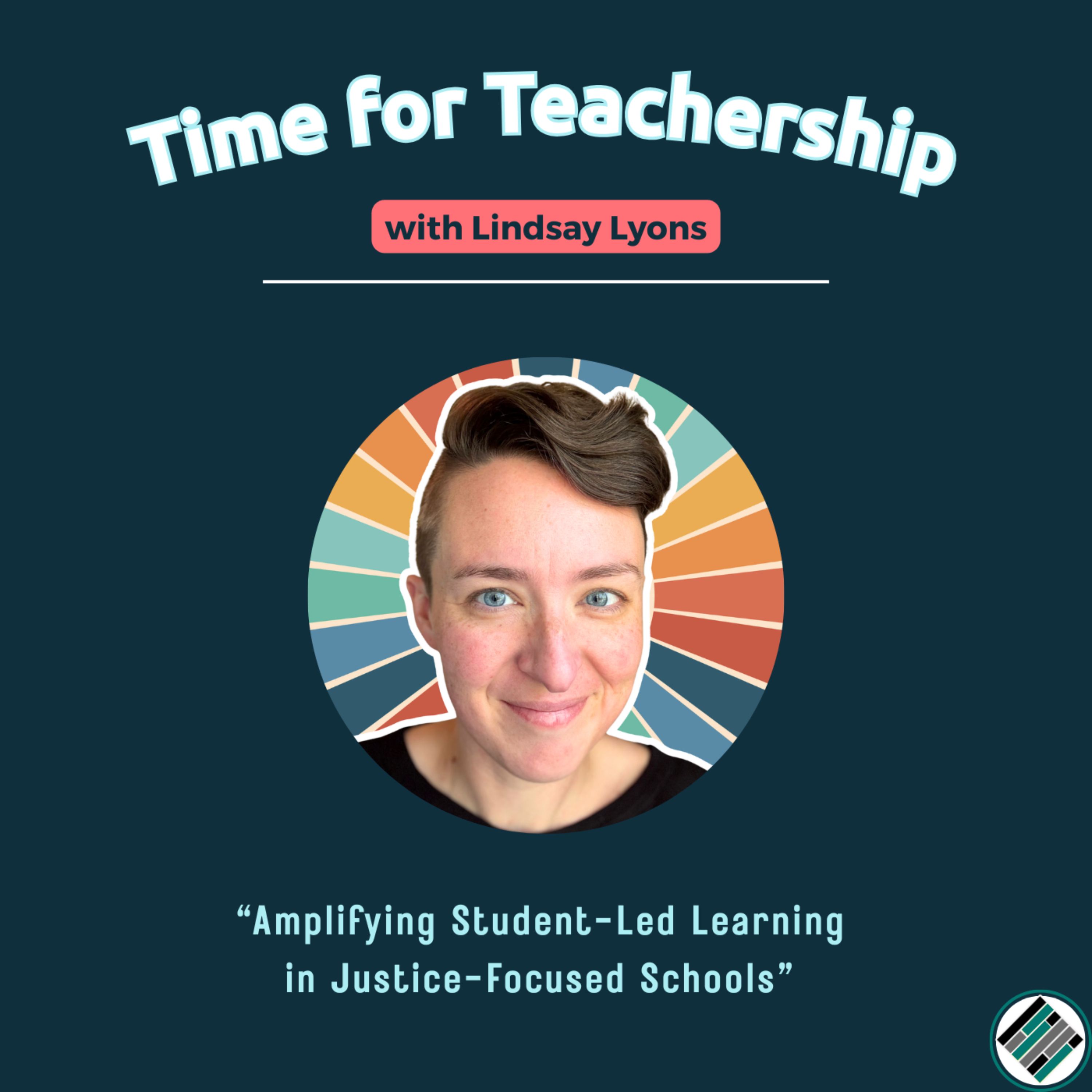
Time for Teachership
by Lindsay Lyons
How can I build capacity for culturally responsive teaching and project-based instruction? How can I reduce teacher burnout and promote a culture of wellness for staff and students? What are the secrets to getting teacher buy-in? What does practicing shared leadership actually look like? Welcome to the Time for Teachership podcast where we tackle adaptive challenges in educational leadership! Each week, host Lindsay Lyons brings together guest experts, research findings, and practical steps to help brave school leaders transform schools into antiracist spaces that cultivate student, family, and teacher leadership to enable all students to thrive.
-
268
257. Cultivating Youth Agency & Entreprenurship Using "Yes, And" with Leah Ellis
In this guest episode, Leah Ellis shares with Lindsay how a simple moment with her 4-year-old during the pandemic sparked a movement where kids don't just learn about leadership… they practice it now by starting real businesses, solving real community problems, and seeing themselves as capable change-makers today. You'll hear how Leah uses the improv mindset of "Yes, and…" to coach youth ideas without shutting them down, how her 36-week entrepreneurship curriculum works in schools, and powerful stories of young people creating crosswalk campaigns, sustainable book businesses, and product prototypes from scratch. What You'll Learn Why saying "children are the future" can unintentionally limit youth leadership How to use "Yes, and…" to nurture student ideas instead of correcting them A questioning strategy that helps kids become problem-solvers What a 36-week youth entrepreneurship curriculum looks like in practice How youth businesses build confidence, resilience, and leadership Common challenges for adults (and how to step back without stepping away) Why failure recovery is the fastest path to confidence Timestamps 00:00 "Children are not the future" — the mindset shift 03:00 Leah's big dream for youth leadership and agency 04:00 The story of the 4-year-old who started a business 08:30 Advice for educators vs. families 10:15 Youth business stories: crosswalk campaign, book business, phone case prototypes 16:20 The "Yes, and" coaching method with kids 17:45 Inside the 36-week entrepreneurship curriculum 19:10 Challenges adults face (stepping back, allowing failure) 20:30 Challenges kids face (resources, mindset, family dynamics) 22:20 One thing adults can do immediately 23:00 Reframing the stories we tell ourselves 24:40 How to connect with Leah and the Society of Child Entrepreneurs Get Your Episode Freebie & More Resources On My Website: https://www.lindsaybethlyons.com/blog/257 Connect with guest Leah Ellis Website: https://societyofchildentrepreneurs.org/
-
267
256. Youth-Adult Partnerships via UP for Learning with Ana, Jacoby, & Lindsey
What if students weren't just "given a voice," but shared real power in how schools operate? In this episode, Lindsay sits down with Ana, Jacoby, and Lindsey from UP for Learning to explore what youth–adult partnership actually looks like in practice—and how it's transforming schools at the classroom, district, and even state policy level. You'll hear how students and adults work side-by-side through youth participatory action research (YPAR), how mindset shifts unlock authentic partnership, and how this work has influenced initiatives like statewide conversations on school safety, graduation requirements, and student voice advisories across multiple states. This conversation goes far beyond "student voice." It's about shared decision-making, shared responsibility, and shared leadership to reimagine what education can be. What You'll Learn What youth–adult partnership really means (beyond student voice) How mental model shifts are the first step to transforming schools Why schools must move from adult-centered to partnership-centered systems Real examples of students shaping state education policy How restorative practices, YPAR, and belonging intersect A simple reflection educators can use tomorrow to start partnering with students How personalized learning, project-based learning, and flexible pathways connect to partnership Timestamps 00:00 Introduction to UP for Learning's mission 05:00 What educational equity looks like in partnership 11:00 The mindset shift adults must make 19:00 Personal stories of transformation through partnership 25:00 State and district policy work led by youth–adult teams 32:00 One thing educators can do tomorrow 34:30 How to connect with UP for Learning Get Your Episode Freebie & More Resources On My Website: https://www.lindsaybethlyons.com/blog/256 Connect with guests Ana, Jacoby, Lindsey Learn more: UPforLearning.org
-
266
255. Belonging, SoR, & Literacy as Liberation with Caitlin MacLeod-Bluver
In this powerful episode of the Time for Teachership Podcast, host Lindsay Lyons speaks with educator Caitlin MacLeod-Bluver about teaching social studies through the lens of justice, literacy, and belonging. Caitlin shares what it means to teach during challenging times—supporting students facing food insecurity, immigration detention, and political rhetoric affecting their communities. Despite these realities, she explains why classrooms remain powerful spaces for hope, civic engagement, and liberation. The conversation explores: Literacy as a tool for liberation How teachers can create true classroom belonging The importance of background knowledge and vocabulary Why rigorous reading matters for equity Supporting student voice and agency in social studies Practical strategies teachers can implement tomorrow If you're an educator wondering how to teach reading, history, and justice simultaneously, this episode offers both inspiration and actionable strategies. Key Takeaways for Educators 1. Silence Sends a Message When teachers avoid discussing current events, students may assume their teachers support injustice. 2. Learning Is Hard — And That's Okay Acknowledging difficulty helps students develop resilience and confidence. 3. Background Knowledge Must Connect to Students' Experiences New learning sticks best when connected to what students already know. 4. Reading Builds Knowledge Students become stronger readers by reading challenging texts, not by avoiding them. 5. Slow Down Deep learning requires time for: discussion vocabulary exploration critical thinking Get Your Episode Freebie & More Resources On My Website: https://www.lindsaybethlyons.com/blog/255 Connect With the Guest You can connect with Caitlin MacLeod-Bluver on Instagram: @2025VTTeacheroftheYear
-
265
254. Troubleshooting: Student Background Knowledge
How do teachers respond when students appear to have little or no background knowledge about a topic? In this episode of the Time for Teachership Podcast, host and instructional coach Lindsay Lyons explores strategies for helping students connect new learning to their lived experiences. Rather than viewing students as lacking knowledge, she encourages educators to expand their definition of background knowledge to include students' identities, communities, experiences, and cultural assets. Drawing on frameworks such as Funds of Knowledge and Cultural Wealth Theory, Lyons shares practical tools educators can use to help students build meaningful connections to historical content, social studies themes, and inquiry-based learning. Listeners will learn how to support students in making sense of new information, generating deeper questions, and engaging in analytical thinking—without assuming they are starting with an "empty vessel." This episode is especially helpful for social studies teachers, instructional coaches, and educators focused on inquiry-based learning. Key Topics Covered Rethinking the idea of students having "no background knowledge" Why student experiences are valuable learning assets Using Funds of Knowledge in the classroom Applying the Cultural Wealth Model to social studies instruction Strategies to help students connect historical topics to their own lives Cognitive routines that support inquiry and analysis Helping students generate deeper historical questions Building tools students can reuse across learning contexts Key Takeaways Students rarely lack background knowledge—they simply have different forms of knowledge. Teachers can help students connect academic content to lived experiences. Asset-based frameworks support more inclusive and effective learning. Cognitive routines help students move from connections to critical thinking and analysis. Connection prompts can transform classroom conversations and inquiry. Get Your Episode Freebie & More Resources On My Website: https://www.lindsaybethlyons.com/blog/254
-
264
253. How to Build the Habits of Democracy with Dr. Sarah Burnham
How can schools help students practice democracy—not just learn about it? In this episode of the Time for Teachership Podcast, host Lindsay Lyons sits down with civic education researcher Dr. Sarah Burnham to explore how classrooms can cultivate the habits of democracy, civic engagement, and critical consciousness in young people. Dr. Burnham, a researcher at Center for Information and Research on Civic Learning and Engagement (CIRCLE) at Tufts University, shares insights from research on civic education, student belonging, and anti-oppressive attitudes in youth. Together they discuss why civic learning must move beyond memorizing government structures to include student voice, inquiry-based learning, participatory decision-making, and real-world civic action. You'll hear powerful examples of schools using participatory budgeting, collaborative decision-making, and student-led initiatives to strengthen school communities and foster civic identity. Dr. Burnham also explains how families can support civic development at home through everyday conversations, community involvement, and modeling respectful disagreement. If you're an educator, school leader, or parent who wants to empower young people to see themselves as active participants in democracy, this episode is packed with research-backed strategies and inspiring ideas. Key Topics in This Episode What it means to build the habits of democracy in classrooms Why student belonging and representation are critical for civic learning The research behind critical consciousness and anti-oppressive attitudes How inquiry-based civic education strengthens engagement and agency Examples of participatory budgeting in schools The role of student voice and shared decision-making Why civic education does not lead to political indoctrination How families can support youth civic engagement at home Get Your Episode Freebie & More Resources On My Website: https://www.lindsaybethlyons.com/blog/253 Connect with guest Dr. Sarah Burnham BlueSky: BernhamBurglar LinkedIn: SL Burnham Email: [email protected] Research hub: CIRCLE at Tufts
-
263
252. Processing ICE & Resistance with Kids Using the Think–Feel–Do Framework (with Kara Pranikoff & Dr. Eric Soto-Shed)
Talking with young people about difficult current events—especially those involving immigration enforcement, protests, and community fear—can feel overwhelming for educators and families. In this episode of the Time for Teachership Podcast, host Lindsay Lyons sits down with education leaders Kara Pranikoff and Dr. Eric Soto‑Shed to discuss how teachers and caregivers can support students navigating conversations about immigration enforcement, protests, and current events. Together, they introduce the Think–Feel–Do framework, a simple yet powerful structure educators can use to guide discussions about complex and emotional issues like actions by the U.S. Immigration and Customs Enforcement (ICE). The framework helps students explore three key questions: What do I think? (curiosity, critical thinking, and context) How do I feel? (identity, empathy, emotional processing) What can I do? (civic action and agency) The conversation explores how teachers can address hard topics responsibly without avoiding them—and without overwhelming students emotionally. By grounding discussions in content knowledge, shared values, and opportunities for action, educators can create classrooms where students process events thoughtfully and compassionately. This episode also highlights how families can partner with schools to support young people as they make sense of difficult news, build media literacy habits, and develop resilience in challenging times. Key Topics Covered How to talk with students about immigration enforcement and current events The Think–Feel–Do framework for discussing difficult issues in classrooms Supporting students without retraumatizing them Why content knowledge and historical context matter in emotionally charged discussions The role of values like fairness, safety, and dignity in civic dialogue Helping students move from awareness to civic engagement and informed action Addressing diverse reactions among students—from curiosity to activism Supporting students directly affected by immigration policy How families can model healthy media habits and emotional processing Why joy, resilience, and community still matter in conversations about injustice Get Your Episode Freebie & More Resources On My Website: https://www.lindsaybethlyons.com/blog/252 Connect With the Guests Dr. Eric Soto‑Shed — Faculty at the Harvard Graduate School of Education Kara Pranikoff — Visit her website at karapranikoff.com
-
262
251. Proactively Create More Joy with Iuri Melo
Welcome to the Time for Teachership Podcast! In this inspiring episode, Iuri Melo, therapist, educator, and founder of School Pulse, joins Lindsay to explore how schools, families, and students can proactively cultivate joy, positive relationships, and mental wellness. Iuri shares his 20+ years of experience in therapy and his work with thousands of students, highlighting the importance of shifting from reactive crisis management to proactive, positive engagement. From live text-based support to fun, evidence-based student success activities, School Pulse provides tools that are inclusive, practical, and grounded in research. In this episode, you'll learn: Why schools often focus on crisis intervention—and how early, proactive support can prevent many challenges. The power of positive psychology, growth mindset, and cognitive strategies in creating student wellbeing and academic success. How to implement benign, inclusive mental wellness content that works for diverse student populations without controversy. Practical ideas for starting and ending the day with positive momentum—for students, families, and teachers alike. How live text-based support, proactive emails, and short videos can engage students in building relationships, managing emotions, and developing life skills. Fun examples of student success activities, including acronyms like CASH (Compliment, Ask questions, Smile, Help) and SWIFT for relationship building. Key Takeaways: Mental wellness can be taught proactively, not just reactively. Inclusive, evidence-based strategies improve academic performance, relationships, and school culture. Small actions—like greeting students warmly or sending positive messages—can create momentum that impacts daily experiences. Families and schools can partner to reinforce positive habits and student growth. Get Your Episode Freebie & More Resources On My Website: https://www.lindsaybethlyons.com/blog/251 Connect With Guest Iuri Melo: Email: [email protected] Website: www.schoolpulse.org
-
261
250. Stories & Civic Imagination to Elicit Shared Class Values
Welcome to Episode 250 of the Time for Teachership podcast! 🎉 In this milestone episode, Lindsay explores how stories and civic imagination can help educators, leaders, families, and students co-construct shared values — and ultimately build meaningful community agreements for how we want to be together. Inspired by the powerful book Practicing Futures: A Civic Imagination Handbook by Peter László and Srdja Popovic (and their incredible free online resources), this episode shares: Key insights from the book Reflections on civic imagination as a collective practice A practical, adaptable 60-minute workshop you can facilitate in classrooms, staff meetings, conferences, advisory blocks, PTA gatherings, or even at home If you've ever struggled to move from "values on the wall" to lived, shared agreements — this episode offers a creative and hopeful pathway forward. Key Takeaways Civic imagination builds community — focus on shared values and trust, not just power struggles. Stories reveal values — personal experiences or pop culture characters help groups identify what they care about. Collective imagination drives action — envision futures, create stories, then connect them to real-world classroom or community practices. Creativity + realism — fantastical thinking opens possibilities while addressing real problems. Get Your Episode Freebie & More Resources On My Website: https://www.lindsaybethlyons.com/blog/250
-
260
249. Cultivating a Culture of Belonging, Challenge, & Agency with Dr. Jennifer Berry
What does it take to build a classroom culture where students truly believe: I belong here. I can master rigorous challenges. My ideas make an impact. In this energizing conversation, Dr. Jennifer Berry, CEO of SmartLab Learning, joins Lindsay on the Time for Teachership podcast to explore how educators can intentionally cultivate what she calls STEM identity — not just in STEM classrooms, but across all learning spaces. Together, we unpack how belonging, productive struggle, and agency are foundational not only for academic success, but for thriving in future careers and contributing meaningfully to the world. This episode is about more than tools or technology. It's about designing an ecosystem that helps students develop the self-belief to lead. Key Takeaways STEM identity starts with belief. Students thrive when they believe: I belong here, I can master challenge, and my ideas matter. Productive struggle builds confidence. Pause before stepping in. Calibrated support — not immediate rescue — strengthens learning power. Belonging requires intentional design. Environment, curriculum, facilitation, and real-world connection must work together as an ecosystem. Avoid "random acts of STEM." Tools and technology should be tied to authentic problems and industry relevance. Education must be future-focused. In an AI-driven world, students need agency, adaptability, and the confidence to lead the tools they use. Get Your Episode Freebie & More Resources On My Website: https://www.lindsaybethlyons.com/blog/249 Connect With Guest Dr. Jennifer Berry: LinkedIn: https://www.linkedin.com/in/dr-jennifer-berry-9a05113/
-
259
248. Reflecting on My Conversation with Zaretta Hammond
Last week, I had the incredible honor of speaking with Zaretta Hammond about cognitive justice, instructional equity, and rebuilding students' learning power. If you haven't listened to Episode 247 yet, I strongly encourage you to go back and start there. In this episode, I do something a little different. I reflect — in real time — on a moment in our conversation where Zaretta stopped me and challenged my thinking. Specifically, she pushed back on my assumption that student voice could serve as the primary lever for instructional improvement and equity. Her response sparked a full-on mental model shift for me. This episode is a transparent walk through that shift — the embarrassment, the defensiveness, the reflection, and ultimately, the integration. If you've ever experienced discomfort while learning, this episode may resonate deeply. Key Takeaways Discomfort signals growth. Being challenged can trigger defensiveness, but that tension often marks the start of real learning. Student voice isn't a silver bullet. Dependent learners may need explicit instruction in literacy and metacognitive skills before voice can be fully leveraged. Build learning power intentionally. Cognitive apprenticeship — teaching students how to learn — is foundational to equity. Sequence matters. It's both/and (literacy and criticality, skill-building and voice), but clarity about outcomes and timing is essential. Change requires action. Dissatisfaction + vision + a concrete first step are necessary to move beyond resistance. Get Your Episode Freebie & More Resources On My Website: https://www.lindsaybethlyons.com/blog/248
-
258
247. Leading Change for Cognitive Justice with Zaretta Hammond
What does it really take to lead meaningful change in schools — not just adopt new strategies, but fundamentally shift practice? In this powerful conversation, Zaretta Hammond joins Lindsay on the Time for Teachership podcast to discuss her latest book, Rebuilding Students' Learning Power: Teaching for Instructional Equity and Cognitive Justice. Together, we explore what it means to pursue cognitive justice, why change is so difficult in schools, and how instructional leaders can move beyond surface-level reforms toward true transformation. Zaretta challenges leaders to examine the mental models and explanatory stories that drive their decisions. She explains why many well-intentioned reforms — even progressive ones — can unintentionally maintain cognitive redlining. Most importantly, she offers a roadmap for leading change that centers students as learners, not just participants. This is not a conversation about adding one more strategy. It's about rethinking the recipe. Key Takeaways 1. Cognitive Justice as the Dream Zaretta's vision for education is rooted in cognitive justice — ensuring every student becomes a powerful, independent learner. Colonization and systemic inequities have historically underdeveloped the cognitive capacity of marginalized communities through invisible sorting mechanisms. Instructional equity requires intentionally countering those systems. 2. Resetting Mental Models Change does not begin with new strategies. It begins with interrogating the explanatory stories we tell ourselves: What narratives do we hold about students and families? Where did those beliefs originate? How do those stories drive our instructional decisions? Leaders must first collect and examine the stories circulating in their schools before attempting transformation. 3. From Pedagogy of Compliance to Pedagogy of Possibility Many school systems still operate within a "grammar of schooling" that hasn't shifted in over a century. Pacing guides, engagement checklists, and surface-level reforms often reinforce compliance rather than build learning power. The shift requires: Integrating "learning how to learn" skills into curriculum pacing Designing classrooms as cognitive apprenticeships Creating productive struggle Moving students from novice → journeyman → mastery 4. Beware of Poor Proxies for Learning Observable engagement does not equal learning. Students repeating learning targets, appearing busy, or using the right jargon can create an illusion of learning. Leaders must develop a science-of-learning lens to avoid being misled by these poor proxies. Professionalism in education requires ongoing inquiry into instruction — not just strategy adoption. Get Your Episode Freebie & More Resources On My Website: https://www.lindsaybethlyons.com/blog/247 Connect With Guest Zaretta Hammond: Website: www.ready4rigor.com LinkedIn: https://www.linkedin.com/in/zaretta-hammond-2b122ba/
-
257
246. Coaching Teacher Teams? Try this template.
One-off workshops rarely create lasting change in classrooms. In this episode of the Time For Teachership podcast, Lindsay shares a practical Google Doc template designed to support teacher teams in ongoing, meaningful professional learning. She walks through a structured approach called Group Implementation Coaching Sessions, showing how coaching, feedback, and inquiry can help teachers refine their practice and better support student learning. What You'll Learn in This Episode/Key Takeaways Why continuous coaching is more effective than standalone workshops (Joyce & Showers, 2022). How to set the stage for teacher team coaching by identifying team strengths, individual values, and key priorities. Strategies for maintaining an asset-based, equity-focused, and student-centered approach in coaching sessions. Key coaching moves to help teachers shift mindsets, including: Asking for examples to get to evidence. Reframing challenges (e.g., valuing curiosity over background knowledge). Moving from scarcity to prioritization. Aligning pedagogy to core teaching values. A step-by-step walkthrough of a coaching session: Human Connection: Check-ins, celebrations, and group reflection. Implementation Check: Review previous action steps, data, and student feedback. Action Planning: Identify instructional strategies, micro-groups, or feedback systems to try before the next session. Next Steps: Decide who will try what and how data will be gathered. How to leverage peer coaching and group reflection to generate richer insights and practical solutions. Timestamps [00:00:00] – Welcome & Episode Overview Introduction to Episode 246 The importance of continuous learning over one-off workshops [00:00:22] – Google Doc Template Overview How to support teacher teams after workshops Group Implementation Coaching Sessions [00:00:47] – Influences & Inspirations PLC at Work: Dr. Anthony Mohammed, Dr. Chad Dumas, Bob Sanju, Marin Powers, Shalene Miller Grow Model & Raman Behan Positive psychology, asset-based education, values alignment Books: Street Data, Pedagogies of Voice, Rebuilding Students' Learning Power [00:04:00] – Meeting 1: Setting the Stage Identify team strengths and values Center equity and "critical hope" Name the students/groups on the margins Define success: what it looks, sounds, and feels like Co-design inquiry questions and evidence-gathering [00:07:16] – Coaching Bank & Key Moves Asking for evidence: "Can you say more? Share an example?" Reframing challenges: curiosity > background knowledge Shifting from scarcity mindset to prioritization Aligning teaching to core values [00:14:42] – Structuring Subsequent Meetings Start with human connection: check-ins, listening dyads, celebrations Implementation check: review prior actions and data Three containers: initial reactions, data reflection, gut checks [00:19:35] – GLEE Model for Action Planning Goal: What do we want to foster before next session? Learn: Analyze student strengths, gaps, and feedback Explore: Identify instructional moves to grow skills & student agency Expectations: Decide who does what and gather data for next session [00:24:34] – Final Thoughts & Evidence for Coaching Joyce & Showers (2022): coaching increases skill transfer from 5% → 75–90% Peer coaching and structured feedback as essential professional learning [00:26:04] – Closing Think big, act brave, and be your best self Get Your Episode Freebie & More Resources On My Website: https://www.lindsaybethlyons.com/blog/246
-
256
245. A Humanizing Approach to Coaching with Dr. Jacobē Bell
What does it look like to coach teachers with humanity, curiosity, and care—especially in today's demanding educational landscape? In this episode of the Time for Teachership podcast, Lindsay welcomes back Dr. Jacobē Bell to explore what it truly means to take a humanizing approach to instructional coaching. Drawing on her experience coaching instructional coaches across multiple contexts, Dr. Bell shares practical strategies, mindset shifts, and real coaching moments that help educators grow while protecting their wellbeing. This conversation is part of a mini-series focused on supporting instructional coaches, particularly those who step into the role without formal preparation and are learning "by fire." What You'll Learn in This Episode/Key Takeaways Humanizing Coaching Coaching is not just about instruction—it's also about emotional awareness, wellness, and meeting educators where they are. Coaches can balance accountability with care by centering teachers as co-producers of knowledge. Afrofuturism, Freedom Dreaming & Coaching Dr. Bell connects Afrofuturism to instructional coaching by imagining a future where educators experience wellness, contentment, and sustainability. A powerful vision: coaching that empowers educators without burning them out. Mindset Shifts from Teacher to Coach Moving from classroom teaching to coaching requires seeing the whole system, not just individual practice. Coaches must navigate adult belief systems, values about students, and differing perspectives—often without making everyone happy. Micro-Modeling as a Coaching Strategy Instead of modeling an entire lesson, Dr. Bell advocates for micro-modeling: Coaches model a short instructional move Teachers immediately practice it with students Coaches give real-time feedback This approach helps shift beliefs about student ability and leads to immediate, tangible growth. Surfacing Beliefs with Curiosity Strategies for navigating hard conversations: Reflecting teachers' words back to them Asking open, curiosity-driven questions Lowering defensiveness by naming uncertainty or even "blaming" your coaching Assuming best intentions opens the door to vulnerability and growth. Live Coaching with Care Live coaching can include gently interrupting or questioning moments of instruction—but only after trust and norms are established. Asking teachers how they prefer to be coached is a critical first step. Authenticity Over One-Size-Fits-All There is no single "right" way to coach. Effective coaching grows from authenticity, relationships, and listening—not rigid formulas. Sustainability & Change Management Dr. Bell shares her current learning focus on sustaining change in schools over time. Sustainable improvement requires planning for longevity from day one—not just short-term wins. Timestamps [00:00] Welcome & reintroduction of Dr. Jacobē Bell [01:00] Coaching as "baptism by fire" & the need for coach-specific professional learning [02:04] Dr. Bell's background coaching instructional coaches across contexts [02:35] Afrofuturism, freedom dreaming, and instructional coaching [03:55] Initiative fatigue, educator wellness, and a humanizing coaching vision [05:17] Teachers as co-producers of knowledge in coaching conversations [05:58] Shifting from a teacher mindset to a coach mindset [06:33] Coaching former peers & navigating leadership tensions [07:21] Seeing instruction systemically across teams and schools [08:29] Beliefs, values, and meeting students' needs through coaching [09:15] Practical coaching tools & action steps [10:29] Micro-modeling as a powerful coaching strategy [11:52] Shifting beliefs about "harder" or "lower" students through practice [13:21] Real-time feedback and immediate teacher implementation [15:11] Logistical realities: making micro-modeling work in real schools [16:48] Flexibility in coaching cycles and time constraints [18:00] Surfacing values and beliefs in coaching conversations [19:04] Reflecting teacher language back to them as a coaching move [20:00] Lowering defensiveness by "blaming the coaching" [21:02] Vulnerability, honesty, and seeing the whole teacher [22:29] Assuming best intentions and leading with curiosity [23:17] Live coaching moments & addressing problematic language in the classroom [24:42] Establishing norms for live coaching [25:23] Entry points for new instructional coaches [26:19] Authenticity over one-size-fits-all coaching approaches [27:47] Rapport, relationships, and trust as the foundation of coaching [28:12] What Dr. Bell is learning now: sustainability & change management [29:32] Where to connect with Dr. Jacobē Bell [29:42] Closing reflections & gratitude Get Your Episode Freebie & More Resources On My Website: https://www.lindsaybethlyons.com/blog/245 Connect With Guest Dr. Jacobē Bell: LinkedIn: Dr. Jacobē Bell
-
255
244. Gather & Analyze Data that Shows Student Thinking with Dr. Jana Lee
How can educators gather meaningful data that actually reflects student thinking—without over-relying on benchmarks or labels? In this episode of the Time for Teachership podcast, Lindsay is joined by Dr. Jana Lee to explore how teachers, coaches, and instructional leaders can collect and analyze data that shows what students truly understand, how they're thinking, and where learning breaks down. Together, they unpack mindset shifts around assessment, flexible grouping, and skill-based instruction—and why these approaches are essential for inclusive, equitable classrooms. Dr. Jana Lee shares practical strategies for using student work artifacts, observation, and in-the-moment checks for understanding to guide instruction, support coaching cycles, and measure real impact on student learning. What You'll Learn in This Episode Why measuring student thinking matters more than measuring "levels" The shift from leveled grouping to skill-based, flexible grouping How to collect data during instruction—not just at benchmark time What kinds of student artifacts best reveal thinking and misconceptions How instructional leaders can create systems (PLCs, coaching, look-fors) that support meaningful data use Why giving students 60–90 seconds of independent struggle is critical How consistency across classrooms increases student achievement Practical ways to assess thinking in both secondary and elementary settings The role of transparency, shared goals, and co-created success criteria in school improvement Timestamps 00:00 – Welcome & introduction to Dr. Jana Lee 01:00 – Why measuring student learning and coaching impact matters 01:45 – Big dreams for education & inclusive outcomes for all students 03:10 – Mindset shifts around assessment and grouping students 04:50 – Moving from leveled groups to skill-based, flexible grouping 06:00 – How in-the-moment data reduces stigma and supports equity 08:28 – Collecting classroom data that reflects real student learning 09:37 – Connecting benchmark data with daily instructional evidence 10:51 – Why consistency across classrooms increases achievement 12:58 – Structures instructional leaders can use (PLCs, coaching, goals) 14:38 – Co-creating look-fors and success criteria 16:55 – Using patterns and themes in data to guide support 19:03 – Student artifacts as powerful evidence of thinking 20:12 – Diagnosing errors in thinking vs. right/wrong answers 21:38 – Gathering meaningful data in elementary classrooms 23:34 – Creative ways to assess thinking beyond writing 25:33 – Why skill-based strategies must be content-agnostic 26:24 – Biggest challenge teachers face with data collection 26:50 – Letting students struggle independently (60–90 seconds) 27:46 – One action listeners can take tomorrow 28:05 – What Dr. Lee is learning now: adolescent reading comprehension 28:59 – Where to connect with Dr. Jana Lee 29:30 – Closing reflections Key Takeaways Student achievement data should be paired with classroom evidence of how students think Written, oral, behavioral, and tactile artifacts can all reveal learning Effective remediation starts with diagnosing where thinking breaks down Inclusive instruction happens when decisions are responsive, not based on preconceived beliefs Skill-based instruction across content areas creates coherence for students Get Your Episode Freebie & More Resources On My Website: https://www.lindsaybethlyons.com/blog/244 Connect With Guest Dr. Jana Lee: Instagram: @jana.c.lee Website: www.janaleeconsulting.com
-
254
243. Differentiating Instructional Coaching with Chrissy Beltran
What is instructional coaching—really? And how can coaches meet teachers where they are without forcing everyone into the same coaching mold? In this episode of the Time For Teachership podcast, Lindsay is joined by Chrissy Beltran, instructional coaching expert, host of Instructional Coaching with Miss B, and author of an upcoming ASCD book on differentiated coaching. Together, they unpack what it means to differentiate instructional coaching, define the coaching role clearly, and build authentic relationships with teachers—especially those who may be resistant to coaching. Chrissy shares practical strategies, mindset shifts, and real-life coaching stories that help instructional coaches move from uncertainty to clarity and impact. What You'll Learn in This Episode Why instructional coaching often feels "nebulous" and how to bring clarity to the role How to define your coaching vision What it means to differentiate coaching instead of using a one-size-fits-all approach Low, medium, and high-impact coaching strategies—and when to use each How to work with resistant teachers without damaging relationships Why peer observation can be a powerful gateway into coaching How coaching can reconnect teachers to joy, play, and purpose Timestamps [00:00] Welcome & introduction to Chrissy Beltran [01:00] Why instructional coaching feels undefined and isolating [02:30] Freedom dreaming: Chrissy's vision for education and equity [05:30] Coaching as play, exploration, and joy [08:00] Key mindset shifts when moving from teacher to coach [13:00] Defining your coaching role and vision [16:40] Differentiated coaching & the coaching toolbox [18:45] Low, medium, and high-impact coaching strategies [21:30] Working with resistant teachers: a real coaching story [25:00] Why visiting colleagues is a high-impact coaching move [30:00] Lightning round: next steps, learning, and resources Key Takeaways Coaching is not about "fixing" teachers—it's about partnering to grow Every interaction with a teacher is a potential coaching moment Differentiation matters just as much for adults as it does for students Relationship-building strategies are not "low value"—they're foundational Peer observation helps shift beliefs without putting the coach at the center Get Your Episode Freebie & More Resources On My Website: https://www.lindsaybethlyons.com/blog/243 Connect With Guest Chrissy Beltran: Podcast: https://pod.link/1496989397 Website: https://www.buzzingwithmsb.com Instagram: https://www.instagram.com/buzzingwithmsb/
-
253
242. Student Agency in Trade Schools with Mary Kelly
In today's episode with special guest Mary Kelly, Lindsay discusses student agency, and how it's relevant to trade schools today. Liked this episode? Rate, review, and share! Get In Touch With Mary Kelly: Website: http://www.stratatech.com Get Your Episode Freebie & More Resources On My Website: https://www.lindsaybethlyons.com/blog/242 Lindsay's Links: LinkedIn: @lindsaybethlyons Instagram: @lindsaybethlyons Facebook Group: Time for Teachership
-
252
241. Leading Change in Turnaround/Low-Performing Schools: My Takeaways from POV
In today's solo episode, Lindsay is sharing her thoughts and takeaways from the book POV about how educators can lead change in turnaround/low-performing schools. Hope you enjoy! Liked this episode? Rate, review, and share! Get Your Episode Freebie & More Resources On My Website: https://www.lindsaybethlyons.com/blog/241
-
251
240. Leading Change in Turnaround/Low-Performing Schools: My Takeaways from RSLP (Hammond)
In today's solo episode, Lindsay is sharing her thoughts and takeaways from Hammond's book about how educators can lead change in turnaround/low-performing schools. Hope you enjoy! Liked this episode? Rate, review, and share! Get Your Episode Freebie & More Resources On My Website: https://www.lindsaybethlyons.com/blog/240
-
250
239. Leading Change in Turnaround/"Low-Performing" Schools: My Thoughts
In today's solo episode, Lindsay is sharing her thoughts about how educators can work to lead positive and effective change in both turnaround and "low-performing" schools. Hope you enjoy! Liked this episode? Rate, review, and share! Get Your Episode Freebie & More Resources On My Website: https://www.lindsaybethlyons.com/blog/239
-
249
238. Unlearning Thanksgiving at Home
In today's solo episode, Lindsay is sharing how you can unlearn the incorrect way the history of Thanksgiving is often taught to students at school, in order to discuss and have children relearn it in a more accurate manner at home. Hope you enjoy! Liked this episode? Rate, review, and share! Get Your Episode Freebie & More Resources On My Website: https://www.lindsaybethlyons.com/blog/238
-
248
237. How to Spark Family Conversations with Dr. Eric Soto-Shed & Kara Pranikoff
In today's episode with special guests Dr. Eric Soto-Shed and Kara Pranikoff, Lindsay discusses how you can effectively spark conversations with your family about important topics. Liked this episode? Rate, review, and share! Get In Touch With Dr. Eric Soto-Shed: Email: [email protected] Website: https://www.gse.harvard.edu/directory/faculty/eric-soto-shed boi Get In Touch With Kara Pranikoff: Email: [email protected] Website: karapranikoff.com LinkedIn: Kara Pranikoff Get Your Episode Freebie & More Resources On My Website: https://www.lindsaybethlyons.com/blog/237 Lindsay's Links: LinkedIn: @lindsaybethlyons Instagram: @lindsaybethlyons Facebook Group: Time for Teachership
-
247
236. Approaching Current Event Conversations with your Kid at Home
In today's solo episode, Lindsay is sharing ways you can properly approach and initiate current event conversations with your kid at home. Hope you enjoy! Liked this episode? Rate, review, and share! Get Your Episode Freebie & More Resources On My Website: https://www.lindsaybethlyons.com/blog/236
-
246
235. Relational Family Engagement with Ari Gerzon-Kessler
In today's episode with special guest Ari Gerzon-Kessler, Lindsay discusses the topic of relational family engagement as it relates to parents, students, and educators. Liked this episode? Rate, review, and share! Get In Touch With Ari Gerzon-Kessler: Website: www.sameteamconsulting.org LinkedIn: https://www.linkedin.com/in/arigerzon-kessler/ Email: [email protected] Book: https://www.amazon.com/Same-Team-Underrepresented-opportunity-achievement/dp/1958590010/?_encoding=UTF8&pd_rd_w=8egM8&content-id=amzn1.sym.9071a05a-ab8a-4eb5-82ca-461a3b81eab8%3Aamzn1.symc.a68f4ca3-28dc-4388-a2cf-24672c480d8f&pf_rd_p=9071a05a-ab8a-4eb5-82ca-461a3b81eab8&pf_rd_r=DJVF1HV92PPSA3WB88HG&pd_rd_wg=KPRCi&pd_rd_r=a0c1b955-acdd-4362-9dce-a778750016e4&ref_=pd_hp_d_atf_ci_mcx_mr_ca_hp_atf_d Get Your Episode Freebie & More Resources On My Website: https://www.lindsaybethlyons.com/blog/235 Lindsay's Links: LinkedIn: @lindsaybethlyons Instagram: @lindsaybethlyons Facebook Group: Time for Teachership
-
245
234. Students Are Not Their Behaviors with Dr. Claudia M. Bertolone-Smith and Marlene Moyer
In today's episode with special guests Dr. Claudia M. Bertolone-Smith and Marlene Moyer, Lindsay discusses their book Tools Not Rules, and specifically how educators shouldn't classify students by their behaviors. Liked this episode? Rate, review, and share! Get In Touch With Dr. Claudia M. Bertolone-Smith: Website: ttps://www.toolsnotrules.com/ Email: [email protected] Get In Touch With Marlene Moyer: Website: http://www.toolsnotrules.com Get Your Episode Freebie & More Resources On My Website: https://www.lindsaybethlyons.com/blog/234 Lindsay's Links: LinkedIn: @lindsaybethlyons Instagram: @lindsaybethlyons Facebook Group: Time for Teachership
-
244
233. Engagement is Thinking with James Nottingham
In today's episode with special guest James Nottingham, Lindsay discusses his book Teaching Brilliantly, and specifically how engagement involves thinking, in addition to how educators can improve student involvement and interest in the classroom. Liked this episode? Rate, review, and share! Get In Touch With James Nottingham: Website: http://www.learningpit.org Get Your Episode Freebie & More Resources On My Website: https://www.lindsaybethlyons.com/blog/233 Lindsay's Links: LinkedIn: @lindsaybethlyons Instagram: @lindsaybethlyons Facebook Group: Time for Teachership
-
243
232. Guest Tips for Preparing for and Facilitating Student-Led Conversations
In today's solo episode, Lindsay is sharing tips from recent guests on the show related to preparing for and facilitating student-led conversations as educators. Hope you enjoy! Liked this episode? Rate, review, and share! Get Your Episode Freebie & More Resources On My Website: https://www.lindsaybethlyons.com/blog/232
-
242
231. Leading Teacher Teams with Dr. Chad Dumas
In today's episode with special guest Dr. Chad Dumas, Lindsay discusses how to properly and effectively lead teacher teams to help support teachers and their students. Liked this episode? Rate, review, and share! Get In Touch With Dr. Chad Dumas: Website: www.NextLearningSolutions.com X: @ChadDumas Facebook: tinyurl.com/FBLearningChad LinkedIn: tinyurl.com/LearningChad Get Your Episode Freebie & More Resources On My Website: https://www.lindsaybethlyons.com/blog/231 Lindsay's Links: LinkedIn: @lindsaybethlyons Instagram: @lindsaybethlyons Facebook Group: Time for Teachership
-
241
230. How is decision fatigue and herd mentality showing up for you? with Dr. ClauDean Kizart
In today's episode with special guest Dr. ClauDean Kizart, Lindsay discusses her book, and specifically how educators can recognize both decision fatigue and herd mentality they experience, in order to properly show up for their students. Liked this episode? Rate, review, and share! Get In Touch With Dr. ClauDean Kizart: IG: @dockizart LinkedIn: Dr. ClauDean Kizart Get Your Episode Freebie & More Resources On My Website: https://www.lindsaybethlyons.com/blog/230 Lindsay's Links: LinkedIn: @lindsaybethlyons Instagram: @lindsaybethlyons Facebook Group: Time for Teachership
-
240
229. Build an Equitable Classroom with Dr. Jacobē Bell and Dr. Reshma Ramkellawan
In today's episode with special guests Dr. Jacobē Bell and Dr. Reshma Ramkellawan, Lindsay discusses their book, and specifically how educators can properly build an equitable classroom for their students. Liked this episode? Rate, review, and share! Get In Touch With Dr. Jacobē Bell: Website: www.equityconsulting.org Social Media: @equityconsultinggroup IG: @centeringmyjoy Get In Touch With Dr. Reshma Ramkellawan: Website: www.equityconsulting.org Social Media: @equityconsultinggroup IG, TikTok: @resha0927 Get Your Episode Freebie & More Resources On My Website: https://www.lindsaybethlyons.com/blog/229 Lindsay's Links: LinkedIn: @lindsaybethlyons Instagram: @lindsaybethlyons Facebook Group: Time for Teachership
-
239
228. From Compliance to Compassion with Dr. Orinthia Harris & Jill Flanders
In today's episode with special guests Dr. Orinthia Harris and Jill Flanders, Lindsay discusses their book, and specifically how educators can go from compliant to compassionate with their students. Liked this episode? Rate, review, and share! Get In Touch With Dr. Orinthia Harris: Meta, IG, YouTube: @STEMearly Meta, IG: @OrinthiaHarrisPhD TikTok: @DrOHSpeaks Get In Touch With Jill Flanders: LinkedIn: Jillayne Flanders Get Your Episode Freebie & More Resources On My Website: https://www.lindsaybethlyons.com/blog/228 Lindsay's Links: LinkedIn: @lindsaybethlyons Instagram: @lindsaybethlyons Facebook Group: Time for Teachership
-
238
227. Map Systems of Power & Co-Create with Students with SL Rao
In today's episode with special guest SL Rao, Lindsay discusses map systems of power, and how they relate to co-creating in the classroom with young students. Liked this episode? Rate, review, and share! Get In Touch With SL Rao: Website: https://optimistic.design/ LinkedIn: https://www.linkedin.com/in/slrao/ Get Your Episode Freebie & More Resources On My Website: https://www.lindsaybethlyons.com/blog/227 Lindsay's Links: LinkedIn: @lindsaybethlyons Instagram: @lindsaybethlyons Facebook Group: Time for Teachership
-
237
226. Season 6 Updates
In today's solo episode, Lindsay is welcoming you to Season 6 of the podcast and sharing many exciting updates related to upcoming episodes. Hope you enjoy! Liked this episode? Rate, review, and share! Get Your Episode Freebie & More Resources On My Website: https://www.lindsaybethlyons.com/blog/226
-
236
225. Local Civics with John Rudolph Mueller
In today's episode with special guest John Rudolph Mueller, Lindsay discusses a platform called Local Civics, and how it helps connect people to their communities and also educates students to create engaged citizens. Liked this episode? Rate, review, and share! Get In Touch With John Rudolph Mueller: Local Civics Website: http://www.localcivics.io/ Get Your Episode Freebie & More Resources On My Website: https://www.lindsaybethlyons.com/blog/225 Lindsay's Links: LinkedIn: @lindsaybethlyons Instagram: @lindsaybethlyons Facebook Group: Time for Teachership
-
235
224. Somewhere Beyond the Sea in a Creative Writing Activism Unit
In today's solo episode, Lindsay is sharing a creative writing activism unit that educators can use and implement with their students. Hope you enjoy! Liked this episode? Rate, review, and share! Get Your Episode Freebie & More Resources On My Website: https://www.lindsaybethlyons.com/blog/224
-
234
223. Accomodations, Modifications, & Inclusion Anxiety: Supporting Learners with IEPs with Toby J. Karten
In today's episode with special guest Toby J. Karten, Lindsay discusses how educators can properly provide support for student learners with IEPs using accomodations, modifications, and inclusion anxiety. Liked this episode? Rate, review, and share! Get In Touch With Toby J. Karten: Email: [email protected] Website: https://inclusionworkshops.com/ Get Your Episode Freebie & More Resources On My Website: https://www.lindsaybethlyons.com/blog/223 Lindsay's Links: LinkedIn: @lindsaybethlyons Instagram: @lindsaybethlyons Facebook Group: Time for Teachership
-
233
222. Solution Tree author: Their Stories, Their Voices with Kourtney Hake and Paige Timmerman
In today's episode with special guests Kourtney Hake and Paige Timmerman, Lindsay discusses their book "Their Stories, Their Voices", and how educators can use personal narrative to empower student writers between grades 6-12. Liked this episode? Rate, review, and share! Get In Touch With Kourtney Hake: X (Twitter): https://x.com/whatthehake Get In Touch With Paige Timmerman: X (Twitter): @TimmermanPaige Get Your Episode Freebie & More Resources On My Website: https://www.lindsaybethlyons.com/blog/222 Lindsay's Links: LinkedIn: @lindsaybethlyons Instagram: @lindsaybethlyons Facebook Group: Time for Teachership
-
232
221. Facilitating Contentious Conversations? Paraphrase Your Butt Off with Carolyn McKanders
In today's episode with special guest Carolyn McKanders, Lindsay discusses how you can use paraphrasing as a way to facilitate contentious conversations as an educator. Liked this episode? Rate, review, and share! Get In Touch With Carolyn McKanders: Website: www.teachersasfacilitators.com Instagram: https://www.instagram.com/tafmindsets LinkedIn: https://www.linkedin.com/company/teachers-as-facilitators Get Your Episode Freebie & More Resources On My Website: https://www.lindsaybethlyons.com/blog/221 Lindsay's Links: LinkedIn: @lindsaybethlyons Instagram: @lindsaybethlyons Facebook Group: Time for Teachership
-
231
220. Processes for Group Dialogue, Discussion, and Decision-Making with Dr. Laura Lipton
In today's episode with special guest Dr. Laura Lipton, Lindsay discusses the processes for group dialogue, discussion, and decision-making that are essential for educators. Liked this episode? Rate, review, and share! Get In Touch With Dr. Laura Lipton: Email: [email protected] Get Your Episode Freebie & More Resources On My Website: https://www.lindsaybethlyons.com/blog/220 Lindsay's Links: LinkedIn: @lindsaybethlyons Instagram: @lindsaybethlyons Facebook Group: Time for Teachership
-
230
219. Implementation is a Process with a Moral Imperative with Jenice Pizzuto & Steven Carney
In today's episode with special guests Jenice Pizzuto and Steven Carney, Lindsay discusses the ways in which implementation is a process with a moral imperative and how it will benefit educators. Liked this episode? Rate, review, and share! Get In Touch With Jenice Pizzuto: Website: https://www.impactleadsucceed.com/ Get In Touch With Steven Carney: Website: www.impactlearnandlead.com LinkedIn: https://www.linkedin.com/in/carneys/ Email: [email protected] Get Your Episode Freebie & More Resources On My Website: https://www.lindsaybethlyons.com/blog/219 Lindsay's Links: LinkedIn: @lindsaybethlyons Instagram: @lindsaybethlyons Facebook Group: Time for Teachership
-
229
218. Leadership Simulations as PD with Dr. Richard Bernato
In today's episode with special guest Dr. Richard Bernato, Lindsay discusses leadership simulations, and specifically how they serve as professional development for educators. Liked this episode? Rate, review, and share! Get In Touch With Dr. Richard Bernato: Email: [email protected] Website: www.solutiontree.com LinkedIn: www.linkedin.com/in/richard-bernato-1658854 Get Your Episode Freebie & More Resources On My Website: https://www.lindsaybethlyons.com/blog/218 Lindsay's Links: LinkedIn: @lindsaybethlyons Instagram: @lindsaybethlyons Facebook Group: Time for Teachership
-
228
217. Schedule Time to Think with Dr. Samuel Nix
In today's episode with special guest Dr. Samuel Nix, Lindsay discusses the importance of scheduling time to think as an educator, which is overlooked by most and crucial for success. Liked this episode? Rate, review, and share! Get In Touch With Dr. Samuel Nix: Website: www.snix3consulting.com X (Twitter): @_SamuelNix Get Your Episode Freebie & More Resources On My Website: https://www.lindsaybethlyons.com/blog/217 Lindsay's Links: LinkedIn: @lindsaybethlyons Instagram: @lindsaybethlyons Facebook Group: Time for Teachership
-
227
216. Responding to Emotions & Charged Comments in Schools (Inside Look at a Workshop)
In today's episode with special guest Dr. Eric Soto-Shed, Lindsay shares an inside look at a workshop and responds to each clip with her thoughts related to emotions and charged comments in schools. Liked this episode? Rate, review, and share! Get In Touch With Dr. Eric Soto-Shed: Faculty Page: https://www.gse.harvard.edu/directory/faculty/eric-soto-shed Get Your Episode Freebie & More Resources On My Website: https://www.lindsaybethlyons.com/blog/216 Lindsay's Links: LinkedIn: @lindsaybethlyons Instagram: @lindsaybethlyons Facebook Group: Time for Teachership
-
226
215. Build These 4 Positive Mindsets with Tom Hierck & Dr. Chris Weber
In today's episode with special guests Tom Hierck and Dr. Chris Weber, Lindsay discusses the 4 different positive mindsets that every educator should build for themselves and their students. Liked this episode? Rate, review, and share! Get In Touch With Tom Hierck: Website: tomhierck.com X(Twitter): @thierck Instagram: @Tom Hierck Facebook: Tom Hierck Get In Touch With Dr. Chris Weber: Email: [email protected] Get Your Episode Freebie & More Resources On My Website: https://www.lindsaybethlyons.com/blog/215 Lindsay's Links: LinkedIn: @lindsaybethlyons Instagram: @lindsaybethlyons Facebook Group: Time for Teachership
-
225
214. Hands Down, Speak Up with Kassia Wedekind and Christy Thompson
In today's episode with special guests Kassia Wedekind and Christy Thompson, Lindsay discusses their book "Hands Down, Speak Up" in relation to student voice and education. Liked this episode? Rate, review, and share! Get In Touch With Kassia Wedekind: X(Twitter): @KassiaOWedekind Instagram: @KassiaOWedekind Bluesky: @KassiaOWedekind Get In Touch With Christy Thompson: Website/Book: http://handsdownspeakout.wordpress.com Get Your Episode Freebie & More Resources On My Website: https://www.lindsaybethlyons.com/blog/214 Lindsay's Links: LinkedIn: @lindsaybethlyons Instagram: @lindsaybethlyons Facebook Group: Time for Teachership
-
224
213. The Latest Student Voice Research & Tools with Dr. Dana Mitra
In today's episode with special guest Dr. Dana Mitra, Lindsay discusses the latest student voice research and tools that educators can use with their students to aid their learning. Liked this episode? Rate, review, and share! Get In Touch With Dr. Dana Mitra: Website: https://danamitra.net/ Email: [email protected] Get Your Episode Freebie & More Resources On My Website: https://www.lindsaybethlyons.com/blog/213 Lindsay's Links: LinkedIn: @lindsaybethlyons Instagram: @lindsaybethlyons Facebook Group: Time for Teachership
-
223
212. Game-Changing Equitable Assessment Ideas from This Month's Guests
In today's solo episode, Lindsay is reviewing all the game-changing equitable assessment ideas that were shared and discussed with this month's guests on the podcast. Hope you enjoy! Liked this episode? Rate, review, and share! Get Your Episode Freebie & More Resources On My Website: https://www.lindsaybethlyons.com/blog/212
-
222
211. A Tech Platform to Elevate your Standards-Informed Instruction with Chris Hull
In today's episode with special guest Chris Hull, Lindsay discusses a tech platform called Otus that was created by Chris and how it can be used to elevate your standards-informed instruction as an educator. Liked this episode? Rate, review, and share! Get In Touch With Chris Hull: Website: https://otus.com/ LinkedIn: https://www.linkedin.com/in/chull9/ Get Your Episode Freebie & More Resources On My Website: https://www.lindsaybethlyons.com/blog/211 Lindsay's Links: LinkedIn: @lindsaybethlyons Instagram: @lindsaybethlyons Facebook Group: Time for Teachership
-
221
210. "It Counts if You Show Mastery" & Other Transformative Assessment Ideas with Nicole Dimich
In today's episode with special guest Nicole Dimich, Lindsay discusses various transformative assessment ideas that educators can use with students in the classroom to show mastery. Liked this episode? Rate, review, and share! Get In Touch With Nicole Dimich: LinkedIn: www.linkedin.com/in/nicoledimich X (Twitter): @NicoleDimich Get Your Episode Freebie & More Resources On My Website: https://www.lindsaybethlyons.com/blog/210 Lindsay's Links: LinkedIn: @lindsaybethlyons Instagram: @lindsaybethlyons Facebook Group: Time for Teachership
-
220
209. Standards Serve Institutions; Expectations Serve People: Antiracist Assessment with Dr. Asao B. Inoue
In today's episode with special guest Dr. Asao B. Inoue, Lindsay discusses how to create antiracist assessment, in addition to standards that serve institutions, and expectations that serve people in education. Liked this episode? Rate, review, and share! Get In Touch With Dr. Asao B. Inoue: Website: http://www.asaobinoue.com/ Get Your Episode Freebie & More Resources On My Website: https://www.lindsaybethlyons.com/blog/209 Lindsay's Links: LinkedIn: @lindsaybethlyons Instagram: @lindsaybethlyons Facebook Group: Time for Teachership
-
219
208. Building Community-Wide Capacity to Engage in Hard Conversations with Preschoolers
In today's solo episode, Lindsay is discussing the process of building community-wide capacity in order to engage in hard conversations with preschoolers in education. Hope you enjoy! Liked this episode? Rate, review, and share! Get Your Episode Freebie & More Resources On My Website: https://www.lindsaybethlyons.com/blog/208
No matches for "" in this podcast's transcripts.
No topics indexed yet for this podcast.
Loading reviews...
ABOUT THIS SHOW
How can I build capacity for culturally responsive teaching and project-based instruction? How can I reduce teacher burnout and promote a culture of wellness for staff and students? What are the secrets to getting teacher buy-in? What does practicing shared leadership actually look like? Welcome to the Time for Teachership podcast where we tackle adaptive challenges in educational leadership! Each week, host Lindsay Lyons brings together guest experts, research findings, and practical steps to help brave school leaders transform schools into antiracist spaces that cultivate student, family, and teacher leadership to enable all students to thrive.
HOSTED BY
Lindsay Lyons
Loading similar podcasts...
URL copied to clipboard!