
PODCAST · health
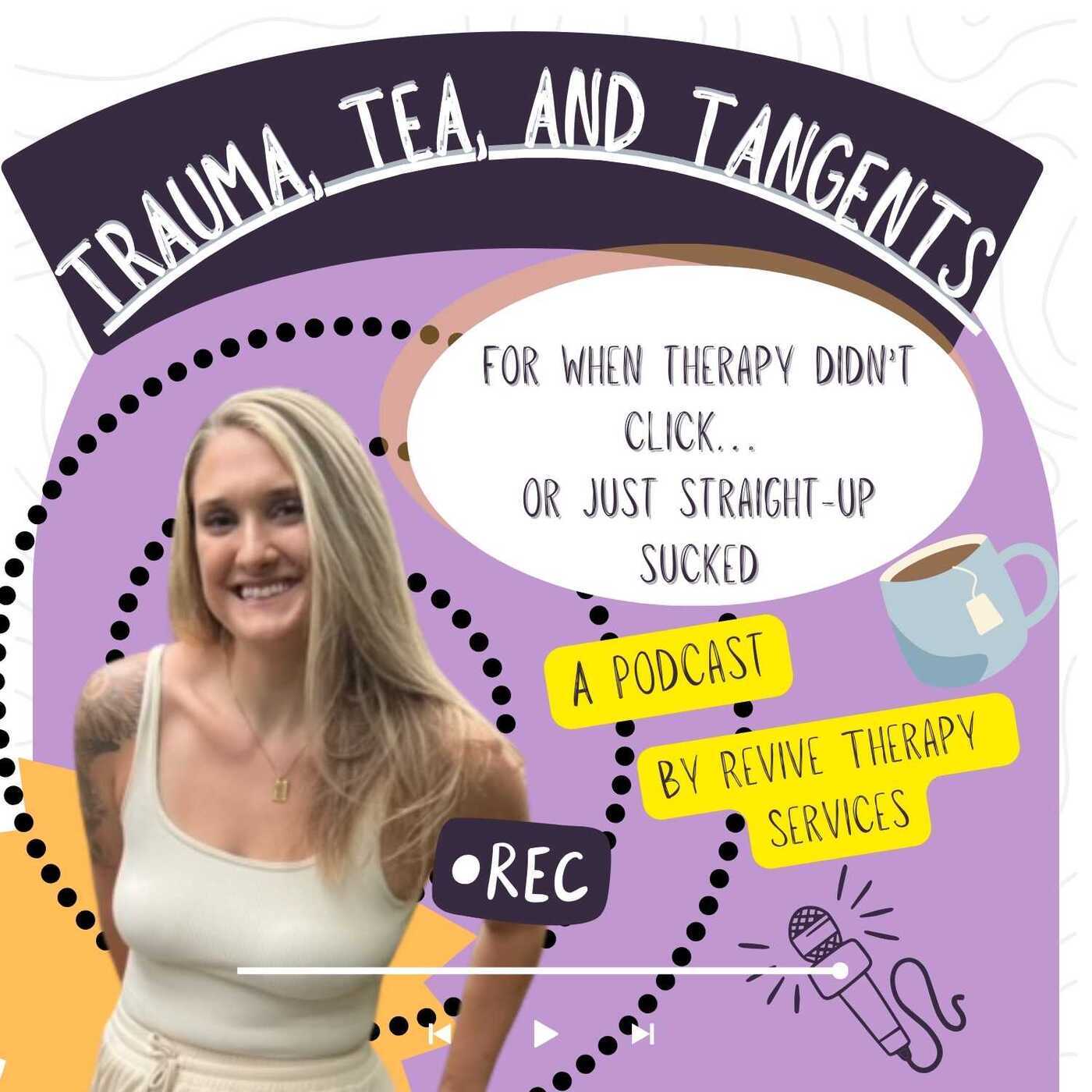
Trauma, Tea, and Tangents
by Hannah Guy
For when therapy didn’t click...or just straight-up sucked.Trauma, Tea, & Tangents is your weekly dose of unfiltered, unapologetic, and unexpectedly healing conversation. Hosted by Hannah Guy, LCSW—a trauma therapist who knows firsthand that healing isn’t linear, self-growth is messy, and sometimes you just need to laugh at the chaos—this podcast dives into all things trauma, nervous system, and the wild ride of being human. Expect a blend of real talk, solid science, and compassionate hot takes, sprinkled with plenty of tangents (because who actually stays on track when they’re talking about trauma?). So grab your tea, get comfy, and let’s spill, sip, and sort through it all—one tangent at a time.
-
33
What No One Tells Therapists About Starting a Practice
In this episode of Trauma, Tea, and Tangents, we sit down with therapist and business owner Kamber Peerboom, LICSW, to break down what it actually takes to start and grow a private practice. From the lack of business training in graduate programs to the fear of financial instability, we’re having an honest conversation about the barriers therapists face—and how to move through them with confidence. Whether you’re a new therapist or thinking about going out on your own, this episode gives you practical insights to help you build a sustainable, aligned practice without burning out. You can watch the full episode on YouTube or listen on any podcast platform. In this episode, we cover: Why therapists aren’t taught the business side of private practice Common fears about starting your own therapy business Financial considerations and how to prepare The truth about “gatekeeping” in the therapy industry How to diversify your income as a therapist Building a sustainable and profitable private practice Key Takeaways: Business skills are essential for long-term success in private practice Fear and uncertainty are common—but they don’t have to hold you back Diversifying your income can increase stability and prevent burnout You don’t need decades of experience to start your own practice About Our Guest: Kamber Peerboom is a Licensed Independent Clinical Social Worker (L.I.C.S.W.) and founder of Loud Thoughts Therapy. With a background in business (MBA) and a passion for helping therapists grow, she supports clinicians in building successful and sustainable practices. Chapters: 00:00 Introduction to the Business Side of Therapy 04:32 Why Therapists Aren’t Taught Business Skills 08:15 Common Fears About Starting a Private Practice 12:40 Financial Planning & What to Expect 17:05 Breaking Through Industry Gatekeeping 21:30 Diversifying Income as a Therapist 25:10 Building a Sustainable Practice 28:45 Final Thoughts & Advice ✨ Want more of Kamber Peerboom? Find her here: Linktree: https://linktr.ee/therapistkamber?utm_source=ig&utm_medium=social&utm_content=link_in_bio&fbclid=PAZXh0bgNhZW0CMTEAc3J0YwZhcHBfaWQMMjU2MjgxMDQwNTU4AAGnOd3oa7iVk-1EK0-iZRnurOLAuoaZgt_7cgrHsEKl5QYJePxA8cXmtfm8LSg_aem_FeadHYgbRm0mgVEvM3haYA Instagram: @meanoldersistertherapist ✨ Want to work with Hannah and the trauma therapy team at Revive Therapy Services? You’ve gotta be a PA resident—check us out at revivetherapyservices.com And don’t forget to follow along on TikTok & IG: @revivetherapyservices If this episode resonated with you, be sure to follow Trauma, Tea, and Tangents and share it with a fellow therapist or someone considering private practice.
-
32
Two Trauma Therapists on How Childhood Trauma Shows Up in Relationships
What if the patterns showing up in your relationships didn’t start in adulthood—but in childhood? In this episode of Trauma, Tea, and Tangents, host Hannah Guy sits down with trauma therapist Leslie Santana to unpack how childhood trauma and generational trauma shape the way we connect, attach, and respond in relationships. Together, they explore how early experiences influence attachment styles, emotional regulation, and relational patterns—and why healing isn’t about “fixing” yourself, but creating safety in your body and environment. You’ll also learn how neuroplasticity makes healing possible, no matter your past, and why slowing down is one of the most powerful tools in trauma recovery. Whether you’re navigating relationship struggles, working through unresolved trauma, or simply trying to understand yourself on a deeper level, this episode offers both insight and practical tools you can begin using today. In this episode, we cover: How childhood trauma impacts adult relationships Generational trauma and inherited patterns Attachment styles and emotional responses The role of safety in healing trauma Neuroplasticity and the brain’s ability to change Why healing is non-linear (and what that actually means) Tools for emotional regulation and somatic healing How to build a foundation for healing outside of therapy Chapters: 00:00 Introduction to Trauma and Relationships 05:50 Understanding Childhood and Generational Trauma 10:45 The Role of Safety in Healing 15:02 The Importance of Slowing Down in Healing 20:13 Therapy: A Vehicle for Healing 24:20 Building Foundations for Healing Outside Therapy 28:55 The Healing Power of Social Media 30:26 Outro ✨ Want more of Leslie Santana? Find her here: Instagram: @leslieinsession ✨ Want to work with Hannah and the trauma therapy team at Revive Therapy Services? You’ve gotta be a PA resident—check us out at revivetherapyservices.com And don’t forget to follow along on TikTok & IG: @revivetherapyservices
-
31
It Was Never About Food: The Relationship Patterns Behind Eating Disorders
What if eating disorders aren’t just about food—but about relationships? In this episode of Trauma Tea & Tangents, host Hannah Guy sits down with PsyD and eating disorder specialist Katelyn Campbell to explore the powerful connection between eating disorders, family dynamics, and the nervous system. Together, they unpack how early relationships shape our connection to food, why eating disorders often develop as a form of protection, and how dissociation, control, and fear of abandonment play a role in maintaining these patterns. This conversation goes beyond surface-level understanding and dives into the relational healing required for recovery—highlighting the importance of safe relationships, trust-building, vulnerability, and boundaries. If you’ve ever struggled with body image, disordered eating, or feeling unsafe in relationships, this episode offers a compassionate and eye-opening perspective on what healing actually looks like. In this episode, we cover: How family dynamics influence eating disorders The link between control, dissociation, and food behaviors Why eating disorders can become a “voice” for unmet needs The role of safe, supportive relationships in recovery Fear of vulnerability and abandonment How to build trust (slowly and safely) Why boundaries are essential for healing Chapters: 00:00 Introduction to Eating Disorders and Relationships 02:39 The Family Dynamics of Eating Disorders 05:24 Dissociation and Control in Eating Disorders 08:14 The Role of Relationships in Healing 10:50 Fear of Abandonment and Vulnerability 13:38 Building Trust and Safe Relationships 16:33 Gradual Healing and Taking Up Space 19:20 The Importance of Setting Boundaries 21:41 Conclusion and Final Thoughts ✨ Want more of Katelyn Campbell? Find her here: Website: katelyncampbellpsyd.com TikTok: @growing.a.therapist Instagram: dr.katelyncampbell ✨ Want to work with Hannah and the trauma therapy team at Revive Therapy Services? You’ve gotta be a PA resident—check us out at revivetherapyservices.com And don’t forget to follow along on TikTok & IG: @revivetherapyservices
-
30
The Truth About Diet Culture & Emotional Eating With A Dietician
Struggling with emotional eating, food guilt, or feeling stuck in the cycle of dieting? In this episode, we sit down with non-diet dietitian Rachel Meyer to unpack what it really means to build a healthy relationship with food—without restriction, shame, or rules. We explore how diet culture impacts mental health, why labeling foods as “good” or “bad” can backfire, and how to reconnect with your body’s natural hunger and fullness cues. Rachel shares practical, realistic strategies to help you move toward food freedom, body trust, and a more sustainable way of eating. Whether you're navigating disordered eating patterns, burnout from dieting, or simply want a more balanced approach to nutrition, this episode offers a refreshing, evidence-based perspective. ✨ In this episode, we cover: • The hidden mental health costs of dieting • How food morality fuels guilt and shame • What a non-diet approach actually looks like • How to trust your body’s hunger and fullness signals • Practical steps toward intuitive and sustainable eating If you’re ready to heal your relationship with food and step away from diet culture, this conversation is for you. ⏱️ Chapters 00:00 Building a Healthy Relationship with Food 09:31 The Impact of Diet Culture on Mental Health 18:31 Navigating Food Choices and Body Image 24:34 Embracing Imperfection in Eating Habits ✨ Want more of Rachel Meyer? Find her here: Website: www.prolifestylenutrition.com IG: @the.nondiet.dietitian FB Page: Pro Lifestyle Nutrition ✨ Want to work with Hannah and the trauma therapy team at Revive Therapy Services? You’ve gotta be a PA resident—check us out at revivetherapyservices.com And don’t forget to follow along on TikTok & IG: @revivetherapyservices
-
29
EMDR for Trauma: How It Actually Works
In this episode of Trauma, Tea, and Tangents, Hannah Guy interviews licensed mental health counselor Kristina Spurlock about EMDR therapy, trauma processing, and evidence-based approaches to trauma healing. They explain how EMDR works, including its eight phases, bilateral stimulation, and how traumatic memories are stored and reprocessed in the brain. The conversation also explores adapting EMDR for complex trauma, neurodivergent clients, and high-stress populations like first responders. Additional topics include somatic therapy integration, parts work, therapeutic relationship dynamics, and creative EMDR techniques such as somatic interweaves. This episode is ideal for therapists, clinicians, and anyone interested in EMDR therapy, trauma recovery, and modern mental health approaches. Chapters: 00:00 Introduction to EMDR and Therapist Dynamics 02:50 Understanding EMDR: Basics and Protocols 05:47 How Trauma Gets Stored in the Brain 08:28 The Flexibility and Adaptability of EMDR 11:12 What Clients Can Expect from EMDR 13:47 Integrating Other Modalities with EMDR 16:19 Empowering Clients in the Healing Process 19:50 EMDR Protocols and Clinical Adaptations 23:08 Creative Approaches in EMDR Therapy 26:48 The Evolution of EMDR Techniques 30:42 Why EMDR Works: The Science Behind It 35:29 Somatic Approaches and Interweaves 39:04 Advice for New EMDR Therapists ✨ Want more of Kristina Spurlock? Find her here: Website: https://www.healthinsightcounseling.com/ Instagram: @healthinsightcounseling ✨ Want to work with Hannah and the trauma therapy team at Revive Therapy Services? You’ve gotta be a PA resident—check us out at revivetherapyservices.com And don’t forget to follow along on TikTok & IG: @revivetherapyservices
-
28
From Body Hate to Body Neutral: Healing After an Eating Disorder
What does healing your relationship with your body actually look like after an eating disorder? In this episode of Trauma, Tea, and Tangents, we sit down with Hannah Guy and Katelyn Campbell, Psy.D., who specializes in working with eating disorders, to explore the complex and non-linear journey of body image healing and recovery. From deep-rooted body hatred to developing body neutrality, this conversation breaks down what it really takes to move toward acceptance—without toxic positivity. We talk about the societal pressures that shape negative body image, the role of cognitive rigidity in keeping people stuck, and how developing cognitive flexibility can support long-term healing. This episode is a powerful reminder that recovery isn’t one-size-fits-all—and that “fully recovered” can look different for everyone. Whether you’re navigating your own healing journey or supporting someone who is, this conversation offers insight, validation, and a more compassionate perspective on body image and eating disorder recovery. In this episode, we cover: Body image struggles after eating disorder recovery The roots of body hatred and internalized beliefs Moving from body hatred to body neutrality Cognitive rigidity vs. cognitive flexibility in treatment Redefining recovery and what “healed” really means Finding identity and purpose beyond your body Chapters: 00:00 Introduction to Body Image and Eating Disorders 05:43 Understanding the Roots of Body Hatred 11:30 Moving Towards Body Neutrality 16:41 Cognitive Rigidity and Flexibility in Treatment 22:59 Finding Purpose Beyond Body Image ✨ Want more of Katelyn Campbell? Find her here: Website: katelyncampbellpsyd.com TikTok: @growing.a.therapist Instagram: dr.katelyncampbell ✨ Want to work with Hannah and the trauma therapy team at Revive Therapy Services? You’ve gotta be a PA resident—check us out at revivetherapyservices.com And don’t forget to follow along on TikTok & IG: @revivetherapyservices
-
27
Why Authenticity in Therapy Matters More Than Technique
What does it really mean to be authentic in therapy—and why does it matter so much for healing? In this episode, Hannah Guy sits down with therapist Kamber Peerboom, LICSW, to explore how authenticity shapes the therapist-client relationship in ways that go far beyond traditional clinical training. They unpack the pressure therapists often feel to present as “perfect” or neutral, and how that can actually create distance instead of connection. Together, they dive into the powerful concepts of rupture and repair, why those moments are not failures in therapy, and how they can deepen trust when handled with care. They also explore how social media is influencing the way therapists show up—and what that means for client expectations, boundaries, and finding the right therapeutic fit. Whether you’re in therapy, considering starting, or a therapist yourself, this conversation offers an honest, nuanced look at what real connection and progress actually look like. In this episode, we cover: What authenticity in therapy actually looks like How therapist training can sometimes discourage genuine connection The role of rupture and repair in building trust How social media is shaping therapist identity and client expectations Why finding the right therapist fit matters more than you think The subtle, often overlooked signs of progress in therapy Chapters: 00:00 Introduction to Authenticity in Therapy 05:56 Rupture and Repair in Therapy 11:00 The Importance of Authentic Connections 17:05 Social Media's Role in Therapy 23:25 The Subtlety of Progress in Therapy ✨ Want more of Kamber Peerboom? Find her here: Linktree: https://linktr.ee/therapistkamber?utm_source=ig&utm_medium=social&utm_content=link_in_bio&fbclid=PAZXh0bgNhZW0CMTEAc3J0YwZhcHBfaWQMMjU2MjgxMDQwNTU4AAGnOd3oa7iVk-1EK0-iZRnurOLAuoaZgt_7cgrHsEKl5QYJePxA8cXmtfm8LSg_aem_FeadHYgbRm0mgVEvM3haYA Instagram: @meanoldersistertherapist ✨ Want to work with Hannah and the trauma therapy team at Revive Therapy Services? You’ve gotta be a PA resident—check us out at revivetherapyservices.com And don’t forget to follow along on TikTok & IG: @revivetherapyservices
-
26
Nutrition’s Hidden Role in Mental Health – Dietitian Explains
What if the way you eat could directly impact your mental health, mood, and stress levels? In this episode, Hannah Guy sits down with registered dietitian Melissa Wadolowski to explore the powerful connection between nutrition and mental health. They break down the science of the gut-brain connection, explain how the gut microbiome influences mood and brain health, and share practical strategies for supporting mental wellness through balanced nutrition. Learn why food shouldn’t be about restriction, how intuitive eating can help you rebuild a healthier relationship with food, and why sustainable, mindful eating habits are essential for long-term well-being. They also discuss the role of nutrients like magnesium for anxiety, omega-3 fatty acids, and fiber in stress regulation, hormone balance, sleep quality, and emotional wellness. If you’ve ever wondered how your diet, gut health, and eating habits can influence your mood, energy, or trauma recovery, this episode provides a compassionate and realistic approach to holistic mental health through nutrition. Episode Chapters: 00:00 Introduction to Nutrition and Mental Health 03:55 Understanding the Gut Microbiome 06:26 Nutrition's Role in Mental Health 09:11 Practical Nutrition for Mental Well-being 12:01 The Importance of Sustainable Eating Habits 14:44 Addressing Food Morality and Enjoyment 17:42 Mindfulness in Eating 20:26 Nutrition and Trauma Recovery 23:12 The Role of Fiber and Omega-3s 25:51 Fasting and Its Benefits 28:39 Conclusion and Resources ✨ Want more of Melissa Wadolowski? Find her here: https://prolifestylenutrition.com/melissa-wadolowski/ https://prolifestylenutritionllc.practicebetter.io/#/67eb55881d0cb7c0a5eb5919/bookings?s=619d8a803980330c8461d5de&step=date ✨ Want to work with Hannah and the trauma therapy team at Revive Therapy Services? You’ve gotta be a PA resident—check us out at revivetherapyservices.com And don’t forget to follow along on TikTok & IG: @revivetherapyservices
-
25
Hyper-independence in Relationships: Why Vulnerability Feels So Hard
What is hyper-independence in relationships — and why does it make vulnerability feel so uncomfortable? In this episode of Trauma, Tea, and Tangents, Hannah Guy is joined by guest Kelsey Wood, marriage and family therapist and coach, to explore how hyper-independence affects romantic relationships, dating patterns, emotional health, and long-term partnership dynamics. If you’ve ever wondered: Why do I struggle to be vulnerable in relationships? Why do I feel like I can’t rely on my partner? Why do I try to control outcomes in dating? Why do I have such rigid expectations in romantic partnerships? This conversation breaks down how hyper-independence develops, how it shows up in dating and romantic relationships, and why building inner self-trust is essential for healthy emotional intimacy. Hyper-independence often creates a deep need for control, reinforces scarcity mindset in dating, and strengthens rigid expectations that block authentic connection. True intimacy requires releasing control, shifting beliefs about vulnerability, and learning to trust yourself from the inside out. Chapters: 00:00 – Understanding Hyper-independence in Relationships 07:00 – The Struggle for Vulnerability 11:38 – Navigating Control and Trust 15:10 – Dating Rules and Expectations 20:22 – The Impact of Mindset on Relationships ✨ Want more of Kelsey Wood? Find her here: https://www.kelseywoodtherapyandcoaching.com/ Instagram: @teatimetherapist Substack: https://substack.com/@teatimetherapist ✨ Want to work with Hannah and the trauma therapy team at Revive Therapy Services? You’ve gotta be a PA resident—check us out at revivetherapyservices.com And don’t forget to follow along on TikTok & IG: @revivetherapyservices
-
24
Is Hyper Independence a Trauma Response?
Hyper independence is often a trauma response rooted in childhood trauma and unmet emotional needs. In this episode, Hannah Guy sits down with therapist and coach Kelsey Wood to explore how high-functioning women develop self-reliance as a survival strategy — and why control can feel safer than vulnerability. Together, they unpack how childhood experiences shape attachment styles, emotional regulation, and adult relationships. They discuss feminine energy, intergenerational trauma, over-functioning, anxiety, and the hidden exhaustion that comes from always being “the strong one.” If you struggle with asking for help, fear vulnerability, or feel safer doing everything alone, this conversation will resonate deeply. This episode is for women navigating therapy, mental health, healing, and personal growth. You’ll learn how hyper independence can shift from trauma response to intentional strength — and why learning to receive support is essential for secure attachment and emotional healing. Chapters 00:00 – Introduction to Hyper Independence and Trauma 02:43 – Understanding Hyper Independence as a Trauma Response 05:32 – The Impact of Childhood Experiences on Adult Relationships 08:27 – Navigating Emotional Needs and Trauma 11:18 – The Balance of Masculine and Feminine Energy 13:56 – Recognizing the Need for Control 16:53 – The Turning Point: When Hyper Independence Becomes a Burden 19:37 – Reconciling Parental Relationships and Childhood Trauma 22:30 – Intergenerational Trauma and Its Effects 25:24 – Using Hyper Independence as a Strength 27:57 – Conclusion: Embracing Vulnerability ✨ Want more of Kelsey Wood? Find her here: https://www.kelseywoodtherapyandcoaching.com/ Instagram: @teatimetherapist Substack: https://substack.com/@teatimetherapist ✨ Want to work with Hannah and the trauma therapy team at Revive Therapy Services? You’ve gotta be a PA resident—check us out at revivetherapyservices.com And don’t forget to follow along on TikTok & IG: @revivetherapyservices
-
23
Healing After Trauma in Relationships: Triggers, Codependency & Emotional Safety
In this episode of Trauma Tea and Tangents, Sex Therapist Esme Vallette returns to explore one of the most powerful — and misunderstood — aspects of trauma recovery: healing within relationships. Can a relationship actually help you heal trauma? What happens when your safest partner becomes your biggest trigger? And how do you balance personal responsibility with healthy support? We dive deep into emotional safety, attachment wounds, codependency, relationship triggers, and the role of individual therapy in trauma healing. Esme breaks down how partners can support each other without becoming each other’s therapist — and why discomfort in a relationship doesn’t automatically mean you’re unsafe. This conversation is essential listening for anyone navigating trauma recovery while in a relationship — or hoping to build one that supports growth instead of repeating old patterns. If you’ve ever wondered: “Why do I get triggered in safe relationships?” “Is my partner responsible for my healing?” “What’s the difference between support and codependency?” “Can love actually help trauma heal?” This episode gives you grounded, therapist-backed clarity. Relationships can be healing — but they shouldn’t be the only place you heal. ⏱ Chapters 00:00 – Introduction to Healing in Relationships 01:09 – The Role of Partners in Healing 04:53 – Understanding Triggers and Trauma Responses 08:45 – Responsibility in Relationships 12:17 – Codependency vs. Healthy Support 15:06 – Finding Safe Relationships 19:26 – What Does “Safety” Really Mean? 23:33 – Why Individual Therapy Matters 25:39 – Final Thoughts & Closing Reflections Joining us for this raw and real convo is Esme Valette, licensed sex therapist and fierce advocate for trauma-informed sex education. Esme opens up about her experience working with survivors, the practical tactics she uses with clients, and how to reclaim intimacy at your own pace. Expect wisdom, vulnerability, and a few healing tangents along the way. ✨ Want more of Esme? Follow her on IG & TikTok: @therapy_with_esme ✨ Want to work with Hannah and the trauma therapy team at Revive Therapy Services? You’ve gotta be a PA resident—check us out at revivetherapyservices.com And don’t forget to follow along on TikTok & IG: @revivetherapyservices
-
22
Conversation with a Sex Therapist: Sex Isn’t the Goal
Why does pleasure feel unsafe after trauma? Hannah Guy and sex therapist Esme Valette explore how trauma, conditioning, and performance-based intimacy disconnect us from pleasure—and how slowing down, curiosity, and non-goal oriented touch can help rebuild safety, connection, and trust with the body. Takeaways: How cultural and religious backgrounds shape perceptions of pleasure Why sex is often taught as a linear, goal-oriented experience How non-goal oriented touch can reduce pressure in intimacy The importance of slowing down in trauma healing Using curiosity about sensation to support healing Communicating boundaries, needs, and desires with partners Why changing your mind about intimacy is always valid Expanding intimacy beyond penetration The role of self-exploration in understanding pleasure Chapters 00:00 Rebuilding Pleasure: A Journey of Healing 08:52 Non-Goal Oriented Touch: Redefining Intimacy 18:12 The Power of Curiosity in Healing 26:30 Communicating Needs: Slowing Down for Connection Joining us for this raw and real convo is Esme Valette, licensed sex therapist and fierce advocate for trauma-informed sex education. Esme opens up about her experience working with survivors, the practical tactics she uses with clients, and how to reclaim intimacy at your own pace. Expect wisdom, vulnerability, and a few healing tangents along the way. ✨ Want more of Esme? Follow her on IG & TikTok: @therapy_with_esme ✨ Want to work with Hannah and the trauma therapy team at Revive Therapy Services? You’ve gotta be a PA resident—check us out at revivetherapyservices.com And don’t forget to follow along on TikTok & IG: @revivetherapyservices
-
21
Why Trauma Makes Relationships Feel Hard
What if feeling “broken” after trauma isn’t a sign that something’s wrong with you — but actually proof your nervous system did what it needed to survive? In this episode, therapist Hannah Guy gets real about the messy, confusing feelings that often come after trauma and how they show up in our relationships. Why can love, intimacy, and even close friendships feel triggering? How do we navigate grief, self-doubt, and moments of dysregulation without beating ourselves up? Hannah shares personal insights and professional guidance, reframing the idea of being “broken” and showing what real healing looks like — it’s not about being perfect or “fixed,” it’s about slowly learning to feel safe in your body, with yourself, and with others. If you’ve ever felt stuck, judged your own feelings, or wondered why relationships feel harder than they “should,” this episode is for you. Chapters 00:00 — Introduction to Trauma & Personal Experience 03:03 — Understanding the Feeling of Being “Broken” 07:33 — How Trauma Impacts Relationships 13:58 — Navigating Love & Intimacy After Trauma 17:54 — Healing: What It Really Looks Like 20:59 — Reframing the Belief of Being Broken ✨ Want to work with Hannah and the trauma therapy team at Revive Therapy Services? You’ve gotta be a PA resident—check us out at revivetherapyservices.com And don’t forget to follow along on TikTok & IG: @revivetherapyservices
-
20
Stop Overthinking Every Choice
In this episode, therapist Hannah Guy breaks down why decision-making feels overwhelming for people with trauma histories and chronic anxiety. She explains how the nervous system confuses emotional discomfort with danger, why trauma creates pressure to make the “right” choice, and how fight/flight/fawn/freeze show up when we’re faced with everyday decisions. Hannah shares trauma-informed tools to reduce decision paralysis, regulate the body, and approach choices with more clarity and less fear. You’ll learn grounding practices, reflective questions, and a new perspective on uncertainty: decisions are experiments, not life sentences. Topics covered include trauma responses, attachment triggers, emotional regulation, nervous system healing, somatic strategies, and reframing high-stakes thinking in dating, relationships, and major life transitions. If you struggle with overthinking or fear of making the wrong choice, this episode offers practical support and a gentle mindset shift. ✨ Want to work with Hannah and the trauma therapy team at Revive Therapy Services? You’ve gotta be a PA resident—check us out at revivetherapyservices.com And don’t forget to follow along on TikTok & IG: @revivetherapyservices ⏱️ Episode Chapters 00:03 — Welcome + Why This Topic Matters Intro to the episode, why “the right decision” comes up so often in therapy and real life. 00:49 — The Pressure to Choose Correctly How perfectionism and fear show up in everyday decision-making. 01:21 — A Personal Look at Decision Anxiety Hannah shares how dating activates her own decision spirals. 03:21 — Trauma Makes Choices Feel Like Survival Why your brain treats emotional danger like physical danger. 04:48 — How Trauma Turns Normal Decisions Into Threats Coffee dates, texts, jobs—why everything feels high stakes. 06:42 — Fight/Flight/Fawn/Freeze in Decision-Making How each trauma response shows up when you’re faced with choices. 09:04 — The Myth of the “Right” Decision Why one perfect path doesn’t exist and how trauma convinces us otherwise. 11:15 — The Fantasy of Certainty How our nervous system chases the illusion of safety through “right choices.” 12:52 — Decisions Are Experiments, Not Life Sentences Reframing choices as learning instead of permanent outcomes. 13:07 — Regulating Before You Choose Why your body—not logic—makes decisions feel impossible. 13:12 — Tools to Return to Regulation Grounding, orienting, breathwork, and naming the scared parts. 15:38 — What Clarity Actually Feels Like How clarity shows up once the nervous system calms down. 17:50 — Building Tolerance for Uncertainty Expanding your window of tolerance around big and small decisions. 18:29 — You’re Not Meant to Be Regulated All the Time Debunking the myth of constant calm. 19:07 — Mastery Is Tolerating Uncertainty A powerful reframe for healing. 19:10 — Final Reflections + Journal Prompts Questions to ask yourself when you feel pressure to choose. 20:57 — Closing + How to Connect with Hannah Therapy offerings, contact details, and gratitude.
-
19
How Ketamine-Assisted Therapy Can Transform Your Trauma Recovery
In this episode of Trauma, Tea, and Tangents, licensed therapist Hannah Guy explores the world of Ketamine-Assisted Psychotherapy (KAP)—a groundbreaking approach to mental health and trauma healing. Hannah breaks down what KAP is, how it works, and what clients can expect from preparation to integration. She also shares insights from her own professional and personal experiences with psychedelic therapy, offering an authentic perspective on what makes this process both safe and transformative. Whether you’re curious about psychedelic-assisted therapy, mental health innovation, or the mind-body connection, this conversation will leave you with a deeper understanding of how Ketamine Therapy can open new doors to healing. Chapters / Episode Takeaways: 00:00 – Introduction to Ketamine Assisted Therapy 01:51 – Personal Journey with Psychedelic Therapy 04:45 – Understanding Ketamine and Its Effects 08:31 – What to Expect from Ketamine Assisted Psychotherapy 15:34 – Benefits and Safety of KAP 19:01 – Integration and Long-term Effects of KAP 🔎 Keywords: Ketamine-Assisted Therapy, KAP, trauma healing, psychedelic therapy, mental health, somatic healing, trauma recovery, Revive Therapy Services ✨ Want to work with Hannah and the trauma therapy team at Revive Therapy Services? You’ve gotta be a PA resident—check us out at revivetherapyservices.com And don’t forget to follow along on TikTok & IG: @revivetherapyservices
-
18
Outgrowing Survival Mode: The Real Work of Trauma Recovery
Hannah Guy sits down with Meg Kub, LPC of Wellness with Meg to chat about what healing really looks like. From outgrowing your survival self to learning to trust yourself again, they talk about the twists and turns of trauma recovery. Healing isn’t neat or linear — it’s layered, sometimes slow, but always worth it. ⏱️ Episode Chapters: 00:00 — Introduction to Trauma and Healing 01:44 — Outgrowing the Survival Self 05:19 — The Journey from Crisis to Stability 08:56 — Understanding Safety vs. Stuckness 15:35 — The Nuances of Healing and Self-Trust 20:45 — Lifelong Healing and Acceptance 25:37 — The Therapeutic Power of Conversation 27:04 — Navigating Trauma Responses 29:21 — Post-Traumatic Growth and Joy 31:19 — The Role of the Therapist in Healing 33:41 — Signs of Moving Beyond Survival Mode 40:14 — Building a Relationship with Self 44:09 — Curiosity in Healing and Self-Discovery About the Guest: Meg Kub is an integrated and somatic therapist specializing in post-traumatic growth and reclaiming your story after complex trauma. With a whole-person approach, she helps individuals move beyond survival mode and symptom management into deeper, lasting healing. Her work emphasizes nervous system regulation, rebuilding trust in self and others, and uncovering the authentic self beneath trauma’s protective layers. If you are interested in getting scheduled with Meg, you can find her on her website Wellness with Meg. You can also find her on TikTok: @wellnesswithmeg ✨ Want to work with Hannah and the trauma therapy team at Revive Therapy Services? You’ve gotta be a PA resident—check us out at revivetherapyservices.com And don’t forget to follow along on TikTok & IG: @revivetherapyservices
-
17
Anxious or Avoidant? Understanding Your Relationship Patterns
In this episode of Trauma, Tea, and Tangents, Hannah Guy chats with Abby Wilson, LCSW, an existential therapist who helps women navigate quarter-life challenges and attachment trauma. They break down the messy, sometimes hilarious realities of attachment styles in today’s dating world — from overthinking texts as an anxious partner to avoiding feelings at all costs as an avoidant one. Abby shares insights on self-worth, body signals, and emotional patterns that shape how we connect with others. They talk about how to recognize those patterns, navigate relationships more consciously, and actually start feeling some peace in the process (yes, even in the middle of ghosting, over-texting, and dating app chaos). Whether you’re trying to understand your own relationship patterns or just want a laugh while learning something about yourself, this episode is packed with practical insights, relatable stories, and no-BS advice about attachment and emotional growth. Connect with Abby Wilson: Instagram & TikTok: @abbywilsonlcsw Website: abbywilsontherapy.com What you’ll find in this episode How anxious and avoidant attachment styles show up in modern dating. Why overthinking texts or ghosting isn’t “just you” — it’s attachment talking. How to notice your own emotional patterns and body signals. Tips to build self-worth and trust yourself in relationships. Why healing takes time (and why it’s okay to stumble along the way). How to cultivate peace and self-acceptance right now, not just someday. Approaching relationships with curiosity instead of shame.
-
16
Dissociation: What Even Is It, Really?
Ever find yourself driving home and suddenly thinking, “Wait… how did I even get here?” That’s dissociation in action. In this episode, we’re unpacking what dissociation really is, why our brains do it, and how it’s sometimes more friend than foe. We’ll talk about the ways dissociation protects us, the moments it trips us up, and how to come back to the present when your mind has basically hit the “autopilot” button. What You’ll Hear in This Episode: What dissociation actually is (beyond the myths) Why our brains develop dissociation as a survival strategy How dissociation can sometimes be protective—even positive What dissociation looks like in day-to-day life Gentle practices for becoming more present and grounded Follow more of Parker’s content on her Instagram and TikTok @parkercatontherapy ✨ Want to work with Hannah and the trauma therapy team at Revive Therapy Services? You’ve gotta be a PA resident—check us out at revivetherapyservices.com And don’t forget to follow along on TikTok & IG: @revivetherapyservices
-
15
What's an Emotion anyways?
Feeling your emotions can be harder than it seems—but avoiding them comes at a cost. In this episode, Hannah Guy explores why uncomfortable feelings can feel overwhelming, how cultural, biological, and personal factors shape the way we experience emotions, and practical ways to safely tune in and process them. Drawing from her experience as a therapist, Hannah shares guidance for building emotional awareness, embracing your inner world, and using your feelings as a tool for growth. What You’ll Learn in This Episode: Why feeling emotions is essential for self-understanding How emotional avoidance can create long-term harm The role emotions play as signals from our inner world Cultural and childhood influences on emotional expression Practical steps to build awareness, name emotions, and process them safely How therapy can support emotional growth and healing Practical steps you can take on your own if you’re not yet ready for therapy—whether due to financial, emotional, or environmental reasons. ✨ Want to work with Hannah and the trauma therapy team at Revive Therapy Services? You’ve gotta be a PA resident—check us out at revivetherapyservices.com And don’t forget to follow along on TikTok & IG: @revivetherapyservices
-
14
From Friends to Lovers and Everything In Between: Navigating Change
In this episode of Trauma, Tea, and Tangents, I sit down with therapist and podcast host Jazzmyn Proctor to talk about navigating relationships, embracing change, and the self-discoveries that come with dating and letting go. Whether you’re facing shifting friendships, romantic challenges, or life transitions, this conversation offers honest insight and encouragement. What you’ll hear in this episode: How to navigate relationships through major life transitions Accepting when relationships change (and why that’s okay) The growth that comes with losing people and moving forward Dating as a space for discovery and self-awareness Practical insights for young adults and millennials facing relational challenges ✨ More about Jazzmyn: Jazzmyn is currently accepting new clients in Washington D.C., Maryland, and Virginia. Instagram: @healingwithjazzmyn Website: healingwithjazzmyn.com Listen to her podcast All Our Parts (new episodes every Tuesday & Friday): Spotify link https://open.spotify.com/show/7osChWIXkYIFpSteEEpxgC ✨ Want to work with Hannah and the trauma therapy team at Revive Therapy Services? You’ve gotta be a PA resident—check us out at revivetherapyservices.com And don’t forget to follow along on TikTok & IG: @revivetherapyservices
-
13
EMDR Explained: 5 Reasons to Try It
In this solo episode of Trauma, Tea, and Tangents, I’m sitting down to chat all about EMDR—what it is, why it works, and why I think it can be such a powerful tool for healing trauma. I’ll share five big reasons EMDR might be worth exploring, how it’s different from traditional talk therapy, and what the process actually looks like. I also touch on some of the common worries or skepticism people have about EMDR and why finding the right therapist really matters. If you’ve been curious about EMDR, this episode is for you. 💬 If this episode gave you a better understanding of what EMDR actually is, don’t forget to like, comment, and share—and hit subscribe so you never miss an episode of Trauma, Tea, and Tangents. ✨ Want to work with Hannah and the trauma therapy team at Revive Therapy Services? You’ve gotta be a PA resident—check us out at revivetherapyservices.com And don’t forget to follow along on TikTok & IG: @revivetherapyservices
-
12
Life After Burnout: Healing, Rest, and Looking Ahead
On this episode of Trauma, Tea, and Tangents, I’m joined by Stephanie High, a performance psychology practitioner and trauma-informed educator who works with women and athletes navigating burnout and trauma. We dive deep into the realities of burnout—especially in the world of corporate America—and explore what healing from trauma can look like when you start to imagine a future beyond survival mode. Stephanie shares powerful insights on why taking breaks isn’t a luxury, but a necessity for recovery and sustainable success. Whether you’ve experienced burnout yourself, are on a healing journey, or simply want to learn how to protect your mental health in demanding environments, this conversation will leave you feeling seen, understood, and inspired to slow down without guilt. ✨ Find Stephanie online: Instagram & TikTok → @kaizencatalyst 💬 If this episode resonates with you, don’t forget to like, comment, and share—and hit subscribe so you never miss an episode of Trauma, Tea, and Tangents. ✨ Want to work with Hannah and the trauma therapy team at Revive Therapy Services? You’ve gotta be a PA resident—check us out at revivetherapyservices.com And don’t forget to follow along on TikTok & IG: @revivetherapyservices
-
11
How to Heal When Nothing Feels Certain
In this solo episode of Trauma, Tea, and Tangents, Hannah invites you to settle in with your favorite cup of tea and explore the often uncomfortable space of uncertainty. For many of us, trauma wires our brains to crave control, predictability, and safety—so when life feels uncertain, it can trigger deep-rooted fear and survival responses. Hannah unpacks how trauma impacts the way we relate to the unknown and gently guides listeners toward a new perspective: what if uncertainty isn’t the enemy, but an invitation to heal? Through grounded reflection and honest insight, this episode explores how embracing the unknown can be a powerful part of reshaping our nervous systems, softening trauma responses, and building resilience. If you’re navigating trauma, healing through change, or learning to trust yourself in unfamiliar territory, this episode will meet you right where you are. ✨ Want to work with Hannah and the trauma therapy team at Revive Therapy Services? You’ve gotta be a PA resident—check us out at revivetherapyservices.com And don’t forget to follow along on TikTok & IG: @revivetherapyservices
-
10
In Between Who I Was and Who I’m Becoming
On this week's episode of Trauma, Tea, and Tangents, we talk about the riveting question we all ask ourselves at some point in our lives "Who am I now?" You’re not the same woman you were 10 years ago—maybe you’re a mother, a daughter, a partner, a professional, a survivor, a seeker… or someone in the thick of figuring it all out. But what happens when life transitions shake your sense of identity? This week, we’re diving deep into identity shifts through life’s big (and subtle) transitions with Katie VanderWeide, psychotherapist, social worker, and passionate advocate for women navigating change. She’s the heart behind The Chrysalis, a support group for women in the “in-between”—not quite who they were, and not yet who they want to become. If you're going through a transition in life that you're not quite sure how to navigate, this episode is for you. Follow Katie on IG and TikTok: @katie_psycheandsoul Explore her work at: www.michigananxietytherapy.com 💬 Let’s get honest about who we are, who we’ve been, and who we’re becoming. Episode is out now! Grab your tea and hit play! ✨ Want to work with Hannah and the trauma therapy team at Revive Therapy Services? You’ve gotta be a PA resident—check us out at revivetherapyservices.com And don’t forget to follow along on TikTok & IG: @revivetherapyservices
-
9
Sick and Silent: The Overlooked Link Between Illness, Trauma, and Mental Health
On this week's episode of Trauma, Tea, and Tangents, we sit down with Sami Leyde — a professional dancer, performer, and passionate advocate for POTS (Postural Orthostatic Tachycardia Syndrome) and EDS (Ehlers-Danlos Syndrome). Sami shares her deeply personal journey of living with chronic illness, and how for years, her symptoms were dismissed, misdiagnosed, or misunderstood by the medical system. We explore the powerful intersection between trauma and the body — how unresolved emotional wounds and long-term stress can manifest physically, sometimes leading to or worsening chronic illness. This episode is a raw, validating conversation for anyone who's ever felt unseen in their health struggles or questioned the mind-body connection. Episode’s out now! Grab your tea and hit play. You can follow Sami and learn more about her advocacy work and creative journey on Instagram: @ze.brave Wanna work with Hannah and her trauma therapy team? You gotta be a PA resident—check us out at revivetherapyservices.com or follow along on TikTok & IG @revivetherapyservices.
-
8
Healing Touch: Sex, Trauma, and the Journey Back
This week on Trauma, Tea, and Tangents, we’re pouring a strong cup and diving headfirst into one of the most avoided yet deeply important conversations: sex and sexual trauma. Sex is often cloaked in silence—especially when trauma is involved—but we’re here to unpack the many faces of sexual trauma, how it shows up in our lives, and most importantly, how we can begin to heal from it. Joining us for this raw and real convo is Esme Valette, licensed sex therapist and fierce advocate for trauma-informed sex education. Esme opens up about her experience working with survivors, the practical tactics she uses with clients, and how to reclaim intimacy at your own pace. Expect wisdom, vulnerability, and a few healing tangents along the way. ✨ Want more of Esme? Follow her on IG & TikTok: @therapy_with_esme 💛 Looking for trauma therapy in Pennsylvania? Hannah and her team at Revive Therapy Services are here to support you. Learn more at revivetherapyservices.com or follow along on IG & TikTok: @revivetherapyservices
-
7
Let’s Get Honest about Adoption... The Good, Bad, and Everything in-between
This week on Trauma, Tea, and Tangents, we’re diving into the often-ignored reality of adoption trauma—because being “chosen” doesn’t cancel out birth trauma, identity confusion, or attachment wounds. Tisheila Justice, LCSW, joins us to unpack how early childhood development, attachment theory, and the loss of cultural identity deeply impact our ability to feel safe, connected, and emotionally regulated as adults. We’re calling out the “resilient kid” myth, breaking down what real healing looks like, and getting honest about what adoptees actually need to thrive. If you've ever felt like something was missing but couldn’t name it—this one's for you. Episode’s out now! Grab your tea and hit play. Learn more about Tisheila and her work at growthandwellnessmhc.com Follow her on IG and TikTok: @tisheilajustice Wanna work with Hannah and her trauma therapy team? You gotta be a PA resident—check us out at revivetherapyservices.com or follow along on TikTok & IG @revivetherapyservices.
-
6
Change Isn’t Magic — It’s Mindset (and a Little Bit of Chaos)
In this episode, I'm joined by the badass confidence creator herself, Sam Pillsbury, and let’s just say — we go all in on what it actually takes to create real change (spoiler: it’s not just manifesting and good vibes). We dive deep into the messy, uncomfortable, and very real journey of shifting from a scarcity mindset to an abundance one. We talk about why change feels so damn hard, how sneaky self-sabotage shows up when you're leveling up, and why building your "trust muscle" (yep, that’s a thing) is the secret weapon you didn't know you needed. Sam and I also get real about moving cities, career pivots, embracing the unknown, and trusting your intuition — even when you have no f*cking clue what’s next. Because sometimes not having a plan is exactly the plan. If you’re craving permission to be messy, to start small, and to believe that change is happening even when it feels like nothing is working — this one's for you. Wanna get that discount for To Be Magnetic? Use Sam's Promo code: SAMANTHA CONNECT WITH SAM: ✨ Find Sam on IG and TikTok @sampills.co ✨ Check out her work at Sampills.co ✨ Sign up for Sam's Newsletter using this link: http://sampills.com/tangents CONNECT WITH Hannah ✨ Find Hannah on IG and TikTok @revivetherapyservices ✨ Check out her therapy practice's info at revivetherapyservices.com WANT TO WORK WITH HANNAH? 💬 If you’re in Pennsylvania and ready to work through trauma, anxiety, or big life transitions with someone who gets it, book a free consult in seconds here: https://www.revivetherapyservices.com/book-a-consult
-
5
Intrusive as Hell: The OCD Experience
OCD isn’t just about being “neat” or “a little anxious.” It can feel like your brain is holding you hostage with relentless, intrusive thoughts no one talks about out loud. In this episode, I sit down with Brittany Webb from Better Minds Counseling (@bettermindscounseling on IG) bettermindscounseling-services.com to dive into the unfiltered truth about OCD. We explore how it can parallel trauma in the nervous system—and the ways it’s totally its own beast. This is the episode for anyone who’s felt misunderstood, exhausted, or ashamed of what their mind throws at them. If you’re in PA and looking for a therapist who actually gets trauma, check out revivetherapyservices.com or connect with me on IG/TikTok @revivetherapyservices. Don’t keep this convo in the dark—listen, share, and start unlearning the shame.
-
4
Should Your Therapist Be in Therapy? (Spoiler: Yes.)
Let’s be honest—if your therapist hasn’t been to therapy, that’s a red flag the size of a weighted blanket. In this episode, Hannah talks with Erin Kelly, LCSW, who’s done actual research on why therapists need to do their own inner work (and what can go sideways if they don’t). They get into the nitty gritty of what happens when unprocessed junk seeps into the therapy room, why “just breathing through it” isn’t enough, and how you can tell if your therapist is walking the walk—or just handing out mindfulness worksheets like candy. This is a must-listen for anyone who’s ever wondered, “Umm… who’s your therapist?” 🔗 Need a therapist who actually does the work? Book a free consult (PA residents only): www.revivetherapyservices.com/book-a-consult 🌿 Stalk Erin (respectfully) and learn more about her work at: www.elementalselfinstitute.com
-
3
CPTSD or ADHD? Or Both? (You're Not Crazy)
CPTSD or ADHD? Or Both? (You're Not Crazy) Is it trauma? Is it neurodivergence? Or is it just your brain throwing spaghetti at the wall to see what sticks? In this episode, we’re diving headfirst into the messy overlap between CPTSD and ADHD—why they can look freakishly similar, how to tell the difference (hint: it's not your Google search history), and why either way, you’re not broken or lazy or "too much." You’re human. You’re brilliant. And no, you’re not crazy. Get ready for spicy validation, zero shame, and some light dragging of the mental health system. Let’s sort through the chaos together—and if this hits home, share it with someone else who needs to hear it, or leave a review to help more people feel less alone. And hey—if you’re in Pennsylvania and want to go deeper, you can work directly with me or one of the incredible trauma therapists on my team. Book a free consult at revivetherapyservices.com/book-a-consult. You don’t have to untangle all of this alone.
-
2
Dating Without Losing Your Mind: A Therapist & Dating Coach Tell All
Let’s be real—dating can feel like a rollercoaster designed by someone who definitely skipped their own therapy sessions. In this kickoff episode, Hannah teams up with seasoned dating coach Brin to get honest about the messy, beautiful chaos of modern dating. We’re unpacking: The truth about loneliness (and why it doesn’t mean there’s something “wrong” with you) How being single is completely normal (and not some problem to fix) Reframing past relationship experiences without spiraling Finding expanders—those people who show you what’s actually possible Somatic tips to keep your nervous system chill on first dates (no more sweaty panic!) Whether you’re single, dating, or deep in situationship limbo, this episode serves up compassionate, no-nonsense insights to help you stay grounded—and maybe even enjoy the ride. Want support while you’re navigating dating, relationships, or trauma? If you live in Pennsylvania, Hannah and her team would love to work with you. Schedule a free consult call in seconds: https://www.revivetherapyservices.com/book-a-consult Wanna learn more about the work Hannah does? Follow her on TikTok & Instagram @revivetherapyservices and check out her website: https://www.revivetherapyservices.com Want to work with Brin? Follow her on IG & TikTok @mudderbrin or connect with her on her website: https://www.mudderbrin.com
No matches for "" in this podcast's transcripts.
No topics indexed yet for this podcast.
Loading reviews...
ABOUT THIS SHOW
For when therapy didn’t click...or just straight-up sucked.Trauma, Tea, & Tangents is your weekly dose of unfiltered, unapologetic, and unexpectedly healing conversation. Hosted by Hannah Guy, LCSW—a trauma therapist who knows firsthand that healing isn’t linear, self-growth is messy, and sometimes you just need to laugh at the chaos—this podcast dives into all things trauma, nervous system, and the wild ride of being human. Expect a blend of real talk, solid science, and compassionate hot takes, sprinkled with plenty of tangents (because who actually stays on track when they’re talking about trauma?). So grab your tea, get comfy, and let’s spill, sip, and sort through it all—one tangent at a time.
HOSTED BY
Hannah Guy
Loading similar podcasts...
URL copied to clipboard!