
PODCAST · health
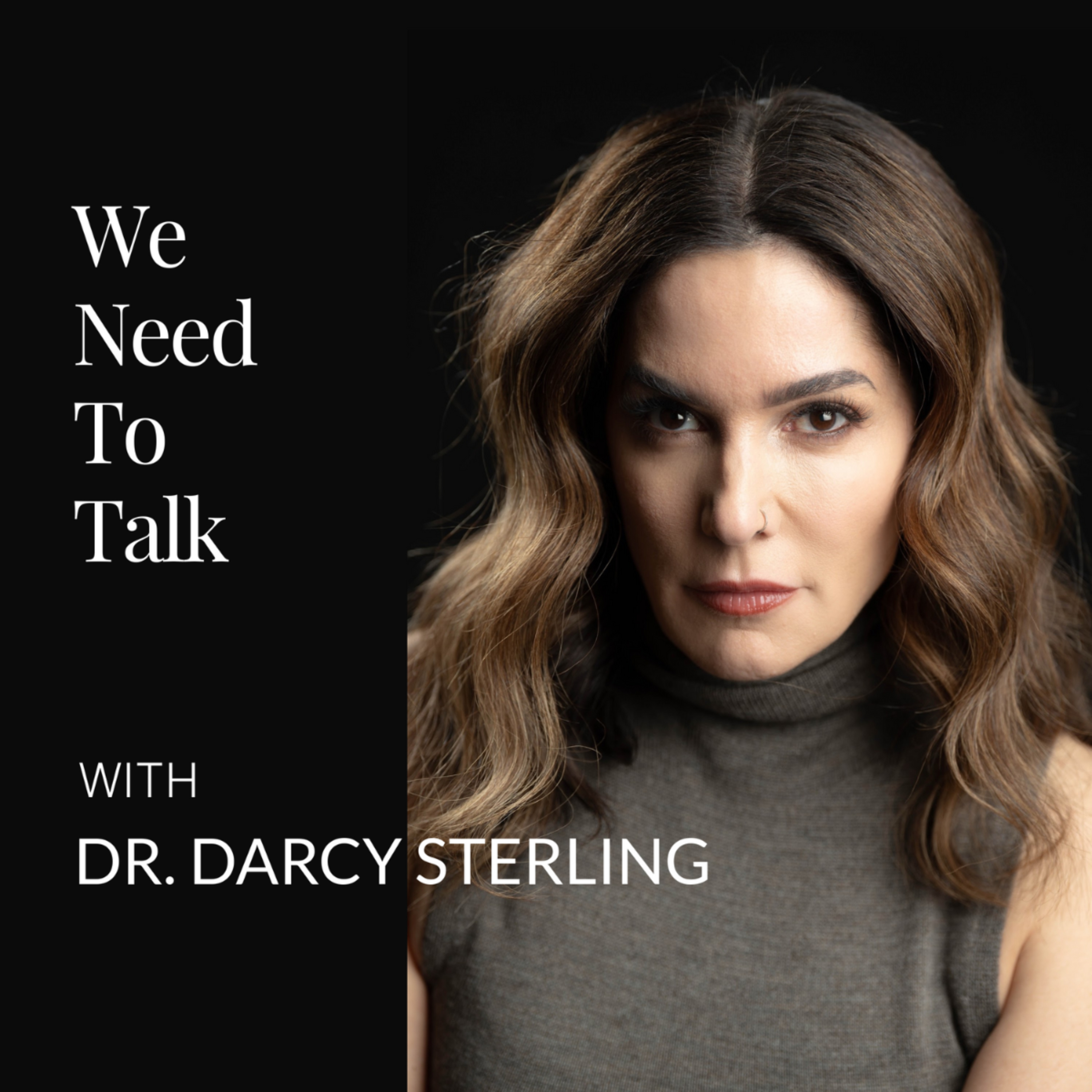
We Need To Talk with Dr. Darcy Sterling
by Darcy Sterling
For more than 25 years, Dr. Darcy Sterling has been helping people conquer their toughest relationship challenges. She is a New York City-based licensed therapist, the host of E! Network’s Famously Single, the former Global Ambassador to Tinder, and now she brings her no-nonsense advice to her new podcast, We Need To Talk With Dr. Darcy Sterling.We Need To Talk is a dating and relationship podcast that will inspire and empower you with the tools and skills you need to love better so you can live better.
-
125
Why Your Partner Saying No to Sex Feels So Personal
If your partner saying no to sex lands as hurt, doubt, or feeling unwanted, this episode is for you.Because sometimes the hardest part is not the no itself. It is how fast that moment starts meaning more. More about you. More about the relationship.If this is you:• Your partner saying no to sex hits harder than you think it should• Affection has started feeling confusing instead of comforting• You keep wondering what every kiss, compliment, or distance means• You do not know whether the problem is sex, rejection, or something biggerIn this episode, I’m talking about the kind of moment that does not stay contained.Because after a while, it is not just the no you are reacting to.REFERENCES/RESOURCESwww.alternativescounseling.comCREDITS“We Need To Talk With Dr. Darcy Sterling” is a Sterling Standard Production. Editing and sound engineering by Bart Migal. Our theme music is by Trending Music. Special thanks to Amanda Cristiani and Robyn Jaenchen. DISCLAIMERInstagram:@drdarcysterling Facebook:Dr.Darcy SterlingTik Tok:@doctordarcysterling X:@DrDarcySterling YouTube:@DarcySterling Threads:@drdarcysterlingWatch this episode here on YouTube.
-
124
Why You Panic When Someone Pulls Away
If a subtle shift in your partner can hijack your body before your mind can make sense of what’s happening, this episode is for you.A shift in tone.A text that feels off.A little more distance.And suddenly, something in you is no longer steady.Today, I’m talking about the kind of moment that does not just feel bad. It can change everything in you in a second.Because by the time you are trying to understand it, the part of you asking questions is already late.REFERENCES/RESOURCESwww.alternativescounseling.comCREDITS“We Need To Talk With Dr. Darcy Sterling” is a Sterling Standard Production. Editing and sound engineering by Bart Migal. Our theme music is by Trending Music. Special thanks to Amanda Cristiani and Robyn Jaenchen. DISCLAIMERInstagram:@drdarcysterling Facebook:Dr.Darcy SterlingTik Tok:@doctordarcysterling X:@DrDarcySterling YouTube:@DarcySterling Threads:@drdarcysterlingWatch this episode here on YouTube.
-
123
Stop Taking the Bait: Why Negativity Is So Hard to Ignore
If a smug comment, a passive-aggressive text, or a condescending tone can stay in your head for hours, this episode is for you.Because sometimes the hardest part is not the comment.It is what happens after.After they say it.After you should be over it.This might sound familiar if:A rude comment stays with you longer than you want it toYou know responding will make it worse, but silence still feels wrongThe second you do not answer, it starts to feel personalIn this episode, I’m talking about the kind of negativity that does not end when the moment ends.Because the thing that keeps pulling you back may not be the comment itself.REFERENCES/RESOURCESwww.alternativescounseling.comCREDITS“We Need To Talk With Dr. Darcy Sterling” is a Sterling Standard Production. Editing and sound engineering by Bart Migal. Our theme music is by Trending Music. Special thanks to Amanda Cristiani and Robyn Jaenchen. DISCLAIMERInstagram:@drdarcysterling Facebook:Dr.Darcy SterlingTik Tok:@doctordarcysterling X:@DrDarcySterling YouTube:@DarcySterling Threads:@drdarcysterlingWatch this episode here on YouTube.
-
122
Why Do You Keep Doubting Your Partner — Even When Nothing Is Wrong?
Your partner answers you.Explains themselves.Reassures you.And somehow, you still cannot settle.Because sometimes the doubt does not end when the conversation ends.It comes back after.After the answer.After you should feel better.This might sound familiar if:• Your partner reassures you, but the anxiety comes back anyway• A shift in tone, timing, or energy stays with you for hours• You keep going back for more certainty and still do not feel settled• You cannot tell whether something is wrong in the relationship or something got triggered in you• You leave the conversation with an answer, but not with reliefIn this episode, I’m talking about the kind of doubt that keeps people checking, questioning, and focusing on their partner even when nothing is clearly wrong.Because the part that keeps pulling you back inmay not be where you think it is.REFERENCES/RESOURCESwww.alternativescounseling.comCREDITS“We Need To Talk With Dr. Darcy Sterling” is a Sterling Standard Production. Editing and sound engineering by Bart Migal. Our theme music is by Trending Music. Special thanks to Amanda Cristiani and Robyn Jaenchen. DISCLAIMERInstagram:@drdarcysterling Facebook:Dr.Darcy SterlingTik Tok:@doctordarcysterling X:@DrDarcySterling YouTube:@DarcySterling Threads:@drdarcysterlingWatch this episode here on YouTube.
-
121
Why You Keep Having the Same Fight Even When You Know Better
If your relationships keep looping the same fight…and you can see it happening in real time—this episode is for you.If you’ve ever been mid-argument thinking,I know exactly what this is…and still couldn’t stop it.You see the pattern.You can name it.You can feel it building.And still…you end up right back in it.In this episode, we get into: • the moment awareness shows up—and nothing shifts • what happens right before you repeat it again • why naming it doesn’t interrupt it • what you start doing instead of actually changing it • the question that shows up when insight stops workingAt a certain point…you’re not just in the pattern.You’re watching yourself do it—and that doesn’t stop you either.REFERENCES/RESOURCESwww.alternativescounseling.comPolysecure: Attachment, Trauma and Consensual Non Monogamy by Jessica FernCREDITS“We Need To Talk With Dr. Darcy Sterling” is a Sterling Standard Production. Editing and sound engineering by Bart Migal. Our theme music is by Trending Music. Special thanks to Amanda Cristiani and Robyn Jaenchen. DISCLAIMERInstagram:@drdarcysterling Facebook:Dr.Darcy SterlingTik Tok:@doctordarcysterling X:@DrDarcySterling YouTube:@DarcySterling Threads:@drdarcysterlingWatch this episode here on YouTube.
-
120
Why Do I Keep Choosing People Who Don’t Choose Me?
If your relationships start with chemistry…and then leave you feeling anxious, preoccupied, or unsure—this episode is for you.If you’re the one who gets pulled in fast…and then starts watching the connection instead of enjoying it.It feels exciting at first. Strong. Magnetic.And then something shifts.A delay. A change in tone. Warmth… then distance.And instead of stepping back, you lean in harder.In this episode, we get into: • the moment excitement starts turning into vigilance • why you keep holding on when nothing is actually getting clearer • what it means when you’re reading the tone of every text • the story you start telling yourself to stay in it • the question that shows up when attraction stops feeling goodAt a certain point…you’re not just feeling chemistry anymore.You’re trying to figure out why wanting them feels this destabilizing.REFERENCES/RESOURCESwww.alternativescounseling.comCREDITS“We Need To Talk With Dr. Darcy Sterling” is a Sterling Standard Production. Editing and sound engineering by Bart Migal. Our theme music is by Trending Music. Special thanks to Amanda Cristiani and Robyn Jaenchen. DISCLAIMERInstagram:@drdarcysterling Facebook:Dr.Darcy SterlingTik Tok:@doctordarcysterling X:@DrDarcySterling YouTube:@DarcySterling Threads:@drdarcysterlingWatch this episode here on YouTube.
-
119
"Is My Partner Toxic — Or Am I Overreacting?" with Sara Kuburic
Listener Subscriptionhttps://weneedtotalkwithdrdarcysterling.supercast.com/If you’ve started questioning your own perception in relationships…and wondering if you’re overreacting in moments that feel off—this episode is for you.If you’re the one who pauses, reflects, and adjusts…while something underneath never fully settles.You notice something shift. A tone. A response that feels just slightly off.And suddenly, you’re not talking about what happened—you’re explaining why you reacted at all.In this episode, we get into:the moment a conversation turns and you end up defending your reactionwhy inconsistency makes self-doubt feel more believable than your instinctshow emotional intelligence can keep you in the loop longer than you expectthe question that matters more than whether your partner looks good on paperwhat starts to change when you stop trusting your own readFeaturing Sara Kuburic.At some point, it stops being about the relationship… and starts being about whether you can trust yourself inside it.REFERENCES/RESOURCESwww.alternativescounseling.comIt's On Me: Accept Hard Truths, Discover Your Self, and Change Your LifeCREDITS“We Need To Talk With Dr. Darcy Sterling” is a Sterling Standard Production. Editing and sound engineering by Bart Migal. Our theme music is by Trending Music. Special thanks to Amanda Cristiani and Robyn Jaenchen. DISCLAIMERInstagram:@drdarcysterling Facebook:Dr.Darcy SterlingTik Tok:@doctordarcysterling X:@DrDarcySterling YouTube:@DarcySterling Threads:@drdarcysterlingWatch this episode here on YouTube. Listener Subscriptionhttps://weneedtotalkwithdrdarcysterling.supercast.com/
-
118
Why Being Emotionally Mature Isn’t Fixing Your Relationship
Listener Subscriptionhttps://weneedtotalkwithdrdarcysterling.supercast.com/If you’re the one who stays calm, reflects, communicates carefully, and keeps trying to get it right — but still feels lonely, resentful, or exhausted in the relationship — this episode will probably feel uncomfortably familiar.Because sometimes the problem isn’t that you’re handling the relationship poorly. It’s that you’ve gotten so good at handling it that nothing is forcing the relationship to change.In this episode, we break down: Why emotional maturity can turn into over-tolerance in relationships. How careful communication can maintain the same patterns.What it means when one person is carrying the emotional weight.At some point, it stops being about how you say it… and starts being about what the relationship can actually hold.REFERENCES/RESOURCESwww.alternativescounseling.comCREDITS“We Need To Talk With Dr. Darcy Sterling” is a Sterling Standard Production. Editing and sound engineering by Bart Migal. Our theme music is by Trending Music. Special thanks to Amanda Cristiani and Robyn Jaenchen. DISCLAIMERInstagram:@drdarcysterling Facebook:Dr.Darcy SterlingTik Tok:@doctordarcysterling X:@DrDarcySterling YouTube:@DarcySterling Threads:@drdarcysterlingWatch this episode here on YouTube. Listener Subscriptionhttps://weneedtotalkwithdrdarcysterling.supercast.com/
-
117
Can You Feel Desire if You Never Risk Rejection? — with Christine Emba
Listener Subscriptionhttps://weneedtotalkwithdrdarcysterling.supercast.com/If you’ve ever had sex that was consensual and respectful but still left you feeling undesired, this is for you.What happens in relationships when sex becomes so carefully negotiated that desire starts to disappear?Because someone can do everything right — and still not make you feel wanted.Christine Emba, author of Rethinking Sex, joins me for a conversation about the gap between consent and desire — and what gets lost when permission becomes the whole standard for intimacy.• why consent and desire are not the same thing• what gets lost when sex becomes overly scripted• why removing risk can also remove erotic tension• how safety and aliveness can pull against each other• what it means to feel wanted, not just permittedBecause the real question isn’t whether someone asked — it’s whether you felt wanted.REFERENCES/RESOURCESwww.alternativescounseling.comRethinking Sex: A ProvocationCREDITS“We Need To Talk With Dr. Darcy Sterling” is a Sterling Standard Production. Editing and sound engineering by Bart Migal. Our theme music is by Trending Music. Special thanks to Amanda Cristiani and Robyn Jaenchen. DISCLAIMERInstagram:@drdarcysterling Facebook:Dr.Darcy SterlingTik Tok:@doctordarcysterling X:@DrDarcySterling YouTube:@DarcySterling Threads:@drdarcysterlingWatch this episode here on YouTube. Listener Subscriptionhttps://weneedtotalkwithdrdarcysterling.supercast.com/
-
116
Why I Avoid Hard Conversations — And Why I’m Starting to Resent My Partner
Listener Subscriptionhttps://weneedtotalkwithdrdarcysterling.supercast.com/DESCRIPTIONWhy do I avoid hard conversations in my relationship — even when I know they matter? If you keep staying quiet to avoid conflict and resentment is starting to build, this episode explains why.There’s a moment before you say the thing you’ve been holding in.You can feel it building. You know it might start a fight. It could be misunderstood. It could hurt the person you love.So you do the math.If you stay quiet, dinner goes smoothly. If you let it go, it doesn’t become a whole thing. If you bring it up, it could spiral.Over time, silence starts to look like maturity.You smooth things over before they register as conflict. You edit yourself mid-sentence. You shrink your disappointment so it doesn’t inconvenience anyone.And because nothing explodes, you tell yourself it’s working.Until one day you realize you don’t recognize the person who keeps choosing silence.In this episode, I’m joined by Dr. Todd Rose, whose research challenges the idea that people fail because they’re flawed. His work shows that many behaviors we call “personality problems” are actually rational responses to the environments people are in.We explore:Why avoiding hard conversations can slowly create resentment The hidden cost of self-silencing in relationshipsWhy silence can feel like maturity even when it isn’tHow environments shape whether people speak up or stay quietThe moment where communication actually changes a relationshipIf you’ve been keeping the peace while resentment quietly builds, this conversation will change how you understand what’s happening in your relationship.REFERENCES/RESOURCESwww.alternativescounseling.compopulace.orgCollective Illusions CREDITS“We Need To Talk With Dr. Darcy Sterling” is a Sterling Standard Production. Editing and sound engineering by Bart Migal. Our theme music is by Trending Music. Special thanks to Amanda Cristiani and Robyn Jaenchen. DISCLAIMERInstagram:@drdarcysterling Facebook:Dr.Darcy SterlingTik Tok:@doctordarcysterling X:@DrDarcySterling YouTube:@DarcySterling Threads:@drdarcysterlingWatch this episode here on YouTube. Listener Subscriptionhttps://weneedtotalkwithdrdarcysterling.supercast.com/
-
115
Why Don’t I Feel Connected in My Relationship — Even Though We Talk All the Time?
Listener Subscriptionhttps://weneedtotalkwithdrdarcysterling.supercast.com/Why don’t I feel connected in my relationship — even though we talk all the time? If you communicate constantly but still feel lonely, this episode explains why.You can talk about your attachment style.You can process every trigger.You can communicate beautifully.And still not feel close.Why don’t I feel connected in my relationship — even though we talk all the time? If you communicate constantly but still feel lonely, this episode explains what’s missing.You can discuss your attachment style. You can process every trigger.You can communicate calmly and clearly.And still not feel chosen.In this episode, I break down why communication does not automatically create emotional intimacy — and how “processing everything” can quietly remove the risk that actually builds closeness.We explore:Why you can feel lonely in a relationship that looks healthyThe difference between emotional language and emotional exposureHow emotional intelligence can flatten desireWhy intimacy requires the possibility of rejectionThe specific moment that creates real connectionIf you feel disconnected in a relationship that seems stable and mature, this conversation will shift how you understand what’s missing.REFERENCES/RESOURCESwww.alternativescounseling.comCREDITS“We Need To Talk With Dr. Darcy Sterling” is a Sterling Standard Production. Editing and sound engineering by Bart Migal. Our theme music is by Trending Music. Special thanks to Amanda Cristiani and Robyn Jaenchen. DISCLAIMERInstagram:@drdarcysterling Facebook:Dr.Darcy SterlingTik Tok:@doctordarcysterling X:@DrDarcySterling YouTube:@DarcySterling Threads:@drdarcysterlingWatch this episode here on YouTube. Listener Subscriptionhttps://weneedtotalkwithdrdarcysterling.supercast.com/
-
114
Why People Pay to Be Punished — And Leave Feeling Better
Listener Subscriptionhttps://weneedtotalkwithdrdarcysterling.supercast.com/DESCRIPTIONThis episode examines why high-functioning adults sometimes seek out rigid, punishing structures—not for pain, but for the relief of temporarily surrendering responsibility in a world where nothing else feels cleanly resolved.In this conversation, I look at what draws people who carry constant pressure, authority, and decision-making into environments where the rules are fixed, the roles are clear, and the ending feels complete.My guest, a dominatrix, shares what she has observed over years of being paid to hold boundaries other people didn’t want to hold themselves — and why clients often leave feeling settled, resolved, and strangely lighter.This isn’t about sex. It’s about containment.We explore how intensity can create the illusion of resolution, why predictability can feel more regulating than comfort, and what this dynamic reveals about responsibility fatigue, control, and the human need for experiences that feel finished.In this episode, we discuss:Why clarity and fixed roles can feel psychologically stabilizingHow structure can function as relief for high-responsibility peopleThe difference between confrontation and containmentWhat this reveals about control, avoidance, and emotional loadREFERENCES/RESOURCESwww.alternativescouneling.comwww.mzhaze.comInstagram: @MzHaze5280CREDITS“We Need To Talk With Dr. Darcy Sterling” is a Sterling Standard Production. Editing and sound engineering by Bart Migal. Our theme music is by Trending Music. Special thanks to Amanda Cristiani and Robyn Jaenchen. DISCLAIMERInstagram:@drdarcysterling Facebook:Dr.Darcy SterlingTik Tok:@doctordarcysterling X:@DrDarcySterling YouTube:@DarcySterling Threads:@drdarcysterlingWatch this episode here on YouTube. Listener Subscriptionhttps://weneedtotalkwithdrdarcysterling.supercast.com/
-
113
When “Protecting Your Peace” Quietly Becomes Avoidance
Listener Subscriptionhttps://weneedtotalkwithdrdarcysterling.supercast.com/You didn’t outgrow the drama. You outgrew the discomfort — and now your life reflects it.If protecting yourself keeps costing you people, that’s not self-respect.In this episode, I examine how self-protection can quietly turn into relational withdrawal — not through dramatic exits, but through small, repeated acts of disengagement.Avoidance rarely announces itself. It disguises itself as maturity. As boundaries. As emotional intelligence. As “protecting your peace.” And in the moment, it works. Your nervous system settles. The tension drops. Relief arrives.But nothing replaces what you stepped away from.I’m talking about the unanswered text. The conversation you let die. The misunderstanding you didn’t correct. The moment you told yourself it wasn’t worth the energy. Over time, those small decisions accumulate — and your world gets smaller. Fewer invitations. Fewer conversations that matter. Fewer moments where you feel known.Not because people rejected you. Because opting out became your most practiced skill.In this episode, I break down:The difference between regulation and avoidanceHow short-term relief creates long-term disconnectionWhy discomfort is not the same as dangerWhat staying present actually requiresThis isn’t about abandoning boundaries. It’s about asking whether “peace” has quietly become isolation.REFERENCES/RESOURCESwww.alternativescounsleing.comCREDITS“We Need To Talk With Dr. Darcy Sterling” is a Sterling Standard Production. Editing and sound engineering by Bart Migal. Our theme music is by Trending Music. Special thanks to Amanda Cristiani and Robyn Jaenchen. DISCLAIMERInstagram:@drdarcysterling Facebook:Dr.Darcy SterlingTik Tok:@doctordarcysterling X:@DrDarcySterling YouTube:@DarcySterling Threads:@drdarcysterlingWatch this episode here on YouTube. Listener Subscriptionhttps://weneedtotalkwithdrdarcysterling.supercast.com/
-
112
The Hidden Cost of Estrangement That No One Warns You About
Listener Subscriptionhttps://weneedtotalkwithdrdarcysterling.supercast.com/Estrangement can bring peace and still leave a mark — this episode names what doesn’t disappear after no contact, even when the decision was necessary and right.In this episode we examine the psychological impact of family estrangement and the hidden emotional cost of going no contact. While estrangement often brings immediate relief—reducing conflict, stress, and daily friction—relief is not the same as closure. Attachment bonds do not automatically dissolve when contact ends, and unresolved dynamics can remain psychologically active long after the decision is made.Joined by Dr. Joshua Coleman, this episode explores the tension many people experience after estrangement: feeling certain about the choice while still carrying complex or unfinished emotions. Rather than debating whether estrangement is right or wrong, the conversation focuses on what happens internally once a relationship is severed.In this episode, we explore:Why no contact does not guarantee emotional resolutionThe role of ambiguous loss in family estrangementHow attachment bonds persist after physical separationThe long-term impact of parent–adult child estrangementThe difference between boundaries and emotional avoidanceThis episode offers a clinically grounded look at estrangement, attachment, and the work required for true emotional integration.Xxoo DarcyREFERENCES/RESOURCESwww.alternativescounseling.comRules of Estrangement: Why Adult Children Cut Ties & How to Heal the ConflictCREDITS“We Need To Talk With Dr. Darcy Sterling” is a Sterling Standard Production. Editing and sound engineering by Bart Migal. Our theme music is by Trending Music. Special thanks to Amanda Cristiani and Robyn Jaenchen. DISCLAIMERInstagram:@drdarcysterling Facebook:Dr.Darcy SterlingTik Tok:@doctordarcysterling Twitter:@DrDarcySterling YouTube:@DarcySterling Threads:@drdarcysterlingWatch this episode here on YouTube. Listener Subscriptionhttps://weneedtotalkwithdrdarcysterling.supercast.com/
-
111
I’m With Someone — So Why Do I Feel So Alone?
Listener SubscriptionThis episode is about the small moments when you decide not to say what you actually feel. The sentence you soften, the need you interrupt, the truth you edit to keep things smooth. And how, over time, those reasonable choices create distance inside a relationship that still technically works.Being partnered is often used as evidence that loneliness shouldn’t exist. In this episode, I talk about why that assumption keeps people stuck — and how loneliness can show up even inside a relationship that looks stable, consistent, and intact.I break down how emotional isolation is often created not by absence, but by a series of small, reasonable-seeming choices: staying agreeable instead of specific, staying regulated instead of exposed, and prioritizing stability over honesty. Over time, those choices quietly disconnect people from themselves and from each other.This episode looks at the difference between restraint and avoidance, why swallowing your truth can feel like maturity, and how loneliness often appears immediately after you choose not to say what actually mattered.In this episode, you’ll learn:Why loneliness can exist inside a relationship, not just outside of one.How prioritizing peace, stability, and being “reasonable” can slowly erode emotional presence.The moment where loneliness actually begins — and why it’s easy to miss.If you’ve ever felt alone while technically being with someone, this episode explains what’s happening underneath — and why that feeling isn’t random.Xxoo DarcyREFERENCES/RESOURCESwww.alternativescounseling.comCREDITS“We Need To Talk With Dr. Darcy Sterling” is a Sterling Standard Production. Editing and sound engineering by Bart Migal. Our theme music is by Trending Music. Special thanks to Amanda Cristiani and Robyn Jaenchen. DISCLAIMERInstagram:@drdarcysterling Facebook:Dr.Darcy SterlingTik Tok:@doctordarcysterling X:@DrDarcySterling YouTube:@DarcySterling Threads:@drdarcysterlingWatch this episode here on YouTube.Listener Subscription
-
110
You Understand Yourself. So Why Aren’t You Changing?
Listener SubscriptionThis episode is about why insight creates clarity but not change — and what actually has to happen for your brain to stop knowing better and start doing better.Most people can explain their patterns. They know their attachment style, their triggers, their history, and why they react the way they do. In this episode, I look at why all of that insight so often fails to produce real change — and why understanding yourself can feel productive while keeping you stuck.I break down the difference between insight and evidence, why the brain doesn’t update from awareness alone, and how real change actually happens: through doing something different first, and letting your nervous system learn from what follows.I’m joined by Emma McAdam, who has helped millions of people make sense of their emotional world, to talk about what happens after insight — the part where most people stop — and what it really takes to move from knowing better to doing better.We talk about why people repeat the same reactions even when they know they don’t work, how “later” becomes a way of never changing, and why the feeling people are waiting for doesn’t come from thinking — it comes from acting.In this episode, you’ll learn:Why insight and self-understanding don’t automatically lead to behavior change.How the brain actually updates through evidence created by new actions.What it takes to move from analyzing your patterns to doing something different in real time.If you’ve ever felt like you understand yourself but keep repeating the same reactions, the same conflicts, and the same outcomes, this episode explains what’s missing between knowing and changing.Xxoo DarcyREFERENCES/RESOURCESwww.alternativescounseling.comwww.therapyinanutshell.comCREDITS“We Need To Talk With Dr. Darcy Sterling” is a Sterling Standard Production. Editing and sound engineering by Bart Migal. Our theme music is by Trending Music. Special thanks to Amanda Cristiani and Robyn Jaenchen. DISCLAIMERInstagram:@drdarcysterling Facebook:Dr.Darcy SterlingTik Tok:@doctordarcysterling X:@DrDarcySterling YouTube:@DarcySterling Threads:@drdarcysterlingWatch this episode here on YouTube.
-
109
What Happens To Us When Mental Health Goes Viral?
Listener SubscriptionWhen mental-health language becomes content, it can start teaching us how to leave discomfort elegantly instead of how to stay long enough to actually change.Most of us assume that consuming mental health content is making us more emotionally intelligent. In this episode, I look at a different possibility: that the way platforms reward and distribute this content may be teaching us how to avoid discomfort more elegantly, not how to stay in it long enough to grow or repair.I break down how algorithms shape what kinds of emotional messages spread, why content that encourages exit and self-protection travels farther than content that asks for accountability, and what happens when therapy language becomes optimized for performance, shares, and watch time.I’m joined by Kati Morton, a licensed therapist and one of the largest mental health creators on YouTube, to talk about what happens not just to audiences, but to mental health itself, when therapeutic ideas become content at scale.We talk about how emotional vocabulary shifts from being a tool for repair to a tool for image management, why discomfort is increasingly framed as toxicity, and what that means for relationships, responsibility, and emotional development.In this episode, you’ll learn:How social media algorithms shape which mental health messages spread and which ones disappear.Why viral therapy content often teaches emotional exit instead of emotional endurance.What it means for relationships and accountability when therapeutic language becomes optimized for performance.If you consume a lot of mental health content and have ever wondered why it sometimes makes things feel easier but not actually better, this episode explains the tension underneath.Xxoo DarcyREFERENCES/RESOURCESwww.alternativescounseling.comwww.KatiMorton.com Why Do I Keep Doing This?: Unlearn the Habits Keeping You Stuck and UnhappyCREDITS“We Need To Talk With Dr. Darcy Sterling” is a Sterling Standard Production. Editing and sound engineering by Bart Migal. Our theme music is by Trending Music. Special thanks to Amanda Cristiani and Robyn Jaenchen. DISCLAIMERInstagram:@drdarcysterling Facebook:Dr.Darcy SterlingTik Tok:@doctordarcysterling X:@DrDarcySterling YouTube:@DarcySterling Threads:@drdarcysterlingWatch this episode here on YouTube. Listener Subscription
-
108
Weaponized Healing: How Emotional Language Became the New Avoidance
Listener SubscriptionBefore sadness, guilt, or hurt can register, accountability lands—and therapy language rushes in to protect how we see ourselves instead of staying in the relationship.We like to think emotional language makes relationships safer. In this episode, I examine how words like boundaries, triggered, and protecting my peace are often used to avoid accountability without looking like avoidance.I break down how conflict quietly gets reframed from “what happened between us” to “how you made me feel by bringing this up,” how this shift changes the power dynamic in a relationship, and why it trains partners to stop telling the truth over time.This pattern doesn’t usually end relationships through big fights. It erodes them through silence, hesitation, and conversations that never happen — until distance becomes the default.This episode looks at what “staying” actually means in real conflict: not performing calm, not using language to exit, but remaining present long enough to hear impact instead of protecting your position.In this episode, you’ll learn:How emotional and therapy language can function as an avoidance strategy in conflictWhy choosing “peace” over repair slowly drains intimacy from relationshipsWhat it practically means to stay in a hard conversation instead of exiting itIf you’ve ever felt like your relationship is calm but distant, or like hard conversations keep disappearing instead of getting resolved, this episode explains the pattern underneath.Xxoo DarcyListener SubscriptionREFERENCES/RESOURCESwww.alternativescounseling.comCREDITS“We Need To Talk With Dr. Darcy Sterling” is a Sterling Standard Production. Editing and sound engineering by Bart Migal. Our theme music is by Trending Music. Special thanks to Amanda Cristiani and Robyn Jaenchen. DISCLAIMERInstagram:@drdarcysterling Facebook:Dr.Darcy SterlingTik Tok:@doctordarcysterling X:@DrDarcySterling YouTube:@DarcySterling Threads:@drdarcysterlingWatch this episode here on YouTube. Listener Subscription
-
107
The Part of You That Breaks the Relationship — And The Part That Can Fix It
Listener SubscriptionIn the season opener of We Need To Talk, I sit down with bestselling therapist and founder of Relational Life Therapy, Terry Real, to expose the part of you that’s actually running your relationships. We talk about the “younger part” that learned to survive in your family, how it hijacks your adult brain in conflict, and what it takes to get your wise adult back online when all you want to do is fight, flee, or fix. Terry doesn’t just explain the model—he uses me and my marriage as the live example. If your relationships keep looping the same arguments, this episode is the map.Xxoo DarcyREFERENCES/RESOURCESwww.alternativescounseling.comTerryreal.comRelationallife.comwww.instagram.com/realterryreal/Us: Getting Past You & Me to Build a More Loving Relationship CREDITS“We Need To Talk With Dr. Darcy Sterling” is a Sterling Standard Production. Editing and sound engineering by Bart Migal. Our theme music is by Trending Music. Special thanks to Amanda Cristiani and Robyn Jaenchen. DISCLAIMERInstagram:@drdarcysterling Facebook:Dr.Darcy SterlingTik Tok:@doctordarcysterling X:@DrDarcySterling YouTube:@DarcySterling Threads:@drdarcysterlingWatch this episode here on YouTube. Listener Subscription
-
106
Season 3 Trailer
Season 3
-
105
Breaking Boundaries: Stewart Winter Redefines Modern Love in Part 2 Questioning Monogamy
Before we get into this, I want to name why this episode exists.A while back, I interviewedMolly Roden Winter about her book More. It became one of the most listened-to episodes of this show. Not because it was shocking—but because it challenged something people quietly assume they’re not allowed to question.While I was reading the book, I kept thinking about one thing: I want to hear this from the other side.This episode is that conversation.This is me talking with Stewart Winter, Molly’s husband, about what it’s actually like to live inside a relationship that refuses to default to the script. Not theoretically. Not philosophically. Practically.We talk about intensity. About choosing a partner who doesn’t make you comfortable—but makes you honest. About the difference between expanding a relationship and escaping one. And about how people use concepts like “open-mindedness” to avoid reckoning with their own limits.This isn’t an episode about monogamy versus non-monogamy.It’s about what happens when you stop outsourcing your choices to culture—and start owning the consequences of the life you build.Listen carefully. Because the real question underneath all of this isn’t what kind of relationship do you want.It’s whether you’re willing to tolerate the version of yourself that your relationship requires.A couple of months ago, I interviewed New York Times bestselling author, Molly Roden Winter. Her book, “More: A Memoir of Open Marriage” documents her journey as a Brooklyn Mom who ventures into the world of polyamory, as she opens her marriage. My interview with her sparked such a buzz from listeners — more than any other episode of WNTT. It’s linked below if you haven’t listened. I just re-read her book while I was on a vacation and I have to tell you, about every 50 pages I found myself taken aback by how well her husband Stewart navigated their experience. He was repeatedly in situations where there were five wrong ways of responding to things, and in my opinion, he consistently landed on the right one. Was he lucky? Or has he actually been taught relationship skills? Those were the answers I wanted, so I invited him to join me.Stewart Winter did not disappoint.CREDITSThis episode of “We Need To Talk With Dr. Darcy Sterling” was produced by Darcy Sterling. Editing and sound engineering by Bart Migal. Our theme music is by Trending Music. Special thanks to Amanda Cristiani, Stephanie Sterling and Preston Smith. “We Need To Talk With Dr. Darcy Sterling” is a Sterling Standard Production. Link to Molly’s book: More: A Memoir of Open Marriage DISCLAIMERInstagram:@drdarcysterling Facebook:Dr.Darcy SterlingTik Tok:@doctordarcysterling Twitter:@DrDarcySterling YouTube:@DarcySterling Threads:@drdarcysterlingWatch this episode here on YouTube.
-
104
Rethinking Monogamy: Why One Relationship Model Doesn’t Work for Everyone
Before we get into today’s episode, I want to take a moment to reintroduce one of the most important conversations I’ve ever had on this show.This episode — Rethinking Monogamy — is the most downloaded episode of We Need to Talk.I recorded this early in the life of the podcast, and it still holds up because it doesn’t argue for or against monogamy. It looks closely at why so many people struggle inside the relationship model they’re told is the only legitimate option.Whether or not monogamy is right for you isn’t the point.The point is understanding why so many people stay in relationships that look right, but don’t actually feel right — and what it costs when we never question that gap.If this is your first time hearing it, you’re about to listen to a thoughtful, grounded conversation that’s just as relevant now as it was then.And if you’ve listened before, it’s worth hearing again with fresh ears.In the west, monogamy is our default relationship model. But, to be clear, monogamy is a social construct. It is not inherent to our biology. That’s an important fact to keep in mind throughout today’s conversation with New York Times Best Selling author, Molly Roden Winter, whose recent book “More: A Memoir of Open Marriage,” documents her journey through non-monogamy. In this episode, you’ll learn: Why humans adopted monogamy as our dominant relationship construct (the answer is grim).The surprising response she got from her therapist about opening up her marriage. Her advice on how to initiate a conversation with your partner about non-monogamy, should you be inclined. XxooDarcyREFERENCESwww.alternativescounseling.comhttps://www.cdc.gov/nchs/fastats/marriage-divorce.htmKim, J. H., Tam, W. S., & Muennig, P. (2017). Sociodemographic Correlates of Sexlessness Among American Adults and Associations with Self-Reported Happiness Levels: Evidence from the U.S. General Social Survey. Archives of sexual behavior, 46(8), 2403–2415. https://doi.org/10.1007/s10508-017-0968-7Lei, L., & South, S. J. (2021). Explaining the decline in young adult sexual activity in the United States. Journal of Marriage and Family, 83(1), 280-295.Solomon NG, Ophir AG. Editorial: What's Love Got to Do With It: The Evolution of Monogamy. Front Ecol Evol. 2020 Apr;8:110. doi: 10.3389/fevo.2020.00110. Epub 2020 Apr 28. PMID: 32782899; PMCID: PMC7416880.https://www.scientificamerican.com/article/human-monogamy-has-deep-roots/More: A Memoir of Open Marriage by Molly Roden WinterSubstack: mollyrodenwinter.comCREDITSThis episode of “We Need To Talk With Dr. Darcy Sterling” was produced by Darcy Sterling, with editorial support from Vicki Vergolina. Editing and sound engineering by Bart Migal. Our theme music is by Trending Music. Special thanks to Amanda Cristiani, Stephanie Sterling and Preston Smith. “We Need To Talk With Dr. Darcy Sterling” is a Sterling Standard Production. DISCLAIMERInstagram:@drdarcysterling Facebook:Dr.Darcy SterlingTik Tok:@doctordarcysterling X:@DrDarcySterling YouTube:@DarcySterling Threads:@drdarcysterlingWatch this episode here on YouTube.
-
103
Your Truth Isn’t Truth: How Certainty Sabotages Your Relationships
In this episode, I’m unpacking one of the most misunderstood dynamics in modern relationships: Certainty.Most people think relationship breakdown happens because emotions run too hot or arguments get too big. But what actually corrodes connection over time is something quieter and far more dangerous — the belief that your perspective is the objective truth.When we treat our interpretation as fact, disagreement stops being information and starts feeling like a threat. Curiosity shuts down. Defensiveness takes over. And instead of two people trying to understand each other, you end up with two people trying to win.I walk through why the mind clings to certainty even when it costs us intimacy, how rigid thinking turns everyday moments into power struggles, and what it actually looks like to move from being “right” to being connected. This isn’t about abandoning your reality — it’s about learning how to hold it without weaponizing it against the people you care about most.What you’ll walk away with:How certainty masquerades as emotional safety — and why it quietly undermines trust and closeness.The difference between having a perspective and defending it at all costs, especially during conflict.Practical ways to loosen rigid thinking so conversations become collaborative instead of combative.If you’ve ever felt stuck in the same arguments, unheard by your partner, or convinced that the problem is simply that they “don’t get it,” this episode will challenge you — and give you a more effective way forward.Follow and subscribe to We Need To Talk with Dr. Darcy Sterling for more evidence-based tools to build stronger, more resilient relationships.Xxoo DarcyREFERENCES/RESOURCESwww.alternativescounseling.comCREDITS“We Need To Talk With Dr. Darcy Sterling” is a Sterling Standard Production. Editing and sound engineering by Bart Migal. Our theme music is by Trending Music. Special thanks to Amanda Cristiani and Robyn Jaenchen. DISCLAIMERInstagram:@drdarcysterling Facebook:Dr.Darcy SterlingTik Tok:@doctordarcysterling X:@DrDarcySterling YouTube:@DarcySterling Threads:@drdarcysterlingWatch this episode here on YouTube.
-
102
Why You Keep Choosing the Same Relationship in Different Packaging
Have you ever looked at your relationship history and thought, “How am I here again?”Different person, different story, yet somehow the emotional blueprint feels eerily familiar.In this episode, I walk you through what’s actually driving those repetitive relationship dynamics — not the behaviors you consciously notice, but the unconscious patterns that get activated long before you realize what’s happening. These patterns come from early learning, attachment, and the roles you were shaped to play in relationships. And unless you bring them into awareness, they continue choosing for you.Think of this as a systems upgrade. I want you to understand the internal rules you’ve been following without knowing it — the ones that dictate who you’re drawn to, what feels “chemically right,” and why certain dysfunctions feel familiar. Once you can name your pattern, you can interrupt it and finally write a new script.We’ll also talk about what healthy connection feels like when you stop outsourcing your self-worth to old wiring and what shifts internally when you stop mistaking intensity for intimacy.What You’ll LearnWhy certain dynamics feel magnetic even when they’re unhealthy.How your unconscious patterning influences who you pursue and who you stay with.What it takes to break the cycle and choose differently, not just date differently.If you’re tired of the same story with different characters, this episode will help you understand the mechanics of your pattern and show you what it takes to break it for good.If you found this episode helpful, be sure to follow, rate, and subscribe to We Need To Talk with Dr. Darcy Sterling so you never miss a new conversation.Xxoo DarcyREFERENCES/RESOURCESwww.alternativescounseling.comCREDITS“We Need To Talk With Dr. Darcy Sterling” is a Sterling Standard Production. Editing and sound engineering by Bart Migal. Our theme music is by Trending Music. Special thanks to Amanda Cristiani and Robyn Jaenchen. DISCLAIMERInstagram:@drdarcysterling Facebook:Dr.Darcy SterlingTik Tok:@doctordarcysterling X:@DrDarcySterling YouTube:@DarcySterling Threads:@drdarcysterlingWatch this episode here on YouTube.
-
101
Feelings Aren’t Facts: How Therapy Culture Lost the Plot
Today we’re pulling back the curtain on a cultural shift that’s been quietly reshaping how we function in relationships, work, and daily life. Somewhere along the way, the language of therapy stopped being a tool for healing — and became a script for avoidance.Suddenly everything is “toxic.” Every tough conversation is a “boundary violation.” And any feeling — no matter how fleeting — is treated as absolute truth.But here’s the reality: Feelings are signals, not facts. And when we mistake one for the other, we lose our capacity to tolerate discomfort, repair ruptures, and stay connected when things get hard.In this episode, I’m joined by RaQuel Hopkins — whose work on emotional resilience and discomfort tolerance is both grounded and refreshingly honest. Together, we break down how therapy-speak has gone off the rails and what it actually looks like to build psychological strength in a culture that rewards fragility.You’ll walk away with:A clearer understanding of why “therapy language” exploded culturally — and why so much of it is being misused.The difference between true boundaries and avoidant behavior disguised as self-care.Practical tools for strengthening emotional resilience so you can stay regulated and present, even when things get uncomfortable.If you’re tired of oversimplified wellness advice, if you want relationships that can handle real conflict, or if you’re ready for a more honest conversation about feelings, facts, and personal responsibility, this episode is for you.Xxoo DarcyREFERENCES/RESOURCESwww.alternativescounseling.comRaQuel HopkinsInstagramThe Capacity WorkbookThe Capacity JournalThe NewsletterCREDITS“We Need To Talk With Dr. Darcy Sterling” is a Sterling Standard Production. Editing and sound engineering by Bart Migal. Our theme music is by Trending Music. Special thanks to Amanda Cristiani and Robyn Jaenchen. DISCLAIMERInstagram:@drdarcysterling Facebook:Dr.Darcy SterlingTik Tok:@doctordarcysterling X:@DrDarcySterling YouTube:@DarcySterling Threads:@drdarcysterlingWatch this episode here on YouTube.
-
100
How to Have That Conversation You’re Avoiding
This week, a lot of us are heading into family time, which can be beautiful, but it can also bring up old patterns, old roles, old emotions. And while the holidays are not the time to sit someone down for a difficult conversation, they are the time when those conversations start to weigh on us.So before we dive in, I want you to think of today's episode as grounding, as clarity, not as a call to action. This is about understanding your own emotional patterns, recognizing what gets activated around the people who raised you, and getting honest with yourself about what you need without feeling like you have to fix anything this week. So as you listen, take what helps you feel steadier and leave the rest. There's no homework today, no confrontation plan, no conversation you should be having at Thanksgiving, just insight, just support. Let's get into it.Ever find yourself replaying a conversation in your head—over and over—only to avoid it altogether? Maybe you want to tell a friend they hurt your feelings. Or ask for a raise. Or bring up that thing your partner said that’s still bothering you.We all do it. But why? Why do we avoid conversations that could actually improve our relationships—and our lives?Most of us dodge these talks because we fear conflict or don’t want to hurt someone’s feelings. But avoiding the conversation doesn’t make the discomfort go away. It causes it to fester.Today, I’m joined by someone who knows this terrain professionally and personally—my wife, Steph Sterling, LCSW. She also happens to be the most talented couples therapist I know.In this episode, we unpack:How to tell if you’re avoiding a conversation out of fear or just waiting for the right time.The biggest mistakes people make when they finally speak up.How to navigate tough talks in a way that brings you closer together instead of pulling you apart (step-by-step).Plus… Steph shares some stories about our own struggles that just might surprise you.Xxoo DarcyREFERENCESwww.alternativescounseling.comGetting The Love You Want Forbes Article: Are Your Employees Avoiding Difficult Conversations?https://www.instagram.com/steph_sterling_lcsw/https://alternativescounseling.com/meet-the-owners/steph/CREDITS“We Need To Talk With Dr. Darcy Sterling” is a Sterling Standard Production. Editing and sound engineering by Bart Migal. Our theme music is by Trending Music. Special thanks to Amanda Cristiani. DISCLAIMERInstagram:@drdarcysterlingFacebook:Dr.Darcy SterlingTik Tok:@doctordarcysterling X:@DrDarcySterling YouTube:@DarcySterling Threads:@drdarcysterlingWatch this episode here on YouTube.
-
99
Why Feeling Loved Isn't the Same as Being Loved
In this episode, I’m unpacking one of the most disorienting experiences in relationships: The disconnect between being loved and feeling loved. It’s a gap that can quietly erode security and connection — not because something is “wrong” with you, but because your internal wiring, attachment history, and relational expectations shape how love lands in your system.I’m breaking down why some relationships look healthy from the outside yet feel emotionally thin on the inside… and what to do when your partner is doing “all the right things” but the experience still doesn’t register in your nervous system. This isn’t about blame — it’s about understanding your emotional blueprint so you can build relationships that feel nourishing, not just functional.We’ll talk about the subtle cues your body looks for when determining whether connection is real, how old attachment patterns can override present-day reality, and why your partner’s efforts sometimes don’t translate into the felt sense of being cherished. And most importantly: What it actually takes to close that gap.You’ll walk away with:A clearer understanding of why “love received” doesn’t always equal “love perceived.Tools to identify what your nervous system needs to register safety and closeness, even when your partner is showing up consistently.A roadmap for bridging the emotional gap, so your relationships feel more reciprocal, attuned, and deeply connected.If this landed for you, go hit follow. It takes a second and it keeps these conversations coming.Xxoo DarcyREFERENCES/RESOURCESwww.alternativescounseling.comCREDITS“We Need To Talk With Dr. Darcy Sterling” is a Sterling Standard Production. Editing and sound engineering by Bart Migal. Our theme music is by Trending Music. Special thanks to Amanda Cristiani and Robyn Jaenchen. DISCLAIMERInstagram:@drdarcysterling Facebook:Dr.Darcy SterlingTik Tok:@doctordarcysterling X:@DrDarcySterling YouTube:@DarcySterling Threads:@drdarcysterlingWatch this episode here on YouTube.
-
98
Why Emotional Flexibility Could Be The Most Important Skill You Learn
Emotional flexibility is one of the most underrated skills we have — and one of the most powerful indicators of resilience. In this episode, I’m breaking down what it actually means to be emotionally flexible, how it shows up in your day-to-day life, and why it becomes the make-or-break factor when life blindsides you.Whether you’re navigating a breakup, a professional detour, or a season of uncertainty, emotional flexibility determines whether you adapt, shut down, or spiral. And the good news? It’s a skill you can build at any age.Today, I’ll walk you through the behaviors that signal strong emotional flexibility, the patterns that tell me you’re struggling with it, and the practices that strengthen your ability to pivot without losing your center. This work isn’t about “staying positive” — it’s about staying grounded.What You’ll LearnHow emotional flexibility influences the way you respond when life shifts suddenly.The common signs that you’re resisting reality instead of adapting to it.Practical strategies to build emotional flexibility so you can bounce back faster.Before you go, make sure you’re following and subscribed. It helps the show grow, and it means you’ll never miss an episode. Talk to you next week.Xxoo DarcyREFERENCES/RESOURCESwww.alternativescounseling.comCREDITS“We Need To Talk With Dr. Darcy Sterling” is a Sterling Standard Production. Editing and sound engineering by Bart Migal. Our theme music is by Trending Music. Special thanks to Amanda Cristiani and Robyn Jaenchen. DISCLAIMERInstagram:@drdarcysterling Facebook:Dr.Darcy SterlingTik Tok:@doctordarcysterling X:@DrDarcySterling YouTube:@DarcySterling Threads:@drdarcysterlingWatch this episode here on YouTube.
-
97
Why Deleting Your Dating Apps Might Be Your Best Move Yet - from the former Global Ambassador of Tinder
I never thought I’d say this — especially as someone who spent years shaping the online dating landscape — but here we are. Today, we’re asking a radical question that’s starting to feel less radical and more necessary: Are dating apps actually getting in the way of connection?If you’ve ever felt exhausted by endless swipes, ghost-town DMs, or conversations that die faster than they start, you are not alone. In fact, even the most emotionally intelligent and intentional daters are hitting a wall. The problem isn’t the match — it’s what happens (or doesn’t) after it.I’m joined again by my friend, happiness expert and dating coach, Robert Mack, and together we’re unpacking why so many smart, capable, emotionally available people are burning out in a landscape that was supposed to help us meet someone — not numb us, distract us, or make us feel disposable.This episode isn’t about bashing dating apps — it’s about telling the truth, exploring what’s shifted culturally and psychologically, and deciding whether stepping away from the algorithm might be the most powerful dating move you make this year.We’re rethinking the system, your mindset, your habits — and what it actually takes to build meaningful romantic connection in a world addicted to swiping.In this episode, you’ll learn:What’s changed in online dating culture — and why it’s impacting even the most intentional daters.How choice overload and digital burnout are sabotaging real-world romance.The mindset shift required to date with discernment, confidence, and actual joy againIf you're feeling depleted, disillusioned, or curious about what dating could look like without apps running the show, this episode is your permission slip to rethink everything.Xxoo DarcyREFERENCES/RESOURCESwww.alternativescounseling.comwww.coachrobmack.comHappiness From The Inside OutLove From the Inside OutCREDITS“We Need To Talk With Dr. Darcy Sterling” is a Sterling Standard Production. Editing and sound engineering by Bart Migal. Our theme music is by Trending Music. Special thanks to Amanda Cristiani and Robyn Jaenchen. DISCLAIMERInstagram:@drdarcysterling Facebook:Dr.Darcy SterlingTik Tok:@doctordarcysterling X:@DrDarcySterling YouTube:@DarcySterling Threads:@drdarcysterlingWatch this episode here on YouTube.
-
96
Biohacking Alcohol: How Tech is Transforming Our Drinking Habits
We all know that changing a habit is hard — especially one that’s been socially accepted for generations. Alcohol is woven into how we celebrate, relax, and connect. But what if technology could help us drink more consciously, instead of forcing us into an all-or-nothing mindset?In this episode, I sit down with Nick Allen, CEO and co-founder of Sunnyside, an app that helps people make more mindful choices about alcohol — without the shame, judgment, or labels that so often come with it. We talk about how data, psychology, and behavioral design are revolutionizing the way we think about drinking.This isn’t a conversation about quitting. It’s a conversation about awareness — and how a little insight can lead to massive transformation.Here’s what you’ll learn:Why traditional narratives about drinking (“you’re fine or you’re an addict”) don’t reflect most people’s reality.How tech tools like Sunnyside use behavioral psychology and habit tracking to create lasting change.The small, science-backed shifts that can help you drink more mindfully — starting tonight.If this episode resonates with you, follow or subscribe to We Need To Talk with Dr. Darcy Sterling. It’s free, it takes a second, and it helps keep powerful conversations like this coming your way.Xxoo DarcyREFERENCES/RESOURCESwww.alternativescounseling.com See if Sunnyside is a fit for you here: https://sunnyside.cohttps://www.researchgate.net/publication/362788017_Why_do_adults_drink_alcohol_Development_and_validation_of_a_Drinking_Motives_Questionnaire_for_adults?utm_source=chatgpt.comhttps://pubmed.ncbi.nlm.nih.gov/36641592/https://www.who.int/europe/news/item/04-01-2023-no-level-of-alcohol-consumption-is-safe-for-our-health?utm_source=chatgpt.comCREDITS“We Need To Talk With Dr. Darcy Sterling” is a Sterling Standard Production. Editing and sound engineering by Bart Migal. Our theme music is by Trending Music. Special thanks to Amanda Cristiani and Robyn Jaenchen. DISCLAIMERInstagram:@drdarcysterling Facebook:Dr.Darcy SterlingTik Tok:@doctordarcysterling Twitter:@DrDarcySterling YouTube:@DarcySterling Threads:@drdarcysterlingWatch this episode here on YouTube.
-
95
5 Green Flags That Predict Lasting Love
We’ve all gotten pretty good at spotting red flags — emotional unavailability, inconsistent texting, the subtle (or not-so-subtle) signs that someone’s not ready for real intimacy. But what about the other side of the spectrum? The green flags — the behaviors that quietly signal emotional maturity and long-term potential.In this episode, I’m flipping the script. I’ll walk you through the 5 green flags that predict lasting love — the therapist’s cheat sheet to recognizing when someone is actually relationship material. And here’s the twist: Most of these green flags are learnable skills. That means you can cultivate them in yourself as much as you can look for them in others.Whether you’re single and dating or in a relationship and wanting to deepen your connection, this episode will help you recognize the traits that actually sustain love over time — not just spark it.Here’s What You’ll LearnWhy emotional regulation is the ultimate green flag — and how it predicts how safe you’ll feel in a relationship.How repair attempts after conflict reveal long-term potential (hint: it’s not about avoiding fights).The small, often-missed signs of empathy, accountability, and curiosity — the real markers of relational health.If you’ve ever wondered what actually separates relationships that last from those that don’t, this is the episode for you. Because the truth is, chemistry might get you in the door — but green flags are what keep you there.Xxoo DarcyPS: If you found this episode helpful, share it with someone who could use a little hope about what healthy love really looks like.REFERENCES/RESOURCESwww.alternativescounseling.comCREDITS“We Need To Talk With Dr. Darcy Sterling” is a Sterling Standard Production. Editing and sound engineering by Bart Migal. Our theme music is by Trending Music. Special thanks to Amanda Cristiani and Robyn Jaenchen. DISCLAIMERInstagram:@drdarcysterling Facebook:Dr.Darcy SterlingTik Tok:@doctordarcysterling X:@DrDarcySterling YouTube:@DarcySterling Threads:@drdarcysterlingWatch this episode here on YouTube.
-
94
How to Talk With Anyone About Anything — with Harville Hendrix (Most-Replayed Moment)
Full episode here → Apple/ Spotify/ You TubeIn today’s world, sharing an opinion can feel like stepping onto a battlefield. We fear being judged, misunderstood, or canceled—so we stay silent. Or worse, we speak at each other instead of with each other. But real connection isn’t about having the perfect words. It’s about showing up with curiosity, intention, and presence—even when it’s uncomfortable.In this powerful conversation, I’m joined by legendary therapists and relationship experts Dr. Harville Hendrix and Dr. Helen LaKelly Hunt, creators of Imago Therapy and authors of the new book How to Talk With Anyone About Anything. We unpack the deeper purpose of conversation, how to reconnect during moments of conflict, and why our differences might actually be the gateway to deeper intimacy.In this episode, you’ll learn:Why differences don’t mean you’re incompatible—and how they can lead to greater intimacy.The #1 most effective tool to stay grounded and present in uncomfortable conversations.The one thing that must be present in every relationship if you want it to be healthy.PLUS: I bring Harville one of my most triggering real-life scenarios—and ask him to walk me through it. And he does not disappoint. Xxoo DarcyREFERENCESGetting the Love You Want: A Guide for Couples: Third EditionHow to Talk with Anyone about Anything: The Practice of Safe ConversationsKeeping the Love You Find: A Personal GuideDoing Imago Relationship Therapy in the Space-Between: A Clinician's GuideThe Space Between: The Point of ConnectionMaking Marriage Simple: Ten Relationship-Saving TruthsCREDITS“We Need To Talk With Dr. Darcy Sterling” is a Sterling Standard Production. Editing and sound engineering by Bart Migal. Our theme music is by Trending Music. Special thanks to Amanda Cristiani. DISCLAIMERInstagram:@drdarcysterling Facebook:Dr.Darcy SterlingTik Tok:@doctordarcysterling X:@DrDarcySterling YouTube:@DarcySterling Threads:@drdarcysterlingWatch this episode here on YouTube.
-
93
Swipe Right! The Ultimate Online Dating Hacks No One Tells You
Online dating shouldn’t feel like a full-time job. But for most people, it does — endless swiping, ghosting, and wondering why no one seems to click. The truth? You’re not doing it wrong. You’ve just never been told how the system actually works.In this episode, I’m breaking down the unwritten rules of dating apps — from the psychology behind a high-performing profile to the hidden algorithms that influence who you see (and who sees you). I’m joined by my friend Robert Mack, the dating coach from Famously Single, and together we’re pulling back the curtain on everything the apps don’t tell you.We talk about how to make your profile irresistible without feeling like you’re selling yourself, how to start conversations that lead somewhere, and how to spot emotional availability long before you meet IRL.Because dating apps aren’t the enemy — confusion is. Once you understand how to play the game, it stops feeling like rejection and starts feeling like opportunity.Here’s What You’ll Learn:The psychology behind profile photos and bios that attract high-quality matches.How to use app algorithms and timing to dramatically increase your visibility.What emotionally intelligent dating looks like — and how to recognize connection early on.Whether you’re just dipping your toes back in or you’ve been swiping for years, this episode will give you a mindset reset — and a strategy that actually works.Xxoo DarcyPS: If you found this episode helpful, share it with a friend who’s ready to date smarter (and maybe meet the one). And don’t forget to follow or subscribe to We Need to Talk with Dr. Darcy Sterling so you never miss an episode that helps you love better and live better.REFERENCES/RESOURCESwww.alternativescounseling.comwww.coachrobmack.comHappiness From The Inside OutLove From the Inside OutDuchenne Smile CREDITS“We Need To Talk With Dr. Darcy Sterling” is a Sterling Standard Production. Editing and sound engineering by Bart Migal. Our theme music is by Trending Music. Special thanks to Amanda Cristiani and Robyn Jaenchen. DISCLAIMERInstagram:@drdarcysterling Facebook:Dr.Darcy SterlingTik Tok:@doctordarcysterling X:@DrDarcySterling YouTube:@DarcySterling Threads:@drdarcysterlingWatch this episode here on YouTube.
-
92
Harm Reduction: The Breakthrough That’s Saving Lives in Addiction Recovery
When it comes to addiction, most of us have been taught that success means total abstinence and failure means relapse. But that rigid framework leaves a lot of people behind. Harm reduction offers a different approach—one rooted in compassion, science, and meeting people where they are.In this episode, I sit down with Dr. Sheila Vakharia, Deputy Director of Research and Academic Engagement at the Drug Policy Alliance, to talk about what harm reduction looks like in practice. From syringe exchange programs to overdose prevention sites, Sheila shares how these strategies are transforming the way we understand recovery, public health, and even our relationships with loved ones who struggle.This is not just a conversation about policy—it’s about empathy, dignity, and the power of expanding our definition of healing.Here’s what you’ll take away from this episode:Why the abstinence-only model of addiction treatment doesn’t work for everyone—and how harm reduction offers a more inclusive alternative.Practical strategies that reduce risk, prevent overdoses, and create safer pathways to recovery.How embracing harm reduction can help us show up with more compassion and effectiveness for the people we love.Xxoo DarcyPS: If you found this episode eye-opening, make sure you hit subscribe so you never miss a conversation that could change the way you think about relationships, recovery, and resilience. And if you love the show, leaving a review helps others discover We Need to Talk with Dr. Darcy Sterling.REFERENCES/RESOURCESwww.alternativescounseling.comThe Harm Reduction Gap: Helping Individuals Left Behind by Conventional Drug Prevention and Abstinence-Only Addiction Treatment.sheilavakharia.comhttps://link.springer.com/article/10.1007/s10615-016-0584-3https://www.tandfonline.com/doi/abs/10.1080/16066359.2021.1900129https://www.momaps1.org/en/programs/558-love-rulesCREDITS“We Need To Talk With Dr. Darcy Sterling” is a Sterling Standard Production. Editing and sound engineering by Bart Migal. Our theme music is by Trending Music. Special thanks to Amanda Cristiani and Robyn Jaenchen. DISCLAIMERInstagram:@drdarcysterling Facebook:Dr.Darcy SterlingTik Tok:@doctordarcysterling X:@DrDarcySterling YouTube:@DarcySterling Threads:@drdarcysterlingWatch this episode here on YouTube.
-
91
How to Read People at Every Stage of a Relationship—From an FBI Hostage Negotiator
Most of us step into dating and relationships hoping for the best, but hope isn’t a strategy. Reading people—really reading them—is a skill. It’s about spotting truth in the details, hearing what’s not being said, and learning how to navigate tension without blowing things up.In this episode, I sit down with Chris Voss, former FBI hostage negotiator and author of Never Split the Difference. Chris has spent decades facing high-stakes situations where the wrong move could cost lives—and he’s here to show us how those same skills can transform the way we approach love, dating, and long-term relationships.From decoding early red flags to negotiating the toughest conversations with your partner, Chris breaks down how to use empathy as leverage and communication as strategy. Whether you’re just swiping for a first date or you’ve been in a relationship for years, these tools will sharpen your instincts and strengthen your connection.Here’s what you’ll walk away with:How to decode trust signals in the early stages of dating so you don’t confuse charm with character.The art of tactical empathy—how to use listening as your most powerful tool when emotions run high.Negotiation strategies for love that help you handle conflict, set boundaries, and deepen connection without turning every disagreement into a battle.This conversation isn’t just about dating smarter—it’s about communicating like your relationship depends on it. Because in many ways, it does.Xxoo DarcyREFERENCES/RESOURCESwww.alternativescounseling.comNever Split the Difference: Negotiating As If Your Life Depended On It―Unlock Your Persuasion Potential in Professional and Personal Lifewww.blackswanltd.com/womens-symposium-2025CREDITS“We Need To Talk With Dr. Darcy Sterling” is a Sterling Standard Production. Editing and sound engineering by Bart Migal. Our theme music is by Trending Music. Special thanks to Amanda Cristiani and Robyn Jaenchen. DISCLAIMERInstagram:@drdarcysterling Facebook:Dr.Darcy SterlingTik Tok:@doctordarcysterling X:@DrDarcySterling YouTube:@DarcySterling Threads:@drdarcysterlingWatch this episode here on YouTube.
-
90
AMA Men’s Edition: Your Burning Questions on Love, Women & Dating — Answered!
Every so often, I get requests from my male listeners to dedicate an episode to their questions—and today is that day. I’m joined by my friend, Robert Mack, for a very special Ask Me Anything: Men’s Edition.This is your front-row seat to an unfiltered, honest conversation about what men really want to know when it comes to love, dating, women, and relationships. Nothing was off the table. From decoding mixed signals, to handling rejection, to the mental health struggles men often keep silent about—we covered it all.Robert brings his brilliant perspective as my first-ever male co-host, and together we tackle the questions that so many men have, but rarely get to ask out loud.If you’ve ever wished someone would just say the quiet part out loud about dating and relationships, this episode is for you.Whether you’re single, dating, or in a relationship, this AMA gives you actionable insights that can change the way you think about love and connection.Xxoo DarcyREFERENCES/RESOURCESwww.alternativescounseling.comWhy do women sometimes pull away after great sex?Oxford research on emotional connectionIs online dating even worth it for men over 40?Attachment patterns shape emotional responsesMaslow’s Hierarchy of needsHappiness From The Inside OutCREDITS“We Need To Talk With Dr. Darcy Sterling” is a Sterling Standard Production. Editing and sound engineering by Bart Migal. Our theme music is by Trending Music. Special thanks to Amanda Cristiani and Robyn Jaenchen. DISCLAIMERInstagram:@drdarcysterling Facebook:Dr.Darcy SterlingTik Tok:@doctordarcysterling X:@DrDarcySterling YouTube:@DarcySterling Threads:@drdarcysterlingWatch this episode here on YouTube.
-
89
Stuck in Therapy? DBT Could Be the Breakthrough You Need
If you’ve ever felt like therapy isn’t moving the needle—like you’re talking, reflecting, and gaining insight, but your life still looks the same—this episode is for you. Traditional talk therapy can be powerful, but sometimes insight alone isn’t enough to shift patterns that have been running your life for years.That’s where DBT (Dialectical Behavior Therapy) comes in. Unlike traditional therapy, DBT is structured, skills-based, and laser-focused on behavior change. My guest, Dr. Shireen Rizvi, is one of the foremost experts in the country. She trained under Marsha Linehan, the founder of DBT, and went on to establish one of the nation’s leading DBT clinics at Rutgers University. Together, we break down what DBT really is, who it helps, and why it may be exactly what you’ve been searching for when therapy feels stuck.Here’s What You’ll Learn:Why talking about your issues isn’t always enough to create lasting change.The core skills DBT teaches—and how they can transform your relationships and emotional wellbeing.How to know if DBT might be the right next step for you.And don’t miss the end of the episode—where I drop the insight you didn’t know you needed. Call it emotional homework or a truth bomb—it’s the piece you’ll still be thinking about tomorrow.Xxoo DarcyREFERENCES/RESOURCESwww.alternativescounseling.comwww.shireenrizvi.com Real Skills for Real Life: A DBT Guide to Navigating Stress, Emotions, and Relationships http://guilford.com/books/Real-Skills-for-Real-Life/Rizvi-Finkelstein/9781462555574?srsltid=AfmBOopthmYGfm60RnC2ed__8sY7x1l1EuSp3YfZgLe9mths7SgBb_i5CREDITS“We Need To Talk With Dr. Darcy Sterling” is a Sterling Standard Production. Editing and sound engineering by Bart Migal. Our theme music is by Trending Music. Special thanks to Amanda Cristiani and Robyn Jaenchen. DISCLAIMERInstagram:@drdarcysterling Facebook:Dr.Darcy SterlingTik Tok:@doctordarcysterling X:@DrDarcySterling YouTube:@DarcySterling Threads:@drdarcysterlingWatch this episode here on YouTube.
-
88
How Attachment Styles Shape Every Relationship You Have
One of the hottest topics in mental health is attachment theory, which is a psychological framework that posits that the way we bond to our primary caregivers creates a template for how we’ll move through relationships as adults. It goes like this: We learn how to love and how to get our needs met through the care we received from our primary caregivers. The extent to which they fulfilled our needs informs how we will then express our needs as adults and how we’ll respond to the needs of those closest to us, particularly, our partners.When it comes to living experts in the field of attachment theory, there is no one more respected than today’s guest. Dr. Diane Poole Heller is an international expert and pioneer in attachment theory. She is the author of The Power of Attachment: How to Create Deep and Lasting Relationships — a book that I make most of my clients read at some point during our work. Dr. Heller is the Creator of DARe: a training and certification program for therapists that teaches them how to apply attachment theory into their clinical work, and she joins me to shed light on how we can all move towards developing a secure attachment style, regardless of the attachment style we emerged from childhood with. In this episode, you’ll learn:The 4 different attachment styles and how each develops in childhood.How our attachment style influences the way we behave in our adult relationships. Practical tools for healing attachment wounds and moving towards a secure attachment style. How partners with different attachment styles can reduce conflict and misunderstandings.Xxoo DarcyREFERENCESwww.alternativescounseling.comAttachment Theory Quizhttps://traumasolutions.com/https://dianepooleheller.com/The Power of Attachment: How to Create Deep and Lasting Relationships Diane Poole Heller, PHDhttps://amzn.to/3CnxXUpThe Verdict Is In By: Alan Sroufe and Daniel Siegelhttps://drdansiegel.com/wp-content/uploads/2020/09/1271-the-verdict-is-in-1.pdfCREDITSThis episode of “We Need To Talk With Dr. Darcy Sterling” was produced by Darcy Sterling, with editorial support from Vicki Vergolina. Editing and sound engineering by Bart Migal. Our theme music is by Trending Music. Special thanks to Amanda Cristiani, Stephanie Sterling and Preston Smith. “We Need To Talk With Dr. Darcy Sterling” is a Sterling Standard Production. DISCLAIMERInstagram:@drdarcysterling Facebook:Dr.Darcy SterlingTik Tok:@doctordarcysterling X:@DrDarcySterling YouTube:@DarcySterling Threads:@drdarcysterlingWatch this episode here on YouTube.
-
87
Are Your Dating Standards Keeping You Safe—or Keeping You Single?
Dating with standards is essential—it’s how we protect ourselves from repeating old mistakes and from settling for less than we deserve. But what happens when those standards start to feel less like safety rails and more like walls keeping people out?In this episode, I sit down with Ashtyn to explore the fine line between boundaries that serve you and expectations that may be unintentionally working against you. Together, we look at how fear, loneliness, and past heartbreak can all sneak into our standards—disguising themselves as “non-negotiables.”Because the truth is: Having standards isn’t the problem. The challenge is making sure they’re rooted in self-respect, not self-protection at all costs.Here’s what you’ll learn:How to tell the difference between healthy boundaries and hidden barriers.The subtle ways loneliness can trick you into lowering—or raising—your standards.A framework for evaluating whether your “dealbreakers” are serving you or sabotaging you.If you’ve ever wondered whether your standards are keeping you safe—or keeping you single—this episode will give you the clarity you need.Xxoo DarcyREFERENCES/RESOURCESwww.alternativescounseling.comCREDITS“We Need To Talk With Dr. Darcy Sterling” is a Sterling Standard Production. Editing and sound engineering by Bart Migal. Our theme music is by Trending Music. Special thanks to Amanda Cristiani and Robyn Jaenchen. DISCLAIMERInstagram:@drdarcysterling Facebook:Dr.Darcy SterlingTik Tok:@doctordarcysterling X:@DrDarcySterling YouTube:@DarcySterling Threads:@drdarcysterlingWatch this episode here on YouTube.
-
86
Where to Turn When Your Mental Health Is Unraveling
Most of us think inpatient psychiatric care is only for emergencies—when someone’s in immediate danger to themselves or others. But there’s a whole other side to it that rarely gets airtime: Choosing inpatient treatment before things hit rock bottom.In this episode, I talk with Dr. Andrew Gerber, President and Medical Director of Silver Hill Hospital, about what elective, voluntary inpatient care looks like when it’s designed for people who want help—not because they’re forced into it, but because they’re ready for change.We get into the reality of what happens when therapy, medication, and every coping strategy in your toolbox still aren’t enough—and how a structured, immersive setting can offer the breakthrough you’ve been searching for.Here’s What You’ll Learn:Why the mental health system is built to respond to crises—but rarely to prevent them.What elective, voluntary inpatient care actually looks like for high-functioning, therapy-savvy people.How to recognize the early warning signs that you might need more support than outpatient care can provide.If you’ve ever wondered where to turn when you’re not in crisis yet—but you can feel yourself unraveling—this conversation might just change the way you think about getting help.Xxoo DarcyREFERENCES/RESOURCESwww.alternativescounseling.comwww.silverhillhospital.orgCREDITS“We Need To Talk With Dr. Darcy Sterling” is a Sterling Standard Production. Editing and sound engineering by Bart Migal. Our theme music is by Trending Music. Special thanks to Amanda Cristiani and Robyn Jaenchen. DISCLAIMERInstagram:@drdarcysterling Facebook:Dr.Darcy SterlingTik Tok:@doctordarcysterling X:@DrDarcySterling YouTube:@DarcySterling Threads:@drdarcysterlingWatch here on YouTube
-
85
Dating as an Introvert: A Survival Guide for the Socially Drained
Dating shouldn’t feel like an energy drain—and yet, for many introverts, it does.Introverts often thrive in deep, one-on-one conversations, yet dating apps, noisy bars, and rapid-fire banter can leave them completely drained. And if you’re not aware of what’s happening, that exhaustion can be mistaken for disinterest—or worse, rejection.In this episode of We Need to Talk with Dr. Darcy Sterling, I sit down with Dr. Laurie Helgoe, psychologist and author of Introvert Power, to talk about dating as an introvert, how to protect your energy, and how to navigate relationships when the world feels built for extroverts. We’ll cover introvert dating tips, how to communicate boundaries, and how to find meaningful connection without pretending to be someone you’re not.Here’s What You’ll Learn:How to tell the difference between needing space and losing interest—and why it matters for relationship health.Practical strategies introverts can use to make dating less exhausting (and more enjoyable).How to communicate your energy needs without sounding distant or disengaged.Whether you’re an introvert yourself, dating one, or raising one, you’ll walk away with tools to navigate connection in a way that feels natural—and sustainable.Xxoo DarcyREFERENCES/RESOURCESwww.alternativescounseling.comThe Strange Situation Procedure by Mary AinsworthIntrovert Power: Why Your Inner Life Is Your Hidden Strength (Reduce Anxiety and Boost Your Confidence and Self-Esteem with this Self-Help Book for Introverted Women and Men) CREDITS“We Need To Talk With Dr. Darcy Sterling” is a Sterling Standard Production. Editing and sound engineering by Bart Migal. Our theme music is by Trending Music. Special thanks to Amanda Cristiani and Robyn Jaenchen. DISCLAIMERInstagram:@drdarcysterling Facebook:Dr.Darcy SterlingTik Tok:@doctordarcysterling X:@DrDarcySterling YouTube:@DarcySterling Threads:@drdarcysterlingWatch this episode here on YouTube.
-
84
Dating Fatigue Is Real: How to Keep Showing Up When You're Over It
Let’s be honest: Dating today can feel like a full-time job—with no benefits and no PTO.If you’ve found yourself endlessly swiping, mentally checked out on first dates, or dreading another round of small talk with someone who’ll probably ghost you by next week, you’re not alone—and you’re not doing it wrong.You’re just burnt out.In this episode of We Need to Talk, I’m talking about what so many people feel but don’t say out loud: Dating fatigue is real. And while it can be tempting to delete the apps and swear off dating altogether, there’s a better way to navigate the exhaustion without giving up on what you want.We talk about how to protect your energy, how to spot red flags early (without turning into a detective), and how to create a system that supports your mental health while staying open to connection.Here’s What You’ll Learn:Dating burnout doesn’t mean you’re jaded—it means you’ve been overextending your emotional bandwidth without proper boundaries.You can slow down the pace, protect your energy, and still be intentional about finding love.A few strategic mindset shifts can transform dating from exhausting to empowering—and help you show up as your best self.Xxoo DarcyREFERENCES/RESOURCESwww.alternativescouseling.comhttps://www.askdrdarcy.com/measure-approach/CREDITS“We Need To Talk With Dr. Darcy Sterling” is a Sterling Standard Production. Editing and sound engineering by Bart Migal. Our theme music is by Trending Music. Special thanks to Amanda Cristiani and Robyn Jaenchen. DISCLAIMERInstagram:@drdarcysterling Facebook:Dr.Darcy SterlingTik Tok:@doctordarcysterling X:@DrDarcySterling YouTube:@DarcySterling Threads:@drdarcysterlingWatch this episode here on YouTube.
-
83
What If One Question a Day Could Save Your Relationship?
When couples tell me they’ve “lost the spark,” it’s rarely because of one major event. It’s the slow fade—the missed opportunities for connection, the routine that replaces curiosity, the conversations that revolve more around logistics than intimacy.But here’s the good news: Rekindling connection doesn’t require a massive overhaul. Sometimes, the smallest shift can open the biggest door.In this episode, I’m joined by Aly Bullock, Head of Relationships at Paired—an app designed to help couples reconnect through one intentional question a day. We dive into the science behind micro-moments, how novelty keeps long-term love alive, and why just a few minutes of daily intentionality might be all it takes to start feeling closer again.This is about more than an app. It’s about remembering that your partner isn’t just the person who forgot to take out the trash—they’re also the person you once couldn’t stop asking questions about.Takeaways:Small, intentional daily check-ins can create more emotional intimacy than the occasional big gesture.Curiosity is one of the most underrated tools in long-term relationships—and it’s a skill you can practice.Reigniting connection doesn’t require more time, just more intention—with the right prompts, even two minutes a day can change your dynamic.Xxoo DarcyREFERENCES/RESOURCESwww.alternativescounseling.comhttps://www.paired.com/press/paired-shown-to-increase-relationship-quality-by-36percentDownload Paired and try premium at a discount: http://www.paired.com/alypodcastCREDITS“We Need To Talk With Dr. Darcy Sterling” is a Sterling Standard Production. Editing and sound engineering by Bart Migal. Our theme music is by Trending Music. Special thanks to Amanda Cristiani and Robyn Jaenchen. DISCLAIMERInstagram:@drdarcysterling Facebook:Dr.Darcy SterlingTik Tok:@doctordarcysterling X:@DrDarcySterling YouTube:@DarcySterling Threads:@drdarcysterlingWatch this episode here on YouTube.
-
82
Why You Feel Addicted to Social Media—and How to Break Free
You know that moment when you tell yourself you’ll scroll for just five more minutes… and somehow, an hour disappears?In this solo episode, I’m digging into the psychology behind why we feel addicted to social media—and what we can do about it. Because this goes way beyond distraction. For many of us, the endless scrolling becomes compulsive. Especially after a breakup or during times of heightened insecurity, our feeds start to feel less like entertainment and more like a source of clues… or control.But here’s the truth: Social media addiction is real. It may not be in the DSM, but it mirrors other behavioral addictions in all the ways that matter—dopamine hits, compulsive checking, withdrawal symptoms, and the toll it takes on your mental health.I’ll walk you through the neuroscience behind the urge to scroll, the emotional traps baked into the platforms, and why abstinence isn’t a realistic solution for most of us. And I’ll give you tangible strategies to regain control without having to delete every app off your phone.Whether you’re caught in a loop of stalking someone’s stories, waking up and reaching for your phone before your feet hit the floor, or just feeling like your attention span has been hijacked—this episode is for you.You’ll walk away with:A deeper understanding of why social media feels addictive—and how it manipulates your brain’s reward system.The 3 red flags that signal your relationship with social media may be harming your mental health.Science-backed, therapist-tested strategies for breaking the cycle—without quitting cold turkey.If you’ve ever felt ashamed or confused by your own scrolling habits, you’re not alone. And you’re not broken. Let’s talk about what’s really going on—and how to reclaim your peace.Xxoo DarcyREFERENCES/RESOURCESwww.alternativescounseling/comhttps://www.askdrdarcy.com/references/Email Amanda at [email protected] for course purchase - Code 5FRIENDSCREDITS“We Need To Talk With Dr. Darcy Sterling” is a Sterling Standard Production. Editing and sound engineering by Bart Migal. Our theme music is by Trending Music. Special thanks to Amanda Cristiani and Robyn Jaenchen and Ines Goot. DISCLAIMERInstagram:@drdarcysterling Facebook:Dr.Darcy SterlingTik Tok:@doctordarcysterling X:@DrDarcySterling YouTube:@DarcySterling Threads:@drdarcysterlingWatch this episode here on YouTube.
-
81
The Real Reason Your Fights Never Get Resolved
You know those relationship fights that keep coming up again and again? The ones that go in circles—never really getting resolved, just getting recycled?My guest this week is Julie Mennano—licensed therapist, author of Secure Love, and host of The Secure Relationship Podcast. Julie has a rare gift for helping couples identify the deeper emotional patterns driving their relationship conflict. She doesn’t just teach attachment theory—she translates it into practical tools you can actually use to change how you show up in love.Together, we explore why some arguments seem to have no end, why traditional communication strategies fall short, and how so much of your relationship conflict is tied to your nervous system and attachment style—not the surface-level issues like chores, tone, or timing.Whether you're in a romantic relationship, married, or navigating long-term partnership dynamics, this episode will help you understand the real reason your communication breaks down—and what to do about it.In this episode, you’ll learn:Why some relationship conflicts never feel resolved—and why it’s not about the dishwasher.How your attachment style and nervous system responses are shaping your conflict cycle.Practical tools for moving from conflict and disconnection to repair and reconnection.If you’ve ever walked away from an argument thinking, “We’ve had this fight a hundred times,” this conversation will show you what’s really going on—and how to finally create meaningful change in your relationship.Xxoo,DarcyREFERENCES/RESOURCESwww.alternativescounseling.comSecure Love: Create a Relationship That Lasts a LifetimeCREDITS“We Need To Talk With Dr. Darcy Sterling” is a Sterling Standard Production. Editing and sound engineering by Bart Migal. Our theme music is by Trending Music. Special thanks to Amanda Cristiani and Robyn Jaenchen. DISCLAIMERInstagram:@drdarcysterling Facebook:Dr.Darcy SterlingTik Tok:@doctordarcysterling X:@DrDarcySterling YouTube:@DarcySterling Threads:@drdarcysterlingWatch this episode here on YouTube. .
-
80
Signs You Were Raised by Emotionally Immature Parents—and How to Heal
If you've ever found yourself walking on eggshells in relationships, struggling to set boundaries, or feeling like your emotional needs are too much, this episode is for you.I sat down with clinical psychologist and bestselling author Dr. Lindsay Gibson—whose groundbreaking work has helped millions of adult children of emotionally immature parents understand the long-term effects of childhood emotional neglect. We’re talking about the kinds of parents who were emotionally unavailable, unpredictable, or unable to meet your needs—and what that means for your adult relationships today.This conversation isn’t about blaming or bashing. It’s about clarity. It’s about reclaiming your story. And it’s about learning how to break the cycle of emotional immaturity so you don’t keep reenacting the same painful patterns with partners, friends, or even your own children.Whether you’ve gone no-contact, low-contact, or you’re still trying to make it work with a difficult parent, this episode will give you insight—and practical tools—to help you move forward.In this episode, we discuss:The relational habits and coping strategies that adult children of emotionally immature parents often carry into their closest relationships.Why people who didn’t receive emotional intimacy in childhood often struggle to recognize their own needs—and stay too long in one-sided relationships.How to coexist with this kind of parent—without cutting them off.If this resonates with you, make sure you follow the show—and please share it with someone who might need to hear it.If you listen to 1 podcast this month, THIS IS IT. Xxoo DarcyREFERENCES/RESOURCESwww.alternativescounselng.comAdult Children of Emotionally Immature Parents: How to Heal from Distant, Rejecting, or Self-Involved ParentsCREDITS“We Need To Talk With Dr. Darcy Sterling” is a Sterling Standard Production. Editing and sound engineering by Bart Migal. Our theme music is by Trending Music. Special thanks to Amanda Cristiani and Robyn Jaenchen. DISCLAIMERInstagram:@drdarcysterling Facebook:Dr.Darcy SterlingTik Tok:@doctordarcysterling X:@DrDarcySterling YouTube:@DarcySterling Threads:@drdarcysterlingWatch this episode here on YouTube. .
-
79
You Cut Off a Family Member—Now What?
Holiday weeks always make me feel nostalgic, and that feeling tends to make me reflect on people who used to be in my life but no longer are… That’s why, this week, we’re re-releasing our most popular episode of all time—on family estrangement.Clearly, this topic resonates. So many of us live in the tension between missing someone we’ve cut off, and fearing that reconciliation would just reopen the same wounds that caused the break in the first place. If that’s you, I hope this episode gives you some clarity—and a little bit of peace.The threads that bind us to our families have begun to feel optional in recent years. And in our culture of social media — where anyone with a phone can proclaim themselves to be an expert on subjects that they have no training or qualifications in — influencers are everywhere, some of them encouraging followers to end what they deem to be toxic relationships, or to break unhealthy cycles, or to rethink the obligation of being in our closest relationships. I am a fan of healthy relationships. And when they become exploitive, manipulative or harmful, I am OK with someone making the decision to exit the relationship — even when it’s with a family member. I am truly torn when it comes to family estrangement. I know first hand the wounds that come from being in a painful relationship. I understand why someone would make the decision to step away. And as a therapist and a human being, I’ve seen the cost people pay when they lose their tribe. Joining me in this discussion is Dr. Joshua Coleman, author of the book Rules of Estrangement. Dr. Coleman is a psychologist in private practice in the San Francisco Bay Area, and he has carved out a specialty in family estrangement. In this episode you’ll learn:The #1 cause of family estrangement. How well-meaning friends and family tend to exacerbate estrangement. The biggest mistakes people make when they’re trying to reconcile. AND… Dr. Coleman gives us his greatest tool for those who want to bridge the gap between themself and a loved one they’re cut off from. REFERENCESwww.alterntivescounseling.comIs Cutting Off Your Family Good Therapy?Rules of Estrangement: Why Adult Children Cut Ties & How to Heal the ConflictCREDITS“We Need To Talk With Dr. Darcy Sterling” is a Sterling Standard Production. Editing and sound engineering by Bart Migal. Our theme music is by Trending Music. Special thanks to Amanda Cristiani. DISCLAIMERInstagram:@drdarcysterling Facebook:Dr.Darcy SterlingTik Tok:@doctordarcysterling X:@DrDarcySterling YouTube:@DarcySterling Threads:@drdarcysterlingWatch this episode here on YouTube.
-
78
You’re Not the Problem—But You Might Be Dating One
I’ve worked with so many smart, successful people who keep finding themselves in relationships that just don’t work. They’re self-aware, they’ve done the therapy, and on paper, they’re a catch. So why do they keep picking partners who can’t meet them where they are?In this episode, I’m joined by psychologist and “Love & Life” podcast host Dr. Karin Anderson Abrell to talk about why high-functioning people so often end up in low-quality relationships—and what to do about it.We’re breaking down:Why emotionally intelligent people sometimes ignore red flags.The role fantasy and projection play in choosing the wrong partners.How to tell the difference between chemistry and compatibility.What “dating at your level” really looks like.How to stop mistaking potential for actual partnership.If you’ve ever thought, “Maybe I’m the common denominator,” this conversation is for you. Because sometimes, you’re not the problem—you’re just dating one.🎧 Hit play. Let’s talk about it.Xxoo DarcyREFERENCES/RESOURCESwww.alternativescounseling.comStat on DSMCREDITS“We Need To Talk With Dr. Darcy Sterling” is a Sterling Standard Production. Editing and sound engineering by Bart Migal. Our theme music is by Trending Music. Special thanks to Amanda Cristiani and Robyn Jaenchen. DISCLAIMERInstagram:@drdarcysterling Facebook:Dr.Darcy SterlingTik Tok:@doctordarcysterling X:@DrDarcySterling YouTube:@DarcySterling Threads:@drdarcysterlingWatch this episode here on YouTube.
-
77
Is Weed the New Wellness Tool—or Just the New Bottle of Wine?
Cannabis is having a wellness moment. But is it a legitimate mental health tool—or just a new way to avoid our feelings?Today’s users aren’t who they used to be. They’re CEOs. Athletes using it for sleep and recovery. People with anxiety trying to get off benzos. Moms who’d rather have an edible than drink three glasses of wine.I’m joined today by Peter Barsoom, founder of 1906—a company making cannabis products designed to help people achieve specific states of mind. We talk about how low-dose, purpose-driven cannabis is becoming part of daily routines for people who never would’ve touched weed in the past.We discuss:Whether cannabis can actually support mental health.What the research says about microdosing THC.Why so many people are replacing alcohol with cannabis.The line between emotional regulation and emotional avoidance.I also share my own experience with weed: how I used it early in life, how I’ve started experimenting with it again, and how I’ve pretty much stopped drinking this past year.If you’ve ever wondered whether cannabis is helping you—or just numbing you—this conversation is for you.Xxoo DarcyREFERENCES/RESOURCESwww.alternativescounseling.comhttps://www.askdrdarcy.com/podcast-resources/CREDITS“We Need To Talk With Dr. Darcy Sterling” is a Sterling Standard Production. Editing and sound engineering by Bart Migal. Our theme music is by Trending Music. Special thanks to Amanda Cristiani and Robyn Jaenchen. DISCLAIMERInstagram:@drdarcysterling Facebook:Dr.Darcy SterlingTik Tok:@doctordarcysterling X:@DrDarcySterling YouTube:@DarcySterling Threads:@drdarcysterlingWatch this episode here on YouTube.
-
76
How One Judge Became the Therapist 150 Survivors Never Had
In 2018, Judge Rosemarie Aquilina made headlines around the world by doing something radical in a courtroom: She listened. During the sentencing hearing for Larry Nassar—a doctor who sexually abused over 150 women and girls under the guise of medical treatment—she operated her courtroom with a level of sensitivity and sophistication that we rarely see outside of a therapist’s office, giving each survivor the opportunity to speak, validating their pain and allowing their stories to be heard in a system that so often silences them.In this episode, I sit down with Judge Aquilina to talk about trauma, justice, and what happens when survivors are finally believed. We explore the emotional toll of reporting sexual abuse, the institutional failures that allowed Nassar’s abuse to continue for decades, and how one judge’s empathy became a turning point in the #MeToo movement.⚠️ Content warning: This episode contains explicit discussions of sexual abuse and trauma, including the crimes committed by Larry Nassar. Please listen with care.Topics we cover:Why so many survivors of sexual assault stay silent.How institutions fail to protect victims—and protect abusers instead.The power of being believed and heard in a courtroom.Judge Aquilina’s unique role in a landmark case—and how she holds space for survivor healing.What justice can look like when it centers empathy and accountability.If you or someone you know is a survivor of sexual violence, support is available. Visit RAINN.org or call 1-800-656-HOPE (4673).Xxoo DarcyREFERENCES/RESOURCESwww.AlternativesCounseling.comDarcy’s Hair: TheHairPlayStudio.comJust Watch MeSpeak Up: Lessons in Trusting Your InstinctsCREDITS“We Need To Talk With Dr. Darcy Sterling” is a Sterling Standard Production. Editing and sound engineering by Bart Migal. Our theme music is by Trending Music. Special thanks to Amanda Cristiani and Robyn Jaenchen. DISCLAIMERInstagram:@drdarcysterling Facebook:Dr.Darcy SterlingTik Tok:@doctordarcysterling Twitter:@DrDarcySterling YouTube:@DarcySterling Threads:@drdarcysterlingWatch this episode here on YouTube.
No matches for "" in this podcast's transcripts.
No topics indexed yet for this podcast.
Loading reviews...
ABOUT THIS SHOW
For more than 25 years, Dr. Darcy Sterling has been helping people conquer their toughest relationship challenges. She is a New York City-based licensed therapist, the host of E! Network’s Famously Single, the former Global Ambassador to Tinder, and now she brings her no-nonsense advice to her new podcast, We Need To Talk With Dr. Darcy Sterling.We Need To Talk is a dating and relationship podcast that will inspire and empower you with the tools and skills you need to love better so you can live better.
HOSTED BY
Darcy Sterling
Loading similar podcasts...
URL copied to clipboard!