
PODCAST · religion
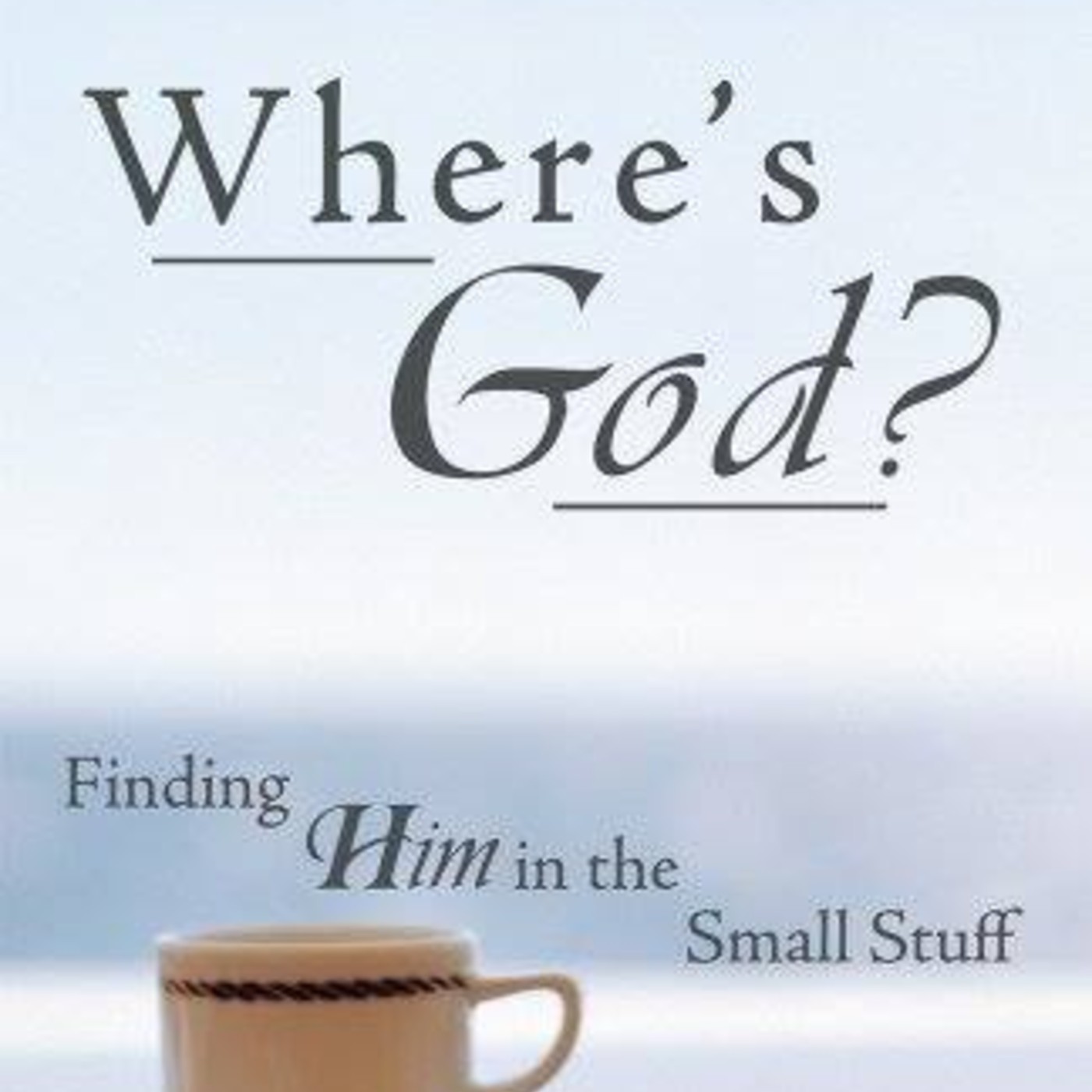
Where's God? Finding Him in the Small Stuff
by Greg McCollam
Each episode offers inspiration to help you move closer to God through the small stuff in life -- a cup of coffee, a grocery list, or fast-food French fries. You may never look at a roller coaster the same way again!
-
200
Moses and Exodus 29
Passover night is over and the Israelites are ready to leave Egypt as the Egyptians bury their dead. They are told to "hurry" and leave, and the Israelites marched out as a victorious army with gold, and silver, and expensive clothing. This was the fulfillment of a promise which God had made to Abram hundreds of years before. The Israelites also took a "mixed multitude" of people with them. Who were they?
-
199
Moses and Exodus 28
Moses told the Israelites to dip the hyssop branch into the sacrificial lamb's blood which had drained into the "basin" at the foot of their doors. What was this basin? How was this a forerunner of what would happen at the cross of Christ? When the firstborn died in Egypt, was it the males only, or also the females of each household? Pharoah asks Moses the "bless me also." Why did Pharoah ask this?
-
198
Moses and Exodus 27
We have come to Passover night in Egypt, which brings death into every household, both Egyptian and Israelite. Egyptians will suffer the death of their firstborn as God's final plague expresses His wrath for what had been done to His people. The Israelites will suffer the sacrificial death of a chosen lamb which had been in their care, inside their homes, for five days. One group is devastated, and one group is delivered. We find lessons from both groups which inform our lives as Christians in the world today.
-
197
Moses and Exodus 26
The final plague in Egypt was so significant that Moses wrote chapter 11 of Exodus to explain what it would entail. It is the only chapter during the plague narrative in which no plague actually takes place. Moses said that the first-born of every Egyptian family would perish and when it was over, the Egyptians would give silver and gold to the Israelites. Would the Egyptians believe him? Would the Israelites? There was only one way to prove it.
-
196
Moses and Exodus 25
Moses described the plague of darkness in Egypt as a darkness you could "feel." Certainly, this was more than just the darkness of a night sky and more than the lack of natural light from the sun, or moon or stars. It also included the extinguishing of artificial light as well, no light from candles, oil lamps or torches. Some people think that God brought the darkness of hell to the land of Egypt. Whatever it was, those who experienced it suffered and struggled because of it. But in the land of Goshen where the Israelites lived, there was no darkness during these days.
-
195
Moses and Exodus 24
The plague of locusts is certainly one of the most well-known of all the plagues of Egypt. As one of the final three plagues, it directly threatened the lives of the Egyptians. As part of this plague, God told Moses why the plagues were necessary. The answer might surprise you. And we find a foreshadowing in the resolution of the plague that hints at the final outcome for Pharaoh and his army as well.
-
194
Moses and Exodus 23
The plague of hail in Egypt was unique. It was the only plague which caused distress for all three at the same time...the people, the land, and the livestock. This plague also marked a big change among the people. Before the hail, the Israelites had turned to Pharaoh for help and mercy. Afterwards, not only the Israelites, but the Egyptians also began to look to Moses' God for their deliverance. Hearts are changing in Egypt, except for the heart of Pharaoh, which seems to be softening, until the hail stops!
-
193
Moses and Exodus 22
The plague of boils began from a handful of soot which had been taken from the same kilns used by Pharaoh to make bricks, sometimes without straw, by the Hebrew slaves. God took the very thing Pharaoh used to cause pain for His people and used it to bring pain upon Pharaoh's people. These boils were so painful that the pagan priests could not practice their ceremonies, so during this plague only the Lord of the Israelites was being worshipped in all the land of Egypt.
-
192
Moses and Exodus 21
When it comes to the plaque of the livestock, the Egyptians are given a choice by the Lord. They can obey Him and bring their livestock into a stable or a barn and the livestock will be spared. But if they choose to disobey Him and leave their livestock out in the field, then their livestock will die. This is the first plague that has permanent consequences. Up until now, the plagues have been a nuisance for the Egyptians, serious be temporary. There is no coming back from this one. The Israelites, however, will not have the same problem. God has promised that their livestock will not suffer death if left in the field. By doing so, God further separates His people from Pharoah's people.
-
191
Moses and Exodus 20
Moses did not know how many plagues God would inflict upon Egypt before Pharoah would let His people go. In this episode, we learn that Moses must have thought enough was enough, so he made a deal with Pharoah himself. But Moses learned that his plan was not God's plan and that you cannot make God's Word say whatever you want it to say, just because it suites you.
-
190
Moses and Exodus 19
God brings His third plague upon the land of Egypt through Moses, the plague of gnats (or lice, or mosquitos, or ?) which is distinctly different than the first two plagues. What made this one different? Pharaoh's magicians even testified that this plague was the "finger of God," although Pharaoh would not believe them. In this episode, we look at the plagues from both the Egyptian perspective and also from the Israelite perspective.
-
189
Moses and Exodus 18
God brings the plague of frogs upon the land of Egypt, covering the land with them. How many were there? Where did they go once they were upon the land? In the first two plagues, God has shown His power by turning Egyptian gods of life and resurrection into judgement and death. We also learn of the "proximity paradigm" of the plagues: They come closer and get more personal one by one.
-
188
Moses and Exodus 17
The time had come for plague no. 1 in Egypt, when God turned the water of the "mighty" Nile River, and all the water in Egypt (even the jars of water in homes) into blood for seven days. Before it was over, all the fish that had died were rotting and stinking and the river that represented the source of life to the Egyptians was turned into a place of death. God had showed His power over Egypt, and over Pharoah, but they refused to believe.
-
187
Moses and Exodus 16
Moses failed the first time he confronted Pharoah on behalf of the enslaved Israelites in Egypt. As a matter of fact, things went from bad to worse because of it. Now Moses does not want to go back and engage with Pharoah again, but God gives him seven "I will" promises, including, "Now you will see what I will do to Pharoah." Before it is all said and done, the people will see that God is not just a promise maker, but a promise keeper.
-
186
Moses and Exodus 15
When Moses first confronted Pharaoh upon his return to Egypt, the interaction between them did not go well. Even though God spoke through Moses with authority, proclaiming, "Let My people go," not a request, but a demand, Pharaoh refused. Pharaoh even retaliated against the Israelites, taking away the straw they needed to make the bricks which he required each day. Upon learning of this punishment, the Jewish overseers did not blame Pharaoh for their new predicament, they blamed Moses. And did Moses blame Pharaoh? No. Whom did he blame instead? I wonder.
-
185
Moses and Exodus 14
As he received his marching orders from God, Moses was reminded that Israel was important to the Lord, and he was given a message of warning for Pharaoh: obey and let His people go, or Pharaoh would suffer the death of his first-born son. On the way back to Egypt, though, Moses was also called to obey the Lord within his own family or possibly be killed himself. To do so would anger Moses' wife, Zipporah. Could Moses do the difficult thing that God required?
-
184
Moses and Exodus 13
As Moses headed back to Egypt, uncertain as he was, hesitant, fearful, unsure, he held tightly to the "staff of God." In the years ahead, whenever he felt anxious again, Moses would hold tightly to that same staff because God had promised him that it would be instrumental in bringing forth miraculous things. We don't have a staff like that today as Christians, but we have something even better to hold on to when we are anxious or unsure: we have God's promises as found in His Word!
-
183
Moses and Exodus 12
Moses was worried that he would not be eloquent enough for God to use him, especially in the Egyptian royal court. And even though God assured him, "I will be with your mouth," Moses still hesitated. This angered the Lord, but He accommodated Moses by giving him, among other things, the "staff of God" to carry back to Egypt. What was that all about anyway?
-
182
Moses and Exodus 11
As Moses tried to convince God that he was not the right man to go to Egypt and be used by God to deliver the Israelites from slavery, God made three promises and gave Moses three signs to show him that he would be successful. Yet Moses still hesitated. One of the excuses Moses used was that he was "slow of speech." What did he mean by that?
-
181
Moses and Exodus 10
At first, Moses did not want to return to Egypt when God called to him from the burning bush. Why was he so resistant? Why did Moses want to know God's "Name?" God promised to provide Moses with a "sign" which would assure Moses that God was with Him in Egypt. What was that sign? And when God told Moses to ask Pharaoh for a three-day cessation from work so the Israelites could go and worship God, why did He not instruct Moses to demand their permanent release instead?
-
180
Moses and Exodus 9
We all know that Moses was sent to Egypt by God to deliver the Israelites from slavery in Egypt. But did you know that he was also called to deliver God to the Israelites? The Lord sent Moses to Egypt from the burning bush because God saw how His people were struggling under the "hand" of the Egyptians, and He would show them the difference between the power of Pharoah's "hand" vs. God's own "mighty Hand," a theme we will see repeated throughout the plagues ahead.
-
179
Moses and Exodus 8
Moses was called by God to a burning bush that was not actually burning. That will get your attention! Actually, all three persons of the trinity Godhead were present at the burning bush! The Lord says He "knows" and "remembers" His people in Egypt. What does that mean? Moses said, "I have become a stranger in a strange land." What did he mean? And what was it about life in Egypt for the Israelites that moved God to rescue them through Moses?
-
178
Moses and Exodus 7
After Moses struck and killed an Egyptian slave master, he spent 40 years in the wilderness of Midian tending sheep. Why was it necessary for Moses to be there for so long? How did God need Moses to change before God could use Moses to free His people from slavery? What was the difference between the pre-Midian Moses and the post-Midian Moses? How is the change in Moses identified by the language used in Exodus chapter 2?
-
177
Moses and Exodus 6
Moses had been living in the Egyptian royal palace forty years when he decided one day to go check on the Hebrew slaves. Within hours, he had killed an Egyptian man who was a slave master. Moses' actions make us ask several questions. Why did Moses "look this way and that" before he sprang into action? Why was he so frightened by what he had done, and why did he hide the body? When Moses returned to the scene of the crime the next day, what kind of reception did he expect from the Israelites? And why was Pharaoh so angry when he found out what Moses had done? Lots of answers, some of which may surprise you, coming up in this episode!
-
176
Moses and Exodus 5
As we read Moses' birth narrative, we are introduced to some very interesting people. In Exodus, chapter two, we will learn about Miriam, Moses' sister, and the role she played in his early life. We will wonder why Pharaoh's daughter, who pulled Moses from the Nile, let a Hebrew woman nurse him (instead of hiring an Egyptian). We will be amazed by the "rest of the story"" of Pharaoh's daughter's later life. And we will try to determine who gave Moses his name. This episode is all about the women in Moses' early life!
-
175
Moses and Exodus 4
After Moses was born in Egypt, he was placed in a small basket, (or "ark") by his mother and placed in the Nile. She was trying to save him from the edict of Pharaoh which ruled that all male babies born to Israelite mothers should be drowned. How was Moses' ark similar to Noah's ark? Eventually, Moses was rescued by Pharaoh's daughter who snatched him out of the river. Did Moses' mother intend for him to be found by Pharaoh's daughter, or was it just a "God thing," or both?
-
174
Moses and Exodus 3
When Pharoah commanded that all male babies born to Israelite women be thrown into the Nile and drowned, head midwives Shiphrah and Puah chose to disobey. When asked about it by Pharoah, their response served to further objectify the Hebrew women in his eyes. Even though Pharoah had Plans A, B and C to try to stunt the growth of the Jewish population in Egypt, they all failed. What were those plans and why were they unsuccessful?
-
173
Moses and Exodus 2
As the book of Exodus opens, the Israelites find themselves in a predicament in Egypt. Once seen as a blessing by the Egyptian people and Pharoah, they are now feared as a blight, because their small group of immigrants has mushroomed into a nation which outnumbers the Egyptians themselves. As a result, a new Pharoah makes a ruling that all male babies born to Hebrew women should be drowned in the Nile. But Pharoah did not know that the two midwives who oversaw those childbirths had other ideas!
-
172
Moses and Exodus 1
As we start a new series about Moses and the role he played in God's plan to deliver the Israelites from slavery in Egypt, we look at a bit of history. How did the Jewish people end up in Egypt in the first place? What did the Egyptians think of them from the beginning? And what promises did God make to their forefathers about bringing the Jewish people back to the Promised Land someday? During this series, we will learn some new things about Moses as we follow him from his tenuous birth, to the burning bush, across the parted sea, and o the top of Mt. Sinai.
-
171
I AM the Vine 5
Jesus made a couple of bold statements to His disciples as He was talking to them about Him being "I AM the Vine." He said, "If you remain in me and my words remain in you, ask whatever you wish, and it will be given to you." Was that a promise? A guarantee? He also said, " This is to my Father's glory, that you bear much fruit, showing yourselves to be my disciples." In practice, that requires us to be able to "point and prove" in our lives. Perhaps the most incredible thing Jesus said, though, was "I have told you this so that my joy may be in you and that your joy may be complete." How could Jesus have been "joyful" in that moment, just a few hours before He would be arrested in the Garden of Gethsemane? Have you ever thought of Jesus as a man of joy, when we so often refer to Him, instead, as a "man of sorrows, acquainted with grief?"
-
170
I AM the Vine 4
Jesus said that the "branches" which do not abide in Him will "wither" and be "thrown into the fire and burned." That's a lot of symbolism right there! What is His message to us as Christians? Does it mean that we might somehow be in danger of losing our salvation and heaven in the bargain? Or, is Jesus saying something completely different? We can find a companion passage in 1 Corinthians which might help us answer that question!
-
169
I AM the Vine 3
When Jesus said to His disciples, "I AM the Vine," He also spoke of "branches" and "fruit bearing." We know that Jesus is the Vine, and we are the branches as believers. But what is this "fruit?" How are we supposed to "bear fruit" in a way that is pleasing in Jesus' sight? If this is an important part of our life with the Lord, then we should probably know what this is all about!
-
168
I AM the Vine 2
When Jesus said, "I AM the Vine," He explained to His followers that they would be "pruned" and "taken away" as "branches" of that Vine. But maybe a better interpretation is that they would be "cleansed" and "lifted up." How does that change our understanding of what Jesus was teaching? What does it mean for us as believers today?
-
167
I AM the Vine 1
What was Jesus doing when He proclaimed, "I AM the Vine?" What relevance did the "Vine" have to Him? What did it symbolize? During this passage, Jesus said that "branches" of the Vine must be "pruned" or "taken away." If those "branches" refer to believers, how does this apply to our relationship with the Lord?"
-
166
I AM the Way, the Truth, and the Life 5
As the Last Supper was coming to an end, Jesus' disciples were confused and upset. He tried encouraging them by telling them that they knew where He was going and they knew the way. But Peter and Thomas disagreed. Peter said that they did not know where Jesus is going, and Thomas said they did not know the way. Jesus' response was, "I AM the Way, the Truth and the Life." Did that make them feel any better?
-
165
I AM the Way, the Truth and the Life 4
The disciples were confused. As they shared the Last Supper with Jesus, He said to them, "One of you is going to betray Me." And then He told them, "Now the Son of Man will be glorified." Those two statements did not go together. And when Peter declared, "I will lay down my life for you," when speaking to Jesus, Peter didn't even know that he had a major problem. It was the same problem that had tripped up Moses.
-
164
I AM the Way, the Truth, and the Life 3
They had walked with Jesus for three years, learning at His feet, watching His miracles, and devoting their lives to Him. They arrive at the Last Supper expecting it to be like the other Passover meals they have shared with Jesus. Then He says, "One of you is going to betray Me." What? How would you have reacted if you had been one of them? At the end of the meal, they go outside where, John tells us, "It was dark." An interesting comment, don't you think?
-
163
I Am the Way, the Truth and the Life 2
As Jesus sat at the Last Supper with His disciples, He knew them well, and He knew which one would betray Him. How did He know? Surprisingly, He knew them because He had watched them, and He had seen something different in Judas. Also in this episode, we will look at a prophecy about Jesus and Judas in the Old Testament, from Psalm 41.
-
162
I AM the Way, the Truth, and the Life 1
When Jesus confided to His disciples, "I AM the Way, the Truth, and the Life," He had just done something rather extraordinary. He had washed their feet before sitting down to the Last Supper. This was a fitting context for the astonishing statement. He was challenging them, and us, to do what He did, with a promise for us if we do.
-
161
I AM the Resurrection and the Life 4
The people who stood at the tomb of Lazarus had three different reactions when Jesus raised him from the dead. What were they? What made Jesus weep there? What feelings was He experiencing? When Lazarus walked out of that tomb, what did it prove about Jesus?
-
160
I AM the Resurrection and the Life 3
When Jesus raised Lazarus from the grave, there were actually two "resurrections" taking place, as John describes it in his gospel. One Resurrection had a "big R" and the other had a "small r." Which one was which? Jesus also asked a question during this miracle that is one we all must answer for ourselves. And we hear Martha's mature understanding of who Jesus is now, even though she thinks He has disappointed her. A large crowd had gathered at Lazarus' tomb, which was important to Jesus' ultimate purpose.
-
159
I AM the Resurrection and the Life 2
When Jesus finally arrived at the home of Mary and Martha, their brother Lazarus was already dead and buried. Their first words to Jesus were, "If only you had been here." Was this a statement of anger, or blame, or faith? What did Martha expect Jesus to do when she said to Him, "Whatever You ask of God, He will do?" Could she have anticipated what would happen next at Lazarus' tomb after Jesus proclaimed, "I Am the resurrection and the life?"
-
158
I AM the Resurrection and the Life
Lazarus was ill, dying, and his sisters, Mary and Martha, had sent word to Jesus, counting on Him to drop everything and help them by healing their brother. They waited, and waited, but no Jesus. When He did arrive, it was too late. Lazarus was dead and buried. How did Mary and Martha feel about Jesus at that point? Did He meet their expectations? Does He meet ours? Or, does Jesus have a better plan?
-
157
I AM the Light of the World 3
"Light" in the Bible often equates to salvation. In Psalm 27, David wrote, "The Lord is my light and my salvation." So when Jesus proclaimed, "I AM the Light of the World," He was saying that, through Him, we can find salvation. And when Jesus is your "Light and your salvation," then He resides, He guides, and He decides. The response of the Pharisees to what Jesus was saying was a low blow.
-
156
I AM the Light of the World 2
The religious leaders of Jesus' day knew Isaiah 42 and Isaiah 49 like the back of their hands. God had inspired the prophet to write about His Messiah as the "Light of the World." So when they heard Jesus say, "I AM the Light of the World," they understood exactly what He was claiming. He was the Messiah. It shook their world with an earthquake of resentment and anger. But it is good news for every believer!
-
155
I AM the Light of the World 1
When Jesus proclaimed, "I AM the Light of the World," it came out of the context of the Feast of Tabernacles. During that celebration, an impressive "light ceremony" took place when huge menorahs in Jerusalem were filled with oil and set on fire. Jesus had attended the Feast, and He used the symbolism of the light ceremony to apply to Himself.
-
154
I AM the Good Shepherd 3
Some people may look at the Bible as a book which is full of darkness and death. There are, after all, accounts of devastation, like at the flood of the Old Testament and awful death, like at the cross of the New Testament. Add huge battles where thousands were killed, and end-time prophecies with more of the same, and you could, seemingly, make that case. However, for believers, the Bible is a book of light and life. What transforms it from one to the other?
-
153
I AM the Good Shepherd 2
When Jesus proclaimed to His followers, "I AM the Good Shepherd," He also said, "I lay down My life." What did He mean as we look back at the cross in this day and age? Jesus talked, too, about how God "knows" Him. What was that all about? And how do WE know Jesus as the Good Shepherd?
-
152
I AM the Good Shepherd 1
To fully appreciate Jesus' declaration of "I AM the Good Shepherd," we have to go back to the Old Testament book of Ezekiel, chapter 34. There we find the context of Jesus' statement, God's condemnation of the "bad shepherds" of Israel, found in the Jewish priesthood. God promised to send them a Shepherd who would care for them, a Good Shepherd. Surely, the crowd around Jesus that day must have made the connection, and understood the significance of what Jesus was saying.
-
151
I AM The Gate Vol. 5
Jesus promises that the sheep who follow His voice will receive "abundant life." What does that mean? This life reflects the "unlimited limit" of Jesus when it comes to salvation. The pasture of eternal life is unlimited. It is available to ALL. But it is limited too. It can be entered into by only ONE Gate. If you miss that Gate, then you miss the pasture, and you miss eternity with Jesus. Open that Gate, and abundant life awaits you in heaven!
No matches for "" in this podcast's transcripts.
No topics indexed yet for this podcast.
Loading reviews...
ABOUT THIS SHOW
Each episode offers inspiration to help you move closer to God through the small stuff in life -- a cup of coffee, a grocery list, or fast-food French fries. You may never look at a roller coaster the same way again!
HOSTED BY
Greg McCollam
CATEGORIES
Loading similar podcasts...
URL copied to clipboard!