
EPISODE · May 14, 2026 · 5 MIN
02 - Etymology. Chattel slavery.
from Slavery. · host Popular Culture and Religion.
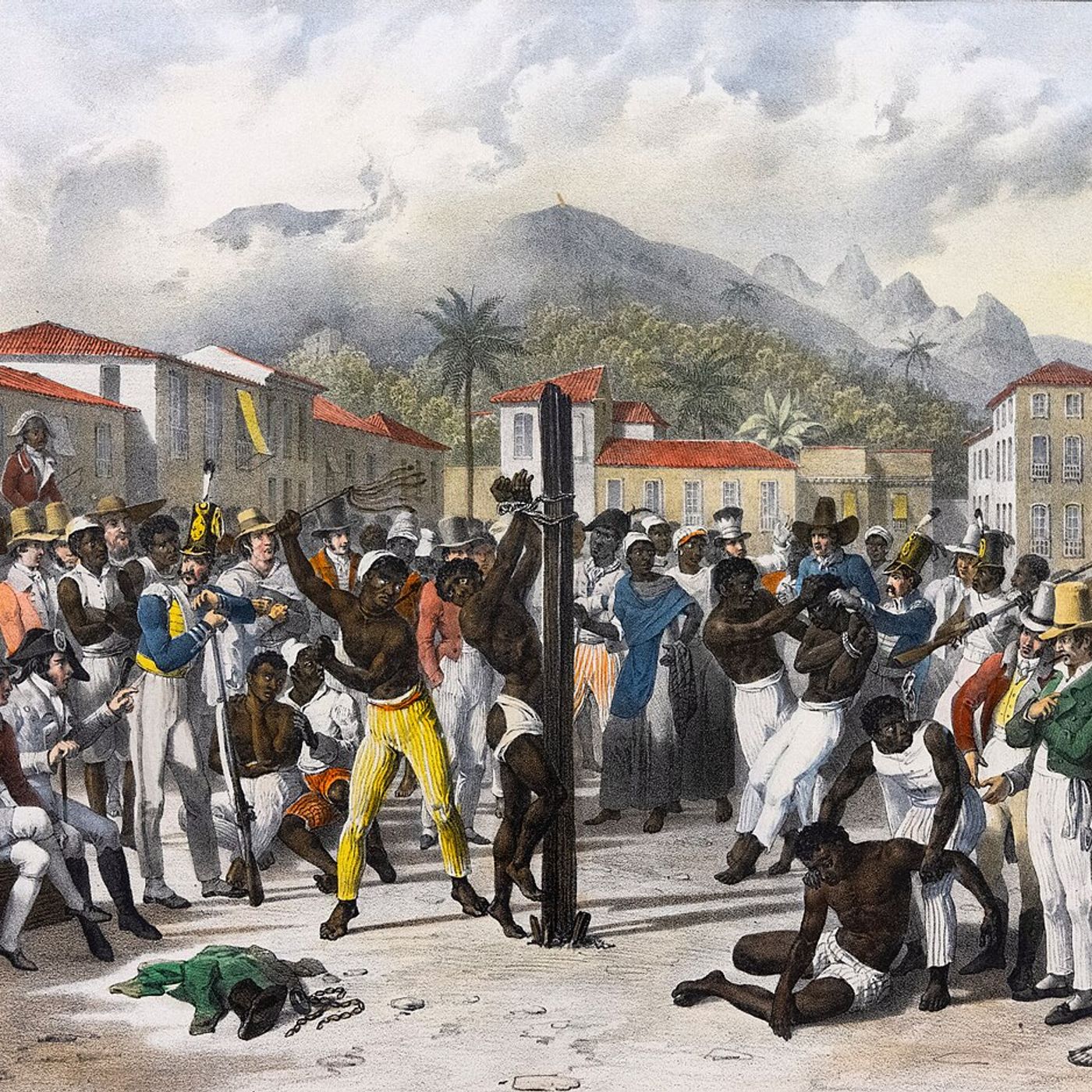
Etymology. The word slave was borrowed into Middle English through the Old French esclave which ultimately derives from Byzantine Greek sklábos or ésklabḗnos. According to the widespread view, which has been known since the 18th century, the Byzantine Sklábinoi, Ésklabēnoí, borrowed from a Slavic tribe self-name *Slověne, turned into Late Latin sclāvus in the meaning 'prisoner of war slave', 'slave' in the 8th/9th century, because they often became captured and enslaved. However this version has been disputed since the 19th century. An alternative contemporary hypothesis suggests that Medieval Latin sclāvus via *scylāvus derives from Byzantine skūláō, skyláō or skūleúō, skyleúō with the meaning "to strip the enemy (killed in a battle)" or "to make booty / extract spoils of war". This version has been criticized as well. Terminology. There is no consensus among historians about whether terms such as "unfree labourer" or "enslaved person", rather than "slave", should be used when describing the victims of slavery. According to those proposing a change in terminology, slave perpetuates the crime of slavery in language by reducing its victims to a nonhuman noun instead of "carry[ing] them forward as people, not the property that they were" (see also People-first language). Other historians prefer slave because the term is familiar and shorter, or because it accurately reflects the inhumanity of slavery, with person implying a degree of autonomy that slavery does not allow. Chattel slavery. As a social institution, chattel slavery classes slaves as chattels (personal property) owned by the enslaver; like livestock, they can be bought and sold at will. Chattel slavery was historically a widely accepted form of slavery in many parts of the world, and was practiced in places such as ancient Greece and the Roman Empire, where it was considered a keystone of society. Other examples include the institution of slavery in the Muslim world such as Medieval Egypt, as well as Sub-Saharan Africa, Brazil, the Antebellum United States, and parts of the Caribbean such as Cuba and Haiti. The Iroquois also had practices similar to chattel slavery; the key difference was that captives were held for the stated purpose of "assimilating them into Iriquoian culture". As a result, there were several ways to escape captivity, and the children of those in bondage "became fully part of society". Beginning in the 18th century, a series of abolitionist movements in Europe and the Americas saw slavery as a violation of the slaves' rights as people ("all men are created equal"), and sought to abolish it. Abolitionism encountered extreme resistance but was eventually successful. Several of the states of the United States began abolishing slavery during the American Revolutionary War. After the French Revolution, the government of France abolished slavery in 1794, but Napoleon reintroduced it in 1802 and permanent abolition did not occur until 1848. In much of the British Empire, slavery was subject to abolition in 1833, throughout the United States it was abolished in 1865 as a result of the Civil War, which was fought after the attempted secession of the South in order to protect its "Peculiar Institution" (I.e. slavery). In Cuba slavery was abolished in 1886. The last country in the Americas to abolish slavery was Brazil, in 1888. Chattel slavery survived longest in the Middle East. After the trans-Atlantic slave trade had been suppressed, the ancient trans-Saharan slave trade, the Indian Ocean slave trade and the Red Sea slave trade continued to traffic slaves from the African continent to the Middle East. During the 20th century, the issue of chattel slavery was addressed and investigated globally by international bodies created by the League of Nations and the United Nations (UN), such as the Temporary Slavery Commission in 1924–1926, the Committee of Experts on Slavery in 1932, and the Advisory Committee of Experts on Slavery in 1934–1939. By the time of the UN Ad Hoc Committee on Slavery in 1950–1951, legal chattel slavery still existed only in the Arabian Peninsula: in Oman, in Qatar, in Saudi Arabia, in the Trucial States and in Yemen. Legal chattel slavery was finally abolished in the Arabian Peninsula in the 1960s: Saudi Arabia and Yemen in 1962, in Dubai in 1963, and Oman as the last in 1970. The last country to abolish slavery, Mauritania, did so in 1981. While slavery had technically been banned by colonial France in French West Africa (including Mauritania) already in 1905, this had been a purely nominal ban. The 1981 ban on slavery was not enforced in practice, as legal mechanisms to prosecute those who used slaves were not implemented until 2007. Wikipedia: Creative Commons Attribution-ShareAlike 4.0 License.This episode includes AI-generated content.
Embed this episode
Ready to play
02 - Etymology. Chattel slavery.
No transcript for this episode yet
Similar Episodes
May 19, 2022 ·16m