
PODCAST · history
Slavery.
by Popular Culture and Religion.
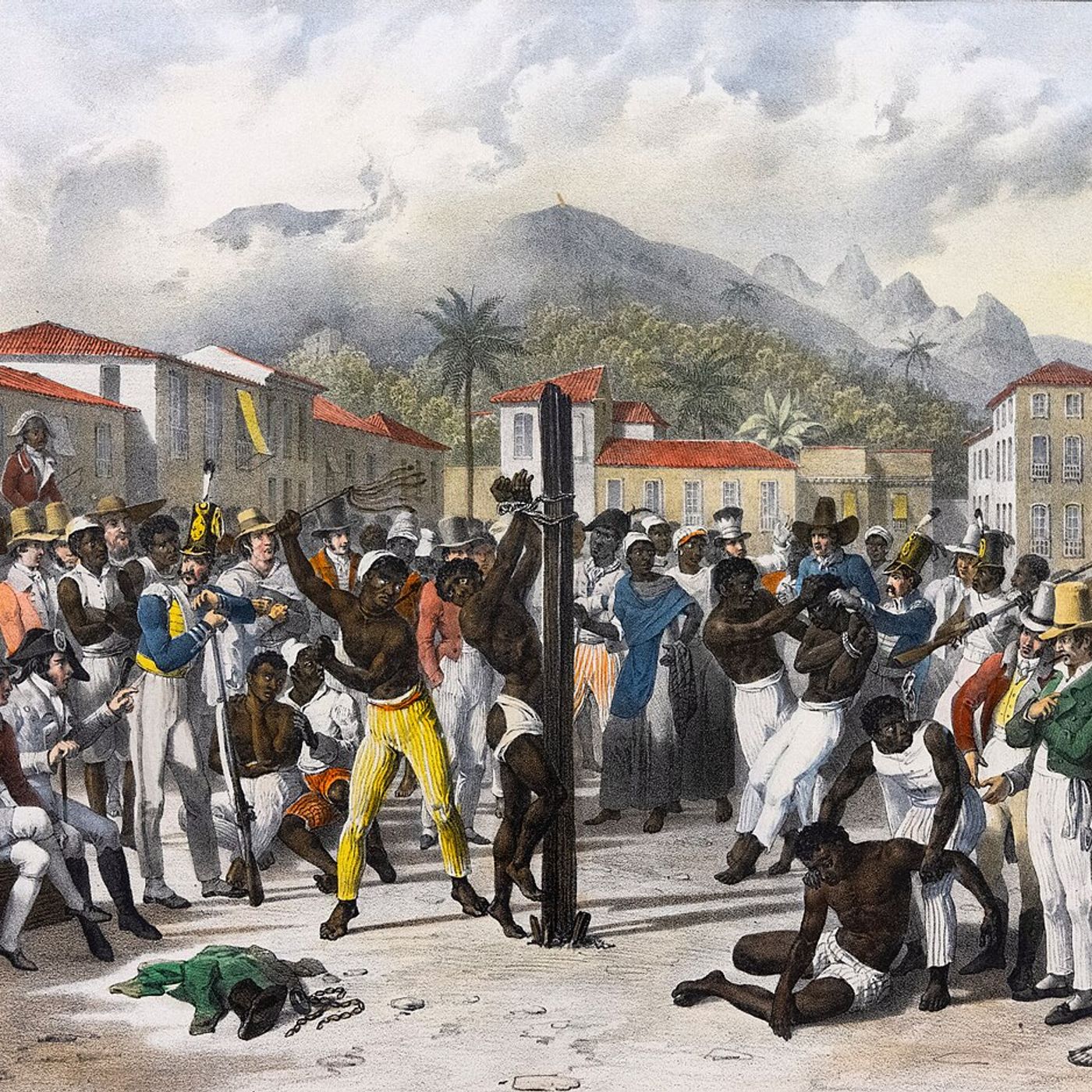
Slavery. Slavery is a socioeconomic institution in which individuals are treated as property, deprived of personal liberty, and compelled to provide unpaid labor or services to owners under coercion, often involving violence or the threat thereof, with the legal right to buy, sell, inherit, or punish the enslaved. This practice, rooted in the exercise of power over war captives, debtors, or conquered peoples, has manifested across diverse forms—from chattel systems denying all autonomy to debt bondage retaining nominal freedoms—but consistently entails the owner's absolute control over the slave's body, labor, and reproduction. Historically, slavery underpinned economies and societies in nearly every major civilization, from ancient Mesopotamia and Egypt through classical Greece and Rome—where slaves comprised 20-30% of urban populations and drove mining, agriculture, and domestic work—to medieval Islamic empires, sub-Saharan African kingdoms, Indian caste systems, and Ot
-
50
50 - Abolitionism.
Abolitionism. Slavery has existed, in one form or another, throughout recorded human history – as have, in various periods, movements to free large or distinct groups of slaves. In antiquity. Emperor Ashoka, who ruled the Maurya Empire in the Indian subcontinent from 269 to 232 BCE, abolished the slave trade but not slavery. The Qin dynasty, which ruled China from 221 to 206 BCE, abolished slavery and discouraged serfdom. However, many of its laws were overturned when the dynasty was overthrown. Slavery was again abolished by Wang Mang in China in 17 CE but was reinstituted after his assassination. Americas. The Spanish colonization of the Americas sparked a discussion about the right to enslave Native Americans. A prominent critic of slavery in the Spanish New World colonies was the Spanish missionary and bishop, Bartolomé de las Casas, who was the first to document the European maltreatment of and cruelty towards American natives. In the United States, all of the northern states had abolished slavery by 1804, with New Jersey being the last to act. Abolitionist pressure produced a series of small steps towards emancipation. After the Act Prohibiting Importation of Slaves went into effect on January 1, 1808, the importation of slaves into the United States was prohibited, but not the internal slave trade, nor involvement in the international slave trade externally. Legal slavery persisted outside the northern states, but abolitionists took an active role in opposing slavery by supporting the Underground Railroad, and violent clashes between anti-slavery and pro-slavery Americans occurred, including in Bleeding Kansas, a series of political and armed disputes in 1854–1858 as to whether Kansas would join the United States as a slave or free state. By 1860, the total number of slaves reached almost four million, and the American Civil War, beginning in 1861, led to the end of slavery in the United States. Slaves in areas controlled by the Confederacy were legally emancipated in 1863, when Lincoln issued the Emancipation Proclamation, and slavery was banned nationwide, except as punishment for a crime, in 1865, with the ratification of the 13th Amendment to the U.S. Constitution. Many of the freed slaves became sharecroppers and indentured servants. In this manner, some became tied to the very parcel of land into which they had been born a slave having little freedom or economic opportunity because of Jim Crow laws which perpetuated discrimination, limited education, promoted persecution without due process and resulted in continued poverty. Fear of reprisals such as unjust incarcerations and lynchings deterred upward mobility further. Europe. France abolished slavery in 1794 during the Revolution, but it was restored in 1802 under Napoleon. It has been asserted that, before the Revolution, slavery was illegal in metropolitan France (as opposed to its colonies), but this has been refuted. One of the most significant milestones in the campaign to abolish slavery throughout the world occurred in England in 1772, with British Judge Lord Mansfield, whose opinion in Somersett's Case was widely taken to have held that slavery was illegal in England. This judgement also laid down the principle that slavery contracted in other jurisdictions could not be enforced in England. The last person to be deemed a slave in a British court was Bell (Belinda) who was transported to the Americas in 1772 as a "slave for life" by a Perth court. Sons of Africa was a late 18th-century British group that campaigned to end slavery. Its members were Africans in London, freed slaves who included Ottobah Cugoano, Olaudah Equiano and other leading members of London's black community. It was closely connected to the Society for Effecting the Abolition of the Slave Trade, a non-denominational group founded in 1787, whose members included Thomas Clarkson. British Member of Parliament William Wilberforce led the anti-slavery movement in the United Kingdom, although the groundwork was an anti-slavery essay by Clarkson. Wilberforce was urged by his close friend, Prime Minister William Pitt the Younger, to make the issue his own and was also given support by reformed Evangelical John Newton. The Slave Trade Act was passed by the British Parliament on March 25, 1807, making the slave trade illegal throughout the British Empire, Wilberforce also campaigned for abolition of slavery in the British Empire, which he lived to see in the Slavery Abolition Act 1833. After the 1807 act abolishing the slave trade was passed, these campaigners switched to encouraging other countries to follow suit, notably France and the British colonies. Between 1808 and 1860, the British West Africa Squadron seized approximately 1,600 slave ships and freed 150,000 Africans who were aboard. Action was also taken against African leaders who refused to agree to British treaties to outlaw the trade, for example against "the usurping King of Lagos", deposed in 1851. Anti-slavery treaties were signed with over 50 African rulers. Worldwide. In 1839, the world's oldest international human rights organization, Anti-Slavery International, was formed in Britain by Joseph Sturge, which campaigned to outlaw slavery in other countries. There were celebrations in 2007 to commemorate the 200th anniversary of the abolition of the slave trade in the United Kingdom through the work of the British Anti-Slavery Society. In the 1860s, David Livingstone's reports of atrocities within the Arab slave trade in Africa stirred up the interest of the British public, reviving the flagging abolitionist movement. The Royal Navy throughout the 1870s attempted to suppress "this abominable Eastern trade", at Zanzibar in particular. In 1905, the French abolished indigenous slavery in most of French West Africa. On December 10, 1948, the United Nations General Assembly adopted the Universal Declaration of Human Rights, which declared freedom from slavery is an internationally recognized human right. Article 4 of the Universal Declaration of Human Rights states: No one shall be held in slavery or servitude; slavery and the slave trade shall be prohibited in all their forms. In 2014, for the first time in history, major leaders of many religions, Buddhist, Hindu, Christian, Jewish, and Muslim met to sign a shared commitment against modern-day slavery; the declaration they signed calls for the elimination of slavery and human trafficking by 2020. The signatories were: Pope Francis, Mātā Amṛtānandamayī, Bhikkhuni Thich Nu Chân Không (representing Zen Master Thích Nhất Hạnh), Datuk K Sri Dhammaratana, Chief High Priest of Malaysia, Rabbi Abraham Skorka, Rabbi David Rosen, Abbas Abdalla Abbas Soliman, Undersecretary of State of Al Azhar Alsharif (representing Mohamed Ahmed El-Tayeb, Grand Imam of Al-Azhar), Grand Ayatollah Mohammad Taqi al-Modarresi, Sheikh Naziyah Razzaq Jaafar, Special advisor of Grand Ayatollah (representing Grand Ayatollah Sheikh Basheer Hussain al Najafi), Sheikh Omar Abboud, Justin Welby, Archbishop of Canterbury, and Metropolitan Emmanuel of France (representing Ecumenical Patriarch Bartholomew.) Groups such as the American Anti-Slavery Group, Anti-Slavery International, Free the Slaves, the Anti-Slavery Society, and the Norwegian Anti-Slavery Society continue to campaign to eliminate slavery. UNESCO has been working to break the silence surrounding the memory of slavery since 1994, through The Slave Route Project. Apologies. On May 21, 2001, the National Assembly of France passed the Taubira law, recognizing slavery as a crime against humanity. Apologies on behalf of African nations, for their role in trading their countrymen into slavery, remain an open issue since slavery was practiced in Africa even before the first Europeans arrived and the Atlantic slave trade was performed with a high degree of involvement of several African societies. The black slave market was supplied by well-established slave trade networks controlled by local African societies and individuals. There is adequate evidence citing case after case of African control of segments of the trade. Several African nations such as the Calabar and other southern parts of Nigeria had economies depended solely on the trade. African peoples such as the Imbangala of Angola and the Nyamwezi of Tanzania would serve as middlemen or roving bands warring with other African nations to capture Africans for Europeans. Several historians have made important contributions to the global understanding of the African side of the Atlantic slave trade. By arguing that African merchants determined the assemblage of trade goods accepted in exchange for slaves, many historians argue for African agency and ultimately a shared responsibility for the slave trade. In 1999, President Mathieu Kérékou of Benin issued a national apology for the central role Africans played in the Atlantic slave trade. Luc Gnacadja, minister of environment and housing for Benin, later said: "The slave trade is a shame, and we do repent for it." Researchers estimate that 3 million slaves were exported out of the Slave Coast bordering the Bight of Benin. President Jerry Rawlings of Ghana also apologized for his country's involvement in the slave trade. The issue of an apology is linked to reparations for slavery and is still being pursued by entities across the world. For example, the Jamaican Reparations Movement approved its declaration and action plan. In 2007, British Prime Minister Tony Blair made a formal apology for Great Britain's involvement in slavery. On February 25, 2007, the Commonwealth of Virginia resolved to 'profoundly regret' and apologize for its role in the institution of slavery. Unique and the first of its kind in the U.S.....Wikipedia: Creative Commons Attribution-ShareAlike 4.0 License.This episode includes AI-generated content.
-
49
49 - History, Contemporary slavery.
History, Contemporary slavery. China. In March 2020, the Chinese government was found to be using the Uyghur minority for forced labour, inside sweat shops. According to a report published then by the Australian Strategic Policy Institute (ASPI), no fewer than around 80,000 Uyghurs were forcibly removed from the region of Xinjiang and used for forced labour in at least twenty-seven corporate factories. According to the Business and Human Rights resource center, corporations such as Abercrombie & Fitch, Adidas, Amazon, Apple, BMW, Fila, Gap, H&M, Inditex, Marks & Spencer, Nike, North Face, Puma, PVH, Samsung, and UNIQLO have each sourced products from these factories prior to the publication of the ASPI report. Libya. During the Second Libyan Civil War, Libyans started capturing Sub-Saharan African migrants trying to get to Europe through Libya and selling them on slave markets or holding them hostage for ransom. Women are often raped, used as sex slaves, or sold to brothels. Child migrants suffer from abuse and child rape in Libya. Mauritania. Mauritania, was the last country to abolish slavery (in 1981), it is estimated that 20% of its population of 3 million people are enslaved as bonded labourers, with black Haratin being slaves and Berbers and Arabs the owners. Slavery in Mauritania was criminalized in August 2007. However, although slavery, as a practice, was legally banned in 1981, it was not a crime to own a slave until 2007. Although many slaves have escaped or have been freed since 2007, as of 2012, only one slave owner had been sentenced to serve time in prison. North Korea. North Korea's human rights record is often considered to be the worst in the world and has been globally condemned, with the United Nations, the European Union and groups such as Human Rights Watch all critical of the country's record. Forms of torture, forced labour, and abuses are all widespread. Most international human rights organizations consider North Korea to have no contemporary parallel with respect to violations of liberty. Taiwan. Taiwan's migrant worker population—estimated in 2018 to be up to 660,000 in number—have reportedly faced slavery-like conditions involving sexual abuse in the domestic work sector and forced labor in fishing sectors. Taiwan is among a minority of places in the world that legally allows labor brokers to charge migrant workers for services which elsewhere are covered by employers as human resource costs. A few Taiwanese universities have reportedly tricked students from Eswatini, Uganda and Sri Lanka into forced labour at factories as payment for the university programs. Some charity groups in 2007 also insisted that foreign women—mostly from China and Southeast Asia—were being forced into prostitution, although local police in Taiwan disagreed and said they deliberately came to Taiwan "to sell sex". Yemen. Despite being formally abolished in the 1960s, slavery in Yemen remains a significant issue exacerbated by ongoing conflict and socio-economic instability. An estimated 85,000 people remaining enslaved as of 2022. The Iran-backed Houthi militias have been accused of reinstating traditional slavery systems. Reports indicate that over 1,800 Yemenis have been forced into servitude by prominent Houthi leaders, with the Houthis dividing society into hierarchical classes of masters and slaves. This modern slavery encompasses various forms, such as forced labor, sexual exploitation, human trafficking, and child recruitment. Vulnerable populations include the Al Muhamashīn community, Ethiopian migrants, and children who are subjected to severe discrimination and exploitation. Despite legal prohibitions against slavery in Yemen, enforcement is weak due to political instability and ongoing civil war. International organizations have documented these abuses, highlighting the need for stronger interventions to combat slavery and human trafficking in the region. Economics. While American slaves in 1809 were sold for around $40,000 (in inflation adjusted dollars), a slave nowadays can be bought for just $90, making replacement more economical than providing long-term care. Slavery is a multibillion-dollar industry with estimates of up to $35 billion generated annually. Trafficking. Victims of human trafficking are typically recruited through deceit or trickery (such as a false job offer, false migration offer, or false marriage offer), sale by family members, recruitment by former slaves, or outright abduction. Victims are forced into a "debt slavery" situation by coercion, deception, fraud, intimidation, isolation, threat, physical force, debt bondage or even force-feeding with drugs to control their victims. "Annually, according to U.S. government-sponsored research completed in 2006, approximately 800,000 people are trafficked across national borders, which does not include millions trafficked within their own countries. Approximately 80% of transnational victims are women and girls, and up to 50% are minors, reports the U.S. State Department in a 2008 study. While the majority of trafficking victims are women who are forced into prostitution (in which case the practice is called sex trafficking), victims also include men, women and children who are forced into manual labour. Because of the illegal nature of human trafficking, its extent is unknown. A U.S. government report, published in 2005, estimates that about 700,000 people worldwide are trafficked across borders each year. This figure does not include those who are trafficked internally. Another research effort revealed that roughly 1.5 million individuals are trafficked either internally or internationally each year, of which about 500,000 are sex trafficking victims. Wikipedia: Creative Commons Attribution-ShareAlike 4.0 License.This episode includes AI-generated content.
-
48
48 - History, Contemporary slavery.
History, Contemporary slavery. Even though slavery is now outlawed in nearly every country, with the sole exception of Afghanistan, the number of slaves today is estimated as between 12 million and 29.8 million. According to a broad definition of slavery, there were 27 million people in slavery in 1999, spread all over the world. In 2005, the International Labour Organization provided an estimate of 12.3 million forced labourers. Siddharth Kara has also provided an estimate of 28.4 million slaves at the end of 2006 divided into three categories: bonded labour/debt bondage (18.1 million), forced labour (7.6 million), and trafficked slaves (2.7 million). Kara provides a dynamic model to calculate the number of slaves in the world each year, with an estimated 29.2 million at the end of 2009. According to a 2003 report by Human Rights Watch, an estimated 15 million children in debt bondage in India work in slavery-like conditions to pay off their family's debts. Slavoj Žižek asserts that new forms of contemporary slavery have been created in the post-Cold War era of global capitalism, including migrant workers deprived of basic civil rights on the Arabian Peninsula, the total control of workers in Asian sweatshops and the use of forced labor in the exploitation of natural resources in Central Africa. Distribution. In June 2013, U.S. State Department released a report on slavery. It placed Russia, China, and Uzbekistan in the worst offenders category. Cuba, Iran, North Korea, Sudan, Syria, and Zimbabwe were at the lowest level. The list also included Algeria, Libya, Saudi Arabia and Kuwait among a total of 21 countries. In Kuwait, there are more than 600,000 migrant domestic workers who are vulnerable to forced labor and legally tied to their employers, who often illegally take their passports. In 2019, online slave markets on apps such as Instagram were uncovered. In the preparations for the 2022 World Cup in Qatar, thousands of Nepalese, the largest group of labourers, faced slavery in the form of denial of wages, confiscation of documents, and inability to leave the workplace. In 2016, the United Nations gave Qatar 12 months to end migrant worker slavery or face investigation. The Walk Free Foundation reported in 2018 that slavery in wealthy Western societies is much more prevalent than previously known, in particular the United States and Great Britain, which have 403,000 (one in 800) and 136,000 slaves respectively. Andrew Forrest, founder of the organization, said that "The United States is one of the most advanced countries in the world yet has more than 400,000 modern slaves working under forced labour conditions." An estimated 40.3 million are enslaved globally, with North Korea having the most slaves at 2.6 million (one in 10). Of the estimated 40.3 million people in contemporary slavery, 71% are women and 29% are men. The report found of the 40.3 million in modern slavery, 15.4 million are in forced marriages and 24.9 million are in forced labor. The foundation defines contemporary slavery as "situations of exploitation that a person cannot refuse or leave because of threats, violence, coercion, abuse of power, or deception." Wikipedia: Creative Commons Attribution-ShareAlike 4.0 License.This episode includes AI-generated content.
-
47
47 - History, Nazi Germany and Communist states.
History, Nazi Germany and Communist states. During the Second World War, Nazi Germany effectively enslaved about 12 million people, both those considered undesirable and citizens of conquered countries, with the avowed intention of treating these Untermenschen (sub-humans) as a permanent slave-class of inferior beings who could be worked until they died, and who possessed neither the rights nor the legal status of members of the Aryan race. Besides Jews, the harshest deportation and forced labour policies were applied to the populations of Poland, Belarus, Ukraine, and Russia. By the end of the war, half of Belarus' population had been killed or deported. Communist states. Between 1930 and 1960, the Soviet Union created a system of, according to Anne Applebaum and the "perspective of the Kremlin", slave labor camps called the Gulag (GULag). Prisoners in these camps were worked to death by a combination of extreme production quotas, physical and psychological brutality, hunger, lack of medical care, and the harsh environment. Aleksandr Solzhenitsyn, who survived eight years of Gulag incarceration, provided firsthand testimony about the camps with the publication of The Gulag Archipelago, after which he was awarded the Nobel Prize in Literature. Fatality rate was as high as 80% during the first months in many camps. Hundreds of thousands of people, possibly millions, died as a direct result of forced labour under the Soviets. Golfo Alexopoulos suggests comparing labor in the Gulag with "other forms of slave labor" and notes its "violence of human exploitation" in Illness and Inhumanity in Stalin's Gulag: Stalin's Gulag was, in many ways, less a concentration camp than a forced labor camp and less a prison system than a system of slavery. The image of the slave appears often in Gulag memoir literature. As Varlam Shalamov wrote: "Hungry and exhausted, we leaned into a horse collar, raising blood blisters on our chests and pulling a stone-filled cart up the slanted mine floor. The collar was the same device used long ago by the ancient Egyptians." Thoughtful and rigorous historical comparisons of Soviet forced labor and other forms of slave labor would be worthy of scholarly attention, in my view. For as in the case of global slavery, the Gulag found legitimacy in an elaborate narrative of difference that involved the presumption of dangerousness and guilt. This ideology of difference and the violence of human exploitation have left lasting legacies in contemporary Russia. Historian Anne Applebaum writes in the introduction of her book that the word GULAG has come to represent "the system of Soviet slave labor itself, in all its forms and varieties":[313]The word "GULAG" is an acronym for Glavnoe Upravlenie Lagerei, or Main Camp Administration, the institution which ran the Soviet camps. But over time, the word has also come to signify the system of Soviet slave labor itself, in all its forms and varieties: labor camps, punishment camps, criminal and political camps, women's camps, children's camps, transit camps. Even more broadly, "Gulag" has come to mean the Soviet repressive system itself, the set of procedures that Alexander Solzhenitsyn once called "our meat grinder": the arrests, the interrogations, the transport in unheated cattle cars, the forced labor, the destruction of families, the years spent in exile, the early and unnecessary deaths. Applebaum's introduction has been criticized by Gulag researcher Wilson Bell, stating that her book "is, aside from the introduction, a well-done overview of the Gulag, but it did not offer an interpretative framework much beyond Solzhenitsyn's paradigms". RomaniaRomani people were enslaved in Romania. It was the longest chattel slavery in Europe. Wikipedia: Creative Commons Attribution-ShareAlike 4.0 License.This episode includes AI-generated content.
-
46
46 - History, Medieval and early modern Europe.
History, Medieval and early modern Europe. Medieval Spain and Portugal were the scene of almost constant Muslim invasion of the predominantly Christian area. Periodic raiding expeditions were sent from Al-Andalus to ravage the Iberian Christian kingdoms, bringing back booty and slaves. In a raid against Lisbon in 1189, for example, the Almohad caliph Yaqub al-Mansur took 3,000 female and child captives, while his governor of Córdoba, in a subsequent attack upon Silves, Portugal, in 1191, took 3,000 Christian slaves. From the 11th to the 19th century, North African Barbary Pirates engaged in raids on European coastal towns to capture Christian slaves to sell at slave markets in places such as Algeria and Morocco. The maritime town of Lagos was the first slave market created in Portugal (one of the earliest colonizers of the Americas) for the sale of imported African slaves – the Mercado de Escravos, opened in 1444. In 1441, the first slaves were brought to Portugal from northern Mauritania. By 1552, black African slaves made up 10% of the population of Lisbon. In the second half of the 16th century, the Crown gave up the monopoly on slave trade, and the focus of European trade in African slaves shifted from import to Europe to slave transports directly to tropical colonies in the Americas – especially Brazil. In the 15th century one-third of the slaves were resold to the African market in exchange of gold. Until the late 18th century, the Crimean Khanate (a Muslim Tatar state) maintained a massive slave trade with the Ottoman Empire and the Middle East. The slaves were captured in southern Russia, Poland-Lithuania, Moldavia, Wallachia, and Circassia by Tatar horsemen and sold in the Crimean port of Kaffa. About 2 million mostly Christian slaves were exported over the 16th and 17th centuries until the Crimean Khanate was destroyed by the Russian Empire in 1783. In Kievan Rus and Muscovy, slaves were usually classified as kholops. According to David P. Forsythe, "In 1649 up to three-quarters of Muscovy's peasants, or 13 to 14 million people, were serfs whose material lives were barely distinguishable from slaves. Perhaps another 1.5 million were formally enslaved, with Russian slaves serving Russian masters." Slavery remained a major institution in Russia until 1723, when Peter the Great converted the household slaves into house serfs. Russian agricultural slaves were formally converted into serfs earlier in 1679. Slavery in Poland was forbidden in the 15th century; in Lithuania, slavery was formally abolished in 1588; they were replaced by the second serfdom. In Scandinavia, thralldom was abolished in the mid-14th century. During the Age of Enlightenment, individuals, whether religious or not, held diverse and inconsistent beliefs about race and slavery and despite discussions on individual rights and freedoms; slavery was not abolished, but expanded significantly. The secular enlightenment allowed for scientific racism to emerge as a basis for slavery. It allowed for coexistence of conflicting views on the moral status of black enslavement and the inferior physical status of those people being enslaved, based on the science at the time. The theory of polygenesis (multiple independent human origins) generally lead to support or symapathy with slavery and this was used by nonreligious individuals to counter religious theories of monogenesis (single origin to one couple). Wikipedia: Creative Commons Attribution-ShareAlike 4.0 License.This episode includes AI-generated content.
-
45
45 - History, Medieval and early modern Europe.
History, Medieval and early modern Europe. Slavery in early medieval Europe was so common that the Catholic Church repeatedly prohibited it, or at least the export of Christian slaves to non-Christian lands, as for example at the Council of Koblenz (922), the Council of London (1102) (which aimed mainly at the sale of English slaves to Ireland) and the Council of Armagh (1171). Serfdom, on the contrary, was widely accepted. In 1452, Pope Nicholas V issued the papal bull Dum Diversas, granting the kings of Spain and Portugal the right to reduce any "Saracens (Muslims), pagans and any other unbelievers" to perpetual slavery, legitimizing the slave trade as a result of war. The approval of slavery under these conditions was reaffirmed and extended in his Romanus Pontifex bull of 1455. Large-scale trading in slaves was mainly confined to the South and East of early medieval Europe: the Byzantine Empire and the Muslim world were the destinations, while pagan Central and Eastern Europe (along with the Caucasus and Tartary) were important sources. Viking, Arab, Greek, and Radhanite Jewish merchants were all involved in the slave trade during the Early Middle Ages. The trade in European slaves reached a peak in the 10th century following the Zanj Rebellion, which dampened the use of African slaves in the Arab world. In Britain, slavery continued to be practiced following the fall of Rome, while sections of Æthelstan's and Hywel the Good's laws dealt with slaves in medieval England and medieval Wales respectively. The trade particularly picked up after the Viking invasions, with major markets at Chester and Bristol supplied by Danish, Mercian, and Welsh raiding of one another's borderlands. At the time of the Domesday Book, nearly 10% of the English population were slaves. William the Conqueror introduced a law preventing the sale of slaves overseas. According to historian John Gillingham, by 1200 slavery in the British Isles was non-existent. Slavery had never been authorized by statute within England and Wales, and in 1772, in the case Somerset v Stewart, Lord Mansfield declared that it was also unsupported within England by the common law. The slave trade was abolished by the Slave Trade Act 1807, although slavery remained legal in possessions outside Europe until the passage of the Slavery Abolition Act 1833 and the Indian Slavery Act, 1843. However, when England began to have colonies in the Americas, and particularly from the 1640s, African slaves began to make their appearance in England and remained a presence until the eighteenth century. In Scotland, slaves continued to be sold as chattels until late in the eighteenth century (on the second May 1722, an advertisement appeared in the Edinburgh Evening Courant, announcing that a stolen slave had been found, who would be sold to pay expenses, unless claimed within two weeks). The Byzantine-Ottoman wars and the Ottoman wars in Europe brought large numbers of slaves into the Islamic world. To staff its bureaucracy, the Ottoman Empire established a janissary system which seized hundreds of thousands of Christian boys through the devşirme system. They were well cared for but were legally slaves owned by the government and were not allowed to marry. They were never bought or sold. The empire gave them significant administrative and military roles. The system began about 1365; there were 135,000 janissaries in 1826, when the system ended. After the Battle of Lepanto, 12,000 Christian galley slaves were recaptured and freed from the Ottoman fleet. Eastern Europe suffered a series of Tatar invasions, the goal of which was to loot and capture slaves for selling them to Ottomans as jasyr. Seventy-five Crimean Tatar raids were recorded into Poland–Lithuania between 1474 and 1569. Wikipedia: Creative Commons Attribution-ShareAlike 4.0 License.This episode includes AI-generated content.
-
44
44 - History, Europe.
History, Europe. Ancient Greece and Rome. Records of slavery in Ancient Greece begin with Mycenaean Greece. Classical Athens had the largest slave population, with as many as 80,000 in the 6th and 5th centuries BC. As the Roman Republic expanded outward, entire populations were enslaved, across Europe and the Mediterranean. Slaves were used for labour, as well as for amusement (e.g., gladiators and sex slaves). This oppression by an elite minority eventually led to slave revolts; the Third Servile War was led by Spartacus. By the late Republican era, slavery had become an economic pillar of Roman wealth, as well as Roman society. It is estimated that 25% or more of the population of Ancient Rome was enslaved, although the actual percentage is debated by scholars and varied from region to region. Slaves represented 15–25% of Italy's population, mostly war captives, especially from Gaul and Epirus. Estimates of the number of slaves in the Roman Empire suggest that the majority were scattered throughout the provinces outside of Italy. Generally, slaves in Italy were indigenous Italians. Foreigners (including both slaves and freedmen) born outside of Italy were estimated to have peaked at 5% of the total in the capital, where their number was largest. Those from outside of Europe were predominantly of Greek descent. Jewish slaves never fully assimilated into Roman society, remaining an identifiable minority. These slaves (especially the foreigners) had higher death rates and lower birth rates than natives and were sometimes subjected to mass expulsions. The average recorded age at death for the slaves in Rome was seventeen and a half years (17.2 for males; 17.9 for females). Wikipedia: Creative Commons Attribution-ShareAlike 4.0 License.This episode includes AI-generated content.
-
43
43 - History, South Asia.
History, South Asia. Slavery in India was widespread by the 6th century BC, and perhaps even as far back as the Vedic period. Slavery intensified during the Muslim domination of northern India after the 11th century. Slavery existed in Portuguese India after the 16th century. The Dutch, too, largely dealt in Abyssian slaves, known in India as Habshis or Sheedes. Arakan/Bengal, Malabar, and Coromandel remained the largest sources of forced labour until the 1660s. Between 1626 and 1662, the Dutch exported on an average 150–400 slaves annually from the Arakan-Bengal coast. During the first 30 years of Batavia's existence, Indian and Arakanese slaves provided the main labour force of the Dutch East India Company, Asian headquarters. An increase in Coromandel slaves occurred during a famine following the revolt of the Nayaka Indian rulers of South India (Tanjavur, Senji, and Madurai) against Bijapur overlordship (1645) and the subsequent devastation of the Tanjavur countryside by the Bijapur army. Reportedly, more than 150,000 people were taken by the invading Deccani Muslim armies to Bijapur and Golconda. In 1646, 2,118 slaves were exported to Batavia, the overwhelming majority from southern Coromandel. Some slaves were also acquired further south at Tondi, Adirampatnam, and Kayalpatnam. Another increase in slaving took place between 1659 and 1661 from Tanjavur as a result of a series of successive Bijapuri raids. At Nagapatnam, Pulicat, and elsewhere, the company purchased 8,000–10,000 slaves, the bulk of whom were sent to Ceylon, while a small portion were exported to Batavia and Malacca. Finally, following a long drought in Madurai and southern Coromandel, in 1673, which intensified the prolonged Madurai-Maratha struggle over Tanjavur and punitive fiscal practices, thousands of people from Tanjavur, mostly children, were sold into slavery and exported by Asian traders from Nagapattinam to Aceh, Johor, and other slave markets. In September 1687, 665 slaves were exported by the English from Fort St. George, Madras. And, in 1694–96, when warfare once more ravaged South India, a total of 3,859 slaves were imported from Coromandel by private individuals into Ceylon. The volume of the total Dutch Indian Ocean slave trade has been estimated to be about 15–30% of the Atlantic slave trade, slightly smaller than the trans-Saharan slave trade, and one-and-a-half to three times the size of the Swahili and Red Sea coast and the Dutch West India Company slave trades. According to Sir Henry Bartle Frere (who sat on the Viceroy's Council), there were an estimated 8 or 9 million slaves in India in 1841. About 15% of the population of Malabar were slaves. Slavery was legally abolished in the possessions of the East India Company by the Indian Slavery Act, 1843. South East Asia. The hill tribe people in Indochina were "hunted incessantly and carried off as slaves by the Siamese (Thai), the Anamites (Vietnamese), and the Cambodians". A Siamese military campaign in Laos in 1876 was described by a British observer as having been "transformed into slave-hunting raids on a large scale". The census, taken in 1879, showed that 6% of the population in the Malay sultanate of Perak were slaves. Enslaved people made up about two-thirds of the population in part of North Borneo in the 1880s. Oceania. Slaves (he mōkai) had a recognised social role in traditional Māori society in New Zealand. Blackbirding occurred on islands in the Pacific Ocean and Australia, especially in the 19th century. Wikipedia: Creative Commons Attribution-ShareAlike 4.0 License.This episode includes AI-generated content.
-
42
42 - History, Asia-Pacific.
History, Asia-Pacific. East Asia. Slavery existed in ancient China as early as the Shang dynasty. Slavery was employed largely by governments as a means of maintaining a public labour force. After the Southern and Northern Dynasties, due to years of poor harvests, the influx of foreign tribes, and the resulting wars, the number of slaves exploded. They became a class and were called "jianmin (literally "inferior person"). As stated in The commentary of Tang Code: "Slaves and inferior people are legally equivalent to livestock products". They always had a low social status, and even if they were deliberately murdered, the perpetrators received only a year in prison, and were punished even when they reported the crimes of their lords. However, in the later period of the dynasty, perhaps because the increase in the number of slaves slowed down again, the penalties for crimes against them became harsh again. For example, the famous contemporary female poet Yu Xuanji was publicly executed for murdering her own slave. Many Han Chinese were enslaved in the process of the Mongol invasion of China proper. According to Japanese historians Sugiyama Masaaki and Funada Yoshiyuki, Mongolian slaves were owned by Han Chinese during the Yuan dynasty. Slavery has taken various forms throughout China's history. It was reportedly abolished as a legally recognized institution, including in a 1909 law fully enacted in 1910, although the practice continued until at least 1949. Tang Chinese soldiers and pirates enslaved Koreans, Turks, Persians, Indonesians, and people from Inner Mongolia, central Asia, and northern India. The greatest source of slaves came from southern tribes, including Thais and aboriginals from the southern provinces of Fujian, Guangdong, Guangxi, and Guizhou. Malays, Khmers, Indians, and "black skinned" peoples (who were either Austronesian Negritos of Southeast Asia and the Pacific Islands, or Africans, or both) were also purchased as slaves in the Tang dynasty. In the 17th century Qing dynasty, there was a hereditarily servile people called Booi Aha (Manchu: booi niyalma, which is a Manchu word literally translated as "household person" and sometimes rendered as "nucai." The Manchu was establishing close personal and paternalist relationship between masters and their slaves, as Nurhachi said, "The Master should love the slaves and eat the same food as him". However, booi aha "did not correspond exactly to the Chinese category of "bond-servant slave"; instead, it was a relationship of personal dependency on a master which in theory guaranteed close personal relationships and equal treatment, even though many western scholars would directly translate "booi" as "bond-servant" (some of the "booi" even had their own servant). Chinese Muslim (Tungans) Sufis who were charged with practicing xiejiao (heterodox religion), were punished by exile to Xinjiang and being sold as a slave to other Muslims, such as the Sufi begs. Han Chinese who committed crimes such as those dealing with opium became slaves to the begs, this practice was administered by Qing law. Most Chinese in Altishahr were exile slaves to Turkestani Begs. While free Chinese merchants generally did not engage in relationships with East Turkestani women, some of the Chinese slaves belonging to begs, along with Green Standard soldiers, Bannermen, and Manchus, engaged in affairs with the East Turkestani women that were serious in nature. Slavery in Korea existed since before the Three Kingdoms of Korea period, in the first century BCE. Slavery has been described as "very important in medieval Korea, probably more important than in any other East Asian country, but by the 16th century, population growth was making it unnecessary". Slavery went into decline around the 10th century but came back in the late Goryeo period when Korea also experienced multiple slave rebellions. In the Joseon period of Korea, members of the slave class were known as nobi. The nobi were socially indistinct from freemen (i.e., the middle and common classes) other than the ruling yangban class, and some possessed property rights, and legal and civil rights. Hence, some scholars argue that it is inappropriate to call them "slaves", while some scholars describe them as serfs. The nobi population could fluctuate up to about one-third of the total, but on average the nobi made up about 10% of the total population. In 1801, the majority of government nobi were emancipated, and by 1858, the nobi population stood at about 1.5 percent of the Korean population. During the Joseon period, the nobi population could fluctuate up to about one-third of the population, but on average the nobi made up about 10% of the total population. The nobi system declined beginning in the 18th century. Since the outset of the Joseon dynasty and especially beginning in the 17th century, there was harsh criticism among prominent thinkers in Korea about the nobi system. Even within the Joseon government, there were indications of a shift in attitude toward the nobi. King Yeongjo implemented a policy of gradual emancipation in 1775, and he and his successor King Jeongjo made many proposals and developments that lessened the burden on nobi, which led to the emancipation of the vast majority of government nobi in 1801. In addition, population growth, numerous escaped slaves, growing commercialization of agriculture, and the rise of the independent small farmer class contributed to the decline in the number of nobi to about 1.5% of the total population by 1858. The hereditary nobi system was officially abolished around 1886–87, and the rest of the nobi system was abolished with the Gabo Reform of 1894. However, slavery did not completely disappear in Korea until 1930, during Imperial Japanese rule. During the Imperial Japanese occupation of Korea around World War II, some Koreans were used in forced labour by the Imperial Japanese, in conditions which have been compared to slavery. These included women forced into sexual slavery by the Imperial Japanese Army before and during World War II, known as "comfort women". After the Portuguese first made contact with Japan in 1543, slave trade developed in which Portuguese purchased Japanese as slaves in Japan and sold them to various locations overseas, including Portugal, throughout the 16th and 17th centuries. Many documents mention the slave trade along with protests against the enslavement of Japanese. Japanese slaves are believed to be the first of their nation to end up in Europe, and the Portuguese purchased numbers of Japanese slave girls to bring to Portugal for sexual purposes, as noted by the Church in 1555. Japanese slave women were even sold as concubines to Asian lascar and African crew members, along with their European counterparts serving on Portuguese ships trading in Japan, mentioned by Luis Cerqueira, a Portuguese Jesuit, in a 1598 document. Japanese slaves were brought by the Portuguese to Macau, where they were enslaved to Portuguese or became slaves to other slaves. Some Korean slaves were bought by the Portuguese and brought back to Portugal from Japan, where they had been among the tens of thousands of Korean prisoners of war transported to Japan during the Japanese invasions of Korea (1592–98). Historians pointed out that at the same time Hideyoshi expressed his indignation and outrage at the Portuguese trade in Japanese slaves, he was engaging in a mass slave trade of Korean prisoners of war in Japan. Fillippo Sassetti saw some Chinese and Japanese slaves in Lisbon among the large slave community in 1578, although most of the slaves were black. The Portuguese also valued Oriental slaves more than the black Africans and the Moors for their rarity. Chinese slaves were more expensive than Moors and blacks and showed off the high status of the owner. The Portuguese attributed qualities like intelligence and industriousness to Chinese, Japanese and Indian slaves. King Sebastian of Portugal feared rampant slavery was having a negative effect on Catholic proselytization, so he commanded that it be banned in 1571. Hideyoshi was so disgusted that his own Japanese people were being sold en masse into slavery on Kyushu, that he wrote a letter to Jesuit Vice-Provincial Gaspar Coelho on July 24, 1587, to demand the Portuguese, Siamese (Thai), and Cambodians stop purchasing and enslaving Japanese and return Japanese slaves who ended up as far as India. Hideyoshi blamed the Portuguese and Jesuits for this slave trade and banned Christian proselytizing as a result. In 1595, a law was passed by Portugal banning the selling and buying of Chinese and Japanese slaves. Wikipedia: Creative Commons Attribution-ShareAlike 4.0 License.This episode includes AI-generated content.
-
41
41 - History, United States.
History, United States. Slavery in the United States was the legal institution of human chattel enslavement, primarily of Africans and African Americans, that existed in the United States of America in the 18th and 19th centuries, after it gained independence from the British and before the end of the American Civil War. Slavery had been practiced in British America from early colonial days and was legal in all Thirteen Colonies, at the time of the Declaration of Independence in 1776. By the time of the American Revolution, the status of slave had been institutionalized as a racial caste associated with African ancestry. The United States became polarized over the issue of slavery, represented by the slave and free states divided by the Mason–Dixon line, which separated free Pennsylvania from slave Maryland and Delaware. Congress, during the Jefferson administration, prohibited the importation of slaves, effective 1808, although smuggling (illegal importing) was not unusual. Domestic slave trading, however, continued at a rapid pace, driven by labour demands from the development of cotton plantations in the Deep South. Those states attempted to extend slavery into the new western territories to keep their share of political power in the nation. Such laws proposed to Congress to continue the spread of slavery into newly ratified states include the Kansas-Nebraska Act. The treatment of slaves in the United States varied widely depending on conditions, times, and places. The power relationships of slavery corrupted many whites who had authority over slaves, with children showing their own cruelty. Masters and overseers resorted to physical punishments to impose their wills. Slaves were punished by whipping, shackling, hanging, beating, burning, mutilation, branding and imprisonment. Punishment was most often meted out in response to disobedience or perceived infractions, but sometimes abuse was carried out to re-assert the dominance of the master or overseer of the slave. Treatment was usually harsher on large plantations, which were often managed by overseers and owned by absentee slaveholders. William Wells Brown, who escaped to freedom, reported that on one plantation, slave men were required to pick 80 pounds (36 kg) of cotton per day, while women were required to pick 70 pounds (32 kg) per day; if any slave failed in their quota, they were subject to whip lashes for each pound they were short. The whipping post stood next to the cotton scales. A New York man who attended a slave auction in the mid-19th century reported that at least three-quarters of the male slaves he saw at sale had scars on their backs from whipping. By contrast, small slave-owning families had closer relationships between the owners and slaves; this sometimes resulted in a more humane environment but was not a given. More than one million slaves were sold from the Upper South, which had a surplus of labour, and taken to the Deep South in a forced migration, splitting up many families. New communities of African American culture were developed in the Deep South, and the total slave population in the South eventually reached 4 million before liberation. In the 19th century, proponents of slavery often defended the institution as a "necessary evil". White people of that time feared that emancipation of black slaves would have more harmful social and economic consequences than the continuation of slavery. The French writer and traveler Alexis de Tocqueville, in Democracy in America (1835), expressed opposition to slavery while observing its effects on American society. He felt that a multiracial society without slavery was untenable, as he believed that prejudice against black people increased as they were granted more rights. Others, like James Henry Hammond argued that slavery was a "positive good" stating: "Such a class you must have, or you would not have that other class which leads progress, civilization, and refinement." The Southern state governments wanted to keep a balance between the number of slave and free states to maintain a political balance of power in Congress. The new territories acquired from Britain, France, and Mexico were the subject of major political compromises. By 1850, the newly rich cotton-growing South was threatening to secede from the Union, and tensions continued to rise. Many white Southern Christians, including church ministers, attempted to justify their support for slavery as modified by Christian paternalism. The largest denominations, the Baptist, Methodist, and Presbyterian churches, split over the slavery issue into regional organizations of the North and South. When Abraham Lincoln won the 1860 election on a platform of halting the expansion of slavery, according to the 1860 U.S. census, roughly 400,000 individuals, representing 8% of all U.S. families, owned nearly 4,000,000 slaves. One-third of Southern families owned slaves. The South was heavily invested in slavery. As such, upon Lincoln's election, seven states broke away to form the Confederate States of America. The first six states to secede held the greatest number of slaves in the South. Shortly after, over the issue of slavery, the United States erupted into an all-out Civil War, with slavery legally ceasing as an institution following the war in December 1865. In 1865, the United States ratified the 13th Amendment to the United States Constitution, which banned slavery and involuntary servitude "except as punishment for a crime whereof the party shall have been duly convicted," providing a legal basis for forced labor to continue in the country. This led to the system of convict leasing, which affected primarily African Americans. The Prison Policy Initiative, an American criminal justice think tank, cites the 2020 US prison population as 2.3 million, and nearly all able-bodied inmates work in some fashion. In Texas, Georgia, Alabama and Arkansas, prisoners are not paid at all for their work. In other states, prisoners are paid between $0.12 and $1.15 per hour. Federal Prison Industries paid inmates an average of $0.90 per hour in 2017. Inmates who refuse to work may be indefinitely remanded into solitary confinement or have family visitation revoked. From 2010 to 2015 and again in 2016 and in 2018, some prisoners in the US refused to work, protesting for better pay, better conditions, and for the end of forced labor. Strike leaders were punished with indefinite solitary confinement. Forced prison labor occurs in both government-run prisons and private prisons. CoreCivic and GEO Group constitute half the market share of private prisons, and they made a combined revenue of $3.5 billion in 2015. The value of all labor by inmates in the United States is estimated to be in the billions. In California, 2,500 incarcerated workers fought wildfires for only $1 per hour through the CDCR's Conservation Camp Program, which saves the state as much as $100 million a year. Wikipedia: Creative Commons Attribution-ShareAlike 4.0 License.This episode includes AI-generated content.
-
40
40 - History, Haiti.
History, Haiti. Slavery in Haiti began at an unknown time with slavery being already practiced by the native populations when Christopher Columbus on the island in 1492. European colonists would go and institutionalize slavery on the island and turn it into a major business which was devastating to the native population. Following the indigenous Taíno's near decimation from forced labour, disease and war, the Spanish, under advisement of the Catholic priest Bartolomé de las Casas, and with the blessing of the Catholic church, who also wished to protect the indigenous people, began engaging in earnest in the use of African slaves. During the French colonial period beginning in 1625, the economy of Haiti (then known as Saint-Domingue) was based on slavery, and the practice there was regarded as the most brutal in the world. Following the Treaty of Ryswick of 1697, Hispaniola was divided between France and Spain. France received the western third and subsequently named it Saint-Domingue. To develop it into sugarcane plantations, the French imported thousands of slaves from Africa. Sugar was a lucrative commodity crop throughout the 18th century. By 1789, approximately 40,000 white colonists lived in Saint-Domingue. The whites were vastly outnumbered by the tens of thousands of African slaves they had imported to work on their plantations, which were primarily devoted to the production of sugarcane. In the north of the island, slaves were able to retain many ties to African cultures, religion and language; these ties were continually being renewed by newly imported Africans. Blacks outnumbered whites by about ten to one. The French-enacted Code Noir ("Black Code"), prepared by Jean-Baptiste Colbert and ratified by Louis XIV, had established rules on slave treatment and permissible freedoms. Saint-Domingue has been described as one of the most brutally efficient slave colonies; one-third of newly imported Africans died within a few years. Many slaves died from diseases such as smallpox and typhoid fever. They had birth rates around 3 percent, and there is evidence that some women aborted fetuses, or committed infanticide, rather than allow their children to live within the bonds of slavery. As in its Louisiana colony, the French colonial government allowed some rights to free people of color: the mixed-race descendants of white male colonists and black female slaves (and later, mixed-race women). Over time, many were released from slavery. They established a separate social class. White French Creole fathers frequently sent their mixed-race sons to France for their education. Some men of color were admitted into the military. More of the free people of color lived in the south of the island, near Port-au-Prince, and many intermarried within their community. They frequently worked as artisans and tradesmen, and began to own some property. Some became slave holders. The free people of color petitioned the colonial government to expand their rights. Slaves that made it to Haiti from the trans-Atlantic journey and slaves born in Haiti were first documented in Haiti's archives and transferred to France's Ministry of Defense and the Ministry of Foreign Affairs. As of 2015, these records are in The National Archives of France. According to the 1788 Census, Haiti's population consisted of nearly 40,000 whites, 30,000 free coloureds and 450,000 slaves.The Haitian Revolution of 1804, the only successful slave revolt in human history, precipitated the end of slavery in all French colonies, which came in 1848. Wikipedia: Creative Commons Attribution-ShareAlike 4.0 License.This episode includes AI-generated content.
-
39
39 - History, Brazil.
History, Brazil. Slavery in Brazil began long before the first Portuguese settlement was established in 1532, as members of one tribe would enslave captured members of another. Later, Portuguese colonists were heavily dependent on indigenous labour during the initial phases of settlement to maintain the subsistence economy, and natives were often captured by expeditions called bandeiras. The importation of African slaves began midway through the 16th century, but the enslavement of indigenous peoples continued well into the 17th and 18th centuries. During the Atlantic slave trade era, Brazil imported more African slaves than any other country. Nearly 5 million slaves were brought from Africa to Brazil during the period from 1501 to 1866. Until the early 1850s, most African slaves who arrived on Brazilian shores were forced to embark at West Central African ports, especially in Luanda (in present-day Angola). Today, with the exception of Nigeria, the country with the largest population of people of African descent is Brazil. Slave labour was the driving force behind the growth of the sugar economy in Brazil, and sugar was the primary export of the colony from 1600 to 1650. Gold and diamond deposits were discovered in Brazil in 1690, which sparked an increase in the importation of African slaves to power this newly profitable market. Transportation systems were developed for the mining infrastructure, and population boomed from immigrants seeking to take part in gold and diamond mining. Demand for African slaves did not wane after the decline of the mining industry in the second half of the 18th century. Cattle ranching and foodstuff production proliferated after the population growth, both of which relied heavily on slave labour. 1.7 million slaves were imported to Brazil from Africa from 1700 to 1800, and the rise of coffee in the 1830s further enticed expansion of the slave trade. Brazil was the last country in the Western world to abolish slavery. Forty percent of the total number of slaves brought to the Americas were sent to Brazil. Wikipedia: Creative Commons Attribution-ShareAlike 4.0 License.This episode includes AI-generated content.
-
38
38 - History, English and Dutch Caribbean.
History, English and Dutch Caribbean. In the early 17th century, the majority of the labour in Barbados was provided by European indentured servants, mainly English, Irish and Scottish, with African and native American slaves providing little of the workforce. The introduction of sugar cane in 1640 completely transformed society and the economy. Barbados eventually had one of the world's largest sugar industries. The workable sugar plantation required a large investment and a great deal of heavy labour. At first, Dutch traders supplied the equipment, financing, and African slaves, in addition to transporting most of the sugar to Europe. In 1644, the population of Barbados was estimated at 30,000, of which about 800 were of African descent, with the remainder mainly of English descent. By 1700, there were 15,000 free whites and 50,000 enslaved Africans. In Jamaica, although the African slave population in the 1670s and 1680s never exceeded 10,000, by 1800 it had increased to over 300,000. The increased implementation of slave codes or black codes, which created differential treatment between Africans and the white workers and ruling planter class. In response to these codes, several slave rebellions were attempted or planned during this time, but none succeeded. The planters of the Dutch colony of Suriname relied heavily on African slaves to cultivate, harvest and process the commodity crops of coffee, cocoa, sugar cane and cotton plantations. The Netherlands abolished slavery in Suriname in 1863. Many slaves escaped the plantations. With the help of the native South Americans living in the adjoining rain forests, these runaway slaves established a new and unique culture in the interior that was highly successful in its own right. They were known collectively in English as Maroons, in French as Nèg'Marrons (literally meaning "brown negroes", that is "pale-skinned negroes"), and in Dutch as Marrons. The Maroons gradually developed several independent tribes through a process of ethnogenesis, as they were made up of slaves from different African ethnicities. These tribes include the Saramaka, Paramaka, Ndyuka or Aukan, Kwinti, Aluku or Boni, and Matawai. The Maroons often raided plantations to recruit new members from the slaves and capture women, as well as to acquire weapons, food and supplies. They sometimes killed planters and their families in the raids. The colonists also mounted armed campaigns against the Maroons, who generally escaped through the rain forest, which they knew much better than did the colonists. To end hostilities, in the 18th century the European colonial authorities signed several peace treaties with different tribes. They granted the Maroons sovereign status and trade rights in their inland territories, giving them autonomy. Wikipedia: Creative Commons Attribution-ShareAlike 4.0 License.This episode includes AI-generated content.
-
37
37 - History, Spanish colonial America.
History, Spanish colonial America. In Jamaica and elsewhere in the Caribbean area, the Spanish enslaved many of the Taino natives. Some of them escaped, and some hurled themselves and their children off of cliffs to avoid enslavement, but most died from European diseases and overwork. The practice began under Christopher Columbus, who was looking for gold to finance his future expeditions, and was continued by the other conquistadors who followed in his wake. In 1519, Hernán Cortés brought the first modern slave to Mexico. In the mid-16th century, the Spanish New Laws, prohibited slavery of the indigenous people, including the Aztecs. A labour shortage resulted. This led to the African slaves being imported, as they were not susceptible to smallpox. In exchange, many Africans were afforded the opportunity to buy their freedom, while eventually others were granted their freedom by their masters. Spain practically did not trade in slaves until 1810 after the rebellions and independence of its American territories or viceroyalties. After the Napoleonic invasions, Spain had lost its industry and its American territories, except in Cuba and Puerto Rico, where the African slave trade to Cuba began on a massive scale from 1810 onwards. It was started by French planters exiled from the French lost colony Saint Domingue (Haiti) who settled in the eastern part of Cuba. In 1789, the Spanish Crown led an effort to reform slavery, as the demand for slave labour in Cuba was growing. The Crown issued a decree, Código Negro Español (Spanish Black Code), that specified food and clothing provisions, put limits on the number of work hours, limited punishments, required religious instruction, and protected marriages, forbidding the sale of young children away from their mothers. The British made other changes to the institution of slavery in Cuba. However, planters often flouted the laws and protested against them, considering them a threat to their authority and an intrusion into their personal lives. Wikipedia: Creative Commons Attribution-ShareAlike 4.0 License.This episode includes AI-generated content.
-
36
36 - History, Americas.
History, Americas. Enslavement in the Americas existed before European arrival and was used for numerous reasons. Slavery in Mexico can be traced back to the Aztecs. Other Amerindians, such as the Inca of the Andes, the Tupinambá of Brazil, the Creek of Georgia, and the Comanche of Texas, also practiced slavery. Slavery in Canada was practiced by First Nations and by European settlers. Slave-owning people of what became Canada were, for example, the fishing societies, such as the Yurok, that lived along the Pacific coast from Alaska to California, on what is sometimes described as the Pacific or Northern Northwest Coast. Some of the indigenous peoples of the Pacific Northwest Coast, such as the Haida and Tlingit, were traditionally known as fierce warriors and slave-traders, raiding as far as California. Slavery was hereditary, the slaves being prisoners of war and their descendants were slaves. Some nations in British Columbia continued to segregate and ostracize the descendants of slaves as late as the 1970s. Slavery in America remains a contentious issue and played a major role in the history and evolution of some countries, triggering a revolution, a civil war, and numerous rebellions. The countries that controlled most of the transatlantic slave market in terms of number of slaves shipped were the UK, Portugal and France. In order to establish itself as an American empire, Spain had to fight against the relatively powerful civilizations of the New World. The Spanish conquest of the indigenous peoples in the Americas included using the Natives as forced labour. The Spanish colonies were the first Europeans to use African slaves in the New World on islands such as Cuba and Hispaniola. It was argued by some contemporary writers to be intrinsically immoral. Bartolomé de las Casas, a 16th-century Dominican friar and Spanish historian, participated in campaigns in Cuba (at Bayamo and Camagüey) and was present at the massacre of Hatuey; his observation of that massacre led him to fight for a social movement away from the use of natives as slaves. Also, the alarming decline in the native population had spurred the first royal laws protecting the native population. The first African slaves arrived in Hispaniola in 1501. This era saw a growth in race-based slavery. England played a prominent role in the Atlantic slave trade. The "slave triangle" was pioneered by Francis Drake and his associates, though English slave-trading would not take off until the mid-17th century. Many whites who arrived in North America during the 17th and 18th centuries came under contract as indentured servants. The transformation from indentured servitude to slavery was a gradual process in Virginia. The earliest legal documentation of such a shift was in 1640 where a black man, John Punch, was sentenced to lifetime slavery, forcing him to serve his master, Hugh Gwyn, for the remainder of his life, for attempting to run away. This case was significant because it established the disparity between his sentence as a black man and that of the two white indentured servants who escaped with him (one described as Dutch and the other a Scot). It is the first documented case of a black man sentenced to lifetime servitude and is considered one of the first legal cases to make a racial distinction between black and white indentured servants. After 1640, planters started to ignore the expiration of indentured contracts and keep their servants as slaves for life. This was demonstrated by the 1655 case Johnson v. Parker, where the court ruled that a black man, Anthony Johnson of Virginia, was granted ownership of another black man, John Casor, as the result of a civil case. This was the first instance of a judicial determination in the Thirteen Colonies holding that a person who had committed no crime could be held in servitude for life. Wikipedia: Creative Commons Attribution-ShareAlike 4.0 License.This episode includes AI-generated content.
-
35
35 - History, Middle East.
History, Middle East. In the earliest known records, slavery is treated as an established institution. The Code of Hammurabi (c. 1760 BC), for example, prescribed death for anyone who helped a slave escape or who sheltered a fugitive. The Bible mentions slavery as an established institution. Slavery existed in Pharaonic Egypt, but studying it is complicated by terminology used by the Egyptians to refer to different classes of servitude over the course of history. Interpretation of the textual evidence of classes of slaves in ancient Egypt has been difficult to differentiate by word usage alone. The three apparent types of enslavement in ancient Egypt were chattel slavery, bonded labour, and forced labour. Following the Islamic conquests of the 7th and 8th century, slavery was regulated by the Islamic law, in parallel to the Middle East being more or less united by a succession of Islamic empires. The history of slavery in the Muslim Middle East was therefore reflected in the slavery of the Islamic empires that succeeded each other between the 7th and the 20th century. Slavery was hence reflected in the institution of slavery in the Rashidun Caliphate (632–661), slavery in the Umayyad Caliphate (661–750), slavery in the Abbasid Caliphate (750–1258), slavery in the Mamluk Sultanate (1258–1517) and slavery in the Ottoman Empire (1517–1922), before slavery was finally abolished in one Muslim country after another during the 20th century. Historically, slaves in the Arab World came from many different regions, including Sub-Saharan Africa (mainly Zanj), the Caucasus (mainly Circassians), Central Asia (mainly Tartars), and Central and Eastern Europe (mainly Slavs Saqaliba). These slaves were trafficked to the Arab world from Africa via the Trans-Saharan slave trade, the Baqt treaty, the Red Sea slave trade and the Indian Ocean slave trade; from Asia via the Bukhara slave trade; and from Europe via the Prague slave trade, the Venetian slave trade and the Barbary slave trade, respectively. Between 1517 and 1917, most of the Middle East consisted of the Ottoman Empire. In the Ottoman capital of Constantinople, about one-fifth of the population consisted of slaves. The city was a major centre of the slave trade in the 15th and later centuries. Eastern European slaves were provided for slavery in the Ottoman Empire via the Crimean slave trade by Tatar raids on Slavic villages but also by conquest and the suppression of rebellions, in the aftermath of which entire populations were sometimes enslaved and sold across the Empire, reducing the risk of future rebellion. The Ottomans also purchased slaves from traders who brought slaves into the Empire from Europe and Africa. It has been estimated that some 200,000 slaves – mainly Circassians – were imported into the Ottoman Empire between 1800 and 1909. In 1908, women slaves were still sold in the Ottoman Empire. German orientalist, Gustaf Dalman, reported seeing slaves in Muslim houses in Aleppo, belonging to Ottoman Syria, in 1899, and that boys could be bought as slaves in Damascus and Cairo in as late as 1909. A major center of slave trade to the Middle east was central Asia, where the Bukhara slave trade had supplied slaves to the Middle East for thousands of years from antiquity until the 1870s. A slave market for captured Russian and Persian slaves was the Khivan slave trade centred in the Central Asian khanate of Khiva. In the early 1840s, the population of the Uzbek states of Bukhara and Khiva included about 900,000 slaves. By 1870, chattel slavery had been at least formally banned in most areas of the world, with the exception of Muslim lands in Caucasus, Africa, and the Persian Gulf. While slavery was by the 1870s viewed as morally unacceptable in the West, slavery was not considered to be immoral in the Muslim world since it was an institution recognized (halal) in the Quran and morally justified under the guise of warfare against non-Muslims (kafir of Dar al-Harb), and non-Muslims were kidnapped and enslaved by Muslims around the Muslim world: in the Balkans, the Caucasus, the Baluchistan, India, South West Asia and the Philippines. Slaves where marched in shackles to the coasts of Sudan, Ethiopia and Somali, placed upon dhows and trafficked across the Indian Ocean to the Gulf of Aden, or across the Red Sea to Arabia and Aden, with weak slaves being thrown in the sea; or across the Sahara desert via the Trans-Saharan slave trade to the Nile, while dying from exposure and swollen feet. Ottoman anti slavery laws where not enforced in the late 19th-century, particularly not in Hejaz; the first attempt to ban the Red Sea slave trade in 1857, the firman of 1857, resulted in a rebellion in the Hejaz Province, the Hejaz rebellion, which resulted in Hejaz being exempted from the ban. The Anglo-Ottoman Convention of 1880 formally banned the Red Sea slave trade, but it was not enforced in the Ottoman Provinces in the Arabian Peninsula. In the late 19th century, the Sultan of Morocco stated to Western diplomats that it was impossible for him to ban slavery because such a ban would not be enforceable, but the British asked him to ensure that the slave trade in Morocco would at least be handled discreet and away from the eyes of foreign witnesses. Chattel slavery lasted in most of the Middle East until the 20th century. The Red Sea slave trade still provided enslaved people from Africa to the Arabian Peninsula after World War II. As recently as the 1960s, Saudi Arabia's slave population was estimated at 300,000. Along with Yemen, the Saudis abolished slavery in 1962. Wikipedia: Creative Commons Attribution-ShareAlike 4.0 License.This episode includes AI-generated content.
-
34
34 - History, Africa.
History, Africa. ... Keltie believes that for every slave the Arabs brought to the coast at least six died on the way or during the slavers' raid. Livingstone puts the figure as high as ten to one. Systems of servitude and slavery were common in parts of Africa, as they were in much of the ancient world. In many African societies where slavery was prevalent, the slaves were not treated as chattel slaves and were given certain rights in a system similar to indentured servitude elsewhere in the world. The forms of slavery in Africa were closely related to kinship structures. In many African communities, where land could not be owned, enslavement of individuals was used as a means to increase the influence a person had and expand connections. This made slaves a permanent part of a master's lineage and the children of slaves could become closely connected with the larger family ties. Children of slaves born into families could be integrated into the master's kinship group and rise to prominent positions within society, even to the level of chief in some instances. However, stigma often remained attached and there could be strict separations between slave members of a kinship group and those related to the master. Slavery was practiced in many different forms: debt slavery, enslavement of war captives, military slavery, and criminal slavery were all practiced in various parts of Africa. Slavery for domestic and court purposes was widespread throughout Africa. When the Atlantic slave trade began, many of the local slave systems began supplying captives for chattel slave markets outside Africa. Although the Atlantic slave trade was not the only slave trade from Africa, it was the largest in volume and intensity. As Elikia M'bokolo wrote in Le Monde diplomatique: The African continent was bled of its human resources via all possible routes. Across the Sahara, through the Red Sea, from the Indian Ocean ports and across the Atlantic. At least ten centuries of slavery for the benefit of the Muslim countries (from the ninth to the nineteenth).... Four million enslaved people exported via the Red Sea, another four million through the Swahili ports of the Indian Ocean, perhaps as many as nine million along the trans-Saharan caravan route, and eleven to twenty million (depending on the author) across the Atlantic Ocean. The trans-Atlantic slave trade peaked in the late 18th century, when the largest number of slaves were captured on raiding expeditions into the interior of West Africa. These expeditions were typically carried out by African kingdoms, such as the Oyo Empire (Yoruba), the Ashanti Empire, the kingdom of Dahomey, and the Aro Confederacy. It is estimated that about 15 percent of slaves died during the voyage, with mortality rates considerably higher in Africa itself in the process of capturing and transporting indigenous peoples to the ships. Mauritania was the last country in the world to officially ban slavery, in 1981, with legal prosecution of slaveholders established in 2007. Wikipedia: Creative Commons Attribution-ShareAlike 4.0 License.This episode includes AI-generated content.
-
33
33 - History, Africa.
History, Africa. The Zanj who were taken as slaves to the Middle East were often used in strenuous agricultural work. As the plantation economy boomed and the Arabs became richer, agriculture and other manual labour work was thought to be demeaning. The resulting labour shortage led to an increased slave market. In Algiers, the capital of Algeria, captured Christians and Europeans were forced into slavery. In about 1650, there were as many as 35,000 Christian slaves in Algiers. By one estimate, raids by Barbary slave traders on coastal villages and ships extending from Italy to Iceland, enslaved an estimated 1 to 1.25 million Europeans between the 16th and 19th centuries. However, this estimate is the result of an extrapolation which assumes that the number of European slaves captured by Barbary pirates was constant for a 250-year period: There are no records of how many men, women and children were enslaved, but it is possible to calculate roughly the number of fresh captives that would have been needed to keep populations steady and replace those slaves who died, escaped, were ransomed, or converted to Islam. On this basis it is thought that around 8,500 new slaves were needed annually to replenish numbers – about 850,000 captives over the century from 1580 to 1680. By extension, for the 250 years between 1530 and 1780, the figure could easily have been as high as 1,250,000. Davis' numbers have been refuted by other historians, such as David Earle, who cautions that true picture of Europeans slaves is clouded by the fact the corsairs also seized non-Christian whites from eastern Europe. In addition, the number of slaves traded was hyperactive, with exaggerated estimates relying on peak years to calculate averages for entire centuries, or millennia. Hence, there were wide fluctuations year-to-year, particularly in the 18th and 19th centuries, given slave imports, and also given the fact that, prior to the 1840s, there are no consistent records. Middle East expert, John Wright, cautions that modern estimates are based on back-calculations from human observation. Such observations, across the late 16th and early 17th century observers, account for around 35,000 European Christian slaves held throughout this period on the Barbary Coast, across Tripoli, Tunis, but mostly in Algiers. The majority were sailors (particularly those who were English), taken with their ships, but others were fishermen and coastal villagers. However, most of these captives were people from lands close to Africa, particularly Spain and Italy.[110] This eventually led to the bombardment of Algiers by an Anglo-Dutch fleet in 1816. Under Omani Arabs, Zanzibar became East Africa's main slave port, with as many as 50,000 African slaves passing through every year during the 19th century. Some historians estimate that between 11 and 18 million African slaves crossed the Red Sea, Indian Ocean, and Sahara Desert from 650 to 1900 AD. Eduard Rüppell described the losses of Nuba slaves from Southern Sudan being transported on foot to Egypt: "after the Daftardar bey's 1822 campaign in the southern Nuba mountains, nearly 40,000 slaves were captured. However, through bad treatment, disease and desert travel barely 5,000 made it to Egypt." W.A. Veenhoven wrote: "The German doctor, Gustav Nachtigal, an eye-witness, believed that for every slave who arrived at a market three or four died on the way ... Keltie (The Partition of Africa, London, 1920) believes that for every slave the Arabs brought to the coast at least six died on the way or during the slavers' raid. Livingstone puts the figure as high as ten to one." Wikipedia: Creative Commons Attribution-ShareAlike 4.0 License.This episode includes AI-generated content.
-
32
32 - History, Africa.
History, Africa. Slavery predates written records and has existed in many cultures. Slavery is rare among hunter-gatherer populations because it requires economic surpluses and a substantial population density. Thus, although it has existed among unusually resource-rich hunter gatherers, such as the American Indian peoples of the salmon-rich rivers of the Pacific Northwest coast, slavery became widespread only with the invention of agriculture during the Neolithic Revolution about 11,000 years ago. Slavery was practiced in almost every ancient civilization. Such institutions included debt bondage, punishment for crime, the enslavement of prisoners of war, child abandonment, and the enslavement of slaves' offspring. Africa. Slavery was widespread in Africa, which pursued both internal and external slave trade. In the Senegambia region, between 1300 and 1900, close to one-third of the population was enslaved. In early Islamic states of the western Sahel, including Ghana, Mali, Segou, and Songhai, about a third of the population were enslaved. In European courtly society, and European aristocracy, black African slaves and their children became visible in the late 1300s and 1400s. Starting with Frederick II, Holy Roman Emperor, black Africans were included in the retinue. In 1402 an Ethiopian embassy reached Venice. In the 1470s black Africans were painted as court attendants in wall paintings that were displayed in Mantua and Ferrara. In the 1490s black Africans were included on the emblem of the Duke of Milan. During the trans-Saharan slave trade, slaves from West Africa were transported across the Sahara desert to North Africa to be sold to Mediterranean and Middle eastern civilizations. During the Red Sea slave trade, slaves were transported from Africa across the Red Sea to the Arabian Peninsula. The Indian Ocean slave trade, sometimes known as the east African slave trade, was multi-directional. Africans were sent as slaves to the Arabian Peninsula, to Indian Ocean islands (including Madagascar), to the Indian subcontinent, and later to the Americas. These traders captured Bantu peoples (Zanj) from the interior in present-day Kenya, Mozambique and Tanzania and brought them to the coast. There, the slaves gradually assimilated in rural areas, particularly on Unguja and Pemba islands. Some historians assert that as many as 17 million people were sold into slavery on the coast of the Indian Ocean, the Middle East, and North Africa, and approximately 5 million African slaves were bought by Muslim slave traders and taken from Africa across the Red Sea, Indian Ocean, and Sahara Desert between 1500 and 1900. The captives were sold throughout the Middle East. This trade accelerated as superior ships led to more trade and greater demand for labour on plantations in the region. Eventually, tens of thousands of captives were being taken every year. The Indian Ocean slave trade was multi-directional and changed over time. To meet the demand for menial labour, Bantu slaves bought by east African slave traders from southeastern Africa were sold in cumulatively large numbers over the centuries to customers in Egypt, Arabia, the Persian Gulf, India, European colonies in the Far East, the Indian Ocean islands, Ethiopia , Sudan and Somalia. According to the Encyclopedia of African History, "It is estimated that by the 1890s the largest slave population of the world, about 2 million people, was concentrated in the territories of the Sokoto Caliphate. The use of slave labour was extensive, especially in agriculture." The Anti-Slavery Society estimated there were 2 million slaves in Ethiopia in the early 1930s out of an estimated population of 8 to 16 million. Slave labour in East Africa was drawn from the Zanj, Bantu peoples that lived along the East African coast. The Zanj were for centuries shipped as slaves by Arab traders to all the countries bordering the Indian Ocean during the Indian Ocean slave trade. The Umayyad and Abbasid caliphs recruited many Zanj slaves as soldiers and, as early as 696, there were slave revolts of the Zanj against their Arab enslavers during their slavery in the Umayyad Caliphate in Iraq. The Zanj Rebellion, a series of uprisings that took place between 869 and 883 near Basra (also known as Basara), against the slavery in the Abbasid Caliphate situated in present-day Iraq, is believed to have involved enslaved Zanj that had originally been captured from the African Great Lakes region and areas further south in East Africa. It grew to involve over 500,000 slaves and free men who were imported from across the Muslim empire and claimed over "tens of thousands of lives in lower Iraq". The Zanj who were taken as slaves to the Middle East were often used in strenuous agricultural work. As the plantation economy boomed and the Arabs became richer, agriculture and other manual labour work was thought to be demeaning. The resulting labour shortage led to an increased slave market. Wikipedia: Creative Commons Attribution-ShareAlike 4.0 License.This episode includes AI-generated content.
-
31
31 - Legal aspects.
Legal aspects. Private versus state-owned slaves. Slaves have been owned privately by individuals but have also been under state ownership. For example, the kisaeng were women from low castes in pre modern Korea, who were owned by the state under government officials known as hojang and were required to provide entertainment to the aristocracy. In the 2020s, in North Korea, Kippumjo ("Pleasure Brigades") are made up of women selected from the general population to serve as entertainers and as concubines to the rulers of North Korea. "Tribute labor" is compulsory labor for the state and has been used in various iterations such as corvée, mit'a and repartimiento. The internment camps of totalitarian regimes such as the Nazis and the Soviet Union placed increasing importance on the labor provided in those camps, leading to a growing tendency among historians to designate such systems as slavery. A combination of these include the encomienda where the Spanish Crown granted private individuals the right to the free labour of a specified number of natives in a given area. In the "Red Rubber System" of both the Congo Free State and French ruled Ubangi-Shari, labour was demanded as taxation; private companies were conceded areas within which they were allowed to use any measures to increase rubber production. Convict leasing was common in the Southern United States where the state would lease prisoners for their free labour to companies. Legal rights. Depending upon the era and the country, slaves sometimes had a limited set of legal rights. For example, in the Province of New York, people who deliberately killed slaves were punishable under a 1686 statute. And, as already mentioned, certain legal rights were attached to the nobi in Korea, to slaves in various African societies, and to black female slaves in the French colony of Louisiana. Giving slaves legal rights has sometimes been a matter of morality, but also sometimes a matter of self-interest. For example, in ancient Athens, protecting slaves from mistreatment simultaneously protected people who might be mistaken for slaves, and giving slaves limited property rights incentivized slaves to work harder to get more property. Wikipedia: Creative Commons Attribution-ShareAlike 4.0 License.This episode includes AI-generated content.
-
30
30 - Characteristics.
Characteristics. Economics. Economists have modeled the circumstances under which slavery (and variants such as serfdom) appear and disappear. One theoretical model is that slavery becomes more desirable for landowners where land is abundant, but labour is scarce, such that rent is depressed and paid workers can demand high wages. If the opposite holds true, then it is more costly for landowners to guard the slaves than to employ paid workers who can demand only low wages because of the degree of competition. Thus, first slavery and then serfdom gradually decreased in Europe as the population grew. They were reintroduced in the Americas and in Russia as large areas of land with few inhabitants became available. Slavery is more common when the tasks are relatively simple and thus easy to supervise, such as large-scale monocrops such as sugarcane and cotton, in which output depended on economies of scale. This enables systems of labour, such as the gang system in the United States, to become prominent on large plantations where field hands toiled with factory-like precision. Then, each work gang was based on an internal division of labour that assigned every member of the gang to a task and made each worker's performance dependent on the actions of the others. The slaves chopped out the weeds that surrounded the cotton plants as well as excess sprouts. Plow gangs followed behind, stirring the soil near the plants and tossing it back around the plants. Thus, the gang system worked like an assembly line. Since the 18th century, critics have argued that slavery hinders technological advancement because the focus is on increasing the number of slaves doing simple tasks rather than upgrading their efficiency. For example, it is sometimes argued that, because of this narrow focus, technology in Greece – and later in Rome – was not applied to ease physical labour or improve manufacturing. Scottish economist Adam Smith stated that free labour was economically better than slave labour, and that it was nearly impossible to end slavery in a free, democratic, or republican form of government since many of its legislators or political figures were slave owners and would not punish themselves. He further stated that slaves would be better able to gain their freedom under centralized government, or a central authority like a king or church. Similar arguments appeared later in the works of Auguste Comte, especially given Smith's belief in the separation of powers, or what Comte called the "separation of the spiritual and the temporal" during the Middle Ages and the end of slavery, and Smith's criticism of masters, past and present. As Smith stated in the Lectures on Jurisprudence, "The great power of the clergy thus concurring with that of the king set the slaves at liberty. But it was absolutely necessary both that the authority of the king and of the clergy should be great. Where ever any one of these was wanting, slavery still continues..." Even after slavery became a criminal offense, slave owners could get high returns. According to researcher Siddharth Kara, the profits generated worldwide by all forms of slavery in 2007 were $91.2 billion. That was second only to drug trafficking, in terms of global criminal enterprises. At the time the weighted average global sales price of a slave was estimated to be approximately $340, with a high of $1,895 for the average trafficked sex slave, and a low of $40 to $50 for debt bondage slaves in part of Asia and Africa. The weighted average annual profits generated by a slave in 2007 was $3,175, with a low of an average $950 for bonded labour and $29,210 for a trafficked sex slave. Approximately 40% of slave profits each year were generated by trafficked sex slaves, representing slightly more than 4% of the world's 29 million slaves. Identification. Slaves are often identified or marked via mutilation or tattooing. A widespread practice was branding, either to explicitly mark slaves as property or as punishment. Some slaves are forced to wear shackles that cannot be removed such as cuffs, legcuffs, collars, chains, or anklets. Wikipedia: Creative Commons Attribution-ShareAlike 4.0 License.This episode includes AI-generated content.
-
29
29 - Bride kidnapping. Europe.
Bride kidnapping. Europe. Roma (Romani) communities. Bride kidnapping has been documented as a marital practice in some Romani community traditions. In the Romani culture, girls as young as twelve years old may be kidnapped for marriage to teenaged boys. As the Roma population lives throughout Europe, this practice has been seen on multiple occasions in Ireland, England, the Czech Republic, the Netherlands, Bulgaria and Slovakia. The kidnapping has been theorized as a way to avoid a bride price or as a method of ensuring exogamy. The tradition's normalization of kidnapping puts young women and girls at higher risk of becoming victims of human trafficking. Mediterranean. Marriage by capture was practiced in ancient cultures throughout the Mediterranean area. It is represented in mythology and history by the tribe of Benjamin in the Bible; by the Greek hero Paris stealing the beautiful Helen of Troy from her husband Menelaus, thus triggering the Trojan War; and by the rape of the Sabine women by Romulus, the founder of Rome. In 326 A.D., the Emperor Constantine issued an edict prohibiting marriage by abduction. The law made kidnapping a public offence; even the kidnapped woman or girl could be punished if she later consented to a marriage with her abductor. Spurned suitors sometimes kidnapped their intended brides as a method of restoring honor. The suitor, in coordination with his friends, generally abducted the victim while she was out of her house in the course of her daily chores. The victim would then be secreted outside the town or village. Though the kidnapped woman or girl was sometimes raped in the course of the abduction, the stain on her honor from a presumptive consummation of the marriage was sufficient to damage her marital prospects irreversibly. Sometimes, the abduction masked an elopement. Great Britain. Abduction and forced marriage were ancient customs in the Scottish Highlands. Robert Louis Stevenson's 1893 sequel to the better-known Kidnapped, usually entitled Catriona but also published as David Balfour, fictionalises the bride kidnapping of heiress Jean Key by Robert Campbell (aka Robert MacGregor), youngest son of the folk hero Rob Roy. Sir Walter Scott devotes the latter half of the 1829 introduction to his novel Rob Roy to describing the real incident, which took place in 1750 near the village of Balfron. American literary scholar Barry Menikoff places the story in context, and states that "the trials of James and Robert Macgregor were cited regularly as illustrations and precedents in Scottish criminal law". An earlier and equally notorious example of bride kidnapping was that of Simon Fraser, 11th Lord Lovat, who in October 1697 attempted to marry as his child-bride the daughter of the late Hugh Fraser, 9th Lord Lovat; thwarted in that, he turned his attention to Hugh's widow, Lady Amelia Murray (1666–1743), daughter of John Murray, 1st Marquess of Atholl. "If he could not have Amelia the daughter, he would have Amelia the mother". Whilst at Castle Dounie he had a minister brought in to marry them. Her family, the most powerful in Scotland, was naturally enraged by this act of violence. He later treated it as a practical joke without legal validity; they separated in December 1697 and he married twice more before Amelia's death on 6 May 1743, without seeking divorce. His rape of Amelia led to a conviction in absentia for treason. A decade earlier, another notable example spilled from the Scottish Highlands to London, necessitating a private act of Parliament to annul the marriage. Scandal erupted in 1690 when Captain James Campbell (of Burnbank and Boquhan), aided by Sir John, son of Sir William of Johnston (who had served in King William's War and as a captain at the Battle of Boyne), and by Archibald Montgomery, abducted and married a young heiress in London. The teenaged Mary Wharton was heir to her father Philip Wharton of Goldsborough Hall in North Yorkshire, who had died in 1685. On her 13th birthday, Mary had come into an annual income of £1,500, equivalent to £315,000 in 2025. On 10 November 1690, Mary was lured outside from the home she shared with her great-aunt on Great Queen Street, Westminster, where the three men forced her into a six-horse coach and took her off to the coachman's house. There, she was forcibly married to Campbell, without her consent, and without the presence of her legal guardian Robert Byerley, the son of her great-aunt. By order of the Lord Chief Justice, the marriage was annulled and Mary was returned to her guardian within two days, to whom she was wed two years later. Sir John was then arrested and indicted for the abduction on 11 December, convicted by jury, and hanged at Tyburn on 23 December 1690. Reputedly a "nasty piece of work", Johnston had previously been involved in a similar elopement with a Miss Magrath in County Clare, Ireland and had subsequently been imprisoned in Dublin as a debtor. He was also alleged to have committed rape in Utrecht. However, the real culprit was Campbell, who had lured the impoverished Johnston with money, but escaped scot-free. The marriage was annulled on 20 December 1690 by the Parliament of England, which passed a private act of Parliament: the Mary Wharton and James Campbell Marriage Annulment Act 1690 (2 Will. & Mar. Sess. 2. c. 8 Pr.). Campbell's older brother, the 10th Earl of Argyll and later 1st Duke of Argyll, had unsuccessfully petitioned against the annulment. Italy. The custom of fuitina was widespread in Sicily and continental southern Italy. In 1965, this custom was brought to national attention by the case of Franca Viola, a 17-year-old abducted and raped by a local small-time criminal, with the assistance of a dozen of his friends. When she was returned to her family after a week, she refused to marry her abductor, contrary to local expectation. Her family supported her, and suffered severe intimidation for their efforts. The kidnappers were arrested and the main perpetrator was sentenced to 11 years in prison. The exposure of this "archaic and intransigent system of values and behavioural mores" caused great national debate. In 1968, Franca married her childhood sweetheart, with whom she would later have three children. Conveying clear messages of solidarity, Giuseppe Saragat, then president of Italy, sent the couple a gift on their wedding day, and soon afterwards, Pope Paul VI granted them a private audience. A 1970 film, La moglie più bella (The Most Beautiful Wife) by Damiano Damiani and starring Ornella Muti, is based on the case. Viola never capitalised on her fame and status as a feminist icon, preferring to live a quiet life in Alcamo with her family. The law allowing "rehabilitating marriages" (also known as marry-your-rapist law) to protect rapists from criminal proceedings was abolished in 1981. Ireland. The 12th-century Norman invasion of Ireland was invited by an instance of wife-stealing: in 1167, the King of Leinster, Diarmait Mac Murchada, had his lands and kingship revoked by order of the High King of Ireland, Ruaidrí Ua Conchobair, as punishment for abducting the wife of another king in 1152. This led Diarmait to seek the assistance of King Henry II of England in order to reclaim his kingdom. In 1797 Henry Browne Hayes kidnapped Mary Pike in County Cork, in an attempted bridal kidnapping. At the subsequent trial Browne was found guilty of kidnapping and sentenced to transportation to New South Wales, Australia. The abduction of heiresses was an occasional feature in Ireland until 1800, as illustrated in the film The Abduction Club. Malta. In 2015, Malta was criticized by Equality Now, for a law which, in certain circumstances, can extinguish the punishment for a man who abducts a woman if, following the abduction, the man and woman get married. (Article 199 and Article 200 of the Criminal Code of Malta). The article was ultimately abolished by Act XIII of 2018, Article 24. Slavic tribes. East Slavic tribes practiced bride kidnapping in the 11th century. The traditions were documented by the monk Nestor. According to the Primary Chronicle, the Drevlians captured wives non-consensually, whereas the Radimichs, Viatichi, and Severians "captured" their wives after having come to an agreement about marriage with them. The clergy's increase in influence may have helped the custom to abate. Marriage by capture occurred among the South Slavs until the 1800s in Yugoslavia. Common in Serbia, Montenegro, Croatia and Bosnia-Herzegovina, the custom was known as otmitza. The practice was mentioned in a statute in the Politza, the 1605 Croatian legal code. According to Serbian folk-chronicler Vuk Karadzic, a man would dress for "battle" before kidnapping a woman or girl. Physical force was a frequent element of these kidnappings. Bride kidnapping was also a custom in Bulgaria. With the consent of his parents and the aid of his friends, the abductor would accost his victim and take her to a barn away from the home, as superstition held that pre-marital intercourse might bring bad luck to the house. Whether or not the man raped his victim, the abduction would shame the woman or girl and force her to stay with her kidnapper to keep her reputation. As in other cultures, sometimes couples would elope by staging false kidnappings to secure the parents' consent. In religion. In Catholic canon law, the impediment of raptus specifically prohibits marriage between a woman abducted with the intent to force her to marry, and her abductor, as long as the woman remains in the abductor's power. According to the second provision of the law, should the woman decide to accept the abductor as a husband after she is safe, she will be allowed to marry him. The canon defines raptus as aWikipedia: Creative Commons Attribution-ShareAlike 4.0 License.This episode includes AI-generated content.
-
28
28 - Bride kidnapping. Caucasus.
Bride kidnapping. Caucasus. Bride kidnapping is an increasing trend in the countries and regions of the Caucasus, both in Georgia in the South and in Dagestan, Chechnya and Ingushetia in the North. In the Caucasian versions of bride-kidnapping, the kidnap victim's family may play a role in attempting to convince the woman to stay with her abductor after the kidnapping, because of the shame inherent in the presumed consummation of the marriage. Dagestan, Chechnya and Ingushetia. The Dagestan, Chechnya and Ingushetia regions in the Northern Caucasus (in Russia) have also witnessed an increase in bride kidnappings since the fall of the Soviet Union. As in other countries, kidnappers sometimes seize acquaintances to be brides and other times abduct strangers. The social stigma of spending a night in a male's house can be a sufficient motivation to force a young woman to marry her captor. Under Russian law, though a kidnapper who refuses to release his bride could be sentenced to eight to ten years, a kidnapper will not be prosecuted if he releases the victim or marries her with her consent. Bride captors in Chechnya are liable, in theory, to receive also a fine of up to 1 million rubles. As in the other regions, authorities often fail to respond to the kidnappings. In Chechnya, the police failure to respond to bridal kidnappings is compounded by a prevalence of abductions in the region. Several such kidnappings have been captured on video. Researchers and non-profit organisations describe a rise in bride kidnappings in the North Caucasus in the latter half of the 20th century. In Chechnya, women's rights organisations tie the increase in kidnappings to a deterioration of women's rights under the rule of Chechen president Ramzan Kadyrov. Azerbaijan. In Azerbaijan, both marriage by capture (qız qaçırmaq) and elopement (qoşulub qaçmaq) are relatively common practices. In the Azeri kidnap custom, a young woman is taken to the home of the abductor's parents through either deceit or force. Regardless of whether rape occurs or not, the woman is generally regarded as impure by her relatives, and is therefore forced to marry her abductor. Despite a 2005 Azeri law that criminalised bride kidnapping, the practice places women in extremely vulnerable social circumstances, in a country where spousal abuse is rampant and recourse to law enforcement for domestic matters is impossible. In Azerbaijan, women abducted by bride kidnapping sometimes become slaves of the family who kidnap them. Georgia. In Georgia, bride kidnapping occurs in the south of the country mostly concentrated in and around the town of Akhalkalaki ethnic minority areas. Although the extent of the problem is not known, non-governmental activists estimate that hundreds of women are kidnapped and forced to marry each year. While on the decline in Georgia, in 2020 it was estimated that as many as 3,000 to 5,000 women and girls are kidnapped as brides annually. In a typical Georgian model of bride kidnapping, the abductor, often accompanied by friends, accosts the intended bride, and coerces her through deception or force to enter a car. Once in the car, the victim may be taken to a remote area or the captor's home. These kidnappings sometimes include rape, and may result in strong stigma to the female victim, who is assumed to have engaged in sexual relations with her captor. Women who have been victims of bride kidnapping are often regarded with shame; the victim's relatives may view it as a disgrace if the woman returns home after a kidnapping. In other cases, the kidnapping is a consensual elopement. Human Rights Watch reports that prosecutors often refuse to bring charges against the kidnappers, urging the kidnap victim to reconcile with her aggressor. Enforcing the appropriate laws in this regard may also be a problem because the kidnapping cases often go unreported as a result of intimidation of victims and their families. Wikipedia: Creative Commons Attribution-ShareAlike 4.0 License.This episode includes AI-generated content.
-
27
27 - Bride kidnapping. Americas.
Bride kidnapping. Americas. The practice of kidnapping children, teenagers and women from neighbouring tribes and adopting them into the new tribe was common among Indigenous peoples of the Americas. The kidnappings were a way of introducing new blood into the group. Captured European women sometimes settled down as adopted members of the tribe and at least one woman, Mary Jemison, refused rescue when it was offered. Brazil. The trope of the captured Indigenous (great, great) grandmother is a standard origin myth for many white Brazilian families, captured in the widely use phrase "my (great, great) grandmother was an Indian caught in the rope" (the phrase Índia pega no laço). The phrase reflect "in part" the facts of centuries of female abductions by colonialists that continued even into the 20th century. For example, in a paper discussing the phrase, Indigenous academic Mirna P Marinho da Silva Anaquiri reports a quote from a teacher in Goiânia interviewed as part of her fieldwork: As a child I witnessed an Indian woman arriving at the farm where my father worked, tied to the tail of a horse. The guy riding on the horse, and her, tied with a rope to the horse's tail; this - for me - is that image. And this "pega no laço" [caught in the lasso] is so generalized that it seems common, natural - nobody is shocked.... ..They... locked her in this wooden box.. ..This happened in 1961, I was four years old. — A teacher in Goianápolis, reported in Anaquiri, 2018. Helena Valero, a Brazilian woman kidnapped by Amazonian Indians in 1937, dictated her story to an Italian anthropologist, who published it in 1965. United States. Cases exist within some Mormon Fundamentalist communities around the Utah-Arizona border; however, accurate information is difficult to obtain from these closed communities. Most of these cases are usually referred to as forced marriages, although they are similar to other bride kidnappings around the world. Mexico. Among the Tzeltal community, a Mayan tribe in Chiapas, Mexico, bride kidnapping has been a recurring method of securing a wife. The Tzeltal people are an Indigenous, agricultural tribe that is organised patriarchally. Premarital contact between the sexes is discouraged; unmarried women are supposed to avoid speaking with men outside their families. As with other societies, the grooms that engage in bride kidnapping have generally been the less socially desirable mates. In the Tzeltal tradition, a girl is kidnapped by the groom, possibly in concert with his friends. She is generally taken to the mountains and raped. The abductor and his future bride often then stay with a relative until the bride's father's anger is reported to have subsided. At that point, the abductor will return to the bride's house to negotiate a bride-price, bringing with him the bride and traditional gifts such as rum. The largest Comanche raids into Mexico took place from 1840 to the mid-1850s, when they declined in size and intensity. The captured Mexican girls often became one of several wives of Comanche men. Chile. Among the Mapuche of Chile, the practice was known as casamiento por capto in Spanish, and ngapitun in Mapudungun. Contemporary chronicler Alonso González de Nájera writes that during the Destruction of the Seven Cities in southern Chile Mapuches took over 500 Spanish women as captives. In the case of the women it was, in the words of González de Nájera, "to exploit them". The capture of women initiated a tradition of abductions of Spanish women in the 17th century by Mapuches. Wikipedia: Creative Commons Attribution-ShareAlike 4.0 License.This episode includes AI-generated content.
-
26
26 - Bride kidnapping. East and Southeast Asia.
Bride kidnapping. East and Southeast Asia. Indonesia. In Bali tradition, Ngerorod is the tradition of abducting women for marrying when the caste of the man is lower than the woman. The Balinese caste order –from higher to lower – is: 1. Brahmanas (priests) 2. Satrias (warriors) 3. Wesias (merchants) 4. Sudras (labourers). The process from 'kidnapping' to marriage ritual is usually done in 3 steps (usually completed in 3 days): - Kidnapping the woman. - Sending a messenger to inform the woman's family. - The marriage. After the marriage, the woman will change or remove her name prefix which reflects her caste before the marriage. In modern days, this practice is still going on with more permissive manner, like the woman parents know in advance when the kidnapping will happen, when the messenger will come, and when and where the marriage will take place. This tradition is also practiced by Balinese not living in Bali: Balinese living in Lombok island, Balinese living in Lampung, etc. In Lombok, the Sasak people have a marriage tradition called merariq, which is a marriage tradition involving 'elopement'. In this tradition, a man will kidnap or carry away a girl to be his wife before performing the wedding ritual. Hmong culture. Marriage by abduction also occurs in traditional Hmong culture, in which it is known as zij poj niam. As in some other cultures, bride kidnapping is generally a joint effort between the would-be groom and his friends and family. Generally, the abductor takes the woman while she is alone. The abductor then sends a message to the kidnap victim's family, informing them of the abduction and the abductor's intent to marry their daughter. If the victim's family manage to find the woman and insist on her return, they might be able to free her from the obligation to marry the man. However, if they fail to find the woman, the kidnap victim is forced to marry the man. The abductor still has to pay a bride price for the woman, generally an increased amount because of the kidnapping. Because of this increased cost (and the general unpleasantness of abduction), kidnapping is usually only a practice reserved for a man with an otherwise blemished chance of securing a bride, because of criminal background, illness or poverty. Occasionally, members of the Hmong ethnic group have engaged in bride kidnapping in the United States. In some cases, the defendant has been allowed to plead a cultural defense to justify his abduction. This defense has sometimes been successful. In 1985, Kong Moua, a Hmong man, kidnapped and raped a woman from a Californian college. He later claimed that this was an act of zij poj niam and was allowed to plead to false imprisonment only, instead of kidnapping and rape. The judge in this case considered cultural testimony as an explanation of the man's crime. China. Until the 1940s, marriage by abduction, known as qiangqin, occurred in rural areas of China. Though illegal in imperial China, for rural areas it often became a local "institution". According to one scholar, marriage by abduction was sometimes a groom's answer to avoid paying a bride price. In other cases, the scholar argues, it was a collusive act between the bride's parents and the groom to circumvent the bride's consent. Chinese scholars theorise that this practice of marriage by abduction became the inspiration for a form of institutionalised public expression for women: the bridal lament. In imperial China, a new bride performed a two- to three-day public song, including chanting and sobbing, that listed her woes and complaints. The bridal lament would be witnessed by members of her family and the local community. In recent years bride kidnapping has resurfaced in areas of China. In many cases, the women are kidnapped and sold to men in poorer regions of China, or as far abroad as Mongolia. Reports say that buying a kidnapped bride is nearly one tenth of the price of hosting a traditional wedding. The United States Department of State tie this trend of abducting brides to China's one-child policy, and the consequent gender imbalance as more male children are born than female children. Tibet. Bride abduction also occurred in Tibetan history, sometimes involving ceremonial mock abductions or as a bargaining procedure. Japan. According to a study conducted by Kunio Yanagita, a scholar of Folklore in Japan, three patterns of bride kidnapping are known to have existed in Japan: - A man and his cooperators kidnap a woman without notifying her parents; - Bride kidnapping that may occur after parents forbid marriage out of fear for their daughter's social reputation; - Bride kidnapping as an alternative path to marriage for couples unable to pay for a typical wedding. In Buraku of Kochi, there was the custom of bride kidnapping named katagu. Wikipedia: Creative Commons Attribution-ShareAlike 4.0 License.This episode includes AI-generated content.
-
25
25 - Bride kidnapping. Central Asia.
Bride kidnapping. Central Asia. In Central Asia, bride kidnapping exists in Kyrgyzstan, Kazakhstan, Turkmenistan, and Karakalpakstan, an autonomous region of Uzbekistan. Though origin of the tradition in the region is disputed, the rate of nonconsensual bride kidnappings appears to be increasing in several countries throughout Central Asia as the political and economic climate changes. Kyrgyzstan. Despite its illegality, with the practice being subjected to stricter crackdowns in 2013, which punish it by a prison sentences of up to 10 years, in many primarily rural areas, bride kidnapping, known as ala kachuu (to take and flee), is an accepted and common way of taking a wife. The matter is somewhat confused by the local use of the term "bride kidnap" to reflect practices along a continuum, from forcible abduction and rape (and then, almost unavoidably, marriage), to something akin to an elopement arranged between the two young people, to which both sets of parents have to consent after the act. Bride kidnappings that involve rape do so to psychologically force the would-be bride to accept her kidnapper and his family's pressure to marry him, since if she then refuses she would never be considered marriageable again. Of 12,000 yearly bride kidnappings, approximately 2,000 women reported that they had been raped by the would-be groom. However, the United Nations Development Programme disputes that bride kidnapping is part of the country's culture or tradition, and considers it a human rights violation. Estimates of the prevalence of bride kidnapping vary, sometimes widely. A 2015 crime victimization survey included the kidnapping of young women for marriage. Fourteen percent of married women answered that they had been kidnapped; two-thirds of these cases had been consensual, in that the woman knew the man and had agreed with it up front. This means that about five percent of extant marriages are cases of Ala Kachuu. A 2007 study published in the Central Asian Survey concluded that approximately half of all Kyrgyz marriages included bride kidnapping; of those kidnappings, two-thirds are non-consensual. Research by non-governmental organizations give estimates from a low of 40% to between 68 and 75 percent. Although the practice is illegal, bride kidnappers are rarely prosecuted. This reluctance to enforce the code is in part caused by the pluralistic legal system, where many villages are de facto ruled by councils of elders and aqsaqal courts following customary law, away from the eyes of the state legal system. Aqsaqal courts, tasked with adjudicating family law, property and torts, often fail to take bride kidnapping seriously. In many cases, aqsaqal members are invited to the kidnapped bride's wedding and encourage the family of the bride to accept the marriage. Kazakhstan. In Kazakhstan, bride kidnapping (alyp qashu) is divided into non-consensual and consensual abductions, kelisimsiz alyp qaşu ("to take and run without agreement") and kelissimmen alyp qaşu ("to take and run with agreement"), respectively. Though some kidnappers are motivated by the wish to avoid a bride price or the expense of hosting wedding celebrations or a feast to celebrate the girl leaving home, other would-be husbands fear the woman's refusal, or that the woman will be kidnapped by another suitor first. Generally, in nonconsensual kidnappings, the abductor uses either deception (such as offering a ride home) or force (such as grabbing the woman, or using a sack to restrain her) to coerce the woman to come with him. Once at the man's house, one of his female relatives offers the woman a kerchief (oramal) that signals the bride's consent to the marriage. Though in consensual kidnappings, the woman may agree with little hesitation to wear the kerchief, in non-consensual abductions, the woman may resist the kerchief for days. Next, the abductor's family generally asks the "bride" to write a letter to her family, explaining that she had been taken of her own free will. As with the kerchief, the woman may resist this step adamantly. Subsequently, the "groom" and his family generally issues an official apology to the bride's family, including a letter and a delegation from the groom's household. At this time, the groom's family may present a small sum to replace the bride-price. Though some apology delegations are met cordially, others are greeted with anger and violence. Following the apology delegation, the bride's family may send a delegation of "pursuers" (qughysnshy) either to retrieve the bride or to verify her condition and honour the marriage. A recent victimization survey in Kazakhstan (2018) included the crime of kidnapping of young women for marriage. 4% of married women answered that they were kidnapped at the time and that two-thirds of these cases were consensual, the woman knew the man and had agreed with it up front. This means that about 1-1.5% of current marriages in Kazakhstan are the result of non-consensual abductions. Under the common law of Kazakhs, it was possible to kidnap a woman with her consent, especially when the man's family was too poor to pay a dowry. According to the Criminal Code of Kazakhstan, kidnapping can be sentenced to 10 to 15 years imprisonment. However, if the kidnapper voluntarily surrenders the abductee, he is released from criminal liability. A kidnapped woman, even if she escapes, is stigmatized in her village. In the Islamic tradition, according to which a girl must keep her virginity until marriage, she cannot spend the night at another man's house if he is not her father or brother, which would put her virginity in doubt. Thus, her only social option is to escape the kidnapper's house before dark or agree to marry. Uzbekistan. In Karakalpakstan, an autonomous region in Uzbekistan, nearly one fifth of all marriages are conducted by bride kidnapping. Activist groups in the region tie an increase in kidnappings to economic instability. Whereas weddings can be prohibitively expensive, kidnappings avoid both the cost of the ceremony and any bride price. Other scholars report that less desirable males with lower education level or suffering from drug abuse or alcoholism are more likely to kidnap their brides. Bride kidnapping sometimes originates out of a dating relationship and, at other times, happens as an abduction by multiple people. Wikipedia: Creative Commons Attribution-ShareAlike 4.0 License.This episode includes AI-generated content.
-
24
24 - Bride kidnapping. Africa.
Bride kidnapping. Africa. Egypt. There have been cases of Coptic Christian women and girls abducted, forced to convert to Islam and then married to Muslim men. The practice has increased with the rise of Salafist networks under president Abdel Fattah Saeed Hussein Khalil el-Sisi, who pay as much as $3000 for every Coptic Christian woman kidnapped, raped and married to a Muslim man. Ethiopia. Bride kidnapping is prevalent in many regions of Ethiopia. According to surveys conducted in 2003 by the National Committee on Traditional Practices in Ethiopia, the custom's prevalence rate was estimated at 69 percent nationally, and highest in the Southern Nations, Nationalities and People's Region at 92 percent. A man working in co-ordination with his friends may kidnap a girl or woman, sometimes using a horse to ease the escape. The abductor will then hide his intended bride or bring her to his family and rape her, sometimes in front of his family, until she becomes pregnant. As the father of the woman's child, the man can claim her as his wife. Subsequently, the kidnapper may try to negotiate a bride price with the village elders to legitimize the marriage. Girls as young as eleven years old are reported to have been kidnapped for the purpose of marriage. Though Ethiopia criminalised such abductions and raised the marriageable age to 18 in 2004, the law has not been well implemented. A 2016 UNICEF evidence review (based on data from 2010 and 2013) estimated that 10 to 13 percent of marriages in the highest risk areas involved abduction, with rates of 1.4 percent to 2.4 percent in lower risk areas of the country. The bride of the forced marriage may suffer from the psychological and physical consequences of forced sexual activity and early pregnancy and the early end to her education. Women and girls who are kidnapped may also be exposed to sexually transmitted diseases such as HIV/AIDS. Kenya. Forced marriages continue to be a problem for young girls in Kenya. The United States Department of State reports that children and young teenaged girls (aged ten and up) are sometimes married to men two decades older. Marriage by abduction used to be, and to some extent still is, a customary practice for the Kisii ethnic group. In their practice, the abductor kidnaps the woman forcibly and rapes her in an attempt to impregnate her. The "bride" is then coerced through the stigma of pregnancy and rape to marry her abductor. Though most common in the late 19th century through the 1960s, such marriage abductions still occur occasionally. The Turkana tribe also practised marriage by abduction. In this culture, bridal kidnapping (akomari) occurred before any formal attempts to arrange a marriage with a bride's family. According to one scholar, a successful bridal kidnapping raised the abductor's reputation in his community, and allowed him to negotiate a lower bride price with his wife's family. Should an attempted abductor fail to seize his bride, he was bound to pay a bride price to the woman's family, provide additional gifts and payments to the family, and to have an arranged marriage (akota). Rwanda. Bride-kidnapping is prevalent in areas of Rwanda. Often the abductor kidnaps the woman from her household or follows her outside and abducts her. He and his companions may then rape the woman to ensure that she submits to the marriage. The family of the woman either then feels obliged to consent to the union, or is forced to when the kidnapper impregnates her, as pregnant women are not seen as eligible for marriage. The marriage is confirmed with a ceremony that follows the abduction by several days. In such ceremonies, the abductor asks his bride's parents to forgive him for abducting their daughter. The man may offer a cow, money, or other goods as restitution to his bride's family. Bride-kidnap marriages in Rwanda often lead to poor outcomes. Human rights workers report that one third of men who abduct their wives abandon them, leaving the wife without support and impaired in finding a future marriage. Additionally, with the growing frequency of bride-kidnapping, some men choose not to solemnize their marriage at all, keeping their "bride" as a concubine. Bride kidnapping is not specifically outlawed in Rwanda, though violent abductions are punishable as rape. According to a criminal justice official, bride kidnappers are virtually never tried in court: "When we hear about abduction, we hunt down the kidnappers and arrest them and sometimes the husband, too. But we're forced to let them all go several days later," says an official at the criminal investigation department in Nyagatare, the capital of Umutara. Women's rights groups have attempted to reverse the tradition by conducting awareness raising campaigns and by promoting gender equity, but the progress has been limited so far. South AfricaThe practice is known as ukuthwalwa or simply thwala in the Nguni-speaking tribes. (The Basotho call it tjhobediso.) Among Zulu people, thwala was once an acceptable way for two young people in love to get married when their families opposed the match, and so it was actually a form of elopement. Thwala has been abused, however, "to victimize isolated rural women and enrich male relatives." Wikipedia: Creative Commons Attribution-ShareAlike 4.0 License.This episode includes AI-generated content.
-
23
23 - Bride kidnapping.
Bride kidnapping. Bride kidnapping, also known as marriage by abduction or marriage by capture, is a practice in which a man or boy abducts the woman or girl he wishes to marry. Bride kidnapping (hence the portmanteau bridenapping) has been practiced around the world and throughout prehistory and history, among peoples as diverse as the Hmong in Southeast Asia, the Tzeltal in Mexico, and the Romani in Europe. Bride kidnapping still occurs in various parts of the world, but it is most common in the Caucasus, Pakistan, Central Asia, and some parts of Africa. In most nations, bride kidnapping is considered a sex crime because of the implied element of rape, rather than a valid form of marriage. Some types of it may also be seen as falling along the continuum between forced marriage and arranged marriage. The term is sometimes confused with elopements, in which a couple runs away together and seeks the consent of their parents later. In some cases, the woman cooperates with or accedes to the kidnapping, typically in an effort to save face for herself or her parents. In many jurisdictions, this used to be encouraged by so-called marry-your-rapist laws. Even in countries where the practice is against the law, if judicial enforcement is weak, customary law ("traditional practices") may prevail. Bride kidnapping is often (but not always) a form of child marriage. It may be connected to the practice of bride price, wealth paid by the groom and his family to the bride's parents, and the inability or unwillingness to pay it. Bride kidnapping is distinguished from raptio in that the former refers to the abduction of one woman or girl by one man (and his friends and relatives), and is still a widespread practice, whereas the latter refers to the large scale abduction of women by groups of men, possibly in a time of war. Raptio was assumed to be a historical practice, hence the Latin term, but the 21st century has seen a resurgence of war rape, some of which has elements of bride kidnapping; for example, women and girls abducted by Boko Haram in Nigeria, the Lord's Resistance Army in Uganda and ISIS in the Middle East have been taken as wives by their abductors. Rituals indicating a symbolic bride kidnapping still exist in some cultures (such as Circassians), as part of traditions surrounding a wedding. According to some sources, the honeymoon is a relic of marriage by capture, based on the practice of the husband going into hiding with his wife to avoid reprisals from her relatives, with the intention that the woman or girl would be pregnant by the end of the month. Background and rationale. Though the motivations behind bride kidnapping vary by region, the cultures with traditions of marriage by abduction are generally patriarchal with a strong social stigma on sex or pregnancy outside marriage and illegitimate births. In some modern cases, the couple colluded to elope under the guise of a bride kidnapping, presenting their parents with a fait accompli. In most cases, however, the men who resort to capturing a wife are often of lower social status, because of poverty, disease, poor character or criminality. They are sometimes deterred from legitimately seeking a wife because of the payment the woman's family expects, the bride price (not to be confused with a dowry, paid by the woman's family). In agricultural and patriarchal societies, where bride kidnapping is most common, children work for their families. A woman leaves her birth family, geographically and economically, when she marries, becoming instead a member of the groom's family. Due to this loss of labour, the women's families do not want their daughters to marry young, and demand economic compensation (the aforementioned bride price) when they do leave them. This conflicts with the interests of men, who want to marry early, as marriage means an increase in social status, and the interests of the groom's family, who will gain another pair of hands for the family farm, business or home. Depending on the legal system under which she lives, the consent of the woman may not be a factor in judging the validity of the marriage. In addition to the issue of forced marriage, bride kidnapping may have other negative effects on young women and their society. For example, fear of kidnap is cited as a reason for the lower participation of girls in the education system. The mechanism of marriage by abduction varies by location. This article surveys the phenomenon by region, drawing on common cultural factors for patterns, but noting country-level distinctions. Wikipedia: Creative Commons Attribution-ShareAlike 4.0 License.This episode includes AI-generated content.
-
22
22 - Child slavery.
Child slavery. Trafficking. Trafficking of children includes recruiting, harboring, obtaining, and transporting children by use of force or fraud for the purpose of subjecting them to involuntary acts, such as commercial sexual exploitation (including prostitution) or involuntary labor, i.e., enslavement. Some see human trafficking as the modern form of slavery. Human trafficking is the trade of human beings and their use by criminals to make money. The majority of trafficking victims are adults, predominantly made up of women forced into prostitution, but children make up many victims forced into prostitution. In Ukraine, a survey conducted by the non-governmental organization (NGO) La Strada-Ukraine in 2001–2003, based on a sample of 106 women being trafficked out of Ukraine found that 3% were under 18, and the US State Department reported in 2004 that incidents of minors being trafficked was increasing. In Thailand, NGOs have estimated that up to a third of prostitutes are children under 18, many trafficked from outside Thailand. The United Nations Special Rapporteur on the sale of children, child prostitution and child pornography estimates that about one million children in Asia alone are victims of the sex trade. Following the 2010 Haiti earthquake, Save the Children, World Vision and the British Red Cross have called for an immediate halt to adoptions of Haitian children not approved before the earthquake, warning that child traffickers could exploit the lack of regulation. An Office of the United Nations High Commissioner for Human Rights spokesman said that child enslavement and trafficking was "an existing problem and could easily emerge as a serious issue over the coming weeks and months". Child soldiers. The United Nations defines child soldier as "A child associated with an armed force or armed group refers to any person below 18 years of age who is, or who has been, recruited or used by an armed force or armed group in any capacity, including but not limited to children, boys, and girls, used as fighters, cooks, porters, spies or for sexual purposes." In 2007, Human Rights Watch estimated that 200,000 to 300,000 children served as soldiers in current conflicts. In 2012, this estimation rose to be around 300,000 in only twenty countries. Around 40% of child soldiers are believed to be girls, that have been taken and used as sex slaves and 'wives'. According to United Nations, children associated with armed forces and groups can be used in various roles, including combat, support functions, and even acts of terror such as suicide bombings, with reports of children as young as 8 or 9 being involved in armed conflict. During the 2026 Iran war, Rahim Nadali, an IRGC official in Tehran, announced the launch of the initiative "For Iran" which recruits 12 year olds into the Basij militia for them to assist in manning "operational patrols" and checkpoints, as well as providing logistical support and performing other duties. This move contradicts Iran's commitment to abstain from the use of children in military activities under the Convention on the Rights of the Child. However, Nadali justified to move stating "Given that the age of those coming forward has dropped and they are asking to take part, we lowered the minimum age to 12". According to Al-Arabiya, from the beginning of the war, Tehran residents reported of untrained teenagers and youths armed with Uzi sub-machine guns and Kalshnikov rifles, stopping vehicles, shouting orders, and firing warning shots into the air. Forced labor. More girls under 16 work as domestic workers than any other category of child labor, often sent to cities by parents living in rural poverty such as in restaveks in Haiti. Globally, in 2016, 25 million were in forced labor, with 16 million of them subjected to forced labor exploitation in sectors such as domestic work, construction, and agriculture, with children particularly vulnerable. When it comes to children, 152 million children are engaged in child labor, many of whom work in hazardous conditions. Wikipedia: Creative Commons Attribution-ShareAlike 4.0 License.This episode includes AI-generated content.
-
21
21 - Child slavery.
Child slavery. The enslavement of children can be traced back through history. Despite the fact that slavery has been abolished, children continue to be enslaved and trafficked to this day, particularly in developing countries. Like other forms of modern slavery, child slavery is also often linked to poverty, as some impoverished families "sell" their children to their captors because they cannot adequately take care of them and do not see any other option. History. Child slavery refers to the slavery of children below the age of majority. Many children have been sold into slavery in the past for their family to repay debts or crimes or earn some money if the family were short of cash. In the Roman Empire, the children of a slave woman normally became the property of her owner. This was also the case in Korea around 1000 AD. Since slavery among the Maya and indigenous people of North America could be inherited, the children of the Indians could be born slaves. In the Islamic world. In the entire Islamic world, the institution of slavery was regulated by the slavery regulations prescribed by religious sharia law. These also described sexual relationships with slaves and consequently child slavery. By Islamic law, slaves could be acquired through direct capture in warfare as kafir from Dar al-harb; via a middle man trade network (essentially foreign slave merchants); or by being born in to slavery, which meant both of their parents, or their only known parent, was a slave. A Muslim man was allowed by law to have sexual intercourse with his own female slave in accordance with the principle of concubinage in Islam (without it being defined as extramarital sex or zina). The child of a slave was born a slave, unless the male slave owner acknowledged the child of his female slave as his, in which case the child would be born free. If a master chose to acknowledge his child with his slave, then the slave mother herself would become an umm al-walad and free when her enslaver died, though she continued to be a slave during his lifetime unless he chose to manumit her. Traditionally, royal dynasties in the Muslim world customarily used slave concubines for procreation, and the children of royal concubines were routinely acknowledged. However, this was not necessarily the case with a common slave master and his female slave. The Islamic Law formally prohibited prostitution. However, since Islamic Law allowed a man to have sexual intercourse with his personal sex slave, prostitution was practiced by a pimp selling his female slave on the slave market to a client, who returned his ownership of her after 1–2 days on the pretext of discontent after having had intercourse with her, which was a legal and accepted method for prostitution in the Islamic world. Children were also subjected to sexual exploitation. Islamic law was based on the life of Muhammed. The marriage between Muhammed and Aisha, which was reportedly consummated when the bride was nine, and marriage and sexual intercourse was customarily allowed with girls from the age of nine. In his contemporary report A Report on Slavery and the Slave Trade in Zanzibar, Pemba, and the Mainland of the British Protectorates of East Africa from 1895, Donald MacKenzie noted, in regard to slavery in Zanzibar, that sexual slavery did not, in fact, result in many children, which necessitated the need for constant slave import: "It is a curious fact that Slaves have but very few children, owing, it is said, to the manner in which very young girls are treated by the Arabs and others ; hence the necessity for the continued importation of raw Slaves to supply the demand. I was much struck with the evidence of non-increase amongst the Slaves as regards children. Taking the death-rate at 30 per mille, upwards of 7,000 Slaves would have to be imported annually to supply this deficiency in labour". In the United States. Novelist Harriet Beecher Stowe wrote about a woman a slave owner bought to breed children to sell. The expectations of children who were either bought or born into slavery varied. Scholars noted, "age and physical capacity, as well as the degree of dependence, set the terms of children's integration into households". The duties that child slaves were responsible for performing are disputed among scholars. A few representations of the lives that slave children led portrayed them as, "virtually divorced from the plantation economy until they were old enough to be employed as field hands, thereby emphasizing the carefree nature of childhood for a part of the slave population that was temporarily spared forced labor". This view also stated that if children were asked to perform any duties at all, it was to perform light household chores, such as being "organized into 'trash gangs' and made to collect refuse about the estate". Opposing scholars argued that slave children had their youth stolen from them, and were forced to start performing adult duties at a very young age. Some say that children were forced to perform field labor duties as young as the age of six. It is argued that in some areas children were put to "regular work in the antebellum South" and it "was a time when slaves began to learn work routines, but also work discipline and related punishment". A degree of self-possession was present in some degree to adults, but "children retained the legal incapacities of dependence even after they had become productive members of households". It was reported by scholars that, "this distinctive status shaped children's standing within familial households and left them subject to forced apprenticeship, even after emancipation". There were slave owners who did not want child slaves or women who were pregnant for fear that the child would have "took up too much of her time". The conditions of slavery for pregnant women varied regionally. In most cases, women worked in the fields up until childbirth performing small tasks. "four weeks appears to have been the average confinement period, or 'lying-in period', for antebellum slave women following delivery in the South as a whole". Slaveholders in northern Virginia, however, usually only permitted an average lying-in period of about "two weeks before ordering new mothers back to work". The responsibility of raising and tending to the children then became the task of other children and older elderly slaves. In most institutions of slavery throughout the world, the children of slaves became the property of the owner. This created a constant supply of people to perform labor. This was the case with, for example, thralls and American slaves. In other cases, children were enslaved as if they were adults. Usually, the mother's status determined if the child was a slave, but some local laws varied the decision to the father. In many cultures, slaves could earn their freedom through hard work and buying their own freedom. Modern day. Although the abolition of slavery in much of the world has greatly reduced child slavery, the problem lives on, especially in developing countries. According to the Anti-Slavery Society, "Although there is no longer any state which legally recognizes, or which will enforce, a claim by a person to a right of property over another, the abolition of slavery does not mean that it ceased to exist. There are millions of people throughout the world—mainly children—in conditions of virtual to slavery." It further notes that slavery, particularly child slavery, was on the rise in 2003. It points out that there are countless others in other forms of servitude (such as peonage, bonded labor, and servile concubinage) that are not slavery in the narrow legal sense. Critics claim they are stretching the definition and practice of slavery beyond its original meaning and are actually referring to forms of unfree labor other than slavery. In 1990, reports of slavery came out of Bahr al Ghazal, a Dinka region in southern Sudan. In 1995, Dinka mothers spoke about their abducted children. Roughly 20,000 slaves were reported in Sudan in 1999. "The handmade woolen carpet industry is extremely labor-intensive and one of the largest export earners for India, Pakistan, Nepal and Morocco." During the past 20 years,[timeframe?] about 200,000 and 300,000 children have been involved, most of them in the carpet belt of Uttar Pradesh in central India. Many children in Asia are kidnapped or trapped in servitude, where they work in factories and workshops for no pay and receive constant beatings. Slaves have reappeared following the old slave trade routes in West Africa. "The children are kidnapped or purchased for $20–$70 each in poorer states, such as Benin and Togo, and sold into slavery in sex dens or as unpaid domestic servants for $350.00 each in wealthier oil-rich states, such as Nigeria and Gabon." Wikipedia: Creative Commons Attribution-ShareAlike 4.0 License.This episode includes AI-generated content.
-
20
20 - Countermeasures.
Countermeasures. In 2009, the International Organization for Migration launched the Buy Responsibly awareness raising campaign against trafficking. The United Nations Organization also takes an active part in the anti-trafficking effort, particularly through the Sustainable Development Goal 5. In early 2016, the Permanent Mission of the Republic of Kazakhstan to the United Nations held an interactive discussion entitled "Responding to Current Challenges in Trafficking in Human Beings". Anti-trafficking awareness and fundraising campaigns constitute a significant portion of anti-trafficking initiatives. The 24 Hour Race is one such initiative that focuses on increasing awareness among high school students in Asia. The Blue Campaign is another anti-trafficking initiative that works with the U.S. Department of Homeland Security to combat human trafficking and bring freedom to exploited victims. However, critical commentators have pointed out that initiatives such as these aimed at "raising awareness" do little, if anything, to actually reduce instances of trafficking. The 3P Anti-trafficking Policy Index measured the effectiveness of government policies to fight human trafficking based on an evaluation of policy requirements prescribed by the United Nations Protocol to Prevent, Suppress and Punish Trafficking in Persons, especially Women and Children (2000). In 2014, for the first time in history major leaders of many religions, Buddhist, Anglican, Catholic, and Orthodox Christian, Hindu, Jewish, and Muslim, met to sign a shared commitment against modern-day slavery; the declaration they signed calls for the elimination of slavery and human trafficking by 2020. The signatories were: Pope Francis, Mātā Amṛtānandamayī (also known as Amma), Bhikkhuni Thich Nu Chân Không (representing Zen Master Thích Nhất Hạnh), Datuk K Sri Dhammaratana, Chief High Priest of Malaysia, Rabbi Abraham Skorka, Rabbi David Rosen, Abbas Abdalla Abbas Soliman, Undersecretary of State of Al Azhar Alsharif (representing Mohamed Ahmed El-Tayeb, Grand Imam of Al-Azhar), Grand Ayatollah Mohammad Taqi al-Modarresi, Sheikh Naziyah Razzaq Jaafar, Special advisor of Grand Ayatollah (representing Grand Ayatollah Sheikh Basheer Hussain al Najafi), Sheikh Omar Abboud, Justin Welby, Archbishop of Canterbury, and Metropolitan Emmanuel of France (representing Ecumenical Patriarch Bartholomew). The UN Office on Drugs and Crime (UNODC) has further assisted many non-governmental organizations in their fight against human trafficking. The 2006 armed conflict in Lebanon, which saw 300,000 domestic workers from Sri Lanka, Ethiopia and the Philippines jobless and targets of traffickers, led to an emergency information campaign with NGO Caritas Migrant to raise human-trafficking awareness. Additionally, an April 2006 report, Trafficking in Persons: Global Patterns, helped to identify 127 countries of origin, 98 transit countries and 137 destination countries for human trafficking. To date, it is the second most frequently downloaded UNODC report. Continuing into 2007, UNODC supported initiatives like the Community Vigilance project along the border between India and Nepal, as well as provided subsidy for NGO trafficking prevention campaigns in Bosnia and Herzegovina and Croatia. UNODC efforts to motivate action launched the Blue Heart Campaign Against Human Trafficking on 6 March 2009, which Mexico launched its own national version of in April 2010. The campaign encourages people to show solidarity with human trafficking victims by wearing the blue heart, similar to how wearing the red ribbon promotes transnational HIV/AIDS awareness. On 4 November 2010, U.N. Secretary-General Ban Ki-moon launched the United Nations Voluntary Trust Fund for Victims of Trafficking in Persons to provide humanitarian, legal and financial aid to victims of human trafficking with the aim of increasing the number of those rescued and supported, and broadening the extent of assistance they receive. In 2013, the United Nations designated July 30 as the World Day against Trafficking in Persons. There are a number of international treaties concerning human trafficking: - Supplementary Convention on the Abolition of Slavery, entered into force in 1957. - Protocol to Prevent, Suppress and Punish Trafficking in Persons, especially Women and Children. - Protocol against the Smuggling of Migrants by Land, Sea and Air. - Optional Protocol on the Sale of Children, Child Prostitution and Child Pornography. - ILO Forced Labour Convention, 1930 (No. 29). - ILO Abolition of Forced Labour Convention, 1957 (No. 105). - ILO Minimum Age Convention, 1973 (No. 138). - ILO Worst Forms of Child Labour Convention, 1999 (No. 182). - Inter-American Convention on International Traffic in Minors.In countermeasures victims began using the sign language help sign. Wikipedia: Creative Commons Attribution-ShareAlike 4.0 License.This episode includes AI-generated content.
-
19
19 - Consequences.
Consequences. Long-term impact. Human trafficking victims may experience complex trauma as a result of repeated cases of intimate relationship trauma over long periods of time including, but not limited to, sexual abuse, domestic violence, forced prostitution, or gang rape. Complex trauma involves multifaceted conditions of depression, anxiety, self-hatred, dissociation, substance abuse, self-destructive behaviors, medical and somatic concerns, despair, and revictimization. Psychology researchers report that, although similar to post-traumatic stress disorder (PTSD), complex trauma is more expansive in diagnosis because of the effects of prolonged trauma. Victims of sex trafficking often get "branded" by their traffickers or pimps. These tattoos usually consist of bar codes or the trafficker's name or rules. Even if a victim escapes their trafficker's control or gets rescued, these tattoos are painful reminders of their past and result in emotional distress. Removing or covering these tattoos can potentially cost survivors great sums of money. Psychological reviews have shown that the chronic stress experienced by many victims of human trafficking can compromise the immune system. Several studies found that chronic stressors (like trauma or loss) suppressed cellular and humoral immunity. Victims may develop sexually transmitted infections and HIV/AIDS. Perpetrators frequently use substance abuse as a means to control their victims, which leads to compromised health, self-destructive behavior, and long-term physical harm. Furthermore, victims have reported treatment similar to torture, where their bodies are broken and beaten into submission. Children are especially vulnerable to these developmental and psychological consequences of trafficking due to their age. In order to gain complete control of the child, traffickers often destroy the physical and mental health of the children through persistent physical and emotional abuse. Victims experience severe trauma on a daily basis that devastates the healthy development of self-concept, self-worth, biological integrity, and cognitive functioning. Children who grow up in environments of constant exploitation frequently exhibit antisocial behavior, over-sexualized behavior, self-harm, aggression, distrust of adults, dissociative disorders, substance abuse, complex trauma, and attention deficit disorders. Stockholm syndrome is also a common problem for trafficked girls, which can hinder them from both trying to escape, and moving forward in psychological recovery programs. Although 98% of the sex trade is composed of women and girls, there is an effort to gather empirical evidence about the psychological impact of abuse common in sex trafficking upon young boys. Boys often will experience forms of post-traumatic stress disorder, but also additional stressors of social stigma of homosexuality associated with sexual abuse for boys, and externalization of blame, increased anger, and desire for revenge. HIV/AIDS. Sex trafficking increases the risk of contracting HIV/AIDS. The HIV/AIDS pandemic can be both a cause and a consequence of sex trafficking. On one hand, children are sought by customers because they are perceived as being less likely to be HIV positive, and this demand leads to child sex trafficking. On the other hand, trafficking leads to the proliferation of HIV, because victims often cannot protect themselves properly and get infected. Economic impacts. Organised criminal groups invest in a wide range of legitimate businesses to conceal and launder the profits earned from human trafficking. Fair competition may be undermined when human trafficking victims are exploited for cheap labour, driving down production costs, thereby indirectly causing a negative economic imbalance. This can also depress wages for legal labourers. According to the United Nations, human trafficking can be closely integrated into legal businesses, including the tourism industry, agriculture, hotel and airline operations, and leisure and entertainment businesses. Related crimes associated with human trafficking reportedly include fraud, extortion, racketeering, money laundering, bribery, drug trafficking, arms trafficking, car theft, migrant smuggling, kidnapping, document forgery, and gambling. Other economic costs that have been associated with human trafficking include lost labour productivity, human resources, taxable revenues, and migrant remittances, as well as unlawfully redistributed wealth and heightened law enforcement and public health costs. Wikipedia: Creative Commons Attribution-ShareAlike 4.0 License.This episode includes AI-generated content.
-
18
18 - Consequences.
Consequences. Human trafficking victims face threats of violence from many sources, including customers, pimps, brothel owners, madams, traffickers, and corrupt local law enforcement officials and even from family members who do not want to have any link with them. Because of their potentially complicated legal status and their potential language barriers, the arrest or fear of arrest creates stress and other emotional trauma for trafficking victims. The challenges facing victims often continue after their removal from coercive exploitation. In addition to coping with their past traumatic experiences, former trafficking victims often experience social alienation in the host and home countries. Stigmatization, social exclusion, and intolerance often make it difficult for former victims to integrate into their host community, or to reintegrate into their former community. Accordingly, one of the central aims of protection assistance, is the promotion of reintegration. Too often however, governments and large institutional donors offer little funding to support the provision of assistance and social services to former trafficking victims. As the victims are also pushed into drug trafficking, many of them face criminal sanctions also. Psychological. Short-term impact. The use of coercion by perpetrators and traffickers involves the use of extreme control. Perpetrators expose the victim to high amounts of psychological stress induced by threats, fear, and physical and emotional violence. Tactics of coercion are reportedly used in three phases of trafficking: recruitment, initiation, and indoctrination. During the initiation phase, traffickers use foot-in-the-door techniques of persuasion to lead their victims into various trafficking industries. This manipulation creates an environment where the victim becomes completely dependent upon the authority of the trafficker. Traffickers take advantage of family dysfunction, homelessness, and history of childhood abuse to psychologically manipulate women and children into the trafficking industry. One form of psychological coercion particularly common in cases of sex trafficking and forced prostitution is Stockholm syndrome. Many women entering into the sex trafficking industry are minors who have already experienced prior sexual abuse. Traffickers take advantage of young girls by luring them into the business through force and coercion, but more often through false promises of love, security, and protection. This form of coercion works to recruit and initiate the victim into the life of a sex worker, while also reinforcing a "trauma bond", also known as Stockholm syndrome. Stockholm syndrome is a psychological response where the victim becomes attached to their perpetrator. The goal of a trafficker is to turn a human being into a slave. To do this, perpetrators employ tactics that can lead to the psychological consequence of learned helplessness for the victims, where they sense that they no longer have any autonomy or control over their lives. Traffickers may hold their victims captive, expose them to large amounts of alcohol or use drugs, keep them in isolation, or withhold food or sleep. During this time the victim often begins to feel the onset of depression, guilt and self-blame, anger and rage, and sleep disturbances, PTSD, numbing, and extreme stress. Under these pressures, the victim can fall into the hopeless mental state of learned helplessness. For victims specifically trafficked for the purpose of forced prostitution and sexual slavery, initiation into the trade is almost always characterized by violence. Traffickers employ practices of sexual abuse, torture, brainwashing, repeated rape and physical assault until the victim submits to their fate as a sexual slave. Victims experience verbal threats, social isolation, and intimidation before they accept their role as a prostitute. For those enslaved in situations of forced labor, learned helplessness can also manifest itself through the trauma of living as a slave. Reports indicate that captivity for the person and financial gain of their owners adds additional psychological trauma. Victims are often cut off from all forms of social connection, as isolation allows the perpetrator to destroy the victim's sense of self and increase their dependence on the perpetrator. Wikipedia: Creative Commons Attribution-ShareAlike 4.0 License.This episode includes AI-generated content.
-
17
17 - Causes.
Causes. Commercial demand for sex. Abolitionists who seek an end to sex trafficking explain the nature of sex trafficking as an economic supply and demand model. In this model, male demand for prostitutes leads to a market of sex work, which, in turn, fosters sex trafficking, the illegal trade and coercion of people into sex work, and pimps and traffickers become 'distributors' who supply people to be sexually exploited. The demand for sex trafficking can also be facilitated by some pimps' and traffickers' desire for women whom they can exploit as workers because they do not require wages, safe working circumstances, and agency in choosing customers. The link between demand for paid sex and incidences of human trafficking, as well as the "demand for trafficking" discourse more broadly, have never been proven empirically and have been seriously questioned by a number of scholars and organisations. To this day, the idea that trafficking is fuelled by demand remains poorly conceptualised and based on assumptions rather than evidence. Vulnerable groupsThe U.S. State Department's annual Trafficking in Persons Report for 2016 stated that "refugees and migrants; lesbian, gay, bisexual, transgender, and intersex (LGBTI) individuals; religious minorities; people with disabilities; and those who are stateless" are the most at-risk for human trafficking. Additionally, in its Protocol to Prevent, Suppress and Punish Trafficking in Persons, Especially Women and Children, the United Nations notes that women and children are particularly at risk for human trafficking and revictimization. The Protocol requires State Parties not only to enact measures that prevent human trafficking but also to address the factors that exacerbate women and children's vulnerability, including "poverty, underdevelopment and lack of equal opportunity." Wikipedia: Creative Commons Attribution-ShareAlike 4.0 License.This episode includes AI-generated content.
-
16
16 - Causes.
Causes. A complex set of factors fuel human trafficking, including poverty, unemployment, social norms that discriminate against women, institutional challenges, and globalization. Poverty and globalization. Poverty and lack of educational and economic opportunities in one's hometown may lead women to voluntarily migrate and then be involuntarily trafficked into sex work. As globalization opened up national borders to greater exchange of goods and capital, labour migration also increased. Less wealthy countries have fewer options for livable wages. The economic impact of globalization pushes people to make conscious decisions to migrate and be vulnerable to trafficking. Gender inequalities that hinder women from participating in the formal sector also push women into informal sectors. Long waiting lists for organs in the United States and Europe created a thriving international black market. Traffickers harvest organs, particularly kidneys, to sell for large profit and often without properly caring for or compensating the victims. Victims often come from poor, rural communities and see few other options than to sell organs illegally. Wealthy countries' inability to meet organ demand within their own borders perpetuates trafficking. By reforming their internal donation system, Iran achieved a surplus of legal donors and provides an instructive model for eliminating both organ trafficking and shortage. Globalization and the rise of internet technology has also facilitated human trafficking. Online classified sites and social networks such as Craigslist have been under intense scrutiny for being used by clients and traffickers in facilitating sex trafficking and sex work in general. Traffickers use explicit sites (e.g. Craigslist, Backpage, MySpace) to market, recruit, sell, and exploit women. Facebook, Twitter, and other social networking sites are suspected for similar uses. According to the National Center for Missing and Exploited Children, online classified ads reduce the risks of finding prospective customers. Studies have identified the Internet as the single biggest facilitator of commercial sex trade, although it is difficult to ascertain which women advertised are sex trafficking victims. Traffickers and pimps use the Internet to recruit minors, since Internet and social networking sites usage have significantly increased especially among children. At the same time, critical scholars have questioned the extent of the role of internet in human trafficking and have cautioned against sweeping generalisations and urged more research. While globalization fostered new technologies that may exacerbate human trafficking, technology can also be used to assist law enforcement and anti-trafficking efforts. A study was done on online classified ads surrounding the Super Bowl. A number of reports have noticed increase in sex trafficking during previous years of the Super Bowl. For the 2011 Super Bowl XLV held in Dallas, Texas, the Backpage for Dallas area experienced a 136% increase on the number of posts in the Adult section on Super Bowl Sunday; in contrast, Sundays typically have the lowest number of posts. Researchers analyzed the most salient terms in these online ads, which suggested that many escorts were traveling across state lines to Dallas specifically for the Super Bowl, and found that the self-reported ages were higher than usual. Twitter was another social networking platform studied for detecting sex trafficking. Digital tools can be used to narrow the pool of sex trafficking cases, albeit imperfectly and with uncertainty. However, there has been no evidence found actually linking the Super Bowl – or any other sporting event – to increased trafficking or prostitution. Political and institutional. Corrupt and inadequately trained police officers can be complicit in human trafficking and/or commit violence against sex workers, including trafficked victims. Human traffickers often incorporate abuse of the legal system into their control tactics by making threats of deportation or by turning victims into the authorities, possibly resulting in the incarceration of the victims. Anti-trafficking agendas from different groups can also be in conflict. In the movement for sex workers' rights, sex workers establish unions and organizations, which seek to eliminate trafficking. However, law enforcement also seek to eliminate trafficking and to prosecute trafficking, and their work may infringe on sex workers' rights and agency. For example, the sex workers union DMSC (Durbar Mahila Samanwaya Committee) in Kolkata, India, has "self-regulatory boards" (SRBs) that patrol the red light districts and assist girls who are underage or trafficked. The union opposes police intervention and interferes with police efforts to bring minor girls out of brothels, on the grounds that police action might have an adverse impact on non-trafficked sex workers, especially because police officers in many places are corrupt and violent in their operations. A recent seven-country research by the Global Alliance Against Traffic in Women found that sex worker organizations around the world assist women in the industry who are trafficked and should be considered as allies in anti-trafficking work. Criminalization of sex work also may foster the underground market for sex work and enable sex trafficking. Difficult political situations such as civil war and social conflict are push factors for migration and trafficking. A study reported that larger countries, the richest and the poorest countries, and countries with restricted press freedom are likely to have higher levels of trafficking. Specifically, being in a transitional economy made a country nineteen times more likely to be ranked in the highest trafficking category, and gender inequalities in a country's labour market also correlated with higher trafficking rates. The annual U.S. State Department Trafficking in Persons Report for 2013 cited Russia and China as among the worst offenders in combatting forced labour and sex trafficking, raising the possibility of US sanctions being leveraged against these countries. In 1997 alone as many as 175,000 young women from Russia, the former Soviet Union and Eastern and Central Europe were sold as commodities in the sex markets of the developed countries in Europe and the Americas. Wikipedia: Creative Commons Attribution-ShareAlike 4.0 License.This episode includes AI-generated content.
-
15
15 - Human trafficking, Types of trafficking.
Human trafficking, Types of trafficking. Forced marriage. A forced marriage is a marriage where one or both participants are married without their freely given consent. Servile marriage is defined as a marriage involving a person being sold, transferred or inherited into that marriage. According to ECPAT, "Child trafficking for forced marriage is simply another manifestation of trafficking and is not restricted to particular nationalities or countries". Forced marriages have been described as a form of human trafficking in certain situations and certain countries, such as China and its Southeast Asian neighbours from which many women are moved to China, sometimes through promises of work, and forced to marry Chinese men. Ethnographic research with women from Myanmar and Cambodia found that many women eventually get used to their life in China and prefer it to the one they had in their home countries. Furthermore, legal scholars have noted that transnational marriage brokering was never intended to be considered trafficking by the drafters of the Palermo Protocol. Labor trafficking. Labour trafficking is the movement of persons for the purpose of forced labour and services. It may involve bonded labour, involuntary servitude, domestic servitude, and child labour. Labour trafficking happens most often within the domain of domestic work, agriculture, construction, manufacturing and entertainment; and migrant workers and indigenous people are especially at risk of becoming victims. People smuggling is a related practice which is characterized by the consent of the person being smuggled. Smuggling situations can descend into human trafficking through coercion and exploitation. They are known to traffic people for the exploitation of their labour, for example, as transporters. Bonded labour, or debt bondage, is probably the least known form of labour trafficking today, and yet is the most widely used method of enslaving people. Victims become "bonded" when their labour, the labour which they themselves hired and the tangible goods they have bought are demanded as a means of repayment for a loan or service whose terms and conditions have not been defined, or where the value of the victims' services is not applied toward the liquidation of the debt. Generally, the value of their work is greater than the original sum of money "borrowed". Forced labour is a situation in which people are forced to work against their will under the threat of violence or some other form of punishment; their freedom is restricted and a degree of ownership is exerted. Men and women are at risk of being trafficked for unskilled work, which globally generates US$31 billion according to the International Labour Organization. Forms of forced labour can include domestic servitude, agricultural labour, sweatshop factory labour, janitorial, food service and other service industry labour, and begging. Some of the products that can be produced by forced labour are: clothing, cocoa, bricks, coffee, cotton, and gold. A variant of human trafficking for the purpose of forced labor is forced military service where the victim pays money to the trafficking syndicate in the expectation to get a well-paid job but is in reality duped into signing a contract with for example the Armed forces of Russia and Ukraina where after a brief training period the victim is sent into combat in the Russo-Ukrainian war. Organ trade. Trafficking in organs is a form of human trafficking. It can take different forms. In some cases, the victim is compelled into giving up an organ. In other cases, the victim agrees to sell an organ in exchange of money/goods, but is not paid (or paid less). Finally, the victim may have the organ removed without the victim's knowledge (usually when the victim is treated for another medical problem/illness – real or orchestrated problem/illness). Migrant workers, homeless persons, and illiterate persons are particularly vulnerable to this form of exploitation. Trafficking of organs is an organized crime, involving several offenders: the recruiter;- the transporter; - the medical staff; - the middlemen/contractors; - the buyers. Trafficking for organ trade often seeks kidneys. Trafficking in organs is a lucrative trade because in many countries the waiting lists for patients who need transplants are very long. Some solutions have been proposed to help counter it. Fraud factory. Most fraud factories operate in Southeast Asia (including Cambodia, Myanmar, or Laos), and are typically run by a criminal gang. Fraud factory operators lure foreign nationals to scam hubs, where they are forced to scam internet users around the world into fraudulently buying cryptocurrencies or withdrawing cash, via social media and online dating apps. Trafficking victims' passports are confiscated, and they are threatened with organ theft, organ harvesting or forced prostitution if they do not scam sufficiently successfully. Wikipedia: Creative Commons Attribution-ShareAlike 4.0 License.This episode includes AI-generated content.
-
14
14 - Human trafficking, Types of trafficking.
Human trafficking, Types of trafficking. Trafficking arrangements are sometimes structured as a work contract, but with no or low payment, or on terms which are highly exploitative. They may also be structured as debt bondage, with the victim not being permitted or able to pay off the debt. It may encompass providing a spouse in the context of forced marriage, or the extraction of organs or tissues, including for surrogacy and ova removal. Trafficking of children. Trafficking of children involves the recruitment, transportation, transfer, harboring, or receipt of children for the purpose of exploitation. Commercial sexual exploitation of children can take many forms, including forcing a child into prostitution or other forms of sexual activity or child pornography. Child exploitation may also involve forced labour or services, slavery or practices similar to slavery, servitude, the removal of organs, illicit international adoption, trafficking for early marriage, recruitment as child soldiers, for use in begging or as athletes, such as child camel jockeys or football trafficking. Child labour is a form of work that may be hazardous to the physical, mental, spiritual, moral, or social development of children and can interfere with their education. According to the International Labour Organization, the global number of children involved in child labour fell during the twelve years to 2012 – it has declined by one third, from 246 million in 2000 to 168 million children in 2012. Sub-Saharan Africa is the region with the highest incidence of child labour, while the largest numbers of child-workers are found in Asia and the Pacific. IOM statistics indicate that a significant minority (35%) of trafficked persons it assisted in 2011 were less than 18 years of age, which is roughly consistent with estimates from previous years. It was reported in 2010 that Thailand and Brazil were considered to have the worst child sex trafficking records. Traffickers in children may take advantage of the parents' extreme poverty. Parents may sell children to traffickers in order to pay off debts or gain income, or they may be deceived concerning the prospects of training and a better life for their children. They may sell their children into labour, sex trafficking, or illegal adoptions, although scholars have urged a nuanced understanding and approach to the issue - one that looks at broader socio-economic and political contexts. The adoption process, legal and illegal, when abused can sometimes result in cases of trafficking of babies and pregnant women around the world. In David M. Smolin's 2005 papers on child trafficking and adoption scandals between India and the United States, he presents the systemic vulnerabilities in the inter-country adoption system that makes adoption scandals predictable. The United Nations Convention on the Rights of the Child at Article 34, states, "States Parties undertake to protect the child from all forms of sexual exploitation and sexual abuse". In the European Union, commercial sexual exploitation of children is subject to a directive – Directive 2011/92/EU of the European Parliament and of the Council of 13 December 2011 on combating the sexual abuse and sexual exploitation of children and child pornography. The Hague Convention on Protection of Children and Co-operation in Respect of Intercountry Adoption (or Hague Adoption Convention) is an international convention dealing with international adoption, that aims at preventing child laundering, child trafficking, and other abuses related to international adoption. The Optional Protocol on the Involvement of Children in Armed Conflict seeks to prevent forceful recruitment (e.g. by guerrilla forces) of children for use in armed conflicts. Sex trafficking. The International Labour Organization claims that forced labour in the sex industry affects 4.5 million people worldwide. Most victims find themselves in coercive or abusive situations from which escape is both difficult and dangerous. Trafficking for sexual exploitation was formerly thought of as the organized movement of people, usually women, between countries and within countries for sex work with the use of physical coercion, deception and bondage through forced debt. However, the Trafficking Victims Protection Act of 2000 (US) does not require movement for the offence. The issue becomes contentious when the element of coercion is removed from the definition to incorporate facilitation of consensual involvement in prostitution. For example, in the United Kingdom, the Sexual Offences Act 2003 incorporated trafficking for sexual exploitation but did not require those committing the offence to use coercion, deception or force, so that it also includes any person who enters the UK to carry out sex work with consent as having been "trafficked". In addition, any minor involved in a commercial sex act in the US while under the age of 18 qualifies as a trafficking victim, even if no force, fraud or coercion is involved, under the definition of "Severe Forms of Trafficking in Persons" in the US Trafficking Victims Protection Act of 2000. Trafficked women and children are often promised work in the domestic or service industry, but instead are sometimes taken to brothels where they are required to undertake sex work, while their passports and other identification papers are confiscated. They may be beaten or locked up and promised their freedom only after earning – through prostitution – their purchase price, as well as their travel and visa costs. Wikipedia: Creative Commons Attribution-ShareAlike 4.0 License.This episode includes AI-generated content.
-
13
13 - Human trafficking, Overview.
Human trafficking, Overview. According to the 2018 through 2024 editions of the annual Trafficking in Persons Reports issued by the United States Department of State: Belarus, Iran, Russia, and Turkmenistan continue to remain among the worst countries when it comes to protecting against human trafficking and forced labour. These nations remain on Tier 3—the lowest ranking—due to inadequate efforts to meet minimum standards for eliminating trafficking. In 2024, the National Human Trafficking Hotline received approximately 2,000 reports of potential human trafficking cases in the U.S. Estimates suggest that about 24,000 individuals were victims of trafficking nationwide, with approximately 75% being women and 40% minors. Singapore remains a destination for human trafficking, particularly involving women and girls from countries such as India, Thailand, the Philippines, and China. In 2024, reports indicated that victims are often lured under false pretenses and coerced into sex work in venues like KTV lounges, massage parlors, and even makeshift forest brothels. In November 2019, two Indian nationals were convicted for exploiting migrant women, making it the first conviction in the state. In the 21st century, trafficking in persons continues to thrive, particularly where armed conflicts, economic recession, health emergencies, food insecurity, climate change-induced disasters and other humanitarian crises exacerbate existing underlying vulnerabilities. Wikipedia: Creative Commons Attribution-ShareAlike 4.0 License.This episode includes AI-generated content.
-
12
12 - Human trafficking, Prevalence.
Human trafficking, Prevalence. There are many different estimates of the number of victims of human trafficking. Women and children continue to make up the majority of victims worldwide. Child victims are increasingly detected globally; The United Nations Global Report on Trafficking in Persons (2024) estimates around 38% of trafficking victims to be boys and girls. In 2024, the U.S. Department of State estimates that 2 million children are exploited by the global commercial sex trade. In the same year, a study classified 14 million individuals worldwide as "forced laborers, bonded laborers or sex-trafficking victims". Approximately 2 million of these individuals are children working as commercial sex slaves, with women and girls comprised in 98% of that 2 million. Although only 19% of victims are trafficked for sexual exploitation, it makes up 66% of the global earnings of human trafficking. The average annual profits generated by each woman in forced sexual servitude ($100,000) is estimated to be six times more than the average profits generated by each trafficking victim worldwide ($21,800). Human trafficking is the third largest crime industry in the world, behind drug dealing and arms trafficking, and is the fastest-growing activity of transnational criminal organizations. In January 2024, UNODC published the new edition of the Global Report on Trafficking in Persons. The report reveals that 38% of all victims of human trafficking detected globally between 2020 and 2023 were children, with girls accounting for 22% and boys for 16% of all detected victims. This marks a 31% increase in child detections since 2019, with a sharper 38% increase among girls. The report documented victims of at least 162 different nationalities, detected in 128 countries, with 31% of all cross-border flows involving African victims—making Africa the region with the most internationally trafficked victims. Around half of all trafficking took place within the same region with 42% occurring within national borders. One exception is the Middle East, where most detected victims are East and South Asians. Trafficking victims from East Asia have been detected in more than 64 countries, making them the most geographically dispersed group around the world. There are significant regional differences in the detected forms of exploitation. Countries in Africa and in Asia generally intercept more cases of trafficking for forced labour, while sexual exploitation is somewhat more frequently found in Europe and in the Americas.Around 74% of traffickers operated within organized crime groups, especially in business- and governance-type structures, while 42% of trafficking occurred for forced labour, which has now surpassed sexual exploitation (36%) as the most common form. Notably, trafficking for organ removal was detected in at least 1% of cases, detected in 16 countries around the world. While significant progress has been made in legislation—with most countries having trafficking laws aligned with the UN Protocol—the report continues to raise concern about criminal justice outcomes: only 17% of global convictions in 2022 were for forced labour, despite its rise, and men made up 70% of convicted traffickers, with women comprising 28%. Wikipedia: Creative Commons Attribution-ShareAlike 4.0 License.This episode includes AI-generated content.
-
11
11 - Human trafficking.
Human trafficking. Human trafficking is the act of entrapping, transporting, transferring, harboring, or buying human beings through force, fraud, or coercion for the purpose of exploiting them for profit. This exploitation may include forced labor, sexual slavery, or other forms of commercial sexual exploitation. It is a form of modern slavery, a crime against humanity and serious violation of human rights. It is believed that human trafficking has become more common over the past two and a half decades. Efforts to combat human trafficking involve international laws, national policies, and non-governmental organizations. Human trafficking can occur both within a single country or across national borders. It is distinct from people smuggling, which involves the consent of the individual being smuggled and typically ends upon arrival at the destination. In contrast, human trafficking involves exploitation and a lack of consent, often through force, fraud, or coercion. Human trafficking is widely condemned as a violation of human rights by international agreements such as the United Nations Protocol to Prevent, Suppress and Punish Trafficking in Persons. Despite this condemnation, legal protections and enforcement vary significantly across countries. Globally, millions of individuals, including women, men, and children, are estimated to be victims of human trafficking, enduring forced labor, sexual exploitation, and other forms of abuse. Definition. The UN Protocol to Prevent, Suppress and Punish Trafficking in Persons, Especially Women and Children, which has 117 signatories and 173 parties, defines human trafficking as:- (a) the recruitment, transportation, transfer, harbouring or receipt of persons, by means of threat or use of force or other forms of coercion, of abduction, of fraud, of deception, of the abuse of power or of a position of vulnerability or of the giving or receiving of payments or benefits to achieve the consent of a person having control over another person, for the purpose of exploitation. Exploitation shall include, at a minimum, the exploitation or the prostitution of others or other forms of sexual exploitation, forced labour or services, slavery or practices similar to slavery, servitude or the removal, manipulation or implantation of organs; - (b) The consent of a victim of trafficking in persons to the intended exploitation set forth in sub-paragraph (a) of this article shall be irrelevant where any of the means set forth in subparagraph (a) have been used; - (c) The recruitment, transportation, transfer, harbouring or receipt of a child for the purpose of exploitation shall be considered "trafficking in persons" even if this does not involve any of the means set forth in sub-paragraph (a) of this article;- (d) "Child" shall mean any person under eighteen years of age. Wikipedia: Creative Commons Attribution-ShareAlike 4.0 License.This episode includes AI-generated content.
-
10
10 - Debt bondage, Consequences.
Debt bondage, Consequences. Revenue. The International Labour Organization (ILO) estimates that $51.2 billion is made annually in the exploitation of workers through debt bondage. Though the employers actively take part in accruing the debt of laborers, buyers of products and services in the country of manufacturing and abroad also contribute to the profitability of this practice. Global supply chains that deliver goods throughout the world are most likely tainted with slave labor. The reason for this includes convoluted supply chain management that crosses many international borders, ineffective labor laws, corporates claiming plausible deniability, global political-economic restructuring and well-intended consumers. This effort to eradicate modern day slavery resonates with well meaning individuals who purchase fair-trade items, hoping they are making a difference. The fair trade industry is estimated to exceed $1.2 billion annually (Davenport & Low 2012). Unfortunately, this is barely a dent into the global economy. International labor laws need to be created by various authorities such as the International Labor Organization, World Trade Organization, Interpol and the United Nations that have teeth to adequately punish the wrongdoers. On-going cycle. In many of the industries in which debt bondage is common like brick kilns or fisheries, entire families are often involved in paying of the debt of one individual, including children. These children generally do not have access to education thus making it impossible to get out of poverty. Moreover, if a relative who still is in debt dies, the bondage is passed on to another family member, usually the children. At the International Labour Organization Convention, this cycle was labeled as the "Worst Forms of Child Labor." Researchers like Basu and Chau link the occurrence of child labor through debt bondage with factors like labor rights and the stage of development of an economy. Although minimum age labor laws are present in many regions with child debt bondage, the laws are not enforced especially with regard to the agrarian economy. Policy initiatives. The United Nations. Debt bondage has been described by the United Nations as a form of "modern day slavery" and is prohibited by international law. It is specifically dealt with by article 1(a) of the United Nations 1956 Supplementary Convention on the Abolition of Slavery. It persists nonetheless especially in developing countries, which have few mechanisms for credit security or bankruptcy, and where fewer people hold formal title to land or possessions. According to some economists, like Hernando de Soto, this is a major barrier to development in these countries. For example, entrepreneurs do not dare to take risks and cannot get credit because they hold no collateral and may burden families for generations to come. South Asia. India was the first country to pass legislation directly prohibiting debt bondage through the Bonded Labor System (Abolition) Act, 1976. Less than two decades later, Pakistan also passed a similar act in 1992 and Nepal passed the Kamaiya Labour (Prohibition) Act in 2002. Despite the fact that these laws are in place, debt bondage in South Asia is still widespread. According to the Ministry of Labor and Employment of the Government of India, there are over 300,000 bonded laborers in India, with a majority of them in the states of Tamil Nadu, Karnataka, and Odisha. In India, the rise of Dalit activism, government legislation starting as early as 1949, as well as ongoing work by NGOs and government offices to enforce labour laws and rehabilitate those in debt, appears to have contributed to the reduction of bonded labour there. However, according to research papers presented by the International Labour Organization, there are still many obstacles to the eradication of bonded labour in India. Sub-Saharan Africa. In many of the countries like South Africa, Nigeria, Mauritania, and Ghana in which debt bondage is prevalent, there are not laws that either state direct prohibition or specify punishment. In addition, though many of the countries in Sub-Saharan Africa have laws that vaguely prohibit debt bondage, prosecution of such crimes rarely occurs. Wikipedia: Creative Commons Attribution-ShareAlike 4.0 License.This episode includes AI-generated content.
-
9
09 - Debt bondage, Modern practice.
Debt bondage, Modern practice. Though the figures differ from those of the International Labour Organization, researcher Siddharth Kara has calculated the number of slaves in the world by type, and determined that at the end of 2011 there were 18 to 20.5 million bonded laborers. Bonded laborers work in industries today that produce goods including but not limited to frozen shrimp, bricks, tea, coffee, diamonds, marble, and apparel. South Asia. Although India, Pakistan, Nepal and Bangladesh all have laws prohibiting debt bondage, figures by the Human Rights Watch in 1999 are drastically higher estimating 40 million workers, composed mainly of children, are tied to labor through debt bondage in India alone. It is estimated that 84 to 88% of the bonded laborers in the world are in South Asia. Brick kilns. Research by Kara estimates there to be between 55,000 and 65,000 brick kiln workers in South Asia with 70% of them in India. Other research estimates 6,000 kilns in Pakistan alone. Total revenue from brick kilns in South Asia is estimated by Kara to be $13.3 to $15.2 billion. Many of the brick kiln workers are migrants and travel between brick kiln locations every few months. Kiln workers often live in extreme poverty and many began work at kilns through repayment of a starting loan averaging $150 to $200. Kiln owners offer laborers "friendly loans" to avoid being criminalized in breaking bonded labor laws. Bonded brick kiln laborers, including children, work in harsh and unsafe conditions as the heat from the kiln may cause heat stroke and a number of other medical conditions. Laborers are discouraged from defaulting on loans through fear of violence and death from brick kiln owners. Rice harvesting. An essential grain to the South Asian diet, rice is harvested throughout India and Nepal in particular. In India, more than 20% of agricultural land is used to grow rice. Rice mill owners often employ workers who live in harsh conditions on farms. Workers receive such low wages that they must borrow money from their employers causing them to be tied to the rice mill through debt. For example, in India, the average pay rate per day was $0.55 American dollars as recorded in 2006. Though some workers may be able to survive minimally from their compensation, uncontrollable life events such as an illness require loans. Families, including children, work day and night to prepare the rice for export by boiling it, drying it in the sun, and sifting through it for purification. Furthermore, families who live on rice mill production sites are often excluded from access to hospitals and schools. Western and Southern Africa. Though there are not reliable estimates of bonded laborers in Western and Southern Africa to date from credible sources, the Global Slavery Index estimates the total number of those enslaved in this region is 6.25 million. In countries like Ghana, it is estimated that 85% of people enslaved are tied to labor. Additionally, this region includes Mauritania, the country with the highest proportion of slavery in the world as an estimated 20% of its population is enslaved through methods like debt bondage. Fisheries. The Environmental Justice Foundation found human rights violations in the fisheries on the coasts of South and West Africa including labor exploitation. Exporter fish companies drive smaller businesses and individuals to lower profits, causing bankruptcy. In many cases, recruitment to these companies occurs by luring small business owners and migrant workers through debt bondage. In recruiting individual fishers, fees are sometimes charged by a broker to use ports which opens the debt cycle. Domestic labour. After countries began to formally abolish slavery, unemployment was rampant for black people in South Africa and Nigeria pushing black women to work as domestic workers, largely to other black people. Currently, estimates from the International Labour Organization state that between 800,000 and 1.1 million domestic workers are in South Africa. Many of these domestic servants become bonded to labor in a process similar to other industries in Asia. The wages given to servants are often so poor that loans are taken when servants are in need of more money, making it impossible to escape. The hours of working for domestic servants are unpredictable, and because many servants are women, their young children are often left under the care of older children or other family members. Moreover, these women can work up to the age of 75 and their daughters are likely to be servants in the same households. Prostitution. In the context of prostitution, traffickers often exploit women by forcing them into sex work to pay off an unlawful debt. This debt is usually incurred through their transportation, recruitment, or even their crude "sale". The debt is often inflated with additional costs such as housing, food, and medical care, making it nearly impossible for the individuals to repay it. As a result, they remain trapped in a cycle of exploitation and abuse. It is a severe violation of human rights and a significant issue in the fight against human trafficking and modern slavery. A 1994 report of Burmese prostitutes in Thailand reports compulsory indebtedness is common for girls in forced prostitution, especially those transported across the border. They are forced to work off their debt, often with 100 percent interest, and to pay for their room, food and other items. In addition to debt bondage, the women and girls face a wide range of abuses, including illegal confinement; forced labor; rape; physical abuse; and more. Wikipedia: Creative Commons Attribution-ShareAlike 4.0 License.This episode includes AI-generated content.
-
8
08 - Debt bondage, History.
Debt bondage, History. Russian Empire. Throughout the reign of Tsar Alexander II, Russia was dominated by reforms; Serfdom was abolished in 1861 after decades of subjection, granting over 23 million serfs their freedom as well as obtaining citizenship, marriage without permission, property rights along with business ownership. This was well received amongst the peasantry, whom labelled Alexander "the Liberator". This act was the first and most paramount of major reforms enacted during his reign. However, serfs became obligated towards labouring on the land in order to gain private ownership, thus rendering them heavily indebted. Moreover, the outward urban migration of the population from rural areas only made this more difficult to achieve, with peasants enduring similar, albeit greatly reduced, hardship as a result. Despite that, peasants were enabled to purchase private property, and therefore begin soil cultivation for their own behalf, although this was also somewhat reduced by former tenants being forced to provide land redemption payments for the next several decades, whilst simultaneously being restricted to purchasing less fertile and profitable land without nobility interests. Furthermore, peasants were often overcharged for land beyond market value, often varying from every location, with almost all the peasantry whom obtained greater land amounts being within the Congress Poland, in order to weaken the dominant Polish nobility power structure. It has also been documented that many serfs remained heavily indebted, bound by their superior landlords, having acquired no significant liberty irrespective of the abolition reforms that were recently introduced. Nobility privileges were not affected, and, if anything, debatably strengthened. Regardless of the Tsar's intentions, some have argued that the emancipation enactment merely benefitted the landowners as an extension of the nobility, in that dedicated compensation secured for the aforementioned greatly overestimated market value of their property. They also determined what they would surrender, with partial remains distributed between the serfs. Extortionately priced land meant that peasants only bought narrow areas difficult to preserve with barely any food or revenue. Landowners received additional financial compensation for land plots they yielded to serfs, contrary to the peasants having to pay for their own plots of land. This led to serfs having to borrow loans as well as mortgages off the State Bank and their landlords, the vast majority of which originating from the former issuer. In order to alleviate the heavy burden, they were tied towards labouring until their debts repaid; Debt consolidation was entirely absent. Land inventories were seized with allotments and payments calculated, since it legally belonged to the landlord, as peasants with government loans were required to redeem allotments from landlords, although redemption payment durations were almost half a century. Within the first 20 years of emancipation, almost all of their peasants had received their land, leading to redemptions becoming mandatory, although allotments were adequate enough. Notwithstanding of this, the domestic population explosion that occurred for the remainder of the 19th century exposed peasants to increased economic difficulties. Wikipedia: Creative Commons Attribution-ShareAlike 4.0 License.This episode includes AI-generated content.
-
7
07 - Debt bondage, History.
Debt bondage, History. Europe. Classical antiquity. Debt bondage was "quite normal" in classical antiquity. The poor or those who had fallen irredeemably in debt might place themselves into bondage "voluntarily"—or more precisely, might be compelled by circumstances to choose debt bondage as a way to anticipate and avoid worse terms that their creditors might impose on them. In the Greco-Roman world, debt bondage was a distinct legal category into which a free person might fall, in theory temporarily, distinguished from the pervasive practice of slavery, which included enslavement as a result of defaulting on debt. Many forms of debt bondage existed in both ancient Greece and ancient Rome. Ancient Greece. Debt bondage was widespread in ancient Greece. The only city-state known to have abolished it is Athens, as early as the Archaic period under the debt reform legislation of Solon. Both enslavement for debt and debt bondage were practiced in Ptolemaic Egypt. By the Hellenistic period, the limited evidence indicates that debt bondage had replaced outright enslavement for debt. The most onerous debt bondage was various forms of paramonē, "indentured labor." As a matter of law, a person subjected to paramonē was categorically free, and not a slave, but in practice his freedom was severely constrained by his servitude. Solon's reforms occurred in the context of democratic politics at Athens that required clearer distinctions between "free" and "slave"; as a perverse consequence, chattel slavery increased. The selling of one's own child into slavery is likely in most cases to have resulted from extreme poverty or debt, but strictly speaking is a form of chattel slavery, not debt bondage. The exact legal circumstances in Greece, however, are more poorly documented than in ancient Rome. Ancient Rome. Nexum was a debt bondage contract in the early Roman Republic. Within the Roman legal system, it was a form of mancipatio. Though the terms of the contract would vary, essentially a free man pledged himself as a bond slave (nexus) as surety for a loan. He might also hand over his son as collateral. Although the bondsman might be subjected to humiliation and abuse, as a legal citizen he was supposed to be exempt from corporal punishment. Nexum was abolished by the Lex Poetelia Papiria in 326 BC, in part to prevent abuses to the physical integrity of citizens who had fallen into debt bondage. Roman historians illuminated the abolition of nexum with a traditional story that varied in its particulars; basically, a nexus who was a handsome but upstanding youth suffered sexual harassment by the holder of the debt. In one version, the youth had gone into debt to pay for his father's funeral; in others, he had been handed over by his father. In all versions, he is presented as a model of virtue. Historical or not, the cautionary tale highlighted the incongruities of subjecting one free citizen to another's use, and the legal response was aimed at establishing the citizen's right to liberty (libertas), as distinguished from the slave or social outcast. Cicero considered the abolition of nexum primarily a political maneuver to appease the common people (plebs): the law was passed during the Conflict of the Orders, when plebeians were struggling to establish their rights in relation to the hereditary privileges of the patricians. Although nexum was abolished as a way to secure a loan, debt bondage might still result after a debtor defaulted. European Middle Ages. While serfdom under feudalism was the predominant political and economic system in Europe in the High Middle Ages, persisting in the Austrian Empire till 1848 and the Russian Empire until 1861, debt bondage (and slavery) provided other forms of unfree labour.Wikipedia: Creative Commons Attribution-ShareAlike 4.0 License.This episode includes AI-generated content.
-
6
06 - Debt bondage, History.
Debt bondage, History. Asia. The ancient Near East. Severe personal debt was widespread in the ancient Near East. Debtors who did not pay up could become their creditors' chattel, as could other members of their families. The problem of debt bondage, in conjunction with the state's ability to levy serfs for labour, led many to flee their homes. Some of these fugitives formed bands of roving warriors called 'habiru-men', especially in the Levant of the late second millennium. (Although not himself a fugitive from debt bondage, the story of Idrimi suggests that these groups could be a considerable threat.) The consequences of widespread debt bondage caused many kings to annul debts on ascending to the throne. From the 19th century. In the 19th century, people in Asia were bonded to labor due to a variety of reasons ranging from farmers mortgaging harvests to drug addicts in need for opium in China. When a natural disaster occurred or food was scarce, people willingly chose debt bondage as a means to a secure life. In the early 20th century in Asia, most laborers tied to debt bondage had been born into it. In certain regions, such as in Burma, debt bondage was far more common than slavery. Many went into bondage to pay off interest on a loan or to pay taxes, and as they worked, often on farms, lodging, meals, and clothing fees were added to the existing debt causing overall debt and interest to increase. These continued added loan values made leaving servitude unattainable. Moreover, after the development of the international economy, more workers were needed for the pre-industrial economies of Asia during the 19th century. A greater demand for labor was needed in Asia to power exports to growing industrial countries like the United States and Germany. Cultivation of cash crops like coffee, cocoa, and sugar and exploitation of minerals like gold and tin led farm owners to search for individuals in need of loans for the sake of keeping laborers permanently. In particular, the Indian indenture system was based on debt bondage by which an estimated two million Indians were transported to various colonies of European powers to provide labor for plantations. It started from the end of slavery in 1833 and continued until 1920. Chinese-Moro mestizo historian Samuel Kong Tan wrote that on his home island of Siasi, the native Moro Muslims and Chinese had good relations. The Chinese sold guns to the Moros in exchange for marine products like shark fins, shells and pearls. The native Moros also took out loans from the Chinese creditors and with the Moros putting their women and guns up as collateral for the debts. Moro Muslim parents from Cotabato in mainland Mindanao sold their children and slaves to Chinese merchants so the Chinese could later sell them in the Sulu Sultanate after Cotabato was hit by famine and smallpox in 1872. Jesuits stepped in by buying the children from the Chinese. The Cotabato-based Jesuit mission lasted from 1862 until Spanish rule in Cotabato ended and during famine and disease epidemics they bought children from Muslim parents themselves or from Chinese merchants who had bought the children from the Muslim parents and placed them into a "ransomed slave children" orphanage. The Muslim datus sold their child slaves to the Jesuits during the famine in 1872. Thomas M. McKenna reported that he was told by Datu Adil that Moro Maguidanaons would send their slaves to schools instead of their own children in Cotabato when the Americans opened up schools so these slaves later became bureaucrats and teachers for the Magindanaons. In South Sulawesi in the Dutch East Indies, elite Toraja would also not send their own children to school and instead send their slaves. Wikipedia: Creative Commons Attribution-ShareAlike 4.0 License.This episode includes AI-generated content.
-
5
05 - Debt bondage, History.
Debt bondage, History. Africa. Important to both East and West Africa, pawnship, defined by Wilks as "the use of people in transferring their rights for settlement of debt," was common during the 17th century. The system of pawnship occurred simultaneously with the slave trade in Africa. Though the export of slaves from Africa to the Americas is often analyzed, slavery was rampant internally as well. Development of plantations like those in Zanzibar in East Africa reflected the need for internal slaves. Furthermore, many of the slaves that were exported were male as brutal and labor-intensive conditions favored the male body build. This created gender implications for individuals in the pawnship system as more women were pawned than men and often sexually exploited. After the abolition of slavery in many countries in the 19th century, Europeans still needed laborers. Moreover, conditions for emancipated slaves were harsh. Discrimination was rampant within the labor market, making attainment of a sustainable income for former slaves tough. Because of these conditions, many freed slaves lived through slavery-like contracts with their masters in a manner parallel to debt bondage. Americas. During the colonial history of the United States, persons bonded themselves to an owner who paid their passage to the New World. They worked until the debt of passage was paid off, often for years. Debt peonage was practiced as "an illegal form of contemporary slavery... well into the 1950s" in "Florida, Georgia, Alabama, and other parts of the Deep South." Civil authorities would arrest "colored men off the street and in their homes if they were caught not working," charge them with vagrancy, assess fines equal to several weeks of pickers' pay, and compel them "to pick fruit or cut sugarcane to work off the debt.... Those captured were hauled to remote plantations ..., held by force, and beaten or shot if they tried to escape." In Peru, a peonage system existed from the 16th century until land reform in the 1950s. One estate in Peru that existed from the late 16th century until it ended had up to 1,700 people employed and had a prison. They were expected to work for their landlord a minimum of three days a week and more if necessary to complete assigned work. Workers were paid a symbolic two cents per year. Workers were unable to travel outside their assigned lands without permission and were not allowed to organise any independent community activity. In the Peruvian Amazon, debt peonage is an important aspect of contemporary Urarina society. Wikipedia: Creative Commons Attribution-ShareAlike 4.0 License.This episode includes AI-generated content.
-
4
04 - Debt bondage.
Debt bondage. Debt bondage, also known as debt slavery, bonded labour, or peonage, is the pledge of a person's services as security for the repayment for a debt or other obligations. Where the terms of the repayment are not clearly or reasonably stated, or where the debt is excessively large, the person who holds the debt has thus some control over the laborer, whose freedom depends on the undefined or excessive debt repayment. The services required to repay the debt may be undefined, and the services' duration may be undefined, thus allowing the person supposedly owed the debt to demand services indefinitely. Debt bondage can be passed on from generation to generation. In 2021, the International Labour Organization estimated that, of the 27.6 million people currently participating in forced labour, 20.9%, or about 5.8 million, were in debt bondage. Debt bondage has been described by the United Nations as a form of "modern day slavery", and the Supplementary Convention on the Abolition of Slavery seeks to abolish the practice. The practice is still prevalent primarily in South Asia and parts of Western and Southern Africa, although most countries in these regions are parties to the Supplementary Convention on the Abolition of Slavery. Lack of prosecution or insufficient punishment of this crime are the leading causes of the practice as it exists at this scale today. Overview. Definition. Though the Forced Labour Convention of 1930 by the International Labour Organization, which included 187 parties, sought to bring organised attention to eradicating slavery through forms of forced labor, formal opposition to debt bondage in particular came at the Supplementary Convention on the Abolition of Slavery in 1956. The convention in 1956 defined debt bondage under Article 1, section (a):Debt bondage, that is to say, the status or condition arising from a pledge by a debtor of his personal services or of those of a person under his control as security for a debt if the value of those services as reasonably assessed is not applied towards the liquidation of the debt or the length and nature of those services are not respectively limited and defined; When a pledge to provide services to pay off debt is made by an individual, the employer often illegally inflates interest rates at an unreasonable amount, making it impossible for the individual to leave bonded labour. When the bonded labourer dies, debts are often passed on to children. Usage of term. Although debt bondage, forced labour, and human trafficking are all defined as forms or variations of slavery, each term is distinct. Debt bondage differs from forced labour and human trafficking in that a person consciously pledges to work as a means of repayment of debt without being placed into labor against will. Debt bondage only applies to individuals who have no hopes of leaving the labor due to inability to ever pay debt back. Those who offer their services to repay a debt and the employer reduces the debt accordingly at a rate commensurate with the value of labor performed are not in debt bondage. Wikipedia: Creative Commons Attribution-ShareAlike 4.0 License.This episode includes AI-generated content.
-
3
03 - Terminology.
Terminology. Bonded labour. Indenture, also known as bonded labour or debt bondage, is a form of unfree labour in which a person works to pay off a debt by pledging themself as collateral. The services required to repay the debt, and their duration, may be undefined. Debt bondage can be passed on from generation to generation, with children required to pay off their progenitors' debt. Debt bondage is most prevalent in South Asia, and is the most widespread form of slavery today. Money marriage refers to a marriage where a child, usually a girl, is married off to settle debts owed by their parents. The Chukri system is a debt bondage system found in parts of Bengal where a woman or girl can be coerced into prostitution in order to pay off debts. Dependents. The word slavery has also been used to refer to a legal state of dependency to somebody else. For example, in Persia, the situations and lives of such slaves could be better than those of common citizens. Forced labour. Forced labour, or unfree labour, is sometimes used to describe an individual who is forced to work against their own will, under threat of violence or other punishment. This may also include institutions not commonly classified as slavery, such as serfdom, conscription and penal labour. As slavery has been legally outlawed in all countries, forced labour in the present day (frequently referred to as "modern slavery") revolves around illegal control. Human trafficking primarily involves women and children forced into prostitution and is the fastest growing form of forced labour, with Thailand, Cambodia, India, Brazil and Mexico having been identified as leading hotspots of commercial sexual exploitation of children. Child soldiers and child labour. In 2007, Human Rights Watch estimated that 200,000 to 300,000 children served as soldiers in then-current conflicts. More girls under 16 work as domestic workers than any other category of child labour, often sent to cities by parents living in rural poverty as with the Haitian restaveks. Forced marriage. Forced marriages or early marriages are often considered types of slavery. Forced marriage continues to be practiced in parts of the world including some parts of Asia and Africa and in immigrant communities in the West. Marriage by abduction occurs in many places in the world today, with a 2003 study finding a national average of 69% of marriages in Ethiopia being through abduction. Other uses of the term. The word slavery is often used as a pejorative to describe any activity in which one is coerced into performing. Some argue that military drafts and other forms of coerced government labour constitute "state-operated slavery." Some libertarians and anarcho-capitalists view government taxation as a form of slavery. "Slavery" has been used by some anti-psychiatry proponents to define involuntary psychiatric patients, claiming there are no unbiased physical tests for mental illness and yet the psychiatric patient must follow the orders of the psychiatrist. They assert that instead of chains to control the slave, the psychiatrist uses drugs to control the mind. Drapetomania was a pseudoscientific psychiatric diagnosis for a slave who desired freedom; "symptoms" included laziness and the tendency to flee captivity. Some proponents of animal rights have applied the term slavery to the condition of some or all human-owned animals, arguing that their status is comparable to that of human slaves. The labour market, as institutionalized under contemporary capitalist systems, has been criticized by mainstream socialists and by anarcho-syndicalists, who utilise the term wage slavery as a pejorative or dysphemism for wage labour. Socialists draw parallels between the trade of labour as a commodity and slavery. Cicero is also known to have suggested such parallels. Wikipedia: Creative Commons Attribution-ShareAlike 4.0 License.This episode includes AI-generated content.
-
2
02 - Etymology. Chattel slavery.
Etymology. The word slave was borrowed into Middle English through the Old French esclave which ultimately derives from Byzantine Greek sklábos or ésklabḗnos. According to the widespread view, which has been known since the 18th century, the Byzantine Sklábinoi, Ésklabēnoí, borrowed from a Slavic tribe self-name *Slověne, turned into Late Latin sclāvus in the meaning 'prisoner of war slave', 'slave' in the 8th/9th century, because they often became captured and enslaved. However this version has been disputed since the 19th century. An alternative contemporary hypothesis suggests that Medieval Latin sclāvus via *scylāvus derives from Byzantine skūláō, skyláō or skūleúō, skyleúō with the meaning "to strip the enemy (killed in a battle)" or "to make booty / extract spoils of war". This version has been criticized as well. Terminology. There is no consensus among historians about whether terms such as "unfree labourer" or "enslaved person", rather than "slave", should be used when describing the victims of slavery. According to those proposing a change in terminology, slave perpetuates the crime of slavery in language by reducing its victims to a nonhuman noun instead of "carry[ing] them forward as people, not the property that they were" (see also People-first language). Other historians prefer slave because the term is familiar and shorter, or because it accurately reflects the inhumanity of slavery, with person implying a degree of autonomy that slavery does not allow. Chattel slavery. As a social institution, chattel slavery classes slaves as chattels (personal property) owned by the enslaver; like livestock, they can be bought and sold at will. Chattel slavery was historically a widely accepted form of slavery in many parts of the world, and was practiced in places such as ancient Greece and the Roman Empire, where it was considered a keystone of society. Other examples include the institution of slavery in the Muslim world such as Medieval Egypt, as well as Sub-Saharan Africa, Brazil, the Antebellum United States, and parts of the Caribbean such as Cuba and Haiti. The Iroquois also had practices similar to chattel slavery; the key difference was that captives were held for the stated purpose of "assimilating them into Iriquoian culture". As a result, there were several ways to escape captivity, and the children of those in bondage "became fully part of society". Beginning in the 18th century, a series of abolitionist movements in Europe and the Americas saw slavery as a violation of the slaves' rights as people ("all men are created equal"), and sought to abolish it. Abolitionism encountered extreme resistance but was eventually successful. Several of the states of the United States began abolishing slavery during the American Revolutionary War. After the French Revolution, the government of France abolished slavery in 1794, but Napoleon reintroduced it in 1802 and permanent abolition did not occur until 1848. In much of the British Empire, slavery was subject to abolition in 1833, throughout the United States it was abolished in 1865 as a result of the Civil War, which was fought after the attempted secession of the South in order to protect its "Peculiar Institution" (I.e. slavery). In Cuba slavery was abolished in 1886. The last country in the Americas to abolish slavery was Brazil, in 1888. Chattel slavery survived longest in the Middle East. After the trans-Atlantic slave trade had been suppressed, the ancient trans-Saharan slave trade, the Indian Ocean slave trade and the Red Sea slave trade continued to traffic slaves from the African continent to the Middle East. During the 20th century, the issue of chattel slavery was addressed and investigated globally by international bodies created by the League of Nations and the United Nations (UN), such as the Temporary Slavery Commission in 1924–1926, the Committee of Experts on Slavery in 1932, and the Advisory Committee of Experts on Slavery in 1934–1939. By the time of the UN Ad Hoc Committee on Slavery in 1950–1951, legal chattel slavery still existed only in the Arabian Peninsula: in Oman, in Qatar, in Saudi Arabia, in the Trucial States and in Yemen. Legal chattel slavery was finally abolished in the Arabian Peninsula in the 1960s: Saudi Arabia and Yemen in 1962, in Dubai in 1963, and Oman as the last in 1970. The last country to abolish slavery, Mauritania, did so in 1981. While slavery had technically been banned by colonial France in French West Africa (including Mauritania) already in 1905, this had been a purely nominal ban. The 1981 ban on slavery was not enforced in practice, as legal mechanisms to prosecute those who used slaves were not implemented until 2007. Wikipedia: Creative Commons Attribution-ShareAlike 4.0 License.This episode includes AI-generated content.
-
1
01 - Slavery.
Slavery.Slavery is the ownership of a person as property, especially in regard to their labour. It is an economic phenomenon and its history resides in economic history. Slavery typically involves compulsory work, with the slave's location of work and residence dictated by the party that holds them in bondage. Enslavement is the placement of a person into slavery, and the person is called a slave or an enslaved person. Many historical cases of enslavement occurred as a result of breaking the law, becoming indebted, suffering a military defeat, or exploitation for cheaper labor; other forms of slavery were instituted along demographic lines such as race or sex. Slaves would be kept in bondage for life, or for a fixed period of time after which they would be granted freedom. Although slavery is usually involuntary and involves coercion, there are also cases where people voluntarily enter into slavery to pay a debt or earn money due to poverty. In the course of human history, slavery was a typical feature of civilization, and existed in most societies throughout history, but it is now outlawed in nearly all countries of the world except as a punishment for a crime, with the sole exception of Afghanistan, which has had legal private chattel slavery since 2026. In general there were two types of slavery throughout human history: domestic and productive. In chattel slavery, the slave is legally rendered the personal property (chattel) of the slave owner. In economics, the term de facto slavery describes the conditions of unfree labour and forced labour that most slaves endure. In 2019, approximately 40 million people, of whom 26% were children, were still enslaved throughout the world despite slavery being illegal. In the modern world, more than 50% of slaves provide forced labour, usually in the factories and sweatshops of the private sector of a country's economy. In industrialised countries, human trafficking is a modern variety of slavery; in non-industrialised countries, people in debt bondage are common, others include captive domestic servants, people in forced marriages, and child soldiers. Wikipedia: Creative Commons Attribution-ShareAlike 4.0 License.This episode includes AI-generated content.
We're indexing this podcast's transcripts for the first time — this can take a minute or two. We'll show results as soon as they're ready.
No matches for "" in this podcast's transcripts.
No topics indexed yet for this podcast.
Loading reviews...
ABOUT THIS SHOW
Slavery. Slavery is a socioeconomic institution in which individuals are treated as property, deprived of personal liberty, and compelled to provide unpaid labor or services to owners under coercion, often involving violence or the threat thereof, with the legal right to buy, sell, inherit, or punish the enslaved. This practice, rooted in the exercise of power over war captives, debtors, or conquered peoples, has manifested across diverse forms—from chattel systems denying all autonomy to debt bondage retaining nominal freedoms—but consistently entails the owner's absolute control over the slave's body, labor, and reproduction. Historically, slavery underpinned economies and societies in nearly every major civilization, from ancient Mesopotamia and Egypt through classical Greece and Rome—where slaves comprised 20-30% of urban populations and drove mining, agriculture, and domestic work—to medieval Islamic empires, sub-Saharan African kingdoms, Indian caste systems, and Ot
HOSTED BY
Popular Culture and Religion.
CATEGORIES
Loading similar podcasts...
Frequently Asked Questions
How many episodes does Slavery. have?
Slavery. currently has 50 episodes available on PodParley. New episodes are automatically indexed when they're published to the podcast feed.
What is Slavery. about?
Slavery. Slavery is a socioeconomic institution in which individuals are treated as property, deprived of personal liberty, and compelled to provide unpaid labor or services to owners under coercion, often involving violence or the threat thereof, with the legal right to buy, sell, inherit, or...
How often does Slavery. release new episodes?
Slavery. has 50 episodes. Check the episode list to see recent publication dates and frequency.
Where can I listen to Slavery.?
You can listen to Slavery. on PodParley by clicking any episode. We provide an embedded audio player for direct listening, and you can also subscribe via your preferred podcast app using the RSS feed.
Who hosts Slavery.?
Slavery. is created and hosted by Popular Culture and Religion..
URL copied to clipboard!