Hello everybody, I hope you're keeping well. My name is Shameen Linny, I'm owner of Shameen's Model Health. I'm a biohacker and fitness and nutrition expert. Now this week's podcast is just something that I did for my clients and those who attended my live event in aridry on April 6, 2017.
At that event we discussed five and how it works and also how carbohydrates and grains and starches play into that. So carbohydrates, grains, starches, processed sugars, these are all sugars. And I'm just going to go over it a little because it's not that I promote a carbohydrate-free way of eating with any of my clients. I promote whatever suits my clients and whatever I feel they need.
Now some of my clients are on a very low carbohydrate diet. Some have zero carbohydrates. And then some actually do have a nice amount of carbohydrates in their diet. But the one thing they all have in common is they all understand how carbohydrates work and how they affect your body.
And that's why I've done this podcast. So they can go back and get a refresher of what we learned at the event. But that I may enlighten you a little bit on what carbohydrates or grains are actually doing to your body. So we know that carbohydrates, they blow us, they give us brain fog, they make us retain weight, they cause an insulin surge in our body.
We know that insulin then is fertiliser for our fat cells. They dehydrate us grains and carbohydrates act like sponges in our gut. So not only are they causing good issues and feeding bad good bacteria, but they're also acting like a sponge. So they're soaking up all the water in your body, which then bloats you.
You then are retaining water, but at the same time you're dehydrated. And then this spills over into your brain function. You can't think straight, you get tired, you get cranky and so on. And this is the effect that carbohydrates are doing to us.
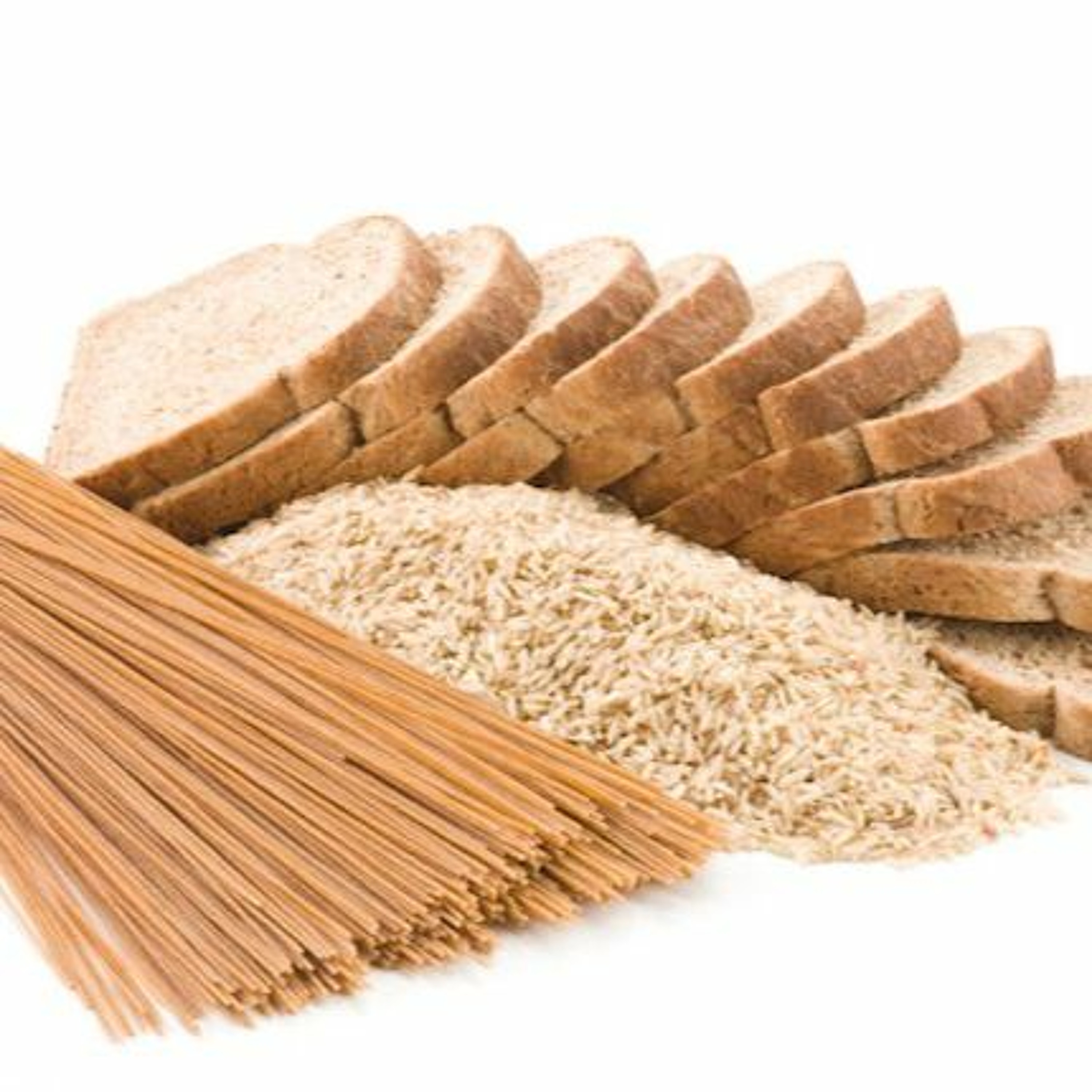
And specifically we're going to look at grains and wheat today. So when we look at grains or when I'm talking at grains, I'm about grains, I'm generally talking wheat, barely rye, sometimes corn, sometimes rice in it. But in these foods, there's a protein called glides. And that's what it's called in wheat.
So it's peculae and rye, horidine and barley and zine and corn. And this protein, gliadin, is not fully digestible by humans. And if it stays intact, it's the first step in triggering autoimmune diseases. So autoimmune diseases, as we've now found out, are stemming from your gut's health.
And your gut's health being out of imbalance or having any sort of dysbiosis is what's going to be the first step towards you getting an autoimmune disease, be it lupus, diabetes, Crohn's, thyroid, anything like that. This is one of the first steps. So this protein is found in grains and we know that grains are seeds of grasses. And we know also that human beings have issues with digesting grasses.
So it's not surprising that this protein found in grains that is gliadin is not fully digestible in the human GI tract. One of the molecules in this protein is called zonulin. And zonulin is one of those contributors towards leaky gut. And leaky gut, as gross as it is, is basically where some of the contents of your colon or your gut start leaking into your blood, which is pretty gross.
But now we're seeing new tests and studies that can test the level or the amount of zonulin in your blood and then the higher the level, the more incidence, the more we can tell if you have that leaky gut. So that is quite interesting. If gliadin does get broken down, it is usually in the form of a small peptide of five amino acids long. And these amino acids act like opiates.
These are called gluteal morphine and they act like opiates on the receptors of your brain. They don't make you high, but they do stimulate hunger, specifically the hunger for more carbs. Now there is another protein called wheat germaglutin. And even though it's called wheat germaglutin, it's still wheat germaglutin in wheat, rye, barley and rice.
This protein is completely indigestible in humans as well. But as it passes through the GI tract, it blocks leptin. And leptin is your hormone for satiety. So with wheat, you can basically get high blood sugar, then you get the crash, then you get the hunger.
And that comes in with the opiate effects of gliadin on your hunger receptors, and then you have the blocking of leptin. So you keep eating and your weight keeps going off. Even though you might be taking, oh I'm having whole grain bread or this is whole wheat bread, that bread and those grains have been shown to be one of the highest impacts on your blood sugar from foods in the world. So there's very few foods that are higher than grains on impacting your blood sugar levels.
And there has been, there was one specific test or study thrown out that I like to tell my clients about how they compared two slices of whole wheat bread against your blood sugar levels, and they compared that against a mire's bar. And actually the mire's bar had less impact on your blood sugar levels than the wheat did. And this, when it comes down to this, this wasn't your fault. This wasn't the public's fault.
It's not your fault that even though you're eating five servings of good carbohydrates or complex grains or healthy carbs or, and so on and so on every day, that you're still gaining weight, you were told to do this. Though all the majority of the health associations out there over the years have been advising people, and your doctors have been advising people that you need to eat these healthy grains for optimal health. You need these complex carbohydrates for energy and so on. So you were given bad information, and then the majority of people will go home and they'll blame themselves because they keep gaining weight even though they're doing what their doctors and nutritionists had told them, and they're still having health issues.
And this is what we call learned helplessness. So it's not your fault. You were given the bad information. You were told exactly to do what you were told to do, and it just so happens that it was the wrong information.
So when we look at grains, we look at the original grains. So about 40 or 50 years ago, scientists started messing around with grains, and they started mating wheat with other grasses. So there was hybridization going on. Then they introduced new genes into the grains, and this was called mutagenesis.
And this was the purposeful creation of mutation using chemicals and gamma rays. So the same type of gamma rays that they used on the whole, they were using on the food that we eat. So when we used to have long, high fields of grains, now they're gone, and now we have wharf strains, which are like 18 inches long of high yields grains that produce in bulk or produce a lot more than the original grain did. So essentially the grains we are having nowadays have been created in a lab, which made wheat go from when it was kind of bad to even worse.
Then we look at the reproduction system of grains and what it looks like nowadays. So you may have seen a post on my page a few days ago on my Facebook page where I said that plants are capable of a process called polyploidy. And this is where they can combine chromosomes. So we know that humans don't combine chromosomes.
The mother has 46 chromosomes, the father has 46 chromosomes, the baby gets 46 chromosomes. Well plants aren't like that. So in the beginning the original wheat strain was called iron corn. And iron corn had 14 chromosomes.
Then it was mated with wild grass and next hails came emmer wheat. And this was the weed of the bible. So if you ever heard or came across wheat being referred to in the bible, it was this weed. And that had 28 chromosomes.
And that then was mated with another wild grass. And that gave us then the forerunner for the grass or the wheat that we have nowadays that we consume, which is 42 chromosomes. Now when we look at the difference in what one or two chromosomes make, this is where we can start thinking like holy cow, maybe that grain is not the best idea for us. So for instance human beings have 46 chromosomes, apes have 48 chromosomes.
That's two chromosomes in the difference. And look at how different we are. Whereas the original iron corn had 14 chromosomes. Yes the wheat that we are consuming nowadays has 42 chromosomes to it.
So that is quite a difference. And that should give you an idea of how different the wheat that we're having nowadays is to the original strain of wheat. And go back to the effects of what wheat does on our body. Yes it blows us, it causes us to gain weight, contributes to illness, brain fog, diabetes, cancer, adrenal fatigue, everything like that is associated with wheat.
And as well visceral fat. So that's your deep belly fat. And we know that people that have visceral fat have a higher instantaneous of getting sicker. So when we look at this visceral fat under a microscope, it actually looks like POSS.
It's pretty gross. So it's all the white blood cells combined together. And we've seen studies now showing that people with high amount of visceral fat, specifically women have a 400% higher chance of getting breast cancer than those women that don't. Because this is an estrogen related cancer.
And we know now that fat around the midsection is pretty much its own organ. It creates its own estrogen and high amounts of estrogen is where we see these cancers arrive and we see fibroids and we see ovarian cysts and all these other issues from having higher levels of estrogen. And interesting fact here that currently the fourth most common-elected surgery in males is breast reduction. So that being from that men that have a higher amount of belly fat produce a higher amount of this female hormone, estrogen, which of course produces man boobs.
And then this is where this fact of this being a higher incidence of surgery requested nowadays in males has come from. So it is a higher female hormone. So bearing that in mind, we for many many reasons is not your friend. It's one of these foods that we should try to avoid.
Pretty much all grains. And I've only covered on a little bit here, but there's a lot more in it and phytates and how they block us from absorbing good nutrients and then how they can be detrimental from the hydrating bones and causing joint issues and arthritis. And even Alzheimer's now is coming to life. So avoiding rains where you can is always going to be the best idea for your health, and especially for your weight loss journey.
Bearing that in mind when you're feeding your kids too as well, what's in this and what is it going to do to my kids and is it worth it? Is it worth it to have those two slices of bread for what it could lead to in the future? So I've no doubt that that was a lot of information again and there may be some questions, but I do hope it enlightens you a little. And if you have questions, reach out to me on my website, chamainsmodelhelp.com, or you can find me over at Facebook on Chamains Model Help.
And I hope you have a happy, happy week and we will chat soon. Okay, bye!