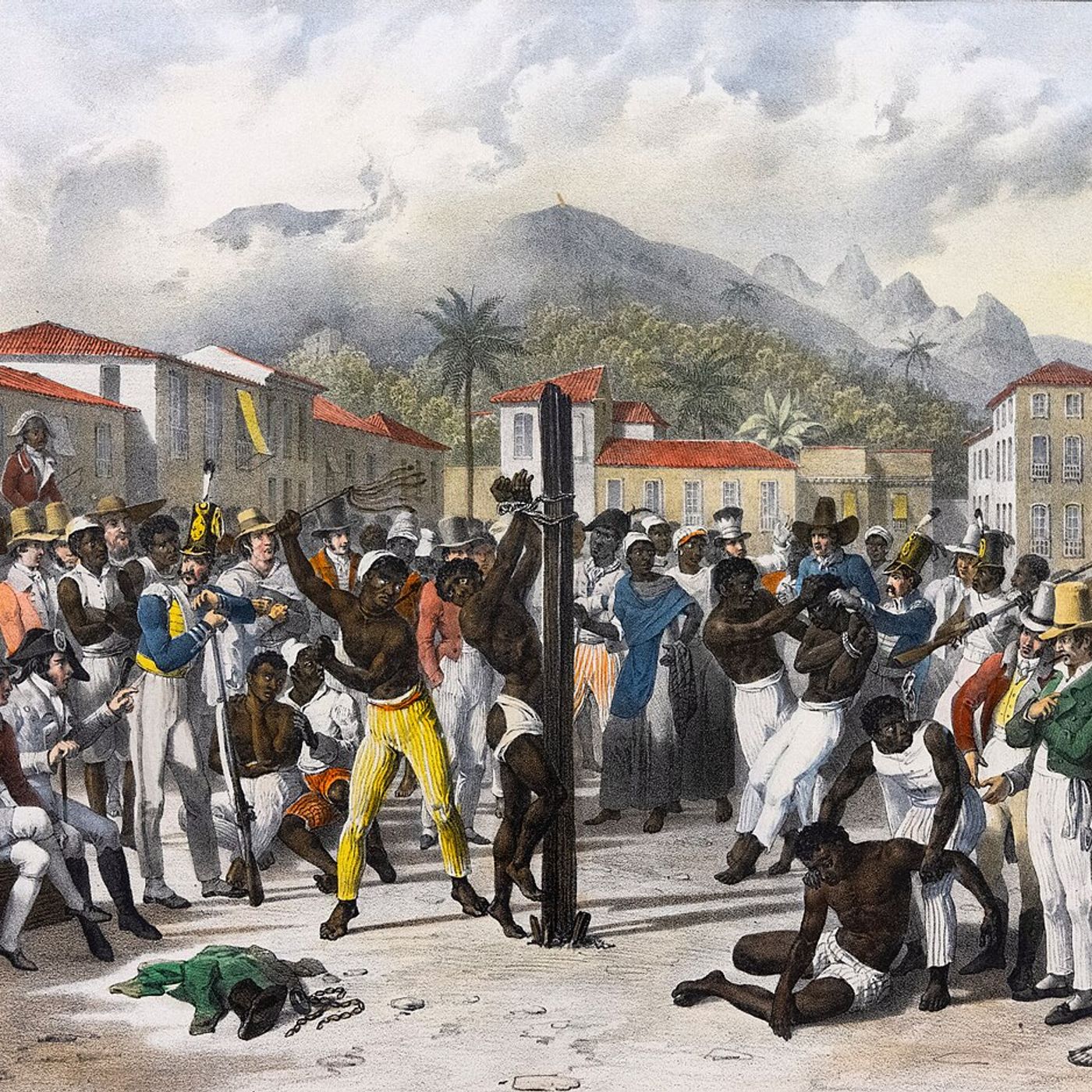
04 - Debt bondage. episode artwork

EPISODE · May 15, 2026 · 3 MIN

04 - Debt bondage.

from Slavery. · host Popular Culture and Religion.

Debt bondage.  Debt bondage, also known as debt slavery, bonded labour, or peonage, is the pledge of a person's services as security for the repayment for a debt or other obligations. Where the terms of the repayment are not clearly or reasonably stated, or where the debt is excessively large, the person who holds the debt has thus some control over the laborer, whose freedom depends on the undefined or excessive debt repayment. The services required to repay the debt may be undefined, and the services' duration may be undefined, thus allowing the person supposedly owed the debt to demand services indefinitely. Debt bondage can be passed on from generation to generation.  In 2021, the International Labour Organization estimated that, of the 27.6 million people currently participating in forced labour, 20.9%, or about 5.8 million, were in debt bondage. Debt bondage has been described by the United Nations as a form of "modern day slavery", and the Supplementary Convention on the Abolition of Slavery seeks to abolish the practice.   The practice is still prevalent primarily in South Asia and parts of Western and Southern Africa, although most countries in these regions are parties to the Supplementary Convention on the Abolition of Slavery. Lack of prosecution or insufficient punishment of this crime are the leading causes of the practice as it exists at this scale today.  Overview.  Definition.  Though the Forced Labour Convention of 1930 by the International Labour Organization, which included 187 parties, sought to bring organised attention to eradicating slavery through forms of forced labor, formal opposition to debt bondage in particular came at the Supplementary Convention on the Abolition of Slavery in 1956. The convention in 1956 defined debt bondage under Article 1, section (a):Debt bondage, that is to say, the status or condition arising from a pledge by a debtor of his personal services or of those of a person under his control as security for a debt if the value of those services as reasonably assessed is not applied towards the liquidation of the debt or the length and nature of those services are not respectively limited and defined;  When a pledge to provide services to pay off debt is made by an individual, the employer often illegally inflates interest rates at an unreasonable amount, making it impossible for the individual to leave bonded labour. When the bonded labourer dies, debts are often passed on to children.  Usage of term.  Although debt bondage, forced labour, and human trafficking are all defined as forms or variations of slavery, each term is distinct. Debt bondage differs from forced labour and human trafficking in that a person consciously pledges to work as a means of repayment of debt without being placed into labor against will.  Debt bondage only applies to individuals who have no hopes of leaving the labor due to inability to ever pay debt back. Those who offer their services to repay a debt and the employer reduces the debt accordingly at a rate commensurate with the value of labor performed are not in debt bondage. Wikipedia: Creative Commons Attribution-ShareAlike 4.0 License.This episode includes AI-generated content.

Episode metadata supplied by the publisher feed · Published May 15, 2026

Debt bondage.  Debt bondage, also known as debt slavery, bonded labour, or peonage, is the pledge of a person's services as security for the repayment for a debt or other obligations. Where the terms of the repayment are not clearly or reasonably stated, or where the debt is excessively large, the person who holds the debt has thus some control over the laborer, whose freedom depends on the undefined or excessive debt repayment. The services required to repay the debt may be undefined, and the services' duration may be undefined, thus allowing the person supposedly owed the debt to demand services indefinitely. Debt bondage can be passed on from generation to generation.  In 2021, the International Labour Organization estimated that, of the 27.6 million people currently participating in forced labour, 20.9%, or about 5.8 million, were in debt bondage. Debt bondage has been described by the United Nations as a form of "modern day slavery", and the Supplementary Convention on the Abolition of Slavery seeks to abolish the practice.   The practice is still prevalent primarily in South Asia and parts of Western and Southern Africa, although most countries in these regions are parties to the Supplementary Convention on the Abolition of Slavery. Lack of prosecution or insufficient punishment of this crime are the leading causes of the practice as it exists at this scale today.  Overview.  Definition.  Though the Forced Labour Convention of 1930 by the International Labour Organization, which included 187 parties, sought to bring organised attention to eradicating slavery through forms of forced labor, formal opposition to debt bondage in particular came at the Supplementary Convention on the Abolition of Slavery in 1956. The convention in 1956 defined debt bondage under Article 1, section (a):Debt bondage, that is to say, the status or condition arising from a pledge by a debtor of his personal services or of those of a person under his control as security for a debt if the value of those services as reasonably assessed is not applied towards the liquidation of the debt or the length and nature of those services are not respectively limited and defined;  When a pledge to provide services to pay off debt is made by an individual, the employer often illegally inflates interest rates at an unreasonable amount, making it impossible for the individual to leave bonded labour. When the bonded labourer dies, debts are often passed on to children.  Usage of term.  Although debt bondage, forced labour, and human trafficking are all defined as forms or variations of slavery, each term is distinct. Debt bondage differs from forced labour and human trafficking in that a person consciously pledges to work as a means of repayment of debt without being placed into labor against will.  Debt bondage only applies to individuals who have no hopes of leaving the labor due to inability to ever pay debt back. Those who offer their services to repay a debt and the employer reduces the debt accordingly at a rate commensurate with the value of labor performed are not in debt bondage. Wikipedia: Creative Commons Attribution-ShareAlike 4.0 License.This episode includes AI-generated content.

PodParley-generated summary based on available episode metadata and transcript content.

NOW PLAYING

04 - Debt bondage.

0:00 3:19

No transcript for this episode yet

We transcribe on demand. Request one and we'll notify you when it's ready — usually under 10 minutes.

Race Relations Inception Point Ai The  series "Understanding Race Relations" delves into the complex history and present dynamics of race and racism, tracing its roots from the development of race as a social construct to contemporary struggles for equality. Each episode examines pivotal moments, from slavery and segregation to the civil rights movement, while also exploring the subtler, modern forms of racism like implicit bias and systemic inequality. The series also focuses on intersectionality, showing how race intersects with gender, class, and other identities, and concludes with a forward-looking perspective on how education, policy, and community action can shape a more just future for race relations.This show includes AI-generated content. Uncle Tom's Cabin Inception Point Ai "Uncle Tom's Cabin" is a novel written by Harriet Beecher Stowe and published in 1852. It is one of the most influential books in American history and played a significant role in shaping public opinion on the issue of slavery before the Civil War.The novel tells the story of Uncle Tom, a faithful and devout black slave, and several other characters, including the evil slave owner Simon Legree, the tragic mulatto woman Eliza, and the kindly St. Clare family. Through the intertwined tales of these characters, Stowe explores the moral and human implications of slavery, including its brutality, the degradation of black people, and the effects of the institution on both the enslaved and their enslavers.Uncle Tom's unwavering Christian faith is a central theme in the story, and it serves as a contrast to the inhumanity of slavery. The book was a powerful indictment of the institution of slavery and was instrumental in galvanizing anti-slavery sentiments in the North.Though "Uncle Tom's Cabi Microchip Advocateworldwide Artist: AdvocateLyrics by: Andre J. BenjaminMusic by: Quinton DavisMicrochip"Everything that glitters ain't gold"Silicon Valley promised freedom. Delivered digital slavery instead.This track exposes the truth: You're not the customer - you're the product. Big Tech built addiction machines disguised as "connection platforms" while selling your soul to the highest bidder.Why do they promote darkness but censor truth? Because division = profit.These "Silly-Con simps" turned human connection into commodity extraction. We were never meant to process everyone's emotions 24/7 - we're not omniscient for a reason.Hard bars. Harder truths. Time to unplug from the matrix. Tracing the Roots of the Climate Crisis Ben Cushing This podcast explores some of the root causes of the climate crisis. But, maybe surprisingly, it doesn‘t spend very much time talking about the climate crisis itself. Instead, it examines the ways that climate change grows from the same root as other crises we face, including racial and gender injustice and economic exploitation and precarity. Each of the four chapters of this podcast will explore the roots of the climate crisis from different angles - ranging from a discussion of the consequences of the capitalist economic system, to an examination of the cultural stories that justify colonialism, genocide and slavery. And throughout, it will try to keep sight of our own agency to resist systems of power and to co-create alternatives to the way things currently are.

Frequently Asked Questions

How long is this episode of Slavery.?

This episode is 3 minutes long.

When was this Slavery. episode published?

This episode was published on May 15, 2026.

What is this episode about?

Debt bondage.  Debt bondage, also known as debt slavery, bonded labour, or peonage, is the pledge of a person's services as security for the repayment for a debt or other obligations. Where the terms of the repayment are not clearly or reasonably...

Can I download this Slavery. episode?

Yes, you can download this episode by clicking the download button on the episode player, or subscribe to the podcast in your preferred podcast app for automatic downloads.
URL copied to clipboard!