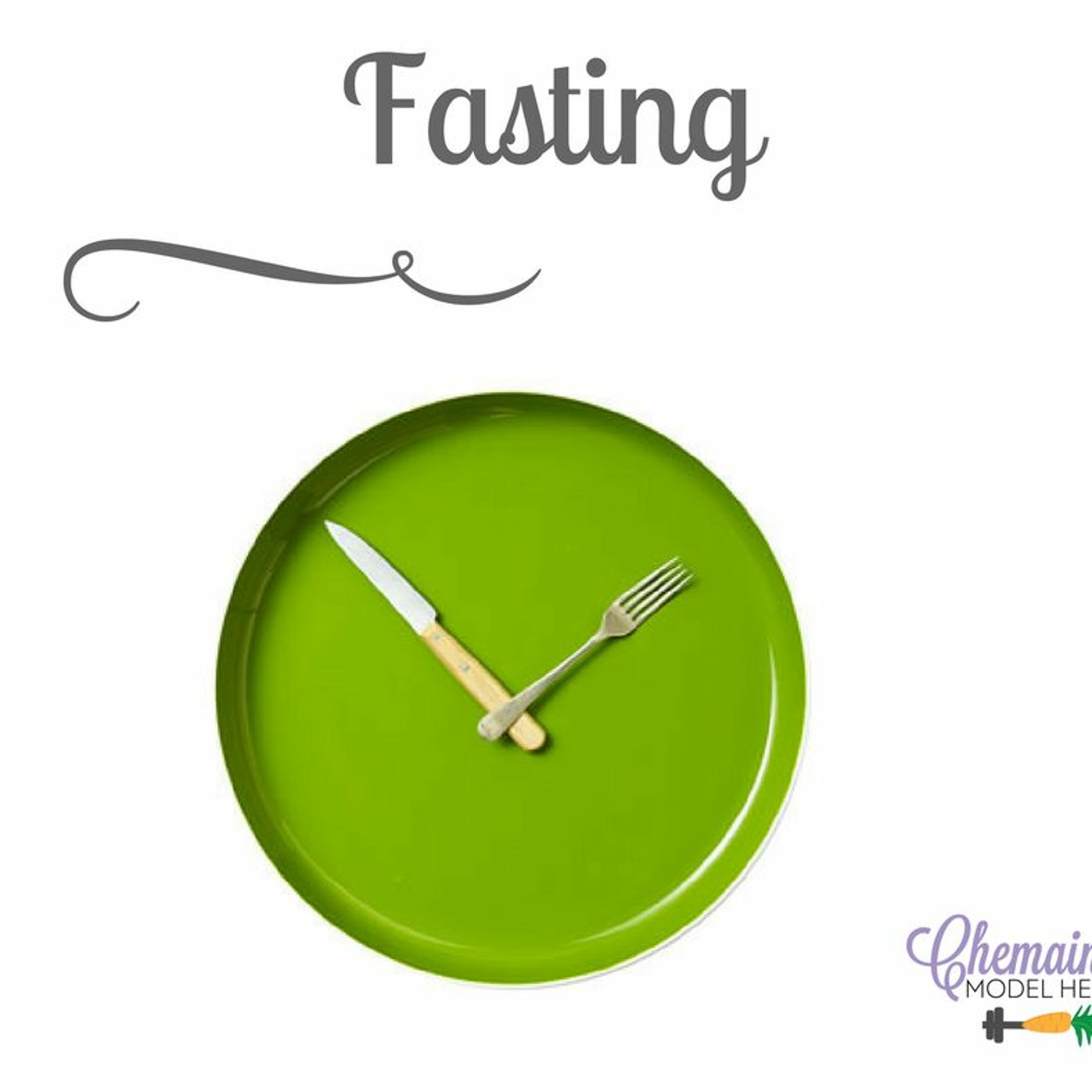
Good afternoon everybody and welcome to another episode of Shameen's Model Health Podcast. If you are searching for this on iTunes, you will find it under Find Your Model Health for those looking to optimize their long-term health and weight results. Before we move on, I would like to stress that the information provided in these podcasts is for informational purposes only and should not be taken as medical advice. I am Shameen Lini, I am your host and I'm super grateful to have you back with me this week.
So this week we're going to look just a little bit more about fasting and just a few more details to help you understand what fasting is. Unfortunately, when all these different eating styles and diets and whatever they may be come out, people tend to jump on the bandwagon and not have a genuine in-depth knowledge of these different diets or eating styles or health protocols or whatever they may be. And I see it when I say follow certain Facebook posts. I'll see, that's some of the comments being posted regarding a certain diet or eating protocol.
They can be very blaisey or very basic and it screams to me that there's not a lot of in-depth understanding out there about whatever the diet or protocol may be. So fasting, like Keto, is definitely one of the more popular protocols to be following for the last few years. And of course, like anything, it's essential that you have a good understanding of it as well as a good support system but an understanding. So this week I just wanted to touch on fasting because it's been popping up a lot around.
And those of you that follow me, you know I'm an avid faster. I practice all different types of fasting protocols. I start most of my clients on fasting and then I adapt their protocols or the requirements as they progress. But fasting is the oldest dietary intervention in the world.
I mean, as far back as we can think our ancestors have been following some sort of fasting protocol. And now modern science confirms it can have a huge beneficial influence on your health, including but not restricted to weight loss, reversal of type 2 diabetes, Alzheimer's, cancer, inflammation, digestive tract issues, sleep issues, hormonal imbalances, stress and environmental toxins and a whole host of benefits. But that doesn't mean you just go, oh I hear fasting is good for weight loss and it'll be good for my health. I'm going to not eat.
That's not how it works unfortunately. There is a difference between fasting and starvation. And fasting is more voluntary. You can start or stop at any time.
Well, starvation I find is more forced or people will approach it with a mindset of I'm just not going to eat, I'll lose weight kind of thing. And when we look at fasting and starvation, obviously there is a thin line. But you have to understand that these, it can be abused. Not eating can't be abused.
When you abuse not eating, that is starvation. When you plant and practice and have a protocol and an understanding in place, that is fasting. There are many different types of fasting protocols. You've got your 24 hour fast, those intermittent fasting, there's one of my favorite warrior fasts.
You've got extended fasts, you've got water fasts, you've got the five to two fasts, you've got one meal only fasts. Like there's a lot of different types of fasting. I did a PDF a while ago just listing the most popular fasts if you like it, drop me an email. But then within the fasting, then it's how you practice the fasting.
And lately we're looking at are you clean fasting or are you dirty fasting? So depending on the fasting protocol you've decided to follow and when that works with you. And of course you've got to have specific reasons too fast. If you're just fasting to lose weight, it's not going to work.
You can't create a negative association around fast. The most successful people with fasting are those who have specific health goals in mind or maybe they want to address inflammation or they want to prevent disease. And then the weight loss is a bonus. Those are the people that are going to be most successful.
If you tie fasting and weight loss together, you're going to create a negative association. And with that negative association, you're going to tie in stresses. And if you don't see your results, you're going to lose your belief in fasting. Whereas when we tie it to health issues and the health benefits, we then can, we have this different understanding that we can't always see health being overturned.
But we can notice improvements in sleep, inflammation, this, that, and the other. But it's not the same as stepping on the scales. And maybe you've been fasting all week and the scales hasn't moved. Then there's that negative association and we don't want that.
So you better have approaching fasting in, you're chasing some health results. And then the weight loss you accept is going to be a nice bonus. Then, so once you've decided your goals in the fasting protocol, you're going to follow. You will need to decide are you going to clean or dirty fast?
So when you clean fast, you're specifically only going to consume foods that one don't have a caloric density. And if they do, it's very minimal. Maybe one calorie, two calories, like very minimal. They also, whatever you consume is not going to have a metabolic reaction.
So you're not going to start activating the digestive system or create a hormonal spike, let's say insulin. So that's clean fasting. So you're looking more along just water. Lemon juice has been shown to be okay.
So lemon and water, green tea as long as it's not sweetened. Some other teas are okay, black tea is okay. And these wouldn't, like I said, have a metabolic response. Then when you're dirty fasting, this is something that if you're new to fasting, I like to integrate or start transitioning people into fasting with a dirty fast.
And this is where like coffee, black coffee and you're clean fasting too is fine. But dirty fasting would be coffee with maybe some whipped cream or coconut cream in it or maybe a bit of MCT oil or even a bulletproof coffee. I mean, these are all going to activate your digestive system. They won't cause an insulin response, but they will cause other hormonal responses.
And then like tea, let's say flavored green tea, we'll just say tropical green tea or tea with liquid Stevia or something along the lines or maybe a 50 calorie break in the fasting. This would be considered a dirty fasting. So it's just enough that you're doing the least amount of fasting that you can. You're still taking in calories, you will be activating the digestive process, but dirty fasting should be considered more of a transitional phase to prepare yourself into going into a clean fasting, which can be a lot tougher.
So it's nice to start with dirty fasting. Then there's also like the hormonal aspects of fasting. Fasting should really be addressed for the health benefits, like I said, but definitely to help balance hormones when we practice fasting properly, we can start balancing hormones in as little as three days. We can address insulin imbalances and leptin imbalances, which are our primary hormones associated with obesity and Alzheimer's and diabetes and all that.
But when we practice fasting properly and we have a good understanding of it, we can start to turn around those hormones and issues in as little as three days. You really want to be aware of all these different hormones when you're taking on fasting. And then aware of stuff that will and won't break your fast too. So there's a lot too fasting, but the basics I've just described there, you should always consult with someone that has an in-depth knowledge on fasting, but the basics would be choose your fasting protocol, choose your reasons for it and then decide if you're going to clean fast or dirty fast and then you can go from there.
There's more involved in it, but that's the basics. The cleaner you're fast, the better or faster your results are going to be. As for those, this is one myth I like to address and then the hundreds of people I work with, I get a handful of people that will say, well, I have to eat, I get shaky and I get blood sugars, this and that. A lot of the time that is based on the nutrition that you were taking in on a daily basis and all the people I've worked with, I only have a couple of people that are diabetic or have a predisposition to diabetes or that suffer with hypoglycemia issues.
Those are the people that I watch more closely and I will tell them, you can use this hack to help with your blood sugar drops or whatever. But in general, I would say 90% of the people that come to me and say, I have to eat all the time where I get the shakes or my blood sugar drops most of the time, that really gets fixed really fast with fasting and proper nutritional intake. So not everyone has predisposition of diabetes and not everyone has hypoglycemia issues, but your health professional will understand whether or not that is an issue for you. But I hope that get clarified fasting a bit more for you so that there's no misconstrued information buzzing around your head.
If you have any more questions, you can reach out to me on email that's support at chamainsmodelhealth.com or I'm on Facebook and Instagram and Chameen's model health. Like I said, this is the basics in this podcast. It's a good starting point for you if you have fasting. It's going to be your vibe.
Okay, have a safe, healthy week. Get your vitamin D and we will chat soon. Bye bye.