Good afternoon everybody and welcome back to another episode of the Shameen's Model Health podcast. You will find us under Find Your Model Health on iTunes for those looking to optimize their long-term health and weight goals. I am your host, I am Shameen Lini Ima Biohacker and fitness and nutrition experts and thank you for joining me for another episode of this podcast. Before we move on, I must stress that the information in these podcasts is not to be taken from medical advice and should be used for informational purposes only.
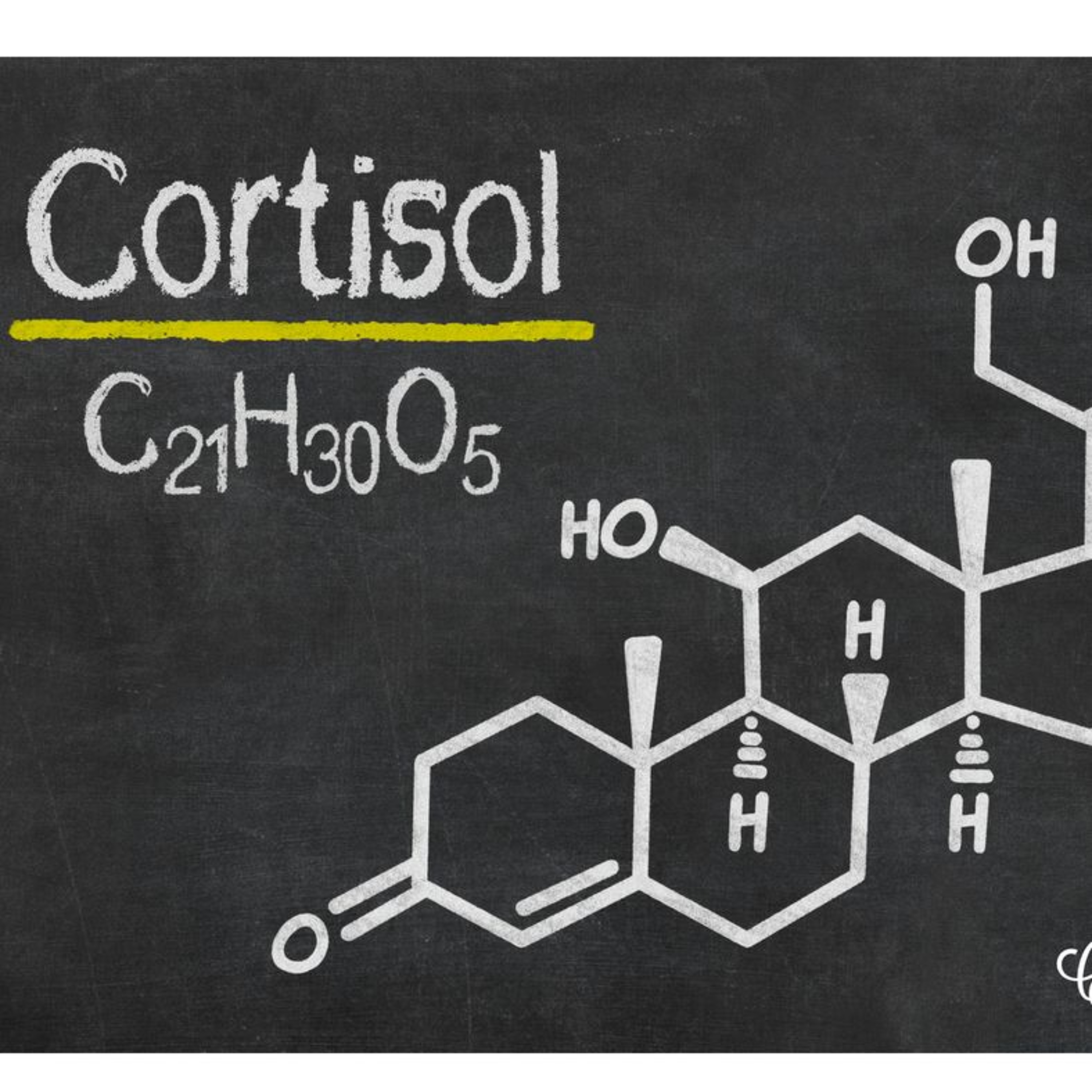
So this week's podcast, this is going to be a two-part series on cortisol and this week we are looking at high cortisol, what cortisol is and what we can do about it. If you have been following the posts and the PDFs and the graphs I've provided, high five, if not, you will find them over on my Facebook business page and also in my Facebook private group. So moving on, let's take a look at cortisol and this is a very important topic but it's very misdiagnosed and underrated and people don't take it as seriously as they should. So of course you hear a lot of talk about stress, this, stress, that stress, the other, all the time but to break it down into what happens and how the hormones react, I feel is more important than just saying, manage your stress all the time.
There needs to be some sort of understanding there. So there are two types of cortisol. Acute cortisol is the stuff we want to survive or grow in the short term like from exercise or survive being a fright or an emergency but then the more serious type is going to be your chronic cortisol and that is more of a constant exposure to stress over long periods of time. Now most people get confused and think cortisol is our main stress hormone but it's also our anti-stress hormone.
So when we get a stress trigger, cortisol is released from our adrenal cortex and its job is to go back and turn off our stress response. It also turns off some triggers of our stress response like inflammation or our immune activity. And just to explain a little bit more, so if you're having inflammation or some sort of immune activity or digestive distress, this is going to be a stress response. So cortisol's job is to switch off the inflammation and switch off the immune system because it's an immune suppressant.
And as cortisol is doing this, it allows the body then to reassess the situation and say, hey, it's all good or it's not all good, then the body hopefully switches off the cortisol release and your body returns back to homeostasis. The problem is though because of our environment, we're constantly getting exposed to stressors so our cortisol is constantly being secreted and constantly trying to tell our body to relax. But if your cortisol is telling your body to relax, at the same time that you're getting stress signals, you become resistant to your own cortisol. So it doesn't act as an off switch or it doesn't turn that stress response switch off and you lose the ability to regulate your exposure and your cortisol levels will either totally spike or they will flatline.
So the definition of stress is anything that makes a change to your body. And that can be anything from inflammation, infection, gastric distress, temperature changes, lights, toxins from poor food, exposure, maybe you add something you shouldn't have. Exercise of course can be a stress dodgy plastics, food colorings, excessive amounts of stimulants. The phone ringing can be a stress for some people.
I keep my phone on silence so it doesn't stress me out and I don't have to listen to it or listen to a voicemail until I am ready to do it and so on even thoughts of the bills or thoughts of going back to school or anything like that. These can all be stresses. Stresses are everywhere. If you're overweight, you also will have higher cortisol due to the higher insulin levels because of course higher insulin levels not only does affect blood pressure, it also affects your inflammation and your good health and everything and if your body is inflamed or having digestive distress, that of course is going to cause cortisol release and then it's a vicious circle because then cortisol creates more estrogen, estrogen creates more insulin and the circle continues.
So recent research is starting to suggest as well that cortisol is one of the main driving factors behind insulin. It's kind of a chicken and egg thing though which came first, the insulin or the cortisol and obviously either or if you have high insulin or high cortisol, your body is going to struggle to release body fat at the same time. So you've got to address both hormones as you go along if you're on a weight loss journey. So not all stresses are bad though like I mentioned above.
We want your body to have a normal reaction to stress. We want it to be able to naturally turn off stress so that you can get back into homeostasis when all of the stress is gone. In a normal situation, your cortisol will spike in the morning so it gets you up out of bed, gets the kids out to school, gets everything done and then it starts to trickle off as the day goes by and then in the evening cortisol is pretty much gone so that your melatonin can kick in and you can get into a good sleep. But typically a lot of people are in higher cortisol most of the time and we're going to high cortisol when we're stressed.
In a healthy, capable body though, you get this normal distribution of cortisol and then you get these little spikes throughout the day but your body is well able to respond to them and adapt appropriately. So if we're looking at high cortisol, high cortisol symptoms or key points would be you struggle to relax or get into a deep sleep. You will have high blood pressure, you'll have water and salt retention and this is in case your body is going to bleed to death. Your body wants to try to increase blood volume.
You'll feel anxiety so we're worrying about the future, you'll have tension even in your muscles, you'll feel super tense, you'll feel nervousness, aggression, probably irritability a lot more, you'll be feeling overwhelmed and unable to cope. Cortisol suppresses your immune system and thus your ability to fight off infection. So you'll experience flushing, itching, sneezes, allergies, looser poop because your body's inability to fight off those infections. There's also the other side of that coin where people who say they never get sick, this can be a sign of no immune activity because it's not the bug or the infection that makes you feel rubbish, it's actually the immune response.
That's why people with inflammation or immune issues, they can get administered cortisone as it shuts off the immune response. So it will shut down that inflammation and everything else. Cortisone is a cortisol hormone and it is a stress hormone that you can be prescribed to by your doctor. And we see a lot of these same symptoms arising from taking cortisone.
So the symptoms I've mentioned, if you take cortisone and you never have those symptoms, all of a sudden you do have those symptoms, that is because the immune system and all is getting shut off. And there's also an association of a cortisol prescription like cortisone and prednisone, increasing T helper to cell activity and suppressing T helper one. T helper cells, they help regulate immune activity. So they're super important in your body.
Now, T helper two is associated with lupus and estrogen dominance. So if you're seeing a lot of high cortisol issues, and next of all, you may be getting tested for lupus, you may want to look at what's going on there with those T helper cells. So some more symptoms, again, would be inflammation, high blood acidity, aches in your joints, tension headaches, raising heart and palpitations, bloodshot eyes, ringing in the ears can be another one. And this can be one of the main symptoms of high blood pressure, increased body temperature and sweating because your body's trying to detox poisons.
So poisons and inverted commas, your body thinks you're survived, and you're in danger, it's trying to detox any poison you may have consumed. So that's where you get the increase in body temperature. You'll struggle to focus, you may be forgetful, you'll have more long term memory than short term memory. So you might bring up grudges or events from the past a lot more.
Your short sightedness, believe it or not gets turned off and your long term vision enhanced because you need that long term term vision for to look for an exit to look for an escape route, you're in survival mode. Remember, you're looking at a map with your, a map with your short sightedness is not going to be important in times of survival. So your short sightedness turns off and your long term vision gets enhanced. You'll have shallow breathing or you'll sigh a lot.
Not many people notice this too much though, it's something you have to bring attention to. You'll be tired and wired. The tireder you guess, the harder it is to get into a good night's sleep. You'll store fat and fluid around your midsection because your body thinks you might be trapped in a cave for a while and your organs can at least feed off that fast.
Now, increased stress also causes us to crave sugar because it's a fast source of fuel and it increases your weight hormones so you don't fall asleep during the time of danger. So this is in an immediate time of danger. Over a longer time, too much sugar is going to cause you to get into more of a fatigue state as well. Also with high cortisol, you can see this is super interesting.
So you can see it in someone's eyes. You can see dilated pupils. This is associated with an increased sympathetic nervous system. So the sympathetic nervous system is your fight or flight system.
Also, if you look in someone's eyes, between your pupil and the outside color of your eyes, about a period of the way out, there's an area called the autonomic nerve wreath. What you will find is the outside border of that is really raised or inflamed or wide and elevated and the inside is darker. So the outside is associated, again, with your central nervous system with the sympathetic nervous system and the inside is associated with the parasympathetic nervous system. So that's your rest and digest and reproduce.
And how I remember to differentiate both of them is the sympathetic nervous system. The first letter starts with S, that's your survival mode, then the parasympathetic nervous system, the first letter is P. So that's your peaceful mode. Okay, so the side effects again of high or hyper cortisol, lubus, autoimmune disease, insulin resistance, reduced libido, you just don't just don't have that urge anymore.
PCOS and endometriosis, Alzheimer's, coronary heart disease, regular headaches and migraines and a lot of this gets associated to the hypertension, the high blood pressure and inflammation, sinus issues and allergies again, sinus issues and allergies are going to attribute to headaches and migraines and pretty much a life of pain, not just mental but physical pain. So the way it's supposed to be is cortisol is up during the day for survival and down at night for repair and rebuilding. So before I move on to addressing how to address this, why do you want to know your cortisol levels and why do you even care? So knowing your body and how it functions is super important for many reasons.
And knowing your cortisol is one of because it's one of these important reasons, it's associated with many functions like I addressed above. And it affects so many aspects of your health. If you understand where your cortisol levels are, it can help to explain why you feel the way you do. How do you get to know your cortisol levels?
Well, you can get a blood test. And this might not be the best idea for a lot of people though, because if you're scared of needles, this of course is going the taut of a needle, the taut of seeing someone's a white coat syndrome is going to increase your blood and it's going to put you in a stress state in any way. So your results not going to be accurate. Then there's a saliva test, which is one of the more accurate ones.
I do like it if you can get your hands on it. It's kind of affordable, not too expensive here in Calgary. And anyway, there is a hair test, but this only represents your total cortisol amount over the last month or so. And you really want to know what your cortisol is like on a day to day basis.
So that's where the saliva one can come in handy. And also you can avail of the questionnaire that I put in my Facebook group. And that questionnaire, you can print off and you can keep going back and forth to assess your progress as you go on over each week. So addressing high cortisol or extreme cortisol, or you just always always stressed and you have a lot of the symptoms above.
First, we're going to look at adaptogens. And I understand that a lot of what I say in podcasts or on posts is kind of repetitive, but I do try to highlight that at all as a circle. We are one body. It's all connected.
And if our environment made us sick, then we've got to address our environment and changes to make us better. But we look at adaptogens first, because they'll pick you up. If you're down, and if you're down, though, or if you're, they will pick you up if you're down, and they'll bring you down if you're too high up on that cortisol scale. They have the ability to regulate your cortisol at different times throughout the day.
So ideally, three times a day, you're taking adaptogens, but you can also use them as you need them. So some of the most potent adaptogens include ashwagandas, stragglers, some chisandra berries, super good. I like ginseng. I like particularly soy berry and ginseng, eluthro root, goji is a pretty good one.
Holy basil, licorice root, rhodiola, and of course, my favorite medicinal mushrooms, they're going to be shaga, cordiceps, rishi, mitaki, and shiitaki. And you can get them in many ways. It's not too hard to get adaptogens in at all. You also want to try, your main focus is going to be removing as many external triggers as possible.
Those stressful phone calls, put your phone on silent. Watch your nutrition. If you're bringing in bad foods and not enough with the good, then that's going to contribute to inflammation and insulin, and then more cord is all released. So look at these external, if there's something that you can do to limit your exposure to external stressors, then do that.
If you can allocate some time, just me time, just you time, then do that. Getting your sunlight early in the morning for some photo modulation. This is great. I always encourage people to do this.
This will signal your body through your eyes, to your brain, and tell your body what hormones need to be released and when. Practicing calming movements are exercise which will help bring down that central or sympathetic nervous system response like yoga. I'm a big fan of Pilates, of course, I teach it, but I'm a really big fan of just walking in the sunlight with a fresh air, enjoying the time, enjoying the breath, go for trails, enjoy forestry. Just make sure that you're very present in the moment.
Then when we look at sleep, we want to be very aware of our sleep practices. So sleep in order for you to start leavening out how that cortisol is reacting, you've got to be getting into a good sleep state. So your room is dark, your room is cool, it's got some nice circulation of hair, it's as quiet as possible. Then after your adaptogens, true of the day, you might bring in some magnesium or chamomile to help you calm down in the evening, and even turmeric, which is an adaptogen, adaptogen is awesome to be having in nights, just before bed, just to help your body level out a bit more.
I push most, not most, I push all of my clients to do an evening and I get them to do it every evening. One of the reasons for this is to calm that sympathetic nervous system and activate that peaceful, parasympathetic nervous system. I also, for one or two of my clients, I will recommend Agaba Supplements and they can take that before bed or you can take Agaba in an immediate response to any stress that comes in. So what Agaba will do, it'll help calm and block off those neurotransmitters before they get to the brain and cause too much of a problem.
So Agaba Supplements can be good to have in your drawer and just take it as you feel any sort of stress or anxiety come on. So that can be super helpful. Also what you can look at is a CLA, Supplements, a good one. CLA blocks gluco-corticoid receptors.
So these are your stress receptors and muscles and fats. So if you have some nice CLA, you can't stop the stress from being released or the cortisol from being released, but you can stop it from suppressing your immune system and preserving fat and from breaking down your muscles. So CLA is a smart one to have if you think you have high exposure to cortisol and understands that cortisol will constantly change and that's where you can use again that PDF I provided in my Facebook group to constantly reassess every couple of weeks of what's happening. So you might do it today and then do it in four or six weeks time again and hopefully you see that there's not as many marks on the page.
So a quick recap and I know I'm going on a bit but this is quite an in-depth subject. So quick recap, you got to figure out where you are with your cortisol, narrow down on your stressors, external, internal and even emotional triggers. If someone said something to you or something happened to you, try your best to let it go. They say that forgiveness is one of the best ways to heal.
Forgiveness doesn't benefit the other person, it benefits you. If you can let some stuff go and shake off some words then do that. Next, focus on dropping that cortisol throughout the day so it's down with the time you go to bed at night, you're getting in those adaptogens in the morning, you're getting your direct sunlight and then we can use even melatonin at night for a few weeks because it will drive that cortisol down. It's not something we use long term though.
Melatonin is a week or two and you'll still use those adaptogens throughout the day. Avoid caffeine afternoon but it's even better to avoid it before 10. If I see someone in a hyper stress state, I'm going to maybe have one coffee or one dose of caffeine in the morning and that's it and I thought I will pair it with an adaptogen. So of course my clients know me well from mushroom coffee, some medicinal mushroom coffee.
It's going to give you that nice natural caffeine boost but it's also going to have those adaptogens in it to support your adrenals. Focus on your nutrition because you don't want to bring in too many toxins or crap that's going to cause a stress in your body. Use movements to help improve your resilience to take care of your gut because if there's issues there that again will be a stress on your body and again if you need to you can use the GABA supplements too. Always handy one to have.
I have my before I move on what I use for my stress, I have a GABA supplements in my drawer, I have some Siberian ginseng and I have a magnesium. They're my go-tos then I also have some super foods and adaptogen powders in the fridge and of course my medicinal coffees. So I hope that explained everything to you. I hope it's being able to narrow down.
If you're on the higher end of the stress hormone to cortisol spectrum and then what to start doing about it and remember we get our results by consistency depending on how extreme your cortisol levels are. It might take a little bit longer but don't guess this heartened. You keep showing up, keep doing it every day and I promise you will see an improvement. So have a wonderful, wonderful weekend everybody and please please sharing is caring.
What we're trying to do is improve the world that we live in. We're helping people that we love and care about. So if there's anyone that you feel may benefit from this podcast please feel free to share it. And of course if you want, you can leave me some feedback on my Facebook page, mainsmottlehealth or my website mainsmottlehealth.com.
Okay, bye everyone. Stay safe and practice some stress relief. Bye.