
EPISODE · Sep 21, 2024 · 58 MIN
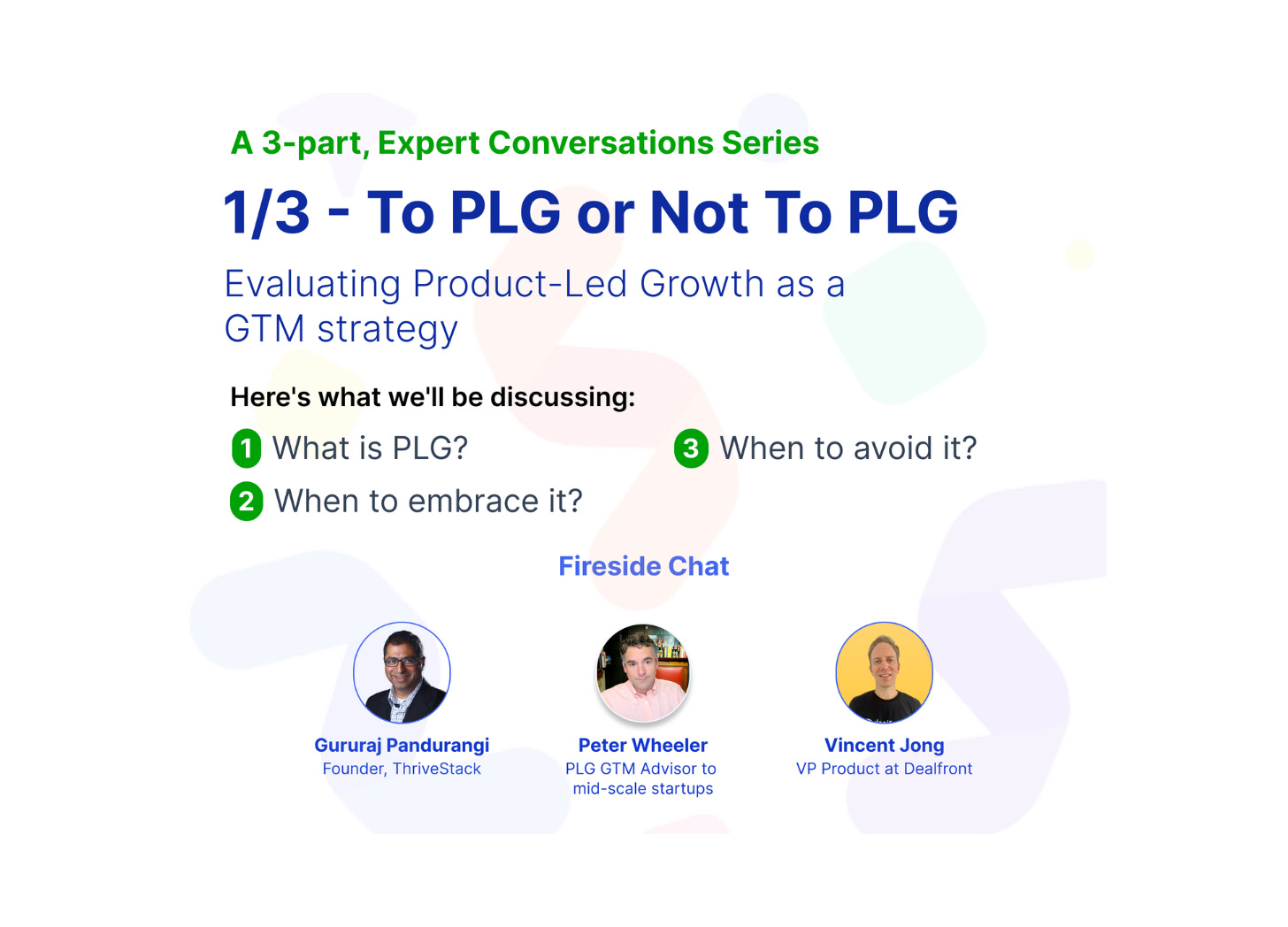
1/3 To PLG or Not To PLG
from Thrivecast · host Anushka Karmakar
Choosing the right go-to-market (GTM) strategy can make or break a company. One of the most debated strategies is Product-Led Growth (PLG), which emphasizes the product as the primary vehicle for customer acquisition, retention, and expansion. But is PLG the right fit for every company? How do you know when to embrace it or avoid it?In the first part of a three-part expert conversation series, Vincent Jong, VP Product at Dealfront, Peter Wheeler, PLG GTM Advisor, and Gururaj Pandurangi, Founder of ThriveStack, dove into this exact topic. What is PLG?Product-Led Growth (PLG) can mean different things to different companies, but at its core, it’s about putting the product at the center of your growth strategy. Here's what was highlighted during the conversation:* PLG is often misunderstood as just a “self-serve” model, but it’s much more. It's a business-wide strategy where the product drives customer acquisition, retention, and monetization.* This can be achieved through various tactics such as:* Free trials* Freemium models* Interactive demos* The key is to allow users to experience the product and its value before they even talk to a sales representative.* PLG is about creating a smooth experience where the product shows its worth without requiring direct sales involvement.* Although there are different definitions, ranging from PLG being a growth tactic to a full-fledged business strategy, the common thread is that PLG allows customers to discover value independently.PLG, when implemented correctly, is a powerful tool that can help drive sustainable growth by focusing on the customer experience.When Should You Embrace PLG?PLG might be right for you if:* You’re an early-stage companyPLG can help you reach potential users who prefer to try before they buy, especially in markets with younger buyers who value self-service over traditional sales.* Your product delivers immediate valueIf your product can clearly demonstrate its value without the need for heavy sales assistance, it's a great fit for PLG. Think about whether your users can easily see the benefits on their own.* Scalability is keyIf your goal is to scale quickly, PLG can offer that efficiency. A well-built product in a PLG motion can serve thousands of users without the need for increasing the size of your sales team.When to Avoid PLG?PLG may not be the best strategy if:* You have a complex productIf your product requires extensive explanation or configuration before users can see its value, PLG might not be the right fit. Complex products often need sales assistance to guide potential customers through their buying journey.* Your company is in a regulated industryIndustries with heavy regulations or compliance requirements, like financial services or healthcare, might struggle with PLG. Buyers in these sectors typically need legal approvals and human touchpoints before making a purchase.* You’re dependent on high-touch salesIf your business is already thriving on a high-touch, relationship-driven sales model, switching to PLG could disrupt your existing revenue pipeline. Introducing PLG suddenly might put current deals at risk.* You need quick revenuePLG is a long-term play. If your company needs immediate revenue growth, a sales-led approach is often more effective. PLG requires investment in product development and onboarding, which takes time to deliver returns.How Can PLG Support Your Sales Team?Q: Does PLG replace traditional sales?A: Not exactly. PLG doesn't eliminate sales teams, but it makes their job more efficient. By allowing users to engage with the product first, sales teams can focus their time on qualified leads—people who have already shown interest and experienced the product's value.Q: How does PLG help sales teams close deals?A: With PLG, your sales team can leverage product usage data. They can see which features a prospect is using, where they’re getting stuck, and what value they've already gained. This helps sales reps personalize their approach and guide customers toward making a decision.Q: Can PLG reduce the workload for sales teams?A: Yes! Since customers are already familiar with the product, they don’t need as much hand-holding. Instead, sales can step in when needed—like for complex deals or upselling opportunities.How is the Role of Sales Evolving in a PLG Environment?* Less pitching, more guidingIn a PLG model, sales teams shift from traditional pitching to guiding customers. The focus is on helping users who are already familiar with the product get more value and solve their specific problems.* Sales as a customer success partnerInstead of closing deals quickly, sales teams work more like customer success partners—ensuring that users are properly onboarded, using the product, and progressing toward their goals.* Data-driven decisionsSales reps in PLG environments rely heavily on product usage data to understand a customer’s needs. This insight allows them to make informed decisions on when and how to engage with users, personalizing their outreach.* No hard sellsThe emphasis shifts away from pushing for a sale at the earliest opportunity. Instead, sales teams interact with users when they’re ready, leading to more organic and less aggressive sales motions.How Can PLG Be Used as a Competitive Strategy?* Identify market gapsLook for incumbents in your market that rely on traditional sales models. If they require high-touch sales to close deals, this presents an opportunity for a PLG-driven company to enter with a more efficient, self-serve option.* Start small, expand laterPLG allows you to land smaller deals initially—perhaps at a lower price point—but with the opportunity to expand once users experience the product's value. This makes it easier to challenge large players over time.* Focus on ease of useBy offering a product that's easier to try, implement, and scale, you can attract customers who might be frustrated by the complexity of existing solutions in the market.* Leverage rapid onboardingWith a product that’s intuitive and has a quick onboarding process, you can rapidly attract users. This gives you an edge over competitors who rely on a lengthy sales and implementation process.* Outcompete on agilityPLG companies tend to move faster than traditional competitors. By continuously improving the product based on user feedback, you can adapt to customer needs more quickly than incumbents locked into slower sales cycles.Generational Shifts in Buying BehaviorThe way buyers engage with products has dramatically changed, especially with millennial and Gen Z customers entering the marketplace. These generations prefer self-service experiences and want to try a product before talking to a sales team. They rely heavily on peer reviews, community feedback, and independent research to inform their decisions. This shift in behavior makes PLG a more appealing strategy, as it aligns with their desire to experience instant value without needing a traditional sales pitch. For companies targeting younger buyers, adopting PLG is almost a necessity to stay relevant and competitive. This is a public episode. If you would like to discuss this with other subscribers or get access to bonus episodes, visit www.hybridgtm.com
Embed this episode
NOW PLAYING
1/3 To PLG or Not To PLG
No transcript for this episode yet
Similar Episodes
No similar episodes found.