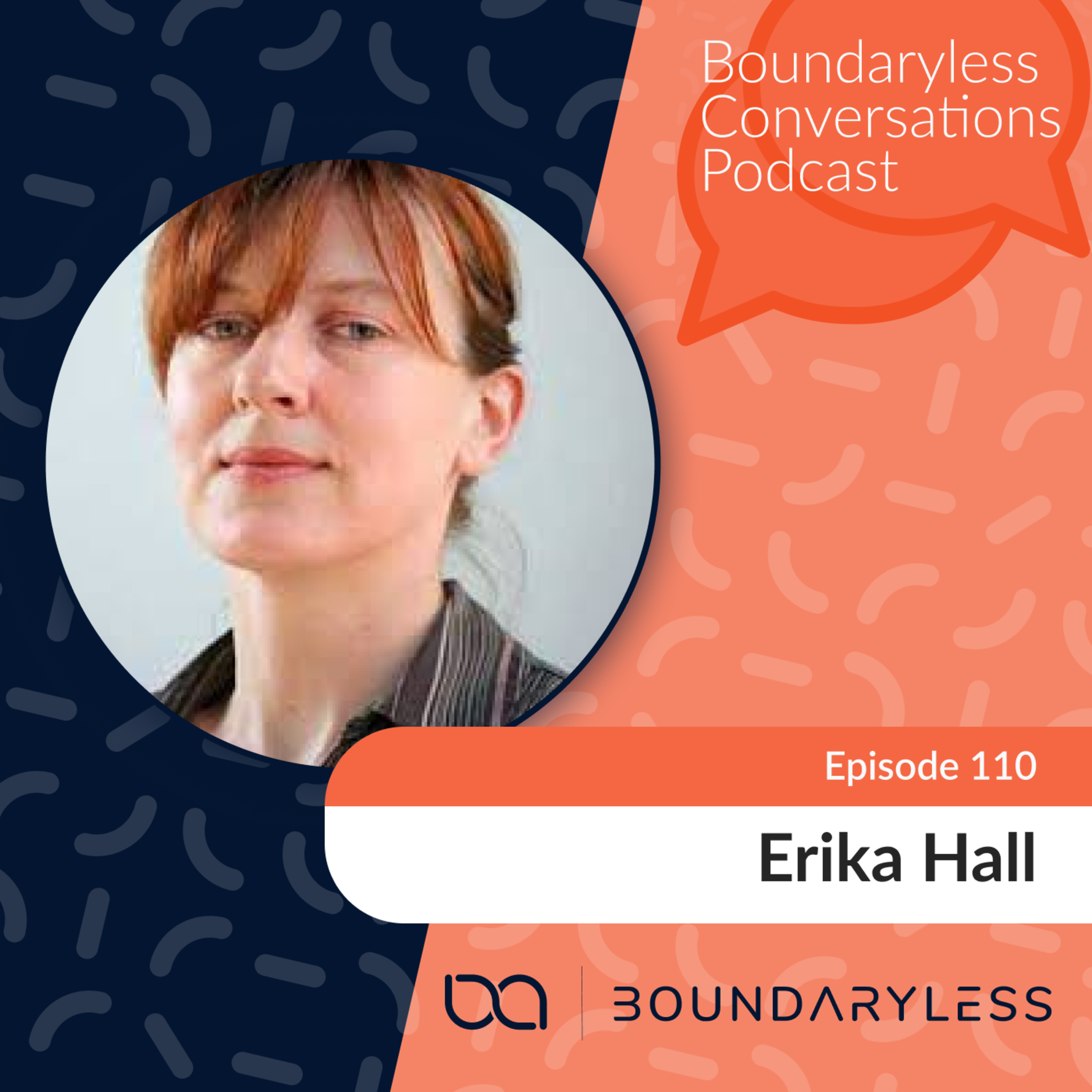
#110 - Decisions, Not Data: Why Research needs Organizational Readiness with Erika Hall episode artwork

EPISODE · Dec 10, 2024 · 56 MIN

#110 - Decisions, Not Data: Why Research needs Organizational Readiness with Erika Hall

from Boundaryless Conversations Podcast · host Boundaryless SRL

One of the most revered names in research and design, Erika Hall, Co-founder of Mule Design, joins us on this podcast to challenge the role of research as we know it. In this episode, she shares deep insights into the challenges of navigating research in complexity, and, on the backbone of systems thinking, offers thought-provoking perspectives addressing the growing tensions between investor-driven narratives and evidence-based practices. She brings forth some hard truths on how organizations cherry-pick data to justify decisions; and uses this to help us understand why a genuine research mindset is one where you’re comfortable being proven wrong.This conversation is a powerful reminder that organizations need to embrace curiosity, to stay grounded and relevant. As the author of ‘Just Enough Research’, Erika, has been a revered design consultant, specializing in asking the hard questions to find the right answers.She takes this episode to show that speed does not equate to better decision-making, emphasizing the need for organizations to focus on thoughtful alignment and genuine learning.She explores themes such as the performative nature of modern business practices, the disconnect between financial storytelling and real-world impact, the difference between delegation and democratization, and how organizations can navigate all this in an interconnected ecosystem.Tune in and learn how to ask the right questions and build an organization that’s based on evidence.Key Highlights👉 Organizations need to embrace research as an anti-authoritarian practice that fosters curiosity and challenges assumptions.👉 Speed in decision-making is often performative. Slower, thoughtful preparation can lead to better outcomes and long-term agility.👉 Modularity and decentralization in organizations require clarity in decision-making and alignment. Delegation of tasks is not the same as true democratization of power.👉 Financial narratives often drive organizational behaviors, leading to misaligned incentives and decision-making that prioritizes appearances over reality.👉 Systems thinking and psychological safety are crucial for fostering functional, adaptive teams that can navigate complexity and uncertainty effectively.👉 Organizations should prioritize incremental improvements and long-term value creation over chasing trends and disruptive innovation for its own sake.Topics /chapters(00:00) Decisions, Not Data: Why Research needs Organizational Readiness - intro(00:43) Introducing Erika Hall(01:50) Evolution of Research(08:06) Impact of Portfolios, Modularity, and Ecosystemic Approach on Research(13:04) Organizational Structure, Coherence, and Control(18:39) The right approach for building capabilities(26:06) Pillars of designing a research-backed organization(32:05) Functioning in complexity with coherence(42:47) Researching an Ecosystem of Interactions(49:38) Synthetic User Interviews(53:31) Breadcrumbs and SuggestionsRemember that you can always find transcripts and key highlights of the episode on our website: https://www.boundaryless.io/podcast/hall-erika Episode recorded on Nov 22, 2024Find out more about the show and the research at Boundaryless at https://boundaryless.io/resources/podcastGet in touch with Boundaryless:Twitter: https://twitter.com/boundaryless_Website: https://boundaryless.io/contactsLinkedIn: https://www.linkedin.com/company/boundaryless-pdt-3eoMusicMusic from Liosound / Walter Mobilio. Find his portfolio here: https://blss.io/Podcast-Music

One of the most revered names in research and design, Erika Hall, Co-founder of Mule Design, joins us on this podcast to challenge the role of research as we know it. In this episode, she shares deep insights into the challenges of navigating research in complexity, and, on the backbone of systems thinking, offers thought-provoking perspectives addressing the growing tensions between investor-driven narratives and evidence-based practices. She brings forth some hard truths on how organizations cherry-pick data to justify decisions; and uses this to help us understand why a genuine research mindset is one where you’re comfortable being proven wrong.This conversation is a powerful reminder that organizations need to embrace curiosity, to stay grounded and relevant. As the author of ‘Just Enough Research’, Erika, has been a revered design consultant, specializing in asking the hard questions to find the right answers.She takes this episode to show that speed does not equate to better decision-making, emphasizing the need for organizations to focus on thoughtful alignment and genuine learning.She explores themes such as the performative nature of modern business practices, the disconnect between financial storytelling and real-world impact, the difference between delegation and democratization, and how organizations can navigate all this in an interconnected ecosystem.Tune in and learn how to ask the right questions and build an organization that’s based on evidence.Key Highlights👉 Organizations need to embrace research as an anti-authoritarian practice that fosters curiosity and challenges assumptions.👉 Speed in decision-making is often performative. Slower, thoughtful preparation can lead to better outcomes and long-term agility.👉 Modularity and decentralization in organizations require clarity in decision-making and alignment. Delegation of tasks is not the same as true democratization of power.👉 Financial narratives often drive organizational behaviors, leading to misaligned incentives and decision-making that prioritizes appearances over reality.👉 Systems thinking and psychological safety are crucial for fostering functional, adaptive teams that can navigate complexity and uncertainty effectively.👉 Organizations should prioritize incremental improvements and long-term value creation over chasing trends and disruptive innovation for its own sake.Topics /chapters(00:00) Decisions, Not Data: Why Research needs Organizational Readiness - intro(00:43) Introducing Erika Hall(01:50) Evolution of Research(08:06) Impact of Portfolios, Modularity, and Ecosystemic Approach on Research(13:04) Organizational Structure, Coherence, and Control(18:39) The right approach for building capabilities(26:06) Pillars of designing a research-backed organization(32:05) Functioning in complexity with coherence(42:47) Researching an Ecosystem of Interactions(49:38) Synthetic User Interviews(53:31) Breadcrumbs and SuggestionsRemember that you can always find transcripts and key highlights of the episode on our website: https://www.boundaryless.io/podcast/hall-erika Episode recorded on Nov 22, 2024Find out more about the show and the research at Boundaryless at https://boundaryless.io/resources/podcastGet in touch with Boundaryless:Twitter: https://twitter.com/boundaryless_Website: https://boundaryless.io/contactsLinkedIn: https://www.linkedin.com/company/boundaryless-pdt-3eoMusicMusic from Liosound / Walter Mobilio. Find his portfolio here: https://blss.io/Podcast-Music

NOW PLAYING

#110 - Decisions, Not Data: Why Research needs Organizational Readiness with Erika Hall

0:00 56:24

No transcript for this episode yet

We transcribe on demand. Request one and we'll notify you when it's ready — usually under 10 minutes.

That Hoarder: Overcome Compulsive Hoarding That Hoarder Hoarding disorder is stigmatised and people who hoard feel vast amounts of shame. This podcast began life as an audio diary, an anonymous outlet for somebody with this weird condition. That Hoarder speaks about her experiences living with compulsive hoarding, she interviews therapists, academics, researchers, children of hoarders, professional organisers and influencers, and she shares insight and tips for others with the problem. Listened to by people who hoard as well as those who love them and those who work with them, Overcome Compulsive Hoarding with That Hoarder aims to shatter the stigma, share the truth and speak openly and honestly to improve lives. The Small Business Startup School – Business Notes | Financial Literacy | Retail Psychology – For Professionals & Entrepreneurs The Small Business Startup School Inc. Starting or buying a small business? While personal circumstances may vary, business patterns remain timeless. On The Small Business Startup School, we explore strategies, insights, and practical solutions to help entrepreneurs confidently navigate their journey.Hosted by Ola Williams—a retail entrepreneur, fintech founder, and financial coach with over two decades of experience—this podcast marries financial awareness and retail psychology with optimism to deliver actionable takeaways.Join us to learn, grow, and connect as we uncover the keys to business success.Let’s continue to learn together and be encouraged to keep on connecting! DIOSA. Carolina Sanper This podcast is a sacred space created by Carolina Sanper where you connect with your inner wisdom and embody your magnetic feminine power.It is the realization that the mystical realm is where you plant the seeds of your desired reality.It is a portal to your true essence: awareness, presence, and receiving with ease. Welcome home, DIOSA. 🖤 XXX Tech by SOVRYN Dr. Brian Sovryn The crossroads between technology, sensuality, and metaphysics - and the longest running anarchist podcast in the world! Brought to you by Dr. Brian Sovryn.

Frequently Asked Questions

How long is this episode of Boundaryless Conversations Podcast?

This episode is 56 minutes long.

When was this Boundaryless Conversations Podcast episode published?

This episode was published on December 10, 2024.

What is this episode about?

One of the most revered names in research and design, Erika Hall, Co-founder of Mule Design, joins us on this podcast to challenge the role of research as we know it. In this episode, she shares deep insights into the challenges of navigating...

Can I download this Boundaryless Conversations Podcast episode?

Yes, you can download this episode by clicking the download button on the episode player, or subscribe to the podcast in your preferred podcast app for automatic downloads.
URL copied to clipboard!