Good afternoon everybody and welcome to another episode of Find Your Model Health the official podcast of Shameen's Model Health for those looking to optimize their long-term health and weight goals. And I suppose just learn how their body works overall. I am Shameen Lini. I am a biohacker and fitness and nutrition expert.
Of course, I'm your host and I'm very happy to have you back with me this week. And it has been a cold week. I think hell must have frozen over. It's been that cold this week.
So this week's topic we are looking at gallstones and the gallbladder. It's a topic that I know many of my clients will relate to and find it interesting. It has taken me a while to get to this topic as I have a list of stuff to do and I slowly get through it. I'm hopeful that it will also help many of you that aren't clients of mine and that will find information in this podcast very helpful.
So before I do go on, I must stress that the information in these podcasts is for informational purposes only and should not be taken as medical advice and that you should consult your doctor before you make any specific health changes. So moving on, we're going to dive straight in. Water gallstones. Well, gallstones in the medical term is cholelatiasis.
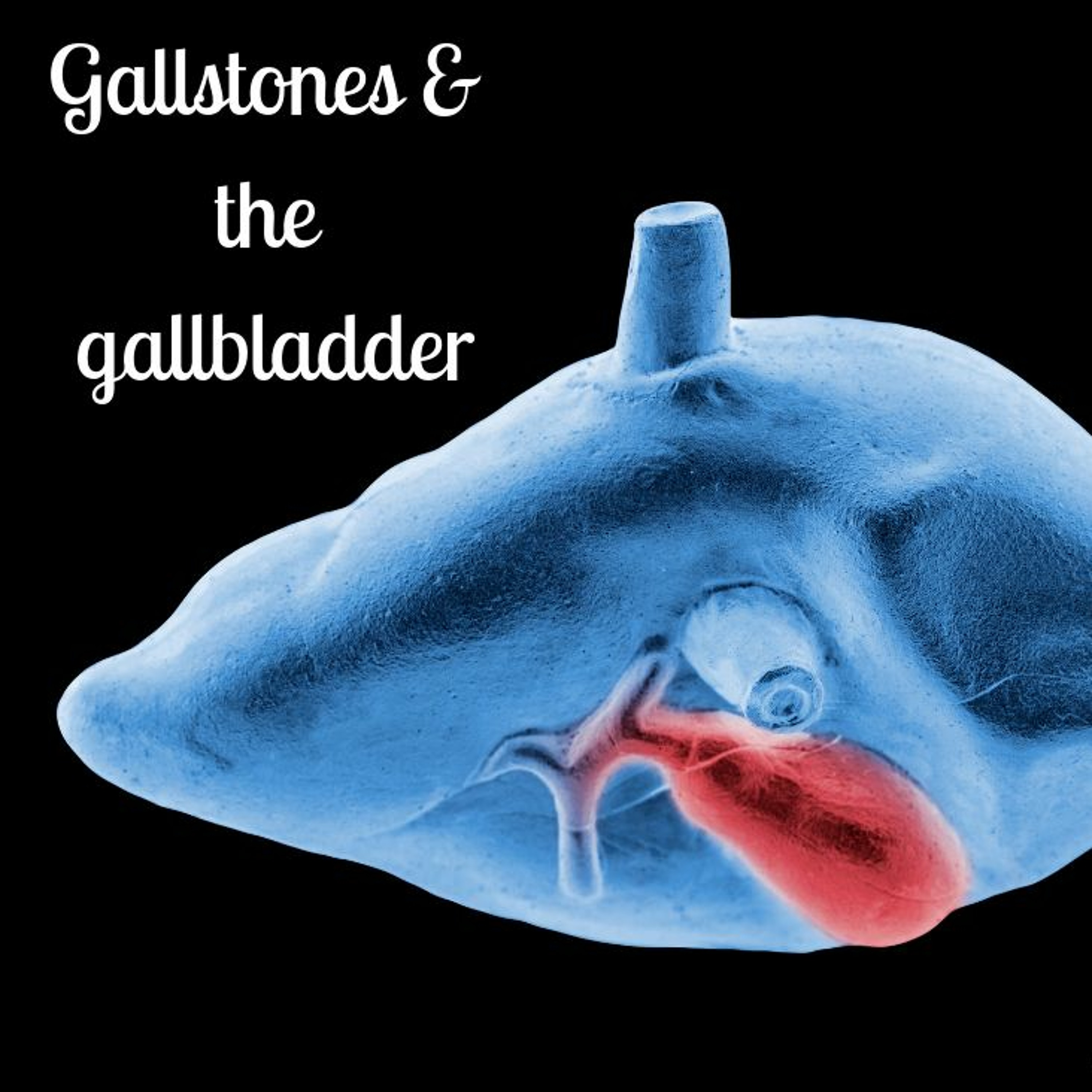
They are hardens deposits of digestive fluid that form in your gallbladder. So your gallbladder sits just underneath your liver and it catches your liver produces the while. So gallstones are usually made of vial, which is composed of water, cholesterol, fat, bilerobin and vial salts. Then this is all produced by the liver with the help of your digestive system and then it drips, strips, drips down into your gallbladder.
Underneath your liver where it is stored until the body needs it. So as it stands, gallstones are very common. It's estimated that between 6 and 22% of the population of Europe have gallstones. But then in the US, it's estimated that 12% of the population or roughly 36 million people are affected with gallstones.
That's insane amount of people. That's crazy. So gallstone sizes vary with some as small as a grain of sand and others as large as a gallfall or even a tennis ball. Some can be as big as oftentimes some people develop single gallstone.
But most of the time people have multiple gallstones at the same time that may need to be removed. So there are different stages of gallstones or gallbladder disease. So you've got your asymptomatic gallstones and these are gallstones that are present but they don't cause many symptoms. They don't cause much of a problem and you generally will flush them out yourself.
Then you have uncomplicated gallstone disease. Usually caused when gallstones block the bile duct. And this can lead to episodes of abdominal pain and spasms and cramping that can last several hours. And these episodes can occur infrequently or randomly.
And I know a lot of my clients have had this type of gallstones disease. And then the third one there is complicated symptomatic gallstones or gallbladder disease. Where the gallstones cause serious complications like inflammation of the gallbladder. Then your symptoms can include high temperature, constant abdominal spasms or pains and even jaundice.
So they're the stages of gallstones or gallbladder disease. And then there are two types of gallstones that can form in your gallbladder. The first one being cholesterol gallstones. And these stones are usually yellow and most they are the most common type.
And they're responsible for about 80% of gallstones among those individuals in Europe and America. Although they're mainly composed of undissolved cholesterol, these stones can also contain some other components to some toxin build up as well. And then the second one is pigment gallstones. And these are dark brown or black stones which often develop if you have too much bilirubin in your bile.
However pigment gallstones may also consist of phosphate, carbonates and other anions. Pigment gallstones comprise only about 15% of the people that I mentioned above. So with 60-22% of Europeans and 12% of Americans. So in total about 15% of stones among all of those are the pigment gallstones.
But pigment gallstones are also more common among southeast Asians. So that's interesting. What causes gallstones? What usually causes gallstone formation?
There's usually some sort of environmental factor but it's still kind of unclear. Researchers have discovered instances that might prompt gallstone development. Like an imbalance in the chemical composition of biles is said to be predominantly responsible for gallstones. So that means if you have too much of one component in the makeup of the bile then this can contribute to gallstones.
So for example those biles that contain too much cholesterol, dissolve in cholesterol but released by the liver requires certain chemicals. And usually biles contain sufficient amounts of these chemicals to dissolve the cholesterol. But if there is more cholesterol excreted and there isn't enough biles, if you're not producing enough biles or biles also to dissolve the cholesterol or the fats that excess cholesterol can develop into gallstone crystals. And then you have that second type, the pigment one, where the bile contains too much bilirubin.
A chemical bilirubin is a chemical produced when the body breaks down red blood cells. So bilirubin levels can significantly increase among people with liver cirrhosis. So scarring of the liver, biliary tract infections or certain blood related conditions. So gallstones here may eventually form if there's too much bilirubin in your system.
Aside from these two bile related causes, people whose gallbladders don't empty correctly, they may experience gallstones. This is because a failure of the gallbladder to empty completely or often enough can cause the bile to become very concentrated and lead to gallstone formation. So how prevalence are gallstones? Well, they're pretty common.
Out of all of my clients, I would say about 30% of my clients have had gallstone issues or have had their gallbladder removed. Women, older people and overweight people are more prone to developing gallstones and this could be back to that environmental factor. What are they eating? Is their body functioning properly?
The highest rates of gallstones occur in the US, Chile, Sweden, Germany and Australia. Again, while in the US, it could be that environmental factor back to poor dietary habits. According to Ferries Clinical Advisor, Journal 2017, 2 to 3% of the 36 million people in the US that are affected by gallstones. So about 500,000 to 600,000 have surgeries on average each year to remove their gallblather.
So this makes gallstones the most common gastrointestinal disorder that requires hospitalization. It's kind of a bit crazy. It's getting a bit out of control. A lot of the time, I mentioned above that women, older people and obese people are the highest risk of getting gallstones.
Also, pregnancy. Pregnancy can have a high correlation to gallstones because during pregnancy, the body increases its production of estrogen to support the growing baby and increased estrogen levels, prompt cholesterol levels in bile to increase and this, of course, could lead to gallstone formation. So this then brings us back. If you've been listening to other podcasts where I've emphasized on the importance of addressing estrogen dominance and having good sex hormone levels, that if you have issues where you have estrogen dominance or excess estrogen, there could be their correlation with cholesterol levels and then also a correlation with gallstone formation.
So it's just something to bear in mind. If you follow me a lot, then you'll apparently speak about estrogen and then the driving factors behind excess estrogen. So it's just another example of how the body is one system and everything ties in together. So then some of the symptoms, again, of gallstones, most people feel the spasms or the pains.
It can be very painful. They can struggle to catch their breath and this can last for hours and then, of course, they feel nauseated and fatigued after this. Then you'll also see gallbladder inflammation, bile duct blockage, pancreatic duct blockage. I hate to say it, but gallbladder cancer can be another side effect.
And of course, this is something that should be taken very seriously. So the signs and the symptoms of gallstones that you don't want to kind of ignore or be blasé about, not all, remember that not all gallstones do show symptoms, but if one becomes lodged in a duct and causes blockage, you may see some of these symptoms. So again, abrupt spasms, pains, pain, that intensifies, especially in the upper right part of your abdomen or in the center of your abdomen. Back pain between your shoulder blades can be assigned.
Pain in and under the right shoulder is usually a sign that there is a gallbladder issue. And then of course, that nausea, vomiting and fatigue as well, lack of appetite because you're in so much pain. The pain, those pains can last several hours. And for some people, they might be several minutes.
You should, of course, consult your doctor if you're starting to see stuff like this. But if you're especially seeing extra symptoms like high fever with chills or your skin turning yellow or the eyes, the whites of your eyes turning yellow, if you're even having especially trouble sitting down along with the abdominal pain, that's when you definitely want to contact your GP or your doctor. And they will then diagnose your gallstones with like an ultrasound or a CT scan. They might do an MRI or some sort of endoscopic retrograde exam.
And once you have that specific diagnosis, then they will either advise of a more conventional medical intervention to get rid of the gallstones. But if you were looking at trying to get rid of gallstones naturally, you wanted to try something natural before considering those conventional treatment options. There's a few things that can help. And if you're not a part of my biohacking group on Facebook, it remains model health, biohacking, long-term health and weight loss, please do join.
It's not a sales group. There's loads of content. And you can just, in the search bar, search for liver or gallstones or gallbladder, or you can search Swedish bitters or choleratic herbs or anything like that. And you're going to get some direction on what you can do to help manage gallstones naturally.
But some of the more inexpensive kind of safe and potentially effective things you can do. You can start integrating apple cider vinegar into your diet because the vinegar is acidic nature. So it's modbiotic properties can support the liver to produce while more effectively, but also break down cholesterol more effectively as well. So you're supporting your digestive enzymes, your stomach acid, and those modbiotic components and you're supporting the liver.
So apple cider vinegar really is awesome. Lemon juice, and I think lime juice do the same. They're pretty effective. Studies show that lemons may inhibit the body from being too out of violence with its pH.
So I'm not too acidic and not too alcoholine. Now we know that different parts of the body have different pH's, but lemons can help just keep a nice homeostasis. So I do encourage a lot of my clients to add a lemon juice into their green tea and green tea can actually be quite effective as well at supporting the body and breaking down fast. Then you've got stuff that's going to support the liver, so milk thistle can help stimulate bile production.
You've got some dandelion leaf and dandelion root tea can also be very effective there. Sometimes I like to throw in some marshmallow root or meadow sweet has been shown to be effective in supporting gallstones and digestive health. Pectin, which is present in pairs, but also in apples, especially green apples in the skin and in the seeds. It can assist with softening gallstones and allow them to be flushed out easily.
This is something I encourage a lot with my clients is to make sure they're eating skin and seeds of their fruit. So very important, especially your pomegranate seeds and your berry seeds and then green organic green apples is something I encourage my clients to have as well. And then lastly, organic psyllium husk. That can be one that can serve as a gallstone treatment.
Since fiber in psyllium is known to bind to the cholesterol in bile and it's assist in preventing gallstone formation. So I'm just going to repeat that again because I know I have some clients that have cholesterol issues alone and also have some liver issues. So the fiber in psyllium is known to bind to cholesterol in bile and assist in preventing gallstone formation. So not only is that preventing gallstone formation, but if it's binding to excess cholesterol, it can help bring down those cholesterol levels too in your bloodstream and help with the elimination process.
So if you're eliminating cholesterol and it's bound in fiber, you're basically going to be pooping that out. And that's a good thing. Just make sure to use organic, so important and 100% pure psyllium husk because it's heavily sprayed with round of another crop and harmful pesticides. And something else, when people take psyllium husk, they will take it in like a pint of water.
And I say a pint of water because that's the Irish slang, but that's like 500 ml of water. So you want to have 500 ml of water with your tablespoon of psyllium husk. But then you also want to have another 500 ml of water straight after. And if you feel you're dehydrated at all after taking psyllium husk, sure of the day, you want to keep hydrating because it acts like a sponge.
It'll just suck everything in to your colon and that will contribute to dehydration. And then that has its own problem. So we don't want to go down that road again. So I don't want to touch on gallstone surgery because that will be something for your GP or your doctor to discuss with you.
But I have given you some natural stuff. There's options in my biohacking thing. You also, there's other lifestyle interventions you want to maintain a healthy weight. So if you're obese, you want to look at losing weight, you want to be moving regularly to aid in circulation, you want to be exercising regularly to help bring down the cholesterol and convert and manage your cholesterol into good cholesterol.
You want to be able to improve insulin sensitivity. You want to be detoxing estrogen. And I know I'm sounding like a broken record here because there is a lot of stuff because your body is one system. But in general, I hope you have gotten a good idea of what gallstones are in this podcast and it gives you some direction, do go into the biohacking group and look for use keywords in the search bar.
Next week, we're going to look a little bit more at the liver and bile production. And then maybe as soon as I get a minute, I'll do a post on the optimal diet for if you have gallstones or I think post gallstone or gallbladder surgery removal is going to be a good post. So as soon as I get time, I will do that. So I hope you found this podcast helpful.
Please give me any feedback if I missed something or you wanted me to cover something, you can email me that chameenafindermodelhealth.info or you can message me on Facebook, just through chameena's model health or whatever other avenue you choose, I'm pretty easy to find. So stay warm everybody. Enjoy the rest of the week and we will chat later. Bye bye.