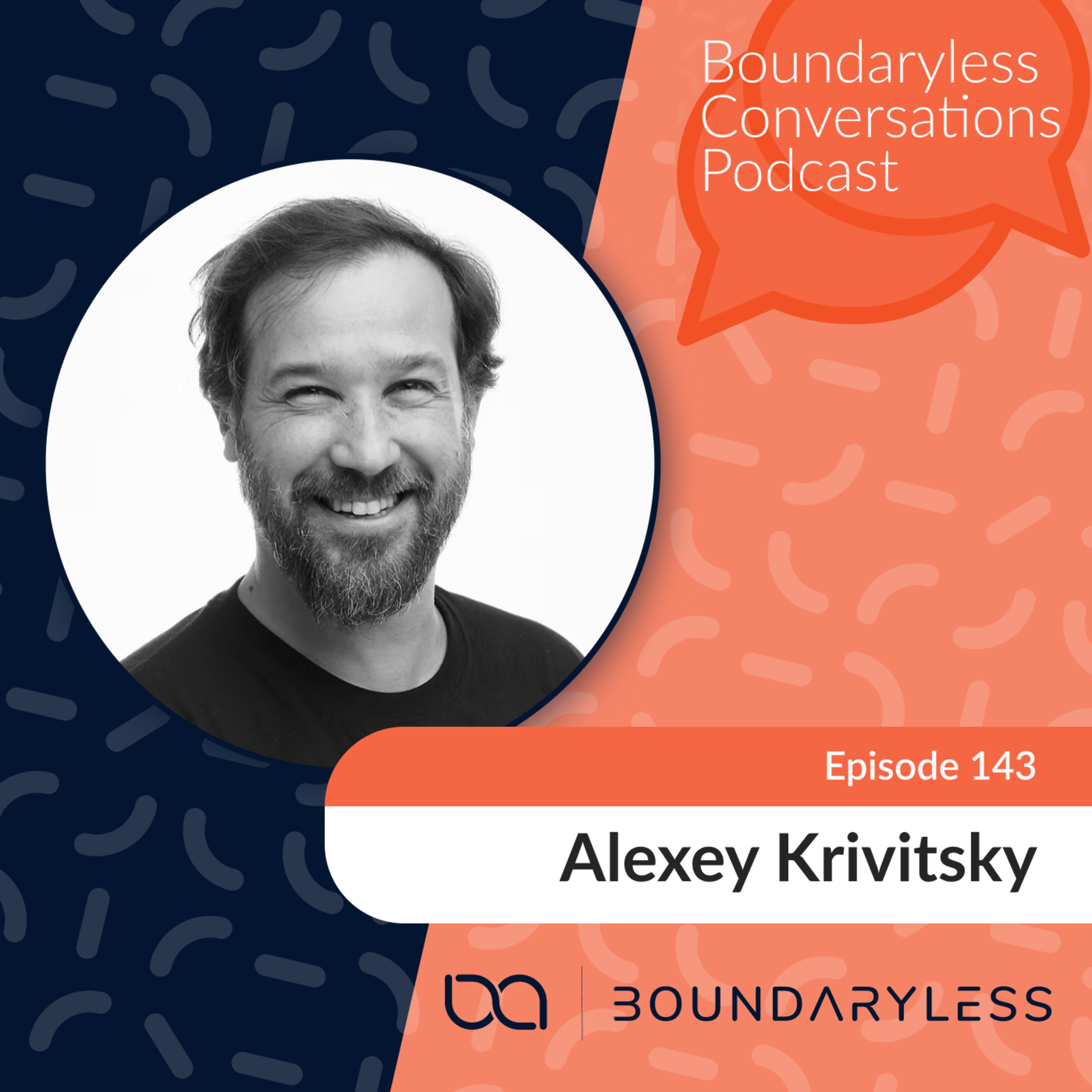
#125 - Organising for Outcomes: Lessons from Org Topologies and 10x Orgs - with Alexey Krivitsky episode artwork

EPISODE · Jun 8, 2026 · 1H

#125 - Organising for Outcomes: Lessons from Org Topologies and 10x Orgs - with Alexey Krivitsky

from Boundaryless Conversations Podcast · host Boundaryless SRL

Alexey Krivitsky, organisational consultant, agile pioneer, and co-creator of the Org Topologies methodology, joins us to explore why some organisations remain adaptable while others become trapped in layers of local optimisation, dependencies, and internal complexity.Drawing on insights from his new book 10x Organisations, Alexey challenges many of the assumptions behind organisational design practices, from domain ownership and platform teams to Conway’s Law and agile transformations. We look into the difference between optimising for outputs versus outcomes, the risks of creating organisational kingdoms around teams and domains, and why organisational design should remain flexible, contextual, and closely connected to customer value.Alexey argues that many of the organisational challenges companies face today are not the result of poor execution, but of structural choices that have become invisible over time.Drawing on years of experience in agile transformations and organisational consulting, he introduces the Org Topologies approach as a way to make those choices explicit and open to discussion. He explains how seemingly rational decisions can create isolated teams, conflicting priorities, and costly dependencies that slow organisations down. We explore how organisational design should be treated as a series of contextual choices rather than universal best practices, and how AI is increasing the urgency of rethinking the boundaries.Key Highlights👉 Organisational design is contextual - there are no universally “correct” structures, only structures that are fit or unfit for a particular purpose and environment.👉 Organisations should start by understanding the customer problems that exist to solve before redesigning teams, processes, or operating models.👉 Many transformation efforts focus on implementing frameworks, yet struggle to articulate what capabilities or outcomes they are actually trying to achieve.👉 Domain boundaries, software architecture, and team ownership should not automatically mirror one another; these are simply design choices.👉 Creating dedicated teams around platforms, domains, or components can unintentionally generate isolated kingdoms that optimise locally rather than for the whole system.👉 Organisational flexibility is essential because products, architectures, and customer needs continuously evolve; rigid structures often make change more difficult.👉 Collaboration challenges are rarely solved through hierarchy alone - they require thoughtful choices about ownership, coordination, incentives, and shared responsibility.👉 As AI increases the capabilities of individuals and small teams, organisations may benefit from broader boundaries and fewer unnecessary divisions of work.👉 The future of organisational effectiveness lies not in adopting a specific framework, but in continuously questioning assumptions and redesigning structures to match changing realities.Topics(00:00) Organising for Outcomes: Lessons from Org Topologies and 10x Orgs - INTRO(01:30) Introducing Alexey Krivitsky(03:30) Mapping the Unknown: Why Org Topologies Was Born(06:11) Value Proposition in Organisations(17:58) What’s the smallest unit of organizing?(20:09) Mapping Organisational Topologies(31:47) What’s the missing language in collaboration?(53:42) Breadcrumbs and SuggestionsRemember that you can always find transcripts and key highlights of the episode on our website:https://www.boundaryless.io/podcast/Krivitsky-AlexeyEpisode recorded on May 15, 26Find out more about the show and the research at Boundaryless athttps://boundaryless.io/resources/podcast/Get in touch with Boundaryless:Twitter: https://twitter.com/boundaryless_Website: https://boundaryless.io/contactsLinkedIn: https://www.linkedin.com/company/boundaryless-pdt-3eoMusicMusic from Liosound / Walter Mobilio. Find his portfolio here:https://blss.io/Podcast-Music

Alexey Krivitsky, organisational consultant, agile pioneer, and co-creator of the Org Topologies methodology, joins us to explore why some organisations remain adaptable while others become trapped in layers of local optimisation, dependencies, and internal complexity.Drawing on insights from his new book 10x Organisations, Alexey challenges many of the assumptions behind organisational design practices, from domain ownership and platform teams to Conway’s Law and agile transformations. We look into the difference between optimising for outputs versus outcomes, the risks of creating organisational kingdoms around teams and domains, and why organisational design should remain flexible, contextual, and closely connected to customer value.Alexey argues that many of the organisational challenges companies face today are not the result of poor execution, but of structural choices that have become invisible over time.Drawing on years of experience in agile transformations and organisational consulting, he introduces the Org Topologies approach as a way to make those choices explicit and open to discussion. He explains how seemingly rational decisions can create isolated teams, conflicting priorities, and costly dependencies that slow organisations down. We explore how organisational design should be treated as a series of contextual choices rather than universal best practices, and how AI is increasing the urgency of rethinking the boundaries.Key Highlights👉 Organisational design is contextual - there are no universally “correct” structures, only structures that are fit or unfit for a particular purpose and environment.👉 Organisations should start by understanding the customer problems that exist to solve before redesigning teams, processes, or operating models.👉 Many transformation efforts focus on implementing frameworks, yet struggle to articulate what capabilities or outcomes they are actually trying to achieve.👉 Domain boundaries, software architecture, and team ownership should not automatically mirror one another; these are simply design choices.👉 Creating dedicated teams around platforms, domains, or components can unintentionally generate isolated kingdoms that optimise locally rather than for the whole system.👉 Organisational flexibility is essential because products, architectures, and customer needs continuously evolve; rigid structures often make change more difficult.👉 Collaboration challenges are rarely solved through hierarchy alone - they require thoughtful choices about ownership, coordination, incentives, and shared responsibility.👉 As AI increases the capabilities of individuals and small teams, organisations may benefit from broader boundaries and fewer unnecessary divisions of work.👉 The future of organisational effectiveness lies not in adopting a specific framework, but in continuously questioning assumptions and redesigning structures to match changing realities.Topics(00:00) Organising for Outcomes: Lessons from Org Topologies and 10x Orgs - INTRO(01:30) Introducing Alexey Krivitsky(03:30) Mapping the Unknown: Why Org Topologies Was Born(06:11) Value Proposition in Organisations(17:58) What’s the smallest unit of organizing?(20:09) Mapping Organisational Topologies(31:47) What’s the missing language in collaboration?(53:42) Breadcrumbs and SuggestionsRemember that you can always find transcripts and key highlights of the episode on our website:https://www.boundaryless.io/podcast/Krivitsky-AlexeyEpisode recorded on May 15, 26Find out more about the show and the research at Boundaryless athttps://boundaryless.io/resources/podcast/Get in touch with Boundaryless:Twitter: https://twitter.com/boundaryless_Website: https://boundaryless.io/contactsLinkedIn: https://www.linkedin.com/company/boundaryless-pdt-3eoMusicMusic from Liosound / Walter Mobilio. Find his portfolio here:https://blss.io/Podcast-Music

NOW PLAYING

#125 - Organising for Outcomes: Lessons from Org Topologies and 10x Orgs - with Alexey Krivitsky

0:00 1:00:15

No transcript for this episode yet

We transcribe on demand. Request one and we'll notify you when it's ready — usually under 10 minutes.

That Hoarder: Overcome Compulsive Hoarding That Hoarder Hoarding disorder is stigmatised and people who hoard feel vast amounts of shame. This podcast began life as an audio diary, an anonymous outlet for somebody with this weird condition. That Hoarder speaks about her experiences living with compulsive hoarding, she interviews therapists, academics, researchers, children of hoarders, professional organisers and influencers, and she shares insight and tips for others with the problem. Listened to by people who hoard as well as those who love them and those who work with them, Overcome Compulsive Hoarding with That Hoarder aims to shatter the stigma, share the truth and speak openly and honestly to improve lives. The Small Business Startup School – Business Notes | Financial Literacy | Retail Psychology – For Professionals & Entrepreneurs The Small Business Startup School Inc. Starting or buying a small business? While personal circumstances may vary, business patterns remain timeless. On The Small Business Startup School, we explore strategies, insights, and practical solutions to help entrepreneurs confidently navigate their journey.Hosted by Ola Williams—a retail entrepreneur, fintech founder, and financial coach with over two decades of experience—this podcast marries financial awareness and retail psychology with optimism to deliver actionable takeaways.Join us to learn, grow, and connect as we uncover the keys to business success.Let’s continue to learn together and be encouraged to keep on connecting! DIOSA. Carolina Sanper This podcast is a sacred space created by Carolina Sanper where you connect with your inner wisdom and embody your magnetic feminine power.It is the realization that the mystical realm is where you plant the seeds of your desired reality.It is a portal to your true essence: awareness, presence, and receiving with ease. Welcome home, DIOSA. 🖤 XXX Tech by SOVRYN Dr. Brian Sovryn The crossroads between technology, sensuality, and metaphysics - and the longest running anarchist podcast in the world! Brought to you by Dr. Brian Sovryn.

Frequently Asked Questions

How long is this episode of Boundaryless Conversations Podcast?

This episode is 1 hour and 0 minutes long.

When was this Boundaryless Conversations Podcast episode published?

This episode was published on June 8, 2026.

What is this episode about?

Alexey Krivitsky, organisational consultant, agile pioneer, and co-creator of the Org Topologies methodology, joins us to explore why some organisations remain adaptable while others become trapped in layers of local optimisation, dependencies, and...

Can I download this Boundaryless Conversations Podcast episode?

Yes, you can download this episode by clicking the download button on the episode player, or subscribe to the podcast in your preferred podcast app for automatic downloads.
URL copied to clipboard!