#127 What Makes an Ideology? 🎧
from Anticipating the Unintended Hosted by Pranay Kotasthane
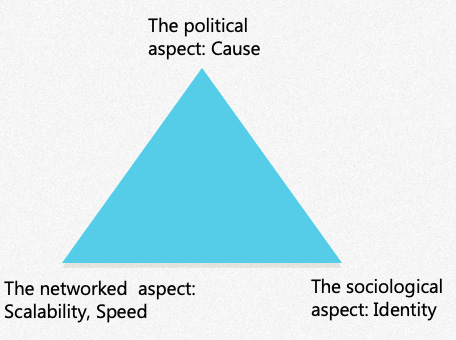
While excellent newsletters on specific themes within public policy already exist, this thought letter is about frameworks, mental models, and key ideas that will hopefully help you think about any public policy problem in imaginative ways. Audio narration by Ad-Auris. India Policy Watch: Radically Networked Succour Insights on burning policy issues in India — Pranay Kotasthane When the going gets tough, we become desperate for signs of hope. Unfortunately, the union government has inspired no such thing. It has instead opted for image management over accepting responsibility, complacency over taking charge, and whataboutery over offering succour. Hope, then, springs from the stories of ordinary people pitching in to plug government failures in their own unique ways. A big portion of this effort is invisible to us from our immobile locked-in existences. The part that’s visible is what is happening over digital media. Over the past few weeks, all of us have seen relief efforts of various types, sizes, and success rates unfolding over the internet. Arranging for oxygen cylinders and hospital beds, verifying these requirements, administering advice, and contributing money — all this and more are happening at high speeds in a society densely connected with each other. In other words, radically networked succour. Often, the term radically networked societies (RNS) conjures up the image of a mob. Admittedly, most examples we’ve cited earlier have depicted the darker side of RNS. However, the term itself is value-neutral and applies to any group meeting these three conditions: a web of densely connected individuals, possessing an identity (imagined or real) and motivated by a common immediate cause. Visualising the online relief efforts through a RNS framework, we see that: * The complete inadequacy of the Indian State became the immediate cause that mobilised community action. As the second wave started hitting near-and-dear ones while our governments continued to be in a parallel reality, people felt that the government’s effectively saying “Apna Apna dekh lo (Fend for yourselves)”. Then came the realisation that the problem has grown too big for our governments to solve. * The speed and scale was provided by the internet, specifically digital media platforms. The hierarchical nature of the State is an impediment in emergencies. That’s where flattened networks excel, spreading information to various nodes at a speed States cannot match. Our social media feeds transformed into emergency response management systems. * The identity dimension is not so clear in the sense that people providing radically networked succour do not define themselves as being a part of any one imagined identity. In some cases, pre-existing identities such as religion have inspired a community response. In others, the sinking feeling that we are all in this together has produced new bridging social capital. One identity that’s been conspicuous by its absence is the electoral and social media apparatus of the governing political party. Being one of the largest political organisations in the world that understands how to harness the power of digital media like few others do, it’s surprising to see it missing in action. One can only guess what came in the way —the arrogance of power, a refusal to acknowledge the problem, or a pre-programmed plan to focus on attacking the opposition? The Impact The past few weeks have also made clear the strengths and limits of relying on civil society action alone. The most encouraging lesson is to see that in difficult times, people have contributed in their own little, unique ways that governments can’t. Whether it’s by delivering food to a patient in the neighbourhood, by helping those in need of financial assistance, or by delivering critical medical supplies, the RNS has saved many lives. At the same time, it has also exposed the limits of what a civil society can do. People actively involved in such efforts themselves couldn’t shake off the feeling that they were boiling the ocean — regardless of the growing monetary contributions or the number of hands on deck, the problem seemed to be growing at a much faster rate. The scarcity of life-saving equipment meant that for every one person you could help, another equally — or perhaps more — needy patient was dying. The tragedy has also made it clear that a civil society cannot, by itself, summon newer hospital beds, healthcare staff, and life-saving medical supplies. For increasing capacity on these counts, the role of the State and markets is indispensable. We need the State to do what it should and get out of the way where it must for markets to play their magic. Whichever political ideology we may hold dear, the pandemic should make us realise the need of all three — State, Society, and Markets. Of which, it’s the omniabsent State that should worry us most. The Indian State is small where it really matters and simultaneously, overbearing in areas where it shouldn’t have a role. Until we get the balance between the State, Society, and Markets right, my deep gratitude to everyone who has been providing succour to India and Indians. Global Policy Watch: Three Truths Of Ideology Bringing an Indian perspective to burning global issues - RSJ It must be a sign of times when the apparently honorable and normal act of someone taking a stand for her ideology and paying the price for it becomes global news. It happened last week. The Republicans in the US House of Representatives voted to remove Liz Cheney as the chair of House Republican Conference for her persistent criticism of Donald Trump and his persistent claims of a stolen election. Liz Cheney is no ordinary Republican. She comes from a dynasty that’s long been a pillar of the Republican establishment. Her father, Dick, a former VP, needs no introduction to the Republican base. That she is no longer considered ideologically pure by the GOP is quite remarkable. Now the cynic in me doesn’t for a moment believe what Liz Cheney did was all about her principles. Political ambitions aren’t realised by playing it safe. You must roll the dice when the time is right. She did just that. She staked her future knowing well what the short-term repercussions could be. It is how political careers are made. Truth #1: The Mortal Enemy What interests me about the episode is the use of ideology by both sides in justifying their decisions. There’s something to learn about ideology here. This is what Liz Cheney wrote in her op-ed in the Washington Post: “Finally, we Republicans need to stand for genuinely conservative principles, and steer away from the dangerous and anti-democratic Trump cult of personality. In our hearts, we are devoted to the American miracle. We believe in the rule of law, in limited government, in a strong national defense, and in prosperity and opportunity brought by low taxes and fiscally conservative policies.” That last line sums up the Reagan conservative ideology that’s been the guiding light of the party till it was upended it by what can only be called Trumpism in 2015. The reactions against Cheney weren’t about the principles. It involved the first truth about ideology. An ideology needs a mortal enemy, an anti-Christ, to survive. As a prominent Republican, Mike Gallagher, responded: “House Democrats under Speaker Pelosi have been ruthless in advancing their radical progressive agenda, and Representative Cheney can no longer unify the House Republican conference in opposition to that agenda.” It doesn’t matter what we stand for so long as we know what we stand against. Ideological cohesion is easier to achieve in knowing your enemy than knowing your friends. In a famous speech delivered in January, 1962, Barry Goldwater laid down the seven principles of American conservatism. There’s no better articulation of a political philosophy in modern times. It is clear, concise and it helps translate these principles int… This is a public episode. If you would like to discuss this with other subscribers or get access to bonus episodes, visit publicpolicy.substack.com
Embed this episode
No transcript yet.